“This is completely crazy!” I shouted at my smartphone. I was on the verge of a panic attack. The man at the other end, in his classic Mumbai accent, replied, “No no sir, it is not crazy. Your computer is badly infected. Do you see all these people who are using your private information?”
He pronounced Private with a “W”. Priwot.
My mouse pointer moved while my hands rested in my lap. The Command Window opened and showed an ominous list of white notations scrolling down the black background. Mumbai Man had control of my computer. I could see repeated iterations of the word “Trojan”
“See there,” he said. “See, see? See how many!” I had been fighting him for at least an hour and he was losing his composure. I was stubbornly refusing to capitulate. Is this what’s called Ransomware? So it seems. I couldn’t get rid of the guy. I couldn’t regain control of my computer until I paid five hundred dollars. Needless to say, I was upset. And I brought it upon myself by doing a stupid thing.
I had already been softened up. A week ago a demanding white pop-up window informed me that my computer had contracted a virus. In order to fix it I must call Microsoft at an 800 phone number. Riiight! And there are elephants on the moon. The pop up wouldn’t go away. No restart, no Task Manager, nothing. I shut down my computer by pulling the plug. When I rebooted I got on a treadmill of Windows fix-it bubbles that went nowhere.
After a couple hours of futzing with various remedies, including a non-functioning backup program, I realized that I had to reformat my computer. That was three days of work. Such work included ransacking all of my closets and bins looking for software. Labor intensive!
Everything was fine after the reformat, my computer worked for a week. Then that same white pop up window appeared and I knew I was in trouble. I didn’t want to reformat again! Like an idiot I called the phone number. Thus an ordeal began that went on for hours. Mumbai Man insisted that he represented Microsoft. He gave me an I.D. number. He gave me a phone number for…uh..Microsoft. I got another phone and punched that number. At the first ring a man with a Mumbai accent answered. “Microsoft Customer Service” he cheerfully announced.
The voice of Mumbai Man #1 created a bizarre feedback loop because as he spoke to me on MY phone, his voice sounded one desk removed on the phone that I had used to call…er…Microsoft.. I went through the motions, juggling two cell phones. I was assured by Mumbai Man #2 that Mumbai Man #1 was a legitimate Microsoft employee. His name was…uh… Sam Taylor. I wasn’t buying it but I was losing my grip on reality. These guys were slick! They had an answer for everything. They talked and talked and their reasoning was insane. Slowly they dragged me into the upside-down world of internet thieves. They could demonstrate to me how badly messed up was my computer. They told me that even if I bought a new computer the same thing would happen because hackers lurked in my network. They told me that every computer I ever bought from this day forward would be infected if I didn’t pay five hundred dollars.
“Sir, why are you having a broblem with this?” asked..uh.. Sam Taylor, as if this were a perfectly reasonable situation.
“A broblem?” I shrieked. “A broblem? Five hundred dollars and my computer held hostage is a broblem!. I can buy a new computer for five hundred dollars!”
“Oh, but sir, the new computer will also have the same broblem if you do not take care of this right away.”
Listen, I love the accent of Indians, be they from Mumbai, Kalikot or Kerala. I love the way they sound like they have three marbles just inside their lower lip. I have adored Indian culture my entire life. However these fellows conformed to a stereotype, this was happening in the real world and in the real world most Americans expect their tech support to speak with that lilting accent. Weirdly, it added a gloss of credibility to what was blatantly incredible.
“I’m sixty two years old,” I told the thief. “Does your mother know what you do for a living? That you rob old people on Social Security?”
“Oh, sir, you are a senior citizen? Let me talk to my supervisor and see what I can do about getting a discount.”
Hmmm hmmm count to five. “Oh yes sir, my supervisor tells me that we can make the rebairs for three hundred forty nine dollars and ninety five cents.”
I gave in. I let them install their shit on my computer. Their spyware, malware, ransomware buggy shit on my computer. I gave them my credit card number. I still don’t believe I did that. Sam Taylor had turned me over to Steve Smith who worked in Billing, and Steve Smith had then given control of my computer to Richie Logan. I watched my screen as program after program was installed, operated, then uninstalled. It was spooky! I was afraid to pull the plug on the modem and shut them out. By this time I didn’t know what to believe and I had the futile hope that these guys were actually fixing my computer.
My lovely spouse had a terrible virus experience once and contacted a reputable repair company who charged her a hundred dollars to remotely fix her computer. I phoned them while my computer chattered away, rolling files across the monitor screen.
“Unplug your modem right now!” This was the order from Jeffrey Everard in Austin, Texas. He works for OneSupport. They handle situations such as the mess I found myself in. I trust them. I think.
Jeffrey worked for an hour on my computer and charged me a hundred bucks.
Barclay Bank shut down my credit card and promised to mail me a new one with a new account number. Mumbai Men had yet to run the charge and they were not going to get my money. I called all my credit card vendors. I called the bank.
This was a horrible experience. Be careful. These crooks are skillful and incredibly persistent. They are glib, slick and ruthless. They are from India, Ukraine, Thailand, Poland, Belorus and the USA. They find your knowledge level with regard to computers and they know how to convince you that they’re not lying. They twisted my head so badly that I couldn’t locate reality after spending a couple of hours in their company. Did a little alarm go off at Microsoft Headquarters notifying them that my computer was infected? I posed this vision sarcastically and they said, “Yes that’s exactly what happened!”
I am now afraid to do any browsing on my computer. I’m afraid that any program I purchase to fight malware might be the vehicle bringing malware to my computer.
I made a mistake, a dumb mistake and it could have cost me much more. It will be a while before I can relax and use my computer normally. If ever.
Arthur Rosch is a novelist, musician, photographer and poet. His works are funny, memorable and often compelling. One reviewer said “He’s wicked and feisty, but when he gets you by the guts, he never lets go.” Listeners to his music have compared him to Frank Zappa, Tom Waits, Randy Newman or Mose Allison. These comparisons are flattering but deceptive. Rosch is a stylist, a complete original. His material ranges from sly wit to gripping political commentary.
Arthur was born in the heart of Illinois and grew up in the western suburbs of St. Louis. In his teens he discovered his creative potential while hoping to please a girl. Though she left the scene, Arthur’s creativity stayed behind. In his early twenties he moved to San Francisco and took part in the thriving arts scene. His first literary sale was to Playboy Magazine. The piece went on to receive Playboy’s “Best Story of the Year” award. Arthur also has writing credits in Exquisite Corpse, Shutterbug, eDigital, and Cat Fancy Magazine. He has written five novels, a memoir and a large collection of poetry. His autobiographical novel, Confessions Of An Honest Man won the Honorable Mention award from Writer’s Digest in 2016.
Want to be sure not to miss any of Art’s “Mind Fields” segments? Subscribe to Writing to be Read for e-mail notifications whenever new content is posted or follow WtbR on WordPress. If you find it interesting or just entertaining, please share.
YouTube blows my mind. It’s GOD, it’s SHIVA, it’s…ummm..you know. Effing SUPERB! So much for the capital letters. I love YouTube. I love all the video platforms, from Godtube to Vimeo. We are living in an extraordinary time. The tools for creativity have multiplied so that billions of people have access to recording devices. Phones, vidcams, DSLRs, we now have quality gear to produce clean videos. It’s Content Heaven, and the content is whatever you want to make of it. I like discovering and studying things, like music, archaeology, astronomy. I go to school every day and it’s on the internet.
I think I’ve learned more in the last year than in all my previous life. YouTube has taught me more than many years of school taught me. I hated school…so there you go. I wasn’t about to learn anything from a place I hated. On YouTube, I’ve acquired skills from the most patient and benevolent teachers. Many providers of content do so out of their own generosity. They don’t make money, they don’t advertise.
The advent of the Vlog, or video blog, is a major development. I found the travel vlog Baldandbankrupt.com by accident. An adventurous Brit travels the world. We only know his name, Benjamin. He doesn’t tell us much else. As a guide he’s superb. He’s simple but entertaining, and his erudition is inconspicuous. He’s just one of us, “one of the guys”. He has a knack for languages. He does passably well in Russian and Hindi. What else does he speak? Who knows?
On the southern perimeter of the ex-Soviet Union there are a dozen nations, all of whom speak Russian. Consider that a gift of the Soviet past. It endowed all of Asia right up to the borders of China with a common language. As we can see through Ben’s travels, the cultures and heritages of the erstwhile Russian Empire are relatively intact. Whether it’s in Ukraine or Kalmykia, those peoples remember their legacies from The Silk Road and the steppes. In essence Bald Ben follows The Great Game, that competition between the British and the Russians that took up so much of the 19th Century. They competed in Afghanistan, Uzbekistan, Azerbaijan and Turkestan. They confronted one another across vast swathes of central Asia. They were full of Imperial ambition. The geography is immense. If Ben wants to be in the middle of nowhere, there are plenty of nowhere places to go. Especially in the once proud Soviet Union.
Back to YouTube, the Guru, The Miracle Baba. It gives tirelessly. It’s our creation, ours. I wanted to learn piano and I didn’t feel that I could afford a teacher. YouTube’s piano teachers are legion, and I’ve fastened on a few piano mentors to help me master the instrument. After nine months of practice I can run scales, play and recognize most of my chords, and perform a few songs. When was this possible, before the internet? When I took trumpet lessons as a kid the dreaded Mister Haspiel came to our house weekly to instill in me the love of the instrument. It turned out that I was a drummer, and trumpet wasn’t so much a mistake as it was my mother’s design to thwart me as a drummer. I hated the trumpet! My mother hated it too, she hated my creativity. She once threw my trumpet down the basement steps. My dad had to buy me another. I got an upgrade: a shiny Selmer to replace that funky old Buescher. Thanks, Dad! And thanks again, departed father, for tolerating my drums after I had pestered you so much that you had to buy me drums to shut me up! I became a pretty good drummer. I can still paradiddle and double paradiddle with the best of them.
Mother’s long gone and YouTube offers free piano lessons, or cheap piano lessons, whatever…I can buy a course for a hundred bucks. If I can tell you anything, it is this: learning is fun. I’m an old man and I’m still learning. I’m still perfecting skills. How cool is that? Don’t get bored. Don’t be boring. Feed your spirit, especially with music.
Additional Notes:
YouTube is so freewheeling a form that it is possible for you to meet yourself online. Get into someone’s video or make your own. When Ben “Bald” wanders the Ukraine he runs into people who are watching his travel vlog. Now they’re IN his vlog. The loopy nature of this appeals to me. The skills for video making are evolving, but the toolkit is replete with every kind of Fade, Swipe, Roll, Caption, Insert, Delete. The skill with the camera involves knowing exactly when to turn on a subject, how to walk, narrate, greet people in foreign tongues, deter thieves and touts, and when to shut up and be quiet. One does these things simultaneously. It’s a flow, a rhythm and it’s impossible to fake. Vloggers are like musicians learning their chops as they record. A good vlog narration is a consummate filmic device. Not all vloggers are equal. And not all vloggers are as independent as Benjamin Rich on baldandbankrupt dot com.
The YouTube/video post phenomenon has spawned whole new industries. There are video “factories” where buildings are divided not into offices but studios for the recording of videos of all stripes from science to porn. The miniaturization of gear and the lowered cost of production have moved videos into the mainstream.
This is the Golden Age of Content. More people are doing more things with video than has ever been possible.
Arthur Rosch is a novelist, musician, photographer and poet. His works are funny, memorable and often compelling. One reviewer said “He’s wicked and feisty, but when he gets you by the guts, he never lets go.” Listeners to his music have compared him to Frank Zappa, Tom Waits, Randy Newman or Mose Allison. These comparisons are flattering but deceptive. Rosch is a stylist, a complete original. His material ranges from sly wit to gripping political commentary.
Arthur was born in the heart of Illinois and grew up in the western suburbs of St. Louis. In his teens he discovered his creative potential while hoping to please a girl. Though she left the scene, Arthur’s creativity stayed behind. In his early twenties he moved to San Francisco and took part in the thriving arts scene. His first literary sale was to Playboy Magazine. The piece went on to receive Playboy’s “Best Story of the Year” award. Arthur also has writing credits in Exquisite Corpse, Shutterbug, eDigital, and Cat Fancy Magazine. He has written five novels, a memoir and a large collection of poetry. His autobiographical novel, Confessions Of An Honest Man won the Honorable Mention award from Writer’s Digest in 2016.
Want to be sure not to miss any of Art’s “Mind Fields” segments? Subscribe to Writing to be Read for e-mail notifications whenever new content is posted or follow WtbR on WordPress. If you find it interesting or just entertaining, please share.
After seventeen years of tobacco-free life, I started smoking again.
(Long pause)
Goddammit!
I hate it when I do something SO stupid there’s no excuse for it, SO asinine that the only way to absolve myself is to take a spanking by bending over and backing up into a wall really really fast.
In 2001 after huge exertion, I quit a three pack-a-day habit. I am not a cold turkey type of person. I’m more like a warmed over chicken type of person. I have to do things in steps.
To quit smoking I used nicotine gum and the patch. In two months I was down to half a pack a day. I know, you’re not supposed to smoke and wear the patch. Tough. I did. Then I made a big jump. I went to a mere two cigarettes a day. I managed my craving by hiding cigarettes in plastic bags on the side of the road. I smoked them on my way to and from work. On Monday morning I bought a pack and spilled sixteen cigarettes into the trash. As I drove the rural twisting road to work I smoked my first cigarette. Then I paused at my secret stash place, took a baggie from my pocket and deposited the remaining three cigarettes under a bush. On the way back from work I stopped again and smoked the second cigarette.. On the day following, I stopped at the bag in the morning, took out a cigarette, then stopped again in the evening. Every other day I would buy a new pack and start the cycle again. One day a motorist spotted me as I was putting my baggie under the bush. He drove past, pretending not to see me. I drove a bit further in the opposite direction and stopped. I could see the man through the trees. Sure enough, he was looking around for whatever I had put in the baggie. I don’t know what he was expecting. Was he hoping for an ounce of weed or a wad of hundreds wrapped with a rubber band? He found my bag, and I saw his shoulders slump in disappointment. The man was obviously a low character.
He lit the cigarette, tentatively at first, to test it. Maybe there was something “special” about it. Alas, there was not. He finished the smoke, (the nerve of the guy!) crushed it underfoot and returned to his car.
I understood at that moment that I had reached the height of the ridiculous. It was time to end the farce. No more cigarettes. I was done.
It was lovely, being free of tobacco for twenty years.
What drove me back to smoking? What could be so frustrating, so enraging to cause me to undo that effort, the dedication that I had given to ending my addiction?
I taught a class of rich tenth graders about the marvels of digital photography.
I had been hired by a private school to teach one semester. The money was good. I taught three classes per week. The head of the board of directors had read an article about my volunteer work with a low-income high school. I had done four years of mentoring. Working with disadvantaged kids had given me deep satisfaction. They were respectful, hungry and grateful. At the holidays each student made a card for me using a personal photo project. Some of them were lovely. Some of them betrayed an appalling lack of literacy. The students’ basic reading and writing skills hardly existed. I got a photo card from a senior. It had a razor-sharp black and white shot of a street scene. The little girl jumping rope was in mid-air. The old guys loafing in chairs were laughing as clouds of beer-spit hovered before their lips, each globule perfectly stopped like a cluster of stars in space. Some were small white and foamy, some were clear and spherical, some were shaped like flying liquid bullets. This was a real talent in the making. The boy’s scrawled message read like this: “Thang yu m Rosh fore teeshng mu to shit photo”
Then came the offer to teach at “Country Day Academy”. I was thrilled to have a chance to be paid nearly five thousand dollars to teach a semester in a school where every student would have a laptop and a digital camera.
The school was a beautiful facility. It was set in the midst of parklands. There were benches under oak trees, little waterfalls, gentle rolling hills. I saw kids skateboarding along broad walkways, wearing torn jeans and hoodies. Most of the students seemed attached to a cell phone or an Ipod.
I had done my mentoring in a public school built like a prison. It was all fences, high walls and right angles. There was no greenery, no plant life. Trash blew along its paved quadrangles, empty Cheetos bags yawed in the wind. Every year there were a handful of murders among the student body. Memorial posters hung in the corridors:
“Jerry Rodrigues, 2003-2018. We’ll miss you.”
The posters were enlarged class photos of self-conscious teenagers with bad skin and confused expressions.
“Nguyen Van Pham, 2004-2019. So Much Promise.”
I felt no fear. Wherever I walked students greeted me.
“Hey Mr. Rosch, how ya doin?”
“Mistah Rosch, ‘wots happenin? Everything’s cool, it’s all good, you know?”
I carried four thousand dollars worth of gear in my photo bag. I never had any trouble at Naked Gun High School.
Now I was in a different environment, an affluent California suburb. I was confident I could ignite a love of photography in some of these kids at “Country Day Academy”.
On the first day of the semester, I arrived at my classroom half an hour early and set up my tools. I had a laptop and my camera gear. The school provided a digital projector so I could show images and procedures on my computer to the entire class. I would have loved a digital projector back at Flying Bullets High School.
Every student was to have a Mac laptop for my class at “Country Day Academy”. The latest and best photo editing software would be installed on each computer.
There were four rows of long tables with chairs in the classroom. They formed a square that was open at the ends. In the room’s center I had a small table to hold the computer and projector while I spoke. I could stand outside the square and walk around the classroom to reach each student. I could see all twenty four of my students and they could see me.
I had been told that I could use basic forms of verbal discipline. There would be no shouting, no cursing and of course no corporal punishment. To back up my discipline I had the option of sending a student to the principal’s office. This was a feeble deterrent. The principal, Mrs. Forster, was as frightening as a stick of cotton candy. She used “therapy talk”. “What are your feelings, Trish?. Why are you acting out? What can we do to resolve your issues?”
At one o’clock the bell rang to begin fourth-period class. Within five minutes, fifteen of my students had drifted in and taken a seat. They were talking among themselves. They gave me a cursory glance. The boys continued pushing one another and laughing. Several were immersed in portable video games. The girls were listening to their Ipods, talking about boys and squealing at supersonic pitch.
By ten after one, another four students had arrived. They took their seats casually and looked around the room. They were either smirking or looking completely stricken and miserable.
I still had five missing students. I started the class.
“Hi, I’m Mister Rosch, and this is a class in digital photography. Would each of you answer when I call your name? I need a while to remember names, but I’ll know you guys soon enough.”
They looked at me as though a giraffe had suddenly materialized in the room, something completely out of place, exotic and impossible to ignore.
A girl wearing a soft white hoodie sat at the end of the rear table. Her eyes were unfocused. I knew she was listening to music. It was so loud I could hear it. I was amazed that her head didn’t turn to mush.
“Young lady, please take the hood down and turn off the Ipod.”
She didn’t hear me. I met the eyes of the girl next to her and cocked my head to the right. The girl poked her neighbor. The hoodie girl emerged from her trance. Her neighbor spoke with enough volume to be heard over the music.
“Off the hoodie! No Ipod,” she yelled, poking her thumb in my direction to fix the blame where it belonged. The girl’s face emerged from the shadow of the sweat-shirt’s hood. She was lightly freckled, her hair short and black. One of her cheeks was distorted by a huge wad of gum being masticated with large chomps of her teeth. Her mouth opened and closed like that of a lamprey.
“Your name is?” I asked. .
She removed the chunk of gum and put it into a tissue. “Stephanie,” she answered. She placed the gum and tissue in her backpack.
“Stephanie…Stephanie what?”
“Oh..uh.. Stephanie Blarney,” she said, and there was a titter of quiet laughter from the class.
I looked at my roll list and found one Stephanie, last name Hubbard.
I asked the girl in the next seat. “Is she Stephanie Hubbard?”
“Guess so,” the adjacent girl answered. She looked to her left. “Is that your name, Blarney?”
“Yeah,” Stephanie Hubbard grunted. The white ear buttons of her Ipod dangled from her dainty hand like the eye stalks of an insect she had just squashed.
I was about to resume roll call when a thin young gentleman appeared. His skin was conspicuously pimpled, his hair looked like a broom that had served as a target for shotgun practice. His eyelids were at half mast. Marijuana vapor rose from his clothing like mist from a rain forest.
As he took a seat I said, “Sir, you’re twenty minutes late.”
He looked up at me and said, “Huh?”
“Twenty minutes,” I said.
“Twenty minutes what?”
“You’re twenty minutes late,” I repeated. I wasn’t going to get angry. What would be the point?
“Oh well that’s cool,” he responded.
“Just take a seat, please.”
The boy looked around for a place of comfort, for a friend, an acquaintance, a safe spot. He stumbled to and fro until he found a seat that had no neighbor. His spot was padded with two empties on one side, and an empty on the other.
Some of the students were laughing at the boy. Little snorts gusted from their noses.
I continued the roll. Megan Ballantine. Anthony Candoli. Keith Eberhardt.
I had gotten that far when the door opened and a compact black student entered the room. He was the only black student I had seen on the campus. He walked with a combination droop and bounce, very loose in his knees. His hands were held with each index finger pointed out while the other fingers curled into a fist. His limbs moved with the swaying grooves of the hip hop gangsta. His head was thrust forward, his elbows jogged, his arms kept criss-crossing his chest.
He went directly to a seat at the table nearest the door, scooched himself between two friends. There was a little rally of smacked hands, coded fingertwiddles and muttered incantations of “right on right on”.
When this was done the latter student squared himself to face forward and smiled at me with perfectly false sincerity and charm. His eyes twinkled with benevolent mockery.
“S’up man?” he asked rhetorically. “Everything ‘aight?”
I walked to the door and twisted the lock mechanism to the left, and then back to the right. I did it three more times, loudly, conspicuously.
It was 1:25.
“I want everyone to know that from now on this door is closed at three minutes after one. Class begins at one. You’ll have three minutes grace. That’s it. I’m cutting you slack.. Don’t even bother coming through the door after that. Go straight to the principal’s office.”
I repressed my desire to start a “when I was your age” speech. No good, no good, utterly useless and stupid.
I booted up the computer. The screen at the front of the room lit up to display its desktop. I sat in the chair next to the computer and projector. I moused onto the icon of Photoshop, so I could open the program.
“There were supposed to be twenty four computers here,” I said to the class at large. “Does anyone know where those computers might be?”
A hand shot up. It belonged to a young man with a broad forehead and the faint beginnings of a moustache. He wore glasses and was dressed neatly in a short -sleeved shirt and belted khaki pants.
“Your name is?” I began.
“Damian,” he said. “I think the computers are still being checked out by Jeff in the tech lab. He’s supposed to bring them here when he’s done.”
There’s always a kid in class who wants to help the teacher. Sometimes he’s the smart kid, the geek. Sometimes he’s the kid with the worst grades. He becomes a helper out of desperation. I had a feeling that Damian was the-geek. He spoke with a quick enthusiastic tone. He knew everything, had all the answers. I saw several sets of eyes roll upward. This was the familiar Damian known to the student body.
Damian nudged the boy next to him. “Bock,” he said confidently, “Why don’t you go down to tech lab and get those laptops, or find out why Jeff hasn’t brought them up ?”
Bock was a chubby frazzle haired person whose shirt buttons weren’t properly aligned.
The division of labor had already been apportioned. I had one of each, the geek and the helper with the low grade point average.
Without referring to me or looking in my direction, Bock rose from his chair and loped out the door.
“He’ll take care of it, Mr. Rosch,” said Damian with calm familiarity. “Jeff is notoriously slow.” He pantomimed the act of inhaling marijuana. The air hissed through his lips. “He gets the job done but he loses track of time.”
First day problems, I thought. At least the projector was there, and it worked.
“I’d like to finish calling the roll, so at least I can put some names to faces,” I requested. I tried to keep my tone calm.
Then a pert little girl wearing denim overalls and a plaid Pendleton raised her hand and waved it like a semaphore.
“Okay,” I said fatalistically. “What’s your name?”
“Um…I’m Kate…and…um…I need to go to the bathroom.”
“Kate,” I answered, looking conspicuously towards the wall clock. It said 1:30. “This class is over in twenty minutes. Can you possibly wait until then?”
“I …um….well…it’s you know…girl problems, a real emergency.”
What was I going to say? No, you can’t replace the leaky tampon in your snooch? I didn’t entirely believe her but I couldn’t be sure. I made the worst tactical error of the entire semester.
“Kate, just go,” I shook my thumb as if it had a mild burn. “Please come back here immediately. Don’t dawdle in the hall.”
Kate vanished in a whiff of pleasant soapy odor. I didn’t see her until the next class, two days later.
Immediately another girl waved her hand in the air. I held my silence for a couple of minutes. The girl in her seat kept waving. I held the silence until the room acquired an uncomfortable muttering edge. There was a hole where a response should be and no one wanted the hole to continue existing. Words began to spout from students’ mouths, random words, like “Man,” or “Hey”, or “Jeez. Finally the girl said, “Fuck, man, I gotta go too!”
I nodded. Three other girls rose with her, and all of them fled the classroom as if a plague-carrying stink had arisen somewhere in the collective bio-mass. They were fleeing this stinky death as if it would otherwise stalk them the rest of their short lives.
Vizz! The door opened and closed. The class was down to fifteen again.
No sooner had the three girls vanished than a handsome young lad with the look of James Dean entered the room. The students were suddenly quiet. This young man, keeping his back to the wall, slid the entire perimeter of the classroom until he found the seat closest to me, the seat at the very end of the table next to the windows. He stuck out his hand and said, “Woodleigh. Atherton Woodleigh.” I shook his hand.
“Most people call me Lee. They tried calling me Woody but I cut them up a little and put a stop to that real fucking quick.” This was delivered with clear sincerity and humility. It wasn’t a boast. It was a fact.
I found the name of the sociopath on the roll list and marked it with a check and the time: 1:36.
The conversational volume in the room now grew until it was a general melee. Everyone was talking.
I found a phone book under the teacher’s desk near the windows. I raised it and slammed it down on the desk.
“Goddammit!” I shouted. “Will you shut up?”
They shut up. Now they were all watching me.
At that precise moment there was a clatter at the door and it pushed open as if by its own volition. I saw a long double tiered metal cart forcing its way into the room. The one called Bock slid past it and took its front end. He pulled with his back towards the class. Half his shirt tail hung over rumpled brown pants. At the other end of the cart, facing me, was a tall man with a long pony tail. He wore a black leather vest with a Hell’s Angel logo done in elaborate beadwork.
‘Here’s the Macs” Bock said triumphantly. Everyone began to rise from their chairs
“Sit down!” I commanded, and I was obeyed. “Bock, will you hand out the computers, please?”
The Tech Man, Jeff, said, “Sorry about the lateness, man. These lops are a little creaky from last semester. The Essential Theater Arts class used ‘em and those guys don’t care about their gear at all, no way. Had to reformat every one of ‘em. Not the kids, I mean. The computers. You know what a bitch that is?”
Each computer had a number taped to its bottom. The first student to get a computer was a bulky boy with light curly hair. He occupied the seat nearest the door. He looked under the computer and said, “Uh uh, this computer’s bunk, number zero one three six, uh..uh..it crashes every two minutes.”
He thrust the computer back onto the cart and reached for another. Jeff slapped his hands away.
“Ain’t no computer good enough for you, Rick, you do this every time I give you a lop, every fucking time.”
There followed a general rumble as students vied for computers with known reputations. These laptops weren’t the latest, greatest Mac Powerbooks. They had less RAM, smaller hard drives, and for two years they’d been in the hands of careless students. Some had scratches and dings but they still made an impressive pile of laptops.
I had been mentoring on the other side of the bay at Drawn Dagger High School. There was one computer per fifteen students and that computer ran with Windows 95 and might crash every time it tried to digest a large photo file. There were three printers in the photography room, ancient Hewlett Packards that printed only black and white. By dint of my own efforts soliciting photographers I had attracted six good but obsolete digital cameras, four or five monitors and a very old copy of pirated Photoshop. The software wouldn’t install properly on half the computers. I had gotten some refurbished Epson color printers but there wasn’t money for the ink. The teacher and I pooled our own funds and bought some ink.
This wrangling at “Country Day Academy” over Mac Laptops was too much for me. I felt as if someone had opened my chest and tied a square knot in my esophagus, then put it back inside me. Now I was expected to swallow.
I couldn’t swallow this. I couldn’t.
Every day was like the first day. Some were worse. A few were better. Mostly, they were like this: chaos, petty wrangling, disappearances to the bathroom without return, lateness accompanied by staggering indifference. There were rolled eyes, concealed music players, giggling, fights, reading comic books, animal noises and farts.
I tried really hard but I couldn’t help feeling that I’d failed in some obvious way. If I had been a better teacher I could have controlled these kids. I had two students who cared. One was mister geek, Damian. He had it all down. Technically he knew the subject better than I did. He needed counsel in the creative side but at least he cared. There was a girl named Lizzie. She was a big country girl with long straight reddish hair. She worked hard. She didn’t know anything, but she wanted to know. She worked, and she learned. Her photography was dreadful! Her photos looked like very poor snapshots. How could a person who learned what she had learned, worked as she had worked, still be incapable of making good images?
Some people have it, and some don’t.
I had promised that the student who showed the most progress would win a nice digital camera. It was a donation from other photographers. Liz won the camera. Damian didn’t need it. He already had a good digital camera and would probably end up at Harvard in a couple of years.
I projected the material on the screen while the students sneaked around in the dimmed classroom, plotting ways to disrupt their own educations. Their literacy was no better than that at Murder Incorporated High School. There was a difference. The kids at Murder Inc were trying but lacked the opportunity. The kids at “Country Day Academy” had the opportunity but were trying not to.
I assigned essays. I spoke about the work of historic geniuses like Steichen and Halsman. I showed presentations of images on the screen. I assigned homework. I asked the students to read up on Diane Arbus and Henri Cartier-Bresson. The latter was a French photographer who shot witty and profound black and white photos. He used a Leica, a small camera with which he could catch the spontaneity of Paris street scenes. I asked the class to turn in essays on the great Frenchman.
This was the one that sent me to buy a pack of cigarettes. This “essay” was scrawled on half of a torn piece of lined notebook paper in handwriting worthy of a four year old. My student had written the following: “Henry Carter Beast was a great photographer. He was a genius. He took a lot of pictures. They were all in black and white. They had some greys too I think.”
That was three years ago. I haven’t been able to stop smoking. I don’t buy tobacco. I have a friend, a retired lawyer, who has some farm land in North Carolina. He’s a tobacco connoisseur. He loves to play with blends, tweaking this and that, walking through his curing sheds inhaling every fragrance. I’m a member of his research team. He sends me a pound bag every few weeks. I make the cigarettes on a machine. The tobacco is without additives or adulterants. It’s a long way from Marlboros. That doesn’t change the fact that I am, again, a tobacco addict. I don’t smoke nearly as much as I did before. A few cigs a day. I stopped once. I know I can stop again.
Arthur Rosch is a novelist, musician, photographer and poet. His works are funny, memorable and often compelling. One reviewer said “He’s wicked and feisty, but when he gets you by the guts, he never lets go.” Listeners to his music have compared him to Frank Zappa, Tom Waits, Randy Newman or Mose Allison. These comparisons are flattering but deceptive. Rosch is a stylist, a complete original. His material ranges from sly wit to gripping political commentary.
Arthur was born in the heart of Illinois and grew up in the western suburbs of St. Louis. In his teens he discovered his creative potential while hoping to please a girl. Though she left the scene, Arthur’s creativity stayed behind. In his early twenties he moved to San Francisco and took part in the thriving arts scene. His first literary sale was to Playboy Magazine. The piece went on to receive Playboy’s “Best Story of the Year” award. Arthur also has writing credits in Exquisite Corpse, Shutterbug, eDigital, and Cat Fancy Magazine. He has written five novels, a memoir and a large collection of poetry and photography, Feral Tenderness. His autobiographical novel, Confessions Of An Honest Man won the Honorable Mention award from Writer’s Digest in 2016.
Want to be sure not to miss any of Art’s “Mind Fields” segments? Subscribe to Writing to be Read for e-mail notifications whenever new content is posted or follow WtbR on WordPress. If you find it interesting or just entertaining, please share.
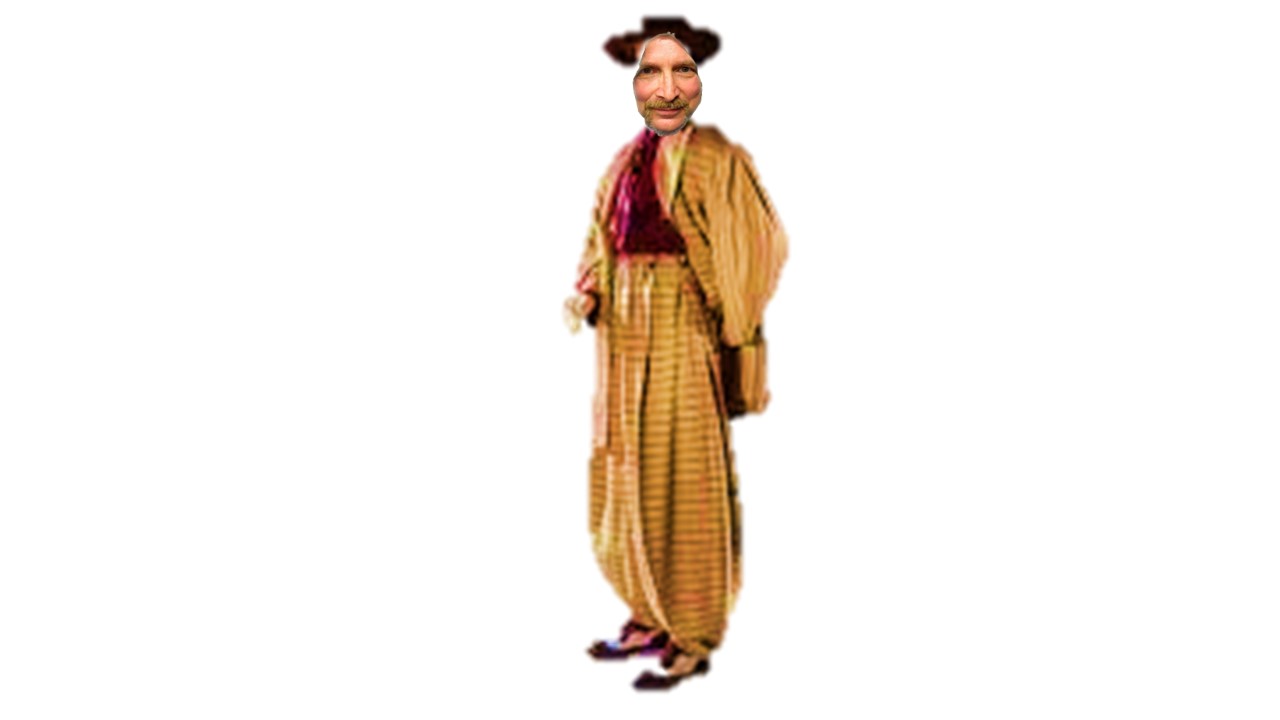
I hate men’s suits. The only suit I would ever wear would be a Zoot Suit, a satire of a suit, with fifty pockets and a banana hanging out of every one, with four ties, one atop another, each with a picture of a naked woman or a flamboyant bird. I would wear a gigantic brimmed hat with a snakeskin band, and polished, pointed shoes with tassles.
Suits are the uniform of businessmen. They are utilitarian, bland and full of pockets. Suits are the devolution of steel-plated armor, they are about protection and concealment. In these concealed pockets are contained handguns, business cards, appointment books, cell phones, credit cards, cash, condoms and keys.
Traditional Suit
Suits are the symbol of aggressive competition, but are actually disguises of said competition because their function is to be soothing and conformist.
There’s a lot of hogwash these days about reading ancient Samurai books or other pieces of oriental philosophy and applying them to the modern business world. Sun Tzu’s “The Art of War,” or Miyamoto Musashi’s “The Five Rings.” This equation between the ancient world of the warrior and the modern businessman is a bit of a stretch, spurious indeed. Sun Tzu and Musashi were men of subtlety. Their books are subtle works about archetypal activities, War and Competition. These activities are bred into the human psyche. I have no problem with soldiers and their uniforms, ceremonies, codes of honor and elaborate etiquette. I have a problem with cunning masquerading as subtlety. Subtlety is never destructive. Cunning is frequently destructive. The men who wear suits have mistaken destructive cunning for philosophical depth, and are hoping to imbibe some of this depth by reading ancient books by men of deep intuition, learning and skill.
The utilitarian suit with its meaningless tie and its muted colors is a sad descendant of the flowing sleeves and pantaloons of ancient warriors, the lacy cravat, the jeweled scabbard and its adornments.
Self expression, adornment, wildness and color are innate to the human soul. We’re in deep trouble when such natural outlets are discouraged. The hippies let adornment, eccentricity and flamboyance become a way of life. This trend can never be suppressed: it emerges in contemporary young people as tattooing, body piercing, hair coloring, all time-honored ways of adorning and decorating one’s own body as an expression of individualism.
I estimate that each of my legs weighs sixty pounds. That leaves a hundred pounds for the rest of my body. My head probably weights twenty, which leaves eighty for the arms and torso. My belly, that piece of me that surprised me totally when it arrived in the years between forty and forty five, my belly must take up sixty pounds of that remaining eighty. It’s a classic middle-aged man’s belly. It is true, I eat too much and most of that eating is done in bed. Every night of my entire life I have munched or crunched something as I read myself to sleep.
Snack Foods
My theory is that I am seeking a substitute for breast milk. My early days on this planet were not a paradise of blissful bonding between mother and child. My father tells me that I had night terrors. I tell him that if I was terrified of anything, it was my mother.
During my futile attempts to rid myself of this belly, I’ve done ten kinds of abdominal exercises, hundreds of reps daily, for months and months on end. My belly didn’t get smaller. It got bigger.
Why was I exercising my six-pack this way? What myth did I buy into? If I wanted to get rid of my belly, I should have done absolutely nothing. I should have, with the wisdom of hindsight, accepted the fact that this belly is here to stay, it’s a natural by product of aging. It just IS, and why is that so horrible? Why is everyone buying gizmos, electronic abdominal muscle stimulators? Why do they buy gimmicks with names like Abbacizers, Sixpackalongs, Abhancers? Why do people hang from bars and pull themselves up and back, up and back, or lay tilted on long boards, going up and back, up and back? There’s more than a little insanity in this vain pursuit. The obsession with the six pack is about vanity and its monster shadow, insecurity. Our culture pumps its toxic load of media venom into our collective psychic bloodstream, so that we feel inadequate if our bodies don’t adhere to some contemporary ideal of beauty. For the moment, that ideal has become horrifically thin; it forms the ironic counterpoint to the visible reality that Americans have gotten chronically fat.
We’re a culture with a lot of food. There’s never been a civilization in the history of the world with more food. It’s hardly surprising that everyone eats a lot, gets fat and the ideal of beauty is to have arms and legs so thin that you have to walk around storm drains lest you slip through the bars and get washed out to sea.
I wish we could weigh thoughts just as we weigh butter, or scrap metal. How much would my daily output of body-shame weigh? How many pounds, kilos, ounces, grams would every thought weigh, those thoughts that go, “Oh I wish this belly would flatten out, it makes me feel so unattractive, so grotesque?”
Beneath the veneer of our society a drumbeat of subliminal command roars like an underground subway train. It’s saying, rhythmically, “hate your body hate your body hate your body hate your body.” Chugga chugga chugga chugga.
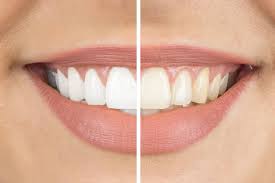
People who are at war with their bodies spend money on ridiculous products. Teeth whiteners! When did this obsession come along? Who cares about teeth whiteners? People who use them look ridiculous. There’s a blinding beam of Cheshire Cat grin every time they open their mouths, a light so blatantly artificial that it obscures the rest of the face with its message: “I am insecure and hopelessly vain. I use teeth whiteners.”
Recently I heard a radio spiel about a product that reduces shadows under the eyes. Oh my god, here we go again! The script describes the grotesque anatomical process behind eye shadows: a horrific network of bloated capillaries spreads beneath your eyes until they burst forth to spill a dark disgusting goo of congealing blood, thus producing bruised tissue, thus producing embarrassing and unsightly morning-after shadows, hanging and spreading and sagging until they’re the size of wrinkled leather saddle bags beneath your optical sockets.
Eeeeeeww! How humiliating! Burst blood vessels, bruises, discoloration? Wrinkled leather saddle bags beneath my eyes? I can’t have that!
This is how to create a market for a useless product. People will start fixating on their fatigue-shadows, examining the mirror for any hint of darkening skin. The stuff will sell like crazy, as another reason to hate one’s body darkens the horizon of the national psyche. This insanity is all about money. People who hate themselves spend more money, spend compulsively, to cover their unhappiness. It serves the interests of marketers to create a social condition in which self hatred becomes the paradigm.
I have to ask myself the question, “Which is worse, being overweight, or being guilty, stressed and ashamed of being overweight?” Which damages my health more? I think it’s the latter. I think that stressing and hating my body is more toxic than glugging down three milkshakes a day.
How many ridiculous weight-loss products bloat the bandwidth of the media empires? How many bogus concoctions feed on the fervent wish that one can lose pounds and become shapely without any effort?
I have invented my own product to add to this glut for gluttons: “Thindremeä!” Here’s the commercial, presented by a blandly attractive blonde woman in front of a red- white- blue studio set enhanced by computer graphics showing fat bodies and thin bodies arranged for before/after comparison.
“Do you dream of going to sleep fat and waking up thin? Now your dreams can come true! Two tablets of clinically proven Thindreme before bed will melt the pounds away as you sleep! The more you sleep the thinner you will get. This new miracle compound acts upon the metabolism of your slumbering body and converts fat cells using the principle of DCE, or Dynamic Caloric Extrapolation. It is a proven fact that Rapid Eye Movement sleep is an untapped source of caloric output. In other words, REM sleep is exercise! Thindreme has come along to utilize this remarkable opportunity. The more you dream, the more weight you lose! Within four to six weeks you can emerge a brand new person, thin, sexy, appealing, without any effort on your part! Forget about diet, exercise, lifestyle. You don’t need will power. Thindreme does it for you! Now you can be the man or woman of your dreams! If you order in the next ten minutes, Thindreme will double your order, and at no extra cost, will give you this free nose hair trimmer. And there’s more! We will also add to your order this stylish miniature folding piano! So pick up the phone, and order now! And remember, Thindreme is Clinically Proven.” *
(Now, the disclaimer is read quietly and quickly:)
*Thindreme (wackazone hydrochloride) can produce side effects in a significant minority of users, including blurred vision, stuttered speech, nausea, excess ear wax, demonic visions, spastic extremities, impotence, frigidity, memory loss, extreme body odor, blurted expletives, colorful flatulence, Fixed Eye Syndrome, increased hair growth on the lower back, muscle cramp, constipation, diarrhea, logorrhea, Recalcitrant Plebny, and black facial warts. If dreaming does not occur, possible weight gain is indicated.
A Product of ExCon Industries”
I’ve given up trying to rid myself of this belly. I know that a group of cannibals would find me delicious. My bicycle thighs would be a Kentucky Fried delight, the most giant Crispy ever to appear in a cannibal’s bucket.
When I compare my life to the living hell in which I see that most people exist, I feel grateful for the good life that I have. My relationship with my partner has its sick elements, to be sure, its ‘enablings’ and ‘codependencies’ (how I love this modern language of the heart’s twisted pathways). We don’t fight. If something starts to fester between us, it will come out in a talk, a gentle but firm confrontation where our fears are expressed and laid to rest.
This was supposed to be about my belly, but I can’t write about that part of my personal real estate without including all kinds of other things in my life. My belly doesn’t exist in a vacuum, it isn’t just floating around in space, a belly, without connection to the rest of the universe. My belly may be causing storms on Neptune, for as we have recently discovered, everything has a connection to everything else. It’s the Butterfly Effect. Or in this case, The Belly Effect.
My belly is a dominating presence in my life. I, who spent my youth being thin and sinewy, looking like a Hindu holy man from the hippie trail in Nepal, am now somewhat imprisoned by this entity who sits astride the center of my body. It goes everywhere with me. My vanity is not the main actor in this dismay. My vanity went out about the same time as my hair. Well, that’s not exactly true. I am concerned with how I appear to other people. The problem is, I know that the one person least qualified to judge how I appear to other people is myself. And that is a universal law. You, who think you look thus and thus to the outside world, are completely deluded. When you look in the mirror, the information you receive is so utterly tainted by your needs and dreams that you might as well be looking at a stranger. I wish people would understand this.
YOU DO NOT KNOW WHAT YOU LOOK LIKE. YOU NEVER WILL.
There are so many ingredients that go into an appearance that are invisible to the owner of a human body, that said owner should just give up. Photographs lie for many reasons. Photos capture one two hundredth of a second, and in that two hundredth of a second, an expression may be crossing your face that is otherwise invisible, so quickly do the facial muscles change with the passing of emotion. That’s why we often look odd in pictures. Videotape is in some ways even worse. I don’t know a single soul who doesn’t cringe when viewing his or herself on video. Its distortions are insidious but nonetheless real.
I say this to my fellow humans: do your best to be hygienic, wear clothes that are comfortable and that please you, and let your nature emerge, because that’s what happens anyway. Your appearance is determined by your nature. The way you look is about energy, not physical features.
Arthur Rosch is a novelist, musician, photographer and poet. His works are funny, memorable and often compelling. One reviewer said “He’s wicked and feisty, but when he gets you by the guts, he never lets go.” Listeners to his music have compared him to Frank Zappa, Tom Waits, Randy Newman or Mose Allison. These comparisons are flattering but deceptive. Rosch is a stylist, a complete original. His material ranges from sly wit to gripping political commentary.
Arthur was born in the heart of Illinois and grew up in the western suburbs of St. Louis. In his teens he discovered his creative potential while hoping to please a girl. Though she left the scene, Arthur’s creativity stayed behind. In his early twenties he moved to San Francisco and took part in the thriving arts scene. His first literary sale was to Playboy Magazine. The piece went on to receive Playboy’s “Best Story of the Year” award. Arthur also has writing credits in Exquisite Corpse, Shutterbug, eDigital, and Cat Fancy Magazine. He has written five novels, a memoir and a large collection of poetry. His autobiographical novel, Confessions Of An Honest Man won the Honorable Mention award from Writer’s Digest in 2016.
Want to be sure not to miss any of Art’s “Mind Fields” segments? Subscribe to Writing to be Read for e-mail notifications whenever new content is posted or follow WtbR on WordPress. If you find it interesting or just entertaining, please share.
The first time I grasped that I was deeply crazy was when I began to eat huge amounts of food. I indulged especially in sweets. If I were to make a pie chart of my life (and refrain from eating it), I’m sure it would show huge chunks of time in the bulimia/anorexia’ zone. The worst of my food disorders followed me through adolescence; years seventeen through twenty two. I was a “student” out in the world, trying to maneuver by being on college campuses.
I had a sneaky way of being anorexic. I deluded myself into thinking that this was a spiritual discipline. Macrobiotics. It would get me high, exalt me spiritually. By eating small portions of brown rice and onions, chickpeas in barley, I was the paragon of yogic discipline. This was who I wanted myself to be. I got skinny. I weighed 125. On top of this I was taking LSD, DMT and smoking weed. I was deep into my purpose, my destiny of becoming a musician of salvation and a figure of reverence. I hope you can hear the self mockery in my tone.
Then I came to a breaking point. After a year of eating a strict Macrobiotic diet I had such a craving for a peanut butter and jelly sandwich that I bought the ingredients and took them back to my hidey hole. “What are you doing?” I asked myself. “This is a self betrayal, this is the opposite of Macrobiotic discipline. You asshole, what a failure you are!” So I ate it. Then I ate something else sweet and gooey. Then I couldn’t stop eating every kind of junk food on the planet. I had been like a coiled spring ready to bounce. Boing!
I was so ashamed of myself. This was 1967, before eating disorders had been invented. I was a pioneer. My bulimia wasn’t the pukey kind. It was the Exercise Freakishly type of bulimia, the one where on alternate days I would purge with sweat and effort, then follow with a day of relentless eating: an entire apple pie, backed up by a half gallon of ice cream. After that came the cookies, and so forth. One day exercising. One day binge eating. Back and forth, one followed the other, for more than a year. It was insane and I knew it. I got so unhealthy that I could pull out hands full of my own hair! I looked for help. I went to the college shrink. I was desperate. He said, “I don’t know what’s happening to you and I can’t help you.”
Ironically, I lost weight. My waist was a twenty nine or thirty. I was not a registered student any more, I had dropped out. I was living in a vacant student’s quarter, avoiding the security guys and bedding down with a pad and sleeping bag. I got money from my dad. I worked as a stable boy at a local horse ranch. I had my drums stashed at the university’s music building in a practice room. I practiced there for hours every day, getting high by all means and experimenting with the limits of my technique. That was the point of not attending classes. I let my dad pay for semesters at Western Reserve and then I would slip down to Antioch College in Yellow Springs from Cleveland and hang out with people who talked to trees. I practiced with relentless vigor, working through the famous “Stick Control” book and listening to Coltrane records.
Wait a minute. I’m conflating two different periods of time. It doesn’t matter. That’s the way memory works. It’s all narrative but sometimes the pages are out of order. I find myself more objective about my life as I get older. My life has been so bizarre that it qualifies as the stuff of novels. That poor guy (that is, myself) didn’t know what lay ahead. He thought that if he took enough acid, did yoga and meditation, ate rice and played the drums then he would launch himself into nirvana. It’s not a bad plan, really. The problem was that I was fractured psychologically, harboring behaviors that would shame me again and again. They would almost kill me.
These were adolescent ordeals, but they were precursors to my future. In 1967 my eighteen year old self dreamed of cosmic unity while the biggest thing that lay ahead of me was heroin addiction. I interrogated my psyche by reading Jung and Freud. After that came years of therapy. I was determined to save myself.
It took a long time, but none of it can be repudiated. I am lucky to be alive and well.
I’m still slightly food disordered. I control, compensate, manage. Mostly I exercise and pray.
Arthur Rosch is a novelist, musician, photographer and poet. His works are funny, memorable and often compelling. One reviewer said “He’s wicked and feisty, but when he gets you by the guts, he never lets go.” Listeners to his music have compared him to Frank Zappa, Tom Waits, Randy Newman or Mose Allison. These comparisons are flattering but deceptive. Rosch is a stylist, a complete original. His material ranges from sly wit to gripping political commentary.
Arthur was born in the heart of Illinois and grew up in the western suburbs of St. Louis. In his teens he discovered his creative potential while hoping to please a girl. Though she left the scene, Arthur’s creativity stayed behind. In his early twenties he moved to San Francisco and took part in the thriving arts scene. His first literary sale was to Playboy Magazine. The piece went on to receive Playboy’s “Best Story of the Year” award. Arthur also has writing credits in Exquisite Corpse, Shutterbug, eDigital, and Cat Fancy Magazine. He has written five novels, a memoir and a large collection of poetry. His autobiographical novel, “Confessions Of An Honest Man” won the Honorable Mention award from Writer’s Digest in 2016.
Want to be sure not to miss any of Art’s “Mind Fields” segments? Subscribe to Writing to be Read for e-mail notifications whenever new content is posted or follow WtbR on WordPress. If you find it interesting or just entertaining, please share.
It was unprecedented, the gridlock on 101 at the San Rafael cloverleaf. Driverless cars are everywhere and drivers are now texting, talking and watching videos. Their indifference is striking. The vehicles no longer require attention to drive down the road. In effect, automobiles have become alternate living rooms, dens, dining rooms, even bedrooms.
The Law Of Unforeseen Consequences has won the day. No one anticipated the social impact of driverless cars. Americans don’t like them. Americans enjoy driving, in spite of their endless complaints about drive time, gridlock and Highway Patrol robocycle stops. Americans miss the power they felt at the wheels of their four ton pickup trucks.
Interviewed at the site of the traffic jam, Ernesto “Corker” Levine said this: “Driverless cars suck!” A chorus of whistles, cheers, and high fives erupted from the crowd that had gathered as drivers left their cars running and milled around on the pavement of Northbound 101. “Suck suck suck” they chanted. Many exchanged business cards and personal porn videos. This kind of traffic jam has replaced tinder as the sex market of the twenty first century.
The jam finally broke up as drivers began to smell burnt wiring. Exploding batteries accelerated the resolution of the epic backup. The farcical dummy cops were instrumental in sorting out the mess with their Skyhooks… Robotic Highway Patrolmen lifted Chevys, Oppenheimers and Teslas and deposited them helter skelter on the margins of the freeway. Owners had difficulty identifying their cars but at least traffic was moving between San Francisco and Santa Rosa. The record-breaking traffic jam extended for thirty miles in both directions. The event was covered by journalists from as far afield as Indonesia and Japan. Some have begun calling it “The Second Woodstock”. Spontaneous appearances by Blue Detergent and Jimi’s Homunculus added luster to the event.
Lead singer Denzel Spurlock testified later at the inquest for “The 101 Incident”. He said, “I know people died, but Man, the whole jam was a gas. We should do it again, soon!”
Arthur Rosch is a novelist, musician, photographer and poet. His works are funny, memorable and often compelling. One reviewer said “He’s wicked and feisty, but when he gets you by the guts, he never lets go.” Listeners to his music have compared him to Frank Zappa, Tom Waits, Randy Newman or Mose Allison. These comparisons are flattering but deceptive. Rosch is a stylist, a complete original. His material ranges from sly wit to gripping political commentary.
Arthur was born in the heart of Illinois and grew up in the western suburbs of St. Louis. In his teens he discovered his creative potential while hoping to please a girl. Though she left the scene, Arthur’s creativity stayed behind. In his early twenties he moved to San Francisco and took part in the thriving arts scene. His first literary sale was to Playboy Magazine. The piece went on to receive Playboy’s “Best Story of the Year” award. Arthur also has writing credits in Exquisite Corpse, Shutterbug, eDigital, and Cat Fancy Magazine. He has written five novels, a memoir and a large collection of poetry. His autobiographical novel, Confessions Of An Honest Man won the Honorable Mention award from Writer’s Digest in 2016.
Want to be sure not to miss any of Art’s “Mind Fields” segments? Subscribe to Writing to be Read for e-mail notifications whenever new content is posted or follow WtbR on WordPress. If you find it interesting or just entertaining, please share.
I am a janitor. I have worked at the same medium sized commercial property for thirty years. It is a job made in heaven! The pay is good, and I set my own hours. I never see my boss. We exchange emails and a check arrives monthly. The pandemic has done little to change my lifestyle. Properties tend to fall apart without the basic services supplied by cleaners and contractors. I work part time as a janitor and the other part time I stay home and practice the piano and write. My janitorial work includes maintaining two public restrooms. This requires a maximum of personal protection gear. Mask and gloves combined with frequent washing are keeping me (I hope) safe from infection.
My spouse is disabled and spends most of her day in bed. I care for her and keep supplies flowing. She suffers from COPD and Rheumatoid Arthritis. My life is not much different from the time before Covid-19. I go out less and I buy at least a week’s supplies so that I don’t have to return to the store and its dangers of exposure. Judging by the basket loads being checked out by my fellow shoppers, we are feeling much the same.
The adaptations to Covid-19 quickly normalize. I see my therapist via Skype or Doxy.me.com. I would rather see her in person, but seeing her on my computer screen offers a strange and intangible compensation. I can only call it “looseness”, i.e. I am more likely to say something awkward, which, as you may know, is the good stuff when it comes to psychotherapy. I must speak the uncomfortable truth. In this way, Covid has presented a weird therapeutic gain.
I communicate via computer and attend my weekly Senior Peer Counseling groups via Zoom. I don’t have to drive! No gasoline, no oil changes, no flat tires. No traffic! I acknowledge the vast suffering that attends this pandemic. I can’t allow my compassion to be blunted by my relative comfort. The plain truth is that Covid-19 has made my life easier.
I have been a Certified Senior Peer Counselor for three years. This effort offers support to those who are over 55 years of age. I now see my clients via all means possible, be they phone, computer, tablet, holograph, astral projection, quantum entanglement, ubiquitous electron transfer, psychic channeling or yelling out the window. Somehow, the process seems to be effective.
A couple of times a week I make my way up and down Highway 101. It’s a fifty mile round trip and sometimes the highways are virtually deserted. It’s kinda spooky! So far, my personal pandemic has been more of a windfall.
I’m 73 years old. Officially, that makes me a senior citizen. I’m active, creative, mobile, flexible, and in good health. If I tell you that this is due to my excellent personal hygiene, I would be gaslighting you with a heavy frosting of irony. I’ve been addicted to heroin, cocaine, alcohol, tobacco and other bad behaviors. I am a paradox. I have faithfully practiced yoga since the age of eighteen. There have been times when I would inject myself with a speedball, smoke several cigarettes and do a sequence of yoga postures within the same hour. I’m not like that anymore. I’ve worn out my addictions through a steady incremental process, aided by psychotherapy. There was no sudden cure, no breakthrough, just years of steady work. I AM, at last, closer to where I want to be. All I have to do is avoid suddenly dropping dead.
Count to three. I haven’t dropped dead. This means that I have a responsibility to continue writing. My mentor, the incredible KL Booth, urges me to supply essays, poems, and other material to the ongoing work of the web platform Writing To Be Read. This site is a forum for writers and provides essential exposure for those of us who don’t have the proper connections to achieve big time literary fame.
There is truth to the maxim that “You have to know someone.” There was a time when I did indeed know someone. I knew the fiction editor at Playboy Magazine. Her name was Vicki Chung. I got to know her through a series of flukes that led to my winning Playboy’s award for Best Story Of The Year. After winning that award, I was invited to Playboy’s 25th anniversary banquet in New York City, all expenses paid. A room at the Waldorf was booked for me. The banquet guest list was loaded with influential writers, editors, agents and publishers. I had gone to Nirvana. They had a wall-sized poster illustration of my award winning short story. I was courted by everyone. I returned from New York City with my pockets full of business cards. “Call me when your manuscript is ready.” They all said that.
A few months later there was a plane crash near Chicago’s Ohare airport. Most of Playboy Magazine’s literary staff was on that plane. My friend Vicki was gone. My connections were gone.
Later that year my manuscript was stolen. It was the only copy because I was making corrections. At the time I was devastated, but I now know that it was a shit novel, that it was juvenile, pretentious and hopeless. The thief saved me from gruesome embarrassment.
Pandemic? Are we in a pandemic? I think it’s more like a correction, the way the theft of my manuscript was a correction. That sounds cold, but nature doesn’t consider the will of individuals as it operates our planet. Nature does what is best for itself. Covid-19 may be nature’s response to massive overpopulation and utterly depraved management of this stately orb.
A Midwesterner by birth, Arthur Rosch migrated to the West Coast just in time to be a hippie but discovered that he was more connected to the Beatnik generation. He harkened back to an Old School world of jazz, poetry, painting and photography. In the Eighties he received Playboy Magazine’s Best Short Story Award for a comic view of a planet where there are six genders. The timing was not good. His life was falling apart as he struggled with addiction and depression. He experienced the reality of the streets for more than a decade. Putting himself back together was the defining experience of his life. It wasn’t easy. It did, however, nurture his literary soul. He has a passion for astronomy, photography, history, psychology and the weird puzzle of human experience. He is currently a certified Seniors Peer Counselor in Sonoma County, California. Come visit his blogs and photo sites. www.artrosch.com and http://bit.ly/2uyxZbv.
Arthur’s books include The Road Has Eyes, The Gods of the Gift, and Confessions of an Honest Man. His lifetime collection of poetry and photography, Feral Tenderness, is soon to be released by WordCrafter Press.
Want to be sure not to miss any of Art’s “Mind Fields” segments? Subscribe to Writing to be Read for e-mail notifications whenever new content is posted or follow WtbR on WordPress. If you find it interesting or just entertaining, please share.
I was a mess. I could smile, say hello, pretend to be okay. I wasn’t okay. I was being squeezed by a depression so ferocious that I seriously began to consider ending my life. However… I had a problem. Every time I tried to compose a suicide note I ran into a wall when I asked myself: What if my suicide note sucks?
This is a daunting challenge for a writer. First I have to ask the question: why the note? Why are suicide notes such an institution? They seem de rigeur in the traditions of suicide. Gotta have a note. You can’t leave people wondering what happened to you. This colossal egotism is rampant: we all think we’re so important. The truth is that hardly anyone cares what happens to you. I suppose the note is for loved ones; but often enough in the case of suicide, there ARE no loved ones. Or there are loved ones who didn’t behave in the desired way.
We get attached to our lives. They’re like the suits in which we live and sometimes they get threadbare. Still, they’re OUR lives. It’s no easy thing to toss aside an entire life, the whole story of how you got to this point. A note is the least one can do to summarize the effort of living for X number of years. Of surviving. It takes toughness to survive. Clearly I wasn’t tough enough to make the grade. So, it’s goodbye to friends and relatives. Such as they are.
The effort of being conscious can be arduous. The problem is that Consciousness is hard to escape. The suicide is taking an awful chance. What if things don’t end with the bang of a gun or the sting of a razor? There might be something else in the market/bazaar of consciousness waiting on the other side of that decision. Wouldn’t that be ironic?
I spend many hours each day in a state of oblivion called sleep. Isn’t death much like sleep? Isn’t it just….oblivion? I have a hard time believing in oblivion as a paradigm. It is clearly not one of the dominant features of the universe. And, if it IS: who knows or cares? That was a sly joke. I hope someone gets it. Consciousness, on the other hand, is bound to pop up again. I will experience “I-ness” or “selfness” or some form of individual awareness. I might be reborn as a sea slug. Who knows what sea slugs think and feel? It would be boorish to dismiss them as unthinking automata. Life isn’t really like that. Consciousness is all over the place. This is why I refrained from killing myself. I’m pretty sure I’ll pop up somewhere else.
The note satisfied an urge to continue being myself in spite of the intention to stop being myself. I was so depressed that I thought I couldn’t endure it. Deep down, I didn’t believe I was capable of going through with suicide. I have too much ingrained optimism. I’ve always felt that problems might have solutions, if I just wait long enough.
Every time I began to write a note in my head I would say to myself, “You’re writing a suicide note in your head. Stop it!” I would stop. The urge would arise again during the day, and again, I would tell myself to stop. I had a problem, i.e. every suicide note that I authored was utterly terrible as literature. My notes were awful! They were filled with self pity, which I have never found to be attractive. Instead of murdering myself I decided to try an anti-depressant, Lexapro. Within a week my depression had lifted. It was amazing! The horrors simply vanished. Quickly.
I’m glad I didn’t commit suicide. Life has greatly improved. I dabble with the idea of stopping the Lexapro. But…. I don’t think so. I don’t EVER want to be visited by such black depression. I’m not naïve. These thoughts and feelings are still inside me, somewhere. There is TRUTH in depression. Living is complex and the world we are given is often intolerable. It’s possible that when I hide from things, they wind up at the top of my emotional in-basket. Do I need to test the limits of my courage? I’m not brave. I shrink from the worst case. I will let these sleeping dogs stay asleep.
In spite of my Inner Wuss I have survived and even come to thrive, lo, these many years. I’m just beginning to have fun. It’s about time. If my depression is like a hibernating bear I will squirt it with some drugs to keep it asleep.
A Midwesterner by birth, Arthur Rosch migrated to the West Coast just in time to be a hippie but discovered that he was more connected to the Beatnik generation. He harkened back to an Old School world of jazz, poetry, painting and photography. In the Eighties he received Playboy Magazine’s Best Short Story Award for a comic view of a planet where there are six genders. The timing was not good. His life was falling apart as he struggled with addiction and depression. He experienced the reality of the streets for more than a decade. Putting himself back together was the defining experience of his life. It wasn’t easy. It did, however, nurture his literary soul. He has a passion for astronomy, photography, history, psychology and the weird puzzle of human experience. He is currently a certified Seniors Peer Counselor in Sonoma County, California. Come visit his blogs and photo sites. www.artrosch.com and http://bit.ly/2uyxZbv.
Arthur’s books include The Road Has Eyes, The Gods of the Gift, and Confessions of an Honest Man. His lifetime collection of poetry and photography, Feral Tenderness, is soon to be released by WordCrafter Press
Want to be sure not to miss any of Art’s “Mind Fields” segments? Subscribe to Writing to be Read for e-mail notifications whenever new content is posted or follow WtbR on WordPress. If you find it interesting or just entertaining, please share.
2020 has been an difficult year for all of us as Covid 19 turned lives upside-down. Here at Writing to be Read and WordCrafter, we saw some great accomplishments, in spite of the fact that my genre theme schedule fell apart half-way through the year on the blog and content was a little more sporadic. I had to figure out how to adjust to my own “new normal”, which life changes brought my way, but they also led me to remember who I am. Now, I’ve analyzed and regrouped, and I’m ready to head into the new year with new ideas and projects.
WordCrafter’s 2020 Virtual Writing Conference
One of the biggest things for WordCrafter was the 2020 Stay in Place Virtual Writing Conference back in April. We ended up with twenty-two distinguished authors, offering live stream and video lectures, and interactive workshops and discussion panels, with free content for the Facebook event and a Zoom platform for the interactive stuff. We had a good turn-out with only a few glitches, and we’re preparing to do it again in 2021.
WordCrafter Press releases in 2020:
Ask the Authors
In April, the Ask the Authorswriting anthology was released after two years of compilation. This book is an ultimate writer’s reference with tips and advice from twenty-two authors, and it started right here, from a 2018 blog series of the same name. In November, the print edition of this book, (and all WordCrafter Press books), became available, as well.
Two of my own books were also released. Last Call and Other Short Fiction is a collection of my short stories, and my paranormal mystery novella, Hidden Secrets, is now available in print on Amazon, but the digital edition can be purchased through other retailers. In the coming year, I will have a story in the Where Spirits Linger anthology, and I’m working on a new book, The Outlaw and the Rockstar which I hope will be ready to release before the end of 2021.
Raise the Tide
WordCrafter Press‘ first stand alone author’s book was released in December, Raise the Tide, a devotional book by James Richards. We also look forward in anticipation to adding the January release of a massive poetry collection by Arthur Rosch, Feral Tenderness, to this list.
Feral Tenderness
Writing to be Read 2020:
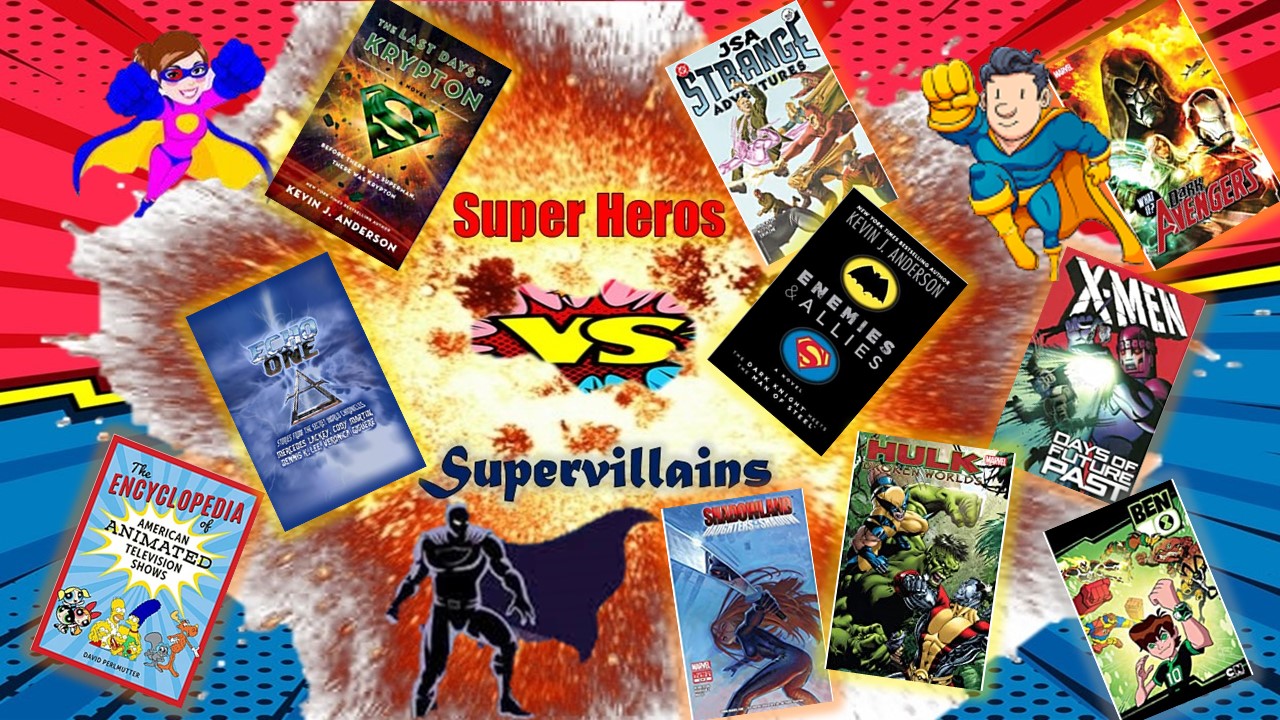
We had some great guests on Writing to be Read. On “Chatting with the Pros”, my author guests featured Diana Raab, Amy Cecil, Cherokee Parks, L. Deni Colter, and Kevin J. Anderson. I’m hoping to transform this blog series into a podcast, which can be accessed through the blog, in the coming year, and I hope you all will join me there. Other authors interviewed in 2020 included Mark & Kym Todd, Jade C. Jamison, and Alan Dean Foster. The most viewed interview was with erotic romance author Nicky F. Grant. Interviews fell by the wayside along with the genre themes, but I’m planning to bring back author interviews for 2021, and I’m working on a new blog segment, “The Authors’ Covid Coffee Clache”, which will address issues of the pandemic specific to authors.
I was also honored to be a judge for the Writers of America’s Spur Awards and I reviewed my top six picks, and the winner of the western romance category, The Yeggman’s Apprentice, by C.K. Crigger. These were the best of the best, and I was honored to be given the opportunity to read and review them.
WordCrafter Book Blog Tours
Also, in 2021 Writing to be Read will be a host for the WordCrafter Book Blog Tours, so we’ll be keeping you up to date on several new releases as they come out. Robbie Cheadle will bring us a new blog series on nursery rhymes and fairytales, “Dark Origins”, and I plan to bring in a new series, “Writer at Work”, which will talk about different issues that writers face. Subscribe to this blog with one of the buttons in the upper right-hand corner to be sure not to miss this great new content or the tried and true content of continuing series on Writing to be Read in the coming year.
Like this post? Let me know in the comments. You can be sure not to miss any of Writing to be Read’s great content by subscribe to e-mail or following on WordPress. If you found this content helpful or entertaining, please share.











































Mind Fields: Scammed Like An Idiot By Hackers
Posted: June 18, 2021 | Author: artrosch | Filed under: Commentary, Mind Fields, Opinion | Tags: Arthur Rosch, computer glitches, hackers, Mind Fields, ransomware, tech support, Writing to be Read | 5 CommentsScammed Like An Idiot By Internet Hackers Vol 3a
“This is completely crazy!” I shouted at my smartphone. I was on the verge of a panic attack. The man at the other end, in his classic Mumbai accent, replied, “No no sir, it is not crazy. Your computer is badly infected. Do you see all these people who are using your private information?”
He pronounced Private with a “W”. Priwot.
My mouse pointer moved while my hands rested in my lap. The Command Window opened and showed an ominous list of white notations scrolling down the black background. Mumbai Man had control of my computer. I could see repeated iterations of the word “Trojan”
“See there,” he said. “See, see? See how many!” I had been fighting him for at least an hour and he was losing his composure. I was stubbornly refusing to capitulate. Is this what’s called Ransomware? So it seems. I couldn’t get rid of the guy. I couldn’t regain control of my computer until I paid five hundred dollars. Needless to say, I was upset. And I brought it upon myself by doing a stupid thing.
I had already been softened up. A week ago a demanding white pop-up window informed me that my computer had contracted a virus. In order to fix it I must call Microsoft at an 800 phone number. Riiight! And there are elephants on the moon. The pop up wouldn’t go away. No restart, no Task Manager, nothing. I shut down my computer by pulling the plug. When I rebooted I got on a treadmill of Windows fix-it bubbles that went nowhere.
After a couple hours of futzing with various remedies, including a non-functioning backup program, I realized that I had to reformat my computer. That was three days of work. Such work included ransacking all of my closets and bins looking for software. Labor intensive!
Everything was fine after the reformat, my computer worked for a week. Then that same white pop up window appeared and I knew I was in trouble. I didn’t want to reformat again! Like an idiot I called the phone number. Thus an ordeal began that went on for hours. Mumbai Man insisted that he represented Microsoft. He gave me an I.D. number. He gave me a phone number for…uh..Microsoft. I got another phone and punched that number. At the first ring a man with a Mumbai accent answered. “Microsoft Customer Service” he cheerfully announced.
The voice of Mumbai Man #1 created a bizarre feedback loop because as he spoke to me on MY phone, his voice sounded one desk removed on the phone that I had used to call…er…Microsoft.. I went through the motions, juggling two cell phones. I was assured by Mumbai Man #2 that Mumbai Man #1 was a legitimate Microsoft employee. His name was…uh… Sam Taylor. I wasn’t buying it but I was losing my grip on reality. These guys were slick! They had an answer for everything. They talked and talked and their reasoning was insane. Slowly they dragged me into the upside-down world of internet thieves. They could demonstrate to me how badly messed up was my computer. They told me that even if I bought a new computer the same thing would happen because hackers lurked in my network. They told me that every computer I ever bought from this day forward would be infected if I didn’t pay five hundred dollars.
“Sir, why are you having a broblem with this?” asked..uh.. Sam Taylor, as if this were a perfectly reasonable situation.
“A broblem?” I shrieked. “A broblem? Five hundred dollars and my computer held hostage is a broblem!. I can buy a new computer for five hundred dollars!”
“Oh, but sir, the new computer will also have the same broblem if you do not take care of this right away.”
Listen, I love the accent of Indians, be they from Mumbai, Kalikot or Kerala. I love the way they sound like they have three marbles just inside their lower lip. I have adored Indian culture my entire life. However these fellows conformed to a stereotype, this was happening in the real world and in the real world most Americans expect their tech support to speak with that lilting accent. Weirdly, it added a gloss of credibility to what was blatantly incredible.
“I’m sixty two years old,” I told the thief. “Does your mother know what you do for a living? That you rob old people on Social Security?”
“Oh, sir, you are a senior citizen? Let me talk to my supervisor and see what I can do about getting a discount.”
Hmmm hmmm count to five. “Oh yes sir, my supervisor tells me that we can make the rebairs for three hundred forty nine dollars and ninety five cents.”
I gave in. I let them install their shit on my computer. Their spyware, malware, ransomware buggy shit on my computer. I gave them my credit card number. I still don’t believe I did that. Sam Taylor had turned me over to Steve Smith who worked in Billing, and Steve Smith had then given control of my computer to Richie Logan. I watched my screen as program after program was installed, operated, then uninstalled. It was spooky! I was afraid to pull the plug on the modem and shut them out. By this time I didn’t know what to believe and I had the futile hope that these guys were actually fixing my computer.
My lovely spouse had a terrible virus experience once and contacted a reputable repair company who charged her a hundred dollars to remotely fix her computer. I phoned them while my computer chattered away, rolling files across the monitor screen.
“Unplug your modem right now!” This was the order from Jeffrey Everard in Austin, Texas. He works for OneSupport. They handle situations such as the mess I found myself in. I trust them. I think.
Jeffrey worked for an hour on my computer and charged me a hundred bucks.
Barclay Bank shut down my credit card and promised to mail me a new one with a new account number. Mumbai Men had yet to run the charge and they were not going to get my money. I called all my credit card vendors. I called the bank.
This was a horrible experience. Be careful. These crooks are skillful and incredibly persistent. They are glib, slick and ruthless. They are from India, Ukraine, Thailand, Poland, Belorus and the USA. They find your knowledge level with regard to computers and they know how to convince you that they’re not lying. They twisted my head so badly that I couldn’t locate reality after spending a couple of hours in their company. Did a little alarm go off at Microsoft Headquarters notifying them that my computer was infected? I posed this vision sarcastically and they said, “Yes that’s exactly what happened!”
I am now afraid to do any browsing on my computer. I’m afraid that any program I purchase to fight malware might be the vehicle bringing malware to my computer.
I made a mistake, a dumb mistake and it could have cost me much more. It will be a while before I can relax and use my computer normally. If ever.
My hands are still shaking.
_____________________________________________________________________________________________________________
Arthur Rosch is a novelist, musician, photographer and poet. His works are funny, memorable and often compelling. One reviewer said “He’s wicked and feisty, but when he gets you by the guts, he never lets go.” Listeners to his music have compared him to Frank Zappa, Tom Waits, Randy Newman or Mose Allison. These comparisons are flattering but deceptive. Rosch is a stylist, a complete original. His material ranges from sly wit to gripping political commentary.
Arthur was born in the heart of Illinois and grew up in the western suburbs of St. Louis. In his teens he discovered his creative potential while hoping to please a girl. Though she left the scene, Arthur’s creativity stayed behind. In his early twenties he moved to San Francisco and took part in the thriving arts scene. His first literary sale was to Playboy Magazine. The piece went on to receive Playboy’s “Best Story of the Year” award. Arthur also has writing credits in Exquisite Corpse, Shutterbug, eDigital, and Cat Fancy Magazine. He has written five novels, a memoir and a large collection of poetry. His autobiographical novel, Confessions Of An Honest Man won the Honorable Mention award from Writer’s Digest in 2016.
More of his work can be found at www.artrosch.com
Photos at https://500px.com/p/artsdigiphoto?view=photos
________________________________________________________________________________________________________________________
Want to be sure not to miss any of Art’s “Mind Fields” segments? Subscribe to Writing to be Read for e-mail notifications whenever new content is posted or follow WtbR on WordPress. If you find it interesting or just entertaining, please share.
Share this: