Treasuring Poetry – Meet poet and author Jan Sikes and a review
Posted: August 12, 2026 Filed under: Book Review, Books, Collection, Interview, Poetry, Review, Treasuring Poetry | Tags: Book Review, Interview, Poetry, Robbie Cheadle, Treasuring Poetry, Writing to be Read 97 Comments
I’m delighted to welcome author and poet, Jan Sikes, as this month’s Treasuring Poetry guest. Jan is the author of a significant number of novels, novellas and short stories and she has recently published a collection of short stories and poems including contributions from her late husband, Rick Sikes, and her granddaughter, Sydney.
Welcome Jan
What is your favourite style of poetry?
My favorite style of poetry is free-form, but I do like rhyming and while I don’t know the exact terminology for this type of poetry, it follows a lyrical rhyming pattern of 1,3,5,7 etc. In other words, the first and third lines will rhyme, alternating that way throughout the poem. That’s the easiest for me to write as well. Another way I love to write is alternate rhyming 1&2, then 3&4 like we see in the Frost poem below.
What is your favourite poem?
My favorite poem is from Robert Frost – Nothing Gold Can Stay
Nature’s first green is gold,
Her hardest hue to hold.
Her early leaf’s a flower;
But only so an hour.
Then leaf subsides to leaf.
So Eden sank to grief,
So dawn goes down to day.
Nothing gold can stay.
What inspired you to publish Fringes, heartstrings and lyrics?
The inspiration started with looking at all the short stories I’d published in obscure anthologies throughout the years. I wanted to bring them all together in one book. I also wanted to include some of my late husband’s earliest poems from the 1960s and then as the project came together, my granddaughter shared some of her poetry with me and I was gobsmacked! In the process of gathering material, I found some my own poems that had never been shared anywhere, so I included them as well.
What is the meaning behind fringes in the title?
Since some of the short stories were dystopian or ‘dark’ the Fringes in the title is meant to depict that section. Sometimes what happens on the fringes is powerful and moving. That was the intent for using that word in the title.
What is your favourite poem in this collection?
I have several favorites, but if I had to choose only one, I’d choose “Society” written by my granddaughter. It is very deep for a fourteen-year-old girl. It is truth!
Welcome to society
We hope you enjoy your stay
You can do anything you want
As long as you do it our way
You can like any guy
As long as he’s 6 foot 2
He must have ocean blue eyes
And a six-figure business too
Here in society, people are the same
‘Cause if you’re different you’re weird
You’ll sit at a table all alone
Kids will laugh and point and sneer
Our government sucks but you can’t revolt
There’s this cage we call a jail
You just have to sit and suffer
So try not to slip up and fail
And please feel free to be yourself
As long as it’s in the right way
Because in society, things work differently
Every single day
Welcome to society
We’ve got one last trick up our sleeve
The last important rule here
Is that you can never leave
My review of Fringes, Heartstrings and Lyrics by Jan Sikes
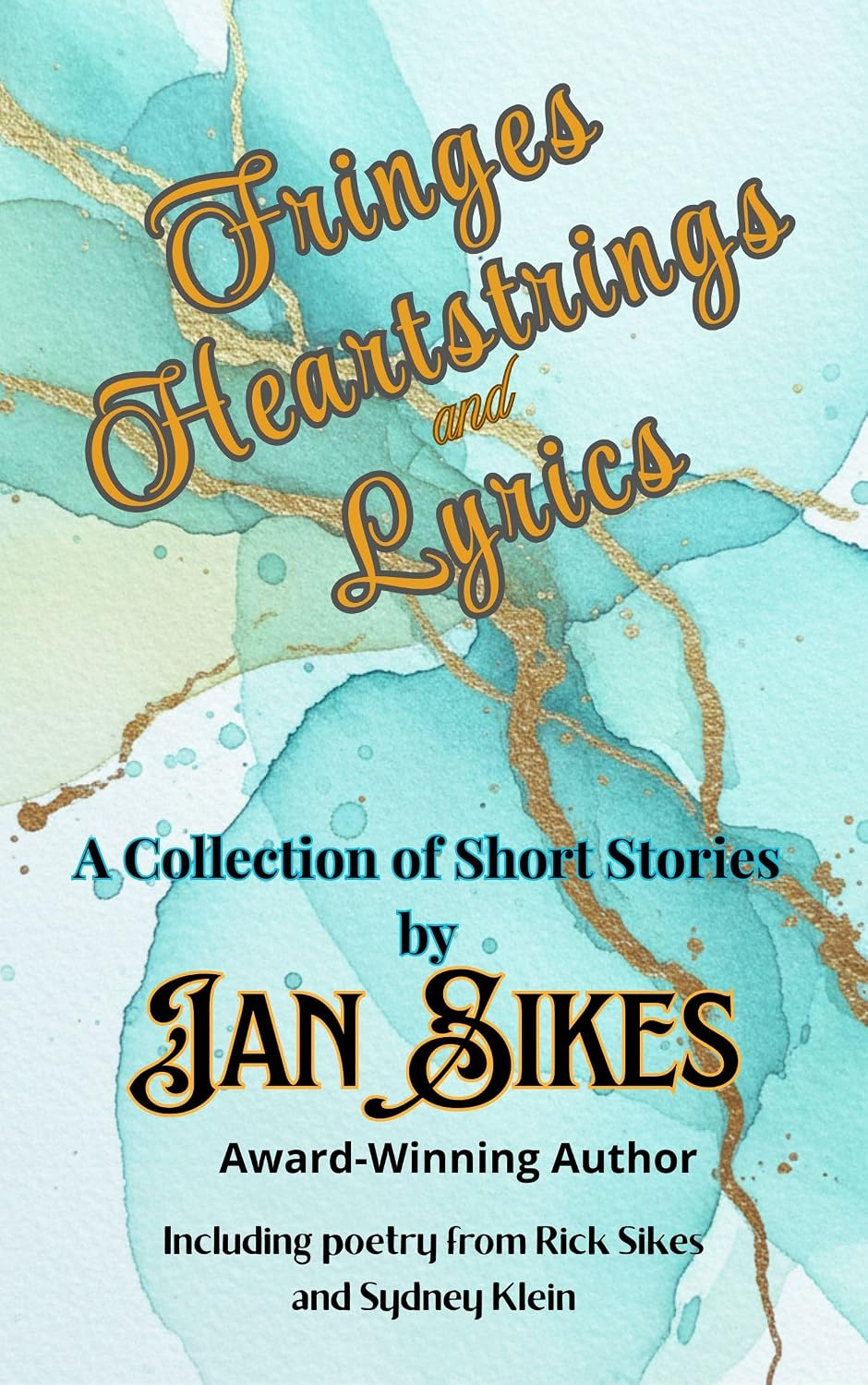
This is a varied and interesting collection of short stories and poems by Jan Sikes with poetry contributions by her late husband, Rick Sikes, and her Granddaughter, Sidney. The stories transition from darker tales to lighter ones with the first grouping being mainly bleak dystopian outlooks where love and kindness are the only remaining hope.
Each of the three poets contributes thought provoking and beautiful poems about life, love, and human perspective. I enjoyed each and every poem.
An overview of three of my favourite stories follows:
The Forgotten – This is an imaginative and unique story about a race of people, the Egluna, on a planet that has not seen the the sun for many moons. The people have become as wasted and colourless as their planet and have lost hope. New hope returns in the form of two vibrant and colourful creatures, one male and the other female, called ‘Fresh Ones’. The pair have powers and are able to reinvigorate the dying plant life on the planet. Will the couple be able to rejuvenate hope in the future for the Egluna too. I enjoyed this interesting take on climate change and its potential consequences.
A Promise Broken – A Promise Kept – While this story stands alone, it is also the backstory for a character who reappears in one of the author’s novels. I have read the relevant novel and was delighted to come across this character in her younger years and learn about her past and how it shaped her present in that novel. Charlotte’s story is one of strength, resilience and maturity.
When Love isn’t Enough – This is another story about difficult decisions arising from rebellion due to an overbearing and inflexible father. Riley is fortunate as she has a friend she can confide in and get good advice from but ultimately she has to make the right decision herself. This story has an interesting and unexpected ending.
The poem that resonated with me the most is called Too Dark and is by Sydney. This poem tells of the reaction of the poet’s mother and family to a dark poem that she is proud of. Her family are shocked at the poems darkness. I related to this because my son writes poetry and it is also very dark. I am always a bit shocked by the darkness of his views and thoughts on life and society. I think all the negative social media and press is having a negative impact on youngsters and making them feel hopeless. It is something the older generations needs to be aware of. We need to avoid complaining about what a bad state we think the world is in as it has a bad effect on our children and grandchildren.
An interesting collection that is well worth the time investment.
Purchase Fringes, Heartstrings and Lyrics from Amazon US here: https://www.amazon.com/Fringes-Heartstrings-Lyrics-Jan-Sikes-ebook/dp/B0GRWQC3SH/
Find all of Jan Sike’s books on Amazon US here: https://www.amazon.com/stores/Jan-Sikes/author/B00CS9K8DK
About Jan Sikes
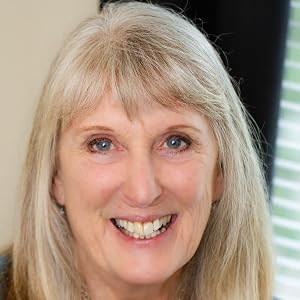
I’ve been an avid reader all my life. There’s nothing I love more than losing myself in a story.
Oddly enough, I had no ambition to be a writer. But I wound up in mid-life with a story that begged to be told. Not just any story, but a true story that rivaled any fiction creation. Through fictitious characters, the tale came to life in an intricately woven tale that encompasses four books. Not satisfied to stop with the books, I released music CDs of original music matching the time period of each story segment. In conclusion, to bring the story full circle, I published a book of poetry and art. I was done.
Wrong!
The story ideas keep coming, and I don’t intend to turn off the creative fountain. I have now written numerous short stories, a series of paranormal romances and a series of historical fiction.
I love all things metaphysical and often include those aspects in my stories.
I am an dedicated fan of Texas music and grandmother of five beautiful souls. I reside in North Texas.
About Robbie Cheadle

South African author and illustrator, Robbie Cheadle, has written and illustrated sixteen children’s books, illustrated a further three children’s books, and written and illustrated three poetry books. Her work has also appeared in poetry and short story anthologies.
Robbie also has two novels and a collection of short stories published under the name of Roberta Eaton Cheadle and has horror, paranormal, and fantasy short stories featured in several anthologies under this name.
You can find Robbie Cheadle’s artwork, fondant and cake artwork, and all her books on her website here: https://www.robbiecheadle.co.za/
________________________
Did you know you can sponsor your favorite blog series or even a single post with an advertisement for your book? Stop by the WtbR Sponsor Page and let me advertise your book, or you can make a donation to Writing to be Read for as little as a cup of coffee, If you’d like to show your support for this author and WordCrafter Press.
__________________________
This segment of “Treasuring Poetry” is sponsored by WordCrafter Press and the Poetry Treasures series.
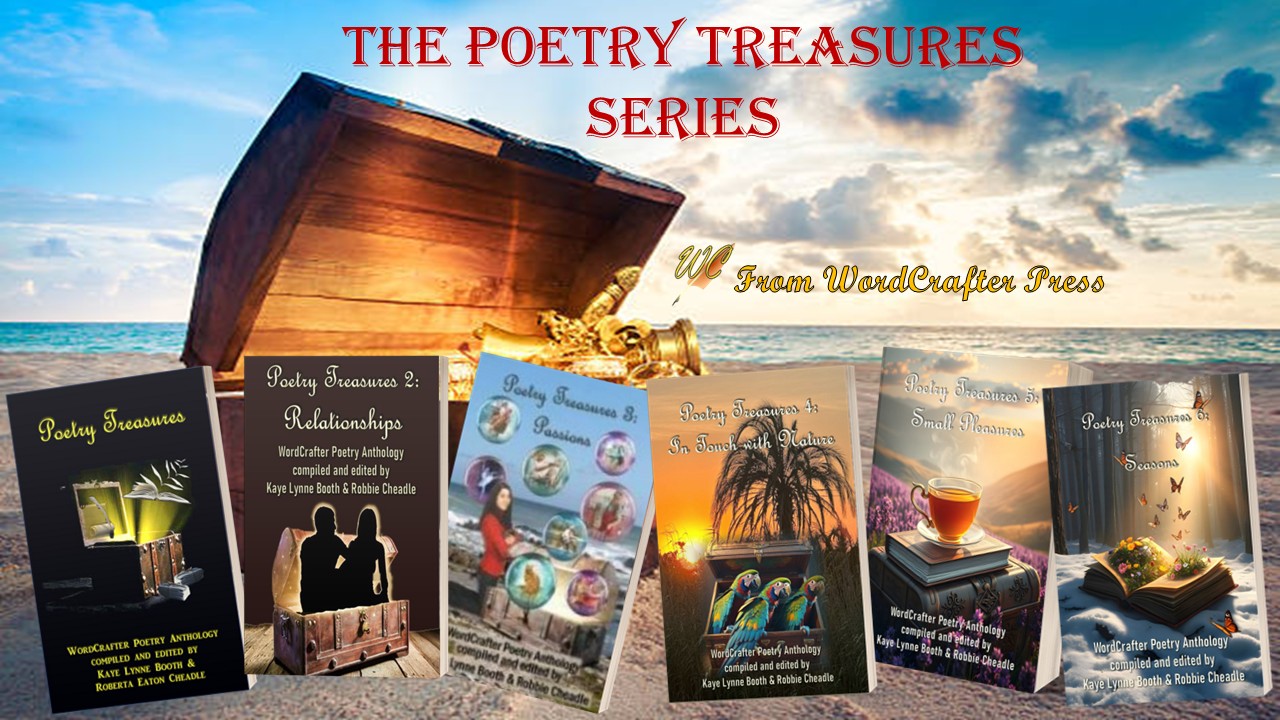
Get Your Copy Today!
Poetry Treasures: https://books2read.com/PoetryTreasures
Poetry Treasures 2: Relationships: https://books2read.com/PT2-Relationships
Poetry Treasures 3: Passions: https://books2read.com/u/b5qnBR
Poetry Treasures 4:In Touch With Nature: https://books2read.com/PT4-Nature
Poetry Treasures 5: Small Pleasures: https://books2read.com/PT5-SmallPleasures
Poetry Treasures 6: Seasons: https://books2read.com/PT6Seasons
Share this:

Chatting with New Blood: David Deane Haskell
Posted: July 20, 2026 Filed under: Book Review, Books, Fiction, Hard Science Fiction, Interview, Nonfiction, Review, Science Fiction, Writing | Tags: Author Interview, Book Review, Chatting with New Blood, David Deane Haskell, Kaye Lynne Booth, The Solarian Deep, Writing to be Read Leave a comment
I’d like to introduce you to the most recent addition to the WordCrafter Press author tribe. David is an independently published author, who has published at four novels, short stories and a memoir. He has recently agreed to be a contributing author for the Ask the Authors 2027 writing reference anthology, which earned him a place on the new WordCrafter Press Author Tribe page, and here, I’ve enjoyed the opportunity to get to know him better.
About Author David Deane Haskell
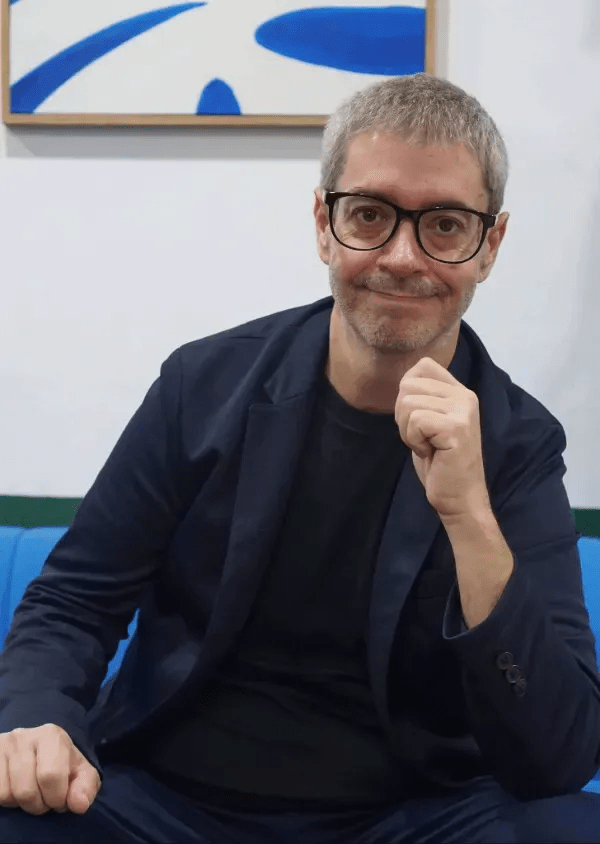
David Deane Haskell writes about what it means to make sense of a world that doesn’t come with instructions—and that none of us make it through unscathed.
His work explores that reckoning—through failure, obsession, and the slow reconstruction of the fractured self. Across speculative fiction, memoir-driven essays, and recovery-centered writing, he returns to outsiders, seekers, and wounded people trying to become whole without abandoning the parts of themselves that helped them survive.
He is drawn to stories of evolution under pressure: societies reshaped by artificial intelligence, people unraveling within systems they don’t understand, and the lonely, wrenching but ultimately beautiful work of learning to listen to the heart.
Blending emotional honesty with speculative reach, his writing moves through technology, spirituality, trauma, and imagination to explore shame, connection, creativity, and the lifelong process of becoming you.
My Interview with David Deane Haskell
Kaye: Let’s start with a bit of backstory. Tell us about your writer’s journey and how you became an author.
David: My writing journey started in a real way in college, when I took a creative writing class. Before that, I always thought that writing was all about the rules, never really imagining that I could write fiction. I figured that was for special, highly trained “novelists.” Instead, I played music, and that was my creative outlet. But I loved books and movies, especially sci-fi. I just never thought that I could tell my own stories.
That creative writing class was very free and open, the teacher a really chill grad student. He was open to whatever creative ideas we might come up with. And I just started writing what I felt like, and sort of aimed to shock the class when it came time to share. I wrote for reaction, which was the first time I did so, and I did get some really interesting feedback. Not everyone in the class liked it, but some did.
And that was the spark.
Then, I didn’t really do much for a while. Publishing seemed beyond daunting. You had to go through all the gatekeepers and face rejection at every turn, all that unappealing nonsense. But the Kindle explosion happened in the early 2010s, and I decided to get in on it, not really thinking that it would become the life passion it has for me.
I published my first full-length novel in 2013, Too Much Information, and three more in short order. Emergence was the last of that early stage, published in 2019.
By then I was going through a lot emotionally and spiritually, contending with trauma and addiction issues which were threatening to ruin my life. That caused a five-year writer’s block from 2019 to 2024. I couldn’t write a thing worth keeping, couldn’t really tell you why, and wondered constantly whether I should just give up.
But I couldn’t.
Finally, right around the new year in 2024, the block ended. Just like when I was blocked, I couldn’t tell you why I wasn’t anymore. I just wasn’t. And I started writing more than ever before. It really was pouring out of me, fiction and nonfiction. Wasn’t how I planned it, but it was a new phase of my career in almost every way.
Since that time I’ve published two books. The Solarian Deep, a first-contact sci-fi about transformation and societal upheaval, set in a post-apocalyptic undersea society known as ‘Technoquatics’. I also published Wounded Angels: A Memoir That Lights the Path to Your Own Inner Child Healing. This is a real-time record of the emotional and spiritual healing work I was in the thick of in the summer of 2024, written as it happened.
Kaye: I read and reviewed The Solarian Deep, which is Book 1 of the Technoquatics series. Tell us about that book and the plan for the series, if you would.
David: The Solarian Deep originally started as a serialized novel. This was early in 2024, when I was just getting back into writing, and wanted to get back in the game quickly. I didn’t want to sit in a room for a few months, write a novel, and publish it like before. I decided to put it out a chapter at a time, for reader feedback and also as a motivational reason to keep writing.
Because I was writing it chapter by chapter, I really didn’t know where it was going to end—and it went all kinds of places that I wasn’t expecting.
It’s a story of transformation and transition, a story of those who underestimate themselves, consider themselves unimportant—but who have more to offer than they ever realized. How a handful of beings can have a profound impact on entire societies.
It also gets into how we get along, dealing with the mysterious other, and how emotions like fear, wonder, confusion, and loyalty play into these actions and reactions.
All of that set in a post-apocalyptic, under-the-sea world with lived-in technology and things that appear magical at first glance, but ultimately turn out to be more natural, more evolutionary, than anyone could have imagined.
The series, I can’t say too much about, because like in first first book The Solarian Deep, I am adjusting as I go. I have started book two and I can tell you that it’s far more expansive. From a small part of the world with two opposing, city-sized societies, book II opens up the world to our characters, and they are now travelers, seeking others who are evolving in mysterious, inexplicable ways. Not just two societies anymore, nor are there just one or two ways the evolution is unfolding. So, I can promise you that the transformations you read about in book I are just the beginning. More will be revealed on that front as the publication date draws closer.
Kaye: I also read Tommytune, which is just a very short story. Are you using that brief tale like a reader magnet? How effective has that been?
David: I didn’t really plan for Tommytune to be a reader magnet. Although on daviddeanehaskell.com you can read it for free, along with one of my novels, Emergence. So you get a whole book, and also the short story, but the reasoning is a bit different.
Because Tommytune is actually the beginning of a brand new series that I’m working on, the Resona series. The Vibrants is Book 1 of that series, and Tommytune is a stand-alone story set in the same place and time, with a couple of the key characters you’ll get to know much better very soon.
Kaye: Why do you choose to write hard techno-science fiction, as opposed to other genres you might write?
David: I never really chose what to write. I was always a sci-fi guy. When I was a kid, I was a Star Wars and Star Trek guy. My reading was Asimov and Arthur C. Clarke and the like. So, I naturally gravitated in that direction.
Michael Crichton is a big influence as well, so the techno-thriller side of things appeals to me. Sometimes I write very near future, or even what could essentially be present day. I don’t really write anything set in the past. The only things I write about the past are my nonfiction works, and that’s just the way it’s turned out.
I’m not saying I would never write some medieval jousting novel or something like that. I just haven’t so far.
When it comes to hard techno-science fiction, I think it has to be plausible for me. I love fantasy. I’m a big Star Wars guy, so I’m into the Force and all of that, but that’s mystical and magical. And I do think I’m starting to lean into spiritual writing in a sense.
But for the most part, if I write science fiction, it needs to be something I can explain in my own head. It needs to feel plausible. So, I don’t write a lot of distant-future stories. I don’t write a lot of faster-than-light travel or alien civilizations.
It’s more about what Earth might look like in 20, 50, or 100 years and what might be going on with us then. Maybe that’s because I’m trying to figure out my own future and what that looks like for all of us. Something along those lines.
Kaye: What is the best writing advice you’ve ever received?
David: I don’t know if I received this as writing advice directly, but I’ve heard it many times, and I’m a big believer in this: There Are No Rules
You can write anything. It’s limitless. Literally limitless.
And yet I do limit myself more than I’d like to. I’ll think, you know, you can’t say that or you can’t do this. And as I said, I don’t really write fantasy too much. But I could. Sure, I could write about a magical world or an absurdly skewed morality structure, maybe. Maybe a universe wher propr spelin gehtzuu da deth pennnalteee.
Or a book where all the various thoughts just sort of wind up…
Only to go off in another direction and then…
It could be abstract. It could be chopped up. It could be scenery-based with very shallow characters, or in-depth character examinations without much of a world around them. Real or unreal, or something in-between. I can change it all in the middle, from real to absurd, or vice-versa. I could edit the beginning and the end and leave the middle in free form (not recommended, perhaps, but I *could* .. heck, that’s a lot of what jazz music winds up looking like when you really come down to it).
I may have coined the phrase “nom-fiction,” nominally fictional, where it’s kind of reality, but not really. It’s my reality, but of course that’s in my head, right? Other people perceive what’s going on differently than I do, so why should that be any different in the writing? What is ‘fiction’ anyway? What is it in a post-truth world? What is it when powerful forces utilize psychological propaganda on the masses?
So yeah. There are no rules. Go from there if you’re feeling creatively stuck, anyway, and it might just break the shackles.
Kaye: Which do you enjoy writing most, heroes or villains? Why?
David: Heroes, actually. Or at least, the protagonist. Although my main characters and their compatriots aren’t so much heroic as defiant. Struggling to make sense of an unfair system or a massive machine they can’t even begin to figure out how to contend with.
The struggle against ‘the powers that be’ is a big theme in my stories. The little guy who’s getting stepped on by the mega-corporation, the odd one out who isn’t allowed to be themselves, as the ‘normal ones’ try to force them to conform, and punish them when they don’t. He sticks it to them in the end. So, it’s not exactly a hero, just one of us, trying to figure out how to get by in this vast, confusing world, with Machiavellian stuff going on that they can’t even wrap their head around. Until something shifts the balance in their favor, and they just might have a chance to make changes after all. But there are powerful forces out there who like things just the way they are, thanks very much, so it’s never as easy as deciding to “stand up for yourself”.
This parallels my own life and past experiences with trauma, being scapegoated, and being an introvert in an extrovert-friendly world, and extends into my attempts at making it as an indie publisher in a rough game which rewards loud, confident voices and bold moves.
I wrote about that directly in my second novel, The Gold Club, which might be a bit of a “David’s Fantasy outcome” story when it comes to how I’d like my work to be received, accepted, and ultimately judged on its own merits, rather than how easily I can manipulate the algorithm on TikTok!
Ted Ward, the main character in that book, does just that. Finds a way to beat the system, or try to at least—and that kind of hero is my kind of hero.
As for the villains, I try to make them real. I don’t really get into the mustache-twirling, “ahaha, I’m a bad guy because I’m a bad guy!” kind of thing. I like to think about their perspectives. Why are they doing what they’re doing?
And that often comes from damage and harm, the same as for the heroes. Hurt people hurt people, as they say.
Again, I write a lot of healing stuff, trauma-related stuff, addiction and recovery, inner-child work, and spiritual healing work on my nonfiction side. So, I think more and more that’s getting integrated into my fiction as well. So, in a sense, especially in my recent books, there isn’t so much a bad guy per se, or if they are, there are reasons. Reasons I hope my readers can really relate to.
There is a lot of that kind of speculation in The Solarian Deep. Even more of it in Tommytune and the full-length novel it comes with, The Vibrants.
Kaye: What kind of research do you do that might be specific to your stories?
David: Well, I’m not sure that I do any specific research per se, but I do like technology a lot. I’m really amazed at the leaps and bounds that technology has taken in my lifetime.
Since I was a kid growing up in the 70s and 80s, through the era of the first personal computers, I’ve been fascinated by it. My dad had a computer, and I was into playing computer games. Later on, I got into software and technology-related interests. It’s always been on the side. I never worked in computers or anything, but I was always interested in robotics and AI.
So, seeing the future unfold in front of us now is a sort of research in itself. I watch those tech YouTube channels all the time, and I’m sure I get ideas from them.
The biggest thing for me now as a sci-fi writer is trying to stay ahead of the wave.
I’ll write something, and then reality catches up. Emergence is a perfect example, the novel that I give away for free on my website. I wrote and published it in 2019, and it’s about robot sentience, or androids if you will. I think I got a lot of things right, and some things wrong. One thing that surprised me was the idea that it might be code, software, or even drones that become more important than physical robotics.
So, my science fiction in 2026 is evolving in that direction.
What fascinates me most is not the technology itself, but how society reacts to it. The rift between people who are concerned about these technologies, people who fully embrace them, and people who fall somewhere in between is endlessly interesting to me.
In that sense, watching companies, governments, and AI organizations interact in real time is research of the highest order. Seeing these dramas play out, the conflicts, the fears, the incentives, the power struggles, that’s absolute gold for my fiction writing.
Kaye: What is the best advice you have for aspiring science fiction authors?
David: The best advice I would give an aspiring sci-fi writer is the same as I mentioned before, the best advice I ever got: there are no rules.
People might argue with that and say you should do it a certain way. You should write to market. You should be careful to edit this way or that. Don’t use slang. Don’t use bad language. Follow this structure. Hit this beat. Avoid this mistake.
But man, if you don’t like periods and commas, then leave them out. See how it goes.
If everybody who reads it says it bothers them, then it’s up to you whether you keep writing that way. But if some people say, “Wow, this is really revolutionary. I love reading stuff without periods and commas,” then you’ve really done something, haven’t you?
I’m not brave enough to go that far in my own writing, at least not yet. But I do hope that I’ll become more outside the box rather than less as I go along.
Kaye: You also have written a memoir, Wounded Angels. Would you like to tell us a little about that?
David: Wounded Angels is very dear to me, and it was difficult to publish because it was an extreme act of vulnerability to put something so personal out into the world.
I do think it’s an important book for people who are struggling with trauma, abuse, addiction, rejection, isolation, and many of the other challenges that can leave us feeling disconnected from ourselves and others. All of that is in the book.
It also circles back to my fiction writing in a very deep way because I believe that, both personally and as a society, we need to learn how to heal. We need to learn how to take better care of ourselves, how to get well, so that we can help each other and show up more fully for the people around us. And when more people begin that process, maybe things start to improve.
But it starts with one person.
I’ve always found inspiration in people who have overcome great difficulty, and hopefully the emotional trauma that I am working hard to overcome can inspire others to start looking at their own struggles and finding their own path forward.
That’s what Wounded Angels is all about.
Kaye: Thank you for being my guest today, David. It’s been a pleasure chatting with you. Before we go, tell us where readers can go to find out more about you and your books.
David: Thank you so very much for allowing me the opportunity to sit for this interview with you. It’s so important to connect in this way, and I am really grateful for your efforts in our community!
You can find me easily on my website, daviddeanehaskell.com – with links to all my online activities, my Amazon author page, and my Substack fiction short stories and nonfiction essays (all free!) right there on my website. I also offer free stories there, including a full-length sci-fi novel you can download and keep forever.
Podcast interviews, essays, and other work are easy to find if you Google “David Deane Haskell,” but make sure you include my middle name. There is another David Haskell out there — David George Haskell — who is a Pulitzer Prize–finalist biologist and nature writer. So if you search only “David Haskell,” you may find him first. For my fiction and inner-child healing work, search my full name: David Deane Haskell.
All of my books are also available on Amazon in paperback, ebook, and other formats. And if you have Kindle Unlimited, several of my books are available there as well, including Too Much Information, The Gold Club, Dark Alignment, and of course, The Solarian Deep.
My Reveiw of The Solarian Deep
I received a free digital copy of the Solarian Deep, by David Deane Haskell from the author in exchange for an honest review. All opinions stated here are my own.
Calistya and Krystal are best friends at the school for orphaned girls, but the administration feels Krystal, who has a history of trouble, will be a bad influence on Calistya, who has a promising future ahead of her; one which would not normally be available to under privileged orphan girls. They might be surprised to know that it’s Calistya taking the lead and leading her friend into the forbidden Deep, where she discovers an aquatic boy who shouldn’t exist, but does. Even after the girls are separated, Calistya is driven to continue her forbidden forays to find the mysterious boy, until she suddenly disappears beneath the ocean floor.
When Krystal goes missing, as well, the whole community falls out in search of the missing girls, which are not the first disappearances of this kind. It seems the answers to what’s happening now, lie in the events of the past, which no one can seem to remember. When the mysterious aquatic boy shows up in the city, wrecking havoc wherever he goes, it brings the two communities to the brink of war.
The technologically advanced, aquatic world, built post-human-civilization-collapse, which Haskell has created is rich with both human and aquatic creatures, once thought to be mythical. Both civilizations are fearful of the other, but through the actions of two girls and a merboy, they discover perhaps they aren’t so different after all.
Haskell has envisioned a wonderful world and brought it to life with vivid clarity. I give Solarian Deep four quills.

About Solarian Deep
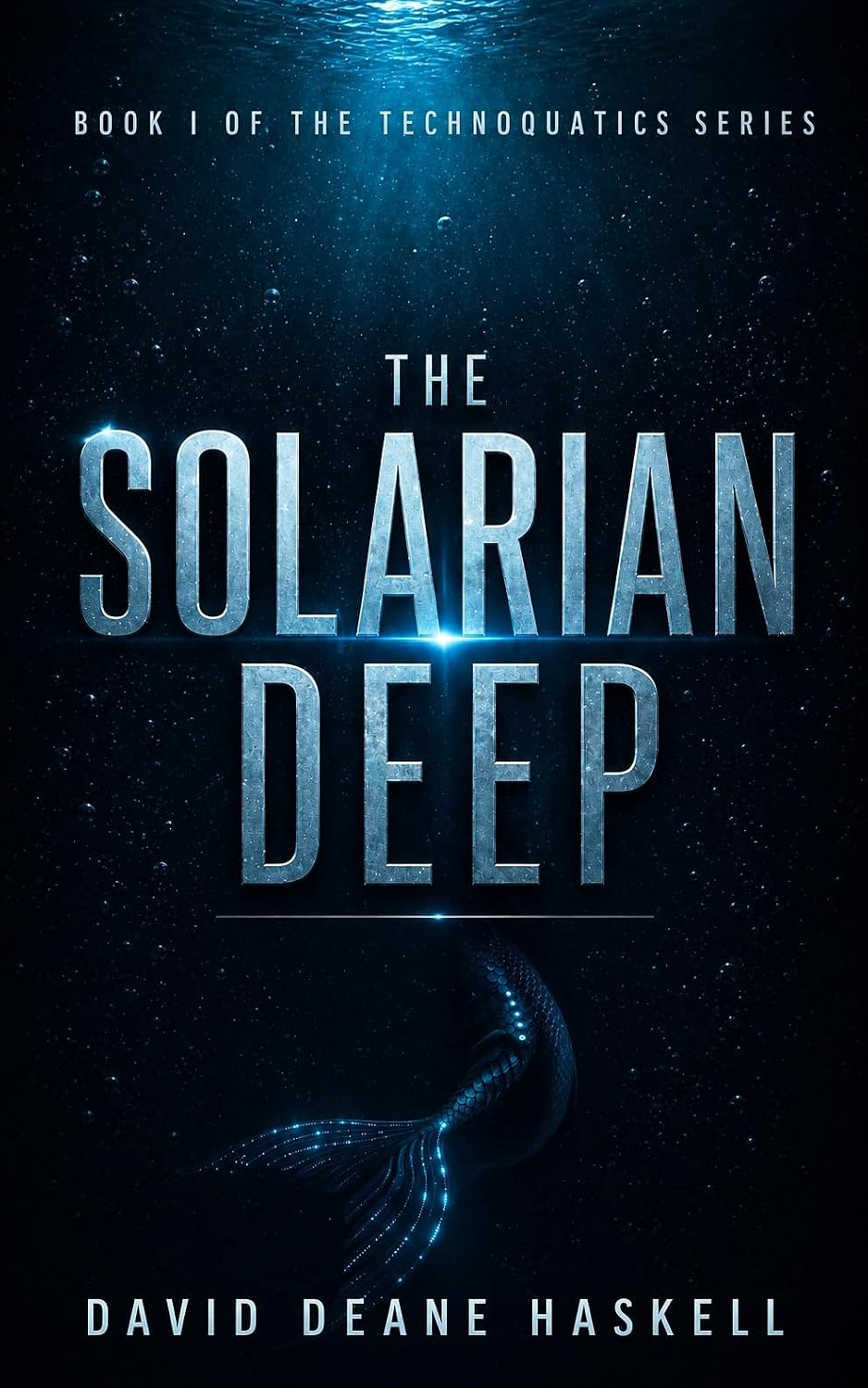
Humanity didn’t flee to the ocean. It was built for it.
Calistya is a groundwalker — half-adapted, half-committed, priced out of the Full-Gill Enhancement that would make her whole. No gear, no limits, no more being told she swims like she doesn’t belong. Just the open ocean, endless and free.
She can’t afford it. She’s an orphan. That’s just life.
Until the day she dives too close to The Deep.
Below the city’s light, at the edge of the abyss where sentinels don’t go, she sees a boy. No oxygen rig. No surgical scars. No implants. Just skin, and something about him that shouldn’t be possible.
He shouldn’t exist.
He looks at her once. Then he’s gone.
When her best friend Khrystal vanishes into the abyss chasing the same impossible truth, Calistya faces a choice: stay safe inside a city that was never quite home — or dive deeper than her gear was ever designed to reach.
Down in the dark, she’ll discover that evolution didn’t wait for surgery.
And whatever came first is still down there. Watching.
Purchase Link: https://www.amazon.com/Solarian-Deep-Book-Technoquatics-ebook/dp/B0GPN8DBJS/
_________________________________________
Did you know you can sponsor your favorite blog series or even a single post with an advertisement for your book? Stop by the WtbR Sponsor Page and let me advertise your book, or you can make a donation to Writing to be Read for as little as a cup of coffee, If you’d like to show your support for this author and WordCrafter Press.
_________________________________________
This segment of “Chatting with New Blood” is sponsored by the My Backyard Friends Kid’s Book Series and WordCrafter Press.
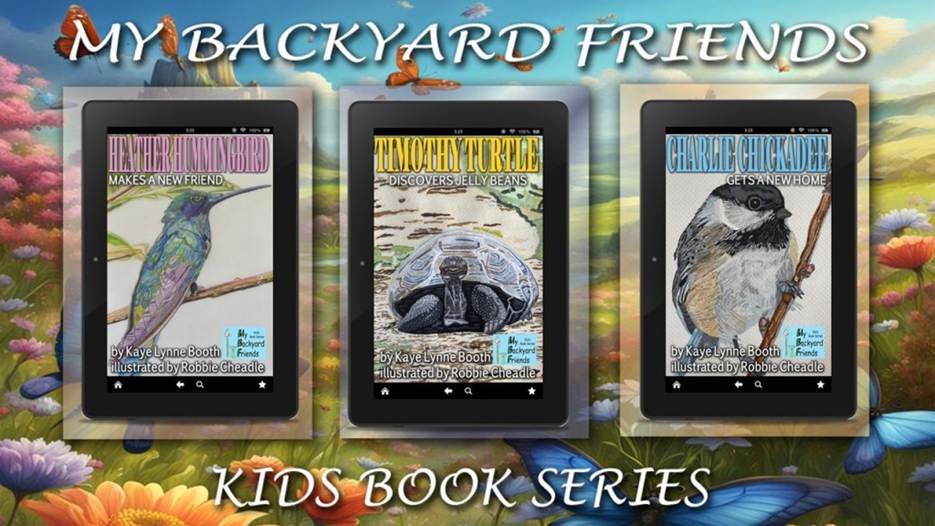
The My Backyard Friends kid’s book series is inspired by the birds and animals that visit the author Kaye Lynne Booth’s mountain home. Beautiful illustrations by children’s author, poet, and illustrator, Robbie Cheadle, bring the unique voices of the animal characters to life.
Get Your Copy Now.
Heather Hummingbird Makes a New Friend (Ages 3-5): https://books2read.com/MBF-HeatherHummingbird
Timothy Turtle Discovers Jellybeans (Ages 3-5): https://books2read.com/MBF-TimothyTurtle
Charlie Chickadee Gets a New Home (Ages 6-8): https://books2read.com/MBF-CharlieChickadee
Share this:

Treasuring Poetry – Meet poet and blogger Nigel Byng and a review
Posted: July 8, 2026 Filed under: Book Review, Books, Collection, Interview, Poetry, Review, Treasuring Poetry | Tags: Book Review, Interview, Nigel Jerome Byng, Poetry, Robbie Cheadle, The Drifter The Prodigal The Last Son, Treasuring Poetry, Writing to be Read 81 CommentsToday I am pleased to introduce you to prolific poet and supportive blogger, Nigel Byng. In addition, to writing his own poetry and collaborating with other poets, Nigel has a series where he reads poems by poets in the WP community in his amazing voice. They are a real treat to listen to and you can access his reading of one of my poems on his blog here: https://hytsdaily.com/2026/06/13/exploring-poetry-a-weekly-reading-series-ep-22-dressing-for-battle-by-robbie-cheadle/
Welcome Nigel
Tell us a bit about Nigel Byng and his poetry journey
My poetry journey started in the UK, surprisingly. Heartbreak was at the core of every piece I wrote. It was dark, bitter, humorous at some level, and certainly not something I would have ever dared publish. I had given up on poetry for two decades, until Terveen Gill accepted a piece for Masticadores India. Then David Bogomolny invited me to engage with his W3 prompt, and I began to enjoy the weekly writing challenges. I still have a lot to learn about poetry, and I still consider myself primarily a storyteller.
What is your favorite style of poetry to write?
I enjoy a good limerick, but my favorite style would have to be narrative poetry. The storyteller in me needs room to be expressive, and narrative poetry allows me to write with a compelling arc or even have a central character in the piece. Concise writing and ambiguous verses have proven to be a challenge. Hence, I have taken to studying the art form and writing about it for Exploring Poetry. Some people have the gift for it and make it look easy, but it still takes a lot of work to get to that level of writing. I sit back and bask in their supreme talent. I have a long way to go.
What is your favorite of your own poems?
Ghetto Salvation, first shared on Masticadores Philippines, is perhaps my favorite poem. I enjoy my collaborations with the talented authors on WP, but my personal favorite is definitely Ghetto Salvation. For several reasons, the piece just felt like my most profound, emotionally perceptive, and socially conscious piece. It was written in the spur of the moment, and in a language that I think everyone could relate to. I did not want victimhood and depravity to be what everyone felt when they read it; I wanted them to sense defiance, a part of society where culture thrives, where a community was pursuing its own salvation, and so I began the piece with the line, “There is music coming from the ghettos.” A close second would be the central poem in my book, Prodigal.
Ghetto Salvation by Nigel Byng
There is music coming from the ghettos,
rising above poverty and the rumble of hungry bellies.
Of whelping babies hanging from a single-armed warrior
who stirs a pot of rice and beans
to feed an army.
***
A music fueled with resistance.
Of clefs that drift off the page,
and notes that lay siege to a barricaded salient city.
Where children with
swollen bellies,
ashen knees and dusty feet
play soccer to a rhythm only poverty can dance to.
***
Armored cars patrol the slums, armor-piercing rounds
perforate walls,
while shrapnel becomes playthings
of toddlers yet to walk.
Where nightlight
is the ambient glow of distant cluster bombs,
stargazing a hazardous hobby
as missiles create ghostly shooting stars.
***
A single horn blows the sound of freedom
and plastic buckets tap the rhythm of salvation.
Children huddle under the broken light
above the church door
and women swat at mosquitoes
as babies suckle for their very existence
nutrients devoid of sustenance.
***
Here, God has built a poor man’s tabernacle
in opposition to the revelry of neon palaces,
opulence and gluttony,
tempered glass temples to Moloch.
A greed that is impossible to satiate,
they thirst for more, more, and still more.
***
Yet, they smile.
***
Children whose future can be measured in 9mm increments.
Fathers who know not their progeny,
young mothers who know not their fathers,
adolescents, raising boys who dream of becoming soccer stars.
***
One day, the world will applaud them,
and this music will be taken to the synagogues of entertainment.
Gladiatorial servitude to the masses
as these child warriors will be immortalized in their pantheon,
lauded as Gods,
if only for a moment
© Nigel Byng, 2026. ALL Rights Reserved.
What was the inspiration for your new book of poems, The Drifter, The Prodigal, The Last Son?
Life sat me down after a freak accident at work, and it was all the inspiration I needed to put pen to paper. On a more personal level, the old lady is 92 this year, and it’s been one of her wishes that her son be a published writer. So she is happy about that.
What’s next for Nigel Byng?
My long-overdue collection of short stories, which should be out next year or before that if I can get all my ducks in a row. Finishing up my project with Melissa Lemay is perhaps the most pressing and time-sensitive project. I also have an illustrated children’s story with my long-time artist, JohnntoMcDaniel, and God willing, and time allowing, a mind-bending, bone-chilling series with Lesley Scoble. Caribbean Folklore is something I wish to add to my portfolio, on a broader and contemporary level. So, there is a lot on my schedule for the next six months.
My review of The Drifter The Prodigal The Last Son by Nigel Byng
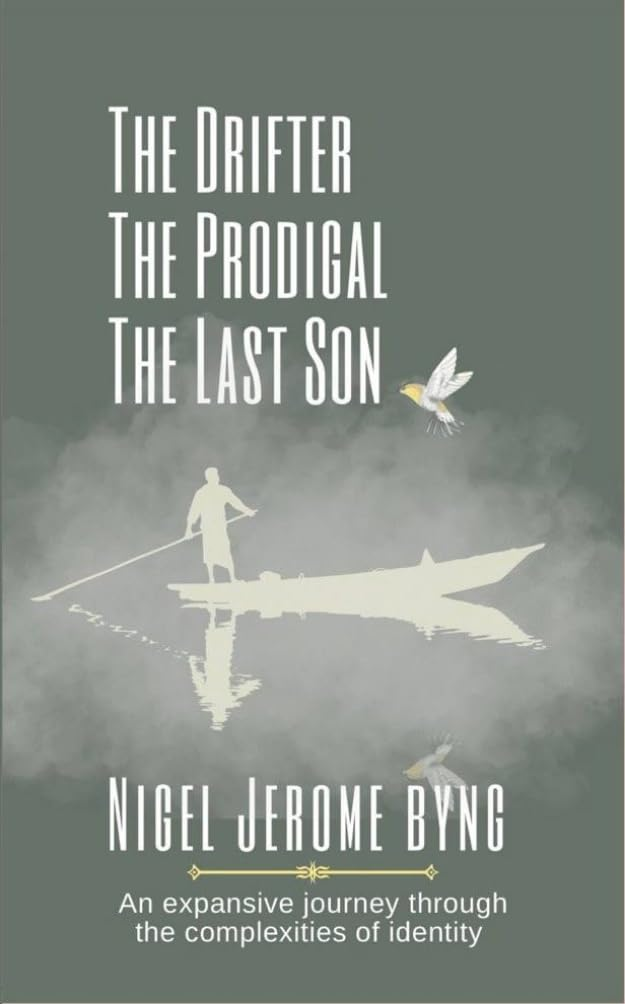
This inaugural book of poetry by Nigel Byng contains some extraordinary and moving poems ranging from the poet’s youth and journey to manhood, the tumultuous years of intense love and lust, difficulties. hurts and losses encountered along life’s path, and building a relationship with God. Poems relating to each of these four phases of life are collected into each of the four sections of this book.
The poet’s use of language is exceptional and truly conveys the strong emotion that inspired the poems. It is not easy to convey the spirit of the language used in any way other than by sharing a few extracts that I especially liked.
From Companion
“When the world hissed and turned against me, You were unmoved,
You have attended to me in every adversity.
Self-loathing greeted me on my pillow,
as the shadow of death lingered by my bedside.
But in every affliction, you were there.”
Little People
“Akin to a uniform horde of solider ants to forage for knowledge
following the sound of an enchanted flute.
What is this bedeviling mysticism
which snatches a child away from the bosom of its mother,
the protection of its father,
only to follow the breadcrumbs to their doom?
If you like beautiful and deep poetry, you will enjoy this book. My only negative is that I could not access the ebook using Speechify or another reading app. I also could not search the book using the search button and the contents page is not linked to the poems so you have to scroll through the entire book if you want to reread any specific poem.
Purchase The Drifter The Prodigal The Last Son from Amazon US here: https://www.amazon.com/Drifter-Prodigal-Last-Son-ebook/dp/B0H1987R65/
About Nigel Byng
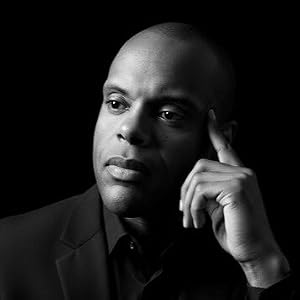
Writer, poet, storyteller, Byng’s words move from quiet domestic moments to global, socially conscious truths. His stories and poems explore love, memory, morality, and the human experience with lyrical precision and emotional punch. Contributor to top anthologies and creator of the Exploring Poetry series, his debut collection, The Drifter, The Prodigal, The Last Son, is one to watch.
About Robbie Cheadle
South African author and illustrator, Robbie Cheadle, has written and illustrated sixteen children’s books, illustrated a further three children’s books, and written and illustrated three poetry books. Her work has also appeared in poetry and short story anthologies.
Robbie also has two novels and a collection of short stories published under the name of Roberta Eaton Cheadle and has horror, paranormal, and fantasy short stories featured in several anthologies under this name.
You can find Robbie Cheadle’s artwork, fondant and cake artwork, and all her books on her website here: https://www.robbiecheadle.co.za/
________________________
Did you know you can sponsor your favorite blog series or even a single post with an advertisement for your book? Stop by the WtbR Sponsor Page and let me advertise your book, or you can make a donation to Writing to be Read for as little as a cup of coffee, If you’d like to show your support for this author and WordCrafter Press.
__________________________
This segment of “Treasuring Poetry” is sponsored by WordCrafter Press and the Poetry Treasures series.
Get Your Copy Today!
Poetry Treasures: https://books2read.com/PoetryTreasures
Poetry Treasures 2: Relationships: https://books2read.com/PT2-Relationships
Poetry Treasures 3: Passions: https://books2read.com/u/b5qnBR
Poetry Treasures 4:In Touch With Nature: https://books2read.com/PT4-Nature
Poetry Treasures 5: Small Pleasures: https://books2read.com/PT5-SmallPleasures
Poetry Treasures 6: Seasons: https://books2read.com/PT6Seasons
Share this:

Treasuring Poetry – Meet poet and blogger Dwight Roth and a review
Posted: June 10, 2026 Filed under: Book Review, Books, Interview, Review, Treasuring Poetry | Tags: Bones of Inspiration, Book Review, Dwight Roth, Interview, Poetry, Robbie Cheadle, Treasuring Poetry, Writing to be Read 54 CommentsToday I am delighted to introduce you to poet and blogger Dwight Roth. Dwight has a beautiful blog which you can find here: https://rothpoetry.wordpress.com/roth-poetry-home-page/. Dwight shares poetry, his lovely paintings, and other craft work on his blog.
Welcome Dwight
Tell us a bit about your writing journey and how you came to write poetry
Reading and writing were very hard for me in primary school. It seems like it took me until I got to the fifth grade to begin catching on to how learning worked. Over the years I dabbled in writing. I wrote songs that I played on the guitar and some poems in freestyle. What little I about poetry, knew was what I learned in my literature classes in high school and college.
After I retired, I began to participate in a live poetry reading at the Indian Trail Cultural arts center in 2013. It was led by Kym Moore, whom some of you know from our Word press blog. I began collecting my poems and had them printed into a booklet form at the local Office Max. She encouraged me to post my poems on a blog.
She introduced me to Word Press and in 2016 I decide to try and joined the Word Press blogging group. It was there I found a poetry community of people who enjoyed my poetry and it took off from there. I made so many wonderful friends over the years and found d’Verse Poets Pub to be a great help in learning to understand poetry in its many forms.
Kym also connected me with Tom Davis, editor of Old Mountain Press, who was a great help in writing my memoirs. He publishes a poetry anthology quarterly which I have contributed to for the past ten years.
I posted my photos and poems every day for over five years. My poems were all written in digital form so I got them published in spiral bound books at the local Office Max. I now have published ten books of poems and several children’s book along with a few my memoirs. Some of them can be found on Amazon Kindle.
Writing poetry has change my life and added purpose to my retirement years.
What is your favourite style of poetry to read?
My poetry of choice is freestyle but I do love writing haiku as well. Saying a lot with a few words is a fun challenge.
Share your favourite poem by another poet and why
I love the work of Billy Collins. His freestyle approach to the ordinary and everyday is so enjoyable to read or listen to. This was the first poem I ever read of his work. There was an immediate connection.
Aimless Love by Billy Collins
This morning as I walked along the lakeshore,
I fell in love with a wren
and later in the day with a mouse
the cat had dropped under the dining room table.
In the shadows of an autumn evening,
I fell for a seamstress
still at her machine in the tailor’s window,
and later for a bowl of broth,
steam rising like smoke from a naval battle.
This is the best kind of love, I thought,
without recompense, without gifts,
or unkind words, without suspicion,
or silence on the telephone.
The love of the chestnut,
the jazz cap and one hand on the wheel.
No lust, no slam of the door –
the love of the miniature orange tree,
the clean white shirt, the hot evening shower,
the highway that cuts across Florida.
No waiting, no huffiness, or rancor –
just a twinge every now and then
for the wren who had built her nest
on a low branch overhanging the water
and for the dead mouse,
still dressed in its light brown suit.
But my heart is always propped up
in a field on its tripod,
ready for the next arrow.
After I carried the mouse by the tail
to a pile of leaves in the woods,
I found myself standing at the bathroom sink
gazing down affectionately at the soap,
so patient and soluble,
so at home in its pale green soap dish.
I could feel myself falling again
as I felt its turning in my wet hands
and caught the scent of lavender and stone.
What is your favourite of your own poems and why?
As I get older, I enjoy pondering on life, death, and theology trying to understand what it all means.This poem is one that came from one of those times.
When My Spirit Rises by Dwight Roth
When my spirit rises
Unencumbered and free
No weight or worry accompanies me
Interesting that I value things
When in the end the spirit flies
Leaving them all behind
How much I worry and fret
But this too shall pass when I am gone
My spirit rises out of this shell
A virtual butterfly reborn
From caterpillar to chrysalis
Reborn in the image of God
Spirit, Creator, Redeemer, Savior
Knowing there is no place for the earthly
In the spirit world beyond
I can’t take it with me
But then again… Why would I want to
When my spirit rises
Leaving it all behind
What poetry projects are you currently working on?
My last project was a self-published book of poems called Bones of Inspiration.
I started publishing my own books using my home computer instead of going to Office Max. I have done the last three poetry books this way. I got a punch and bindings on Amazon that works very well for me. I print books for friends and family. I usually have about a hundred poems to compile every year or so. It is time consuming but I love the process.
My review of Bones of Inspiration by Dwight Roth
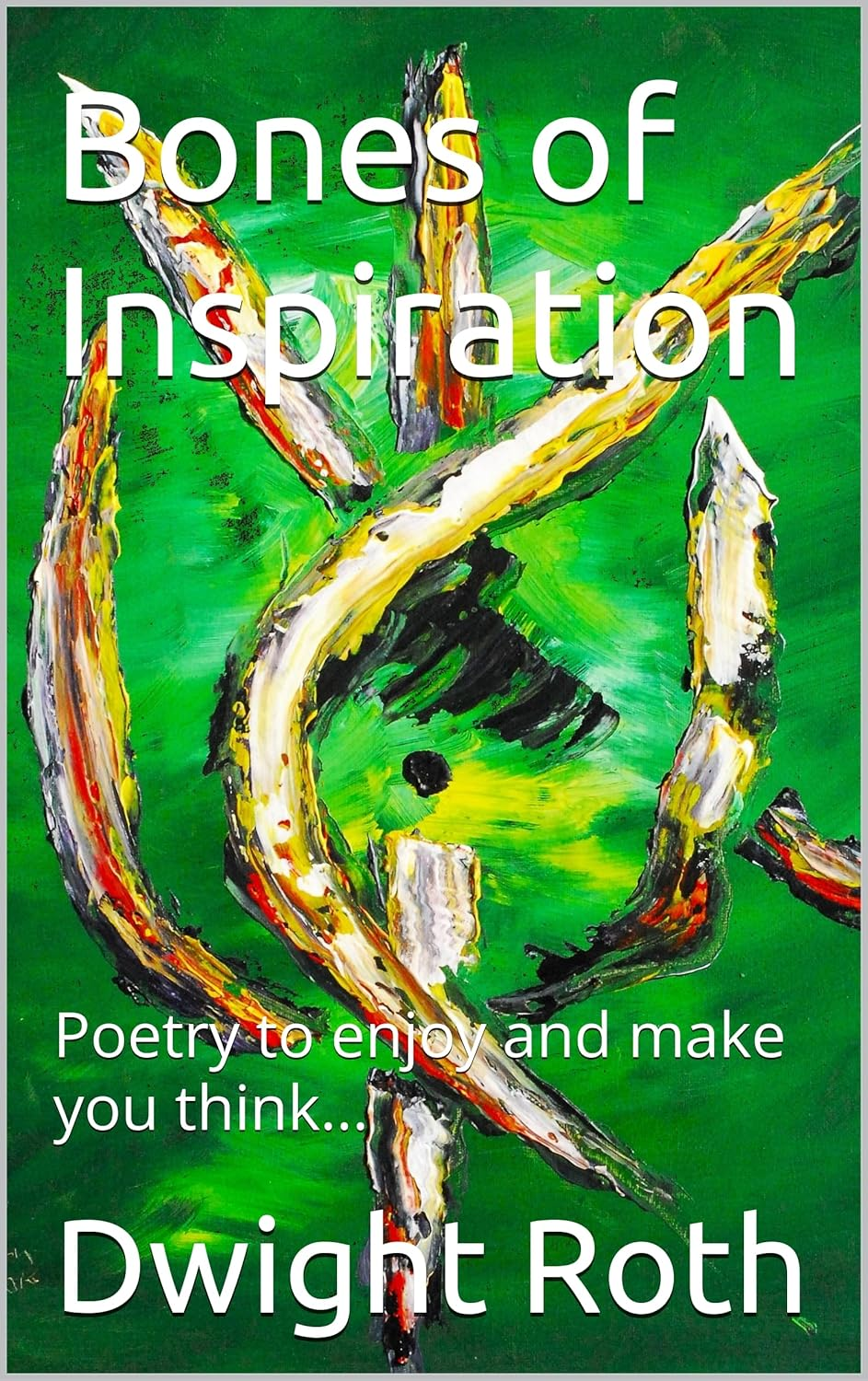
Dwight Roth is my kind of poet. He writes powerful and impactful poems and flash fiction using simple words and phrases. I don’t need a dictionary to read his work and his meanings and content are clear and precise. Dwight also writes about everyday issues and circumstances that I experience every day. This makes his poetry very relatable for me.
This collection covers a wide range of topics including love, fear, aging, and many others. He uses a technique of questioning in some of his poems which I also enjoy very much. An example of Dwight’s usage of this technique is in his poem Color in the Dark:
“What happens to color when the light goes out
Is the rainbow still there, dancing all about
Or do the colors all congeal to dark black ghosts
Spectors of nothingness seeking a place to float.”
Another beautifully written and insightful poem is about a time when the poet was seven years old and his mother was ill. He perfectly captures the confusion and anxiety of a young boy who doesn’t understand what’s going on but knows its a serious event in his family’s life. An intense extract from this poem, Childhood Trauma:
“Being only seven years old I did not know what to thing as they
carefully carried her down the steps and loaded her into
the back of the hearse that had windows on each side that
read: Honsaker’s Funeral Home – Masontown, Pa
It was a great relief to know the poet’s mother survived and lived to reach a good, old age.
My favourite poem in the collection is Silence … or My Noise of Choice. Although I do not suffer from tinnitus like the author does, I am often overwhelmed by the noise pollution living in a big city. During Covid lockdown, when I went outside to hang out the washing it was delightfully silent. I could write a poem in my head or listen to an audio book on low to entertain myself. Now that we are back to normal life, I find being outside very noisy. I can’t listen to an audio book even with the sound turned up because I can’t hear above the cars and motorbikes racing up the road or an airplane flying overhead. The neighbours play noisy music or speak loudly as do pedestrians on the road. I find the constant noise pollution very stressful. This is a short extract from this poem:
“Sounds around me seem to compete for attention
floating through my head competing with my tinnitus
constantly buzzing like high-pitched cicadas and little twitters.
To my left the return fan for the AC hums off and on
drowning out the questions on Jeopardy and the Wheel.
Finally, the AC fan goes off, the TV is shut off … Ahhh … peace and quiet
But no, as I settle back with my laptop and blog the fridge drops its ice”
If you enjoy honest, easy to read and relate to poetry that is well written and engaging, you will enjoy this delightful collection.
You can purchase Bones of Inspiration from Amazon US here: https://www.amazon.com/Bones-Inspiration-Poetry-enjoy-think-ebook/dp/B0GKQ3SDX3
About Dwight Roth
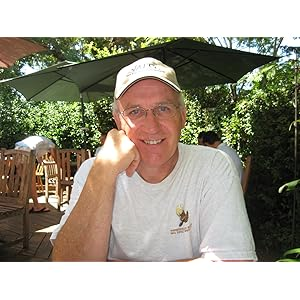
Dwight Roth is a retired elementary school teacher of 29 years, who grew up in the mountains of Southwestern Pennsylvania. He enjoys writing, poetry, painting, and music. He enjoys participating in the Indian Trail Cultural Arts poetry group and has had works published in, and recent omp.com Anthologies. He has self-published three memoirs and a book of poetry two children’s books and three “a word from the Word” daily meditation books. He and his wife Ruth live near Monroe, NC.
You can find Dwight Roth on his blog here: https://rothpoetry.wordpress.com/
You can find Dwight Roth’s poetry collections and other books on Amazon US here: https://www.amazon.com/stores/author/B017HW5AHG
About Robbie Cheadle
South African author and illustrator, Robbie Cheadle, has written and illustrated sixteen children’s books, illustrated a further three children’s books, and written and illustrated three poetry books. Her work has also appeared in poetry and short story anthologies.
Robbie also has two novels and a collection of short stories published under the name of Roberta Eaton Cheadle and has horror, paranormal, and fantasy short stories featured in several anthologies under this name.
You can find Robbie Cheadle’s artwork, fondant and cake artwork, and all her books on her website here: https://www.robbiecheadle.co.za/
________________________
Did you know you can sponsor your favorite blog series or even a single post with an advertisement for your book? Stop by the WtbR Sponsor Page and let me advertise your book, or you can make a donation to Writing to be Read for as little as a cup of coffee, If you’d like to show your support for this author and WordCrafter Press.
__________________________
This segment of “Treasuring Poetry” is sponsored by WordCrafter Press and the Poetry Treasures series.
Get Your Copy Today!
Poetry Treasures: https://books2read.com/PoetryTreasures
Poetry Treasures 2: Relationships: https://books2read.com/PT2-Relationships
Poetry Treasures 3: Passions: https://books2read.com/u/b5qnBR
Poetry Treasures 4:In Touch With Nature: https://books2read.com/PT4-Nature
Poetry Treasures 5: Small Pleasures: https://books2read.com/PT5-SmallPleasures
Poetry Treasures 6: Seasons: https://books2read.com/PT6Seasons
Share this:

My Interview with Michael Parkes
Posted: June 7, 2026 Filed under: Interview, Publishing, WordCrafter Press, Writing | Tags: Canvas Rebel, Editing, Interview, Kaye Lynne Booth, Michael Parkes, Publishing, WordCrafter Press, Writing 2 Comments
Check it out. Michael Parkes interviewed me!
Kaye Lynne Booth Author Interview — Michael Parkes Author
Share this:

Day 3 of the WordCrafter “Smothered” Book Blog Tour
Posted: June 3, 2026 Filed under: Author Interview, Blog Tour, Book Release, Books, Fiction, Ghost Stories, Giveaways, Horror, Interview, Paranormal, romance, WordCrafter Book Blog Tours, WordCrafter Press | Tags: B.T. Clearwater, Ghost Stories, Paranormal Romance, Smothered, WordCrafter Book Blog Tours, WordCrafter Press Leave a comment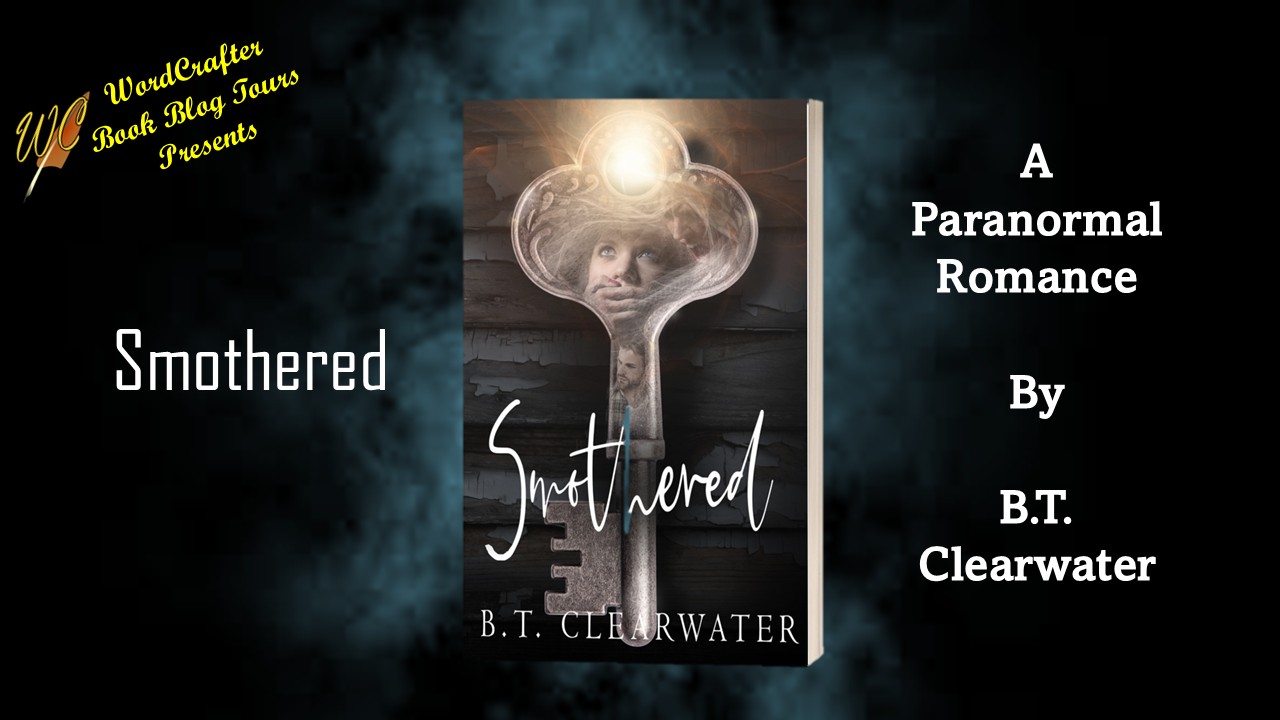
It’s Day 3 of the WordCrafter Smothered Book Blog Tour, and we’re over at Undawnted, with host DL Mullan and an interview with author B.T. Clearwater. Won’t you join us and help send this paranormal romance off right? This is one you won’t want to miss.
Undawnted does not take comments, so please click the link below to catch the interview, but leave your comments here for the giveaway entries or to start a conversation.
Undawnted: The Official Site of DL Mullan: Undawnted Presents: Blog Book Tour for Smothered – Day 3
Share this:

LINDSEY’S WRITING PRACTICE: Interview with Author & Poet Robbie Cheadle & A Review
Posted: June 3, 2026 Filed under: Books, Collection, Interview, Lindsey's Writing Practice, Poetry, Review | Tags: Book Reveiw, Interview, Lindsey Martin-Bowen, Lindsey's Writing Practice, Lion Scream, Nature, Poetrty Collection, Robbie Cheadle, South Africa, Wildlife, Writing to be Read 50 Comments
How do I define Robbie (a/k/a Roberta) Cheadle?
In essence: Amazing. This multi-talented, empathetic, creative woman displays talents in many areas.
Further, she pens words that she hopes will move others to help protect our world.
Along with writing poetry books, novels, short stories, and children’s literature, Robbie Cheadle not only decorates some of her pages with exquisite, professional photos that she shot—and even more amazing, she fashions cakes with sculptures of lions and other African wildlife, and flowers that accompany her writings.
Here’s a chance to peer into the mind of this remarkable woman. Enjoy!
About Roberta Eaton (Robbie) Cheadle
Roberta Eaton Cheadle, is a South African writer and poet specialising in historical, paranormal, and horror novels and short stories. She is an avid reader in these genres and her writing has been influenced by famous authors including Bram Stoker, Edgar Allan Poe, Amor Towles, Stephen Crane, Enrich Maria Remarque, George Orwell, Stephen King, and Colleen McCullough.
Roberta has two published novels and a collection of short stories and has horror, paranormal, and fantasy short stories included in several anthologies. She is also a contributor to the Ask the Authors 2022 (WordCrafter Writing Reference series).
Roberta is also the author and illustrator of seventeen children’s books, illustrator to a further three children’s books, and the author and illustrator of four poetry books published under the name of Robbie Cheadle, and has poems and short stories featured in several anthologies under this name.
Roberta’s blog features discussions about classic books, book reviews, poetry, and photography. https://roberta-writes.com/.
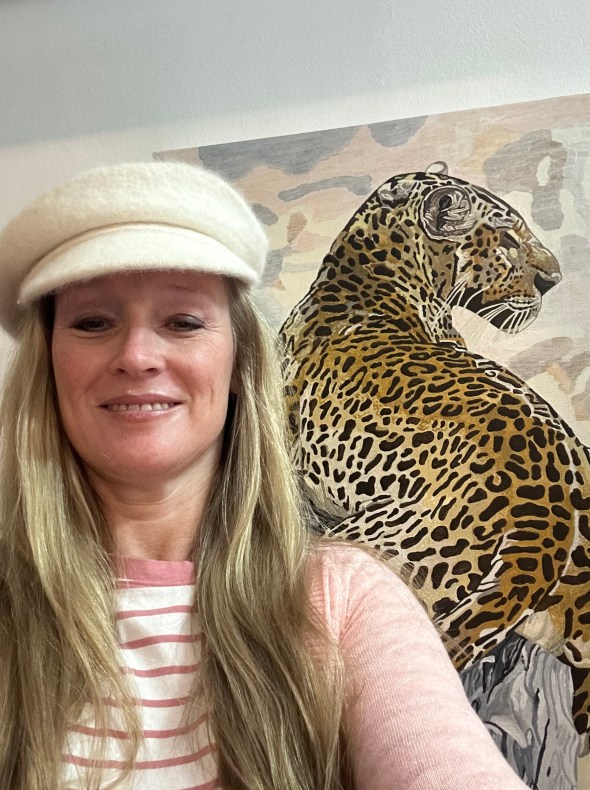
My Interview with Robbie Cheadle
How did you come to write poetry?
From a young age (4 years old), I read a great deal. Television was very limited in South Africa when I was a child and my first sister was only born when I was 4 years old. Catherine was born prematurely and my parents moved to a cottage on a farm in the country to try to protect her from germs. I didn’t attend school during this time, and I had to entertain myself. I did that by reading. I grew to love the L.M. Montgomery books, especially her lesser-known series, Emily of New Moon. In the books, Emily’s late father was a poet and writer. Emily tries her hand at poetry as a way of keeping his memory alive. I was inspired by Emily to
write short poems and descriptive pieces and did this throughout my senior primary school and high school years. English and History were my favourite subjects at school, and I excelled at both of them. I have been writing poetry ever since. It has evolved into a diary of my life.
What is your favourite poem by another poet?
When I was in primary school, about ten years old, we had to learn several poems by heart. Ever since then I have loved The Listeners by Walter de la Mare. The poem is full of mystery and delight.
The Listeners
By Walter de La Mare
‘Is there anybody there?’ said the Traveller,
Knocking on the moonlit door;
And his horse in the silence champed the grasses
Of the forest’s ferny floor:
And a bird flew up out of the turret,
Above the Traveller’s head:
And he smote upon the door again a second time;
‘Is there anybody there?’ he said.
But no one descended to the Traveller;
No head from the leaf-fringed sill
Leaned over and looked into his grey eyes,
Where he stood perplexed and still.
But only a host of phantom listeners
That dwelt in the lone house then
Stood listening in the quiet of the moonlight
To that voice from the world of men:
Stood thronging the faint moonbeams on the dark stair,
That goes down to the empty hall,
Hearkening in an air stirred and shaken
By the lonely Traveller’s call.
And he felt in his heart their strangeness,
Their stillness answering his cry,
While his horse moved, cropping the dark turf,
’Neath the starred and leafy sky;
For he suddenly smote on the door, even
Louder, and lifted his head:—
‘Tell them I came, and no one answered,
That I kept my word,’ he said.
Never the least stir made the listeners,
Though every word he spake
Fell echoing through the shadowiness of the still house
From the one man left awake:
Ay, they heard his foot upon the stirrup,
And the sound of iron on stone,
And how the silence surged softly backward,
When the plunging hoofs were gone.
I like this poem so much I did a recording of it for my YouTube channel: https://youtu.be/gy_7mM2RcuI?si=Gmf2kfXkwrCoBnjp
What is your favourite of your own poems?
Currently, this is my favourite of my own poems:
Life on the Water (Tanka story)
medley of cool shades
cerulean and turquoise
lightened or darkened
depending on water’s mood
and artist’s vision
***
painstaking brush strokes
capturing shadows and light
frothy, foaming crests
enhanced with metallic white
dancing across blue
***
water shifts and sighs
subtle movements captured in
careful ripple lines
swiftly flowing currents caught
in muted aquamarine
***
sand laden wavelets
curl sluggishly around rocks
smothered by sweet caress
of ocean’s heaving bosom
with its rhythmic rise and fall
***
houseboat moves onwards
temple to unconstrained thoughts
colours meld as one
in swirls, rises, and deep troughs
impermanent no longer
***
dreams, soft and wispy
condensation trails through sky
subtle as sunlight
transferred to stark, white canvas
soft splashes ricocheting
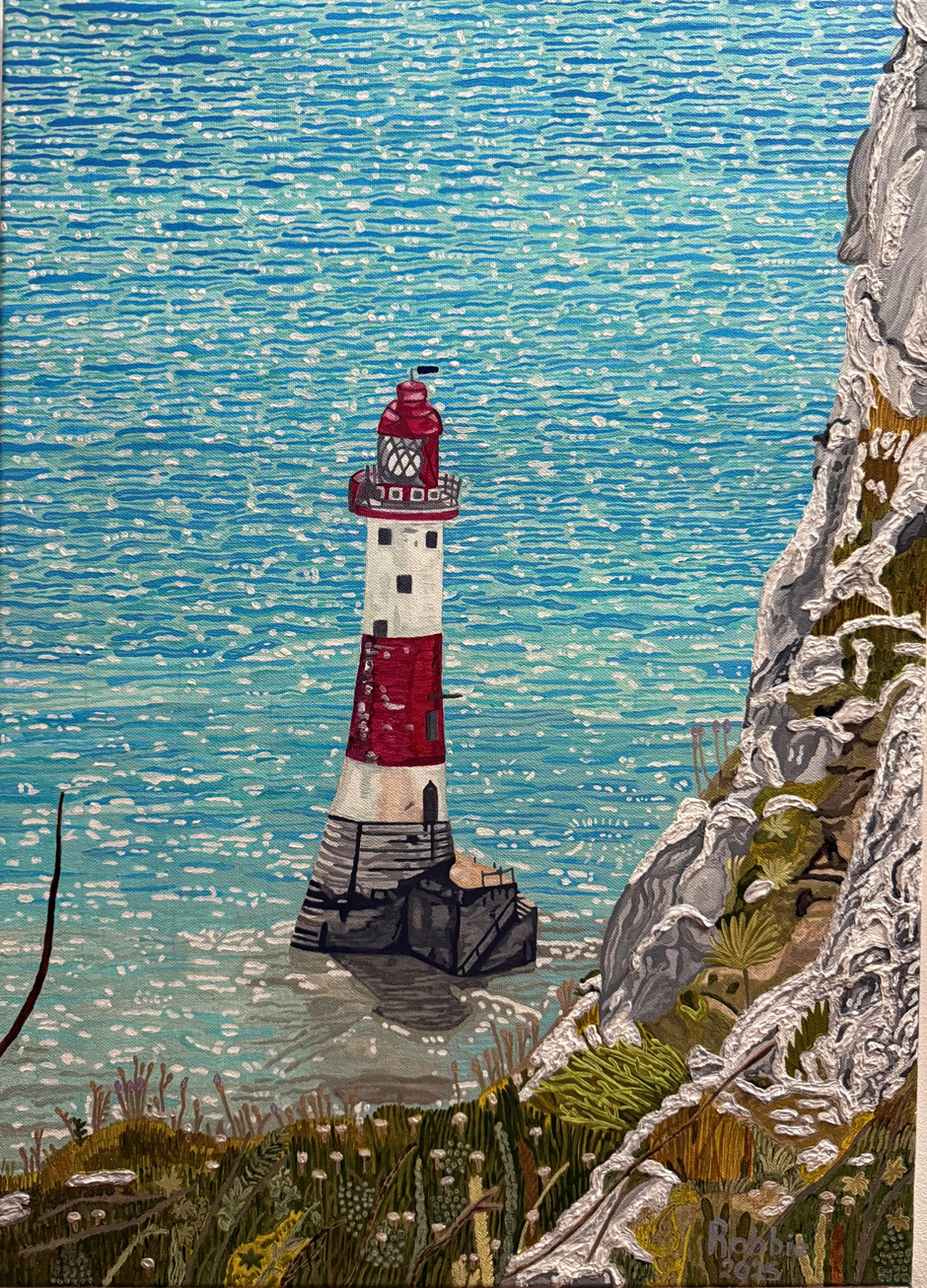
Picture caption: My acrylic painting called Fyrtorr which means beacon in Old English.
Tell us a bit about the inspiration for Lion Scream
Here’s an extract from Lion Scream:
The initial idea for a book of poetry that taught people about the numerous amazing creatures of southern Africa and highlighted their plight in the face of the Sixth Mass Extinction, came to me during a visit to Ukutula Lodge & Game Reserve (“Ukutula”).
Ukutula is also a conservation facility specializing in genetic mammal research and predator conservation.
On my return home, my brother-in-law gifted me a print of Edvard Munch’s famous painting, The Scream.
According to a diary entry by Munch, the inspiration for this painting was as follows:
“One evening I was walking along a path, the city was on one side and the fjord below. I felt
tired and ill. I stopped and looked out over the fjord – the sun was setting, and the clouds
turning blood red. I sensed a scream passing through nature; it seemed to me that I heard
the scream. I painted this picture, painted the clouds as actual blood. The color shrieked.
This became The Scream.”
Based on The Scream, I created a cake I titled Lion Scream – Nature’s Response to the Sixth Mass Extinction and Global Warming, which depicted a lion, made from fondant, clasping its face and screaming, while standing on a bridge above a river of blood. Behind the lion, is an erupting volcano.
This cake was intended to be an artistic depiction of the natural world’s reaction to
continuous land development by humans, resulting in the loss of habitat for the creatures
which share this earth with us, and the increasing impact of global warming on humanity
and the greater planet.
Lion Scream: Nature’s Response to the Sixth Mass
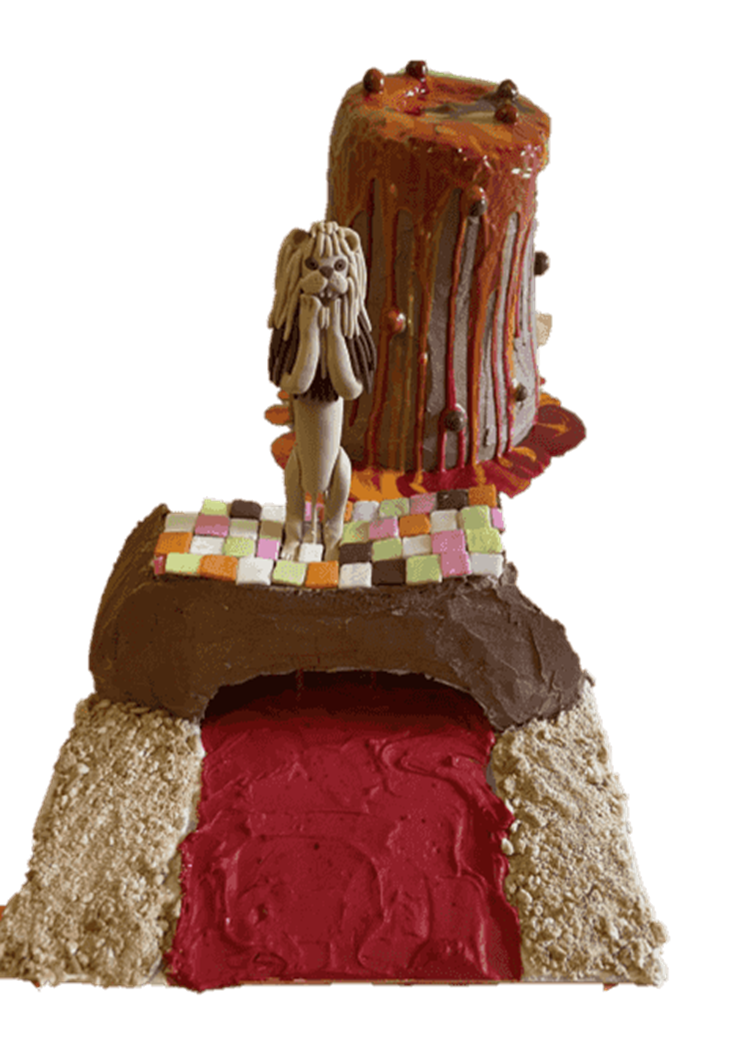
Picture Caption: Extinction and Global Warming Cake Art by Robbie Cheadle
Have you witnessed the killing of an African animal which acted as a trigger for your interest in animal conservation?
When I was 21, I met a man who hunted animals for sport. Prior to this, I had never had much interaction with wild animals other than in zoos. My mother grew up on a cattle farm and had little interest in engaging with animals in the wild. Interestingly, I’ve noticed she shares this disinterest with other people I know who also grew up on farms. Anyhow, this man invited me to go to Kimberley with him and his friends. They were going hunting, but they were also going to visit the ‘big hole’ in Kimberley which is an interesting feature of South African history. I agreed to go because I wanted to see Kimberley. The hunting trip was a complete horror show for me. I hadn’t really thought about what a hunting trip meant, and the men attempted to kill an antelope. It was a common antelope, what I call “lion snacks” as they keep the stock of impalas high in game reserves because they are food for the
big cats. The shooter’s shot went wide, and he ended up wounding a baby impala. Aside from any other aspect, it was not the right season for hunting as the mother antelopes had small calves. The baby ran making the most terrible high-pitched sound, and the men had to go after the poor little thing. Eventually, they did put it out of its misery. I was completely horrified. After this trip, I ended the relationship and became involved in wildlife conservation. This has developed into my poetry books and paintings featuring southern African wildlife.
What’s next?
Currently, I am busy with the final edits to a collection so South African inspired short stories and poems. The book is called The Last Man, South African History, Legends, & Poetry. This book will be published through TSL Publication in the United Kingdom. I am also working on several new poetry collections and the second book in the Something Fancy book collection. This second book, Chocolate & Treats, should be ready for publication in early November this year. I always have a lot of projects on the go. I am also painting. My latest painting is of a Vervet Monkey and is part of my Into the Light series of painting. I am planning to paint an African Painted Dog next. It will be a much bigger project. I do a small one in between the larger ones so that I can practice drawing more often. The big paintings take me three to four months to complete.
Thank you for this lovely interview opportunity, Lindsey. I appreciate your interest in my work.
Lindsey’s Review of LION SCREAM Syllabic Poetry about Southern African Wildlife
by Robbie Cheadle
Not only is Robbie Cheadle (a/k/a Roberta Cheadle) an excellent, engaging poet and fiction writer, she’s a woman with a mission—a crucial mission for not only the future of our planet and the wildlife on it, but for humanity itself. Plus, in this 163-page collection, her method of persuasion includes not only facts and figures about the demise of many of our planet’s creatures in Africa, it delights the reader with superb—and righteous, at times biting, poetry and fiction.
Most delightful is Cheadle’s use of the constraints of syllabic structure in unrhymed forms that recreate the tension between wild beasts and the fragment of society pushing them off their native environments. For example, the book’s opening poem, “Lion Scream” is a perfectly structured tanka (one of my favorite forms). I perceive the tanka as a haiku with more depth. As opposed to the 17-line poem, tankas are structured in five lines with the syllabic form: five, seven, five, seven, seven, which Cheadle does in “Lion Scream”:
There is no jungle
Only acres of smooth stumps
There is no jungle
No habitat, no food source
Hopeless lion screams tonight
(Cheadle credits “The Lion Sleeps Tonight” in Disney’s The Lion King with inspiring this
tanka.)
Although the collection contains other tankas, most of the poems are set in the Double Enneal format, far more complex. A Double Ennead comprises three stanzas of five lines each. Thus, the syllabic count for each stanza is 6/5/11/6/5, (33 syllables per stanza) i.e., each stanza is set as:
six syllables
five syllables
eleven syllables
six syllable
five syllables
Again, each of those syllabic counts are repeated in the second and third stanzas, totaling ninety-nine syllables for each poem.
In the collection’s introduction, Cheadle explains why she uses this format most frequently throughout the book:
“I selected this form of syllabic poem for LION SCREAM for two reasons . . . because I love syllabic poetry and the short dramatic statements it enables me to make through a few carefully chosen words.”
Her second reason concerns her mission: “. . . due to the importance of nature conservation to me, and my desire to share insights about the impact of habitat loss, hunting, and poaching on the wild animals of southern Africa, I decided that 99 syllables gave me more, a little more scope to make my specific points.”
Further, Cheadle photographed all but three of the photos in the book. After perusing the collection she shot —on par with those in National Geographic, depicting several species of wildlife, I felt as if I’d viewed a video of Africa, particularly in those sections about lions, elephants, and zebra, creatures especially close to my heart.
I admit my first encounter with elephants and camels was in the Kansas City Zoo, where we children rode those captive creatures. This book brought back those memories from an era wherein most persons believed such wildlife would continue to stroll the earth indefinitely.But Cheadle reveals that is no longer a future many experts anticipate.
Along with her own photos, the collection offers links to many of Africa’s animals. For instance, in the section, “My Experiences with Rhinos,” she includes four links to videos she took of rhinos, after noting, “My most recent sightings have largely been of dehorned animals, which I always find jarring. It is strange to see a rhino without its famous horn.”
Having grown up in South Africa, she first saw horned rhinos, and she questions, “I wonder if my grandchildren will know rhinos have horns. If the fight against poaching is unsuccessful, my grandchildren will only experience rhinos through pictures in history books.”
From the number of Double Enneads she included for elephants and lions, it appears they may be her favorite beasts. Along with those long poems and marvelous photographs, she includes sections, “About African Elephants, “My Experiences with Elephants,” “My Experiences with Lions,” and “More Experiences with Lions.”
Then, she wraps up the poetry section with photos of the African landscapes. A Double Ennead, “The Romance of the Sunflowers” and an explanation about how sunflowers feed the environment in “Sunflowers and the Environment” precede photos of African landscapes of mountains, plains, and striking sunsets, interlaced, of course, with more poetry.
Cheadle wraps up this collection with a short story, “The Nutcracker,” which deals primarily with how the changing environment causing the loss of wildlife can impact the human species, too. She follows that piece with her inspiration and explanation of the story. I rate this collection with FIVE STARS. Thank you, Robbie, for sharing it.
—Lindsey Martin-Bowen
About Lion Scream
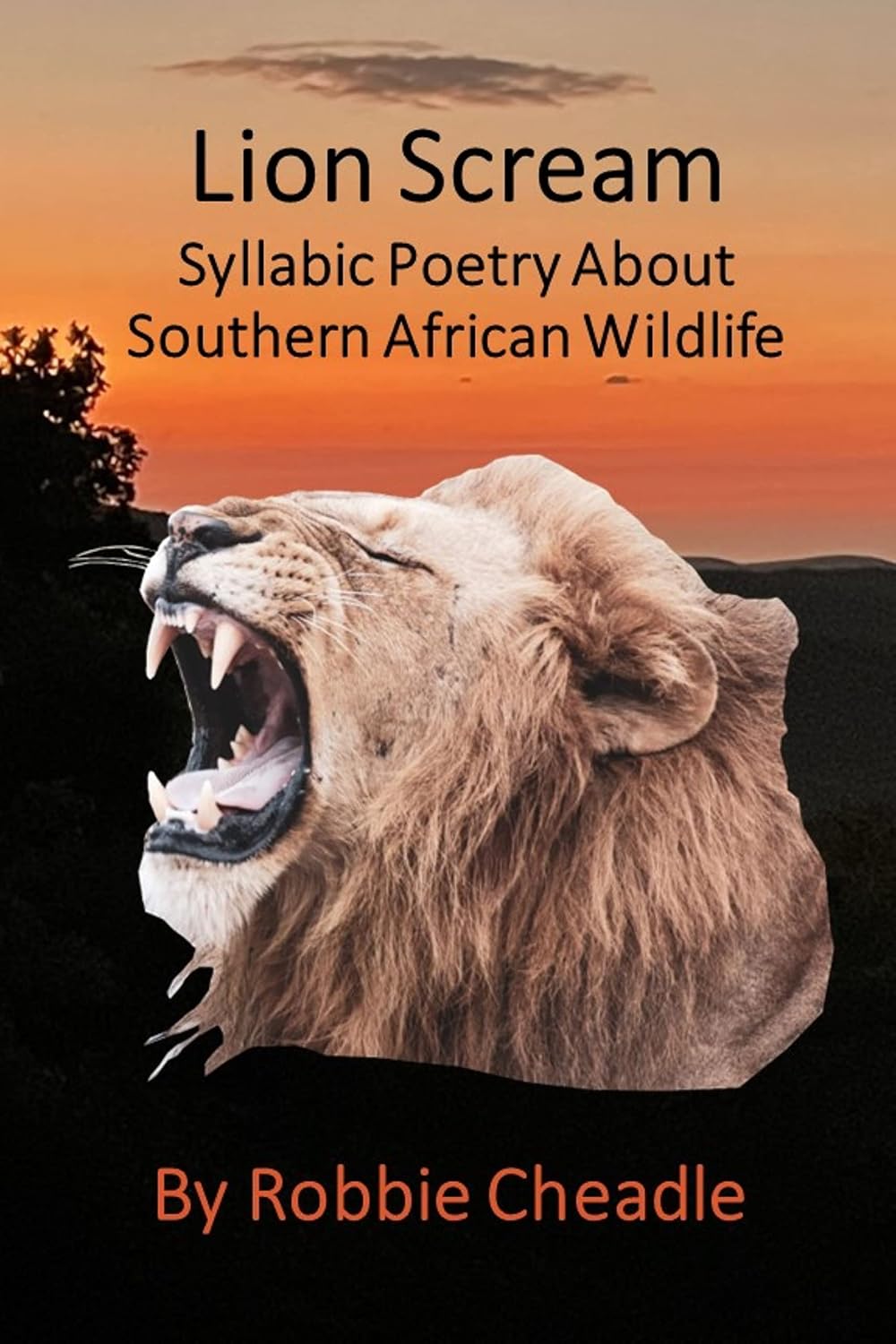
Do you rely on Earth for your survival?
Lion Scream is a graphic collection of poetry and prose. The book portrays the author’s experiences with South African wildlife and the growing impact of the Sixth Mass Extinction and Climate Change on the natural environment.
Lion Scream
There is no jungle
Only acres of smooth stumps
There is no jungle
No habitat, no food source
Hopeless lion screams tonight
Purchase Link: https://www.amazon.com/Lion-Scream-Syllabic-Southern-Wildlife-ebook/dp/B0BXP5N766
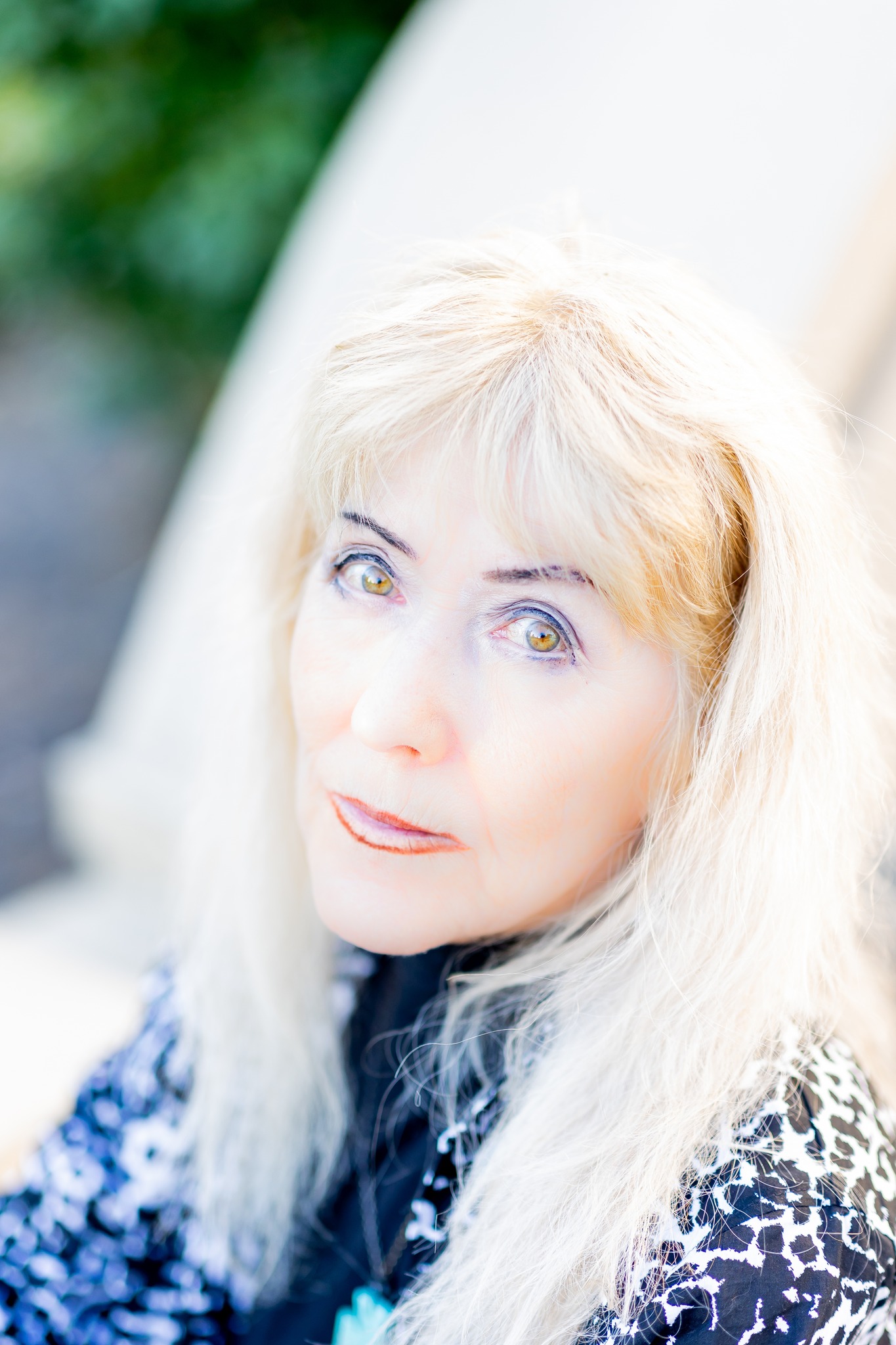
About Lindsey Martin-Bowen
On Halloween 2023, redbat books released Lindsey Martin-Bowen’s 7th poetry collection, CASHING CHECKS with Jim Morrison. Her 4th collection, Where Water Meets the Rock, was nominated for a Pulitzer; her 3rd, CROSSING KANSAS with Jim Morrison was a finalist in the QuillsEdge Press 2015-2016 Contest. In 2017, it won the Kansas Writers Assn award, “Looks Like a Million.” Writer’s Digest gave her “Vegetable Linguistics” an Honorable Mention in its 85th Annual (2017) Contest. Her Inside Virgil’s Garage (Chatter House Press 2013) was a runner-up in the 2015 Nelson Poetry Book Award. McClatchy Newspapers named her Standing on the Edge of the World (Woodley Press/Washburn University) was one of the Ten Top Poetry Books of 2008. It was nominated for a Pen Award.
_______________________________________________
Did you know you can sponsor your favorite blog series or even a single post with an advertisement for your book? Stop by the WtbR Sponsor Page and let me advertise your book, or you can make a donation to Writing to be Read for as little as a cup of coffee, If you’d like to show your support for this author and WordCrafter Press.
________________________________________________
This Segment of “Lindsey’s Writing Practice” is sponsored by WordCrafter Press and The Dark Horse Waits in Boulder, by Lindsey Martin-Bowen.
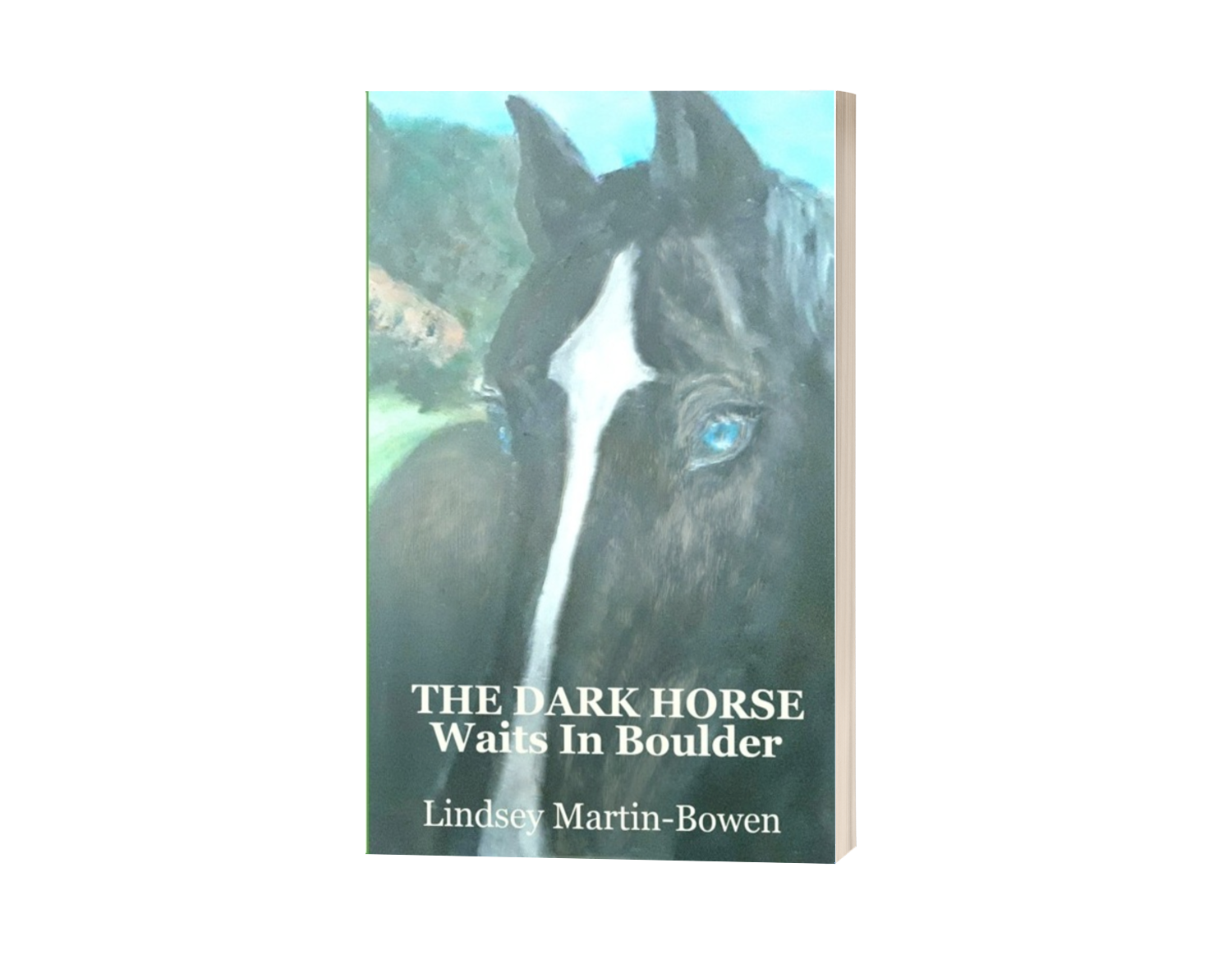
Recently divorced Charli Erickson arrives in Boulder, Colorado during the 1970s—a wild time for that city—where she hopes to develop her “rock poet” talent and find the perfect mate. Instead, she links up with the imperfect Ched Lyons, a Boulder native who leads her in a multitude of adventures, including scaling a mountain and a 1,200-mile motorcycle ride to southeastern Utah. While she intermittently envisions a black stallion with blue eyes, who puzzles and enchants her, she also strives to make sense of its appearance.
Through Charli’s snarky humor recounting her tales, readers will enjoy this Rom-Com doubling as a woman’s adventure story and may relate to scenes from the wild, zany era that followed the serious, revolutionary 1960s.
Get your copy today: https://books2read.com/The-Dark-Horse-Waits-in-Boulder
Share this:

Treasuring Poetry – Meet poet and blogger Carol Anne
Posted: May 13, 2026 Filed under: Book Review, Books, Interview, Review, Treasuring Poetry | Tags: Book Review, Interview, Robbie Cheadle, Treasuring Poetry, Writing to be Read 54 CommentsToday I am delighted to introduce you to poet and blogger Carol Anne from Therapy Bits blog. Carol Anne writes beautiful and thought provoking poetry as well as posts providing insight into living with dissociative identity disorder, complex PTSD, depression, and anxiety disorder.
Welcome Carol Anne
Tell us a bit about yourself and how you came to write poetry. What does your poetry mean to you?
My name is Carol Anne, it is a pen name, I’m 46, and I live in Ireland. I have always been a writer, from a very young age, I wrote poetry. I am a child abuse survivor, I am also diagnosed with dissociative identity disorder, complex PTSD, depression, and anxiety disorder. I am also blind. I write mostly to raise awareness of dissociative identity disorder, complex PTSD, and blindness, I’ve also written a lot of poems about healing after child abuse. My poetry is partly my therapy, it helps me to cope.
What is your favourite style of poetry to read?
I love reading free verse, senryu’s, haiku’s, and basically any poem that the writer has shared, it is the raw emotion in the poetry that I love to read about.
Share your favourite poem in your favourite style by another poet.
“Hope” is the thing with feathers
“Hope” is the thing with feathers –
That perches in the soul –
And sings the tune without the words –
And never stops – at all –
And sweetest – in the Gale – is heard –
And sore must be the storm –
That could abash the little Bird
That kept so many warm –
I’ve heard it in the chillest land –
And on the strangest Sea –
Yet – never – in Extremity,
It asked a crumb – of me.
Emily Dickenson
What is your favourite of your own poems and why?
My favourite poem is I am a puzzle. Here it is. It describes what living with dissociative identity disorder is like.
I Am A Puzzle by Carol Anne
I am a puzzle
with pieces that don’t fit
every way you try
you will get nowhere with it
the whole picture is not shown
on the box or it’s lid
and I hate to tell the truth
I’ve been this way since I was a kid
Absorbed in the puzzle
I lose all track of time
Anxiety over takes me
As though I’ve committed a crime
Is it wrong to be more than one
The puzzle pieces scatter on the floor
As I turn over the table and run for the door
I am running scared,
trying to get away
the pieces fall to the ground
and stay where they lay
some of the pieces overlap
while others are alone
when I look at the pieces
I am chilled to the bone
How will I ever put together
All that is broken
When all I have to go on
Are secrets that are spoken
These are my only clues
to the misfit puzzle pieces here
and I am half way out the door
denial in it’s most sincere
Left on the floor in disarray
The pieces try to call to me
I turn my back on them
Why can’t they just leave me be
I walk back to the table
And turn it right side up
I gather all the puzzle pieces
Making my hand like a cup
They shower down onto the table
And I vow to give it one more try
But I don’t know where to begin
I can only ask why
July 2013
Why do you blog? What is your favourite thing about blogging?
I blog to raise awareness of mental health, disability, and to help myself to release my feelings. Blogging has connected me with lots of people from all around the world, that is one reason I love it, also, I love to get feedback on my writing.
What’s next for Carol Anne?
I’m in the process of collecting some of my poems and putting them into a book. I’d also like to work more on writing some fiction, I do write fiction, but I feel I need more practice at it.
About Carol Anne
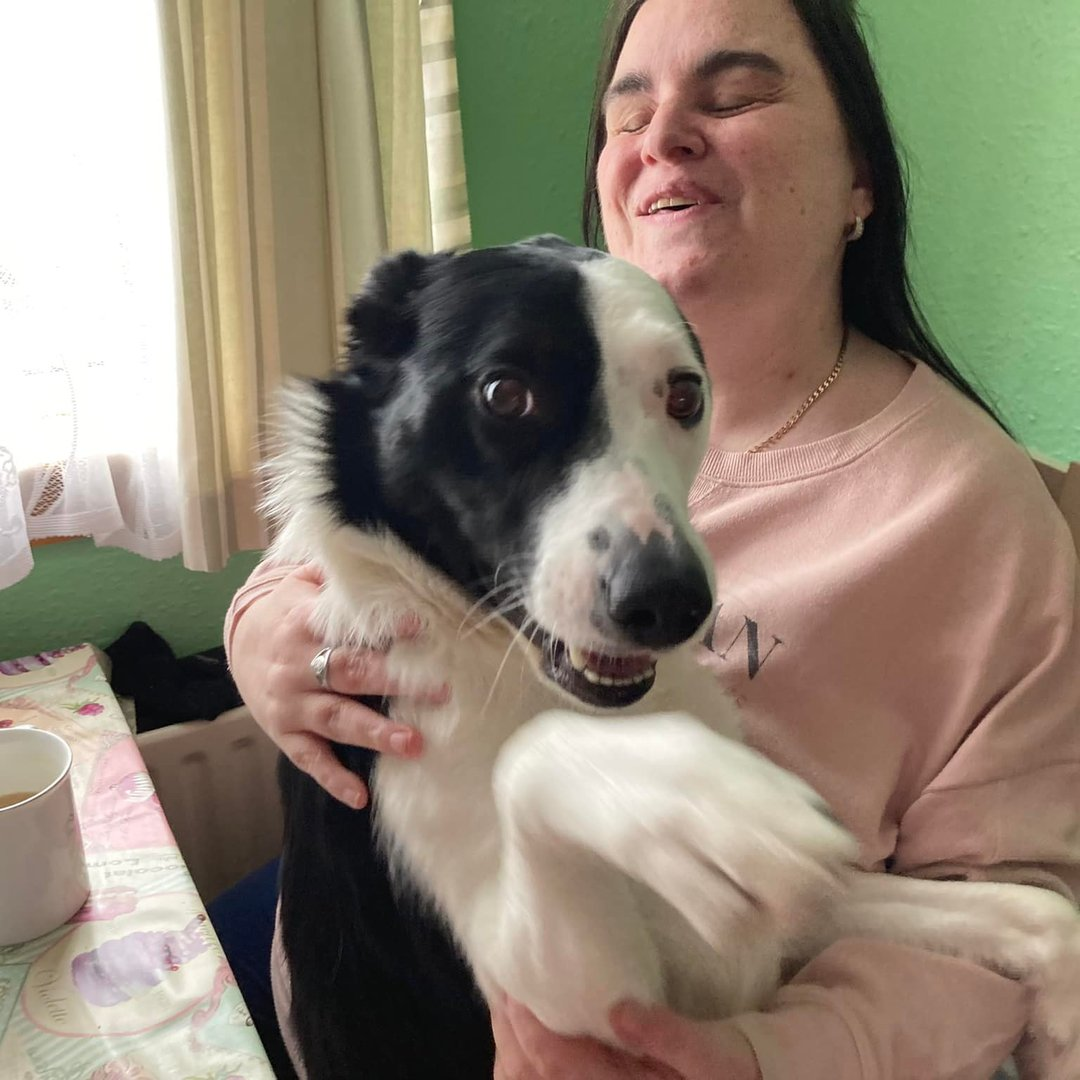
This is Carol Anne’s introduction on her blog:
Hi
My name is Carol anne. I am part of a did system. Did stands for dissociative identity disorder. I also have PTSD posttraumatic stress disorder. I was diagnosed with did in December 2010.
I have been blind since birth. I am 35 years old.
This is a blog about my life, it will mainly focus on therapy and the process of going through psychotherapy, but I will also post some stuff about my life.
I am in college studying IT. It has its challenges but overall I love it.
Blog: https://therapybits.com/
Facebook: https://www.facebook.com/carolanne.johnsonmunchy
Instagram: https://www.instagram.com/manyofus40/
About Robbie Cheadle
South African author and illustrator, Robbie Cheadle, has written and illustrated sixteen children’s books, illustrated a further three children’s books, and written and illustrated three poetry books. Her work has also appeared in poetry and short story anthologies.
Robbie also has two novels and a collection of short stories published under the name of Roberta Eaton Cheadle and has horror, paranormal, and fantasy short stories featured in several anthologies under this name.
You can find Robbie Cheadle’s artwork, fondant and cake artwork, and all her books on her website here: https://www.robbiecheadle.co.za/
________________________
Did you know you can sponsor your favorite blog series or even a single post with an advertisement for your book? Stop by the WtbR Sponsor Page and let me advertise your book, or you can make a donation to Writing to be Read for as little as a cup of coffee, If you’d like to show your support for this author and WordCrafter Press.
__________________________
This segment of “Treasuring Poetry” is sponsored by WordCrafter Press and the Poetry Treasures series.
Get Your Copy Today!
Poetry Treasures: https://books2read.com/PoetryTreasures
Poetry Treasures 2: Relationships: https://books2read.com/PT2-Relationships
Poetry Treasures 3: Passions: https://books2read.com/u/b5qnBR
Poetry Treasures 4:In Touch With Nature: https://books2read.com/PT4-Nature
Poetry Treasures 5: Small Pleasures: https://books2read.com/PT5-SmallPleasures
Poetry Treasures 6: Seasons: https://books2read.com/PT6Seasons
Share this:

Treasuring Poetry – Lauren Scott talks about her latest poetry book, King Copper, and a review
Posted: April 15, 2026 Filed under: Book Review, Books, Interview, Review, Treasuring Poetry | Tags: Book Review, Interview, King Copper, Lauren Scott, Robbie Cheadle, Treasuring Poetry, Writing to be Read 90 CommentsToday, I am delighted to welcome children’s author and poet, Lauren Scott, back to Treasuring Poetry to talk about her recent collection of poetry dedicated to her late dog, Copper.
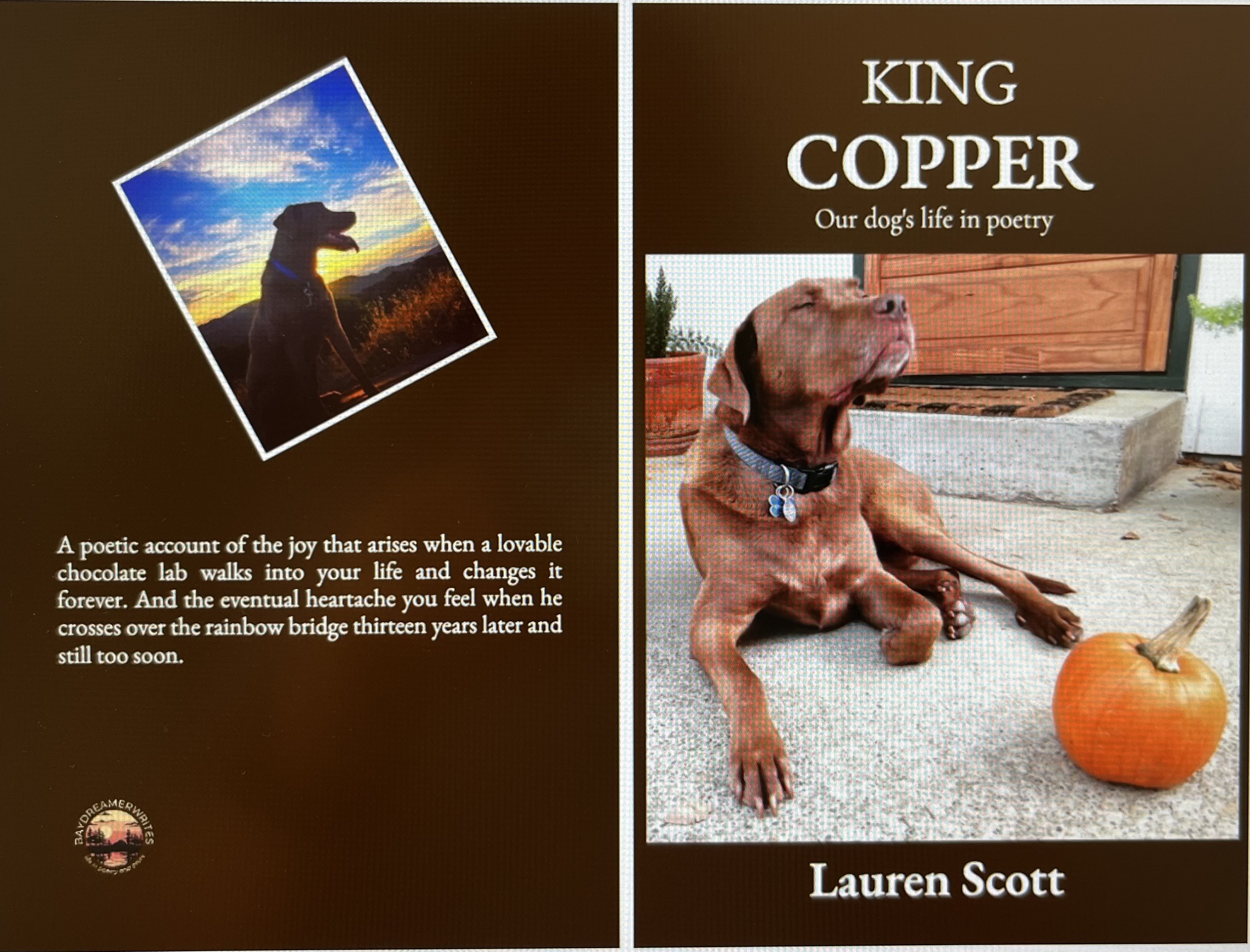
Tell us a bit about your beautiful Copper and how he came into your lives.
Four months had passed since our black lab, Lucky Girl, crossed over the Rainbow Bridge. After many conversations with my husband, daughter, and son, the timing felt right to welcome a new canine friend into our family. So I began searching a Lab Rescue website. We’ve always adopted second chance rescues, wanting to give dogs, whose owners couldn’t keep them, a loving home. Most of the labs I saw were black or yellow, which are common in our area. We didn’t want to replicate any dogs from the past, so Copper stood out because his coat was literally the color of copper. He was so handsome, I had to meet him, and when I did, he immediately joined our family. More details of how Copper came into our family are in the book.
Copper was lovable and had amber eyes that saw right into our souls. He was the perfect walking partner and freely gave slobbery kisses. He always made us laugh when he thought he was a chihuahua trying to sit on our laps; her grew into 80 lbs. of muscle.
Why did you decide to write this collection dedicated to Copper?
Copper was our first dog where we had to make that heartbreaking decision of life or death, and it was beyond painful. We did the right thing for the right reasons, but second guessing came naturally. He was 14 ½ years old and had other health issues, so when his health took a turn for the worse on March 3, 2025, taking away his suffering was the human thing to do. The events of that Monday morning are still vivid and roll through my mind in slow motion. The grief was so intense I began writing poetry. I gave my heartache a place to live in my poems, and with my previous fun poetry about Copper, a collection evolved. This was my first unplanned book – a loving tribute to our senior pup who we still miss even after a year since he received his angel wings. I have to add that all of our dogs were special; there are no favorites. But when Copper passed, I was in a different stage of life where I had time to work on King Copper. And all of our beloved canine family members have their place in a poem because Copper has met them across the Rainbow Bridge.
King Copper is a special keepsake for my family, and the book includes color photos that show his personality and our love for him. I have read in many wonderful reviews that this collection helped others move through their grief, which is another reason for wanting to publish this special book. Anyone who reads this collection will smile, maybe laugh out loud, and yes, will most likely shed a tear. Then the heart and mind loosely grasp acceptance – a task that takes effort because it’s not that the grieving has ended, but we all understand loved ones don’t live forever. If you’re a dog lover, a cat lover, or a pet parent in general, the poems will resonate and reach into your heart, and so will Copper.
What is your favorite poem from this collection and why?
Choosing a favorite poem is difficult because all of them offer special messages. But I would say “Copper Boy” on Page 4 stands out because it speaks of his fun and mischievous personality, his good looks, and his unconditional love, which is the true reason we call our pets family. Below is an excerpt:
“When he smiles, his white choppers
shine as if they’ve never caused
any commotion…never mind
that afternoon when he attempted
to eat the barbecue!”
Do you have any advice for pet owners on dealing with the grief of losing a beloved pet?
First of all, grief has no timeline. If your heart is broken from the loss of your beloved pet, please give yourself grace. Allow yourself to grieve, to cry, to relive precious moments with your pet. I’ve heard it said that the best way to get through the loss is to bring another pet into your family, but we’re not ready just yet. Our timing with Lucky Girl and Copper is dissimilar. Our son and daughter are adults now, living on their own, and my husband and I live in a different phase of life, so the journey varies for everyone. When the time is right though, we’ll know it. I’ll pull some lines from one of my poems, “Loss is Loss” on Page 38:
“…and no matter what triggers the pain
we must offer ourselves grace…
to grieve as we should
to mourn as days unfold.
Loss is loss shattering us
into tiny pieces of uncertainty
until the healing of time
brings those pieces back together.”
What is next for Lauren Scott?
Now is the time to get to work again, and I know Copper wouldn’t want his family to wallow in a puddle of sadness. My second idea for a children’s book, Carlie and Charlie Go Camping, has been simmering for over a decade, so it’s time to revisit, make some edits, and remove from the burner! Carlie and Charlie’s story is inspired by my family’s wonderful camping trips when our son and daughter were young. But their story isn’t just about camping. It’s about family bonding, staying active, and getting outdoors to learn about nature while leaving devices at home. It’s about unplugging in this day and age where technology advances at lightning speed, and how important it is for our health to find a balance. I’m excited to see this story in print!
Simultaneously, I’m compiling another poetry collection. However, instead of self-publishing, I plan to submit both books to small publishers I learned about at the San Francisco Writers Conference in February. This year is for trying new options, so we’ll see what the outcome is down the road.
My inspiration comes from the iconic quote: “You never fail until you stop trying.”
~ Albert Einstein
Click on the slideshow to see more photographs of Copper with his family.
***
My review of King Copper by Lauren Scott
Thank you, Robbie, for providing this opportunity to talk about our beloved Copper Boy. And thank you again for your beautiful review! I love how you highlight the Preface and Still Too Soon prose sections, which convey the important ‘before and after’ to the context of the poetry collection. I hope if any of your readers are grieving, they will give themselves grace. And if they choose to let Copper into their hearts, I know they will feel his unconditional love, and I offer my deepest gratitude.
King Copper is a beautiful collection of poems paying tribute to the life of the poet’s dog, Copper. We become incredibly connected to our pets and they are part of our families. As a result we experience great grief and loss when they pass over the rainbow bridge. Lauren’s recordings of magical moments in her relationship with Copper and the joy he brought her and her family are a delight to experience. These emotions are described in Lauren’s micro poem, Temporary Smiles:
“Memories of joy
bring temporary smiles
tears wash them away”
The Preface and Still to Soon prose sections share a bit about Copper, his introduction into the poet’s family and his subsequent life with them, and his passing. He lived to a good old age of 14 1/2 and is sorely missed by his family. The book includes some lovely photographs of Copper with various family members.
This collection is fairly short but it is a worthy read and will help ease other hearts aching from the loss of a beloved pet.
Amazon US purchase link: https://www.amazon.com/stores/Lauren-Scott/author/B08NCRH4MK
Lauren Scott’s Amazon US author page: https://www.amazon.com/stores/Lauren-Scott/author/B08NCRH4MK
About Lauren Scott
Lauren Scott is a recent Pushcart Prize Nominee who enjoys small-town living in the Bay Area with her husband, Matt, of thirty-seven years. Their daughter and son live out of state, and with frequent visits and technology, this family of four remains close. Lauren has published four collections of poetry: New Day, New Dreams (2013), Finding a Balance (2015), Ever So Gently (2023), and King Copper (2025). In 2021, she released her memoir, More than Coffee.
Her first children’s book, Cora’s Quest, was published in 2024. Lauren has been a guest on several podcasts, and her writing is featured at Spillwords Press, Gobblers and Masticadores, and LatinosUsa. At Spillwords Press, she was awarded Publication of the Year (Poetic 2026), Author of the Month (May 2023) and Publication of the Month (June 2025, October 2024). Lauren’s work is published in several anthologies. She is currently working on her second children’s book and a collection of poetry. Lauren’s muse discovers inspiration from family, spending time outdoors, and marveling at the mysteries of life.
Website: baydreamerwrites.com
Instagram: @baydreamerwrites
Amazon Author Page: https://www.amazon.com/~/e/B08NCRH4MK
About Robbie Cheadle
South African author and illustrator, Robbie Cheadle, has written and illustrated sixteen children’s books, illustrated a further three children’s books, and written and illustrated three poetry books. Her work has also appeared in poetry and short story anthologies.
Robbie also has two novels and a collection of short stories published under the name of Roberta Eaton Cheadle and has horror, paranormal, and fantasy short stories featured in several anthologies under this name.
You can find Robbie Cheadle’s artwork, fondant and cake artwork, and all her books on her website here: https://www.robbiecheadle.co.za/
________________________
Did you know you can sponsor your favorite blog series or even a single post with an advertisement for your book? Stop by the WtbR Sponsor Page and let me advertise your book, or you can make a donation to Writing to be Read for as little as a cup of coffee, If you’d like to show your support for this author and WordCrafter Press.
__________________________
This segment of “Treasuring Poetry” is sponsored by WordCrafter Press and the Poetry Treasures series.
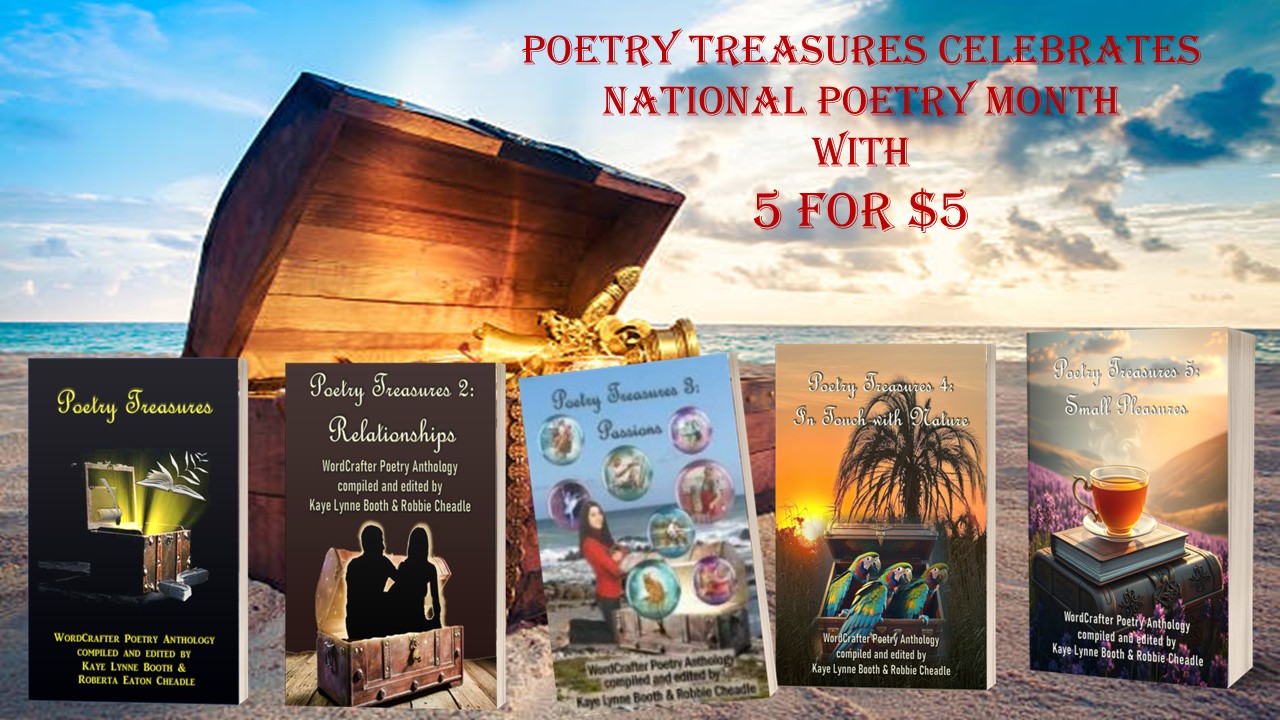
Get All Five Volumes Today for just $5 –Exclusively on the WordCrafter Press Poetry Treasures Series Page: https://writingtoberead.com/readings-for-writers/wordcrafter-quality-writing-author-services/wordcrafter-press/poetry-treasures/
Share this:

Treasuring Poetry – An introduction to the poetry of Lindsey Martin-Bowen and a review
Posted: March 18, 2026 Filed under: Book Review, Collection, Interview, Poetry, Review, Treasuring Poetry | Tags: #poetry, #RobbieCheadle, #TreasuringPoetry, Book Review, Interview, Lindsey Martin-Bowen, Treasuring Poetry, Where Water Meets the Rock, Writing to be Read 25 CommentsToday, I am delighted to host talented poet Lindsey Martin-Bowen as my March Treasuring Poetry guest. Lindsey is a fellow contributor to Writing to be Read and you can read her latest post here: https://writingtoberead.com/2026/03/04/lindseys-writing-practice-out-of-this-world-writing-exercise/
Interview with Lindsey Martin-Bowen
My poetry journey: How I became a poet
I must admit as a child, I wrote more stories than poetry. And the poems I wrote then were sentimental and trite. (During grade school (from third or fourth through sixth grade), I compiled annual Christmas books containing “Christmas” stories I wrote—but each year, the manuscript also included a Christmas poem (or one about winter) and a Christmas tale from Readers Digest (which influenced me to compose Christmas books). I also illustrated the books with colored pencils the first year and I gradually moved to water color illustrations (which I sometimes marked with felt-tip pens). My sixth-grade teacher (Mrs. Ferguson) introduced us to Robert Frost and Carl Sandburg, whom I liked, but I liked Emily Dickson the best when I attended elementary school—and I still consider her one of my favorites today. (Unfortunately, at the time, I was too naive to pickup on her style (and skills).
Being the nerd I was in high school, I opted to take a journalism classl. There, for the Christmas issue (of our high-school newspaper), I wrote a humorous Christmas poem from the staff, which I illustrated with an ink sketch of Santa , his gift-filled sleigh (which included B/W head-shot photos of each new-staff member )
and eight reindeer flying through skies above my sketches of Victorian two-stories. (Even then, I preferred old homes to the contemporary ranch styles where most my classmates and I lived.)
Also in high school, I continued writing in my diary, which I used to create short stories (from events in that diary). And I submitted those stories in English classes when a teacher requested them. But my poems were overly sentimental and personal. And basically about teen angst. (For example, one was entitled “Alone.”)
In fact, during my senior year in high school, my English composition teacher enjoyed my short stories and offered encouraging comments. I wouldn’t have shared my poetry, but she’d asked to see it. So I submitted the dreary poems I’d written (mainly centering on unrequited love). She read them and returned them without comment. I mean—absolutely NO comments. No encouragement. So I figured I was no better poet than I’d been a violinist. Sigh.
Thus, my true poetry journey did not take flight until my sophomore year at the University of Missouri-Kansas City, when fellow student Robert (“Bob”) Haynes and I became close friends. Even then, he was an excellent poet—and he boosted me along the journey to poet-hood. He shared not only his poems, but pointed out many contemporary experts who’d been gaining attention in the early 1970s, , such as W.S. Merwin, Galway Kinnell (both born the same year as my father: 1927), Lawrence Ferlinghetti, and Alan Ginsburg, popular in the late 1960s.-and who gave a reading at UMKC. Bob also introduced me to surrealists Kenneth Patchen and Kenneth Koch, who inspired my frenzies, (which I didn’t write until fifty years later.) I discovered James Tate, who I’d include as a “surrealist,”too. Shortly thereafter I enrolled in the university’s poetry writing classes taught by professors Dan Jaffe and David Ray, who introduced me to an array of well-known contemporary poets, including Diane Wakoski (whom Dan Jaffe brought to UMKC to give a reading), James Dickey, Etheridge Knight, Denise Levertov, John Berryman, David Ignatow, Randall Jarrell, William Stafford, Robert Lowell, Thomas Merton, Later, I also started reading Adrienne Rich, Denise Low, and Mary Oliver.
And, I did improve—enough that my senior year, Dan Jaffe asked me to read a few of my poems at a poetry reading on the UMKC campus for the public. He also published two of my poems in an anthology he compiled, one that included many professional poets.
Favorite poem by another poet
O my goodness—I’ve read so many poets and poems, this one is a tough question. Along with the previous set of poets I mentioned, I’ve always admired Emily Dickinson’s style and work, along with William Butler Yeats (especially his “The Second Coming.” And T.S. Eliot: His “Wasteland” is remarkable, but far too long to include here. And the sounds in that poem make it come alive so much that it’s best to listen to a recording of it. Even his “The Love Song of J. Alfred Prufrock” is a bit long to include. Thus, I’ll share Yeates’s “The Second Coming,” which not only inspired one of my poems that I’ll share later, but also remains relevant to our current world situation (a century later).
The Second Coming
Turning and turning in the widening gyre
The falcon cannot hear the falconer;
Things fall apart; the center cannot hold;
Mere anarchy is loosed upon the world,
The blood-dimmed tide is loosed, and everywhere
The ceremony of innocence is drowned;
The best lack all conviction, while the worst
Are full of passionate intensity.
Surely some revelation is at hand;
Surely the Second Coming is at hand.
The second Coming! Hardly are those words out
When a vast image out of Spiritus Mundi*
Troubles my sight: somewhere in sands of the desert
A shape with lion body and the head of a man,
A gaze blank and pitiless as the sun,
Is moving its slow thighs, while all about it
Reel shadows of the indignant desert birds.
The darkness drops again; but now I know
That twenty centuries of stony sleep
Were vexed to nightmare by a rocking cradle,
And what rough beast , its hour come round at last,
Slouches toward Bethlehem to be born?
1920-1921
Favorite style of poetry and why
Although I love my surreal frenzies, I also like other forms of poetry, including sonnets, when they come “naturally.” (The two times I’d written sonnets but didn’t realize it until I re-examined them, tweaked them here and there, and voila! I’d written two sonnets without trying—the best for me). Those two appeared n my second published poetry book (the first full collection) Standing on the Edge of the World (Washburn University/Woodley Press 2008).
I’ve also fallen in love with the Japanese tanka form. (Haiku doesn’t allow enough syllables for my poems. 😉 ) Thus, I created a section of tankas in my last collection, CASHING CHECKS with Jim Morrison (redbat books 2023). More about that later.
Moreover, I generally write in “free verse” with sounds and rhythms and internal rhymes (not at the end of a line), that flow so smoothly, the rhyme doesn’t “hiccup” or stop the reader. Why is this usually my favorite form? As I’ve mentioned in a number of my bios, “poetry is my way of singing.” Thus, in most poems I write, I strive to use sound so they have somewhat the same effect that a song does.
Favourite poem of my own
O so many poems—so little time. I cannot name one favorite poem. But three of them come to mind. First, here’s my response to “The Second Coming,” which I wrote in response to the violence occuring in Ferguson, Missouri:
Re-reading “The Second Coming’ by W.B.Yeats
after Ferguson, Missouri\
No one listens anymore. No one works
in tandem. No horses pull this cart.
Now trembling, it falls apart.
The center hub’s blown, exploded.
Rioting in city squares—rioting along beaches.
Is this anarchy—or something more?
The blood of victims rushes onto shores.
Innocents no more, their lungs fill
till they can’t speak—can’t breathe.
Their passions now sneseles, uneasy—
bringing the strange revelation:
the Second coming lies on the horizon.
It’s the day, it’s the day—
O yes, it’s the holy day—
it’s the Day of the Dead.
A wide-winged beast rises above—
eyes black and gleaming, onyx
glistening through bone.
O Momma, Momma,
come back, come back
again. The world’s too cold.
No lion-bodied beast alouches
toward Bethlehem. It’s a creature
with a jackal’s head, a jackal’s soul.
Where Water Meets the Rock, p. 30 (39 WEST PRESS 2017)
Two other poems I must also count as favorites, because they seemed to write themselves.
The words came to me without me planning them. It was if they suddenly appeared in my brain, and I had to scramble to pen them onto paper before they evaporated.
The first, I wrote during the months that revealed my father was not to stay much longer on this earth. (This was when the frenzies started coming to me. Many of the frenzies are absurd—but comical. This one’s more serious. (And I’ve included it in three of my books: It must be a favorite.)
It’s Never Like the Movies—
for my father
this dying, no background chords
rising to a crescendo,
no adagio of strings.
You watch these ants instead,
trickle across peonies
They disappear. And you
can’t keep your grip
on that granite wall of reason
but slip downstream
into some wild current
till you run aground .
There, you search
for the deserted place, a Holy Land,
where Ekijah met God.
Even if you’re hiking
the Appalachian Trail, up
Standing Indian Mountain,
you watch vultures circle
in and out of clouds festering
into some murky, yellow soup.
And when lightning hits,
Father Davis says Hail Marys—
and there, on the horizon,
you see wovoka whirl
in his dance of ghosts.
Standing on the Edge of the World, p. 85 (Washburn U/Woodley Press, 2008)
Inside Virgil’s Garage, p.52 (Chatterhouse Press, 2013)
The Book of Frenzies, p. 76 (Pierian Springs Press, 2022)
And “From the Emerald City to the Mountain of Quaff” is special to me because it came to me in pieces—often as I was awaking from sleep. At the time, it seemed to be one of the most imaginative poems I’ve written. Perhaps that’s why one of my former poetry professors, David Ray selected it to run in an anthology he assembled (Whirleybird Anthology of Kansas
City Poets, 2012).
From the Emerald City
to the Mountain of Quaff
(or This Must Be Kansas)
Go out and get that long face lost, you say,
Bury me in Jerusalem, I reply.
I want to be one of the first to rise,
like yeast on a rock in the desert,
among iron stones, hills filled with brass,
in a land of olive oil and honey—
wrapped in silver and gold,
where water eats fire
and fire drowns water, and the angel
of the presence outlasts them both.
Or, if poetry must be delirious and weird,
or even a prophetic frenzy,
then bury me in absurdia,
where the lemons bloom.
Inside Virgil’s Garage, p. 7 (Chatter House Press 2008)
Kansas City Voices (October 2007)
Whirlybird Anthology of Kansas City Poets, Whirlybird Press (2012).
The BOOK of FRENZIES, p. 66 (Pierian Springs Press 2022)
About CASHING CHECKS with JIM MORRISON
This book has a strange history. Although it resulted in being a sequel to CROSSING KANSAS with JIM MORRISON (Paladin Contemporaries 2016), it wasn’t exactly planned. I wrote the first collection in about six months. It was odd, too, because it took two years for me to write and revise the book’s initial poem entitled “Crossing Kansas with Jim Morrison, which, of course, became the book title. Yet—once that poem came together, I wrote the rest of the book within six months and entered it into the 2015-2016 QuillsEdge Chapbook Contest, Although it didn’t win, it was a finalist. Concurrently, Thorny Locust literary magazine ran three poems from the collection, and Amethyst Arsenic, another lit mag, took one more.
And the Jim Morrison poems kept coming to me. So I added them and others that fit into the collection, to make a complete book, which Paladin Contemporaries published that summer. On Amazon, the book made it to number 23 or so on the top 100 Poetry Books by Women list—and stayed there most of the following year. (Inside Virgil’s Garage was on that same list concurrently, but it didn’t rise as high Crossing Kansas w/JM did.
About two years later after Where Water Meets the Rock was published, I put together CASHING CHECKS, designed around the themesof actual money becoming obsolete. (Checks, along with credit cards, debit cards, and other contemporary methods of payment don’t include actual money, correct? It money going the way of the manual—or even electric typewriter?) That collection, of course, included other sectons centering around the tanka form and the frenzies. (At present three of my collectons include a section of “frenzies,” and of course, The BOOK of FRENZIES contains solely frenzies, some less zany than others).
In short, after accruing more Jim Morrison poems—I mean, Jim just wouldn’t hush, but kept popping words into my brain—I considered merging the new Jim Morrison poems with the CASHING CHECKS book.
When I submitted both versions to redbat books, both the publisher and her editor preferred the collection containing Jim Morrison. So that’s where we went with it.
What’s next?
What’s next? I’m now working on a manuscript, named for a 10-stanza poem (which can be set in five pages or in in ten, whichever works best) that’s appeared in three publications. I’ve been adding to it and hope to complete a full collection within a few months. The DARK HORSE WAITS in BOULDER, my fourth novel (third on Amazon) is scheduled to be released this spring—so that will precede the poetry book release. At present, I have one more poetry collection I’ve started but don’t see it going anywhere for a year or more. That one may be my last poetry collection, too. (Three more novels and one short story collections are ahead of that poetry collection.) And then, what may be my last novel—now in a VERY ROUGH state-of-being—just may allow the likely last poetry collection to supercede it .But who knows? Rock star archetype Jim Morrison may hop into one or the other manuscript and upset the entire scene.
My review of Where Water Meets the Rock
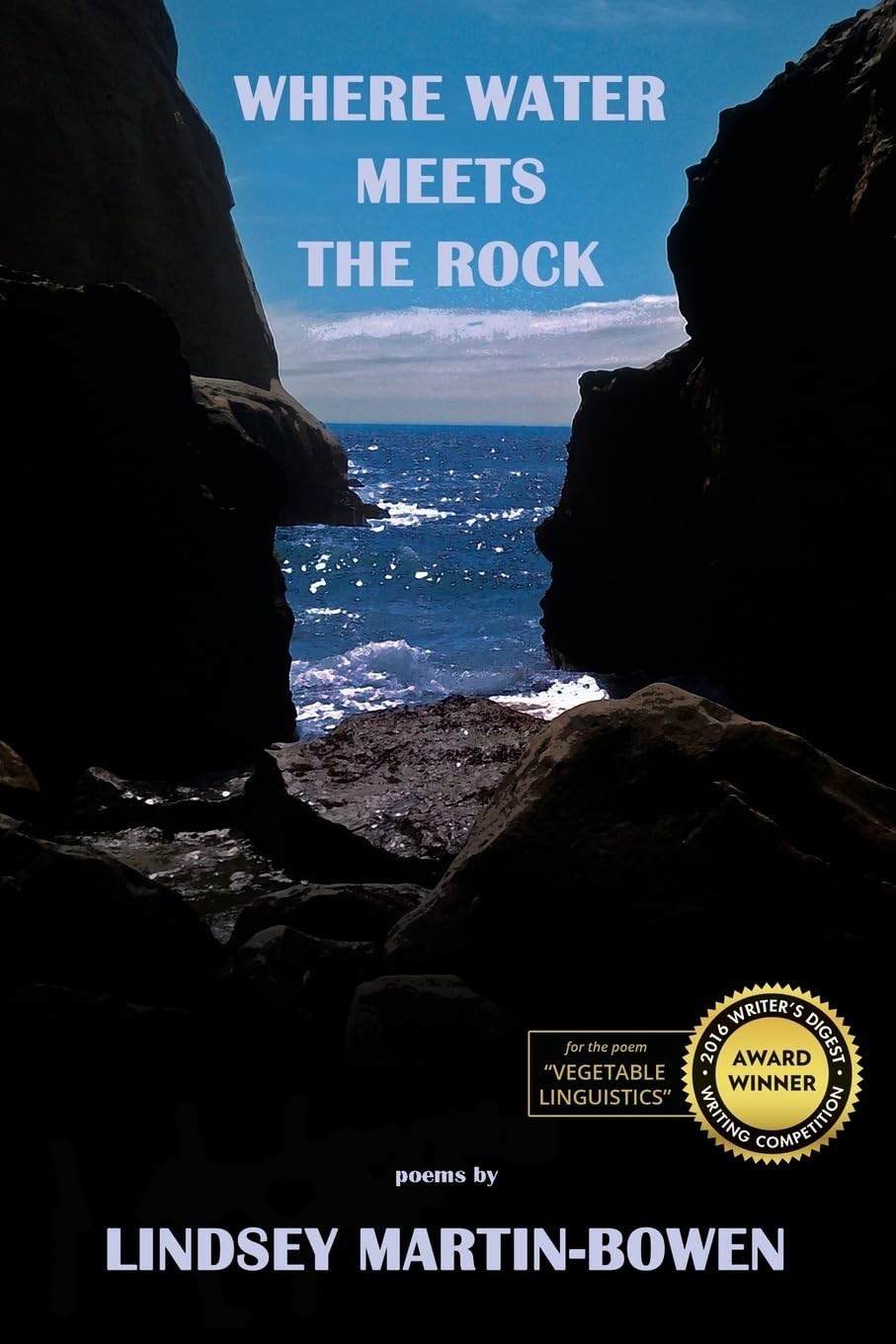
I enjoy reading poetry collections that include a common thread that links all the poems together. The common thread for this collection is loss and recuperation. This theme is relatable to everyone as we all suffer loss in various forms throughout our lives and we are forced to recuperate whether we want to or not.
The collection is divided into three sections: Erosion which explores the slow build up to loss; Frenzies which seeks to unravel the immediate chaos and emotion that follows loss; and On the Shore which delves into the slow path to acceptance and continuation.
The poems are unique and make use of various techniques to either exaggerate or bring out the humorous side of deep emotion and complex thought patterns relating to loss.
A poem that resonated strongly with me in Erosion is titled Psyche in the Suburbs. For me, this poem exposed the conflicting emotions of love, resentment, and self sacrifice that arise when caregiving for aging relatives.
This is the final stanza in this poem:
“Now, lavender scents fill the air,
sending me to the Aegean Sea.
When I step onto the asphalt,
I remember the bottled water.
I must go back. Without it,
the world will know her face
grows old. And she’ll blame me.”
Another poem in this section I especially related to is entitled My Bones are Glass. I have often thought this same thing when dealing with the elderly and aging. The poet includes an apology to Mark Strand, one of my favourite poets, so the style also worked very well for me.
Section 2: Frenzies, includes a lot of humour relating to people’s eccentricities and wants in their final moments. The poems also touch on the need for the observers to fulfil every desire and make the passing easier – perhaps to alleviate the guilt of survival. I enjoyed the poems although humour in poetry is not my personal favourite style. This section lifts the tension in death and loss and will appeal to most readers.
Section 3: On the Shore was very compelling for me. It explored inevitable change and endings coupled with new beginnings of a different sort. I reminded me that we move from one phase to another in our lives without even realising it until we look back and the end and beginning stand out in stark reality. The poem I enjoyed the most in this section was Two Mothers with Kids in Winchell’s. Perhaps because my children are now adults and have both finished school so I can understand and appreciate this poem through the lens of a soon to be empty nester.
This is one stanza in the poem that I strongly related to:
“The Winchell’s mothers nod, talk in buzzing hums,
eye their toddlers, who hop, slide on linoleum.
The kids scratch glass, balance on window ledges.
The pregnant one smooths seersucker. “Guys,” she says,
“They don’t like that here. Come, be quiet, Sit down.”
Like seatbelts, her words rein them in. I frown,
wonder how she renders her voice firm but not loud.”
As a mother who always worked, this stanza fills me with thoughts about what might have been had my own path taken me along a different path. What kind of mother would I have been had I not always been struggling to balance work and home demands. A writer who can introduce such reflections has to be great.
I highly recommend this compelling collection.
Where Water Meets the Rock is available from Amazon US here: https://www.amazon.com/Where-Water-Meets-Lindsey-Martin-Bowen/dp/1946358053
Lindsey Martin-Bowens Amazon Author page is here: https://www.amazon.com/stores/Lindsey-Martin-Bowen/author/B00JA31KW0
About Lindsey Martin-Bowen
Lindsey Martin-Bowen’s CASHING CHECKS with Jim Morrison has just been released this fall (2023) by redbat books (a La Grande, Oregon publisher) as part of its Pacific Northwest Writers series. She serves as a Literary Consultant for Pierian Springs Press, which published The BOOK of FRENZIES in April 2022 (hardback copy in December 2022–BEFORE she became its Literary Consultant). She has taught Criminal Law and Procedure (online) at Blue Mountain Community College, Pendleton, Oregon since January 2019. Until August 2018, she taught writing, literature, and Criminal Law at MCC-Longview and taught literature and writing at the University of Missouri-Kansas City 18 years.
A Pulitzer-Prize nominee, her fourth full-length poetry collection, WHERE WATER MEETS THE ROCK (39 West Press 2017) contains “Vegetable Linguistics,” which received an Honorable Mention in the Non-rhyming Poetry category of Writers Digest’s 85th Annual Writing Competition (2016). Her third collection, CROSSING KANSAS with Jim Morrison, won the “It Looks Like a Million” Award for the 2017 Kansas Authors Club competition. The book is an expansion of her chapbook named a finalist in the 2015-2016 QuillsEdge Press Chapbook Contest. “Bonsai Tree Gone Awry” from INSIDE VIRGIL’S GARAGE (Chatter House Press 2013) was nominated for a Pushcart Prize. This collection was also runner-up in the 2015 Kansas Authors Club Nelson Poetry Book Award. Woodley Press (Washburn University) published her first full-length collection, STANDING ON THE EDGE OF THE WORLD, which McClatchy newspapers named one of the Ten Top Poetry Books of 2008. Paladin Contemporaries released her novels RAPTURE REDUX (2014), HAMBURGER HAVEN (2009) and CICADA GROVE (1992). Her work has appeared in NEW LETTERS, I-70 REVIEW, THORNY LOCUST, FLINT HILLS REVIEW, PORTER GULCH REVIEW, SILVER BIRCH PRESS, COAL CITY REVIEW, PHANTOM DRIFT, TITTYNOPE ZINE, BARE ROOT REVIEW, , AMETHYST ARSENIC, THE SAME, THE ENIGMATIST, ROCKHURST REVIEW, BLACK BEAR REVIEW, LITTLE BALKINS REVIEW, KANSAS CITY VOICES, LIP SERVICE, 21 anthologies, and others.
With Dennis Etzel, Jr., she edited GIMME YOUR LUNCH MONEY: Heartland Poets Speak out against Bullies (Paladin Contemporaries 2016). She holds an MA in English (creative writing emphasis) and a Juris Doctor degree.
Before focusing upon teaching and writing poetry and fiction, she served as a full-time journalist and magazine editor for THE LOUISVILLE TIMES, the Johnson County SUN, MODERN JEWELER Magazine, and THE NATIONAL PARALEGAL REPORTER. She also worked as a legal editor for the Office of Hearings and Appeals (USDI) in Washington, DC.
She has two brilliant children and contends with super Chihuahuas Chia Maria La Rue and Chico the Man, her canine companions. And often, she spars verbally with poet Carl Rhoden.
About Robbie Cheadle
South African author and illustrator, Robbie Cheadle, has written and illustrated sixteen children’s books, illustrated a further three children’s books, and written and illustrated three poetry books. Her work has also appeared in poetry and short story anthologies.
Robbie also has two novels and a collection of short stories published under the name of Roberta Eaton Cheadle and has horror, paranormal, and fantasy short stories featured in several anthologies under this name.
You can find Robbie Cheadle’s artwork, fondant and cake artwork, and all her books on her website here: https://www.robbiecheadle.co.za/
________________________
Did you know you can sponsor your favorite blog series or even a single post with an advertisement for your book? Stop by the WtbR Sponsor Page and let me advertise your book, or you can make a donation to Writing to be Read for as little as a cup of coffee, If you’d like to show your support for this author and WordCrafter Press.
__________________________
This segment of “Treasuring Poetry” is sponsored by WordCrafter Press and the Poetry Treasures series.
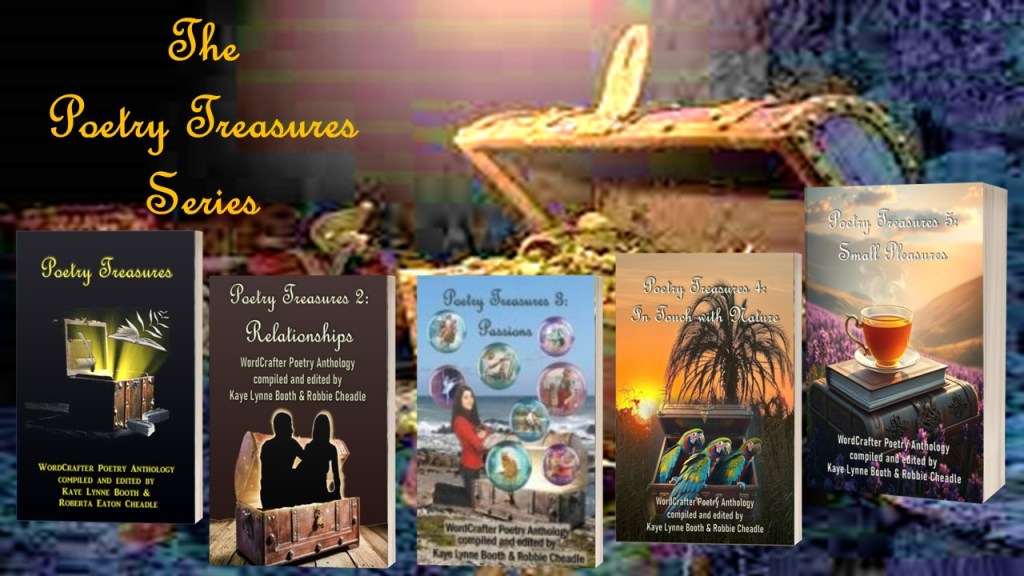
Get Your Copy Today!
Poetry Treasures: https://books2read.com/PoetryTreasures
Poetry Treasures 2: Relationships: https://books2read.com/PT2-Relationships
Poetry Treasures 3: Passions: https://books2read.com/u/b5qnBR
Poetry Treasures 4:In Touch With Nature: https://books2read.com/PT4-Nature
Poetry Treasures 5: Small Pleasures: https://books2read.com/PT5-SmallPleasures



















