WordCrafter News: November Release: “DEEP CITY in Times Roman”, wide release of “Coming Home” & the Winners of the WordCrafter Midnight Madness Book Blog Tour Giveaway
Posted: October 26, 2026 Filed under: Blog Tour, Book Release, Books, Drama, Fiction, Giveaways, Humor, satire, Self-Discovery, WordCrafter Book Blog Tours, WordCrafter News, WordCrafter Press 2 Comments
NaNoWriMo may be gone with the wind, but November is still National Novel Writing Month. Last November gave me a start on Marta, Book 3 in my Women in the West Series, when I wrote over 50,000 words+. Now, it sits at almost 90,000 words, but it still isn’t finished. Book 3 differs from the first two books not only in length, but also in the fact that it hosts a full cast of colorful characters all the way through to try my skills. I truly believe this book will be my best Women in the West book yet, and I’m planning for it to be released next March, along with the Special Illustrated Editions of all three books. However, this November, two releases by other authors have made their way into the month and will be taking up the spotlight, so I won’t be doing the novel thing in any type of focused effort. Next November, I hope to be back in the writing saddle again, but for now, I’m excited to tell you about the exciting new books coming your way.
Announcing the Winners of the WordCrafter Midnight Madness Book Blog Tour Giveaway
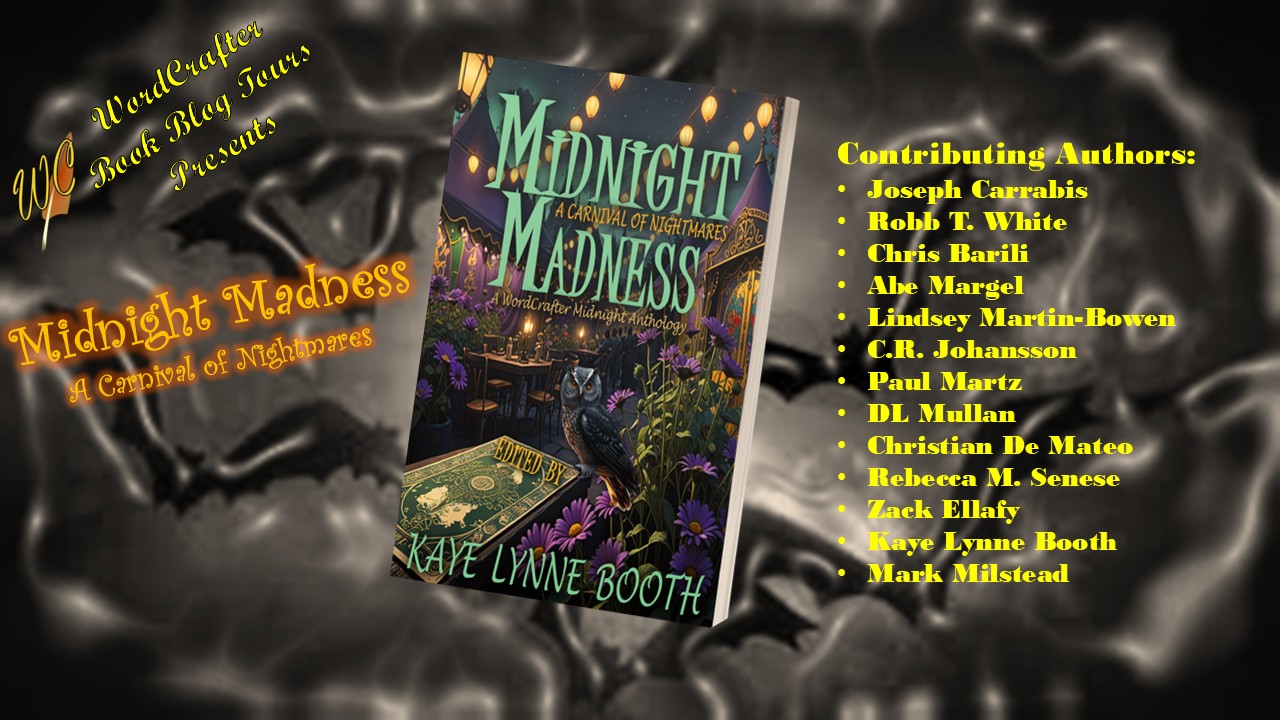
Last week was the WordCrafter Midnight Madness Book Blog Tour with guest posts and excerpt readings from contributing authors and an interview with the 2026 WordCrafter Dark Fiction Contest winning story author, Mark Milstead. The final thing to do to wrap this tour up is to announce the winners of the giveaway, so without further ado…
And the winners are…
(Drumroll please)
- Priscilla Bettis
- D.L. Finn
- T.W. Dittmer
Congratulations to the winners. If you haven’t already heard from me, please drop me a line at KLBWordCrafter@gmail.com to collect your free book.
New Release: DEEP CITY in Times Roman, by Lindsey Martin-Bowen
I’m pleased to announce the release of Deep City in Times Roman, by Lindsey Martin-Bowen on September 29, 2026. A spoof on the cult followings of the nineteen-eighties, this novel has a plot that will keep you guessing all the way through. Previous titles released through WordCrafter Press for Ms. Martin-Bowen include The Dark Horse Waits in Boulder (May 2026).
About DEEP CITY in Times Roman
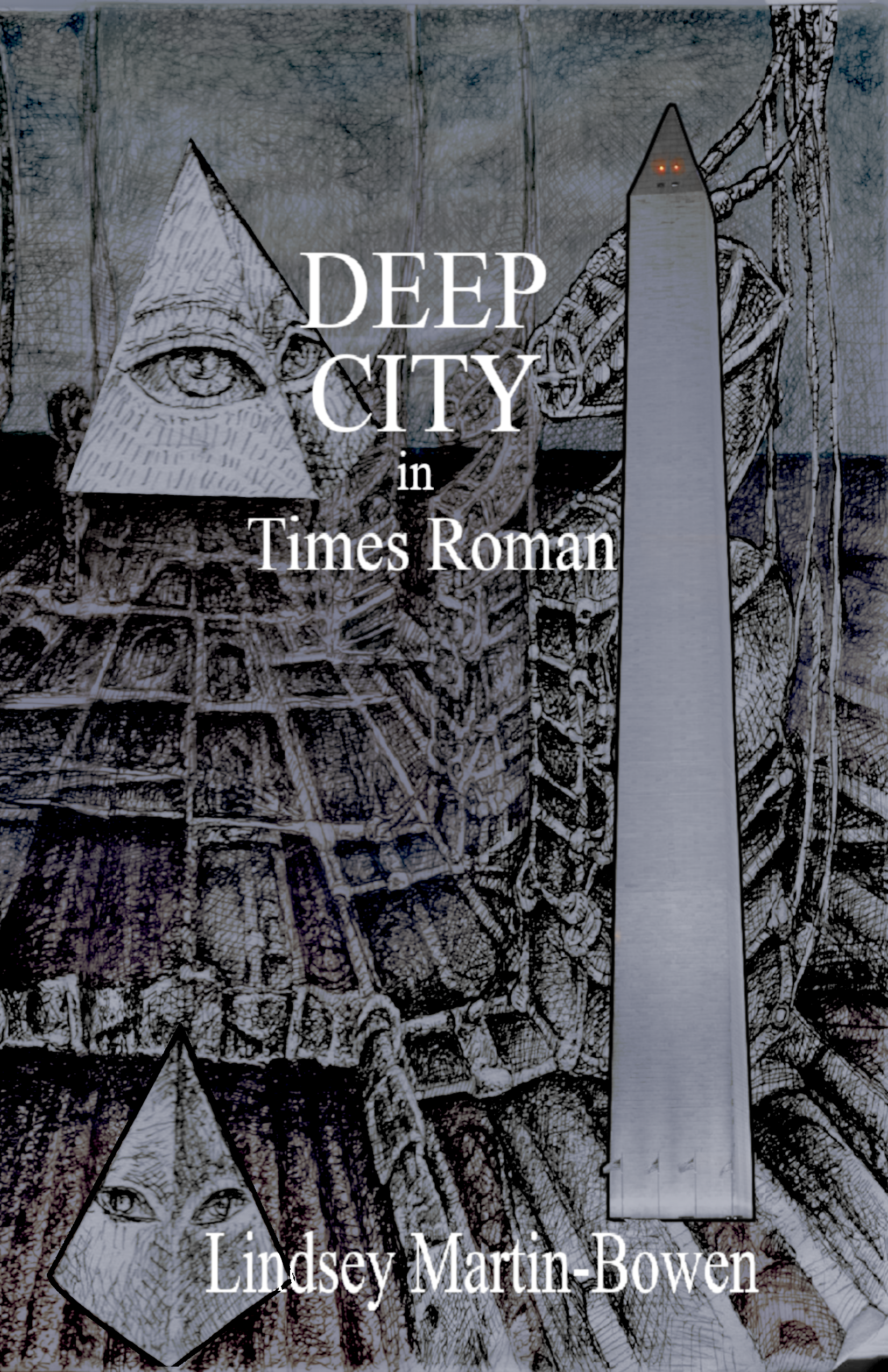
Deep City in Times Roman is a tongue-in-cheek novel about the cult movements in the 1970s and 80s, a roman à clef, (French for novel with a key), which spoofs those movements which are designed to dupe persons into supporting the leader and building his wealth.
Two friends, Lynette and Shirley, are quite angry at the Reverend Yun Sung Ghunne, who has separated their husbands from them as he forms his movement. Their husbands serve the movement working at The Washington LINES, a Uni run newspaper, with a stipulation that movement members be chaste, not even touching, for three years before consummation of their marriages, even though they were married before the good reverend came along. Together with a full cast of colorful characters, who seem destined to meet, Lynette sets out on a crazy quest to take down the Unis, stop the reverend, and save her marriage.
WordCrafter DEEP CITY in Times Roman Book Blog Tour
The WordCrafter Deep City in Times Roman Book Blog Tour will run September 28 – October 2, 2026. We’ll be sharing an interview with the author, as well as guest posts and excerpt readings. As always, there will be a giveaway for digital copies of the book, so don’t miss out. We want to sendoff this satiric spoof in style.
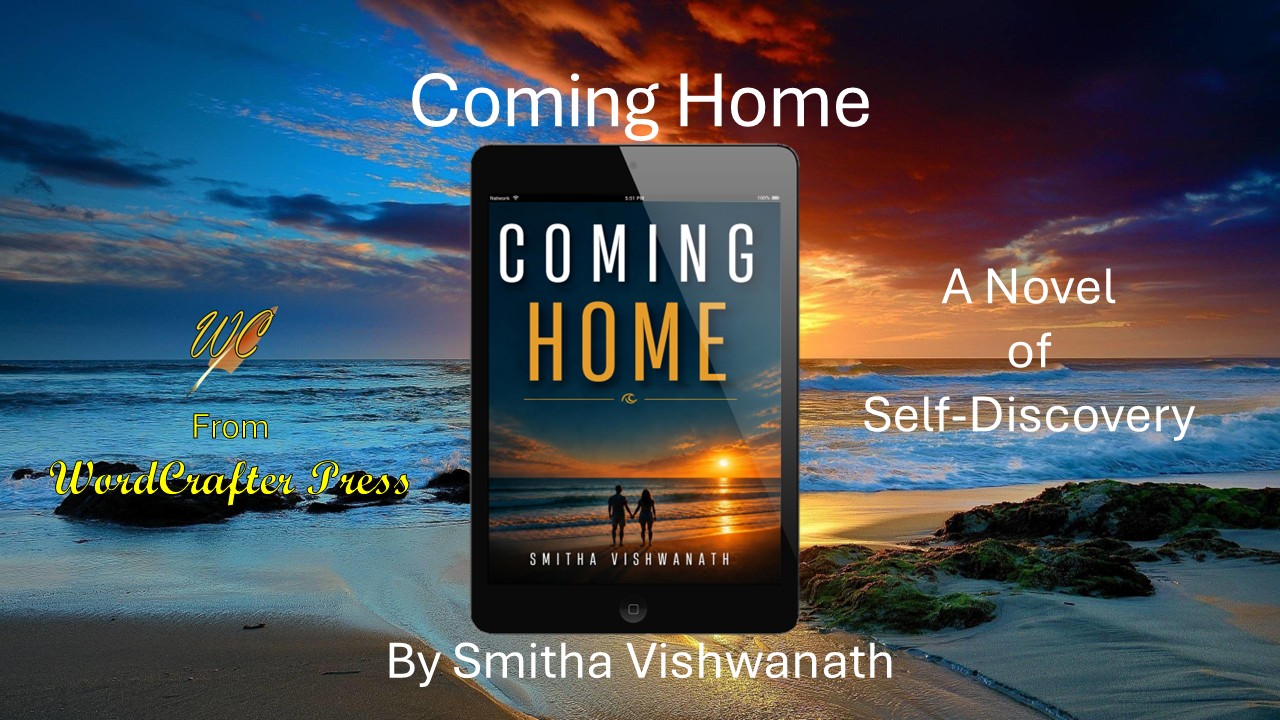
Wide Release: Coming Home, by Smitha Vishwanath
Although Coming Home, by Smitha Vishwanath is already available on Amazon in both ebook and print, I’m happy to announce the wide release of the ebook from WordCrafter Press on November 3.
About Coming Home
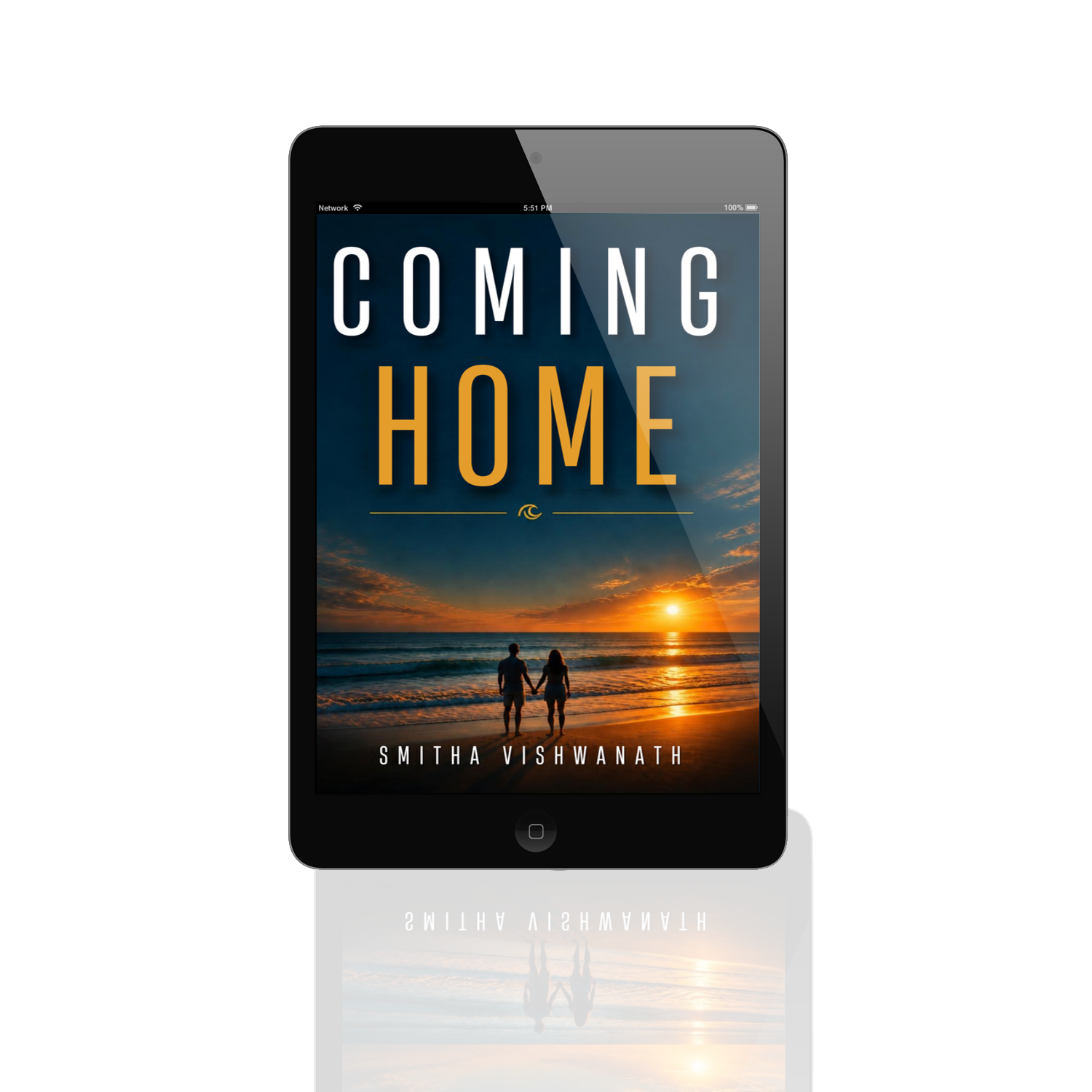
Twenty-six-year-old, Shaynaya’s world is shattered at the death of her beloved mother. In spite of career achievements, there’s a vacuum in her heart caused by the questions raised by her mother’s sudden death which remain unanswered.
In her quest for peace and the need to hold her family together, she leaves her job in the Middle East and moves to India; journeying across geographical planes and inner landscapes to finally reach ‘home’.
Coming Home is a heartwarming story about self-discovery, relationships, loss, love, destiny, the choices we make, and how these choices eventually lead to what we are destined for.
Coming Home Trailer
WordCrafter Coming Home Wide Launch Party
WordCrafter Book Blog Tours invites you to join us for the wide release party post, right here on Writing to be Read to learn more about the book and the author. On November 3, we’ll be sending a digital format of Coming Home wide, into the hands of the global reading community beyond Amazon and KDL.
Celebrate Halloween with WordCrafter Press and Sonoran Dawn Studios
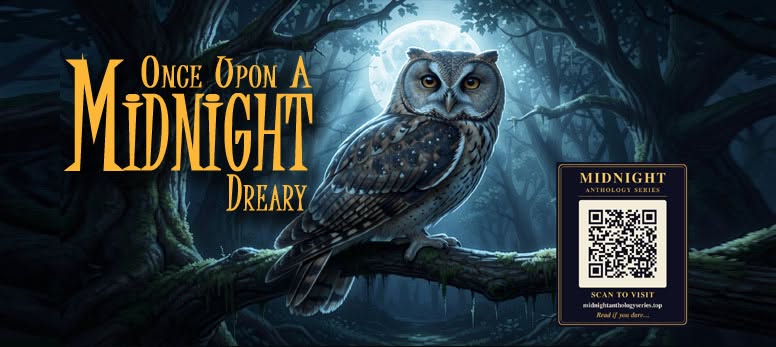
Join us on Halloween for the Once Upon a Midnight Dreary Facebook Book Event. There will be music and games and spooky reading choices. Come join in the fun. And if you are an author, you can sign up for an author takeover slot to promote your work by contacting host DL Mullan. Check it out.
https://www.facebook.com/events/3090905771300783
WordCrafter’s Spooky Special
There’s still time to take advantage of October’s Spooky Special. Just click the links below to take advantage of our great prices on the books in the WordCrafter Narrating the Paranormal series. But be sure to do it before the witching hour on Halloween night, because this sale ends on October 31st.
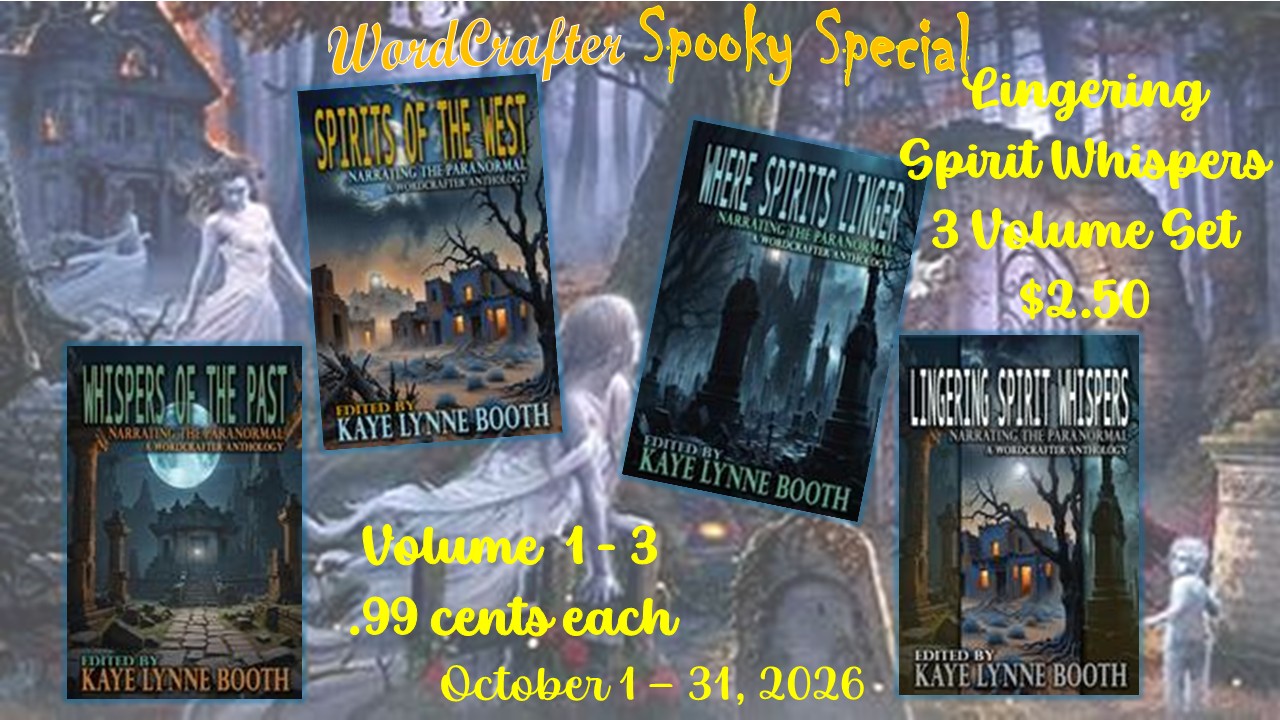
October 1 – 31, WordCrafter Press’ Narrating the Paranormal Series is on sale. Volumes 1-3 are only .99 cents each, or you can get all three volumes in volume four for only $2.50. Get your copies at the links below.
Volume 1 – Whispers of the Past: https://books2read.com/WhispersPast
Volume 2 – Spirits of the West: https://books2read.com/SpiritsoftheWest
Volume 3 – Where Spirits Linger: https://books2read.com/WhereSpiritsLinger1
Volume 4 – Lingering Spirits Whisper (3 in 1): https://books2read.com/LingeringSpiritWhispers
___________________________________________________
This post sponsored by WordCrafter Quality Writing & Author Services.

Whether it’s editing, publishing, or promotion that you need, WordCrafter Quality Writing & Author Services can help at a price you can afford.
Stop by and see what we have to offer today: https://writingtoberead.com/readings-for-writers/wordcrafter-quality-writing-author-services/
Share this:

Final Day of the WordCrafter “Midnight Madness” Book Blog Tour
Posted: October 23, 2026 Filed under: Anthology, Blog Tour, Book Release, Books, Dark fiction, Fiction, Giveaways, Guest Post, Horror, Short Fiction, Stories, WordCrafter Book Blog Tours, WordCrafter Press | Tags: "Apocalypse Family", "The Shape of Denial", Abe MArgel, Books, Midnight Dark Fiction Anthology Series, Midnight Madness: A Carnival of Nightmares, WordCrafter Book Blog Tours, WordCrafter Press, Zack Ellafy 2 CommentsThis is the final day of the WordCrafter Midnight Madness Book Blog Tour, and we’ll be wrapping things up today, with a brief guest post from contributing author Abe Margel about his story, “EV Driven”, brief excerpts from “The Shape of Denial”, by Paul Martz and “Apocalypse Family”, by Zack Ellafy. We also share a link to the new Midnight Dark Fiction Anthology Series site, designed by DL Mullan of Undawnted, and we’ll tell you how to join in for our Once Upon A Midnight Dreary Facebook Book Event and purchase Midnight Merch.
About Midnight Madness: A Carnival of Nightmares
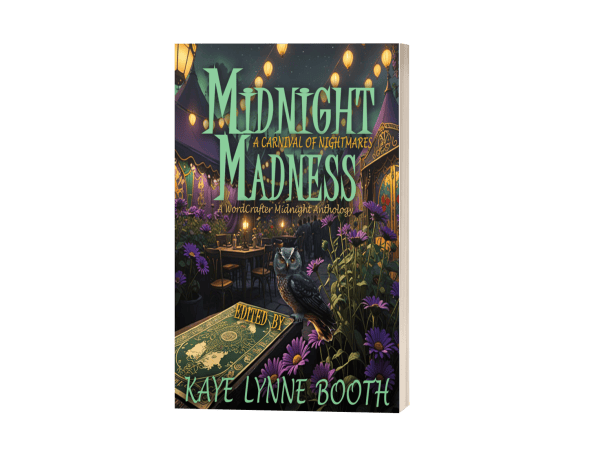
Midnight Madness: A Carnival of Nightmares contains fifteen stories which explore the fears that keep us awake at night. Featuring the winning story in the 2026 WordCrafter Dark Fiction Contest, as well as stories by veteran story tellers, Kaye Lynne Booth, Joseph Carrabis, Chris Barili, Rebecca M. Senese, C.R. Johansson, and more. The darkness in these stories touch on that which we fear most.
From a last big college prank gone awry, to an invisible beast none-the-less deadly, to a potion which makes you move faster than the eye can see, these stories showcase humanity’s deepest, darkest fears, how they shape our behaviors and their consequences they carry.
Everyone fears something. No one is immune. A sphere that drives men insane, apocalyptic zombies filled with sparkling dust, and even what happens when an electric car short circuits in the worst way are what make this story collection one you won’t want to miss.
Book Trailer
“EV Driven”, by Abe Margel
The story ‘EV Driven’ grew out of a recent experience of mine buying a new car.
Julian Duran likes gadgets, all kinds of gadgets and is willing to part with a large slice of his pay cheque to get them. New gizmos are particularly fascinating to him. Luck comes knocking on his door. A relative of his wife dies and leaves her a tidy some of cash which she shares with Julian. He quickly goes out and replaces his old, tired car with a new, technologically advanced vehicle, something he never dreamed he’d be able to afford. His wife is very annoyed with him but he rationalizes the extravagant purchase. The new car is wonderful at first, even better than he had hoped but then it steers him in an unexpected direction.
About Abe Margel

Abe Margel worked in rehabilitation and mental health for thirty years. He is the father of two adult children and lives in Thornhill, Ontario with his wife. His fiction has appeared in Chewers, The Hemlock Journal, Yellow Mama, Brief Wilderness, Freedom Fiction, Ariel Chart, Mystery Tribune, etc.
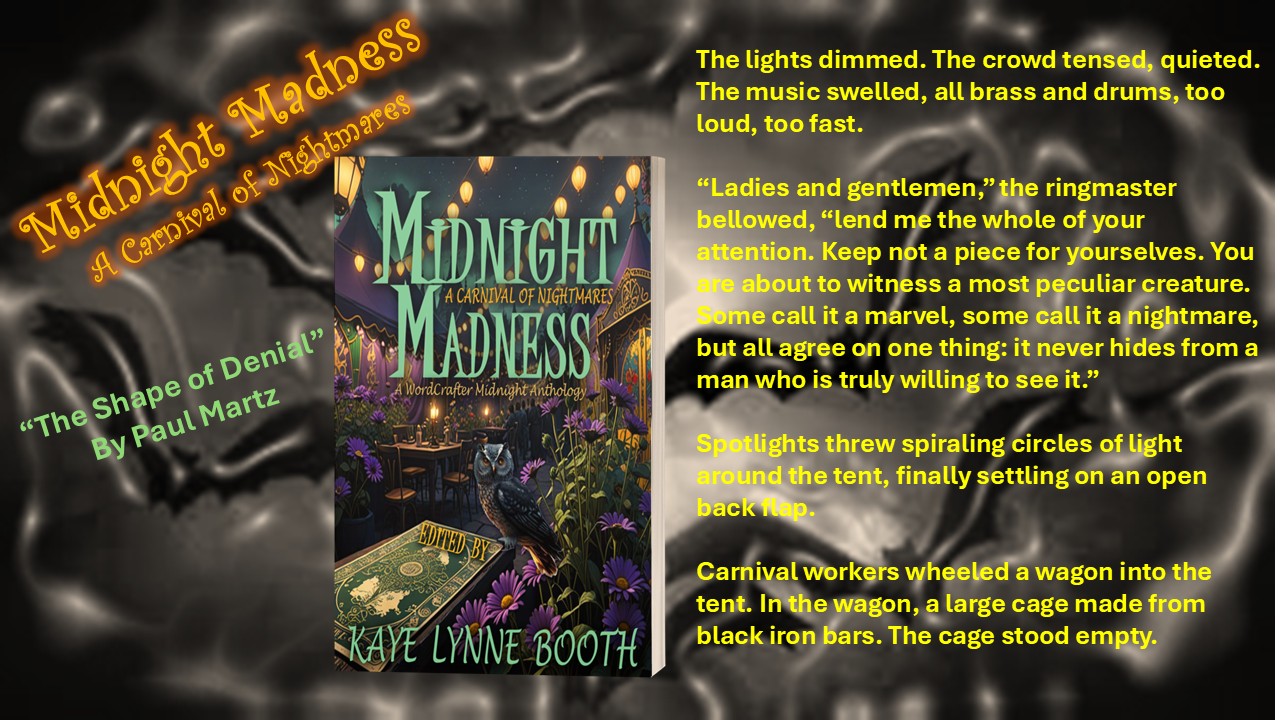
“The Shape of Denial”, by Paul Martz
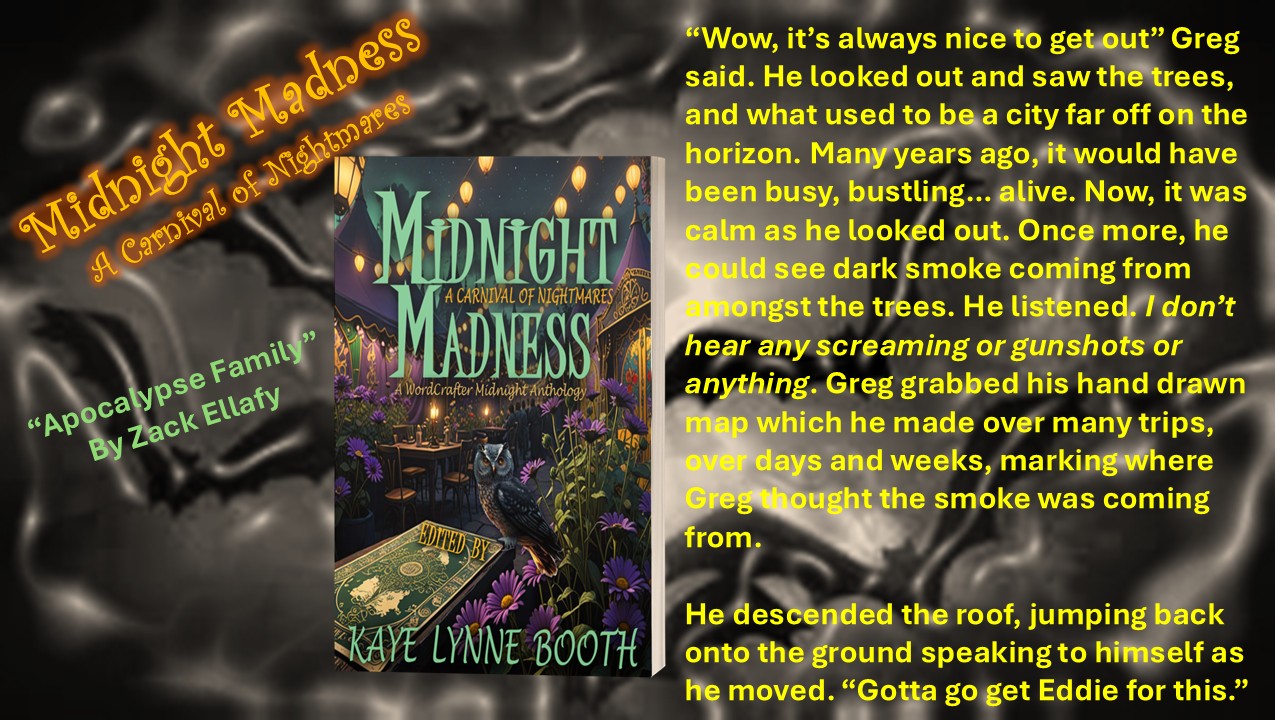
“Apocalypse Family”, by Zack Ellafy
Wrapping Up
That wraps up the WordCrafter Midnight Madness Book Blog Tour, as well as this stop. There’s still time to visit each stop through the links in the Tour Schedule below to leave comments and gain entries in the giveaway. I will get out my hat and do the random drawing on Sunday.
Also, we hope you will visit our new Midnight Dark Fiction Anthology Series site and join us in our Halloween celebration with our Once Upon a Midnight Dreary Facebook Book event.
Until next time.
Happy Hauntings!
Giveaway
Enter the giveaway by leaving a comment at each stop you visit, for a chance to win.
Three lucky readers will receive a free digital copy of Midnight Madness: A Carnival of Nightmares, volume 4 in the Midnight Dark Fiction Anthology Series.
Winners are chosen in a random drawing after the tour ends and will be announced in the “WordCrafter News” post on Monday, October 26, here on “Writing to be Read”.
**NOTE: “Writing to be Read” seems to be having technical difficulties with comments. If you are unable to comment here, you can still enter the drawing by sending your comment to KLBWordCrafter@gmail.com with MM Giveaway in the subject line. Sorry for any inconvenience.
Tour Schedule
Mon. 10/19 – Interview with Mark Milstead & Guest post from Christian De Matteo & promo for “Shadowmancer” – Writing to be Read: https://writingtoberead.com/?p=74385
Tues. 10/20 – guest post from Robb T. White & Reading from Kaye Lynne Booth –
Poetry by Mich: https://michnavs.wordpress.com/?p=16503
Hotel by Masticadores: https://hotelmasticadoreshouse.wordpress.com/2026/10/20/midnight-madness-book-tour-day-2/
Masticadores Phillipines: https://masticadoresphilippines.wordpress.com/2026/10/20/midnight-madness-book-tour-day-2/
Wed. 10/21 – Reading from “Headmaster Burns” & guest post from Lindsey Martin-Bowen & Promo for “L’Bonhomme Sept Heures” – Writing to be Read: https://writingtoberead.com/?p=74390
Thurs. 10/22 – Reading from Joseph Carrabis & guest post from C.R. Johannson – Roberta Writes: https://roberta-writes.com/2026/10/22/roberta-writes-book-blog-tour-about-midnight-madness-a-carnival-of-nightmares/
Fri. 10/23 – Guest Post by Abe Margel & promo for “The Shape of Denial” & Promo for “Apocalypse Family” – Writing to be Read: https://writingtoberead.com/?p=74393
Learn More About the Midnight Dark Fiction Anthology Series
Visit the new Midnight Dark Fiction Anthology site: http://www.midnightanthologyseries.top
Once Upon a Midnight Dreary Facebook Event
The celebrations have only started. Join us for the Once Upon a Midnight Dreary Facebook Book Event on October 29th: https://www.facebook.com/events/3090905771300783. There will be plenty Halloween fun to go around: more Midnight Madness and the Midnight Dark Fiction Anthology Series, plus other WordCrafter Press dark fiction releases and other works from contributing authors, music and storytelling all around.
Get Your Midnight Tee-Shirts
Midnight Roost: https://www.zazzle.com/midnight_roost_t_shirt-256463603840988378
Midnight Garden: https://www.zazzle.com/midnight_garden_t_shirt-256018093354343924
Midnight Oil: https://www.zazzle.com/midnight_oil_t_shirt-256701322171498236
Midnight Madness: https://www.zazzle.com/midnight_madness_t_shirt-256053338820100431
Midnight Shift: https://www.zazzle.com/midnight_shift_t_shirt-256886505305587799
Midnight Marauder: https://www.zazzle.com/midnight_marauder_t_shirt-256566127281249020
______________________________________
Book your WordCrafter Book Blog Tour today!
Share this:

Day 4 of the WordCrafter Midnight Madness Book Blog Tour
Posted: October 22, 2026 Filed under: Anthology, Audio Excerpt, Blog Tour, Book Release, Books, Dark fiction, Giveaways, Guest Post, Horror, Short Fiction, Stories, WordCrafter Book Blog Tours, WordCrafter Press | Tags: "Lessons Learned", "Sphere of Solss", Anthology, C.R. Johansson, Joseph Carrabis, Midnight Madness: A Carnival of Nightmares, WordCrafter Book Blog Tours, WordCrafter Press Leave a commentFor Day 4 of the WordCrafter Midnight Madness Book Blog Tour, we’re over at Roberta Writes, with host, Robbie Cheadle and a guest post from contributing author, C.R. Johansson and an excerpt reading by Joseph Carrabis from his story, “Lessons Learned”. Join us and get in on the giveaway, simply by leaving a comment.
Share this:

Day 3 of the WordCrafter “Midnight Madness” Book Blog Tour
Posted: October 21, 2026 Filed under: Anthology, Audio Excerpt, Blog Tour, Book Release, Books, Dark fiction, Giveaways, Guest Post, Horror, Short Fiction, Stories, WordCrafter Book Blog Tours, WordCrafter Press 2 CommentsThis is Day 3 on the WordCrafter Midnight Madness Book Blog Tour. Today we have a excerpt reading from Chris Barili’s story, “The Headmaster Burns” and a guest post from Lindsey Marting-Bowen about her story, “Lounge Act”.
About Midnight Madness: A Carnival of Nightmares
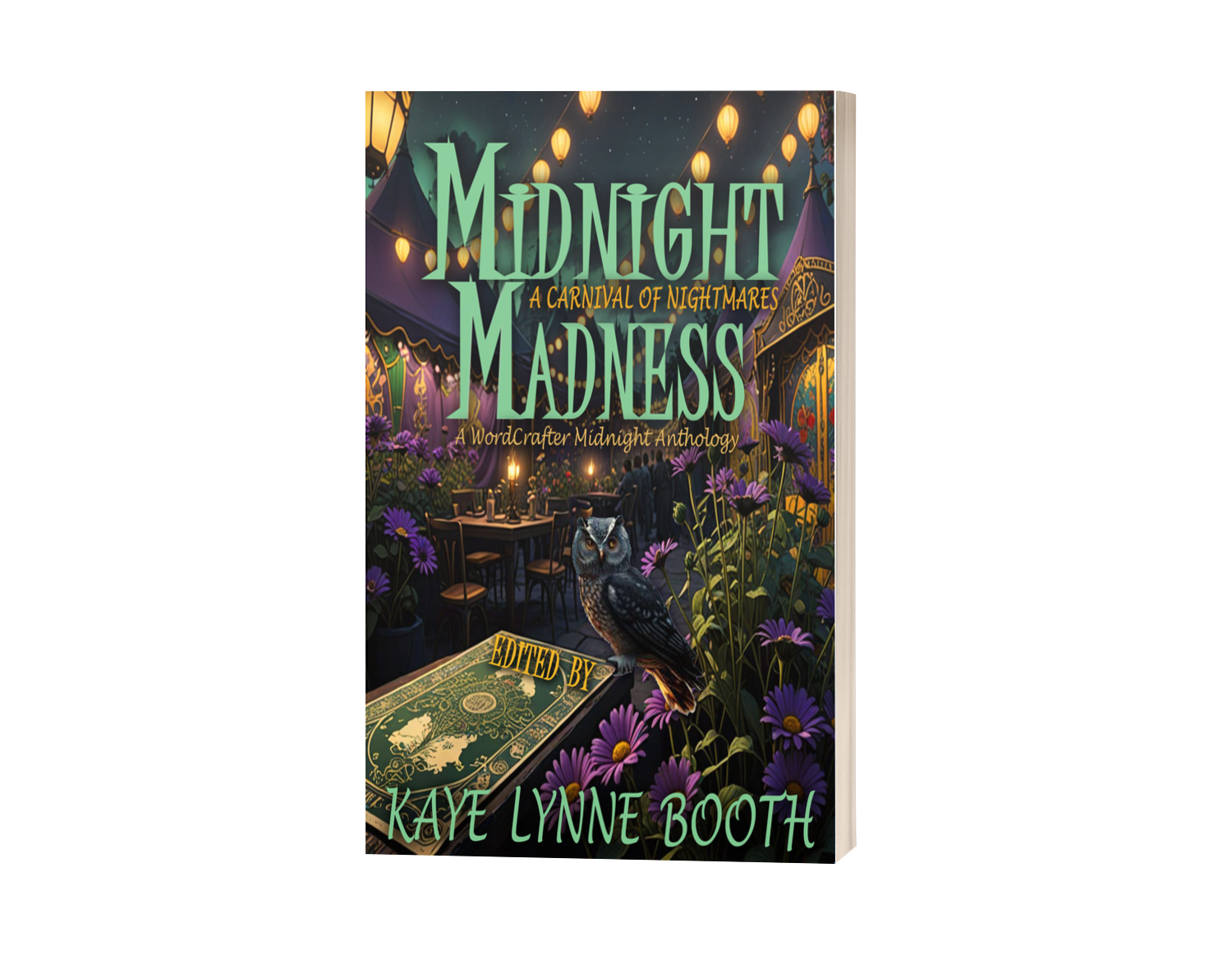
Midnight Madness: A Carnival of Nightmares contains fifteen stories which explore the fears that keep us awake at night. Featuring the winning story in the 2026 WordCrafter Dark Fiction Contest, as well as stories by veteran story tellers, Kaye Lynne Booth, Joseph Carrabis, Chris Barili, Rebecca M. Senese, C.R. Johansson, and more. The darkness in these stories touch on that which we fear most.
From a last big college prank gone awry, to an invisible beast none-the-less deadly, to a potion which makes you move faster than the eye can see, these stories showcase humanity’s deepest, darkest fears, how they shape our behaviors and their consequences they carry.
Everyone fears something. No one is immune. A sphere that drives men insane, apocalyptic zombies filled with sparkling dust, and even what happens when an electric car short circuits in the worst way are what make this story collection one you won’t want to miss.
Excerpt Reading from “The Headmaster Burns”
About Chris Barili

Chris Barili will retire later this year after forty-two years in the US Intelligence Community, so he can write full-time. He writes all kinds of stories, and has published fantasy, science fiction, horror, western, paranormal romance, and crime. He is author of the weird western Hell’s Butcher series, and also writes under the pen names B.T. Clearwater (Supernatural romance) and T.C. Barlow (western). Chris holds a degree in English from the University of Nebraska at Omaha, and a Master of Fine Arts in Creative Writing (Genre Fiction) from Western State Colorado University.
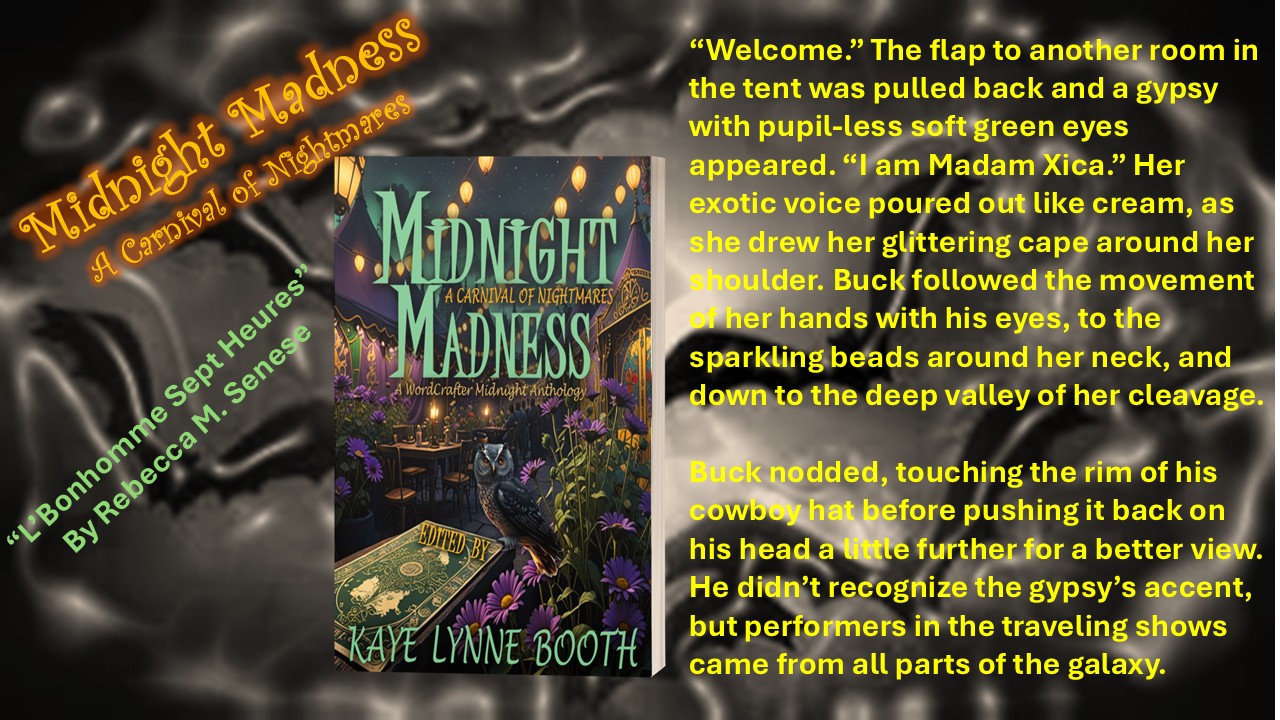
“L’Bonhomme Sept Heures”
About “Lounge Act”
Visiting Las Vegas and its casinos with my sisters and mother, who knew how to beat both the dealers and slot machines, brought a bit of levity to my life. But those light-hearted feelings arose more frommy company than from casino tables or slot machines.
Indeed, I enjoyed strolling through Caesar’s Palace, which emulated ancient Rome, watching those shows with the smoke-bellowing manikins in the town square and later in the lounge areas, but my family was the main source of levity.
Yet Bobbi Jo, the main character in “Lounge Act’’ doesn’t experience levity from either family members or gambling. Instead, her alcoholic husband likely makes her feel even more alone than sitting late at night among the slot machines. Bobbi Jo’s memory of an old man who might have intended to assault her and her marriage to an alcoholic are the sole portions in this tale that I took from my experiences. Other than those, and, of course, the setting in Vegas are based on memory.
From them, this story just appeared in my head one night—complete with symbolic characters and layers of meaning. I worked on it a few days until it seemed “ripe” with an unusual, but sad theme and what I hope is a tense, surprise ending.
—Lindsey Martin-Bowen
About Lindsey Martin-Bowen
On Halloween 2023, redbat books released Lindsey Martin-Bowen’s 7th poetry collection, CASHING CHECKS with Jim Morrison. Her 4th collection, Where Water Meets the Rock, was nominated for a Pulitzer; her 3rd, CROSSING KANSAS with Jim Morrison was a finalist in the QuillsEdge Press 2015-2016 Contest. In 2017, it won the Kansas Writers Assn award, “Looks Like a Million.” Writer’s Digest gave her “Vegetable Linguistics” an Honorable Mention in its 85th Annual (2017) Contest. Her Inside Virgil’s Garage (Chatter House Press 2013) was a runner-up in the 2015 Nelson Poetry Book Award. McClatchy Newspapers named her Standing on the Edge of the World (Woodley Press/Washburn University) was one of the Ten Top Poetry Books of 2008. It was nominated for a Pen Award.

Short Promo
Wrap Up
That’s all for today’s tour stop. Tomorrow will find us over at Roberta Writes with host, Robbie Cheadle, sharing an excerpt reading from contributing author Joseph Carrabis from his story, “Lessons Learned” and a guest post about the inspiration for Lindsey Martin-Bowen’s “Lounge Act”. Please join us, and don’t forget to leave a comment to enter the giveaway.
The Giveaway
Enter the giveaway by leaving a comment at each stop you visit, for a chance to win.
Three lucky readers will receive a free digital copy of Midnight Madness: A Carnival of Nightmares, volume 4 in the Midnight Dark Fiction Anthology Series.
Winners are chosen in a random drawing after the tour ends and will be announced in the “WordCrafter News” post on Monday, October 26, here on “Writing to be Read”.
**NOTE: “Writing to be Read” seems to be having technical difficulties with comments. If you are unable to comment here, you can still enter the drawing by sending your comment to KLBWordCrafter@gmail.com with MM Giveaway in the subject line. Sorry for any inconvenience.
Tour Schedule
Mon. 10/19 – Interview with Mark Milstead & Guest post from Christian De Matteo & promo for “Shadowmancer” – Writing to be Read: https://writingtoberead.com/?p=74385
Tues. 10/20 – guest post from Robb T. White & Reading from Kaye Lynne Booth –
Poetry by Mich: https://michnavs.wordpress.com/?p=16503
Hotel by Masticadores: https://hotelmasticadoreshouse.wordpress.com/2026/10/20/midnight-madness-book-tour-day-2/
Masticadores Phillipines: https://masticadoresphilippines.wordpress.com/2026/10/20/midnight-madness-book-tour-day-2/
Wed. 10/21 – Reading from “Headmaster Burns” & guest post from Lindsey Martin-Bowen & Promo for “L’Bonhomme Sept Heures” – Writing to be Read: https://writingtoberead.com/?p=74390
Thurs. 10/22 – Reading from Joseph Carrabis & guest post from C.R. Johannson – Roberta Writes: https://roberta-writes.com/2026/10/22/roberta-writes-book-blog-tour-about-midnight-madness-a-carnival-of-nightmares/
Fri. 10/23 – Guest Post by Abe Margel & promo for “The Shape of Denial” & Promo for “Apocalypse Family” – Writing to be Read: https://writingtoberead.com/?p=74393
________________________________________
Share this:

Day 2 of the WordCrafter Midnight Madness Book Blog Tour
Posted: October 20, 2026 Filed under: Anthology, Audio Excerpt, Book Release, Books, Dark fiction, Giveaways, Guest Post, Short Fiction, Stories, WordCrafter Book Blog Tours, WordCrafter Press | Tags: "In a Single Second", "The Pranksters", Anthology, Dark Fiction Anthology, Kaye Lynne Booth, Midnight Madness: A Carnival of Nightmares, Robb T. White, WordCrafter Book Blog Tours, WordCrafter Press Leave a commentToday we’re over at Poetry by Mich, Hotel by Masticadores, and Masticadores Philippines celebrating the release of Midnight Madness: Carnival of Nightmares on the WordCrafter Midnight Madness Book Blog Tour. Join us for a guest post from Robb T. White, and an excerpt reading from me, and leave a comment to get in on the giveaway for the free digital copy.
Share this:

Welcome to the WordCrafter “Midnight Madness” Book Blog Tour
Posted: October 19, 2026 Filed under: Anthology, Author Interview, Blog Tour, Book Release, Books, Dark fiction, Fiction, Guest Post, Horror, Short Fiction, Stories, WordCrafter Book Blog Tours, WordCrafter Press | Tags: "The Hopper Job", "The Mist on the Moors", Christian De Matteo, Mark Milstead, Midnight Madness: A Carnival of Nightmares, WordCrafter Book Blog Tours, WordCrafter Press 2 CommentsWelcome to the WordCrafter Midnight Madness Book Blog Tour and the send-off for Midnight Madness: A Carnival of Nightmares, volume 4 of the Midnight Dark Fiction Anthology series. We have a great tour planned for you, with guest posts from contributing authors, audio excerpts from their stories, promo excerpts, and of course, a giveaway that’s easy to enter; all you have to do is leave a comment at each stop.
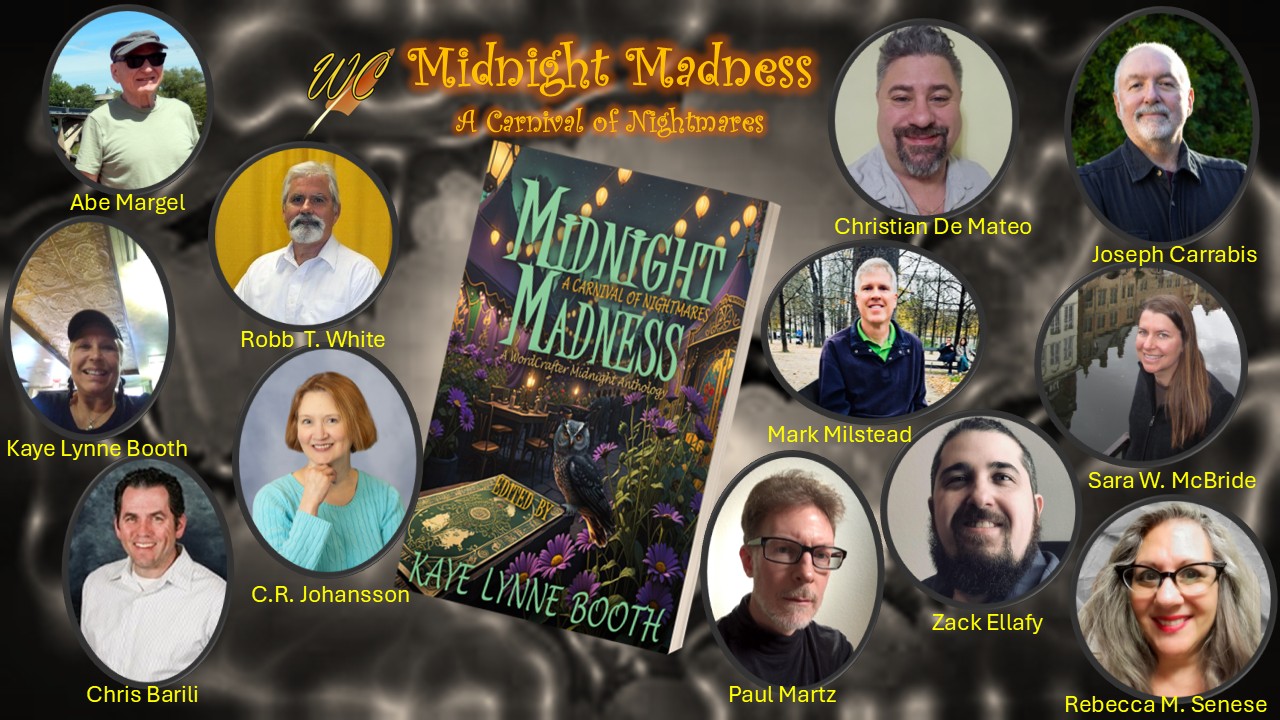
We’ve got a great crew of 13 contributing authors for Midnight Madness, with a total of 15 stories, and on this tour, you’ll be introduced to several of them and you learn about their stories. Today, we bring you an interview with Mark Milstead, who the author of the winning story in the 2026 WordCrafter Dark Fiction Contest, “Mist on the Moors”, and a guest post from another newcomer to the WordCrafter author tribe, Christian De Matteo, about his story, “The Hopper Job”.
About Midnight Madness: A Carnival of Nightmares
Midnight Madness: A Carnival of Nightmares contains fifteen stories which explore the fears that keep us awake at night. Featuring the winning story in the 2026 WordCrafter Dark Fiction Contest, as well as stories by veteran story tellers, Kaye Lynne Booth, Joseph Carrabis, Chris Barili, Rebecca M. Senese, C.R. Johansson, and more. The darkness in these stories touch on that which we fear most.
From a last big college prank gone awry, to an invisible beast none-the-less deadly, to a potion which makes you move faster than the eye can see, these stories showcase humanity’s deepest, darkest fears, how they shape our behaviors and their consequences they carry.
Everyone fears something. No one is immune. A sphere that drives men insane, apocalyptic zombies filled with sparkling dust, and even what happens when an electric car short circuits in the worst way are what make this story collection one you won’t want to miss.
“The Mist on the Moors”
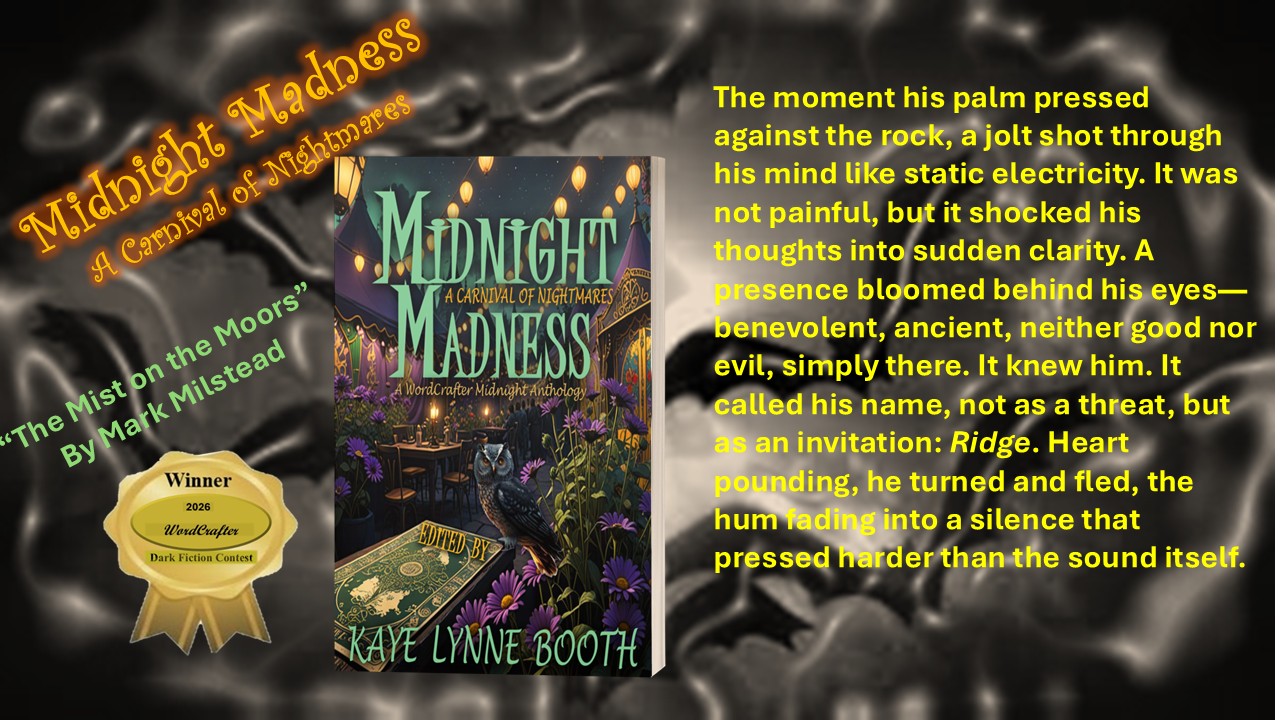
Interview with Mark Milstead
Kaye: What prompted you to enter the 2026 WordCrafter Dark Fiction Contest?
Mark: Basically, I had a career change and am now retiring. I always wanted to write, but never had the time to focus. Once I finally had that time, I wanted to see if others would be entertained by my writing. I found the contest online, gathered my nerve, and submitted it.
Kaye: How did you make the jump from patent attorney to author?
Mark: I began my career as an organic chemist, then switched paths to become a patent attorney. I ended my patent attorney career at the end of 2025. I wanted to return to the creative side of myself that I left behind in high school.
Kaye: What’s the best piece of writing advice you have been given?
Mark: I am an avid reader of Stephen King and read his On Writing: A Memoir of the Craft. I was impressed by his work ethic. “If you want to be a writer, you must do two things above all others: read a lot and write a lot. There’s no way around these two things that I’m aware of, no shortcut.” I have always read, so now it is time to write.
Kaye: That is an excellent book and writing resource. I read it back in graduate school. Highly recommended and great advice to follow. Where did the inspiration for “The Mist in the Moors” come from?
Mark: This story had its beginning in high school. It was a short story for a creative writing project. It won an award and terrified my teacher. The original story was much shorter—just a traveler on the moors at night with someone or something following him.
Kaye: What was your biggest challenge in writing, or in revising this story?
Mark: Making Ridge Kane real. He needed a backstory and a reason to be in Scotland. I also had to figure out how to convey that what is happening is real and not just his imagination. It took many rewrites to discover who Ridge Kane is. I wanted the audience to identify with him.
Kaye: What was the most difficult part of the story to write? Why?
Mark: Expanding the story so the reader could understand what my mind was seeing. I had to step back and read it as the audience would experience it. Law school helped here—I reverted to writing a statement of facts and then expanding from there. I also had to teach myself to write dialogue. But the most difficult portion of the story was the final confrontation. I must have written it more than twenty times. I had to slow myself down so the scene would slow down as well. I wanted the audience to feel every millisecond.
Kaye: What type of research did you do to write “The Mist in the Moors”?
Mark: This is where modern research is great. I used AI as an assistant. Instead of spending hours in a library researching, I could ask AI questions and get immediate answers while sitting at my computer—such as technical details about climbing, backpacking, or stone circles in Scotland.
Kaye: Who are your favorite authors? Do you feel your writing emulates any of them?
Mark: I am an avid reader of Stephen King, and I really enjoy his everyday guy versus evil themes. The Gunslinger series is my favorite. “The Man in Black fled across the desert, and the Gunslinger followed.” Roland Deschain—what a wonderful character. I have read many diverse authors. I think my writing is more similar to Michael Crichton’s, because I like the technical aspect. I also admire Bernard Cornwell; his historical fiction is wonderful.
Kaye: What is next for you as an author?
Mark: I have several ideas that I want to pursue. I plan to write a novella-length story that is more historical fiction. I want to create a fully developed person with a complete story. But I also have a few shorter ideas that lean toward horror or the unexplained.
Kaye: How exciting. You may find a home for some of those darker stories in the coming Midnight series anthologies, or even some of the themed anthologies from WordCrafter Press. Is there somewhere where people can go to learn more about you as an author and your work?
Mark: Not really. I have spent my life in a career that kept me grinding away behind the scenes. I have no social media footprint to speak of. I have chemistry publications, published patent applications that I drafted, and even a few granted patents that I examined while I was a United States Patent Examiner. I am just starting a creative writing career.
About Mark Milstead
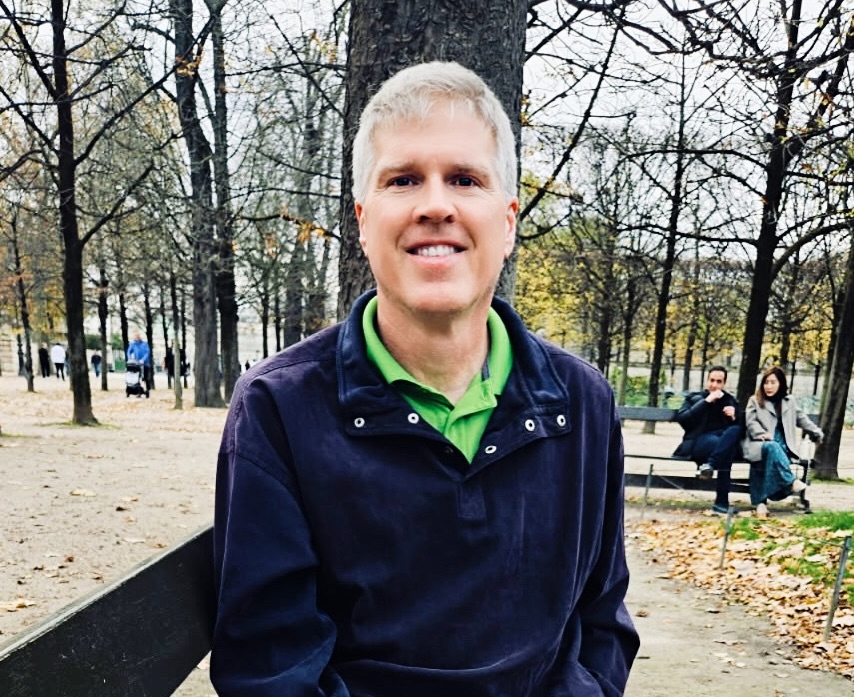
Mark W. Milstead is a patent attorney specializing in biotechnology and pharmaceuticals, but he has always enjoyed reading fiction, starting with the classics as a child and progressing to modern fiction as an adult. He holds a Master’s degree in Medicinal Chemistry from the University of Kansas. “Mist on the Moors” marks his debut published short story. He is thrilled to join the ranks of published authors.
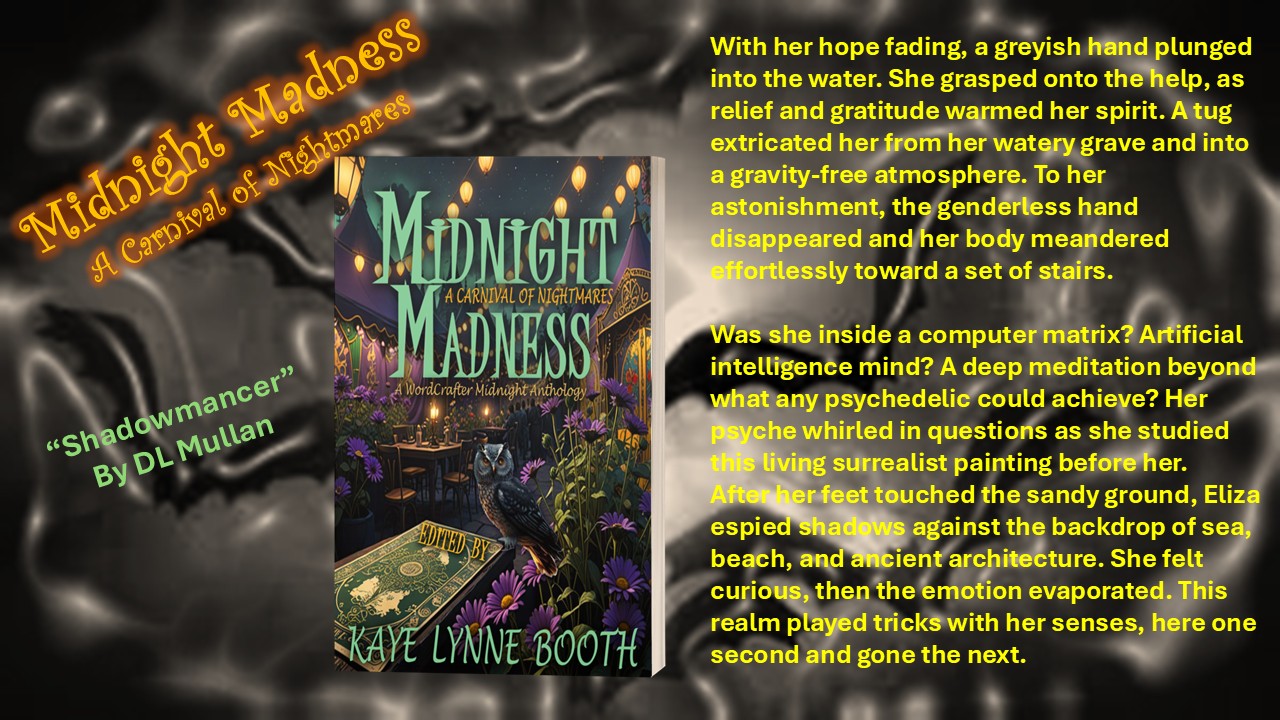
“Shadowmancer”
On Writing “The Hopper Job,” and my Somewhat Frightening Obsession with Noir
Hi, I’m Christian De Matteo, and if you’re wondering about my classic noir credentials, let me lead with this. My eldest son’s name is Dashiell. I figure that should cover it.
My father, Joseph De Matteo, introduced me to Humphrey Bogart and The Maltese Falcon in my early teens. The movie floored me. Then he gave me the complete collection of Dashiell Hammett’s novels. I devoured all five in no time flat, awed by the clipped tough-guy dialogue, the razor-sharp descriptions and the astounding number of moving parts Hammett effortlessly built into a smoothly oiled machine.
Reading and watching noir became an obsession. VHS, DVD, Blu-Ray, I’ve never stopped collecting, never stopped looking for the rarest of the rare. Chandler, Goodis, Thompson, and more and more, I never stopped reading. If they gave degrees based solely on obsessive consumption, I’d have a Ph.D. in tough guys, rough dames, and the coldest crimes.
Oddly, however, through my entire writing history, I’d never written a noir period-piece. Plenty of crime and neo-noir, but never a good, old-fashioned 1940s humdinger. (Humdinger… I don’t know that I’ve ever used that word before. I like it.) One day I decided it was time and stared at a blank word document until the first line came to me.
Maria needed him to leave so she could plant the knife.
I put my fingers on the keyboard and followed her from there. I’m what some people call a discovery writer. I prefer the term “pantser.” I’m not a plotter. I couldn’t plot a story to save my life. I fly by the seat of my pants. I need to follow characters, watch them do things, see what the fallout is (they’re usually making bad decisions because that’s a lot more fun than good ones), and see what shakes out. Maria introduced me to a cast of characters I immediately fell in love with, from slimy to malevolent to charmingly devilish. The key is that I’m having fun and, dammit, I was.
Once I found out what the story was, I went back and planted all the bombs needed to make the damn thing explode at the end. Does it work? Lord, I hope so. I hope you have as much fun with “The Hopper Job” as I did.
If not, grab yourself a copy of Dashiell Hammett’s The Maltese Falcon. No one will ever do it better.
About Christian De Matteo
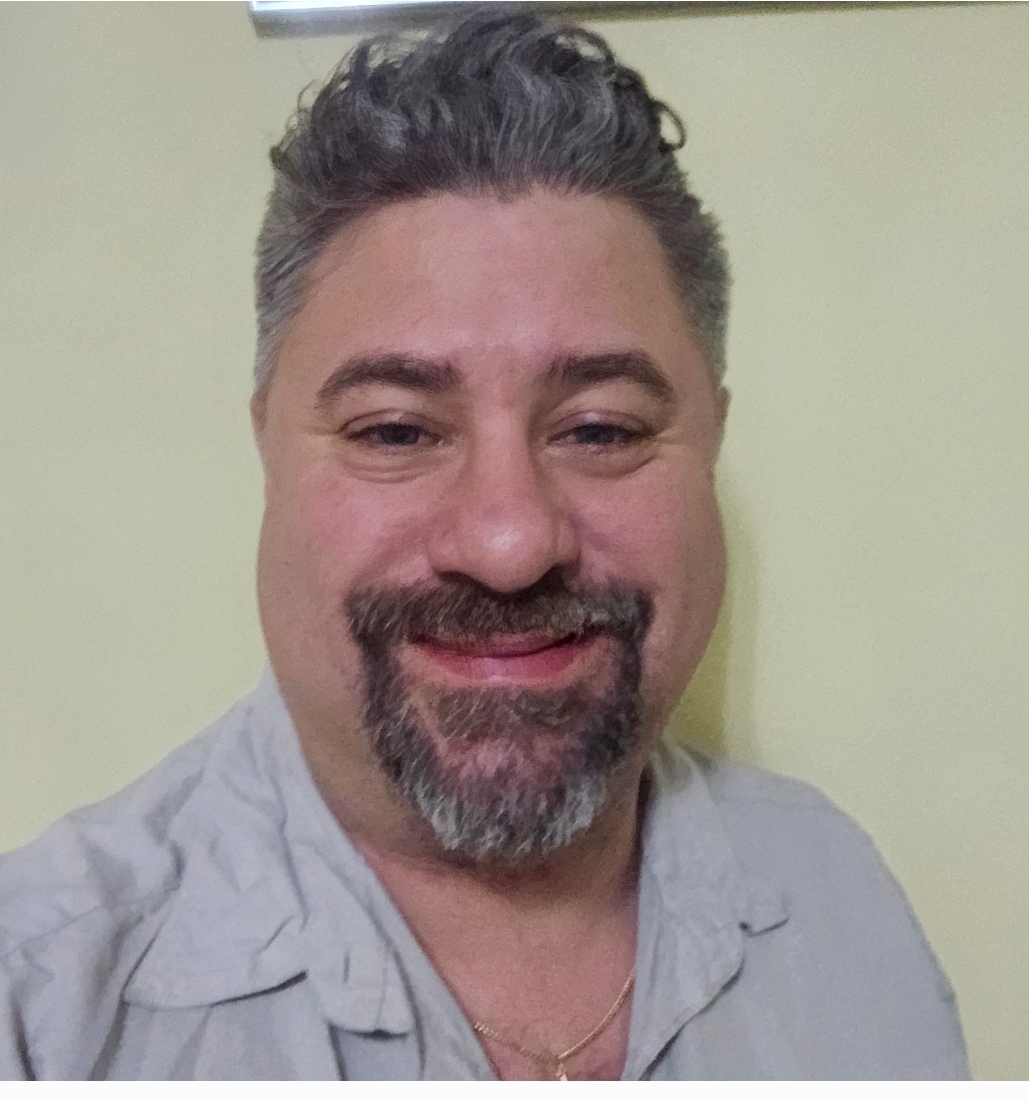
Christian De Matteo is a writer, editor, and college professor whose fiction has appeared in The Bleeding Margin, Grim Omen Magazine, and SKUMMEL, with additional work forthcoming from Tales to Terrify, Close to the Bone, Crimeucopia, Horrorsmith Magazine, and the Monstrously Misguided anthology series. He is the co-founder and Editor-in-Chief of independent comics publisher Fugitive Poems and the founder of Tellworthy Creative Writing Services, where he works as a professional editor and writing coach. His work wanders through the back alleys of horror, noir, science fiction, and the strange places in between, usually looking for a fight.
Wrapping Things Up
That concludes today’s tour stop. Be sure to follow the tour through the links in the Tour Schedule below and leave your comments to get in on the giveaway. Tomorrow, you can find us on three different blog sites, hosted by Michelle Ayon Navajas: Poetry by Mich, Hotel by Masticadores, and Masticadores Phillipines, featuring a guest post by contributing author Robb T. White on his story, “The Pranksters” and an excerpt reading from my story, “In a Single Second”. I do hope you’ll join us.
The Giveaway
Enter the giveaway by leaving a comment at each stop you visit, for a chance to win.
Three lucky readers will receive a free digital copy of Midnight Madness: A Carnival of Nightmares, volume 4 in the Midnight Dark Fiction Anthology Series.
Winners are chosen in a random drawing after the tour ends and will be announced in the “WordCrafter News” post on Monday, October 26, here on “Writing to be Read”.
**NOTE: “Writing to be Read” seems to be having technical difficulties with comments. If you are unable to comment here, you can still enter the drawing by sending your comment to KLBWordCrafter@gmail.com with MM Giveaway in the subject line. Sorry for any inconvenience.
Tour Schedule
Mon. 10/19 – Interview with Mark Milstead & Guest post from Christian De Matteo & promo for “Shadowmancer” – Writing to be Read: https://writingtoberead.com/?p=74385
Tues. 10/20 – guest post from Robb T. White & Reading from Kaye Lynne Booth –
Poetry by Mich: https://michnavs.wordpress.com/?p=16503
Hotel by Masticadores: https://hotelmasticadoreshouse.wordpress.com/2026/10/20/midnight-madness-book-tour-day-2/
Masticadores Phillipines: https://masticadoresphilippines.wordpress.com/2026/10/20/midnight-madness-book-tour-day-2/
Wed. 10/21 – Reading from “Headmaster Burns” & guest post from Lindsey Martin-Bowen & Promo for “L’Bonhomme Sept Heures” – Writing to be Read: https://writingtoberead.com/?p=74390
Thurs. 10/22 – Reading from Joseph Carrabis & guest post from C.R. Johannson – Roberta Writes: https://roberta-writes.com/2026/10/22/roberta-writes-book-blog-tour-about-midnight-madness-a-carnival-of-nightmares/
Fri. 10/23 – Guest Post by Abe Margel & promo for “The Shape of Denial” & Promo for “Apocalypse Family” – Writing to be Read: https://writingtoberead.com/?p=74393
_______________________________________
Book your WordCrafter Book Blog Tour today!
Share this:

An Eye on Art: The Genius of Salvador Dali
Posted: October 18, 2026 Filed under: An Eye On Art, Art | Tags: An Eye On Art, Kaye Lynne Booth, Salvadore Dali, Writing to be Read 7 Comments
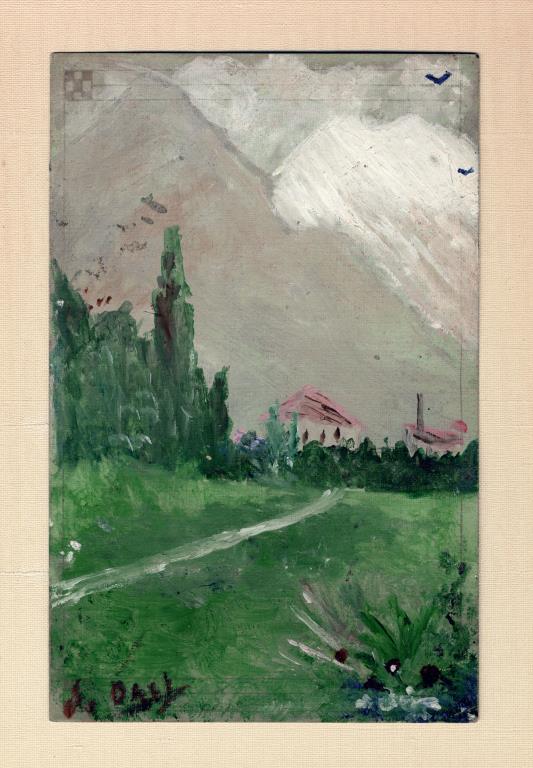
Even at a young age, growing up in Catalonia, Salvador Dali tended to go his own way. He didn’t do well with formal education and leaned toward creativity. His first painting, a simple landscape, was done at the age of twelve.
Following his mother’s death when he was 16, he became a follower of Freud’s teachings on the erotic significance of subconscious imagery and claimed to induce hallucinatory states in himself through a process he termed ‘paranoiac critical method’, perhaps prompted by his affiliation with the Paris Surrealists, who sought to portray a ‘greater reality’ through the promotion of the human subconscious over reason. From 1929-1937, Dali produced the surrealist artwork, which he is famous for today. His name becoming the most recognized Surrealist of his day.1
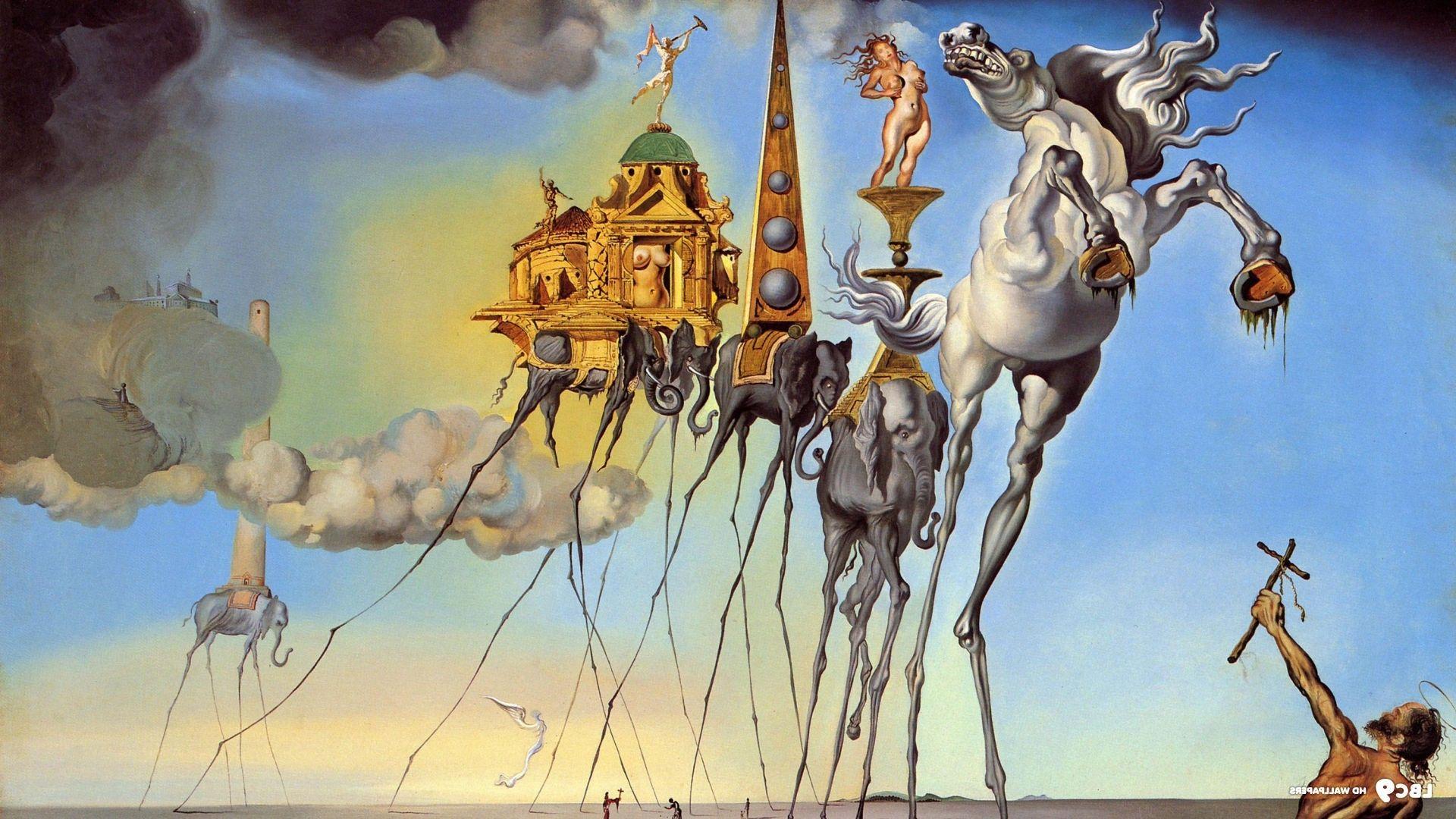
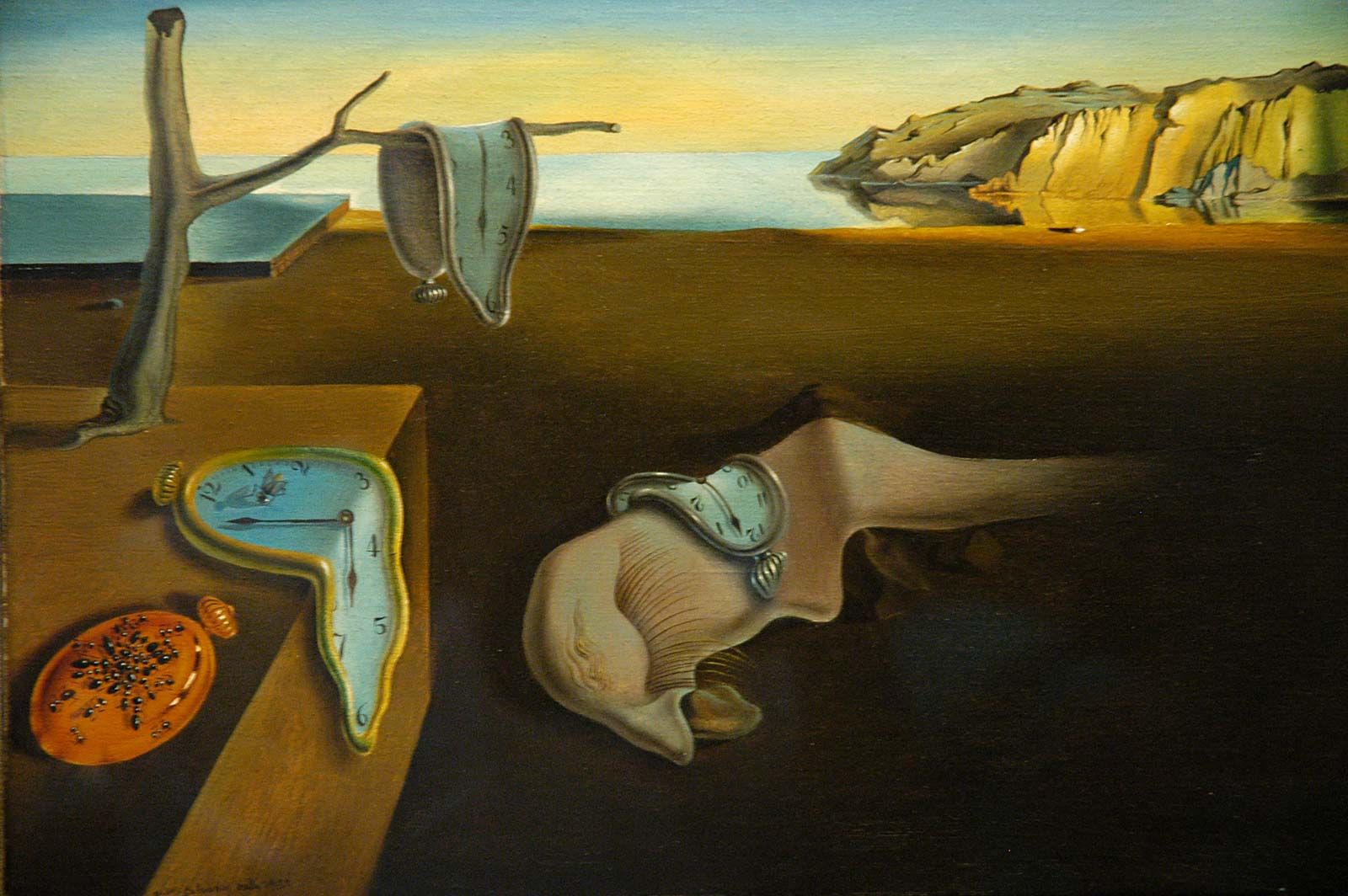
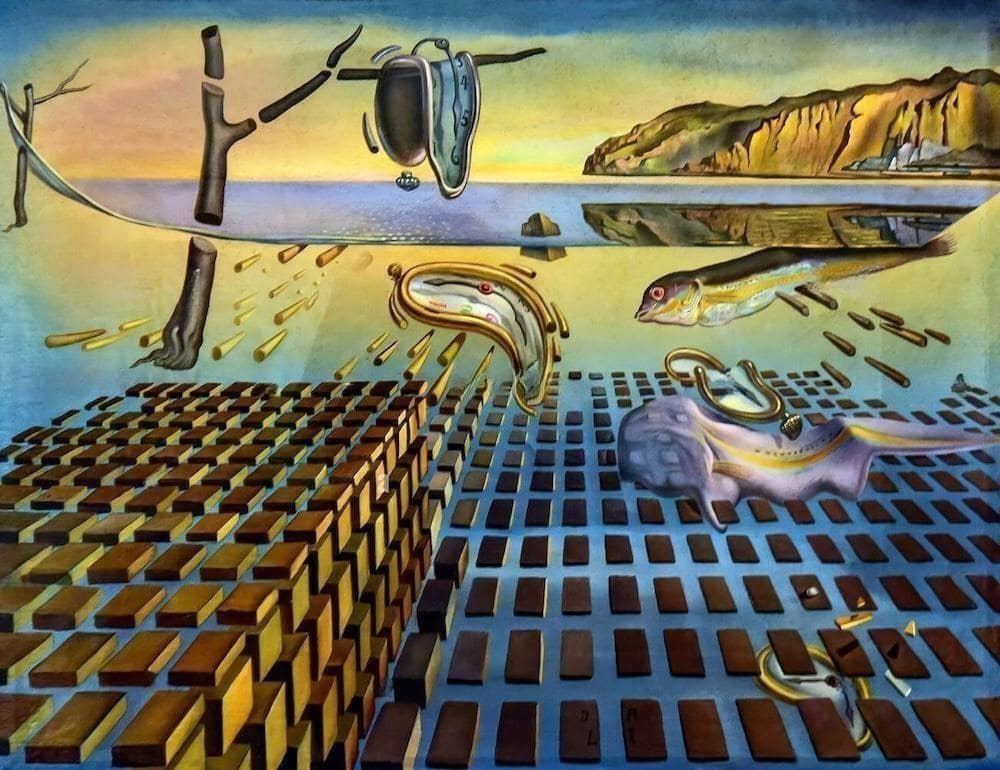
Dali tended to use forms he loved repeatedly in his works. The melting clocks of his most work, The Persistence of Memory (1931), are repeated in his later work, Disintegration of the Persistence of Memory (1954).
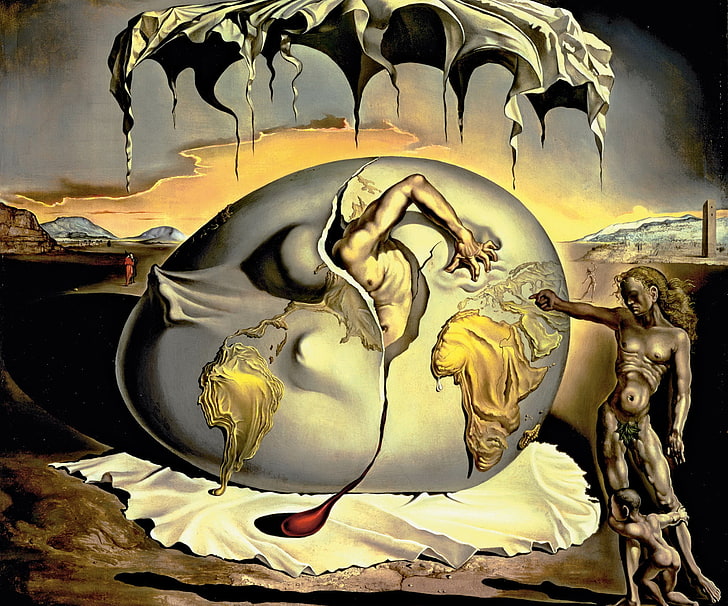
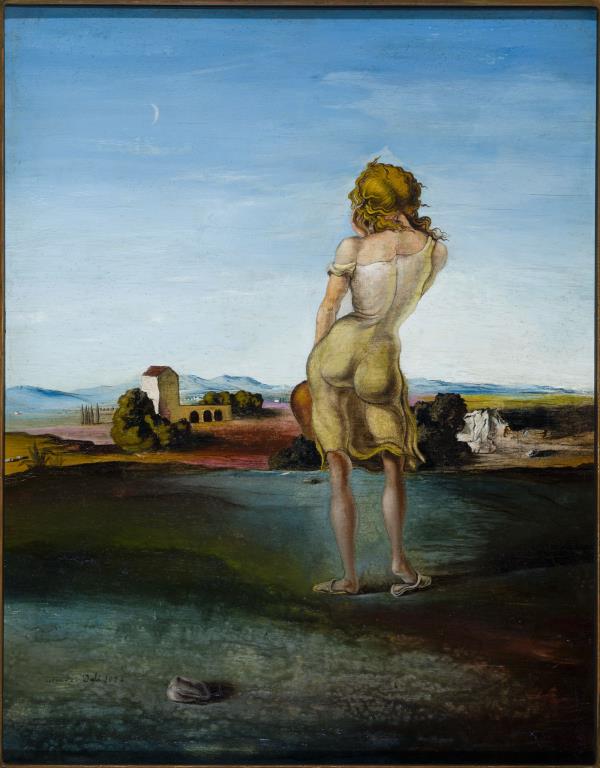
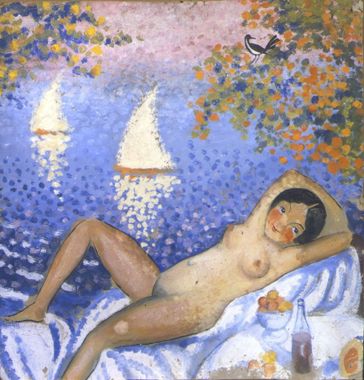
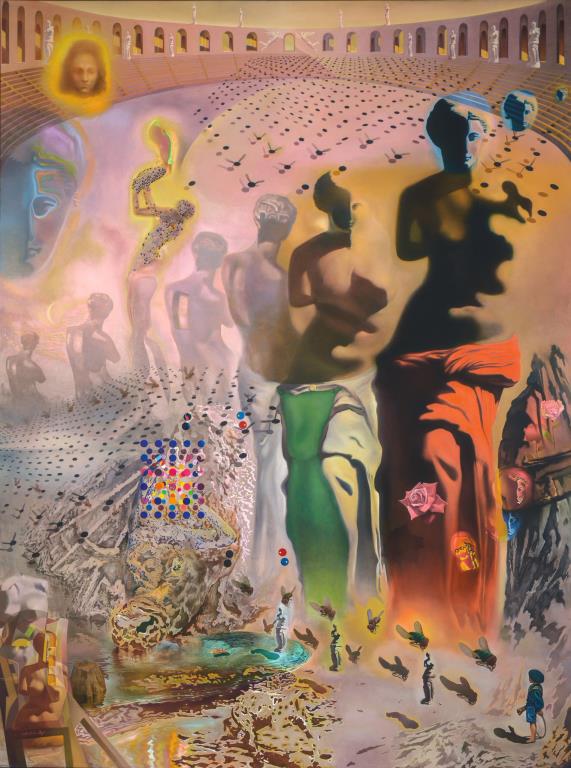
The human form is another image which appears repeatedly in his works, including his last painting, Hallucinagenic Troubadour (1969-70). Dali produced over 400 works of art, and you can be sure he created his share of nudes, only one of which appears here.
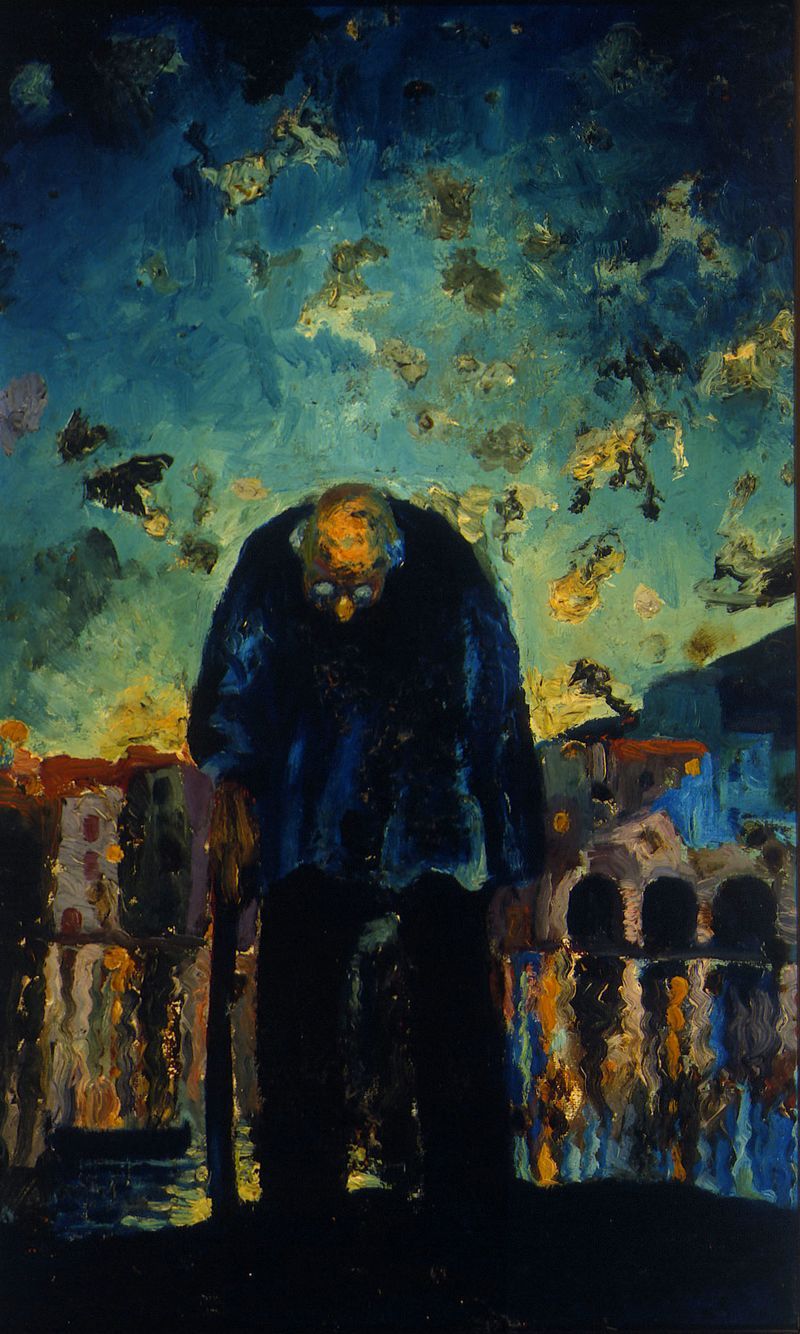
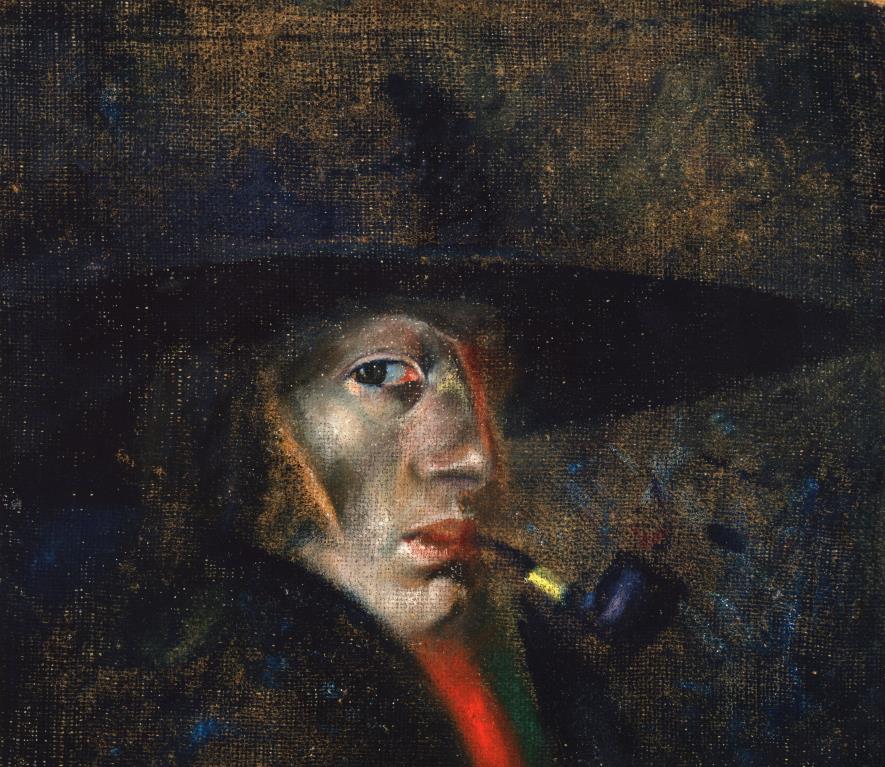
The human face is another repeated image, although no two are alike. Featured below are an early Self-Portrait (1921) and a later work, Portrait of my Dead Brother (1963), which is the image of his brother who died when he was a child. (verify this)
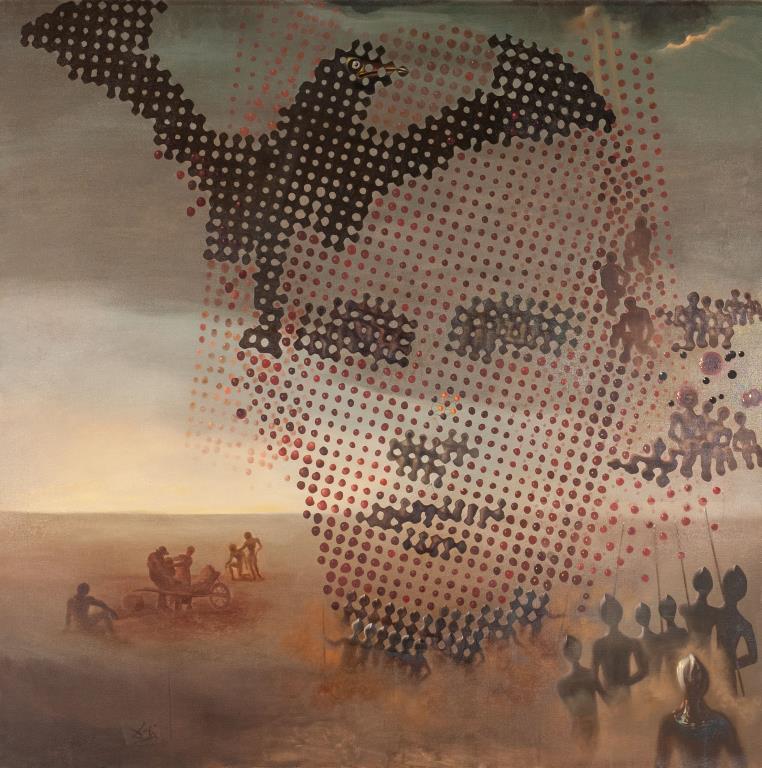
But painting wasn’t Dali’s only outlet for his amazing creativity. He studied and created screenplays, created amazing sculptures, and had an affinity for architecture. He designed and built the Dali Theater-Museum in Catalonia, which boasts the largest collection of Salvador Dali works, and the building which houses it is claimed to be the largest surrealist object.

References
1Britanica. Salvador Dali. Salvador Dali | Biography, Art, Paintings, Surrealism, & Facts | Britannica
2Passages Through the Unconcious. Dali Theater-Museum. Passages Through the Unconscious – Fundació Gala – Salvador Dalí
3Dali Theater-Museum in Catalonia. Online Collection. Online collection – Fundació Gala – Salvador Dalí
4The Salvador Dali Museum, St. Petersburg Collection. Category includes Painting | Salvador Dalí Museum
5The Salvador Dali Museum, Timeline. Salvador Dalí – Salvador Dalí Museum
About Kaye Lynne Booth
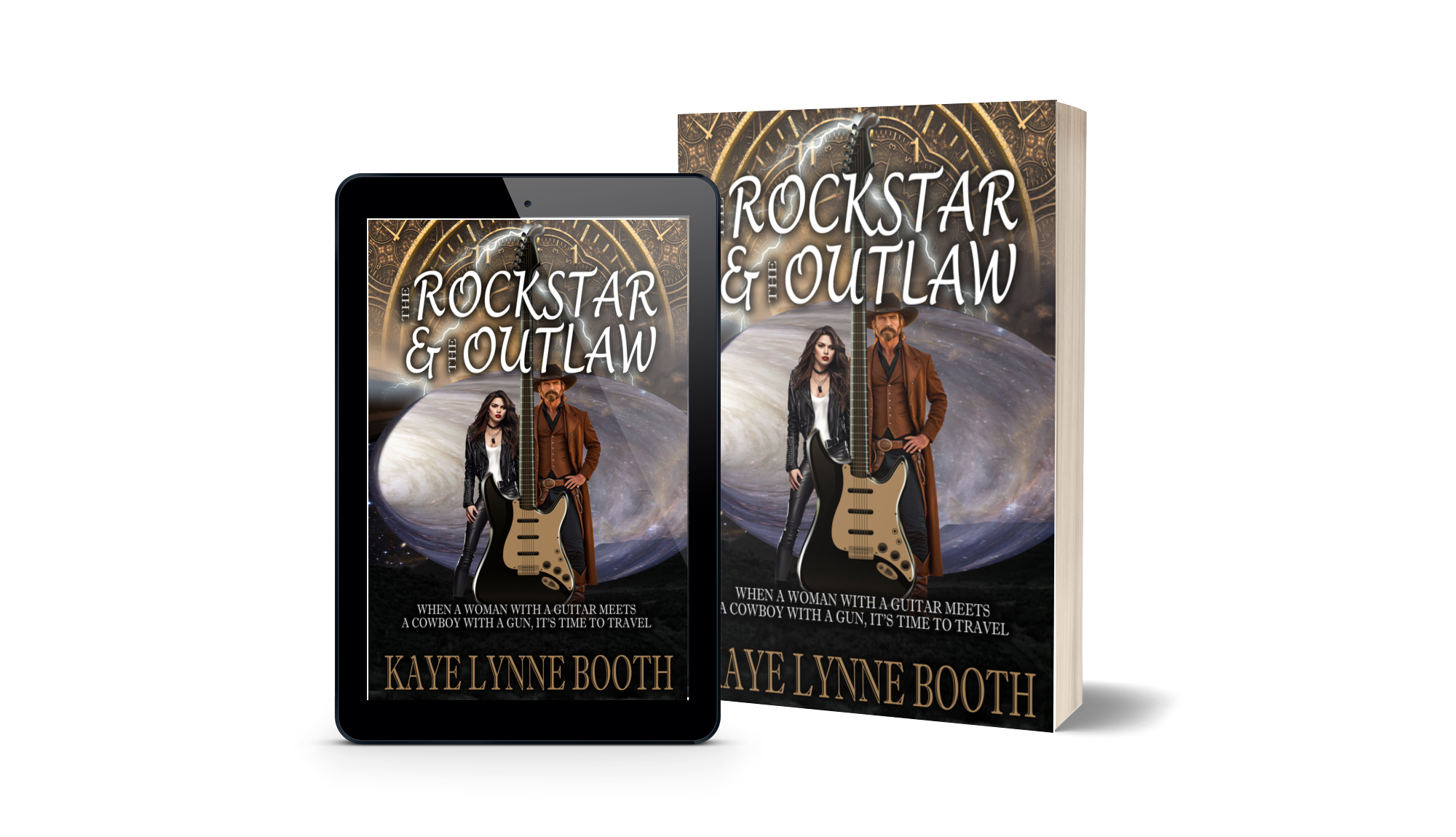
For Kaye Lynne Booth, writing is a passion. Kaye Lynne is an author with published short fiction and poetry, both online and in print, including her short story collection, Last Call and Other Short Fiction; and her paranormal mystery novella, Hidden Secrets; as well as her poetry collection, Small Wonders. Her novels include Books 1 & 2 of her Women in the West adventure series, Delilah and Sarah, and Books 1 & 2 in her Time-Travel Adventure series, The Rock Star & The Outlaw, and Double Visions.
Kaye holds a dual M.F.A. degree in Creative Writing with emphasis in genre fiction and screenwriting, and an M.A. in publishing. Kaye Lynne is the founder of WordCrafter Quality Writing & Author Services and WordCrafter Press, where she edits and publishes two short fiction anthologies and one poetry anthology every year amidst her many writing projects. She also maintains an authors’ blog and website, Writing to be Read, where she publishes content of interest in the literary world.
_____________________
Share this:

Book Review: “Black Bear Alibi: A Rockfish Island Mystery”
Posted: October 16, 2026 Filed under: Book Review, Books, Fiction, Mystery, Review | Tags: Black Bear Alibi, Book Review, J.C. Fuller, Kaye Lynne Booth, mystery, Writing to be Read 4 Comments
About Black Bear Alibi: A Rockfish Island Mystery
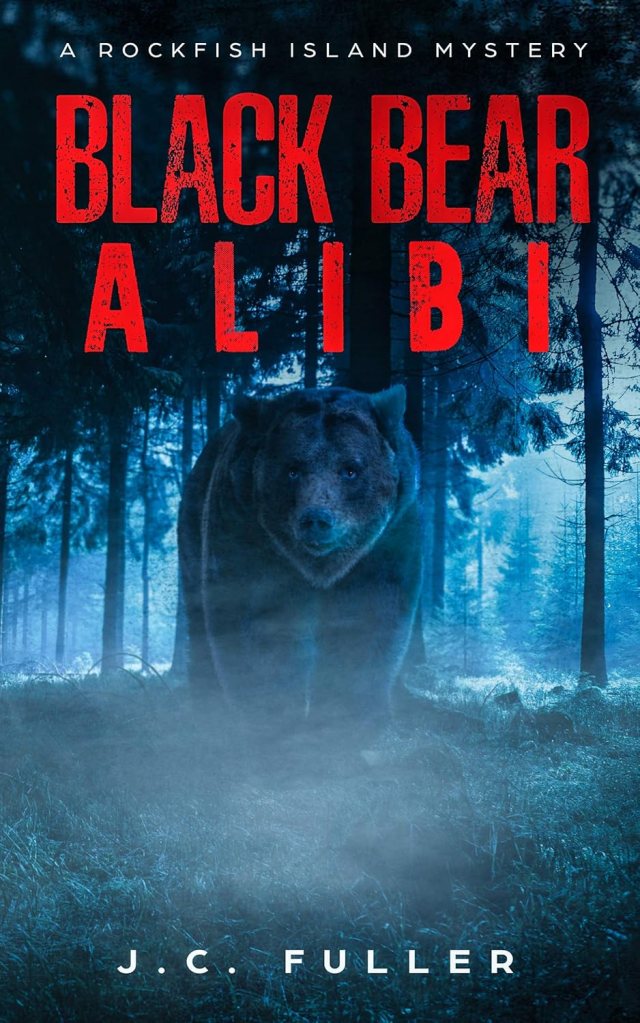
A small island with big lies…Welcome to Rockfish Island.
Philip Russell, a U.S. Park Ranger for a small island in the Pacific Northwest has stumbled across a body in the woods. Unsure if the dead woman is a local or someone from the mainland, the new female sheriff is called in to find out if the community has anything to fear. Eager to help solve the mystery, both instantly find themselves at odds with each other. Philip, defending the people he’s known his whole life, and Sheriff Lane, giving no one the benefit of the doubt…not even Philip. Together the investigation progresses and both quickly realize that on this sleepy island not everyone is who they pretend to be…and possibly, one of their fellow islanders is a killer.
Purchase Link: https://www.amazon.com/Black-Bear-Alibi-Rockfish-Mystery-ebook/dp/B07RRLNC99
My Review of Black Bear Alibi: A Rockfish Island Mystery
I purchased a digital copy of Black Bear Alibi, by J.C. Fuller, through a Bookbub Free Friday deal, and I am providing an honest review. All opinions stated here are my own. I chose this book because the title intrigued me.
Clever killers cover their tracks, but how many use nature to camouflage their foul play? This almost cozy murder mystery carries an original storyline which is expertly executed by the author. Wildlife officers aren’t usually involved with solving murder mysteries, but when a young and cocky new lady sheriff, Lois Lane, feels a need to prove herself, she enrolls park ranger, Phillip Russell for his local knowledge and assistance after he finds a woman’s body in the woods which has been mauled by a black bear. But the unofficial partnership is not a smooth one, as suspicion is cast on Russell’s friends and neighbors, placing him in precarious positions.
A fresh and original mystery which keeps readers guessing. I give Black Bear Alibi five quills.

About Kaye Lynne Booth

For Kaye Lynne Booth, writing is a passion. Kaye Lynne is an author with published short fiction and poetry, both online and in print, including her short story collection, Last Call and Other Short Fiction; and her paranormal mystery novella, Hidden Secrets; Books 1 & 2 of her Women in the West adventure series, Delilah and Sarah, and book 1 in her Time-Travel Adventure series, The Rock Star & The Outlaw, as well as her poetry collection, Small Wonders and The D.I.Y. Author writing resource.
Kaye holds a dual M.F.A. degree in Creative Writing with emphasis in genre fiction and screenwriting, and an M.A. in publishing. Kaye Lynne is the founder of WordCrafter Quality Writing & Author Services and WordCrafter Press, where she edits and publishes two short fiction anthologies and one poetry anthology every year amidst her many writing projects. She also maintains an authors’ blog and website, Writing to be Read, where she publishes content of interest in the literary world.
___________________________________
Kaye Lynne Booth does honest book reviews on Writing to be Read in exchange for ARC digital copies, (she also accepts print copies). Have a book you’d like reviewed? You can request a review on the Book Review tab above.
Share this:

Treasuring Poetry – Poetry collections for Halloween by Annette Rochelle Aben, Dawn Pisturino and Freya Pickard
Posted: October 14, 2026 Filed under: Book Review, Collection, Poetry, Review, Treasuring Poetry | Tags: Annette Rochell Aben, Book Review, Dawn Pasturino, Freya Pickard, Haiku, Haiku for the Midnight Hour, Halloween, Poetry, Robbie Cheadle, Treasuring Poetry, Writing to be Read 14 Comments
Treasuring Poetry has been running for several years and its time for a change. This series will be ending in December this year and next year’s anthology will be the last Poetry Treasures collection.
This month and as a Halloween treat, I am showcasing three books by poets I’ve featured previously for this series, Annette Rochelle Aben, Dawn Pisturino, and Freya Pickard.
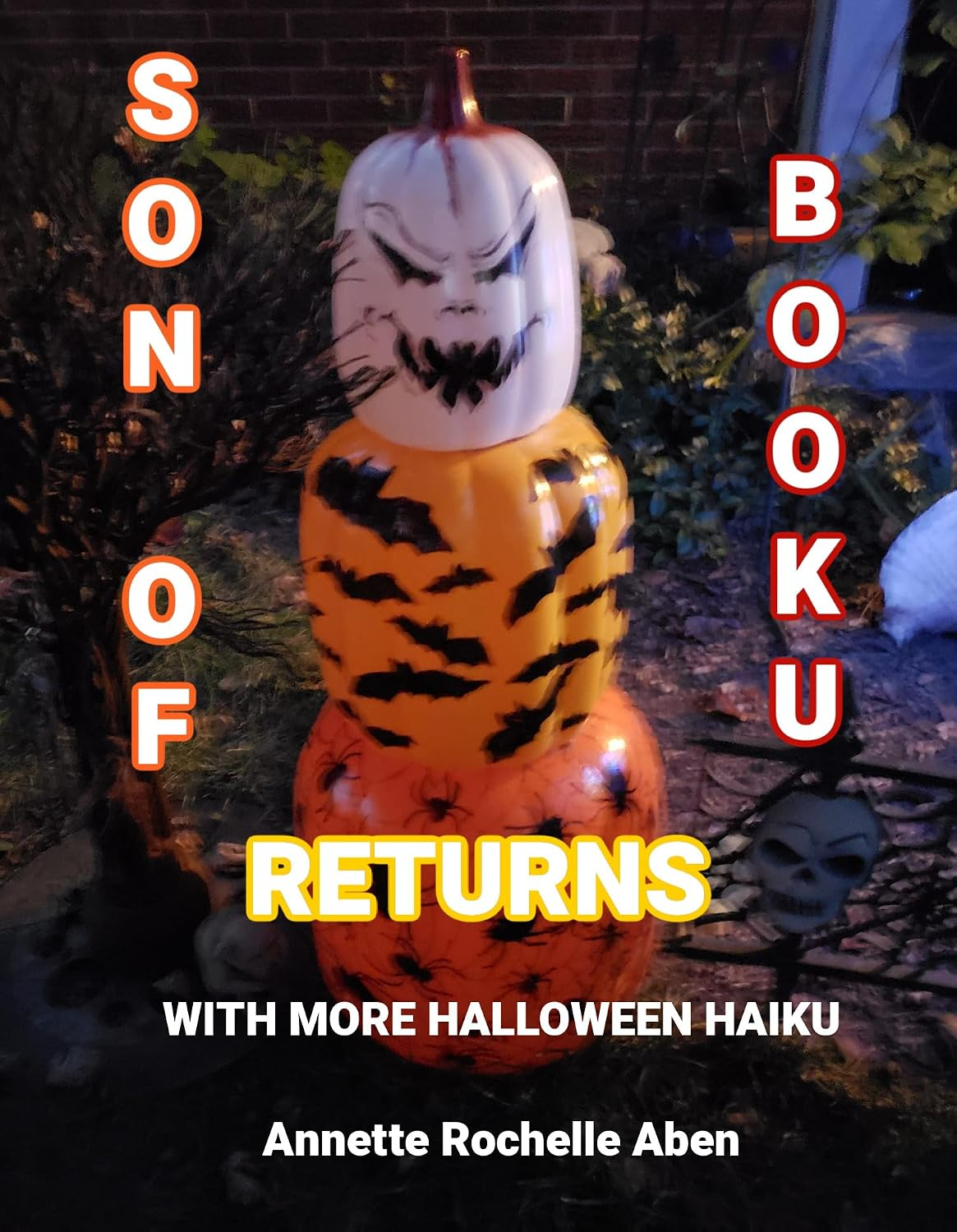
Son of BOOKU Returns: with more Halloween haiku by Annette Rochelle Aben
What Amazon says
As the autumn leaves fall, the creatures heed the call and assemble for a night of fun frolic, and fright. Oh, the preparation it takes to gain the admiration of fans of all walks of life. Yet, the mystical maven of midnight magic will slave away night and day to create the perfect atmosphere. An atmosphere worthy of ghosts and goblins both small and tall.
So, when you find yourself absent-mindedly dancing in the moonlight… If you are drawn to fog-covered bridges because you are curious about what you will find on the other side, then DO get into this book. If for no other reason than to gladden your heart and give voice to your wicked laughter!
My review
Son of Booku Returns is another wonderful collaboration between poet, Annette Rochelle Aben, and artist, Lorraine Parent. The photographs of Lorraine’s Halloween displays are original and creative and I would love to see them in real life. As America is two oceans away from Africa, I must be content with the excellent pictures in this book. My favourite display was a snake with a human head wrapped within its coils and a human hand extending from its mouth. A grave with RIP on it is behind the snake.
Annette has matched each picture with the perfect haiku and every combination made me smile.
The poem that goes with the snake detailed above is:
“Spent most of my life
Clawing my way to the top
That’s no way to live.”
If you are looking for a Halloween creative feast, this book is the perfect dish.
Purchase Son of BOOKU Returns: with more Halloween haiku from Amazon US here: https://www.amazon.com/Son-BOOKU-Returns-Halloween-haiku-ebook/dp/B0CLYZW4KC/
About Annette Rochelle Aben
Words are like threads that when woven together with passion and purpose can create a tapestry in which you long to wander. That passion was ignited in me when I was a small child and continues to burn bright even today. I was encouraged by educators who challenged me to try and by career paths that demanded I become a proficient wordsmith. I would like to think I have done them proud. Over the years, I have won awards, been nominated for an EMMY for television writing, and penned a #1 Best Selling book of poetry. My collection of books available here on Amazon include self-help, inspirational, and of course poetry. I have been invited to participate in anthologies and collections, several of which are here as well. Welcome to my world of words. Should you find something in which to lose yourself, I shall raise my glass in a toast to your happiness. Thank you for your kind attention.
Find all of Annette Rochelle Aben’s books on Amazon US here: https://www.amazon.com/stores/Annette-Rochelle-Aben/author/B00MSQTGUY
Find Annette Rochelle Aben on her blog here: https://annetterochelleaben.wordpress.com/
A poem by Annette Rochelle Aben
Tune In
Generous is your mind
So much in it to find
Such as, ways to be kind
To yourself and others
©2026 Annette Rochelle Aben
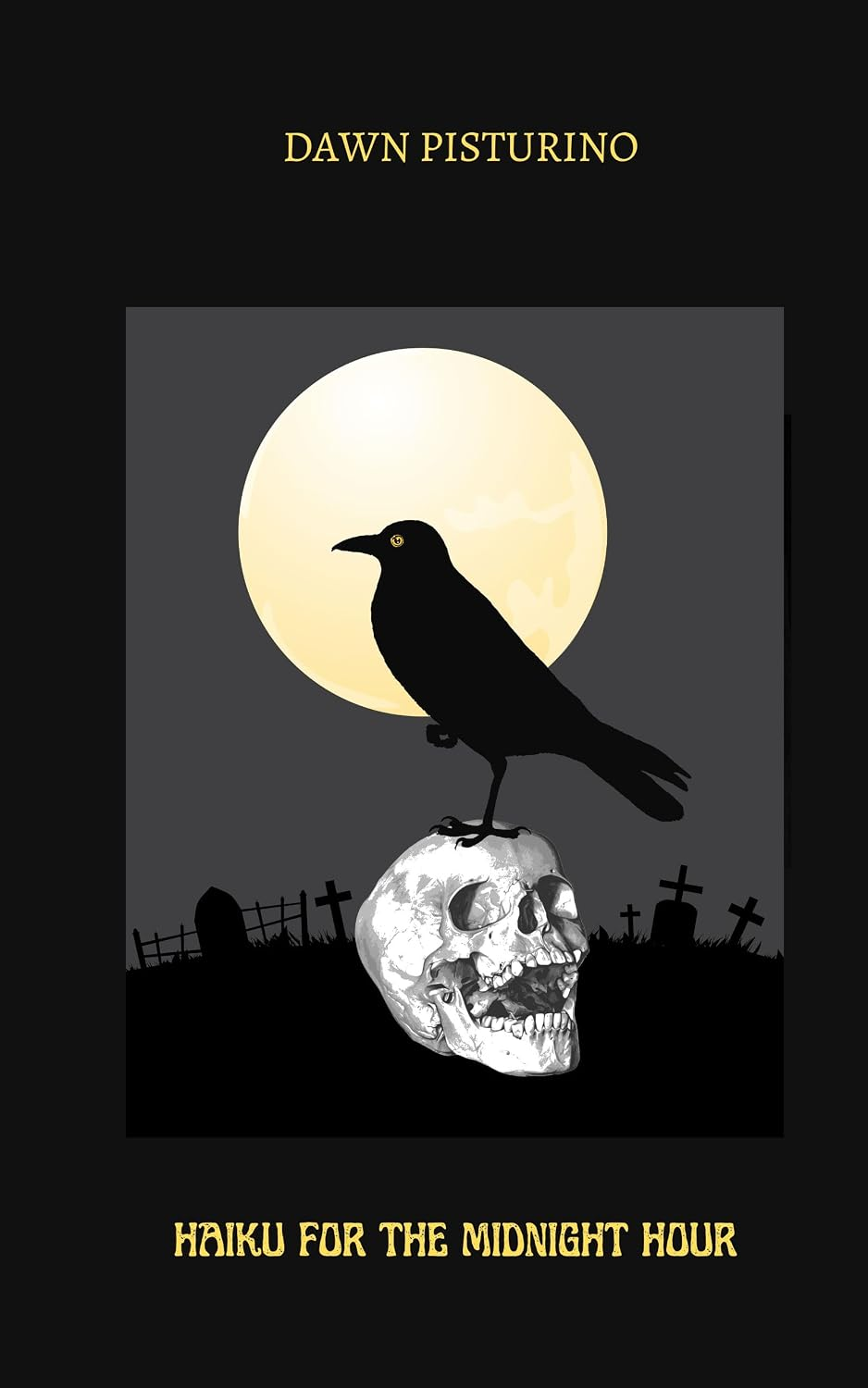
Haiku for the Midnight Hour by Dawn Pisturino
What Amazon says
“This collection of haiku challenges the traditional Japanese poetic art form. Experimenting with darker images and ideas, I have created non-traditional observations that address the other side of literature and life: monsters, ghosts, natural fears, supernatural forces, fearful gods and goddesses, and whatever constitutes the Otherworld. This book was written for people who like Halloween, scary stories, and being alone in the dark.” – Dawn Pisturino
My review
This is an entertaining collection of micro poems that revolve around the themes of Halloween and ghostly happenings. The micro poems are collected under common themes with headings, for example, Wee Folk and Crystal Balls.
While most of the micro poems deal with the paranormal, there are several that deal with Family and dark events in the home. On such example is Aunt Jane, as follows:
“aunt jane – locked away
in the attic for years – rocks
back and forth in chains”
The poems are clever and darkly humorous. Two of my favourites are as follows:
Jack and the Giant
“jack climbed the beanstalk
with curious intention
a giant backlash”
Purgatory
“purgatory and
punishment clean souls tarnished
by sinful doings”
If you enjoy clever and dark theme micro poems, this is the book for you.
Purchase Haiku for the Midnight Hour by Dawn Pisturino from Amazon here: https://www.amazon.com/Haiku-Midnight-Hour-Dawn-Pisturino-ebook/dp/B0DD3SBP6N/
About Dawn Pisturino
Dawn Pisturino is a retired registered nurse in Arizona whose international publishing credits include poems, short stories, and articles. She has published five poetry collections, including her most recent release, Ancient Voices: Poems About Ancient Egypt, which achieved #1 Amazon New Release status in African Poetry, History of Egypt, History of Africa, and History of North Africa. The Mystery of the Pink Poodle is her debut children’s book. She is a member of the Mystery Writers of America and the Arizona Authors Association.
Find all of Dawn Pisturino’s books on Amazon US here: https://www.amazon.com/stores/Dawn-Pisturino/author/B0CYM7BV37
You can find Dawn Pisturino on her blog here: https://dawnpisturino.wordpress.com/2026/10/02/call-of-cthulhu-short-video/
Vampirical Verse by Freya Pickard
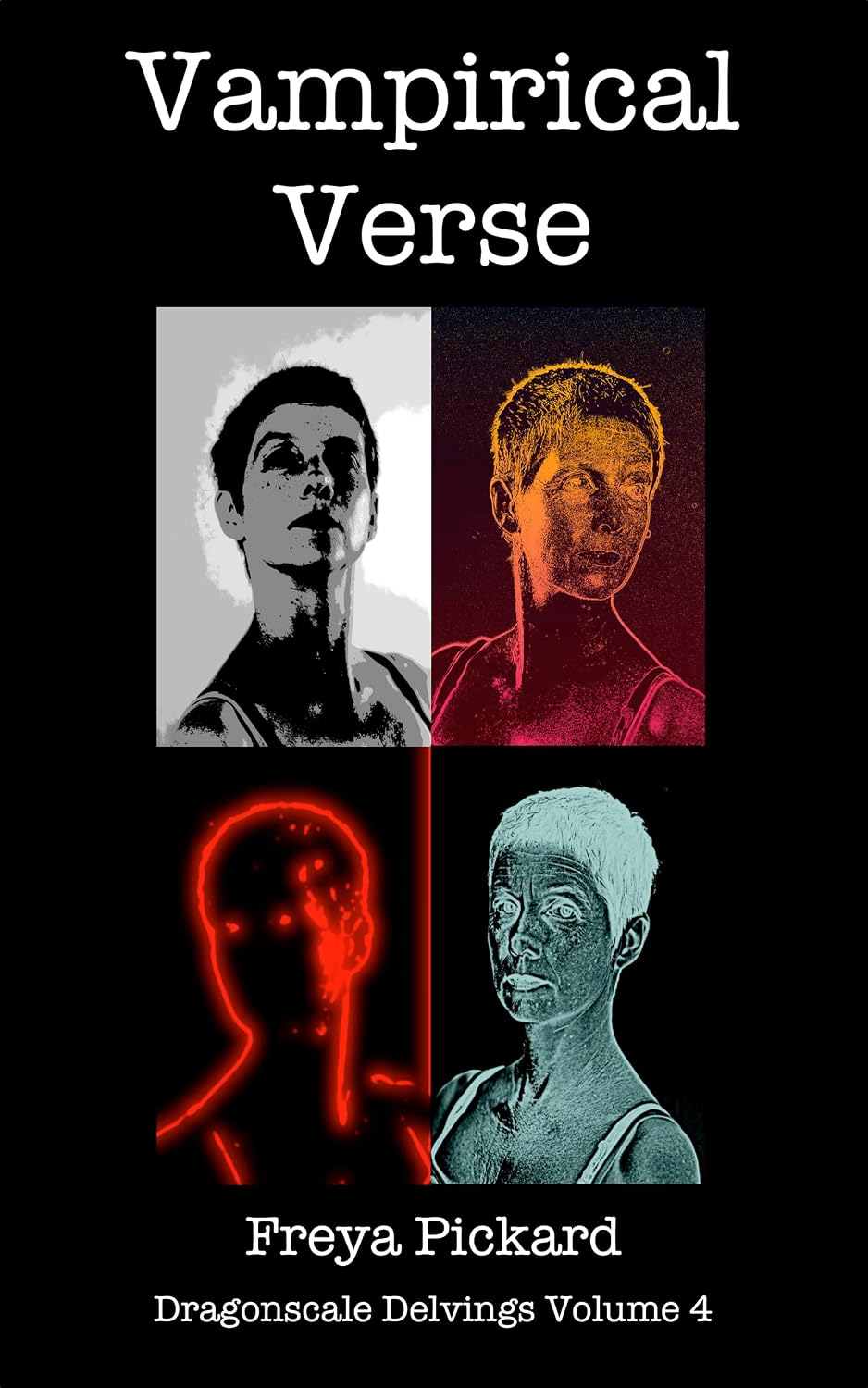
What Amazon says
“This book is for the walking dead who have learnt to live as best they can with hollow hearts and gaping wounds.”
The author says her brokenness comes from nearly dying of bowel cancer, having open surgery to remove the tumour, a uterine fibroid, and her womb. She then had six months of chemotherapy.
I have had several first hand experiences of the emotional, mental, and physical devastation caused by chronic illness, and dreaded disease. It impacts on the patient and on everyone around them. My own experiences include nursing family members through breast cancer, a pulmonary embolism, a venous sinus thrombosis, and chronic and on-going illnesses suffered by both of my two sons. My younger son is a ‘medical mystery’ or a ‘medical miracle’ depending on your viewpoint.
People react differently to chronic illness and near death experiences, but no-one escapes unscathed. The poems in this book are the author’s expressions of the fear, anger, and stoic numbness which accompany different stages of treatment and survival. Experiencing these poems will change you, as the disease itself changed the author. They will teach you compassion, appreciation, understanding, and gratitude.
A few of the stanzas in this book that resonated with me the longest.
From: The Dead
“the dead feel –
I am not in stasis as you believe
I fluctuate between despair and hope
empty days, lonely nights”
From Camouflaged
“if you blink
you’ll catch a glimpse
and wish you’d not;
I am the thought
you didn’t want to think”
and a haiku
“on this side of death
shadows remain long, gaunt, thin
light never expands”
If you know someone who is, or has, suffered chronic illness or dreaded disease, these poems will give insight into their world. I encourage lovers of poetry to read this book and allow yourself to change and grow.
My review
“This book is for the walking dead who have learnt to live as best they can with hollow hearts and gaping wounds.”
The author says her brokenness comes from nearly dying of bowel cancer, having open surgery to remove the tumour, a uterine fibroid, and her womb. She then had six months of chemotherapy.
I have had several first hand experiences of the emotional, mental, and physical devastation caused by chronic illness, and dreaded disease. It impacts on the patient and on everyone around them. My own experiences include nursing family members through breast cancer, a pulmonary embolism, a venous sinus thrombosis, and chronic and on-going illnesses suffered by both of my two sons. My younger son is a ‘medical mystery’ or a ‘medical miracle’ depending on your viewpoint.
People react differently to chronic illness and near death experiences, but no-one escapes unscathed. The poems in this book are the author’s expressions of the fear, anger, and stoic numbness which accompany different stages of treatment and survival. Experiencing these poems will change you, as the disease itself changed the author. They will teach you compassion, appreciation, understanding, and gratitude.
A few of the stanzas in this book that resonated with me the longest.
From: The Dead
“the dead feel –
I am not in stasis as you believe
I fluctuate between despair and hope
empty days, lonely nights”
From Camouflaged
“if you blink
you’ll catch a glimpse
and wish you’d not;
I am the thought
you didn’t want to think”
and a haiku
“on this side of death
shadows remain long, gaunt, thin
light never expands”
If you know someone who is, or has, suffered chronic illness or dreaded disease, these poems will give insight into their world. I encourage lovers of poetry to read this book and allow yourself to change and grow.
Purchase Vampirical Verse by Freya Pickard from Amazon US here: https://www.amazon.com/Vampirical-Verse-Dragonscale-Delvings-Book-ebook/dp/B0CH4Q8KD8/
About Freya Pickard
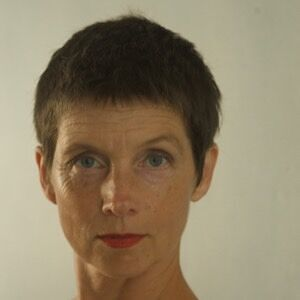
Pushcart Prize nominee, Freya Pickard is the quirky, unusual author of The Kaerling series, an epic fantasy set in the strange and wonderful world of Nirunen.
A cancer survivor, she writes mainly dark fantasy tales and creates expressive poetry in order to rest the prose side of her brain. Her aim in life is to enchant, entertain and engage with readers through her writing.
She finds her inspiration in the ocean, the moors, beautifully written books and vinyl music (particularly heavy metal and rock). Her most recent relaxation techniques to get her through lockdown include hatha yoga and painting landscapes and monsters in watercolour.
Find out more about Freya and her books at https://freyanrites.wordpress.com/
A haiku by Freya Pickard
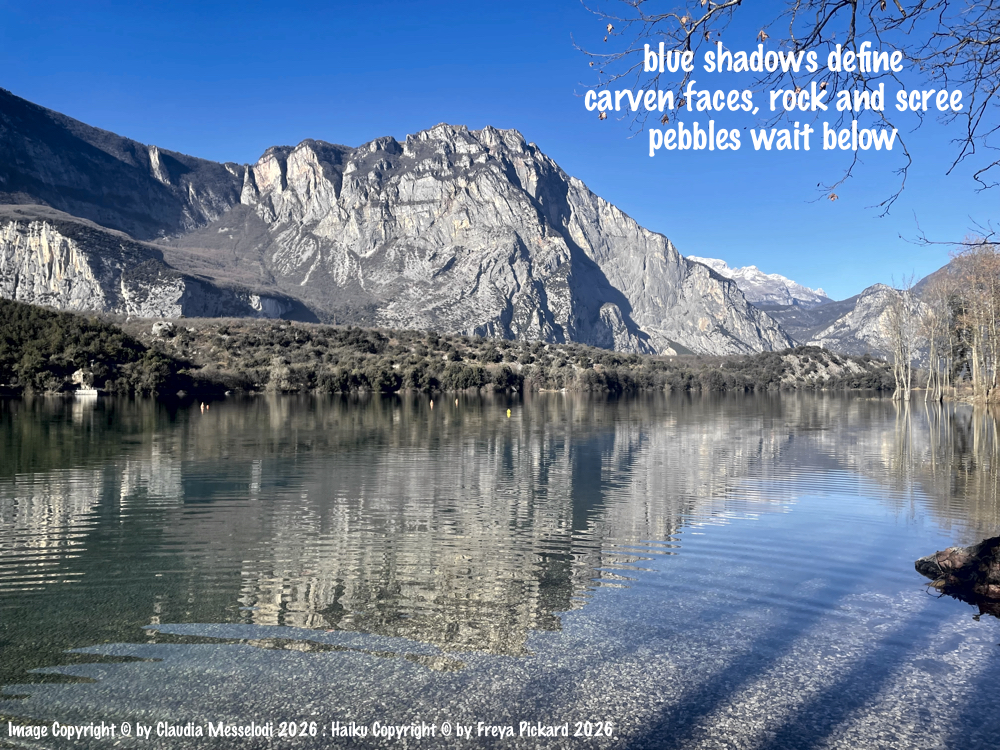
Message from Freya about this photograph and haiku: My friend, Claudia Messelodi, is a published poet who also takes amazing photographs when she’s out hiking, skiing, rock climbing, paddle boarding, biking in the Italian countryside. Her photos often inspire me to try and paint them, but this one birthed a haiku! Claudia has a beautiful blog where she posts haiku and photographs of the natural world around her at A Stream of Small Stones. Please visit her there!
More of my haiku can be found in my Poetry Collections!
About Robbie Cheadle

South African author and illustrator, Robbie Cheadle, has written and illustrated sixteen children’s books, illustrated a further three children’s books, and written and illustrated three poetry books. Her work has also appeared in poetry and short story anthologies.
Robbie also has two novels and a collection of short stories published under the name of Roberta Eaton Cheadle and has horror, paranormal, and fantasy short stories featured in several anthologies under this name.
You can find Robbie Cheadle’s artwork, fondant and cake artwork, and all her books on her website here: https://www.robbiecheadle.co.za/
________________________
Did you know you can sponsor your favorite blog series or even a single post with an advertisement for your book? Stop by the WtbR Sponsor Page and let me advertise your book, or you can make a donation to Writing to be Read for as little as a cup of coffee, If you’d like to show your support for this author and WordCrafter Press.
__________________________
This segment of “Treasuring Poetry” is sponsored by WordCrafter Press and the Poetry Treasures series.
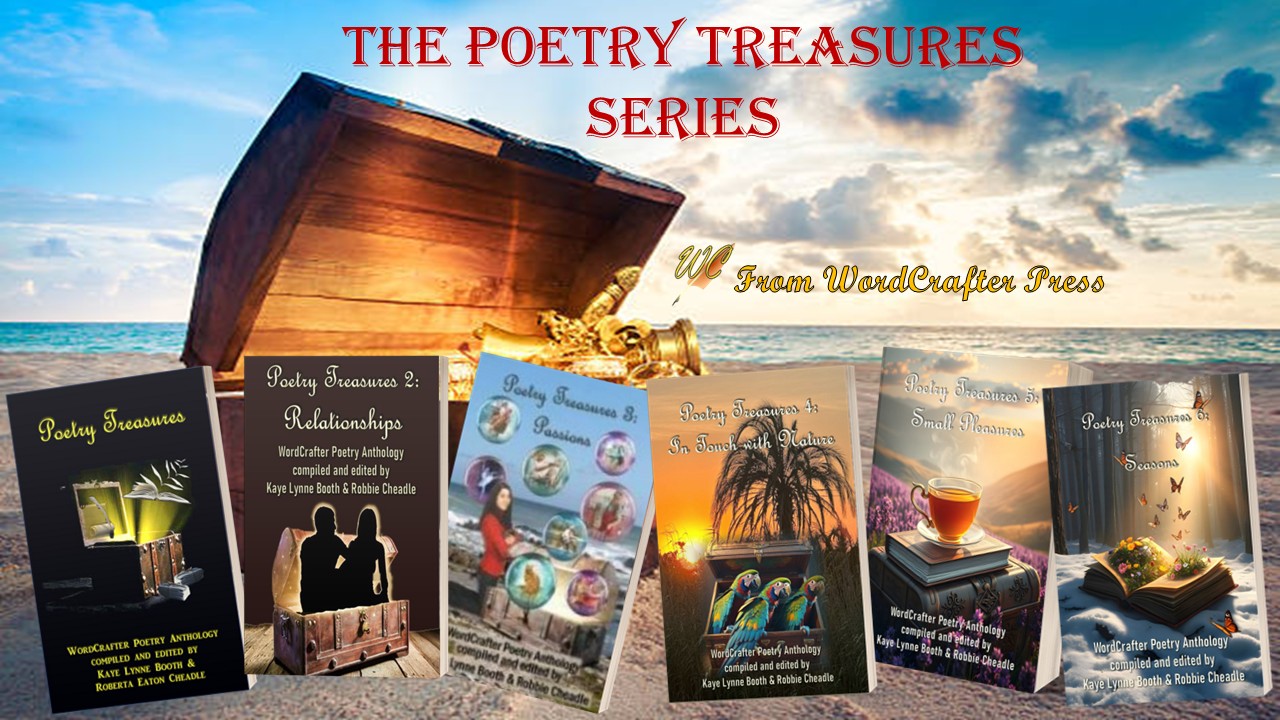
Get Your Copy Today!
Poetry Treasures: https://books2read.com/PoetryTreasures
Poetry Treasures 2: Relationships: https://books2read.com/PT2-Relationships
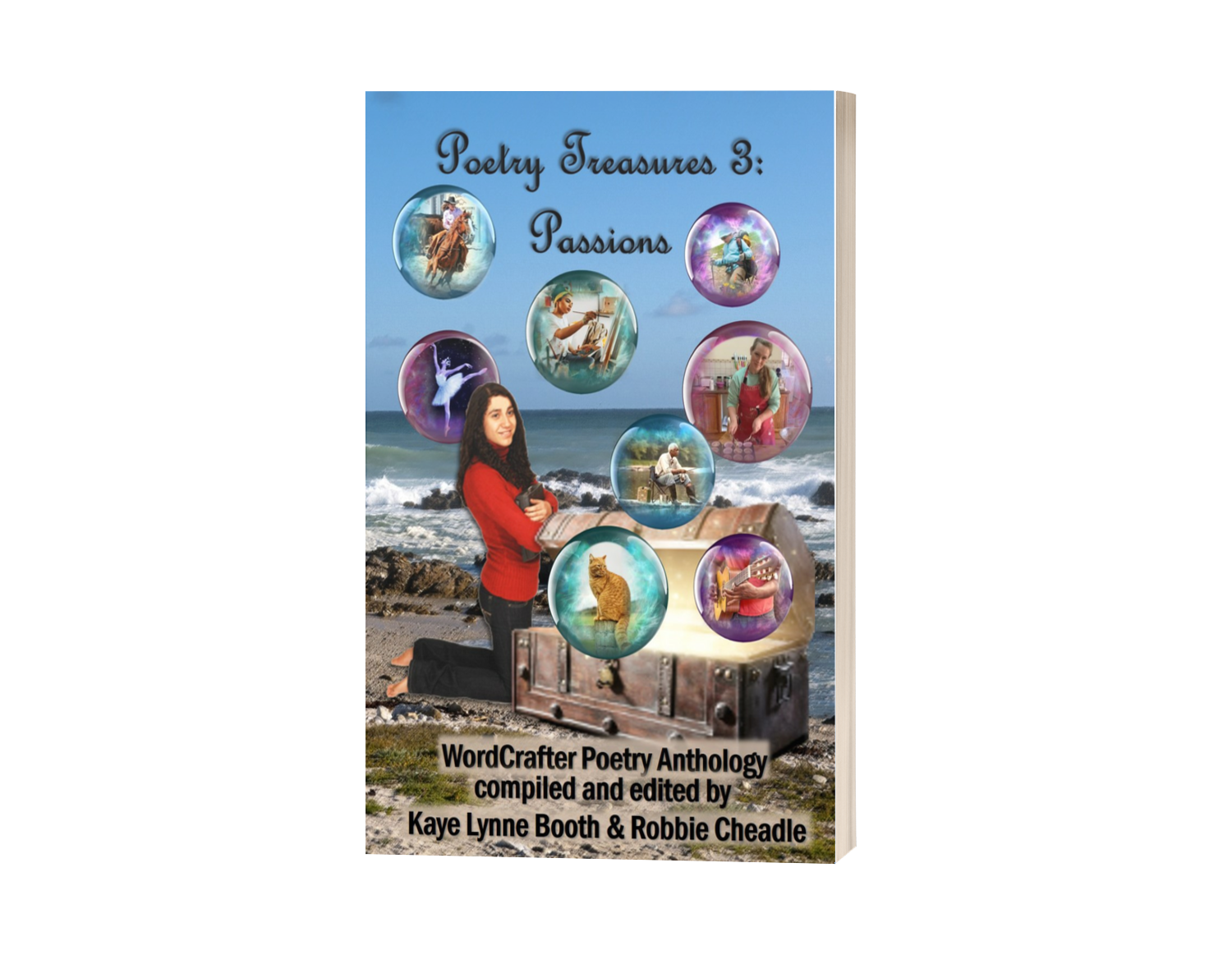
Poetry Treasures 3: Passions: https://books2read.com/u/b5qnBR
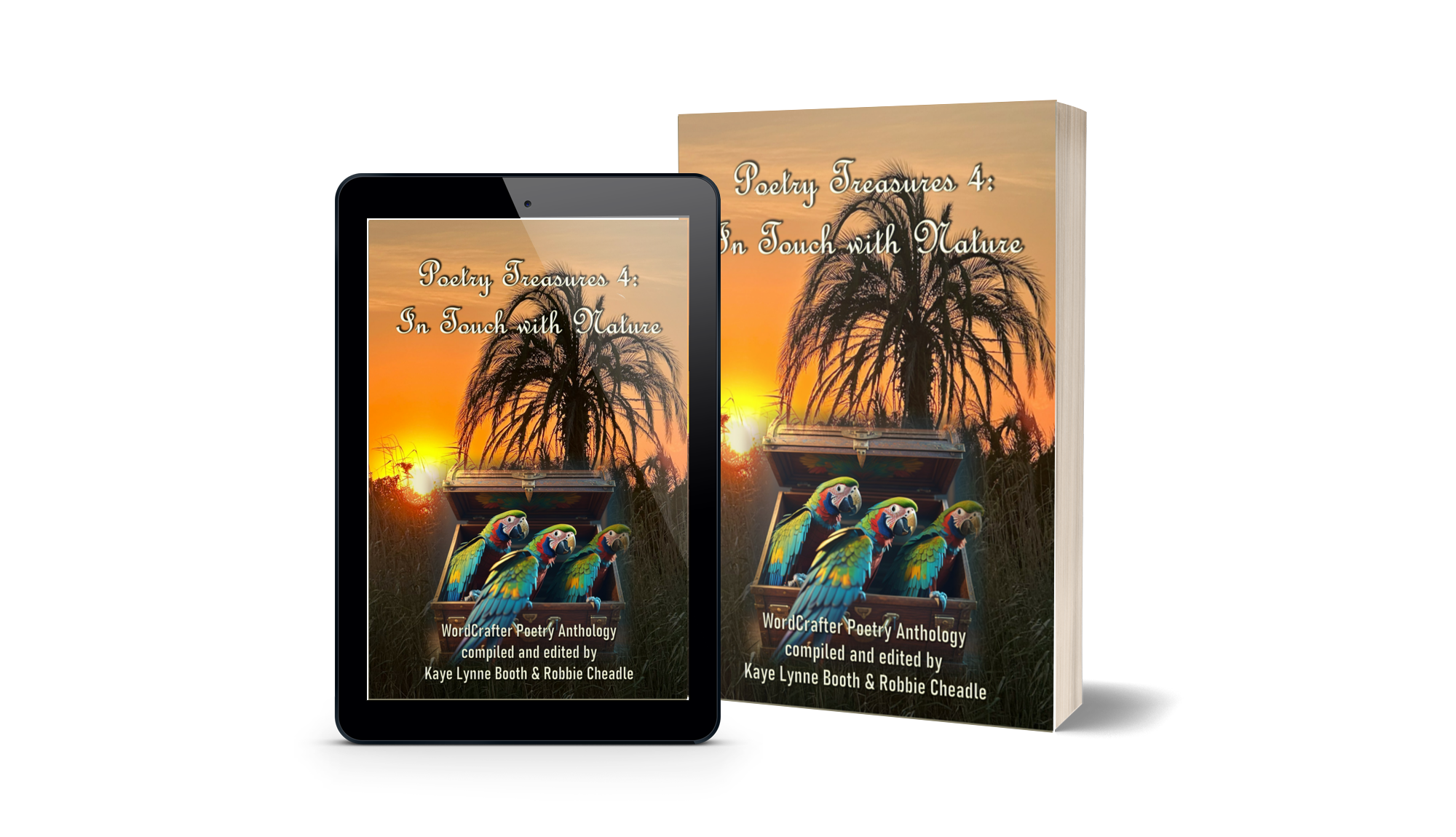
Poetry Treasures 4:In Touch With Nature: https://books2read.com/PT4-Nature
Poetry Treasures 5: Small Pleasures: https://books2read.com/PT5-SmallPleasures
Poetry Treasures 6: Seasons: https://books2read.com/PT6Seasons
Share this:

Everyone is a Critic: My All-Time Favorites – Horror
Posted: October 12, 2026 Filed under: Everyone is a Critic, Horror, Movie Review, Movies, Review | Tags: Everyone is a Critic, From Dusk Till Dawn, horror, Interview with the Vampire, It, Movie Review, Movies, Review, Silver Bullet, The Terminator, Tremors, Writing to be Read Leave a commentThere are some movies that I can watch over and over and never get tired of them because they are so fun to watch. I’m sure certain movies are the same for everyone, in this respect. For “Everyone is a Critic” in 2026, I’d like to talk about my all-time favorites, because if you haven’t seen them, they are worth watching, and if you have, maybe this will remind you how fun they are, and you’ll give one or two another go. I’ve categorized them by the values I find in them, or the reason that I watch them. Many of them, I have watched so many times, I can quote them word for word through many parts. (And, yes, I am old, but they really don’t make them like they used to.)
Now, here, I will share them with you in the hopes that you will get the same enjoyment I have from watching them. For those who have seen the movie, the quotes will bring certain scenes alive in their minds. And if you haven’t seen the movie and you watch it, when you see the scene, you’ll understand why I chose the quotes that I did.
Horror -Scare the pants off me or keep me sitting on the edge of my seat
The Terminator (1984) & The Terminator 2: Judgement Day (1991), with Arnold Swartzenheger
Who hasn’t seen these movies?
Arnold Schwarzenegger plays a formidable cyber-villain from the future, sent to kill one Sarah Conner in the first movie, and a formidable cyber-hero sent back to project John Conner from a nearly indestructible cyber-villain in the second.
Cyber-monsters as villains can be pretty scary. If you don’t believe it, watch these two movies and you will.
I have both of these in my personal movie collection.
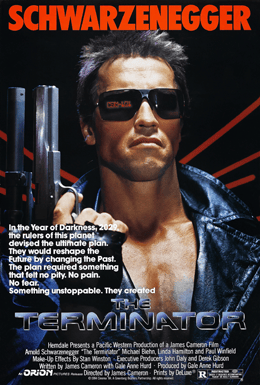
Favorite Quote (First): “I’ll be Back”
Favorite Quote (Second): “Asta la vista, baby.”
Favorite Scenes (First): The bar scene where the terminator acquires clothes and transportation.
Favorite Scenes (Second): A young John Conner teaches his cyber-protector (Schwartzenegger) slang, so he can appear more human, & the mental institution when Sarah Conner sees John and the terminator get off the elevator.
From Dusk Till Dawn (1996), with George Clooney and Quinten Tarantino, Juliette Lewis, and Harvey Keitel
Two outlaw brothers, Seth and Richie Gecko (George Clooney and Quinten Tarantino), highjack a family on vacation in order to get past the roadblocks and make it across the border into Mexico. They end up at a bar off the beaten path, open from dusk till dawn, and filled with vampires.
Very cool special effects for this one as the vampires turn.
I watch this one on Pluto T.V. for free.
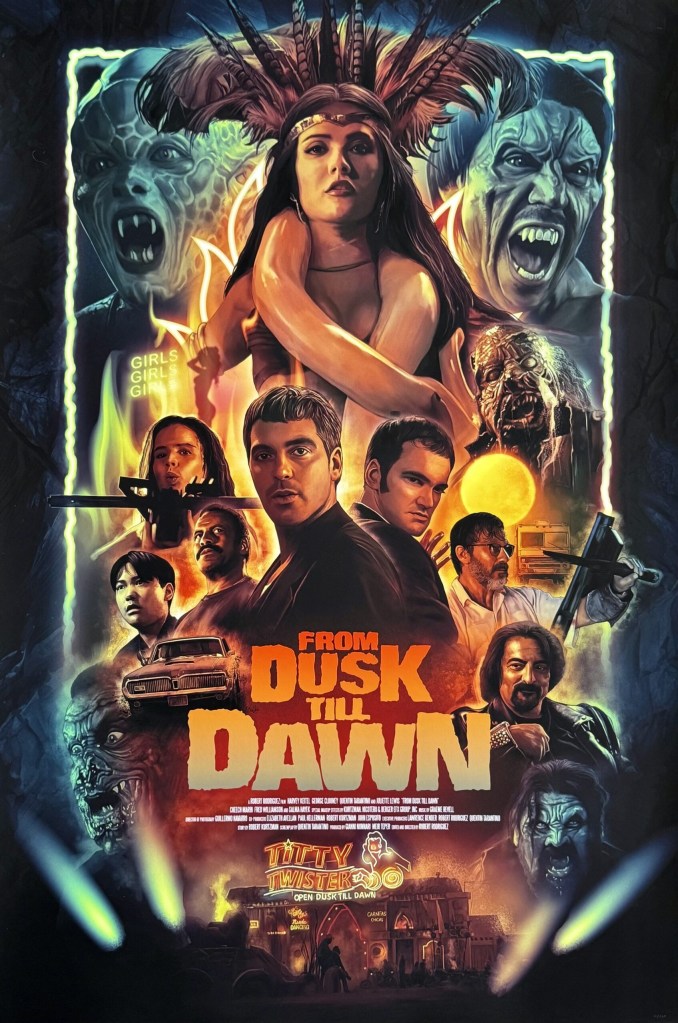
Favorite Scene: The snake dance by Santiaco Pandemonium (Selma Hayek)
Favorite Quotes: “I’ve got six little friends and they can all run faster than you can.” Seth Gecko (Clooney)
” I know what’s going on. We got a bunch of fucking vampires out there, trying to get in here and suck our fucking blood. And that’s it. Plain and simple. I don’t want to hear anything about “I don’t believe in vampires,” because I don’t fucking believe in vampires, but I believe in my own two eyes, and what I saw, is fucking vampires. Now, do we all agree that what we are dealing with is vampires?” Seth Gecko (Clooney)
“Did they look like psychos? Is that what they looked like? They were vampires. Psychos do not explode when sunlight hits them, I don’t give a fuck how crazy they are!” – Seth Gecko (Clooney)
” Go home, Kate. I may be a bastard, but I’m not a fucking bastard.” – Seth Gecko (Clooney)
“Attention pussy shoppers! Take advantage of our penny pussy sale! If you buy one piece of pussy at the regular price, you get another piece of pussy of equal or lesser value for only a penny! Try and beat pussy for a penny! If you can find cheaper pussy anywhere else, fuck it!” – Chet Pussy (Cheech Marin)
“Are you such a loser, you can’t tell when you’ve won? The entire state of Texas, along with the F.B.I., are looking for you. Did they find you? No. They couldn’t. You’ve won, Seth. Enjoy it.” – Jacob (Keitel)
Tremors (1990), with Kevin Bacon, Fred Ward, Finn Carter, Michael Gross, and Reba McIntire
A newly discovered prehistoric underground monster is the villain in this tale, which the characters dub graboids. They are strong and fast as they travel beneath the valley floor hunting by sound rather than sight or smell. And the residents of Perfection, Nevada find themselves trapped at the end of a box canyon and must outsmart them to get past to safety.
All three of the Tremors movies are entertaining, but the first one will always be the best, in my opinion. The others are missing the character of Val, played by Kevin Bacon, and I feel the subsequent movies are missing something due to this fact. This is not to knock them. They continued this series with some clever twists of story line. But the first will always be my favorite.
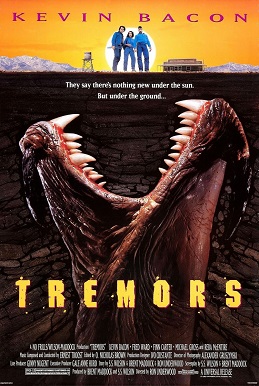
Favorite Quotes: “Stampede, Earl!” Val McKee (Bacon)
“You will have long blonde hair, big green eyes, world class breasts, ass that won’t quit and legs that go all the way up.” – Val McKee (Bacon)
“I vote for outer space. No way these are local boys.” Earl Bassett (Ward)
“”Broke into the wrong goddamn rec room, didn’t ya, you bastard!” – Bert Gummer (Gross)
“Roger that Burt, and congratulations. Be advised, however, that there are two more, repeat, two more motherhumpers.” – Val McKee (Bacon)
“I think I have a plan. What if we throw a bomb that way, the way we want to go? Then when it goes off, I mean, if it scares them away, we run like goddamn bastards!… Pardon my French.” Rhonda LeBeck (Carter)
“Run for it? Running’s not a plan! Running’s what you do once a plan fails!” – Earl Bassett (Ward)
“Food for five years, a thousand gallons of gas, air filtration, water filtration, Geiger counter. Bomb shelter! Underground… God damn monsters.” – Bert Gummer (Gross)
Silver Bullet (1985), with Corey Haim and Gary Busey
Based on the book, Cycle of the Werewolf, by Stephen King, you can’t go wrong with this movie. Corey Haim plays a crippled boy, Marty Coslaw, who is confronted by the werewolf and now must defend his life with the help of his sister, Jane (Megan Follows), and his Uncle Red (Gary Busey). Not a lot of blood and gore, but a great story line and lots of tension.
I have the book by King, but I watch the movie on Pluto T.V. for free.
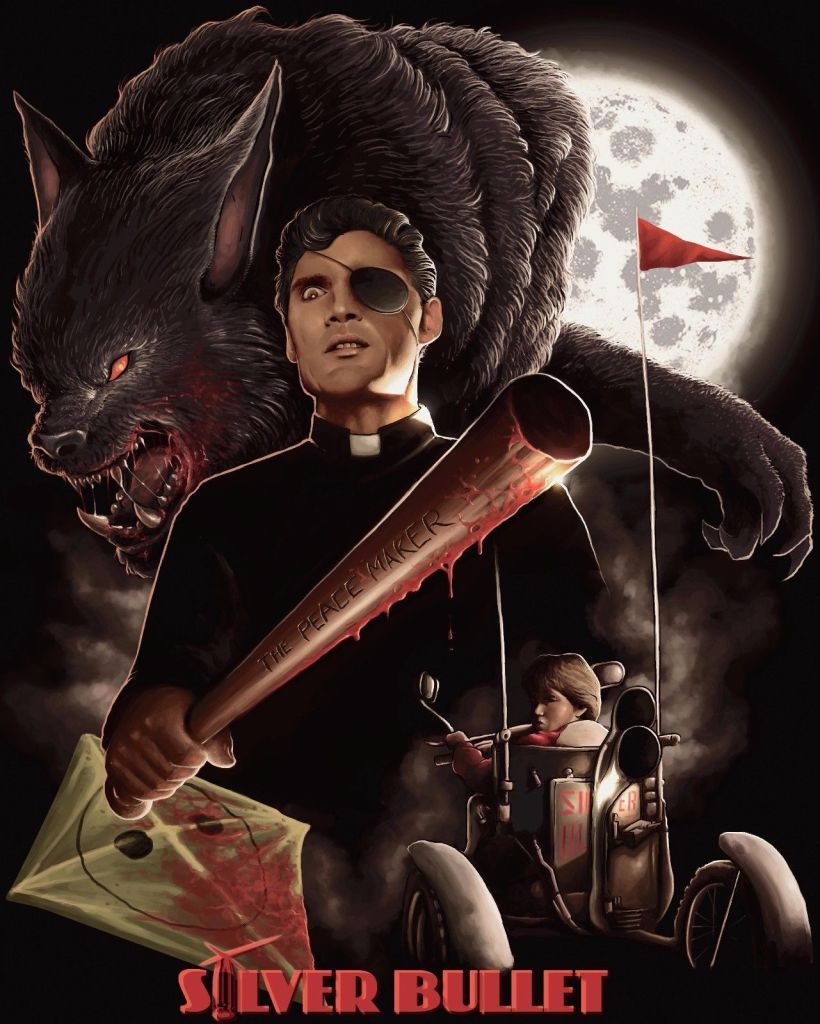
Favorite Scene: Fireworks on the bridge & Covered bridge scene when Marty is trapped.
Favorite Quotes: “The last full moon of that Spring came a little more than a month before school let out for Summer vacation. Our town’s long nightmare began that night.” – Older Jane Narrating (Megan Follows)
“From him I’d expect it. Sometimes I think your common sense got paralyzed along with your legs. But from you, Jane – you’re Miss Polly Practical!” – Uncle Red (Busey)
“I understand that my niece and my nephew are sending little love notes to the local minister suggesting he gargle with broken glass or eat a rat-poison omelette!” – Uncle Red (Busey)
“She and Dad are out back lighting the barbeque, yeah, and Jane’s walking around in all these new clothes showing off her tits, acting like no one ever had tits before her.” – Marty Coslaw (Haim)
“I’m a little too old to be playing “Hardy Boys meet Reverend Werewolf!” – Uncle Red (Busey)
IT (1990)), with Richard Thomas, Annette O’Toole, John Ritter, Harry Anderson, Jonathan Brandis, Tim Reid, Dennis Christopher
This is a two-part television mini-series based on the book by Stephen King, sometimes what you don’t see is scarier than what you do, and this monstrous villain can mess with your mind and reveal your deepest fears. In the first part, our heroes face the villain, which takes the form of Pennywise the Clown, among other forms, in 1960, as children, and in the second part, they come back as adults to face the monster once again.
They did a remake in 2017, but my feeling is that this mini-series is far superior.
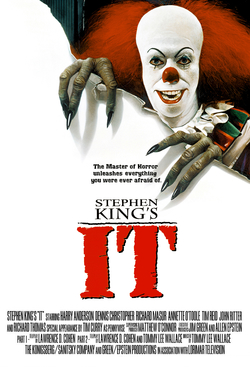
Favorite Quote: “BEEP BEEP Richie! They ALL float down here. When you’re down here with us, you’ll float too!” – Pennywise the Clown (Tim Curry)
“I’m every nightmare you’ve ever had. I’m your worst dream come true. I’m everything you ever were afraid of.” – IT
“Me? Oh you are priceless, brat! I am eternal, child. I am the eater of worlds, and of children. And you are next!” – IT
“He thrusts his fists against the posts and still insists he sees the ghosts.” – Bill Denbrough (Thomas)
“I think I remember who Pennywise was now. Big white guy… Red nose… Bout 75 feet tall… Mouth full of razor-sharp teeth?” – Eddie Kapsbrak (Christopher)
” I believe in Santa Claus. I believe in the Easter Bunny. I believe in the Tooth Fairy. But I don’t believe in you. This is battery acid. Now, you disappear!” – Eddie Kapsbrak (Christopher)
“Listen, kids. This campfire stuff is fun, it really is, but it doesn’t matter how painstakingly we go over these sewer plans or how many damn flashlights or helmets you’ve got in that box. When the sun comes up, I’m dust, and I would suggest that you follow me and get the hell out of Dodge!” -Richie Toizer (Anderson)
“The biggest mystery is how two hundred and fifty-three settlers just vanished without a trace.” – Young Mike (Marlon Taylor)
“Well, what do you know? It’s the fat boy, the Jew, the sissy, the four eyes, and the poor girl too. Nigger you know how to pick em. It’s the losers club. I have bones to pick with some of you but I’m willing to let go for today. I want him so buzz off.” – Henry Bowers (Michael Cole)
Interview with a Vampire (1994), with Tom Cruise, Brad Pitt and Christian Slater
Brad Pitt plays Louis, a vampire with a conscience, disillusioned with immortality, who shares his story with a reporter (Christian Slater). He relates the story of how he became a vampire with his maker Lestat (Tom Cruise).
Based on the novel by Anne Rice, Brad Pitt and Tom Cruise make the coolest vampires ever, as Louise and Lestat, bringing these characters to life, even in death. And what a story it is.
I catch this one on Pluto T.V. for free.
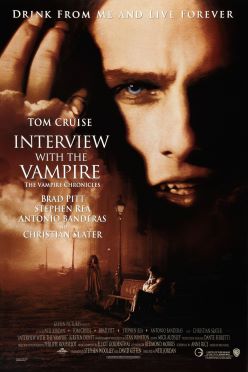
Favorite Quotes: “In the spring of 1988, I returned to New Orleans, and as soon as I smelled the air, I knew I was home. It was rich, almost sweet, like the scent of jasmine and roses around our old courtyard. I walked the streets, savoring that long lost perfume.” – Louis (Pitt)
“Oh Louis, Louis. Still whining, Louis. Have you heard enough? I’ve had to listen to that for centuries.”- Lestat (Cruise)
“I’m going to give you the choice that I never had.” – Lestat (Cruise)
“I was a newborn vampire, weeping at the beauty of the night.” Louis (Pitt)
“We are predators, whose all-seeing eyes were meant to give them detachment.” – Lestat (Cruise)
“It’s your coffin, my love. Enjoy it. Most of us never get to know what it feels like.” – Lestat (Cruise)
“All I need to find you, Louis, is follow the corpses of rats.” – Lestat (Cruise)
About Author Kaye Lynne Booth
For Kaye Lynne Booth, writing is a passion. Kaye Lynne is an author with published short fiction and poetry, both online and in print, including her short story collection, Last Call and Other Short Fiction; and her paranormal mystery novella, Hidden Secrets; Books 1 & 2 of her Women in the West adventure series, Delilah and Sarah, and book 1 in her Time-Travel Adventure series, The Rock Star & The Outlaw, as well as her poetry collection, Small Wonders and The D.I.Y. Author writing resource.
Kaye holds a dual M.F.A. degree in Creative Writing with emphasis in genre fiction and screenwriting, and an M.A. in publishing. Kaye Lynne is the founder of WordCrafter Quality Writing & Author Services and WordCrafter Press, where she edits and publishes two short fiction anthologies and one poetry anthology every year amidst her many writing projects. She also maintains an authors’ blog and website, Writing to be Read, where she publishes content of interest in the literary world.
________________________________
Did you know you can sponsor your favorite blog series or even a single post with an advertisement for your book? Stop by the WtbR Sponsor Page and let me advertise your book, or you can make a donation to Writing to be Read for as little as a cup of coffee, If you’d like to show your support for this author and WordCrafter Press.
__________________________________
This segment of “Everyone is a Critic” is sponsored by the Midnight Anthology Series and WordCrafter Press.
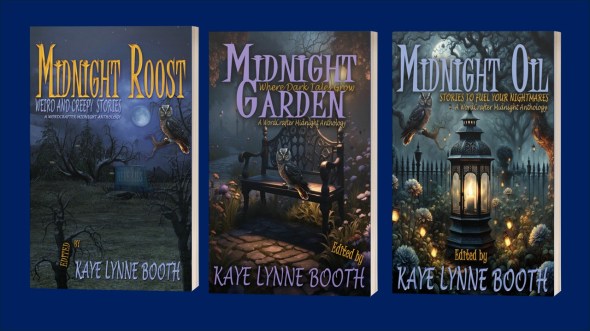
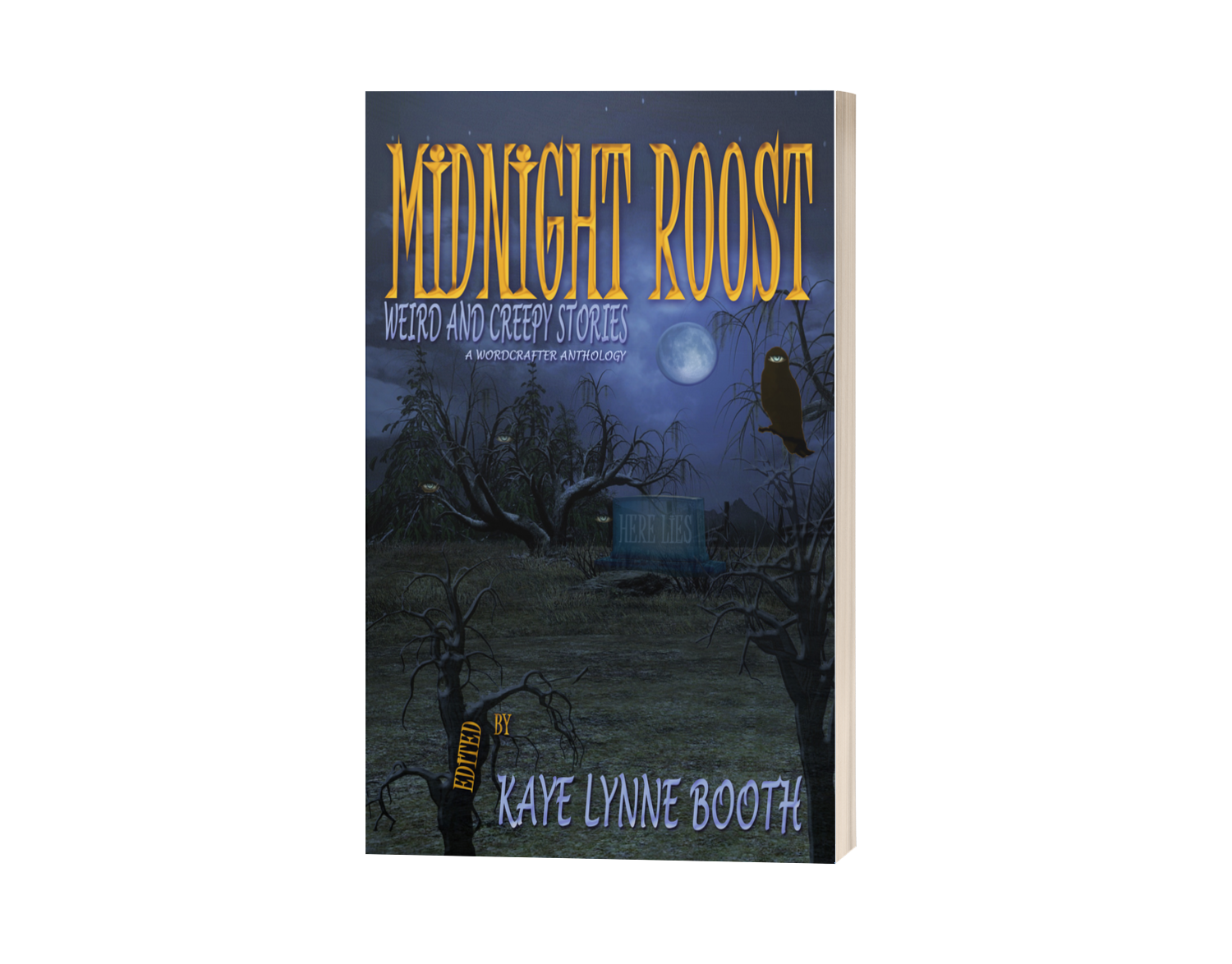
Midnight Roost: Weird and Creepy Stories: 20 authors bring your nightmares to life in 23 stories of ghosts, paranormal phenomenon and the horror from the dark crevasses of their minds. Stories of stalkers, both human and supernatural, possession and occult rituals, alien visitations of the strange kind, and ghostly tales that will give you goosebumps. These are the tales that will make you fear the dark. Read them at the Midnight Roost… if you dare. https://www.amazon.com/Midnight-Roost-Kaye-Lynne-Booth-ebook/dp/B0CL6FPLVJ
Midnight Garden: Where Dark Tales Grow: 17 authors bring you 21 magnificent dark tales. Stories of magic, monsters and mayhem. Tales of murder and madness which will make your skin crawl. These are the tales that explore your darkest fears. Read them in the Midnight Garden… if you dare. https://www.amazon.com/Midnight-Garden-Where-Tales-Anthology-ebook/dp/B0DJNDQJD3
Midnight Oil: Stories to Fuel Your Nightmares: 14 authors bring you 16 dark tales that explore your deepest fears. These are the stories which nightmares are made of. Tales of monsters, mayhem, and madness which will make you shiver in the dark. Read them while you burn the Midnight Oil… if you dare. https://books2read.com/Midnight-Oil