Writer’s Corner: Listening to Your Characters
Posted: March 3, 2025 Filed under: Books, Character Development, Dialogue, Fiction, WordCrafter Press, Writer's Corner, Writing, Writing Process | Tags: characters, Kaye Lynne Booth, Writer's Corner, Writing Process, Writing to be Read 11 Comments
Do your characters talk to you? I’ve met authors who say, “How could they? They aren’t real. They are fictional characters which I made up.” But if you are in touch with the characters which you created, I don’t see how they could not talk to you. I believe these authors who claim to not hear their characters maybe just aren’t listening.
My characters talk to me and help guide my stories. My characters refuse to stay silent. I don’t actually hear or see them, of course, but they do talk to me in my head. I hear the dialog as it goes on the page, and they are sure to tell me if I get it wrong.
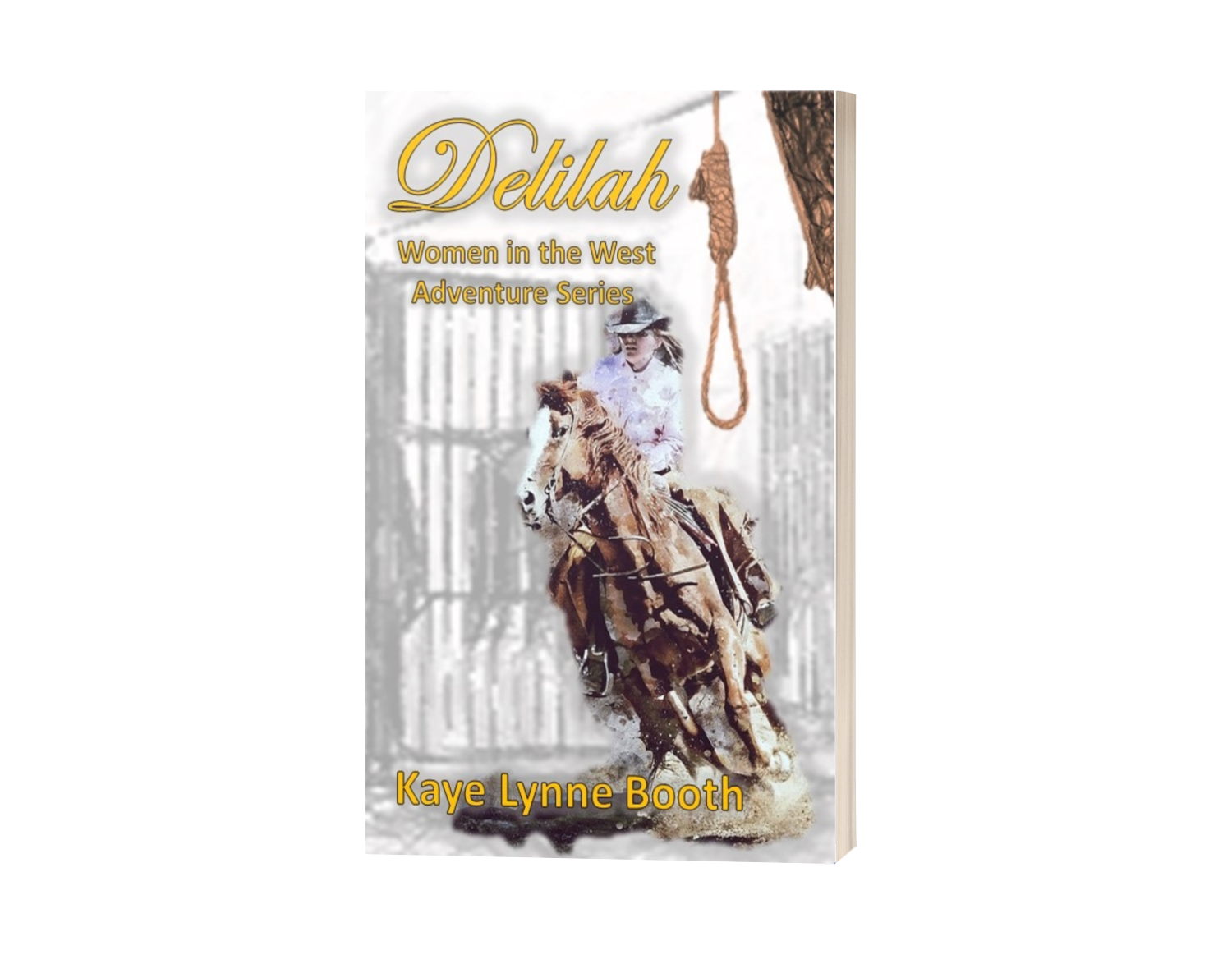
I recall when this first happened while writing my first novel, Delilah. There was a scene in the story which I recognized wasn’t working, but I couldn’t figure out why. I sat in front of my computer re-reading the chapter, which was the dialog of a conversation between Delilah and another character. I said to myself, “Something isn’t right here, but what is it?” And a voice in my head replied, “I wouldn’t react that way.” Re-reading it once more, I realized that the voice of Delilah was right. I had my character reacting in a certain way because it was necessary in order for events in the future to occur, but it wasn’t a reaction that would come naturally from the character I had created. I rewrote the conversation, changing Delilah’s reaction to be true to her character, and it changed the direction of the story, completely. It required extensive revisions throughout the story, including total rewrites of the chapters which came after that scene, but it made it a much better tale than the one I had planned to write, so it was better for the story in the long run.
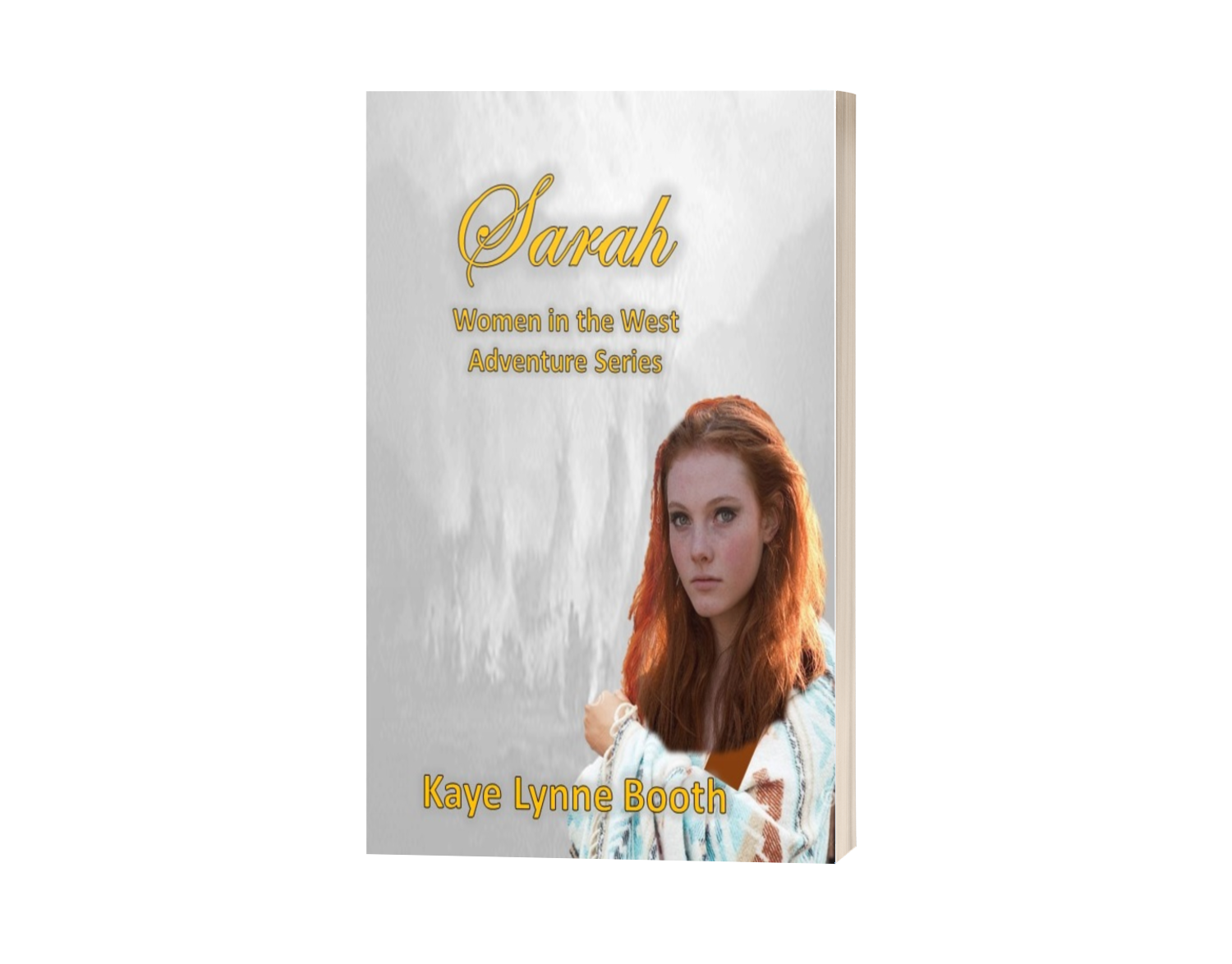
While writing Sarah, my character hijacked a conversation between her, Big Nose Kate, and a high-society woman, and her opinions on corsets set off an unexpected suffrage movement in Glenwood Springs, complete with a protest and corset burning. When I began writing the story, I had no idea that this would happen in the book, but when I placed the words upon the page, it all just clicked, and I said, “Oh, yeah”.
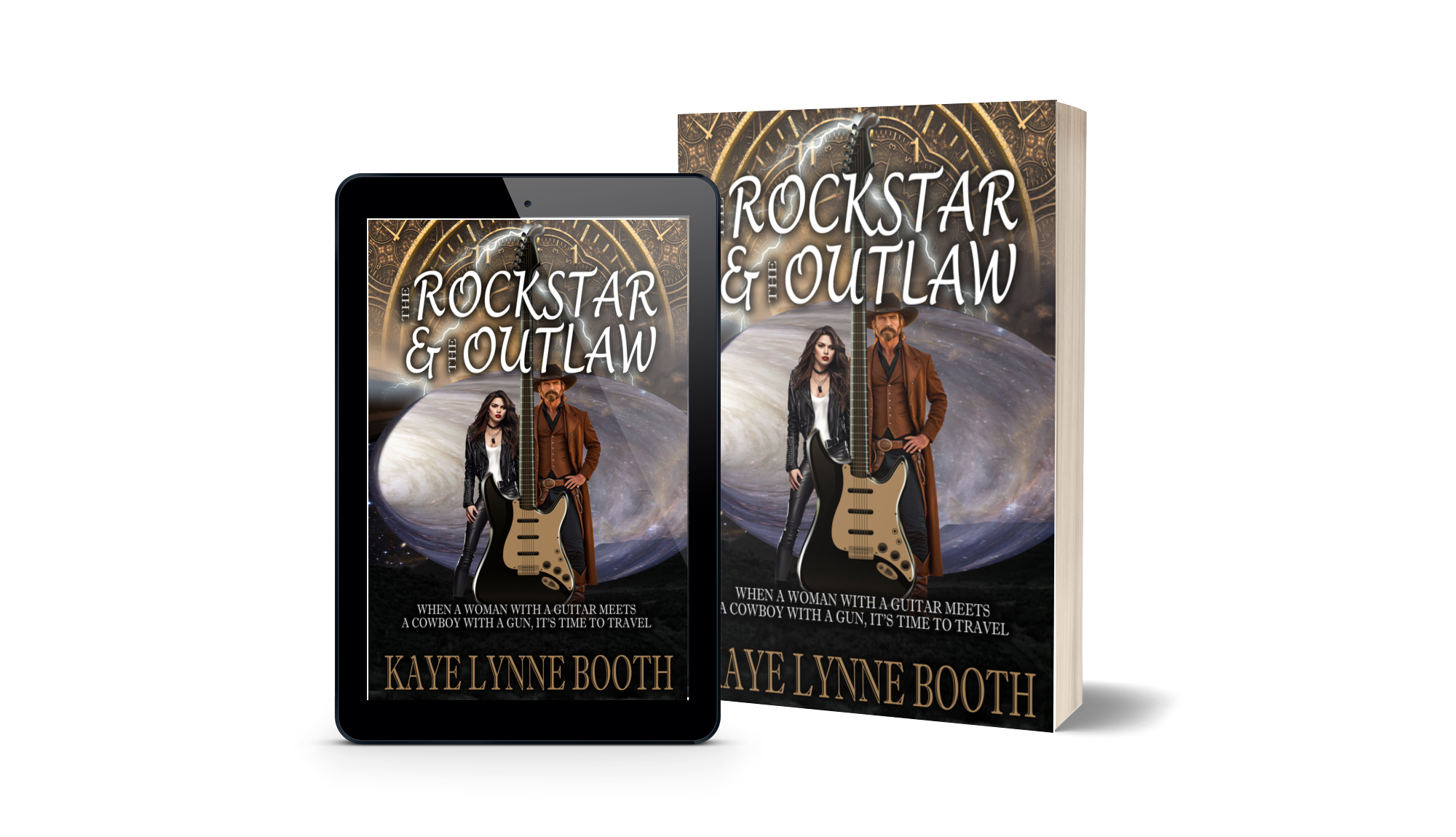
With both books in my Time Travel Adventure series every chapter is paired with a song. All of Amaryllis’ music was done by The Pretty Reckless, which first inspired her character. But for LeRoy and the other characters who were given P.O.V. in the second book, the music from various artists were used. As I perused the radio stations, searching for just the right song for each chapter. I can think of several times when a song I wasn’t familiar with would come on and LeRoy would give my mind a nudge that said, “Listen to this song.” Paying attention to what he had to say, I focused on the music, listening to the lyrics, and found that the song was perfect for a specific chapter, and the song ended up in the book and on LeRoy’s play list.
Of course, I’m aware that my character’s voices are really voices from my own subconscious, because every one of the characters I create are a part of me. But being in touch with them enough to them to hear their voices in my head makes them feel more like old friends and helps me bring the story to life.
We all have the ability to hear our characters if we’ll only listen to what they have to say. I’ve found that their observations are right on the money. My stories turn out better for listening to them. So, tell me. Do you listen to your characters?
About Kaye Lynne Booth

For Kaye Lynne Booth, writing is a passion. Kaye Lynne is an author with published short fiction and poetry, both online and in print, including her short story collection, Last Call and Other Short Fiction; and her paranormal mystery novella, Hidden Secrets; Books 1 & 2 of her Women in the West adventure series, Delilah and Sarah, and her Time-Travel Adventure novel, The Rock Star & The Outlaw,as well as her poetry collection, Small Wonders and The D.I.Y. Author writing resource. Kaye holds a dual M.F.A. degree in Creative Writing with emphasis in genre fiction and screenwriting, and an M.A. in publishing. Kaye Lynne is the founder of WordCrafter Quality Writing & Author Services and WordCrafter Press. She also maintains an authors’ blog and website, Writing to be Read, where she publishes content of interest in the literary world.
___________________________________________
Did you know you can sponsor your favorite blog series or even a single post with an advertisement for your book? Stop by the WtbR Sponsor Page and let me advertise your book, or you can make a donation to Writing to be Read for as little as a cup of coffee, If you’d like to show your support for this author and WordCrafter Press.
______________________________________
This segment of “Writer’s Corner” is sponsored by the My Backyard Friends Kid’s Book Series and WordCrafter Press.

The My Backyard Friends kid’s book series is inspired by the birds and animals that visit the author Kaye Lynne Booth’s mountain home. Beautiful illustrations by children’s author, poet, and illustrator, Robbie Cheadle, bring the unique voices of the animal characters to life.
Get Your Copy Now.
Heather Hummingbird Makes a New Friend (Ages 3-5): https://books2read.com/MBF-HeatherHummingbird
Timothy Turtle Discovers Jellybeans (Ages 3-5): https://books2read.com/MBF-TimothyTurtle
Charlie Chickadee Gets a New Home (Ages 6-8): https://books2read.com/MBF-CharlieChickadee
Share this:

Writer’s Corner: Word Choices
Posted: July 1, 2024 Filed under: AI Technology, Books, Character Development, Dialogue, Fiction, Setting, The Human Condition, Time travel, Voice, Western, WordCrafter Press | Tags: AI Technology, Dialogue, Editing, Speech, Voice, Word Choices, Writer's Corner, Writing to be Read 17 Comments
I don’t need MS Word to tell me that my language might be offensive. That’s me. I use offensive language, usually on purpose, for effect because I want to be offensive, or just because it is what my character would say. Of course, I’m not writing for a YA or younger audience. I would want curse words to be pointed out and questioned, if that were the case.
I cuss. Most of the people I know cuss. Even religious folk have been known to issue a curse or two. If I feel the reaction to a situation would be an issued expletive, then my character will issue it. That doesn’t mean that all my characters are potty mouths, but when a curse is in order, they throw it out there, and I believe it is appropriate in certain situations, and also more realistic.
Even if my protagonist isn’t a curser, like Delilah, who uses expletives such as dagnabbit, the people around her do, so my books do contain some cursing. I don’t feel like a story set on the western frontier, would be true to the period or the frontier culture.
Likewise, the modern day Las Vegas culture in the music circles involves drugs, sex, and rock-and-roll, so naturally my character, Amaryllis, in The Rock Star & The Outlaw is involved in all of that and more, and her language often isn’t ladylike. Even so, I try not to let her get carried away with the curse words. And Sarah deals with the issues of prejudice and sexism, and the language in the story reflects the prejudices of the times, whether the AI editor in MS Word likes it or not.
But my villains often have mouths so dirty even their own mothers wouldn’t kiss them. Respect for women or lack thereof is often indicated in the way a man refers to women. If a character lacks respect for women, which many male villians do, then their language when referring to them may be less than flattering. After all, the way a character speaks is one of the things readers use to clue them in to what a character is like, and then decide if they are a character they should like, or not.
Another speech trait which I use often is the improper use of the English language. In the old west, many people were not educated and used words such as ‘ain’t’ or they cut off the ‘g’ in ‘ing’ words. In Delilah, one of things she strived for was to speak more properly after meeting the Mormon woman, Marta, who was a natural born school teacher and corrected Delilah’s speech automatically out of habit. Many of the less savory characters in the Women in the West adventure series, clue readers into their ignorance by the way they speak. I reckon that’s what I do it fer. These are purposeful misspellin’s that drive my AI spell-check crazy.
Many of my western characters are representitive of the many immigrants who made the U.S. into the melting pot that it is known to be. They speak in different dialects to differentiate them from other characters, which gives them colorful speech that is recogizable without adding dialog tags. In Sarah, Lillian Alura Bennett is one such character, who happens to be an Irish madam at a bordello in Glenwood Springs. And in The Rock Star & The Outlaw, the Mexican dialect of Juan Montoya leaves no question when he is speaking.
In Delilah, I had the opposite problem as the character of Dancing Falcon was a young Indian boy, who had been taught to speak English at the Indian agency with a strict teacher, so his speech is almost too proper, which made his speech sound very formal in places. One of the comments from a beta reader was that no one talks like that, so I went back when revising and added in a place where he talks about his time on the reservation and his schooling experience, to explain why he spoke that way to readers. The point being that a characters speech should reveal something about them, as well as making them identifiable.
It was really fun to create the characters in the My Backyard Friends kid’s book series, which is based on the birds and animals which visit my yard in the Colorado mountains. Katy Cat is a bit of a diva, kind of stuck up, and thinks she’s better than everyone else. She’s willing to help out Timothy Turtle as long as it doesn’t inconvenience her too much. I relayed this information in the way she swishes her tail, (body language), and in the way she talks with a bit of attitude. Heather Hummingbird has a lot of energy, so she talks really fast and rarely perches for more than a few seconds at a time. Charlie Chickadee is a young bird on his own for the first time, so I made him a bit niave. The things he says reveals this more than the way that he says it.
Other reasons an author might make the character’s or even the narrator’s voice a bit quirky is because it is the author’s voice coming through. (You know the voice English teachers are telling you to find? Yep. That one.) To an extent, this is true for me. My own speech is usually rather blunt and to the point, and so are my characters’. I don’t use a lot of colorful purple prose, instead calling it like I see it. Many of my protagonists are the same way. Delilah says what’s on her mind and she doesn’t beat around the bush. Sarah, too, tends to speak before she considers the way her words will be taken.
AI editors don’t understand this, and so variants in speech are often marked as needing correction, when in fact, they are purposeful. This is why, just running through your story with an AI editor is never enough. But there are times when human editors don’t get it either. Kevin J. Anderson tells a story about submitting a book to a traditional publisher who turned it over to a novice editor who corrected all the little quirks that revealed his voice and marked his manuscript up until it looked like nothing but red scribbles. That’s when you know that an editor isn’t a good match for you. Kevin politely refused to work with that editor and they assigned him another one. That’s why it’s important to have an editor that gets you and your voice, and understands the nuances of your character’s dialog.
Finding the right editor isn’t always easy, especially if funds are tight. Many editors will offer a free edit of the first ten pages, or even the first chapter so you can fell them out and find out if they are right for you and your story. I wouldn’t go with any editor who doesn’t offer this, and of course, I offer it through Write it Right Quality Editing Services. Any editor worth their salt will understand that they must be able to differentiate between mistakes and purposful word choices.
___________________________________________
About Kaye Lynne Booth

For Kaye Lynne Booth, writing is a passion. Kaye Lynne is an author with published short fiction and poetry, both online and in print, including her short story collection, Last Call and Other Short Fiction; and her paranormal mystery novella, Hidden Secrets; Books 1 & 2 of her Women in the West adventure series, Delilah and Sarah, and her Time-Travel Adventure novel, The Rock Star & The Outlaw. Kaye holds a dual M.F.A. degree in Creative Writing with emphasis in genre fiction and screenwriting, and an M.A. in publishing. Kaye Lynne is the founder of WordCrafter Quality Writing & Author Services and WordCrafter Press. She also maintains an authors’ blog and website, Writing to be Read, where she publishes content of interest in the literary world.
____________________
This segment of “Writer’s Corner” is sponsored by The D.I.Y. Author and WordCrafter Press.
Being an author today is more than just writing the book. Authors in this digital age have more opportunities than ever before. Whether you pursue independent or traditional publishing models, or a combination of the two, being an author involves not only writing, but often, the publishing and marketing of the book.
In this writer’s reference guide, multi-genre author and independent publisher, Kaye Lynne Booth shares her knowledge and experiences and the tools, books, references and sites to help you learn the business of being an author.
Topics Include:
Becoming Prolific
Writing Tools
Outlining
Making Quality a Priority
Publishing Models & Trends
Marketing Your Book
Book Covers & Blurbs
Book Events—In Person & Virtual
And more…

Pre-Order your copy today: https://books2read.com/The-DIY-Author
Share this:

Ask the Authors 2022 Book & Blog Series: Action, Pacing & Dialog
Posted: June 4, 2022 Filed under: Action Scenes, Anthology, Articles, Ask the Authors, Book Event, Book Promotion, Book Release, Books, Dialogue, Fiction, Interview, Pacing, Teaching Writing, WordCrafter Press, Writing, Writing Tips | Tags: Anthology, Ask the Authors 2022, Bobby Nash, Chris Barili, Interview, Jeff Bowles, Kaye Lynne Booth, Kevin Killiany, L. Jagi LAmplighter, Mario Acevedo, Mark Leslie, Nancy Oswald, Paul Kane, Roberta Eaton Cheadle, WordCrafter Press, Writing Reference 7 Comments
Hello again, and welcome to segment 5 of the “Ask the Authors” blog series. This Saturday series features introductions to each contributing author and excerpts from the Q & As featured in the newly released Ask the Authors 2022 writing reference anthology.
If you missed any of the earlier segments, you can find them here:
Segment 1: Introductions for Kaye Lynne Booth & Kevin Killiany/Writing Life Q & A session
Segment 2: Introduction for Bobby Nash/Pre-Writing Rituals Q & A session
Segment 3: Introduction for Roberta Eaton Cheadle/Plot & Storyline Q & A session
Segment 4: Introduction for Paul Kane/Character Development Q & A session
This week’s segment features an introduction to contributing author Mario Acevedo and a Q & A on action, pacing, and dialog.
Meet Mario Acevedo

Mario Acevedo is a national bestselling author of speculative fiction and has won an International Latino Book Award and a Colorado Book Award. His work has appeared in numerous anthologies to include A Fistful of Dinosaurs, Straight Outta Deadwood, and Blood Business. For 2020, he has short fiction in the forthcoming anthologies, Psi-Wars and It Came From The Multiplex, and a Western novel, Luther, Wyoming. Mario serves on the faculty of the Regis University Mile-High MFA program and Lighthouse Writers Workshops. Mario has also been a presenter and panel member for both the 2020 Stay in Place Virtual Writing Conference, and the 2021 New Beginnings Virtual Writing Conference.
And now, on to the Q & A.
Action, Pacing & Dialog
Do you have any tips for writing action scenes/fight scenes/car chases, where blow by blow descriptions could get tedious?
Mario Acevedo: Summarize. Only share the high points and include internalizations. Also add details that are often overlooked like nausea, panic, pain, exhaustion.
Paul Kane: I grew up watching a lot of action movies and TV shows, the ’70s and ’80s were a golden age for action as far as I’m concerned. So, a lot of that went in without me having to do much. I used to recreate certain action scenes with my toys, or I might race off up the garden with mates to pretend fight. When I wrote the Hooded Man books, I had to have a lot of action in there, so I got very good at not making things boring – there are only so many ways to describe a punch, for example. But the key I found was to visualize the scenes, even play them out – just like I did when I was a kid – so that they become, again, more believable. I was delighted when one of my battle scenes for Broken Arrow was compared favourably to those in The Lord of the Rings movies, especially Helm’s Deep; that’s one of my all-time favourite battles on film, so I did a little happy dance that day. The way to tackle any fight or action scene, whether it’s huge like the ones I’m talking about here, or just one-on-one, is to break it down into its component parts. Ask yourself what you need or want to show. Then do your research, watch a lot of fight sequences, or action scenes, mix and match the moves that are being made. If your character is a master of martial arts, study it. I had a character called Tanek, for example, who was skilled in the Israeli hand-to-hand combat of Krav Maga, so I went out and researched that. Jennifer Garner actually studied that for Alias, so I watched some fight sequences from the show. They used a very particular form of combat for the Batman fight scenes in the Nolan movies called the Keysi Fighting Method, which favours forearms and elbows, so it’s worth trying to find something that’s not been done before perhaps. Or not done very much. Finally, give your fight and action scenes a sense of character, make them like a dance or a ballet. They need to have rhythm, flow, so your reader can easily picture what’s happening. Too much going on at once is a big no-no, because you’ll lose them. Same goes for very dry descriptions of a fight: now this happens, now this, then this… Try and find a way to make your descriptions interesting, maybe comparing them to something, like two animals barging into each other or what have you.
Chris Barili: Know what you’re talking about. It seems obvious, but may writers take it for granted, and end up writing nonsense that loses the reader. For example, I have studied the martial arts most of my life, and I hold a second-degree blackbelt in Karate. Thus, I know that someone trained primarily in Judo or Jiujitsu will be a grappler by preference, while a Karate stylist will be a stand-up striker who looks to avoid going to the ground.
Bobby Nash: It can be difficult to keep fight scenes fresh. I learn the choreography, walk out the fights, play around with different ways to describe the action. How is the character feeling/responding to the action? I wrote a car chase once and showed it from the POV of a passenger in the car instead of the driver. As he’s holding on for his life, we get a sense of the danger that way as opposed to only descriptions of what the car is doing.
Robbie Cheadle: I am writing my second novel involving war which includes fighting scenes. I intersperse the fighting with dialogue, humorous comments, scenes of eating, drinking, and entertainment, and the receipt of letters from family and friends.
You cannot maintain tension at high levels for too long or it becomes monotonous and over-done. In real life, people relieve tension by singing, and making jokes, and talking and I follow this practice in my writing.
Nancy Oswald: Elmore Leonard: “I try to leave out the scenes readers skip.” Ralph Fletcher: “Write small and use slo mo. The more tension you want to create, the more important the details. In general focus on one detail well rather than all the details which can wash out a scene.”
How do you handle scenes where there is a lot going on, like battlefields or fights in busy settings?
Paul Kane: As I say, break it down into smaller chunks. Show the scale of what’s happening by all means, like an establishing shot in a movie, then focus in on certain specific fights and details. These will usually be with your main characters if it’s a big battle – so I would zoom in on a fight Robert, my Robin Hood, might be having with someone. Then cut to maybe Jack, who is my Little John, and see how he’s getting on. You have to give everyone who’s a main character a turn in the sun, plus give the reader memorable moments – like Robert taking down the Apache attack helicopter with a bolas.
Chris Barili: This is a tough one. I have found that choreographing the whole thing on a sketched-out map of the physical surroundings can help, and if that’s not enough, having some friends act out the scene can help you identify errors, misjudgments, and so on.
Bobby Nash: I try to make sure all of the necessary information is relayed. If you have a lot of characters, you have to try and balance who has dialogue or stuff to do so that they don’t disappear from the scene. POV helps here too.
Robbie Cheadle: I keep my sentences fairly short during battle scenes, and I use a lot of dialogue to break up the action.
How do you keep action flowing smoothly within a scene?
Mario Acevedo: Keep the scene and story question in mind so that the action strengthens the plot.
Paul Kane: Just keep it tight, moving from one bit of action to the next. Even in a small fight, if you have a character get punched or kicked, it’s enough to say it just winds them or takes them down – you don’t have to go into lots of detail about how it feels, whether they’re recovering, what’s going through their minds as they’re fighting. Keep it rattling along at a good pace. Sounds stupid, because it’s a fight, but make it punchy.
The use of weaponry is a good way of handing readers little details that help them visualize what’s going on. Everyone knows what a knife or rifle or handgun looks like. Of course, it depends very much on what kind of fiction you’re writing. A lot of my Hooded Man stuff was military based, because of the nature of armies fighting each other, so readers who enjoy that kind of thing like you to include the names of weapons, specifics relating to what they can do. Does a certain gun jam more often than others? Which are best for close combat as opposed to distance? I once wrote a story about an assassin called Mr D, who had to tear through lots of guards to get to his target. That started off with long-range sniper rifles, and ended up with hand-to-hand fighting as he got closer to the building his mark was in.
It’s also fun to write about weaponry that’s totally out of context, for example plates and pans in a kitchen that can be used to fight with. In my novel Lunar, Nick Skinner raids old castles and museums to get swords, shields and axes to fight the monstrous Loons. Similarly, The Storm was set in an old castle so weapons like that were no-brainers, but I do have my main character – who’s there as a workman – fight off a huge crustacean with a mini-digger. It was just what was around and big enough to tackle the oversized beast, but it worked a treat.
Chris Barili: Keep it short. A ten-page car chase will lose a reader like a prologue.
Bobby Nash: When writing action, I use shorter sentences, short, choppy dialogue, sometimes interrupted dialogue. That reads faster so the reader reads the action scenes faster, highlighting the fast-paced nature of the scene. During an action scene is no time for deep thoughts or anything extraneous. Keep it simple and keep it moving.
Do you consult experts to ensure your action is true to life? How do stories benefit from getting those little details right?
Paul Kane: If you know someone who’s been in the military, or police, or someone who teaches self-defense then definitely use them. Use any friends for anything which requires specialist knowledge. This might be something as everyday as fingerprinting or gathering DNA at a crime scene, say, or if you know a scientist it could be as big as how the universe works. But you don’t necessarily have to go to experts like that these days if you don’t know any, because information is freely available on the net and in books – especially writers’ handbooks. At the same time, talking to experts sometimes throws up interesting scenarios and might take a story in a direction it wouldn’t otherwise have gone.
Bobby Nash: Research can help, sure. Whatever you writer, whether it’s a real-world fight or two super-powered characters battling, you have to write it as though it’s real. If you believe it, the reader will believe it.
Robbie Cheadle: I read a lot of non-fiction to gain knowledge about the subjects of my historical novels. To get a good feel for the era, I read works of fiction set during that time. Fiction reading gives me insight into how people lived, socialized, travelled, and dressed during the period in which my novel is set.
Nancy Oswald: I’m a nut for accurate historical detail, even if it plays a minute part in the story.
Pacing
How can dialog help pace your story?
Mario Acevedo: Dialog is a great way to advance the plot by having the characters reveal crucial information or to help build a character. Dialog is more active and interesting then authorial narration.
Paul Kane: I think that’s where the planning comes into it, once more. If you have a chapter breakdown you can see where the novel needs tightening up. Is there too much exposition in a certain chapter, not enough? Too much action all in one go, or not enough for long periods? Are you hooking your reader at the end of your chapters, making them want to go on and read more in the next chapter? Even if you’re only writing a short story, if you jot down the structure of it in a few sentences you can usually work out where you’re going in terms of pace. Compare whatever you’re doing to other novels or short stories, see how they’re paced. If you want to write, then you have to read as well – like Stephen King says in On Writing. There really is no other way to learn how to do this. Similarly, if you’re scripting TV or film, then go away and watch how they’re paced. Or a comic or audio: read comics, listen to audio dramas and make notes. It really is the only way to learn your craft, whether it be characters, setting/description or pacing.
Robbie Cheadle: Dialogue speeds the pace of a story up, so I use more dialogue for tense, fast paced scenes.
What methods do you employ to control and maintain the pacing in your story?
Mario Acevedo: Know when to show and tell. Show is “reveal,” during which you draw out the narrative in a way that pulls the reader into the story. Tell is “exposition,” which you need to keep the reader oriented in between reveals.
Paul Kane: Try and stick to the plotting and planning you’ve done, even if it’s in broad strokes. That doesn’t mean your story can’t go off on a tangent if something occurs to you, but go back to the outlines that you’ve done at that point and rewrite those, see where the new development might take you. Predict and project, then go back to the writing of the tale. In my opinion that’s really the only way to keep a rein on the thing and make it go where you want it to go.
Robbie Cheadle: I break my story down into manageable pieces for each character. In my current work-in-progress, I am alternating chapters between Jake at the Western Front during WW1, and Kate in Orange, New Jersey.
In slower sections I use longer sentences and more detail and description to slow the pace down.
I also use introspection to develop my characters and control pace.
How do you find the right balance between action and dialog?
Paul Kane: For me personally, that’s something which just comes with practice. The more you write, the better at judging this you’ll be, until you’ll be doing it by instinct almost without thinking. If you drive, remember what it was like when you first started, trying to keep it all in your head? And once you’ve been on the road a while, a lot of that becomes like second nature to you, doesn’t it? Or it should do at any rate. It’s the same thing with writing really, you develop these skills over time – so that you can tell when something needs balancing out with a bit of dialogue, or a bit of action. It’s all just about putting in the work, honing your skills.
Nancy Oswald: Try to do them both at the same time by using appropriate action-filled tags.
Dialog
How do you write dialog that sounds natural and realistic?
Mario Acevedo: Listen to the way people speak, then write a tightened version. People tend to repeat themselves. Catalog unique ways in how people express themselves. Also, keep in mind the character’s agenda when using dialog.
Paul Kane: The trick is to get the balance right between it sounding naturalistic and conveying information. Most dialogue should be moving the story along or serving the story, otherwise what’s it doing in the piece at all? In real life we all have conversations that are just random or serve no purpose, or we get distracted and break off from a conversation to talk about something else. You can’t do that in your fiction, because people will get bored. Or they’ll think you’re not in control of your own writing, which would be true at that point. I get criticized a lot for not finishing sentences in dialogue, but what I’m trying to do is leave readers in a bit of suspense, whilst at the same time making it a bit more realistic. Human beings very often leave sentences unfinished, if they’re interrupted or just shocked. I don’t do it all the time, and like I say some people find it jarring, but it is one way of creating naturalistic dialogue if you have a reason for it. Another way is to just let the dialogue flow, batting it backwards and forwards, but don’t forget to keep reminding the reader who’s speaking with a ‘Mike said’ or whatever, every now and again. Or have a bit of action, like Mike scratching his head or getting up and walking across the room to break things up if you’ve had several lines of dialogue. I always find arguments quite easy to write, because the flow of them comes across as very believable, and you can include lots of relevant information. For me, it’s quite easy to imagine a couple of people having an argument, because it happens a lot in our everyday lives; lots of people have opposing viewpoints, so it’s fun to try and get both sides of that across.
Chris Barili: Listen to people talk and write dialogue that way as much as possible. Do NOT write dialogue in grammatically correct sentences…we don’t speak in MLA format, either.
Bobby Nash: A trick I learned is to read the dialogue out loud. That will tell you if it works or not.
Robbie Cheadle: I read all my stories aloud to myself, and to anyone else who’ll listen. Reading my writing aloud helps me to spot errors and clumsy unnatural dialogue.
Kevin Killiany: I read it aloud. (Yes, I do character voices.)
Do you use dialog tags? Basic or varied?
Mario Acevedo: I vary them and use action tags as often as possible. Remember that in interpersonal communication, half of what we communicate is non-verbal so include those clues: tone, pauses, eye movement, facial expressions, gestures, changes in posture to emphasize what is being said.
Paul Kane: I tend to stick with the basics, unless you’re trying to say something specific. For example, ‘he spat’ shows how shocked or mad that person is by something that’s been said. I tend to steer clear of things like ‘he pontificated’ or anything complicated like that, as it throws you right out of the story. But good old-fashioned ‘he said’ ‘she said’ works just fine. It’s amazing how your eye glosses over this when you read. Try it for yourself, read a page from a book, then go back and re-read it looking for those tags – and I guarantee you won’t have spotted half of them.
Bobby Nash: Yes. I used ‘said’ most of the time, but if I need to add a punch to a line, I may use a different tag.
Robbie Cheadle: When I use dialogue tags, I generally stick to ‘said’. I don’t always use a dialogue tag, sometimes I prefer to use an action by the speaker to indicate who is talking.
Nancy Oswald: Both or not at all. Let the actions act as your dialogue tags.
Kevin Killiany: I stick to basics, with some variations. Many times I leave them out. Example:
Pilar realized her watch had stopped.
“Jerry? What time is it?”
“Four. Uh, four oh eight.”
“Which?”
“Four oh eight. Nine, now.”
You know who’s saying what and you get an idea of Jerry’s personality with no tags.
Any pet peeves with dialog?
Mario Acevedo: Info dumps and a character not saying the obvious in response to what’s going on.
Paul Kane: Not really, just if the conversation isn’t going anywhere or serving any kind of purpose. Having two characters discuss what they’ve had for lunch, for example. Unless that lunch caused food poisoning that results in something significant happening in the plot, then what’s the reason for including it?
Chris Barili: No robot-speak unless the character is actually a robot, and usually not even then.
Bobby Nash: Noting specific. I try not to be cliché.
Kevin Killiany: People speaking grammatically correct written English with every pronoun unnecessarily identified. Normal conversation—even in formal situations—is usually made up of sentence fragments because spoken English assumes all members of the conversation understand what’s being discussed.
Would you share a brief excerpt from one of your best dialog scenes?
I asked this question and got some wonderful responses, but most of them are too lengthy to include here, so I guess if you want to view them, you’ll have to buy the book.
_____________________
That wraps up this week’s segment of the “Ask the Authors 2022” blog series. Be sure to drop by next Saturday, when we’ll introduce Nancy Oswald and bring you a Q & A on tone and all that entails.

And don’t forget to grab your copy of the Ask the Authors writing reference anthology, at the special 3.99 price for the duration of this blog series, from your favorite book distributor through the Books2Read UBL: https://books2read.com/u/3LnK8e
________________________
Join Kaye Lynne Booth & WordCrafter Press Readers’ Group for WordCrafter Press book & event news, including the awesome releases of author Kaye Lynne Booth. Get a free digital copy of her short story collection, Last Call and Other Short Fiction, as a sampling of her works just for joining.
Share this:

Ask the Authors 2022 is here!
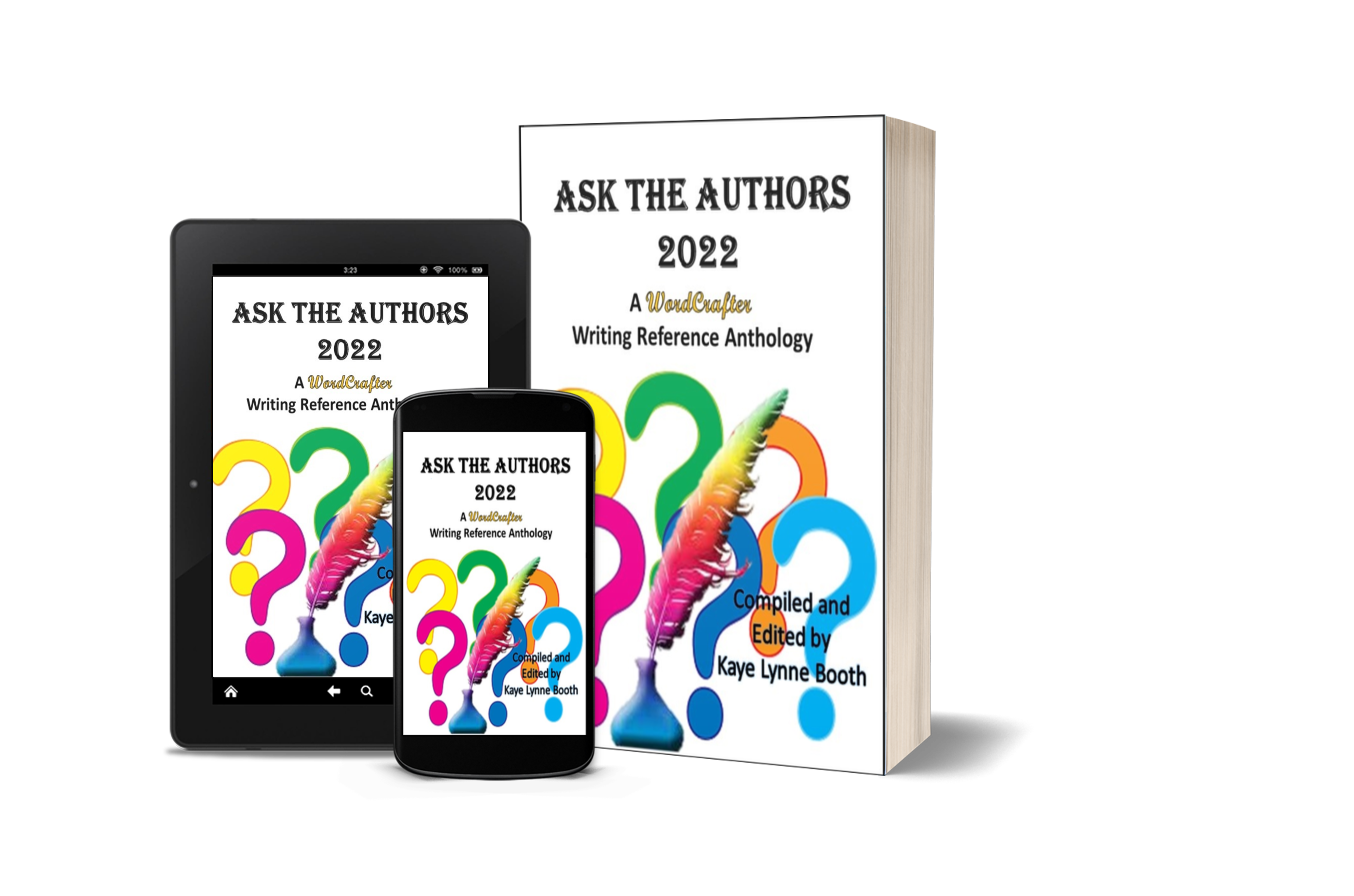
Posted: April 22, 2022 Filed under: Ask the Authors, book marketing, Book Promotion, Book Release, Books, Character Development, Dialogue, Editing, Fiction, Nonfiction, Plot, Point of View, Publishing, Story Telling Methods, Teaching Writing, Tense, Tone, Voice, WordCrafter Press, World Building, Writing, Writing Life, Writing Process, Writing Reference, Writing Tips | Tags: Ask the Authors 2022, Bobby Nash, Chris Barili, Jeff Bowles, Kaye Lynne Booth, L. Jagi LAmplighter, Mario Acevedo, Mark Leslie Lebefvre, Nancy Oswald, Paul Kane, Roberta Eaton Cheadle, WordCrafter Press, Writing Reference, Writing to be Read 19 CommentsThat’s right. The writing reference you’ve all been waiting for has arrived. Ten talented authors and industry experts have gathered together with me to share their writing tips and advice in essay and Q&A, creating a writing reference anthology like no other.
Where can you find publishing industry experts willing to share their secrets?
Ask the Authors 2022 is the ultimate writer’s reference, with tips and advice on craft, publishing and marketing. Eleven experienced and successful authors share what works for them and offer their keys to success in traditional publishing, hybrid, and indie. You’ll learn industry wisdom from Mark Leslie Lefebvre, Kevin Killiany, L. Jagi Lamplighter, Bobby Nash, Paul Kane, Nancy Oswald, Chris Barili, Jeff Bowles, Roberta Eaton Cheadle, Mario Acevedo and Kaye Lynne Booth.
This book offers up-to-date and tried-and-true ways to improve your craft, explores current publishing and book marketing worlds. Take a peek inside and find out what works for you.
Praise for Ask the Authors 2022
“Ask the Authors is an up-to-date and broad-based compendium of advice from today’s working writers, to help you with understanding your own writing career. Great information!”
—Kevin J. Anderson, New York Times bestselling author of Spine of the Dragon

Ask the Authors 2022 is available in both digital and print. You can get your copy from your favorite book retailer through the Books2Read universal book link (UBL) here: https://books2read.com/u/3LnK8e
______________________________________________________________________________
Sign up for the Kaye Lynne Booth & WordCrafter Press Newsletter for and book event news for WordCrafter Press books, including the awesome releases of author Kaye Lynne Booth. Get a free digital copy of Kaye Lynne Booth’s paranormal mystery novella, Hidden Secrets, just for subscribing.
Share this:

Craft and Practice with Jeff Bowles – Narrators of a Different Color
Posted: May 19, 2021 Filed under: Character Development, Craft and Practice, Dialogue, Fiction, Point of View, Story Telling Methods, Tense, Voice, Writing | Tags: Craft and Practice, Dialogue, Jeff Bowles, narration, Point of View, writing advice, Writing Tips, Writing to be Read Leave a comment
Each month, writer Jeff Bowles offers practical tips for improving, sharpening, and selling your writing. Welcome to your monthly discussion on Craft and Practice.
There’s an entire school of thought behind the use of standard third-person perspective in narrative fiction. Often enough, beginning writers are encouraged to see it as their go-to, which isn’t horrible advice. Let’s do a quick POV lesson, in case your memory is hazy.
First-person: I walked to the lake.
Second-person: You walked to the lake.
Third-Person: He walked to the lake.
Conventional wisdom says most readers stomach lucky number three best. I think that might be a load of hogwash, but let’s assume it’s 100% correct. What would be the benefit of writing fiction—or creative nonfiction, for that matter—from a quote, unquote “nontraditional” perspective? Your own edification, right? And maybe something else.
Third-person is the norm because it provides helpful breathing room between us and our readers. It’s easy to tell a story this way, natural. We’re used to it, having read it a million times before. By the same token, I have noticed it’s become increasingly more common for storytellers to dabble in other modes. First or second-person, past or present tense, limited omniscience or full-blown mind-of-God territory. First-person present tense, by the way, is notoriously apt to cause chaos.
“I write on the blog post for a bit, and then I check my email. It occurs to me I’ve never met a sultan of Saudi Arabia, so it’s possible these diet pills are phony. Oh well. I chuck them in the trash and head outside to clear my mind. It smells like a forest fire out here. Hey, what gives?”
This is stream of consciousness stuff, easy to write but difficult and unwieldy to beat into proper shape. All the verbiage points to me, me, me, now, now, now. It can get same-same after a while, difficult to chew through. Not always, but often enough.

I’ll give you the benefit of the doubt and assume your new forest fire/phony diet pill story is perfectly well written, thank you very much. You did the job, tale told effectively, end of discussion. In that case, one crucial question comes to mind. Is your narrator any fun to read?
What do you mean, what do I mean? What’s a fun narrator supposed to sound like? Well, I guess they can be any of the following: idiosyncratic, faulty, confident, psychotic, mentally sound, likable, unlikable, funny, unfunny, jaded, naïve, a super focal lens, an individual with something to say, a personality worth delving into.
Maybe you’ve never considered it this way, but in my humble estimation, narration of this kind is a blank check. Most things worth achieving sound unlikely at first. Think of it like speed dating. You known instantly upon sitting across from someone whether or not you’d enjoy their company. Is your speed-dater worth engaging in conversation? Are they fun to listen to?
Gut check time. How well do you write dialogue? I only ask because I’ve realized throughout the years not everyone is as keen on it as I am. Sharp and amusing with zero fat left to trim, that’s my favorite kind. But what’s yours? Informative but not dull? Wacky and a bit irredeemable? More importantly, do you think you could extend a few lines of it to encompass an entire story? I’m willing to bet you can.
The simple truth is most writers create bland characters by default. Not you, of course. Perish the thought. Mentors and teachers might encourage us to pre-fill character sheets or go to public places and write down snatches of conversation we hear. I’m not saying that’s bad advice, but I can confidently tell you it’s more efficient and effective to let characters tell us who they are rather than to impose our sizable wills upon them. Don’t bloat yourself up with too much preparation. On the fly, hit the page and let your creations speak to you. A little honest individuality is enough to distinguish your work from the work of others, and that’s a good thing.
Rule makers have tried to enter this arena, but I don’t think they’ve done a great job setting any concrete prescriptive measures. Is addressing your reader directly breaking the fourth wall? No, not really. If you think about it, first-person narration divorced from context is unnatural anyway. It was much more common in centuries past for authors to speak to their readers through narration. As we discussed earlier, stability is easy to achieve by providing a little breathing room. This is a blank check, remember? Anything and everything is achievable, provided you’ve got the skills to stick the landing. That’s the thing about experts. If they tell you something can be done, they’re most certainly right. If they tell you it can’t, they’re most certainly wrong.
Style remains essential in this domain. My final advice is this: If you’re currently working on something you’ve written in first-person, try playing with your style a little, write it like you’d write some nice extended dialogue, just as far as you’re comfortable, nothing too crazy—unless you like crazy. You might just surprise yourself. Scratch that. Your narrator might surprise you.
Don’t be stiff or formal. Get into the nitty gritty and pour a serious helping of personality gravy on those otherwise boring and bland mashed ‘taters.
On that note…
See you next time, everyone. Have an awesome May, will you?
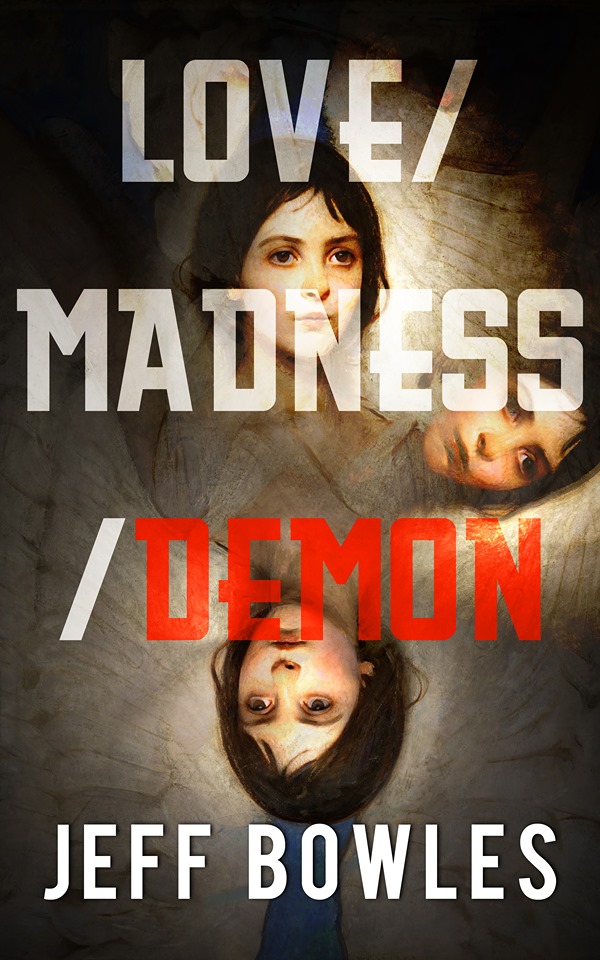
Jeff Bowles is a science fiction and horror writer from the mountains of Colorado. The best of his outrageous and imaginative work can be found in God’s Body: Book One – The Fall, Godling and Other Paint Stories, Fear and Loathing in Las Cruces, and Brave New Multiverse. He has published work in magazines and anthologies like PodCastle, Tales from the Canyons of the Damned, the Threepenny Review, and Dark Moon Digest. Jeff earned his Master of Fine Arts degree in creative writing at Western State Colorado University. He currently lives in the high-altitude Pikes Peak region, where he dreams strange dreams and spends far too much time under the stars. Jeff’s new novel, Love/Madness/Demon, is available on Amazon now!
Check out Jeff Bowles Central on YouTube – Movies – Video Games – Music – So Much More!
Want to be sure not to miss any of Craft and Practice with Jeff Bowles segments? Subscribe to Writing to be Read for e-mail notifications whenever new content is posted or follow WtbR on WordPress
Share this:

The Essence of Writing Good Dialogue
Posted: April 15, 2020 Filed under: Dialogue, Fiction, Writing, Writing Tips | Tags: Dialog, Jeff Bowels, Writing, Writing Tips, Writing to be Read 3 Comments
It’s not what you say. It’s the way you say it.
by Jeff Bowles
I love good dialogue. In fact, it may be my favorite thing about reading a book or watching a truly excellent film. Many serious writers will tell you that it’s an important tool in the author’s toolkit, but that it is by no means the most essential. I respectfully disagree. I say good dialogue can elevate your writing like nothing else. After all, it’s not what you say. It’s the way you say it.
Looking back, I realize I’ve always been polishing up my ability to generate interesting, gripping, or just plain funny dialogue. I self-studied writers and filmmakers who made it a priority in their storytelling, folks like Douglass Adams, Elmore Leonard, and Quentin Tarantino. I read a lot of Marvel and DC comic books, which as you may or may not know, are almost completely composed of dialogue. I don’t know why it mattered so much to me, but I absolutely lit up whenever characters interacted with each other in snappy and surprising ways. I still light up when I read, see, or hear the good stuff, and maybe I can’t speak for everyone on this, but when was the last time you saw a well-produced Shakespeare production and thought to yourself, Gosh, that guy just couldn’t write people to save his life?
That’s the key. People live in dialogue. Not in long winded descriptions or deep internal navel gazing. Characters come to life in their interactions with each other. You could say it’s the one thing that makes them leap off the page. It’s how people work in real life, too. Which is to say, without conversation, people tend not to work at all. Sit together with someone in an awkward silence long enough and you’ll know exactly what I mean.

When it comes to short stories and novels, good dialogue is essential. Sure, you’re a master of scene setting and description, but do all your characters seem to communicate like wooden B-movie stereotypes? Or another problem many writers have, have you noticed you’re timid on engaging your readers with dialogue, and so you tend to rely on big blocks of text to get your message across? Scene setting, subtle character development, basic point-to-point plotting, visceral sense engagement and description, and basic personal style may be the rhythm of the music we call fiction, but truly inspiring dialogue is quite essentially the melody.
If you think about it, you don’t even really know characters until they open their mouths. If you struggle with dialogue, or if you’re just looking to brush up on the basics, there are a few exercises you can employ. One, of course, is to go to a public place and listen to people converse in real time. Admittedly, not really a viable option during Coronavirus lockdown, but you can easily work this exercise from the comfort of your own home. Tune into some reality TV, or simply listen to the conversations your family have. Write down every word verbatim, if you can. You’ll notice that people tend to speak in a pretty roundabout way, with lots of umms and starts and stops thrown in the mix.
Good dialogue should contain elements of realistic conversation, but you also need to focus it like a laser beam. If you were to write a scene in which people talk like they do in real life, you’d end up with so many pauses, ellipses, and false starts it’d drive your readers nuts.
“Hi, Jim, how’d work go?”
“Oh, you know, I don’t know … the boss, he’s real … umm … I don’t know, he’s real pushy when it comes to … when it comes to, uh … oh, I don’t know”
Doesn’t really flow all that well, does it? May I present the alternative that what you’re going for with good character interactions isn’t so much realism as pointed randomness. That is to say, make an effort to produce dialogue that cracks like a whip, pops and snaps like lightning. Only make sure also that it’s random enough no one can accuse you of stiffly holding your reader’s hand.
“Hi, Jim, how’d work go?”
“Ah, you know, the boss … ever get the feeling some people’s neckties are on too tight?”
“Uh-oh. I know that tone. He got pushy again, didn’t he?”
“Pushy? I haven’t slept in weeks. Pretty sure I had a waking dream while filing a client’s paperwork today. By the way, if the office calls asking why I’ve suggested one Dana Baker should just hit the clown on the nose and fly away on his trusted dragon, I’m not in.”
Also, don’t be afraid to surprise yourself. If you’re surprised by your writing, you can guarantee your readers will be, too. Zig instead of zag when you approach character interactions. Also, try producing more dialogue on the page than you’re used to. A lot of readers just kind of sift through text blocks anyway. They consider the dialogue the real meaty parts. Sad, but I think it is true. Readers are less interested in what’s happening now than in what happens next. You can fuel that burning need to find out.

Here’s something else you may not have considered. The first true novel written in the English language was likely published sometime in the 16th century, or thereabouts. A couple centuries later in the Victorian era, the novel had exploded in popularity, and that period is still a gold mine as far as writers who produced work we’re reading to this day. In all the time since, our concept of good narrative fiction has gotten lighter, not heavier.
Have you ever been chewing your way through a Victorian novel and thought to yourself, Why’s it taking this lady so long to get out of her house? Well, it’s because back then, the form and function of the novel was to in some fashion reproduce life. Entertainment is its form and function in the year 2020, because these days authors have to compete with film, television, internet memes, video games, just about anything that’s loud, fast, and gets its point across in seconds flat.
Unfortunately, you are therefore also competing with shortened attention spans across the globe. Do yourself a favor, don’t shirk your duty to write super fun, super engaging dialogue. It can save even the dullest story. Well, maybe not the dullest. Need something more specific? Well, for one, make sure all your dialogue tags (or at least most of them) are of the simple, he said, she said variety. Very few of these said-bookisms you’ve heard so much about.
Also, try bouncing back and forth between characters like they’re playing verbal tennis. Keep each line short and snappy; play a game of hot potato. And don’t forget to edit like crazy when you’re done. If you’re not removing bulk between those quote marks, you’re doing it all wrong. Even in my short examples above, I went back in and cut the detritus. Because good dialogue should flow, not lay inert like a dead body on some old science fiction TV show.

Similarly, characters should all sound distinct from one another. Don’t give them so many affectations they no longer sound realistic, but look, not everyone talks the same, do we? We have accents and ticks and odd regional slang we depend on. Try speaking your dialogue aloud as you’re writing it. Kind of helps to clear out the mental cobwebs. If you can hear it from your own mouth, and it sounds pretty good to you, odds are it’ll work well enough on the page.
The truth is, most readers depend on good dialogue to communicate story. You can build or establish character relationships with it, key in on essential plot points, foreshadow upcoming events, or just plain have fun and make people laugh. One more time, dialogue is the melody of this music we call storytelling. So make sure yours is enjoyable to listen to. Speech, language, it’s the engine that drives everything we do. It binds us together, tears us apart, and isn’t that the essence of story?
If you’re struggling with this, the old adage, practice makes perfect, is as always the essential factor. You’ll thank me once you’ve mastered this new superpower, and your readers will thank you. Is it possible to overdo it? Certainly. But wouldn’t you rather read a beautiful mess that sounds like Mozart rather than racoons rattling around in your trash cans late at night?
Heh. That’s a funny line. Maybe I should jot it down and have one of my characters say it someday. Until next time, everybody. Wooden conversation is as wooden conversation does.

Check out Jeff Bowles Central on YouTube – Movies – Video Games – Music – So Much More!
Share this:

Exposition: Telling vs. Showing
Posted: January 22, 2018 Filed under: Books, Dialogue, Exposition, Fantasy, Fiction, Science Fiction, Writing | Tags: Exposition, Fiction, Show vs. Tell, Writing, Writing to be Read Leave a comment
A writer should show the reader, rather than tell the reader. Help them form a mental picture in their minds. Put them into the story. How many times have we all been told this? Finding a balance between showing and telling is a hard thing to do, but to be a good writer we must strive to achieve that balance.
I’m a person who likes to think big, and in my writing it’s no different. As many of you know, in graduate school, my genre fiction thesis project was the first book in my Playground for the Gods science fantasy series, In the Beginning. But, what you may not know is that my original thesis proposal was for what turned out to be the third book, only in my mind it was the only book and it spans back beyond prehistoric time. While preparing my thesis proposal the feedback that I recieved from instructors and cohorts time and again, was that my proposal would require too much exposition unless I created an epic tomb of unfathomable porportions, way beyond the scope of my thesis requirements, and impossible to complete in the time allowed.
The main problem was that there was a lot of background that I felt the reader needed to understand where the character was coming from in the now of the story. Most of that information was being communicated to my readers through exposition. The story wasn’t taking them back to relive the scene, it was simply filling them in on what they needed to know, because the story I wanted to tell spanned over billions of years. That’s a lot of backstory. That’s exposition.
Robin Conley saw a similar problem in her review of the movie Batman vs. Superman: Dawn of Justice, “Almost all of these really big elements deserved a proper set up because they are major story parts that will potentially carry over… The long exposition and set up in the film makes the story drag and hard to stay involved, no matter how many interesting elements there are.”  Robin explains what exposition does and why we don’t want too much of it. Too much exposition is like coming in in the middle of a film you’ve already seen, and filling in other viewers on what is happening, instead of letting them watch the film and figure it out for themselves.
That was the problem with my PfG story – way too much exposition. It happens all the time. And it’s easy to overlook it when you’re the author. Which is exactly what I had done with my thesis. I had that story outlined and plotted, but I kept having to stop and fill in the background details with exposition. And exposition tells your readers something, but it doesn’t provide a mental image for them. It doesn’t pulace them in the scene. Action and dialog accomplish those tasks quite well. And my cohorts and instructors were right, although at the time, I didn’t want to believe them.
My solution was to turn my story into a four part series. Hence the Playground for the Gods series was born. All that backstory, which had come out mostly in exposition, became a story of its own, one that I could show my readers, rather than telling them about it. My original story idea will eventually be book three, and although I did have to write the whole first book instead of the story I set out to tell for my thesis, that story outline is still waiting for me to put it in story form.
Of course, that isn’t the only way to solve problems of exposition, but this can be applied without creating entire novels. You simply expand on some scenes to eliminate exposition and create a longer story, chosing those scenes that are most vital to the story. You can also chose to leave certain information out, thus eliminating exposition without lengthening, and perhaps even shortening your story. It is a delicate balance, but as the writer, you must do what the story needs to achieve it. What works for one story may not necessarily be the answer for another.
So, how much exposition is too much? That’s a very subjective question, but generally speaking, if you’re telling your reader what happened, with a few lines of glib dialog thrown in here or there, then you have too much exposition. Your reader wants to get lost in the book, and for that, they need a story that is told in such a way that they feel like they are there.
We’ve all read stories like that. For me, it’s Anne Rice. I may have never been to New Orleans, but after reading some of her books, I feel like the Garden District and the French Quarter are old frieinds. I can smell the magnolia blossoms, and see the old plantation houses as if I’d been there. That’s the kind of story we, as authors, strive to write, regardless of the genre we write in. It’s the kind of story that has the perfect balance, using exposition only when absolutely necessary to fill in details, providing plenty of action and dialog to fill in the rest. It’s a delicate balance, but one we must all strive for.
Until next time, Happy Writing!
Like this post? Subscribe to Writing to be Read for e-mail notifications whenever new content is posted or follow WtbR on WordPress.
Share this:

“Horror 101: The Way Forward” Offers Good Advice for Authors and Screenwriters
Posted: February 3, 2017 Filed under: Book Review, Books, Children's Books, Comic Hero, Dialogue, Fantasy, Fiction, Horror, marketing, Paranormal, Promotion, Publishing, Revision, Science Fiction, Screenwriting, Self-Publishing, Speculative Fiction, Stories, Writing, Writing Tips | Tags: Books, Fiction, horror, marketing, Poetry, promotion, Reviews, Stories, Story, Writing 1 Comment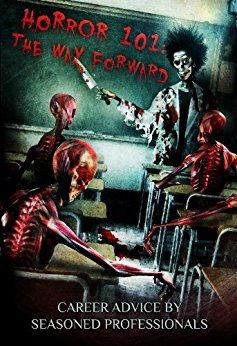
This is the longest book review I have ever written. This book was so packed full of useful information for rising authors and screenwriters that I felt I needed to cover it all. If you are an upcoming horror author or screenwriter, trying to figure out how to get a foot in the door or where to start in the matter of launching your career, Horror 101: The Way Forward offers “career advice by seasoned professionals”. Different writers will find different essays useful, so I’m giving you a rundown on all the informative essays included.
Compiled by Crystal Lake Publishing, this collection of essays has something for every writer. The anthology features quotes from the masters such as Stephen King, Ray Bradbury, Isaac Asimov, J.R.R. Tolkien, Jack London, Clive Barker, H.P.Lovecraft, Edgar Allen Poe and many others. Advice from professional writers and editors covers all aspects of the horror writing business, and the business of writing, in general. From submitting your work, to marketing and promotion, to self-publishing and building your writing business, to crafting your work and the writing process.
The answers to many questions on the topic of submissions and all other aspects of writing as a business are found within its pages. Not getting positive response from your queries? First read Rejection Letters – How to Write and Respond to Them by award winning author Jason Bark, which offers an attempt to write a rejection letter that doesn’t sting, (at least, not so much). Then, flip to Seven Signs that Make Agents and Editors say “Yes!” to learn what agents and editors look for. Buttoning Up Before Dinner by horror author Gary Fry also offers advice to put you in the good graces of publishers and editors and create well-written stories.
Unsure how to submit your work? Submitting Your Work: Read the F*****g Guidelines by freelance writer and editor John Kenny offers tips for making a professional submission from an editor’s perspective. And What a Short Story Editor Does by horror, fantasy and science fiction editor Ellen Dallow explains the responsibilities of short story editor.
Looking for sound career advice? Be the Writer You Want to Be by television writer and novelist, Steven Savile recycles the best writing advice the author was ever given. The Five Laws of Arzen by award winning dark fiction author Michael A. Arzen offers hints to help you survive a writing career. How to Fail as an Artist in Ten Easy Steps: A Rough List Off the Top of My Head, by Confirmed Failure… by horror author John Palisano provides a reverse list of things you should do to be a successful writer.
Wondering if you need an agent to get your work in front of editors and publishers? Do You Need an Agent? by author Eric S. Brown is a discussion about the need, (or not), for an agent and relates the personal experience of how the author became successful without one. Also included are essays on building your writing business in Balancing Art and Commerce by author and screenwriter Taylor Grant , offering a look at various mediums one can write in and earn a living & advice in the business of writing. There are even essays offered on the lucrative business of ghostwriting, with a personal experience as a ghostwriter shared by dark fiction author Blaze McRob, and Ghostwriting: You Can’t Write it if You Can’t See It by award winning author Thomas Smith instructs on how to step into the author’s shoes and write like them.
If you are hoping to find some help muddling through the vast world of marketing and promotion, The Year After Publication by horror & thriller novelist Rena Mason offers an account of what to expect once you publish your first book and a walk through the exhaustive process of book marketing. How to be Your Own Agent, Whether You Have One or Not by horror writer, editor and publisher Joe Mynhardt offers tips for marketing your stories and yourself. Reviewing by founder of Ginger Nuts of Horror, (one of the most viewed resources in horror fiction), Jim McLeod discusses getting your book in the review pile & what the writer should do while awaiting publication of the review.
If you’ve not attended a conference or convention before, Pitch to Impress: How to Stand Out From the Convention Crowd by editor R.J. Cavender provides a guide to making a pitch that will snag agents’ and publishers’ attention. Tips for networking at conferences are offered by dark fiction author Tim Waggoner in You Better (Net)Work, and Networking at Conventions by Bram Stoker Award winning author Lucy A. Synder offers a look at the benefits conventions have to offer and a breakdown on some of the major ones for horror writers.
There is a plethora of advice offered on publishing, including a comparison of traditional publishing vs. digital publishing in Weighing Up Traditional Publishing and Ebook Publishing by award winning author Robert W. Walker; Publishing by editor and publisher Simon Marshall-Jones compares publishing in the digital arena with the way it was done in the past & how to become an independent publisher; and Glenn Rolle Toes the Line with Samhain Horror Head Hancho, Don D. Auria by Glenn Rolle with Interview that maps Auria’s rise to the top.
The arena of self-publishing is also explored in Make Your Own Dreams by horror and suspense novelist Iain Rob Wright. Besides being a plug for self-publishing’s evening of the playing table. It relates personal experience and advice for self-publishing, walking us through the self-publishing process. Self-Publishing: Thumb on the Button by author Kenneth W. Cain gives a list of things to think about before you choose to self-publish.
Also included are essays on the different mediums for horror: Poetry and Horror by Blaze McRob, and Horror for Kids: Not Child’s Play by novelist Francois Bloemhof offers guidelines for writing horror for youth. Several essays on comics and screenwriting, (one of the biggest outlets of horror today), are also included.
Horror Comics – How to Write Gory Scripts for Gruesome Artists by novelist Jasper Bark discusses the craft of writing horror comics and the relationship between writer and artist. Some Thoughts on My Meandering Within the World of Dark and Horror Art by artist Niall Parkinson offers thoughts on creating dark and horror art. So You Want to Write Comic Books… by novelist C.E.L. Welsh discusses what goes into the making of a comic book.
From Pros to Scripts by author and screenwriter Shane McKenzie talks about the many challenges of screenwriting. Writing about Films and For Film by award winning writer, editor and screenwriter Paul Kane gives the story of the author’s rise to success and tips for learning the lingo of the business. Screamplays! Writing the Horror Film by award winning author and screenwriter Lisa Morton offers the basics of screenwriting, description and dialog, and tips for getting your screenplay made into a movie. Screenplay Writing: The First Cut is the Deepest by author, director and editor Dean M. Dinkel recaps of the author’s experience at the Cannes Film Festival.
Essays on writing a digital world include Running a Webserial, or How to Lose Your Mind, One Week at a Time by Southern author Tonia Brown, providing a brief history of serials and a rundown of what goes into running one on the web; Friendship, Writing, and the Internet by Bram Stoker Award winning novelist Weston Ochse with reflections on online connections with like-minded writers, and Audiobooks: Your Words to Their Ears by horror novelist Chet Williamson discusses what it takes to create and audiobook and what to expect from the effort.
Of course, there is also plenty of advice on crafting a quality story. What is Horror? by author and novelist Graham Masterson offers general writing advice which could be applied to any genre and instructs on how to push your writing to the edge. The Journey of “Rudy Jenkins Buries His Fears” by author Richard Thomas takes us on a walk through of the writing, editing and submissions process of a story. Writing Short Fiction by horror and thriller novelist Joan De La Haye offers tips to tighten your writing and move the story forward, and discusses where to look to sell your story and how to choose where to submit. Ten Short Story Endings to Avoid by Scottish horror novelist William Meikle supplies a valuable list, if you want to avoid having readers feel cheated. From Reader to Writer: Finding Inspiration by publishing and editing consultant Emma Audsley offers advise for attacking the blank page. Writing Exercises by horror writer Ben Eads provides exercises in description and dialogue. Writer’s Block by short fiction writer and novelist Mark West discusses how to keep the creative juices flowing. Editing and revision are covered with Editing and Proofreading by author and editor Diane Parking presents good reasons not to send out a first draft, and How to Dismember Your Darlings – Editing Your Own Work by Jasper Bark gives a brief guide on how to self-edit.
A few essays outline the needs of a writer and suggestions on how to meet them. Filthy Habits – Writing and Routine by Jasper Bark offers a look at the benefits of creating a daily writing routine. A Room of One’s Own – the Lonely Path of a Writer by horror and fantasy writer V. H. Leslie discusses the need for solitude and space to write in. Writing Aloud by screenwriter and author Lawrence Santoro outlines the benefits of reading aloud as a part of the writing process.
Also included are Partners in the Fantastic: The Pros and Cons of Collaborations by novelist Michael McCarty, which looks at the views of various authors on collaborations, and Writing the Series by series author Armand Rosamilia, which explains why Rosamilia writes series.
Several essays offer advice specific to writing in the horror genre. Making Contact by award winning novelist Jack Ketchum discusses how to turn what you know into a horror show. Bitten by the Horror Bug by horror author and screenwriter Edward Lee looks at what motivates us to write horror. Reader Beware by author Siobhan McKinney explores the role fear plays in horror. Bringing the Zombie to Life by author Harry Shannon maps out four components of a good zombie story. The Horror Writers’ Association – The Genres Essential Ingredient by author and President of the Horror Writers’ Association (HWA), Rocky Wood gives a rundown on the HWA.
What’s the Matter With Splatter? by horror writer and Vice-President of the AHWA, Daniel I. Russell discusses the use of blood, gore and splatter in horror fiction or screenwriting, gives tips on how to use it to gain the desired effect, and discusses why some gore doesn’t get a second thought. Avoiding What’s Been Done to Death by British horror writer Ramsay Campbell defines good horror fiction & emphasizes originality. The (Extremely) Short Guide to Writing Horror by dark fiction author Tim Waggoner offers an introduction to writing horror, including techniques and brief definitions, and a list of good resources for horror writers. Growing Ideas by horror writer Gary McMahon offers a look into the author’s writing process. Writing Horror: 12 Tips on Making a Career of It by horror novelist Steve Rasnic Tem instructs on building your own writer’s toolbox and advice for entering the profession of writing horror. The Cheesy Trunk of Horror by international best selling author Scott Nicholson provides a look at both writer and reader perspectives on horror and dark fiction. Class: Vaginas in Horror by science fiction, urban fantasy and horror novelist Theresa Derwin offers an overview of women in the horror industry. And the afterward by Crystal Lake Publishing’s editor, Joe Mynhardt, includes his own advice for writing horror.
Horror 101: The Way Forward is based on the sound advice of seasoned professionals that is useful to horror writers in any stage of their careers. I recommend it with four quills for anyone who wants to write horror in either fiction or screenwriting.

Kaye Lynne Booth does honest book reviews on Writing to be Read in exchange for ARCs at no charge. Have a book you’d like reviewed? Contact Kaye at kayebooth(at)yahoo(dot)com.
Share this:

Dialogue: Talking in Subtext
Posted: January 30, 2017 Filed under: Dialogue, Writing | Tags: Dialogue, Subtext, Writing 3 Comments
A good way to learn to write good dialog is to become an observer of people, watching and listening to the conversations around you when in public. You must both watch and listen because dialog doesn’t come just in words. Dialog also contains subtext. You know, body language, tone of voice, etc… You can have whole scenes where no words are spoken, yet a conversation occurs between two people in the subtext of their body language. Everyone in the real world talks in subtext. If you want to have believable dialog for your characters, they must talk with subtext, too.
Whether you’re an author or a screenwriter, it’s an important concept to master. Subtext is the message that lies beneath the message. It’s what people, or characters, are really saying. It is indicated in actions, movements, change in pitch of the voice. A character may say, “I’m happy for you”, but if it were said through gritted teeth, the reader may get the idea that there’s some underlying resentment with the characters words, lending a very different meaning to the scene. The same dialog would take on a whole other meaning, that the words are not spoken sincerely, if the character rolls her eyes as she says it.
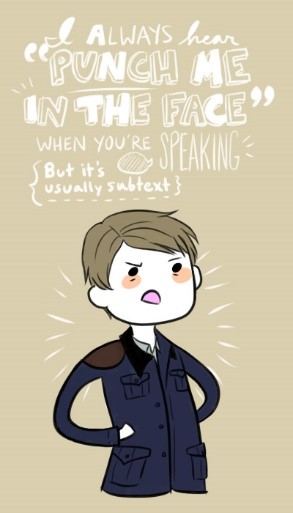
We humans are funny creatures. Many of us have some type of mental block that prevents us from saying what we mean outright. It may be the fatal flaw of mankind in the communication realm, although I suspect it may be easier to speak honestly in the digital world, where you talk with people without being face to face. Regardless, if you want your characters’ dialogue to be believable,they will have to speak in subtexts, offering readers the subtle clues necessary to figure out what is really going on.
“Don’t tell me to calm down,” Karen said, tapping her newly painted nails on the table top. “I’m perfectly calm.”
What can you tell from the dialog above? The character says she’s not upset, but do you think she is? Rather you get the idea that she is upset from the tapping of her nails on the table, which is not a calm behavior, even though her words claim different.
The example above is pretty clear for illustration purposes. In real life, and in good fiction, it’s not always so easy to discern between words and actions. As authors, we must offer good clues, in the form of subtext, so readers can see the whole picture we’re trying to paint with our words. You see what I mean?
 If your character is angry, you might have him clench his fists or stomp his foot. If the scene is a breakup, your character may hold back her tears and swallow the lump in her throat to avoid revealing how much she is really hurting. Or maybe she is trembling although trying to appear brave to her friends.
It’s the way real people talk. It’s the way our characters need to talk if we want our dialogue to be convincing. In many cases, the old adage is true, especially in fiction and screenwriting- “Actions speak louder than words.”
Like this post? Subscribe to email to receive notification to your inbox each time a new post is made.