Writer’s Corner: Preserving The Craft of Writing
Posted: September 7, 2026 Filed under: AI Technology, Editing, Writer's Corner, Writing, writing craft | Tags: AI Technology, Editing, Kaye Lynne Booth, Writer's Corner, Writing to be Read 6 Comments
Advice for writing success I seem to be hearing a lot, is to “Put out more books”. I first heard this advice several years ago, from bestselling author, Kevin J. Anderson, and while it is good advice, he wasn’t talking about cranking out a gajillion sub-par books with AI in order to get rich quick. He was talking about becoming prolific and crafting some quality works of literature, because we are writers, and that’s what writers do.
We craft our words, often deliberating over each and every one to make sure they serve a purpose in our stories. We labor over the right words to say what needs to be said, to mold and shape our stories into the works that were meant to be. For real writers, the joy of finding just the right words to make our stories come alive is a glorious feeling that we wouldn’t trade for any amount of money.
Real writers labor over their words, then send them off to others to ensure they are grammatically correct, they haven’t missed any plot holes, and the logic of the story isn’t flawed. Because real writers know the value of a good editor. We know that a second set of eyes, even if it is just a beta reader, or a good proofreader, can pick out things that our own eyes have missed because the writer may be too close to the story. No one on this planet knows the story better than the writer does.
Those other folks who have popped up recently, using AI to crank out stories and fill their catalogs, may have a lot of books, but they aren’t writers. They are wanna-be-writers, who don’t have the skill and talent to write on their own. They don’t care about the quality of the work. All they care about is making oodles of money.
Could I use AI to write a story faster. Maybe… but I won’t, because I am a real writer and a real editor, who helps others to perfect their own stories. Through WordCrafter Press, I publish between eight and ten books per year. They aren’t all mine, of course. To do that, I’d have to implement AI tools. No, one or two each year are my own, and I also publish two-four anthologies annually, and the rest are the works of others. Anthology contributors take a part in the process and offer more eyes on the works, in case I miss something. I also offer editing services, through Write it Right Editing, where authors can seek editing help or advice, without mortgaging their house, to assure they put out a quality piece of writing.
I maintain that writing books with AI isn’t really writing and is an insult to the craft. I’d love to hear your thoughts on the matter.
About Kaye Lynne Booth
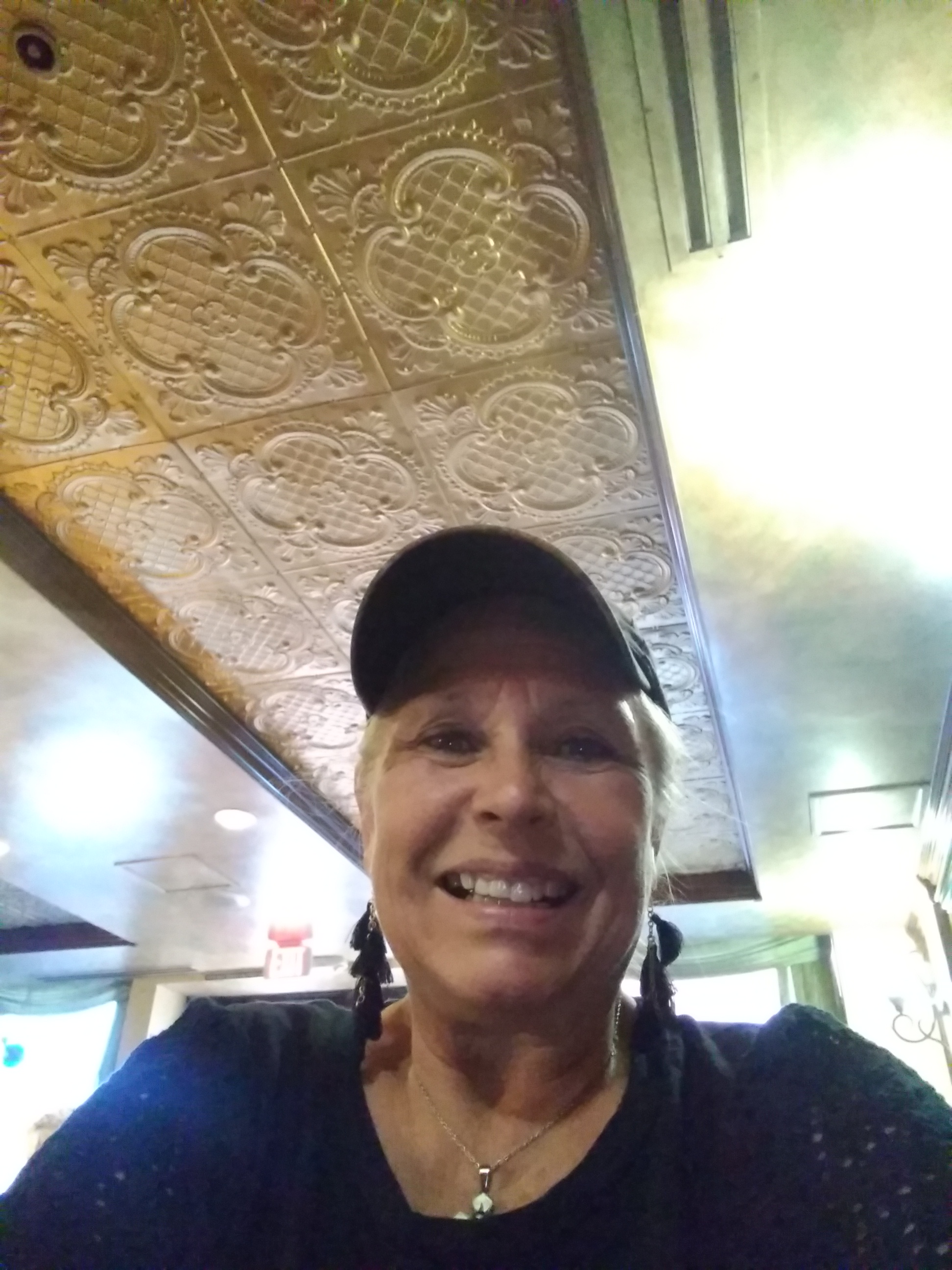
For Kaye Lynne Booth, writing is a passion. Kaye Lynne is an author with published short fiction and poetry, both online and in print, including her short story collection, Last Call and Other Short Fiction; and her paranormal mystery novella, Hidden Secrets; Books 1 & 2 of her Women in the West adventure series, Delilah and Sarah, and Book 1 in her Time-Travel Adventure series, The Rock Star & The Outlaw, as well as her poetry collection, Small Wonders.
Kaye holds a dual M.F.A. degree in Creative Writing with emphasis in genre fiction and screenwriting, and an M.A. in publishing. Kaye Lynne is the founder of WordCrafter Quality Writing & Author Services and WordCrafter Press, where she edits and publishes two short fiction anthologies and one poetry anthology every year amidst her many writing projects. She also maintains an authors’ blog and website, Writing to be Read, where she publishes content of interest in the literary world.
___________________________________________
Did you know you can sponsor your favorite blog series or even a single post with an advertisement for your book? Stop by the WtbR Sponsor Page and let me advertise your book, or you can make a donation to Writing to be Read for as little as a cup of coffee, If you’d like to show your support for this author and WordCrafter Press.
_____________________________________________
This segment of “Writer’s Corner” is sponsored by Write it Right Quality Editing Services, and WordCrafter Press.

Quality Editing at Affordable Rates
Let Write it Right make your manuscript shine.
Share this:

Writer’s Corner: Publishing Wide
Posted: August 3, 2026 Filed under: Indie Publishing, Publishing, Self-Publishing, Writer's Corner, Writing | Tags: Direct Selling, Intellectual Property, Kaye Lynne Booth, Publishing, Publishing Wide, Writer's Corner, Writing to be Read 10 CommentsMany of you know that I publish wide. I’ve published Writer’s Corner posts on this topic in the past such as, “Why Put All Your Eggs in One Basket?” or “6 Reasons I Chose to go Wide with my Books“. All of the reasons mentioned in those posts still hold today, but the one that stands out the most for me today is maintaining control of my intellectual property (IP). Something many authors may not realize, is that each story they write has value as IP. Maintaining control of your IP means that you can restructure and reuse your IP as you see fit. Authors who sign away their IP to traditional publishers no longer have the right to reuse that IP.
So, if I sign a book with a traditional publisher, I sign away all rights to that book. The publisher decides when and how the book will be released. They have the right to change the title, choose the cover, and they may even have the right to tell you to change the wording or the whole direction that the story takes. But, if I publish independently, or at least be aware of the wording on any contract I do sign, I can retain control of my copyright. (With short fiction anthologies, usually your copyright is signed over for short time, 3-6 months, and then it reverts back to you, but you must make sure this is in the wording.) That enables me to turn around and use that same book in a box set collection, or that story in a short story collection of my own, giving it even more value. This is important because IP is an intangible that can be passed on to your family after you die. It is a part of your estate. It is best described in a book by Dean Wesley Smith, called The Magic Bakery, which I talk about in my “Review in Practice“.
I know lots of authors who just want to write. They don’t want to worry about promotion or selling. They can’t be bothered with worrying about their IP. They’d rather just publish on Amazon, enroll their books in KDP, and move on to the next story. But like it or not, when you are an author, you are a business. And if that’s the way these authors want to do business, that’s okay. They can do that.
But think about this. Amazon has been known to suspend author accounts for various reasons. If they claim you have breached their policies in some way, they can do this, and it’s up to you to prove to them that there has been no breach. This is no easy feat and could take an indefinite amount of time. Meanwhile, if you are exclusive on Amazon, your whole writing income has just been placed on hold. On the other hand, as a wide author, they can suspend me, and my book income from other channels still continues uninterrupted. Now, I admit that Amazon brings in the largest part of my sales income, so if that happened, it would still hurt, but it wouldn’t devastate me like it might an author who publishes exclusive through Amazon.
But publishing wide doesn’t just mean getting your books out with as many retailers as possible. Publishing wide means getting your books on subscription channels and library lists, as well. Selling direct is also a valuable piece to selling wide because an author keeps more of their royalties by cutting out the middleman. This is something I’m just dipping my toes in the water with, through my digital doubles deals I’ve run for my series books this summer. This month’s Sizzling Hot Summer Digital Doubles Deal offers my short fiction, with both Hidden Secrets and Last Call and Other Short Fiction for $5.
But don’t believe me. I’m still finding my way in the publishing landscape. Listen to the BookFunnel Podcast where Mark Leslie Lefebvre talks about the publishing aggressively wide, below.
Mark Leslie Lefebvre on the BookFunnel Podcast
Self-Publishing Aggressively Wide | Mark Leslie Lefebvre | The BookFunnel Podcast
BookFunnel Offers Valuable Author Tools
I use BookFunnel to supply free copies of all my books for giveaways and reviews. My subscription is the lowest one, and I don’t even get to collect an email list from those who use the service to get copies of my books. Now, I could pay more and be allowed email collection, and also get access to other tools they offer that can be used to sell direct from my website, but I hope to be able to do so someday soon. I use BookFunnel to provide a valuable writer’s tool, which enables me to deliver to my readers. It makes delivering an ebook easy and convenient, with several methods of delivery, including reading in the BookFunnel app for those would be readers who don’t have a reader to read their ebooks.
About Kaye Lynne Booth
For Kaye Lynne Booth, writing is a passion. Kaye Lynne is an author with published short fiction and poetry, both online and in print, including her short story collection, Last Call and Other Short Fiction; and her paranormal mystery novella, Hidden Secrets; Books 1 & 2 of her Women in the West adventure series, Delilah and Sarah, and Book 1 in her Time-Travel Adventure series, The Rock Star & The Outlaw, as well as her poetry collection, Small Wonders.
Kaye holds a dual M.F.A. degree in Creative Writing with emphasis in genre fiction and screenwriting, and an M.A. in publishing. Kaye Lynne is the founder of WordCrafter Quality Writing & Author Services and WordCrafter Press, where she edits and publishes two short fiction anthologies and one poetry anthology every year amidst her many writing projects. She also maintains an authors’ blog and website, Writing to be Read, where she publishes content of interest in the literary world.
___________________________________________
Did you know you can sponsor your favorite blog series or even a single post with an advertisement for your book? Stop by the WtbR Sponsor Page and let me advertise your book, or you can make a donation to Writing to be Read for as little as a cup of coffee, If you’d like to show your support for this author and WordCrafter Press.
_____________________________________________
This segment of “Writer’s Corner” is sponsored by The Ones Who Stayed With Me, by Nurse Sammy, and WordCrafter Press.
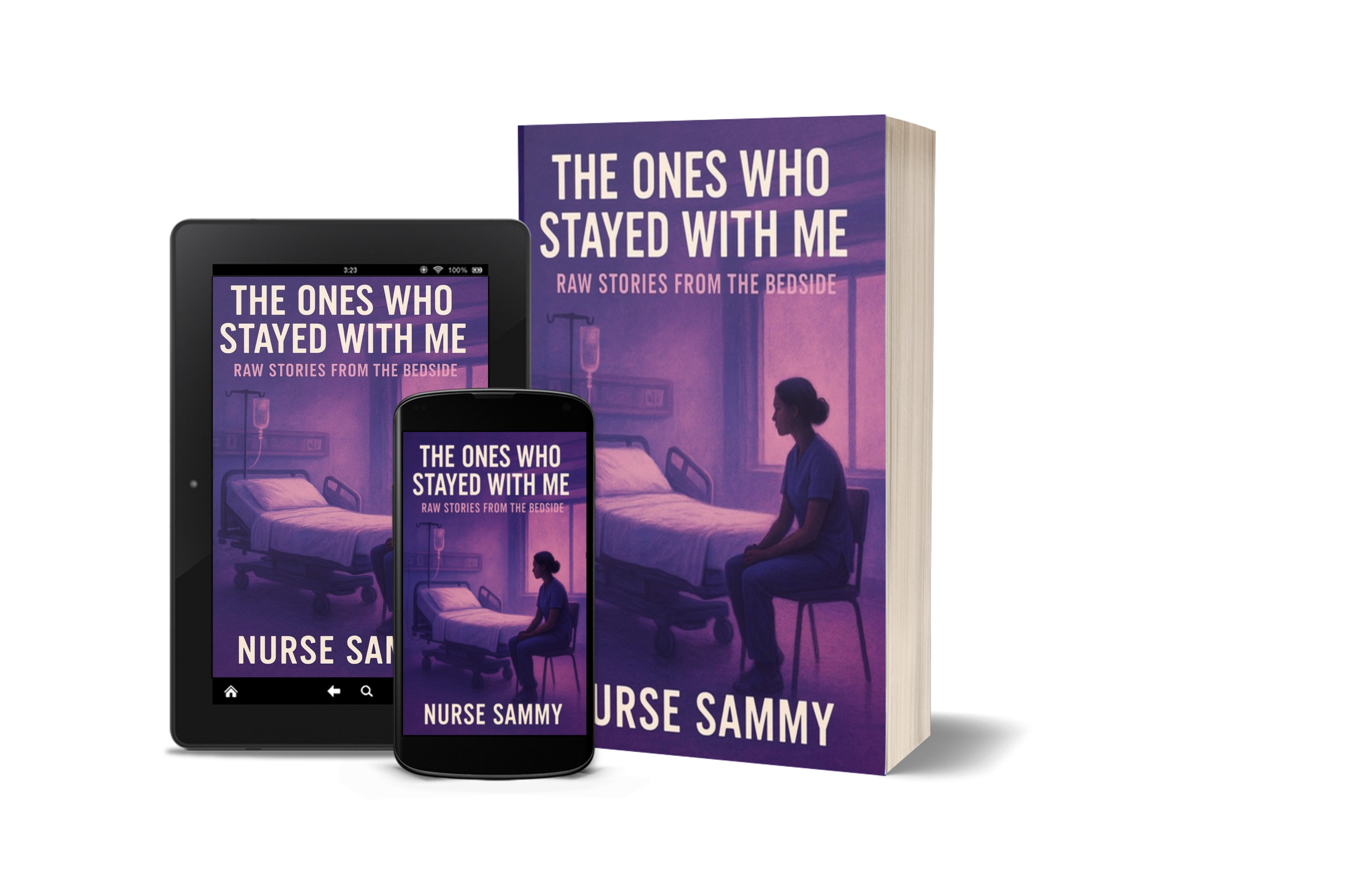
Chronicles of the journey into the medical field as a young nurse and beyond, told with raw sensitivity and compassion. The Ones Who Stayed with Me offers small glimpses into the world of an L.P.N. put in difficult, often touching or humorous, situations—and Nurse Sammy’s courage, vulnerability, and insight are a gift to us all. In these pages, Nurse Sammy tells her story and that of those she met along the way.
Purchase Link: https://books2read.com/OnesWhoStayed
Share this:

Writer’s Corner: AI is Changing the Way Readers Find Our Work
Posted: July 6, 2026 Filed under: AI Technology, Writer's Corner, Writing | Tags: AI Technology, Attracting Readers, Building a Reader Platform, Kaye Lynne Booth, WordCamp US 2026, Writer's Corner, Writing to be Read 5 CommentsWordCamp US 2026
Attending WordCamp US 2026 is a great way to connect with the people who are shaping the future of the web and find out directly where AI powered experiences are changing WordPress for writers, from content creation and site building to performance, personalization, and developer workflows. WordCamp US 2026 is relevant to developers, designers, agency owners, bloggers, store builders, and anyone building on WordPress. The new Sunday–Wednesday schedule means the weekend before is free to explore the Phoenix area and the Pheonix Convention Center is fully air conditioned for cool comfort to enjoy WordCamp US 2026.
Now granted, I’m a writer, not a tech person, as you may know. In fact, in many ways, the use of AI and today’s rising tech scares the heck out of me. (See my articles, “The AI Dilemma” & “To Use AI or Not To Use AI”.) Most of that stuff goes right over my head and I don’t have a clue.
Why Attend WordCamp US 2026?
That’s why I think attending WorldCamp US 2026 could be an important step in understanding how AI is impacting my writing business and how it may impact it in the foreseeable future. Technology is changing at phenomenal rates and if we aren’t careful, I believe things could get out of hand quickly. I’ve worked long and hard to build my writing business, and a lot of it is centered around WordPress. In fact, you may have heard me claim that my blog is my best marketing tool, and it is. I sure don’t want to see what it has taken me almost two decades to build fade into the infrastructure because AI has decided that my content is irrelevant.
According to Automated Affiliates, in their article, “Affiliate Content SEO in 2026: Why rankings are dropping and how to recover” in May of 2026, 71% of WordPress sites are seeing a decline in traffic because AI ranks sites different than they were previously. So basically, what used to work to draw traffic doesn’t work anymore. Thankfully, they are specifying affiliate content, so in my case, it may not be too terrible, but how can I be sure? WordCamp US 2026 may hold the answers. And if you have questions like mine, or you are more of a techy than I am and just want the abundance of information that will be available at WordCamp US 2026, let me tell you about my affiliate offer.
The $100 general admission ticket covers four full days of sessions, workshops, and meals. Sponsors include: WordPress.com, WooCommerce, Jetpack, and Pressable, so attendees can meet the teams behind the products they already use and ask any questions they may have. Even better, as members of my audience, you can get $20 off a general admission ticket by using the code AF26 at us.wordcamp.org/2026/tickets/, so your admission will only cost you $80.
About Kaye Lynne Booth
For Kaye Lynne Booth, writing is a passion. Kaye Lynne is an author with published short fiction and poetry, both online and in print, including her short story collection, Last Call and Other Short Fiction; and her paranormal mystery novella, Hidden Secrets; Books 1 & 2 of her Women in the West adventure series, Delilah and Sarah, and Book 1 in her Time-Travel Adventure series, The Rock Star & The Outlaw, as well as her poetry collection, Small Wonders.
Kaye holds a dual M.F.A. degree in Creative Writing with emphasis in genre fiction and screenwriting, and an M.A. in publishing. Kaye Lynne is the founder of WordCrafter Quality Writing & Author Services and WordCrafter Press, where she edits and publishes two short fiction anthologies and one poetry anthology every year amidst her many writing projects. She also maintains an authors’ blog and website, Writing to be Read, where she publishes content of interest in the literary world.
___________________________________________
Did you know you can sponsor your favorite blog series or even a single post with an advertisement for your book? Stop by the WtbR Sponsor Page and let me advertise your book, or you can make a donation to Writing to be Read for as little as a cup of coffee, If you’d like to show your support for this author and WordCrafter Press.
_____________________________________________
This segment of “Writer’s Corner” is sponsored by The Ones Who Stayed With Me, by Nurse Sammy, and WordCrafter Press.

When a Girl with a Guitar Meets a Man with a Gun, It’s Time to Travel
Only in July and only on the Time Travel Adventure page, get books 1 & 2 of the Time Travel Adventure Series for only $10.
Share this:

Writer’s Corner: The AI Dilemma
Posted: June 8, 2026 Filed under: AI Technology, Writer's Corner, Writing | Tags: AI Technology, Kaye Lynne Booth, Writer's Corner, Writing to be Read 9 CommentsAs I sit down to write this, I have a feeling that it may turn into a rant. This AI thing really disturbs me, and it’s getting worse instead of better. If you’ve followed me in the past, you may know that I’ve been known to use AI editing tools such as ProWritingAide in the writing of my books, and also that I’ve utilized generative AI, such as the free versions of Chat GPT to help me form my words in some of my descriptions, as this is an area I am weak in. (Before the anti-AI group begins to raise a fuss, please note that I have never used the AI’s wording, but rather used it to get ideas on how I wanted to use my own words. So, AI does not, and has never, written any part of my books and stories for me.)
More recently, however, I’ve been rethinking this, and I’ll tell you why.
I Don’t Like Having AI Shoved Down My Throat
AI seems to be encroaching on my life in ways which are not wanted and have not been requested, and I’m guessing some of you may feel it, too. AI tools, which we’re told are meant to make our lives easier, such as Alexa, or Google Assistant, or Seri, or whatever, seem to be trying to help without being summoned to do so on occasion. When I’m having a discussion and my Google Assistant pops in with unrequested information uninvited…, to me, that’s kind of scary. We’re told these devices and apps, which we bring into our homes, or download onto our phones and carry with us everywhere, are not listening to us; that we must say the catch-word, (Alexa or Hey Google, etc…), to activate them, yet they pop into a conversation without being summoned, offering unrequested and unwanted information. Seems to me, the AI must be eavesdropping, and how scary is that, to think they are even capable of doing such a thing?
Advances in AI technology are being thrown at us hard and fast. My email now comes equipped with AI, which offers up a summary of each email I open, (I guess to save me the trouble of actually reading the correspondence?), and then, pops up in the middle of my replies, offering to rewrite it for me! As if I cannot be bothered to write my own reply. And most of the time, what it offers up is not even close to what I wish to say. When it pops up on my phone, I am often unable to continue with what I was writing until I can convince it to disappear from my screen, as if it intends to prevent me from replying myself. Not only is this a little scary, but it’s a lot aggravating.
I did not ask for these ‘upgrades’ to my email. They just suddenly appeared after the automatic updates. I opened my email and there they were, in my yahoo account. No one ask permission to shove AI tools in my face; no one asked if I desired them. But there they are, in the applications that I use. Microsoft did the same thing with Word, although theirs is not as pushy, appearing as a little comment icon over to the side of the screen that I can click on if I need it. (I don’t.)
My MS Word program and the WordPress platform both offer AI editors, but they leave it up to you whether to use them. You must click on them to bring them up. They don’t just pop up and try to take over. It’s a matter of choice with these programs, and I don’t have a problem with that.
Since the beginning of the year, I have backed off my use of AI, and only using the built in editor on MS Word to locate possible needed corrections, but fixing them myself, because I often don’t like the solutions offered. It is frequently wrong, suggesting words which aren’t at all what you wanted to say and totally miss the point. The same with AI editors, such as ProWritingAid. It seems you can’t just take AI’s word for it anyway. You still have to use your noggin.
In the Name of Progress
On her Risky/Women Substack, “AI Won’t Kill Your Career. Your Resistance to It Will.“, Rachel Rogers says, “Refusing to use AI in 2026 is the equivalent of refusing to use the internet in 2000.” She claims that if we don’t embrace AI in the early stages, we will be left behind and our businesses will suffer.
Well, guess what? That’s exactly what I did. In 2000, I refused to have a computer in my home or grant my children permission to use the internet at school, and it did give me a slow start. I was still writing on a manual typewriter and submitting work via snail mail in 1996. By 2000, I had decided snail mail submissions were too costly for me, and my writing had tapered off to near nothing.
I became disillusioned with the public school system when I finally gave in and signed the slip allowing my children internet access at school and almost immediately got a call saying my son had accessed an inappropriate site. As it turned out, their firewalls had failed, and my son had viewed a site with the image of a woman in a bikini. Although it wasn’t the end of the world, it was exactly the kind of thing which I had feared, and my children had only had access for two days. After that, I put my boys in a charter school, but once they reached the age for middle school, I chose to home school them through an online home school program.
The home-schooling program provided computers for each of my boys, but that meant I had to give in and allow computers in my home, and I had to allow my sons to have internet access. Once that happened, I had no choice but to learn to use them myself, and I soon discovered the many opportunities which the internet offered for writers. I mean, you could submit online and it didn’t even cost the price of a stamp. It changed my whole outlook on the matter and soon, I was carrying my own laptop with me everywhere. When required to do readings at a memoir workshop in 2011, everyone else came with folders of papers to read from. As I set up for reading, my comment was, “I don’t know about the rest of you, but my life is in my laptop.” That was no joke, at that point, it really was. My computer had become an integral part of my life.
So, did my resistance to technology and the internet set me back, putting my writing business behind the times and leaving me at a disadvantage? Perhaps.
I certainly missed the dot-com craze. But one could argue that I was still in the learning phases and did not yet know how to put it all together at the time. This was prior to my enrollment in the graduate program in creative writing at Western State Colorado University, where I learned how to write a novel length work; before I learned how to publish and market my work in their masters in publishing program; before all the pieces were in place for me to turn my writing endeavors into a business.
It was also before aggregators like D2D came along which allow authors to publish digitally and on demand with no up-front costs. Before platforms like BookFunnel were available to allow me to create reader magnets, review copies, and giveaway gifts from my books. So, one might argue that it was actually perfect timing, because by the time I had figured out what it was I wanted to do, all the tools I needed to do it were available at my fingertips.
To Use AI or Not to Use AI? That is the Question.
AI can certainly do some amazing things. But there still exists great controversy about the way in which generative AI is trained, taking human authors’ words without their permission. Although that’s an argument for another day, it matters here because it was a big part of the reason I stopped using ProWritingAide in my editing process. That, and the fact that more than half the time, the AI was incorrect for the purposes of my stories, even if the English was correct.
I have always been anti-establishment. I don’t want the government, or anyone else, up in my business. I place a high value on my privacy, and I feel like AI devices are an invasion of privacy. I think maybe we need to send out a message to all these technology companies that are trying to push their AI technology down our throats and disable all their AI tools from our personal and business accounts. That’s big talk, but I don’t have a clue as to how to go about it. I didn’t ask for the AI and I don’t know how to get rid of it. I’ve tried ignoring them, but they don’t go away. And I haven’t found any way to turn them off or reject them.
But these are different tools we’re talking about than the AI tools, like Chat GPT and ProWritingAid, which I’ve used in my writing in the past. These tools are appearing in my email apps without having been requested or desired. The writing tools which I have used were tools which I sought out and was happy to find free versions. While I still feel AI editors miss the mark more often than not, they can be helpful, and I don’t feel that, using these tools in the manner that I do, is letting them write for me, or damaging the integrity of my work. In other words, my work is still mine.
I like the responsible approach presented by Alex Cattoni, in this video, “Your Biggest Advantage Over AI Starts Here”, on YouTube:
Let’s look at what we know about using AI.
- We know that AI tools can be helpful in the writing process.
- We know that it is possible to use AI in writing without replacing the human words with AI written content.
- We know that it is possible to use AI tools and still put out content we can be proud of.
- We know that AI is coming, whether we like it or not.
- We know that to choose not to use AI may mean being left behind.
Choices Moving Forward
I may not know how to get rid of the AI tools that are being pushed through apps, but I can choose not to use the AI tools that pop up in my email, etc… I will not be rebellious of my writing tools, just because programmers insult my intelligence with the idea that I cannot read, interpret, or write my own emails. They may push them in my face, but that does not mean I have to use them.
I can chose which AI tools to use and how I use them, so that my writing can still remain mine. I don’t want to get left behind again, not when my writing business is finally beginning to take off. So, I am choosing to continue to utilize the AI editor in the MS Word program, but not access Copilot, which recently appeared in the same program, or ProWritingAid, since they try to rewrite my words and are often not correct.
I will also choose to use generative AI in creating my descriptions cautiously, and be very selective about any wording suggested, to keep my words, my own.
I will choose to be transparent in my writing, letting readers know when AI was used in my writing or in my covers.
What about you?
About Kaye Lynne Booth
For Kaye Lynne Booth, writing is a passion. Kaye Lynne is an author with published short fiction and poetry, both online and in print, including her short story collection, Last Call and Other Short Fiction; and her paranormal mystery novella, Hidden Secrets; Books 1 & 2 of her Women in the West adventure series, Delilah and Sarah, and Book 1 in her Time-Travel Adventure series, The Rock Star & The Outlaw, as well as her poetry collection, Small Wonders.
Kaye holds a dual M.F.A. degree in Creative Writing with emphasis in genre fiction and screenwriting, and an M.A. in publishing. Kaye Lynne is the founder of WordCrafter Quality Writing & Author Services and WordCrafter Press, where she edits and publishes two short fiction anthologies and one poetry anthology every year amidst her many writing projects. She also maintains an authors’ blog and website, Writing to be Read, where she publishes content of interest in the literary world.
___________________________________________
Did you know you can sponsor your favorite blog series or even a single post with an advertisement for your book? Stop by the WtbR Sponsor Page and let me advertise your book, or you can make a donation to Writing to be Read for as little as a cup of coffee, If you’d like to show your support for this author and WordCrafter Press.
_____________________________________________
This segment of “Writer’s Corner” is sponsored by The Ones Who Stayed With Me, by Nurse Sammy, and WordCrafter Press.
Chronicles of the journey into the medical field as a young nurse and beyond, told with raw sensitivity and compassion. The Ones Who Stayed with Me offers small glimpses into the world of an L.P.N. put in difficult, often touching or humorous, situations—and Nurse Sammy’s courage, vulnerability, and insight are a gift to us all. In these pages, Nurse Sammy tells her story and that of those she met along the way.
Purchase Link: https://books2read.com/OnesWhoStayed
Share this:

Writer’s Corner: Person & Tense
Posted: April 6, 2026 Filed under: Fiction, Point of View, Tense, Writer's Corner, Writing | Tags: Kaye Lynne Booth, Point of View, Tense, Writer's Corner, Writing, Writing to be Read 14 Comments
I recently wrote a short story for the upcoming Legends anthology. I wrote it in third person, present tense to give the tale a sense of immediacy. My beta reader sent back comments, saying that, while the story was a good one, the present tense put her off, as she does not care for stories in present tense. Who would have known?
I had a similar reaction when I first read The Hunger Games, which was written in first person, present tense. It really was a bit off-putting, particularly in the dialog tags when reading aloud. But as I got into the story, I became more accustomed to the style and by the end of the book, I hardly noticed it anymore. First person, present tense is difficult to write, because it must be done well, or it doesn’t work. I’m not that brave.
But, I have been playing around with third person, present tense, which I find a little easier to pull off. I like using present tense because it makes the story feel more immediate, pulling the reader into the story and helping to build suspense. I’ve been using third person, present tense in writing Marta, the third book in my Women in the West Adventure Series, although the first two books were written in third person, past tense. I felt using the present tense in Marta helped to build tension and move the story along.
After the comments from my beta reader, I am wondering if I should rethink that. Readers are put off by different things, and I realize I can’t please all of the people all of the time. But, if this is off-putting to one reader, how many others may feel similarly? If I do change it, that means going back and rewriting the three quarters of the story that is already written, roughly 55,500 words, but if it will turn away readers, perhaps it is worth the effort to go the other way.
So, I’m asking you. Please tell me how you feel about the passage below. Is first person, past tense off-putting to you? Would it be better in third person, past tense?
It’s a passage from chapter one of Marta, just a few paragraphs:
“Excuse me. Is this seat taken?” a man’s voice draws her attention away once more. She turns to see a man, fancily dressed, standing in the aisle and addressing her, indicating the seat next to hers. She had met the infamous Doc Holliday once during his stay in Leadville. This man is like him. She’d seen plenty of his type in Leadville. They dress like a dandy, and come to gamble, but they aren’t particular about how they come by their money and aren’t above working on the other side of the law, and they all carry guns on their hips.
The man is staring at her, expectantly, waiting for a response to his question. He had been polite enough to ask, and the seat wasn’t taken. How could she say no? “No sir, it is not,” she admits. She doesn’t own the train seat and can’t stop him from sitting there, but she doesn’t have to trust him. A woman traveling alone can’t be too careful.
She reaches down by her feet to be sure her carpet bag is still there. Not only does it contain all her money, but also the thirty-two caliber pistol which she purchased in Leadville. Before sitting up straight in her seat once more, she brushes her fingers over the top of her boot to check that her knife is still there, as well. That knife had saved her life with Franz, the dirty traitor, and it gives her comfort to know it was within reach.
He gives her a smile that doesn’t quite reach his eyes as he slides into the seat. “Why, thank you, Ma’am,” he says. “William Barnesby is the name, but my friends call me Bill.”
She plasters her best smile across her face and says, “I’m Marta Olmstead, and this young woman is Rose… uh… Dunbar, is it?” she says, looking toward the young woman.
“Yes, Ma’am,” she says, nodding her head and quickly averting her eyes from the gentleman, toward the window. Obviously, the man’s presence made Mrs. Dunbar uncomfortable, as well. But what could she do? The seat didn’t belong to her, and Mr. Barnesby had purchased a ticket just like everyone else on the train.
About Kaye Lynne Booth
For Kaye Lynne Booth, writing is a passion. Kaye Lynne is an author with published short fiction and poetry, both online and in print, including her short story collection, Last Call and Other Short Fiction; and her paranormal mystery novella, Hidden Secrets; Books 1 & 2 of her Women in the West adventure series, Delilah and Sarah, and Book 1 in her Time-Travel Adventure series, The Rock Star & The Outlaw, as well as her poetry collection, Small Wonders.
Kaye holds a dual M.F.A. degree in Creative Writing with emphasis in genre fiction and screenwriting, and an M.A. in publishing. Kaye Lynne is the founder of WordCrafter Quality Writing & Author Services and WordCrafter Press, where she edits and publishes two short fiction anthologies and one poetry anthology every year amidst her many writing projects. She also maintains an authors’ blog and website, Writing to be Read, where she publishes content of interest in the literary world.
_____________________________________________
Did you know you can sponsor your favorite blog series or even a single post with an advertisement for your book? Stop by the WtbR Sponsor Page and let me advertise your book, or you can make a donation to Writing to be Read for as little as a cup of coffee, If you’d like to show your support for this author and WordCrafter Press.
_____________________________________________
This segment of “Writer’s Corner” with Kaye Lynne Booth sponsored by WordCrafter Quality Writing & Author Services.
Whether it’s editing, publishing, or promotion that you need, WordCrafter Quality Writing & Author Services can help at a price you can afford.
Stop by and see what we have to offer today: https://writingtoberead.com/readings-for-writers/wordcrafter-quality-writing-author-services/
Share this:

Writer’s Corner: Who Are You Writing For?
Posted: February 2, 2026 Filed under: Book Promotion, Writer's Corner, Writing | Tags: BookMarketing, Kaye Lynne Booth, Writer's Corner, Writing, Writing to be Read 2 CommentsWho are you writing for?
This was the first question posed to me in graduate school. And it baffled me. What did my instructor mean? I write because I have something to say, because there are words inside of me that need to come out. At the time, if there was any one person I wrote for it was my deceased son, Michael, who had been my biggest fan when he was alive.
But that wasn’t what he meant. He meant who was my target audience. I wasn’t writing for an audience of teenaged boys, who were on the verge of becoming men, which is the audience my son would fall into. At the time I had written a few short stories, and had not yet tried my hand at a longer, book length work, but nothing that members of such an audience would be drawn to.
He meant that I needed to know about the persons who would want to read my books, so I could write them in a way that would appeal to them and draw readers from that group to them. I needed to know what their reader expectations are, so I can be sure my story meets them. After all, it’s not a romance if there isn’t a HEA (Happily Ever After), or at least a HFN (Happy For Now), in the ending.
That’s a trope of romance, but it is one that every reader of romance will expect to find, and they will be disappointed if your story doesn’t deliver it. So, it’s important to know the tropes for your genre, as well. But the original question of who you are writing for is important for more reasons than that one, because you need this knowledge about your target reader audience not only to write to expectation, but to market your book properly. You need to know who your book is aimed at and then you need to know where to find them, so you can get book promotions in front of them.
Being a multi-genre author makes it all more difficult. Multi-genre authors need to know tropes for each genre they write in, and they need to know the audience for each genre, as well. I must be sure I’m not marketing my western historical women’s fiction of my Women in the West adventure series someplace where all the gamers hang out, because they won’t give a fig about those books. However, they might be interested in the dark fiction anthologies in the Midnight anthology series, so it might be smart to market those books there. Anthologies have several authors, who all write to a slightly different audience, so in that way, they may widen the scope of audience appeal. But the need to know who you are trying to appeal to is just as great, if not greater than it was when I was creating the books.
Children’s books are tricky, because you’re writing for the kids, but marketing to the parents. Although the books aren’t written for adults, if they don’t appeal to the parents, they aren’t going to sell. When you write for kids, you bury the message within the story framework, so it is delivered subtly, as they are entertained by the story. In my marketing, I point out that each book carries with it a moral lesson, even though the kids wouldn’t give a fig about that. If the wonderful illustrations by Robbie Cheadle draw the child’s attention, the ammunition is there to help convince the parents.
As you can see, who you are writing for is important to know for several reasons. So, what’s your answer?
Who are you writing for?
About Author Kaye Lynne Booth

For Kaye Lynne Booth, writing is a passion. Kaye Lynne is an author with published short fiction and poetry, both online and in print, including her short story collection, Last Call and Other Short Fiction; and her paranormal mystery novella, Hidden Secrets; Books 1 & 2 of her Women in the West adventure series, Delilah and Sarah, and book 1 in her Time-Travel Adventure series, The Rock Star & The Outlaw, as well as her poetry collection, Small Wonders and The D.I.Y. Author writing resource.
Kaye holds a dual M.F.A. degree in Creative Writing with emphasis in genre fiction and screenwriting, and an M.A. in publishing. Kaye Lynne is the founder of WordCrafter Quality Writing & Author Services and WordCrafter Press, where she edits and publishes two short fiction anthologies and one poetry anthology every year amidst her many writing projects. She also maintains an authors’ blog and website, Writing to be Read, where she publishes content of interest in the literary world.
_________________________________________
Did you know you can sponsor your favorite blog series or even a single post with an advertisement for your book? Stop by the WtbR Sponsor Page and let me advertise your book, or you can make a donation to Writing to be Read for as little as a cup of coffee, If you’d like to show your support for this author and WordCrafter Press.
_______________________________________
This segment of “Writer’s Corner” is sponsored by the Robbie’s Inspiration blog site, where you can find ideas on writing and baking with hostess, Robbie Cheadle.
Share this:

Writer’s Corner: To use AI, or not to use AI?
Posted: January 5, 2026 Filed under: AI Technology, Writer's Corner, Writing 5 CommentsI’m not a big tech person, but I have found uses for AI tools as they develop, as we all have. Today we use AI search engines, and have an Alexa or Seri or, whatever yours is named in nearly every household, AI creates illustrations, narrate books, and can even write our books for us. (Just because it can, doesn’t mean it should.) I use generative AI tools to work out my descriptions of places I’ve never been, or places I have been but far in the past. I don’t use the AI description given, but rather, pluck little gems from it and make them my own. I use book covers created with AI assistance. So, I definitely see the potential uses for AI.
I was the holdout parent, who would not allow my children internet access when “everybody else does” at school, because I saw the potential for the invasion of privacy. But eventually, I relented. I usually do. I still don’t do my banking online, use credit cards, or share address and phone number online. (To tell the truth, the identity theft who steals my identity would be sorely disappointed, so I don’t know why I worry.)
I don’t have a smart home device, but I do have a Google Assistant on my phone, and it scares the heck out of me when I’m talking to someone else and out of the blue the Assistant responds to something that was said, and I didn’t even say, “Hey, Google.” I have to ask myself, “Is someone listening in on my conversations?” It gives me the creeps. (Maybe there’s a story there.)
Do these things bother anyone else? I mean, don’t you ever wonder?
Now, they are telling us that generative AI has been using authors’ works without the proper permissions to train the AI, resulting in a weird form of plagiarism. I don’t quite understand how that all works, but I do understand that it is a bad thing. Our words are like our brain children and AI has committed a massive kidnapping of our intellectual properties. (My first response upon hearing about this: “Wow! If my stuff is good enough to train AI, I must be smoking! But come to find out, it doesn’t really matter whether you are a good writer. AI doesn’t care and will use anything it can get, regardless of quality.)
I also have to wonder why they name AI devices and apps? Is it to make them seem more human?
They are even making sex-robots now, which can do anything a human partner can do in addition to fulfilling all your sexual pleasures. They are actually doing this, and each one carries the same name, probably with a number designation tacked on the end. They also speak like real humans, (they were probably trained with one of my books). AI narrators, too. You can choose from several, male or female, each with a different name, but they still have little glitches that give them away as AI. You also get to the reading speed for the AI, (at least on Google Play Books you do). I have three AI narrated audiobooks on Google Play Books, but no one has listened to them to ask for opinions on them.
You know the whole NaNoWriMo thing came to a screeching halt last year, after they allowed AI writing to be used during the annual writing challenge. I guess everyone raised a big stink about it, although I didn’t hear anything about it until this year when I went to sign up. As I said, I use generative AI during my writing, but I don’t use its words. I don’t know if they submitted completely AI written manuscripts in last year’s NaNoWriMo, or if they just didn’t disclose that their story was AI assisted. But even as I peruse a manuscript with the assistance of an AI editor, (I use two, Microsoft Word editor and ProWriting Aid), I realize there is something an AI just can’t quite capture, and that is the author’s voice. How silly it is for someone to try and pass off AI written work as human created. (Could it happen? Could an AI written story be passed off as human writing? Maybe… probably. Even if it can’t be done yet, (or maybe it can), I have no doubt that it will be possible, probably in the near future.
To use AI or not to use AI? That is the question. We all have to find our own personal answer that we are comfortable with, or can at least tolerate.
What’s your answer?
About Kaye Lynne Booth
For Kaye Lynne Booth, writing is a passion. Kaye Lynne is an author with published short fiction and poetry, both online and in print, including her short story collection, Last Call and Other Short Fiction; and her paranormal mystery novella, Hidden Secrets; Books 1 & 2 of her Women in the West adventure series, Delilah and Sarah, and book 1 in her Time-Travel Adventure series, The Rock Star & The Outlaw, as well as her poetry collection, Small Wonders and The D.I.Y. Author writing resource.
Kaye holds a dual M.F.A. degree in Creative Writing with emphasis in genre fiction and screenwriting, and an M.A. in publishing. Kaye Lynne is the founder of WordCrafter Quality Writing & Author Services and WordCrafter Press, where she edits and publishes two short fiction anthologies and one poetry anthology every year amidst her many writing projects. She also maintains an authors’ blog and website, Writing to be Read, where she publishes content of interest in the literary world.
___________________________________
Did you know you can sponsor your favorite blog series or even a single post with an advertisement for your book? Stop by the WtbR Sponsor Page and let me advertise your book, or you can make a donation to Writing to be Read for as little as a cup of coffee, If you’d like to show your support for this author and WordCrafter Press.
________________________________
This segment of “Writer’s Corner” is sponsored by the Robbie’s Inspiration blog site, where you can find ideas on writing and baking with hostess, Robbie Cheadle.
Share this:

Writer’s Corner: Love it or Hate it, AI is here to stay
Posted: November 3, 2025 Filed under: AI Technology, book marketing, Book Promotion, Book Sales, Publishing, Writer's Corner, Writing | Tags: AI Technology, book marketing, Genereative AI Search, Kaye Lynne Booth, Publishing, Writer's Corner, Writing, Writing to be Read 4 CommentsI’m not one to trust technology. I’m leery of devices such as Alexa, or Seri, or Google Assistant. Call me paranoid, but in the words of Rockwell, “I always feel like somebody’s watching me.” 👀But, seriously, how do these AI devices hear the trigger word and respond unless they are listening to us all the time. I know my Google Assistant on my phone responds to words spoken in casual conversation with someone, and often it responds to words spoken by the other person. It’s not even my voice and the trigger words were never spoken. Scary, I say.
But like it or not, AI isn’t going anywhere, and in fact, it is infiltrating more and more aspects of authors’ lives, slowly and quietly, or sometimes, not so slowly. We can have whole conversations with generative AI; it can write stories for us, create cover illustrations, and even narrate audiobooks. I’m smart enough to see that AI is here to stay, and so, I’ve done my best to adapt and find ways that AI can be used to my advantage as an author.
I have most of my own books available on Google Play Books as AI Narrated audiobooks. I’ve heard both sides of the argument for and against AI narration, so I’m aware, but I thought I’d give it a try. Those who are against it may not have so much to worry about as far as AI taking jobs from human narrators, since I haven’t sold even one, and they are free!
I’ve also used generative chat, specifically, Chat GPT, to help me visualize scenes I’m trying to write in places where I’ve never visited personally, or places I have visited, but not in the time period I’m writing about. And I’ve used covers that were created with the assistance of AI, (not by me, I’m not that artistic), and I hope to publish a special edition collection of my Women in the West series, with color illustrations created with AI assistance next year, when I’m finally ready to release the third book in the series, Marta. My stand on the issue is that it is fine, as long as I am transparent about it, as the author.
According to Ricardo Fayette, over at Reedsy, the next wave of generative AI technology is about to flow in, or rather, it’s already here. We’re talking about AI search, which is about to upheaval the way searches are conducted, and in specific, the way folks search for books.
It May Not All Be in the Metadata Anymore
By now, we all know how a keyword search works, and publishers, both traditional and independent, try to play to those searches, hoping to choose the right keywords in the metadata that will help readers to find our books. But, Ricardo Fayette claims that with the rise of AI search, that is all about to change. Instead of searching for keywords, AI search looks for a string of words which are related to those you search for, words that the AI search connects based on what’s been entered in your search, combined with what the AI knows about the reader. Already, we have advertisements pop up in our inbox related to earlier searches, (which is kind of scary, in itself), but AI search will combine all the information it has about the searcher, such as previous purchases, and combine it with words from the search box and others connected to those words, and search through all the available books which fit to give us more accurate search results in a fraction of the time it would take to do it manually.
If that’s confusing to you, you aren’t alone. That’s the best way I could describe it, but I’m not technologically inclined at all. Ricardo Fayette did a whole series of newsletters explaining all this. He claims generative AI searches are based on three things and he wrote a newsletter covering each one.
You can bet I’m going to be watching those Reedsy newsletters in the near future to see if he explains how to apply this knowledge to ensure our books have maximum visibility, but the way I’m understanding it, because of the personalization factor, two people could run the exact same search and come up with completely different results because each person has a different history, so I’m not sure where that leaves us. As it stands, it always feels like I’m playing catch-up when trying to get my books out there, so you can be sure I’m going to do everything I can to find out and then, jump on before it takes off without me.
About Kaye Lynne Booth
For Kaye Lynne Booth, writing is a passion. Kaye Lynne is an author with published short fiction and poetry, both online and in print, including her short story collection, Last Call and Other Short Fiction; and her paranormal mystery novella, Hidden Secrets; Books 1 & 2 of her Women in the West adventure series, Delilah and Sarah, and book 1 in her Time-Travel Adventure series, The Rock Star & The Outlaw, as well as her poetry collection, Small Wonders and The D.I.Y. Author writing resource.
Kaye holds a dual M.F.A. degree in Creative Writing with emphasis in genre fiction and screenwriting, and an M.A. in publishing. Kaye Lynne is the founder of WordCrafter Quality Writing & Author Services and WordCrafter Press, where she edits and publishes two short fiction anthologies and one poetry anthology every year amidst her many writing projects. She also maintains an authors’ blog and website, Writing to be Read, where she publishes content of interest in the literary world.
_________________________________
Did you know you can sponsor your favorite blog series or even a single post with an advertisement for your book? Stop by the WtbR Sponsor Page and let me advertise your book, or you can make a donation to Writing to be Read for as little as a cup of coffee, If you’d like to show your support for this author and WordCrafter Press.
__________________________________
This segment of “Writer’s Corner” is sponsored by the Robbie’s Inspiration blog site, where you can find ideas on writing and baking with hostess, Robbie Cheadle.
Share this:

Writer’s Corner: The Evolution of a Story
Posted: October 6, 2025 Filed under: Anthology, Fiction, Short Fiction, Stories, Writer's Corner, Writing | Tags: "Sangoma Zombie Elephants & Tokoloshe Oh My!", Kaye Lynne Booth, Midnight Oil, Story Development, Titles, Writer's Corner, Writing, Writing to be Read 12 CommentsIt started with a simple idea, sparked by one of Robbie’s “In Touch with Nature” segments on the South African elephants and their plight due to illegal poaching. Who wouldn’t love to give the elephant a chance to get even? To rise up and slay the cruel poachers? That would require something like a zombie elephant. An elephant that was a zombie, now that would be a formidable foe.
So, taking the idea of a vengeful zombie elephant, I began to research. The story would need to take place in South Africa, where one can find both elephants and poachers. First, I looked at the beliefs held there about how a zombie could be created. Robbie suggested I go with the beliefs of the Zulu people, and steered me toward the legend of the tokoloshe, which are turned into zombie creatures, controlled by the sangoma or shaman who created them.
Tokoloshe are squat, troll-like creatures which are said to be found near bridges. The have small hands, large, hairy feet and long penises, which are often slung over their shoulders. They have small squinty eyes, protruding brows and long, stringy hair. (Now, I know you’re probably asking, what about the females? How do they procreate? But as far as I can tell, all tokoloshe have long penises, so they must all be male. As to the procreating thing, I don’t have a clue. Information on Zulu culture and traditions is not abundant, here in the U.S., and I am thankful for the information sent to me by Robbie about these creatures of legend.)
An idea began to form as to how I could incorporate this Zulu legend into my story, and I began to outline my tale, with a working title of “Zombie Elephant”. This required even more research, and I learned that there are two types of shamans in the Zulu culture, the sangoma, who is in touch with the Zulu ancestors and more likely to be found using dark magic, and the inyanga, which is more of an herbalist or healer, and that they are chosen by the ancestors, and go through rigorous training to fulfill these roles.
My idea involved two Zulu boys, Nelwazi and Nhlanhla, who acquire some of the zombie powder, made from crushed tokoloshe bones, from a powerful sangoma and create a zombie elephant by accident. The sangoma sends the tokoloshe after the two boys. From that, I was able to complete an outline and start writing.
I wrote this story while my computer was down, so it was written in longhand and then digitized after I got my new laptop. Both of my stories for the Curses anthology were written like this, and they changed a lot when I typed them out on the keyboard. Oddly enough, this story changed very little when transferred into digital form. What was amazing about this story was that I had so much fun writing it through all the stages. I even had to chuckle during the final reading on the last edit. I just couldn’t help it.
You see, somehow, the tokoloshe and their long penises stole the show. I found that these little guys were always up to mischief, and they made appearances when I least expected. And who knew the boys would come across an unenchanted tokoloshe, not under a sangoma’s control? But there he was, becoming a character in his own right. The zombie elephant was still there with her own part in the story, but I had imagined a story with her as the star, or at least playing a major part. Actually, she still did play a major role, but the darn tokoloshe were bigger than life. (When I looked back, all of it was there in my outline, but I guess the writing of the story just brought it all to life for me.)
Each posed different problems that Nelwazi needs to solve. He must not only disperse the tokoloshe that are sent after them by the sangoma, but he must find a way to undo the curse he inadvertently placed on the poor elephant, and Ngobizitha, the sangoma he ticked off, is the only one who can help him. These unusual problems required me, the writer, to come up with some creative solutions. When the story was finished, “Zombie Elephant” no longer seemed to be the right title. And while the tokoloshe stole the spotlight on several occasions, it didn’t seem right to switch to “Tokoloshe”, because the story encompasses so much more.
I was shocked to realize that my final word count was over 15,000 words. That’s three times the maximum word count of 5,000 set for the story submissions for the Midnight Oil anthology, which is the intended destination for this story. That’s almost novella length. I wasn’t sure if this story belonged in this anthology anymore. There wasn’t time to write another story, so in the end, I decided to include it, but it is a strong enough story to be a standalone.
And that is the evolution of “Sangomas, Tokoloshe, & Zombie Elephants, Oh My!”, which will be featured in its entirety in Midnight Oil: Stories to Fuel Your Nightmares. Scheduled for release on October 28.
About Kaye Lynne Booth
For Kaye Lynne Booth, writing is a passion. Kaye Lynne is an author with published short fiction and poetry, both online and in print, including her short story collection, Last Call and Other Short Fiction; and her paranormal mystery novella, Hidden Secrets; Books 1 & 2 of her Women in the West adventure series, Delilah and Sarah, and book 1 in her Time-Travel Adventure series, The Rock Star & The Outlaw, as well as her poetry collection, Small Wonders and The D.I.Y. Author writing resource.
Kaye holds a dual M.F.A. degree in Creative Writing with emphasis in genre fiction and screenwriting, and an M.A. in publishing. Kaye Lynne is the founder of WordCrafter Quality Writing & Author Services and WordCrafter Press, where she edits and publishes two short fiction anthologies and one poetry anthology every year amidst her many writing projects. She also maintains an authors’ blog and website, Writing to be Read, where she publishes content of interest in the literary world.
__________________________________
Did you know you can sponsor your favorite blog series or even a single post with an advertisement for your book? Stop by the WtbR Sponsor Page and let me advertise your book, or you can make a donation to Writing to be Read for as little as a cup of coffee, If you’d like to show your support for this author and WordCrafter Press.
___________________________________
This segment of “Writer’s Corner” is sponsored by the Robbie’s Inspiration blog site, where you can find ideas on writing and baking with hostess, Robbie Cheadle.
Share this:

Writer’s Corner: Caution in Using AI Tools in Writing
Posted: September 1, 2025 Filed under: AI Technology, Fiction, Writer's Corner, Writing | Tags: AI Technology, Kaye Lynne Booth, Writer's Corner, Writing to be Read 25 CommentsI’ve made no secret of the fact that I use of AI tools in my writing and editing tasks. I utilized the MS editor and ProWriting Aide to help spot typos and misspellings and passive voice writing, but I don’t always agree with the AI and often dismiss suggestions which don’t fit in with voice and tone.
I have even used a free version of ChatGPT, which is generative AI, to help enhance my descriptions in my own writing. It is useful when describing a scene or area which I haven’t actually visited in real life. When writing Sarah, although I had been to Glenwood Springs, where Sarah ends up, many times, I’d not visited in Sarah’s time. It was quite a different scene, coming into Glenwood Canyon on horseback, just after the railroad had arrived there, with no four-lane highway running through, from what I’ve witnessed in my lifetime. I used ChatGPT to help visualize what Sarah might have seen as she came into town, with no large hot springs pool tourist attraction, but many smaller hot springs sending up steam along the riverbanks. The version of ChatGPT which I used only offered a general description, and didn’t get that detailed, so I had to rely on my memory of photos at the pool, depicting that time to add the details. And please understand, at no time did I take text generated by the AI word for word, but simply used its descriptions and wording to enhance my own writing.
While I always caution writers who use AI to use caution by not using AI generated text word for word, and not accepting AI editing suggestions without considering each one individually, we are now supposed to reveal to Amazon if AI has been used in any part of the writing when we publish, even if you just used it to get some ideas or to polish your manuscript.
Now, let me be clear. I do not condone using any type of AI to write the story for you, then slapping your name on it as author. While I know there are authors who do just that, I don’t consider that writing. I consider it copying, and I consider it dishonest to put your name on something you didn’t actually write yourself. People are now writing entire books using AI and they are making money off of them, but they aren’t authors, they’re imposters. Authors write. That’s what they do. They don’t let AI do it for them because the actual act of writing is too difficult and takes to much time. These folks are just in it for the money, and they don’t care how it comes to them, as long as it comes. A real author cares about the product they put their name on, and they should want it to be their own.
So, when I found an article in Writer’s Weekly that relates the tale of an author who uses no AI, but had her work flagged as plagiarism, claiming it was AI generated, it illustrated the fact for me, even more, that you can’t trust technology and AI is not infallible. You can read that article here: https://writersweekly.com/angela-desk/ai-detectors-are-now-flagging-writing-that-was-not-created-using-ai. It’s some pretty scary stuff.
Today’s technology offers tools that can come in handy and make a writer’s life easier. They can be a good thing, if they are used properly. But AI isn’t always right and anyone who checks each editing suggestion individually will soon find this to be true. AI is only as good as the methods used to train it. My advice: use AI tools when they are helpful to you, but don’t use AI to do the work for you. Be sure that your own ideas and words are in the forefront.
About Kaye Lynne Booth
For Kaye Lynne Booth, writing is a passion. Kaye Lynne is an author with published short fiction and poetry, both online and in print, including her short story collection, Last Call and Other Short Fiction; and her paranormal mystery novella, Hidden Secrets; Books 1 & 2 of her Women in the West adventure series, Delilah and Sarah, and book 1 in her Time-Travel Adventure series, The Rock Star & The Outlaw, as well as her poetry collection, Small Wonders and The D.I.Y. Author writing resource.
Kaye holds a dual M.F.A. degree in Creative Writing with emphasis in genre fiction and screenwriting, and an M.A. in publishing. Kaye Lynne is the founder of WordCrafter Quality Writing & Author Services and WordCrafter Press. She also maintains an authors’ blog and website, Writing to be Read, where she publishes content of interest in the literary world.
_____________________________________
This segment of “Writer’s Corner” is sponsored by the Robbie’s Inspiration blog site, where you can find ideas on writing and baking with hostess, Robbie Cheadle.



















