This is the time of year when I like to take a look back over the year to see what worked and what didn’t for Writing to be Read, but there are exciting changes coming as well. So let’s move forward in the logical order and talk about the old first. Let’s take a look at the past year on Writing to be Read. For me, there were several surprises and if you are following, they may surprise you, too.
I feel like we had a really great year in 2018, featuring two rounds of Ask the Authors, with two wonderful and diverse author panels sharing writing tips and advice in many aspects of writing with almost seven thousand views. Now that may not seem like a lot to some, but when you consider that it’s over three thousand more views than in 2017, that’s not too bad.
For those who don’t know Ask the Authors is a twelve week blog series, where an author panel responds to questions on the many aspects of writing. Panel members in the original series of Ask the Authors, which ran from February through April, included author and ghostwriter DeAnna Knippling, dark fantasy author Cynthia Vespia, Y.A. author Jordan Elizabeth, literary author Margareth Stewart, action novelist Tim Baker, action and speculative fiction author Chris DiBella, women’s fiction author Janet Garbor, multi-genre author Chris Barili, and Y.A. author Carol Riggs. Round 2 ran from October through mid- December with the first four authors from the previous list as returning panel members and seven new panel members, including multi-genre author Dan Alatorre, nonfiction author Mark Shaw, pulp fiction author Tom Johnson, thiller author Ashley Fontainne, romance author Amy Cecil, multi-genre author Art Rosch, and speculative fiction author R.A. Winter. I’d like to thank them all once again for taking time out to share with us here.
We also were blessed with three new Wednesday blog series with three new team members. The team member from the 2018 Wednesday line-up with the most views was Jeff Bowles with Jeff’s Pep Talk, but Jordan Elizabeth and Art Rosch brought in their fair share with Writing for a Y.A. Audience and the Many Faces of Poetry, respectively.
To my surprise, the team member with the mosts post views over 2018 was Robin Conley, who is currently not an active team member, but readers continue to seek out her writing advice in her writing Weekly and Monthly Writing Memos from 2017; the most popular was her Weekly Writing Memo: Word Choice is verything, which had the second most views of all blog posts this past year. Right up there with that is her review of Pride and Predjudice and Zombies, with over one hundred post views.
I was also surprised to learn the most viewed interview was tied between children’s author Nancy Oswald from the 2016 series Pros and Cons of Traditional vs. Independent vs. Self-Publishing and action novelist Tim Baker from the 2017 series Book Marketing; What Works. But those interviews were focused more towards information on publishing and marketing, respectively, so I don’t really count them in the same category as author interviews, because readers may view the series posts for different reasons than they would author interviews.
My author interviews provide a focus on the author, so in this category the most post views came from my interview in 2018 with screenwriter J.S. Mayank. My interview with author Alexandra Forry was next in line, and my interview with performance poet Rosemerry Wahtola Trommer recieved the third most post views.
In 2018, the top book review was Dan Alatorre’s dark fiction anthology, Dark Visions. Another surprise – the second and third most post views in the review category are both from 2016, with my review of Simplified Writing 101 by Erin Brown Conroy coming in second, and Wild West Ghosts by Mark Todd and Kym O’Connell Todd coming in third.
The other review that I feel is worthy of mention is my review of Mark Shaw’s new release, Denial of Justice. I did the review in December, so it hasn’t been available long enough to acrue a great number of views to rank in the yearly statistics, but it is a tale that deserves telling and Mark did a smash-up job of telling it. I’ve no doubt this book will be as popular or more so than the original tale, The Reporter Who Knew Too Much, because we all love mystery and intrigue, and the story of Dorothy Kilgallen is a true life tale filled with both. I am privilaged to have been allowed to review both of these books.
Along the lines of other content, again my 2016 post Why is Fact Better than Fiction recieved the most viewed, and surprisingly, a post from 2011, The Process Takes Time close on it’s heels, with my 2016 post, A Writer’s Life in No Bowl of Cherriesfollowing not far behind them. Not one of my top three posts was from this past year. My post from 2018 which recieved the most views was Join Me in My Protest Against Facebook, a rant I did about Facebook and their changing policies after I got blocked from posting in groups, including my own group, for a twenty-four hour period. I think this post was my cry in the dark from the frustration I felt as a busy author who promotes her own work and limited time. It makes me laugh to think it was my most popular post published last year.
Views outnumber visitors, so I’m thinking that the increased views of all the older posts comes from new viewers who popped in to read a newer post and decided to browse the site, which is great. If I gained some new followers due to this, I certainly won’t complain.
Overall, it was a great year and my following has steadily grown, as well as post likes and comments. I have to extend thanks to my readers, my followers, my team members and my guests on Writing to be Read for helping me make it happen. I couldn’t have made such strides without all of you.
2019 promises to be an even better year for both Writing to be Read and for me, and I’m excited to share my plans with you here. To start, this site will be getting a facelift: a new theme which will coincide with my new WordCrafter website and a new logo. The WordCrafter site will be the new home of Write it Right Editing Services and WordCrafter Copywriting, now housed here, as well as WordCrafter Press and WordCrafter Online Courses in the near future. Writing to be Read, although remaining here, will operate under the WordCrafter trademark. I was hoping to launch it tonight to start the New Year off right, but time constraints have not favored me. The launch of my WordCrafter and new image and logo for Writing to be Read will happen sometime in January. That’s the revised goal.
On Writing to be Read, look forward to some great new content beginning in January. To start the year off right I already have scheduled reviews for Freedom’s Mercy, by A.K. Lawrence and Fanya in the Underworld, by Jordan Elizabeth, and an interview with western author Loretta Miles Tollefson.
Let’s not forget the new addition to the Wednesday line-up. Starting in January, children’s author Robbie Cheadle will be joining us with her blog series, Growing Bookworms. You can learn more about Robbie and her exciting and creative new series in my introduction and welcome post last Monday.
I also have an exciting new monthly blog series planned for the third Monday of each month, called Chatting with the Pros. Starting in January, I will interview a successful professional author in a different genre, who will graciously allow me to pick their brains for tips and tidbits of writing wisdom from authors who are making it work. I can’t reveal the guest line-up yet, but it shows promise of holding some well known names. And I’m thinking about doing a writing contest, with entrants recieving an invitation for inclusion in an anthology and other cool prizes.
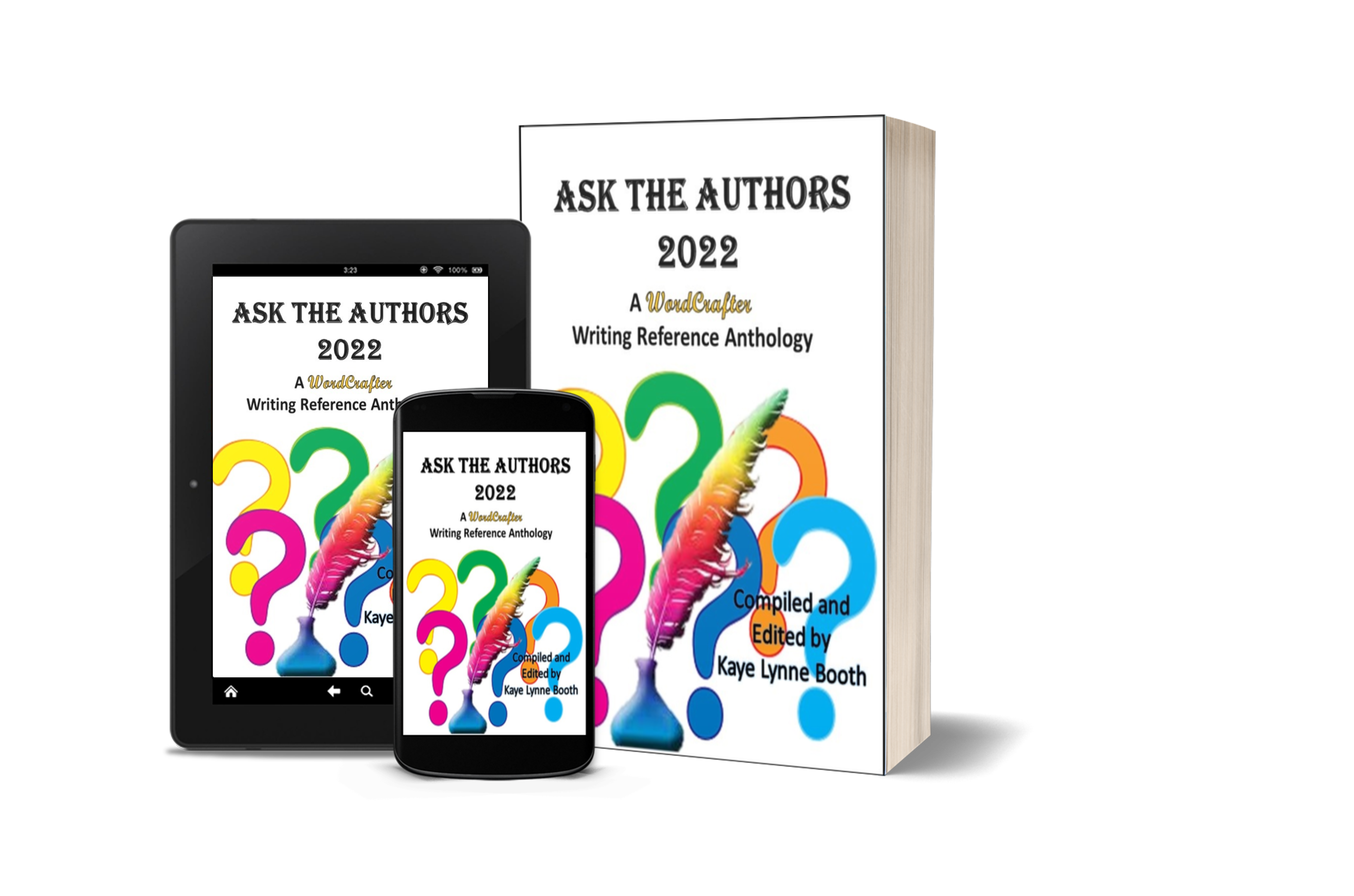
A third round of Ask the Authors is also in the making for this coming summer and I’m planning an Ask the Authors book to follow, which will include material from all three segments. I already have a cover for the book, created by D.L. Mullen of Sonoran Dawn Studios. I hope to have it out by the end of the year.
And of course, you’ll be able to get updates on my other works in progress: The Great Primordial Battle, book one of my science fantasy series, Playground for the Gods; The Homecoming, book two of my western series, Delilah; and my memoir about losing my son to teen suicide, His Name Was Michael. I hope you will all join me in the coming year.
With that, I’ll just say see you next year.
Until then, happy writing!
Don’t miss a single post in the coming year. Subscribe to Writing to be Read for e-mail notifications whenever new content is posted or follow WtbR on WordPress.
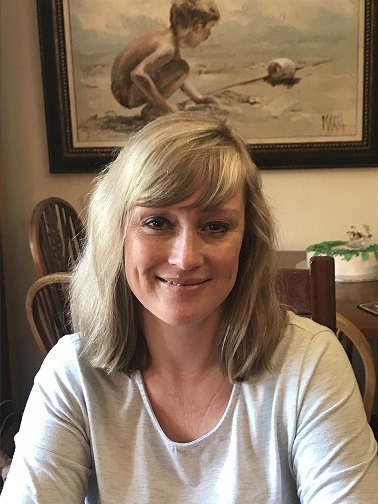
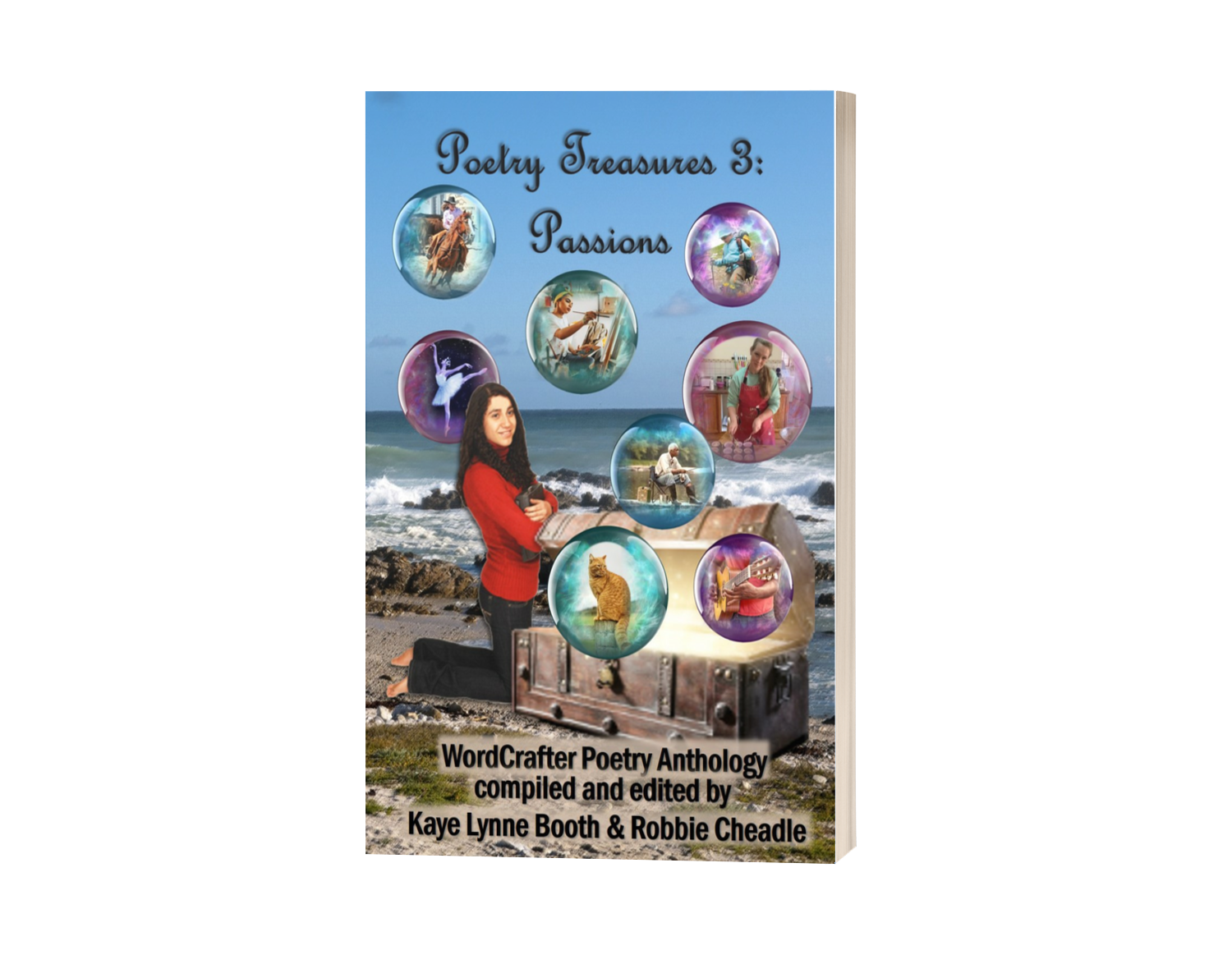
Robbie Cheadle is a very creative mother, author and fondant artist, who thinks outside the box to find inventive solutions for life’s difficulties. I first met Robbie through Sonoran Dawn’s Dead Man’s Party Halloween book event, where I did a reading of her short horror story, The Willow Tree, via audio recording for the event. During her takeover, Robbie posted images of her delectable creations to promote her Sir Chocolate book series for children, which she wrote with her son, Michael. She uses these image of her baked creations as cover art and to illustrate the book series. I thought this was incredibly innovative, and I immediately wanted to know more about this woman, and it didn’t take long to decide that I wanted to add her to the WtbR team.
Robbie is my Christmas gift this year, as I’ve been searching for a children’s author to join the Writing to be Read team. So, starting in January, Robbie will be popping in the second Wednesday of each month with her new blog series on writing for children, Growing Bookworms. I can’t wait to see what she has to share with us, so let’s learn more about her.
Kaye: Your Sir Chocolate covers are photos of your own delectable desert creations, which is very creative. Which came first – the baking or the writing?
Robbie: I started with baking and fondant art quite a long time before we wrote the books, but pairing the two was an idea that only came later. I used to write poetry and descriptive passages as a tween and teenager. Emily of New Moon by LM Montgomery was my favourite book when I was a tween. Emily is a poetess in the book and her father is a writer. The book inspired me to write down my thoughts and feelings.
This slideshow requires JavaScript.
Kaye: Would you share the story of your own publishing journey? How did the published works of Robbie Cheadle come to be?
Robbie:I never planned to become a published author when I first started writing the Sir Chocolate stories. My son, Michael, aged 6 years old at the time was having difficulties with learning to read and write. He was diagnosed with an auditory processing problem which made these activities difficult for him. He had the loveliest story ideas about a little man made of chocolate who lived in a land where you could eat anything, even the sand, trees and houses. In order to encourage him to write, I made up rhyming verse stories using his ideas. Together we wrote them down in handmade books.
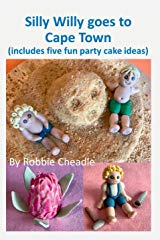
I have always enjoyed fondant art and sometimes Michael would come and sit with me and make his own version of what I was making. We started making illustrations for the books by taking photographs of our creations. My nieces and nephews enjoyed the Sir Chocolate stories, so I tried them out with my Sunday school class of children. One of my friends at the Church suggested I send the stories and pictures to a friend of hers who is a publisher in the UK. Anne liked the stories and gave us a contract for the Sir Chocolate series of books.
Kaye: You talk about fondant art. I, for one had never heard of this. Could you explain briefly what fondant art is?
Robbie:Fondant is also called sugar dough and is an elastic type of icing, almost like modelling clay. This is the substance that cake bakers use to make figurines, flowers and other edible artworks for cakes. The items in the picture I emailed you are all made of fondant.
Kaye: You’re the co-author, along with your son Michael of the Sir Chocolate book series for young readers. How did that partnership come about?
Robbie:Between the ages of 6 and about 9 years old, Michael and I continued to make up Sir Chocolate rhyming verse stories from time to time. We would be doing something like visiting an ice cream shop and an idea would come to us. We would then chat about the idea and develop it into a story. Michael has delightful ideas like the chocolate snow and the ice-cream rainbow fairies who feature in Sir Chocolate and the Ice-cream Rainbow Fairies’ story and cookbook which will come out in 2020.
Kaye: What’s the one thing you hope your son takes away from this venture?
Robbie:I always hoped that Michael would become a proficient reader and learn to enjoy books and reading. It is not easy for a child who struggles to learn to read to develop a love of reading. I am very happy to say that this has happened. Michael now reads on his own for about 30 minutes a day. We often read together with me reading my book of the day and him reading his current story. Lately, these are all Rick Riordan books.
Kaye: What ages are the Sir Chocolate series aimed at?
Robbie:The Sir Chocolate books are aimed at young children, aged 3 to 9 years old. They are lovely for beginner readers as they are comprised of rhyming verse.
Kaye: Each book in the Sir Chocolate series features a story and a cookbook. That’s an interesting combination. Would you like to tell us a little more about why you chose to pair the two?
Robbie: Sir Chocolate is a little man made of sweets and sugar. All the characters in the books are made of edible products as well as all the houses, trees, flowers and even the rivers and the rocks. As all the illustrations are made of cake, biscuits and sweets, it seemed natural to provide the recipes to make some of the goodies in the book and make the books into a series of first cookbooks as well as a story.
Kaye: You also write supernatural and horror for adult audiences, and you had two stories published in the recently released horror anthology, Dark Visions. (See my review of Dark Visionshere.) Another interesting combination: horror and children’s stories. Is there a story behind how you ended up writing in those two genres?
Robbie:I entered a short story for children in one of Dan Alatorre’s writing competitions and it won an Honourable Mention. I really liked the critique on my story that I received from Dan so when another competition cropped up a few months later I decided to enter. The topic for that one was horror so I thought I would give it a go. That was when I wrote The Willow Tree. Dan again provided an excellent critique in respect of the story. I entered The Haunting of William into his most recent horror competition in June 2018. That was how I came to write darker stories. I discovered that I enjoyed writing this genre and now I am writing a supernatural/horror YA book. I have just exceeded 50,000 words.
Kaye: I can think of many differences in writing horror and in writing for children, but are there also ways in which they are alike?
Robbie: The Sir Chocolate stories all have a villain ranging from the trolls in Book 1 to the candy stripped Roc in book 5. All stories generally have a heroic character and a bad character so there is a common thread between the two genres. The difference is that in the Sir Chocolate books the “baddie” is generally redeemed and becomes a contributing member of Chocolate Land. In my current book, the evil characters are not redeemed.
Kaye: What is the strangest inspiration for a horror story you’ve ever had?
Robbie:I have just written a horror story about cockroaches which infest a working microwave oven and gain unnatural powers as a result of the microwaves they are subjected to. I think that is about the most unusual story I have written to date but I have only been writing for just over two years and I only started writing horror this year.
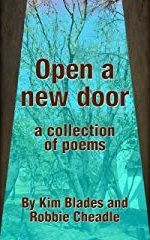
Kaye: In addition to writing children’s stories and cookbooks, and adult horror, you write poetry. And you have a poetry collection out with Kim Blades, Open a New Door. What type of poetry can we expect to find in this collection? How did that collaboration come about?
Robbie:Kim Blades and I are both South African poets. Our collection is about life in South Africa and is divided into four sections entitled God bless Africa, God bless my family and friends, God bless me and God bless corporates and work. Each section is divided into poems about the good, the bad and the ugly of our experiences in each of these areas of our lives.
Kaye:What is the most important quality in a poem for you?
Robbie: I like poems that are simply written and have a strong message. I try to write my poems along those lines. I don’t believe a lot of “highbrow” language is necessary in a poem for it to be an emotional and evocative piece of writing.
Kaye:You have another collaboration with Elsie Haney Eaton, While the Bombs Fell. It’s about life during World War II, which is quite different from the Sir Chocolate stories. What age audience is this book aimed at? Would you like to talk a little about it?
Robbie:Elsie Hancy Eaton is my mother and While the Bombs Fell is a fictionalized account of her early years growing up during WWII in a rural town in England. It features the deprivation caused by bombing and rationing and the other hardships experienced, but it also provides a lot of insight into the small pleasures people enjoyed during the war in the way of a Christmas pudding, the ingredients for which were literally saved up for most of the year, swimming in favourite spots along the river Waverney and learning to knit. The reason this account is fictionalized and not an autobiography is my mother was aged 4 to 7 years during the war and so she can’t remember all the fine details. I supplemented her memories with a lot of my own research.
Kaye:What is the biggest challenge of writing for children?
Robbie: Marketing the books. Indie authors and writers with small publishers find it more difficult to get their books into stores and in front of the eyes of children. Children generally don’t use social Medias and, therefore, we are marketing to the parents and not to the actual child. Impulse buys are fewer as a result. I try to visit schools and Sunday Schools, but my time for these events are limited due to my work requirements.
Kaye: What other activities do you find time for when you’re not baking or writing?
Robbie: I am a qualified chartered accountant with a full time job and two sons. Any recreational time I have that isn’t spent with my family is used for writing, baking and blogging. I have two blogs, one for my children’s books, light poetry, baking and fondant art called robbiespiration.wordpress.com and one for my adult writing and darker poems called robertawrites235681907.wordpress.com.
Thank you so much Robbie for chatting with me here today. It’s been a pleasure, and I’m thrilled to have you on board. I look forward to your Growing Bookworms blog series. I have no doubt that you have some interesting things to share with us.
Welcoming Robbie to the Writing to be Read team is my Christmas present this year, and adding her blog series will be a great way to start out the New Year, too. You can learn more about Robbie and her writing and art one her blogs or click on the links below:
I hope all my readers will help me welcome this creative children’s author to the Writing to be Read team and be sure to catch the first segment of her Growing Bookworms series on January 9th.
Want to be sure you don’t miss any of Robbie’s Growing Bookworms segments? Subscribe to Writing to be Read for e-mail notifications whenever new content is posted or follow WtbR on WordPress.
Today I have the pleasure of interviewing an old hand in the writing and publishing business, author Tom Johnson. Tom has written stories from a young age. He has been publishing his writing for more than twenty-two years and has over eighty books in publication. He grew up reading comic books and pulp fiction, becoming a collector in adulthood and his stories reflect the fascination that those books held for him. He has also written numerous nonfiction books and is currently involved in writing children’s stories. Please help me welcome Tom Johnson.
Kaye: Hi Tom. Although in the past, you’ve written and published many different genres, you are currently writing only children’s stories. So, let’s talk about that. Tell me a little about your stories.
Tom: My children stories are about 1k and meant as bedtime tales, and to be read in classroom or library settings. They are short stories with little morals to teach children something about life.
Kaye: Are they a series or stand alone?
Tom:They are a series, and published in anthologies about once a year. There have been four anthologies so far. I was invited to participate beginning in volume #3. The anthology is called Wire Dog Storybook. Here is the background. True story. A young girl, Ellen Walters, asked her father, David Walters, if she could have a dog, and he said, “No.” So she found an old wire hanger and shaped it to resemble a dog, and called it wire dog. David Walters was fascinated by her ingenuity and created the Wire Dog Storybooks. So the stories usually feature Ellen and Wire Dog, but always Wire Dog. Five of my stories have been published so far, and I’ve written three more for the 2018 yearbook when it comes out at the end of the year.
Kaye: What age group are they aimed at?
Tom:I feel that we should begin reading to our children by age one. With that in mind, my stories are aimed at the age group of 1 to 5. However, older children will enjoy the stories, as do adults.
Kaye: What differences do you see between writing for children and writing adult fiction?
Tom:Adult fiction usually means, “no holds barred”, while writing children stories you want to stay away from violence, horror, and adult themes. Keep in mind, young children absorb what they hear quickly, and some themes could have an adverse effect on young minds. When writing for children we must keep this in mind.
Kaye:What appeals to you about writing for children?
Tom: Do you remember the old radio show for kids, Let’s Pretend ? It produced shows for children that acted out fairy tales and light adventures – nothing as harsh as today’s cartoons that are aimed at our youth. Well, I have the chance to import my love for adventure in tales easily understood by young people; children who some day may also experience that same love to pass on to their children. Stories that give our children a moral to live by, not “It’s clobbering time!” Or Pow! Bang! Boom! It’s something my mother did for me when I was little, and now I have the same opportunity, and I’m not going to pass it up.
Kaye: You have wanted to write for children since you were little and your mother used to read to you.
Tom: Oh, yes. I hope that mothers are still reading to their children. They learn at such a young age, and we’re missing an opportunity if we fail them when they’re young. They will never forget what they learn as children, it’s when their minds are growing and grasping at everything. I think one of the first words they learn is, “Why?”
Kaye:What were your favorite children’s stories?
Tom:Really, I would have to look them up in the book of fairy tales on my shelf. There were so many she read to me. Knights saving young damsels come to mind. I remember one particular fairy tale where the princess was on a glass mountain, and the young knight had to save her. She watched each day as a knight riding brown horse attempts to scale the glass mountain, then a knight on a white horse, and so on, until the final day when a knight riding a great steed scales the mountain, and we find out that he was the knight on the brown horse, the white horse, etc. It wasn’t the color of the horse, but the persistence of the knight that finally achieved the goal.
Kaye: In what ways do the stories you write emulate those favorites from your childhood?
Tom: Like the fairy tale I mentioned above, my stories will also have a similar moral – it’s not the color of the horse, or the knight’s armor, but his persistence that wins the hand of the princess. Do the right thing, for the right reason. Persevere. If you don’t succeed today, try and try again.
Kaye: You have written since you were a young man, for fifty some years, and you had your own small press for many years. Always, your life seems to have writing at the center of it. Looking back on your life, what does writing mean to you?
Tom: I think writing was always an escape to other worlds, other realms, and other dimensions. We could be anyone we wanted, go anywhere we wished, and experience great adventures. We create those worlds and people we want in them, and our heroes and heroines are who we want to be, or the friends we want beside us. We choose those things that mean the most to us. Whether we’re a cowboy or cowgirl, Conan or Xena, we bring the characters to life. That’s what writing means to me, to give life to my characters.
Kaye: How do you see the rise of digital publishing affecting authors of today?
Tom: Publishing has never been easier. When we were publishing the small press magazines, it was hands on. We did every aspect of the business, from reading, approving or rejecting, editing, set up and printing, then mailing to subscribers and bookstores that carried our magazines. Today we have Lulu and Amazon for all that. We just write, they publish. Anyone can be a writer or publisher now.
Kaye: What is the strangest inspiration for a story you’ve ever had?
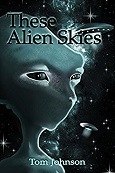
Tom: I had a dream one night. A young boy was in the woods dying when a strange being found him and comforted him as he passed. The strange being was an alien and I saw the saucer-shaped craft behind him. When I woke the dream stayed with me. Did the alien kill the boy? Why was the alien there? What was the boy doing in the woods? It wouldn’t let go of me. I wrote What Goes There from that dream. The boy was dying from snakebite and the alien took his pain from him so he could pass more easily. Then I made a mystery with the plot. The story is part of my book, These Alien Skies.
Kaye: Is there anything unique or unusual about your writing process?
Tom:When I write, I don’t want to be disturbed. No music, no background noise at all. My work computer is in my bedroom. I close my door from all outside communication, telephone, wife, neighbors, etc. I have to be alone when I write.
Kaye:You’ve written over eighty books in many different genres over the course of your career. Which of your books would you say are your favorites? Why?
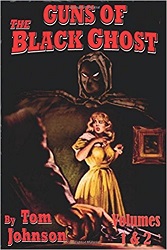
Tom: If we’re speaking of my fiction stories I would probably say my favorite is Guns of The Black Ghost, as it is my homage to Walter Gibson and his character The Shadow (remember him). The Shadow was one of my favorite radio dramas as a kid, and I met the creator of the character, Walter Gibson, in the mid-1970s and we were friends until his passing. I always wanted to write a Shadow novel, but copyright protection kept me from it, thus my own character, The Black Ghost came into being.
However, my non-fiction research books are probably my best sellers. I’ve written over half a dozen of them. A lot of work went into them. A lot of reading and studying, and I think it paid off, as fans have all bought the huge books for the data. These are books that don’t get thrown away, but have a special place on their bookshelves.
Kaye: So, tell us a little about your nofiction books. What is the subject matter and how did you come to write them?
Tom: As a pulp collector it was natural for me to become a historian. I had completed runs in many of the lead characters, thus had the opportunity to study the novels for research, identifying authors, plots, etc. At the time I was writing fiction and Introductions for ALTUS PRESS books, and the publisher wanted my research put into books. Some of those series were Secret Agent X Companion, Operator #5 Companion (History of The Purple Wars), The Phantom Detective Companion, The Black Bat Companion, Dan Fowler’s G-Men Companion, and Echoes 30. Several ran for twenty years, and 171 issues. Some not so long, but just as popular to the fan and collectors today. There may be others, my mind is slipping, but these were the big volumes. They covered the complete pulp series of each title. Echoes 30 covered conventions, pulp books, authors, artists, and publishers. All are in demand and have been good sellers.
Kaye:Are you a plotter or a pantser? Why?
Tom: I’m a pantser. I never could understand why you needed to write a fifty-page plot outline, just write the darn book. Once the words start flowing you don’t want them to stop. And they will, if you’re outlining.
Kaye:What do you think is the single most important element in a story?
Tom: Characterization. Make your characters come alive. You want readers to connect to them, feel for them, and be drawn to them. The plot will work itself out, but if your characters aren’t real I don’t care how much of a plot you have, it will bomb.
Kaye: If writing suddenly made you rich and famous, what would you do?
Tom: I don’t know that I would want to be rich and famous. What would be next? I want to always be reaching, always trying to entertain. If I set my goal for rich and famous I might forget about the entertainment and pleasure we get from writing. If I entertain one person, then I am already rich. Besides, we already have money, and fame is fleeting at best.
Kaye: What’s the best piece of advice you were ever given?
Tom: Write what you know. I’ve read a lot of books where the author is writing about something s/he knows nothing about, and it shows. I know information is at the tip of one’s fingers today, but if you haven’t truly experienced something you will come off as unbelievable if you try to write about the subject.
I want to thank Tom for joining us today on Writing to be Read and offering up some really great answers to my questions. I have really enjoyed having him. If you’d like to learn more about Tom Johnson or his books you can check out his website or his Amazon Author Page.
Like this post? Subscribe to Writing to be Read for e-mail notifications whenever new content is posted or follow WtbR on WordPress.
Most kids dream of hitching a ride in Santa’s sleigh at one time or another. In The Day My Fart Followed Santa Up The Chimney by Ben Jackson and Sam Lawrence, Timmy doesn’t get a ride, but his little fart does. Timmy’s Fart is a cute little green guy, kind of a cross between a Smurf and a chubby baby dragon.
The Day My Fart Followed Santa Up The Chimney is a delightful children’s picture book, which explores the magic of Christmas and takes Little Fart on a great adventure. It wasn’t what I expected, (I expected a lot of fart humor from the title), but I was pleasantly surprised. I give it four quills.
Kaye Lynne Booth does honest book reviews on Writing to be Read in exchange for ARCs at no charge. Have a book you’d like reviewed? Contact Kaye at kayebooth(at)yahoo(dot)com.
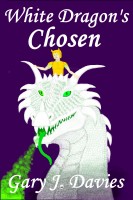
White Dragon’s Chosen, by Gary J. Davies is a children’s fantasy that takes readers to a world where dragons and elves and trolls and fairies exist, and magic abounds. They travel between our world and their own world of Narma through portals, and two kids, George and Mary, are the champions who lead the battle to save both worlds, together with their dragon counterparts.
When you are dragon’s chosen, you share thoughts and have the same abilities that they do. How cool is that? When Harry’s uncle dies, Harry discovers that he is special. He’s the White Dragon’s Chosen, and his next door neighbor, Mary is the Chosen of the Dragon Jewel. But he also learns that there is a bad evil about that threatens to destroy both Earth and Narma, and it’s up to he and Mary, with their dragons, to save both worlds. It’s a tale every kid will enjoy.
For me though, I found a few problems, the least of which, was the numerous typos and missed words. As far as the crafting of the story goes, there was a lot of telling, rather than showing, which may have related to my inability to suspend disbelief on this one. Davies failed to put me in the scene and convince me that this could be possible, at least in his world.
Although White Dragon’s Chosen had a few glitches as far as craft goes, I’ve no doubt kids will love it. It’s a cute little fantasy, that I give three quills.
Kaye Lynne Booth does honest book reviews on Writing to be Read in exchange for ARCs at no charge. Have a book you’d like reviewed? Contact Kaye at kayebooth(at)yahoo(dot)com.
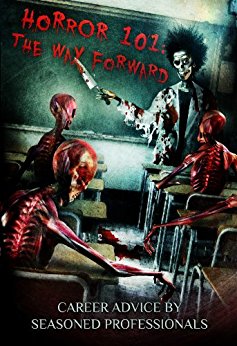
This is the longest book review I have ever written. This book was so packed full of useful information for rising authors and screenwriters that I felt I needed to cover it all. If you are an upcoming horror author or screenwriter, trying to figure out how to get a foot in the door or where to start in the matter of launching your career, Horror 101: The Way Forward offers “career advice by seasoned professionals”. Different writers will find different essays useful, so I’m giving you a rundown on all the informative essays included.
Compiled by Crystal Lake Publishing, this collection of essays has something for every writer. The anthology features quotes from the masters such as Stephen King, Ray Bradbury, Isaac Asimov, J.R.R. Tolkien, Jack London, Clive Barker, H.P.Lovecraft, Edgar Allen Poe and many others. Advice from professional writers and editors covers all aspects of the horror writing business, and the business of writing, in general. From submitting your work, to marketing and promotion, to self-publishing and building your writing business, to crafting your work and the writing process.
The answers to many questions on the topic of submissions and all other aspects of writing as a business are found within its pages. Not getting positive response from your queries? First read Rejection Letters – How to Write and Respond to Them by award winning author Jason Bark, which offers an attempt to write a rejection letter that doesn’t sting, (at least, not so much). Then, flip to Seven Signs that Make Agents and Editors say “Yes!” to learn what agents and editors look for. Buttoning Up Before Dinner by horror author Gary Fry also offers advice to put you in the good graces of publishers and editors and create well-written stories.
Unsure how to submit your work? Submitting Your Work: Read the F*****g Guidelines by freelance writer and editor John Kenny offers tips for making a professional submission from an editor’s perspective. And What a Short Story Editor Does by horror, fantasy and science fiction editor Ellen Dallow explains the responsibilities of short story editor.
Looking for sound career advice? Be the Writer You Want to Be by television writer and novelist, Steven Savile recycles the best writing advice the author was ever given. The Five Laws of Arzen by award winning dark fiction author Michael A. Arzen offers hints to help you survive a writing career. How to Fail as an Artist in Ten Easy Steps: A Rough List Off the Top of My Head, by Confirmed Failure… by horror author John Palisano provides a reverse list of things you should do to be a successful writer.
Wondering if you need an agent to get your work in front of editors and publishers? Do You Need an Agent? by author Eric S. Brown is a discussion about the need, (or not), for an agent and relates the personal experience of how the author became successful without one. Also included are essays on building your writing business in Balancing Art and Commerce by author and screenwriter Taylor Grant , offering a look at various mediums one can write in and earn a living & advice in the business of writing. There are even essays offered on the lucrative business of ghostwriting, with a personal experience as a ghostwriter shared by dark fiction author Blaze McRob, and Ghostwriting: You Can’t Write it if You Can’t See It by award winning author Thomas Smith instructs on how to step into the author’s shoes and write like them.
If you are hoping to find some help muddling through the vast world of marketing and promotion, The Year After Publication by horror & thriller novelist Rena Mason offers an account of what to expect once you publish your first book and a walk through the exhaustive process of book marketing. How to be Your Own Agent, Whether You Have One or Not by horror writer, editor and publisher Joe Mynhardt offers tips for marketing your stories and yourself. Reviewing by founder of Ginger Nuts of Horror, (one of the most viewed resources in horror fiction), Jim McLeod discusses getting your book in the review pile & what the writer should do while awaiting publication of the review.
If you’ve not attended a conference or convention before, Pitch to Impress: How to Stand Out From the Convention Crowd by editor R.J. Cavender provides a guide to making a pitch that will snag agents’ and publishers’ attention. Tips for networking at conferences are offered by dark fiction author Tim Waggoner in You Better (Net)Work, and Networking at Conventions by Bram Stoker Award winning author Lucy A. Synder offers a look at the benefits conventions have to offer and a breakdown on some of the major ones for horror writers.
There is a plethora of advice offered on publishing, including a comparison of traditional publishing vs. digital publishing in Weighing Up Traditional Publishing and Ebook Publishing by award winning author Robert W. Walker; Publishing by editor and publisher Simon Marshall-Jones compares publishing in the digital arena with the way it was done in the past & how to become an independent publisher; and Glenn Rolle Toes the Line with Samhain Horror Head Hancho, Don D. Auria by Glenn Rolle with Interview that maps Auria’s rise to the top.
The arena of self-publishing is also explored in Make Your Own Dreams by horror and suspense novelist Iain Rob Wright. Besides being a plug for self-publishing’s evening of the playing table. It relates personal experience and advice for self-publishing, walking us through the self-publishing process. Self-Publishing: Thumb on the Button by author Kenneth W. Cain gives a list of things to think about before you choose to self-publish.
Also included are essays on the different mediums for horror: Poetry and Horror by Blaze McRob, and Horror for Kids: Not Child’s Play by novelist Francois Bloemhof offers guidelines for writing horror for youth. Several essays on comics and screenwriting, (one of the biggest outlets of horror today), are also included.
Horror Comics – How to Write Gory Scripts for Gruesome Artists by novelist Jasper Bark discusses the craft of writing horror comics and the relationship between writer and artist. Some Thoughts on My Meandering Within the World of Dark and Horror Art by artist Niall Parkinson offers thoughts on creating dark and horror art. So You Want to Write Comic Books… by novelist C.E.L. Welsh discusses what goes into the making of a comic book.
From Pros to Scripts by author and screenwriter Shane McKenzie talks about the many challenges of screenwriting. Writing about Films and For Film by award winning writer, editor and screenwriter Paul Kane gives the story of the author’s rise to success and tips for learning the lingo of the business. Screamplays! Writing the Horror Film by award winning author and screenwriter Lisa Morton offers the basics of screenwriting, description and dialog, and tips for getting your screenplay made into a movie. Screenplay Writing: The First Cut is the Deepest by author, director and editor Dean M. Dinkel recaps of the author’s experience at the Cannes Film Festival.
Essays on writing a digital world include Running a Webserial, or How to Lose Your Mind, One Week at a Time by Southern author Tonia Brown, providing a brief history of serials and a rundown of what goes into running one on the web; Friendship, Writing, and the Internet by Bram Stoker Award winning novelist Weston Ochse with reflections on online connections with like-minded writers, and Audiobooks: Your Words to Their Ears by horror novelist Chet Williamson discusses what it takes to create and audiobook and what to expect from the effort.
Of course, there is also plenty of advice on crafting a quality story. What is Horror? by author and novelist Graham Masterson offers general writing advice which could be applied to any genre and instructs on how to push your writing to the edge. The Journey of “Rudy Jenkins Buries His Fears” by author Richard Thomas takes us on a walk through of the writing, editing and submissions process of a story. Writing Short Fiction by horror and thriller novelist Joan De La Haye offers tips to tighten your writing and move the story forward, and discusses where to look to sell your story and how to choose where to submit. Ten Short Story Endings to Avoid by Scottish horror novelist William Meikle supplies a valuable list, if you want to avoid having readers feel cheated. From Reader to Writer: Finding Inspiration by publishing and editing consultant Emma Audsley offers advise for attacking the blank page. Writing Exercises by horror writer Ben Eads provides exercises in description and dialogue. Writer’s Block by short fiction writer and novelist Mark West discusses how to keep the creative juices flowing. Editing and revision are covered with Editing and Proofreading by author and editor Diane Parking presents good reasons not to send out a first draft, and How to Dismember Your Darlings – Editing Your Own Work by Jasper Bark gives a brief guide on how to self-edit.
A few essays outline the needs of a writer and suggestions on how to meet them. Filthy Habits – Writing and Routine by Jasper Bark offers a look at the benefits of creating a daily writing routine. A Room of One’s Own – the Lonely Path of a Writer by horror and fantasy writer V. H. Leslie discusses the need for solitude and space to write in. Writing Aloud by screenwriter and author Lawrence Santoro outlines the benefits of reading aloud as a part of the writing process.
Also included are Partners in the Fantastic: The Pros and Cons of Collaborations by novelist Michael McCarty, which looks at the views of various authors on collaborations, and Writing the Series by series author Armand Rosamilia, which explains why Rosamilia writes series.
Several essays offer advice specific to writing in the horror genre. Making Contact by award winning novelist Jack Ketchum discusses how to turn what you know into a horror show. Bitten by the Horror Bug by horror author and screenwriter Edward Lee looks at what motivates us to write horror. Reader Beware by author Siobhan McKinney explores the role fear plays in horror. Bringing the Zombie to Life by author Harry Shannon maps out four components of a good zombie story. The Horror Writers’ Association – The Genres Essential Ingredient by author and President of the Horror Writers’ Association (HWA), Rocky Wood gives a rundown on the HWA.
What’s the Matter With Splatter? by horror writer and Vice-President of the AHWA, Daniel I. Russell discusses the use of blood, gore and splatter in horror fiction or screenwriting, gives tips on how to use it to gain the desired effect, and discusses why some gore doesn’t get a second thought. Avoiding What’s Been Done to Death by British horror writer Ramsay Campbell defines good horror fiction & emphasizes originality. The (Extremely) Short Guide to Writing Horror by dark fiction author Tim Waggoner offers an introduction to writing horror, including techniques and brief definitions, and a list of good resources for horror writers. Growing Ideas by horror writer Gary McMahon offers a look into the author’s writing process. Writing Horror: 12 Tips on Making a Career of It by horror novelist Steve Rasnic Tem instructs on building your own writer’s toolbox and advice for entering the profession of writing horror. The Cheesy Trunk of Horror by international best selling author Scott Nicholson provides a look at both writer and reader perspectives on horror and dark fiction. Class: Vaginas in Horror by science fiction, urban fantasy and horror novelist Theresa Derwin offers an overview of women in the horror industry. And the afterward by Crystal Lake Publishing’s editor, Joe Mynhardt, includes his own advice for writing horror.
Horror 101: The Way Forward is based on the sound advice of seasoned professionals that is useful to horror writers in any stage of their careers. I recommend it with four quills for anyone who wants to write horror in either fiction or screenwriting.
Kaye Lynne Booth does honest book reviews on Writing to be Read in exchange for ARCs at no charge. Have a book you’d like reviewed? Contact Kaye at kayebooth(at)yahoo(dot)com.
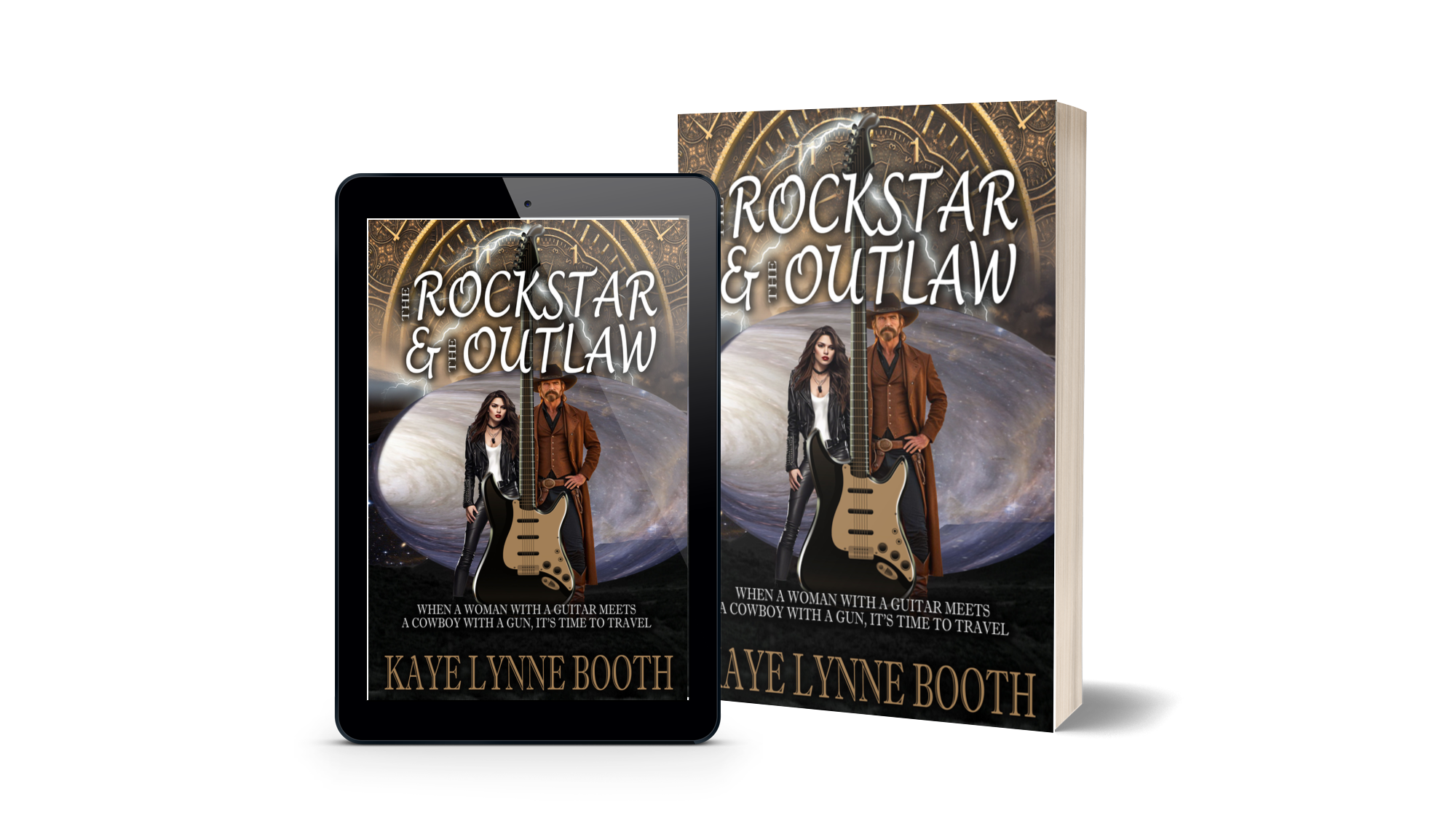
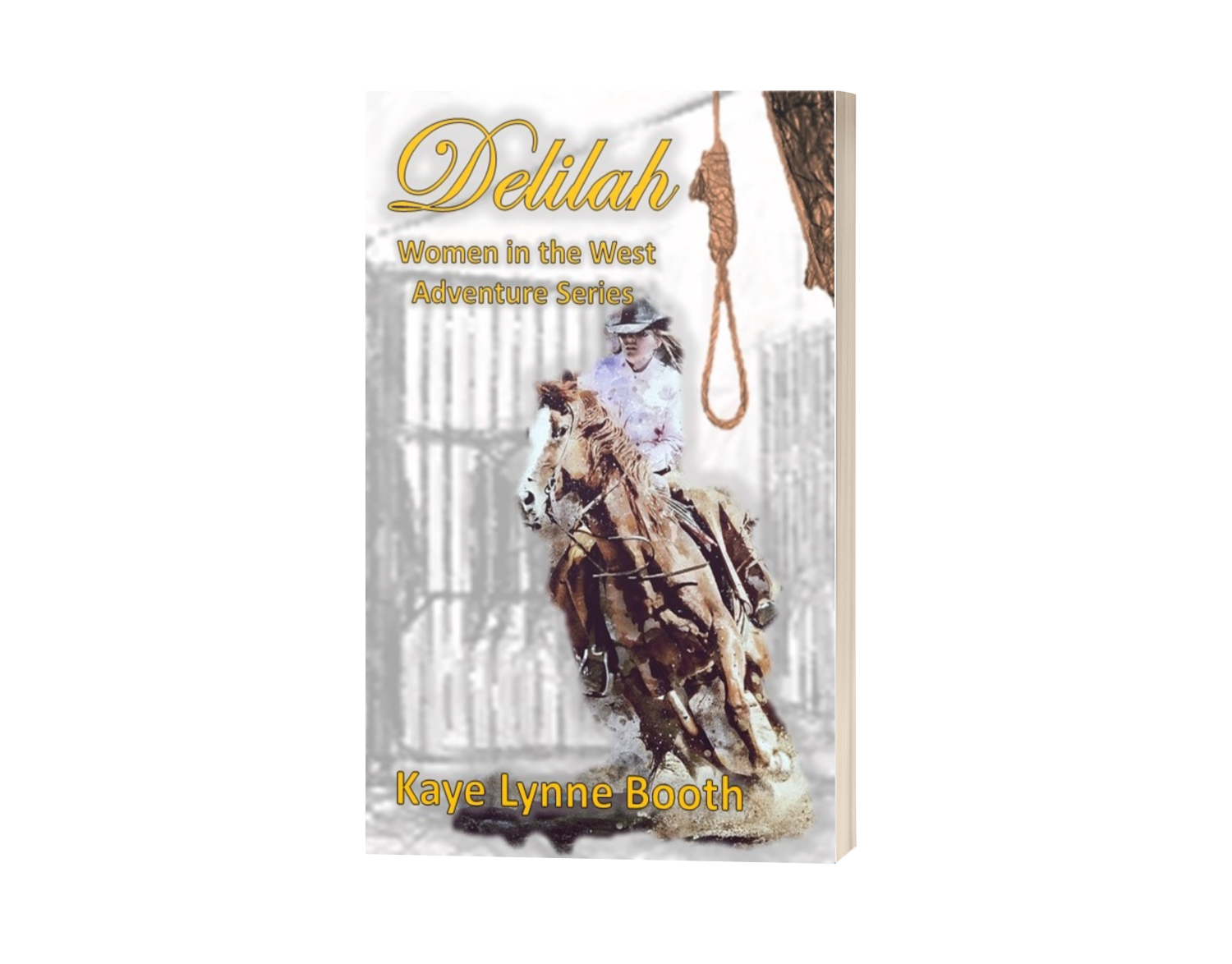
This will be the last reflective post of the year. Next Monday’s post will find us in 2017. For my writing career it has been a slow take off, but I’ve seen progress. In July, I completed my Master of Fine Arts degree in creative writing. With emphasis in both genre fiction and screenwriting, and two completed novels, Delilah and Playground for the Gods Book 1: In the Beginning, two full feature film scripts and one comedy series pilot script in hand, I eagerly jumped right in to get my feet wet in either the publishing and/or screenwriting industry. I began submitting my work to agents, publishers, and competitions like crazy. I received mostly rejections, as expected, and although I still haven’t found a home for either novels or scripts, I did manage to find a home for two poems and two short stories. Not too bad. While the poems, Aspen Tree and Yucca! Yucca! Yucca!, appeared in print, (in Colorado Life (Sept.-Oct. 2016) and Manifest West Anthology #5 – Serenity and Severity, respectively), my short story, I Had to Do It was published on Zetetic: A Record of Unusual Inquiry, and my not so short, short story, Hidden Secretswas published on Across the Margin.
2016 has been a pretty good year for Writing to be Read. The revamping of the blog site was completed in March, I’ve managed post things on a fairly regular basis, we were honored with guest posts by my friend Robin Conley, and my visits and page views have risen, with almost 2000 visitors and over 2,500 page views. Looking at this, makes me feel pretty good about the blog, as a whole. Another good change is the addition of screenwriting content, which I believe has drawn a larger audience by widening the scope of the content.
The top post of 2016 was my book review of Simplified Writing 101, by Erin Brown Conroy, which is an excellent tutorial on academic writing, including writing advice that every writing student should know. After that, the reflective post Writing Horror is Scary Businesswould be second in line. Other popular posts include my four part Making of a Screenplay series,( Part 1, Part 2, Part 3, and Part 4), my Tribute to My Son, and What Amazon’s New Review Policies Mean for Writing to be Read. More recently, my ten part series on publishing, Pros and Cons of Traditional vs. Independent vs. Self-Publishing gave me the opportunity to interview some awesome names in the publishing industry: self-published authors, Jeff Bowels, Tim Baker and Art Rosch; traditionally published authors Stacia Deutsch and Mark Shaw; independently published author Jordan Elizabeth; and children’s author Nancy Oswald, who has published under all three models; as well as Caleb Seeling, owner of Conundrum Press and Curiosity Quills Press – with the final installment summarizing the conclusions made from those interviews.
Sadly, I only attended two events that were reported on, on Writing to be Read in 2016 – the 2016 Ice Festival in Cripple Creek, and the 2016 Writing the Rockies Conference in Gunnison, Colorado. What can I say? I’m a starving writer. This is something I hope to improve on in 2017 by attending more events to report on. One possible addition to the 2017 list that I’m very excited to think about is the Crested Butte Film Festival. The details are not ironed out yet, but I’m keeping my fingers crossed.
Screenwriting content included this past year seemed to be popular. In addition to my Making of a Screenplay series and Writing Horror is Scary Business, Writing to be Read also featured Writing Comedy for Screen is a Risky Proposition, and a book review for Hollywood Game Plan, by Carole Kirshner, which I can’t recommend highly enough for anyone desiring to break into the screenwriting trade. Robin’s Weekly Writing Memo also included several writing tips that could be applied equally to literature or screenwriting.
Another project I’m particularly proud of is my ten part series on publishing, Pros and Cons of Traditional vs. Independent vs. Self-Publishing, which I just finished up last week. In this series I interviewed nine professionals from within the industry to get the low down on the three different publishing models. My interviews included self-published authors Jeff Bowels, Tim Baker and Art Rosch, traditionally published authors Stacia Deutsch (children’s books) and Mark Shaw (nonfiction), and independently published YA author Jordan Elizabeth. To balance things out a bit, I also interviewed children’s author Nancy Oswald, who has published with all three models, Clare Dugmore of Curiosity Quills Press and Caleb Seeling, owner and publisher at Conundrum Press.
One of the great things about doing book reviews is that you get to read a lot of great books, in with the okay and not so great ones. In addition Simplified Writing 101, my five quill reviews in 2016 included Jordan Elizabeth’s Runners & Riders, Mark Shaw’s The Reporter Who Knew Too Much, Nancy Oswald’s Trouble Returns, Carol Riggs’ Bottled, Jeff Bowles’ Godling and Other Paint Stories, Janet Garber’s Dream Job, Art Rosch’s Confessions of an Honest Man, and Mark Todd and Kim Todd O’Connell’s Wild West Ghosts. I don’t give out five quills lightly and every one of these books are totally worthwhile reads.
I am thankful for Robin’s valuable content and am glad that she will still be contributing Memos on a monthly, rather than a weekly basis. Although I was sad to lose her weekly content, I am happy for her as she moves forward in her own writing career and I wish her well in her writing endeavors. For those of you who looked forward to her weekly posts, you can catch more of her content on her own blog, Author the World.
2016 was a great year for Writing to be Read, even if it was kind of rough for the author behind the blog. You readers helped to make it a good year and I thank you. Now it’s time to look ahead and see what’s in store for 2017 Writing to be Read. I mentioned some of the things I hope to achieve above: more posts pertaining to the screenwriting industry, and coverage of more events throughout the year are two of the goals I have set for my blog. I also plan to add some author, and hopefully, screenwriter profiles into the mix. I had good luck with author profiles during my Examiner days, and I think they will be well received here, as well.
I also hope to bring in some guests posts by various authors or bloggers, or maybe screenwriters, just to give you all a break from listening to me all the time. I believe Robin plans to continue with Monthly Writing Memos, which will be great, too.
I look forward to all the great books that I know are coming my way in 2017, too. The first reviews you have to look forward to are a short memoir, Banker Without Portfolio by Phillip Gbormittah, a YA paranormal romance, Don’t Wake Me Up by M.E.Rhines, a Rock Star romance, Bullet by Jade C. Jamison and a short story, How Smoke Got out of the Chimneys by DeAnna Knippling.
I hope all of you will join me here in the coming year. Follow me on WordPress, or subscribe to e-mail for notifications of new posts delivered to your inbox. Have a great 2017 and HAPPY WRITING!
Trouble Returns, by Nancy Oswald, is the third book in her Ruby and Maude Adventure children’s series. The series are historically based stories about Ruby, an independent and headstrong young girl, and her ice cream loving donkey, Maude, and their adventures in Cripple Creek in the late 1890s. I had the pleasure of reviewing the first book, Rescue in Poverty Gulch, in which Maude is donkey-napped and Ruby risks her own life to save her beloved friend and companion.
Ruby must face her greatest fears in Trouble Returns, when she must face the villain, Jake Hawker, who’s she’s tangled with twice before, in a court of law, when she testifies against him. But she finds her fears very real when he breaks out of jail and comes after Ruby and her friends and family. Can Ruby triumph over Jake Hawker for a third time?
Trouble Returns is crafted to be a stand alone book as well, making me aware enough of events in the second book, Trouble on the Tracks, that I was able to easily follow the full story line, although I hadn’t read the second book, without giving me a bunch of block exposition. As you might guess from the titles, books two and three feature an additional character, who steals readers’ hearts: Trouble, Ruby’s lovable little cat.
I found this story to be a delightfully entertaining story which was skillfully written. Oswald has crafted another story that readers of all ages won’t want to put down. She’s done her research and the historic details are wonderful. Another plus for me was the fact that it is available in paperback, because I’m an old fashioned type of gal. I give Trouble Returns five quills.
Kaye Lynne Booth does honest book reviews on Writing to be Read, and she never charges for them. Have a book you’d like reviewed? Contact Kaye at kayebooth(at)yahoo(dot)com.
In this series, we’ve taken a look at the publishing industry, which today, isn’t played by the same rules as it was 30 years ago, when traditional or independent publishing houses were about the only options an aspiring writer had. The rise in digital and self-publishing has opened up new options for aspiring authors and changed some of the rules by which the game is now played. We’ve heard from self-published authors,Jeff Bowles, Tim Baker andArthur Rosch, and traditionally published authors,Stacia Deutsch and Mark Shaw, as well as independently published author,Jordan Elizabeth.
In this week’s interview, we’ll hear from an author who has published work via all three publishing models, award winning children’s author, Nancy Oswald. She’s published traditionally with Holt, a big New York publisher, and a small independent publisher, Filter Press, LLC. In addition, her first book was published by Scholastic Canada, but she later rewrote it and self-published a Create Space version in 2013. Nancy’s Ruby and Maude Adventure series includes Rescue in Poverty Gulch, Trouble on the Tracks and her latest book, to be released this month, Trouble Returns. (Be sure and catch my review of Trouble Returns this Friday on Writing to be Read.) Her other publishing credits include Hard Face Moon, Edward Wynkoop: Soldier and Indian Agent, Nothing Here But Stones, and Insects in the Infield. And she has a very unusual story about how she broke into the publishing industry.
Kaye:When did you know you wanted to be an author?
Nancy: In my early teens, I thought writing children’s books would be really cool and I enjoyed writing—some poetry—but most of it school related. I didn’t get serious about publication until I was in my late twenties.
Kaye: Would you share your own publishing story with us?
Nancy:I wrote several books that I call my “cardboard cover” books for my stepson who was five when I married my husband. They were hand written and crudely illustrated and as you’ve probably guessed, had cardboard covers that were put together with rings that clipped through the pages and the cardboard and held the whole thing together. I did a couple of cardboard cover books for friends, too. But my stepson outgrew his “picture” books, so I started in on a chapter book. We lived in British Columbia at that time, so I mailed him the first chapter for Christmas and sent one chapter a month to him, finishing the book the next Christmas. This book was typed, yes on a typewriter, but still was a FAT cardboard cover book. After many many rewrites, this book became my first published novel for young readers. It had 35 rejections and was finally picked up by Scholastic Canada and five years later was reprinted by them. To this day, thanks to Scholastic’s book club program, it has outsold any of my other books.
Kaye: What do you see as pros and cons of self-publishing?
Nancy:In 2013, I self-published the above mentioned book. I’ve had the rights back since about 1996, so I rewrote the book, adding about 10,000 words and it ended up as a winner in the CIPA Evvy award competition. My likes: I really enjoyed having full control. I used Create Space and used their interior design service, but did the other parts myself. The Create Space team was accessible and helpful, and I had a really positive experience from beginning to end. A word of caution: you really need to have a clear idea of the design, font size, layout ahead of time. You have to be clear in communicating what you want. Negatives: Reviews were hard to get, ALL of the marketing is up to you, and if you don’t have a well-edited, professional looking copy, it will sink you
Kaye:What do you see as the pros and cons of independent publishing?
Nancy: I’m not sure about this term. I’ve heard self-publishing referred to as Independent publishing. My current publisher refers to herself as a small (traditional) publisher, although I’ve also heard small publishers referred to as Independent Publishers. As for the pros of working with a small publisher, I love it. One real perk with my publisher, at least, is my books will not ever go out of print as long as this publisher is in business. I have a very personal (face to face) relationship with my publisher and have lots of input on design, covers, and other aspects of publication. Also, the time from acceptance to publication is shorter. Cons: No advance, lower sales, lower visibility.
Kaye:What do you see as the pros and cons of traditional publishing?
Nancy:I was fortunate to have my first historical fiction book for young readers published by Henry Holt which clearly is a traditional publisher. Pros: Nice advance, publicity in major library catalogs, great editing (multiple editors with eyes on the book—particularly for the final reads).
Cons: Long wait before publication, (like being on the tarmac at an airport, you’re given your place in line and inch forward with all the other waiting planes before take-off) My book went into a “temporarily our of stock” status after about 4 years.
Kaye:How much does the non-writing work, (marketing & promotion, illustrations & book covers, etc…), that you must do yourself vary between the different models?
Nancy:For my self-published book, I might have done a little more particularly researching and soliciting reviews. But otherwise, I’d say it’s a wash. I do about the same amount for every book and have had to advocate for each and every one of them. With Holt, and their catalog, there was some inherent publicity with the catalog and the visibility of Holt, but other than that, I have been in the trenches with everyone else. I’ve tried a laundry list of things and am still trying. There is no magic bullet.
Kaye: Which publishing model would you recommend to aspiring authors, and why?
Nancy:My answer here is, it depends. I think you have to take a good look at your goals as a writer and your reasons for writing your book. If, for instance, you have a non-fiction book with information people are drooling over, then self-publish and get yourself out there to groups to speak about your topic. This is a great way to sell books. If you want a book for family and friends, and don’t care about sales, this is also best. And if you have lots of energy for marketing and love interacting with people and don’t mind selling, then, go for it! Self-publishing does not have the stigma it used to, but first and foremost create a good product, so your book doesn’t fall into the negative paradigm some people still hold about self-publishing. Other than that, research publishers and find the one you feel is the best match for your book. If your heart is set on being published with a New York publisher, keep at it—go to conferences, get an agent, and start in. People have done this successfully, but I believe you have to be more patient and persistent and also very savvy about book publication in 2016. Otherwise, just start in by researching small publishers and see which ones fit your project. You’ll know it’s the right one because they will like your work and you will like their mission and goals.
I want to thank Nancy for joining us and sharing her thoughts and her unique publishing story here on Writing to be Read. You can learn more about Nancy and her books on her website. Be sure and join us the next two Mondays for Part 8 and Part 9, when we will hear from two independent publishing houses, Curiosity Quills Press and Conundrum Press. It promises to be interesting, so don’t miss it.
Like this post? Subscribe to email for notification each time a new post is published on Writing to be Read.
So far, in this publishing series, we’ve heard from three self-published authors who say self-publishing is the way to go for today’s authors. In Part 1, we heard from my talented friend and cohort, Jeff Bowles. In Part 2, we heard from tale spinner, Tim Baker. And last week, in Part 3, we heard from storyteller and author, Arthur Rosch. This week, we’ll hear from the other side of the writing field, as I interview a traditionally published author.
Join me for today’s interview with Stacia Deutsch, who is the author of more than two hundred children’s books, both original and write for hire. I had the pleasure of first, being a cohort to and then, studying under this amazing children’s author, so vibrant and full of energy, and always smiling. She is the author of the eight book, award winning, chapter book series Blast to the Past. Her resume includes Nancy Drew and the Clue Crew,TheBoxcar Children, and Mean Ghouls from Scholastic. Stacia has also written junior movie tie in novels for summer blockbuster films, including BATMAN, THE DARK KNIGHT and the New York Times Best Sellers: CLOUDY WITH A CHANCE OF MEATBALLS JR. and THE SMURFS.
Kaye: When did you know you wanted to be an author?
Stacia: I didn’t know early on. This is a second career for me. One night when my kids were small, I was reading Harry Potter outlaid to them when I had an idea for a kids book about 4 kids who time travel and meet famous people n history. That became Blast to the Past. I wrote 3 whole books in the series before I ever tried to sell them.
Kaye:Would you share your own publishing story with us?
Stacia: Tell everyone you know you are writing a book. I was at dinner with people I didn’t know well. I said I’d finished a book and the woman said, “My nephew is an agent.” He wasn’t, but he knew a lot of them and helped get my first agent. Once I sold Blast to the Past, the editor asked if I wanted to ghost write Nancy Drew. I’ve been working steadily, mostly in licensed work, ever since.
Kaye:What do you see as pros and cons of self-publishing?
Stacia: I decided to try it with a book called Lucky Phoo about 3 girls who share a lucky dog. If you aren’t committed to making your self published book your life, and working at it daily, then don’t start. I sell hardly any because I am doing other things. People who do well are dedicated to the process.
Kaye:What do you see as the pros and cons of traditional publishing?
Stacia: I love being with traditional houses and finding my books in the big box stores, or at the airport, or at Scholastic book fairs. There is no other way into those places. The issue is that you aren’t making every cent from your own book, but you have little outlay as well. My agent gets 15% of everything I sell.
Kaye:How much non-writing work, (marketing & promotion, illustrations & book covers, etc…), do you do yourself for your books?
Stacia:It’s a big deal for the author to do their own promotion and really necessary. You have to be devoted to your audience, and build a following to be successful. You need a budget. Do you want to travel, do a book tour? website? blog tour? Everything costs. So, regardless of how you get published, play how much money and time you are willing to put into it.
Kaye: Would you recommend your chosen path to publication, to emerging writers? Why or why not?
Stacia: I am an advocate for traditional publishing. I think agents and editors are gate keepers for quality. But if you have a good idea, that doesn’t fit what houses are looking for, go for it. Just be aware of what you’ll need to do to make it work.
I want to thank Stacia for sharing her thoughts on the publishing industry with us today. If you’d like to learn more about Stacia, you can find her at www.staciadeutsch.com, @staciadeutsch and http://www.facebook/staciadeutsch. Be sure and catch Part 4 of the series next week, when I’ll interview traditionally published author Mark Shaw on Writing to be Read.
Like this post? Subscribe to email for notification each time a new post is published on Writing to be Read.


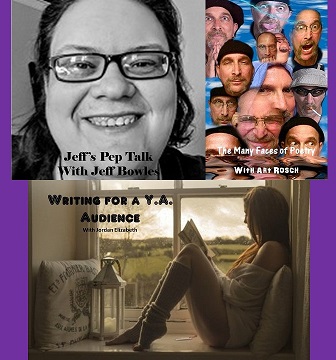 We also were blessed with three new Wednesday blog series with three new team members. The team member from the 2018 Wednesday line-up with the most views was Jeff Bowles with Jeff’s Pep Talk, but Jordan Elizabeth and Art Rosch brought in their fair share with Writing for a Y.A. Audience and the Many Faces of Poetry, respectively.


 2019 promises to be an even better year for both Writing to be Read and for me, and I’m excited to share my plans with you here. To start, this site will be getting a facelift: a new theme which will coincide with my new WordCrafter website and a new logo. The WordCrafter site will be the new home of Write it Right Editing Services and WordCrafter Copywriting, now housed here, as well as WordCrafter Press and WordCrafter Online Courses in the near future. Writing to be Read, although remaining here, will operate under the WordCrafter trademark. I was hoping to launch it tonight to start the New Year off right, but time constraints have not favored me. The launch of my WordCrafter and new image and logo for Writing to be Read will happen sometime in January. That’s the revised goal.
 Let’s not forget the new addition to the Wednesday line-up. Starting in January, children’s author Robbie Cheadle will be joining us with her blog series, Growing Bookworms. You can learn more about Robbie and her exciting and creative new series in my introduction and welcome post last Monday.


 Robbie:
 Kaye:
 Kaye:



 Kaye:
 Tom:














Looking Back Over 2016
Posted: December 26, 2016 | Author: kayelynnebooth | Filed under: Articles, Book Review, Books, Children's Books, Commentary, Fiction, Film Review, Horror, Movies, Nonfiction, Poetry, Promotion, Publishing, Screenwriting, Self-Publishing, Steampunk, Stories, Weekly Writing Memo, Western, Writing, Writing Event, Writing Tips, Young Adult | Tags: 2016, Book Reviews, Books, Fiction, marketing, Movies, Novel, Novels, Poetry, Review, Reviews, Writing, Writing to be Read | 4 CommentsThis will be the last reflective post of the year. Next Monday’s post will find us in 2017. For my writing career it has been a slow take off, but I’ve seen progress. In July, I completed my Master of Fine Arts degree in creative writing. With emphasis in both genre fiction and screenwriting, and two completed novels, Delilah and Playground for the Gods Book 1: In the Beginning, two full feature film scripts and one comedy series pilot script in hand, I eagerly jumped right in to get my feet wet in either the publishing and/or screenwriting industry. I began submitting my work to agents, publishers, and competitions like crazy. I received mostly rejections, as expected, and although I still haven’t found a home for either novels or scripts, I did manage to find a home for two poems and two short stories. Not too bad. While the poems, Aspen Tree and Yucca! Yucca! Yucca!, appeared in print, (in Colorado Life (Sept.-Oct. 2016) and Manifest West Anthology #5 – Serenity and Severity, respectively), my short story, I Had to Do It was published on Zetetic: A Record of Unusual Inquiry, and my not so short, short story, Hidden Secrets was published on Across the Margin.
2016 has been a pretty good year for Writing to be Read. The revamping of the blog site was completed in March, I’ve managed post things on a fairly regular basis, we were honored with guest posts by my friend Robin Conley, and my visits and page views have risen, with almost 2000 visitors and over 2,500 page views. Looking at this, makes me feel pretty good about the blog, as a whole. Another good change is the addition of screenwriting content, which I believe has drawn a larger audience by widening the scope of the content.
Many of my posts were reflections of my own writing experience. These included: Why Writing is a Labor of Love; Fear is a Writer’s Best Friend; I’ve Come A Long Way, Baby; Writing the Way That Works For You; Creating Story Equals Problem Solving; What’s A Nice Girl Like Me Doing Writing in a Genre Like This?; Acceptance or Rejection – Which Do You Prefer?; A Writer’s Life is No Bowel of Cherries; Write What You Know; Discouragement or Motivation?; What Ever Happened to Heather Hummingbird?; How You Can Help Build a Writer’s Platform; and Why Fiction is Better Than Fact.
Screenwriting content included this past year seemed to be popular. In addition to my Making of a Screenplay series and Writing Horror is Scary Business, Writing to be Read also featured Writing Comedy for Screen is a Risky Proposition, and a book review for Hollywood Game Plan, by Carole Kirshner, which I can’t recommend highly enough for anyone desiring to break into the screenwriting trade. Robin’s Weekly Writing Memo also included several writing tips that could be applied equally to literature or screenwriting.
Another project I’m particularly proud of is my ten part series on publishing, Pros and Cons of Traditional vs. Independent vs. Self-Publishing, which I just finished up last week. In this series I interviewed nine professionals from within the industry to get the low down on the three different publishing models. My interviews included self-published authors Jeff Bowels, Tim Baker and Art Rosch, traditionally published authors Stacia Deutsch (children’s books) and Mark Shaw (nonfiction), and independently published YA author Jordan Elizabeth. To balance things out a bit, I also interviewed children’s author Nancy Oswald, who has published with all three models, Clare Dugmore of Curiosity Quills Press and Caleb Seeling, owner and publisher at Conundrum Press.
I feel very fortunate to have had Robin Conley join us with her Weekly Writing Memo and her guest movie reviews. The useful writing tips in her Weekly Writing Memos covered a wide range of topics including critiquing, using feedback, ways to increase tension, Relatability or Likeability?, 3 Types of Plot, story research, what to write, making your audience care, world building, handling feedback, writing relationships, establishing tone, editing, word choice, How to Start Writing, endings, queries, Parts of a Scene, making emotional connections, the influence of setting, Building a Story, Inciting Your Story, movement and dialog, Writing Truth, time, Overcoming the Blank Page, Networking, character names, theme, set up, cliches, parentheticals in screenwriting, horror inspiration, and Learning to Write. Robin’s guest post movie reviews included Pride and Prejudice and Zombies, Batman vs. Superman, Miss Perigrin’s Home for Peculiar Children, and The Neon Demon.
I am thankful for Robin’s valuable content and am glad that she will still be contributing Memos on a monthly, rather than a weekly basis. Although I was sad to lose her weekly content, I am happy for her as she moves forward in her own writing career and I wish her well in her writing endeavors. For those of you who looked forward to her weekly posts, you can catch more of her content on her own blog, Author the World.
2016 was a great year for Writing to be Read, even if it was kind of rough for the author behind the blog. You readers helped to make it a good year and I thank you. Now it’s time to look ahead and see what’s in store for 2017 Writing to be Read. I mentioned some of the things I hope to achieve above: more posts pertaining to the screenwriting industry, and coverage of more events throughout the year are two of the goals I have set for my blog. I also plan to add some author, and hopefully, screenwriter profiles into the mix. I had good luck with author profiles during my Examiner days, and I think they will be well received here, as well.
I also hope to bring in some guests posts by various authors or bloggers, or maybe screenwriters, just to give you all a break from listening to me all the time. I believe Robin plans to continue with Monthly Writing Memos, which will be great, too.
I look forward to all the great books that I know are coming my way in 2017, too. The first reviews you have to look forward to are a short memoir, Banker Without Portfolio by Phillip Gbormittah, a YA paranormal romance, Don’t Wake Me Up by M.E.Rhines, a Rock Star romance, Bullet by Jade C. Jamison and a short story, How Smoke Got out of the Chimneys by DeAnna Knippling.
I hope all of you will join me here in the coming year. Follow me on WordPress, or subscribe to e-mail for notifications of new posts delivered to your inbox. Have a great 2017 and HAPPY WRITING!
Share this: