Writer’s Corner: 6 Reasons I chose to go wide with my books
Posted: June 20, 2022 Filed under: Books, Indie Publishing, Publishing, WordCrafter Press, Writer's Corner | Tags: independent publishing, Kaye Lynne Booth, Publishing, Wide vs. Exclusive, WordCrafter Press, Writer's Corner, Writing to be Read 12 Comments
I chose to go wide with WordCrafter Press books. Let me tell you why.
- Although many authors use KU to increase their income from their books, since page reads may be more of a metric than sales are, but the price may be too high. Going exclusive limits what you can do with your Intellectual Properties. So even though I’ve maintained my rights for a book, I can’t include that book in a story bundle or box set elsewhere, if it’s in KU. I can’t even sell the book direct from my own website. Likewise, audiobooks published with Audible must be exclusive for at least one year and can’t be published elsewhere, not even on my own website.
- An author wants to reach as many potential readers as possible, increasing the chances of their book being discovered, so to me, it just makes sense to place your books with as many different book distributors as possible. This can be done on each individual platform directly, but the process is very time consuming, so an aggregator like Draft2Digital or Smashwords, (which have merged into one company), can be helpful in getting your book offered on multiple platforms.
- There are some readers who just plain despise Amazon, feeling that they are a monopoly, pushing the smaller companies out, so they won’t buy from them. there are also folks who use readers other than Kindle. By publishing exclusive, authors are not reaching readers who can’t or won’t buy from Amazon or their partners.
- Brick and mortar bookstores and libraries hate Amazon. And why shouldn’t they? Amazon is their biggest competitor. So, chances are, that if your book is only available on Amazon, you won’t be able to get these entities to even consider making your book available to their customers. If they check you out and see that you are advertising “Available on Amazon”, you aren’t going to make it through the doors. (That’s why I use the Books2Read links offered through D2D, where you can set it up so potential readers can find you on their favorite book distribution platform. Amazon is in there, but so are the other platforms like Kobo, Barnes & Noble, Apple Books, and Scribd, where my books are available.) Even if you have your books on multiple book distribution and library platforms, you still must put in the work to get availability in physical locations, which are excellent opportunities for discovery and gaining new readers.
- It just doesn’t make sense to me to “put all my eggs in one basket”. By going exclusive with Amazon, I would be excluding a large portion of potential readers. Publishing with D2D places WordCrafter Press books with most of your favorite book distributors, including Barnes & Noble, Rakuten Kobo, Apple, Scribd, Amazon, Thalia, Indigo, Mondadori, and Vivlio, as well as Baker & Taylor, Overdrive and other library lists. Of course, being on the lists for libraries and bookstores don’t get your books into the brick and mortar establishments, you still have to work to build relationships with the real people who are found there, but without being on those lists, there isn’t any chance. And if I were to publish exclusive with Amazon those paths would be closed to me.
- As Derek Sivers – author, musician, entrepreneur and publisher – says on the May 16, 2022 episode of The Creative Penn podcast, “De-centralization is good. Amazon should not be the only bookstore.” And Sivers suggests that the way to work toward the goal of de-centralization is by training readers to look for your books in other places; other bookstores, libraries, or even direct from the author’s website.
Wide vs. exclusive is an ongoing decision among independent authors. Amazon has become the monster conglomerate that they are, because they are doing all kinds of things right. Most of us are not as anti-Amazon as Sivers, who instructs to send potential readers “anywhere but Amazon”. I can see the value in including Amazon in my wide distribution. Just as it doesn’t make sense to me to go exclusive, neither does it make sense to me to exclude the biggest bookseller on the block.
The fact is, even though I don’t like the pedestal Amazon has raised itself up on, and I don’t like the fact that their TOS isn’t always in the author’s favor, I can’t deny that shopping on Amazon is easy and convenient. Also, I read digital books on a Kindle device, and I hate learning how to set up and use new devices, so Amazon is where I get most of my digital content.
Now that I’ve told you my strategy, you tell me yours. Do you choose to have your books wide or exclusive? Why? Tell me your thoughts in the comments. Let’s make this more of a discussion.
______________________________________________________________________
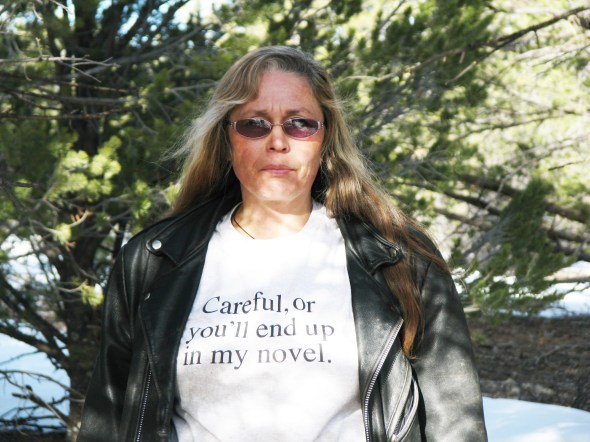
Kaye Lynne Booth lives, works, and plays in the mountains of Colorado. With a dual emphasis M.F.A. in Creative Writing and a M.A. in Publishing, writing is more than a passion. It’s a way of life. She’s a multi-genre author, who finds inspiration from the nature around her, and her love of the old west, and other odd and quirky things which might surprise you.
She has short stories featured in the following anthologies: The Collapsar Directive (“If You’re Happy and You Know It”); Relationship Add Vice (“The Devil Made Her Do It”); Nightmareland (“The Haunting in Carol’s Woods”); Whispers of the Past (“The Woman in the Water”); Spirits of the West (“Don’t Eat the Pickled Eggs”); and Where Spirits Linger (“The People Upstairs”). Her paranormal mystery novella, Hidden Secrets, and her short story collection, Last Call and Other Short Fiction, are both available in both digital and print editions at most of your favorite book distributors.
When not writing, she keeps up her author’s blog, Writing to be Read, where she posts reflections on her own writing, author interviews and book reviews, along with writing tips and inspirational posts from fellow writers. In addition to creating her own very small publishing house in WordCrafter Press, she offers quality author services, such as editing, social media & book promotion, and online writing courses through WordCrafter Quality Writing & Author Services. As well as serving as judge for the Western Writers of America and sitting on the editorial team for Western State Colorado University and WordFire Press for the Gilded Glass anthology and editing Weird Tales: The Best of the Early Years 1926-27, under Kevin J. Anderson & Jonathan Maberry.
In her spare time, she is bird watching, or gardening, or just soaking up some of that Colorado sunshine.
______________________________________________________________________________
Join Kaye Lynne Booth & WordCrafter Press Readers’ Group for WordCrafter Press book & event news, including the awesome releases of author Kaye Lynne Booth. Get a free digital copy of her short story collection, Last Call and Other Short Fiction, as a sampling of her works just for joining.
Share this:

Writer’s Corner: Where do I go from here?
Posted: May 16, 2022 Filed under: Anthology, Ask the Authors, Fairy Tales, Fantasy, Fiction, Mythology and Legend, Nonfiction, Poetry, Promotion, Publishing, Stories, Women's Fiction, WordCrafter Press, Writer's Corner, Writing, Writing Contest, Writing Reference, Writing to be Read | Tags: 2022, Anthologies, Ask the Authors 2022, Kaye Lynne Booth, Once Upon an Ever After, Poetry Treasures 2: Relationships, Refracted Reflections, Visions, WordCrafter Press, Writing Plan, Writing to be Read 1 CommentI just finished up the spring semester at Western State Colorado University. We completed our class project, the Gilded Glass anthology, and.my solo project, Weird Tales: The Best of the Early Years 1926-27, which was quite the learning experience, but also a lot of fun. I’m looking forward to the summer residency, where we will finish up our degrees and do a massive book launch party for the Gilded Glass anthology, and for each of our solo projects at the end of July.
Here is the release schedule for our cohort. Some of them are already out there. I’ve included the pre-order links in case you are interested in purchasing new renditions of any of these classic works. I think we all had fun bringing them back to life. And check out those fantastic covers!

- May 2, 2022 – Loki—The Mischief Behind the Legend: https://books2read.com/u/3n5WwB
- May 10, 2022 – Personal Reflections of Joan of Arc: https://books2read.com/u/md60kX
- May 17, 2022 – Carmilla: https://books2read.com/u/mV8Byr
- May 24, 2022 – The Best of Mary Diana Dods: https://books2read.com/u/b5lkxw
- May 31, 2022 – The King of Elfland’s Daughter: https://books2read.com/u/4ELPLg
- June 7, 2022 – The Lair of the White Worm: https://books2read.com/u/47Ylgg
- June 14, 2022 – Selected Ghost Stories from Kwaidan: https://books2read.com/u/3Ln0AJ
- June 21, 2022 – The Elusive Pimpernel: https://books2read.com/u/mY6AaV
- June 28, 2022 – A Northanger Abbey Double Feature: https://books2read.com/u/47Ylag
- July 5, 2022 – Weird Tales: Best of the Early Years 1923-25: https://books2read.com/u/4ELyn0
- July 12, 2022 – Weird Tales: Best of the Early Years 1926-27: https://books2read.com/u/bx1e8k
- July 19, 2022 – Gilded Glass: https://books2read.com/u/bwKZ8Y
____________________________________________________________
Today, I was listening to the last podcast episode of the Six Figure Authors podcast, and they were discussing their future plans now that the podcast is ending, (much to my dismay), and it made me start thinking about where I want to go with my writing career now that we’re wrapping things up and this chapter of my life is coming to an end. At the end of this summer, I will once again be on my own in my writing career. I hadn’t thought about it before, but summer’s end brings with it not only the book release event and graduation, but also the loss of access to my mentors Kevin J. Anderson and Allyson Languierra and the support and advice of my wonderful cohorts, and I have no idea what 2023 will bring. I need a plan.
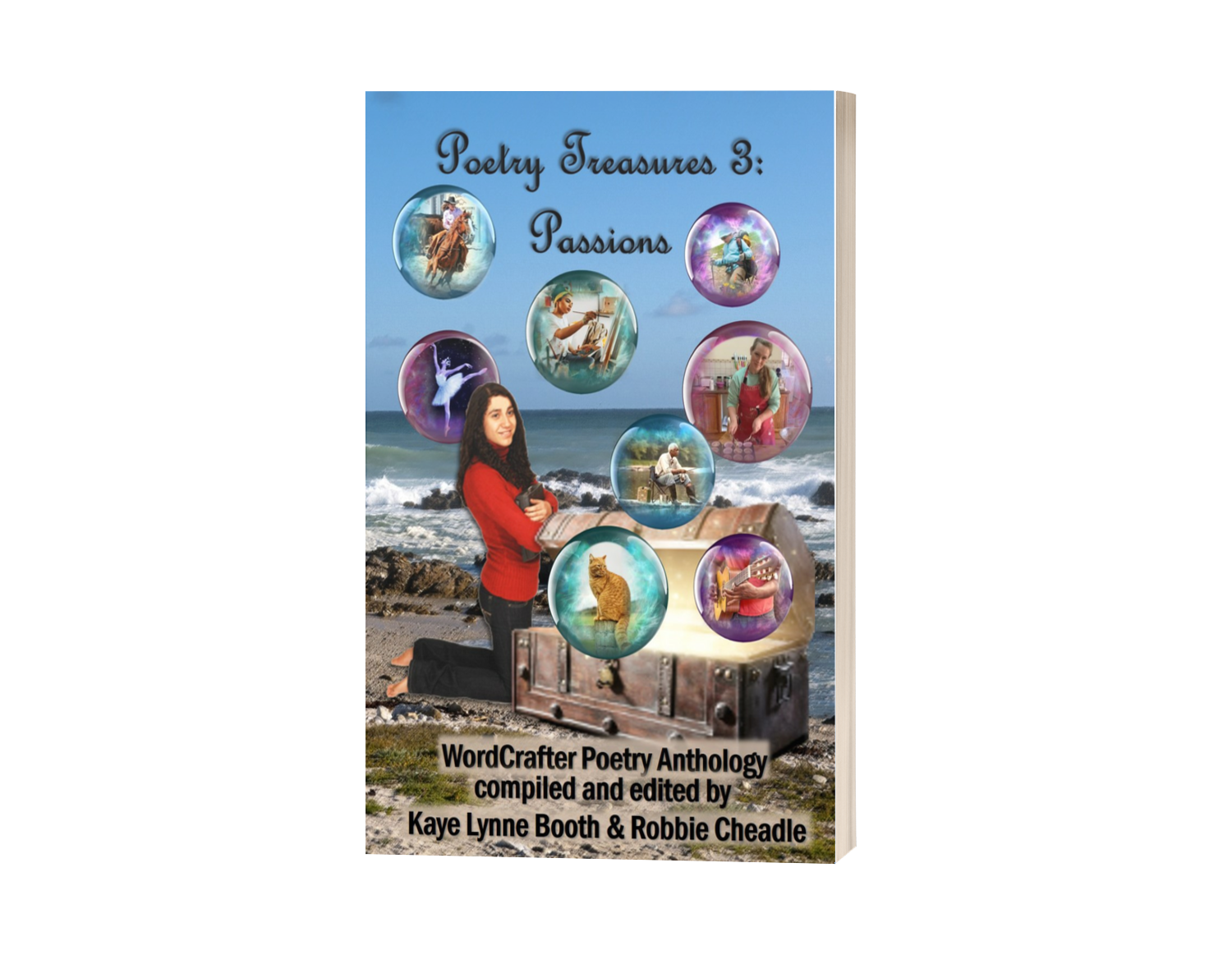
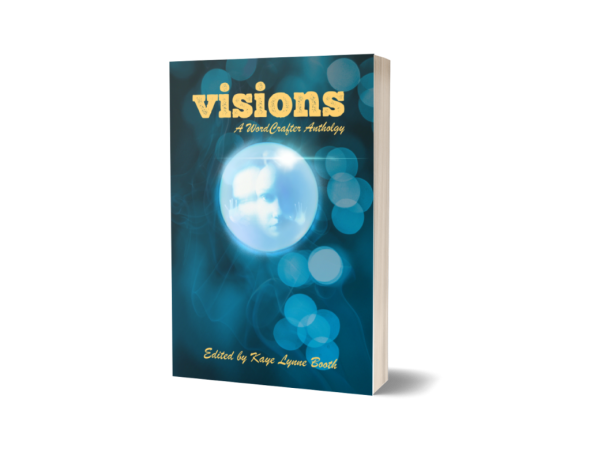
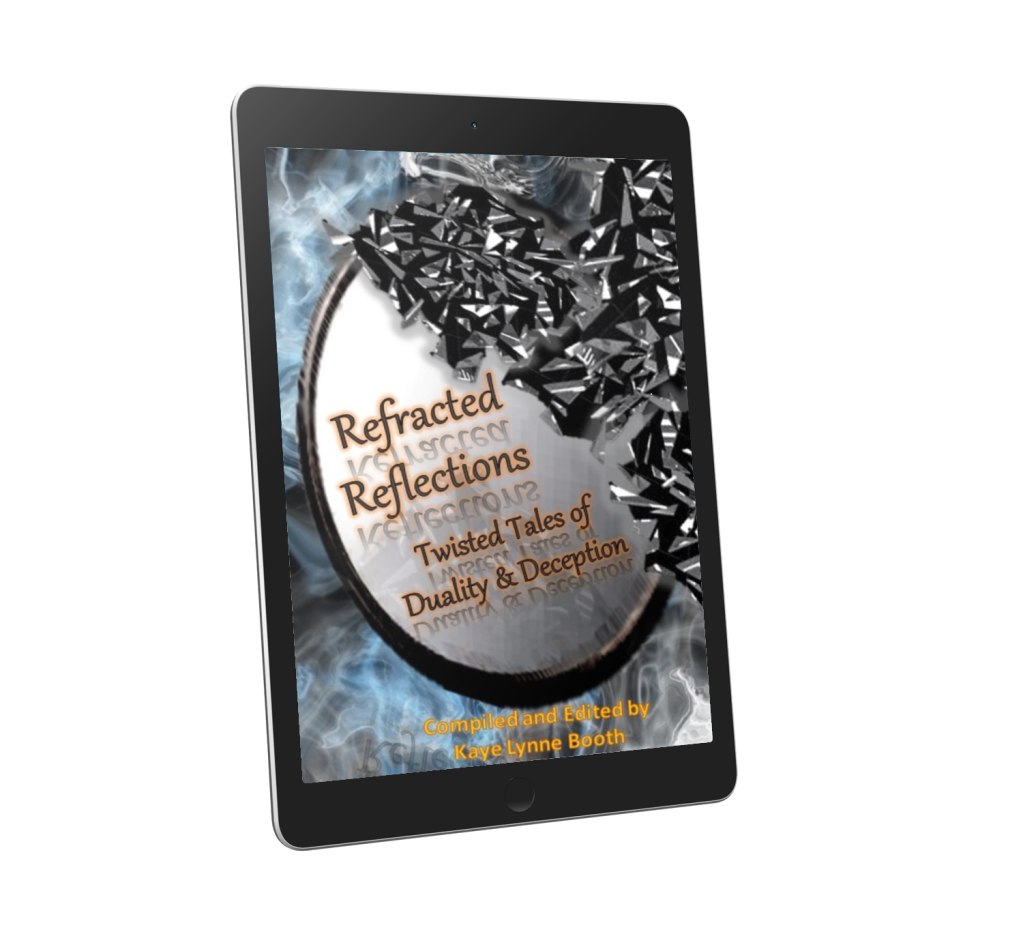
This year, I’m set, with the release of the Poetry Treasures 2: Relationships poetry anthology this last semester, the launch of Ask the Authors 2022 writing reference anthology currently under way, and three short fiction anthologies planned for later in the year: Once Upon an Ever After: Modern Fairy Tales & Folklore an (August); Refracted Reflections: Twisted Tales of Duality & Deception (September); and Visions (October). (Hmmm… It seems this is the year of anthologies for me.) But, I need a plan for what comes after that.

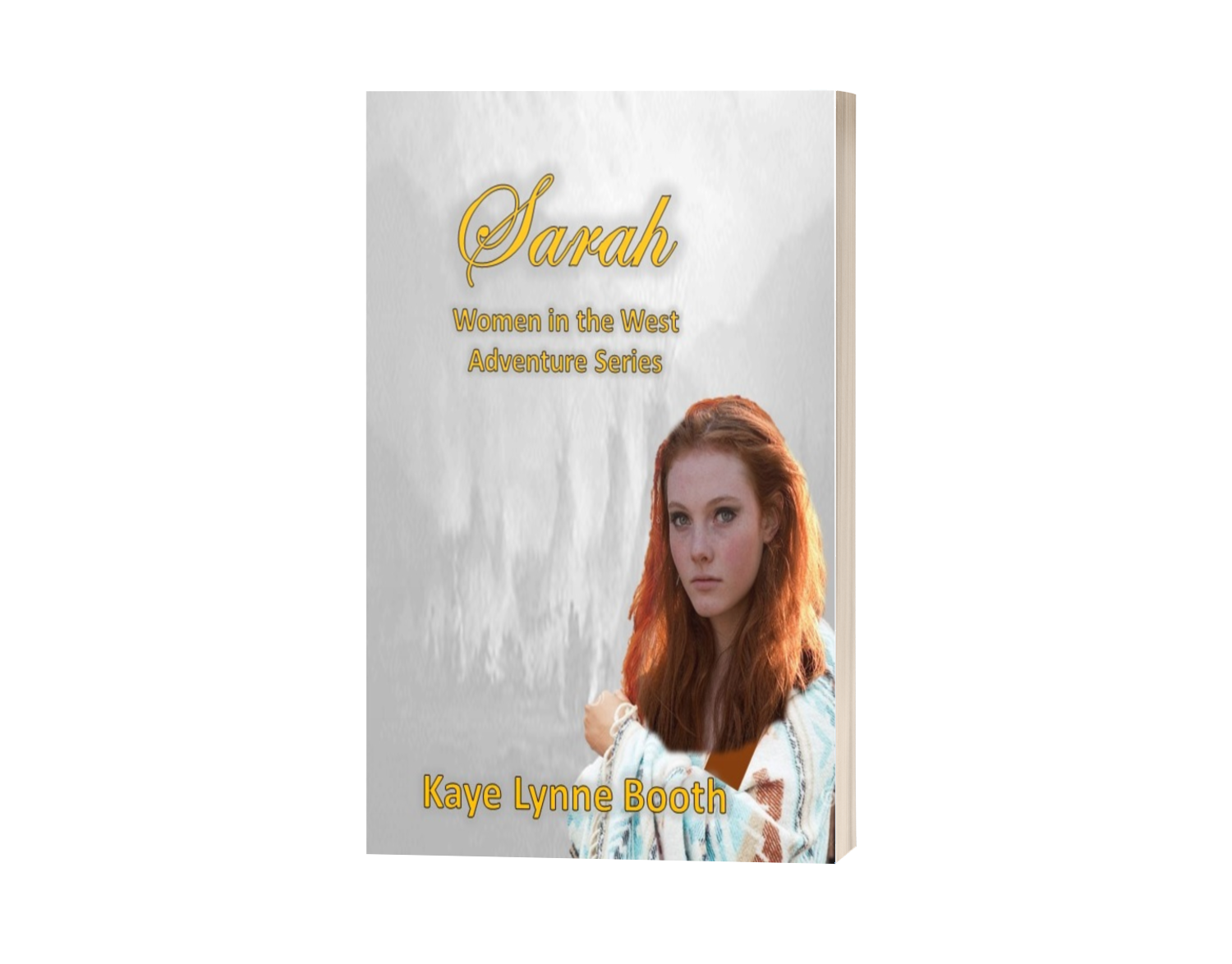
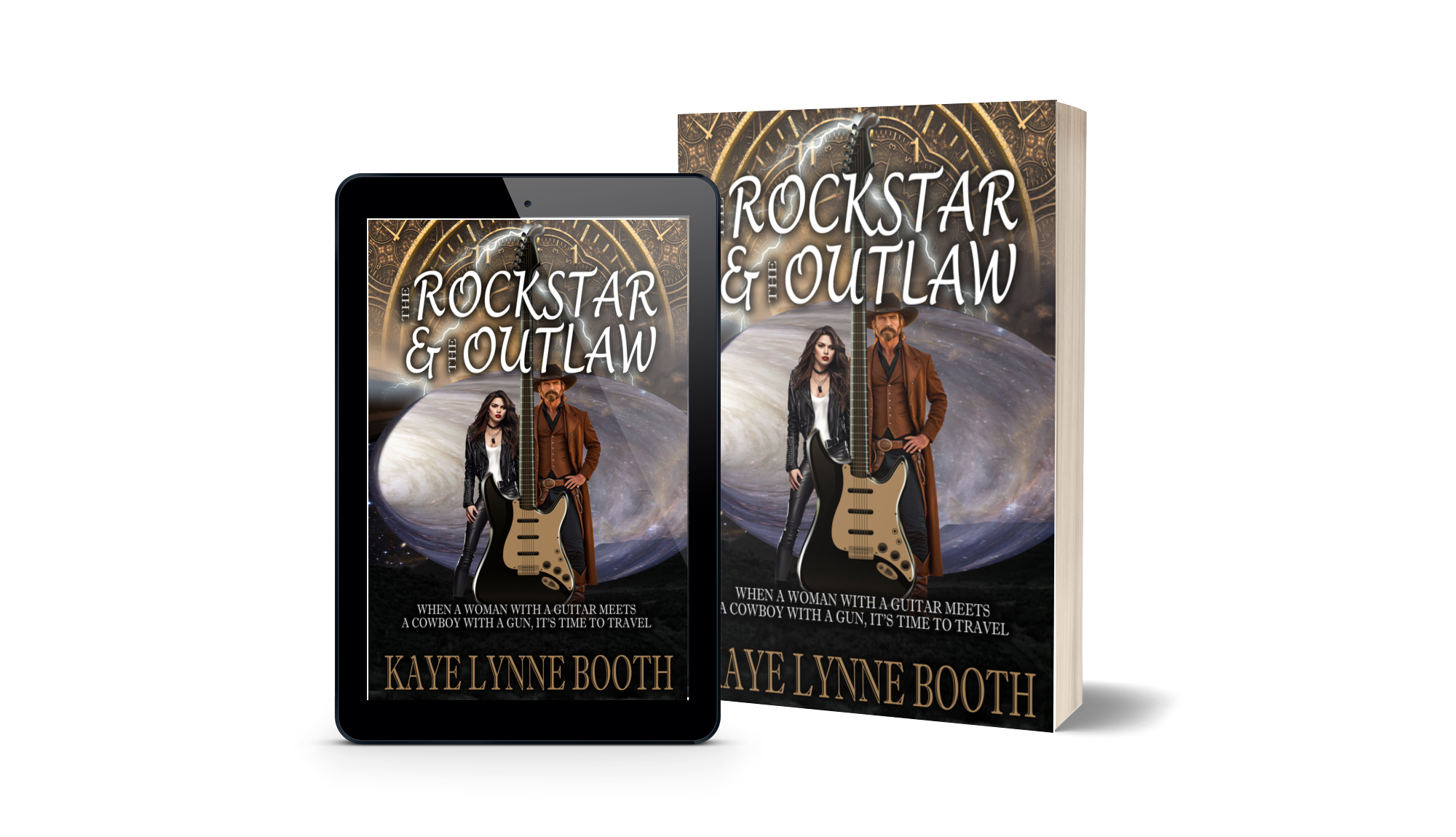
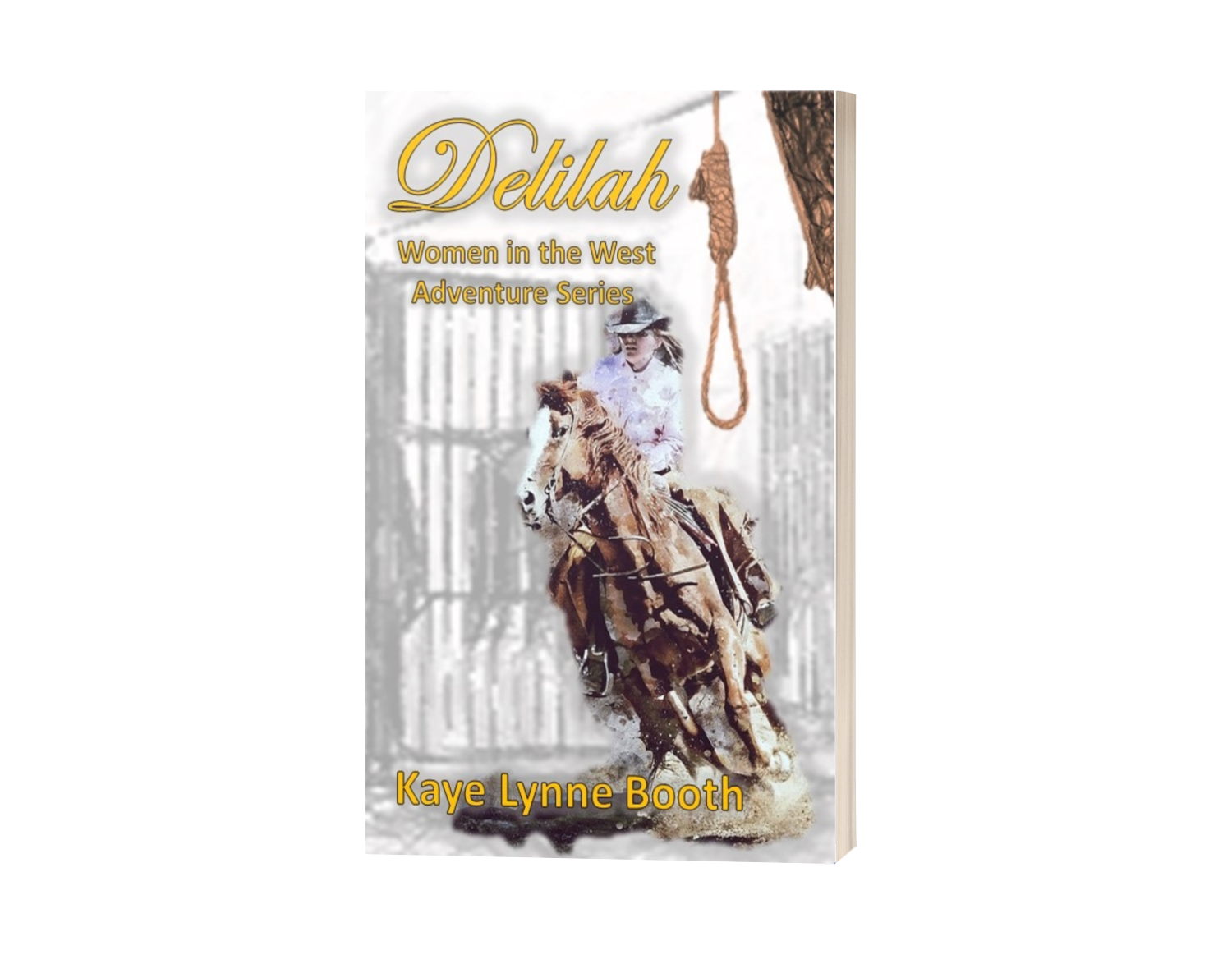
Hmmm… I’m revising Delilah to be a part of the Women in the West series with hopes of getting that out by the end of the year, but I keep adding ideas for the series, so I may wait to release until I have at least one more of the books ready to go, so that might be in the plan for next year, although it was originally a part of the plan for 2022. Also, I’ve been thinking a lot about my Playground of the Gods science fantasy series, and the first book is actually with a beta reader right now. But I’ve also been tossing the idea trying it as a serialization around. If anyone has experience on serialization, I’d love to hear your thoughts. Either way, those stories will be a part of the 2023 plan. In addition, I’ve been thinking on a time-travel romance adventure story that I started in 2021, “The Outlaw & the Rockstar”, and those characters have been teasing my brain, so I’ll probably add that to the 2023 agenda. That will give me between 2 and 5 releases of my own books for the year, which isn’t too bad if I can pull it off. Of course, I’ll also want to do an annual poetry anthology and the annual writing contest and anthology, so I can add two more book projects to the agenda.
I don’t think I will be lacking for projects once I’ve bade academia good-bye. In fact, I’m tired just thinking about the whirlwind schedule I just outlined. But you know, I think it will be worth it, if it can enable me to move my writing career to a full time level. The first thing you need to do if you want to sell books, is to write books, so I’m sitting pretty good on that plane. I’m working to revive my monthly newsletter, which I believe will be one of my most valuable marketing tools, and organizing a multi-genre newsletter swap group to help spread the word on releases. I’ve got good lists for possible reviewers built for all the anthologies planned for 2022, which will work for the annual anthologies, but will have to be created for my own books, and this blog is a book marketing tool, too. It’s a place where readers can come to learn about my latest projects, and my readership is growing, so I think I’m on the right track there.
Well…, would you look at that? Why was I worried? I have a plan…, and I think it’s a good one.
____________________________________________________________

Kaye Lynne Booth lives, works, and plays in the mountains of Colorado. With a dual emphasis M.F.A. in Creative Writing, writing is more than a passion. It’s a way of life. She’s a multi-genre author, who finds inspiration from the nature around her, and her love of the old west, and other odd and quirky things which might surprise you. She has short stories featured in the following anthologies: The Collapsar Directive (“If You’re Happy and You Know It”); Relationship Add Vice (“The Devil Made Her Do It”); Nightmareland (“The Haunting in Carol’s Woods”); Whispers of the Past (“The Woman in the Water”); Spirits of the West (“Don’t Eat the Pickled Eggs”); and Where Spirits Linger (“The People Upstairs”). Her paranormal mystery novella, Hidden Secrets, and her short story collection, Last Call, are both available in both digital and print editions.
In her spare time, she keeps up her author’s blog, Writing to be Read, where she posts reflections on her own writing, author interviews and book reviews, along with writing tips and inspirational posts from fellow writers. In addition to creating her own imprint in WordCrafter Press, she offers quality author services, such as editing, social media & book promotion, and online writing courses through WordCrafter Quality Writing & Author Services. When not writing or editing, she is bird watching, or hiking, or just soaking up some of that Colorado sunshine.
______________________________________________________________________
Sign up for the Kaye Lynne Booth & WordCrafter Press Newsletter for and book event news for WordCrafter Press books, including the awesome releases of author Kaye Lynne Booth. Get a free digital copy of Kaye Lynne Booth’s paranormal mystery novella, Hidden Secrets, just for subscribing.
Share this:

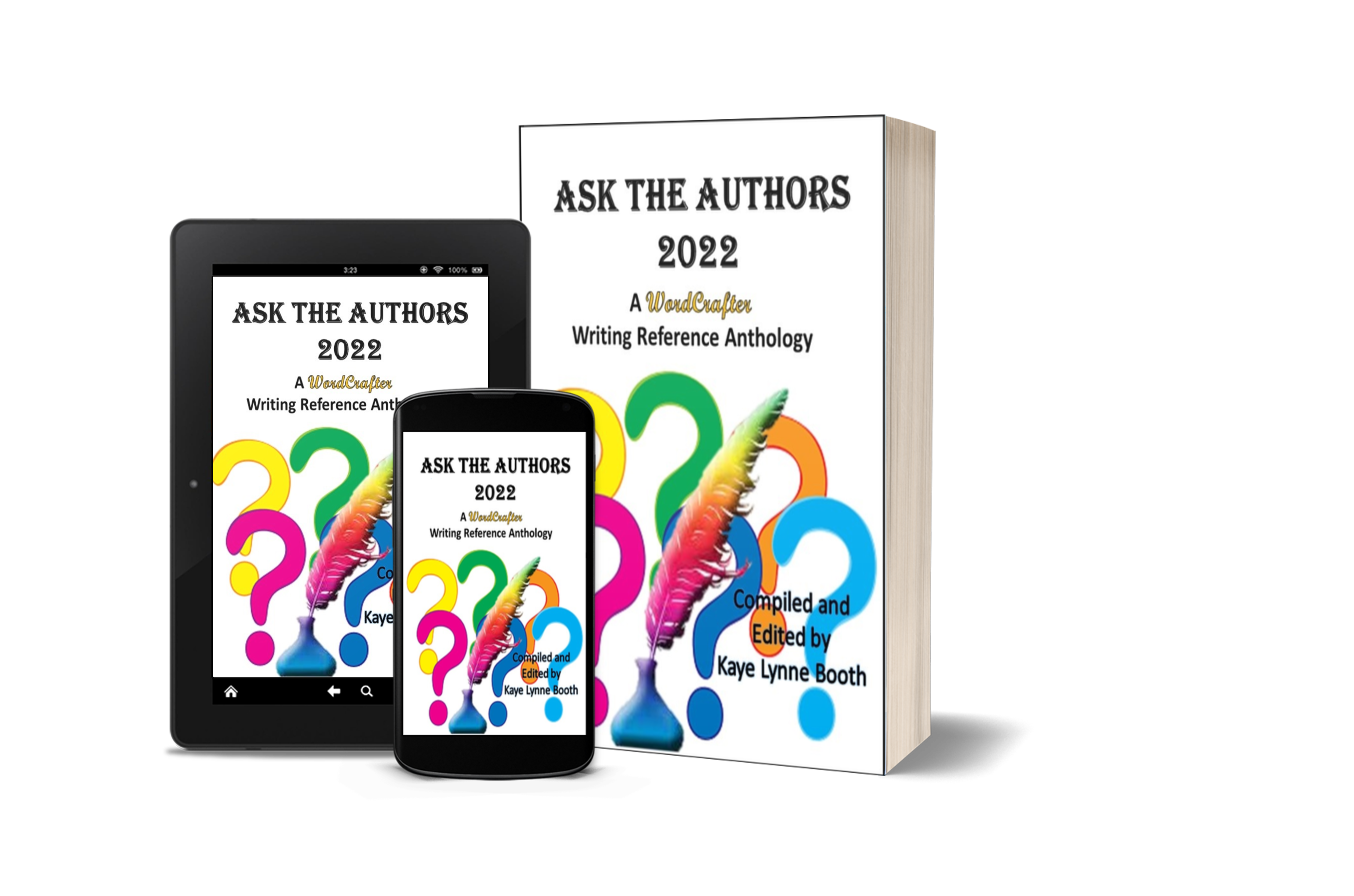
Ask the Authors 2022 is here!
Posted: April 22, 2022 Filed under: Ask the Authors, book marketing, Book Promotion, Book Release, Books, Character Development, Dialogue, Editing, Fiction, Nonfiction, Plot, Point of View, Publishing, Story Telling Methods, Teaching Writing, Tense, Tone, Voice, WordCrafter Press, World Building, Writing, Writing Life, Writing Process, Writing Reference, Writing Tips | Tags: Ask the Authors 2022, Bobby Nash, Chris Barili, Jeff Bowles, Kaye Lynne Booth, L. Jagi LAmplighter, Mario Acevedo, Mark Leslie Lebefvre, Nancy Oswald, Paul Kane, Roberta Eaton Cheadle, WordCrafter Press, Writing Reference, Writing to be Read 19 Comments
That’s right. The writing reference you’ve all been waiting for has arrived. Ten talented authors and industry experts have gathered together with me to share their writing tips and advice in essay and Q&A, creating a writing reference anthology like no other.
Where can you find publishing industry experts willing to share their secrets?
Ask the Authors 2022 is the ultimate writer’s reference, with tips and advice on craft, publishing and marketing. Eleven experienced and successful authors share what works for them and offer their keys to success in traditional publishing, hybrid, and indie. You’ll learn industry wisdom from Mark Leslie Lefebvre, Kevin Killiany, L. Jagi Lamplighter, Bobby Nash, Paul Kane, Nancy Oswald, Chris Barili, Jeff Bowles, Roberta Eaton Cheadle, Mario Acevedo and Kaye Lynne Booth.
This book offers up-to-date and tried-and-true ways to improve your craft, explores current publishing and book marketing worlds. Take a peek inside and find out what works for you.
Praise for Ask the Authors 2022
“Ask the Authors is an up-to-date and broad-based compendium of advice from today’s working writers, to help you with understanding your own writing career. Great information!”
—Kevin J. Anderson, New York Times bestselling author of Spine of the Dragon

Ask the Authors 2022 is available in both digital and print. You can get your copy from your favorite book retailer through the Books2Read universal book link (UBL) here: https://books2read.com/u/3LnK8e
______________________________________________________________________________
Sign up for the Kaye Lynne Booth & WordCrafter Press Newsletter for and book event news for WordCrafter Press books, including the awesome releases of author Kaye Lynne Booth. Get a free digital copy of Kaye Lynne Booth’s paranormal mystery novella, Hidden Secrets, just for subscribing.
Share this:

Writer’s Corner: Five things you may not know about the publishing industry
Posted: April 4, 2022 Filed under: Books, Publishing, Writing | Tags: Hybrid Publishing, independent publishing, Publishing, Traditional Publishing, Writer's Corner, Writing to be Read 9 CommentsSince the beginning of this century, the publishing industry has undergone many changes at a very rapid pace due to the rise of digital technology and ebooks and the resulting swell of independent authors which has reshaped the way the industry operates. Traditional publishing houses have had a difficult time in adapting to these changes, which are transforming the playing field from being favorable to publishers into one more fair to authors. Trad. publishers are slow to adapt and their numbers are dwindling as they hang on to traditional practices that make little sense in this day and age. Just in the past five years we’ve seen the big 5 become the big 4, and in 2021 they merged into the big 3.
Many authors struggle with the decision of whether to self-publish or try for a traditional publishing deal, which could turn into an endeavor spanning years and your book may still not be published. Traditional publishing offers status and esteem when you can get it, but the road to a traditional publishing deal has many pitfalls and often ends in wrong turns and dead ends. It’s not easy to land a trad. publishing deal and there are no guarantees. This is nothing new. It has never been easy, but I think it’s harder than it used to be
When you take a good hard look at today’s publishing industry, you may find a few things which surprise you. I know I did.
Did you know…
- Advances offered by traditional publishing must be paid back before the author sees any of their royalties? That’s right. An advance is just that – payment of royalties in advance. And the royalty percentage offered by trad. publishers is considerably less than what indie authors receive, so it may take a very long time to pay out that advance, and if s book does not sell well, it may never pay out. Many self-published authors have opted for smaller royalty payments over the long haul, rather than one big chunk of money in the beginning that may never pay out any more than that initial advance payment.
- While a traditional publishing deal may still carry an advance with it, it seems the advance amounts have gotten smaller, as traditional publishers grow more unsure of your book’s ability to sell? While book publishers have always taken risks when signing a new author, with the rise of independent authors and publishers, there’s a lot more competition and publishers may be less confident of a book’s success, so they aren’t as willing as they once were to cough up the cash before the book has been proven. What’s more, they aren’t as willing to provide as much effort for promotion. In fact, trad. publishers today are looking at the reader platform, or fan base, that an author brings with them as well as their social media platforms, etc…, and they may expect authors to perform much of the marketing and promotion for their book. A small independent publisher which published my western novel, Delilah, but they did very little as far as marketing goes, and of course, there was no advance. I felt I could do better with it myself, which is why I chose not to renew my contract and will be re-publishing the book myself as part of the Women of the West adventure series.
- Traditional publishing created a return policy for bookstores and retailers that allows them to return print books at the publishers expense, which still applies today, effectively preventing independent publishers and authors from having their print books carried in brick and mortar bookstores? While print-on-demand has revolutionized the publishing industry, making it no longer be necessary for authors to create large or small print runs and stockpile books I’m their basement or garage, it is still a challenge for independent authors to get their books into bookstores due to the ridiculous return policy trad. publishers created for bookstores. Today, bookstores have played by these rules for so long that they have no desire to change the rules even though they should. You can read about the options when you publish through Ingram Spark here. There may be a work around if you can find an independent local bookstore willing to take your books on consignment, but for the most part, indie authors are limited to selling their print books online because of an outdated policy that never made sense in the first place. I mean, what other industry allows to retailers to return unsold products after a number of years for a full refund, potentially devastating the maker when the charge blindsides them unexpectedly?
- The time that you must wait for your book to go through the traditional publishing process could be two to three years or more from the time of signing, if you do manage to land a traditional publishing deal? Even after you have a contract, that doesn’t guarantee that your book will actually be published, and the publishing process is so long and tedious that your book could potentially be in limbo for years. Of course, that is not what happens most of the time, but it has happened. Children’s books take even longer to go through the publishing process. They can take up to five years or more. Imagine the disappointment of not being published after waiting years to get a trad. deal, and waiting even more years to go through the publishing process. This may be even more of a possibility with the instability of the traditional publishing industry today.
- Traditional publishers often ask for rights they never intend to use, and if you give them to them, you can no longer do anything with them? Traditional publishing contracts are not traditionally author friendly, often asking authors to throw in many rights that are unnecessary for the author to give up. For example, many publishing contracts ask for audio rights, even when they have no intention of publishing your book on audio. If these rights are maintained by the author, they can be licensed separately or used to produce their own audiobook through one of the many audiobook platforms available to authors today, but if they are included on your contract, the publisher can sit on them and the author will make nothing from them. That’s money left on the table that the author can’t touch. It is very important that authors know what they are signing and don’t sign away rights that they don’t need to.
Authors today have choices which authors of the past did not. We no longer have to go through the submission-rejection-resubmission grind for months or years to find someone else who likes your writing and might want to publish it. Today we can publish our works ourselves because we like it, and hopefully find others who like it too and will become fans and loyal readers. There are many authors today who choose to try the best of both worlds in some sort of hybrid combination that fits their needs.
I can’t see trying to beat a dead horse, and for me, I think that is what traditional publishing would be. Although making money from my books is always a goal, as I pointed out above, there are no guarantees that I would ever find someone who wanted to publish my book and, even then, there are no guarantees that it would actually happen, or that it would sell. I want people to read my books and that will never happen unless they are published. That’s why, for me, independent publishing will be the course that I choose. Which course is right for you?
________________________________________________________________________
Kaye Lynne Booth lives, works, and plays in the mountains of Colorado. With a dual emphasis M.F.A. in Creative Writing, writing is more than a passion. It’s a way of life. She’s a multi-genre author, who finds inspiration from the nature around her, and her love of the old west, and other odd and quirky things which might surprise you.
She has short stories featured in the following anthologies: The Collapsar Directive (“If You’re Happy and You Know It”); Relationship Add Vice (“The Devil Made Her Do It”); Nightmareland (“The Haunting in Carol’s Woods”); Whispers of the Past (“The Woman in the Water”); and Spirits of the West (“Don’t Eat the Pickled Eggs”). Her western, Delilah, her paranormal mystery novella and her short story collection, Last Call, are all available in both digital and print editions.
In her spare time, she keeps up her author’s blog, Writing to be Read, where she posts reflections on her own writing, author interviews and book reviews, along with writing tips and inspirational posts from fellow writers. She’s also the founder of WordCrafter. In addition to creating her own imprint in WordCrafter Press, she offers quality author services, such as editing, social media & book promotion, and online writing courses through WordCrafter Quality Writing & Author Services. When not writing or editing, she is bird watching, or hiking, or just soaking up some of that Colorado sunshine.
______________________________________________________________________
Sign up for the Kaye Lynne Booth & WordCrafter Press Newsletter for and book event news for WordCrafter Press books, including the awesome releases of author Kaye Lynne Booth. Get a free digital copy of Kaye Lynne Booth’s paranormal mystery novella, Hidden Secrets, just for subscribing.
Share this:

Writer’s Corner – Five reasons it makes perfect sense to become an independent author
Posted: March 14, 2022 Filed under: Indie Publishing, Publishing, Self-Publishing, WordCrafter Press, Writer's Corner, Writing | Tags: elf-Publishing, independent publishing, Kaye Lynne Booth, Publishing, Writer's Corner, WritingtobeRead 2 CommentsTraditional publishing is fast becoming a dinosaur, being slow to adapt to the rapid technological changes which have arisen along side the rise of digital publishing within the industry. Independent authors and publishers have been flexible, creative and quick to adapt to digital technology which makes it possible for aspiring authors to test the waters without waiting around for years or even decades for traditional publishers to take notice and grace us with their attentions, while traditional publishers have been resistant to change, turning their noses up at self-published authors until their value as professional authors with the ability to produce books that sell by independent industry leaders like Hugh Howey, and been generally inflexible and unbending, continuing to follow publishing and marketing models which are no longer effective. The adaptions that they have made have been forced and have made the traditional publishing model even less appealing for authors.
- Better Royalties: Royalties on traditional publishing which the author receives are usually around 15% of sales, while independently published authors receive anywhere from 30-70%, depending upon which platforms they choose to publish on. And don’t forget that independently published authors who go wide rather than exclusive can always sell direct from their site and make even more.
- Negotiations: Traditional publishing contracts are awful and getting worse, according to Kristine Kathryn Rush, (https://kriswrites.com/2022/01/05/business-musings-contracts-traditional-publishing-the-year-in-review-4/). Deals may offer the author an advance, even this is not guaranteed anymore. And the ones that are offered are for lesser amounts than were previously offered in the past. Of course, traditional publishing deals have always been skewed in the publishers’ favor, and the book must earn back the advance before the author ever sees any additional royalties and an author whose book doesn’t sell well may never see any royalties past the initial advance. As Rusch points out, all things are negotiable and the publishing house no longer holds the reins. Smart independent authors manage their own Intellectual Property (IP), and they don’t EVER sign away all of their rights and leverage their writing to the author’s benefit.
- Decrease in Publisher Responsibilities: While in the past, traditional publishers were willing to invest in the marketing and advertising of books, it seems they have grown more reluctant to do so in today’s book market. Even if you do manage to land a traditional publishing deal today, you may still need to take on a large part, if not all, of the marketing tasks to sell your book. So while it is true that indie authors have to spend a large portion of their time on administrative and promotional tasks, publishing traditionally does not guarantee that this will not be necessary.
- Improved Product Availability: With the availability of ‘Print on Demand’ publishing, authors no longer need to make large expenditures on big print runs or make space to house vast numbers of book in their garage or basement, as was previously necessary with offset printing. Audiobooks are also becoming more affordable to produce with the rise of AI narration, which is now offered for free on Google Play Books. Lower prices and better availability of services for independent authors on a budget, make independent publishing an even better option than it has been in the past.
- Control: Independently publishing puts the author in control. Of course, with control comes responsibilities. I won’t deny that indie authors must wear many hats; author, publisher, self-editor, marketer, and maybe even cover designer, as well as “The Boss”. One lesson I’ve been learning recently, is that I can’t do it all, and I am having to wear “The Boss” hat more and delegate some of the other tasks to those better suited to do them, so that I can have time to put into my own writing. Marketing is a matter of trial and error a lot of time, and changing the cover or the blurb can make a big difference in how well a book sells. Independent authors are “The Boss” and when they see their book isn’t selling as well as they think it might, they have the ability to go in and change the cover or the blurb and see if they can’t turn things around, while if with traditional publishers, they may have their work cut out for them convincing their publisher to change something up to see if it sells better.
______________________________________________________________

Kaye Lynne Booth lives, works and plays in the mountains of Colorado. With a dual emphasis M.F.A. in Creative Writing, writing is more than a passion. It’s a way of life. She’s a multi-genre author, who finds inspiration from the nature around her, and her love of the old west, and other odd and quirky things which might surprise you. In her spare time, she keeps up her author’s blog, Writing to be Read, where she posts reflections on her own writing, author interviews and book reviews, along with writing tips and inspirational posts from fellow writers. She is also the founder of WordCrafter Quality Writing & Author Services, providing editing, social media copywriting & book promotion, and online writing courses. When not engaged in writing activities, she is bird watching, or hiking, or just soaking up some of that Colorado sunshine.
Like this post? Let me know in the comments. You can be sure not to miss any of Writing to be Read’s great content by subscribing to e-mail or following on WordPress. If you found this content helpful or entertaining, please share.
Share this:

Inviting You to Join My Street Team!
Posted: December 20, 2021 Filed under: Anthology, Book Covers, Books, Fiction, Ghost Stories, Historical Fiction, Paranormal, Poetry, Science Fantasy, Science Fiction, Short Fiction, Stories, Western, Western Paranormal, WordCrafter Press, Writing, Writing Contest, Writing Event, Writing Tips | Tags: Beta Readers, Kaye Lynne Booth, New release, Release Events, Reveiwers, Social Media Promotion, Street teams, WordCrafter Press 2 Comments
You are reading this, so chances are good that you are familiar with me and my writing, as well as WordCrafter Press and its books, because I talk about all of these things a lot. Since you are hanging out here, reading my posts and those of my wonderful blog team members, there’s also a good chance that you are interested in my work, so you will be interested in this opportunity, as well.
Being a multi-genre author creates the need to reach multiple target audiences. I write western, paranormal, science fiction, dark fantasy & vampires, and maybe even a little bit of romance. Although unpublished, I’ve even written a children’s series. That makes it more difficult to hit my target market and find readers who enjoy the kind of book I write, but I’m learning that I’m just not a write to market kind of girl. I have to write what my heart says, and it refuses to remain in a single genre.
I’ve decided to build a street team to help spread the word about new releases and release events. So, I’ve created a private Facebook group “Kaye Lynne Booth & WordCrafter Press Street Team” group, where you can help by becoming a beta reader and providing feedback prior to release, or reviewer, or just an enthusiastic fan, sharing new release and release event information on social media to help get the word out.. This is a group for those who want to help create, promote or just support me and my books, and find opportunities to free books, for an extra perk. As a member of the group, you will be privy to news regarding works-in-progress, new releases and upcoming book events, as well as early cover releases and sneak previews.
I hope that you will click on the link above and join us, as 2022 looks to be a exciting year, with between 7 and 12 new releases coming!
WordCrafter Press will be putting out, not just one, but three anthologies this year, including the resulting anthology from the annual short fiction contest. The call for submissions for the 2022 WordCrafter Short Fiction Contest will be posted in January, this year’s anthology will also feature the stories by invitation, which will not be included in the contest, but will be included in the Visions anthology. The other two anthologies will be by invitation only, Once Upon an Ever After, and Slivered Reflections. WordCrafter Press will also be doing a new edition of the writer’s reference, Ask the Authors and a new edition of Poetry Treasures. For my own books, I will be dropping my contract with Dusty Saddle Publishing and publishing a special edition of Delilah myself, and publishing at least the first three books of my science fantasy Playground for the Gods series, and possibly the fourth.
If you join my street team group, you’ll be privy to all the latest news about all these great releases and more! Bring your enthusiasm and help me make my writing dreams come true. And don’t forget the free books and other perks. See you there!
Share this:

Day 4 – WordCrafter “Behind Closed Doors” Book Blog Tour
Posted: August 26, 2021 Filed under: Blog Tour, Book Covers, book marketing, Book Promotion, Book Review, Books, Guest Post, Poetry, WordCrafter Book Blog Tours | Tags: Behind Closed Doors, Book Review, Poetry, Poetry Collection, Robbie Cheadle, WordCrafter Book Blog Tours 1 Comment
Day 4 of the WordCrafter Behind Closed Doors Book Blog Tour finds us over at Miriam Hurdle’s Showers of Blessings blog site with a guest post by author and poet Robbie Cheadle and a lovely review of Robbie’s latest book, Behind Closed Doors, a collection of unusual poetry. Drop in and learn more about this fascinating poetry collection and its author.
_____________________________________________________________________________________________________
Book your WordCrafter Book Blog Tour today!
Share this:

Anthologies: An alternative path to publication
Posted: October 12, 2020 Filed under: Books, Fiction, Paranormal, Publishing, Stories, Western, Western Paranormal, WordCrafter, Writing, Writing Contest | Tags: Anthologies, Short Fiction, Spirits of the West, WordCrafter Press, WordCrafter Short Fiction Contest, Writing to be Read 4 Comments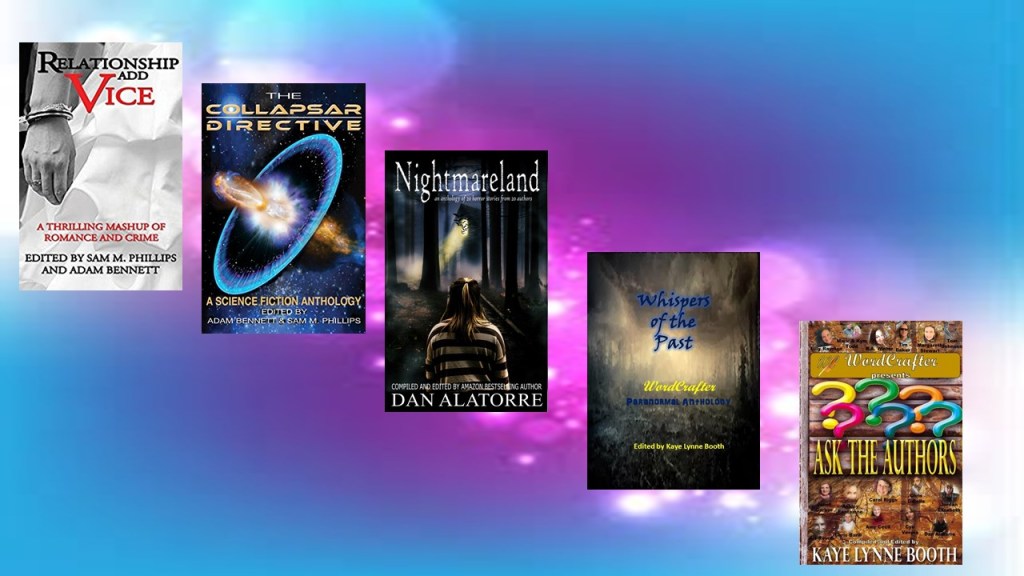
I’m seeing a lot of promotions for anthologies these days. This excites me because short fiction anthologies are a wonderful way for rising authors to gain new readers. If you look for them, there are plenty of opportunities for short fiction submissions and contest entries, and many of those hold the possibility of having your short story featured in a new anthology.
All authors want to see their work published, but full length novels take months or even years to craft and polish before being ready to consider publication. And if an author is considering the traditional route of pitching their work until they find an interested publisher, they could be looking at that manuscript gathering dust on the shelves for a very long time. Short fiction offers a chance for authors to get their names out there on multiple works in a much shorter period of time than it would take to write and publish multiple novels.
Even before I published Delilah, I had two short stories accepted for publication online. Then my story, “If You’re Happy and You Know It”, was accepted by Zombie Pirate Publishing and it appeared in their The Collapsar Directive anthology. I learned very quickly that one difference in having short fiction published in an anthology, as opposed to being published online, was the spirit of comraderie among all the authors featured. The other cool perk of being published in an anthology was the invitation to submit to the next planned anthology. Hence, my story, “The Devil Made Her Do It”, appeared in the next anthology ZPP put out, Relationship Add Vice.
The trick to getting into an anthology is to read the submission guidelines and submit a story that meets them. Most of the time, that may mean writing a story specifically for that submission call or contest. When I was invited to submit a story for Dan Alatorre’s Nightmareland, the guidelines were pretty general, “horror”, and I happened to have a piece of flash fiction that fit into the genre. All it required was a bit of polishing and my story, “The Haunting of Carol’s Woods”, was ready for submission and acceptance. But, many submission calls are more specific.
For the above mentioned submission to ZPP for Relationship Add Vice, submission guidelines required a story that contained elements of romance and crime fiction. Chances are that you don’t have a story sitting in your files with those elements and you would need to create a new story to submit to meet these guidelines. I did have the beginnings of one, as it happened, but that certainly isn’t always the case.
The submission guidelines are important. Read and follow them carefully. Other than the type of story, they may include specific formatting requirements and other submission instructions. Many publishers are strict about their guidelines and will put down a story without finishing it, if the story doesn’t meet even one of the specifications. Of course, that doesn’t apply only to anthologies. Every submission you make should conform to the given submission guidelines, whether we’re talking about short fiction, novel manuscripts, articles or poetry. Why read something if the submitting author can’t even follow directions?
With each of these anthologies, I got that same feeling of comraderie and networking with my fellow authors. I love that feeling. Because anthologies, by definition, have several different authors, they also carry with them the advantage of widening the pool of possible readers. Each author promotes the anthology to their reader audience, so it is possible to extend your own reach beyond your own reader following and gain new readers who read your work in the anthology and want to read more. It’s a win-win for all authors involved.
Naturally, when I started WordCrafter Press in 2019, the first undertaking was to launch a short fiction contest and compile and publish the resulting anthology, Whispers of the Past. The submission guidelines required a paranormal stort story and the contest winner received a $25 Amazon gift card.
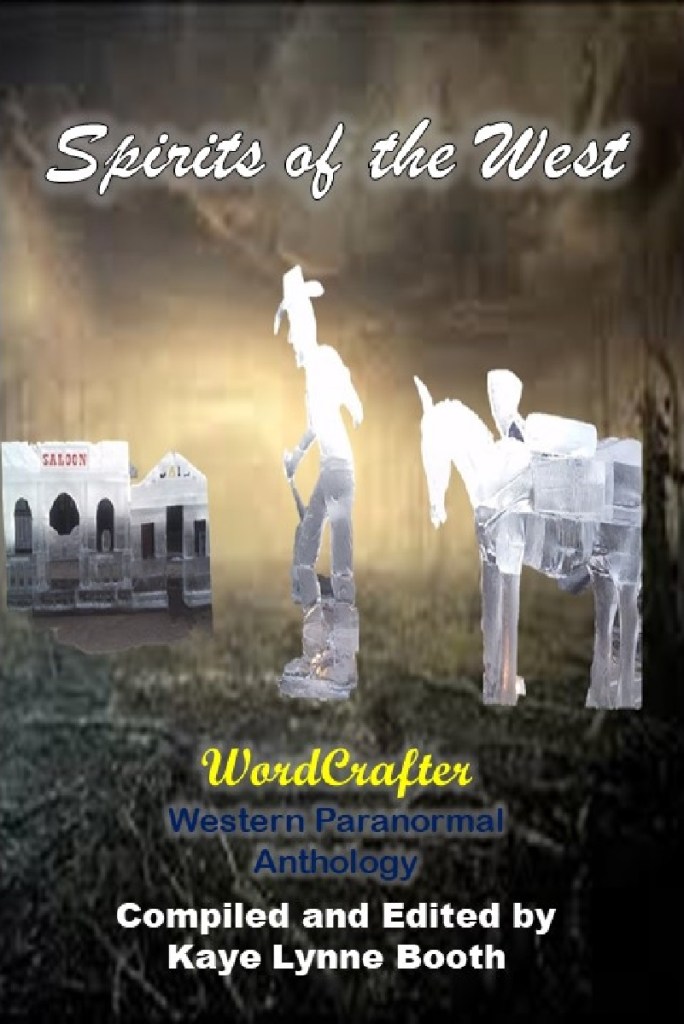
For 2020, the contest submission call requested a piece of short fiction with elements of both the paranormal and western genres. It may have seemed a weird combination to some, but to me, it seemed only natural. The old west is filled with ghosts and spirits, and my first novel was a western. I think it was the western genre that threw potential authors off, but what resulted from this genre combination were some very interesting stories, including two South African ‘westerns’ by WtbR team member Robbie Cheadle, “The Thirstyland Journey” and “The Ghost in the Mound”, and a science fiction ‘western’ by WtbR team member Art Rosch, “Clouds in the West”. This author of this year’s winning story is Enid Holden, and she has two stories included in the anthology: the winning story, “High Desert Rose” and another paranormal western, “The Queen of Spades”. And my contribution is a story I wrote specifically for the occassion, “Don’t Eat the Pickled Eggs”. “Wenekia”, by last year’s contest winner, Jeff Bowles and “Gunsmoke” by author Tom Johnson are also included. This unique collection of paranormal westerns have been compiled into the Spirits of the West anthology and scheduled for an October release.
Authors can find calls for submissions or short fiction contests all over the internet these days. If you just look for them, you’re sure to find one that works for your writing style and preferences, or maybe one that offers a challenge and takes you into writing realms where you’ve never before ventured. In January, I’ll be announcing the theme for the 2021 WordCrafter Short Fiction Contest, so be sure to watch for that, too. If you want to get your name out there, grow your audience and have people read your work, short fiction anthologies are a great start, or they can be a supplement to already published books. Find one that suits you and submit a story today.
Share this:

Announcing the WordCrafter 2020 Stay in Place Virtual Writing Conference
Posted: April 13, 2020 Filed under: Action Scenes, Book Covers, book marketing, Books, Character Development, Comic Hero, Fantasy, Fiction, Horror, Media Tie-Ins, Pacing, Poetry, Pulp Fiction, Science Fiction, Setting, Speculative Fiction, Stories, Super Hero, Teaching Writing, Thriller, WordCrafter, World Building, Writing, Writing Event, Writing Workshops, Young Adult | Tags: 2020 Stay in Place Virtual Writing Conference, Alexi Vandenberg, Anthony Dobranski, Art Rosch, Bobby Nash, book marketing, Book Promotion, Chris Barili, Dan Alatorre, Dave Wolverton, Ellie Raine, Fiction, Guy Anthony DeMarco, J.R.H. Lawless, Jason Henderson, Jody Lynne Nye, Jonathan Maberry, Keith R.A. Candido, Kevin J. Anderson, Kevin Killiany, L. Jagi LAmplighter, L.D. Colter, Mario Acevedo, Media Tie-In, Rick Wilber, Rosemerry Wahtola Trommer, Sean Taylor, Short Fiction, WordCrafter, World Building, Writing, Writing to be Read 19 Comments
We’re all tired of staying at home during this recent crisis. It seems like everyone has been affected in different ways, but no one has gone unscathed. Our world has changed in recent times. We, as authors and lovers of the written word had many of our in-person writing events – conferences, conventions, and book fairs – cancelled due to the appearance of COVID 19. To to emulate all those events we look forward to each year and are missing out on now, and to chase away some of the boredom of social distancing and isolation, WordCrafter presents the 2020 Stay in Place Virtual Writing Conference on Tuesday, April 28 from 8 am to 8 pm.
This is a unique event, the first of its kind, and one you won’t want to miss. Free presentations and author takeovers will be occurring on the Facebook event page, and interactive workshops and panel discussions will be offered for a minimal fee on the Zoom platform. Interactive panel discussions and workshop session can be accessed individually for $5, or an all access pass to all interactive sessions can be purchased for $50. Tickets can be purchased on the Facebook event page. Watch for your Facebook event invite from me or one of the many wonderful authors involved with this conference. Send me a message through my WordCrafter page or through the event page if you have further questions, or if you would like a half an hour author takeover spot to promote your own work.
This has been a huge undertaking to organize and set up an event such as this one, but I haven’t done it alone. Without my 22 talented presenters, this event couldn’t happen. We have a great line-up, with international bestselling science fiction and fantasy author Kevin J. Anderson presenting the keynote on the interactive platform.
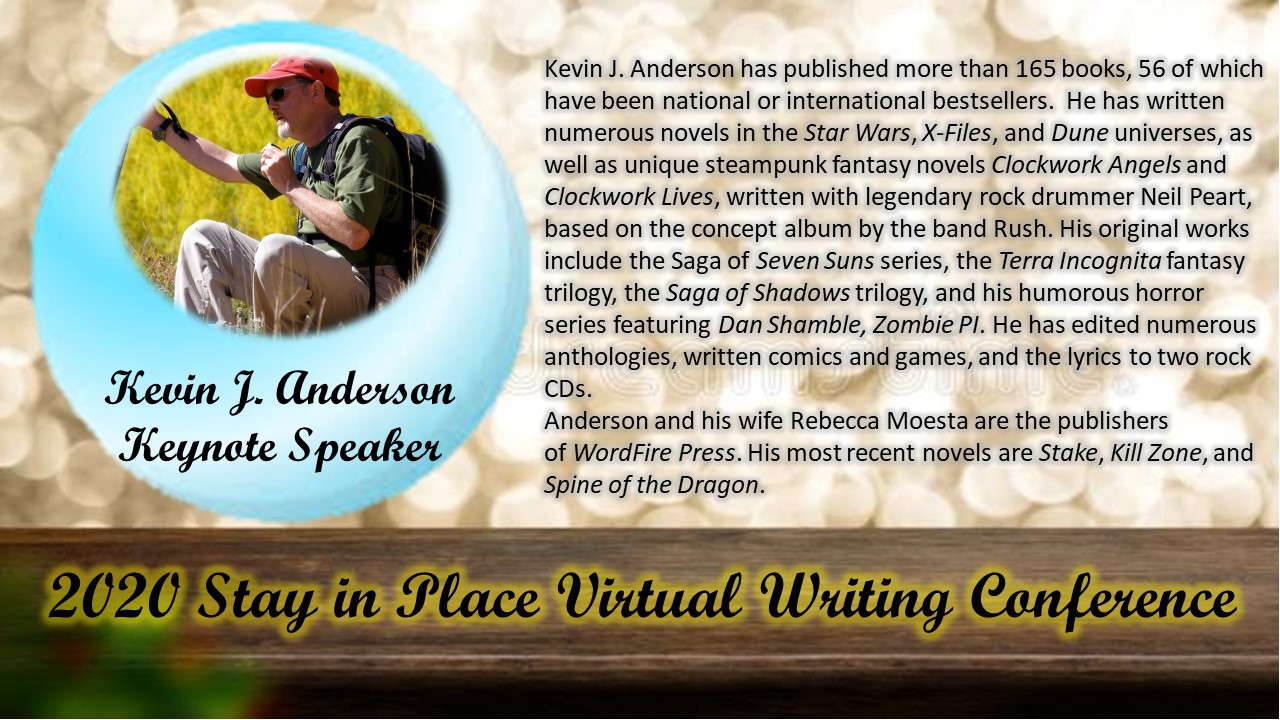
And that’s just the beginning. Take a look at the talent that has lined up for presentations, workshops and panel discussions.

Award winning and national bestselling speculative fiction author Mario Acevedo will be offering a presentation – “The Power of Motivation: What Your Characters Do and Why”
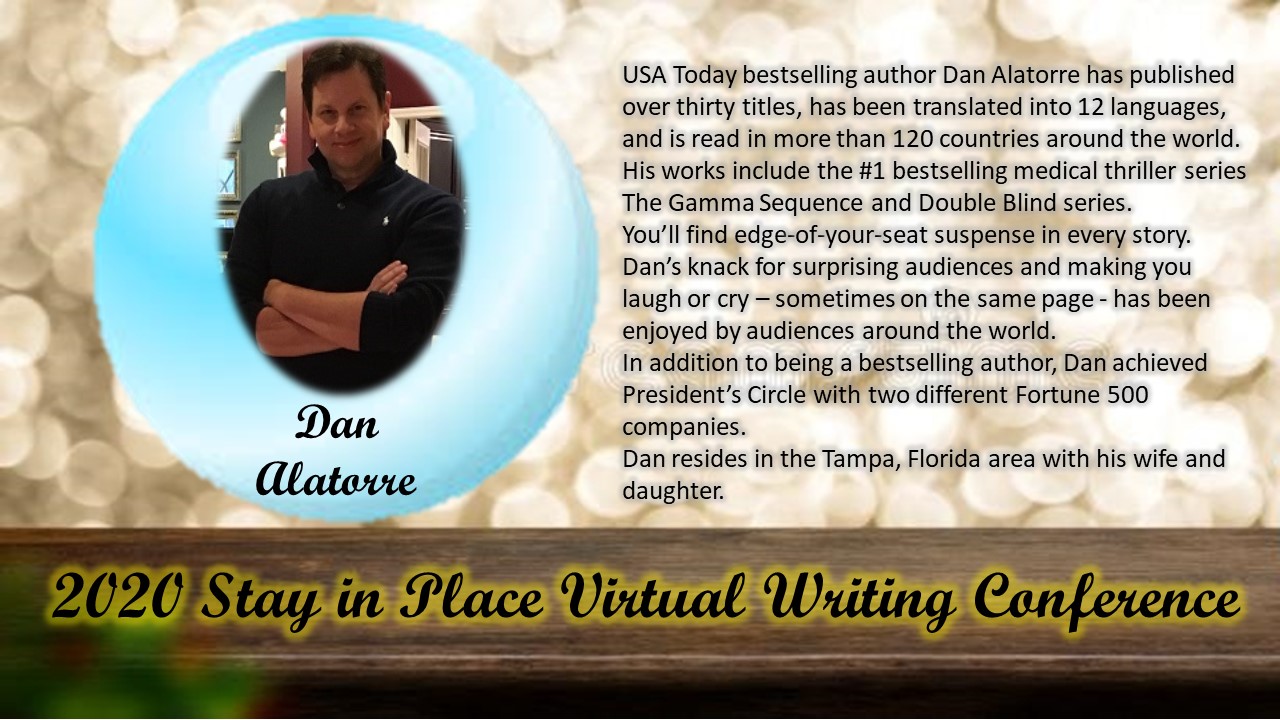
USA Today bestselling multi-genre author Dan Alatorre will be a member of the interactive book marketing panel discussion.
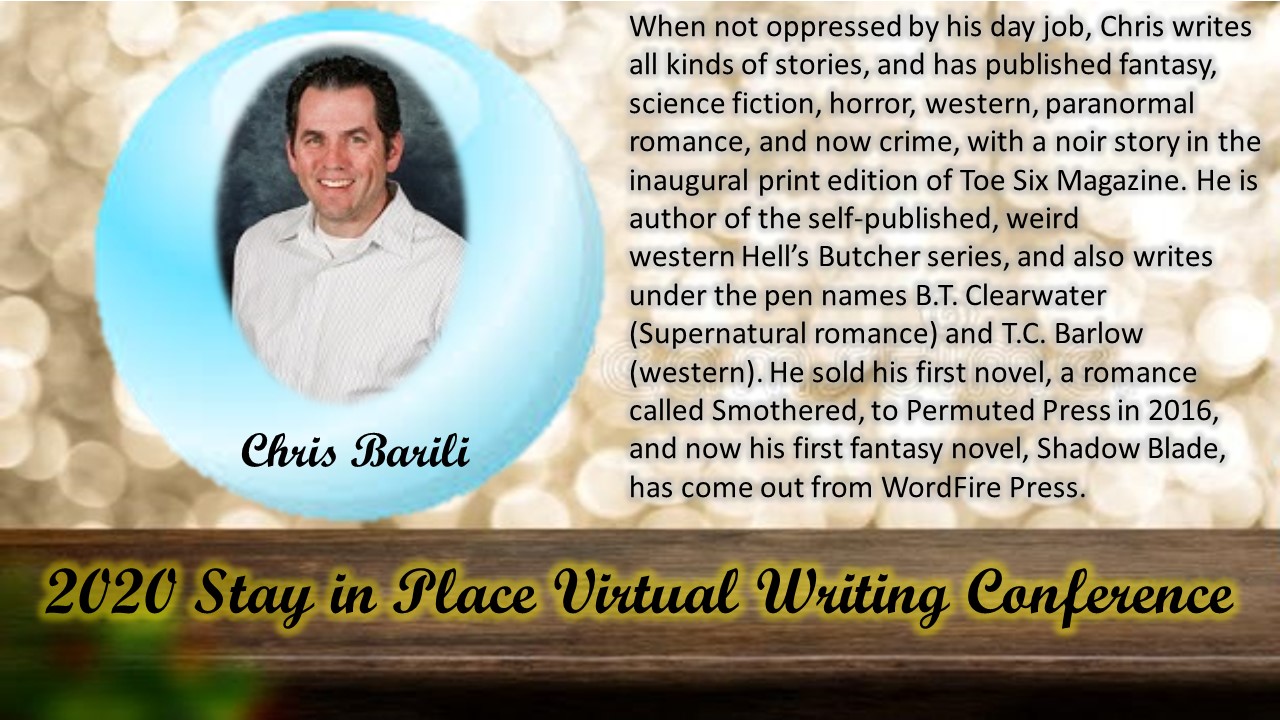
Multi-genre author Chris Barili will be presenting “Writing in the Face of Adversity” and giving an interactive workshop on “Writing Across Genres”.
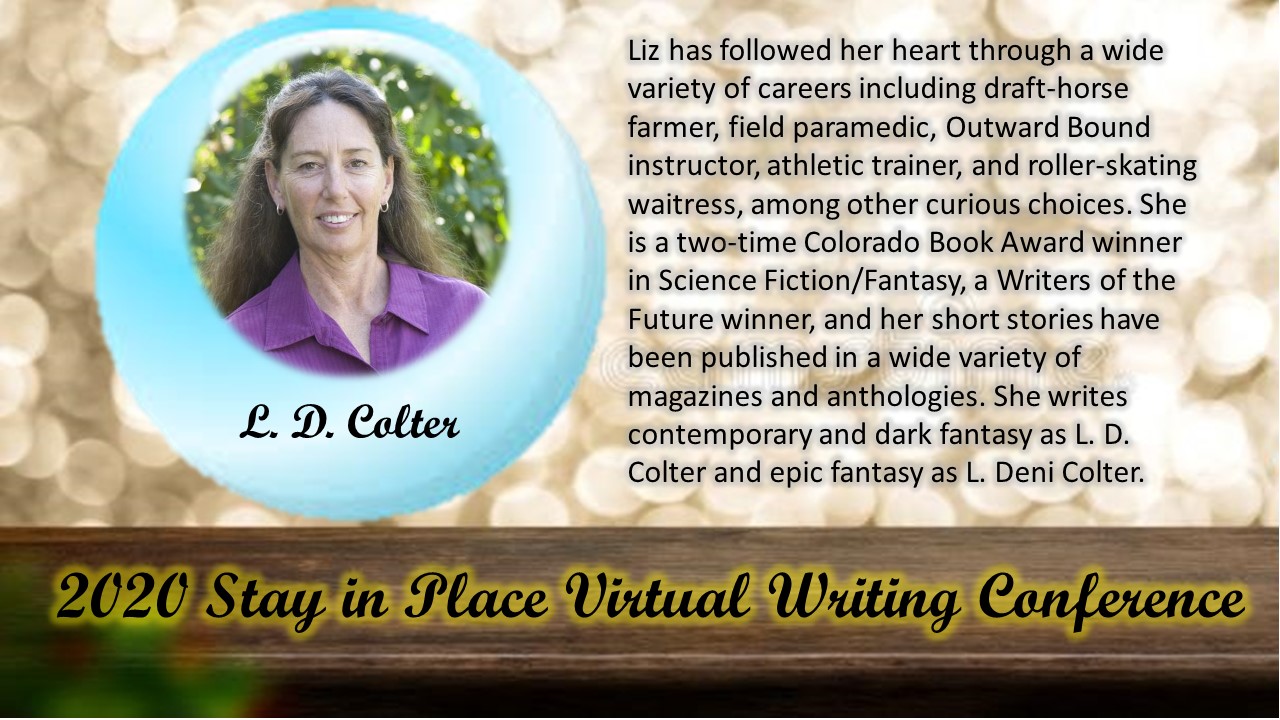
Award winning fantasy author L.D. Colter will be offering a presentation on “Short Fiction”.

World builder and speculative fiction author Kieth R.A. DeCandido will be offering an interactive workshop on “The Business of Writing” and he is the moderator for the media tie-in interactive panel discussion.
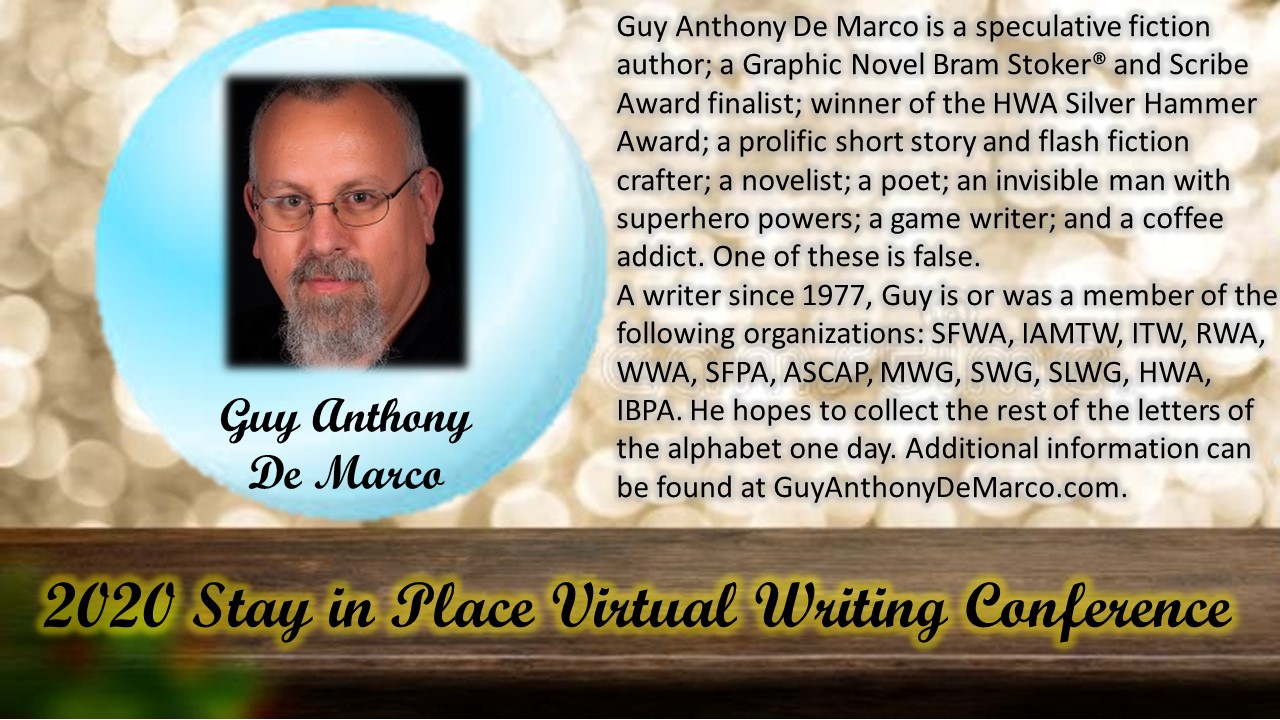
Award winning novelist Guy Anthony De Marco will be a member on both the short fiction and world building interactive panel discussions.

Fantasy and science fiction author Anthony Dobranski will offer two presentaions, “How to Swim Upstream: Not being in the mainstream of your market/genre” and “Working with Others: How to direct others in a project”. In addition, he will offer two interactive workshops. “Business Class Tarot” and “The Savage Horror of Writing Back Cover Copy”.

Author for young readers, Jason Henderson will be presenting “Story Ideas and the Choices You Make” and moderating the interactive book marketing panel discussion.

Media tie-in author Kevin Killiany will be a member on the interactive world building, media tie-in, and short fiction panel discussions.

Award winning young adult fantasy author L. Jagi Lamplighter will be on the interactive panel on world building, and moderate the interactive short fiction interactive panel discussion.

Award-winning science fiction author J.R.H. Lawless will be a member of the book marketing interactive panel discussion.

Award winning and New York Times bestselling multi-genre author Jonathan Maberry will be a member on three interactive panel discussions: short fiction, world building and media tie-ins.

Award winning multi-genre author Bobby Nash will deliver a presentation on “The Importance of Promotion”, as well as being a member of both the media tie-in and book promotion panel discussions.

Science fiction and fantasy author Jody Lynn Nye will offer a presentation on using humor in science fiction and fantasy writing, “Bringing the Funny: how to apply humor to your writing” and she will be a member of the world building interactive panel discussion.

Award winning fantasy author Ellie Raine will sit on both the short fiction and world building interactive panel discussions.

Award winning multi-genre author Art Rosch will offer a presentation on “Creating Villains We Love to Hate”.

Award winning multi-genre author Sean Taylor will offer a presentation on “Visceral Story Beginnings”.
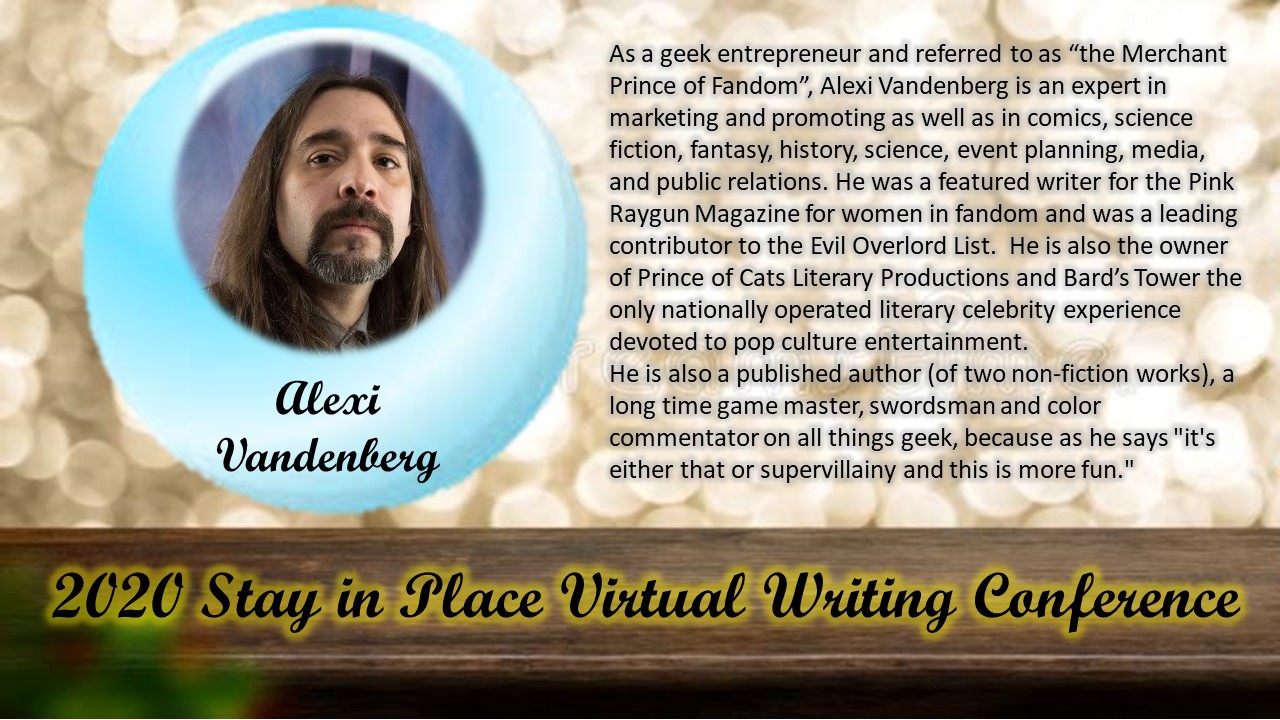
Science fiction author and marketing expert Alexi Vandenberg will be joining the book marketing panel.
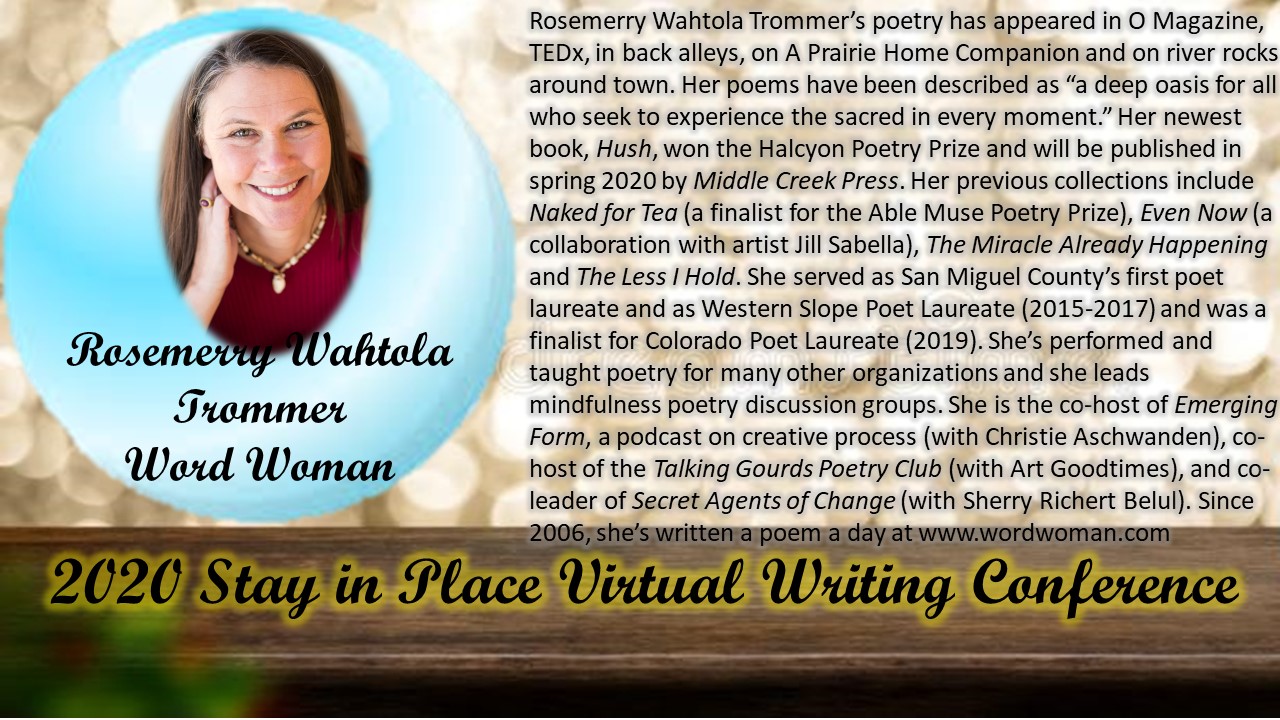
Award winning poet and author Rosemerry Wahtola Trommer offers a livestream presentation “The Gateway to the Unknown: A Poetry Thought Shop”.
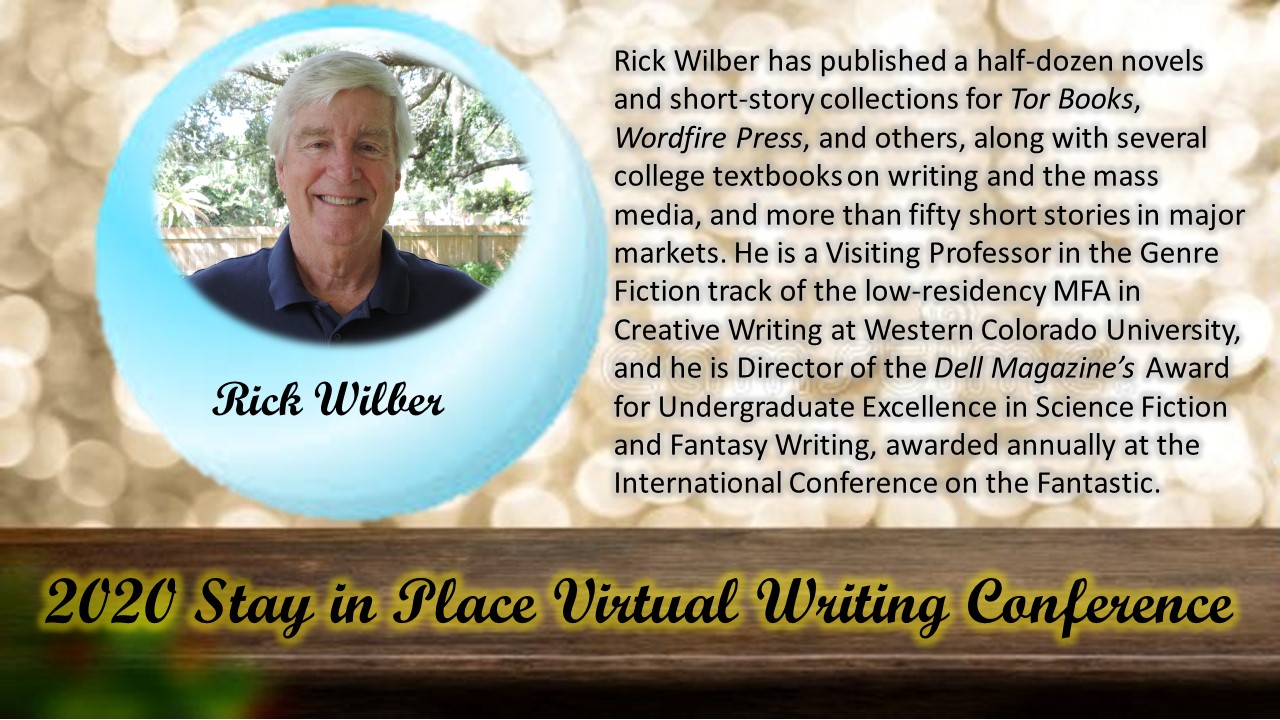
Author and educator Rick Wilber will be a member of the short fiction interactive panel discussion.
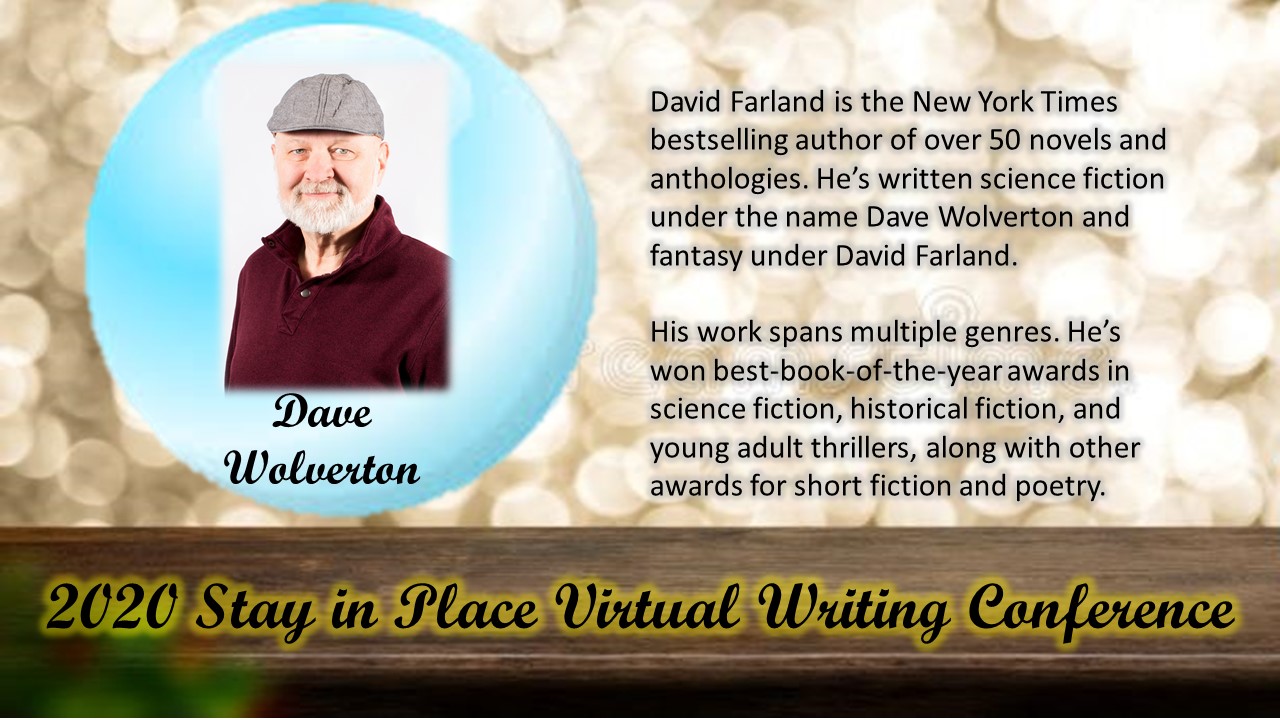
Award winning and New York Times bestselling science fiction and fantasy author Dave Wolverton/David Farland offers a”Promoting Your Book BIG” and he is a member of the interactive book marketing panel discussion.
You can find a full schedule here. I do hope all of you will join us for this unique writing event. It’s the first of its kind and we could be making history. You can be a part of it, too. Join us.
Like this post? Let me know in the comments. You can be sure not to miss any of Writing to be Read’s great content by subscribe to e-mail or following on WordPress. If you found this content helpful or entertaining, please share.










Craft and Practice with Jeff Bowles – To Self-Publish or not to Self-Publish
Posted: June 17, 2020 | Author: Jeff Bowles | Filed under: Book Covers, Commentary, Craft and Practice, Opinion, Publishing, Self-Publishing, Writing | Tags: Craft and Practice, Jeff Bowles, Publishing, Self-Publishing, Writing, Writing to be Read | 9 CommentsThe third Wednesday of each month, writer Jeff Bowles offers practical tips for improving, sharpening, and selling your writing. Welcome to your monthly discussion on Craft and Practice.
To Self-Publish or not to Self-Publish
I guess I’m a bit of a dreamer when it comes down to it. Head in the clouds much of the time, projecting myself right out of reality because, well, I take more comfort in worlds inside my mind than the world as it really is. I’ve always been that way, and it’s helped me enormously as a creative individual. Has it helped me much in life? That’s a conversation for another time. Or, you know, maybe never.
For me, the dream was always the most important thing, because I understood dreams become reality with startling frequency. I mean, that’s essentially what storytelling is, right? Making something whole, tangible, expressive, from nothing at all. It’s something I have to believe in order to do what I do. If I didn’t think anything and everything was possible, how could I convince you?
I like self-publishing. It’s a good speed for me. I made great efforts to publish short fiction in the traditional form for more than ten years, and I wouldn’t change anything about that time. But then I went off to earn an MFA in Creative Writing, and it slowly dawned on me that recognition, fans, and even money will only get you so far. If you’re dedicated to your craft, you can do it penniless. In no way does it make or break your enjoyment of the act of writing. In fact, achieving something like the ever-ubiquitous yet disappointing “best-seller” status often throws unsuspecting authors into a rut, one that can be difficult to climb out of. With success so comes stress and an urgent need to produce. I’m not good with stress, suffer from some anxiety and other mental health issues, and I somehow knew about myself that if I wanted to put my books out, I’d have to do it in a manner congruent with my everyday tolerance levels.
So when it came time to publish my first novel, I did it myself. I got the most amazing help from a friend of mine to render a cover and some gorgeous chapter-to-chapter artwork, I set the date, released it through Amazon, and then plugged it as best I could, also knowing I’m not a natural salesman. The truth is I would’ve made far more money if I’d snagged a traditional publisher. The truth also happens to be that I don’t care all that much either way, because I’m still the writer guy doing his writer thing, albeit at a somewhat reduced level.
I like controlling the whole process from beginning to end. The product I end up with, for better or worse, is all on me. The people who’ve read my first novel have enjoyed it immensely. Living the kind of life that’s cool and confident and down for lower-case “success”, simply because I’m not sure the upper-case kind is actually all that much fun, well it works for me right now. Maybe a few years down the line I’ll really push for the traditional publishing route. I’m not sure. What price success?
Given the choice, most writers would opt for more sales over fewer. I don’t think I’ve used the word “duh” since I was thirteen years old, but duh. The point is, you can write as much or as little as you want, and you can shoot for the stars or just keep your work on the down-low, but the real question is what fuels you? What keeps you satisfied? Is it money in the bank or pure creative expression? A happy mix of both? What do you want? What do you want? WHAT DO YOU WANT?!
If you’re working on a book or have recently completed one, first of all, congratulate yourself. You’ve done something most people on the planet want to do but never seem to get around to doing. Secondly, ask yourself the question in capital letters up in that last paragraph there. It’s harder to find sponsorship than to put it out yourself. That’s true no matter what you do, so consider it numero uno. Are you willing to risk rejection aplenty and month after month of waiting for an agent to reach out and tell you your work is magnificent (or abhorrent)? Or do you want to produce your book on the fly and handle all the publicity yourself later on? Know that for the vast majority of self-publishers, a hundred lifetime sales is considered superb. That’s a slow lunchtime minute in February for one of the major houses.
Work the traditional route, you’re likely to feel under-the-gun and underappreciated by your publisher. DIY it, and you’ll probably feel like you’re grinding your gears, working your butt off just to make a few lousy sales. Release your work through an established house, and perhaps struggle to earn out your advance and start bringing in those royalties. Put it out yourself, and claim your dividends immediately, meager though they may be.
See? Plusses and minuses for both. Nice work if you can get it, but look, your best bet is to keep producing and put your work out however you can, whenever you can. That’s the shotgun method, and it works. I know what’s been right for me in the past several years, but I also claim the right to change my mind someday. In the grand scheme of things, it’s all benefit and no loss. Just keep doing your thing, and if you get the opportunity to publish your work in a major way, absolutely go for it. If you can’t, however, or you simply would rather not, don’t sweat it, because magnificent career legacies have been built on less. Just don’t sell yourself short, and whatever you do, remain true to your vision and your goals.
Now for a little practical advice. You knew it had to be buried in here somewhere, right? If you’re in the market for an agent, find yourself a good searchable database like AgentQuery.com, or if you’re so inclined, think about picking up the 2020 edition of the Guide to Literary Agents, which many writers throughout the years have found great success with. Your manuscript must be in tip-top shape before you send it to anyone. I know that seems like common sense, but you’d be surprised how often people mess this up. Tip-top means thoroughly revised, edited, and proofread. If you can make it any better, you’re not done with it. Remember to remain professional and courteous, even when you get shot down. Especially when you get shot down.
On the flip-side of the publishing coin, the final state of your book is just as important in self-release, perhaps more so, because you won’t get an assigned editor to walk you through the process. If you can afford one, hire the services of an independent editor, and if you’re not super artistic, hire someone to do the cover and book layout, too. A lot of people, like yours truly, release their stuff through Amazon and call it good, but this is by no means your only option. Vanity publishing, independent print-on-demand, and independent ebook distributors all exist, though do your homework, because some are more attractive than others. Vanity publishing, by the way, try to eschew it if you can. I like Amazon because it’s one-stop shopping, and their KDP publishing system is easy to use, but your mileage may vary, and you may have bigger plans for your work than I’ve had for mine.
Regardless of how you publish, just remember it’s incredibly important to put out the best work you can. You want words you can feel proud of. In the end, your writing legacy is completely in your hands. That’s it for this post, everybody. I’ve got an overdue book to edit, and you’ve got more awesome Writing to Be Read articles to peruse. See ya next time.
Jeff Bowles is a science fiction and horror writer from the mountains of Colorado. The best of his outrageous and imaginative short stories are collected in Godling and Other Paint Stories, Fear and Loathing in Las Cruces, and Brave New Multiverse. He has published work in magazines and anthologies like PodCastle, Tales from the Canyons of the Damned, the Threepenny Review, Nashville Review, and Dark Moon Digest. Jeff earned his Master of Fine Arts degree in creative writing at Western State Colorado University. He currently lives in the high-altitude Pikes Peak region, where he dreams strange dreams and spends far too much time under the stars. Jeff’s new novel, God’s Body: Book One – The Fall, is available on Amazon now!
Check out Jeff Bowles Central on YouTube – Movies – Video Games – Music – So Much More!
Want to be sure not to miss any of Jeff’s “Craft and Practice” segments? Subscribe to Writing to be Read for e-mail notifications whenever new content is posted or follow WtbR on WordPress. If you found this useful or just entertaining, please share.
Share this: