Interview with western author Loretta Miles Tollefson
Posted: January 7, 2019 Filed under: Author Profile, Book Covers, Books, Cover Art, Fiction, Historical Fiction, Interview, Western, Writing Process | Tags: Author Interview, Author Profile, Delilah, Loretta Miles Tollefson, Not Just Any Man, The Pain and the Sorrow, western fiction, Western genre, Writing to be Read 12 Comments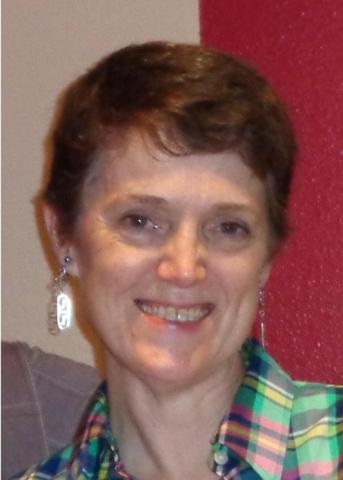
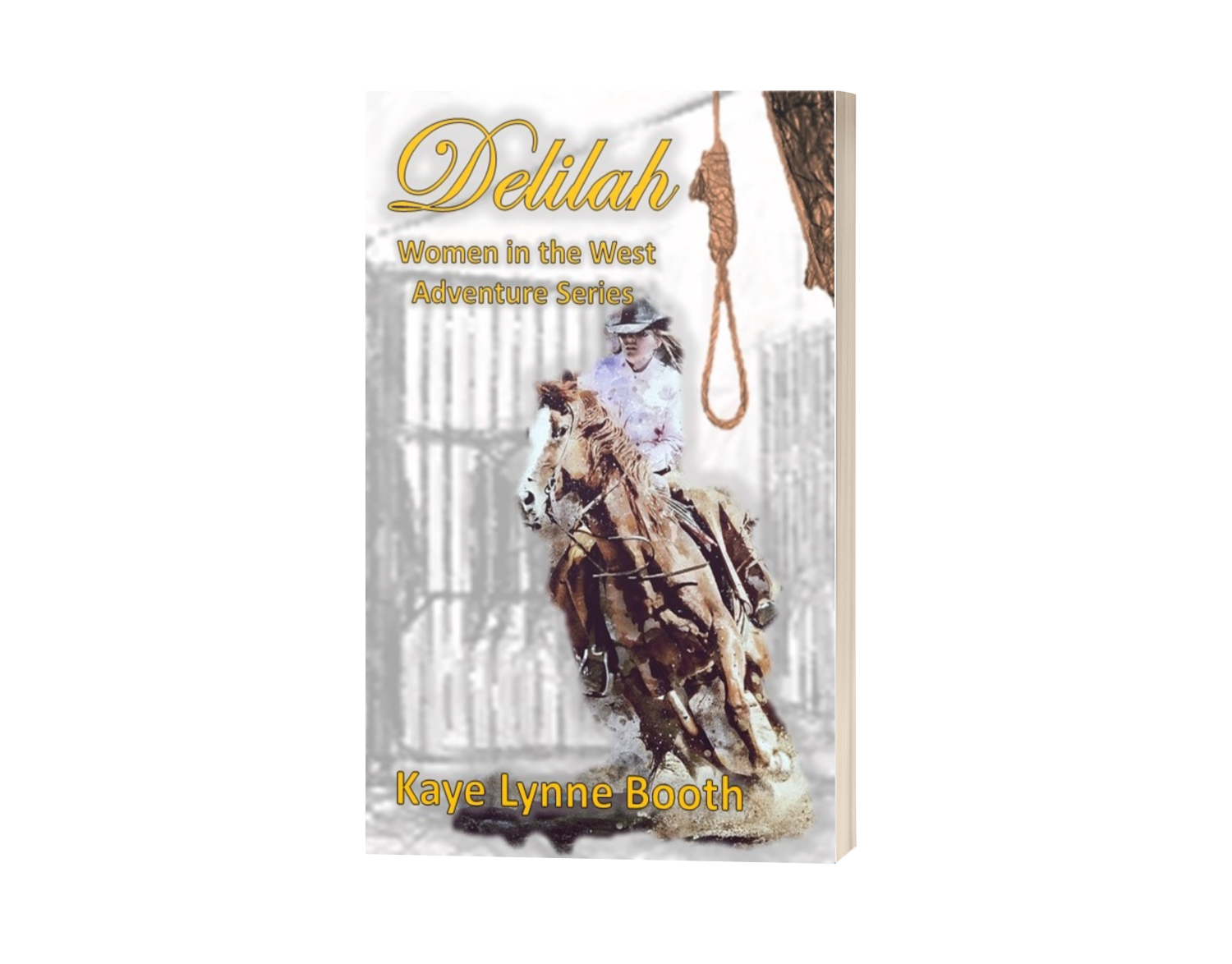
After writing an excerpt of Delilah for an assignment in grad school, I remember thinking, ‘this could be a book’. But I also remember thinking that a western by a female author probably wouldn’t sell. Women weren’t supposed to write westerns. After all, the western frontier was for rugged men. I knew there were women in the west, but I guessed that they weren’t protagonist material. Then, I wrote and published Delilah anyway. It was a story that wanted to be told. My character, Delilah spoke to me and the writing of the tale was too important for me to let the idea that it might not be a best seller stand in the way.
In the meantime, I was happy to learn that there are other female western authors out there. I’m pleased to have one as my guest today. Her books are set in the historical New Mexico landscape based on factual historical people and places. Western fiction author Loretta Miles Tollefson will share her thoughts on the matter of gender in the western genre and other aspects of writing and her books.
Please welcome Loretta Miles Tollefson.
Kaye: Would you share the story of your own publishing journey?
Loretta: When I was fifteen I won a writing contest in a Sunday School paper and that triggered a deep desire to continue to see my words in print. I published a couple more pieces in that same paper, then branched into short stories and poetry in my 20s and 30s. I had a few things published and received a co-publication offer for a novel. Unfortunately, I didn’t have the financial resources to follow up on that. I continued to write and had some poetry published in my 40s and early 50s. I self-published a couple novels in my mid-50s and then The Pain and the Sorrow was published by Sunstone Press in 2017. I was frustrated by the lack of opportunities to advertise a novel that had been traditionally published and went back to the self-pub route with Not Just Any Man.
Kaye: When did you know you wanted to be an author?
Loretta: I was 15 but, because I come from a very practical family, I chose to take the pragmatic approach of going into newspaper and magazine work instead of stepping into the uncertain waters of fiction. Eventually, I became a Special Projects Manager for a regional planning organization here in New Mexico, a job which utilized both my writing and research skills. I didn’t realize my dream of writing full time until I retired about five years ago.
Kaye: What is the most enjoyable part of writing westerns for you?
Loretta: For me, the most enjoyable part of writing is finding ways to bring the historical details, my characters’ personalities, and the storyline itself together. It’s like weaving a tapestry. And then there’s always the sudden inspiration that seems to come out of nowhere, when my characters seem to be telling me what they want to say. Although I, as the author, always have control, I’m sometimes surprised at where the story takes me.
Kaye: What is the biggest challenge of writing western fiction for you?
Loretta: I think my biggest challenge in writing historical fiction set in the West is feeling like I need to double check all the details. Even though I grew up on a small farm and we had horses and cows and chickens and hung the clothes on a line and pretty much all the rest of it, there’s a great deal I don’t remember or took for granted at the time. And, of course, I didn’t actually live in the early 1800s. I have to be careful not to assume certain ways of doing things or specific pieces of equipment were common back then. I’m always concerned that I’ll slip into an anachronism.
Kaye: You follow the old adage “write what you know”, setting your books in areas where you have lived and are familiar with, yet you must envision those settings in another time period. It seems perhaps your own setting acts as inspiration for your stories?
Loretta: It does. Very much so. I’ve lived in New Mexico almost thirty years and was fortunate enough to travel all over the state in connection with my job. Then, after I retired, we moved to Eagle Nest, New Mexico, on the northern end of the Moreno Valley. We lived there five years and that experience really brought together my love of history and my desire to write full time. There’s so much history here in New Mexico that I don’t think I will ever run out of ideas. We recently moved to Santa Fe, New Mexico, and that will continue to inspire me and to provide me with great resources for my research.
Kaye: Your novel, Not Just Any Man, was recently released. Would you like to tell us a little about that book?
 Loretta: Not Just Any Man is about a black mountain man in 1820s New Mexico named Gerald Locke, Jr. It’s an adventure story, as Gerald traps in Northern New Mexico and then joins a fur trapping expedition across the Arizona desert and up the Colorado River. The group includes Enoch Jones, the only mountain man in the West who seems to have an issue with Gerald’s skin color. Jones has a few other issues as well, and the conflict between the two men is a crucial plot element.
But this isn’t just an adventure story. Gerald has met a young woman in Taos who seems far above his station in life and he can’t stop thinking about her. Even if he can survive the Sangre de Cristo mountains, the Mohave Indians, and the arid rim of the Grand Canyon, as well as Enoch Jones, can Gerald prove to himself and the girl he loves that he is, after all, not just any man?
Kaye: Do you think western readers are more receptive to male protagonists?
Loretta: There certainly are a lot of male protagonists in the western genre. I think this is because the traditional Western initially reflected the cultural assumption that only men played an active role in events in the West. As we broaden our understanding of the historical West, both before and after the United States was the primary actor there, we’re realizing just how often women played critical roles on the frontier. Life was harsh. Any family that was going to survive needed everyone in it to be fully engaged. Women had to take on roles they hadn’t necessarily played before. If anything, I believe their experiences on the frontier helped to begin breaking down the barriers that we’re still disassembling today. As we do that, I suspect Western readers will become more and more receptive to all kinds of protagonists.
Kaye: You have wonderful covers with beautiful landscapes that cry out ‘western’! Where do you get your covers?
Loretta: Well, thank you! I’m glad you like them. I worry about my covers. Other than The Pain in the Sorrow, I’ve designed them all myself and created most of them using a combination of Publisher and Gimp. The pundits’ advice is to have someone else do them, but I tend to have very specific ideas about what I want, and I haven’t yet discovered anyone who can quite catch my vision.
Loretta: The Pain and the Sorrow was strongly inspired by New Mexico history. Its characters actually existed and the primary incidents in the story are based on historical artifacts.
The plot of Not Just Any Man is also strongly situated in actual events. While the protagonist and villain are both fictional, most of the mountain men in the novel, are based on actual people—Old Bill Williams, Milton Sublette, Ewing Young, etc.—and much of the story line is based on their first-hand accounts.
Kaye: The Pain and the Sorrow has historical basis, as do all your books as I understand it. And it’s obvious that you strive to make your details as accurate as possible. Do you weave the history into your stories or is it the New Mexico history that inspires the stories?
 Kaye: The Pain and the Sorrow is based in New Mexico history and a historical figure of legend, but the story about your female protagonist. Not all of your novels have female protagonists though. Was the female protagonist easier to write since you have a natural female perspective?
Loretta: The Pain and the Sorrow was a very difficult story to tell because of the abuse my teenage protagonist suffers at the hands (and other body parts) of her husband. I think that writing Gregoria’s story may have been more difficult for me precisely because I am female. My emotions were very raw during the entire process. I might have found it easier to tell Gregoria’s story if I didn’t have a “natural female perspective” and felt less connection with her.
Kaye: Do you think it’s more difficult for a female to make it in the western genre than it is for male authors?
Loretta: I think it’s difficult for any author to break into any genre today, regardless of their gender. However, it seems to me that more women are writing Western-style stories and getting them published than has been true in the past. For example, of the fourteen authors showcased in Five Star Publishing’s recent The Trading Post and other stories, four or five are women. In early December 2018, the twenty top-sellers in Amazon’s Western category included at least two women. There may have been more, publishing under a male pseudonym. We’ll really know that women have made it in western fiction when no one finds it necessary to use a male, or male-sounding, pen name when they do so.
Kaye: My publisher slapped Delilah into the romance category, listing it as a frontier romance. While there is a romantic element to the story, I didn’t make it the major focus of the story. I guess they thought it was more marketable as a romance, and I do think that because my protagonist is female, the book might have a stronger appeal to a female audience. Do you think western readers are more receptive to stories with a male protagonist?
Loretta: That’s hilarious. I really liked Delilah and I enjoyed the romance element in it, but classifying it as a frontier romance seems to me to diminish its marketing potential. I never search for frontier romance. As a result, I would have missed Delilah entirely if that’s the only place it could be found. I feel strongly that the current way the market is being sliced into finer and finer categories does us all — readers and writers alike — a disservice because it makes it more difficult to find the well-written, well-conceived books like Delilah that transcend easy categorization.
Kaye: Do you feel that it is harder for women authors to be taken seriously in the western genre?
Loretta: To a certain extent, this may be true. After all, as I mentioned above, some women authors of Westerns apparently feel that it’s necessary to use pseudonyms to obscure their gender. But I think that as we persist, this will become less and less of an issue.
Kaye: You are also a poet and you have out several poetry books. Would you talk a little about what inspires your poetry?
Loretta: My poetry is very personal, especially But Still My Child, which contains the poems I wrote after a miscarriage over thirty years ago. The poems I wrote during that time and afterwards helped me process that grief and I hope publishing them will support others in that same process.
My other volumes of poetry were the result of an attempt to blend my interest in poetry with my love of story. For historical stories, now that I think of it. The poems in But Then Moses Was There and Mary At The Cross try to get inside the heads of Biblical characters to express what living their experiences might have felt like.
Kaye: You’ve also written other non-western novels. What other genres do you write in?
Loretta: I’ve written an urban fiction about coming of age/homelessness in 1980s Seattle and a chick lit novel about a New Mexico couple who wins the lottery. I’m not working in either of those genres now. I’m focusing my energies exclusively on historical fiction set in Old New Mexico.
That focus on historical fiction has also resulted in two short story collections set in New Mexico: Valley of the Eagles and Old One Eye Pete. Valley is a collection of micro-fiction. The stories are all 500 words or less. Old One Eye Pete contains longer pieces, with stories featuring the mountain man Old One Eye Pete acting as the narrative thread.
Kaye: What is the working title of your next book?
Loretta: It’s called Not My Father’s House. It’s a sequel to Not Just Any Man and (spoiler alert!) focuses on Suzanna’s struggle to adapt to living high in New Mexico’s Sangre de Cristo mountains. I’ve just finished the second draft, so it should be out by the middle of 2019.
Kaye: Besides writing, what are your favorite things to do?
Loretta: I research material for my upcoming books — or at least I tell myself it’s for my upcoming books. Hah! And I read fiction: historical, mystery, suspense, Westerns, and pretty much anything else that looks interesting to me at the moment. I review most of everything that I read, unless it has 100 reviews or more. I would love to review more historical fiction set in 1800s New Mexico and Southern Colorado, since Southern Colorado was part of New Mexico at one time.
Kaye: Would you tell us a little about your blog? What will readers find there if they visit?
Loretta: My blog is at http://www.LorettaMilesTollefson.com. About once a week, I post a short piece about a historical event or a flash fiction story set in Old New Mexico, which I define as anything prior to statehood in 1912. The site also includes news about, and links to, my books.
Kaye: Which author or poet, dead or alive, would you love to have lunch with?
Loretta: I have so many favorites. This is a hard question to answer. I think right now, given the work I’m doing, the person I would most like to have lunch with would be Paulette Jiles. I really enjoyed her News Of The World and the way she brought actual events to life in that book.
Kaye: What do you like to do when you’re not writing?
Loretta: I read and explore the region with my husband. Ultimately, it’s all research.
Kaye: Is there anything unique or unusual about your writing process?
Loretta: My writing process consists of writing the first draft, letting it sit a month, revising, letting it sit a month or so, then revising again until I feel it’s really ready. This process seems to be becoming more unusual in today’s fast-paced writing environment.
Kaye: How much non-writing work, (research, marketing & promotion, illustrations & book covers, etc…), do you do yourself for your books?
Loretta: At the moment, I’m doing all my own research, marketing, promotion, book covers, and so forth. I’m stretching myself pretty thin with all these different activities, but doing it all gives me a lot of control. I may have to start farming some of the non-writing work out as I move along in my journey.
Kaye: If your book was made into a film, who would you like to play the lead?
Loretta: To tell you the truth, I watch so little television and so few movies these days, that I’m not sure who would be the best actor to play Gerald or Susanna in a movie based on Not Just Any Man or Gregoria or Charles Kennedy in The Pain And The Sorrow. I’d love some input from your readers on this question.
Kaye: I can and will reach out to readers for input on who should play your leads were your story made film, but now you have to answer another question: Since many of my readers may not have read your books, can you tell us what characteristics these characters would have so they can better imagine who would be a good fit?
Loretta: Hmmm,
Characteristics:
Gerald: square forehead, gray eyes. Half black/half Irish. Late 20s.
Suzanna: slim, tall for a woman (about Gerald’s height). long black hair, dark brown eyes. Half anglo (WASP), a quarter french, a quarter Navajo. About 16.
Alright readers. Here’s your chance be heard. Who do you think would be good for the roles of Gerald and Suzanna? Please comment with your suggestions. Loretta and I would both love to hear the possibilities.
Kaye: What advice do you have for aspiring authors?
Loretta: In a nutshell: read, revise, revise again.
If you plan to write fiction, read fiction. Especially classic fiction: Hemingway, Steinbeck, Austen, Dickens, and so forth. Also, read contemporary fiction, and not just books in your genre. Some of my favorite authors right now are Louise Penny and Donna Leon. They teach me pacing and character development. I’m especially fascinated by the way their protagonists develop over the course of the series. Everything’s research, even the books you don’t like. And don’t be afraid to express your opinions and trust your instincts. It’s okay to not like a book even if everyone else is saying how wonderful it is.
Most of all, revise! As Anton Chekhov said, “rewrite everything five times.” Well, maybe not that many, but you see what I mean. I would add “but not immediately” to that advice. Take the time to let your work rest, and then go back and look at it again. When you start changing sentences back to the way you had them in a previous version, that’s when you should stop. But not until then.
Revise it, let it rest, then revise it again. There’s a popular saying that “Perfection is the enemy of done.” I am uncomfortable with that statement. While no work is going to be absolutely perfect, rushing to publication is the enemy of quality work. Try to get your story as well-written as possible. Producing quality work is what will keep your readers coming back for more.
I want to thank Loretta for joining us today and sharing a glimpse into the world of western writing from a female author’s perspective. I have admired her work since I reviewed The Pain and the Sorrow last May, and it’s a thrill to have the privelage of interviewing her. It’s a real treat to hear from another female author in the world of western fiction.
Like this post? Subscribe to Writing to be Read for e-mail notifications whenever new content is posted or follow WtbR on WordPress.
Share this:

Social Media is for Making Connections
Posted: December 17, 2018 Filed under: Advertising, Copywriting, marketing, Promotion, Western | Tags: book marketing, Book Promotion, Social media, Social Media Events, Social Media Marketing, Social Media Promotion 4 Comments
My husband always accused me of spending too much time ‘playing’ on Facebook, and although I do spend a lot of time on social media, what I’m really doing is promoting my writing and interacting with other authors and potential readers. The truth is, social media can be a valuable tool for authors, if they go about it with the right expectations.
Although I hear paid Facebook ads can drum up a few sales, but if we don’t want to spend a lot of money, we shouldn’t expect to sell a lot of books through social media. I know it doesn’t sound like it’s really very beneficial when you look at it from a sales perspective. But social media can be benificial if we use it to connect. Social media connects me with other authors and potential readers via several channels.
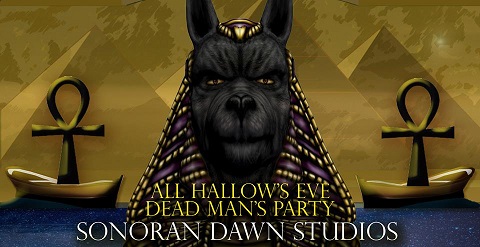
On Halloween, I co-hosted the Dead Man’s Party event, together with DL Mullen of Sonoran Dawn Studios. Though I had participated in several such events, this was my first experience with the organization of one. It was also the first audio event I had ever heard of. We mixed things up a bit by having the participating authors provided readings of their works of paranormal and horror, intermixed with the regular promotional posts, silly party games and giveaways. I had recently reviewed Dark Visions, a horror anthology compiled and edited by Dan Alatorre, which had just been released, and with his help, I was able to recruit many of the authors of the stories from the anthology. It was a learning experience, as many of these authors had never published anything before, or done an event such as this. I did many of the recordings and put together one video reading, as well as creating promotional posts for many of them. The whole thing was a lot of fun, drawing in over 1000 visitors I’m told. Overall, it was a success and a lot of fun, and I made many new friends and followers.
But, it was also a lot of work. The recordings took a lot of time to get them right, their were a few audio problems with the video presentation, and I made their promos like I do for my own work, with loving care. However, it was worth it all to get the experience and improve on my promotional skills, as well as in watching my number of followers grow. And one of my new author friends from the event will be joining the WtbR team as a contributing blogger to start the new year. The work I did also gave me some much needed samples of my promotional work, which I used to start my new Copywriting and PA Services page.
So you can see how this event benefited me greatly. Although I didn’t sell a single book, (the ones I gave away don’t count here), I did prosper from the event in many other ways. The message here is to social media to your advantage, but use it in the right ways and for the right reasons in order to avoid having your expectations left unfulfilled. But that’s how you have to approach social media promotion. The first word in social media is ‘social’. It’s there to make connections. That’s what we can expect to get from promotions on social media platforms. Promotion on social media can bring you authors to network with, or readers to build your platform. Any real book sales that you do get are just a nice bonus, but they cannot be expected.


I also gain followers through my Facebook pages. I currently have four pages. The primary page is my Kaye Lynne Booth – Author and Screenwriter page. I also have a page for Delilah – Kaye Lynne Booth, for news concerning both my published western and for book 2, Delilah the Homecoming which is still in the draft stages, as well as pages for two WIPs: my scince fantasy series, Playground for the Gods – Kaye Lynne Booth, and my memoir, His Name Was Michael – Kaye Lynne Booth. Through these pages I hope to gain followers who are interested in my writings. By building my platform, I hopefully gain readers who will buy my book.
I’m a member of a large number of author and book groups that allow promotional posts, as well as discussions. We should realize that most of the participants in these events like the one I spoke about above are other authors and the ‘book sales’ you get will be from giveaways. I use this to my advantage by making these connections my goal, instead of going about it with expectations of increased book sales. I spend my time on social media sharing promotions for my blog posts, responding to comments on my posts, sending out friend requests, and interacting. Through the new author friends that I make at these events, I’m able to find authors in need of interviews or book reviews for Writing to be Read, and my followers are growing through my efforts, as well.
So, I say that social media can be a useful tool if we set the right expectations and use social media the way it is meant to be used. Connections can be valuable to an author, especially a new author. We just have to see it’s value and find ways to use it to our benefit.
Like this post? Subscribe to Writing to be Read for e-mail notifications whenever new content is posted or follow WtbR on WordPress.
Share this:

Interview with Multi-Genre Author R.A. Winter
Posted: September 17, 2018 Filed under: Author Profile, Book Covers, Books, Contemporary Romance, Fantasy, Fiction, Interview, Paranormal, romance, Speculative Fiction, Western, Writing | Tags: Author Interview, Contemporary Romance, Mystic, Native American, Paranormal, Paranormal Romance, R.A. Winter, Spirit Keys series, Twisted, Western 2 Comments
I recently made the acquaintance of the energetic, sassy author, R.A. Winter. She writes in several genres, including fantasy, magical realism, dark fantasy, , time travel romance, contemporary Native American romance, and paranormal Native American western. And it seems she never rests when it comes to writing. Please help me to welcome R.A. Winter to Writing to be Read.
Kaye: Hello and welcome. Would you start by sharing the story of your own publishing journey?
R.A.: I started out writing genealogy nonfiction books under my married name. I love research and old libraries! I also love reading romances. With so many ideas flirting around my head, I thought I’d give creative writing a go.
Kaye: Is there anything unique or unusual about your writing process?
R.A.: I write the raunchiest first draft, the humor is way over the top. Then I cut it down, and my crit circle cuts it down further. My editor slices more. They say that a bit of humor goes a long way.
Kaye: You have sites on both WordPress and Wix. Can you give us the advantages and disadvantages of each? Which site do you prefer? Why?
R.A.: Wix is easier to deal with, super simple to navigate and change. WordPress is a bit of a pickle to deal with, and every time I change something, I mess up the page. I do prefer WordPress because I can easily share review and pages on a whim. Wix doesn’t give you that option.
Kaye: You’re on the review team at The Naked Reviewers, where authors can submit a book and request an honest review. Would you like to tell us a little about that site and what the review process is?
R.A.: We have a group of published author on Scribophile.com who formed the group. Right now, I think there is twelve of us. When someone submits a book, we all read the first chapter, the ‘look inside’ feature on Amazon. Then we rate the writing, the blurb, and the cover. If two of us agree, we review the book. Each Wednesday, two of us leave our review as a feature, if anyone else read it, they leave their thoughts in the ‘comment’ section. It does mean that most books that we review get a 4.0 or higher rating, usually. We wanted to show off the best books.
Kaye: You had bad experience with Amazon regarding reviews. This is something we’re hearing from many authors, although complaints vary. Many reviewers, including myself, have had book reviews pulled by Amazon, with the claim that their terms of use were violated because of an existing relationship which would bias our opinions. I even heard of an reviewer whose reviews were pulled because Amazon saw that they were Facebook friends, which they claimed indicated a prior relationship. (This doesn’t make sense to me. Many authors who I have done reviews for have become virtual online friends because of the review, not the other way around.) Your experience was a bit different because it wasn’t books that you were reviewing. Would you like to tell us a little about your experience?
R.A.: I ordered products from Amazon.com. A coffee grinder, a milk frother, and a small coffee taper, they just happened to be from the same company in China. Now, I review every product I receive, but when I went to upload my reviews, Amazon wouldn’t allow it. After contacting them, they said that I had a ‘relationship’ with the company in China and that I’d violated their terms. Apparently, I ordered too many things from them. I just don’t understand. They ask you to review, you review… then they’re like… you review too much! They banned me for LIFE for writing any reviews.
My point to them was- IF I was screwing reviews, wouldn’t my books have like 300 hundred reviews instead of each of them having less then 10? I mean seriously. THAT’S what would have benefited me!
Kaye: What is one thing that your readers would never guess about you?
R.A.: I have five children… all boys. I’ve lived in 5 different countries too. I don’t know which one was harder to live through. And all my boys look like my husband.
Kaye: What are your secrets for juggling writing with family?
R.A.: My kids are older, so they don’t need me. I like to write at night, when the house is quiet and no one interrupts. My earbuds are essential, and a song list that corresponds to my writing mood.
Kaye: You have some really great covers, some of which you’ve shared here. What do you do for cover art? DIY, or hired out, or cookie cutter prefab? Do you have a great cover designer you’d like to recommend?
R.A.: Some are creations of Kayci Morgan, from KreativeCovers.com. A few I did myself, which you can probably tell. Kayci is wonderful to work with and very reasonable. I am learning Photoshop and I’m doing my own teasers. I’m getting better but I just don’t have the finesse to do covers well.
Kaye: You have a paranormal romance fantasy novella, Twisted, which I’m excited to be reviewing here on Writing to be Read. (So watch for that review on Friday.) What can you tell us about that story?
 R.A.: Twisted is a novella, and one of the hardest things I’ve
written.
It’s a Freaky-Friday, body switching piece… full of adult humor. A witch’s land is cursed. Males are no longer born to the vampires, nor are females born to the wolves. To end the curse, the witch must solve a riddle, and she has to have the cooperation of the vampires and the werewolves.
Kaye: What is the strangest inspiration for a story you’ve ever had?
R.A.: My Spirit Key series was a way to keep my cat alive in my memories. He’d just past away, and Dingle had the oddest personality for a cat. He always reminded me of an old man, you know the one. The spunky old guy in the nursing home who’s constantly bugging the pretty nurses and running behind them with his walker, never able to catch them. Occasionally, he’d pinch their behinds, but act like he didn’t do it. I taught Dingle how to wink, but usually he had this grumpy look on his face. He used to love to jump out and scare me, then give me that ugh, you’re-stupid-to-fall-for-that-again look. He’s now a ten-thousand year old spirit who has a bit of trickster in him.
Kaye: Your Spirit Key series are westerns with a bit of a different twist to them. Would you like to tell us about them?
R.A.: Contemporary Native American’s in a western setting with magical realism is the gist of the Spirit Key Series. In book 1, we follow young Sara, as the ghosts of ancestors haunt her days and try to keep her away from young RedHorse. There’s a new spirit in town, a nefarious one who has his own agenda. The Old One wants the land for the dead and he’ll do anything to have it, including taking away what Sara loves most.


Kaye: There are two books in The Spirit Key series: Painted Girl and Redhorse. What type of research did you do for these books?
R.A.: The first two book are contemporary, set in modern day Kansas on a farm. Books 3 and 4 (which are almost finished) go back to 1950, and we delve into Grandfather’s life, and that of the ten-thousand year old spirit who watches over them. My research centered on the old Indian Schools, and the horrors that the children underwent. It’s all to stop the spirits from invading this world, and to give grandfather his happy ending. The Native American research is from my family.
Kaye: You also write contemporary romance with a Native American twist. What about Little Sparrow, A Kiowa in Love or Red Dress, Two Wives?
R.A.: Those were my early books. I’ve taken the ebooks down, and now I’m writing those into the Spirit Key Series. Everyone is related, so it made sense to do that. I kept the hard copies up because a few people really liked them the way they were. My writing evolved, and I thought those two would be great as part of the Spirit Key Series with some rework.
Kaye: What is the attraction for adding a Native American element to your writing?
R.A.: Two fold. My grandmother was ‘found’. It was assumed that she was Native American. This was in the 1880’s, a time when the tribes had to travel west and were forced onto reservations. Our family farm was near one of the routes and my grandfather brought home a baby girl one day, saying that he’d found her. My cousins are Sioux. I barely remember the eldest two girls but I do remember their beauty. One day, when I was only six years old, they disappeared. Just up and gone. Our family went nuts, as you can imagine. It wasn’t until twelve years later that we learned that they had been taken west to different orphanages and divided up. (This was the early ’70’s when the government still took NA children on a whim.) Anyway, my stories revolve around finding your identity when you don’t know who you are, when you have no memories of your family. My Native American family is rooted by my life stories. You know that you’re different, but you feel the same as everyone else. You just have to find your own special, because it’s there, you don’t have to go looking for it. It just may be hiding in plain sight.
Kaye: I’m also very interested in your time travel romances, As Long As I Have You and Always With You. What can you share with us about them?
 R.A.: These were part of an anthology, and part of a series inside the anthology. The rules are simple, Cupid owns a bar, and his mate has a special tattoo that glows when soul mates are touched. In book 1, Ann Paolo comes to the bar with her dog. Unbeknownst to her, the dog, Han, is the spirit of a long dead Native American, who has been cursed to follow Ann through time, always to love her, and be loved, but never to be with her. Cupid sends them back in time, so Han can erase his curse. In book 2, Ann’s back, because so many lifetimes couldn’t be rewritten. This time, Cupid calls on the fates to bring Han to life in this day and time. The fates have a bit of trouble writing him into time-line, so they turn to Netflix for ideas. Han is now, Dan Winchesty, from the TV show Super-Unnatural Killers and Revealers Suckers for short. You know, Dan Winchesty- the one with the perky nipples? It’s a spoof on Supernatural, and I think it’s hilarious, but that’s just my opinion.
Kaye: What is your favorite genre to write in so far? Why?
R.A.: I love magical realism and fantasy. Creating my own world, and rules, takes a lot of thought and design. You just can’t pop something on paper, it has to make sense, have rules, have life, and you have to bring a reader into your world and make them happy.
Kaye: How much non-writing work, (marketing & promotion, illustrations & book covers, etc…), do you do yourself for your books?
R.A.: I do all my own marketing, which isn’t much. Word of mouth is my best friend, because lets face it, my works are different. I just had a review from a guy, who said that someone at work bullied him into reading it and he loved it, even with the romance in the book. I think that was a compliment.
Kaye: If one of your books was made into a film, which book would you want it to be? And who would you like to play the lead?
R.A.: Hmm, I’d love the Spirit Key to be a series on Netflix, but for a movie, I’d chose Twisted. Sam Witwer and Meaghan Rath. They had great chemistry in Being Human. Now, however, Meaghan would be a vampire, and Sam would be a wolf.
Kaye: What’s next? What does the future look like for R.A, Winter?
R.A.: Oh, I have at least six books in various stages of completion. Twisted will be turned
into a series, readers have asked for that. I’m also writing a series about Death Takers
coming alive and finding love. It’s a dark romance series that takes the reader on a
journey to Tartarus and the bowels of hell. Book 1 is finished, book 2 is halfway. Once
book 2 is ready I’ll publish.
Kaye: If writing suddenly made you rich and famous, what would you do?
R.A.: I’ve done a lot of things on my bucket list. I’ve traveled the world, lived in five different countries and enjoyed most of my life. If I had a lot of money, I’d pay off my family’s student loans. Right now, it’s around 200k, and I’m serious. It would be life changing for them to pay off their debts. BTW, I have one family member, with 100k debt who graduated from Pitt with a bachelor’s in psychology. Anyone have any job prospects for him? E-mail me.
I want to thank R.A. Winter for joining us today and putting up with my interrogation. Seriously though, she was really a good sport about answering all of my questions with open, honest answers. You can find out more about her and her writing on her website, her Spirit Keys site, or her Amazon Author Page.
Like this post? Subscribe to Writing to be Read for e-mail notifications whenever new content is posted or follow WtbR on WordPress.
Share this:

So, How Do You Build a Reader Platform?
Posted: August 20, 2018 Filed under: Advertising, Books, Fiction, marketing, Nonfiction, Paranormal, Promotion, Reader Platform, Science Fiction, Western, Writing, Writing to be Read | Tags: book marketing, marketing, Reader Platform, Social Media Marketing Leave a comment
I’ve heard it asked if a reader platform is even necessary. So, let me ask you, as writers and authors, without readers what are we? Of course, we need to have a reader platform. All it is is a fan base equivilent, but it can make the difference between the success and the failure of our books. Without my readers, there would be no one to buy my books, read my books, recommend my books or review my books. So, how does one build a reader platform?
It’s a good question. And I’ve heard of many different methods of doing just that, and none of them require construction tools. Not even a screwdriver. All it takes is what we writers and authors do best: words, communication, contact.
 I started out with this blog, Writing to be Read, and the number of subscribers is climbing as I work to improve the content. The thing is, there was no way for me to capture those subscriber emails or reach out to them. So, I created a monthly newsletter, and added a sign-up pop-up, offering a free e-book as a thank you for subscribing. If you sign up for the newsletter, you get a free e-copy of my paranormal mystery novelette, Hidden Secrets, which isn’t available anywhere else.
The trick is to get people to read your work in the first place. You can’t have a fan or a reader unless they have read something you’ve written and liked it. Nobody will follow you, or write a review, or join your reader group, if they haven’t first, read your book. One way to do that is to identify your target audience and promote to them, offering them all the reasons why they will like your work.

Another, and probably the most important, is to be sure your writing is fun and entertaining, if you’re writing fiction. With non-fiction, you need to make the subject matter interesting and present it well. And humor never hurts, no matter what you write. Even dark works can have dark humor. In short, whatever you are writing, make sure that it is quality writing. This should go without saying, but they won’t become your loyal readers if they can’t make it through the book due to the poor quality writing.
After all, a reader platform is really just a fan base of those who are interested in your work, and by finding them and adding them to your mailing list, you are effectively building a reader platform. With this method, I had a big initial burst of subscribers following the launch of a marketing campaign, then it tapered off to a slower rate of growth. My list is growing slowly, but I’m gaining a few new subscribers every month.
Other authors I know start Facebook reader groups or ask fans to join their street teams. I don’t know how well they work, but it seems there’s always activity happening in these groups and they seem to have lots of members. I would think you would have to have a solid fan base to pull ‘groupies’ from, so perhaps this is just an additional step, rather than an alternative method. Most of the authors I know who have street teams or Facebook reader groups, swear they don’t know what they’d do without them, relying on them to spread the word on new releases, post reviews on release day, find reviewers for their books, and/or show up for support at book events. These authors are harnessing the power of their readers and directing it to where it is needed most. And I’m thinking they might be on to something.
Part of the problem may be that I’m a multi-genre author. To date, I’ve published a western novel, Delilah; a paranormal mystery novelette, Hidden Secrets; and a science fiction time travel short story, Last Call. I’ve also had a dystopian short story and a crime romance short story published in anthologies, as well as shorts and poetry online. Western readers, science fiction readers and paranormal readers are not all included in the same crowd. I’m also eclectic in my reading habits, but most folks want to read only their preferred genres. Now how do I find readers that are so hard core they want to read everything I’ve published?
My answer is, I don’t. I’m finding that I must seek out readers for each one seperately and build a seperate reader platform for each one. The western readers who liked Delilah will be interested in the sequel, The Homecoming, when it’s finished, but they may not be interested in the books for my science fantasy Playground for the Gods series, when the first book is released. And many of my readers are authors themselves and they may be interested in the content on Writing to be Read, rather than any of my fiction works. When I look at it in this way, the task at hand seems to be enormous, the goal so far away. I’m not sure where to start, but I’m determined to find out.
I think a good start would be to find out which of my works the readers I already have are interested in, so I’ve added a genre question to the pop-up for the newsletter sign-up, so that I can place readers on different lists and then new subscribers can receive notifications concerning those works that they are interested in.
All of this marketing stuff is new to me and I’m learning as I go, so if you do sign-up for my monthly newsletter, I’d love it if you’d drop me an email and let me know how the whole sign-up process went, and what worked for you and what didn’t. After all, I’m smart enough to know that without you, my readers, I wouldn’t sell any books. I appreciate the fact that you stand by me. Let me hear form you at: kayebooth(at)yahoo(dot)com.

Like this post? Subscribe to Writing to be Read for e-mail notifications whenever new content is posted or follow WtbR on WordPress.
Share this:

“The Pain and the Sorrow”: Historic Fiction at its Best
Posted: May 18, 2018 Filed under: Book Review, Books, Historical Fiction, Western | Tags: Book Review, Historical Fiction, Loretta Miles Tollefson, The Pain and the Sorrow, Western 1 Comment
The Pain and the Sorrow is a western which takes a true historic tale and crafts the details to the in a way that makes Loretta Miles Tollefson’s rendering not only plausible, but probable. Her background as a journalist is evident in every historic detail included, and in the Author’s Note at the end, she offers up the discrepancies in the reported facts and her reasoning for the choices made as she crafted the details into this heart wrenching New Mexico legend to make it come alive. It gripped me and I didn’t want to put it down. I couldn’t wait for the story to unfold.
From the view point of a young New Mexican girl, the story takes on a feeling of sadness in addition to the unbelievable horror of the originally reported events. Charles Kennedy offered food and lodging to weary travelers in the mountains of New Mexico for a price, but Charles had a temper and a lust for money, and those who stopped there didn’t always leave. Charles was an old west version of a serial killer. So claimed his young wife, Gregoria, when she appeared in a saloon in Etown one night after walking ten miles in the bitter cold to get away from her abusive husband.
A western with a female perspective, attention to the historic details, a story that compels me to keep the pages turning and characters that make me care. What more could this reader want? I give The Pain and the Sorrow five quills.
Kaye Lynne Booth does honest book reviews on Writing to be Read in exchange for ARCs at no charge. Have a book you’d like reviewed? Contact Kaye at kayebooth(at)yahoo(dot)com.
Share this:

‘Tis the Season to be Thankful
Posted: November 20, 2017 Filed under: Books, Fiction, Science Fiction, Speculative Fiction, Stories, Western, Writing | Tags: Collapsar Directive, Delilah, Relationship Add Vice, Thankful, Thanks, Thanksgiving, Writing to be Read, Zombie Pirate Publishing Leave a comment
Thanksgiving is upon us, and I always try to take the time this time of year to reflect on events over the past year and discover all I have to be thankful for. Although my life has been crazy busy in the most recent past, I want to share here all that I am thankful for, because you shoud never take your blessings for granted. So, the first thing I am thankful for is my Writing to be Read platform, because it allows me to share what’s on my mind.
You may have noticed that the posts on Writing to be Read have tapered off of late, and of course, you would be correct in saying so. The fact is, Writing to be Read, has gone through many changes over the past year or so, and it looks like there may be more in store in the near future. Both Robin Conley and Jeff Bowles have had to step away due to life issues. Life happens to the best of us, so we can’t fault either of them, only hope that their life issues turn out to be the good kind, the kind that takes them both onward and upward to bigger and better life experiences, so we can be thankful for them. And I’m thankful for the time we were blessed with their talent and their content.

I’ve had my own life issues, of the good kind. At least, they’ve been good for me and I am thankful for them in this season which is for the giving of thanks. When I went back to school for my Master’s degree, I never would have guessed that my next career move would bring me back to Western State Colorado University on the teaching end of the system. By a stroke of luck, that’s just what happened, and things have been moving pretty fast for me. I didn’t realize how much time I’d need to grade papers, but it’s a lot. As a result, my posts here, on Writing to be Read has suffered. I haven’t had the time I need to write, let alone read books for review from an already backlogged que. It was fortunate that I had sent out the interviews for the Book Marketing series before I morphed into Professor Booth. I already had a lot of that series in place, so you maybe didn’t notice my absence quite so much while it ran, even as my regular book reviews began to taper.
Over the past few weeks since the series ended, I’m sure you’ve noticed a lack of content, (one week there wasn’t even one post), which is unusual, since over the past couple of years my content has run fairly steady. And now you know why it hasn’t been lately. But I’m thankful for the wonderful opportunity which has taken my time away from Writing to be Read, even if I’m not so thankful for the lack of content and the drops in the number of visitors to the blog.
And, I am thankful that even as I dig myself out from beneath a mountain of essays, life on the writing front continues, almost without me, but not every endeavor can be a success. The Halloween release of my short “A Turn of the Tables” in the HallowErotica anthology was a bust. The publisher of the anthology got cold feet and backed out at the last minute. I didn’t mind that things didn’t work out, so much as I minded the fact that all the contributors had already been pounding on the promotion pretty hard. As short on time as I’ve been, I ran the Excerpt, and did social media promotion for the blog and the release event on Facebook, and I really felt like it had all been time wasted. But, you know what they say, “S**t happens”. I’d already had a few doubts about the quality of the publication, so it’s probably all for the best. I am thankful for the learning experience it provided, and it’s prompted me to consider more seriously doing a short story collection of my own. I think I’m going to go for it. At least that way, I will have control of the publication and promotion details.

I’m also thankful that the above mentioned experience is so unlike my foray with Zombie Pirates Publishing, which I can only say has been a pleasure all the way. You may remember that my short science fiction story, “If You’re Happy and You Know It”’ appeared in their Collapsar Directive anthology last August? No? Well, it did and they did a bang up job on the publication and promotion of the anthology. It was a class A piece of work, featuring stories by some very talented authors.
But now, I have another story, “The Devil Made Her Do It”, coming out in December in their next anthology, Relationship Add Vice, now available for preorder, and I’m really excited about it. The story is about a straight laced home town girl who finds herself unexplainably drawn to a strangely magnetizing man. I just finished with my part of the edits, because all contributors take part in the editing and promotion processes with ZPP, and once again, there are some really excellent stories in this collection. It makes me proud to know my work will be featured in a quality anthology. ***Warning: Shameless plug ahead*** The release date is in December, right before Christmas, and they’d make great Christmas gifts for all your literary friends.

In the more distant past, I am thankful for finding a publisher for Delilah. It’s been an interesting experience and I learned a lot from it. The book is now available in both ebook and paperback. I’m also thankful for the wonderful reviews the book has received. In September, I got a royalty check. It wasn’t a lot, but it made me smile. People are reading my book. That’s so cool. I am definitely thankful for that.

I started to get the sequel to Delilah down on the page, getting only a short way into the second chapter before professordom took its toll. I’ve been working on it, writing a sentence at a time if it’s all the time I can find to write. I am always thankful for every spare minute I can find to write. Although I haven’t had a lot of time to actually work on it, the plot line has been simmering in my head, and is close to being ready to emerge, so stay tuned for updates. I do have the first three chapters. And as always, I’m thankful that I’m able to put words to page in a meaningful and entertaining way.
And of course, I’m thankful for my readers. That’s why I’m offering a free promotion of my short story, Last Call to coincide with the Cyber-Monday 2017 promotional event on November 27, which Sonoran Dawn Studios is hosting on Facebook. One more thing I am thankful for is my friend, D.L. Mullen, who runs Sonora Dawn Studios and acts as my P.A. and cover designer, helping me with a lot of my marketing needs. Her help has proved invaluable. I don’t know how I would do it wothout her.

Of course, this was only a reprieve to jot this blog post down. There’s always more grading to do, and I need to get to it, so I need to get this posted. Academic writing is historically a pretty stiff and rigid class, nothing a student would label as fun. I have tried to incorporate interesting material into my course with the help of Dr. Mark Todd, English professor, author, and paranormal investigator, and from the looks of my students’ most recent drafts, I think I may have captured the attention of many. Although the course is pretty structured, I’m finding that academic writing has more in common with writing fiction than I had previously believed. No matter the inkwell your writing springs from, the rules of good writing always apply. Maybe I’ll talk about that in my next blog post. I hope you’ll join me.
Until then, Happy Thanksgiving! What are you thankful for?
Like this post? Subscribe to Writing to be Read for e-mail notifications whenever new content is posted or follow WtbR on WordPress.
Share this:

Book Marketing – What Works? (Part 6): Interview with author Chris Barili
Posted: October 9, 2017 Filed under: Books, Cover Art, Dark Fantasy, Fiction, Interview, marketing, Paranormal, Promotion, Publishing, romance, Self-Publishing, Speculative Fiction, Western, Writing | Tags: B.T. Clearwater, book marketing, Books, Chris Barili, Guilty, Hell's Butcher, Interview, Smothered 1 Comment
In Part 1, of Book Marketing – What Works?, dark fantasy author, Cynthia Vespia, shared her insights in social media vs. face-to-face marketing, and we heard from co-authors Mark Todd and Kym O’Connell Todd in Part 2. We’ve also about how they launched a digital media marketing strategy which they’ve found to be effective. YA author Jordan Elizabeth talked about her street team and social media marketing experiences in Part 3, and in Part 4, author Tim Baker talked about branding.
Today, I have the privilege of talking with my friend and cohort, author Chris Barili. I have reviewed all of his books here, on Writing to be Read: The Hell’s Butcher series and it’s prequel, Guilty, and his paranormal romance, Smothered. As a hybrid author, Chris walks both sides of the publishing line with works published independently, as well as a work published with a traditional publisher. Like many of today’s authors, Chris may be the picture of the prototype for the author of the future. Many authors who have been traditionally published successfully are now looking at the independent publishing route, because authors still left with bearing the bulk of the marketing and promotional burden.
Unlike the enthusiasm of last week’s guest, contemporary and historical romance author Amy Cecil for social media marketing strategies in Part 5, Chris doesn’t find it very productive, but I’ll let him tell you about that.
Kaye: Would you share the story of your own publishing journey?
Chris: I am a hybrid author, so I have two stories. The first is my traditional publishing journey with Smothered as B.T. Clearwater. That book was my MFA thesis, and when I finished it, I didn’t know what to do with it. Got no replies from a couple of major romance publishers, so when Winlock/Permuted press held a contest for their new supernatural romance line, I entered and I won! About four months later, the e-book hit the virtual world, and this past July, Simon and Shuster did a limited print run of 450 copies.
The second story is my self-publishing journey with the Hell’s Butcher series of novellas. I wrote Guilty, the pre-quel, as an assignment for my MFA, and submitted it to a themed anthology. While the editor praised the story, it didn’t quite fit their antho’s theme, so it was rejected. And rejected. And so on, until I finally got the idea to write a novella series based on Frank becoming Hell’s Marshal. Knowing there wasn’t much of market for novellas, and that weird westerns a smaller market anyway, I decided to self-publish. That meant hiring a professional editor, a cover artist, and a formatter, but I did it! There are three books in the series and more to come!
Kaye: What’s something most readers would never guess about you?
Chris: Readers of Smothered might not guess that I’m a guy? LOL. I think most wouldn’t guess that I have Parkinson’s Disease, as I try hard not to mention it in my writing. I do slip in the occasional hand tremor or other symptom, but I don’t mention the disease itself.
Kaye: You recently ran a free promotion, where you offered Guilty for free for a limited time. I’ve often wondered about the logic behind that type of thing. How does offering your book for free help increase book sales? Or does it?
Chris: I offered Guilty for free in hopes of pulling readers into the series, so they’d buy books one and two. Did it work? I don’t think so. I gave away something like 55 or 56 free copies of the book, and sold 13 paid copies. And while sales have been steady since then, I don’t think the free giveaway had anything to do with that.
Kaye: You’ve participated in book release events on Facebook. How did that work for you?
Chris: Not a fan. I have yet to see significant sales tied to online functions like that for any of my books. However, I know authors who swear by Facebook promos like blog takeovers, release parties, and so on. Maybe I’m just doing it wrong, but they never work for me.
Kaye: What works best to sell books for you, as far as marketing goes?
Chris: Hard f**king work. My highest paid sales month was October of 2016, when my good friend Amity Green and I decided to have a contest and see who could sell more books by Halloween. We used Amazon marketing campaigns, Facebook boosted posts, and our own social medial blitzes. We were pimping and fluffing and promoting our books like crazy. She ended up beating me by six copies, but that remains the most lucrative sales month for me, and I believe it is for her, as well. Problem is, you can’t maintain that pace of advertising for long, if you have a job/life.
Kaye: You have a traditional publisher for Smothered. How much non-writing work, (marketing & promotion, illustrations & book covers, etc…), do you do yourself for your book in comparison with what you do for your Hell’s Butcher series, which you self-published?
Chris: A little marketing. Winlock/Permuted had me do a blog, which I need to resume, and they tasked me with finding podcasts and reviewers. I’m still working on both of those items. For Hell’s Butcher books, I do it all. I pay for the cover, the editing, the formatting. All of it.
Kaye: Do you participate in KDP Select on Amazon? One of the requirements for the KDP Select platform is that you must agree not to use any other platforms, giving Amazon the exclusive. Do you feel this program is conducive to selling books?
Chris: I do for now, but I am dropping it as soon as Guilty is through it at the end of October. I don’t see a benefit. I’m getting it out there on Barnes and Noble, Kobo, and so on.
Kaye: What do you do for cover art on our self-published books? DIY, or hired out, or cookie cutter prefab?
Chris: I contract Michelle Johnson of Blue Sky Design. Look her up on Facebook. She offers a deal where she does the e-book cover, paperback wrap for Createspace, Facebook cover and profile, and Twitter cover and profile at a reasonable price.
Kaye: What do you see as the pros and cons of independent vs. traditional publishing?
Chris: Independent gives you more control, but requires a lot more work and usually won’t sell as well. Traditional is less work, but you also have less control and make much lower royalties.
Kaye: What’s the best piece of advice you were ever given?
Chris: Self-publish and go tradition. Hybrid is the future of authorship.
Kaye: Besides writing, what are your favorite things to do?
Chris: I am an avid mountain biker, and I do martial arts, both of which are fun and help me fight my disease. I also like to read, of course.
I want to thank Chris for being here with us on Writing to be Read and sharing his thoughts on marketing from both sides, independent and traditionally published. If you’d like to know more about Chris Barili, B.T.Clearwater or his books, visit his Amazon Author Page.
Be sure and catch Book Marketing – What Works? next week, when independent author DeAnna Knippling will share which marketing strategies have worked for her.
Like this post? Subscribe to Writing to be Read for e-mail notifications whenever new content is posted or follow WtbR on WordPress.
Share this:

An Adventure in Social Media Marketing
Posted: July 24, 2017 Filed under: Books, Cover Art, Fiction, marketing, Promotion, Western, Writing, Writing Event | Tags: Art, Book Cover Contests, book marketing, Book Promotion, Books, Delilah, Social Media Events 6 Comments
In my post, It’s All in the Packaging, I interview cover designer, Dawn Leslie Mullan and I issued a plea for your help and support as the cover art for Delilah made it to the second round in a book cover contest on Facebook. Unfortunately, we didn’t make it into round three, but I want to thank all those who took the time and went to the effort to vote. Delilah has a great cover that fits her story, and I appreciate everyone who jumped in a tried to help us win. I also want to thank DL Mullan for providing such a great cover and Robin Conley for nominating it.
Although I have participated in release parties, it was my first experience with an event like this on social media, so I learned a lot from the experience. I think there are several reasons why we didn’t make it to round three. The promoters of the event were romance authors, and many of the covers we were up against were romance covers, especially the ones which got the most votes, which leads me to believe romance readers were the majority of the audience attending this event, so I considered it lucky that I was able to get the votes I did. Again, all those that voted, whether from my previous blog post, or from my massive marketing campaign to gain votes, you guys are great, and greatly appreciated.
I also learned what not to do when hosting an event like this. The event promoters laid out a set of rules for voting, which had participants clicking and liking various pages, and although the rules were laid out, it seems several of the participants failed to do so, because in later rounds, new “Rules” posts were put up, saying those who failed to follow each step would not be counted. Also, at the end of round two, they announced that hearts did not count as votes, only ‘likes’, but this was not stated at the beginning, so anyone who had someone who loved their cover enough to give it a heart was disqualified.
I think these events should be made as easy as possible to participate in. Think about it. We’re asking people to take time out to go to a page and vote, or play silly games to win prizes in the case of release parties. The games should be fun, or at least funny. The prizes should be something that will be viewed to have some value. And voting should be quick and easy, only taking a few minutes of their time. And for heavens sake, if someone does accept your invitation and attends, or votes for you, show some appreciation and thank them. I know I do, and it keeps readers coming back for more.
I was happy that the cover for Delilah made it to round two, and disappointed that it didn’t go to round three. Maybe next time. Although, I am wondering how effective these social media events really are. A couple of authors I’ve talked said they’ve participated in release parties, but haven’t seen any real increase in sales from them. That could be partly because they are attended mostly by other authors, so we may be playing to the wrong audience there.
I’d be interested in hearing from other authors who participate in these events. I’d like to know how beneficial they really are. Do they bring in sales of your books? Or are they a waste of time? If you’d like to weigh in, leave a comment here, or contact me at kayebooth(at)yahoo(dot)com.
Like this post? Subscribe to Writing to be Read for e-mail notifications whenever new content is posted or follow WtbR on WordPress.
Share this:

There’s No Escaping Hell For “Hell’s Butcher”
Posted: May 19, 2017 Filed under: Books, Dark Fantasy, Fiction, Speculative Fiction, Western | Tags: Book Reviews, Books, Chris Barili, Dark Fantasy, Hell's Butcher, Hell's Marshal, horror, Reviews, Speculative Fiction, Western Leave a comment
I had the pleasure of reading the Hell’s Butcher series by Chris Barili, Hell’s Marshal and Hell’s Butcher. This series is refreshingly different, a combination of western, speculative fiction and super hero, and somehow, it all works.
Frank Butcher has been appointed Hell’s Marshal, sent back to the land of the living on the trail of killers escaped from hell, bent on wrecking havoc and changing history to aide in the rise of the south. In Hell’s Marshal, Frank and his posse of walking dad and their coyote guide are after the renegade soul of Jesse James before he can revive the confederacy and rise up once more against the union.
They travel on a stage pulled by hell’s steeds, which never tire and move at incredible speeds, and they carry weapons with the power to send souls back to hell, where they belong. But, it isn’t easy to pursue their prey in bodies that have been dead a long time, causing extra difficulties to the chase. The coach is driven by a mortal man with special gifts and they’re joined by an orphan boy with the power to see souls raised from the fiery pit.
In Hell’s Butcher, John Wilkes Booth is the renegade soul, back to build an army to finish the government takeover, the conspiracy around the assassination failed to complete, and Frank and his posse must send them back. In a chase filled with misdirection, and battles with demonic souls inhabiting living bodies, there is no way to triumph without further damning the posse members’ souls.
************************************Spoiler Below*********************************
I absolutely love these story lines and must say these books are well crafted. Barili does a smash up job of drawing the reader into his world, where condemned souls can walk among the living. My only problem with these books is the fact that Frank doesn’t seem to change much. Guilt and self-loathing are Frank’s fatal flaws as the protagonist, and although it doesn’t necessarily be resolved, there should at least be some evident change by the end of each story arc. Even by the end of the second book, although he reasons that people should not have to suffer for things they’ve done due to circumstances beyond their control, yet he still resigns himself to whatever punishment the judges dole out, feeling he deserves it, unable to apply the lesson to his own situation, and he is unable to forgive himself.
*******************************************************************************
Both books in this series, Hell’s Marshal and Hell’s Butcher are entertaining tales with refreshingly original story lines. Each book could be stand alone stories. Regardless of the one glitch found in the protagonist’s character arc, they are fun reads that keep the pages turning. I give them both four quills.

 If you like the Hell’s Butcher series as much as I did, you’ll want to be sure and grab the prequel, Guilty, which is now also available. Guilty tells the story the events in Frank’s life that brought him before the judges and put him in the position to serve as Hell’s Marshal. This book offers insight into Frank’s character, so we can see where all that self-loathing comes from, drawing the series together and giving it cohesion. It is a different, but wonderfully entertaining story line. I give Guilty five quills.

Kaye Lynne Booth does honest book reviews on Writing to be Read in exchange for ARCs at no charge. Have a book you’d like reviewed? Contact Kaye at kayebooth(at)yahoo(dot)com.
Share this:

A Published Author At Last – Now It’s In My Readers’ Hands
Posted: April 24, 2017 Filed under: Book Review, Books, Fiction, marketing, Promotion, Publishing, Western, Writing | Tags: Books, Colorado, Delilah, Fiction, Kaye Lynne Booth, marketing, Novels, promotion, Review, Reviews, Western, Writing 2 Comments
The exciting news this week is, Delilah is now available in digital format! It’s something I’ve been waiting for for quite a while, so of course, I am ecstatic. But, something many aspiring authors may not realize is that publication isn’t the end of the road. No, it’s actually just the beginning of a new chapter in the book of writing, this one titled Sell that Book.
For those of you who aren’t familiar with my road to publication, I started Delilah back in 2012, when I entered the M.F.A. in Creative Writing program at Western State Colorado University. The assignment given by my instructor, Russell Davis, was to write an excerpt in a genre outside our comfort zone. I was assigned to write in western genre, and low and behold, I found not only am I good at it, but I like writing western. Four years later, that small excerpt, grew into a 60,000 word western novel which I’ve been trying to find a publisher for over the past year.
You see, writing the book, while a great accomplishment unto itself, is only half the battle. It doesn’t do any good to write a story, if no one ever reads it. In order for that to happen, the book must be published, and while I could self-publish, (I had considered it), I held out hope of finding a publisher, and in the end my persistence paid off.
So, now that I got Delilah published, with the help of Dusty Saddles Publishing, I must get the word out through marketing and promotion. I must get people to read, and maybe more important, write reviews.
Reviews are where it’s at these days. According to Amazon, reviews are how you get your book promoted, and I just read somewhere that Amazon has recently increased the number of reviews needed for them to promote your book, from thirty-five to fifty or one hundred.
The question is, where do I get reviews from? Although I do honest reviews here, on Writing to be Read, I don’t know many other bloggers who do. So, it comes down to appealing to you, my readers, to buy Delilah, read it and then go onto Amazon and Goodreads, (Delilah will be listed there soon -another thing I still need to do), and leave a review.
If you are willing to go to the trouble of doing all that, I thank you, but I also ask that you leave a review that is honest. While I would love you to leave a review which sings Delilah’s praises, I want it only if it is heartfelt. If you see problems with my story, I need to know what they are, in order to improve my writing of future books, so I am asking for honest criticism, if you are kind enough to leave a review at all.
In the end, it’s up to you, the reader, how successful Delilah, or any book, will be. So, buy the books you want to read, (which I hope includes my debut novel), and be kind. Leave an honest review.
Kaye Lynne Booth does honest book reviews on Writing to be Read in exchange for ARCs at no charge. Have a book you’d like reviewed? Contact Kaye at kayebooth(at)yahoo(dot)com.
Like this post? Subscribe to Writing to be Read for e-mail notifications whenever new content is posted.