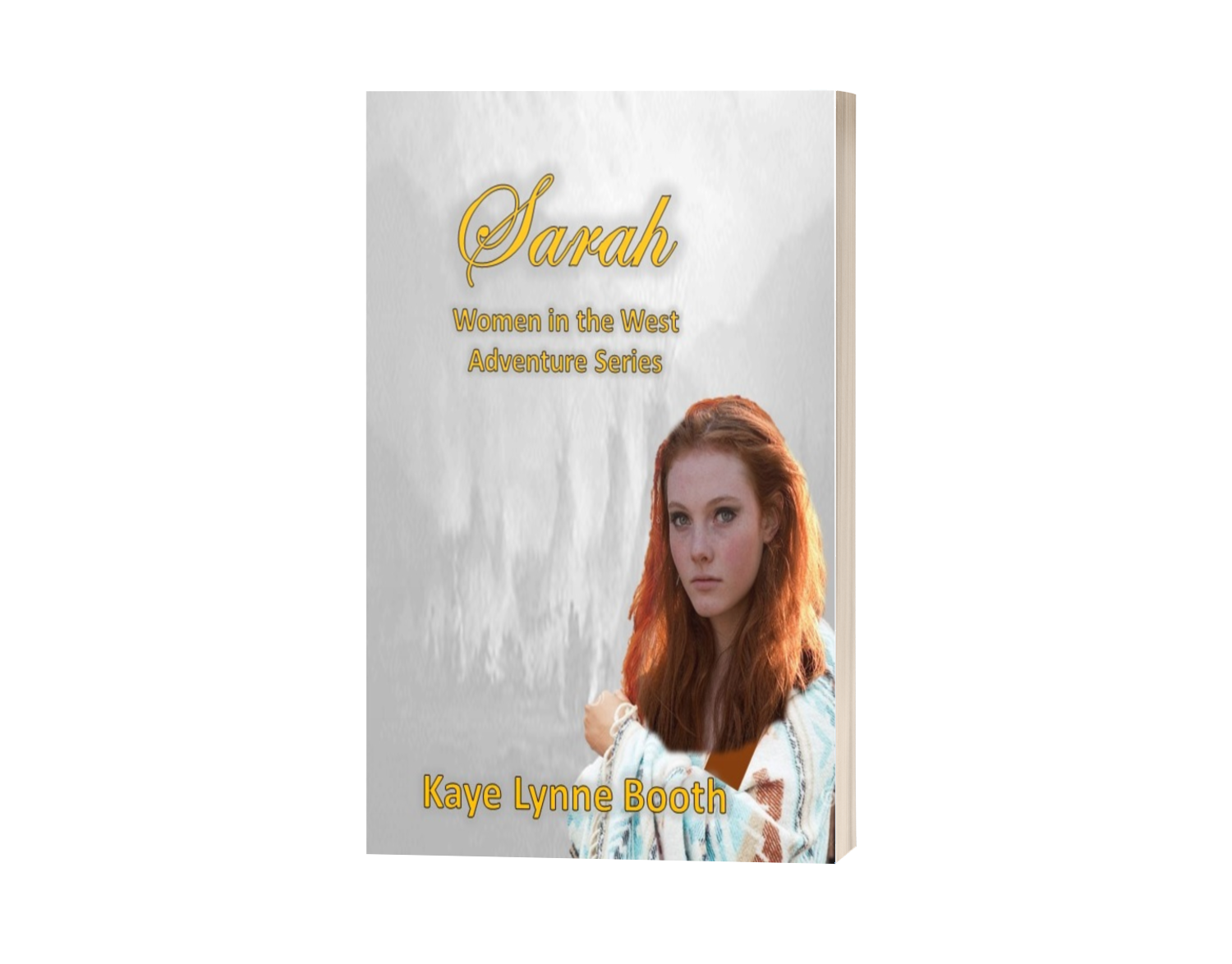
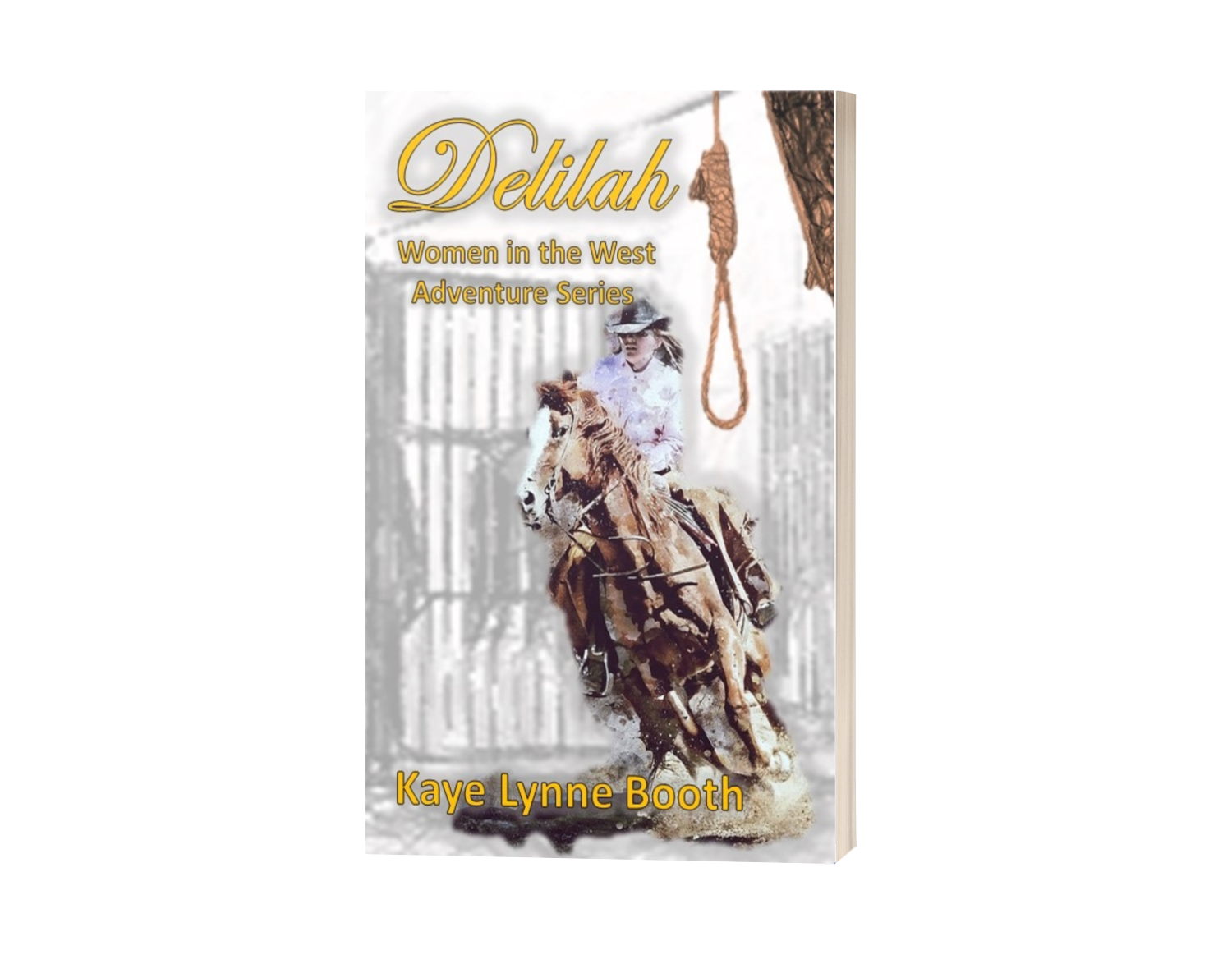
This year, for NaNoWriMo, I chose to work on the second book in my Women in the West series, Sarah. In 2022, I chose a book that I had already been working on, so even though I completed the 50,000 word goal, I wasn’t truly a winner. So this year, I had to ask myself, “Can I truly meet the NaNoWriMo challenge?” I began with nothing but an outline and a partial opening chapter, just to see if I could do it.
NaNoWriMo isn’t designed to help you write fast, not well. That part is up to you. The idea isn’t to emerge after thirty days with a perfect novel, but with a rough draft, a place to start and build from.
Week One
During the first week, I met my writing goal of 1,667 words every single day and the writing was coming along fine. I stuck to my outline, for the most part. A couple of times I had to push to get those words out, but they were out there on the page.
In 2022, I tried to use methods suggested in Booked to the Gills, by Aisley Oliphant, such as time blocking. This was only one of the tips offered to get in 1,667 words per day to culminate into 50,000 words in 30 days. (You can read my review of Booked to the Gills here.)
Timeblocking is an excellent strategy for getting words to page, if you can stick to it. I couldn’t. I found that, for me, time blocking only worked when events in my life were going smoothly. Too often things came up that prevented me from writing at my scheduled times, including working unscheduled shifts or other emergencies that just can’t wait.
This year my life is not structured enough to make time blocking feasible for me. I’m not working, but that leads to other situations that must be dealt with, things that can’t be scheduled around. But, I knew they would come and so I decided instead to move ahead with my natural stubborn bullheadedness, and endeavor to persevere. I simply sat at my laptop and wrote every chance I had.
Week Two
The second week was filled with those immediate distractions, things which couldn’t be ignored, and I’m sad to say, I had the first day that I didn’t meet my daily goal. On Tuesday of that week, I only got in about 160 words. But the good part is that I exceeded my daily goal enough in the previous week, that it didn’t take much to catch back up, and I finished off the week being right where I should be or maybe even a little better.
Most of my writing sessions were in shorter time blocks, with longer stretches once or twice a day. I was willing to take what I could get, and I seemed to be getting enough time in to meet my daily goal most of the time.
Week Three
I had two days in a row during the third week where I didn’t quite meet my daily goal, but came close. One extra good day with over 2000 words, and a couple where I made it over my daily goal by smaller amounts kept me floating right about where I should be in the overall word count, at over 35000 words. So overall, I was fairly pleased with my results.
I continued with my write every chance you get strategy, and it seemed to be producing the results I needed. I used modified time blocking by taking advantage of extended time blocks of several hours at a time, breaking them into 15, 20, 30, or 45 minute segments as life demanded.
During longer blocks of time, I often found myself stopping to research the details for certain scenes. Since this book is historical western fiction, I needed to be historically correct to the best of my abilities. I had to watch myself, and on few occasions, found myself falling down a research rabbit hole. Research is a necessary part of the writing process, so I didn’t fault myself for these excursions. At first I tried putting disputed facts in brackets, but leaving whole setting descriptions blank wasn’t helping my word count, and my word count wasn’t suffering for it, so I continued in that manner.
Week Four
I got a bad start to week four. My laptop has seen better days, and on Tuesday the 21st, I was unable to back up my work, because it quit registering my USB drive, and then I lost my screen image. Let me tell you you can’t write, or do anything else, on a blank screen with no curser. This was a set back that could, and in fact did, end my chances for a successful NaNoWriMo.
It was quite a disappointment. I had gone into town to shop for Thanksgiving dinner, and on the way back, I had worked out what would happen in the final scenes of Sarah. I was at over 35,000 words, closing in on the end of the challenge goal of 50,000. I knew what needed to happen, so I was ready to pound it out into the page. And suddenly, I was at a dead stop.
Alas, I have a guardian angel, in the flesh. My oldest and dearest friend has always watched out for me. When she heard I needed a computer, she sent me one. It doesn’t have the storage space my old one did, so I’m still trying to figure out how to access all my files, but it will do in a pinch, until I can afford to get a new one. It didn’t arrive in time for me to meet the NaNoWriMo goal, but it is allowing me to finish the book, and that is what is important.
I made the 50,000 word goal on December 10th, ten days after the NaNoWriMo deadline, so I might have made the goal for the challenge had I had a functioning computer. I’m happy to say that Sarah is back pretty much on schedule and should be ready for editing in January, as planned.
What I Learned
Even though I wasn’t able to finish the challenge and declare myself a “winner”, I now have a story with over 50,000 words completed, which is a darn good start, and I still learned a lot about my writing process from the experience.
I used to be a binge writer. I could focus on my story and tap away at the keys, blocking out everything around me. I learned that I don’t write like that anymore. As I’ve gotten older, I find I need those fifteen minute breaks every so often. This helped me to get the other things in life that I needed to tend to done, as well. Daily tasks and obligations are good excuses to put the writing down and take care of business.
Along with that, I learned that grabbing shorter time segments whenever I can works well for me. Even if it’s only 15 minutes, it gets a few words on the page, and those 15 and 30 minute segments add up when you look at the word count.
I also learned, not for the first time, that the best advice for me as an author is, “Butt in chair, write the damn book.” Those short segments did add up. I made the daily word count this way all but one day, prior to my computer quitting on me.
Conclusions
I am using the NaNoWriMo challenge to help me become a more prolific writer. I found the whole month of November to be a learning experience, because writing processes change. I learned that the way I used to write doesn’t work for me anymore, and I developed a few writing strategies that seemed to be more successful for me. Overall, I enjoyed doing the NaNoWriMo challenge, grew as a writer, and would recommend it to anyone who wants to test themselves or improve their writing process through trying out new strategies.
______________________________________
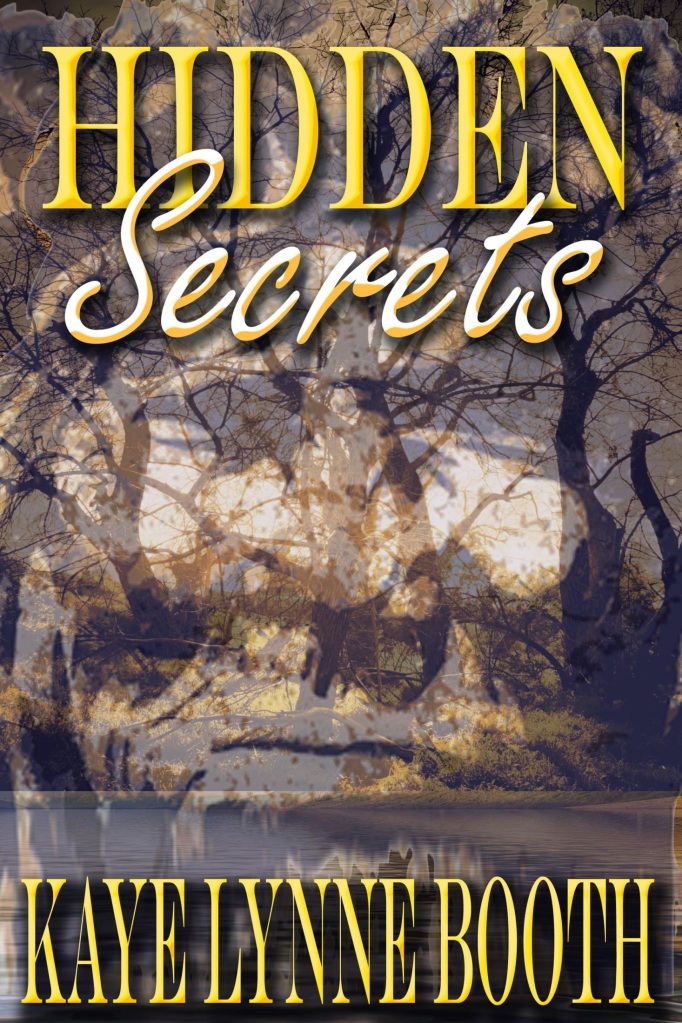
For Kaye Lynne Booth, writing is a passion. Kaye Lynne is an author with published short fiction and poetry, both online and in print, including her short story collection, Last Call and Other Short Fiction; and her paranormal mystery novella, Hidden Secrets; and book 1 of her Women in the West adventure series, Delilah. Kaye holds a dual M.F.A. degree in Creative Writing with emphasis in genre fiction and screenwriting, and an M.A. in publishing. Kaye Lynne is the founder of WordCrafter Quality Writing & Author Services and WordCrafter Press. She also maintains an authors’ blog and website, Writing to be Read, where she publishes content of interest in the literary world.
Want exclusive content? Join Kaye Lynne Booth & WordCrafter Press Readers’ Group for WordCrafter Press book & event news, including the awesome releases of author Kaye Lynne Booth. She won’t flood your inbox, she NEVER sells her list, and you might get a freebie occasionally. Get a free digital copy of her short story collection, Last Call and Other Short Fiction, just for joining.
Ancient tech draws dangerous unwanted attention in New York Times bestselling author Kristine Kathryn Rusch’s Ivory Trees, the thrilling new standalone novel in her award-winning Diving series.
When the discovery of a bunker reveals a treasure trove of ancient artifacts, interested parties throughout the Empire—from collectors to academics to researchers—want a piece of the action. But the finds draw attention from outside the Empire as well. Attention from someone willing to do whatever it takes to outmaneuver the Empire and secure the collection.
Set in Kristine Kathryn Rusch’s expansive Diving Universe, Ivory Trees introduces exciting new characters and events to this powerfully written series, while also offering some tantalizing Easter eggs from previous Diving novels.
As suspense builds to a fevered intensity, this tantalizing new novel mixes the best of heist fiction and space opera and proves Rusch’s place as a master of science fiction.
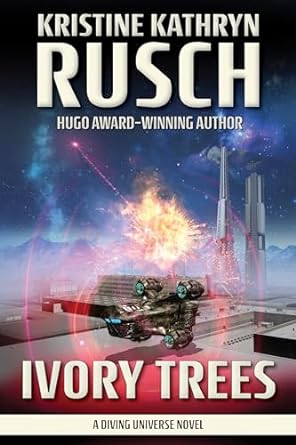
I received a digital copy of Ivory Trees, by Kristine Kathryn Rusch, as a reward from the Ivory Trees Kickstarter campaign at the bottom tier. Ivory Trees: A Diving Universe Novel was not what I expected. Somehow, the series title lead me to believe that the story would take place under water. However, as the cover portrays, this story is a science fiction tale taking place in the vast reaches of space.
Rush has created an intriguing universe, where it’s difficult to tell who the good guys are, with complex characters which are likable and relatable. Multiple points of view allow this story of action and intrigue unfold. Everybody has an angle and lives are at stake. Honestly, I wasn’t sure who to root for in this story, as the alien race whom I believed to were supposed to be the good guys seem to be the aggressors, while the Enteran military on the planet of Wry, whom I think are supposed to be the bad guys, seem to just be defending the items that they find in their possession.
When ancient artifacts are discovered, including the legendary and valuable ivory trees, there’s profit to be made. But the people who have possession of these precious artifacts have no idea what they really are; dangerous weapons from an alien technology which are highly unstable, and the race that created them is determined to get them back at any cost.
As a part of a series, this complex, multiple character, multiple storyline tale is one that science fiction and space opera fans are sure to love. I found many of the storylines seemed to just drift away, hopefully to be picked up in future volumes. Because many things were left unresolved for the series, as a stand alone, I found the ending less than satisfying. I give Ivory Trees four quills.
_____________________________________________
Kaye Lynne Booth does honest book reviews on Writing to be Read in exchange for ARCs. Have a book you’d like reviewed? You can request a review here.
Told in The Red Grouse Inn, this poignant, adult, speculative, spiritual and philosophical tale will intrigue, entertain and keep you guessing in equal measure. As a child, David, is taken to a hospice by his mother where he finds himself listening to an increasingly mad tale told by a dying and embittered old Irish priest. But why do the old priest’s recollections of the school days and subsequent rise of a local councillor become so increasingly bizarre and bitter? The universal appeal of this enjoyable, entertaining and intriguing short story, with its beautiful and atmospheric imagery, surreal and paranormal concepts of angels, ghosts and devils, will have you turning the pages and ready to read the next one.
The Crow, by Leslie Garland offers an eerie feeling as you read the story of a young boy saddled with the task of visiting an old priest who is kind of creepy. As the priest unfolds his strange tale, one that might be better to spare young children from, one can’t help but feel a little of the creepiness rub off on you. Told in the spirit of those who used to sit around telling stories for entertainment, this tale has a classic feel to it, which immediately draws the reader in and holds them captive until the last page is turned.
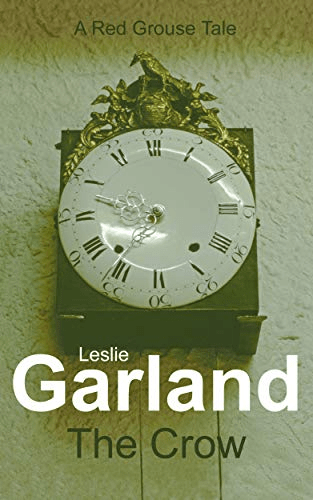
Short, but captivating. The cover could use a new design, as it would not prompt me to go buy the book and tells me nothing about the content of the story, But the title, The Crow, has the power to grab you and make you want to read it. I give it four quills.
_______________________
Kaye Lynne Booth does honest book reviews on Writing to be Read in exchange for ARCs. Have a book you’d like reviewed? You can request a review here.
In the small town of Saguaro Hill, Arizona, there is an ongoing history-mystery as to why Santa has never visited. Children have never received a single gift for the Yuletide holidays since the town’s establishment in 1888.
The public librarian, Rachel George, is tasked by Mayor Higgins to research the urban legend and discover the real reason why Santa has never flown over, let alone stepped foot, in their village.
Rumors abound, but are there any facts to this case?
Or, will Santa remain a no-show for the ages?
Rachel is determined to find out the truth as to why she lives in The Town Santa Forgot.
The Town Santa Forgot, by DL Mullan a short story which reads like a classic Christmas mystery. This is the kind of heart warming tale you want to read with your family, sitting around the tree, with a fire warming the hearth.
Rachel George is the head librarian in Seguaro Hills, Arizona, dubbed the town that Santa forgot. It was named so because Santa Clause hasn’t visited this town for over a century. No one knows why Santa has neglected them, but despite being left off Santa’s GPS, the town maintains their Christmas spirit in hopes that someday he will return. It falls on Rachel to find out why Santa has forgotton Seguaro and save Christmas, but she must dig deep into the town’s history to solve the mystery.
A tale that will tickle the whole family’s fancies. The perfect holiday gift, but would be fun to read year round. As with most Christmas stories, this one is filled with love and hope. I give The Town Santa Forgot five quills.
I got an email the other day title, “Use AI to Write Your Book in a Flash”. I think Alexa, and Siri, and Google Assistant are annoying, and only correct a portion of the time. So when I saw this email, my first thought was, “Who would want to read a book written by AI?”
AI applications and tools are improving rapidly, so the idea of AI writing my book for me isn’t that far fetched. But the more I though about it, the more offended I became. I write as a means of expressing myself using my ideas, my words, my voice. I wouldn’t want an AI to write my whole book, no matter how fast it can do it. How could they actually believe an unfeeling, inhuman AI tool could even attempt to write for me?
The fact is, most of us already use AI in our daily lives, and we probably don’t even give it a second thought anymore. Most of us an Alexa, or Siri, or Google Assistant, or an equivilant AI device which we use to gain information, turn on our lights, play music, or even tell us a joke. We’ve come to accept AI as a part of daily life.
But when folks start talking about using AI for writing or narrating a book, concerned voices come out of the dark to express displeasure, siting several reasons why using AI with books and literature is not a desirable thing, but one or two stand out: AI created or narrated books are cheating, and take away human jobs.
We’re going to look at the validity of that argument, but first, let’s talk about the different types of AI and what they can and can’t do. Many of us already use AI in our writing, too, but we may not even realize it. Do you use the automatic spell checker that is built into Microsoft Word? Or maybe you use Grammerly or ProWriting Aid to help polish your words? Not so many because not all authors have audiobooks out, but some, may take advantage of the free AI narration for audio books available on Google Play. And then of course, there is Chat GTP, or [ ] which many authors use to help them in their research or in creating setting or character description.
The Creative Penn Podcast on AI
Joanna Penn is a futurist author and podcaster who is usually at least two or three steps ahead of the trends on The Creative Penn podcast. AI has been a hot topic on her poscast and she has many episodes which cover this topic. Penn is transparent in her use of AI in her writing and in creating illustrations. She has played with AI narration, and even had an AI voice created from her own voice, which she claims has saved her tremendous time in creating her audiobooks, which she previously narrated herself. In a couple of her podcast episodes, Penn plays the AI narrations for one of her audiobooks in a couple of different voices to illustrate the quality of AI narration that could be achieved. And I know that quality has improved even more since she recorded those episodes.
If AI is cheating, then with the narration, Penn is only cheating herself. She places disclaimers, letting readers know if a creative work is made with AI and in what capacity, so no one feels fooled or tricked. Although some people are out there pushing the use of AI to ‘write your book quick’, Penn points out that AI technology are simply tools to be used by the author or artist in the creative process. On The Creative Penn podcast, Joanna talks about how she uses ChatGPT and Mid-Journey to assist her in her research, and how she tells the AI what she is looking for and then can refine her search or tell it to make adjustments to a paragraph or an image until it meets what she has envisioned in her own head.
If you are interested in hearing what Joanna Penn has to say about the use of AI, you might try one or more of the episodes listed below.
Now, I don’t pretend to understand a lot of this because I haven’t used Chat GPT or Mid-Journey myself yet, so I can only go by what I hear, but I think it is something that is definitely worth looking into. As a DIY author, publisher, and book marketer, anything that can save me time and help me improve my writing or help sell more books is worth further exploration.
How I Use AI
As I write, I use the AI generated grammar and spellchecker that is built into MS Word, and I bet you do, too. I also employ the free version of ProWriting Aid as I do the final pass on all manuscripts, for myself and others. The AI generated tools pick up errors that I have missed, because hey, I’m only human. I don’t accept every suggestion offered, but they show me things I need to look at, and then I decide if changes are in order, and what type of changes should be made. But again, the AI tools are helpful in pointing out where there are possible errors, or suggesting a better way to say something, but the AI isn’t always right. Suggested corrections don’t always take voice or tone into account, and I, as the author make the final decisions about what goes on the page.
I have not tried using an AI tool such as Chat GPT, but I can see the potential. If I had a tool that could assist me in thinking through each scene, with suggestions for options at my fingertips, I think it would save me a lot of time. And a tool that could help me, who cannot draw well and is not artistic in that way, to create my own images for book covers, illustration and promotion, is something I want to know more about. I’m creating my own images anyway, but perhaps AI could help me make my images better.
Doing my own audiobooks is something I’ve been looking at for a while, but haven’t yet been able to pull off. The idea of creating an AI voice from my own definitely appeals to me, since audiobook creation requires a lot of time that I don’t seem to have. I don’t know enough about it right now to make any rash decisions, but I certainly want to know more. I have listened to AI generated narration that sounds pretty good, and I’ve heard Mark Leslie Lefabvre’s AI narration created from his own voice, which offers few clues that it isn’t the real Mark. (I can’t find the episode now, but at the end of one recent episode of the Stark Reflections podcast, he plays his final reflections read by his AI voice.)
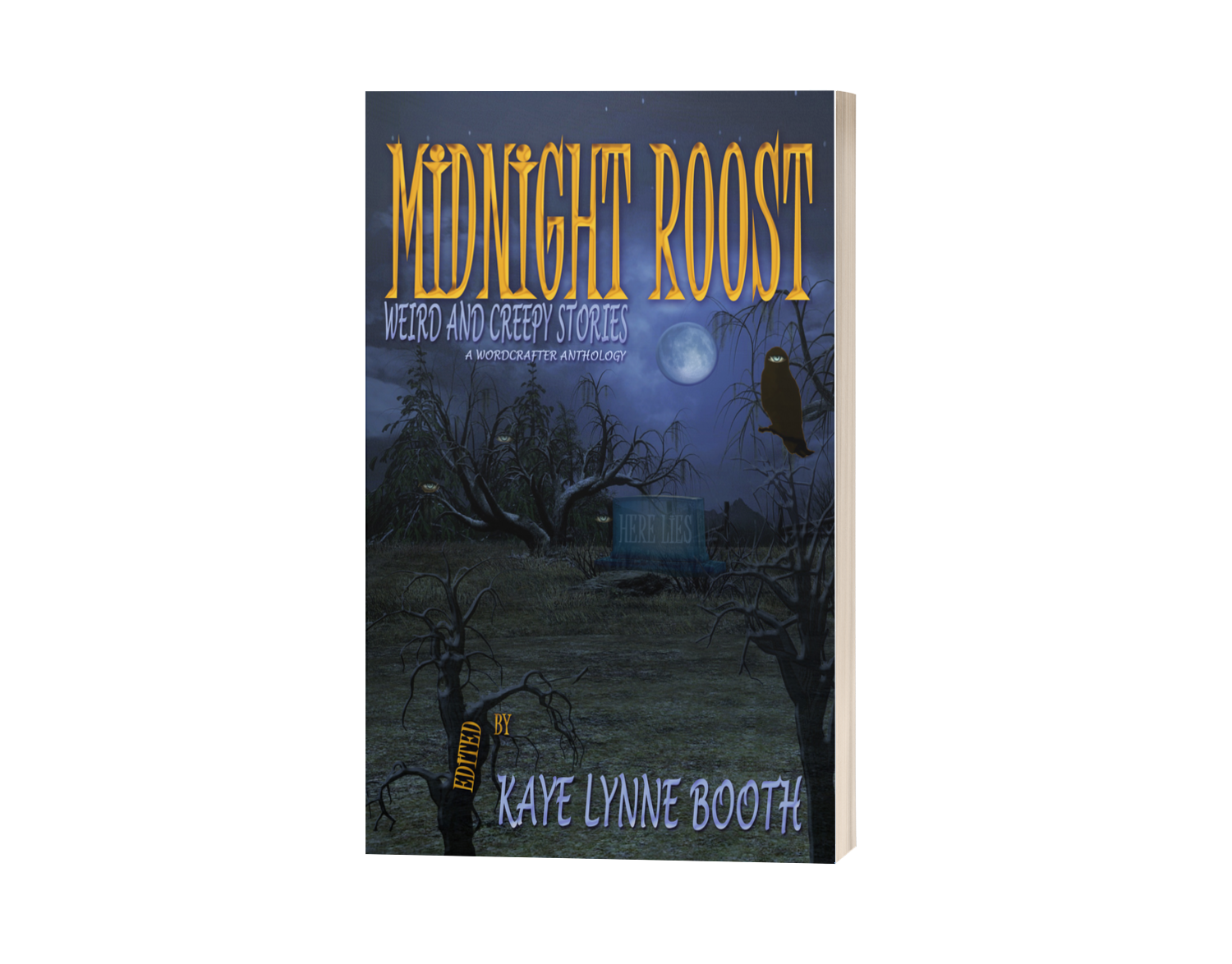
WordCrafter Press also used an AI generated image and voice in the book trailer for the 2023 anthology, Midnight Roost, created by DL Mullan and Undawnted. And frankly, I think it is an outstanding book trailer and the AI made it really cool. This is an awesome way to showcase the authors and the anthology as a whole. Give it a watch below and see what you think. I can definitely see how a tool such as the one used by Mullan could be a great asset in my advertising tool kit.
Midnight Roost Book Trailer
AI is Just a Tool
You can guess from the above post that AI tools are something I have an interest in using. Many of us already use AI tools, even if we don’t look at it that way. I know I used the AI spell checker on MS Word and ProWriting Aid without thinking twice, because they made my life as a writer easier. But as Joanna Penn repeatedly points out, AI can’t do it alone, it needs your input, your humanity, to do what it is programed to do. Alone AI can’t write a thing.
Let me know what you think about the use of AI tools in the comments.
For Kaye Lynne Booth, writing is a passion. Kaye Lynne is an author with published short fiction and poetry, both online and in print, including her short story collection, Last Call and Other Short Fiction; and her paranormal mystery novella, Hidden Secrets; and book 1 of her Women in the West adventure series, Delilah. Kaye holds a dual M.F.A. degree in Creative Writing with emphasis in genre fiction and screenwriting, and an M.A. in publishing. Kaye Lynne is the founder of WordCrafter Quality Writing & Author Services and WordCrafter Press. She also maintains an authors’ blog and website, Writing to be Read, where she publishes content of interest in the literary world.
Want exclusive content? Join Kaye Lynne Booth & WordCrafter Press Readers’ Group for WordCrafter Press book & event news, including the awesome releases of author Kaye Lynne Booth. She won’t flood your inbox, she NEVER sells her list, and you might get a freebie occasionally. Get a free digital copy of her short story collection, Last Call and Other Short Fiction, just for joining.
Nineteen gut-wrenching reports from the front lines of the War of the Worlds, as logged by Albert Einstein, Mark Twain, Theodore Roosevelt, H.P. Lovecraft, Winston Churchill, Jules Verne, and many of the other most famous writers of the time. The most popular and acclaimed science fiction writers of today relive the Martian invasion through the eyes of their famous predecessors.
My Review
I received War of the Worlds: Global Dispatches as a stretch goal reward from Kevin J. Anderson’s Bats in the Belfry Kickstarter campaign. This anthology offers a global take on the invasion begun in a novel by H.G. Wells and the 1938 radio broadcast that caused near panic when thought to be real. Compiled by Kevin J. Anderson, this anthology contains stories by various authors, portraying the invasion through the eyes of various historical figures. Authors with featured dispatches include Kevin J. Anderson, Dave Wolverton, Mike Resnick, David Brin, Gregory Benford, Walter Jon Williams, Connie Willis, Robert Silverberg, and others. MacLeod Andrews narrates these fictional tales from arounf the globe.
H.G. Wells nearly created a mass hysteria with his famous radio broadcast in 1938. By now, we’re all familiar with the infamous tale of a Martian invasion and foiled plan to take over the world. They came, smashing their cyclinders into the Earth at every vantage point they could find. We know what happened here in the U.S., where the original story was set, but what about the rest of the world?
Global Dispatches presents nineteen different perspectives on the Martian invasion from around the world, with more tripods and tentacles than you can count. Mike Resnik offers up the perspective of Theodore Roosevelt, Kevin J. Anderson speaks as Percival Lowell, a Chinese Empress speaks through Walter Jon Williams, Danial Marcus gives us the Picaso perspective, etc… How each of these historical figures might have percieved such an alien invasion is presented through nineteen talented authors.
To me, it seemed like all these stories were just more of the same, and I was easily bored as one tripod looks the same as the next. The fact that I was familiar with the oiginal story and knew how it ended, made it difficult for me to feel fear for any of the characters in these tales. Reactions are not surprising. All watch in fear as the invaders wreck havoc wherever they are until they all eventually come to a halt as our viruses and germs which their systems couldn’t fight off.
Although it may be interesting to explore this tale from different historical perspectives, how much variance can there be between the different areas of the globe? This one wasn’t for me. I give this story collection three quills.
_____________________________________________
Kaye Lynne Booth does honest book reviews on Writing to be Read in exchange for ARCs. Have a book you’d like reviewed? You can request a review here.
Prepare to be captivated by “Terror in the Shadows,” a gripping paranormal, mystery, suspense novel that plunges into a world of hidden secrets and uncertain destinies. Kelsey, a tenacious young reporter known for chasing stories, suddenly vanishes, paralleling the puzzling disappearance of her mother three months ago. As time ticks away, the race to find Kelsey becomes a desperate pursuit for Detective Silverton.
Haunted by the mysterious photo of Kelsey, Lucy, a mysterious man with an intriguing connection to the supernatural, feels an unwavering urge to aid in the search. With his enigmatic powers, he reveals the missing pieces as they rush into the shadows to unearth long-hidden truths.
In a realm where secrets and lies intertwine, ancient powers stir from their slumber, ready to shape the fate of all involved. Within this realm, where the boundaries between light and dark blur, Kelsey’s fate hangs in the balance.
As Detective Silverton uncovers the truth behind Kelsey and her mother’s disappearance, he walks a treacherous tightrope between saving the young woman and losing everyone he loves. The stakes have never been higher as the clock relentlessly counts down.
With each page turned, “Terror in the Shadows” will immerse you in a world where gripping suspense and unexpected twists reign supreme. As the story unfolds, you’ll be held enthralled from the very first page to the heart-stopping climax. Will the truth set Kelsey free, or will she become another headline shadowed by darkness?
Prepare yourself for an exhilarating journey that will keep you on the edge of your seat, yearning for answers until the last word. “Terror in the Shadows” will leave you craving more, long after you’ve turned the last page.”
My Review
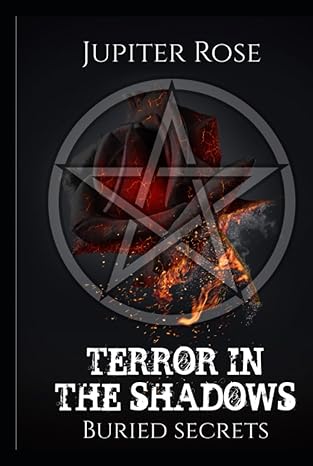
I requested a copy of this book from the author, Jupiter Rose, in exchange for an honest review, because the cover caught my eye. (Yes, I often consciously choose books by their covers.) The flaming pentagram with the figure of a man in it intrigued me and the title, Terror in the Shadows, promised a tale of dark fiction or horror to keep one awake at night. While this story has a lot of potential to be an excellent dark fantasy thriller, it failed to deliver on its promise.
It has an excellent premise, with witches and witch hunters, and even an appearance from the Dark Lord, himself, going by the name of Lucy. The mysterious disappearance of Kelsey’s mother starts things off, but we only get to learn about it through Kelsey’s thoughts before Kelsey herself disappears and it’s up to her two best friends Frank and Jennifer to find her before it’s too late. There are mysterious men stalking her, and a mysterious man who appears out of nowhere to help find her who has more information than he should, all building up to a climatic confrontation between the hunters and the hunted. I loved the tale enough to finish the book despite the problems that I found with it which included:
Massive head hopping. This story changes P.O.V. so often it’s difficult to know whose head your in – sometimes as often as every other paragraph.
Numerous typos, sometimes changing gender identifiers within a single sentence.
The characters were likeable enough, but they lacked depth, which could have easily been remedied by staying in P.O.V. so we could get more of their inner feelings and resonate with the reasons for their actions. There are too many extraordinary events that are reacted to by the characters as if they were every day occurrences, and no understanding as to why that would be.
Needed to be more realistic, and plot holes that need patched. The character of Frank, in particular, was hard to figure out. He is portrayed as a policeman, but his behavior is very un-cop-like. They all have massive time off of work to delve into mysteries, and after her abduction, they bring Kelsey home and report nothing to the police or the media, after her photo has been plastered all over to the public. Then her boss calls to demand her to come back to work before he has any way to know she’s no longer missing. These moments make the reader pause from the story to say, “What? When did that happen?” And there a many of them.
Too much telling and not enough showing. Told in past tense, it was too easy to fill us in later and just tell us something happened while we were out.
I never like to give less than positive reviews, but since I requested the book, I felt obligated to give an honest review as promised. The storyline was good enough to keep me reading despite the problems with craft and grammar. What makes it sad is that all of them could have been corrected by running it by a decent editor and giving it a good proofread. While I am a D.I.Y. author and publisher, I believe in putting out the best book possible, and I know how important it is to have a second, or even a third set of eyes go over the books that I publish. A book like this one just drives that message home.
A good storyline and characters, but hard to get through due to typos and problems with craft. I give Terror in the Shadows three quills.
______________________________
Kaye Lynne Booth does honest book reviews on Writing to be Read in exchange for ARCs. Have a book you’d like reviewed? You can request a review here.
In my graduate publishing classes, Kevin J. Anderson talked about how traditional publishers have tried to cut corners by providing minimal editing, and how they won’t even look at a manuscript that will require heavy editing, unless you are a big name author. Then he told the story of how Stephen King submitted something to a publisher who didn’t thinkm his work needed editing because he is a bestselling author, and Stephen King said something like, “What? No, wait. Part of the reason I’m a bestselling author is because I have fantastic editors to make me look good.”
Even bestselling authors need editors to help them make their writing the best that it can be. They don’t whip out stories that are grammatically correct and properly spelled right off the cuff. They work at it, and they have others input to help them improve their writing, and together, they turn out well written novels which then, become bestsellers.
For me, KJA’s story drove home a point. I’m an unknown author, and writing is a learning process which never stops. So, if bestselling author Stephen King believes he needs editors then, what makes me think that I don’t? Of course I do. I don’t claim to write as well as King, not by a long shot, so of course I need to have someone knowledgeable in all things writing to take a look at my works before I share them with the world.
Advantages of Having Your Work Edited
You’ll produce a better quality work that you can be proud of.
Readers will appreciate not having to struggle through poorly spelled, or poorly structured sentences and paragraphs, just to follow the plot of the story.
So, What Does an Editor Do That I Can’t?
There are many types of editing, but for the sake of this discussion, we’ll talk about line editing, or copyediting in the world of advertising and content marketing. For our purposes, we’ll use line editing.
A line editor sits down in front of your manuscript and goes through it line by line, marking misspellings, inconsistancies and grammar errors. If you’ve got a good repore with them they may also point out plot holes, but that really falls under the deep dive of developmental editing. And about now, you’re saying, “Well, I can do all of that.” And you can, but the thing is, they are not as close to your work as you are. And because you are so close to it, (if you’re anything like me, your stories are like your babies, so you’re biased toward your own writing), they may see things that you don’t, even though it’s right there in front of your eyes.
A Second, (and Maybe a Third or a Fourth), Set of Eyes
Editors are expensive, because editing takes a lot of time, when it’s done right. And I realize that not all authors can afford to hire an editor, especially when you are just starting out, and sometimes even years down the road, when you’re still trying to gain traction. I know because I’m one. I don’t make enough from my writing yet to give up my day job, as much as I would like to. Of course, I want my work to be its absolute best before publishing, so what is an author to do?
I’m a DIY author, but I believe that you really do need that second set of eyes that are distanced from your writing to get an objective opinion, but you don’t always need to pay a professional editor to get that. I don’t mean have Aunty Em give it a look, but someone who is knowledgeable about grammer and spelling, perhaps another author like yourself. I’ve found in the indie author and blogging worlds that there are many authors willing to trade services, or even pay things forward, if you just reach out and ask. The worst that can happen is they’ll say, “No.” If they do, try someone else.
You can try to find an editor on Fivver, but I would caution that you may get what you pay for there. Editors on Reedsy don’t usually come cheap either. But these are two options that are available to authors where you might find an affordable editor.
I utilize several of my author friends as a second set of eyes to beta read or edit my stories. When I can get them, I employ both. I know authors are busy people, so in turn, I must be willing to do the same for them, and I’ve also done a good share of paying forward. I’ve had some author friends turn me down because they were too busy at the time. I get that. Most of the authors I know have a lot going on. I happily move on, although I may come back to them latter.
Self-Editing Tools for Writers
I came across this great blog site, KD Did It Edits, which offers free editing tools for authors who can’t afford an editor, or those who just like to make their writing their absolute best before sending it to their editor, or second set of eyes. The whole site is filled with editing tips and tools, so drop in and browse around. I use many of the resources and tools that she has listed in my own work, including the Perdue Owl, and several of the style guides.
I also use Pro-Writing Aide in my final proof, before I upload my manuscript for publishing, which is basically an AI editor, similar to the one that catches my mistakes in MS Word. These AI tools catch errors which I may have overlooked on the first passover and point them out, so I can decide if they need correction, and how any corrections should be made. So, the AI tools are not writing for me, but they do assist me in catching as many errors as I can. I use them with my own writing and when I’m editing for others. I know I am human and can make mistakes or miss things, and they help me to make all my work the best that it can be. These tools are not a substitute for another set of human eyes on my own work, and I still use beta readers or my fellow authors to see other things that I might not have noticed. For the work of others, it goes back to the author with my comments and the author decides which corrections will be made, and which will be discarded.
Speaking as an Editor
As I mentioned, I do editing for others in a professional capacity through my Write it Right Quality Editing Services. Of course, I want writer’s to employ my editing services, but like I’ve said, I understand that many can’t afford an editor. I’ve always tried to offer my services at affordable prices, but today, I find my services offered at right around the going rate. I do offer discounted rates and special deals, at times. And of course, if you publish through WordCrafter Press, my line editing comes as a part of the publshing package, which is a 50/50 royalty split.
I do offer developmental editing services, but I don’t advertise it on my site and charge for them on an individual case-by-case basis, depending on how much work is needed. You can reach out to me for a quote on the contact form on my site through the link above, or at KLBWordCrafter@gmail.com.
Conclusion
In my opinion, any author that is human will make mistakes, so every author needs an editor, or someone else knowledgable in writing, to go over their manuscript or story. I hope that authors will find my site and chose to employ my services, but I understand when they don’t. As a reader who enjoys good writing, I hope that they are striving for perfection in their work, and will find someone else to do it, so that whatever they put out into the world will be the absolute best that it can be.
Do you agree? Disagree? Let me know your thoughts in the comments.
_________________________________________________
For Kaye Lynne Booth, writing is a passion. Kaye Lynne is an author with published short fiction and poetry, both online and in print, including her short story collection, Last Call and Other Short Fiction; and her paranormal mystery novella, Hidden Secrets; Book 1 of her Women in the West adventure series, Delilah, and her Time-Travel Adventure novel, The Rock Star & The Outlaw. Kaye holds a dual M.F.A. degree in Creative Writing with emphasis in genre fiction and screenwriting, and an M.A. in publishing. Kaye Lynne is the founder of WordCrafter Quality Writing & Author Services and WordCrafter Press. She also maintains an authors’ blog and website, Writing to be Read, where she publishes content of interest in the literary world.
_______________________________________________
Want exclusive content? Join Kaye Lynne Booth & WordCrafter Press Readers’ Group for WordCrafter Press book & event news, including the awesome releases of author Kaye Lynne Booth. She won’t flood your inbox, she NEVER sells her list, and you might get a freebie occasionally. Get a free digital copy of her short story collection, Last Call and Other Short Fiction, just for joining.
She has been called many things: murderer, madwoman, monster. She will become only one thing: a god.
The Crone. A woman of legend, a creature of blood. A Valkyrie. She has tortured, murdered, maimed — performing all the rituals needed to call forth the power of Odin himself and summon Ragnarok. She just needs one more thing: the staff of Skara Brae, and her plans will be fulfilled.
But the staff is already in the hands of Morgan Sierra. An agent of ARKANE, the British agency tasked with protecting the world from supernatural crises, Morgan knows that giving up the staff could spell the end of all things.
Now the Crone has taken dozens of staff members, visitors — even children — hostage at the British Museum, demanding that Morgan turn over the staff. Willing to kill, possessor of powers beyond anything ARKANE has yet encountered, the Crone seems unstoppable.
Morgan’s only advantages are her wit, her skill… and Blake Daniel (of the best-selling Brooke and Daniel crime thriller series). Cursed with clairvoyance, Blake’s powers may be just enough to help Morgan turn back the Crone and stop the end of the world.
But the Crone has her own secrets. Able to weave illusions, to wield fear, even to call forth the dead Vikings of old. She is the most powerful adversary Morgan has ever faced. But will she be the last?
The Crone beckons. Ragnarok looms. And it is up to Morgan and Blake to deny them both.
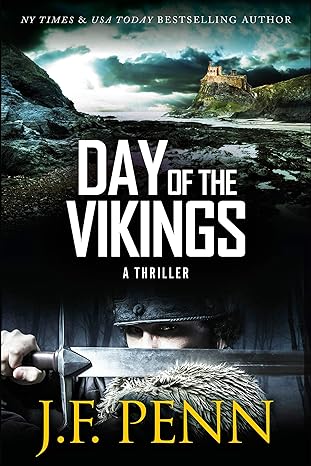
I received a free digital copy of Day of the Vikings, by J.F. Penn as a bonus from her newsletter. I am not very familiar with Viking lore, but I do like supernatural thrillers, so I thought I would give it a go, and I’m glad that I did.
Morgan Sierra is an ARKANE agent out to protect the world from ancient evils of the world. When she visits the British museum to examine the Viking Relics housed there, a group of well organized neo-Vikings seize the museum in search of the ancient staff of skara brie, in a fiendish plot to recreate the brutal ritual sacrifice, the Blood Eagle. The Blood Eagle ritual opens the power for them to locate The Eye of Odin and use it to summon Ragnarok and destroy the earth and it’s up to Morgan to stop them.
Day of the Vikings is a fast paced supernatural thriller with a solid plot, although the characters were rather unremarkable. Although allowed small glimpses into the characters, I never got a real sense of who they were. There is Blake Daniels, who holds the potential to become a very interesting character, if allowed, but then it sounds like he has his own series. Even Morgan’s character seemed a bit flat compared to the bigger than life Valkyrie and her terror mongers and their onslaught.
Keeps you reading. I give Day of the Vikings four quills.
____________________________________________
About A Thousand Fiendish Angels
Three dark short stories inspired by Dante’s Inferno, linked by a book of human skin passed down through generations.
Sins of the Flesh:
When the mutilated corpse of a wealthy author is discovered, the police officer sent to investigate finds a curious diary amongst the occult objects at the scene.
Will he uncover the author’s secret at the ruined chapel, and is he willing to pay the price that it demands?
Sins of Treachery:
On the death of their grandfather, twin brothers Simon and Gestas are left a map covered in alchemical symbols that could lead them to great wealth and power.
But they find more than they expected in the frozen wastes of the Arctic north …
Sins of Violence:
In a brutal post-apocalyptic world, a young girl is about to be taken to The Minotaur for a Blessing that will end her innocence.
Can her sister gain access to the fortified city of Dis in time to stop the ritual and avenge her own lost youth?
Purchase link:
My Review of A Thousand Fiendish Angels
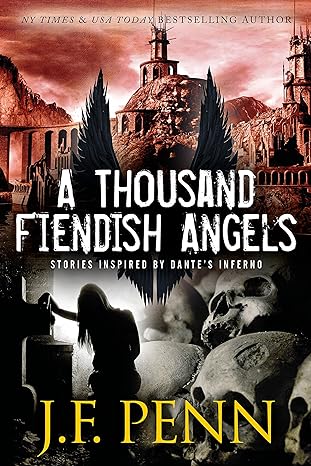
A Thousand Fiendish Angels, by J.F. Penn is a triology of short tales with the common theme of sins. Written for a challenge to write three interlinking stories, using the symbolism of Dante’s Inferno, these short tales explore the depths of the human soul. Sins of Flesh, Sins of Treachery, Sins of Violence; each tale explores a different aspect of sin and the human abilities to resist and weaknesses to give in, and the consequences. These stories are well thought out and well written, leaving me with much to ponder.
Thought provoking short fiction with a theme, but there should have been seven, instead of stopping at three. I give A Thousand Fiendish Angels five quills.
_____________________________________________
Kaye Lynne Booth does honest book reviews on Writing to be Read in exchange for ARCs. Have a book you’d like reviewed? You can request a review here.