Day 3 of the WordCrafter My Backyard Friends Book Blog Tour
Posted: July 17, 2024 Filed under: Animals, Book Release, Book Review, Books, Children's Books, Interview, Review, WordCrafter Book Blog Tours, WordCrafter Press | Tags: Book Reveiw, Character interview, Children's Books, Heather Hummingbird, Heather Hummingbird Makes a NEw Friend, Kids Books, My Backyard Friends series, WordCrafter Book Blog Tours 2 Comments
Join us on Undawnted for day 3 of the WordCrafter My Backyard Friends Book Blog Tour where DL Mullan interviews Heather Hummingbird and offers a review of Heather Hummingbird Makes a New Friend. Come join in the fun as we send off all three of the wonderful books in the My Backyard Friends Kid’s Book Series.
http://www.undawnted.com/2024/07/my-backyard-friends-meet-heather.html
Share this:

Day 2 of the WordCrafter My Backyard Friends Book Blog Tour
Posted: July 16, 2024 Filed under: Uncategorized 2 CommentsJoin us over at Roberta Writes, where Robbie Cheadle introduces Nicholas Nuthatch in a mini-interview and I share some fun facts about nuthatches and the inspiration for “Charlie Chickadee Gets a New Home”.
Share this:

Welcome to the WordCrafter My Backyard Friends Series Book Blog Tour
Posted: July 15, 2024 Filed under: Uncategorized 4 CommentsWelcome to the WordCrafter My Backyard Friends Book Blog Tour. We have a great tour planned with opportunities to meet all of the characters from the first three books in the series, as we launch Heather Hummingbird Makes a New Friend, Timothy Turtle Discovers Jellybeans, and Charlie Chickadee Gets a New Home. Heather and Timothy are picturebooks aimed at ages 3-5, and Charlie is a bit longer and is aimed at ages 6-8, but they are all inspired by the birds and animals that visit my mountain home, and they all have the wonderful illustrations of Robbie Cheadle.
Each stop will introduce a different character. You’ll meet the main characters: Heather Hummingbird, Timothy Turtle, and Charlie Chickadee, as well as the supporting characters: Ethan Eagle, Katy Cat, Becky Beaver, and Nancy and Nicholas Nuthatch through mini-interviews and excerpts and Robbie’s amazing illustrations. You’ll also learn about the inspirations for each story and some fun facts about these animals in the wild, and there will be some reviews of the books, as well. You can visit each stop through the links in the schedule below, but they won’t work until each stop goes live on its scheduled day. (Pssst! Stick with the tour. There’s a special suprise at the end.)
Tour Schedule
Monday – July 15 – Writing to be Read – Series introduction & My Backyard Friends Store
Tuesday – July 16 – Roberta Writes – Meet Nicholas Nuthatch & Inspiration for “Charlie Chaickadee”
Wednesday – July 17 – Undawnted – Meet Heather Hummingbird & Review of “Heather Hummingbird”
Thursday – July 18 – Robbie’s Inspiration – Meet Becky Beaver & Inspiration for “Timothy Turtle”
Friday – July 19 – Undawnted – Meet Timothy Turtle & Review of “Timothy Turtle”
Saturday – July 20 – Carla Loves to Read – Inspiration for “Heather Hummingbird” & Reviews of all 3 Books
Sunday – July 21 – Undawnted – Meet Charlie Chickadee & Revies of “Charlie Chickadee”
Monday- July 22 – Writing to be Read – Meet Ethan Eagle, Nancy Nuthatch & Katy Cat, & Wrap-up
The My Backyard Friends Series Trailer
At this first stop, you will also find the My Backyard Friends store where you can purchase direct from the author and proceeds will go to publishing the print books in color. They are only being released through retailers now in eBook format, because Robbie’s colorful illustrations should not be featured in black and white. The store has discounted eBooks, posters, and signed print copies pre-orders. (If we don’t raise enough money to do the color printing, monies for signed print copies will be refunded.) When the tour ends, the store will go away, but you will still be able to purchase copies of these wonderful kid’s books through retailers.
My Backyard Friends Store
The store is gone, but you can still get digital copies of all three books from your favorite distributors at the following Books2Read purchase links.
Heather Hummingbird Makes a New Friend (ages 3-5): https://books2read.com/MBF-HeatherHummingbird
Timothy Turtle Discovers Jellybeans (ages 3-5): https://books2read.com/MBF-TimothyTurtle
Charlie Chickadee Gets a New Home (ages 6-8): https://books2read.com/MBF-CharlieChickadee
________________________________________________
Book your WordCrafter Book Blog Tour today!
Share this:

The WtbR Monthly Story Challenge: July
Posted: July 14, 2024 Filed under: Anthology, Short Fiction, Stories, WordCrafter Press, Writing, Writing Challenge, WtbR Writing Challenge | Tags: Short Fiction, Stories, Writing Challenge, writing prompt, Writing to be Read, WtbR Story Challenge Leave a commentThis is the second month for this story challenge and the going is slow. We were all supposed to vote on last months submissions, but I only had one, so there is not much to vote on. I will publish the submission here, along with the beginning of my own. It’s not really voting, but I would like to hear your thoughts on the stories posted. Would you read more if were offered? What works for you? What doesn’t?
I’d also like to hear from you if you think this idea could be fun and would like to participate at some point in the future. I need to know if there is enough interest to continue this blog series.
This Month’s Prompt
A woman walks into a bar, that isn’t a bar, and it changes her life forever.
Remember, your story can be any genre, so you can get creative. Publish the results on your blog and send the link to me by the last day of the month. Be sure to label them with #WtbRStoryChallenge. Or, if you don’t have a blog, you can send the results directly to me at kayebooth@yahoo.com, and I will publish them or the links back to your blog the following month along with the writing prompt for the next month.
Stick to the rules and after 30 minutes of writing stop. I’ll be writing right along with you. I know the prompt ahead of time, but I won’t begin writing until it has posted. Be sure to have your entry to me by the last day of the month, so I can share them all for readers to vote on.
Another good thing about this not being a live event is you will have the opportunity to edit for grammar, spelling, and punctuation before submitting, and I do want it to be the best you’ve got, of course.
June Submissions
Prompt: Write a story based on a local or popular legend.
_________________________________
Thanks to Sylva Fae for submitting this month, so I have something to post besides my own story.
The Wizard of Alderley Edge
by Sylva Fae
“What’s up with you, Paul? You’ve been moping around since you got here, and you haven’t even drunk your tea.”
“I’m skint, Granddad. Molly’s nagging me to book a holiday, I’ve just bought a new car and I’ve still got my student loan to pay off.”
“Pah! You youngsters don’t know how privileged you are. I thought you were getting paid well at that fancy new job of yours – you can’t be skint.”
“How would you know, Granddad? You’ve always been rich…”
“Not always, Paul. When I was a young man, I struggled to even put food on the table.”
“Seriously? You live in the biggest house in Macclesfield? Come on, Granddad, what’s the family secret to getting obscenely rich?” Paul laughed; his grandparents were one of the richest families around, owning several businesses and properties.
“You wouldn’t believe me if I told you,” Granddad replied.
“Go on, try me. Seriously, I’ll take any advice you can give me.”
“It’s not that sort of story but if you want to know, it all started with a legend…”
“A legend? Seriously, Granddad?”
“Do you wanna hear this story, or what?” Granddad grumbled.
Paul nodded, and settled back to drink his tea.
“This is the legend of the sleeping king, and not just any old king, King Arthur, no less. Several places claim to be the final resting place of King Arthur and his loyal knights, but I know he lies somewhere beneath the rocks of Alderley Edge.” Granddad took a moment to sip his tea, then continued.
“A long time ago, a farmer set off along the Ridge Road, taking his white mare to market, in Macclesfield town. He frequently made the journey through the woods and knew every twisty path, rock face and shortcut. As he approached Thieves Hole, the mare stopped in the centre of the crossroads and refused to budge. The farmer, wary of local superstitions of this being the crossing into the Otherworld, urged his mare on, but was suddenly startled by an old man appearing between the trees. A long emerald cloak covered all but his wizened face and long grey beard, and he leaned heavily on a twisted staff, as he slowly made his way down the bank to the farmer.
“Where are you going with that mare?” the old man shouted after him. “I would like to buy it.”
The farmer looked at the old man and pondered, it would save him a walk if he sold the mare here, but he’d likely get a better price at the market. “Thank you, Sir, but I’ll try my luck in the market. I need to get the best price possible.”
“Heed my warning! Nobody in town will buy your mare. I will be waiting here for your return.” The old man slammed his staff down onto the rock, as if marking the spot they would meet.
The farmer finally reached the market, but wherever he went, although people admired the mare, nobody was interested in buying her. She was a fine mare too, worth far more than he was willing to take for her. Strangely, everyone he approached turned away, with the same disinterested dismissal when he tried to sell her. Perplexed, and with the old man’s warning still rumbling round his mind, he set off back across the Edge to home, leading the white mare.
_________________________________
This is my submission, and will also be my second story for the by invitation only anthology, Tales From the Hanging Tree, which will be released in September.
The Legend of Cottonwood Hallow
by Kaye Lynne Booth
[1865]
Running Fox is walking along the tree line near the riverbank, searching for the [plants] White Cloud needed to initiate him as a brave in the ceremony tonight. He hears yelling at the stage stop up ahead, but he pays it no mind. Today is an important day for him and he doesn’t have time to worry about what the white man’s troubles are. Little Dove will be there tonight, watching as he becomes a man. She is the prettiest girl he has ever known, and he plans to mate with her when he is old enough to take a squaw. He kneels down to pluck up some [plants] from the muddy bank of the river, but quickly looks up at the sound of horse’s hooves approaching fast.
“Ho, there!” a big burly man in a leather coat exclaims as he dismounts from his horse, pointing a rifle right at him. “You there, Indian! What are you doing?”
Running Fox looks up at him wide eyed. He does not speak the white man’s tongue and cannot understand his words, but he understands the rifle pointed his way. His heart beats like a war drum in his chest as three other men come riding up from behind the man with the rifle, and spread out, blocking his escape from all directions. “No, tsapea,” (Let go!) he cries as the big burly man steps forward, grabbing by the arm and jerking him to his feet.
“This the one, Charlie?” the white man asks.
A small, mousy man wearing a striped shirt and spectacles comes up behind him and squints, examining Running Fox’s features. “Well, I don’t know,” the little man says, speaking barely above a whisper. “It was an Indian, but they all sort of look alike.”
“Is this the one who robbed the stage stop, Charlie?” the big man says, shaking the arm of Running Fox to emphasize his words.
The young boy tries to pull away, repeating the words, “Tsapea!”. But the man tightens his grip, holding him hard enough to hurt.
A little man wearing a white apron and visor partially covering his balding head stutters, stumbling over his words. “Well now, uh, Zeek, I’m not sure. Th-the fella who did the robbing s-s-seemed older,” the little man says, wiping sweat from his brow. “I mean, uh, this f-f-feller seems a mite young to be r-robbing anybody. I mean… he’s just a k-kid, really.”
“One Injun’s as good as another, I say,” says a gray-haired man sporting a beard and mustache. He flashes a toothless smile and smacks his lips together as Running Fox continues to struggle, trying to pull away from the meaty grip of the big man. “Ain’t a damn one of ‘em worth a sow’s ear, if you ask me?”
“Nobody did, old man,” says the burly man, still holding the rifle in his other hand. “Was the fella did the robbin’ even an Injun, Charlie?”
“Well, now… It was d-dark, you know? I… uh… I didn’t get a very g-good look. C-c-could have been, b-but I a-ain’t too sure. S-s-seemed bigger, b-but I w-was s-scared. He had a g-g-gun on me and all. I… uh… I guess it c-c-could b-be hi—”
“Oh, fer Christ sakes, Charlie,” says another man, stepping out from the shadow of the big cottonwood tree before the man called Zeek can reply.
Running Fox can’t make out his features in the afternoon son, dappled by the shadow of the tree, but he can see the glint in his eye, and it wasn’t friendly.
The man holds a piece of rope in one hand, which he holds up in front of him as he says, “You better be sure. You wouldn’t want us to hang the wrong man, would you? You’re in charge of the stage stop. If this ain’t him, I guess you’re the one to take the responsibility. Ain’t that right, boys?”
The others mumble to the affirmative, some nodding their heads as Running Fox renewed his struggles against the grip of the gruff, burly man at the sight. “Tsapea!” he said, pulling his arm away with all his might. He doesn’t understand all the men say, but he understands the meaning of that rope. His heart races and a sweat breaks out on his forehead, running down his face. He doesn’t know the why of it, but he’s pretty sure that these men intend to hang him. “Tsapea! Tsapea!”
The burly man tightens his grip and jerks back on his arm. “Settle down now,” he says. “You think you can get away?” Then he turns his attention back to Charlie, but he doesn’t loosen his grip. “Well, Charlie? We need to know. This him, or not? I can’t hold onto this ‘un forever. He’s a wildcat.”
Charlie stares at Running Fox with frightened eyes. Then, he gives a nod of his head and casts his eyes to the ground. “Y-yes. I r-reckon th-that’s him,” he says softly.
“What’s that, Charlie?” says the man with the rope. “Speak up so we can hear.”
“Th-that’s him,” Charlie says, louder this time, but without looking up.
“All right then,” the dark man says, throwing a rope over the lowest branch of the big tree. “Let’s get this done. I haven’t had any lunch yet.”
The grey-haired old man leads a horse toward him, parting the circle of men. The noose slides down over his head. The burly man lets go of him momentarily, but places both hands around Running Fox’s waist and hoists him up into the saddle, as if he were a small child.
Everything is happening too fast. Running Fox doesn’t it even have time to protest. His heart races faster in his chest than it ever has before, faster even than when he’s run for long distances. His breathing quickens as the panic rises within him. They are going to hang him, and he doesn’t even know why. Little Dove will not see him become a brave, because he will never be one. Tears squeeze from the corner of his eyes at this thought, even though he tries to fight them back. He will never see his mother again, will never make his father proud. It isn’t fair. eHis life I just beginning. Running Fox is determined to never leave this spot until he has revenge. Nothing good will ever come from this place. Just before they slap the horse’s rump, sending it charging out from under him, he issues a vow that binds his soul to the cottonwood with his last breath. “Nitea ianna.” (Curse this place).
Share this:

Chatting with the Pros: Jonathan Maberry
Posted: July 13, 2024 Filed under: book marketing, Book Promotion, Book Review, Books, Chatting with the Pros, Fiction, Interview, Publishing, Writing | Tags: Book Reveiw, Chatting with the Pros, Interview, Jonathan Maberry, Mystic: The Monk Addison Case Files, Writing to be Read 3 Comments
My guest this month on “Chatting with the Pros” is New York Times bestselling author, Jonathan Maberry. Not only is he a five-time Bram Stoker Award winner, and comic book writer, his vampire apocalypse series, V-Wars, became a Netflix original series. Like last month’s guest, Jonathan Maberry is a prolific writer in multiple genres, including horror, science fiction, fantasy, suspense, thriller, and action. He is a board member for the Horror Writer’s Association, and president of the International Association of Media Tie-in Writers, as well as the editor of the rebirth of the iconic Weird Tales Magazine.
I had the pleasure of working with Jonathan briefly when he participated in the 2020 WordCrafter Stay in Place Virtual Writing Conference, where I learned that he is a prettty stand-up guy. Since he is the editor of Weird Tales Magazine, I also had the privelage of working with him on Weird Tales: Best of the Early Years 1926-27 and editing his story for the Gilded Glass anthology as an intern at Wordfire Press through Western State Colorado University came with a big case of imposter syndrome on my part. Who was I to be editing the work of this award-winning, bestselling author? But he was great to work with in the capacity of both author and co-editor, and it is a pleasure to have him as my guest today.
Interview with Jonathan Maberry
KAYE BOOTH: You are an award-winning author, including the Bram Stoker Award for horror, the Scribe Award for media tie-ins, the Inkpot Award from the San Diego Comic Con, and numerous accolades for children’s and teen books. In fact, in 2016 you had an award named after you and were the first recipient at the Canyon Crest academy Writer’s Conference, which was the first teen writer’s conference in the U.S. Can you tell us about the Jonathan Maberry Aspiring Teens Award, the conference and why you were chosen for the honor?
JONATHAN MABERRY: That award came as a shock to me. I had been teaching for a few years at the wonderful Canyon Crest Academy Writers Conference and have been a strong supporter of the event. Before that I taught the Experimental Writing for Teens program back in Doylestown, Pennsylvania…and several students from that group went on to make professional sales in novels, short stories, and nonfiction. I’ve always liked working with our younger creatives –it’s my way of selfishly insuring I’ll always have great books to read. When the conference decided to name the award after me because of my work as an author of Young Adult and Middle Grade fiction, my work in comics for Marvel, and other things, I was so surprised. It’s a deep honor to help present the award each year, and there are many, many folks out there who deserve it. We must all work together to help guide and teach the next generation of creatives.
KAYE BOOTH: You also have several comics and graphic novels. How does your writing process differ for these types of books?
JONATHAN MABERRY: I’m primarily a novelist. I think in long, complex stories. However, a different skill set is needed for comics. Novels are solo ventures, however, and comic books are created by a team. The writer pitches the story and presents an outline to the editor. Editors in comics are a lot more hands-on than in other mediums –more like a movie director. Once the editor approves the comic going to script, he then picks the art team. This could be a penciler and inker –two types of artists; or it could be an artist who does both. Then the colorist and letterer are picked. The writer decides how many panels will be on each page and provides art direction. The artist sends back rough pencil sketches to show how the art direction would translate into visual storytelling. The editor, artist, and writer discuss this, make adjustments, and then the artist typically sends pages as they’re completed. There’s multiple pairs of eyes on this every step of the way. The colorist enters the picture around this point, often long before the entire thing is drawn. Colors matter, and I’ve learned from experience that the colorist is much like the lighting person in film –those colors suggest mood and tone. The last player is the letterer, and he has to make sure the dialogue and any narrative have room in each panel. This often requires that the writer do a pass to slim down the dialogue so as not to block the art, just as it’s important for the writer to consider which images best accompany dialogue–mor art can show with little or no dialogue; dialogue-heavy panels should not require complex art. Then there’s multiple passes where everyone tries to find any graphic or textual errors. It’s a fun process, but time-consuming. And it’s key for a writer to keep the ego in check. This is a team, not a solo thing, and every player brings experience, insight, and skill. A wise writer allows them to participate in the process of telling the story in what is predominately a visual medium. Comics are fun, though. And the collaborative process can really be fun and enriching.
KAYE BOOTH: Do you do the illustrations?
JONATHAN MABERRY: Although I am an artist, I don’t do my own comic book art. I’m not on that level of art skill, and besides, the artist choice is complex. The editor often suggests multiple possible artists, and discusses with the writer whether any given style suits the story. Once chosen, it’s useful for the writer to check out that artist’s previous work and then adjust his writing style to be harmonious with it. Being an artist myself helps with this process.
KAYE BOOTH: Some of your work has been turned into film, including V Wars, and Rot & Ruin. How does one break into this arena? Do you have to know somebody who knows somebody, or are the tricks that can help you in breaking into the trade?
JONATHAN MABERRY: When I stepped into the fiction world I knew no one in Hollywood. I’ve made a lot of friends through events like San Diego Comic-Con and other pop culture things where I’m on panels with other writers, comic book people, and folks from Hollywood. Many of my works have been optioned –and an option is when a producer “leases” a work for a specified period of time in the hopes he/she can put together a package (often a showrunner/head writer, maybe a director, maybe an actor, etc) that will be appealing to a studio. Mostly it’s freelance producers who option works.
My first optioned work was Patient Zero, my fourth novel. It was optioned by Michael De Luca for SONY, which took it to ABC, and it nearly made it to TV. At that time, the network exec decided to go instead with a remake of Charlie’s Angels. And that sort of thing happens to all writers. Later, when I wrote the V-Wars books and comics for IDW Publishing, they had created a media division, and it was IDW who shopped the project around and eventually found a home on Netflix. Alas, the show launched at the beginning of Covid, so even though it was a hit (#1 in 120 global markets), they canceled it. And, that’s Hollywood, too. I had nothing to do with that process.
However, because of my increased visibility due to V-Wars, I began getting invitations to send lists of my IPs to producers. IP = Intellectual Property (novel, short story, comic, etc). And sometimes a studio exec will invite me to L.A. for a face-to-face. During those meetings –which are openly fishing expeditions—I would chat about my works and which I feel would make for a good movie or TV show. One example was when Carl Rogers, the Vice-president of Alcon Entertainment invited me up for a sit-down. We chatted for a couple of hours, and afterward they optioned my teen post-apocalyptic zombie novels, Rot & Ruin for film development, and we are currently at the second draft of the script. More recently my Joe Ledger novels have been optioned for television. In both cases I’ll be an executive producer if we go from development into actual production. As an EP, I’ll have extensive creative input.
I also have a book-to-film agent, Dana Spector of CAA, and she is actively pitching my works to producers.
KAYE BOOTH: These days it seems like traditional publishing is faltering, or at least taking a back seat in many authors’ minds as they opt to take control of their own careers and publish independently. As someone who has been in the business for a while now, what do you see as the future for the publishing industry?
JONATHAN MABERRY: I disagree that traditional publishing is faltering. What’s changed is that indie publishing has matured thanks to the many advantages of digital sales (eBooks and downloadable audiobooks) and lower costs because of print-on-demand. Crowdfunding like Kickstarter, BackerKit and other utilities have allowed indie authors to finance well-edited and beautifully-designed books. Social media also gives indie writers a length of reach they never had before. Traditional publishing is actually learning from indie publishing, but the size of their companies makes it a bit harder to pivot in the direction of innovation. It is happening though.
I’ve been publishing for a long time. I began in the pre-Internet typewriter days when I was writing nonfiction magazine feature articles and nonfiction books (college textbooks and mass market). I saw the gradual changes as publishing evolved with the times. Since breaking into fiction in 2006, we had economic downturns that did a lot of damage to publishing corporations, as well as the rise of digital tech. I live quite comfortably off of my income as a traditionally-published author. Part of that is having a smart literary agent –Sara Crowe of Sara Crowe Literary—who has helped guide my career and with whom I’ve sold 60 novels, sixteen short story collections, 26 anthologies (as editor), ten nonfiction books, 28 runs of comics, and a board game in 18 years. So, no, I don’t think traditional publishing is in trouble. What’s key, though, is the writer also changing with the times. When new technology comes along that looks like it’s going to stick around long enough to matter, it’s part of my job to investigate, understand, and implement it in ways that support my career.
KAYE BOOTH: Many of the stories you write are really scary, weird, and creepy stuff. Where do the ideas for these stories come from?
JONATHAN MABERRY: Writing genre fiction does not involve giving a handful of characters a pleasant day. We write about crisis in its many forms. It doesn’t matter if it’s a zombie apocalypse or a fragile romance or Curious George misplacing his keeper’s yellow hat. There is a crisis at the heart of all drama.
For me, I like it darker because it allows me to write about people finding their way through –and hopefully out of—that darkness. I grew up dirt-poor and in a very violent household. My father was a terrible person, an abuser, and a racist. However my grandmother was amazing. She was basically Luna Lovegood as an old lady –she believed in everything that made up what she called ‘the larger world’, including ghosts, ESP, vampires, sprites, angels, faeries, werewolves, crisis apparitions, and all the rest. So, I was exposed to various kinds of ‘darkness’ as a kid. One very negative and one in which I found a great deal of comfort. My grandmother taught me not only about the folklore, myths and beliefs regarding the supernatural, but encouraged me to read anthropology, sociology, philosophy, and science in order to separate what is not part of the larger world and allow for what might be.
Funny, but a lot of folks ask why I write about monsters. I tell them that I don’t –I write about people who fight monsters, and that is a significant difference. In order to tell a story about rising above adversity, where one or more people confronting apparently impossible odds and an overwhelming threat, you have to make that threat real and the challenge steep. That way, the story is really about them finding courage, cultivating optimism, working together, becoming empowered, and taking agency over their own lives and destiny.
KAYE BOOTH: What are some tips you can offer to rising authors for making things scary or suspenseful?
JONATHAN MABERRY: There are a few ways to make a scary story really stand out. First, there’s the research. Folklore, mythology, and cultural beliefs offer thousands of scary elements, including older and much stranger versions of vampires, ghosts, demons, werewolves, etc. So, instead of doing a rinse-and-repeat thing with the standard Hollywood or publishing-world versions of these monsters (which, by the way, are largely extrapolations of story elements created by writers and not from any actual folklore), read deeply and build stories on less well-known and therefore less-predictable monsters. For example, nowhere in folklore is a vampire afraid of a cross or killed by sunlight. Nowhere in folklore is a vampire unable to enter a house unless invited. The sunlight and cross thing comes from Bram Stoker’s Dracula; and the sunlight was introduced as a convenient plot device in the 1922 silent horror film, Nosferatu.
Second, writers should start by taking a close look at what scares them. Them, specifically. When writing from one’s own fears, the connection to the emotions is right there, and if the writer is brave enough, then the confessional elements are truer and not watered down.
Then, write about what the characters in any given scene are feeling, maybe eavesdrop on their thoughts. Let the suspense of a threat not yet fully understood play a larger role than the reveal of the creature itself. Anticipation is so important to good horror storytelling. Once the monster is revealed, the story often morphs from suspenseful horror to terror-action. Not the same thing at all.
KAYE BOOTH: What do you think is the biggest misconception aspiring authors have about publishing that first book?
JONATHAN MABERRY: Oh, they think that first book is going to flip the switch and change their lives. Most people have no idea how small advances are for newbies, especially since the last couple of economic downturns. Also, they forget to put some of that money aside for taxes. They assume that their book will land in every single bookstore, and that doesn’t even happen for the top tier. They assume their published work will be on bookstores indefinitely. They expect the publisher to do the lion’s share of advertising. They believe they’ll be sent on a book tour. And they think that a published book is going to guarantee sell the next one pitched.
There are a lot of misconceptions. Dispelling these, and helping to set more realistic expectations and to learn how to be a more effective player in one’s own career path is one of the reasons I began the Writers Coffeehouse over 20 years ago. These are free 3-hour monthly networking events, typically hosted by indie bookstores, hosted and facilitated by actively published writers. The purpose is to help other writers to make good career decisions, learn the way publishing works, maybe find an agent, write better queries, learn social media strategies, and generally understand both the craft of writing and the business of publishing. I’ve been running the San Diego chapter at Mysterious Galaxy Bookstore in San Diego (https://www.mystgalaxy.com) for the last eleven years. We also have a Facebook page on which writers can ask questions, share information, brag about career milestones, and be part of a mutually-inclusive and supportive community. )www.facebook.com/groups/TheWritersCoffeehouse/). Ours is held from noon to 3pm on the first Sunday of every month. I host it, but when I’m not available it’s hosted by either Peter Clines, Scott Sigler, or Henry Herz –all successful writers.
KAYE BOOTH: Is there one book you have wanted to write, but haven’t written yet. If so, what is it and why not?
JONATHAN MABERRY: Oh, I have a bunch of dream projects, and I hope to get around to them at some point. One is a literary novel, Fruitwood Manor, about a retired soldier who buys an old hotel and turns it into a writers colony.
About Jonathan Maberry
JONATHAN MABERRY is a New York Times bestselling author, 5-time Bram Stoker Award-winner, 4-time Scribe Award winner, Inkpot Award winner, anthology editor, writing teacher, and comic book writer. His vampire apocalypse book series, V-WARS, was a Netflix original series starring Ian Somerhalder. He writes in multiple genres including suspense, thriller, horror, science fiction, epic fantasy, and action; and he writes for adults, teens and middle grade.

His works include the Joe Ledger thrillers, Kagen the Damned, Ink, Glimpse, the Rot & Ruin series, the Dead of Night series, The Wolfman, X-Files Origins: Devil’s Advocate, The Sleepers War (with Weston Ochse), NecroTek, Mars One, and many others. Several of his works are in development for film and TV. He is the editor of high-profile anthologies including Weird Tales: 100 Years of Weird, The X-Files, Aliens: Bug Hunt, Out of Tune, Don’t Turn out the Lights: A Tribute to Scary Stories to Tell in the Dark, Baker Street Irregulars, Nights of the Living Dead, and others. His comics include Black Panther: DoomWar, The Punisher: Naked Kills, Bad Blood and many others. His Rot & Ruin young adult novel was adapted into the #1 horror comic on Webtoon and is being developed for film by Alcon Entertainment. He the president of the International Association of Media Tie-in Writers, and the editor of Weird Tales Magazine. He lives in San Diego, California.
Find him online at www.jonathanmaberry.com
My Review of Mystic: The Monk Addison Case Files
I received an ARC copy of Mystic: The Monk Addison Case Files, by Jonathan Mayberry from Wordfire Press in exchange for an honest review. All opinions are my own.
The unique character of Monk Addison is a literary Dexter, but with more valid motivation and a lot less planning. Monk lives in Pine Deep, a small town where weird occurrances are commonplace and villainous human monsters seem to be in abundance, so those few who know Monk’s story take it in stride. Monk is a bounty hunter who sees the dead murder victims, and avenges them, sealing a bond with each one to him with a blood-ink tattoo of their face on his skin. Once the tattoo and bond are complete, he lives their final moments through the victims eyes, be coming them and reliving their pain, their emotions, in the hope of gleening of glimpse of their killers face or other clues to the identity. Then, he seeks out the one or ones responsible and ends them before they can do the same to someone else.
Mystic is a collection of well-crafted short stories and poetry which relate his experiences with that other kind of case. Not the usual skip-trace, but the ones in which it’s too late for the client, and the goal is to save future would-be victims from suffering the same fate. I have to give kudos on the cover. It is unique, sums up the character and the story premise visually and is one that won’t soon be forgotten.
This short fiction collection is packed full of surprises. I never knew what to expect as I rooted for this antihero character and his friends. I give Mystic five quills.

About Mystic: The Monk Addison Case Files
Gerald “Monk” Addison used to be a soldier. Sometimes he’s a bounty hunter. Mostly, he’s a killer of killers.

His body is covered with the faces of victims of serial killers, human traffickers, and other monsters. Their blood is mixed with holy water and then inked onto his skin, allowing him to relive their deaths. To feel what they felt, and to see what they saw. The faces of the killers.
And then Monk goes hunting.
He is forever haunted by the ghosts who hire him. A madman mystic. A man driven to darkness and acts of shocking violence. Monk is a good man on a dark and dangerous road in search of personal redemption. In search of red justice.
Mystic collects the Monk Addison case files, pitting him against the most dangerous kinds of human monsters. These are stories of a complex and driven hunter of men. They are tales of a mystic hunting the nightmare streets and back alleys.
ic is set for release on December 3rd, 2024. You can purchase many books by Jonathan Maberry from his WordFire Press author page.
_________________
This segment of “Chatting with the Pros” is sponsored by The D.I.Y. Author and WordCrafter Press.
An author involves not only writing, but often, the publishing and marketing of the book.
In this writer’s reference guide, multi-genre author and independent publisher, Kaye Lynne Booth shares her knowledge and experiences and the tools, books, references and sites to help you learn the business of being an author.
Topics Include:
Becoming Prolific
Writing Tools
Outlining
Making Quality a Priority
Publishing Models & Trends
Marketing Your Book
Book Covers & Blurbs
Book Events—In Person & Virtual
And more…

Get your copy today: https://books2read.com/The-DIY-Author
Share this:

Book Review: The Witches of Ravencrest
Posted: July 12, 2024 Filed under: Book Review, Books, Dark Fantasy, Dark fiction, Fiction, Paranormal | Tags: Book Reveiw, Dark fiction, Ghosts, Kaye Lynne Booth, The Witches of Ravencrest, Thorne & Cross, witches, Writing to be Read Leave a comment
About The Witches of Ravencrest

BEWARE THE WITCHES!
Murder Lurks in the Shadows
Governess Belinda Moorland has settled into life at Ravencrest and, as summer gives way to autumn, romance is in the air. She and multi-millionaire Eric Manning are falling in love … but powerful forces will stop at nothing to keep them apart. And as the annual Harvest Ball is set to begin, evil abounds at Ravencrest. Murder lurks in the shadows, evil spirits freely roam the halls, a phantom baby cries, signaling a death in the mansion, and in the notoriously haunted east wing, three blood-soaked nuns, Sisters Faith, Hope, and Charity, tend to the demented needs of a maid gone mad.
Vengeful Spirits
Ravencrest has come to life. In the gardens below, granite statues dance by moonlight, and a scarecrow goes on a killing rampage, collecting a gruesome assortment of body parts from unwilling donors … But Belinda’s greatest danger is the vengeful spirit of Rebecca Dane. Once the mistress of Ravencrest, Rebecca Dane has a centuries-old ax to grind with the powerful witch, Cordelia Heller – and Belinda becomes her weapon of choice.
Purchase Link: https://www.amazon.com/Witches-Ravencrest-Saga-Book-ebook/dp/B073GC59J8
My Review
The Witches of Ravencrest, by Tamara Thorne & Alistair Cross, is the Ravencrest Saga Book 2, set in an exquisitely dark world with a plethora of secrets where magic needs no explanation and spirits abound. I received a free digital copy from Freebooksie.
Belinda Moorland is the new governess at Ravencrest Manor, where powerful forces have been set loose, that even the Estate overseer, Grant Phister is unaware of. It doesn’t take long for her to get closer with the children’s father, Eric, but for reasons, yet to be revealed, there are forces working to keep them apart. Murder is amiss and power is building among the spirits as the harvest ball approaches, but Belinda may be more powerful than anyone suspects.
A tale filled with surprises that keeps you guessing at every turn. I give The Witches of Ravencrest five quills.
__________________
Kaye Lynne Booth does honest book reviews on Writing to be Read in exchange for ARCs. Have a book you’d like reviewed? You can request a review on the Book Review tab above.
_______________________________
This post sponsored by WordCrafter Quality Writing & Author Services.

Whether it’s editing, publishing, or promotion that you need, WordCrafter Quality Writing & Author Services can help at a price you can afford.
Stop by and see what we have to offer today: https://writingtoberead.com/readings-for-writers/wordcrafter-quality-writing-author-services/
Share this:

Writer’s Corner: Being Prolific
Posted: July 9, 2024 Filed under: Books, WordCrafter Press, Writer's Corner, Writing, Writing Life, Writing Resource | Tags: Author, Becoming Prolific, Books, Kaye Lynne Booth, Publishing, The D.I.Y. Author, WordCrafter Press, Writing 2 Comments
When I hear the word prolific, I think of Kevin J.Anderson, who puts out between 7-9 books per year. He’s one of the most prolific writers that I know of, although veteran bestselling authors, Dean Wesley Smith and Kathryn Christine Rusch, may rival, or even surpass him. But we cannot all be that prolific. But we can learn from authors like these, who have spent their lifetimes writing professionally, and making a decent living at it.
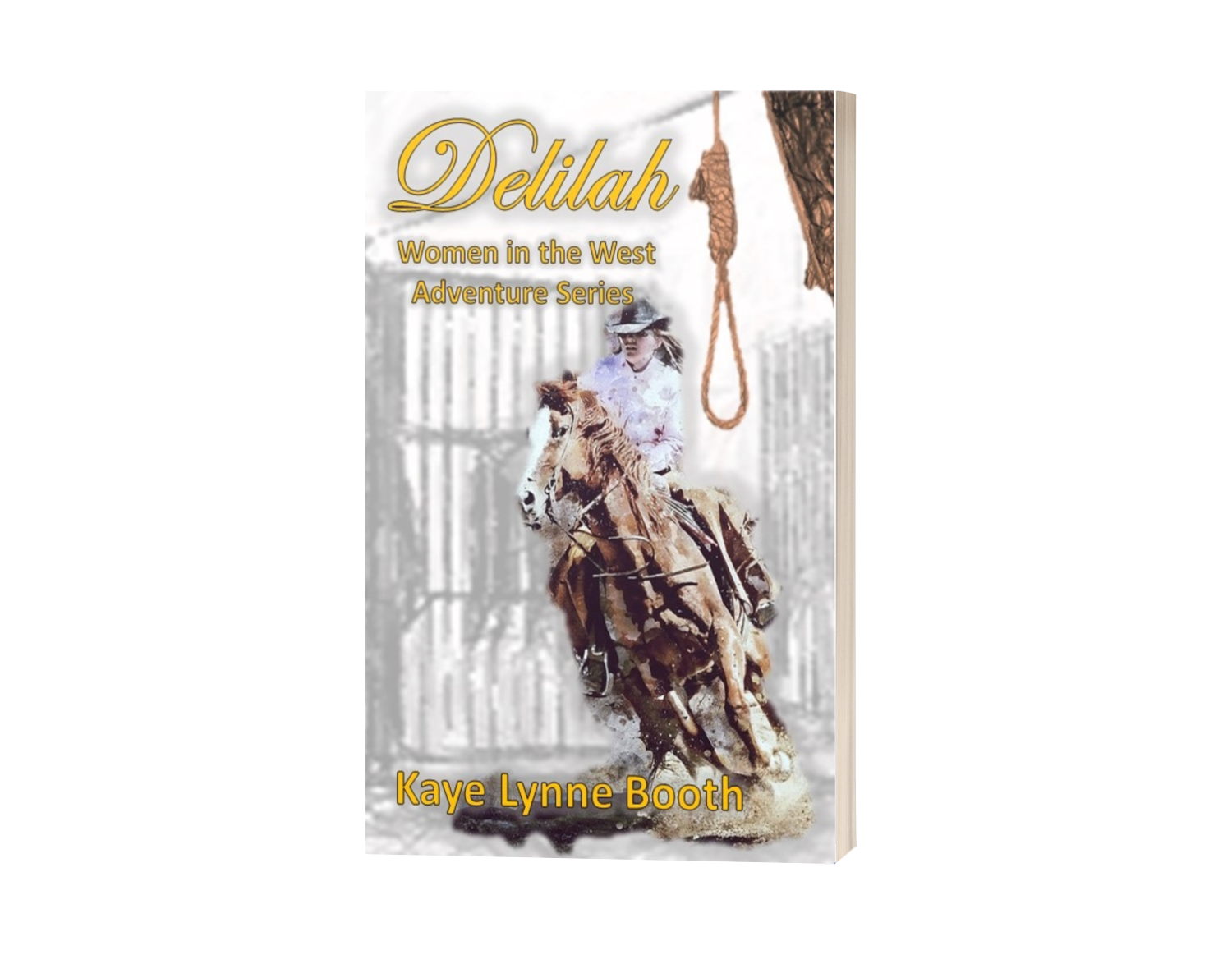
For many years, I did not know how to be prolific. Delilah took me three years to write, and then I worked almost another year revising it to re-release as the first book in the Women in the West Adventure Series. I even wrote a post in about accepting the fact that “We Can’t All be Prolific” because of how not-prolific I was back in 2022. It was something which I didn’t know could be changed or how to go about changing it.
Since then, I’ve learned a few things that have helped me to become more prolific, and I’m now publishing between 5 – 8 books per year. That’s why the first section of The D.I.Y. Author is dedicated to the methods I’ve used to increase my productivity and become a more prolific author; because I wanted to share some of the methods I’ve used to increase my writing productivity. By becoming prolific, I’ve been able to get my name out there where it can be recognized and having more products, in this case, books, to sell. When you publish 5 books per year, that’s 5 different chances to reach new readers, but its also five chances to remind current readers that you’re still around and active.
The following, are tips that I’ve accumulated, from The D.I.Y. Author.
Becoming Prolific
- Outlining: Creating at least a working outline to help guide the direction of your story. If you have an idea of where you are going before you start, you can get words on the page faster.
- Doubling Down on Research and Promotional Materials: Research is something that needs to be done for every book, regardless of genre. If you can find other uses for this same research, you can essentially make it do double duty. For example, during the historic research I did for the Women in the West Adventure Series, I uncovered many interesting facts that may or may not have been used in the story, and could also be used to make interesting blog posts for the tours for their releases, thus becoming a marketing tool, as well as a good story inspiration. Or you can use the same inspiration for a second story in some cases.
- Write the Damned Book: Just sit down and write. It’s a simple piece of advice, but one many authors, or would-be authors, fail to recognize. In The D.I.Y. Author, I offer a couple of methods of achieving the desired results, including Binge Writing, which isn’t always for everyone, and Persistant Determination, which is plugging away at it every chance you get.
- NaNoWriMo: The principle is to set aside the month of November to work exclusively on your novel at every opportunity and setting a daily wordcount which will allow you to reach a goal of 50,000 words within that timeframe. But you don’t need to wait until Novemeber to do this. Just set aside a 30 day period and dedicate to writing your story. I use NANoWriMo to get a start on one of the two novel length works I write and publish each year. In the book, I offer a couple of strategies for making the most of your time, including Time Blocking, and Tracking Your Word Count.
- Dictation: This is a strategy for becoming prolific that isn’t right for everyone, but works well for those who are comfortable with it.
- Networking and Collaborations: It takes longer to write a novel length work than it does to write a short story or two to include in an anthology, and it’s a great way to add more titles to your author pages. Through WordCrafter Press, I publish at least two anthologies per year, and sometimes more.
- Maximizing Your IP: Intellectual Property are the rights to your creative endeavors, or copyright, and an author needs to understand their copyrights, and take care not to sign away more than absolutely necessary when entering into a contract with a publisher. It is also important to understand when your rights will be returned, because when you hold the copyright, you can use that work in any way which you deem fit, allowing your writings to do double, or even triple duty.
- Optimizing Your Backlist: Many authors don’t put a lot into their backlist, but there are things you can do to keep your backlist items in front of readers’ eyes and on their minds, such as creating multiple formats, special editions, and price promotions.
- Taking Care of Mind, Body & Spirit: Keeping yourself healthy is also condusive to being prolific, as we all write better when our minds are sharp and alert, out bodies are well rested and healthy, and we have a place of our own, dedicated to writing.
- Outsourcing: When there is too much for one person to do it all, and believe me there will be, outsourcing certain tasks can be of great advantage, even to the D.I.Y. author.
Why Become Prolific?
To put it simply, the more prolific you are, the more books you have to sell. The bigger your library of books, the more opportunities for readers to discover you and your writing.
I’ve offered a basic list of the methods I’ve used to become more prolific. Some have worked better than others for me and I talk about them in more depth in The D.I.Y. Author. To learn more, you can get your copy from your favorite retailer here: https://books2read.com/The-DIY-Author.
____________________________________
About Kaye Lynne Booth

For Kaye Lynne Booth, writing is a passion. Kaye Lynne is an author with published short fiction and poetry, both online and in print, including her short story collection, Last Call and Other Short Fiction; and her paranormal mystery novella, Hidden Secrets; Books 1 & 2 of her Women in the West adventure series, Delilah and Sarah, and her Time-Travel Adventure novel, The Rock Star & The Outlaw. Kaye holds a dual M.F.A. degree in Creative Writing with emphasis in genre fiction and screenwriting, and an M.A. in publishing. Kaye Lynne is the founder of WordCrafter Quality Writing & Author Services and WordCrafter Press. She also maintains an authors’ blog and website, Writing to be Read, where she publishes content of interest in the literary world.
____________________
This post is sponsored by The D.I.Y. Author and WordCrafter Press.
Being an author today is more than just writing the book. Authors in this digital age have more opportunities than ever before. Whether you pursue independent or traditional publishing models, or a combination of the two, being an author involves not only writing, but often, the publishing and marketing of the book.
In this writer’s reference guide, multi-genre author and independent publisher, Kaye Lynne Booth shares her knowledge and experiences and the tools, books, references and sites to help you learn the business of being an author.
Topics Include:
And more…
Becoming Prolific
Writing Tools
Outlining
Making Quality a Priority
Publishing Models & Trends
Marketing Your Book
Book Covers & Blurbs
Book Events—In Person & Virtual
Purchase your copy today: https://books2read.com/The-DIY-Author
Share this:

See the Fireworks with “The Rock Star & The Outlaw”
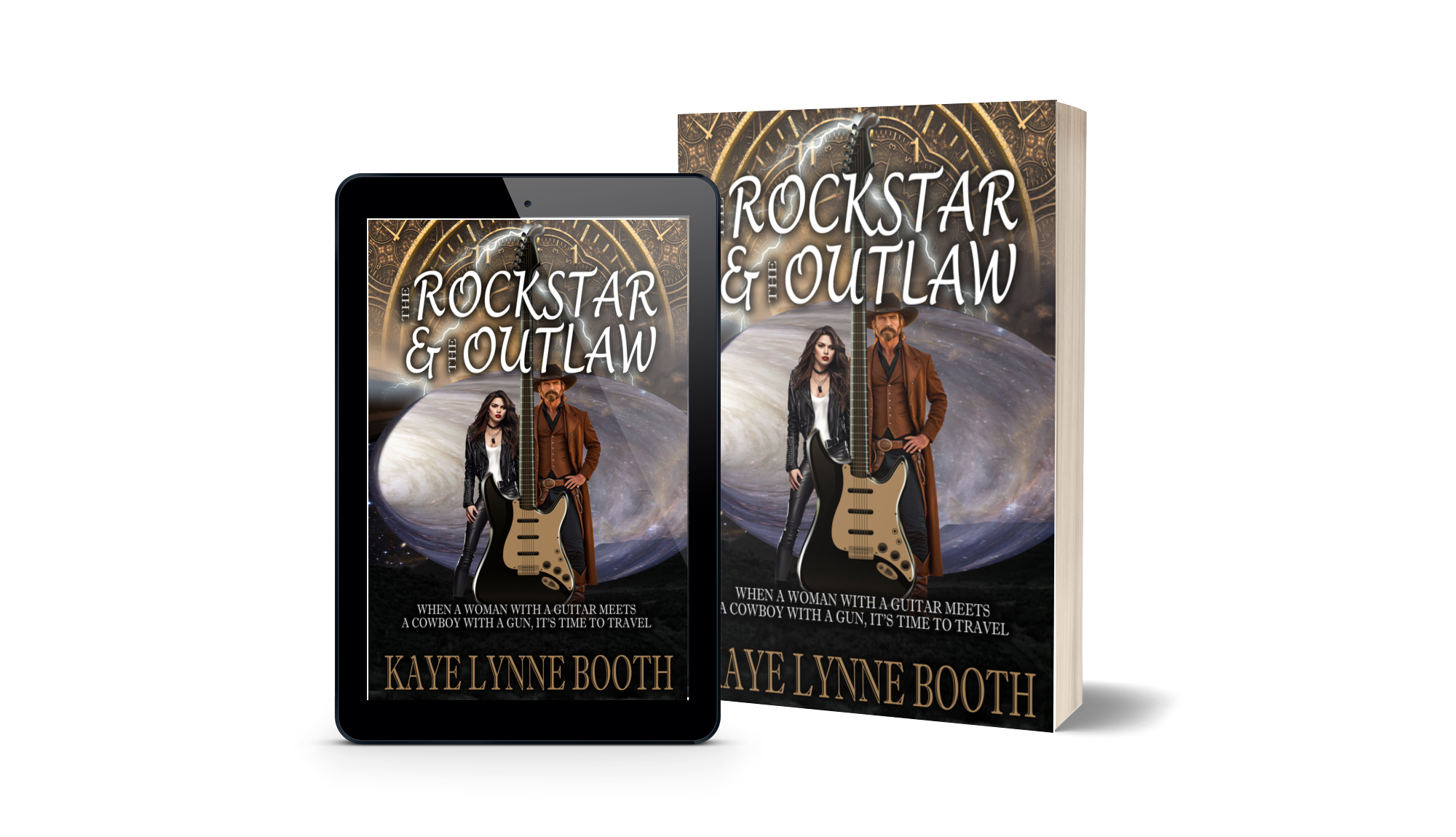
Posted: July 3, 2024 Filed under: Book Sales, Books, Fiction, Science Fiction, Time travel, Western, WordCrafter Press | Tags: Book Sale, Kaye Lynne Booth, The Rock Star & the Outlaw, WordCrafter Press 1 Comment
On Sale for $4.99 – One Day Only – July 4th, 2024
Purchase Link: https://books2read.com/RockStarOutlaw
About The Rock Star & The Outlaw

A time-traveler oversteps his boundaries in 1887. Things get out of hand quickly, and he is hanged, setting in motion a series of events from which there’s no turning back.
LeRoy McAllister is a reluctant outlaw running from a posse with nowhere to go except to the future.
In 2025, Amaryllis Sanchez is a thrill-seeking rock star on the fast track, who killed her dealing boyfriend to save herself. Now, she’s running from the law and his drug stealing flunkies, and nowhere is safe.
LeRoy falls hard for the rock star, thinking he can save her by taking her back with him. But when they arrive in 1887, things turn crazy fast, and soon they’re running from both the outlaws and the posse, in peril once more.
They can’t go back to the future, so it looks like they’re stuck in the past. But either when, they must face forces that would either lock them up or see them dead.
Get Your Copy at the Discounted Price While You Can!

This post is sponsored by WordCrafter Press.
Share this:

A great review for “Sarah”
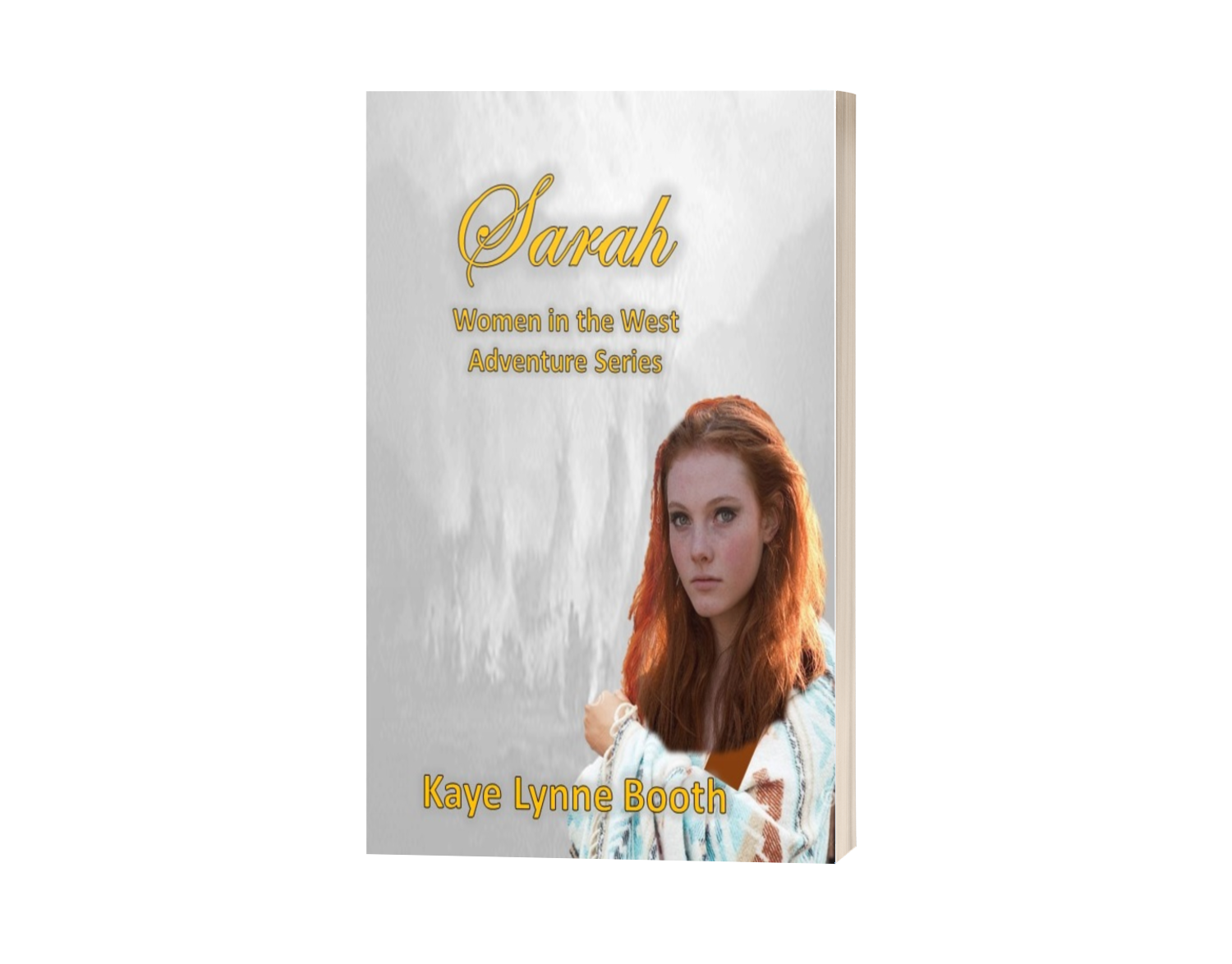
Posted: July 2, 2024 Filed under: Book Review, Books, Fiction, Historical Fiction, Review, Western, Women in History, Women's Fiction, WordCrafter Press | Tags: Book Review, Historical Fiction, Leonberger, Sarah, Western, Women in the West, Women's Fiction, WordCrafter Press 6 CommentsDrop by Thomas Wikman’s Leonberger blog site to catch his smashing review of Sarah: Book 2 in the Women in the West Adventure Series (WordCrafter Press, 2023). I’m particularly excited about this review, as it eases my nervous anticipation about how my strong female protagonists would be received by male readers with this western historical women’s fiction series. I hope you’ll check it out. 🙂

Share this:

Writer’s Corner: Word Choices
Posted: July 1, 2024 Filed under: AI Technology, Books, Character Development, Dialogue, Fiction, Setting, The Human Condition, Time travel, Voice, Western, WordCrafter Press | Tags: AI Technology, Dialogue, Editing, Speech, Voice, Word Choices, Writer's Corner, Writing to be Read 17 Comments
I don’t need MS Word to tell me that my language might be offensive. That’s me. I use offensive language, usually on purpose, for effect because I want to be offensive, or just because it is what my character would say. Of course, I’m not writing for a YA or younger audience. I would want curse words to be pointed out and questioned, if that were the case.
I cuss. Most of the people I know cuss. Even religious folk have been known to issue a curse or two. If I feel the reaction to a situation would be an issued expletive, then my character will issue it. That doesn’t mean that all my characters are potty mouths, but when a curse is in order, they throw it out there, and I believe it is appropriate in certain situations, and also more realistic.
Even if my protagonist isn’t a curser, like Delilah, who uses expletives such as dagnabbit, the people around her do, so my books do contain some cursing. I don’t feel like a story set on the western frontier, would be true to the period or the frontier culture.
Likewise, the modern day Las Vegas culture in the music circles involves drugs, sex, and rock-and-roll, so naturally my character, Amaryllis, in The Rock Star & The Outlaw is involved in all of that and more, and her language often isn’t ladylike. Even so, I try not to let her get carried away with the curse words. And Sarah deals with the issues of prejudice and sexism, and the language in the story reflects the prejudices of the times, whether the AI editor in MS Word likes it or not.
But my villains often have mouths so dirty even their own mothers wouldn’t kiss them. Respect for women or lack thereof is often indicated in the way a man refers to women. If a character lacks respect for women, which many male villians do, then their language when referring to them may be less than flattering. After all, the way a character speaks is one of the things readers use to clue them in to what a character is like, and then decide if they are a character they should like, or not.
Another speech trait which I use often is the improper use of the English language. In the old west, many people were not educated and used words such as ‘ain’t’ or they cut off the ‘g’ in ‘ing’ words. In Delilah, one of things she strived for was to speak more properly after meeting the Mormon woman, Marta, who was a natural born school teacher and corrected Delilah’s speech automatically out of habit. Many of the less savory characters in the Women in the West adventure series, clue readers into their ignorance by the way they speak. I reckon that’s what I do it fer. These are purposeful misspellin’s that drive my AI spell-check crazy.
Many of my western characters are representitive of the many immigrants who made the U.S. into the melting pot that it is known to be. They speak in different dialects to differentiate them from other characters, which gives them colorful speech that is recogizable without adding dialog tags. In Sarah, Lillian Alura Bennett is one such character, who happens to be an Irish madam at a bordello in Glenwood Springs. And in The Rock Star & The Outlaw, the Mexican dialect of Juan Montoya leaves no question when he is speaking.
In Delilah, I had the opposite problem as the character of Dancing Falcon was a young Indian boy, who had been taught to speak English at the Indian agency with a strict teacher, so his speech is almost too proper, which made his speech sound very formal in places. One of the comments from a beta reader was that no one talks like that, so I went back when revising and added in a place where he talks about his time on the reservation and his schooling experience, to explain why he spoke that way to readers. The point being that a characters speech should reveal something about them, as well as making them identifiable.
It was really fun to create the characters in the My Backyard Friends kid’s book series, which is based on the birds and animals which visit my yard in the Colorado mountains. Katy Cat is a bit of a diva, kind of stuck up, and thinks she’s better than everyone else. She’s willing to help out Timothy Turtle as long as it doesn’t inconvenience her too much. I relayed this information in the way she swishes her tail, (body language), and in the way she talks with a bit of attitude. Heather Hummingbird has a lot of energy, so she talks really fast and rarely perches for more than a few seconds at a time. Charlie Chickadee is a young bird on his own for the first time, so I made him a bit niave. The things he says reveals this more than the way that he says it.
Other reasons an author might make the character’s or even the narrator’s voice a bit quirky is because it is the author’s voice coming through. (You know the voice English teachers are telling you to find? Yep. That one.) To an extent, this is true for me. My own speech is usually rather blunt and to the point, and so are my characters’. I don’t use a lot of colorful purple prose, instead calling it like I see it. Many of my protagonists are the same way. Delilah says what’s on her mind and she doesn’t beat around the bush. Sarah, too, tends to speak before she considers the way her words will be taken.
AI editors don’t understand this, and so variants in speech are often marked as needing correction, when in fact, they are purposeful. This is why, just running through your story with an AI editor is never enough. But there are times when human editors don’t get it either. Kevin J. Anderson tells a story about submitting a book to a traditional publisher who turned it over to a novice editor who corrected all the little quirks that revealed his voice and marked his manuscript up until it looked like nothing but red scribbles. That’s when you know that an editor isn’t a good match for you. Kevin politely refused to work with that editor and they assigned him another one. That’s why it’s important to have an editor that gets you and your voice, and understands the nuances of your character’s dialog.
Finding the right editor isn’t always easy, especially if funds are tight. Many editors will offer a free edit of the first ten pages, or even the first chapter so you can fell them out and find out if they are right for you and your story. I wouldn’t go with any editor who doesn’t offer this, and of course, I offer it through Write it Right Quality Editing Services. Any editor worth their salt will understand that they must be able to differentiate between mistakes and purposful word choices.
___________________________________________
About Kaye Lynne Booth

For Kaye Lynne Booth, writing is a passion. Kaye Lynne is an author with published short fiction and poetry, both online and in print, including her short story collection, Last Call and Other Short Fiction; and her paranormal mystery novella, Hidden Secrets; Books 1 & 2 of her Women in the West adventure series, Delilah and Sarah, and her Time-Travel Adventure novel, The Rock Star & The Outlaw. Kaye holds a dual M.F.A. degree in Creative Writing with emphasis in genre fiction and screenwriting, and an M.A. in publishing. Kaye Lynne is the founder of WordCrafter Quality Writing & Author Services and WordCrafter Press. She also maintains an authors’ blog and website, Writing to be Read, where she publishes content of interest in the literary world.
____________________
This segment of “Writer’s Corner” is sponsored by The D.I.Y. Author and WordCrafter Press.
Being an author today is more than just writing the book. Authors in this digital age have more opportunities than ever before. Whether you pursue independent or traditional publishing models, or a combination of the two, being an author involves not only writing, but often, the publishing and marketing of the book.
In this writer’s reference guide, multi-genre author and independent publisher, Kaye Lynne Booth shares her knowledge and experiences and the tools, books, references and sites to help you learn the business of being an author.
Topics Include:
Becoming Prolific
Writing Tools
Outlining
Making Quality a Priority
Publishing Models & Trends
Marketing Your Book
Book Covers & Blurbs
Book Events—In Person & Virtual
And more…
Pre-Order your copy today: https://books2read.com/The-DIY-Author