Traditional publishing is fast becoming a dinosaur, being slow to adapt to the rapid technological changes which have arisen along side the rise of digital publishing within the industry. Independent authors and publishers have been flexible, creative and quick to adapt to digital technology which makes it possible for aspiring authors to test the waters without waiting around for years or even decades for traditional publishers to take notice and grace us with their attentions, while traditional publishers have been resistant to change, turning their noses up at self-published authors until their value as professional authors with the ability to produce books that sell by independent industry leaders like Hugh Howey, and been generally inflexible and unbending, continuing to follow publishing and marketing models which are no longer effective. The adaptions that they have made have been forced and have made the traditional publishing model even less appealing for authors.
Better Royalties: Royalties on traditional publishing which the author receives are usually around 15% of sales, while independently published authors receive anywhere from 30-70%, depending upon which platforms they choose to publish on. And don’t forget that independently published authors who go wide rather than exclusive can always sell direct from their site and make even more.
Negotiations: Traditional publishing contracts are awful and getting worse, according to Kristine Kathryn Rush, (https://kriswrites.com/2022/01/05/business-musings-contracts-traditional-publishing-the-year-in-review-4/). Deals may offer the author an advance, even this is not guaranteed anymore. And the ones that are offered are for lesser amounts than were previously offered in the past. Of course, traditional publishing deals have always been skewed in the publishers’ favor, and the book must earn back the advance before the author ever sees any additional royalties and an author whose book doesn’t sell well may never see any royalties past the initial advance. As Rusch points out, all things are negotiable and the publishing house no longer holds the reins. Smart independent authors manage their own Intellectual Property (IP), and they don’t EVER sign away all of their rights and leverage their writing to the author’s benefit.
Decrease in Publisher Responsibilities: While in the past, traditional publishers were willing to invest in the marketing and advertising of books, it seems they have grown more reluctant to do so in today’s book market. Even if you do manage to land a traditional publishing deal today, you may still need to take on a large part, if not all, of the marketing tasks to sell your book. So while it is true that indie authors have to spend a large portion of their time on administrative and promotional tasks, publishing traditionally does not guarantee that this will not be necessary.
Improved Product Availability: With the availability of ‘Print on Demand’ publishing, authors no longer need to make large expenditures on big print runs or make space to house vast numbers of book in their garage or basement, as was previously necessary with offset printing. Audiobooks are also becoming more affordable to produce with the rise of AI narration, which is now offered for free on Google Play Books. Lower prices and better availability of services for independent authors on a budget, make independent publishing an even better option than it has been in the past.
Control: Independently publishing puts the author in control. Of course, with control comes responsibilities. I won’t deny that indie authors must wear many hats; author, publisher, self-editor, marketer, and maybe even cover designer, as well as “The Boss”. One lesson I’ve been learning recently, is that I can’t do it all, and I am having to wear “The Boss” hat more and delegate some of the other tasks to those better suited to do them, so that I can have time to put into my own writing. Marketing is a matter of trial and error a lot of time, and changing the cover or the blurb can make a big difference in how well a book sells. Independent authors are “The Boss” and when they see their book isn’t selling as well as they think it might, they have the ability to go in and change the cover or the blurb and see if they can’t turn things around, while if with traditional publishers, they may have their work cut out for them convincing their publisher to change something up to see if it sells better.
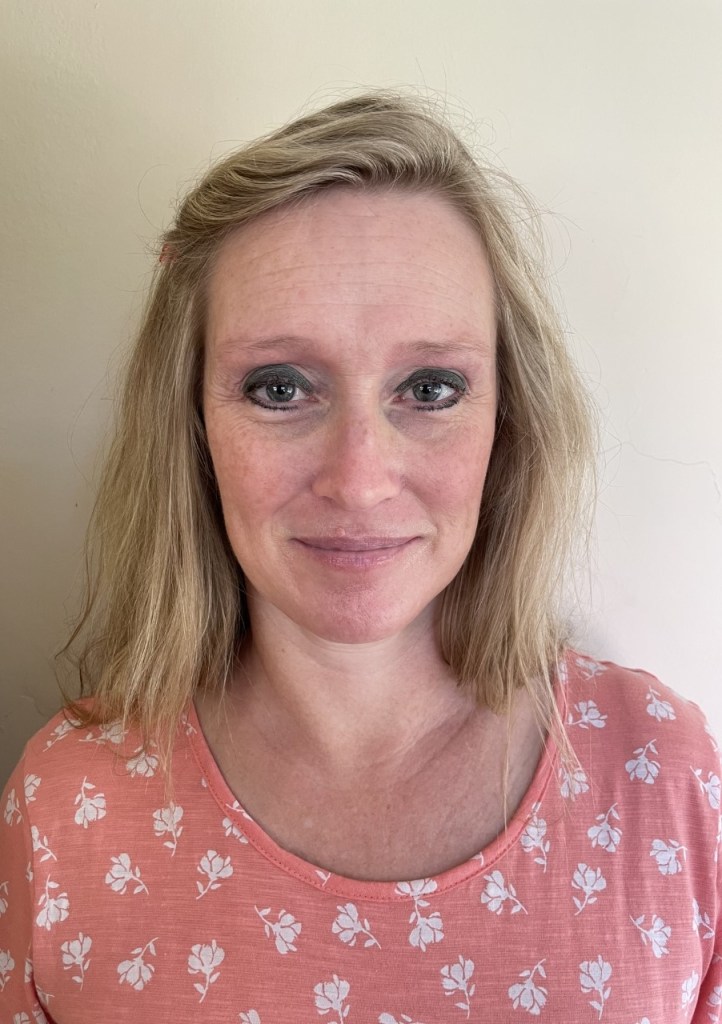
Kaye Lynne Booth lives, works and plays in the mountains of Colorado. With a dual emphasis M.F.A. in Creative Writing, writing is more than a passion. It’s a way of life. She’s a multi-genre author, who finds inspiration from the nature around her, and her love of the old west, and other odd and quirky things which might surprise you. In her spare time, she keeps up her author’s blog, Writing to be Read, where she posts reflections on her own writing, author interviews and book reviews, along with writing tips and inspirational posts from fellow writers. She is also the founder of WordCrafter Quality Writing & Author Services, providing editing, social media copywriting & book promotion, and online writing courses. When not engaged in writing activities, she is bird watching, or hiking, or just soaking up some of that Colorado sunshine.
Like this post? Let me know in the comments. You can be sure not to miss any of Writing to be Read’s great content by subscribing to e-mail or following on WordPress. If you found this content helpful or entertaining, please share.
When I was a little girl in the pre-preparatory school, one of my favourite music lessons was when our teacher played the audio book of Peter and the Wolf. I loved the story about Peter who needed to protect his pets from a hungry wolf. Most of all, I loved the sounds of the musical instruments that accompanied the story. Each character in the story has its own musical instrument and each sound is perfectly suited to the character. Our teacher used this story to teach us about the different musical instruments, which family of instrument it belonged to, and the sound it made.
Peter is played by the violin (string instrument family), the bird is played by the flute (woodwind family), the duck is played by the oboe (woodwind family), the cat is played by the clarinet (woodwind family), the grandfather is played by the bassoon (woodwind family), the wolf is played by the French horn (brass family), and the hunters are played by the timpani (percussion family). I have never forgotten the names, sound, or family of any of these instruments. In fact, I loved the cat (clarinet) so much, I literally forced Greg to play this instrument for two years. I took advantage of his devotion to me and the fact he always liked to please me. I came to realise this wasn’t fair of me and allowed him to give it up in grade 6. Greg never took to the clarinet.
The purposes of Peter and the Wolf, created by Sergei Prokofiev, are as follows:
the teach children how to identify a variety of musical instruments, instrument families and instrumental themes;
the demonstrate how music can convey different emotions; and
to extend a story through the use of movement, story sequencing, and musical art.
Peter and the Wolf is approximately 30 minutes long and you can listen to it here:
Sparky’s Magic Piano
My parents noticed my enthusiasm for music and my Dad bought me a Sparky record when I was about 9 years old. I listened to this record over and over again.
There were four stories on the record, as follows:
Sparky and the Talking Train;
Sparky’s Magic Piano;
Sparky’s Magic Eco; and
Sparky’s Magic Baton.
Of these four, two had a strong musical theme, namely, Sparky’s Magic Piano and Sparky’s Magic Baton.
In Sparky’s Magic Piano, the most famous of the Sparky stories, Sparky is a young boy who does not like practicing the piano. One day, when he is frustrated with practicing, the piano talks to Sparky and tells him he will show him how wonderful it is to play the piano well. Sparky then proceeds to amaze his mother and piano teacher, and then the larger world with his amazing piano playing.
Wikipedia says that these are the piano works which appear in Sparky’s Magic Piano in the order in which they appear in the story:
Mendelssohn – “The Spinning Song” (from Song Without Words), Opus 67 number 4 (announced by Sparky, but the piano refuses to play it, so the music is not heard)
You can listen to the version of Sparky’s Magic Piano I loved here:
Do you know either of these stories? Let me know in the comments.
About Robbie Cheadle
Robbie Cheadle is a South African children’s author and poet with 9 children’s books and 2 poetry books.
The 7 Sir Chocolate children’s picture books, co-authored by Robbie and Michael Cheadle, are written in sweet, short rhymes which are easy for young children to follow and are illustrated with pictures of delicious cakes and cake decorations. Each book also includes simple recipes or biscuit art directions which children can make under adult supervision.
Robbie has also published 2 books for older children which incorporate recipes that are relevant to the storylines.
Robbie has 2 adult novels in the paranormal historical and supernatural fantasy genres published under the name Roberta Eaton Cheadle. She also has short stories in the horror and paranormal genre and poems included in several anthologies.
Robbie writes a monthly series for https://writingtoberead.com called Growing Bookworms. This series discusses different topics relating to the benefits of reading to children.
Want to be sure not to miss any of Robbie’s “Growing Bookworms” segments? Subscribe to Writing to be Read for e-mail notifications whenever new content is posted or follow WtbR on WordPress. If you found it interesting or entertaining, please share.
In my publishing courses at Western State Colorado University, my instructors and mentors, Kevin J. Anderson and Allyson Longuiera have introduced us to several useful podcasts for independent authors and/or publishers and I’d like to share them with you here.
Hosts Dan Wells, Mary Robinette Kowal, Peng Shepard, and Howard Taylor offer up tips and writing advice, mainly on craft. This podcast provides short sessions, they claim 15 minutes, but the session for the link above is closer to 30. It’s an interview with Kevin J. Anderson about paying it forward, and it’s really good, so I tought you all might enjoy it. Kevin started out with traditional publishing way back when, but has now established his own independent press in WordFire Press, so he speaks to both sides of the industry, and this interview is proof that whether published traditionally or independently, authors are a good bunch. I’m proud to be counted amoung this tribe.
But the episodes really are brief, so take a little time and explore the site. They have many interesting topics of value to authors at all stages of their career. Here’s the main page link: https://writingexcuses.com/
With hosts Lindsay Baroker, Joe Lallo and Andrea Pearson, this podcast offers publishing and marketing tips, more than craft advice, but as six figure authors, they are crushing it and they are willing to share their advice with their listeners. I enjoy binging back episodes on my lengthy commute to and from my day job. They have a Facebook group which listeners can join, where they can pose questions to the hosts or their guests to be answered on the podcast. Lots of valuable information for authors here, whether just starting out or if you’ve been at it for a while.
I love this podcast! Host Joanna Penn (with a double N), is an author/enterprenuer and a futurist. Her podcast is filled with interviews and discussion about industry trends and where things might be headed. She’s got a killer accent which makes her fun to listen to, too.
Host Mark Dawson is a best selling independent author provides interviews and master classes on self-publishing. He and his co-host, James Blatch both have accents that are heavier and more difficult for me to understand, but they do offer up some valuable information on the independent publishing world.
This is every writers go-to podcast for all of your grammer questions, with Grammar Girl, Mignon Fogarty, who discusses proper grammar and common grammar mistakes. A quick reference for all grammar questions you are unsure of during writing and editing processes.
Like this post? Let me know in the comments. You can be sure not to miss any of Writing to be Read’s great content by subscribing to e-mail or following on WordPress. If you found this content helpful or entertaining, please share.
One day we found out that an autistic man was going to move in next door. At the time we lived in an RV park in a 38 foot motor coach. “Next door” meant that we shared a small yard with our neighbor.
I was concerned. How autistic is he? I wondered. Autism can be a vague diagnosis. It has stretched beyond its original meaning of a soul completely lost to human interaction. The park’s manager described the man as “a little autistic”. That could mean almost anything.
As Henry was helped to park in his site, he took a look at me and The Fox. He said one word, “Whew”, and then vanished into his RV.
“Whew.” Where did he live before he came here? His former neighbors, we later learned, were motorcycle people and meth freaks. Whew, indeed.
Henry divulged little about himself. He said he liked cats. That was fortunate, because we have two indoor cats and two outdoor cats, plus a wide variety of feral visitors and neighborhood pets. There’s something about this space that draws cats. It might be the plum trees and their abundant population of wrens and robins.
There are people who claim their pets have super powers. I regarded such people as harmless nuts. Lately my thinking has changed. Our cat Obsidian is a big brown tabby with green eyes. I’ve seen him tame people in that Little Prince way, literally capture their unruly spirits and put them back in a more harmonious order. That’s Obsidian’s super power, the power to restore tranquility.
He’s getting old, and so are we. He doesn’t jump the fence and climb around with the younger cats any more. He has more important work to do.
Our new neighbor Henry is middle-aged. He is a fearful, cranky and withdrawn man, but he’s an ideal neighbor. We barely know he’s here. He can be easily upset by minor disturbances. He is so averse to noise that he can be pushed into a ferocious sulk by the mere revving of a motorcycle.
He has been adopted by our two outdoor cats, wise old Obsidian and his sidekick, the comical black and white Cookie. These cats have given structure to Henry’s otherwise bleak world. By loving Henry they have tricked him into loving. I looked out the window one day to see the elusive and feral Cookie sitting calmly on Henry’s lap. I had never seen her behave this way. It was strangely impressive. Henry is a cat savant, he has some magical affinity that he didn’t know he possessed until he moved close to Obsidian and Cookie.
I hope that you, my readers, understand how easily a friendly animal can become a tyrant who turns your life upside down. Henry is such an innocent that he immediately began flirting with disaster. We had to set him straight without setting him off. If he let Obsidian into his home even once, he would become nothing but a door man, opening and closing all day, all night, at the cat’s demand. I caught him just on the verge of doing this very thing and rushed to halt the action.
“Don’t let him in, Henry! Close your door, quick!” He was frightened and cut Obsidian off just as he was about to slip between his feet.
I explained what had almost happened. I spoke towards Henry’s averted eyes and raised defensive shoulders. I spoke to him as I would speak to any intelligent adult. In Henry’s heart, the need to trust someone was rising like a powerful burst of magma from a volcano deep beneath the sea. His need to share the cats’ companionship was forcing him to emerge from his shell and talk to us. The cats pushed Henry past his fears.
In the next few weeks we learned more about Henry. It wasn’t easy but we supported his struggle to communicate. Then something unexpected happened. Henry and Obsidian fell in love. I’m not being flippant. It’s just that simple. When Henry left to visit his mother, Obisidian sat on his front step, waiting for his return. He would emit an occasional sob. There’s no mistaking Obsidian’s sob. He has an amazing gamut of vocalizations, including a perfectly robin-like cheep that must have been useful during his hunting years.
I can’t put it any other way. They were in love with a pure emotional connection. Perhaps Henry’s autism short-circuited his intellectual activity and left his feelings to flourish without interference from the busy mind. I watched this fountain of feeling take shape between Henry and the cats.
Henry leaves the campground for treatment four days a week. When he first went away, Obsidian was inconsolable. He went into a paroxysm of grief. He stared into space for long periods. He moped and cried. But Obsidian gradually learned that Henry ALWAYS comes home. Thus our cat friend’s tranquility was restored. He knows Henry will be back and that’s enough to comfort him. It took him a few weeks to get this; I watched him unwind and relax. I watched his attention return to his world: the falling leaves and the showoff Cookie with her bounding up and down fences and trees. Obsidian resumed his lordship of his domain. The lost baby possum was under his protection. The upstart kitten Stinker was not welcome and he meant business, even if he had to hire Cookie to teach Stinker a lesson.
Now Henry has left for two weeks. He has gone to Connecticut to visit his sister. “Three thousand miles!” cried Henry in terror before he was picked up by his ride. The enormity of this journey was paralyzing. I shared with Henry my own fears about travel: the feeling that I’ll never get home; I’ll be trapped in some alien environment without the solace of my place and my people. Henry and I aren’t so different. This bit of one on one engagement gave Henry something to take with him on this unprecedented trip. He had shared an emotional link with another human being. And he had given his heart to a big brown cat with green eyes.
How different is Henry’s world today? That’s not for me to say, but I suspect that it’s just different enough… enough to make a difference.
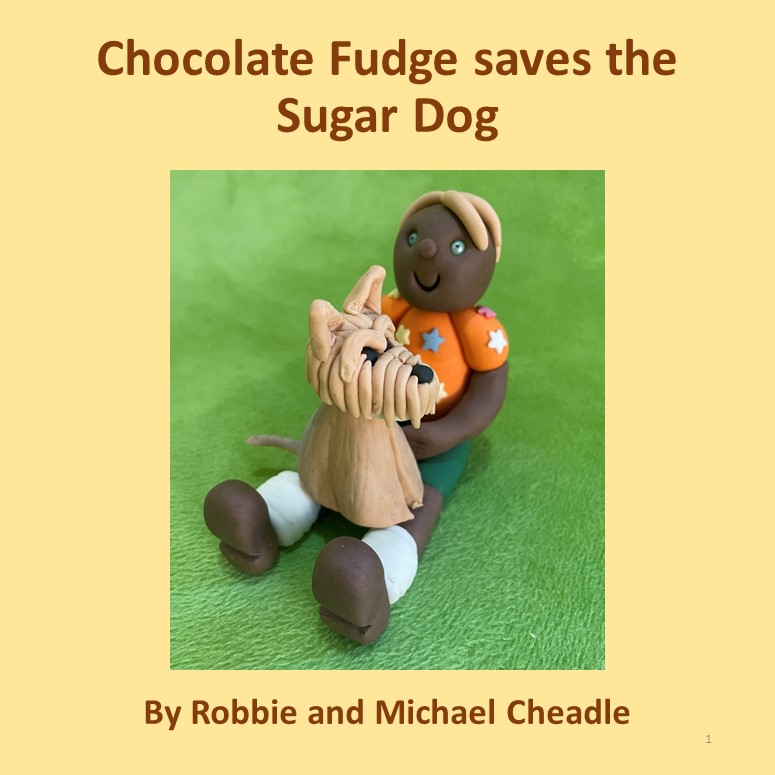
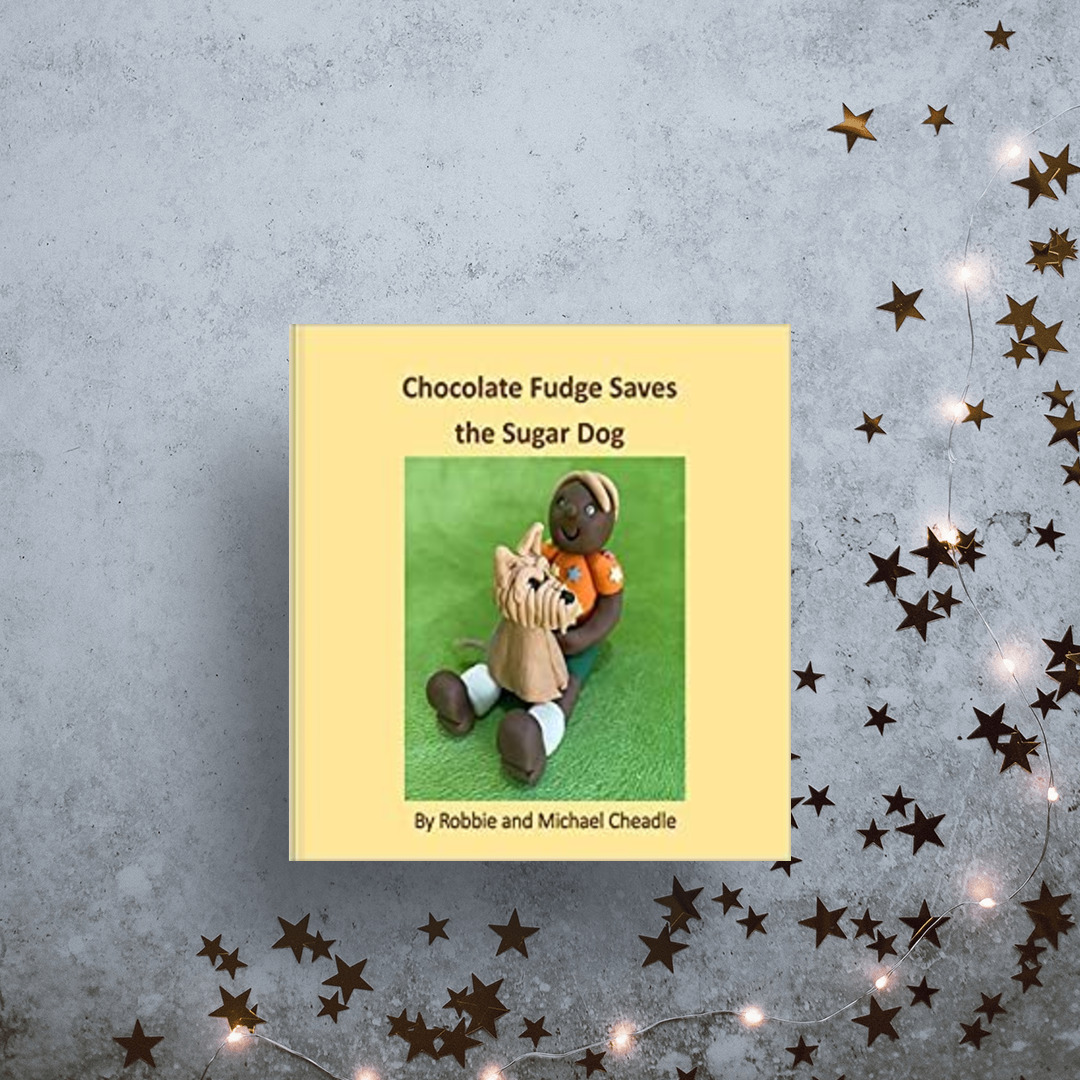
We’re wrapping up the WordCrafter “Chocolate Fudge saves the Sugar Dog” Book Blog Tour over at Zigler’s News, with a guest post from author Robbie Cheadle and a review by Victoria Zigler. I hope you’ll come and join in the celebration of the release of this wonderful new children’s book.
For Day 4 of the WordCrafter Chocolate Fudge saves the Sugar Dog Book Blog Tour finds a guest post from Robbie on the villian of her story here, on Writing to be Read and D. L. Mullen’s review of her delightful children’s book over at the Undawnted blog site. Because Undawnted does not accept comments, you can comment, like or share here.
Robbie’s Post
In most good stories, there is a hero and a villain.
The villain of Chocolate Fudge save the Sugar Dog is …
… Lord Humbug
Lord Humbug
Lord Humbug was haughty and proud
His dogs: undisciplined, naughty, and loud
Yorkie could’ve drowned
While her brothers clowned
“I’ll train them,” Lord Humbug vowed
Lord Humbug is named for the expression “Bah Humbug”, a well-known catchphrase uttered by miserly old Ebenezer Scrooge, the main character in A Christmas Carol by Charles Dickens. Scrooge, who thinks Christmas is an enormous deception, retorts, “Bah! Humbug!” to anyone who dares to wish him a merry Christmas.
Lord Humbug’s black and whited stripped suit is based on Humbug sweets. These are traditional hard-boiled sweets available in the United Kingdom, Ireland, South Africa, Canada, Australia, and New Zealand. They are triangular shaped with rounded edges and are usually black and white stripped and peppermint flavoured.
Blurb
Sir Chocolate and Lady Sweet’s son, Chocolate Fudge, sees one of Lord Humbug’s dogs struggling to stay afloat in the hot chocolate pond.
Can Chocolate Fudge save the sugar dog from drowning?
Robbie Cheadle is a South African children’s author and poet with ten children’s books and two poetry books.
The eight Sir Chocolate children’s picture books, co-authored by Robbie and Michael Cheadle, are written in sweet, short rhymes which are easy for young children to follow and are illustrated with pictures of delicious cakes and cake decorations. Each book also includes simple recipes or biscuit art directions which children can make under adult supervision.
Robbie has also published two books for older children which incorporate recipes that are relevant to the storylines.
Robbie has two adult novels in the paranormal historical and supernatural fantasy genres published under the name Roberta Eaton Cheadle. She also has short stories, in the horror and paranormal genre, and poems included in several anthologies.
Robbie writes two monthly posts for https://writingtoberead.com called Growing Bookworms and Treasuring Poetry and one monthly post, under the name of Roberta Eaton Cheadle, called Dark Origins: African Myths and Legends.
Sir Chocolate and the strawberry cream berries story and cookbook
The adventures of Sir Chocolate and Lady Sweet in poetry form. Michael came up with the idea of Sir Chocolate and Lady Sweet and many of the characters contained in the books, when he was ten years old. His ideas were such fun that Robbie decided to turn them into little verse books for his entertainment. The book contains recipes for children to make with adult assistance.
Sir Chocolate and the baby cookie monster story and cookbook
Book 2 of the Sir Chocolate series: Sir Chocolate and Lady Sweet find a lost baby cookie monster. Join them on an adventure to return the baby to its mother and learn how to make some of their delicious recipes at the same time.
Sir Chocolate and the sugar dough bees story and cookbook
A greedy snail damages the flower fields and the fondant bees are in danger of starving. Join Sir Chocolate on an adventure to find the fruit drop fairies who have magic healing powers and discover how to make some of his favourite foods on the way.
Sir Chocolate and the Condensed Milk River story and cookbook
The Condensed Milk River where Sir Chocolate goes fishing has stopped flowing. The water creatures are losing their homes. Can Sir Chocolate and Lady Sweet solve this problem? Five lovely new recipes are also included.
Sir Chocolate and the Sugar Crystal Caves story and cookbook
The Condensed Milk River where Sir Chocolate goes fishing has stopped flowing. The water creatures are losing their homes. Can Sir Chocolate and Lady Sweet solve this problem? Five lovely new recipes are also included.
Sir Chocolate and the Fondant Five Story and Cookbook
Number 6 in the Sir Chocolate series: Five zoo animals go missing and Sir Chocolate needs to find them. Includes five lovely new recipes.
Sir Chocolate and the Ice cream Rainbow Fairies Story and Cookbook
Join Sir Chocolate and Lady Sweet on a fun adventure to discover why the milkshake rain is pale and white.
Silly Willy goes to Cape Town
When the George family go on holiday to Cape Town, Cautious Craig cannot believe what he has to endure at the hands of his naughty and wilful younger brother, Silly Willy. Willy throws tantrums at the most embarrassing and inappropriate times, causes a commotion on the aeroplane and tries to steal a chameleon from Butterfly World. What is a poor older brother expected to do in these situations?
While the Bombs Fell
What was it like for children growing up in rural Suffolk during World War 2?
Elsie and her family live in a small double-storey cottage in Bungay, Suffolk. Every night she lies awake listening anxiously for the sound of the German bomber planes. Often they come and the air raid siren sounds signalling that the family must leave their beds and venture out to the air raid shelter in the garden.
Despite the war raging across the English channel, daily life continues with its highlights, such as Christmas and the traditional Boxing Day fox hunt, and its wary moments when Elsie learns the stories of Jack Frost and the ghostly and terrifying Black Shuck that haunts the coastline and countryside of East Anglia.
Includes some authentic World War 2 recipes.
Open a new door
Open a New Door is a poetic peep into the lives of the poets, Kim Blades and Robbie Cheadle, both of whom live in South Africa.
The book is divided into four categories: God bless Africa, God bless my family and friends, God bless me and God bless corporates and work. Each part is sub-divided into the good, the bad and the ugly of the two poets’ experiences, presented in rhyming verse, free-style, haiku and tanka, in each of these categories and include colourful depictions of their thoughts and emotions.
The purpose of this book of poetry is encapsulated in the following tanka and haiku poems:
What drives me to write?
To share my innermost thoughts
The answer is clear
It’s my personal attempt
To make some sense of this world.
Inspiration blossoms
Like the unfurling petals
Of the Desert Rose
Behind Closed Doors
What goes on behind closed doors: in the boardroom, after death, in the home, during lockdown, and in nature? This collection of poems, ranging from rhyming verse to twisted nursery rhymes, captures the emotions and thoughts people hide behind the masks they present to the world.
What thoughts are hidden
Behind her immobile face
Quite expressionless
Eyes cold and indifferent
Scrutinising me – hawk like
This book includes some of Robbie Cheadle’s spectacular fondant art and cakes.
Thank you for stopping by to help us celebrate the new release of Robbie and Michael Cheadle’s Chocolate Fudge saves the Sugar Dog. Tomorrow’s blog stop will be over on Ziglar’s News, with one last post from Robbie and a review by Victoria Ziglar for a fitting wrap up of the tour. I do hope you will all join us there.
They had the tumbleweed ambassador on the news a month before the big battle. The news guy and news girl said he was intelligent, and then a local representative of the Plains and Wildlife Service translated for him because tumbleweeds can’t talk and must sign everything by rolling and hopping and what not. “We mean your people no harm,” said the Plains and Wildlife Service guy. He spoke kind of slow and choppy. I guessed he wasn’t actually, what do you call it? Fluent in tumbleweed? He said, “The war has started, whether you realize it or not. The Prairie Queen has an army of deer, antelope and coyotes. She’s got the power of fire. She murdered our Wizard Father and made her castle from our dead tumbleweed brothers and sisters. The crazy bitch!” I winced at this last word. I’m only twelve years old, after all. My dad used to talk real rough like that. He used to cuss and laugh and say to me, “Don’t repeat that to your mother, Amie Masterson. I don’t want to fight no little girl.” Then we’d roughhouse a bit. My dad died last year, though. Some kind of cancer. Mom never told me which. I don’t usually watch the late news. I’m supposed to be in bed. But Mom passed out on the sofa early. I laid a blanket over her and picked the empty wine bottle off its side so it wouldn’t drip on the carpet. The Plains and Wildlife Service guy said, “Have you not noticed her spot-fires outside your city? We want to kill your precious girls!” The tumbleweed popped up into the air and spun angrily. Plains and Wildlife Guy said, “Oh, I’m sorry, I’m sorry. We want to utilize your precious girls. We have no defenses. We need soldiers. The Prairie Queen cannot stand against the wealth of your girls. Or so we believe.” There was some more talking. I was getting sleepy. The news guy said, “And of course we know the city has been expanding into the Queen’s prairieland at an exponential rate.” And the news girl said, “Right you are, Tom. In retrospect, that may have been a huge mistake. Oops.” And then a commercial for local heating and cooling repair came on. I went to kiss Mom on the forehead. She moaned softly, smiled for a second, and then settled into a noisy, listless snore. Mom is a good mother, but I think Dad dying did some stuff to her. I guess that’s normal. She never used to drink wine. There was a knock at the door. I was scared for a second, but only because Mom said never to open the door to strangers at such a late hour. There was another knock. “Mom,” I said, “someone at the door.” Mom didn’t wake up. I nudged her, shook her, but still nothing, all snores, drool dribbling from the corner of her mouth. I went to the door, looked through the peephole. There was nobody there. “The heck?” I said. I slid back the deadbolt and opened the door. A tumbleweed sat on our welcome mat. It had a leather glove duct-taped to its scrawny, scratchy limbs. It was kind of a big tumbleweed. The color of autumn wild grass. It leaned in to, like, look in our house. “Is this because I’m a precious girl?” I said. The tumbleweed shook. “And you’re recruiting all the girls and that means me, right?” It shook again. “Only thing is I can’t leave. Mom’ll be super pissed. Oops. Mom’ll be super angry.” The tumbleweed rolled, over and over, until the glove and duct tape came undone and stuck and sat limp and kind of sad on our porch. The tumbleweed wiggled and bent toward the glove. I shrugged and picked it up. There was a big rock inside. There was also some red dirt. I brought the dirt to my nose to sniff it. It smelled salty, briny, kind of like how I imagine the ocean smells, like vast rotting shipwrecks beneath the waves where porpoises and turtles swim and play. “What’s this stuff?” I said. The tumbleweed smashed into my leg. My hand jerked, the dirt flew, a bunch of it went up my nose. I sneezed. Someone said, Me entiendes? I sneezed again. A big cloud of red flew from my nostrils. Someone said, Ne me comprenez-vous? “Huh?” I snorted. “S’that even English?” Oh, English, English! Oh, of course! Yes, how sally of me. “What? Sally?” I wriggled my nose and wiped allergy tears from my eyes. Silly! Silly! Of course! Stupid Dumb-Dust. I’m dumb, you know? All tumbleweeds are dumb. Call me Aaron. Aaron Sisymbrium Altissimum. Don’t worry about that last part. That’s my family name. Are you ready to be a soldier, girl? “Soldier?” I said. “You mean to fight the Prairie Queen?” That’s precisely what I mean. Time is short. Matters are barbiturate. “Barbiturate?” Aaron twitched. Desperate! Desperate! If we don’t stop her now, she’ll kill all the tumbleweeds, and then, girl, she’ll kill all the humans, too. I looked over my shoulder. Mom was still snoring away on the couch. Wine makes adults snore. That’s something I learned. Come on, soldier, said Aaron, no more dilly dallying. Don’t you want to make your fellow humans proud?
I learned a lot of things in Tumbleweed Army. I learned how to march, how to roll up into a little ball to protect myself. Learned how to say, “Yes, ma’am!” like I meant it. Most of all, I learned coyotes and deer and antelope were really scary because they could eat the tumbleweeds and break the wizard’s spell and use their shoulder-mounted flamethrowers to burn everything. The Prairie Queen had the power of fire. She wanted to burn it all, burn the world, which I guess included my home and my mom, which is why I stayed. There was a girl there called Jade. She was an older girl. Really pretty, with deep almond skin and bright green eyes. We’d be in the middle of flamethrower-dodging exercises, and she’d come up to me and look at the way I was darting and dodging around, and she’d say, “Looking real good, Masterson. Looking real sharp.” The tumbleweeds didn’t do any of the teaching or drilling themselves. They only knew tumbling. They left it to all the thirteen and fourteen-year-olds to teach us everything we needed to know. Maybe they should have asked for the real army, the adult army. Even they seemed weirded out by a little girl army, and sometimes they acted like they didn’t know how they’d ended up with us at all. If the adult army was looking for us, they never found us, secret and hidden away on the outskirts of the city like we were. Also the tumbleweeds had this special concealing magic. The last thing they had left of their Wizard Father. Aaron told me, Our Wizard Father was a great man. He granted us intelligence and the freedom we so cherish. But the concealing magic’s fading. We can’t stay hidden from the Queen forever. I was like, okay, you’re fine, the older girls know everything. They’ve designed this whole thing and know everything there is to know. That’s probably why our uniforms were pink and sparkly, and why our flags carried pictures of Justin Bieber and Lady Gaga, and why even though the cutoff age was fourteen, you could tell they were serious and skilled and were girls on a mission, girls ready to kill. I missed my mom. I’m not going to lie about that. I missed her so bad it didn’t matter to me she didn’t listen anymore when I talked to her about school, or that I always saw her crying first thing in the morning, or that everything Dad made her promise when he was in the hospital sort of, well, just went forgotten and we didn’t talk about it. I was in that army for four weeks, then we had the big battle, but I never forgot Mom, and I guess she never forgot me, but I couldn’t say goodbye to her just in case I might die, because the tumbleweeds were real, real strict about enemy code breakers and antelope misinformation squads.
One night as I was laying down to sleep in my tent, Jade came and undid the tent flap and she and a few girls brought in a little white cupcake with a single candle flickering and hopping kind of like a tumbleweed. “What’s this?” I said sleepily. “It’s your birthday, Masterson,” said Jade. “My birthday?” She nodded and said, “Make a wish.” I wished to kiss a boy, but knew it probably wouldn’t come true because there were no boys for miles and miles. Me and the girls shared the cupcake, but the cupcake was made out of mashed potatoes, because the tumbleweed galley only had potatoes because Aaron told us all you eat is potatoes in the army and we didn’t argue. “Jade,” I said, choking down my last bite. “Do you think things will go back to normal after this? I mean, after we kill the Prairie Queen and all? Do you think all us girls can go back to how we were?” Jade thought about this. She nodded. “Yes, I think we can. At least I hope we can. Wizards and Queens and Dumb-Dust, all that stuff shouldn’t exist. I think it only exists because the world needs stuff to make you wonder. You know what I mean? My Dad always says, ‘Boy it really makes you wonder’. I think that sort of thing is really important.” “Why?” I said. One of the other girls chimed in. “Because everything would be so boring otherwise.” “Boring’s not bad,” said Jade. “Boring’s only bad if you get used to it. There’s always people stepping on other people. Trying to take things that don’t belong to them, you know? Because people get used to that, too. Like that spot where our city and their world meet up….”
So there was this spot where our city and their world met up. For miles and miles, our buildings rose high, and interstates ran, and traffic lights blinked red, yellow, green, red, yellow, green. But on this spot, there were a few loose suburban fingers of little houses that looked nice but that also all looked the same, and those fingers kind of stretched out, and then they ended, and their world was beyond, the prairie world, high grass and rolling hills, pretty wildflowers and peaceful vistas. The wind could rustle through, and it could carry a dry, dusty scent, and maybe there’d be pollen on the wind, but there were no honking car horns or televisions blaring. People didn’t shout at each other. There were no people. The city wasn’t there yet. Maybe it would be someday. Of course it would be. The city just kept growing and growing and growing, and nobody bothered to ask the Queen if it was okay. Nobody stopped to think it might be a bad thing if the prairie world got swallowed up, got paved over, with houses and restaurants and, you know, post offices and stuff built all over it. We had the battle on that spot. It was time. No more hiding. Me and all the girls—thousands of girls—we lined up at the fence line of that last wandering suburban finger. The hot mid-afternoon sun beat down on us. Smell in the air like columbines. We came in our pink sparkly uniforms, with our flags waving. The grenade girls all had purple caps. Girls with rifles had big red badges on their chests. There were also film-crew girls, who’d appointed themselves to the rank, who held up smartphones and snapped selfies with the battlefield-to-be in the background. I was light infantry, just like Jade, and that meant we had no weapons, only pig-tails and three-ring binders, because the tumbleweeds had chosen girls for a reason, and we all figured we’d be even scarier all dressed up for school. Prairie Queen’s afraid of school girls. Prairie Queen’s afraid of school girls. We kind of told each other that over and over again, sort of like a, what do you call it? A mantra? Prairie Queen’s afraid of school girls. Prairie Queen’s afraid of school girls. And we said it again and again, and it made us less afraid, even though we knew we might die that day. The ground beneath our feet trembled. Far off across the field, over the rise and fall of grassy hills, we saw the first ranks of animals and their flamethrowers. The coyotes were the fastest and lightest, and they ran ahead of the herd, belching fire, scorching earth, I guess to scare us. They howled and yipped at the antelope and deer. You kind of figure antelope and deer don’t make noises, but they do. This strained, desperate, sharp kind of screaming noise. And when there are thousands of them—and there were thousands—it comes off like a banshee wail, like a great roaring throat sound loud as jet engines. I don’t know why, but the sound made us cry. It was so loud. The screaming, the yipping, the flames and flames and flames. I cried like I knew a soldier should never cry. But it was okay, because Jade cried, too. Maybe I felt like running home to my mom, and maybe Jade did also, but she didn’t, she stood there like she was the bravest crying girl in the world, and she called back to us through her tears, “Steady, now! Wait until you see the whites of their eyes!” And I didn’t know what that meant, because animals don’t have white eyes, but I stood my ground all the same, even though my legs trembled, even though the tears drenched my uniform and my tongue felt stuck to the roof of my mouth. The tumbleweed commanders came rolling out to marshal our forces. I saw Aaron there with Commander Johnston Salsola Kali. Commander Johnston waved a scraggly little twig-limb and said through the Dumb-Dust, Today you do your species proud! Today you are not girls, but women! Human women of distinction, finery, and absolute quality. We have no idea how it is you came to defend us, but be not afraid, dear human beings! For though you may die—yes, you may die, yes, yes!—for though that may be so, remember, one and all, that the Queen may take your lives, but she shall never take your Sweden! In unison, the thousands-girl army said, “Huh?” Commander Johnston said, Bother! Freedom! Freedom! Freeeeeeedom! The army roared. Girls fired rifles in the air. They said, “Freeeeeeedom!” Even though freedom wasn’t really the thing, but getting trampled and burned up, but a cry of freedom was enough, and I said it, too. Jade told us to stand at the ready. We did. She told us to march ahead at the quick step. We did that, too. I think the older girls had watched old war movies before the battle, so everything they were telling us to do was really smart and accurate for what soldiers are supposed to do in battle. We marched at the quick step. The rifle girls and grenade girls were right behind us. The rifle girls fired rounds over our heads. This was smart because the animals kind of flinched and froze at the noise. Bang! Bang! Bang, bang, bang! And anyway, it wasn’t the animals we were after, but the Queen, who, tumbleweed intelligence told us, would be in the middle of her formations, in the mobile command station made of dead tumbleweed bodies all stuck together. “Double-time, march!” said Jade. We picked up the pace. Coyotes snapped and howled at us. The deer and the antelope shot steady burning jets of fire. We began our dodging maneuvers, still in ranks, still in line, but dodging that fire like crazy. A girl beside me—Kirsten—went down screaming. Our standard bearer went up in flames, but the next girl in line—a film-crew girl—picked up the smoldering flag and soldiered on, still bravely snapping selfies and snagging footage of the whole bloody mess. And it occurred to me that the world was a crazy place. It made you wonder. Really made you wonder, you know? Girls weren’t supposed to be soldiers. Were they? Were girls supposed to be soldiers? I bent over Kirsten. Girls weren’t supposed to be soldiers, were they? Little girls? Kids and teenagers? I froze to the spot. I tried to touch her. Girls weren’t supposed to be soldiers. She was too hot, too bubbling, too much melted Kirsten. Girls weren’t supposed to be soldiers. They weren’t, were— Jade slapped me. “Snap out of it, Masterson!” she said. “The command station! Look, it’s right there!” And it was right there. It looked like a castle on wheels. Made of tumbleweeds. Thousands upon thousands of poor dead tumbleweeds. Burn the world! Burn it all! Nobody else would die! Nobody! Jade and I and the remnants of our unit—all told, seven girls—we darted in and out of flames and animals. Grenades exploded all around us. Dying things, dying from bullet wounds, dying from the burn. We mounted the ramp of that mobile command station. We tried to punch through the tumbleweed walls, but the Queen had cast a spell, and the walls were solid as steel. Jade told us to begin the chant, the mantra. We began it. “Prairie Queen’s afraid of school girls! Prairie Queen’s afraid of school girls! Prairie Queen’s afraid of school girls!” The mobile command station rolled to a stop. “Prairie Queen’s afraid! Prairie Queen’s afraid!” The animals stopped. Their roaring streams and jets and flames. They stopped their screaming. The coyotes stopped howling and yipping and yapping. “Prairie Queen’s afraid of school girls!” And our army stopped, too. Nobody told them what to do if the animals quit fighting. Nobody expected that. The battlefield went silent, all but the wind, and the flickering and popping of little grass fires here and there, and us seven girls, and our chanting, our mantra. “Prairie Queen’s afraid of school girls! Prairie Queen’s afraid—” “The Prairie Queen fears nothing!” The voice boomed and echoed across the field. It was low, brassy, not human at all. The command station exploded. I went flying. I hit the ground. The air rushed from my lungs. Tumbleweed shrapnel bit at me, scratched me up. I felt the pain of it, but I couldn’t breathe, couldn’t breathe at all. The voice came again. With a kind of wispy whipcrack to each syllable. “The Prairie Queen fears nothing! Nothing!” Like the blast of a shotgun, my breath came back to me. I sucked in air like it was a thick milkshake, like the best chocolate milkshake I’d ever tasted. Hands took hold of me, lifted me, jerked me up. My feet didn’t touch the ground. “You, girl! Do you think I fear you?” It wasn’t hands that had a hold of me. And it wasn’t a nasty old Queen hovering inches from my face. I expected a scary old lady. The Prairie Queen was a blade of wild grass. Just a single, tall, stout blade of wild grass, with no face, no mouth, no eyes. Split from her body, willowy grass arms, with little willowy grass hands. She shook me. She said, “What stupidity! What inane musings! To think I could fear this dull creature! This girl. You people. You take so much. I will take from you!” And then she threw me to the ground and started whipping me with her green grassy hands. It stung. It slivered and sliced. I started bleeding. The girls just watched. The animals watched. Stunned. “Help!” I said. “Help!” “You will not take from me,” screeched the Queen. “You will not take from me.” She whipped me. Welts and cuts and lacerations and ripping, tearing skin. I curled into a ball, like the older girls had taught us, but the whipping kept coming and kept coming and kept coming. A little ball of fire started circling her wild grass head. The Queen said, “Burn the wizard. Burn the weeds. Burn your city to the ground!” The ball grew and grew, and it circled faster and faster and— Movement in the field. A tumbleweed rolled and hopped over me and smashed into the Queen. The ball of fire circling her head exploded. The tumbleweed ignited. The Queen ignited, too. “Masterson!” Jade was moving now. She tossed me a grenade. I pulled the pin and flicked it at the Queen. The burning tumbleweed was in the way. I rolled behind an antelope carcass.
Mom found me bleeding on the sofa the next morning. There was a collection of wine bottles in our living room. And also a bunch of notebooks and pens and candy wrappers. And also pizza boxes because adults like whole pizzas and whole bottles of wine. That’s something I learned. Mom was drinking from a fresh bottle, sort of stumbling down the hall. She spotted me and said, “Oh my God, Amie?” “Hi, Mom.” She dropped the bottle. Wine splashed our white carpet. She flung herself at me and started kissing me all over and crushing me. “Ow!” I said. “Ow, Mom! I’m hurt. I’m bleeding.” “Jesus Christ, you’re bleeding!” “I know.” “Band-Aids! Hydrogen Peroxide!” Mom patched me up as best she could. We both agreed I should go to the hospital, though. War’s like that I guess. Sometimes people die. Sometimes they have to go to the hospital. I watched the television as she fawned over me and poured peroxide over all my wounds. It bubbled and itched and burned. I still watched TV. The Plains and Wildlife Service guy translated for Tumbleweed Commander Johnston. I didn’t need him to, though. Commander Johnston said, This day, this VQ day, this victory over the Queen, we shall remember it always, just as we shall remember and honor anew a bond of brotherhood between weed kind and humankind. Let it never be said your people backed down when all free folk everywhere fell under the flaming, fiery yoke of prairie oppression. “It’s absolutely crazy,” said my mom. “It’s crazy you girls had to do this.” Commander Johnston said, Your girls are our heroes. We don’t know why you sent them to us. All we know is we’re glad you did. At this, Plains and Wildlife Guy paused, and, loud enough for the studio microphones to pick him up, he said, “What do you mean? You specifically said girls. Precious girls. You took them from us before we even—” Commander Johnston quivered. No, the girls were your idea. You’re the ones who kept saying girls, girls. We asked for pearls. Thousands of precious pearls. As a means of currency. You know, to buy the aid of Southeast Asian mercenaries. Plains and Wildlife Service Guy looked into the camera. He shook his head. He sighed and rubbed his temples. Regardless, said Commander Johnston, it was the bravery of two—one weed, one girl—who gave us our victory, who stopped the wicked Queen and her lust for death and destruction. Aaron Sisymbrium Altissimum. Amie Masterson. My mom paused. We owe our lives to you. And then they showed the moment. The moment I don’t think I’ll ever forget. Aaron went rolling and hopping. It was Aaron. It was his death all over again. He smashed into the Queen. They both ignited. Jade threw me the grenade. I flicked it, rolled away. The screen went white for a moment. Big boom. And that was the end of the war. “Dear God, Amie.” My mom’s voice was soft, barely above a whisper. “You did that?” I nodded, staring at the screen, watching the replay, feeling all those grassy whip lashes again and again, feeling that impact, the way it hit the antelope carcass. Smell of gunpowder. Shrapnel in my leg. Antelope meat in my hair and in my mouth. “You did that?” my mom said again. “I did. I did do that.” “But you’re just a little girl.” I put my hand on hers. Squeezed it. “Mom?” I said. “Yeah?” “Too many wine bottles. Less wine, okay Mom?” Mom hesitated. She nodded and said, “Okay, less wine.” “And Mom?” “Yes, honey?” “It was my birthday last week.” “I know.” “Can I have a cake? A real cake? Not a potato cake.” “What’s a potato cake?” “It’s what you eat on your birthday when you’re in the army. Don’t you know anything about the army?” Mom stared at me. She glanced at the TV, the footage, the whipping, the fire, the explosion. She shook her head. “No,” she said, “I guess I haven’t the slightest clue.”
THE END
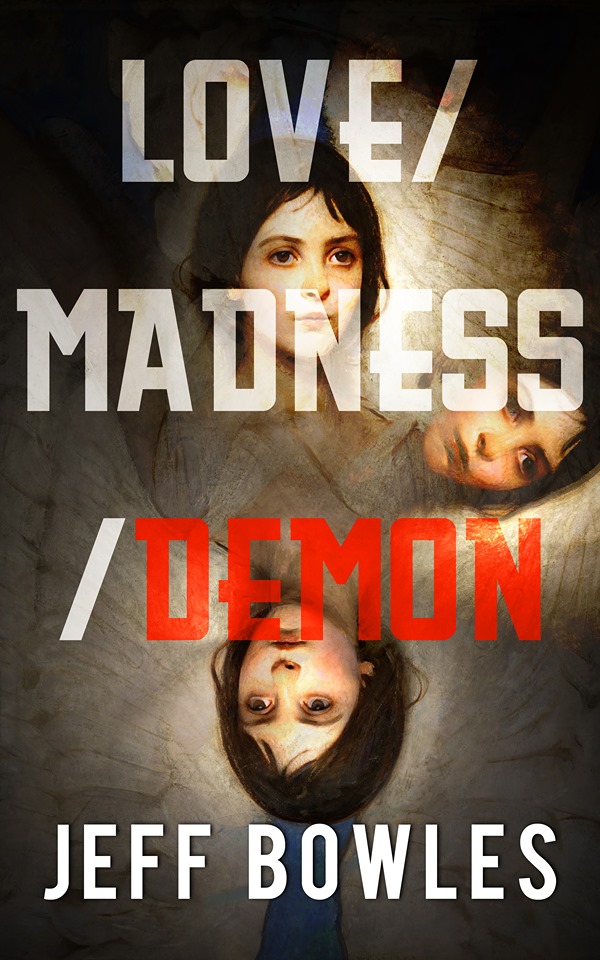
Jeff Bowles is a science fiction and horror writer from the mountains of Colorado. The best of his outrageous and imaginative work can be found in God’s Body: Book One – The Fall, Godling and Other Paint Stories, Fear and Loathing in Las Cruces, and Brave New Multiverse. He has published work in magazines and anthologies like PodCastle, Tales from the Canyons of the Damned, the Threepenny Review, and Dark Moon Digest. Jeff earned his Master of Fine Arts degree in creative writing at Western State Colorado University. He currently lives in the high-altitude Pikes Peak region, where he dreams strange dreams and spends far too much time under the stars. Jeff’s new novel, Love/Madness/Demon, is available on Amazon now!
Check out Jeff Bowles Central on YouTube – Movies – Video Games – Music – So Much More!
Day 3 of the WordCrafter “Chocolate Fudge saves the Sugar Dog” Book Blog Tour finds us over at “This is my Truth Now”, where James J. Cudney IV brings us a lovely review and interview with author Robbie Cheadle. Drop by to join in the fun and learn more about this new release and this amazingly creative mother and author.
Jeff Bowles has been a member of the Writing to be Read team since March of 2017, as well as being a talented science fiction and horror author with his own unique style. He’ brought us blog series such as “Jeff’s Pep Talk”, “Words to Live By”, “Craft and Practice”, “Jeff’s Movie Reviews” and Jeff’s Game Reviews”. He’s been on haitus for several months, but now he’s coming back with a fantastic new blog series, “Bowlesian!: Short Stories from the Brink”, which will feature some of his amazing short fiction each month. You can catch it on the first Wednesday of every month starting… tomorrow, March 2, 2022. You won’t want to miss it!
__________________________________________
Jeff Bowles is a science fiction and horror writer from the mountains of Colorado. The best of his outrageous and imaginative work can be found in God’s Body: Book One – The Fall, Godling and Other Paint Stories, Fear and Loathing in Las Cruces, and Brave New Multiverse. He has published work in magazines and anthologies like PodCastle, Tales from the Canyons of the Damned, the Threepenny Review, and Dark Moon Digest. Jeff earned his Master of Fine Arts degree in creative writing at Western State Colorado University. He currently lives in the high-altitude Pikes Peak region, where he dreams strange dreams and spends far too much time under the stars. Jeff’s novel, Love/Madness/Demon, is available on Amazon now!
Check out Jeff Bowles Central on YouTube – Movies – Video Games – Music – So Much More!
It’s day two of the WordCrafter Chocolate Fudge saves the Sugar Dog Book Blog Tour, and today I’m bringing you my review of this wonderful little book. Robbie and her son Michael co-write the Sir Chocolate books, illustrated with lovely fondant scenes and filled with delectable recipes which will make your tummy rumble. Many of us know Robbie and are familiar with her “Growing Bookworms” blog series and the Sir Chocolate books, so today I’d like to bring you and interview with her son and co-author, Michael Cheadle and share my review of Chocolate Fudge saves the Sugar Dog.
The Authors –Robbie and Michael Cheadle
Author Interview
Kaye: How old are you, Michael?
Michael: I am 16 years old.
Kaye: How long have you been writing Sir Chocolate books with your mom?
Michael: Mom and I started writing the Sir Chocolate books when I was 7 years old and in Grade 1 at school.
Kaye: Being such a young author is quite an accomplishment. Does it make you a celebrity among your friends?
Michael: No, I have not told my high school friends about my books. It just hasn’t come up.
Kaye: Do you help your mom with the baking for the books, too?
Michael: I used to make a fondant creation for inclusion in the books although I haven’t done that for the most recent two books in the series. I don’t do fondant art anymore. I do enjoy baking with my mom and now I also cook with either mom or dad depending on who is doing the cooking that day.
Kaye: What do you like most about writing the Sir Chocolate books?
Michael: I enjoy thinking up a fun storyline with my mom and deciding on new and interesting characters for inclusion in the stories.
Kaye: What is the most difficult part of being a co-author with your mom for you?
Michael: My mom doesn’t always listen to my ideas and sometimes she changes them which can be annoying for me.
Kaye:Chocolate Fudge saves the Sugar Dog is the eighth book in the Sir Chocolate series. Which one is your favorite and why?
Michael:Sir Chocolate and the Sugar Crystal Cave story and cookbook is my favourite. I liked learning how to make sugar crystals. Mom and my first attempt to make the crystals was a failure because we didn’t let the water cool down enough before we inserted the sugar-coated sticks in the sugar mixture. The sugar on the sticks melted and no crystals formed. We redid the experiment and it worked very well.
Kaye: Do you think you might write books of your own when you are older?
Michael: Yes, I think I might write in the future. I have lots of ideas for stories.
Kaye: What are your aspirations for your future?
Michael: I want to go to university to study a Bachelor of Science: Computer Science like my brother, Gregory. I will write in my spare time like my mom does.
Kaye: What is the most important lesson gained from the collaborative writing experience?
Michael: I learned that if you put your mind to something, then you can achieve success in it. I wanted to write stories about a little man who lived in a world where you can eat everything. With my mom’s help, we have created Chocolate Land and all the creatures that live there and published 8 books in this series.
Kaye: Are you planning more Sir Chocolate books in the future?
Michael: Mom and I have a few books that are already written. My mom does most of the illustrations so it will depend on her and whether she wants to do more fondant and cake art. I think she will and the books will be published.
I want to thank Michael for agreeing to this interview. I think he provided some wonderful answers. It’s great to chat with an aspiring young author, and delightful to learn that Chocolate Fudge saves the Sugar Dog wont be the last in the Sir Chocolate book series.
My Review
I’m a huge fan of Dr. Suess, and the cadence and ryhming in the verse written by Robbie and Michael Cheadle is reminiscent of that found in the lovely books from Dr. Suess, so of course, I loved Chocolate Fudge saves the Sugar Dog. And then there is the beautiful illustrations created by the talented Robbie with fondant figurines making up the lovely scenes described in the verse, which let the story unfold before your eyes. (They may make you hungry too, because they look deliciously sweet.) One I found especially endearing is the scene for the actual rescue of the Sugar Dog, where Chocalate Fudge is emerged in the hot chocolate pond.
The extra added feature that the Cheadle books include which Dr. Suess never thought to include is the wonderful recipes, and the accompanying photo illustrations for each one are sure to make whet your appetite. Included in Chocolate Fudge saves the Sugar Dog, are recipes for scrumptious peanut butter cookies, delectable Oreo cupcakes, mouth-watering avacado and bacon scones, poured fondant icing, and chocolate chip shortbread dipped in chocolate. Yummy!
Chocolate Fudge saves the Sugar Dog is a delightful children’s book with delicious recipes sure to please both young and old. I give it five quills.
Thanks for dropping by and helping us celebrate the release of Robbie and Michael’s wonderful new book, Chocolate Fudge saves the Sugar Dog. In case you missed the opening day, yesterday on “The Showers of Blessings” with a post by Robbie and a review by blog host, Miriam Hurdle, you can still read it here.
I hope you all will continue to follow the tour, because we’ve got some great things planned for each blog stop. Tomorrow’s stop features an interview with Robbie and we have at least two more reviews coming, too, in addition to Robbie’s wonderful posts on Thursday and Friday. I hope to see you there.



























Mind Fields – Healed By A Cat: An Autistic Man Meets A New Friend
Posted: March 4, 2022 | Author: artrosch | Filed under: Commentary, Mind Fields | Tags: Arthur Rosch, Autism, Cats, Commentary, Mind Fields, Writing to be Read | 2 CommentsOne day we found out that an autistic man was going to move in next door. At the time we lived in an RV park in a 38 foot motor coach. “Next door” meant that we shared a small yard with our neighbor.
I was concerned. How autistic is he? I wondered. Autism can be a vague diagnosis. It has stretched beyond its original meaning of a soul completely lost to human interaction. The park’s manager described the man as “a little autistic”. That could mean almost anything.
As Henry was helped to park in his site, he took a look at me and The Fox. He said one word, “Whew”, and then vanished into his RV.
“Whew.” Where did he live before he came here? His former neighbors, we later learned, were motorcycle people and meth freaks. Whew, indeed.
Henry divulged little about himself. He said he liked cats. That was fortunate, because we have two indoor cats and two outdoor cats, plus a wide variety of feral visitors and neighborhood pets. There’s something about this space that draws cats. It might be the plum trees and their abundant population of wrens and robins.
There are people who claim their pets have super powers. I regarded such people as harmless nuts. Lately my thinking has changed. Our cat Obsidian is a big brown tabby with green eyes. I’ve seen him tame people in that Little Prince way, literally capture their unruly spirits and put them back in a more harmonious order. That’s Obsidian’s super power, the power to restore tranquility.
He’s getting old, and so are we. He doesn’t jump the fence and climb around with the younger cats any more. He has more important work to do.
Our new neighbor Henry is middle-aged. He is a fearful, cranky and withdrawn man, but he’s an ideal neighbor. We barely know he’s here. He can be easily upset by minor disturbances. He is so averse to noise that he can be pushed into a ferocious sulk by the mere revving of a motorcycle.
He has been adopted by our two outdoor cats, wise old Obsidian and his sidekick, the comical black and white Cookie. These cats have given structure to Henry’s otherwise bleak world. By loving Henry they have tricked him into loving. I looked out the window one day to see the elusive and feral Cookie sitting calmly on Henry’s lap. I had never seen her behave this way. It was strangely impressive. Henry is a cat savant, he has some magical affinity that he didn’t know he possessed until he moved close to Obsidian and Cookie.
I hope that you, my readers, understand how easily a friendly animal can become a tyrant who turns your life upside down. Henry is such an innocent that he immediately began flirting with disaster. We had to set him straight without setting him off. If he let Obsidian into his home even once, he would become nothing but a door man, opening and closing all day, all night, at the cat’s demand. I caught him just on the verge of doing this very thing and rushed to halt the action.
“Don’t let him in, Henry! Close your door, quick!” He was frightened and cut Obsidian off just as he was about to slip between his feet.
I explained what had almost happened. I spoke towards Henry’s averted eyes and raised defensive shoulders. I spoke to him as I would speak to any intelligent adult. In Henry’s heart, the need to trust someone was rising like a powerful burst of magma from a volcano deep beneath the sea. His need to share the cats’ companionship was forcing him to emerge from his shell and talk to us. The cats pushed Henry past his fears.
In the next few weeks we learned more about Henry. It wasn’t easy but we supported his struggle to communicate. Then something unexpected happened. Henry and Obsidian fell in love. I’m not being flippant. It’s just that simple. When Henry left to visit his mother, Obisidian sat on his front step, waiting for his return. He would emit an occasional sob. There’s no mistaking Obsidian’s sob. He has an amazing gamut of vocalizations, including a perfectly robin-like cheep that must have been useful during his hunting years.
I can’t put it any other way. They were in love with a pure emotional connection. Perhaps Henry’s autism short-circuited his intellectual activity and left his feelings to flourish without interference from the busy mind. I watched this fountain of feeling take shape between Henry and the cats.
Henry leaves the campground for treatment four days a week. When he first went away, Obsidian was inconsolable. He went into a paroxysm of grief. He stared into space for long periods. He moped and cried. But Obsidian gradually learned that Henry ALWAYS comes home. Thus our cat friend’s tranquility was restored. He knows Henry will be back and that’s enough to comfort him. It took him a few weeks to get this; I watched him unwind and relax. I watched his attention return to his world: the falling leaves and the showoff Cookie with her bounding up and down fences and trees. Obsidian resumed his lordship of his domain. The lost baby possum was under his protection. The upstart kitten Stinker was not welcome and he meant business, even if he had to hire Cookie to teach Stinker a lesson.
Now Henry has left for two weeks. He has gone to Connecticut to visit his sister. “Three thousand miles!” cried Henry in terror before he was picked up by his ride. The enormity of this journey was paralyzing. I shared with Henry my own fears about travel: the feeling that I’ll never get home; I’ll be trapped in some alien environment without the solace of my place and my people. Henry and I aren’t so different. This bit of one on one engagement gave Henry something to take with him on this unprecedented trip. He had shared an emotional link with another human being. And he had given his heart to a big brown cat with green eyes.
How different is Henry’s world today? That’s not for me to say, but I suspect that it’s just different enough… enough to make a difference.
Share this: