Welcome to the WordCrafter “Chocolate Fudge saves the Sugar Dog” Book Blog Tour
Posted: February 28, 2022 Filed under: Uncategorized 9 Comments
Welcome to the WordCrafter Chocolate Fudge saves the Sugar Dog Book Blog Tour! This tour celebrates the release of book eight in the Sir Chocolate book series, by Robbie and Michael Cheadle. We have a great tour planned with guest posts by Robbie and reviews and interviews with some of our tour hosts.

For this opening day, we’re over at “The Showers of Blessings” blogsite with a guest post by author Robbie Cheadle and a review of Chocolate Fudge saves the Sugar Dog by blog host, Miriam Hurdle. Please join us there to learn more about this fantastic new book.
Share this:

The Many Faces of Poetry: My Credo
Posted: February 25, 2022 Filed under: Poetry, The Many Faces of Poetry | Tags: Arthur Rosch, The Many Faces of Poetry, Writing to be Read 4 Comments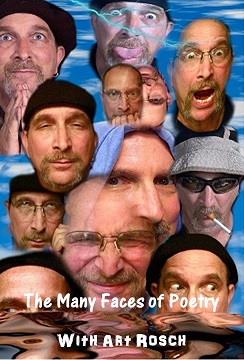
My Credo
Art Rosch
There is no truth but your own experience.
There is no method other than what you have, by trial and error,
found best enables you to survive.
There is no psychological health, because we are always deluded.
There is no physical health because we are always dying.
There is no teacher other than personal experience;
all other teachers are more like friends from whom one gleans
important information.
The quality of information one possesses translates to the quality of the life one lives.
Bad parents transmit bad information. This information has far reaching negative consequences, and one must struggle all one’s life to minimize the harm wrought by these consequences.
Consciousness is an experiment with different forms of information,
sifting through those that denigrate the self, selecting those
that optimize the self.
With the above in mind, it behooves one to act with the best judgment possible
under the circumstances, always bearing in mind that one’s compulsions, i.e.
the results of bad information, are always undermining good judgment.
It is useless to create inner tension between some mythical ideal of health
and what one actually is. Being what one is always takes precedence over
myths and ideals of competence, good judgment, wholeness, wellness
and enlightenment. Enlightenment (or the total apprehension of Truth) is possible at any moment, but the more
it becomes a goal, the more elusive it will be to attain.
___________________________________________________

Arthur Rosch is a novelist, musician, photographer and poet. His works are funny, memorable and often compelling. One reviewer said “He’s wicked and feisty, but when he gets you by the guts, he never lets go.” Listeners to his music have compared him to Frank Zappa, Tom Waits, Randy Newman or Mose Allison. These comparisons are flattering but deceptive. Rosch is a stylist, a complete original. His material ranges from sly wit to gripping political commentary.
Arthur was born in the heart of Illinois and grew up in the western suburbs of St. Louis. In his teens he discovered his creative potential while hoping to please a girl. Though she left the scene, Arthur’s creativity stayed behind. In his early twenties he moved to San Francisco and took part in the thriving arts scene. His first literary sale was to Playboy Magazine. The piece went on to receive Playboy’s “Best Story of the Year” award. Arthur also has writing credits in Exquisite Corpse, Shutterbug, eDigital, and Cat Fancy Magazine. He has written five novels, a memoir and a large collection of poetry. His autobiographical novel, Confessions Of An Honest Man won the Honorable Mention award from Writer’s Digest in 2016.
More of his work can be found at www.artrosch.com
Photos at https://500px.com/p/artsdigiphoto?view=photos
____________________________________________________________________
Want to be sure not to miss any of Arthur’s “The Many Faces of Poetry” segments? Subscribe to Writing to be Read for e-mail notifications whenever new content is posted or follow WtbR on WordPress. If you find it interesting or just entertaining, please share.
Share this:

Dark Origins – African myths and legends: The San (previously Bushmen) Part 2
Posted: February 23, 2022 Filed under: Dark Origins, Mythology and Legend | Tags: African Legend, Dark Origins, Legend and Mythology, Roberta Eaton Cheadle, South Africa history, Writing to be Read 42 Comments
Last month, I introduced you to the San (previously Bushmen) of southern Africa and shared about their rock art. You can read the post here: https://writingtoberead.com/2022/01/26/dark-origins-african-myths-and-legends-the-san-previously-bushmen-part-1/.
Today, I am going to share a poem from the extinct IXam tribe and a little more about the San.
San hunting methods
The San are excellent hunters. They do some trapping of animals but hunting with a bow and arrows is their preferred method. The San arrows are smeared with a deadly poison that kills the animal slowly. As the animal takes a long time to die, the hunters have to track it sometimes for a few days.
The San make their poison from a caterpillar called ka or ngwa or from the larvae of a small beetle. Sometimes they use poison made from plants or snake venom. San poisons are highly toxic. In order to prevent accidental contamination, they reverse their arrow points and keep them inside the reed collar of their arrows. They also smear the arrows with the poison just below the tips.
The San use every part of the animals they hunt. Hides are tanned for blankets and the bones are cracked and the marrow eaten.
Water is scarce in the areas inhabited by the bushmen. During the dry season, moisture is collected by scraping and squeezing roots. They also dig holes in the sand to find water and also carry water in the shells of ostrich eggs.
Myths of the IXam
One of the myths of the IXam is about how the Milky Way was formed. They have a poem/story called The Girl Who Made Stars which tells this story.
You can listen to me reading this story here:
This story demonstrates the San belief that feminine energy is dominant in the creation of the cosmos.
In this story, a girl who is menstruating for the first time throws wood ash and edible roots into the sky. The ashes and roots become stars and light the people’s path as they walk by at night. This myth depicts the creator of the Milky Way and all the stars in the dawning womanhood of a pubescent girl.
The girl in this story is confined to a small hut during this time. She may not eat the young men’s game as her doing so would destroy their abilities as hunters. A look from her can turn a springbok wild. She is a fragile girl but she is powerful and to be feared at this time. She is also kind and benevolent, creating the stars so that people can see at night.
The Bushman Heritage Museum in Nieu Bethesda
During our road trip earlier this year, we were fortunate enough to visit The Bushmen Heritage Museum in Nieu Bethesda and see the beautiful wall hangings that have been created by the descendants of the now extinct IXam tribe to celebrate their mythology and to help remember it.
This short video shares a bit about the creation of this museum and what it stands for. The story of the bushmen is a tragic one and this video will give you gooseflesh.

The picture above is of the restaurant at the museum which also has some wonderful local art made by the descendants of the IXam tribe available for purchase.
If you would like to learn more about the Bushman Heritage Museum, you can do so here: https://bushmanheritagemuseum.org/
Next month, I will share the last post in this short series about the San or Bushmen of southern Africa.
About Roberta Eaton Cheadle

Roberta Eaton Cheadle is a South African writer and poet specialising in historical, paranormal, and horror novels and short stories. She is an avid reader in these genres and her writing has been influenced by famous authors including Bram Stoker, Edgar Allan Poe, Amor Towles, Stephen Crane, Enrich Maria Remarque, George Orwell, Stephen King, and Colleen McCullough.
Roberta has short stories and poems in several anthologies and has 2 published novels, Through the Nethergate, a historical supernatural fantasy, and A Ghost and His Gold, a historical paranormal novel set in South Africa.
Roberta has 9 children’s books published under the name Robbie Cheadle.
Roberta was educated at the University of South Africa where she achieved a Bachelor of Accounting Science in 1996 and a Honours Bachelor of Accounting Science in 1997. She was admitted as a member of The South African Institute of Chartered Accountants in 2000.
Roberta has worked in corporate finance from 2001 until the present date and has written 7 publications relating to investing in Africa. She has won several awards over her 20-year career in the category of Transactional Support Services.
Find Roberta Eaton Cheadle
Blog: https://wordpress.com/view/robertawrites235681907.wordpress.com
Twitter: https://twitter.com/RobertaEaton17
Facebook: https://www.facebook.com/robertawrites
Amazon: https://www.amazon.com/Roberta-Eaton-Cheadle/e/B08RSNJQZ5
_____________________________________________________________________________________________
Want to be sure not to miss any of Robbie’s “Dark Origins” segments? Subscribe to Writing to be Read for e-mail notifications whenever new content is posted or follow WtbR on WordPress. If you found it interesting or entertaining, please share.
Share this:

Writer’s Corner: Researching down a rabbit hole
Posted: February 21, 2022 Filed under: Books, Western, Women's Fiction | Tags: Colorado History, Delilah, Doc Holliday, Glenwood Springs, LEadville, research, Writer's Corner, Writing to be Read 3 Comments
I just took a short trip to Glenwood Springs, Colorado; one of many that I have taken in search of the truth about Doc Holliday; a curiosity that began while doing research for Delilah back in 2016. At the time, I found evidence connecting Doc Holliday with the mining camp of Leadville, where that story ends up, and I used that in my story line to give it authenticity. I learned a lot about John Henry (Doc) Holliday, but I also found a lot of facts which are conflicting, and those conflicts have tickled at my brain ever since.
Many of the facts which are not to be disputed are John Henry Holliday’s birthplace and date: Griffin, Georgia on August 14, 1851. In addition it is known that he attended the Pennsylvania College of Dental Surgery, but before he could get his practice well established, he was diagnosed with consumption, what we know of today as tuberculosis, ruining a promising career when no one wanted to be treated by “a lunger”, so headed out west to be a gambler, which was considered a legitimate way to earn a living in those days, similar to that of a professional poker player today, as differentiated from a gambler.
But it wasn’t until the 1881 events in Tombstone Arizona and the “shoot-out at the O.K. Corral”, involving Doc Holliday and the infamous Earp brothers that his noteriaty grew into legendary proportions. months to seek relief from the reported health benefits of the natural mineral hot springs and vapor caves located there. In those days there were close to fifty hot springs running up and down the banks of the Grand River (now known as the Colorado River), as this was before Walter Devereaux purchased the townsite of Glenwood Springs and secured funding to build The Hotel Colorado and The Hot Springs Pool, as well as the city’s first power plant in 1892.
Glenwood Springs is where Doc died in 1887. It is there that he was supposedly buried, although there are claims that the hillside cemetary was flooded and several graves were washed out into the streets below and bodies scattered, so that no one really knew whose bodies were reburied where, leaving the exact location of Doc’s final resting place a bit of a mystery. A more recent addition to the cemetary is a sign suggesting that because he was destitute and could no longer hold a job as a dealer in one of the saloons, that he may have been buried further up the hillside in the pauper’s graveyard where many were buried with no headstone. I find this assertion to be highly unlikely, and assume this sign was made in an attempt to deter vandalism.

Sign at the bottom of the trailhead to the hillside Linwood Cemetary in Glenwood Springs, Colorado.
When talking to the locals, I learned that vandalism has been a problem for the cemetary and particularly for the grave of the infamous dentist, gambler and gunman, and the headstone which currently marks Holliday’s alleged gravesite in the Linwood Cemetary is the third headstone to mark the spot. The one prior to this one is displayed in Bullock’s Store, where the basement houses The Doc Holliday Museum with an interesting collection said to be connected to the man, as well as the only surviving pieces of the original building, which was destroyed in a fire in a 1945 fire. The building is in the loction where The Hotel Glenwood stood, Doc spent the last six months of his life, in a room on the third floor, destitute and dying of consumption. It is rumored that, broke and unable to work due to his failing health, and according to Bill Kight of the Glenwood Springs Historical Society, it is rumored that a friend, Walter Devereaux and his longtime companion, Mary Katherine Horony-Cummings, also known as Big Nose Kate, cared for him during his last days and were at his side when he died. (Glenwood Springs: The Official Insider’s Guide 2021-22, “Get to Know Doc Holliday”, by Bill Kight)


These are pictures of the older headstones that have since been removed from the Linwood Pioneer Cemetary. You can tell how old they are because of the grainy quality of the photos. The one on the right is now on display at Bullock’s Store. There was too much snow to make the trek up to the hillside cemetary on this trip, so I wasn’t able to get a picture of the current headstone.
A few doors down on the block from Bullock’s is Doc Holliday’s Saloon. I couldn’t find any evidence that there was any real connection to Doc here, but they serve good food and historical atmosphere make it a favorite of mine whenever I visit Glenwood Springs. It’s a great place to relax and enjoy a rib-eye sandwich and a game or two of billiards. Nobody said a research trip has to be all work and no play.

It seems a little bit ironic that Glenwood plays up the association with Doc and Leadville doesn’t, knowing that he spent much more time in Leadville than Glenwood Springs, where Doc visited in hopes of improving his health to make his last days a bit more comfortable. Another irony of this move was that the moisture of the waters and the steam, as well as the altitude, would have actually been detrimental to his failing health, which is why Doc did better in the desert atmosphere of Arizona, but he was forced to flee and seek sanctuary in Colorado, due to being wanted for murder after the Tombstone affair. (Gary L. Roberts, True West Magazine, “Doc Holliday’s Lost Colorado Years”, June 2013)

The story of Delilah takes place during the time when Doc would have been in Arizona, but Doc had visited Leadville prior to that and so he received a mention in my book, although he wasn’t present in the story. Delilah takes place in a very small time in Colorado’s vast history which I used bits and pieces of in my story, but there is much more history that the story didn’t cover, so don’t be surprised if Doc Holliday shows up in person in one of the books in the Women of the West Adventure Series, which Delilah may soon become a part of, now that I’ve spent all this time down a research rabbit hole.
Share this:

Treasuring Poetry – Meet poet and artist, Smitha Vishwanath
Posted: February 16, 2022 Filed under: Book Review, Books, Interview, Poetry, Review, Treasuring Poetry, Writing | Tags: Author Interview, Book Review, Roads: A Journey with Verses, Robbie Cheadle, Smitha Vishwanath, Treasuring Poetry, Writing to be Read 48 Comments
Which of your own poems is your favorite?
There are quite a few poems I like – some for the flow, some for the imagery and some for the memories they bring back with them, there’s one poem that has stood the test of time. It’s a poem I penned when my girls were one and three respectively. Seventeen years later, the girls have grown – each into young ladies with a distinct personality, but it’s beautiful how the description of them in the poem still holds true. It’s special because this poem is one thing that the girls agree about.
Tender Moments
I sneak silently into the room
A quick peak I take of my budding blooms
Their breathing soft – rises and falls, a melodious rhapsody
To the soothing sound of a Spanish symphony
Their countenance silken smooth; serene
Tugs my heart, an enticing scene
Each distinctly different, yet subtly the same
Contrasting as night and day; asleep, they look- Oh! So tame
Their striking silhouette, in the mellow moonlit night
Slightly stirring, they curl; enraptured I gaze at the sight
One’s creamy-white skin peeps from the warm woollen quilt above
And the other’s little chocolaty toe pushes its way from below
One, strong and athletic; the other, dainty and petite
Poles apart in every way; a miracle I behold, a divine treat
The window slightly ajar, lets in the wintry wind
Blowing their untied tresses over their satiny skin; I lean
O’er their tender frames, and sweep the bouncy, brown curls away
And the silk-smooth strands of the other, as in deep slumber they lay
Both unique, both special, both a part of me
Peas in a Pod, they are and shall forever be
What inspired you to write this poem?
I had walked into the children’s room one night, sometime in 2008; the girls were asleep. The curtains were drawn, and the moonlight cast a soft glow on them. I looked at them and I scribbled a version of the poem in my diary. However, it was only later, in 2017, that I reworked on the poem and published it on my blog for the NaPoWriMo prompt, ‘Write a poem that explicitly incorporates alliteration,’ on 12th April.
What are your plans for your poetry going forward?
I co-authored a poetry book ‘Roads- A Journey with Verses’ which was published in 2018. My poems have been published in various journals since then, but I haven’t got to publishing a solo book as yet. I’d like to do that, but I have a lot of starting trouble, and so, it’s taken me longer than I expected, to do it. Hopefully, I can do it this year.
What is your favorite poem?
It’s difficult to choose a favorite. I have quite a few that never fail to speak to me. However, if I have to choose it will be Emily Dickinson’s ‘Hope is a thing with feathers’ (copied from the poetry foundation)
“Hope” is the thing with feathers by Emily Dickinson
“Hope” is the thing with feathers –
That perches in the soul –
And sings the tune without the words –
And never stops – at all –
And sweetest – in the Gale – is heard –
And sore must be the storm –
That could abash the little Bird
That kept so many warm –
I’ve heard it in the chillest land –
And on the strangest Sea –
Yet – never – in Extremity,
It asked a crumb – of me.
Why do you like this poem?
No matter how many times I read it I can not help being in awe of the choice of words, the simplicity and most importantly, how easily and perfectly ‘hope’ is described. Every line in the poem is a gem and anyone who has ever experienced ‘hope’ will vouch for it.
Roads: A journey with verses
![ROADS : A Journey with Verses by [Vandana Bhasin, Smitha Vishwanath]](https://m.media-amazon.com/images/I/41bPyRdgWkL._SY346_.jpg)
What Amazon says
“Roads” is a poetic rendezvous that takes the reader on a panoramic journey, making one pause, ponder and celebrate life.
The book is a light, alluring read that instantly strikes a chord and elevates one’s spirits. A trove of 60 poems, it is quilled with beads of nine virtues: Courage, Wisdom, Serenity, Love, Hope, Strength, Joy, Compassion and Gratitude. The verses encapsulate life’s ebbs and flows while prompting the reader to enjoy its simple pleasures.
“Roads” is a book that you would want to keep on your bedside, for a quiet read before retiring for the night or for the morning wisdom to seize the day. With poems revolving around emotions that each of us experiences, “Roads” very easily develops a personal connect with the reader that is defiantly refreshing.
“Roads” is a journey with verses. Take it on yours.
My review
Roads: A Journey With Verses is a beautiful book of mainly freestyle poetry written by Smitha Vishwanath and Vandana Bhasin. I have read and enjoyed a lot of poetry on Smitha’s blog in the past, but this was my first introduction to Vandana’s poetry.
I thought this was a wonderful combination of work by two talented poets and I enjoyed the different styles of writing by the two contributors. Smitha writes delicately beautiful poems in which her messages are subtly shrouded as if within a loving cocoon of words. Vandana’s writing is more strident and forthright, but I enjoyed her style equally and her strong messages for women’s rights moved me greatly.
This book is divided into sections as follows: Courage, Wisdom, Serenity; Love, Strength, Compassion and Joy, Hope, Gratitude. Each section is divided into subsections setting out an arrange of delightful poems in each subcategory. Each subsection is introduced with a short introductory verse which conveys its meaning for the poets and each poem is introduced with a paragraph setting out the the meaning and purpose of the specific poem to the writer. I really enjoyed reading about the inspiration and meaning behind each poem.
A selection of my favourite verses from this book are as follows:
From the sub-section Strength –
Believe in yourself by Vandana Bhasin
“They’ll laugh at you, and even ridicule you
They’ll even endeavor to enervate your spirits
But let the force of their dissuasion empower your faith
and the sound of their derision echo your beliefs
Believe in yourself, even when none believes in you.”
From the sub-section Compassion –
Help! She’s calling by Smitha Vishwanath
“Her eyes shone a tear, her lips quivered with
fear; down her face ran a scar, like a spear.
Her leg bruised, her hand bleeding, she felt a
shooting pain.”
From the sub-section Joy –
Tender moments by Smitha Vishwanath
“Their countenance silken smooth; serene
Tugs my heart, an enticing scene
Distinctly different, yet subtly the same –
Contrasting as night and day; asleep, they look
– Oh! So tame
Their striking silhouette, in the mellow moonlit night
Slightly stirring, they curl; enraptured, I gaze at the sight
One’s creamy-white skin peeps form the warm woolen quilt above
And the other’s little chocolaty toe pushes its way from below
One, strong and athletic; the other, dainty and petite
Pole apart in every way; a miracle I behold, a divine treat.
From the sub-section Hope –
Wings of freedom by Vandana Bhasin
“Wings of freedom are all I need
I want to live and not just breathe
I want to fly high like a bird
I want to dream big, not chase the world”
Purchase Roads: A Journey with verse
About Smitha Vishwanath

Smitha Vishwanath is your quintessential ‘bored banker’ turned writer. After a rewarding career in Banking in the Middle East where she worked for leading banks in senior positions, she quit and moved to India in July 2018 with her husband who had been transferred to the country on an International assignment. Therein began her writing journey.
‘Roads’ is the first book she has co-authored. Having lived and studied in different countries and different states within India and worked with different cultures, Smitha understands that ‘change’ and ‘ups and downs’ are very much a part of life. It is this experience that reflects in her poems and her writing which are filled with positivity, acceptance and willingness to change for the better.
She also writes regularly through her blog : https://lifeateacher.wordpress.com
Smitha’s art
Smitha is also a wonderful painter. I wrote a blog post about one of her painting that I have hanging in my bedroom here: https://robbiesinspiration.wordpress.com/2021/07/10/a-new-painting/
You can find more of Smitha’s artwork here: https://www.spacesbysmithav.com/
About Robbie Cheadle

Robbie Cheadle is a South African children’s author and poet with 9 children’s books and 2 poetry books.
The 7 Sir Chocolate children’s picture books, co-authored by Robbie and Michael Cheadle, are written in sweet, short rhymes which are easy for young children to follow and are illustrated with pictures of delicious cakes and cake decorations. Each book also includes simple recipes or biscuit art directions which children can make under adult supervision.
Robbie has also published 2 books for older children which incorporate recipes that are relevant to the storylines.
Robbie has 2 adult novels in the paranormal historical and supernatural fantasy genres published under the name Roberta Eaton Cheadle. She also has short stories in the horror and paranormal genre and poems included in several anthologies.
Robbie writes a monthly series for https://writingtoberead.com called Growing Bookworms. This series discusses different topics relating to the benefits of reading to children.
Robbie has a blog, https://robbiesinspiration.wordpress.com/ where she shares book reviews, recipes, author interviews, and poetry.
Find Robbie Cheadle
Blog: https://www.robbiecheadle.co.za/
Blog: robbiesinspiration.wordpress.com
Twitter: BakeandWrite
Instagram: Robbie Cheadle – Instagram
Facebook: Sir Chocolate Books
______________________________________________________________________________________________
Want to be sure not to miss any of Robbie’s “Treasuring Poetry” segments? Subscribe to Writing to be Read for e-mail notifications whenever new content is posted or follow WtbR on WordPress. If you found it interesting or entertaining, please share.
Share this:

Review in Practice: “Mastering Amazon Descriptions” & “How to Write Fiction Sales Copy”
Posted: February 14, 2022 Filed under: Advertising, book marketing, Book Promotion, Copywriting, Fiction, Hooks, Writing | Tags: Book Review, Brian D. Meeks, Dean Wesley Smith, How to Write Fiction Sales Copy, Review in Practice, Writing to be Read 6 Comments
It’s not enough to just write the book.
Today’s author must be both writer and marketer. Authors in the the world of digital media and the rise of independent publishing are responsible for not only writing the book, but selling it, too. Even authors who are traditionally published are often responsible for a good portion of the promotional efforts.
These days, everyone knows that people can and do judge books by their covers. Most authors emphasize the importance of a a good book cover in selling books, but they’re talking about more than just the image and text on the front. Perhaps as important as that front cover, is the book’s description or blurb, found on the back cover for print books, or in your ebook’s meta-data.
A good book description’s job is to capture reader interest and make them want to know more,. Whether we’re talking about the hook of the first line, which must make you read on to the next sentence and then the next, or about the description as a whole, which must hook the reader, making them want to buy the book to learn the rest of the story, the book description is one of the most powerful tools we have at our disposal to sell books. According to Brian D. Meeks, a good book description has three elements: a powerful hook, engaging copy, and visually appealing formatting.
Mastering Amazon Descriptions
In Mastering Amazon Descriptions, Brian D. Meeks offers a formulaic plan for writing book descriptions that will sell books, including examples of description re-writes for books in varied genres. Although these descriptions are specified as Amazon descriptions, I’m sure this technique will work equally well with Kobo, or Barnes & Nobel, or even the Apple Store. By the time you’ve read through this book, you’ll be writing back cover copy like a pro, because Meeks’ method is simple enough that almost anyone can do it.
To prove it, I’ll share with you the re-write I did of the description for Delilah, which I am preparing for its re-release in the coming year.
Here is the original description:
“Brutally raped and left for dead, her fourteen-year-old ward abducted, Delilah’s homecoming from prison quickly turns into a quest for vengeance. Tough and gritty, sheer will and determination take her to the Colorado mining town of Leadville in her hunt for her attackers and the girl, Sarah. Somehow along the way, the colorful inhabitants of Leadville work their way into Delilah’s heart, giving her a chance for a future she thought she’d lost along with her innocence.”
Here is the description I wrote for the re-release before I read Mastering Amazon Descriptions:
Delilah is a woman haunted by her past. Her homecoming from prison quickly turns into a quest for vengeance when she is brutally raped and left for dead, and her fourteen-year-old ward is abducted. Sheer will and determination take this tough and gritty heroine up against wild beasts of the forest, Indians and outlaws to the Colorado mining town of Leadville, where the colorful inhabitants work their way into Delilah’s heart, offering a chance for a future she thought she’d lost along with her innocence.
Now, here is the description I wrote using Brian D. Meeks’ method:
Haunted by her past.
Raped and left for dead; her fourteen-year-old ward abducted.
Sheer will and determination take this tough and gritty heroine up against wild beasts of the forest, Indians and outlaws.
Can the colorful inhabitants of Leadville work their way into Delilah’s heart, offering a chance for a future she thought she’d lost along with her innocence?
I don’t think anyone would argue that this last description is an improvement. It has a better hook, shorter sentences, and leaves the potential reader with a question to make them want to learn more and read the book.
How to Write Fiction Sales Copy

How to Write Fictin Sales Copy, by Dean Wesley Smith offers three different formulas for writing back cover blurbs and sales copy, which are aimed toward a wide distribution, and several different approaches. Smith is an old pro in this writing game and he’s good at what he does, (which is write). While his methods are not as formulaic and are not specific to Amazon, they are never-the-less effective in posing unspoken questions about the book and making readers want to know more. Smith also offers 32 actual story blurbs as examples in multiple genres.
To experiment with one of Dean Wesley Smith’s techniques, I thought I’d try to rewrite the blurb for my paranormal mystery novella, which is riddled with what Smith calls “The Author Problem”, which results from too many passive verbs and too much focus on the plot. My description doesn’t have a lot of passive voice, but it does focus on the plot too much, revealing more than necessary, which is a common author error. The idea behind the blurb is to give potential readers just enough to pique their interest and make them want to purchase the book. If you reveal too much of the plot, there’s no reason to buy.
Cassie is nervous about her return to her ancestral lands with her boyfriend Tony for more reasons than one. She hasn’t been up in these mountains since the unexplained drowning of her parents. And her parents aren’t the only ones who have died or mysteriously disappeared in the area. Cassie doesn’t really believe the old legends passed down from her Native American ancestors, but she harbors no desire to become the keeper of her tribal legacy or the protector of the gold that goes with it. In fact, she plans to tell her Grandmother to pass the legacy to someone else, perhaps her cousin Miranda, who has been searching for the treasure for years. Cassie wants nothing to do with it now that she carries Tony’s baby in her womb. When Cassie forces herself to go out on the lake that took the lives of her parents and she discovers a cave which holds the treasure of her people, she must admit that the legacy is real, which means the curse that guards the treasure and threatens the males of her tribe must also be real. When Miranda’s boyfriend, Jake disappears on the lake, Cassie must find a way to stop the curse, before Tony becomes the next victim.
So here is my attempt at a rewrite, using Smith’s basic blurb pattern, beginning with a character summary that “nails the genre if possible”.
Cassie wants nothing to do with the legacy her grandmother wants to hand down to her. She doesn’t believe in all those Native American legends anyway.
She and Tony plan to be married and start a family. They’re only returning to her ancestral lands now to tell her grandmother to pass the tribal legacy on to someone else, along with the cursed gold that goes with it.
When she forces herself to go out on the lake where her parents drowned, she discovers the cave which holds the tribal treasure and the lake takes another life. Now Cassie must rethink all that she believes. If the treasure is real, could the curse be real, too?
Can Cassie find a way to stop it before Tony becomes the next victim?
If you love paranormal mysteries, pick up a copy of “Hidden Secrets”.
Which one of these descriptions would make you more likely to buy the book? You can see what a difference a few simple changes can make.
Authors must be able to write sales copy, as well as fiction or nonfiction, because stories don’t sell themselves. On The 6 Figure Authors podcast suggest that if a book isn’t selling well, the first things to look at are cover art and blurb. We see here with the examples I provided, what a difference changing up the blurb can make. I recommend both Mastering Amazon Descriptions, and How to Write Fiction Sales Copy to any author who wants to polish their blurb writing skills and improve their sales copy.
Share this:

Growing Bookworms – Letting Go!
Posted: February 9, 2022 Filed under: Growing Bookworms, Parenting | Tags: Growing Bookworms, Parenting, Robbie Cheadle, Writing to be Read 83 Comments
I’m going to start today’s post with a short, hopefully amusing, story about my taking my oldest son to get his university access card last week. By way of background, the relevant entrance for this task is on a busy street with no parking. The area is also not a good one, so hanging about on the street in front of the entrance is not particularly appealing. Another thing to note is there have been a spate of kidnappings of older teens and young men recently in South Africa.
“I think that Greg should go on his own to fetch his University card,” I say to Terence. “He won’t want his mother with him. I will embarrass him.”
“No,” Terence says with authority, “Parents go with.”
Hmmm, I think. You attended this university thirty years ago, things might have changed.
There is no arguing with this man who is over the moon that his son has achieved a scholarship to study a BSc Computer Science at “his” university. Thirty years has disappeared in a trice and Terence is back in full University mode. You’d think he was going and not Greg.
At 8.30am on the appointed morning, a determined Terence drops Greg and I off on the street in front of the entrance, waves cheerfully, and heads off to work, which is fortunately close by.
We go to security. Greg calls a number and is granted access. I call the same number and am not allowed in. I notice a few other parents outside the security gate.
“You just go on your own,” I say. “I’ll wait for you here.”
Off Greg goes and I am stuck standing on the street in this undesirable area. There are two security guards and a few other waiting mom’s so I don’t panic. One lady is very nice and makes conversation while we wait.
Ten minutes later, Greg texts me: I don’t know where to go.
I message back: Come back to the gate and the security guard will tell you where to go. I saw her telling another boy.
Greg does not come back to the gate. There is complete cyber silence
Another ten minutes pass and he texts: I’ve found it and I’m waiting in the queue.
Happiness! He’s doing this on his own [as he should] and I’m confident we’ve come early and he won’t take long. I feel an idiot waiting outside the barred gate like an unwelcome guest. Other arriving students stare at me suspiciously.
The time drags. One hour passes and my back is aching. I don’t like standing here on the street. I feel agitated. I text Greg: How much longer?
He replies: I’m getting on a bus and going somewhere else.
I text him: where are you going?
He replies: I don’t know.
Complete cyber silence.
I text him – no reply.
I call him – no reply.
I decide he has been enticed into a bus by kidnappers and is on his way to Nigeria to be forced into male prostitution.
I have a panic attack and call him six times.
No reply.
I phone Terence at work and tell him our son has potentially been kidnapped.
Terence knows me. He doesn’t say anything. He gets into his white car and charges to the rescue.
Terence arrives and I jump into the car and burst into tears.
Greg sends a text: I’m getting my card.
I tell Terence that the kidnappers are responding to messages on Greg’s phone so they can throw us off the scent and cross the border.
Terence is undecided: Should he take me to the closest mental institution or try to find Greg.
Greg texts: I’m finished. Can you fetch me from Alpha Campus.
***
It was very funny. Afterwards. Of course, I broke a major rule of “letting your child go.” Stay in the moment rather than imagining the worse-case scenario. Catch yourself if you are catastrophizing a situation.
Letting go is more about letting go of our own fears and anxieties as parents. It is adjusting to the idea that you are no longer in control of your child and they are now making their own choices and decisions. It also means they are responsible for any fallout from those decisions.
I blame my anxiety about my children on their collective 32 operations, chronic health problems, and the two home invasions I have been involved in. I have trust and anxiety issues, but I still need to get a grip and accept that my son is now an adult. Even Michael, needs some freedom and to be given wings.
Some other advice to parents who struggle to let go is as follows:
- Stop trying to raise a “happy” child. Accept that making decisions and choices is going to result in mistakes and the resultant misery these bring. People need these experiences to grow and learn.
- Empower your child over time by giving them some power of less important decisions as they get older. If they refuse to study for an important test, let them fail. You can’t shelter your child from all the difficulties in life and they need to learn to prioritize.
- Set boundaries and follow through on punishments if your child fails to comply. If you tell him/her to be home by 10pm and he gets home at 11pm, ground him. He needs to learn about consequences for actions.
- Have respect for your child and his/her ability to handle situations as they grow up. Have faith in the values and ethics you have instilled in them.
Did you struggle to let go when it come to your children? Let me know in the comments.
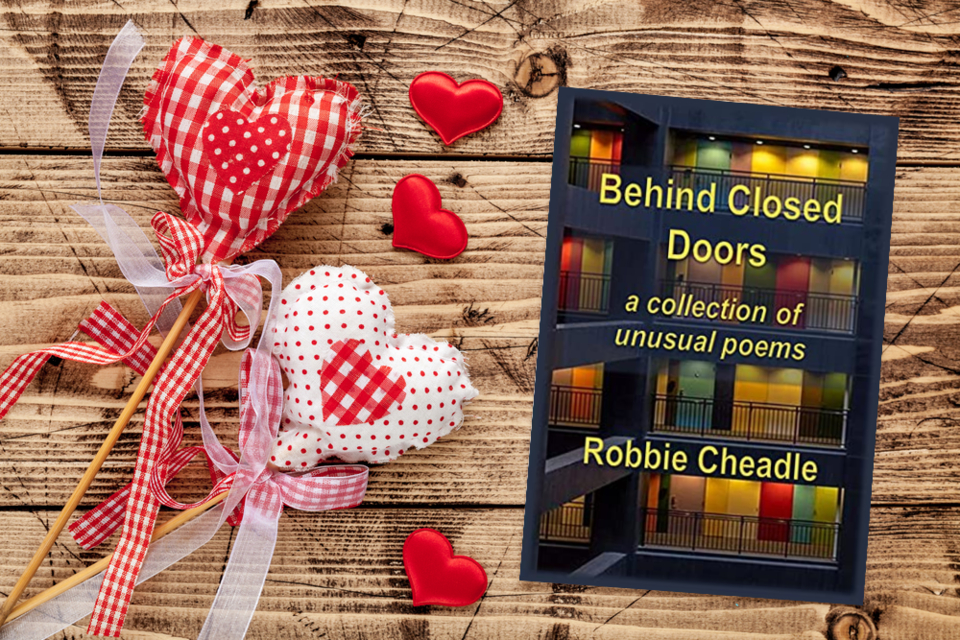
To round this post off, I am sharing a poem I wrote about letting go. It is included in my book, Behind Closed Doors.
He walks away by Robbie Cheadle
From the first day
he took a tentative step
on uncertain chubby legs
attached to adventurous feet
he moved away from her
embracing with enthusiasm
the mysterious outside world
She watched over him tenderly
as he learned about life
discovered the joy of friendship
and the heartbreak of loss
embarked on his academic journey
exploiting his strengths and
overcoming his weaknesses
and during all this time
mom was always enough
her smile healed all wounds
her kiss cured all pain
but she knew in her heart
that this investment of hers
was ultimately for another
a nameless faceless other
who would eventually take her place
she was preparing him to leave
and find his place in this world
His independence draws ever closer
her smile no longer enough
as he jostles for position
in the heartless world of men
her kiss no longer wanted
as he seeks the lips of the other
It’s heart wrenching to let go
knowing he must suffer pain
before he finds his enduring love
encounter setbacks and loss
before success and satisfaction
but it’s the duty of a mother
to set her son loose
to fly alone
About Robbie Cheadle
Robbie Cheadle is a South African children’s author and poet with 9 children’s books and 2 poetry books.
The 7 Sir Chocolate children’s picture books, co-authored by Robbie and Michael Cheadle, are written in sweet, short rhymes which are easy for young children to follow and are illustrated with pictures of delicious cakes and cake decorations. Each book also includes simple recipes or biscuit art directions which children can make under adult supervision.
Robbie has also published 2 books for older children which incorporate recipes that are relevant to the storylines.
Robbie has 2 adult novels in the paranormal historical and supernatural fantasy genres published under the name Roberta Eaton Cheadle. She also has short stories in the horror and paranormal genre and poems included in several anthologies.
Robbie writes a monthly series for https://writingtoberead.com called Growing Bookworms. This series discusses different topics relating to the benefits of reading to children.
Robbie has a blog, https://robbiesinspiration.wordpress.com/ where she shares book reviews, recipes, author interviews, and poetry.
Find Robbie Cheadle
Blog: https://www.robbiecheadle.co.za/
Blog: robbiesinspiration.wordpress.com
Twitter: BakeandWrite
Instagram: Robbie Cheadle – Instagram
Facebook: Sir Chocolate Books
______________________________________________________________________________________________
Want to be sure not to miss any of Robbie’s “Growing Bookworms” segments? Subscribe to Writing to be Read for e-mail notifications whenever new content is posted or follow WtbR on WordPress. If you found it interesting or entertaining, please share.
Share this:

Review in Practice: “An Author’s Guide to Working with Libraries & Bookstores”
Posted: January 31, 2022 Filed under: Uncategorized 6 Comments
An Author’s Guide to Working with Libraries & Bookstores, by Mark Leslie Lafabvre offers the inside scoop on how to develop relationships with bookstores and libraries, so local and global readers can find your books. It isn’t enough to get your book onto a distributor’s list. That doesn’t guarantee that your book will be purchased and stocked in brick and mortar bookstores or libraries, it just makes them aware of your book’s availability, but the competition is tough and there is still no guarantee that those in charge of acquisitions will actually see or notice your book.
Independent authors have come a long way since I’ve been writing in this game. As more authors go indie and do it well, independent authors are becoming hard to ignore, even though traditional publishing has tried very hard to do just that.
Although dependent authors have made strides in leaps and bounds to legitimize indie authorship, traditional publishers still have an in with brick-and -mortar bookstores and libraries; they have a system in place, even if it really doesn’t make a whole lot of sense. Indie authors are still finding their way in this area, and this book provides the map for how to get there.
Mark Leslie Lafabvre was publishing independently long before it was ‘a thing’, as well as working for first, Kobo and developing their self-publishing platform, Kobo Life, and now, for Draft-2-Digital as their director of business development, so he definitely has the experience and expertise to offer up this wonderful blueprint for getting our own books into bookstores and libraries.
Authors want to sell books, and to do that, we need to get our books in front of as many eyes as possible, because each new eye is a potential reader. Getting into bookstores and libraries offers the opportunity for a huge increase in the number of eyes on our books, and in the number of eyes that then may go on to purchase more of our work and become fans, and perhaps superfan’s that will buy everything we write. But we need to get our books into these outlets first and in An Author’s Guide to Working with Libraries & Bookstores, Mark Leslie Lafabvre has given us a secret for opening those doors. Relationships.
With all the valuable information packed into An Author’s Guide to Working with Libraries & Bookstores, every author who is serious about selling their books should have a copy. I give it five quills.

Share this:

Mind Fields – The Ideas of A Morning
Posted: January 28, 2022 Filed under: Commentary, Mind Fields, Opinion, Reflections, Uncategorized | Tags: Arthur Rosch, Life Reflections, Mind Fields, Writing to be Read 1 Comment
I value originality. It requires a level of commitment and a sense of one’s self as being unique and talented. At some base level NO ONE is truly original but in the world of human expression, of artistic and technical feats that are part of our culture, there are individuals who stand out as being special. They have hewn materials out of the core of their selves, and the results are striking and unprecedented. It is the unprecedented nature of the creations that forms the matrix of originality.
The Primacy Of Memory
There is a moment in life as one grows older that the memory recreates all the life’s experiences as if for the first time. Re-living my life from the sheltered glade of memory has been a rich meditation. What did I do and why did I do it? Observing behavior that was inexplicable at the time but contemplation later reveals why something happened. At no time have I lost a firm conviction that higher powers are always at play in the Self and that these powers design with great wisdom all that shall befall the sole witness to this life and that is one’s Self. The events in a life are far from pointless: they are signboards on a journey of profound discovery. Having a deep faith in that idea has enabled me to survive otherwise insane events that boiled up from within myself. When the psyche accepts full responsibility for the unfolding life it gains a power that shows itself in acts of compassion. Some of the work of compassion is restraint from judging people and events without consulting the context in which their behavior forms. Sometimes it is needful to discern and this discernment is a form of placing a context over the specific acts and ideas that carry the consequences of thinking. ALL thinking is consequential. Thinking is the most important thing one does and the skill brought to thinking shows development of the soul’s concept of itself. If you are going to think, it is wise to learn HOW to think and WHAT to think about.
Watching The Domino
We ordered a pizza for delivery. In twenty years, we’ve never ordered food to be delivered so this was a special birthday gift. What set this apart was the experience of tracking the delivery driver’s trajectory as he wound his way through the complicated streets of our neighborhood. We sat watching the phone in fascination as the vehicle’s icon reflected the driver’s turns and twists as he negotiated the neighborhood looking for the right place. This went on for ten minutes and we became like cheerleaders hoping for our team to score. We were thrilled when he came onto our driveway and broke out in cheers as this ordinary experience of modern tech showed us that it worked and that it was, indeed, completely ridiculous.




















Mind Fields – Cannabis Can And Sometimes It Can’t
Posted: February 4, 2022 | Author: artrosch | Filed under: Commentary, Mind Fields, Opinion | Tags: Arthur Rosch, Cannabis, Commentary, Mind Fields, Social Commentary, Writing to be Read | Leave a commentI started smoking marijuana at fifteen. At that time, marijuana was simply Pot. Weed. It was Reefer, Dope, Ganja. Sometimes it was just Shit. It was so hard to obtain that we went to dangerous housing projects like Jefferson Barracks or East St. Louis.. These are rough ghetto neighborhoods. Here’s the classic scenario: drive to East St. Louis, to a certain intersection. A man will be there at nine p.m. taking orders. Give the man your money. Pull around the corner and wait in the car. Half hour goes by and everyone who passes gives you the skank eye. Wait in the car. Another twenty minutes pass. Shit, did the fucker burn us and bail? There’s more skank eye from the locals. A nondescript Ford rounds the corner, driven by a white man in a fedora. “Get down, that’s a narc!” We hunch down over the drive shaft. The man could be anybody. Probably not an officer of the law. We laugh nervously: maybe he’s scoring weed, too. Haha.
I’m about to call it a night, write it off to misery when the connection shows up, rapping quietly on the steamed-up window. He’s palming a baggie. Whew, Groovy. Thanks, man. There are more side-eye looks than a herd of horses as the connection sneaks off.
Now it’s called Cannabis. From old habit when I talk to myself I call it Weed. But…hey… It’s the majestic Cannabis. It’s not a weed. I won’t call it that any more.
I could write about cannabis all day. One thing that stuns me (aside from the THC) is the post-legalization culture that has arisen in a few short years. The explosion of new ways to consume cannabis is one aspect of this cultural eruption. Would you have dreamed, twenty years ago, that you would go to the “pot store” to get your cannabis? THAT IS CORRECT! I go to the POT STORE! WARNING: it can get expensive. Some of the marketing is clever and ‘scammy’. The research for this article has cost me a couple hundred bucks. Pot is getting the late-capitalist treatment and is being commodified in ways inventive beyond the craziest dreams of any baby boomer. There are vape pens full of THC. There are Resins, waxes, elixirs, inhalers, collectors, nectar tubes, dab nails, glass in a thousand exotic shapes: this stuff Is appearing at breakneck speed, overwhelming in its complexity if not hilarity.
Oh…cannabis…wonderful cannabis, the jazz musician’s vitamin. I have smoked in many cars of vintage breed. They were not, at the time, vintage. Back in the day we called our vehicles “shorts” i.e. Where’s your short, man? I parked it around the corner: Continentals. Thunderbirds. Gran Prix, Impalas. Our shorts loom large in our fantasies of past reefer madness because they were often the only places we could smoke pot. My dopey memories of the 60s occur in some car or other, some parking lot or street in some disreputable part of town.
I never thought I would be able to light up on the street in broad daylight. Now we have cannabis named for every kind of wacky idea that marketers can devise. Here are a few brand names: OG Skunk Cult, Canna Candy, Fumero, Caldera, Purple Phase, Errl’s Oil. Here’s one: Guava Fig X Face Mintz Extract.
In 1965 ten bucks got me a matchbox of Mexican grass. The name brands were Michoacan and Panama Red. There were Thai Sticks. Sometimes I could get hash from Nepal. An ounce of grass was called a “lid”. Three and a half lids are an eight ball. Back in the matchbox days it was either a nickel bag or dime bag. This is sixties stuff, I’m jamming with Jimi, not Fats Waller.
Legal weed is a fucking explosion! The pot store looks like a bank! Maybe it was a bank before it became the Pot Store. Yeah, that’s it. The packaging for the inventory is on display in cases against two walls while the cashiers occupy windows at waist-high counters around the other two walls. The merchandise is offered in all its colorful boxes, jars, droppers, cartridges and spliffs. Twenty-five-year-old cannabis experts talk to customers about the products. This strain of cannabis, the cashier explains, has such and such a percentage of THC ratio to CBD. This one has 88.5% THCV. This one’s good for pain, this one’s good for sleep, this one won’t increase your appetite, this one will. We get new terpenes every six months.
Now we have designer dope for the elite. Ninety bucks for a one gram jar about the size of a quarter. Shee-it! Weed should not be expensive! Never never. Stop it!
I get my dope from a dude named Steve who lives in an RV at the corner of Colegio and Runyon. It comes in baggies. No boxes no jars. Ten bucks for a big bag of buds. That’s more than a lid.
That’s Old School.
_____________________________
Arthur Rosch is a novelist, musician, photographer and poet. His works are funny, memorable and often compelling. One reviewer said “He’s wicked and feisty, but when he gets you by the guts, he never lets go.” Listeners to his music have compared him to Frank Zappa, Tom Waits, Randy Newman or Mose Allison. These comparisons are flattering but deceptive. Rosch is a stylist, a complete original. His material ranges from sly wit to gripping political commentary.
Arthur was born in the heart of Illinois and grew up in the western suburbs of St. Louis. In his teens he discovered his creative potential while hoping to please a girl. Though she left the scene, Arthur’s creativity stayed behind. In his early twenties he moved to San Francisco and took part in the thriving arts scene. His first literary sale was to Playboy Magazine. The piece went on to receive Playboy’s “Best Story of the Year” award. Arthur also has writing credits in Exquisite Corpse, Shutterbug, eDigital, and Cat Fancy Magazine. He has written five novels, a memoir and a large collection of poetry. His autobiographical novel, Confessions Of An Honest Man won the Honorable Mention award from Writer’s Digest in 2016.
More of his work can be found at www.artrosch.com
Photos at https://500px.com/p/artsdigiphoto?view=photos
______________________________________
Want to be sure not to miss any of Arthur’s “Mind Fields” segments? Subscribe to Writing to be Read for e-mail notifications whenever new content is posted or follow WtbR on WordPress. If you find it interesting or just entertaining, please share.
Share this: