Second Anglo Boer War propaganda poetry – the Boer side of things
Posted: June 15, 2020 Filed under: Historical Inspiration, Nonfiction, Poetry, Writing | Tags: Boer, Robbie Cheadle, Second Anglo Boer War, South Africa history, Writing to be Read 41 CommentsBackground
For those of you who do not know, a Boer is the Dutch and Afrikaans word for “farmer”.
Britain occupied the Cape in South Africa in 1795, ending the role of the Dutch East India Company in the region. After the British occupation, the infrastructure in the Cape Colony began to change as English replaced Dutch, the British pound sterling replaced the Dutch rix-dollar and a freehold system of landownership gradually replaced the existing Dutch tenant system.
Between 1835 and 1840, the Great Trek took place when approximately 12 000 Boers from the Cape Colony migrated into the South African interior to escape British control and to acquire cheap land.
Over time, the Boers achieved the independence of their two republics, the South African Republic (Transvaal) and the Orange Free State which shared borders with the British controlled Cape Colony.
When Sir Alfred Milner took over as Governor of the Cape Colony and High Commissioner for Southern Africa in May 1897, relations between Britain and the two Boer republics had been strained for some time. The Boers had already successfully defended the annexation of the Transvaal by the British during the first Anglo Boer War. Milner knew that an independent Transvaal stood in the way of Britain’s ambition to control all of Africa from the Cape to Cairo and that, with the discovery of gold in the Transvaal, the balance of power in South Africa had shifted from Cape Town to Johannesburg.
After the discovery of gold in the Transvaal, thousands of British and other gold seekers called Uitlanders, flocked to the Witwatersrand. The Boers considered that the Uitlanders threated the independence of their republic and refused to give them the vote. Milner used the Uitlander issue as a pretext to provoke the Boer government. The two republics declared war on the British Empire on 11 October 1899 and the second Anglo Boer War started.
Propaganda during the war
During the Second Anglo Boer War or South African War, there was a lot of propaganda on both sides. Propaganda is common in a war scenario. It is a significant tool used by government to get men sufficiently wound up against the enemy to shoot them without conscious.
As with all wars, some terrible things occurred during this war. One of the worst developments, in my opinion, were the concentration camps that Lord Kitchener created to incarcerate the families of fighting Boers. Approximately 48 000 people, a lot of whom were children, died in the concentration camps between September 1900 and May 1902.

Emily Hobhouse tells the story of the young Lizzie van Zyl who died in the Bloemfontein concentration camp: She was a frail, weak little child in desperate need of good care. Yet, because her mother was one of the “undesirables” due to the fact that her father neither surrendered nor betrayed his people, Lizzie was placed on the lowest rations and so perished with hunger that, after a month in the camp, she was transferred to the new small hospital. Here she was treated harshly. The English disposed doctor and his nurses did not understand her language and, as she could not speak English, labeled her an idiot although she was mentally fit and normal. One day she dejectedly started calling for her mother, when a Mrs Botha walked over to her to console her. She was just telling the child that she would soon see her mother again, when she was brusquely interrupted by one of the nurses who told her not to interfere with the child as she was a nuisance. Quote from Stemme uit die Verlede (“Voices from the Past”) – a collection of sworn statements by women who were detained in the concentration camps during the Second Boer War (1899-1902).
While I was doing the research for my new novel that tells the stories of three ghosts who all experienced different aspects of this war, I came across the following propaganda poem about the concentration camps.
The refugee camps (so called)
Lord Roberts he boasts that he stands at the head
Of all that is noble, and nice, and wellbred,
So we’ve got to believe it, it’s only his due,
He says so himself – so it’s bound to be true.
If against the “cowardly ignorant Boer”
In a barbarous manner he carries on war,
Why! What does it matter to me or to you,
He says so himself – so it’s bound to be true.
The Boer has deserted his children and wife
For the purpose of leading a pleasanter life
Yes, “Such are those people, unnatural crew!”
Lord Kitchener says – so it’s bound to be true.
If he harries weak women and children tender
It is not to induce the men to surrender,
Oh no! that’s a thing he never would do,
He says so himself – so it’s bound to be true.
If the women and orphans he drags away
In his pest-smitten camps are willing to stay
Let no one assert he the Innocents slew,
He says so himself – so it’s bound to be true.
If by thousands they die of disease and starvation
In those sweet health-resorts they call “concentration”
No matter! Those people deserved it too,
He says so himself – so it’s bound to be true.
Lord Kitchener persecutes woman and child
Because he was always exceedingly mild
And the more they objected the kinder he grew
He says so himself – so it’s bound to be true.
Oh! He is so gentle, the Mahdi’s head
He cut that off when his foe was dead;
In uncivilized warfare, that’s nothing new
He says so himself – so it’s bound to be true.
The wife gets a pass and may go away
To bring in the man; but the child must stay;
This, of course, Lord Kitchener never knew,
He says so himself – so it’s bound to be true.
But Thanks to our wives, for they do not care
Whatever the hardships they have to bear,
They willingly suffer their woeful plight
If their husbands stand firm for God and the right.
By her noble example the Burgher’s wife
Still gives him strength to continue the strife
And she cheers him on with all her might
To stand up firmly for God and the right.
O Africander! Be staunch and true
For that’s what your wife is expecting from you
You will help her to make the burden light
By standing firm for God and the right.
This poem is published in The War Reporter The Anglo-Boer War Through the eyes of the Burghers by J.E.H. Grobler
A Ghost and His Gold by Roberta Eaton Cheadle – Cover reveal
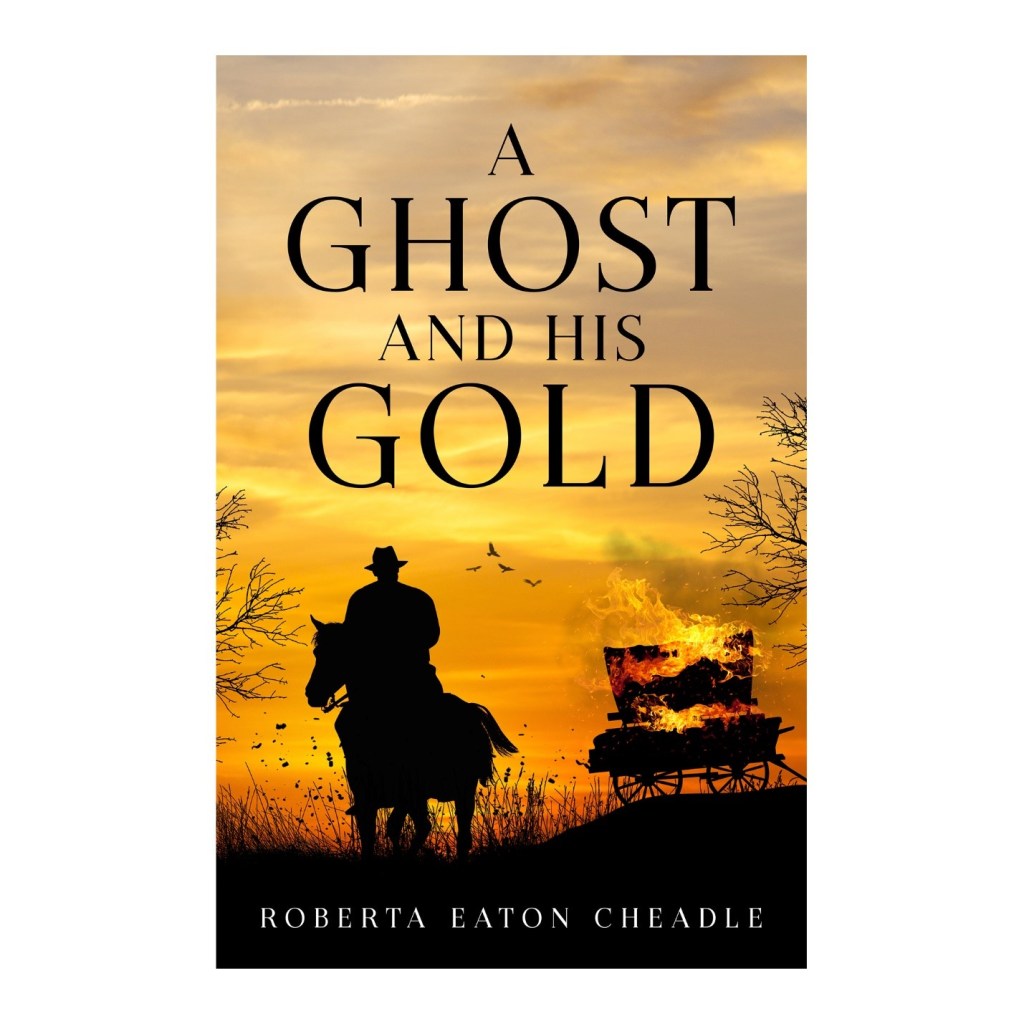
About Roberta Eaton Cheadle

I am an author who has recently branched into adult horror and supernatural writing and, in order to clearly differential my children’s books from my young adult and adult writing, these will be published under the name Roberta Eaton Cheadle. My first young adult supernatural novel, Through the Nethergate, has recently been published.
I also have two short paranormal stories in Whispers of the Past, a paranormal anthology edited by Kaye Lynne Booth.

Like this post? Let me know in the comments. You can be sure not to miss any of Writing to be Read’s great content by subscribe to e-mail or following on WordPress. If you found this content helpful or entertaining, please share.
Share this:

Growing Bookworms: Teaching your child to read
Posted: June 10, 2020 Filed under: Books, Children's Books, Growing Bookworms, Reading | Tags: Children's Books, Growing Bookworms, Reading, teaching reading, Writing to be Read 59 Comments
Growing Bookworms
When my son, Gregory, was a small lad, he was eager to learn how to read as quickly as possible. He became positively frustrated because he was not able to read. Our local protocol is that children only start learning the alphabet in grade 0 (reception) and learning to read in grade 1 (the year they turn 7). Greg was only 5 when his inability to read became a problem for him.
I decided to start trying to teach Greg to read myself, after all how hard could it be … I’d been reading since I was 5 years old and I have two degrees and a great deal of determination. Well, it turned out to be a little more difficult and complex than I anticipated. We did get there in the end, but I am sure the path to success would have been easier if I have followed a few simple steps up front.
The four main steps in teaching a child to read are as follows:
- Making them aware of the written word all around them;
- Teaching your child about the different sounds – phonemic awareness;
- Teaching your child, the letters of the alphabet and the sounds related to each letter phonics;
- Demonstrating to your child how the different sounds fit together to form words.
Awareness of the written word
Pointing out word usage in your immediate environment helps your children understand the purpose of words and reading, and their usefulness in society. When I drove my children around, I always pointed out road and other signs to my boys. I also pointed out newspaper sellers who sold newspapers that people read and always took them into bookstores so they could see the books. We also had lots of books at home which I read to my sons every day, sometimes for up to two hours. I can remember taking two-year-old Greg with me to the obstetrician and my sitting and read to him for between 2 and ½ and 3 hours. Last time I visited, the receptionist still remembered my son as “the boy who sat and listened to stories for three hours.”
As a result of my efforts, my boys came to appreciate the purpose of reading and writing as an important communication tool. This led to both demonstrating a keen interest in learning how to read.
Awareness of sounds
There are lots of different ways to help your children become aware of sounds. The methods my boys and I enjoyed the most were singing nursery rhymes and songs and playing “Eye spy” in the car.
There are other fun games you can play with your child including the following:
- Making up songs and poems using different rhyming words;
- Listening games where children close their eyes and identify a sound such as crumpling paper;
- Playing with words to see if you child can identify the error, for example saying let’s stay instead of let’s play;
- Play dancing, clapping and stamping games;
- Reading rhymes and sentences that use alliteration and assonance.
Phonics
This is a method of teaching children to read by linking sounds (phonemes) and the symbols that represent them (letter groups).
You can find some great step-by-step information on teaching children phonics here: https://www.theschoolrun.com/phonics-teaching-step-by-step
There are lots of fun YouTube videos to help you teach children Phonics.
Blending sounds
Children need to be familiar with the blending of sounds to form words before they can read. One of the best ways of demonstrating the blending of sounds is by reading repetitive books and rhyming books.
My boys loved the Poppy and Sam Farmyard Tales books and the Dr Seuss books. I read these to them repeatedly until they could point out the words and say them because they had memorised the books.
You can purchase the Poppy and Sam Farmyard Tales books here: Amazon US
You can purchase the Dr Seuss books here: Amazon US

Other methods I used to familiarise my children with words and sounds were letting them listen to audio books, they loved the Roald Dahl books and listened to these repeatedly. I think I still know most of them off by heart.
Michael was a sickly boy and was off school for over 40 days per year during his first years of schooling. During these long periods of convalescence at home, he listened to a huge array of audio books including many of E Nesbit’s books including The Railway Children and Five Children and It. He also listened to all the Famous Five books by Enid Blyton and even some non-fiction books about Romans, Vikings and mythology.
My oldest son is an enthusiastic and copious reader and recently read 1984 by George Orwell. He has Cry the Beloved Country by Alan Paton next on his list.
Michael isn’t as fast or advanced a reader as Greg, but he still reads every day and enjoys reading. I think my efforts to instil a love of reading in them have played a bit role in their attitudes towards reading.
Did you teach your children to read? What methods did you use?
About Robbie Cheadle
Hello, my name is Robbie, short for Roberta. I am an author with six published children’s picture books in the Sir Chocolate books series for children aged 2 to 9 years old (co-authored with my son, Michael Cheadle), one published middle grade book in the Silly Willy series and one published preteen/young adult fictionalised biography about my mother’s life as a young girl growing up in an English town in Suffolk during World War II called While the Bombs Fell (co-authored with my mother, Elsie Hancy Eaton). All of my children’s book are written under Robbie Cheadle and are published by TSL Publications.
I have recently branched into adult and young adult horror and supernatural writing and, in order to clearly differential my children’s books from my adult writing, I plan to publish these books under Roberta Eaton Cheadle. My first supernatural book published in that name, Through the Nethergate, is now available.
I have two short stories in the horror/supernatural genre included in Dark Visions, a collection of 34 short stories by 27 different authors and edited by award winning author, Dan Alatorre. I also have three short stories in Death Among Us, a collection of short murder mystery stories by 10 different authors and edited by Stephen Bentley. These short stories are all published under Robbie Cheadle.
I have recently published a book of poetry called Open a new door, with fellow South African poet, Kim Blades.
Find Robbie Cheadle
Blog: https://bakeandwrite.co.za/
Blog: robbiesinspiration.wordpress.com
Goodreads: Robbie Cheadle – Goodreads
Twitter: BakeandWrite
Instagram: Robbie Cheadle – Instagram
Facebook: Sir Chocolate Books
***Just a note here, since Robbie is so modest. She has five stories of dark fiction coming out in anthologies during October in 2019. “The Siren Witch”, “A Death Without Honour”, and “The Path to Atonement” will appear in Dan Alatorre’s Nightmareland horror anthology, and “Missed Signs” and “The Last of the Lavender” will be featured in the WordCrafter paranormal anthology, Whispers in the Dark.
Want to be sure not to miss any of Robbie’s “Growing Bookworms” segments? Subscribe to Writing to be Read for e-mail notifications whenever new content is posted or follow WtbR on WordPress.
Share this:

Hot Off the Press! “Ask the Authors” is now available!
Posted: June 8, 2020 Filed under: Ask the Authors, Books, Collaboration, Craft and Practice, Nonfiction, Writing, Writing Inspiration, Writing Life, Writing Process, Writing Reference, Writing Tips | Tags: Ask the Authors Anthology, WordCrafter Press, writing advice, Writing Reference, Writing Tips, Writing to be Read 5 Comments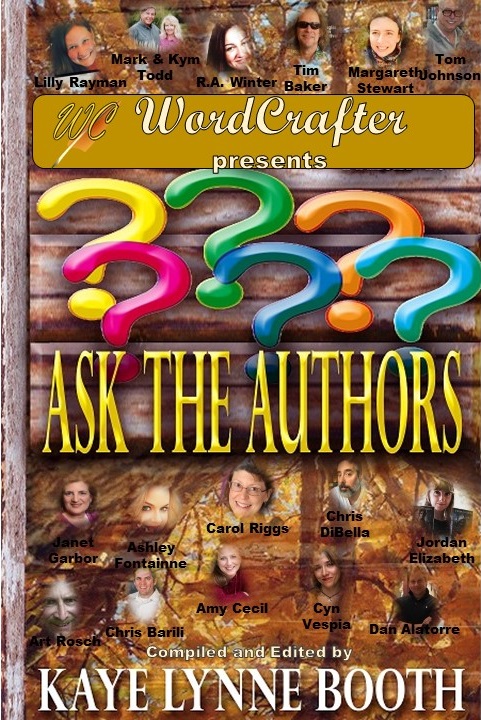
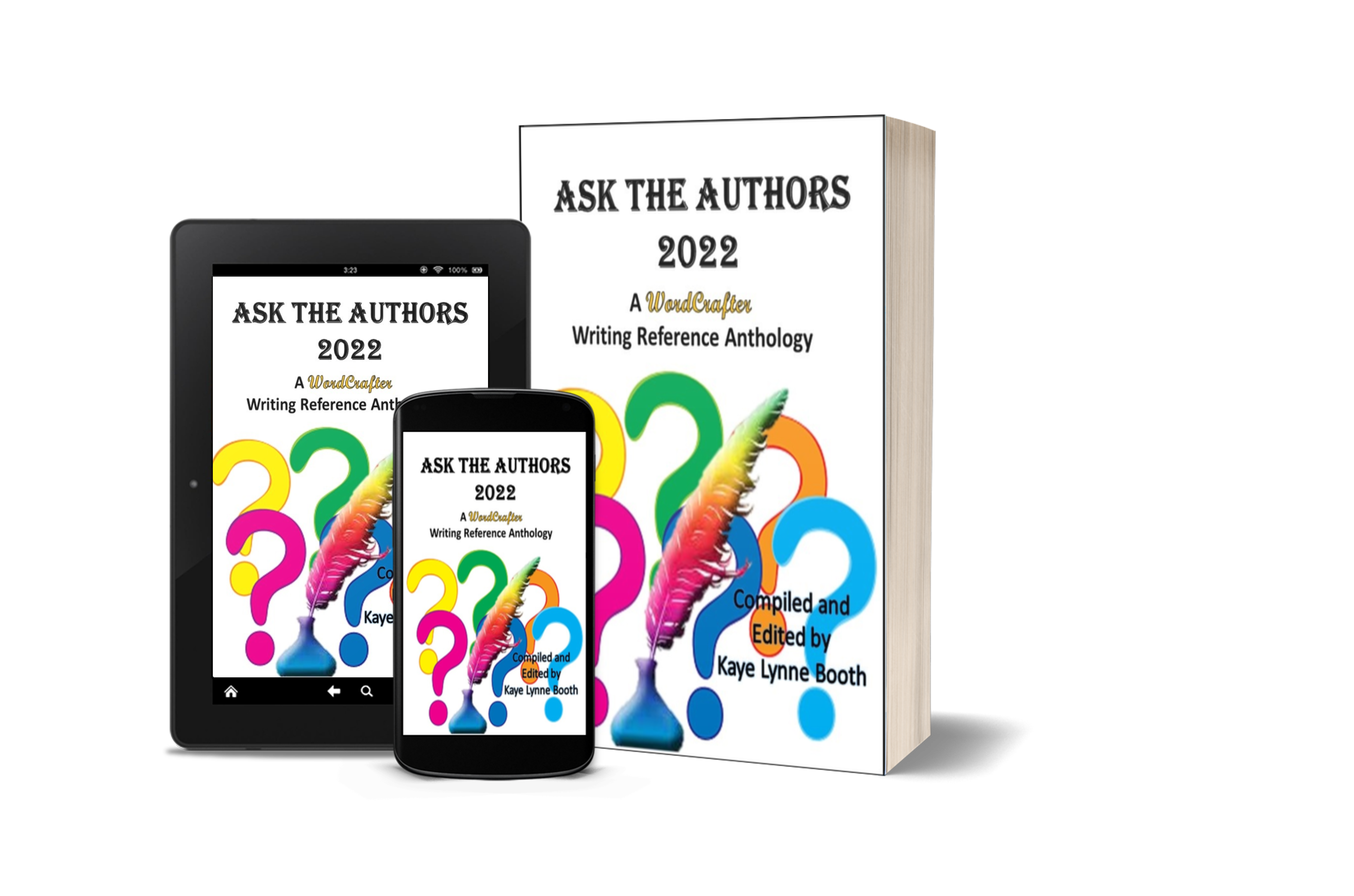
It has been two years in the making, but I’m pleased to announce that the WordCrafter Q&A anthology, Ask the Authors, has finally been released. This anthology has its origins right here on Writing to be Read back in 2018, when I ran a twelve week blog series of the same name. I compiled those interviews to create a valuable author’s reference, with writing tips and advice from seventeen different authors on all areas of writing, craft and promotion.
Contributing authors on this project include Dan Alatorre, Tim Baker, Chris Barili, Amy Cecil, Chris DiBella, Jordan Elizabeth, Ashley Fontainne, Janet Garber, Tom Johnson, Lilly Rayman, Carol Riggs, Art Rosch, Margareth Stewart, Mark and Kym Todd, Cynthia Vespia, and R.A. Winter. Single and multi-genre authors combined, write fiction for both Y.A. and adult readers, in a multitude of genres: medical thriller, science fiction, commercial fiction, action/adventure, crime fiction, weird western, romance, steampunk, fantasy, paranormal fiction, murder mystery, thrillers, speculative fiction, pulp fiction, literary fiction, humor, nonfiction, dark fantasy, and western. Subject matter includes all aspects of writing from process and inspiration, to craft and practice, to publishing, to marketing and book promotions. This is one writing reference no author should be without.
Get your copy today!: https://books2read.com/u/mdzvwO
Like this post? Let me know in the comments. You can be sure not to miss any of Writing to be Read’s great content by subscribe to e-mail or following on WordPress. If you found this content helpful or entertaining, please share.
Share this:

“Mind Fields”: The Power of Villains in Storytelling
Posted: May 27, 2020 Filed under: Character Development, Fiction, Mind Fields, Writing | Tags: Art Rosch, Character Development, Feedback, Mind Fields, villains, Writing, Writing to be Read 1 Comment
Mind Fields
Nothing infuses energy into a story like a good villain. If you ardently hate a villain in a book you’re reading, then you’re hooked! You’ve invested emotion in the battle between good and evil, you’re waiting for justice to be served.
These wicked characters must get under your skin. They have to arouse a visceral sense of repulsion and fear, the way spiders and snakes evoke primitive terror, the way decaying fecal ooze repels the senses. Villains are difficult to write because we instinctively recoil from the dark sides of life and the more grotesque aspects of our selves. That dark side, that shadow, is the only place from which a truly compelling villain can emerge. We can’t tear off evil like a number at the grocery meat counter.
“Number Twenty Two!”
“Here I am. Let’s see. What have you got that’s horrible and scary?”
Let us pause and consider the concept of Evil. What is it?
I’ve parsed my own definition of evil to a simple formula: Evil is the inflicting of pain to avoid pain. Evil lays its destructive spell on those in its path because someone (or some Thing) has found reliable ways to scatter pain onto others. I exclude those beings who enjoy causing pain because it’s their nature. Such creatures exist, but not for the purpose of this essay.
Evil characters have malice and they have power. Many of them are concealed behind a facade of charm or apparently benign goodwill.
Evil people are trying to wriggle out from under a burden of pain by forcing others to feel that pain.
It’s not always so simple. Each of us is a composite personality. Our inner child is really a little car filled with squabbling midgets. The steering wheel passes from hand to hand, the brakes are fought over, the car veers crazily.
A villain takes advantage of the muddle of human nature by having a clear point of focus. A fixation, an obsession, a purpose. This purpose empowers the villain at the expense of ordinary people. Bad guys know who they are and why they act. In many narratives the hero struggles with doubt and obscurity of motivation. His struggle isn’t just with the villain; it’s with his own confusion. When he sees clearly, when he knows what he wants, he obtains the weapons he needs.
All through this post I’ve been thinking of two characters: Adolph Hitler and South Park cartoon nasty Eric Cartman. Hitler annihilated millions; Cartman is a fictional character in a television show. Yet they have attributes in common.
My emotions regarding Hitler are an historical abstraction. He’s become a universal symbol of evil. Cartman, on the other hand, keeps my guts in an uproar. I HATE the fucker, I loathe him! It’s a very personal engagement.
The lessons of Cartman are numerous. All of his actions are manipulations. He is completely without sincerity. He’s a bigot. There is no minority group who escapes his ire. When he’s told that white people have become a minority group, he simply doesn’t hear the message. This may be Cartman’s greatest signifier: his inability to hear anything with which he disagrees. Intellectual and moral deafness is a widespread symptom of evil.
Cartman, and villains in general, like to blame other people for their own emotional discomfort. This profound moral choice, to blame others, is a basic step into the world of evil. When writing a villainous character, it’s useful to give him someone to blame. Give him a scapegoat.
A villain can’t be frightful without power. It may be supernatural power, political power, military power, physical power, but a villain cannot elicit fear, revulsion and anger without significant power. It’s the abuse of power that sparks the reader’s anger. Most of us see power as a privilege that entails responsibility.
We get angry when power is used for gratification of the ego and the appetites.
Cartman’s power comes from several sources. He’s clever, inventive, without moral scruple and completely selfish. His mother gives him everything he wants because it’s easier that way. Cartman is a fatherless boy. His mother always takes the lazy way out; she gives in to her son’s demands. If I take South Park as a microcosm, a model for the larger society in which we live, Cartman’s mother represents economic power. She makes him rich in comparison to the other kids.
He has all the latest toys, the best video games and a total lack of supervision.
To further amplify Cartman’s power he has a follower: Butters. This sweet but witless innocent will go along with any outrageous scheme Cartman dreams up. Cartman generates momentum. While Stan, Kyle or Kenny may have qualms about Cartman’s ideas, Butters is always there to support him. The plan, the idea, the scheme always seems to run away with itself before it can be thought through.
Its consequences are never anticipated. The only brakes on Cartman’s destructive power are the other boys’ common sense and lack of malice. In the end, Cartman always brings himself to destruction, but he will never admit defeat. In some people this is an admirable trait. In Cartman, it’s merely irritating.
In Hitler it cost millions of lives. If Cartman were a real adult person he would be a frightful monster. Think what Hitler and Cartman have in common. Scapegoats. Blame. Moral and intellectual deafness. Unwillingness to take responsibility for errors in judgment. A will that generates great momentum, and attracts followers who are willing to obey without question.
In the episode called “Breast Cancer Show Ever” Cartman takes a schoolyard beating by a mere girl, by Wendy Testaburger. She played the righteous avenger when Cartman mocked breast cancer and persisted in telling hurtful jokes on the subject of breasts. When she established the time for the duel, when Cartman realized that Wendy was serious, he tried to buy her off. She would have none of it. In spite of the fact that Cartman was pounded to a bloody mess, he twisted events in his mind so that he won the fight, that he was still “Cool”, or “Kewl” in the eyes of his compatriots. Kyle and Stan told Cartman “You suck, you’ve always sucked. We hate you.” Cartman can’t hear these declarations. He is still Kewl.
This amazing deafness made me want to jump through the screen and pound the fat twerp to a pulp. My emotions were completely engaged. When a writer can raise the emotional stakes to such a pitch, that writer has succeeded in creating a compelling villain.
I have used a silly villain in a silly cartoon show to highlight the power of a good villain to propel a good story. Ignore Cartman at your own risk. He’s a first class little asshole.
People ignored and dismissed Hitler as a buffoon. We know what happened to those people. Monstrous villains have arisen throughout history. We are writers; we deal in fiction. The most frightening villains in fiction draw resonance from history’s tyrants. Lazy writers may imitate these tyrants in their narratives. Good writers draw villains out through themselves, knowing that each of us is capable of monstrosity.
A Midwesterner by birth, Arthur Rosch migrated to the West Coast just in time to be a hippie but discovered that he was more connected to the Beatnik generation. He harkened back to an Old School world of jazz, poetry, painting and photography. In the Eighties he received Playboy Magazine’s Best Short Story Award for a comic view of a planet where there are six genders. The timing was not good. His life was falling apart as he struggled with addiction and depression. He experienced the reality of the streets for more than a decade. Putting himself back together was the defining experience of his life. It wasn’t easy. It did, however, nurture his literary soul. He has a passion for astronomy, photography, history, psychology and the weird puzzle of human experience. He is currently a certified Seniors Peer Counselor in Sonoma County, California. Come visit his blogs and photo sites. www.artrosch.com and http://bit.ly/2uyxZbv.
Want to be sure not to miss any of Art’s “Mind Fields” segments? Subscribe to Writing to be Read for e-mail notifications whenever new content is posted or follow WtbR on WordPress. If you find it interesting or just entertaining, please share.
Share this:

“Echo One”: A story collection from the Secret World Chronicles
Posted: May 22, 2020 Filed under: Alternate Worlds, Book Review, Books, Comic Hero, Fantasy, Fiction, Super Hero, Super Villains | Tags: Alternate World, Book Review, Echo One, Mercedes Lackey, Secret World Chronicles, Superheroes, Supervillains, Writing to be Read 2 Comments
In my theme post for this month, I admitted that comic books and superheroes are not my usual reading fare, but in the spirit of our May celebration, I felt the need to review outside of my norm. Echo One, by Mercedes Lackey, Cody Martin, Dennis K. Lee and Veronica Giguere is an anthology of short stories which are set in the Secret World Chronicles universe, which I am unfamiliar with, so in reading this book, I’m at a slight disadvantage. However, as I read through these delightfully entertaining stories, a few things about the Secret World Chronicles universe quickly became clear, and although I had no backstory on these characters, I was easily able to immerse myself in each individual story, and invest myself in some of the characters, particularly Vicky Nagy and her rather unusual family.
This secret world takes place during WWII, and humans with super powers, called metahumans, exist on both sides of the conflict, which makes them excellent superheroes and supervillains. As you can imagine, the possibilities of metahumans on the German side triumphing, open up a plethora of world altering consequences that must be prevented. Great superhero stuff!
In addition, there are others whose powers lay in the world of magic, opening up realms of possibilities for the good guys to save the world. They are of a secret society, with only a few select humans who are aware they anything but the metahumans they pass themselves off to be. I found these stories to be really fun reads, and I didn’t have to know all the details of previous tales in order to enjoy them thoroughly. The characters are colorful and unpredictable, with the potential for surprise lurking behind every turn of the page.
Alternate universe superhero stories are always fun and entertaining reads, and Echo One is no exception. Great for those times when you’re not in the heavy literary mood and are just reading for the pure enjoyment of it. I give it four quills.

Kaye Lynne Booth does honest book reviews on Writing to be Read in exchange for ARCs. Have a book you’d like reviewed? Contact Kaye at kayebooth(at)yahoo(dot)com.
Share this:

Craft and Practice with Jeff Bowles – The Revision Process
Posted: May 20, 2020 Filed under: Craft and Practice, Editing, Fiction, Revision, Writing | Tags: Craft and Practice, Editing, Jeff Bowels, Revision, Writing, Writing to be Read 4 Comments
The third Wednesday of each month, writer Jeff Bowles offers practical tips for improving, sharpening, and selling your writing. Welcome to your monthly discussion on Craft and Practice.
The Revision Process
So I’m in the middle of a fairly lengthy revision process for my latest novel, and it brings to mind a piece of advice a mentor once gave me. When I began writing short stories, I joined an online critique forum that in retrospect helped shape me in some crucial ways. It was a pretty tough, competitive space when it came down to it, and the other writers there didn’t mind (lovingly) tearing stories to shreds if it meant giving enough feedback to fix what wasn’t working.
There was a guy there called Gary, older than most everyone else who frequented the group, and I tended to see him as an authority, a friend, and a bit of a task master. Gary was fond of quick little rules and guidelines, notepad-like pieces of wisdom that could really set a young writer up for growth.
“Expect the revision process for any given story to last two to three times longer than it took to write in the first place.”
In other words, by Gary’s estimation, if you were to write a quick story in an afternoon, you’d expect to spend an additional two to three afternoons revising and sharpening it to an appropriate level. I’m sure I don’t have to explain to you how in-depth the revision process can be. Sometimes it’s pretty easy-going, but for the most part, if you’re not doing some cutting here, expansion there, general tightening of language on all levels, and if you’re not willing to kill your darlings, as the saying goes, odds are you may be doing it wrong.
So what if we’ve written a whole book? Does Gary’s piece of advice still hold up? In my experience, it does. Due to sudden and unforeseen circumstances in my life, my novel took about a year to write. So does that mean it’ll take me two to three years to finish it? Not precisely. I worked on it for a year, but in fact, I only wrote about 300 words a day for a grand total of maybe fifteen hours of actual writing per month. Fifteen hours times twelve months equals 180 hours, and 180 times two is 360. Bare minimum, that is the equivalent of fifteen full twenty-four hour days of revision. Maybe more like a month and a half if I plan on sleeping, eating, or ever seeing my wife ever again.
Now remember, that’s only the initial revision cycle. More work will likely need to be done in order to bring that book up to production quality. Realistically, once you add in the services of an actual editor, you’re looking at several additional weeks or months of back and forth nitpickery. It’s the nitpicks that save us, by the way. Make sure you get plenty of them at breakfast time. They’re like daily bowls of Wheaties. Nitpicks make writer big and strong!
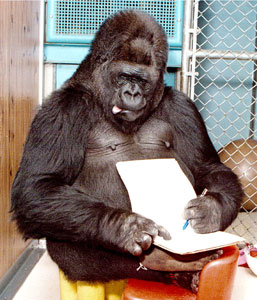
Big and strong writer (due to nitpickery)
It’s part of the overall level of dedication it takes to turn out a good piece of writing, right? And we all expect to have to work a little more after we’ve initially told a story, or at least we should. I’m not big on hard and fast rules. Really, I’m not. I think “rules” in writing can and should be broken now and then. Generally speaking, these kinds of prescriptions are for writers, not for readers. Inside baseball, not meant for actual spectators, you know what I mean?
Even so, there are some commonalities to this process I believe every writer can and should keep an eye on. First of all, get comfortable removing chunks of flesh from your manuscript. Just straight-up cutting large sections that may have had stuff in it you liked. Also, get comfortable rewriting everything you just took out. Only better. Hopefully. If parts of your story slow the narrative down, add unusual or unnecessary complications, or otherwise just don’t fit in with what you’re trying to achieve, that stuff’s dead weight, detritus. It’s got to go. Gird your loins, fellow word-wielder. Things are about to get messy at the slaughterhouse.

A good piece of meat isn’t born precooked, and neither is a good book. You can always resurrect some of that cut material and insert it elsewhere, but the same idea applies: if the words don’t fit, you must acquit.
Man, I’m on a roll today.
Another important thing to consider is if you want to make focused passes or not, keying in on just one element at a time, starting with larger issues like pacing and character development. This is a good idea if you’re new to the process or just like to stay organized, and it’ll probably save you some time in the long run. By making several focused and element-specific passes, you’ve got the opportunity to hone in without distracting yourself with other stuff that may change in the long run. My only suggestion for this type of revision process is to keep notes along the way. Ideas may spring to mind, better concepts for how to handle any given character or scene or larger story element, and you’re going to want to keep track of everything you intend to change for your next pass.
Admittedly so, I’m much too erratic and scatterbrained for this method, which means I tend to just charge in like a bull in a china shop and really tear the place up until its “redecorated” just how I like it. Mine is a messy process in this way, but it’s also just how my mind tends to work. Not everyone has the equivalent of sixteen trained chimpanzees careening around their heads, doing their level best to run the ship. If I don’t feed them at a regular time every day, Bingo—he’s the captain, see—he orders the rest of the chimps on strike, and then I’m in a real chimp ship pickle. Nobody wants that.
Where was I? Ah yes, serious discussion of the revision process.
A lot of what you’re going to be doing is in fact that more minute stuff, especially when you’re really getting down to it and most of your broader strokes have been made. Changing the language of the piece, the flow, tightening your syntax, all of that is important as finishing maneuvers. Just make sure you’re not revising so much you’re only shifting elements around and not necessarily improving anything. That can happen easily, which is why it’s also important during the revision process to take breaks when you need them. And I don’t just mean a break of a few minutes or hours. Sometimes you’ve got to let your manuscript go for days or even weeks just so you can come back at it with fresh eyes. The ability to forget what we’ve written is a great asset, so use it.
The annoyance and pain of all this is temporary. You have to keep that in mind. However, once they’re released to the general public, your words are forever. So now is your opportunity to line them up exactly as you want them. In the end, all you can do as a writer, as a creative individual of any kind, is your honest best. Will all your extra hard work pay off? That’s an eternal question, always in motion, and anyway, what’s your definition of success? I mean really?
I’ll have another Craft and Practice topic for you guys next month. Until then, cut a little, cut a lot, but don’t cut to the quick. The chimps in your brain may not like losing any of the good stuff. See you in June!

Check out Jeff Bowles Central on YouTube – Movies – Video Games – Music – So Much More!
Want to be sure not to miss any of Jeff’s “Craft and Practice” segments? Subscribe to Writing to be Read for e-mail notifications whenever new content is posted or follow WtbR on WordPress. If you found this useful or just entertaining, please share.
Share this:

Chatting with the Pros: Interview with best selling author Kevin J. Anderson
Posted: May 18, 2020 Filed under: Character Development, Chatting with the Pros, Comic Hero, Crime, Fiction, Super Hero, Super Villains, Writing | Tags: Chatting with the Pros, Comic Book Heroes, Kevin J. Anderson, Superheroes, Supervillains, Writing to be Read 2 Comments
I am so pleased to welcome my author guest this month on “Chatting with the Pros”. He is the most prolific writer I know and he’s written numerous books that have made international bestsellers lists. He’s best known for his science fiction and fantasy stories, but he’s done a good amount of writing for hire and lives by the motto of, “I can do that”. I’ve asked him to join me here today as we celebrate superheroes and supervillains, because of one single book that he wrote, Enemies and Allies, which delves into the universe of superheroes, in hopes that he will share with us his unique perspective on this often overlooked genre. Please help me welcome Kevin J. Anderson.

Kaye: When did you know you wanted to be an author?
Kevin: When I was five, even before I could write. I knew I wanted to tell stories.
Kaye: You’ve been on bestseller lists, won multiple-awards for your writing, had your books made into screenplays, published both short fiction and novel length works, collaborated with some big name authors, and started your own independent press. In your own eyes, what has been your greatest writing accomplishment to date?
Kevin: I think the greatest thing is being able to do what I love and actually make a living at it—not getting one thing published, not winning an award, not seeing a movie option on one of your stories, but by being able to do this not as a hobby, but as the thing by which I pay the bills. I’ve been full time for 25 years now. I’m probably unemployable otherwise.
Kaye: Do you remember the first book you ever read?
Kevin: THE TIME MACHINE by HG Wells
Kaye: In Enemies & Allies, who was the most difficult character to write? Why?
Kevin: Superman/Kal-el/Clark. Sometimes he comes off as a simplistic boy scout, but I really think I got to the core of why he’s a superhero, and why he’s very human at the same time.
Kaye: How does writing a superhero or a super villain differ from writing plain old heroes and villains? What makes super heroes so special?
Kevin: They can do bigger, more epic things, which is great fun as a writer, but you also have to give them greater weaknesses. The things they do MATTER to the future of the world and the human race, not just “Gee, who’s going to ask me to prom?”
Kaye: In Enemies & Allies, which superhero did you favor, Batman or Superman?
Kevin: I found Batman much easier to write and understand, a gritty lost soul, and so I worked a lot harder to get just as deep into Superman, to flesh him out more, and I think I succeeded in finding a very good balance between the two extremes while keeping them both heroes.
Kaye: What is the hardest part to writing a super villain?
Kevin: Supervillains are fun. You can be as twisted as you want and you can dive into their motivations. Why are they the bad guy?
Kaye: Which would you rather write, a superhero or a super villain? Why?
Kevin: Supervillains. But in most of my writing I try to make it a matter of perspective as to who is the villain and who is the hero. Depends on what side you’re on.
Kaye: Do you see superhero/supervillain qualities coming out through the characters in your other stories? Which stories do you see this in most?
Kevin: I still consider them all as characters, with good sides and bad sides, each with powers or skills. I have only done two superhero books out of my 165 titles, so actually approached it the other way around, bringing all my other writing skills to bear in a novel featuring superheroes.
Kaye: Imagine a future where you no longer write. What would you do?
Kevin: Wait, another apocalypse??? Hmmm, if I couldn’t write, I would be a publisher or a public speaker or a teacher…but I’m already doing those things. In these times, you can’t just be ONE thing. If I had to scrap everything related to the industry, I suppose I would be a forest ranger, because I love the outdoors.
Kaye: Is there anything unique or unusual about your writing process?
Kevin: I get a lot of attention because I do all my writing by dictation, talking into a digital recorder while I hike. But I have been doing it for thirty years, so I don’t consider it unusual at all.
Kaye: Which is your favorite type of writing? Short fiction? Novels? Comic Books? Screenplays? Poetry? Graphic Novels? Why?
Kevin: Novels. I like the big scope, a project I can sink my teeth into and spend lots of time developing it.
Kaye: What advice do you have for aspiring authors?
Kevin: Don’t quit your day job. Keep writing and refining and getting better, and never stop.
Kaye: What do you think is the single most important element in a story?
Kevin: It’s not a single-element thing. It’s like saying which is the most important wheel on your car. You have to get the plot, the characters, the prose, the worldbuilding, the idea, everything.
Kaye: What is the one thing in your writing career that is the most unusual or unique thing you’ve done so far?
Kevin: Probably working with legendary Rush drummer Neil Peart to convert the last Rush album, Clockwork Angels, into a bestselling novel. One of my proudest accomplishments.
I want to thank Kevin for joining me today and sharing his insight into the making of a superhero or supervillain, and his thoughts on writing. Kevin is currently working in the fantasy realm, with his newest thoughts on Gods and Dragons. You can learn more about Kevin and his books at WordFire Press or on his Amazon author page.
Also, Kevin’s convention bookstore is no longer traveling, so there are a lot of signed copies of his books in inventory right now, as well as some obscure and hard to find books. Some sets discounted to half-price or even more, including all six original Dune books for $30. You can check out the selection at http://www.wordfireshop.com.
Join me next month, when we will be delving into speculative fiction, and my “Chatting with the Pros” author guest will be Dave Wolverton.
Like this post? Let me know in the comments. You can be sure not to miss any of Writing to be Read’s great content by subscribe to e-mail or following on WordPress. If you found this content helpful or entertaining, please share.
Share this:

The History and Evolution of Comic Books
Posted: May 15, 2020 Filed under: Animation, Comic books, Comic Hero, Fiction, Super Hero, Super Villains, Writing | Tags: Comic Book Heroes, Comic Book History, Comic books, DC Comics, Jeff Bowels, Marvel, Marvel Universe, Writing to be Read 1 Comment
Powers in Motion
by Jeff Bowles
As a storytelling medium, comic books have been around longer than anyone living today. Some disagreement exists among historians as to just what the first published example is, but more or less, comics have been with us since the mid-19th century. Certainly, they didn’t explode into absolute pop culture dominance until the advent of superheroes and supervillains, their best-known and most beloved subjects of exploration, but the truth is millions upon millions of comics have sold in all the time since.
It goes without saying that if not for the creation of one very special character, comic books would not exist in the form in which they do today. In 1938, two young men from Cleveland, hard-up for more satisfying and lucrative creative endeavors, concocted a simple yet compelling narrative based on the biblical stories they’d grown up with. An infant savior from another place, sent from on high by his father to protect and guide humankind. Jerry Seigel and Joe Schuster were thinking more Moses than Jesus, but the Judeo-Christian allegory that is Superman tapped into something deep within the psyches of readers everywhere.
When DC Comics published Action Comics #1, the first appearance of the Man of Steel, the company had no earthly concept what they were unleashing on the world. The first appearance of Batman followed a year later, and quick on his heels were characters like The Flash, Green Lantern, and Wonder Woman. Sales were massive for this new kind of storytelling, so full of color and simple, easy-to-understand moral allegory. Until Superman showed up, comics were usually about hard-as-nails detectives and avengers of the night who could neither fly nor leap tall buildings in a single bound. But Supes, he was different.

It was and still is widely accepted that comics are for children, but adults like them, too. In fact, as the Allies went to war in Europe and the Pacific, young servicemen and women brought their recreational reading habits to the front lines. Japan in particular adopted comic books with unrestrained delight. In the year 2020, they remain the top producer of the entire global industry, having created a literary genre unto itself in Manga.
Back in the US, the end of World War II brought with it new social standards, including a certain suspicion of the medium. It became widely believed that comics contributed to childhood delinquency, vandalism, and violence. Senate hearings were held on the matter, not unlike those that plagued the video game industry after the Columbine massacre. In both cases, the federal government imposed rating systems, and at least as far as comics were concerned, the high flying antics of superheroes were dragged a bit closer to earth.
In the 1950s, comics gained a squeaky-clean image, which contributed to their overall decline in sales. It seemed that the original generation of kids who had embraced characters like Superman and Batman had grown up, and they were by no means interested in overtly sanitized farces. Network television had a hit on their hands with the George Reeves Superman show, carried over to some extent by earlier radio productions. But the comic book itself faced its first major hurdle: people just didn’t care anymore.
Times change, and so do the kinds of stories we like to tell each other. In 1961, Marvel Comics (formerly, Timely Comics) got into the superhero game in a big way with the introduction of Fantastic Four #1. This single issue began what enthusiasts call the silver age of comic books, and creators Stan Lee, Jack Kirby, and Steve Ditko didn’t stop there. Many other characters emerged from their Manhattan offices: Spider-Man, Iron Man, Thor, The Incredible Hulk, The Uncanny X-Men, Doctor Strange, Ant-Man, Black Panther, all created within the first ten years of the company’s resurgence. They even added an old figure from their distant past to the roster of the newly-minted Marvel Universe. Captain America is almost as old as Superman, but he’d been all but forgotten by fans until Stan Lee decided to pull him from the ice.
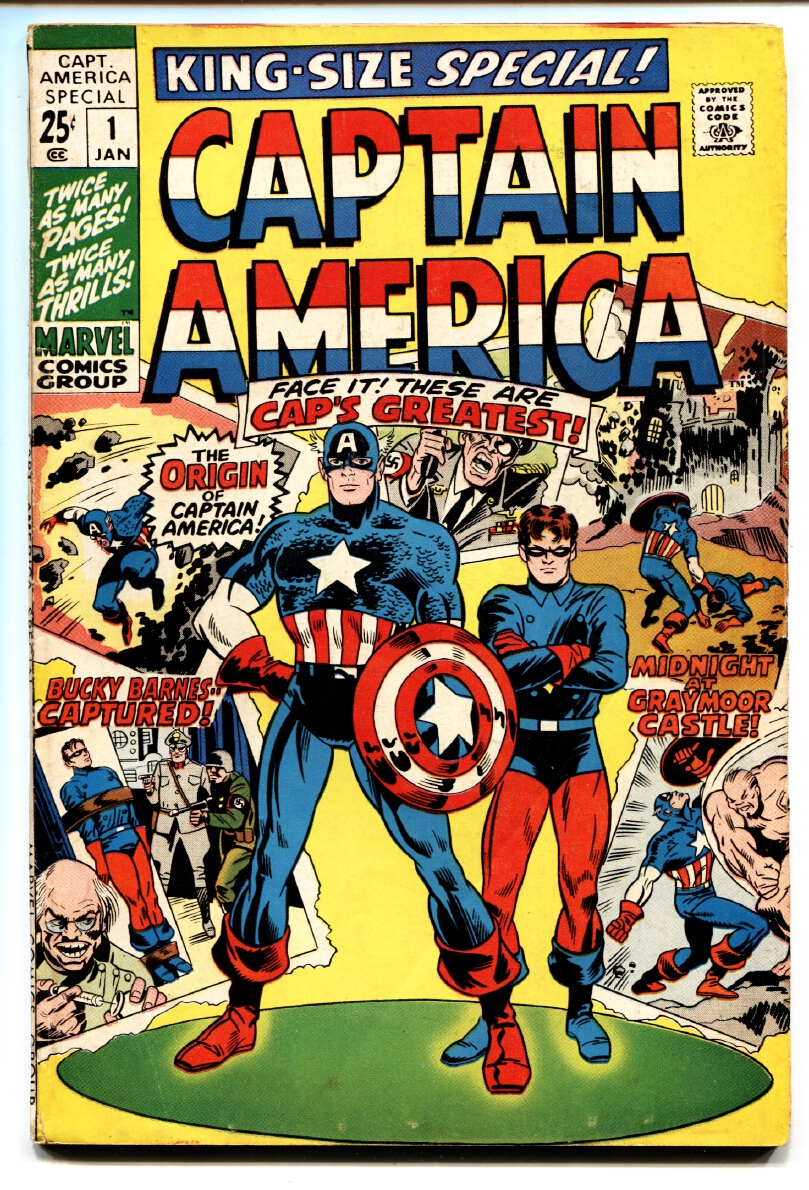
The medium exploded in popularity once more, and the 1970s saw advancements that began eschewing the now decades-old Comics Code Authority. DC, for instance, who initially struggled to keep up with Marvel’s perceived hipness, got into all the major social battles of the time, including equal rights, racism, drug addiction, and violence against women. The decade introduced some of the most compelling and sophisticated comic stories told to date, and Marvel and DC became twin powerhouses of an artform many had thought dead and buried.
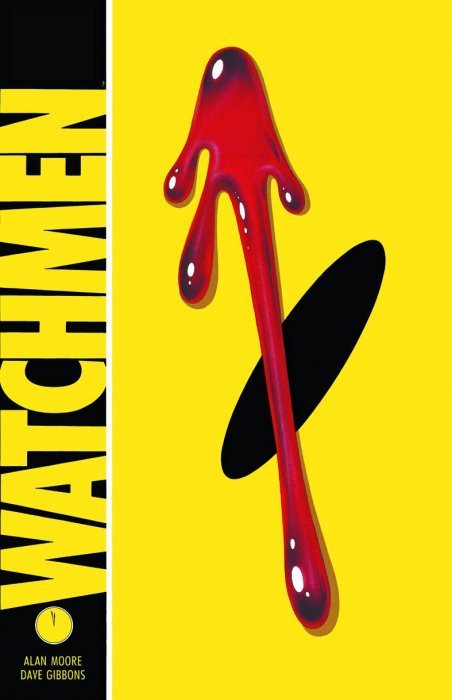
In 1978, Warner Bros. produced what many consider to be the first serious superhero film, Superman: The Movie. Demand for the character and other DC properties climbed to dizzying heights. In the decade that followed, comics continued to mature, became darker and much more adult, featuring storylines and characters that took advantage of the public’s newfound love of antiheroes. Marvel made huge waves with the likes of The Punisher, Venom, and new takes on classic characters like Spider-Man, The X-men, and The Avengers. Over at DC, things got even more experimental, with major new series like Watchmen and Batman: The Killing Joke, not to mention the introduction of their Vertigo imprint, which exclusively publishes adult-only material
 .
A new collector’s market formed around special releases and big-stakes stories that reset the board, such as The Death of Superman and the first issue of Marvel’s five-variant-cover X-Men #1. Like so many other markets built on false commodity, however, the bubble eventually ruptured, and comics have seen a slow but steady decline in sales ever since. DC has faired pretty well historically, partially because they were acquired by Warner Bros. in 1969. Marvel, on the other hand, slipped into bankruptcy, and only barely pulled themselves out by the skin of their teeth.
By the late 1990s, the future of comic books was in question. It had become clear that the business of printing colorful heroes and edgy villains was on shaky ground, but the new millennium heralded in a trend few in the industry saw coming.
DC had always had hit-and-miss successes with their film division. Though 1978’s Superman and 1989’s Batman were big for their time and place, superhero movies were still widely considered risky business. In 1998, Marvel Entertainment co-produced a film based on their daywalking, vampire-slaying Blade character. Though the film did average box office, Marvel viewed it as a sign of bigger and better things to come. Two years later, they released an X-Men movie which fared much better, and two years after that, it was Spider-Man’s turn.
Marvel earned one success after another at the box office, creating new film-based iterations of classic characters like The Hulk, The Fantastic Four, and Daredevil. But it wasn’t until 2008 and the release of a little movie called Iron Man that everything changed. At the time, Marvel Entertainment and producer Kevin Feige hatched an idea to do for their movies what Stan Lee had done for their comics back in the early ’60s, namely, they decided to turn them into a working shared universe. Marvel released a few key introduction movies and then bet the farm on 2012’s The Avengers.
The absolute financial and critical dominance of that movie was eclipsed only by its potential for more stories and even bigger box office hauls. Disney bought Marvel in 2009, adding significant distribution and funding prowess to the small company that had almost folded not ten years prior. Though DC and the WB have tried to match the success of the Marvel Cinematic Universe, the decade ending 2019 was completely dominated—in one form or another, it seems—by characters created by Stan Lee and his successors.

But what about comic books themselves? Do people still read them? Do they still sell? More or less, they do, though even fans get the sense the comic divisions of the big publishers only exist to fuel their filmmaking endeavors. Marvel, DC, and others still know how to tell great stories, and they do it every single week, every month, every year. More major contributors to the industry include Darkhorse, Image, IDW, and Valiant. Comics are not now and have never been solely about superheroes, and the indie space in particular proves that this kind of storytelling is open and ready for all.
Regardless of how you feel about the dominance of comic-bookisms in our culture, the slow decline of the publishing industry beneath it, and the ultimate moral ambiguity of “good guys” who beat the crap out of “bad guys”, the fact remains that comics have been a force of societal transformation for over eighty years, longer in fact, when you factor in the storytelling traditions at play, some of which are as ancient as humankind itself. The first comic book, published in the 19th century, whatever it may have been, set a ball rolling that continues to, well, crush the life out of everything in its path.
Only one question needs to be asked at this point: who do you like better, Marvel, DC, or the bold and bombastic characters of some other powerhouse company? Sound off in the comments section below, guys. And continue to stay tuned all May for more superhero/supervillain themed articles and posts right here on Writing to be Read. Excelsior!
Check out Jeff Bowles Central on YouTube – Music – Video Games – Music – So Much More!
You can keep up with all of Jeff’s posts right here on Writing to be Read. Subscribe to email or follow on WordPress today.
Share this:

Are there benefits to singing and rhyming verse for children?
Posted: May 13, 2020 Filed under: Books, Children's Books, Fairy Tales, Fiction, Growing Bookworms, Literacy, Parenting, Reading | Tags: Growing Bookworms, Literacy, Reading, Rhyming, Robbie Cheadle, Singing, Writing to be Read 48 CommentsGrowing Bookworms
I love nursery rhymes and children’s poetry. When my boys were younger we used to listen to children’s songs and nursery rhymes in the car wherever we went. We used to sing along and I even bought them bells and shakers so that they could join in the music making.
One of Gregory’s favourite nursery rhymes was Aiken Drum, a popular Scottish folk song and nursery rhyme. It is believed to have its origins in a Jacobite song about the Battle of Sherifmuir (1715). You can listen to a version of it here:
I find nursery rhymes very fascinating, particularly when I probe the origins of some of them. Ring a ring o’ Roses, for example, is alleged to have originated from the black plague. A rosy rash was a symptom of the plague and posies of herbs were carried by people as protection and to cover up the smell of the disease. Sneezing or coughing was a symptom once the disease had progressed and then the sick person usually died and so literally “fell down” dead.
I have often wondered, however, whether there are any specific and acknowledged benefits to be derived by small children from listening to nursery rhymes and being read to in rhyming verse. If I think of Dr Seuss books, they are all in rhyming verse and they are always punted as being a really good choice of early readers.
I decided a little bit of investigation was in order, especially, as my own books, co-authored with Michael, are written in rhyming verse. The experts listed the following benefits to singing nursery rhymes to your children and reading to them in rhyming verse:
- Children love the sound of their parents voices, so singing by a caregiver calms and sooths a small child;
- Children enjoy the changes and variation in tone that result from singing and reading in rhyming verse. This helps inspire a love of language in children, thereby naturally increasing their desire to read and write;
- Rhymes help children learn to identify the different sounds that make up a word, how to play with words, change them and pair them together which greatly aids learning how to read;
- When reading in rhyming verse, most readers tend to speak clearly and slowly. This is beneficial to children as they are able to hear the way the words are formed properly;
- Songs and rhymes have a positive impact on children’s language and literacy development;
- Children that participate in singing and telling of nursery rhymes often learn to speak more quickly;
- Rhyming teaches children about word families;
- Rhyming teaches children the patterns and structures in spoken and written language;
- Rhyming helps children learn how to spell as they realise the words that sound similar often share common letter sequences;
- The repetition of rhymes helps build memory capabilities;
- Nursery rhymes or other rhyming stories and tales help preserve your culture and create a bond between generations; children, parents and grandparents; and
- Nursery rhymes and rhyming verse help children to hear a steady beat which researchers believe results in better reading skills.
I thought this was rather an impressive list of benefits and nursery rhymes and stories told in rhyming verse are such fun. So dust off your old nursery rhyme books and grab your Dr Seuss and other rhyming verse books and get going.
Happy reading and singing!
Just as an aside, Puff the magic Dragon is one of the nicest rhyming verse story books I’ve ever read.
About Robbie Cheadle
Hello, my name is Robbie, short for Roberta. I am an author with six published children’s picture books in the Sir Chocolate books series for children aged 2 to 9 years old (co-authored with my son, Michael Cheadle), one published middle grade book in the Silly Willy series and one published preteen/young adult fictionalised biography about my mother’s life as a young girl growing up in an English town in Suffolk during World War II called While the Bombs Fell (co-authored with my mother, Elsie Hancy Eaton). All of my children’s book are written under Robbie Cheadle and are published by TSL Publications.
I have recently branched into adult and young adult horror and supernatural writing and, in order to clearly differential my children’s books from my adult writing, I plan to publish these books under Roberta Eaton Cheadle. My first supernatural book published in that name, Through the Nethergate, is now available.
I have participated in a number of anthologies:
- Two short stories in #1 Amazon bestselling anthology, Dark Visions, a collection of horror stories edited by Dan Alatorre;
- Three short stories in Death Among Us, an anthology of murder mystery stories, edited by Stephen Bentley;
- Three short stories in #1 Amazon bestselling anthology, Nightmareland, a collection of horror stories edited by Dan Alatorre; and
- Two short stories in Whispers of the Past, an anthology of paranormal stories, edited by Kaye Lynne Booth.
I also have a book of poetry called Open a new door, with fellow South African poet, Kim Blades.
Find Robbie Cheadle
Blog: https://www.robbiecheadle.co.za/
Blog: robbiesinspiration.wordpress.com
Goodreads: Robbie Cheadle – Goodreads
Twitter: BakeandWrite
Instagram: Robbie Cheadle – Instagram
Facebook: Sir Chocolate Books
Want to be sure not to miss any of Robbie’s “Growing Bookworms” segments? Subscribe to Writing to be Read for e-mail notifications whenever new content is posted or follow WtbR on WordPress. If you found it interesting or entertaining, please share.









Words to Live By – Love in the Time of COVID
Posted: June 3, 2020 | Author: Jeff Bowles | Filed under: Commentary, Editorial, Opinion, Words to Live By, Writing | Tags: COVID, Creativity, Jeff Bowels, Words to Live By, Writing, Writing to be Read | 5 CommentsThe first Wednesday of every month, writer Jeff Bowles muses on life, creativity, and our collective destinies as makers of cool stuff. You’re a writer, but have you ever thought about how or why? Here are some words to live by.
Love in the Time of COVID
It goes without saying, few people living on the planet today have experienced any year quite like 2020. It’s almost a numerical thing, isn’t it? Or maybe just a numerological thing. Like we could see it coming a mile away, 2020, the year of perfect vision. Or of perfect integration of all the things we used to blindly ignore.
There’s a hell of a lot of old neurotic dead weight coming to the surface, both for individuals and for us as a collective. It brings to mind the basic processes involved in psychotherapy. Very often, the goal is to dredge up, edify, and to therefore let go of past hurts. Then we can move forward, better than before, ready to face the world again as new people. At least that’s the idea.
Is it possible that’s all this is? A chance by the cosmic forces that be to enlighten us through just a pinch, just a little skosh of what feels like outright torture? Have you been trapped in your house for three months straight? Were you used to being so homebound? Used to spending excessive amounts of time with the people you love? It strains the credulity of the value of being social creatures, doesn’t it? This is love in overdrive, folks. The rubber hits the road right about now.
Some people think love is a chosen thing, but I learned better long ago. Love is something given to you. You can’t help who you love. I’m not a father and I have no other dependents. I’ve been holed up with my wife, just the two of us, and it’s pushed us around here and there. I don’t mind admitting there’s been a few harmless spats, because I’m sure you can relate. It doesn’t mean there hasn’t been plenty of moments of fun and warmth between the pair of us. We’ve been watching old movies and chatting all day like we used to when we first started dating. That’s been wonderful. I’ve learned more about who my wife is now than I ever bothered to find out in the entirety of last year. People are constantly changing, and one of the secrets of a successful long-term relationship is to allow each other to grow up. Just a little bit. No one wants actual adults floating about. Heaven forbid.
We’re all such busy little bees, buzzing around, accomplish this task, fulfill this obligation, run this or that errand, put out this fire and then drag our attention to the next. When was the last time any of us had to sit down and face-to-face acknowledge all the people in our lives? In today’s modern society, not very often, not like this. Maybe you have no idea what I’m talking about. Or perhaps you know too well.
My wife and I have chosen productivity over boredom. I mean, for crying out loud, how many times can you watch all the Star Wars movies on Disney Plus? For starters, I’ve been working on final edits for my latest novel, so that’s kept me busy. She had this idea for a radio-style animated YouTube show featuring angels, demons, and a fictionalized fantasy world, and for my contribution to her concept, I wanted to play with my old monkey.
Sorry, I should qualify that. Years ago, I wrote a short story I liked very much about a detective robot and his hyper-intelligent gorilla companion. The robot was fun, but Gorilla Todd, as he’s known, is one of my all-time favorite personal creations. So he’s going to be a main character on this show, and I’ll also be writing some companion novels about him, ‘cause Hey, Mack, a gorilla’s gotta eat.
That’s the plan. My wife is the artist and craftsperson, so she’s been drawing up maps and concept images, while I’ve been plotting scripts and outlining in my head where I’d like to take some of these stories. It’s been fun being collaborative with her. Though we’ve been married ten years, and we’ve done and seen everything together, we’ve never actually been creative as a team before. It’s an opportunity we might have otherwise missed. So that’s a blessing right there. Love in the time of COVID, you know what I mean?
But doesn’t that just make me a busy little bee again? Am I avoiding the chaos that seems to be raging in all parts of the globe by choosing a large creative project that will likely take the two of us months to gain any ground on? Quite possibly. Love, you see, needs breathing room. It’s just like fire. Suck all the oxygen out of the room, and the damn thing goes out.
And I’m aware, of course, that there are many people right now who don’t have anyone. I’m aware, for instance, that lots of relationships are currently taking a nosedive. Situations you should’ve ended long ago are ending very abruptly, and then you’ve got no one to synchronize surgical masks with when you’re out buying dog food and driving past your favorite movie theater, staring with jealous resignation at its pristine, empty parking lot.
Be careful with your love right now, folks. That’s the message I hope to impart with this post. Protect it fiercely. And if you are the creative type, head in the direction of new horizons for you and your art. Trust me, a nice afternoon of writing after being glued to the news all morning can be a wonderful salve. And, ehem, let’s not forget to use our bodies. Love can help out there, too. I don’t need to go into detail. Suffice it to say, if you are locked away with your partner, neither of you needs to starve for affection.
Yes, you might be saying, but what about unrequited love or love that’s gone cold? What if you’re in a situation right now that’s broken your heart and made you feel small? I’ve been there, man. We all have. Certainly, you can find a trusted friend to whom you can divulge all your longing and pain. See what I mean about love not being something we should take for granted? It’s everything, permeates all walks of life, yet it can up and vanish on you like a flash storm.
The truth is creativity and love go hand in hand. Just like you couldn’t help falling for your one true immortal beloved, you can’t help falling for a creative project that excites and motivates you. That’s the ticket, quantifiably so. We’ve got to love something if it has any chance of growing up big and strong. Works for people, books, paintings, songs. Works for everything we do and make and choose to be in this life.
Like I said, I have no children, but if I did, I imagine I’d be having an extra challenging time right now. It’s no wonder so many people are ill-tempered, lashing out. Society has been thrashing around on issues of race and inequality, civil rights, gun rights, freedom of speech, freedom of the press, freedom of this, freedom of that, and we’ve been doing it for hundreds of years, so don’t get it twisted. What you’re seeing on the news is by no means some spring chicken phenomenon. It’s led many to pontificate, where’s the love? We’ve come to 2020, that year of perfect vision, and we are being asked to finally open our eyes and see.
To actually see. What a priceless and burdensome gift.
All you need is love, as John Lennon once sang. Don’t forget to kiss the ones who matter most, let them know how you really feel, because none of us is guaranteed one more tomorrow. We tend to neglect this very basic fact. We neglect a lot of things. But the truth is, we’re all in this together, and if you think you know what the future will be, better buckle up, brothers and sister, because the ride gets even bumpier from here.
I’ll have more words to live by next month, folks. Until then, how about a song?
Jeff Bowles is a science fiction and horror writer from the mountains of Colorado. The best of his outrageous and imaginative short stories are collected in Godling and Other Paint Stories, Fear and Loathing in Las Cruces, and Brave New Multiverse. He has published work in magazines and anthologies like PodCastle, Tales from the Canyons of the Damned, the Threepenny Review, Nashville Review, and Dark Moon Digest. Jeff earned his Master of Fine Arts degree in creative writing at Western State Colorado University. He currently lives in the high-altitude Pikes Peak region, where he dreams strange dreams and spends far too much time under the stars. Jeff’s new novel, God’s Body: Book One – The Fall, is available on Amazon now!
Check out Jeff Bowles Central on YouTube – Movies – Video Games – Music – So Much More!
Want to be sure not to miss any of Jeff’s “Words to Live By” segments? Subscribe to Writing to be Read for e-mail notifications whenever new content is posted or follow WtbR on WordPress. If you found this useful or just entertaining, please share.
Share this: