“Chatting with the Pros”: Interview with bestselling Christian fiction author Angela Hunt
Posted: September 16, 2019 Filed under: Author Profile, Books, Chatting with the Pros, Christian fiction, Fiction, Interview, Writing | Tags: Angela Hunt, Author Interview, Chatting with the Pros, Christian fiction, Writing to be Read 5 Comments
My “Chatting with the Pros” author guest today is both versatile and prolific in her writing endeavors, writing in contemporary and historical fiction sub-genres, as well as young adult and children’s fiction and non-fiction. Though fiction, her historical novels tell the tales that could have been, revealing the women from the shadows of history. But no matter the sub-genre they all have the elements of Christian fiction. She is the bestselling author of over 180 books and winner of the 2000 Christy Award for futuristic fiction. Please help me welcome Christian fiction author Angela Hunt.

 Kaye:
Kaye:  Kaye:
Kaye: 

 Kaye:
Kaye: Share this:

“Texas Tears”: Christian fiction from the 2019 “Thanksgiving Books & Blessings” collection
Posted: September 13, 2019 Filed under: Book Review, Books, Christian fiction, Contemporary Romance, Fiction, romance, Western | Tags: Book Review, Caryl McAdoo, Christian fiction, Texas Tears, western romance, Writing to be Read Leave a comment
Caryl McAdoo is the founder and creator Thanksgiving Books & Blessings collection two, which was just released this past week. Her Christian western romance, Texas Tears, is book three in that collection and its my pleasure to review it here today on Writing to be Read for this month’s Christian fiction theme. (You can also catch my review of book four from this collection, Mail-Order Misfire, by Davalynn Spencer here.)
Some of the transitions in Texas Tears were abrupt and unclear, and I found myself having to reread to determine who was speaking at times, or what setting we were in, but nothing some well placed dialog tags wouldn’t fix. The historical details are accurate to time and setting, and the story itself is heartwarming, with a delightful Southern twang.
Texas Tears is the story of two young girls, childhood friends and cousins, Miss Arlene Van Zandt and Miss Charity O’Neal, both hoping for their perfect dream man, with their sites set on one in particular. The same one, Hart de Vecchi. Hart seems content to be the wedge driven between the two friends while he tries to make up his mind, but by playing with the hearts of both women, he risks ending up alone.
A story of love, faith, and endurance. Texas Tears is everything a Christian western romance should be. I give it four quills.

Kaye Lynne Booth does honest book reviews on Writing to be Read in exchange for ARCs. Have a book you’d like reviewed? Contact Kaye at kayebooth(at)yahoo(dot)com.
Share this:

Should there be messages/morals in children’s books?
Posted: September 11, 2019 Filed under: Books, Character Development, Children's Books, Fairy Tales, Fiction, Showing vs. Telling, Voice, Writing | Tags: Children's Books, Children's Stories, Children's Writing, Growing Bookworms, Robbie Cheadle, Writing to be Read 46 Comments
The idea that children’s picture books should contain a strong moral or message seems to be very popular among authors of books for young people. This notion probably emanates from parents and caregivers who are of the view that books are a tool for instructing their young, especially in our modern world of so many more risks to the welfare our children than ever before.
This idea does, however, always bring to my mind the lyrics of the song, A British Nanny sung by David Tomlinson, from the original movie of Mary Poppins:
“A British nanny must be a general!
The future empire lies within her hands
And so the person that we need to mold the breed
Is a nanny who can give commands!
Mr Banks: Are you getting this Winifred?
Mrs Banks: Oh yes dear, every word
A British bank is run with precision
A British home requires nothing less!
Tradition, discipline, and rules must be the tools
Without them – disorder!
Catastrophe!
Anarchy – In short you have a ghastly mess!”
This is an amusing song and you can listen to it here:
The idea of a story or picture book containing a message is not a bad one. It is very much about how the message is presented in the story that will decide whether the book appeals to children or not. After all, children’s writers want to write books that children want to read again and again, not books that their parents think they should read.
My own children have taught me that children run a mile when they think that a book contains an overt moral or message. With this in mind, how then can a parent or caregiver select a book that both teaches and entertains?
Firstly, what the reader will takeaway from the story should be considered. It is not necessary to write out a moral at the end of a tale in the manner of Aesop’s Fables, the message can be subtle, for example, a polluted river that poisons a river or lake and results in all the fish and water creatures dying and the resolution of that predicament by cleaning up the river and preventing future contamination of the water. Children will understand the message without it being spelled out for them.
Some other tips for choosing books that will entertain as well as teach children are as follows:
- Make sure that the book is character driven with memorable characters that make the reader care about them. For example in Heidi by Johanna Spyri, the author makes the reader really care about Heidi, Clara and even Grandfather as he changes from a grumpy old man into a tender caregiver. I can remember crying when Heidi goes away from Grandfather to live with Clara in the city;
- The language and voice of the story should be suitable for a child and should be interesting and fun. The idea of family members all helping each other and their parents is strongly conveyed in Enid Blyton’s Faraway Tree series of books through the expectations of the parents and the behavior of, and awareness of their family dynamics by, the children;
- Showing and not telling is another essential ingredient to a good children’s story. I think Roald Dahl is a master and demonstrating exactly where unkind and selfish behavior gets you in life, think of the fate of the two aunts in James and the Giant Peach or the Twits from the book of the same name.
What do you think about children’s books that contain messages? Should they be subtle or overt? Let me know in the comments.
About Robbie Cheadle

Hello, my name is Robbie, short for Roberta. I am an author with six published children’s picture books in the Sir Chocolate books series for children aged 2 to 9 years old (co-authored with my son, Michael Cheadle), one published middle grade book in the Silly Willy series and one published preteen/young adult fictionalised biography about my mother’s life as a young girl growing up in an English town in Suffolk during World War II called While the Bombs Fell (co-authored with my mother, Elsie Hancy Eaton). All of my children’s book are written under Robbie Cheadle and are published by TSL Publications.
I have recently branched into adult and young adult horror and supernatural writing and, in order to clearly differential my children’s books from my adult writing, I plan to publish these books under Roberta Eaton Cheadle. My first supernatural book published in that name, Through the Nethergate, is now available.
I have two short stories in the horror/supernatural genre included in Dark Visions, a collection of 34 short stories by 27 different authors and edited by award winning author, Dan Alatorre. I also have three short stories in Death Among Us, a collection of short murder mystery stories by 10 different authors and edited by Stephen Bentley. These short stories are all published under Robbie Cheadle.
I have recently published a book of poetry called Open a new door, with fellow South African poet, Kim Blades.
Find Robbie Cheadle
Blog: https://bakeandwrite.co.za/
Blog: robbiesinspiration.wordpress.com
Goodreads: Robbie Cheadle – Goodreads
Twitter: BakeandWrite
Instagram: Robbie Cheadle – Instagram
Facebook: Sir Chocolate Books
Want to be sure not to miss any of Robbie’s Growing Bookworms segments? Subscribe to Writing to be Read for e-mail notifications whenever new content is posted or follow WtbR on WordPress.
Share this:

Interview with Christian Romance author Caryl McAdoo
Posted: September 9, 2019 Filed under: Books, Christian fiction, Fiction, Interview, romance, Western, Writing | Tags: Author Interview, Author Profile, Christian fiction, Texas Tears, Thanksgiving Books and Blessings, western romance, Writing to be Read 6 Comments
As we seek out Christian fiction, I’m reviewing two books from the recently released Thanksgiving Books & Blessings collection – a gathering of Christian western romance, authored by six Christian fiction authors. I have the privilege of reviewing two books from this collection; book two: Mail-Order Misfire, by Davalynn Spencer, last Friday, and book three: Texas Tears, by Caryl McAdoo. In addition to reviewing these Christian western romances, I’m pleased to be interviewing both authors. Last Monday, Davalynn was my guest, and today I have the pleasure today of chatting with the author of Texas Tears and founder of the Thanksgiving Books & Blessings collections, Caryl McAdoo. Please give her a big welcome.

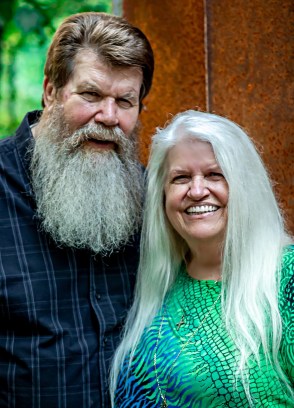
Caryl: Hey, Kaye! It’s great being here with you, and I want to thank you again for this opportunity. I love meeting new bloggers who enjoy reading!
Kaye: It’s great to have you here. To start, can you share a little about your author’s journey? How did you come to be a Christian fiction author?
Caryl: My husband Ron and I wrote a three hundred eighty-five page novel by HAND back in the late 1980s. We paid to have it transcribed and sent it to New York! Again and again and again . . . rejections were aplenty! So in 1993, the Lord led us to a writers’ workshop where we were mentored and learned the craft of writing creative fiction.
 That took six years before the first book was published in 1999. For the next nine years, we contracted an average book a year, all with smaller publishers. Then we met a New York agent at an East Texas Writers’ Conference. She said to write her a “Christian historical romance” set in the 1800s and she’d sell it. We did, and she did! To Simon and Schuster’s Howard Books Imprint! We thought we had arrived. That was our tenth title to be published, VOW UNBROKEN, and also where my dearly beloved’s name was removed from the front cover. First the agent then the editor at S&S said one author’s name was best, and female’s preferred for the genre.
So though we were Christians most our lives and our first ten titles were “clean” for the most part. It was our agent who caused us to write our first ‘Christian’ book. And we still write them all together—that’s why I have such strong heroes. We love discussing the story’s plot and about the characters. I adopted the tagline “Praying my story gives God glory!” and that’s exactly what I do! It’s a joy writing clean novels with no cursing and no on-scene intimacies!
Plus, I love the “community of Christian authors and readers. It is such a blessing and honor to serve God’s Kingdom on earth by writing.
Kaye: When did you know that you wanted to become an author?
Caryl: Well now, that goes WAY back to 1962 when I was in the 7th grade and wrote a homework essay on what I’d be doing in the year 2000. I was twelve then and would be fifty in 2000. I wrote about being an “intergallactically” famous author rocketing from planet to planet autographing books! But what can I say? The space program let me down!
Kaye: What do you like to do when you’re not writing?
(image of HEARTS book cover)(image TEARS book cover)
 Caryl: Most of the time, I’m marketing! After Simon and Schuster, I learned about “Indie publishing” or putting my own stories out, so that same year in the fall of 2014, I became a hybrid author—published traditionally and independently with HEARTS STOLEN. I LOVE releasing my own books!Simon and Schuster took almost two years to get VOW UNBROKEN to market. Since I went Indie, I’ve released THIRTY-SIX titles! That’s in five years!
I guess after marketing, I mostly play games! Ron and I play a game called Quirkle almost every day at breakfast, lunch, and dinner.We’re very competitive and keep all the scores and stats and know who won the most games for the month and had the most points accumulated.We also play bridge Thursday nights and once a month on Tuesday at our bridge clubs, and there’s a couple who comes to our house every Friday night to play,too. We take turns fixin’ dinner. One night a week is planned or dinner and games at my son’s, usually Farkle.
Kaye: What is the biggest challenge of writing Christian fiction?
Caryl: Hmm . . . I guess I’d have to say getting the stories out there to the readers. To me, there’s no challenge in the actual writing. In the beginning there was — understanding point of view! POV was not easy to grasp, but once you’ve got it, you’ve got it! An author’s good understanding of POV is why readers feel like they are right there IN the story WITH the characters; why they love the characters so much.There was a LOT of other stuff to learn, but it was easy to get. After writing as many books as I have now, the writing isn’t really a challenge. I’d say it’s fun and rewarding, exhilarating!
Kaye: What is the biggest joy of writing Christian fiction?
Caryl: Working with so many awesome people! Readers and authors and promotion folks, the whole nine yards! I get to write awesome stories that help people learn to forgive, stop worrying, not be fearful, watch the words they say . . . doing all these things cause one’s life to be more peaceful. If they get the principles down,they will find they have more joy, too. What a blessing to affect lives in such a positive way!
Kaye: You write in several sub-genres of Christian fiction: both historical and contemporary romance, Biblical fiction, and mid-grade/young adults. Which is your favorite to write in? Why?
Caryl: Without a doubt, my favorite is the historical romance genre. I love the stories of falling in love and the gentler times of bygone days. Folks worked hard, and families stuck together back then. Women were more modest, and children had plenty of time to be kids. Most of the time, Father went to work and earned the income that housed and fed the family while Mother stayed home to keep the house, cook, and care everyone. Children helped out, too. They felt no entitlement and didn’t resent their chores. It was what was expected. They didn’t have air conditioning back then or so many of our modern-day conveniences, but they had each other and shared so much that the younger generations today have no concept of. Those adventurous souls who left hearth and home to settle the new lands in the West were a rare breed indeed.
 Kaye: Texas Tears is your most recent novel, featured in the Thanksgiving Books & Blessings Collection. What can you tell me about that story?
Caryl: It’s a continuation of my Cross Timbers Romance Family Saga, book three, and there’s a big Thanksgiving dinner surprise at the end. Set in 1845, the Texas Congress is deciding whether to join the Union or remain a Republic, thus the“Texas tears.” Plus there’s this one handsome Prince Charming kind of fellow and two best friends both think they love him . . . more tears. It’s a romance and there’s a happily ever after for at least one of the young women.
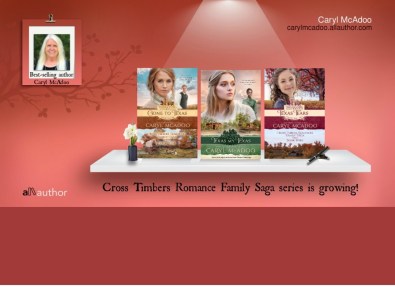
Kaye: What is the Thanksgiving Books & Blessings Collection and how did you get involved in the project?
Caryl: Back in 2013, I planned a multi-author Facebook party I called the Thanksgiving Books & Blessings Bash, inviting some of my author friends to participate. That’s my favorite holiday of the year. I did that every November following until last year in 2018.
Since it was the event’s fifth anniversary, I wanted it to be special, so I came up with the collection idea and asked the authors that year to write a Thanksgiving story. I had nine that first year, and so this will be the second year for the collection. I’m so excited about having Mary Connealy, Samantha Bayarr, Allison Pittman, Davalynn Spencer, and Liz Tolsma joining me this year! It’s going to be so special! We’re all writing stand-alone novels or novellas with Thanksgiving playing a big part in the story. Readers loved the idea last year, and this year is already surpassing all my expectations. I suspect it will grow every year as I plan on keeping it going!

Kaye:What do you think is the most important element that makes a Christian story?
Caryl: To my way of thinking, all Christian stories will be free from on-scene intimacies and cursing. But what makes it ‘Christian’ is at least one character, maybe several, who live their lives seeking God, His Word and wisdom. I try to include themes such as dealing with fear or worry, the value of forgiveness, responding in love when hurt or disappointed instead of anger or bitterness.
This all makes for some great conflict. In TEXAS TEARS, one of the young heroines has a wonderful character arc, from being self-centered and prideful to caring for others as much as herself. So without being preachy, Godly principles are lived out through my folks.
Kaye: In addition to being an author, you also teach creative fiction. Tell me a little about that. How did you get into it? Why do you find it fulfilling?
 Caryl: Well, that aspect of my daily activities came from receiving so much help and mentoring as a new writer. I want to give back, help others on their writing journey to be successful by sharing what I’ve been so privileged to learn. We all pretty much make the same mistakes when we first start.
I determined that from editing professionally for eleven years. I put out a great help a few years back in STORY & STYLE, The Craft of Writing Creative Fiction, told in an easy to understand conversational format with tons of examples. It helped me to not repeat the same things over and over.
Writing creative fiction is different from every other kind, and it can be learned. The same tools—Point of View (POV), scene and sequel, active versus passive, where to open a story to hook your reader, and a satisfying third act, bring the story to an end readers will love and remember.
But the writer must be a storyteller first, and that, I believe, is a gift. And every writer must be willing to rewrite. One of my favorite sayings is ‘Only God writes in stone, the rest of us rewrite!” I googled that one day to quote its originator, and dear Google gave me the credit. I think it might actually have been my husband.

Kaye: How many different series do you have published? Tell me a little about them.
Caryl: I have the two historical romance family saga series, Texas Romance and the Cross Timbers Romance, plus the historical collections I’m in: Lockets and Lace, Prairie Roses (covered wagon stories), Gold Diggers, and Thanksgiving Books & Blessings we’ve already discussed.
As a reader I always loved family sagas and I find I enjoy writing those just as much. I come to love the folks in them. It’s so hard to leave them behind. When my patriarch of Texas Romances passed in book eight, COVERING LOVE, I wept through the writing and the reading at my writers’ workshop!
That series has ten titles, but then there are six extras (so far) I call “Companion Books” with more tales of either ancestors or descendants. And I’ve started the new Cross Timbers that TEXAS TEARS is book three. I have a Red River Romance series of contemporary stories.
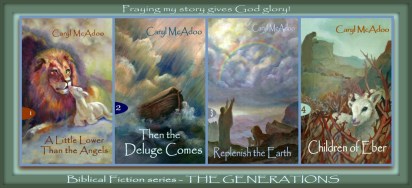
The Generations is my Biblical fiction series that so far covers from Adam to Abraham in the generations of God’s book. I love reading Biblical fiction that bring those old familiar characters to life, but am adamant that the fictional story does not deviate from the Bible’s. I mean how dare anyone think they can improve on God’s stories!
Kaye: You are pretty prolific in your writing. How many books have you released in 2019?

Caryl: Seven, and it was almost overwhelming! I believe all of them were over fifty-thousand words, but four of them are full length novels (around ninety to a hundred twenty-five thousand words). If it was just the actual writing, no problem, but being an Indie, I deal with editors and proofreaders — making their corrections and considering their suggestions, getting graphic artists to get the covers done, the formatting of the book’s interior, uploading to publish at Amazon, then the marketing with ‘Cover Reveal’ and ‘Launch’ events, and always on-going promotion.
Kaye: How big a part does networking play in the success of Christian writers?
Caryl: Huge. Christian authors for the most part all help one another. It’s beautiful how there’s so little jealousy and infighting in the community. The large majority want to see the others succeed as much as we want to be successful ourselves, so it just makes everything run so smoothly. And in God’s economy, everyone involved in any project or endeavor walks away blessed.
Kaye: What is your greatest writing accomplishment to date?

Caryl: There is one novel, my first ‘Companion Book’ that went back to the ancestors of the family first met in book nine MIGHTY TO SAVE, the Harrises, who I love. Its title is THE BED WARMER’S SON. One reader says it is her favorite all-time book of all the ones she’s read. Many called it the best of the best or my Magnum opus or my piece de resistance. I love the story, too, and have been thrilled at its reception!
Kaye: What’s next for Caryl McAdoo? What can your readers look forward to seeing from you in the future?
Caryl: Well, I’m planning five new titles in 2020. One for each of my collections — Prairie Roses, Gold Diggers, and Thanksgiving Books & Blessings, a special year as the authors will all set their stories in the Civil War era—and the Sweet Americana Sweethearts’ collection lockets and Lace, plus an extra story LEAVIN’ TEXAS for the Cross Timbers Romance Family Saga series. That one is coming in January. I’ve just passed the sixty thousand word mark writing that one.

Caryl: Thank you so much again, Kaye for inviting me to share with your readers! I so appreciate the opportunity and would like to offer a GIVEAWAY for them! For one of those commenting, I’ll send a print copy of either family saga’s book one—VOW UNBROKEN or GONE TO TEXAS, winner’s choice—AND—an eBook of the same to a second winner, so readers in other countries can win, too! (Print books to U.S. only please)
Please answer this question to enter: How many books do you prefer in a series like mine and how many is too many? (if there is such a thing)
Thank you so much Caryl for joining me here and sharing with my readers. This has truly been a fun interview. I hope everyone will be sure to take part in the giveaway by responding to her question. You can learn more about Caryl McAdoo and her many books on her website or on her Amazon Author page. And don’t forget to pick up your copy of Texas Tears today, too.
Like this post? Let me know in the comments. You can be sure not to miss any of Writing to be Read’s great content by subscribe to e-mail or following on WordPress.
Share this:

“Mail-Order Misfire”: Christian romance from the 2019 “Thanksgiving Books & Blessings” collection
Posted: September 6, 2019 Filed under: Book Review, Books, Christian fiction, Fiction, Historical Fiction, Historical Romance, romance, Western | Tags: Book Review, Christian fiction, Davalynn Spencer, Mail Order Misfire, Western, western romance, Writing to be Read 2 Comments
Mail-Order Misfire, by Davalynn Spencer is a Christian western romance that will touch your heart. The story is well-crafted and entertaining, with well-developed characters that you can invest in, and setting details accurate to time period for authenticity. You’ve got to love young Gracie as she takes on the role of matchmaker for her unsuspecting father. It expertly portrays the Christian values of the historic west with a flare that draws you into the story and won’t let go.
Etta Collier is recently widowed and desperately looking for a way to get out from under the predatory banker who wants to claim all that her William left behind in this world, including her! A well-intended letter from young Gracie Stidham requesting a mail-order bride for her father and mother for herself, provides the only answer in sight, so she packs a bag and leaves her previous life behind, setting off for Lockton, Colorado with hope in her heart, as well as a fear of what might lie ahead. The results are a true love story as Etta, Gracie and her father Burn, who is both the preacher and the sheriff, come to terms with the rather awkward situation her arrival stirs and learn to love one another.
Mail-Order Misfire is a thoroughly engaging western romance that emphasizes Christian values without being ‘preachy’ in the least. An well-crafted example of Christian fiction that I give five quills.

Mail-Order Misfire is book two of the newly released Thanksgiving Books & Blessings Collection, available now on Amazon.
Share this:

Jeff’s Pep Talk: Roleplaying Games – Alternative Means of Expression Part III
Posted: September 4, 2019 Filed under: Inspirational, Opinion, Pep Talk, Writing, Writing Tips | Tags: Dungeons & Dragons, Jeff's Pep Talk, Pep Talk, Role Playing Games, Writing, Writing to be Read 3 Comments
Roleplaying Games – Alternative Means of Expression Part III
By Jeff Bowles
The first Wednesday of every month, science fiction and horror writer Jeff Bowles offers advice to new and aspiring authors. Nobody ever said this writing thing would be easy. This is your pep talk.
Earlier this year, I wrote two articles about finding new writing inspiration in what I called alternate means of creative expression. In the first article, I talked about creating new non-writing projects to jumpstart your inspiration, and in article two, I shared the perspective that sometimes the best thing you can do for yourself in the face of writing burnout is to—get this—quit for a while. If you’ve read the Pep Talk before, you know I’m a huge advocate for treating yourself well as a precursor to good creative output. I’ve seen too many very talented, very capable writers hit a wall in their work and tear themselves to pieces because they can no longer commit to a regular writing schedule. Being an author can be a pretty tough gig, and it does most people no good to pretend burnout doesn’t exist. Be kind to yourself. Recognize human creativity is not an inexhaustible resource, but rather, is more like a battery that occasionally needs a recharge.
This month I’ve got some new ideas how to go about said recharge, all centered on a little thing many adults have a hard time engaging in: play.
I like to play. In fact, you could say I’m an enthusiast. When I was a kid, sometimes the only refuge from school, bullies, and the pressures of modern family life was in fun and games. The thing about kids is nobody has told them yet it’s not okay to use their imaginations. You may not believe me on this, but a lot of people learn to ignore their creative impulses because they’re not “practical,” “serious,” or “valuable” enough for the adult world.
But you and I are storytellers, which means we know better. I say the day you stop playing is the day you lose contact with your own heart and soul. When I was getting too old for make-believe on the playground, I got into playing video games. Later, I got into playing music with my friends. In either case, I refused to sever contact with that part of myself that required the emotional release of a rollicking good time. And since we’re all storytellers here, odds are you may be a lot like me, in the sense that some part of you still feels the need to bring to life concepts, characters, and worlds that previously only existed in your head.
In my very personal experience, video games are a good way of nursing a bruised and battered creative drive, and if you’re so inclined, or if you simply haven’t played a good game in years, you might be surprised to learn modern gaming offers so much more quality and variety than players had access to in decades past. Only problem with video games is that although they’re interactive by nature, they’re often no different than watching a movie or a TV show, at least as far as these things go. In gaming, I don’t get to create the story, not really. Some other storyteller is graciously offering his or her talents, which in itself offers a fine respite, but it doesn’t always help me find my own inspiration.
So may I offer an alternative, one that might shock you in its sheer unabashed nerdiness. Back in the 1970s, people used to have to—wait for it—use their imaginations if they wanted to play. On a whim inspired by fantasy literature like The Lord of the Rings, a small group of very talented and enterprising nerds created something brand new from some very old storytelling traditions. (Nerds is not a pejorative, by the way. Not in the year 2019. These days, I’m a nerd, you’re a nerd, the old lady down the street is a nerd, and so is her pet poodle.) In 1974, a man called Gary Gygax published the very first version of Dungeons and Dragons, and the world of tabletop roleplaying was born. Now I know what you’re thinking.
“Dungeons and Dragons? Isn’t that only for people with bad acne, social issues, and a penchant for dwelling in their mothers’ basements well into their mid-40s?”
I’ll admit, the stereotypes tend to cling to D&D like a shirt of fine mithril clings to the back of a frightened halfling. But here’s the thing, tabletop roleplaying games engage an individual’s storytelling capacity in some pretty surprising and dynamic ways. For those not in the know, roleplaying games (RPGs) involve a shared storytelling experience between players and a game runner—in D&D parlance, a Dungeon Master. The game is all pretend and dice rolls, slowly and joyfully co-creating and co-experiencing an unfolding adventure completely unique to you and your group of friends. And let me tell you something else, here in 2019, there are so many variations, spin-offs, and reinventions of the basic RPG schema it’d make your head spin. There’s fantasy roleplaying, sci-fi roleplaying, horror roleplaying, romantic roleplaying, and even roleplaying based on Saturday morning cartoons. And I’ll tell you another thing, these kinds of games have experienced a huge resurgence in recent years.
I’ll make a confession at this point: my wife convinced me to write this article. I didn’t grow up playing D&D. Like many of you, when I was a kid and teenager I scoffed at it. Sure, I collected comic books, wrote speculative fiction stories, played video games, and enjoyed the heck out of entertainment properties like Star Wars and Star Trek, but for some reason, tabletop roleplaying was simply a bridge too far. My prejudices continued well into adulthood, but very recently my wonderful wife turned me on to a new way of experiencing RPGs.
Round about the time internet culture discovered people like to watch others game electronically, it also discovered the joys of watching a group of strangers play D&D. The most successful example of this is Critical Role, which you can watch on internet apps Twitch and YouTube. Critical Role is a weekly show populated by a group of eight Hollywood voice actors who just so happen to be best friends and hopelessly devoted D&D enthusiasts. These guys aren’t your prototypical basement trolls, either. They’re charming, attractive, talented, incredibly funny professionals who are as dedicated in their own ways to the craft of storytelling as you and me. They play D&D like no one else, personifying their characters with impressive skill and gusto to generate an incredibly engaging and entertaining storytelling experience that shouldn’t be tons of fun to watch but is. And they show you what’s possible when you engage your imagination in a completely improvised way.
Admit it, sometimes the act of writing is lonely. It’s just you, your word processor, and your dedication to the craft. Fun is not at all required, as much as we’d like it to be. So here’s my advice if you’re dead tired of laying down one paragraph after another, one concept after another, one character, theme, or narrative arc after another, and your mind is aching for a bit of a vacation: go out and play a little bit. Not everyone has access to a group of people who like roleplaying. This much is true. It’s also true a huge chunk of the adult population considers such things frivolous at best. But look, roleplaying can be a hell of a good time, and as modern pop psychology often reminds us, sometimes you’ve got to nurture your inner child before you can fully embrace what it means to be a grown up.
RPGs force players to think on the fly, to produce results from nothing but their own creativity and random dice throws. It’s extreme storytelling, if you think about it, and if you’ve tried everything else to combat that nasty spell of writer’s block, it may be just what the doctor ordered. There are plenty of online resources that can help you find local games in your area, but if you’re still not sure, maybe just start with a little passive viewing. Do yourself a favor and check out some internet shows like Critical Role. There are a lot of options out there. See if it doesn’t spark something within you, and if it does, maybe consider giving it a try yourself.
We live in such a take-no-prisoners world. Is it really too much to ask of yourself to slow down every once in a while and just have some good, clean, creative fun for the sake of, well, good, clean, creative fun?
Until next time, folks, keep those storytelling skills limber and toss a couple d20s. That’s roleplaying parlance, by the way. It’s your adventure. Tell it how you want it.

Check out Jeff Bowles Central on YouTube – Movies – Video Games – Music – So Much More!
Want to be sure not to miss any of Jeff’s Pep Talk segments? Subscribe to Writing to be Read for e-mail notifications whenever new content is posted or follow WtbR on WordPress.
Share this:

Interview with Christian Romance author Davalynn Spencer
Posted: September 2, 2019 Filed under: Author Profile, Books, Christian fiction, Fiction, Historical Fiction, Interview, romance, Western | Tags: Author Interview, Christian fiction, Davalynn Spencer, Mail Order Misfire, romance, Thanksgiving Books and Blessings, Western, western romance, Writing to be Read 5 Comments
September’s theme on Writing to be Read is Christian fiction. To start things off today, it’s my pleasure to interview western Christian romance author Davalynn Spencer. Her writing career came as a journalist covering the rodeo circuit, after marrying a man who made a living as a rodeo bullfighter and following the rodeo circuit became a way of life for her. Her son has followed in his father’s foot steps, so she has two guys out in the arena facing off with the bulls, and she has become an award winning author with seventeen published books. She is also one of the authors with a book in the newly released Thanksgiving Books and Blessings collection. Be sure to catch my review of her contribution, Mail Order Misfire on Friday. But for now, let’s welcome her and find out what the writing world is like from her unique point of view.
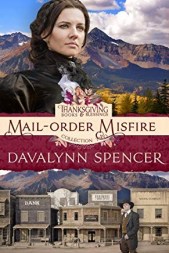 Kaye: Your book Mail-Order Misfire is a part of the Thanksgiving Books & Blessings collection. What can you tell me about that book?
Davalynn’s son in the arena
Blog: https://davalynnspencer.com/subscribe/
Website: https://www.davalynnspencer.com
Facebook: https://www.facebook.com/AuthorDavalynnSpencer
BookBub https://www.bookbub.com/profile/davalynn-spencer
Twitter: https://twitter.com/davalynnspencer
Goodreads: https://www.goodreads.com/author/show/5051432.Davalynn_Spencer
Pinterest: https://pinterest.com/davalynnspencer/boards/
Amazon Author: https://amazon.com/author/davalynnspencer
CAN: http://christianauthorsnetwork.com/davalynn-spencer/
Instagram: https://www.instagram.com/davalynnspencer/
Like this post? Let me know in the comments. You can be sure not to miss any of Writing to be Read’s great content by subscribe to e-mail or following on WordPress.
Share this:

We’re Sleuthing Out Mysteries in August
Posted: August 26, 2019 Filed under: Books, Fiction, Mystery | Tags: Broomsticks and Burials, Death Among Us, Gerald Darnell, Gilly Macmillan, Lily Webb, M.L. Rowland, Murder Mystery, Murder on the Horizon, mystery, Writing to be Read 2 Comments
What comes to your mind when someone says mystery? For me, I think of Agatha Christie, the queen of cozies, or maybe the Sherlock Holmes of Arthur Conan Doyle stories. The first murder mystery is said to be written by Edgar Allen Poe, The Murder in the Rue Morgue. But the mystery genre overflowed into the crime fiction genre, and cozy mysteries featuring amateur sleuths who put the puzzle pieces together in an unofficial capacity began to take center stage in the mystery genre.
This month I’ve been learning right along with you. As a youth, I lavished in the cozy amateur sleuth mysteries of Nancy Drew and The Hardy Boys. In my teens, I was fascinated and maybe a little haunted by The Hound of the Baskervilles with its hints of paranormal. As I grew older, I found that I enjoyed the Dr. Allen Gregory series, by Stephen White, and the Alex Delaware series, by Jonathan Kellerman, which are cozies with a touch of psychological thriller to them, but by that time, Stephen King had already stolen my heart as favorite author and I was veering more toward horror, so admittedly my experience and knowledge in the mystery genre is limited although much of what I read has some kind of mystery element to it. My one attempt at writing it resulted in my paranormal mystery novella, Hidden Secrets, which you can get free when you sign up for my newsletter.
When we come across a mystery, there’s something in the human mind that just won’t let us let go of unanswered questions, so we automatically start trying to put the pieces together to bring a conclusion that makes some resemblance of sense. We can’t seem to help ourselves. So it shouldn’t be surprising that Agatha Christie is the number one all time best selling author in history. I mean, who doesn’t love a good whodunit or locked room mystery?
However, as with all genres, this one has changed with the times. Contemporary mysteries include detective novels that cross over into the crime fiction realm, such as the Carson Reno Mysteries of Gerald Darnell, suspense mysteries such as those of my “Chatting with the Pros” author guest, Gilly Macmillan, murder mysteries like Murder on the Horizon, by M.L. Rowland that take us into the world of search and rescue, and paranormal mysteries like Broomsticks and Burials, by Lily Webb, that lead us into the world of fantasy or folklore. We even find mysteries in short fiction form, as are found in the murder mystery anthology Death Among Us. Mysteries today seem to delve into the realms of other genres or sub-genres, creating an interesting mix of stories. The cozy is alive and well, but it is found in a vast array of variations that weren’t available in the days of yore.
August has been an educational and entertaining adventure into the world of the mystery genre. I hope you’ll join me next month too as I delve into Christian fiction when my “Chatting with the Pros” author guest will be Christian inspirational author Angela Hunt, and I will also be interviewing murder mystery author Gerald Darnell. My Christian fiction book reviews will include two Christian romances in the Thanksgiving & Blessings collection, Texas Tears, by Caryl MacAdoo, and Mail-Order Misfire, by Davalynn Spencer. It looks to be a good line-up and I’m excited to be moving into September with this exploration of the Christian fiction genre. Until then, happy writing!
Like this post? Let me know in the comments. You can be sure not to miss any of Writing to be Read’s great content by subscribe to e-mail or following on WordPress.
Share this:

Writing for a YA Audience: The Truth about Libraries
Posted: August 21, 2019 Filed under: Books, Fiction, Libraries, Reading, Writing, Writing for a YA Audience, Young Adult | Tags: Jordan Elizabeth, Libraries, Writing for a YA Audience, YA, Young Adult, Young Adult Fiction Leave a comment
“This looks great!” The young woman picked up my book from the table at the craft show. She read the back and took a free bookmark. “I’m going to look for this in the library.”
I let her know which of the local libraries had the book. Smiling, she left for the next table.
Across the aisle, a woman sold beeswax lip balm. She shook her head at me. “That’s a horrible thing for her to say to you. She should have just bought it.”
Was it a horrible thing, though?
I hear from at least one person at every book signing I do that they’ll look for my books in the library. I hear from other authors that it happens to them too. It might sound like a bad thing. The author isn’t getting a sale.
Here’s the truth –borrowing your book from the library isn’t a bad thing. In fact, it’s a great thing. That person is reading your book. That’s what all authors want: someone to read the book. Someone who borrows a book from the library has a limited time to keep that book in their possession, so they’re actually going to read it in a timely fashion. If you buy a book, it might sit on your shelf unread for years. That person who just read your book is hopefully going to leave a review. Bad or a good, a review always brings attention to the book online.

The reader is going to talk about your book in person too. They’re going to tell all of their reader friends. Those friends will hopefully buy or borrow your book. The buzz about your book is growing.
The more people who take your book out from the library, the longer the library will keep your book in circulation. They will also order your other books, because hey, you’re a popular author.
For everyone who says you don’t get a sale when someone borrows your book, keep in mind that the library did order your book originally. Most libraries will be willing to have you autograph their copy and host a book signing. Libraries are an author’s bosom buddy.

Jordan Elizabeth is a young adult fantasy author who is often at her local library participating in workshops or browsing the titles. You can connect with Jordan via her website, JordanElizabethBooks.com.
Want to be sure not to miss any of Jordan’s Writing for a YA Audience segments? Subscribe to Writing to be Read for e-mail notifications whenever new content is posted or follow WtbR on WordPress.
Share this:

Chatting with the Pros: Interview with bestselling mystery author Gilly Macmillon
Posted: August 19, 2019 Filed under: Author Profile, Books, Chatting with the Pros, Fiction, Interview, Mystery, Suspense, Writing | Tags: Author Interview, Chatting with the Pros, Gilly Macmillan, mystery, Suspense, Writing to be Read 2 Comments
My “Chatting with the Pros” author guest this month is a New York Times bestselling mystery author with books translated in over twenty languages. Her success as a writer may have come as a surprise, but I’ll let her tell you about that. She currently has five published mystery/suspense novels, and is working on the sixth, I believe. Let’s see what she has to say on the writing of mysteries. Please help me welcome UK author Gilly Macmillan.

© Céline Nieszawer/Leextra
Kaye: Can you tell me about your author’s journey? How did you get to where you are today?
Gilly: I started to write when I was over 40 and I challenged myself to do 1000 words a day until I had finished an entire book. I faithfully recorded my word count each day until it was done. I polished the first three chapters and send them to a few agents. Two rejections followed swiftly, one agent didn’t reply but the fourth one I sent it to was interested enough to offer me representation. She and I worked on the book together for a year before she submitted it to publishers, and we were lucky enough to sell it very rapidly and in over 20 territories! The rest has followed from there. I write a book a year and try to keep things fresh, compelling and thrilling for myself and my readers.
Kaye: When did you know that you wanted to be an author?
Gilly: For many years I didn’t have a burning desire to write, I think because I was busy doing other things and life got in the way, but once my youngest son started school full time I wanted to see if I could challenge myself to write a novel. The idea sort of came out of the blue but perhaps it wasn’t that surprising because at that point I had been an obsessive reader for 35 years. I had a small window of opportunity before having to get a proper job, so I took it.
Kaye: Why do you write mystery? Why not romance, or western, or horror?
Gilly: I read very widely, but mystery books have always been a favorite, so I write what I would like to read.
Kaye: What element do you think is the most important in a mystery story? Why?
Gilly: That it creates an impulse in the reader to turn pages. This can come from great characters, a thrilling set up, tons of action or an intriguing plot, but it must be there.
Kaye: What is one thing your readers would never guess about you?
Gilly: I have no idea! I’m a fairly straightforward person so there’s probably not much they couldn’t guess.
Kaye: (So, there’s no mystery to the mystery author? Hmmm.) What is the biggest challenge in writing mystery for you? Why?
Gilly: Plot. I don’t plan ahead when I write and creating a well-paced, complex and intriguing plot is always my biggest challenge, especially as I like to keep things within the realms of believability.
Kaye: What is the most fun part of writing mystery? Why?
Gilly: I love creating new characters and devising a challenging scenario for them. It intrigues me to explore how ‘regular’ people might behave if placed in extreme situations and pushed to their limits.
Kaye: Your most recent release is The Nanny. What can you tell me about it?
 Gilly: When her beloved nanny, Hannah, left without a trace in the summer of 1988, seven-year-old Jocelyn Holt was devastated. Haunted by the loss, Jo grew up bitter and distant, and eventually left her parents and Lake Hall, their faded aristocratic home, behind.
Thirty years later, Jo returns to the house and is forced to confront her troubled relationship with her mother. But when human remains are accidentally uncovered in a lake on the estate, Jo begins to question everything she thought she knew.
Then an unexpected visitor knocks on the door and Jo’s world is destroyed again. Desperate to piece together the gaping holes in her memory, Jo must uncover who her nanny really was, why she left, and if she can trust her own mother…
Kaye: What is your biggest accomplishment to date in your writing career?
Gilly: Making bestsellers lists! It’s a dream come true!!
Kaye: Of all of your books, which one is your favorite? Why?
 Gilly: I love them all for different reasons, but I think my favorite is my debut, What She Knew, because that was the book that launched my career and I put a lot of heart into it.
Kaye: How do you keep tension and suspense in your stories, so that readers will keep the pages turning?
Gilly: I work hard to come up with characters that I hope will be relatable and intriguing and then place them in a compelling situation, which subsequently evolves in a threatening, challenging or terrifying way. At the end of every day of work, I ask myself: will this turn pages? If the answer is ‘no’, I start over and do it again until I’m happy that both tension and suspense are maximised.
Kaye: Is there a common theme running through your books?
Gilly: I like to take a person or people who are in a relatable situation and make something very dramatic or difficult happen to them. A mother with a missing child, for example, or a teenager who has made a fatal mistake in her past which threatens to derail the new life her mother has carefully reconstructed for her, or perhaps a little girl whose nanny disappeared overnight without trace or explanation and reappears thirty years later in very mysterious circumstances. I love to explore dynamics within families, especially the parent child bond.
Kaye: What are you working on now? What is next for Gilly Macmillan?
Gilly: I’m working on a novel that feels like a journey into psychological horror. The main character is a female crime writer. That’s about all I can say for now!
I want to thank Gilly for sharing her craft today. I think it is fascinating that she can plot as she writes. When I try and do that, I find myself exploring avenues that lead to dead ends and have to backtrack a lot. You can learn more about Gilly Macmillan and her books on her website and Amazon Author page.
You can catch the monthly segment “Chatting with the Pros” on the third Monday of every month in 2019, or you can be sure not to any of the great content on Writing to be Read by signing up by email or following on WordPress.