Winner of Playboy Magazine’s Best Story of The Year
Sitting indolently in his gravity couch, Nerl Forfeech was lasciviously eyeing this month’s Plaything centerfold. Two of his tongues hung out from his upper crease as the shiny cellulose pages fell all the way to the floor. Such a lavish display was essential on the planet Znar-foot, a world where six genders struggle to reach alliances and make trysts. The photo that Nerl studied included all the erotic subtypes, built up into naked pyramids of hair, tumescences and orifices.
In this issue, as always, a gorgeous nude six sprawled in the typically suggestive pile, gravity being so low on Znar-foot that any other arrangement would have resulted in the lovers floating away. Their faces were lit with the ecstasy of romantic communion, their organs photographed to be all but fully visible. Nerl, idly fondling one of his protuberances, sighed as he viewed the tinted nipples, the arousing half-glimpses of fur-covered apertures.
Then, suddenly, the door-iris swooshed open and Cloong walked in. Nerl, hastily stuffing the segments back into the magazine, almost fell from the couch as he attempted to hide the issue under some cushions.
Cloong giggled at her embarassed partial lover. “Oh, go ahead,“ she piped, “You can unfold the layout again. I don’t care. They ARE rather lovely… but so impossible, don’t you think?”
Nerl threw down the magazine in disgust. “I wish you weren’t so right. I’ve had only two sixes in my entire life, and both of them got weird right away… right after….”
His voice trailed off at the memory of it. The ecstasy! And then, inevitably, confusion.
Cloong took Nerl by the trunk nooks, and they clung together in mutual frustration. Cloong was Nerl’s Two. And together they had a tentative Three with Albolon Farfing, who, unfortunately, was doing a loose sort of thing with a Two, Three and Four down in the Freesex District, the swinger’s playground in the city of Fichi Forfoot. Albolon had a tendency to be unreliable and he slipped in and out of identities like six-sided dice. He was a Her Two, but no… she is a her3Him… or sometimes a 4femmhe. Albolon was sketchy but still they loved him, if a bit reservedly, in return.
“What do you want to do tonight?” Cloong asked, licking Nerl’s eyeknobs playfully. To Nerl it only made the craving for someone to be inserting into his side slits more powerful. Cloong was only a quasi-femguy, good for sucking and the like… but he shouldn’t be too unfair to her. After all, he was only a quasi-himgalhim, and had limited abilities, as well. Like it or not, it was the way nature made them. With dozens of erogenous zones, the Znar-feet needed flesh on all sides, working in combination to produce the orgasmic culmination of multiple personalities. You could get off with Three; Four and Five were even better. But being a Six was the ultimate, and pitifully elusive, Total Turn-on.
“What can we do?” Nerl echoed distractedly. “Is there anything we can actually do to remedy this feeling?”
“Sure,” Cloong cheerfully volunteered. “We can go pick up Albolon and cruise a Triples Bar. You never know what might happen.”
“Not again,” Nerl groaned. “I can’t take it, the futile games, the flash and glitter. I’m a simple person. All I need is a good, simple five-to-one relationship. That’s not so much to ask.”
“Come on, “ urged Cloong, lifting her appendages in his trunk nooks. The effect was sufficiently erotic. “You’ll never meet anybody if you don’t show your faces. What can you lose? Would you rather stay home all night and masturbate in the washing machine?”
“Okay okay,” Nerl gave in. “Let me get my threads on. I’ll wear my jewel-studded trunk shapers and my simulated-tumescence trouser pads.”
“That’s the way!” Cried Cloong, getting up off Nerl’s abdominal folds. “Dress up sexy!”
Later the three of them strode snout in snout down the flamboyant promenades of Flesh-Bargain City, the accepted cruising ground for Znar-Foot’s frustrated sexuals.
Cloong was bouyed up between her partial lovers, dressed in a revealing mini-suit that left quite a few of her tubes exposed. The night was torpid, just right for the ongoing voyeurism of Gendervender Plaza. (Sometimes known as Six Sex Street.) Of course Albolon and Nerl were elegant beyond compare in their striped priapic enhancers. As they progressed down the brightly lit avenue, they caught the envious stares of lonely Ones or Twos, and occasionally the pitying glances of bustling Fours and Fives. But there were no Sixes. The Sixes would undoubtedly be at someone’s apartment, in bed. Or else arguing.
Cloong, Nerl and Albolon stopped to peer into various clubs and bars, to see which ones were running Threes that night. The formats always changed, rotating a nightclub’s patronage through the various combinations, Two-Fours, Five-Ones, Singles Night, and so forth. Of course, no one EVER went to a Single Night. Too humiliating.
As they walked, peering through the transparent view bubbles of the different clubs, they were accosted by street hustlers making suggestive offers: “Say honeys,”a gaudily dressed Non-specific eyed them speculatively. “I got just the Three for you, never been Sixed before, any of them. Got a taste for some fresh action?” Or another: “Need a massage, sports? Got a lovely pair, just juicin’ to get their trunks on you.”
Ignoring the lascivious stares and remarks, Cloong, Nerl and Albolon arrived at their favorite place, The Sexagram Club, and saw that it was running Triples that night. The house band, The Numbers Racket, could be heard raucously blaring, and their pulses raced with anticipation at the wild action within. The Numbers Racket, a successful Four offstage, never failed to turn on the audiences with their erotogymnastics and jerk’n’jell music. Cloong, Nerl and Albolon showed their IDs and entered the crowded room that smelled of trunk-pit persp and stimu-mist.
“Hey babies,” a Triple, rocking past in an orbiting dance, called out. “Hey hey, let’s get it on.”
Cloong pulled back. “How unsubtle. Come on, boys, this is no place to meet nice people. Let’s get out of here.”
But Nerl and Albolon had already spotted some promising looking action. “No, let’s stay, Cloong. It was your idea in the first place. If we don’t like it after a while, we can go someplace else.” They pulled her farther into the seething mass, where dancing bodies yanked and plopped spasmodically, simulating sex.
Onstage, The Numbers Racket had sprawled atop one another in an explicit orogenital configuration, while, up front, dancing Threes screamed their shock and delight.
Against the walls of the room, stimu-mist vendors lined up next to sensory-enhancement dealers, exchanging money balls for popular brands of dope. The rest of the room was all dance floor, with sufficient space in which to flirt, writhe and show off simul-sex aptitude.
Cloong and her hims moved onto the dance floor, their eyes constantly shifting across the room, taking in the more attractive groups, canceling out the ones who held no appeal. Since their tastes were relatively alike, they intuitively crossed through the various combinations until they were close to another sexy Three who seemed alone.
Perfect! A Three with two fems. Cloong lowered her tubes a trifle suggestively at the him of the group. Meanwhile, Nerl had shown a definite tumescence at the she-she-it in the flaming orange trunk gripper. They danced up closer, coyly initiatiing eyes contact. Albolon, however, didn’t move correspondingly. He was too busy eyeing a fem in a different Three altogether.
Cloong jerked at him and he staggered forward. “Idiot,” she hissed, but the cute Three had caught the little interchange and had indifferently moved away through the crowd.
Nerl reprimanded Albolon. “You blew it for us, man. Didn’t you see those gorgeous fems? Himwit! We would have been perfect. I just know it.”
Albolon cursed. “Ah, the one in the dotted tube-throttler was a pig. I almost scored another Three for us all by myself until you pulled at me so obviously.”
Cloong waved her eyeknobs impatiently. “Look over there. Do you think we can all agree on one Three to come on to? How about that short-tall-tall number in the corner?”
Al and Nerl furtively checked it out. “Okay. Let’s go.”
Again, they spasmed across the dance floor, dodging single and double Triples to get near the attractive Three that Cloong had pointed out. This one was a good dancer, doing all the most fashionable orifice-openers among several maneuvering Threes. They were dressed in one of the latest cozy-suits, a gauzy garment that joined the three bodies in a spacious but intimate arrangement. There was an obvious zipper where another Three suit could easily be hooked in.
“We don’t have one of those suits,” Nerl commented negatively. “This Three’s too uptown for us. And look at the competition. I hate standing in line.”
“Don’t be a onesyhead,” said Albolon, who lusted after high class liaisons. “We’re artists. Rich Threes need us.”
“Now that I think about it,” said Cloong abjectly, “rich people have no sensitivity. Maybe we should go check out that long-haired Three over there in the middle.”
By the time they were in close, Albolon was dragging the others. The music lulled for a moment. Agressively, he leered at the Three and said, “Hey, babies, didn’t we meet at a sensory-awareness clinic in Big Stir?”
The chic threesome laughed disdainfully and, without even answering, lost itself in the crowd.
Nerl and Cloong clung to each other in utter embarassment.
“Albolon,” she said sadly, “if we don’t get our relationship together, pretty soon we’ll be a Two.”
Albolon farted from his side vents in frustration.
“Would that be so bad? I’ve heard you two talking together, I know what you think. You think I care about that Trip up in Snort Beach, the one you guys can’t stand.”
He was beating his trunks up and down laboredly. Cloong stroked the pits with tender solicitation.
“No, no,” they said, “we’re not jealous of them, Albolon. It’s just that sometimes your crude come-on ruins our chances.”
Albolon backed away petulantly. “You’re just possessive, that’s what. Just because I have my style and like to check out things on my own.”
He turned, broke away from them, while they stood there, stunned. All around, Threes were watching them and giggling.
“And you know,” Albolon said stingingly, “I do get off on my other Trip. At least my Snort Beach floozy gives me plenty of space. Not only that, but they give better trunk, too.”
“Albolon, you’re crazy,” protested Cloong.
“You see,” he said, his eye nooks wide, “that’s what you really think of me when I’m being honest. Well, goodbye.” He pivoted and was lost in the whirling bodies. Cloong and Nerl tried to catch him, but the door of the club hissed shut and Albolon was gone.
Shocked, under the mortifying gaze of twittering Threes, they left the club. Outside, the street was empty of Albolon. With tears rolling down their face-folds, they made their way across the livid avenue, but the lights and gaiety had lost their charm.
“Let’s go home, Nerl,” Cloong said mournfully. “This is no way to find your nice, simple five to one relationship.”
Nerl stood stubbornly in one spot. “Go home? You must be kidding! We just lost our Three. I don’t want to go home alone tonight. I’m just not ready for it.”
“You’re NOT alone,” said Cloong, a trifle peeved.
“You know what I mean,” said Nerl, regretting his spite.
“I guess I do,” she said, fatalistically.
Nerl gazed up into the dimly visible heavens, reddish in the glow of the street lights. All his anguish at the way they had been constructed poured out of his heart and flailed weakly against the indifference of the cosmos.
“There are are some worlds out there,” he said distantly, “where I’ll bet they have only three genders, or maybe even just two. Different arrangements entirely.” Cloong laughed and took his center trunk with her snout. “Come on, Nerl. That’s absurd. Think how dull life would be. It would all be too simple.”
He shook his shaggy mane, as if to dispel the far-flung fantasy. Taking his girlfriend by one of her more exposed tubes, he led her down the hysterical walkways in search of a Four-Two club.
Arthur Rosch is a novelist, musician, photographer and poet. His works are funny, memorable and often compelling. One reviewer said “He’s wicked and feisty, but when he gets you by the guts, he never lets go.” Listeners to his music have compared him to Frank Zappa, Tom Waits, Randy Newman or Mose Allison. These comparisons are flattering but deceptive. Rosch is a stylist, a complete original. His material ranges from sly wit to gripping political commentary.
Arthur was born in the heart of Illinois and grew up in the western suburbs of St. Louis. In his teens he discovered his creative potential while hoping to please a girl. Though she left the scene, Arthur’s creativity stayed behind. In his early twenties he moved to San Francisco and took part in the thriving arts scene. His first literary sale was to Playboy Magazine. The piece went on to receive Playboy’s “Best Story of the Year” award. Arthur also has writing credits in Exquisite Corpse, Shutterbug, eDigital, and Cat Fancy Magazine. He has written five novels, a memoir and a large collection of poetry. His autobiographical novel, Confessions Of An Honest Man won the Honorable Mention award from Writer’s Digest in 2016.
Want to be sure not to miss any of Arthur’s “Mind Fields” segments? Subscribe to Writing to be Read for e-mail notifications whenever new content is posted or follow WtbR on WordPress. If you find it interesting or just entertaining, please share.
When I was a little girl in the pre-preparatory school, one of my favourite music lessons was when our teacher played the audio book of Peter and the Wolf. I loved the story about Peter who needed to protect his pets from a hungry wolf. Most of all, I loved the sounds of the musical instruments that accompanied the story. Each character in the story has its own musical instrument and each sound is perfectly suited to the character. Our teacher used this story to teach us about the different musical instruments, which family of instrument it belonged to, and the sound it made.
Peter is played by the violin (string instrument family), the bird is played by the flute (woodwind family), the duck is played by the oboe (woodwind family), the cat is played by the clarinet (woodwind family), the grandfather is played by the bassoon (woodwind family), the wolf is played by the French horn (brass family), and the hunters are played by the timpani (percussion family). I have never forgotten the names, sound, or family of any of these instruments. In fact, I loved the cat (clarinet) so much, I literally forced Greg to play this instrument for two years. I took advantage of his devotion to me and the fact he always liked to please me. I came to realise this wasn’t fair of me and allowed him to give it up in grade 6. Greg never took to the clarinet.
The purposes of Peter and the Wolf, created by Sergei Prokofiev, are as follows:
the teach children how to identify a variety of musical instruments, instrument families and instrumental themes;
the demonstrate how music can convey different emotions; and
to extend a story through the use of movement, story sequencing, and musical art.
Peter and the Wolf is approximately 30 minutes long and you can listen to it here:
Sparky’s Magic Piano
My parents noticed my enthusiasm for music and my Dad bought me a Sparky record when I was about 9 years old. I listened to this record over and over again.
There were four stories on the record, as follows:
Sparky and the Talking Train;
Sparky’s Magic Piano;
Sparky’s Magic Eco; and
Sparky’s Magic Baton.
Of these four, two had a strong musical theme, namely, Sparky’s Magic Piano and Sparky’s Magic Baton.
In Sparky’s Magic Piano, the most famous of the Sparky stories, Sparky is a young boy who does not like practicing the piano. One day, when he is frustrated with practicing, the piano talks to Sparky and tells him he will show him how wonderful it is to play the piano well. Sparky then proceeds to amaze his mother and piano teacher, and then the larger world with his amazing piano playing.
Wikipedia says that these are the piano works which appear in Sparky’s Magic Piano in the order in which they appear in the story:
Mendelssohn – “The Spinning Song” (from Song Without Words), Opus 67 number 4 (announced by Sparky, but the piano refuses to play it, so the music is not heard)
You can listen to the version of Sparky’s Magic Piano I loved here:
Do you know either of these stories? Let me know in the comments.
About Robbie Cheadle
Robbie Cheadle is a South African children’s author and poet with 9 children’s books and 2 poetry books.
The 7 Sir Chocolate children’s picture books, co-authored by Robbie and Michael Cheadle, are written in sweet, short rhymes which are easy for young children to follow and are illustrated with pictures of delicious cakes and cake decorations. Each book also includes simple recipes or biscuit art directions which children can make under adult supervision.
Robbie has also published 2 books for older children which incorporate recipes that are relevant to the storylines.
Robbie has 2 adult novels in the paranormal historical and supernatural fantasy genres published under the name Roberta Eaton Cheadle. She also has short stories in the horror and paranormal genre and poems included in several anthologies.
Robbie writes a monthly series for https://writingtoberead.com called Growing Bookworms. This series discusses different topics relating to the benefits of reading to children.
Want to be sure not to miss any of Robbie’s “Growing Bookworms” segments? Subscribe to Writing to be Read for e-mail notifications whenever new content is posted or follow WtbR on WordPress. If you found it interesting or entertaining, please share.
They had the tumbleweed ambassador on the news a month before the big battle. The news guy and news girl said he was intelligent, and then a local representative of the Plains and Wildlife Service translated for him because tumbleweeds can’t talk and must sign everything by rolling and hopping and what not. “We mean your people no harm,” said the Plains and Wildlife Service guy. He spoke kind of slow and choppy. I guessed he wasn’t actually, what do you call it? Fluent in tumbleweed? He said, “The war has started, whether you realize it or not. The Prairie Queen has an army of deer, antelope and coyotes. She’s got the power of fire. She murdered our Wizard Father and made her castle from our dead tumbleweed brothers and sisters. The crazy bitch!” I winced at this last word. I’m only twelve years old, after all. My dad used to talk real rough like that. He used to cuss and laugh and say to me, “Don’t repeat that to your mother, Amie Masterson. I don’t want to fight no little girl.” Then we’d roughhouse a bit. My dad died last year, though. Some kind of cancer. Mom never told me which. I don’t usually watch the late news. I’m supposed to be in bed. But Mom passed out on the sofa early. I laid a blanket over her and picked the empty wine bottle off its side so it wouldn’t drip on the carpet. The Plains and Wildlife Service guy said, “Have you not noticed her spot-fires outside your city? We want to kill your precious girls!” The tumbleweed popped up into the air and spun angrily. Plains and Wildlife Guy said, “Oh, I’m sorry, I’m sorry. We want to utilize your precious girls. We have no defenses. We need soldiers. The Prairie Queen cannot stand against the wealth of your girls. Or so we believe.” There was some more talking. I was getting sleepy. The news guy said, “And of course we know the city has been expanding into the Queen’s prairieland at an exponential rate.” And the news girl said, “Right you are, Tom. In retrospect, that may have been a huge mistake. Oops.” And then a commercial for local heating and cooling repair came on. I went to kiss Mom on the forehead. She moaned softly, smiled for a second, and then settled into a noisy, listless snore. Mom is a good mother, but I think Dad dying did some stuff to her. I guess that’s normal. She never used to drink wine. There was a knock at the door. I was scared for a second, but only because Mom said never to open the door to strangers at such a late hour. There was another knock. “Mom,” I said, “someone at the door.” Mom didn’t wake up. I nudged her, shook her, but still nothing, all snores, drool dribbling from the corner of her mouth. I went to the door, looked through the peephole. There was nobody there. “The heck?” I said. I slid back the deadbolt and opened the door. A tumbleweed sat on our welcome mat. It had a leather glove duct-taped to its scrawny, scratchy limbs. It was kind of a big tumbleweed. The color of autumn wild grass. It leaned in to, like, look in our house. “Is this because I’m a precious girl?” I said. The tumbleweed shook. “And you’re recruiting all the girls and that means me, right?” It shook again. “Only thing is I can’t leave. Mom’ll be super pissed. Oops. Mom’ll be super angry.” The tumbleweed rolled, over and over, until the glove and duct tape came undone and stuck and sat limp and kind of sad on our porch. The tumbleweed wiggled and bent toward the glove. I shrugged and picked it up. There was a big rock inside. There was also some red dirt. I brought the dirt to my nose to sniff it. It smelled salty, briny, kind of like how I imagine the ocean smells, like vast rotting shipwrecks beneath the waves where porpoises and turtles swim and play. “What’s this stuff?” I said. The tumbleweed smashed into my leg. My hand jerked, the dirt flew, a bunch of it went up my nose. I sneezed. Someone said, Me entiendes? I sneezed again. A big cloud of red flew from my nostrils. Someone said, Ne me comprenez-vous? “Huh?” I snorted. “S’that even English?” Oh, English, English! Oh, of course! Yes, how sally of me. “What? Sally?” I wriggled my nose and wiped allergy tears from my eyes. Silly! Silly! Of course! Stupid Dumb-Dust. I’m dumb, you know? All tumbleweeds are dumb. Call me Aaron. Aaron Sisymbrium Altissimum. Don’t worry about that last part. That’s my family name. Are you ready to be a soldier, girl? “Soldier?” I said. “You mean to fight the Prairie Queen?” That’s precisely what I mean. Time is short. Matters are barbiturate. “Barbiturate?” Aaron twitched. Desperate! Desperate! If we don’t stop her now, she’ll kill all the tumbleweeds, and then, girl, she’ll kill all the humans, too. I looked over my shoulder. Mom was still snoring away on the couch. Wine makes adults snore. That’s something I learned. Come on, soldier, said Aaron, no more dilly dallying. Don’t you want to make your fellow humans proud?
I learned a lot of things in Tumbleweed Army. I learned how to march, how to roll up into a little ball to protect myself. Learned how to say, “Yes, ma’am!” like I meant it. Most of all, I learned coyotes and deer and antelope were really scary because they could eat the tumbleweeds and break the wizard’s spell and use their shoulder-mounted flamethrowers to burn everything. The Prairie Queen had the power of fire. She wanted to burn it all, burn the world, which I guess included my home and my mom, which is why I stayed. There was a girl there called Jade. She was an older girl. Really pretty, with deep almond skin and bright green eyes. We’d be in the middle of flamethrower-dodging exercises, and she’d come up to me and look at the way I was darting and dodging around, and she’d say, “Looking real good, Masterson. Looking real sharp.” The tumbleweeds didn’t do any of the teaching or drilling themselves. They only knew tumbling. They left it to all the thirteen and fourteen-year-olds to teach us everything we needed to know. Maybe they should have asked for the real army, the adult army. Even they seemed weirded out by a little girl army, and sometimes they acted like they didn’t know how they’d ended up with us at all. If the adult army was looking for us, they never found us, secret and hidden away on the outskirts of the city like we were. Also the tumbleweeds had this special concealing magic. The last thing they had left of their Wizard Father. Aaron told me, Our Wizard Father was a great man. He granted us intelligence and the freedom we so cherish. But the concealing magic’s fading. We can’t stay hidden from the Queen forever. I was like, okay, you’re fine, the older girls know everything. They’ve designed this whole thing and know everything there is to know. That’s probably why our uniforms were pink and sparkly, and why our flags carried pictures of Justin Bieber and Lady Gaga, and why even though the cutoff age was fourteen, you could tell they were serious and skilled and were girls on a mission, girls ready to kill. I missed my mom. I’m not going to lie about that. I missed her so bad it didn’t matter to me she didn’t listen anymore when I talked to her about school, or that I always saw her crying first thing in the morning, or that everything Dad made her promise when he was in the hospital sort of, well, just went forgotten and we didn’t talk about it. I was in that army for four weeks, then we had the big battle, but I never forgot Mom, and I guess she never forgot me, but I couldn’t say goodbye to her just in case I might die, because the tumbleweeds were real, real strict about enemy code breakers and antelope misinformation squads.
One night as I was laying down to sleep in my tent, Jade came and undid the tent flap and she and a few girls brought in a little white cupcake with a single candle flickering and hopping kind of like a tumbleweed. “What’s this?” I said sleepily. “It’s your birthday, Masterson,” said Jade. “My birthday?” She nodded and said, “Make a wish.” I wished to kiss a boy, but knew it probably wouldn’t come true because there were no boys for miles and miles. Me and the girls shared the cupcake, but the cupcake was made out of mashed potatoes, because the tumbleweed galley only had potatoes because Aaron told us all you eat is potatoes in the army and we didn’t argue. “Jade,” I said, choking down my last bite. “Do you think things will go back to normal after this? I mean, after we kill the Prairie Queen and all? Do you think all us girls can go back to how we were?” Jade thought about this. She nodded. “Yes, I think we can. At least I hope we can. Wizards and Queens and Dumb-Dust, all that stuff shouldn’t exist. I think it only exists because the world needs stuff to make you wonder. You know what I mean? My Dad always says, ‘Boy it really makes you wonder’. I think that sort of thing is really important.” “Why?” I said. One of the other girls chimed in. “Because everything would be so boring otherwise.” “Boring’s not bad,” said Jade. “Boring’s only bad if you get used to it. There’s always people stepping on other people. Trying to take things that don’t belong to them, you know? Because people get used to that, too. Like that spot where our city and their world meet up….”
So there was this spot where our city and their world met up. For miles and miles, our buildings rose high, and interstates ran, and traffic lights blinked red, yellow, green, red, yellow, green. But on this spot, there were a few loose suburban fingers of little houses that looked nice but that also all looked the same, and those fingers kind of stretched out, and then they ended, and their world was beyond, the prairie world, high grass and rolling hills, pretty wildflowers and peaceful vistas. The wind could rustle through, and it could carry a dry, dusty scent, and maybe there’d be pollen on the wind, but there were no honking car horns or televisions blaring. People didn’t shout at each other. There were no people. The city wasn’t there yet. Maybe it would be someday. Of course it would be. The city just kept growing and growing and growing, and nobody bothered to ask the Queen if it was okay. Nobody stopped to think it might be a bad thing if the prairie world got swallowed up, got paved over, with houses and restaurants and, you know, post offices and stuff built all over it. We had the battle on that spot. It was time. No more hiding. Me and all the girls—thousands of girls—we lined up at the fence line of that last wandering suburban finger. The hot mid-afternoon sun beat down on us. Smell in the air like columbines. We came in our pink sparkly uniforms, with our flags waving. The grenade girls all had purple caps. Girls with rifles had big red badges on their chests. There were also film-crew girls, who’d appointed themselves to the rank, who held up smartphones and snapped selfies with the battlefield-to-be in the background. I was light infantry, just like Jade, and that meant we had no weapons, only pig-tails and three-ring binders, because the tumbleweeds had chosen girls for a reason, and we all figured we’d be even scarier all dressed up for school. Prairie Queen’s afraid of school girls. Prairie Queen’s afraid of school girls. We kind of told each other that over and over again, sort of like a, what do you call it? A mantra? Prairie Queen’s afraid of school girls. Prairie Queen’s afraid of school girls. And we said it again and again, and it made us less afraid, even though we knew we might die that day. The ground beneath our feet trembled. Far off across the field, over the rise and fall of grassy hills, we saw the first ranks of animals and their flamethrowers. The coyotes were the fastest and lightest, and they ran ahead of the herd, belching fire, scorching earth, I guess to scare us. They howled and yipped at the antelope and deer. You kind of figure antelope and deer don’t make noises, but they do. This strained, desperate, sharp kind of screaming noise. And when there are thousands of them—and there were thousands—it comes off like a banshee wail, like a great roaring throat sound loud as jet engines. I don’t know why, but the sound made us cry. It was so loud. The screaming, the yipping, the flames and flames and flames. I cried like I knew a soldier should never cry. But it was okay, because Jade cried, too. Maybe I felt like running home to my mom, and maybe Jade did also, but she didn’t, she stood there like she was the bravest crying girl in the world, and she called back to us through her tears, “Steady, now! Wait until you see the whites of their eyes!” And I didn’t know what that meant, because animals don’t have white eyes, but I stood my ground all the same, even though my legs trembled, even though the tears drenched my uniform and my tongue felt stuck to the roof of my mouth. The tumbleweed commanders came rolling out to marshal our forces. I saw Aaron there with Commander Johnston Salsola Kali. Commander Johnston waved a scraggly little twig-limb and said through the Dumb-Dust, Today you do your species proud! Today you are not girls, but women! Human women of distinction, finery, and absolute quality. We have no idea how it is you came to defend us, but be not afraid, dear human beings! For though you may die—yes, you may die, yes, yes!—for though that may be so, remember, one and all, that the Queen may take your lives, but she shall never take your Sweden! In unison, the thousands-girl army said, “Huh?” Commander Johnston said, Bother! Freedom! Freedom! Freeeeeeedom! The army roared. Girls fired rifles in the air. They said, “Freeeeeeedom!” Even though freedom wasn’t really the thing, but getting trampled and burned up, but a cry of freedom was enough, and I said it, too. Jade told us to stand at the ready. We did. She told us to march ahead at the quick step. We did that, too. I think the older girls had watched old war movies before the battle, so everything they were telling us to do was really smart and accurate for what soldiers are supposed to do in battle. We marched at the quick step. The rifle girls and grenade girls were right behind us. The rifle girls fired rounds over our heads. This was smart because the animals kind of flinched and froze at the noise. Bang! Bang! Bang, bang, bang! And anyway, it wasn’t the animals we were after, but the Queen, who, tumbleweed intelligence told us, would be in the middle of her formations, in the mobile command station made of dead tumbleweed bodies all stuck together. “Double-time, march!” said Jade. We picked up the pace. Coyotes snapped and howled at us. The deer and the antelope shot steady burning jets of fire. We began our dodging maneuvers, still in ranks, still in line, but dodging that fire like crazy. A girl beside me—Kirsten—went down screaming. Our standard bearer went up in flames, but the next girl in line—a film-crew girl—picked up the smoldering flag and soldiered on, still bravely snapping selfies and snagging footage of the whole bloody mess. And it occurred to me that the world was a crazy place. It made you wonder. Really made you wonder, you know? Girls weren’t supposed to be soldiers. Were they? Were girls supposed to be soldiers? I bent over Kirsten. Girls weren’t supposed to be soldiers, were they? Little girls? Kids and teenagers? I froze to the spot. I tried to touch her. Girls weren’t supposed to be soldiers. She was too hot, too bubbling, too much melted Kirsten. Girls weren’t supposed to be soldiers. They weren’t, were— Jade slapped me. “Snap out of it, Masterson!” she said. “The command station! Look, it’s right there!” And it was right there. It looked like a castle on wheels. Made of tumbleweeds. Thousands upon thousands of poor dead tumbleweeds. Burn the world! Burn it all! Nobody else would die! Nobody! Jade and I and the remnants of our unit—all told, seven girls—we darted in and out of flames and animals. Grenades exploded all around us. Dying things, dying from bullet wounds, dying from the burn. We mounted the ramp of that mobile command station. We tried to punch through the tumbleweed walls, but the Queen had cast a spell, and the walls were solid as steel. Jade told us to begin the chant, the mantra. We began it. “Prairie Queen’s afraid of school girls! Prairie Queen’s afraid of school girls! Prairie Queen’s afraid of school girls!” The mobile command station rolled to a stop. “Prairie Queen’s afraid! Prairie Queen’s afraid!” The animals stopped. Their roaring streams and jets and flames. They stopped their screaming. The coyotes stopped howling and yipping and yapping. “Prairie Queen’s afraid of school girls!” And our army stopped, too. Nobody told them what to do if the animals quit fighting. Nobody expected that. The battlefield went silent, all but the wind, and the flickering and popping of little grass fires here and there, and us seven girls, and our chanting, our mantra. “Prairie Queen’s afraid of school girls! Prairie Queen’s afraid—” “The Prairie Queen fears nothing!” The voice boomed and echoed across the field. It was low, brassy, not human at all. The command station exploded. I went flying. I hit the ground. The air rushed from my lungs. Tumbleweed shrapnel bit at me, scratched me up. I felt the pain of it, but I couldn’t breathe, couldn’t breathe at all. The voice came again. With a kind of wispy whipcrack to each syllable. “The Prairie Queen fears nothing! Nothing!” Like the blast of a shotgun, my breath came back to me. I sucked in air like it was a thick milkshake, like the best chocolate milkshake I’d ever tasted. Hands took hold of me, lifted me, jerked me up. My feet didn’t touch the ground. “You, girl! Do you think I fear you?” It wasn’t hands that had a hold of me. And it wasn’t a nasty old Queen hovering inches from my face. I expected a scary old lady. The Prairie Queen was a blade of wild grass. Just a single, tall, stout blade of wild grass, with no face, no mouth, no eyes. Split from her body, willowy grass arms, with little willowy grass hands. She shook me. She said, “What stupidity! What inane musings! To think I could fear this dull creature! This girl. You people. You take so much. I will take from you!” And then she threw me to the ground and started whipping me with her green grassy hands. It stung. It slivered and sliced. I started bleeding. The girls just watched. The animals watched. Stunned. “Help!” I said. “Help!” “You will not take from me,” screeched the Queen. “You will not take from me.” She whipped me. Welts and cuts and lacerations and ripping, tearing skin. I curled into a ball, like the older girls had taught us, but the whipping kept coming and kept coming and kept coming. A little ball of fire started circling her wild grass head. The Queen said, “Burn the wizard. Burn the weeds. Burn your city to the ground!” The ball grew and grew, and it circled faster and faster and— Movement in the field. A tumbleweed rolled and hopped over me and smashed into the Queen. The ball of fire circling her head exploded. The tumbleweed ignited. The Queen ignited, too. “Masterson!” Jade was moving now. She tossed me a grenade. I pulled the pin and flicked it at the Queen. The burning tumbleweed was in the way. I rolled behind an antelope carcass.
Mom found me bleeding on the sofa the next morning. There was a collection of wine bottles in our living room. And also a bunch of notebooks and pens and candy wrappers. And also pizza boxes because adults like whole pizzas and whole bottles of wine. That’s something I learned. Mom was drinking from a fresh bottle, sort of stumbling down the hall. She spotted me and said, “Oh my God, Amie?” “Hi, Mom.” She dropped the bottle. Wine splashed our white carpet. She flung herself at me and started kissing me all over and crushing me. “Ow!” I said. “Ow, Mom! I’m hurt. I’m bleeding.” “Jesus Christ, you’re bleeding!” “I know.” “Band-Aids! Hydrogen Peroxide!” Mom patched me up as best she could. We both agreed I should go to the hospital, though. War’s like that I guess. Sometimes people die. Sometimes they have to go to the hospital. I watched the television as she fawned over me and poured peroxide over all my wounds. It bubbled and itched and burned. I still watched TV. The Plains and Wildlife Service guy translated for Tumbleweed Commander Johnston. I didn’t need him to, though. Commander Johnston said, This day, this VQ day, this victory over the Queen, we shall remember it always, just as we shall remember and honor anew a bond of brotherhood between weed kind and humankind. Let it never be said your people backed down when all free folk everywhere fell under the flaming, fiery yoke of prairie oppression. “It’s absolutely crazy,” said my mom. “It’s crazy you girls had to do this.” Commander Johnston said, Your girls are our heroes. We don’t know why you sent them to us. All we know is we’re glad you did. At this, Plains and Wildlife Guy paused, and, loud enough for the studio microphones to pick him up, he said, “What do you mean? You specifically said girls. Precious girls. You took them from us before we even—” Commander Johnston quivered. No, the girls were your idea. You’re the ones who kept saying girls, girls. We asked for pearls. Thousands of precious pearls. As a means of currency. You know, to buy the aid of Southeast Asian mercenaries. Plains and Wildlife Service Guy looked into the camera. He shook his head. He sighed and rubbed his temples. Regardless, said Commander Johnston, it was the bravery of two—one weed, one girl—who gave us our victory, who stopped the wicked Queen and her lust for death and destruction. Aaron Sisymbrium Altissimum. Amie Masterson. My mom paused. We owe our lives to you. And then they showed the moment. The moment I don’t think I’ll ever forget. Aaron went rolling and hopping. It was Aaron. It was his death all over again. He smashed into the Queen. They both ignited. Jade threw me the grenade. I flicked it, rolled away. The screen went white for a moment. Big boom. And that was the end of the war. “Dear God, Amie.” My mom’s voice was soft, barely above a whisper. “You did that?” I nodded, staring at the screen, watching the replay, feeling all those grassy whip lashes again and again, feeling that impact, the way it hit the antelope carcass. Smell of gunpowder. Shrapnel in my leg. Antelope meat in my hair and in my mouth. “You did that?” my mom said again. “I did. I did do that.” “But you’re just a little girl.” I put my hand on hers. Squeezed it. “Mom?” I said. “Yeah?” “Too many wine bottles. Less wine, okay Mom?” Mom hesitated. She nodded and said, “Okay, less wine.” “And Mom?” “Yes, honey?” “It was my birthday last week.” “I know.” “Can I have a cake? A real cake? Not a potato cake.” “What’s a potato cake?” “It’s what you eat on your birthday when you’re in the army. Don’t you know anything about the army?” Mom stared at me. She glanced at the TV, the footage, the whipping, the fire, the explosion. She shook her head. “No,” she said, “I guess I haven’t the slightest clue.”
THE END
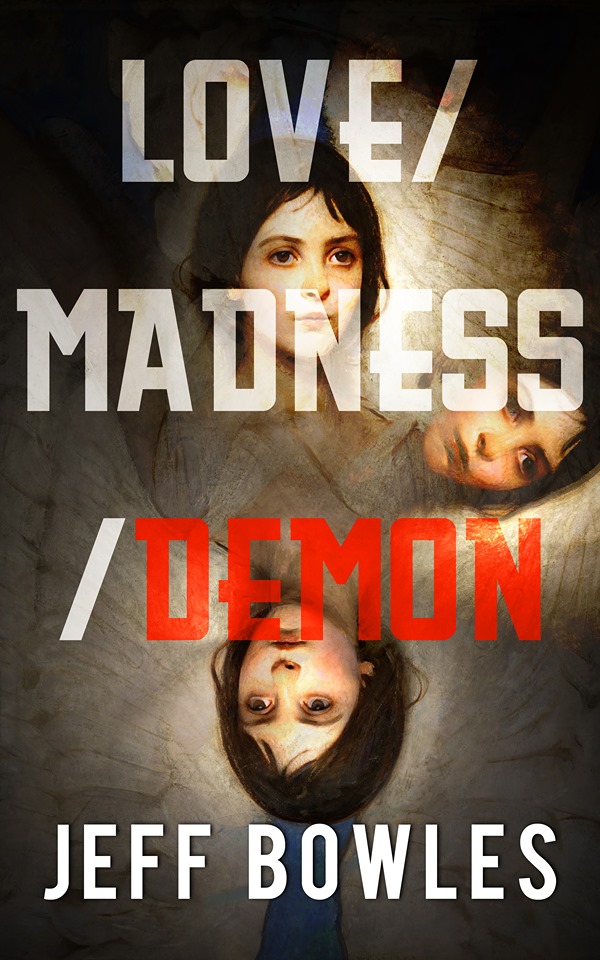
Jeff Bowles is a science fiction and horror writer from the mountains of Colorado. The best of his outrageous and imaginative work can be found in God’s Body: Book One – The Fall, Godling and Other Paint Stories, Fear and Loathing in Las Cruces, and Brave New Multiverse. He has published work in magazines and anthologies like PodCastle, Tales from the Canyons of the Damned, the Threepenny Review, and Dark Moon Digest. Jeff earned his Master of Fine Arts degree in creative writing at Western State Colorado University. He currently lives in the high-altitude Pikes Peak region, where he dreams strange dreams and spends far too much time under the stars. Jeff’s new novel, Love/Madness/Demon, is available on Amazon now!
Check out Jeff Bowles Central on YouTube – Movies – Video Games – Music – So Much More!
Jeff Bowles has been a member of the Writing to be Read team since March of 2017, as well as being a talented science fiction and horror author with his own unique style. He’ brought us blog series such as “Jeff’s Pep Talk”, “Words to Live By”, “Craft and Practice”, “Jeff’s Movie Reviews” and Jeff’s Game Reviews”. He’s been on haitus for several months, but now he’s coming back with a fantastic new blog series, “Bowlesian!: Short Stories from the Brink”, which will feature some of his amazing short fiction each month. You can catch it on the first Wednesday of every month starting… tomorrow, March 2, 2022. You won’t want to miss it!
__________________________________________
Jeff Bowles is a science fiction and horror writer from the mountains of Colorado. The best of his outrageous and imaginative work can be found in God’s Body: Book One – The Fall, Godling and Other Paint Stories, Fear and Loathing in Las Cruces, and Brave New Multiverse. He has published work in magazines and anthologies like PodCastle, Tales from the Canyons of the Damned, the Threepenny Review, and Dark Moon Digest. Jeff earned his Master of Fine Arts degree in creative writing at Western State Colorado University. He currently lives in the high-altitude Pikes Peak region, where he dreams strange dreams and spends far too much time under the stars. Jeff’s novel, Love/Madness/Demon, is available on Amazon now!
Check out Jeff Bowles Central on YouTube – Movies – Video Games – Music – So Much More!
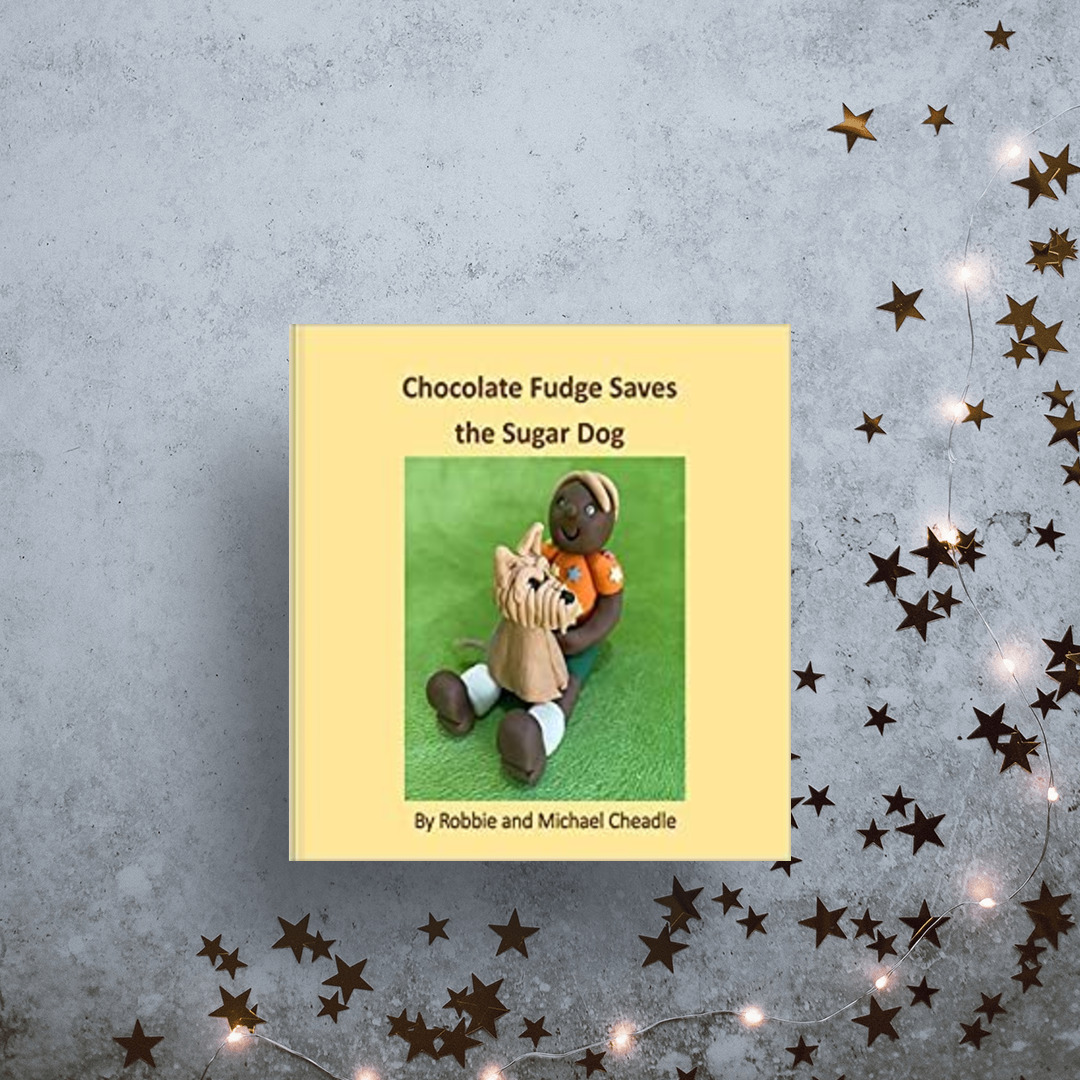
It’s day two of the WordCrafter Chocolate Fudge saves the Sugar Dog Book Blog Tour, and today I’m bringing you my review of this wonderful little book. Robbie and her son Michael co-write the Sir Chocolate books, illustrated with lovely fondant scenes and filled with delectable recipes which will make your tummy rumble. Many of us know Robbie and are familiar with her “Growing Bookworms” blog series and the Sir Chocolate books, so today I’d like to bring you and interview with her son and co-author, Michael Cheadle and share my review of Chocolate Fudge saves the Sugar Dog.
The Authors –Robbie and Michael Cheadle
Author Interview
Kaye: How old are you, Michael?
Michael: I am 16 years old.
Kaye: How long have you been writing Sir Chocolate books with your mom?
Michael: Mom and I started writing the Sir Chocolate books when I was 7 years old and in Grade 1 at school.
Kaye: Being such a young author is quite an accomplishment. Does it make you a celebrity among your friends?
Michael: No, I have not told my high school friends about my books. It just hasn’t come up.
Kaye: Do you help your mom with the baking for the books, too?
Michael: I used to make a fondant creation for inclusion in the books although I haven’t done that for the most recent two books in the series. I don’t do fondant art anymore. I do enjoy baking with my mom and now I also cook with either mom or dad depending on who is doing the cooking that day.
Kaye: What do you like most about writing the Sir Chocolate books?
Michael: I enjoy thinking up a fun storyline with my mom and deciding on new and interesting characters for inclusion in the stories.
Kaye: What is the most difficult part of being a co-author with your mom for you?
Michael: My mom doesn’t always listen to my ideas and sometimes she changes them which can be annoying for me.
Kaye:Chocolate Fudge saves the Sugar Dog is the eighth book in the Sir Chocolate series. Which one is your favorite and why?
Michael:Sir Chocolate and the Sugar Crystal Cave story and cookbook is my favourite. I liked learning how to make sugar crystals. Mom and my first attempt to make the crystals was a failure because we didn’t let the water cool down enough before we inserted the sugar-coated sticks in the sugar mixture. The sugar on the sticks melted and no crystals formed. We redid the experiment and it worked very well.
Kaye: Do you think you might write books of your own when you are older?
Michael: Yes, I think I might write in the future. I have lots of ideas for stories.
Kaye: What are your aspirations for your future?
Michael: I want to go to university to study a Bachelor of Science: Computer Science like my brother, Gregory. I will write in my spare time like my mom does.
Kaye: What is the most important lesson gained from the collaborative writing experience?
Michael: I learned that if you put your mind to something, then you can achieve success in it. I wanted to write stories about a little man who lived in a world where you can eat everything. With my mom’s help, we have created Chocolate Land and all the creatures that live there and published 8 books in this series.
Kaye: Are you planning more Sir Chocolate books in the future?
Michael: Mom and I have a few books that are already written. My mom does most of the illustrations so it will depend on her and whether she wants to do more fondant and cake art. I think she will and the books will be published.
I want to thank Michael for agreeing to this interview. I think he provided some wonderful answers. It’s great to chat with an aspiring young author, and delightful to learn that Chocolate Fudge saves the Sugar Dog wont be the last in the Sir Chocolate book series.
My Review
I’m a huge fan of Dr. Suess, and the cadence and ryhming in the verse written by Robbie and Michael Cheadle is reminiscent of that found in the lovely books from Dr. Suess, so of course, I loved Chocolate Fudge saves the Sugar Dog. And then there is the beautiful illustrations created by the talented Robbie with fondant figurines making up the lovely scenes described in the verse, which let the story unfold before your eyes. (They may make you hungry too, because they look deliciously sweet.) One I found especially endearing is the scene for the actual rescue of the Sugar Dog, where Chocalate Fudge is emerged in the hot chocolate pond.
The extra added feature that the Cheadle books include which Dr. Suess never thought to include is the wonderful recipes, and the accompanying photo illustrations for each one are sure to make whet your appetite. Included in Chocolate Fudge saves the Sugar Dog, are recipes for scrumptious peanut butter cookies, delectable Oreo cupcakes, mouth-watering avacado and bacon scones, poured fondant icing, and chocolate chip shortbread dipped in chocolate. Yummy!
Chocolate Fudge saves the Sugar Dog is a delightful children’s book with delicious recipes sure to please both young and old. I give it five quills.
Thanks for dropping by and helping us celebrate the release of Robbie and Michael’s wonderful new book, Chocolate Fudge saves the Sugar Dog. In case you missed the opening day, yesterday on “The Showers of Blessings” with a post by Robbie and a review by blog host, Miriam Hurdle, you can still read it here.
I hope you all will continue to follow the tour, because we’ve got some great things planned for each blog stop. Tomorrow’s stop features an interview with Robbie and we have at least two more reviews coming, too, in addition to Robbie’s wonderful posts on Thursday and Friday. I hope to see you there.
Today’s author must be both writer and marketer. Authors in the the world of digital media and the rise of independent publishing are responsible for not only writing the book, but selling it, too. Even authors who are traditionally published are often responsible for a good portion of the promotional efforts.
These days, everyone knows that people can and do judge books by their covers. Most authors emphasize the importance of a a good book cover in selling books, but they’re talking about more than just the image and text on the front. Perhaps as important as that front cover, is the book’s description or blurb, found on the back cover for print books, or in your ebook’s meta-data.
A good book description’s job is to capture reader interest and make them want to know more,. Whether we’re talking about the hook of the first line, which must make you read on to the next sentence and then the next, or about the description as a whole, which must hook the reader, making them want to buy the book to learn the rest of the story, the book description is one of the most powerful tools we have at our disposal to sell books. According to Brian D. Meeks, a good book description has three elements: a powerful hook, engaging copy, and visually appealing formatting.
Mastering Amazon Descriptions
In Mastering Amazon Descriptions, Brian D. Meeks offers a formulaic plan for writing book descriptions that will sell books, including examples of description re-writes for books in varied genres. Although these descriptions are specified as Amazon descriptions, I’m sure this technique will work equally well with Kobo, or Barnes & Nobel, or even the Apple Store. By the time you’ve read through this book, you’ll be writing back cover copy like a pro, because Meeks’ method is simple enough that almost anyone can do it.
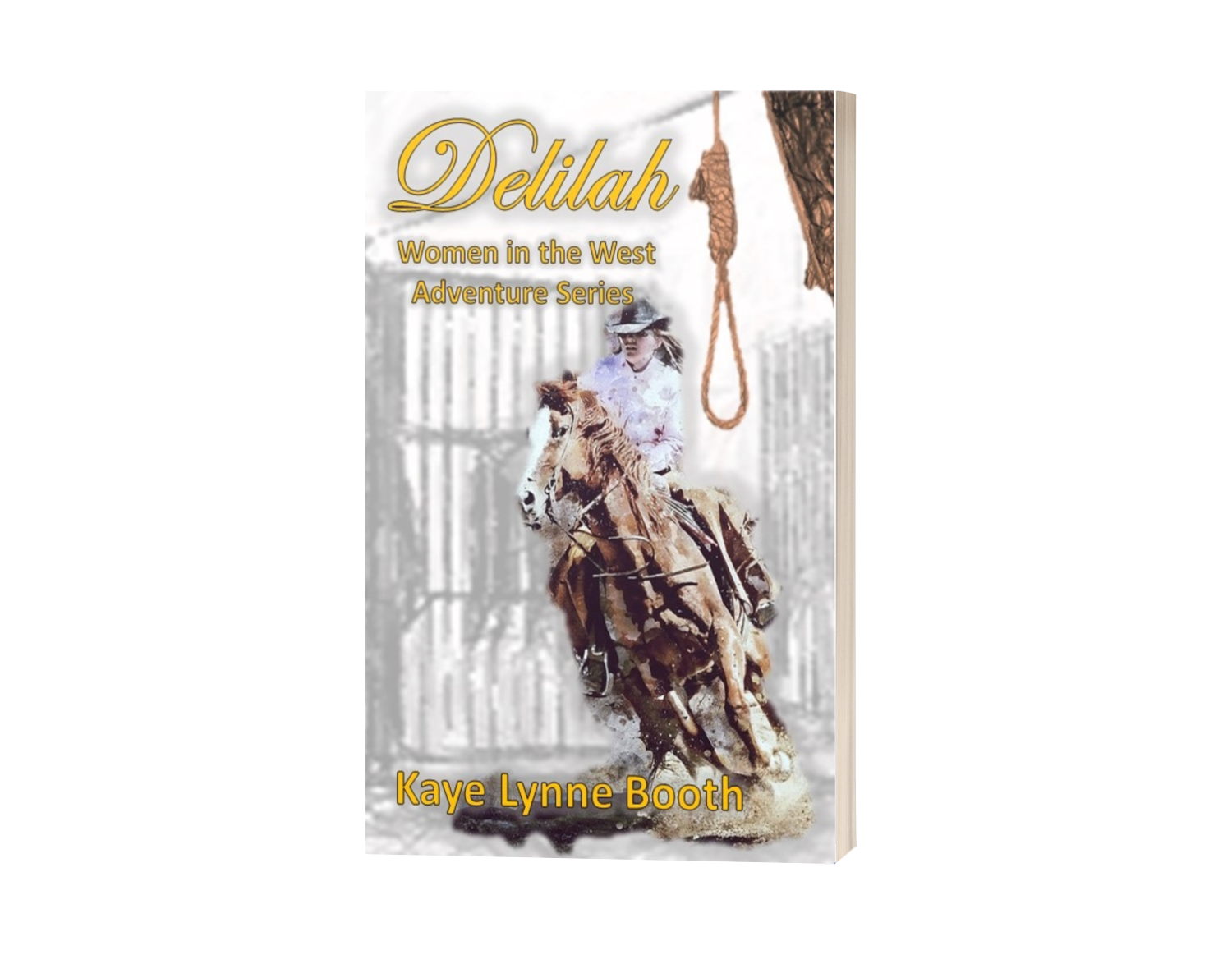
To prove it, I’ll share with you the re-write I did of the description for Delilah, which I am preparing for its re-release in the coming year.
Here is the original description:
“Brutally raped and left for dead, her fourteen-year-old ward abducted, Delilah’s homecoming from prison quickly turns into a quest for vengeance. Tough and gritty, sheer will and determination take her to the Colorado mining town of Leadville in her hunt for her attackers and the girl, Sarah. Somehow along the way, the colorful inhabitants of Leadville work their way into Delilah’s heart, giving her a chance for a future she thought she’d lost along with her innocence.”
Here is the description I wrote for the re-release before I read Mastering Amazon Descriptions:
Delilah is a woman haunted by her past. Her homecoming from prison quickly turns into a quest for vengeance when she is brutally raped and left for dead, and her fourteen-year-old ward is abducted. Sheer will and determination take this tough and gritty heroine up against wild beasts of the forest, Indians and outlaws to the Colorado mining town of Leadville, where the colorful inhabitants work their way into Delilah’s heart, offering a chance for a future she thought she’d lost along with her innocence.
Now, here is the description I wrote using Brian D. Meeks’ method:
Haunted by her past.
Raped and left for dead; her fourteen-year-old ward abducted.
Sheer will and determination take this tough and gritty heroine up against wild beasts of the forest, Indians and outlaws.
Can the colorful inhabitants of Leadville work their way into Delilah’s heart, offering a chance for a future she thought she’d lost along with her innocence?
I don’t think anyone would argue that this last description is an improvement. It has a better hook, shorter sentences, and leaves the potential reader with a question to make them want to learn more and read the book.
How to Write Fiction Sales Copy
How to Write Fictin Sales Copy, by Dean Wesley Smith offers three different formulas for writing back cover blurbs and sales copy, which are aimed toward a wide distribution, and several different approaches. Smith is an old pro in this writing game and he’s good at what he does, (which is write). While his methods are not as formulaic and are not specific to Amazon, they are never-the-less effective in posing unspoken questions about the book and making readers want to know more. Smith also offers 32 actual story blurbs as examples in multiple genres.
To experiment with one of Dean Wesley Smith’s techniques, I thought I’d try to rewrite the blurb for my paranormal mystery novella, which is riddled with what Smith calls “The Author Problem”, which results from too many passive verbs and too much focus on the plot. My description doesn’t have a lot of passive voice, but it does focus on the plot too much, revealing more than necessary, which is a common author error. The idea behind the blurb is to give potential readers just enough to pique their interest and make them want to purchase the book. If you reveal too much of the plot, there’s no reason to buy.
Cassie is nervous about her return to her ancestral lands with her boyfriend Tony for more reasons than one. She hasn’t been up in these mountains since the unexplained drowning of her parents. And her parents aren’t the only ones who have died or mysteriously disappeared in the area. Cassie doesn’t really believe the old legends passed down from her Native American ancestors, but she harbors no desire to become the keeper of her tribal legacy or the protector of the gold that goes with it. In fact, she plans to tell her Grandmother to pass the legacy to someone else, perhaps her cousin Miranda, who has been searching for the treasure for years. Cassie wants nothing to do with it now that she carries Tony’s baby in her womb. When Cassie forces herself to go out on the lake that took the lives of her parents and she discovers a cave which holds the treasure of her people, she must admit that the legacy is real, which means the curse that guards the treasure and threatens the males of her tribe must also be real. When Miranda’s boyfriend, Jake disappears on the lake, Cassie must find a way to stop the curse, before Tony becomes the next victim.
So here is my attempt at a rewrite, using Smith’s basic blurb pattern, beginning with a character summary that “nails the genre if possible”.
Cassie wants nothing to do with the legacy her grandmother wants to hand down to her. She doesn’t believe in all those Native American legends anyway.
She and Tony plan to be married and start a family. They’re only returning to her ancestral lands now to tell her grandmother to pass the tribal legacy on to someone else, along with the cursed gold that goes with it.
When she forces herself to go out on the lake where her parents drowned, she discovers the cave which holds the tribal treasure and the lake takes another life. Now Cassie must rethink all that she believes. If the treasure is real, could the curse be real, too?
Can Cassie find a way to stop it before Tony becomes the next victim?
If you love paranormal mysteries, pick up a copy of “Hidden Secrets”.
Which one of these descriptions would make you more likely to buy the book? You can see what a difference a few simple changes can make.
Authors must be able to write sales copy, as well as fiction or nonfiction, because stories don’t sell themselves. On The 6 Figure Authors podcast suggest that if a book isn’t selling well, the first things to look at are cover art and blurb. We see here with the examples I provided, what a difference changing up the blurb can make. I recommend both Mastering Amazon Descriptions, and How to Write Fiction Sales Copy to any author who wants to polish their blurb writing skills and improve their sales copy.
Even traditionally published authors need to have their work edited. In the past, authors who were traditionally published could count on their publishers for certain benefits, including help with marketing, editing, cover art, etc… But with the rise of independently published authors, those benefits can no longer be taken for granted and today, some publishers don’t provide any more, is editing. In their article “Why your publisher won’t edit your manuscript – and what to do about it”, (https://withoutbullshit.com/blog/why-your-publisher-wont-edit-your-manuscript-and-what-to-do-about-it), Writing Without Bullshit claims that publishers in 2021 are looking for ‘publishable as is’ manuscripts. That means that they are expecting your manuscript to be ready to publish, requiring at the most, minimal copy editing before sending it through the publication process.
If traditionally published authors still need to have their work edited, then it goes to figure that it’s just as vital for an indie author. Independently published authors once carried a bad rep, because of a flux of new authors, or want-to-be authors, who flooded the market with poorly written and badly edited, if edited at all, books with the new lack of gatekeepers which came with the rise of independent publishing. While self-publishing became more affordable and accessible to aspiring authors, there were not the quality buffers of traditional publishing, leaving gaps wide enough to allow a plethora of poor-to-horrible quality books out into the market.
Independently published authors have managed to overcome that initial bad rep for the most part, but only by putting on the work and creating books of excellent quality, which are professionally edited, with covers that are professionally designed, at some expense to the author. But of course, we all want are books to be the best that they can be. Right? Right.
So why are some authors tempted to skip the editing step in the writing process? Maybe they think that as writers they know all the rules so they can edit it themselves just as well. But another set of eyes can pick up things that editing with author’s eyes may not. It’s true. And even if you use a critique group, beta readers, or even relatives or friends to look over your story or book draft, chances are, they will pick up mistakes that you have missed.
No matter the reason, what it all comes down to though, is that editing is expensive, and many aspiring authors, who haven’t hit the bestseller lists yet, can’t afford to pay a professional editor. I know I certainly can’t. I do have my fellow authors, who are kind enough to help me out, (authors really are a great group, aren’t they?), give my manuscripts and stories a going over, but authors are busy people and editing takes time; time that could probably be used better writing, so it is not an ideal arrangement.
That’s why when I founded WordCrafter Quality Writing & Author Services, and added Write it Right Editing Services to those available, my motto was “You should not have to mortgage your house to have your book edited.” So, I tried to make Write it Right Editing‘s rates affordable, especially for those who haven’t risen to the top, or made it into the six figure authors club yet.
If you don’t want to spend a fortune to have your book edited, or you just want a quick proofread to be sure your work is ready for publication, maybe it would be worth your time to drop over to the WordCrafter website and give Write it Right Editing a look. I’ve been editing since 2010 and I am currently part of the Mirror, Mirror editorial team for Kevin J. Anderson and the Western State Colorado University‘s publishing cohort, as well as my editing duties for WordCrafter, so I have plenty of experience editing novels, anthologies, poetry and non-fiction. I’ll be taking on new clients in 2022, as I move my writing business into the full-time realm. If you’d like to learn more about Write it Right Editing Services, visit the WordCrafter website here.
Kaye Lynne Booth lives, works, and plays in the mountains of Colorado. With a dual emphasis M.F.A. in Creative Writing, writing is more than a passion. It’s a way of life.
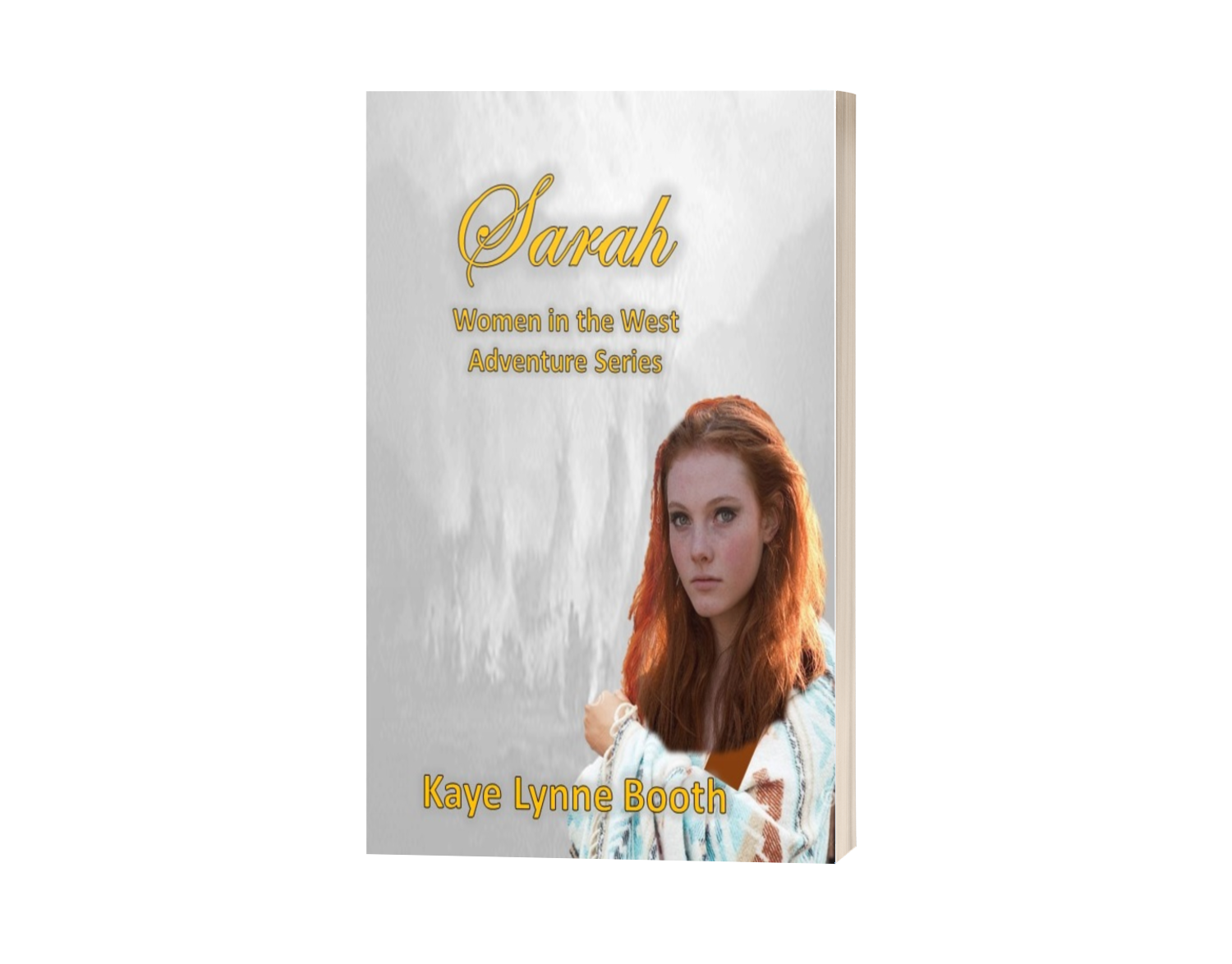
She’s a multi-genre author, who finds inspiration from the nature around her, and her love of the old west, and other odd and quirky things which might surprise you. She has short stories featured in the following anthologies: The Collapsar Directive (“If You’re Happy and You Know It”); Relationship Add Vice (“The Devil Made Her Do It”); Nightmareland (“The Haunting in Carol’s Woods”); Whispers of the Past (“The Woman in the Water”); and Spirits of the West (“Don’t Eat the Pickled Eggs”). Her western, Delilah, her paranormal mystery novella and her short story collection, Last Call, are all available in both digital and print editions.
In her spare time, she keeps up her author’s blog, Writing to be Read, where she posts reflections on her own writing, author interviews and book reviews, along with writing tips and inspirational posts from fellow writers. She’s also the founder of WordCrafter. In addition to creating her own imprint in WordCrafter Press, she offers quality author services, such as editing, social media & book promotion, and online writing courses through WordCrafter Quality Writing & Author Services. When not writing or editing, she is bird watching, or hiking, or just soaking up some of that Colorado sunshine.
Like this post? Let me know in the comments. You can be sure not to miss any of Writing to be Read’s great content by subscribing to e-mail or following on WordPress. If you found this content helpful or entertaining, please share.
Well, we’ve all made it through another year and now have a whole new year ahead of us. I’m not into making resolutions that will just be broken, probably before the month of January has come to a close, but it seems like this time of year always brings about changes, so I thought I might share with you the changes planned for 2022, some of which are already in process.
Writing to be Read
On Writing to be Read, we have a few changes to the line-up. Jeff Bowles will only be doing one blog series, “Words to Live By”, on the first Wednesday of every month. Art Rosch will be doing “Mind Fields” and “The Many Faces of Poetry” bi-monthly, alternating every other Friday. Robbie Cheadle will still be offering all three of her monthly blog series. While “Growing Bookworms” and “Dark Origins” will keep their spots on the second and fourth Wednesday of each month, but “Treasuring Poetry” will be moving from it’s Saturday spot to the third Wednesday of each month.
My new series, “Writer’s Corner” will appear once a month on Mondays, as will my reviews, including any “Review in Practice” posts. I was considering making my monthly “Chatting with the Pros” series into a podcast, but I think that will have to wait, since I have so much on my plate already for 2022. So, what I’m wondering now, is does anyone miss this series and would like to see me bring it back on the blog? If you do, or you would, I’d love to hear about it in the comments. It will help me to decide whether or not this series is worth reviving.
Author Kaye Lynne Booth
Back in May, for the 2021 WordCrafter New Beginnings Virtual Writing Conference, Anthony Dobranski, author of Business Class Tarot, did a workshop on the use of the cards he created. We didn’t have a great turn-out in 2021 and there were numerous set-backs, including my loss of internet causing me to miss out on a full day of the conference I was hosting, so when no one showed up for this wonderful workshop, Anthony was kind enough to do a reading for me. It was a lot of fun and I was surprised at how accurate to my own life his reading was. One of the things that was revealed was that I was trying to do too much and I needed to enlist others to take a part of the load on me, because I have always tried to be a one woman show and do all the various tasks involved in being an independent author and publisher. (You can see the video of the full reading here.)
Acting on the revelations from that reading, as I ramp up to transition into a full time writing career, with several releases planned for 2022, I realized I needed beta-readers and reviewers, and others to just help spread the word on social media, and so the Kaye Lynne Booth & WordCrafter Press Street Team group was born. It’s a great group with members who support my writing endeavors and want to be a part of the process. Members have exclusive access to behind the scenes information, opportunities to weigh in on scene and cover creation, and early access to new releases and book events, in exchange for their support as beta-readers and reviewers, or their help in spreading the word through their social media channels.
I’m also reviving my newsletter after letting it fall by the wayside for over a year. Newsletter recipients will receive early notice of new releases and book events, and sometime news of works by other authors bi-monthly. You can sign up for my newsletter here.
My first release for 2022 is scheduled for June, with the re-release of Delilah, in an edition that is the story I originally intended to tell. (You can find out more about the decision for this change here.) The current edition of Delilah will come down from the Amazon shelves sometime in April, and the new edition will be released wide, so it will be found not only on Amazon, but on Kobo, Barnes & Noble, Apple, Baker & Taylor, Bibliotheca, Borrow Box, Overdrive, Scribd, and other selected digital book outlets because WordCrafter Press publishes through D2D. (I’m a member of their affiliate program. Sign up for your own D2D account here.)
In the past, I told you about my science fantasy series, Playground for the Gods. The first book in that series was my thesis project when I was earning my M.F.A. at Western State Colorado University, back in 2016, so the it has been finished since then, yet you’ve never seen the implied promise of publication come to fruition. In 2022, I plan to release not just Book 1: The Great Primordial Battle, but also Book 2: In the Beginning, and Book 3: Inanna’s Songsometime toward the end of the year, but release dates for these haven’t been set yet.
WordCrafter Press & Author Services
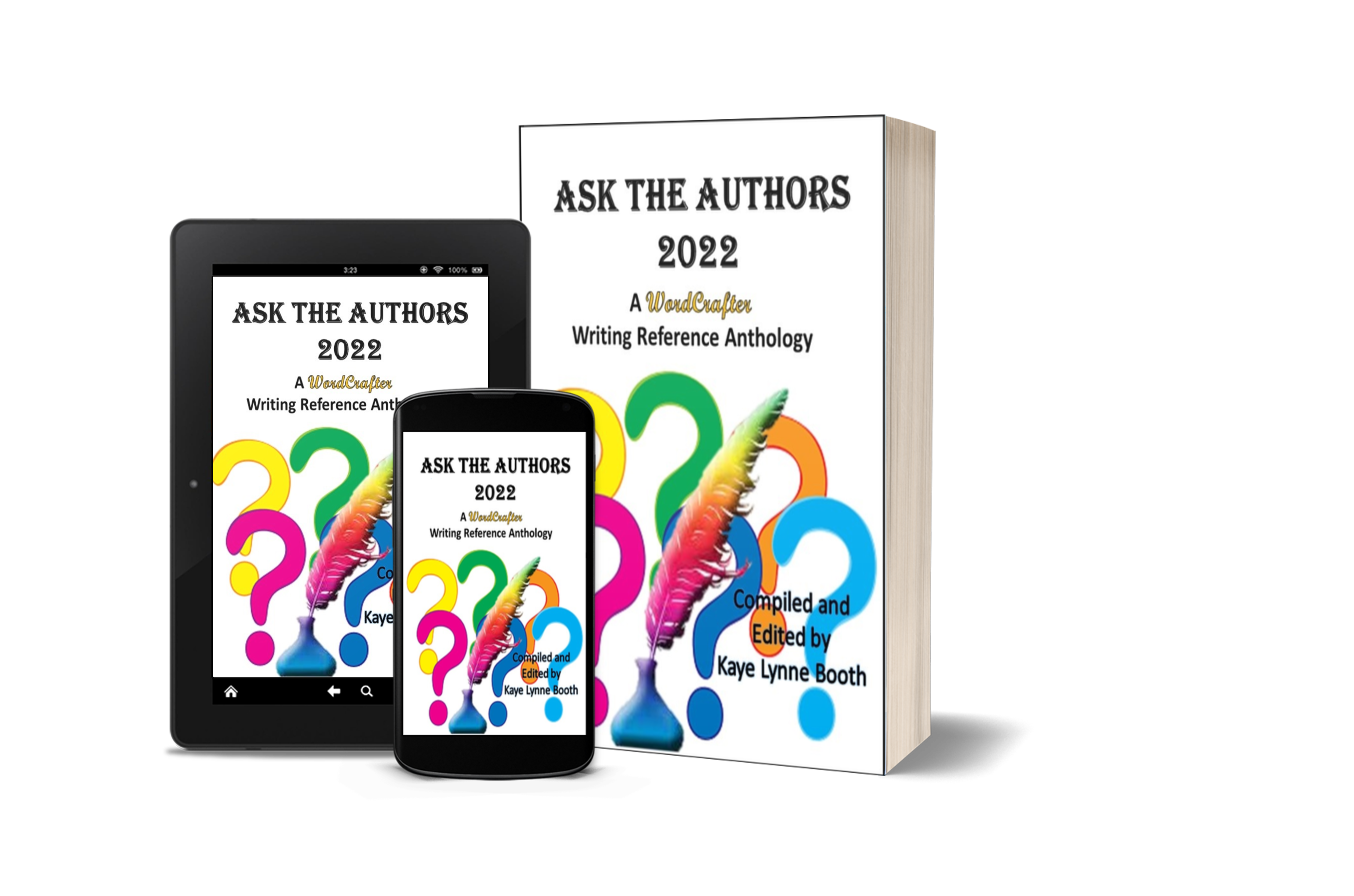
WordCrafter Press has some great releases coming in 2022 as well. An updated version of the writing reference, 2022 Ask the Authors, is scheduled to be released in March. The original Ask the Authors, was taken from a Q&A blog series I ran in 2018. While the much of the advice offered from the 17 different authors who participated in that project is still valid today, this edition will address the changes in the publishing industry since the original edition was published and will feature an anthology of essays on craft and publishing in addition to the Q&A advice. This edition will feature advice from 13 authors, including Bobby Nash, Mark Leslie Lefebvre, Roberta Eaton Cheadle, Nancy Oswald, Christopher Barili, Mario Acevedo, L. Jagi Lamplighter Wright, Kevin Killany, Paul Kane, Jeff Bowles, Enid Holden, Christa Planko, and myself, Kaye Lynne Booth.
The call for submissions for the 2022 WordCrafter Short Fiction Contest posted on January 3rd. However, in 2022, WordCrafter Press will be putting out not just this one anthology, but a total of three short fiction anthologies. In addition to the Visions anthology, which contest submissions may be included in, that will be released in August, there will be two by invitation only anthologies: Slivered Reflections, which will be released in September, and Once Upon an Ever After, which will be released in November.
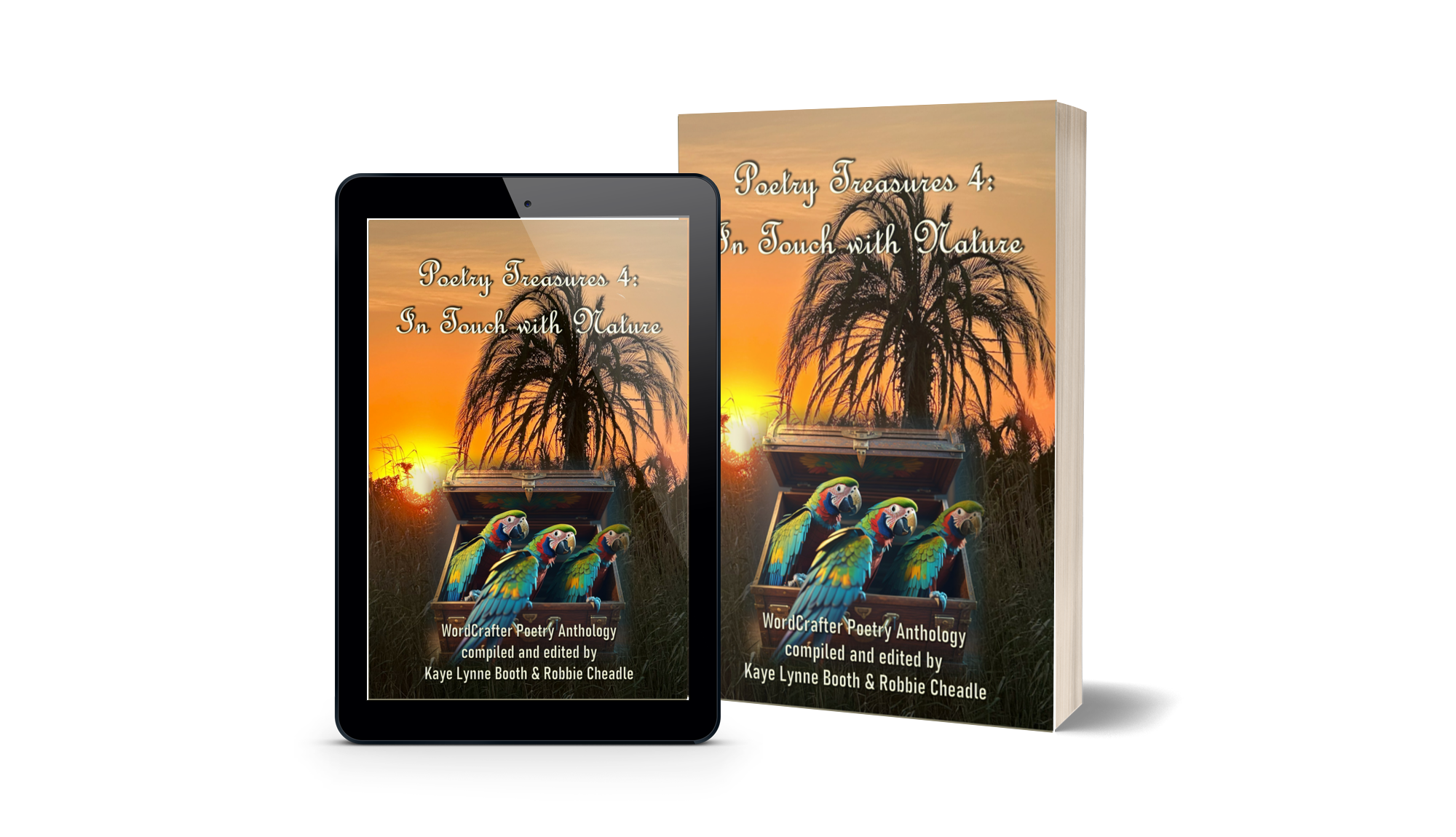
In 2021, we released the first edition of Poetry Treasures poetry anthology, featuring the works of Robbie Cheadle’s 2020 “Treasuring Poetry” poet guests on Writing to be Read, and we’ve decided to do it again. 2022 Poetry Treasures will feature the works of the 2021 “Treasuring Poetry” guests for a spectacularly unique poetry anthology, and will be released April to celebrate National Poetry Month.
WordCrafter Quality Writing & Author Services
Last, but not least, Write It Right Quality Editing Services is open to new editing clients in 2022. If you’re looking for affordable quality editing, Write It Right could be the editing service you’ve been looking for. A part of WordCrafter Quality Writing & Author Services.
I’m looking forward to 2022. I hope you’ll all join me in the coming year, as it promises to be a good one.
____________________________________________
Like this post? Let me know in the comments. You can be sure not to miss any of Writing to be Read’s great content by subscribing to e-mail or following on WordPress. If you found this content helpful or entertaining, please share.
The 2022 WordCrafter Short Fiction Contest is now open for submissions. The submission deadline of May 31, 2022. The winner will receive a $25.00 Amazon gift card and their story will be guaranteed to be featured in Visions. All finalists will also receive an invitation to be included in the anthology, which offers a small royalty share for your story contribution. Submission guidelines are pretty simple, but as they are different from last year, I suggest you read and follow them carefully.
Submit your story with a cover letter to KLBWordCrafter@gmail.com with “Submission: [Your Title]” in the subject line and pay the $5 entry fee below.
Contest Entry
Enter the 2022 WordCrafter Short Fiction Contest for a chance at an invitation to the Visions anthology and a grand prize $25 gift card.
$5.00
WordCrafter Press wants your visions.
For 2022, WordCrafter Press is looking for original short stories in the fantasy, science fiction, horror or paranormal genres. Past contests and anthologies have been limited to paranormal, and for Visions, your story can still have a ghost if you like, but it is not required. What I’ll be looking for for the 2022 WordCrafter anthology are your very best thought provoking stories, the kind of stories that will stay with readers long after they close the book.
WordCrafter Press is looking for original short stories to include a mix of fantasy, science fiction, horror, magical, and paranormal elements. Previously unpublished stories only.
Genres: Paranormal, Science Fiction, Fantasy, Horror or any combination there of.
Length: up to 5000 words
Submission Deadline: May 31, 2022
Pay: Royalty share
Rights: First Anthology Rights and audio rights as part of the anthology; rights revert to author one month after publication; publisher retains non-exclusive right to include in the anthology as a whole.
Open to submissions from January 1 through April 30, 2022.
Submit: A Microsoft Word or RTF file in standard manuscript format to KLBWordCrafter@gmail.com
In the spring of 1843, Charles Dickens read a government report on child labour in the United Kingdom. The report, compiled by a journalist friend of Charles Dickens, comprised of a series of interviews with working children. It detailed the long hours, crushing work, and poor conditions suffered by these children.
The new and heartless attitude towards child labour was a result of three things:
an increase in the population by 64% in 30 years;
workers leaving the countryside and crowding to the cities in search of work; and
the demise of cottage industries and there replacement with mundane and menial labour in factories.
Employers thought of the workers as commodities whose labour was measured purely on output and productivity.
There was a lot of controversy among the wealthy classes and the clergy as to whether assistance should be extended to the poor. A lot of people were of the opinion that people were poor due to their own laziness and malingering and that giving help would exacerbate these tendencies.
The work houses of the day split up families, provided minimal food, and extracted hard labour from its occupants, including children, in an effort to discourage the poor from seeking help.
I am reminded at this point of the song Food, Glorious Food from the musical Oliver based on the book by Charles Dickens:
Rev. Thomas Malthus advocated letting the poor go hungry to decrease the population. His view was that it was better to let the poor starve to “decrease the surplus population”.
Charles Dickens’ response was to write the novella, A Christmas Carol, which eloquently expressed his views on employer responsibilities towards workers.
If you don’t know the story of A Christmas Carol, this is a very brief overview:
The story opens with Ebenezer Scrooge sitting in his counting house on Christmas Eve. His clerk, Bob Cratchit, is sitting shivering in the anteroom because Scrooge won’t spend any money on heating. He turns down his nephew, Fred’s, invitation to a Christmas party and chases away two men collecting money for charity. At the end of the day, he returns to his cold, dark home.
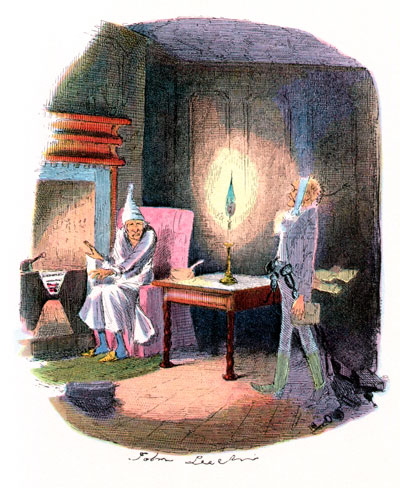
After Scrooge has retired for the night, he is visited by the ghost of his dead partner, Jacob Marley. Marley is weighed down by heavy chains and is destined to make his way through the afterlife dragging them after him because of his mean-spirited and selfish life.
Marley tells Scrooge that he will be visited by three ghosts that night, the ghosts of Christmas Past, Present, and Future. The ghosts show Scrooge where he made mistakes in his past life due to choosing money over love and life, how his clerk and the Cratchit family are suffering because of his present day meanness, and show him a lonely future death. Scrooge is offered, and takes, an opportunity to change his ways and find redemption.
Wishing you all a Merry Christmas if you celebrate or Happy Holidays.
Although I cannot compare my take on Victorian child labour to Charles Dickens’ brilliant works, I have written several times about this and I thought I would share this short extract from my book, Through the Nethergate, about a serving girl in a tavern in Bungay in 1589.
“The rich, amber fluid flowed into the waiting tankard, in striking contrast to the damp, darkness of the barrel filled cellar.
The small, frail girl stood with the tankard in her trembling hand. She was hungry, thirsty and cold. She hadn’t had anything to eat or drink since last night’s frugal supper of leftovers in the Inn’s kitchen. A wave of dizziness washed over her as she contemplated the drink. Its golden depths seemed to entrance her as she lifted it to her lips.
At least the kitchen was warm, she thought, remembering the delicious heat of the enormous, roaring fireplace. The kitchen was a much better place to steal a moment of rest than this freezing cold cellar, in the bowels of the building.
The strong, rich taste of the ale brought a smile to the girl’s pale face. She greedily drained the tankard, closing her eyes and allowing a feeling of well-being to permeate through her skinny, undernourished body. The girl, called Lizzie, worked as a servant at the pub and she was twelve years old.
She knew she should be grateful for the job, but it was hard to forgive the heavy-handed punishments metered out to her by Will, the owner of the establishment.
A rough hand grasped her shoulder, its thick fingers digging viciously into her flesh.
“What have you done?” the loud, grating voice of Will blasted through her euphoria.
Lizzie jerked with fear and the tankard fell from her fingers, clattering to the stone floor before rolling away.
She looked up into piggy eyes staring out of a fat and well-fed face. Will’s usually florid complexion looked even ruddier and coarser than usual.
“Why, you little thief,” continued Will. “You know what we do with thieves in this Inn.”
A short while later, Lizzie found herself chained to the wall of the cellar. Her pleas and cries for mercy had fallen on deaf ears as Will, filled with righteousness and piety at her ungodly action, attached the manacles to her wrists and ankles.”
Want to be sure not to miss any of Robbie’s “Dark Origins” segments? Subscribe to Writing to be Read for e-mail notifications whenever new content is posted or follow WtbR on WordPress. If you found it interesting or entertaining, please share.