Book Review: Canadian Werewolf in New York
Posted: September 9, 2022 Filed under: Audiobook Review, Book Review, Books, Fiction, Opinion, Speculative Fiction, Werewolf fiction | Tags: Audio Books, Book Review, Canadian Werewolf in New York, Mark Leslie, Paranormal, Speculative Fiction, Supernatural, Werewolf, Writing to be Read 7 Comments
When I picked up Canadian Werewolf in New York, by Mark Leslie, I must admit, I had visions of one of my favorite werewolf movies. But Leslie’s wolf isn’t one plagued by the spirits of his victims, as are the American versions. It was a pleasant surprise to find that I was wrong on that note.
Mark Leslie’s werewolf uses his more beastly senses like superpowers to come to the aid of the damsel in distress, making this story a cross between a pulp story and a werewolf cozy, as his writer turned wolf character goes about solving mysterious disappearances for the woman he loves, and fighting crime in a classic hero’s journey. Quite entertaining.

His main character, Michael, is a Canadian writer, trying to make it in the big apple, but of course he’s also a werewolf. The appearance of his old flame asking for his help finding out what her fiance is up to throws him into a mystery, calling his sleuthing skills into play. At the same time, there’s another wolf in town, and he must use all of his heightened wolf senses to sniff out his rival and protect the girl.
As an author, I know it can be very effective to use the senses to help put the reader in the story, but I also know it can be tricky writing in details of the senses other than those we use and think about most. But, Leslie has managed to skillfully craft in and use the sense of smell throughout this tale, taking the reader on an olfactory adventure like none I’ve had before. Brilliant!
I listened to this tale in the audio book form, and I must say that the narrator, Scott Overton, does a fantastic job, never once stumbling on difficult character nicknames like “Mr. Hyper-halitosis”. He also did a fabulous job with a Yorkshire accent and the female voice.
I truly enjoyed listening to Canadian Werewolf in New York. I found it fresh and entertaining, and I give it five quills.

___________________________________________________________________
Kaye Lynne Booth does honest book reviews on Writing to be Read in exchange for ARCs. Have a book you’d like reviewed? Contact Kaye at kayebooth(at)yahoo(dot)com.
Share this:

Mind Fields: Coltrane’s Dead
Posted: September 2, 2022 Filed under: Biographies, Books, Excerpt, Fiction, Mind Fields | Tags: Arthur Rosch, Confessions of an Honest Man, Mind Fields, Writing to be Read 2 Comments
This is an excerpt from my novel, Confessions Of An Honest Man:
The men get into the car and Zoot steers it carefully across the bridge. “Still need a Pissngas?” Zoot inquires mockingly.
“I forgot I had to pee,” says Aaron. “Now I got to pee really really bad.”
“Well shit, get out and pee, we about fifteen minutes from the Steelville turnoff.”
Aaron goes out behind a bush and relieves himself. He hears the sound of his own stream against a world that has gone supernally silent. There is no wind, no bird song. The sky is a weird shade of pink. As soon as he is finished the rain begins to fall again. The drops are huge, heavy, laden with silt. Covering his head, Aaron races back to the car.
After driving for ten minutes in silence, a black and white road sign appears. The trapezoidal shape of the state of Missouri encloses a number four. Fifteen yards past this sign there is a green board with white letters and an arrow pointing to the right. Steelville, eight miles, it indicates. At this one-sided intersection is a little gas station and a tiny grocery store skirted by a wooden plank walkway. Zoot pulls into the station. He gestures to Aaron to stay in the car. This part of Missouri isn’t explicitly segregated, but it has the taint of old rebellion. Zoot asks a black attendant to fill the tank, and Tyrone jumps through the rain towards the store, looking for another pack of cigarettes. Aaron watches the Schlitz Beer sign flicker, rolls the window down to smell the storm-soaked earth. He knows this country, too. He has come here for vacations with his family. They have gone to Bagnell Dam, Lake of the Ozarks, Wildwood Resort. In a childhood with a paucity of happy memories, this country means peace, relief, respite, jumping from a pier into the lake, riding horses, mom on her best behavior, dad relaxed and having fun.
Zoot chats with the station attendant about the twister, informs him that the Willens Creek Bridge is no longer covered.
“Be damned,” the man says, “twister blew the top the bridge away? No shit?”
“No shit, almost blew us away too, turned this here Lincoln Continental hundred eighty degrees backward but left a cigarette in the ashtray, still lit and ready to smoke.” Zoot’s dialects always reflect his circumstances. He pronounces “this here” as “thissheer”.
Hurriedly finishing the transaction to get out of the rain, the attendant takes Zoot’s money and rushes back into the shelter of the store.
A moment later, Tyrone comes walking out, holding a newspaper limply in his hand. His mouth is hanging open, his eyes have a staring and shocked quality, as if he has just survived a terrible battle. He opens the passenger’s door , throws the newspaper towards Aaron in the back seat and slumps abruptly on the plush leather, one leg hanging out the side.
“You look like you just got terrible news,” Zoot observes with concern.
Tyrone nods and points towards the newspaper.
“Coltrane’s dead,” he says mournfully. “It’s in the paper. He died yesterday.”
There is a stunned silence. Aaron feels as if he has just taken the first plunge on a roller coaster ride, his stomach goes up through his chest.
“No,” Zoot says. “No.”
Tyrone has the paper folded out to the entertainment section. It is the St. Louis Post-Dispatch. There is a big article about Barbara Streisand, a review of the new James Bond movie, a review of the Led Zeppelin Concert at Kiel Auditorium. Down in the far right corner of the page is a two-paragraph squib. ‘Jazz Musician John Coltrane Dies,” it says. There is sketchy information about the jazz giant succumbing suddenly to liver cancer.

Aaron puts his face in the paper and squeezes himself with it, crumbling it around his cheeks. “He is forty years old!” He wails. “Forty years old! What is happening? Why are jazz musicians dying? Why Coltrane, of all people, Trane? “
Desperately, he claws at Zoot’s shoulder. “We’re all professional jazz musicians, Zoot. Is this my future? Is this Tyrone’s? Are you going to die on us, too? Why can’t we survive? What are we doing to ourselves?”
Zoot stares straight ahead, seeing nothing. He reaches across his shoulder and pats Aaron’s hand, squeezing it.
“You’re just beginning to see what it’s like,” the old musician says. “It’s dangerous to be a genius. That’s why I stay in this chitlin circuit groove, play the college campuses, keep my mid-stream profile. And this is hard enough. You think Coltrane can be inspired every night? You think he can get up there and reach down into his guts and deliver a brilliant set five nights a week, be a genius?”
A core of bitter reflection stains Zoot’s voice. These are things he generally keeps to himself. As he speaks, his anger grows and his voice scrapes with frustration and old pain.
“You have to use something, like Bird, like Lester, you have to use something to get to that place where you even feel like playing at all, let alone be great. Then you raise the standard, people turn out and expect to be transformed, to hear an oracular performance, night after night. I smoke my weed, that’s how I do it. And I don’t ask too much of myself. That’s why I’m sixty-three and still playing. I know how much I can give. Men like Coltrane, they don’t know moderation, they can’t know moderation, they have to keep pushing the limits or the critics jump on their ass, the fickle fans get restless, the talk on the street starts goin’ ‘round, ‘Trane’s lost it, Bird’s lost it, Jackie’s lost it, Prez’s lost it, Bud’s lost it! You have a couple bad nights and all these assholes who can’t play a note go talking, he’s lost it, lost it, getting’ tired, man, runnin’ out of steam, his great days are behind him, what a shame, used to be a great musician.”
Zoot pauses for a moment, looking at his sidemen, at his disciples in the mystic art of music. Then he spits a long gobbet out the window and says, with a lengthy and contemptuous drawl, “Sheee-it! Son of a fucking bitch!”
He turns backward to look at Aaron. Cobra-like, he shifts his body, glancing at Tyrone beside him. He is seething, indignant. “That’s why genius musicians die. They have to die! Ain’t no choice! Once they get a reputation as a genius, they have to be a genius every night. They use it up! Then they’re gone!”
He turns on the engine and drives about a hundred yards down the road. He pulls onto the shoulder and scrunches the emergency brake with his foot. He puts his large hands in front of his face, then leans into them and begins to weep.
It is contagious. These three friends, of different ages, races, different backgrounds, are not afraid to show their feelings to one another. The three jazz musicians, on their way to a gig, taking a short cut through the back roads of Missouri, pull onto the side of the country lane and weap for John Coltrane.

Purchase Link: https://www.amazon.com/Confessions-Honest-Man-Arthur-Rosch-ebook/dp/B01C3J0NK2
___________________________________________________________________________________________________

Arthur Rosch is a novelist, musician, photographer and poet. His works are funny, memorable and often compelling. One reviewer said “He’s wicked and feisty, but when he gets you by the guts, he never lets go.” Listeners to his music have compared him to Frank Zappa, Tom Waits, Randy Newman or Mose Allison. These comparisons are flattering but deceptive. Rosch is a stylist, a complete original. His material ranges from sly wit to gripping political commentary.
Arthur was born in the heart of Illinois and grew up in the western suburbs of St. Louis. In his teens he discovered his creative potential while hoping to please a girl. Though she left the scene, Arthur’s creativity stayed behind. In his early twenties he moved to San Francisco and took part in the thriving arts scene. His first literary sale was to Playboy Magazine. The piece went on to receive Playboy’s “Best Story of the Year” award. Arthur also has writing credits in Exquisite Corpse, Shutterbug, eDigital, and Cat Fancy Magazine. He has written five novels, a memoir and a large collection of poetry. His autobiographical novel, Confessions Of An Honest Man won the Honorable Mention award from Writer’s Digest in 2016.
More of his work can be found at www.artrosch.com Photos at https://500px.com/p/artsdigiphoto?view=photos
____________________________________________________________________
Want to be sure not to miss any of Arthur’s “Mind Fields” segments? Subscribe to Writing to be Read for e-mail notifications whenever new content is posted or follow WtbR on WordPress. If you find it interesting or just entertaining, please share.
Share this:

Open Call for Submissions
Posted: August 31, 2022 Filed under: Anthology, Call for submissions, Fantasy, Fiction, Writing, Writing Challenge, Writing Opportunity | Tags: Call for submissions, Merciless Mermaids, Paid Writing Opportunity, Western Colorado University, WordFire Press, Writing to be Read 2 Comments
The call for submissions for the 2023 Western Colorado University & WordFire Press anthology is open… the theme revealed. So, put on your author caps and break out the keyboards, and submit your story today. Professional rates paid. Read full guidelines here: https://wordfirewestern.moksha.io/publication/merciless-mermaids-tails-from-the-deep/guidelines
MERCILESS MERMAIDS: Tails from the Deep
Think deep—the deep of the sea, the deep of space, the deep of our souls, our fears, ourselves. Here, it’s not the monsters under your bed; it’s the mermaids under your boat.
Can you see the shapes in the waters that watch you? Can you hear the mermaid’s call?
Old sailors tried to warn us. You can find their stories in water-stained journals and letters throughout histories and cultures. People of the land laughed at them, calling their stories mere legends and fairy tales. Now it’s your turn to tell the real stories behind these tails found in the deep, the dangers in dark waters.
Will the merfolk prey on humans once the land-bound civilizations fall? Do they snatch men for research? What of the siren who is wildly tone deaf? Does your merman surface on some faraway planet, stare through mists at the newcomers and think Never. Again.
We’re sounding the ship’s bell for stories about malevolent and merciless merfolk of all kinds. Give us your mermaids who fought for the wrong reasons, made tough by their circumstances or by their own choices. Show us their schemes and villainous wiles, the fairytales that end in blood. Or laughter. Tempt us with their twisted workings across time and space, colors and creeds.
Deep down you know that the darkness has a tail.
Edited by Kevin J. Anderson and Allyson Longueira with an editorial team provided by Western Colorado University Graduate Program in Creative Writing, Publishing MA students. Anthology made possible by a generous contribution from Draft2Digital.
____________________________________________________________________
Join Kaye Lynne Booth & WordCrafter Press Readers’ Group for WordCrafter Press book & event news, including the awesome releases of author Kaye Lynne Booth. Get a free digital copy of her short story collection, Last Call and Other Short Fiction, as a sampling of her works just for joining.
Share this:

WordCrafter News
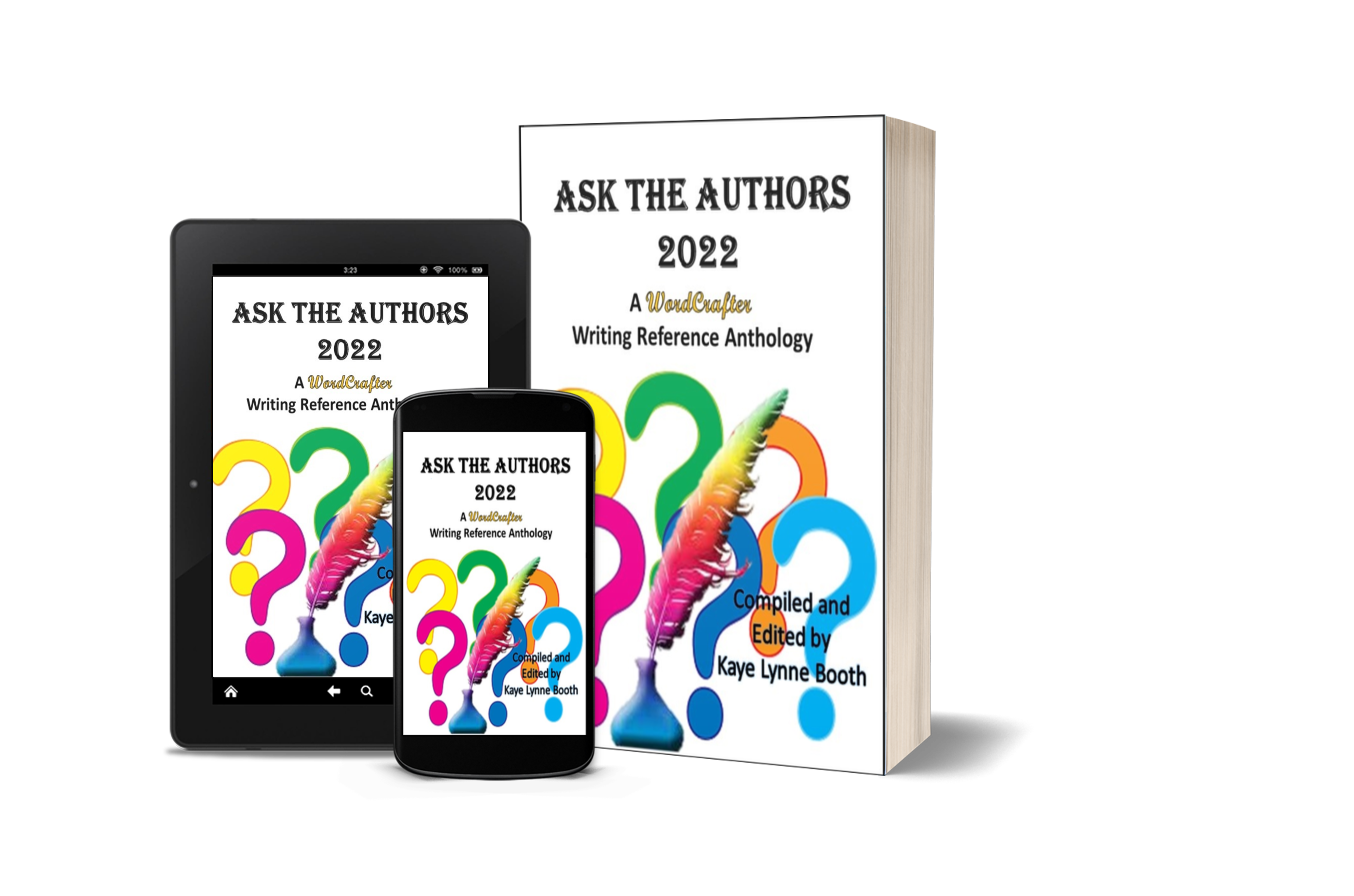
Posted: August 29, 2022 Filed under: Advertising, Anthology, Ask the Authors, Book Promotion, Book Release, Book Review, Books, essays, Fairy Tales, Fantasy, Fiction, Giveaways, Mythology and Legend, Nonfiction, Science Fiction, Short Fiction, Stories, WordCrafter Book Blog Tours, WordCrafter News, WordCrafter Press, Write it Right Editing, Writing, Writing Reference | Tags: Anthologies, Ask the Authors 2022, Book Promotion, Editing, Giveaway, Once Upon an Ever After, Refracted Reflections, WordCrafter Press, Write it Right Quality Editing Services, Writing Reference 7 Comments
And the Winners Are….

I have an announcement to make.
We finished up the WordCrafter Once Upon an Ever After Book Blog Tour on Saturday, and I do hope you all joined in. It was a great tour and we held a giveaway for three digital copies of Once upon an Ever After, and every comment earned an entry.
Now, I am pleased to announce that the three winners of the anthology giveaway are Liz Gauffreau, Annette Rochel Aben, and Sara W. McBride!
(I need to make contact with each of you to find out which digital format you prefer. If you don’t hear from me, please contact me at Kayebooth@yahoo.com.)
You can get your copy of this wonderful anthology from your favorite book distributor here.
___________________________________________________________________________________________________________
Nice Reviews
Ask the Authors 2022 has received a lovely review from Alex Norton on the Likely Story blog.
” I found it to be both interesting and useful, answering questions I didn’t even know I had and giving me different perspectives to ponder as I move forward on my own writing journey.”
You can find Alex’s full review here. I hope you will check it out.

Get your copy of this unique writing reference anthology from your favorite book distributor here.
___________________________________________________________________________________________

.The first review is out on Goodreads, from Madelon’s Reviews. Madelon does a nice job of making a brief statement about each story, as well as a review of the overall anthology, which states in part:
“Overall, REFRACTED REFLECTIONS provides a glimpse into the writing styles of authors you may want to read again.”
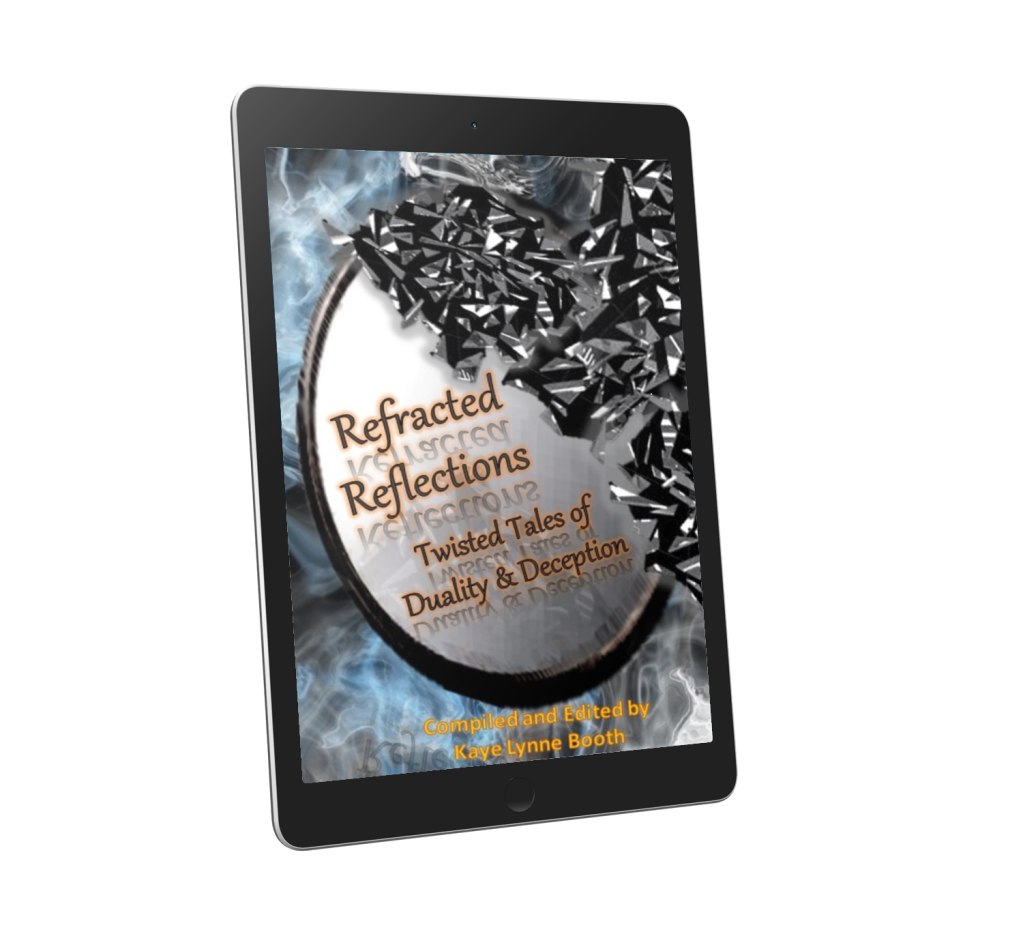
Refracted Reflections: Twisted Tales of Duality & Deceptions
Refractions and Reflections…
A reflection can be revealing or deceptive. What stares back at you when you glance into the mirror?
A prison, designed to trap you and take away all that is dear to you?
A portal to another dimension? Another time?
An evil twin, luring you to the other side?
Your loved ones with a fond farewell?
A distorted version of yourself? A person you no longer even recognize?
A protective savior?
Do you dare to gaze into the looking glass?
Will what you see save you…, or haunt you forever?
If you liked Gilded Glass and Once Upon an Ever After, you’ll like Refracted Reflections: Tales of Duality & Deception.
Scheduled for release September 20, 2022. Now available for pre-order from your favorite book distributor here.
Don’t miss the WordCrafter Refracted Reflections Book Blog Tour September 19 – 23 for a deeper look into this unique anthology.
_____________________________________________________________________________________
Write it Right Quality Editing Services is currently open to new clients

See Write it Right‘s affordable rates and get a quote for your editing needs here.
Share this:

Wrapping up to the WordCrafter “Once Upon an Ever After” Book Blog Tour
Posted: August 27, 2022 Filed under: Anthology, Blog Tour, Book Promotion, Book Release, Books, Collaboration, Dark Fantasy, Fairy Tales, Fantasy, Fiction, Short Fiction, Stories, Women's Fiction, WordCrafter Press | Tags: A.E. Lanier, Anthology, Fairy Tales, Fantasy, Once Upon an Ever After, The Fourth Spire, WordCrafter Book Blog Tours, WordCrafter Press 6 Comments
Thank you all for following the WordCrafter Once Upon an Ever After Book Blog Tour. We’ve had a great tour, with two reviews, my interview with Robbie Cheadle, and guest posts from five of the contributing authors. We had a great group of authors contributing to this anthology and I want to thank authors Sarah Lyn Eaton, Roberta Eaton Cheadle, Olivia Merchiston, Linsay Elizabeth Gilbert, and A. E. Lanier for sharing their story inspirations. If you missed a stop, you may still visit it through the links below.
Tour Schedule
Monday – August 22 – Opening Day Post – Writing to be Read – Intro. & Guest Post – Sarah Lyn Eaton
Tuesday – August 23 – Patty’s World – Review & Guest Post – Robbie Cheadle
Wednesday – August 24 – The Showers of Blessings – Guest Post – Olivia Merchiston
Thursday – August 25 –Roberta Writes – Interview w/ Kaye Lynne Booth
Friday – August 26 – Zigler’s News – Review & Guest Post – Lyndsay Elizabeth Gilbert
Saturday – August 27 – Closing Post – Writing to be Read – Guest Post – A.E. Lanier
Digital Giveaway
For a chance to win a free digital copy of Once Upon an Ever After,
just leave a comment to show you were here.
Follow the tour and comment at each stop for more chances to win.
Three copies will be given away in a random drawing
Today, we’re wrapping up the WordCrafter Once Upon an Ever After Book Blog Tour with a guest post from contributing author A.E. Lanier, who wrote “The Fourth Spire”, a haunting tale of knowledge lost. It’s a thought provoking tale of a burning library within a castle spire with a genuine fairy tale feel.

The Fourth Spire
Like most bookish people, I love a good library. Whether real or fictional, I like the idea of many books gathered in one place, the physical monument to the pursuit of knowledge, the fantasy of actually getting work done.
There have been many wonderful libraries–both real and fictional–in my life. I adored my local library as a child and ,like many people, was fundamentally changed by the library in the 1991 Beauty and the Beast. But my favorite library growing up was the one from Avatar the Last Airbender. A single tower reaching up out of the desert, hiding floor upon floor of mystically curated information, briefly discovered before vanishing below the sand once more–buried forever.
There is a romance to the destruction of a library. It feeds into the idea that there were things we once knew and never will again. The hope that perhaps we can relearn, tinged with understanding that the struggle between loss and rediscovery will cost us. It is nostalgia and a love of books and lost places all tied up in one.
“The Fourth Spire” came from my fascination with the aesthetic of the burning library. I wanted to explore what was valuable in mourning the destruction of a library and to consider whether there was something dangerous in romanticizing it. It was, in many ways, a question I was asking of myself.
I am the kind of person that watches an action film and winces harder when a scroll is burned than when an unnamed character is killed. At the end of the day, neither the character nor the scroll is real. But the scroll feels real in a way the character does not. And I sometimes find that impulse within myself disturbing. Books and artifacts are valuable and important, but I will mourn an unknown book in a way that I will not mourn an unknown person; its possibility is somehow more tangible to me.
“The Fourth Spire” is about that tendency to appreciate books more than people. And about the ways in which the knowledge we have lost is often more captivating than the knowledge we still have. I am not certain the story provided answers for me, but then I’m not entirely convinced I was looking for them. Certainly, it provided a feeling. A set of questions. And what more can we ask, really, of a burning library?
A.E. Lanier

A. E. Lanier is a writer, educator, and chronic overthinker living in Central Texas.She enjoys caves, silent reading, and other people’s cats. Her work has appeared in The Arcanist and Daily Science Fiction.
_____________________________________________________________________________
About Once Upon an Ever After
This unique and imaginative collection of eleven thought provoking fantasy stories will delight readers who enjoy stories of wishes gone awry.
What happens when…
A woman desires to carry on her family’s legacy, uncovering a long-buried curse?
A not so perfect witch casts a spell to defy age and preserve her relationship with her handsome shapeshifting familiar?
A time traveler longs to be the savior of knowledge lost?
An incompetent delivery boy becomes an unlikely savior of forgotten artifacts?
A magic mirror yearns for a different question?
A tiny story witch desires to share her stories with the world?
Spells are cast, unlikely alliances made, and wishes granted, sometimes with surprising outcomes. You’ll love this anthology of modern myths, lore, and fairy tales. Once you read these twisted tales, you’ll be sure to be careful what you wish for….
If you liked Gilded Glass, you’ll enjoy Once Upon an Ever After: Modern Myths & Fairy Tales, short stories with thought provoking themes, captivating characters and diverse cultures, from humorous to horrifying, from the legendary past to possible futures and back to the here and now.

You can get your copy of Once Upon an Ever After at your favorite book distributor through the Books2Read UBL here: https://books2read.com/u/mKdWGV
_______________________________________________________________________
Book your WordCrafter Book Blog Tour today!
Share this:

Graduation
Posted: August 8, 2022 Filed under: Anthology, Book Release, Books, Fiction, Publishing | Tags: Book Event, Gilded Glass: Twisted Myths & Shattered Fairy Tales, Kaye Lynne Booth, Kevin J. Anderson, Mark Leslie Lefebvre, Publishing, Weird Tales: Best of the Early Years 1926-27, Western Colorado University 6 Comments
Yep. That’s me in the picture above with Kevin J. Anderson and Mark Leslie Lefebvre after my graduation ceremony. Obviously, I survived all the craziness of summer residency and graduated with an M.A. in publishing, but there were moments. Western’s summer residencies are always pretty intensive and this one was no exception. The whole week was a bit of a whirlwind. Classes began on Monday at Western State University, and I arrived on campus just in time for the first class at 9 a.m.


We each got publishing cohort tee shirts, which made us all the coolest cohort on campus. On the back it says, “A Rising Publisher Lifts All Books” with the image of a hot air balloon with the Western insignia on it. During the lunch break, I went and checked into my motel, before returning for the afternoon sessions, and it seemed like it was nonstop from there.

Wednesday evening, we held our big in person book launch at the Gunnison Arts Center. It encompassed all of my cohort’s solo projects, plus the launch of the group produced anthology, Gilded Glass: Twisted Myths & Shattered Fairy Tales, which includes stories by big name authors such as Michaelbrent Collins, Jonathan Maberry, Kristine Katheryn Rusch, Allen Dean Foster, and Sherrilynn Kenyon, along with many talented new authors, for an exceptional science fiction and fantasy anthology. It was also announced that the Weird Tales: Best of the Early Years volumes that Justin Craido and I put out with Jonathan Maberry will be republished through Weird Tales and Blackstone Publishing, which makes the volumes featured for the book signing limited editions which will only be available for a short time through WordFire Press. You can still get these books or any of the books of my cohort here: https://wordfirepress.com/gpcw/ . The signing did quite well, and we sold out all of the books we brought to the event, with sales which I consider to be phenomenal, $25,000. The proceeds go to the University to fund future publishing cohorts, which is very cool.


This was exciting for me, as it was my first book signing. I did do a poetry signing once at a all local writing fair, but it was nothing along the scale of this event. I was amazed when people came up to me, wanting my autograph on the books which I created. Wow!
Afterward, we celebrated at the Old Miner Steak House. We had the whole top floor reserved, but their grill broke, so they couldn’t cook any meals. So instead, we had the whole restaurant to ourselves. The staff did a bang up job of putting together a menu of salads and sandwiches for us, and I thoroughly enjoyed a delicious French dip.
I was almost totally brain dead by the time Friday rolled around, it was time for the commencement ceremony and time to say goodbye to my fellow authors and publishers. It was emotional as my instructor and mentor, Kevin J. Anderson, offered each of my cohort a special edition, embossed copy of his Clockwork Angels story collection, which he wrote with Neal Peart of Rush. He describes these stories as steampunk Canterbury Tales, and I can’t wait to read them, although I’m almost scared to open it, because it’s so beautiful.

I managed to make it through the graduation despite the heat sitting in cap and gown and mask. Of course, I was my usual, graceful self, bumbling awkwardly through my commencement. When I was announced by the program director, I started across the stage, but he added in my first M.F.A., which made me hesitate and stop in my tracks. As I was the only one to have such added information delivered, I felt I should allow him to finish before going into motion. That delayed start flustered me, so when I got over to Kevin to be hooded, I forgot to bend down, but he managed to get it over my head anyway. Realizing I had messed up flustered me even more and Kevin had to tell me to come back for a hug. But I made it through to the final photos without any more blunders.


Saturday, I arrived home to find that there were monsoon rains everyday while I was gone, and my yard and garden had exploded with greenery and other bright colors, including one monster cherry tomato plant, which grows in a large pot on my porch and a single gigantic mullein plant that I let grow in the front yard. Oh yes, and while I was gone, the bear which has frequented my neighborhood for as long as I can remember paid me a visit and scattered my garbage across my property. He’s a big brown bear and he pulled my garbage can over my wire fence, demolishing it. So, after unloading everything, I got to drag myself out and pick up trash before finally collapsing, exhausted. It had been a long and exciting week, but it was good to be home.
_______________________________________________________________________
Kaye Lynne Booth lives, works, and plays in the mountains of Colorado. With a dual emphasis M.F.A. in Creative Writing and a M.A. in Publishing, writing is more than a passion. It’s a way of life. She’s a multi-genre author, who finds inspiration from the nature around her, and her love of the old west, and other odd and quirky things which might surprise you.

She has short stories featured in the following anthologies: The Collapsar Directive (“If You’re Happy and You Know It”); Relationship Add Vice (“The Devil Made Her Do It”); Nightmareland (“The Haunting in Carol’s Woods”); Whispers of the Past (“The Woman in the Water”); Spirits of the West (“Don’t Eat the Pickled Eggs”); and Where Spirits Linger (“The People Upstairs”). Her paranormal mystery novella, Hidden Secrets, and her short story collection, Last Call and Other Short Fiction, are both available in both digital and print editions at most of your favorite book distributors.
In addition, she keeps up her authors’ blog, Writing to be Read, where she posts reflections on her own writing, author interviews and book reviews, along with writing tips and inspirational posts from fellow writers. Kaye Lynne has also created her own very small publishing house in WordCrafter Press, and WordCrafter Quality Writing & Author Services, where she offers quality author services, such as publishing, editing, and book blog tours. She has served as a judge for the Western Writers of America and sitting on the editorial team for Western State Colorado University and WordFire Press for the Gilded Glass anthology and editing Weird Tales: The Best of the Early Years 1926-27, under Kevin J. Anderson & Jonathan Maberry.
In her spare time, she is bird watching, or gardening, or just soaking up some of that Colorado sunshine.
______________________________________________________________________________
Join Kaye Lynne Booth & WordCrafter Press Readers’ Group for WordCrafter Press book & event news, including the awesome releases of author Kaye Lynne Booth. Get a free digital copy of her short story collection, Last Call and Other Short Fiction, as a sampling of her works just for joining.
Share this:

Bowlesian! – Itsies
Posted: August 3, 2022 Filed under: Bowlesian!, Fiction, Humor, Short Fiction, Speculative Fiction, Stories | Tags: Bowlesian!, Jeff Bowles, Short Fiction, Short Stories, Writing to be Read 6 Comments
Itsies
by Jeff Bowles
*This story and others like it can be found in my collection Brave New Multiverse, available on Amazon now.
I introduced Pamela to my itsy on our first date. Oh I know, most people wait until their second or third, but I really liked Pamela. Straight away I could tell we were going to hit it off.
“I’m glad we decided to do this,” I told her.
She narrowed her eyes, “Why is your itsy dressed like a teddy bear?”
My itsy was dressed like a teddy bear. Head to toe, fluffy ears, fluffy tail, round little tummy. It was his favorite outfit. I wasn’t going to tell him he couldn’t wear it.
Itsies aren’t really people. They look and act like people, and they definitely do have minds of their own, but they’re more like little mini extensions of ourselves, you know what I mean? Like my itsy, I call him Tug. He looks exactly like me. That’s pretty common. Itsies live on the tops of people’s heads and sleep in their hair. They spend most of the day under their hats.
My hat was off just then, sitting there on our table. I supposed Pamela wasn’t quite ready to take her own hat off.
I smiled at her, beamed at her, actually. I said to Tug, “Don’t be rude, Tug. Say hello to Pamela.”
Tug said, “Fuck yourself!”
I sighed. “Now Tug, you know I don’t like that language.”
“Fuck it! You introduce me!” His voice was high, squeaky, a shrill, keening falsetto. “You promised me cookies! Give me my cookies or I’ll eat Pamela alive!”
I sighed again, reached into my pocket to retrieve a miniature box of animal crackers. I set the crackers atop my head. Tug started noshing and gobbling. I felt a sense of calm wash over me as he did.
“Are you sure you want to keep him out like that?” said Pamela.
I glanced around the restaurant. My favorite Vietnamese place. Really good phở and bánh mì sandwiches. Rich, mouthwatering smell of seared beef and pork. Portraits on the walls of Ha Noi and Ho Chi Minh City. The only other customers, an old white man and an old white woman, struggled with chop sticks and rice noodles in a corner booth.
“Do you think anybody minds?” I said.
Pamela shrugged. “I don’t. Only, you know, if he eats too much his stomach is liable to explode. That sort of thing can happen, you know. He might get the wrong idea, surrounded by all this food.”
“More cookies!” said Tug.
I gave him another box of animal crackers.
“So um, Tom,” said Pamela, “how do you like working for my father?”
I met Pamela at her father’s office. High-powered advertising, ads for humans and itsies alike. I was low man on the totem pole. I’d stared at Pamela’s picture on his desk for months before I actually saw her in person. Those deep brown eyes, those full, pouty lips.
I sat there studying her face and caught myself imagining waterfalls, thunderstorms, exploding geysers. Things wet. Things loud and gushing.
“Tom wants to fuck you,” said Tug.
“Tug!”
“It’s true, Tom. You’re not fooling anyone. Hey lady, how many cookies you think I can fit in my mouth?”
“I … I don’t know,” said Pamela.
“A fistful. That’s how many. Watch.”
Then Tug made more noshing, gobbling sounds. I felt another wave of calm wash over me, even though I knew my face must’ve been five shades redder.
“Pamela, listen …”
“It’s okay, Tom,” she said. “If human beings were any good at saying what they really want, God never would have given us itsies to begin with.”
“I guess so.”
“And I’m flattered.”
“You are?”
Pamela sighed. “Well you know, my father being who he is. Most guys just pine for me and never bother to ask me out. Oh, I hope I didn’t sound full of myself just then. They pine. They just do, you know?”
“I do know,” I said.
She shook her head. “So either I don’t get dates at all, or I get to date the really crazy ones who think their tiny little men are God’s gift.”
“I don’t think my tiny little man is God’s gift. I’m nothing special. He isn’t anything special, either. My tiny little man’s only a few inches tall. He’s so tiny–“
“We are still talking about your itsy, right?” said Pamela.
“The point, Pam, is that even though I’ve got a few shortcomings, whatever the cost, whatever it takes, I made the decision to always be brave and to be the kind of man I am meant to be.”
“Hmm. I like that. When did you make that decision?”
“Honestly?”
“Yeah.”
“I decided it the moment I laid eyes on you.”
Pamela smiled. “That’s sweet.”
* * * * *
I didn’t know it at the time, but Pamela was a very unhappy woman. She hadn’t always been. She was sunny when she was younger, the most positive person in the room. Just lately, as the years had begun to mount up, and forty was suddenly closer than thirty, failed relationship after failed relationship had left her feeling damaged, marooned, poisonous and poisoned
She’d gotten into feeding her itsy late night snacks. Our little men and our little women don’t come with instruction manuals. God gave them to us. Or evolution or whatever. We come screaming from the womb. Our itsies come screaming after. If God did it, it was because he understood men and women are masters of self-deception. If it was evolution, then nature randomly selected humans to have a miniature rude version of themselves camped out on the tops of their heads.
Anyway, bad things happen when you feed itsies late night snacks. Pamela knew this. Even so, cold fried chicken, piece for her, piece for her itsy. Double pepperoni, double cheese pizza. Everything double. She was ordering for two, after all.
Thing about feeding an itsy is, it makes you feel better. Makes you calmer, tames the beast. They are the id. The inner child which dwells deep inside, that which is never at peace, always lusting, always wanting more and more and more.
* * * * *
We ate our meals. We talked and joked. At some point Tug said, “It’s half past a baboon’s bright red ass.” And we both knew it was time to go home.
On the sidewalk, we hugged.
“I had a nice time,” I said.
“Yeah, me too,” Pamela replied.
“You mean it?”
She laughed. “I do mean it.”
“Walk you to your car?”
“Sure.”
Brown and yellow leaves crunched beneath our feet as we huddled together and crossed to the sidewalk. A harvest moon shone high above the tops of buildings. It was autumn in the city. A cold breeze blew and Pamela scrunched herself down into her Barbour jacket.
“I’m glad you asked me out, Tom,” she said.
“Yeah, me too. Would you like to do it again?”
“I would.”
“I know this great Greek place over on–Oh my god, that woman is crushing that car!”
“What?”
“Over there! The parking lot! That woman is–“
“Oh, shit.”
“–crushing that car and she’s–“
“That’s no woman, Tom,” said Pamela
“It isn’t?!” I exclaimed.
Tug rustled around under my ball cap. “Let me see!”
“Petunia!” Pamela shrieked. “I told you to stay at home!”
Petunia? Dear Lord. She was eight feet tall and had more muscles than human beings are supposed to have. Only she wasn’t a human being. Thigh muscles, neck muscles, rippling biceps, triceps, sheening and glossy, bare breasts of muscle, even her head seemed like it was one big, veiny, throbbing muscle.
“Oh Tom, what you must think of me.” Pamela said.
“She’s crushing that car.”
“That’s my car.”
“And she is way too big for that pair of underwear.”
“That’s my underwear, too. Oh Tom, I am so embarrassed.”
Petunia looked like Pamela coated in liquid Schwarzenegger. She was lying on her side on top of the car, eating a chicken. Not a piece of chicken. Not a cooked chicken, either. Petunia was stuffing a whole live chicken into her face. It clucked and screamed and fought like a little chicken champ.
Petunia bellowed, “Down the hatch!” And then, the chicken disappeared.
Pamela ran to her.
“Bad girl, Petunia!” she said. “That’s a bad, bad girl!”
Petunia belched and grew a whole foot taller. Pamela’s car crunched and all four tires popped.
Pop! Pop, pop, pop!
Big Petunia made a queasy face. “Was that me? I think that was me.”
“No it wasn’t you!” said Pamela. “If it was you, the shockwave would’ve killed us all!”
My mouth hung open. My eyes were wide like Vietnamese noodle bowls.
I heard Tug say, “Damnit, man, let me see her!”
The ball cap popped off my head. Tug gasped.
“That’s a whole lotta woman!” His tiny hands and feet dug into my scalp.
I stooped, grabbed my hat, and made my way to Pamela and nudged her with an arm.
“I don’t get it,” I said. “Why are you wearing your hat if you left your itsy at home?”
Pamela shook her head. Her eyes glistened in the harsh orange neon light. “Oh Tom, I am just so ashamed. I fed her and fed her, and she just ate and ate, and she hasn’t stopped eating, not in weeks. I just wanted to feel good for a damn change.”
“Weeks?” I said. “You’ve been feeding her for weeks?”
Pamela wiped her eyes. “I know you think I’m this awesome person. I know everybody thinks that. I’m just not.”
“Pamela …” I said. I wrapped her in a hug.
Petunia rose onto her knees, car metal creaking and glass shattering to sparkling pellets. She grimaced at me, pointed one long veiny finger. “Hey you! Lover boy! Hands off the merchandise!”
“Me?” I said.
“Did I fucking stutter? You! You wormy little bedsheet stain! You and your miniscule, worthless, man-doll of an itsy!”
Tug shrieked. “She means me! She knows I exist! How do I look? Is my teddy bear costume on straight?”
“Petunia, stop,” said Pamela. “I’m sorry, Tom. She’s a bit roided-out at the moment.”
“Roided-out!” said Petunia. “You ain’t seen me roided-out. Not yet, sister.”
She hopped to her feet and stepped off Pamela’s car. Thud. She dwarfed us. My eyes were level with her enormous, erect, inch-long nipples. Big Petunia took her head in her hands. She cracked her neck left, cracked it right. She slammed her fist into her palm. Again. Again. It made a loud, solid thocking sound. Thock. Thock. Thock.
I stared at that fist. I was dumbstruck. Couldn’t think of a word to say. Pamela pulled away from me. Her eyes darted from me to Petunia. Nobody said a thing. Just that heavy thock, thock, thock.
“Gah!” said Tug. “I can’t take it anymore! Do it! I need to see you in action!”
“Tug,” I said, “you’re not helping.”
“Not trying to help, you human gutter ball! God, I need to see you in action. Oh, it’s killing me!”
“Killing you?” said Petunia. “Little man, down the hatch you go.”
She plucked Tug off my head, clutched his body between a massive finger and a mighty thumb.
“No, don’t!” screamed Pamela.
But it was too late. Petunia ate Tug. Swallowed him whole. Gulp and then, he was gone.
“Now it’s your turn, lover boy!” she said.
She took hold of my arm and lifted me up by it until we were mouth to mouth and eyelash to eyelash.
I’m not going to lie. Fear took hold and I thought I might cry or scream or piss my pants. But instead, I took a moment and told myself a few choice words. You decided to always be brave. The moment you laid eyes on Pamela, you decided to be the man you were meant to be.
I hocked a wad of phlegm and spat in Petunia’s eye. She wiped it away, glared at me, then grinned.
“Mistake number two, lover boy,” she said.
Pamela beat against her, slamming impotent fists at her itsy’s taut, flexing abdominal muscles. She kept screaming, “You monster! You monster!” But Petunia paid her no attention. Her eyes cooked me like sliced beef in scalding-hot Vietnamese broth. Breath stinking like rotten chicken corpses and little itsy men.
“You listen here,” she said. “No man is good enough for my Pam. No man, not nowhere, not no-how. You don’t think I know what you are, lover boy? You don’t think I know you’ll hurt her like all the rest?”
Pamela was shrieking now. “Stop! I said stop it!”
“She feeds me so she’ll be happy,” said Petunia, cheeks red and quivering with barely suppressed rage. “She feeds me so pukes like you can’t touch her no more. I am going to eat you now. And you are going to let me do it. I like my meat raw. I like it tenderized.”
“Stop making threats,” I said. “If you’re going to eat me, go on and–“
She wrapped her arm around my waist. She wound me up, and then she threw me clear across the parking lot.
I was airborne. A million thoughts occurred at once.
No more id.
No more inner child.
God, he was a rotten little itsy.
God, he was just awful, wasn’t he?
Yeah, but he was my rotten little–
I crashed through the plate glass window of the ticket booth at the end of the parking lot.
I went through up to my waist. My legs caught on the glass. I felt a knifing kind of pain. Lacerations. The feeling of being cut to pieces. I screamed.
Petunia stomped over to the booth. She stuck her head through the window. “Oh, you big baby! It’s just a scratch.”
But I could see blood, and I could feel that knifing, that gouging, those lacerations.
“Big baby! Big baby!” she said. “You want to cry? I’ll give you something to cry about.”
She reached through and clamped a hand down over my head. Bam! She slammed my head against the concrete floor. Blam! She did it again. Boom! One more time.
I saw stars and moons and clucking chickens taking flight, flying like real birds, all around my head. And I saw my itsy, poor little Tug. I saw chicken beaks biting into him. Saw chicken teeth chomping on his little brains.
I mumbled, “Chicken teeth.”
Petunia leaned further into the booth. “Huh?”
“Do … chickens … have teeth?”
“Don’t think so, champ.” And then Petunia broke my arm.
Snap!
I howled and spat and spoke in tongues.
Pamela crept up behind Petunia. She jabbed at her with a tire iron.
“You leave my man alone!” she said.
She used the prying crowbar end like a mafia hitman might use an icepick, sliding it into Petunia’s ear. Seemed like Pamela was trying to scramble her itsy’s brains. Then again, it also seemed like the world was falling away from me and growing browner and browner and more and more like nap time yes into the sticky syrup, captain I soiled myself I apologize most sincerely must be dying, please sew my coffin from clean undies.
The brain scrambling thing didn’t work. Petunia wrenched the tire iron from her ear. It was coated in blood, but the big girl was still on her feet.
“Pamela!” she said. “Oh, so we’re calling him your man now?”
Petunia backhanded her. Pamela flew from view.
“I have had it with you, Pam,” Petunia bellowed. “I have absolutely had it! Shit! Fuck it! Let’s eat!”
She tore off my shoe, my sock, and then she stuck my whole foot in her mouth. She bit down. Took a few toes.
It didn’t hurt like I expected. In fact, I felt kind of good. Yes, suddenly, inexplicably, very comfortable and very calm. The face she made was indecipherable. Maybe it was all the glistening muscles. It was the kind of expression a person wears when they’re concentrating really hard. Or maybe the kind of expression a person wears when they drink too much soda and have surgery, bubbly-pain like diving ocean deep and emerging with the bends. She made that face, then she spat the rest of my foot out.
“Oh,” she said, and then again, “Oh.”
Blood dripped from the corner of her mouth.
She said, “Oh.”
And then her stomach exploded. Blood, guts, muscles, chickens, it all burst out like a cheap New Year’s popper loaded with Halloween gore.
Pop!
And it splattered me like sopping red confetti.
A tiny voice said, “See? You see that? Ate too much. You gotta watch that, sister.”
Petunia slumped against the ticket booth. A little man, my little man, emerged from the carnage-crater that was her stomach.
“Tug?” I said.
Petunia’s dead, twitching eyes stared right at me.
“Yeah, boss?” Tug ate a chunk of something small and pink. He was covered in blood, a few inches taller than when Petunia had swallowed him. His teddy bear suit had ripped and popped its seams.
“Stop eating,” I mumbled.
“Yeesh, boss, you look rough.”
“Stop eating. For God’s sake, stop eating.”
“Huh? Why the hell should I stop? It’s delicious. That girl was well fed, man.”
Every time he took a bite, I felt it, that calmness and warmth. It was nice. Felt better than the pain. Even so, I mumbled, “Tug, you have got to stop eating.”
I was powerless to stop him. Couldn’t move. I was bleeding to death and I knew it.
“Well maybe I don’t want to stop,” said Tug. “Maybe I’m sick to death of taking orders from you. Yeah, you know what? I think we need a regime change. I think I ought to be the one calling the–“
Pamela snatched the chunk of Petunia from his hands and smacked him upside the head.
“Don’t be stupid,” she said.
“Hey, I was eating that!”
She smacked him again.
“And don’t talk back. I’ve had enough of disobedient itsies to last a lifetime.”
Tug shouted, “Who the hell do you think you–“
She smacked him.
“Goddamnit, quit smacking me!”
She raised her hand for another.
“All right! All right!” he said. “Nasty woman! Nasty!”
“Go get in my car. The crushed one. Bring me my cell phone. We need to call an ambulance. Treat you like I should’ve treated her.”
Tug grumbled and swore, but he obeyed nonetheless. Once he was gone, Pamela carefully picked her way over the broken glass, past the ruined, bloody form of her former itsy, and through the window until she was crouching beside me.
“Oh Tom,” she said. “I am so sorry.”
“S’okay,” I said.
“No, it’s not okay. I created a monster. Oh what a mess. Tom, I am so, so sorry.”
“Yer’kay?” I said.
“What? I didn’t hear you.”
“Asked r’you okay?”
“I’m fine.”
“Itser’s dead.”
Pamela sighed. “I know. I feel kind of empty now. No, that’s not right. I feel full. Way, way too full. Like I’ve got all this emotion now and I don’t know where to put it, how to choke it down. You know what I mean?”
“No,” I said.
“Tom? Stay with me, now. Keep your eyes open. Tom, you’ve earned your second date.”
Eyelids were heavy. I tried to smile at her, but it was so hard, so hard.
“S’cond date?”
“That’s right, Tom. Second date. Just survive for me, okay?”
“‘Kay.”
“Okay?”
“‘Kay.”
I survived. Of course I did. How else would I be telling you this story? I underwent months of hospitalization and rehab and all that stuff. Learning to cope with fewer toes and all. All that horrible hospital food really made me slim down. Tug slimmed down, too. He got regular-sized again. We had a nice long talk about why it’s okay to eat animal crackers but not okay to, for instance, eat whole live chickens or people’s internal organs.
I had my second date with Pamela. And my third and fourth. She’s not the same since her itsy died. She’s tense, a bundle of nerves. She goes to this support group now for people whose itsies have died prematurely. Sometimes it seems like it helps. Sometimes not. There’s a whole population of people in this world who no longer have the means to quell and suppress the pain in their lives. You know what she said while we were snuggling on the couch the other night?
“I feel so horrible all the time now. How do I cope without her?”
“How any of us copes,” I said. “You’ve got me now. I’ll be your itsy if you need me to be.”
She smiled at me. “My Dad was right about you. He said that Tom guy, he’s a good one, Pam. You should hang on to that guy.”
“Smart man. Brilliant, actually.”
We leaned in for a deep kiss.
Tug hopped off my head and started kicking at Pamela’s scalp.
“No kissing! Last time you kissed him, you didn’t put out! I will eat you. Do you hear me? I will eat you alive!”
Pamela flicked him across the room. I didn’t do anything about it. Kissing Pam was so much better than feeding the id.
END
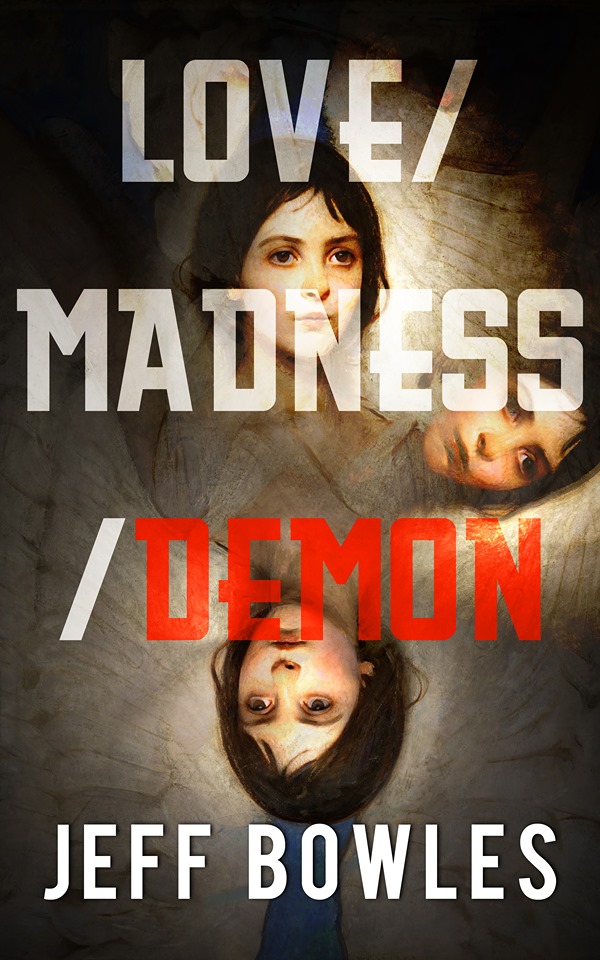
Jeff Bowles is a science fiction and horror writer from the mountains of Colorado. The best of his outrageous and imaginative work can be found in God’s Body: Book One – The Fall, Godling and Other Paint Stories, Fear and Loathing in Las Cruces, and Brave New Multiverse. He has published work in magazines and anthologies like PodCastle, Tales from the Canyons of the Damned, the Threepenny Review, and Dark Moon Digest. Jeff earned his Master of Fine Arts degree in creative writing at Western State Colorado University. He currently lives in the high-altitude Pikes Peak region, where he dreams strange dreams and spends far too much time under the stars. Jeff’s new novel, Love/Madness/Demon, is available on Amazon now!
Check out Jeff Bowles Central on YouTube – Movies – Video Games – Music – So Much More!
Share this:

The release party you won’t want to miss
Posted: July 18, 2022 Filed under: Anthology, Book Event, Book Promotion, Book Release, Books, Classics, Collaboration, Dark Fantasy, Fairy Tales, Fantasy, Fiction, Historical Fiction, Mythology and Legend, Publishing | Tags: Book Release, Dark Fantasy, Fairy Tales, Fantasy, Gilded Glass, Myths, Publishing, Release Events, Science Fiction, Western State College, Writing to be Read 6 Comments
Gilded Glass is scheduled for release on July 19th. This is a fantastic anthology of Twisted Myths & Shattered Fairy Tales which will stay with you long after the cover closes.
A mirror is far more than meets the eye. When you gaze into the gilded glass, what do you see—and what looks back at you?
A beautiful woman hiding an ugly secret?
A malevolent king who delivers a fate worse than death?
An urban legend who will becomes an unlikely ally?
An alien gladiator with reflective armor?
A monster to the rescue?
A goddess?
A distorted version of yourself?
Dare to gaze into these 24 original tales of sweet deceptions and cursed truths by Sherrilyn Kenyon, Jonathan Maberry, Alan Dean Foster, Kristine Kathryn Rusch, Michaelbrent Collings, and more.
Edited by international bestseller Kevin J. Anderson and Allyson Longueira and their Publishing graduate students at Western Colorado University, Gilded Glass: Twisted Myths and Shattered Fairy Tales offers stories with diverse roots, characters, and cultures, from frightening to funny, from once upon a time to far-flung futures and back to the modern day.
Deals are made and wishes granted. Friendships forged and enemies vanquished. You’ll love this anthology of modern myths, lore, and fairy tales, because everyone enjoys a happily ever after…
…or do they?
Stare deep into the gilded glass.
What you find might haunt you.
You can pre-order a copy of your own on the WordFire Press website here: wordfirepress.com/gpcw
Virtual Release Party
Join us on July 20th, at 6 p.m. MT, for the virtual book launch and help us send this exceptional anthology of modern myths and fairy tales off right. Meet the editors of Gilded Glass, and special author guests as we celebrate the release of this collection of science fiction and fantasy stories from both new and established writing talents.
In addition, there will be opportunity to learn more about all of the Western publishing cohort’s exciting solo projects. See how we’ve revived the classic works of masters of the past to be enjoyed in the future.

You can learn more about this terrific event on the Facebook event page and find a link to the livestream event here: https://www.facebook.com/events/4958121874299623/
Share this:

Growing Bookworms – Two books that help inform young teenagers
Posted: July 13, 2022 Filed under: Book Review, Books, Fiction, Growing Bookworms, Middle Grade | Tags: Book Review, Books, Growing Bookworms, Middle Grade Fiction, Robbie Cheadle, Writing to be Read 43 Comments
Current world events are bewildering for young teenagers who are faced with a barrage of information about pollution, climate change, war, politics, religion, and other important issues. It is difficult for teenagers with their limited experience and knowledge of the world to unravel and cope with all these challenging messages.
Today, I am sharing a few books for this age group that contain strong messages about political and other themes encased in an entertaining and engaging storyline.
Fattipuffs and Thinifers by Andre Maurois

This is a book about segregation, in this cased based on the size of people, war, and negotiation and is a entertaining and enlightening read.
A brief summary about this book from Wikepedia:
Fattipuffs and Thinifers “concerns the imaginary underground land of the fat and congenial Fattypuffs and the thin and irritable Thinifers, which is visited by the Double brothers, the plump Edmund and the thin Terry. Fattypuffs and Thinifers do not mix, and their respective countries are on the verge of war when Edmund and Terry make their visit.” You can read more here: https://en.wikipedia.org/wiki/Fattypuffs_and_Thinifers
My review of Fattipuffs and Thinifers
Fattypuffs and Thinifers is a wonderful book about two brothers, one fat and one thin, who discover a hidden world beneath the surface of the earth. This subterranean society is segregated based on the physical weight of its inhabitants. Larger people are Fattypuffs and live separately to the Thinifers, who are workaholics who “eat to live not live to eat”. The two nations are hostile towards each other and are verging on a war. The two brothers from the surface are separated when they arrive in this country and set off on individual adventures. Edmund is a Fattypuff and sails away on a ship to Fattyport. He has a lovely time, resting on the deck in a large arm chair and eating all kinds of tasty food. Terry, on the other hand, sets off on a ship to Thiniville and gets to know some of the Thinifers who exercise and work relentlessly while eating very little. The tension between the two nations is on the increase and war seems inevitable when the two brothers come up with a clever plan to resolve the situation. This book is suitable for readers aged 10 to 13 years old.
Purchase Fattipuffs and Thinifers
I Am David by Anne Holm
David’s entire twelve-year life has been spent in a grisly prison camp in Eastern Europe. He knows nothing of the outside world. But when he is given the chance to escape, he seizes it. With his vengeful enemies hot on his heels, David struggles to cope in this strange new world, where his only resources are a compass, a few crusts of bread, his two aching feet, and some vague advice to seek refuge in Denmark. Is that enough to survive?
David’s extraordinary odyssey is dramatically chronicled in Anne Holm’s classic about the meaning of freedom and the power of hope.
My review of I Am David
I have been trying to work out in my mind which of the many children’s books I love, is my absolute favourite. This morning I was reading an extract from I am David to a group of children. It was the scene where David saves the little Italian girl from the fire and I realised that I am David is my absolute favourite children’s books. This book has such a beautiful storyline and is so well written, you become completely pulled into the story and David’s search to find his mother. I would highly recommend it for children of 12 and above.
Quotes from I Am David
“The sun glistened on a drop of water as it fell from his hand to his knee. David wiped it off, but it left no tidemark: there was no more dirt to rub away. He took a deep breath and shivered. He was David. Everything else was washed away, the camp, its smell, its touch–and now he was David, his own master, free–free as long as he could remain so.”
“And his eyes frighten me, too. They’re the eyes of an old man, an old man who’s seen so much in life that he no longer cares to go on living. They’re not even desperate… just quiet and expectant, and very, very lonely, as if he were quite alone of his own free choice.”
“Johannes had once said that violence and cruelty were just a stupid person’s way of making himself felt, because it was easer to use your hands to strike a blow than to use your brain to find a logical and just solution to the problem.”
Purchase I Am David
Have you read either of these books? Did they make an impression on you? Let me know in the comments.
About Robbie Cheadle

Robbie Cheadle is a South African children’s author and poet with ten children’s books and two poetry books.
The eight Sir Chocolate children’s picture books, co-authored by Robbie and Michael Cheadle, are written in sweet, short rhymes which are easy for young children to follow and are illustrated with pictures of delicious cakes and cake decorations. Each book also includes simple recipes or biscuit art directions which children can make under adult supervision.
Robbie has also published two books for older children which incorporate recipes that are relevant to the storylines.
Robbie has two adult novels in the paranormal historical and supernatural fantasy genres published under the name Roberta Eaton Cheadle. She also has short stories, in the horror and paranormal genre, and poems included in several anthologies.
Robbie Cheadle contributes two monthly posts to https://writingtoberead.com, namely, Growing Bookworms, a series providing advice to caregivers on how to encourage children to read and write, and Treasuring Poetry, a series aimed at introducing poetry lovers to new poets and poetry books.
In addition, Roberta Eaton Cheadle contributes one monthly post to https://writingtoberead.com called Dark Origins: African Myths and Legends which shares information about the cultures, myths and legends of the indigenous people of southern Africa.
Robbie has a blog, https://robbiesinspiration.wordpress.com where she shares book reviews, recipes, author interviews, and poetry.
Find Robbie Cheadle
Blog: https://www.robbiecheadle.co.za/
Blog: robbiesinspiration.wordpress.com
Twitter: BakeandWrite
Instagram: Robbie Cheadle – Instagram
Facebook: Sir Chocolate Books
______________________________________________________________________________________________
Want to be sure not to miss any of Robbie’s “Growing Bookworms” segments? Subscribe to Writing to be Read for e-mail notifications whenever new content is posted or follow WtbR on WordPress. If you found it interesting or entertaining, please share.











Mind Fields: Don’t Fall Apart
Posted: August 19, 2022 | Author: artrosch | Filed under: Commentary, Fiction, Mind Fields, Opinion, Writing | Tags: Arthur Rosch, Mind Fields, Social Commentary, The Human Condition, Writing to be Read | 1 CommentYou can’t fall apart when things go wrong. And when I say “go wrong” I mean badly wrong, way wrong. The loss of a job, the death of a loved one, a diagnosed illness: that kind of wrong. You can’t fall apart.
It’s difficult, NOT to fall apart. We don’t have rational control of emotions. Grief, despair, depression, are creatures with wills of their own and they seem to take over the daily habits that normally sustain us. How do I NOT fall apart? How do I fight back and regain my dignity after seemingly chucking it into the trash? Where do I find the “fight” in me, after I’ve curled into a fetal position and gone”waaaah!”
The answer is “ANY WAY YOU CAN!” I thought to do some writing, and I ended up writing this. Which will take about five minutes. I wanted to work on my novel in progress and I sat staring at the page feeling waves of terror streaking through my innards. It’s difficult to write through waves of terror. I’ll make it.
I’ll get there.
Last year a man died suddenly. He was the man who provided me with three quarters of my contracting work. Then I had a major health scare. Things began going to pieces, one little piece at a time. Isn’t that always the way it works? No, it isn’t. It’s never just one big thing; more like a lot of little things until it seems that nothing will ever go right again.
That isn’t true! That’s the voice of depression. As a grizzled veteran of the fight against depression I understand the feeling that a low emotional state is permanent. It isn’t. But you can’t fall apart. You have to fight back. Depression is a force of nature with which we contend. It’s here that we find our own heroism. Here, in the battle against the cognitive darkness that threatens to overwhelm us at any time. This is where we ultimately shine.
If you’ve got any energy, go clean something. That often works well to lighten the mood. Or, better, go help someone else who is in trouble. In the process you will forget your own troubles.
Arthur Rosch is a novelist, musician, photographer and poet. His works are funny, memorable and often compelling. One reviewer said “He’s wicked and feisty, but when he gets you by the guts, he never lets go.” Listeners to his music have compared him to Frank Zappa, Tom Waits, Randy Newman or Mose Allison. These comparisons are flattering but deceptive. Rosch is a stylist, a complete original. His material ranges from sly wit to gripping political commentary
Arthur was born in the heart of Illinois and grew up in the western suburbs of St. Louis. In his teens he discovered his creative potential while hoping to please a girl. Though she left the scene, Arthur’s creativity stayed behind. In his early twenties he moved to San Francisco and took part in the thriving arts scene. His first literary sale was to Playboy Magazine. The piece went on to receive Playboy’s “Best Story of the Year” award. Arthur also has writing credits in Exquisite Corpse, Shutterbug, eDigital, and Cat Fancy Magazine. He has written five novels, a memoir and a large collection of poetry. His autobiographical novel, Confessions Of An Honest Man won the Honorable Mention award from Writer’s Digest in 2016.
More of his work can be found at www.artrosch.com
Photos at https://500px.com/p/artsdigiphoto?view=photos
________________________________________________________________________
Want to be sure not to miss any of Arthur’s “Mind Fields” segments? Subscribe to Writing to be Read for e-mail notifications whenever new content is posted or follow WtbR on WordPress. If you find it interesting or just entertaining, please share.
Share this: