At the Movies: Red Riding Hood
Posted: August 12, 2022 Filed under: Movie Review, Movies | Tags: At the Movies, Fairy Tales, Kaye Lynne Booth, Movie Review, Movies, Red Riding Hood, Werewolf, Writing to be Read 3 Comments
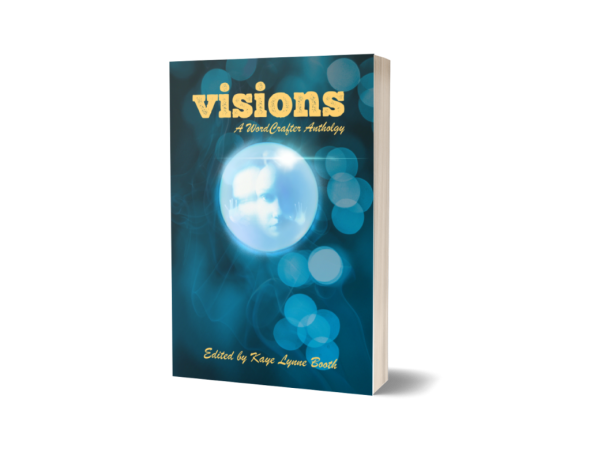
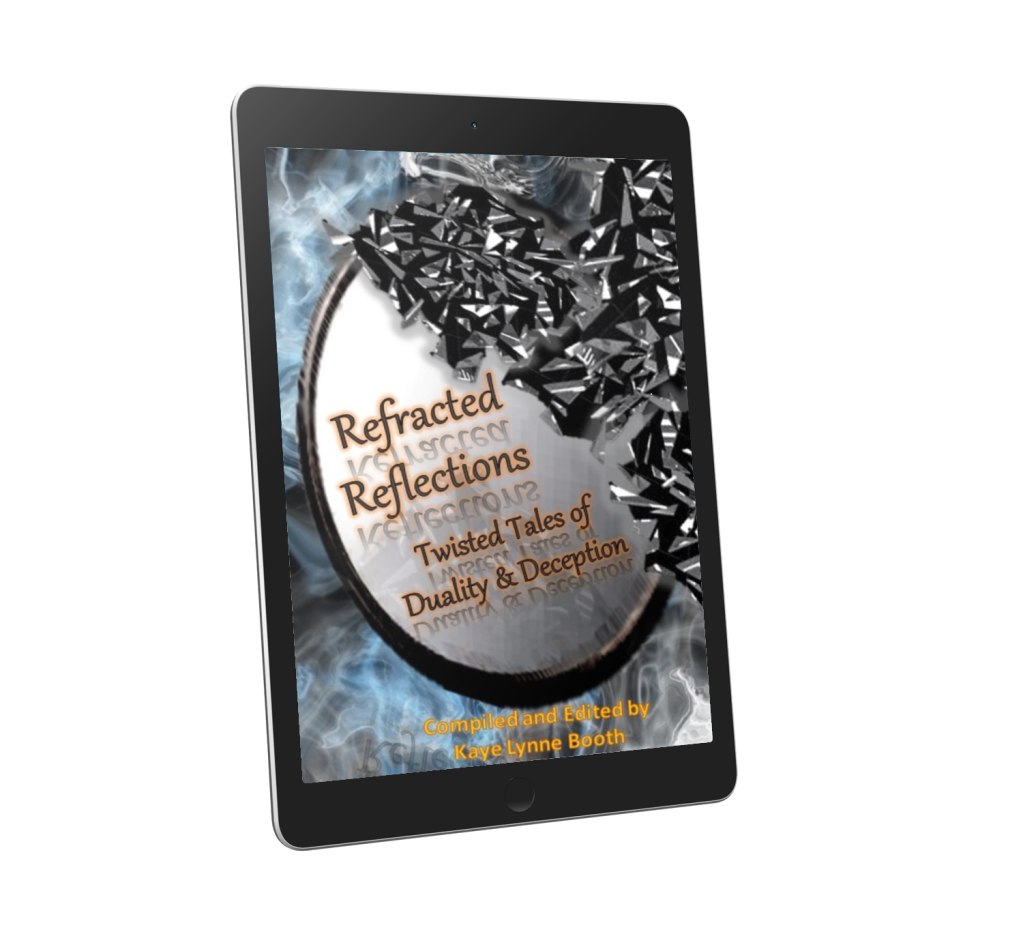
I’ve been reading a lot of modern fairy tales lately, what with being on the Gilded Glass editorial team with a slush pile of over 600 submissions, and the two WordCrafter Press by invitation only anthologies to come out later this year which are fairy tale themed and are comprised of many of the stories that didn’t make GG, which I couldn’t quite let go of, Once Upon an Ever After and Refracted Reflections. So many modern fairy tales are simply retellings of age-old stories without adding anything new. So, when I saw the opportunity to watch a film rendition of Red Riding Hood (2011), I admit that I was a bit skeptical.
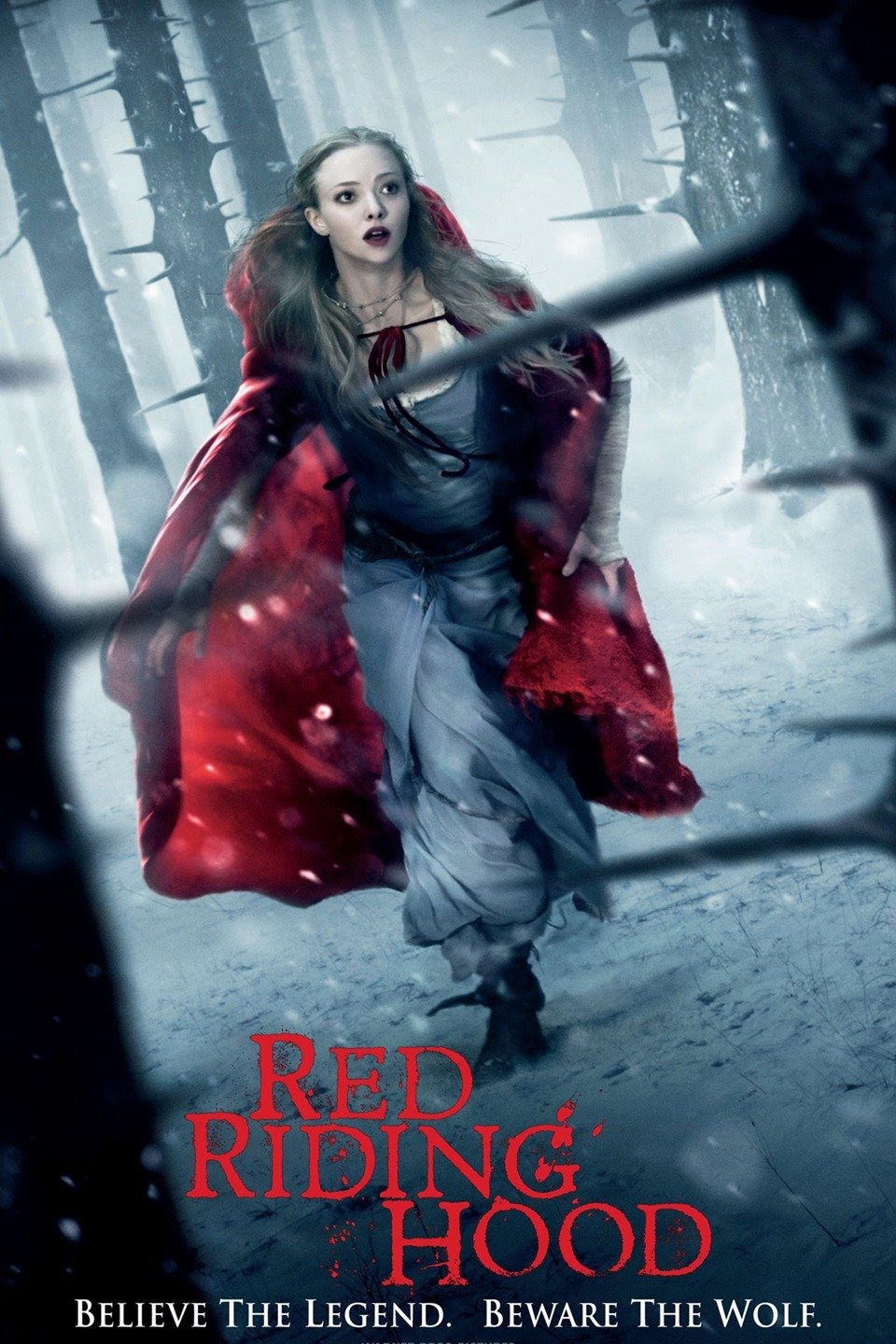
But this was no simple retelling of the classic fairy tale. This was more of a horror story, complete with a big bad werewolf, whose secret human identity allows him or her to hide among the residents of the medieval village and carry on daily activities undetected, killing innocent villagers by guise of night. It could be anyone. Anyone could be its next victim.
Mix in a young woman, Valerie (Amanda Seyfried), forced into a pre-arranged marriage with Henry (Max Irons), and the woodsman whom she truly loves, Peter (Shiloh Fernandez), for a classic love triangle. When a werewolf hunting priest with a personal vendetta shows up on the scene, suspicion is thrown in all directions and no one is safe from accusations. It could be Valerie’s creepy old grandmother (Julie Christie) who lives alone in the woods. It could be the village priest (Lukas Haas). It could be either of the two men vying for Valerie’s heart; each suspicious of the other; both determined to protect her when the werewolf claims her as his own.
Red Riding Hood was well executed, with just the right amount of fairy tale feel to it, and for me, it was a surprise when the werewolf was finally revealed. (No spoilers here.) It kept me engaged throughout. If you like fairy tales with a twist, I recommend that you see this movie.
___________________________________________________________________________

Kaye Lynne Booth lives, works, and plays in the mountains of Colorado. With a dual emphasis M.F.A. in Creative Writing and a M.A. in Publishing, writing is more than a passion. It’s a way of life. She’s a multi-genre author, who finds inspiration from the nature around her, and her love of the old west, and other odd and quirky things which might surprise you.
She has short stories featured in the following anthologies: The Collapsar Directive (“If You’re Happy and You Know It”); Relationship Add Vice (“The Devil Made Her Do It”); Nightmareland (“The Haunting in Carol’s Woods”); Whispers of the Past (“The Woman in the Water”); Spirits of the West (“Don’t Eat the Pickled Eggs”); and Where Spirits Linger (“The People Upstairs”). Her paranormal mystery novella, Hidden Secrets, and her short story collection, Last Call, are both available in both digital and print editions at most of your favorite book distributors.
When not writing, she keeps up her author’s blog, Writing to be Read, where she posts reflections on her own writing, author interviews and book reviews, along with writing tips and inspirational posts from fellow writers. In addition to creating her own very small publishing house in WordCrafter Press, she offers quality author services, such as editing, social media & book promotion, and online writing courses through WordCrafter Quality Writing & Author Services. As well as serving as judge for the Western Writers of America and sitting on the editorial team for Western State Colorado University and WordFire Press for the Gilded Glass anthology and editing Weird Tales: The Best of the Early Years 1926-27, under Kevin J. Anderson & Jonathan Maberry.
In her spare time, she is bird watching, or gardening, or just soaking up some of that Colorado sunshine.
______________________________________________________________________
Join Kaye Lynne Booth & WordCrafter Press Readers’ Group for WordCrafter Press book & event news, including the awesome releases of author Kaye Lynne Booth. Get a free digital copy of her short story collection, Last Call and Other Short Fiction, as a sampling of her works just for joining.
Share this:

Bowlesian! – Itsies
Posted: August 3, 2022 Filed under: Bowlesian!, Fiction, Humor, Short Fiction, Speculative Fiction, Stories | Tags: Bowlesian!, Jeff Bowles, Short Fiction, Short Stories, Writing to be Read 6 Comments
Itsies
by Jeff Bowles
*This story and others like it can be found in my collection Brave New Multiverse, available on Amazon now.
I introduced Pamela to my itsy on our first date. Oh I know, most people wait until their second or third, but I really liked Pamela. Straight away I could tell we were going to hit it off.
“I’m glad we decided to do this,” I told her.
She narrowed her eyes, “Why is your itsy dressed like a teddy bear?”
My itsy was dressed like a teddy bear. Head to toe, fluffy ears, fluffy tail, round little tummy. It was his favorite outfit. I wasn’t going to tell him he couldn’t wear it.
Itsies aren’t really people. They look and act like people, and they definitely do have minds of their own, but they’re more like little mini extensions of ourselves, you know what I mean? Like my itsy, I call him Tug. He looks exactly like me. That’s pretty common. Itsies live on the tops of people’s heads and sleep in their hair. They spend most of the day under their hats.
My hat was off just then, sitting there on our table. I supposed Pamela wasn’t quite ready to take her own hat off.
I smiled at her, beamed at her, actually. I said to Tug, “Don’t be rude, Tug. Say hello to Pamela.”
Tug said, “Fuck yourself!”
I sighed. “Now Tug, you know I don’t like that language.”
“Fuck it! You introduce me!” His voice was high, squeaky, a shrill, keening falsetto. “You promised me cookies! Give me my cookies or I’ll eat Pamela alive!”
I sighed again, reached into my pocket to retrieve a miniature box of animal crackers. I set the crackers atop my head. Tug started noshing and gobbling. I felt a sense of calm wash over me as he did.
“Are you sure you want to keep him out like that?” said Pamela.
I glanced around the restaurant. My favorite Vietnamese place. Really good phở and bánh mì sandwiches. Rich, mouthwatering smell of seared beef and pork. Portraits on the walls of Ha Noi and Ho Chi Minh City. The only other customers, an old white man and an old white woman, struggled with chop sticks and rice noodles in a corner booth.
“Do you think anybody minds?” I said.
Pamela shrugged. “I don’t. Only, you know, if he eats too much his stomach is liable to explode. That sort of thing can happen, you know. He might get the wrong idea, surrounded by all this food.”
“More cookies!” said Tug.
I gave him another box of animal crackers.
“So um, Tom,” said Pamela, “how do you like working for my father?”
I met Pamela at her father’s office. High-powered advertising, ads for humans and itsies alike. I was low man on the totem pole. I’d stared at Pamela’s picture on his desk for months before I actually saw her in person. Those deep brown eyes, those full, pouty lips.
I sat there studying her face and caught myself imagining waterfalls, thunderstorms, exploding geysers. Things wet. Things loud and gushing.
“Tom wants to fuck you,” said Tug.
“Tug!”
“It’s true, Tom. You’re not fooling anyone. Hey lady, how many cookies you think I can fit in my mouth?”
“I … I don’t know,” said Pamela.
“A fistful. That’s how many. Watch.”
Then Tug made more noshing, gobbling sounds. I felt another wave of calm wash over me, even though I knew my face must’ve been five shades redder.
“Pamela, listen …”
“It’s okay, Tom,” she said. “If human beings were any good at saying what they really want, God never would have given us itsies to begin with.”
“I guess so.”
“And I’m flattered.”
“You are?”
Pamela sighed. “Well you know, my father being who he is. Most guys just pine for me and never bother to ask me out. Oh, I hope I didn’t sound full of myself just then. They pine. They just do, you know?”
“I do know,” I said.
She shook her head. “So either I don’t get dates at all, or I get to date the really crazy ones who think their tiny little men are God’s gift.”
“I don’t think my tiny little man is God’s gift. I’m nothing special. He isn’t anything special, either. My tiny little man’s only a few inches tall. He’s so tiny–“
“We are still talking about your itsy, right?” said Pamela.
“The point, Pam, is that even though I’ve got a few shortcomings, whatever the cost, whatever it takes, I made the decision to always be brave and to be the kind of man I am meant to be.”
“Hmm. I like that. When did you make that decision?”
“Honestly?”
“Yeah.”
“I decided it the moment I laid eyes on you.”
Pamela smiled. “That’s sweet.”
* * * * *
I didn’t know it at the time, but Pamela was a very unhappy woman. She hadn’t always been. She was sunny when she was younger, the most positive person in the room. Just lately, as the years had begun to mount up, and forty was suddenly closer than thirty, failed relationship after failed relationship had left her feeling damaged, marooned, poisonous and poisoned
She’d gotten into feeding her itsy late night snacks. Our little men and our little women don’t come with instruction manuals. God gave them to us. Or evolution or whatever. We come screaming from the womb. Our itsies come screaming after. If God did it, it was because he understood men and women are masters of self-deception. If it was evolution, then nature randomly selected humans to have a miniature rude version of themselves camped out on the tops of their heads.
Anyway, bad things happen when you feed itsies late night snacks. Pamela knew this. Even so, cold fried chicken, piece for her, piece for her itsy. Double pepperoni, double cheese pizza. Everything double. She was ordering for two, after all.
Thing about feeding an itsy is, it makes you feel better. Makes you calmer, tames the beast. They are the id. The inner child which dwells deep inside, that which is never at peace, always lusting, always wanting more and more and more.
* * * * *
We ate our meals. We talked and joked. At some point Tug said, “It’s half past a baboon’s bright red ass.” And we both knew it was time to go home.
On the sidewalk, we hugged.
“I had a nice time,” I said.
“Yeah, me too,” Pamela replied.
“You mean it?”
She laughed. “I do mean it.”
“Walk you to your car?”
“Sure.”
Brown and yellow leaves crunched beneath our feet as we huddled together and crossed to the sidewalk. A harvest moon shone high above the tops of buildings. It was autumn in the city. A cold breeze blew and Pamela scrunched herself down into her Barbour jacket.
“I’m glad you asked me out, Tom,” she said.
“Yeah, me too. Would you like to do it again?”
“I would.”
“I know this great Greek place over on–Oh my god, that woman is crushing that car!”
“What?”
“Over there! The parking lot! That woman is–“
“Oh, shit.”
“–crushing that car and she’s–“
“That’s no woman, Tom,” said Pamela
“It isn’t?!” I exclaimed.
Tug rustled around under my ball cap. “Let me see!”
“Petunia!” Pamela shrieked. “I told you to stay at home!”
Petunia? Dear Lord. She was eight feet tall and had more muscles than human beings are supposed to have. Only she wasn’t a human being. Thigh muscles, neck muscles, rippling biceps, triceps, sheening and glossy, bare breasts of muscle, even her head seemed like it was one big, veiny, throbbing muscle.
“Oh Tom, what you must think of me.” Pamela said.
“She’s crushing that car.”
“That’s my car.”
“And she is way too big for that pair of underwear.”
“That’s my underwear, too. Oh Tom, I am so embarrassed.”
Petunia looked like Pamela coated in liquid Schwarzenegger. She was lying on her side on top of the car, eating a chicken. Not a piece of chicken. Not a cooked chicken, either. Petunia was stuffing a whole live chicken into her face. It clucked and screamed and fought like a little chicken champ.
Petunia bellowed, “Down the hatch!” And then, the chicken disappeared.
Pamela ran to her.
“Bad girl, Petunia!” she said. “That’s a bad, bad girl!”
Petunia belched and grew a whole foot taller. Pamela’s car crunched and all four tires popped.
Pop! Pop, pop, pop!
Big Petunia made a queasy face. “Was that me? I think that was me.”
“No it wasn’t you!” said Pamela. “If it was you, the shockwave would’ve killed us all!”
My mouth hung open. My eyes were wide like Vietnamese noodle bowls.
I heard Tug say, “Damnit, man, let me see her!”
The ball cap popped off my head. Tug gasped.
“That’s a whole lotta woman!” His tiny hands and feet dug into my scalp.
I stooped, grabbed my hat, and made my way to Pamela and nudged her with an arm.
“I don’t get it,” I said. “Why are you wearing your hat if you left your itsy at home?”
Pamela shook her head. Her eyes glistened in the harsh orange neon light. “Oh Tom, I am just so ashamed. I fed her and fed her, and she just ate and ate, and she hasn’t stopped eating, not in weeks. I just wanted to feel good for a damn change.”
“Weeks?” I said. “You’ve been feeding her for weeks?”
Pamela wiped her eyes. “I know you think I’m this awesome person. I know everybody thinks that. I’m just not.”
“Pamela …” I said. I wrapped her in a hug.
Petunia rose onto her knees, car metal creaking and glass shattering to sparkling pellets. She grimaced at me, pointed one long veiny finger. “Hey you! Lover boy! Hands off the merchandise!”
“Me?” I said.
“Did I fucking stutter? You! You wormy little bedsheet stain! You and your miniscule, worthless, man-doll of an itsy!”
Tug shrieked. “She means me! She knows I exist! How do I look? Is my teddy bear costume on straight?”
“Petunia, stop,” said Pamela. “I’m sorry, Tom. She’s a bit roided-out at the moment.”
“Roided-out!” said Petunia. “You ain’t seen me roided-out. Not yet, sister.”
She hopped to her feet and stepped off Pamela’s car. Thud. She dwarfed us. My eyes were level with her enormous, erect, inch-long nipples. Big Petunia took her head in her hands. She cracked her neck left, cracked it right. She slammed her fist into her palm. Again. Again. It made a loud, solid thocking sound. Thock. Thock. Thock.
I stared at that fist. I was dumbstruck. Couldn’t think of a word to say. Pamela pulled away from me. Her eyes darted from me to Petunia. Nobody said a thing. Just that heavy thock, thock, thock.
“Gah!” said Tug. “I can’t take it anymore! Do it! I need to see you in action!”
“Tug,” I said, “you’re not helping.”
“Not trying to help, you human gutter ball! God, I need to see you in action. Oh, it’s killing me!”
“Killing you?” said Petunia. “Little man, down the hatch you go.”
She plucked Tug off my head, clutched his body between a massive finger and a mighty thumb.
“No, don’t!” screamed Pamela.
But it was too late. Petunia ate Tug. Swallowed him whole. Gulp and then, he was gone.
“Now it’s your turn, lover boy!” she said.
She took hold of my arm and lifted me up by it until we were mouth to mouth and eyelash to eyelash.
I’m not going to lie. Fear took hold and I thought I might cry or scream or piss my pants. But instead, I took a moment and told myself a few choice words. You decided to always be brave. The moment you laid eyes on Pamela, you decided to be the man you were meant to be.
I hocked a wad of phlegm and spat in Petunia’s eye. She wiped it away, glared at me, then grinned.
“Mistake number two, lover boy,” she said.
Pamela beat against her, slamming impotent fists at her itsy’s taut, flexing abdominal muscles. She kept screaming, “You monster! You monster!” But Petunia paid her no attention. Her eyes cooked me like sliced beef in scalding-hot Vietnamese broth. Breath stinking like rotten chicken corpses and little itsy men.
“You listen here,” she said. “No man is good enough for my Pam. No man, not nowhere, not no-how. You don’t think I know what you are, lover boy? You don’t think I know you’ll hurt her like all the rest?”
Pamela was shrieking now. “Stop! I said stop it!”
“She feeds me so she’ll be happy,” said Petunia, cheeks red and quivering with barely suppressed rage. “She feeds me so pukes like you can’t touch her no more. I am going to eat you now. And you are going to let me do it. I like my meat raw. I like it tenderized.”
“Stop making threats,” I said. “If you’re going to eat me, go on and–“
She wrapped her arm around my waist. She wound me up, and then she threw me clear across the parking lot.
I was airborne. A million thoughts occurred at once.
No more id.
No more inner child.
God, he was a rotten little itsy.
God, he was just awful, wasn’t he?
Yeah, but he was my rotten little–
I crashed through the plate glass window of the ticket booth at the end of the parking lot.
I went through up to my waist. My legs caught on the glass. I felt a knifing kind of pain. Lacerations. The feeling of being cut to pieces. I screamed.
Petunia stomped over to the booth. She stuck her head through the window. “Oh, you big baby! It’s just a scratch.”
But I could see blood, and I could feel that knifing, that gouging, those lacerations.
“Big baby! Big baby!” she said. “You want to cry? I’ll give you something to cry about.”
She reached through and clamped a hand down over my head. Bam! She slammed my head against the concrete floor. Blam! She did it again. Boom! One more time.
I saw stars and moons and clucking chickens taking flight, flying like real birds, all around my head. And I saw my itsy, poor little Tug. I saw chicken beaks biting into him. Saw chicken teeth chomping on his little brains.
I mumbled, “Chicken teeth.”
Petunia leaned further into the booth. “Huh?”
“Do … chickens … have teeth?”
“Don’t think so, champ.” And then Petunia broke my arm.
Snap!
I howled and spat and spoke in tongues.
Pamela crept up behind Petunia. She jabbed at her with a tire iron.
“You leave my man alone!” she said.
She used the prying crowbar end like a mafia hitman might use an icepick, sliding it into Petunia’s ear. Seemed like Pamela was trying to scramble her itsy’s brains. Then again, it also seemed like the world was falling away from me and growing browner and browner and more and more like nap time yes into the sticky syrup, captain I soiled myself I apologize most sincerely must be dying, please sew my coffin from clean undies.
The brain scrambling thing didn’t work. Petunia wrenched the tire iron from her ear. It was coated in blood, but the big girl was still on her feet.
“Pamela!” she said. “Oh, so we’re calling him your man now?”
Petunia backhanded her. Pamela flew from view.
“I have had it with you, Pam,” Petunia bellowed. “I have absolutely had it! Shit! Fuck it! Let’s eat!”
She tore off my shoe, my sock, and then she stuck my whole foot in her mouth. She bit down. Took a few toes.
It didn’t hurt like I expected. In fact, I felt kind of good. Yes, suddenly, inexplicably, very comfortable and very calm. The face she made was indecipherable. Maybe it was all the glistening muscles. It was the kind of expression a person wears when they’re concentrating really hard. Or maybe the kind of expression a person wears when they drink too much soda and have surgery, bubbly-pain like diving ocean deep and emerging with the bends. She made that face, then she spat the rest of my foot out.
“Oh,” she said, and then again, “Oh.”
Blood dripped from the corner of her mouth.
She said, “Oh.”
And then her stomach exploded. Blood, guts, muscles, chickens, it all burst out like a cheap New Year’s popper loaded with Halloween gore.
Pop!
And it splattered me like sopping red confetti.
A tiny voice said, “See? You see that? Ate too much. You gotta watch that, sister.”
Petunia slumped against the ticket booth. A little man, my little man, emerged from the carnage-crater that was her stomach.
“Tug?” I said.
Petunia’s dead, twitching eyes stared right at me.
“Yeah, boss?” Tug ate a chunk of something small and pink. He was covered in blood, a few inches taller than when Petunia had swallowed him. His teddy bear suit had ripped and popped its seams.
“Stop eating,” I mumbled.
“Yeesh, boss, you look rough.”
“Stop eating. For God’s sake, stop eating.”
“Huh? Why the hell should I stop? It’s delicious. That girl was well fed, man.”
Every time he took a bite, I felt it, that calmness and warmth. It was nice. Felt better than the pain. Even so, I mumbled, “Tug, you have got to stop eating.”
I was powerless to stop him. Couldn’t move. I was bleeding to death and I knew it.
“Well maybe I don’t want to stop,” said Tug. “Maybe I’m sick to death of taking orders from you. Yeah, you know what? I think we need a regime change. I think I ought to be the one calling the–“
Pamela snatched the chunk of Petunia from his hands and smacked him upside the head.
“Don’t be stupid,” she said.
“Hey, I was eating that!”
She smacked him again.
“And don’t talk back. I’ve had enough of disobedient itsies to last a lifetime.”
Tug shouted, “Who the hell do you think you–“
She smacked him.
“Goddamnit, quit smacking me!”
She raised her hand for another.
“All right! All right!” he said. “Nasty woman! Nasty!”
“Go get in my car. The crushed one. Bring me my cell phone. We need to call an ambulance. Treat you like I should’ve treated her.”
Tug grumbled and swore, but he obeyed nonetheless. Once he was gone, Pamela carefully picked her way over the broken glass, past the ruined, bloody form of her former itsy, and through the window until she was crouching beside me.
“Oh Tom,” she said. “I am so sorry.”
“S’okay,” I said.
“No, it’s not okay. I created a monster. Oh what a mess. Tom, I am so, so sorry.”
“Yer’kay?” I said.
“What? I didn’t hear you.”
“Asked r’you okay?”
“I’m fine.”
“Itser’s dead.”
Pamela sighed. “I know. I feel kind of empty now. No, that’s not right. I feel full. Way, way too full. Like I’ve got all this emotion now and I don’t know where to put it, how to choke it down. You know what I mean?”
“No,” I said.
“Tom? Stay with me, now. Keep your eyes open. Tom, you’ve earned your second date.”
Eyelids were heavy. I tried to smile at her, but it was so hard, so hard.
“S’cond date?”
“That’s right, Tom. Second date. Just survive for me, okay?”
“‘Kay.”
“Okay?”
“‘Kay.”
I survived. Of course I did. How else would I be telling you this story? I underwent months of hospitalization and rehab and all that stuff. Learning to cope with fewer toes and all. All that horrible hospital food really made me slim down. Tug slimmed down, too. He got regular-sized again. We had a nice long talk about why it’s okay to eat animal crackers but not okay to, for instance, eat whole live chickens or people’s internal organs.
I had my second date with Pamela. And my third and fourth. She’s not the same since her itsy died. She’s tense, a bundle of nerves. She goes to this support group now for people whose itsies have died prematurely. Sometimes it seems like it helps. Sometimes not. There’s a whole population of people in this world who no longer have the means to quell and suppress the pain in their lives. You know what she said while we were snuggling on the couch the other night?
“I feel so horrible all the time now. How do I cope without her?”
“How any of us copes,” I said. “You’ve got me now. I’ll be your itsy if you need me to be.”
She smiled at me. “My Dad was right about you. He said that Tom guy, he’s a good one, Pam. You should hang on to that guy.”
“Smart man. Brilliant, actually.”
We leaned in for a deep kiss.
Tug hopped off my head and started kicking at Pamela’s scalp.
“No kissing! Last time you kissed him, you didn’t put out! I will eat you. Do you hear me? I will eat you alive!”
Pamela flicked him across the room. I didn’t do anything about it. Kissing Pam was so much better than feeding the id.
END
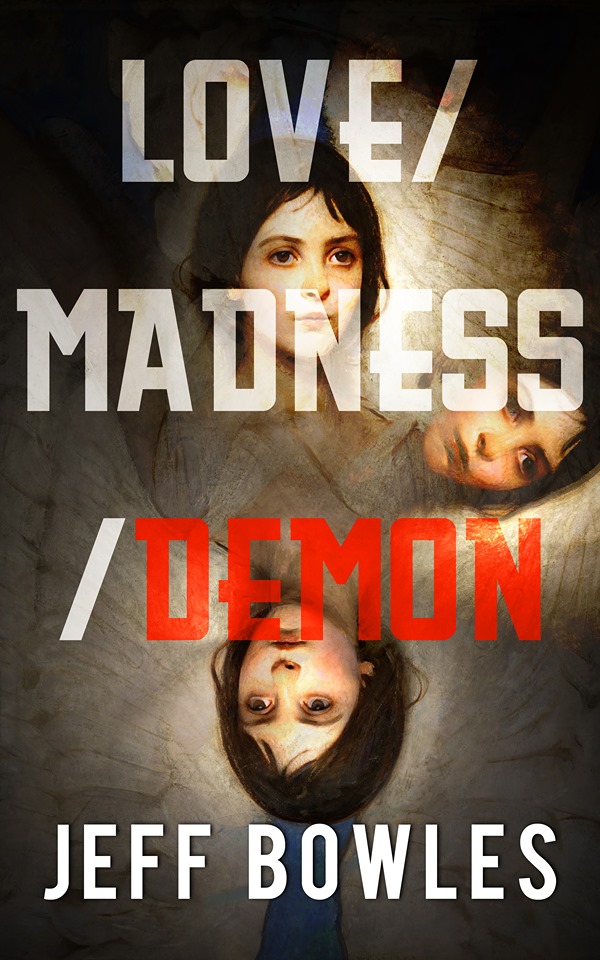
Jeff Bowles is a science fiction and horror writer from the mountains of Colorado. The best of his outrageous and imaginative work can be found in God’s Body: Book One – The Fall, Godling and Other Paint Stories, Fear and Loathing in Las Cruces, and Brave New Multiverse. He has published work in magazines and anthologies like PodCastle, Tales from the Canyons of the Damned, the Threepenny Review, and Dark Moon Digest. Jeff earned his Master of Fine Arts degree in creative writing at Western State Colorado University. He currently lives in the high-altitude Pikes Peak region, where he dreams strange dreams and spends far too much time under the stars. Jeff’s new novel, Love/Madness/Demon, is available on Amazon now!
Check out Jeff Bowles Central on YouTube – Movies – Video Games – Music – So Much More!
Share this:

Review in Practice: Newsletters – Bonuses & Reader Magnets, Frequency and Auto-Responders
Posted: August 1, 2022 Filed under: book marketing, Book Promotion, Book Review, marketing, Newsletter, Review in Practice | Tags: Kaye Lynne Booth, newsletters, Reader Magnets, Reader Platform, Review in Practice, Writing to be Read 5 CommentsOne aspect of book marketing I’ve been delving into is newsletters, or reader’s groups, if you prefer. It sounds a lot better to say, “Join my Reader’s Group” than it does to say, Subscribe to my Newsletter”. This is a suggestion that Andrea Pearson of the Six Figure Author Podcast offers, and I like it. Andrea Pearson is like the newsletter queen, marketing her own books through her newsletter successfully and teaching others how to do the same. She offers courses on Newsletter marketing among others through her website, and I’ve been fortunate enough to have taken the basic course, and I also have her Publish Strong box set. You can read my “Review in Practice” for that set here.
Other things that Andrea recommends is emailing frequently, like once a week, and I believe Kevin J. Anderson also follows this practice. To me this sounds like a lot. I feel like I would have to really like an author to not be annoyed to receive emails that frequently from them. After signing up for KJAs newsletter and receiving his auto-sequence, I found that it was kind of cool, and because some of them included newsletter bonuses of free books, I didn’t mind receiving those frequent emails at all.
But, let’s face it. We’re all not as prolific as KJA, or even as prolific as Andrea Pearson. Especially if you’re just starting out, you may be lucky if you can produce a book a year. I realized a while back that I wasn’t prolific and wrote a post about that here. Just as you need a hook for your stories to make readers want to read more, you also need a sales hook in your newsletter to make them want to read other things which you’ve written so you can grow your fanbase and email list. If you don’t write fast enough to produce several books a year, and if you don’t have a big backlist to draw from, don’t overlook the value of a good short story. While it’s true that short fiction is tougher to sell than novels, when it comes to newsletter magnets, short fiction can be an author’s friend.
In order to better understand how to make a newsletter work for me, I’ve subscribed to the newsletters of several big name authors to see how they set up their reader magnets and auto-sequences.

The Case of the Vanishing Boy is a short mystery story by Kristine Kathryn Rush that I received for free for signing up for the WMG Grab a Book and Chill newsletter; what indie authors call a reader magnet, designed to draw in new readers. ‘They’ say short fiction is harder to sell, whether we’re talking single stories, collections or anthologies. As a creator of anthologies, I believe ‘they’ are right. But short fiction can be great to use for newsletter bonuses, and/or reader magnets. This little mystery story was just the right length for me to enjoy and to made me feel as if I’d received a good value in exchange for my email address
Kristine Kathryn Rusch and her husband Dean Wesley Smith are both hybrid authors who have been in this business for many years and are both masters of short fiction, so receiving this story really was a treat. It was a fun mystery that could be read in one sitting. It’s hard not to give away spoilers on short stories, and for mysteries, spoilers could mean death. So instead of giving the whole brief plot away, let me just say that it was a fun mystery that could be read in one sitting. It was well-written and entertaining, stirring up questions throughout and providing a satisfying ending, just as a mystery story should.

A much darker read is He Meant No Harm, by Dean Wesley Smith, which serves as a second reader magnet for the WMG Grab a Book and Chill newsletter. I guess they figure at least one of the two books will appeal to you. Again, I’m not obligated to review, but did enjoy this brief trip down memory lane with the protagonist, although it left me walking away with a very different feeling from the one I had after reading the Rusch story, so perhaps they are onto something by offering two very different stories. This story was very brief, so my complaint here was that I was disappointed that there wasn’t more to it, (but that might just be me). It did have a full story arc, I just would have liked to have a bit more before it ended, so I guess I felt a little cheated.
I can’t say that about the reader magnet for the WMG Newsletter, The Rusch Reader: A Newsletter Exclusive, however. Just the opposite in fact. This collection of short fiction provides a delectable sampling from Kristine Katherine Rusch’s various short fiction series and spans across her genres, of which there are many, written under various pen names, as well as her own. The Rusch Reader is a book length collection of short fiction, all well-written and entertaining, all quite enjoyable to read, some which were downright memorable. And when you read as much short fiction as I do, that’s saying a lot. But the thing that adds the most value for me was the last sample book, which wasn’t a story at all, but a short non-fiction book on how to negotiate, which is invaluable for authors everywhere. Signing up for the newsletter is the only way you can acquire this fantastic collection, a sampling that may turn you into a die-hard Rusch reader, you must subscribe to Kristine Katherine Rusch’s newsletter, which makes it a great reader magnet and well worth giving up my email address.
For signing up for the Kevin J. Anderson reader group, I received a copy of one of his Dan Shamble Novels, Working Stiff, which I had previously read and reviewed in his Zomnibus. (You can read my review here.) His Dan Shamble books are always entertaining and fun to read, so this is an excellent choice for a reader magnate. Although it is not typical of his science fiction or fantasy series, but it is a way to get readers to take a look at what else he has available.
His second email in his auto sequence delivers a link to listen to his Clockwork Lives audiobook for free, which is pretty cool and making me feel even more value delivered.

His second email in his auto sequence delivers a link to listen to an audio reading by KJA of “The Percussor’s Tale” from the Clockwork Lives steampunk novel, written with Rush drummer Neil Peart, for free. This is pretty cool and making me feel even more value delivered.
The fifth email in his auto-responder offers another free book, The Kevin J. Anderson Complete Booklist and Reader’s Guide. What a clever way to make things easy for his readers. I’m impressed.
The sixth offers another free ebook, Blindfold. Which all leads into an offer to join his “KJA Special Forces” street team in the eighth email to be delivered over a month’s time from when I subscribed.
Previously, I had let my newsletter fall to the wayside for more than a year, but this research endeavor has convinced me that my Newsletter is one of my most valuable marketing tools. The subscribers are added to your email list, providing you with a direct way to engage with your readers, and you own that, not some third party middleman.
When I went back into my Mailchimp account, I found that they’d made a lot of changes and I had difficulty finding my way around and locating my past newsletter campaigns. I have since revived my newsletter, but I’m still struggling to figure out the auto-responder and other technological stuff. I’ll get it eventually. For now, I’m emailing monthly and figuring it all out as I go. I’ve managed to change my reader magnet, so when you join, you receive a free copy of my short story collection, Last Call & Other Short Fiction, and set up a Book Funnel link to deliver it, (I think – If you decide to join, I’d appreciate feedback to let me know if it is working properly).
My subscribers are not growing very fast, but I figure that will come in time, too. Different genre books target different reading audiences, so it’s more difficult to market as a multi-genre author, but with time, I’ll figure that one out, too. My newsletter journey is just beginning. If you’d like to join my new reader’s group to receive updates on new releases from WordCrafter Press, myself and others, as well as upcoming writing events, you can join here: https://mailchi.mp/64aa2261e702/klb-wc-newsletter. You’ll receive a copy of my short story collection just for joining. I do hope you’ll all come along for the ride.
_______________________________________________________________

For Kaye Lynne Booth, writing is a passion. Kaye Lynne is an author with published short fiction and poetry, both online and in print, including her short story collection, Last Call and Other Short Fiction; and her paranormal mystery novella, Hidden Secrets. Kaye holds a dual M.F.A. degree in Creative Writing with emphasis in genre fiction and screenwriting, and an M.A. in publishing. Kaye Lynne is the founder of WordCrafter Quality Writing & Author Services and WordCrafter Press. She also maintains an authors’ blog and website, Writing to be Read, where she publishes content of interest in the literary world.
_______________________________________________________________
Join Kaye Lynne Booth & WordCrafter Press Readers’ Group for WordCrafter Press book & event news, including the awesome releases of author Kaye Lynne Booth. Get a free digital copy of her short story collection, Last Call and Other Short Fiction, as a sampling of her works just for joining.
Share this:

The Many Faces of Poetry: Routinely
Posted: July 29, 2022 Filed under: Commentary, Poetry, The Many Faces of Poetry | Tags: Arthur Rosch, Poetry, Social Commentary, The Many Faces of Poetry, Writing to be Read 1 Comment
Routinely
Routinely. We
Drive 3 ton vehicles seventy miles per hour. We do this in swarms, crowds, jams, at all angles and approaches. Routinely. Somehow it’s unusual to die in traffic on the way home. I don’t understand it.
Routinely. We
Bathe ourselves in electronic light. Hours and hours each day the photons emitted by our gear pass through our bodies.
Routinely. We Eat food that amounts to tenderized and processed glue.
Routinely. We stay indoors for hours, days, weeks, even months. It’s what we’re SUPPOSED to be doing. Right?
Routinely. We talk to no one for months on end. We have plenty of chat, little real talk.
Routinely. We expose ourselves to huge clusters of information in the form of digital glop, yet somehow we only go slightly insane.
Routinely. We breathe toxins generated by our culture without being aware of it.
Routinely. We witness horrors on the news and barely shrug because we are numb to horrors in this age of surfeit of horrors.
Routinely. We vote for callous lying cretins and elect them to public offices they don’t deserve. Routinely we continue allowing venal malicious fools to exploit us without doing a goddam thing. Routinely we accept a political situation that would not be too difficult to change but we don’t change it even though it’s destroying us.
Routinely. We juggle scenes of increasing complexity.
Routinely. We melt down when the complexity is overwhelming. The crazy shit we do depends on who we emulate. Do we shoot up a supermarket or do we binge on ice cream?
Routinely. We are surprised by what happens when we process this degree of overstimulation and make terrible decisions. Routinely our judgment is flawed by the input of mis and dis information.
Trust nothing but your own experience. Routinely.
_________________________________________________________________________________

Arthur Rosch is a novelist, musician, photographer and poet. His works are funny, memorable and often compelling. One reviewer said “He’s wicked and feisty, but when he gets you by the guts, he never lets go.” Listeners to his music have compared him to Frank Zappa, Tom Waits, Randy Newman or Mose Allison. These comparisons are flattering but deceptive. Rosch is a stylist, a complete original. His material ranges from sly wit to gripping political commentary.
Arthur was born in the heart of Illinois and grew up in the western suburbs of St. Louis. In his teens he discovered his creative potential while hoping to please a girl. Though she left the scene, Arthur’s creativity stayed behind. In his early twenties he moved to San Francisco and took part in the thriving arts scene. His first literary sale was to Playboy Magazine. The piece went on to receive Playboy’s “Best Story of the Year” award. Arthur also has writing credits in Exquisite Corpse, Shutterbug, eDigital, and Cat Fancy Magazine. He has written five novels, a memoir and a large collection of poetry. His autobiographical novel, Confessions Of An Honest Man won the Honorable Mention award from Writer’s Digest in 2016.
More of his work can be found at www.artrosch.com Photos at https://500px.com/p/artsdigiphoto?view=photos
______________________________________________________________________
Want to be sure not to miss any of Arthur’s “The Many Faces of Poetry” segments? Subscribe to Writing to be Read for e-mail notifications whenever new content is posted or follow WtbR on WordPress. If you find it interesting or just entertaining, please share.
Share this:

Dark Origins, African Myths and Legends: Stories of the Western Cape – The Flying Dutchman #Ghoststories #FlyingDutchman #TableMountain
Posted: July 27, 2022 Filed under: Dark Origins, Ghost Stories, Mythology and Legend | Tags: African Legend, Dark Origins, Roberta Eaton Cheadle, Writing to be Read 42 Comments
In the late Middle Ages, the spice trade from India and the so called Silk Road from China were of economic importance to Europe. After Constantinople fell to the Ottoman Empire in 1453 the European overland trade routes were disrupted and they needed to find a sea route to India and China.
Christopher Columbus attempted to find a sea route to India by travelling westwards. He discovered the Americas.
Portuguese explorer, Diogo Cão, explored the African coast south to present-day Namibia, and, in 1488, Portuguese explorer, Bartolomeu Dias, discovered the Cape of Good Hope. In 1498, Vasco da Gama headed an expedition which led to the Portuguese discovery of a sea route to India. This route around the Cape of Good Hope (current day Cape Town) came into use by the European East India Companies.
The Cape of Good Hope was also known as the Cape of Storms because of the treacherous winter storms that resulted in a total of 26 shipwrecks at Cape Point alone.
Legend has it that when Bartholomew Dias rounded this Cape of Storms and saw Table Mountain, he thought he was seeing a gigantic titan of the deep with it’s head veiled in white clouds. He imagined that the tides that foamed around the foot of the great mountain were the titan’s roar. The moment of Dias’ first sighting of this titan was described in the poem, Lusiadas, by Portuguese poet, Camoes. Camoes called the monster Titan Adamastor and depicted him as condemned to dwell imprisoned forever in the ‘furtherest confines of the south’ – the Cape of Storms. According to the poem, this sentence was passed by Jupiter when the Titans were vanquished following a war between these deities that lasted ten years. Adamastor and his brothers were imprisoned in various huge mountains around the world. Adamastor was filled with bitterness at his imprisonment and at losing the love of the queen of the sea, Thetis, and he swore eternal vengeance on all who should approach him and disturb his solitude. He shouted his rage and warnings of doom at Dias when he rounded the Cape.
In 1500, Dias returned to the Cape of Storms on his way to Sofala. As his fleet rounded the Cape it encountered a violent storm. Four of the ships, including the one captained by Dias, disappeared and Adamastor’s warning was fulfilled. From this unfortunate maritime disaster, the legend of the Flying Dutchman came into being.
The Flying Dutchman is a legendary ghost ship which is said to have never been able to make port and is doomed to sail the oceans forever.
According to Wikipedia: “According to the legend, if hailed by another ship, the crew of the Flying Dutchman was said to try to send messages to land, or to people long dead. Reported sightings in the 19th and 20th centuries claimed that the ship glowed with a ghostly light. In ocean lore, the sight of this phantom ship is a portent of doom.” You can read more here: https://en.wikipedia.org/wiki/Flying_Dutchman

This is my reading on YT of the story of The Flying Dutchman from Myths and Legends of Southern Africa by Penny Mills:


About Roberta Eaton Cheadle

Roberta Eaton Cheadle is a South African writer and poet specialising in historical, paranormal, and horror novels and short stories. She is an avid reader in these genres and her writing has been influenced by famous authors including Bram Stoker, Edgar Allan Poe, Amor Towles, Stephen Crane, Enrich Maria Remarque, George Orwell, Stephen King, and Colleen McCullough.
Roberta has short stories and poems in several anthologies and has two published novels:
* Through the Nethergate, a historical supernatural fantasy; and
* A Ghost and His Gold, a historical paranormal novel set in South Africa.
Roberta has ten children’s books published under the name Robbie Cheadle.
Roberta was educated at the University of South Africa where she achieved a Bachelor of Accounting Science in 1996 and a Honours Bachelor of Accounting Science in 1997. She was admitted as a member of The South African Institute of Chartered Accountants in 2000.
Roberta has worked in corporate finance from 2001 until the present date and has written seven publications relating to investing in Africa. She has won several awards over her 20-year career in the category of Transactional Support Services.
Find Roberta Eaton Cheadle
Blog: https://wordpress.com/view/robertawrites235681907.wordpress.com
Twitter: https://twitter.com/RobertaEaton17
Facebook: https://www.facebook.com/robertawrites
Amazon: https://www.amazon.com/Roberta-Eaton-Cheadle/e/B08RSNJQZ5
_____________________________________________________________________________________________
Want to be sure not to miss any of Robbie’s “Dark Origins” segments? Subscribe to Writing to be Read for e-mail notifications whenever new content is posted or follow WtbR on WordPress. If you found it interesting or entertaining, please share.
Share this:

Writer’s Corner: What? I’m a business?
Posted: July 25, 2022 Filed under: Book Promotion, Indie Publishing, Promotion, Publishing, Self-Publishing, Writer's Corner, Writing, Writing Business | Tags: Independent authors, independent publishing, Kaye Lynne Booth, Publishing, Writer's Corner, Writing Business, Writing to be Read 6 Comments
Often it seems like everybody wants to be an author, and with the rise of digital publishing and print-on-demand, everyone pretty much can. After all, all it takes to write a book is an idea for a story, a general idea of story structure, and a basic knowledge of grammar and punctuation, right? Well… yes and no, but that is a discussion for a different post. For our purposes, we’re talking about writers who have what it takes to become an author.
However, many authors don’t realize how many non-writing tasks are involved in being an author. Because we aren’t just writing books, we want to sell them, too. And as soon as we start doing that, we become a writing business. That’s right. And we have market and sell our books, pay for websites so fans can find us, find reviewers, engage with readers, as well as putting out a newsletter and other types of advertising to sell our books. And we must keep track of expenses and earnings so we can properly pay our taxes. Yep. Authors really are a business.
As soon as you write your first book, (or story, or poem), you’ve created what they call IP (Intellectual Property), and you are faced with deciding how you want to handle it. In the past, an author would pitch their book to an agent or editor in the hopes of landing a traditional publishing deal, and if they were fortunate enough to land one, then they would sign a contract giving some, or all, of their rights in exchange for royalties, possibly with an advance of reasonable size against future royalties.
Traditional publishing is a traditionally slow business, so then, the author would sit back and wait from two to five years for their book to be published and then, wait even longer until their royalties are enough to pay back their advance, before receiving royalty checks, generally about 15% of sales, twice a year. So you see, by traditional publishing methods, most authors really were starving artists. Add to this that many traditional publishers required you to sign away rights that they never had any intention of using, but they just wanted to cover all of their bases, and would only allow their authors to put out one book a year, and you can see why many authors assumed pen names in other genres just to try and make ends meet.
Fortunately, with the rise of independent publishing, all that changed. Now days, authors who are more prolific and can produce more than one book per year, can write and publish as many as they want. And they can also sell or maintain whichever rights they want to. Independent authors are now dealing directly with book distribution platforms, or they can choose to give an additional percentage to an aggregator, who then places their book on the various distribution platforms, but they still receive a bigger percentage of their royalties than traditionally published authors do.
As explained in Dean Wesley Smith’s Magic Bakery, the IP for your creations are your products, which you can give away or sell in any way you wish, as long as you maintain control of your rights and manage them smartly. That is how successful authors today manage to keep their backlists working for them.
The flip side of this, is that independent authors don’t have publishers to edit and hone their books to perfection (editing), provide a cover (cover design), or get reviews (business) and market their books (marketing and promotion) for them. (I wrote a post about the many hats an author must wear today back in October of 2016 here, but I really had no idea at that time.)
So, these are other skill sets today’s authors must have or learn, or hire out and pay someone else to do them. If they chose to hire them out, then these things become additional business expenses. (The bold emphasis is to reiterate that authors are indeed, a business.) While much of the paid advertising works with numbers and data, authors better brush up on their math skills or hire someone to keep their books and figure their taxes, too. And when you chose to become an author, there are no employers to provide health or dental or vision insurance. The author is responsible for providing these things for themselves as a self-employed entity, because they are a business.
I hate to keep driving on that point, but it’s one which keeps slapping me in the face. Just when I think I’ve done my homework well and gained all the necessary skills to be a successful author, there it is again. At first, I thought that all I’d need was English, grammar and storytelling abilities. One I’d earned an M.F.A. in Creative Writing, I found that I needed marketing skills to peddle my wares. With almost a B.A. in marketing, and a M.A. in publishing, it looks as if may need a degree in business, as well. ( Okay, maybe not a full degree, but general business knowledge and a good understanding of the publishing industry are needed, because… yep, you got it, you’re a business.)
As a business, authors need to act as professionals, and do what they can to keep up to date on industry news and changes on social media channels and digital platforms which you use on promotions and advertising.
Another thing that I have learned is that even bestselling authors with a large backlist, need multiple streams of income to make their writing business work. It is just good sense in the rapidly changing world of digital technology, where the owners of digital platforms you use for promotion and distribution can change the rules without notice, to not place all of your literary eggs in one basket. The rapid changes to digital industry also mean that there is an abundance of helpful digital tools out there to help you in your writing business. But then, that just means that I need to learn new skills (tech skills) so I can use them!
And to think, I just wanted to write stories.
_________________________

Kaye Lynne Booth lives, works, and plays in the mountains of Colorado. With a dual emphasis M.F.A. in Creative Writing and a M.A. in Publishing, writing is more than a passion. It’s a way of life. She’s a multi-genre author, who finds inspiration from the nature around her, and her love of the old west, and other odd and quirky things which might surprise you.
Kaye Lynne Booth lives, works, and plays in the mountains of Colorado. With a dual emphasis M.F.A. in Creative Writing and a M.A. in Publishing, writing is more than a passion. It’s a way of life. She’s a multi-genre author, who finds inspiration from the nature around her, and her love of the old west, and other odd and quirky things which might surprise you.
She has short stories featured in the following anthologies: The Collapsar Directive (“If You’re Happy and You Know It”); Relationship Add Vice (“The Devil Made Her Do It”); Nightmareland (“The Haunting in Carol’s Woods”); Whispers of the Past (“The Woman in the Water”); Spirits of the West (“Don’t Eat the Pickled Eggs”); and Where Spirits Linger (“The People Upstairs”). Her paranormal mystery novella, Hidden Secrets, and her short story collection, Last Call and Other Short Fiction, are both available in both digital and print editions at most of your favorite book distributors.
When not writing, she keeps up her author’s blog, Writing to be Read, where she posts reflections on her own writing, author interviews and book reviews, along with writing tips and inspirational posts from fellow writers. In addition to creating her own very small publishing house in WordCrafter Press, she offers quality author services, such as editing, social media & book promotion, and online writing courses through WordCrafter Quality Writing & Author Services. As well as serving as judge for the Western Writers of America and sitting on the editorial team for Western State Colorado University and WordFire Press for the Gilded Glass anthology and editing Weird Tales: The Best of the Early Years 1926-27, under Kevin J. Anderson & Jonathan Maberry.
In her spare time, she is bird watching, or gardening, or just soaking up some of that Colorado sunshine.
_______________________________________________________________________
Join Kaye Lynne Booth & WordCrafter Press Readers’ Group for WordCrafter Press book & event news, including the awesome releases of author Kaye Lynne Booth. Get a free digital copy of her short story collection, Last Call and Other Short Fiction, as a sampling of her works just for joining.
Share this:

Book Reviews: Double Booked & Bump in the Night
Posted: July 22, 2022 Filed under: Book Review, Books, Fantasy, Humor, Kickstarter, Speculative Fiction | Tags: Bump in the Night, Dan Shamble Zombie P.I., Double Booked, Kevin J. Anderson, Kickstarter, WordFire Press, Writing to be Read 5 Comments
I recently supported a Kickstarter for Kevin J. Anderson and his latest Dan Shamble Zombie P.I. novel, Double Booked. (You can find out more about the Kickstarter campaign here.) As a bonus, I also received a new short story from same series, Bump in the Night. How cool is that?
I’ll be honest. I knew I was going to love Double Booked before I ever started reading it. That’s why I supported the Kickstarter to get it. I’ve read several, if not all of the Dan Shamble Zombie P.I. series, and I have reviewed them here on Writing to be Read. (You can find my previous review of the Dan Shamble Zomnibus: Death Warmed Over & Working Stiff here.)

I was not disappointed. Double Booked is filled with Dan Shamble’s ghoulish zombie humor and all the loveable characters we’ve grown to love from this series. Once again, Dan, his ghostly girlfriend, Sheyenne, his human lawyer partner, Robin, and his vampire half-daughter, Alvina, are trying to save the unnatural quarter of the world after The Big Uneasy brought all manner of monsters to life. Dan Shamble is charged with the protection of the retired eccentric librarian who some say is responsible for bringing about The Big Uneasy, but when whole neighborhoods begin disappearing and the book behind it all is stolen, Dan Shamble has more than enough to keep him shambling through the Unnatural Quarter trying to solve this double mystery.
Likewise, with the short story bonus book, “Bump in the Night”, was equally entertaining as Dan Shamble and company try to save the Boogeyman from his overbearing aunties. Even though it is a brief tale, it’s an entertaining read.
Honestly, you know any of the books in the Dan Shamble Zombie P.I. series, by Kevin J. Anderson, are going to be an entertaining read, so Double Booked was no surprise, as it kept things rolling so readers won’t want to put it down. The bonus short story, “Bump in the Night”, was a pleasant surprise-not because it was an enjoyable read, but because it was an unexpected bonus. I can’t find it on Amazon or on the WordFire Press site, to offer my review there, but I give both books five quills.

___________________________________________________________________
Kaye Lynne Booth does honest book reviews on Writing to be Read in exchange for ARCs. Have a book you’d like reviewed? Contact Kaye at kayebooth(at)yahoo(dot)com.
Share this:

The release party you won’t want to miss
Posted: July 18, 2022 Filed under: Anthology, Book Event, Book Promotion, Book Release, Books, Classics, Collaboration, Dark Fantasy, Fairy Tales, Fantasy, Fiction, Historical Fiction, Mythology and Legend, Publishing | Tags: Book Release, Dark Fantasy, Fairy Tales, Fantasy, Gilded Glass, Myths, Publishing, Release Events, Science Fiction, Western State College, Writing to be Read 6 Comments
Gilded Glass is scheduled for release on July 19th. This is a fantastic anthology of Twisted Myths & Shattered Fairy Tales which will stay with you long after the cover closes.
A mirror is far more than meets the eye. When you gaze into the gilded glass, what do you see—and what looks back at you?
A beautiful woman hiding an ugly secret?
A malevolent king who delivers a fate worse than death?
An urban legend who will becomes an unlikely ally?
An alien gladiator with reflective armor?
A monster to the rescue?
A goddess?
A distorted version of yourself?
Dare to gaze into these 24 original tales of sweet deceptions and cursed truths by Sherrilyn Kenyon, Jonathan Maberry, Alan Dean Foster, Kristine Kathryn Rusch, Michaelbrent Collings, and more.
Edited by international bestseller Kevin J. Anderson and Allyson Longueira and their Publishing graduate students at Western Colorado University, Gilded Glass: Twisted Myths and Shattered Fairy Tales offers stories with diverse roots, characters, and cultures, from frightening to funny, from once upon a time to far-flung futures and back to the modern day.
Deals are made and wishes granted. Friendships forged and enemies vanquished. You’ll love this anthology of modern myths, lore, and fairy tales, because everyone enjoys a happily ever after…
…or do they?
Stare deep into the gilded glass.
What you find might haunt you.
You can pre-order a copy of your own on the WordFire Press website here: wordfirepress.com/gpcw
Virtual Release Party
Join us on July 20th, at 6 p.m. MT, for the virtual book launch and help us send this exceptional anthology of modern myths and fairy tales off right. Meet the editors of Gilded Glass, and special author guests as we celebrate the release of this collection of science fiction and fantasy stories from both new and established writing talents.
In addition, there will be opportunity to learn more about all of the Western publishing cohort’s exciting solo projects. See how we’ve revived the classic works of masters of the past to be enjoyed in the future.

You can learn more about this terrific event on the Facebook event page and find a link to the livestream event here: https://www.facebook.com/events/4958121874299623/
Share this:

Mind Fields: Two Of My Thoughts
Posted: July 15, 2022 Filed under: Commentary, essays, Mind Fields, Opinion | Tags: Arthur Rosch, Mind Fields, Social Commentary, Writing to be Read 1 Comment
Two Of My Thoughts
#1
Discernment is the ability to obtain sharp perceptions or to judge well. That’s from Webster’s dictionary. I bring it to your attention because if this nation is suffering from a widespread psychological disorder it is this: a lack of discernment. It is the inability to judge well from the information that’s available. There are millions of casualties to this disease which is more sinister than Covid 19. It is something that has no name. I call it The Plebny or Recalcitrant Flux. Any force, power or person who spreads this disease is committing crimes against our planet. In this turbulent time we NEED discernment to pick our way through the fields of ignorance and bad information. Listen to me: bad information. There’s no such thing as bad information. I refer to the mis and disinformation filled with distorted content, warped propaganda, mendacity in the service of ego and power. We’re afflicted by people in power who lie automatically, without internal scanning or external censorship. Damage is being done! Without discernment we are easily manipulated, like cattle being led by nose rings. Further, these people without discernment are unaware of their lack. It is impossible to engage in dialogue with people who can’t perceive with precision and conscience. I am willing to consider other points of view. I’m not stuck. It takes a little effort to discern things. It takes honesty, most of all. With whom are we honest? We must be honest with ourselves most of all because human beings have a tendency towards various mental impediments to honesty like Denial, Shame, Depression, Grandiosity, Narcissism, Sociopathy, Psychopathy, Crushed Affect, Sleepwalkers Syndrome, Intentional Psychomyopathy and Heartbane. There are so many wacked out people in the world that the earth is saturated with their craziness.
A few wild names in there? Blame Mad Magazine and my high school pal and class comedian, Jay Grodsky, for that. We made up goofy names together. He had a ducktail in the back of his head and a giant spit curl falling across his forehead and he was the coolest guy in the world. This was WAY before Travolta but about contemporary with Edward “Cookie” Burns. Jay’s divorced mom didn’t care what he did and he had this big house to fool around in. I idolized Jay but I fear that he barely knew I existed. I wasn’t very cool. In those days I absorbed the coolness of others rather than, as I do now, generate coolness from my nature. I am a cool guy. I waft coolness from my pores.
#2
I think poets write for themselves. I never expect anyone to read my poems. And if they did, what would they make of them? I read a few poets. it’s never been the most fascinating literary form for reading. It’s great fun to write it. When a poem occurs for me, I’m in love with the language. I’ve made it do something it’s never done before. Language exudes emotion. Can I possibly convey how I feel in love?
I’m in love with my therapist. That’s both corny and compelling. A great therapy is one where you and your therapist fall in love, but have enough sense to stay therapeutic rather than personal. I don’t know my therapist. I don’t have to; not to love her. Believe me, I love her with a deeply lusty feeling. I love her with my body. Other than a few hugs we’ve never touched. But I love her in many ways. I told her that I love her for what she knows about me. I’m already inside of her. By knowing me, she loves me, and that’s the whole story. She gives me definition, the outlines of my bones and organs become visible.
___________________________________________________

Arthur Rosch is a novelist, musician, photographer and poet. His works are funny, memorable and often compelling. One reviewer said “He’s wicked and feisty, but when he gets you by the guts, he never lets go.” Listeners to his music have compared him to Frank Zappa, Tom Waits, Randy Newman or Mose Allison. These comparisons are flattering but deceptive. Rosch is a stylist, a complete original. His material ranges from sly wit to gripping political commentary.
Arthur was born in the heart of Illinois and grew up in the western suburbs of St. Louis. In his teens he discovered his creative potential while hoping to please a girl. Though she left the scene, Arthur’s creativity stayed behind. In his early twenties he moved to San Francisco and took part in the thriving arts scene. His first literary sale was to Playboy Magazine. The piece went on to receive Playboy’s “Best Story of the Year” award. Arthur also has writing credits in Exquisite Corpse, Shutterbug, eDigital, and Cat Fancy Magazine. He has written five novels, a memoir and a large collection of poetry. His autobiographical novel, Confessions Of An Honest Man won the Honorable Mention award from Writer’s Digest in 2016.
More of his work can be found at www.artrosch.com
Photos at https://500px.com/p/artsdigiphoto?view=photos
______________________________________________________
Want to be sure not to miss any of Arthur’s “Mind Fields” segments? Subscribe to Writing to be Read for e-mail notifications whenever new content is posted or follow WtbR on WordPress. If you find it interesting or just entertaining, please share.










Mind Fields: When We Are The Sociopaths
Posted: August 5, 2022 | Author: artrosch | Filed under: Commentary, Opinion, The Human Condition | Tags: Arthur Rosch, Mind Fields, Social Commentary, The Human Condition, Writing to be Read | Leave a commentThe Sociopaths
If you vote for a sociopath to serve in public office, you may be acting from your own sociopathic tendencies. Americans have succumbed to a sociopathic culture that is sad and shocking. It isn’t wealth or poverty that counts in the USA. It’s numbness to the suffering of others. It is disturbing that numbness has spread itself wide, that apathy has replaced interest in public discourse. The awful fact is that people are dead inside. How do I know this? I know it from personal experience. I was also dead inside. Now, I have a bit of life within myself. I continue to fight this social and spiritual desolation. I am less dead than in the past. I use every tool I can grasp: therapy, meetings with a group, reading about psychology, learning about Consciousness itself.
Growing up in a typically dysfunctional family has left me reeling with emotional pain and often engaged in struggles with addiction and other debilitating conditions. I didn’t want this! I wanted to live free and happy but that is neither possible nor even desirable. I have learned patience and the ability to frame my narratives of pain in terms that show their creative importance.
As far as I know, I was not “sent here” by anyone other than another faculty of my very core SELF. We need to understand that possession of a Self is a very high privilege, a vital connection between what is human and what is not of this world but of some inner possibility. Selfness is a condition of consciousness, a unique and important faculty of identity. It isn’t random, it doesn’t come from nowhere. It comes from within the mind and the fact that there IS a mind at all is crucial. Why? Why have a mind? Of what evolutionary use is a mind? All creatures have minds and some of them may be highly organized and developed. We have no idea what goes on in the mind of an animal like a whale or an elephant. It seems clear from observation that they are not automatons. Nor are they entirely conditioned by nature. There is something else, something beyond our grasp, about the minds of other species. We are desperately uninformed. At best, we are guessing, by way of zoologists, veterinarians, communicators and empaths.
What if a blue whale knows about the cosmos from an entirely different perspective? What if its brain produces some profound psychedelic that eludes human beings? In its own way it may be swimming among the stars. Is there not an inner life within the life we see? Should not a bear possess an inner life? Does not its memory belong to the universe?
It is essential to respect ALL life forms as conscious and sentient. The concept that MAN is above all other life forms is specious and dangerous. We need to get over ourselves.
_______________________________________________________________________
Arthur Rosch is a novelist, musician, photographer and poet. His works are funny, memorable and often compelling. One reviewer said “He’s wicked and feisty, but when he gets you by the guts, he never lets go.” Listeners to his music have compared him to Frank Zappa, Tom Waits, Randy Newman or Mose Allison. These comparisons are flattering but deceptive. Rosch is a stylist, a complete original. His material ranges from sly wit to gripping political commentary.
Arthur was born in the heart of Illinois and grew up in the western suburbs of St. Louis. In his teens he discovered his creative potential while hoping to please a girl. Though she left the scene, Arthur’s creativity stayed behind. In his early twenties he moved to San Francisco and took part in the thriving arts scene. His first literary sale was to Playboy Magazine. The piece went on to receive Playboy’s “Best Story of the Year” award. Arthur also has writing credits in Exquisite Corpse, Shutterbug, eDigital, and Cat Fancy Magazine. He has written five novels, a memoir and a large collection of poetry. His autobiographical novel, Confessions Of An Honest Man won the Honorable Mention award from Writer’s Digest in 2016.
More of his work can be found at www.artrosch.com
Photos at https://500px.com/p/artsdigiphoto?view=photos
__________________________________________________________________________________
Want to be sure not to miss any of Arthur’s “Mind Fields” segments? Subscribe to Writing to be Read for e-mail notifications whenever new content is posted or follow WtbR on WordPress. If you find it interesting or just entertaining, please share.
Share this: