Writer’s Corner – Getting Your Books Into Libraries and Bookstores
Posted: November 14, 2022 Filed under: book marketing, Books, Indie Publishing, Libraries, WordCrafter Press, Writing | Tags: Book Distributors, Bookstores, Libraries, Publishing, WordCrafter Press, Writing to be Read Leave a comment
Question: What advantage do traditional publishers have that indie publishers and authors don’t?
Answer: The ability to get their books into libraries and brick and mortar bookstores, where many readers actually go to find books.
No, really. Not everybody buys from Amazon. And while many authors sign on exclusively so their books can be in KU, there are other book distributors out there if you choose to publish wide. (See my post on why I publish wide.) It doesn’t make sense to me to limit yourself to a single sales channel when there are so many out there, and that goes for utilizing libraries and brick and mortar book stores.
There are a few obstacles which indie authors face in getting their books into libraries and bookstores, partially due to Amazon. They don’t like Amazon, and many brick and motar stores, even independent ones, won’t even look at carrying books which can only be ordered through the big book bully. Going wide solves that delimma, but there’s still the age old tradition of selling to bookstores at wholesale and allowing them to be returned.
Many authors may not know this about the publishing industry, but traditional publishers decided a long time ago to allow bookstores to buy at wholesale, which is less royalties for the author, but might be understandable. But they didn’t stop there. They also gave bookstores permission to return any books they don’t sell, if they choose to. Traditional publishers go through enough books, that returns may not put a dent in them, but to assure that it didn’t, they deducted it from the author’s cut. This practice can be devastaing to an indie author who is unprepared, to suddenly get a seven or eight hundred dollar return charge when they are not expecting it. Fortunately, an indie author can now opt to not allow returns, and I think D2D does this for you automatically, so the author won’t be caught by this surprise expense. Unfortunately, as soon as you decide to not take returns, you may be eliminating brick and mortar stores from your distributor list, because most bookstores won’t buy books they can’t return. This is one of those outdated dinosaur practices started by traditional publishing, but bookstores don’t want it to change.
Libraries are the same in many ways. They don’t like Amazon and won’t order books from them. But there are certain lists put out by distributors who work solely with libraries, such as Overdrive, and if your book isn’t on that list, they won’t consider carrying it. Libraries have been smart enough to include digital lending, but the lists are extensive and before they can lend out your book, they have to know that your book exists, and it helps a lot if they know someone wants to read it. So the first task for an indie author who wants their book in libraries is to be sure their book is carried by the library distributors, so that librarians can find it.
But that’s not enough. Librarians have to know that your book exists and that people want to read it.That’s why authors need to get to know and be familiar with their local librarians. When you know them, it’s easier to ask them to carry your book, and sometimes that’s all it takes if you have established a relationship with them. If you can get readers to request your books from their local libraries, all the better.
Now you might ask yourself, why go to all this trouble to get into libraries, where they will only buy one or two print copies at the most. That’s where the digital lending program becomes of interest, because most libraries follow one of two models, which pay authors a set amount per checkout, which can add up if your books are popular. But more than that, libraries are a way to reach out to potential readers, because when a reader finds an author they like, they are likely to want to read more of their work. And library patrons are hardcore readers, especially these days when it is so easy to sit at home and order up your reading material at the click of a button.
I think that’s enough reason to warrent the extra effort required to get my books into libraries. All WordCrafter Press books are available on Overdrive and other library distributors, so they will be easy to find when people request a WP book. I’m working to get my local libraries to carry WP books, and since I live in a rural area, there are at least three libraries which I consider local. But I need to get out the word and have readers and contributors request WP titles and make librarians aware of their existance, and that’s part of what this post is about, even if the titles you want are not published by WordCrafter Press, beacuse this can help all authors – spreading this message:
Go to your local library and ask for the titles that you crave,
so you can read them for free,
and help your favorite authors at the same time.
_____________________________________________________________________

For Kaye Lynne Booth, writing is a passion. Kaye Lynne is an author with published short fiction and poetry, both online and in print, including her short story collection, Last Call and Other Short Fiction; and her paranormal mystery novella, Hidden Secrets. Kaye holds a dual M.F.A. degree in Creative Writing with emphasis in genre fiction and screenwriting, and an M.A. in publishing. Kaye Lynne is the founder of WordCrafter Quality Writing & Author Services and WordCrafter Press. She also maintains an authors’ blog and website, Writing to be Read, where she publishes content of interest in the literary world.
____________________________________________________________________
Join Kaye Lynne Booth & WordCrafter Press Readers’ Group for WordCrafter Press book & event news, including the awesome releases of author Kaye Lynne Booth. Get a free digital copy of her short story collection, Last Call and Other Short Fiction, as a sampling of her works just for joining.
Share this:

Book Reviews: “The Unexpected Enlightenment of Rachel Griffin” & “Down to Dirt”
Posted: November 11, 2022 Filed under: Alternate Worlds, Book Review, Books, Fantasy, Review, Science Fiction | Tags: Alternate World, Book Review, Fantasy, Kevin Killiany, L. Jagi LAmplighter, Science Fiction, The Unexpected Enlightenment of Rachel Griffin, Writing to be Read 2 Comments
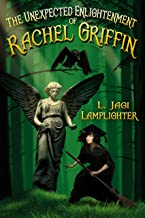
The Unexpected Enlightenment of Rachel Griffin
Hogwarts hasn’t got anything on Roanoke Academy and the magical world created by L. Jagi Lamplighter in The Unexpected Enlightenment of Rachel Griffin. Rachel Griffin has worked hard to prepare for attending, and now as one of the youngest students at Roanoke, she has a lot of expectations to uphold and her magic must be in top form to keep up with the rest of her class. But there is something amiss at Roanoke Academy; a new magic being used for ill gains, an assasin disguised as an agent, a princess who goes places whenever she touches certain people, and a raven which only Rachel can see. Rachel must figure out what is happening and how to battle the forces of evil which seem to be decending upon them and threaten to take over her magical world.
Skillfully crafted to offer up all the pieces for readers to put the puzzle together. It’ a lot shorter than the story about the kid with the owl but just as thoroughly entertaining. Rachel Griffin is a sharp young lady with magical inclinations that will win your heart and make you want more. I give The Unexpected Enlightenment of Rachel Griffin five quills.

Purchase Link: https://www.amazon.com/Unexpected-Enlightenment-Rachel-Griffin-Books-ebook/dp/B01FVJ7DAY
Down to Dirt
Down to Dirt, by Kevin Killiany is a wonderful young adult science fiction novel with an underlying social moral. after spending her whole life in space, Mara’s family decides to send her to visit her Earth bound relatives on what spacers call Dirt. She arrives on Earth fearful and a little confused, but within a few weeks she will come to question everything she has ever been taught about Dirt. With a little help from her cousin, Beth, and her friend Jael, who each in thier own way challenge the prejudices that came with her, Mara begins to see things in different light.
Down to Dirt addresses social issues via a fictional alternate timeline world to create a story which is both engaging and entertaining. I give it five quills.

Purchase Link: https://www.amazon.com/Down-Dirt-Stars-Book-ebook/dp/B01HDT14HI
_________________________________________________
Join Kaye Lynne Booth & WordCrafter Press Readers’ Group for WordCrafter Press book & event news, including the awesome releases of author Kaye Lynne Booth. Get a free digital copy of her short story collection, Last Call and Other Short Fiction, as a sampling of her works just for joining.
Share this:

Growing Bookworms – The importance of colour when illustrating children’s books #childrensfiction #readingcommunity #growingbookworms
Posted: November 9, 2022 Filed under: Books, Children's Books, Education, Illustrations, Literacy, Parenting, Reading | Tags: Children's Books, Color, Growing Bookworms, Illustrations, Parenting, Writing to be Read 43 Comments
Many children’s picture books make use of brightly coloured cartoon style illustrations. Children are attracted to bright colors such as red, yellow, green, blue, and pink. These colors create a sense of energy and playfulness and also emanate happiness. Colour impacts on children’s moods, behaviour, and educational performance.
Part of the reason children prefer bright colours is because saturated colours are easier for young, developing eyes to see. Bright colors and contrasting colors stand out more in a child’s field of vision than feinter shades.
Colour effects the way the brain functions and can be used by illustrators to encourage pattern recognition, memory, and the ability of young readers to absorb new information.
Here are a few examples of colours and how they can be used for learning:
RED – a powerful and attention-grabbing colour, red stimulates alertness and excitement. It encourages creativity and can also increase appetite.
BLUE – provides a sense of comfort by exuding calmness, loyalty, peace, serenity, and security.
YELLOW – encourages positive feelings and improves concentration by promoting creativity, clarity, and optimism.
GREEN – symbolises nature and the natural world. Green relieves stress and provides a sense of healing. It also represents balance, growth, tranquillity, cleanliness and calmness.
ORANGE – like red, orange is an energetic colour that promotes alertness. Orange creates a sense of passion, warmth, excitement and encourages communication.
PINK – symbolises love, romance, nurture, warmth, calmness, and imagination.
It is also important for illustrators, or writers engaging an illustrator, to note that colours can also overstimulate children, instead of inspiring them, so a balance of bright and neutral colours is required for illustrations.
I illustrate my own children’s books and I try to apply these principles in my own work. This is a collage of a selection of my fondant and cake art illustrations.

My illustrations have proved popular with children so I think I am getting the colour coding right.
These are some examples of famous children’s books and illustrators:


What do you think? Do you like bright colours? Have you written a children’s book and illustrated it yourself or engaged an illustrator? Let me know in the comments.
About Robbie Cheadle

Robbie Cheadle is a South African children’s author and poet with eleven children’s books and two poetry books.
The eight Sir Chocolate children’s picture books, co-authored by Robbie and Michael Cheadle, are written in sweet, short rhymes which are easy for young children to follow and are illustrated with pictures of delicious cakes and cake decorations. Each book also includes simple recipes or biscuit art directions which children can make under adult supervision.
Robbie and Michael have also written Haunted Halloween Holiday, a delightful fantasy story for children aged 5 to 9 about Count Sugular and his family who hire a caravan to attend a Halloween party at the Haunted House in Ghost Valley. This story is beautifully illustrated with Robbie’s fondant and cake art creations.
Robbie has published two books for older children which incorporate recipes that are relevant to the storylines.
Robbie has two adult novels in the paranormal historical and supernatural fantasy genres published under the name Roberta Eaton Cheadle. She also has short stories, in the horror and paranormal genre, and poems included in several anthologies.
Robbie Cheadle contributes two monthly posts to https://writingtoberead.com, namely, Growing Bookworms, a series providing advice to caregivers on how to encourage children to read and write, and Treasuring Poetry, a series aimed at introducing poetry lovers to new poets and poetry books.
In addition, Roberta Eaton Cheadle contributes one monthly post to https://writingtoberead.com called Dark Origins: African Myths and Legends which shares information about the cultures, myths and legends of the indigenous people of southern Africa.
Robbie has a blog, https://robbiesinspiration.wordpress.com. where she shares book reviews, recipes, author interviews, and poetry.
Find Robbie Cheadle
Blog: https://www.robbiecheadle.co.za/
Blog: robbiesinspiration.wordpress.com
Twitter: BakeandWrite
YouTube: https://www.youtube.com/channel/UCVyFo_OJLPqFa9ZhHnCfHUA
Facebook: Sir Chocolate Books
______________________________________________________________________________________________
Want to be sure not to miss any of Robbie’s “Growing Bookworms” segments? Subscribe to Writing to be Read for e-mail notifications whenever new content is posted or follow WtbR on WordPress. If you found it interesting or entertaining, please share.
Share this:

An ATV ride on an autumn afternoon
Posted: November 7, 2022 Filed under: Poetry, Writing Inspiration, Writing Life | Tags: Kaye Lynne Booth, Nature, Poetry, Writing to be Read 4 CommentsI took an ATV ride today and just had to share the fall colors with you.


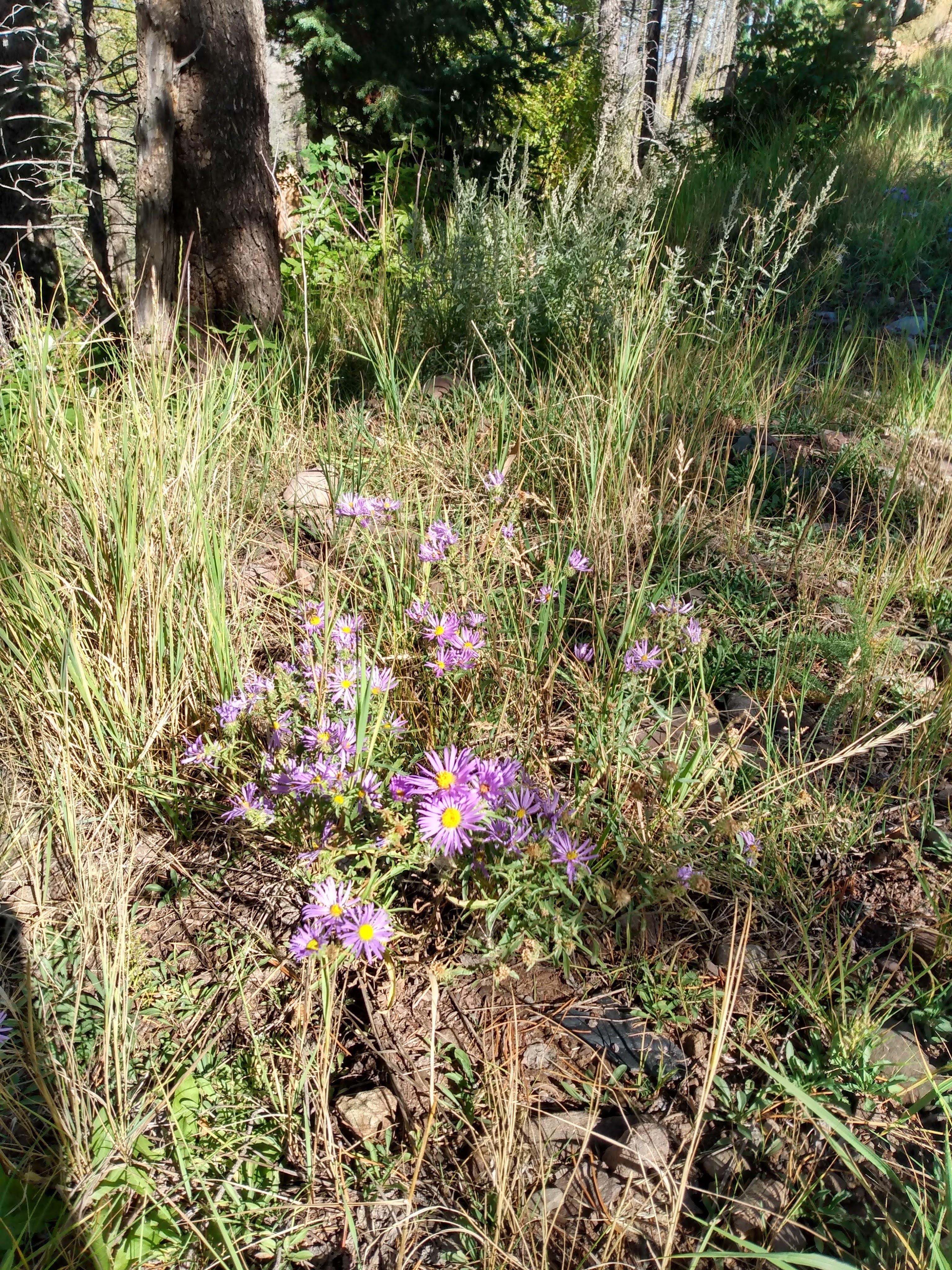


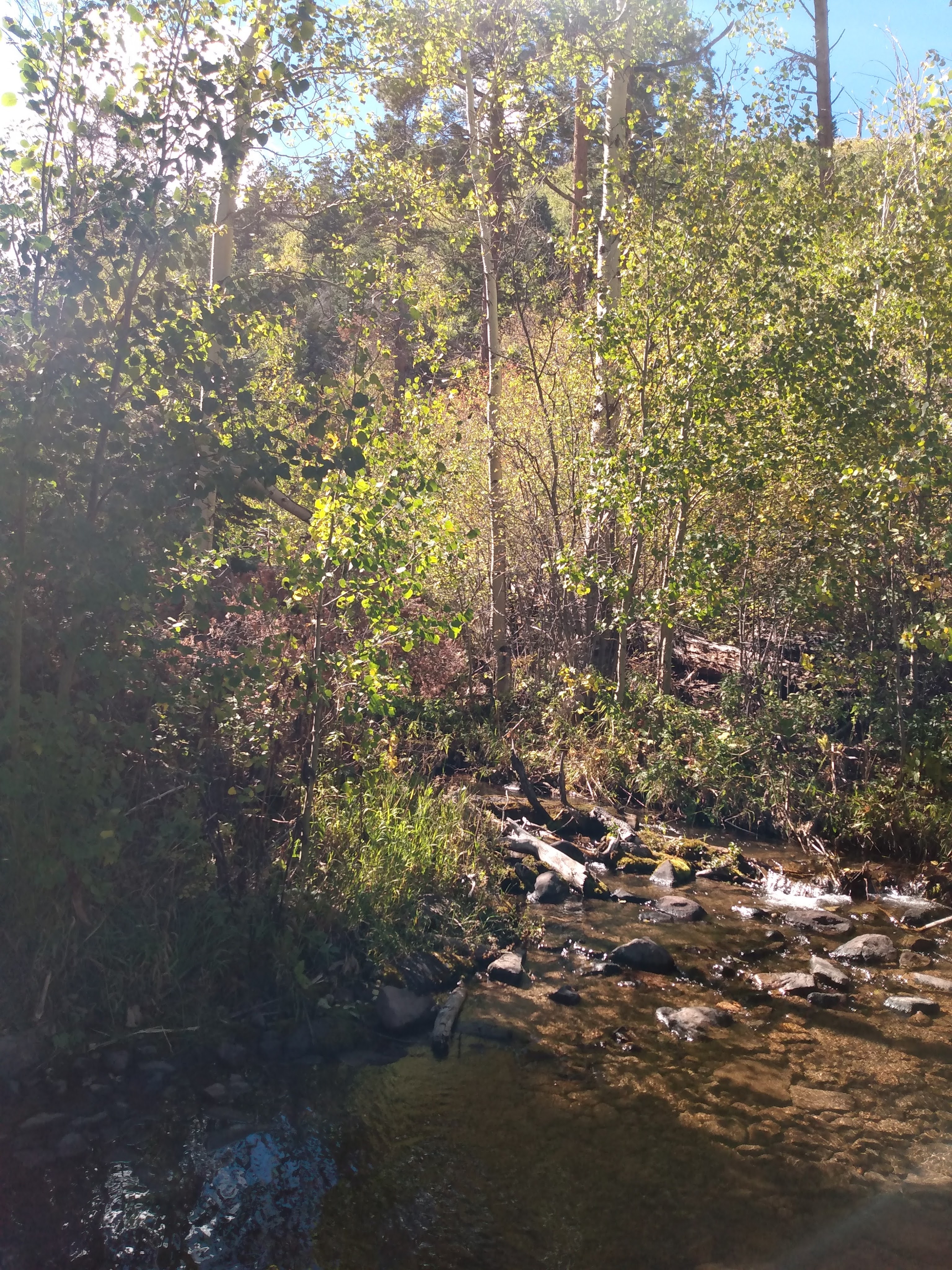
Aspens are my favorite trees, as you might guess. Let me also share a poem about them which seems fitting. This is a minimalist poem which I’m particularly found of. It was published in Colorado Life magazine (September/October 2016). I do hope you enjoy it.
Aspen Tree
Dark eyes staring out of white bark
Scantily clad by quivering green leaves
Turning waxy yellow in fall
Stark and exposed in winter
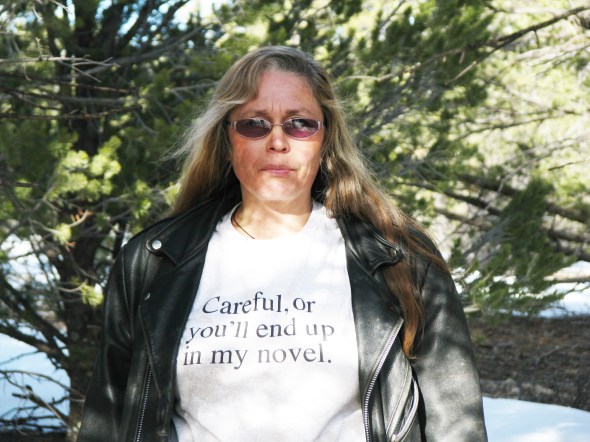
For Kaye Lynne Booth, writing is a passion. Kaye Lynne is an author with published short fiction and poetry, both online and in print, including her short story collection, Last Call and Other Short Fiction; and her paranormal mystery novella, Hidden Secrets. Kaye holds a dual M.F.A. degree in Creative Writing with emphasis in genre fiction and screenwriting, and an M.A. in publishing. Kaye Lynne is the founder of WordCrafter Quality Writing & Author Services and WordCrafter Press. She also maintains an authors’ blog and website, Writing to be Read, where she publishes content of interest in the literary world.
_________________________
Join Kaye Lynne Booth & WordCrafter Press Readers’ Group for WordCrafter Press book & event news, including the awesome releases of author Kaye Lynne Booth. Get a free digital copy of her short story collection, Last Call and Other Short Fiction, as a sampling of her works just for joining.
Share this:

Mind Fields: Poems And Ideas For The Field Of Mind
Posted: November 4, 2022 Filed under: Mind Fields, Poetry | Tags: Arthur Rosch, Mind Fields, Poetry, Writing to be Read 2 Comments
Intrinsic humility is the understanding that one’s own life may be full of fascinating details but the lives of countless others are equally as fascinating to themselves as your life is to you.
Sound of rainfall:
tiny infant fingers
tapping the roof
thousands at a time.
The Enemy
Life is not my enemy. True,
It will kill me before too long but
death is the act of highest compassion.
I have a purpose. How kind of life to provide
me with that sense of my being.
Life is not my enemy. How would a great teacher be
a nemesis unless it was necessary? Life is not my enemy.
We Must Fix What Is Left
Oct 31, 2022
“It’s broken.” My grandson stands over his red fire truck.
The wheels have come off. The boy’s lower lip thrusts out and I can see that his heart is broken too. If I tell him that it’s just a toy, he won’t be comforted. This was the only truck in his world and now his grief will carry him to a child’s little hades, for just a minute. What is a minute to a three year old? It may as well be forever. For the duration of that minute all hell breaks loose and his tears and rage fill the room till all the grown-ups flee. Except me. I’m the baby sitter. I know how he feels. The world is broken, our world. And it was we who broke it, stuffed it, neglected it, tore its roots out. Has it come to this? My grief for a broken world carries me to my own hades, my underworld of sorrow where what has been done cannot be undone until we have atoned like ancient Jews on Yom Kippur.? What punishment do we receive if we fail to atone? Regret, more like: oh the regret we have yet to feel as the land sinks and the seas rise. Our earth is frangible, it can be waylaid like the victims of highway robbery. “Hands up, planet!” The men in dark suits are digging holes. “Can’t you see we’re busy here? Go away with your storms. We know how to deal with your kind!”
They’re only doing their jobs, they’re following orders.
“Take them away,” croaks the man in the suit and tie. “Take them away and hide them in the deepest mines.”
It’s broken. Can it be fixed? The next generations are tasked with this inhuman mess. They will have to be strong beyond what we know. They will have to develop themselves in unforeseen ways to have the stamina to work within the broken systems on the derelict highways. Armageddon will be indefinitely postponed. It already happened and we missed it. We were busy fighting. The next apocalypse will hit us before we’re ready. That is the nature of things. We have only the promise in Luke and Mark and John, Christians before Christianity, who learned that the lilies of the field will always be in their raiment, even if it is only in heaven.
I Forget
September 26, 2022
I forget that evil tyrants run the world.
I forget that artists and thinkers
barely exist, barely scratch by
with a sigh, with patient resignation.
I forget that kindness is hindered
at every turn by evil intentions of those who command
the power of Calamity. I forget
that bad guys have no love
but don’t even miss it. I forget
that tenderness is
but a beginning to ever greater tenderness.
I forget that
we create ourselves in versions
of the pattern laid down within
the great infinite Memory. I forget everything
except that I exist and sometimes I forget that, too.
What I remember is this: I am aware of you. I am aware of your scent and the streams of feeling that flow between us.
That I Can Never Forget.
________________________
Arthur Rosch is a novelist, musician, photographer and poet. His works are funny, memorable and often compelling. One reviewer said “He’s wicked and feisty, but when he gets you by the guts, he never lets go.” Listeners to his music have compared him to Frank Zappa, Tom Waits, Randy Newman or Mose Allison. These comparisons are flattering but deceptive. Rosch is a stylist, a complete original. His material ranges from sly wit to gripping political commentary.

Arthur was born in the heart of Illinois and grew up in the western suburbs of St. Louis. In his teens he discovered his creative potential while hoping to please a girl. Though she left the scene, Arthur’s creativity stayed behind. In his early twenties he moved to San Francisco and took part in the thriving arts scene. His first literary sale was to Playboy Magazine. The piece went on to receive Playboy’s “Best Story of the Year” award. Arthur also has writing credits in Exquisite Corpse, Shutterbug, eDigital, and Cat Fancy Magazine. He has written five novels, a memoir and a large collection of poetry. His autobiographical novel, Confessions Of An Honest Man won the Honorable Mention award from Writer’s Digest in 2016.
More of his work can be found at www.artrosch.com
Photos at https://500px.com/p/artsdigiphoto?view=photos
__________________________
Want to be sure not to miss any of Arthur’s “Mind Fields” segments? Subscribe to Writing to be Read for e-mail notifications whenever new content is posted or follow WtbR on WordPress. If you find it interesting or just entertaining, please share.
Share this:

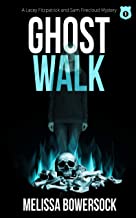
Book Review: Ghost Walk
Posted: October 28, 2022 Filed under: Book Review, Books, Fiction, Ghost Stories, Mystery, Review | Tags: Book Review, Books, Crime Fiction, Ghost Walk, Melissa Bowersock, Paranormal Mystery, Writing to be Read 4 CommentsGhost Walk, by Melissa Bowersock is Book 1 in her Lacy Fitzpatrick and Sam Firecloud Mystery series. This paranormal mystery is more of a crime fiction story, than a cozy. An ex-cop turned P.I. and a spirit seeing Indian team up to find the answers, through both paranormal evidence which only Sam can see and forensics and the strong investigative skills of Lacey, to crimes which have eluded the law, bringing justice to both the living and the dead.
This first book in the series covers the story of the developing relationship between the two partners and promises more mysteries to come. They are good. Lacey knows how to track down the clues, and with inside information coming from beyond, she has the pieces to the puzzle that local law enforcement lacks. Sam has learned to keep his gift under wraps, but has an undeniable urge to help the dead who cry out to him, and partnering up with Lacey, might be just what he needs to help him do that.
Purchase Link: https://www.amazon.com/Ghost-Lacey-Fitzpatrick-Firecloud-Mystery-ebook/dp/B01MUCZR5T
This well crafted tale is a quick and entertaining read, which carefully lays out the clues for the detectives and the readers to discover. The two main characters are both down to earth and very relatable. I give Ghost Walk five quills.

______________________________________________________________________
Join Kaye Lynne Booth & WordCrafter Press Readers’ Group for WordCrafter Press book & event news, including the awesome releases of author Kaye Lynne Booth. Get a free digital copy of her short story collection, Last Call and Other Short Fiction, as a sampling of her works just for joining.
Share this:

Dark Origins – The Sotho-Tswana and the malevolent Tokoloshe #southernAfrica #myths&legends
Posted: October 26, 2022 Filed under: Dark Origins, Ghost Stories, Mythology and Legend | Tags: African Legend, Dark Origins, Roberta Eaton Cheadle, Writing to be Read 47 Comments
The Sotho-Tswana people of southern Africa comprise of the South Sotho (Basuto and Sotho), the West Sotho (Tswana) and the North Sotho (Pedi) people.
Most Sotho people were historically herders of cattle, goats and sheep and growers of grains and tobacco. The Sotho people were also recognised for their metal and leather work as well as their wood and ivory carving.
The Sotho people live largely in Lesotho and South Africa and as a combined group are the second largest ethnic group in South Africa.
Religious beliefs
The Sotho traditionally believe in Modimo who created the world and then withdrew to Heaven. He no longer concerns himself with life on earth. Modimo is not worshipped directly but though the ancestors.
The belief in ancestors is central to Sotho traditional religion. The ancestors are believed to have an influence over the daily lives of their direct descendants. Each family is under the direct guidance of its own descendants while the tribe, as a whole, is under the guidance of the ancestors of the chief.
Cultural differences
The Sotho-Tswana people have several linguistic and cultural characteristics that distinguish them from other Bantu speaking peoples of southern Africa.
- In Sotho-Tswana society each member has a totem which is usually an animal. Totems are inherited from the father and are passed down like surnames;
- A pre-emptive right for men to marry their maternal cousins;
- an architectural style characterized by a round hut with a conical thatch roof supported by wooden pillars on the outside;
- Cloaks made of skin;
- A preference for dense and close settlements; and
- A tradition for large-scale building in stone.
Tokoloshe myth
The Tokoloshe is an evil spirit that shaman create to to torment others as a form of punishment or revenge for a perceived slight. The Tokoloshe is dwarf-like, shriveled and hairy and, in some descriptions, has gouged-out eyes. When called, the Tokoloshe can be used for something as simple as scaring children, or can cause illness or even death to those it is tasked with tormenting.
The Tokoloshe is able to become invisible by drinking water or swallowing a stone.
The myth of the Tokoloshe is believed to have come about to explain why people mysteriously died while sleeping in their rondavels at night. Traditionally, people slept on grass mats on the floor encircling a wood fire during the winter. The fire depleted the oxygen levels in the huts and left behind noxious carbon monoxide with sank to the floor. A connection was eventually made that people who slept in elevated positions escaped the curse of the Tokoloshe. Some people still elevate their beds by placing bricks beneath the legs.

This is short reading from Myths and Legends of Southern Africa by Penny Miller called Catching the Tokoloshe:
About Roberta Eaton Cheadle

Roberta Eaton Cheadle is a South African writer and poet specialising in historical, paranormal, and horror novels and short stories. She is an avid reader in these genres and her writing has been influenced by famous authors including Bram Stoker, Edgar Allan Poe, Amor Towles, Stephen Crane, Enrich Maria Remarque, George Orwell, Stephen King, and Colleen McCullough.
Roberta has short stories and poems in several anthologies and has 2 published novels, Through the Nethergate, a historical supernatural fantasy, and A Ghost and His Gold, a historical paranormal novel set in South Africa.
Roberta has 11 children’s books published under the name Robbie Cheadle.
Roberta was educated at the University of South Africa where she achieved a Bachelor of Accounting Science in 1996 and a Honours Bachelor of Accounting Science in 1997. She was admitted as a member of The South African Institute of Chartered Accountants in 2000.
Roberta has worked in corporate finance from 2001 until the present date and has written 7 publications relating to investing in Africa. She has won several awards over her 20-year career in the category of Transactional Support Services.
Find Roberta Eaton Cheadle
Blog: https://wordpress.com/view/robertawrites235681907.wordpress.com
Twitter: https://twitter.com/RobertaEaton17
Facebook: https://www.facebook.com/robertawrites
Amazon: https://www.amazon.com/Roberta-Eaton-Cheadle/e/B08RSNJQZ5
_____________________________________________________________________________________________
Want to be sure not to miss any of Robbie’s “Dark Origins” segments? Subscribe to Writing to be Read for e-mail notifications whenever new content is posted or follow WtbR on WordPress. If you found it interesting or entertaining, please share.
Share this:

Growing Bookworms – Activities to teach children critical thinking skills
Posted: October 12, 2022 Filed under: Growing Bookworms, Literacy, Parenting, Teaching children | Tags: Critical thinking, Growing Bookworms, Robbie Cheadle, Teaching children, Writing to be Read 43 CommentsWhat are critical thinking skills?
Critical thinking is the ability to analyse facts and form a judgement.
In order to develop critical thinking skills, the following characteristics need to be fostered:
- An attitude of open mindedness, respect for evidence and reasoning, and the ability to see things from different perspectives and points of view;
- The ability to make a statement or decision based on supporting evidence;
- The ability to use reasoning skills to come to a logical conclusion. In other words, the ability to infer an outcome based on the facts and arguments presented;
- The ability to analyse information to assess its truthfulness. In other words, an ability to determine what is believable based on the facts and circumstances, and what is not.
Critical thinking skills help children learn how to work independently and solve problems.
Activities for teaching children critical thinking skills
- Creating art – when you express yourself using an artform, music or drawing or painting, you show an emotion or thought without using words and this encourages critical thinking.
- Games and puzzles – these activities help children learn to formulate strategies and understand how to approach a game with a plan of action.
- Reading books – while readings books, ask the child about the activities, thoughts, and emotions of the characters in the stories. Let them volunteer how they think a character will react to a certain situation and ask them how they think the story will end. This teaches the child to consider various options and outcomes and come up with theories.
- Real problems – modern children are exposed much younger to the problems of the world such as drought, hunger, and global warming. Discuss these issues with your child and help them consider possible solutions. The ability to find solutions to problems is a great skill and also encourages positivity and a sense of control. It is encouraging to think there are potential solutions to big issues.
- Building blocks – playing with lego and building blocks helps children to sift through endless possibilities, decide on one, and implement it. If it fails, they can try again.
My blogging friend, Norah Colvin, ex-teacher and developer of Readilearn Early Childhood Teaching Resources, recently shared an excellent post called Teaching thinking in the early years with itc thinkdrive. This post offers teachers some excellent resources for teaching critical thinking skills. You can read Norah’s post here: https://www.readilearn.com.au/teaching-thinking-in-the-early-years-with-itc-thinkdrive/
About Robbie Cheadle
Robbie Cheadle is a South African children’s author and poet with eleven children’s books and two poetry books.
The eight Sir Chocolate children’s picture books, co-authored by Robbie and Michael Cheadle, are written in sweet, short rhymes which are easy for young children to follow and are illustrated with pictures of delicious cakes and cake decorations. Each book also includes simple recipes or biscuit art directions which children can make under adult supervision.
Robbie and Michael have also written Haunted Halloween Holiday, a delightful fantasy story for children aged 5 to 9 about Count Sugular and his family who hire a caravan to attend a Halloween party at the Haunted House in Ghost Valley. This story is beautifully illustrated with Robbie’s fondant and cake art creations.
Robbie has published two books for older children which incorporate recipes that are relevant to the storylines.
Robbie has two adult novels in the paranormal historical and supernatural fantasy genres published under the name Roberta Eaton Cheadle. She also has short stories, in the horror and paranormal genre, and poems included in several anthologies.
Robbie Cheadle contributes two monthly posts to https://writingtoberead.com, namely, Growing Bookworms, a series providing advice to caregivers on how to encourage children to read and write, and Treasuring Poetry, a series aimed at introducing poetry lovers to new poets and poetry books.
In addition, Roberta Eaton Cheadle contributes one monthly post to https://writingtoberead.com called Dark Origins: African Myths and Legends which shares information about the cultures, myths and legends of the indigenous people of southern Africa.
Robbie has a blog, https://robbiesinspiration.wordpress.com. where she shares book reviews, recipes, author interviews, and poetry.
Find Robbie Cheadle
Blog: https://www.robbiecheadle.co.za/
Blog: robbiesinspiration.wordpress.com
Twitter: BakeandWrite
YouTube: https://www.youtube.com/channel/UCVyFo_OJLPqFa9ZhHnCfHUA
Facebook: Sir Chocolate Books
______________________________________________________________________________________________
Want to be sure not to miss any of Robbie’s “Growing Bookworms” segments? Subscribe to Writing to be Read for e-mail notifications whenever new content is posted or follow WtbR on WordPress. If you found it interesting or entertaining, please share.
Share this:

Tales from the Bird Santuary: Babies!
Posted: October 10, 2022 Filed under: Bird Watching, Tales from the Bird Sanctuary | Tags: Babies, Baby birds, Birds, Kaye Lynne Booth, Tales from the Bird Sanctuary, Writing to be Read 4 Comments
Every year one of the highlights of the bird sanctuary is discovering which birds have chosen to make nests and raise their little families here. Two years ago, in the spring, I watched as three baby woodpeckers grew and finally set out on their own. One decided that the sanctuary was a pretty cool place, and he hung out through the end of the season. That same summer I got to I also got to watch as a couple of robins raised a family of three, one which was almost taking food out of my hand, as well as monitoring the progress of a nuthatch family, several broods of chick-a-dees, northern flickers, evening grosbeaks, and a family of tiny little birds, which I was unable to identify, nested and raised their brood in the hollow tree just off my porch.
That tree has been home to many a bird family. During my first summer on the property, it was home to a family of chick-a-dees, which were written into my first children’s story, Charlie Chick-a-dee Makes a New Friend, after the violet-green swallows came in late in the summer and chased the chick-a-dees out to claim the nest for their own. Make no mistake. Birds can be brutal.
This year, I have a single baby grosbeak that hangs out in my coal box, which is just to the side of the feeder area, and comes out all alone to get seed each day. I don’t know what happened to its parents, but it seems to be an orphan.


It’s so much fun to watch as the babies grow and learn. (I had to throw in the photo of the baby deer because it is so darn cute.) So far this year, I’ve had a baby woodpecker pass through, but he must have found a better place to nest. I’ve had two batches of nuthatches and two rounds of chick-a-dees, and some baby robins, and rock doves, and evening grosbeaks. And of course, the hummingbirds. Lots and lots of young hummingbirds, juveniles, (we don’t see actual babies unless we happen upon a nest).


Hummingbirds mate twice a year, so I always get quite a few babies, but I can never tell which babies belong to which mamas and papas because there are so many of them. In the height of summer, my yard is a virtual fly zone.
______________________
For Kaye Lynne Booth, writing is a passion. Kaye Lynne is an author with published short fiction and poetry, both online and in print, including her short story collection, Last Call and Other Short Fiction; and her paranormal mystery novella, Hidden Secrets. Kaye holds a dual M.F.A. degree in Creative Writing with emphasis in genre fiction and screenwriting, and an M.A. in publishing. Kaye Lynne is the founder of WordCrafter Quality Writing & Author Services and WordCrafter Press. She also maintains an authors’ blog and website, Writing to be Read, where she publishes content of interest in the literary world.

______________________
Join Kaye Lynne Booth & WordCrafter Press Readers’ Group for WordCrafter Press book & event news, including the awesome releases of author Kaye Lynne Booth. Get a free digital copy of her short story collection, Last Call and Other Short Fiction, as a sampling of her works just for joining.









Mind Fields: Agoraphobia and Astronomy
Posted: October 21, 2022 | Author: artrosch | Filed under: Commentary, Mind Fields, Opinion | Tags: Arthur Rosch, Mind Fields, Nonfiction, Social Commentary, True Story, Writing to be Read | 3 CommentsI Conquered My Terror Of Open Spaces with Astronomy
Once upon a time I was severely agoraphobic. For years I had a terror of strange spaces. I was limited to my house, my yard, my car, and my place of work. If I attempted to break this tight little orbit, I got sick. At the time I didn’t know the term “Panic Attack” but I had all the classic symptoms. My stomach churned, my heart raced, and I had to fight for every breath. If I tried going anywhere outside my tiny race track I got so tied into knots that I was completely paralyzed. I had no social life, I did nothing but read, watch TV and observe the animals that visited the hillside behind the house.
One day I was out in the yard in the deepening twilight. I had a pair of binoculars in my hands for watching a herd of deer who came to feed on the ripening pear trees at the top of the hill. It was almost dark and I had an impulse to turn the binoculars towards the sky.
I was stunned. The binoculars showed thousands more stars than could be seen with the naked eye. It was visually confusing but so beautiful that I instantly fell in love with the night sky.
I spent the next several hours scanning across the heavens, trying to locate familiar stars in familiar constellations. My Sky Vocabulary was pathetic. I knew The Big Dipper (which is only part of a constellation), I knew Orion and I knew Cassiopeia, because of its distinctive sideways “W” shape.
I saw things through the binoculars that I couldn’t name. I saw clusters of stars that looked like back-lit luminous cotton. I was lost, in the topographic sense. If I chose to examine a single star in an obvious constellation I could find it.
I could locate the end star in the Big Dipper. But it was difficult to maneuver to the next star in the line without first taking my eye off the binoculars, locating my target, then carefully measuring my angle of movement. Otherwise the sheer abundance of stars was confusing.
I was lucky to live in a dark suburb sixty miles from San Francisco. There were no streetlights. In late summer the Milky Way can be seen with its glowing fleece and its lanes of darkness and dust.
It breaks my heart to think of the billions of people who will go from cradle to grave without seeing a dark sky, without seeing The Milky Way in all its majesty. There is a vast population of human beings who will live without giving the night sky a passing thought. To me, a life without awareness of the sky’s beauty is like an amputation of the soul. It’s as if one is cut off from one’s ancestors, from the thousands of generations who measured their lives by the movements of the heavens.
I’m not a scientific person. I have no math skills, no understanding of chemistry. I slept through those classes when I was in school. Now I became a student. I was determined to give myself some training in astronomy. I raided the library for celestial material. I learned to read sky charts and I subscribed to magazines. I joined a club.
I needed to see a darker sky. It became an insistent organic hunger. I felt compelled to go places more than a hundred miles from a large city. There is a substantial difference in what’s visible from a washed out sky and one that isn’t compromised by light pollution. I HAD to be under that dark sky!
The problem was that I was agoraphobic. The idea of getting into a car and driving to a new place hundreds or even thousands of miles from home made me break into a cold sweat. I have since realized that my agoraphobia was but a subset of phobic responses to a larger meta-phobia that I call Neophobia: Fear Of New Experiences.
This is a common posture for people with PTSD. I consider that almost everyone has some kind of PTSD, that PTSD is another name for the experience called “Life”.
There are, however, people who have more severe life trauma, longer lasting and more intensely painful body memories. I qualify for this troubled group. I’m wandering a bit, here, but that’s all right. This is about reviving in myself the ability to wander. The point of this little article is the way I pitted a powerful passion against an equally powerful terror.
I was corresponding with sky observers who had been to places like Joshua Tree and Anza-Borrego State Park. These are DARK places. On clear moonless nights the sky opens like a new love affair! Stars are rated by magnitude, with the lower numbers indicating greater brightness.
Let’s describe a star of Magnitude 1 as a star visible even in a well lit city. The star Sirius, the brightest naked eye star in the sky (excepting the sun), is a magnitude -1.4. That is Negative One Point Four. The brighter stars go into negative numbers. A bright full moon is Mag -12.6. The sun is magnitude -26.8. If you stand in the middle of Times Square you might see thirty stars. I could see several thousand stars in my unlit suburb. One way that astronomers describe sky clarity in terms of visible magnitude. I was living under a Magnitude 3 sky. My friends in the Mojave Desert were under a Magnitude 6 sky! In practical terms that would describe a sky so rich in stars that the outlines of well known constellations almost vanish in the profusion of surrounding stars.
I was yearning to experience dark, beautiful skies. At the same time I was terrified to leave my yard. I could barely cross the street. But I wanted to go to the high desert, down to the Mojave and cross into Arizona, where the cities are distant and the sky is dark and the colors of the stars sort themselves into distinct categories of white, red, yellow, green and blue.
I struggled, I procrastinated, I beheld my fear like a chain and a set of padlocks, and I was angry with myself. Everyone goes places! Millions of people jump into cars, get into airplanes, leap from coast to coast, continent to continent without giving such travel a second thought.
I was barely capable of making the twelve mile drive to my place of work.
I had an acquaintance who spent a lot of time in Yosemite Valley. She was planning a drive from the Bay Area in two weeks. I explained my phobia and asked if I could come along. She was willing to help.
The big terrors that we harbor in our fantasies usually turn out to be less taxing than the grief we’ve given ourselves in anticipation of the event.
On the appointed day, I got into my friend’s Honda, carrying my binoculars, a book of star charts and two changes of clothes.
As we drove up Highway 80 I sat in the front seat, rigid as setting concrete. I was desperately ill for the first sixty miles. An hour-long panic attack savaged me like a hungry wolf. I felt as if I would never be able to get back home. Then I had the sensation of hitting a giant rubber band. It stretched and stretched, urging me to reverse my direction, to turn back.
I had deliberately trapped myself by this arrangement. I couldn’t tell my friend to cancel her trip because I was phobic, because I was, basically, a great big scaredy cat.
I knew I had to break through the rubber band. I was so sick with fright that we had to stop on the side of the road three times so I could puke. My friend was beautifully patient and supportive.
Just beyond Sacramento, about eighty miles from home, I puked one last time and the rubber band broke. The pressure vanished.
I was free. I could go. I was still scared but I could go to see the sky from Glacier Point, from an altitude above five thousand feet, from a place where the sky’s clarity is utterly pristine.
Nobody really wants to face their deepest fears. We would prefer to get through life dodging and weaving, minimizing our risk; but some fears are debilitating. My phobia was preventing me from pursuing a love affair with the sky. My phobia was crushing my life, and if this was the only way to deal with it, pitting terror against passion, then so be it.
Passion won the contest of psychic forces. Since my breakout to Yosemite, I’ve traveled thousands of miles, lugging telescopes, cameras, attending star parties and living a life of stellar enjoyment. What can I add? Go ahead: elope with your terrors! Go! The things you fear are never as bad as you think they will be. In fact, they seldom happen at all. You’ve wasted years dwelling in a phobia when you could be living a free unfettered life.
________________________________________________________________
Arthur Rosch is a novelist, musician, photographer and poet. His works are funny, memorable and often compelling. One reviewer said “He’s wicked and feisty, but when he gets you by the guts, he never lets go.” Listeners to his music have compared him to Frank Zappa, Tom Waits, Randy Newman or Mose Allison.
These comparisons are flattering but deceptive. Rosch is a stylist, a complete original. His material ranges from sly wit to gripping political commentary.
Arthur was born in the heart of Illinois and grew up in the western suburbs of St. Louis. In his teens he discovered his creative potential while hoping to please a girl. Though she left the scene, Arthur’s creativity stayed behind. In his early twenties he moved to San Francisco and took part in the thriving arts scene. His first literary sale was to Playboy Magazine. The piece went on to receive Playboy’s “Best Story of the Year” award. Arthur also has writing credits in Exquisite Corpse, Shutterbug, eDigital, and Cat Fancy Magazine. He has written five novels, a memoir and a large collection of poetry. His autobiographical novel, Confessions Of An Honest Man won the Honorable Mention award from Writer’s Digest in 2016.
More of his work can be found at www.artrosch.com
Photos at https://500px.com/p/artsdigiphoto?view=photos
________________________________________________________
Want to be sure not to miss any of Arthur’s “Mind Fields” segments? Subscribe to Writing to be Read for e-mail notifications whenever new content is posted or follow WtbR on WordPress. If you find it interesting or just entertaining, please share.
Share this: