Posted: August 13, 2018 | Author: kayelynnebooth | Filed under: Books, Interview, Poetry, Writing, Writing to be Read | Tags: Naked for Tea, Poetry, Rosemerry Wahtola Trommer, Writing |

Today I have the privelege of interviewing a fabulous poet, Rosemerry Wahtola Trommer. As well as writing poetry, she also does performance poetry and is fondly called Word Woman. Once you see her perform, there is no question as to why. Rosemerry is vibrant and energetic and enthusiastic about her poetry, and about life, and this shines through in her work. She was Western Slope Poet Laureate here in Colorado from 2015-2017, she leads poetry and in 2016, she gave a fabulous TED Talk in Paonia, Colorado, The Art of Changing Metaphores, which is definitely worth watching if you wish to see how we can use metaphores to help shape our thinking, our lives and even the world around us. Please help me welcome this wonderful Word Woman to Writing to be Read.
Kaye: When did you know you wanted to be an poet?
Rosemerry: I have a very strong memory of sitting on the floor in my fifth grade classroom in a reading corner, and finding a poem by Walter de la Mare in a magazine. It was about a snowflake, and it began, “Before I melt, come look at me, this lovely icy filigree.” I memorized it, only 12 lines, and fell totally in love with the sounds of the poem. I had no idea what it meant, I just knew it thrilled me, the way the sounds chimed with each other. I felt it in my whole body. I don’t know that’s so much when I knew I wanted to be a poet, but it is when the love affair began.
Kaye: What is the biggest challenge of being a poet?
Rosemerry: Hmmm. Perhaps it is knowing that I have so much farther to go in my craft—that I am not yet writing the poems I feel I am here to write. Still so many layers of me to peel away, still so much to explore. And no way to get there except to write and write and practice and practice and read and read …
Kaye: Would you talk a bit about your personal poetic process?
Rosemerry: Since 2006 I have written a poem a day, and that daily practice is a huge part of my process. It makes it so that writing a poem isn’t just something that happens when I am sitting in front of a page, it’s something that is happening all day long. It completely changes the way I am in the world—how I pay attention, how I meet the moment. I’ll add that I am an avid reader of poems and read many every day—I am always trying to expand my poem horizons, see what a poem can do in other’s hands, and teach myself based on what other poets have done successfully.
Kaye: As a poet, you sculpt your words to form an image in the minds of those who are listening or reading your work. So, in a way, you are an artist and words are your medium. Are you creative in other ways, as well?
Rosemerry: It wouldn’t be painting (though I enjoy collaborating with artists!) But I do sing with a women’s acapella group, Heartbeat. We’ve been together since 1994, and I love pushing myself musically with them. And in the kitchen, I like to be creative with cooking and baking. And perhaps I am a creative parent? In fact, my son tells me he wishes I were more normal. And perhaps this is a good place to mention that I am currently finishing the first season of a podcast on creative process called “Emerging Form,” which I am doing with science writer Christie Aschwanden.
Kaye: How did you become attached to the handle of Word Woman? Is there a story behind that?
Rosemerry: About twenty years ago I was trying to come up with a business name that would accommodate all my language interests. At the time, I was an editor for a newspaper, freelancing for magazines, writing and teaching poems and performing a lot. Plus, my Master’s Degree is in English Language and Linguistics. I am obsessed with words, always have been. It just seemed to fit! It kind of cracks me up that it sounds like a super hero. The words themselves are the heroes. Poems have literally saved my life.
Kaye: Your book, Naked for Tea recently came out and was a finalist for the Able Muse Book Awards. Would you like to tell us a little about that?
Rosemerry: Such a thrill! I was sooooooo hoping to be published by Able Muse. I love their poetry books. The day that I found out that they were going to publish it, even so it wasn’t the winner, I was in the Telluride Library. When the text came through, I started jumping up and down, and was soon surrounded by a host of cheering and exuberant librarians! The library is a great place to find out about a book contract!
Kaye: Naked for Tea is an interesting title. How do you decide the titles for your books?
Rosemerry: Usually the titles come from lines in poems, and that’s the case here, too. The title poem is actually named, That’s Right. The first line is, “I showed up naked for tea.” And it’s the perfect poem to represent the book in that I feel that the whole collection is about the art of showing up as vulnerably, as authentically as possible. I joke that the poems are all about failure, and they are—about finding the beauty in our brokenness, our mistakes.
 Kaye : Naked for Tea also has a very interesting cover. How did you come up with it? If you don’t mind me asking, did you serve as the model?
Rosemerry: It’s not me! The publisher, Alex Pepple, had no idea the stir it would cause, because it certainly does look as if it’s my naked spine and long brown hair. The name of the photo he used is Back Story, which tickles me—perfect for a book of poems. I am happy with the metaphorical suggestion of showing up naked.
Kaye: Would you talk a little about performance poetry and how you got into that?
Rosemerry: When I moved to Telluride in 1994, I was lucky to fall in almost immediately with Art Goodtimes, one of the finest performers of poetry in Colorado. He awed me. So physical. So playful. So powerful. Before that I had NO performance poetry skills. What luck to find myself in close proximity to a master—and one who was willing to give me honest, gentle feedback, too.
Kaye: Performance Poetry is really a physical medium, yet when you perform, your movements appear as if they were a natural part of your speech. Your movements flow smooth and graceful. Does it ever feel as if you are doing a dance with your poetry? Have you ever tried adding music to your poetry performances?
Rosemerry: I naturally talk with my hands and body, which, I think, is lucky for poetry performance, though I don’t doubt that the performance enhances it. There are small pieces in a few poems which I have intentionally choreographed, but for the most part, I just let my body do what it does. I have found, though, that it often will move the same way for the same poem, and that these repeated gestures are very helpful for memorization—it’s as if the poem gets in the body which helps it to lodge in the mind.
As for music, yes! I love adding music! Of course I sing myself sometimes—to enter a poem or within a poem—but to have someone else accompany me is one of my greatest pleasures! I perform frequently with my good friend Kyra Kopestonski, a cellist. She and I have so much fun playing around and finding ways for the music and the poem to speak to each other. It’s especially great for very short poems because those are very hard to perform successfully without musical interludes. But it’s especially great for all poems! And I’ve been lucky enough to collaborate with many different musicians—guitar, flute, bass, drums, even a whole band. I would love to be like Laurie Anderson and have my own band!
Kaye: What is the strangest inspiration for a poem you’ve ever had?
Rosemerry: Ha! I’ve written some mighty weird poems. Picking up a grave digger hitchhiker, perhaps? Black widow egg sacs? Wearing a tail?
Kaye: What is the single most important quality in a poem for you?
Rosemerry: Authenticity.
Kaye: What’s the best piece of advice you were ever given?
Rosemerry: From David Lee, past poet laureate of Utah and a very fine poet and performer: Surround yourself by poets better than you are.
Kaye: What is the one thing in your writing career that is the most unusual or unique thing you’ve done so far?
 Rosemerry: Tough to say … but here’s the first thing that comes to mind. Once I participated as a guest artist for the Art & Architecture Weekend in Telluride. The Ah Haa School assembled a team to support me. We used three-line poems (I have thousands) and they painted them on the walls, they made garlands with poems, I had a cream dress covered in poems, white gogo boots covered in poems … and then I stood in the middle of the decorated room at a table with a bowl full of words and the participants came in and either picked a word or gave me one of their own, and then, after a brief conversation with them about why they chose the word, I wrote them a personal three-line poem on the spot—87 in six hours. I felt so in the zone, the day whizzed by. It was absolutely magical. People wept, hugged me, kissed me, laughed. It was an incredible interaction. And then I was given the juried artist award for the whole event, icing on the cake!
Kaye: Imagine a future where you no longer write poetry. What would you do?
Rosemerry: I can’t imagine it. Really. I think if I were deserted and alone on a desert island, I might still write poems in the sand. But if I try really really hard to not be me and think of what else I would do, um, drive race cars. But I would never do that.
Kaye: It seems like poetry really is ‘in your blood’. Can you give me an example of how poetry flows out into the other areas of your life?

Rosemerry: Well, it does feel like an integral part of me. And I guess it does leak out! I have a little game with myself to see how poems might make their ways into the hands of people who think they don’t like poems. Part of that is doing readings. Part of that is leading collaborative workshops with other teachers, pairing poetry with meditation or painting or healing from grief. Part of that is writing short poems on river rocks and leaving them all over town (in stairwells, public bathrooms, on street corners, etc). Like a poetry easter bunny, any given day of the year. I’ve left many hundreds of rocks out there, and they are always picked up! But I would say that more than poetry flows out, it flows in. I feel as if I am always finding poems, other people’s poems and poems waiting to be written. That’s such a thrill!
Kaye: What’s the most fun part of writing a poem for you? What’s the least fun part?
Rosemerry: Most fun: The blank before the poem arrives. All that potential! And then the thrill of the seed of the idea showing up. That AND when the ending shows up and you know, “Yes, yes, that’s it.”
Least fun: realizing that I have already used the words blossom, sometimes, moon, shine and invitation a million times and I need to come up with another word.
Kaye: Which poet, dead or alive, would you love to have lunch with?
Rosemerry: Only one?? And I think you mean besides the poets I presently hang out with. Hmm. Gerard Manley Hopkins. I think it would be awkward, but to be that close to greatness?? I would be happy to sit there in awkward silence as we ate our boiled potatoes.
Kaye: What advice do you have for aspiring poets?
Rosemerry: Surround yourself with other poets. Though the act of writing is solitary, as Ammons would say, you “sit alone picking away at your own liver,” the art of it and the communion of it is in community. Most of my best friends are poets—they inspire me, chide me, keep me in line, offer me a life line.
And of course, read. Read. Read smart—with a pen in your hand, taking notes on what you love and why. Read for pleasure.
And last, memorize, or, better yet, learn poems, as we say, by heart.
I want to thank Rosemerry for sharing with us today on Writing to be Read. Her energy and enthusiasm seems to be contagious for me. I hope it is for all of you aspiring poets out there, too. You can learn more about Rosemerry Wahtola Trommer and the amazing things that she’s done on her Word Woman website, where you’ll find calendar, book sales, writing prompts and more. Her poetry books are avaiable on Amazon and you can visit her Author Page , too. You can also find her daily poems here. Please take the time to like the post or leave a comment to show your support for Rosemerry and/or Writing to be Read.
Like this post? Subscribe to Writing to be Read for e-mail notifications whenever new content is posted or follow WtbR on WordPress.
If you are an author, poet or screenwriter and you’d like to be interviewed on Writing to be Read, drop Kaye an email at kayebooth(at)yahoo(dot)com with “Interview Request” in the subject line.
Posted: July 30, 2018 | Author: kayelynnebooth | Filed under: Books, Writing, Writing Event | Tags: 2018 Writing the Rockies Conference, Creative Nonfiction, Creative Writing, Genre Fiction, Poetry, Publishing, Screenwriting, Western State Colorado University, Writing Events |

Every event we take part in touches us in some way, helping to shape us into who we are. Our experiences change us, sometimes in small ways, and sometimes in more drastic ways. We live, we learn, we transform, and always there is movement and growth. Certainly, the 2018 Writing the Rockies Conference was one such inspirational event, although there were so many offerings, it would be impossible for me to touch on them all. The offerings which I did get to attend were very informative and inspirational.
 During the welcome reception, the program director, Dr. David Rothman, talked about what it is that makes the Writing the Rockies Conference stand out among other writing conferences. Certainly, the fact that it leans heavily toward the academic aspects of writing should be counted toward the top of the list. Not that the writings explored are all academic in nature, but the intention is to educate us in how to tap our inner creativity and allow it to flow out onto the page. And every year that I have attended the conference, like everything else in life, it changes and grows.

The Writing the Rockies Conference has expanded considerably since I first attended in 2012, and has even grown some since I last attended in 2016.In addition to the great panels and single day workshops, and their outstanding poetry symposium, which are offered every year, the 2018 line-up included an opera performance and workshop, three-day intensive workshops and seminars in all five concentrations, (creative nonfiction, genre fiction, poetry, screenwriting and publishing), which are available for an additional fee. And as usual, there were opportunities to sign up for pitch sessions and manuscript critiques, and social events such as Coffee with the Pros, where you have the chance to chat with professionals from the industry, both student and professional readings, as well as open mic events and a full day’s schedule of nature hikes in the Gunnison Valley, (one more thing which makes this Conference unique). While attending, there were also opportunities to attend a special presentation of Comedy is Hard by Mike Reiss and a one man play, Multitudes: An Evening with Walt Whitman by Kim Nuzzo, both public performances which coincided with Conference dates.
 In his Keynote, author, poet and educator, Mark Todd discussed Writing From the Edge of Nowhere, and why so many writers sprout from Colorado or are drawn to Colorado as a backdrop. Certainly, the breath taking scenery attracts the attention of writers and many have tried to capture the beauty of the Colorado landscape with their words. There are some who haven’t done a bad job of it. As a native Colorado author who made historic Colorado my setting in Delilah, I can tell you that the love for the landscape draws you and for westerns, the landscape plays a big part.
The publishing panel, moderated by Kevin J. Anderson, who has been traditionally published for many years and has founded his own WordFire Press with his wife Rebecca, was enlightening for me. As I’d been wondering if my own publisher was being fair with me. I learned what you should be able to expect from a small press publisher, and found that although perhaps my communication with my own publisher could be better, they are probably giving me a pretty fair deal in today’s market. Their panel also made me reconsider my own plans for publishing The Great Primordial Battle, which is book 1 of my Playground for the Gods science fantasy series. It’s been sitting on the virtual shelf after many rejections, and I was planning to self-publish it when it comes back from my beta reader, but now I’m thinking perhaps I should give traditional publishing one more shot before I go that route.

I had the honor of sitting on the alumni panel for Western’s Graduate Program for Creative Writing, which offered the chance for panel members to toot their own horns about their individual successes and tout praises for the M.F.A. in Creative Writing program. On the panel with me were my fellow alumni, Chris Barili, Susan Spear and moderator, Steve Visel.
Although I did not purchase a meal card, I heard high praise for the conference cuisine, well worth the additional charge. The welcome dinner and ceremonies, featured delectable appetizers, a main course of stuffed peppers or mushroom chicken and all the accompaniments, and mouth-watering fruit pies for desert. All was well prepared and attractively presented by Western State Colorado College.
The one thing I was disappointed with was that I didn’t get to do the book signing I had anticipated due to scheduling conflicts. But at Writing the Rockies they are always looking for ways to improve their program, so I can always hope that next year things will be scheduled better. Over all it was a great conference and I look forward to watching it grow and develop in the future.
Posted: July 16, 2018 | Author: kayelynnebooth | Filed under: Blog Content, God Complex, Poetry, Writing, Writing to be Read | Tags: Art Rosch, Blog Content, Changes, Jeff Bowles, Poetry, Writing, Writing to be Read |

I started Writing to be Read on a site called Today.com, as a pay-per-click blog. I was just beginning to create an online writing presence, and was unsure what to write about on a blog, but whatever my subject matter, I ended every post with a poems. One day, I tried to log into my account and found that Today.com no longer existed, and neither did my blog. I was forced to seek out a new home for my blog, and I found WordPress. That was back in 2010, and the author’s blog and website before you is what Writing to be Read has morphed into in the interim.
I no longer include a poem with each post, (that went the way of Today.com), and I don’t get paid per click, (or at all for that matter), but I feel that my content has expanded and improved over the years. I still believe poetry is an important aspect of writing. I feel in love with poetry when we studied Hiaku in the forth grade, and the first piece of writing I ever sold was a poem, (for five dollars). Poetry is sculpting with words, crafting a piece to fit our vision and communicate that vision to others.
There have been many changes along the way, which helped to make Writing to be Read what it is today, including my 2016 publishing series: The Pros and Cons of Traditional vs. Independent vs. Self-Publishing, my 2017 series on marketing and promotion: Book Marketing: What Works?, and the most recent this past year, my Ask the Authors series, where a panel of authors were interviewed on a variety of elements concerning writing. (Watch for a second series of AtA this fall.) Also, in 2017, we were fortunate to have Robin’s Writing Memo, with Robin Conley and The Pep Talk and Jeff’s God Complex, with author Jeff Bowles. I have attempted to include content that addresses all the elements of writing, but as I’m not very active in areas such as poetry, children’s writing, screenwriting or YA fiction, there have been only a few post in these areas, and I want to extend the scope of the blog to address all aspects of writing.
So, we’re about to change it up once more. I’m calling in the experts, or at least, those more expert than I in specific areas. I’ve asked a few guest bloggers to join the team in order to expand the scope of Writing to be Read. Our guest segments will be featured on Wednesdays. Here are some of the exciting changes you can expect to see in the near future.
 I’m happy to announce that Jeff Bowles will be joining us once again with Jeff’s God Complex the first Wednesday of every month, starting in August. Jeff is an independent author with an awesome power of description and an amazing imagination. He has published three short story collections, which I have given top notch reviews, including his latest one, Brave New Multiverse, which will post this Friday, July 20. Fear and Loathing in Las Cruces, and Godling and Other Paint Stories. Jeff’s post topics cover just about anything and everything if it regards writing.
 Starting Wednesday, July 25th, we will have our first segment of The Many Faces of Poetry, with Art Rosch. Art is an independent author, poet and photographer, who is into jazz. He draws many of his stories from his own experiences and creates his own book covers. He has published three books, all of which I’ve reviewed with high quills: Confessions of an Honest Man, The Road Has Eyes: A Relationship, An R.V., and a Wild Ride Through Indian Country, and The Gods of the Gift. Art is a talented writer and poet and I’m pleased to have him join the Writing to be Read team.

Also joining us with a Writing for a YA Audience segment is Amazon best selling YA author Jordan Elizabeth. Jordan has written many books aimed at a YA audience in a variety of genres: steampunk, time travel, fantasy, historical and ghost stories, to name a few. I recently reviewed her most recent book, a post- apocalyptic dystopian romance, Rotham Race, and I have reviewed many of her other works, including her very first novel, Escape From Witchwood Hollow, and several anthologies which include her stories. Jordan’s posts will be concerned with concepts and issues involved in writing for young adult readers. Writing to be Read will feature Jordan’s first post on Wednesday, July 18th.
This blog is a labor of love for me, and as such, these great writers are donating their time and efforts, so please help me to welcome the new members of the Writing to be Read team by liking their posts and leaving comments. Every writer wants to know they are being read.
I’m still searching for willing bloggers in the areas of screenwriting or children’s writing. I feel these elements of writing are important and deserve our special attention too. If you have expertise in these areas and think you might be interested in joining the Writing to be Read team, please email me at kayebooth(at)yahoo(dot)com.
Like this post? Subscribe to Writing to be Read for e-mail notifications whenever new content is posted or follow WtbR on WordPress.
Posted: May 21, 2018 | Author: kayelynnebooth | Filed under: Fiction, Nonfiction, Poetry, Publishing, Screenwriting, Screenwriting, Self-Publishing, Writing | Tags: Creative Nonfiction, Genre Fiction, Poetry, Publishiing, Screenwriting, Writing, Writing the Rockies Conference |
As I mentioned in last week’s post, An Adventure in Book Marketing, I will be sitting as a panelist at Western’s Alumni Roundtable at the Writing the Rockies Conference in July. There I said that was my next experiment in marketing, but to be honest, although copies of Delilah will be available at the book fair, run by Crested Butte’s Townie Books, I’m not expecting my sales to suddenly shoot up off the charts. Writing conferences, as a general rule, are not places where you sell a lot of books, but I’m exciting to be going and representing Westerns M.F.A. in Creative Writing program, (I’m actually representing both of my concentrations, screenwriting and genre fiction), for other reasons. What writing conferences are generally good for is making connections within the writing community, and Writing the Rockies is no exception. It seems Western, or maybe even the Gunnison Valley is especially prolific in this area, because you begin to feel yourself being pulled in to fantastic world of writing and publishing as soon as you step onto the Western campus. And the connections I’ve made at Western and at the conference have been very useful to me in some unexpected and surprising ways. Never have I attended this conference without coming away with some valuable new connections, some of which have turned into long lasting friendships, as well.
This year, it looks like they’ve got a great line-up, including fantastic opera workshop performance of Lottie Silks, with music by Jay Parrotta and libretto by Western Poetry and Genre Fiction student Enid Holden, directed by Ben Makino and Andrew Sellon, to go along with their infamous and very intense poetry symposium. They also have some not to miss Keynote speakers lined –up: Mark Todd, author and founder of Western State’s M.F.A. in Creative Writing Program, for the conference Keynote; award winning poets Ned Balbo and Jane Satterfield for the poetry Keynote; Kevin J. Anderson, author of over 140 novels, publisher at WordFire Press and a member of Western’s M.F.A. program staff for the publishing Keynote; Patrick Pexton, former ombudsman for the Washington Post for the creative nonfiction Keynote; and Emmy Award winning screenwriter, John Bowman for the screenwriting Keynote; and Michaella Roessner, published author and M.F.A. program faculty for the genre fiction Keynote. Other presenters in the publishing track include Darrin Pratt, Editor of the University of Colorado Press and immediate past president of the Association of American University Presses, D.H. Tracy, Editor of Antilever Press, and others.
In addition to their always informative workshops, sessions and panels, pitch sessions and manuscript critiques are available, their annual hike above Crested Butte will take place, three day intensive workshops, and full day seminars. Special presentations of Comedy is Hard, by Mike Reiss, directed by William Spicer; and Multitudes: An Evening with Walt Whitman by Kim Nuzzo and Valerie Haugen Nuzzo. Film screenings including How Murray Saved Christmas, by Mike Reiss and the highlights from the Crested Butte Film Festival with festival co-director, Michael Brody will also be available.
As you can see, Writing the Rockies is a conference promises something for everyone. I’m excited to be a part of it and I hope you will join us. This is the 19th year running for this wonderful conference and it grows with each passing year. This year the conference will run from Wednesday, July 18th through Sunday, July 22nd. The cost is $300 for the entire five day event if you register before July 1, and $350 after that date. The good news is, although the conference is fully open to the public, every student of Western’s M.F.A. Program in Creative Writing goes as a part of the curriculum, and there are scholarships available for alumni, K12 educators, and Gunnison Valley residents, as well as anyone else who wishes to apply. You can sign up for the 2018 Writing the Rockies Conference or apply for scholarship here:
https://www.western.edu/writing-rockies-annual-conference
For more information contact:
David J. Rothman, Conference Director / 970-943-2058 / drothman@western.edu
Mark Todd, Conference Coordinator / 970-943-2016 / mtodd@western.edu
Michelle Wilk, Office Support Coordinator / 970-943-2163 / mwilk@western.edu
On a similar note, Western State Colorado University still has a few spots open for their low-residency M.F.A. in Creative Writing Program, which begins in July. If you have an undergraduate degree and you’re interested in persuing a career in writing genre fiction, poetry or screenplays or a career in publishing, their program may be just what you’re looking for. Low-residency means you must attend physical class on campus for two weeks each summer and the rest of the courses are online. (Remember, if you’re in the program, you get to attend the Writing the Rockies Conference as a part of the curriculum.) Their faculty consists of successful published authors, successful screenwriters, and distinguished poets. Looking at the successes of myself and my fellow alumni, I have to say they offer useful skills and knowledge that can be applied in the writing industry.
For more information: https://www.western.edu/academics/graduate/graduate-programs-western/graduate-program-creative-writing-low-residency-16
Like this post? Subscribe to Writing to be Read for e-mail notifications whenever new content is posted or follow WtbR on WordPress.
Posted: July 3, 2017 | Author: kayelynnebooth | Filed under: Books, Cover Art, Interview, marketing, Poetry, Promotion, Writing | Tags: Books, Cover Art, Cover Design, DL Mullan, Poetry, Sonoran Dawn Studios, Writing |

Last Call: Science Fiction Time Travel
They say you can’t judge a book by it’s cover, but we do all the time. So, when sales for Delilah was faltering, I decided to change it up. Actually, I ran into an awesome cover designer, who came up with a great cover for not only Delilah, but one for Last Call, too. Subsequently, the sales for Delilah went up some. The new cover just came out for Last Call, so it remains to be seen if it will have the same effect, but I’m anticipating some positive results. It all goes to show just how important it is to find the right cover designer for your work. If you don’t believe a book cover can make a difference, take a look at the original cover for Last Call, below and compare with the new one, above:
Today I am fortunate to be able to interview my awesome cover designer, DL Mullen of Sonoran Dawn Studios, so I can share with my readers just what a talented cover designer this lady really is. And she’s so much more. Also a writer and poet, Dawn Leslie Mullan spends a lot of time getting creative.
Kaye: In addition to being an accomplished poet, you have your own design company, Sonoran Dawn Studios. How did you get into cover art design?
Dawn: I got into cover design because I knew that beauty is in the eye of the beholder. People are attracted to book covers as well as read tag lines and brief synopses to make their decisions about purchases. Since I have had my digital art shown across the country in various exhibits and at conventions, the creation of my own cover art was a natural fit. Sonoran Dawn Studios is the intuitive progression from an artist and writer to designer and publisher.
Kaye: You’ve self-published two books of nature poetry, Effloresce, and Rain: Monsoon in the Desert and two books of dark poetry, Memoirs of a Psychotic Painting Elephant, and The Descent. Would you share the story of your own publishing journey?
Dawn: My publishing journey is much like many other writers’ careers. I have been writing since my formative years, but the confidence to write for publication did not happen until higher education. When I was exposed to literature and professors who understood the dynamics in literary context, my world expanded a thousand-fold. I was no longer in this cocoon of sensory deprivation. The experience allowed me to dream.
As I grew older my dreams also grew, but some obstacles were thrown in my way. I became disabled by Environmental Illness, so the future book tour I had envisioned for myself was replaced by severe reactions to an array of chemicals and molds. A collapsed immune system does not a national book tour make. With the help of natural doctors, nutrition, and lots of bed rest, I have been able to balance my disabilities with my goals. I began my website, Undawnted, to feature my writing. Later, I created Sonoran Dawn Studios to publish what I produced with the dream of helping other writers accomplish their goals of publications in the future.
Just because life happened while I was making other plans does not mean I still cannot fulfill my life’s purpose. Creativity is more than a hobby; creativity also brings about choices through true authentic problem-solving. As a testament to my originality and perseverance, my publishing journey has become a triumph over adversity.
Kaye: Would you publish through Lulu again? Why or why not?
Dawn: Yes, I love publishing through Lulu. The ebooks I can disseminate are endless. I am researching beyond Lulu for other Print on Demand services to see what the best modality for my print books may be. I want to make sure my readers are taken care of, while not being intrusive or creating confusion. I do foresee my ebooks finding their way into print sometime in 2019.
Kaye: What is the single most important quality in a poem for you?
Dawn: The most important quality in a poem is based in the five W’s of journalism. What, where, why, when, and how. What image is the reader left with at the end? Where has the poem taken the reader? Why would this poem be important to the reader later on in life? When will the poem reoccur in the memory of the reader long after the poem is read? How does the poem leave an indelible mark in the emotions of its audience?
Anyone can write a poem. The best poems are the ones that linger in the recesses of a reader’s mind. To stir there, be forgotten until an emotion brings up images of the poem that can only be satisfied by reading the poem again. Poetry is more than words and rhymes; poetry is the exercise in conveying emotions through imagery.
So, what do you see when you write?
Kaye: Where do your poetic inspirations come from?
Dawn: Everywhere. That is where my inspiration comes from. I am in awe of this world and our universe. I keep a child’s naïveté and wonderment lurking around every corner of my imagination. I view circumstances with that innocence as if I am seeing lightning, touching a cat, hearing a siren, or feeling the sun for the first time. Every time.
That juxtaposition allows me to combine youthful honesty, integrity, and virtue with the aged heartbreak, candor, and wisdom. No emotion is off limits to experience inside my soul. Every creative dimension is then available to express whether that would be in the forms of poetry or prose.
Inspiration is everywhere… you just have to feel it.
Kaye: What’s your favorite social media site for promotion? Why?
Dawn: None of them really are my favorites for any kind of promotion but I go where my audience travels. Social media is the ghetto harbors of the internet. Our creativity and objectivity are trapped in programmed cages that reverberate and sometimes crescendo our own confirmation bias. Social ghettos like their city namesakes limit opportunities for those individuals seeking advancement and relegate people into an inferior stasis with poor resources and tyrannical mismanagement.
I’d rather own my own website away from social media, but finances impede that dream at this moment. So I am stuck in the ghettos of Facebook, Google plus, and Blogger. I hope someday people realize how confining social media is so we can return to a time of free expression.
Won’t you join me?
Kaye: You are a creative person, writing award winning poetry and designing some pretty awesome cover art, etc… Were you creative as a child?
Dawn: Thank you. I have always had an active imagination. My formative years began in solitude, but after my family moved to the west coast, we ran a daycare, and so there was no shortage of company.
The lack of companionship, however, is a different matter. I knew I was atypical from other children of my age. I observed. I understood far beyond my years. I intellectualized, but I also empathized.
Creative maturity has given me the ability to recognize those evocative reactions and morph the feelings into a seasoned response. Empathy is a strong connection to other people and their plight, the trick is to find a positive way to express myself through art, writing, and problem-solving to avoid the pitfalls of negativity.
That is why so many creative people are depressed and feel rejected by society: improper context of sensory stimuli. Creative people need to step outside of a given situation and see all the moving parts. The ability to walk in another’s shoes is a gift, but when that gift creates blinders to the other parts of life, that is where creativity can destroy instead of uplift.
I had to find that balance. I had to find my own wisdom. Meditation and energy work are beneficial. A balanced perspective is everything. I had to learn that being a creative child did not mean I had to be an explosive, renegade adult… that is what my characters are for!
Let your imagination work for you. Be calm, cool, and collected with your interactions with the world. Allow your creativity be the solution.
Make your characters say and do what society frowns upon. In creativity, you are free. In living imagination, you are the creator.
So design a better reality to inspire change: one person can make a difference.
Kaye: How would you describe yourself in three words?
Dawn: Innovative. Dynamic. Trendsetter.
Kaye: What’s the best piece of advice you were ever given?
Dawn: I really have no idea. Maybe it was: don’t play in traffic? Or, don’t stick your fingers in the light socket? I do not believe I have ever been given a lot of advice.
I have always been a self-starter. I am a person who walks forward in life. There have been some obvious setbacks, but I set short- and long- term goals. Whatever is attainable, I achieve. Whatever does not work for me, I change to fit my new timeline.
So I do not believe my life has been about being advised as much as it has been about who can keep up with me.
Kaye: You’ve had many poems published and won awards for quite a few. What is the biggest challenge in being a poet?
Dawn: The biggest challenge in being a poet, or an artist in general, is discovering new ways to compete with myself. How can I outdo my last creation? Achieve a better response? Create something thought-provoking or truly distinctive?
As a writer, I challenge my own status quo. I am in competition with no other person but myself. So the creative balance I endeavor to maintain has helped me restructure my point of view. I strive for self-betterment to take my writing to the next level.
This fresh perspective allows me to mature as a writer as well as be a cheerleader for other authors. When I removed the ego-driven, quantity over quality focus from my writing career, I discovered how the release from those negative aspects took my creativity to new heights.
I spent more time creating than worry about the industry, agents, publishing houses, and other writers. I could then help others without feeling jealous or anxious or petty. I could be happy for other writer’s successes because those writers were never in direct competition with me. That is an illusion I had to shed.
Once I realized that each person has their own goals and life path to fulfill, then I understood the dynamics with which creativity really springs: inside my own internal genesis.
People on a parallel career path weave branches from the same tree on which my creativity sprouts. Each branch is different from the others and reflects the health of the common root. If we do not tend to our roots, fertilize the soil, and water regularly, then the tree will falter in a coming storm. Angst ruins everyone’s creative efforts. So why bother with it?
That is a summation of the writing craft and our individual responsibility within our community. We must become the best writer we can be and also give a helping hand to another writer regardless of his or her success. Wisdom is in the balance.
Of course that also frees me from the cookie cutter manufactured industry standards I see dominating the writing craft. So watch out world! I don’t have a compass. I don’t have a quota system. I am following my own branch that is reaching for the stars.
And, everyone can change their stars.
Kaye: What advice do you have for aspiring writers and poets?
Dawn: Writers need about ten years to season well, marinate in their own juices. Raw writers tend to give their hearts but when constructively critiqued, lose their minds. So I advise aspiring writers to go in search of criticism, negative criticism. Take courses for a community college certificate or degree in creative writing. Go out and join your local Professional Writer’s Group. Seek out people who will guide and help you without sparing your feelings. Those people are gems.
When you receive constructive advice, use it. Correct your writing and erode your ego. Writing is not about dissecting words and mincing phrases, but about dismantling your hubris.
Once a writer can get out of their own way, their writing takes on a profound quality. Stillness. Wisdom. Maturity.
One should always know and understand their craft through hard work and education. One should also write from the heart. Writing from the ego only speaks to other egos. When a writer writes from the heart, their story resonates at varying degrees within their audience and their writing is called: literature. Then a writer can build a loyal readership and just not simply have hapless followers.
On that same note: never believe your own press. I have had forum critique comments like: that was the best poem I have ever read! Only to look a few comments down and read: I really didn’t think your poem was all that great.
You just have to laugh.
When a writer has been through the crucible of their own development, then a writer can discover their weaknesses and strengths. Until that level of discernment is achieved, a writer is not ready to meet the world. The world is full of wolves ready to take your money and tell you whatever you want to hear.
An educated, informed, and mature writer can espy the wolves, escape the traps, and only do what is right for their needs.
So become the writer you have always wanted to become. No one else can do it but you. What are you waiting for?
Kaye: What time of day do you prefer to do your writing?
Dawn: Any time is fine. I write during the day or night. I do like night though when I really have to concentrate and do not want to be disturbed. No phones. No television. No distractions.
I do write when the muse descends. When I first began writing as a hobby, I would wake up from a dead sleep to jot down notes or a poem. My mind was active during my dream state. Now with my own creative structure, I find myself less inclined to be so impulsive. I write until I am done with that scene and I move on to another activity.
I also rotate from art to poetry to nonfiction, and then fiction writing. It is very noticeable trend on my personal social media status. Those breaks help avoid creative lulls and downright boredom. Writing for me is a metamorphosis of the psyche more than it is a time and place.
Kaye: You’ve had to face some huge obstacles to get to where you are now. Would you like to talk about them?
Dawn: Which obstacles? Chronic illness, abandonment, or near death experiences? My life has run the gambit, but direct participation in life events is what writing is all about. When I go through a challenge, I meet the impediment head on. There is no sense in hiding from life.
Do whatever you have to do short of hurting yourself or others; I do not abide by those types of negative expressions, but if you must throw your shoes or scream out the window, then do it. Then learn from your interaction with the world so you can check your emotions to respond with a healthy regard to life instead of having meltdown reactions to it.
The more you deal with life’s ills; the more those issues become underwhelming. Oh, the car broke down in triple digit heat… that problem interfered with my day but not unexpected given the circumstances. If you structure your life with good planning, sensible organization, and attainable goals, then you can respond to the world from a point of important but not urgent. So when the car breaks down, everything else takes care of itself, and you do not feel overwhelmed… just slightly irked.
With my brain inflammation and neurological issues, I have had some unflattering behavioral repercussions. In a short amount of time, I have learned what my body needs to combat this inflammation so I can deal with life as it comes. For my emotions, I write to express my discontent with research, citations, and good ole-fashioned sarcasm. My awareness blog for my neighborhood news can be incendiary at times, educational and informative at others, but entertaining to thousands of people a month.
So huge obstacles are what you make out of them. I find that I must navigate in a sea of challenges that most people would just give up and let a shark eat them. I am not like most people. I will take your shark, fry him up for dinner, and raise you: writing and publishing careers!
It comes down to simplicity: you can spend your life saying: oh crap, not again. Or, looking at challenges from a different point of view: at least my toaster oven still works.
Well what did you expect? I react to microwaves.
Kaye: Which poet, dead or alive, would you love to have lunch with? Why?
Dawn: Just one? I kind of do this exercise with my poetry. I call my brand of talking with the creative masters as response poetry. I take a poem from Poe, Dickinson, and then write a response. Upon Reading Edgar Allan Poe is a literary take on many of his works. Death Responds to Emily Dickinson is the Grim Reaper’s rebuttal to her I Could Not Stop for Death.
If I had to pick between the two, I would like to sit down with Poe. Not because it’s “Poe,” but because Edgar was a literary critic in his time and quite combative with his contemporaries, which I find entertaining as well as educational.
What were Edgar’s pet peeves in writing? How did his critics respond to his opinions? Did his critics give constructive criticism to Edgar’s work or did they just attack out of ego-driven defensiveness?
As writers and critics, we can learn from the advice, mistakes, and behaviors from our forefathers, and foremothers. If you do not know the past, you are doomed to repeat it. Art and writing, much like society, cannot go forward always repaving the roads of the past. We must create new exits onto the roads less traveled by. The best way is to learn from the master artists, poets, and writers from their works to their own personal views of the craft itself.
On your journey, is your road already built or are you walking in a forest that has no name?
Kaye: What’s something most readers would never guess about you?
Dawn: I am overeducated.
Seriously, I have never met a topic I did not like or want to know more about. I do have six college degrees including a Master of Arts in Teaching and Learning with Technology. I have degrees ranging from general studies, foci in biology and geology, emphasis and focus in history and biology, and organizational management. I was also working on creative writing, marketing, computer science, and publication creation before I became disabled.
I was an active community member. I have lectured and had speaking engagements about technology, art, and the role of girls in our technotronic era. I have paneled at science fiction conventions. I have exhibited and won awards for my digital art. I have ghost hunted as a history major and aspiring medium. I have experience in film and stage. In addition, I have a background in medicine for about a decade as a family member’s caretaker.
My greatest achievements have not been the cords, ribbons, or degrees. Although I am grateful for the honors I have earned in their formation of my character as well as giving me the skills to navigate our ever-changing, technological world, I am interested in more intangible achievements at present. I am on a spiritual path to investigate the human condition. I seek to answer the mysteries of our universe and impart that wisdom onto others.
With that said, I feel my greatest achievement is leaving a creative and educational legacy. My illness precludes me from having offspring, but with management of my health, I have endeavored to become the person I have always wanted to be. I am a work in progress. I can be grumpy and irritable at times, but I am more patient and charitable than anything else.
I guess that comes from living a life less traveled by. I have shrugged off convention for a spiritual road on the superhighway of life. I may be in the slow lane, but I am not obsessed with the destination. The journey is my classroom and I am an enthusiastic student.
Will you like to hitch a ride?
Kaye: What is the one thing that is the most unusual or unique thing you’ve done so far?
Dawn: Strange is what I do. I combine real life scenarios in my creative works to give the contrived a reality check. When a reader experiences my characters and their challenges some of those obstacles may be rooted in my own life. I will not tell which is which, what fun is that?, but I will say that creative writing allows me the indulgence to work out some past issues in a positive and productive manner.
So the most unusual or unique quality to my writing is that I use creative fiction and nonfiction as my camp counselors.
Have a problem? Fantasy about justice? Do not have the energy to bury a body in a remote location? Then you need to become a writer. You have innovative ideas, a spark of madness, and a tinge of laziness that comes with sitting down at a computer to let your fingers do the trash talking.
Shovel, anyone?
Thank you Dawn, for joining us today and sharing your unique take on life, and writing, and shoveling. And thank you for allowing me to use you for the purposes of illustrating the important role cover art is in the sale of your book. You could write a masterpiece, but no one will ever know it if they never crack the cover to read the words inside.
We Need Your Help!
This post came at a good time, because today Dawn and I have some exciting news to share. The cover art for Delilah has made it to round two in the Joandisalovebooks Summer Loving Book Cover EVENT 2017. This is great news because it is a really great cover, but we can’t do it alone. The winner in each genre category will receive a great marketing package, which would be great for the promotion of Delilah.
We need your votes, so we can win first prize in the western genre category. You can find more information on how to place your vote at Sonoran Dawn Studios, where Dawn has been kind enough to lay out step by step instructions for you. So, if you are a follower of Writing to be Read, a fan of Delilah, or someone who has just discovered Kaye Lynne Booth author, please take a few moments to clink on the link and cast your votes for us. It will be greatly appreciated.
Like this post? Subscribe to Writing to be Read for e-mail notifications whenever new content is posted or follow WtbR on WordPress.
Posted: February 3, 2017 | Author: kayelynnebooth | Filed under: Book Review, Books, Children's Books, Comic Hero, Dialogue, Fantasy, Fiction, Horror, marketing, Paranormal, Promotion, Publishing, Revision, Science Fiction, Screenwriting, Self-Publishing, Speculative Fiction, Stories, Writing, Writing Tips | Tags: Books, Fiction, horror, marketing, Poetry, promotion, Reviews, Stories, Story, Writing |

This is the longest book review I have ever written. This book was so packed full of useful information for rising authors and screenwriters that I felt I needed to cover it all. If you are an upcoming horror author or screenwriter, trying to figure out how to get a foot in the door or where to start in the matter of launching your career, Horror 101: The Way Forward offers “career advice by seasoned professionals”. Different writers will find different essays useful, so I’m giving you a rundown on all the informative essays included.
Compiled by Crystal Lake Publishing, this collection of essays has something for every writer. The anthology features quotes from the masters such as Stephen King, Ray Bradbury, Isaac Asimov, J.R.R. Tolkien, Jack London, Clive Barker, H.P.Lovecraft, Edgar Allen Poe and many others. Advice from professional writers and editors covers all aspects of the horror writing business, and the business of writing, in general. From submitting your work, to marketing and promotion, to self-publishing and building your writing business, to crafting your work and the writing process.
The answers to many questions on the topic of submissions and all other aspects of writing as a business are found within its pages. Not getting positive response from your queries? First read Rejection Letters – How to Write and Respond to Them by award winning author Jason Bark, which offers an attempt to write a rejection letter that doesn’t sting, (at least, not so much). Then, flip to Seven Signs that Make Agents and Editors say “Yes!” to learn what agents and editors look for. Buttoning Up Before Dinner by horror author Gary Fry also offers advice to put you in the good graces of publishers and editors and create well-written stories.
Unsure how to submit your work? Submitting Your Work: Read the F*****g Guidelines by freelance writer and editor John Kenny offers tips for making a professional submission from an editor’s perspective. And What a Short Story Editor Does by horror, fantasy and science fiction editor Ellen Dallow explains the responsibilities of short story editor.
Looking for sound career advice? Be the Writer You Want to Be by television writer and novelist, Steven Savile recycles the best writing advice the author was ever given. The Five Laws of Arzen by award winning dark fiction author Michael A. Arzen offers hints to help you survive a writing career. How to Fail as an Artist in Ten Easy Steps: A Rough List Off the Top of My Head, by Confirmed Failure… by horror author John Palisano provides a reverse list of things you should do to be a successful writer.
Wondering if you need an agent to get your work in front of editors and publishers? Do You Need an Agent? by author Eric S. Brown is a discussion about the need, (or not), for an agent and relates the personal experience of how the author became successful without one. Also included are essays on building your writing business in Balancing Art and Commerce by author and screenwriter Taylor Grant , offering a look at various mediums one can write in and earn a living & advice in the business of writing. There are even essays offered on the lucrative business of ghostwriting, with a personal experience as a ghostwriter shared by dark fiction author Blaze McRob, and Ghostwriting: You Can’t Write it if You Can’t See It by award winning author Thomas Smith instructs on how to step into the author’s shoes and write like them.
If you are hoping to find some help muddling through the vast world of marketing and promotion, The Year After Publication by horror & thriller novelist Rena Mason offers an account of what to expect once you publish your first book and a walk through the exhaustive process of book marketing. How to be Your Own Agent, Whether You Have One or Not by horror writer, editor and publisher Joe Mynhardt offers tips for marketing your stories and yourself. Reviewing by founder of Ginger Nuts of Horror, (one of the most viewed resources in horror fiction), Jim McLeod discusses getting your book in the review pile & what the writer should do while awaiting publication of the review.
If you’ve not attended a conference or convention before, Pitch to Impress: How to Stand Out From the Convention Crowd by editor R.J. Cavender provides a guide to making a pitch that will snag agents’ and publishers’ attention. Tips for networking at conferences are offered by dark fiction author Tim Waggoner in You Better (Net)Work, and Networking at Conventions by Bram Stoker Award winning author Lucy A. Synder offers a look at the benefits conventions have to offer and a breakdown on some of the major ones for horror writers.
There is a plethora of advice offered on publishing, including a comparison of traditional publishing vs. digital publishing in Weighing Up Traditional Publishing and Ebook Publishing by award winning author Robert W. Walker; Publishing by editor and publisher Simon Marshall-Jones compares publishing in the digital arena with the way it was done in the past & how to become an independent publisher; and Glenn Rolle Toes the Line with Samhain Horror Head Hancho, Don D. Auria by Glenn Rolle with Interview that maps Auria’s rise to the top.
The arena of self-publishing is also explored in Make Your Own Dreams by horror and suspense novelist Iain Rob Wright. Besides being a plug for self-publishing’s evening of the playing table. It relates personal experience and advice for self-publishing, walking us through the self-publishing process. Self-Publishing: Thumb on the Button by author Kenneth W. Cain gives a list of things to think about before you choose to self-publish.
Also included are essays on the different mediums for horror: Poetry and Horror by Blaze McRob, and Horror for Kids: Not Child’s Play by novelist Francois Bloemhof offers guidelines for writing horror for youth. Several essays on comics and screenwriting, (one of the biggest outlets of horror today), are also included.
Horror Comics – How to Write Gory Scripts for Gruesome Artists by novelist Jasper Bark discusses the craft of writing horror comics and the relationship between writer and artist. Some Thoughts on My Meandering Within the World of Dark and Horror Art by artist Niall Parkinson offers thoughts on creating dark and horror art. So You Want to Write Comic Books… by novelist C.E.L. Welsh discusses what goes into the making of a comic book.
From Pros to Scripts by author and screenwriter Shane McKenzie talks about the many challenges of screenwriting. Writing about Films and For Film by award winning writer, editor and screenwriter Paul Kane gives the story of the author’s rise to success and tips for learning the lingo of the business. Screamplays! Writing the Horror Film by award winning author and screenwriter Lisa Morton offers the basics of screenwriting, description and dialog, and tips for getting your screenplay made into a movie. Screenplay Writing: The First Cut is the Deepest by author, director and editor Dean M. Dinkel recaps of the author’s experience at the Cannes Film Festival.
Essays on writing a digital world include Running a Webserial, or How to Lose Your Mind, One Week at a Time by Southern author Tonia Brown, providing a brief history of serials and a rundown of what goes into running one on the web; Friendship, Writing, and the Internet by Bram Stoker Award winning novelist Weston Ochse with reflections on online connections with like-minded writers, and Audiobooks: Your Words to Their Ears by horror novelist Chet Williamson discusses what it takes to create and audiobook and what to expect from the effort.
Of course, there is also plenty of advice on crafting a quality story. What is Horror? by author and novelist Graham Masterson offers general writing advice which could be applied to any genre and instructs on how to push your writing to the edge. The Journey of “Rudy Jenkins Buries His Fears” by author Richard Thomas takes us on a walk through of the writing, editing and submissions process of a story. Writing Short Fiction by horror and thriller novelist Joan De La Haye offers tips to tighten your writing and move the story forward, and discusses where to look to sell your story and how to choose where to submit. Ten Short Story Endings to Avoid by Scottish horror novelist William Meikle supplies a valuable list, if you want to avoid having readers feel cheated. From Reader to Writer: Finding Inspiration by publishing and editing consultant Emma Audsley offers advise for attacking the blank page. Writing Exercises by horror writer Ben Eads provides exercises in description and dialogue. Writer’s Block by short fiction writer and novelist Mark West discusses how to keep the creative juices flowing. Editing and revision are covered with Editing and Proofreading by author and editor Diane Parking presents good reasons not to send out a first draft, and How to Dismember Your Darlings – Editing Your Own Work by Jasper Bark gives a brief guide on how to self-edit.
A few essays outline the needs of a writer and suggestions on how to meet them. Filthy Habits – Writing and Routine by Jasper Bark offers a look at the benefits of creating a daily writing routine. A Room of One’s Own – the Lonely Path of a Writer by horror and fantasy writer V. H. Leslie discusses the need for solitude and space to write in. Writing Aloud by screenwriter and author Lawrence Santoro outlines the benefits of reading aloud as a part of the writing process.
Also included are Partners in the Fantastic: The Pros and Cons of Collaborations by novelist Michael McCarty, which looks at the views of various authors on collaborations, and Writing the Series by series author Armand Rosamilia, which explains why Rosamilia writes series.
Several essays offer advice specific to writing in the horror genre. Making Contact by award winning novelist Jack Ketchum discusses how to turn what you know into a horror show. Bitten by the Horror Bug by horror author and screenwriter Edward Lee looks at what motivates us to write horror. Reader Beware by author Siobhan McKinney explores the role fear plays in horror. Bringing the Zombie to Life by author Harry Shannon maps out four components of a good zombie story. The Horror Writers’ Association – The Genres Essential Ingredient by author and President of the Horror Writers’ Association (HWA), Rocky Wood gives a rundown on the HWA.
What’s the Matter With Splatter? by horror writer and Vice-President of the AHWA, Daniel I. Russell discusses the use of blood, gore and splatter in horror fiction or screenwriting, gives tips on how to use it to gain the desired effect, and discusses why some gore doesn’t get a second thought. Avoiding What’s Been Done to Death by British horror writer Ramsay Campbell defines good horror fiction & emphasizes originality. The (Extremely) Short Guide to Writing Horror by dark fiction author Tim Waggoner offers an introduction to writing horror, including techniques and brief definitions, and a list of good resources for horror writers. Growing Ideas by horror writer Gary McMahon offers a look into the author’s writing process. Writing Horror: 12 Tips on Making a Career of It by horror novelist Steve Rasnic Tem instructs on building your own writer’s toolbox and advice for entering the profession of writing horror. The Cheesy Trunk of Horror by international best selling author Scott Nicholson provides a look at both writer and reader perspectives on horror and dark fiction. Class: Vaginas in Horror by science fiction, urban fantasy and horror novelist Theresa Derwin offers an overview of women in the horror industry. And the afterward by Crystal Lake Publishing’s editor, Joe Mynhardt, includes his own advice for writing horror.
Horror 101: The Way Forward is based on the sound advice of seasoned professionals that is useful to horror writers in any stage of their careers. I recommend it with four quills for anyone who wants to write horror in either fiction or screenwriting.

Kaye Lynne Booth does honest book reviews on Writing to be Read in exchange for ARCs at no charge. Have a book you’d like reviewed? Contact Kaye at kayebooth(at)yahoo(dot)com.
Posted: December 26, 2016 | Author: kayelynnebooth | Filed under: Articles, Book Review, Books, Children's Books, Commentary, Fiction, Film Review, Horror, Movies, Nonfiction, Poetry, Promotion, Publishing, Screenwriting, Self-Publishing, Steampunk, Stories, Weekly Writing Memo, Western, Writing, Writing Event, Writing Tips, Young Adult | Tags: 2016, Book Reviews, Books, Fiction, marketing, Movies, Novel, Novels, Poetry, Review, Reviews, Writing, Writing to be Read |

This will be the last reflective post of the year. Next Monday’s post will find us in 2017. For my writing career it has been a slow take off, but I’ve seen progress. In July, I completed my Master of Fine Arts degree in creative writing. With emphasis in both genre fiction and screenwriting, and two completed novels, Delilah and Playground for the Gods Book 1: In the Beginning, two full feature film scripts and one comedy series pilot script in hand, I eagerly jumped right in to get my feet wet in either the publishing and/or screenwriting industry. I began submitting my work to agents, publishers, and competitions like crazy. I received mostly rejections, as expected, and although I still haven’t found a home for either novels or scripts, I did manage to find a home for two poems and two short stories. Not too bad. While the poems, Aspen Tree and Yucca! Yucca! Yucca!, appeared in print, (in Colorado Life (Sept.-Oct. 2016) and Manifest West Anthology #5 – Serenity and Severity, respectively), my short story, I Had to Do It was published on Zetetic: A Record of Unusual Inquiry, and my not so short, short story, Hidden Secrets was published on Across the Margin.
2016 has been a pretty good year for Writing to be Read. The revamping of the blog site was completed in March, I’ve managed post things on a fairly regular basis, we were honored with guest posts by my friend Robin Conley, and my visits and page views have risen, with almost 2000 visitors and over 2,500 page views. Looking at this, makes me feel pretty good about the blog, as a whole. Another good change is the addition of screenwriting content, which I believe has drawn a larger audience by widening the scope of the content.
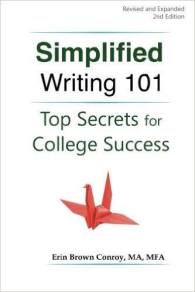 The top post of 2016 was my book review of Simplified Writing 101, by Erin Brown Conroy, which is an excellent tutorial on academic writing, including writing advice that every writing student should know. After that, the reflective post Writing Horror is Scary Business would be second in line. Other popular posts include my four part Making of a Screenplay series,( Part 1, Part 2, Part 3, and Part 4), my Tribute to My Son, and What Amazon’s New Review Policies Mean for Writing to be Read. More recently, my ten part series on publishing, Pros and Cons of Traditional vs. Independent vs. Self-Publishing gave me the opportunity to interview some awesome names in the publishing industry: self-published authors, Jeff Bowels, Tim Baker and Art Rosch; traditionally published authors Stacia Deutsch and Mark Shaw; independently published author Jordan Elizabeth; and children’s author Nancy Oswald, who has published under all three models; as well as Caleb Seeling, owner of Conundrum Press and Curiosity Quills Press – with the final installment summarizing the conclusions made from those interviews.
Many of my posts were reflections of my own writing experience. These included: Why Writing is a Labor of Love; Fear is a Writer’s Best Friend; I’ve Come A Long Way, Baby; Writing the Way That Works For You; Creating Story Equals Problem Solving; What’s A Nice Girl Like Me Doing Writing in a Genre Like This?; Acceptance or Rejection – Which Do You Prefer?; A Writer’s Life is No Bowel of Cherries; Write What You Know; Discouragement or Motivation?; What Ever Happened to Heather Hummingbird?; How You Can Help Build a Writer’s Platform; and Why Fiction is Better Than Fact.
 Sadly, I only attended two events that were reported on, on Writing to be Read in 2016 – the 2016 Ice Festival in Cripple Creek, and the 2016 Writing the Rockies Conference in Gunnison, Colorado. What can I say? I’m a starving writer. This is something I hope to improve on in 2017 by attending more events to report on. One possible addition to the 2017 list that I’m very excited to think about is the Crested Butte Film Festival. The details are not ironed out yet, but I’m keeping my fingers crossed.
Screenwriting content included this past year seemed to be popular. In addition to my Making of a Screenplay series and Writing Horror is Scary Business, Writing to be Read also featured Writing Comedy for Screen is a Risky Proposition, and a book review for Hollywood Game Plan, by Carole Kirshner, which I can’t recommend highly enough for anyone desiring to break into the screenwriting trade. Robin’s Weekly Writing Memo also included several writing tips that could be applied equally to literature or screenwriting.
Another project I’m particularly proud of is my ten part series on publishing, Pros and Cons of Traditional vs. Independent vs. Self-Publishing, which I just finished up last week. In this series I interviewed nine professionals from within the industry to get the low down on the three different publishing models. My interviews included self-published authors Jeff Bowels, Tim Baker and Art Rosch, traditionally published authors Stacia Deutsch (children’s books) and Mark Shaw (nonfiction), and independently published YA author Jordan Elizabeth. To balance things out a bit, I also interviewed children’s author Nancy Oswald, who has published with all three models, Clare Dugmore of Curiosity Quills Press and Caleb Seeling, owner and publisher at Conundrum Press.
 One of the great things about doing book reviews is that you get to read a lot of great books, in with the okay and not so great ones. In addition Simplified Writing 101, my five quill reviews in 2016 included Jordan Elizabeth’s Runners & Riders, Mark Shaw’s The Reporter Who Knew Too Much, Nancy Oswald’s Trouble Returns, Carol Riggs’ Bottled, Jeff Bowles’ Godling and Other Paint Stories, Janet Garber’s Dream Job, Art Rosch’s Confessions of an Honest Man, and Mark Todd and Kim Todd O’Connell’s Wild West Ghosts. I don’t give out five quills lightly and every one of these books are totally worthwhile reads.
 Of course, not all books get a five quill rating. Other books I reviewed that I recommended with three quills or more include three short story anthologies: Chronology, Under a Brass Moon, and Cast No Shadows; two poetry collections: Suicide Hotline Hold Music by Jessy Randall and Walks Along the Ditch by Bill Trembley; Escape From Witchwood Hollow, Cogling, Treasure Darkly, The Goat Children, and Victorian by Jordan Elizabeth; Dark Places by Linda Ladd; Chosen to Die by Lisa Jackson; Wrinkles by Mian Mohsin Zia; Full Circle by Tim Baker; The 5820 Diaries by Chris Tucker; The Road Has Eyes: An RV, a Relationship, and a Wild Ride by Art Rosch; Hollywood Game Plan by Carol Kirschner; Keepers of the Forest by James McNally; 100 Ghost Soup by , and A Shot in the Dark by K.A. Stewart. I also did two movie reviews: Dead Pool and Point Break.
I feel very fortunate to have had Robin Conley join us with her Weekly Writing Memo and her guest movie reviews. The useful writing tips in her Weekly Writing Memos covered a wide range of topics including critiquing, using feedback, ways to increase tension, Relatability or Likeability?, 3 Types of Plot, story research, what to write, making your audience care, world building, handling feedback, writing relationships, establishing tone, editing, word choice, How to Start Writing, endings, queries, Parts of a Scene, making emotional connections, the influence of setting, Building a Story, Inciting Your Story, movement and dialog, Writing Truth, time, Overcoming the Blank Page, Networking, character names, theme, set up, cliches, parentheticals in screenwriting, horror inspiration, and Learning to Write. Robin’s guest post movie reviews included Pride and Prejudice and Zombies, Batman vs. Superman, Miss Perigrin’s Home for Peculiar Children, and The Neon Demon. 
I am thankful for Robin’s valuable content and am glad that she will still be contributing Memos on a monthly, rather than a weekly basis. Although I was sad to lose her weekly content, I am happy for her as she moves forward in her own writing career and I wish her well in her writing endeavors. For those of you who looked forward to her weekly posts, you can catch more of her content on her own blog, Author the World.
2016 was a great year for Writing to be Read, even if it was kind of rough for the author behind the blog. You readers helped to make it a good year and I thank you. Now it’s time to look ahead and see what’s in store for 2017 Writing to be Read. I mentioned some of the things I hope to achieve above: more posts pertaining to the screenwriting industry, and coverage of more events throughout the year are two of the goals I have set for my blog. I also plan to add some author, and hopefully, screenwriter profiles into the mix. I had good luck with author profiles during my Examiner days, and I think they will be well received here, as well.
I also hope to bring in some guests posts by various authors or bloggers, or maybe screenwriters, just to give you all a break from listening to me all the time. I believe Robin plans to continue with Monthly Writing Memos, which will be great, too.
I look forward to all the great books that I know are coming my way in 2017, too. The first reviews you have to look forward to are a short memoir, Banker Without Portfolio by Phillip Gbormittah, a YA paranormal romance, Don’t Wake Me Up by M.E.Rhines, a Rock Star romance, Bullet by Jade C. Jamison and a short story, How Smoke Got out of the Chimneys by DeAnna Knippling.

I hope all of you will join me here in the coming year. Follow me on WordPress, or subscribe to e-mail for notifications of new posts delivered to your inbox. Have a great 2017 and HAPPY WRITING!
Posted: July 26, 2016 | Author: kayelynnebooth | Filed under: Writing | Tags: Alan Wertes, Broughton Coburn, Creative Fiction, Fiction, J.D. Payne, J.S. Mayank, James Gunn, Michael Brody, Poetry, Publishing, Rebecca McEwen, Review, Robin Wayne Bailey, Russell Davis, Screenwriting, Western State Colorado University, Writing, Writing Conference, Writing the Rockies Confernce, Writing to be Read |

When I attended my first Writing the Rockies Conference at Western State Colorado University, back in 2012, it was a three day event, with panels and workshops on genre fiction, screenwriting, and poetry. It had a couple of publishing workshops, too, but the poetry symposium was a major event. You could sign up for critiques and pitch sessions with small presses and agents, and they served delicious sack lunches made by Western State’s great kitchen staff. Every year since, the conference has gotten bigger, including more and more great events for authors, poets, screenwriters and publishers future.
The 2016 Writing the Rockies Conference has continued in that growth trend. Director of Western State’s M.F.A. in Creative Writing program and head organizer of the conference, David J. Rothman tells us that Writing the Rockies is now the most diverse of all college hosted writing conferences, boasting writing workshops, keynotes and panels, 3-day intensive workshops and critical seminars in five individual concentrations: genre fiction, screenwriting, creative nonfiction, publishing, in addition to their wonderful poetry symposium. It is now five day event, which takes advantage of inspirational surroundings of the beautiful Gunnison Valley, with one whole day for group hikes in the beautiful area surrounding near-by Crested Butte. Gone are the sack lunches of the past, but the food is still good, with Western’s kitchen staff providing both breakfast and lunch for conference attendees.
The conference is so packed full of wonderful writing events and opportunities that no one can do them all. Aspiring writers must pick and choose those events that will be most beneficial to them. I had the pleasure of attending events in all five concentrations, creating a well-rounded educational experience, from which I learned a lot.
I started off with the genre fiction panel, which featured three former presidents of the Science Fiction & Fantasy Writers of America – authors James Gunn, Robin Wayne Bailey and Russell Davis gave a grand overview of the history of SFWA and the science fiction genre. I was also privileged to attend the screenwriting panel, featuring screenwriters for both feature films and television – J.D. Payne, Alan Wartes and J.S. Mayank, where we discussed how to take notes on your screenplay or series, who to take notes from, and ways to politely disregard notes that are detrimental to the structure of your script.
Unfortunately, I was unable to attend Conference Keynote, by George Sibley, or the Poetry Keynote, by Julie Kane on Wednesday evening. If they were anywhere near the quality and usefulness of the four Keynotes I did hear, then I have truly missed out.

Fulcrum Press Editor Rebecca McEwen
Publishing Keynote Speaker
The Publishing Keynote was given by Fulcrum Press editor, Rebecca McEwen, who talked about the value of small presses and when you might want to consider submitting press that is not among the big five. According to McEwen, there are currently 30 small independent publishers in Colorado.

Author Robin Wayne Bailey
Genre Fiction Keynote Speaker
The Creative Nonfiction Keynote was delivered by author Broughton Coburn, who has created story from many of the events in his extraordinary life and turned them into bestselling books. His touching story of bringing an elderly Indian woman to America with him, brought smiles to all faces in the audience. He talked about finding common threads in your true-life story which can then be used to tie things together as you put the story on the page.
Author Broughton Coburn
Creative Nonfiction Keynote Speaker
Author Robin Wayne Bailey, gave an inspiring Genre Fiction Keynote on the importance of life experience in writing, and how moving writing can be, coming near to tears himself as he spoke of times past as he recounted parts of his own personal history for emphasis. And, there were chuckles from the audience throughout screenwriter J.D. Payne’s Screenwriting Keynote on the journey to becoming a screenwriter, ways to handle the criticism and rejection that are so very prominent in the Industry, and how to take notes, another big part of writing for television or film.

Screenwriter J.D. Payne
Screenwriting Keynote Speaker
I attended a genre fiction workshop and two screenwriting workshops, since these are my major concentrations. The first screenwriting workshop, led by screenwriter, Mary Beth Fielder, was on the transformational arc that every story and every major character needs to have. She talked about looking at the subtext to indicate what’s really going on in each scene, and how to use basic human needs to determine what your characters goals are.
The second screenwriting workshop, on creating conflict, was led by screenwriter J.S. Mayank, pointing out that in story we do the opposite of what we do in real life. In real life, we tend to avoid conflict, while in story we invite it. To provide examples of scenes with well-crafted conflict, video clips from several different movies were shown, some that made us laugh, others that made us want to cry.
J.D. Payne, J. S. Mayank, and Alan Wartse
Screenwriting Panel at the
2016 Writing the Rockies Conference
The genre fiction workshop, on creating complex female characters, led by women’s fiction author Candace Nadon. She talked about the female stereotypes used in creating female characters, and ways to recognize and avoid them in your writing. Most of her advice for creating strong female characters, was in the form of what not to do, proving that there is a fine line to balance strength and feminity.
Screenwriter and co-organizer of the Crested Butte Film Festival, Michael Body was both educational and entertaining in his screening lecture. He used actual clips submitted to the festival for consideration. Two of the clips were humorous, but the other one was just plain bad, illustrating well the many reasons films do, or don’t get into film festivals. The bad one was so bad that the audience elected not to finish watching it.

Screenwriter Michael Brody
Co-Founder of The Crested Butte Film Festival
Along with everything else, the talent featured at the Writing the Rockies Conference also grows each year. In addition to the genre fiction and screenwriting names above, this year’s poetry symposium featured were renowned poets and critics, such as A.M. Juster, Jan Schreiber, John Talbot, Bruce Bennett, Christopher Norris, Emily Grosholz, Thomas Cable, Paul Edwards, Natalie Gerber, Niles Ritter, Frederick Turner, Richard Wakefield, and Robert Maranto.
Of the thirty publishers in Colorado today, at least seven were represented at the 2016 Writing the Rockies Conference: Conundrum Press Publisher, Caleb Seeling; Fulcrum Press editor, Rebecca McEwen; Slant News editor, Kyle Harvey; Dave Trendler, of VeloPress; Fred Ramey of Unbridled Books; Lithic Press Publisher, Danny Rosen; and Senior Acquisitions Editor of NavPress, David Zimmerman.
Creative Nonfiction is a new concentration which was added this year, featuring award-winning author, Kase Johnstun; essayist, Kelsey Bennett; and nature writer, Alissa Johnson. Genre fiction authors not mentioned above included Clay Reynolds; children’s author, Stacia Deutsch; and speculative fiction author, Michaela Roessner.
The 2016 Writing the Rockies Conference appeared to be a great success. It holds many opportunities for aspiring writers, and 2017 promises to have e1ven more, becoming larger and more prestigious than ever before. I anticipate 2017 conference attendees will have quite a treat in store.
Like this post? Subscribe to Writing to be Read for e-mail notifications whenever new content is posted.
Posted: June 10, 2016 | Author: kayelynnebooth | Filed under: Book Review, Books, Poetry, Screenwriting, Writing | Tags: Bill Tremblay, Book Review, Books, Poetry, Review, Writing |
Walks Along the Ditch, by Bill Tremblay, is reflective poetry collection themed on the everyday awe found in nature and the world around us. Tremblay masterfully crafts simile and metaphor to form vivid word pictures that fill the mind’s eye and cause readers to contemplate the human condition and our natural environment, such as the vision he creates in his poem, Blue Heron.
“…It flaps its wings, one-thousand one,
one-thousand two, its pitch is changed,
its back-flaps open like Fred Astaire’s vest
on a mirrored floor. Settled, its crest
shaken out, the Ichabod steps slow
on his stalks with ganglionic grace
toward bull rushes gathering clouds
like a weaver at her shuttle, then
darting his long yellow chopsticks,
pulls a wriggling crawfish out,
cracking its shell, guzzling the meat
down its sink-catch throat…”
This collection of poems are calming and meditative, stirring new consideration of things familiar and known, but perhaps not often noticed. The artistry of his descriptions is no more apparent than in two lines from his poem, Before Dawn, “…Dawn light trills its piccolos. / Huge back ghosts become watermelon pink foothills…” It’s a new turn for Tremblay, whose moving narrative poetry of the past, such as The Magician’s Hat, a historical poetic collection around the life of Mexico’s muralist, David Alfaro Siqueiros, has commented on historical events, persons and eras. Walks Along the Ditch marks growth of Tremblay’s talent and takes his word craft to another plane.
I give Walks Along the Ditch four quills. 
Kaye Lynne Booth does honest book reviews on Writing to be Read, and she never charges for them. Have a book you’d like reviewed? Contact Kaye at kayebooth(at)yahoo(dot)com.
Posted: May 13, 2016 | Author: kayelynnebooth | Filed under: Book Review, Poetry | Tags: Book Review, Jessy Randall, Poetry, Suicide Hotline Hold Music |
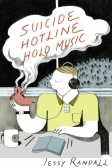
Suicide Hotline Hold Music, by Colorado Springs poet, Jessy Randall, is a quirky collection of poetry and poetry comics which present a comic outlook on some life’s realities that makes the reader want to slap her forehead and exclaim, “Why didn’t I see that?!” Randall’s poems take on thier own unique individual forms, which utilize rhythm and emphasis to the fullest, giving her works a conversational tone, like an old friend pointing out oddities. In “A Different Kind of Stupid”, which was first published in Asimov’s, Randall gives us a fresh analysis of a well-known fairytale.
A Different Kind of Stupid
Rapunzel never compared the weight
of the witch and the prince. How dumb,
if she did. No, she was pregnant,
that’s how the witch found out.
So, a different kind of stupid, up there
in her tower. You could argue
she loved him, and sure, she may have,
but he was the only man she’d ever met.
What kind of love is that?
The stupidest thing of all is how the prince
left her up there, day after day. Some might say
he knew what he was doing, never bringing a rope.
This collection of poetry makes complicated issues seem simple and manageable. The poems allow us to laugh at ourselves and at life, reminding us of times forgotten and left behind. Their innocent nature reminds us of the people we once were.
I give Suicide Hotline Hold Music 3 Quills. 
Kaye Lynne Booth does honest book reviews on Writing to be Read and she never charges for them. Have a book you’d like reviewed? Contact Kaye at kayebooth(at)yahoo(dot)com.





















Looking Back Over 2016
Posted: December 26, 2016 | Author: kayelynnebooth | Filed under: Articles, Book Review, Books, Children's Books, Commentary, Fiction, Film Review, Horror, Movies, Nonfiction, Poetry, Promotion, Publishing, Screenwriting, Self-Publishing, Steampunk, Stories, Weekly Writing Memo, Western, Writing, Writing Event, Writing Tips, Young Adult | Tags: 2016, Book Reviews, Books, Fiction, marketing, Movies, Novel, Novels, Poetry, Review, Reviews, Writing, Writing to be Read | 4 CommentsThis will be the last reflective post of the year. Next Monday’s post will find us in 2017. For my writing career it has been a slow take off, but I’ve seen progress. In July, I completed my Master of Fine Arts degree in creative writing. With emphasis in both genre fiction and screenwriting, and two completed novels, Delilah and Playground for the Gods Book 1: In the Beginning, two full feature film scripts and one comedy series pilot script in hand, I eagerly jumped right in to get my feet wet in either the publishing and/or screenwriting industry. I began submitting my work to agents, publishers, and competitions like crazy. I received mostly rejections, as expected, and although I still haven’t found a home for either novels or scripts, I did manage to find a home for two poems and two short stories. Not too bad. While the poems, Aspen Tree and Yucca! Yucca! Yucca!, appeared in print, (in Colorado Life (Sept.-Oct. 2016) and Manifest West Anthology #5 – Serenity and Severity, respectively), my short story, I Had to Do It was published on Zetetic: A Record of Unusual Inquiry, and my not so short, short story, Hidden Secrets was published on Across the Margin.
2016 has been a pretty good year for Writing to be Read. The revamping of the blog site was completed in March, I’ve managed post things on a fairly regular basis, we were honored with guest posts by my friend Robin Conley, and my visits and page views have risen, with almost 2000 visitors and over 2,500 page views. Looking at this, makes me feel pretty good about the blog, as a whole. Another good change is the addition of screenwriting content, which I believe has drawn a larger audience by widening the scope of the content.
Many of my posts were reflections of my own writing experience. These included: Why Writing is a Labor of Love; Fear is a Writer’s Best Friend; I’ve Come A Long Way, Baby; Writing the Way That Works For You; Creating Story Equals Problem Solving; What’s A Nice Girl Like Me Doing Writing in a Genre Like This?; Acceptance or Rejection – Which Do You Prefer?; A Writer’s Life is No Bowel of Cherries; Write What You Know; Discouragement or Motivation?; What Ever Happened to Heather Hummingbird?; How You Can Help Build a Writer’s Platform; and Why Fiction is Better Than Fact.
Screenwriting content included this past year seemed to be popular. In addition to my Making of a Screenplay series and Writing Horror is Scary Business, Writing to be Read also featured Writing Comedy for Screen is a Risky Proposition, and a book review for Hollywood Game Plan, by Carole Kirshner, which I can’t recommend highly enough for anyone desiring to break into the screenwriting trade. Robin’s Weekly Writing Memo also included several writing tips that could be applied equally to literature or screenwriting.
Another project I’m particularly proud of is my ten part series on publishing, Pros and Cons of Traditional vs. Independent vs. Self-Publishing, which I just finished up last week. In this series I interviewed nine professionals from within the industry to get the low down on the three different publishing models. My interviews included self-published authors Jeff Bowels, Tim Baker and Art Rosch, traditionally published authors Stacia Deutsch (children’s books) and Mark Shaw (nonfiction), and independently published YA author Jordan Elizabeth. To balance things out a bit, I also interviewed children’s author Nancy Oswald, who has published with all three models, Clare Dugmore of Curiosity Quills Press and Caleb Seeling, owner and publisher at Conundrum Press.
I feel very fortunate to have had Robin Conley join us with her Weekly Writing Memo and her guest movie reviews. The useful writing tips in her Weekly Writing Memos covered a wide range of topics including critiquing, using feedback, ways to increase tension, Relatability or Likeability?, 3 Types of Plot, story research, what to write, making your audience care, world building, handling feedback, writing relationships, establishing tone, editing, word choice, How to Start Writing, endings, queries, Parts of a Scene, making emotional connections, the influence of setting, Building a Story, Inciting Your Story, movement and dialog, Writing Truth, time, Overcoming the Blank Page, Networking, character names, theme, set up, cliches, parentheticals in screenwriting, horror inspiration, and Learning to Write. Robin’s guest post movie reviews included Pride and Prejudice and Zombies, Batman vs. Superman, Miss Perigrin’s Home for Peculiar Children, and The Neon Demon.
I am thankful for Robin’s valuable content and am glad that she will still be contributing Memos on a monthly, rather than a weekly basis. Although I was sad to lose her weekly content, I am happy for her as she moves forward in her own writing career and I wish her well in her writing endeavors. For those of you who looked forward to her weekly posts, you can catch more of her content on her own blog, Author the World.
2016 was a great year for Writing to be Read, even if it was kind of rough for the author behind the blog. You readers helped to make it a good year and I thank you. Now it’s time to look ahead and see what’s in store for 2017 Writing to be Read. I mentioned some of the things I hope to achieve above: more posts pertaining to the screenwriting industry, and coverage of more events throughout the year are two of the goals I have set for my blog. I also plan to add some author, and hopefully, screenwriter profiles into the mix. I had good luck with author profiles during my Examiner days, and I think they will be well received here, as well.
I also hope to bring in some guests posts by various authors or bloggers, or maybe screenwriters, just to give you all a break from listening to me all the time. I believe Robin plans to continue with Monthly Writing Memos, which will be great, too.
I look forward to all the great books that I know are coming my way in 2017, too. The first reviews you have to look forward to are a short memoir, Banker Without Portfolio by Phillip Gbormittah, a YA paranormal romance, Don’t Wake Me Up by M.E.Rhines, a Rock Star romance, Bullet by Jade C. Jamison and a short story, How Smoke Got out of the Chimneys by DeAnna Knippling.
I hope all of you will join me here in the coming year. Follow me on WordPress, or subscribe to e-mail for notifications of new posts delivered to your inbox. Have a great 2017 and HAPPY WRITING!
Share this: