Welcome to the First Blog Stop on the Feral Tenderness Book Blog Tour
Posted: February 15, 2021 Filed under: Blog Tour, Book Promotion, Books, Poetry, Review | Tags: Arthur Rosch, Feral Tenderness, Photography, Poetry, Poetry Collection, WordCrafter Book Blog Tours 3 Comments
I first met Arthur Rosch online. That was back in 2008, when I was just dipping my toes in the as yet uncertain waters of the internet, and although I didn’t have any idea what I was doing, I started my own social network called “Writer’s World”. Art stumbled onto the “Writer’s World” network somehow and he’s been loyal follower and supporter, and over the years I’ve come to respect him and his writing, and also to call him a friend and valued team member for Writing to be Read.
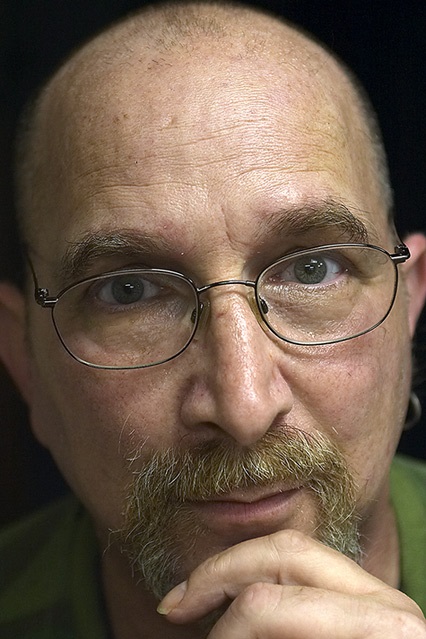
I’m introducing Arthur Rosch here today because he has a great new poetry and photography collection out, Feral Tenderness. I’m excited about it because I had a hand in editing, compiling and publishing Arthur’s book through WordCrafter Press. Art writes poetry that remains down to earth and real, while hanging out with universal truths. It’s true that some of his ideas may be a little wild, but so are the ideas of many writers. Maybe writing is a safe outlet for all of our crazy thoughts and that’s what motivates us to put words to paper, or screen, as the case may be.
His biography, from the back of his wonderful new release reads:
“Arthur Rosch is a mid-westerner, who became a Californian as a young man. A lover of jazz, poetry, painting and photography, and writing, as well as a passion for astronomy, photography, history, psychology and the weird puzzle of human experience. After receiving Playboy Magazine’s Best Short Story Award for a comic view of a planet where there are six genders, he was immersed in circles that could have taken him to the top, but it was short lived. Arthur found himself reeling, struggling with depression and addiction on the streets for almost a decade, and repairing and rediscovering himself was a defining event in his life, nurturing his literary soul…. “
All of the above is true. These are all truths about Arthur Rosch, yet they are surface level truths; truths that the author chose to share with the world at large, in the back of his book. Let me introduce you the Arthur Rosch, the author who I know.
Art is an undiscovered talent, who once was near the threshold of discovery, only to plummet back down into the depths of reality. But he never let go of the dream, although at times it altered its shape and appearance. He is a literary craftsman and wordsmith, whose words can be found on his blog, Write Out of My Head, on my blog, Writing to be Read, in his books, and various other places online.
Stepping into the world of Arthur Rosch can be a surreal experience, as it was for me when I reviewed his science fiction novel, The Gods of the Gift, because he is a talented craftsman of the written word. Quite a different effect was achieved with Confessions of an Honest Man, a tragic tale of familial dysfunctionalism, mental illness, drug addiction and emotional abuse that has the ability to make the reader suspend disbelief and feel for the main character beyond the conclusion of the book. And his humor shines through his words and is sure to leave readers chuckling in his memoir about life in an R.V., The Road Has Eyes.
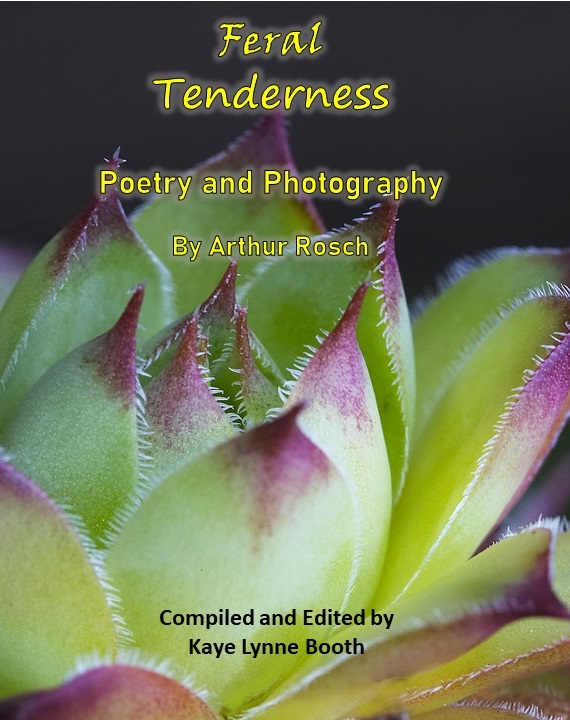
His poetry has this same ability to evoke desired images and emotions from within the reader. His photography captures views seen with a unique and unusual eye. The cover for Feral Tenderness was created from one of his photographs, and others are interspersed among the poetry throughout the book, making it an extra special treat for readers.
I do hope you’ve enjoyed this introduction enough to make you want to get to know more about Arthur Rosch and his poetry and photography, by following this tour. We’ve got two interviews with Arthur, and a review of the book coming later in the week, plus some author generated content that promises to be interesting. Stay with us and visit each blog stop as the tour progresses, with a closing post on Art’s blog, Write Out Of My Head, on Sunday. Please join us. You can purchase Feral Tenderness in digital and print on Amazon.
_______________________________________________________________________________________
Like this post? Let me know in the comments. You can be sure not to miss any of Writing to be Read’s great content by subscribe to e-mail or following on WordPress. If you found this content helpful or entertaining, please share.
Share this:

Treasuring Poetry – Meet fantasy author and poet, Diana Peach and read my review of Sunwielder: An Epic Time Travel Adventure
Posted: January 23, 2021 Filed under: Author Profile, Book Review, Books, Interview, Poetry, Review, Treasuring Poetry | Tags: Diana Peach, Poetry, Robbie Cheadle, Sunweilder: An Epic Time Travel Adventure, Treasuring Poetry, Writing to be Read 193 CommentsWelcome to the first Treasury Poetry post of 2021.
Today, I am delighted to welcome fantasy author and poet, Diana Peach, who is sharing one of her own poems and discussing poetry.

Which of your own poems is your favourite?
Thanks so much for the invitation to participate in your Treasuring Poetry series, Robbie. I’m honored. I think of myself as a writer of prose and a dabbler otherwise, but I love poetry and believe no creative effort is ever wasted.
This is a super hard question! I have poems that I think are well-crafted, poems that evoke personal feelings or memories, and poems that reflect a particular time in my life. Since “I don’t know” isn’t an acceptable answer, I’ll go with this one:
Flight of faith
When I was a child, I could fly
you and I hopped in dirt-road afternoons
faithful
and the dust-wind flung us over seas of wheat
scuffed shoes skimming the feathered awns
we whipped around the corners of the barn
in a home-sewn world of farm-hewn hands
our secret futures soared
***
In the veins of my hands
the blue brooks of time stream by
Somewhere on the way, I unlearned how to fly
and trod worn paths through autumn’s lea
snapped night’s brittle ice
shards of fractured faith
glinting in my wake
***
Today’s morning purls in plumrose
cast on a withering season’s stark debris
spangled with winter’s gilded rime
a new path of violet ice wends to the horizon
fragile, fissured, a wish yet unbroken
my secret future soars
faithful
and I wonder if I might
fly one last time
What inspired you to write this particular poem?
In my twenties, I used to have flying dreams rather frequently. They were the most vivid dreams of my life. I was truly flying. I could feel the wind on my face as if I was awake and standing outside on a breezy day. The sensory experience was exhilarating.
This poem is based on one of those dreams. In the dream, I was about 10 years old, an unremarkable child of the dusty American plains. Every day, the school bus would drop my friend and me off at the side of the dirt road, and as soon as the bus drove away, we would hop a few steps, then pick up our feet and soar over the fields, our brown shoes skimming the wheat. Despite our ordinary lives and pervasive poverty, we were extraordinary. Life was full of magic and promise, and nothing could hold us down.
Then I stopped having flying dreams and haven’t had one in nearly 35 years. This poem is about that amazing childhood belief that anything is possible, about its loss, and about the yearning to fly again.
Which genre of poetry do you enjoy writing the most and why?
I enjoy Colleen Chesebro’s weekly syllabic poetry challenges. The poetic forms provide structure, and for me, they’re like puzzles as I search for the words that conform to the syllable count, structure, prompts, and personal meaning. But my favorites among the poems I’ve written are all free form. They’re harder
for me to craft, but they feel more organic, untouched by stylistic constraints. They’re pure gut, emotion, and inspiration.
Which genre of poetry do you enjoy reading the most?
Probably free form poetry, though any kind of poetry has the potential to make me gasp at its beauty. I love vivid imagery and poignant emotion, poems that illuminate the human condition in a way that pierces my heart. I like poems that stir something personal, or that draw me in and grab hold so that when I finish reading, I feel like I’ve stepped outside myself into someone else’s experience.
Do you think your poetry compliments your other writing or do you see it as an undertaking that stands alone?
Complements, definitely!
I love poetic prose, and when I’m reading fiction, I’m prone to highlighting passages in books where the word choice, imagery, metaphors, or phrases make me swoon. Poetry emphasizes beautifully crafted language, including its sounds and rhythms. It requires a writer to capture and convey the core essence of a story. I think poetry fosters an underlying sensitivity to those aspects of writing in general, and prose benefits from the same attention.
Thanks again, Robbie, for the invite and for allowing me to share my thoughts and muse over this lovely artform. Happy Writing to all the poets out there.
Thank you, Diana, for being my Treasuring Poetry guest. I really enjoyed your poem and insights into your poetry writing.
Sunwielder: An Epic Time Travel Adventure
What Amazon says
In a land on the brink of war, Gryff Worden discovers his family slaughtered, his farm in ruin.
Mortally wounded, he stumbles upon a timekeeper, an old woman of the northern forests, one who tracks the infinite paths of each life. She offers him a sunwield, a medallion promising to return him to the pivotal choices that swayed his life’s journey. Her only condition—he must wear the bronze charm until the end.
Now his story remakes itself, casting him backward in time to moments of decision and death. His old life gone, he no longer remembers the purpose of the medallion burning his chest. As he uncovers the sunwield’s power, new choices lead him on an epic adventure through war, death, friendship, life, and love.
My review
I do not read a lot of fantasy books, but I make an exception for D. Wallace Peach as her books are extraordinary and unique.
Gryff Worden is an ordinary man who just wants to help his uncle and aunt raise horses on their farm while raising his own family. Gryff adores his wife and two children, but there is bad blood between Gryff and the son of the Earl who rules his area. The hostility is emanates from Brant Loden’s side only, but it changes the course of Gryff’s life.
Gryff’s country is attacked by an aggressive nation who want to enslave his people and he is eventually morally wounded and his family murdered by enemy soldiers. At the time of his death he is visited by an elderly prophet who offers him another chance at life if he accepts the sunwielder, a bronze medallion which allows him to go back in time and revise decisions he made thereby changing his life’s path. I thought this concept was clever and unique. I have read other books where the hero can go back in time, but this particular method and the limited number of life choices offered by the sunwielder was something quite different and fascinating.
Gryff is a wonderful character, he is a good man and tries to do the right thing in all situations but he is human and, therefore, susceptible to various human failings like anger and resentment. It was most interesting to experience his going back in time and having to try an alternative approach when his previous choice failed. As Gryff moved further along his path, his choices improved and his self control and discipline increased allowing him to make better choices earlier and without constant intervention.
There is a love story thread that runs through the book and this is intriguing as the reader doesn’t know how his relationships with his wife and with his lover are going to turn out – his destiny in this regard is unclear for most of the book.
There are a number of characters in this book and it provides great insight into the frailties of men and how arrogance, greed, and hunger for power can destroy individuals and the people around them. Good leadership is a strong theme in this book and the importance of strategy and leadership in war and battles is highlighted.
The author writes the most beautiful and powerful prose and even without the incredible story, this book would have been worth reading just to experience the skillful writing. I highly recommend this book to lovers of fantasy and those who enjoy excellent writing.
Purchase Sunwielder: An Epic Time Travel Adventure
![Sunwielder: An Epic Time Travel Adventure by [D. Wallace Peach]](https://m.media-amazon.com/images/I/51rVMDEjdaL._SY346_.jpg)
About Diana Peach
D. Wallace Peach started writing later in life after the kids were grown and a move left her with hours to fill. Years of working in business surrendered to a full-time indulgence in the imaginative world of books, and when she started writing, she was instantly hooked. Diana lives in a log cabin amongst the tall evergreens and emerald moss of Oregon’s rainforest with her husband, two dogs, bats, owls, and the occasional family of coyotes.

Contact and purchase links
Website/Blog: http://mythsofthemirror.com
Website/Books: http://dwallacepeachbooks.com
Amazon Author’s Page: https://www.amazon.com/D.-Wallace-Peach/e/B00CLKLXP8
Facebook: https://www.facebook.com/pages/Myths-of-the-Mirror/187264861398982
Twitter: @dwallacepeach
About Robbie Cheadle

Robbie Cheadle has published nine books for children and one poetry book. She has branched into writing for adults and young adults and, in order to clearly separate her children’s books from her adult books, is writing for older readers under the name Roberta Eaton Cheadle.
Robbie Cheadle’s Sir Chocolate children’s picture books are written in sweet, short rhymes which are easy for young children to follow and are illustrated with pictures of delicious cakes and cake decorations. Each book also includes simple recipes or biscuit art directions which children can make under adult supervision. Her books for older children also incorporate recipes that are relevant to the storylines.
Roberta Eaton Cheadle’s supernatural stories combine fabulous paranormal elements with fascinating historical facts.
Children’s picture books – available as a square book and an A5 book (co-authored with Michael Cheadle):
Sir Chocolate and the strawberry cream story and cookbook
Sir Chocolate and the baby cookie monster story and cookbook
Sir Chocolate and the sugar dough bees story and cookbook
Sir Chocolate and the Condensed Milk River story and cookbook
Sir Chocolate and the Sugar Crystal Caves story and cookbook
Sir Chocolate and the Fondant Five story and cookbook
Sir Chocolate and the Ice Cream Rainbow Fairies story and cookbook
Middle school books:
Silly Willy Goes to Cape Town (includes five fun party cake ideas)
While the Bombs Fell (co-authored with Elsie Hancy Eaton)
Poetry book:
Open a new door (co-authored with Kim Blades)
Supernatural fantasy YA novel:
Through the Nethergate
Horror Anthologies (edited by Dan Alatorre):
Spellbound
Nightmareland
Dark Visions
Paranormal Anthologies (edited by Kaye Lynne Booth):
Spirits of the West
Whispers of the Past
Murder mystery Anthology (edited by Stephen Bentley)
Death Among Us
Find Robbie Cheadle
Blog: https://bakeandwrite.co.za/
Blog: robbiesinspiration.wordpress.com
Twitter: BakeandWrite
Instagram: Robbie Cheadle – Instagram
Facebook: Sir Chocolate Books
Want to be sure not to miss any of Robbie’s “Treasuring Poetry” segments? Subscribe to Writing to be Read for e-mail notifications whenever new content is posted or follow WtbR on WordPress.
Share this:

My favourite Christmas poem and a review of Pass the Turkey by Sue Vincent
Posted: December 26, 2020 Filed under: Book Review, Books, Poetry, Review, Treasuring Poetry | Tags: Book Review, Christmas, Christmas Poetry, Dr. Suess, Pass the Turkey, Poetry, Sue Vincent, Treasuring Poetry, Writing to be Read 61 Comments
This is my final Treasuring Poetry post for 2020 and I am sharing my favourite Christmas poem, an extract from How the Grinch Stole Christmas by Dr Seuss. I love this piece of his lovely Christmas story because it really illustrates what Christmas is all about. I love how the Grinch was unable to stop Christmas from coming because Christmas is in our hearts and souls and its not about the gifts, the food, the Christmas tree or even our families. It is about us, as individuals, and our own personal relationships, beliefs, and aspirations.
…So he paused. And the Grinch put his hand to his ear.
And he did hear a sound rising over the snow.
It started in low. Then it started to grow.
But the sound wasn’t sad! Why, this sound sounded merry!
It couldn’t be so! But it WAS merry! VERY!
He stared down at Whoville! The Grinch popped his eyes!
Then he shook! What he saw was a shocking surprise!
Every Who down in Whoville, the tall and the small,
Was singing! Without any presents at all!
He HADN’T stopped Christmas from coming! IT CAME!
Somehow or other, it came just the same!
And the Grinch, with his grinch-feet ice-cold in the snow,
Stood puzzling and puzzling: “How could it be so?”
“It came with out ribbons! It came without tags!”
“It came without packages, boxes or bags!”
And he puzzled three hours, till his puzzler was sore.
Then the Grinch thought of something he hadn’t before!
“Maybe Christmas,” he thought, “doesn’t come from a store.”
“Maybe Christmas…perhaps…means a little bit more!”…
Ani, the small dog, and her two legs, Sue Vincent, know all about Christmas and making the best of it. Ani, with the help of Sue, has written a number of lovely rhyming poetry books, one of which is Pass the Turkey: The Small Dog’s Christmas. This is one of my favourite poems from this book:
Pondering
Dear Santa, I’m a little dog who doesn’t do religion.
I’d rather chase a tennis ball or terrorise a pigeon
Than argue over who is wrong or maybe who is right…
It seems a silly way to me to get into a fight.
I know the Christmas story, ’cause she told me long ago,
About Joseph and Mary when they had nowhere to go,
And that’s the bit that got to me, ’cause someone found a place,
Although they slept with beasts and not with others of their race.
According to the tale we’re told, they slept beneath a star
And shepherds brought their lambs to see and kings came from afar.
They gathered where the Baby lay, beside the ox and ass,
While angels sang above, they knelt in wonder on the grass.
Now, that’s a lovely story that the world will celebrate…
And then go back to living in their prejudice and hate.
They look askance at strangers if they wear a different skin…
I wonder if the Babe returned, if they would let Him in?
You know, I have to wonder, if there’s any point at all,
In putting presents on the tree or trimming up the hall
Unless they feel the Christmas spirit bringing love and peace
And know that it is in their hearts hostilities must cease.
I know, I’m just a small dog and my voice will not be heard,
I’m only good for cuddles and to chase a ball or bird.
But maybe when you visit you could tell them while they sleep
And give them just a bit of your compassion they could keep.
It would be nice to think it could be Christmas every day
(Without the preparations and the bills they have to pay)
But being gentle with each other, giving Love a place
Within their hearts and in the smiles they’d wear upon their face.
Much love,
Ani
You can read more about the small dog here: https://thesmalldogs.blog/
My review of Pass the Turkey: The Small Dog’s Christmas
Pass the Turkey: The Small Dog’s Christmas is a delightful book full of Christmas cheer. Ani, the small dog, is reflecting on Christmas’ past, present and future through a combination of letters to Santa and poems. The perplexities of ‘fake’ Santas, the ‘theft’ of a favourite sofa, and gifts of tennis balls and a chicken flavoured biscuit, all require Ani’s consideration. Her naughty secrets are also revealed such as the time she ate all the left over turkey and salmon and fell through the ice in the pond [it was shallow]. The indignities of baths and having to wear reindeer antlers are also shared.
Join Ani and her two legs, Sue Vincent, for a glorious romp through advent and Christmas Day.
A few of my favourite verses:
“I’ve tried to help with household chores,
I’ve laundered all my balls,
I’ve chased the pigeons form the shed
And spiders from the walls.” from Request
“She’s like a puppy when it snows
We just go out to play…
And if she wraps up warm enough
We might stay out all day.” from Wishing for the White Stuff
“The windows are all closed at night
The keyhole seems to small
To wriggle through with turkey
And a brand new tennis ball.” from Chimneys.
You can purchase Pass the Turkey: The Small Dog’s Christmas here:
About Sue Vincent
Sue Vincent is a Yorkshire born writer currently living in the south of England, largely due to an unfortunate incident with a map, a pin and a blindfold. Raised in a spiritually eclectic family she has always had an unorthodox view on life, particularly the inner life, which is often reflected in her writing, poetry and paintings.
She maintains a popular blog, https://scvincent.com and is currently owned by Ani, the inimitable Small Dog, who also writes.
Sue lived in France for several years, sharing a Bohemian lifestyle and writing songs before returning to England where the youngest of her two sons was born. She began writing and teaching online several years ago, and was invited to collaborate with Dr G. Michael Vasey on their book, “The Mystical Hexagram: The Seven Inner Stars of Power”.
Since then she has published a number of books, beginning with “Swords of Destiny”, a magical tale set in the ancient landscape of Yorkshire. Her retelling of the Egyptian myths, “The Osiriad”, came shortly afterwards along with her collaboration with Stuart France. Together they have written the Triad of Albion, the Doomsday trilogy and the first books in the Lands of Exiles series.
These books tell a true adventure in a fictional manner. They are at once a journey into the ancient and sacred landscape of Albion and the story of a growing and rather oddball friendship.
The Triad of Albion was followed by the Doomsday trilogy and France and Vincent are now working on the three books in the Lands of Exile series, where the adventures of Don and Wen stray down the paths of fiction.
They have also published a number of graphic works together exploring folklore and legend, as well as writing independently. https://franceandvincent.com/
Sue, along with Steve Tanham and Stuart France, is a Director of the Silent Eye School of Consciousness, an international modern Mystery School that seeks to allow its students to find the inherent magic in living and being. https://thesilenteye.co.uk
About Robbie Cheadle
Robbie Cheadle has published nine books for children and one poetry book. She has branched into writing for adults and young adults and, in order to clearly separate her children’s books from her adult books, is writing for older readers under the name Roberta Eaton Cheadle.
Robbie Cheadle’s Sir Chocolate children’s picture books are written in sweet, short rhymes which are easy for young children to follow and are illustrated with pictures of delicious cakes and cake decorations. Each book also includes simple recipes or biscuit art directions which children can make under adult supervision. Her books for older children also incorporate recipes that are relevant to the storylines.
Roberta Eaton Cheadle’s supernatural stories combine fabulous paranormal elements with fascinating historical facts.
Children’s picture books – available as a square book and an A5 book (co-authored with Michael Cheadle):
Sir Chocolate and the strawberry cream story and cookbook
Sir Chocolate and the baby cookie monster story and cookbook
Sir Chocolate and the sugar dough bees story and cookbook
Sir Chocolate and the Condensed Milk River story and cookbook
Sir Chocolate and the Sugar Crystal Caves story and cookbook
Sir Chocolate and the Fondant Five story and cookbook
Sir Chocolate and the Ice Cream Rainbow Fairies story and cookbook
Middle school books:
Silly Willy Goes to Cape Town (includes five fun party cake ideas)
While the Bombs Fell (co-authored with Elsie Hancy Eaton)
Poetry book:
Open a new door (co-authored with Kim Blades)
Supernatural fantasy YA novel:
Through the Nethergate
Horror Anthologies (edited by Dan Alatorre):
Spellbound
Nightmareland
Dark Visions
Paranormal Anthologies (edited by Kaye Lynne Booth):
Spirits of the West
Whispers of the Past
Murder mystery Anthology (edited by Stephen Bentley)
Death Among Us
Find Robbie Cheadle
Blog: https://www.robbiecheadle.co.za/
Blog: robbiesinspiration.wordpress.com
Twitter: BakeandWrite
Instagram: Robbie Cheadle – Instagram
Facebook: Sir Chocolate Books
Want to be sure not to miss any of Robbie’s “Treasuring Poetry” segments? Subscribe to Writing to be Read for e-mail notifications whenever new content is posted or follow WtbR on WordPress. If you found it interesting or entertaining, please share.
Share this:

Meet author and poet Geoff Le Pard and a review
Posted: October 24, 2020 Filed under: Book Review, Interview, Poetry, Treasuring Poetry | Tags: Author Profile, Book Review, Geoff Le Pard, Poetry, Treasuring Poetry, Writing to be Read 55 CommentsToday, I am delighted to welcome author and poet, Geoff Le Pard to Writing to be Read as my “Treasuring Poetry” guest for October.
Geoff is sharing some interesting information about his favourite poem and poetry and I am sharing my review of Geoff’s inaugural poetry book, The Sincerest Form of Poetry.
Welcome Geoff
My favourite poem
Of course, everyone will say this is impossible, there are too many and that is true. But put on the spot I will plump for High Flight by John Gillespie Magee. You may not have heard of Magee and that’s probably because he was killed in WW2 in 1941 aged 21. I suppose I am drawn to the poignant and the powerful, having enjoyed the WW1 poets, if that’s the right word – Wilfred Owen, Siegfried Sassoon et al – from when I was introduced to them. There’s something raw about the emotions they carve out of a few lines, often the passion or despair that, because it is coming from someone so young, who is probably experiencing such exhilaration for the first time it is clean and honest and timeless.
High flight
Oh! I have slipped the surly bonds of Earth
And danced the skies on laughter-silvered wings;
Sunward I’ve climbed, and joined the tumbling mirth
Of sun-split clouds, — and done a hundred things
You have not dreamed of — wheeled and soared and swung
High in the sunlit silence. Hov’ring there,
I’ve chased the shouting wind along, and flung
My eager craft through footless halls of air . . .
Up, up the long, delirious burning blue
I’ve topped the wind-swept heights with easy grace
Where never lark, or ever eagle flew —
And, while with silent, lifting mind I’ve trod
The high untrespassed sanctity of space,
Put out my hand, and touched the face of God.
This is a paean to the excitement of flight, of the sense of rapture and wonder that being alone in the cloud-smudged skies gives him. His freedom. Battle of Britain pilots had a very short life expectancy which he would have known. He would have sat waiting for the call, to scramble. He would have taken to the air full of fear and adrenaline, seen his friends and colleagues blasted out of the sky and felt relieved and guilty that he was glad it wasn’t him and desperate that it was them. I can imagine the intensity of the Mess, the quiet voices, the unspoken terrors, the shared desperation that being on the ground forced him to confront. And even though taking to the air meant an almost inevitable appointment with death, it also took him away from the mundane realities of life as a pilot. He could give rein to the child he still was, tumbling, living, on the edge, but to the full. Every sense heightened, every nerve and sinew stretched to the max. Those images would be burned, seared into his imagination. And once again he’d return, be a man, debrief the day, go through the appalling motions of paying his respects and yet, for the sake of his own sanity not really engaging in the awfulness of the loss, of what his friends’ families and loved ones would be going through and knowing that these moments could be his soon enough. So he losses himself in a sonnet that captures those few moments of true freedom when death, like the ME109 behind him is breathing down his neck. I admit I have no faith, a happy committed and convinced atheist, but even I can understand his last sentiment, in those moments, in that bounteous, beautiful firmament when he can feel he is so near his Maker, so enraptured by His creation that he can touch it.
I have never experienced war but my parents did and I can put my poetry-loving father in that plane and imagine him finding the same extraordinary inspiration that Magee found. And it’s a sonnet, too, the perfect format for this love poem, a love of life, a love of the person to whom he is writing, a love of what it is just to be, to be in the moment and breath and take in something of the wonder of being alive and aware.
I have goosebumps every time I read this as I’m there in that plane, not sure if I’m about to be ripped apart by some egregious unnecessary act of slaughter, yet, just then I’m like him, delirious with the gift I’ve been given to be alive.
My favourite poet
Again it is an almost impossible question. There are those, like Magee who wrote the one poem and while that is delightful, I think we must consider a poet with a proper oeuvre and decide across several examples. So who I am drawn to and who uniformly triggers in me the delight response? Some poets have been so prolific that they almost count themselves out by failing to maintain a uniform appeal – I can’t fault their quality. I’d include Wordsworth, Kipling, Thomas and Duffey in that list.
So, I’m going to default to the poet whose poetry collections I’ve amassed more than any other: Roger McGough. I was first aware of McGough in 1975 when I went to University and a friend took me to my first poetry slam, of Liverpool poets. McGough read from his book ‘Sporting Relations’ and I laughed and was hooked. Since then I’ve read so many and been struck by the combination of off-beat humour, much like my own, his quirky punning, again which I do a lot and his oblique view of the human condition. If Douglas Adams or Terry Pratchett, whose novels I absorb like nectar wrote poetry, then McGough might be their inspiration.
This one, from Sporting Relations is a case in point. Read out loud there’s some simple humour but it is when you see it, realise it’s also playing on the absurdities of English spelling that the poet’s visualization becomes clear. And you still have the last line of punning word play with ‘grass’. Simple, effective, accessible and fun. That’s the sort of poetry I aspire to write.
Cousin Angelina owned a yacht
And smoked pacht a lacht.
So when things got haght,
Away sailed Angelina (so regal)
To where the grass was greener (and legal)
Thank you, Geoff, for visiting here today and sharing these thoughts and poems.
Review of The Sincerest Form of Poetry
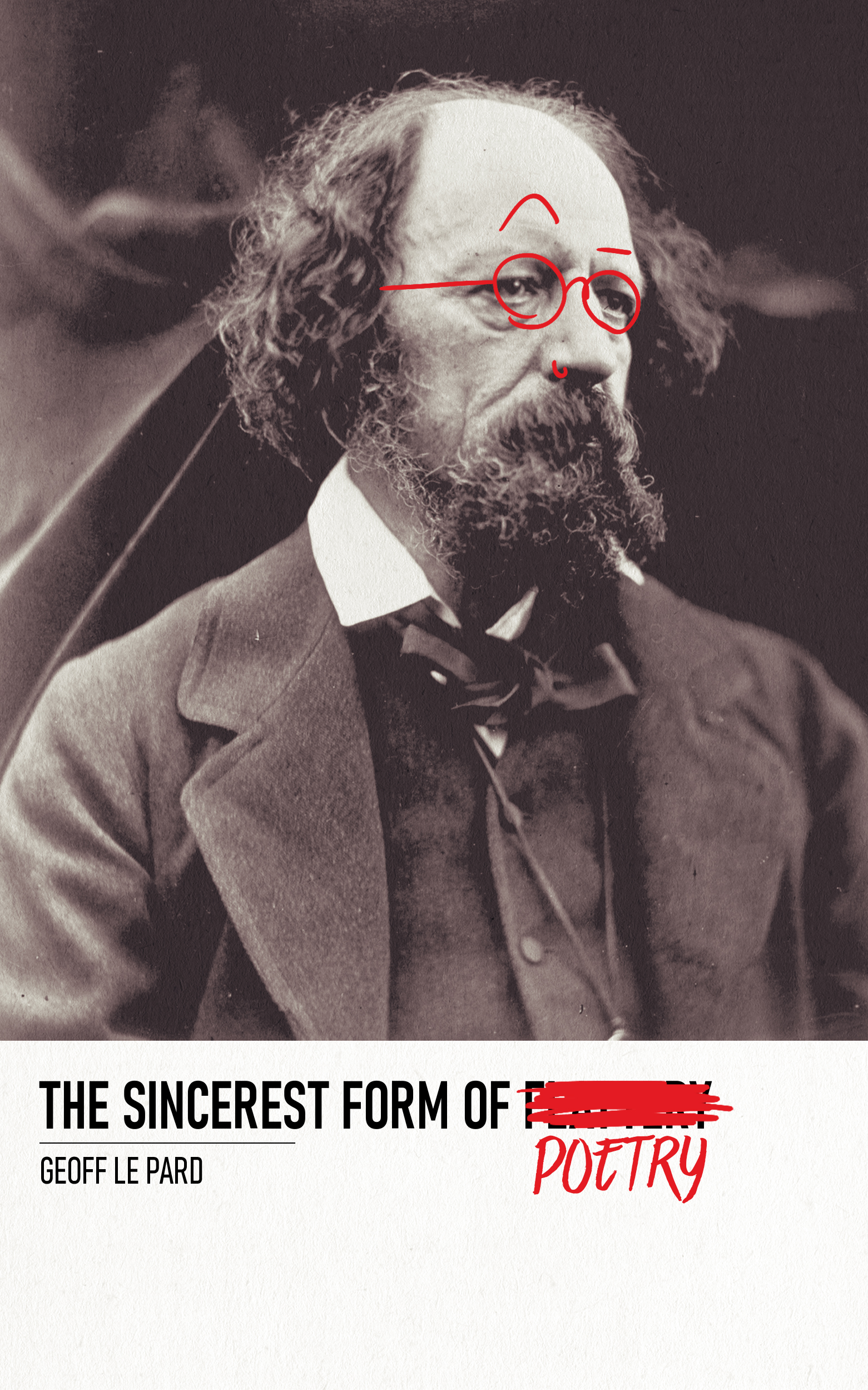
My review
I know Geoff Le Pard as an author of hilarious books that frequently poke fun, in the tongue-in-cheek way of the British, at many of the situations and achievements we humans hold the most dear during the course of our short lives. I am a big fan of this type of humour and have enjoyed several Geoff’s short stories and pieces of flash fiction. Geoff’s writing has another side to it, a more serious and family orientated side which also comes through in some of his books and writing.
The unusual book of poetry by Geoff Le Pard is his inaugural poetry book and is a mix of these two sides of his writing. The poems forming the first part of this books are a hilariously slapstick take-off of the works of many famous English poets. The poet has reproduced the exact tempo and rhythm of the original poem, replacing the original wording with his own amusing poetic descriptions of topical events and circumstances.
My favourite of these poems was the very first one in the book, which is based on one of my favourite poems, The Listeners by Walter de la Mare. The Listeners tells the story of an unnamed traveler who approaches an abandoned house which seems to be occupied by ghosts. In Le Pard’s version, the public toilet is held up for discussion and probing commentary. Here is an extract from The Relief of Waterloo:
“Is there anybody there, said the traveller
To open up this loo?
It’s surely wrong that one must pay,
For our numbers one and two.
***
It’s not a function of the state
To limit where I go.
My body ain’t so politic
But it has some rights, you know.”
The second part of the book is devoted to sonnets which generally have a more sophisticated and serious flavour. One of my favourite poems in this second part is The Hand That Guides. Here are a few lines to give you a sense of the poet’s sonnets:
“I continually try to do it my way,
To give into weakness of flesh and of soul
But you hold my love tight, I cannot stray
And we remain linked, two parts of one whole.”
If you enjoy poetry, in all its varying shapes and forms, you should not miss out on this collection.
Purchase The Sincerest Form of Poetry
Amazon US: https://www.amazon.com/Sincerest-Form-Poetry-Geoff-Pard-ebook/dp/B08HJRJHWC
Amazon UK: https://www.amazon.co.uk/Sincerest-Form-Poetry-Geoff-Pard/dp/B08KH3QWWB
About Geoff Le Pard
Geoff Le Pard (not Geoffrey, except to his mother) was born in 1956 and is a lawyer who saw the light. He started writing (creatively) in 2006 following a summer school course. Being a course junkie he had spells at Birkbeck College, twice at Arvon and most recently at Sheffield Hallam where he achieved an MA in Creative Writing. And what did he learn? That they are great fun, you meet wonderful people but the best lessons come from the unexpected places. He has a line of books waiting to be published but it has taken until now to find the courage to go live. He blogs at https://geofflepard.com/ on anything and everything. His aim is for each novel to be in a different style and genre. Most people have been nice about his writing (though when his brother’s dog peed on the manuscript he was editing, he did wonder) but he knows the skill is in seeking and accepting criticism. His career in the law has helped prepare him.
About Robbie Cheadle
Hello, my name is Robbie, short for Roberta. I am an author with seven published children’s picture books in the Sir Chocolate books series for children aged 2 to 9 years old (co-authored with my son, Michael Cheadle), one published middle grade book in the Silly Willy series and one published preteen/young adult fictionalised biography about my mother’s life as a young girl growing up in an English town in Suffolk during World War II called While the Bombs Fell (co-authored with my mother, Elsie Hancy Eaton). All of my children’s book are written under Robbie Cheadle and are published by TSL Publications.
I have recently branched into adult and young adult horror and supernatural writing and, in order to clearly differential my children’s books from my adult writing, I plan to publish these books under Roberta Eaton Cheadle. My first supernatural book published in that name, Through the Nethergate, is now available.
I have participated in a number of anthologies:
- Two short stories in Amazon horror anthology, Spellbound, compiled by Dan Alatorre;
- Two short stories in #1 Amazon bestselling horror anthology, Dark Visions, and three short stories in #1 Amazon bestselling horror anthology, Nightmareland, both edited by Dan Alatorre;
- Three short stories in Death Among Us, an anthology of murder mystery stories, edited by Stephen Bentley; and
- Two short stories in Whispers of the Past, an anthology of paranormal stories, edited by Kaye Lynne Booth.
I also have a book of poetry called Open a new door, with fellow South African poet, Kim Blades.
Find Robbie Cheadle
Blog: https://www.robbiecheadle.co.za/
Blog: robbiesinspiration.wordpress.com
Twitter: BakeandWrite
Instagram: Robbie Cheadle – Instagram
Facebook: Sir Chocolate Books
Want to be sure not to miss any of Robbie’s “Treasuring Poetry” segments? Subscribe to Writing to be Read for e-mail notifications whenever new content is posted or follow WtbR on WordPress. If you found it interesting or entertaining, please share.
Share this:

Meet poet and author D. Avery plus review
Posted: September 26, 2020 Filed under: Book Review, Books, Interview, Poetry, Review, Treasuring Poetry | Tags: Author Interview, Book Review, D. Avery, Poetry, Robbie Cheadle, Treasuring Poetry, Writing to be Read 60 Comments
Today, I am delighted to welcome poet and author D. Avery. Ms Avery is the creator of the fun and well-known characters Kid and Pal who frequent Carrot Ranch Literary Community She also has her own blog where she shares her flash fiction, poetry and other literary endeavours. You can find her blog here: https://shiftnshake.wordpress.com/.
At first I was thrilled to be asked to participate in Treasuring Poetry with Writing to be Read and Robbie Cheadle. Then I read the questions! Too hard! Actually, I misread the questions and was flustered enough to consider who my favorite poet might be, let alone poem.
Robbie’s questions led me down many a rabbit hole, but perhaps not so many as I might have if I were under the same roof as my collection of poetry books. I’m not, so I let my mind travel and recall those shelves and what I have read lately. Often times my favorite poet or poem is simply the one in front of me, so recently I have enjoyed Conrad Aiken and Mary Oliver. But a favorite poet?
Still mistakenly contemplating a poet as opposed to a poem, and still unable to name just one, I at least realize I tend to most admire traditional Japanese poetry as well as the work of Rumi and of Hafiz. I like a short poem that makes me say, “Ah!” or even “Awe…” then “Ha!” If I could peruse my shelves I’d give my favorite examples, probably from a book called Japanese Death Poems; either that or I’d be lost in re-reading that treasure. As it is, this assignment got me re-reading Hafiz’s The Gift, translated by Daniel Ladinsky, and from that I came to see that many of Mary Oliver’s poems are in that Sufi vein, poems that, like Hafiz, are conversational yet intimate, not just with the reader, but with the subject, God. Now there’s a rabbit hole. But closer to home and in some ways more comfortable for their hominess are the poems of Robert Frost. He too writes with the wit and wisdom, often with a quiet humor, that I admire in the Sufis. Here are two lines from the New England bard:
We dance round in a ring and suppose,
But the secret sits in the middle and knows.
Robert Frost poems are accessible yet have subtleties and layers that can provide that ‘Ah ha’ that gives a poem staying power. As well as displaying an understanding of the spiritual aspects of his world Frost’s poems also reveal a keen observer’s eye for nature. There are many examples, and I never tire of reading Frost, but a favorite poem? I will not choose a favorite. But here are forty-eight syllables in eight lines, Nothing Gold Can Stay:
Nature’s first green is gold,
Her hardest hue to hold.
Her early leaf’s a flower;
But only so an hour.
Then leaf subsides to leaf.
So Eden sank to grief,
So dawn goes down to day.
Nothing gold can stay.
Some will say this poem is about impermanence and the fleeting nature of time. Leaves certainly change their hues in Frost’s New England, and he shows that he has observed this deeply, daily, for the emerging and unfolding leaves of spring and early summer cannot simply be called green, they are in fact shades of yellow and gold, and those might be preceded by cream and yellow flowers. Ah, he’s so observant. And dawn begins golden; “dawn goes down” makes one think of sunset, but it is just day, a day less sparkly than the golden dawn that begat it perhaps. Yes, time flies, but there is much implication in this poem of falling. So Eden sank to grief/ So dawn goes down to day/ Nothing gold can stay. There is nothing extraneous in this short poem; Eden sinking to grief is intentional, making this poem about humanity’s separation from nature, our fall from our golden potential when we were green and new in the world. This poem, without explicitly using seasonal words, has spring and fall entwined, so while that does show the fleeting nature of time, it is also a reminder of the seasons of our lives, and the hues we hold, the hues we live and die by. Just now in Frost’s old stomping grounds the leaves are turning back from summer greens to fall golds, and those colorful autumn leaves will fall, (for nothing gold can stay), but I wonder if that last line offers a bit of hope, the potential of knowing bright hues once more before the onset of winter.
I hope that addresses well enough the first three questions. As far as writing like any well-known poet, I choose— me! But I am not a well-known poet…
I admire many poets and many styles. I think any poet whom we admire is worth examining and, to an extent, imitating. That is what many of the poetry writing prompts do, they encourage us to try out different forms and styles of poetry, to pay attention to syllables and rhyme schemes and such. I sometimes see a form or style that is new to me and try it as a challenge and to learn something new. It’s all good, as long as you are building your own poeming muscles and not trying to write someone else’s poem. We tend to follow the recipe the first time we make a new dish. But then we get flexible and make the dish our own. In poeming too, we are aware that ours isn’t the only way to express the ingredients we find to hand, and we should want to find our own voice. In many ways free verse is the most challenging and difficult poetic form for me. How do you know when it’s done, if it’s done right, if there are no “rules”? That having been said, I am not against bending or even breaking the rules, but they have to be there in the first place for that to work.
Since I was nine years old I have occasionally been blessed by the magical balm of someone saying, “I liked your poem”. It’s a huge thing. I am not a singer or dancer or a visual artist. But sometimes I make pictures with words, and sometimes those words have a rhythm and a cadence or a tone that works, that strikes a chord. It is good to feel like a poem has performed well. And I have come to truly appreciate all the other lesser-known (not yet household names) poets that put their work out on their blogs. From you all I have learned so much and have been shown the great potential and creativity of poeming, and the assurance that poetry is alive and well.
D. Avery
My review of For the Girls by D Avery
This is the first book of poetry by D. Avery I have read and it was a wonderful experience. For the Girls really spoke to me as it is about the path of breast cancer many women walk. By reading these poems, I was able to follow this traumatic journey from diagnosis, through treatment and to remission for many, and death for a few.
The poems in For the Girls capture the concerns aroused by potential discover, the shock of a malignant diagnosis, the support offered by some of the staff at the treatment clinics and the comfort of firm friendships. The also disclose the pain of emotional upheaval being ignored and staff treating a patient with kind impatience.
Some of the verses/poems that struck me the most in this books are as follows:
“Unless.
Some of us have to get them off our chests.
And learn living without them.
Except.
Some, dear friends, couldn’t live.
With or without them.”
from The Girls
“There’s another intruder who lacks
Even the decency of mice or rats
that at least show themselves at night
To show they’ve been in the house all along,
only sometimes out of sight.
Why would you suspect your own house?
Relax, there’s nothing, or maybe only a mouse.
Why would you suspect there’s something there
Quiet as anxiety, maybe under the stairs
or up in the attic, just biding its time
A squatter in the house you blithely call “mine”?
from Intrusion
This collection of poems is freestyle and very bitter sweet. The insightfulness of the poet brought tears to my eyes and brought back memories of ladies I’ve known who’ve walked this same frightening path.
Purchase For the Girls by D Avery
About D Avery
D. Avery (196?-20??) has long been a compulsive poet. Despite a very important day job educating public school children, she is often distracted by this compulsion, as well as by life’s great questions, such as “Kayak, or bike?”. Though she has come to realize that nothing difficult is ever easy, she believes that it’s all good.
About Robbie Cheadle
Hello, my name is Robbie, short for Roberta. I am an author with six published children’s picture books in the Sir Chocolate books series for children aged 2 to 9 years old (co-authored with my son, Michael Cheadle), one published middle grade book in the Silly Willy series and one published preteen/young adult fictionalised biography about my mother’s life as a young girl growing up in an English town in Suffolk during World War II called While the Bombs Fell (co-authored with my mother, Elsie Hancy Eaton). All of my children’s book are written under Robbie Cheadle and are published by TSL Publications.
I have recently branched into adult and young adult horror and supernatural writing and, in order to clearly differential my children’s books from my adult writing, I plan to publish these books under Roberta Eaton Cheadle. My first supernatural book published in that name, Through the Nethergate, is now available.
I have participated in a number of anthologies:
- Two short stories in #1 Amazon bestselling anthology, Dark Visions, a collection of horror stories edited by Dan Alatorre;
- Three short stories in Death Among Us, an anthology of murder mystery stories, edited by Stephen Bentley;
- Three short stories in #1 Amazon bestselling anthology, Nightmareland, a collection of horror stories edited by Dan Alatorre; and
- Two short stories in Whispers of the Past, an anthology of paranormal stories, edited by Kaye Lynne Booth.
I also have a book of poetry called Open a new door, with fellow South African poet, Kim Blades.
Find Robbie Cheadle
Blog: https://www.robbiecheadle.co.za/
Blog: robbiesinspiration.wordpress.com
Twitter: BakeandWrite
Instagram: Robbie Cheadle – Instagram
Facebook: Sir Chocolate Books
Want to be sure not to miss any of Robbie’s “Treasuring Poetry” segments? Subscribe to Writing to be Read for e-mail notifications whenever new content is posted or follow WtbR on WordPress. If you found it interesting or entertaining, please share.
Share this:

“Mind Fields”: The Air In The Sky
Posted: July 29, 2020 Filed under: Mind Fields, Poetry | Tags: Art Rosch, Arthur Rosch, Mind Fields, Poetry, Writing to be Read 1 Comment
The Air In The Sky
May 23, 2020
All night the distant roar of the highway
augments the silence
wrapped around the house.
There is no wind, the Mimosa hang still.
crossing speed bumps.
trucks chatter half mile away.
Sound of a jet fading above low clouds.
My belly is full.
My feet sink into the carpet.
I wear only a torn t-shirt.
My bare legs are slightly bowed
but shapely.
I am old
and strong. My pains avoid me.
We have a treaty signed
by the doctor.
A Midwesterner by birth, Arthur Rosch migrated to the West Coast just in time to be a hippie but discovered that he was more connected to the Beatnik generation. He harkened back to an Old School world of jazz, poetry, painting and photography. In the Eighties he received Playboy Magazine’s Best Short Story Award for a comic view of a planet where there are six genders. The timing was not good. His life was falling apart as he struggled with addiction and depression. He experienced the reality of the streets for more than a decade. Putting himself back together was the defining experience of his life. It wasn’t easy. It did, however, nurture his literary soul. He has a passion for astronomy, photography, history, psychology and the weird puzzle of human experience. He is currently a certified Seniors Peer Counselor in Sonoma County, California. Come visit his blogs and photo sites. www.artrosch.com and http://bit.ly/2uyxZbv.
Want to be sure not to miss any of Art’s “Mind Fields” segments? Subscribe to Writing to be Read for e-mail notifications whenever new content is posted or follow WtbR on WordPress. If you find it interesting or just entertaining, please share.
Share this:

Meet poet Kevin Morris and a review of his latest book, Light and Shade; serious (and not so serious) poems
Posted: July 25, 2020 Filed under: Book Review, Poetry, Treasuring Poetry | Tags: Book Review, Kevin Morris, Poet Interview, Poetry, Robbie Cheadle, Treasuring Poetry, Writing to be Read 43 CommentsToday, I am very excited to share poet, Kevin Morris’, thoughts about poetry and his favourite poem. I met Kevin a few years ago soon after I started my blog and I was immediately captivated by his interesting poetry which frequently presents new angles on current events and even some historical events. I have read and enjoyed a number of his lovely poetry books, including his latest book, Light and Shade; serious (and not so serious) poems which I have reviewed later in this post.
Over to Kevin
Choosing a favourite poem is a difficult task, as my head is full of poems, many of which are favourites of mine. However, as I have to make a choice, my favourite poem is Vitae Summa Brevis Spem Nos Vetat Incohare Longam, by Ernest Dowson, which runs thus:
“They are not long, the weeping and the laughter,
Love and desire and hate:
I think they have no portion in us after
We pass the gate.
They are not long, the days of wine and roses:
Out of a misty dream
Our path emerges for a while, then closes
Within a dream.”
Dowson’s poem deals poignantly with the brevity of life. We are here for a short time. Our lives are full of “weeping”, “laughter”, “love”, “desire” and “hate”. But all of these are but a passing show for, when we “pass the gate” (the gate signifying the entrance to the land of the dead), all are loves, joys and sorrows are at an end, and we are no more.
Whilst the poem invokes in me a feeling of sadness (it is, after all about the shortness of existence), my primary response to Dowson’s lines is one of admiration. I say admiration for he sums up admirably, in 2 short verses the brevity of life. Other writers expend pots of ink on the subject of our mortality, but Dowson gets to the heart of the matter in a mere 8 lines of poetry.
I never deliberately copy any of the well-known poets. Although, doubtless their work impacts on my writing.
Whilst Dowson’s poem has a Latin title (a language unfamiliar to many people, including me), the message and style of his poem is simple, and it’s the poem’s very simplicity which I so admire.
Thank you, Kevin, for sharing your favourite poem and your reasons for loving it. Your choice greatly interested me as the brevity of life and the inevitability of death is common topic in your own poetry.
My review of Light and Shade; serious (and not so serious) poems
What Amazon says
Life is full of light and shade. For to be human is to experience joy, beauty, love, pain and laughter. This collection reflects all facets of human experience. hence the title Light and Shade; serious (and not so serious) poems.
My review
Light and Shade; serious (and not so serious) poems is another delightful collection of poems by talented poet, Kevin Morris.
Section 1 – Love, nature and time includes poems written mainly in freestyle, that tell of these aspects of human life. Each poem has a streak of melancholy running through it which is extremely effective – a bit like biting on tinfoil – in the way it highlights the underlying certainty of death even in the midst of life. There are a few poems that hint at the trauma of the coronavirus and the related lockdown.
One particular extract that demonstrates this is from a poem called “Oh Creature of Night”:
‘Twas a strange thing
To hear.
Yet I
Felt no fear
But pondered on your incongruous cry,
And a virus, invisible to the eye.”
Section 2 – Humour
The second part of the book comprises of amusing takes on life. I personally prefer the poems with the underlying dark undertones, but these are a lovely and light relief. A large number of these poems comprise of limericks, a form of poetry that the author excels at. One of the verses that entertained me from this section of the book, also relates to Covid-19, and goes as follows:
“Sunscreen on skin
Is no sin.
The birds sing
For it is spring.
One may go outside
But woe betide
The man who offers resistance
To the concept of social distance.”
From At a Time of Social Distancing.
I highly recommend this book of poetry to all poetry lovers who enjoy unpacking meaning and delighting in subtle messages of humour and darkness.
Purchase Light and Shade; serious (and not so serious) poems
Kevin’s recently released poetry collection, Light and Shade: Serious (and Not so Serious) Poems is available from Amazon as follows:
For amazon.com customers please click here https://www.amazon.com/Light-Shade-serious-not-poems-ebook/dp/B08B4X3GVX/ (for the Kindle edition), and here https://www.amazon.com/dp/B08B37VVKV/ (for the paperback).
For amazon.co.uk customers please follow this link https://www.amazon.co.uk/Light-Shade-serious-not-poems-ebook/dp/B08B4X3GVX/ (for the Kindle edition), or click here https://www.amazon.co.uk/dp/B08B37VVKV/ (for the paperback).
About Kevin Morris
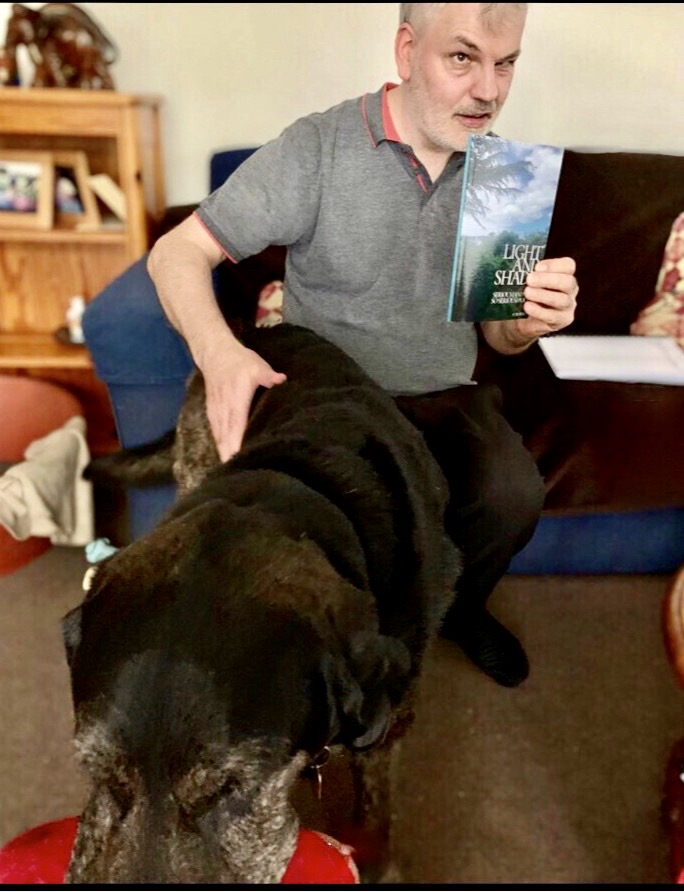
Kevin Morris was born in the city of Liverpool, United Kingdom, on 6 January 1969.
Having graduated from University College Swansea with a BA in history and politics and a MA in political theory, Kevin moved to London where he has lived and worked since 1994.
Being visually impaired, Kevin uses software called Job Access with Speech (JAWS), which converts text into speech and braille enabling him to use a Windows computer or laptop.
Contact Kevin Morris
Links:
Blog: https://kmorrispoet.com/
Twitter: https://twitter.com/drewdog2060_
About Robbie Cheadle
Hello, my name is Robbie, short for Roberta. I am an author with six published children’s picture books in the Sir Chocolate books series for children aged 2 to 9 years old (co-authored with my son, Michael Cheadle), one published middle grade book in the Silly Willy series and one published preteen/young adult fictionalised biography about my mother’s life as a young girl growing up in an English town in Suffolk during World War II called While the Bombs Fell (co-authored with my mother, Elsie Hancy Eaton). All of my children’s book are written under Robbie Cheadle and are published by TSL Publications.
I have recently branched into adult and young adult horror and supernatural writing and, in order to clearly differential my children’s books from my adult writing, I plan to publish these books under Roberta Eaton Cheadle. My first supernatural book published in that name, Through the Nethergate, is now available.
I have participated in a number of anthologies:
- Two short stories in #1 Amazon bestselling anthology, Dark Visions, a collection of horror stories edited by Dan Alatorre;
- Three short stories in Death Among Us, an anthology of murder mystery stories, edited by Stephen Bentley;
- Three short stories in #1 Amazon bestselling anthology, Nightmareland, a collection of horror stories edited by Dan Alatorre; and
- Two short stories in Whispers of the Past, an anthology of paranormal stories, edited by Kaye Lynne Booth.
I also have a book of poetry called Open a new door, with fellow South African poet, Kim Blades.
Find Robbie Cheadle
Blog: https://www.robbiecheadle.co.za/
Blog: robbiesinspiration.wordpress.com
Goodreads:
Twitter: BakeandWrite
Instagram: Robbie Cheadle – Instagram
Facebook: Sir Chocolate Books
Want to be sure not to miss any of Robbie’s “Treasuring Poetry” segments? Subscribe to Writing to be Read for e-mail notifications whenever new content is posted or follow WtbR on WordPress. If you found it interesting or entertaining, please share.
https://www.goodreads.com/author/show/6879063.K_Morrishttps://www.goodreads.com/author/show/6879063.K_Morrishttps://www.goodreads.com/author/show/6879063.K_Morris
Share this:

Poet and blogger, Christy Birmingham-Reyes, shares her thoughts about poetry and a review
Posted: June 20, 2020 Filed under: Book Review, Books, Interview, Poetry, Treasuring Poetry | Tags: Christy Birmingham, Poetry, Poets, Robbie Cheadle, Treasuring Poetry, Versions of the Self, Writing to be Read 50 CommentsTreasuring Poetry
Today, I am featuring Christy Birmingham-Reyes as my Treasuring Poetry guest. No only is Christy a wonderful and heartfelt poet, but she has a superb blog where she shares insightful and useful posts about life, parenting, working, caring for elderly relatives and many other amazing topics. You can follow Christy’s blog here: https://whenwomeninspire.com/
Over to Christy
Hi Robbie, thank you for offering me a spot in this great series on poetry! It’s a pleasure to be here. I enjoyed the time spent thinking about my answers to the five questions on this rainy, windy day on Canada’s west coast. Here we go:
My favourite poem is Nothing Gold Can Stay by Robert Frost. It was written by Frost in 1923 and published that same year.
My interpretation of this poem is that nothing stays in bloom forever. The moment is fleeting when the flowers blossom and trees are abundant with leaves. As the season ends, the flowers and leaves fall, just as humans too have a period where they are “in their prime” and grow frailer over the years.
While the interpretation above could be one that you might say is depressing, I disagree and find hope in the words of Robert Frost. To me, the poem is a reminder to enjoy today and to fill ourselves full of the golden moments we experience in life.
Cherishing the moments of happiness and taking in nature’s beauty is something we must not forget to do amidst the business of daily life. Now, more than ever, I feel grateful for the “small” things that are so big in their importance.
For example, today, I went for a walk between the rainstorms. The smell of the air was amazing to me, and I breathed it in deeply. That moment was golden, and it renewed my energy.
Nothing Gold Can Stay by Robert Frost
Nature’s first green is gold,
Her hardest hue to hold.
Her early leaf’s a flower;
But only so an hour.
Then leaf subsides to leaf.
So Eden sank to grief,
So dawn goes down to day.
Nothing gold can stay.
I would not want to write like any other poet, although I do certainly admire Maya Angelou’s writing style. To be a copy of someone else is not possible, and I would not succeed in doing so. Instead, I choose to put my efforts into trying to be my best self, in my writing, as a wife, as a daughter, and in other areas of life.
Maya Angelou’s poetry is candid. It is full of moments that take my breath away with their authenticity. She was true to herself on each page she wrote, and I can tell she wrote from her soul.
Thank you for having me over for a visit today! It has been a pleasure to chat about poetry and the emotions it draws out of us as readers. Stay safe xx
About Christy Birmingham

Christy Birmingham is a freelance writer in Victoria, BC, who has a BA in Psychology and has taken professional writing courses at the University of Victoria. She is the author of Pathways to Illumination (Redmund Productions, 2013), her first poetry book. Her work also appears in the Poetry Institute of Canada’s From the Cerulean Sea: An Anthology of Verse (2013) and the literary journals The Claremont Review and Tipton Poetry Journal.
Versions of the Self
Imagine a shift to the way you see the world that arises through poetic narration.
Imagine the world, at its base level, is a collection of selves. These selves collide, disperse, intermingle, and share themselves in lines of free verse. Such is the premise of Versions of the Self, poetry that assumes multiple types of selves exist and relate in ways that alter them. Each of the eight chapters looks at a different type of self, including the singular “I” and romantic interactions. These unique 80 poems definitely color themselves outside of the lines.
My review of Versions of the Self
Versions of the self is quite an extraordinary book of poetry. The poet, Christy Birmingham, has a very unique style of writing which I found very intriguing. I also thought this style worked exceptionally well for the content of this book which is all about different versions of self. It imitates the flow of thought but in an easy to read and fascinating way.
I felt I would like to get to know the poet as I read her poems. While she does write about a mixture of various emotions, there is a thread of sadness or melancholy that runs through many of them and I felt that the writer had suffered pain in her past relationships. The poems become lighter and happier as you move through the book and I found myself hoping that this is a reflection of Christy’s life.
These are a few of the verses I found the most compelling in this beautiful book:
“You direct me forward but
I want to go back,
Back to when we were wrapped in
Clean sheets, before the
Lies melted on your tongue.”
From Lack of Direction
***
“You were once a masterpiece
Now, your colors run down the fabric of
My past,
Shades of yellow and orange that have
Grown thick in consistency,
As the price of fine art rises with inflation.”
From You, Colors, and Realization
***
“You came to see me at a pillow rich with creativity,
Where I had hope beyond reason for tugging at my heartstrings.
You know exactly which strings to play on your
keys to keep me smiling.
From You, Unique.
Purchase Versions of the Self
About Robbie Cheadle
Hello, my name is Robbie, short for Roberta. I am an author with six published children’s picture books in the Sir Chocolate books series for children aged 2 to 9 years old (co-authored with my son, Michael Cheadle), one published middle grade book in the Silly Willy series and one published preteen/young adult fictionalised biography about my mother’s life as a young girl growing up in an English town in Suffolk during World War II called While the Bombs Fell (co-authored with my mother, Elsie Hancy Eaton). All of my children’s book are written under Robbie Cheadle and are published by TSL Publications.
I have recently branched into adult and young adult horror and supernatural writing and, in order to clearly differential my children’s books from my adult writing, I plan to publish these books under Roberta Eaton Cheadle. My first supernatural book published in that name, Through the Nethergate, is now available.
I have participated in a number of anthologies:
- Two short stories in #1 Amazon bestselling anthology, Dark Visions, a collection of horror stories edited by Dan Alatorre;
- Three short stories in Death Among Us, an anthology of murder mystery stories, edited by Stephen Bentley;
- Three short stories in #1 Amazon bestselling anthology, Nightmareland, a collection of horror stories edited by Dan Alatorre; and
- Two short stories in Whispers of the Past, an anthology of paranormal stories, edited by Kaye Lynne Booth.
I also have a book of poetry called Open a new door, with fellow South African poet, Kim Blades.
Find Robbie Cheadle
Blog: https://www.robbiecheadle.co.za/
Blog: robbiesinspiration.wordpress.com
Goodreads: Robbie Cheadle – Goodreads
Twitter: BakeandWrite
Instagram: Robbie Cheadle – Instagram
Facebook: Sir Chocolate Books
Want to be sure not to miss any of Robbie’s “Treasuring Poetry” segments? Subscribe to Writing to be Read for e-mail notifications whenever new content is posted or follow WtbR on WordPress. If you found it interesting or entertaining, please share.
Share this:

Poet Annette Rochelle Aben shares an interesting poem and some thoughts on poetry and poets
Posted: May 23, 2020 Filed under: Books, Poetry, Treasuring Poetry | Tags: A Tanka Picture Book, Annette Rochell Aben, Poetry, Treasuring Poetry, Writing to be Read 27 CommentsTreasuring Poetry
Today, I am delighted to welcome Annette Rochelle Aben to the Writing to be Read “Treasuring Poetry” series.
Annette has shared her favourite poem and the some of her thoughts about poetry.
“Résumé
Razors pain you,
Rivers are damp,
Acids stain you,
And drugs cause cramp.
Guns aren’t lawful,
Nooses give,
Gas smells awful.
You might as well live.”
― Dorothy Parker, Enough Rope
No matter how rough you think your life is right now… getting out of it could be more distasteful. So, get over it and carry on!
I love the dark humor and sarcasm that actually help bolster emotional stability.
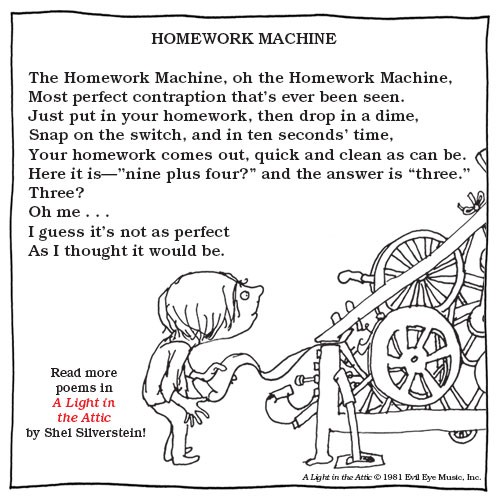
I would LOVE to be as talented (clever) as the late, great Shel Silverstein. [Shel Silverstein was a poet and musician known for children’s books such as The Giving Tree and Where the Sidewalk Ends.]
This man’s poetry entertains as well as educates. His poetry begs to be re-read for each time, you pick up on a different aspect of his messages.
Here is an entertaining example of Shel Silverstein’s poetry:
About Annette Rochelle Aben
I was born writing! At least this is how it seems. I had the good fortune to be published while a sophomore in high school, so continuing the journey by publishing books has been a natural course of events.
It is my pleasure to announce that the book I have just released is # 1 Best Seller! And that is: A Haiku Perspective 2018 which is available in both Kindle and paperback formats! Enjoy celebrating a year of my life as told using the framework of Haiku style poetry.
Angel Messages Two – songs of the heart, is a book filled with beautiful photos and remarkable tanka poetry. People LOVE this book because of the comfort it provides. Many have gifted it to others and been thanked over and over again.
A Tanka Picture Book is exactly as the name suggests. I took photos of a variety of everyday objects, works of art and nature, then wrote a tanka poem for each. I suggest this book for all the right reasons. It will entertain, provoke thought, stimulate conversation and be a great addition to your library!
I have chosen to release my annual haiku collection in time to celebrate National Poetry Month, in April. A Haiku Perspective 2017 is filled with smiles, laughter, wisdom and creativity, all cleverly disguised as haiku poetry. Enjoy!
My book, GO YOU – some encouragement when you need it, is a pep-talk in a book! Each page gives you a quick way to start your day, help you through a moment or even provide someone else words that can inspire them to a better life. We can all use a cheerleader, when one isn’t available, this book fits the bill!!
Most of the books I have published here are centered in poetry, Haiku poetry to be exact. Much of the feedback I receive about the haiku poetry is that people can really understand the messages and they appreciate that the poems are short and sweet!
Angel Messages – a wing and a prayer is my first book about Angels. Filled with photos, prayers, poems and prose of and about Angels, this book will delight any Angel lover in your life. Check out the reviews, people are drawn to the inherent inspirational nature of this book and as result is fast becoming their favorite. You can have it right away using the Kindle option or order a paperback copy (or two) and carry it with you wherever you go.
I mentioned that many of my books are filled with my poetry and several of them combine that with my love of taking pictures. Books that feature poetry and photos include Perspective, it’s all about replacing one thought with another; PhoKu, visual perspective haiku; and BooKu, Halloween haiku. Perspective has a wide variety of pages that can feature prose, poetry and nature photographs, while PhoKu is filled with the photographs I have taken in nature with Haiku poetry added to them, hence the title: PhoKu. BooKu is a “behind the scenes look at how Halloween decorations feel about their jobs. All three of these books are available in print and Kindle formats.
A Haiku Perspective 2015, and A Haiku Perspective 2016 are haiku poetry books. When I first experimented with the haiku writing format, I have no idea I would enjoy it as much as I do. These days, I am writing haiku daily and finding myself thinking in 17 syllables. You can find these books in both print and Kindle formats
There are several other books planned for release this year alone, So please, check back frequently to see what I have published and share what YOU are doing! Cheers!!
My review of A Tanka Picture Book
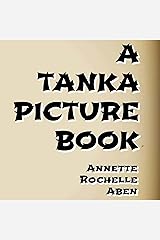
Annette Rochelle Aben writes the most beautiful and heartfelt poetry, most frequently in the form of tanka and haiku verse. Annette bares her thoughts, feelings and soul to the world with her writing and enables you to experience her joy and delight at living with her.
One identifying feature of Annette’s poetry is that she appeals to all five of the senses. I frequently find that poems focus on the visual, what the writer sees, but not that many poets manage to capture the smell, sound and touch of life in quite the way Annette does.
One of the poems in this book that filled me with delight is this one:
We found paradise
Filled with rolling hills of green
Houses so cozy
Paths strewn with flowers fragrant
Watercolor painted skies
You can purchase Annette Rochelle Aben’s books here: https://www.amazon.com/Annette-Rochelle-Aben/e/B00MSQTGUY

You can read some of Annette’s uplifting poetry on her blog here: https://annetterochelleaben.wordpress.com/
About Robbie Cheadle
Hello, my name is Robbie, short for Roberta. I am an author with six published children’s picture books in the Sir Chocolate books series for children aged 2 to 9 years old (co-authored with my son, Michael Cheadle), one published middle grade book in the Silly Willy series and one published preteen/young adult fictionalised biography about my mother’s life as a young girl growing up in an English town in Suffolk during World War II called While the Bombs Fell (co-authored with my mother, Elsie Hancy Eaton). All of my children’s book are written under Robbie Cheadle and are published by TSL Publications.
I have recently branched into adult and young adult horror and supernatural writing and, in order to clearly differential my children’s books from my adult writing, I plan to publish these books under Roberta Eaton Cheadle. My first supernatural book published in that name, Through the Nethergate, is now available.
I have participated in a number of anthologies:
- Two short stories in #1 Amazon bestselling anthology, Dark Visions, a collection of horror stories edited by Dan Alatorre;
- Three short stories in Death Among Us, an anthology of murder mystery stories, edited by Stephen Bentley;
- Three short stories in #1 Amazon bestselling anthology, Nightmareland, a collection of horror stories edited by Dan Alatorre; and
- Two short stories in Whispers of the Past, an anthology of paranormal stories, edited by Kaye Lynne Booth.
I also have a book of poetry called Open a new door, with fellow South African poet, Kim Blades.
Find Robbie Cheadle
Blog: https://www.robbiecheadle.co.za/
Blog: robbiesinspiration.wordpress.com
Goodreads: Robbie Cheadle – Goodreads
Twitter: BakeandWrite
Instagram: Robbie Cheadle – Instagram
Facebook: Sir Chocolate Books
Want to be sure not to miss any of Robbie’s “Treasuring Poetry” segments? Subscribe to Writing to be Read for e-mail notifications whenever new content is posted or follow WtbR on WordPress. If you found it interesting or entertaining, please share.



















Second Anglo Boer War propaganda poetry – the British side of things
Posted: June 22, 2020 | Author: robertawrites235681907 | Filed under: Books, Commentary, Historical Inspiration, Opinion, Poetry | Tags: A Ghost and His Gold, Poetry, Robbie Cheadle, Rudyard Kipling, Second Anglo Boer War, South African History, Writing to be Read | 44 CommentsIn my post entitled Second Anglo Boer War propaganda Poetry – the Boer side of things, I gave a brief overview of the circumstances that led to the Boers declaring war on the British Empire for the second time.
The late 19th century saw a significant increase in imperialism in Britain, spurred on by the theories of social Darwinism which argued that the biological concepts of natural selection and survival of the fittest should be applied to sociology and politics. This imperialism provided an ideological foundation for warfare and colonisation in the name of the British Empire.
Journalism was used to disseminate these ideas to the British public and, in the years leading up to the Second Anglo Boer War, newspapers were characterised by extreme pro-war propaganda, which was strictly controlled by the British High Commission in South Africa, Sir Alfred Milner.
After a holiday to South Africa in early 1898, Rudyard Kipling became friendly with Cecil John Rhodes, a British mining magnate and politician in southern Africa, Leander Starr Jameson, the leader of the botched Jameson Raid which aimed to overthrow the Transvaal government in December 1895, and Sir Alfred Milner. Kipling cultivated these friendships and came to admire these men and their politics. Before and during the Second Anglo Boer War, Kipling wrote poetry in support of the British cause in the Boer War.
One of Kipling’s early propaganda poems was The Old Issue which is published in his The Five Nations book of poetry.
The Old Issue
OCTOBER 9, 1899
(Outbreak of Boer War)
By Rudyard Kipling
“HERE is nothing new nor aught unproven,” say the Trumpets,
“Many feet have worn it and the road is old indeed.
“It is the King—the King we schooled aforetime !”
(Trumpets in the marshes—in the eyot at Runnymede!)
“Here is neither haste, nor hate, nor anger,” peal the Trumpets,
“Pardon for his penitence or pity for his fall.
“It is the King!”—inexorable Trumpets—
(Trumpets round the scaffold at the dawning by Whitehall!)
. . . . .
“He hath veiled the Crown and hid the Sceptre,” warn the Trumpets,
“He hath changed the fashion of the lies that cloak his will.
“Hard die the Kings—ah hard—dooms hard!” declare the Trumpets,
Trumpets at the gang-plank where the brawling troop-decks fill!
Ancient and Unteachable, abide—abide the Trumpets!
Once again the Trumpets, for the shuddering ground-swell brings
Clamour over ocean of the harsh, pursuing Trumpets—
Trumpets of the Vanguard that have sworn no truce with Kings!
All we have of freedom, all we use or know—
This our fathers bought for us long and long ago.
Ancient Right unnoticed as the breath we draw—
Leave to live by no man’s leave, underneath the Law.
Lance and torch and tumult, steel and grey-goose wing
Wrenched it, inch and ell and all, slowly from the King.
Till our fathers ’stablished, after bloody years,
How our King is one with us, first among his peers.
So they bought us freedom—not at little cost
Wherefore must we watch the King, lest our gain be lost,
Over all things certain, this is sure indeed,
Suffer not the old King: for we know the breed.
Give no ear to bondsmen bidding us endure.
Whining “He is weak and far”; crying “Time shall cure.”,
(Time himself is witness, till the battle joins,
Deeper strikes the rottenness in the people’s loins.)
Give no heed to bondsmen masking war with peace.
Suffer not the old King here or overseas.
They that beg us barter—wait his yielding mood—
Pledge the years we hold in trust—pawn our brother’s blood—
Howso’ great their clamour, whatsoe’er their claim,
Suffer not the old King under any name!
Here is naught unproven—here is naught to learn.
It is written what shall fall if the King return.
He shall mark our goings, question whence we came,
Set his guards about us, as in Freedom’s name.
He shall take a tribute, toll of all our ware;
He shall change our gold for arms—arms we may not bear.
He shall break his judges if they cross his word;
He shall rule above the Law calling on the Lord.
He shall peep and mutter; and the night shall bring
Watchers ’neath our window, lest we mock the King—
Hate and all division; hosts of hurrying spies;
Money poured in secret, carrion breeding flies.
Strangers of his counsel, hirelings of his pay,
These shall deal our Justice: sell—deny—delay.
We shall drink dishonour, we shall eat abuse
For the Land we look to—for the Tongue we use.
We shall take our station, dirt beneath his feet,
While his hired captains jeer us in the street.
Cruel in the shadow, crafty in the sun,
Far beyond his borders shall his teachings run.
Sloven, sullen, savage, secret, uncontrolled,
Laying on a new land evil of the old—
Long-forgotten bondage, dwarfing heart and brain—
All our fathers died to loose he shall bind again.
Here is naught at venture, random nor untrue—
Swings the wheel full-circle, brims the cup anew.
Here is naught unproven, here is nothing hid:
Step for step and word for word—so the old Kings did!
Step by step, and word by word: who is ruled may read.
Suffer not the old Kings: for we know the breed—
All the right they promise—all the wrong they bring.
Stewards of the Judgment, suffer not this King!
Commentary
Kipling’s description of the Boers as “sloven”, “savage” and “evil” was insulting and most definitely part of the British government’s pre-war campaign to dehumanise the enemy in the eyes of the public. The lines “He shall take tribute, toll of all our ware, he shall change our gold for arms – arms we may not bear” are arrogant and indicated that Kipling believed the British had a legitimate claim to the gold of the Transvaal.
A Ghost and His Gold by Roberta Eaton Cheadle – Cover reveal
About Roberta Eaton Cheadle
I am an author who has recently branched into adult horror and supernatural writing and, in order to clearly differential my children’s books from my young adult and adult writing, these will be published under the name Roberta Eaton Cheadle. My first young adult supernatural novel, Through the Nethergate, has recently been published.
I also have two short paranormal stories in Whispers of the Past, a paranormal anthology edited by Kaye Lynne Booth.
Like this post? Let me know in the comments. You can be sure not to miss any of Writing to be Read’s great content by subscribe to e-mail or following on WordPress. If you found this content helpful or entertaining, please share.
Share this: