Writer’s Corner: Doing the NaNoWriMo Thing
Posted: December 3, 2024 Filed under: Book Promotion, Books, NaNoWriMo, Science Fiction, Time travel, WordCrafter Press, Writing | Tags: Books, Creative Writing, Kaye Lynne Booth, NaNoWriMo, Novel, The Rock Star & the Outlaw, WordCrafter Press, Writer's Corner, Writing, Writing to be Read 12 Comments
This was my third year participating in NaNoWriMo. The first year I gained confidence when I learned that I was more than capable of making the daily word count goal, something I was unsure of when starting out. At that time, 1,667 sounded like an awfully lot of words, but I did it most of the days in November, and when I didn’t do it, I made up for it on the days I wrote two thousand or more, and by the end of the month of November, I had exceeded the overall word count goal of 50,000. (For the sake of transparency, I started with a partial manuscript, so although technically I was successful, I did not write enough new material to make the goal.)
Last year, 2023, I was well on my way to being successful, this time for real, and it was coming down to the last week, when my computer crashed and I was digitally down, making it impossible to complete the challenge. From this, I learned that it isn;t the end of the world to not finish, and I still feel that if my computer hadn’t crashed, I would have successfully met the challenge. I was making or exceeding the daily word counts each day and was on schedule to finish early, before the end of the month.
This year I went into NaNoWriMo with a very positive attitude. I knew I could make the daily word count, so I didn’t stress about it, but I did paln for it. I approached with a plan to implement strategies which had been successful in the past, and a good working plot outline, so I would be clear on where the story was going. Last year, I had abandoned the time blocking strategy which I’d implemented the first year, for an “ass-in-chair, write-the-book” strategy which I’d learned from one of my graduate school professors. (Don’t get me wrong, time blocking is a valid strategy for some people. It just wasn’t effective for me.)
At first, things seemed to go pretty smoothly, until life got in the way during the first week out, when where I live received almost four feet of snow and I was snowbound for four straight days. I didn’t think it would ever stop. It just kept coming. But even with all the shoveling I had to do, and the firewood I had to split to stay warm, I was able to meet my daily word count goal in the evenings. It started snowing on Wednesday, and when I was finally able to get out, on Monday, the 11th, I had to go to work at my day job. I was so tired, that I wasn’t able to make my word count for the first time. I fell asleep in front of my computer at 8:30 p.m. that night with only 634 words for the day.
But, I found that it wasn’t the end of the world that I didn’t get the badge for making the word count goal every day. And I made up the words I’d missed getting down the very next day, with a total word count for the day of 2624. It’s amazing what a decent night’s sleep will do for you. I really do write better if I take care of myself properly, and that proved it. It is also important to take time out for yourself, even though you may be pushing to make a word count goal or a deadline on a writing project. I’ve been looking forward to each new episode of Tulsa King, with Sylvester Stallone, each Sunday, after my shift at work, and I’ve learned that I can watch an hour or two of television and still get my word count done. This is something I had to teach myself. For the first two years I took the challenge, I took every moment I had to write, like a driven person, and now I’m finding that I’m more productive when I block out time for other things, too.
In the end, I didn’t make it. My Internet went down on the last day, so I didn’t get to log my last days totals anyway. (That is also why this Monday blog segment isn’t coming out on Monday. I just got my Internet back up and running this evening.) My total on November 30th was around 43,000 words. Not quite making the goal, but you know what?
It’s okay, because I’m still working on it everyday and I currently have 45,630 words of my story. I started out from a blank page this year. That’s not bad for a month’s time. And it’s a fantastic start toward the completion of the novel.
What I Learned
- I learned that if I just keep at it, the book will take shape
- I learned that my style of edit as you go is okay. It’s a part of my writing process and it works for me and I end up with a much cleaner first draft. It’s necessary for me in order to obtain the proper foreshadowing and also when planting the little easter eggs which helps connect the books for series readers.
- I learned that thinking about time travel sometimes makes my head hurt. It’sa lot to wrap your head around, and it’s easy to get your plot lines twisted when writing about it. Also another reason to edit as I go. With time travel, changing one thing may change several others, jumping from chapter to chapter for revisions became common place for me with this book.
- I learned to use multiple P.O.V.s to make the plot flow smoothly. This was the most P.O.V.s I’ve ever used in a story.
- I learned how to write in multiple subplots – again, the most I have ever tried to use – and multiple time periods.
About the Book
There is not a lot I can tell you about the second Time Travel Adventure Series book without throwing out huge spoilers to those who haven’t read book 1, The Rock Star & The Outlaw. Although each book can be read as a stand alone, book 2 has references to events in the first book and they are complimentary to one another. Book 2 picks up where the first book leaves off, which is why I can’t explain further without giving away the ending of the first book.
I’m having a lot of fun writing this book, maybe even moreso than I did with the first. Like the first, this one has musical inspiration, with song titles for chapter titles and a playlist in the front of the book. By having mutlple P.O.V.s, it opened this one up to even more music artists and songs. And by dealing with temporal loops, it allowed me the opportunity to change events which occured in the first book, creating a whole new story stemming from the same events. It is a crazy, wild ride and you never know where the characters will end up.
I can’t say too much about the new book, but I can share the book trailer for book 1, The Rock Star & The Outlaw, which is also a wild ride through time, for those who haven’t read it yet.
The Rock Star & The Outlaw
_______________________________________
This post is sponsored by WordCrafter Press
Share this:

Welcome to the WordCrafter “Will Write for Wine” & “Stories I Stole From Lord Byron’s Bastard” Book Blog Tour
Posted: June 27, 2022 Filed under: Beach Reads, Blog Tour, Book Promotion, Book Review, Books, Fiction, Giveaways, Guest Post, Historical Fiction, Historical Inspiration, Humor, Review, Romantic Comedy, Stories, WordCrafter Book Blog Tours, Writing Inspiration | Tags: Historical Fiction, Historical Romance, Humor, Novel, Sara W. McBride, Short Fiction, Stores I Stole From Lord Byron's Bastard, Will Write for Wine, WordCrafter Book Blog Tours 15 Comments
Stories I Stole from Lord Byron’s Bastard is a collection inspired by Venetian history. The fictional character, Alexis Lynn, wrote these stories in the novel Will Write for Wine by Sara W. McBride, but they are fun stand-alone adventures to be enjoyed with an excellent glass of Italian wine.
______________________________________________________________________
Welcome to the WordCrafter Will Write for Wine & Stories I Stole From Lord Byron’s Bastard Book Blog Tour. This is going to be a fun tour because we have two fabulous books to celebrate by a wonderful new author Sara W. McBride. Will Write for Wine is her debut novel about a writer, Alexis Lynn, and her funny and romantic escapades when she moves to Venice to start a new life. Stories I Stole From Lord Byron’s Bastard is the recently released short story collection and companion to the novel. Her fiction is well researched and presented with a witty flare which I find refreshing and I think you will too. I hope you’ll follow the tour and join us at each blog stop. You’ll find the schedule and links below.
Blog Tour Schedule
Monday, June 27 – Opening Day Post – Writing to be Read – Guest Post: Inspiration for the Devil’s Bridge” & Review of Stories I Stole From Lord Byron’s Bastard
Tuesday, June 28 – Showers of Blessings – Guest Post: Inspiration for “Stealing Georgione’s Mistress”
Wednesday June 29 – Carla Loves to Read – Guest Post: Inspiration for “The Masked Kiss”
Thursday, June 30 – Writing to be Read – Guest Post: Inspiration for “A Dowry for Safron” & Interview with Sara W. McBride
Friday, July 1 – Zigler’s News – Guest Post: Inspiration for “The Pregnant Man” & Review of Stories I Stole From Lord Byron’s Bastard
Saturday, July 2 – Annette Rochelle Aben– – Guest Post: Inspiration for “The Haunted Palazzo”
Sunday, July 3 – Roberta Writes – Guest Post: Inspiration for “The Secret Vault”
Monday, July 4 – Wrap-Up Post – Writing to be Read – Guest Post: Inspiration for Will Write for Wine & Review of Will Write for Wine
Give-Away
In addidtion, to the awesome guests posts, interview, and reviews at each tour stop, Sara is offerin a chance to win a digital copy of each book, Will Write For Wine & Stories I Stole From Lord Byron’s Bastard. Leave a comment and click on the link below to enter for a chance to win:
http://www.rafflecopter.com/rafl/display/d9280cae1/?
Introduction
I must begin by giving kudos to Sara W. McBride for the clever way that she has braided these seven short stories in this collection in with her debut novel, (and I’m told that she is currently working on a companion wine tasting journal). While both of these books stand alone easily, they really should be consumed together. In the novel, Will Write for Wine, we see the story of how Alexis Lynn comes to write these stories, but we don’t get to actually see the stories. For that, you must read Stories I Stole From Lord Byron’s Bastard, which offers not only the stories, but the true inspiration behind them. After reading her delightful novel, and seeing Alexis’ digging up the background for the stories and seeing Manu’s reaction to reading them, one can’t help but be curious about the actual stories and want to read the collection. It’s brilliant!
Now let me turn things over to the author, Sara W. McBride, so she can share her inspiration for the story.

https://www.puckpublishing.com
Inspiration for “Devil’s Bridge”
Guest Post by author Sara W. McBride
What inspired the story, “The Devil’s Bridge?”
The moment I saw the sign “Ponte del Diavolo,” I knew I had to write a story. At the edge of the bridge sits Palazzo Priuli, home to several Doge Priulis and is now an elegant hotel (www.hotelpriuli.com) in the Castello area of Venice. I had already been researching the tragic death of Antonio Foscarini, and then I discovered that the doge—Basically the president of Venice—who had him executed lived in the palazzo at the edge of Devil’s Bridge. It’s not often that history simply hands me a story, but there it was, burning bright in the Lancet windows of a 14th century palazzo. Here’s the real history behind the Devil-possessed Doge Priuli and his most famous victim:
Antonio Foscarini, executed on April 22, 1622, was a Venetian ambassador to London (1611-1615) and is rumored to have had an affair with King James’ Queen, Anne of Denmark. He returned to Venice during a “Spy War” with Spain and was suspected of betraying Venetian secrets to Spanish officials. Someone who knew about his affair with the Queen of England might have seeded this rumor. Upon his arrival in Venice in December 1615, he was arrested and held prisoner for three years under Doge Bembo, who uncovered the Bedmar plot which would have permitted Spanish mercenaries to march on Venice. In the midst of the crisis, Bembo died—or was possibly assassinated by the Spanish—and Doge Nicolo Donato reigned for a mere 35 days before he died. I believe he was assassinated by the Spanish, but have found no clear evidence for such a claim.
I’m considering writing a novel on the Venice/Spain Spy War of 1615-1622 because it’s super fascinating and an interesting statement on what fear does to a governing body.
Antonio Priuli (1548-1623) was elected doge in 1618 and released Foscarini in order to monitor him and his activities. Priuli was a brutal doge who arrested hundreds of innocent Venetians suspected of plotting against Venice. Was he possessed by the devil? Probably not, but how Devil’s Bridge earned its name is a mystery, so I took license and speculated that the devil enjoyed his residence at the bridge’s end.
On April 8, 1622, Foscarini, then a Senator of Venice, was arrested and accused by the Council of Ten—basically the governing body of Venice, particularly over state security matters—of meeting with ministers of foreign powers and communicating the most intimate secrets of the Venetian Republic. The evidence was weak and Foscarini denied all charges, yet he was still condemned to a public execution for high treason. Why? The answer will never be known, so I had fun speculating that perhaps a guest of his, under her own volition or persuaded by a demonically possessed doge, provided false evidence to seal his fate.
By the end of 1622, Doge Priuli showed signs of illness. In January, 1623, the same Council of Ten revoked Foscarini’s guilty verdict—Whoops, they were wrong—and reinstated the family’s honor with a posthumous exoneration. His bust and tomb can be found in the Church of San Stae in Venice. There’s more on Foscarini’s final resting place in “The Masked Kiss,” another story in this collection.
Doge Antonio Priuli died on August 12, 1623, but oddly, I am unable to locate his tomb. It’s usually pretty easy to find a doge’s tomb. I would have thought him to be buried in Santi Giovanni e Paolo (aka San Zanipolo), which houses tombs of 25 doges, but I haven’t found him there. The art and sculpture in this basilica-sized ediface is amazing! This behemoth church manages to hide on the North side of the Castello and is off the beaten tourist path, but you should definitely seek it out.
Two other Priuli doges, brothers Girolamo Priuli, 1486-1567, and Lorenzo Priuli, 1489-1559, are buried in San Salvador, but apparently there was no space remaining for their Priuli descendent, or perhaps the family just didn’t like Antonio.
Another source claims that the spy-hunting doge is buried alongside Marco Polo in the Church of San Lorenzo in the Castello district, but San Lorenzo has been closed for over a hundred years, only recently reopened, and I have not seen or read any evidence of the doge’s tomb being contained within. They couldn’t find Marco Polo either.
If you find the tomb of Venice’s 94th Doge, Antonio Priuli, please write to me at sara@puckpublishing.com. Otherwise, I’ll just have to assume he’s buried in the depths of the canal under Ponte del Diavolo.

Buy Link: https://www.amazon.com/Stories-Stole-Lord-Byrons-Bastard-ebook/dp/B0B27TS5GL
My Review
Stories I Stole From Lord Byron’s Bastard
Stories I Stole From Lord Byron’s Bastard is a short story collection by Sara W. McBride which will tickle your sense of adventure and discovery, and perhaps, your funny bone. A companion to her debut novel, Will Write for Wine, these stories bring Venetian history to life with a personal touch of humor, adding in the missing details which historical archives and family histories only elude to. Each story is accompanied with the history and inspiration behind it, and it’s fun to see how McBride crafted in characters to transform legend to story.
Included are tales of an unsuspecting hero who gets the girl, in “The Masked Kiss”; an apprentice who betrays his master in the name of love in “Stealing Giorgione’s Mistress”; a bridge occupied by a demon, in “The Devil’s Bridge”; a nun who chooses life on a plague island over marriage in “Lazzaretto Vecchio: A Dowry for Saffron”; a smuggling operation gone awry in “The Secret Vault”; and a delightful tale of a young artist forced to masquerade as a male in order to ply her trade in “A Gentleman’s Portrait by a Pregnant Man”. But, I’d have to say my favorite story in this collection is “The Haunted Palazzo”, because I’ve always been a sucker for a good ghost story, and the mysterious specter and wet windowsill are certainly prime food for ghostly fodder.
Stories I Stole From Lord Byron’s Bastard is a collection of short historically inspired stories which are light and entertaining reads. Fun and enjoyable. I give it five quills.

_____________________________________________________________________________________
Book your WordCrafter Book Blog Tour today!
Share this:

Interview with Author Kristy Centeno
Posted: July 17, 2017 Filed under: Author Profile, Books, Fiction, Full Moon Bites, Interview, Paranormal, romance, Writing, Young Adult | Tags: Author Interview, Books, Deliverance, Kristy Centeno, Novel, Paranormal Romance, Writing, Young Adult Fiction 3 Comments
Today, we have the pleasure of chatting with author Kristy Centeno, who recently had her latest YA/NA paranormal romance released, Deliverance. In addition to being the author of the Secrets of the Moon saga and Keeper Witches series, and now, Deliverance, Kristy is a wife and mother to five children, and she holds down a day job, as well. This interview will kick off her book blog tour for the book with Full Moon Bites author promotions, so let’s give her a good send off.
Kaye: Your most recent paranormal romance released is Deliverance, and I hear it has received some great reviews. Would you like to tell us a little about it?
Kristy: Deliverance depicts the story of a young man who has been imprisoned in an Institute his entire life. Created in a lab, he has no clues as to what he is. Only that he’s not human. Tired of a life of suffering, he escapes to seek the assistance of a man that can help permanently free him and the other prisoners from his creator’s clutches. To do so, he requires the assistance of a young woman—one that will come to challenge everything he believed his enemies to be.
Deliverance delves into the paranormal, with a hint of romance, and some mystery thrown in as well. It took me a year to complete this project and enjoyed every minute of the process. Tiger wasn’t an easy character to develop as he isn’t quite your average hero. He’s both fierce and vulnerable. Strong yet weak. A potential killer yet innocent. As readers go through the story, they’ll better understand what I mean.
Kaye: Deliverance is listed under both YA and NA paranormal romance. Would you talk a little about what the difference in these two genre categories are?
Kristy: Young adult is basically geared more toward the teenage audience with coming of age scenarios that help shape the young character’s future, personality, or outlook in life. The main characters are usually in their teens, experiencing, learning, experimenting things for the first time.
New Adult, however, portrays characters that are a bit older and perhaps, a tad more mature. Think college age adults who undergo a series of scenarios that might have more of an impact on their lives than it would a younger person. They might have to deal with things that might not be an issue for someone in their teens.
Kaye: You are currently working on a sequel to Deliverance. Any hints as to what might be in store for your readers there?
Kristy: There is a bit more background story for some of the main characters as well as information on how the Legion works. It gives some insight on what Gerard’s next plans for the main characters were. And, of course, another mystery unfolds. One that will flip Tiger and Kristina’s worlds upside down.
Kaye: You have a large family, including five children. What are your secrets for juggling writing with family?
Kristy: Between my day job and my five children, finding time to write isn’t always easy. To be honest, even when I find time, I struggle between heading off to bed early to get some rest or get the next chapter completed. My days are full, but I try to make the best of what time I do have.
Most days, I get some writing done after the kiddies head off to bed. It’s nice and quiet. Not having anyone vying for my attention provides me with at least one to two hours of uninterrupted writing.
Basically, the way I work around my schedule is by tending to the kids first, house second, and then my writing. If the kids need something or the house is unorganized I can’t concentrate on my writing either so when I sit down to write, no matter what time of the day it is, I have to make sure that my to-do list is complete. Then and only then can I devote my full attention to those that live in my head.
Kaye: What is the one thing you hope to teach your children?
Kristy: There’s so much I wish to teach my children that I could go on forever naming each. But one thing that’s important for me is that they learn how to love themselves first and everyone else second. With so many issues about body shaming and public ridicule for being different, I don’t want my kiddies to feel as if they have to be like everyone else just to fit in the crowd. I always tell them that it’s okay to be different and there’s nothing wrong with being a little weird.
Kaye: You have two blogs dedicated to author promotions and writing. Would you like to tell us how they came about and what one might find there? How do you come up with enough content to keep them both active?
Kristy: When I was first published, I realized right away that one of the most difficult things to do as an author was, and still is, promoting. I had to develop an online presence and that took time. Fortunately for me, I found a network of authors that were willing to lend a hand when it came to promoting my work, offering advice, and some constructive criticism when needed.
While I was establishing an online presence, I found many new authors that like me, struggled to promote their work and would benefit from the same kind of help I received when I first got started. Thus, the idea was born to create not one but two blogs where I could assist anyone that needed it.
It didn’t take long at all for my inbox to start to fill up with requests from authors all over the States, Canada, and even the UK. I keep a calendar to track which author I’m hosting on what day due to the sheer volume of requests. Many of the authors I’ve worked with over the years also help cross promote my work on their sites/blogs, which is fantastic. Plus, I get to learn about new authors and their fabulous work that I’d probably have a difficult time locating if I didn’t hear from them directly.
Now, I also host blog tours for various book blogging companies as well. It’s something that I’ve come to enjoy over the years and continue to do as a hobby.
Kaye: What’s something most readers would never guess about you?
Kristy: I’m a bit of an introvert. Most people don’t believe this because I’m generally outgoing. Though at first I’m a bit shy, once I’m comfortable with someone I tend to talk a lot more and joke around. But I prefer the comfort of my own home as opposed to going out.
Kaye: What is the biggest challenge of being a writer?
Kristy: Aside from getting published and struggling with promoting your work once it’s published, I’d say one huge challenge is overcoming the dreaded writer’s block.
Kaye: Would you share the story of your own publishing journey?
Kristy: My story isn’t that different from most authors. At least, I don’t think. I must have queried close to thirty agencies that first year, receiving nothing but rejection after rejection. It was very disappointing, not to mention it really made me suffer through periods where I had serious self-doubt about my work and myself as a writer.
I didn’t understand that even if your first manuscript isn’t the best, you tend to improve overtime. I wasn’t in that state of mind though. I considered quitting before I even got started. That was until I heard a positive response from a publisher that was interested in reading the full manuscript of the first book I ever submitted.
They decided to pass, but that rejection ended up helping so much. When they got back to me, they were kind enough to say where my strengths lay and where and what I needed to improve. I took their advice to heart and worked on my manuscript some more. It wasn’t perfect by any means, but it read a lot better. When I submitted it again to another publisher, I was once more asked for a full manuscript. Three months later I was offered a contract. I was elated!
From there it has been easier but I’m still learning. I’m sure there’s still so much room for growth and I don’t mind. I love evolving my skills and developing my voice as I go along. With every publisher and every editor I work with, I learn something new. I learn where I have to improve and what areas I should focus on. It’s a never-ending cycle but one I don’t mind repeating.
Kaye: What’s the best piece of advice you were ever given?
Kristy: “No matter how hard life knocks you down, you better get right back up again and plow through. Life will never stop trying to knock you off your feet so don’t ever stop getting right back up again.”
Kaye: You are fortunate enough to have found a publisher for your books. How much non-writing work, (marketing & promotion, illustrations & book covers, etc…), do you do yourself for your books?
Kristy: Fortunately, the book covers are taken care of by the publisher. However, I do most of the marketing for my book. I organized takeovers, hire book blog companies, spread the word via social media, send emails, etc.
One of my publishers does quite a bit in terms of spreading the word about our books. They have put our books in local libraries, they send out newsletters with interviews, guest posts, etc. and we occasionally do author takeovers and Facebook events as well.
Kaye: What strategies and promotional tools work best to sell books for you, as far as marketing goes?
Kristy: It’s hit or miss with marketing to be honest. I have found that when I book a tour via a book blogging company, some will do extremely well and I immediately see an increase in sales. While there are other times when there’s barely a difference. However, I’ve found that when I do character interviews, guest posts, or giveaways my book does well and there’s a lot of online activity, which is great.
I prefer to schedule release tour weeks in advance to get the release off to a good start. Usually, this is when I see the most impact when it comes to sells as well as reviews. Giveaways do very well too so I have tend to partake in them more and more nowadays than I used to. Especially if I’m giving out a signed copy of one of my books. People respond positively to that.

I want to thank Kristy for joining us here, on Writing to be Read, and for sharing a little bit about herself and her paranormal romance, Deliverance. You can purchase Deliverance on Amazon, iTunes, B&N, Inktera, and Createspace.
To find out more about Kristy, or her books:
Her Website: https://booksbycenteno.com/
Blog: http://therightbook4u.blogspot.com/
Amazon Author Page: https://www.amazon.com/Kristy-Centeno/e/B00BR7KQ4U
Goodreads Author Page:
https://www.goodreads.com/author/show/6580510.Kristy_Centeno
Or check her out on social media:
Like this post? Subscribe to Writing to be Read for e-mail notifications whenever new content is posted or follow WtbR on WordPress.
Share this:

Monthly Memo: 3 Uses for Flashbacks
Posted: June 28, 2017 Filed under: Fiction, Monthly Writing Memo, Screenwriting, Screenwriting, Uncategorized, Weekly Writing Memo, Writing, Writing Tips | Tags: Novel, Script, Stories, Writing 3 Comments
Flashbacks are something that go in and out of style as time passes. For a time you’ll see them used left and right in books and films, and it’ll feel like they’re everywhere. Then someone, somewhere, decides they’re forbidden and amateurish and you’ll hear whispers about how you should never use a flashback and they’re “lazy writing.”
In reality, what happens is the same thing that happens with any other writing technique. Someone uses it incredibly well and then a crop of other writers pop up and use the same technique with a hit or miss result. Eventually it becomes overused, and often poorly used, and people begin dreading seeing the writing technique because they’ve seen it done so poorly so often. Then someone uses it amazingly well again and the cycle starts over.
So when it comes to flashbacks, when can you use them, and more importantly, how can you use them well?
Openings
If your story has a lot of groundwork to lay such as character development or world development, it can often be useful to open with a flashback scenario. If your story really starts with a key event sometime in the past, but then nothing happens for 20 years, then again, starting with a flashback might be useful. A recent example of this is “Guardians of the Galaxy Vol. 2”. It starts with a flashback on Earth. It’s not a particularly eventful scene, but it lays the foundation for a huge plot reveal later on and sets the tone for what this movie will be about – Quill’s dad. If you’re going to start with a flashback, or start in the present and then use a flashback for the crux of the story, then there are a few key reasons to do so.
- You have a slow opening and need to create tension to buy yourself time with the audience and create suspense. A lot of horror movies do this option to build suspense. Start with a big murder and then everything is calm for 20 minutes until the murderer returns. It creates suspense and puts the audience on edge, waiting for the next attack that could come at any moment.
- A major event happens far in the past and you need to establish it in order to set the tone or plot for the story to come. A lot of fantasy and science fiction stories do something like this for world building to show how we got to the world we have today. Sometimes it comes in flashback with a voice over summary (like “Lord of the Rings” talking about the Ring’s history in the beginning).
- A character defining moment happened in the past and it directly ties to what your story is about. A lot of these kinds of flashbacks are used in dramas where something major happens when the protagonist is a kid – maybe a key phrase is said to them – and then as an adult they are learning the truth of that phrase.
Memory
Another common use of flashbacks is to reveal memories of the protagonist. These can be recent or distant memories, but they usually have some relation to the plot or character development the protagonist is dealing with. Some examples include:
- The character meets someone they knew in the past and had a major event or experience with. An example of this is when a grown up individual meets their childhood bully and we see a scene of how the two interacted. Another could be if you have a protagonist gathering a group together. You might see flashbacks that establish the relationship with each of the group or their skills (like in many military or action movies when a group is brought together). The purpose of this type of memory flashback is to establish the new person’s character quickly, as well as often to establish that character’s relationship with the protagonist.
- A major event from the present connects with a major event from the past for the protagonist. An example of this is, let’s say, if a character discovers a family secret they might see flashbacks of all the things they saw as a child that didn’t make sense suddenly be given new meaning with this secret revealed. If you’ve seen those short YouTube videos going around Facebook where the son discovers the father he thought was lazy and poor was doing something special all those years that the son didn’t know about, it’s a great example of this. Once the son discovers the father’s secret, we see flashbacks that put everything the son saw in context.
- Another example of the memory from the past connecting to the present can be if something from the past is the foundation for a character – such as life advice they were told or something. Many times you’ll find in films and movies the character hears a phrase when they’re young that they didn’t completely understand and then during the film while they’re older something happens that makes them understand this. Often you’ll see a flashback in the film or story showing you the character receiving this advice.
Mystery
One of the most common uses for flashbacks is in mystery or suspense type movie and stories. In these stories it is imperative to create suspense and leave questions unanswered for a time. There are numerous ways flashbacks are used in mystery stories, but a few include:
- Evidence reveals where the protagonist or another character finds the evidence that is involved in the crime and the audience gets a flashback of how the evidence is related to the crime.
- The bad guy reveal. Often times once the bad guy is discovered there is a reveal that shows him committing the crime and how he got away with it, as well as numerous dishonest or secretive things the bad guy has done since then.
- The detective reveal. This is a common trick used in stories like the TV show “Leverage” or many Sherlock Holmes stories where there is a reveal to show how the con artist or Detective pieced everything together. In “Leverage” it is used to show how the team managed to make the bad guy think he was winning when the crew had the upper hand the whole time. In Detective stories it’s used to show the moment the detective found each key piece of evidence that led them to their brilliant conclusion at the end, which solved the crime.
Final Notes:
The key with any flashback used is that it’s 100% necessary for the story. If you could remove the flashback and the tone, character, and plot doesn’t change in the story, then it’s probably unnecessary. If you can show the events that span between the flashback and present in the story, and they add to the story, then it probably shouldn’t be a flashback and should just be part of the story.
Whenever you’re considering using a flashback, just ask yourself what it adds to the plot, character, and tone of the story and make your decision from there. Does it add tension? Does it put your audience in suspense so you can slow things down before a big event? Does it develop your character in a way that can’t be done otherwise? Does it lay foundation for the plot to come? Or does the flashback add unnecessary length and detail to the story? As long as you’ve analyzed your use of the flashback properly, and you’re positive it serves a purpose, then you should be okay to use one. But as with anything else, use them sparingly and deliberately.
Robin Conley offers great writing advice in her Monthly Memo on Writing to be Read. If you just can’t wait until next month to find out more, you can pop into her blog, Author the World, for more tips, or a weekly writing prompt.
Share this:

“The Path to Old Talbot”: A YA Novel That Deals With Tough Real Life Issues With Sensitivity
Posted: May 5, 2017 Filed under: Book Review, Books, Fiction, Young Adult | Tags: Book Review, Jordan Elizabeth, Novel, Reviews, The Path to Old Talbot, Young Adult Leave a comment
The Path to Old Talbot, by Jordan Elizabeth appears on the surface to be a novel about a doorway leading to another time, and it is that. But it is also a story about how a young girl and her mother cope with her father’s mental illness. It’s a tough issue. What does a teen do when their parent has mental problems. It may be something that isn’t talked about, so the child or young adult must deal with it internally, not expressing their feelings outwardly. Our heroine, Charity, expresses her inner thoughts and feelings to the reader, even when they are thoughts and feelings she can’t express to friends or family, giving readers a unique insider’s view of a tough love scenario. It is a difficult issue and I give Jordan Elizabeth kudos for tackling it in a realistic, but sensitive manner.
When Charity and her mother discover a door to the past in their new home, they can hardly believe it, but they quickly take advantage of to make brief escapes from their own reality. But with each visit, it gets harder for Charity to leave her new found friends from the past to their fates, as she digs up the past in the present. But can the past really be changed or is it preordained?
The Path to Old Talbot is a well written and engaging story, perfect for today’s YA readers, who may be dealing with similar issues in their own lives, (mental illness, not time travel). I give it four quills.

Kaye Lynne Booth does honest book reviews on Writing to be Read in exchange for ARCs at no charge. Have a book you’d like reviewed? Contact Kaye at kayebooth(at)yahoo(dot)com.
Share this:

“Perils for Portents”: A Steampunkish Novel with a Heroine to be Admired
Posted: April 28, 2017 Filed under: Action/Adventure, Book Review, Books, Fiction, Steampunk, Young Adult | Tags: Action, Book Review, Books, Diana Benedict, Historical Fiction, Novel, Perils for Portents, Reviews, Young Adult Leave a comment
Perils for Portents, by Diana Benedict is a well crafted story and a truly enjoyable read. Taking place in an era when women had to struggle to be taken seriously, young Francie Wolcott proves a heroine who young women today can look up to in a story of mystery and adventure.
When their parents die, Francie and her brother, Rooney, are left to make their own way in the world. Francie uses her resources, combined with Rooney’s ingenuity to travel across the country by unconventional means, to their uncle and grandmother in San Francisco. On the journey, the automaton Rooney designed is possessed by a ghost, whose fortunes are right on the mark. When she reveals a murder the circus owner was involved with, it puts Francie on his radar as a liability. Once they’ve reached their family, Rooney settles in well, while Francie entertains plans to travel the world with the fortune telling automaton. But her grandmother has other plans for her, as she puts Francie on display for all eligible suitors, regardless of how repulsive Francie finds them. Besides thwarting her grandmother, Francie must also evade the circus owner, who is set on her demise, and she proves herself up to the task.
Perils for Portents is a delightful historic YA novel, with elements of adventure and romance. It is well written and entertaining. I give it four quills.
Kaye Lynne Booth does honest book reviews on Writing to be Read in exchange for ARCs at no charge. Have a book you’d like reviewed? Contact Kaye at kayebooth(at)yahoo(dot)com.
Share this:

Update on “Playground for the Gods” Series
Posted: March 20, 2017 Filed under: Books, Fantasy, Fiction, Science Fiction, Speculative Fiction, Writing | Tags: Kaye Lynne Booth, Novel, Playground for the Gods, Writing, Writing Process 2 Comments
While Book 1: The Great Primordial Battle is spending time with my alpha reader, I’ve been busy working on Book 2: In the Beginning. Now I know it seems strange name for a second book, but for this series, it’s actually quite fitting.
You see, Book 1 covers the time just before and after the Atlans arrival on Earth in prehistoric times, which result in a great battle between the Atlans and the monstrous creatures created by the angry Tiamat, Oldest of Old Ones. It is the story of how the Atlans came to be on Earth.
Book 2, on the other hand, takes place during Earth’s earliest civilizations. It explores Biblical times and even before, as well as visiting ancient Egypt and Minoan cultures. It looks at the beginning of time, hence the title, In the Beginning.
That said, I’ve finished the first draft for Book 2, and started on revisions. I guess maybe my writing process is a little weird. At Western, while earning my M.F.A. in Creative Writing, we talked a lot about our writing processes, and while everyone’s processes were different, I never found anyone whose process was like mine.
My first drafts are pretty rough, consisting mostly of the basic plotline. The basics of what happens in each chapter, so the way the story moves forward can be seen. Once, I have that down, I can go back and revise, adding description and action that helps the story move in each chapter, sharpening the image, hopefully, for readers. That’s where I am in the revision process now.
Before I send it off to my alpha readers, I’ll do another run through to check for repetition, spelling, grammar and punctuation errors, and eliminate unnecessary words. This is the pass that tightens up my writing to make it the best it can be before going to the alpha readers have a go at it.
Once I have it back with their comments, I may do up to three or four more passes, before I feel it’s ready to submit to publishers or agents. If all goes well, I will get Book 1 back from my alpha reader, which in this case may be a beta reader since I made revisions to the completed work after sending it out without raising any interest, about the time I have the final draft of Book 2 ready to send out for her scrutiny.
I think the main problem, possibly with both books right now, is a lack of emotion from my characters, which could result in a lack of emotional investment from readers. Identifying it as such is good, because if readers don’t care about the characters, they won’t continue reading. The challenge will be finding a way to fix it, so my readers will keep turning the pages. Fortunately, I found some great ideas for showing my characters’ emotions in a post titled Emotion vs. Feeling by David Cobett on Writer Unboxed.
The story is there. Now I just need to breathe life into it. That’s what writers do.
Like this post? Subscribe to Writing to be Read for e-mail notifications whenever new content is posted.
Share this:

“Once” May Not Be Enough for This Love Story
Posted: December 30, 2016 Filed under: Book Review, Books, Fiction, Inspirational | Tags: Book Review, Books, Inspiration, Inspirational Fiction, Mian Mohsin Zia, Novel, Once, Opinion, Review, Reviews Leave a comment
Once – Ask Me Anything, Not Love by Mian Mohsin Zia, is a inspirational tale of the struggle for love by one man, Morkel, whose brand is “M–, No Time for Love”. But love strikes when it is least expected and who you would least expect to fall under it’s spell. Although it is a love story, it’s no romance and there are no HEAs in this tale.
I can’t deny that this is a cute story, but I had a hard time suspending disbelief, due partially to the fact that the characters weren’t deep enough for me to be able to care, and also because the dialog did not feel real to me. People just don’t talk that way in my experience. The characters are idealistic and I felt they acted in ways that were very unrealistic, as well. Morkel, the protagonist, comes off as being full of himself and he claims that as a novelist, he can read people, yet when love walks up and stares him in the eye, he doesn’t see it.
That being said, it is a well structured story with a clear character arc. Morkel changes as he realizes his own need for and ability to love. I found it very entertaining, but the ending was disappointing for me. I guess I’ve come to expect a HEA when I think of a love story, and I felt the promise of the premise was not fulfilled.
I will admit that Mian Mohsin Zia puts out a quality eBook, with very few typos. Obviously, he spends the money to have it edited and promote it right, as well. I suspect this may account for his amazing popularity as an author. In self-publishing, it seems, you really do get what you pay for.
Once – Ask Me Anything, Not Love is a love story from the male perspective, a unique and entertaining tale, but not a romance. I give it three quills.

Share this:

Looking Back Over 2016
Posted: December 26, 2016 Filed under: Articles, Book Review, Books, Children's Books, Commentary, Fiction, Film Review, Horror, Movies, Nonfiction, Poetry, Promotion, Publishing, Screenwriting, Self-Publishing, Steampunk, Stories, Weekly Writing Memo, Western, Writing, Writing Event, Writing Tips, Young Adult | Tags: 2016, Book Reviews, Books, Fiction, marketing, Movies, Novel, Novels, Poetry, Review, Reviews, Writing, Writing to be Read 4 Comments
This will be the last reflective post of the year. Next Monday’s post will find us in 2017. For my writing career it has been a slow take off, but I’ve seen progress. In July, I completed my Master of Fine Arts degree in creative writing. With emphasis in both genre fiction and screenwriting, and two completed novels, Delilah and Playground for the Gods Book 1: In the Beginning, two full feature film scripts and one comedy series pilot script in hand, I eagerly jumped right in to get my feet wet in either the publishing and/or screenwriting industry. I began submitting my work to agents, publishers, and competitions like crazy. I received mostly rejections, as expected, and although I still haven’t found a home for either novels or scripts, I did manage to find a home for two poems and two short stories. Not too bad. While the poems, Aspen Tree and Yucca! Yucca! Yucca!, appeared in print, (in Colorado Life (Sept.-Oct. 2016) and Manifest West Anthology #5 – Serenity and Severity, respectively), my short story, I Had to Do It was published on Zetetic: A Record of Unusual Inquiry, and my not so short, short story, Hidden Secrets was published on Across the Margin.
2016 has been a pretty good year for Writing to be Read. The revamping of the blog site was completed in March, I’ve managed post things on a fairly regular basis, we were honored with guest posts by my friend Robin Conley, and my visits and page views have risen, with almost 2000 visitors and over 2,500 page views. Looking at this, makes me feel pretty good about the blog, as a whole. Another good change is the addition of screenwriting content, which I believe has drawn a larger audience by widening the scope of the content.
 The top post of 2016 was my book review of Simplified Writing 101, by Erin Brown Conroy, which is an excellent tutorial on academic writing, including writing advice that every writing student should know. After that, the reflective post Writing Horror is Scary Business would be second in line. Other popular posts include my four part Making of a Screenplay series,( Part 1, Part 2, Part 3, and Part 4), my Tribute to My Son, and What Amazon’s New Review Policies Mean for Writing to be Read. More recently, my ten part series on publishing, Pros and Cons of Traditional vs. Independent vs. Self-Publishing gave me the opportunity to interview some awesome names in the publishing industry: self-published authors, Jeff Bowels, Tim Baker and Art Rosch; traditionally published authors Stacia Deutsch and Mark Shaw; independently published author Jordan Elizabeth; and children’s author Nancy Oswald, who has published under all three models; as well as Caleb Seeling, owner of Conundrum Press and Curiosity Quills Press – with the final installment summarizing the conclusions made from those interviews.
Many of my posts were reflections of my own writing experience. These included: Why Writing is a Labor of Love; Fear is a Writer’s Best Friend; I’ve Come A Long Way, Baby; Writing the Way That Works For You; Creating Story Equals Problem Solving; What’s A Nice Girl Like Me Doing Writing in a Genre Like This?; Acceptance or Rejection – Which Do You Prefer?; A Writer’s Life is No Bowel of Cherries; Write What You Know; Discouragement or Motivation?; What Ever Happened to Heather Hummingbird?; How You Can Help Build a Writer’s Platform; and Why Fiction is Better Than Fact.
 Sadly, I only attended two events that were reported on, on Writing to be Read in 2016 – the 2016 Ice Festival in Cripple Creek, and the 2016 Writing the Rockies Conference in Gunnison, Colorado. What can I say? I’m a starving writer. This is something I hope to improve on in 2017 by attending more events to report on. One possible addition to the 2017 list that I’m very excited to think about is the Crested Butte Film Festival. The details are not ironed out yet, but I’m keeping my fingers crossed.
Screenwriting content included this past year seemed to be popular. In addition to my Making of a Screenplay series and Writing Horror is Scary Business, Writing to be Read also featured Writing Comedy for Screen is a Risky Proposition, and a book review for Hollywood Game Plan, by Carole Kirshner, which I can’t recommend highly enough for anyone desiring to break into the screenwriting trade. Robin’s Weekly Writing Memo also included several writing tips that could be applied equally to literature or screenwriting.
Another project I’m particularly proud of is my ten part series on publishing, Pros and Cons of Traditional vs. Independent vs. Self-Publishing, which I just finished up last week. In this series I interviewed nine professionals from within the industry to get the low down on the three different publishing models. My interviews included self-published authors Jeff Bowels, Tim Baker and Art Rosch, traditionally published authors Stacia Deutsch (children’s books) and Mark Shaw (nonfiction), and independently published YA author Jordan Elizabeth. To balance things out a bit, I also interviewed children’s author Nancy Oswald, who has published with all three models, Clare Dugmore of Curiosity Quills Press and Caleb Seeling, owner and publisher at Conundrum Press.
 One of the great things about doing book reviews is that you get to read a lot of great books, in with the okay and not so great ones. In addition Simplified Writing 101, my five quill reviews in 2016 included Jordan Elizabeth’s Runners & Riders, Mark Shaw’s The Reporter Who Knew Too Much, Nancy Oswald’s Trouble Returns, Carol Riggs’ Bottled, Jeff Bowles’ Godling and Other Paint Stories, Janet Garber’s Dream Job, Art Rosch’s Confessions of an Honest Man, and Mark Todd and Kim Todd O’Connell’s Wild West Ghosts. I don’t give out five quills lightly and every one of these books are totally worthwhile reads.
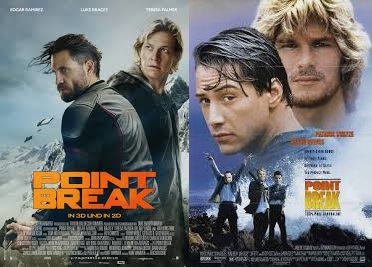 Of course, not all books get a five quill rating. Other books I reviewed that I recommended with three quills or more include three short story anthologies: Chronology, Under a Brass Moon, and Cast No Shadows; two poetry collections: Suicide Hotline Hold Music by Jessy Randall and Walks Along the Ditch by Bill Trembley; Escape From Witchwood Hollow, Cogling, Treasure Darkly, The Goat Children, and Victorian by Jordan Elizabeth; Dark Places by Linda Ladd; Chosen to Die by Lisa Jackson; Wrinkles by Mian Mohsin Zia; Full Circle by Tim Baker; The 5820 Diaries by Chris Tucker; The Road Has Eyes: An RV, a Relationship, and a Wild Ride by Art Rosch; Hollywood Game Plan by Carol Kirschner; Keepers of the Forest by James McNally; 100 Ghost Soup by , and A Shot in the Dark by K.A. Stewart. I also did two movie reviews: Dead Pool and Point Break.
I feel very fortunate to have had Robin Conley join us with her Weekly Writing Memo and her guest movie reviews. The useful writing tips in her Weekly Writing Memos covered a wide range of topics including critiquing, using feedback, ways to increase tension, Relatability or Likeability?, 3 Types of Plot, story research, what to write, making your audience care, world building, handling feedback, writing relationships, establishing tone, editing, word choice, How to Start Writing, endings, queries, Parts of a Scene, making emotional connections, the influence of setting, Building a Story, Inciting Your Story, movement and dialog, Writing Truth, time, Overcoming the Blank Page, Networking, character names, theme, set up, cliches, parentheticals in screenwriting, horror inspiration, and Learning to Write. Robin’s guest post movie reviews included Pride and Prejudice and Zombies, Batman vs. Superman, Miss Perigrin’s Home for Peculiar Children, and The Neon Demon. 
I am thankful for Robin’s valuable content and am glad that she will still be contributing Memos on a monthly, rather than a weekly basis. Although I was sad to lose her weekly content, I am happy for her as she moves forward in her own writing career and I wish her well in her writing endeavors. For those of you who looked forward to her weekly posts, you can catch more of her content on her own blog, Author the World.
2016 was a great year for Writing to be Read, even if it was kind of rough for the author behind the blog. You readers helped to make it a good year and I thank you. Now it’s time to look ahead and see what’s in store for 2017 Writing to be Read. I mentioned some of the things I hope to achieve above: more posts pertaining to the screenwriting industry, and coverage of more events throughout the year are two of the goals I have set for my blog. I also plan to add some author, and hopefully, screenwriter profiles into the mix. I had good luck with author profiles during my Examiner days, and I think they will be well received here, as well.
I also hope to bring in some guests posts by various authors or bloggers, or maybe screenwriters, just to give you all a break from listening to me all the time. I believe Robin plans to continue with Monthly Writing Memos, which will be great, too.
I look forward to all the great books that I know are coming my way in 2017, too. The first reviews you have to look forward to are a short memoir, Banker Without Portfolio by Phillip Gbormittah, a YA paranormal romance, Don’t Wake Me Up by M.E.Rhines, a Rock Star romance, Bullet by Jade C. Jamison and a short story, How Smoke Got out of the Chimneys by DeAnna Knippling.

I hope all of you will join me here in the coming year. Follow me on WordPress, or subscribe to e-mail for notifications of new posts delivered to your inbox. Have a great 2017 and HAPPY WRITING!




















Monthly Writing Memo: The One and Only Writing Rule
Posted: February 1, 2017 | Author: Author the World | Filed under: Commentary, Fiction, Screenwriting, Screenwriting, Speculative Fiction, Stories, Uncategorized, Weekly Writing Memo, Writing, Writing Tips | Tags: Books, Fiction, Novel, Novels, Opinion, research, Tips, Writing | 4 CommentsAs almost every writer knows, anywhere you go to discuss writing will always have someone proclaiming their tried and true rules for writing that you MUST follow. Post on any writing forum whether it be for screenwriting or fiction and you’ll find dozens, if not hundreds, of eager “expert” or “professional” writers ready to tell you exactly which rules matter and which are hogwash. Yes, many of these writers have published novels or sold scripts and are professionals in the industry, but does that mean their rules are THE rules to follow?
Absolutely not.
Let me say that again – Absolutely not. Just because someone has sold a script or published a novel or piece of writing doesn’t mean that they will be able to give you rules to writing that will be guaranteed to work on your story. If you put every writer who ever sold something in a room and asked them to come up with a master list of writing rules it’d be impossible. There’d be factions who think you can never write in present tense and others who think a description of the weather should never start a novel.
There’d be groups who think the epitome of literary or cinematic genius is one specific piece of work, and others who think that same work is a crock of shit. If the people who are actually selling works of writing cannot agree on what makes good writing, and which writing rules are always true, then how on earth can a newbie writer even dream of making it in the industry, let alone be brave enough to even try to put words on the page?
Ultimately, all of this boils down to one single fact about writing: There are hundreds of rules for writing, but one of those rules is that there are no rules. Now before you dip out of this article, because that’s a useless piece of advice in the previous sentence, give me a chance to elaborate.
Writing is a subjective thing. Every story is going to require following a different mix of rules to make it work. That’s why whenever I write a post about the “rules” of writing, I try to explain which situations the rule applies to, and where it might not apply. Also, every writer is going to have different opinions about what makes a good story, and every publisher/studio/audience is going to have a different opinion about what they find marketable and worth buying. If this is true, which based on the evidence presented through comparing a wide range of published and produced pieces of writing it is, then the one and only real rule for writing is that you have to know the “What” and the “Why” of your story.
Essentially, knowing the What’s and Why’s of your story is all about researching the genre or style of writing you want to write by studying the existing works in that genre, and being conscious about your story and your writing choices so that you can answer the following questions on each project you work on:
As you can see, this one and only writing rule really boils down to being conscious about each choice you make in your writing and constantly asking yourself why whenever you are presented with a “rule” that someone thinks is universally true. All of these “rules” people come up with regarding writing are the results of people looking for the magic formula to a guaranteed sale on a piece of work, and they find it by looking for common elements across sold pieces of writing. While it is often true that these elements do exist, there are also just as many pieces of writing out there that break these trends.
Every story is its own thing and has its own identity, and I’m a firm believer that if you focus on serving the story rather than trying to force it to fit pre-existing rules or expectations, then your story will be better for it. I’m not saying you’re guaranteed to sell it, no one can guarantee that, but I am saying if you stay true to your story even if it means breaking the rules, your story will be stronger.
The important thing is to know what “rules” exist and to be able to justify why you broke these preconceived rules that people have and to show that you did so consciously. Ultimately, people aren’t going to focus on whether you broke the “rules” or not with your writing when deciding to buy it, they’re going to focus on whether you’ve put in the work to construct a compelling story that people want to read. If you do that, nothing else matters.
Robin Conley offers great writing advice once a month on Writing to be Read. If you just can’t wait until next month to find out more, you can pop into her blog, Author the World, for more tips, or a weekly writing prompt.
Share this: