Writer’s Corner: Doing the NaNoWriMo Thing
Posted: December 3, 2024 Filed under: Book Promotion, Books, NaNoWriMo, Science Fiction, Time travel, WordCrafter Press, Writing | Tags: Books, Creative Writing, Kaye Lynne Booth, NaNoWriMo, Novel, The Rock Star & the Outlaw, WordCrafter Press, Writer's Corner, Writing, Writing to be Read 12 Comments
This was my third year participating in NaNoWriMo. The first year I gained confidence when I learned that I was more than capable of making the daily word count goal, something I was unsure of when starting out. At that time, 1,667 sounded like an awfully lot of words, but I did it most of the days in November, and when I didn’t do it, I made up for it on the days I wrote two thousand or more, and by the end of the month of November, I had exceeded the overall word count goal of 50,000. (For the sake of transparency, I started with a partial manuscript, so although technically I was successful, I did not write enough new material to make the goal.)
Last year, 2023, I was well on my way to being successful, this time for real, and it was coming down to the last week, when my computer crashed and I was digitally down, making it impossible to complete the challenge. From this, I learned that it isn;t the end of the world to not finish, and I still feel that if my computer hadn’t crashed, I would have successfully met the challenge. I was making or exceeding the daily word counts each day and was on schedule to finish early, before the end of the month.
This year I went into NaNoWriMo with a very positive attitude. I knew I could make the daily word count, so I didn’t stress about it, but I did paln for it. I approached with a plan to implement strategies which had been successful in the past, and a good working plot outline, so I would be clear on where the story was going. Last year, I had abandoned the time blocking strategy which I’d implemented the first year, for an “ass-in-chair, write-the-book” strategy which I’d learned from one of my graduate school professors. (Don’t get me wrong, time blocking is a valid strategy for some people. It just wasn’t effective for me.)
At first, things seemed to go pretty smoothly, until life got in the way during the first week out, when where I live received almost four feet of snow and I was snowbound for four straight days. I didn’t think it would ever stop. It just kept coming. But even with all the shoveling I had to do, and the firewood I had to split to stay warm, I was able to meet my daily word count goal in the evenings. It started snowing on Wednesday, and when I was finally able to get out, on Monday, the 11th, I had to go to work at my day job. I was so tired, that I wasn’t able to make my word count for the first time. I fell asleep in front of my computer at 8:30 p.m. that night with only 634 words for the day.
But, I found that it wasn’t the end of the world that I didn’t get the badge for making the word count goal every day. And I made up the words I’d missed getting down the very next day, with a total word count for the day of 2624. It’s amazing what a decent night’s sleep will do for you. I really do write better if I take care of myself properly, and that proved it. It is also important to take time out for yourself, even though you may be pushing to make a word count goal or a deadline on a writing project. I’ve been looking forward to each new episode of Tulsa King, with Sylvester Stallone, each Sunday, after my shift at work, and I’ve learned that I can watch an hour or two of television and still get my word count done. This is something I had to teach myself. For the first two years I took the challenge, I took every moment I had to write, like a driven person, and now I’m finding that I’m more productive when I block out time for other things, too.
In the end, I didn’t make it. My Internet went down on the last day, so I didn’t get to log my last days totals anyway. (That is also why this Monday blog segment isn’t coming out on Monday. I just got my Internet back up and running this evening.) My total on November 30th was around 43,000 words. Not quite making the goal, but you know what?
It’s okay, because I’m still working on it everyday and I currently have 45,630 words of my story. I started out from a blank page this year. That’s not bad for a month’s time. And it’s a fantastic start toward the completion of the novel.
What I Learned
- I learned that if I just keep at it, the book will take shape
- I learned that my style of edit as you go is okay. It’s a part of my writing process and it works for me and I end up with a much cleaner first draft. It’s necessary for me in order to obtain the proper foreshadowing and also when planting the little easter eggs which helps connect the books for series readers.
- I learned that thinking about time travel sometimes makes my head hurt. It’sa lot to wrap your head around, and it’s easy to get your plot lines twisted when writing about it. Also another reason to edit as I go. With time travel, changing one thing may change several others, jumping from chapter to chapter for revisions became common place for me with this book.
- I learned to use multiple P.O.V.s to make the plot flow smoothly. This was the most P.O.V.s I’ve ever used in a story.
- I learned how to write in multiple subplots – again, the most I have ever tried to use – and multiple time periods.
About the Book
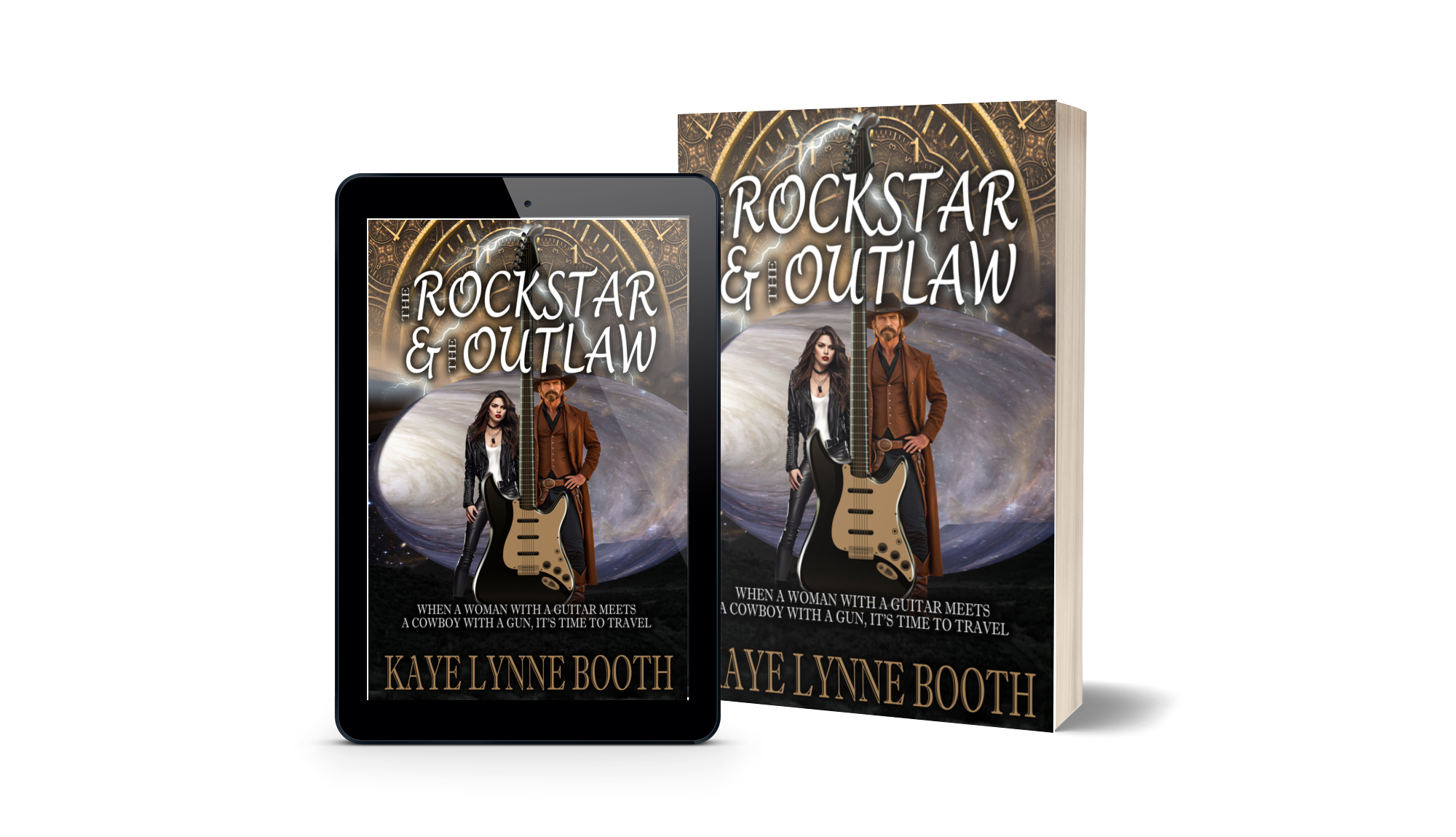
There is not a lot I can tell you about the second Time Travel Adventure Series book without throwing out huge spoilers to those who haven’t read book 1, The Rock Star & The Outlaw. Although each book can be read as a stand alone, book 2 has references to events in the first book and they are complimentary to one another. Book 2 picks up where the first book leaves off, which is why I can’t explain further without giving away the ending of the first book.
I’m having a lot of fun writing this book, maybe even moreso than I did with the first. Like the first, this one has musical inspiration, with song titles for chapter titles and a playlist in the front of the book. By having mutlple P.O.V.s, it opened this one up to even more music artists and songs. And by dealing with temporal loops, it allowed me the opportunity to change events which occured in the first book, creating a whole new story stemming from the same events. It is a crazy, wild ride and you never know where the characters will end up.
I can’t say too much about the new book, but I can share the book trailer for book 1, The Rock Star & The Outlaw, which is also a wild ride through time, for those who haven’t read it yet.
The Rock Star & The Outlaw
_______________________________________
This post is sponsored by WordCrafter Press
Share this:

Time is Running Out to Get the 2024 Novel Writing Story Bundle
Posted: November 24, 2024 Filed under: Book Promotion, Books, Nonfiction, Story Bundle, Writing, Writing Resource | Tags: 2024 Novel Writing Story Bundle, Author, Book Review, Books, Story Bundle, The D.I. Y. Author, WordCrafter Press, Writing, Writing Resorce Leave a comment
If you’re an author who wants to improve your craft, publishing expertise and marketing know how, (and who doesn’t?), this Story Bundle is a must have for you. IT’s only available through the end of November, so don’t wait! Get your 2024 Novel Writing Story Bundle today.
You can get your 2024 Novel Writing Story Bundle here: https://storybundle.com/writing
Why Buy the 2024 Novel Writing Story Bundle?
For StoryBundle, you decide what price you want to pay. For $5 (or more, if you’re feeling generous), you’ll get the basic bundle of four books in .epub format—WORLDWIDE.
- Romance Character Tropes by Tara Grace Ericson and Jessica Barber
- Dollar by Dollar by Kerrie Flanagan (Story Bundle Exclusive)
- Essoe’s Guides to Writing: Mood and Atmosphere by Joshua Essoe
- Booking the Library by Jessica Brawner
If you pay at least the bonus price of just $20, you get all four of the regular books, plus 9 more books, for a total of 13 (with 5 StoryBundle Exclusives), plus a year’s subscription to Indie Author Magazine!
- Super Secrets: Illustrated by Wulf Moon
- Falling to Fly by Todd Fahnestock
- From Page to Platform: How to Succeed as an Author Speaker by Matty Dalrymple and Michael La Ronn
- A Writer’s Guide to Branding for Success by Mark Leslie Lefebvre (StoryBundle Exclusive)
- On Being a Dictator by Kevin J. Anderson (StoryBundle Exclusive)
- Word by Word by Kerrie Flanagan (Story Bundle Exclusive)
- The D.I.Y. Author by Kaye Lynne Booth
- Steps to Self-Editing by Jana S. Brown
- Wit and Wisdom by Craig Martelle (StoryBundle Exclusive)
- Indie Author Magazine: One Year Subscription by Indie Author Magazine
This bundle is available only for a limited time via http://www.storybundle.com. It allows easy reading on computers, smartphones, and tablets as well as Kindle and other ereaders via file transfer, email, and other methods. You get a DRM-free .epub for all books!
More About this great Story Bundle
You can find out more about the books in this Story Bundle at the links below.
Writer’s Corner: Using Story Bundle to Sell Books: https://writingtoberead.com/2024/10/21/writers-corner-using-story-bundle-to-sell-books/
Review in Practice: Dollar by Dollar & Word by Word: https://writingtoberead.com/2024/11/06/review-in-practice-word-by-word-and-dollar-by-dollar/
Review in Practice: Wit & Wisdom, Romance Character Tropes, & Steps to Self-Editing: https://writingtoberead.com/2024/11/18/review-in-practice-wit-wisdom-romance-character-tropes-steps-to-self-editing/
_______________________________________
This post is sponsored by The D.I.Y. Author and WordCrafter Press.
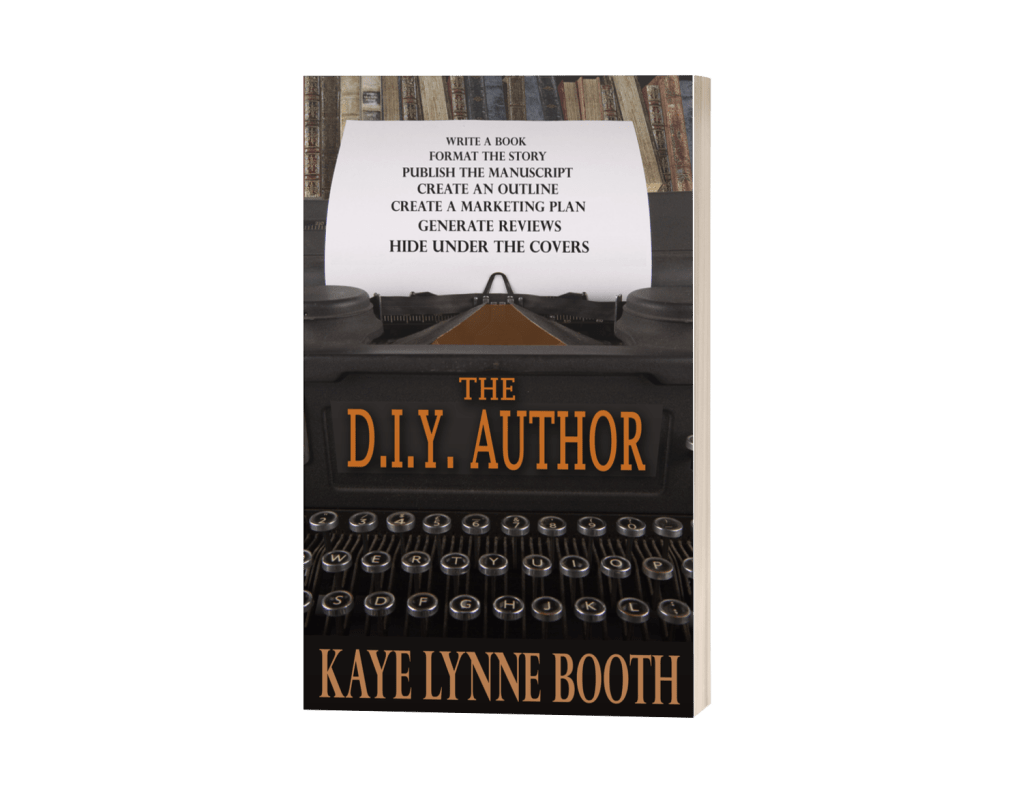
Being an author today is more than just writing the book. Authors in this digital age have more opportunities than ever before. Whether you pursue independent or traditional publishing models, or a combination of the two, being an author involves not only writing, but often, the publishing and marketing of the book.
In this writer’s reference guide, multi-genre author and independent publisher, Kaye Lynne Booth shares her knowledge and experiences and the tools, books, references and sites to help you learn the business of being an author.
Topics Include:
Becoming Prolific
Writing Tools
Outlining
Making Quality a Priority
Publishing Models & Trends
Marketing Your Book
Book Covers & Blurbs
Book Events—In Person & Virtual
And more…
Purchase your copy today: https://books2read.com/The-DIY-Author
Share this:

Writer’s Corner: Using Story Bundle to Sell Books
Posted: October 21, 2024 Filed under: Book Sales, Nonfiction, Story Bundle, Writer's Corner, Writing, Writing Business, writing craft, Writing Life, Writing Resource | Tags: 2024 Novel Writing Story Bundle, book marketing, Book Sales, Books, Self-Publishing, Story Bundle, The D.I. Y. Author, Writer's Corner, Writing 9 Comments
As many of you may know, if you follow Writing to be Read, The D.I.Y. Author is included in the Novel Writing Story Bundle, organized by Kevin J. Anderson. But what you may not know is how useful Story Bundle is as a marketing tool. The fact is, it’s a great way to sell books.
This is the second Story Bundle in which I have had a book included. Back in 2022, Ask the Authors 2022 was included in the Writer’s Toolkit Story Bundle, also organized by KJA. That bundle sold quite well and WordCrafter and the contributing authors made a little bit of money from it. This year, the Novel Writing Story Bundle promises to do just as well, if not better, so I highly recommend it.
What is Story Bundle?
What Story Bundle is, is a platform that gathers together several authors with books in the bundle category, whether it is writing references, such as the two I’ve had books in, fantasy books, science fiction books, or romances, etc…, and they all get together virtually and cooperatively market and promote the whole bundle. This extend’s the reach of single authors immensely, and I can testify to the fact that their efforts are effective. By using the power of the masses, promotions are found on all of the social media sites, not just those of any one single author, and it gets your book in front of the readers of every author in the bundle. But I’m just an author with a couple of books in a couple of Story Bundles, and I’m still learning, too. So to give you all the details, I chatted with Story Bundle founder, Jason Chen, to let him tell you what Story Bundle is, how it works, and what the advantages are.
Interview with Jason Chen
Kaye: What inspired the idea for Story Bundle?
Jason: I started StoryBundle all the way back in 2012 because back then, the concept of bundling similar books in one package hadn’t been done yet! Selfishly, I wanted somebody to make bundles of similar books—if you like this book/author, then you’ll like all THESE—and because nobody had, then I saw the need for it. Also, in 2012, the indie authors were lacking for a place to reach more readers, which made it a perfect fit for letting folks discover authors they would have a hard time finding otherwise.
Kaye: Story Bundle uses the power of numbers, gathering many authors together and offering their books as a group, rather than individually. Could you explain the advantages of having a book included in a Story Bundle?
Jason: Not only does being part of a StoryBundle get you in front of the StoryBundle fans, but the core concept is that it gets you readers from other authors who write in similar genres as you. Because all our bundles are curated, the books in them make sense together, which means that if you like one author in it, you’re more than likely to like another. So getting awareness of your books out to fans who already like the genre is a big plus.
Kaye: What determines whether a book is included in the original bundle for the minimum amount , or as a bonus book for a larger donation?
Jason: There’s no secret to the sauce. The curator and I work together to make sure both the regular bundle and the bonus bundle are balanced for the amount that they cost. Sometimes an author will be in the bonus bundle and if they’re in another bundle, they’ll be in the regular bundle. It depends on what makes sense for that particular bundle.
Kaye: The Novel Writing Story Bundle is the second Story Bundle which I’ve been a part of, mainly because I am fortunate enough to know Kevin J. Anderson, who organizes the ones I’ve participated in. I know other big authors like Dean Wesley Smith and Kristine Katheryn Rusch organize them, too. But how do you get into a Story Bundle if you don’t know someone organizing one? Can you create your own?
Jason: Yes! The only caveat we have is that (99% of the time) the bundles are curated by someone who’s been in a bundle before. Once you’ve been in a bundle, you understand what the bundle is about and what makes for a good bundle and what works for participating in a bundle. This way you know which authors to look for when you’re assembling one. You work with us to figure out a genre that you want, and we refine the idea and can help you get in touch with some other publishers if you need to.
Kaye: Both Story Bundles I’ve had books in are writing resource bundles. Can you make a story bundle of any genre?
Jason: Yes, any genre is fine, but to get a little inside baseball, there are a couple of genres that don’t do well on StoryBundle. The biggest one is romance, which for whatever reason doesn’t appeal to StoryBundle readers. But even more of a surprise is that romance authors’ own fans don’t really enjoy the bundling concept—at least on StoryBundle. We’ve tried all types of romance bundles in all varieties of flavors, but none of them ever have good uptake.
Kaye: Is there a cost to organize your own Story Bundle?
Jason: There’s no cost to curating a bundle!
Kaye: Now I know why as an author, I might want to have my books in a story bundle. But why would readers wnat to buy books through Story Bundle? What are the benefits to readers in purchasing a Story Bundle?
Jason: As a reader, there are a few benefits. First, there’s just the core concept of vetting—we choose our books carefully with our curators, and they have to meet a certain bar of quality to get in. Of course, it’s impossible to guarantee that you’ll like all the books in the bundle, but if you already like one or two of the authors in it, you’re likely to enjoy the rest.
There are other tangible benefits, such as getting DRM-free copies of books that you can load on any ereader, tablet or phone without having to worry about compatibility. You’ll also support indie authors and be able to donate to a worthy cause!
Kaye: Does every Story Bundle donate to charity?
Jason: Every bundle has a charity donation, but it’s up to each person if they want to donate part of their purchase to charity. If they don’t, that’s perfectly fine!
Kaye: What types of charities does Story Bundle support?
Jason: We have a long list of charities that we’ve supported before, from literacy charities, animal charities, science and gaming charities, to health and medicine and worldwide refugee focused charities, so there’s no real limit to what can be a charity target for StoryBundle. If there’s a specific one that a curator would like to have in their bundle, we can make it work!
Would you like your book to be in a Story Bundle?
Now that I know what it takes to currate a Story Bundle, I’m thinking of trying one of my own, because I know that they sell books. Since I’m a multi-genre author, I could do western, women’s fiction, paranormal, science fiction, dark fiction, or children’s books. If you’re interested let me know and tell me what genre(s) you write in. Either let me know in the comments, or email me at KLBWordCrafter@gmail.com. Let’s see if we can get together and sell some books.
About the Novel Writing Story Bundle
The Novel Writing Story Bundle features writing references on writing craft, writing business, and the writing life, which should be on every author’s bookshelf. In addition to my own The D.I. Y. Author, which is a bonus book, there are also featured Dollar by Dollar and Word by Word, by Kerrie Flanagan; Romance Character Tropes, by Jessica Barber and Tara G. Ericson; Booking the Library, by Jessica Brawner; Kevin J. Anderson’s On Being a Dictator; Steps to Self-Editing, by Jana S. Brown; A Writer’s Guide to Branding Success, by Mark Leslie Lefabvre; Mood & Atmosphere, by Joshua Essoe; From Page to Platform, by Matty Dalrymple and M.L. Ronn; Wit & Wisdom, by Craig Martelle; Wulf Moon’s Illustrated Super Secrets of Writing, volume 1; Falling to Fly, by Todd Fahnestock; and a year’s subscription to Indie Author Magazine. That’s 13 writing references plus the magazine subscription. What a deal!
A note on the designated charity for this StoryBundle, the Neil Peart Brain Cancer Research Fund from Cedars Sinai. In 2020 we lost Neil Peart, legendary drummer and lyricist for the rock band Rush, to glioblastoma. He was my mentor, friend, and collaborator on numerous books, and his loss affected me deeply. Neil’s friends and colleagues and fans worldwide have contributed to this glioblastoma research fund in Neil’s name, and we are proud to add our efforts on this Novel Writing StoryBundle as well. – Kevin J. Anderson
You can get in on this great Story Bundle here: https://storybundle.com/writing
About Author Kaye Lynne Booth

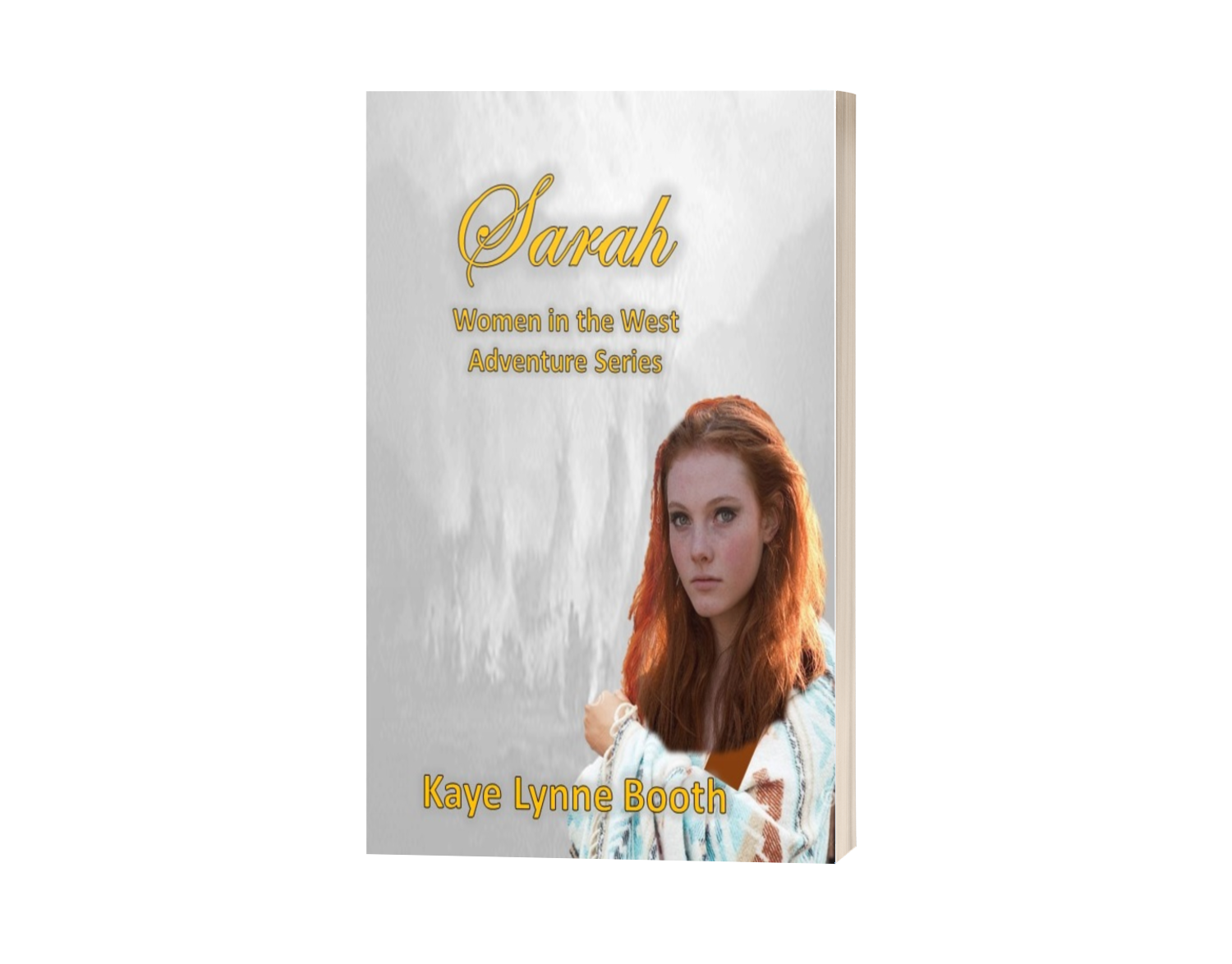
For Kaye Lynne Booth, writing is a passion. Kaye Lynne is an author with published short fiction and poetry, both online and in print, including her short story collection, Last Call and Other Short Fiction; and her paranormal mystery novella, Hidden Secrets; Books 1 & 2 of her Women in the West adventure series, Delilah and Sarah, and her Time-Travel Adventure novel, The Rock Star & The Outlaw. Kaye holds a dual M.F.A. degree in Creative Writing with emphasis in genre fiction and screenwriting, and an M.A. in publishing. Kaye Lynne is the founder of WordCrafter Quality Writing & Author Services and WordCrafter Press. She also maintains an authors’ blog and website, Writing to be Read, where she publishes content of interest in the literary world.
______________________________________________
This post is sponsored by The D.I.Y. Author and WordCrafter Press.
Being an author today is more than just writing the book. Authors in this digital age have more opportunities than ever before. Whether you pursue independent or traditional publishing models, or a combination of the two, being an author involves not only writing, but often, the publishing and marketing of the book.
In this writer’s reference guide, multi-genre author and independent publisher, Kaye Lynne Booth shares her knowledge and experiences and the tools, books, references and sites to help you learn the business of being an author.
Topics Include:
Becoming Prolific
Writing Tools
Outlining
Making Quality a Priority
Publishing Models & Trends
Marketing Your Book
Book Covers & Blurbs
Book Events—In Person & Virtual
And more…

Purchase your copy today: https://books2read.com/The-DIY-Author
Share this:

Wrapping up the WordCrafter “Tales From the Hanging Tree” Book Blog Tour
Posted: September 13, 2024 Filed under: Anthology, Blog Tour, Book Release, Books, Dark fiction, Fiction, Giveaways, Guest Post, Horror, Paranormal, WordCrafter Book Blog Tours, WordCrafter Press | Tags: Anthology, Blog Tour, Books, Fantasy, Science Fiction 10 Comments
Tour Schedule
Monday Sept. 9 – Writing to be Read – Reading Excerpt by Joseph Carrabis & Guest Sylva Fae
Tuesday Sept. 10 – Roberta Writes – Guest Kaye Lynne Booth
Wednesday Sept. 11 – Carla Reads – Guest C.R. Johansson
Thursday Sept. 12 – Undawnted – Guest Paul Kane
Friday Sept. 13 – Writing to be Read – Reading Excerpt by Dl Mullan & Guest Matt Usher
The Giveaway
Follow the tour and leave a comment at each stop you visit to let us know you were there and earn an entry in the giveaway for a free digital copy of Tales From the Hanging Tree.
About Tales From the Hanging Tree
Tales from the Hanging Tree is a wonderfully dark, themed anthology which revolves around an ephemeral and timeless hanging tree that absorbs the memories of all hanging victims. This WordCrafter Press anthology was created by invitation only and includes stories from authors Kaye Lynne Booth, Paul Kane, DL Mullan, C.R. Johansson, Joseph Carrabis, Sylva Fae, and Matt Usher.
Book Trailer
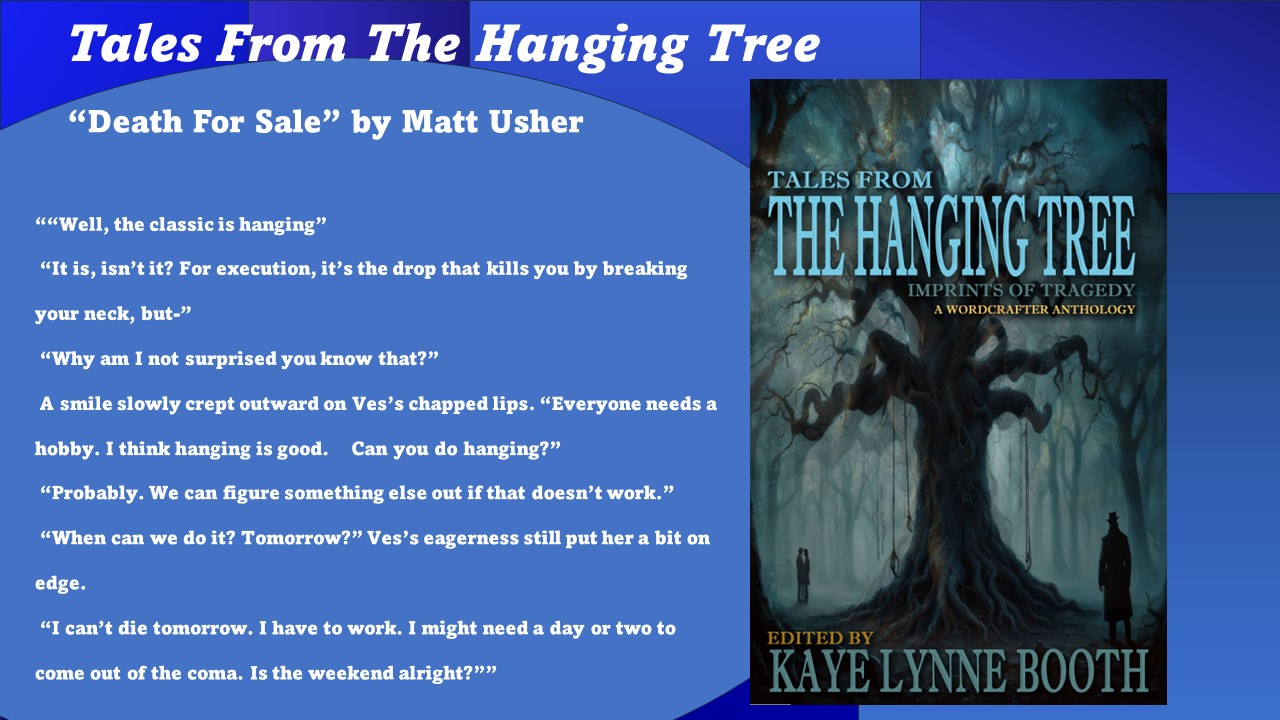
Inspiration for Death for Sale, by Matt Usher
Hanging is harder than it looks. In media, you’re more likely to find your average strangulation hanging. This belies a long history of hanging development. Strangulation is more of an amateur, homespun kind of hanging. Many works in this collection consider this to great effect. Others prefer the cleaner solutions. They both have their appeal.
The history of hanging, dating back to at least Homer, converges in different nations to a common point of development. An odd form of mercy: you see, there’s the short drop, the medium drop, and the long drop of the famed “long drop, short stop”. This is because the merciful version of the art of hanging causes death by cervical fracture long before the patient can enjoy asphyxia. Cleaner that way. No risk of having to watch the hanged make a drama out of the proceedings.
The body’s weight does all the work, leaving the executioner to the simple task of pulling a lever. The English, masters of execution that they were, with a long, long history of hanging innocents, had it down to an exact science. The solution is to make a table that compares the soon to be departed’s height and weight to an array of possible drop distances. This was, of course, to avoid the chances of decapitation with a too-long drop, or a drawn-out death by a too-short one. Jolly humanism at its finest. Wouldn’t want to cause a mess. Unless you happen to fall athwart the long history of botched hangings. But hey, you can’t get it right all the time.
You’ll find plenty to learn about the history and morbid dynamics of hanging in this collection. In my own contribution that takes place in the near future, despite everything I’ve said, I’ve opted for a traditional death by strangulation. It just has that particular frisson. Makes your skin crawl. Others have plumped for the quick and painless style. Why be shy about it when you’re spoiled for choice? So much for the how of hanging; this anthology explores why. Even the Hanging Tree has its reasons.
About Matt Usher
Matt Usher is an agender creature in the big city. Before this, they had no other fiction publications. They write as a critic at Compulsive Reader. They cherish a love of the music of language and a polycule who are the dearest people in their life.
They are the strange sort of being that makes spreadsheets for fun. This is often in service of automatic calculations and data storage for traditional roleplaying games, their most important hobby. Collaborative creativity is one of their most valued things.
They play bass and trumpet, like pro wrestling, and write extremely nerdy poetry. They are immensely neurodivergent and rather queer.

Excerpt from “12 Angry Dead”, by DL Mullan
About DL Mullan
DL Mullan holds a Master of Arts in Teaching and Learning with Technology. Her lecture, Spacescapes: Where Photography Ends; Imagination Begins, debuted at the Phoenix Astronomy Society, which then led to her Sally Ride Festival lecture invitations. Her presentation, Bridging the Gap between Technology and Women, won her accolades at a community college’s Student Success Conference. She has been a panelist at speculative fiction, science fiction, and other regional conventions. Her digital exhibition pieces have won awards at convention art shows, as well as garnered her Second Premium at the Arizona State Fair. Currently, Ms. Mullan’s artistic renditions are seen on book covers, blog sites, and various merchandise. As an independent publisher, she uses her technical background to innovate the way she perceives the creative arts.
As a writer, DL Mullan loves to stretch her imagination and the elasticity of genres. She writes complex multigenre stories in digestible and entertaining forms, be it poetry, short fiction, or novels. Her science, history, mythology, and paranormal research background is woven into her writings, especially in Undawnted’s Legacy Universe. Ms. Mullan’s creative endeavors are available in digital and print collections, from academia to commercial anthologies. She is also an award-winning poet.
Be sure to subscribe to her newsletters and follow her on social media. For further information, visit her at http://www.undawnted.com.

_____________________________________________
That wraps up this stop and the WordCrafter Tales From the Hanging Tree Book Blog Tour. Thank you all for hanging around with us, and thanks to the contributors of the anthology for all their promotional efforts for this tour. Be sure to use the schedule above to go back and visit any stops that you missed, and don’t forget to comment so I know you were there and can enter you in the drawing for the giveaway. I’ll leave this open through the weekend and announce the winners in this month’s “WordCrafter News” on Monday, the 30th, so be watching for that. After all, you might be a winner!
____________________________________
Book your WordCrafter Book Blog Tour today!
Share this:

Writer’s Corner: Being Prolific
Posted: July 9, 2024 Filed under: Books, WordCrafter Press, Writer's Corner, Writing, Writing Life, Writing Resource | Tags: Author, Becoming Prolific, Books, Kaye Lynne Booth, Publishing, The D.I.Y. Author, WordCrafter Press, Writing 2 CommentsWhen I hear the word prolific, I think of Kevin J.Anderson, who puts out between 7-9 books per year. He’s one of the most prolific writers that I know of, although veteran bestselling authors, Dean Wesley Smith and Kathryn Christine Rusch, may rival, or even surpass him. But we cannot all be that prolific. But we can learn from authors like these, who have spent their lifetimes writing professionally, and making a decent living at it.
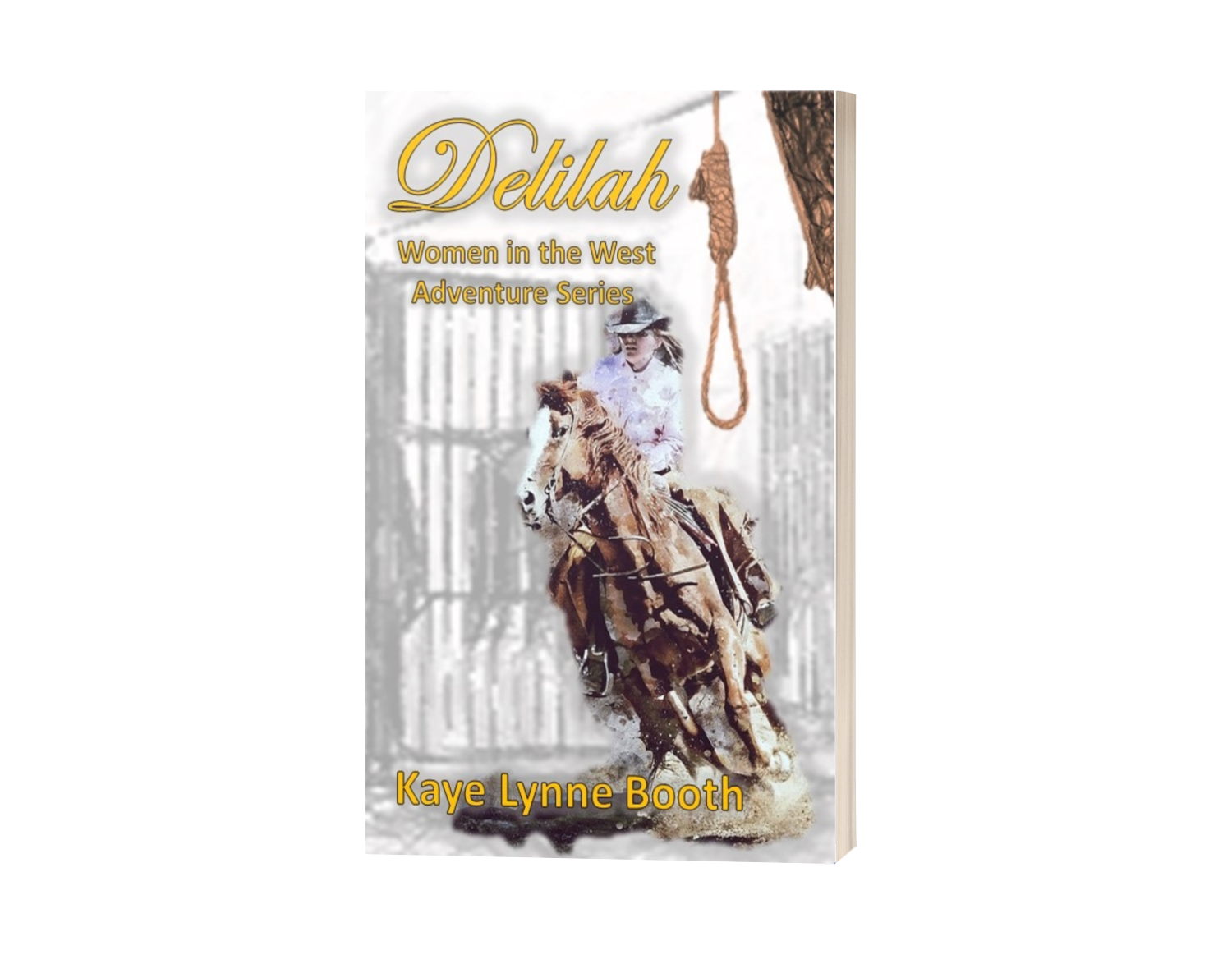
For many years, I did not know how to be prolific. Delilah took me three years to write, and then I worked almost another year revising it to re-release as the first book in the Women in the West Adventure Series. I even wrote a post in about accepting the fact that “We Can’t All be Prolific” because of how not-prolific I was back in 2022. It was something which I didn’t know could be changed or how to go about changing it.
Since then, I’ve learned a few things that have helped me to become more prolific, and I’m now publishing between 5 – 8 books per year. That’s why the first section of The D.I.Y. Author is dedicated to the methods I’ve used to increase my productivity and become a more prolific author; because I wanted to share some of the methods I’ve used to increase my writing productivity. By becoming prolific, I’ve been able to get my name out there where it can be recognized and having more products, in this case, books, to sell. When you publish 5 books per year, that’s 5 different chances to reach new readers, but its also five chances to remind current readers that you’re still around and active.
The following, are tips that I’ve accumulated, from The D.I.Y. Author.
Becoming Prolific
- Outlining: Creating at least a working outline to help guide the direction of your story. If you have an idea of where you are going before you start, you can get words on the page faster.
- Doubling Down on Research and Promotional Materials: Research is something that needs to be done for every book, regardless of genre. If you can find other uses for this same research, you can essentially make it do double duty. For example, during the historic research I did for the Women in the West Adventure Series, I uncovered many interesting facts that may or may not have been used in the story, and could also be used to make interesting blog posts for the tours for their releases, thus becoming a marketing tool, as well as a good story inspiration. Or you can use the same inspiration for a second story in some cases.
- Write the Damned Book: Just sit down and write. It’s a simple piece of advice, but one many authors, or would-be authors, fail to recognize. In The D.I.Y. Author, I offer a couple of methods of achieving the desired results, including Binge Writing, which isn’t always for everyone, and Persistant Determination, which is plugging away at it every chance you get.
- NaNoWriMo: The principle is to set aside the month of November to work exclusively on your novel at every opportunity and setting a daily wordcount which will allow you to reach a goal of 50,000 words within that timeframe. But you don’t need to wait until Novemeber to do this. Just set aside a 30 day period and dedicate to writing your story. I use NANoWriMo to get a start on one of the two novel length works I write and publish each year. In the book, I offer a couple of strategies for making the most of your time, including Time Blocking, and Tracking Your Word Count.
- Dictation: This is a strategy for becoming prolific that isn’t right for everyone, but works well for those who are comfortable with it.
- Networking and Collaborations: It takes longer to write a novel length work than it does to write a short story or two to include in an anthology, and it’s a great way to add more titles to your author pages. Through WordCrafter Press, I publish at least two anthologies per year, and sometimes more.
- Maximizing Your IP: Intellectual Property are the rights to your creative endeavors, or copyright, and an author needs to understand their copyrights, and take care not to sign away more than absolutely necessary when entering into a contract with a publisher. It is also important to understand when your rights will be returned, because when you hold the copyright, you can use that work in any way which you deem fit, allowing your writings to do double, or even triple duty.
- Optimizing Your Backlist: Many authors don’t put a lot into their backlist, but there are things you can do to keep your backlist items in front of readers’ eyes and on their minds, such as creating multiple formats, special editions, and price promotions.
- Taking Care of Mind, Body & Spirit: Keeping yourself healthy is also condusive to being prolific, as we all write better when our minds are sharp and alert, out bodies are well rested and healthy, and we have a place of our own, dedicated to writing.
- Outsourcing: When there is too much for one person to do it all, and believe me there will be, outsourcing certain tasks can be of great advantage, even to the D.I.Y. author.
Why Become Prolific?
To put it simply, the more prolific you are, the more books you have to sell. The bigger your library of books, the more opportunities for readers to discover you and your writing.
I’ve offered a basic list of the methods I’ve used to become more prolific. Some have worked better than others for me and I talk about them in more depth in The D.I.Y. Author. To learn more, you can get your copy from your favorite retailer here: https://books2read.com/The-DIY-Author.
____________________________________
About Kaye Lynne Booth

For Kaye Lynne Booth, writing is a passion. Kaye Lynne is an author with published short fiction and poetry, both online and in print, including her short story collection, Last Call and Other Short Fiction; and her paranormal mystery novella, Hidden Secrets; Books 1 & 2 of her Women in the West adventure series, Delilah and Sarah, and her Time-Travel Adventure novel, The Rock Star & The Outlaw. Kaye holds a dual M.F.A. degree in Creative Writing with emphasis in genre fiction and screenwriting, and an M.A. in publishing. Kaye Lynne is the founder of WordCrafter Quality Writing & Author Services and WordCrafter Press. She also maintains an authors’ blog and website, Writing to be Read, where she publishes content of interest in the literary world.
____________________
This post is sponsored by The D.I.Y. Author and WordCrafter Press.
Being an author today is more than just writing the book. Authors in this digital age have more opportunities than ever before. Whether you pursue independent or traditional publishing models, or a combination of the two, being an author involves not only writing, but often, the publishing and marketing of the book.
In this writer’s reference guide, multi-genre author and independent publisher, Kaye Lynne Booth shares her knowledge and experiences and the tools, books, references and sites to help you learn the business of being an author.

Topics Include:
And more…
Becoming Prolific
Writing Tools
Outlining
Making Quality a Priority
Publishing Models & Trends
Marketing Your Book
Book Covers & Blurbs
Book Events—In Person & Virtual
Purchase your copy today: https://books2read.com/The-DIY-Author
Share this:

My Backyard Friends – Available for Pre-Order Now!
Posted: June 11, 2024 Filed under: Advertising, Books, Children's Books, Fiction, Illustrations, WordCrafter Press | Tags: Books, Charlie Chickadee Finds a NEw Home, Children's Books, Fiction, Heather Hummingbird Makes a NEw Friend, Kaye Lynne Booth, Kid's Series, My Backyard Friends series, Picture Books, Timothy Turtle Discovers JEllybeans, WordCrafter Press 7 Comments
The first three books in the My Backyard Friends kid’s book series are available for pre-order in digital format now!
Don’t miss these fantastic new kid’s books inspired by the birds and animals which visit me at my mountain home, and brought to life in the vivid illustrations of Robbie Cheadle.
Meet Heather Hummingbird
Heather Hummingbird Makes a New Friend is a picture book with a message of friendship and cooperation. (Ages 3-5)

Heather Hummingbird and Ethan Eagle are two unlikely friends who discover that it is good to accept help from others and that is what friends are for.
Pre-Order Now: https://books2read.com/u/471vzj
Meet Timothy Turtle
Timothy Turtle Discovers Jellybeans is a picture book with a moral message from a young turtle’s perspective. (Ages 3-5)

Meet Timothy Turtle, who has a sweet tooth. He eats too many jelly beans and finds himself in a pickle. His friends Katy Cat and Betsy Beaver try to help, and Timothy learns that you can get too much of a good thing.
Pre-Order Now: https://books2read.com/u/3LL5K7
Meet Charlie Chickadee
Charlie Chickadee Gets a New Home is a story of survival from a young bird’s perspective. (Ages 6-8)

Charlie Chickadee is happy with his family in their cozy nest. But whem the violet-green swallows thake the nest for their own, Charlie finds himself alone, seperated from his parents and on his own to face the dangers of the forest. His new friend Nicholas Nuthatch shows him the ropes and teaches him about the other birds and the woman who puts out food each day, and by a stroke of luck, Charlie discovers the perfect spot and builds a new nest that he can be proud of.
Pre-Order Now: https://books2read.com/u/md2YLO
Share this:

Undawntech: Technology That Is Stranger Than Fiction
Posted: April 5, 2024 Filed under: AI Technology, Technolgy, The Human Condition, Undawntech | Tags: Books, frankenstein, Futuristic, horror, Human Condition, mary-shelley, Science Fiction, technology, Undawntech, Writing to be Read 9 Comments
Imagine a world where an insane aristocracy oversees the human race. Classic dystopian novels tell of such extreme societies and caution readers to avoid falling into the trap. The question is: have we heeded the warnings?
1984, Animal House, Brave New World, Fahrenheit 451, and The Handmaid’s Tale are some of the most popular and recognizable stories in this genre. As modern-day writers, we have seen the world fall from stable nation-states to the dehumanization of culture wars, sneak attacks, propaganda, economic downturns, and invasions. Either
the writers from a bygone era were psychic, or everything we are seeing now… was planned. Planned to keep humanity distracted while an elite class work on technology beyond any innocuous application.
Past narratives could not have foreseen the future of augmented reality, artificial intelligence, biochips, mRNA technology, or tracking satellites. By any other name, would dystopic smell as sour?
Let’s take a journey into next generation technologies, most being hidden in plain sight:
For instance, currently, Iridium Satellites can track wildlife, personnel, data and assets, as well as bridging the internet of things… this technology is real-time situational awareness.
“Iridium’s unique constellation architecture makes it the only network
www.iridium.com
that covers 100% of the planet. Satellites are cross-linked to provide
reliable, low-latency, weather-resilient connections that enable
communication anywhere in the world.”
On a mundane level, medicine has exceeded its normal perimeters. With new technology, comes new issues that medical science has no answers to give. mRNA technology has potential, but its numerous and fatal consequences have been obscured from public scrutiny:
“In this paper, we call attention to three very important aspects of
https://www.ncbi.nlm.nih.gov/pmc/articles/PMC9012513/
the safety profile of these vaccinations. First is the extensively
documented subversion of innate immunity, primarily via suppression of
IFN-α and its associated signaling cascade. This suppression will have
a wide range of consequences, not the least of which include the
reactivation of latent viral infections and the reduced ability to
effectively combat future infections. Second is the dysregulation of
the system for both preventing and detecting genetically driven
malignant transformation within cells and the consequent potential for
vaccination to promote those transformations. Third, mRNA vaccination
potentially disrupts intracellular communication carried out by
exosomes, and induces cells taking up spike glycoprotein mRNA to
produce high levels of spike-glycoprotein-carrying exosomes, with
potentially serious inflammatory consequences. Should any of these
potentials be fully realized, the impact on billions of people around
the world could be enormous and could contribute to both the
short-term and long-term disease burden our health care system faces.”
Or is there more to injecting untested, unregulated technologies into our bodies than heart inflammation, other serious adverse reactions, and increased morbidity in the injected? What if, the scare of 2020 was to introduce tracking systems into the human genome?
Internet of dead bodies Bluetooth MAC address corpses
https://www.brighteon.com/41a1e7f3-ca8a-42d3-b201-f31e4a2c3189
In a novel, a scientist might believe the only thing the human brain would need to plug into technology like brain chips, artificial intelligence, and augmented reality would be a third strand of DNA made from silicon, but that is so 1980s and 90s technology:
Science: A triple helix to cripple viruses
“As scientists accumulate more knowledge of the sequence and function
www.newscientist.com/article/mg13017644-100-science-a-triple-helix-to-cripple-viruses
of human genes, the triplex approach should allow scientists to turn genes
on or off at will, says Hogan.”
What has grown from hypothesis and curiosity of the scientific community has transformed from the dystopic and into the realm of horror. Technology being employed to change the human race sounds as if the nightmare of Mary Shelley has been realized. The author of Frankenstein once wrote of surgically combining body parts with an electric jolt from lightning. Today’s scientists have gone beyond ethics and straight into creating artificial life forms.
Engineers Put Tens of Thousands of Artificial Brain Synapses on a Single Chip for Portable AI Devices
“MIT engineers have designed a “brain-on-a-chip,” smaller than a piece
https://scitechdaily.com/engineers-put-tens-of-thousands-of-artificial-brain-synapses-on-a-single-chip-for-portable-ai-devices/
of confetti, that is made from tens of thousands of artificial brain
synapses known as memristors — silicon-based components that mimic the
information-transmitting synapses in the human brain.”
As technology advances, external sources to manipulate the human brain are becoming readily available. Pull up a seat. Put on a cap. Play your favorite video game without lifting a finger. Mind and artificial intelligence merge through frequency of brainwaves.
Transfer learning promotes acquisition of individual BCI skills
“Noninvasive brain–computer interfaces (BCI) based on
https://academic.oup.com/pnasnexus/article/3/2/pgae076/7609232?login=false
electroencephalography (EEG) have proven efficient in applications
such as neurorehabilitation (1, 2), robotics (3, 4), communication (5,
6), or virtual reality (7, 8). Motor imagery (MI)—mental rehearsal of
a limb movement without execution—is a common EEG–BCI modality.”
As writers, we have to ask ourselves: are we already in a dystopian novel, playing characters, who unknowingly, unwittingly are about to face a critical juncture in human evolution?
What does this evolution entail? Will humans and technology as one creature relinquish our independence? Individual sovereignty? Our Constitutional Rights? Will we be considered homo sapien sapien? Or, homo sapien extincti?
Horror has manifested in our world. The horror that dystopia was not an end, but a beginning to the ramblings of madmen. Writers have the obligation to warn humanity that we have ventured past derangement and into the immoral machinations warned in Mary Shelley’s Frankenstein.
As the establishment plays god, what would the dystopian authors caution us about? What would Mary Shelley write as her sequel to Frankenstein with the knowledge present herein? To be, or not to be… human with all our flaws or a controlled serfdom at the whim of a plutocracy? According to science, we are already there. The only choice now is preservation or slavery.
Isn’t that the conditions writers should be asking of their readers? Because no one else is giving humanity the time to think about the ethical obligations, horrific consequences, or generational ruin that these technologies have laid at our feet. It is not difficult to ascertain: the world we live in is stranger than fiction.
“No man chooses evil because it is evil; he only mistakes it for happiness, the good he seeks.” Mary Shelley, Frankenstein
Has the road of futurist technology been paved with good intentions? Only time will tell what the intention for humanity and these technologies are. For humanity’s sake, we better know evil when we see it.
_____
DL Mullan holds a Master of Arts in Teaching and Learning with Technology.
Her lecture, Spacescapes: Where Photography Ends; Imagination Begins, debuted at the Phoenix Astronomy Society, which then led to her Sally Ride Festival lecture invitations. Her presentation, Bridging the Gap between Technology and Women, won her accolades at a community college’s Student Success Conference. She has been a panelist at speculative fiction, science fiction, and other regional conventions. Her digital exhibition pieces have won awards at convention art shows, as well as garnered her Second Premium at the Arizona State Fair. Currently, Ms. Mullan’s artistic renditions are seen on book covers, blog sites, video presentations, and various merchandise. As an independent publisher, she uses her technical background to innovate the creative arts.
As a writer, DL Mullan loves to stretch her imagination and the elasticity of genres. She writes complex multi-genre stories in digestible and entertaining forms, be it poetry, short fiction, or novels. Her science, history, mythology, and paranormal research backgrounds are woven into her writings, especially in Undawnted’s Legacy Universe. Ms. Mullan’s creative endeavors are available in digital and print collections, from academia to commercial anthologies. She is also an award-winning poet.
Be sure to subscribe to her newsletters and follow her on social media. For further information, visit her at www.undawntech.com and www.undawnted.com.
____________________________________
Want to be sure not to miss any of DL Mullan’s “Undawntech” segments? Subscribe to Writing to be Read for e-mail notifications whenever new content is posted or follow WtbR on WordPress. If you found it interesting or informative, please share.
Share this:

Let’s Talk About Book Reviews
Posted: March 22, 2024 Filed under: Audiobook Review, Book Review, Review | Tags: Audiobook, Audiobook Review, Book Review, Book Reviews, Books, Writing to be Read 37 Comments
Instead of offering a book review today, I’d like to talk about book reviews. If you follow the blog, you know that I post at least one book review almost every week. I hope no one feels shorted because I chose to do things differently this week. You might also know that I offer up honest reviews in exchange for an ARC copy of the book, digital, print or audiobook, for those who request it. (ARC stands for A Review Copy, or a copy which was sent out early in hopes of review by traditional publishers. I send out between thirty and sixty requests for review for each WordCrafter Press book published.) Obviosly, if I’m writing that many book reviews, I am a voracious reader, so I also pick up other books to read and I review them as well. As a rule, if I read it, I review it. It’s just one way to help out my fellow authors, and I often, though not always, know the authors of the books I choose to read.
But today, I find myself in a dilemma. I just finished the most awful audiobook I have ever listened to. The audiobook was one that I purchased, by an author which I had previously read one of her books. That first one I listened to was well-written, a good story, and had a decent narrator, so I thought I would give this book a go.
To start off, it was a different narrator, a very poor narrator. The inflections were all wrong, there were pauses where there shouldn’t be, with starts and stops that made the reading jerky and chopped, and there was little or no emotion. Honestly, my AI narrated audiobooks did a better job.
But then I realized that it wasn’t just that. The book was poorly written, as well. Perhaps this was one of the authors earlier works and the first book I read was a later work? After the first time I tried to listen to it, I put it down for some time, but since I haven’t been financially able to replenish my audiobook library, I decided to give it a go, since I had already listened to everything else. So, I struggled through it for lack of better input. But about halfway through, I realized that there was no way I could review this book without trashing both author and narrator, and I really don’t like doing that.
They say that a negative review is better than no review, but I’m not sure if I buy that. All reviewers are critics, but I don’t believe that a critic must harsh to be effective. I offer my reviews to help other authors, and my reviews are honest, even if there are things I didn’t like about a book. I always try to emphasive the positive, but the negative is still there.
I know many of my readers are bloggers who are reviewers, so I’m asking you all today – how would you handle this? Am I obligated as a critic to write a negative review of this audiobook? Would you write it? Or would you just put the book into the archive and forget about it? I would love to get someone else’s thoughts on this. What do you think?
_____________________________________
Kaye Lynne Booth does honest book reviews on Writing to be Read in exchange for ARCs. Have a book you’d like reviewed? You can request a review on the Book Review tab above.
Share this:

Wrapping Up the WordCrafter “Northtown Angelus” Book Blog Tour
Posted: March 14, 2024 Filed under: Book Promotion, Book Review, Books, Crime, Fiction, Giveaways, Hard-Boiled Crime Fiction, Review, WordCrafter Book Blog Tours | Tags: Books, Crime Fiction, Hard-boiled fiction, Northtown Angelus, Raimo Jarvi Investigates, Robert White, WordCrafter Book Blog Tours 8 Comments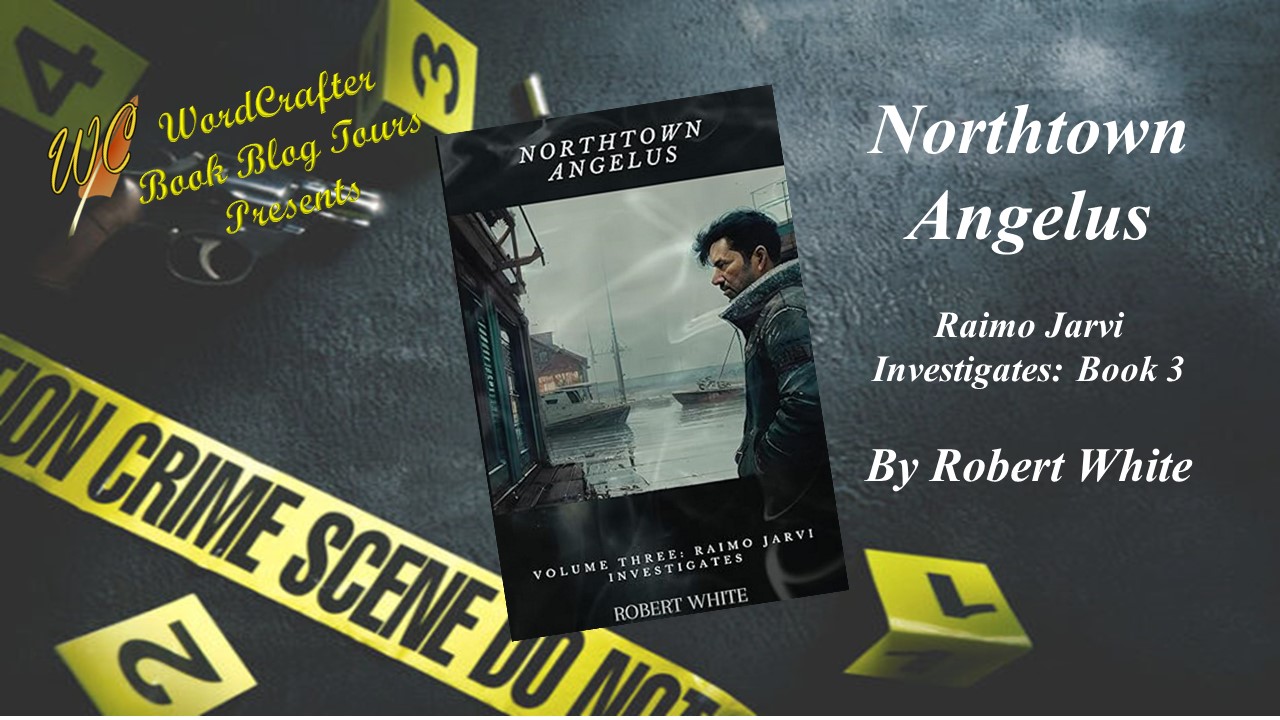
This is the last day of the WordCrafter “Northtown Angelus” Book Blog Tour. To wrap-up we have a double stop today, with my review of the book here, on Writing to be Read, and then on to Undawnted for a final guest post from the author, Robert White. But , let before we get started, let me offer a reminder to be sure and leave comments when you visit a stop to be entered in the giveaway below. You can click on the links in the schedule to go back and visit any stop you may have missed along the way. Undawnted does not accept comments, but you can leave your comments for the second stop on today’s tour here.
Giveaway
Each stop where you leave a a comment,
you get another chance to win one of five digital copies,
and one signed print copy of Northtown Angelus.
Tour Schedule
Mon. March 11 – Writing to be Read – Author Interview
Tues. March 12 – Robbie’s Inspiration – Guest Post
Wed. March 13 – Patty’s Worlds – Author Interview
Thurs. March 14 – Writing to be Read – Review/Undawnted – Guest Post
About Northtown Angelus

Johnny Dillon took his life. His wife Cora wants to know why. The Northtown cops don’t care; they closed the case as a suicide. The M.E. hasn’t got any answers for the discrepancies Ray Jarvi discovered in the autopsy report and from what Johnny’s wife told him about the days leading up to his decision to take his life.
This is the beginning of an investigation for private investigator Ray Jarvi, who follows a twisting path of corruption and vice in his rust-belt town on the shores of Lake Erie to help her find some resolution to the worst day in her life. Like a medieval play between warring devils and angels battling for a soul, he must deal with a variety of Northtowners who play one part or the other on his journey to find those answers. Getting past one obstacle only leads to another—and another. Before long, Jarvi does not know whom to trust. He realizes nothing in his town is what it appears to be and that there are some dangerous people who like it that way.
Purchase Link: https://www.amazon.com/Northtown-Angelus-Raimo-Jarvi-Investigates/dp/B0CRQ66L4Y
About Author Robert White
Robert T. White writes from Northeastern Ohio. He has published several crime, noir, hardboiled novels and genre stories in various magazines and anthologies. He’s been nominated for a Derringer. “Inside Man,” a crime story, was selected for Best American Mystery Stories 2019. His second hardboiled p.i. series (after the Thomas Haftmann mysteries begun in 2011 with Haftmann’s Rules) features Raimo Jarvi in Northtown Eclipse (Fahrenheit Press, 2018) and Northtown Blitz (2020). British website Murder, Mayhem & More cited When You Run with Wolves (rpt. 2018) as a finalist for Top Ten Crime Books of 2018 and Perfect Killer in 2019. “If I Let You Get Me” was selected for the Bouchercon 2019 anthology and The Russian Heist (Moonshine Cove, 2019), another crime thriller, was selected by Thriller Magazine as winner of its Best Novel category. “Out of Breath” and Other Stories is a mixed collection of mainstream and noir fiction (Red Giant Press, 2013).

My Review
Northtown Angelus, by Robert White, is book 3 in the Raimo Jarvi Investigates series. This story reads like a classic hardboiled crime fiction tale, complete with flawed P.I. protagonist and colorful inner city characters and setting. The writing style and lack of dialog tags was a little off-putting at first. It kind of grew on me though, and once I became emmersed in the story, I hardly noticed unless I got confused about who was speaking.
Dealing with less than desirable people and neighborhoods, is bound to give anyone a grim outlook on life. But for Ray Jarvi, a P.I. with an unfortunate history which left him scarred, inside and out, working those neighborhoods throws low lifes, drug dealers, and other criminal types in his path at every turn, has turned his outlook grim indeed. He’s learned not to expect too much from his fellow man. Ray is on a case to find out what really happened to man the cops wrote off as suicide, for the greiving widow, but finds himself in the middle of something even bigger. Ray doesn’t wait for things to happen, he pushes peoples buttons and makes things happen, always on the offensive. But when a friend and employee is brutally beaten while doing survellience for him, we see a softer side of Ray, as someone who really does give a damn, before donning his social armor once more and going back after the villians who are responsible.
Fast moving and hard hitting, Northtown Angelus is all that a hard-boiled crime novel should be. I give it four quills.

_________________________________________________________
Don’t forget to visit the second stop on today’s tour to hear more from author Robert White on Northtown Angelus and his Raimo Jarvis Investigates series. You can visit that stop here: Remember you can come back here to leave a comment for today’s entry in the giveaway.
___________________________________________
That wraps up the WordCrafter Northtown Angelus Book Blog Tour. Thank you all for joining us. Be sure to visit each stop through the schedule at the top of this post for more chances to win a copy of this hardboiled crime fiction novel. I hope you enjoyed meeting Robert White and learning more about Northtown Angelus.
_________________________________________________________
Book your WordCrafter Book Blog Tour today!
Share this:

Writer’s Corner: Debunking Library Myths
Posted: March 4, 2024 Filed under: Books, Indie Publishing, Libraries, Publishing, Writing | Tags: Books, Libraries, Writer's Corner, Writing to be Read 6 Comments
Libraries as Institutions
When I was a little girl, I used to love going to the library. Sometimes, my mom would take me for story hour, where one of the kindly librarians would read a story aloud to a group of children. As I grew older and my reading abilities improved, I would visit the library on my own, and carry home stacks of books, because there were soooo many books that I just had to read. I might have to renew my checkout on some, but I was a voracious reader. (Still am.)
As an adult, I relished in taking my own children to the library, and practicing using their ‘library voices’. We would make a day of it, going to the park first, which was right down the street, and stopping at the drug store for a soda on the way home. The kids would each have two or three books which they had chosen, and I got to renew my book stack, as well.
With the rise of the internet and digital books, there were rumors that libraries would fade out of the picture and no longer be necessary when you could buy a book with the click of a button. But not everyone can afford to click that button, especially not with the sheer volume of books that are available today. Thank goodness libraries have learned to shift with the times and seem to still be thriving.
For me, with the feelings I have associated with libraries, it only makes sense that I would want to get my books into libraries. But not all authors feel that way. Many authors look at having their books in libraries as being detrimental to sales or that authors loose money by having their books in libraries.
Myths About Having Your Books In Libraries
Myth 1: If someone can walk into a library and read my book for free, then why would they go buy it? That’s like giving your work away.
Not true. In fact, many readers go to libraries to discover new authors. Once they find one they like, they may buy more books by the same author. I think this may be especially true for genres where whale readers are typical, like romance. When you read a lot of books, it might be smart to be sure you’re going to like their stuff before dropping a lot of coinage on an author.
Myth 2: If a library buys my ebook, it’s a once-and-done type deal. Then they can check it out as many times as they want, so I lose money.
There are two pricing models through library services which list the ebooks available to libraries.
The first, is the One Copy, One User model. This model is the one used most by library services. The library pays a set price for your ebook, higher than the price paid through retailers for each copy of your book . In the other model, they pay a certain price for each checkout made. In this model, you make money from the initial purchase, whether anyone checks out your book or not. With the second, the amount you make is in direct relation to the number of people who are reading your book.
The second model is the Cost Per Checkout model. In this model you get paid a small amount, under a dollar, everytime someone checks out your ebook. With this model, the amount of money you make is in direct relation to how many library patrons are reading your book.
Either method used, having your book in libraries offers exposure which could lead to recommendations by word of mouth, or maybe even a review. And that is gold for authors.
How To Get Your Books Into Libraries
There are two things required to get your books into libraries.
- Access
- Demand
Access
If you want to get your books into libraries, librarians must first have access to them. Librarians do not purchase books from Amazon or any of the other major retail distributors, but there are outlets which serve libraries specifically,including Overdrive, Bibliotheca, Odilo, Baker & Taylor, Hoopla, Borrow Box, and Palace Marketplace. These services provide lists of books which they have available to libraries, and that’s the main route librarians use to find and order books.
Mark Leslie Lefebvre wrote a book called How to Get Your Books Into Bookstores & Libraries (Purchase link at the end of this article). You can see my review of this book here.
In it, he talks about building relationships with local bookstores and libraries. They can’t support your books if they don’t know that they exist. Librarians are in contact with many readers every day. They are more likely to recommend the book of a local author they know and can put a face with the name. They are also more likely to purchase your book for their library if they know you, so here the underlying motivator is developing a relationship with your local librarian, by getting to know them and making yourself available for readings and/or author talks at their facility.
You can also listen to Mark discuss this subject and share his wisdom on Stark Reflections episode 292: https://starkreflections.ca/2023/02/24/episode-292-learning-by-doing-and-baptism-by-pyromancy-with-oskar-soderberg/
Demand
Library patrons coming in and requesting your books increases the chances phenomenally that they will order and carry your book. With the help of readers, who are also library patrons, it is often as simple as having them ask their acquisitions librarian to carry the book. So, it pays to encourage readers to request your books at their local libraries.
Purchase Link for An Author’s Guide to Working With Libraries & Bookstores: https://www.amazon.com/Authors-Libraries-Bookstores-Publishing-Solutions-ebook/dp/B082DJ1GZ6
Building Relationships
Getting your book listed on Overdrive and the other library services provides the access, and if people are requesting your book it demonstrates demand. But you can tell everyone over and over to walk into their local library and request your books, but there’s no way to assure they will follow through. And if they do, that’s great! Your books may now be carried in local libraries wherever it has been requested. But what about local libraies in your area, or in the area where your book is set?
This is the part that requires work on the author’s part. Just like books don’t sell themselves, they also don’t magically appear in libraries.
The library is a great place to discover local authors, and many folks are really into that. If your book is available in your local library, the folks who are into local authors may just discover your book, and go on to buy other books written by you. And if you write with settings in local areas, those libraries are likely to have folks interested in a book set near their homes. For example, my Women in the West series is set on the Colorado frontier, with stops in towns such as Leadville (Delilah) and Glenwood Springs (Sarah), and since they are historical fiction, they feature events and people from the local histories for those areas, so people who live there could be interested in those stories. The Leadville and Gunnison libraries are likely places where I’d like to see my books carried.
Local libraries are the easiest to build a relationship with, because it’s likely that you are already a patron, and a familiar face there. But you can’t just walk in and say, “Hey, I’m a local author, so you should carry my books.” That would be too much like a cold call, unless your face is very familiar there. But it also takes research to build the right relationships. Chances are, there are several librarians working in your local library, and while it doesn’t hurt to be familiar with all of them, the acquisitions librarian is the the one who offers the most benefit, because they are the person who decides which books to purchase for the library. If you can build a solid relationship with the acquisitions librarian, you might even get them to carry your print books, too.
I know one local author who just walked into the library and asked if they would display and sell her book there. They were quite agreeable to this, and she left a stack of print books, which they kept stacked on a corner of the checkout desk, where library patrons would see them, as they prepared to depart. Her book wasn’t even carried on the library shelves, but library patrons found her book there. She had her foot in the door, but didn’t build on the relationship. It’s too bad she didn’t take that next step and ask the library to purchase a copy, or even offered to donate a book for their shelves.
So, how do you build a relationship with your local librarians? You might start by introducing yourself, and letting them know what it is you have to offer. I’m not just talking about your books. Offer to do readings or to speak on a topic of your expertise. Libraries are always on the lookout for guest speakers, and often host local authors for readings. These are events that will draw patrons into their library, and they like that. Once you’ve done a reading of one of your books, the library is much more likely to carry on their shelves.
_____________________________________

For Kaye Lynne Booth, writing is a passion. Kaye Lynne is an author with published short fiction and poetry, both online and in print, including her short story collection, Last Call and Other Short Fiction; and her paranormal mystery novella, Hidden Secrets; Book 1 of her Women in the West adventure series, Delilah, and her Time-Travel Adventure novel, The Rock Star & The Outlaw. Kaye holds a dual M.F.A. degree in Creative Writing with emphasis in genre fiction and screenwriting, and an M.A. in publishing. Kaye Lynne is the founder of WordCrafter Quality Writing & Author Services and WordCrafter Press. She also maintains an authors’ blog and website, Writing to be Read, where she publishes content of interest in the literary world.
_____________________________________________________
Want exclusive content? Join Kaye Lynne Booth & WordCrafter Press Readers’ Group for WordCrafter Press book & event news, including the awesome releases of author Kaye Lynne Booth. She won’t flood your inbox, she NEVER sells her list, and you might get a freebie occasionally. Get a free digital copy of her short story collection, Last Call and Other Short Fiction, just for joining.