Chatting with the Pros: Interview with Y.A. author Carol Riggs
Posted: November 18, 2019 Filed under: Books, Chatting with the Pros, Fantasy, Interview, Science Fiction, Writing, Young Adult | Tags: Carol Riggs, Chatting with the Pros, Fantasy, Science Fiction, Writing to be Read, YA, Young Adult, Young Adult Fiction 1 Comment
My “Chatting with the Pros” author guest today writes young adult fiction in the fantasy and science fiction genres. Her debut science fiction novel, The Body Institute, is currently being developed into a television series by NBC, which I think, is pretty cool. I met her when I reviewed Bottled three years ago. Since then, I’ve reviewed her science fiction novel, The Lying Planet, and she was a member of the author panel for the first round of the “Ask the Author” blog series in 2018, right here on Writing to be Read. Let’s find out what she has to share. Please help me welcome author Carol Riggs.

Kaye: Please begin by telling us briefly about your author’s journey?
Carol: I began writing in the 1990s, took a 10-year break, and started up again in 2009. I met my agent at an SCBWI retreat and signed with her in 2011 for my 2015 debut, THE BODY INSTITUTE. Since then, I’ve published 7 more books.
Kaye: Why do you choose to write for young adults? Why science fiction and fantasy?
Carol: I enjoy writing about teens as they experience the road to individual growth and becoming an adult—navigating independence, romance, tests of courage, etc. Sci-fi and fantasy appeal to me because I love making things up. Speculative genres give me the most room to be creative and use my imagination.
Kaye: What is your biggest challenge in writing for a young audience?
Carol: Keeping in touch with how a young person thinks and talks, sounding like a teen. My editor at Entangled Teen nails me on that, and makes me rewrite things that don’t sound authentic.
Kaye: Is there anything unique or unusual about your writing process?
Carol: Nothing too unusual. I don’t listen to music or other distractions. I draft novels moderately quickly (3-5 months), and I write 1 or 2 books a year. I also keep my novels “clean,” with no profanity, gory violence, or sexual scenes. I prefer to make up my own slang and swear words, which don’t become outdated like modern teen lingo/slang/cussin’.
 Kaye: NBC is developing your science fiction novel, The Body Institute, into a television series. That must be exciting. Tell us a little about the story.
Carol: THE BODY INSTITUTE is a dystopian sci-fi novel where the main character gets a job losing weight for other people—by having her mind downloaded into their bodies. It’s set in the near future where society is ultra health conscious. The TV series is using the book as a jump-off point rather than being a direct replica of the novel, which is okay with me. It’ll be fun to see where their creative minds take it.
Kaye: How much say do you have in the development process of the television series? Are you involved at all?
Carol: I don’t have any say at all, but that honestly doesn’t bother me. I’d rather spend my time developing new novels! Readers have the book if they want to explore what I’ve developed; the TV show will be a different experience entirely.
Kaye: Do you have a date yet for the series premier for The Body Institute to air?
Carol: As of yet, I don’t; the filming of the pilot show hasn’t begun yet. I’ll announce on my newsletter, Facebook, and Twitter (@CRiggsAuthor) as soon as I find out any developing news.

Kaye: Most of the books in your Junction 2020 series have scary sounding titles: The Portal, Nightmare Realization, Vanishing Fears, Silent Scream, and Future Terrors. Is this fantasy series scary?
Carol: Some people consider these books “horror,” but it sort of depends on your tolerances. If you can’t stand spiders, for instance, don’t read THE PORTAL. Nothing is hyper-bloody in the series, though…no slasher-type nightmares or anything overly gory. I chose each characters’ fears to manifest in a way that would lead them to personal growth, a challenge to overcome rather than sheer horrible nightmares.
Kaye: How do you approach scary subject matter when writing for young adults?
Carol: I try to keep it emotional but real to each character, and I don’t make things gory. Depending on the teen, that could be totally un-scary, or it could be very unsettling. I try to hit somewhere in the middle, for the average reader.
Kaye: Are there certain subject matters that you wouldn’t tackle for a young adult audience? Why?
Carol: I don’t write sex scenes, gory violence, or profanity. I think there’s plenty of that going around nowadays in society (books, movies, etc.), and not having those things in my novels jives with my personal morals and my feelings about what I would want to (or not) read in a novel. I wouldn’t write about demons or the occult, either—too creepy and real.
 Kaye: My favorite book of yours is Bottled, which I reviewed a few years ago. It is a fun and entertaining fantasy story. What was your inspiration?
Carol: Long ago, I used to watch “I Dream of Jeannie.” While BOTTLED isn’t that similar in plot to the show, I was inspired by the fun, magical atmosphere of the TV series. It’s my tribute to the show.
 Kaye: I also reviewed The Lying Planet. Tell us a little about this science fiction story.
Carol: I was lying in bed one night years ago, and heard a noise in the living room (it was probably the refrigerator). That became the germ seed for TLP, a teen boy on the planet Liberty who one night hears a noise in the living room and gets up to investigate…and then wishes he hadn’t. He uncovers an evil that rocks his world in the worst way possible. I’ve found that teen guys really seem to like this novel. It has lots of danger, adventure, and a degree of creepiness.
Kaye: The other thing I loved about Bottled was the fantastic cover. And the vibrant colors used for Lying Planet cover and those used in the covers your Junction 2020 series are eye catching, as well. The colors are wonderful and the designs fit what the stories are about. Do you design your own cover art or hire it out?
Carol: I’ve been incredibly lucky to get awesome covers for my traditionally published books. The JUNCTION 2020 series covers I developed myself in Photoshop, with the tips and suggestions of a writer friend who is also a graphic artist. I have a BA in Studio Arts, so I think that helps me have a bit of an eye for what looks good.
Kaye: What do you enjoy doing when not writing?
Carol: Walking, reading, working jigsaw puzzles, watching sci-fi and fantasy movies, going to the beach, and listening to all kinds of music.
Kaye: Writing organizations can be of great value to writers of all genres. You’ve been a member of Society of Children’s Book Writers and Illustrators for many years. Would you talk a little about the organization and how you have benefited through membership?
Carol: Back in the 1990s when I first joined the Society of Children’s Book Writers and Illustrators (SCBWI), it was super helpful. Submissions were sent to editors at publishing houses by postal mail rather than email (talk about slow!). There wasn’t the wealth of information on the internet that there is now, so the SCBWI was invaluable for honing one’s work to make it ready for editor eyeballs. I learned a lot.
When I returned to writing in 2009, an agent was almost mandatory to submit your work, and the SCBWI retreat I went to offered manuscript critiques for a fee. I actually met my agent-to-be during one of those brief, one-on-one meetings. SCBWI conferences are also great places to network with other writers, learn about the craft of writing, meet industry professionals, and talk about books all day. Some regions offer scholarships to attend if finances are tight.
Kaye: What is your best piece of advice for aspiring authors of young adult fiction?
Carol: If you love it, never give up. THE BODY INSTITUTE was the 13th book I wrote, after 350+ rejections and 11 years of writing and trying to become published. Surround yourselves with supportive writer friends to share the ups and downs. Keep learning your craft, persevere, and enjoy the journey!
Kaye: What can your readers look forward to in the future? What’s next for Carol Riggs?
Carol: A deal has just been signed for THE BODY INSTITUTE for an audiobook version, which is cool. I’m also working on a sequel to the novel, called SPARES. Ideas are springing into my head for a fresh YA novel, and I’m excited to begin imagining a whole new world for readers to explore.
I want to thank Carol for sharing here and answering all of my many questions. And thanks to all of you readers for joining us. You can find out more about Carol Riggs and her young adult science fiction and fantasy books on her website, her Amazon Author page, or her Goodreads Author page.
Next month, there will not be a “Chatting with the Pros” segment. In December we’re wrapping up 2019 and giving you a rundown of what’s in store for 2020. I plan to run this blog series again next year, so check back after the New Year for the first 2020 segment in January. I hope to see you all then.
You can catch the monthly segment “Chatting with the Pros” on the third Monday of every month in 2020, or you can be sure not to any of the great content on Writing to be Read by signing up by email or following on WordPress. Please share content you find interesting or useful.
Share this:

Contemporary versus classic books for children
Posted: November 13, 2019 Filed under: Books, Children's Books, Classics, Reading | Tags: Children's Books, Classic Children's Literature, Contemporary Children's Literature, Growing Bookworms, Robbie Cheadle, Writing to be Read 43 Comments
I have read a lot of children’s books. Some I read to myself as a girl and others I read to my sons, nephews and nieces and the children who attended our local Sunday school, over the past sixteen years. Many of the books I have read over the past six teen years are contemporary fiction which is defined as a fictional book (events, settings, characters etc. described are not real) set in contemporary times (modern times).
A few examples of popular contemporary fiction book series for children I can think of are Horrid Henry written by Francesca Simon and illustrated by Tony Ross, Winnie the Witch written by Valerie Thomas and illustrated by Korky Paul and the Percy Jackson, Kane Chronicles and Heroes of Olympus series written by Rick Riordan. All of these books share the common characteristic that they are set in our modern world and the main characters have access to television, email, cell phones and the internet.


Two common traits I have noticed with contemporary fiction books for children are that these books tend to be far more plot driven than classic children’s books and that there is often, but not always, a theme of disregard and even disrespect for authority figures.
The books I have mentioned above are the ones that I think deal with this growing concept of disrespect towards authority figures by youthful characters in books in an acceptable manner. Horrid Henry, for example, is a naughty pre-teen boy. His brother is his complete anti-thesis and many of the stories revolve around the tension and conflict between the two boys. In these stories, however, the parents always come out on top and Henry is always disciplined and made to toe the line.
Books that are more plot driven can be more appropriate for modern children than classic books which focus more on characterisation such as Little Women by Louise May Alcott and What Katy Did. Our children are used to the fast pace of television and computer games so if we want a book of compete with these other choices, it needs to keep their attention. Modern children also have shorter concentration spans due to modern electronic devices and do not want to read long flowery descriptions. I think the same can be said for many modern adult readers too. Short stories and novellas have become more popular due to time constraints and more available choices when it comes to relaxation. Many modern readers do not want to trawl through the lengthily descriptions included in books like Great Expectations by Charles Dickens and The Scarlet Letter by Nathaniel Hawthorne.
Given everything I have said above, are classic books worthwhile for modern children, or even books written post World War II like Enid Blyton’s books?
Let us look at the definition of a classic book: “The classic that keeps on being read is the book whose situations and themes remain relevant over time—that miracle of interpretive openness that makes us feel as though certain stories, poems, and plays are written with us in mind.”
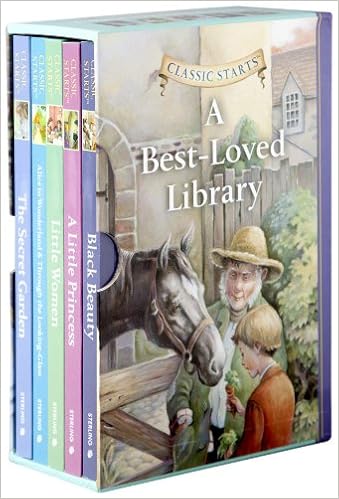
I group classic books in my mind into fairy tales and other classic books. Fairy tales spark the imagination and this is an important aspect of children’s development. In addition, fairy tales help children confront and overcome their fears, which are featured in these enduring stories and also, provide a lot of social messages about how to behave in order to achieve a good life outcome. Fairy tales also introduce children to the idea that life has pitfalls and things don’t always go the way you hope and want them to. They teach children to be resilient and enduring.
Classic books feature humans experiencing life and all it has to offer. The often contain thought-provoking socio-ethical situations such as I am David, which depicts the life of a boy on the run from a concentration camp. Classic books introduce children to history in an interesting and understandable way such as the Little House series of books which depict the pioneer life of Laura Ingalls Wilder and her family. As with fairy tales, classic books contain messages the teach children about perseverance to overcome injustice such as the Count of Monte Cristo. Classic books are also a challenge which stimulate the mind, which can only be a good thing.
What are your thoughts and experiences with contemporary and classic books for children?
About Robbie Cheadle

Hello, my name is Robbie, short for Roberta. I am an author with six published children’s picture books in the Sir Chocolate books series for children aged 2 to 9 years old (co-authored with my son, Michael Cheadle), one published middle grade book in the Silly Willy series and one published preteen/young adult fictionalised biography about my mother’s life as a young girl growing up in an English town in Suffolk during World War II called While the Bombs Fell (co-authored with my mother, Elsie Hancy Eaton). All of my children’s book are written under Robbie Cheadle and are published by TSL Publications.
I have recently branched into adult and young adult horror and supernatural writing and, in order to clearly differential my children’s books from my adult writing, I plan to publish these books under Roberta Eaton Cheadle. My first supernatural book published in that name, Through the Nethergate, is now available.
I have participated in a number of anthologies:
- Two short stories in #1 Amazon bestselling anthology, Dark Visions, a collection of horror stories edited by Dan Alatorre;
- Three short stories in Death Among Us, an anthology of murder mystery stories, edited by Stephen Bentley;
- Three short stories in #1 Amazon bestselling anthology, Nightmareland, a collection of horror stories edited by Dan Alatorre; and
- Two short stories in Whispers of the Past, an anthology of paranormal stories, edited by Kaye Lynne Booth.
I also have a book of poetry called Open a new door, with fellow South African poet, Kim Blades.
Find Robbie Cheadle
Blog: https://www.robbiecheadle.co.za/
Blog: robbiesinspiration.wordpress.com
Goodreads: Robbie Cheadle – Goodreads
Twitter: BakeandWrite
Instagram: Robbie Cheadle – Instagram
Facebook: Sir Chocolate Books
Want to be sure not to miss any of Robbie’s “Growing Bookworms” segments? Subscribe to Writing to be Read for e-mail notifications whenever new content is posted or follow WtbR on WordPress.
Share this:

A Farewell Tribute to Tom Johnson
Posted: November 11, 2019 Filed under: Author Profile, Books, Children's Books, Crime, Fiction, Interview, Nonfiction, Pulp Fiction, Super Hero, Uncategorized, Writing | Tags: Children's Stories, Children's Writing, Crime Fiction, Farewell Tribute, Pulp Fiction, Science Fiction, Super Heroes, Tom Johnson, Writing to be Read 27 Comments
Last week, we lost a dear friend of mine and a member of the Writing to be Read author family, Tom Johnson. Tom was a multi-genre writer for most of his life, mostly pulp fiction in the traditions of the classics, but in recent years, he dedicated himself to children’s fiction, with the intentions of creating stories for today’s children which reflect old fashioned values and morals in the traditions of the stories his mother read to him as a child. Tom took part in Round 2 of my “Ask the Authors” blog series, (which will become a published book by WordCrafter Press soon), and I interviewed Tom about his children’s stories back in 2018. He had some great things to say about writing for children that may be relevant here, since the Writing to be Read theme for November is young adult and children’s fiction. With that in mind, I’m reprinting that interview in part here, (you can read the full interview here), as we remember our friend and fellow author. Tom may be gone, but his wisdom lives on. This is what writing for children meant to him.


Kaye: Although in the past, you’ve written and published many different genres, you are currently writing only children’s stories. So, let’s talk about that. Tell me a little about your stories.
Tom: My children stories are about 1k and meant as bedtime tales, and to be read in classroom or library settings. They are short stories with little morals to teach children something about life.
Kaye: Are they a series or stand alone?
Tom: They are a series, and published in anthologies about once a year. There have been four anthologies so far. I was invited to participate beginning in volume #3. The anthology is called Wire Dog Storybook. Here is the background. True story. A young girl, Ellen Walters, asked her father, David Walters, if she could have a dog, and he said, “No.” So she found an old wire hanger and shaped it to resemble a dog, and called it wire dog. David Walters was fascinated by her ingenuity and created the Wire Dog storybooks. So the stories usually feature Ellen and Wire Dog, but always Wire Dog. Five of my stories have been published so far, and I’ve written three more for the 2018 yearbook when it comes out at the end of the year.
Kaye: What age group are they aimed at?
Tom: I feel that we should begin reading to our children by age one. With that in mind, my stories are aimed at the age group of 1 to 5. However, older children will enjoy the stories, as do adults.
Kaye: What differences do you see between writing for children and writing adult fiction?
Tom: Adult fiction usually means, “no holds barred”, while writing children stories you want to stay away from violence, horror, and adult themes. Keep in mind, young children absorb what they hear quickly, and some themes could have an adverse effect on young minds. When writing for children we must keep this in mind.
Kaye: What appeals to you about writing for children?
Tom: Do you remember the old radio show for kids, Let’s Pretend ? It produced shows for children that acted out fairy tales and light adventures – nothing as harsh as today’s cartoons that are aimed at our youth. Well, I have the chance to import my love for adventure in tales easily understood by young people; children who some day may also experience that same love to pass on to their children. Stories that give our children a moral to live by, not “It’s clobbering time!” Or Pow! Bang! Boom! It’s something my mother did for me when I was little, and now I have the same opportunity, and I’m not going to pass it up.
Kaye: You have wanted to write for children since you were little and your mother used to read to you.
Tom: Oh, yes. I hope that mothers are still reading to their children. They learn at such a young age, and we’re missing an opportunity if we fail them when they’re young. They will never forget what they learn as children, it’s when their minds are growing and grasping at everything. I think one of the first words they learn is, “Why?”
Kaye: What were your favorite children’s stories?
Tom: Really, I would have to look them up in the book of fairy tales on my shelf. There were so many she read to me. Knights saving young damsels come to mind. I remember one particular fairy tale where the princess was on a glass mountain, and the young knight had to save her. She watched each day as a knight riding brown horse attempts to scale the glass mountain, then a knight on a white horse, and so on, until the final day when a knight riding a great steed scales the mountain, and we find out that he was the knight on the brown horse, the white horse, etc. It wasn’t the color of the horse, but the persistence of the knight that finally achieved the goal.
Kaye: In what ways do the stories you write emulate those favorites from your childhood?
Tom: Like the fairy tale I mentioned above, my stories will also have a similar moral – it’s not the color of the horse, or the knight’s armor, but his persistence that wins the hand of the princess. Do the right thing, for the right reason. Persevere. If you don’t succeed today, try and try again.
The stories that we hear and read in childhood often stick with us into our later years. Even though Tom wrote other fiction through the years, as he grew older, it was the stories that his mother read to him as a child that inspired him. That’s what writing children’s fiction is all about.

Tom’s other works included pulp, crime and science fiction stories right up there with the best, and many may be familiar with his promotions for them on Facebook. His covers seem to reach out and grab your attention. He published over eighty books during the span of his career. In that previous interview, Tom claimed that Alien Skies was born from his most unusual inspiration and the Guns of the Black Ghost was written as a homage to Walter Gibson’s The Shadow radio drama. You can read my review of Pangaea: Eden’s Planet here.

Writing was a big part of Tom’s life. It was important to him. But, Tom was more than just a talented and dedicated writer. He was also a loved life partner to his lovely wife Ginger. She was supportive of his writing, and I believe she edited some, or perhaps all of his work. With Ginger at his side, Tom lived a life doing what he loved – bringing his characters to life.
Tom, farewell. You will live on through the plethora of books and stories you’ve left us with, but you will still be greatly missed.
Are you a Tom Johnson fan? If so, feel free to leave a few words in the comments telling us what Tom meant to you, or share a memory, or just tell me which of his books is your favorite. Thank you all for joining me in saying good-bye.
Share this:

“Tabitha’s Death”: a Y.A. novel that dares to journey into taboo realms
Posted: November 8, 2019 Filed under: Book Review, Books, Dark Fantasy, Fiction, Young Adult | Tags: Book Review, Dark Fantasty, Jordan Elizabeth, Tabitha's Death, Teen Suicide, Writing to be Read, Young Adult Fiction 5 Comments
Tabitha’s Death, by Jordan Elizabeth is a dark fantasy journey into death and beyond. This book is masterfully crafted to present the often taboo subjects of depression, cutting and teen suicide. Speaking as someone who has lost a son to teen suicide, I thought the subject matter was handled with sensitivity and tact. Even as a work of fiction, Tabitha’s Death carries messages many teens may need to hear.
Tabitha thinks she wants to die and tries to take her own life, but she finds it’s not that easy. The Grey Man snatches her away from death and won’t let her die until she completes certain tasks for him. As she journey’s through the strange realms beyond death, she learns that there’s more going on beyond death’s doors than she’d realized and her life maybe wasn’t so bad.
A truly inspirational approach to Y.A. fiction, resulting in an entertaining, yet thought provoking story. I give Tabitha’s Death five quills.

Kaye Lynne Booth does honest book reviews on Writing to be Read in exchange for ARCs. Have a book you’d like reviewed? Contact Kaye at kayebooth(at)yahoo(dot)com.
Share this:

Jeff’s Pep Talk: Finding the Right Writing Group
Posted: November 6, 2019 Filed under: Uncategorized 4 Comments
Finding the Right Writing Group
Every month, science fiction and horror writer Jeff Bowles offers advice to new and aspiring authors. Nobody ever said this writing thing would be easy. This is your pep talk.
A good writing group is something of a rarity. Not because there aren’t hordes of talented writers out there looking to provide and receive feedback in a friendly, encouraging environment, but because finding a writing group that complements your own experience and skill level can be tricky.
I’ve belonged to several writing groups, and I’ve even backed out of a couple because I could tell they wouldn’t be a good fit. It’s good to have a group, especially if you’re just starting out. The feedback provided by peers can be enormously conducive to leapfrogging higher and higher up the skill chain. Sort of like leveling up in a role-playing game. Forgive me for mixing metaphors, but my level ten warlock leapfrogger was once a paltry and underpowered level one.
A lot of us come from a liberal arts background, so we’re familiar with what a writing group entails. Many humanities majors find college-level workshops and seminars frustrating, because the feedback offered can vary so wildly from asinine to inspired to well-meaning yet unhelpful. Like I said, skill level is important. One of the first criterions for finding a group that fits is understanding you won’t get much out of peers who’re more or less skilled than you are. It may sound kind of cold, but don’t join a group of newbies if you aren’t one. You’ll have to be honest with yourself here. It just won’t do you any good if you can’t incorporate someone’s feedback because it’s either too advanced or too basic.
Another major criterion for finding a good group is to meet with people who have similar tastes and interests. Probably not going to help much to show your young adult romance novel to a bunch of hardcore military sci-fi buffs. Well, not necessarily. It’s not so much that folks who’re interested in other genres can’t help you. It’s just that they’re not as likely to know the ins and outs of what you do, and that can be problematic if they encourage you to change elements of your stories that are perfectly fine and otherwise perfectly saleable.
Internet writing groups can be a great place to start. My first major group out of college was an online science fiction forum. I shoveled a hell of a lot of stories through that place, and the feedback I received proved enormously helpful. The other writers there preferred a different strain of speculative fiction than I did, but my style and theirs were close enough it didn’t matter in the long run. Plus, I got to develop my voice in a dynamic environment, exacting, demanding, yet also encouraging. That’s kind of the sweet spot.
Finding an online group is as easy as a Google search. For the more agoraphobic amongst you, it doesn’t even require you to leave the house, but it stands to reason, meeting people face-to-face is almost always the preferred method. There’s likely to be some local writing groups in your area, especially if you live in the city. Just Google it; see what’s out there. Might take some trial and error, but if you can find a workshop environment you like, you might even be able to sniff out a publishing opportunity or two. Plus you get to socialize with other writers. We’re a friendly bunch, once you get to know us. Just don’t feed the horror guys. They’ve got something nasty growing in their guts.
Don’t forget, too, that there are plenty of great, more-or-less reasonably priced national workshops. Thousands of people pour into conferences, cons, and other smaller workshops every year, and participating in them can be pretty exciting. The basic point is that although you write in a vacuum, your work is ultimately meaningless if you can’t see its flaws and acquire the ability to revise appropriately and then publish it. And you want to get published, right? Right.
Last but not least, you could always go for an MFA. Speaking of seriously expensive, how about those Major of Fine Arts degrees, huh? I’m kidding (not at all kidding). I’m an MFA guy, so I know how valuable a good academic writing program can be. One thing of note, MFAs tend to focus on literary fiction, which means you’ll have to look around a bit if you’re more into the popular stuff. I come from such a place, however. I know from whence I speak.
MFA degrees are pricey, but the upshot is once you’ve got that nice shiny diploma, you can teach. Now that may either floor you or make you queasy. Not everyone is built for academia, after all. Still, to have the option, and to have acquired expertise along the way, it’s a valuable proposition, no?
The basic truth is that writers are pretty secluded creatures most of the time, and it can be of enormous benefit to get out into the world and exchange words and ideas with like-minded people. We never really grow out of the need for it, either. Sure, publishing may become easier the longer you do it, but the writing itself most assuredly won’t. And like I said, it’s difficult to see the flaws in our own work. Think like a muscle. Resistance make stronger.
And don’t be afraid if you’ve never been a part of something like this before. One of the biggest crimes I can think of in the world of art is talented people keeping that talent to themselves. They could be wonderful, masterful. Who’d ever know? You’ve got to start somewhere. Plus, having a good group often gives you that little kick in the ass you need to keep your nose to the grindstone. That’s never a bad thing. Gentle kicks in the ass, now. Remember, it’s a sensitive area.
Regardless of what road you travel by, keep working through the long months and years and eventually you’ll find the right alchemical reaction to become the writer you want to become. Just know that a good group can help you make the transition in half the time. Think long and hard about maintaining your personal writing bubble indefinitely. Good art does not, should not, and never will exist in a vacuum. I’ll stake my claim on that one.
Show people what you can do. Otherwise, all your significant, burgeoning ability is akin to a world-class meal prepared for four yet fed to the dog. Yeah, the dog’s happy, but he’s not likely to praise you for your exceptional flavors. Until next month, everyone. Pep talk over. Now go out there and be some doggy!
. . . body. Go out there and be somebody. Sorry.

Check out Jeff Bowles Central on YouTube – Movies – Video Games – Music – So Much More!
Want to be sure not to miss any of Jeff’s Pep Talk segments? Subscribe to Writing to be Read for e-mail notifications whenever new content is posted or follow WtbR on WordPress.
Share this:

“Flower Fairies: Portal to the Land of Fae”: A delightful introduction for young and old
Posted: November 2, 2019 Filed under: Book Review, Books, Children's Books, Fantasy, Fiction, Illustrations, Stories | Tags: Book Review, Children's Books, Fantasy, Flower Fairies, Illustrations, Judy Mastrangelo, Writing to be Read 3 Comments
Flower Fairies, by Judy Mastrangelo, is book 1 in her Portal to the Land of Fae series and a delightful introduction into their world, no matter what your age. Each page is filled with colorful images which highlight the natural world and enmesh it with the world of fantasy. Laugh with fairies and elves as they dance and play among the plants and flowers. Manstrangelo’s bright illustrations bring her well crafted descriptions to life and immerse you within the imaginary world of fea. There is no age restriction on the hearts these tiny fairy children will capture.
I’m looking forward to my next adventure into this magical land when I read the rest of the books in this series. I give Flower Fairies five quills.

Kaye Lynne Booth does honest book reviews on Writing to be Read in exchange for ARCs. Have a book you’d like reviewed? Contact Kaye at kayebooth(at)yahoo(dot)com.
Share this:

“Not My Father’s House”:A work of historical fiction true to western genre
Posted: October 30, 2019 Filed under: Book Review, Books, Fiction, Historical Fiction, Western, Women's Fiction | Tags: Book Review, Historic Fiction, Loretta Miles Tollefson, New Mexico, Not My Father's House, Western, Women's Fiction, Writing to be Read 5 Comments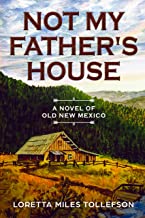
Historical fiction has almost as many flavors as there are time periods to write about. Not My Father’s House, by Loretta Miles Tollefson is an historical novel with a western flavor that leaves the reader smacking their lips for more. A true frontier wilderness tale, Tollefson takes true events and places from the annals of the wild backwoods of old New Mexico territory and crafts a tale of the struggles and hardships of frontier life in the untamed mountain wilderness.
Suzanna is a young bride of mixed blood, soon to be a mother when she moves from her father’s home in the village of Don Fernando de Taos, venturing into the backwoods of New Mexico territory to make a home of her own and raise her family with her husband Gerald and their friend Ramon. She knew she’d have to battle the elements and critters in the untamed mountain valley, but she never expected to have to battle with herself when cabin fever sets in each winter. Nor did she ever imagine that her biggest threat in the wilds would come from a predator that stalks her on two legs instead of four.
A story of female strength and courage in a time when the lands were still wild. Not My Father’s House is a finely crafted story in the western tradition. I give it five quills.
Kaye Lynne Booth does honest book reviews on Writing to be Read in exchange for ARCs. Have a book you’d like reviewed? Contact Kaye at kayebooth(at)yahoo(dot)com.
Share this:

Stalking horror and dark fiction in October
Posted: October 28, 2019 Filed under: Books, Fiction, Horror, marketing, Paranormal, Promotion, Writing Event | Tags: All Hallow's Eve: Little Shop of Horrors Party, author promotion, Book Event, Book Promotion, Facebook event, Ghost Stories, Horor, Paranormal, Writing to be Read 2 Comments
In screenwriting, horror is very formulaic. The setting isolates the characters in a situation where their lives and/or souls are in jeopardy and the characters always make poor choices which throw them directly into the path of the psycho serial killer/monster, i.e. the villain. This horror movie commercial for Geiko sums up horror movies nicely: https://www.youtube.com/watch?v=NYae3ZAAbLc. I get a kick out of it every time I watch it. But that isn’t to say that there are no good movies. When done right, horror movies can keep you awake at night because they play on our deepest fears. And fear is a powerful emotion.
In October Writing to be Read has been stalking horror and dark fiction. In fiction, horror stories don’t have to be as formulaic as horror films, (although they can be), but they have many of the same components. There is usually a battle of good vs. evil, as horror and dark fiction stories seem a natural fit for this theme. Dark fiction stories mesh well with fantasy, thrillers, science fiction and western genres, among others. They just seem to work well together. Whatever flavor of dark fiction you choose to examine, horror is, and always has been, in high demand.
You can’t have a conversation about horror and dark fiction without hearing mention of the masters such as Edgar Allen Poe, Ray Bradbury, Stephen King, Clive Barker, Peter Straub, Dean Koontz, and Anne Rice. These dark minds have created some of the most memorable horror stories, ones which stick in readers’ minds because they are so twisted, and dark, and horrific, playing on the fears we harbor within ourselves. Stephen King and Anne Rice are the masters of horror for me. Who is your favorite horror author? Let me know in the comments below.
This month we looked at two award winning and best selling authors of dark fiction on not one, but two segments of “Chatting with the Pros”, who may be right up there with the best of them: Paul Kane and Jeffrey J. Mariotte, and a double review featuring Kane’s Arcana and Mariotte’s Cold Black Hearts. In addition, I interviewed author Roberta Eaton Cheadle about her first dark fiction novel and the transition from writing children’s stories into writing horror, and I reviewed that novel, Through the Nethergate. And “Growing Bookworms” Robbie Cheadle discussed the pros and cons of allowing children to read stories with scary or sad content.


In addition, this month myself and three of the Writing to be Read team members: Art Rosch, Robbie Cheadle and Jeff Bowles, have stories in the WordCrafter paranormal anthology, Whispers of the Past, and Robbie and I both have stories appearing in Dan Alatorre’s horror anthology, Nightmareland.
It’s been a great month for horror,and to top it all off, WordCrafter is co-hosting a Halloween book event on Facebook with Sonoran Dawn Studios, the All Hallow’s Eve: Little Shop of Horrors Party. With games and giveaways with cool prizes, music and scary audio stories, it should be a lot of fun. I hope you’ll click on the link and drop in and spend some or all of your Halloween with us: https://www.facebook.com/events/2389123051407696/
Like this post? Let me know in the comments. You can be sure not to miss any of Writing to be Read’s great content by subscribe to e-mail or following on WordPress. If you found it helpful, please share.
Share this:

Spend Your Halloween at the “All Hallows Eve: Little Shop of Horrors Party” Book Event
Posted: October 23, 2019 Filed under: Advertising, Books, Fiction, Horror, Paranormal, Promotion, Social Media Promotion, WordCrafter, WordCrafter Press, Writing Event | Tags: author promotion, Book Event, Book Promotion, Facebook event, WordCrafter, Writing to be Read 5 Comments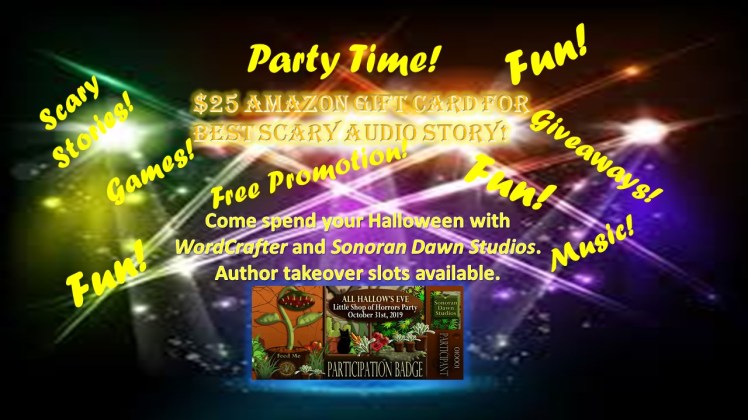
It’s almost Halloween! Don’t sit home and be bored. WordCrafter is partying with Sonoran Dawn Studios with the All Hallow’s Eve: Little Shop of Horrors Party on Facebook.
- Free promotion for authors
- Music
- Audio stories
- Games and giveaways with great prizes
The author voted best scary audio story will receive a $25 Amazon gift card, so come party with us and let your vote be counted. Join in the fun and support your favorite authors on Thursday, October 31st. Just click on the link below and then click ‘Going’.
Author takeover slots are still available, but time is short, so contact Sonoran Dawn Studios from the event page to reserve your time slot now. Bring all of your ghosts, goblins and ghouls and let’s party! See you there!
All Hallow’s Eve: Little Shop of Horrors Party
Share this:

“Chatting with the Pros”: Interview with bestselling horror author Jeffrey J. Mariotte
Posted: October 21, 2019 Filed under: Author Profile, Books, Dark Fantasy, Fiction, Horror, Interview, Paranormal, Thriller, Writing | Tags: Chatting with the Pros, Cold Black Hearts, Dark fiction, horror, Jeffrey J. Mariotte, Writing to be Read 3 Comments
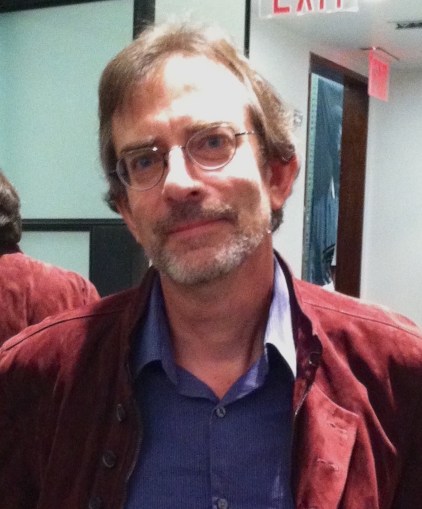
My author guest today on “Chatting with the Pros” may just have books in his blood. Before he was an author he managed a bookstore. He’s gone on to work in both marketing and publishing, and become a bestselling, multiple award-winning author with leanings toward dark fiction. He’s got great insight into writing on the dark side which he’s willing to share with us today, so let’s welcome Jeffrey J. Mariotte now.
Kaye: When did you know you wanted to be an author?
Jeff: I started writing stories when I was very young, probably 7 or 8. They were terrible, of course, and utterly derivative, mostly of the Hardy Boys novels that were my primary reading material at the time. I kept at it all through school, and by the time I got to college I knew I wanted to make my money writing something–I just didn’t know precisely what. I went in as an advertising major and did some copywriting, but graduated with a degree in Radio/TV/Film, a minor in English, a literary award, and a published article. Three years later, I got a job at a bookstore, and eventually became a manager (and later, opened a store of my own). It was while managing a store that I met a lot of authors and publishing professionals and found out the realities of publishing, and sold my first short story. So I guess the short answer to the question is: always, and the long answer is: I always wanted to write, but I didn’t know I could do it professionally until much, much later.
Kaye: What draws you to dark fiction? Why not romance, or mystery, or western?
Jeff: The truth is, I have written in two of those genres, and others besides. I’ve written both mysteries and westerns (along with science fiction, fantasy, straight fiction, and more), and intend to continue. In fact, the next couple of books I’m planning are both westerns. But yes, I am drawn to the dark side, and often when I work in those other genres I bring in elements of horror or dark suspense. I’ve never really analyzed it, but I suppose it’s a combination of a longstanding interest in horror and the supernatural, and an awareness of the darker, more unpleasant aspects of human nature.
 Kaye: Cold Black Hearts is one of several recent releases through Wordfire Press. With more than 70 novels under your belt, what lead you to join the Wordfire family?
Jeff: I’ve known Kevin J. Anderson and Rebecca Moesta for what seems like forever–this goes back to meeting authors through my bookstore work. They’re two of the greatest people on the planet. They’re supremely talented, super nice, and scrupulously honest. When I saw the books they were putting out, I knew I wanted to be part of their line, and to work with friends rather than strangers.
Kaye: My review of Cold Black Hearts posted this month, but for those who didn’t catch it, would you like to tell me a little about it?
Jeff: It’s a supernatural thriller about a police detective who loses her hearing in an explosion, but gains something else in its place–a heightened sense of empathy. That quickly becomes a burden in a crowded metropolitan area, where people’s emotions press in on her from every side. When she’s offered a job in a remote part of New Mexico, working to free an accused killer from prison, she takes it. But it turns out that she’s just stepped from the frying pan into the fire, because there are strange, spooky things going on.
Kaye: You don’t advertise your books as horror, but as dark thrillers. In your mind, what is the distinction?
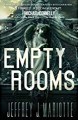 Jeff: Actually, that’s WordFire‘s tag, not mine. I think of Cold Black Hearts and some of my other books as supernatural thrillers, because they combine traditional thriller elements–law enforcement, espionage, etc.–with supernatural elements. The first book of mine they published, Empty Rooms, was a straight, non-supernatural mystery/thriller, and it was very dark indeed, so I guess the phrase came from that.
Kaye: You also write comic books and graphic novels, short fiction and nonfiction. Which is your favorite type of writing? Why?
Jeff: The novel is my favorite, because it gives me more room to tell a complete story–to really dig into the characters’ psyches and explore their worlds. I love it all; I’ve even recently done some very short, 3-page comics for HyperEpics.com, which is a blast. But if I had to only pick one, it’d be novels.
Kaye: Which author, dead or alive, would you love to have lunch with? Why?
Jeff: As a bookseller for decades, and someone who’s worked in publishing–in addition to 20 years as a professional novelist–I’ve been lucky enough to meet and spend time with most of my favorite authors. I’ve visited with Ray Bradbury, Harlan Ellison, David Morrell, Clive Barker, Don Winslow, and James Lee Burke (among others) at their homes, hung out with Wallace Stegner, Stephen King, Sue Grafton, Joe R. Lansdale, and Neil Gaiman, had meals with Robert B. Parker, James Ellroy, Jonathan Maberry, and Joan D. Vinge… Plus, every day I get to have a meal with my favorite author, Marsheila Rockwell (who is, coincidentally, also my wife and frequent writing partner, and a magnificent fiction writer and poet on her own). My point is, while it’s cool to have lunch with an author, it’s not exactly something I haven’t had a chance to do.
That said, I’d love to have a meal with the recently departed William Goldman, who’s a longtime favorite for his novels and his screenplays, and who’s the author I’ve most wanted to meet, but never had a chance to. He’s done it all, and exceedingly well, and I wish I could have benefited from his insights in person.
Kaye: What’s the most fun part of writing a novel? What’s the least fun part?
Jeff: The most fun part is finishing it, and seeing it become a real-live book. The rest of it is hard work. The research, the working out of the plot, the discovery of who the characters are, the actual chore of sitting down and turning out page after page after page… it’s a grind. Not to say that it’s not fun, but it’s work, too. The least fun part is probably when, in the editing/revising process, I realize that I have to cut lines or scenes that I really loved writing.
Kaye: What is the one thing in your writing career that is the most unusual or unique thing you’ve done so far?
Jeff: There’ve been several, but if I have to pick one, I guess it’d be that time I went to the set of CSI: Miami to hand-deliver copies of the first-ever CSI: Miami graphic novel (which I wrote) to cast members, all while being filmed for Access Hollywood. Which promptly cut me out of all the footage–but they showed the book, and that’s what counts!
Kaye: Which of your books would you most like to see turned into a film? Who would you like to play the lead?
Jeff: There are several I think would be great for film or TV, but for the purposes of this interview, let’s say Cold Black Hearts, with Jessica Chastain.
Kaye: Imagine a future where you no longer write. What would you do?
Jeff: Catch up on reading and TV shows, I guess. Bake more. But also, since 1980, every dollar I’ve made has come from the business of writing/editing/publishing/ book selling/ etc. — from the written word, and the process of getting it out of the brain and into a reader’s hands. So if I wasn’t writing, I’m sure I’d still be doing something in that realm.

Kaye: What’s in the future for Jeffrey J. Mariotte? What should readers look forward to?
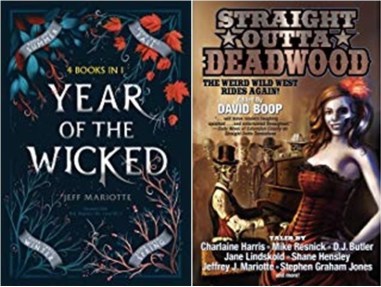 Jeff:The newest release is to be a weird western short story in an anthology called Straight Outta Deadwood, published on October 1. The book is edited by David Boop and has stories by a bunch of pals, including Charlaine Harris, Steve Rasnic Tem, Shane Lacy Hensley, and the wonderful Marsheila Rockwell, so everyone who likes westerns with a side of spooky should check it out. After that, there are some comics projects in the works. Novel-wise, I have a thriller on submission, and I’m working on a new book (or will be back to it, as soon as I get this sent off)! So stay tuned.
Like this post? Let me know in the comments. You can be sure not to miss any of Writing to be Read’s great content by subscribe to e-mail or following on WordPress.




















