“Only Wrong Once”: A medical thriller that could be fact instead of fiction
Posted: June 14, 2019 Filed under: Book Review, Books, Medical Thriller, Thriller | Tags: Book Review, Jenifer Ruff, Medical Thriller, Only Wrong Once, Thriller, Writing to be Read 4 Comments
Only Wrong Once, by Jennifer Ruff is a fast paced medical thriller that deals with international bio-terrorism on a personal level, bringing it all home in a big way. Maybe the reason this tale hits a nerve is that there are similar stories in the news every day, and Only Wrong Once made me wonder about the stories we don’t hear about.
Quinn Traynor is a U.S. intelligence agent out to save the world from terrorism, but his next case will hit closer to home than most of the terrorist attacks he’s worked to thwart. When a plot to strike terror into Americans in pandemic proportions with a bio-terrorism attack, the clock is ticking to find and stop the terrorists before they can carry out their deadly plan. Time is running out for the terrorists, too, maybe faster than anyone thinks, and if they succeed, time may be running out for the entire nation. Quinn and his team work against all odds to stop the bio-terrorism weapon from being released on the country, but can they succeed in time to make a difference?
Only Wrong Once will be released next month in the medical thriller box set, Do No Harm. It is available for preorder now.
The ticking clock lends Only Wrong Once just the right amount of urgency to keep the pages turning. It is well-crafted and keeps readers sitting on the edge of their seats. The plot is downright scary, because it could happen. I give it five quills.
Kaye Lynne Booth does honest book reviews on Writing to be Read in exchange for ARCs. Have a book you’d like reviewed? Contact Kaye at kayebooth(at)yahoo(dot)com.
Share this:

Author Update: The Making of a Memoir On Hold Indefinitely
Posted: June 12, 2019 Filed under: Book Covers, Books, Editing, Fiction, His Name Was Michael, Memoir, Nonfiction, Paranormal, Publishing, Self-Publishing, Speculative Fiction, Stories, Western, WordCrafter, WordCrafter Press, Writing | Tags: Anthologies, Ask the Authors Anthology, Delilah, Delilah: The Homecoming, His Name Was Michael, Losing Michael: Teen Suicide and a Mother's Grief, Whispers of the Past, WordCrafter, WordCrafter Press, Writing to be Read 4 Comments
I’m sorry to say that the obstacles and road blocks I mentioned in my April post have brought my memoir writing process to a screeching halt before it had truly begun, and thus, this bi-monthly blog series must come to a halt, as well, until I can find answers to the problems related to writing about real people and organizations which is necessary to telling my son Michael’s story, as well as my own. Losing Michael: Teen Suicide and a Mother’s Grief has been shelved, at least for a while due to legalities. This book project is based from my personal experience and is dear to my heart, and it great saddness that I make this decision, but I’m not ready to face the trials that forging ahead with it would require.

On the other hand, there are exciting things on the horizon. My efforts for the near future will turn to working on the issue of re-issuing Delilah, which Dusty Saddle Publishing has so graciously offered to do. Once this is completed, I plan to pick up where I left off on the drafting of the second book, Delilah: The Homecoming. I just got Delilah back on track in this story with considerable revisions and I’m a little sad to have to delay the completion of this book, but also confident that the story will be better for it.
I will be getting the WordCrafter website up and running and ready for launch. Get ready folks, because WordCrafter Writer & Author Services is coming soon. Services will include Editing and Copywriting services, online courses, and WordCrafter Press.
I’ll also be compiling and publishing the two great anthologies to be released by WordCrafter Press. The Ask the Authors anthology will feature the collaborative interviews from the 2018 “Ask the Authors” blog series right here on Writing to be Read. This book will be filled with writing tips and advice from authors who are out there doing it, a valuable writing reference for authors in all stages of the publishing journey.
 The other anthology, Whispers in the Dark, will be a short story collection harvested from the WordCrafter Paranormal Short Story Contest held at the beginning of 2019. It will feature several of the submissions from the contest, including the winning entry, “A Peaceful Life I’ve Never Had”, by Jeff Bowles. These anthologies are still in the preliminary stages, but I plan to have them both out by the end of the year. I have cover ideas for each one, but only Whispers has a final version at this time. I plan to release it in October.
To keep up on the latest with my writing endeavors and with Wordcrafter, sign up for my monthly newsletter in the pop-up. When you do, you’ll recieve a free e-copy of my paranormal mystery novella, Hidden Secrets.
Share this:

“The Gamma Sequence”: Non-stop Action and Suspense
Posted: June 7, 2019 Filed under: Book Review, Books, Fiction, Medical Thriller, Suspense, Thriller | Tags: Children's Books, Classic Literature, Growing Bookworms, Reading, Writing to be Read 8 Comments
The Gamma Sequence, by Dan Alatorre is a non-stop action, futuristic medical thriller. The suspense begins to build on the very first page and keeps on ratcheting up the tension from there, with twists and turns that will keep readers on their toes.
Hamilton DeShear is a private detective and former cop, who isn’t looking for a mystery to solve. But when the mysterious Lanaya Kim arrives on the scene claiming to need his help, how can he refuse? There’s no turning back once his apartment goes up in flames and the game turns personal. Soon enough people are shooting at them, the stakes are raised and it will take all of DeShear’s skill and expertise to keep them alive. Genetic research is the name of the game, but not everyone is playing by the same rules. Things aren’t always what they seem, and this certainly appears to be the case here. There’s a killer on the loose, who is targeting the scientists who worked on a secretive project which Lanaya was involved with, but can DeShear unravel the mystery and figure out what is going on before he and Lanaya are taken out of the game?
The Gamma Sequence will be available next month as a part of the Do No Harm medical thriller box set. You can preorder now.
Nail biting suspense that keeps you on the edge of your seat. The Gamma Sequence does everything a good thriller should. I give it five quills.

Kaye Lynne Booth does honest book reviews on Writing to be Read in exchange for ARCs. Have a book you’d like reviewed? Contact Kaye at kayebooth(at)yahoo(dot)com.
Share this:

Should children read abridged classics?
Posted: June 5, 2019 Filed under: Books, Children's Books, Classics, Growing Bookworms, Reading | Tags: Children's Books, Classic Literature, Growing Bookworms, Reading, Robbie Cheadle, Writing to be Read 50 Comments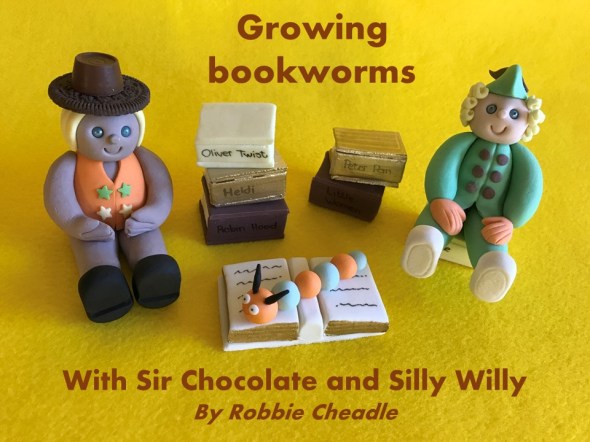
There are many wonderful classic books available to people who are interested in reading them. I have recently re-read War of the Worlds and The Time Machine, both by H.G. Wells and also Dracula by Bram Stoker. I read these books in my early teens and, while I did enjoy them, I don’t remember appreciating any of the subtleties of the development of the characters in these books or the psychological and philosophical aspects either. This is because I did not have the life experience at that time to appreciate these concepts and their incredible appropriateness and cleverness.
I have never restricted or limited my children’s reading choices. This is because I believe that children can only experience and visualise the written world in the context of their own life experiences. If a child has never attended a funeral, they cannot visualise the white and haggard faces of the surviving family, smell the heavy and potent aroma of the funeral flowers or understand extreme expressions of grief such as throwing oneself onto a coffin as it is slowly lowered into the ground, in the same way someone who as actually witnessed such events could. They can read and appreciate the words but their ability to picture the detail is limited to their own visual experiences. This is not the case with television which supplies a ready-made visual to put the image into your mind regardless of your own experience. It is for this reason that I think that abridged classics are appropriate, and even ideal, for children.
Abridged classics expose children to the joys of great literature and enable them to appreciate their stories without struggling to understand words and concepts that are beyond their current reading and life abilities. In other words, abridged classics stimulate an interest in the storyline and characters while not burdening the child with all the deep emotion and psychology that is present in many classic books. If the child is excited by the story, there is a high chance he will revisit the book as an adult and read the full, unabridged version with greater understanding and appreciation.
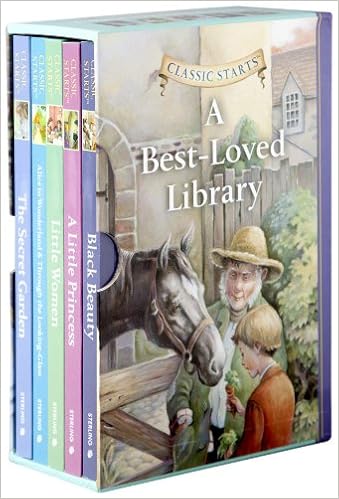
If you are interested in purchasing the Classic Starts books, you can find them on Amazon US here: Classic Starts series
I bought all the Classic Starts books as well as a set of abridged Shakespearean plays and Chaucer’s stories for my son. My older son was mesmerised by certain stories such as The Phantom of the Opera, The Secret Garden and The Red Badge of Courage. I well remember him recalling these books with such fondness that a few years later, when he was about 13 years old, he read the unabridged versions of these books with great enthusiasm. He also went on to read a significant number of other classic books and represent South Africa as part of the St John’s College Prep team at the Kids Lit Quiz in New Zealand in 2016. I remember Gregory laughing aloud over the abridged versions of Canterbury Tales and The Taming of the Shrew. I do think these cultural experiences of English help set him up with a love of reading for life.
Reading abridged classics also allows children to access books that have been written in old English and are difficult for modern children [and adults] to read for that reason. These books allow us all access to humorous, dramatically and other situations from the past and allow us to learn more about our own history and path of evolution and change.
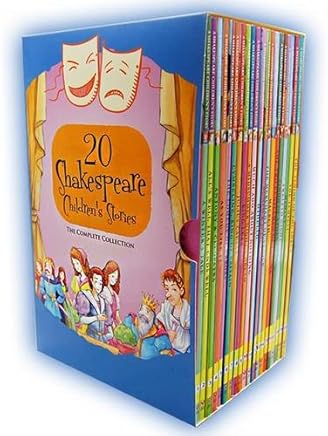
I believe there is a lot of benefit to be had from reading abridged classics to your child and letting them read them on their own. What do you think? Let me know in the comments.
About Robbie Cheadle

Hello, my name is Robbie, short for Roberta. I am an author with five published children’s picture books in the Sir Chocolate books series for children aged 2 to 9 years old (co-authored with my son, Michael Cheadle), one published middle grade book in the Silly Willy series and one published preteen/young adult fictionalised biography about my mother’s life as a young girl growing up in an English town in Suffolk during World War II called While the Bombs Fell (co-authored with my mother, Elsie Hancy Eaton). All of my children’s book are written under Robbie Cheadle and are published by TSL Publications.
I have recently branched into adult horror and supernatural writing and, in order to clearly differential my children’s books from my adult writing, I plan to publish these books under Roberta Eaton Cheadle. I have two short stories in the horror/supernatural genre included in Dark Visions, a collection of 34 short stories by 27 different authors and edited by award winning author, Dan Alatorre. These short stories are published under Robbie Cheadle.
I have recently published a book of poetry called Open a new door, with fellow South African poet, Kim Blades.
Find Robbie Cheadle
Blog: https://bakeandwrite.co.za/
Blog: robbiesinspiration.wordpress.com
Goodreads: Robbie Cheadle – Goodreads
Twitter: BakeandWrite
Instagram: Robbie Cheadle – Instagram
Facebook: Sir Chocolate Books
Want to be sure not to miss any of Robbie’s Growing Bookworms segments? Subscribe to Writing to be Read for e-mail notifications whenever new content is posted or follow WtbR on WordPress.
Share this:

Interview with International bestselling author Dan Alatorre
Posted: June 3, 2019 Filed under: Books, Fiction, Interview, Medical Thriller, Suspense, Thriller, Writing | Tags: Author Interview, Dan Alatorre, Medical Thriller, Suspense, The Gamma Sequence, Thriller, Writing to be Read 8 Comments


I”m chatting with International bestselling author, Dan Alatorre. He has written in several genres, including humor, science fiction time travel, and even children’s books. With his most recent book, The Gamma Sequence, Dan delves into the world of medical thrillers. This isn’t the first time Dan has dabbled in the thriller realm though. You can see my review of Dan’s suspense thriller, Double Blind, here: https://wp.me/pVw40-3Li. Today, he’s going to share his perspective on the thriller genre, and medical thrillers in particular.
Kaye: You are a multi-genre author, but your most recent release is a medical thriller, The Gamma Sequence, which is featured in a collection of medical thrillers, Do No Harm, that will release in July. Why have you chosen to delve into medical thrillers?
Dan: I got invited to participate in a box set with a bunch of New York Times best-selling authors and USA today bestselling selling authors, and I thought it was too good of an opportunity to pass up. It’s like being invited by a bunch of major-league baseball players to come play on the All-Star team. So I jumped at the chance. That experience was a lot of fun, but when they asked me again to participate in a medical thriller, I initially said I didn’t think I should because I wasn’t really known for that and I wasn’t an expert in that. My friend Jenifer Ruff disagreed and said that a lot of my stuff had the basic elements; I just needed to kind of paint with a different color. I looked into what readers of that genre expect from their stories, and she was right. Writing a medical thriller was a lot of fun and people really are going to enjoy The Gamma Sequence, because there are just surprises you’re just never going to anticipate. It has a great villain. It has conflicted good guys. There’s a lot to like on a lot of layers.
Kaye: How do medical thrillers differ from other types of thriller?
Dan: A typical murder mystery is: a murder happens and the detective goes about solving it. With a medical thriller, you take those basic elements and you set them in a medical scenario but often the person doing the detecting is not a cop or a detective but somebody from the sciences, or the victims are from the medical sciences, or it has a general medical background setting that is going to be part of the solution. If murder mysteries are typically painted in blue, then this is painted in purple because it’s those things with some shades of other things.
Kaye: What was the biggest challenge in writing thrillers for you?
Dan: I needed to learn what readers of the genre expect in their stories so they wouldn’t be disappointed. I needed to lay out a decent outline so I could hit the points I needed to hit, and I had an extremely short deadline. Most books like this take the author a year to write. I had this completed in about 1/4 of that time – by necessity. And it literally went almost right up to – the day I had to submit it, I was still getting some feedback from beta readers and making a few tweaks. But it’s really, really good. People are really going to enjoy it. The early reviews are tremendous.
Kaye: Can you briefly tell readers about The Gamma Sequence?
Dan: Geneticist Lanaya Kim must do what authorities haven’t—tie together the “accidental” deaths of several prominent scientists around the country to show they were actually murdered. Over the past two years, geneticists have died in what appear to be accidents, but Lanaya knows otherwise. If she tells her secrets to the authorities, she risks becoming a suspect or revealing herself to the killer and becoming an open target. Hiring private investigator Hamilton DeShear may help her expose the truth, but time is running out. The murders are happening faster, and Lanaya’s name may be next on the killer’s list. But when Lanaya and DeShear start probing, what they discover is far more horrifying than anyone could ever have imagined.
The more they look, the more they find – and the bigger the problems get. In the meantime, they’re getting shot at and having to run for their lives because people are trying to kill them!
Kaye: What elements of storytelling do you feel are specific to the thriller genre?
Dan: For me, it is a fast pace that goes from one interesting thing to the next without slowing down. Now, that sounds like any good movie or book, and that’s the challenge. You really don’t have time to slow down and get distracted but you still need red herrings and false leads and multiple suspects. So at the same time you’re hitting the accelerator, you have to be looking down the side roads, too. Here’s the key: what’s interesting? How fast can you get to it? What’s the next interesting thing? How fast can you get to that? Each chapter has to ask another question and add to the mystery while it’s answering something early from earlier. The reader can’t put it down. I’ve had people tell me they missed their stop on the train because they were so engrossed in The Gamma Sequence!
Kaye: Do you feel thrillers require a faster pace to keep the adrenaline flowing?
Dan: I think most stories should have a fast pace. Some should not but most should. Thrillers definitely should. Murder mysteries definitely should. Comedies definitely should. But you can see how romances might really benefit from taking a slow pace, and there are certain dramatic stories that definitely want to dive deep. But thrillers need to be a roller coaster ride, and The Gamma Sequence definitely is that. It has beautiful settings and a terrific villain, and a pace that keeps it moving, nonstop.
Kaye: Thrillers are action packed and filled with conflict and tension. What techniques do you use to keep the story moving, the readers on the edges of their seats, and the pages turning?
Dan: Conflict and tension. Internal dilemmas. Stuff a reader would relate to – in a good guy and a bad guy. You have to have likable characters and multi-dimensional characters. You have to have an interesting villain with a compelling reason for doing what he’s doing. I prefer if the villain does not see himself as a bad guy but sees himself as having different goals than the good guy, and their goals happen to be in conflict with each other. And a fast pace is definitely helpful.
Kaye: Are there any particular thriller authors that you fashioned your writing style after as you approached writing in the medical thriller genre?
Dan: I can’t say I styled myself after any particular author in the genre, but I have been compared very favorably to Robin Cook and Michael Crichton. A few others. That’s good company.
Kaye: You have also written, horror, murder mystery, sci-fi time travel, and humor. What are the differences in writing a thriller from the other genres you’ve written in?
Dan: The broad strokes are still the same: What’s interesting and how quickly can you get to it? So, if it’s a horror story, I get to the scary as fast as possible, but I horror you build lots of tension and suspense. In a murder mystery, you have to make it be exciting and move along quickly while really baiting the hook each and every chapter, building to the big reveal at the end. A medical thriller is very similar to that because it all keeps building until it reaches a critical mass and then you finish with a bang. So far, nobody has seen the surprise ending coming in The Gamma Sequence. I love that. I get emails: I did NOT see that coming! That’s fun.
Kaye: As you prepare to write in a genre that is new to you, what kind of pre-writing preparations do you make?
Dan: I talk to fans of the genre to find out what types of books or movies are their favorites, and what they liked about them. I try to make interesting characters including the villain. I want to have a fast pace because a good story feels like it has a fast pace, regardless. The fact is, it’s a lot of work to make a story appear effortless. And I definitely sit down with some trusted advisors to hammer out an outline that is going to fulfill the expectations of what readers of the genre have. Then I have my boundaries drawn and I go crazy and have a lot of fun inside those lines, occasionally straying a little here and there outside the lines, because you have to push the envelope, but always delivering intensity on every page. The Gamma Sequence does that.
Kaye: What is your favorite genre to write in? Why?
Dan: Comedy. It’s so much fun! Making people laugh is a lot of fun. Scaring them in a horror story is a lot of fun, too. And taking them on a roller coaster ride in a thriller is a lot of fun, too!
Kaye: What is the one thing in your writing career that is the most unusual or unique thing you’ve done so far?
Dan: Probably what’s most unusual is that I’m not afraid to try something new, and then I kick ass to make it amazing. A lot of authors develop something and stay with it, and that’s great. I do that, too – but I’m not afraid to jump over into something new.
I want to thank Dan for joining us today. You can read my review of The Gamma Sequence this Friday. You can pre-order the box set Do No Harm here: https://www.amazon.com/Do-No-Harm-Seventeen-Thrillers-ebook/dp/B07RFSSQZ4/ref=sr_1_2?keywords=Do+No+Harm&qid=1559140737&s=books&sr=1-2
Learn more about Dan Alatorre and his books at the following links:
Blog and Website: https://danalatorre.com/
Amazon Author page: https://www.amazon.com/Dan-Alatorre/e/B00EUX7HEU/ref=dp_byline_cont_ebooks_6?author-follow=B00EUX7HEU&
Share this:

A Roundup of Westerns in May
Posted: May 27, 2019 Filed under: Fiction, Historical Fiction, romance, Western, Writing | Tags: Christian western romance, Paranormal western, Western, western adventure, western fantasy, western fiction, Western genre, western romance, Writing to be Read 8 Comments
When I began seeking my M.F.A. in Creative Writing, back in 2012, I would have said that the western was a dying breed. Even as I tried my hand at writing a western novel, with Delilah, I didn’t think the book would get very far. I figured publishers didn’t want to put out westerns anymore, because they were looking for books that would sell. I thought the only readers westerns had were old men who’d grown up on Louis L’Amour and Zane Grey. I didn’t believe there was an audience for western any longer.
Today, I have to say that I was wrong, since there seem to be new western authors popping up all the time and a good portion of them are female. In fact, the genre seems to be expanding, rather than dying out. I’ve made the acquaintence of several who I did not previously know as a result of my research for this month’s genre theme. That first assignment eventually grew into the first book I was able to get published, but when I began to write Delilah, I looked at westerns as a male realm where a female author might find difficulty being accepted. Now, I’m seeing a lot more female authors of the genre than was previously the case and I am pleasantly surprised.
But I don’t think this is because publishers are eagarly scooping up western novels. A majority of western authors with books in the marketplace are self-published authors. I think western authors must self-publish first and prove themselves before publishers are willing to take a chance on the genre these days.
For a look at a new twist on classic historic western fiction, you can check out my review of Not Just Any Man, by Loretta Miles Tollefson. Like all good things, the western genre has had to change with the times to survive. Many authors are finding a selling point by combining western with other more popular genres, like romance. If you look, you’ll find that a good portion of today’s westerns fall into the category of western romance, although romance isn’t the only genre authors have combined with western. I’ve read a few paranormal westerns, as well. For an example, you can read my review of Joanne Sundell’s, A Slip on Golden Stairs. There are even a few science fiction westerns out there, as well as western dark fantasy, such as Chance Damnation, by DeAnna Knippling, which I reviewed earlier in the month, or check out my 2016 review of Chris Barili’s Hell’s Butcher series, which both feature supernatural elements.
I’d also venture to say that the number of westerns featuring tough female protagonists would tip the scales if measured against those featuring male heros in today’s westerns. It seems the cowgirl is determined to take her place in history, even though old cowboys never really die. But, all western heroines are not cowgirls. Western heroines may take the form of pioneer women tough enough to brave the western frontier and win, or a homesteading wife who loses her husband to one of the many threats that come with living in a harsh landscape and must survive in a brutal landsacpe and fend for herself, or prostitutes who lived lives of servitude and put up with indignities not spoken about in polite company in order to survive an isolated existence, or young girls full of dreams to see the world who are looking to escape and determined to do whatever it takes to achieve them. They aren’t all Calamity Jane, but they are each tough and bold and gritty in their own ways.
But don’t take my word for it. Maybe the western genre hasn’t changed as much as I think. You can find out what other western authors think by checking out this month’s interviews. My “Chatting with the Pros” author guest was western adventure author Scott Harris, and I also interviewed Christian western romance author Patricia PacJac Carroll, and western author Juliette Douglas. And if you’re interested in further discovery, you can check out my January interview with western author Loretta Miles Tollefson.

As for myself, I’m working on the rewrite of the first 45,000 pages in the second book in my frontier western saga, Delilah: The Homecoming. I know you’re not supposed to edit until you’ve finished the first draft, but that’s what happens sometimes. Your character walks up and smacks you and says, “Where the heck are you taking me?”, and you realize the story has taken a wrong turn somewhere along the way. But I’m getting her back on track now. While Lois L’Amour is the reason I love reading westerns, Delilah and the other colorful characters featured in these books are the reason that I love writing them.
It’s been a great western round-up and I hope you’ll all join me in June, when will be riding the thriller train and looking at ways to give readers the thrills and chills they crave. My “Chatting with the Pros” author guest will be thriller author John Nicholls, and I’ll be interviewing author Dan Alatorre and reviewing his new thriller, “The Gamma Sequence”. My second thriller review is yet to be determined, so it will be a surprise. I hope you’ll drop in and see what’s in store.
Like this post? Let me know in the comments. You can be sure not to miss any of Writing to be Read’s great content by subscribe to e-mail or following on WordPress.
Share this:

“A Slip on Golden Stairs”: A western paranormal romance?
Posted: May 24, 2019 Filed under: Book Review, Books, Fiction, Paranormal, romance, Uncategorized, Western | Tags: A Slip on Golden Stairs, Book Review, Joanne Sundell, Paranormal, romance, Western, Writing to be Read Leave a comment
Some might cliam that the paranormal and western genres don’t go together, but A Slip on Golden Stairs, by Joanne Sundell does an excellent job of melding past with present, offering readers a romantic ghostly tale that you won’t want to put down. This well-crafted story conjures ghosts from the Alaska gold rush days, when many risked everything, including their lives, for a chance to strike it rich, telling their story through their connection to the present.
Abby Gray doesn’t believe in ghosts, but she can find no other explanation for the the mysterious figure of a woman in the second floor window of what was once a brothel, or the handsome stranger who appears when she least expects it, or the unexplained man’s voice calling her name, that no one else seems to hear. What starts out as a summer of chasing gold mining history, turns into a ghost hunting adventure into the past that ends in love. Through her search for answers, we learn the story of Abigail Grayson, a tough young girl, determined to find her freedom and independence in the Alaskan gold fields. The connection between the two women and their beaus is revealed slowly, with each turn of the page, as the love between Abigail and Elias navigates the obstacles along the way, and Abby searches for a man who can’t possibly exist. Abby believes she might be losing her mind. After all, can one fall in love with a ghost?
Whether readers are into westerns, ghosts or romance, A Slip on Golden Stairs is sure to satisfy. The two stories are woven together in a masterful blend of multiple genres. I give it five quills.

Kaye Lynne Booth does honest book reviews on Writing to be Read in exchange for ARCs. Have a book you’d like reviewed? Contact Kaye at kayebooth(at)yahoo(dot)com.
Share this:

We Can’t All Be Prolific Writers
Posted: May 22, 2019 Filed under: Books, Fiction, Western, Writing | Tags: Delilah, Delilah: The Homecoming, Writing, Writing Process, Writing to be Read 7 Comments
Not all authors can be prolific, turning out one, two, or even three books a year. To be sure, there are prolific authors out there. If you’d like examples, think Stephen King, Dean Koontz, J.K. Rowling, or take a look at my interview with the most prolific writer I personally know, Kevin J. Anderson. The words just seem to flow onto their manuscript pages with the right words, settling in just the right order, to say exactly what the author intended to say, requiring minimal editing and revision, churning out quality stories in mind boggling volume.
I am not a prolific writer. This is an epiphiny which came to me only recently. I know it can be done, but it’s just not me. Realizing this actually explains a lot about me. Now I know why I never could complete a NaNoWriMo. While it is true that I did once write a 35,000 word novel in nine days, it wasn’t the quality writing that I am capable of. It was a draft that was nowhere close to publication. I have to struggle through the plotting, and work things out in my head with my characters until I get it just right.
With Delilah, the first book in my western frontier saga, I completed the first draft and put it through a first read and revised, and ended up rewriting at least a third of the book because I changed one scene that impacted and changed everything that had come after, but the book came out better for it after two years.
The problem is that I’m a perfectionist, so anything that is less than as perfect as I can make it be isn’t good enough to go out there with my name on it. I don’t want to pump out a huge volume of sub-par writing just to bring in the green. My readers deserve more than that, and I won’t settle for less than the quality writing and well crafted stories that I long to create.
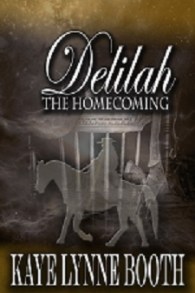
With the second book in the saga, Delilah: The Homecoming, I didn’t even get the first draft completed before the first rewrite. Around 40,000 words into the first draft, Delilah told me that the story was all wrong. Somewhere along the line, my plot had taken a wrong turn, and the story wasn’t going in the intended direction. (Yes, I talk with my characters with the stories in this saga.) When I reread what I had, I realized the truth of it. I had no idea where to take the story from the point it was at.
I tend to be a seat-of-the-pants writer. I get an idea and I have to get it down, so I just start writing. With short fiction, that’s not a bad thing, but when it comes to novels it can be. I could see a couple of places where I thought the story should go in a different direction, but the enormity of the task weighed on me and there were spots where I couldn’t see around what was already written. I set it aside for a month while I pondered the possibilities until I realized what needed to be done.
I may not be prolific, but I am obsessive/compulsive about writing, always having two or more WIPs in different stages of completion. While writing Delilah, I was also working on my thesis novel, which has now become book one of my Playground of the Gods science fantasy series, The Great Primordial Battle, along with completing several short stories during that time. Currently, along with crafting the first draft of The Homecoming, I’m working on two anthologies, preparing The Great Primordial Battle for publication, and working through the snags I’ve hit with my memoir, Losing Michael. It’s no wonder my books take years to write. Yet, I have the satisfaction of knowing that when I’m finished, they will be well crafted stories.
The soil of my mind is fertile and can produce an abundant harvest of stories. The children of my creativity just require longer gestation and growth periods. Stories don’t just spew out of my brain, ready made. They must be honed and crafted until they become the works of quality writing that my readers have already come to expect. But another thing that I’ve realized, with as many projects as I have going, when they all are finally published, and they are all lined up across my author pages and my website, it will appear that I am prolific to anyone who doesn’t know better.
The point is, as authors, we’re all heading toward the same goals, quality crafted stories. The path we chose to get there, they way that we approach the writing process, isn’t nearly as important as the fact that we complete the job. And we can all do that. What kind of writer are you?
Like this post? Let me know in the comments. You can be sure not to miss any of Writing to be Read’s great content by subscribe to e-mail or following on WordPress.
Share this:

Chatting with the Pros: Interview with western author Scott Harris
Posted: May 20, 2019 Filed under: Chatting with the Pros, Fiction, Historical Fiction, Interview, Western, Writing | Tags: Brock Clemons Series, CAZ series, Chatting with the Pros, Scott Harris, Shotgun Willy series, Six Gun Partners, Western, Writing to be Read 8 Comments
Today my author guest on “Chatting with the Pros” is a successful western author, who also happens to write his own blog, which ranked in the top 10 western blogs by Feedspot. He has written many western novels and numerous western short stories. His Brock Clemons Series was a finalist in the Western Fictioners Peacemakers Award and is ranked as a top selling series by his publisher, (and mine, as it happens), Dusty Saddle Publishing. According to his website, he grew up on Louis L’Amour. When it comes to the western genre, he really knows his stuff. Please help me welcome western novelist Scott Harris.

Kaye: What is most challenging about writing western for you?
Scott: Since I am still working full-time running my company, finding the time to write is the most challenging thing. I usually write in the morning and have to drag myself from the keyboard to go to work. I’m hoping retirement fixes that.
Kaye: You have three books out in the Brock Clemons series? What can you tell me about that series?
 Scott: There are actually eight books in the series. The six novels (in order) are: Coyote Courage, Coyote Creek, Coyote Canyon, Mojave Massacre, Battle on the Plateau and Ambush at Red Rock Canyon. Additionally, there are two collections of short stories based on the Brock Clemons characters: Tales From Dry Springs and Tales From the Grand Canyon.
Brock was my first series, so it holds a special place in my heart. The characters are more complex than those in my subsequent series, which makes writing the stories more difficult and more rewarding. I will come back to these characters, but probably not for a year or two.
 Kaye: What can you tell me about your CAZ: Vigilante Hunter series?
Scott: This series is pretty much the antithesis of the Brock series. It is six books (Slaughter at Buzzard’s Gulch, Never Shoot A Woman, The McKnight Massacre, Fire From Hell, Hell on Devil’s Mountain and A Whore’s Life) about a man named Caz (no last name) who travels the West searching for and killing evil men who have evaded justice. The series was an absolute blast to write.
Kaye: When writing for a series, do you outline the whole series from the start, or do you add books as you go? Are the books stand alone, or do the follow a chronological path which should be read in order?
Scott: I am on my 3rd series now (Stagecoach Willy) and I’m in the middle of the 2nd book. I have no idea where the next books are going to go and won’t think about the 3rd book until I finish this one. As a matter of fact, I do not outline my books at all. When I finish a chapter, I have no more of an idea of what the next chapter holds than the reader will. I know that’s different than most writers, but for me, it keeps the writing fresh.
For the most part, the Caz books can be read as stand alone, there is very little crossover from book to book. The Brock series is different and benefits by being read in order.
 Kaye: The most recent book in the Brock Clemons series is Coyote Canyon. Can you tell me a little about that book?
Scott: Coyote Canyon came out early last year and was the 3rd book in the Brock series. The series can be thought of as two different trilogies (Dry Springs and Grand Canyon), so in that sense Coyote Canyon was the last in a trilogy. It was a fun book to write because it wrapped up Brock and his families time in Dry Springs and set the stage for them to move to the Grand Canyon.
Kaye: In addition to your western novels, you have also contributed to several western anthologies. Do you prefer writing book length works or short fiction? Why?
Scott: I think that depends on my mood. My short stories range from 500 words to 5,000 words and sometimes I have an idea that I think is powerful, but requires no more than a short story. It can be freeing to write shorts without having to worry about the continuity that novels require.
On the other hand my novels (Brock averages about 50,000 words per book and Caz closer to 30,000 words) allow me to explore ideas and characters in depth. I would hate to be limited to one or the other.
 Kaye: You wrote a collection of short stories together with your son, Justin. How did that work? Did you write each story as a collaboration or did you each contribute stories of your own? Was it a good experience? Would you do it again?
Scott: We wrote our own stories, though we talk 2-3 times per week about what we’re working on. He is my best story editor and muse. It was a great experience and we’re working on some things together right now. He’s also about halfway done with his first novel.
Kaye: What is the most fun about writing western for you?
Scott: Coming up and with sharing my ideas. It is really exciting to be able to create stories and characters and then do with them what you will. I have learned that it doesn’t take long before the character takes over and I find myself saying “He/She would never do/say that”
Hearing from readers that they like my work is tremendously rewarding. And I’m just old fashioned enough to still love seeing my books in actual print, with paper, ink and a cover.
Kaye: Your blog recently received the Feedspot award, ranking it up there with the top 20 western blogs out there. I believe your blog was actually ranked in the top 10. Would you like to talk a little about that?
Scott: It was flattering, of course. I try to write posts that are honest and candid. I share my troubles and mistakes (at least with regards to writing) and I believe that resonates with people. I love getting feedback from readers. I am absolutely certain that I learn as much, if not more, from my readers than they do from me.

Kaye: Since you write one of the top western blogs, and have been a fan of westerns since an early age, what do you see when you look at the genre today? Do you find more male or female western authors? Do you find the genre dominated by independently published authors? Do you find it trending more toward western romance these days?
Scott: The genre certainly leans toward being male dominated, but it’s changing and more and more women are getting involved, which is great. Certainly the 3-4 huge names dominate the book stores and it’s tough for most of us to get any shelf space. But, Amazon opens the world for independent writers and gives many of us a chance to find an audience. Can’t ask for more than that.
I have noticed the western romance genre getting more notice and attention. It’ll be interesting to see if that continues.
Kaye: Where do you see the western genre going in the future?
Scott: Wherever we want to take it, or maybe more realistically, wherever the readers want us to take it. There are plenty of different genres sitting under the Western umbrella, so it’s up to us to write some great books and pull in readers – new and old – and at the same time, we need to listen to what the readers are telling us.
 Kaye: What is in store for the future for Scott Harris? Does Brock or Caz have more stories in store for them? You are working on the second book in the Shotgun Willy series? Tell me about that series, if you would.
Scott: I’m done with Brock and Caz for now. I am working on the 2nd book in the Stagecoach Willy series. Willy is a stagecoach driver and keeps stumbling into trouble and then I need to write him out of it. He has a sense of humor, which is fun to write and has a partner, Ten, that he’s been staging with for years. When I finish the 6th book, I plan to do a “capstone” book that brings Brock, Caz and Willy together in one grand book.
Kaye: What do you like to do when you’re not writing?
Scott: Spend as much time as possible with my wife, Randi, my son, Justin and my daughter Samantha and her husband Devin. Randi and I travel quite a bit, try to take one RV trip per month. Next month is a 3 week trip to South Bend to watch our daughter graduate from Notre Dame Law School.
Next year, we’re retiring and moving to Tennessee. Very much looking forward to it.
I want to thank Scott for chatting with me here and sharing some of his expertise in the western genre. I very much enjoyed this and hope all of my readers have, too. You can learn more about Scott Harris on his blog and website, or on his Amazon author page. Join me next month on “Chatting with the Pros”, when my guest author will be hardboiled crime fiction novelist Jim Nesbit. I hope to see all of you then.
Like this post? Let me know in the comments. You can be sure not to miss any of Writing to be Read’s great content by subscribe to e-mail or following on WordPress.
Share this:

Writing for a YA Audience: Books in the Library
Posted: May 15, 2019 Filed under: Books, Fiction, Libraries, Self-Publishing, Writing, Writing for a YA Audience, Young Adult | Tags: Books, Jordan Elizabeth, Libraries, Writing for a YA Audience, YA, Young Adult, Young Adult Fiction 1 Comment
“This is available at the library, right?’ I get that question a lot.
You should know that I talk about my books. A lot. I get excited and that passion spills over whether I’m at a book signing or conversing with a coworker. Some people don’t want to buy books. They might not like the book, so they don’t want to invest in the purchase, or they don’t want to have books cluttering their homes. Whatever the reason, libraries are perfect.

Photo by Janko Ferlic on Pexels.com
If I’m asked locally, then I get to say yes, my books are available. Other places…well…not so much. That surprises people.
Here’s the thing about indie books. Libraries don’t normally stock them. They need a reason to purchase a copy. This could be because you’re a local author, because you did an event there, or because someone requested it.
The best way to help out an author is to ask your local library to purchase a copy. This is a sale for the author and exposure. People are going to borrow the book, read it, and talk about. There is no marketing tool as powerful as word of mouth.
Jordan Elizabeth is a young adult fantasy author. She’s often wandering libraries looking for something to spark her interest…or she’s squealing over a treasure discovered in a used book room. You can connect with her via her website.
Want to be sure not to miss any of Jordan’s Writing for a YA Audience segments? Subscribe to Writing to be Read for e-mail notifications whenever new content is posted or follow WtbR on WordPress.




















