“X Marks the Spot”: A creative collection of pirate fantasies
Posted: April 17, 2020 Filed under: Book Review, Books, Fantasy, Fiction, Pirate Fantasy, Stories | Tags: Anthology, Book Review, Fantasy, Lisa Mangum, Pirate Fantasy, Short Fiction, Short Stories, Writing to be Read, X Marks the Spot 1 Comment, 
The X Marks the Spot anthology is a treasure trove of pirate lore ripe for the reading. Tales of pirates from ancient times to modern pirates in unexpected forms, this short story collection is filled with pirate fantasy gems of the highest quality and craftsmanship. Sail the high seas of time, or pillage the vast reaches of the universe, or plunder the intricate pathways of cyberspace. With this gathering of stories, there’s no telling where the fates will take you.
Pirates come in all shapes and sizes, and so do treasures in this anthology of treasure and theft, edited by Lisa Mangum. I particulary enjoyed Tracy Leonard Nakatani’s “The Pirate’s Cat”, told not from the eyes of the pirate, but from the point of view of the cat, a tale of mayhem and narrowly averted disaster told with a touch of humor. For a look into the life a cyber-pirate, check out “Annie Spark and the Pirates of Port 1337” by David Cole. It takes common sense and magic to find the treasure in Linda Maye Adams’ “Tidying Magic”. If your looking for romance and adventure on the high seas, “Princess Yum Yum’s Challenge” might be the tale for you. “Silver Future” is a tale of piracy in the vast expanse of space, with a surprise twist. “Harry the Ghost Pirate”, by Robert J. McCarter is an adventure story that touched my heart. These are but a few of the hidden treasures within this anthology.
Entertaining, and often surprising, X Marks the Spot is a thoroughly enjoyable read. I give it five quills.

Kaye Lynne Booth does honest book reviews on Writing to be Read in exchange for ARCs. Have a book you’d like reviewed? Contact Kaye at kayebooth(at)yahoo(dot)com.
Share this:

The Essence of Writing Good Dialogue
Posted: April 15, 2020 Filed under: Dialogue, Fiction, Writing, Writing Tips | Tags: Dialog, Jeff Bowels, Writing, Writing Tips, Writing to be Read 3 Comments
It’s not what you say. It’s the way you say it.
by Jeff Bowles
I love good dialogue. In fact, it may be my favorite thing about reading a book or watching a truly excellent film. Many serious writers will tell you that it’s an important tool in the author’s toolkit, but that it is by no means the most essential. I respectfully disagree. I say good dialogue can elevate your writing like nothing else. After all, it’s not what you say. It’s the way you say it.
Looking back, I realize I’ve always been polishing up my ability to generate interesting, gripping, or just plain funny dialogue. I self-studied writers and filmmakers who made it a priority in their storytelling, folks like Douglass Adams, Elmore Leonard, and Quentin Tarantino. I read a lot of Marvel and DC comic books, which as you may or may not know, are almost completely composed of dialogue. I don’t know why it mattered so much to me, but I absolutely lit up whenever characters interacted with each other in snappy and surprising ways. I still light up when I read, see, or hear the good stuff, and maybe I can’t speak for everyone on this, but when was the last time you saw a well-produced Shakespeare production and thought to yourself, Gosh, that guy just couldn’t write people to save his life?
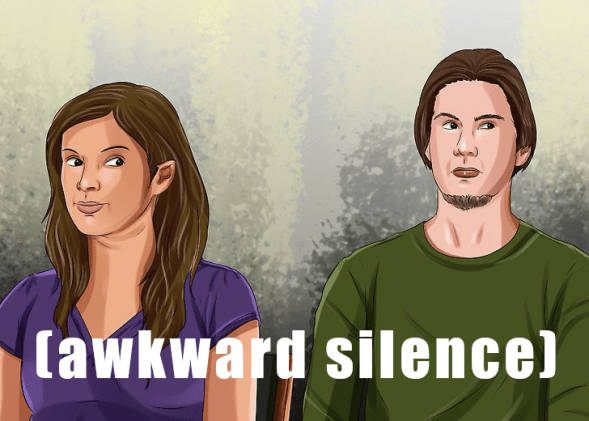
That’s the key. People live in dialogue. Not in long winded descriptions or deep internal navel gazing. Characters come to life in their interactions with each other. You could say it’s the one thing that makes them leap off the page. It’s how people work in real life, too. Which is to say, without conversation, people tend not to work at all. Sit together with someone in an awkward silence long enough and you’ll know exactly what I mean.
When it comes to short stories and novels, good dialogue is essential. Sure, you’re a master of scene setting and description, but do all your characters seem to communicate like wooden B-movie stereotypes? Or another problem many writers have, have you noticed you’re timid on engaging your readers with dialogue, and so you tend to rely on big blocks of text to get your message across? Scene setting, subtle character development, basic point-to-point plotting, visceral sense engagement and description, and basic personal style may be the rhythm of the music we call fiction, but truly inspiring dialogue is quite essentially the melody.
If you think about it, you don’t even really know characters until they open their mouths. If you struggle with dialogue, or if you’re just looking to brush up on the basics, there are a few exercises you can employ. One, of course, is to go to a public place and listen to people converse in real time. Admittedly, not really a viable option during Coronavirus lockdown, but you can easily work this exercise from the comfort of your own home. Tune into some reality TV, or simply listen to the conversations your family have. Write down every word verbatim, if you can. You’ll notice that people tend to speak in a pretty roundabout way, with lots of umms and starts and stops thrown in the mix.
Good dialogue should contain elements of realistic conversation, but you also need to focus it like a laser beam. If you were to write a scene in which people talk like they do in real life, you’d end up with so many pauses, ellipses, and false starts it’d drive your readers nuts.
“Hi, Jim, how’d work go?”
“Oh, you know, I don’t know … the boss, he’s real … umm … I don’t know, he’s real pushy when it comes to … when it comes to, uh … oh, I don’t know”
Doesn’t really flow all that well, does it? May I present the alternative that what you’re going for with good character interactions isn’t so much realism as pointed randomness. That is to say, make an effort to produce dialogue that cracks like a whip, pops and snaps like lightning. Only make sure also that it’s random enough no one can accuse you of stiffly holding your reader’s hand.
“Hi, Jim, how’d work go?”
“Ah, you know, the boss … ever get the feeling some people’s neckties are on too tight?”
“Uh-oh. I know that tone. He got pushy again, didn’t he?”
“Pushy? I haven’t slept in weeks. Pretty sure I had a waking dream while filing a client’s paperwork today. By the way, if the office calls asking why I’ve suggested one Dana Baker should just hit the clown on the nose and fly away on his trusted dragon, I’m not in.”
Also, don’t be afraid to surprise yourself. If you’re surprised by your writing, you can guarantee your readers will be, too. Zig instead of zag when you approach character interactions. Also, try producing more dialogue on the page than you’re used to. A lot of readers just kind of sift through text blocks anyway. They consider the dialogue the real meaty parts. Sad, but I think it is true. Readers are less interested in what’s happening now than in what happens next. You can fuel that burning need to find out.

Here’s something else you may not have considered. The first true novel written in the English language was likely published sometime in the 16th century, or thereabouts. A couple centuries later in the Victorian era, the novel had exploded in popularity, and that period is still a gold mine as far as writers who produced work we’re reading to this day. In all the time since, our concept of good narrative fiction has gotten lighter, not heavier.
Have you ever been chewing your way through a Victorian novel and thought to yourself, Why’s it taking this lady so long to get out of her house? Well, it’s because back then, the form and function of the novel was to in some fashion reproduce life. Entertainment is its form and function in the year 2020, because these days authors have to compete with film, television, internet memes, video games, just about anything that’s loud, fast, and gets its point across in seconds flat.
Unfortunately, you are therefore also competing with shortened attention spans across the globe. Do yourself a favor, don’t shirk your duty to write super fun, super engaging dialogue. It can save even the dullest story. Well, maybe not the dullest. Need something more specific? Well, for one, make sure all your dialogue tags (or at least most of them) are of the simple, he said, she said variety. Very few of these said-bookisms you’ve heard so much about.
Also, try bouncing back and forth between characters like they’re playing verbal tennis. Keep each line short and snappy; play a game of hot potato. And don’t forget to edit like crazy when you’re done. If you’re not removing bulk between those quote marks, you’re doing it all wrong. Even in my short examples above, I went back in and cut the detritus. Because good dialogue should flow, not lay inert like a dead body on some old science fiction TV show.

Similarly, characters should all sound distinct from one another. Don’t give them so many affectations they no longer sound realistic, but look, not everyone talks the same, do we? We have accents and ticks and odd regional slang we depend on. Try speaking your dialogue aloud as you’re writing it. Kind of helps to clear out the mental cobwebs. If you can hear it from your own mouth, and it sounds pretty good to you, odds are it’ll work well enough on the page.
The truth is, most readers depend on good dialogue to communicate story. You can build or establish character relationships with it, key in on essential plot points, foreshadow upcoming events, or just plain have fun and make people laugh. One more time, dialogue is the melody of this music we call storytelling. So make sure yours is enjoyable to listen to. Speech, language, it’s the engine that drives everything we do. It binds us together, tears us apart, and isn’t that the essence of story?
If you’re struggling with this, the old adage, practice makes perfect, is as always the essential factor. You’ll thank me once you’ve mastered this new superpower, and your readers will thank you. Is it possible to overdo it? Certainly. But wouldn’t you rather read a beautiful mess that sounds like Mozart rather than racoons rattling around in your trash cans late at night?
Heh. That’s a funny line. Maybe I should jot it down and have one of my characters say it someday. Until next time, everybody. Wooden conversation is as wooden conversation does.

Check out Jeff Bowles Central on YouTube – Movies – Video Games – Music – So Much More!
Share this:

Announcing the WordCrafter 2020 Stay in Place Virtual Writing Conference
Posted: April 13, 2020 Filed under: Action Scenes, Book Covers, book marketing, Books, Character Development, Comic Hero, Fantasy, Fiction, Horror, Media Tie-Ins, Pacing, Poetry, Pulp Fiction, Science Fiction, Setting, Speculative Fiction, Stories, Super Hero, Teaching Writing, Thriller, WordCrafter, World Building, Writing, Writing Event, Writing Workshops, Young Adult | Tags: 2020 Stay in Place Virtual Writing Conference, Alexi Vandenberg, Anthony Dobranski, Art Rosch, Bobby Nash, book marketing, Book Promotion, Chris Barili, Dan Alatorre, Dave Wolverton, Ellie Raine, Fiction, Guy Anthony DeMarco, J.R.H. Lawless, Jason Henderson, Jody Lynne Nye, Jonathan Maberry, Keith R.A. Candido, Kevin J. Anderson, Kevin Killiany, L. Jagi LAmplighter, L.D. Colter, Mario Acevedo, Media Tie-In, Rick Wilber, Rosemerry Wahtola Trommer, Sean Taylor, Short Fiction, WordCrafter, World Building, Writing, Writing to be Read 19 Comments
We’re all tired of staying at home during this recent crisis. It seems like everyone has been affected in different ways, but no one has gone unscathed. Our world has changed in recent times. We, as authors and lovers of the written word had many of our in-person writing events – conferences, conventions, and book fairs – cancelled due to the appearance of COVID 19. To to emulate all those events we look forward to each year and are missing out on now, and to chase away some of the boredom of social distancing and isolation, WordCrafter presents the 2020 Stay in Place Virtual Writing Conference on Tuesday, April 28 from 8 am to 8 pm.
This is a unique event, the first of its kind, and one you won’t want to miss. Free presentations and author takeovers will be occurring on the Facebook event page, and interactive workshops and panel discussions will be offered for a minimal fee on the Zoom platform. Interactive panel discussions and workshop session can be accessed individually for $5, or an all access pass to all interactive sessions can be purchased for $50. Tickets can be purchased on the Facebook event page. Watch for your Facebook event invite from me or one of the many wonderful authors involved with this conference. Send me a message through my WordCrafter page or through the event page if you have further questions, or if you would like a half an hour author takeover spot to promote your own work.
This has been a huge undertaking to organize and set up an event such as this one, but I haven’t done it alone. Without my 22 talented presenters, this event couldn’t happen. We have a great line-up, with international bestselling science fiction and fantasy author Kevin J. Anderson presenting the keynote on the interactive platform.

And that’s just the beginning. Take a look at the talent that has lined up for presentations, workshops and panel discussions.

Award winning and national bestselling speculative fiction author Mario Acevedo will be offering a presentation – “The Power of Motivation: What Your Characters Do and Why”

USA Today bestselling multi-genre author Dan Alatorre will be a member of the interactive book marketing panel discussion.

Multi-genre author Chris Barili will be presenting “Writing in the Face of Adversity” and giving an interactive workshop on “Writing Across Genres”.

Award winning fantasy author L.D. Colter will be offering a presentation on “Short Fiction”.

World builder and speculative fiction author Kieth R.A. DeCandido will be offering an interactive workshop on “The Business of Writing” and he is the moderator for the media tie-in interactive panel discussion.

Award winning novelist Guy Anthony De Marco will be a member on both the short fiction and world building interactive panel discussions.

Fantasy and science fiction author Anthony Dobranski will offer two presentaions, “How to Swim Upstream: Not being in the mainstream of your market/genre” and “Working with Others: How to direct others in a project”. In addition, he will offer two interactive workshops. “Business Class Tarot” and “The Savage Horror of Writing Back Cover Copy”.

Author for young readers, Jason Henderson will be presenting “Story Ideas and the Choices You Make” and moderating the interactive book marketing panel discussion.
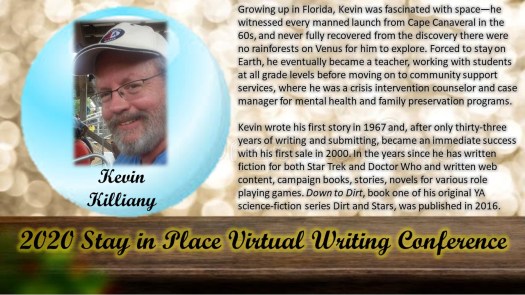
Media tie-in author Kevin Killiany will be a member on the interactive world building, media tie-in, and short fiction panel discussions.

Award winning young adult fantasy author L. Jagi Lamplighter will be on the interactive panel on world building, and moderate the interactive short fiction interactive panel discussion.

Award-winning science fiction author J.R.H. Lawless will be a member of the book marketing interactive panel discussion.

Award winning and New York Times bestselling multi-genre author Jonathan Maberry will be a member on three interactive panel discussions: short fiction, world building and media tie-ins.

Award winning multi-genre author Bobby Nash will deliver a presentation on “The Importance of Promotion”, as well as being a member of both the media tie-in and book promotion panel discussions.

Science fiction and fantasy author Jody Lynn Nye will offer a presentation on using humor in science fiction and fantasy writing, “Bringing the Funny: how to apply humor to your writing” and she will be a member of the world building interactive panel discussion.

Award winning fantasy author Ellie Raine will sit on both the short fiction and world building interactive panel discussions.
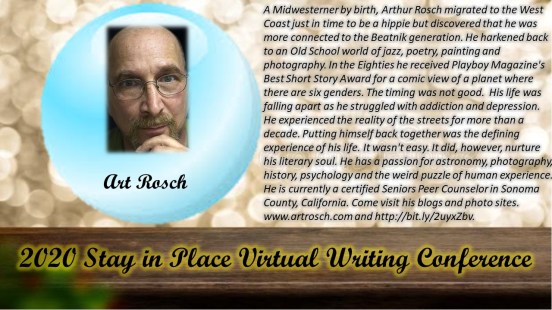
Award winning multi-genre author Art Rosch will offer a presentation on “Creating Villains We Love to Hate”.
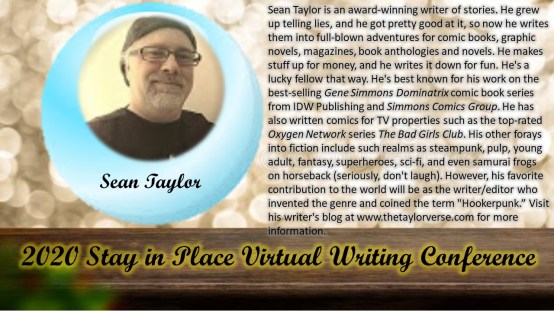
Award winning multi-genre author Sean Taylor will offer a presentation on “Visceral Story Beginnings”.
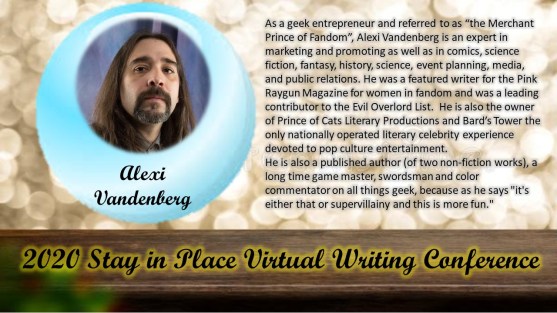
Science fiction author and marketing expert Alexi Vandenberg will be joining the book marketing panel.
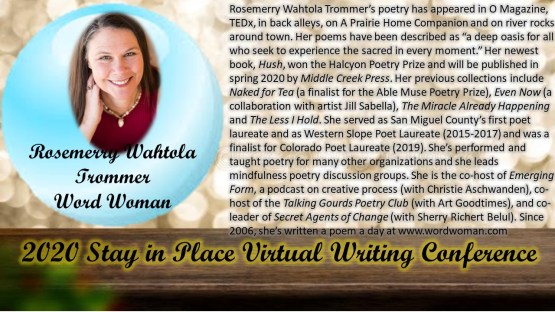
Award winning poet and author Rosemerry Wahtola Trommer offers a livestream presentation “The Gateway to the Unknown: A Poetry Thought Shop”.

Author and educator Rick Wilber will be a member of the short fiction interactive panel discussion.

Award winning and New York Times bestselling science fiction and fantasy author Dave Wolverton/David Farland offers a”Promoting Your Book BIG” and he is a member of the interactive book marketing panel discussion.
You can find a full schedule here. I do hope all of you will join us for this unique writing event. It’s the first of its kind and we could be making history. You can be a part of it, too. Join us.
Like this post? Let me know in the comments. You can be sure not to miss any of Writing to be Read’s great content by subscribe to e-mail or following on WordPress. If you found this content helpful or entertaining, please share.
Share this:

#SirChocolatestory – Sir Chocolate and the Valentine Toffee Cupid
Posted: April 8, 2020 Filed under: Books, Children's Books, Fairy Tales, Fiction | Tags: Children's Stories, Growing Bookworms, Robbie Cheadle, Sir Chocolate, Writing to be Read 34 Comments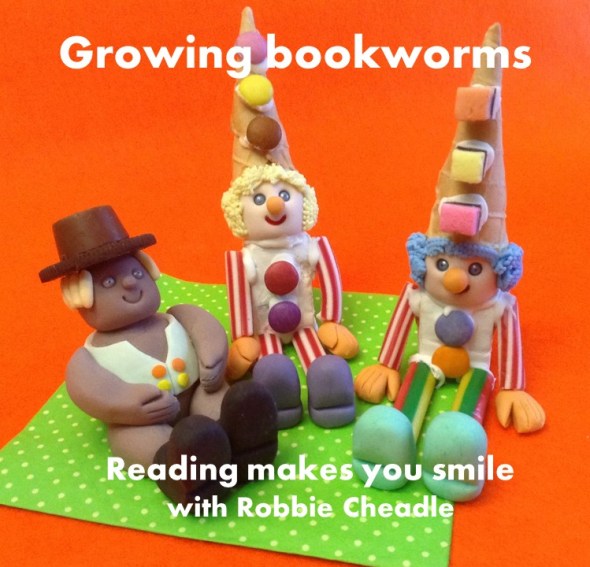
Growing Bookworms
My sons and I have been working hard to bring some of our free Sir Chocolate stories and “How to Make” videos to children who are at home due to COVID-19. Greg and I are recording audio versions of our free stories and posting them to our new YouTube channel with a link to the free PDF download of the illustrated story. We are also creating free animated videos of our recipes and step-by-step instructions on how to make some Easter creations. The PDF instructions are also available for free as a download on my children’s books and poetry, blog https://robbiesinspiration.wordpress.com/.
This endeavor is part of Gregory and Michael’s outreach and community service project which has been put on hold while the schools are closed. We thought this was a nice way of keeping it going. It gives them an interest as they are helping me to make the videos and maintain the YouTube channel.
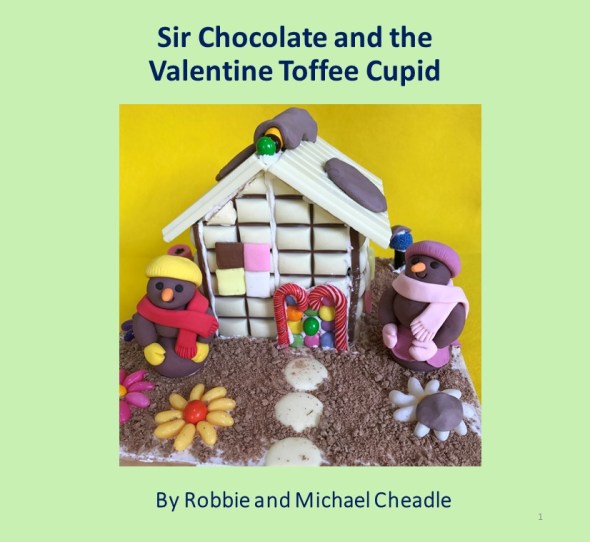
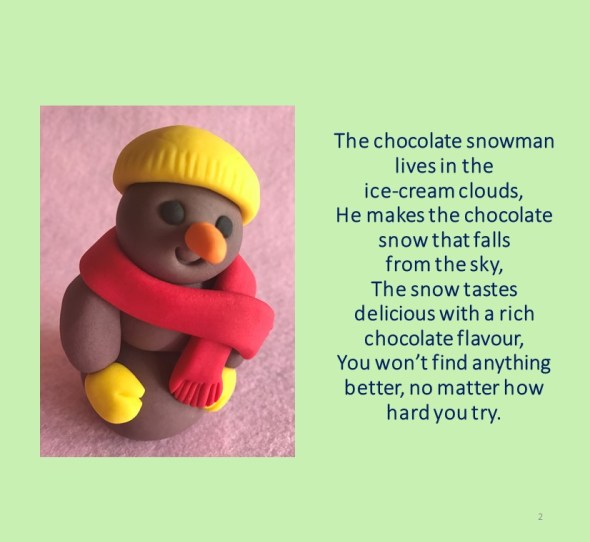
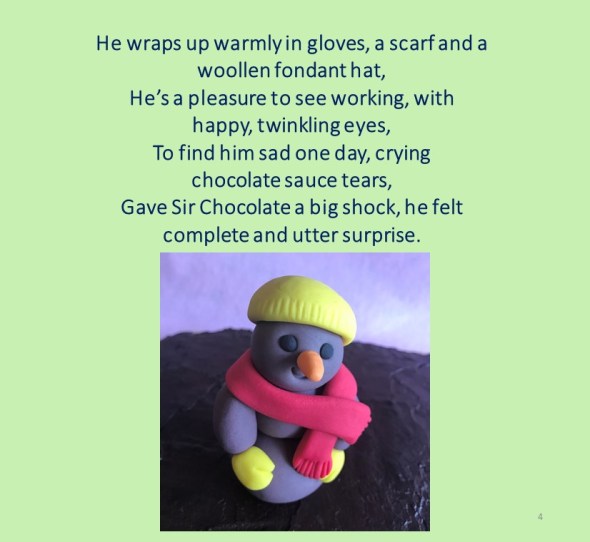
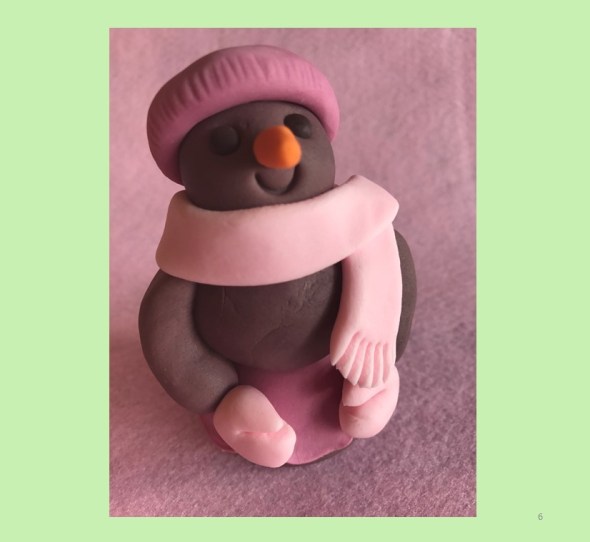
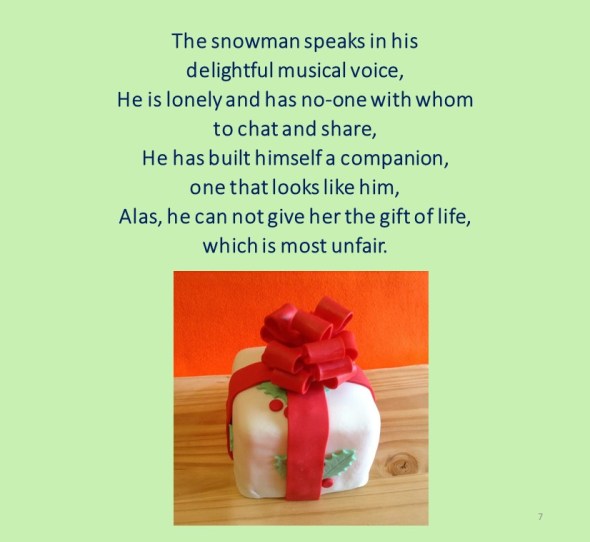
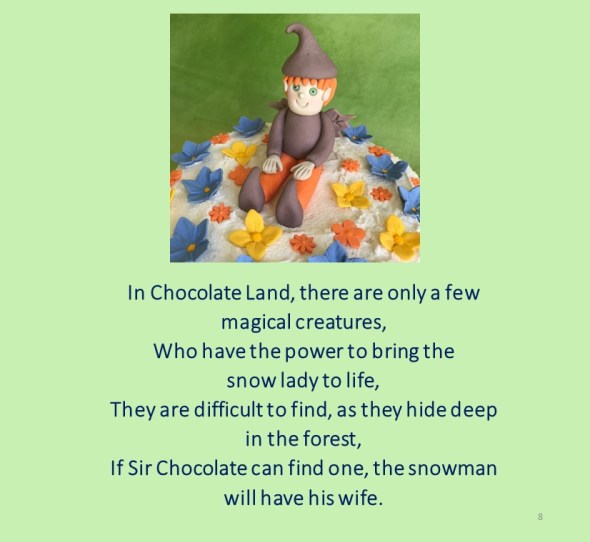
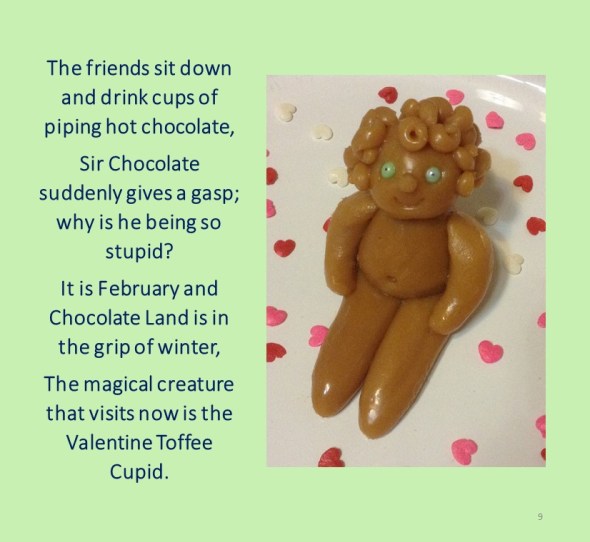
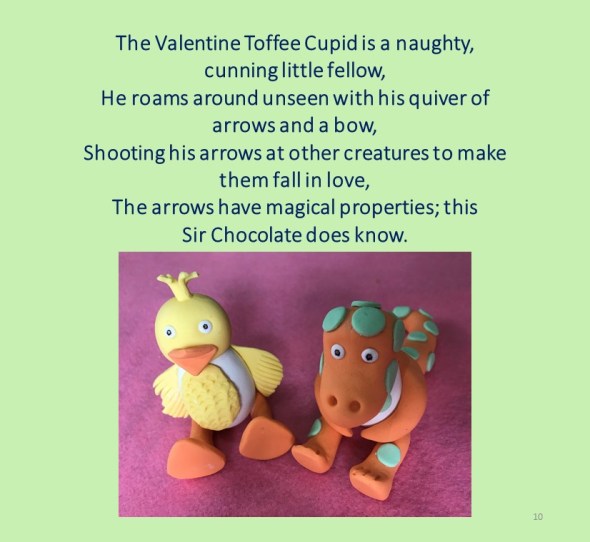
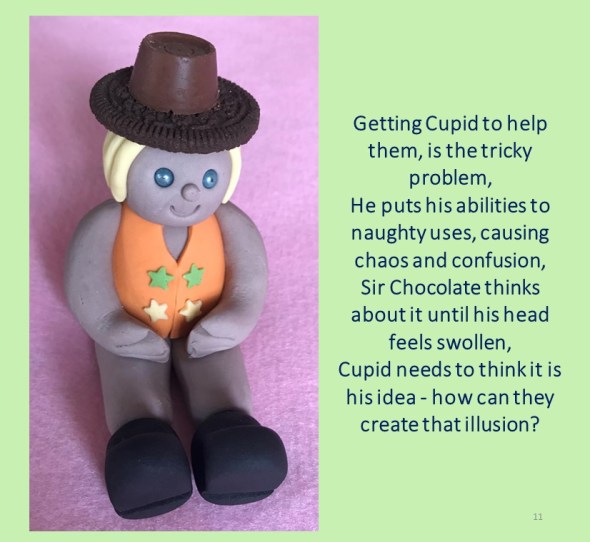
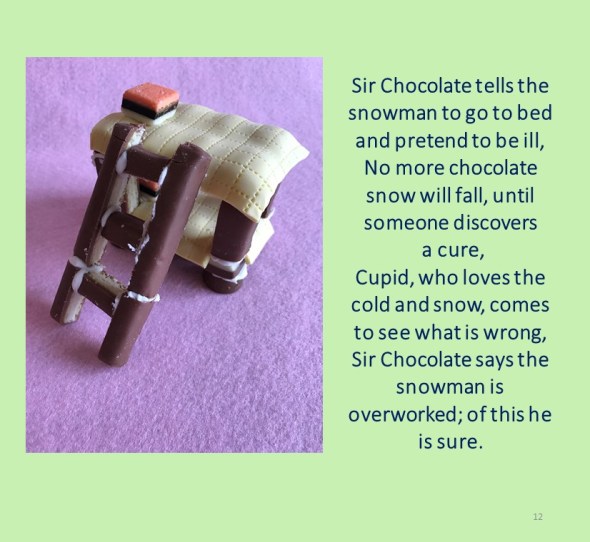
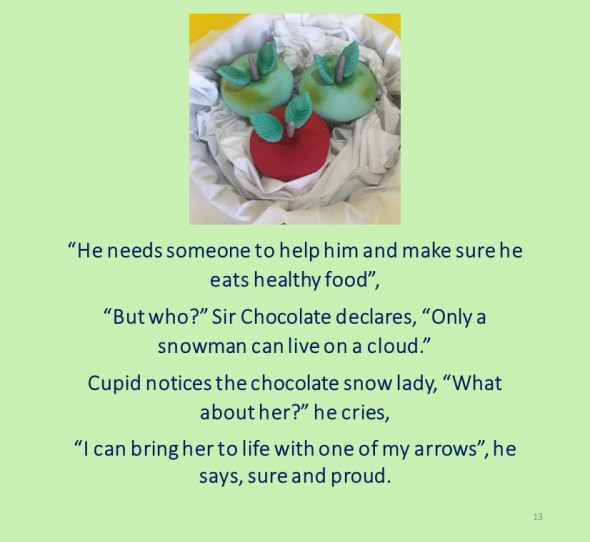
Today, I am sharing a fully illustrated free Sir Chocolate story called Sir Chocolate and the Valentine Toffee Cupid.


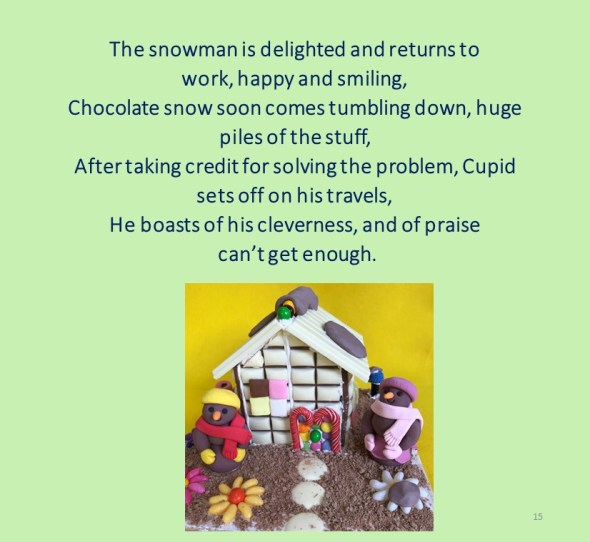
You can find the audio reading of this book on our YouTube channel: Robbie Cheadle here: https://www.youtube.com/channel/UCVyFo_OJLPqFa9ZhHnCfHUA?view_as=subscriber
Greg did the filming this time and not the reading.
You can download the free PDF illustrated book here: https://robbiesinspiration.wordpress.com/free-story-sir-chocolate-the-the-valentine-toffee-cupid/
About Robbie Cheadle

Hello, my name is Robbie, short for Roberta. I am an author with six published children’s picture books in the Sir Chocolate books series for children aged 2 to 9 years old (co-authored with my son, Michael Cheadle), one published middle grade book in the Silly Willy series and one published preteen/young adult fictionalised biography about my mother’s life as a young girl growing up in an English town in Suffolk during World War II called While the Bombs Fell (co-authored with my mother, Elsie Hancy Eaton). All of my children’s book are written under Robbie Cheadle and are published by TSL Publications.
I have recently branched into adult and young adult horror and supernatural writing and, in order to clearly differential my children’s books from my adult writing, I plan to publish these books under Roberta Eaton Cheadle. My first supernatural book published in that name, Through the Nethergate, is now available.
I have participated in a number of anthologies:
- Two short stories in #1 Amazon bestselling anthology, Dark Visions, a collection of horror stories edited by Dan Alatorre;
- Three short stories in Death Among Us, an anthology of murder mystery stories, edited by Stephen Bentley;
- Three short stories in #1 Amazon bestselling anthology, Nightmareland, a collection of horror stories edited by Dan Alatorre; and
- Two short stories in Whispers of the Past, an anthology of paranormal stories, edited by Kaye Lynne Booth.
I also have a book of poetry called Open a new door, with fellow South African poet, Kim Blades.
Find Robbie Cheadle
Blog: https://www.robbiecheadle.co.za/
Blog: robbiesinspiration.wordpress.com
Goodreads: Robbie Cheadle – Goodreads
Twitter: BakeandWrite
Instagram: Robbie Cheadle – Instagram
Facebook: Sir Chocolate Books
Want to be sure not to miss any of Robbie’s “Growing Bookworms” segments? Subscribe to Writing to be Read for e-mail notifications whenever new content is posted or follow WtbR on WordPress. If you found it interesting or entertaining, please share.
Share this:

Journeying into the Worlds of Fantasy in April
Posted: April 6, 2020 Filed under: Books, Dark Fantasy, Fairy Tales, Fantasy, Magical Realism, Writing | Tags: Dark Fantasy, Fantasy, High Fantasy, low fantasy, Space Fantasy, sword and sorcery, Urban fantasy, western fantasy, Writing to be Read Leave a comment
In April, Writing to be Read celebrates fantasy. That area of literature and visual media where fantastical elements become possible, and maybe even expected. Fantasy is as old as the fables and fairytales which birthed it centuries ago. In fantasy, anything is possible, and readers journey to worlds beyond their own imaginations, allowing effective escapes from reality, which is why it is such a popular genre.
Although in fantasy, anything may be possible, each story world must have its own set of rules which should never be broken. And it’s the author’s job to be sure those rules are clear for readers and ensure that they are never breached. To ensure this, authors go to great lengths, drawing up elaborate story bibles and creating maps of their worlds in order to keep everything straight.
There are many subgenres of fantasy, including dark fantasy, which carries readers into evil realms; high or epic fantasy, which ventures into magical worlds on the hero’s journey; low fantasy, which magical elements mingle in the real world; magical realism, which takes place in worlds similar to ours, but where magical elements are common place; urban fantasy, where legends come to life; sword and sorcery, with sword weilding heroes who thrive on gallentry; space fantasy, which takes place in the imaginative worlds in the far reaches of the universe; western fantasy, where magical or supernatural elements invade the landscapes of the old west; fantand superhero fiction, where protagonists use supernatural powers to manipulate the elements of the real world.
The hero’s journey originated with fantasy, and that is where writing instructors turn to provide examples of the way that journey progresses for their students. Bilbo Baggins’ hero’s journey in The Hobbit is exemplary, but it is only a prelude to the ultimate hero’s journey Frodo embarks upon in The Lord of the Rings trilogy. J.R.R. Tolkien paved the way for fantasy writers right up to those of present day.
Stick with me this month for a great line-up of fantasy reviews and interviews with authors of the fantasy genre. My “Chatting with the Pros” author guest is L. Deni Colter, and my supporting interview is with J.B. Garner. I’ll also be reviewing the X Marks the Spot anthology, edited by Lisa Mangum; Severed Wings, by Steven Elliot Altman; and Indomitable, by J.B.Garner. I do interviews on Mondays and reviews on Fridays, so drop in and find out what is happening on the fantasy scene.
Like this post? Let me know in the comments. You can be sure not to miss any of Writing to be Read’s great content by subscribe to e-mail or following on WordPress. If you found this content helpful or entertaining, please share.
Share this:

“Severed Wings”: A Mythological Urban Fantasy
Posted: April 3, 2020 Filed under: Book Review, Books, Dark Fantasy, Fantasy, Fiction, Urban fantasy | Tags: Angels and Demons, Book Review, Fantasy, Severed Wings, Steven-Elliot Altman, Urban fantasy, Writing to be Read 2 Comments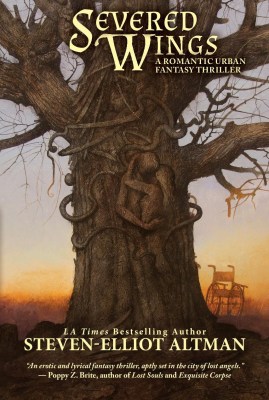
Severed Wings, by Steven-Elliot Altman is an urban fantasy of romance and new beginnings, where creatures of myth live and miracles happen. Skillfully crafted to weave together past and present to create a captivating storyline that kept me guessing.
When an accident leaves Brandon in a wheelchair and unable to persue his acting career, he thinks his life is over. He walks away from everything and everyone connected with his past life, searching for something or someone to give meaning to his life again. What he finds is a couple living across the hall who behave a little oddly. When he uncovers the secret which they carry, he doesn’t know if it’s his curse or his salvation, as he suddenly finds himself with supernatural abilities, in a battle for his life, and those of his friends, with a creature of myth and legend.
Severed Wings will make you believe in angels and demons and everything in between, at least until you turn the last page. I give it five quills.

Severed Wings will be available June 3, 2020
Kaye Lynne Booth does honest book reviews on Writing to be Read in exchange for ARCs. Have a book you’d like reviewed? Contact Kaye at kayebooth(at)yahoo(dot)com.
Share this:

Judging for the 2020 W.W.A. Spur Awards
Posted: March 30, 2020 Filed under: Book Review, Books, Commentary, Fiction, romance, Western, western romance, Writing, Writing Contest | Tags: Book Reviews, Spur Awards, Western, western fiction, Western genre, western romance, Western Writers of America, Writing to be Read, WWA, WWA Spur Awards 1 Comment
It was a great honor to be asked to be a judge for the Western Writers of America’s 2020 Spur Awards, but I had no idea what I was signing up for. I envisioned hours of luxurious reading in one of my favorite genres, while leisurely sipping wine and taking bubble baths, and once the event opened to entries last August, for a while, a new book came in the mail every day or two and it felt a little bit like Christmas.
I began reading the first entry right off, and kept steadily working my way through them. The inflow trickled off mid-September, although there were a few later entries that didn’t come until November and December. The stack of books were large, but I’ve always been an avid reader and I felt confident that I could manage it easily.
Then, as often happens, life got in the way. I lost two dogs within a month and a half of one another, and in November, had a death in the family, and for a time my life was turned upside down. My work schedule received adjustments and travel arrangements were made for the viewing and services, and writing and school were shoved lower on the list of priorities. Suddenly, everything was up in the air and all my leisurely reading time disappeared like a magician’s rabbit. Abracadabra. Poof!
During the last part of December, I started trying to get back on track and found some reading time to begin trying to catch up on the Spur entries. At this point, the stack of books I had left to read seemed immense, and I began to wonder if maybe I should be worried about getting all of them read in time. I admit, I had to cram at the end and read every night until my eyes wouldn’t stay open, but I managed to read every entry and send in my judging choices before the deadline.
It was harder than I thought it would be to be a Spurs judge. Not because I ended up playing catch-up on the reading, but because there were some many really excellent stories submitted to the western romance category, and I had to narrow it down to the top five. Making the choices as to which were best was really tough. The opportunity to read some of the best westerns of 2019 made it worth every struggle. It was great!
I took my role as a Spur judge seriously. While reading I noted things like how well-crafted the story was, how prominent the elements of western and romance were in the story, how historically accurate the story was, and how well the story captured and held my interest, to base my choices on. Now that the winners have been announced, I am able to provide you with brief reviews of the ones that were my own personal favorites. All of the books reviewed below I found to be well written and historically accurate to their time period, and each would receive a five quill rating in my regular book reviews. They were my top picks and they include the winner in the romance category and one of the finalists.
 Mollyfar, by Bonnie Hobbs: This is one of those stories that is just a fun read. It has strong western elements in a classic romance tale, but the unique and interesting characters are what carry the story.
Sometimes in the old west you had to grow up fast, and life wasn’t always kind, especially to members of the female persuasion. Molly finds herself on her own in the west at a young age, at a time when the choices for a girl on her own were very limited. She’s on her way to becoming a soiled dove for a life of squalor when she meets Wade and it’s love at first sight. Wade vows take care of Molly, so there will be no need for her to go down that road, but he is young and there are several obstacles preventing him from following through. Then Molly met Heeshe, the new amorphidite brothel owner and they saved each other, but there was always a place in her heart for Wade, if she could only admit it and let herself surrender to him.
 This New Day, by Harlan Hague: This book made Finalist. It has the strong western element of a true pioneer tale with a sweet romance that just feels right. The story line draws the reader in and doesn’t let go. It made me cry.
When Molly’s husband dies, there’s nothing left to go back to. They sold up all their worldly goods to make the trek across the mountains to Oregon, and she is determined to complete the journey with her two children. She meets hardship and heart ache along the way, and Micah, a mysterious rugged rider, who turns up just at the right moment to save her from Jeb, an unsavory member of their party, who has had his eye on Molly and grown tired of just watching. Soon Micah is riding with she and the children, and bedding down near their wagon at night, working his way into the children’s hearts, as well as her own, but she has to wonder where he goes when he rides off for days and then, reappears. She has doubts as to whether she is strong enough to make it at times, but soon finds she doesn’t want to make it without Micah.
 The Express Bride, by Kimberly Woodhouse: This story has western and romance elements that are prominent. Likable characters make you care, and a fun and playful story line makes you want to keep reading. Jaquelin (Jack) is a strong, gritty female protagonist, who you can’t help but like.
Since her father died, Jack has run the Pony Express station in his stead. And why shouldn’t she? Even if she had to mislead to corporation heads a little, implying that she was male by signing her letter Jack instead of Jacquelin, she knows the workings inside and out, and the riders all like her and look to her with respect. Then Elijah Johnson looking for a mystery woman from the past arrives, along with a U.S. Treasury agent, Mr. Crowell, enlisted to help uncover a suspected conterfeiting ring operating in the area. As she unravels the mystery surrounding her own past, she ponders who she is, and who she wants to be, and struggles with the nagging feeling that Elijah Johnson may hold the key to revealing the truth.
 The Outlaw’s Letter, by Angela Reines: A classic romance story with a strong western element and a hint of mystery. Good, solid story line that is everything a romance should be.
Harriette “Hetty” Osgood is just school teacher in Kiowa Wells, but when a dying man stumbles into her school house, she vows to deliver a letter to his brother, Grant Davis. Dressed as a boy for safer travel, she sets off on an adventure to find Davis, and crosses paths with Conover Boggs, who she sent to prison in the past, and would like nothing more than a chance to make her pay. Boggs catches up with her just as she catches up with Grant Davis, who has ridden with Boggs in the past. To save them both, they claim to be married to fool Boggs. They have little choice but to help one another, but Grant is on a quest to clear his name and leave his past behind him. Could they each be what the other is really looking for?
 A Slip on Golden Stairs, by Joanne Sundell: I actually reviewed this book before I was asked to be a judge. You can see my original review of this book here.
This paranormal western romance is really two romances, one in the present and one in the past, in one tragic searches for both love and riches. Sundell does an excellent job of weaving the past into the present in a tragic and heartfelt tale of lost love and possibilities.
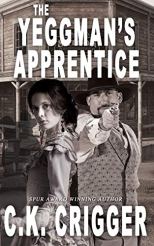 The Yeggman’s Apprentice, by C.K. Crigger: Winner of the western romance category. Great characters and a captivating plot that draws you in and keeps you reading. Light natural flowing romance within a western setting and a truly enjoyable read.
Wilke thinks her first solo job in Butte, Montana will be a piece of cake. Simply, lift the ledgers for the designated accounts from the bank safe for the client. What could be easier? But things quickly go awry when she finds there are two sets of ledgers and they don’t tally. Suddenly, she finds herself being pursued by the shady lawyers who hired her uncle, who will go as far as murder to cover their tracks. When Hixson rides her back to her hotel on his motorbike, they discover her uncle dead, Wilke finds herself on her own and in need of getting out of town with the falsified documents.
Hix agrees to help her, but gets more than he bargains for, when the shady lawyer’s henchman is waiting at the train station. Wilke isn’t sure she can trust Hix, there are several signs that he might have a shady past and could be an outlaw, but she doesn’t have much of a choice. Hix has reasons of his own for wanting to get out of Montana, but he finds that Wilke is full of surprises, as they try to evade the bad guys.
Like this post? Let me know in the comments. You can be sure not to miss any of Writing to be Read’s great content by subscribe to e-mail or following on WordPress. If you found this content helpful or entertaining, please share.
Share this:

Meet children’s author and poet, Victoria Zigler and a book review
Posted: March 28, 2020 Filed under: Book Review, Books, Interview, Poetry | Tags: Book Review, Poet Interview, Poetry, Robbie Cheadle, Treasuring Poetry, Victoria Zigler, Waves of Broken Dreams and Other Poems, Writing to be Read 51 Comments
Treasuring Poetry
Today, I have talented children’s author and poet, Victoria (Tori) Zigler, visiting Writing to be Read to tell us about her favourite poem and poet.
What is your favourite poem?
As I’ve often said, I always struggle with picking favourites, and the fact my favourites will generally change depending on my mood doesn’t help. My three favourite poets are Robert Frost, William Wordsworth, and Dylan Thomas, with Emily Dickenson and Edward Leer right behind them – the latter especially when I want something light-hearted. But as for a favourite poem… Now, that’s a little more difficult. Like I said, that changes constantly. However, this poem by Emily Dickenson entitled “There Is No Frigate Like A Book” is definitely among my favourites:
“There is no Frigate like a Book
To take us Lands away,
Nor any Coursers like a Page
Of prancing Poetry –
This Traverse may the poorest take
Without oppress of Toll –
How frugal is the Chariot
That bears a Human soul.”
This is a beautiful poem, Tori. A great choice.
What is your interpretation of this poem?
Something I learned quickly as a child, and know all too well now: a book can take you to all sorts of places, both real and imagined, without you having to leave home. The kind of traveling even those without much money can afford, and even those with ill health can manage without too much difficulty, and that’s a wonderful thing.
I also read a huge amount as a child, Tori, and it also brought me a huge amount of pleasure.
What emotions does this poem invoke in you?
Sheer joy, because it reminds me of the hours of pleasure reading has so far given me throughout my life, and makes me think of the many places I’ll get to visit, and worlds I have yet to explore, between the pages of those books still on my to-read list.
I also still derive great pleasure from books and reading. My formats have expanded to include ebooks and audiobooks recently too.
If you could choose to write like any well-known poet, who would it be?
I’ve never really thought about it before. I mean, a couple of times I’ve used the style of someone for inspiration, but mostly I just write my poems, and if the ones in my head are similar in style to those by others, so be it. But if I had to pick someone, I’d probably have to go with Edward Leer, especially since he is someone I’ve consciously mimicked the style of in the past, as demonstrated in my poem “A Pair Of Chinchillas Went To Sea” – which I’m sharing for you below.
“A pair of chinchillas went to sea,
In a boat that was painted bright red.
They took some oats, and plenty of nuts,
And some hay to use as a bed.
They sailed away for a month and a day,
To a place where it always snows.
Their only regret was that it was wet
Upon their little toes.”
The above poem can be found among those in my poetry collection, Puppy Poems And Rodent Rhymes – one of a pair of similarly titled pet themed poetry collections, the other being Rodent Rhymes And Pussycat Poems – which was published in 2018, and is available from a variety of online retailers in multiple eBook formats, paperback, and audio. In fact, both titles are available in all those formats, along with the rest of my books.
Thank you for sharing this lovely poem, Tori. I have read this book and you can read my Amazon review here: https://www.amazon.com/gp/customer-reviews/R1YCKVTULTFA4V
What is special to you about this poet’s writing style?
His poems are so fun. They’re great for lifting the mood. The style also lends itself well to writing for children, which is likely a large part of why it appeals to me enough that I consciously mimicked it, since most of my stuff is written with children in mind.
I also enjoy fun poetry, Tori.
Waves of Broken Dreams and Other Poems
What Amazon says
A collection of poems of various styles and lengths, which are about heartache, loss, pain, and broken dreams.
Note: Some of the poems in this book may not be suitable for younger readers.
My review
This is the third poetry book I have read by Victoria Zigler and it is just as beautifully written as the others. This one has a darker theme as it focuses on themes of loss, rejection and broken dreams, as the title suggests.
I have often thought the the best poetry is about sad and emotionally disturbing topics because circumstances and situations that provoke great passion in the poet facilitate the flow of strong words and ideas. Victoria Zigler clearly shares this perspective and says so in one of her upfront poems entitled “When Poets Write Best”. I have extracted the following stanza from that poem:
“I’ll tell you if you want to hear
The reason I think why
Poets write the best when
They feel they want to cry.
The reason is quite simple
And to me it seems right
Writing poems help them heal
And makes their hearts once more light.”
I enjoy Victoria Zigler’s poetry because it is not overly complicated. Her words and messages are straight forward and for me, that makes them much more powerful than verses where I have to look up words and scrabble to understand what the poet meant or intended.
Her love of children and people in general comes through strongly in a lot of her poems. One poem that made a strong impression on me was “Your Penny”. The second stanza of this lovely poem goes as follows:
“There are children everywhere
Who need it more than I
Whole families who’s greatest gift
Is the fact they didn’t die
So, let them have your penny
Show them all your care
Let them know that this year
Somebody is there.”
A lovely book of poetry by a talented poet.
Purchase Waves of Broken Dreams and Other Poems
About Robbie Cheadle
Hello, my name is Robbie, short for Roberta. I am an author with six published children’s picture books in the Sir Chocolate books series for children aged 2 to 9 years old (co-authored with my son, Michael Cheadle), one published middle grade book in the Silly Willy series and one published preteen/young adult fictionalised biography about my mother’s life as a young girl growing up in an English town in Suffolk during World War II called While the Bombs Fell (co-authored with my mother, Elsie Hancy Eaton). All of my children’s book are written under Robbie Cheadle and are published by TSL Publications.
I have recently branched into adult and young adult horror and supernatural writing and, in order to clearly differential my children’s books from my adult writing, I plan to publish these books under Roberta Eaton Cheadle. My first supernatural book published in that name, Through the Nethergate, is now available.
I have participated in a number of anthologies:
- Two short stories in #1 Amazon bestselling anthology, Dark Visions, a collection of horror stories edited by Dan Alatorre;
- Three short stories in Death Among Us, an anthology of murder mystery stories, edited by Stephen Bentley;
- Three short stories in #1 Amazon bestselling anthology, Nightmareland, a collection of horror stories edited by Dan Alatorre; and
- Two short stories in Whispers of the Past, an anthology of paranormal stories, edited by Kaye Lynne Booth.
I also have a book of poetry called Open a new door, with fellow South African poet, Kim Blades.
Find Robbie Cheadle
Blog: https://www.robbiecheadle.co.za/
Blog: robbiesinspiration.wordpress.com
Goodreads: Robbie Cheadle – Goodreads
Twitter: BakeandWrite
Instagram: Robbie Cheadle – Instagram
Facebook: Sir Chocolate Books
Want to be sure not to miss any of Robbie’s “Treasuring Poetry” segments? Subscribe to Writing to be Read for e-mail notifications whenever new content is posted or follow WtbR on WordPress. If you found it interesting or entertaining, please share.
Share this:

Interview with author Alan Dean Foster
Posted: March 23, 2020 Filed under: Author Profile, Books, Fiction, Interview, Paranormal, Science Fiction, weird western, Western, Writing | Tags: Alan Dean Foster, Author Interview, Mad Amos Malone, weird western, Western, Writing to be Read 6 Comments

Alan Dean Foster with Mayotte brown lemur. M’bouzi island, French Comoros. Photo credit to Michael Medford.
Today my author guest is a multi-genre author who dips into the western and weird western genres on occasion. He’s published over 100 books, including novelizations of several well-known science fiction films, such as Star Wars, Alien, and The Chronicles of Riddick. He’s also credited with the first ever book adaption of an original video game in his novel, Shadowkeep. He’s a New York Times bestselling author and he’s joining me here to share a few tidbits about the weird western genre, writing a novelization of a movie, and his latest book, Mad Amos Malone and other weird western works. Please welcome author Alan Dean Foster to Writing to be Read.
Kaye: The majority of what you write is science fiction or fantasy, so obviously these are your preferred genres, but you have western tales thrown into the mix here and there. What is it that draws you to the western genre?
Alan: For one thing, I have lived the past 40 years in a famous western town: Prescott, Arizona. Virgil Earp was the marshal here. Doc Holiday’s mistress, Big Nose Kate, is buried in one of the local cemeteries. The Palace Saloon, the oldest operating saloon in Arizona (since 1877) is here. And much more. You cannot live in such a place without soaking up some of the historic atmosphere. Also, like most kids of my generation, I grew up watching TV westerns in the ‘50’s. Hop-along Cassiday, The Lone Ranger, and more. My favorites were the Cisco Kid (“Hey Pancho!…Hey Ceesco!) and Disney’s Zorro.
 Kaye: You have a collection of short western stories out that have a strange twist. What is so different about Mad Amos Malone?
Alan: Folks are fascinated by the mountain men who explored the American west. I thought it would be interesting to develop one who acts and lives like your typical mountain man, but who is considerably More Than He Seems. When you like a character but are never sure how he will react in a given situation it adds tension to a story. Think the character of Mike in “Breaking Bad”. Not quite what he seems. Also, in the end, thoroughly bad ass.
Kaye: In 1985 you wrote a novelization of the movie Pale Rider, with Clint Eastwood. How did that come about? Did you get to meet any actors from the movie? Did you consult with the screenwriters during the writing? What was the most difficult thing about doing a novelization?
 Alan: Authors of film adaptations rarely get anywhere near a movie set (though I have, on occasion). Certainly I never met or consulted with anyone attached to the movie.
For me, the most difficult thing in doing a novelization is to expand on the characters without contradicting the characterizations in the film itself. That, and remaining true to the spirit and style of the filmmakers while simultaneously injecting a little bit of myself here and there. You always have to be aware.
 Kaye: You have a story in Straight Outta Tombstone. The anthology is listed as fantasy, but its stories have kind of a western twist. Would you talk a little about that book?
Alan: The stories are fantasy with, generally, settings in what is called the American West. I think it would be more accurate to called them westerns with a fantasy twist. Fantasy or science-fictional takes on actual history are a lot of fun to do, and can often be thought-provoking. Call it the “What if the South had won the Civil War”? trope, only often with more recognizable fantasy elements.
Kaye: What’s the most fun part of writing a western novel or short story? What’s the least fun part?
Alan: Working with actual western history. Many of the Mad Amos stories take place in actual western settings and involve real folks from history. Just with the occasional witch, dragon, Chinese demon, visiting gnomes, etc.
Kaye: What time of day do you prefer to do your writing? Why?
Alan: Mornings, because I’m fresh, and also because I prefer to go to gym in the afternoon. But I will work late if and when necessary. And if an idea hits me, I’ll head for the study no matter what time it is.
Kaye: What is the biggest challenge of being a writer?
Alan: Not getting bored with your own work. And persisting even when you are.
Kaye: What is the one thing in your writing career that is the most unusual or unique thing you’ve done so far?
Alan: I think my historical novel MAORI, which takes place in 19th-century New Zealand. That’s a long way from writing science-fiction or fantasy. Very hard to research such a subject from Prescott in pre-internet days. Might also consider SHADOWKEEP, which was the very first novelization of an original computer game.
Kaye: What do you think is the single most important element in a story?
Alan: Character. If your characters aren’t interesting, then you’ve lost the reader no matter what kind of language, special effects, settings, or action you employ. True of any kind of writing, be it theater, film, prose, even commercials.
Kaye: When did you know you wanted to be an author?
Alan: When I made my first two short story sales, to August Derleth and John W. Campbell. I figured if two giants in the field thought my words worth buying, I might have a shot at doing it full-time.
Kaye: What’s the best piece of advice you were ever given?
Alan: Don’t make your heroes too powerful (Campbell). You can be interested in Superman, but it’s hard to empathize with him. Hence the need to invent kryptonite.
Kaye: Which is your favorite type of writing? Short fiction or novels?
Alan: I enjoy them both, but if pressed I’d have to say short stories. Get the idea down and out fast and dirty. I also very much enjoy writing non-fiction. Essays, movie reviews, history, etc.
Kaye: What is next for Alan Dean Foster? What are you working on now? Any more weird westerns in the future?
Alan: No weird westerns at the moment. Putting together The Complete Mad Amos Malone was a bit of a project in itself.
Forthcoming: April – The Unsettling Stars – original Star Trek novel set in the Kelvin universe. Later this year: Madrenga – original fantasy novel from Wordfire Press. The Director Should’ve Shot You – non-fiction; a history of my involvement with film novelizations from Centipede Press.
Hopefully next year: Mid-Death and other tales of the Commonwealth – a collection of all the short stories set in the Commonwealth, featuring the never before reprinted Midworld novella “Mid-Death”, from Haffner Press. Short story “The Treasure of the Lugar Morto” – Analog; no date yet.
Forthcoming at a future date: the completed Commonwealth novel Secretions and the stand-alone SF novel Prodigals.
I want to thank Alan Dean Foster for sharing with us here as we delve into the weird western. It looks like his work is cut out for him for the next couple of years. Obviously, many writing tips and tricks are not restricted to a single genre, but can be applied across them all. You can learn more about Alan and his books on his website or his Amazon Author page.
Like this post? Let me know in the comments. You can be sure not to miss any of Writing to be Read’s great content by subscribe to e-mail or following on WordPress. If you found this content helpful or entertaining, please share.




















Words to Live By – Fear, Creativity, and that Pesky Pandemic
Posted: April 1, 2020 | Author: Jeff Bowles | Filed under: Commentary, Creativity, Opinion, Writing | Tags: Coping, Corona Virus, COVID 19, Creativity, Fear, Stay in Place, Words to Live By, Writing, Writing to be Read | 6 CommentsThe first Wednesday of every month, writer Jeff Bowles muses on life, creativity, and our collective destinies as makers of cool stuff. You’re a writer, but have you ever thought about how or why? Here are some words to live by.
Fear, Creativity, and that Pesky Pandemic
It goes without saying the world has changed since I wrote the March edition of Words to Live By. Today is April Fools’ Day. Some joke, right? I woke up last night after turning in early. My phone said it was two minutes to midnight, and I thought, who’s going to be the fool tomorrow?
Fear is a funny thing. I think most people often get buried under the pressures, politics, and pleasures of everyday life and tend to ignore their fears, to in essence ignore their own shadow side. Well, lucky you, now none of us has a choice. I imagine these things as waves sweeping across the world. Maybe one moment you feel fine, completely on top of things, and the next you’re hit by crippling fear. Which is why toilet paper and ground beef are so scarce at the supermarket, why some people have parked themselves in front of the news one terrifying hour after another, why incredible boredom strikes and sometimes you can’t help but take it out on the poor sods stuck indoors with you.
Carl Jung, of course, believed in a great collective unconscious, an ocean of emotional and motivational currents that rage below the surface of our conscious minds, connecting us in the most primal sense to everyone else on the planet. It sort of takes the Eastern theological concept of oneness to a new place. Can we feel what others are feeling halfway across the globe? I have to admit, as someone who suffers from severe mental illness, I’ve spent much of the last few years in fear anyway. In some fashion, it makes this whole thing easier. But it also ratchets up the tension already winding away inside me. Because I know I’m not alone, I don’t mind admitting I’ve had a few freakout moments in the last couple weeks. I imagine I’ll have a few more before this whole thing is through. Anyway, what does “being through” even look like? Won’t COVID-19 be with us in some form or another for years to come? And what about the next pandemic, the next war, the next social upheaval? Folks who throw around the word apocalypse don’t seem to understand. Human history has seen the rise and fall of many such apocalypses, it’s just that no one living today has had the misfortune of witnessing one before.
They also didn’t have Twitter during the Bubonic Plague. Imagine if they had. Does our incredible electronic interconnectedness help or hurt us under these circumstances? General awareness, assuming you’re getting accurate information, has never been higher. But neither has the fear, the fear mongering, the spread of a wholly different, much deadlier virus that has been with humanity since the very beginning.
There are ways I’m learning to cope with my fear. Creativity is chief amongst them. If you’re reading this, you’re most likely a writer or some other type of awesome creative person. I’ve heard stories of folks rediscovering their artistic side while under the constraints of lockdown. That’s a magical thing. Think of everyone having heart-to-hearts, making love with each other for the first time (or maybe the first time in months or years), beginning new creative projects, getting their life and living situations in order, or simply parking their butts in front of Netflix for hours on end instead of working themselves half to death, which is the only thing many of us have come to know.
You want my advice for keeping those pesky quarantine blues at bay? Make something cool. Like real cool. Write if you feel like writing, edit something you cooked up last year, paint a portrait of your cat, engage in this new and burgeoning Age of Aquarius in the proper way. Go outside if you live nearby nature, put your bare feet on the ground and soak up some sun. I mean, it’s early April and it may snow or something, but would you rather feel alive or inert at a time like this?
Fear is not necessarily an evil. When it causes us to lose control and rush down to the store to buy an entire stockroom’s worth of frozen peas, okay fine, then maybe it’s gotten out of hand. But fear can also show us the flaws in our lives, the things we wish could be different. Maybe you didn’t know you absolutely loathed your job until you had to work from home and found out … hey, I’d rather just be at home. A situation like this can change people, will change people, and it’ll change them on a global scale. God forbid you or someone you love suffers health consequences because of Coronavirus, but assuming everything is okay in your world otherwise, you might see this little siesta as an opportunity for personal growth. Read a self-help book, take up meditation or yoga, investigate the mysteries of the universe, snuggle someone nice and warm in bed at night, and then wake up and do it all again.
The point is there’s a lot of win in this win/lose scenario. Especially if you’re the creative type. Nowhere in your official I Survived Coronavirus contract, decoder ring, and commemorative t-shirt did it say you had to engage with a shock and terror obsessed media every waking moment, with bathroom breaks, meal breaks, and shopping trips baked in for added texture. In fact, I’d say if you’re a creative person—and especially a writer—it’s your obligation to make something that reflects your mood and the moods of individuals and collectives all over the world. Maybe just journal your feelings at night. That could go a long way toward making you feel better on a day-to-day basis.
Creativity is catharsis. Always was and always will be. I believe in the power of creation even when the world is comparatively stable. This, in perfect harmony and truth, is the only proof you’ll ever need for the existence of salvation. Faith can be enormously powerful in times such as these, and I believe you can place a little of that faith in your own ability to cope simply by being a bit more creative.
Nobody knows when this rollercoaster ride will come to a halt, and most certainly, no one can see what things will look like afterward. Maybe this will be the hardest collective test we’ll have to face as a living global generation. Perhaps there will be harder. Regardless, it’s very true you may not have much control over what transpires now, then, or far in the future. But you can control your own ability to create, and that’s worth its weight in gold.
Stay safe and aware, everybody. Until next month.
Jeff Bowles is a science fiction and horror writer from the mountains of Colorado. The best of his outrageous and imaginative short stories are collected in Godling and Other Paint Stories, Fear and Loathing in Las Cruces, and Brave New Multiverse. He has published work in magazines and anthologies like PodCastle, Tales from the Canyons of the Damned, the Threepenny Review, Nashville Review, and Dark Moon Digest. Jeff earned his Master of Fine Arts degree in creative writing at Western State Colorado University. He currently lives in the high-altitude Pikes Peak region, where he dreams strange dreams and spends far too much time under the stars. Jeff’s new novel, God’s Body: Book One – The Fall, is available on Amazon now!
Check out Jeff Bowles Central on YouTube – Movies – Video Games – Music – So Much More!
Want to be sure not to miss any of Jeff’s “Words to Live By” segments? Subscribe to Writing to be Read for e-mail notifications whenever new content is posted or follow WtbR on WordPress. If you found this useful or just entertaining, please share.
Share this: