“This was a great coming of age fantasy story. I really enjoyed seeing these young characters struggle to survive in the aftermath of the massacre that leaves them only each other to depend on. Their journey drew me in and had me reading this entire book in one sitting, I’m looking forward to reading more books set in this fascinating world.”
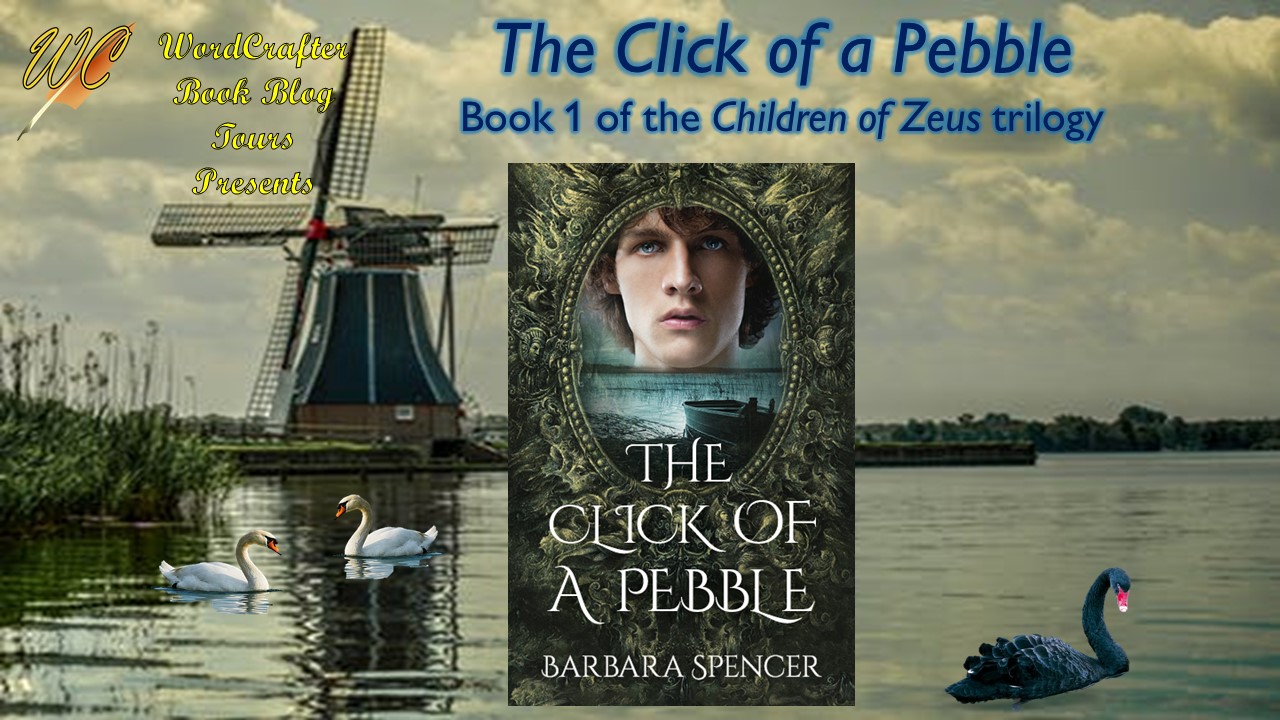
The Click of a Pebble
In her Day #3 post for this tour on Robbie’s Inspiration, author Barbara Spencer talks about magical realism. I really loved her definition. She describes it, “Magical realism takes place in our world and follows its rules, except occasionally those rules are skewed.” I haven’t read a lot of magical realism, but what I have read have mostly were silly stories that were just kind of fun to read, with no real buy in because they were so ridiculous.
Not so with this skillfully crafted tale, which begins to lay a solid basis for the magical elements of the story. The Click of a Pebble had my buy in from the first pages and maintained it throughout the story. It was sweet and tragic, but there was nothing silly about it.
The Click of a Pebble is the tale of three children, Yost, Zande and TaTa, the only survivors of a massacre of their people. Ripped away from all they have ever known, they must stand together and go on, holding on to who they are in a place where things are new and different and try to fit in. They quickly learn that they dare not reveal their true origins, or risk falling prey to the same bigoted thinking that brought on the demise of their clan, because they are different, gifted. As they grow to know the family which welcomes them into their home, they begin to develop attachments with those around them and feel as if they belong. But, they are carinatae, children of Zues and what lies ahead for them is very different from the futures imagined by those who take them in.
The Click of a Pebble
Barbara Spencer has done a marvelous job of drawing the reader in and making her care about the characters, masterfully weaving historical detail into this wonderful coming of age fantasy. It touches on issues that ring true for many of us, at the same time portraying a time and culture in detail, with well developed characters readers will relate to. As the first book in her The Children of Zeus trilogy, Spencer does not tie everything up with a nice bow, but instead chooses the perfect point in the story to close off this chapter and leave the reader with a need to learn how all the loose ends will be resolved. I give it five quills.
Five Quills
In case you missed a blog stop along the way on The Click of a Pebble Book Blog Tour:
Most people are familiar with the story of Hansel and Gretel, a German fairy tale collected by the Brothers Grimm and published in their Grimm’s Fairy Tales in 1812.
In summary, the story goes as follows:
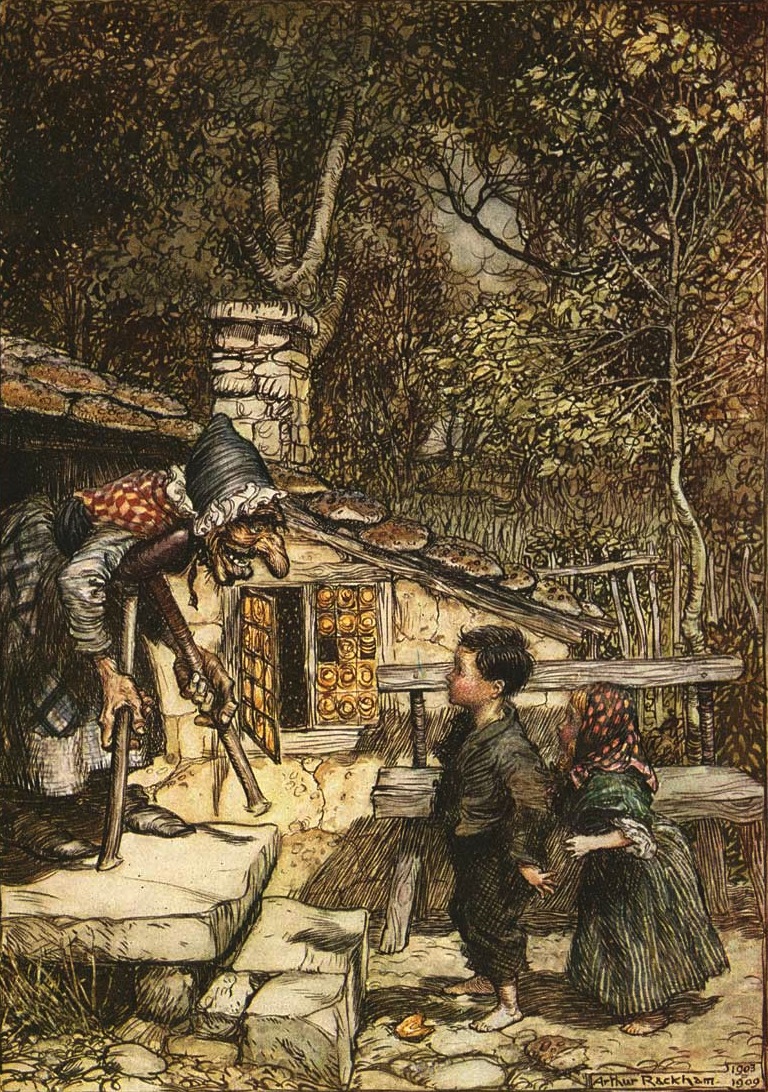
Hansel and Gretel are a brother and sister whose starving parents decide to abandon them in the forest. Hansel overhears his parents plotting and drops pebbles on the path so that he and Gretel can find their way home later. The family’s plight does not improve and a short while later the mother [or stepmother depending on the version] persuades the father to take the children into the forest again and leave them there. This time, Hansel drops a trail of breadcrumbs but the birds eat them and the two children become lost in the forest.
The starving children come across a gingerbread house and they begin to break off bits and eat it. The house, however, is a trap set by a wicked witch who captures the children, enslaves Gretel and locks Hansel in a cage. She sets about fattening Hansel up so that she can eat him.
Gretel saves Hansel by shoving the witch into the oven which she has heated up in order to cook Hansel. The pair escape and manage to find their way home with the witch’s treasure. In the meantime, their mother [or stepmother] has died and their father is a broken man having abandoned his beloved children. The family live happily ever after.
The real history behind this already rather grim story, is even more grim.
The true story of Hansel and Gretel may have its roots in the great flood and great famine of 1314. 1314 was a year of continuous rain and this continued throughout 1315 and 1316. The wet conditions resulted in crops rotting in the ground, harvests failing and livestock drowning or starving. Food prices increased dramatically as a result of severe food shortages.
The great famine is estimated to have effected 400,000 square miles of Europe, 30 million people and to have resulted in the deaths of up to 25 percent of the population in certain areas.
The famine was so bad that during the winter of 1315/1316, the peasants resorted to eating the seed grain they had stored for planting in the spring. People resorted to begging, stealing and even murder in their quest for food. Parents abandoned their children to fend for themselves and their were rumours of cannibalism. An Irish chronicler wrote that people “were so destroyed by hunger that they extracted bodies of the dead from cemeteries and dug out the flesh from the skulls and ate it, and women ate their children out of hunger.”
In the story of Hansel and Gretel, the pair are taken into the forest by their father and abandoned. They are taken in by an old woman living in a cottage. When the old woman starts to heat the oven, the children realise she is planning to roast and eat them. Gretel tricks the woman into opening the oven and pushes her inside.
It is interesting to note that this time of famine coincided with the end of the medieval warm weather period and the beginning of the little ice age. The changing climate with its cooler and wetter summers and earlier autumn storms damaged the harvests. Given the strange wet and cool summer South African is experiencing, coupled with severe cold in the northern hemisphere, this really is food for thought.
The story of Hansel and Gretel was the inspiration for my recent twisted fairy tale Covid-19 cake which featured a gingerbread house and a witch who is trying to keep children out after they are declared to be vectors for the virus.
About Roberta Eaton Cheadle
Roberta Eaton Cheadle has published nine children’s books under the name of Robbie Cheadle. She has branched into writing for adults and young adults and, in order to clearly separate her children’s books from her adult books, is writing for older readers under the name Roberta Eaton Cheadle.
Her supernatural stories combine fabulous paranormal elements with fascinating historical facts.
Supernatural fantasy YA novel: Through the Nethergate
Horror Anthologies (edited by Dan Alatorre): Spellbound Nightmareland Dark Visions
Paranormal Anthologies (edited by Kaye Lynne Booth): Spirits of the West Whispers of the Past
Murder mystery Anthology (edited by Stephen Bentley) Death Among Us
Want to be sure not to miss any of Robbie’s “Dark Origins” segments? Subscribe to Writing to be Read for e-mail notifications whenever new content is posted or follow WtbR on WordPress. If you found it interesting or entertaining, please share.
Feral Tenderness, by Arthur Rosch, is a poetry and photography collection like no other I’ve ever encountered. I can say this with confidence, because I am the editor and compiler for this book, however it exempts me from posting my opinions of this collection on Amazon. But Writing to be Read is my blog, so I’d like to tell you about this interesting and unique collection of creativity here, taking into account that the author is a friend of mine, so the opinions expressed are likely to be biased. Be that as it may, I’m proud to associate myself with this work of creativity, a collection of poetry and photography worth more than just a casual glance. Arthur’s works need to be savored, like a fine wine, simmered over, like a sweet glaze, and appreciated for their unique and delectable flavors.
As I’ve mentioned on several occassions, Arthur Rosch sees the world in a unique way. Through his creative endeavors, those who care to look are allowed a glimpse of things through his eyes. His photography is amazing. The images that he captures with his lense say so much in a single moment. His poetry, on the other hand, is often a lengthy, social commentary on higher powers, human behavior, or the world at large. Yet, even his short poems seem to have a lot to say.
To illustrate my meaning, the following poem is minimal, yet it speaks volumes. It is my favorite of Arthur’s short snippits of poetry and the only one for which a true companion photo was also available from his photo library for inclusion in the collection.
Dewdrops Dewdrops on spiderwebs: sit lightly with life
Little Web
Another of Arthur’s profound poems, “Stars“, declares, in part, (I did mention that some of his poems are rather lengthy, too much so to be reprinted here in full),
” …Stars know what they are. Stars are alive and individual, quirky with personality, often pulsing and drawing gravity blood, gas and heat, combining with other stars combining and mating with other stars and forming unions of higher imaginations in order to serve the Master of Stars… “
Another poem is an expression of nature, as seen through Arthur’s eyes. This one is one of my personal favorites.
Hunted By The Hawk
Make joy from stones. Make wit from mud, make humor from blood. The tiny finch flies crazily, for the sheer fun of it, though it knows, each morning, that it’s hunted by the hawk. We too, each morning, are hunted by the hawk.
The cover image for Feral Tenderness also came from Arthur’s photo library. With this photo, I was able to create an awesome cover design, if I do say so myself. We created cover images using several of Arthur’s photos, but in the end, this one grabbed both author’s and publisher’s hearts.
Feral Tenderness Cover
The poetry and photos featured in this collection are so varied in subject matter and tone, that several book promotions with very different appeals seemed applicable to me. I used one of Arthur’s photographs for the background of one of them. Can you guess which one? Let me know in the comments which you like better.
Like this post? Let me know in the comments. You can be sure not to miss any of Writing to be Read’s great content by subscribe to e-mail or following on WordPress. If you found this content helpful or entertaining, please share.
Each month, writer Jeff Bowles offers practical tips for improving, sharpening, and selling your writing. Welcome to your monthly discussion on Craft and Practice.
My wife recently showed me a new favorite anime series of hers that perfectly illustrates a point I’ve been making about storytelling for years. I didn’t used to like anime all that much, and I’m not sure how you feel about it (if you feel anything about it whatsoever), but like many writers from my part of the globe, I had a certain bias toward a more Westernized approach to storytelling. I didn’t much like the aesthetic of anime, the tropes or the style, but I also wasn’t seeing the big picture. Anime is often judged on its aesthetics, but it should be praised for a preference for bold storylines, creativity, color, imagination, a kind of libertine approach that is no-holds-barred, that exceeds and usually subverts audience expectations.
The truth is there are a million writing advice columns saying it’s a bad idea to head into a writing project without some kind of plan. Sometimes, especially in speculative fiction, copious amounts of planning are advised. Character sheets, outlines, beat sheets, world building tools, map making, story bibles, and a number of other idea-gathering methods are common, and for good reason, I suppose. But in the traditions that gave birth to a medium like anime, form follows function, structure often inhibits form. In other words, rigidity and an unwillingness to let stories guide themselves is at the heart of lots and lots AND LOTS of bad writing.
To produce an animated television show, of course, quite a bit of planning is required. Scripts have to be written, art must be created, there’s a need to hire actors and hold recording sessions, and then post production is always a long process. Large groups of very talented people make this stuff. The animation industry is a machine, one so well-oiled the product itself is viewed and loved all over the globe, regardless of culture or regional storytelling preferences. In contrast, someone who writes fiction or poetry or who dabbles in screenplay, stage production, or even video game writing, is very much a free agent. But I’d like to ask you to throw all that out the window for a moment, because I want to direct your attention toward something crucial. Storytelling can and perhaps should be artful in addition to being solid, confident, and competent. Storytelling, the best kinds of it anyway, should meet and then exceed audience expectations, and I know of one sure-fire way of doing that: be the author who surprises the author.
Surprise yourself. Anime is an interesting medium to study because it absolutely loves the element of surprise. I know that in the new show my wife introduced me to, every episode contains a wealth of sea changes that completely redirect the flow of the narrative, creating an experience audiences simply cannot predict from one half-our segment to the next. It’s an intense ride, one that has equivalents in Western storytelling. Stephen King, for instance, is famous for espousing a very seat-of-the-pants approach to writing novels. He’s struck by an interesting what-if scenario, starts writing an introductory scene, establishes some initial paradigms, a few working story dynamics, and then he’s off to the races for the next couple months, having no clue where he’ll end up or how he’ll get there.
It’s worth noting that story synthesis requires the introduction, development, and resolution of disparate elements. For example, if I tell you to write a first chapter including a gun, a nun, an assassin, and a vengeful widow, you’ve got four disparate elements that must follow that exact line: introduction, development, resolution. So let’s say the widow is on a quest to kill the assassin who took the life of her beloved, but her religious convictions lead her to a local church where she gets down on her knees and begs a nun to talk her out of committing the ultimate sin of murder.
Where does the story go in chapter two? Imagine the possibilities, reason out the next most likely scenario to occur, given what’s just happened in chapter one (have to use your reasoning, logical brain for this). Repeat that method throughout approximately thirty or forty chapters, and you’ve got yourself a book. Again, if the author of a great story is surprised while they’re in the process of telling it, the reader is likewise guaranteed a similar reaction. It doesn’t mean you’re a sloppy storyteller. It means you’re willing to take a leap of faith, play jazz a little bit, stretch your abilities and find out in an improvisational way what works and what does not.
As you come up with ideas in the moment, you’re likely to want to check them against a few basic questions: does this concept make sense in context? Would my characters really do this and why? How does this dynamic irrevocably change the narrative, and does it take the story in a direction I’m not prepared to go? Constant alterations, redirection, redactions, and tweaks will be required, and you may also find your finished rough draft is in need of serious inserts, deletions, and edits, but the benefits outweigh the grief. Stories that surprise, that don’t hold the audience’s hand, that respect the audience’s intelligence, that’s what can result.
To return to Stephen King for a moment, there is a preponderance of disappearing, reappearing elements in his stories. Some of his most famous novels set, break, and then reset paradigms constantly and consistently. In The Stand, for instance, notice how a story initially about a small group of disparate and scattered pandemic survivors becomes a tale of strong familial community and then a post-apocalyptic holy battle of good vs. evil. King wrote that book without any planning at all, and whenever he got stuck because, you know, he hadn’t planned anything, he simply did something drastic and unexpected to break paradigms he himself had set. Gathering all the pandemic survivors in Boulder, Colorado and setting them up with good lives isn’t enough. There has to be a traitor in their midst, and if a bomb suddenly goes off and kills some fairly important protagonists, what’s the difference? At least we get some more breathing room to play with that wicked story.
Anime also teaches us paradigms can be created and implemented with the intention of shattering them and reassembling and continuing a story on the fly. Just like, I’m afraid, too much outlining can turn an otherwise well-written book into a predictable mess. Decent surprises telegraphed and ruined, characters that behave irrationally because they were and are slaves to dense, inhibiting structure, it’s a bit of a nightmare. It must be noted that in the professional world, a writer isn’t always given the opportunity to create stories on the fly. Publishers and studio executives, game developers, whoever you’re writing for, they like to be sold on ideas before they see a finished product. Call it an insurance policy. But if by chance you don’t care too much about impressing or working for these folks, if you’re of a more independent disposition, I urge you to try a writing approach that eschews too much planning and allows for absolute spontaneity. You may just be thrilled with the results.
I’ll be back next month for another Craft and Practice. See ya, folks, and thanks for stopping by!
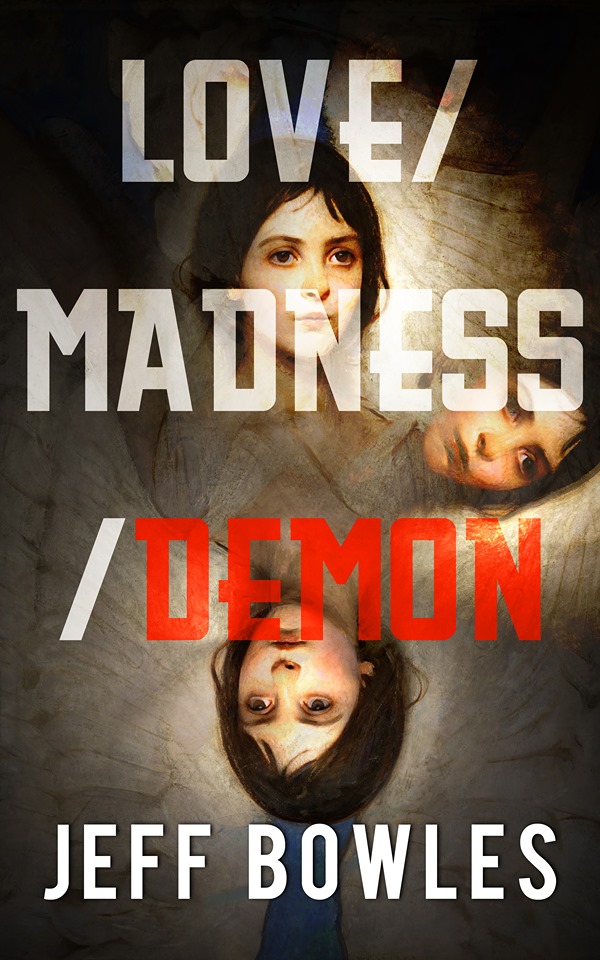
Jeff Bowles is a science fiction and horror writer from the mountains of Colorado. The best of his outrageous and imaginative work can be found in God’s Body: Book One – The Fall, Godling and Other Paint Stories, Fear and Loathing in Las Cruces, and Brave New Multiverse. He has published work in magazines and anthologies like PodCastle, Tales from the Canyons of the Damned, the Threepenny Review, and Dark Moon Digest. Jeff earned his Master of Fine Arts degree in creative writing at Western State Colorado University. He currently lives in the high-altitude Pikes Peak region, where he dreams strange dreams and spends far too much time under the stars. Jeff’s new novel, Love/Madness/Demon, is available on Amazon now!
Check out Jeff Bowles Central on YouTube – Movies – Video Games – Music – So Much More!
Want to be sure not to miss any of Craft and Practice with Jeff Bowles segments? Subscribe to Writing to be Read for e-mail notifications whenever new content is posted or follow WtbR on WordPress
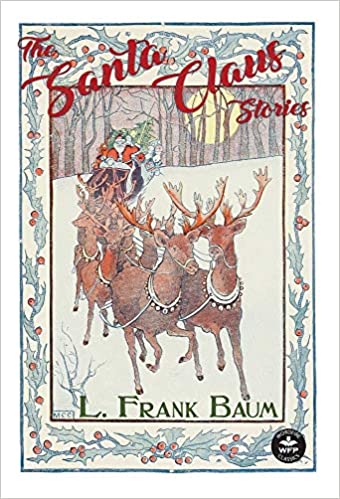
I love reading origin stories, which set the groundwork for all like stories which come after. Although the legend grows and changes down through the years with each retelling. The legend of Santa Claus is one that I hold near and dear to my heart, and I truly enjoyed allowing The Santa Claus Stories of L. Frank Baum take me back to where it all began.
Did you ever wonder where Santa Claus comes from, or how he got to be Santa Claus? Ever wonder how he came to deliver toys to children all around the world? Or why he only delivers one night out of the year? Or why he wears red? Or why he comes down the chimney? Or where his magic comes from? The Santa Claus Stories of L. Frank Baum answer those questions and more. And I’m guessing that not many people today are aware that Santa Claus was in attendance for Princess Ozma’s birthday party in the land of Oz, along with Dorothy and Toto, the scarecrow, the lion man, the tin man, and many other of Baum’s colorful and memorable characters.
The literary value of classic stories such as these is beyond my abilities to describe. Although I feel unqualified to rate classic gems, such as this one, these stories left me with a good feeling inside. Here is born the true spirit of Christmas and you can see the origins of the Santa Claus legend offered here in many contemporary Santa Claus stories. In Baum’s telling, his reindeer don’t fly, but they do wear bells, and magic is in the air, as Santa toils to make all of the toys for the children year round by himself. Over the years things have changed a bit, but I think the magic is still in our hearts, if we look for it.
Kaye Lynne Booth does honest book reviews on Writing to be Read in exchange for ARCs. Have a book you’d like reviewed? Contact Kaye at kayebooth(at)yahoo(dot)com.
I am a janitor. I have worked at the same medium sized commercial property for thirty years. It is a job made in heaven! The pay is good, and I set my own hours. I never see my boss. We exchange emails and a check arrives monthly. The pandemic has done little to change my lifestyle. Properties tend to fall apart without the basic services supplied by cleaners and contractors. I work part time as a janitor and the other part time I stay home and practice the piano and write. My janitorial work includes maintaining two public restrooms. This requires a maximum of personal protection gear. Mask and gloves combined with frequent washing are keeping me (I hope) safe from infection.
My spouse is disabled and spends most of her day in bed. I care for her and keep supplies flowing. She suffers from COPD and Rheumatoid Arthritis. My life is not much different from the time before Covid-19. I go out less and I buy at least a week’s supplies so that I don’t have to return to the store and its dangers of exposure. Judging by the basket loads being checked out by my fellow shoppers, we are feeling much the same.
The adaptations to Covid-19 quickly normalize. I see my therapist via Skype or Doxy.me.com. I would rather see her in person, but seeing her on my computer screen offers a strange and intangible compensation. I can only call it “looseness”, i.e. I am more likely to say something awkward, which, as you may know, is the good stuff when it comes to psychotherapy. I must speak the uncomfortable truth. In this way, Covid has presented a weird therapeutic gain.
I communicate via computer and attend my weekly Senior Peer Counseling groups via Zoom. I don’t have to drive! No gasoline, no oil changes, no flat tires. No traffic! I acknowledge the vast suffering that attends this pandemic. I can’t allow my compassion to be blunted by my relative comfort. The plain truth is that Covid-19 has made my life easier.
I have been a Certified Senior Peer Counselor for three years. This effort offers support to those who are over 55 years of age. I now see my clients via all means possible, be they phone, computer, tablet, holograph, astral projection, quantum entanglement, ubiquitous electron transfer, psychic channeling or yelling out the window. Somehow, the process seems to be effective.
A couple of times a week I make my way up and down Highway 101. It’s a fifty mile round trip and sometimes the highways are virtually deserted. It’s kinda spooky! So far, my personal pandemic has been more of a windfall.
I’m 73 years old. Officially, that makes me a senior citizen. I’m active, creative, mobile, flexible, and in good health. If I tell you that this is due to my excellent personal hygiene, I would be gaslighting you with a heavy frosting of irony. I’ve been addicted to heroin, cocaine, alcohol, tobacco and other bad behaviors. I am a paradox. I have faithfully practiced yoga since the age of eighteen. There have been times when I would inject myself with a speedball, smoke several cigarettes and do a sequence of yoga postures within the same hour. I’m not like that anymore. I’ve worn out my addictions through a steady incremental process, aided by psychotherapy. There was no sudden cure, no breakthrough, just years of steady work. I AM, at last, closer to where I want to be. All I have to do is avoid suddenly dropping dead.
Count to three. I haven’t dropped dead. This means that I have a responsibility to continue writing. My mentor, the incredible KL Booth, urges me to supply essays, poems, and other material to the ongoing work of the web platform Writing To Be Read. This site is a forum for writers and provides essential exposure for those of us who don’t have the proper connections to achieve big time literary fame.
There is truth to the maxim that “You have to know someone.” There was a time when I did indeed know someone. I knew the fiction editor at Playboy Magazine. Her name was Vicki Chung. I got to know her through a series of flukes that led to my winning Playboy’s award for Best Story Of The Year. After winning that award, I was invited to Playboy’s 25th anniversary banquet in New York City, all expenses paid. A room at the Waldorf was booked for me. The banquet guest list was loaded with influential writers, editors, agents and publishers. I had gone to Nirvana. They had a wall-sized poster illustration of my award winning short story. I was courted by everyone. I returned from New York City with my pockets full of business cards. “Call me when your manuscript is ready.” They all said that.
A few months later there was a plane crash near Chicago’s Ohare airport. Most of Playboy Magazine’s literary staff was on that plane. My friend Vicki was gone. My connections were gone.
Later that year my manuscript was stolen. It was the only copy because I was making corrections. At the time I was devastated, but I now know that it was a shit novel, that it was juvenile, pretentious and hopeless. The thief saved me from gruesome embarrassment.
Pandemic? Are we in a pandemic? I think it’s more like a correction, the way the theft of my manuscript was a correction. That sounds cold, but nature doesn’t consider the will of individuals as it operates our planet. Nature does what is best for itself. Covid-19 may be nature’s response to massive overpopulation and utterly depraved management of this stately orb.
A Midwesterner by birth, Arthur Rosch migrated to the West Coast just in time to be a hippie but discovered that he was more connected to the Beatnik generation. He harkened back to an Old School world of jazz, poetry, painting and photography. In the Eighties he received Playboy Magazine’s Best Short Story Award for a comic view of a planet where there are six genders. The timing was not good. His life was falling apart as he struggled with addiction and depression. He experienced the reality of the streets for more than a decade. Putting himself back together was the defining experience of his life. It wasn’t easy. It did, however, nurture his literary soul. He has a passion for astronomy, photography, history, psychology and the weird puzzle of human experience. He is currently a certified Seniors Peer Counselor in Sonoma County, California. Come visit his blogs and photo sites. www.artrosch.com and http://bit.ly/2uyxZbv.
Arthur’s books include The Road Has Eyes, The Gods of the Gift, and Confessions of an Honest Man. His lifetime collection of poetry and photography, Feral Tenderness, is soon to be released by WordCrafter Press.
Want to be sure not to miss any of Art’s “Mind Fields” segments? Subscribe to Writing to be Read for e-mail notifications whenever new content is posted or follow WtbR on WordPress. If you find it interesting or just entertaining, please share.
The first Wednesday of every month, writer Jeff Bowles muses on life, creativity, and our collective destinies as makers of cool stuff. You’re a writer, but have you ever thought about how or why? Here are some words to live by.
Losing My Mind (in Real Life)
At three-thirty in the morning, I’m screaming at demons. There’s something inside me, something over which I have very little control, and it’s been at my throat for months. Somehow I’ve convinced myself the voice in my head belongs to a friend from graduate school, that she’s speaking to me telepathically over a great distance. She’s crueler than the person I remember, always mocking and deceiving me, but I don’t do the simple mental math. The voice tells me all sorts of things, and this is the first time I’ve ever been crazy, so I don’t necessarily understand I’m not supposed to listen.
Though I sleep dismally, I call her the very next morning. The real person I mean. I say crazy things, most of which I don’t remember now. A few days later, something even worse happens. An incident with the car in our driveway. My wife, she gets hurt. The voice told me she was trying to kill me, and I believed every word, so I attempted to flee the house and she ended up with six fractured ribs. God, some days are made in Hell. If I close my eyes, even five years later, it’s an easy vision to conjure, and it lays me low every time. This happened, it was real, and I was crazy, crazy, crazy, an animal, a lunatic, someone completely undeserving of justice or fairness or something simple and clean like compassion.
I made a mess of my life, ended up in jail, in court, on a psychiatric ward, and I have had to cope with a version of myself from that time I cannot excuse, someone vulgar and unhinged, someone barely hanging on. I won’t go into details that are still too painful to write in blunt, unadulterated language. The pressures of life had gotten to me, an unexpected barrage of one thing after another, as life is known to dish out. Unexpected health issues, loss of a job, unable to pay the mortgage. No, I’d never heard voices before, but that doesn’t mean I’m worthy of forgiveness. My loved ones keep telling me I should finally let go, be kind to myself on this front, realize people make mistakes, that these things can and do happen and that none of it makes me a bad or dangerous person. I find it difficult to believe what they say. Scratch that, I find it impossible. It’s a miracle no one was killed.
Many prominent creative voices throughout history have commented on the clear and seemingly causal link between mental illness and creative genius, but not every dork with a science fiction and fantasy fetish and a couple of short story sales goes full tilt into lunacy. It’s not in my nature to describe myself in lofty terms. It’s not in my nature to think of myself very fondly at all, and that’s perhaps where dark things like this take root. Whatever creative abilities I’ve been granted and have spent years honing seem to have come at a cost. I knew I had depression at a very young age, but schizophrenia, I didn’t even know what that was.
It’s like this: you can’t trust your thoughts, your senses, your worldly experience. You will hear voices and smell phantom aromas and see things that aren’t there. You’ll think delusional thoughts every once in a while, strange ruminations and lines of logic that make perfect sense at the time they occur. If you’re lucky, medication will help, and counseling will teach you skills you can lean on that boil down to keeping it real, keeping it present, leaning on others if you’re having a truly difficult time distinguishing fantasy from reality. Don’t listen when you think you hear your friend from school. Don’t listen when you think you hear your friend from school. Don’t listen when you think you hear your friend from school.
There were nights I was so terrified I couldn’t imagine surviving till morning. These voices, they torture you in all sorts of creative and intimate ways. They make fun of you in the toilet, in the shower, when you’re dressing in the morning. They con you into driving recklessly in city traffic, convince you your counseling appointment has been canceled, and that in fact, you don’t really need counseling anyway. At some point, the ruse couldn’t sustain, and I finally realized I wasn’t speaking with my friend. Sensibly, tardy as usual, I asked to whom or what I was in fact speaking, in my head, in the room, just out of sight.
It said it wanted to be called Dave. Just Dave. And the more my wife and I used the name as shorthand, the more it seemed appropriate. Dave, like some faceless person who could be anyone or anything at any time. Dave, a personality that might be normal or might be abnormal, just depended on the day. And now when I write, even a simple essay like this one, I feel as though Dave is guiding my fingers over my laptop keyboard.
I can feel him looking out my eyes sometimes. He wiggles my toes and fidgets when I’m barely paying attention. He’s in me, he is me, yet they say he’s not the conscious, aware me. If my id expresses itself thusly, what the hell is wrong with me? Is it any wonder the book I wrote about that insane, scary time depicts Dave as a full-stop demon? Not a biproduct of janky biochemistry or a brain or emotional disorder, but rather something separate and inhuman? Took me two years to write that book. I still can’t stand to read a single word of it.
I wasn’t myself. It must be a constant reminder, or the truth is the person I am today, the person I’ve always believed myself to be, he’s a lie. And this is something I can’t accept. You must take action when your own wounding wounds others. It’s a teaching moment, a failing you can catch like a falling aspen leaf. It was a shot across the bow, an opportunity to reorient myself, look at my life and everything I’ve created and done not as the end-all-be-all, but as a small component of who I am in full. Each and every time Dave speaks to me, I can silently rebuke or ignore him and remind myself what real humility and humanity look like.
They look like the patients at the psych hospital who’d just survived suicide attempts and psychotic episodes. How gentle and caring they seemed. Not like me, strapped to a hospital bed, screaming my head off, trying to cut my wrists in a pretty useless fashion, thinking the Velcro ties would do the trick. Humility and humanity look like the caregivers—yes, even the guards at the county jail—who could’ve condemned me but instead took pity on me, tried to protect and treat me.
Even five years later, I awake sometimes from nightmares. He’s always there, but thankfully, so am I. Watchful, careful, repentant. Honestly, not at all interested in returning to that place ever again. I could’ve lost so much. It all could’ve ended so much worse. My blessings, I do my best to count them, but I know I could do far more. Recovery is a long process, or at least it can be, and it’s a bumpier ride than most people give it credit for being. But I have to go through it. It’s an imperative. Being better to people, hoping one day to learn to be better to myself. Leave the creative stuff aside. In fact, leave everything aside that is surface-level and cheap. Maybe it’s what I came here to do. Maybe it’s what we all came here to do.
If you or anyone you know is suffering severe mental health issues right now, I urge you to seek help. Especially in the middle of this pandemic, it’s a huge issue for many, and we owe it to ourselves, our friends, and our family to treat it with respect. There’s hope, there’s survival, and there is recovery. I’m proof of that. We all deserve to be the best versions of ourselves. All of us. I pray and hope for the best life has to offer, and I pray and hope the same for you as well. Safety, happiness, generosity, and love. Sanity most of all, my friends. Until next month.
Jeff Bowles is a science fiction and horror writer from the mountains of Colorado. The best of his outrageous and imaginative work can be found in God’s Body: Book One – The Fall, Godling and Other Paint Stories, Fear and Loathing in Las Cruces, and Brave New Multiverse. He has published work in magazines and anthologies like PodCastle, Tales from the Canyons of the Damned, the Threepenny Review, and Dark Moon Digest. Jeff earned his Master of Fine Arts degree in creative writing at Western State Colorado University. He currently lives in the high-altitude Pikes Peak region, where he dreams strange dreams and spends far too much time under the stars. Jeff’s new novel, Love/Madness/Demon, is available on Amazon now!
Check out Jeff Bowles Central on YouTube – Movies – Video Games – Music – So Much More!
Want to be sure not to miss any of Jeff’s “Words to Live By” segments? Subscribe to Writing to be Read for e-mail notifications whenever new content is posted or follow WtbR on WordPress. If you found this useful or just entertaining, please share.
Welcome to the first official WordCrafter Book Blog Tour featuring the WordCrafter western paranormal anthology, Spirits of the West. We’ve got a great tour lined up, so let me tell you a little about this unique anthology and the stories featured within. I hope you’ll all follow along with the tour as the week progresses, to learn more about this colorful story collection.
It’s no secret that I love ghost stories, which is why the theme each year for the WordCrafter Short Fiction Contest always seems to lean toward the paranormal genre, although other genres may be involved. It’s also no secret that my first novel was a western and I enjoy writing and reading this genre, so it shouldn’t be surprising that the 2020 theme was western paranormal. I didn’t get a lot of submissions, but the ones I did get were top notch stories, and the resulting anthology, Spirits of the West, contains eight stories with western and paranormal elements, from six very different author’s worlds. The theme for the contest was not a traditional genre mixture, and there’s not much that’s traditional about the anthology.
My story, “Don’t Eat the Pickled Eggs”, is a western paranormal mystery, to confuse the genres even more. It’s a colorful story, about the disappearance of a saloon owner, a ghostly nighttime visit to leave a warning, and a young boy named Stinkweed, who holds the key to the mystery. You’ll be able to learn more about the inspiration behind this tale on Jessica Bakkers.
Roberta Eaton Cheadle contributed two South African western paranormal tales, which help to make this anthology very unique. “The Thirstyland Journey” and “The Ghost in the Mound” tell stories of pioneers, traveling across the South African wilderness – a different type of western, but with just as many ghosts. Both are powerful stories of survival, courage and determination and are welcomed additions to Spirits of the West. Robbie will be telling us more about both of these stories on Roberta Writes and Robbie’s Inspiration.
Jeff Bowles, the author of the winning story in 2019, contributed “Wenekia”, an excellent story of Native American folklore and traditions. When two young boys sneak out to eavesdrop on the tribal council gathering, they learn more than they bargained for when they witness the reality of legend. Sue Vincent’s Daily Echo will have a post for us about Jeff’s story on Saturday.
“The Clouds in the West”
Arthur Rosch contributed a science fiction western paranormal story, “The Clouds in the West”, which takes the cowboy to another world, where the rider may not always control of his mount, and leaves the ending open to reader interpretation.
The winning story in Spirits of the West was submitted by Enid Holden. “High Desert Rose” is a more traditional western tale of revenge, but Holden does it with a heroin, rather than a hero, and the spirits are watching. Patty’s world will feature an interview with Enid on Wednesday and wrap up the tour on Sunday for us.
“Gunsmoke”
Also included in the anthology are two stories that were not contest submissions. Tom Johnson’s story, “Gunsmoke” really doesn’t have a paranormal element, and is included as a tribute to Tom as his only western story in a lifetime of science fiction and pulp titles, as the author is no longer with us. And Enid Holden contributed a second story, “Queen of Spades”, which didn’t make the submission deadline, but is every bit as good as her winning story.
“Queen of Spades”
Time constraints did not allow for posts on some stories, but I hope you’ll join us on the tour this week to learn more about this very special collection of stories and their authors.
Like this post? Let me know in the comments. You can be sure not to miss any of Writing to be Read’s great content by subscribe to e-mail or following on WordPress. If you found this content helpful or entertaining, please share.
2021 is off to a great start and today, I wanted to take a minute to update you on the really cool stuff scheduled on Writing to be Read in the coming months. I’ve talked about some of these new additions previously, but one or two have only come together recently and I can’t wait to share them.
Dark Origins
You’ll find Robbie Cheadle’s new series, “Dark Origins”, posted on the fourth Wednesday of each month, and the first post will be this coming Wednesday, January 27th. Robbie will be delving into the origins of nursery rhymes and fairy tales, which can be very dark indeed, so be sure and watch for it.
Jeff’s Game Reviews
Jeff Bowles already shared the first post in his new video game review series, “Jeff’s Game Reviews”, where shared his thoughts on Hitman 3. This series will post the fourth Friday of each month, and each post includes a link to the video version of the review.
WordCrafter Book Blog Tours
Last but not least, February will see the launch of WordCrafter Book Blog Tours. The first tour will be for the Spirits of the West western paranormal anthology. Later in the month, tours are scheduled for Arthur Rosch’s poetry and photography collection, Feral Tenderness, and Barbara Spencer’s first book in the Children of Zues trilogy, A Click of a Pebble. I do hope you’ll all join us in learning about these wonderful books and their authors. Tours include interviews, book reviews and informative posts by the authors. You’ll find the complete tour schedule, as well as instructions for scheduling your own book blog tour on the WordCrafter Book Blog Tours page.
Where Spirits Linger
I’d also like to remind everyone that there is still time to submit your story in the 2021 WordCrafter Paranormal Short Fiction Contest, and to have it included in the resulting anthology, Where Spirits Linger. See the full submission guidelines for details. There is a $5 entry fee, which you can pay with a button right on the contest post, and the winner receives a $25 Amazon Gift Card and guarenteed inclusion in the anthology. But don’t wait too long. The deadline is April 30th.
2020 was a pretty good year for Writing to be Read and WordCrafter, in spite of the unusual circumstances of the pandemic and the “new normal”, which isn’t normal at all. After all the lock downs and mask mandates and social distancing, I think everyone needs a little makeover, and this blog is no exception. Writing to be Read may be getting a facelift with new types of content which will change it’s appearance a little, but the end result is that the blog will be so much better for them. Jeff’s and Robbie’s new series, the WordCrafter Book Blog Tours, and this year’s contest and anthology, are all welcome improvements, and I for one, can’t wait.
Like this post? Let me know in the comments. You can be sure not to miss any of Writing to be Read’s great content by subscribe to e-mail or following on WordPress. If you found this content helpful or entertaining, please share.
Welcome to the first Treasury Poetry post of 2021.
Today, I am delighted to welcome fantasy author and poet, Diana Peach, who is sharing one of her own poems and discussing poetry.
Which of your own poems is your favourite?
Thanks so much for the invitation to participate in your Treasuring Poetry series, Robbie. I’m honored. I think of myself as a writer of prose and a dabbler otherwise, but I love poetry and believe no creative effort is ever wasted.
This is a super hard question! I have poems that I think are well-crafted, poems that evoke personal feelings or memories, and poems that reflect a particular time in my life. Since “I don’t know” isn’t an acceptable answer, I’ll go with this one:
Flight of faith
When I was a child, I could fly
you and I hopped in dirt-road afternoons
faithful
and the dust-wind flung us over seas of wheat
scuffed shoes skimming the feathered awns
we whipped around the corners of the barn
in a home-sewn world of farm-hewn hands
our secret futures soared
***
In the veins of my hands
the blue brooks of time stream by
Somewhere on the way, I unlearned how to fly
and trod worn paths through autumn’s lea
snapped night’s brittle ice
shards of fractured faith
glinting in my wake
***
Today’s morning purls in plumrose
cast on a withering season’s stark debris
spangled with winter’s gilded rime
a new path of violet ice wends to the horizon
fragile, fissured, a wish yet unbroken
my secret future soars
faithful
and I wonder if I might
fly one last time
What inspired you to write this particular poem?
In my twenties, I used to have flying dreams rather frequently. They were the most vivid dreams of my life. I was truly flying. I could feel the wind on my face as if I was awake and standing outside on a breezy day. The sensory experience was exhilarating.
This poem is based on one of those dreams. In the dream, I was about 10 years old, an unremarkable child of the dusty American plains. Every day, the school bus would drop my friend and me off at the side of the dirt road, and as soon as the bus drove away, we would hop a few steps, then pick up our feet and soar over the fields, our brown shoes skimming the wheat. Despite our ordinary lives and pervasive poverty, we were extraordinary. Life was full of magic and promise, and nothing could hold us down.
Then I stopped having flying dreams and haven’t had one in nearly 35 years. This poem is about that amazing childhood belief that anything is possible, about its loss, and about the yearning to fly again.
Which genre of poetry do you enjoy writing the most and why?
I enjoy Colleen Chesebro’s weekly syllabic poetry challenges. The poetic forms provide structure, and for me, they’re like puzzles as I search for the words that conform to the syllable count, structure, prompts, and personal meaning. But my favorites among the poems I’ve written are all free form. They’re harder
for me to craft, but they feel more organic, untouched by stylistic constraints. They’re pure gut, emotion, and inspiration.
Which genre of poetry do you enjoy reading the most?
Probably free form poetry, though any kind of poetry has the potential to make me gasp at its beauty. I love vivid imagery and poignant emotion, poems that illuminate the human condition in a way that pierces my heart. I like poems that stir something personal, or that draw me in and grab hold so that when I finish reading, I feel like I’ve stepped outside myself into someone else’s experience.
Do you think your poetry compliments your other writing or do you see it as an undertaking that stands alone?
Complements, definitely!
I love poetic prose, and when I’m reading fiction, I’m prone to highlighting passages in books where the word choice, imagery, metaphors, or phrases make me swoon. Poetry emphasizes beautifully crafted language, including its sounds and rhythms. It requires a writer to capture and convey the core essence of a story. I think poetry fosters an underlying sensitivity to those aspects of writing in general, and prose benefits from the same attention.
Thanks again, Robbie, for the invite and for allowing me to share my thoughts and muse over this lovely artform. Happy Writing to all the poets out there.
Thank you, Diana, for being my Treasuring Poetry guest. I really enjoyed your poem and insights into your poetry writing.
Sunwielder: An Epic Time Travel Adventure
What Amazon says
In a land on the brink of war, Gryff Worden discovers his family slaughtered, his farm in ruin.
Mortally wounded, he stumbles upon a timekeeper, an old woman of the northern forests, one who tracks the infinite paths of each life. She offers him a sunwield, a medallion promising to return him to the pivotal choices that swayed his life’s journey. Her only condition—he must wear the bronze charm until the end.
Now his story remakes itself, casting him backward in time to moments of decision and death. His old life gone, he no longer remembers the purpose of the medallion burning his chest. As he uncovers the sunwield’s power, new choices lead him on an epic adventure through war, death, friendship, life, and love.
My review
I do not read a lot of fantasy books, but I make an exception for D. Wallace Peach as her books are extraordinary and unique.
Gryff Worden is an ordinary man who just wants to help his uncle and aunt raise horses on their farm while raising his own family. Gryff adores his wife and two children, but there is bad blood between Gryff and the son of the Earl who rules his area. The hostility is emanates from Brant Loden’s side only, but it changes the course of Gryff’s life.
Gryff’s country is attacked by an aggressive nation who want to enslave his people and he is eventually morally wounded and his family murdered by enemy soldiers. At the time of his death he is visited by an elderly prophet who offers him another chance at life if he accepts the sunwielder, a bronze medallion which allows him to go back in time and revise decisions he made thereby changing his life’s path. I thought this concept was clever and unique. I have read other books where the hero can go back in time, but this particular method and the limited number of life choices offered by the sunwielder was something quite different and fascinating.
Gryff is a wonderful character, he is a good man and tries to do the right thing in all situations but he is human and, therefore, susceptible to various human failings like anger and resentment. It was most interesting to experience his going back in time and having to try an alternative approach when his previous choice failed. As Gryff moved further along his path, his choices improved and his self control and discipline increased allowing him to make better choices earlier and without constant intervention.
There is a love story thread that runs through the book and this is intriguing as the reader doesn’t know how his relationships with his wife and with his lover are going to turn out – his destiny in this regard is unclear for most of the book.
There are a number of characters in this book and it provides great insight into the frailties of men and how arrogance, greed, and hunger for power can destroy individuals and the people around them. Good leadership is a strong theme in this book and the importance of strategy and leadership in war and battles is highlighted.
The author writes the most beautiful and powerful prose and even without the incredible story, this book would have been worth reading just to experience the skillful writing. I highly recommend this book to lovers of fantasy and those who enjoy excellent writing.
Purchase Sunwielder: An Epic Time Travel Adventure
D. Wallace Peach started writing later in life after the kids were grown and a move left her with hours to fill. Years of working in business surrendered to a full-time indulgence in the imaginative world of books, and when she started writing, she was instantly hooked. Diana lives in a log cabin amongst the tall evergreens and emerald moss of Oregon’s rainforest with her husband, two dogs, bats, owls, and the occasional family of coyotes.
Robbie Cheadle has published nine books for children and one poetry book. She has branched into writing for adults and young adults and, in order to clearly separate her children’s books from her adult books, is writing for older readers under the name Roberta Eaton Cheadle.
Robbie Cheadle’s Sir Chocolate children’s picture books are written in sweet, short rhymes which are easy for young children to follow and are illustrated with pictures of delicious cakes and cake decorations. Each book also includes simple recipes or biscuit art directions which children can make under adult supervision. Her books for older children also incorporate recipes that are relevant to the storylines.
Roberta Eaton Cheadle’s supernatural stories combine fabulous paranormal elements with fascinating historical facts.
Children’s picture books – available as a square book and an A5 book (co-authored with Michael Cheadle): Sir Chocolate and the strawberry cream story and cookbook Sir Chocolate and the baby cookie monster story and cookbook Sir Chocolate and the sugar dough bees story and cookbook Sir Chocolate and the Condensed Milk River story and cookbook Sir Chocolate and the Sugar Crystal Caves story and cookbook Sir Chocolate and the Fondant Five story and cookbook Sir Chocolate and the Ice Cream Rainbow Fairies story and cookbook
Middle school books: Silly Willy Goes to Cape Town (includes five fun party cake ideas) While the Bombs Fell (co-authored with Elsie Hancy Eaton)
Poetry book: Open a new door (co-authored with Kim Blades)
Supernatural fantasy YA novel: Through the Nethergate
Horror Anthologies (edited by Dan Alatorre): Spellbound Nightmareland Dark Visions
Paranormal Anthologies (edited by Kaye Lynne Booth): Spirits of the West Whispers of the Past
Murder mystery Anthology (edited by Stephen Bentley) Death Among Us
Want to be sure not to miss any of Robbie’s “Treasuring Poetry” segments? Subscribe to Writing to be Read for e-mail notifications whenever new content is posted or follow WtbR on WordPress.









![Sunwielder: An Epic Time Travel Adventure by [D. Wallace Peach]](https://m.media-amazon.com/images/I/51rVMDEjdaL._SY346_.jpg)





















Feral Tenderness – Just My Opinion
Posted: February 18, 2021 | Author: kayelynnebooth | Filed under: Blog Tour, Book Promotion, Books, Commentary, Cover Art, Excerpt, Opinion, Poetry, Promotion, Visual Media, WordCrafter Book Blog Tours | Tags: Arthur Rosch, Collection, Feral Tenderness, Photography, Poetry, WordCrafter Book Blog Tours, Writing to be Read | 2 CommentsFeral Tenderness, by Arthur Rosch, is a poetry and photography collection like no other I’ve ever encountered. I can say this with confidence, because I am the editor and compiler for this book, however it exempts me from posting my opinions of this collection on Amazon. But Writing to be Read is my blog, so I’d like to tell you about this interesting and unique collection of creativity here, taking into account that the author is a friend of mine, so the opinions expressed are likely to be biased. Be that as it may, I’m proud to associate myself with this work of creativity, a collection of poetry and photography worth more than just a casual glance. Arthur’s works need to be savored, like a fine wine, simmered over, like a sweet glaze, and appreciated for their unique and delectable flavors.
As I’ve mentioned on several occassions, Arthur Rosch sees the world in a unique way. Through his creative endeavors, those who care to look are allowed a glimpse of things through his eyes. His photography is amazing. The images that he captures with his lense say so much in a single moment. His poetry, on the other hand, is often a lengthy, social commentary on higher powers, human behavior, or the world at large. Yet, even his short poems seem to have a lot to say.
To illustrate my meaning, the following poem is minimal, yet it speaks volumes. It is my favorite of Arthur’s short snippits of poetry and the only one for which a true companion photo was also available from his photo library for inclusion in the collection.
Dewdrops
Dewdrops on spiderwebs:
sit lightly with life
Another of Arthur’s profound poems, “Stars“, declares, in part, (I did mention that some of his poems are rather lengthy, too much so to be reprinted here in full),
” …Stars know what they are.
Stars are alive and individual,
quirky with personality,
often pulsing and drawing
gravity blood, gas and heat,
combining with other stars
combining and mating with other
stars and forming unions of
higher imaginations
in order to serve the Master of Stars… “
Another poem is an expression of nature, as seen through Arthur’s eyes. This one is one of my personal favorites.
Hunted By The Hawk
Make joy from stones.
Make wit from mud,
make humor from blood.
The tiny finch flies crazily,
for the sheer fun of it,
though it knows, each morning,
that it’s hunted by the hawk.
We too, each morning,
are hunted by the hawk.
The cover image for Feral Tenderness also came from Arthur’s photo library. With this photo, I was able to create an awesome cover design, if I do say so myself. We created cover images using several of Arthur’s photos, but in the end, this one grabbed both author’s and publisher’s hearts.
The poetry and photos featured in this collection are so varied in subject matter and tone, that several book promotions with very different appeals seemed applicable to me. I used one of Arthur’s photographs for the background of one of them. Can you guess which one? Let me know in the comments which you like better.
Like this post? Let me know in the comments. You can be sure not to miss any of Writing to be Read’s great content by subscribe to e-mail or following on WordPress. If you found this content helpful or entertaining, please share.
Share this: