Review in Practice: “Mastering Amazon Descriptions” & “How to Write Fiction Sales Copy”
Posted: February 14, 2022 Filed under: Advertising, book marketing, Book Promotion, Copywriting, Fiction, Hooks, Writing | Tags: Book Review, Brian D. Meeks, Dean Wesley Smith, How to Write Fiction Sales Copy, Review in Practice, Writing to be Read 6 Comments
It’s not enough to just write the book.
Today’s author must be both writer and marketer. Authors in the the world of digital media and the rise of independent publishing are responsible for not only writing the book, but selling it, too. Even authors who are traditionally published are often responsible for a good portion of the promotional efforts.
These days, everyone knows that people can and do judge books by their covers. Most authors emphasize the importance of a a good book cover in selling books, but they’re talking about more than just the image and text on the front. Perhaps as important as that front cover, is the book’s description or blurb, found on the back cover for print books, or in your ebook’s meta-data.
A good book description’s job is to capture reader interest and make them want to know more,. Whether we’re talking about the hook of the first line, which must make you read on to the next sentence and then the next, or about the description as a whole, which must hook the reader, making them want to buy the book to learn the rest of the story, the book description is one of the most powerful tools we have at our disposal to sell books. According to Brian D. Meeks, a good book description has three elements: a powerful hook, engaging copy, and visually appealing formatting.
Mastering Amazon Descriptions
In Mastering Amazon Descriptions, Brian D. Meeks offers a formulaic plan for writing book descriptions that will sell books, including examples of description re-writes for books in varied genres. Although these descriptions are specified as Amazon descriptions, I’m sure this technique will work equally well with Kobo, or Barnes & Nobel, or even the Apple Store. By the time you’ve read through this book, you’ll be writing back cover copy like a pro, because Meeks’ method is simple enough that almost anyone can do it.
To prove it, I’ll share with you the re-write I did of the description for Delilah, which I am preparing for its re-release in the coming year.
Here is the original description:
“Brutally raped and left for dead, her fourteen-year-old ward abducted, Delilah’s homecoming from prison quickly turns into a quest for vengeance. Tough and gritty, sheer will and determination take her to the Colorado mining town of Leadville in her hunt for her attackers and the girl, Sarah. Somehow along the way, the colorful inhabitants of Leadville work their way into Delilah’s heart, giving her a chance for a future she thought she’d lost along with her innocence.”
Here is the description I wrote for the re-release before I read Mastering Amazon Descriptions:
Delilah is a woman haunted by her past. Her homecoming from prison quickly turns into a quest for vengeance when she is brutally raped and left for dead, and her fourteen-year-old ward is abducted. Sheer will and determination take this tough and gritty heroine up against wild beasts of the forest, Indians and outlaws to the Colorado mining town of Leadville, where the colorful inhabitants work their way into Delilah’s heart, offering a chance for a future she thought she’d lost along with her innocence.
Now, here is the description I wrote using Brian D. Meeks’ method:
Haunted by her past.
Raped and left for dead; her fourteen-year-old ward abducted.
Sheer will and determination take this tough and gritty heroine up against wild beasts of the forest, Indians and outlaws.
Can the colorful inhabitants of Leadville work their way into Delilah’s heart, offering a chance for a future she thought she’d lost along with her innocence?
I don’t think anyone would argue that this last description is an improvement. It has a better hook, shorter sentences, and leaves the potential reader with a question to make them want to learn more and read the book.
How to Write Fiction Sales Copy

How to Write Fictin Sales Copy, by Dean Wesley Smith offers three different formulas for writing back cover blurbs and sales copy, which are aimed toward a wide distribution, and several different approaches. Smith is an old pro in this writing game and he’s good at what he does, (which is write). While his methods are not as formulaic and are not specific to Amazon, they are never-the-less effective in posing unspoken questions about the book and making readers want to know more. Smith also offers 32 actual story blurbs as examples in multiple genres.
To experiment with one of Dean Wesley Smith’s techniques, I thought I’d try to rewrite the blurb for my paranormal mystery novella, which is riddled with what Smith calls “The Author Problem”, which results from too many passive verbs and too much focus on the plot. My description doesn’t have a lot of passive voice, but it does focus on the plot too much, revealing more than necessary, which is a common author error. The idea behind the blurb is to give potential readers just enough to pique their interest and make them want to purchase the book. If you reveal too much of the plot, there’s no reason to buy.
Cassie is nervous about her return to her ancestral lands with her boyfriend Tony for more reasons than one. She hasn’t been up in these mountains since the unexplained drowning of her parents. And her parents aren’t the only ones who have died or mysteriously disappeared in the area. Cassie doesn’t really believe the old legends passed down from her Native American ancestors, but she harbors no desire to become the keeper of her tribal legacy or the protector of the gold that goes with it. In fact, she plans to tell her Grandmother to pass the legacy to someone else, perhaps her cousin Miranda, who has been searching for the treasure for years. Cassie wants nothing to do with it now that she carries Tony’s baby in her womb. When Cassie forces herself to go out on the lake that took the lives of her parents and she discovers a cave which holds the treasure of her people, she must admit that the legacy is real, which means the curse that guards the treasure and threatens the males of her tribe must also be real. When Miranda’s boyfriend, Jake disappears on the lake, Cassie must find a way to stop the curse, before Tony becomes the next victim.
So here is my attempt at a rewrite, using Smith’s basic blurb pattern, beginning with a character summary that “nails the genre if possible”.
Cassie wants nothing to do with the legacy her grandmother wants to hand down to her. She doesn’t believe in all those Native American legends anyway.
She and Tony plan to be married and start a family. They’re only returning to her ancestral lands now to tell her grandmother to pass the tribal legacy on to someone else, along with the cursed gold that goes with it.
When she forces herself to go out on the lake where her parents drowned, she discovers the cave which holds the tribal treasure and the lake takes another life. Now Cassie must rethink all that she believes. If the treasure is real, could the curse be real, too?
Can Cassie find a way to stop it before Tony becomes the next victim?
If you love paranormal mysteries, pick up a copy of “Hidden Secrets”.
Which one of these descriptions would make you more likely to buy the book? You can see what a difference a few simple changes can make.
Authors must be able to write sales copy, as well as fiction or nonfiction, because stories don’t sell themselves. On The 6 Figure Authors podcast suggest that if a book isn’t selling well, the first things to look at are cover art and blurb. We see here with the examples I provided, what a difference changing up the blurb can make. I recommend both Mastering Amazon Descriptions, and How to Write Fiction Sales Copy to any author who wants to polish their blurb writing skills and improve their sales copy.
Share this:

Treasuring Poetry 2022 – Robbie Cheadle discusses the War Poets
Posted: January 19, 2022 Filed under: Historical Fiction, Historical Inspiration, Poetry, Treasuring Poetry, Writing | Tags: Poetry, Robbie Cheadle, Siegfried Sassoon, Treasuring Poetry, Vera Brittain, Walt Page, Writing to be Read 50 Comments
The poet I was hoping to feature today, Walt Page, has been unwell and was unable to participate. I decided that I would share a beautiful poem of Walt’s today called Sometimes When it Rains. Walt told me I was the inspiration for this poem and I love it.

Sometimes when it rains
Sometimes when it rains
she loves to go walking
snuggled inside
her warm rain jacket
Walking in the rain
is a sanctuary for her
a time when she can
create her poetry
it is her time alone
to be inspired
she loves being with her family
and she loves creating her poetry
those of us who follow her poetry
are blessed with her friendship
we know she is probably out walking
and we look forward to her new poems
~The Tennessee Poet~
©Walt Page 2020 All Rights Reserved
Walt is currently on a sabbatical from writing poetry, but he has years of wonderful poetry available to readers of his blog here: https://waltswritingsonlife.wordpress.com/
For the past 14 months, I have been deeply down a WW1 hole, reading book after book about this devastating and world-changing war.
My interest in books about WW1 is due partly to my general fascination with war and partly as research for my work in progress, The Soldier and the Radium Girl, a novel set in the USA and France from 1917 to October 1939.
My interest in war poetry was sparked by Sally Cronin from Smorgasbord Blog Magazine who shares poems by the war poets during the week leading up to Remembrance Day.
This year, Sally shared poems by two specific war poets which interested me so much, I read up about them and subsequently read one of each of their works.
Siegfried Sassoon

This is what Wikipedia says about Siegfried Sassoon:
“Siegfried Loraine Sassoon CBE MC (8 September 1886 – 1 September 1967) was an English war poet, writer, and soldier. Decorated for bravery on the Western Front, he became one of the leading poets of the First World War. His poetry both described the horrors of the trenches and satirised the patriotic pretensions of those who, in Sassoon’s view, were responsible for a jingoism-fuelled war. Sassoon became a focal point for dissent within the armed forces when he made a lone protest against the continuation of the war in his “Soldier’s Declaration” of 1917, culminating in his admission to a military psychiatric hospital; this resulted in his forming a friendship with Wilfred Owen, who was greatly influenced by him. Sassoon later won acclaim for his prose work, notably his three-volume fictionalised autobiography, collectively known as the “Sherston trilogy”.”
Siegfried Sassoon features as a main character in Regeneration by Pat Barkers. I had just finished this book when I read Sally’s post about him: https://smorgasbordinvitation.wordpress.com/2021/11/11/smorgasbord-blog-magazine-poetry-rewind-in-remembrance-the-war-poets-siegfried-loraine-sassoon-cbe-mc-by-sally-cronin/
You can read my review of Regeneration here: https://www.goodreads.com/review/show/4354087186
I elected to read The War Poems by Siegfried Sassoon available from Amazon here: https://www.amazon.com/gp/product/0571202659/

Over the past few years, I have read the odd poem by Siegfried Sassoon and found them to be very moving. These poetic encounters were usually on Poppy Day when the world commemorates both WW1 and WW2. Although I had a high level appreciation of this war and knew about trenches and a little of the horror, I had never studied WW1 or read much about it outside of these Poppy Day poems.
Over the course of the last 14 months, I have been extensively researching WW1 and have read a number of books detailing life for both the soldiers in France and for the civilian populations at home. My research has covered the British, French, South African, and American perspectives of WW1. These books, which included All Quiet on the Western Front by Erich Maria Remarque, Farewell to Arms by Ernest Hemmingway, Testament of Youth by Vera Brittain, and Regeneration by Pat Barker, really opened my eyes about the dreadful conditions in the trenches, the filth, the rats, the dead bodies, and the fear, as well as the heartbreak of losing a generation of young men. As a result of all this reading and my immersement in life during this time of worldwide conflict, my appreciation and understanding of Sassoon’s war poetry grow and I decided to read it all.
Reading this book was an excellent investment of my time and energy. Siegried Sassoon’s words are powerful and hard-hitting, striking right to the core of the war time experiences of these young men – their hopes and dreams dying around them along with their friends and leaders. This is a book that all youngers should read, after being given some context to WW1, so that this time can be remembered and timeous steps taken to prevent a re-occurrence at any future date. Remembering history and the mistakes of mankind, are best weapons against complacency.
The poem that moved me the most in this collection was The death-bed. You can listen to me reading it here:
Vera Brittain

What Wikipedia says about Vera Brittain:
“Vera Mary Brittain (29 December 1893 – 29 March 1970) was an English Voluntary Aid Detachment (VAD) nurse, writer, feminist, socialist[1] and pacifist. Her best-selling 1933 memoir Testament of Youth recounted her experiences during the First World War and the beginning of her journey towards pacifism.”
You can read more about Vera Brittain here: https://en.wikipedia.org/wiki/Vera_Brittain
I recently read Vera’s memoir Testament of Youth and posted by review to Roberta Writes here: https://robertawrites235681907.wordpress.com/2022/01/19/roberta-writes-book-review-testament-of-youth-by-vera-brittain/
In conclusion
Finally, I am sharing one of my poems about a different kind of silent war. One that can still be contained and prevented from destroying our planet through carbon emissions and overuse of plastic if we reign it in. A compromise can be reached between profits and sustainability.
The Corporate Giant
It rears upwards
into the blue sky,
a monstrosity
of reflective glass, and
shiny stainless steel
towering over
the ant-sized people
who scurry about
in its imposing shadow.
***
An emotionless giant
it is bereft of a soul,
It feeds on small businesses
corner cafes, fruit and nut shops
independent butcheries, bakeries,
confectionaries and cake shops.
Even book sellers and
small stationers
are swallowed whole
disappearing into the gaping maw
of the corporate giant.
***
It shreds and ingests
taking the sustenance it seeks
spitting out the bones
independence and individuality
creativity and the unique
mere entrails, unwanted and discarded.
***
It stamps on difference
in its pursuit of profits
imperfections and blemishes
an unacceptable blight
on a perfect track record.
***
What remains will finally
emerge as a mirror
reflecting the sameness
uniformity and consistency
it holds so dear.
***
Providing its market
with the conformity
and rigidness
that has taken over
and turned the world grey.
About Robbie Cheadle

Robbie Cheadle is a South African children’s author and poet with 9 children’s books and 2 poetry books.
The 7 Sir Chocolate children’s picture books, co-authored by Robbie and Michael Cheadle, are written in sweet, short rhymes which are easy for young children to follow and are illustrated with pictures of delicious cakes and cake decorations. Each book also includes simple recipes or biscuit art directions which children can make under adult supervision.
Robbie has also published 2 books for older children which incorporate recipes that are relevant to the storylines.
Robbie has 2 adult novels in the paranormal historical and supernatural fantasy genres published under the name Roberta Eaton Cheadle. She also has short stories in the horror and paranormal genre and poems included in several anthologies.
Robbie writes a monthly series for https://writingtoberead.com called Growing Bookworms. This series discusses different topics relating to the benefits of reading to children.
Robbie has a blog, https://robbiesinspiration.wordpress.com/ where she shares book reviews, recipes, author interviews, and poetry.
Find Robbie Cheadle
Blog: https://www.robbiecheadle.co.za/
Blog: robbiesinspiration.wordpress.com
Twitter: BakeandWrite
Instagram: Robbie Cheadle – Instagram
Facebook: Sir Chocolate Books
______________________________________________________________________________________________
Want to be sure not to miss any of Robbie’s “Treasuring Poetry” segments? Subscribe to Writing to be Read for e-mail notifications whenever new content is posted or follow WtbR on WordPress. If you found it interesting or entertaining, please share.
Share this:

Writer’s Corner: Why you need to have your book edited
Posted: January 17, 2022 Filed under: Books, Editing, Fiction, Nonfiction, Short Fiction, WordCrafter, Write it Right Editing, Writing | Tags: Editing, Independent authors, independent publishing, WordCrafter Quality Writing & Author Services, Write it Right Quality Editing Services 1 Comment
Even traditionally published authors need to have their work edited. In the past, authors who were traditionally published could count on their publishers for certain benefits, including help with marketing, editing, cover art, etc… But with the rise of independently published authors, those benefits can no longer be taken for granted and today, some publishers don’t provide any more, is editing. In their article “Why your publisher won’t edit your manuscript – and what to do about it”, (https://withoutbullshit.com/blog/why-your-publisher-wont-edit-your-manuscript-and-what-to-do-about-it), Writing Without Bullshit claims that publishers in 2021 are looking for ‘publishable as is’ manuscripts. That means that they are expecting your manuscript to be ready to publish, requiring at the most, minimal copy editing before sending it through the publication process.
If traditionally published authors still need to have their work edited, then it goes to figure that it’s just as vital for an indie author. Independently published authors once carried a bad rep, because of a flux of new authors, or want-to-be authors, who flooded the market with poorly written and badly edited, if edited at all, books with the new lack of gatekeepers which came with the rise of independent publishing. While self-publishing became more affordable and accessible to aspiring authors, there were not the quality buffers of traditional publishing, leaving gaps wide enough to allow a plethora of poor-to-horrible quality books out into the market.
Independently published authors have managed to overcome that initial bad rep for the most part, but only by putting on the work and creating books of excellent quality, which are professionally edited, with covers that are professionally designed, at some expense to the author. But of course, we all want are books to be the best that they can be. Right? Right.
So why are some authors tempted to skip the editing step in the writing process? Maybe they think that as writers they know all the rules so they can edit it themselves just as well. But another set of eyes can pick up things that editing with author’s eyes may not. It’s true. And even if you use a critique group, beta readers, or even relatives or friends to look over your story or book draft, chances are, they will pick up mistakes that you have missed.
No matter the reason, what it all comes down to though, is that editing is expensive, and many aspiring authors, who haven’t hit the bestseller lists yet, can’t afford to pay a professional editor. I know I certainly can’t. I do have my fellow authors, who are kind enough to help me out, (authors really are a great group, aren’t they?), give my manuscripts and stories a going over, but authors are busy people and editing takes time; time that could probably be used better writing, so it is not an ideal arrangement.
That’s why when I founded WordCrafter Quality Writing & Author Services, and added Write it Right Editing Services to those available, my motto was “You should not have to mortgage your house to have your book edited.” So, I tried to make Write it Right Editing‘s rates affordable, especially for those who haven’t risen to the top, or made it into the six figure authors club yet.

If you don’t want to spend a fortune to have your book edited, or you just want a quick proofread to be sure your work is ready for publication, maybe it would be worth your time to drop over to the WordCrafter website and give Write it Right Editing a look. I’ve been editing since 2010 and I am currently part of the Mirror, Mirror editorial team for Kevin J. Anderson and the Western State Colorado University‘s publishing cohort, as well as my editing duties for WordCrafter, so I have plenty of experience editing novels, anthologies, poetry and non-fiction. I’ll be taking on new clients in 2022, as I move my writing business into the full-time realm. If you’d like to learn more about Write it Right Editing Services, visit the WordCrafter website here.
________________________________________________________________________________________________________
Kaye Lynne Booth lives, works, and plays in the mountains of Colorado. With a dual emphasis M.F.A. in Creative Writing, writing is more than a passion. It’s a way of life.

She’s a multi-genre author, who finds inspiration from the nature around her, and her love of the old west, and other odd and quirky things which might surprise you. She has short stories featured in the following anthologies: The Collapsar Directive (“If You’re Happy and You Know It”); Relationship Add Vice (“The Devil Made Her Do It”); Nightmareland (“The Haunting in Carol’s Woods”); Whispers of the Past (“The Woman in the Water”); and Spirits of the West (“Don’t Eat the Pickled Eggs”). Her western, Delilah, her paranormal mystery novella and her short story collection, Last Call, are all available in both digital and print editions.
In her spare time, she keeps up her author’s blog, Writing to be Read, where she posts reflections on her own writing, author interviews and book reviews, along with writing tips and inspirational posts from fellow writers. She’s also the founder of WordCrafter. In addition to creating her own imprint in WordCrafter Press, she offers quality author services, such as editing, social media & book promotion, and online writing courses through WordCrafter Quality Writing & Author Services. When not writing or editing, she is bird watching, or hiking, or just soaking up some of that Colorado sunshine.
___________________________________________________________________________________________________________
Like this post? Let me know in the comments. You can be sure not to miss any of Writing to be Read’s great content by subscribing to e-mail or following on WordPress. If you found this content helpful or entertaining, please share.
Share this:

Growing Bookworms: Books to help children cope with change
Posted: January 12, 2022 Filed under: Books, Children's Books, Growing Bookworms, Reading | Tags: Children's Books, Coping Skills, Growing Bookworms, Reading, Teaching Life Skills, Writing to be Read 69 Comments
Welcome to the first post of 2022 in the Growing Bookworms series.
A lot of people and children face change at the beginning of a new calendar year. In the Southern Hemisphere, children change grades and sometimes schools. Parents often change jobs and this can trigger changes to homes, schools, cities, and even countries.
Adults are better equipped to cope with change because they have more experience of life than children. Adults have already transitioned from junior school to high school and then often on to a tertiary education institution. Most adults have looked for, and gained, employment and have moved from their parents home to their own dwelling. Some adults have moved jobs and homes numerous times. As a result of the many life changes most adults have faced, they have learned strategies to help them cope with the anxieties and concerns that arise from major life changes.
Children often have not faced big changes in their lives before and can be frightened and intimidated by anticipated changes to their routines and friendships. Most children thrive on predictability and repetition.
Reading books to children about child characters who have faced and successfully managed big life changes can be reassuring and give some context to change. Books can also be conversation starters for children and enable them to verbalise their worries and anxieties.
The following three books are popular chapter books for children that centre around successful adaption to change.
The Secret Garden by Francis Hodgson Burnett

What Amazon says
When orphaned Mary Lennox comes to live at her uncle’s great house on the Yorkshire Moors, she finds it full of secrets. The mansion has nearly one hundred rooms, and her uncle keeps himself locked up. And at night, she hears the sound of crying down one of the long corridors.
The gardens surrounding the large property are Mary’s only escape. Then, Mary discovers a secret garden, surrounded by walls and locked with a missing key. With the help of two unexpected companions, Mary discovers a way in—and becomes determined to bring the garden back to life.
Purchase link: https://www.amazon.com/Secret-Garden-Frances-Hodgson-Burnett-ebook/dp/B09Q3QQ4NQ
A short extract relevant to change:
“When she opened her eyes in the morning it was because a young housemaid had come into her room to light the fire and was kneeling on the hearth-rug raking out the cinders noisily. Mary lay and watched her for a few moments and then began to look about the room. She had never seen a room at all like it and thought it curious and gloomy. The walls were covered with tapestry with a forest scene embroidered on it. There were fantastically dressed people under the trees and in the distance there was a glimpse of the turrets of a castle. There were hunters and horses and dogs and ladies. Mary felt as if she were in the forest with them. Out of a deep window she could see a great climbing stretch of land which seemed to have no trees on it, and to look rather like an endless, dull, purplish sea.
“What is that?” she said, pointing out of the window.
Martha, the young housemaid, who had just risen to her feet, looked and pointed also. “That there?” she said.
“Yes.”
“That’s th’ moor,” with a good-natured grin. “Does tha’ like it?”
“No,” answered Mary. “I hate it.”
“That’s because tha’rt not used to it,” Martha said, going back to her hearth. “Tha’ thinks it’s too big an’ bare now. But tha’ will like it.”
“Do you?” inquired Mary.
“Aye, that I do,” answered Martha, cheerfully polishing away at the grate. “I just love it. It’s none bare. It’s covered wi’ growin’ things as smells sweet. It’s fair lovely in spring an’ summer when th’ gorse an’ broom an’ heather’s in flower. It smells o’ honey an’ there’s such a lot o’ fresh air—an’ th’ sky looks so high an’ th’ bees an’ skylarks makes such a nice noise hummin’ an’ singin’. Eh! I wouldn’t live away from th’ moor for anythin’.”
Mary listened to her with a grave, puzzled expression. The native servants she had been used to in India were not in the least like this. They were obsequious and servile and did not presume to talk to their masters as if they were their equals. They made salaams and called them “protector of the poor” and names of that sort. Indian servants were commanded to do things, not asked. It was not the custom to say “please” and “thank you” and Mary had always slapped her Ayah in the face when she was angry. She wondered a little what this girl would do if one slapped her in the face. She was a round, rosy, good-natured-looking creature, but she had a sturdy way which made Mistress Mary wonder if she might not even slap back—if the person who slapped her was only a little girl.”
The Railway Children by E. Nesbit

What Goodreads says
In this much-loved children’s classic first published in 1906, the comfortable lives of three well-mannered siblings are greatly altered when, one evening, two men arrive at the house and take their father away. With the family’s fortunes considerably reduced in his absence, the children and their mother are forced to live in a simple country cottage near a railway station. There the young trio—Roberta, Peter, and young Phyllis—befriend the porter and station master.
The youngsters’ days are filled with adventure and excitement, including their successful attempt to avert a horrible train disaster; but the mysterious disappearance of their father continues to haunt them.
The solution to that painful puzzle and many other details and events of the children’s lives come to vivid life in this perennial favorite, a story that has captivated generations of readers and, more recently, delighted television and movie audiences. In this inexpensive, unabridged edition, it will charm a whole new audience of young readers with its warmth and appeal.
Amazon Purchase link: https://www.amazon.com/dp/B09Q3GZSRF
A short extract relevant to change:
This is a short reading of a paragraph pertinent to change in this delightful children’s book:
Little House on the Prairie by Laura Ingalls Wilder

What Amazon says
The adventures continue for Laura Ingalls and her family as they leave their little house in the Big Woods of Wisconsin and set out for the big skies of the Kansas Territory. They travel for many days in their covered wagon until they find the best spot to build their house. Soon they are planting and plowing, hunting wild ducks and turkeys, and gathering grass for their cows. Just when they begin to feel settled, they are caught in the middle of a dangerous conflict.
The nine Little House books are inspired by Laura’s own childhood and have been cherished by generations of readers as both a unique glimpse into America’s frontier history and as heartwarming, unforgettable stories.
Purchase link: https://www.amazon.com/Little-House-Prairie-Ingalls-Wilder-ebook/dp/B01C2LYEOC
Reading of Chapter 1 of Little House on the Prairie by Jennie
Jennie has been teaching pre-school for over thirty years. You can find her blog here: https://jenniefitzkee.com/2022/01/08/the-morning-after-the-snow-memories-of-a-classic-childrens-book/
About Robbie Cheadle
Robbie Cheadle is a South African children’s author and poet with 9 children’s books and 2 poetry books.
The 7 Sir Chocolate children’s picture books, co-authored by Robbie and Michael Cheadle, are written in sweet, short rhymes which are easy for young children to follow and are illustrated with pictures of delicious cakes and cake decorations. Each book also includes simple recipes or biscuit art directions which children can make under adult supervision.
Robbie has also published 2 books for older children which incorporate recipes that are relevant to the storylines.
Robbie has 2 adult novels in the paranormal historical and supernatural fantasy genres published under the name Roberta Eaton Cheadle. She also has short stories in the horror and paranormal genre and poems included in several anthologies.
Robbie writes a monthly series for https://writingtoberead.com called Growing Bookworms. This series discusses different topics relating to the benefits of reading to children.
Robbie has a blog, https://robbiesinspiration.wordpress.com/ where she shares book reviews, recipes, author interviews, and poetry.
Find Robbie Cheadle
Blog: https://www.robbiecheadle.co.za/
Blog: robbiesinspiration.wordpress.com
Twitter: BakeandWrite
Instagram: Robbie Cheadle – Instagram
Facebook: Sir Chocolate Books
______________________________________________________________________________________________
Want to be sure not to miss any of Robbie’s “Growing Bookworms” segments? Subscribe to Writing to be Read for e-mail notifications whenever new content is posted or follow WtbR on WordPress. If you found it interesting or entertaining, please share.
Share this:

Ahead in 2022 on Writing to be Read, WordCrafter and author Kaye Lynne Booth
Posted: January 10, 2022 Filed under: Anthology, Books, Dark Fantasy, Editing, Fairy Tales, Fantasy, Fiction, Nonfiction, Short Fiction, Stories, Treasuring Poetry, Western, WordCrafter, WordCrafter Press, Writing Contest, Writing Reference, Writing to be Read | Tags: 2022 Ask the Authors, 2022 Poetry Treasures, 2022 WordCrafter Short Fiction Contest, Books, Delilah, Fiction, Kaye Lynne Booth, Once Upon an Ever After, Playground for the Gods, Poetry, Slivered Reflections, Visions, WordCrafter Press, Writing to be Read 8 CommentsWell, we’ve all made it through another year and now have a whole new year ahead of us. I’m not into making resolutions that will just be broken, probably before the month of January has come to a close, but it seems like this time of year always brings about changes, so I thought I might share with you the changes planned for 2022, some of which are already in process.

Writing to be Read
On Writing to be Read, we have a few changes to the line-up. Jeff Bowles will only be doing one blog series, “Words to Live By”, on the first Wednesday of every month. Art Rosch will be doing “Mind Fields” and “The Many Faces of Poetry” bi-monthly, alternating every other Friday. Robbie Cheadle will still be offering all three of her monthly blog series. While “Growing Bookworms” and “Dark Origins” will keep their spots on the second and fourth Wednesday of each month, but “Treasuring Poetry” will be moving from it’s Saturday spot to the third Wednesday of each month.
My new series, “Writer’s Corner” will appear once a month on Mondays, as will my reviews, including any “Review in Practice” posts. I was considering making my monthly “Chatting with the Pros” series into a podcast, but I think that will have to wait, since I have so much on my plate already for 2022. So, what I’m wondering now, is does anyone miss this series and would like to see me bring it back on the blog? If you do, or you would, I’d love to hear about it in the comments. It will help me to decide whether or not this series is worth reviving.
Author Kaye Lynne Booth
Back in May, for the 2021 WordCrafter New Beginnings Virtual Writing Conference, Anthony Dobranski, author of Business Class Tarot, did a workshop on the use of the cards he created. We didn’t have a great turn-out in 2021 and there were numerous set-backs, including my loss of internet causing me to miss out on a full day of the conference I was hosting, so when no one showed up for this wonderful workshop, Anthony was kind enough to do a reading for me. It was a lot of fun and I was surprised at how accurate to my own life his reading was. One of the things that was revealed was that I was trying to do too much and I needed to enlist others to take a part of the load on me, because I have always tried to be a one woman show and do all the various tasks involved in being an independent author and publisher. (You can see the video of the full reading here.)
Acting on the revelations from that reading, as I ramp up to transition into a full time writing career, with several releases planned for 2022, I realized I needed beta-readers and reviewers, and others to just help spread the word on social media, and so the Kaye Lynne Booth & WordCrafter Press Street Team group was born. It’s a great group with members who support my writing endeavors and want to be a part of the process. Members have exclusive access to behind the scenes information, opportunities to weigh in on scene and cover creation, and early access to new releases and book events, in exchange for their support as beta-readers and reviewers, or their help in spreading the word through their social media channels.
I’m also reviving my newsletter after letting it fall by the wayside for over a year. Newsletter recipients will receive early notice of new releases and book events, and sometime news of works by other authors bi-monthly. You can sign up for my newsletter here.
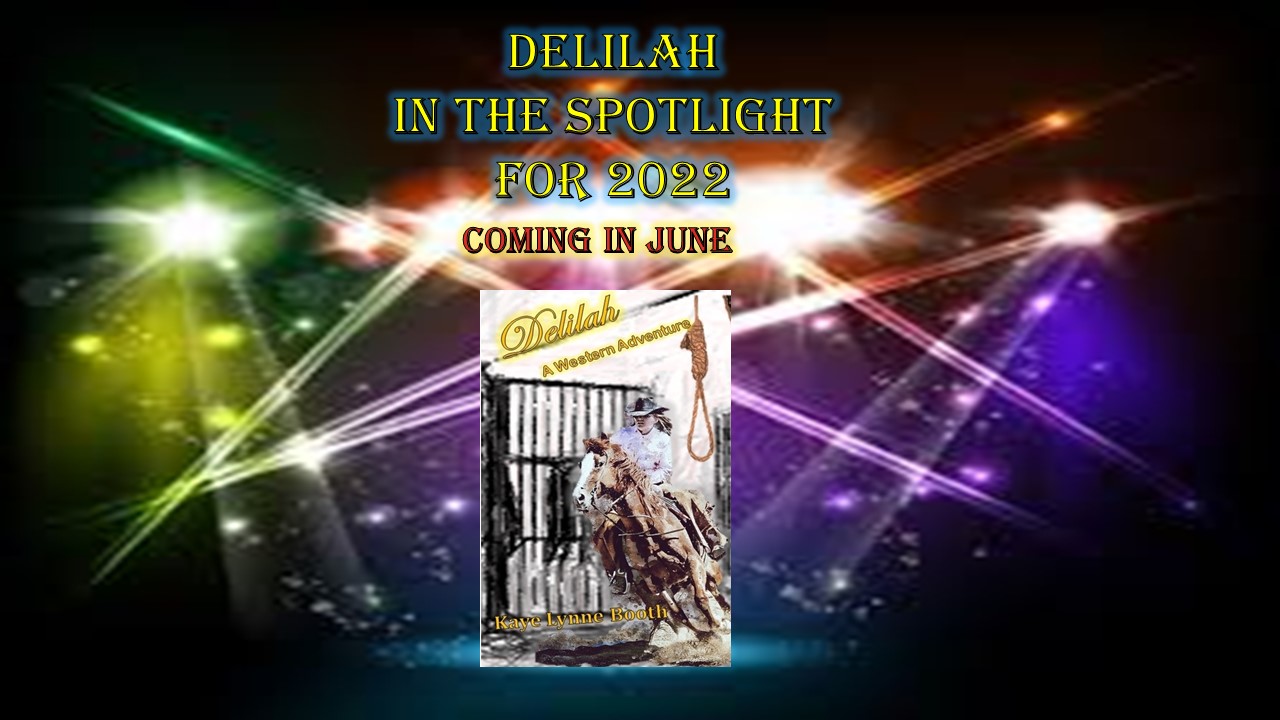
My first release for 2022 is scheduled for June, with the re-release of Delilah, in an edition that is the story I originally intended to tell. (You can find out more about the decision for this change here.) The current edition of Delilah will come down from the Amazon shelves sometime in April, and the new edition will be released wide, so it will be found not only on Amazon, but on Kobo, Barnes & Noble, Apple, Baker & Taylor, Bibliotheca, Borrow Box, Overdrive, Scribd, and other selected digital book outlets because WordCrafter Press publishes through D2D. (I’m a member of their affiliate program. Sign up for your own D2D account here.)
In the past, I told you about my science fantasy series, Playground for the Gods. The first book in that series was my thesis project when I was earning my M.F.A. at Western State Colorado University, back in 2016, so the it has been finished since then, yet you’ve never seen the implied promise of publication come to fruition. In 2022, I plan to release not just Book 1: The Great Primordial Battle, but also Book 2: In the Beginning, and Book 3: Inanna’s Song sometime toward the end of the year, but release dates for these haven’t been set yet.
WordCrafter Press & Author Services
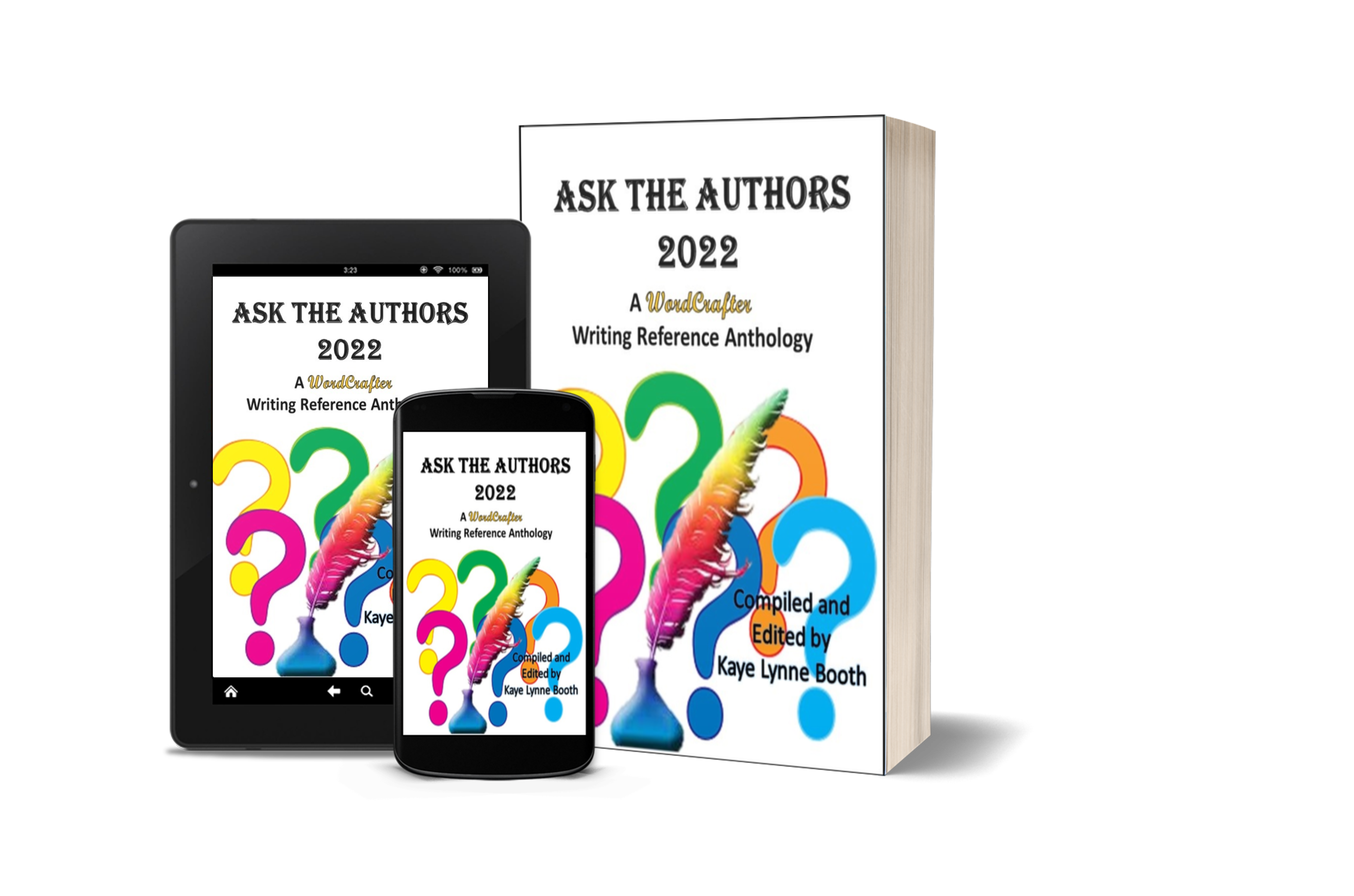
WordCrafter Press has some great releases coming in 2022 as well. An updated version of the writing reference, 2022 Ask the Authors, is scheduled to be released in March. The original Ask the Authors, was taken from a Q&A blog series I ran in 2018. While the much of the advice offered from the 17 different authors who participated in that project is still valid today, this edition will address the changes in the publishing industry since the original edition was published and will feature an anthology of essays on craft and publishing in addition to the Q&A advice. This edition will feature advice from 13 authors, including Bobby Nash, Mark Leslie Lefebvre, Roberta Eaton Cheadle, Nancy Oswald, Christopher Barili, Mario Acevedo, L. Jagi Lamplighter Wright, Kevin Killany, Paul Kane, Jeff Bowles, Enid Holden, Christa Planko, and myself, Kaye Lynne Booth.

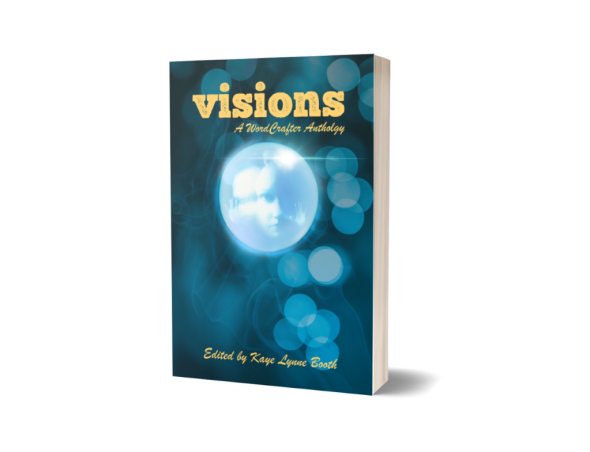
The call for submissions for the 2022 WordCrafter Short Fiction Contest posted on January 3rd. However, in 2022, WordCrafter Press will be putting out not just this one anthology, but a total of three short fiction anthologies. In addition to the Visions anthology, which contest submissions may be included in, that will be released in August, there will be two by invitation only anthologies: Slivered Reflections, which will be released in September, and Once Upon an Ever After, which will be released in November.
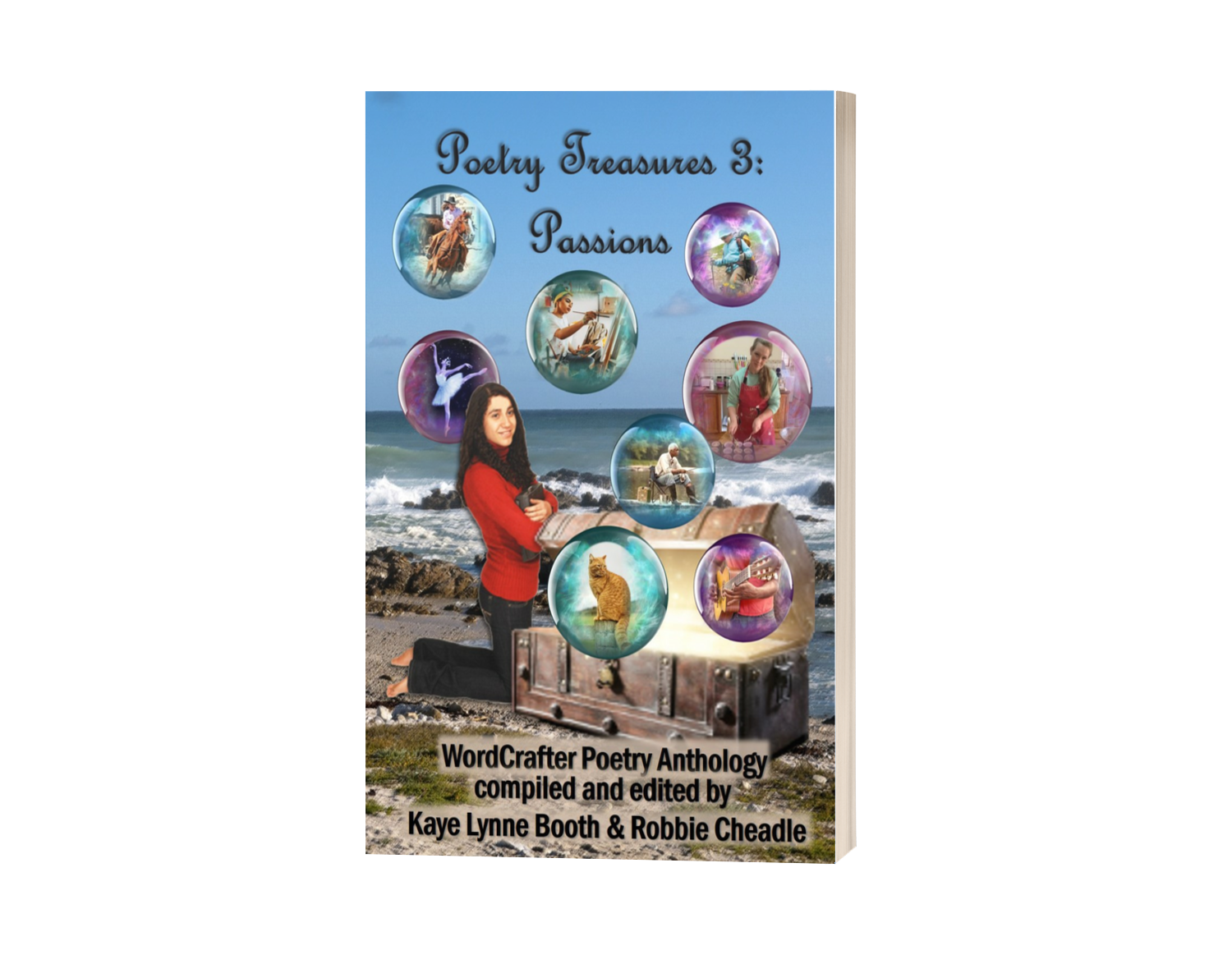
In 2021, we released the first edition of Poetry Treasures poetry anthology, featuring the works of Robbie Cheadle’s 2020 “Treasuring Poetry” poet guests on Writing to be Read, and we’ve decided to do it again. 2022 Poetry Treasures will feature the works of the 2021 “Treasuring Poetry” guests for a spectacularly unique poetry anthology, and will be released April to celebrate National Poetry Month.

Last, but not least, Write It Right Quality Editing Services is open to new editing clients in 2022. If you’re looking for affordable quality editing, Write It Right could be the editing service you’ve been looking for. A part of WordCrafter Quality Writing & Author Services.
I’m looking forward to 2022. I hope you’ll all join me in the coming year, as it promises to be a good one.
____________________________________________
Like this post? Let me know in the comments. You can be sure not to miss any of Writing to be Read’s great content by subscribing to e-mail or following on WordPress. If you found this content helpful or entertaining, please share.
Share this:

2022 WordCrafter Short Fiction Contest: Call for Submissions
Posted: January 3, 2022 Filed under: Anthology, Fantasy, Fiction, Ghost Stories, Horror, Science Fiction, Stories, WordCrafter, WordCrafter Press, Writing Contest | Tags: 2022 WordCrafter Short Fiction Contest, Call for submissions, Submission Guidelines, Visions, WordCrafter Press, Writing to be Read 2 Comments
The 2022 WordCrafter Short Fiction Contest is now open for submissions. The submission deadline of May 31, 2022. The winner will receive a $25.00 Amazon gift card and their story will be guaranteed to be featured in Visions. All finalists will also receive an invitation to be included in the anthology, which offers a small royalty share for your story contribution. Submission guidelines are pretty simple, but as they are different from last year, I suggest you read and follow them carefully.
Submit your story with a cover letter to KLBWordCrafter@gmail.com with “Submission: [Your Title]” in the subject line and pay the $5 entry fee below.
Contest Entry
Enter the 2022 WordCrafter Short Fiction Contest for a chance at an invitation to the Visions anthology and a grand prize $25 gift card.
$5.00
WordCrafter Press wants your visions.
For 2022, WordCrafter Press is looking for original short stories in the fantasy, science fiction, horror or paranormal genres. Past contests and anthologies have been limited to paranormal, and for Visions, your story can still have a ghost if you like, but it is not required. What I’ll be looking for for the 2022 WordCrafter anthology are your very best thought provoking stories, the kind of stories that will stay with readers long after they close the book.
WordCrafter Press is looking for original short stories to include a mix of fantasy, science fiction, horror, magical, and paranormal elements. Previously unpublished stories only.
Genres: Paranormal, Science Fiction, Fantasy, Horror or any combination there of.
Length: up to 5000 words
Submission Deadline: May 31, 2022
Pay: Royalty share
Rights: First Anthology Rights and audio rights as part of the anthology; rights revert to author one month after publication; publisher retains non-exclusive right to include in the anthology as a whole.
Open to submissions from January 1 through April 30, 2022.
Submit: A Microsoft Word or RTF file in standard manuscript format to KLBWordCrafter@gmail.com
If you don’t know what standard manuscript format is, review, for example, https://www.shunn.net/format/classic/
Multiple and simultaneous submissions accepted.
Find some helpful tips for submitting short fiction here, but mainly just follow the guidelines.
Share this:

Review in Practice – Word Craft: Prose & Poetry
Posted: December 31, 2021 Filed under: Book Review, Books, Poetry, Review in Practice, Teaching Writing | Tags: Book Review, Poetry, Review in Practice, Sally Cronin, Syllabic Poetry, Word Craft: Prose & Poetry, Writing to be Read 5 Comments
Word Craft: Prose & Poetry, by Colleen Chesebro is an insightful and helpful instructional book for those who wish to learn more about writing syllabic poetry and prose. The first section covers Japenese syllabic poetry forms and American syllabic poetry forms are covered in section two. The author outlines the rules and inspirations for each form, and provides plenty of examples to help you get the idea.
Hiaku has been one of my favorite forms of poetry to read since it was introduced to me in the fourth grade. However, my fourth grade teacher didn’t really explain this poetry form in a way that my fourth grade mind could really grasp, so I’ve never felt very accomplished in writing Haiku. In Word Craft, Colleen Chesebro was able to explain the art of this form of poetry in a manner which my aged mind was able to grasp, giving me a much better handle on what I’m trying to do with this form of poetry. Haiku is much more than just putting the right number of syllables in each line. Haiku is written to evoke images and emotion in a succinct way. I was surprised to learn that the syllabic rules for Haiku are not set in stone, and can be varied. Below is a Haiku which I wrote after reading the chapters on this poetry form.
Spring skies let rain pour
Wings stretch, ruffling wet feathers
small Hummingbird preens
While I know poets who write Tanka poetry, which combines poetry and prose,I’ve never understood what they were doing with these poems. Although I can’t say that I’ve mastered the Tanka, I think I do understand it better, but I will need a lot of practice before I write something in Tanka or Tanka prose poem that I feel worthy of sharing.
I also had some experience in writing Hiabun, which is a combination of poetry and prose similar to Tanka Prose Poetry, but I never really understood the purpose of this form of poetry. You would think this would be the easiest form of poetry in this book for me to write, as the inspiration can come from anything and it can be in any point-of-view and any tense that you wish to write in, but I still have a hard time grasping the how of this poetry form. Fortunately, Colleen Chesebro includes many examples of each poetry style and I have no doubt that, with patience and practice I will eventually get a handle on the Haibun.
Forms of Japanese poetry that I wasn’t familiar with in this book include Senryu, which is similar in form to a Hiaku but differs in subject matter; Haiga, which uses either Haiku or Senryu and combines three art forms, imagry, poetry and calligraphy; and Gogyohka, which is based on the Tanka, but you do not count syllables, with one phrase to a line and a line-break after each breath. I found the Renga, which is design to be written by two poets, interactively, , kind of like a poetic conversation, to be in intriguing poetry form.
This is my first attempt at a Senryu poem.
Hot tea steams
on chill summer morn
wake up call
For me, the forms of American syllabic poetry were more difficult, perhaps because they tend to be longer. In the second portion of the book, Sally Cronin includes explanation and instruction and examples for Cinquains of all types, Etherees, Nonets, and Shadormas. I made several unsuccessful attempts at the basic types of each of these poetry forms, but they are much harder than they look. My hat is off to Cronin and anyone else that can meld their syllables with seeming ease.
I took a challenge on Teagan Riordain Genevieve’s blog and for that I wrote a Shadorma poem, which I published here, on Writing to be Read. You can see my example of a Shadorma here, but I don’t know if it is any good. It really was harder than I thought it would be.
If you like syllabic poetry, either Japanese or American, and would like to try your hand at it, I highly recommend the instruction of Word Craft: Prose & Poetry, by Sally Cronin. This book introduced me to new forms, as well as delving deeper into forms I was familiar with. I give it five quills.

________________________________________________________________________________________________________
Like this post? Let me know in the comments. You can be sure not to miss any of Writing to be Read’s great content by subscribing to e-mail or following on WordPress. If you found this content helpful or entertaining, please share.
Share this:

Saying Good-bye to “Delilah” – But not for long
Posted: December 29, 2021 Filed under: Adventure, Books, Historical Inspiration, Western, WordCrafter, WordCrafter Press | Tags: Delilah, Kaye Lynne Booth, New release, western adventure, WordCrafter Press 5 Comments
After long deliberation I have come to a rather painful decision. After April 2022, Delilah will no longer be available through any book outlet. Delilah has been on the virtual shelves for five years now, and really hasn’t had many sales, even after adding forwards from authors Robert Hanlon and Paul L. Thompson, and a new cover and new back cover matter, so I’ve decided not to renew my contract with Dusty Saddle Publishing.
Originally, the story I wrote for Delilah was very different. I made major changes to the plot after the first draft was complete, based on feedback from a beta reader, which at the time I felt was valid, so I basically rewrote more than half of the story. The Delilah that I published, was not the same story that I originally conceived. Upon re-reading to see if I could determine why it might not be selling, I discovered several places where the story feels forced, where I was trying to make the events fit into the amended plot line and it was like trying to fit a round peg into a square whole. One of things authors must strive to accomplish is to write a good story that draws readers in and then provides a satisfying ending, so as not to disappoint readers, delivering on the promise. I think I’ve failed to do that with Delilah, leading to sales not being as good as I had hoped.

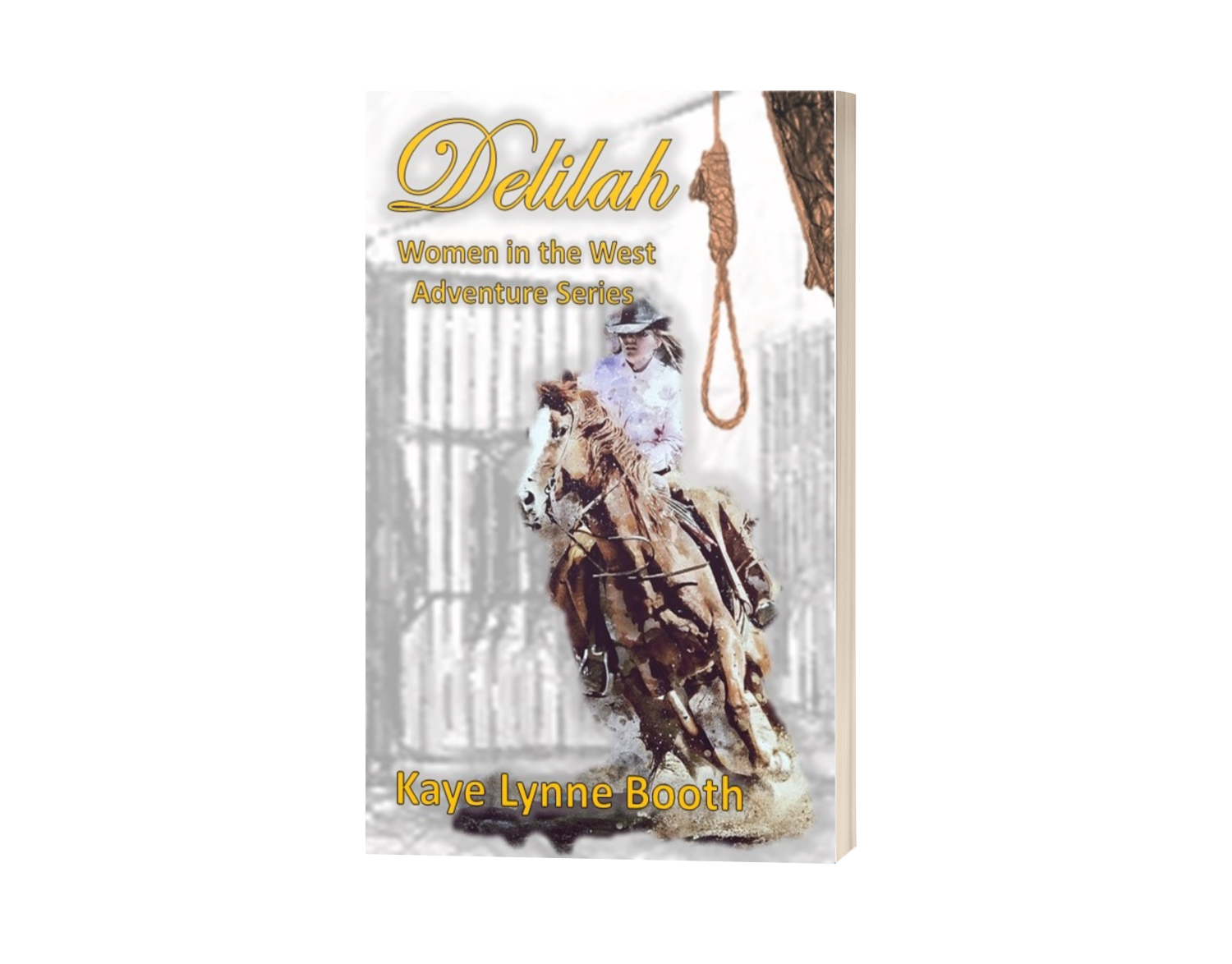
The good news is, although Delilah will be disappearing from the virtual shelves for now, I’m going to go back to that original story, at least as much as I can, as I resurrect her and revise this tale into the one I originally wanted to tell. Before the end of 2022 I plan to re-release Delilah in a revised edition complete with new cover (above) and ‘blurbage’. If you already read Delilah and liked it, the revised edition will be even better. It will be a story that is true to character and creator; the story that originally should have been and almost was, will be again. So watch for this new and improved western adventure to be released in June.
_________________________________________
Like this post? Let me know in the comments. You can be sure not to miss any of Writing to be Read’s great content by subscribing to e-mail or following on WordPress. If you found this content helpful or entertaining, please share.
Share this:

Writer’s Corner: Lessons for submitting to short fiction markets
Posted: December 27, 2021 Filed under: Anthology, book marketing, Short Fiction, Stories, Writer's Corner, Writing | Tags: Anthologies, Short Fiction, Submissions, WordCrafter Press 11 CommentsShort fiction doesn’t sell well. – That’s what I keep hearing. Anthologies are hard sells. So why would you even write short fiction, if it is so difficult to sell?
What many authors need to realize, is that while an anthology may be harder to sell than a novel, when you have work featured in an anthology, it is a project involving many authors, each with their own following which they bring to the table, creating a much bigger marketing network than you would have for a novel. Being a part of an anthology expands your marketing reach exponentially by the number of authors involved, which could actually make the marketing and promotion of the anthology easier and allow marketing to a much larger audience.
For the past few months I’ve been exploring short fiction and short fiction markets from the other side of things, as I worked to compile two separate anthologies. My solo project for my masters in publishing is The Best of Weird Tales 1926-27, which meant reading twenty-four issues of Weird Tales and selecting what I felt were the best stories to represent the publication, then compiling them into a single collection. It had to be a careful selection process, because much of what was socially acceptable in 1926 & 27, is far from acceptable in 2021.
The other project required for my degree involves being on the editorial team for the Mirror, Mirror anthology. You may have seen the call for submissions posted here on writing to be Read back in July. And there’s a chance that you even submitted to it, since we had over 600 submissions. That’s a lot of short stories to read. But I learned some valuable lessons from the experience:
- It pays to get your submission in early. The early submissions get fresh eyes and open mind. But those submitted closer to the deadline, are seen by eyes that are tired by minds that have read so-o-o many stories, many of which are similar in theme or concept, if you wrote to the submission guidelines.
- Follow the submission guidelines. This experience drove home to me how important this one really is. Going into this, my instructor and mentor, Kevin J. Anderson drilled in the importance of following the submission guidelines and took great care to make them clear in the call for submissions. It called for proper manuscript formatting, something every author should be familiar with, but just in case, he also included a link to a site that defined and explained what proper manuscript formatting is, and still we got manuscripts that were not formatted properly. Toward the end, I know improperly formatted manuscripts got set aside without a full read, because it hurt my tired old eyes too much, so this is really an important one, but many authors just didn’t get it. Publishers don’t want to work with authors who cannot follow simple instructions and format their manuscript properly or follow the guidelines, because this hints that they might be a pain to work with.
- Only submit a story that fits what the call is looking for. I was surprised how many stories we got that didn’t have a mirror in them at all; not even a compact for the character to check their make-up. Who sends a story without mirrors to an anthology titled Mirror, Mirror that requests a mirror be central to the story. I’m told that last year someone submitted Christmas cards for the call for submissions for Unmasked, last year’s anthology, which may evoke a chuckle when you hear it, but for editors overwhelmed with submissions, reading through a story that doesn’t even come close to meeting the guidelines or match the theme, it feels like a big waste of time. Editors have feelings, too. Be kind and only submit stories that meet the theme and guidelines, instead of trying to cram your story into a frame that doesn’t really match.
- In today’s market, busy editors are looking for something that is close to being publishable as is, so be sure your manuscript is polished. I feel like I shouldn’t have to state this one, but with as many seemingly unedited submissions, I guess it needs to be said. I was expecting it toward the end, when authors were rushing to meet the deadline, but even early on there were manuscripts that were riddled with misspellings and typos. Many of these may have been good stories, some even written to guidelines, but they were passed by because they would have required too much editing to ready them for publication. It would have required more time than my class of student editors would be able to give. So, I strongly urge having another set of eyes give a critical look over all stories prior to submission. Turning in a clean manuscript will strengthen the chances of your submission being accepted, or at least read clear through for a fair evaluation.
- Choosing favorites is much harder than I thought it would be. We were cautioned that last year’s anthology received over 500 submissions, with more than 100 received in the last week of submissions. Mirror, Mirror received over 600 and so many of them were truly excellent stories that choosing the few that we had the budget for was really difficult, especially since not everyone had the same favorites. In the end, we ended up with a heck of a selection of stories for this anthology. I think it will be great!
Although all of my personal favorites couldn’t be included, I did find a way to make 2022 a great year for anthologies at WordCrafter Press, with two by invitation only anthologies in addition to the annual short fiction contest and anthology. I gave you a sneak preview for the submission call for the annual anthology, which will be titled Visions, here. The official call for submissions will be posted in January, so stay tuned.
___________________________________________________________________________________________________
Like this post? Let me know in the comments. You can be sure not to miss any of Writing to be Read’s great content by subscribing to e-mail or following on WordPress. If you found this content helpful or entertaining, please share.









Words to Live By – Inspiration, Legacy, and Beatles Music
Posted: January 5, 2022 | Author: Jeff Bowles | Filed under: Commentary, Creativity, Opinion, Words to Live By, Writing | Tags: Inspiration, Jeff Bowles, music, The Beatles, Words to Live By, Writing to be Read | 3 CommentsThe first Wednesday of the month, writer Jeff Bowles muses on life, creativity, and our collective destinies as makers of cool stuff. You’re a writer, but have you ever thought about how or why? Here are some words to live by.
Paperback Writer
Over the holidays, I watched the new Beatles documentary released on Disney+, The Beatles: Get Back. I’m a huge fan of the group and always have been. I realize there are non-Beatles fans out there, but I have to admit, I’ve always been mystified by their lack of enthusiasm. To me and millions of other Beatlemanics, the band is a historical landmark, having written and recorded music that changed pop culture for generations to come.
This blog entry is about inspiration and legacy. I liked to write stories as a kid, but really, I wanted to be a rock star. This would’ve been in the mid-90s. At the time, many potential role models existed for me and every other outcast kid who picked up a guitar. I wasn’t into Nirvana or Linkin Park at that age, didn’t appreciate Red Hot Chili Peppers or Green Day. I loved The Beatles, plus lots of other groups from the 60s and 70s. Never mind that my older brother and mom began spoon-feeding me this stuff at a very early age, or the fact that I looked up to my brother and enjoyed liking the things he thought were cool. The Beatles were special, supernatural even. I believed that then and I believe it now.
But the truth is, I haven’t been feeling particularly inspired lately. Not even Christmas cheered me up. In fact, it only made me feel worse. This Get Back documentary, it’s exhaustive (and a little exhausting). Only a mega Beatles nerd could’ve pieced it together. Peter Jackson (director and co-writer of The Lord of the Rings trilogy) happens to have been that nerd. The film is almost eight hours in length, split over three episodes, focusing on just one month or so in the lives of the famous foursome.
The great thing about it is that we really get to see The Beatles’ creative process up close. Lots of labor and missteps, mistakes and dead ends. Critics have said this proves they weren’t as legendary as fans have always claimed. To me, it makes them more human, which is a comfort, because it proves anyone anywhere can muster enough talent and drive to produce work of honest significance.
Inspiration is great, but it’s not nearly as effective as perspiration. When I was learning to play and sing and write songs, John Lennon was my idol. I wanted to be him, and man did all the other kids in school think I was strange. I remember looking up at the stars one night when I was ten years old and whispering to the heavens,
“I want to be the greatest rock star ever.”
Or something to that effect. As it turned out, I lived a small (very small) portion of that dream. Played music with people all the way through my teens and early twenties. Lots of tiny coffee house gigs, open mic nights, bars, private celebrations. When I was twenty-one, I met the woman I would one day marry, and eventually I found I wanted different things out of life. Writing short stories and novels, the pursuit of some kind of career in this field, it replaced my desire to make music almost entirely. I grew dedicated to the craft and learned a hell of a lot. For the most part, writing has made me happy. I’m glad I took the years necessary to get good at it.
But I wouldn’t have found that dedication, that fire in my heart, if I weren’t already intimately familiar with it. There is an electric feeling that occurs inside the body and mind of a musician caught in the flow of her or his own creativity. The Beatles clearly knew that feeling well. It’s potent and wonderful, thrilling and powerful.
I came to learn that writing is a slower burn. Tons of work up front, and then maybe (maybe) a bit of adulation months or years later. But it still holds moments of intense creative gratification. No matter who you are, how popular or famous or legendary, this process, this mental birthing experience, it can be difficult and frustrating. John Lennon, Paul McCartney, George Harrison, and Ringo Starr were all wonderful musicians. They had nothing to prove to anyone, yet they still worked themselves to the bone to make stuff that simply had no equal.
So here’s my question for all of you: how dedicated are you to what you love? What thrills you and gets you excited for writing or anything else in life? Maybe it’s a bit unfashionable to admit that music recorded some sixty years ago makes me feel ready to take on the world, but it does. Especially when I get to see it up close, visceral, all the creative battles, coming to the logical and favorable conclusion of work that stands the test of time.
Next time you’re feeling down in the dumps and not at all creative, head back to the source—your personal wellspring of inspiration—and see if it won’t refill your cup a little. Pick up a guitar, or a pencil or paintbrush or a media powerhouse of a computer, or maybe just watch a good film about one of your favorite things on earth. All hail the makers of cool stuff. Be they Beatles or bestsellers or nobodies in particular.
Peace and love to you this new year. May it bring you everything you need, and maybe a few of the things you want, too. Until next time.
Jeff Bowles is a science fiction and horror writer from the mountains of Colorado. The best of his outrageous and imaginative work can be found in God’s Body: Book One – The Fall, Godling and Other Paint Stories, Fear and Loathing in Las Cruces, and Brave New Multiverse. He has published work in magazines and anthologies like PodCastle, Tales from the Canyons of the Damned, the Threepenny Review, and Dark Moon Digest. Jeff earned his Master of Fine Arts degree in creative writing at Western State Colorado University. He currently lives in the high-altitude Pikes Peak region, where he dreams strange dreams and spends far too much time under the stars. Jeff’s new novel, Love/Madness/Demon, is available on Amazon now!
Check out Jeff Bowles Central on YouTube – Movies – Video Games – Music – So Much More!
Want to be sure not to miss any of “Words To Live By” segments? Subscribe to Writing to be Read for e-mail notifications whenever new content is posted or follow WtbR on WordPress. If you found it useful or entertaining, please share.
Share this: