An Adventure in Digital Book Marketing
Posted: May 14, 2018 Filed under: Advertising, Books, marketing, Promotion, Writing | Tags: Advertising, book marketing, Book Promotion, Book trailer, Delilah, newsletters, Paid Promotions, Writing, Writing the Rockies Conference 1 Comment
Since February, I’ve been giving myself a crash course in book marketing and promotion, especially in regards to social media marketing, because it’s the cheapest route for getting your books out there that I’ve found. Which is not to say that it is the most effective, or that paid promotions aren’t more effective. Those are things I cannot yet say. Ask me when I’m a successful and wealthy author. Perhaps I will know the answer by then.


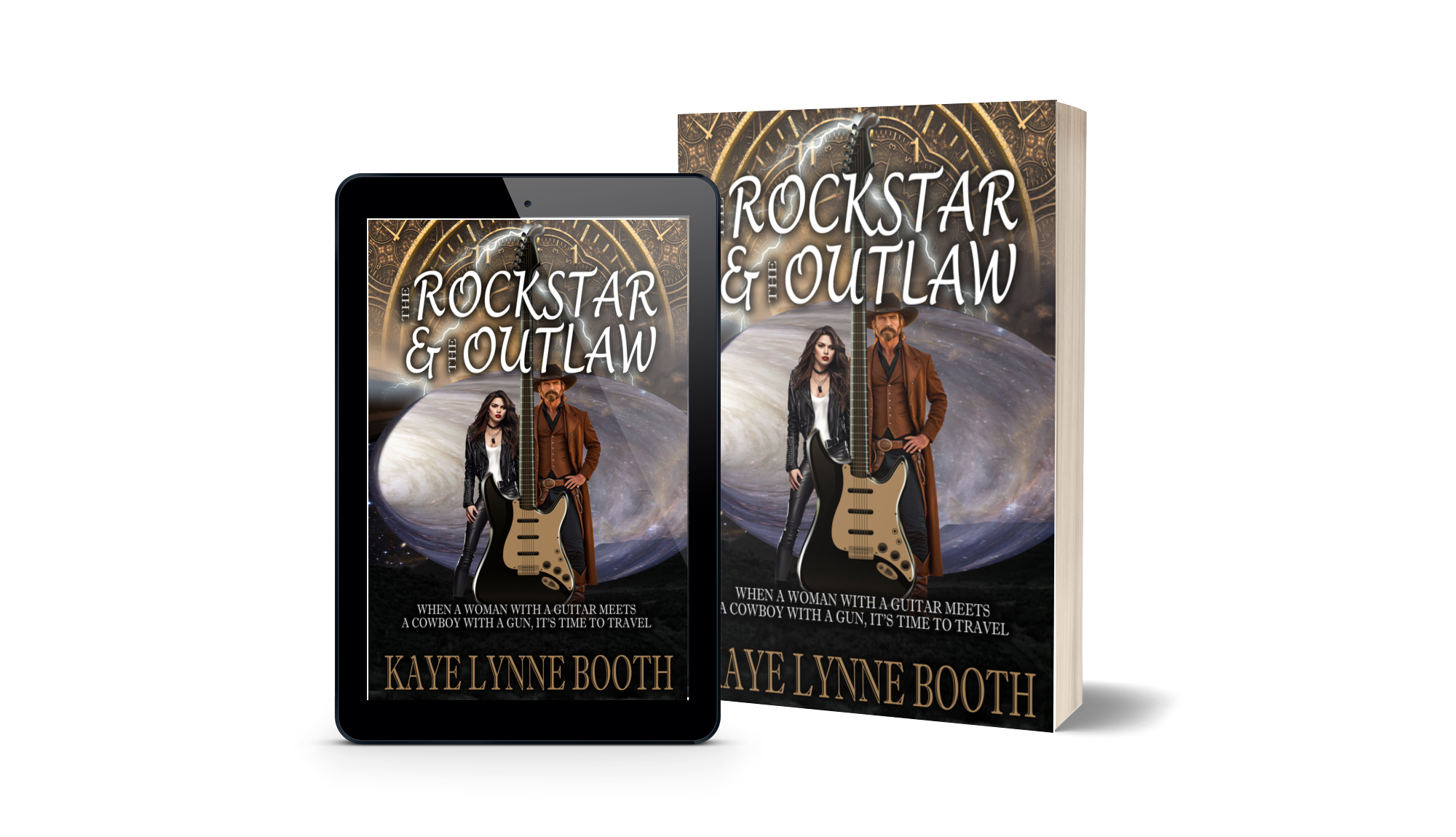
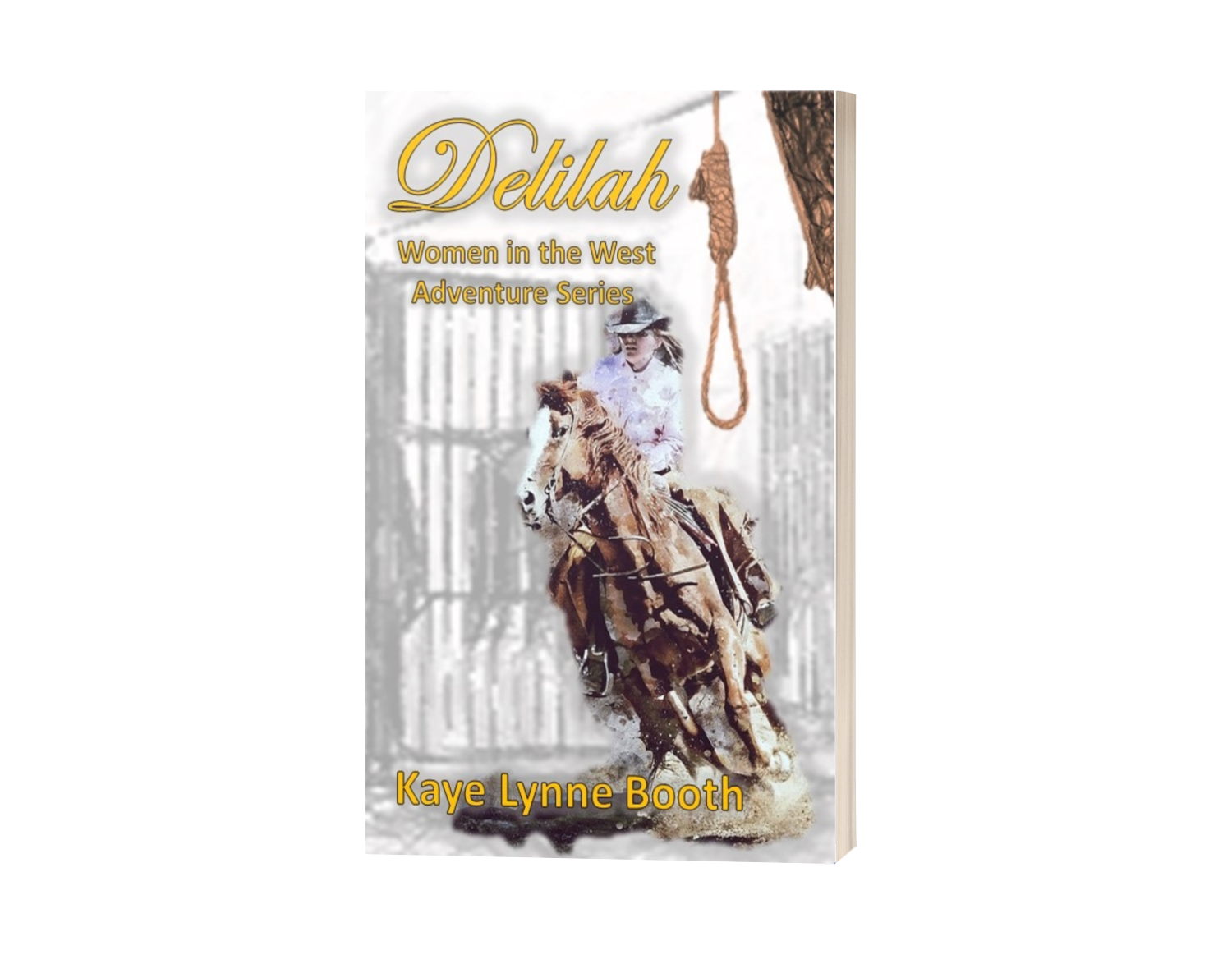
While educating myself in areas beyond my own expertise, (I’m a writer, not a marketer), I launched a marketing campaign and created promotions of my own to get a feel for what works for me and what doesn’t. Since that time, I’ve dipped my toes into the pool of paid promotions, as well. Among the methods and techneques tried: I now have a slowly growing mailing list for my new monthly newsletter. I’ve sent out two so far, and have so far met with medicore success, and I launched a media campaign for Delilah which included a few modest paid promotions, social network promotions of new advertisement photos, sending out press releases to select Colorado newspapers pushing the local author angle, and my very first book trailer which I created myself.

It’s hard to determine the success of any of my efforts as yet, although the press releases resulted in runs in two newspapers that I know of. What that adds up to in sales, I don’t yet know. Although there was a small increase in sales April, there doesn’t seem to be a correlation with any of my promotional efforts. Sales come slow, and often, only after great effort on the author’s part, I think. Only time will show the effectiveness, or ineffectiveness, of my first marketing campaign.
 The newsletter email list is growing slowly, but it is growing. The weird thing is, when you sign up in the sidebar pop-up, you get a link to a free e-copy of my paranormal mystery novelette, Hidden Secrets, but only a handful have been claimed. I even sent out the link in the newsletter for April, and still subscribers are not claiming their thank you gift. Of course, only a little over thirty percent are opening the newsletter, so I don’t know how much help it will be. I’m asking all who read this post to subscribe to my monthly newsletter using the sidebar pop-up, and then claim your free gift. The newsletter is monthly, so it won’t clutter up your inbox, and Hidden Secrets is not available on any other platform.
I don’t know if the book trailer had any effect on sales, but I sure did have fun creating it once I figured out what program I could use to get the job done. After looking at numerous free programs that claim to make book trailers, it turns out I had the program to do the job already installed on my computer in my Microsoft Office 2013 Power Point. A little more self-education on what can be done with Power Point and how to do it, and I had myself a book trailer, which I absolutely love. It’s amazing what can be done with software I already own. Made me happy. Even if it doesn’t bring one sale, I think it’s cool. I’d post it here to show you, but the free plans on WordPress don’t include video capabilities, so if you’re interested, you can see it on my Delilah Facebook page. I hope you’ll check it out.
I’ve learned a lot from my search for knowledge in book marketing and promotion. While SEO is still important, it’s valued different than it used to be, because search engines now operate differently, according to Hubspot’s 20 SEO Myths You Should Leave Behind in 2018. Technical terms like bounce rate may be beyond my limited understanding, but I understand enough to realize I need to give SEO more thought when designing my content. It would be a lot easier if my books would just shoot up to the top of the best sellers charts overnight and rode there for awhile. Maybe then I could afford to hire somebody to do all this brain numbing stuff for me. I always try to write using keywords. Isn’t that enough? I only had a very basic understanding of SEO to begin with, and if I try to take in too much SEO talk at one time it gives me a headache, but I’m determined to give it my best shot.
So, that’s my first big marketing adventure. I may not be able to tell how effective it was at this time, but I know I’m learning a lot as I go. The adventure isn’t over yet. In July, I’ll be at my first face to face event, when I sit on the alumni panel for Western State at the Writing the Rockies Conference and print copies of Delilah will be available. I’m both excited and nervous, but I know it’s going to be a lot of fun and I’m looking forward to it. Be sure and catch next Monday’s post to learn more about the conference
As to the effectiveness of any of it? I’ll let you know.
Like this post? Subscribe to Writing to be Read for e-mail notifications whenever new content is posted or follow WtbR on WordPress.
Share this:

The Perils Of A Writer’s Career: Guest Post by Art Rosch
Posted: May 7, 2018 Filed under: Author Profile, Books, marketing, Promotion, Self-Publishing, Writing | Tags: Art Rosch, author's journey, book marketing, Confessions of an Honest Man, promotion, The Gods of Gift, The Road Has Eyes, Writing Leave a commentI’ve known Art Rosch since 2009, when he became a member of a writing site I was administiring called Writers’ World. Although I’ve never met him in person, we’ve been online friends, supporting one another like only authors can ever since. Art is a great guya da, and a fine photographer, and a damn good writer. You can feel the honesty in his words as you read them, and that’s not something all authors can do. I’ve had the pleasure of reviewing Art’s books, Confessions of an Honest Man, and The Road Has Eyes. I’ve also had the privilage of featuring an interview with Art in my 2016 series on publishing, as well as having him as a member on my more recent Ask the Authors series in March and April.
During my Ask the Authors series, I did a segment on Building an Author Platform. As a member of the author panel, Art expressed his frustration with the whole author platform/marketing and promotion thing and wasn’t sure how he could respond to my questions in a useful manner. Art had tried many paths to marketing and promotion, at times investing much money with little returns. He didn’t understand the problem and explained, “I can’t even give away books.”
This is one of the pitfals for today’s authors. We’re writers, not marketers. I think we all have gone through it at one time or another, (or will for new and upcoming authors). It’s easy for writers to become disheartened with the whole promotion process, especially if they’re not seeing results from their efforts. I told him to give me whatever he had. If he couldn’t tell me what had worked, he should tell me what hadn’t worked for him and why. I would take whatever he could offer. His response was a wonderfully told author’s journey that was too lengthy to be included in that segment of Ask the Author, but was worthy to appear on Writing to be Read, none-the-less. So, with that in mind, I give you this Guest Post by Art Rosch:

I’m the last person to ask about marketing and publishing. Perhaps my experiences might be cautionary, might enable other writers to consider how they proceed. I can only offer my history as a writer. You can call me disillusioned, but that’s actually a positive state. It’s good to dream but it’s important to temper the dream with reality. You can get swept down some terrible false paths by unskilled dreaming. I believe that this mantra, “dreams can come true if you persist” is a shibboleth. A lot of bullshit. It takes skill to dream the right dream. It takes skill and practice to execute a dream and bring it to fruition. Everything else is about karma. Destiny.
In 1978 I took a chance and sent the manuscript of a short story to agent Scott Meredith. At the time, Meredith had a branch of his prestigious agency that read unsolicited works for a fee. We’ve been warned countless times about this flaky practice, but it was, after all, Scott Meredith. He represented Norman Mailer and Ray Bradbury, Arthur C. Clarke and James Michener. I scratched together my fifty bucks and mailed the 3600 words of my comic science fiction tale about a planet where there are six distinct genders. It was called Sex And The Triple Znar-Fichi.
Eight weeks after mailing my story I received two envelopes. One was small and one was large. The small envelope contained a check for $1800. The large one contained a two year contract to be represented by Scott Meredith. The agency had sold my story to Playboy Magazine.
I was thrilled and motivated to write. I was young, ambitious, and not a little fucked up. There were problems in my life but everyone has problems. A writer without problems is hamstrung. Embrace your problems! They’re your fuel!
A few months passed. I was sending my works in progress to my editor at Meredith Agency. He was doing his job. He made it clear that my first science fiction novel was a bust and that I should focus on the book that has become The Gods Of The Gift. Then I received a package from New York. It contained a clear lucite brick featuring an etched Playboy logo. It carried the news that my story had won Playboy’s Best Short Story Award. There was another check for $500 and permission to use Playboy’s expense account to bring myself to New York City to attend the Playboy 25th Anniversary banquet and awards ceremony.
The Playboy Banquet was an amazing experience. I met Playboy’s fiction editor, I got business cards from the editors at The New Yorker, Penthouse, Esquire. I was a celebrity for the requisite fifteen minutes. I was hanging with the big hitters. My table mates at the dinner were Alex Haley, Saul Bellow and their wives. I was in! I had made it!
 I brought The Gods Of The Gift to a sort of completion and it went on the market. And didn’t sell. The agency kept batting for me but I wasn’t turning out viable material. I wasn’t writing long form books that would sell. But I was learning. Two years went by without a sale, and the agency did not renew my contract. I went into my personal Dark Night Of The Soul, a period that lasted a long time. In spite of all the obstacles, I continued to play music and write.
In 1976 I had started work on my autobiographical novel, Confessions Of An Honest Man. I was dealing with a paradox: how does one write an autobiographical novel at the age of thirty? The answer isn’t complicated. One starts. And one lives. Here I am, now, at the age of seventy, sitting on a huge body of work. When I was contracted to an agent, I couldn’t write to sell. Now that I can write to sell, I can’t find an agent. The ground has shifted. We live in a new era. Even with a publisher and an agent, we’re still on our own with regards to marketing. Unfortunately, I’m not much of a marketer. It takes money to market, and I’m not rich enough to front a sustained advertising effort. I’ve been online for fifteen years. I have eight hundred ninety Twitter followers. My Facebook stats aren’t much better. I have an excellent blog that features all my media work. It’s gotten so that I’m shocked when I receive a comment. I’m all over the web. I’m on Tumblr, Instagram, Snapchat, you name the social medium, I’m there.
It’s my photography that gets the attention. I suppose that’s natural. Images are so much more accessible than literature. We live in a tough time for writers of quality. There are so many writers, yet it seems as if there are fewer readers. The sales figures for my books are shocking. I can’t even give them away. In three years I’ve sold twenty five copies of my e-books. I’ve given away about eleven hundred. Those figures are spread over three books. In spite of this epic failure I persist. I figure I’m somewhere near my peak with regards to my writing skills. I’m a late bloomer. I’m also a writer who works a long time on each project. Like decades. Confessions Of An Honest Man only reached its completion when I switched from past to present tense. It changed everything. I finished that work last year. Begun in 1976, finished in 2017. Same with The Gods Of The Gift. It didn’t totally gel until I had revised it countless times and solved a thorny structural problem. Begun in 1978, finished in 2016. I can at least regard my non-fiction memoir, The Road Has Eyes with some affection. It took a year to write.
I again made contact with the Meredith Agency in 2001. They didn’t give me a contract but one of their editors was interested in me. Barry N. Malzberg is/was a science fiction author, critic and NYC literary personality. His editorial approach (with me, anyway) was brutal, confrontational, maybe even abusive. The cumulative effect on me was positive, but the experience gave me a two year bout of writer’s block. He helped me with Confessions Of An Honest Man. I’m considering making contact again. With some trepidation. He was a rough editor.
 My plan? I’m going to invest in Confessions Of An Honest Man and produce paperbacks. There’s something about a physical manifestation that enlivens a book. My intuition tells me that this is the right step. I’ll follow with my other books. I have an as-yet-unpublished fantasy book, The Shadow Storm (about fifteen years in the writing). I’ll bring it out. I expect nothing. It’s not that I don’t care. I’m just too f’ing old to have an attachment to results. It’s about the process of writing and publishing. It’s obedience to my inner voice.
I’m a very flawed person. I’ve lived at the extremes of life. I’ve experienced the horrors of addiction and homelessness. I’ve been a yogi/junkie. How’s that for a paradox? But I survive and have found a niche in the world. A place to write. I live in an RV with my partner and two obnoxious teacup poodles. That’s good enough.
Thank you for sharing with us, Art. Watch for my review of The Gods of Gift in the near future. You can learn more about Art and his work at:
Arthur Rosch Books
Blogger
Write Out Of My Head
Confessions Of An Honest Man
The Gods Of The Gift, science fantasy
The Road Has Eyes: A Memoir of travel in an RV
If you’d like to have a guest post you’d you’d like to have featured on Writing to be Read, contact Kaye at kayebooth(at)yahoo(dot)com. I wish I could, but at this time, I am unable to compensate you for your words. This blog is a labor of love, and so must be all guest posts.
Share this:

Exposition: Telling vs. Showing
Posted: January 22, 2018 Filed under: Books, Dialogue, Exposition, Fantasy, Fiction, Science Fiction, Writing | Tags: Exposition, Fiction, Show vs. Tell, Writing, Writing to be Read Leave a comment
A writer should show the reader, rather than tell the reader. Help them form a mental picture in their minds. Put them into the story. How many times have we all been told this? Finding a balance between showing and telling is a hard thing to do, but to be a good writer we must strive to achieve that balance.
I’m a person who likes to think big, and in my writing it’s no different. As many of you know, in graduate school, my genre fiction thesis project was the first book in my Playground for the Gods science fantasy series, In the Beginning. But, what you may not know is that my original thesis proposal was for what turned out to be the third book, only in my mind it was the only book and it spans back beyond prehistoric time. While preparing my thesis proposal the feedback that I recieved from instructors and cohorts time and again, was that my proposal would require too much exposition unless I created an epic tomb of unfathomable porportions, way beyond the scope of my thesis requirements, and impossible to complete in the time allowed.
The main problem was that there was a lot of background that I felt the reader needed to understand where the character was coming from in the now of the story. Most of that information was being communicated to my readers through exposition. The story wasn’t taking them back to relive the scene, it was simply filling them in on what they needed to know, because the story I wanted to tell spanned over billions of years. That’s a lot of backstory. That’s exposition.
Robin Conley saw a similar problem in her review of the movie Batman vs. Superman: Dawn of Justice, “Almost all of these really big elements deserved a proper set up because they are major story parts that will potentially carry over… The long exposition and set up in the film makes the story drag and hard to stay involved, no matter how many interesting elements there are.”  Robin explains what exposition does and why we don’t want too much of it. Too much exposition is like coming in in the middle of a film you’ve already seen, and filling in other viewers on what is happening, instead of letting them watch the film and figure it out for themselves.
That was the problem with my PfG story – way too much exposition. It happens all the time. And it’s easy to overlook it when you’re the author. Which is exactly what I had done with my thesis. I had that story outlined and plotted, but I kept having to stop and fill in the background details with exposition. And exposition tells your readers something, but it doesn’t provide a mental image for them. It doesn’t pulace them in the scene. Action and dialog accomplish those tasks quite well. And my cohorts and instructors were right, although at the time, I didn’t want to believe them.
My solution was to turn my story into a four part series. Hence the Playground for the Gods series was born. All that backstory, which had come out mostly in exposition, became a story of its own, one that I could show my readers, rather than telling them about it. My original story idea will eventually be book three, and although I did have to write the whole first book instead of the story I set out to tell for my thesis, that story outline is still waiting for me to put it in story form.
Of course, that isn’t the only way to solve problems of exposition, but this can be applied without creating entire novels. You simply expand on some scenes to eliminate exposition and create a longer story, chosing those scenes that are most vital to the story. You can also chose to leave certain information out, thus eliminating exposition without lengthening, and perhaps even shortening your story. It is a delicate balance, but as the writer, you must do what the story needs to achieve it. What works for one story may not necessarily be the answer for another.
So, how much exposition is too much? That’s a very subjective question, but generally speaking, if you’re telling your reader what happened, with a few lines of glib dialog thrown in here or there, then you have too much exposition. Your reader wants to get lost in the book, and for that, they need a story that is told in such a way that they feel like they are there.
We’ve all read stories like that. For me, it’s Anne Rice. I may have never been to New Orleans, but after reading some of her books, I feel like the Garden District and the French Quarter are old frieinds. I can smell the magnolia blossoms, and see the old plantation houses as if I’d been there. That’s the kind of story we, as authors, strive to write, regardless of the genre we write in. It’s the kind of story that has the perfect balance, using exposition only when absolutely necessary to fill in details, providing plenty of action and dialog to fill in the rest. It’s a delicate balance, but one we must all strive for.
Until next time, Happy Writing!
Like this post? Subscribe to Writing to be Read for e-mail notifications whenever new content is posted or follow WtbR on WordPress.
Share this:

Looking Back on 2017
Posted: December 29, 2017 Filed under: Books, Cover Art, Fiction, marketing, Promotion, Publishing, Science Fiction, Self-Publishing, Writing, Writing Tips | Tags: Books, Delilah, Happy New Year, marketing, Relationship Add Vice, Stories, The Collapsar Directive, Writing, Writing to be Read Leave a comment
Every year at this time I look back and so a review of what was published on Writing to be Read and my writing life. 2017 has been pretty eventful for both me and Writing to be Read, so this year I’m particularly excited about this look back. But, I’m also excited to get out my crystal ball and warm up my psychic abilities as we take a look forward that comes as we start the new year, because I think there may be some exciting things in store.
There were so many things that happened for me in 2017. In April, my western novel, Delilah was published by Dusty Saddle Publishing, which of course, is exciting. Delilah hasn’t done too bad on sales, but it didn’t make the best seller list. It has received some really excellent reviews, and is rated with four stars on Amazon. Although it may not be a huge success, for me it was a hard earned accomplishment, but the reward came the day I received my first royalty check. Yep, I’ve got royalties. Isn’t that the final proof that I’m a writer, at last?

I do have folks inquiring about a second novel, and for those who are wondering, Book 2 is in the working. My crystal ball tells me that it will be published sometime in the coming year, only this book, I may publish myself and skip the publisher as middle man. I’m having a time getting the sales data, and what I do have makes it appears as if what sales I do have, have been the results of my own marketing efforts, so I’m not seeing the benefit of sharing my royalties with a publisher, when I can do about everything they have done for me. In addition, mid-year the rather generic cover the publisher provided for the book was replaced by a cover that fits the story better, done for me by Sonoran Dawn Studios, which I am much happier with.
 In addition I had two short stories published in 2017 by Zombie Pirates Publishing. The first, “If You’re Happy and You Know It” came out on August 1, in their science fiction anthology The Collapsar Directive. The story is a futuristic dystopian tale with just a touch of humor, in a world where productivity is high, but you’re only allowed to be happy on the weekend.
The second story, “The Devil Made Her Do It”, just came out the 15th of this month in their Crime Romance anthology, Relationship Add Vice. It’s a tale about the crazy things we do for love and a girl, Betty Lou Dutton, who leaves hereself open to be taken advantage of and ends up taking the rap. My fortune telling abilities see Zombie Pirates in my future for the coming year, as well. I submitted a little flash fiction story for consideration in their Full Metal Horror anthology. Wish me luck.
The really big thing that happened for me in 2017, or at least I think it’s big, is a landed an adjunct position teaching ENG102:Academic Writing at Western State Colorado University, my Alma Mater. Let me tell you, it has been a crazy ride. I got the position due to a last minute opening, when a scheduled lecturer was unable to teach for health reasons, which was unfortunate for the scheduled lecturer, but very fortunate for me. We got it all figured out and I was hired five days before classes started, so that’s how long I had to restructure both classes to be hybrid classes and figure out how to teach a method of writing I knew nothing about. It was a rocky start, and to be honest, I think I confused many of my students at first, because I was unsure myself, but as the semester moved forward, I gained more solid footing in the classroom, and the students began to figure it out, too. I have now successfully made it through a whole semester, teaching two hybrid courses and it feels great. I know I can do it and I have some experience teaching in a University setting, so I know there will be more teaching jobs in the coming year. My crystal ball is a little blurry in this area, but I know last minute stuff happens all the time, so who knows? Maybe I’ll end up back at Western.

As for Writing to be Read, I’ve had an exciting year there, too. At the beginning of the year, I my friend Robin Conley helped me do a total overhaul of the site, and in August my friend DL Mullan of Sonoran Dawn Studios helped to redesign it. The results are what you see here now, but they were a long time in coming. I’ve added my website right here on the blog and you can reach the different sections by clicking on the tabs across the top to learn about my published poetry and fiction, my westerns, my Playground for the Gods series, or Write it Right Editing. Writing to be Read also gained some great talent in 2017, Robin Conley with her Weekly and Monthly Writing Memos, and Jeff Bowles with his Pep Talks and his God Complex posts, and I am thankful for benefit of their content for the short time they were with me. Unfortunately, life carries folks in different directions and both of these fine writers are no longer able to share their expertise and wisdom with us and I don’t foresee them rejoining us in 2017.

What my crystal ball does show me, is that Writing to be Read has grown in readership over the past year, and I feel it is due to the great and consistant content posted not only by myself, but by Robin and Jeff, as well. Most recently, the content has been almost non-existant, because I’ve had to focus on the classroom and I’ve discovered grading essays takes a lot of time. I don’t think the drop in content from losing my team members or from my not having the time to devote that I should have hurt my numbers yet, but I do foresee such a possibility if the lack of content continues.
In this realm, my crystal ball shows me something very interesting. I see new members of the Writing to be Read team and really great content in the coming year. In fact, a call for action is going out with this post, right now. If you are a writer who feels you might have something to contribute and you’d like to be on the Writing to be Read team, I want to hear from you. Shoot me an email at kayebooth(at)yahoo(dot)com telling me what type of contribution you would like to make and how often you’d like to make it. I’m pretty flexible, so let’s talk.
In years past, I have given a rundown of all the posts throughout the year and which were viewed the most or which got the highest numbers of comments or likes, however that makes for a very lengthy, boring post, so this year I’m only giving you the most interesting facts. For instance, over the past year Writing to be Read has had viewers from the across the globe. The highest number of views coming from U.S., the United Kingdom, Canada, Australia, Ireland, India and Mexico. It’s top referrer is Facebook, which doesn’t really make me happy, since I’m kind of peeved at Facebook at the moment, but I’ll take my viewers wherever I can get them.
The month to receive the most views was July, with my interview with writer, poet and cover designer Dawn Leslie Mullan being the hightest viewed post. Next up was a “Pep Talk” from Jeff Bowles, “I Think We Need a Break”, and third highest was my post, “An Adventure in Social Media Marketing“. The post that received the most viewed over the whole year was my post titled, “How Do You Measure Success?” which I wrote after signing the contract for Delilah. The second highest views overall were received by “Ah! Sweet Rejection“, which I wrote, oddly enough, after recieving a rejection for Delilah. The third highest was Robin Conley’s “Weekly Writing Memo: Word Choice is Everything“.
Looking ahead to 2018, my crystal ball says it’s going to be a good year. I hope it’s right. I guess only time will tell. So until then…
Like this post? Subscribe to Writing to be Read for e-mail notifications whenever new content is posted or follow WtbR on WordPress.
Share this:

Let’s Talk About Short Fiction
Posted: August 14, 2017 Filed under: Fiction, Science Fiction, Stories, Writing | Tags: If You're Happy and You Know It, Kaye Lynne Booth, Short Fiction, Short Stories, Short Story Collection, The Collapsar Directive, Writing, Zombie Pirate Publishing 2 Comments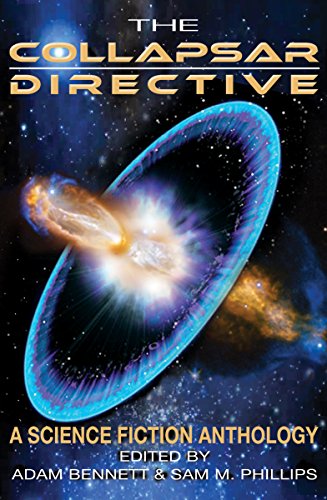
I have a story appearing in the newly released science fiction anthology from Zombie Pirate Publishing, The Collapsar Directive. It’s a dystopian tale titled, If You’re Happy and You Know It, set in a world where you’re only allowed to be happy on the weekends. I must give kudos to the editors, Sam Phillips and Adam Bennett for their selections for this anthology. The other stories featured in this anthology are all top rate, and my fellow authors are a talented bunch. I feel proud to be counted among them.
Zombie Pirate Publishing is pretty smart really, because they get their authors involved in the process – not really the actual publishing process, but with the final editing and, certainly in the marketing process. And having been involved in the process with this great group of writers, reading the stories of the others, which are all well written pieces, got me to thinking about what elements make up a high quality short story.
When I review a short story, I look for the same things I’d look for in a novel length work, with a few exceptions. I’d down my rating for the same type of things though: if it doesn’t read smoothly, if there are logic problems (which occur less in short fiction, but they do occur), excessive use of adjectives and unnecessary words, or if there are a lot of typos or spelling errors which bring my editors mind right out of the story.
Just as in a longer story, I want to see a well-written story, with a beginning, a middle and an end. But, this is where short stories often fall short. In a novel, it may take the author several chapters to wrap up all the loose ends and tie their story neatly into a bow. Short stories don’t have that luxury. Although, there is no set length as to how long a short story should be, other than word count limits set by those you are submitting to, it is even more important with short fiction to eliminate any unnecessary words and get to the point of the story. If you don’t, your story may end up becoming a novel. So, in short fiction, I look for stories that tell the tale without drawing it out unduly.
However, it can be difficult to get in a full story arc, without drawing out the tale, so I’ve come to expect this to be the case with short fiction. That way, instead of being sadly disappointed when a short story falls short (pun intended), I am pleasantly surprised when I come across short fiction which feels complete at the end of the story. It is even harder with flash fiction. The shorter the story, the less space you have to accomplish the task. I recently reviewed an anthology in which almost every story had a full arc, leaving me with a very satisfied feeling. (Catch my review of Darkscapes.)
All of the stories in The Collapsar Directive accomplish this feat, as well. All the stories featured seem to arc nicely, the beginning, middle and end are usually easy to identify in each one, and they all hold my attention to the end. That, of course, is the most important element in any story, long or short. It has to pull you in and hold you there from the first page to the last, regardless of the length of the story.
Like this post? Subscribe to Writing to be Read for e-mail notifications whenever new content is posted or follow WtbR on WordPress.
Share this:

Interview with Author Kristy Centeno
Posted: July 17, 2017 Filed under: Author Profile, Books, Fiction, Full Moon Bites, Interview, Paranormal, romance, Writing, Young Adult | Tags: Author Interview, Books, Deliverance, Kristy Centeno, Novel, Paranormal Romance, Writing, Young Adult Fiction 3 Comments
Today, we have the pleasure of chatting with author Kristy Centeno, who recently had her latest YA/NA paranormal romance released, Deliverance. In addition to being the author of the Secrets of the Moon saga and Keeper Witches series, and now, Deliverance, Kristy is a wife and mother to five children, and she holds down a day job, as well. This interview will kick off her book blog tour for the book with Full Moon Bites author promotions, so let’s give her a good send off.
Kaye: Your most recent paranormal romance released is Deliverance, and I hear it has received some great reviews. Would you like to tell us a little about it?
Kristy: Deliverance depicts the story of a young man who has been imprisoned in an Institute his entire life. Created in a lab, he has no clues as to what he is. Only that he’s not human. Tired of a life of suffering, he escapes to seek the assistance of a man that can help permanently free him and the other prisoners from his creator’s clutches. To do so, he requires the assistance of a young woman—one that will come to challenge everything he believed his enemies to be.
Deliverance delves into the paranormal, with a hint of romance, and some mystery thrown in as well. It took me a year to complete this project and enjoyed every minute of the process. Tiger wasn’t an easy character to develop as he isn’t quite your average hero. He’s both fierce and vulnerable. Strong yet weak. A potential killer yet innocent. As readers go through the story, they’ll better understand what I mean.
Kaye: Deliverance is listed under both YA and NA paranormal romance. Would you talk a little about what the difference in these two genre categories are?
Kristy: Young adult is basically geared more toward the teenage audience with coming of age scenarios that help shape the young character’s future, personality, or outlook in life. The main characters are usually in their teens, experiencing, learning, experimenting things for the first time.
New Adult, however, portrays characters that are a bit older and perhaps, a tad more mature. Think college age adults who undergo a series of scenarios that might have more of an impact on their lives than it would a younger person. They might have to deal with things that might not be an issue for someone in their teens.
Kaye: You are currently working on a sequel to Deliverance. Any hints as to what might be in store for your readers there?
Kristy: There is a bit more background story for some of the main characters as well as information on how the Legion works. It gives some insight on what Gerard’s next plans for the main characters were. And, of course, another mystery unfolds. One that will flip Tiger and Kristina’s worlds upside down.
Kaye: You have a large family, including five children. What are your secrets for juggling writing with family?
Kristy: Between my day job and my five children, finding time to write isn’t always easy. To be honest, even when I find time, I struggle between heading off to bed early to get some rest or get the next chapter completed. My days are full, but I try to make the best of what time I do have.
Most days, I get some writing done after the kiddies head off to bed. It’s nice and quiet. Not having anyone vying for my attention provides me with at least one to two hours of uninterrupted writing.
Basically, the way I work around my schedule is by tending to the kids first, house second, and then my writing. If the kids need something or the house is unorganized I can’t concentrate on my writing either so when I sit down to write, no matter what time of the day it is, I have to make sure that my to-do list is complete. Then and only then can I devote my full attention to those that live in my head.
Kaye: What is the one thing you hope to teach your children?
Kristy: There’s so much I wish to teach my children that I could go on forever naming each. But one thing that’s important for me is that they learn how to love themselves first and everyone else second. With so many issues about body shaming and public ridicule for being different, I don’t want my kiddies to feel as if they have to be like everyone else just to fit in the crowd. I always tell them that it’s okay to be different and there’s nothing wrong with being a little weird.
Kaye: You have two blogs dedicated to author promotions and writing. Would you like to tell us how they came about and what one might find there? How do you come up with enough content to keep them both active?
Kristy: When I was first published, I realized right away that one of the most difficult things to do as an author was, and still is, promoting. I had to develop an online presence and that took time. Fortunately for me, I found a network of authors that were willing to lend a hand when it came to promoting my work, offering advice, and some constructive criticism when needed.
While I was establishing an online presence, I found many new authors that like me, struggled to promote their work and would benefit from the same kind of help I received when I first got started. Thus, the idea was born to create not one but two blogs where I could assist anyone that needed it.
It didn’t take long at all for my inbox to start to fill up with requests from authors all over the States, Canada, and even the UK. I keep a calendar to track which author I’m hosting on what day due to the sheer volume of requests. Many of the authors I’ve worked with over the years also help cross promote my work on their sites/blogs, which is fantastic. Plus, I get to learn about new authors and their fabulous work that I’d probably have a difficult time locating if I didn’t hear from them directly.
Now, I also host blog tours for various book blogging companies as well. It’s something that I’ve come to enjoy over the years and continue to do as a hobby.
Kaye: What’s something most readers would never guess about you?
Kristy: I’m a bit of an introvert. Most people don’t believe this because I’m generally outgoing. Though at first I’m a bit shy, once I’m comfortable with someone I tend to talk a lot more and joke around. But I prefer the comfort of my own home as opposed to going out.
Kaye: What is the biggest challenge of being a writer?
Kristy: Aside from getting published and struggling with promoting your work once it’s published, I’d say one huge challenge is overcoming the dreaded writer’s block.
Kaye: Would you share the story of your own publishing journey?
Kristy: My story isn’t that different from most authors. At least, I don’t think. I must have queried close to thirty agencies that first year, receiving nothing but rejection after rejection. It was very disappointing, not to mention it really made me suffer through periods where I had serious self-doubt about my work and myself as a writer.
I didn’t understand that even if your first manuscript isn’t the best, you tend to improve overtime. I wasn’t in that state of mind though. I considered quitting before I even got started. That was until I heard a positive response from a publisher that was interested in reading the full manuscript of the first book I ever submitted.
They decided to pass, but that rejection ended up helping so much. When they got back to me, they were kind enough to say where my strengths lay and where and what I needed to improve. I took their advice to heart and worked on my manuscript some more. It wasn’t perfect by any means, but it read a lot better. When I submitted it again to another publisher, I was once more asked for a full manuscript. Three months later I was offered a contract. I was elated!
From there it has been easier but I’m still learning. I’m sure there’s still so much room for growth and I don’t mind. I love evolving my skills and developing my voice as I go along. With every publisher and every editor I work with, I learn something new. I learn where I have to improve and what areas I should focus on. It’s a never-ending cycle but one I don’t mind repeating.
Kaye: What’s the best piece of advice you were ever given?
Kristy: “No matter how hard life knocks you down, you better get right back up again and plow through. Life will never stop trying to knock you off your feet so don’t ever stop getting right back up again.”
Kaye: You are fortunate enough to have found a publisher for your books. How much non-writing work, (marketing & promotion, illustrations & book covers, etc…), do you do yourself for your books?
Kristy: Fortunately, the book covers are taken care of by the publisher. However, I do most of the marketing for my book. I organized takeovers, hire book blog companies, spread the word via social media, send emails, etc.
One of my publishers does quite a bit in terms of spreading the word about our books. They have put our books in local libraries, they send out newsletters with interviews, guest posts, etc. and we occasionally do author takeovers and Facebook events as well.
Kaye: What strategies and promotional tools work best to sell books for you, as far as marketing goes?
Kristy: It’s hit or miss with marketing to be honest. I have found that when I book a tour via a book blogging company, some will do extremely well and I immediately see an increase in sales. While there are other times when there’s barely a difference. However, I’ve found that when I do character interviews, guest posts, or giveaways my book does well and there’s a lot of online activity, which is great.
I prefer to schedule release tour weeks in advance to get the release off to a good start. Usually, this is when I see the most impact when it comes to sells as well as reviews. Giveaways do very well too so I have tend to partake in them more and more nowadays than I used to. Especially if I’m giving out a signed copy of one of my books. People respond positively to that.
I want to thank Kristy for joining us here, on Writing to be Read, and for sharing a little bit about herself and her paranormal romance, Deliverance. You can purchase Deliverance on Amazon, iTunes, B&N, Inktera, and Createspace.
To find out more about Kristy, or her books:
Her Website: https://booksbycenteno.com/
Blog: http://therightbook4u.blogspot.com/
Amazon Author Page: https://www.amazon.com/Kristy-Centeno/e/B00BR7KQ4U
Goodreads Author Page:
https://www.goodreads.com/author/show/6580510.Kristy_Centeno
Or check her out on social media:
Like this post? Subscribe to Writing to be Read for e-mail notifications whenever new content is posted or follow WtbR on WordPress.
Share this:

Monthly Memo: The Flashback vs. The Flash Forward
Posted: July 13, 2017 Filed under: Fiction, Monthly Writing Memo, Movies, Mystery, Science Fiction, Screenwriting, Screenwriting, Stories, Uncategorized, Weekly Writing Memo, Writing, Writing Tips | Tags: Fiction, flash forward, flashback, flashbacks, Screenwriting, Stories, Writing, writing tip, Writing Tips 2 Comments
In last month’s memo I talked about ways you can use flashbacks in stories and it led to a discussion about flash forwards and a request from Kaye that I do a post about them, so I decided to focus on the difference between flashbacks and flash forwards. I’m going to primarily use films and TV shows for examples as the film/TV examples are easy to visually show what I mean.
(Disclaimer: I don’t own the rights to any of these video clips or shows. I apologize in advance for some of the quality of the clips but they were the only ones I could find at times. Many of these shows mentioned are on Netflix, so I recommend watching there if possible.)
Flashbacks:
A flashback is almost any moment when a story jumps from the present time of the story to show you something that happened in the past. It’s not just talking about the past, but actually showing the events that happened. The flashback can be just a quick glimpse, or it can be a very long section of the story.
Flashback Example 1 – The Usual Suspects:
This film opens with the explosion on the ship and then moves forward to Kevin Spacey in the police station being interviewed. When he starts telling the story of how all the “usual suspects” were rounded up the film flashes back to show this happening, and the story continues in the flashback time period until the end of the film when we return to Kevin Spacey in the police station again.
Flashback Example 2 – Forest Gump:
This one is pretty straightforward that it’s cutting to a flashback. Forest is in the present moment talking about things that happened in his past from his childhood to adulthood, and we constantly hear his voice over and see him in present day on the bench talking about his past.
Flashback Example 1 – Breaking Bad Season 1 Episode 1:
Again, we start in the present time where Walt is crashing the RV and already cooking meth, then we very clearly jump back after the opening credits several weeks in time to when he was a normal school teacher. The main story of this first episode is all flashback with the opening and ending being the present moments.
Flash Forwards:
Flash forwards are tiny glimpses of the possible future within a story. Basically you get a glimpse of the future and then return to the present afterward. This future glimpse doesn’t have to be true, and it doesn’t HAVE to happen, it’s just a glimpse of what COULD happen and the audience has to keep watching to see if it does.
This technique is often used in stories involving anything with psychics. The key is the events haven’t happened yet, and may never happen depending on how the present continues to unfold. It’s a glimpse of the potential future, but the story is still taking place in the present day and will return to present day once the future glimpse is over.
Flash Forward Example 1 – The Dead Zone (film)
When Christopher Walken shakes Martin Sheen’s hand he gets a vision of the potential future. We see clips of what Martin Sheen may do, but we don’t know if it will happen or not because it hasn’t happened yet, all we know is that it’s possible to happen. Once the flash forward is over we return to the present moment where Christopher Walken is.
Flash Forward Example 2 – Scrooged:
When Bill Murray leaves the elevator he gets several glimpses of the possible future he will encounter if he doesn’t change his ways. Again, these are all brief flash forwards showing potential future moments. It’s a little different because it seems like Bill Murray is in the flash forwards, but he has no ability to change them while he’s there so it’s still a flash forward to a potential future if he doesn’t change his ways in the present.
Flash Forward Example 3 – Terminator 2
When she lays her head down, Sarah Connor has a dream vision of the future if machines are allowed to get out of control. This vision is a potential future and is the motivation for her to try to stop this outcome with her actions in the present.
Flash Forward Example 4 – FlashForward TV Show Season 1 Episode 1:
This episode actually has a flash forward AND a flashback in it. I’ve started this clip right before the flash forward moment where the protagonist gets a glimpse of his future and then wakes up after the accident, but if you scroll back to the very opening of the episode you’ll see that the story starts with the accident, then there is a flashback to 4 hours earlier leading up to the accident again to show what caused it (which was actually the flash forward). Are you confused? I know, it’s a lot.
The flash forward is the glimpse of the potential future that the main character may experience at some point later on, and then you return to the present moment. The opening sequence at the start that shows the accident is NOT technically a flash forward because it’s not a glimpse of the future, it’s where the story is NOW. Then we flashback to 4 hour earlier to see how we got there and how the accident happened.
Flash Forward Example 5 – Sherlock Holmes (film)
This fight scene is a type of micro flash forward because it tells us what will happen moments before it does, even though it’s in verbal form. It’s more of an abbreviated flash forward because it’s verbal and it’s similar to how flash forwards are often used in fiction. The narrator gives the reader a glimpse of what will be to come, but we’re still in the present moment of the story where it hasn’t actually happened yet.
Distinguishing Between the Two:
Most of the time it’s pretty easy to tell whether something is a flashback or a flash forward because it’s in the middle of the story and the story either jumps forward or back for a short time before returning to the present. However, the one area that seems to cause the most confusion is when the flashback or flash forward is used immediately at the opening of a story. Is the story starting in a flash forward? Is the main story all in flashback? What is happening? To figure out whether you’re seeing a flashback or a flash forward, think about where the scene is currently taking place and where the protagonist is in the present.
If you look at the openings of Forest Gump and Breaking Bad, both are happening as we watch and we’re not seeing a future possible event, we’re seeing the events as they happen to the protagonist, then we (the audience) jump back to see how the protagonist got to that present moment, but all of it has already happened and the protagonist is still in the present at that opening scene waiting for us to catch up to him.
Flash forward scenes are events that have NOT happened yet, and may not happen, and when they end we are returned to the present moment where the story is taking place and the protagonist is currently. Everything between that present moment and the future event we saw has not happened yet, and may not happen, but that is why we’re watching to find out. The present moment may eventually lead to that flash forward moment, but there’s no guarantee.
One of the few times a show can open with a flash forward is if it opens with a psychic event such as a dream or prophecy where we get a glimpse of what may or may not happen before a character pops awake or something and reveals it all was a vision or dream. Then the rest of the show builds to reveal whether it is something that is going to happen or not.
Neither Flashbacks nor Flash forwards:
There are a few other story methods that some people confuse with flash forwards and flashbacks but one of the main ones I want to mention is time travel such as in the Back to the Future Series. This and other time travel stories are tricky areas because it is easy to say we’re flashing back because we’re going back in time, but that’s not true in most stories I can think of.
A flashback involves looking back at past events that have already happened exactly as the person remembers them happening, while most time travel stories involve a character physically going back to these past events such as Marty does, and having influence on those events. This makes it not a flashback because Marty has the ability to change things if he does something wrong. That means the events aren’t set and aren’t just a memory of what happened, they’re fluid and changing. Flashbacks are memories of what happened prior to the present so they can’t be changed unless someone is misremembering something or lying. Marty is physically there and it’s his present time even if he’s physically living in the past, and he can make mistakes (and does) that change the future, so it’s not a flashback.
The other thing I wanted to point out is that just because a story goes forward in time doesn’t mean it’s a flash forward. A flash forward is a glimpse into the future but it doesn’t move the story TO the future. When your story jumps forward in time to a future point, if the story continues from that point on and isn’t just a glimpse of that future time, then what you have is a forward time jump and not a flash forward.
Final notes
Every now and then you’ll see someone define those opening scene moments where we start the story at a major event as a flash forward because it shows a “future” event and then immediately goes back in time after to where a huge chunk of the story takes place. But these stories that start with a major event and then go back in time almost always say something like “x time earlier” which establishes that the first scene is the present time period and everything afterward is in the past, making everything after that opening scene a flashback.
Ultimately, if you’re asking “what happened to get us here?” then you’re probably about to see a flashback to find out. However, if you’re asking “what WILL happen to get us here?” then you’re watching a flash forward and you will return to the present to find out as events unfold.
Share this:

It’s All in the Packaging: Interview with Writer, Poet and Cover Designer, Dawn Leslie Mullan
Posted: July 3, 2017 Filed under: Books, Cover Art, Interview, marketing, Poetry, Promotion, Writing | Tags: Books, Cover Art, Cover Design, DL Mullan, Poetry, Sonoran Dawn Studios, Writing 1 Comment


They say you can’t judge a book by it’s cover, but we do all the time. So, when sales for Delilah was faltering, I decided to change it up. Actually, I ran into an awesome cover designer, who came up with a great cover for not only Delilah, but one for Last Call, too. Subsequently, the sales for Delilah went up some. The new cover just came out for Last Call, so it remains to be seen if it will have the same effect, but I’m anticipating some positive results. It all goes to show just how important it is to find the right cover designer for your work. If you don’t believe a book cover can make a difference, take a look at the original cover for Last Call, below and compare with the new one, above:
Today I am fortunate to be able to interview my awesome cover designer, DL Mullen of Sonoran Dawn Studios, so I can share with my readers just what a talented cover designer this lady really is. And she’s so much more. Also a writer and poet, Dawn Leslie Mullan spends a lot of time getting creative.
Kaye: In addition to being an accomplished poet, you have your own design company, Sonoran Dawn Studios. How did you get into cover art design?
Dawn: I got into cover design because I knew that beauty is in the eye of the beholder. People are attracted to book covers as well as read tag lines and brief synopses to make their decisions about purchases. Since I have had my digital art shown across the country in various exhibits and at conventions, the creation of my own cover art was a natural fit. Sonoran Dawn Studios is the intuitive progression from an artist and writer to designer and publisher.
Kaye: You’ve self-published two books of nature poetry, Effloresce, and Rain: Monsoon in the Desert and two books of dark poetry, Memoirs of a Psychotic Painting Elephant, and The Descent. Would you share the story of your own publishing journey?
Dawn: My publishing journey is much like many other writers’ careers. I have been writing since my formative years, but the confidence to write for publication did not happen until higher education. When I was exposed to literature and professors who understood the dynamics in literary context, my world expanded a thousand-fold. I was no longer in this cocoon of sensory deprivation. The experience allowed me to dream.
As I grew older my dreams also grew, but some obstacles were thrown in my way. I became disabled by Environmental Illness, so the future book tour I had envisioned for myself was replaced by severe reactions to an array of chemicals and molds. A collapsed immune system does not a national book tour make. With the help of natural doctors, nutrition, and lots of bed rest, I have been able to balance my disabilities with my goals. I began my website, Undawnted, to feature my writing. Later, I created Sonoran Dawn Studios to publish what I produced with the dream of helping other writers accomplish their goals of publications in the future.
Just because life happened while I was making other plans does not mean I still cannot fulfill my life’s purpose. Creativity is more than a hobby; creativity also brings about choices through true authentic problem-solving. As a testament to my originality and perseverance, my publishing journey has become a triumph over adversity.
Kaye: Would you publish through Lulu again? Why or why not?
Dawn: Yes, I love publishing through Lulu. The ebooks I can disseminate are endless. I am researching beyond Lulu for other Print on Demand services to see what the best modality for my print books may be. I want to make sure my readers are taken care of, while not being intrusive or creating confusion. I do foresee my ebooks finding their way into print sometime in 2019.
Kaye: What is the single most important quality in a poem for you?
Dawn: The most important quality in a poem is based in the five W’s of journalism. What, where, why, when, and how. What image is the reader left with at the end? Where has the poem taken the reader? Why would this poem be important to the reader later on in life? When will the poem reoccur in the memory of the reader long after the poem is read? How does the poem leave an indelible mark in the emotions of its audience?
Anyone can write a poem. The best poems are the ones that linger in the recesses of a reader’s mind. To stir there, be forgotten until an emotion brings up images of the poem that can only be satisfied by reading the poem again. Poetry is more than words and rhymes; poetry is the exercise in conveying emotions through imagery.
So, what do you see when you write?
Kaye: Where do your poetic inspirations come from?
Dawn: Everywhere. That is where my inspiration comes from. I am in awe of this world and our universe. I keep a child’s naïveté and wonderment lurking around every corner of my imagination. I view circumstances with that innocence as if I am seeing lightning, touching a cat, hearing a siren, or feeling the sun for the first time. Every time.
That juxtaposition allows me to combine youthful honesty, integrity, and virtue with the aged heartbreak, candor, and wisdom. No emotion is off limits to experience inside my soul. Every creative dimension is then available to express whether that would be in the forms of poetry or prose.
Inspiration is everywhere… you just have to feel it.
Kaye: What’s your favorite social media site for promotion? Why?
Dawn: None of them really are my favorites for any kind of promotion but I go where my audience travels. Social media is the ghetto harbors of the internet. Our creativity and objectivity are trapped in programmed cages that reverberate and sometimes crescendo our own confirmation bias. Social ghettos like their city namesakes limit opportunities for those individuals seeking advancement and relegate people into an inferior stasis with poor resources and tyrannical mismanagement.
I’d rather own my own website away from social media, but finances impede that dream at this moment. So I am stuck in the ghettos of Facebook, Google plus, and Blogger. I hope someday people realize how confining social media is so we can return to a time of free expression.
Won’t you join me?
Kaye: You are a creative person, writing award winning poetry and designing some pretty awesome cover art, etc… Were you creative as a child?
Dawn: Thank you. I have always had an active imagination. My formative years began in solitude, but after my family moved to the west coast, we ran a daycare, and so there was no shortage of company.
The lack of companionship, however, is a different matter. I knew I was atypical from other children of my age. I observed. I understood far beyond my years. I intellectualized, but I also empathized.
Creative maturity has given me the ability to recognize those evocative reactions and morph the feelings into a seasoned response. Empathy is a strong connection to other people and their plight, the trick is to find a positive way to express myself through art, writing, and problem-solving to avoid the pitfalls of negativity.
That is why so many creative people are depressed and feel rejected by society: improper context of sensory stimuli. Creative people need to step outside of a given situation and see all the moving parts. The ability to walk in another’s shoes is a gift, but when that gift creates blinders to the other parts of life, that is where creativity can destroy instead of uplift.
I had to find that balance. I had to find my own wisdom. Meditation and energy work are beneficial. A balanced perspective is everything. I had to learn that being a creative child did not mean I had to be an explosive, renegade adult… that is what my characters are for!
Let your imagination work for you. Be calm, cool, and collected with your interactions with the world. Allow your creativity be the solution.
Make your characters say and do what society frowns upon. In creativity, you are free. In living imagination, you are the creator.
So design a better reality to inspire change: one person can make a difference.
Kaye: How would you describe yourself in three words?
Dawn: Innovative. Dynamic. Trendsetter.
Kaye: What’s the best piece of advice you were ever given?
Dawn: I really have no idea. Maybe it was: don’t play in traffic? Or, don’t stick your fingers in the light socket? I do not believe I have ever been given a lot of advice.
I have always been a self-starter. I am a person who walks forward in life. There have been some obvious setbacks, but I set short- and long- term goals. Whatever is attainable, I achieve. Whatever does not work for me, I change to fit my new timeline.
So I do not believe my life has been about being advised as much as it has been about who can keep up with me.
Kaye: You’ve had many poems published and won awards for quite a few. What is the biggest challenge in being a poet?
Dawn: The biggest challenge in being a poet, or an artist in general, is discovering new ways to compete with myself. How can I outdo my last creation? Achieve a better response? Create something thought-provoking or truly distinctive?
As a writer, I challenge my own status quo. I am in competition with no other person but myself. So the creative balance I endeavor to maintain has helped me restructure my point of view. I strive for self-betterment to take my writing to the next level.
This fresh perspective allows me to mature as a writer as well as be a cheerleader for other authors. When I removed the ego-driven, quantity over quality focus from my writing career, I discovered how the release from those negative aspects took my creativity to new heights.
I spent more time creating than worry about the industry, agents, publishing houses, and other writers. I could then help others without feeling jealous or anxious or petty. I could be happy for other writer’s successes because those writers were never in direct competition with me. That is an illusion I had to shed.
Once I realized that each person has their own goals and life path to fulfill, then I understood the dynamics with which creativity really springs: inside my own internal genesis.
People on a parallel career path weave branches from the same tree on which my creativity sprouts. Each branch is different from the others and reflects the health of the common root. If we do not tend to our roots, fertilize the soil, and water regularly, then the tree will falter in a coming storm. Angst ruins everyone’s creative efforts. So why bother with it?
That is a summation of the writing craft and our individual responsibility within our community. We must become the best writer we can be and also give a helping hand to another writer regardless of his or her success. Wisdom is in the balance.
Of course that also frees me from the cookie cutter manufactured industry standards I see dominating the writing craft. So watch out world! I don’t have a compass. I don’t have a quota system. I am following my own branch that is reaching for the stars.
And, everyone can change their stars.
Kaye: What advice do you have for aspiring writers and poets?
Dawn: Writers need about ten years to season well, marinate in their own juices. Raw writers tend to give their hearts but when constructively critiqued, lose their minds. So I advise aspiring writers to go in search of criticism, negative criticism. Take courses for a community college certificate or degree in creative writing. Go out and join your local Professional Writer’s Group. Seek out people who will guide and help you without sparing your feelings. Those people are gems.
When you receive constructive advice, use it. Correct your writing and erode your ego. Writing is not about dissecting words and mincing phrases, but about dismantling your hubris.
Once a writer can get out of their own way, their writing takes on a profound quality. Stillness. Wisdom. Maturity.
One should always know and understand their craft through hard work and education. One should also write from the heart. Writing from the ego only speaks to other egos. When a writer writes from the heart, their story resonates at varying degrees within their audience and their writing is called: literature. Then a writer can build a loyal readership and just not simply have hapless followers.
On that same note: never believe your own press. I have had forum critique comments like: that was the best poem I have ever read! Only to look a few comments down and read: I really didn’t think your poem was all that great.
You just have to laugh.
When a writer has been through the crucible of their own development, then a writer can discover their weaknesses and strengths. Until that level of discernment is achieved, a writer is not ready to meet the world. The world is full of wolves ready to take your money and tell you whatever you want to hear.
An educated, informed, and mature writer can espy the wolves, escape the traps, and only do what is right for their needs.
So become the writer you have always wanted to become. No one else can do it but you. What are you waiting for?
Kaye: What time of day do you prefer to do your writing?
Dawn: Any time is fine. I write during the day or night. I do like night though when I really have to concentrate and do not want to be disturbed. No phones. No television. No distractions.
I do write when the muse descends. When I first began writing as a hobby, I would wake up from a dead sleep to jot down notes or a poem. My mind was active during my dream state. Now with my own creative structure, I find myself less inclined to be so impulsive. I write until I am done with that scene and I move on to another activity.
I also rotate from art to poetry to nonfiction, and then fiction writing. It is very noticeable trend on my personal social media status. Those breaks help avoid creative lulls and downright boredom. Writing for me is a metamorphosis of the psyche more than it is a time and place.
Kaye: You’ve had to face some huge obstacles to get to where you are now. Would you like to talk about them?
Dawn: Which obstacles? Chronic illness, abandonment, or near death experiences? My life has run the gambit, but direct participation in life events is what writing is all about. When I go through a challenge, I meet the impediment head on. There is no sense in hiding from life.
Do whatever you have to do short of hurting yourself or others; I do not abide by those types of negative expressions, but if you must throw your shoes or scream out the window, then do it. Then learn from your interaction with the world so you can check your emotions to respond with a healthy regard to life instead of having meltdown reactions to it.
The more you deal with life’s ills; the more those issues become underwhelming. Oh, the car broke down in triple digit heat… that problem interfered with my day but not unexpected given the circumstances. If you structure your life with good planning, sensible organization, and attainable goals, then you can respond to the world from a point of important but not urgent. So when the car breaks down, everything else takes care of itself, and you do not feel overwhelmed… just slightly irked.
With my brain inflammation and neurological issues, I have had some unflattering behavioral repercussions. In a short amount of time, I have learned what my body needs to combat this inflammation so I can deal with life as it comes. For my emotions, I write to express my discontent with research, citations, and good ole-fashioned sarcasm. My awareness blog for my neighborhood news can be incendiary at times, educational and informative at others, but entertaining to thousands of people a month.
So huge obstacles are what you make out of them. I find that I must navigate in a sea of challenges that most people would just give up and let a shark eat them. I am not like most people. I will take your shark, fry him up for dinner, and raise you: writing and publishing careers!
It comes down to simplicity: you can spend your life saying: oh crap, not again. Or, looking at challenges from a different point of view: at least my toaster oven still works.
Well what did you expect? I react to microwaves.
Kaye: Which poet, dead or alive, would you love to have lunch with? Why?
Dawn: Just one? I kind of do this exercise with my poetry. I call my brand of talking with the creative masters as response poetry. I take a poem from Poe, Dickinson, and then write a response. Upon Reading Edgar Allan Poe is a literary take on many of his works. Death Responds to Emily Dickinson is the Grim Reaper’s rebuttal to her I Could Not Stop for Death.
If I had to pick between the two, I would like to sit down with Poe. Not because it’s “Poe,” but because Edgar was a literary critic in his time and quite combative with his contemporaries, which I find entertaining as well as educational.
What were Edgar’s pet peeves in writing? How did his critics respond to his opinions? Did his critics give constructive criticism to Edgar’s work or did they just attack out of ego-driven defensiveness?
As writers and critics, we can learn from the advice, mistakes, and behaviors from our forefathers, and foremothers. If you do not know the past, you are doomed to repeat it. Art and writing, much like society, cannot go forward always repaving the roads of the past. We must create new exits onto the roads less traveled by. The best way is to learn from the master artists, poets, and writers from their works to their own personal views of the craft itself.
On your journey, is your road already built or are you walking in a forest that has no name?
Kaye: What’s something most readers would never guess about you?
Dawn: I am overeducated.
Seriously, I have never met a topic I did not like or want to know more about. I do have six college degrees including a Master of Arts in Teaching and Learning with Technology. I have degrees ranging from general studies, foci in biology and geology, emphasis and focus in history and biology, and organizational management. I was also working on creative writing, marketing, computer science, and publication creation before I became disabled.
I was an active community member. I have lectured and had speaking engagements about technology, art, and the role of girls in our technotronic era. I have paneled at science fiction conventions. I have exhibited and won awards for my digital art. I have ghost hunted as a history major and aspiring medium. I have experience in film and stage. In addition, I have a background in medicine for about a decade as a family member’s caretaker.
My greatest achievements have not been the cords, ribbons, or degrees. Although I am grateful for the honors I have earned in their formation of my character as well as giving me the skills to navigate our ever-changing, technological world, I am interested in more intangible achievements at present. I am on a spiritual path to investigate the human condition. I seek to answer the mysteries of our universe and impart that wisdom onto others.
With that said, I feel my greatest achievement is leaving a creative and educational legacy. My illness precludes me from having offspring, but with management of my health, I have endeavored to become the person I have always wanted to be. I am a work in progress. I can be grumpy and irritable at times, but I am more patient and charitable than anything else.
I guess that comes from living a life less traveled by. I have shrugged off convention for a spiritual road on the superhighway of life. I may be in the slow lane, but I am not obsessed with the destination. The journey is my classroom and I am an enthusiastic student.
Will you like to hitch a ride?
Kaye: What is the one thing that is the most unusual or unique thing you’ve done so far?
Dawn: Strange is what I do. I combine real life scenarios in my creative works to give the contrived a reality check. When a reader experiences my characters and their challenges some of those obstacles may be rooted in my own life. I will not tell which is which, what fun is that?, but I will say that creative writing allows me the indulgence to work out some past issues in a positive and productive manner.
So the most unusual or unique quality to my writing is that I use creative fiction and nonfiction as my camp counselors.
Have a problem? Fantasy about justice? Do not have the energy to bury a body in a remote location? Then you need to become a writer. You have innovative ideas, a spark of madness, and a tinge of laziness that comes with sitting down at a computer to let your fingers do the trash talking.
Shovel, anyone?
Thank you Dawn, for joining us today and sharing your unique take on life, and writing, and shoveling. And thank you for allowing me to use you for the purposes of illustrating the important role cover art is in the sale of your book. You could write a masterpiece, but no one will ever know it if they never crack the cover to read the words inside.
We Need Your Help!
This post came at a good time, because today Dawn and I have some exciting news to share. The cover art for Delilah has made it to round two in the Joandisalovebooks Summer Loving Book Cover EVENT 2017. This is great news because it is a really great cover, but we can’t do it alone. The winner in each genre category will receive a great marketing package, which would be great for the promotion of Delilah.
We need your votes, so we can win first prize in the western genre category. You can find more information on how to place your vote at Sonoran Dawn Studios, where Dawn has been kind enough to lay out step by step instructions for you. So, if you are a follower of Writing to be Read, a fan of Delilah, or someone who has just discovered Kaye Lynne Booth author, please take a few moments to clink on the link and cast your votes for us. It will be greatly appreciated.
Like this post? Subscribe to Writing to be Read for e-mail notifications whenever new content is posted or follow WtbR on WordPress.
Share this:

Monthly Memo: 3 Uses for Flashbacks
Posted: June 28, 2017 Filed under: Fiction, Monthly Writing Memo, Screenwriting, Screenwriting, Uncategorized, Weekly Writing Memo, Writing, Writing Tips | Tags: Novel, Script, Stories, Writing 3 Comments
Flashbacks are something that go in and out of style as time passes. For a time you’ll see them used left and right in books and films, and it’ll feel like they’re everywhere. Then someone, somewhere, decides they’re forbidden and amateurish and you’ll hear whispers about how you should never use a flashback and they’re “lazy writing.”
In reality, what happens is the same thing that happens with any other writing technique. Someone uses it incredibly well and then a crop of other writers pop up and use the same technique with a hit or miss result. Eventually it becomes overused, and often poorly used, and people begin dreading seeing the writing technique because they’ve seen it done so poorly so often. Then someone uses it amazingly well again and the cycle starts over.
So when it comes to flashbacks, when can you use them, and more importantly, how can you use them well?
Openings
If your story has a lot of groundwork to lay such as character development or world development, it can often be useful to open with a flashback scenario. If your story really starts with a key event sometime in the past, but then nothing happens for 20 years, then again, starting with a flashback might be useful. A recent example of this is “Guardians of the Galaxy Vol. 2”. It starts with a flashback on Earth. It’s not a particularly eventful scene, but it lays the foundation for a huge plot reveal later on and sets the tone for what this movie will be about – Quill’s dad. If you’re going to start with a flashback, or start in the present and then use a flashback for the crux of the story, then there are a few key reasons to do so.
- You have a slow opening and need to create tension to buy yourself time with the audience and create suspense. A lot of horror movies do this option to build suspense. Start with a big murder and then everything is calm for 20 minutes until the murderer returns. It creates suspense and puts the audience on edge, waiting for the next attack that could come at any moment.
- A major event happens far in the past and you need to establish it in order to set the tone or plot for the story to come. A lot of fantasy and science fiction stories do something like this for world building to show how we got to the world we have today. Sometimes it comes in flashback with a voice over summary (like “Lord of the Rings” talking about the Ring’s history in the beginning).
- A character defining moment happened in the past and it directly ties to what your story is about. A lot of these kinds of flashbacks are used in dramas where something major happens when the protagonist is a kid – maybe a key phrase is said to them – and then as an adult they are learning the truth of that phrase.
Memory
Another common use of flashbacks is to reveal memories of the protagonist. These can be recent or distant memories, but they usually have some relation to the plot or character development the protagonist is dealing with. Some examples include:
- The character meets someone they knew in the past and had a major event or experience with. An example of this is when a grown up individual meets their childhood bully and we see a scene of how the two interacted. Another could be if you have a protagonist gathering a group together. You might see flashbacks that establish the relationship with each of the group or their skills (like in many military or action movies when a group is brought together). The purpose of this type of memory flashback is to establish the new person’s character quickly, as well as often to establish that character’s relationship with the protagonist.
- A major event from the present connects with a major event from the past for the protagonist. An example of this is, let’s say, if a character discovers a family secret they might see flashbacks of all the things they saw as a child that didn’t make sense suddenly be given new meaning with this secret revealed. If you’ve seen those short YouTube videos going around Facebook where the son discovers the father he thought was lazy and poor was doing something special all those years that the son didn’t know about, it’s a great example of this. Once the son discovers the father’s secret, we see flashbacks that put everything the son saw in context.
- Another example of the memory from the past connecting to the present can be if something from the past is the foundation for a character – such as life advice they were told or something. Many times you’ll find in films and movies the character hears a phrase when they’re young that they didn’t completely understand and then during the film while they’re older something happens that makes them understand this. Often you’ll see a flashback in the film or story showing you the character receiving this advice.
Mystery
One of the most common uses for flashbacks is in mystery or suspense type movie and stories. In these stories it is imperative to create suspense and leave questions unanswered for a time. There are numerous ways flashbacks are used in mystery stories, but a few include:
- Evidence reveals where the protagonist or another character finds the evidence that is involved in the crime and the audience gets a flashback of how the evidence is related to the crime.
- The bad guy reveal. Often times once the bad guy is discovered there is a reveal that shows him committing the crime and how he got away with it, as well as numerous dishonest or secretive things the bad guy has done since then.
- The detective reveal. This is a common trick used in stories like the TV show “Leverage” or many Sherlock Holmes stories where there is a reveal to show how the con artist or Detective pieced everything together. In “Leverage” it is used to show how the team managed to make the bad guy think he was winning when the crew had the upper hand the whole time. In Detective stories it’s used to show the moment the detective found each key piece of evidence that led them to their brilliant conclusion at the end, which solved the crime.
Final Notes:
The key with any flashback used is that it’s 100% necessary for the story. If you could remove the flashback and the tone, character, and plot doesn’t change in the story, then it’s probably unnecessary. If you can show the events that span between the flashback and present in the story, and they add to the story, then it probably shouldn’t be a flashback and should just be part of the story.
Whenever you’re considering using a flashback, just ask yourself what it adds to the plot, character, and tone of the story and make your decision from there. Does it add tension? Does it put your audience in suspense so you can slow things down before a big event? Does it develop your character in a way that can’t be done otherwise? Does it lay foundation for the plot to come? Or does the flashback add unnecessary length and detail to the story? As long as you’ve analyzed your use of the flashback properly, and you’re positive it serves a purpose, then you should be okay to use one. But as with anything else, use them sparingly and deliberately.
Robin Conley offers great writing advice in her Monthly Memo on Writing to be Read. If you just can’t wait until next month to find out more, you can pop into her blog, Author the World, for more tips, or a weekly writing prompt.
Share this:

Interview with Author Amy Cecil
Posted: June 26, 2017 Filed under: Author Profile, Fiction, Interview, romance, Self-Publishing, Writing | Tags: Amy Cecil, Author Interview, Contemporary Romance, Historical Romance, Ice on Fire, romance, Writing Leave a comment
I’m happy today to be interviewing Amy Cecil, author of the Knights of Silence MC romance series, as a part of her blog tour surrounding the release of Book 2 in the series, Ice on Fire. (See my four quill review of Ice on Fire.) Amy is married, and she and her husband have three dogs and a horse. She is also the self-published author of four novels. She writes both historical and contemporary romance.
Kaye: Your new release, Ice on Fire, is the second book in your Knights of Silence MC Would you like to tell us about the contemporary romance series, and how Ice on Fire fits into it?
Amy: The Knights of Silence MC series is my pride and joy. It is my first attempt to write my own characters, develop them and subsequently fall in love with them. And, it’s in a genre that is totally different than what I started in. It has been a challenge for me and the result is a product that is all my own. That makes me a very proud writer. The series right now is going to consist of four books, but who knows, that may change. Ice, the first in the series was published in September. I am currently working on book 3 in the series, Celtic Dragon, and I am hoping on a spring 2018 release.
Kaye: You wrote your first novel in thirty days and went on to be a two time NaNoWriMo winner, in 2015 and 2016, where contestants are challenged to write a novel in a month’s time. What is the secret to writing a novel length work in thirty days?
Amy: NaNoWriMo requires 50,000 words in 30 days to win. That’s seems pretty tough to do, but if you break it down, it’s not so bad. I divide the 50,000 by 30 and come up with my daily goal. It’s 1,666 words a day. Doesn’t sound so overwhelming when you break it down. And then the hard part is to adhere to that goal. Some days I will write more, other days I will write less, but by the 15th of the month, you can bet I will make sure there is 25,000 words written and that I am on track. And then periodically throughout the month, I make sure I am still on track. NaNoWriMo does this for you and it is really helpful.
Kaye: Today many independent or small press authors are using what are called street teams to spread the word about their books. Could you explain what your street team does and how you go about building a street team?
Amy: When I first started writing, I never knew what a street team was, until my PA’s Alicia Freeman and Michelle Cates told me I needed one. These girls are amazing and built my team to over 400 members in just a few months. This is where I can talk with my fans and actually let them share in the writing process. They have not only shared my books and teasers, they have contributed in many ways to my books. They are a great group to bounce ideas off of and they are always there to support me when I am doing an author takeover event. I’d be lost without them.
Kaye: What are some of the differences between writing historical romance and contemporary romance?
Amy: From a writer’s perspective, the biggest difference is how they talk. Historical romance is more formal, more polite. Things are very proper and liberties are not common. Contemporary is more relaxed and casual. They are less formal in the way they speak and you can use contractions. That’s a big no no in historical writing. Also, you can take liberties with your characters that you would normally have to be careful within a historical romance. Because I write Jane Austen Fan Fiction, I have to be conscious of keeping my characters the way Jane Austen created them.
Kaye: What do you see as the pros and cons of independent, or self-publishing?
Amy: When I first started writing, I went the traditional route. I sent my manuscript to several publishers and of course, was turned down by all of them. Discouraged, but not ready to give up, I learned that I could self-publish. Since then, I have self-published four novels. I’m not sure what I would do now if a publisher wanted to publish one of my books. I really like the freedom I have to write what I want and when I want. I have no deadlines. The hardest part of self-publishing and requires the most amount of work is PR. Getting your name out there is difficult if you don’t have a publishing house or an agent behind you. But I have found two great PA’s, Alicia Freeman and Michelle Cates. They not only help me promote my works on social media, they all put together an amazing street team for me.
Kaye: Where does the title come in the writing process for you? How do you decide the titles for your books?
Amy: My titles usually come first. I don’t have any special formula to specific way I do. Some just come to me, some have been suggested by friends and the latest one, Ice on Fire came from my husband.
Kaye: What’s the most fun part of writing a novel? What’s the least fun part?
Amy: I would have to say that my favorite part of writing a novel is coming up with the initial story line. Creating the characters and just watching it all play out. My least favorite part is the editing. I know, it has to be done. But it is always a struggle for me. Luckily, I have an amazing editor Carl Augsburger of Creative Digital Studios who makes this process a little less agonizing for me.
Kaye: What’s your favorite way to get exercise?
Amy: I walk my dogs – I have three of them.
Kaye: Besides writing, what are your favorite things to do?
Amy: My husband is in the Air Force, so I spend a lot of time at home alone. I work full-time for a home improvement company. Also, I have three rescue dogs and a horse that keep me busy. I enjoy other creative hobbies as well like painting and basket weaving.
Kaye: Where do you get your cover art?
Amy: Ellie Augsburger of Creative Digital Studios designs my covers. We use stock photos and get most of them from Adobe Stock. I’m not sure what other resources she uses.
Kaye: What’s your favorite social media site for promotion? Why?
Amy: I guess I would have to say Facebook. I use it the most because I am most familiar with it. I really want to expand my social media reach, but I guess that will come with time.
Kaye: What’s the best piece of advice you were ever given?
Amy: “Write your own.” These were the exact words from my best friend who encouraged me to write my own story. I’m so glad I took her advice.
Kaye: What time of day do you prefer to do your writing?
Amy: I really don’t have a specific time of day to write. Usually it seems to be when the ideas hit me. I don’t write everyday, but that doesn’t mean I am not working on my books. I spend a lot of time doing research.
I want to thank Amy for joining us here, on Writing to be Read, and sharing some interesting facts about herself and her writing. You can find each of Amy Cecil’s books here:
getBook.at/ICEonFIREbyAmyCecil
getBook.at/ARoyalDispositionbyAmyCecil
getBook.at/RelentlessConsiderationsbyAmyCecil
Follow Amy:
Facebook: https://www.facebook.com/authoramycecil
Goodreads: https://www.goodreads.com/authoramycecil
Twitter: https://twitter.com/acecil65
Amazon: https://www.amazon.com/author/amycecil
Website: http://acecil65.wix.com/amycecil
Learn more about Amy’s Amazing Street Girls:
https://www.facebook.com/groups/201903646918497/
Like this post? Subscribe to Writing to be Read for e-mail notifications whenever new content is posted.