Posted: August 13, 2018 | Author: kayelynnebooth | Filed under: Books, Interview, Poetry, Writing, Writing to be Read | Tags: Naked for Tea, Poetry, Rosemerry Wahtola Trommer, Writing |

Today I have the privelege of interviewing a fabulous poet, Rosemerry Wahtola Trommer. As well as writing poetry, she also does performance poetry and is fondly called Word Woman. Once you see her perform, there is no question as to why. Rosemerry is vibrant and energetic and enthusiastic about her poetry, and about life, and this shines through in her work. She was Western Slope Poet Laureate here in Colorado from 2015-2017, she leads poetry and in 2016, she gave a fabulous TED Talk in Paonia, Colorado, The Art of Changing Metaphores, which is definitely worth watching if you wish to see how we can use metaphores to help shape our thinking, our lives and even the world around us. Please help me welcome this wonderful Word Woman to Writing to be Read.
Kaye: When did you know you wanted to be an poet?
Rosemerry: I have a very strong memory of sitting on the floor in my fifth grade classroom in a reading corner, and finding a poem by Walter de la Mare in a magazine. It was about a snowflake, and it began, “Before I melt, come look at me, this lovely icy filigree.” I memorized it, only 12 lines, and fell totally in love with the sounds of the poem. I had no idea what it meant, I just knew it thrilled me, the way the sounds chimed with each other. I felt it in my whole body. I don’t know that’s so much when I knew I wanted to be a poet, but it is when the love affair began.
Kaye: What is the biggest challenge of being a poet?
Rosemerry: Hmmm. Perhaps it is knowing that I have so much farther to go in my craft—that I am not yet writing the poems I feel I am here to write. Still so many layers of me to peel away, still so much to explore. And no way to get there except to write and write and practice and practice and read and read …
Kaye: Would you talk a bit about your personal poetic process?
Rosemerry: Since 2006 I have written a poem a day, and that daily practice is a huge part of my process. It makes it so that writing a poem isn’t just something that happens when I am sitting in front of a page, it’s something that is happening all day long. It completely changes the way I am in the world—how I pay attention, how I meet the moment. I’ll add that I am an avid reader of poems and read many every day—I am always trying to expand my poem horizons, see what a poem can do in other’s hands, and teach myself based on what other poets have done successfully.
Kaye: As a poet, you sculpt your words to form an image in the minds of those who are listening or reading your work. So, in a way, you are an artist and words are your medium. Are you creative in other ways, as well?
Rosemerry: It wouldn’t be painting (though I enjoy collaborating with artists!) But I do sing with a women’s acapella group, Heartbeat. We’ve been together since 1994, and I love pushing myself musically with them. And in the kitchen, I like to be creative with cooking and baking. And perhaps I am a creative parent? In fact, my son tells me he wishes I were more normal. And perhaps this is a good place to mention that I am currently finishing the first season of a podcast on creative process called “Emerging Form,” which I am doing with science writer Christie Aschwanden.
Kaye: How did you become attached to the handle of Word Woman? Is there a story behind that?
Rosemerry: About twenty years ago I was trying to come up with a business name that would accommodate all my language interests. At the time, I was an editor for a newspaper, freelancing for magazines, writing and teaching poems and performing a lot. Plus, my Master’s Degree is in English Language and Linguistics. I am obsessed with words, always have been. It just seemed to fit! It kind of cracks me up that it sounds like a super hero. The words themselves are the heroes. Poems have literally saved my life.
Kaye: Your book, Naked for Tea recently came out and was a finalist for the Able Muse Book Awards. Would you like to tell us a little about that?
Rosemerry: Such a thrill! I was sooooooo hoping to be published by Able Muse. I love their poetry books. The day that I found out that they were going to publish it, even so it wasn’t the winner, I was in the Telluride Library. When the text came through, I started jumping up and down, and was soon surrounded by a host of cheering and exuberant librarians! The library is a great place to find out about a book contract!
Kaye: Naked for Tea is an interesting title. How do you decide the titles for your books?
Rosemerry: Usually the titles come from lines in poems, and that’s the case here, too. The title poem is actually named, That’s Right. The first line is, “I showed up naked for tea.” And it’s the perfect poem to represent the book in that I feel that the whole collection is about the art of showing up as vulnerably, as authentically as possible. I joke that the poems are all about failure, and they are—about finding the beauty in our brokenness, our mistakes.
 Kaye : Naked for Tea also has a very interesting cover. How did you come up with it? If you don’t mind me asking, did you serve as the model?
Rosemerry: It’s not me! The publisher, Alex Pepple, had no idea the stir it would cause, because it certainly does look as if it’s my naked spine and long brown hair. The name of the photo he used is Back Story, which tickles me—perfect for a book of poems. I am happy with the metaphorical suggestion of showing up naked.
Kaye: Would you talk a little about performance poetry and how you got into that?
Rosemerry: When I moved to Telluride in 1994, I was lucky to fall in almost immediately with Art Goodtimes, one of the finest performers of poetry in Colorado. He awed me. So physical. So playful. So powerful. Before that I had NO performance poetry skills. What luck to find myself in close proximity to a master—and one who was willing to give me honest, gentle feedback, too.
Kaye: Performance Poetry is really a physical medium, yet when you perform, your movements appear as if they were a natural part of your speech. Your movements flow smooth and graceful. Does it ever feel as if you are doing a dance with your poetry? Have you ever tried adding music to your poetry performances?
Rosemerry: I naturally talk with my hands and body, which, I think, is lucky for poetry performance, though I don’t doubt that the performance enhances it. There are small pieces in a few poems which I have intentionally choreographed, but for the most part, I just let my body do what it does. I have found, though, that it often will move the same way for the same poem, and that these repeated gestures are very helpful for memorization—it’s as if the poem gets in the body which helps it to lodge in the mind.
As for music, yes! I love adding music! Of course I sing myself sometimes—to enter a poem or within a poem—but to have someone else accompany me is one of my greatest pleasures! I perform frequently with my good friend Kyra Kopestonski, a cellist. She and I have so much fun playing around and finding ways for the music and the poem to speak to each other. It’s especially great for very short poems because those are very hard to perform successfully without musical interludes. But it’s especially great for all poems! And I’ve been lucky enough to collaborate with many different musicians—guitar, flute, bass, drums, even a whole band. I would love to be like Laurie Anderson and have my own band!
Kaye: What is the strangest inspiration for a poem you’ve ever had?
Rosemerry: Ha! I’ve written some mighty weird poems. Picking up a grave digger hitchhiker, perhaps? Black widow egg sacs? Wearing a tail?
Kaye: What is the single most important quality in a poem for you?
Rosemerry: Authenticity.
Kaye: What’s the best piece of advice you were ever given?
Rosemerry: From David Lee, past poet laureate of Utah and a very fine poet and performer: Surround yourself by poets better than you are.
Kaye: What is the one thing in your writing career that is the most unusual or unique thing you’ve done so far?
 Rosemerry: Tough to say … but here’s the first thing that comes to mind. Once I participated as a guest artist for the Art & Architecture Weekend in Telluride. The Ah Haa School assembled a team to support me. We used three-line poems (I have thousands) and they painted them on the walls, they made garlands with poems, I had a cream dress covered in poems, white gogo boots covered in poems … and then I stood in the middle of the decorated room at a table with a bowl full of words and the participants came in and either picked a word or gave me one of their own, and then, after a brief conversation with them about why they chose the word, I wrote them a personal three-line poem on the spot—87 in six hours. I felt so in the zone, the day whizzed by. It was absolutely magical. People wept, hugged me, kissed me, laughed. It was an incredible interaction. And then I was given the juried artist award for the whole event, icing on the cake!
Kaye: Imagine a future where you no longer write poetry. What would you do?
Rosemerry: I can’t imagine it. Really. I think if I were deserted and alone on a desert island, I might still write poems in the sand. But if I try really really hard to not be me and think of what else I would do, um, drive race cars. But I would never do that.
Kaye: It seems like poetry really is ‘in your blood’. Can you give me an example of how poetry flows out into the other areas of your life?

Rosemerry: Well, it does feel like an integral part of me. And I guess it does leak out! I have a little game with myself to see how poems might make their ways into the hands of people who think they don’t like poems. Part of that is doing readings. Part of that is leading collaborative workshops with other teachers, pairing poetry with meditation or painting or healing from grief. Part of that is writing short poems on river rocks and leaving them all over town (in stairwells, public bathrooms, on street corners, etc). Like a poetry easter bunny, any given day of the year. I’ve left many hundreds of rocks out there, and they are always picked up! But I would say that more than poetry flows out, it flows in. I feel as if I am always finding poems, other people’s poems and poems waiting to be written. That’s such a thrill!
Kaye: What’s the most fun part of writing a poem for you? What’s the least fun part?
Rosemerry: Most fun: The blank before the poem arrives. All that potential! And then the thrill of the seed of the idea showing up. That AND when the ending shows up and you know, “Yes, yes, that’s it.”
Least fun: realizing that I have already used the words blossom, sometimes, moon, shine and invitation a million times and I need to come up with another word.
Kaye: Which poet, dead or alive, would you love to have lunch with?
Rosemerry: Only one?? And I think you mean besides the poets I presently hang out with. Hmm. Gerard Manley Hopkins. I think it would be awkward, but to be that close to greatness?? I would be happy to sit there in awkward silence as we ate our boiled potatoes.
Kaye: What advice do you have for aspiring poets?
Rosemerry: Surround yourself with other poets. Though the act of writing is solitary, as Ammons would say, you “sit alone picking away at your own liver,” the art of it and the communion of it is in community. Most of my best friends are poets—they inspire me, chide me, keep me in line, offer me a life line.
And of course, read. Read. Read smart—with a pen in your hand, taking notes on what you love and why. Read for pleasure.
And last, memorize, or, better yet, learn poems, as we say, by heart.
I want to thank Rosemerry for sharing with us today on Writing to be Read. Her energy and enthusiasm seems to be contagious for me. I hope it is for all of you aspiring poets out there, too. You can learn more about Rosemerry Wahtola Trommer and the amazing things that she’s done on her Word Woman website, where you’ll find calendar, book sales, writing prompts and more. Her poetry books are avaiable on Amazon and you can visit her Author Page , too. You can also find her daily poems here. Please take the time to like the post or leave a comment to show your support for Rosemerry and/or Writing to be Read.
Like this post? Subscribe to Writing to be Read for e-mail notifications whenever new content is posted or follow WtbR on WordPress.
If you are an author, poet or screenwriter and you’d like to be interviewed on Writing to be Read, drop Kaye an email at kayebooth(at)yahoo(dot)com with “Interview Request” in the subject line.
Posted: August 1, 2018 | Author: Jeff Bowles | Filed under: Inspirational, Pep Talk, Writing | Tags: Inspiration, Jeff's Pep Talk, Motivation, Writing |

Learning to Let Go
By Jeff Bowles
The first Wednesday of every month, science fiction and horror writer Jeff Bowles offers advice to new and aspiring authors. Nobody ever said this writing thing would be easy. This is your pep talk.
To tell you the truth, I never wanted to be a writer. So many authors–successful and unsuccessful alike–seem to have been aware of a certain literary calling from an early age. Stephen King began telling stories as a kid and never stopped. One of my personal favorites, Frank Herbert, creator of the Dune series, told his parents when he was little, “I want to be a author.” Adorably so, I’m sure, even if in basic syntactic error.
I had precious few moments like that. At the age of eight, I began an ambitious Star Wars fan fiction novel in which Luke Skywalker was forced to confront an evil dark Jedi clone of his poor dead Uncle Owen. I never got off the fourth page. When I was a teenager, I wrote about seven chapters of a complex space opera. But even though I showed clear aptitude, the process was long and boring, and I had better things to do, like playing music with my friends and spending hours on the couch in front of my PlayStation.
I didn’t decide to devote myself to writing until I hit my mid-twenties, by which time the life of a coffee-house-playing singer/songwriter had lost its appeal. Nobody listened to me when I performed. They were too intent on their dark roasts and shallow hipster conversations. I reasoned that even if I someday made it as a musician, I’d have to spend all my time on the road touring, and I’d just gotten engaged to a wonderful woman and had future plans to start a family with her. It made sense at that time to go after a new dream, and I’d always liked telling stories, even if I’d never demonstrated the necessary discipline to actually finish them.
Like so many young hopefuls, I was convinced literary success and stardom would be just around the corner. Ehem, they were not. What can I say? If you’ve been at this thing for any length of time, you know well the real hard work comes in the form of keeping your head down, applying butt to chair, and pounding out thousands of unsuccessful words before a single one catches the eye of an editor or an agent. Maybe you’re just starting out, in which case you might be wondering what the long-term odds of your success are.
Sad to say, but instant recognition is pretty rare. I know some very talented but also very lucky writers who hit it big their first time out. Ultimately, their jobs and their lives haven’t been made any easier. Sometimes the work is actually harder for them, because big success comes with big pressure. Each morning, they still have to make that basic choice: to write, or not to write. And that isn’t easy. Nothing about this job is. Anyone who tells you otherwise … actually, I seriously doubt someone with experience will tell you otherwise.
If you’re like me, your first stabs at storytelling were bad. Like really, really bad. I wrote at least thirty short stories before I snagged a single decent pub credit. I had a couple things working against me, and so did you. First off, I had to learn to write. And I don’t mean in the general sense; writing a blog post like this and writing a fully realized novel are two incredibly different beasts. That probably goes without saying, too.
Secondly, most of us have to build a name for ourselves slowly and over time. Many of your favorite authors didn’t get anywhere near success until they’d generated an incredible amount of published content (that’s published content; the unpublished stuff doesn’t count). The difficulty curve inherent to all this is enough to derail the majority of us. Everybody wants to write a book at some point in their life, but actually finishing one, submitting it through the proper channels, and receiving scads of rejection letters … well, may I just say, fresh meat, welcome to the great literary meat grinder.
At this point you may be asking, “What gives, Jeff? I thought you were going to give us a pep talk. This is more like trash talk.” Well, yeah, I guess it is. But it does no good to approach creative writing as a profession with anything less than a level head. You’ve got to know the odds. Or at least, I feel you should know the odds. The truth is–and this may seem counterintuitive–recognizing your likelihood of failure is just as important as having your writing dream in the first place.
I’m a dreamer by nature. Most creative types are. When I close my eyes at night, I’m just as likely to see book signings and red carpet movie premieres as blank white pages with blinking, unfulfilled cursors … taunting me, taunting me … the horror, the horror. Just because I recognized a long time ago instant success would never be mine doesn’t mean I no longer do what I can when I can to get there. Actually, and this is the important part, the slow and steady nature of my career thus far has allowed me to let go my prodigious and unproductive white-knuckle grip, helping me at last to relinquish just enough control so I could, say, have a life outside of my stories.
That’s kind of the point. Failure teaches us more than success. Failure hurts, no doubt about it, but it also heals. Failure is not a four-letter word. Count ‘em, seven letters, not even close. Nor is it some cosmic slight. Don’t be afraid to fail. In the grand scheme of things, there’s no difference between the careers of a thirty-year vet who hit the mark right out of the gate and a thirty-year vet who had to slowly build an audience with each successive work. In other words, it isn’t the destination, it’s the journey.
Here is your pep talk in four simple words: learn to let go. Seriously, that’s it. Let go of your need for recognition, for validation. Let go the desire for royalty checks the size of the annual Defense Department budget. Letting go doesn’t mean giving up. Far from it, in fact. Some very big writers love to spoil it for newbies. Gleefully, they hand out advice like, “If you can quit, you should,” implying of course this job sucks so bad you shouldn’t even bother.
I’m not that guy. I like to build people up. Learning to let go of your expectations, your insecurities and personal timetables, it’s actually a cure-all for life. The day-to-day of a writer really can be challenging. There are just so many lows, sometimes more than there are highs. You’ll have days you want to give up. Heck, you may have entire years or decades you don’t write a single word. So I find it’s better for the mind and the soul to consider writing a lifelong journey rather than a pass/fail vocation. Do you know what happens when you let go? You actually start enjoying what you do. Some time-tested philosophies think of this as living in the now, embracing the flow of life, or choosing to let the stream carry you rather than fighting its currents. It’s a healthy attitude to cultivate, especially when you’re in a creative industry that hands out disappointment like local discount car wash flyers.
Don’t give up. Don’t do it. And don’t let anyone, including yourself, tell you that you should. If you find you’re getting frustrated with your progress, take a break. That old chestnut, writers write, applies only to very unhappy people and very well-adjusted robots. Writers are just average folks, and like every other warm body on this planet, you need a life that’s fulfilling on more than one level. You know what you can do instead of pounding out words until you tear your hair out? Fall in love. Go see a movie. Have kids. Start a stamp collection. When you let go of the desperation, the incessant need to be somebody, you can be anybody, and that, my friends, is freedom itself.
You know who you are. You know you love to write. If you didn’t, you wouldn’t be here on this blog. So why not trust yourself? Trust life. Tell a story for the joy of it. One moment, one second, one word at a time. If you worry too much about the future, the next rejection, the next failure, if you obsess over the past and all the ugly moments still living there, you’re doomed to forever hate right now.
It’s okay to admit you’re no superstar. At least not yet. Trust me, it won’t hinder your ability to create awesome stuff. I’ve met some big name talent. Many of them feel imprisoned by their careers. The grass is always greener, right? So while you’re busy fuming with jealousy over their magnificent sales figures, they’re busy resenting you for what they perceive as your complete and total freedom. The joy of writing is in discovering what’s just around the corner. Imagine if a new entry in your favorite book series telegraphed its epic ending on page one. Wouldn’t that be disappointing? Life, like any story worth reading, works best when you don’t know what comes next.
So don’t try to predict the future. Live free, focus on today. And that’s your pep talk for the month, folks. Read ‘em and weep! Just don’t weep too hard.
Jeff Bowles is a science fiction and horror writer from the mountains of Colorado. The best of his outrageous and imaginative short stories are collected in Godling and Other Paint Stories, Fear and Loathing in Las Cruces, and Brave New Multiverse. He has published work in magazines and anthologies like PodCastle, Black Static, the Threepenny Review, and Dark Moon Digest. Jeff earned his Master of Fine Arts degree in creative writing at Western State Colorado University. He currently lives in the high-altitude Pikes Peak region, where he dreams strange dreams and spends far too much time under the stars.
Check out Jeff Bowles Central on YouTube – Video Games – Music – Entertainment – Fun!
Posted: July 16, 2018 | Author: kayelynnebooth | Filed under: Blog Content, God Complex, Poetry, Writing, Writing to be Read | Tags: Art Rosch, Blog Content, Changes, Jeff Bowles, Poetry, Writing, Writing to be Read |

I started Writing to be Read on a site called Today.com, as a pay-per-click blog. I was just beginning to create an online writing presence, and was unsure what to write about on a blog, but whatever my subject matter, I ended every post with a poems. One day, I tried to log into my account and found that Today.com no longer existed, and neither did my blog. I was forced to seek out a new home for my blog, and I found WordPress. That was back in 2010, and the author’s blog and website before you is what Writing to be Read has morphed into in the interim.
I no longer include a poem with each post, (that went the way of Today.com), and I don’t get paid per click, (or at all for that matter), but I feel that my content has expanded and improved over the years. I still believe poetry is an important aspect of writing. I feel in love with poetry when we studied Hiaku in the forth grade, and the first piece of writing I ever sold was a poem, (for five dollars). Poetry is sculpting with words, crafting a piece to fit our vision and communicate that vision to others.
There have been many changes along the way, which helped to make Writing to be Read what it is today, including my 2016 publishing series: The Pros and Cons of Traditional vs. Independent vs. Self-Publishing, my 2017 series on marketing and promotion: Book Marketing: What Works?, and the most recent this past year, my Ask the Authors series, where a panel of authors were interviewed on a variety of elements concerning writing. (Watch for a second series of AtA this fall.) Also, in 2017, we were fortunate to have Robin’s Writing Memo, with Robin Conley and The Pep Talk and Jeff’s God Complex, with author Jeff Bowles. I have attempted to include content that addresses all the elements of writing, but as I’m not very active in areas such as poetry, children’s writing, screenwriting or YA fiction, there have been only a few post in these areas, and I want to extend the scope of the blog to address all aspects of writing.
So, we’re about to change it up once more. I’m calling in the experts, or at least, those more expert than I in specific areas. I’ve asked a few guest bloggers to join the team in order to expand the scope of Writing to be Read. Our guest segments will be featured on Wednesdays. Here are some of the exciting changes you can expect to see in the near future.
 I’m happy to announce that Jeff Bowles will be joining us once again with Jeff’s God Complex the first Wednesday of every month, starting in August. Jeff is an independent author with an awesome power of description and an amazing imagination. He has published three short story collections, which I have given top notch reviews, including his latest one, Brave New Multiverse, which will post this Friday, July 20. Fear and Loathing in Las Cruces, and Godling and Other Paint Stories. Jeff’s post topics cover just about anything and everything if it regards writing.
 Starting Wednesday, July 25th, we will have our first segment of The Many Faces of Poetry, with Art Rosch. Art is an independent author, poet and photographer, who is into jazz. He draws many of his stories from his own experiences and creates his own book covers. He has published three books, all of which I’ve reviewed with high quills: Confessions of an Honest Man, The Road Has Eyes: A Relationship, An R.V., and a Wild Ride Through Indian Country, and The Gods of the Gift. Art is a talented writer and poet and I’m pleased to have him join the Writing to be Read team.

Also joining us with a Writing for a YA Audience segment is Amazon best selling YA author Jordan Elizabeth. Jordan has written many books aimed at a YA audience in a variety of genres: steampunk, time travel, fantasy, historical and ghost stories, to name a few. I recently reviewed her most recent book, a post- apocalyptic dystopian romance, Rotham Race, and I have reviewed many of her other works, including her very first novel, Escape From Witchwood Hollow, and several anthologies which include her stories. Jordan’s posts will be concerned with concepts and issues involved in writing for young adult readers. Writing to be Read will feature Jordan’s first post on Wednesday, July 18th.
This blog is a labor of love for me, and as such, these great writers are donating their time and efforts, so please help me to welcome the new members of the Writing to be Read team by liking their posts and leaving comments. Every writer wants to know they are being read.
I’m still searching for willing bloggers in the areas of screenwriting or children’s writing. I feel these elements of writing are important and deserve our special attention too. If you have expertise in these areas and think you might be interested in joining the Writing to be Read team, please email me at kayebooth(at)yahoo(dot)com.
Like this post? Subscribe to Writing to be Read for e-mail notifications whenever new content is posted or follow WtbR on WordPress.
Posted: July 9, 2018 | Author: kayelynnebooth | Filed under: Books, Promotion, Publishing, Self-Publishing, Writing | Tags: Digital Publishing, promotion, Reader Platform, Writing |

Everyone talks about how the rise of digital publishing has impacted the book industry and the effects it may have on authors. Some think these effects are good, while others view them as having a negative impact. It is true that digital publishing opened up opportunities for would be writers, making it so just about anyone can write and publish a book with no need to be discovered by an agent or publisher.
But, it is equally true that many brick and mortar bookstores have had to close their doors due to the competition from eBooks and the rapid growth and expansion of Amazon. And, it’s also true that because it is now so easy to publish a book and authors who publish independently are able to circumvent the traditional publishing gatekeepers, there are no gauruntees that the books we purchase will be of good quality writing. There is nothing in place to be sure the books we put out have been edited. So, it would seem that digital publishing had had both positive and negative effects, depending on which area of the business you work in.
One area of impact that many authors don’t realize or appreciate, is the fantastic promotional opportunities the digital era has supplied for us. Due to social media promotion and email, we are able to access direct communication with fans and followers that via means which weren’t available in the pre-digital era, and this is a great plus for us. We need to take advantage of these great opportunities and listen to our readers, when we’re fortunate enough to get a comment or a review. I try to respond back to every comment readers leave me, and check my reviews for new ones frequently. And yes, these days posted reviews can make or break a book’s success, influencing potential readers, so reviews do matter.
Today’s author doesn’t have a fan base of faceless readers. Today’s authors have the opportunity to make connections with their readers. Some authors have found ways to take advantage of this by gathering their followers together in Facebook groups or put together street teams who actively promote their writing or go out and get reviews for them.
I can see how beneficial these practices are, because I know how much time and energy I have to put into marketing and promotion. But even though I don’t harness my fanbase as a promotional asset, I still appreciate the chance to reach out and chat with my readers to find out what works for them and what doesn’t. And while I don’t have a gazillion reviews on Amazon or Goodreads, the ones I do have are good ones, making Delilah a four and a half star read. It’s all because of you, my readers. So, I can appreciate the impact that digital publishing has had in this area.
The negative impacts, the fading of brick and mortar bookstores, the increase in the number of poor quality books put out. They are still there and likely will be for time to come, although I’ve heard the trend for print books is rising again. Unless digital publishers implement some type of quality control system, or all authors act professionally and create quality writing that’s been edited before publication, a poorly written or unedited book is liable to pop-up here and there, being generally unavoidable.
I don’t have all the answers, and I can’t change trends that I feel are negatives on the industry, but I can appreciate the positives that digital publishing has brought with it. I like getting to know my readers. So, before I sign off on this post, I’d like to urge you to reach out and let me know who you are and what you like, or don’t like, about my writing. It only takes a moment to leave a comment, and I promise to respond to each and every one.
Like this post? Subscribe to Writing to be Read for e-mail notifications whenever new content is posted or follow WtbR on WordPress.
Posted: July 2, 2018 | Author: kayelynnebooth | Filed under: Author Profile, Books, Children's Books, Fiction, Interview, Mystery, Nonfiction, Publishing, Self-Publishing, Super Hero, Writing | Tags: Author Interview, Children's Stories, Nofiction, Publishing, Pulp Fiction, Writing |
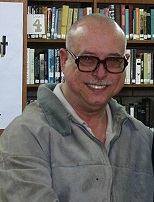
Today I have the pleasure of interviewing an old hand in the writing and publishing business, author Tom Johnson. Tom has written stories from a young age. He has been publishing his writing for more than twenty-two years and has over eighty books in publication. He grew up reading comic books and pulp fiction, becoming a collector in adulthood and his stories reflect the fascination that those books held for him. He has also written numerous nonfiction books and is currently involved in writing children’s stories. Please help me welcome Tom Johnson.
Kaye: Hi Tom. Although in the past, you’ve written and published many different genres, you are currently writing only children’s stories. So, let’s talk about that. Tell me a little about your stories.
Tom: My children stories are about 1k and meant as bedtime tales, and to be read in classroom or library settings. They are short stories with little morals to teach children something about life.
Kaye: Are they a series or stand alone?
Tom: They are a series, and published in anthologies about once a year. There have been four anthologies so far. I was invited to participate beginning in volume #3. The anthology is called Wire Dog Storybook. Here is the background. True story. A young girl, Ellen Walters, asked her father, David Walters, if she could have a dog, and he said, “No.” So she found an old wire hanger and shaped it to resemble a dog, and called it wire dog. David Walters was fascinated by her ingenuity and created the Wire Dog Storybooks. So the stories usually feature Ellen and Wire Dog, but always Wire Dog. Five of my stories have been published so far, and I’ve written three more for the 2018 yearbook when it comes out at the end of the year.
Kaye: What age group are they aimed at?
Tom: I feel that we should begin reading to our children by age one. With that in mind, my stories are aimed at the age group of 1 to 5. However, older children will enjoy the stories, as do adults.
To get a better idea of what Tom’s children’s stories are like, you can get a free copy of one here. They are short and can be read in only a few minutes.: Wire Dog Has An Ugly Mood Day – Or The House of 1000 Mirrors https://wiredogstories.com/2016/01/19/story-40-wire-dog-has-an-ugly-mood-day/
Kaye: What differences do you see between writing for children and writing adult fiction?
Tom: Adult fiction usually means, “no holds barred”, while writing children stories you want to stay away from violence, horror, and adult themes. Keep in mind, young children absorb what they hear quickly, and some themes could have an adverse effect on young minds. When writing for children we must keep this in mind.
Kaye: What appeals to you about writing for children?
Tom: Do you remember the old radio show for kids, Let’s Pretend ? It produced shows for children that acted out fairy tales and light adventures – nothing as harsh as today’s cartoons that are aimed at our youth. Well, I have the chance to import my love for adventure in tales easily understood by young people; children who some day may also experience that same love to pass on to their children. Stories that give our children a moral to live by, not “It’s clobbering time!” Or Pow! Bang! Boom! It’s something my mother did for me when I was little, and now I have the same opportunity, and I’m not going to pass it up.

Wire Dog Children’s Stories

Wire Dog Children’s Stories
You can get the Wire Dog books here:
Wire Dog Storybook #3 http://www.lulu.com/shop/david-clyde-walters/wire-dog-storybook-3-in-full-color/paperback/product-22554849.html
Wire Dog Storybook #4 http://www.lulu.com/shop/david-clyde-walters/wire-dog-storybook-4-in-color/paperback/product-23424745.html
Kaye: You have wanted to write for children since you were little and your mother used to read to you.
Tom: Oh, yes. I hope that mothers are still reading to their children. They learn at such a young age, and we’re missing an opportunity if we fail them when they’re young. They will never forget what they learn as children, it’s when their minds are growing and grasping at everything. I think one of the first words they learn is, “Why?”
Kaye: What were your favorite children’s stories?
Tom: Really, I would have to look them up in the book of fairy tales on my shelf. There were so many she read to me. Knights saving young damsels come to mind. I remember one particular fairy tale where the princess was on a glass mountain, and the young knight had to save her. She watched each day as a knight riding brown horse attempts to scale the glass mountain, then a knight on a white horse, and so on, until the final day when a knight riding a great steed scales the mountain, and we find out that he was the knight on the brown horse, the white horse, etc. It wasn’t the color of the horse, but the persistence of the knight that finally achieved the goal.
Kaye: In what ways do the stories you write emulate those favorites from your childhood?
Tom: Like the fairy tale I mentioned above, my stories will also have a similar moral – it’s not the color of the horse, or the knight’s armor, but his persistence that wins the hand of the princess. Do the right thing, for the right reason. Persevere. If you don’t succeed today, try and try again.
Kaye: You have written since you were a young man, for fifty some years, and you had your own small press for many years. Always, your life seems to have writing at the center of it. Looking back on your life, what does writing mean to you?
Tom: I think writing was always an escape to other worlds, other realms, and other dimensions. We could be anyone we wanted, go anywhere we wished, and experience great adventures. We create those worlds and people we want in them, and our heroes and heroines are who we want to be, or the friends we want beside us. We choose those things that mean the most to us. Whether we’re a cowboy or cowgirl, Conan or Xena, we bring the characters to life. That’s what writing means to me, to give life to my characters.
Kaye: How do you see the rise of digital publishing affecting authors of today?
Tom: Publishing has never been easier. When we were publishing the small press magazines, it was hands on. We did every aspect of the business, from reading, approving or rejecting, editing, set up and printing, then mailing to subscribers and bookstores that carried our magazines. Today we have Lulu and Amazon for all that. We just write, they publish. Anyone can be a writer or publisher now.
 Kaye: What is the strangest inspiration for a story you’ve ever had?
Tom: I had a dream one night. A young boy was in the woods dying when a strange being found him and comforted him as he passed. The strange being was an alien and I saw the saucer-shaped craft behind him. When I woke the dream stayed with me. Did the alien kill the boy? Why was the alien there? What was the boy doing in the woods? It wouldn’t let go of me. I wrote What Goes There from that dream. The boy was dying from snakebite and the alien took his pain from him so he could pass more easily. Then I made a mystery with the plot. The story is part of my book, These Alien Skies.
Kaye: Is there anything unique or unusual about your writing process?
Tom: When I write, I don’t want to be disturbed. No music, no background noise at all. My work computer is in my bedroom. I close my door from all outside communication, telephone, wife, neighbors, etc. I have to be alone when I write.
Kaye: You’ve written over eighty books in many different genres over the course of your career. Which of your books would you say are your favorites? Why?
 Tom: If we’re speaking of my fiction stories I would probably say my favorite is Guns of The Black Ghost, as it is my homage to Walter Gibson and his character The Shadow (remember him). The Shadow was one of my favorite radio dramas as a kid, and I met the creator of the character, Walter Gibson, in the mid-1970s and we were friends until his passing. I always wanted to write a Shadow novel, but copyright protection kept me from it, thus my own character, The Black Ghost came into being.
However, my non-fiction research books are probably my best sellers. I’ve written over half a dozen of them. A lot of work went into them. A lot of reading and studying, and I think it paid off, as fans have all bought the huge books for the data. These are books that don’t get thrown away, but have a special place on their bookshelves.
Kaye: So, tell us a little about your nofiction books. What is the subject matter and how did you come to write them?
Tom: As a pulp collector it was natural for me to become a historian. I had completed runs in many of the lead characters, thus had the opportunity to study the novels for research, identifying authors, plots, etc. At the time I was writing fiction and Introductions for ALTUS PRESS books, and the publisher wanted my research put into books. Some of those series were Secret Agent X Companion, Operator #5 Companion (History of The Purple Wars), The Phantom Detective Companion, The Black Bat Companion, Dan Fowler’s G-Men Companion, and Echoes 30. Several ran for twenty years, and 171 issues. Some not so long, but just as popular to the fan and collectors today. There may be others, my mind is slipping, but these were the big volumes. They covered the complete pulp series of each title. Echoes 30 covered conventions, pulp books, authors, artists, and publishers. All are in demand and have been good sellers.
Kaye: Are you a plotter or a pantser? Why?
Tom: I’m a pantser. I never could understand why you needed to write a fifty-page plot outline, just write the darn book. Once the words start flowing you don’t want them to stop. And they will, if you’re outlining.
Kaye: What do you think is the single most important element in a story?
Tom: Characterization. Make your characters come alive. You want readers to connect to them, feel for them, and be drawn to them. The plot will work itself out, but if your characters aren’t real I don’t care how much of a plot you have, it will bomb.
Kaye: If writing suddenly made you rich and famous, what would you do?
Tom: I don’t know that I would want to be rich and famous. What would be next? I want to always be reaching, always trying to entertain. If I set my goal for rich and famous I might forget about the entertainment and pleasure we get from writing. If I entertain one person, then I am already rich. Besides, we already have money, and fame is fleeting at best.
Kaye: What’s the best piece of advice you were ever given?
Tom: Write what you know. I’ve read a lot of books where the author is writing about something s/he knows nothing about, and it shows. I know information is at the tip of one’s fingers today, but if you haven’t truly experienced something you will come off as unbelievable if you try to write about the subject.
I want to thank Tom for joining us today on Writing to be Read and offering up some really great answers to my questions. I have really enjoyed having him. If you’d like to learn more about Tom Johnson or his books you can check out his website or his Amazon Author Page.
Like this post? Subscribe to Writing to be Read for e-mail notifications whenever new content is posted or follow WtbR on WordPress.
Posted: June 22, 2018 | Author: kayelynnebooth | Filed under: Book Review, Books, Promotion, Self-Publishing, Writing Tips | Tags: Book Reviews, Books, Reviews, Writer's platform, Writing |

Normally Fridays bring you book reviews on Writing to be Read, but as often happens, life got in the way last week and I don’t have a review ready today. So, I thought I’d take this opportunity to talk about the importance of reviews for today’s authors. You see a lot of hubbub on social media these days asking for reviews, and it’s one of the top goals for authors, in part because acquiring reviews has become one of the biggest difficulties today’s author faces. First, let’s look at how reviews can help authors, and then we’ll look at why they are so darn hard to get.
So, what’s all the fuss about? Why do author’s even need reviews? What good are they?
In the world of digital publishing, it’s not sales numbers that puts your book at the top of the best seller lists, but the buzz which surrounds it. Reviews drive books to the top, or not. But, even poor reviews are helpful to authors. I know that doesn’t sound right, but it’s true. Author and freelance writer DeAnna Knippling explains it well:
“Amazon’s algorithms are not human, do not have feelings, and don’t actually understand that you’ve just been torn in two by a critical review. What those algorithms see, as far as anyone can tell… is that someone read your book.
“In my opinion, indie writers should treat all stars as good stars. Total stars = success #1.
“Second, indie writers should worry about their average star rating. Higher average = success #2.
“Third, indie writers should worry about their average rating being too universally positive, an indication that reviews were either begged, borrowed or stolen. Variety of star ratings, (obviously heavier on the 4\5 ratings) = success #3.
“Forth, although maybe this should be higher, indie writers should be worried about reviewers going on to buy similar books to yours. If your book is bought and possibly liked by people who normally buy that kind of book, it will be shown more often to people who buy that kind of book. Also bought = success #4. ”
So, reviews not only boost your book up on the best seller lists, but they also direct the audience who views it, which theoretically, can boost your sales. That’s why I post my reviews, or at least a portion of them, on both Amazon and Goodreads. Amazon doesn’t always allow my reviews to stand because I’m not a verified sale. (I do my reviews in exchange for ARC copies.) However, Goodreads even allows me to include a link back to the original review here on Writing to be Read. If an author requests it, I will also post their review on Smashwords, B&N, or any other site that carries their book, if I’m able. After all, the reason I do what I do is to help out my fellow authors. The rules placed by the different sites on who can post a review and what can be posted can be daunting, but they can be worked around.
Something else I have run into is getting people to download my book, even when it’s free. I offer a free ebook of my paranormal mystery, Hidden Secrets, when you sign up for my monthly newsletter. I’m getting people to sign up, but for reasons I don’t understand, not many are claiming their freebie. I’m not sure why this is, but I know other authors who have experienced the same thing. If you can’t get people to read your book for free, how do you expect to get them to pay for it? And then, if you do get them to read the book, how do you get them to take the time to go back and leave a review?

To find out what problems other authors have in acquiring reviews for their books and learning what works, I did an informal poll of authors that I know, and here is what I found out:
Jordan Elizabeth: Getting reviews is hard. I don’t think I’ve only had 1 or 2 people ever leave a review after purchasing. I’ve tried blog tours, but haven’t had good luck. The best way for me is to seek out blogs and send a personal email.
Tom Johnson: It’s hard to get reviews. I sell a lot of books, but few receive reviews. Readers just don’t want to write them. The easiest way is to sign up for a Blog Tour (there are many tours available, but they charge). However, you will get reviews on the Tour. I review books, and would be interested in reading the first Oracle novel.
Amy Cecil: I have my own personal ARC TEAM, that starts the reviews when a book releases, then I have bloggers and the rest trickle in.
Margareth Stewart:
1) ask friends and people you have been in contact with lately and kindly ask them if they would read and review your novel.
2) engage with possible audience in social media and ask them for reviews in exchange for free giveaways.
3) contact students and people who are new in the area and ask if they would be willing to do it.
4) I have been advised and therefore passing it on “never buy reviews” – readers do know it’s fake news lol.
5) last but not least, patiently wait for surprises and if they do not come, keep no worries Shakespeare had no reviews as all the other masters (lol).
There doesn’t seem to be any clear cut answers. I can remember when the only people who wrote reviews were columnist, who wrote for the newspapers and magazines, and that’s the only place that you found them. But the industry is changing and now days customers want to hear from customers who bought before them before they buy, so that’s who writes, or doesn’t write reviews, and they appear on every book distribution site where they are available.
Although it sounds as if Amy Cecil might have something going with her ARC TEAM, many authors struggle as much to get reviews as they do to make sales. I don’t see anything wrong with simply requesting folks to read your book and write a review, but it appears this methods lends only minimal results. There are reviewers such as myself out there, but finding them isn’t always easy,
Something I’ve seen in recent ebooks I’ve read is an appeal to the reader at the end of the book, asking them to write a quick review before putting the book down for another. It seems to me that this reminder is strategically placed to catch the reader’s eye just as they finish the story, requesting the review while the tale is still fresh in their minds. It might just work.
As authors, we should be reading as a part of our pre-writing preparations, saturating our brains with whatever genre we plan to write in, as well as factual research for nonfiction or historical works. As authors, we also know that reviews truly are important, so take the time to write a review for every book you read. It may take me a while to get my reviews posted on sites in addition to my blog, but I do eventually get them there. Reviews don’t have to take long to write. A couple of sentences and a star rating will do. But write the review.
Kaye Lynne Booth does honest book reviews on Writing to be Read in exchange for ARCs at no charge. Have a book you’d like reviewed? Contact Kaye at kayebooth(at)yahoo(dot)com.
Posted: June 18, 2018 | Author: kayelynnebooth | Filed under: Fiction, Writing | Tags: Character chart, Character Development, Questionaires, Writing, Writing Process |

When I was in the M.F.A. program at Western State, they emphasized the importance of really knowing your characters. They had us answering questionaires about our characters which included questions about things that were never going to come up in the story, so it didn’t seem like they really mattered. I mean, who cares what Delilah likes to eat for breakfast? Or what her favorite color is? Unless it has direct bearing on the story, I couldn’t see any reason for knowing the answers to pointless questions about my characters. But I learned that I was wrong.
In order to be true to your characters, you must know who your characters really are. Readers may not know that red is your character’s favorite color because her daddy gave her a red dress on her eighth birthday and she thought it was the prettiest thing she’d ever seen, but you should. It may affect the color of car she drives after she gets her liscense, which leads to her getting pulled over while unknowingly carrying drugs in the car that her boyfriend stashed in it, which in turn can set off a whole series of events which otherwise wouldn’t have occurred. You might put her in a yellow Volkswagon Bug, instead of the cherry red Corvette she needs to be driving for the story to unfold, and our heroine to win the big race.
If you were writing an inspirational book, or a self-help book, you wouldn’t advise your readers to do something that was totally out of character for them because it’s very likely they would never, ever do it. Likewise, your characters shouldn’t do things that are out of character for them. Unless you know why your character is doing certain things, you can’t write in the proper subtext which will clue readers in to the motives, as well. The more you know about your characters the more their actions in the story will ring true.
By knowing your characters histories, you are bringing them to life, solidifying them into someone that will feel genuine to your readers. And these days, it’s all the fashion to interview your characters, or have someone else do it. These interviewers ask questions very similar to those used by my graduate program instructors on the questionaires they had us fill out. Your characters have to have past lives and histories in order to respond to interview questions, because they may have to do with things outside of the story line.
 So, pull out those questionaires, such as the Proust Questionaire, or the Character Chart for Fiction Writers, and get to really know your characters. If you don’t know the answer to one of the seemingly meaningless questions, take the time to discover what it is, even if you don’t think it will ever matter. Challenge your character to an interview if you think it might help, or if you think it might be fun. Once you’ve developed the characters, write their stories true to who they are, to who you, the author have created them to be.
Like this post? Subscribe to Writing to be Read for e-mail notifications whenever new content is posted or follow WtbR on WordPress.
Posted: June 11, 2018 | Author: kayelynnebooth | Filed under: Author Profile, Books, Interview, Memoir, Nonfiction, Self-Help, Writing, Young Adult | Tags: B. Lynn Goodwin, Book Review, Love, Memoir, Never Too Late, Writing |

My guest today is an author with a unique story. She’s published three books, two of which are nonfiction, inspired by her own experiences. The third is a work of fiction, so she traverses both realms. In addition she does editing and acts as a writing coach for her fellow authors on her site, Writer Advice. Her book, Never Too Late: From Wannabe to Wife at 62, which she’s going to tell us about, has recently become a 2018 National Indie Excellence Award finalist. I am pleased to welcome B. Lynn Goodwin to Writing to be Read.
Kaye: Would you share briefly the story of your own publishing journey?
Lynn: I began writing seriously while I was also caring for my mother in the last years of her life. It was a great outlet. I also began Writer Advice, www.writeradvice.com, which started as an e-mail newsletter with a mailing list of 35. Sorry this isn’t linear—but life events often overlap.
Since my mother was a private person, I decided not to tell her story. A better option was writing a book to help caregivers journal relieve stress, and You Want Me to Do WHAT?: Journaling for Caregivers was born.
Afterwards, I returned to a book I’d started years earlier, a YA that I renamed Talent. It was incomplete until I gave the protagonist, Sandee Mason, a brother. The pitch became “Sandee Mason wants to find her talent, get her license, and stop living in the shadow of her big brother, who disappeared while serving in Afghanistan.” The publisher, Eternal Press, has changed three times since I signed the contract. While I was doing both of these books I also started running writing contests on Writer Advice and had the pleasure of reading some amazing books from Random House for review.
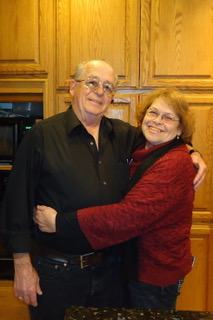 Kaye: Your most recent book is Never Too Late: From Wannabe to Wife at 62. This book is your story in memoir. Would you tell us a little about how this book came into being?
Lynn: I knew Richard was special by our second date. Maybe earlier. To find out how I knew, read the book. 😉
I began taking notes early on, because he told me he was looking for a wife before we met, and I thought that if this worked out, or even if it didn’t, the story of a 62-year-old woman who had never been married and a two-time widower she met on Craigslist had to be unique. To find out why, read the book.
Kaye: You recently became a 2018 National Indie Excellence Award finalist for Never Too Late. Did you do anything special to get to that point?
Lynn: Only if you consider entering special. I’ve been looking for indie contests where I thought I might stand a chance. This one looked a bit too big, but I entered it anyway.
Kaye: Writing memoir requires an author to open up and reveal parts of themselves. For many that’s hard to do. What motivates you to share your story with others?
Lynn: I figured if a woman who looked like me and had my level of inexperience could get married at 62 there was hope for everyone. Women needed to know that. Richard read the book before I sent it out, and I put the rest of the world on a back burner.
Kaye: What is it you hope your readers will come away with from Never Too Late?
Lynn: It is never too late to find happiness, especially when you accept what is and is not within your control.
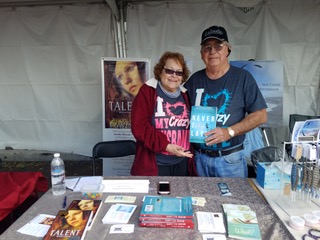
Kaye: Your previous works include You Want Me To Do What?: Journaling for Caregivers, and Talent, the story of a young girl who lost her older brother in Afghanistan and is struggling to get out from under the stigma of his death to become her own value. How is Never Too Late different from the other books you’ve written?
Lynn: Every book is different. Never Too Late is a memoir that reads like a novel. The only other novel I’d written was for young adults. The only other book for adults I’d written was about empowering oneself by journaling. Self-help meets how-to, as one reviewer put it.
Kaye: What is the strangest inspiration for a story you’ve ever had?
Lynn: Tough question. I’ve played around with telling a story from the pov of a mentally ill woman, and that was both unsettling and intriguing. I’m not mentally ill, but I’ve read about mental illness, and I’m fascinated by all the different ways we see the world.
Kaye: On your site, Writer’s Advice, you give out a lot of advice to fellow writers. What’s the best piece of advice you were ever given?
Lynn: Although I’m not sure what was best, here are the statements I remember well:
1. When free writing, go wherever the writing takes you.
2. Edit later.
3. Go deeper (whatever that means to you).
4. Put your writing in a different font and color and read it out loud or have someone read it to you. It will help you catch the errors you never see.
5. You don’t lose until you quit trying.
Kaye: If writing suddenly made you rich and famous, what would you do?
Lynn: Seriously? I don’t think there’s much I’d change, though if I were famous, I’d make more time for interviews, and if I were rich, I hope I’d give to causes that make the world better.
Kaye: For you, what is the biggest challenge of being a writer?
Lynn: I couldn’t say whether it’s being more open to suggestions or rising above the doubts that plague all of us (except the top 3% and even they may have doubts).
Kaye: What kind of Chinese food do you order all the time?
Lynn: Zucchini chicken or beef broccoli with steamed rice, but we don’t eat Chinese food all the time.
I want to thank Lynn for joining us and sharing with us today. It’s been a pleasure chatting with her. And thank all my readers for joining us, too. If you want to learn more about B. Lynn Goodwin, check her out on Writer Advice or visit her Amazon Author page.
Like this post? Subscribe to Writing to be Read for e-mail notifications whenever new content is posted or follow WtbR on WordPress.
Posted: May 28, 2018 | Author: kayelynnebooth | Filed under: Author Profile, Fiction, Interview, Mystery, romance, Science Fiction, Speculative Fiction, Suspense, Thriller, Writing | Tags: Ashley Fontaine, Author Interview, Fatal Agreements, Writing |
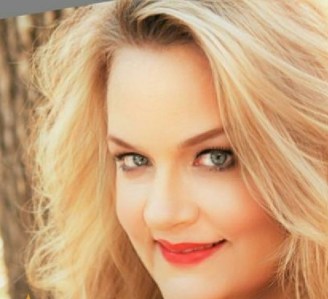
I recently had the pleasure of virtually meeting this charming author when I did a review of her thriller, Zero Balance, earlier this month. This woman is an award winning, muti-genre, best selling author with over twenty books on the bestseller lists. Her genres include: Mystery, Thriller, Suspense, Science Fiction, Post-Apocalyptic, Coming of Age, Addiction, Romantic Suspense, and Short Stories. She’s an independent author, who founded her own independent press, BSMW, and one of her books has been turned into an independent film. Please help me welcome Ashley Fontainne to Writing to be Read.
Kaye: You brand yourself “The Dark Southern Belle” on your website. Where does this title come from?
Ashley: A fan coined the phrase in a review of one of my books. It made me smile. I knew as soon as I read it that it was the perfect catch phrase.
Kaye: Would you share a little about your own author’s journey with us?
Ashley: It has been a crazy ride! Seven years ago, I had no clue how my life would change when I hit “publish” on Amazon Kindle with my first title. I had no idea what I was doing or getting myself in to, and though the road has been rough at times, wouldn’t change a thing!
Kaye: What’s something most readers would never guess about you?
Ashley: I am a huge crybaby. In fact, I refuse to watch certain movies or read particular genres of books because, despite the subject matter of most of my books, I have a very sensitive side. I still tear up at the end scene of Homeward Bound when Shadow appears on the hill.
Kaye: What is the strangest inspiration for a story you’ve ever had?
Ashley: There have been a lot, but the one that stands out the most is for my zombie series. I am a huge fan of the genre and of course, The Walking Dead. I wanted to add a different take on how the zombie apocalypse starts. The rampant abuse of drugs in our society was the perfect fit and the second the two ideas connected, I started writing.
Kaye: You have some really interesting titles. One of my favorites is Fine as Frog Hair. The title makes me want to read it and I haven’t even read the description for the book. How do you decide the titles for your books? Where does the title come in the process for you?
Ashley: Fine as Frog Hair is a saying my grandfather was fond of using when asked, “How are you?” He liked to say, “Why honey, I’m fine as frog hair.” It’s a cute southern expression and since the short story is loosely based off his life, I thought the title fit perfectly. Like the stories, the titles appear out of thin air.
Kaye: You write in multiple genres. What are the differences for you as you write each one?
Ashley: Nothing really. I refuse to pigeonhole my creativity into just one genre. A story is a story no matter the backdrop. A character and/or idea pops into my head and I just let the words flow.
Kaye: You’re an award winning author. Which awards have you been the recipient of?
Ashley: Number Seventy-Five won the Bronze in Fiction/Suspense from Readers’ Favorite. The Lie won Gold from the Illumination Book Awards.
Kaye: Would you tell us about One of a Kind Covers?
Ashley: As I mentioned earlier, I didn’t know a thing about epub, mobi, formatting or cover design when I first jumped into this crazy world. Over the years, I taught myself how to do all of those things out of financial necessity, and in the course of doing so, other authors came to me, asking if I would design a cover for them, which is how One of a Kind Covers came about.
Kaye: You’re the founder of your own independent press, RSMW. Tell us about RSMW. ; What does RSMW stand for? What’s the story behind it?
Ashley: RMSW Press stands for Rambling Mad Southern Woman, which is also the name of my blog. While learning how to design a website and blog, I was so frustrated I almost gave up. I was complaining about it to my husband and said, “I feel like a rambling mad southern woman,” and poof! There was the title.
 Kaye: Your latest release is Fatal Agreements, which came out April 23rd. Would you tell us a little about that book?
Ashley: Whispered rumors tickled the ears of the residents of an entire town for decades about the disturbing secrets of the old Halstead House, dating all the way back to the early 1920s. Most people didn’t believe them. Several people will soon discover they should have listened.
Three years after struggling to cope with the death of her beloved father and escaping an abusive relationship, Samantha Chapman decides it’s time to return to her hometown of Hot Springs. She buys the ramshackle Halstead House, eager to transform the dilapidated, abandoned piece of history into her new law office and residence, hoping it will be the start of a brighter chapter and a safe haven to escape her personal demons.
Instead of newfound freedom, things take a dark turn when the resurrection of the old home reveals the disturbing secrets hidden within its walls. When youthful transgressions of numerous people come to light, including ones some members of the Chapman family are desperate to contain, it reveals the sins of the past. They collide with the grave mistakes of the present, creating a perfect storm of chaos and death for not only the Chapman family but others as well.
Some will survive.
Others will get burned.
Sam and her loved ones realize some family secrets should have remained buried.
Kaye: Your book Ruined Wings was turned into an independent film. Can you tell us how that came about? Who wrote the screenplay?
Ashley: I wrote the screenplay along with the Executive Producer, Sabrina Stewart. We have been a tight duo since the first day we connected years ago when she auditioned to narrate Number Seventy-Five. I sent her the book and she loved it. Opioid addiction is a major crisis in our world and we hope through this movie to help stop the plague.
Kaye: What was it like to see your characters come alive on the screen?
Ashley: Life-changing. Humbling. Terrifying!
Kaye: You also have a GoFundMe campaign going to fund the film. Would you like to tell us about it and how readers can contribute?
Ashley: The film will be shared at no cost to educators and organizations to be played at schools, churches, civic meetings and youth organizations where it can target those most vulnerable to fall into the pit of abuse and addiction. Donate here: https://www.gofundme.com/independent-film-ruined-wings
Kaye: What is the working title of your next book?
Ashley: Blood Stain
Kaye: Which author, dead or alive, would you love to have lunch with?
Ashley: Edgar Allan Poe.
Kaye: What advice do you have for aspiring authors?
Ashley: Grow a thick skin. Never give up. Hone your craft. Write from the heart.
I want to thank Ashley Fontainne for joining us here on Writing to be Read. You can learn more about Ashley at the following places:
Website: http://www.ashleyfontainne.com/
Facebook Author Page: https://www.facebook.com/ashley.fontainne/
Blog: http://ramblingsofamadsouthernwoman.blogspot.com
Like this post? Subscribe to Writing to be Read for e-mail notifications whenever new content is posted or follow WtbR on WordPress.
Posted: May 21, 2018 | Author: kayelynnebooth | Filed under: Fiction, Nonfiction, Poetry, Publishing, Screenwriting, Screenwriting, Self-Publishing, Writing | Tags: Creative Nonfiction, Genre Fiction, Poetry, Publishiing, Screenwriting, Writing, Writing the Rockies Conference |

As I mentioned in last week’s post, An Adventure in Book Marketing, I will be sitting as a panelist at Western’s Alumni Roundtable at the Writing the Rockies Conference in July. There I said that was my next experiment in marketing, but to be honest, although copies of Delilah will be available at the book fair, run by Crested Butte’s Townie Books, I’m not expecting my sales to suddenly shoot up off the charts. Writing conferences, as a general rule, are not places where you sell a lot of books, but I’m exciting to be going and representing Westerns M.F.A. in Creative Writing program, (I’m actually representing both of my concentrations, screenwriting and genre fiction), for other reasons. What writing conferences are generally good for is making connections within the writing community, and Writing the Rockies is no exception. It seems Western, or maybe even the Gunnison Valley is especially prolific in this area, because you begin to feel yourself being pulled in to fantastic world of writing and publishing as soon as you step onto the Western campus. And the connections I’ve made at Western and at the conference have been very useful to me in some unexpected and surprising ways. Never have I attended this conference without coming away with some valuable new connections, some of which have turned into long lasting friendships, as well.
This year, it looks like they’ve got a great line-up, including fantastic opera workshop performance of Lottie Silks, with music by Jay Parrotta and libretto by Western Poetry and Genre Fiction student Enid Holden, directed by Ben Makino and Andrew Sellon, to go along with their infamous and very intense poetry symposium. They also have some not to miss Keynote speakers lined –up: Mark Todd, author and founder of Western State’s M.F.A. in Creative Writing Program, for the conference Keynote; award winning poets Ned Balbo and Jane Satterfield for the poetry Keynote; Kevin J. Anderson, author of over 140 novels, publisher at WordFire Press and a member of Western’s M.F.A. program staff for the publishing Keynote; Patrick Pexton, former ombudsman for the Washington Post for the creative nonfiction Keynote; and Emmy Award winning screenwriter, John Bowman for the screenwriting Keynote; and Michaella Roessner, published author and M.F.A. program faculty for the genre fiction Keynote. Other presenters in the publishing track include Darrin Pratt, Editor of the University of Colorado Press and immediate past president of the Association of American University Presses, D.H. Tracy, Editor of Antilever Press, and others.
In addition to their always informative workshops, sessions and panels, pitch sessions and manuscript critiques are available, their annual hike above Crested Butte will take place, three day intensive workshops, and full day seminars. Special presentations of Comedy is Hard, by Mike Reiss, directed by William Spicer; and Multitudes: An Evening with Walt Whitman by Kim Nuzzo and Valerie Haugen Nuzzo. Film screenings including How Murray Saved Christmas, by Mike Reiss and the highlights from the Crested Butte Film Festival with festival co-director, Michael Brody will also be available.
As you can see, Writing the Rockies is a conference promises something for everyone. I’m excited to be a part of it and I hope you will join us. This is the 19th year running for this wonderful conference and it grows with each passing year. This year the conference will run from Wednesday, July 18th through Sunday, July 22nd. The cost is $300 for the entire five day event if you register before July 1, and $350 after that date. The good news is, although the conference is fully open to the public, every student of Western’s M.F.A. Program in Creative Writing goes as a part of the curriculum, and there are scholarships available for alumni, K12 educators, and Gunnison Valley residents, as well as anyone else who wishes to apply. You can sign up for the 2018 Writing the Rockies Conference or apply for scholarship here:
https://www.western.edu/writing-rockies-annual-conference
For more information contact:
David J. Rothman, Conference Director / 970-943-2058 / drothman@western.edu
Mark Todd, Conference Coordinator / 970-943-2016 / mtodd@western.edu
Michelle Wilk, Office Support Coordinator / 970-943-2163 / mwilk@western.edu
On a similar note, Western State Colorado University still has a few spots open for their low-residency M.F.A. in Creative Writing Program, which begins in July. If you have an undergraduate degree and you’re interested in persuing a career in writing genre fiction, poetry or screenplays or a career in publishing, their program may be just what you’re looking for. Low-residency means you must attend physical class on campus for two weeks each summer and the rest of the courses are online. (Remember, if you’re in the program, you get to attend the Writing the Rockies Conference as a part of the curriculum.) Their faculty consists of successful published authors, successful screenwriters, and distinguished poets. Looking at the successes of myself and my fellow alumni, I have to say they offer useful skills and knowledge that can be applied in the writing industry.
For more information: https://www.western.edu/academics/graduate/graduate-programs-western/graduate-program-creative-writing-low-residency-16
Like this post? Subscribe to Writing to be Read for e-mail notifications whenever new content is posted or follow WtbR on WordPress.





















