A Visit to the haunted Outlaws & Lawmen Jail Museum
Posted: January 23, 2023 Filed under: Ghost Stories, Paranormal, research, Writing | Tags: Cripple Creek, Ghost Stories, Haunted Places, Kaye Lynne Booth, Outlaws & Lawmen Jail Museum, Writing to be Read 9 Comments
Reported Hauntings
It’s been reported that both jailers and inmates roam the halls of the building that served as the Teller County Jail from 1910 to 1991, and is now The Outlaws & Lawmen Jail Museum in Cripple Creek, Colorado. Guards have been heard walking the halls and staircase of the two-story house of incarceration, folks have experienced cold spots, seen dark masses, and heard heavy breathing, and even a possible sighting of an actual apparition have been reported. Of course, I had to pay a visit to see for myself this historic haunted location.
The History
The building has an interesting history. Originally, the Teller County Jail, used to house to house those awaiting trail in the nearby courthouse, serving also as a hold-over for hardcore felons and murderers waiting to be shipped to the prison in Wyoming to serve out their time, and a stp-over for criminally insane prisoners on their way to the State Hospital in nearby Canon City. In 1991, a new jail was erected in Divide, Colorado and the building was retired, now serving as museum housing a plethora of the history of this Colorado mining town.
The Structure
The women were housed on the second floor of the brick building, with a female jailer who stayed on premises to watch over her charges, who were housed in small rooms furnished with wooden bunks. There have been claims of feeling and seeing the female jailor, Rosie’s, apparition in her room at the top of the stairs. And someone claimed that she ‘communicated’ to them that she was still watching over her charges, although I could find no account of the method of communication from beyond that was used.

The men’s cellblock was seperated from the recieving area in the front of the building by a steel cell block door, and the cellblock itself was fashioned from a ship’s interior; a two story metal framework housing 14 cells, 61/2 feet by 9 feet, 10 on the lower level and four on the upper, which each housed 4 to 6 inmates on hammocks and a single chamber pot, until such treatment of prisoners was deamed inhumane and double bunks were installed. The whole cellblock is situated in the middle of a spacious hall with large windows to allow sunlight into the gigantic steel cage which is cold and dark. Bars on the outer walls allowed observation of inmate activities, and the cell doors open into a corrider that runs through the lower block.
Dark shadowed masses have been reported near the two cells at the far end of the first floor cell block and the steel door seperating the cellblock area from the reception area has been said to fly open of its own accord. Footsteps going up the stairs and back down, as if a guard was still on duty and making his rounds have also been reported. And the apparition of a night jailer has been seen, trying to get in, although he disappeared as soon as the caaretaker opened the door.

The catwalk on the upper level of the cellblock had only a thin iron pipe for a railing, and at least one man fell, or was pushed, to his death. One might expect there to be more such occurances in a cellblock housing the wild and rowdy occupants of the mining town along side hardcore murderers and the criminally insane. It is near that spot, that cold spots and heavy breathing have been reported.
My Experience
The solitary confinement cell is located at the far end of the upper level. This was the only place where I sensed anything strange. I stepped inside the solitary cell, which is four steel walls and a small bench, with only a narrow doorway through which to enter, and unlike the regular cells with barred doors, this one is solid metal, allowing no light to penetrate into the cell when closed. In the photo below we see the light coming in from the open door from the catwalk.

Once inside, I immediately felt an oppressiveness and anxiety and became cold; a feeling that the door would swing closed and an urgent need to get out coming over me with force. Even with the door open, there was very little light in this cell, and I could only imagine how awful it would feel to be locked in utter darkness for hours or perhaps days at a time. But the feeling I had in that cell was more than just the expected claustraphobia. It was a feeling as if someone were there, standing right outside, ready to slam the solid metal door shut.
Sources Cited:
Linda Wommack (12/29/2022) Cripple Creek’s Outlaws and Lawmen Jail Museum Puts Visitors Behind Bars. HistoryNet Retrieved from https://www.historynet.com/cripple-creeks-outlaws-and-lawmen-jail-museum-puts-visitors-behind-bars/.
Amber. Outlaws and Lawmen Jail Museum. Denver Terrors. Retrieved from https://denverterrors.com/outlaws-and-lawmen-jail-museum/
Seth Boster (10/21/2019) Eight Haunted Spots in Cripple Creek, Colorado. Out There Colorado. Retrieved from https://www.outtherecolorado.com/adventures/8-haunted-spots-in-cripple-creek-colorado/article_f0819728-13f3-59b7-a5e2-6506ebaea72a.html
Cripple Creek Jail. HauntedHouses.com Retrieved from http://hauntedhouses.com/colorado/cripple-creek-jail/
_______________________________________________________

For Kaye Lynne Booth, writing is a passion. Kaye Lynne is an author with published short fiction and poetry, both online and in print, including her short story collection, Last Call and Other Short Fiction; and her paranormal mystery novella, Hidden Secrets. Kaye holds a dual M.F.A. degree in Creative Writing with emphasis in genre fiction and screenwriting, and an M.A. in publishing. Kaye Lynne is the founder of WordCrafter Quality Writing & Author Services and WordCrafter Press. She also maintains an authors’ blog and website, Writing to be Read, where she publishes content of interest in the literary world.
________________________________________________________
Join Kaye Lynne Booth & WordCrafter Press Readers’ Group for WordCrafter Press book & event news, including the awesome releases of author Kaye Lynne Booth. Get a free digital copy of her short story collection, Last Call and Other Short Fiction, as a sampling of her works just for joining.
Share this:

Mind Fields: Interview With A Fish
Posted: January 20, 2023 Filed under: Humor, Mind Fields | Tags: Arthur Rosch, Humor, Mind Fields, Writing to be Read 3 Comments
Insight Into a Writer’s World
A note from Arthur Rosch:
One day I was passing the fish tanks in a large pet store. I hadn’t intended to buy a fish. The idea was absurd, as we were then planning to move into an RV. Nothing stays put during the driving portion of RV adventures. An aquarium would be a disaster. Now that we’re hardened RV hipsters, we understand the uses of Gorilla tape, bungees and slip-loks. We can, to a degree, securely fasten doors, closets, cabinets, drawers, small children and demented adults. In the early days any sudden turn would bring all the silverware out to bury itself in the faux wood paneling.
A fish swam up to the glass and fastened its eyes upon me. It was a thumb-sized cichlid with iridescent stipples of blue and red. It was stunningly gorgeous.
“Hey,” said the fish. “I’m for you. Get me out of here.”
I tried to ignore the creature but it kept pace with me the length of the aquarium. Other fish got out of its way as if it were a predatory monster.
“I’m serious,” said the fish. “They don’t obey my orders in here. They don’t know who I am. What am I supposed to do with an undisciplined rabble like this?” Its eyes almost crossed with contempt. “Angel fish? Mollies, guppies, goldfish? Star fish! I have only one good thing to say about star fish. They don ‘t drop their weapons and run when the fighting gets hot.”
I had to stop. The fish and I squared off and looked deep into one another’s eyes.
“General?” I inquired. “General Stonewall Jackson?”
“I know,” he replied. “This is embarrassing. I was a Presbyterian.”
That was how I acquired The General. He liked people. He hated fish. He ate the female cichlid we introduced into his tank.
We rigged a special travel bowl that hung from a hook on the motor coach’s ceiling. No matter how we bounced and yawed, the nylon sling that held the bowl kept the General’s water nice and placid. When we planned to stay somewhere for a while, we bought ten gallons of bottled water, heated it to the proper temperature and put The General in his aquarium. It was a major pain in the ass.
End of note. Begin interview.

General Cichlid: Mr. Rosch, you’ve maintained a literary career of extraordinary purity. You sold a story to Playboy Magazine in the late 70’s. It won a prestigious award. The online magazine Exquisite Corpse published two of your satirical pieces. Aside from fleeting brushes with notoriety, you’ve barely sold or published anything at all. In fact, I believe no one besides your partner and your household pets has ever read your most important work.
Arthur Rosch: First of all, please call me Arthur.This formality is silly. You are one of the household pets who has read my work. In fact, you’ve read more of my work than anyone besides my partner.
General: Yes, thanks for setting up that music stand and turning the pages. You’re a patient man.
Rosch: Fox did most of the page turning. You know how she is. Anything for a reader.
General: Let’s get back to the uncompromising nature of your written work.
Rosch: It’s easy to have integrity when you’re not getting paid. The lack of pay is a great motivator. There’s always the looming possibility of posthumous fame. I don’t worry about it too much. I’m fairly certain I’ll be forgotten long before the quality of my writing is recognized. I’m content to leave my work for my posterior.
General: You don’t find this obscurity frustrating?
Rosch: Not at all. If I became a successful writer, I would have to behave like one. I would have to increase my medications. I would have photos taken of me with my chin on my fist. I would have to travel on airplanes. Who wants to do that?
Further Author’s Note:
As you can discern, The General was a remarkable fish. The preceding fantasy is half true. One story about The General that is completely true involves an amazing leap of faith, an awesome feat of piscatory prowess.
One day I was cleaning my friend’s aquarium. I had prepared a large bowl with about three gallons of his water, and set him to swimming in it while I poured out the rest of the water and cleaned the gunk off the glass and out of the filters. The General wasn’t thrilled about this; he slapped the surface of the water with his tail and darted in angry circles. Before meeting The General I had never conceived that fish could have such elaborate personalities. Now I know better. Animals, all of the creatures on this planet, need to be taken seriously. Fish, fowl, mammal, invertebrate, they are all conscious, each with unique complexity. The General was a lesson.
Having cleaned the rocks, the castle, the toy soldiers, (Yankee and Confederate) and the pumps and filters, I put the aquarium back on the table. I went through the procedure of getting fresh water to the correct temperature and began filling the tank. The General was in the big bowl, about four feet away on a dining table. I was going to net him and transfer him back to the aquarium. Then I would gently pour the water in the bowl back into the tank until it was topped off.
I approached the table with the net in my hand. I was about to chase The General around the bowl until I had him in the little rectangle of green mesh. He saved me the trouble. With an explosive leap, the fish flew through the air to make a perfect dive into the aquarium. Sploosh!!
Let me make this completely clear. A fish the size of my thumb flew a perfectly accurate arc that must have been at least twenty feet in total extent. If he had missed he probably would have died.
I will assume that the General was taking no more risks regarding demise by friendly fire.
This, I swear, is completely true.
______________________________________________________________________________________

Arthur Rosch is a novelist, musician, photographer and poet. His works are funny, memorable and often compelling. One reviewer said “He’s wicked and feisty, but when he gets you by the guts, he never lets go.” Listeners to his music have compared him to Frank Zappa, Tom Waits, Randy Newman or Mose Allison. These comparisons are flattering but deceptive. Rosch is a stylist, a complete original. His material ranges from sly wit to gripping political commentary.
Arthur was born in the heart of Illinois and grew up in the western suburbs of St. Louis. In his teens he discovered his creative potential while hoping to please a girl. Though she left the scene, Arthur’s creativity stayed behind. In his early twenties he moved to San Francisco and took part in the thriving arts scene. His first literary sale was to Playboy Magazine. The piece went on to receive Playboy’s “Best Story of the Year” award. Arthur also has writing credits in Exquisite Corpse, Shutterbug, eDigital, and Cat Fancy Magazine. He has written five novels, a memoir and a large collection of poetry. His autobiographical novel, Confessions Of An Honest Man won the Honorable Mention award from Writer’s Digest in 2016.
More of his work can be found at www.artrosch.com
Photos at https://500px.com/p/artsdigiphoto?view=photos
___________________________________________________________________________
Want to be sure not to miss any of Arthur’s “Mind Fields” segments? Subscribe to Writing to be Read for e-mail notifications whenever new content is posted or follow WtbR on WordPress. If you find it interesting or just entertaining, please share.
Share this:

Treasuring Poetry 2023 – Meet poet and author Andrew McDowell and a review #poetry #bookreview #Treasuring Poetry
Posted: January 18, 2023 Filed under: Book Review, Books, Interview, Poetry, Review, Treasuring Poetry | Tags: Andrew McDowell, As the World Burns, Author Interview, Book Review, Mystical Greenwood, Poetry, Robbie Cheadle, Treasuring Poetry, Writing to be Read 40 Comments
Which famous poet has influenced your poetry the most?
When I was young, I admired William Shakespeare. I was impressed with how he used words to convey emotions and ideas, and I wanted to follow his example. In my junior year of high school, I participated in a Poetry Out Loud contest where we had to recite a poem. I chose Sonnet XVIII (“Shall I compare thee to a summer’s day?”) and won third place. The Shakespearean sonnet was the first poetic form I tried to consistently write in beyond regular rhyming lines. It would not be until college that I began branching out to other forms and eventually free verse.
Which poem that you’ve read has impacted the way you see things in life?
This was a tough one, but one poem that has impacted me is Robert Frost’s famous “The Road Not Taken.”
Two roads diverged in a yellow wood,
And sorry I could not travel both
And be one traveler, long I stood
And looked down one as far as I could
To where it bent in the undergrowth;
Then took the other, as just as fair,
And having perhaps the better claim,
Because it was grassy and wanted wear;
Though as for that the passing there
Had worn them really about the same,
And both that morning equally lay
In leaves no step had trodden black.
Oh, I kept the first for another day!
Yet knowing how way leads on to way,
I doubted if I should ever come back.
I shall be telling this with a sigh
Somewhere ages and ages hence:
Two roads diverged in a wood, and I—
I took the one less traveled by,
And that has made all the difference.
In what way has this poem influenced your viewpoint?
Most people interpret it as about making new trails, which is how I interpreted it as a child. Many times, when I’ve been walking, when I took a turn different from the norm, the last three lines presented themselves in my mind.
However, I’d heard that interpretation is accurate, so I looked it up, and to my surprise, it’s true. Frost wrote it as a joke regarding his friend and colleague Edward Thomas, who often hiked with him and had trouble deciding which way to go. The poem is not only about how choices we make determine where we go in life, but also that we often look back and wonder whether we’ve made the right choice. Though I did not grow up with that interpretation, I have found it to be true and profound.
Perhaps Frost’s way of telling poetry influenced me, too; I remember a professor in college, who taught a poetry class I was in, observed that I liked to end poems with a meaning or lesson, drawing a parallel to Frost.
What is your favorite of your own poems?
This was another tough one, because several have special meaning to me. But of those I have published so far, one that deeply resonates is “Lonely Wolf,” which appeared in the 2019 Spring Edition of And I Thought Literary Magazine. It was written in college as a failed attempt at a pantoum, but after a few rejections, I rewrote it as a villanelle. It speaks to the loneliness I have felt—socially and romantically.
I am a lonely wolf who walks at night.
Amongst the tall pine trees and heavy snow,
Hear my cry to the half-moon shining bright.
***
Young once within a den huddled tight.
The years passed and sadly I had to go.
I am a lonely wolf who walks at night.
***
Embarking for the greatest peak tonight,
There shall I convey my long-held sorrow.
Hear my cry to the half-moon shining bright.
***
Though many have come within my sight,
Why they stand distant I can never know.
I am a lonely wolf who walks at night.
***
Winter’s bitter cold reigns in silent might.
Dark silence only brings light to my woe.
Hear my cry to the half-moon shining bright.
***
Here I stand alone on this rocky height.
Here I do bay up where countless stars glow.
I am a lonely wolf who walks at night.
Hear my cry to the half-moon shining bright.
What’s next for you in your writing career?
My focus right now is fiction. My fantasy novel Mystical Greenwood came out in a new edition, so my primary goal is to complete the sequel. I do have many unpublished poems, so I want to keep an eye out for publishing opportunities. A volume of poetry isn’t out of the question—if I can find a unifying theme (my poems touch on many unique ones).
About Andrew McDowell

Andrew McDowell became interested in writing at age 11, inspired by childhood passions for stories and make-believe. By the time he was 13, he knew he wanted to be a writer. He studied at St. Mary’s College and the University of Maryland, College Park. He is a member of the Maryland Writers’ Association.
In addition to his fantasy novel Mystical Greenwood, Andrew has written poetry, short stories, and creative nonfiction, and he is interested in writing drama and lyrics. He was diagnosed with Asperger syndrome, an autism spectrum disorder, when he was 14.
Find Andrew McDowell
Website | Facebook | Twitter | YouTube | LinkedIn | Tumblr | Goodreads | Amazon
Review of Mystical Greenwood
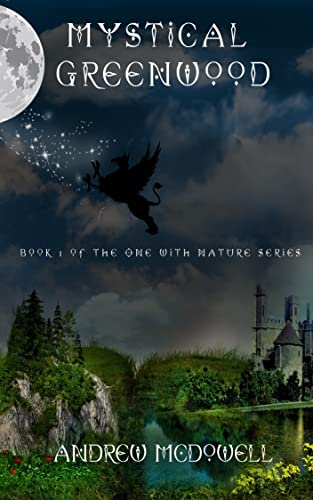
What Amazon says
Dermot is a fifteen-year-old boy living in a remote village in the land of Denú. He has always longed for something more in his life. Now, everything changes after he sees a renowned creature–a gryphon–in the sky, and then crosses paths with a reclusive healer who harbors a secret.
Soon, he and his brother have no choice but to leave the only home they’ve ever known. They travel with new friends across the land through several great forests, along the way meeting an old man, a family of unicorns, and witnessing an important birth. They must evade fire-breathing dragons and dark-armored soldiers hunting them down, all serving an evil sorcerer determined to subjugate the kingdom, and who will stop at nothing to destroy them.
Denú’s only hope is if a renowned coven returns to face the enemy after years in hiding. Dermot, however, suspects their own role may be more significant than he thought, as he slowly discovers a power which exists amongst the trees and creatures of every greenwood. Can they save those they hold dear? Will Dermot find what he has sought? Or will all that’s free and good be consumed by darkness?
My review
Andrew McDowell has written an extraordinary fantasy tale which centres around the guardians of nature and the Greenwood, called driadors. The plot follows a typical good versus evil path, but the overlay of the protection versus the destruction of the natural environment was unusual, topical, and really fantastic.
Dermot and his brother, Brian, do not get on. Brian is the son who always does as he is asked by his parents and fits the mould of a pleaser, while Dermot is a dreamer and has always felt he was intended for more than his life as an apprentice blacksmith to his father. The rivalry between the two boys comes to a head when Dermot is carried away by a hunting gryphon. Dermot persuades the gryphon to drop him but he is injured during his fall. He wakes up in the care of a healer called Saershe, and her grandson, Ruairi. Dermot realises that they are not ordinary forest dwellers and, following his return home, he becomes obsessed with finding them again.
Brian becomes aware that Dermot has had some sort of unusual experience during his absence and uses this knowledge to stir up trouble for Dermot with their parents. Meanwhile, an evil force in the shape of a fallen driador called Taranis, is lurking just beyond the village, waiting for an opportunity to wreak havoc and destruction and restart an old battle against the driadors. Dermot and Brian will have to learn to trust and rely on each other, and harness the power of nature if they want to save the Greenwood, their friends, family, and themselves.
This is an unusual and well paced story with interesting characters, and these elements more than makes up for the odd moments in the book when Dermot and Brian’s emotional reactions to situations seem slightly lacking in depth or incongruent to the circumstances.
The author has great potential as a writer and I would love to read the next book in this series and find out what happens next in the battle for control between Taranis and the driadors.
Purchase Mystical Greenwood
Andrew McDowell Amazon Author Page
My review of As the World Burns: Writers and Artists Reflect on a World Gone Mad

What amazon says
As the World Burns: Writers and Artists Reflect on a World Gone Mad is an anthology of poetry, prose, essay, and art inspired by the unprecedented events of the year 2020. It embraces fierce and raw creative works relating to life during the Covid-19 pandemic, Black Lives Matter, Donald Trump, and the economic uncertainty and horror of the last eight months. One hundred and fourteen writers and artists spanning ten countries and 30 states are represented in this powerful volume. It is both a story of survival and an act of resistance.
“We speak with many voices, to the damage wrought in these violent, fevered months. Let us never forget or turn away, from what is just, what is necessary, to keep light alive in this world.”
My review
This is an interesting recording by numerous contributors, of the status of the world and society in the run up to the Covid lockdowns, and during the subsequent on-going pandemic. The writings, which comprise of mainly poetry, but also some essays and visual art pieces, also cover events that ran parallel to the lockdowns and pandemic that had an impact on society and politics.
Reading this anthology is an adventure as the messages are intense and vivid and the styles of writing hugely varied due to the significant number of contributors. Although not all the styles of poetry appealed to me, they were all memorable due to the strong emotional messaging, and well worth reading.
My favourite poems are as follows: Falls the Shadow by John W. Leys, I Think the Birds don’t Care by Kelsey Hontz (the words “Somebody has mixed up the two themes of apocalypse and paradise, which would be a fireable offense if anybody were still in the director’s chair for this year of hindsight.” really resonated with me.), Lately by L. Stevens, Quarantine by Andrew McDowell, Upon Waking in a Pandemic by Christine E. Ray, Choice Perhaps by Jane Dougherty, Thirteen Ways of Looking at Life before the Virus by Leslea Newman, Am I Angry? by John W. Leys, Virus by Erik Klingenberg (nightpoet), and Tumbling by Merril D. Smith.
Two of the essays, were particularly interesting to me. I-Soul-Ation by Dr. Sneha Rooh. The closing words of this essay have sadly not come to fruition, in my opinion:
“I would like to think that we will hug people longer, be grateful to be able to work, that we will smile brighter when the masks come off and we’ll let the smiles fully enter our hearts, that we will be careful abut the lies sold to us and remember that we are precious mortals with precious lives and an immense ability to connect and care.”
I am of the view, that the world has returned to its previous status quo with alarming speed and that as a species, we have learned nothing from the lockdowns and the pandemic.
The other essay I particularly enjoyed was Serendipity by Kim D. Bailey.
This book is an important documenting of life during this difficult and stressful time of life when the entire world united to face a common enemy. Sadly, we have still not learned our lesson, as I mentioned above, but perhaps some of us have found more courage to fight for a better eventual outcome for our planet and for humanity.
Purchase As the World Burns
About Robbie Cheadle

Award-winning, bestselling author, Robbie Cheadle, has published thirteen children’s book and two poetry books. Her work has also appeared in poetry and short story anthologies.
Robbie also has two novels published under the name of Roberta Eaton Cheadle and has horror, paranormal, and fantasy short stories featured in several anthologies under this name.
The ten Sir Chocolate children’s picture books, co-authored by Robbie and Michael Cheadle, are written in sweet, short rhymes which are easy for young children to follow and are illustrated with pictures of delicious cakes and cake decorations. Each book also includes simple recipes or biscuit art directions which children can make under adult supervision.
Robbie’s blog includes recipes, fondant and cake artwork, poetry, and book reviews. https://robbiesinspiration.wordpress.com/
Share this:

Writer’s Corner: Writing strong female protagonists
Posted: January 16, 2023 Filed under: Books, Character Development, Fiction, Western, Women's Fiction, Writing | Tags: Character Development, Delilah, Kaye Lynne Booth, Strong female characters, The Rock Star & the Outlaw, Women in the West adventure series, Writer's Corner, Writing to be Read 4 Comments
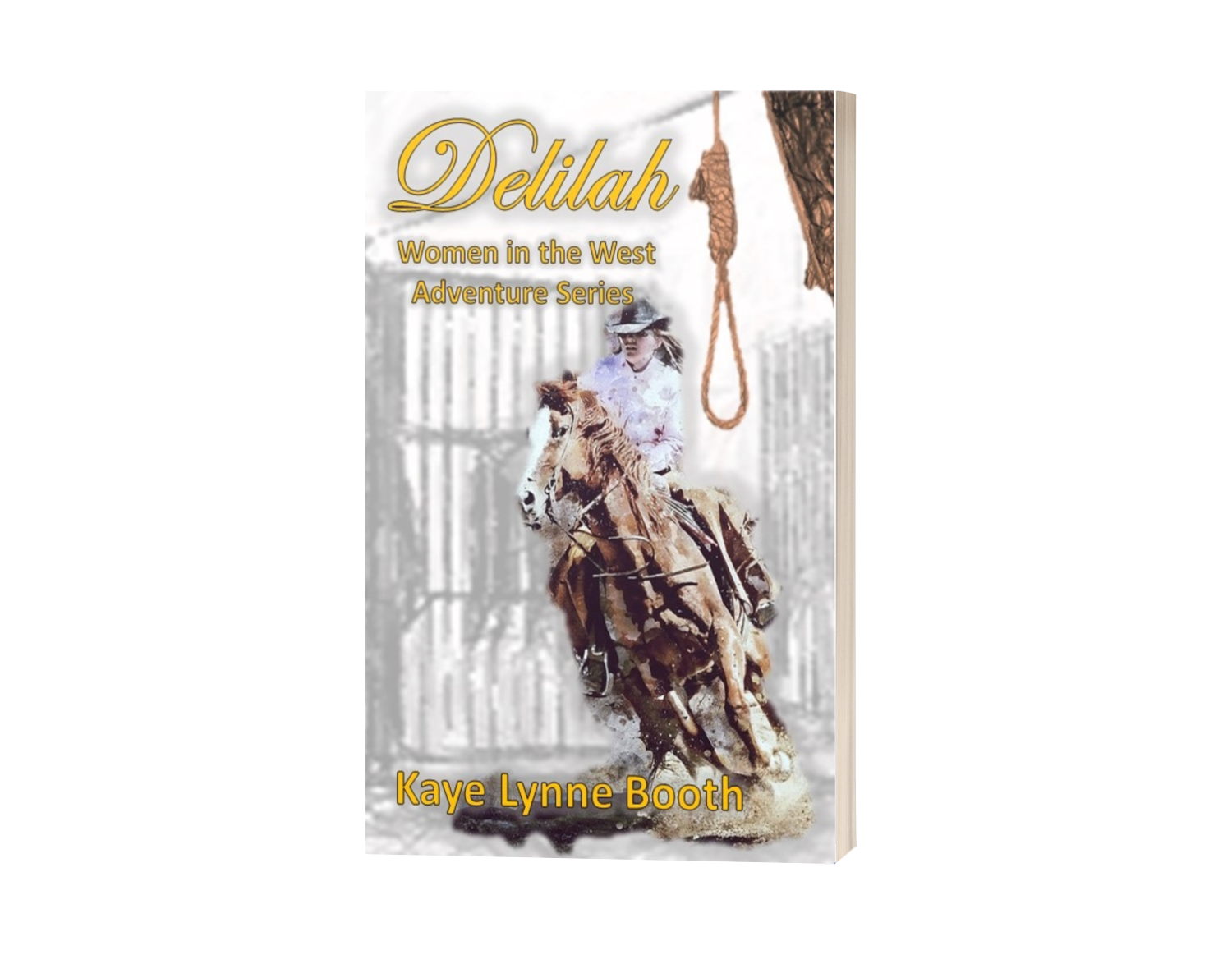
We are well into the swing of the Kickstarter for Delilah and the Women in the West adventure series. One thing that stands out with the books in this series are its strong female protagonists and female historical characters which make appearances in each one. But it takes finesse to create a tough female character that is believeable.
So how do you write a strong character? According to the Six Figure Author Podcast’s (episode 108 “Are Your Craft Choices Hurting Your Booksales?”) Jo Lollo strong characters are well defined, but not necessarily one who can win a fight, but they must be an imposing and vital character to the story. Andrea Pearson adds that strong characters should have inner strangths, which can become weaknesses in certain situations. Lindsay Buroker says that they need to be believeable, especially with female characters.
I’m as big a supporter of women and women’s rights, etc… as the next guy or gal, but let’s be realistic. Readers are not going to believe that an average woman isn’t going to beat a man in hand to hand combat, because females are naturally smaller and have less physical strength than men do. That’s not realistic. Don’t make your female character go to walk into a biker bar and kick everybody’s butt unless you’ve given her superpowers, or magic, or some reason, like being a Karate expert or an Amazon warrior, that she can do such incredible things. And of course, your characters need to be flawed so they have room to change and grow by the end of the story.
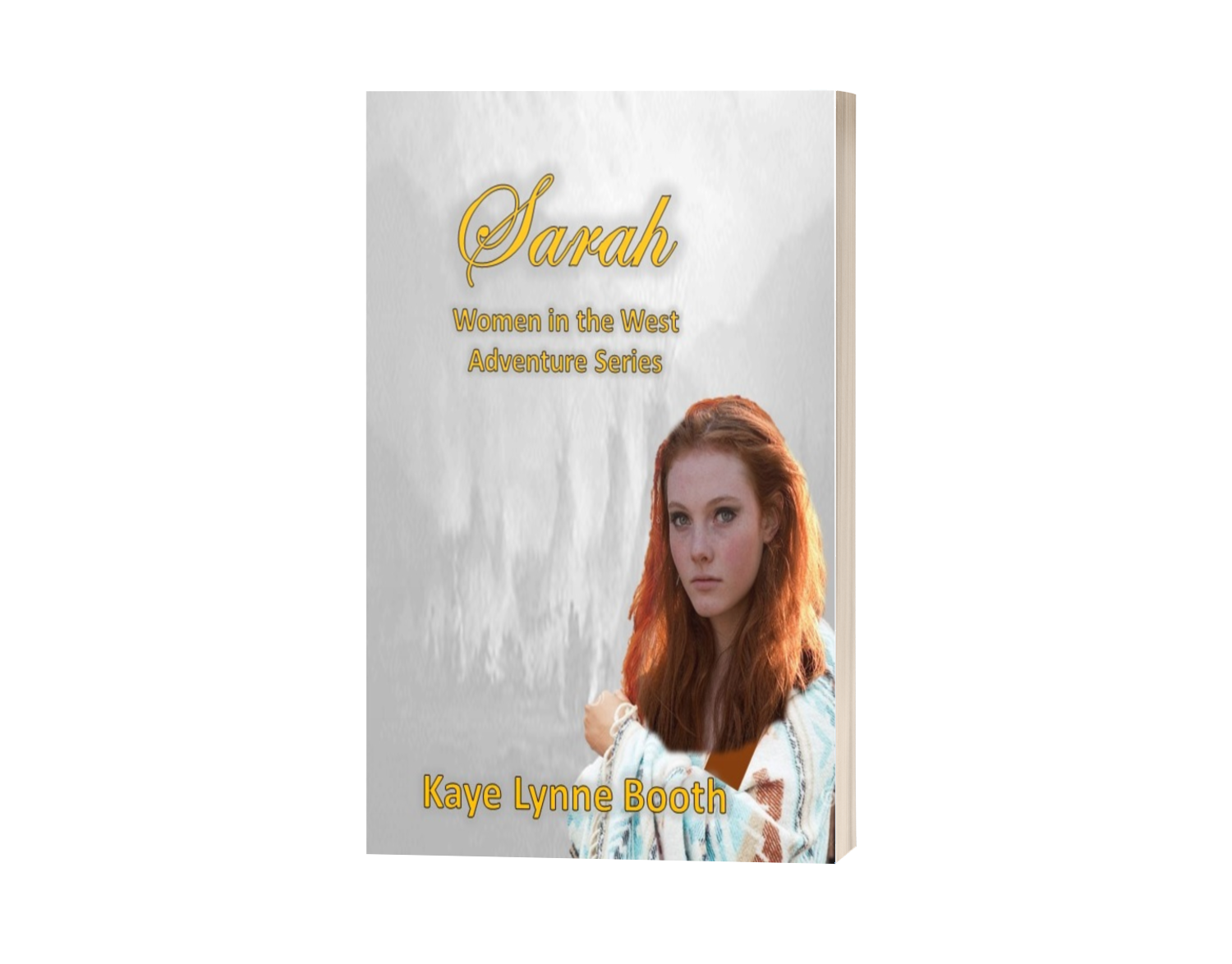
I gave Delilah a background which explains why she is so tough and gritty, after growing up with abuse and surviving two years in the territorial prison, readers know she doesn’t take things lying down, so it comes as no surprise when she sets out after the two men who raped her and left her for dead, and abducted her 14 yeaar old ward, Sarah. In the first chapter, she is practicing with a handgun, because she knows this is a weakness which needs to be turned into a strenghth for her to survive. So when, later in the book, she makes an amazing shot, we know she earned that ability through hard work and practice.
The other women in the series, Sarah and Marta, are introduced in the first book, but they too are flawed in ways which allow them room to grow stronger. Sarah is fourteen when she is abducted, but by the time her story is through she will become a strong woman who readers will root for. Marta is a mild mannered Mormon woman, travelling across the Colorado frontier when her family is killed and she is taken in an Indian raid – all experiences which will change her life and make her stronger for when she is the protagonist of her own book.
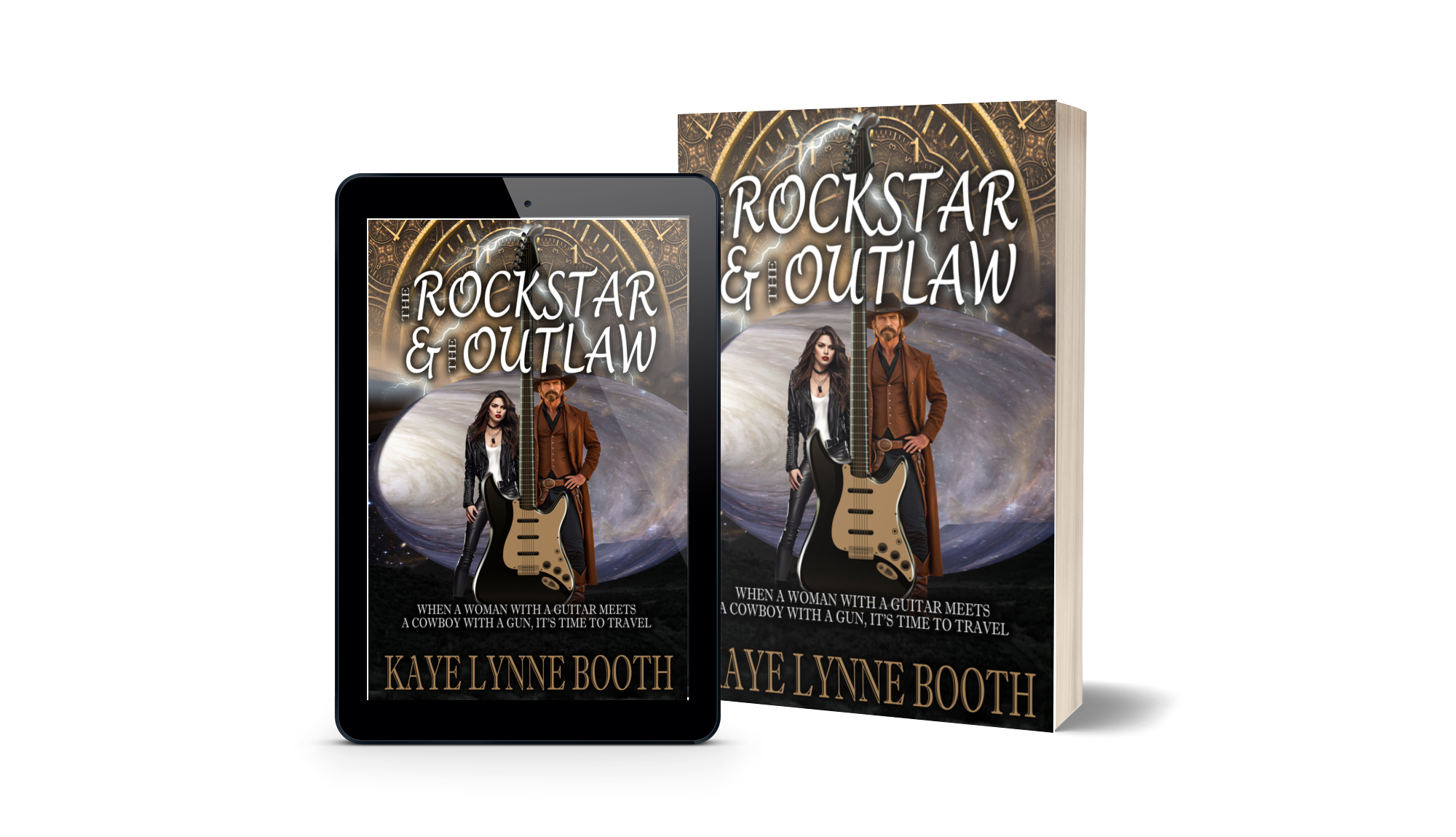
The protagonist in the book I’m working on now, The Rockstar and the Outlaw is also a female with strong inner strength and many flaws. She is a singer, a rock star, with an addictive personality, which includes adrenaline as well as drugs, who finds herself in a situation which she knows she can’t win. Amaryllis escapes with the help of a time-traveling outlaw from the old west, but finds that trouble awaits her, no matter where or when she goes, and when the tables are turned the outalw can depend on the rock star to have his back. She also has a backstory, living a life od drugs, sex, and rock ‘n roll, which makes her strengths and weaknesses both realstic and believable. Her inner strengths allow her to save herself and do what is needed when called upon, in a fashion that readers can buy into.
So, you see, a character’s flaws can be used as building blocks to make the character’s actions believable, or you can give them a backstory which validates their strengths, in order to make their daring feats more believable. It is the inner strengths we are referring to when we talk about strong characters, although characters may need to be physically strong to back up their inner strengths. But you do have to take care that the strengths that you give them are realistic and believable. Of course, if you’re writing fantasy, giving her superpowers or magic might be believable. But if your protgonist is an ordinary woman, you shouldn’t give her extrordinary abilities. Readers are smart. They won’t buy it.
You can still join in to support the Kickstarter campaign for Delilah and the Women in the West adventure series here, if you haven’t already: https://www.kickstarter.com/projects/kayelynnebooth-wcp/delilah-women-in-the-west-adventure-series
Your support is greatly appreciated.
___________________________________________________
For Kaye Lynne Booth, writing is a passion. Kaye Lynne is an author with published short fiction and poetry, both online and in print, including her short story collection, Last Call and Other Short Fiction; and her paranormal mystery novella, Hidden Secrets. Kaye holds a dual M.F.A. degree in Creative Writing with emphasis in genre fiction and screenwriting, and an M.A. in publishing. Kaye Lynne is the founder of WordCrafter Quality Writing & Author Services and WordCrafter Press. She also maintains an authors’ blog and website, Writing to be Read, where she publishes content of interest in the literary world.
______________________________________________________
Join Kaye Lynne Booth & WordCrafter Press Readers’ Group for WordCrafter Press book & event news, including the awesome releases of author Kaye Lynne Booth. Get a free digital copy of her short story collection, Last Call and Other Short Fiction, as a sampling of her works just for joining.
Share this:

Book Review: Vanished on Vacation
Posted: January 13, 2023 Filed under: Book Review, Books, Crime, Review, Suspense, Thriller | Tags: Book Review, Jennifer Ruff, Suspense/Thriller, Vanished on Vacation, Writing to be Read 3 Comments
What they’re saying on Amazon
- “Fantastic book with many twists and turns!” – Alese M. Brockman
- “Jennifer outdid herself. Vanished on Vacation needs to be3 made into a movie.” – Kindle Customer
- “Suspense at its best” – Reita Pendry
The Book

As a frantic search for missing student Avery Jennings begins, everyone is hiding something—Avery’s family and friends, the resort’s staff, and its wealthy guests. It’s up to FBI Special Agent Victoria Heslin to dig deeper. Motivated by her own mother’s abduction years ago, she’s determined not to let Avery become another missing person statistic.
The Mexican authorities aren’t cooperating, and Victoria realizes she’s up against something more powerful than she imagined. Taking matters into her own hands, she plunges into a hellish ordeal that will test her strength and courage like never before.
“How much will you risk to find this girl?” the officer asked.
“Whatever it takes,” Victoria answered without hesitation.
Or is it already too late?
Purchase Link: https://www.amazon.com/Vanished-Vacation-Agent-Victoria-Heslin-ebook/dp/B09YJ79K6X/
My Review
Vanished on Vacation, by Jennifer Ruff, is a contemporary thriller that will keep readers on the edges of their seats. I didn’t want to put this book down. I was compelled to keep reading to the very last page.
Women disappear in Mexico all the time, but when a young American girl vanishes without a trace, folks tend to sit up and pay attention. Especially when she is the niece of one of the FBI’s top agents. That’s when agents Hiesling and Rivera are put on the case, and they will leave no stone in Mexico unturned to find young Avery, who disappeared on the last day of her vacation. But when the Mexican authorities suddenly turn cold and uncooperative, they get the feeling they’ve stumbled onto something bigger than just the kidnapping of one girl.
A thoroughly entertaining and suspenseful read. I give Vanished on Vacation five quills.

______________________________________________
Kaye Lynne Booth does honest book reviews on Writing to be Read in exchange for ARCs. Have a book you’d like reviewed? You can request a review here.
Share this:

Growing Bookworms – Teaching children about nature and conservation
Posted: January 11, 2023 Filed under: Books, Children's Books, Nature | Tags: Conservation, Growing Bookworms, Nature, Parenting, Robbie Cheadle, Writing to be Read 45 Comments
Teaching our children about the natural environment and conservation is one of the greatest gifts we can give them. There are a few good ways of making sharing about nature and conservation with children, as follows:
- Reading books about nature with your child;
- Exploring nature with your child;
- Art and play; and
- Watching documentaries
Reading
There are a number of wonderful children’s books that subtly teach children about the wonders of nature. One is The Secret Garden by Frances Hodgson Burnett when Dicken shows Mary how to care for the locked garden and plant new flowers. Journey to the River Sea by Eva Ibbotson is another. Set along the Amazon River in Brazil, this book has a strong theme about the importance of nature to the human spirit. A few other wonderful children’s books about animals are White Fang by Jack London, The Incredible Journey by Sheila Burnford, Charlotte’s Webb by E.B. White, Jock of the Bushveld by Sir James Percy FitzPatrick, and The Jungle Book by Rudyard Kipling.
This is the song, The Bare Necessities, from Disney’s The Jungle Book, when Baloo, the Sloth Bear, meets Mowgli, the human boy.
There are also some excellent non-fiction books that explain a lot about nature. One of my favourites is Nature Cross-Sections by Richard Orr which includes wonderful picture spreads of cross-sections of, amongst others, a beehive, a tide pool, a termite mound, and a beaver lodge.

The Disney Mickey Wonders Why series is also terrific for young children. Laid out as a series of questions such as Why is the sky blue? and Why is the grass green? these books include comprehensive, yet simple, answers and lovely illustrations. You can find the Micky Wonders Why series on Amazon as a set of books or as single books.
Do you have any wonderful books for children about nature that you can recommend?
Exploring nature
There are numerous ways to explore nature and its bounty with your child from nature walks to visiting places of interest like aquariums, bunny parks, and game reserves.
Cooking or baking with your child is also a wonderful way of teaching your child about natures bounty and the products the animal kingdom contributes to our lives including eggs and fresh milk. I was surprised to discover that some city children don’t know that milk and other dairy products generally come from cows.
Art and play
When my sons were younger, we used to play games that included animals. We built a game reserve in the sand pit and set out all the toy animals. We learned about the natural habitat of different animals and that some animals live in rocky terrain, some in savannah areas and some in the forest. We created the right habitat using pot plants and garden rocks and put the correct animals in the correct areas. We also played a water game with a large plastic shell full of water, rocks and a few plants. The water animals lived in the pond. Small children love playing in sand and water and it has many benefits for them. It was amazing how the boys and their friends learned to work together with these games.
I also did a lot of art with my children. We made a swamp from an old cardboard box, paper and paint and learned about the animals that live in a swamp including, of course, Shrek and Fiona. We made centipedes from parts of egg boxes and pipe cleaners and built a volcano from paper mache. When it comes to art, the options are limitless for learning and lots of tactile fun.
Watching documentaries
There are numerous amazing documentaries available that parents can watch with their children. It is always fun to discuss the details of these shows with children afterwards and explore and develop their thoughts and impressions from the information and visuals provided.
Conservation
It is not enough just to talk about conservation, you have to lead by example and demonstrate through your own choices and actions the importance of helping the planet and all its creatures and forms of life to thrive. I will expand on conservation and leading by example in a future post.
About Robbie Cheadle

Robbie Cheadle is a South African children’s author and poet with thirteen children’s books and two poetry books.
The eight Sir Chocolate children’s picture books, co-authored by Robbie and Michael Cheadle, are written in sweet, short rhymes which are easy for young children to follow and are illustrated with pictures of delicious cakes and cake decorations. Each book also includes simple recipes or biscuit art directions which children can make under adult supervision.
Robbie and Michael have recently introduced the first book in the Sir Chocolate holidays and high days book series. Sir Chocolate and the Missing Christmas harp is available on Kindle Unlimited and as an ebook and paperback from Amazon. This series is illustrated with Robbie Cheadle’s gorgeous cake and fondant artwork and includes themed activities and recipes for adults to make with children.
Robbie and Michael have also written Haunted Halloween Holiday, a delightful fantasy story for children aged 5 to 9. Count Sugular and his family hire a caravan to attend a Halloween party at the Haunted House in Ghost Valley. This story is also beautifully illustrated with Robbie’s fondant and cake art creations.
Robbie has also published two books for older children which incorporate recipes that are relevant to the storylines as well as one micro read with a Christmas theme.
Robbie has two adult novels in the paranormal historical and supernatural fantasy genres published under the name Roberta Eaton Cheadle. She also has short stories, in the horror and paranormal genre, and poems included in several anthologies.
Robbie Cheadle contributes two monthly posts to https://writingtoberead.com/, namely, Growing Bookworms, a series providing advice to caregivers on how to encourage children to embrace learning, and Treasuring Poetry, a series aimed at introducing poetry lovers to new poets and poetry books.
In addition, Roberta Eaton Cheadle contributes one monthly post to https://writingtoberead.com/ called Dark Origins: Nursery Rhymes and Fairy Stories.
Find Robbie Cheadle
Blog: https://www.robbiecheadle.co.za/
Blog: robbiesinspiration.wordpress.com
Twitter: BakeandWrite
YouTube: https://www.youtube.com/channel/UCVyFo_OJLPqFa9ZhHnCfHUA
Facebook: Sir Chocolate Books
______________________________________________________________________________________________
Want to be sure not to miss any of Robbie’s “Growing Bookworms” segments? Subscribe to Writing to be Read for e-mail notifications whenever new content is posted or follow WtbR on WordPress. If you found it interesting or entertaining, please share.
Share this:

Chatting with the Pros: Interview with author RA Winter
Posted: January 7, 2023 Filed under: Book Release, Books, Chatting with the Pros, Fantasy, Interview, Mythology and Legend | Tags: Author Interview, Chatting with the Pros, Fantasy, Mythology, RA Winter, Themis's Revenge, Writing to be Read 5 Comments
It’s been several years since I posted a “Chatting with the Pros” interview, but today I have a very special post with an author I’ve known for several years, In fact, she was a contributing author to the original Ask the Authors writing reference anthology back in 2018. She’s got a new book coming out tomorrow, Themis’ Revenge. It is book 4 of her Queens of the Underworld series. She’s a multi-genre author and she’s joining me here to share with us about her writing and her new release, which is always very exciting.
About the Author
I started writing under my married name, writing genealogy books as history was my first love. Now I write stories that give me joy-be it fantasy, magical realism, ghosts, urban fiction, or romance. All my novels contain strong females with sass, sarcasm, and humor. You know, women exactly like me. I love animals and it doesn’t matter what kind either. I’ve even petted a crocodile in Egypt-tried to take him home too. Apparently, that’s not allowed.

Our Chat
Please tell us a little about yourself to start out.
RA Winter: Currently, I’m in Pittsburgh, PA but I’ve lived all over the world; Turkey, Germany, Egypt, Jordan and tons of states in the US. I love to travel but hate to fly! I’ve been working as Federal Agent since 2013, I won’t tell you which agency, but lets just say that it’s interesting.
You write what your heart tells you too, making you a multi-genre author. What are the genres that you have written in?
RA Winter: I’ve dipped my toe in a few genres and I always include romantic elements. Contemporary, magical realism, low-fantasy, high fantasy, western fantasy (which is becoming a thing. I finally got to write a Sleeping Beauty retelling at a rodeo with spirits!), historical, paranormal, Greek myth, sci-fi and I’ve also published nonfiction.
What is your favorite genre to write in so far? Why?
RA Winter: I adore writing fantasy. I love the descriptions, the world building-my world-my rules! My novels end up being in the 300-400 page range so they aren’t your typical 1000 page high fantasy.
What genre do you classify Themis’ Revenge? Why?
RA Winter: Got Zeus? I do! I’ll take you on a journey from Olympus to Hades, Tartarus and into the real world. I have dragons, werewolves, arrogant gods (yes, Zeus), sexy scenes, a romance with Ares and Death (oh my!) and that one little pesky secret and mystery that is threaded through each book. Can you guess the ending? (Bane’s Wish will be out in April). Multiple genres collide in this series with myth-based fantasy action being the main focus.
What inspired the Queens of the Underworld series?
RA Winter: You remember Supernatural, the TV series? Well, in the show, Death is a person and I was like-she needs a romance. Then the whole-how do I bring Death alive idea started. Then I had to have a bad guy, and a world to build on, so I tinkered with bits of mythology to find the right pieces. I had taken courses in Greek mythology in college years ago and loved all the backstabbing, romance, and intrigue and wanted to capitalize on my knowledge. I actually took a couple more classes to freshen my memory and spark new ideas.
What do you enjoy about writing the books in this series?
RA Winter: I do not like stories to end! I love to read. If I find a world that I enjoy and characters that I’m invested in-I don’t want to put the novel to rest. It’s like stranding them in no-man’s land and walking away. Writing a series is a way to keep characters alive and build on the setting/plot/features from prior books until those unruly characters are ready to die. It’s also much more complicated to write. You have to remember picky details like eye color, sex, boots or shoes? WTF is his sons name? so a story bible is imperative. As is a wonderful, patient, honest editor.
Themis’ Revenge is Book 4 in the series. Are these stand-alone novels or do readers want to pick up the previous books in the series before reading Themis’ Revenge?
RA Winter: Themis is the prequel. It can be read as a standalone or at any point in the series. I would prefer that you read it first-but that’s up to the reader. It takes place over four-thousand years ago but the consequences of Themis’s actions are being dealt with today. It digs deep into the stakes of the series. If you read Themis first, you’ll be invested and hopefully solve the mystery that’s driving the series before others do. The other books can be read separately, but you might miss some clues! If the stakes/worldbuilding aesthetics are not paramount to you and you’re just looking for the romance between say–Death and Ares–then jump into Death’s Lover and hopefully you’ll fall in love and come back for the others.
Could you tell us a little about the story?
RA Winter: She is Themis goddess of Justice, only she can write the rules that govern men. Zeus, king of the gods, has other ideas. Not only did he cheat on her, but he changed her laws. Horrified that Zeus has doomed an innocent man to be fed to a Titan god, Themis must descend into the depths of Hades to save the damned soul- without Zeus’s knowledge.
But an omnipotent being guards the prison of Typhoeus. One with blood pulsing through his veins. He’s neither god nor demon, (but sexy as hell with his dark hair, tight abs, gruff manner), and he refuses Themis entry into Tartarus. With no way around him, she must go through him- and step directly into his arms.
In a race against time, Zeus and the Titan god’s hunger, Themis is willing to sacrifice everything to save an innocent soul. But is she willing to risk her heart again?
What was the biggest challenge for you in writing this story?
RA Winter: Keeping the characters true to their personalities. That’s why Themis’s Revenge starts over four thousand years ago. I had to use the earliest myths of her and show her evolution from a ‘right-wrong-no gray area’ goddess to one who sees that the law shouldn’t be so cut and dried-and neither can relationships!
What was the most fun in writing this story?
RA Winter: Planting the seeds for my big ‘Ah Ha-Gotcha’ moments. I want the reader to be able to see those bits and pieces and put it together-but have Themis totally blindsided and missing those clues. Reactions are golden.
What’s the best piece of advice you were ever given?
RA Winter: For the love of God woman, life can’t be planned-process, improvise, and continue -KC Freeman, author extraordinaire and my overworked editor. I’m a Virgo. I organize and plan everything. I have schedules for daily, weekly, monthly and over the course of a year.(Sometimes I even do hourly schedules. Ugh.) I have this horrible internal flaw. I follow through then something happens where I can’t complete a task in the time allotted and bam! I quit because I can’t fulfill my plan. It takes me a while to reorganize and return. After a bout of Covid, it took me two years to start writing again. I just couldn’t stick to a schedule I even have an exercise and diet chart. If I get ill-I can go from running 4 miles a day to a year later wondering why I can’t walk 4 miles when I finally restart my plan.
What advice do you have for aspiring writers?
RA Winter: You have to write it. Take it in chew-able pieces. Have a vision and stick to it-if you have the ending-you can write the rest. I finished my first book because someone told me that I never would publish. My first novel was a graceful uptick of my middle finger in his face. Wonderful image to this day. Hey, there are now 13 books, 2nd book of the year in the NR, and a USA Today Bestselling author title at the end of my name-so maybe I should thank him?
Um. No. I’m waiting on my next screw-you moment. It’s the challenge that keeps me going.
About the Book

Zeus rewrote her laws. Now, Themis, Goddess of Justice will extract her revenge.
She is Themis goddess of Justice, only she can write the rules that govern men. Zeus, king of the gods, has other ideas. Not only did he cheat on her, but he changed her laws. Horrified that Zeus has doomed an innocent man to be fed to a Titan god, Themis must descend into the depths of hades to save the damned soul- without Zeus’s knowledge.
But an omnipotent being guards the prison of Typhoeus. One with blood pulsing through his veins. He’s neither god nor demon and he refuses her entry into Tartarus. With no way around him, she must go through him- and step directly into his arms.
In a race against time, Zeus and the Titan god’s hunger, Themis is willing to sacrifice everything to save an innocent soul. But is she willing to destroy her own soul by opening her heart again?
____________________________________________________________________
Want exclusive content? Join Kaye Lynne Booth & WordCrafter Press Readers’ Group for WordCrafter Press book & event news, including the awesome releases of author Kaye Lynne Booth. She won’t flood your inbox, she NEVER will sells her list, and you might get a freebie occasionally. Get a free digital copy of her short story collection, Last Call and Other Short Fiction, just for joining.
Share this:

Bowlesian! – Detective Robot and the Murderous Spacetime Schism
Posted: January 4, 2023 Filed under: Books, Bowlesian!, Excerpt, Fiction, Humor, Science Fiction, Short Fiction, Speculative Fiction, Stories | Tags: Bowlesian!, Humor, Jeff Bowles, Science Fiction, Short Fiction, Short Stories, Writing to be Read 2 Comments
Detective Robot and the Murderous Spacetime Schism
by Jeff Bowles
We found victim one face down in a giant vat of beer. Red beer, frothy, churning and roiling in blood. Not precisely the best brew of the batch, I knew, but I couldn’t help wonder what it might taste like on a mechanical tongue.
“Detective Robot,” said Officer Allen, a short, stocky, often uncharitable young fellow who always seemed to smell of cooked sausage. “I can’t believe they called you out for this.”
I formed my golden jointed lips into a pleasant smile. “Why wouldn’t they have called? Rain or shine, we always get our man.”
My partner and fellow investigation consultant, Gorilla Todd, beat his big furry chest and pulled his lips back over his teeth.
“Step back, beat cop,” he said in his deep, gruff voice. “Let the man work.”
Gorilla Todd was five hundred pounds of hyper-intelligent simian. He was a post-nuclear, neuro-enhanced military lab experiment, lots of those wandering Grim Land. Bit of a bruiser, to be sure, but an honest and a loyal one.
“Thank you, Gorilla,” I said. “Officer Allen, must we really?”
Allen snorted. “Boy oh boy, you fellas need to learn your place. Are we still short-staffed on actual detectives? What’d you do to get the call on this? Grease a few palms? Robots run on grease, don’t they?”
Point of fact, we run on million-core supra-processors the size of toenail trimmings. But I wouldn’t expect a technologic druid like Allen to know the difference. We got the call because the Chief appreciated our work and professionalism. She requested us by name; the place was ours for the next few hours.
“Why a fusion brewery?” I said, taking in our surroundings.
“People don’t die in fusion breweries?” asked Allen.
“Usually not fashion models, no,” said Gorilla. “Not in the middle of the night.”
“And certainly not old women dressed up like them,” I said.
Allen blanched at this.
“Old women,” he said, scratching his head as he turned to face the vat. “Holy cow! She’s gone all pruney in the lager.”
“Ale,” I said. “Shall you fetch the net or shall I?”
* * * * *
Fusion brewing, popularized at the dawn of the last nuclear holocaust, involves the high-speed collision of plutonium-rich barley nuclei with the nuclei of hops machine grown in the atomic soils found in the ancient ruins of Hackensack, New Jersey. The resulting photonic explosion produces a bubbly, effervescent ale, light on the tongue, but with just enough zing to potentially threaten male fertility (as all nuclear beverages should).
Zippy Beer, or rather, Zippy Beer’s northeast production plant, did seem a rather strange place for homicide. Zippy was known throughout Grim Land as the safest, most environmentally conscious nuclear beer on the market. Fifty years without a tainted batch, their ocu-tisements often declared. Fusion belchers spat florid ale, sluicing through sloshers, roaring down pipeways, collecting and aging in anti-grav refrigeration closets.
I studied Allen carefully. He looked tired and overworked.
“I swear to God, she was young when I found her,” he said.
“Sure she was,” Gorilla Todd chuckled. “Makes all the sense in the world. Hey, mac, you been smokin’ them funny cigarettes?”
I tapped my chin with platinum fingers and examined the poor old dead dear. We’d pulled her from the vat and sprawled her out on the tiled factory floor. I searched and picked at her with the robo-pincers I used for toes.
“You’re having us on, aren’t you Officer Allen?” I said. “You see that high, high ceiling all those many meters up above? See how there’s no skywalk, no roof access?”
“Yeah?” said Allen.
“Now do you see this is the last vat in the line? Eleven vats down that way, but here, just the one. No ladder, either. Do you see?”
Gorilla Todd jumped to his feet and waved an arm over his head. “I know this one, robot! I know it!”
I nodded at him agreeably and opened up my chest slot with a bleep, bleep, bleep, CLACK. A high-protean banana cube flopped out and jiggled on the factory floor like jelly. All five-hundred pounds of Todd landed on it and gobbled.
“She materialized in the beer,” he said, smacking his lips. “And she aged on the spot. Some kind of schismatic time disruption, I think.”
“Very good, Gorilla,” I said. “You see, Officer Allen, once you have eliminated the impossible, whatever remains, however improbable, must be the—”
A hole tore open in the air above us. It went Riiiip, and then it stretched itself wide in a kaleidoscopic clash of colors and voices. Abraham Lincoln, the sixteenth President of the United States, fell through and landed on Officer Allen with a heavy thud.
Gorilla Todd shouted, “Holy cannoli! Who is that?”
“It’s Abraham Lincoln,” I said. “And he’s been shot!”
I checked my tertiary memory banks to be sure. The beard, the hat, it was Lincoln, all right. Bullet wound in the back of the head. He wasn’t dead yet. Eyes fluttering, gasping, but not dead yet. He’d arrived only moments after his famous assassination. Remarkable. His body aged on the spot, grew older by the second. Wrinkles, thinning skin, hair gone long, gray, brittle.
Allen wheezed like strangled bagpipes. He gave a final stifled groan, then he lay his head back, twitched, and went limp. I rushed over and checked him for a pulse.
“He’s dead, Gorilla,” I said. “The Great Emancipator snapped his neck.”
“Hmph. Don’t look too great to me.”
“Granted, though I’m certain he’s not at his best. Struck down by a cowardly actor. That’s democracy for you. What precisely are we dealing with, Gorilla?”
“Black magic?” said Todd.
“Doubtful.”
“Sinister Martian technology?”
“Highly unlikely, though you earn top marks for making me chuckle. No, Todd, our suspect resembles nothing so much as thin air.”
“What do you mean?”
I walked over to another vat and kicked at the release valve until golden nuclear beer gushed out and sprayed my feet. Bending low under the faucet, I proceeding to fill my robot super stomach with hoppy ale.
My jointed fingers tapped a supple syncopated rhythm on my forehead. Performed a million mental processes. A million plus fifty. The span of a single human heartbeat.
“Eureka!” I exclaimed. “The cause of the murderous spacetime schism is—”
Rather out of the blue, a naked caveman came screaming at us from the shadows. He shouted, “Gooba! Blabba!” and then proceeded to club me over the head with a tree branch.
“Ouch!” I shouted. “Help me, Todd, you great galoot!”
Gorilla Todd ripped the branch away and roared a mighty challenge. The caveman roared back. His skin rippled with flash wrinkles, hair going brittle and gray, just like Lincoln’s. Hearty fellow, he attacked Todd, ripped out a chunk of gorilla hair and fish-hooked my simian companion.
“You rotten mook!” Gorilla shouted, caveman fingers sliding in and out of his mouth. He wrapped his meaty hands round the caveman’s throat and began to throttle the poor fellow.
“Gorilla, no!” I said.
Five new holes ripped open in the air above us. One long, continuous Riiiip, and that same kaleidoscopic clash. Out of the holes fell a cute orange kitten, a young renaissance painter, a popular ancient professional football quarterback, a potted cactus, and lastly, Richard Milhous Nixon.
Nixon crumpled to the ground, got one look at Lincoln and shrieked, “Jesus Christ! What happened to that poor bastard?”
All of them aged. The kitten grew, got fat, got skinny, and died. The renaissance painter, fingers covered in vibrant red and green oils, said something in Italian about unfinished masterworks, choked on his tongue, and summarily expired.
“We gotta do something, Robot!” said Todd, still choking the dwindling, gasping caveman.
“Do what?” I said. “And stop choking that caveman!”
Nixon died screaming, gurgling, clawing at the air.
“Todd,” I said, “we have to dump the beer!”
“The beer?” said Todd.
“It’s a bad batch! It must be. There’s no murderer here. Tainted Zippy Beer has caused a schism in space and time!”
Seven more air holes ripped open. From them dropped a sea bass, the Marquis de Sade, two members of a light contemporary jazz quartet, an earth worm, Eddie Murphy, and a two hundred twenty-five foot tall California redwood tree.
The redwood thudded to the factory floor, split the concrete, rose and sprawled, broke through the high white ceiling. The factory lights flickered. Ceiling chunks rained down on us.
“The beer, Todd! Dump it!”
Todd let go the shriveled caveman. He leapt for the redwood, scaled its trunk hand-over-hand. He braced himself against the vat, pushed at it with all his might.
“It won’t budge!” he said.
Three more air holes ripped open. A snail, a circus elephant, a street vendor holding tacos.
Think. Think.
I tapped a rhythm on my forehead.
“Eureka!” I exclaimed.
I leapt for the tree, climbed for a branch, squared my shoulders, and then I dove into the beer.
In haste, I began to drink it, slurp it all up. My robot super stomach swelled. Five hundred gallons. Seven hundred, a thousand. The roiling, bloody fashion model beer, it washed down my throat at a hundred-thousand PSI. Rushing, roaring through my alloy sternum. My body rocked and strained. I groaned like industrial machinery.
“It’s working, Robot!” said Todd. “The holes are slowing down!”
A riip here, small rip there. And then it stopped.
Bodies grew old and died; the redwood rotted, split. Half fell and crushed the factory wall. In rushed the night air, our arid post-nuclear wind. Our city out there—Grim City One—twinkled like starlight. Bricks and heavy steel beams and girders fell all around us. Clouds of dust lifted and lingered until well after relative stillness had filled the factory.
Gorilla Todd gasped from exertion. He stumbled down from the remnants of the redwood and sat against its trunk, eyeing the bodies, all the destruction.
“You did it, Robot,” he said. “You’re a friggin’ genius, you know that?”
Of course I knew. I also knew I was big as a house. Big like a beer vat and just as full. Body engorged, I looked like a head swimming in sea of scrap metal, jammed into the vat like some kind of sardine.
“Tainted spacetime-schismatic beer,” I wheezed. “I might have known! Perhaps a super-accelerated atomic contaminant—a mutation in the solitary photosynthetic apparatus, for instance—exceeded localized time dilation barriers and generated contiguous Einstein-Rosen pathways. And to think, Albert Einstein believed time was non-real!”
“Erm, Ein-who?” said Todd.
“Call in a containment unit, Gorilla. Call in the best they’ve got. And get the Chief down here, too. I fear, Todd, our troubles are just beginning.”
Gorilla Todd huffed. He pondered a moment, and then his thick brow lifted as realization dawned.
“Oh no,” he said. “You don’t mean….”
“Precisely,” I replied. “In approximately thirty-nine minutes, I will have to void my robo-bladder like a racehorse. The game, as they say, my dear Gorilla Todd, is afoot.”
END

Jeff Bowles is a science fiction and horror writer from the mountains of Colorado. The best of his outrageous and imaginative work can be found in God’s Body: Book One – The Fall, Love/Madness/Demon, Godling and Other Paint Stories, Fear and Loathing in Las Cruces, and Brave New Multiverse. He has published work in magazines and anthologies like PodCastle, Tales from the Canyons of the Damned, the Threepenny Review, and Dark Moon Digest. Jeff earned his Master of Fine Arts degree in creative writing at Western State Colorado University. He currently lives in the high-altitude Pikes Peak region, where he dreams strange dreams and spends far too much time under the stars. His latest novel, Resurrection Mixtape, is available on Amazon now.
Share this:

Book Review: Lover’s Moon
Posted: December 30, 2022 Filed under: Audio Books, Books, Fiction, Speculative Fiction, Urban fantasy, Werewolf fiction | Tags: Audio Books, Book Review, Julie Strauss, Lover's Moon, Mark Leslie, Werewolf romance, Writing to be Read 4 CommentsLover’s Moon is a part of Mark Leslie’s Canadian Werewolf series, with co-author Julie Strauss. This is the romance story that tells the tale of how the two lovers, Michael and Gail met. And since one of the lovers is a werewolf, I guess that makes it a werewolf romance.
Although the audio book has a version narrated by professional narrators, the version I listened to was a free podcast version on Spotify, narrated by the authors. Mark narrates Michael’s parts and Julie narrates the parts for Gail, and for me, they will always be the voices of those characters, because they did an amazing job.
Technically, this might be considered a podcast review. I mean, what do you call it when the authors release a serialized version of their audio book in a podcast format for their readers for free? I call it brilliant!
You too can enjoy this delightfully entertaining werewolf romance for free, and read by the authors here: https://www.amazon.com/Lovers-Moon/dp/B0B1Z3QBYB/

You can purchase a copy of Lover’s Moon in ebook, print, or audiobook format here: https://books2read.com/b/loversmoon
My Review
After listening to the audio book, Canadian Werewolf in New York, I was in love with the characters of Micheal and Gail, and I was left with many questions. Michael was the P.O.V. character, so you knew where he was coming from, and he obviously has still has feelings for his old flame, and regrets for having to end the relationship. Gail appears again after a long period when she had been out of the picture and her character was a bit more unpredictable. It was clear that there is history between these two, and I wanted to know more.
Lover’s Moon is the tale of how Michael and Gail met, their relationship and their break-up. If you’ve never read a werewolf romance, this quirky tale might be just for you. Lefebvre’s Canadian Werewolf series isn’t horror with a lot of blood and guts, but stories told with a touch of humor from the human perspective of the werewolf, and Michael’s relationship with Gail is a touching one, with the ups and downs of a roller-coaster. Their story will steal your heart. It did mine. And co-writing with Julie Strauss, having her write, and narrate, the chapter’s that are Gail’s perspective absoulutely works. Her portrayal of Gail in the narration is priceless.
Lover’s Moon, by Mark Leslie and Julie Strauss, is a quirky werewolf romance that will steal readers’ hearts, and create a dire urge to read or listen to the rest of the series. What more could a reader ask for? I give it five quills.
_______________________________________________________________________
Kaye Lynne Booth does honest book reviews on Writing to be Read in exchange for ARCs. Have a book you’d like reviewed? You can request a review here.










Mind Fields: This is Where Your Fantasies Take You
Posted: January 6, 2023 | Author: artrosch | Filed under: Commentary, Mind Fields | Tags: Aging, Arthur Rosch, Mind Fields, Sexual Fantasies, Writing to be Read | 1 CommentI’ve lived in the world of my sexual fantasies for decades. There are times to put away the fantasy but first I must ask it why it was there in the first place. I’m seventy five years old. I’ve had enough sex in my life, with a number of partners. Men born in the forties and fifties grew up entitled, so they thought, to all the sex they could get. Turns out that things have changed and sex is no longer a perk of the boomer male. Sex is more complex because we became aware (some of us) to the fact that women have been treated with abominable cruelty, apparently forever. There is no style of feminism that comes close to redressing that injustice. I told my partner yesterday, “I’ve been so unfair to you.” It was true. My fantasies pulled me away from her. We are the same age. She doesn’t’ conform to the image. She’s a granma. Of what sexual use is she? I’ve deleted post menopausal women from my sex fantasy life.
SO… I’ve come to a decision to put away the fantasy. I’m not really horny any more. This issue, the transition OUT of sexuality, is difficult. I‘ve been slow to release it and give it to the process of my emotional maturation. There is an evolution to such feelings. They have to be owned and then governed from within. Honesty is required. This inner transformation takes time and help from our therapists and peers. It’s been something of a wild ride for me but things are settling down. I’m revising my identity. I am an elder. I have been motivated by a sense of my having new tools at my disposal. New insights. I had wanted to bring them into a relationship and that relationship already exists, with my partner and with my peers.
The fantasy of falling in love is powerful. It can be all enveloping, overwhelming. Its allure is its intoxication with a sensual element. Everyone wants those feelings of love: until they have them. Then, it is often a case of getting what you wished for and discovering its unintended consequences. A new vulnerability exists, and a new responsibility. Things are never that easy. Falling in love brings the possibility of confusion and devastating betrayal. It’s a simple formula: one cannot make someone else happy. Don’t look for love to complete you. Be complete. It sounds so simple. It isn’t; but it comes at the right time, when one has prepared the way for being complete.
________________________________________________________________
Arthur Rosch is a novelist, musician, photographer and poet. His works are funny, memorable and often compelling. One reviewer said “He’s wicked and feisty, but when he gets you by the guts, he never lets go.” Listeners to his music have compared him to Frank Zappa, Tom Waits, Randy Newman or Mose Allison. These comparisons are flattering but deceptive. Rosch is a stylist, a complete original. His material ranges from sly wit to gripping political commentary.
Arthur was born in the heart of Illinois and grew up in the western suburbs of St. Louis. In his teens he discovered his creative potential while hoping to please a girl. Though she left the scene, Arthur’s creativity stayed behind. In his early twenties he moved to San Francisco and took part in the thriving arts scene. His first literary sale was to Playboy Magazine. The piece went on to receive Playboy’s “Best Story of the Year” award. Arthur also has writing credits in Exquisite Corpse, Shutterbug, eDigital, and Cat Fancy Magazine. He has written five novels, a memoir and a large collection of poetry. His autobiographical novel, Confessions Of An Honest Man won the Honorable Mention award from Writer’s Digest in 2016.
More of his work can be found at www.artrosch.com
Photos at https://500px.com/p/artsdigiphoto?view=photos
_____________________________________________________________________
Want to be sure not to miss any of Arthur’s “Mind Fields” segments? Subscribe to Writing to be Read for e-mail notifications whenever new content is posted or follow WtbR on WordPress. If you find it interesting or just entertaining, please share.
Share this: