Ah! Sweet Rejection
Posted: February 27, 2017 Filed under: Books, Publishing, Western, Writing | Tags: Colorado Frontier, Delilah, Kaye Lynne Booth, Publishing, Rejection, Rejections, Western 2 Comments
Last week, I received a rejection letter for Delilah from a publishing house I submitted to back in October. Although I know it sounds odd, I was elated. “Why?” you may be asking, and with good reason. Rejections are not something writers are usually pleased about. In fact, just the opposite. But I was pleased with this rejection letter for one reason. It was not a form letter. In fact, the editor took the time not only to read the sample I submitted, but to give me constructive criticism and suggestions as to how the manuscript might be improved.
As a graduate student, my professors drilled the idea into our heads that a personal rejection letter, means your manuscript made it past the slush pile and actually received some attention from the editor. It was good enough that they actually read what you sent. And a rejection letter with personal feedback is even better, because then you don’t have to wonder why they rejected your work, and you can strive to fix anything that needs fixing before sending it out again.


My rejection letter was personal, rather than form, and it offered feedback. How sweet is that? I mean, I’m not happy the book was rejected, but I am happy that somebody read at least part of it, in this case, the first fifty pages. My reaction to this rejection is to study the personal feedback and then really look at the manuscript to determine the validity of the comments. Then revise and resubmit to the next publisher on my list for Delilah.
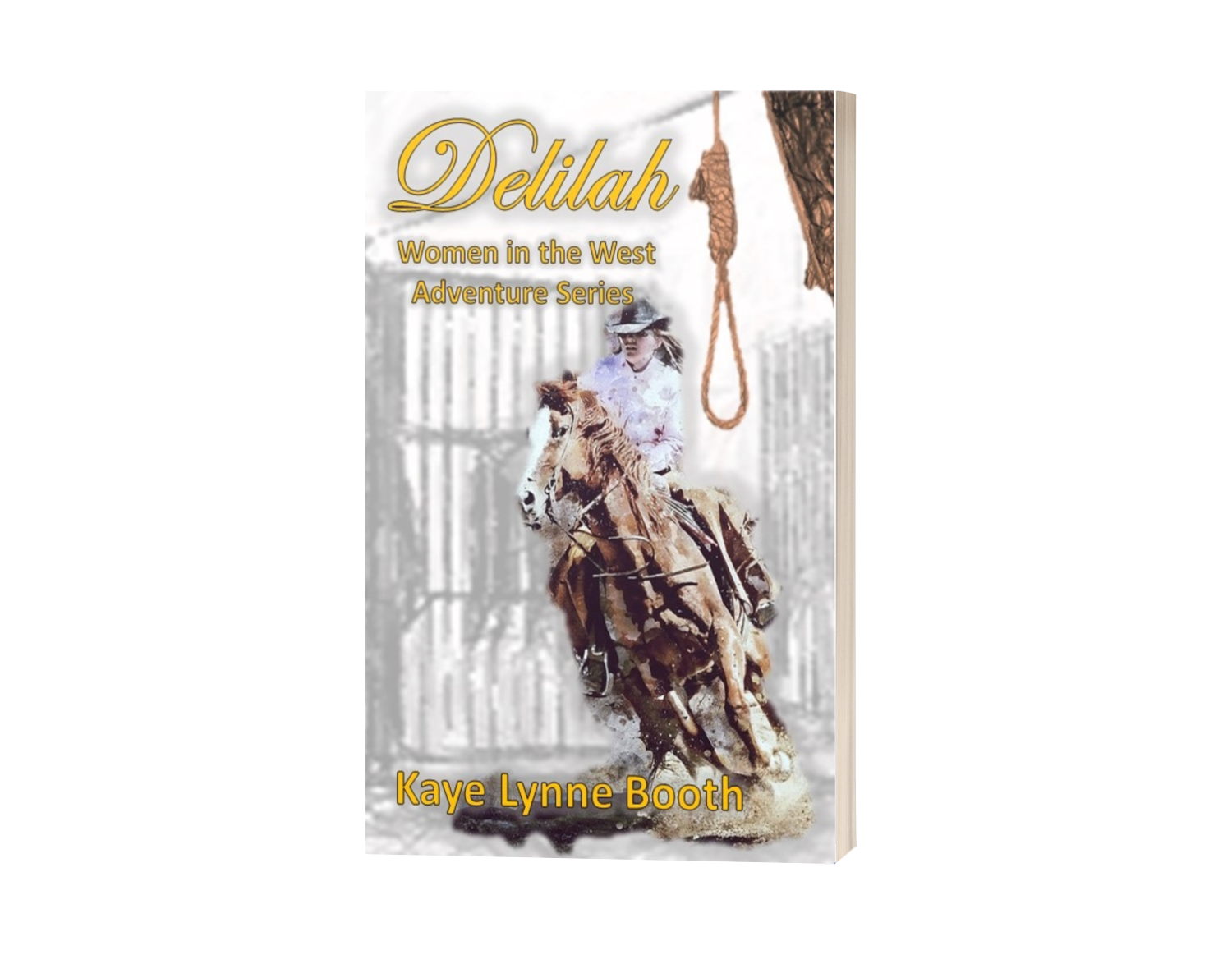
For those not familiar with me or my writing, Delilah is my 60,000 word western novel about a strong willed young woman, who served two years in the Colorado Territorial Prison, in the late 1880s. Delilah thought that time had hardened her against the cruelties of the world, but she wasn’t prepared for the trip back home and the hardships of the Colorado frontier. She heads to her home in San Luis, with sixteen year old, Sarah. An encounter with two outlaws, who take the girl captive, sets Delilah on a journey into the high country of Colorado mining towns. Along the way she faces wild animals, outlaws and Indians, makes colorful friends, and learns to love again. Delilah is a novel with the true flavor of the Colorado frontier.
A while back, I also had a hybrid publisher, who expressed interest, but wanted me to provide other western authors that would be interested in publishing with them. (To get a better idea of what I’m talking about when I say hybrid publishing, see my article, Hybrid Publishers – What are they all about?). I posted in a few places on Facebook, but did not come up with any other interested authors.
So, this is actually the second personal, (non-form) letter that I’ve received on Delilah. Of course, it would have been better if I had received an acceptance letter, but I believe in myself, I believe in my writing, and I know that one day, that acceptance letter will come. And, if not, I am not beyond the idea of publishing her myself, because I know she is that good.
To learn more about and read updates on Delilah, go to my Delilah Facebook page.
Like this post? Subscribe to Writing to be Read for e-mail notifications whenever new content is posted.
Share this:

“The Journey” Goes Where No One Has Ever Been
Posted: February 24, 2017 Filed under: Book Review, Books, Fiction, Stories | Tags: Books, Dan O'Brien, Reviews, The Journey Leave a comment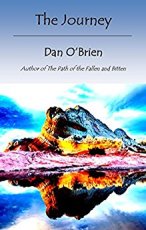
The Journey by Dan O’Brien is a philosophical tale which follows The Lonely on a quest to find purpose. The Lonely is guided on the quest by The Crossroads, and sent in all four directions, where The Lonely learns needed lessons from the entities who reside there, in order to move on.
The tale of The Journey is a uniquely different story that ponders the questions of existence. I give it three quills.

Kaye Lynne Booth does honest book reviews on Writing to be Read in exchange for ARCs at no charge. Have a book you’d like reviewed? Contact Kaye at kayebooth(at)yahoo(dot)com.
Share this:

Did You Ever Notice Mythology Has a Lot of S-E-X in It?
Posted: February 20, 2017 Filed under: Books, Fantasy, Science Fiction, Writing | Tags: Kaye Lynne Booth, Playground for the Gods, Writing 2 Comments
If you read my post, Rethinking the Playground for the Gods series… again, then you know I’m currently working on Book 2: In the Beginning in my Playground for the Gods series. In the past two weeks, I’ve increased the word count on this novel by about 10,000 words, and updated my character chart, where I keep track of who did what in each book. I view this as being not too shabby. But, as I’m revising and adding to my partial draft, I’m noticing how much of this series revolves around sex of some sort.
In my post, It’s All in Finding the Right Market, I took a look at different markets for my Playground for the Gods series besides the science fantasy market I’ve been promoting it in. In particular, I considered both YA and NA markets, as potential market venues for this series. I dismissed both after looking back over Book 1: The Great Primordial Battle, and determining that there was too much emphasis on sex for either of these markets. After attempting to revise the book for either of these two markets would totally upturn too many story premises.
To understand why sex is such an intricate part of this epic science fantasy series, it is necessary to understand what the series is. Playground for the Gods is based on an alternate universe in which the gods of ancient civilizations were really aliens from a far galaxy whose home planet had been destroyed. The characters are those of ancient gods and goddesses and they play out their own versions of some of the myths of the ancient world, adding their own unique adventures into the mix.
The thing that I’m noticing as I research the mythologies and write my story, is that there is a lot of sex involved in many of the ancient myths. And, sex is so intricately interwoven into them that to try and tell the tales with the sex extrapolated leaves tales that have lost much of their meaning.

For instance, I’ve been working on the part of the story in Book 2 which is based on the Egyptian myth of Isis and Osiris. If you know the myth, then you know that after Set chops up Osiris, Isis gathers all the pieces except one, his phallus, in order to resurrect him. Now, I have to tell you, this scene was extremely fun to write and it turned out to be quite humorous, but it doesn’t work to try and write it without the missing member. Without that, the whole story falls flat and doesn’t even make a lot of sense.
In fact, when trying to trace the lines in most ancient cultures, it seems everyone is related and incest is the norm. In Inuit mythology, Annigan rapes his sister Melina repeatedly. The Sumerian god, Anu raped his own daughter. In Greek mythology, there are same sex relations and even relations with birds or other animals. In Aztec lore, there are goddesses of carnality, sexual hunger, sexual power, sexual desire, sexual longing, sexual appetite and sexual misdeeds.
Ancient mythology is filled with sexual encounters between gods and goddesses, between gods and humans, and even strange fetish type behaviors. To write a story based on any of these myths, one cannot extract the sex and still make the story work.
 That’s why I couldn’t justify revising Book 1 to take out the sex and adult language to accommodate a YA or NA audience. While I am the author and I can make my characters do whatever I want, if in doing so, I unravel the fabric that the story is based on in order to appeal to a particular market, I’m not being true to my story or being fair to my readers. When the story doesn’t work, the readers won’t be able to suspend disbelief enough to buy into the story, and that’s not a good thing.
Visit my Playground for the Gods Facebook page for more information and updates about the series.
Like this post? Subscribe to Writing to be Read for e-mail notifications whenever new content is posted.
Share this:

“Ethereal Lives”: A Science Fiction Romance
Posted: February 17, 2017 Filed under: Book Review, Books, Fiction, romance, Science Fiction | Tags: Books, Ethereal Lives, Gem Stone, Reviews, romance, Science Fiction Leave a comment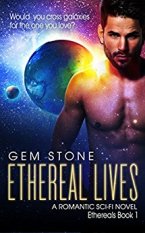
Ethereal Lives by Gem Stone is a refreshing story about a woman, Ariane, abducted by interstellar hijackers moments before Earth’s destruction. Being the only existing human makes our heroine a valuable commodity on the cosmic market. Somehow, on the way to their destination, where her captors can sell their cargo, Ariane falls in love with the ship’s captain, Ax. When the tables are turned, and Ax is captured by another ship, Ariane will stop at nothing to save him, even though he still intends to sell her.
The story is entertaining, but there are several plot points that make the suspension of disbelief very thin and the characters could be better developed. If you can get past that, it is an endearing tale and quite enjoyable. I give Ethereal Lives three quills.

Kaye Lynne Booth does honest book reviews on Writing to be Read in exchange for ARCs at no charge. Have a book you’d like reviewed? Contact Kaye at kayebooth(at)yahoo(dot)com.
Share this:

Monthly Memo: Playing Cupid
Posted: February 16, 2017 Filed under: Erotica, Fiction, romance, Screenwriting, Screenwriting, Uncategorized, Weekly Writing Memo, Writing, Writing Tips 2 CommentsSince this month’s memo date falls near Valentine’s Day, I thought I’d write about how to pick your protagonist’s love interest for a story. I find you can’t always decide on the dynamic between a couple until you write out their first meeting. So with that in mind, here is how I go about doing that.
To start, we need to first pick your core protagonist. If you have one in mind, that’s great, skip to Step Two below. If not, begin at Step One.
Step One: Pick your protagonist.
An easy way I find to create a core protagonist when I’m really struggling is to think of three people I know. Then I think of a prominent personality trait for each of them.
For example:
Person 1: Talks too much, and rambles.
Person 2: Is obsessed with dogs.
Person 3: Is always negative.
Try to pick traits that don’t overshadow each other. So don’t pick traits like one loves cats and the other loves dogs. Once you have the three traits, combine them to create the partial personality for your new protagonist. Using those traits as a jumping point, come up with other details about the character you are creating. Male or female? Age range? Occupation?
For mine, we’ll say it’s a female, who is a vet, and who is in her late 20s.
Keep expanding the details of your protagonist until you feel like you have a good general idea of who they are.
Step Two: Find the love interest.
If you already have a protagonist in mind, make sure you can describe them as if they were one of your friends you’ve known for years. What’s their hobby, what’s their job, what’s their secret wish, what’s their favorite thing in the world, and what’s their biggest pet peeve? You should be able to at least answer the above questions, but preferably much, much more.
Once you have the general idea of the protagonist, it’s time to find their love interest. Whenever I have to find a love interest, I always make a list of the places my character is most likely to be because these are the places the love interest is most likely to be found.
For my example: My character is most likely to be in her vet’s office, at home, or maybe volunteering at an animal shelter. So the place she’s most likely to meet her future love interest is in one of those places. Let’s go with at the Vet’s office.
Once you choose where they may meet, then it’s time to choose who the love interest is. What kind of person would go to that place? For mine, it’s clearly going to be a pet owner, or maybe a vendor selling vet supplies, or even a coworker. I chose the easy one, pet owner.
Now go through the character building questions again – what does this love interest look like? What do the like to do? Why are they at this place interacting with your protagonist? Do they share any of the same personality traits as your protagonist? Do they starkly contrast to any traits? I usually like to have one strong thing that the two characters connect with (for mine, a love of animals), and then I have two or three things they can disagree on and fight over (for mine, attitude and the proper treatment for the pet).
Step Three: The first interaction.
The key to every love story, in my opinion, is the first interaction. In general, I find that love story first meetings go one of three ways: either the couple feels an instant spark, they instantly hate each other, or they barely notice each other at all except mild acknowledgment. So decide which of the three ways your meeting is going to go.
If they’re going to get along, decide what they instantly connect on and go with it. Write the scene and let try to make it last a few pages in the first draft. Show the strength of their immediate connection. Is it just physical, or is it mental, or both? Do they plan to meet again? Or never again? Explore the scene and free write a bit, you can cut it down later.
If they’re going to fight, then what is it that’s going to make them hate each other? Since my protagonist is always negative, I think it would work best if she and the pet owner get in a fight initially. She wants him to treat his dog with a specific medicine, but he’s adamant that he wants to treat the dog naturally. Whatever your characters are fighting about, write the scene.
It’s generally works better if they can both be somewhat right, because you want them both to be likable. So for mine, I wouldn’t make the illness for the dog anything serious, maybe something minor like fleas, and then the fight isn’t something that would make the owner, or the vet, unlikable.
If they’re barely going to notice each other, they still have to connect on some small scale so there is something to build their relationship on as the story progresses. So what is the small detail they’re each going to remember about each other? Do they both buy the same item in a store? Do they both do something kind for the same stranger without knowing it? Does something one does have a positive impact on the other somehow?
Write the scene and see what transpires between your protagonist and new love interest. Remember, you aren’t writing the entire relationship, you’re writing the first meeting. You want to leave room for their relationship to grow and develop. So make sure when the pair parts, there’s room for things to continue changing between them.
I really think the first meeting is the key to developing any relationship because it sets the tone for everything to come in the story for that couple. Once you have that first meeting right on paper, then you can build the rest of the relationship from there.
If you want another way to start the story for your love interest, you can also try my “Meet Cute” writing prompt on Author the World.
Until next month, happy writing!
Share this:

What’s a Reviewer to Do?
Posted: February 13, 2017 Filed under: Book Review, Books, Commentary, Fiction, Opinion, Promotion, Self-Publishing, Writing | Tags: Book Reviews, Feedback, Honest Book Reviews 4 Comments
I started Writing to be Read to promote my own writing and to help other authors, through writing reflections and reviews. We’re all in the same situation. Marketing and promotion are a big part of writing these days, and authors are expected to self-promote to some extent, even if they are traditionally published. The way that books are being rated now, in many places, including Amazon, by the reviews they receive. I post partial reviews on both Amazon and Goodreads for this reason, and have even taken the time to post on Smashwords and Barnes and Nobles upon request from the author.
But, what is a reviewer to do when a book she’s reviewing falls short of all expect a film, like my review of Angel Falls Texas on Friday? Every review I publish has an end note at the bottom which reads like this:
“Kaye Lynne Booth does honest book reviews on Writing to be Read in exchange for ARCs at no charge. Have a book you’d like reviewed? Contact Kaye at kayebooth(at)yahoo(dot)com.”
I don’t believe in charging for a review because I don’t believe in paying for a review. And I don’t believe in that because I don’t think you can get an honest review when it is paid for. And I do believe a review should be honest. While I amin favor of promoting other authors with my reviews, I don’t believe in hyping up a work when it is not deserved.
Too many authors get their books on the best sellers list simply by having great reviews posted by those who love the author, but don’t honestly reflect the quality of their book. It’s sad but true. (To learn more about what that best seller label really means, check out this article by Brent Underwood.)
As I shared my post for my review of Angel Falls Texas last Friday, I reacted with a sad on each one, because I hated having to publish such a negative review. It’s certainly not going to help the author sell books, which is usually my goal. In this case, to post a review to encourage sales would have made me feel dishonest to my own readers.
I do both solicited and unsolicited reviews. Those that are unsolicited are from books I purchased on my own and I use them as fill in posts when I don’t have any solicited reviews to publish. With reviews that have been solicited by the author or I have requested an ARC from the author, which don’t rate at least three quills, I usually contact the author, tell them my assessment, and offer them the chance to not have the review published. Most authors, like my author friend Chris Tucker, opt to publish the review and take their licks, but there have been a few who have requested that I hold off publication. These authors, hopefully, then go and make revisions to improve their book and then have me give it another chance. I’d rather do that than post a review that may hurt sales.
I try to be fair in my reviews. If a book is one of a genre that is not one of my favorites, I will state that in the review, being upfront about anything that may have influenced the my opinion. But honestly, as authors who are putting their work out there, we all take the chance that someone out there will not like our work, for whatever reason, and will post an unfavorable review. After all, we are only human, and we are never going to please everyone.
As a reviewer, I know I’m not going to love every book that I review. There will be times when my reviews will be less than shining, but I have to be true to myself and to you, my readers, and publish how I honestly feel. All I can do is try and be specific about what I didn’t like in the hope that the author will take it like a critique and find something useful from my feedback to help to improve their writing or the value of the product they put out.
I think the number one thing we, as writers, can do is remember what one of my Creative Writing professors, Russell Davis, said when talking about receiving critiques from our cohorts,
“Remember, it’s not about you. It’s not personal. It’s all about the writing.”
Like this post? Subscribe to Writing to be Read for e-mail notifications whenever new content is posted.
Share this:

“Angel Falls Texas: The Traveler”: Not a Western Great
Posted: February 10, 2017 Filed under: Book Review, Books, Fiction, Opinion, Western, Writing | Tags: Angel Falls Texas, Book Review, Hulsey 4 Comments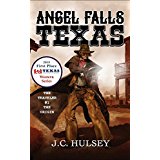
I like westerns. Thanks to my creative writing instructor and adviser, I discovered that I like to write westerns, and I’m fairly good at it. So, I read Louis Lamour, Zane Grey and other western authors to absorb as much from their talents as I can, applying it to my own writing. I picked up Angel Falls Texas: The Traveler #1 The Origins by J.C. Hulsey in anticipation of a good western tale. What I got instead was a poorly written story, in which the characters’ actions make little sense.
Angel Falls Texas lacks the story line and plot points to hold readers’ interests. Characters are two dimensional and lack depth, making it difficult to connect and invest themselves in the story. There are many flaws in logic which make it nearly impossible to suspend disbelief, and there is a lot of telling, rather than showing.
A teenage boy, Jed, watches as his pa is killed and kills his father’s assailant, who happens to be the sheriff’s brother. So, he sets out on the run, assuming the sheriff will come after him, not even stopping by the home place to gather supplies for the journey. He makes friends along the way, who travel with him, because they apparently have no lives of their own, and end up back where he started, in Angel Falls, where he learns the sheriff is still gunning for him. When the sheriff returns, instead of the show down one would expect, and perhaps even anticipate, the protagonist runs away, thus avoiding confrontation. The sheriff never even sees him, so it’s not even a close call.
In fact, there is no confrontation throughout the story. There is no conflict, no obstacles to overcome. Jed and his new friends go where they please and do what they want unhindered in any way, with no apparent destination in mind. The characters are not challenged in any way and they have no clear goal to accomplish or strive toward. They do not have to overcome other people, the elements, or the landscape. Jed spends several months helping one new friend fix up his ranch, but when a neighboring rancher shows up and claims the ranch for his own, his friend packs up and takes to the trail with our hero, giving up without a fight, or even a word of protest.
If that weren’t bad enough, the book is riddled with typos and grammar errors. This is a pet peeve of mine because poor quality books which are self-published give self-publishing as a whole a bad name, adding to the stigma that has been placed on self-published authors. This is one of those books. The cover says this book won first place in Texas Western series, but I don’t see it.
As a fan and author of the western genre, I can only give Angel Falls Texas: The Traveler #1 The Origin one quill.

Kaye Lynne Booth does honest book reviews on Writing to be Read in exchange for ARCs at no charge. Have a book you’d like reviewed? Contact Kaye at kayebooth(at)yahoo(dot)com.
Share this:

Rethinking the “Playground for the Gods” series… again
Posted: February 6, 2017 Filed under: Books, Fantasy, Fiction, Revision, Science Fiction, Writing | Tags: book marketing, Books, marketing, Playground for the Gods, promotion, Writing 1 Comment
There are many of you out there who have been following the progress of my science fantasy series, Playground for the Gods. For those who don’t know, it’s about an alien race that comes to Earth and pose as deities, and the power struggles and conflicts that arise. It’s based on the ancient mythologies and religions, with colorful characters who get up to some hilarious antics. You can read an excerpt on my Playground for the Gods Facebook page. If you’re interested, you’ll find an update on the writing processes going into these books below.

In last month’s post, “It’s All in the Finding the Right Market“, I talked about looking at a different market for my Playground for the Gods series. Specifically, I was looking at the Young Adult and the New Adult markets. I was looking to see if perhaps these books were directed toward the right audience, or if perhaps, they might be marketed to a different audience, with revisions, of course.
After attempting said revisions on Book 1: The Great Primordial Battle, and sending it off to my alpha reader, and revising what I had for Book 2: In the Beginning, and writing some the parts of the story that were still needed, I’ve come to the conclusion that this series is not for the light of heart, or a not fully matured audience. The cuss words could be replaced easy enough, but there is just too much sex that is vital to the plot. Removing it would change the entire story.

For heavens sake, my characters are self-indulgent beings posing as goddesses and gods. Self-indulgent behaviors are what landed them on Earth in the first place, and they are what the whole plot, as well as the individual story lines of each book are hinged upon. The indulge, many in excess, in all of the vices, including sex. They are sensual, and most are promiscuous, prompting plenty of jealousy and rage, providing a lot of the conflict in the series. In other words, I decided the sex was a necessary element that the series couldn’t do without, so YA or NA would not be a good audience for this series.
So, what’s next? Well, I’m going to finish writing the first draft of Book 2, and revise Book 1 when it comes back from my Alpha reader with suggestions. But I will be doing this with the science fiction and fantasy markets in mind, the original markets I was looking at for these books.

Once the revisions are complete, I’ll send out submissions once more. Hopefully this time, I’ll get better results. (An acceptance letter would be nice.) Ideally, I’ll be doing this at the same time that Book 2 is with my Alpha reader, and I will be working on Book 3: Inanna’s Song, adding to the few chapters I already have written for it, and working up the outline for Book 4: Enki’s Folly. But, we all know how often things work out ideally, so I’ll just look at these task as goals to aim for and hope for the best.
Like this post? Subscribe to Writing to be Read for e-mail notifications whenever new content is posted.
Share this:

“Horror 101: The Way Forward” Offers Good Advice for Authors and Screenwriters
Posted: February 3, 2017 Filed under: Book Review, Books, Children's Books, Comic Hero, Dialogue, Fantasy, Fiction, Horror, marketing, Paranormal, Promotion, Publishing, Revision, Science Fiction, Screenwriting, Self-Publishing, Speculative Fiction, Stories, Writing, Writing Tips | Tags: Books, Fiction, horror, marketing, Poetry, promotion, Reviews, Stories, Story, Writing 1 Comment
This is the longest book review I have ever written. This book was so packed full of useful information for rising authors and screenwriters that I felt I needed to cover it all. If you are an upcoming horror author or screenwriter, trying to figure out how to get a foot in the door or where to start in the matter of launching your career, Horror 101: The Way Forward offers “career advice by seasoned professionals”. Different writers will find different essays useful, so I’m giving you a rundown on all the informative essays included.
Compiled by Crystal Lake Publishing, this collection of essays has something for every writer. The anthology features quotes from the masters such as Stephen King, Ray Bradbury, Isaac Asimov, J.R.R. Tolkien, Jack London, Clive Barker, H.P.Lovecraft, Edgar Allen Poe and many others. Advice from professional writers and editors covers all aspects of the horror writing business, and the business of writing, in general. From submitting your work, to marketing and promotion, to self-publishing and building your writing business, to crafting your work and the writing process.
The answers to many questions on the topic of submissions and all other aspects of writing as a business are found within its pages. Not getting positive response from your queries? First read Rejection Letters – How to Write and Respond to Them by award winning author Jason Bark, which offers an attempt to write a rejection letter that doesn’t sting, (at least, not so much). Then, flip to Seven Signs that Make Agents and Editors say “Yes!” to learn what agents and editors look for. Buttoning Up Before Dinner by horror author Gary Fry also offers advice to put you in the good graces of publishers and editors and create well-written stories.
Unsure how to submit your work? Submitting Your Work: Read the F*****g Guidelines by freelance writer and editor John Kenny offers tips for making a professional submission from an editor’s perspective. And What a Short Story Editor Does by horror, fantasy and science fiction editor Ellen Dallow explains the responsibilities of short story editor.
Looking for sound career advice? Be the Writer You Want to Be by television writer and novelist, Steven Savile recycles the best writing advice the author was ever given. The Five Laws of Arzen by award winning dark fiction author Michael A. Arzen offers hints to help you survive a writing career. How to Fail as an Artist in Ten Easy Steps: A Rough List Off the Top of My Head, by Confirmed Failure… by horror author John Palisano provides a reverse list of things you should do to be a successful writer.
Wondering if you need an agent to get your work in front of editors and publishers? Do You Need an Agent? by author Eric S. Brown is a discussion about the need, (or not), for an agent and relates the personal experience of how the author became successful without one. Also included are essays on building your writing business in Balancing Art and Commerce by author and screenwriter Taylor Grant , offering a look at various mediums one can write in and earn a living & advice in the business of writing. There are even essays offered on the lucrative business of ghostwriting, with a personal experience as a ghostwriter shared by dark fiction author Blaze McRob, and Ghostwriting: You Can’t Write it if You Can’t See It by award winning author Thomas Smith instructs on how to step into the author’s shoes and write like them.
If you are hoping to find some help muddling through the vast world of marketing and promotion, The Year After Publication by horror & thriller novelist Rena Mason offers an account of what to expect once you publish your first book and a walk through the exhaustive process of book marketing. How to be Your Own Agent, Whether You Have One or Not by horror writer, editor and publisher Joe Mynhardt offers tips for marketing your stories and yourself. Reviewing by founder of Ginger Nuts of Horror, (one of the most viewed resources in horror fiction), Jim McLeod discusses getting your book in the review pile & what the writer should do while awaiting publication of the review.
If you’ve not attended a conference or convention before, Pitch to Impress: How to Stand Out From the Convention Crowd by editor R.J. Cavender provides a guide to making a pitch that will snag agents’ and publishers’ attention. Tips for networking at conferences are offered by dark fiction author Tim Waggoner in You Better (Net)Work, and Networking at Conventions by Bram Stoker Award winning author Lucy A. Synder offers a look at the benefits conventions have to offer and a breakdown on some of the major ones for horror writers.
There is a plethora of advice offered on publishing, including a comparison of traditional publishing vs. digital publishing in Weighing Up Traditional Publishing and Ebook Publishing by award winning author Robert W. Walker; Publishing by editor and publisher Simon Marshall-Jones compares publishing in the digital arena with the way it was done in the past & how to become an independent publisher; and Glenn Rolle Toes the Line with Samhain Horror Head Hancho, Don D. Auria by Glenn Rolle with Interview that maps Auria’s rise to the top.
The arena of self-publishing is also explored in Make Your Own Dreams by horror and suspense novelist Iain Rob Wright. Besides being a plug for self-publishing’s evening of the playing table. It relates personal experience and advice for self-publishing, walking us through the self-publishing process. Self-Publishing: Thumb on the Button by author Kenneth W. Cain gives a list of things to think about before you choose to self-publish.
Also included are essays on the different mediums for horror: Poetry and Horror by Blaze McRob, and Horror for Kids: Not Child’s Play by novelist Francois Bloemhof offers guidelines for writing horror for youth. Several essays on comics and screenwriting, (one of the biggest outlets of horror today), are also included.
Horror Comics – How to Write Gory Scripts for Gruesome Artists by novelist Jasper Bark discusses the craft of writing horror comics and the relationship between writer and artist. Some Thoughts on My Meandering Within the World of Dark and Horror Art by artist Niall Parkinson offers thoughts on creating dark and horror art. So You Want to Write Comic Books… by novelist C.E.L. Welsh discusses what goes into the making of a comic book.
From Pros to Scripts by author and screenwriter Shane McKenzie talks about the many challenges of screenwriting. Writing about Films and For Film by award winning writer, editor and screenwriter Paul Kane gives the story of the author’s rise to success and tips for learning the lingo of the business. Screamplays! Writing the Horror Film by award winning author and screenwriter Lisa Morton offers the basics of screenwriting, description and dialog, and tips for getting your screenplay made into a movie. Screenplay Writing: The First Cut is the Deepest by author, director and editor Dean M. Dinkel recaps of the author’s experience at the Cannes Film Festival.
Essays on writing a digital world include Running a Webserial, or How to Lose Your Mind, One Week at a Time by Southern author Tonia Brown, providing a brief history of serials and a rundown of what goes into running one on the web; Friendship, Writing, and the Internet by Bram Stoker Award winning novelist Weston Ochse with reflections on online connections with like-minded writers, and Audiobooks: Your Words to Their Ears by horror novelist Chet Williamson discusses what it takes to create and audiobook and what to expect from the effort.
Of course, there is also plenty of advice on crafting a quality story. What is Horror? by author and novelist Graham Masterson offers general writing advice which could be applied to any genre and instructs on how to push your writing to the edge. The Journey of “Rudy Jenkins Buries His Fears” by author Richard Thomas takes us on a walk through of the writing, editing and submissions process of a story. Writing Short Fiction by horror and thriller novelist Joan De La Haye offers tips to tighten your writing and move the story forward, and discusses where to look to sell your story and how to choose where to submit. Ten Short Story Endings to Avoid by Scottish horror novelist William Meikle supplies a valuable list, if you want to avoid having readers feel cheated. From Reader to Writer: Finding Inspiration by publishing and editing consultant Emma Audsley offers advise for attacking the blank page. Writing Exercises by horror writer Ben Eads provides exercises in description and dialogue. Writer’s Block by short fiction writer and novelist Mark West discusses how to keep the creative juices flowing. Editing and revision are covered with Editing and Proofreading by author and editor Diane Parking presents good reasons not to send out a first draft, and How to Dismember Your Darlings – Editing Your Own Work by Jasper Bark gives a brief guide on how to self-edit.
A few essays outline the needs of a writer and suggestions on how to meet them. Filthy Habits – Writing and Routine by Jasper Bark offers a look at the benefits of creating a daily writing routine. A Room of One’s Own – the Lonely Path of a Writer by horror and fantasy writer V. H. Leslie discusses the need for solitude and space to write in. Writing Aloud by screenwriter and author Lawrence Santoro outlines the benefits of reading aloud as a part of the writing process.
Also included are Partners in the Fantastic: The Pros and Cons of Collaborations by novelist Michael McCarty, which looks at the views of various authors on collaborations, and Writing the Series by series author Armand Rosamilia, which explains why Rosamilia writes series.
Several essays offer advice specific to writing in the horror genre. Making Contact by award winning novelist Jack Ketchum discusses how to turn what you know into a horror show. Bitten by the Horror Bug by horror author and screenwriter Edward Lee looks at what motivates us to write horror. Reader Beware by author Siobhan McKinney explores the role fear plays in horror. Bringing the Zombie to Life by author Harry Shannon maps out four components of a good zombie story. The Horror Writers’ Association – The Genres Essential Ingredient by author and President of the Horror Writers’ Association (HWA), Rocky Wood gives a rundown on the HWA.
What’s the Matter With Splatter? by horror writer and Vice-President of the AHWA, Daniel I. Russell discusses the use of blood, gore and splatter in horror fiction or screenwriting, gives tips on how to use it to gain the desired effect, and discusses why some gore doesn’t get a second thought. Avoiding What’s Been Done to Death by British horror writer Ramsay Campbell defines good horror fiction & emphasizes originality. The (Extremely) Short Guide to Writing Horror by dark fiction author Tim Waggoner offers an introduction to writing horror, including techniques and brief definitions, and a list of good resources for horror writers. Growing Ideas by horror writer Gary McMahon offers a look into the author’s writing process. Writing Horror: 12 Tips on Making a Career of It by horror novelist Steve Rasnic Tem instructs on building your own writer’s toolbox and advice for entering the profession of writing horror. The Cheesy Trunk of Horror by international best selling author Scott Nicholson provides a look at both writer and reader perspectives on horror and dark fiction. Class: Vaginas in Horror by science fiction, urban fantasy and horror novelist Theresa Derwin offers an overview of women in the horror industry. And the afterward by Crystal Lake Publishing’s editor, Joe Mynhardt, includes his own advice for writing horror.
Horror 101: The Way Forward is based on the sound advice of seasoned professionals that is useful to horror writers in any stage of their careers. I recommend it with four quills for anyone who wants to write horror in either fiction or screenwriting.

Kaye Lynne Booth does honest book reviews on Writing to be Read in exchange for ARCs at no charge. Have a book you’d like reviewed? Contact Kaye at kayebooth(at)yahoo(dot)com.











Welcome to the Pep Talk
Posted: March 1, 2017 | Author: Jeff Bowles | Filed under: Articles, Commentary, Publishing, Writing | 3 CommentsEvery month in this space, author Jeff Bowles offers advice for young and struggling writers. No one ever said becoming a world-famous storyteller is easy. This is the Pep Talk.
First an admission. It’s much easier for me to be upbeat about the writing careers of others than my own. It is a damn hard slog going from obscurity to success story. Most upstarts never make it, and even when they do, they often find it a double-edged sword. This game of ours, this writing thing, it’s full of ups and downs, zigs and zags, bad decisions and tribulations that’d make most normal people run and hide. Except we aren’t normal people, are we? We’re the ones who risk everything and spend long sleepless nights worried about fictional people and places that will never exist. What drives us to do it? What drives you?
Here’s a little bit of math a mentor once imparted to me: a billion people in the world want to become writers. Of that billion, a million make it past their first story and a thousand actually get something published. A hundred in that thousand make a career of it, and only ten become best-sellers. Are these odds in any way accurate? Probably not, but they are illustrative, don’t you think? When it comes down to it, becoming a successful writer is a marathon, not a sprint. You’ve got to outlast the next guy (or gal), work your tail off until your competitors are little black specks in the rear-view. May take ten years, may take you fifty, and hell, you may not make it at all. But you’ve got to have goals, direction, purpose. You must see yourself as that bestseller, because if you can’t travel there in the mind, you’ll never travel there in the body.
Practice makes perfect, but perfection, talent, natural ability, they only account for a fraction of what it takes to get what you really want. Aim high. Start small but think big. Dreams are absolutely free, and the only people who’ll try to take them away from you will be those who doubt your ability. Prove them wrong. Don’t delay. It’s a long road, so you’d better start now. It’s been said by much better writers than I that in effect, one needs two of three of the following to succeed: luck, talent, and hard work. Luck and hard work will get you there, but so too will talent and persistence. Never discount the old Edison standby: one part inspiration to nine parts perspiration. It never fails. Those who start from nothing—and honestly, we all do—but never stop pushing often become the strongest and most adept.
You don’t need an expensive education or writing workshops and seminars to get started, though certainly those things can help. Pick a book, any book. Read it cover to cover and then sit down and write something better. You know you’re capable, and so do I. What the hell have they got that you haven’t? Most common answers? Luck, patience, and/or years of experience. It’s easy to feel jealousy when stacked against the ones who’ve already achieved. Believe me, I know. But you’ve got to hand it to those folks. They went after what they really wanted and fate smiled upon them. No mess, no fuss, they achieved, which is exactly what you want to do.
So here’s the thing. I don’t care who you are or where you come from, if you’re looking for the quick cash-in you WILL be disappointed. Like you, I began writing my own stories with the notion it wouldn’t be long until I was earning enough I could quit my job and in earnest, begin my ascent up the bestsellers’ list. I’ve been doing this for a decade now, and I can honestly say the most frustrating part has been in accepting the world hasn’t been waiting to throw critical and commercial laurels at my feet. I’m just a poor schlub like you. And like you, I’ve got places to go, people to see, but no damn money for a cab or in the very least, a cheap cross-town Uber.
But I don’t quit. I can’t. If I ever did, it’d be the biggest mistake of my life. It’s common knowledge, or maybe it’s some kind of hominid genetic heritage, that the longer we chase after something, the harder it is for us to give it up. When we think about a goal all day long, choose to pursue it, become it, to sometimes ignore all other obligations, we are in fact daring fate to send it our way. Sooner or later, it dawns on us the end goal is not nearly so engrossing as the work required to reach it. In other words, may I humbly suggest it makes no difference whatsoever if you become a millionaire bestseller or not. The reason you’ll keep going is passion, love, desire. Even on the days you hate this gig—especially on the days you hate it. There’s no shame in breaking down sometimes and allowing yourself a bit of remorse. Disappointment and rejection sting 100% of the time. Trust me on this.
Only don’t despair too long. If there is one universal truth to our existence it is this: thoughts become things. Consider yourself a failure with a bit too much intent and deliberation, and you may just find yourself failing every time. But if you can see past the downturns, those times you’d like nothing better than to torch your manuscripts and run screaming back to reality, know this: you cannot chart a path to joy in one hour, one night, or one year. Never underestimate the value of a positive mental attitude. If there’s only a single difference between you and every other upstart, let it be your mindset. In my experience, you’ll burn most of your frustrating years right at the outset. As you struggle to learn your craft, yours will seem like the stupidest, least worthy goal in existence. But it’s not. And as the years go by, you’ll start to realize that desire and predestination look the same in hindsight.
Here’s what I want from you until we hook up for another Pep Talk, reader. I want you to write your butt off and take no prisoners. Yes, it’s a long haul, and yes, it will not come easily. But there’s one truth to all of this most people won’t count on. Happiness today engenders happiness tomorrow. Engage with your writing like it’s an old friend, a family member you’ve not seen in years or a new love you’re eager to spend every waking moment with. The passion comes through, and so does the bright spark of your soul. Don’t give an inch and never look back. You keep focused on the road ahead, and when the time comes to pull over and take a pit stop, open your eyes, view the scenery, and then get back in the car and apply pedal to metal. It isn’t the worst thing in the world. You are a writer. Say it again for me. You ARE a writer. Now get back to work, my friends, and show us all what you’ve got.
Interested in Jeff’s writing? Check out his latest short story collection, Godling and Other Paint Stories: https://www.amazon.com/Godling-Other-Paint-Stories-Bowles-ebook/dp/B01LDUJYHU
Twitter: @JeffBowlesLives
Facebook: http://www.facebook.com/jeffryanbowles
Tumblr: http://authorjeffbowles.tumblr.com
Amazon Author Page: https://www.amazon.com/JeffBowles/e/B01L7GXCU0/ref=sr_ntt_srch_lnk_1?qid=1479453494
YouTube’s Jeff Bowles Central: https://www.youtube.com/channel/UC6uMxedp3VxxUCS4zn3ulgQ
Share this: