Dialogue: Talking in Subtext
Posted: January 30, 2017 Filed under: Dialogue, Writing | Tags: Dialogue, Subtext, Writing 3 Comments
A good way to learn to write good dialog is to become an observer of people, watching and listening to the conversations around you when in public. You must both watch and listen because dialog doesn’t come just in words. Dialog also contains subtext. You know, body language, tone of voice, etc… You can have whole scenes where no words are spoken, yet a conversation occurs between two people in the subtext of their body language. Everyone in the real world talks in subtext. If you want to have believable dialog for your characters, they must talk with subtext, too.
Whether you’re an author or a screenwriter, it’s an important concept to master. Subtext is the message that lies beneath the message. It’s what people, or characters, are really saying. It is indicated in actions, movements, change in pitch of the voice. A character may say, “I’m happy for you”, but if it were said through gritted teeth, the reader may get the idea that there’s some underlying resentment with the characters words, lending a very different meaning to the scene. The same dialog would take on a whole other meaning, that the words are not spoken sincerely, if the character rolls her eyes as she says it.

We humans are funny creatures. Many of us have some type of mental block that prevents us from saying what we mean outright. It may be the fatal flaw of mankind in the communication realm, although I suspect it may be easier to speak honestly in the digital world, where you talk with people without being face to face. Regardless, if you want your characters’ dialogue to be believable,they will have to speak in subtexts, offering readers the subtle clues necessary to figure out what is really going on.
“Don’t tell me to calm down,” Karen said, tapping her newly painted nails on the table top. “I’m perfectly calm.”
What can you tell from the dialog above? The character says she’s not upset, but do you think she is? Rather you get the idea that she is upset from the tapping of her nails on the table, which is not a calm behavior, even though her words claim different.
The example above is pretty clear for illustration purposes. In real life, and in good fiction, it’s not always so easy to discern between words and actions. As authors, we must offer good clues, in the form of subtext, so readers can see the whole picture we’re trying to paint with our words. You see what I mean?
 If your character is angry, you might have him clench his fists or stomp his foot. If the scene is a breakup, your character may hold back her tears and swallow the lump in her throat to avoid revealing how much she is really hurting. Or maybe she is trembling although trying to appear brave to her friends.
It’s the way real people talk. It’s the way our characters need to talk if we want our dialogue to be convincing. In many cases, the old adage is true, especially in fiction and screenwriting- “Actions speak louder than words.”
Like this post? Subscribe to email to receive notification to your inbox each time a new post is made.
Share this:

“How Smoke Got Out of the Chimneys”: An Entertaining Ditty
Posted: January 27, 2017 Filed under: Book Review, Fiction, Stories | Tags: Book Review, DeAnna Knippling, How Smoke Got Out of the Chimneys, Short Fiction Leave a comment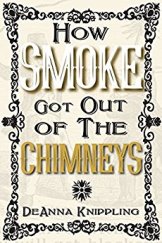
The short story How Smoke Got Out of the Chimneys by Deanna Knippling captures the tone of old England to perfection. Knippling has created a likeable main character in Smoke, a sharp young girl on the street who eeks out her living as a chimney sweep, and as one follows her brief tale, one can’t help but long to see her succeed.
Living as part of a street gang, Smoke is the oldest of the chimney sweeps, who passes for younger than she is due to her small stature, but she knows her days as a sweep are numbered and she must find a new mode of living before the gang retires her in a brothel. Fortune is on her side when an opportunity appears before her, but it’s not without risk. The resulting adventure had me rooting for her every step of the way.
Short, but well crafted and quite entertaining, this tale is everything a short story should be. I give How Smoke Got Out of the Chimneys five quills. 
Share this:

It’s All About Love
Posted: January 23, 2017 Filed under: Fiction, romance, Writing Leave a comment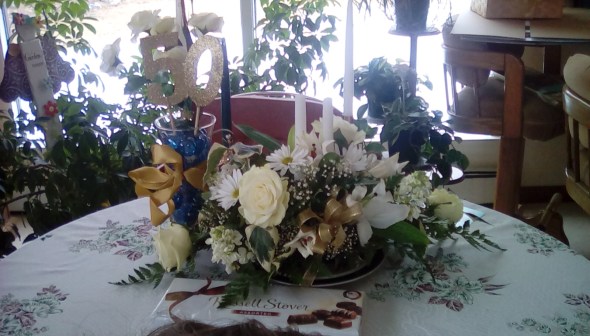
I recently attended a fiftieth anniversary party for a couple that I know. Their son and daughter-in-law put it all together for them, and it was a really nice affair. It was quite touching to see the loving care that went into all the preparations and listen as several people rose to tell stories about the celebrated couple, some examples of their kind hearts or their love for one another. Many of the stories drew quite a few chuckles from the guests.
It is not surprising that their marriage had lasted fifty years, for anyone who has ever seen them together can see that they not only love each other, but that they are still in love with one another. Theirs is a true life love story.
As a writer, of course, my observations about people often find their way into my stories. While I don’t turn my family and friends into characters, I do give my characters traits from real people at times. So, as I listened to the stories being told about them, I thought about all the ways my friends’ actions make their love for one another obvious, and how I might use some of them to create a heart warming love story with characters that are convincing.
It’s the little things, such as how she looks her husband in the eyes, and says, “I love you”, several times each day. To the observer, the expression of love on her face leaves little doubt that she means those words with all her heart. And to see the look of adoration in his eyes as he gazes into hers, it is obvious that love is reciprocated. That’s the kind of thing that I need to portray on the page to show depth of the love of my characters.
Their love shows in the courtesy and respect they give one another. She never fails to ask whay he’d like to eat before she begins the preparation of each meal. Although at 75, he now requires a caregiver to assist him with his daily needs, he stillmanages to surprise her with the perfect gift on special occasions. It shows in the tenderness of her voice when she speaks to him and the adoration in his reply. These all could be used by a skilled hand to show readers that your character couple loves one another deeply.
Now that I think about it, their relationship might make a story in and of itself, of the nonfiction variety. For many couples, the stroke he suffered two years ago would mean separation, with him going into a nursing facility, where he could receive the proper care, but not this couple. No. There was never any thought of separating from one another. Instead, my friends left their beautiful tri-level home for a year and a half to live in a single level duplex during his recovery. They adapted the tri-level to accommodate his needs and they sleep next to one another in their own bed today. They did what they had to do to remain together.that
Now, if you ask me, that’s love. If I can portray just a little bit of that kind of love in my writing, I would consider it a great accomplishment. Think about it. Love is a great motivator for your characters, can pose obstacles which are rough to overcome, and can give your characters an unbreakable bond offering strength to beat all the odds. When you get right down to it, the cornerstone of most stories is love.
Share this:

“Bullet”: The Story of a Toxic Romance
Posted: January 20, 2017 Filed under: Book Review, Books, Erotica, Fiction, romance | Tags: Book Review, Bullet, Erotica, Jade C. Jamison, romance 1 Comment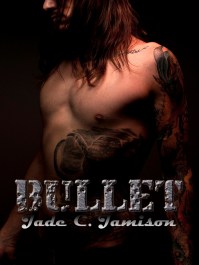
Bullet is the first book in Jade C. Jamison’s Rock Star Romance series. This book was presented as an erotic romance, so I approached it with expectations of one big non-stop sex scene that would make me blush just reading it. I was pleasantly surprised to find that, although there were explicit sex scenes, they were sprinkled in like a good seasoning, used to enhance the romance story, enhancing rather than overwhelming the main course.
Jamison takes readers on a journey into the world of heavy metal rock, where the music is loud, the partying hard, and sex is abundantly available. Valerie is young and a little naive, but she loves metal and the long-haired, pierced and tatooed bad boys that go with it. In college, she meets Ethan, who fits the profile, and she falls for him hard, so hard that her love for him brings her running back to him again and again, no matter how bad he mistreats her.
Bullet is the story of her relationship with Ethan and his band mate, Brad. It’s the story of drugs, sex and rock and roll. I give Bullet four quills.

Kaye Lynne Booth gives honest reviews and never charges. If you have a book you would like reviewed you can contact Kaye at kayebooth[at]yahoo[dot]com
Share this:

Ah! The Writer’s Life, Right?
Posted: January 16, 2017 Filed under: Books, Screenwriting, Writing | Tags: book marketing, promotion, writer's life, Writing, Writing Process 16 Comments
The life of a writer. It’s what we all aspire to, right? But what do you envision when you think of yourself living the writer’s life? What exactly is it that makes it so appealing to us? And how close is it to the reality of being a working writer?
Many aspiring writers picture working in their pajamas, sleeping in or working late, running a schedule tailored to our own personal needs. Aspiring authors may envision book tours and readings to promote their published books, maybe even autographing copies for our fans, having strangers recognize us from our book covers. Others may see themselves traveling and attending writing events and conferences, meeting others in our field and networking. All of these are beautiful visions to have and they can be a part of what is referred to as a writer’s life. They are all worthy things to aspire to, but we may not be seeing the whole picture.
A writer’s life can be all that and more, but as with anything in life, it’s not all champagne and roses. Writers often spend more time on non-writing activities such as marketing and promotion, or networking than they do on the actual act of writing. Or they are forced to spend their time not on the creative process, but on promotional writing, such as query letters and resumes.
It’s true. Freelancers spend a lot of time promoting themselves in job queries, resumes and CVs. Aspiring authors spend much of their time peddling their completed works to editors, agents and publishers. Aspiring screenwriters peddle their scripts or ideas to agents, producers, directors or anyone else who is buying scripts and is willing to listen. And published authors peddle their books online, as well as at conferences and writing events, and perhaps even, like one author I know, at the local hardware store.
As was discussed in Pros and Cons of Traditional vs. Independent vs. Self-Publishing (Part 10): Conclusion, as well as in the preceding series, in today’s publishing industry, even traditionally published authors are expected to do a lot of the promotion and marketing for their books. Everybody is selling something. Whether it’s your writing or yourself, promotional activities take a lot of time.
Networking is another necessity. It’s really another part of marketing and promotion. We can’t get our work out there to be discovered without networking. In screenwriting, the thought is that you must also live in L.A. to network advantageously. I know at least two aspiring screenwriters who recently moved there in hopes of being discovered, but it’s too soon to tell if they will reap any benefits from it.While we may dream of attending writing events and meeting others of like mind, the reality is that these activities take both time and money, and the time you invest into networking, is time that isn’t spent writing.
Then, with all of these extra-curricular activities, a writer also has clients, editors or publishers, and a screenwriter has agents, producers and directors, breathing down their necks to meet deadlines. Of course, most aspiring writers or screenwriters consider themselves lucky to have deadlines. A deadline means that you have work that involves writing, so that’s a good thing. But it can be very stressful, especially if you’re actually trying to make a living from your writing, and struggling to make ends meet.
The fact is, writing isn’t all glamour and parties. Writing is a tough way to make a living. Especially in today’s market, when everybody wants to be a writer. Self-publishing has provided the means to make that dream come true, although there are no guarantees that your book will be a huge success. And self-published authors must do all of their own promotion and marketing, too.
Writing is a lot of work, starting with the creative process and moving through the motions to promotion and marketing. You might be able to do some of it in your pajamas if you so chose. Most of what writing is, at least for those of us who are still looking for a big break, is being grateful for every writing job that comes your way, searching for that one acceptance in a mountain of rejections, and endeavoring to persevere.
Is it worth it? You bet. There’s nothing like it when you find that one acceptance and know the whole world will be able to read your work, and you may be able to put food on the table for another month, or pay your car payment, or your rent. Writing is truly a labor of love, and this blog is the proof of that. It’s Writing to be Read, and I don’t make a dime off it. My reward is in each comment that is left, each blogger that takes the time to ‘like’ a post, and each new follower or subscriber I get.
Of course, I still search for a publisher for one of my two completed novels and I submit my short fiction and poetry everywhere I can. I still want my work to be discovered, naturally. But it does my heart good to know that my writing id being read, even when it doesn’t put food on the table, even when I have to get an outside job to supplement my income. I don’t have to dream about living a writer’s life, because for better or for worse, I live it.
Share this:

“Don’t Wake Me Up”: A Young Girl’s Journey to Find Who She Truly Is
Posted: January 13, 2017 Filed under: Book Review, Books, Fiction, Paranormal, Speculative Fiction | Tags: Books, Don't Wake Me Up, M.E. Rhines, Paranormal, Reviews Leave a comment
Don’t Wake Me Up, by M. E. Rhines, is an intriguing YA paranormal romance dealing with out of body experiences. However this story addresses the issue of teen date violence, and handles it in a very believable way.
When Colleen’s boyfriend, Jimmy, assaults her, her thoughts and emotions become confused. Her mother has him arrested and forbids her to see Jimmy when he’s released, and one BFF warns her away from him while the other acts as if she could excuse his behavior. Jimmy acts as if he owns her and suddenly she is afraid of him, afraid like she never was before. But, he has her undying love, doesn’t he? And she’d do anything to be with him, wouldn’t she? Suddenly Colleen is not so sure how she feels.
She has had the ability to travel in the astral plane ever since her father was killed in a fire five years ago, but she never expected to find romantic love there. The whole idea is ridiculous. After all, the only people she meets there are the spirits she helps to cross over and her spiritual guiding angel, Gina.
Colleen is an active character who is very likable, as are her two BFFs, Lilly and Eva. Jimmy not so much, but then, he is the story’s antagonist, so we really aren’t expected to like him. The secondary characters all could have been more developed, but then again, for the purposes of this story, perhaps they didn’t need to be.
I found Don’t Wake Me Up to have an original plot line, with three basic story arcs, which cross over each other in spots, but are all skillfully drawn together at the end. I give it four quills.

Share this:

It’s All in Finding the Right Market
Posted: January 9, 2017 Filed under: Books, Fantasy, Fiction, marketing, Promotion, Science Fiction, Writing, Young Adult | Tags: marketing, Pitching, Playground for the Gods, promotion, Revision, Young Adult Fiction 2 Comments
My friend and cohort, author Jeff Bowles wrote a post Choosing to Become a Better Writer vs. the God Complex, where he offers advice on what to do when your novel hasn’t been picked up by a literary agent as soon as you’d hoped, as is currently the situation with his thesis novel. I had to chuckle when I read this, not because the post was meant to be funny, (it wasn’t), but because of the timeliness of the post, as I find myself in the same situation and I have been pondering what to do with my own thesis novel, Playground for the Gods: Book 1: The Great Primordial Battle.
Jeff’s advice is sound. Revise. Submit. Repeat. And he’s right in saying that to achieve success in writing, as in most things in life, you must persist in your efforts and endeavor to persevere. In fact, I’d decided on the same course of action for my novel, with a slight twist and a lot of determination. So, my first 2017 New Year’s writing resolution is to get my thesis novel published in the coming year.
Since completing my thesis novel, the first novel in my science fantasy Playground for the Gods series, I’ve submitted it to seven publishers and four literary agents. It was rejected by two agents and four publishers, and is still waiting for word on three publishing houses and two agents. I don’t hold out hope of hearing from the agents, many don’t even bother to respond unless they’re interested, but the publisher who has had my submission the longest has had my submission for six months. There may still be hope there, but I have to wonder.
I’ve been feeling a bit discouraged with these results, so I started thinking about why my novel wasn’t catching the interest of publishers or agents. e first thing I looked at were my query letters. So, the first thing I looked at were my query letters. As I said, I’ve sent out multiple queries for the first book and been rejected multiple times. I looked at all my queries to see if the problem might be in my presentation.
The query letter is an author’s introduction and it is very important. It’s the first thing an agent or publisher sees, and it determines whether they chose to get to know you and your work better. A query should look professional, and it should tell the publisher or agent about the work you want them to buy into and about the author. It raises their interests and gets them to ask for more than just the excerpt you sent with it. A request for a complete manuscript is the ultimate goal.
Some of you may know the story behind this novel, but for those who don’t I’ll relate it briefly. The summer I presented the proposal packet for my thesis novel was the worst summer of my college career. I had this great idea for a story about a species from a different planet, who come to Earth and present themselves as deities. It was to be a science fantasy novel with a strong female protagonist, Inanna. I presented my idea to my cohorts and nobody got it, (this was partly because I was trying to cram way too much into one book, but at the time it just felt to me like the idea wasn’t well received and I was crushed). So, maybe publishers and agents weren’t getting it now, the same way my cohorts and instructors didn’t get it then?
This led me to take a hard look at the audience which I thought I was writing for and the types of agents and publishers I’ve been pitching to. I’ve sent out my queries for my science fantasy novel to publishers and agents who handle both science fiction and fantasy. Something I had overlooked was that the biggest audience for science fiction and fantasy are young adult readers.Epiphany! I’ve been pitching to the wrong audience!
Because of the summer from hell, mentioned above, my thesis novel has turned into a four book science fantasy series, Playground for the Gods. Book 1: The Great Primordial Battle shows the destruction of the Atlan home planet, which explains the reason they are searching for a new home and chose Earth, and how it was almost destroyed before they could make it their home. Book 2: In the Beginning tells the story of how the Atlans made Earth their home and cohabited with humans, and how Inanna becomes the goddess of war and love, forcing her to deal with the dualities within herself. The hero’s journey that Inanna takes in my original story will now be the Book 3: Inanna’s Song. In Book 4: Enki’s Folly, Enki, (the sort-of anti-hero), tries to fix his past mistakes by traveling through time.
By the end of my courses, I had Book 1 and it’s complete submission packet, Book 2‘s chapter outline, synopsis and partial first draft, along with the outline, synopsis and a few chapters of Book 3 completed. If I could do that major transformation in less than a year’s time, I’m thinking I should be able to transform my books into a YA series with minimal revision.
Next, I took another look at the story itself, and I realized that aside from a few instances of harsh language, this book almost reads like a YA novel. Most of the characters are teens, although Atlans don’t experience time the way humans do, (what passes for a year for us is comparable to a millennia for them), and still, some are more mature than others. The series has many of the YA tropes already: a young female protagonist who is idealistic, (Inanna); a perfectly perfect Mary sue character in Inanna’s BFF, (Ki); missing, or at least distant parents (Atlan familial units are pretty messed up); plenty of half-human/half-something else characters – mermen and Minotaurs, the characters are diverse; and there’s a rebellion against the existing power structure, (in reverse).
The one thing that might prevent Playground for the Gods from becoming a successful YA science fantasy novel is the degree of sexual content, which is actually vital to the story line. We’re not talking about unnecessary sex here. We are talking about the story doesn’t work without it. Although it could be toned down some, I imagine I would have several parents who were hot, should I try to market this series as YA, even though it has a lot of the expected tropes. So, I had to look once more at audience, where I took an in-depth look at a market called New Adult.
New Adult has protagonists aged 18-24, and is aimed at audiences aged 18-30, but may appeal to readers of 30 or more. Just as some YA may appeal to adult readers, so New Adult may appeal to older readers, as well. It carries steamier sexual content, that you probably wouldn’t want your thirteen year old reading, but is perfectly acceptable for older readers. In a 2014 article on Book List Online, YA or NA?, by Michael Cart, Harliquinn Senior Editor Margo Lipschultz points out that “NA rose to popularity as a subgenre that bridged the gap between contemporary YA and contemporary romance, it’s gradually expanding… ” NA is not just a romance market any more, and I’m thinking that the steamier scenes in the PfG series could find a home there.
Another 2014 Book List feature article, What is New Adult Fiction?, by Gillian Engberg, Donna Seaman and others quotes Neil Hollands, adult services librarian at the Williamsburg (VA) Regional Library as stating,
“…librarians talking about NA are often thinking of books that appeal to “both male and female readers, in their late 20s and 30s. The books we’re looking for try to capture the feel of a generation, including integrating technology’s effects on communication and relationships, new outlooks on a range of political and social issues, and more recognition and blending of the genres that younger readers are most familiar with.”
Now that sounds like my series. While it still has some of the YA tropes and qualities, it also has more mature content and deals with social and relationship issues, the value of technology for better or for worse, and characters in the right age bracket basically, (give or take a few million years), and would appeal to an older audience of new adults.
From my very first M.F.A. class it was drilled into us the important of knowing your audience and doing the research. And I did do my research in the adult market, and now I’ve done my research in the YA market. But, after discovering that it’s a little too steamy for YA, I’ve gone back to research the NA markets, and I’m currently revising The Great Primordial Battle for an NA audience. When I’m done, I plan to promote to the NA markets with high expectations, while I get busy on Books 2 and 3.
Leave a comment to let me know if you think I’m on the right track with PfG: Book 1: The Great Primordial Battle.
You can find updates on the Playground for the Gods series on its Facebook page, here.
Like this post? Subscribe to Writing to be Read for e-mail notifications whenever new content is posted.
Share this:

“Banker Without Portfolio” or Writer Without a Story?
Posted: January 6, 2017 Filed under: Memoir, Nonfiction | Tags: Banker Without Portfolio, Book Review, Phillip P. Gbormittah 3 Comments
I think Banker Without Portfolio: The Ugly Truth Everyone Needs to Know, by Philip P. Gbormittah is meant to be inspirational. Certainly, Gbormittah proclaims his love of Jesus loudly and attributes the little success he has had and all of his upstanding morals to the grace of God, but it doesn’t really stand up to scrutiny. The author makes himself out to be altruistic and morally unblemished, praying for God to meet all of his needs, but after a decade at a banking institution, to still not have received a raise in grade and income makes it seem as if his prayers aren’t really being answered.
The book cover is misleading, or perhaps misrepresentative of the true content, since this memoir is written by an author whose skin is a different color than that on the cover photo. Gbormittah might be missing out on a huge opportunity here, for had he played up his discrimination in the work place as an issue of color in today’s market, he might have had a best seller, even without improvements in writing style.
On the last pages, the author summarizes, “My love life suffered. My nuclear family relationships suffered.” But I have to ask why we didn’t see any of this throughout the story? It wasn’t until almost half way through the book that we learned he was married, and we never get to meet his wife or get a description of her.
Discrimination in the world of high finance is the theme, but the two dimensional character we get here doesn’t allow us to really care about the injustice of it because the character doesn’t feel human, and that’s bad because he is a real character. Although the story is about the author’s professional life, to get a glimpse of his personal life would have made for a more well rounded character, who we could actually care about. Let us meet the wife instead of just hearing about her? How did he feel toward her. We don’t know, because Gbormittah doesn’t allow readers to be privy to this information.
We don’t get to see him as a loving, indifferent, or abusive husband. He could be any of them, and it might have made a difference in how much we readers are willing to invest in the character, how much we care about what happens. The only side of him we do see a little of is his professional side, how he interacts in the workplace, and even then we’re only allowed a small glimpse. But even then, the majority of what we know, we only know because we are told, rather than shown, these things.
As it is, Banker Without Portfolio: The Ugly Truth Everyone Needs to Know does a lot of telling us what happened, but very little showing. There is lots of conflict, but very little resolution and no reason for readers to care. I can only give it two quills.

Kaye gives honest book reviews and she does not charge for them. If you have a book you would like reviewed contact Kaye at kayebooth[at]yahoo[dot]com.
Share this:

Bringing in the New Year Write
Posted: January 2, 2017 Filed under: Author Profile, Books, Fiction, Film Review, Screenwriting, Writing, Writing Event, Writing Tips | Tags: Feedback, Opinion, profiles, Reviews, Writing, Writing to be Read 4 Comments
It’s 2017! Where does the time go? It seems like just yesterday that I was venturing forth to start Writing to be Read on Today.com. Most of you won’t remember. It was supposed to be a site that would monetize my blog, so without a clue as to what I should write about, I jumped right in. I wrote about all kinds of things and at the end of every post I published one of my poems, in order to cover the full scope of the literary world, or something like that. That was in 2010, seven years ago. Wow! Unfortunately, several months later Today.com folded and the sight just disappeared, along with all the writing I had done there. In a panic, I found WordPress and re-created my blog here.
Since then it has be remodeled several times until it is what you see here today. As I said in my Looking Back on 2016 post last week, this past year has been a good one for Writing to be Read as it has grown in popularity. So to start the new year out, I’d like to take a closer look at what I hope to accomplish with the blog this year. In last weeks post I mentioned a few ideas I wanted to see come to fruition: author and screenwriter profiles, more screenwriting content, coverage of more writing events, and guest posts by authors, screenwriters and other industry professionals. That is the shape I foresee for Writing to be Read.
But, you know, this blog wouldn’t be anywhere without you, the reader. Watching my statistics, it’s you that determines what content I create. It’s you that make the number of followers climb, you who increase my page views. With this in mind, I know I can’t move forward without asking you what content you would like to see here in the coming year. Are there topics of interest you’d like to learn more about? Do you have questions you’d like to have answered through one of my posts? And while we’re at it, who would you like to see profiled or interviewed? What books or movies would you like to see reviewed? What topics would you like to see investigated? What events would you like to see covered? What kinds of things will keep you coming back for more?
Another goal I hope to accomplish is to continue to increase my following and have more reader interaction through comments. I appreciate every reader I have gained over the years. Some of you, I have come to think of as friends as well as readers. I also welcome new readers. If you are here for the first time, or maybe you’ve been here before but you haven’t subscribed to email or followed on WordPress yet, please do so before you click on the next website. I make no money off Writing to be Read. My only reward is to watch my followers grow and know I am being read. Subscribe, follow, leave a comment to let me know you were here, or do all three. With your help, we can make 2017 the best year ever for Writing to be Read.











Monthly Writing Memo: The One and Only Writing Rule
Posted: February 1, 2017 | Author: Author the World | Filed under: Commentary, Fiction, Screenwriting, Screenwriting, Speculative Fiction, Stories, Uncategorized, Weekly Writing Memo, Writing, Writing Tips | Tags: Books, Fiction, Novel, Novels, Opinion, research, Tips, Writing | 4 CommentsAs almost every writer knows, anywhere you go to discuss writing will always have someone proclaiming their tried and true rules for writing that you MUST follow. Post on any writing forum whether it be for screenwriting or fiction and you’ll find dozens, if not hundreds, of eager “expert” or “professional” writers ready to tell you exactly which rules matter and which are hogwash. Yes, many of these writers have published novels or sold scripts and are professionals in the industry, but does that mean their rules are THE rules to follow?
Absolutely not.
Let me say that again – Absolutely not. Just because someone has sold a script or published a novel or piece of writing doesn’t mean that they will be able to give you rules to writing that will be guaranteed to work on your story. If you put every writer who ever sold something in a room and asked them to come up with a master list of writing rules it’d be impossible. There’d be factions who think you can never write in present tense and others who think a description of the weather should never start a novel.
There’d be groups who think the epitome of literary or cinematic genius is one specific piece of work, and others who think that same work is a crock of shit. If the people who are actually selling works of writing cannot agree on what makes good writing, and which writing rules are always true, then how on earth can a newbie writer even dream of making it in the industry, let alone be brave enough to even try to put words on the page?
Ultimately, all of this boils down to one single fact about writing: There are hundreds of rules for writing, but one of those rules is that there are no rules. Now before you dip out of this article, because that’s a useless piece of advice in the previous sentence, give me a chance to elaborate.
Writing is a subjective thing. Every story is going to require following a different mix of rules to make it work. That’s why whenever I write a post about the “rules” of writing, I try to explain which situations the rule applies to, and where it might not apply. Also, every writer is going to have different opinions about what makes a good story, and every publisher/studio/audience is going to have a different opinion about what they find marketable and worth buying. If this is true, which based on the evidence presented through comparing a wide range of published and produced pieces of writing it is, then the one and only real rule for writing is that you have to know the “What” and the “Why” of your story.
Essentially, knowing the What’s and Why’s of your story is all about researching the genre or style of writing you want to write by studying the existing works in that genre, and being conscious about your story and your writing choices so that you can answer the following questions on each project you work on:
As you can see, this one and only writing rule really boils down to being conscious about each choice you make in your writing and constantly asking yourself why whenever you are presented with a “rule” that someone thinks is universally true. All of these “rules” people come up with regarding writing are the results of people looking for the magic formula to a guaranteed sale on a piece of work, and they find it by looking for common elements across sold pieces of writing. While it is often true that these elements do exist, there are also just as many pieces of writing out there that break these trends.
Every story is its own thing and has its own identity, and I’m a firm believer that if you focus on serving the story rather than trying to force it to fit pre-existing rules or expectations, then your story will be better for it. I’m not saying you’re guaranteed to sell it, no one can guarantee that, but I am saying if you stay true to your story even if it means breaking the rules, your story will be stronger.
The important thing is to know what “rules” exist and to be able to justify why you broke these preconceived rules that people have and to show that you did so consciously. Ultimately, people aren’t going to focus on whether you broke the “rules” or not with your writing when deciding to buy it, they’re going to focus on whether you’ve put in the work to construct a compelling story that people want to read. If you do that, nothing else matters.
Robin Conley offers great writing advice once a month on Writing to be Read. If you just can’t wait until next month to find out more, you can pop into her blog, Author the World, for more tips, or a weekly writing prompt.
Share this: