Posted: May 4, 2020 | Author: kayelynnebooth | Filed under: Animation, Blog Content, Comic Hero, Movies, Super Hero, Super Villains, Writing to be Read | Tags: Comic books, David Perlmutter, DC, Echo One, Encyclopedia of American Animated Television Shows, Jason Henderson, Kevin J. Anderson, Marvel, Superhero, Supervillain, Writing to be Read |
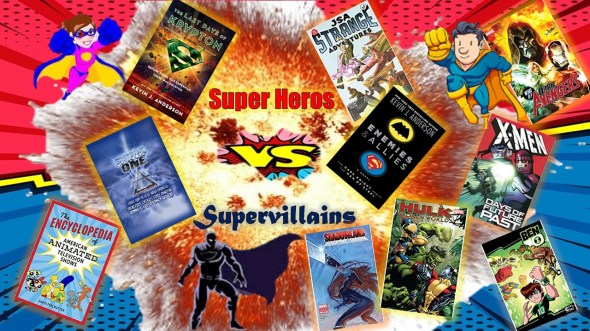
In May, on Writing to be Read, our theme is Superheroes & Supervillains in celebration of comic books and comic universes, and all that it has evolved into over the years. Comic books aren’t really in my wheelhouse. I’m more of a Saturday morning cartoon type of gal, with Underdog and Mighty Mouse as my favorite heroes, and I still watch reruns of the original Batman series with Adam West and Burt Ward on ME TV. But I wanted to run this theme because I think there is a little bit of superhero in every protagonist we write, and a little bit of supervillain in every adversary.
Because I’m not versed in the comic universes, I’m turning to others, who know comics and superheroes much better than I. Jeff Bowels is much younger and wiser in this area, and he will be offering us his expertise and insight on the evolution of the comic and its characters this month, as well as a look at the similarities and differences between the characters of the Marvel and DC universes. In addition, my “Chatting with the Pros” author guest this month is international bestselling author, Kevin J. Anderson, who also authored the book, Enemies and Allies. My supporting interview will be with comic author and novelist, Jason Henderson, who most recently authored Young Captain Nemo. Both of these authors appeared at the recent WordCrafter 2020 Stay in Place Virtual Writing Conference and they know what it takes to create superheroes and supervillains in their own science fiction and fantasy writing. My review for The Encyclopedia of American Animated Television Shows, by David Perlmutter posted last Friday, and I will also be reviewing Echo One: Tales From the Secret Chronicles anthology from WordFire Press. And don’t miss “Mind Fields” this month, where Art Rosch will give us a piece on the character development of villains.
Comics are based on serialized art, and Famous Funnies is considered by many to be the first comic book, coming out in 1933 and publishing until 1955. DC‘s Superman got his start in a comic strip, and he was the first character to wear a cape, setting the image for many of the superheroes that have followed. He made his debut in his own comic book in 1939, the same year that Marvel launched Timely Comics. Not long after, DC came out with Batman in Detective Comics #27, the most sought after comic among collectors and fans alike, and he and Superman both celebrated their 80th birthdays last year.
Other superhero characters followed, including Wonder Woman, Green Lantern, Cyborg and Aquaman, who along with Batman and and Superman, came to be known as the Big Seven of DC’s Justice League, and Stan Lee and Jack Kirby’s Fantastic Four: Mister Fantastic, Invisible Girl (now Invisible Woman), Thing and Human Torch, and Marvel’s X-Men: Professor X, Cyclops, Iceman, Angel (later known as Archangel), Beast and Marvel Girl (a.k.a. Pheonix/Dark Pheonix). And let’s not forget Marvel’s Hulk, Spiderman, and Ironman, Wolverine, and DC’s Swamp Thing.
It’s interesting to see how the characters, and comics have evolved into other forms of media. While comic books remain popular, as the turnout for any Comicon can demonstrate, today we see comics and comic book characters in the form of graphic novels, and they’ve made the jump to visual media, first in television, and then in film. We’ve also seen the rise of the anti-hero, giving us characters such as Dead Pool, who are the epitome of the reluctant hero in every hero’s journey. (See my review of Dead Pool (2016) here.) Although superhero, (and anti-hero), movies had a lull in popularity during the 1980s and 90s, they’ve seen a rise during the 21st century and are big money at the box office today. Statista claims that the superhero movies of 2019 grossed 3.2 billion dollars in combined domestic revenue.
However, we can only weigh the strength and goodness of the superhero by the evilness and capabilities of the villains they face. DC wove the history behind how Batman’s first adversary came to become a supervillain, the notorious Joker. Just as superheroes evolve and change, so do supervillains, and the Joker is no exception. He has changed and evolved over the years, but not always on the same evolutionary time table as superheroes. (See Jeff Bowels’ review of Joker from 2019.) But even with a supervillain, who is super-evil, there must always be a grain of humanity that makes them vulnerable. They weren’t just born evil. They have tragic histories that have twisted them into the super-evil, hard hearted villains that they are, and that makes them relatable on some level, even if we can’t bring ourselves to root for them and breath a sigh of relief when they meet their demise.
The heroes and villains in genre fiction may not have super powers or be invincible, but they do share certain qualities with the superheroes and supervillains of the comic book world, like altruism (for heroes), and selfishness and greed (for villains), and basic humanity (for all). They have a lot to teach us about making relatable heroes and villains we can love to hate. Please join us this month as we explore the world of comics, superheroes and supervillains, on Writing to be Read.
I shared above that my favorite comic superheroes as a kid were Mighty Mouse, Underdog and Batman. Let me know in the comments who your favorite superheroes or supervillains are, and why they are your favorite in the comments. Let’s talk superheroes and supervillains.
Like this post? Let me know in the comments. You can be sure not to miss any of Writing to be Read’s great content by subscribe to e-mail or following on WordPress. If you found this content helpful or entertaining, please share.
Posted: May 1, 2020 | Author: kayelynnebooth | Filed under: Animation, Book Review, Books, Classics, Comic Hero, Nonfiction, Super Hero | Tags: Animated Series, Book Review, Cartoons, David Perlmutter, Saturday morning cartoons, Super Heroes, The Encyclopedia of American Animated Television Series, Writing to be Read |
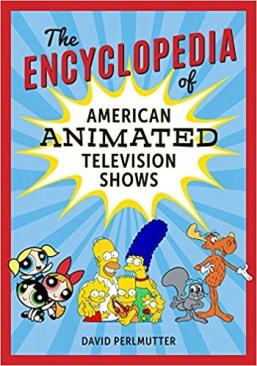
If you are a cartoon buff or just miss Saturday morning cartoons, The Encyclopedia of American Animated Television Shows, by David Perlmutter could prove to be a valuable resource. Who created them? When did they air? Who produced them? Who played the character voice? Summaries of many of these programs are included.
This book has animated series from Abbott and Costello to Zorro. Opening the pages of this book made me feel like Saturday morning cartoons all over again. I found the histories of all of my favorite animated series within its pages; Scooby-Doo, Where Are You?; Casper the Friendly Ghost; The Jetsons; Fat Albert and the Cosby Kids; Bugs Bunny; The Flintstones; and The Smurfs. It even features School House Rock.
There is sure to be something for fans big and small, and they aren’t all from out of the distant past. Younger generations still harboring that inner child may place higher value on more recent animated series, including American Dad; King of the Hill; Southpark; The Simpsons; and Beavis and Butthead.
Of course, it features all of the super heroes from both Marvel and D.C. Comics, from Flash Gordan; Teen Titans; Spider-Man; Superman; Batman and Robin; Wolverine and the X-Men; The Fantastic Four; and even Mighty Mouse and Underdog. Although, none of them have series named for them because they are the bad guys, all our favorite super villains are in there, too.
The Encyclopedia of American Animated Television Series is an invaluable resource if comics are your thing, providing an overview which illustrates how animated series and literature hold a valuable place in the evolution of American entertainment outlets. Filled with a plethora of information on the evolution of animation and comic characters. I give it five quills.

Kaye Lynne Booth does honest book reviews on Writing to be Read in exchange for ARCs. Have a book you’d like reviewed? Contact Kaye at kayebooth(at)yahoo(dot)com.
Posted: April 27, 2020 | Author: kayelynnebooth | Filed under: Ask the Authors, Books, Fiction, Nonfiction, Paranormal, Promotion, Stories, WordCrafter, WordCrafter Press, Writing, Writing Contest, Writing Event, Writing Reference | Tags: 2020 Stay in Place Virtual Writing Conference, 2020 WordCrafter Short Fiction Contest, Ask the Authors Anthology, Whispers of the Past, WordCrafter, WordCrafter Press, Writing Events, Writing to be Read |

WordCrafter
April has been a busy month for WordCrafter. The 2020 Stay in Place Virtual Writing Conference is tomorrow, April 28th. Wow! Even during all this Stay at Home stuff, time has just flown by. I can’t believe the day has already arrived. I hope everyone will join us. If you didn’t recieve an invite you can click on the link above to sign up, (just click on ‘Going’.) That gets you into the free Facebook event portion of the conference, where there will be a video or live stream presentation every hour, as well as author takeovers where you can meet some talented authors and converse via the comment section.
But that’s not all. You can also click on ‘Find Tickets’ to gain access to the interactive portion of the conference on Zoom. (Please do this ahead of time, so I have time to get the access information to you.) This portion of the conference will feature interactive workshops and panel discussions that you won’t want to miss, including the Keynote with Kevin J. Anderson. Each individual session is $5 or you can get an ‘All Events Pass’ and attend all of the sessions for $50. I know many of us don’t have an abundance of money right now, so I tried to keep this affordable.
WordCrafter’s 2020 Virtual Writing Conference
We have 22 presenters, (you can learn more about our talented presenters here), offering presentations, workshops and panel discussions.
- Opening Introductions
- “The Gateway to the Unknown: Poetry Thought Shop” with Rosemerry Wahtola Trommer – 9:10 am
- “The Art & Craft of Writing” workshop with L. Jagi Lamplighter – 10 am
- “Promoting Your Book BIG” with Dave Wolverton – 10:10 am
- Short Fiction Panel: Lamplighter; Raine; Maberry; DeMarco; Wilber; Killiany-11 am
- “The Power of Motivation: What your characters do and why” with Mario Acevedo – 11:10 am
- “Visceral Story Beginnings” workshop with Sean Taylor – 12 pm
- “Story Ideas and the Choices You Make” with Jason Henderson – 12:10 pm
- World Building Panel: Lamplighter; Raine; Maberry; De Marco; Killiany – 1 pm
- “Working with Other People: How to direct others successfully” with Anthony Dobranski – 1:10 pm
- “Writing Across Genres” workshop with Chris Barili – 2 pm
- “Creating Villains We Love To Hate” with Art Rosch – 2:10 pm
- Keynote – “The Popcorn Theory of Success” by Kevin J. Anderson – 3 pm
- “How to Swim Upstream: When you’re not mainstream in your market/genre” with Anthony Dobranski – 3:10 pm
- The Ins & Outs of Writing Media Tie-Ins Panel: DeCandido; Maberry; Nash; Killiany – 4 pm
- “Short Fiction” with L.D. Colter – 4:10 pm
- Book Marketing Panel: Nash; Henderson; Wolverton; Alatorre – 5 pm
- “Writing in the Face of Adversity” with Chris Barili – 5:10 pm
- “The Savage Horror of Back Cover Copy” workshop with Anthony Dobranski – 6 pm
- “The Importance of Promotion” with Bobby Nash – 6:10 pm
- “Business Class Tarot” workshop with Anthony Dobranski – 7 pm
- “The Business of Writing” with Keith R.A. DeCandido – 7:10 p.m.
- “Bringing the Funny: How to Apply Humor in Your Writing” workshop with Jody Lynn Nye – 8 pm
- Closing Ceremonies

While things have been busy in preparation for the conference, I don’t want anyone to forget the fast approaching deadline for the “WordCrafter 2020 Short Fiction Contest”, on April 30th. (See Full Submission Guidelines).There’s still time to submit your story, so put on the finishing touches and polish it up. I’m dying to read your entry!

The great news is that Ask the Authors is finished and finally being released. It’s been a long haul and it was quite a project, but the result is a quality author’s reference no author should be without.
Buy Link: https://books2read.com/u/mdzvwO
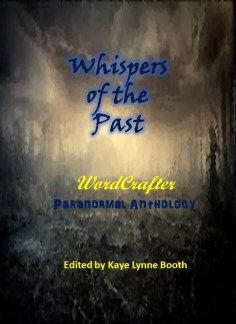
Last, but not least, Whispers of the Past is on sale for .99 cents starting tomorrow, April 28th, 2020 through Thursday, April 30th at all outlets.
Buy Link: https://books2read.com/u/38EGEL
Like this post? Let me know in the comments. You can be sure not to miss any of Writing to be Read’s great content by subscribe to e-mail or following on WordPress. If you found this content helpful or entertaining, please share.
Posted: April 25, 2020 | Author: robbiesinspiration | Filed under: Book Review, Books, Poetry, Treasuring Poetry | Tags: Life Lines: Poems from a Reflection, Poetry, Robbie Cheadle, Sue Vincent, Treasuring Poetry, Writing to be Read |

Today, I am delighted to welcome author, poet and amazing blogger, Sue Vincent, to Writing to be Read as my April guest for Treasuring Poetry.
Sue shares a lot of her own poetry on her blog, Sue Vincent’s Daily Echo. Sue also has an amazingly poetic dog, Ani, who has a few books in her own right. This is a link to Sue’s latest Ani link: https://scvincent.com/2020/04/23/the-small-dog-on-guard/.
Sue also writes some more serious poetry and other books which you can find along the right had side of her blog.
Take it away, Sue.
Sue Vincent’s thoughts on poetry
I honestly couldn’t choose a single poem. It all depends on the mood I am in for I love poetry, quite literally, from the sublime to the ridiculous. It is a love affair that started early, with Dr Seuss, Robert Louis Stevenson and Marriott Edgar. It was probably Edgar who inspired my love of history, for after learning his irreverent verses, you really had to get the true story. For example, the Magna Carta is possibly the most important document in English history and one of the earliest legal assertions of human rights. The story as I first learned it from Marriott Edgar had King John signing his name by dipping his pen in the jam and concludes with a verse that is possibly more apt today that it has ever been:
And it’s through that there Magna Charter,
As were signed by the Barons of old,
That in England to-day we can do what we like,
So long as we do what we’re told.
Magna Carta by Marriott Edgar
If I had to choose a single work, it would be the Rubaiyat of Omar Khayyam, a series of quatrains written a thousand years ago in Persia. My mother gave me a small, cloth-bound volume that her father had given to her many years earlier. He had carried the book when he fought in the jungles of Burma during the war, so the book itself meant a lot to me and travelled everywhere in my handbag so I would always have something to read. The book began to disintegrate at around the time a digital version could be had. It is now safe at home… and the Rubaiyat was the first thing I ever downloaded.
The book contained two translations by Edward FitzGerald. Subsequent translations have been more literally correct, but it is this early work that holds the magic for me, as much of the imagery is quite magical. Many of the quatrains are well known but taken out of context they lose a great deal. Perhaps the most famous is:
The Moving Finger writes; and, having writ,
Moves on; nor all thy Piety nor Wit
Shall lure it back to cancel half a Line,
Nor all thy Tears wash out a Word of it.
I have read the Rubaiyat so many times that I probably know FitzGerald’s translation by heart. Even so, my understanding has shifted and evolved as I have aged, yet I am still pondering many of the questions these verses raise. The verses constitute both a philosophy and a quest, and can be interpreted in a number of ways, depending on what the reader brings to the poetry. Some passages are sheer beauty, others almost heartbreaking…and yet others seem as powerful and full of mystery as any magical rite:
Up from Earth’s Centre through the Seventh Gate
I rose, and on the Throne of Saturn sate,
And many Knots unravel’d by the Road ;
But not the Knot of Human Death and Fate.
There was a Door to which I found no Key :
There was a Veil past which I could not see :
Some little Talk awhile of ME and THEE
There seem’d – and then no more of THEE and ME.
While scholars still debate whether Omar was deeply mystical or irreligious, I believe he was anti-dogmatic and cannot be read literally. He was a mathematician, astronomer, philosopher, and poet and used symbolism throughout his work, touched by humour and underpinned with a love of life in all its glory. One of my favourite passages is the Kuza Nama (The Book of Pots):
Listen again. One evening at the close
Of Ramazán, ere the better Moon arose,
In that old Potter’s Shop, I stood alone
With the clay Population round in Rows.
And, strange to tell, among the Earthen Lot
Some could articulate, while others not:
And suddenly one more impatient cried –
“Who is the Potter, pray, and who the Pot?”
Then said another – “Surely not in vain
My substance from the common Earth was ta’en,
That He who subtly wrought me into Shape
Should stamp me back to common Earth again.”
Another said – “Why, ne’er a peevish Boy
Would break the Bowl from which he drank in Joy;
Shall He that made the Vessel in pure Love
And Fancy, in an after Rage destroy!”
None answer’d this ; but after Silence spake
A Vessel of a more ungainly Make:
“They sneer at me for leaning all awry;
What! Did the Hand then of the Potter shake?”
There is something about these verses… in spite of the inaccuracies of the translation… that has intrigued and inspired for a thousand years. There is a passion in the words, they question belief, the nature of life and truth and make you think about what you believe. I would be happy indeed if I thought that any words I might pen would still capture heart and mind a thousand years from now!
Ah Love! could thou and I with Fate conspire
To grasp this sorry Scheme of Things entire,
Would not we shatter it to bits – and then
Re-mould it nearer to the Heart’s Desire!
Ah, Moon of my Delight who know’st no wane,
The Moon of Heav’n is rising once again:
How oft hereafter rising shall she look
Through this same Garden after me – in vain!
And when Thyself with shining Foot shall pass
Among the Guests Star-scatter’d on the Grass,
And in thy joyous Errand reach the Spot
Where I made one-turn down an empty Glass!
Review of Life Lines: Poems from a Reflection
What Amazon says
“The pen paints the souls longing in jewel tones.”A collection of fifty two poems of life, love and inspiration.There are joys for which we cannot find expression, moments that have a depth of emotion that can only be shared in images. It is here that poetry comes into its own, for the pictures we paint with words can conjure all the emotions of the human heart. From solitude to passion, from aspiration to the quest for the soul’s inner light, we seek to find ways to share our journey through life, to witness our footsteps as we pass through its shifting sands and cast a reflection on time itself. The poet is both mirror and reflection, framing the images of a human life and giving them a beating heart.
My review
I love poetry and I read a lot of poems and poetry books and I found the poems in this amazing little book to be quite profound. Sue Vincent touches on all aspects of life, including the sadder and more emotionally difficult aspects such as loss of a loved one, in a beautifully poignant and yet positive and uplifting way which make them satisfying and wonderfully uplifting.
Most of these poems are written in freestyle form with a couple in rhyming verse. The poet has matched the style well to the content of the poem and the rhyming verse poems present the more light hearted and upbeat toned poems.
A few short extracts that I found particularly impactful are as follows:
“The pen paints the souls longing
In jewel tones.” from Purpose
“There were flowers,
Three red roses,
Red as life,
Placed in a cold hand,
One for each heart
Saying a final farewell.
When the tears fall,
There are always flowers.” from Flowers
“Two ravens whisper in my ear,
As Thought and Memory begin.
Within the darkness of their wings
Stir images, both dark and bright,
That dance within the secret heart
And quiet hours of the night.” from Odin’s Ravens [my favourite poem in this collection]
“My pillow held the hollow where you lay,
With love glazed eyes that held me,
Watching as the wildness took me,
Smiling up at me.” from Memory [intensely poignant poem]
Purchase Life Lines: Poems from a reflection
About Robbie Cheadle

Hello, my name is Robbie, short for Roberta. I am an author with six published children’s picture books in the Sir Chocolate books series for children aged 2 to 9 years old (co-authored with my son, Michael Cheadle), one published middle grade book in the Silly Willy series and one published preteen/young adult fictionalised biography about my mother’s life as a young girl growing up in an English town in Suffolk during World War II called While the Bombs Fell (co-authored with my mother, Elsie Hancy Eaton). All of my children’s book are written under Robbie Cheadle and are published by TSL Publications.
I have recently branched into adult and young adult horror and supernatural writing and, in order to clearly differential my children’s books from my adult writing, I plan to publish these books under Roberta Eaton Cheadle. My first supernatural book published in that name, Through the Nethergate, is now available.
I have participated in a number of anthologies:
- Two short stories in #1 Amazon bestselling anthology, Dark Visions, a collection of horror stories edited by Dan Alatorre;
- Three short stories in Death Among Us, an anthology of murder mystery stories, edited by Stephen Bentley;
- Three short stories in #1 Amazon bestselling anthology, Nightmareland, a collection of horror stories edited by Dan Alatorre; and
- Two short stories in Whispers of the Past, an anthology of paranormal stories, edited by Kaye Lynne Booth.
I also have a book of poetry called Open a new door, with fellow South African poet, Kim Blades.
Find Robbie Cheadle
Blog: https://www.robbiecheadle.co.za/
Blog: robbiesinspiration.wordpress.com
Goodreads: Robbie Cheadle – Goodreads
Twitter: BakeandWrite
Instagram: Robbie Cheadle – Instagram
Facebook: Sir Chocolate Books
Want to be sure not to miss any of Robbie’s “Treasuring Poetry” segments? Subscribe to Writing to be Read for e-mail notifications whenever new content is posted or follow WtbR on WordPress. If you found it interesting or entertaining, please share.
Posted: April 24, 2020 | Author: artrosch | Filed under: Art's Visual Media Reviews, Television review | Tags: Albuquerque, Art Rosch, Art's Visual Media Reviews, Arthur Rosch, Better Call Saul, Breaking Bad, New Mexico, TV reviews |

BETTER CALL SAUL:
A Collision Of Two Worlds
When Breaking Bad appeared on television it became a peak moment in the history of the medium.
The world may be fucked up but television has never been better. If you use your remote with discernment, you will find incredible things to watch through your three hundred channel cable box. In its seventy year reign over the American psyche, there has never been more or better television. Nor has the human race been closer to mass tragedy. The importance of television expands as we get quarantined in our homes. TV’s always been important. Now it’s running a close second to Survival itself. I’m not sure we wouldn’t go insane as we wait for the stay-at-home orders to lift. We need TV. Desperately.
The Arts often flourish in times of decadence and turmoil. When a civilization becomes ill, a host of artists arise to attempt its healing. When Breaking Bad ascended to the pinnacle of great art, it created a new space for the production of yet more great TV.
I refer to the spin-off of Breaking Bad, the superb series, Better Call Saul.
We first met Saul Goodman in Breaking Bad. He turned up as the criminal defense attorney for Walter White and his confederates. His character was somewhat clownish. I made the unconscious surmise that series creators Vince Gilligan and Peter Gould did not take Saul Goodman seriously.
I was wrong. When Breaking Bad was seen and done I grieved because there was nothing as great to continue watching. Then Better Call Saul appeared and once again I was taken into the wry, dark, ironic world of Gilligan and Gould.
Better Call Saul has just completed its fifth season and may be ramping up for the sixth. Saul Goodman is the sly pseudonym taken by attorney Jimmy McGill. “It’s all good, man.” Jimmy himself explains the pun of his name. He’s a bit of a wild man, an outsider in his profession. Some would call him a shyster or ambulance chaser. He gives himself to the lost souls of the streets. He represents clients who are too dirty to be touched by more principled attorneys. For “principled” read snobbish. Saul doesn’t mind getting grubby.
The story arc of Better Call Saul is one that exposes the inner workings of two distinct worlds. One is the world of the drug cartel. The other is the world of middle class America. It is Saul Goodman who provides the bridge between these two worlds. In Breaking Bad it was Walter White who played the fulcrum character who bridged those worlds. Walter was a high school chemistry teacher who, when diagnosed with terminal cancer, turned to the manufacture of methamphetamine to provide for his family when he’s gone.
Saul is pressured into representing a Cartel lieutenant, a terrifying character named Lalo Salamanca. It is the Salamanca Cartel that is at war with other cartels for control of the drug trade in the Southwest. The series takes place in Albuquerque and the scenery is full of vast desert tracts. Out there, in the desert, dead bodies routinely disappear.
Albuquerque is a pleasant city, but its location makes it a prime route for drugs smuggled through Mexico. It’s home to the drug barons who maintain operations on both sides of the border. Jimmy McGill, aka Saul Goodman, is drawn inexorably into the cartel’s workings. In the first few seasons the conflict centers around Jimmy’s relationship with his brother, Charles “Chuck” McGill. Chuck is a famous and powerful corporate lawyer who is afflicted with a bizarre form of OCD. He’s allergic to electricity.
Jimmy takes care of Chuck when his allergies render him completely helpless. Jimmy wants to emulate his big brother. He’s put himself through law school and waits to pass the Bar Exam. Chuck does everything to sabotage Jimmy. From Chuck’s lofty position in the world of the courts there is no place for a clown like Jimmy McGill. Chuck’s brother is an embarrassment. Jimmy is hurt and bewildered by Chuck’s hatred and malice.
Lucky for Jimmy, he forms a relationship with attorney Kim Wexler. It’s Kim who keeps Jimmy grounded. Without her steadying influence he might spin off into some outer limits of legal brinksmanship. It is in fact Jimmy’s “edge” that attracts Kim. Behind her business suit and neatly wrapped pony tail is a wild child who savors the antidote to boredom that Jimmy provides.
Like Jimmy, the relationship itself often flirts with disaster. In spite of Jimmy’s ‘danse macabre’ the couple survives with their love intact. This love, this loyalty and unconditional regard, is the glue of the series. As long as Jimmy and Kim love each other, things will be all right.
Things will work out.
Tune in to Part Two of my review of Better Call Saul on the last Friday in May.
A Midwesterner by birth, Arthur Rosch migrated to the West Coast just in time to be a hippie but discovered that he was more connected to the Beatnik generation. He harkened back to an Old School world of jazz, poetry, painting and photography. In the Eighties he received Playboy Magazine’s Best Short Story Award for a comic view of a planet where there are six genders. The timing was not good. His life was falling apart as he struggled with addiction and depression. He experienced the reality of the streets for more than a decade. Putting himself back together was the defining experience of his life. It wasn’t easy. It did, however, nurture his literary soul. He has a passion for astronomy, photography, history, psychology and the weird puzzle of human experience. He is currently a certified Seniors Peer Counselor in Sonoma County, California. Come visit his blogs and photo sites. www.artrosch.com and http://bit.ly/2uyxZbv.
Want to be sure not to miss any of “Art’s Visual Media Reviews” segments? Subscribe to Writing to be Read for e-mail notifications whenever new content is posted or follow WtbR on WordPress. If you find it interesting or just entertaining, please share.
Posted: April 22, 2020 | Author: kayelynnebooth | Filed under: Book Review, Books, Comic Hero, Fantasy, Fiction, Super Hero, Urban fantasy | Tags: Book Review, Comic books, Fantasy, Indomitable, J.B. Garner, Superheroes, Urban fantasy, Writing to be Read |

What’s a girl to do when her boyfriend shifts the world into a comic book reality where half the population has super powers, and transforms himself into a superhero? Find out in J.B. Garner’s Indomitable.
Dr. Irene Roman finds herself in just such a situation when her boyfriend and fellow scientist, Dr. Eric Flynn decides to shape reality to his own liking with his research, (and hers). The rational Irene that she has always been knows that Eric must be stopped and she’s the only one who can stop him, but there is something pulling at another part of her that makes her want to embrace the new Irene and the new world. In fact, many around her seem to be accepting this new world blindly, and some who are “Pushed” even have newfound abilities and superhuman powers, but not all are using them for the greater good. It seems the world has gone crazy in this new reality, and Irene must find a way to put things back the way they were.
Skillfully crafted to suspend disbelief and draw readers in, sprinkled with comic book humor to lighten up this tale of world salvation gone awry. I give Indomitable five quills.

Buy Link: https://www.amazon.com/Indomitable-Push-Chronicles-Book-1-ebook/dp/B076G9JS93/ref=sr_1_1?dchild=1&keywords=Indomitable+Garner&qid=1586050754&s=books&sr=1-1
Kaye Lynne Booth does honest book reviews on Writing to be Read in exchange for ARCs. Have a book you’d like reviewed? Contact Kaye at kayebooth(at)yahoo(dot)com.
Posted: April 20, 2020 | Author: kayelynnebooth | Filed under: Books, Dark Fantasy, Epic Fantasy, Fantasy, Fiction, Interview, Writing | Tags: Author Interview, Author Profile, Chatting with the Pros, Dark Fantasy, Epic Fantasy, Fantasy, L.D. Colter, Writing to be Read |
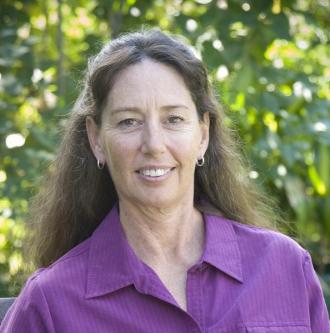
My “Chatting with the Pros” guest today is an award winning epic and dark fantasy author. She may not be as prolific as some writers, but everything she writes seems to shine in the fantasy realms. She is a two-time winner of the Colorado Book Award, and a Writers of the Future winner. That is three books and three awards. She must be doing something right. Please help me welcome fantasy author L. D. Colter.
Kaye: Would you briefly share the story of your own publishing journey?
Liz: I seem to have done a bit of everything along the way. My short stories have been traditionally published in magazines and anthologies. My first novel, A Borrowed Hell, was published by a small press that closed only a few months later, but fortunately the book was picked up again almost immediately by another small press. My epic fantasy novel, The Halfblood War, was acquired by a mid-sized publisher, and I chose to self-publish my latest novel, While Gods Sleep.
Kaye: Your books written under L.D. Colter are contemporary and dark fantasy, while your epic fantasy, The Halfblood War, is written under the name L. Deni Colter. What was the reasoning for the change of pen name?
Liz: I didn’t actually change my pen name, just added a second one. I started with L. D. Colter for my contemporary fantasy. When my epic fantasy novel was published, I decided to add the pseudonym L. Deni Colter to make it easier for readers to differentiate my writing by genre. While plenty of readers, like me, enjoy multiple sub-genres of speculative fiction, not everyone does, and I feel I write the two styles quite differently. I don’t separate my work in any other way, though. My website and author sites include my actual name, Liz, both of my pseudonyms, and all my books.
Kaye: When did you know you wanted to be an author?
Liz: I didn’t consciously decide to write with a view to publishing until well into adulthood, but I’ve been a daydreamer all my life—I nearly flunked out of 5th grade due to it—so I was hard-wired from the start to create fiction. I started toying with the idea of writing during high school but stayed too busy through college and for a long time after as I pursued of different interests, more school, and many different careers. Finally, I found myself with a seasonal job, a rainy winter off, and my first computer. I started a novel that winter and wrote 10,000 words in the first week. I’ve never looked back.
Kaye: Your first book, A Borrowed Hell,won the 2018 Colorado Book Award for Science Fiction/Fantasy. Were you surprised? Can you tell me a little about that book?
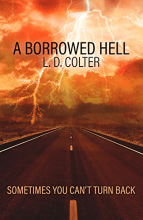 Liz: Yes, I was very surprised and honored to win. When I wrote A Borrowed Hell, I set out to write a contemporary fantasy with literary themes about a man forced to face his difficult past in order to move forward in life. To receive an award for this book, and especially one from Colorado Humanities—an organization dedicated to the humanities and the ways in which the human experience is documented—was very rewarding.
The story follows my protagonist’s challenges, which take place in both the real world and an alternate world. I think this last bit of the back-cover copy sums up the plot pretty well. “July is willing to do anything to end his world-hopping, right up until he learns the price: reliving a past he’s tried his whole life to forget. He’s not sure his sanity can take it. Not even to get back to his own world, a woman he’s falling in love with, and a life he finally cares about.”
Kaye: While Gods Sleep won the 2019 Colorado Book Award for science fiction/fantasy. Where did you get the idea for this story?
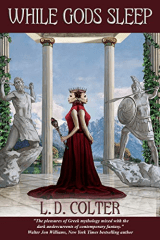 Liz: As to the origin of this, I’ve loved mythology ever since discovering a fascination with ancient religions and cultural myths in high school. Greek mythology was my first passion, and it seemed the natural place to start when I decided to write a set of fantasy novels based on different mythologies. It was great fun to finally write a book rooted in the Greek myths I love, but better still was getting to play with them in completely unique and original ways that were entirely my own creation. It was a goal of mine from the start to avoid the more common tropes and to take this in unexpected directions, beginning with setting it in an alternative 1958 Athens ruled by conjoined queens. From there, I threw a mortal man into the eerie underworld of Erebus where he becomes entwined with sleeping gods, the factions that seek to control them, and an enemy powerful enough to destroy them all.
Kaye: Your latest release from Wordfire Press is The Halfblood War. What can you tell us about that book and the inspiration for it?
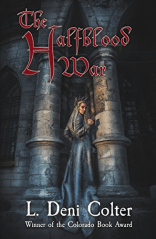 Liz: These days I read widely across speculative fiction genres, but I grew up reading epic fantasy almost exclusively. Those books shaped my love of reading and were a huge part of my life. I enjoy the current directions epic fantasy is taking, but it was very fulfilling for me to get to write my own traditional epic fantasy and mold it into something unique and, hopefully, compelling. This novel took me longer to complete, by far, than my others. It was a true labor of love and I’m grateful to Wordfire Press for acquiring and publishing it. The premise revolves around Tirren, heir to the ruler of Thiery, who is raising his half-Elven bastard son in a land that hates and fears the Elves. It’s a stand-alone novel, written with an adult audience in mind, and weaves themes of prejudice and acceptance with love and betrayal, capricious and dangerous elves, and epic battles.
Kaye: What do you consider to be your biggest writing accomplishment to date?
Liz: I have to laugh, because my answer is always the same: my latest project, whatever that may be. Right now, that would be an unpublished novelette and my work-in-progress novel.
Kaye: In my review of the Undercurrents anthology, I refer to your story, “Songs to Sing and Stories to Tell”, saying that it explores saying good-bye. Can you tell me about this story from the author’s point of view? Did I get it right?
Liz: Yes, absolutely, I see that story as being about letting go, or as you put it, saying goodbye. Not my protagonist letting go of her past or her memories or her love, but trusting her instincts to let go of fear of change and false security and to embrace the unknown. That said, though, once a writer publishes their work, it belongs more to the reader than the author so different readers might see different themes.
Kaye: Which type of writing do you prefer, short fiction or novels? Why?
Liz: I enjoy both. There’s a lot of reward in completing and polishing short stories more quickly (faster for me, anyway) and getting them out in the world. If writing is going to be a career, though, conventional wisdom says it’s going to be based on producing novels. I’m not a fast writer—if I manage one book a year I’m doing well—so it’s a huge commitment for me to start a new book, but there’s also the fulfilment of really delving into story and character and the pleasure of wrapping up multiple storylines in a satisfying way.
Kaye: What is the strangest inspiration for a story you’ve ever had?
Liz: That might be my short story that won the Writers of the Future contest, “The Clouds in Her Eyes.” I had no notion what I was going to write when I began and went to my odds and ends file, where I toss all my passing and partial story ideas. I was trying to choose between three different prompts: a title idea (The Clouds in Her Eyes), an image of an old windmill on a dry and barren farm, and an image of a ship’s wooden figurehead. When I challenged myself to combine all three, the story was born.
Kaye: Are you a plotter or a pantser? Why?
Liz: I have to side with the pantsers on this. That said, though, I don’t really see pantsing and plotting as black and white options, but as a continuum. People who outline in the thousands of words still have to let go of the outline at some point and wing it. Likewise, most pantsers have some level of plotting going on, even if it’s at a scene-by-scene level as they get there. For me, I usually start with atmosphere (dark, humorous, gothic, whatever), an idea of the main character, sometimes a theme, and then an opening scene. While all that’s coalescing in my head, I usually get a sense of the ending, which gives me a rudimentary arc. At that point I start writing and figure the rest out as I go.
Kaye: What do you think is the single most important element in a story?
Liz: Wow, that’s a tough one. Tomorrow I might have a different answer, but today I’m going to say detail. Not excessive detail, but those sharp, specific details that bring stories to life. The level of detail in a story enhances so many other elements: character, setting, emotion, pretty much everything except plot. And a good plot, poorly told doesn’t make for a good story. Evocative writing is what engages me as a reader.
Kaye: What’s the best piece of advice you were ever given?
Liz: A local author was kind enough to read an early draft of the first novel I wrote (the epic fantasy). She gave encouragement but advised me to seek out workshop opportunities to get detailed feedback for the many things I now realize were very novice mistakes. It was hands down due to her advice that I started on the right road to becoming a professional author. I followed her advice and joined a 10-week online workshop led by a well-published author. I’ve been a part of critique groups in one form or another almost constantly since that time, as well as attending conferences and workshops when possible, especially during my early years of writing.
Kaye: What advice do you have for aspiring authors?
Liz: Don’t write in a vacuum. Along the same lines as the advice I was given when starting out, I feel it’s hard to be objective about what you’re writing without some external input and feedback. Find fellow writers who are genuinely invested in helping to improve your work and, hopefully, at least some who are further along the career path than yourself. We know how we intend our work to read, but without a sounding board, it can be difficult to know if we’re succeeding.
Kaye: As a fantasy writer, what kind of research do you find yourself doing for your stories?
Liz: As a reader, I’m a huge stickler for logistics so it’s very important to me in my writing that I get details right in my own books. Not just big things, like avoiding plot holes, but small details, too. You never know what expertise your readers might have and, as a reader, I hate having my suspension of disbelief suddenly ruined in the middle of a story by a detail that’s blatantly wrong. So, yes, I get lost down research rabbit holes all the time. I research online mostly, but I’ve been known to read multiple textbooks for a novel as well as reaching out in person to experts or sensitivity readers.
Kaye: What can your readers look forward to in the near future? What are you working on now?
Liz: My current work in progress from L. D. Colter is the next in my mythology-based novels, this one centered around Slavic paganism. It’s a contemporary fantasy (working title: When the Winds Sing) set in far Northern California, near where I lived for 12 years. There are many wonderful settings and inspirations in that area, and I’m looking forward to playing with them all. The book is about 1/3 written and I hope to have the first draft completed before too long.
I hope, in time, to get back to an epic fantasy set I started and set aside some time ago. I had other projects needing attention, but it’s well started and has a concept and characters I still love.
Liz has followed her heart through a wide variety of careers including draft-horse farmer, field paramedic, Outward Bound instructor, athletic trainer, and roller-skating waitress, among other curious choices. She is a two-time Colorado Book Award winner in Science Fiction/Fantasy, a Writers of the Future winner, and her short stories have been published in a wide variety of magazines and anthologies. She writes contemporary and dark fantasy as L. D. Colter and epic fantasy as L. Deni Colter.
I want to thank Liz Colter for joining me here today and sharing so much about writing in the fantasy genre. You can learn more about Liz and her books on her website or her Amazon Author page. Join me next month, as we celebrate Superheroes and Supervillains, and my “Chatting with the Pros” author guest will be fantasy and science fiction author Kevin J. Anderson.
You can catch the monthly segment “Chatting with the Pros” on the third Monday of every month in 2019, or you can be sure not to any of the great content on Writing to be Read by signing up by email or following on WordPress. Please share content you find interesting or useful.
Posted: April 17, 2020 | Author: kayelynnebooth | Filed under: Book Review, Books, Fantasy, Fiction, Pirate Fantasy, Stories | Tags: Anthology, Book Review, Fantasy, Lisa Mangum, Pirate Fantasy, Short Fiction, Short Stories, Writing to be Read, X Marks the Spot |
, 
The X Marks the Spot anthology is a treasure trove of pirate lore ripe for the reading. Tales of pirates from ancient times to modern pirates in unexpected forms, this short story collection is filled with pirate fantasy gems of the highest quality and craftsmanship. Sail the high seas of time, or pillage the vast reaches of the universe, or plunder the intricate pathways of cyberspace. With this gathering of stories, there’s no telling where the fates will take you.
Pirates come in all shapes and sizes, and so do treasures in this anthology of treasure and theft, edited by Lisa Mangum. I particulary enjoyed Tracy Leonard Nakatani’s “The Pirate’s Cat”, told not from the eyes of the pirate, but from the point of view of the cat, a tale of mayhem and narrowly averted disaster told with a touch of humor. For a look into the life a cyber-pirate, check out “Annie Spark and the Pirates of Port 1337” by David Cole. It takes common sense and magic to find the treasure in Linda Maye Adams’ “Tidying Magic”. If your looking for romance and adventure on the high seas, “Princess Yum Yum’s Challenge” might be the tale for you. “Silver Future” is a tale of piracy in the vast expanse of space, with a surprise twist. “Harry the Ghost Pirate”, by Robert J. McCarter is an adventure story that touched my heart. These are but a few of the hidden treasures within this anthology.
Entertaining, and often surprising, X Marks the Spot is a thoroughly enjoyable read. I give it five quills.

Buy Link: https://www.amazon.com/Marks-Spot-Anthology-Treasure-Theft-ebook/dp/B0864ZH1VX/ref=sr_1_1?crid=2N0IZIVN88VLB&dchild=1&keywords=x+marks+the+spot+anthology&qid=1586033054&s=books&sprefix=X+Marks+the+Spot+an%2Cstripbooks%2C439&sr=1-1
Kaye Lynne Booth does honest book reviews on Writing to be Read in exchange for ARCs. Have a book you’d like reviewed? Contact Kaye at kayebooth(at)yahoo(dot)com.
Posted: April 15, 2020 | Author: Jeff Bowles | Filed under: Dialogue, Fiction, Writing, Writing Tips | Tags: Dialog, Jeff Bowels, Writing, Writing Tips, Writing to be Read |

It’s not what you say. It’s the way you say it.
by Jeff Bowles
I love good dialogue. In fact, it may be my favorite thing about reading a book or watching a truly excellent film. Many serious writers will tell you that it’s an important tool in the author’s toolkit, but that it is by no means the most essential. I respectfully disagree. I say good dialogue can elevate your writing like nothing else. After all, it’s not what you say. It’s the way you say it.
Looking back, I realize I’ve always been polishing up my ability to generate interesting, gripping, or just plain funny dialogue. I self-studied writers and filmmakers who made it a priority in their storytelling, folks like Douglass Adams, Elmore Leonard, and Quentin Tarantino. I read a lot of Marvel and DC comic books, which as you may or may not know, are almost completely composed of dialogue. I don’t know why it mattered so much to me, but I absolutely lit up whenever characters interacted with each other in snappy and surprising ways. I still light up when I read, see, or hear the good stuff, and maybe I can’t speak for everyone on this, but when was the last time you saw a well-produced Shakespeare production and thought to yourself, Gosh, that guy just couldn’t write people to save his life?
That’s the key. People live in dialogue. Not in long winded descriptions or deep internal navel gazing. Characters come to life in their interactions with each other. You could say it’s the one thing that makes them leap off the page. It’s how people work in real life, too. Which is to say, without conversation, people tend not to work at all. Sit together with someone in an awkward silence long enough and you’ll know exactly what I mean.
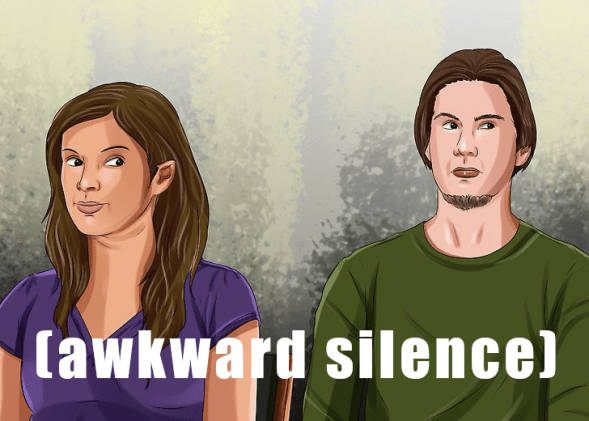
When it comes to short stories and novels, good dialogue is essential. Sure, you’re a master of scene setting and description, but do all your characters seem to communicate like wooden B-movie stereotypes? Or another problem many writers have, have you noticed you’re timid on engaging your readers with dialogue, and so you tend to rely on big blocks of text to get your message across? Scene setting, subtle character development, basic point-to-point plotting, visceral sense engagement and description, and basic personal style may be the rhythm of the music we call fiction, but truly inspiring dialogue is quite essentially the melody.
If you think about it, you don’t even really know characters until they open their mouths. If you struggle with dialogue, or if you’re just looking to brush up on the basics, there are a few exercises you can employ. One, of course, is to go to a public place and listen to people converse in real time. Admittedly, not really a viable option during Coronavirus lockdown, but you can easily work this exercise from the comfort of your own home. Tune into some reality TV, or simply listen to the conversations your family have. Write down every word verbatim, if you can. You’ll notice that people tend to speak in a pretty roundabout way, with lots of umms and starts and stops thrown in the mix.
Good dialogue should contain elements of realistic conversation, but you also need to focus it like a laser beam. If you were to write a scene in which people talk like they do in real life, you’d end up with so many pauses, ellipses, and false starts it’d drive your readers nuts.
“Hi, Jim, how’d work go?”
“Oh, you know, I don’t know … the boss, he’s real … umm … I don’t know, he’s real pushy when it comes to … when it comes to, uh … oh, I don’t know”
Doesn’t really flow all that well, does it? May I present the alternative that what you’re going for with good character interactions isn’t so much realism as pointed randomness. That is to say, make an effort to produce dialogue that cracks like a whip, pops and snaps like lightning. Only make sure also that it’s random enough no one can accuse you of stiffly holding your reader’s hand.
“Hi, Jim, how’d work go?”
“Ah, you know, the boss … ever get the feeling some people’s neckties are on too tight?”
“Uh-oh. I know that tone. He got pushy again, didn’t he?”
“Pushy? I haven’t slept in weeks. Pretty sure I had a waking dream while filing a client’s paperwork today. By the way, if the office calls asking why I’ve suggested one Dana Baker should just hit the clown on the nose and fly away on his trusted dragon, I’m not in.”
Also, don’t be afraid to surprise yourself. If you’re surprised by your writing, you can guarantee your readers will be, too. Zig instead of zag when you approach character interactions. Also, try producing more dialogue on the page than you’re used to. A lot of readers just kind of sift through text blocks anyway. They consider the dialogue the real meaty parts. Sad, but I think it is true. Readers are less interested in what’s happening now than in what happens next. You can fuel that burning need to find out.

Here’s something else you may not have considered. The first true novel written in the English language was likely published sometime in the 16th century, or thereabouts. A couple centuries later in the Victorian era, the novel had exploded in popularity, and that period is still a gold mine as far as writers who produced work we’re reading to this day. In all the time since, our concept of good narrative fiction has gotten lighter, not heavier.
Have you ever been chewing your way through a Victorian novel and thought to yourself, Why’s it taking this lady so long to get out of her house? Well, it’s because back then, the form and function of the novel was to in some fashion reproduce life. Entertainment is its form and function in the year 2020, because these days authors have to compete with film, television, internet memes, video games, just about anything that’s loud, fast, and gets its point across in seconds flat.
Unfortunately, you are therefore also competing with shortened attention spans across the globe. Do yourself a favor, don’t shirk your duty to write super fun, super engaging dialogue. It can save even the dullest story. Well, maybe not the dullest. Need something more specific? Well, for one, make sure all your dialogue tags (or at least most of them) are of the simple, he said, she said variety. Very few of these said-bookisms you’ve heard so much about.
Also, try bouncing back and forth between characters like they’re playing verbal tennis. Keep each line short and snappy; play a game of hot potato. And don’t forget to edit like crazy when you’re done. If you’re not removing bulk between those quote marks, you’re doing it all wrong. Even in my short examples above, I went back in and cut the detritus. Because good dialogue should flow, not lay inert like a dead body on some old science fiction TV show.

Similarly, characters should all sound distinct from one another. Don’t give them so many affectations they no longer sound realistic, but look, not everyone talks the same, do we? We have accents and ticks and odd regional slang we depend on. Try speaking your dialogue aloud as you’re writing it. Kind of helps to clear out the mental cobwebs. If you can hear it from your own mouth, and it sounds pretty good to you, odds are it’ll work well enough on the page.
The truth is, most readers depend on good dialogue to communicate story. You can build or establish character relationships with it, key in on essential plot points, foreshadow upcoming events, or just plain have fun and make people laugh. One more time, dialogue is the melody of this music we call storytelling. So make sure yours is enjoyable to listen to. Speech, language, it’s the engine that drives everything we do. It binds us together, tears us apart, and isn’t that the essence of story?
If you’re struggling with this, the old adage, practice makes perfect, is as always the essential factor. You’ll thank me once you’ve mastered this new superpower, and your readers will thank you. Is it possible to overdo it? Certainly. But wouldn’t you rather read a beautiful mess that sounds like Mozart rather than racoons rattling around in your trash cans late at night?
Heh. That’s a funny line. Maybe I should jot it down and have one of my characters say it someday. Until next time, everybody. Wooden conversation is as wooden conversation does.
Jeff Bowles is a science fiction and horror writer from the mountains of Colorado. The best of his outrageous and imaginative short stories are collected in Godling and Other Paint Stories, Fear and Loathing in Las Cruces, and Brave New Multiverse. He has published work in magazines and anthologies like PodCastle, Tales from the Canyons of the Damned, the Threepenny Review, Nashville Review, and Dark Moon Digest. Jeff earned his Master of Fine Arts degree in creative writing at Western State Colorado University. He currently lives in the high-altitude Pikes Peak region, where he dreams strange dreams and spends far too much time under the stars. Jeff’s new novel, God’s Body: Book One – The Fall, is available on Amazon now!

Check out Jeff Bowles Central on YouTube – Movies – Video Games – Music – So Much More!
Posted: April 13, 2020 | Author: kayelynnebooth | Filed under: Action Scenes, Book Covers, book marketing, Books, Character Development, Comic Hero, Fantasy, Fiction, Horror, Media Tie-Ins, Pacing, Poetry, Pulp Fiction, Science Fiction, Setting, Speculative Fiction, Stories, Super Hero, Teaching Writing, Thriller, WordCrafter, World Building, Writing, Writing Event, Writing Workshops, Young Adult | Tags: 2020 Stay in Place Virtual Writing Conference, Alexi Vandenberg, Anthony Dobranski, Art Rosch, Bobby Nash, book marketing, Book Promotion, Chris Barili, Dan Alatorre, Dave Wolverton, Ellie Raine, Fiction, Guy Anthony DeMarco, J.R.H. Lawless, Jason Henderson, Jody Lynne Nye, Jonathan Maberry, Keith R.A. Candido, Kevin J. Anderson, Kevin Killiany, L. Jagi LAmplighter, L.D. Colter, Mario Acevedo, Media Tie-In, Rick Wilber, Rosemerry Wahtola Trommer, Sean Taylor, Short Fiction, WordCrafter, World Building, Writing, Writing to be Read |
We’re all tired of staying at home during this recent crisis. It seems like everyone has been affected in different ways, but no one has gone unscathed. Our world has changed in recent times. We, as authors and lovers of the written word had many of our in-person writing events – conferences, conventions, and book fairs – cancelled due to the appearance of COVID 19. To to emulate all those events we look forward to each year and are missing out on now, and to chase away some of the boredom of social distancing and isolation, WordCrafter presents the 2020 Stay in Place Virtual Writing Conference on Tuesday, April 28 from 8 am to 8 pm.
This is a unique event, the first of its kind, and one you won’t want to miss. Free presentations and author takeovers will be occurring on the Facebook event page, and interactive workshops and panel discussions will be offered for a minimal fee on the Zoom platform. Interactive panel discussions and workshop session can be accessed individually for $5, or an all access pass to all interactive sessions can be purchased for $50. Tickets can be purchased on the Facebook event page. Watch for your Facebook event invite from me or one of the many wonderful authors involved with this conference. Send me a message through my WordCrafter page or through the event page if you have further questions, or if you would like a half an hour author takeover spot to promote your own work.
This has been a huge undertaking to organize and set up an event such as this one, but I haven’t done it alone. Without my 22 talented presenters, this event couldn’t happen. We have a great line-up, with international bestselling science fiction and fantasy author Kevin J. Anderson presenting the keynote on the interactive platform.

And that’s just the beginning. Take a look at the talent that has lined up for presentations, workshops and panel discussions.

Award winning and national bestselling speculative fiction author Mario Acevedo will be offering a presentation – “The Power of Motivation: What Your Characters Do and Why”

USA Today bestselling multi-genre author Dan Alatorre will be a member of the interactive book marketing panel discussion.

Multi-genre author Chris Barili will be presenting “Writing in the Face of Adversity” and giving an interactive workshop on “Writing Across Genres”.

Award winning fantasy author L.D. Colter will be offering a presentation on “Short Fiction”.

World builder and speculative fiction author Kieth R.A. DeCandido will be offering an interactive workshop on “The Business of Writing” and he is the moderator for the media tie-in interactive panel discussion.

Award winning novelist Guy Anthony De Marco will be a member on both the short fiction and world building interactive panel discussions.

Fantasy and science fiction author Anthony Dobranski will offer two presentaions, “How to Swim Upstream: Not being in the mainstream of your market/genre” and “Working with Others: How to direct others in a project”. In addition, he will offer two interactive workshops. “Business Class Tarot” and “The Savage Horror of Writing Back Cover Copy”.

Author for young readers, Jason Henderson will be presenting “Story Ideas and the Choices You Make” and moderating the interactive book marketing panel discussion.
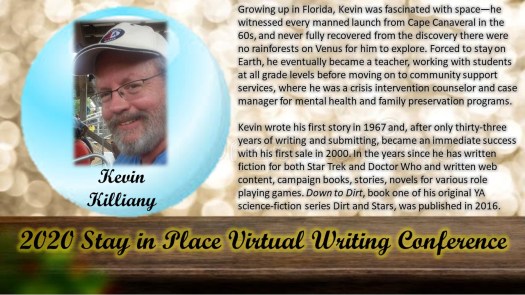
Media tie-in author Kevin Killiany will be a member on the interactive world building, media tie-in, and short fiction panel discussions.

Award winning young adult fantasy author L. Jagi Lamplighter will be on the interactive panel on world building, and moderate the interactive short fiction interactive panel discussion.

Award-winning science fiction author J.R.H. Lawless will be a member of the book marketing interactive panel discussion.

Award winning and New York Times bestselling multi-genre author Jonathan Maberry will be a member on three interactive panel discussions: short fiction, world building and media tie-ins.

Award winning multi-genre author Bobby Nash will deliver a presentation on “The Importance of Promotion”, as well as being a member of both the media tie-in and book promotion panel discussions.

Science fiction and fantasy author Jody Lynn Nye will offer a presentation on using humor in science fiction and fantasy writing, “Bringing the Funny: how to apply humor to your writing” and she will be a member of the world building interactive panel discussion.

Award winning fantasy author Ellie Raine will sit on both the short fiction and world building interactive panel discussions.
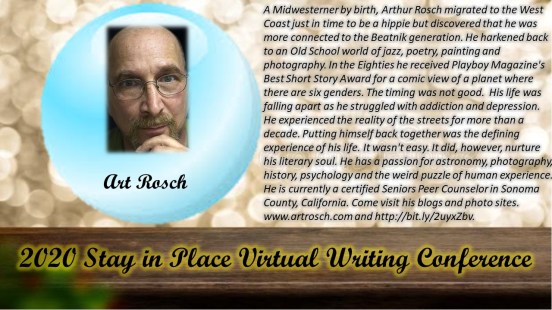
Award winning multi-genre author Art Rosch will offer a presentation on “Creating Villains We Love to Hate”.
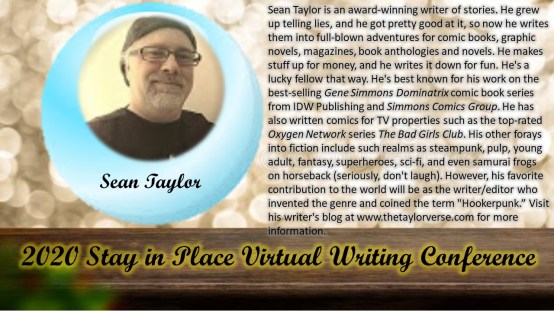
Award winning multi-genre author Sean Taylor will offer a presentation on “Visceral Story Beginnings”.
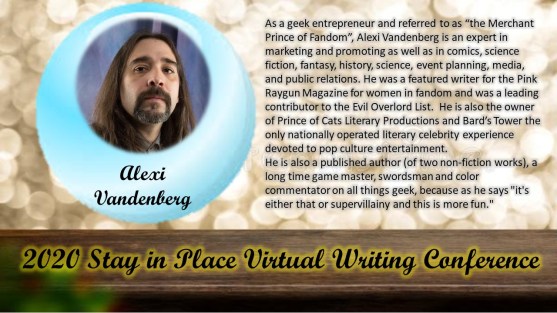
Science fiction author and marketing expert Alexi Vandenberg will be joining the book marketing panel.
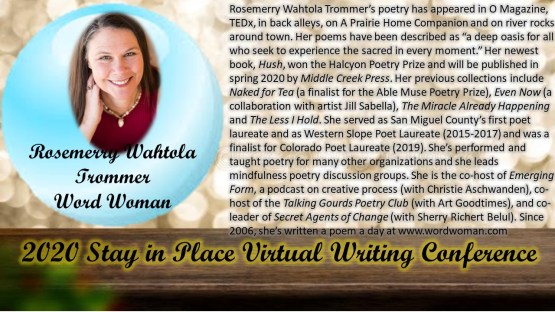
Award winning poet and author Rosemerry Wahtola Trommer offers a livestream presentation “The Gateway to the Unknown: A Poetry Thought Shop”.

Author and educator Rick Wilber will be a member of the short fiction interactive panel discussion.

Award winning and New York Times bestselling science fiction and fantasy author Dave Wolverton/David Farland offers a”Promoting Your Book BIG” and he is a member of the interactive book marketing panel discussion.
You can find a full schedule here. I do hope all of you will join us for this unique writing event. It’s the first of its kind and we could be making history. You can be a part of it, too. Join us.
Like this post? Let me know in the comments. You can be sure not to miss any of Writing to be Read’s great content by subscribe to e-mail or following on WordPress. If you found this content helpful or entertaining, please share.