Review in Practice – The Magic Bakery
Posted: December 6, 2021 Filed under: Book Review, Books, Nonfiction, Review, Writing, Writing Reference | Tags: Book Review, Copyright, Copyright laws, Copyright permissions, Dean Wesley Smith, Publishing, The Magic Bakery, Writing, Writing to be Read 2 Comments
Authors make their livings off of the intellectual property they’ve created, but while they pay lip service to copyright, it’s mostly in the context of protecting their work from plagiarism, and many don’t realize what copyright is, how it is acquired or what it truly means. The Magic Bakery, by Dean Wesley Smith is a must read for anyone who is serious about making a career out of writing. Smith draws from decades of experience in the publishing industry to explain what copyright is and how it can be used to leverage intellectual property (IP) and maximize profits from your creative endeavors.
Smith uses the clever metaphor of a magic bakery, where the pies replenish themselves no matter how many pieces you sell, to emphasize the idea of writing as a business and simplify the explanation of how copyright works, so authors may place proper value on their work. As a seasoned author, who has published both traditionally and independently, Dean Wesley Smith offers a fresh and sensible outlook on the publishing industry and the business of writing.
The Magic Bakery offers a sensible approach to managing intellectual property and copyright for authors. Serious authors will benefit from consuming the delectable ingredients that make up this pie, so pull up a chair and savor a piece. I give it five quills.

Buy Link: https://www.amazon.com/gp/product/B074D7K3ZD
_____________________________________________________________________________________________________
You can be sure not to miss any of Writing to be Read’s great content by subscribing to e-mail or following on WordPress. If you found this content helpful or entertaining, please share.
Share this:

Review: Collateral Damage
Posted: November 22, 2021 Filed under: Book Review, Books, Nonfiction, Review | Tags: Book Review, Collateral Damage, Dorothy Kilgallen, J.F.K., John F. Kennedy assassination, Marilyn Monroe, Mark Shaw, Nonfiction, Writing to be Read 4 Comments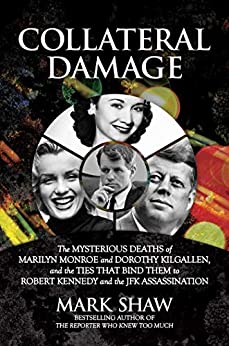
I grew up believing that John F. Kennedy was an upstanding and respectable man, a positive role model for America’s youth. He was assassinated before I was born, but I was the unseen listener to the conversations of the adults in my life, which often made no sense to me at the time. Between the opinions of my mother and my grandparents, and the way in which J.F.K. has always been portrayed in the media, I always thought that the Kennedys were part of the good guys. But after reading Collateral Damage, by Mark Shaw, my view of American history has changed. The evidence laid out by Shaw in this book, laid out through diligent research, paints a picture of a different story.
Not that John F. Kennedy didn’t do good in the office of President of the United States of America. Shaw makes no such claim, but he does tell a very different tale about J.F.K. the man and the rest of the Kennedy family. John F. Kennedy isn’t the main villain in this story, but one of the victims, an inadvertent casualty of one man’s drive for power. His investigative reporting skills have long been hard at work t bring this true life tale into the public eye. It’s a tale of connections and conspiracies, a true life drama of power and greed and the story of those who inadvertently got in the way.
Shaw presents compelling evidence to connect the assassination of John F. Kennedy, with the death of actress Marilyn Monroe and that of journalist and media icon Dorothy Kilgallen in an attempt to give them all the justice they were denied at the time of their deaths and ever after. His research is well-documented and much of the evidence is available for visual examination on his site for those who want to decide for themselves. The connections which Shaw reveals have always been there had anyone cared to seek out the facts, but no one did until Mark Shaw delved into the facts, presenting them a book at a time with each volume presenting more pieces of a puzzle, filling in the whole story gradually, in stages.
The edges of the puzzle were presented in The Reporter Who Knew Too Much, giving us the mysterious facts surrounding Dorothy Kilgallen’s life and death and some of the inside pieces connecting it with the assassination of President John F. Kennedy. In Denial of Justice, Shaw presents more of the facts tying Kilgallen and J.F.K. together, filling in more inner areas of the puzzle, but Collateral Damage presents new evidence delving into the death of Marilyn Monroe, filling in the gaps to complete the picture.
Collateral Damage is a well researched investigation into events which occurred in an era of mob rule and power politics, where corruption ran deep, deeper than I had ever realized. Shaw reveals a tale of intrigue, deceit and murder as he delves into three of the greatest mysteries in history. I give it five quills.
Like this post? Let me know in the comments. You can be sure not to miss any of Writing to be Read’s great content by subscribing to e-mail or following on WordPress. If you found this content helpful or entertaining, please share.
Share this:

Buffalo Bill Cody’s Wild West Show and Images of the Western Frontier
Posted: September 13, 2021 Filed under: Nonfiction, research, Western | Tags: Buffalo Bill Cody's Wild West Show, Dime Novels, Kaye Lynne Booth, Wild West, Writing to be Read Leave a comment
Buffalo Bill Cody’s Wild West Show captured the minds and imaginations of easterners and westerners alike. His show was “the most successful touring show of all times.” (Buffalo Bill’s Wild West Entertainment Holdings), rivaling P.T. Barnum’s Circus at the time (Johns). Many have said that, “Cody did not merely represent the west, but he became the west, in his own mind and in the minds of others.” (Johns) This seems to be true, as his legend lived on in early twentieth century literature. Cody’s exaggerated and theatric portrayals of scenes from the west became the west in the minds of Americans across the nation. They are the images and ideas that “shaped and reflect our history.” (Johns)

The Wild West Show alone could not account for the rapid rise of the mythological west that came to form in the minds of Americans, particularly easterners. The eastern public had “an insatiable appetite…for stories of the west” that was recognized by Cody and author Printiss Ingram who wrote a dime novel series of Buffalo Bill’s adventures in the wild west, and together, they developed a stage version of the already popular Buffalo Bill myth. When Custer was defeated at Little Big Horn, Cody ended his New York Stage performance with the declaration that he would take a scalp in Custer’s honor. Less than a month later, the rumors flew with the claim that Cody had taken the scalp of Yellow Hand to the Fifth Calvary and myth blossomed into legend. (Johns) His performances portrayed scenes of wagon trains crossing the plains, settlers defending their homesteads, buffalo hunts and Indian battles as events of everyday life in the west, creating a romantic image of adventure and excitement for the public. (Buffalo Bill’s Wild West Show and Exhibition) In a west that was rapidly changing, many of Cody’s promotions depicted a west that was already dead for the most part, with most Native Americans having been confined to reservations, the Alamo pushing Mexicans back, and the buffalo were all but gone. (Johns)

Presenting himself as the best representative of the Wild West, Cody’s performances emphasized the belief of the Native Americans as savages already held by many, reinforcing stereotypes of the native tribes. To his credit, Cody did promote the Native American as, “The Former Foe–Present Friend, the American” (Johns) and the Sioux warriors that were members of his cast were given status with places in “his ‘Congress of Rough Riders,’ a contingent that represented the finest horsemen in the world.” (Johns), but his portrayals of the American Indian still emphasized the stereotype of the red savage. His show presented the American Cowboy as the real article, and although Vaqueros, (Mexican cowboys after which the American version was fashioned), were a part of the show, they were portrayed more as un-American cowboy wanna-bes. The image of the independent, savvy, confident American cowboy that Cody portrayed was and still remains an American icon. Pheobe Ann Moses’ portrayal of Annie Oakley likewise created an image of the western woman that was nearly as rugged and independent as the cowboy, although they had to be “fallen women” since expectations of the times would not allow for a respectable lady to live in such a manner.
The program that Cody passed out at his show was more than a program, but a source of information, further establishing Cody’s authority on the west. “The program was also a source of information, providing facts about Indian origins of state names, the latest trends in marksmanship, and historical profiles of great Civil War scouts and frontiersmen.” (Johns) In a west that was rapidly changing, many of Cody’s promotions depicted a west that was already dead for the most part, with most Native Americans having been confined to reservations, the Alamo pushing Mexicans back, and the buffalo were all but gone.
References
Buffalo Bill’s Wild West Entertainment Holdings Inc. 2004. 21 September 2009. http://www.buffalobill.com/BuffaloBill.02.html
Buffalo Bill’s Wild West Show and Exhibition. 21 September 2009. http://www.bgsu.edu/departments/acs/1890s/buffalobill/bbwildwestshow.html
Johns, Joshua. Buffalo Bill’s Wild West Show. 11 November 1995. University of Virginia. 21 September 2009. http://xroads.virginia.edu/~HYPER/HNS/BuffaloBill/home.html
________________________________________________________________________________________________________________
Like this post? Let me know in the comments. You can be sure not to miss any of Writing to be Read’s great content by subscribing to e-mail or following on WordPress. If you found this content helpful or entertaining, please share.
Share this:

Put Off My Sackcloth Essays: A collection telling a story of hope
Posted: May 18, 2021 Filed under: Book Review, Books, essays, Nonfiction | Tags: Annie Dawid, Book Review, essays, Put Off My Sackcloth Essays, Writing to be Read 1 Comment
Put Off My Sackcloth Essays, by Annie Dawid provides open and honest glimpses into the life of a single daughter of a Jewish immigrant, who chooses to settle, eventually, in a small mountain community, where she lives off-grid with her mixed lineage son. Dawid’s essays are a brutally honest portrayal of her journey out of a history of suicidal depression and into motherhood.
The fact that the organization is not chronological, may make it more difficult for readers who are used to following a linear storyline, but her essays intermix recountings from her own life experiences with reflections on her research of the 1978 mass suicides in Jonestown, in a mosaic of small pieces that fit together to create a complete story, out of despair and into hope. These powerful essays are at times heart wrenching, at times evoking a smile, but they all reach out and touch the reader from the depths of the author’s soul.
Amazed by Dawid’s inner strength to battle her own demons, these soul revealing essays outline a journey from a life teetering on the edge of death into one filled with life and love. I give Put Off My Sackcloth Essays five quills.

Kaye Lynne Booth does honest book reviews on Writing to be Read in exchange for ARCs. Have a book you’d like reviewed? Contact Kaye at kayebooth(at)yahoo(dot)com.
Share this:

Mind Fields: My Eating Disorders
Posted: March 5, 2021 Filed under: Exposition, Memoir, Mental Health, Mind Fields, Nonfiction, Reflections | Tags: Arthur Rosch, Eating Disorders, Memoir, Mental Health, Mind Fields, Writing to be Read Leave a comment
The first time I grasped that I was deeply crazy was when I began to eat huge amounts of food. I indulged especially in sweets. If I were to make a pie chart of my life (and refrain from eating it), I’m sure it would show huge chunks of time in the bulimia/anorexia’ zone. The worst of my food disorders followed me through adolescence; years seventeen through twenty two. I was a “student” out in the world, trying to maneuver by being on college campuses.
I had a sneaky way of being anorexic. I deluded myself into thinking that this was a spiritual discipline. Macrobiotics. It would get me high, exalt me spiritually. By eating small portions of brown rice and onions, chickpeas in barley, I was the paragon of yogic discipline. This was who I wanted myself to be. I got skinny. I weighed 125. On top of this I was taking LSD, DMT and smoking weed. I was deep into my purpose, my destiny of becoming a musician of salvation and a figure of reverence. I hope you can hear the self mockery in my tone.
Then I came to a breaking point. After a year of eating a strict Macrobiotic diet I had such a craving for a peanut butter and jelly sandwich that I bought the ingredients and took them back to my hidey hole. “What are you doing?” I asked myself. “This is a self betrayal, this is the opposite of Macrobiotic discipline. You asshole, what a failure you are!” So I ate it. Then I ate something else sweet and gooey. Then I couldn’t stop eating every kind of junk food on the planet. I had been like a coiled spring ready to bounce. Boing!
I was so ashamed of myself. This was 1967, before eating disorders had been invented. I was a pioneer. My bulimia wasn’t the pukey kind. It was the Exercise Freakishly type of bulimia, the one where on alternate days I would purge with sweat and effort, then follow with a day of relentless eating: an entire apple pie, backed up by a half gallon of ice cream. After that came the cookies, and so forth. One day exercising. One day binge eating. Back and forth, one followed the other, for more than a year. It was insane and I knew it. I got so unhealthy that I could pull out hands full of my own hair! I looked for help. I went to the college shrink. I was desperate. He said, “I don’t know what’s happening to you and I can’t help you.”
Ironically, I lost weight. My waist was a twenty nine or thirty. I was not a registered student any more, I had dropped out. I was living in a vacant student’s quarter, avoiding the security guys and bedding down with a pad and sleeping bag. I got money from my dad. I worked as a stable boy at a local horse ranch. I had my drums stashed at the university’s music building in a practice room. I practiced there for hours every day, getting high by all means and experimenting with the limits of my technique. That was the point of not attending classes. I let my dad pay for semesters at Western Reserve and then I would slip down to Antioch College in Yellow Springs from Cleveland and hang out with people who talked to trees. I practiced with relentless vigor, working through the famous “Stick Control” book and listening to Coltrane records.
Wait a minute. I’m conflating two different periods of time. It doesn’t matter. That’s the way memory works. It’s all narrative but sometimes the pages are out of order. I find myself more objective about my life as I get older. My life has been so bizarre that it qualifies as the stuff of novels. That poor guy (that is, myself) didn’t know what lay ahead. He thought that if he took enough acid, did yoga and meditation, ate rice and played the drums then he would launch himself into nirvana. It’s not a bad plan, really. The problem was that I was fractured psychologically, harboring behaviors that would shame me again and again. They would almost kill me.
These were adolescent ordeals, but they were precursors to my future. In 1967 my eighteen year old self dreamed of cosmic unity while the biggest thing that lay ahead of me was heroin addiction. I interrogated my psyche by reading Jung and Freud. After that came years of therapy. I was determined to save myself.
It took a long time, but none of it can be repudiated. I am lucky to be alive and well.
I’m still slightly food disordered. I control, compensate, manage. Mostly I exercise and pray.
______________________________________________________________________________________

Arthur Rosch is a novelist, musician, photographer and poet. His works are funny, memorable and often compelling. One reviewer said “He’s wicked and feisty, but when he gets you by the guts, he never lets go.” Listeners to his music have compared him to Frank Zappa, Tom Waits, Randy Newman or Mose Allison. These comparisons are flattering but deceptive. Rosch is a stylist, a complete original. His material ranges from sly wit to gripping political commentary.
Arthur was born in the heart of Illinois and grew up in the western suburbs of St. Louis. In his teens he discovered his creative potential while hoping to please a girl. Though she left the scene, Arthur’s creativity stayed behind. In his early twenties he moved to San Francisco and took part in the thriving arts scene. His first literary sale was to Playboy Magazine. The piece went on to receive Playboy’s “Best Story of the Year” award. Arthur also has writing credits in Exquisite Corpse, Shutterbug, eDigital, and Cat Fancy Magazine. He has written five novels, a memoir and a large collection of poetry. His autobiographical novel, “Confessions Of An Honest Man” won the Honorable Mention award from Writer’s Digest in 2016.
More of his work can be found at www.artrosh.com
Photos at https://500px.com/p/artsdigiphoto?view=photos
_________________________________________________________________________________________________
Want to be sure not to miss any of Art’s “Mind Fields” segments? Subscribe to Writing to be Read for e-mail notifications whenever new content is posted or follow WtbR on WordPress. If you find it interesting or just entertaining, please share.
Share this:

Introducing non-fiction to children
Posted: July 8, 2020 Filed under: Books, Children's Books, Growing Bookworms, Literacy, Nonfiction | Tags: Children's Books, Growing Bookworms, Literacy, Nonfiction, Writing to be Read 65 Comments
In our modern world, sources of information assail us from every direction. An internet search turns up dozens, and sometimes even hundreds, of links to information on every conceivable topic. Television provides documentaries on historical events, scientific topics and numerous programmes that cover every aspect of nature. A visit to a grocery store exposes children to newspapers and magazines which share articles on a wide variety of political, social and other topics, not to mention the headlines of newspapers that glare at us from street light and other poles as we travel from home to school and other places during our day.
High school learners are provided with numerous texts and sources of additional information on each and every topic they cover in nearly all of their subjects.
The quantities of information available are huge and not all of it is factually accurate. There is a lot of inaccurate and even total fake information out there.
It is, therefore, vital for children to learn to filter text and identify the important facts and information, in other words, to summarise it. It is also important for children to know they should check information to more than one source in order to ensure it is factually accurate.
Providing children with non-fiction books is an excellent way of ensuring they get accurate and reliable information and, if you select good non-fiction books, they are also appealing and exciting for children.
Here are four tips for choosing non-fiction books:
- Books with large clear photographs are attractive to children and help them contextualize the content of the book;
- Look for books that present the facts succinctly and without becoming bogged down in to much unnecessary detail. After reading the content to or with your child, summarise the main message/s about that topic or on a particular page;
- For very young children, ensure that the content is simple and fairly repetitive with only a few new vocabulary items so as not to overwhelm them; and
- Look for books that provide additional information for adults at the back. This is helpful for expanding on a given topic with your child and answering any questions.
A few great ways of encouraging an interest in non-fiction reading by children are as follows:
- When you are doing something that provokes questions like why is the sky blue or why do bees sting, take the time to look up the answer to this question with your child and show them how to use internet sources and books to find the answers to their questions;
- Integrate non-fiction with play. I did this with my children by showing them how to read recipes when we were baking, using ideas from books when building and constructing with lego or blocks and even with marshmallows and reading to them about mountains, hills, lakes and rivers when we were playing in a sandpit or on the beach. We used sand for lots of fun activities like building forts and a pirate island. I used these opportunities to follow up with a non-fiction story about pirates and soldiers. I did the same thing when we visited any places that lent themselves to learning more about a specific topic like mining or farming; and
- Make your own non-fiction materials and demonstrate various learning points. I build a mountain out of paper mache and showed my children how water carries seeds down into the valleys, Michael and I made a sword and a roman helmet out of paper mache and learned about the Roman Empire and we made a sheep out of cardboard and cotton wool and learned how animals help to distribute seeds.


About Robbie Cheadle

Hello, my name is Robbie, short for Roberta. I am an author with seven published children’s picture books in the Sir Chocolate books series for children aged 2 to 9 years old (co-authored with my son, Michael Cheadle), one published middle grade book in the Silly Willy series and one published preteen/young adult fictionalised biography about my mother’s life as a young girl growing up in an English town in Suffolk during World War II called While the Bombs Fell (co-authored with my mother, Elsie Hancy Eaton). All of my children’s book are written under Robbie Cheadle and are published by TSL Publications.
I have recently branched into adult and young adult horror and supernatural writing and, in order to clearly differential my children’s books from my adult writing, I plan to publish these books under Roberta Eaton Cheadle. My first supernatural book published in that name, Through the Nethergate, is now available.
I have participated in a number of anthologies:
- Two short stories in #1 Amazon bestselling anthology, Dark Visions, a collection of horror stories edited by Dan Alatorre;
- Three short stories in Death Among Us, an anthology of murder mystery stories, edited by Stephen Bentley;
- Three short stories in #1 Amazon bestselling anthology, Nightmareland, a collection of horror stories edited by Dan Alatorre; and
- Two short stories in Whispers of the Past, an anthology of paranormal stories, edited by Kaye Lynne Booth.
I also have a book of poetry called Open a new door, with fellow South African poet, Kim Blades.
Find Robbie Cheadle
Blog: https://bakeandwrite.co.za/
Blog: robbiesinspiration.wordpress.com
Goodreads: Robbie Cheadle – Goodreads
Twitter: BakeandWrite
Instagram: Robbie Cheadle – Instagram
Facebook: Sir Chocolate Books
Want to be sure not to miss any of Robbie’s “Growing Bookworms” segments? Subscribe to Writing to be Read for e-mail notifications whenever new content is posted or follow WtbR on WordPress.
Share this:

Second Anglo Boer War propaganda poetry – the Boer side of things
Posted: June 15, 2020 Filed under: Historical Inspiration, Nonfiction, Poetry, Writing | Tags: Boer, Robbie Cheadle, Second Anglo Boer War, South Africa history, Writing to be Read 41 CommentsBackground
For those of you who do not know, a Boer is the Dutch and Afrikaans word for “farmer”.
Britain occupied the Cape in South Africa in 1795, ending the role of the Dutch East India Company in the region. After the British occupation, the infrastructure in the Cape Colony began to change as English replaced Dutch, the British pound sterling replaced the Dutch rix-dollar and a freehold system of landownership gradually replaced the existing Dutch tenant system.
Between 1835 and 1840, the Great Trek took place when approximately 12 000 Boers from the Cape Colony migrated into the South African interior to escape British control and to acquire cheap land.
Over time, the Boers achieved the independence of their two republics, the South African Republic (Transvaal) and the Orange Free State which shared borders with the British controlled Cape Colony.
When Sir Alfred Milner took over as Governor of the Cape Colony and High Commissioner for Southern Africa in May 1897, relations between Britain and the two Boer republics had been strained for some time. The Boers had already successfully defended the annexation of the Transvaal by the British during the first Anglo Boer War. Milner knew that an independent Transvaal stood in the way of Britain’s ambition to control all of Africa from the Cape to Cairo and that, with the discovery of gold in the Transvaal, the balance of power in South Africa had shifted from Cape Town to Johannesburg.
After the discovery of gold in the Transvaal, thousands of British and other gold seekers called Uitlanders, flocked to the Witwatersrand. The Boers considered that the Uitlanders threated the independence of their republic and refused to give them the vote. Milner used the Uitlander issue as a pretext to provoke the Boer government. The two republics declared war on the British Empire on 11 October 1899 and the second Anglo Boer War started.
Propaganda during the war
During the Second Anglo Boer War or South African War, there was a lot of propaganda on both sides. Propaganda is common in a war scenario. It is a significant tool used by government to get men sufficiently wound up against the enemy to shoot them without conscious.
As with all wars, some terrible things occurred during this war. One of the worst developments, in my opinion, were the concentration camps that Lord Kitchener created to incarcerate the families of fighting Boers. Approximately 48 000 people, a lot of whom were children, died in the concentration camps between September 1900 and May 1902.

Emily Hobhouse tells the story of the young Lizzie van Zyl who died in the Bloemfontein concentration camp: She was a frail, weak little child in desperate need of good care. Yet, because her mother was one of the “undesirables” due to the fact that her father neither surrendered nor betrayed his people, Lizzie was placed on the lowest rations and so perished with hunger that, after a month in the camp, she was transferred to the new small hospital. Here she was treated harshly. The English disposed doctor and his nurses did not understand her language and, as she could not speak English, labeled her an idiot although she was mentally fit and normal. One day she dejectedly started calling for her mother, when a Mrs Botha walked over to her to console her. She was just telling the child that she would soon see her mother again, when she was brusquely interrupted by one of the nurses who told her not to interfere with the child as she was a nuisance. Quote from Stemme uit die Verlede (“Voices from the Past”) – a collection of sworn statements by women who were detained in the concentration camps during the Second Boer War (1899-1902).
While I was doing the research for my new novel that tells the stories of three ghosts who all experienced different aspects of this war, I came across the following propaganda poem about the concentration camps.
The refugee camps (so called)
Lord Roberts he boasts that he stands at the head
Of all that is noble, and nice, and wellbred,
So we’ve got to believe it, it’s only his due,
He says so himself – so it’s bound to be true.
If against the “cowardly ignorant Boer”
In a barbarous manner he carries on war,
Why! What does it matter to me or to you,
He says so himself – so it’s bound to be true.
The Boer has deserted his children and wife
For the purpose of leading a pleasanter life
Yes, “Such are those people, unnatural crew!”
Lord Kitchener says – so it’s bound to be true.
If he harries weak women and children tender
It is not to induce the men to surrender,
Oh no! that’s a thing he never would do,
He says so himself – so it’s bound to be true.
If the women and orphans he drags away
In his pest-smitten camps are willing to stay
Let no one assert he the Innocents slew,
He says so himself – so it’s bound to be true.
If by thousands they die of disease and starvation
In those sweet health-resorts they call “concentration”
No matter! Those people deserved it too,
He says so himself – so it’s bound to be true.
Lord Kitchener persecutes woman and child
Because he was always exceedingly mild
And the more they objected the kinder he grew
He says so himself – so it’s bound to be true.
Oh! He is so gentle, the Mahdi’s head
He cut that off when his foe was dead;
In uncivilized warfare, that’s nothing new
He says so himself – so it’s bound to be true.
The wife gets a pass and may go away
To bring in the man; but the child must stay;
This, of course, Lord Kitchener never knew,
He says so himself – so it’s bound to be true.
But Thanks to our wives, for they do not care
Whatever the hardships they have to bear,
They willingly suffer their woeful plight
If their husbands stand firm for God and the right.
By her noble example the Burgher’s wife
Still gives him strength to continue the strife
And she cheers him on with all her might
To stand up firmly for God and the right.
O Africander! Be staunch and true
For that’s what your wife is expecting from you
You will help her to make the burden light
By standing firm for God and the right.
This poem is published in The War Reporter The Anglo-Boer War Through the eyes of the Burghers by J.E.H. Grobler
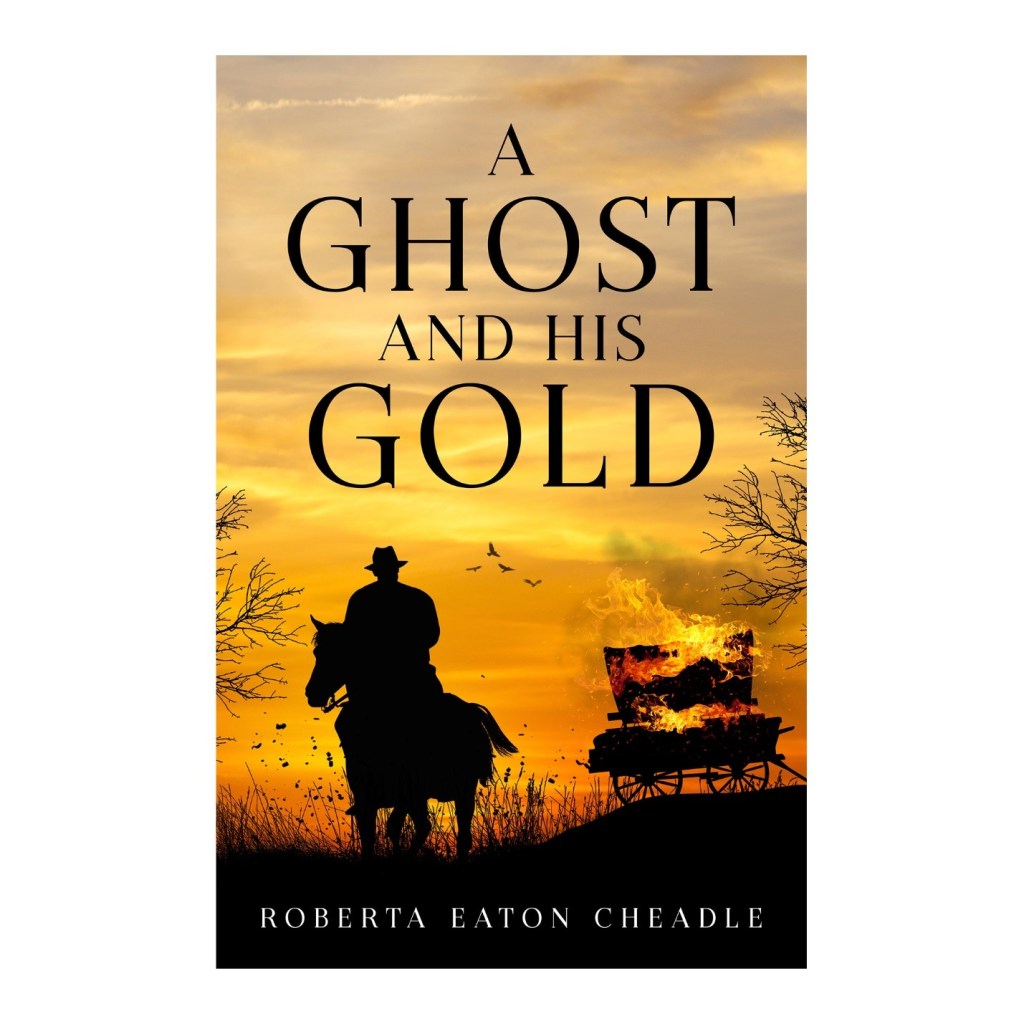
A Ghost and His Gold by Roberta Eaton Cheadle – Cover reveal
About Roberta Eaton Cheadle
I am an author who has recently branched into adult horror and supernatural writing and, in order to clearly differential my children’s books from my young adult and adult writing, these will be published under the name Roberta Eaton Cheadle. My first young adult supernatural novel, Through the Nethergate, has recently been published.
I also have two short paranormal stories in Whispers of the Past, a paranormal anthology edited by Kaye Lynne Booth.

Like this post? Let me know in the comments. You can be sure not to miss any of Writing to be Read’s great content by subscribe to e-mail or following on WordPress. If you found this content helpful or entertaining, please share.
Share this:

Hot Off the Press! “Ask the Authors” is now available!
Posted: June 8, 2020 Filed under: Ask the Authors, Books, Collaboration, Craft and Practice, Nonfiction, Writing, Writing Inspiration, Writing Life, Writing Process, Writing Reference, Writing Tips | Tags: Ask the Authors Anthology, WordCrafter Press, writing advice, Writing Reference, Writing Tips, Writing to be Read 5 Comments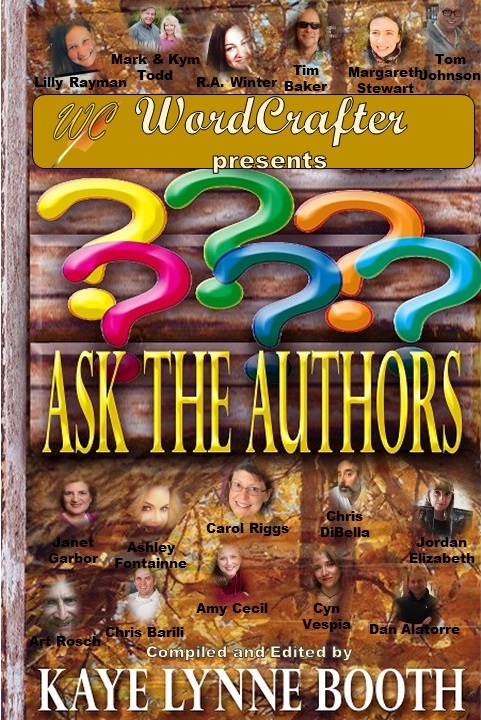
It has been two years in the making, but I’m pleased to announce that the WordCrafter Q&A anthology, Ask the Authors, has finally been released. This anthology has its origins right here on Writing to be Read back in 2018, when I ran a twelve week blog series of the same name. I compiled those interviews to create a valuable author’s reference, with writing tips and advice from seventeen different authors on all areas of writing, craft and promotion.
Contributing authors on this project include Dan Alatorre, Tim Baker, Chris Barili, Amy Cecil, Chris DiBella, Jordan Elizabeth, Ashley Fontainne, Janet Garber, Tom Johnson, Lilly Rayman, Carol Riggs, Art Rosch, Margareth Stewart, Mark and Kym Todd, Cynthia Vespia, and R.A. Winter. Single and multi-genre authors combined, write fiction for both Y.A. and adult readers, in a multitude of genres: medical thriller, science fiction, commercial fiction, action/adventure, crime fiction, weird western, romance, steampunk, fantasy, paranormal fiction, murder mystery, thrillers, speculative fiction, pulp fiction, literary fiction, humor, nonfiction, dark fantasy, and western. Subject matter includes all aspects of writing from process and inspiration, to craft and practice, to publishing, to marketing and book promotions. This is one writing reference no author should be without.
Get your copy today!: https://books2read.com/u/mdzvwO
Like this post? Let me know in the comments. You can be sure not to miss any of Writing to be Read’s great content by subscribe to e-mail or following on WordPress. If you found this content helpful or entertaining, please share.
Share this:

“The Encyclopedia of American Animated Television Shows”: Everything you always wanted to know about the history of animation.
Posted: May 1, 2020 Filed under: Animation, Book Review, Books, Classics, Comic Hero, Nonfiction, Super Hero | Tags: Animated Series, Book Review, Cartoons, David Perlmutter, Saturday morning cartoons, Super Heroes, The Encyclopedia of American Animated Television Series, Writing to be Read Leave a comment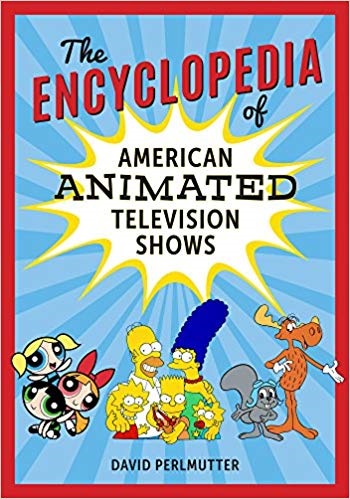
If you are a cartoon buff or just miss Saturday morning cartoons, The Encyclopedia of American Animated Television Shows, by David Perlmutter could prove to be a valuable resource. Who created them? When did they air? Who produced them? Who played the character voice? Summaries of many of these programs are included.
This book has animated series from Abbott and Costello to Zorro. Opening the pages of this book made me feel like Saturday morning cartoons all over again. I found the histories of all of my favorite animated series within its pages; Scooby-Doo, Where Are You?; Casper the Friendly Ghost; The Jetsons; Fat Albert and the Cosby Kids; Bugs Bunny; The Flintstones; and The Smurfs. It even features School House Rock.
There is sure to be something for fans big and small, and they aren’t all from out of the distant past. Younger generations still harboring that inner child may place higher value on more recent animated series, including American Dad; King of the Hill; Southpark; The Simpsons; and Beavis and Butthead.
Of course, it features all of the super heroes from both Marvel and D.C. Comics, from Flash Gordan; Teen Titans; Spider-Man; Superman; Batman and Robin; Wolverine and the X-Men; The Fantastic Four; and even Mighty Mouse and Underdog. Although, none of them have series named for them because they are the bad guys, all our favorite super villains are in there, too.
The Encyclopedia of American Animated Television Series is an invaluable resource if comics are your thing, providing an overview which illustrates how animated series and literature hold a valuable place in the evolution of American entertainment outlets. Filled with a plethora of information on the evolution of animation and comic characters. I give it five quills.

Kaye Lynne Booth does honest book reviews on Writing to be Read in exchange for ARCs. Have a book you’d like reviewed? Contact Kaye at kayebooth(at)yahoo(dot)com.
Share this:

WordCrafter Update: Stay in Place Virtual Writing Conference & Short Fiction Contest Submission Deadline Approaching
Posted: April 27, 2020 Filed under: Ask the Authors, Books, Fiction, Nonfiction, Paranormal, Promotion, Stories, WordCrafter, WordCrafter Press, Writing, Writing Contest, Writing Event, Writing Reference | Tags: 2020 Stay in Place Virtual Writing Conference, 2020 WordCrafter Short Fiction Contest, Ask the Authors Anthology, Whispers of the Past, WordCrafter, WordCrafter Press, Writing Events, Writing to be Read 3 Comments
WordCrafter
April has been a busy month for WordCrafter. The 2020 Stay in Place Virtual Writing Conference is tomorrow, April 28th. Wow! Even during all this Stay at Home stuff, time has just flown by. I can’t believe the day has already arrived. I hope everyone will join us. If you didn’t recieve an invite you can click on the link above to sign up, (just click on ‘Going’.) That gets you into the free Facebook event portion of the conference, where there will be a video or live stream presentation every hour, as well as author takeovers where you can meet some talented authors and converse via the comment section.
But that’s not all. You can also click on ‘Find Tickets’ to gain access to the interactive portion of the conference on Zoom. (Please do this ahead of time, so I have time to get the access information to you.) This portion of the conference will feature interactive workshops and panel discussions that you won’t want to miss, including the Keynote with Kevin J. Anderson. Each individual session is $5 or you can get an ‘All Events Pass’ and attend all of the sessions for $50. I know many of us don’t have an abundance of money right now, so I tried to keep this affordable.

WordCrafter’s 2020 Virtual Writing Conference
We have 22 presenters, (you can learn more about our talented presenters here), offering presentations, workshops and panel discussions.
- Opening Introductions
- “The Gateway to the Unknown: Poetry Thought Shop” with Rosemerry Wahtola Trommer – 9:10 am
- “The Art & Craft of Writing” workshop with L. Jagi Lamplighter – 10 am
- “Promoting Your Book BIG” with Dave Wolverton – 10:10 am
- Short Fiction Panel: Lamplighter; Raine; Maberry; DeMarco; Wilber; Killiany-11 am
- “The Power of Motivation: What your characters do and why” with Mario Acevedo – 11:10 am
- “Visceral Story Beginnings” workshop with Sean Taylor – 12 pm
- “Story Ideas and the Choices You Make” with Jason Henderson – 12:10 pm
- World Building Panel: Lamplighter; Raine; Maberry; De Marco; Killiany – 1 pm
- “Working with Other People: How to direct others successfully” with Anthony Dobranski – 1:10 pm
- “Writing Across Genres” workshop with Chris Barili – 2 pm
- “Creating Villains We Love To Hate” with Art Rosch – 2:10 pm
- Keynote – “The Popcorn Theory of Success” by Kevin J. Anderson – 3 pm
- “How to Swim Upstream: When you’re not mainstream in your market/genre” with Anthony Dobranski – 3:10 pm
- The Ins & Outs of Writing Media Tie-Ins Panel: DeCandido; Maberry; Nash; Killiany – 4 pm
- “Short Fiction” with L.D. Colter – 4:10 pm
- Book Marketing Panel: Nash; Henderson; Wolverton; Alatorre – 5 pm
- “Writing in the Face of Adversity” with Chris Barili – 5:10 pm
- “The Savage Horror of Back Cover Copy” workshop with Anthony Dobranski – 6 pm
- “The Importance of Promotion” with Bobby Nash – 6:10 pm
- “Business Class Tarot” workshop with Anthony Dobranski – 7 pm
- “The Business of Writing” with Keith R.A. DeCandido – 7:10 p.m.
- “Bringing the Funny: How to Apply Humor in Your Writing” workshop with Jody Lynn Nye – 8 pm
- Closing Ceremonies

While things have been busy in preparation for the conference, I don’t want anyone to forget the fast approaching deadline for the “WordCrafter 2020 Short Fiction Contest”, on April 30th. (See Full Submission Guidelines).There’s still time to submit your story, so put on the finishing touches and polish it up. I’m dying to read your entry!
The great news is that Ask the Authors is finished and finally being released. It’s been a long haul and it was quite a project, but the result is a quality author’s reference no author should be without.
Buy Link: https://books2read.com/u/mdzvwO
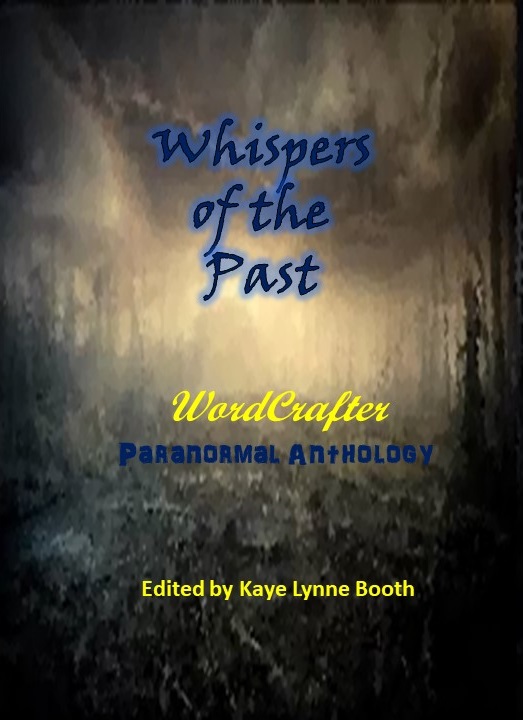
Last, but not least, Whispers of the Past is on sale for .99 cents starting tomorrow, April 28th, 2020 through Thursday, April 30th at all outlets.
Buy Link: https://books2read.com/u/38EGEL
Like this post? Let me know in the comments. You can be sure not to miss any of Writing to be Read’s great content by subscribe to e-mail or following on WordPress. If you found this content helpful or entertaining, please share.




















