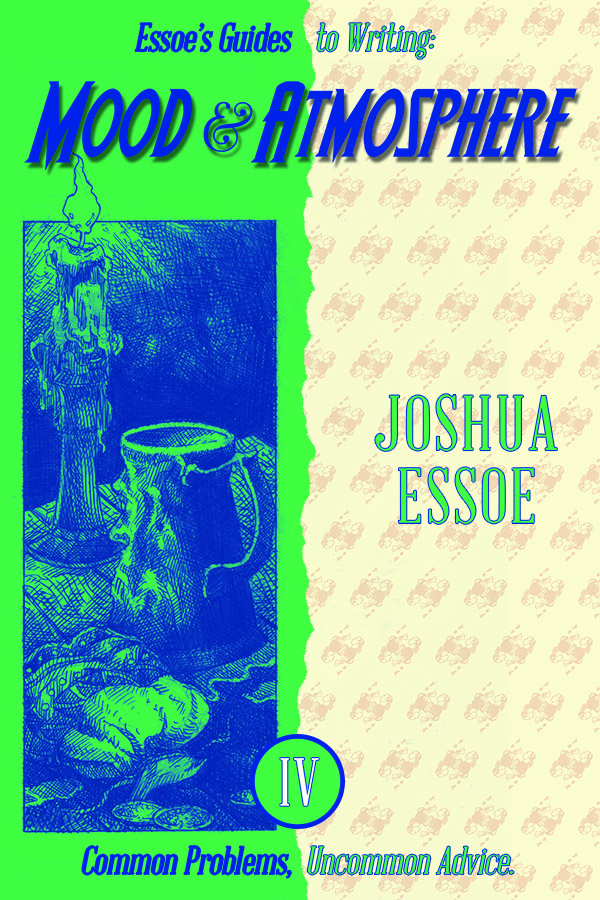
Review in Practice: “Essoe’s Guides to Writing: Mood & Atmosphere”
Posted: March 24, 2025 Filed under: Book Review, Books, Nonfiction, Review in Practice, Writing, Writing Resource | Tags: Essoe's Writing Guides: Mood & Atmosphere, Joshua Essoe, Kaye Lynne Booth, Review in Practice, Writing Reference, Writing to be Read 3 CommentsI was received a digital copy of this writing reference as a part of the 2024 Novel Writing Story Bundle currated by Kevin J. Anderson, which also featured my writing reference, The D.I.Y. Author.
I recently started writing one of three stories that have been bouncing around in my head for the Curses themed anthology, which WordCrafter Press will put out in September of 2025, and I feel mood and atmosphere will be extremely important in telling the stories for this collection that I want to tell. The one I just started has a working title of “The Curse of the Death Clock” begins in France during the reign of Napoleon Bonaparte and the right atmosphere for the setting is going to be a challenge.
I read Essoe’s Guides to Writing: Mood & Atmosphere with the writing of the Curses stories in mind and I’ll be keeping them in the forefront of my mind as I write this first story. To try and set the right mood and atmosphere for these Curses stories, I’ve implemented the exercise in Chapter 3 and started a word list which aligns with the mood I’m going for, which is slight unease and a feeling of doom. As with all the tools in my writing tool box, I’ll keep all my new tools on hand as I write the other two stories.
However, as I read, I found suggestions that can be use to improve mood and atmosphere in by taking another look at my sentence structure and word choices, as well as my pacing, in my latest WIP, The Rock Star & The Outlaw 2: Seeing Doubles, which I just got back from my beta reader and I’m preparing to do a final edit. I’m using another exercise from Chapter 3 to help nail the pacing for this story, which is very fast, with lots of action, making a list of keywords from a story which evoked a strong emotional reaction, which I’m aiming for in my own tale. The book I’ve chosen is Velocity, by Dean Koontz. The man is a master of suspense and knows how to keep the pages turning. I’ll also be taking another look at the conflicts in this story for parallels and counterpoints to the main conflict. Essoe includes many useful writing exercises to illustrate his points and can be used with WIPs, to improve on current projects.
I found useful exercises in chapter four on setting and atmosphere which I plan to utilize with yet another story, an out and out horror for Midnight Oil. Robbie is helping me with the research on this one, since it involves zombie elephants. Because of the subject area, the setting will be one that I am unable to visit and experience for myself. Robbie’s expertise will be a great help in this area, but I’m going to have to work to achieve the right atmosphere, and “The Shorthand” exercise will be useful. I’ll be taking note of possible points of interest and the emotional impact it has on my characters when describing the South African savannah setting. Most of my characters move my stories forward through action and dialog, but I think in this story, their internal reactions will be particularly important.
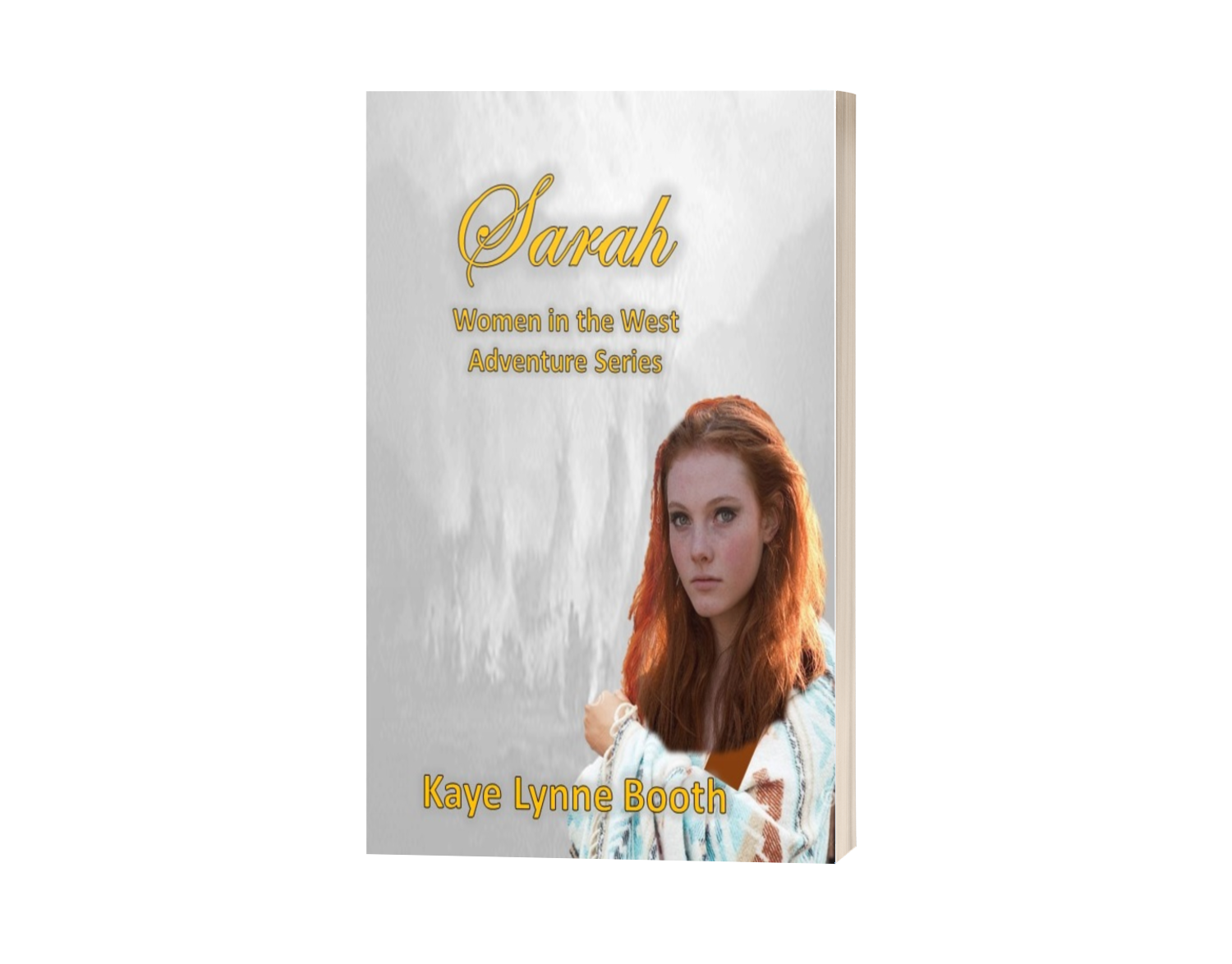
I’m picking and choosing the pieces that I feel I need to work on in the stories I’m working on for 2025, but Essoe gives us a list of eight tools which make up mood and atmosphere, and suggests that we should use at least five of them in every story we write to develop a strong, purposeful mood. In The Rock Star & The Outlaw 2: Seeing Doubles, I think I have a few already in place, so I’ll be working on those I may be missing. With the Curses and Midnight Oil stories, I’ll be implementing these tools from the start. The other story I have planned for 2025 is the third book in my Women in the West adventure series, Marta, and while I’ve begun an outline for that novel, it requires such a completely different mood that I think I’ll hone my skills with the other stories first, but I know I’ll be referring back to Essoe’s Writing Guides: Mood & Atmosphere when the time comes to get that one on the page.
About Essoe’s Guides to Writing: Mood & Atmosphere
Mood and Atmosphere defines and delves into the 8 primary tools used to create the emotional framework of your story–its emotionality–by breaking them down into easy-access chapters on:
- Plot and structure blueprinting your intended emotionality
- Pacing that steers your story line-by-line and chapter-by-chapter
- Language and word choice guiding your story in the most direct relationship with readers
- Setting developing an atmosphere that will make readers experience your world
- Character expression creating powerful moods that will make readers feel their traumas and triumphs
- Conflict controlling the ebb and flow of your emotionality throughout your story
- Theme acting as the conductor, setting your emotionality to a purpose
- Reader expectation and what promises you must keep or can use to throw in twists
Purchase Link: https://www.joshuaessoe.com/product-page/mood-and-atmosphere-e-book-1
About Kaye Lynne Booth

For Kaye Lynne Booth, writing is a passion. Kaye Lynne is an author with published short fiction and poetry, both online and in print, including her short story collection, Last Call and Other Short Fiction; and her paranormal mystery novella, Hidden Secrets; Books 1 & 2 of her Women in the West adventure series, Delilah and Sarah, and her Time-Travel Adventure novel, The Rock Star & The Outlaw, her the first three books in her kid’s book series, My Backyard Friends, her poetry collection, Small Wonders, and her writer’s resource, The D.I.Y. Author. Kaye holds a dual M.F.A. degree in Creative Writing with emphasis in genre fiction and screenwriting, and an M.A. in publishing. Kaye Lynne is the founder of WordCrafter Quality Writing & Author Services and WordCrafter Press. She also maintains an authors’ blog and website, Writing to be Read, where she publishes content of interest in the literary world.
____________________________________
Did you know you can sponsor your favorite blog series or even a single post with an advertisement for your book? Stop by the WtbR Sponsor Page and let me advertise your book, or you can make a donation to Writing to be Read for as little as a cup of coffee, If you’d like to show your support for this author and WordCrafter Press.
____________________________________
This segment of “Review in Practice” is sponsored by the Women in the West Adventure Series and WordCrafter Press.

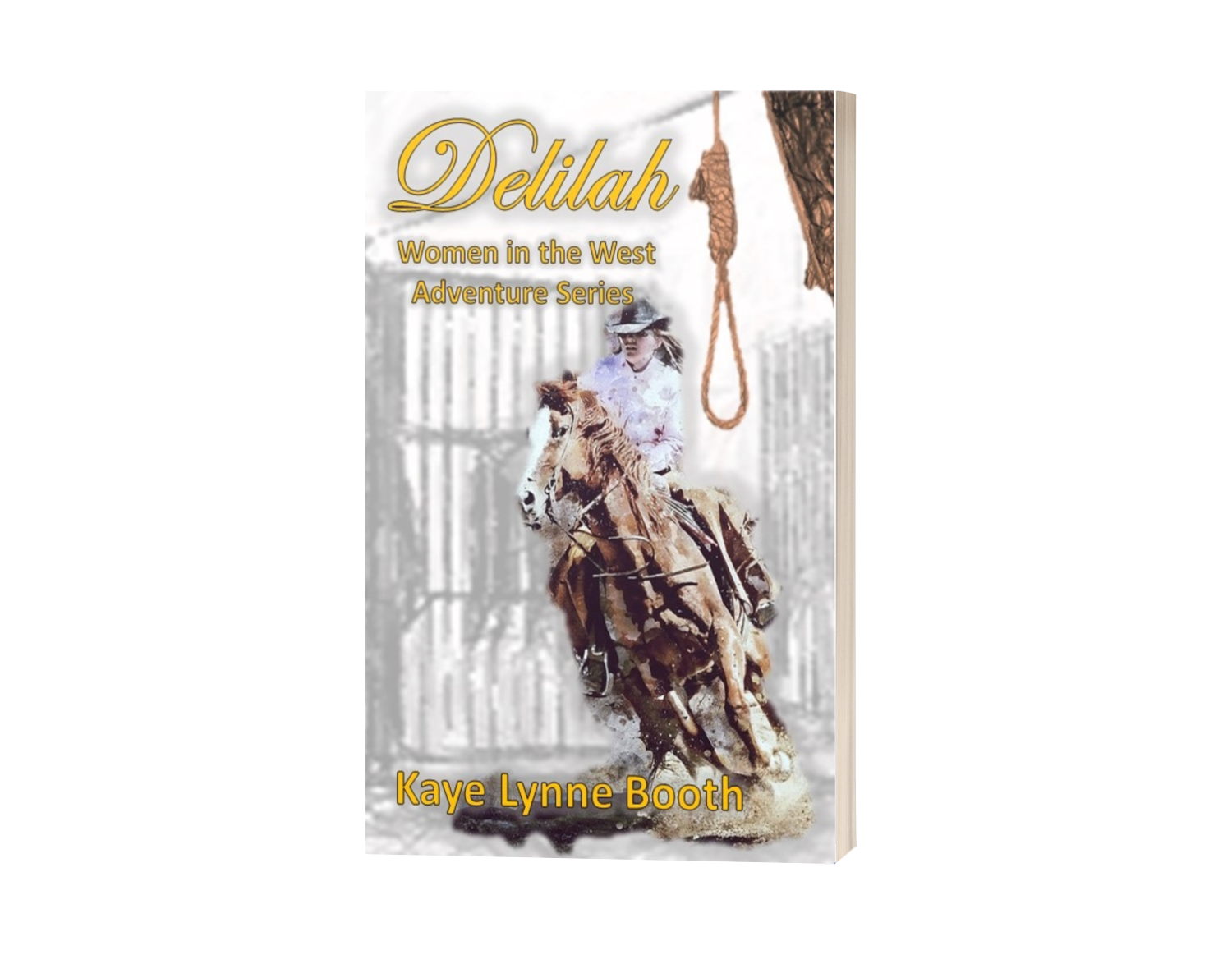
Historical Women’s Fiction
Get Your Copy Today!
Delilah: https://books2read.com/DelilahWiW1
Sarah: https://books2read.com/Sarah-Women-in-the-West
Marta: Coming in 2025
Share this:

Review in Practice: “Falling to Fly”
Posted: January 13, 2025 Filed under: Books, Nonfiction, Review in Practice, Writing, Writing Business, Writing Reference | Tags: Falling to Fly, Kaye Lynne Booth, Review in Practice, Todd Fahnestock, Writing Resource, Writing to be Read 5 CommentsI received a copy of Falling to Fly, by Todd Fahnestock in the 2024 Novel Writing Story Bundle, and it was so fortunate that I did. This book is a must read for all struggling authors who have fallen more than once, and brushed themselves off to continue forward in pursuit of their writing dream.
This book is essentially the story of the author’s writing journeyThere were so many things that Fahnestock talks about that I could relate to. He talks about the failure of academia to validate genre fiction as legitimate literature. I was fortunate enough to stumble onto Western State Colorado University, where there M.F.A. program deals directly with genre fiction, but it is a rare program. Fahnestock did not let educators rigid viewpoints deter him, but instead rejected the idea of letting educators shape his writing career.
I also related to his “Say Yes to Everything” policy of not letting any writing opportunity which presents itself pass you by. That is what led him to in-person selling at Cons, and sent him on the path to success in his writing journey. Although I have been fortunate to attend a few writing conferences, the only time I had a booth was at the beginning of my own writing journey, before I had any books to sell. If you follow me, you may know that I sold poems on pretty backgrounds at that conference, and was surprised to earn $100 doing it. While that first conference experience didn’t send me soaring up the ladder of success, it did prove that the possiblilities are there when it comes to direct selling. Fahnestock’s experiences just reinforced this for me, reminding me that I’m not going find my success from behind my laptop.
There are two parts to writing as a business, and in order to be successful as an author, you must school yourself in both craft, and in publishing and marketing, which make up the business part. When I graduated with my M.F.A., I was ready to write and create story, and they primed me to enter the world of traditional publishing, which at that point in time, 2016, was the way it was done. But, I was in my forties, and I didn’t feel like I had time to wait years for someone in the traditional publishing to notice how awesome my stories were. They hadn’t prepared me to delve into the world of independent publishing, which at that time, still left a bad taste in most author’s mouths and held stigma in reader’s minds, well. Like Fahnestock, I stumbled through the plethora of information, and misinformation that flooded the Internet, and muddled my way through the independent publishing arena. Unlike, Fahnestock, I didn’t find the answers I was looking for, and I turned back to academia to learn the necessary skills to navigate the independent publishing community.
The author talks about his attempt at the rapid release marketing strategy, and why it didn’t work for him. He surmised that he was only able to keep the hype going for a short period of four months, and that if he could find a way to keep it going year round, he would have seen better success from his efforts. Then, he went out and found a way to do just that, by collaborating on an epic fantasy series with other fantasy authors. I employ a similar strategy by publishing in volume, releasing 5 – 8 books per year, but they aren’t in a series.
I found this book at a serendiptous time in my life, when I’m trying to pull myself up from a period of failures and obstacles over the past two years, and Fahnestock reminds me that I must keep working to achieve my Dream. He reminds me that sometimes it’s necessary to fall in order to fly.
About Falling to Fly

Dreamer. Wannabe. Overnight success. Catastrophic failure. Writer.
Glimpse the gritty, behind-the-scenes struggles of author Todd Fahnestock as he reveals his dreams, trials, and adventures through the creative swamps of writing and the hard-edged world of publishing.
Fahnestock dodges junior high bullies armed with needles taped to Bic pens, cracks into traditional publishing by hitchhiking to the middle of nowhere to meet writing legend Gary Paulsen, and nearly falls to his death hanging cables inside an oil tanker. All to follow the author’s dream.
Submerged in the treacherous, ever-changing ocean of art and business, Fahnestock paints an unforgettable portrait with honesty and touching vulnerability.
Purchase Link: https://www.amazon.com/Falling-Fly-Before-Writing-Dreams-ebook/dp/B0D3KP376H
_____________________________
About Kaye Lynne Booth
For Kaye Lynne Booth, writing is a passion. Kaye Lynne is an author with published short fiction and poetry, both online and in print, including her short story collection, Last Call and Other Short Fiction; and her paranormal mystery novella, Hidden Secrets; Books 1 & 2 of her Women in the West adventure series, Delilah and Sarah, and her Time-Travel Adventure novel, The Rock Star & The Outlaw,as well as her poetry collection, Small Wonders and The D.I.Y. Author writing resource. Kaye holds a dual M.F.A. degree in Creative Writing with emphasis in genre fiction and screenwriting, and an M.A. in publishing. Kaye Lynne is the founder of WordCrafter Quality Writing & Author Services and WordCrafter Press. She also maintains an authors’ blog and website, Writing to be Read, where she publishes content of interest in the literary world.

__________________________________
Did you know you can sponsor your favorite blog series or even a single post with an advertisement for your book? Stop by the WtbR Sponsor Page and let me advertise your book, or you can make a donation to Writing to be Read for as little as a cup of coffee, If you’d like to show your support for this author and WordCrafter Press.
___________________________________
This segment of “Review in Practice” with Kaye Lynne Booth is sponsored by The Women in the West Adventure Series and WordCrafter Press.

Historical Women’s Fiction
Get Your Copy Today!
Delilah: https://books2read.com/DelilahWiW1
Sarah: https://books2read.com/Sarah-Women-in-the-West
Marta: Coming in 2025
Share this:

WordCrafter News: NaNoWriMo Update, the 2024 Novel Writing Bundle & Planning for the Coming Year
Posted: November 25, 2024 Filed under: Blog Sponsors, Book Promotion, Book Release, Book Sales, Fiction, NaNoWriMo, NaNoWriMo, Nonfiction, Publishing, Robbie Reads and Cooks, Story Bundle, WordCrafter News, WordCrafter Press, Writing, Writing Challenge, writing craft, Writing to be Read | Tags: 2024 Novel Writing Story Bundle, Midnight Oil, NaNoWriMo, Poetry Treasures 5: Simple Pleasures, Read and Cook, Robbie Cheadle, Story Bundle, WordCrafter News, WordCrafter Press, Writing to be Read 4 Comments
2024 NaNoWriMo
I crossed the 10,000 word mark on November 5, well ahead of schedule. What a great feeling. And I only missed making the daily word count goal once. Unfortunately, life got in my way, as it usually does. This time, it was a huge snowstorm that dumped about 42″ of snow on my front steps. The snow made even the daily chores more difficult, and then there was all that snow to shovel! But even with moving all that snow I managed to make the word count on most days. That is until it all caught up with me and at the end of the day, I was so tired I couldn’t think straight, and then, my word count started to fall.
I have managed to at least write something to log into the updates daily, and I’m sitting at around 34,500 words to date. That means I just have a little over 15,000 words to reach my goal and six days to do it in. I think I can do it. What do you think? Wish me luck. 😉
2024 Novel Writing Story Bundle
There’s still time to get in on the 2024 Novel Writing Story Bundle, but grab it while you can. It only runs through the end of November. After December 1st, it will no longer be available.

This year’s Writing Tools StoryBundle, curated by bestselling author and publisher Kevin J. Anderson, is another treasure chest of vital handbooks covering aspects of the writer’s craft, business, and way of life. We have thirteen titles on a range of subjects, plus a 12-month subscription to Indie Author Magazine, your best source to stay up-to-date on the industry.
On writing craft, there’s The Illustrated Super Secrets of Writing, Vol. 1—Wulf Moon’s award-winning system on how to write stories and does so with creativity, fun, and humor. Tara Grace Ericson presents Romance Character Tropes—far more than your average trope list; this is an encyclopedia packed with info to help you use and leverage each trope successfully.
Freelance editor Joshua Essoe teaches about Mood and Atmosphere in his series of special-edition writing guides, each examining the most-common issues he encounters from writers he works with. Word by Word by award-winning author Kerrie Flanagan, shows you how to unlock your creativity and transform your writing. This is an essential guide for writers that offers inspiration, genre-specific strategies, and practical tips.
Jana S. Brown gives you Steps to Self-Editing. You’ve finished your novel! Now learn the self-editing steps to smooth off the rough edges and really make it shine!
And in the new revised edition of On Being a Dictator: Revised Edition, by Kevin J. Anderson, Martin Shoemaker, and Greg Vose—available exclusively in this StoryBundle,—you’ll learn how to use dictation to increase your productivity. One of the foundational books on a popular writing method, On Being a Dictator will help you think outside the box and up your game in the fast-paced ever-changing world of publishing.
Now, on to the writing business. Dollar by Dollar by Kerrie Flanagan is a comprehensive guide packed with proven strategies to help writers boost book sales, increase income from writing, and succeed in both traditional and self-publishing. Mark Leslie’s Author’s Guide to Branding for Success shows you how to make your Author Brand into one of your best long-term Intellectual Property assets!
Matty Dalrymple and Michael La Ronn provide guidance and inspiration to share your message with the world from the stage in Page to Platform: How to Succeed as an Author Speaker.
And Booking the Libraries by Jessica Brawner is tailored for authors, speakers, storytellers, musicians, puppeteers, and all living-wage entertainers. This guide is your key to unlocking fresh markets, cultivating a dedicated fanbase, and revolutionizing your livelihood.
And finally, on the writing life, these titles will help you stay inspired and remain strong as a creative.
The D.I.Y. Author by Kaye Lynne Booth shows you the ropes in the business of being an author.
Wit and Wisdom by Craig Martelle—exclusive first release in this StoryBundle—is chock full of quips and snippets to help authors stay focused on the right things to accelerate their business.
And Falling to Fly by Todd Fahnestock is a deeply personal exploration into the creative process and the publishing industry. This is truly the book to read before you give up on your writing dreams.
In addition in this StoryBundle, you will receive full year’s subscription to Indie Author Magazine, your go-to resource for news, tips, and advice on self-publishing. Stay up-to-date on the latest trends in the industry.
A note on the designated charity for this StoryBundle, the Neil Peart Brain Cancer Research Fund from Cedars Sinai. In 2020 we lost Neil Peart, legendary drummer and lyricist for the rock band Rush, to glioblastoma. He was my mentor, friend, and collaborator on numerous books, and his loss affected me deeply. Neil’s friends and colleagues and fans worldwide have contributed to this glioblastoma research fund in Neil’s name, and we are proud to add our efforts on this Writing Tools StoryBundle as well. – Kevin J. Anderson
* * *
For StoryBundle, you decide what price you want to pay. For $5 (or more, if you’re feeling generous), you’ll get the basic bundle of four books in .epub format—WORLDWIDE.
- Romance Character Tropes by Tara Grace Ericson and Jessica Barber
- Dollar by Dollar by Kerrie Flanagan
- Essoe’s Guides to Writing: Mood and Atmosphere by Joshua Essoe
- Booking the Library by Jessica Brawner
If you pay at least the bonus price of just $20, you get all four of the regular books, plus 9 more books, for a total of 13 (with 5 StoryBundle Exclusives), plus a year’s subscription to Indie Author Magazine!
- Super Secrets: Illustrated by Wulf Moon
- Falling to Fly by Todd Fahnestock
- From Page to Platform: How to Succeed as an Author Speaker by Matty Dalrymple and Michael La Ronn
- A Writer’s Guide to Branding for Success by Mark Leslie Lefebvre (StoryBundle Exclusive)
- On Being a Dictator by Kevin J. Anderson (StoryBundle Exclusive)
- Word by Word by Kerrie Flanagan
- The D.I.Y. Author by Kaye Lynne Booth
- Steps to Self-Editing by Jana S. Brown
- Wit and Wisdom by Craig Martelle (StoryBundle Exclusive)
- Indie Author Magazine: One Year Subscription by Indie Author Magazine
This bundle is available only for a limited time via http://www.storybundle.com. It allows easy reading on computers, smartphones, and tablets as well as Kindle and other ereaders via file transfer, email, and other methods. You get a DRM-free .epub for all books!
It’s also super easy to give the gift of reading with StoryBundle, thanks to our gift cards – which allow you to send someone a code that they can redeem for any future StoryBundle bundle – and timed delivery, which allows you to control exactly when your recipient will get the gift of StoryBundle.
Find out how you can get your book into a Story Bundle of even how you can curate your own on “Writer’s Corner” in my interview with Story Bundle founder, Jason Chen.
Planning for 2025
Story Bundles: Let’s Sell Some Books
I’m planning to currate a few Story Bundles of my own next year. I’m looking for authors with books in the women’s fiction, dark fiction, science fiction/fantasy, or paranormal genres. I already have a few authors interested from the paranormal genre. So, if you have a book in the above mentioned genres, I want to hear from you.Mention it in the comments or drop me a line at KLBWordCrafter@gmail.com and let’s see if your book would be a good fit.
2025 WordCrafter Press Releases
With NaNoWriMo, I’ve got a good start on the second book in my Time-Travel Adventure Series, and I’ll be working hard to complete it throughout the months of December and January, with a hopeful March release. Of course, Book 3 in the Women in the West Adventure Series, Marta is also planned for release in 2025, and a short fiction collection of my own, titled “Little Ditties” to be released in time for Christmas.
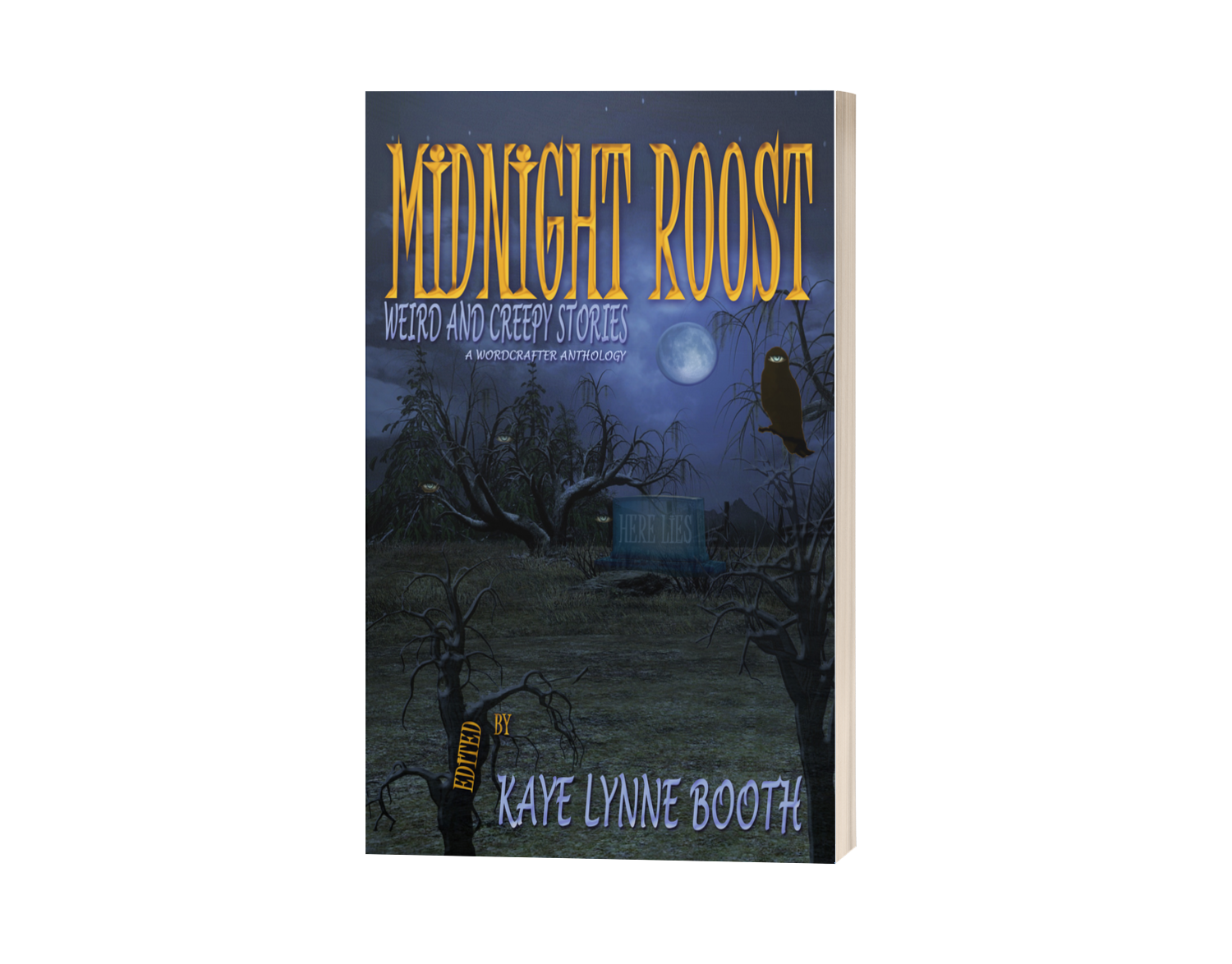
With the creation of the Midnight Anthology Series, next year’s anthology is set to be dark fiction again, for volume 3, Midnight Oil. (I recently had a great story idea for this anthology. It’s very dark and scary, and I’m excited to see if I can meet the challenge of writing in a speculative fiction genre I’ve never attempted to write in before.) Submissions will be open in January and the call will post at the beginning of the year.
2025 Writing to be Read
Also, I believe Robbie may already be working on the next volume of Poetry Treasures, with a theme of Simple Pleasures. Guests on this past year’s “Treasuring Poetry” series should be getting their invites soon, if they haven’t already. I look forward to bringing forth another volume of this wonderful series of poetry books.
On Writing to be Read, plan to see more of Robbie’s new blog series, “Read and Cook with Robbie Cheadle”, which received a good reception so far this year. Catch “Read and Cook” on the second Wednesday of every month. I plan to continue my “Chatting with the Pros” and “Chatting with New Blood” series on the second and forth Saturdays, as well, and of course first or second Monday will see a “Writer’s Corner” post. Monday’s will also see segments of “Review in Practice” and my latest movie review series, “Everyone is a Critic”. And you can catch Robbie’s “Treasuring Poetry on the third Wednesday, and “In Touch with Nature” on the fourth Wednesday, as always. Art Rosch’s monthly “Mind Fields will also appear wherever I can fit them in, as he doesn’t have a set day right now.
I’m also hoping to get some new sponsors in the coming year. Did you know you can sponsor your favorite blog series or even a single post with an advertisement for your book? Stop by the WtbR Sponsor Page and let me advertise your book, or you can make a donation to Writing to be Read for as little as a cup of coffee, If you’d like to show your support for this author and WordCrafter Press. Please consider sponsoring a blog series, or even a single post and help me to keep Writing to be Read up and running.
_____________________________________
About Kaye Lynne Booth

For Kaye Lynne Booth, writing is a passion. Kaye Lynne is an author with published short fiction and poetry, both online and in print, including her short story collection, Last Call and Other Short Fiction; and her paranormal mystery novella, Hidden Secrets; Books 1 & 2 of her Women in the West adventure series, Delilah and Sarah, and her Time-Travel Adventure novel, The Rock Star & The Outlaw, as well as her poetry collection, Small Wonders and The D.I.Y. Author writing resource. Kaye holds a dual M.F.A. degree in Creative Writing with emphasis in genre fiction and screenwriting, and an M.A. in publishing. Kaye Lynne is the founder of WordCrafter Quality Writing & Author Services and WordCrafter Press. She also maintains an authors’ blog and website, Writing to be Read, where she publishes content of interest in the literary world.
___________________________________
This post is sponsored by The Rock Star & The Outlaw and WordCrafter Press.
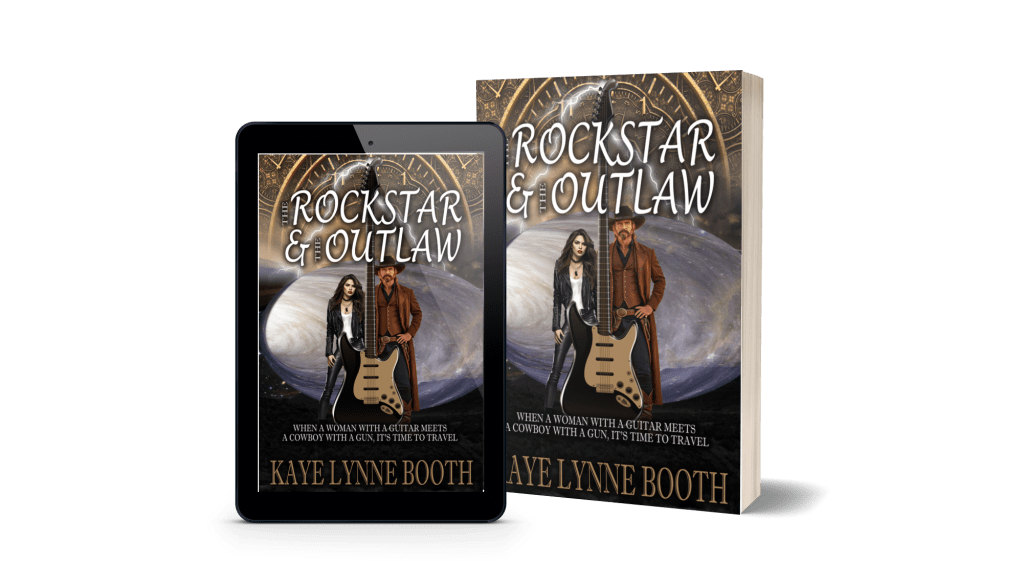
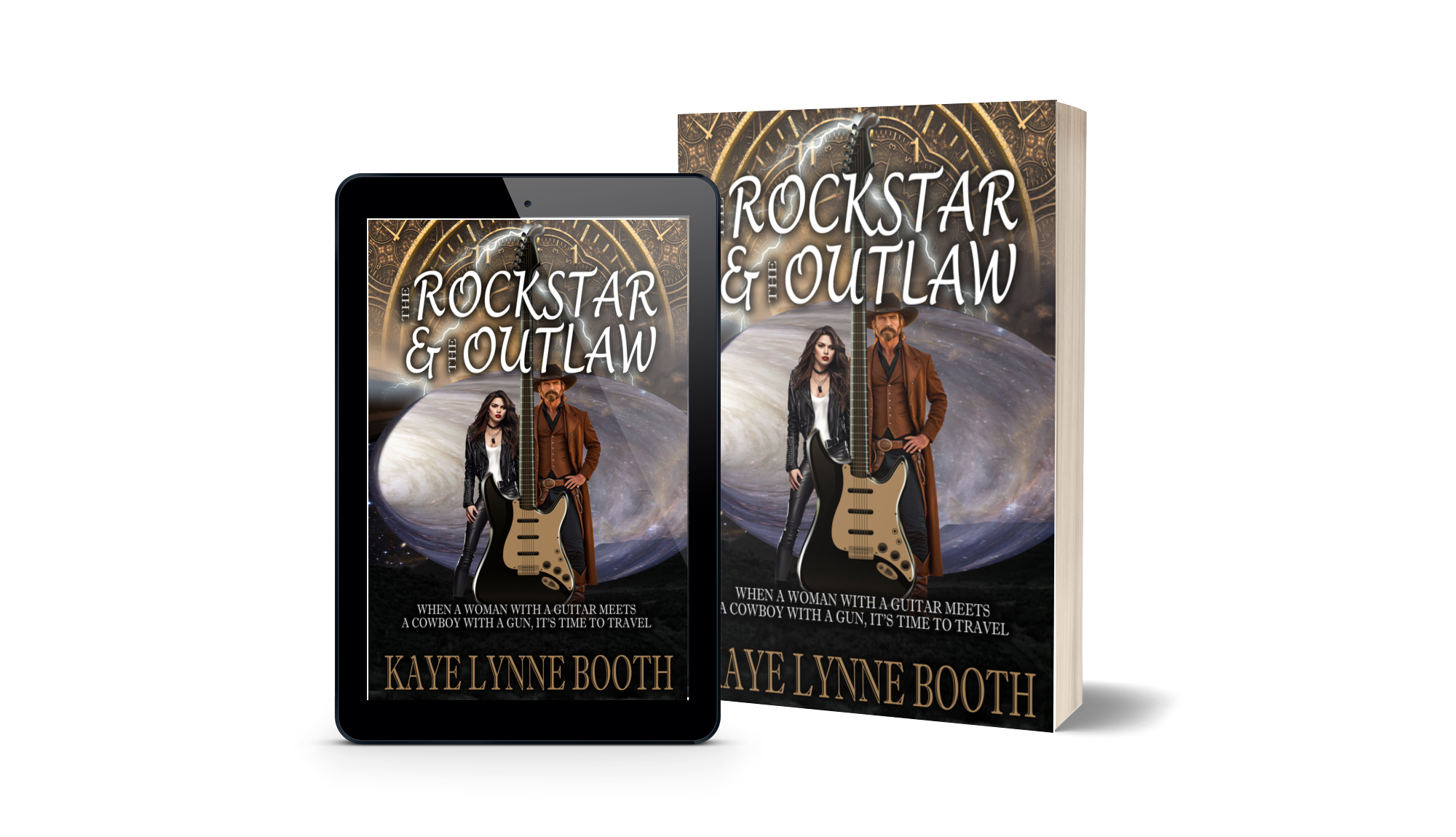
A time-traveler oversteps his boundaries in 1887. Things get out of hand quickly, and he is hanged, setting in motion a series of events from which there’s no turning back.
In 1887, LeRoy McAllister is a reluctant outlaw running from a posse with nowhere to go except to the future.
In 2025, Amaryllis Sanchez is a thrill-seeking rock star on the fast track, who killed her dealing boyfriend to save herself. Now, she’s running from the law and his drug stealing flunkies, and nowhere is safe.
LeRoy falls hard for the rock star, thinking he can save her by taking her back with him. But when they arrive in 1887, things turn crazy fast, and soon they’re running from both the outlaws and the posse, in peril once more.
They can’t go back to the future, so it looks like they’re stuck in the past. But either when, they must face forces that would either lock them up or see them dead.
Purchase your copy today: https://books2read.com/RockStarOutlaw
Share this:

Time is Running Out to Get the 2024 Novel Writing Story Bundle
Posted: November 24, 2024 Filed under: Book Promotion, Books, Nonfiction, Story Bundle, Writing, Writing Resource | Tags: 2024 Novel Writing Story Bundle, Author, Book Review, Books, Story Bundle, The D.I. Y. Author, WordCrafter Press, Writing, Writing Resorce Leave a commentIf you’re an author who wants to improve your craft, publishing expertise and marketing know how, (and who doesn’t?), this Story Bundle is a must have for you. IT’s only available through the end of November, so don’t wait! Get your 2024 Novel Writing Story Bundle today.
You can get your 2024 Novel Writing Story Bundle here: https://storybundle.com/writing
Why Buy the 2024 Novel Writing Story Bundle?
For StoryBundle, you decide what price you want to pay. For $5 (or more, if you’re feeling generous), you’ll get the basic bundle of four books in .epub format—WORLDWIDE.
- Romance Character Tropes by Tara Grace Ericson and Jessica Barber
- Dollar by Dollar by Kerrie Flanagan (Story Bundle Exclusive)
- Essoe’s Guides to Writing: Mood and Atmosphere by Joshua Essoe
- Booking the Library by Jessica Brawner
If you pay at least the bonus price of just $20, you get all four of the regular books, plus 9 more books, for a total of 13 (with 5 StoryBundle Exclusives), plus a year’s subscription to Indie Author Magazine!
- Super Secrets: Illustrated by Wulf Moon
- Falling to Fly by Todd Fahnestock
- From Page to Platform: How to Succeed as an Author Speaker by Matty Dalrymple and Michael La Ronn
- A Writer’s Guide to Branding for Success by Mark Leslie Lefebvre (StoryBundle Exclusive)
- On Being a Dictator by Kevin J. Anderson (StoryBundle Exclusive)
- Word by Word by Kerrie Flanagan (Story Bundle Exclusive)
- The D.I.Y. Author by Kaye Lynne Booth
- Steps to Self-Editing by Jana S. Brown
- Wit and Wisdom by Craig Martelle (StoryBundle Exclusive)
- Indie Author Magazine: One Year Subscription by Indie Author Magazine
This bundle is available only for a limited time via http://www.storybundle.com. It allows easy reading on computers, smartphones, and tablets as well as Kindle and other ereaders via file transfer, email, and other methods. You get a DRM-free .epub for all books!
More About this great Story Bundle
You can find out more about the books in this Story Bundle at the links below.
Writer’s Corner: Using Story Bundle to Sell Books: https://writingtoberead.com/2024/10/21/writers-corner-using-story-bundle-to-sell-books/
Review in Practice: Dollar by Dollar & Word by Word: https://writingtoberead.com/2024/11/06/review-in-practice-word-by-word-and-dollar-by-dollar/
Review in Practice: Wit & Wisdom, Romance Character Tropes, & Steps to Self-Editing: https://writingtoberead.com/2024/11/18/review-in-practice-wit-wisdom-romance-character-tropes-steps-to-self-editing/
_______________________________________
This post is sponsored by The D.I.Y. Author and WordCrafter Press.
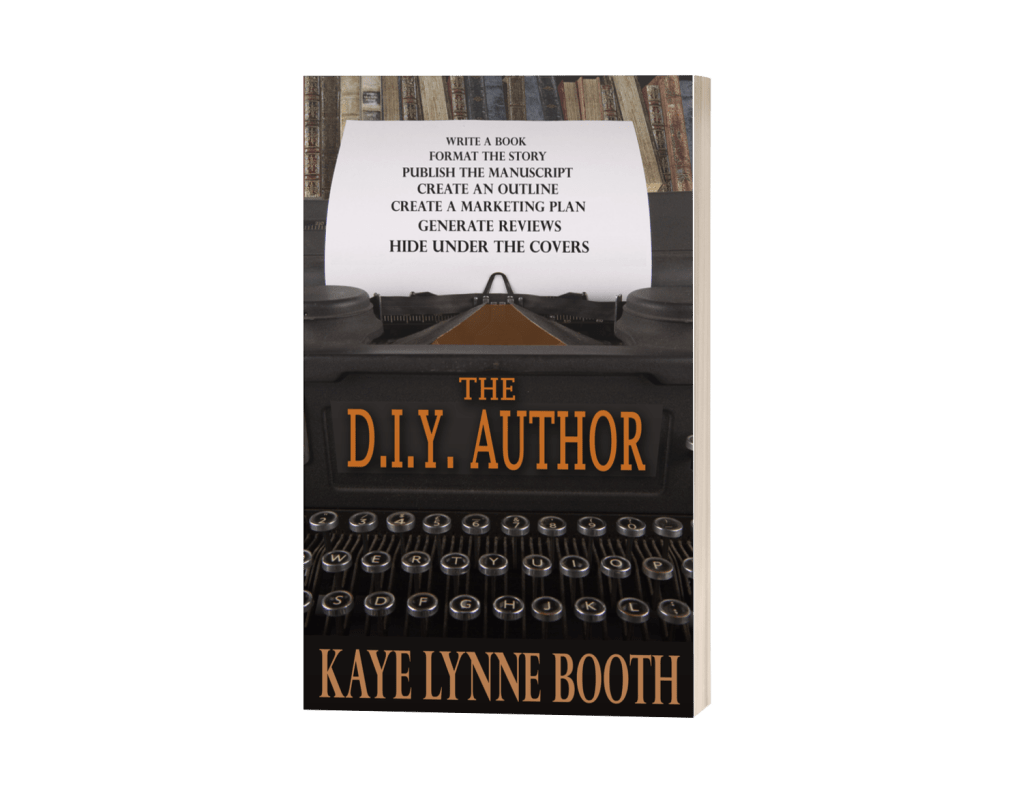
Being an author today is more than just writing the book. Authors in this digital age have more opportunities than ever before. Whether you pursue independent or traditional publishing models, or a combination of the two, being an author involves not only writing, but often, the publishing and marketing of the book.
In this writer’s reference guide, multi-genre author and independent publisher, Kaye Lynne Booth shares her knowledge and experiences and the tools, books, references and sites to help you learn the business of being an author.
Topics Include:
Becoming Prolific
Writing Tools
Outlining
Making Quality a Priority
Publishing Models & Trends
Marketing Your Book
Book Covers & Blurbs
Book Events—In Person & Virtual
And more…
Purchase your copy today: https://books2read.com/The-DIY-Author
Share this:

Review in Practice: “Wit & Wisdom”, “Romance Character Tropes” & “Steps to Self-Editing”
Posted: November 18, 2024 Filed under: Book Review, Books, Nonfiction, Review, Review in Practice, Story Bundle, Writing, Writing Reference, Writing Tips | Tags: 2024 Novel Writing Story Bundle, Book Reviews, Craig Martelle, Jana S. Brown, Jessica Barber, Review in Practice, Romance Character Tropes, Steps to Self-Editing, Tara G. Ericson, Wit & Wisedom, Writing Resorce, Writing to be Read 3 CommentsOne of the advantages of being in a Story Bundle, is that you get a free copy of all the books included in the bundle. That means you get to read everyone else’s book. With the 2024 Novel Writing Story Bundle, for me, it, means I get to read a lot of writing reference books and I can discover from them, bits of writing wisdom which I can utilize in my own writing and publishing processes to improve my own work. For this segment of Review in Practice, I chose three books from this Story Bundle, with hopes of a few little nugets of gold that I can mine from them and share with you: Wit & Wisdom, by Craig Martelle, Romance Character Tropes, by Jessica Barber and Tara G. Ericson, and Steps to Self-Editing, by Jana S. Brown.
Wit & Wisdom, by Craig Martelle

An exclusive first release in this StoryBundle— chock full of quips and snippets to help authors stay focused on the right things to accelerate their business.
My Thoughts on Wit & Wisdom
I always wanted to attend the 20 Books to 50K Conference, but I never could make it. So, when I had the opportunity to review a book written by one of the founders, Craig Martelle, you can be sure I jumped at the chance. Wit & Wisdom is packed full of useful tips and advice to help make your writing business successful.
Romance Character Tropes, by Jessica Barber & Tara G. Ericson
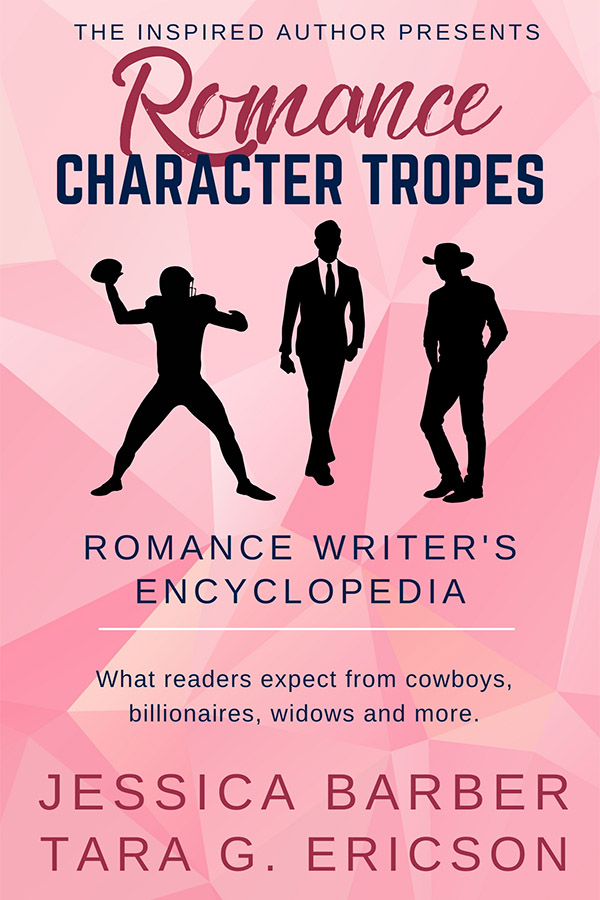
In this one-of-a-kind resource, you’ll find more than a list of tropes or broad genre fiction advice.
The Romance Writer’s Encyclopedia Series breaks down our method for categorizing tropes into four types of framework tropes – Character Tropes, Situational Tropes, Setting Tropes, and Relational Tropes.
The Character Tropes Encyclopedia includes detailed entries on favorite romance tropes like Cowboys, Royalty, Law enforcement, and Athletes. And we didn’t forget popular modern tropes like Alpha Male, Cinnamon Roll, or The Grump!
But this is more than a trope list – it’s an encyclopedia!
Each encyclopedia entry includes an introduction to the trope itself, as well as information on why readers love the trope (including examination of what inner desire is being met by the trope), what expectations exist in the stories, common pitfalls that authors need to avoid, common characteristics and potential wounds.
Putting a cowboy hat on the cover of your book isn’t enough to have a Cowboy romance that readers will love – but we’ll tell you what will. And then we’ll do it for Pirates and Rockstars and Firefighters, too.
Romance Character Tropes is designed to be used at every stage of planning, writing, and publishing your books. If used effectively, it will help you write a romance that readers will love, but also help you market that book to get it into the hands of readers who will devour it.
We’ve studied thousands of books and movies, polled readers and studied the market to understand not just which Character Tropes work – but WHY they work. And knowing why they work means you can put them to work for you.Harness the power of Character Tropes to make your book marketable, multi-dimensional, and satisfying, so readers will come back again and again.
You can purchase this book seperately here: https://www.amazon.com/Romance-Character-Tropes-Billionaires-Encyclopedia-ebook/dp/B0C1HQLW8X/
My Thoughts on Romance Character Tropes
Tropes are something which have always puzzled me. They were touched on in my graduate classes, to say that you should be aware of them and know what they are, but it was left to the individual to figure it out from there, probably because there are so many of them, and they differ from genre to genre. Since then, I’ve learned that there are too many tropes, no matter the genre, that the whole trope thing seemed overwhelming to me, and I got tired of trying to figure it out , choosing instead, to just write.
I wish I’d had a resource such as this one back then, because Barber and Ericson made it so easy to understand. If someone had explained that internal character tropes were based on the archetypes that I studied in graduate school, it would have all made sense so much sooner. They give a clear definition of what tropes are and why we use them.
“Each of the internal character tropes in this chapter is derived from some of the most popular literary archetypes in fiction. They will carry elements of the universal symbolism, themes, and patterns that have transcended both time and history.”
When I was running my “Ask the Authors-” blog series, back in 2018, I inteviewed many authors, and one of the questions was about using tropes. Some said they used them, some said they avoided them, and still others didn’t have a clue as to what a trope was. But the fact is, we all use tropes, whether we do it conciously or not, no matter what genre we write in. Without character tropes, our characters would be flat, with no personality, and readers would have no reason to care whether our characters achieved their goals or not. If you have a character who is a firefighter, then you are writing with a Man in Uniform character trope. And if you do it conciously, which you should, there are certain things you need to be aware of which will make your character bigger than life for your readers.
I haven’t written much romance, so you might find it odd that I would choose to review Romance Character Tropes, by Jessica Barber and Tara G. Ericson. My thinking is that although this book delves into tropes which are specific to the romance genre, many of the character tropes can be found in other genres, as well.
This month, for NaNoWriMo, I’m writing the second book in my Time Travel Adventure series, the sequel to The Rock Star & The Outlaw, which has a strong romance element, and my male protagonist just happens to be a cowboy, which is a popular romance character trope, so I paid particular attention to what the authors had to say about the Cowboy trope.
I discovered that the cowboy hero I created for the first book, and I am now writing into the second isn’t a rodeo cowboy, a lone wolf or off the grid cowboy, or a law enforcement cowboy, but more of a cross between the cowboy and the reformed bad boy tropes. When LeRoy is introduced in the twenty-first century, in the first book, he is all cowboy, manners and all, and that fact is what attracts my heroine, Amaryllis, in the first place. But when he goes back in time, to an actual western setting, we see the reformed bad boy, who has done all the wrong things, but for the right reasons. Over all, I feel like I did a pretty good job on the first book, and I’ve gathered some ideas about where his character arc may lead in the second one, to make him a more well-rounded character.
I learned so much useful information from Romance Character Tropes that I know it will be a resource I turn to again and again. I have a couple of romance stories that have been trunked, and after reading this book, I’m tempted to pull them out and give them another go, so don’t be surprised if I had add romance to my list of genres I write in in the future.
Steps to Self-Editing, by Jana S. Brown

You’ve finished writing your rough draft! Congratulations!
Now what are you going to do?
Before going out into the world, every manuscript needs a little love from its creator in the form of self-editing and revision.
However, that can be a daunting task.
- Plotlines
- Character arcs
- Continuity
- Grammatical mistakes
Where do you begin?
Join author and editor, Jana S. Brown, at her virtual table and learn the Steps to Self-Editing from setting your structure, to rubbing out wordiness to make your manuscript shine.
You can purchase this book seperately here: https://www.amazon.com/Steps-Self-Editing-Common-Writing-Publishing-ebook/dp/B0CK54T3TC
My Thoughts on Steps to Self-Editing
I chose to read this book because I do self-edit, in spite of all the warnings that I’ve heard not to. I’ve always been told that self-editing is a big no-no, especially if you do it as you are writing, and guess what, I do that, too. But Steps to Self-Editing, by Jana S. Brown doesn’t make that judgement. In it, Brown actually discusses the reasons why you may want to self-edit and talks about the differences in self-editing as you write, and doing an overall self-edit when you’ve finished, (I do both types), and when you may want to do both, as well as when you may not. Brown also makes it clear that self-editing is not recommended to take the place of paying a professional editor. It’s just another step which can be taken to hone your creative child and polish it to look its best.
As I am currently undertaking the NaNoWriMo challenge, and I’m in the process of writing the second book in my Time Travel Series, so I’m already using some of the tips as I self-edit as I go. I am compelled to do this with my writing, as I find and fix plot holes, and go back to add foreshadowing where needed, but Brown has reminded me of other things that can be looked for and fixed early on.
When I have a completed manuscript, hopefully at the end of the month, I’ll be using it again to give my manuscript a complete once over, before sending it off to be scrutinized by another set of eyes. Brown also is a fan of reading your manuscript aloud as a part of self-editing, a step which I always employ, sometimes during the writing process, sometimes after. As she points out, reading your work aloud can help you find logic errors and inconsistencies in your story, as well as helping to smooth the rough edges.
The section that touches on punctuation and grammar rules assures I’ll be turning back to this book again and again, because there are too many rules to remember, making double checking a necessity. This is a quick and easy to use writing resource, which will be a valuable addition to my library.
The 2024 Novel Writing Story Bundle
Wit & Wisdom, by Craig Martelle, Romance Character Tropes, by Jessica Barber and Tara G. Ericson, and Steps to Self-Editing, by Jana S. Brown, are all offered in the 2024 Novel Writing Story Bundle, along with my own The D.I.Y. Author and nine other valuable writing references that every author should have at their fingertips. This bundle offers valuable writing advice from successful authors such as Kerrie Flanagan, Kevin J. Anderson, Mark Leslie Lefabvre, Wulf Moon, Joshua Essoe, Kerrie Flanagan, Matty Dalrymple and M.L. Ronn, Jessica Brawner, Todd Fahnestock, along with a year’s subscription to Indie Author Magazine. A percentage of every bundle sold goes to the Neil Peart Brain Cancer Research Fund from Cedars Sinai. These digital books are DRM-free and compatable with any digital reading device. And you get a lot of books for one great price.
You can get your 2024 Novel Writing Story Bundle here: https://storybundle.com/writing
_______________________________________________
About Kaye Lynne Booth
For Kaye Lynne Booth, writing is a passion. Kaye Lynne is an author with published short fiction and poetry, both online and in print, including her short story collection, Last Call and Other Short Fiction; and her paranormal mystery novella, Hidden Secrets; Books 1 & 2 of her Women in the West adventure series, Delilah and Sarah, and her Time-Travel Adventure novel, The Rock Star & The Outlaw,as well as her poetry collection, Small Wonders and The D.I.Y. Author writing resource. Kaye holds a dual M.F.A. degree in Creative Writing with emphasis in genre fiction and screenwriting, and an M.A. in publishing. Kaye Lynne is the founder of WordCrafter Quality Writing & Author Services and WordCrafter Press. She also maintains an authors’ blog and website, Writing to be Read, where she publishes content of interest in the literary world.
____________________
This post is sponsored by The D.I.Y. Author and WordCrafter Press.
Being an author today is more than just writing the book. Authors in this digital age have more opportunities than ever before. Whether you pursue independent or traditional publishing models, or a combination of the two, being an author involves not only writing, but often, the publishing and marketing of the book.
In this writer’s reference guide, multi-genre author and independent publisher, Kaye Lynne Booth shares her knowledge and experiences and the tools, books, references and sites to help you learn the business of being an author.
Topics Include:
Becoming Prolific
Writing Tools
Outlining
Making Quality a Priority
Publishing Models & Trends
Marketing Your Book
Book Covers & Blurbs
Book Events—In Person & Virtual
And more…
Purchase your copy today: https://books2read.com/The-DIY-Author
Share this:

Review in Practice: “Word by Word” and “Dollar by Dollar”
Posted: November 6, 2024 Filed under: Books, Nonfiction, Review, Review in Practice, Writing Resource | Tags: 2024 Novel Writing Story Bundle, Dollar by Dollar, Karrie Flanagan, Kaye Lynne Booth, Review in Practice, Word by Word, Writing to be Read 4 CommentsOne of the advantages of being in a Story Bundle, is that you get a free copy of all the books included in the bundle. That means you get to read everyone else’s book. With the 2024 Novel Writing Story Bundle, for me, it, means I get to read a lot of writing reference books and I can discover from them, bits of writing wisdom which I can utilize in my own writing and publishing processes to improve my own work. Word by Word and Dollar by Dollar, by Kerrie Flanagan, are both exclusive to the 2024 Novel Writing Story Bundle, so that means you can’t get them anywhere else.
About Word by Word

Word by Word by award-winning author Kerrie Flanagan, shows you how to unlock your creativity and transform your writing. This is an essential guide for writers that offers inspiration, genre-specific strategies, and practical tips.
My Thoughts on Word by Word
This is the book I wish that I’d had when I was earning my first M.A. in Creative Writing. Flanagan offers a comprehensive overview of writing in each of the various genres, with interviews and advice from various authors in each one.
When I first entered graduate school, I didn’t know what a trope was, and it would be impossible to cover the tropes of every genre, even in the intensive M.F.A. program which I attended, so these overviews were quite valuable to me because they helped me to understand the genres in which I haven’t yet dabbled, but may consider in the future. I’ve been playing with the idea of writing a mystery recently, and I have a couple of romance stories in with my trunk novels which could be worthy of taking another look at.
I found the section on children’s writing particularly helpful, as this is a genre I have recently tried to break into with the My Backyard Friends kid’s book series. I have a couple of other books written for kids that I’d like to put out there, too, so the section on using humor when writing for children was especially interesting to me and gave me some ideas about how I could incorporate humor into my own stories. (If you’d like to hear more of my thoughts inspired by this section, catch my November “Writer’s Corner” on writing for children.)
About Dollar by Dollar

Dollar by Dollar by Kerrie Flanagan is a comprehensive guide packed with proven strategies to help writers boost book sales, increase income from writing, and succeed in both traditional and self-publishing.
My Thoughts on Dollar by Dollar
Dollar by Dollar, by award winning author and journalist, Kerrie Flanagan covers the ins and outs of the publishing world, including both traditional and independent publishing, with a full section of valuable advice about ways to make your writing pay beyond crafting books.
While I have chosen not to take the slow traditional route to publishing in favor of taking control of my own writing career, I found the section on traditional publishing to be spot on with my understanding of the industry. Flanagan covers areas such as writing a book proposal or query letter, landing an agent and what to expect once you do, and how to navigate the world of small presses.
At first glance, I thought that this book would be in competition with my own book, The D.I.Y. Author, but the section on independent publishing covers more information on publishing through Ingram Spark, while mine focuses on using an aggregator such as Draft2Digital, so they really are complimentary to one another. Flanagan covers things to think about when deciding if self-publishing is the right route for you, tips on making your book stand out in the crowd, and the challenges and independently published author may face.
In addition, I found the section on other paid writing venues to be quite valuable. Flanagan covers magazine and freelance writing, blog writing, travel writing, resume writing, and more. These are avanues which all authors may not have considered as means to make a living from their writing and should be explored.
But what I found to be of the most value were the sections on newletters and email lists, and about building your author tribe. If you’ve followed me for a while, you know that my newsletter is one area where I have not been consistant at all, and Flanagan reminded me of what a valuable marketing tool that email list really is. This is an area on which I really need to work on and I’ve added it to my list of things I need to do for 2025. She also offered tips on what to put in a newsletter which I found thought provoking.
Building an author tribe is another area which I know is a valuable asset, and I’ve found being a part of Kevin J. Anderson’s tribe of authors to be of great value.But every author has their own tribe, even if it is a small one. These are the authors you work with in some capacity on a regular basis; those who support and encourage you; those who inspire you. My tribe is almost exclusively online and includes the members of my blog team, my blog tour hosts, and authors that I’ve worked with in various anthologies, as well as fellow authors which I’ve met through Facebook groups who are open to exchanging services such as beta reading or proofing, interviews, or reviews. But compared to tribes like that of KJA, my own tribe is small and I need to work on growing it in the coming year.
The 2024 Novel Writing Story Bundle
Word by Word and Dollar by Dollar, by award winning author, Kerrie Flanagan are both offered in the 2024 Novel Writing Story Bundle, along with my own The D.I.Y. Author and ten other valuable writing references that every author should have at their fingertips. This bundle offers valuable writing advice from successful authors such as Kevin J. Anderson, Mark Leslie Lefabvre, Wulf Moon, Joshua Essoe, Craig Maretlle, Jessica Brawner, Jana S. Brown, Jessica Barber and Tara G. Ericson, Todd Fahnestock, Matty Dalrymple and M.L. Ronn, and a year’s subscription to Indie Author Magazine. A percentage of every bundle sold goes to the Neil Peart Brain Cancer Research Fund from Cedars Sinai. These digital books are DRM-free and compatable with any digital reading device. And you get a lot of books for one great price.
You can get your 2024 Novel Writing Story Bundle here: https://storybundle.com/writing
About Kaye Lynne Booth

For Kaye Lynne Booth, writing is a passion. Kaye Lynne is an author with published short fiction and poetry, both online and in print, including her short story collection, Last Call and Other Short Fiction; and her paranormal mystery novella, Hidden Secrets; Books 1 & 2 of her Women in the West adventure series, Delilah and Sarah, and her Time-Travel Adventure novel, The Rock Star & The Outlaw, and her kid’s book series, My Backyard Friends. Kaye holds a dual M.F.A. degree in Creative Writing with emphasis in genre fiction and screenwriting, and an M.A. in publishing. Kaye Lynne is the founder of WordCrafter Quality Writing & Author Services and WordCrafter Press. She also maintains an authors’ blog and website, Writing to be Read, where she publishes content of interest in the literary world.
____________________________
Did you know you can sponsor your favorite blog series or even a single post with an advertisement for your book? Stop by the WtbR Sponsor Page and let me advertise your book, or you can make a donation to Writing to be Read for as little as a cup of coffee, If you’d like to show your support for this author and WordCrafter Press.
_________________________________
This post is sponsored by The D.I.Y. Author and WordCrafter Press.
Being an author today is more than just writing the book. Authors in this digital age have more opportunities than ever before. Whether you pursue independent or traditional publishing models, or a combination of the two, being an author involves not only writing, but often, the publishing and marketing of the book.
In this writer’s reference guide, multi-genre author and independent publisher, Kaye Lynne Booth shares her knowledge and experiences and the tools, books, references and sites to help you learn the business of being an author.
Topics Include:
Becoming Prolific
Writing Tools
Outlining
Making Quality a Priority
Publishing Models & Trends
Marketing Your Book
Book Covers & Blurbs
Book Events—In Person & Virtual
And more…
Purchase your copy today: https://books2read.com/The-DIY-Author
Share this:

WordCrafter News: Gearing up for NaNoWriMo & the 2024 Novel Writing Story Bundle
Posted: October 28, 2024 Filed under: Book Promotion, NaNoWriMo, Nonfiction, Science Fiction, Story Bundle, Time travel, WordCrafter News, WordCrafter Press, Writing Resource | Tags: 2024 Novel Writing Story Bundle, Kaye Lynne Booth, NaNoWriMo, The D.I. Y. Author, The Rock Star & the Outlaw, Time travel, WordCrafter News, WordCrafter Press, Writing Resource Leave a comment2024 NaNoWriMo
One of the methods I use of becoming more prolific in my writing is to use NaNoWriMo each November as a sort of spring board to get a good start on a novel, and hopefully, complete and publish it the following year. I’ve found it to be an effective way to help meet my writing goals. I have my own method of time blocking, which is more like grab every minute you can to write because I have a busy life, but even when I don’t reach my daily wordcount goals, I get on writing streaks where I more than make them up. And even in situations like last year, when my computer crashed with a week and a half left to go, so I was unable to make the 50,000 word goal, I come out with a healthy start to my novel, offering me a descent foundation to build on. (You can learn more about my NaNoWriMo strategies in my writing reference, The D.I.Y Author.)
This year is no exception and I’ve been busily outlining the sequel to The Rock Star & the Oulaw in preparation for next month’s NaNoWriMo challege to pound out at least 50,000 words of a new novel. Come next Monday, I will be up to my elbows in the writing of book 2, and I can already tell you, it’s going to be a wild ride. The ending of the first book was such that there has to be a second. My readers will be expecting and anticipating it. In this book, Amarylis will be expanding her horizons as she changes and grows, and my inspiration will expand beyond the music of The Pretty Reckless, which served as inspiration for her character in the first book.
I have most of my November blog posts written and scheduled, so my writing efforts can be focused on the book. The dark anthologies are launched in time for the Halloween season and their initial promotions have come to an end. In order to meet those daily wordcounts, I will be doing a minimal amount of promoting, so I won’t be as visible on social media as I usually am, and it may take me a bit longer to respond to email correspondence. The only promotions I will be making are my normal promotions of blog posts on Writing to be Read, and the 2024 Novel Writing Story Bundle, which includes The D.I.Y. Author and runs through the end of November.
The 2024 Novel Writing Story Bundle – Currated by Kevin J. Anderson
This year’s Writing Tools StoryBundle, curated by bestselling author and publisher Kevin J. Anderson, is another treasure chest of vital handbooks covering aspects of the writer’s craft, business, and way of life. We have thirteen titles on a range of subjects, plus a 12-month subscription to Indie Author Magazine, your best source to stay up-to-date on the industry.
On writing craft, there’s The Illustrated Super Secrets of Writing, Vol. 1—Wulf Moon’s award-winning system on how to write stories and does so with creativity, fun, and humor. Tara Grace Ericson presents Romance Character Tropes—far more than your average trope list; this is an encyclopedia packed with info to help you use and leverage each trope successfully.
Freelance editor Joshua Essoe teaches about Mood and Atmosphere in his series of special-edition writing guides, each examining the most-common issues he encounters from writers he works with. Word by Word by award-winning author Kerrie Flanagan, shows you how to unlock your creativity and transform your writing. This is an essential guide for writers that offers inspiration, genre-specific strategies, and practical tips.
Jana S. Brown gives you Steps to Self-Editing. You’ve finished your novel! Now learn the self-editing steps to smooth off the rough edges and really make it shine!
And in the new revised edition of On Being a Dictator: Revised Edition, by Kevin J. Anderson, Martin Shoemaker, and Greg Vose—available exclusively in this StoryBundle,—you’ll learn how to use dictation to increase your productivity. One of the foundational books on a popular writing method, On Being a Dictator will help you think outside the box and up your game in the fast-paced ever-changing world of publishing.
Now, on to the writing business. Dollar by Dollar by Kerrie Flanagan is a comprehensive guide packed with proven strategies to help writers boost book sales, increase income from writing, and succeed in both traditional and self-publishing. Mark Leslie’s Author’s Guide to Branding for Success shows you how to make your Author Brand into one of your best long-term Intellectual Property assets!
Matty Dalrymple and Michael La Ronn provide guidance and inspiration to share your message with the world from the stage in Page to Platform: How to Succeed as an Author Speaker.
And Booking the Libraries by Jessica Brawner is tailored for authors, speakers, storytellers, musicians, puppeteers, and all living-wage entertainers. This guide is your key to unlocking fresh markets, cultivating a dedicated fanbase, and revolutionizing your livelihood.
And finally, on the writing life, these titles will help you stay inspired and remain strong as a creative.
The D.I.Y. Author by Kaye Lynne Booth shows you the ropes in the business of being an author.
Wit and Wisdom by Craig Martelle—exclusive first release in this StoryBundle—is chock full of quips and snippets to help authors stay focused on the right things to accelerate their business.
And Falling to Fly by Todd Fahnestock is a deeply personal exploration into the creative process and the publishing industry. This is truly the book to read before you give up on your writing dreams.
In addition in this StoryBundle, you will receive full year’s subscription to Indie Author Magazine, your go-to resource for news, tips, and advice on self-publishing. Stay up-to-date on the latest trends in the industry.
A note on the designated charity for this StoryBundle, the Neil Peart Brain Cancer Research Fund from Cedars Sinai. In 2020 we lost Neil Peart, legendary drummer and lyricist for the rock band Rush, to glioblastoma. He was my mentor, friend, and collaborator on numerous books, and his loss affected me deeply. Neil’s friends and colleagues and fans worldwide have contributed to this glioblastoma research fund in Neil’s name, and we are proud to add our efforts on this Writing Tools StoryBundle as well. – Kevin J. Anderson
* * *
For StoryBundle, you decide what price you want to pay. For $5 (or more, if you’re feeling generous), you’ll get the basic bundle of four books in .epub format—WORLDWIDE.
- Romance Character Tropes by Tara Grace Ericson and Jessica Barber
- Dollar by Dollar by Kerrie Flanagan
- Essoe’s Guides to Writing: Mood and Atmosphere by Joshua Essoe
- Booking the Library by Jessica Brawner
If you pay at least the bonus price of just $20, you get all four of the regular books, plus 9 more books, for a total of 13 (with 3 StoryBundle Exclusives), plus a year’s subscription to Indie Author Magazine!
- Super Secrets: Illustrated by Wulf Moon
- Falling to Fly by Todd Fahnestock
- From Page to Platform: How to Succeed as an Author Speaker by Matty Dalrymple and Michael La Ronn
- A Writer’s Guide to Branding for Success by Mark Leslie Lefebvre (StoryBundle Exclusive)
- On Being a Dictator by Kevin J. Anderson (StoryBundle Exclusive)
- Word by Word by Kerrie Flanagan
- The D.I.Y. Author by Kaye Lynne Booth
- Steps to Self-Editing by Jana S. Brown
- Wit and Wisdom by Craig Martelle (StoryBundle Exclusive)
- Indie Author Magazine: One Year Subscription by Indie Author Magazine
This bundle is available only for a limited time via http://www.storybundle.com. It allows easy reading on computers, smartphones, and tablets as well as Kindle and other ereaders via file transfer, email, and other methods. You get a DRM-free .epub for all books!
It’s also super easy to give the gift of reading with StoryBundle, thanks to our gift cards – which allow you to send someone a code that they can redeem for any future StoryBundle bundle – and timed delivery, which allows you to control exactly when your recipient will get the gift of StoryBundle.
__________________________________________
You can learn more about Story Bundle on “Writer’s Corner” in my interview with Story Bundle founder, Jason Chen.
_____________________________________
About Kaye Lynne Booth
For Kaye Lynne Booth, writing is a passion. Kaye Lynne is an author with published short fiction and poetry, both online and in print, including her short story collection, Last Call and Other Short Fiction; and her paranormal mystery novella, Hidden Secrets; Books 1 & 2 of her Women in the West adventure series, Delilah and Sarah, and her Time-Travel Adventure novel, The Rock Star & The Outlaw, as well as her poetry collection, Small Wonders and The D.I.Y. Author writing resource. Kaye holds a dual M.F.A. degree in Creative Writing with emphasis in genre fiction and screenwriting, and an M.A. in publishing. Kaye Lynne is the founder of WordCrafter Quality Writing & Author Services and WordCrafter Press. She also maintains an authors’ blog and website, Writing to be Read, where she publishes content of interest in the literary world.
___________________________________
Did you know you can sponsor your favorite blog series or even a single post with an advertisement for your book? Stop by the WtbR Sponsor Page and let me advertise your book, or you can make a donation to Writing to be Read for as little as a cup of coffee, If you’d like to show your support for this author and WordCrafter Press.
________________________________________
This post is sponsored by The Rock Star & The Outlaw and WordCrafter Press.
A time-traveler oversteps his boundaries in 1887. Things get out of hand quickly, and he is hanged, setting in motion a series of events from which there’s no turning back.
In 1887, LeRoy McAllister is a reluctant outlaw running from a posse with nowhere to go except to the future.
In 2025, Amaryllis Sanchez is a thrill-seeking rock star on the fast track, who killed her dealing boyfriend to save herself. Now, she’s running from the law and his drug stealing flunkies, and nowhere is safe.
LeRoy falls hard for the rock star, thinking he can save her by taking her back with him. But when they arrive in 1887, things turn crazy fast, and soon they’re running from both the outlaws and the posse, in peril once more.
They can’t go back to the future, so it looks like they’re stuck in the past. But either when, they must face forces that would either lock them up or see them dead.
Purchase your copy today: https://books2read.com/RockStarOutlaw
Share this:

Writer’s Corner: Using Story Bundle to Sell Books
Posted: October 21, 2024 Filed under: Book Sales, Nonfiction, Story Bundle, Writer's Corner, Writing, Writing Business, writing craft, Writing Life, Writing Resource | Tags: 2024 Novel Writing Story Bundle, book marketing, Book Sales, Books, Self-Publishing, Story Bundle, The D.I. Y. Author, Writer's Corner, Writing 9 Comments
As many of you may know, if you follow Writing to be Read, The D.I.Y. Author is included in the Novel Writing Story Bundle, organized by Kevin J. Anderson. But what you may not know is how useful Story Bundle is as a marketing tool. The fact is, it’s a great way to sell books.
This is the second Story Bundle in which I have had a book included. Back in 2022, Ask the Authors 2022 was included in the Writer’s Toolkit Story Bundle, also organized by KJA. That bundle sold quite well and WordCrafter and the contributing authors made a little bit of money from it. This year, the Novel Writing Story Bundle promises to do just as well, if not better, so I highly recommend it.
What is Story Bundle?
What Story Bundle is, is a platform that gathers together several authors with books in the bundle category, whether it is writing references, such as the two I’ve had books in, fantasy books, science fiction books, or romances, etc…, and they all get together virtually and cooperatively market and promote the whole bundle. This extend’s the reach of single authors immensely, and I can testify to the fact that their efforts are effective. By using the power of the masses, promotions are found on all of the social media sites, not just those of any one single author, and it gets your book in front of the readers of every author in the bundle. But I’m just an author with a couple of books in a couple of Story Bundles, and I’m still learning, too. So to give you all the details, I chatted with Story Bundle founder, Jason Chen, to let him tell you what Story Bundle is, how it works, and what the advantages are.
Interview with Jason Chen
Kaye: What inspired the idea for Story Bundle?
Jason: I started StoryBundle all the way back in 2012 because back then, the concept of bundling similar books in one package hadn’t been done yet! Selfishly, I wanted somebody to make bundles of similar books—if you like this book/author, then you’ll like all THESE—and because nobody had, then I saw the need for it. Also, in 2012, the indie authors were lacking for a place to reach more readers, which made it a perfect fit for letting folks discover authors they would have a hard time finding otherwise.
Kaye: Story Bundle uses the power of numbers, gathering many authors together and offering their books as a group, rather than individually. Could you explain the advantages of having a book included in a Story Bundle?
Jason: Not only does being part of a StoryBundle get you in front of the StoryBundle fans, but the core concept is that it gets you readers from other authors who write in similar genres as you. Because all our bundles are curated, the books in them make sense together, which means that if you like one author in it, you’re more than likely to like another. So getting awareness of your books out to fans who already like the genre is a big plus.
Kaye: What determines whether a book is included in the original bundle for the minimum amount , or as a bonus book for a larger donation?
Jason: There’s no secret to the sauce. The curator and I work together to make sure both the regular bundle and the bonus bundle are balanced for the amount that they cost. Sometimes an author will be in the bonus bundle and if they’re in another bundle, they’ll be in the regular bundle. It depends on what makes sense for that particular bundle.
Kaye: The Novel Writing Story Bundle is the second Story Bundle which I’ve been a part of, mainly because I am fortunate enough to know Kevin J. Anderson, who organizes the ones I’ve participated in. I know other big authors like Dean Wesley Smith and Kristine Katheryn Rusch organize them, too. But how do you get into a Story Bundle if you don’t know someone organizing one? Can you create your own?
Jason: Yes! The only caveat we have is that (99% of the time) the bundles are curated by someone who’s been in a bundle before. Once you’ve been in a bundle, you understand what the bundle is about and what makes for a good bundle and what works for participating in a bundle. This way you know which authors to look for when you’re assembling one. You work with us to figure out a genre that you want, and we refine the idea and can help you get in touch with some other publishers if you need to.
Kaye: Both Story Bundles I’ve had books in are writing resource bundles. Can you make a story bundle of any genre?
Jason: Yes, any genre is fine, but to get a little inside baseball, there are a couple of genres that don’t do well on StoryBundle. The biggest one is romance, which for whatever reason doesn’t appeal to StoryBundle readers. But even more of a surprise is that romance authors’ own fans don’t really enjoy the bundling concept—at least on StoryBundle. We’ve tried all types of romance bundles in all varieties of flavors, but none of them ever have good uptake.
Kaye: Is there a cost to organize your own Story Bundle?
Jason: There’s no cost to curating a bundle!
Kaye: Now I know why as an author, I might want to have my books in a story bundle. But why would readers wnat to buy books through Story Bundle? What are the benefits to readers in purchasing a Story Bundle?
Jason: As a reader, there are a few benefits. First, there’s just the core concept of vetting—we choose our books carefully with our curators, and they have to meet a certain bar of quality to get in. Of course, it’s impossible to guarantee that you’ll like all the books in the bundle, but if you already like one or two of the authors in it, you’re likely to enjoy the rest.
There are other tangible benefits, such as getting DRM-free copies of books that you can load on any ereader, tablet or phone without having to worry about compatibility. You’ll also support indie authors and be able to donate to a worthy cause!
Kaye: Does every Story Bundle donate to charity?
Jason: Every bundle has a charity donation, but it’s up to each person if they want to donate part of their purchase to charity. If they don’t, that’s perfectly fine!
Kaye: What types of charities does Story Bundle support?
Jason: We have a long list of charities that we’ve supported before, from literacy charities, animal charities, science and gaming charities, to health and medicine and worldwide refugee focused charities, so there’s no real limit to what can be a charity target for StoryBundle. If there’s a specific one that a curator would like to have in their bundle, we can make it work!
Would you like your book to be in a Story Bundle?
Now that I know what it takes to currate a Story Bundle, I’m thinking of trying one of my own, because I know that they sell books. Since I’m a multi-genre author, I could do western, women’s fiction, paranormal, science fiction, dark fiction, or children’s books. If you’re interested let me know and tell me what genre(s) you write in. Either let me know in the comments, or email me at KLBWordCrafter@gmail.com. Let’s see if we can get together and sell some books.
About the Novel Writing Story Bundle
The Novel Writing Story Bundle features writing references on writing craft, writing business, and the writing life, which should be on every author’s bookshelf. In addition to my own The D.I. Y. Author, which is a bonus book, there are also featured Dollar by Dollar and Word by Word, by Kerrie Flanagan; Romance Character Tropes, by Jessica Barber and Tara G. Ericson; Booking the Library, by Jessica Brawner; Kevin J. Anderson’s On Being a Dictator; Steps to Self-Editing, by Jana S. Brown; A Writer’s Guide to Branding Success, by Mark Leslie Lefabvre; Mood & Atmosphere, by Joshua Essoe; From Page to Platform, by Matty Dalrymple and M.L. Ronn; Wit & Wisdom, by Craig Martelle; Wulf Moon’s Illustrated Super Secrets of Writing, volume 1; Falling to Fly, by Todd Fahnestock; and a year’s subscription to Indie Author Magazine. That’s 13 writing references plus the magazine subscription. What a deal!
A note on the designated charity for this StoryBundle, the Neil Peart Brain Cancer Research Fund from Cedars Sinai. In 2020 we lost Neil Peart, legendary drummer and lyricist for the rock band Rush, to glioblastoma. He was my mentor, friend, and collaborator on numerous books, and his loss affected me deeply. Neil’s friends and colleagues and fans worldwide have contributed to this glioblastoma research fund in Neil’s name, and we are proud to add our efforts on this Novel Writing StoryBundle as well. – Kevin J. Anderson
You can get in on this great Story Bundle here: https://storybundle.com/writing
About Author Kaye Lynne Booth

For Kaye Lynne Booth, writing is a passion. Kaye Lynne is an author with published short fiction and poetry, both online and in print, including her short story collection, Last Call and Other Short Fiction; and her paranormal mystery novella, Hidden Secrets; Books 1 & 2 of her Women in the West adventure series, Delilah and Sarah, and her Time-Travel Adventure novel, The Rock Star & The Outlaw. Kaye holds a dual M.F.A. degree in Creative Writing with emphasis in genre fiction and screenwriting, and an M.A. in publishing. Kaye Lynne is the founder of WordCrafter Quality Writing & Author Services and WordCrafter Press. She also maintains an authors’ blog and website, Writing to be Read, where she publishes content of interest in the literary world.
______________________________________________
This post is sponsored by The D.I.Y. Author and WordCrafter Press.
Being an author today is more than just writing the book. Authors in this digital age have more opportunities than ever before. Whether you pursue independent or traditional publishing models, or a combination of the two, being an author involves not only writing, but often, the publishing and marketing of the book.
In this writer’s reference guide, multi-genre author and independent publisher, Kaye Lynne Booth shares her knowledge and experiences and the tools, books, references and sites to help you learn the business of being an author.
Topics Include:
Becoming Prolific
Writing Tools
Outlining
Making Quality a Priority
Publishing Models & Trends
Marketing Your Book
Book Covers & Blurbs
Book Events—In Person & Virtual
And more…

Purchase your copy today: https://books2read.com/The-DIY-Author
Share this:

Writer’s Corner: Being Prolific
Posted: July 9, 2024 Filed under: Books, WordCrafter Press, Writer's Corner, Writing, Writing Life, Writing Resource | Tags: Author, Becoming Prolific, Books, Kaye Lynne Booth, Publishing, The D.I.Y. Author, WordCrafter Press, Writing 2 CommentsWhen I hear the word prolific, I think of Kevin J.Anderson, who puts out between 7-9 books per year. He’s one of the most prolific writers that I know of, although veteran bestselling authors, Dean Wesley Smith and Kathryn Christine Rusch, may rival, or even surpass him. But we cannot all be that prolific. But we can learn from authors like these, who have spent their lifetimes writing professionally, and making a decent living at it.
For many years, I did not know how to be prolific. Delilah took me three years to write, and then I worked almost another year revising it to re-release as the first book in the Women in the West Adventure Series. I even wrote a post in about accepting the fact that “We Can’t All be Prolific” because of how not-prolific I was back in 2022. It was something which I didn’t know could be changed or how to go about changing it.
Since then, I’ve learned a few things that have helped me to become more prolific, and I’m now publishing between 5 – 8 books per year. That’s why the first section of The D.I.Y. Author is dedicated to the methods I’ve used to increase my productivity and become a more prolific author; because I wanted to share some of the methods I’ve used to increase my writing productivity. By becoming prolific, I’ve been able to get my name out there where it can be recognized and having more products, in this case, books, to sell. When you publish 5 books per year, that’s 5 different chances to reach new readers, but its also five chances to remind current readers that you’re still around and active.
The following, are tips that I’ve accumulated, from The D.I.Y. Author.
Becoming Prolific
- Outlining: Creating at least a working outline to help guide the direction of your story. If you have an idea of where you are going before you start, you can get words on the page faster.
- Doubling Down on Research and Promotional Materials: Research is something that needs to be done for every book, regardless of genre. If you can find other uses for this same research, you can essentially make it do double duty. For example, during the historic research I did for the Women in the West Adventure Series, I uncovered many interesting facts that may or may not have been used in the story, and could also be used to make interesting blog posts for the tours for their releases, thus becoming a marketing tool, as well as a good story inspiration. Or you can use the same inspiration for a second story in some cases.
- Write the Damned Book: Just sit down and write. It’s a simple piece of advice, but one many authors, or would-be authors, fail to recognize. In The D.I.Y. Author, I offer a couple of methods of achieving the desired results, including Binge Writing, which isn’t always for everyone, and Persistant Determination, which is plugging away at it every chance you get.
- NaNoWriMo: The principle is to set aside the month of November to work exclusively on your novel at every opportunity and setting a daily wordcount which will allow you to reach a goal of 50,000 words within that timeframe. But you don’t need to wait until Novemeber to do this. Just set aside a 30 day period and dedicate to writing your story. I use NANoWriMo to get a start on one of the two novel length works I write and publish each year. In the book, I offer a couple of strategies for making the most of your time, including Time Blocking, and Tracking Your Word Count.
- Dictation: This is a strategy for becoming prolific that isn’t right for everyone, but works well for those who are comfortable with it.
- Networking and Collaborations: It takes longer to write a novel length work than it does to write a short story or two to include in an anthology, and it’s a great way to add more titles to your author pages. Through WordCrafter Press, I publish at least two anthologies per year, and sometimes more.
- Maximizing Your IP: Intellectual Property are the rights to your creative endeavors, or copyright, and an author needs to understand their copyrights, and take care not to sign away more than absolutely necessary when entering into a contract with a publisher. It is also important to understand when your rights will be returned, because when you hold the copyright, you can use that work in any way which you deem fit, allowing your writings to do double, or even triple duty.
- Optimizing Your Backlist: Many authors don’t put a lot into their backlist, but there are things you can do to keep your backlist items in front of readers’ eyes and on their minds, such as creating multiple formats, special editions, and price promotions.
- Taking Care of Mind, Body & Spirit: Keeping yourself healthy is also condusive to being prolific, as we all write better when our minds are sharp and alert, out bodies are well rested and healthy, and we have a place of our own, dedicated to writing.
- Outsourcing: When there is too much for one person to do it all, and believe me there will be, outsourcing certain tasks can be of great advantage, even to the D.I.Y. author.
Why Become Prolific?
To put it simply, the more prolific you are, the more books you have to sell. The bigger your library of books, the more opportunities for readers to discover you and your writing.
I’ve offered a basic list of the methods I’ve used to become more prolific. Some have worked better than others for me and I talk about them in more depth in The D.I.Y. Author. To learn more, you can get your copy from your favorite retailer here: https://books2read.com/The-DIY-Author.
____________________________________
About Kaye Lynne Booth

For Kaye Lynne Booth, writing is a passion. Kaye Lynne is an author with published short fiction and poetry, both online and in print, including her short story collection, Last Call and Other Short Fiction; and her paranormal mystery novella, Hidden Secrets; Books 1 & 2 of her Women in the West adventure series, Delilah and Sarah, and her Time-Travel Adventure novel, The Rock Star & The Outlaw. Kaye holds a dual M.F.A. degree in Creative Writing with emphasis in genre fiction and screenwriting, and an M.A. in publishing. Kaye Lynne is the founder of WordCrafter Quality Writing & Author Services and WordCrafter Press. She also maintains an authors’ blog and website, Writing to be Read, where she publishes content of interest in the literary world.
____________________
This post is sponsored by The D.I.Y. Author and WordCrafter Press.
Being an author today is more than just writing the book. Authors in this digital age have more opportunities than ever before. Whether you pursue independent or traditional publishing models, or a combination of the two, being an author involves not only writing, but often, the publishing and marketing of the book.
In this writer’s reference guide, multi-genre author and independent publisher, Kaye Lynne Booth shares her knowledge and experiences and the tools, books, references and sites to help you learn the business of being an author.

Topics Include:
And more…
Becoming Prolific
Writing Tools
Outlining
Making Quality a Priority
Publishing Models & Trends
Marketing Your Book
Book Covers & Blurbs
Book Events—In Person & Virtual
Purchase your copy today: https://books2read.com/The-DIY-Author
Share this:

Welcome to the D.I.Y. Author Release Party!
Posted: June 4, 2024 Filed under: Book Covers, Book Event, book marketing, Book Promotion, Book Release, Book Sales, Books, Indie Publishing, Nonfiction, Publishing, Self-Publishing, WordCrafter Press, Writing, writing advice, Writing Business, Writing Resource, Writing Tips, Writing to be Read | Tags: Author Business, book marketing, independent publishing, Kaye Lynne Booth, Publishing, Release Party, The D.I.Y. Author, WordCrafter Press, Writing Reference, Writing to be Read 12 Comments
About the Book
Being an author today is more than just writing the book. Authors in this digital age have more opportunities than ever before. Whether you pursue independent or traditional publishing models, or a combination of the two but being an author involves not only writing, but often, the publishing and marketing of the book.
In this writer’s reference guide, multi-genre author and independent publisher, Kaye Lynne Booth shares her knowledge and experiences and the tools, books, references and sites to help you learn the business of being an author.
Topics Include:
- Becoming Prolific
- Writing Tools
- Outlining
- Making Quality a Priority
- Publishing Models & Trends
- Marketing Your Book
- Book Covers & Blurbs
- Book Events—In Person & Virtual
- And more…
Meet the Author

Greetings! Thank you so much for dropping by to help us celebrate the release of The D.I.Y. Author. You all know me as author Kaye Lynne Booth, but with the release of this book, I hope to be known as the D.I.Y. author. This is the book that only I could write, where I share knowledge and experience as I build my author business. This is not a book on craft, but a reference for authors and aspiring authors who wish to expand and grow their author business on a limited budget. Learn the tips and tricks, sites and tools, which took me over a decade, and three masters degrees to amass.
I’ve always been a do it yourself kind of gal. I’ve built my author business up around this blog, finding ways around obstacles which stood in my way, learning new skill sets because outsourcing was more than I could afford. My first novel was published by a small independent publisher. But as the five-year contract ran out, I felt I could do better through my own small independent publishing house, WordCrafter Press, so I re-published it as the first book in my Women in the West adventure series last year, and I sold more copies than that other publisher had over a five year stretch. I just released the second book in the series this month. When Covid struck, I organized and hosted two virtual writing conferences, because writers are tribal bunch, and we need contact with like minded people. Networking is a huge part of building an author business. I use that networking to build not only my author business, but my own author tribe. I’ve published my own books, and collaborative anthologies, as well as publishing books for others. And I’ve built a winning blog team here on Writing to be Read with Robbie Cheadle, Jeff Bowles, Arthur Rorsch, and DL Mullan.
No one else has shared in these exact same experiences that I have, and that’s why only I could write The D.I.Y. Author, and why I can hold that title. But enough about me. The D.I.Y. Author is a great reference packed full of links to sites and tools and tips for increasing productivity, publishing choices, and marketing your books.
We have a great release party ahead to send this book off right. We’ve got exclusive offers running this week only. After Saturday, the whole D.I.Y. store will disappear, so take advantage of them now. By buying direct, you are supporting this author and her works more than when you purchase from retailers.
My D.I.Y. Video
On with the party!
Thanks for dropping by for The D.I.Y. Author virtual release party. We’ve got some great things planned, including a giveaway for all attendees, so be sure to leave a comment, so I’ll know you were here. I’ll be monitoring the comments throughout the day and will answer any questions you might want to post there. While you’re here you can peruse the D.I. Y. store below, for exclusive and discounted offers that you won’t find anywhere else. The store will come down at the end of the week. After that you’ll have to pay full price through retailers, and signed copies will no longer be available.
And if you are already a bestselling author and you don’t need this book or the WordCrafter services offered here, you can still offer your support for the author and this project by using the ‘buy me a soda’ button below.

Buy me a soda
Show your support for author Kaye Lynne Booth and her many endeavors through WordCrafter Press & Writing to be Read.
$1.00
You can get a sample of the topics in the book in my post,”Writer’s Corner: What it means to be an Indie Author”


Thanks for joining me today for The D.I.Y. Author Release Party. I hope you found a few useful tidbits here. For more tips and advice, you’ve got to buy the book. If you miss the window for the D.I.Y. Store, you can still purchase this useful writer’s reference here: https://books2read.com/The-DIY-Author