WordCrafter News: May Release & a Kickstarter Campaign
Posted: April 29, 2024 Filed under: Book Release, Books, Giveaways, Historical Fiction, Kickstarter, Nonfiction, Western, Women in History, Women's Fiction, WordCrafter Book Blog Tours, WordCrafter News, WordCrafter Press, Writing Leave a comment
May Release
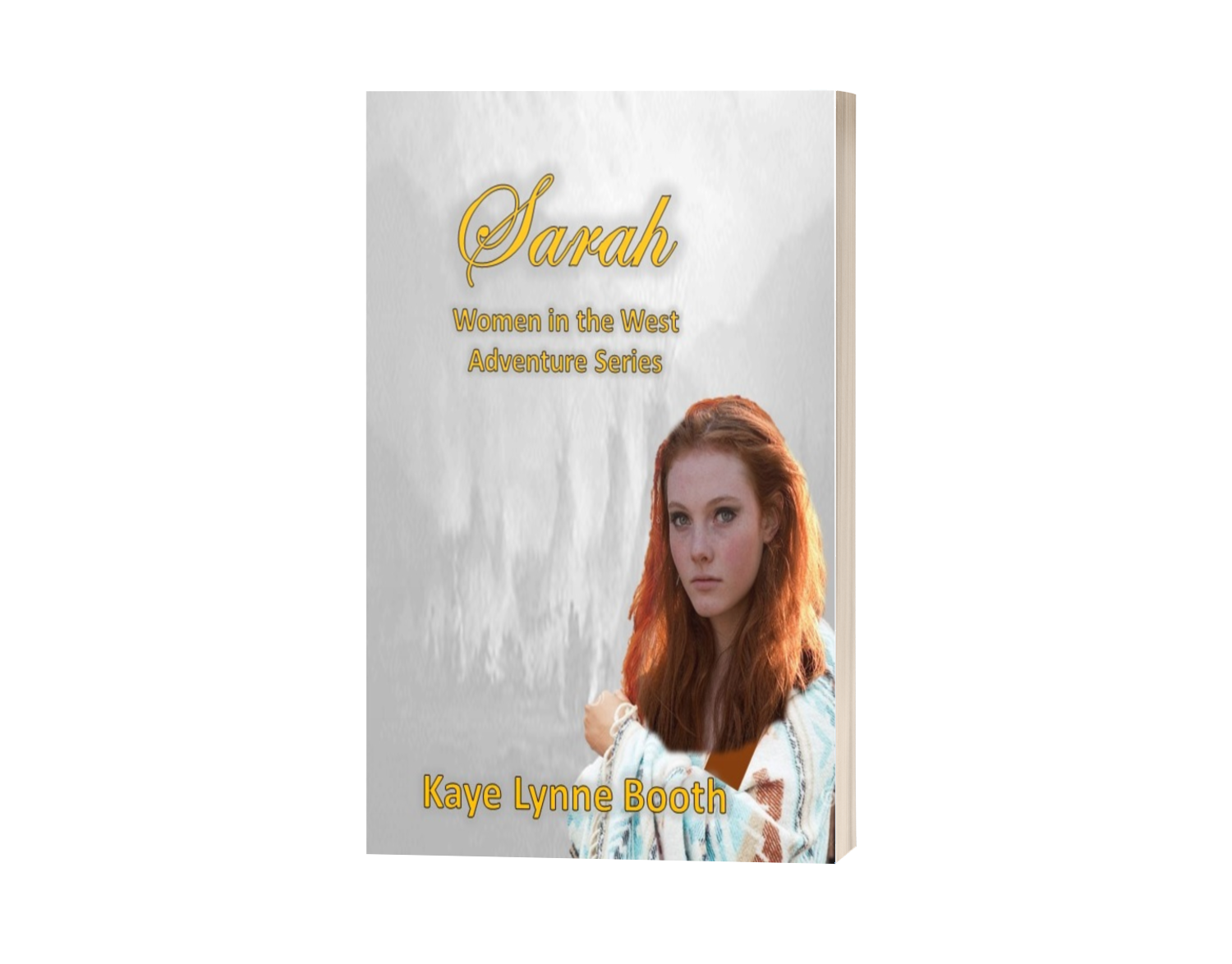
The release of Sarah is finally approaching. The Kickstarter for Sarah didn’t fund, so if you’ve been waiting for a copy of Book 2 in this western historical women’s fiction series, Women in the West, you’ll be as pleased as I will be when May 7th roles around and Sarah becomes available through all the major distributors. Of course, we’ll be holding a book blog tour to send it off right May 6th – 10th, so be sure to drop by and join in on the fun for interviews, reviews, blog posts and a great giveaway.
Pre-Order Now: https://books2read.com/u/3RXlRx

Sarah is a young girl trying to make a place for herself in the world.
Sarah is not the young girl who was stolen away from Delilah anymore. Now she is Hair of Fire, mate of Three Hawks, even as she blossoms into a young woman and tries to make a place for herself among the Ute tribe.
When she is stolen away from the life she’s made with the Utes, she struggles to survive in the heart of the Rocky Mountains. A streak of stubbornness and determination take this tough, feisty heroine up against wild beasts of the forest and the rugged mountain landscape to Glenwood Springs, Colorado, where she receives a less than welcoming reception by some.
Will this young woman find her way back to the Ute tribe, which she’s come to think of as family, or will she discover a place among the colorful inhabitants of the Colorado hot springs and mining town?
Follow along on her journey to learn who she truly is and where she belongs in this rough, and often hostile frontier.
If you like strong and capable female protagonists, you’ll love Sarah.
Kickstarter Campaign
I’ll be running a Kickstarter campaign for The D.I.Y. Author May 19th – June 8. When you back a Kickstarter project, not only do you show your support for the author, but you also get cool stuff not available anywhere else. The exclusive Kickstarter rewards for Sarah’s campaign include early digital copies, signed print copies, author services at huge discounts, and more.
If you’re an author who hasn’t hit six figures yet, looking for ways to build your author business and make it grow, this writer’s reference is for you. In it I share my journey from published poet and blogger to published author and independent publisher along with tips and suggestions from my own research and experience. When you can’t afford to outsource, you must learn to do it yourself. In The D.I.Y. Author, I share with you ways to learn the needed skills to build an author business, and you too, can be a D.I.Y. author.
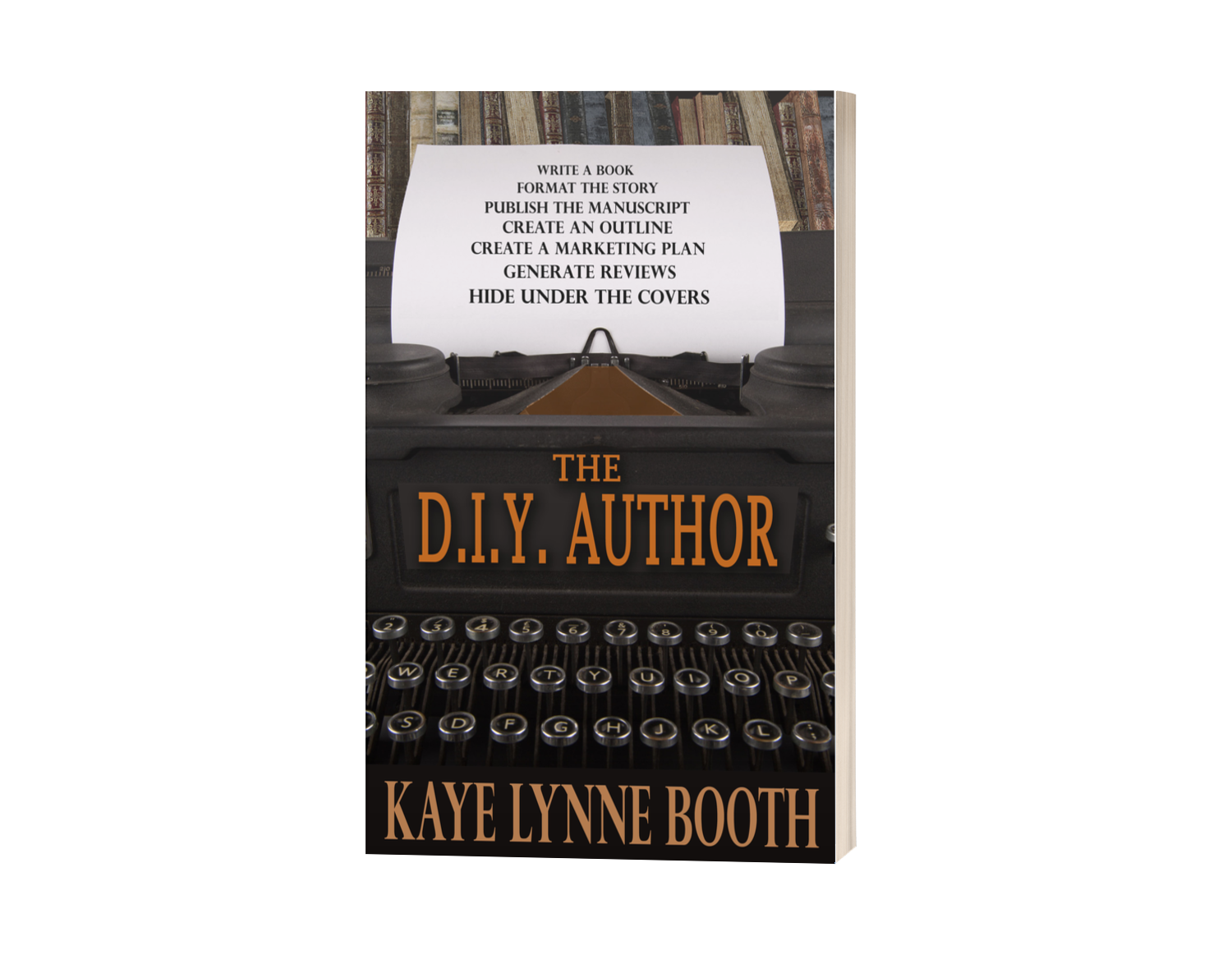
About the D.I.Y. Author
Being an author today is more than just writing the book. Authors in this digital age have more opportunities than ever before. Whether you pursue independent or traditional publishing models, or a combination of the two but being an author involves not only writing, but often, the publishing and marketing of the book.
In this writer’s reference guide, multi-genre author and independent publisher, Kaye Lynne Booth shares her knowledge and experiences learning the business of being an author.
Topics Include:
Becoming Prolific
Writing Tools
Outlining
Making Quality a Priority
Publishing Models & Trends
Marketing Your Book
Book Covers & Blurbs
Book Events—In Person & Virtual
And more…
__________________________________________
If you’d like to show your support for this author, you can make a donation to Writing to be Read for as little as a cup of coffee. All support is appreciated.
Share this:

WordCrafter Books Are Discounted for the 2024 Smashwords Read an Ebook Week
Posted: March 3, 2024 Filed under: Book Sales, Books, Dark Fantasy, Dark fiction, Fairy Tales, Fantasy, Fiction, Ghost Stories, Historical Fiction, Humor, Mythology and Legend, Nonfiction, Paranormal, Poetry, Science Fiction, Short Fiction, Smashwords, Speculative Fiction, Stories, Western, Women in History, Women's Fiction, Women's Fiction and Poetry, WordCrafter Press, Writing Reference, Writing Resource, Writing Tips | Tags: 50% Off, Books, Smashwords 2024 Read an eBook Week, WordCrafter Press 2 Comments
When:
March 3 – 9, 2024
Where:
On Smashwords: https://www.smashwords.com/ebookweek
What:
All WordCrafter Press books
The Discount:
50% off!
Find all WordCrafter Press books on Smashwords:
https://www.smashwords.com/profile/view/Kaye_LynneBooth
Get all your favorite WordCrafter Press books today!
If there are WordCrafter Press books on your TBR list, now is the time to buy them. All WordCrafter Press Books are 50% off for the Smashwords 2024 Read an Ebook Week. That’s right. All titles in the WordCrafter Press catalog are on discounted 50% this week only on Smashwords.
Titles Included:
- Ask the Authors: Writing Reference Anthology, by Kaye Lynne Booth, et. al.
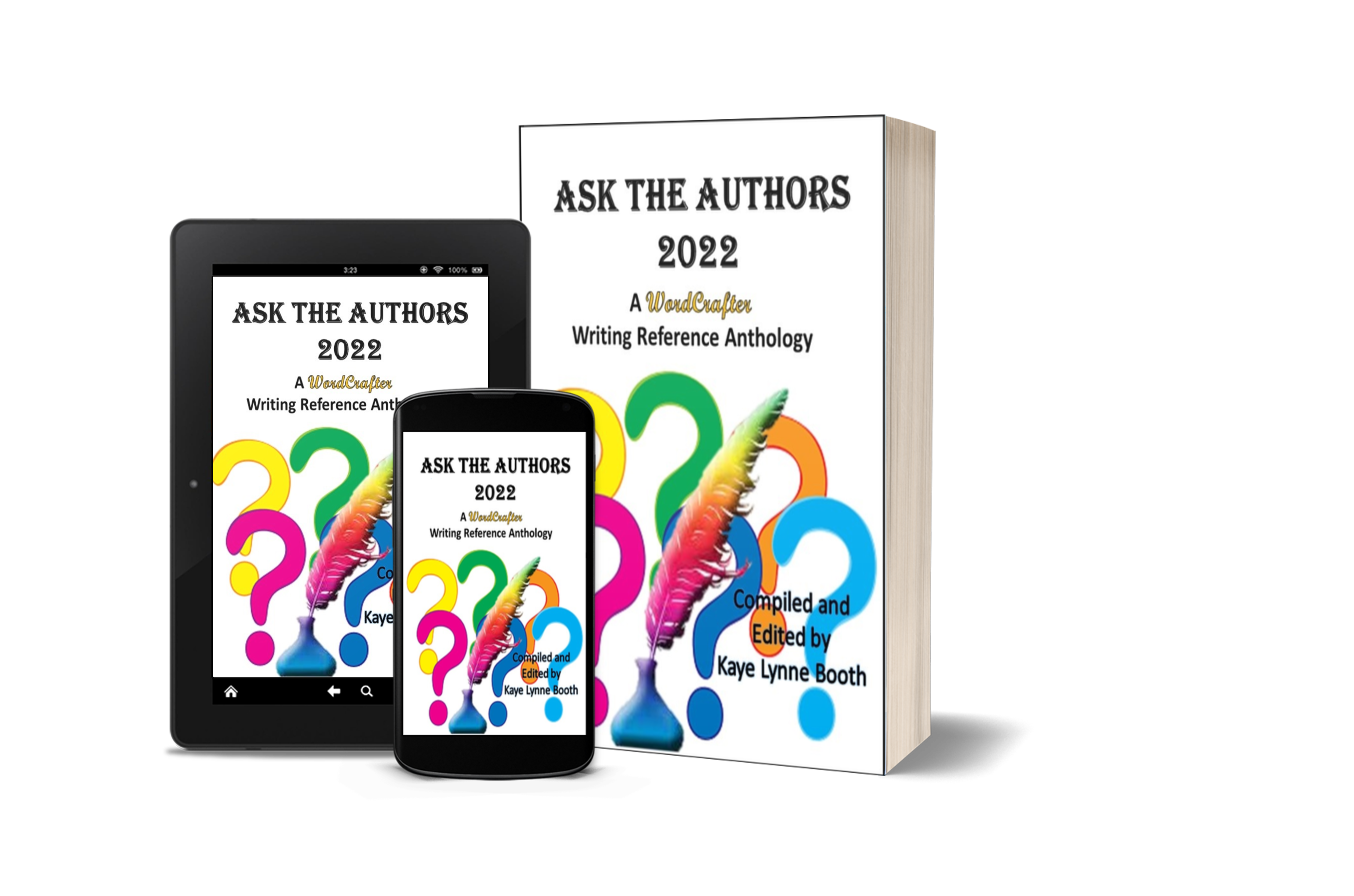
- Ask the Authors 2022: Writing Reference Anthology, by Kaye Lynne Booth, et. al.
- Behind Closed Doors: A Collection of Unusual Poems, by Robbie Cheadle
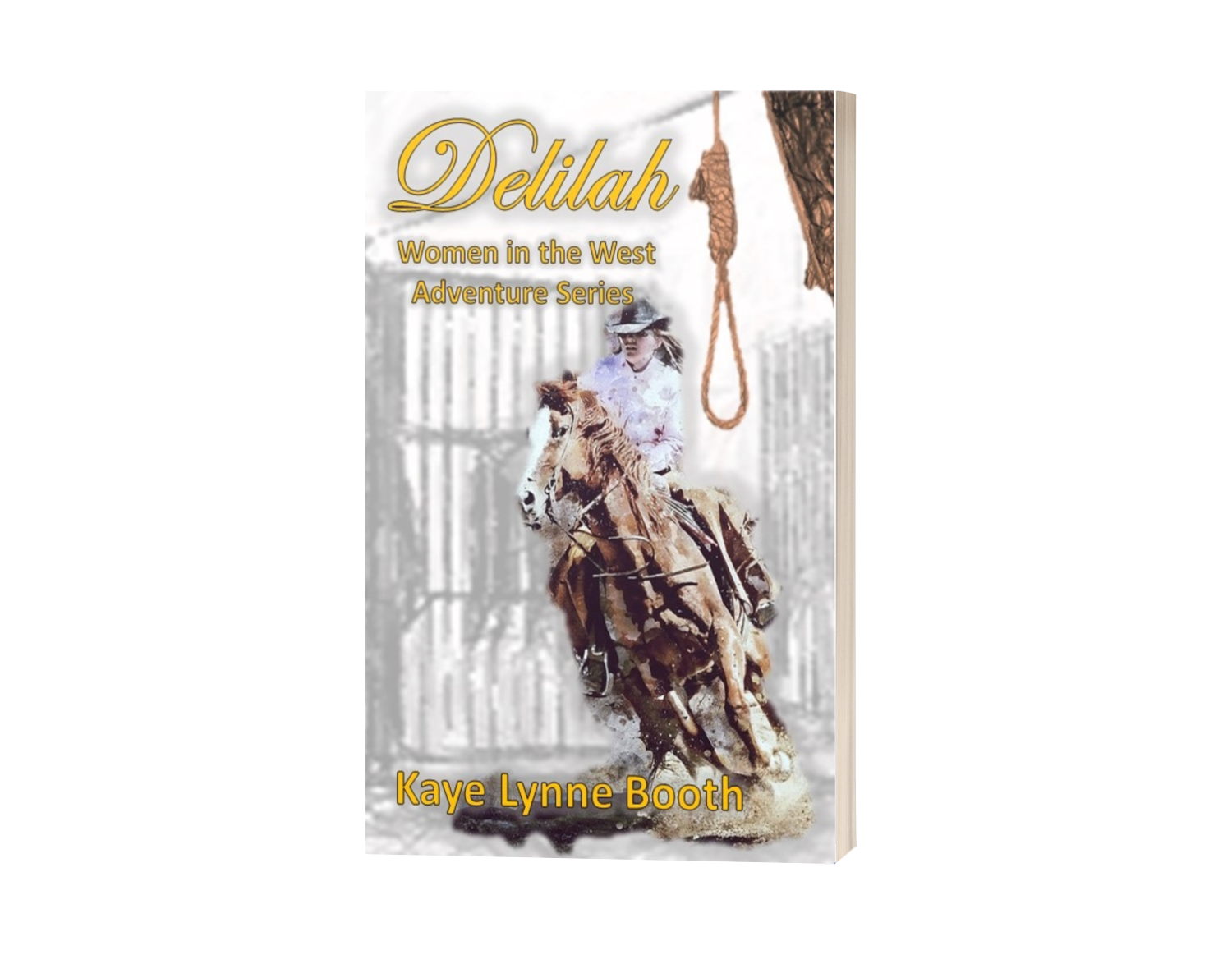
- Delilah: Book 1 of the Women in the West adventure series, by Kaye Lynne Booth
- Feral Tenderness: Poetry & Photography, by Arthur Rosch
- Hidden Secrets: Paranormal Mystery Novella, by Kaye Lynne Booth
- Last Call and Other Short Fiction: short story collection, by Kaye Lynne Booth
- Lingering Spirit Whispers: Paranormal Anthology bundle, by Kaye Lynne Booth, et. al.
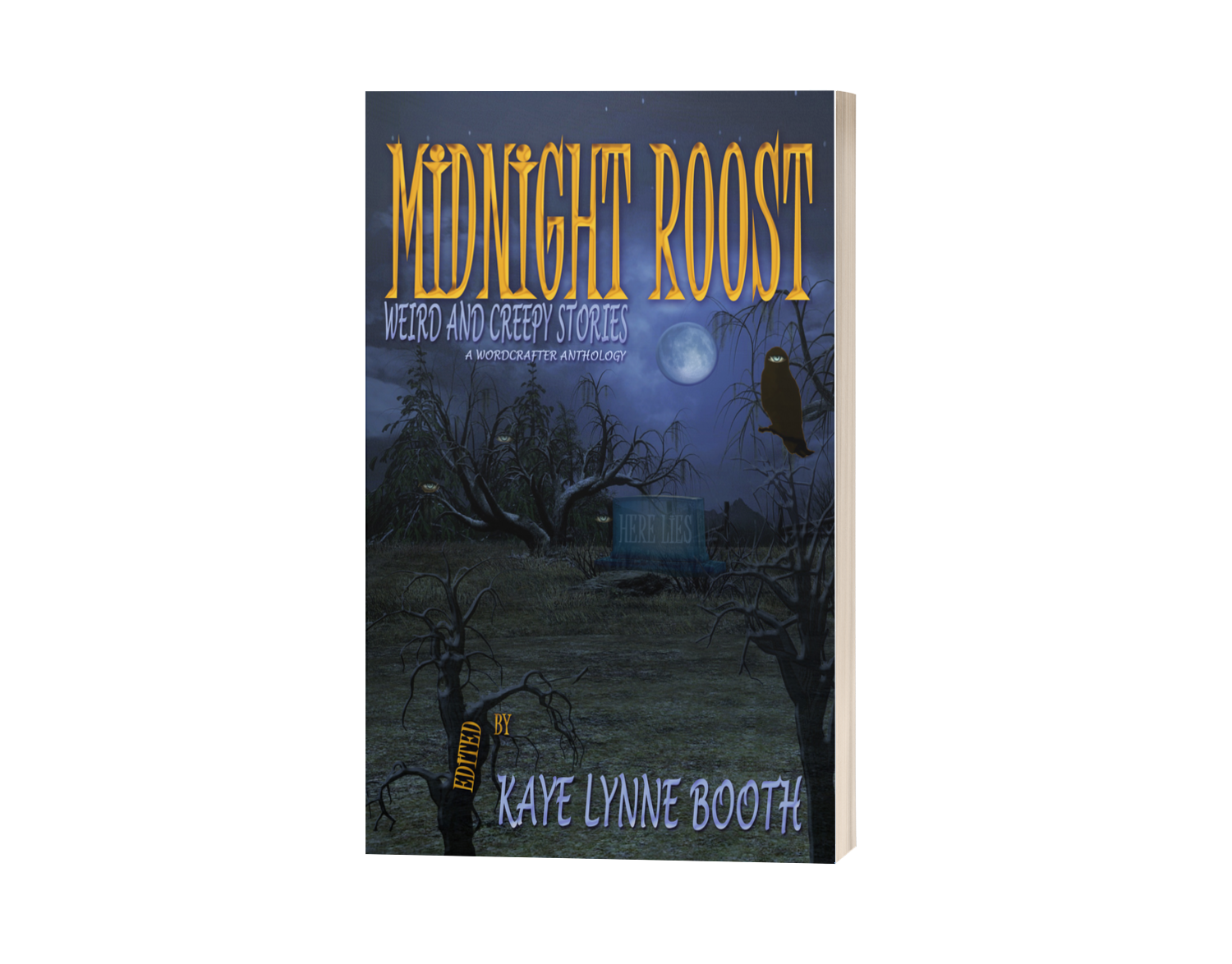
- Midnight Roost: Weird and Creepy Stories, by Kaye Lynne Booth, et. al.
- Once Upon an Ever After: Modern Fairy Tales & Folklore, by Kaye Lynne Booth, et. al.
- Poetry Treasures: Poetry Anthology, by Kaye Lynne Booth and Robbie Cheadle, et. al.
- Poetry Treasures 2: Relationships: Poetry Anthology, by Kaye Lynne Booth and Robbie Cheadle, et. al.
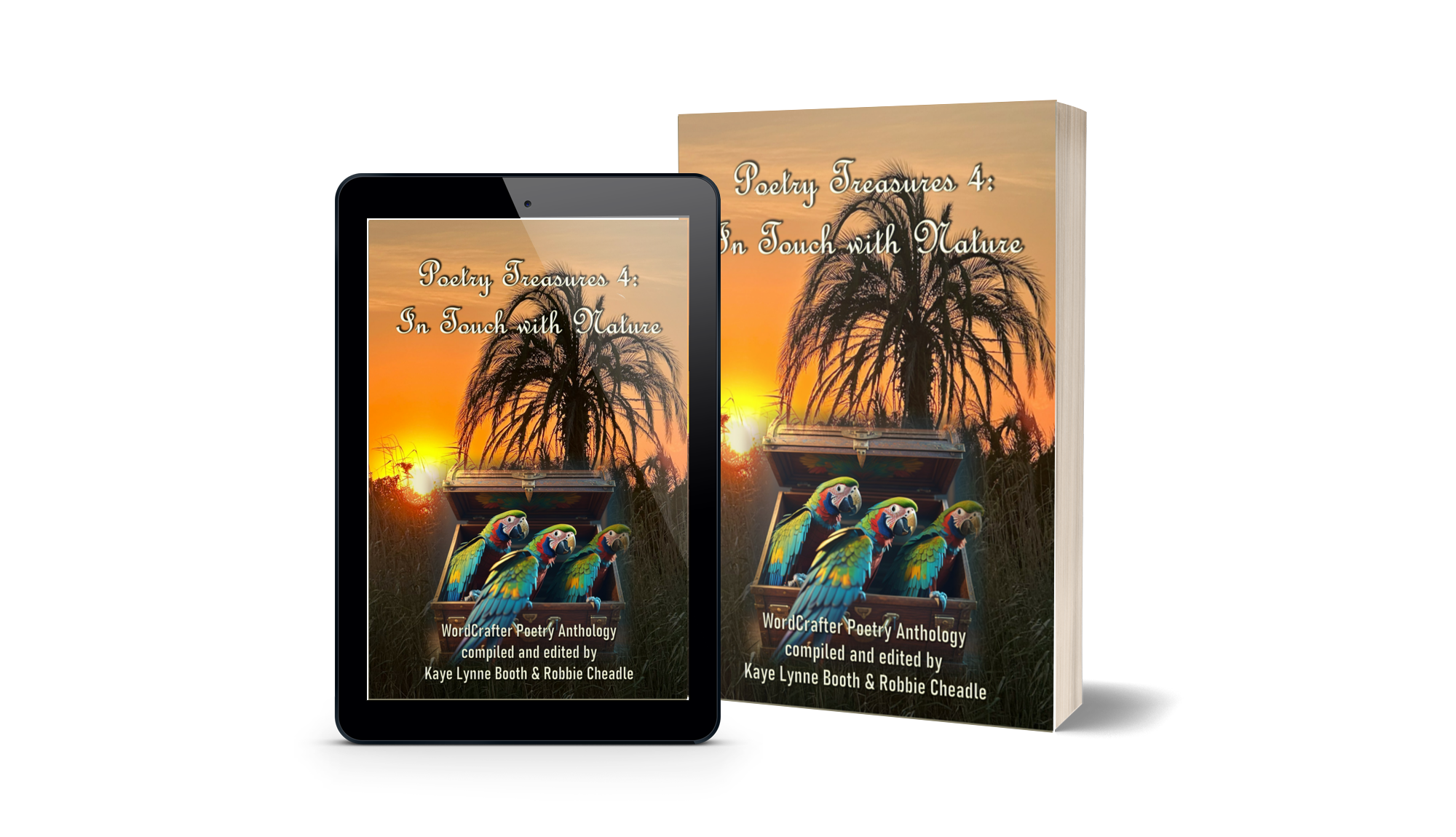
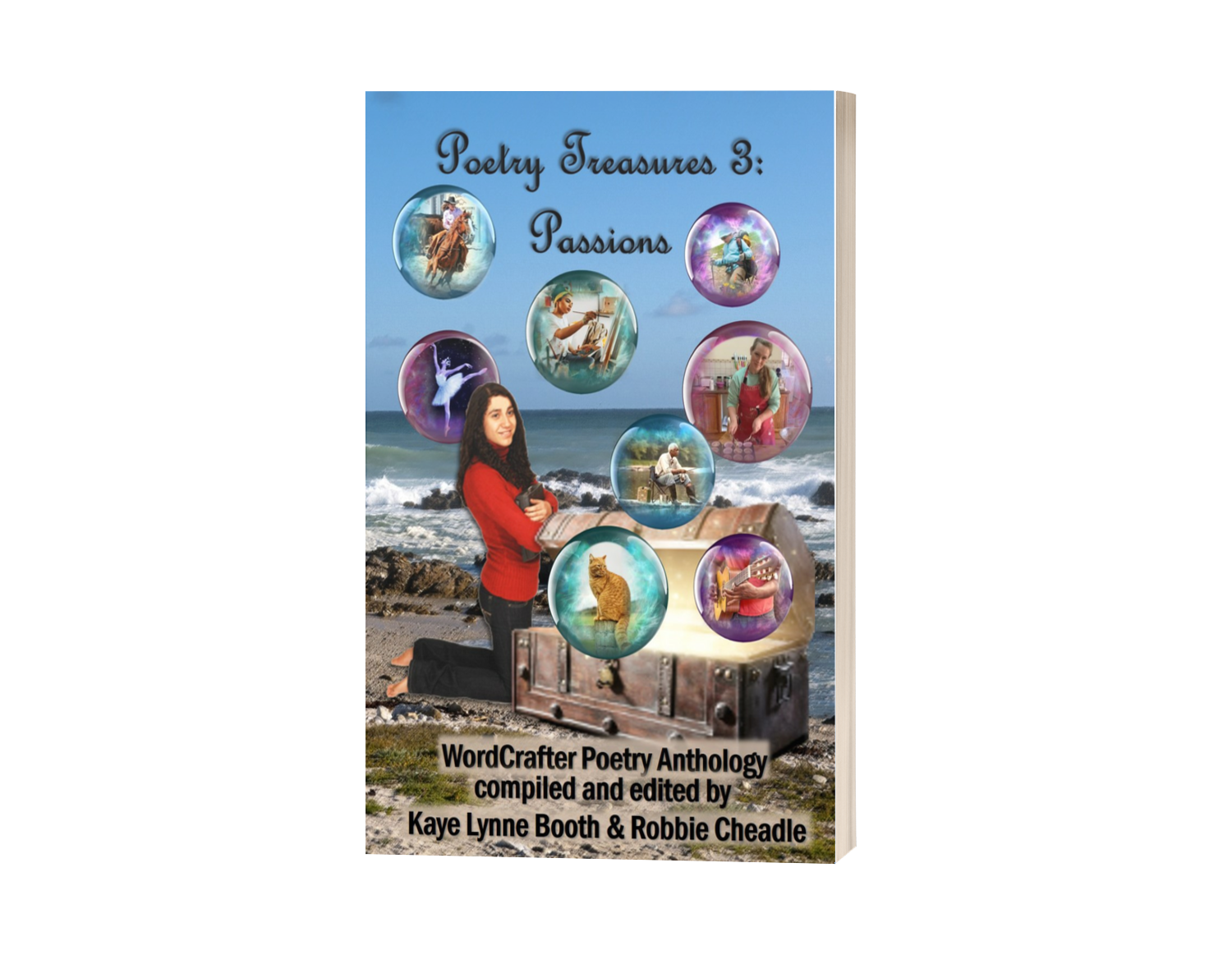
- Poetry Treasures 3: Passions: Poetry Anthology, by Kaye Lynne Booth and Robbie Cheadle, et. al.
- Raise the Tide: Daily Devotional, by James Richards
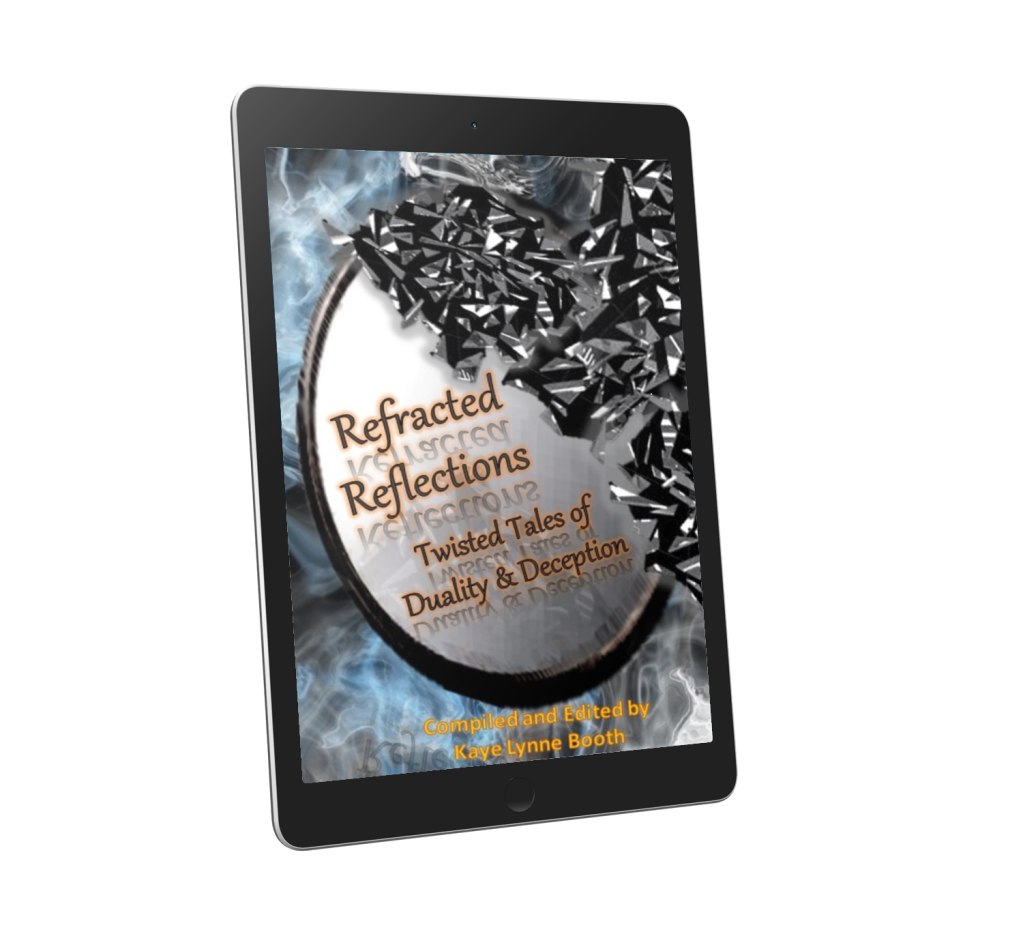
- Refracted Reflections: Twisted Tales of Duality & Deception, by Kaye Lynne Booth, et. al.
- Small Wonders: Reflective Poems, by Kaye Lynne Booth
- Spirits of the West: Western Paranormal Anthology, by Kaye Lynne Booth, et. al.
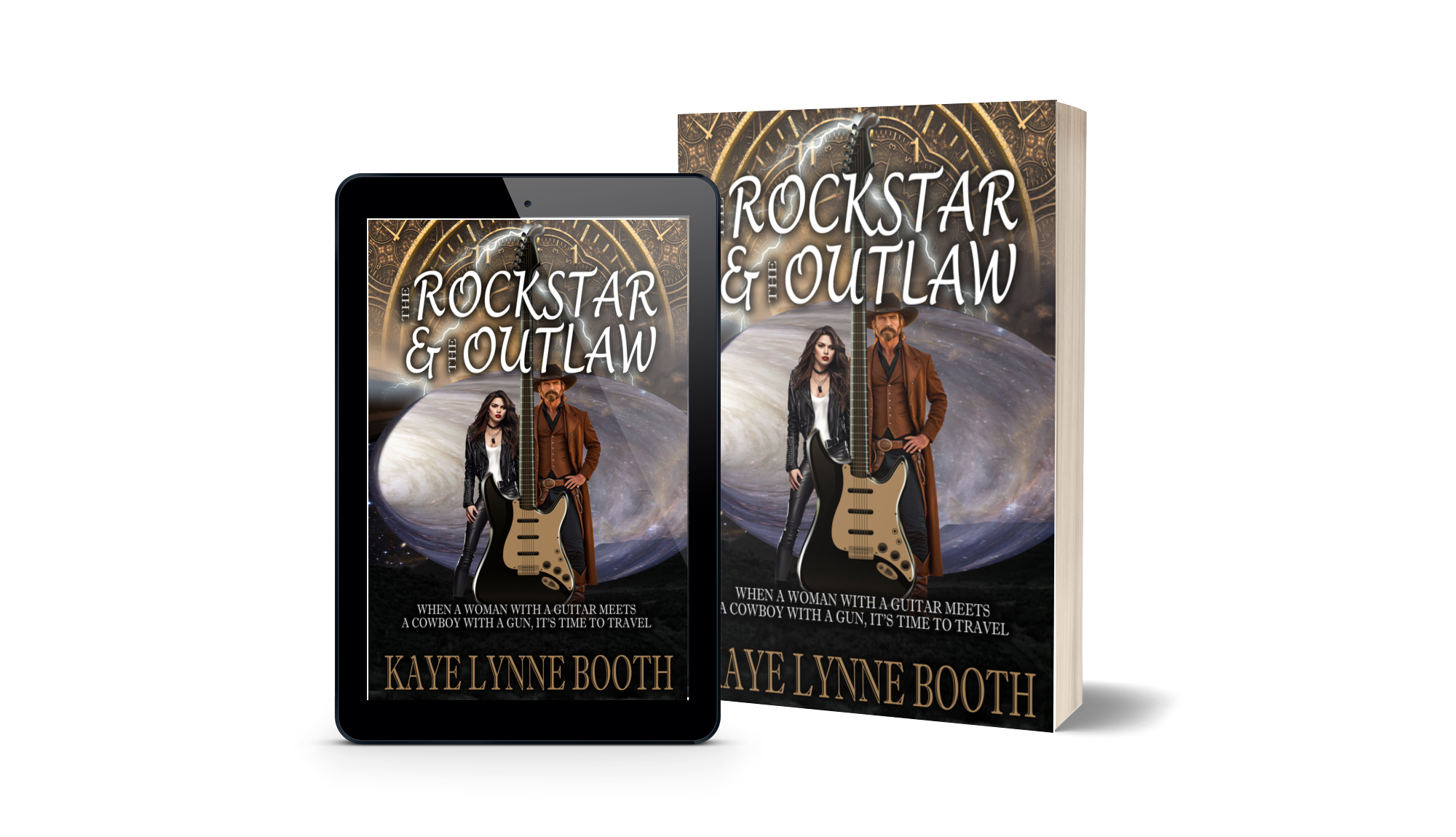
- The Rock Star & The Outlaw: Time Travel Adventure, by Kaye Lynne Booth
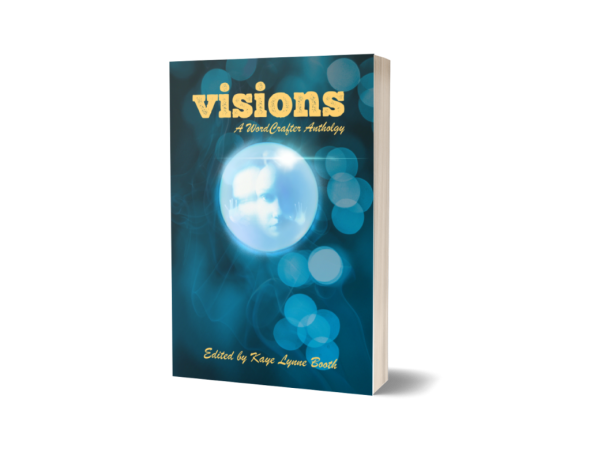
- Visions: Multi-genre Anthology, by Kaye Lynne Booth, et. al.
- Where Spirits Linger: Paranormal Anthology, by Kaye Lynne Booth, et. al.
- Whispers of the Past: Paranormal Anthology, by Kaye Lynne Booth, et. al.
Share this:

WordCrafter News: March Celebrations
Posted: February 26, 2024 Filed under: Book Promotion, Book Sales, Books, Branding, Nonfiction, Smashwords, WordCrafter Press, Writing Resource | Tags: Kaye Lynne Booth, Smashwords Read an Ebook Week, The D.I. Y. Author, WordCrafter Press, Writing Resource 9 CommentsSmashwords 2024 Read an Ebook Week
March 3-9, 2024, all WordCrafter Press ebooks will be on sale at a 50% discount in celebration of the Smashwords 2024 Read an Ebook Week. That will make some of my backlistThe discount will apply only to books purchased on Smashwords during this week, dedicated to encourage the reading and thus, purchasing of ebooks!
There are two ways that you can participate in Read an Ebook Week: by purchasing a discounted ebook on Smashwords and by sharing this post with all of your book channels and groups of hungry readers.
Hello, Readers!
We are fast approaching Read an Ebook Week, a week that encourages readers to pick up the digital device of their choice and download a new book to read.
I’m excited to announce that all WordCrafter Press digital titles will be available at a 50% discount, as part of a promotion on Smashwords to celebrate 2024 Read an Ebook Week! This is a chance to get my book, along with books from many other great authors, at a discount so you can get right to reading.
You will find the promo here starting on March 3, so save the link:
https://www.smashwords.com/ebookweek
If you wouldn’t mind taking part in promoting this celebration of Ebooks and reading, please feel free to share this promo with your friends and family. Share on social media channels wherever there are readers who would love a chance to find their next favorite book and, as the name suggests, read an ebook!
Thank you for your help and support!
Happy reading!
60th Birthday
That’s right. March 3 is my birthday, and I’ll be 60 years old. I’m thinking the Smashwords Read an Ebook Week celebration can just double as my birthday celebration, so if you want to give me a birthday gift, buy an ebook on Smashwords. For the 50% discount, you can find my books in the Smashwords store on my profile page: https://www.smashwords.com/profile/view/Kaye_LynneBooth
I’ve always said “You’re as young as you feel”, but lately, I’ve been feeling pretty old. Sure I do things slower and a little more painfully than I used to, but that’s not what I mean. I’m talking about that feeling like time is running out; the biological clock is ticking down.
On the other hand, this milestone could be opening a new chapter in my life, a chance to do something new, and perhaps unexpected. My day job of nine years ended last March, and I’ve been seeking other employment ever since. The job search has taken me down unexpected paths and I’m still not sure what I will end up doing. My writing has also been taking some unexpected paths lately. I can’t help but be curious, and perhaps a little anxious to learn what comes next.
AI Audiobooks by Kaye Lynne Booth

Books by Kaye Lynne Booth: Delilah, Hidden Secrets, and The Rock Star & The Outlaw are now available in AI audiobook on Google Play. And during the month of March, you can get each one for only 2.99. Buying one to check it out would also be a great birthday present, so grab your copy on Google Play March 1 – 31, 2024.
W.I.P
With my books, I have a better idea of what’s to come, and I’m excited, in March, to be working on my writer’s resource book, The D.I.Y. Author, scheduled to come out in June. In the conception and writing of this book, I take on a new persona. This book isn’t how I do what I do. The D.I.Y. Author is who I am. With this book, I am taking that persona public and you can now find me on X (formerly Twitter) @DIY_Author. Look me up. Say “Happy Birthday”, or just say “Hi”. I always enjoy hearing from friends and fans, as well as potential readers.
___________________________________________
Want exclusive content? Join Kaye Lynne Booth & WordCrafter Press Readers’ Group for WordCrafter Press book & event news, including the awesome releases of author Kaye Lynne Booth. She won’t flood your inbox, she NEVER sells her list, and you might get a freebie occasionally. Get a free digital copy of her short story collection, Last Call and Other Short Fiction, just for joining.
Share this:

Writer’s Corner: Why I changed my Twitter(X) handle
Posted: February 12, 2024 Filed under: Book Promotion, Books, Branding, Nonfiction, Social Media Promotion, Writer's Corner, Writing | Tags: Book Promotion, Kaye Lynne Booth, Nonfiction, Social Media Promotion, The D.I. Y. Author, WordCrafter Press, Writing 7 Comments
Branding is Important
I recently changed my Twitter handle, or X handle, or whatever it is we call it now. I can’t say that I like all the new changes to the platform, but honestly, although I’ve been on Twitter since 2010 as @GodsAngel1, I’ve not used it a lot, so many of the changes may have slipped my notice. Back in 2022, when I graduated, my cohorts pointed out that my Twitter handle was different than all my author social media call names, which either associated me as an author, or as a publisher with WordCrafter Press. I said that I had been @GodsAngel1 for so long that to change, well, no one would be able to find me.
But the thought of changing my Twitter handle never left me, and I knew they were right. @GodsAngel1 was a personal handle used when Twitter first came out, and you were limited to so few characters, that I couldn’t post a tweet with what I wanted to say. It didn’t really fit in with my author and publisher branding. Since 2022, I’ve been using Twitter, now known as X, more, and the idea of changing my handle kept popping into my head when using the platform. I don’t know why I kept dragging my feet on the issue, but I did until recently when a friend of mine wanted to help me out with promotions, and ask me if I could change my handle to something less personal, more professional. I decided that I couldn’t fight it any more, especially when I knew how important consistant branding is, so I gave in and changed it.
Making the Change
First, I had to figure out how to change my Twitter handle, but with some solid guidance from one of my cohorts, I found the proper channel in the app. I erased my previous handle and entered WordCrafterPress, and ws informed it was too long, as was AuthorKayeLynneBooth. So, I tried just putting in WordCrafter, and was informed that name was already in use by someone else. So much for branding.
Then, it occured to me that with the new nonfiction book on the process of becoming an independently published author, and doing it all yourself will add a new deminsion to my branding, and I could use this change to strengthen that connection, as the D.I.Y. Author. That’s what I am, and it’s what the book is about: becoming a D.I.Y. author as inexpensively as possible and still get results. So, you can now reach me on Twitter, or X, using my new handle @DIY_Author.
I hope you’ll look me up, like and follow because I need all the peeps I can get. Or does that have a new name, too? What are followers on X called? And when we post is it still a tweet? I can’t keep up with all the changes, and I’m still learning the ropes, so to speak, so please be patient with me.
Coming in 2024

How to work through the stages of the writing process on your own. The D.I.Y. Author shares the expertise I’ve spent years to acquire in one volume that will save new and aspiring authors both time and money, and inexpensive, but successful strategies for marketing and promotion.
___________________________________
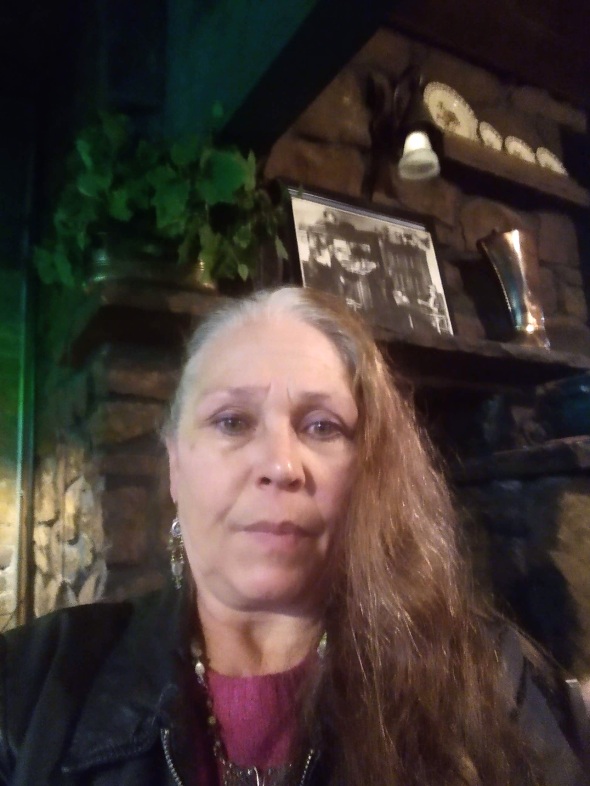
For Kaye Lynne Booth, writing is a passion. Kaye Lynne is an author with published short fiction and poetry, both online and in print, including her short story collection, Last Call and Other Short Fiction; and her paranormal mystery novella, Hidden Secrets; Book 1 of her Women in the West adventure series, Delilah, and her Time-Travel Adventure novel, The Rock Star & The Outlaw. Kaye holds a dual M.F.A. degree in Creative Writing with emphasis in genre fiction and screenwriting, and an M.A. in publishing. Kaye Lynne is the founder of WordCrafter Quality Writing & Author Services and WordCrafter Press. She also maintains an authors’ blog and website, Writing to be Read, where she publishes content of interest in the literary world.
___________________________________________
Want exclusive content? Join Kaye Lynne Booth & WordCrafter Press Readers’ Group for WordCrafter Press book & event news, including the awesome releases of author Kaye Lynne Booth. She won’t flood your inbox, she NEVER sells her list, and you might get a freebie occasionally. Get a free digital copy of her short story collection, Last Call and Other Short Fiction, just for joining.
Share this:

WordCrafter News: Kickstarter Update & My Next Project
Posted: January 29, 2024 Filed under: book marketing, Book Promotion, Books, Fiction, Historical Fiction, Kickstarter, Nonfiction, Publishing, Western, Women in History, Women's Fiction, WordCrafter, WordCrafter Press, Writing | Tags: Kaye Lynne Booth, Sarah, Special Illustrated Editions, The D.I. Y. Author, Women in the West, WordCrafter Press, Writing Reference 5 CommentsUpdate on Kickstarter Campaign
The Kickstarter campaign for Sarah is in full swing, but we haven’t fully funded yet. I set a $500 goal and we’re only 25% funded. The thing about Kickstarters is that they are an all or nothing deal. The campaign ends on February 12, and if it hasn’t fully funded by then, the backers pay nothing, and the author gets nothing, and all that is lost is the time and hard work put into the campaign. So, when you make a pledge, its just that and you don’t have to pay anything until the campaign ends on February 12, if it funds, and if it doesn’t, you pay nothing, and must wait until March 19th to get a copy of Sarah through distributors.
The good thing is, once funded, the author receives anything over and above the funding goal to help support the project even further. I’ve been discussing doing the series in audiobook with a talented narrator, and if this campaign funds enough above the funding goal, you will see that happen in the future.
That’s why I really want this campaign to be successful. And there’s no reason that it can’t be. We’ve got some exclusive rewards which can’t be found anywhere else: early digital copies of Sarah, signed print copies of Sarah, and Special Illustrated Editions of both Delilah & Sarah. (Special Edition covers and illustrations by DL Mullan of Sonoran Dawn Studios.) Plus both digital and signed print copies of Delilah are available as add ons.
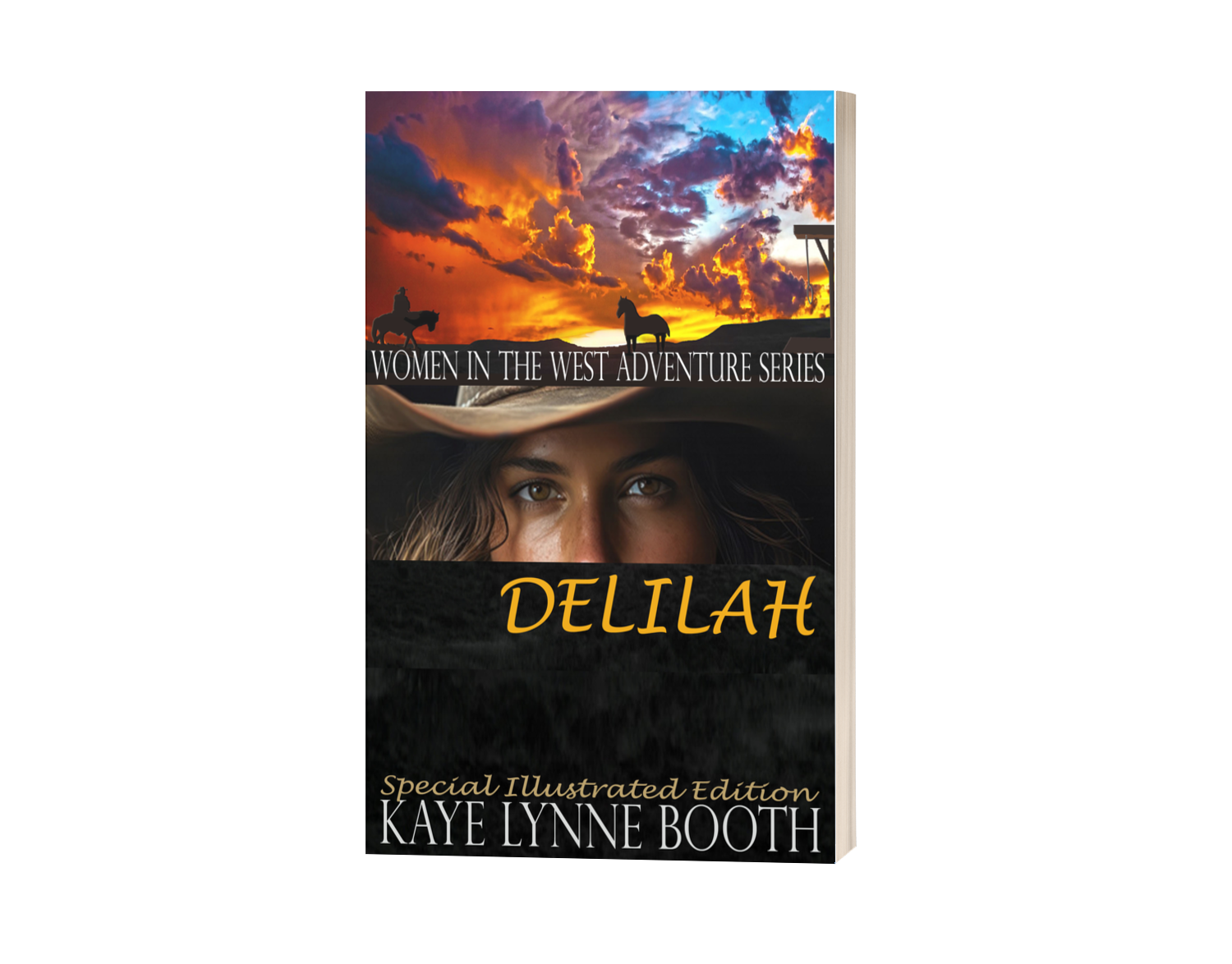

The best piece of advice I was given when learning about Kickstarters was only do campaigns for projects that you are going to do anyway. So, if it doesn’t fund, it won’t mean the end of the project, but it will be disappointing.
You can help, and get some of those great rewards, by backing the campaign before February 12. Your support of the project could help to reach the funding goal and more. Won’t you consider supporting this project?
You can check out the Kickstarter campaign and back this project here: https://www.kickstarter.com/projects/kayelynnebooth-wcp/sarah-3/
About the Books & the Series

Sarah is Book 2 of the Women in the West Adventure Series. The series is western historical women’s fiction with strong female protagonists and historical figures from the true life turned fictional in each book.
Sarah
Sarah is a young girl trying to make a place for herself in the world.
Sarah is not the young girl who was stolen away from Delilah anymore. Now she is Hair of Fire, mate of Three Hawks, even as she blossoms into a young woman and tries to make a place for herself among the Ute tribe.
When she is stolen away from the life she’s made with the Utes, she struggles to survive in the heart of the Rocky Mountains. A streak of stubbornness and determination take this tough, feisty heroine up against wild beasts of the forest and the rugged mountain landscape to Glenwood Springs, Colorado, where she receives a less than welcoming reception by some.
Will this young woman find her way back to the Ute tribe which she’s come to think of as family, or will she discover a place among the colorful inhabitants of the Colorado hot springs and mining town?
Follow along on her journey to learn who she truly is and where she belongs in this rough, and often hostile frontier.If you like strong and capable female protagonists, you’ll love Sarah.

About Delilah

Delilah is a woman haunted by her past.
Her homecoming from prison quickly turns into a quest for vengeance when she is brutally raped and left for dead, and her fourteen-year-old ward is abducted. Sheer will and determination take this tough and gritty heroine up against wild beasts of the forest, Indians and outlaws to Leadville.
Can the colorful inhabitants of the Colorado mining town work their way into Delilah’s heart, offering a chance for a future she thought she’d lost along with her innocence?
If you like strong and capable female protagonists, you’ll love Delilah.
A New W.I.P.: The D.I.Y. Author
In February, I’ll begin the actual writing of The D.I.Y. Author, my first writing reference book, and I’m excited to tell you about it.
I’ve put together writing reference anthologies in the past, drawing on the expertise of many authors, but The D.I.Y. Author will be the first writing reference book I’ve ever created solo, so I’m very excited, (and a bit nervous), about it. The biggest problem with putting out a reference book such as this one, is imposter syndrome. I mean, reference books are written by experts, aren’t they? So to create a book like this, you must consider yourself to be an expert and be able to convince others that you are so they will read it. I’ve never considered myself to be an expert, in fact I spend a good amount of time learning whatever I can from others whom I consider to be experts. So, looking at myself as the expert is a different point of view for me, a different mindset, but I’m learning. And that is how this book came about.
This book is about a subject that I am an expert about: doing it all yourself on a very limited budget. That’s me. It’s what I do. And in The D.I. Y. Author, I’ll be sharing all the tips and tricks that I’ve picked up along the way. I’ll share with you how I do it, from planning the book, to writing the book, to publishing and marketing the book. And it’s all stuff that you can do, too!
__________________________________________
Want exclusive content? Join Kaye Lynne Booth & WordCrafter Press Readers’ Group for WordCrafter Press book & event news, including the awesome releases of author Kaye Lynne Booth. She won’t flood your inbox, she NEVER sells her list, and you might get a freebie occasionally. Get a free digital copy of her short story collection, Last Call and Other Short Fiction, just for joining.
Share this:

WordCrafter Holiday Extravaganza Sale
Posted: December 12, 2023 Filed under: Anthology, Book Sales, Books, Collection, Dark Fantasy, Dark fiction, Fairy Tales, Fantasy, Fiction, Ghost Stories, Horror, Nonfiction, Paranormal, Photography, Poetry, Science Fiction, Short Fiction, Speculative Fiction, Stories, Western Paranormal, WordCrafter Press | Tags: 2023 Holiday Extravaganza, Book Sale, Books, Fantasy, Fiction, horror, Paranormal, Science Fiction, Speculative Fiction, Western Paranormal, WordCrafter Press Leave a comment
The WordCrafter Sale of the Year
Did you know that WordCrafter is having a Holiday Extravaganza Sale that includes every book in the entire WordCrafter Press backlist?
That’s right.
And books make great holiday gifts. Treat someone you know or treat yourself this holiday season.
December 1 – 22 every book in the WordCrafter Press back list is at a discounted price. Check it out.
Writing References

Ask The Authors – Only .99 cents
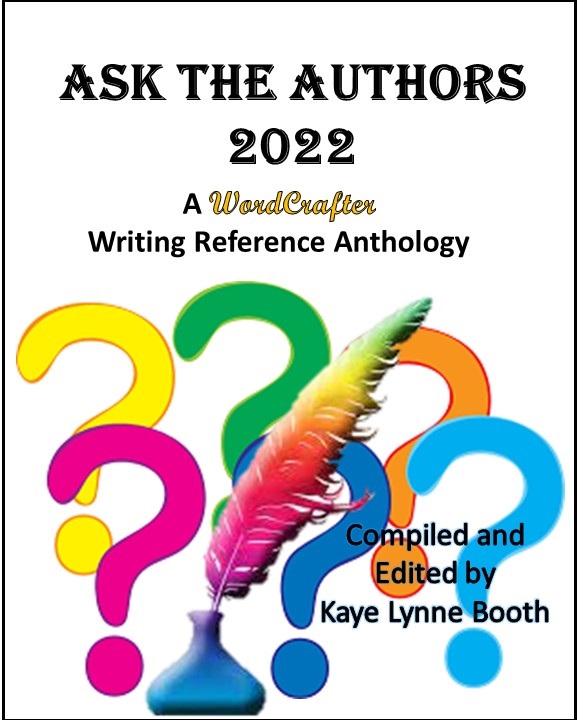
Ask The Authors 2022 – Only $2.99
Fantasy/Science Fiction/Paranormal/Horror Anthologies


Refracted Reflections:
Twisted Tales of Duality & Deception
Only $2.50

Visions – Only $2.99
Poetry Anthologies & Collections

Poetry Treasures – Only $2.99


Behind Closed Doors:
a collection of unusual poems
by Robbie Cheadle
Only $2.99

Books By Kaye Lynne Booth

Last Call
And Other Short Fiction
by Kaye Lynne Booth
Only .99 cents
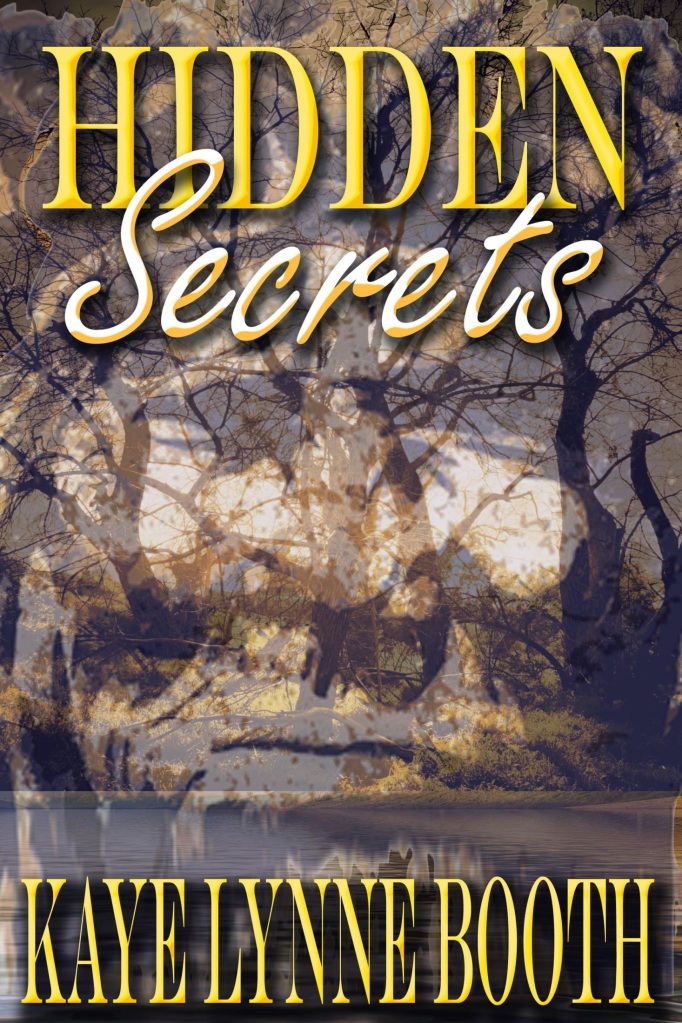
Hidden Secrets
Paranormal Mystery Novella
by Kaye Lynne Booth
Only $1.99
Daily Devotionals

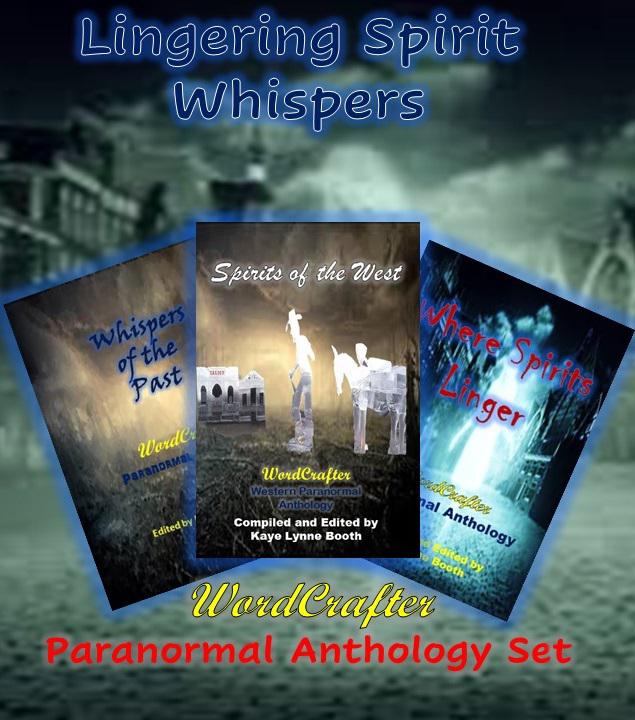
Paranormal Anthologies


Share this:

Review in Practice: Get Your Book Selling on Kickstarter
Posted: November 13, 2023 Filed under: Book Review, Books, Kickstarter, Nonfiction, Review in Practice, Writing | Tags: Get Your Book Selling With Kickstarter, Kickstarter, Monica Leonelle, Nonfiction, Russel Nohelty, Writer's Corner, Writing to be Read 4 CommentsWith $300,000 in fundraising across 20+ Kickstarter projects, Russell Nohelty knows a thing or two about running publishing campaigns for novels, nonfiction, anthologies, comics, audio dramas, and more. He tested his system with 70+ authors with great results, and is now generously sharing everything he knows about the platform for authors with an audience of zero as well as those with a fanbase.

In this book you’ll find:
- Why using crowdfunding is an important avenue for authors and how authors are currently using it
- Choosing the right project for Kickstarter and designing your campaign
- Budgeting your campaign for profitability (and why it’s critical for your success!)
- The types of messages you should send to your audience vs. cold traffic
- Delivering your rewards for your Kickstarter project
- Keeping momentum going after Kickstarter
Hailed as one of the most comprehensive books on Kickstarter for Publishing projects, this book is a must-have if you’re Kickstarter-curious or planning your campaign.
Purchase Link: https://www.amazon.com/Your-Book-Selling-Kickstarter-Profitability-ebook/dp/B09TQ4G5S6
_______________________________________________
I’m not a big name author, and when I first started hearing talk of using Kickstarter to sell books in 2022, I scoffed, thinking it was just another way to beg for money in an official capacity. Then Bryan Sanderson came along and ran a campaign that funded and made $4 million on the opening day, making authors everywhere sit up and take notice. You can find out more about how Sanderson’s campaign helped to pave the way for authors in this article by Dean Wesley Smith: https://deanwesleysmith.com/brandon-sanderson-kickstarter/.
Even after watching Sanderson’s success, I was skeptical. Just because it worked for him, he’s a big name author, and that doesn’t mean it will work for me. Then Kevin J. Anderson took his publishing students through a campaign set-up step-by-step, showing us how to do one properly, with his Dragon Business campaign. When his campaign funded on the first day, and by the end had raised $42,000, I decided this was a method of direct selling that I wanted to employ.
Getting Your Book Selling With Kickstarter, by Russell P. Nohelty and Monica Leonelle is a helpful book if you are thinking about using Kickstarter as a method of direct selling for your author business. This book helped me to decide on my projects, figure out my budget for the campaigns, choose my rewards, and set my funding goals. As a successful campaigner, Nohelty offers ideas for rewards, backer perks, stretch goals and add-ons, taking into consideration ease of production, ease of delivery, storage and tracking, and appeal to your audience. He offers advice on how to set reward tiers, adding digital items to physical ones to add value and build excitement in your backers. Plus so much more. He shares his proven system for running a successful Kickstarter campaign.
To date, I have done two campaigns for my own books, and I have two more planned for 2024. I’m practicing a business model similar to that of author Joanna Penn, although I don’t have my own store yet. Her model is to offer books direhctly first, through Kickstarter, and then through her own store on her site. Eventually, she makes her books available through distributors, but authors gets to keep more of their royalties when they sell direct, so going the direct route first makes sense. (You can learn more about Joanna Penn’s business model in her interview with Mark Leslie Lefabvre on the Stark Reflections podcast, episode #327: https://starkreflections.ca/2023/10/10/episode-writing-the-shadow-with-joanna-penn/
I’m an unknown author with a small independent press, so I needed to start small. My first campaign for Delilah and the Women in the West adventure series offered mostly digital rewards. The only physical item offered was the signed print copy of the book. For my top tier, I offered my backers a chance to name a character in book two, which I thought was pretty cool. At least two backers thought it was pretty cool, too.
Nohelty mentions steps in preparation for a campaign which hadn’t crossed my mind, such as promoting through my email list, which is a great idea. He suggests breaking down email lists so you can reach out to the readers in your target audience specifically. This is important, because once you send out all of your intensive promotions for your Kickstarter campaign, people may be tired of hearing from you. You don’t want folks to get annoyed and unsubcribe because you’ve been annoying in your promotions. The idea is to tailor your promotions to different specific lists, so no one is totally bombarded. Nohelty also suggests reposting all of your email content on social media, as well. Also, probably a good idea if strategically placed. But, I have to tell you-one of the really cool thing about Kickstarter is the built in email list, which keeps the lines open and goes out to all of the backers of the campaign, even long after the campaign has ended, so you have an open line of communication with all of your Kickstarter fans.
Emailings are something that I haven’t worked a whole lot with. That may change as my own mailing list grows. My marketing has always gone through this blog, Writing to be Read, which I then broadcast across my social media channels. This works fairly well, but I realized that I wasn’t targeting my specific audiences in this way. This made me realize that Nohelty’s email marketing might be more effective for more specific targeting. As I prepare for my third Kickstarter campaign, for Sarah, Book 2 in the Women in the West Adventure series, I may look closer at ways in which I might utilize email marketing to my advantage. I’m still a little hesitant though, as Nohelty recommends send frequent emails, (more than one a day). That really seems a bit much to me, but Nohelty stands behind his system.
I set the goal at $500 for both campaigns, because I felt it was a reasonable reach for little old me, who is not a bestselling, or even a known author. Nohelty backs up the advice given on the Six Figure Authors podcast, episode #048 (https://www.youtube.com/watch?v=5SvQ5hJ1i0Q). They recommended that you set a goal that is reachable and still brings in enough to cover your expenses and see the project through. A good point made in the podcast was that if you set your goal too high and you don’t fund, then you walk away with nothing, so a lower goal may be better than no money at all. They also pointed out that once your campaign funds, anything else you bring in above and beyond that is just icing on the cake. Kevin J. Anderson’s goal for his Dragon Business Kickstarter campaign was $10,000, because that is a reasonable goal for a bestselling author to shoot for, but he brought in $42,000. Nohelty recommends consideration for the size of your mailing list when setting funding goals.I think $500 is a reasonable goal since my email list is still pretty short and I’m an unknown author.
When I ran my second campaign for The Rock Star & The Outlaw offered more physical rewards because I hadn’t finished writing the book at the time that I set it up, and I didn’t realize there would be potential for a second book. (Yes, the ending surprised me, too.) So, for the top tier on this one, I offered a goodie bag with the WordCrafter logo with a poster and a signed print copy of the book, as well as the early digital copy which all backers above the $5 received.
Nohelty recommends using more digital rewards, because they are easy and cost you less to fulfill. The physical rewards surely made the cost of the second campaign higher. And if you do offer physical rewards, be sure you figure the shipping costs in to the cost of fulfillment. Since I set the same goal for both campaigns, I didn’t make as much from the second one. Definitely something to think about.
He also offers advice on setting your tier levels. He recommends $1, $10, $25, $50, and $250 tiers. I’ve backed a few campaigns now, and from what I’ve seen, each one handles setting the tier levels differently. Mine each had three tier levels, the first two being $5 and $25. For my first campaign, the top tier was $50. For my second campaign, I raised the top tier to $75, because it was mostly physical rewards which would need to be delivered via snail mail.
Another good piece of advice Nohelty offers involves offering merchandise for rewards. Physical items require you to calculate shipping into the overall cost for the fulfillment of each reward. Print books can be shipped media mail, which is less expensive, but as soon as you add any type of merchandise, that is no longer an option. So, when deciding on rewards, add-ons, stretch and flash goals, the cost of shipping must be figured in so you don’t overextend yourself and cut deeply into your profits.
Nohelty explains early bird perks-setting rewards to be available only to early backers with a point at which it is no longer available. I haven’t done this yet, but this strategy appeals to me and has me thinking about what I could offer as incentive to jump into the campaign on Day 1. This idea might be helpful, since I am an unknown author and my campaigns so far haven’t funded until near the end. It looks like Nohelty offers perks for backers and perks for Week 1 backers, so if you back on Day 1, you would receive both rewards, which is pretty cool. In fact, Nohelty offers different perks every week, which means that you can get extras if you back his campaign at any point. He suggests a perk for backing in the first 48 hours, and a perk a week for the duration of the campaign.
Stretch goals are offered when you hit a certain level of funding to keep the money climbing, and I’ve seen the bigger authors use them. They are usually added after funding, and since my campaigns didn’t fund until near the end, there wasn’t really a chance for me to use them. The second campaign funded three days before the end of the campaign, so I offered a stretch goal reward if we reached an additional $100, bringing our total to total $600. We didn’t make it, and thus ended my brief experience with stretch goals.
Flash goals were something I had heard of, but didn’t really understand what they are. According to Nohelty, they are perks given to ‘recharge momentum’ on the campaign. They are brief opportunities, i.e. “Anyone who backs the campaign in the next twenty-four hours gets a bonus.” They are designed to intice those following your campaign into taking the plunge and becoming a backer, thus keeping your totals rising toward your goal, or if fortune is with you, past it and even higher.
I have to say, Russel Nohelty’s Get Your Book Selling on Kickstarter has been extremely helpful as I look forward to future campaigns. In addition to that discussed above, he offers advice on how to set-up your Kickstarter and appeal to your audience, some of the challenges you might run into, how to keep your campaign’s momentum going, and more.
Other resources
WMG Publishing offers a free course from Dean Wesley Smith, Kickstarter Best Practices for Fiction Writers here: https://wmg-publishing-workshops-and-lectures.teachable.com/courses/
_____________________________________________________

For Kaye Lynne Booth, writing is a passion. Kaye Lynne is an author with published short fiction and poetry, both online and in print, including her short story collection, Last Call and Other Short Fiction; and her paranormal mystery novella, Hidden Secrets; Book 1 of her Women in the West adventure series, Delilah, and her Time-Travel Adventure novel, The Rock Star & The Outlaw. Kaye holds a dual M.F.A. degree in Creative Writing with emphasis in genre fiction and screenwriting, and an M.A. in publishing. Kaye Lynne is the founder of WordCrafter Quality Writing & Author Services and WordCrafter Press. She also maintains an authors’ blog and website, Writing to be Read, where she publishes content of interest in the literary world.
_________________________________________________________
Want exclusive content? Join Kaye Lynne Booth & WordCrafter Press Readers’ Group for WordCrafter Press book & event news, including the awesome releases of author Kaye Lynne Booth. She won’t flood your inbox, she NEVER sells her list, and you might get a freebie occasionally. Get a free digital copy of her short story collection, Last Call and Other Short Fiction, just for joining.
Share this:

Review in Practice: Million Dollar Outlines
Posted: August 14, 2023 Filed under: Book Review, Books, Nonfiction, Outlining, Plot, Review, Review in Practice, Writing | Tags: David Farland, Million Dollar Outlines, Nonfiction, Plotting, Review in Practice, Writing, Writing to be Read Leave a comment
Outline your novel for success, taught by a master writer and instructor.
Bestselling author David Farland taught dozens of writers who went on to staggering literary success, including such #1 New York Times Bestsellers as Brandon Mull (Fablehaven), Brandon Sanderson (Wheel of Time), James Dashner (The Maze Runner) and Stephenie Mayer (Twilight).
Dave was an award-winning, international best-selling author with over 50 novels in print, and a tireless mentor and instructor of new writers. His book Million Dollar Outlines is a seminal work teaching authors how to create a blueprint for a novel that can lead to bestseller success.
In this book, Dave teaches how to analyze an audience and outline a novel to appeal to a wide readership. The secrets found in his unconventional approach will help you understand why so many of his authors went on to prominence.
David Farland was hailed as “The wizard of storytelling” and one of the best writing instructors in the field for many years. Dave passed away in January 2022, but WordFire Press is pleased to bring this vital resource back to a wider readership.
Purchase Link: https://www.amazon.com/Million-Dollar-Outlines-Writing-ebook/
What I love about books on the craft of writing, is that they get my mind working as I automatically try to apply the techniques I’m reading about to my current W.I.P., and it often takes my writing in new directions which I hadn’t imagined before. Million Dollar Outlines, by David Farland did this for me with, not one, but two books which I am currently working on. As all my Delilah Kickstarter campaign backers know, I am actively working on the research and outline for Sarah, Book 2 in my Women in the West adventure series, and this is the book I intended to try out Farlands methods with, but I found some of his advice needed to be applied to a story which I’m just finishing up.
By reading through the elements that Farland believed should go into your outline, I discovered some things that I knew my western time-travel romance adventure novel, The Rock Star & The Outlaw needed, but had neglected to consider as I flew through the writing during NaNoWriMo last year. If you were with me then, you will know that I had a partial working outline, which changed as events in my story veered from the path I had prepared, but mostly my fingers just flew over the keys at every opportunity, and I adjusted my outline accordingly, so there was little time to think about the purpose that each scene or chapter served besides moving my story from point A to point B. (Which is why, this year, I plan to be better prepared and I’m currently working on the outline for Sarah, so that I have a fully developed outline when November roles around.) So as I read this very informative book, which is packed chock full of useful writing advice, I saw places where the Rock Star story is lacking, and even though I’m well past the outlining stage with this book, I went back and did the checks to be sure my story was hitting all the proper beats, and it wasn’t. That’s why took the time for a developmental edit and do the revisions, and now, it is.
Of course, I also used this book to improve my outlining technique with Sarah, which was my original lol intent, keeping in mind that Million Dollar Outlines is a book aimed at outlining to increase productivity. In order to do that, Farland begins by asking, and answering, questions such as ” Why do we read or crave stories?”, or “What is a story and how does it work?”. Then he has you take a look at the shape of your story.
With Sarah, I already knew that the shape of her story would be similar to that of Delilah, because they are both in the same series. Delilah was my first novel and a huge experiment where I tried many different methods and styles, but my method of creating a partial outline and revising as I go seems to have stuck with me with The Rock Star & The Outlaw, so I had planned to stick with it on Sarah.
According to Farland’s theory, that will no doubt make Sarah linear in style with numerous obstacles and hurtles to overcome along the way, because like Delilah, Sarah will embark on a hero’s journey as an unwilling traveler turned heroine. I use this method because it offers me some direction to get the story started, but also allows flexibility because my stories rarely end up going where I start out thinking they are headed.
Next, Farland has us look at the potential for a best selling story and how to analyze your audience to better create stories that readers will like. This is not something which I would normally think about when outlining, but it is something that every author should think about if the end goal is to sell what we write, and what better time to think about this step, than during the outlining process?
Farland also talks about the elements of story, such as setting, characters, conflict and treatment. Normally, I write out a scene out starting with the character interaction which moves the story forward, then I go back and fill in the descriptions to bring the setting to life, so his suggestion to develop the settings in the outlining process, would be a very different approach for me. By outlining in this way, I can see the potential to have most of the pieces to my story in place in my outline where I could almost pluck them from the outline and place them into the story, like pieces to a jigsaw puzzle.
Regarding characters, had a good start with Sarah because her character was at least partially developed in Delilah. In addition, I had a pretty good idea of who my supporting characters were going to be, and their parts in the story because they are either historical characters, which I took certain liberties with. So, all I had to do with them was to develop them more, giving each a physical description and a part in the book. In addition to Sarah, members of her Ute Indian family also made brief appearances in Delilah, so they just needed to be fleshed out a bit. And then there are the two characters who two of my supporters in the Delilah Kickstarter campaign got the privilege of naming which needed to be fully developed.
Once I knew who my characters were and the role that each would play, I had a basic outline of events written out, because you can’t know what role a character will play until you figure out what they do in the story. But this is my list of main/supporting characters.
- Sarah – protagonist – red hair and freckles – 17 – raised in bordello, traveled with Delilah until she was abducted and sold to the Utes, who treated her well & she was happy with. She strives for self-reliance and learns healing from the old Ute woman, Flies like a Heron, becoming a valuable member of the tribe.
- Three Hawks – love interest – Sarah’s Ute husband- kind to Sarah, but brave warrior- son on tribal elder, will one day be chief.- traded many horses for Sarah and fights to keep her.
- Flies Like a Heron – healer & mentor – kind old woman & wife of Ute shaman, Raven Wings – teaches Sarah healing ways
- Owoz Crebo – Antagonist – lone Sioux warrior who visits Ute camp guised as a friend, but steals away with Sarah in the night – an outcast of his own tribe – old & scarred
- Lillian Alura Bennett – Temptress – red haired Irish Woman who runs boarding house/ bordello in Glenwood Springs – was orphaned and became a ‘crib girl’, then worked her up until she made a spot for herself in one of the better houses, the bought out the madame – kind offers Sarah a room in exchange for her domestic services.
- Kate Elder – mentor – historical character – independent prostitute, on her own since young, companion to Henry ‘Doc’ Holliday – came to Glenwood Springs in his last days & cared for him, kind of ‘the woman behind the man’s – kind, helps Sarah, takes care of Doc
This is my list of settings which will need to developed. I’ve done a lot of research on the history of Glenwood Springs, but the rest must come from within my own head, but a few back woods excursions may be in order to get a feel for the terrain.
- Ute camp – already partially developed from Delilah.
- Cliffs where Indian battle takes place
- Mountains between Telluride and Glenwood Springs
- Glenwood Springs, 1887 – a. Glenwood Hotel/ Docs room & Fictional boarding house
Farland goes on to offer up plotting tools, which can be used in the construction of your story to hit the emotional beats that will grasp your readers and won’t let go. He suggests tools such as timebombs, dilemmas, crucibles, reversals, revelations, twists, motivations, mystery, romance, varying emotions, gads, braiding conflicts, varying conflicts, identity conflicts, centering, doubling, haunting, tripling, stacking, growth, duality, the third alternative, the rule of threes, spectacles, adding a thematic line, placing your world in jeopardy, or creating an epic. I’ve used a few of these, such as the rule of threes, twists, revalations, and reversals, but others were new to me. I bet you see a few tools in the list above which could use some explanation. I know there were for me.
We all know what a twist is, when the story suddenly takes off in an unexpected direction, or a revelation, where your characters reveal something about themselves which bears on their actions in the story. The Rule of Threes says that you should call something that you want readers to notice three different times throughout the story, if you want it to stick in your readers head. I’ve used that one in every story that I’ve written. Doubling, tripling and haunting are all methods of doing just that. Some, like placing the world in jeopardy, may work better for certain genres more than others, but it is always a good way to raise the stakes in the story. I used this one in my science fantasy series, still in progress, Playground for the Gods, which centers on a group of beings who destroyed their own planet and come to Earth to make their new home, but some members threaten to repeat their peoples mistakes and destroy Earth as well. This particular tale is also an epic, so there’s another plotting tool used to create story.
Then, Farland goes on to discuss the plotting process, talking about what makes a good beginning, middle and end and incorporating it all into your outline. I’m busy working right now, incorporating some of Dave Farlands suggestions into my outline for Sarah.
I have a more detailed outline right now for Sarah than I ever had for any story, and it still looks like it will be too short. I’ll have to go back and see what other plotting tools I may I want to ascertain that book 2 in my Women in the West series will be even better than book 1.
Will it be a million dollar outline? Not in the sense in which Farland was using it. He used his outlines to sell his stories to publishers and producers. For Sarah, I am both author and producer, but maybe the story will sell enough copies to make a million. I’ll just have to wait and see. I hope you’ll stick around until Sarah comes out in 2024 to see the end results, too.
____________________________________

For Kaye Lynne Booth, writing is a passion. Kaye Lynne is an author with published short fiction and poetry, both online and in print, including her short story collection, Last Call and Other Short Fiction; and her paranormal mystery novella, Hidden Secrets; and book 1 of her Women in the West adventure series, Delilah. Kaye holds a dual M.F.A. degree in Creative Writing with emphasis in genre fiction and screenwriting, and an M.A. in publishing. Kaye Lynne is the founder of WordCrafter Quality Writing & Author Services and WordCrafter Press. She also maintains an authors’ blog and website, Writing to be Read, where she publishes content of interest in the literary world.
____________________________________________
Want exclusive content? Join Kaye Lynne Booth & WordCrafter Press Readers’ Group for WordCrafter Press book & event news, including the awesome releases of author Kaye Lynne Booth. She won’t flood your inbox, she NEVER sells her list, and you might get a freebie occasionally. Get a free digital copy of her short story collection, Last Call and Other Short Fiction, just for joining.
Share this:

Book Review: Wrong Place, Wrong Time
Posted: July 21, 2023 Filed under: autobiography, Books, Nonfiction | Tags: autobiography, Book Review, David P. Pearlmutter, Travel Adventure, True Story, Writing to be Read, Wrong Place Wrong Time 2 Comments
About the Book

Having lost everything, I leave memories of a London police cell behind me and head for Marbella in Spain with its promise of adventure and fun. Little do I know that I’m about to be thrust into the most terrifying time of my life.
Wrong Place Wrong Time is a gripping true-life story of an unimaginable nightmare and how my ticket to a new life turns out to be a one way ticket to hell.
Purchase Link: https://www.amazon.com/Wrong-Place-Time-Productions-Reservations-ebook/dp/B008955FG2
My Review
Wrong Place, Wrong Time, by David P. Pearlmutter is a gripping true auto-biographical story. Having made one huge mistake which rocked his world and changed his life direction, a fresh start in another country sounds like a good idea. Instead, he finds himself in so deep, he might not be able to pull himself out, when he truly is in the wrong place at the wrong time.
It’s obvious that in the brutally honest telling of this tale, the author reveals his own inner flaws, making no excuses for his own mistakes. Nor does Pearlmutter spare the ugly details throughout. Anyone who has been down on his luck can relate to David’s character in the story, and will understand his fear and his panic as his situation spirals downhill, completely out of control.
A tragic tale of missteps and mayhap, I give Wrong Place Wrong Time five quills.

__________________________________________________________________________
Kaye Lynne Booth does honest book reviews on Writing to be Read in exchange for ARCs. Have a book you’d like reviewed? You can request a review here.
Share this:

Women in America
Posted: July 17, 2023 Filed under: history, Nonfiction, Women in History, Writing | Tags: Women in History, Women's Suffrage, Writing to be Read 3 CommentsHow and why did women’s roles and movements change during the Progressive Era?
Prior to the turn of the century, the struggle for women’s suffrage had smoldered since Abigail Adams wrote her husband, John, asking that he “remember the ladies” as the Constitution of the United States was being drafted. John did not pay heed to her request and the battle for women’s suffrage had begun. In the following years, women lost the right of suffrage in New York in 1777, in Massachusetts in 1780, and in New Hampshire in 1784. Then in 1787, the Constitutional Convention placed the right to vote with the states and woman lost the right to vote in all states, except New Jersey. In 1807, it was lost there, as well. (2) It seemed that men were determined to keep women in the home and out of the political arena.

Women were just as determined to gain equal footing. The first women’s rights convention was held in Seneca Falls, New York on July 17, 1848, and Equal Suffrage was adopted in a general declaration of rights. (2 & 3) Women’s rights conventions were later held in Salem, Ohio and Worchester, Massachusetts in 1850, and from then until 1861, annual women’s rights conventions were held. Through the efforts of women like Elizabeth Cady Stanton, Lucretia Mott, Lucy Stone, Abbey Kelly Foster, Angelina and Sarah Grimke and Susan B. Anthony (3), the cry for women’s suffrage was heard in the political arena, but the men who held the power continued to ignore their pleas, as were the ballots of the 172 women that attempted to vote in New Jersey, in 1868, and the 44 ballots cast by women in Massachusetts, in 1870. In 1886, the Suffrage Amendment made it to the Senate, but was voted down 2 to 1. (2)
Women’s roles had been mainly restricted to the home and family, but industrialization and the Gilded Age saw more women in the factories and work places, working long hours for little pay, just like their male counter parts. The Progressive Movement offered a platform that women could use to gain support for the cause of suffrage. In 1890, the formation of the National American Women’s Suffrage Association came about when the two existing women’s groups, the American Women’s Suffrage Association, whose efforts had been directed at the state legislatures, and the National Women’s Suffrage Association, whose efforts had been directed toward an amendment to the U.S. Constitution, joined forces and combined their resources and voices. (1 & 3) The group concentrated on a state-by-state approach to gaining the right to vote, and first earned the right to vote in Wyoming, with Utah, Colorado and Idaho close behind. (1) The state of Washington granted women’s suffrage in 1910, and in 1911, California also passed suffrage. In 1912, three more states granted women suffrage: Oregon, Arizona, and Kansas. (2)

In the early 1900’s, the Congressional Union was formed and they campaigned for suffrage at the national level. (1) In 1911, 3,000 women ascended upon New York City in the name of women’s suffrage. During the election of 1912, Theodore Roosevelt Progressive Party included women’s suffrage in their platform. (2) While Woodrow Wilson played on progressive ideals on many issues as he strove for the presidency, women’s suffrage was not an issue that he supported. (1) On March 3, 1913, a women’s suffrage parade took place on Pennsylvania Avenue taking the cause right up to the White House, one day prior to Wilson’s inauguration. Members of the anti-suffrage movement damaged floats and attempted to block the parades passage, while thousands of spectators cheered and urged the women on. The demonstration continued only when troops were called in to restore order (1) after almost two hundred women had been injured in this mob action, yet no arrests were made. (2)
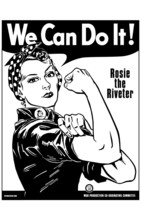
World War I saw even more women entering into factory labor and making labor contributions in support of the war effort. Women declared that their war contributions deserved recognition of their political equality. (4) In 1916, a breakaway group from the NAWSA, lead by Alice Paul formed the National Women’s Party. They began more radical tactics to push for a federal suffrage amendment. In January of 1917, they began posting “Sentinels of Liberty” at the White House. Beginning in June, almost 500 women were arrested and 168 did time in jail for the demonstration tactics. Those that did jail time were not released until 1918, when the Appellate court ruled that the arrests were illegal. President Wilson changed his position on women’s suffrage, and in a speech given on September 19, 1819, he openly supported the cause. In January of 1919, the NWP lit a “Watchfire for Freedom” and posted a guard until the Suffrage Amendment passed the Senate on June 4th. It was ratified by the required 36 states, with Tennessee being the final vote, and it became law on August 26th. (2) Charlotte Woodward, who had attended the original women’s rights convention in Seneca Falls at the age of 19, was the only member still alive to see the fruition of their efforts. (4)
1. U.S. History Lesson 52 – The Progressive Impulse: Women and Blacks in America. Themes in History: Diplomacy and Foreign Policy. 4 October 2009. https://cccs.blackboard.com/webct/RelativeResourceManager/Template/multimedia/lesson52/lessonp_nroc_nonap.html
2. No Author. Suffrage Activism Enters the 20th Century. Women’s Resources. 4 October 2009. http://dpsinfo.com/women/history/timeline.html
3. No Author. In the United States.
4. Lewis, Jane Johnson. August 26, 1920: The Day the Suffrage Battle Was Won. About.com. 4 October 2009. http://womenshistory.about.com/od/suffrage1900/a/august_26_wed.htm
________________________________________________________________

For Kaye Lynne Booth, writing is a passion. Kaye Lynne is an author with published short fiction and poetry, both online and in print, including her short story collection, Last Call and Other Short Fiction; and her paranormal mystery novella, Hidden Secrets; and book 1 of her Women in the West adventure series, Delilah. Kaye holds a dual M.F.A. degree in Creative Writing with emphasis in genre fiction and screenwriting, and an M.A. in publishing. Kaye Lynne is the founder of WordCrafter Quality Writing & Author Services and WordCrafter Press. She also maintains an authors’ blog and website, Writing to be Read, where she publishes content of interest in the literary world.
_____________________________________________________________
Want exclusive content? Join Kaye Lynne Booth & WordCrafter Press Readers’ Group for WordCrafter Press book & event news, including the awesome releases of author Kaye Lynne Booth. She won’t flood your inbox, she NEVER sells her list, and you might get a freebie occasionally. Get a free digital copy of her short story collection, Last Call and Other Short Fiction, just for joining.