Posted: December 24, 2018 | Author: kayelynnebooth | Filed under: Adult, Author Profile, Books, Children's Books, Collaboration, Cover Art, Fiction, Growing Bookworms, Horror, Interview, Poetry, Stories, Writing | Tags: Children's Stories, Children's Writing, Growing Bookworms, Robbie Cheadle, Sir Chocolate, While the Bombs Fell |
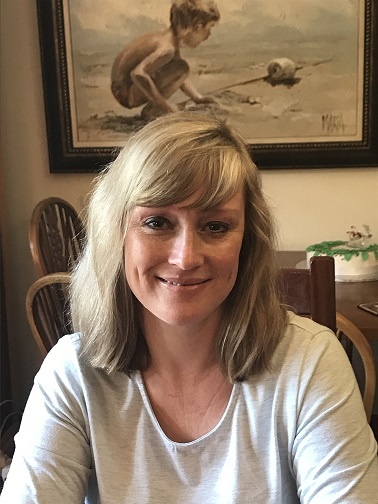
Robbie Cheadle is a very creative mother, author and fondant artist, who thinks outside the box to find inventive solutions for life’s difficulties. I first met Robbie through Sonoran Dawn’s Dead Man’s Party Halloween book event, where I did a reading of her short horror story, The Willow Tree, via audio recording for the event. During her takeover, Robbie posted images of her delectable creations to promote her Sir Chocolate book series for children, which she wrote with her son, Michael. She uses these image of her baked creations as cover art and to illustrate the book series. I thought this was incredibly innovative, and I immediately wanted to know more about this woman, and it didn’t take long to decide that I wanted to add her to the WtbR team.
Robbie is my Christmas gift this year, as I’ve been searching for a children’s author to join the Writing to be Read team. So, starting in January, Robbie will be popping in the second Wednesday of each month with her new blog series on writing for children, Growing Bookworms. I can’t wait to see what she has to share with us, so let’s learn more about her.
Kaye: Your Sir Chocolate covers are photos of your own delectable desert creations, which is very creative. Which came first – the baking or the writing?
Robbie: I started with baking and fondant art quite a long time before we wrote the books, but pairing the two was an idea that only came later. I used to write poetry and descriptive passages as a tween and teenager. Emily of New Moon by LM Montgomery was my favourite book when I was a tween. Emily is a poetess in the book and her father is a writer. The book inspired me to write down my thoughts and feelings.
This slideshow requires JavaScript.
Kaye: Would you share the story of your own publishing journey? How did the published works of Robbie Cheadle come to be?
Robbie: I never planned to become a published author when I first started writing the Sir Chocolate stories. My son, Michael, aged 6 years old at the time was having difficulties with learning to read and write. He was diagnosed with an auditory processing problem which made these activities difficult for him. He had the loveliest story ideas about a little man made of chocolate who lived in a land where you could eat anything, even the sand, trees and houses. In order to encourage him to write, I made up rhyming verse stories using his ideas. Together we wrote them down in handmade books.
I have always enjoyed fondant art and sometimes Michael would come and sit with me and make his own version of what I was making. We started making illustrations for the books by taking photographs of our creations. My nieces and nephews enjoyed the Sir Chocolate stories, so I tried them out with my Sunday school class of children. One of my friends at the Church suggested I send the stories and pictures to a friend of hers who is a publisher in the UK. Anne liked the stories and gave us a contract for the Sir Chocolate series of books.
Kaye: You talk about fondant art. I, for one had never heard of this. Could you explain briefly what fondant art is?
Robbie: Fondant is also called sugar dough and is an elastic type of icing, almost like modelling clay. This is the substance that cake bakers use to make figurines, flowers and other edible artworks for cakes. The items in the picture I emailed you are all made of fondant.
Kaye: You’re the co-author, along with your son Michael of the Sir Chocolate book series for young readers. How did that partnership come about?
Robbie: Between the ages of 6 and about 9 years old, Michael and I continued to make up Sir Chocolate rhyming verse stories from time to time. We would be doing something like visiting an ice cream shop and an idea would come to us. We would then chat about the idea and develop it into a story. Michael has delightful ideas like the chocolate snow and the ice-cream rainbow fairies who feature in Sir Chocolate and the Ice-cream Rainbow Fairies’ story and cookbook which will come out in 2020.
Kaye: What’s the one thing you hope your son takes away from this venture?
Robbie: I always hoped that Michael would become a proficient reader and learn to enjoy books and reading. It is not easy for a child who struggles to learn to read to develop a love of reading. I am very happy to say that this has happened. Michael now reads on his own for about 30 minutes a day. We often read together with me reading my book of the day and him reading his current story. Lately, these are all Rick Riordan books.
Kaye: What ages are the Sir Chocolate series aimed at?
Robbie: The Sir Chocolate books are aimed at young children, aged 3 to 9 years old. They are lovely for beginner readers as they are comprised of rhyming verse.
Kaye: Each book in the Sir Chocolate series features a story and a cookbook. That’s an interesting combination. Would you like to tell us a little more about why you chose to pair the two?
Robbie: Sir Chocolate is a little man made of sweets and sugar. All the characters in the books are made of edible products as well as all the houses, trees, flowers and even the rivers and the rocks. As all the illustrations are made of cake, biscuits and sweets, it seemed natural to provide the recipes to make some of the goodies in the book and make the books into a series of first cookbooks as well as a story.
Kaye: You also write supernatural and horror for adult audiences, and you had two stories published in the recently released horror anthology, Dark Visions. (See my review of Dark Visions here.) Another interesting combination: horror and children’s stories. Is there a story behind how you ended up writing in those two genres?
 Robbie: I entered a short story for children in one of Dan Alatorre’s writing competitions and it won an Honourable Mention. I really liked the critique on my story that I received from Dan so when another competition cropped up a few months later I decided to enter. The topic for that one was horror so I thought I would give it a go. That was when I wrote The Willow Tree. Dan again provided an excellent critique in respect of the story. I entered The Haunting of William into his most recent horror competition in June 2018. That was how I came to write darker stories. I discovered that I enjoyed writing this genre and now I am writing a supernatural/horror YA book. I have just exceeded 50,000 words.
Kaye: I can think of many differences in writing horror and in writing for children, but are there also ways in which they are alike?
Robbie: The Sir Chocolate stories all have a villain ranging from the trolls in Book 1 to the candy stripped Roc in book 5. All stories generally have a heroic character and a bad character so there is a common thread between the two genres. The difference is that in the Sir Chocolate books the “baddie” is generally redeemed and becomes a contributing member of Chocolate Land. In my current book, the evil characters are not redeemed.
Kaye: What is the strangest inspiration for a horror story you’ve ever had?
Robbie: I have just written a horror story about cockroaches which infest a working microwave oven and gain unnatural powers as a result of the microwaves they are subjected to. I think that is about the most unusual story I have written to date but I have only been writing for just over two years and I only started writing horror this year.
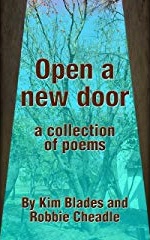 Kaye: In addition to writing children’s stories and cookbooks, and adult horror, you write poetry. And you have a poetry collection out with Kim Blades, Open a New Door. What type of poetry can we expect to find in this collection? How did that collaboration come about?
Robbie: Kim Blades and I are both South African poets. Our collection is about life in South Africa and is divided into four sections entitled God bless Africa, God bless my family and friends, God bless me and God bless corporates and work. Each section is divided into poems about the good, the bad and the ugly of our experiences in each of these areas of our lives.
Kaye: What is the most important quality in a poem for you?
Robbie: I like poems that are simply written and have a strong message. I try to write my poems along those lines. I don’t believe a lot of “highbrow” language is necessary in a poem for it to be an emotional and evocative piece of writing.
 Kaye: You have another collaboration with Elsie Haney Eaton, While the Bombs Fell. It’s about life during World War II, which is quite different from the Sir Chocolate stories. What age audience is this book aimed at? Would you like to talk a little about it?
Robbie: Elsie Hancy Eaton is my mother and While the Bombs Fell is a fictionalized account of her early years growing up during WWII in a rural town in England. It features the deprivation caused by bombing and rationing and the other hardships experienced, but it also provides a lot of insight into the small pleasures people enjoyed during the war in the way of a Christmas pudding, the ingredients for which were literally saved up for most of the year, swimming in favourite spots along the river Waverney and learning to knit. The reason this account is fictionalized and not an autobiography is my mother was aged 4 to 7 years during the war and so she can’t remember all the fine details. I supplemented her memories with a lot of my own research.
Kaye: What is the biggest challenge of writing for children?
Robbie: Marketing the books. Indie authors and writers with small publishers find it more difficult to get their books into stores and in front of the eyes of children. Children generally don’t use social Medias and, therefore, we are marketing to the parents and not to the actual child. Impulse buys are fewer as a result. I try to visit schools and Sunday Schools, but my time for these events are limited due to my work requirements.
Kaye: What other activities do you find time for when you’re not baking or writing?
Robbie: I am a qualified chartered accountant with a full time job and two sons. Any recreational time I have that isn’t spent with my family is used for writing, baking and blogging. I have two blogs, one for my children’s books, light poetry, baking and fondant art called robbiespiration.wordpress.com and one for my adult writing and darker poems called robertawrites235681907.wordpress.com.
Thank you so much Robbie for chatting with me here today. It’s been a pleasure, and I’m thrilled to have you on board. I look forward to your Growing Bookworms blog series. I have no doubt that you have some interesting things to share with us.
Welcoming Robbie to the Writing to be Read team is my Christmas present this year, and adding her blog series will be a great way to start out the New Year, too. You can learn more about Robbie and her writing and art one her blogs or click on the links below:
Sir Chocolate book series: https://www.facebook.com/SirChocolateBooks/
Amazon Author page: https://www.amazon.com/Robbie-Cheadle/e/B01N9J62GQ/ref=sr_ntt_srch_lnk_1?qid=1542170868&sr=1-1
Bake & Write: https://bakeandwrite.co.za/author/robbie-cheadle/
Or look her up on social media:
Twitter: @bakeandwrite
Facebook: https://www.facebook.com/robbie.cheadle.7
Instagram: https://www.instagram.com/cheadlerobbie/
I hope all my readers will help me welcome this creative children’s author to the Writing to be Read team and be sure to catch the first segment of her Growing Bookworms series on January 9th.
Want to be sure you don’t miss any of Robbie’s Growing Bookworms segments? Subscribe to Writing to be Read for e-mail notifications whenever new content is posted or follow WtbR on WordPress.
Posted: November 28, 2018 | Author: artrosch | Filed under: Poetry, Uncategorized | Tags: Charles Bukowski, eecummings, highschool, Poetry, youth |
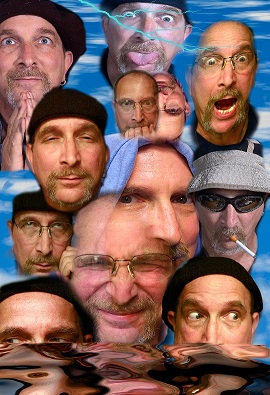
I wrote in an earlier piece that my first motivation for writing poetry was to please a girlfriend. What is more apt, more romantically human, than writing and reciting poetry?
I was fifteen and completely smitten. My amour and I belonged to a group of friends who fancied ourselves as Beatniks, avant garde, fringe elements. Oh, how daring, these suburban kids flirting with dangerous radicals and writers! We weren’t political. We were curious and flying as close to the flame of modern art as we dared.
Our god was e.e. cummings. A close second was Charles Bukowski. Cummings was the defiant rebel and iconoclast. Bukowski was just plain foul, profane and we loved his flouting of middle class lifestyles. The two poets could not be more different. In the classroom we studied T.S.Eliot. We studied Robert Frost. Whee!
Then cummings came along and we were swept up in his lyricism and humor.
since feeling is first
who pays any attention
to the syntax of things
will never wholly kiss you;
wholly to be a fool
while Spring is in the world
my blood approves
and kisses are a better fate
than wisdom
lady i swear by all flowers. Don’t cry
—the best gesture of my brain is less than
your eyelids’ flutter which says
we are for each other: then
laugh, leaning back in my arms
for life’s not a paragraph
and death i think is no parenthesis
e.e. cummings
This is one of his classics, one of his best known poems. In it he exhorts us to pure experience, to FEEL life, not to think about it. That appeals and will always appeal to the young. Bukowski is a different matter.
the flesh covers the bone
and they put a mind
in there and
sometimes a soul,
and the women break
vases against the walls
and the men drink too
much
and nobody finds the
one
but keep
looking
crawling in and out
of beds.
flesh covers
the bone and the
flesh searches
for more than
flesh.
there’s no chance
at all:
we are all trapped
by a singular
fate.
nobody ever finds
the one.
the city dumps fill
the junkyards fill
the madhouses fill
the hospitals fill
the graveyards fill
nothing else
fills.
Charles Bukowski
Bukowski was more the nihilist, far more transgressive of social norms. He didn’t give a shit! By the way, if you haven’t seen the movie “Barfly”, do so. It is based on the life of Bukowski. It’s a hoot.
I don’t know many high school kids these days, so I have no insight towards their poetic tastes. They have hip-hop. They have the internet. I have no doubt that kids today are as adventurous, rebellious and weird as they have always been. It would be a good research project.
As always with these essays I close with a poem of my own. I’ll keep it brief. It has nothing to do with the subject.
Magical Dancers
Between my pillow and the back of my head
Magical Dancers
in the space where the stubble of my balding scalp
meets the soft fabric of my cotton dream ship
Magical Dancers.
Shall I wake and know this to be a dream?
Dancers dressed in furs and leather
wearing antlers and tusks
tracing circles and hopping
from one leg to the other
drums and rattles, sticks with bells shaking
Magical Dancers in a dream
but my eyes are open, my mind lucid.
This is no longer a dream.. Are these dancers merely
the fleas left behind by the cat as he warmed my pillow?
Surely not! Surely not! But if they are, then I salute you,
fleas, for taking on strange identities
in a world where nothing is quite real
where fleas are shamans, ancient survivors
magicians of blood and skin.
If I turn on my side, what will I see? Fleas vanishing into the cat’s fur
or shamans celebrating the oncoming wave of another dream?
Arthur Rosch
http://www.artrosch.com
http://www.aroschbooks.com
A Midwesterner by birth, Arthur Rosch migrated to the West Coast just in time to be a hippie but discovered that he was more connected to the Beatnik generation. He harkened back to an Old School world of jazz, poetry, painting and photography. In the Eighties he received Playboy Magazine’s Best Short Story Award for a comic view of a planet where there are six genders. The timing was not good. His life was falling apart as he struggled with addiction and depression. He experienced the reality of the streets for more than a decade. Putting himself back together was the defining experience of his life. It wasn’t easy. It did, however, nurture his literary soul. He has a passion for astronomy, photography, history, psychology and the weird puzzle of human experience. He is currently a certified Seniors Peer Counselor in Sonoma County, California. Come visit his blogs and photo sites. Photos in these columns are by Arthur Rosch.
Want to be sure not to miss any of Art’s The Many Faces of Poetry segments? Subscribe to Writing to be Read for e-mail notifications whenever new content is posted or follow WtbR on WordPress.
Posted: October 31, 2018 | Author: artrosch | Filed under: Inspirational, Poetry | Tags: ancient texts, Art Rosch, language, Poetry, Rumi, spirituality, The Many Faces of Poetry |
The oldest poetry of all is in the Holy Books. The Rig Veda, The Maharashtra, the Buddhist Sutras, The Old and New Testament. Then there are the extended legend/poems that have become embedded as virtual racial memories of mankind. The story of Beowulf, the Icelandic Eddas, The Iliad and The Odyssey. It seems as if poetry came first, was the primal form of literature, handed down from The Gods to human beings.
More familiar to us today is the work of the Sufi mystics like Rumi. I know that Rumi’s poetry has become a consumer commodity. His work is immune to vulgarization, however, so I’m not worried about Rumi. He is said to be the most widely read poet in the world. His work has survived eight hundred years. He nearly vanished to the western world until Sufi scholar Coleman Barks translated Rumi into English and it took off…again!
Rumi addresses himself to God, to Allah, as if to an intimate lover. He gives all of himself to the Highest because he is in love with the Highest. Rumi is also very human, rooted and ordinary. He offers us practical insights on daily survival. He writes, “Don’t worry about what doesn’t come. By not coming it may prevent disaster.” He may as well have been speaking directly to me. I’ve waited for a lot of things that haven’t come.
Poetry and prayer are inseparable. Isn’t every poem really an address to the Divine? Isn’t it laden with hope, desire, confusion, supplication and maybe even surrender? Rumi’s poetry attracts modern readers because it retains its purity, it can’t be trivialized by the consumer paradigm that dominates our world. It doesn’t matter that Donna Karan uses Rumi to sell fashion. Or that rock star Chris Martin uses this poem on an album by Coldplay.
This being human is a guest house.
Every morning a new arrival.
A joy, a depression, a meanness,
some momentary awareness comes
as an unexpected visitor.
Welcome and entertain them all!
Even if they’re a crowd of sorrows,
who violently sweep your house
empty of its furniture,
still treat each guest honorably.
He may be clearing you out
for some new delight.
The dark thought, the shame, the malice,
meet them at the door laughing,
and invite them in.
Be grateful for whoever comes,
because each has been sent
as a guide from beyond.
I can’t think of any more appropriate response to the maladies that afflict us in these times.
This, then, is my poem, a poem very much influenced by Jalalladin Rumi of The Mevlevi School of Sufism.
A Worthy Destination
I haven’t found peace.
I don’t own peace,
rent peace,
buy or sell peace,
though I do encounter peace
from time to time.
Peace is like a friend
who comes for a surprise visit.
As my life takes on a shape
in which peace feels comfortable
I see peace more often.
Peace is not easily found in this world.
Peace comes like an accident,
a good mishap.
Peace lands in my heart like
a bird that’s raised its young
and is looking for a new place to nest.
I thought I would know peace by now,
but it’s taking longer than I expected.
The biggest problem is my mind.
It’s like a bag turned inside out, its contents
are the world, spilled and crazy.
Peace is not comfortable
in the world. When I’m with peace, I feel as though I’ve brought a guest
to the kind of party
that’s broken up by the cops after midnight.
I need to make peace more welcome here.
I should send peace an invitation, find a good solid tree
where peace can perch and sing
before taking flight
to a more worthy destination.
To see more of my writing, photography and music I highly recommend that you take an excursion to
http://www.artrosch.com
email writernuts@gmail.com
A Midwesterner by birth, Arthur Rosch migrated to the West Coast just in time to be a hippie but discovered that he was more connected to the Beatnik generation. He harkened back to an Old School world of jazz, poetry, painting and photography. In the Eighties he received Playboy Magazine’s Best Short Story Award for a comic view of a planet where there are six genders. The timing was not good. His life was falling apart as he struggled with addiction and depression. He experienced the reality of the streets for more than a decade. Putting himself back together was the defining experience of his life. It wasn’t easy. It did, however, nurture his literary soul. He has a passion for astronomy, photography, history, psychology and the weird puzzle of human experience. He is currently a certified Seniors Peer Counselor in Sonoma County, California. Visit his blogs and photo sites. www.artrosch.com and http://bit.ly/2uyxZbv.
Posted: September 10, 2018 | Author: kayelynnebooth | Filed under: Books, Memoir, Nonfiction, Poetry, Writing, Writing Inspiration | Tags: Memoir, Michael Daniel Lee Booth, Mother's Grief, Nonfiction, Teen Suicide |

September is a month that I’d prefer to skip over if I could. It is not an easy month for me and hasn’t been for the last ten years. My son Michael was born on September ninth, he died on September 21 at the age of nineteen, and he was buried on September twenty-eighth. Had he lived, he would have been 30 years old yesterday. Since his death the Green Day song, Wake Me Up When September Ends, has held a special personal meaning for me, because it would be preferrable to go to sleep and not wake up until September was over each year. But of course, that isn’t possible and so, I plod through the month, struggling with my emotions, and life goes on. I haven’t forgotten, and I don’t miss him any less as time goes on, but I am now able to prevent my loss from consuming my life, as it did at first.
After he died, I felt his story needed to be told, but I couldn’t bring myself to do it, even though most of what I wrote during the first two years concerned him in one way or another. The wounds were still too fresh and I couldn’t distance myself from the situation enough to write it. I always knew that it was a tale that needed to be told, and I knew I was the only person who could write it, so I saved all the files and the photos, as well as physical momentos and hand written stories and poems written by my son.
As I mentioned in a recent post, It’s All a Matter of Time, I’ve begun compiling the plethora of journals, stories, poetry and visual images I have accumulated in releation to my son, so tuning out the world and hoping September will go away is not going to work this year. I’ve gathered these materials over the past ten years since his death and they are my works, as well as his, and eventually, it will all be included in my memoir about his life and death, His Name Was Michael: How I Lost My Son to Teen Suicide. After a decade, it is time for his story to be told. The pre-writing preparations have begun and I hope to have it ready for publication by this time next year.
This September will be filled with many tears, as I read through all the materials I’ve gathered and/or written for this book. To put it all together I must read through every piece of writing and go through all the photos of him. I’m not saying that it will be easy for me, because it won’t. In fact, it will probably be one of the most difficult things I’ve ever written, but there is no one else who can do it. It’s all up to me and I feel it’s got to be written.
Michael’s story is many stories wrapped up into his tale. His story will tell the tale of an amazingly unique young man in love, who made some poor choices. It will tell who Michael Daniel Lee was and who he might have been one day, had he lived. It will tell of a mother’s grief and attempts at denial. It will tell of the coping mechanisms employed just to make it through each day after the loss of a child. It will tell of a son, who was also my best friend, and a sense of loss that is undescribable, unknowable, unfathomable. It will tell of an epidemic that sweeps through our world taking young people who have their whole lives ahead of them.
Below is the eulogy that I wrote, which I read standing before a mortuary filled with mourners for my son one week after his death. It’s one piece in the tapestry of writing that will be used to illustrate Michael’s brief time on this Earth. I hope it will pique your interest and encourage you to read the book when it comes out, hopefully by this time next year. If you’d be interested in pre-ordering the book, leave a comment letting me know and I’ll put you on the list, making sure you get your copy when the time comes. It would be great to know that someone is interested, and that I will be writing this for someone other than myself.

Michael Daniel Lee Booth
When Mike said, “I love you”, it was forever, and when he called you his friend, you knew you could depend on him to stand by you, no matter what. He loved to try new things, to explore and to learn. He had a love for life and for all that he held sacred. Mike strove for excellence in all that he did, and lived by a code of honor that was extremely tough to uphold. His Christian upbringing was intermixed with Hindu and Buddhist beliefs to make up the tapestry of his own personal belief system that was disciplined and unyielding. When he made mistakes, Mike was harder on himself than anyone else ever could have been.
When he got mixed up with the wrong people and things, he made some poor choices. He did not deny what he had done, but instead stood up and accepted the punishment that was given to him. He tried to make amends for his wrongs and was on his way to accomplishing that goal. He expressed great sorrow for his errors, and inflicted emotional punishment on himself over and above what the law could ever require of him.
He had a strong will and could accomplish anything that he set his mind to, including learning to speak Japanese and perform martial arts skillfully, all on his own. Mike had a love for Japanese culture and he could have lived off of green tea and sushi. His knowledge and skills were gladly shared with those who wished to learn. Mike had a love for nature and enjoyed all kinds of outdoor activities, including skiing, hunting, fishing and hiking. His imagination was endless and he created stories and drawings that reveal a talent far beyond his tender youth.
Mike was so much to so many people; a loving son, a dependable big brother, a doting little brother, a respectful grandson, a loyal friend and a devoted husband. He loved his dog, Zaar, who was a companion and loyal friend to him. Mike was sensitive, and hurt so easily and so deeply, yet he was too strong willed to ever let it show outwardly. Only through his writing, can we glimpse the love that he embraced or the pain that he felt. When he loved, he loved with all of his being. Mike was fun loving and enjoyed spending time with those that were important in his life. He had beautiful curls and the most wonderful smile, which could light up my heart whenever I saw it. Mike turned 19 three weeks ago. He had a whole life ahead of him. He was much too young to be called home to God.
Like this post? Subscribe to Writing to be Read for e-mail notifications whenever new content is posted or follow WtbR on WordPress.
Posted: August 22, 2018 | Author: artrosch | Filed under: Poetry, The Many Faces of Poetry, Writing | Tags: Arthur Rosch, love poetry, Pablo Neruda, Poetry, The Many Faces of Poetry |

When I was fifteen I fell obsessively, passionately in love with a girl named Kay. She was the kind of girl that my mother would hate. I’m sure that added great luster to my blonde goddess, this Schicksa (that’s a girl who isn’t Jewish). I did insane things in the pursuit of my goddess. I invaded a Bible Camp in Green Lake Wisconsin, just to be able to see her. That didn’t work out very well. Kay’s mother was there. She was on the camp’s administrative board. Kay was mortified and her mother was filled with wrath. Anyway, the greatest thing Kay gave to me was poetry. She was that tweedy sort of intellectual teen who read e.e.cummings and T.S.Eliot. Thus it happened that my career as a writer began.
I don’t have any of the poems I wrote for Kay, or any of the poems I wrote at that time, none at all. It’s no great loss. I’ve written thousands of poems and most of them are lost. Some of them were stolen or destroyed. A complete stranger stole three of my notebooks from a stage while I was performing. A pissed-off dope connection burned two of my manuscripts. Still, I have a big fat book of poetry bound at Kinko’s. And I have eight backups on eight hard drives, at the very least.
There are all kinds of love poetry because there are so many ways to love. When love poetry appears, we all know it.
Here’s Pablo Neruda. I’m sure it’s better in Spanish
I do not love you except because I love you;
I go from loving to not loving you,
From waiting to not waiting for you
My heart moves from cold to fire.
I love you only because it’s you the one I love;
I hate you deeply, and hating you
Bend to you, and the measure of my changing love for you
Is that I do not see you but love you blindly.
Maybe January light will consume
My heart with its cruel
Ray, stealing my key to true calm.
In this part of the story I am the one who
Dies, the only one, and I will die of love because I love you,
Because I love you, Love, in fire and blood.

Here’s Arthur Rosch. I’m sure it would be worse in Spanish.
Last night I counted your breaths while you slept.
Towards morning, I lost count, but you soon awoke
so I rounded the number and privately recorded
your many thousands of sleeping breaths
in the journal of love I am making for you.
This entry:
the night I counted your breaths while you slept.
I wanted to have a secret way of loving you,
a place where love is always new and mysterious.
I know that you count my breaths while I am awake.
Somewhere, inside the busy pain of your mind,
you find a peaceful grotto, and there
you count my breaths, unaware of what you do.
Your love is so constant, it is a place where my fears vanish.
I must practice harder than you, to love.
I must lie awake and keep vigil
so that while you dream, I am doing something important,
being the clock of your breath,
helping you sleep.
I can do nothing more loving for you
than to help you sleep.
You always wanted someone to watch over you.
You felt abandoned and alone. With this secret, I heal you.
I count the long slow breaths, I catch at the sudden twitches,
I invent words to accompany your dream-mumbles.
I wanted this poem to be a secret but I know I’ll read it for you.
Tomorrow night, or the next,
I will do it again, or find another way to love you,
something only I could think of doing,
and only you could know why it was done.
A Midwesterner by birth, Arthur Rosch migrated to the West Coast just in time to be a hippie but discovered that he was more connected to the Beatnik generation. He harkened back to an Old School world of jazz, poetry, painting and photography. In the Eighties he received Playboy Magazine’s Best Short Story Award for a comic view of a planet where there are six genders. The timing was not good. His life was falling apart as he struggled with addiction and depression. He experienced the reality of the streets for more than a decade. Putting himself back together was the defining experience of his life. It wasn’t easy. It did, however, nurture his literary soul. He has a passion for astronomy, photography, history, psychology and the weird puzzle of human experience. He is currently a certified Seniors Peer Counselor in Sonoma County, California. Visit his blogs and photo sites. www.artrosch.com and http://bit.ly/2uyxZbv.
Posted: August 13, 2018 | Author: kayelynnebooth | Filed under: Books, Interview, Poetry, Writing, Writing to be Read | Tags: Naked for Tea, Poetry, Rosemerry Wahtola Trommer, Writing |

Today I have the privelege of interviewing a fabulous poet, Rosemerry Wahtola Trommer. As well as writing poetry, she also does performance poetry and is fondly called Word Woman. Once you see her perform, there is no question as to why. Rosemerry is vibrant and energetic and enthusiastic about her poetry, and about life, and this shines through in her work. She was Western Slope Poet Laureate here in Colorado from 2015-2017, she leads poetry and in 2016, she gave a fabulous TED Talk in Paonia, Colorado, The Art of Changing Metaphores, which is definitely worth watching if you wish to see how we can use metaphores to help shape our thinking, our lives and even the world around us. Please help me welcome this wonderful Word Woman to Writing to be Read.
Kaye: When did you know you wanted to be an poet?
Rosemerry: I have a very strong memory of sitting on the floor in my fifth grade classroom in a reading corner, and finding a poem by Walter de la Mare in a magazine. It was about a snowflake, and it began, “Before I melt, come look at me, this lovely icy filigree.” I memorized it, only 12 lines, and fell totally in love with the sounds of the poem. I had no idea what it meant, I just knew it thrilled me, the way the sounds chimed with each other. I felt it in my whole body. I don’t know that’s so much when I knew I wanted to be a poet, but it is when the love affair began.
Kaye: What is the biggest challenge of being a poet?
Rosemerry: Hmmm. Perhaps it is knowing that I have so much farther to go in my craft—that I am not yet writing the poems I feel I am here to write. Still so many layers of me to peel away, still so much to explore. And no way to get there except to write and write and practice and practice and read and read …
Kaye: Would you talk a bit about your personal poetic process?
Rosemerry: Since 2006 I have written a poem a day, and that daily practice is a huge part of my process. It makes it so that writing a poem isn’t just something that happens when I am sitting in front of a page, it’s something that is happening all day long. It completely changes the way I am in the world—how I pay attention, how I meet the moment. I’ll add that I am an avid reader of poems and read many every day—I am always trying to expand my poem horizons, see what a poem can do in other’s hands, and teach myself based on what other poets have done successfully.
Kaye: As a poet, you sculpt your words to form an image in the minds of those who are listening or reading your work. So, in a way, you are an artist and words are your medium. Are you creative in other ways, as well?
Rosemerry: It wouldn’t be painting (though I enjoy collaborating with artists!) But I do sing with a women’s acapella group, Heartbeat. We’ve been together since 1994, and I love pushing myself musically with them. And in the kitchen, I like to be creative with cooking and baking. And perhaps I am a creative parent? In fact, my son tells me he wishes I were more normal. And perhaps this is a good place to mention that I am currently finishing the first season of a podcast on creative process called “Emerging Form,” which I am doing with science writer Christie Aschwanden.
Kaye: How did you become attached to the handle of Word Woman? Is there a story behind that?
Rosemerry: About twenty years ago I was trying to come up with a business name that would accommodate all my language interests. At the time, I was an editor for a newspaper, freelancing for magazines, writing and teaching poems and performing a lot. Plus, my Master’s Degree is in English Language and Linguistics. I am obsessed with words, always have been. It just seemed to fit! It kind of cracks me up that it sounds like a super hero. The words themselves are the heroes. Poems have literally saved my life.
Kaye: Your book, Naked for Tea recently came out and was a finalist for the Able Muse Book Awards. Would you like to tell us a little about that?
Rosemerry: Such a thrill! I was sooooooo hoping to be published by Able Muse. I love their poetry books. The day that I found out that they were going to publish it, even so it wasn’t the winner, I was in the Telluride Library. When the text came through, I started jumping up and down, and was soon surrounded by a host of cheering and exuberant librarians! The library is a great place to find out about a book contract!
Kaye: Naked for Tea is an interesting title. How do you decide the titles for your books?
Rosemerry: Usually the titles come from lines in poems, and that’s the case here, too. The title poem is actually named, That’s Right. The first line is, “I showed up naked for tea.” And it’s the perfect poem to represent the book in that I feel that the whole collection is about the art of showing up as vulnerably, as authentically as possible. I joke that the poems are all about failure, and they are—about finding the beauty in our brokenness, our mistakes.
 Kaye : Naked for Tea also has a very interesting cover. How did you come up with it? If you don’t mind me asking, did you serve as the model?
Rosemerry: It’s not me! The publisher, Alex Pepple, had no idea the stir it would cause, because it certainly does look as if it’s my naked spine and long brown hair. The name of the photo he used is Back Story, which tickles me—perfect for a book of poems. I am happy with the metaphorical suggestion of showing up naked.
Kaye: Would you talk a little about performance poetry and how you got into that?
Rosemerry: When I moved to Telluride in 1994, I was lucky to fall in almost immediately with Art Goodtimes, one of the finest performers of poetry in Colorado. He awed me. So physical. So playful. So powerful. Before that I had NO performance poetry skills. What luck to find myself in close proximity to a master—and one who was willing to give me honest, gentle feedback, too.
Kaye: Performance Poetry is really a physical medium, yet when you perform, your movements appear as if they were a natural part of your speech. Your movements flow smooth and graceful. Does it ever feel as if you are doing a dance with your poetry? Have you ever tried adding music to your poetry performances?
Rosemerry: I naturally talk with my hands and body, which, I think, is lucky for poetry performance, though I don’t doubt that the performance enhances it. There are small pieces in a few poems which I have intentionally choreographed, but for the most part, I just let my body do what it does. I have found, though, that it often will move the same way for the same poem, and that these repeated gestures are very helpful for memorization—it’s as if the poem gets in the body which helps it to lodge in the mind.
As for music, yes! I love adding music! Of course I sing myself sometimes—to enter a poem or within a poem—but to have someone else accompany me is one of my greatest pleasures! I perform frequently with my good friend Kyra Kopestonski, a cellist. She and I have so much fun playing around and finding ways for the music and the poem to speak to each other. It’s especially great for very short poems because those are very hard to perform successfully without musical interludes. But it’s especially great for all poems! And I’ve been lucky enough to collaborate with many different musicians—guitar, flute, bass, drums, even a whole band. I would love to be like Laurie Anderson and have my own band!
Kaye: What is the strangest inspiration for a poem you’ve ever had?
Rosemerry: Ha! I’ve written some mighty weird poems. Picking up a grave digger hitchhiker, perhaps? Black widow egg sacs? Wearing a tail?
Kaye: What is the single most important quality in a poem for you?
Rosemerry: Authenticity.
Kaye: What’s the best piece of advice you were ever given?
Rosemerry: From David Lee, past poet laureate of Utah and a very fine poet and performer: Surround yourself by poets better than you are.
Kaye: What is the one thing in your writing career that is the most unusual or unique thing you’ve done so far?
 Rosemerry: Tough to say … but here’s the first thing that comes to mind. Once I participated as a guest artist for the Art & Architecture Weekend in Telluride. The Ah Haa School assembled a team to support me. We used three-line poems (I have thousands) and they painted them on the walls, they made garlands with poems, I had a cream dress covered in poems, white gogo boots covered in poems … and then I stood in the middle of the decorated room at a table with a bowl full of words and the participants came in and either picked a word or gave me one of their own, and then, after a brief conversation with them about why they chose the word, I wrote them a personal three-line poem on the spot—87 in six hours. I felt so in the zone, the day whizzed by. It was absolutely magical. People wept, hugged me, kissed me, laughed. It was an incredible interaction. And then I was given the juried artist award for the whole event, icing on the cake!
Kaye: Imagine a future where you no longer write poetry. What would you do?
Rosemerry: I can’t imagine it. Really. I think if I were deserted and alone on a desert island, I might still write poems in the sand. But if I try really really hard to not be me and think of what else I would do, um, drive race cars. But I would never do that.
Kaye: It seems like poetry really is ‘in your blood’. Can you give me an example of how poetry flows out into the other areas of your life?

Rosemerry: Well, it does feel like an integral part of me. And I guess it does leak out! I have a little game with myself to see how poems might make their ways into the hands of people who think they don’t like poems. Part of that is doing readings. Part of that is leading collaborative workshops with other teachers, pairing poetry with meditation or painting or healing from grief. Part of that is writing short poems on river rocks and leaving them all over town (in stairwells, public bathrooms, on street corners, etc). Like a poetry easter bunny, any given day of the year. I’ve left many hundreds of rocks out there, and they are always picked up! But I would say that more than poetry flows out, it flows in. I feel as if I am always finding poems, other people’s poems and poems waiting to be written. That’s such a thrill!
Kaye: What’s the most fun part of writing a poem for you? What’s the least fun part?
Rosemerry: Most fun: The blank before the poem arrives. All that potential! And then the thrill of the seed of the idea showing up. That AND when the ending shows up and you know, “Yes, yes, that’s it.”
Least fun: realizing that I have already used the words blossom, sometimes, moon, shine and invitation a million times and I need to come up with another word.
Kaye: Which poet, dead or alive, would you love to have lunch with?
Rosemerry: Only one?? And I think you mean besides the poets I presently hang out with. Hmm. Gerard Manley Hopkins. I think it would be awkward, but to be that close to greatness?? I would be happy to sit there in awkward silence as we ate our boiled potatoes.
Kaye: What advice do you have for aspiring poets?
Rosemerry: Surround yourself with other poets. Though the act of writing is solitary, as Ammons would say, you “sit alone picking away at your own liver,” the art of it and the communion of it is in community. Most of my best friends are poets—they inspire me, chide me, keep me in line, offer me a life line.
And of course, read. Read. Read smart—with a pen in your hand, taking notes on what you love and why. Read for pleasure.
And last, memorize, or, better yet, learn poems, as we say, by heart.
I want to thank Rosemerry for sharing with us today on Writing to be Read. Her energy and enthusiasm seems to be contagious for me. I hope it is for all of you aspiring poets out there, too. You can learn more about Rosemerry Wahtola Trommer and the amazing things that she’s done on her Word Woman website, where you’ll find calendar, book sales, writing prompts and more. Her poetry books are avaiable on Amazon and you can visit her Author Page , too. You can also find her daily poems here. Please take the time to like the post or leave a comment to show your support for Rosemerry and/or Writing to be Read.
Like this post? Subscribe to Writing to be Read for e-mail notifications whenever new content is posted or follow WtbR on WordPress.
If you are an author, poet or screenwriter and you’d like to be interviewed on Writing to be Read, drop Kaye an email at kayebooth(at)yahoo(dot)com with “Interview Request” in the subject line.
Posted: July 16, 2018 | Author: kayelynnebooth | Filed under: Blog Content, God Complex, Poetry, Writing, Writing to be Read | Tags: Art Rosch, Blog Content, Changes, Jeff Bowles, Poetry, Writing, Writing to be Read |

I started Writing to be Read on a site called Today.com, as a pay-per-click blog. I was just beginning to create an online writing presence, and was unsure what to write about on a blog, but whatever my subject matter, I ended every post with a poems. One day, I tried to log into my account and found that Today.com no longer existed, and neither did my blog. I was forced to seek out a new home for my blog, and I found WordPress. That was back in 2010, and the author’s blog and website before you is what Writing to be Read has morphed into in the interim.
I no longer include a poem with each post, (that went the way of Today.com), and I don’t get paid per click, (or at all for that matter), but I feel that my content has expanded and improved over the years. I still believe poetry is an important aspect of writing. I feel in love with poetry when we studied Hiaku in the forth grade, and the first piece of writing I ever sold was a poem, (for five dollars). Poetry is sculpting with words, crafting a piece to fit our vision and communicate that vision to others.
There have been many changes along the way, which helped to make Writing to be Read what it is today, including my 2016 publishing series: The Pros and Cons of Traditional vs. Independent vs. Self-Publishing, my 2017 series on marketing and promotion: Book Marketing: What Works?, and the most recent this past year, my Ask the Authors series, where a panel of authors were interviewed on a variety of elements concerning writing. (Watch for a second series of AtA this fall.) Also, in 2017, we were fortunate to have Robin’s Writing Memo, with Robin Conley and The Pep Talk and Jeff’s God Complex, with author Jeff Bowles. I have attempted to include content that addresses all the elements of writing, but as I’m not very active in areas such as poetry, children’s writing, screenwriting or YA fiction, there have been only a few post in these areas, and I want to extend the scope of the blog to address all aspects of writing.
So, we’re about to change it up once more. I’m calling in the experts, or at least, those more expert than I in specific areas. I’ve asked a few guest bloggers to join the team in order to expand the scope of Writing to be Read. Our guest segments will be featured on Wednesdays. Here are some of the exciting changes you can expect to see in the near future.
 I’m happy to announce that Jeff Bowles will be joining us once again with Jeff’s God Complex the first Wednesday of every month, starting in August. Jeff is an independent author with an awesome power of description and an amazing imagination. He has published three short story collections, which I have given top notch reviews, including his latest one, Brave New Multiverse, which will post this Friday, July 20. Fear and Loathing in Las Cruces, and Godling and Other Paint Stories. Jeff’s post topics cover just about anything and everything if it regards writing.
 Starting Wednesday, July 25th, we will have our first segment of The Many Faces of Poetry, with Art Rosch. Art is an independent author, poet and photographer, who is into jazz. He draws many of his stories from his own experiences and creates his own book covers. He has published three books, all of which I’ve reviewed with high quills: Confessions of an Honest Man, The Road Has Eyes: A Relationship, An R.V., and a Wild Ride Through Indian Country, and The Gods of the Gift. Art is a talented writer and poet and I’m pleased to have him join the Writing to be Read team.

Also joining us with a Writing for a YA Audience segment is Amazon best selling YA author Jordan Elizabeth. Jordan has written many books aimed at a YA audience in a variety of genres: steampunk, time travel, fantasy, historical and ghost stories, to name a few. I recently reviewed her most recent book, a post- apocalyptic dystopian romance, Rotham Race, and I have reviewed many of her other works, including her very first novel, Escape From Witchwood Hollow, and several anthologies which include her stories. Jordan’s posts will be concerned with concepts and issues involved in writing for young adult readers. Writing to be Read will feature Jordan’s first post on Wednesday, July 18th.
This blog is a labor of love for me, and as such, these great writers are donating their time and efforts, so please help me to welcome the new members of the Writing to be Read team by liking their posts and leaving comments. Every writer wants to know they are being read.
I’m still searching for willing bloggers in the areas of screenwriting or children’s writing. I feel these elements of writing are important and deserve our special attention too. If you have expertise in these areas and think you might be interested in joining the Writing to be Read team, please email me at kayebooth(at)yahoo(dot)com.
Like this post? Subscribe to Writing to be Read for e-mail notifications whenever new content is posted or follow WtbR on WordPress.
Posted: May 21, 2018 | Author: kayelynnebooth | Filed under: Fiction, Nonfiction, Poetry, Publishing, Screenwriting, Screenwriting, Self-Publishing, Writing | Tags: Creative Nonfiction, Genre Fiction, Poetry, Publishiing, Screenwriting, Writing, Writing the Rockies Conference |

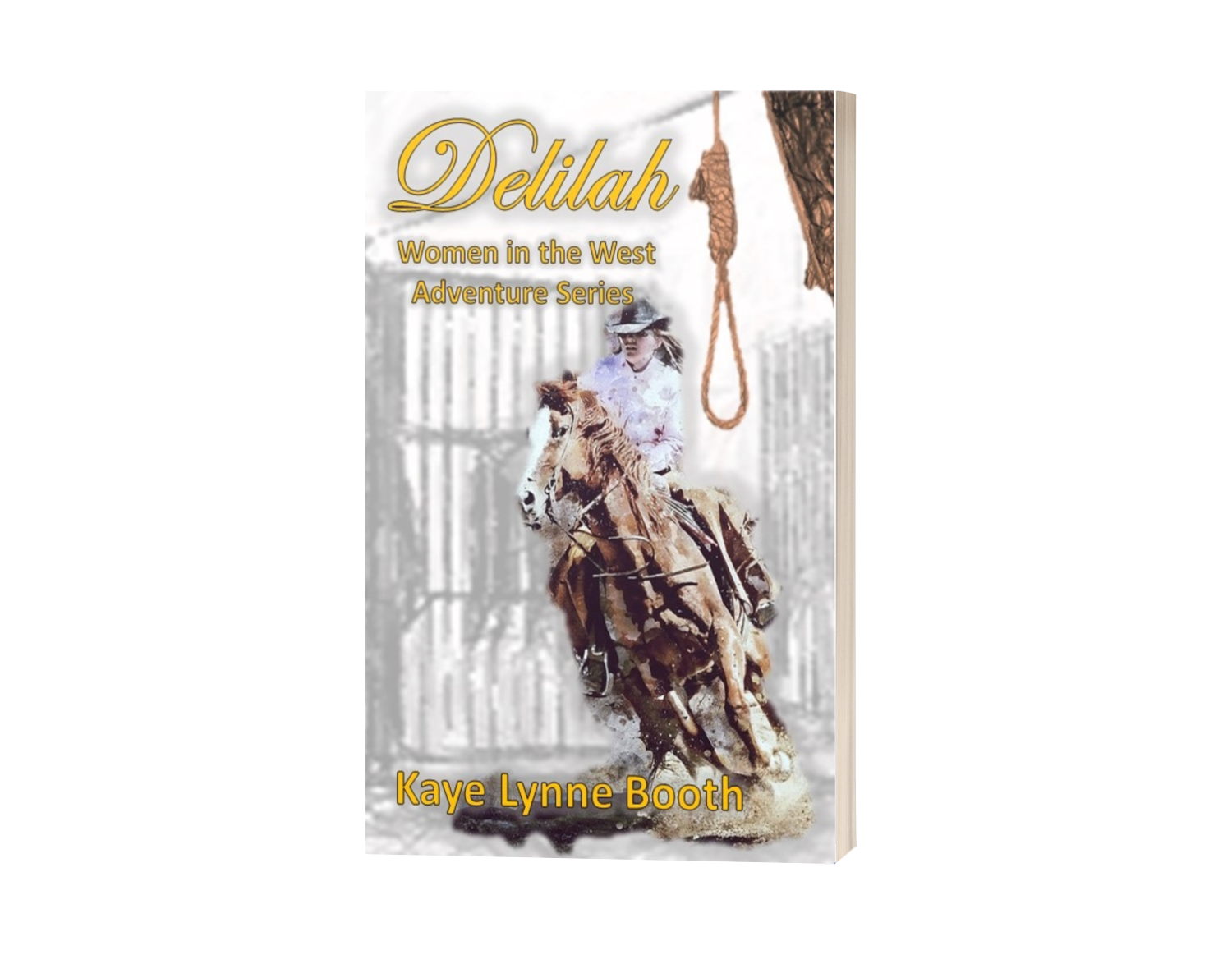
As I mentioned in last week’s post, An Adventure in Book Marketing, I will be sitting as a panelist at Western’s Alumni Roundtable at the Writing the Rockies Conference in July. There I said that was my next experiment in marketing, but to be honest, although copies of Delilah will be available at the book fair, run by Crested Butte’s Townie Books, I’m not expecting my sales to suddenly shoot up off the charts. Writing conferences, as a general rule, are not places where you sell a lot of books, but I’m exciting to be going and representing Westerns M.F.A. in Creative Writing program, (I’m actually representing both of my concentrations, screenwriting and genre fiction), for other reasons. What writing conferences are generally good for is making connections within the writing community, and Writing the Rockies is no exception. It seems Western, or maybe even the Gunnison Valley is especially prolific in this area, because you begin to feel yourself being pulled in to fantastic world of writing and publishing as soon as you step onto the Western campus. And the connections I’ve made at Western and at the conference have been very useful to me in some unexpected and surprising ways. Never have I attended this conference without coming away with some valuable new connections, some of which have turned into long lasting friendships, as well.
This year, it looks like they’ve got a great line-up, including fantastic opera workshop performance of Lottie Silks, with music by Jay Parrotta and libretto by Western Poetry and Genre Fiction student Enid Holden, directed by Ben Makino and Andrew Sellon, to go along with their infamous and very intense poetry symposium. They also have some not to miss Keynote speakers lined –up: Mark Todd, author and founder of Western State’s M.F.A. in Creative Writing Program, for the conference Keynote; award winning poets Ned Balbo and Jane Satterfield for the poetry Keynote; Kevin J. Anderson, author of over 140 novels, publisher at WordFire Press and a member of Western’s M.F.A. program staff for the publishing Keynote; Patrick Pexton, former ombudsman for the Washington Post for the creative nonfiction Keynote; and Emmy Award winning screenwriter, John Bowman for the screenwriting Keynote; and Michaella Roessner, published author and M.F.A. program faculty for the genre fiction Keynote. Other presenters in the publishing track include Darrin Pratt, Editor of the University of Colorado Press and immediate past president of the Association of American University Presses, D.H. Tracy, Editor of Antilever Press, and others.
In addition to their always informative workshops, sessions and panels, pitch sessions and manuscript critiques are available, their annual hike above Crested Butte will take place, three day intensive workshops, and full day seminars. Special presentations of Comedy is Hard, by Mike Reiss, directed by William Spicer; and Multitudes: An Evening with Walt Whitman by Kim Nuzzo and Valerie Haugen Nuzzo. Film screenings including How Murray Saved Christmas, by Mike Reiss and the highlights from the Crested Butte Film Festival with festival co-director, Michael Brody will also be available.
As you can see, Writing the Rockies is a conference promises something for everyone. I’m excited to be a part of it and I hope you will join us. This is the 19th year running for this wonderful conference and it grows with each passing year. This year the conference will run from Wednesday, July 18th through Sunday, July 22nd. The cost is $300 for the entire five day event if you register before July 1, and $350 after that date. The good news is, although the conference is fully open to the public, every student of Western’s M.F.A. Program in Creative Writing goes as a part of the curriculum, and there are scholarships available for alumni, K12 educators, and Gunnison Valley residents, as well as anyone else who wishes to apply. You can sign up for the 2018 Writing the Rockies Conference or apply for scholarship here:
https://www.western.edu/writing-rockies-annual-conference
For more information contact:
David J. Rothman, Conference Director / 970-943-2058 / drothman@western.edu
Mark Todd, Conference Coordinator / 970-943-2016 / mtodd@western.edu
Michelle Wilk, Office Support Coordinator / 970-943-2163 / mwilk@western.edu
On a similar note, Western State Colorado University still has a few spots open for their low-residency M.F.A. in Creative Writing Program, which begins in July. If you have an undergraduate degree and you’re interested in persuing a career in writing genre fiction, poetry or screenplays or a career in publishing, their program may be just what you’re looking for. Low-residency means you must attend physical class on campus for two weeks each summer and the rest of the courses are online. (Remember, if you’re in the program, you get to attend the Writing the Rockies Conference as a part of the curriculum.) Their faculty consists of successful published authors, successful screenwriters, and distinguished poets. Looking at the successes of myself and my fellow alumni, I have to say they offer useful skills and knowledge that can be applied in the writing industry.
For more information: https://www.western.edu/academics/graduate/graduate-programs-western/graduate-program-creative-writing-low-residency-16
Like this post? Subscribe to Writing to be Read for e-mail notifications whenever new content is posted or follow WtbR on WordPress.
Posted: December 25, 2017 | Author: kayelynnebooth | Filed under: Poetry, Uncategorized | Tags: 'Twas the Night Before Christmas, Christmas |

‘Twas the night before Christmas and all through the garage
Not a creature was stirring, not even the Dodge.
The spark plugs were nestled all snug in their beds
While visions of sparks danced through their heads.
The inner tubes were hung by the chimney with care
In hopes that Saint Nicholas would fill them with air.
Mama in her kerchief and I, in my cap
Had just settled down for a long winter’s nap.
When out on the lawn there arose such a clatter
I sprang from my bunk and missed the ladder.
Ran to the window, threw open the sash,
Leaned out too far and fell in the trash.
I stood and brushed off all the new fallen snow
And greeted St. Nick with a hearty “Ho! Ho!”
He was dressed all in fur, for it was a cold night
It must have been freezing on the sliegh while in flight.
A bundle of goodies flung over his back
He looked like a peddler as he opened the sack.
His eyes twinkled through goggles, his dimples so merry.
Then, he took off his cap, but my, he was hairy.
His hair flowed over his shoulders, so white
He reached into his sack and pulled out a flash light.
Then to my surprise, what he pulled out of his bag
Was a 345 Hemi, ready to drag.
Then he pulled out some headers that looked really sweet
And to top it all off, a set of big meats.
He pulled out a tire iron, a hammer and wrench
Before I could grasp it, he pulled out a tool bench.
When all the tools were layed out in a nice, neat row,
He turned with a wave and said, “Ho! Ho! Ho!”
He sprang to his sleigh, to his team gave a whistle,
And away they all flew like the down of a thistle.
But I heard him exclaim as he drove out of sight,
Merry Christmas to all, may you win tonight!
By Greg and Kaye Booth
Posted: July 3, 2017 | Author: kayelynnebooth | Filed under: Books, Cover Art, Interview, marketing, Poetry, Promotion, Writing | Tags: Books, Cover Art, Cover Design, DL Mullan, Poetry, Sonoran Dawn Studios, Writing |

Last Call: Science Fiction Time Travel
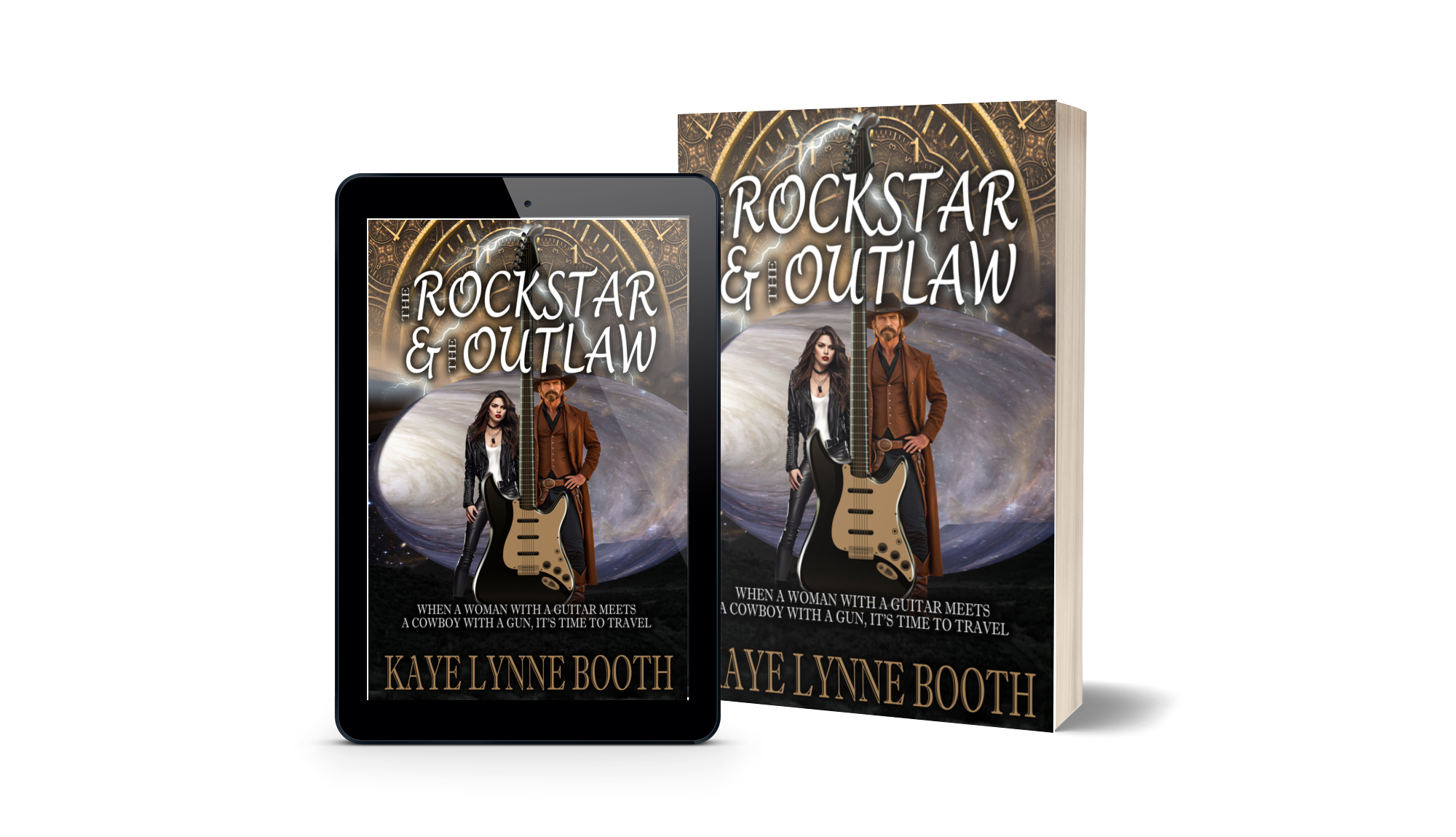
They say you can’t judge a book by it’s cover, but we do all the time. So, when sales for Delilah was faltering, I decided to change it up. Actually, I ran into an awesome cover designer, who came up with a great cover for not only Delilah, but one for Last Call, too. Subsequently, the sales for Delilah went up some. The new cover just came out for Last Call, so it remains to be seen if it will have the same effect, but I’m anticipating some positive results. It all goes to show just how important it is to find the right cover designer for your work. If you don’t believe a book cover can make a difference, take a look at the original cover for Last Call, below and compare with the new one, above:
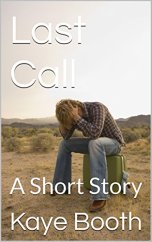
Today I am fortunate to be able to interview my awesome cover designer, DL Mullen of Sonoran Dawn Studios, so I can share with my readers just what a talented cover designer this lady really is. And she’s so much more. Also a writer and poet, Dawn Leslie Mullan spends a lot of time getting creative.
Kaye: In addition to being an accomplished poet, you have your own design company, Sonoran Dawn Studios. How did you get into cover art design?
Dawn: I got into cover design because I knew that beauty is in the eye of the beholder. People are attracted to book covers as well as read tag lines and brief synopses to make their decisions about purchases. Since I have had my digital art shown across the country in various exhibits and at conventions, the creation of my own cover art was a natural fit. Sonoran Dawn Studios is the intuitive progression from an artist and writer to designer and publisher.
Kaye: You’ve self-published two books of nature poetry, Effloresce, and Rain: Monsoon in the Desert and two books of dark poetry, Memoirs of a Psychotic Painting Elephant, and The Descent. Would you share the story of your own publishing journey?
Dawn: My publishing journey is much like many other writers’ careers. I have been writing since my formative years, but the confidence to write for publication did not happen until higher education. When I was exposed to literature and professors who understood the dynamics in literary context, my world expanded a thousand-fold. I was no longer in this cocoon of sensory deprivation. The experience allowed me to dream.
As I grew older my dreams also grew, but some obstacles were thrown in my way. I became disabled by Environmental Illness, so the future book tour I had envisioned for myself was replaced by severe reactions to an array of chemicals and molds. A collapsed immune system does not a national book tour make. With the help of natural doctors, nutrition, and lots of bed rest, I have been able to balance my disabilities with my goals. I began my website, Undawnted, to feature my writing. Later, I created Sonoran Dawn Studios to publish what I produced with the dream of helping other writers accomplish their goals of publications in the future.
Just because life happened while I was making other plans does not mean I still cannot fulfill my life’s purpose. Creativity is more than a hobby; creativity also brings about choices through true authentic problem-solving. As a testament to my originality and perseverance, my publishing journey has become a triumph over adversity.
Kaye: Would you publish through Lulu again? Why or why not?
Dawn: Yes, I love publishing through Lulu. The ebooks I can disseminate are endless. I am researching beyond Lulu for other Print on Demand services to see what the best modality for my print books may be. I want to make sure my readers are taken care of, while not being intrusive or creating confusion. I do foresee my ebooks finding their way into print sometime in 2019.
Kaye: What is the single most important quality in a poem for you?
Dawn: The most important quality in a poem is based in the five W’s of journalism. What, where, why, when, and how. What image is the reader left with at the end? Where has the poem taken the reader? Why would this poem be important to the reader later on in life? When will the poem reoccur in the memory of the reader long after the poem is read? How does the poem leave an indelible mark in the emotions of its audience?
Anyone can write a poem. The best poems are the ones that linger in the recesses of a reader’s mind. To stir there, be forgotten until an emotion brings up images of the poem that can only be satisfied by reading the poem again. Poetry is more than words and rhymes; poetry is the exercise in conveying emotions through imagery.
So, what do you see when you write?
Kaye: Where do your poetic inspirations come from?
Dawn: Everywhere. That is where my inspiration comes from. I am in awe of this world and our universe. I keep a child’s naïveté and wonderment lurking around every corner of my imagination. I view circumstances with that innocence as if I am seeing lightning, touching a cat, hearing a siren, or feeling the sun for the first time. Every time.
That juxtaposition allows me to combine youthful honesty, integrity, and virtue with the aged heartbreak, candor, and wisdom. No emotion is off limits to experience inside my soul. Every creative dimension is then available to express whether that would be in the forms of poetry or prose.
Inspiration is everywhere… you just have to feel it.
Kaye: What’s your favorite social media site for promotion? Why?
Dawn: None of them really are my favorites for any kind of promotion but I go where my audience travels. Social media is the ghetto harbors of the internet. Our creativity and objectivity are trapped in programmed cages that reverberate and sometimes crescendo our own confirmation bias. Social ghettos like their city namesakes limit opportunities for those individuals seeking advancement and relegate people into an inferior stasis with poor resources and tyrannical mismanagement.
I’d rather own my own website away from social media, but finances impede that dream at this moment. So I am stuck in the ghettos of Facebook, Google plus, and Blogger. I hope someday people realize how confining social media is so we can return to a time of free expression.
Won’t you join me?
Kaye: You are a creative person, writing award winning poetry and designing some pretty awesome cover art, etc… Were you creative as a child?
Dawn: Thank you. I have always had an active imagination. My formative years began in solitude, but after my family moved to the west coast, we ran a daycare, and so there was no shortage of company.
The lack of companionship, however, is a different matter. I knew I was atypical from other children of my age. I observed. I understood far beyond my years. I intellectualized, but I also empathized.
Creative maturity has given me the ability to recognize those evocative reactions and morph the feelings into a seasoned response. Empathy is a strong connection to other people and their plight, the trick is to find a positive way to express myself through art, writing, and problem-solving to avoid the pitfalls of negativity.
That is why so many creative people are depressed and feel rejected by society: improper context of sensory stimuli. Creative people need to step outside of a given situation and see all the moving parts. The ability to walk in another’s shoes is a gift, but when that gift creates blinders to the other parts of life, that is where creativity can destroy instead of uplift.
I had to find that balance. I had to find my own wisdom. Meditation and energy work are beneficial. A balanced perspective is everything. I had to learn that being a creative child did not mean I had to be an explosive, renegade adult… that is what my characters are for!
Let your imagination work for you. Be calm, cool, and collected with your interactions with the world. Allow your creativity be the solution.
Make your characters say and do what society frowns upon. In creativity, you are free. In living imagination, you are the creator.
So design a better reality to inspire change: one person can make a difference.
Kaye: How would you describe yourself in three words?
Dawn: Innovative. Dynamic. Trendsetter.
Kaye: What’s the best piece of advice you were ever given?
Dawn: I really have no idea. Maybe it was: don’t play in traffic? Or, don’t stick your fingers in the light socket? I do not believe I have ever been given a lot of advice.
I have always been a self-starter. I am a person who walks forward in life. There have been some obvious setbacks, but I set short- and long- term goals. Whatever is attainable, I achieve. Whatever does not work for me, I change to fit my new timeline.
So I do not believe my life has been about being advised as much as it has been about who can keep up with me.
Kaye: You’ve had many poems published and won awards for quite a few. What is the biggest challenge in being a poet?
Dawn: The biggest challenge in being a poet, or an artist in general, is discovering new ways to compete with myself. How can I outdo my last creation? Achieve a better response? Create something thought-provoking or truly distinctive?
As a writer, I challenge my own status quo. I am in competition with no other person but myself. So the creative balance I endeavor to maintain has helped me restructure my point of view. I strive for self-betterment to take my writing to the next level.
This fresh perspective allows me to mature as a writer as well as be a cheerleader for other authors. When I removed the ego-driven, quantity over quality focus from my writing career, I discovered how the release from those negative aspects took my creativity to new heights.
I spent more time creating than worry about the industry, agents, publishing houses, and other writers. I could then help others without feeling jealous or anxious or petty. I could be happy for other writer’s successes because those writers were never in direct competition with me. That is an illusion I had to shed.
Once I realized that each person has their own goals and life path to fulfill, then I understood the dynamics with which creativity really springs: inside my own internal genesis.
People on a parallel career path weave branches from the same tree on which my creativity sprouts. Each branch is different from the others and reflects the health of the common root. If we do not tend to our roots, fertilize the soil, and water regularly, then the tree will falter in a coming storm. Angst ruins everyone’s creative efforts. So why bother with it?
That is a summation of the writing craft and our individual responsibility within our community. We must become the best writer we can be and also give a helping hand to another writer regardless of his or her success. Wisdom is in the balance.
Of course that also frees me from the cookie cutter manufactured industry standards I see dominating the writing craft. So watch out world! I don’t have a compass. I don’t have a quota system. I am following my own branch that is reaching for the stars.
And, everyone can change their stars.
Kaye: What advice do you have for aspiring writers and poets?
Dawn: Writers need about ten years to season well, marinate in their own juices. Raw writers tend to give their hearts but when constructively critiqued, lose their minds. So I advise aspiring writers to go in search of criticism, negative criticism. Take courses for a community college certificate or degree in creative writing. Go out and join your local Professional Writer’s Group. Seek out people who will guide and help you without sparing your feelings. Those people are gems.
When you receive constructive advice, use it. Correct your writing and erode your ego. Writing is not about dissecting words and mincing phrases, but about dismantling your hubris.
Once a writer can get out of their own way, their writing takes on a profound quality. Stillness. Wisdom. Maturity.
One should always know and understand their craft through hard work and education. One should also write from the heart. Writing from the ego only speaks to other egos. When a writer writes from the heart, their story resonates at varying degrees within their audience and their writing is called: literature. Then a writer can build a loyal readership and just not simply have hapless followers.
On that same note: never believe your own press. I have had forum critique comments like: that was the best poem I have ever read! Only to look a few comments down and read: I really didn’t think your poem was all that great.
You just have to laugh.
When a writer has been through the crucible of their own development, then a writer can discover their weaknesses and strengths. Until that level of discernment is achieved, a writer is not ready to meet the world. The world is full of wolves ready to take your money and tell you whatever you want to hear.
An educated, informed, and mature writer can espy the wolves, escape the traps, and only do what is right for their needs.
So become the writer you have always wanted to become. No one else can do it but you. What are you waiting for?
Kaye: What time of day do you prefer to do your writing?
Dawn: Any time is fine. I write during the day or night. I do like night though when I really have to concentrate and do not want to be disturbed. No phones. No television. No distractions.
I do write when the muse descends. When I first began writing as a hobby, I would wake up from a dead sleep to jot down notes or a poem. My mind was active during my dream state. Now with my own creative structure, I find myself less inclined to be so impulsive. I write until I am done with that scene and I move on to another activity.
I also rotate from art to poetry to nonfiction, and then fiction writing. It is very noticeable trend on my personal social media status. Those breaks help avoid creative lulls and downright boredom. Writing for me is a metamorphosis of the psyche more than it is a time and place.
Kaye: You’ve had to face some huge obstacles to get to where you are now. Would you like to talk about them?
Dawn: Which obstacles? Chronic illness, abandonment, or near death experiences? My life has run the gambit, but direct participation in life events is what writing is all about. When I go through a challenge, I meet the impediment head on. There is no sense in hiding from life.
Do whatever you have to do short of hurting yourself or others; I do not abide by those types of negative expressions, but if you must throw your shoes or scream out the window, then do it. Then learn from your interaction with the world so you can check your emotions to respond with a healthy regard to life instead of having meltdown reactions to it.
The more you deal with life’s ills; the more those issues become underwhelming. Oh, the car broke down in triple digit heat… that problem interfered with my day but not unexpected given the circumstances. If you structure your life with good planning, sensible organization, and attainable goals, then you can respond to the world from a point of important but not urgent. So when the car breaks down, everything else takes care of itself, and you do not feel overwhelmed… just slightly irked.
With my brain inflammation and neurological issues, I have had some unflattering behavioral repercussions. In a short amount of time, I have learned what my body needs to combat this inflammation so I can deal with life as it comes. For my emotions, I write to express my discontent with research, citations, and good ole-fashioned sarcasm. My awareness blog for my neighborhood news can be incendiary at times, educational and informative at others, but entertaining to thousands of people a month.
So huge obstacles are what you make out of them. I find that I must navigate in a sea of challenges that most people would just give up and let a shark eat them. I am not like most people. I will take your shark, fry him up for dinner, and raise you: writing and publishing careers!
It comes down to simplicity: you can spend your life saying: oh crap, not again. Or, looking at challenges from a different point of view: at least my toaster oven still works.
Well what did you expect? I react to microwaves.
Kaye: Which poet, dead or alive, would you love to have lunch with? Why?
Dawn: Just one? I kind of do this exercise with my poetry. I call my brand of talking with the creative masters as response poetry. I take a poem from Poe, Dickinson, and then write a response. Upon Reading Edgar Allan Poe is a literary take on many of his works. Death Responds to Emily Dickinson is the Grim Reaper’s rebuttal to her I Could Not Stop for Death.
If I had to pick between the two, I would like to sit down with Poe. Not because it’s “Poe,” but because Edgar was a literary critic in his time and quite combative with his contemporaries, which I find entertaining as well as educational.
What were Edgar’s pet peeves in writing? How did his critics respond to his opinions? Did his critics give constructive criticism to Edgar’s work or did they just attack out of ego-driven defensiveness?
As writers and critics, we can learn from the advice, mistakes, and behaviors from our forefathers, and foremothers. If you do not know the past, you are doomed to repeat it. Art and writing, much like society, cannot go forward always repaving the roads of the past. We must create new exits onto the roads less traveled by. The best way is to learn from the master artists, poets, and writers from their works to their own personal views of the craft itself.
On your journey, is your road already built or are you walking in a forest that has no name?
Kaye: What’s something most readers would never guess about you?
Dawn: I am overeducated.
Seriously, I have never met a topic I did not like or want to know more about. I do have six college degrees including a Master of Arts in Teaching and Learning with Technology. I have degrees ranging from general studies, foci in biology and geology, emphasis and focus in history and biology, and organizational management. I was also working on creative writing, marketing, computer science, and publication creation before I became disabled.
I was an active community member. I have lectured and had speaking engagements about technology, art, and the role of girls in our technotronic era. I have paneled at science fiction conventions. I have exhibited and won awards for my digital art. I have ghost hunted as a history major and aspiring medium. I have experience in film and stage. In addition, I have a background in medicine for about a decade as a family member’s caretaker.
My greatest achievements have not been the cords, ribbons, or degrees. Although I am grateful for the honors I have earned in their formation of my character as well as giving me the skills to navigate our ever-changing, technological world, I am interested in more intangible achievements at present. I am on a spiritual path to investigate the human condition. I seek to answer the mysteries of our universe and impart that wisdom onto others.
With that said, I feel my greatest achievement is leaving a creative and educational legacy. My illness precludes me from having offspring, but with management of my health, I have endeavored to become the person I have always wanted to be. I am a work in progress. I can be grumpy and irritable at times, but I am more patient and charitable than anything else.
I guess that comes from living a life less traveled by. I have shrugged off convention for a spiritual road on the superhighway of life. I may be in the slow lane, but I am not obsessed with the destination. The journey is my classroom and I am an enthusiastic student.
Will you like to hitch a ride?
Kaye: What is the one thing that is the most unusual or unique thing you’ve done so far?
Dawn: Strange is what I do. I combine real life scenarios in my creative works to give the contrived a reality check. When a reader experiences my characters and their challenges some of those obstacles may be rooted in my own life. I will not tell which is which, what fun is that?, but I will say that creative writing allows me the indulgence to work out some past issues in a positive and productive manner.
So the most unusual or unique quality to my writing is that I use creative fiction and nonfiction as my camp counselors.
Have a problem? Fantasy about justice? Do not have the energy to bury a body in a remote location? Then you need to become a writer. You have innovative ideas, a spark of madness, and a tinge of laziness that comes with sitting down at a computer to let your fingers do the trash talking.
Shovel, anyone?
Thank you Dawn, for joining us today and sharing your unique take on life, and writing, and shoveling. And thank you for allowing me to use you for the purposes of illustrating the important role cover art is in the sale of your book. You could write a masterpiece, but no one will ever know it if they never crack the cover to read the words inside.
We Need Your Help!
This post came at a good time, because today Dawn and I have some exciting news to share. The cover art for Delilah has made it to round two in the Joandisalovebooks Summer Loving Book Cover EVENT 2017. This is great news because it is a really great cover, but we can’t do it alone. The winner in each genre category will receive a great marketing package, which would be great for the promotion of Delilah.
We need your votes, so we can win first prize in the western genre category. You can find more information on how to place your vote at Sonoran Dawn Studios, where Dawn has been kind enough to lay out step by step instructions for you. So, if you are a follower of Writing to be Read, a fan of Delilah, or someone who has just discovered Kaye Lynne Booth author, please take a few moments to clink on the link and cast your votes for us. It will be greatly appreciated.
Like this post? Subscribe to Writing to be Read for e-mail notifications whenever new content is posted or follow WtbR on WordPress.