Meet poet and writer Colleen Chesebro
Posted: February 22, 2020 Filed under: Interview, Poetry, Treasuring Poetry | Tags: Beat Poets, Colleen Chesebro, Poet Interview, Robbie Cheadle, Treasuring Poetry, Writing to be Read 45 Comments
Treasuring Poetry
Today, I am delighted to welcome poet, author and blogger Colleen Chesebro to the “Treasuring Poetry” series. The aim of this series is to introduce poets and poetry lovers to each other and to share reviews for some of the lovely poetry books available.
Welcome Colleen!
What is your favorite poem? Include it with your answer
This is a difficult question because I enjoy many kinds of poetry. However, I love the Beat Poets the most. Jack Kerouac and Allan Ginsberg always come to mind, both with their excellent Haiku. However, my favorite poem from Allan Ginsberg is called, “Sunflower Sutra.”
I walked on the banks of the tincan banana dock and sat down under the huge shade of a Southern Pacific locomotive to look at the sunset over the box house hills and cry.
Jack Kerouac sat beside me on a busted rusty iron pole, companion, we thought the same thoughts of the soul, bleak and blue and sad-eyed, surrounded by the gnarled steel roots of trees of machinery.
The oily water on the river mirrored the red sky, sun sank on top of final Frisco peaks, no fish in that stream, no hermit in those mounts, just ourselves rheumy-eyed and hung-over like old bums on the riverbank, tired and wily.
Look at the Sunflower, he said, there was a dead gray shadow against the sky, big as a man, sitting dry on top of a pile of ancient sawdust—
—I rushed up enchanted—it was my first sunflower, memories of Blake—my visions—Harlem
and Hells of the Eastern rivers, bridges clanking Joes Greasy Sandwiches, dead baby carriages, black treadless tires forgotten and unretreaded, the poem of the riverbank, condoms & pots, steel knives, nothing stainless, only the dank muck and the razor-sharp artifacts passing into the past—
and the gray Sunflower poised against the sunset, crackly bleak and dusty with the smut and smog and smoke of olden locomotives in its eye—
corolla of bleary spikes pushed down and broken like a battered crown, seeds fallen out of its face, soon-to-be-toothless mouth of sunny air, sunrays obliterated on its hairy head like a dried wire spiderweb,
leaves stuck out like arms out of the stem, gestures from the sawdust root, broke pieces of plaster fallen out of the black twigs, a dead fly in its ear,
Unholy battered old thing you were, my sunflower O my soul, I loved you then!
The grime was no man’s grime but death and human locomotives,
all that dress of dust, that veil of darkened railroad skin, that smog of cheek, that eyelid of black mis’ry, that sooty hand or phallus or protuberance of artificial worse-than-dirt—industrial—modern—all that civilization spotting your crazy golden crown—
and those blear thoughts of death and dusty loveless eyes and ends and withered roots below, in the home-pile of sand and sawdust, rubber dollar bills, skin of machinery, the guts and innards of the weeping coughing car, the empty lonely tincans with their rusty tongues alack, what more could I name, the smoked ashes of some cock cigar, the cunts of wheelbarrows and the milky breasts of cars, wornout asses out of chairs & sphincters of dynamos—all these
entangled in your mummied roots—and you there standing before me in the sunset, all your glory in your form!
A perfect beauty of a sunflower! a perfect excellent lovely sunflower existence! a sweet natural eye to the new hip moon, woke up alive and excited grasping in the sunset shadow sunrise golden monthly breeze!
How many flies buzzed round you innocent of your grime, while you cursed the heavens of the railroad and your flower soul?
Poor dead flower? when did you forget you were a flower? when did you look at your skin and decide you were an impotent dirty old locomotive? the ghost of a locomotive? the specter and shade of a once powerful mad American locomotive?
You were never no locomotive, Sunflower, you were a sunflower!
And you Locomotive, you are a locomotive, forget me not!
So I grabbed up the skeleton thick sunflower and stuck it at my side like a scepter,
and deliver my sermon to my soul, and Jack’s soul too, and anyone who’ll listen,
—We’re not our skin of grime, we’re not dread bleak dusty imageless locomotives, we’re golden sunflowers inside, blessed by our own seed & hairy naked accomplishment-bodies growing into mad black formal sunflowers in the sunset, spied on by our own eyes under the shadow of the mad locomotive riverbank sunset Frisco hilly tincan evening sitdown vision.
Berkeley, 1955
Thank you, Colleen, for this introduction to Allan Ginsberg’s poetry, which I have not read before. This is an amazing and meaningful poem.
What is your interpretation of this poem?
This poem was written before I was born, but it is an example of Ginsberg’s view of a desolate America destroyed by the wiles of modern society. Who knew this prophetic poem would mean so much more to me in the twenty-first century?
Ginsberg’s poetry often railed against societal norms. As a Jew, and a gay man, he experienced a different world than most of us in America. What made this poem different from some of his other work, was at the end, he offered a glimmer of hope.
I also love that he titled the poem a Sutra, which is a Buddhist literature form that uses a string of aphorisms (tersely phrased statements of a truth or opinion; an adage). miriamwebster.com
The imagery of the sunflower suggests that America has been battered out of recognition but has the ability to become beautiful again. Ginsberg gives a political commentary on America’s core values: the freedom of expression, and the ability of the people to share in forward thinking political and social thought. I can’t help but wonder what he would say about today’s political climate?
In this poem, Ginsberg refers to “…memories of Blake.” Here he is talking about William Blake, one the leading poets from the Romantic era. Ginsberg rejected the ugliness of the modern world in all of its industrial glory. This is his way of wishing we were back in the Romantic era before industry destroyed the natural beauty of our land. The last part of the poem is where he compares Americans to “golden sunflowers,” encouraging us all to find and embrace our own beauty in this world.
The poem doesn’t contain beats or syllables. Instead, it moves with the rhythm of our breath. Ginsberg loved spoken poetry. The short stanzas, like a Haiku, share a moment of enlightenment or truth making this poem a classic Sutra.
This interpretation of the poem is fascinating, Colleen.
What emotions does this poem invoke in you?
This poem inspires me to take poetic action to help spread the word of hope through my own poetry. Like the “crackly bleak and dusty with the smut and smog and smoke of olden locomotives in its eye sunflower,”(Ginsberg’s Sunflower Sutra) we have to look beneath the ugliness to find the beauty in the world. Once we find that beauty, we should share it through poetic expression.
Sharing beauty through poetry is a wonderful goal, Colleen.
If you could choose to write like any well-known poet, who would it be?
Ginsberg wrote some pretty raw stuff, (Howl, is long and contains profanity) but I can’t dispute the genius of his word combinations, imagery, or unconventional writing styles.
Raw and unconventional writing styles make a big impression on the reader.
What is special to you about this poet’s writing style?
I wrote a term paper about Ginsberg in college because he also liked writing Haiku and Senryu, although his poems are found by searching for Haiku. In fact, he was one of the first to write Haiku in a single line and not in the 5/7/5 format of the traditional Haiku in English that was popular at the time. He argued that with the differences between Japanese and English that particular form wasn’t important for English Haiku. I’m sure this was another reason why academic poets use the 3/5/3 or 2/3/2 format for Haiku in English.
Most of all, his words always speak to me. Listen to the specific patterns of speech he uses in his poetry. He bares it all and says it all, in a style that shouts freedom of expression. He defied traditional academic disciplines and wrote the way he wanted to. That’s pure creativity!
I agree, Colleen, and I take my hat off to his innovation and imagination.
Find Colleen Chesebro
Speculative Fiction Novelist, Prose Metrist, Word Witch
Amazon US Author Page Amazon UK Author Page Twitter MeWe
Fairies, Myths, & Magic: A Summer Celebration
What Amazon says
Step into a world where fairies, dragons, and other magical beings converge in a collection of poetry and short stories inspired by the celebration of Litha, the Summer Solstice.
Meet Drac, a dragon cursed by his own poisonous deeds, and two pixies who help an old man remember a lost love. You’ll meet a pair of fairies with a sense of humor, and a young girl who fulfills her destiny after being struck by lightning. Learn what happens when a modern witch’s spell goes terribly wrong. Meet the Sisters of the Fey, a group of Slavic Witches who sign a pact with the Rusalki Fey to preserve their magic for the good of all.
Atmospheric and haunting, the prose and poetry, will rewrite the mythologies of the past bringing them into the future.
My review
This book includes a delightful array of short stories and poems with fairies, myths and magic as the central themes that link them all. The author provides an interesting introduction to fairies and shares her own personal thoughts and ideas about this subject. There is also an intriguing overview of myths and how they originated.
The poetry takes numerous shapes and forms and there are tankas, haibuns, double tankas, cinquains and freestyle poems all of which contribute into making this book an interesting reading adventure.
My favourite story was The Leaving – A Story of Supernatural Magic which features the elderly Miss Pensie Taylor as the main character. Miss Pensie has lived in her house in the same town all her life and is a well know character to the older residents. Her house overlooks a swamp and a graveyard and she has an intimate knowledge of the inmates of the graveyard as her father was the caretaker when she was a child. Miss Pensie is a brave soul with a gift that enables her to see the spirits of those long dead.
One evening, during a heavy thunderstorm, Miss Pensie notices something unusual about the graveyard and goes out to investigate after the rain has abated. She has an interesting experience alone in the darkness.
My favourite poem in this collection is titled The magical Tree and my favourite stanza is the following:
“In Autumn –
the Lady shows us her splendor
whose bright orange leaves herald
the darkness of another winter slumber.”
If you enjoy poetry and have an interest in myths, magic and fairies, you will love this beautiful collection.
Purchase Fairies, Myths, & Magic: A Summer Celebration
About Robbie Cheadle

Hello, my name is Robbie, short for Roberta. I am an author with six published children’s picture books in the Sir Chocolate books series for children aged 2 to 9 years old (co-authored with my son, Michael Cheadle), one published middle grade book in the Silly Willy series and one published preteen/young adult fictionalised biography about my mother’s life as a young girl growing up in an English town in Suffolk during World War II called While the Bombs Fell (co-authored with my mother, Elsie Hancy Eaton). All of my children’s book are written under Robbie Cheadle and are published by TSL Publications.
I have recently branched into adult and young adult horror and supernatural writing and, in order to clearly differential my children’s books from my adult writing, I plan to publish these books under Roberta Eaton Cheadle. My first supernatural book published in that name, Through the Nethergate, is now available.
I have participated in a number of anthologies:
- Two short stories in #1 Amazon bestselling anthology, Dark Visions, a collection of horror stories edited by Dan Alatorre;
- Three short stories in Death Among Us, an anthology of murder mystery stories, edited by Stephen Bentley;
- Three short stories in #1 Amazon bestselling anthology, Nightmareland, a collection of horror stories edited by Dan Alatorre; and
- Two short stories in Whispers of the Past, an anthology of paranormal stories, edited by Kaye Lynne Booth.
I also have a book of poetry called Open a new door, with fellow South African poet, Kim Blades.
Find Robbie Cheadle
Blog: https://www.robbiecheadle.co.za/
Blog: robbiesinspiration.wordpress.com
Goodreads: Robbie Cheadle – Goodreads
Twitter: BakeandWrite
Instagram: Robbie Cheadle – Instagram
Facebook: Sir Chocolate Books
Want to be sure not to miss any of Robbie’s “Treasuring Poetry” segments? Subscribe to Writing to be Read for e-mail notifications whenever new content is posted or follow WtbR on WordPress. If you found it interesting or entertaining, please share.
Share this:

Meet poet and writer, Sally Cronin, and a review of her latest book
Posted: January 25, 2020 Filed under: Book Review, Books, Inspirational, Interview, Poetry, Treasuring Poetry | Tags: Book Review, Interview, Life's Rich Tapestry, Poetry, Poets, Robbie Cheadle, Sally Cronin, Treasuring Poetry, Writing to be Read 119 Comments
Today is the start of a new poetry appreciation series here on Writing to be Read where I will be introducing you to a number of wonderful poets in our blogging community, discussing well known poets and their poetry and reviewing poetry books. I hope you will participate in the discussions and enjoy meeting and greeting the poets, both new and known to you, and discovering new books of poetry.
My first guest is accomplished poet and writer, Sally Cronin, of Smorgasbord Blog Magazine blog. Sally has recently published a new book of poetry, 99-word flash fiction and short stories called, Life’s Rich Tapestry: Woven in words which I have reviewed below. Before we get there, however, Sally is going to share her thoughts about her favourite poem, The Law of the Jungle by Rudyard Kipling.
Over to Sally
What is your favourite poem?
That is an extremely tough question and had me stumped for a couple of days as I wanted to revisit the poems that I have loved since childhood to make sure that this really would qualify as my favourite poem.
The Law of the Jungle by Rudyard Kipling
(From The Jungle Book)
Now this is the Law of the Jungle — as old and as true as the sky;
And the Wolf that shall keep it may prosper, but the Wolf that shall break it must die.
As the creeper that girdles the tree-trunk the Law runneth forward and back —
For the strength of the Pack is the Wolf, and the strength of the Wolf is the Pack.
Wash daily from nose-tip to tail-tip; drink deeply, but never too deep;
And remember the night is for hunting, and forget not the day is for sleep.
The Jackal may follow the Tiger, but, Cub, when thy whiskers are grown,
Remember the Wolf is a Hunter — go forth and get food of thine own.
Keep peace with Lords of the Jungle — the Tiger, the Panther, and Bear.
And trouble not Hathi the Silent, and mock not the Boar in his lair.
When Pack meets with Pack in the Jungle, and neither will go from the trail,
Lie down till the leaders have spoken — it may be fair words shall prevail.
When ye fight with a Wolf of the Pack, ye must fight him alone and afar,
Lest others take part in the quarrel, and the Pack be diminished by war.
The Lair of the Wolf is his refuge, and where he has made him his home,
Not even the Head Wolf may enter, not even the Council may come.
The Lair of the Wolf is his refuge, but where he has digged it too plain,
The Council shall send him a message, and so he shall change it again.
If ye kill before midnight, be silent, and wake not the woods with your bay,
Lest ye frighten the deer from the crop, and your brothers go empty away.
Ye may kill for yourselves, and your mates, and your cubs as they need, and ye can;
But kill not for pleasure of killing, and seven times never kill Man!
If ye plunder his Kill from a weaker, devour not all in thy pride;
Pack-Right is the right of the meanest; so leave him the head and the hide.
The Kill of the Pack is the meat of the Pack. Ye must eat where it lies;
And no one may carry away of that meat to his lair, or he dies.
The Kill of the Wolf is the meat of the Wolf. He may do what he will;
But, till he has given permission, the Pack may not eat of that Kill.
Cub-Right is the right of the Yearling. From all of his Pack he may claim
Full-gorge when the killer has eaten; and none may refuse him the same.
Lair-Right is the right of the Mother. From all of her year she may claim
One haunch of each kill for her litter, and none may deny her the same.
Cave-Right is the right of the Father — to hunt by himself for his own:
He is freed of all calls to the Pack; he is judged by the Council alone.
Because of his age and his cunning, because of his gripe and his paw,
In all that the Law leaveth open, the word of your Head Wolf is Law.
Now these are the Laws of the Jungle, and many and mighty are they;
But the head and the hoof of the Law and the haunch and the hump is — Obey!
Robbie: This is a wonderful choice of poem, Sally. I also love it. Interestingly enough my favourite poem is also by Rudyard Kipling and I will share it later in this series.
What is your interpretation of this poem?
This is about living in harmony within a society whether it is a wolf pack or amongst a human pack. Having social etiquette and respect for others is essential if all are to avoid conflicts, get enough to eat, be accepted and to thrive. There is a natural order to things and if you learn that when you are young, when you leave your pack you are well equipped to survive on your own with the skills to begin your own pack. And whilst is sounds draconian, those rules are there to protect the young as well as teach them manners. It applies to both wolf cubs and man cubs….
Robbie: A wonderful interpretation of this poem and of life in general. I have similar thoughts on how societies can best achieve success and one of my favourite key words in this regard is the need for discipline.
What emotions does the poem invoke in you?
When I first read the Jungle Book I was too young to really appreciate the undertones in the story about life, survival and the human and animal parallels. But I loved the book and this poem was rich in both words and intent, and when I was ten or eleven and read for the second time, I could see how this philosophy of life in the pack, related to life in a family. It made me feel secure to think of my father as the Head Wolf, and it also made me very protective of my other family members including my younger brother, who probably did not appreciate all the attention I lavished on him as I would like to believe! It also brings back memories of our time with Sam [Robbie: Sam is a lovely dog who was part of Sally and David’s family for many years before he passed. He has his own book called Sam, A Shaggy Dog Story] as our own small pack and how interestingly he adopted his own social rules of etiquette that run parallel to those in the poem. For example he considered us his alpha male and female and he would not start his own dinner until we were eating our own. He was very protective of any young family members who visited and also the elderly, sticking close to them. If he spotted something that he considered might be dangerous to us, he would always put himself between us and the threat. Whenever I saw him exhibiting these kinds of behaviour it always bought this poem back to me and made me so proud.
Robbie: Isn’t it wonderful the powerful emotions and associations a poem can invoke in a reader. Sam was a wonderful dog. You can read my review of Sam, A Shaggy Dog Story here: Goodreads review
If you could choose to write like any well-known poet, who would it be?
That is another tough question Robbie as there are many poets who have stirred my emotions and also my imagination. And whilst I would love to be able to write like Rudyard Kipling both in prose and verse, I am always drawn to the young and sometimes short lived war poets. They conveyed the reality of war, stripping it bare of glory but telling a story in a few short lines. Their legacy is that we never forget those who died, even if we might not always learn the lessons we need to from their passing.
Rupert Brooke for me is one of the finest examples of these poets, and if I could convey the depth of emotion, intent and storytelling in my poetry, I would be very happy indeed. Whilst The Soldier is the most often quoted poem, certainly at military funerals, it is one of his peacetime poems that always resonates with me especially as I get older and celebrate married life.
Kindliness by Rupert Brooke
When love has changed to kindliness —
Oh, love, our hungry lips, that press
So tight that Time’s an old god’s dream
Nodding in heaven, and whisper stuff
Seven million years were not enough
To think on after, make it seem
Less than the breath of children playing,
A blasphemy scarce worth the saying,
A sorry jest, “When love has grown
To kindliness — to kindliness!” . . .
And yet — the best that either’s known
Will change, and wither, and be less,
At last, than comfort, or its own
Remembrance. And when some caress
Tendered in habit (once a flame
All heaven sang out to) wakes the shame
Unworded, in the steady eyes
We’ll have, — THAT day, what shall we do?
Being so noble, kill the two
Who’ve reached their second-best? Being wise,
Break cleanly off, and get away.
Follow down other windier skies
New lures, alone? Or shall we stay,
Since this is all we’ve known, content
In the lean twilight of such day,
And not remember, not lament?
That time when all is over, and
Hand never flinches, brushing hand;
And blood lies quiet, for all you’re near;
And it’s but spoken words we hear,
Where trumpets sang; when the mere skies
Are stranger and nobler than your eyes;
And flesh is flesh, was flame before;
And infinite hungers leap no more
In the chance swaying of your dress;
And love has changed to kindliness.
Robbie: An amazing poem, Sally, thank you for sharing it with us. The war poets certainly know how to highlight the best and worst life has to offer.
Thank you so much for inviting me over today to share my love of poetry and thank you for your wonderful reviews for my work which keep me motivated.
Robbie: Thank you for your contribution to Treasuring Poetry, Sally. Your thoughts and input are greatly appreciated.
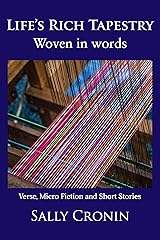
Life’s Rich Tapestry: Woven in words by Sally Cronin
What Amazon says
Life’s Rich Tapestry is a collection of verse, microfiction and short stories that explore many aspects of our human nature and the wonders of the natural world. Reflections on our earliest beginnings and what is yet to come, with characters as diverse as a French speaking elephant and a cyborg warrior.
Finding the right number of syllables for a Haiku, Tanka, Etheree or Cinquain focuses the mind; as does 99 word microfiction, bringing a different level of intensity to storytelling. You will find stories about the past, the present and the future told in 17 syllables to 2,000 words, all celebrating life.
This book is also recognition of the value to a writer, of being part of a generous and inspiring blogging community, where writing challenges encourage us to explore new styles and genres.
My review
This new book sees author, Sally Cronin, delving into new genres in the form of a variety of styles of poetry and 99-word flash fiction pieces. It also includes a number of her delightful short stories, although those differ from others that I have read by this author as many of them feature an animal as the main character.
The poetry is beautiful and is split into sections, namely, Seasons of the year; All things human; Fairies and other folk; The natural world; Remembrance, Celebrating pets and Random thoughts. The poems included in the sections entitled Season of the year and The natural world largely feature the natural environment, including the various seasons and the different creatures that inhabit it, and makes use of all the senses to wrap the reader in the specific joys and pleasures of the flowers, the light, celebrations, birds and and other natural phenomena including drought, snow and frost.
The poetry sections entitled All things human, Remembrance and Random thoughts as well as some of the flash fiction and short stories utilize the writer’s amazing ability to invoke great emotion from her readers towards her characters and their circumstances and situations, while being easy to relate to and highly believable.
The poems and stories that feature pets and animals showcase the authors love of the animal world and convey the special relationships that frequently develop between people and their pets.
I appreciate the undertone of happiness that is generally present in this authors books and stories. It is a wonderful thing to be able to read a book that makes you feel great emotion and still come out on the other end with the impression that life is a wonderful and great journey. This is definitely a skill that Ms Cronin has and uses to its best advantage in all her books, poems and stories.
Purchase Life’s Rich Tapestry: Woven in words
About Sally Cronin
I have been a storyteller most of my life (my mother called them fibs!). Poetry, song lyrics and short stories were left behind when work and life intruded, but that all changed in 1996. My first book Size Matters was a health and weight loss book based on my own experiences of losing 70kilo. I have written another twelve books since then on health and also fiction, including four collections of short stories. My latest book is a collection of verse, micro fiction and speculative short stories titled Life’s Rich Tapestry: Woven in Words
I am an indie author and proud to be one. My greatest pleasure comes from those readers who enjoy my take on health, characters and twisted endings… and of course come back for more.
As a writer I know how important it is to have help in marketing books.. as important as my own promotion is, I believe it is important to support others. I offer a number of FREE promotional opportunities on my blog and linked to my social media. If you are an author who would like to be promoted to a new audience of dedicated readers, please contact me via my blog. All it will cost you is a few minutes of your time. Look forward to hearing from you.
My blog is https://smorgasbordinvitation.wordpress.com
And for more information on my books listed here at Amazon please visit
https://smorgasbordinvitation.wordpress.com/my-books/
You can connect with Sally Cronin on the following sites.
Twitter: https://twitter.com/sgc58
Facebook: https://www.facebook.com/sally.cronin
LinkedIn: http://uk.linkedin.com/in/sallycronin1
Pinterest: https://www.pinterest.ie/cronin1423/
Want to be sure not to miss any of Robbie’s “Treasuring Poetry” segments? Subscribe to Writing to be Read for e-mail notifications whenever new content is posted or follow WtbR on WordPress. If you found it interesting or entertaining, please share.
Share this:

Review: The Collected Poems of K. Morris
Posted: December 6, 2019 Filed under: Book Review, Books, Poetry | Tags: Book Review, K. Morris, Poetry, The Collected Poems of K. Morris, Writing to be Read 6 Comments
The Collected Poems of K. Morris is a delightful selection of poems by K. Morris. These poems are written with sensitivity and a candid eye. Poetry is more than simple rhyming and alliteration. It is rhythm and cadence. It is choosing just the right words and putting them in the correct order to draw a vivid picture in the readers mind in a manner that is pleasing to the hear. Poetry is meant to be read aloud. Morris’ relaxing tone and ease of rhyming makes his words flow smooth off the reader’s palate. In this collection of poetry, Morris shares his unique view on death, time, nature, and everyday existence.
I give The Collected Poems of K. Morris four quills.

Kaye Lynne Booth does honest book reviews on Writing to be Read in exchange for ARCs. Have a book you’d like reviewed? Contact Kaye at kayebooth(at)yahoo(dot)com.
Share this:

The Many Faces of Poetry: Where Does Poetry Come From?
Posted: November 27, 2019 Filed under: Literary, Mystery, Poetry, The Many Faces of Poetry, Writing, Writing Inspiration | Tags: Art Rosch, history of poetry, origins, Poetry, The Many Faces of Poetry, Writing to be Read 1 Comment
Where Does Poetry Come From?
I keep inquiring into the nature of poetry: where does it come from? It’s a question that opens a lot of introspection into the nature of literature itself. Poetry is the ultimate ancestor of literature. There was the spoken word, the saga, told around fires surrounded by rapt listeners. Poetry came from the telling of heroic stories. Beowulf, the Eddas, the Greek epics, the Chaldean cycles. We’ve come a long way from the spoken word, the recitals that spawned the invention of text itself. People cared enough about the preservation of their cultural history that they made the effort to write it down. Ancient stories survived the eons, so that we still have them, we still can read The Odyssey or learn about the trials of Gilgamesh. In truth these long recitals are almost unbearable in the real world but they are like artifacts in museums. We have them. We can reach into their labyrinths and return with answers to questions that we must always ask. Why are we here? What are we doing?
Poetry is the literary equivalent of cave drawing. Mankind, many thousands of years ago, felt the impulse to make an artistic statement, whether it be for a ritual gathering of game animals or to praise the gods for their benevolence. We are still, when we write poetry, drawing on cave walls. We are traveling backward in time to re-enact the original creative impulse. What came first, I wonder? Did poetic recitation pre-date the drawing on cave walls. Or did they come at the same time? I wonder what anthropologist will research that question and tell us about the history of art. All of this speculation is to invoke the origin of Art itself. Poetry has changed with the human race. We are not the same people who told and re-told The Odyssey. We are modern people with a modern poetry, a poetry that has become more free as we re-invent the structures of literature.
We must ask another important question, one that I will address in a later essay. What does poetry do? We must break this down into two parts. What does it do for the poet? What does it do for its audience?
The poet writes to express his or her state of being. It may be emotional, intellectual or both. A poet, however, usually needs fire to lure an audience, so poetry begins in the emotions, where the fire lives. There are three things that literature needs to provide in order to attract an audience: information, inspiration, and entertainment. Who will listen to poetry if it’s not entertaining? Many are the yawns I’ve seen at poetry readings, glances at the wristwatch, restless fidgeting. Entertain us, poet! Or go home, get off the stage.
I’m rushed this month. We’re moving into a house, a beautiful house!
A Midwesterner by birth, Arthur Rosch migrated to the West Coast just in time to be a hippie but discovered that he was more connected to the Beatnik generation. He harkened back to an Old School world of jazz, poetry, painting and photography. In the Eighties he received Playboy Magazine’s Best Short Story Award for a comic view of a planet where there are six genders. The timing was not good. His life was falling apart as he struggled with addiction and depression. He experienced the reality of the streets for more than a decade. Putting himself back together was the defining experience of his life. It wasn’t easy. It did, however, nurture his literary soul. He has a passion for astronomy, photography, history, psychology and the weird puzzle of human experience. He is currently a certified Seniors Peer Counselor in Sonoma County, California. Come visit his blogs and photo sites. www.artrosch.com and http://bit.ly/2uyxZbv.
Want to be sure not to miss any of Art’s The Many Faces of Poetry segments? Subscribe to Writing to be Read for e-mail notifications whenever new content is posted or follow WtbR on WordPress. If you find it interesting, please share.
Share this:

Modern Poetry: Confusion
Posted: June 26, 2019 Filed under: Poetry, The Many Faces of Poetry | Tags: Art Rosch, modern poetry, Poetry, Slam Poetry, The Many Faces of Poetry, Writing to be Read 3 Comments
Modern poetry presents us with many problems. Like: the problem of understanding it. There are no rules to poetry, not any more, not for a century at least. I subscribe to some literary magazines on the internet. I get most of my poetry from The Rumpus and Across The Margin. These literary mags function as curators and critics. Who is there to tell us when something is good in poetry? Are there reviews of poetry? Sure there are! Does anyone read them? I do, out of curiosity. Just as I read poetry that’s being reviewed, out of curiosity and because they are appearing in magazines that I trust. Their very appearance is a critical acclaim. It’s in Rumpus, so it must be good. Etc.

It really gets down to taste and patience. Poetry is “OUT” in pop culture. It takes too long, requires too much commitment. I haven’t encountered a contemporary poet who inspires me to be a fan, to glue myself to his or her output with enthusiasm.
Other than myself. I’m a big fan of myself. A BIG fan.
When we were in high school we had Poetry Gods. We had e.e.cummings, Lawrence Ferlinghetti, T.S. Eliot, okay, yes, Allen Ginsberg. We had a Movement, we had the Beats and then Hippies. Am I out of touch? Let me know, will you?
Still, poetry thrives. It’s a bigger world, with more people, more poets.
Then there’s SLAM POETRY! The high culture equivalent of hip hop. I don’t know anything about SLAM POETRY except that it’s great fun, the audience is fully involved, the passions are up front, IT’S ALIVE IT’S ALIVE! Go to Youtube and search out Slam poetry and there you have it. The world of performance speech, it has no rules but one: tell a story, suck in the audience. If you don’t you will experience a gloomy traumatic humiliation that you’ll never want to repeat unless you combine the attributes of martyr with poet (not a bad combo, really) and you’re in it for the long haul, you’re there to perfect your art no matter what the price.
Youtube threw up a slam poet named Jesse Parent. The poem he spoke was called “To The Boys Who Will One Day Date My Daughter”. Then, boom! I was off on a delightful two hour marathon of enjoying slam poetry and the only reason it resolved at two hours was because my butt hurt from sitting so long in my malignant chair.
Guess what? The world has changed. I’m old enough to enjoy the backward/shrinking/reverse view of looking through the wrong end of a telescope. e.e. cummings? Allen Ginsberg? Are they hip-hoppers? What do they do?
“You’ve never heard ‘Howl’?”
“Is that a song?”
“No. Probably the most famous poem of modern times.”
“What? Like ‘Niggas In Paris’?”
“Niggas in…uhhhh, I don’t….”
“Daddy! Kanye and Jay-Z.”
I’m already confused. This began as an essay about poetry. “Well, Kanye’s pretty much destroyed himself, and Jay-Z, okay, I can handle Jay-Z, gotta give him some respect.”
“Listen, I’ll make a deal with you. I’ll listen to ‘Howl’ if you’ll listen to ‘Niggas in Paris.”
“Deal. But…let me warn you. Ginsberg wasn’t much of an orator…”
(Ginsberg reads: I saw the best minds of my generation destroyed by madness etc etc). He sounds as if he’s been drinking Robitussin for two weeks and just took a snort of cocaine to get through the reading. After listening to Jesse Parent for half an hour the desultory delivery of Ginsburg is pathetic. I listen to the words of the poem. I know it’s a classic. I like it. I’m ambivalent about it. It sounds old fashioned. But maybe that’s just poor Allen’s delivery.
Yes. The world has changed.
A Midwesterner by birth, Arthur Rosch migrated to the West Coast just in time to be a hippie but discovered that he was more connected to the Beatnik generation. He harkened back to an Old School world of jazz, poetry, painting and photography. In the Eighties he received Playboy Magazine’s Best Short Story Award for a comic view of a planet where there are six genders. The timing was not good. His life was falling apart as he struggled with addiction and depression. He experienced the reality of the streets for more than a decade. Putting himself back together was the defining experience of his life. It wasn’t easy. It did, however, nurture his literary soul. He has a passion for astronomy, photography, history, psychology and the weird puzzle of human experience. He is currently a certified Seniors Peer Counselor in Sonoma County, California. Come visit his blogs and photo sites. www.artrosch.com and http://bit.ly/2uyxZbv.
Want to be sure not to miss any of Art’s The Many Faces of Poetry segments? Subscribe to Writing to be Read for e-mail notifications whenever new content is posted or follow WtbR on WordPress.
Share this:

Poetry And The Feminine Principle
Posted: February 27, 2019 Filed under: Poetry, The Many Faces of Poetry, Women's Fiction and Poetry | Tags: Art Rosch, Elizabeth Barrett Browning, Emily Dickinson, Jane Hirschfield, Mary Oliver, Poetry, The Many Faces of Poetry, women in poetry 3 Comments
There seem to be fewer female poets than male poets but that’s probably a sexist phenomenon. There are fewer PUBLISHED, FAMOUS lady poets, that’s all. Doing a search there are names that come to the top of the list: Mary Oliver, Jane Hirschfield, Emily Dickinson, Elizabeth Barrett Browning. I like to contrast the moderns with the Victorians because they make a little study in how much the world has changed. In 1850, assuming you had spectacular talent, “making it” as a poet was a matter of family connections, money and social place. The Victorians valued depth in education. Dickinson and Browning were well read in Greek Classics (in the original Greek), Milton, Shakespeare, et al. Today, attaining prominence as a poet is a matter of marketing and luck. Podcasts, platforms and persistence. Talent trails behind.

Mary Oliver And Friend
Mary Oliver is regarded as the English speaking world’s most beloved poet. I always think of flying geese when Oliver is mentioned. There’s a reason for that. This was the first poem I heard by Mary Oliver: Wild Geese. It’s a good example of her accessibility. Oliver celebrated nature, including human nature. She had a great eye/ear for the natural world’s subtle beauties.
Wild Geese, by Mary Oliver
You do not have to be good.
You do not have to walk on your knees
For a hundred miles through the desert, repenting.
You only have to let the soft animal of your body
love what it loves.
Tell me about your despair, yours, and I will tell you mine.
Meanwhile the world goes on.
Meanwhile the sun and the clear pebbles of the rain
are moving across the landscapes,
over the prairies and the deep trees,
the mountains and the rivers.
Meanwhile the wild geese, high in the clean blue air,
are heading home again.
Whoever you are, no matter how lonely,
the world offers itself to your imagination,
calls to you like the wild geese, harsh and exciting —
over and over announcing your place in the family of things.

Emily Dickinson
Now let’s turn our attention to Emily Dickinson. She was such an interesting person that I feel saddened by the brevity with which I must treat her in this essay. She was the daughter of a prominent lawyer, politician and man of civic affairs. This was Edward Dickinson. He provided a liberal and wealthy environment in which Emily could do pretty much as she pleased. She obtained a first class education at Amherst Academy and Mt. Holyoke, and cultivated friendships with the likes of Walt Whitman and Ralph Waldo Emerson. Emily is famous for her reclusive ways. When she was finished with her education she retired into a world that consisted of her bedroom and the extensive family garden. She maintained vast correspondence with the best minds of the era. She also wrote nearly 1800 poems. A year after her death the first collection of her poems was published and became a huge hit. I find her poems cryptic and timeless. Many of them are just a few lines, and, to tell you the truth, I don’t really understand some of them. I plan to read them again, and perhaps yet again. It seems that she was writing for her own pleasure. There was no thought of an audience. In this way her poems attain a great purity.
I like to see it lap the Miles,
And lick the valleys up,
And stop to feed itself at tanks;
And then, prodigious, step
Around a pile of mountains,
And, supercilious, peer
In shanties by the sides of roads;
And then a quarry pare
To fit its sides, and crawl between,
Complaining all the while
In horrid, hooting stanza;
Then chase itself down hill
And neigh like Boanerges;
Then, punctual as a star,
Stop—docile and omnipotent—
At its own stable door.

Jane Hirschfield
.
It’s important to know that Jane Hirschfield is a student of Zen Buddhism. She was ordained in 2011 at The San Francisco Zen Center. Hirschfield gets irritated, however, when people try to identify her poetry as “Zen” or anything else. It’s just poetry. Winner of so many awards it gets ridiculous, Jane Hirschfield is a kind of poetry goddess of our times. She’s 65 as of today. She may be around for yet a while. Her poetry has a kind of practicality. It deals with familiar things in unfamiliar ways. Her poems are full of dogs and horses, images of man’s interaction with nature. There are musings on the dilemma of living within one’s own mind. I find such questions easy to understand. I, too, am some kind of Buddhist.
Rebus, by Jane Hirschfield
You work with what you are given,
the red clay of grief,
the black clay of stubbornness going on after.
Clay that tastes of care or carelessness,
clay that smells of the bottoms of rivers or dust.
Each thought is a life you have lived or failed to live,
each word is a dish you have eaten or left on the table.
There are honeys so bitter
no one would willingly choose to take them.
The clay takes them: honey of weariness, honey of vanity,
honey of cruelty, fear.
This rebus – slip and stubbornness,
bottom of river, my own consumed life –
when will I learn to read it
plainly, slowly, uncolored by hope or desire?
Not to understand it, only to see.
As water given sugar sweetens, given salt grows salty,
we become our choices.
Each yes, each no continues,
this one a ladder, that one an anvil or cup.
The ladder leans into its darkness.
The anvil leans into its silence.
The cup sits empty.
How can I enter this question the clay has asked?

Elizabeth Barrett Browning
Elizabeth Barrett Browning was born into an aristocratic English family and received a classical education. Getting such schooling was not a given for women of that age. Usually it depended on the father’s disposition. In Elizabeth’s case, dad was a poet and the family luxuriated in artistic pursuits. Elizabeth was educated alongside her younger brother. No feminist outrages here. The Barretts were extremely wealthy and lived within the intellectual mainstream of the Victorian era.
It all seemed so wonderful until I came to the tragic stories of the Barrett family.
Elizabeth’s brother drowned. Elizabeth came down with tuberculosis and had an accident that permanently damaged her spine. In its way this is typical of upper class Victorian suffering. They suffered extravagantly: people died young, children were scythed down by fevers, chronic brain afflictions abounded. Elizabeth spent the rest of her life on morphine, opium and other such medications. Still, she had the stubborn persistence of all artists and produced a huge body of work. This first poem, below, “How Do I Love Thee” is one of the most famous poems in the world. It is also called “Sonnet 13”. I follow it with “Sonnet 14”.
How do I love thee? or Sonnet 13, by Elizabeth Barrett Browning
How do I love thee? Let me count the ways.
I love thee to the depth and breadth and height
My soul can reach, when feeling out of sight
For the ends of Being and ideal Grace.
I love thee to the level of every day’s
Most quiet need, by sun and candlelight.
I love thee freely, as men strive for Right;
I love thee purely, as they turn from Praise.
I love with a passion put to use
In my old griefs, and with my childhood’s faith.
I love thee with a love I seemed to lose
With my lost saints, — I love thee with the breath,
Smiles, tears, of all my life! — and, if God choose,
I shall but love thee better after death.
Sonnet 14, by Elizabeth Barrett Browning
If thou must love me, let it be for nought
Except for love’s sake only. Do not say
‘I love her for her smile—her look—her way
Of speaking gently,—for a trick of thought
That falls in well with mine, and certes brought
A sense of pleasant ease on such a day’—
For these things in themselves, Beloved, may
Be changed, or change for thee,—and love, so wrought,
May be unwrought so. Neither love me for
Thine own dear pity’s wiping my cheeks dry,—
A creature might forget to weep, who bore
Thy comfort long, and lose thy love thereby!
But love me for love’s sake, that evermore
Thou mayst love on, through love’s eternity.
Thus we have a painfully brief glimpse into the worlds of some famous lady poets. It’s a rich universe and I feel ridiculous popping these classics out on the page so casually. These women were/are great poets! Profoundly human, they deal with universal themes, the glorious quiz of life on earth. Is there a difference between the male and female poets? Are men better than women? Hell no. Somewhere there’s a planet with six genders, each with distinctive characteristics and functions. They quarrel endlessly about whether a frem is superior to a bloot and why forgles make the best musicians. It’s always the same stuff. Art. That useless but essential stuff: Art. P.S. I think the it’s the werkish who make the best Jerk n’ Jell paddle players.
A Midwesterner by birth, Arthur Rosch migrated to the West Coast just in time to be a hippie but discovered that he was more connected to the Beatnik generation. He harkened back to an Old School world of jazz, poetry, painting and photography. In the Eighties he received Playboy Magazine’s Best Short Story Award for a comic view of a planet where there are six genders. The timing was not good. His life was falling apart as he struggled with addiction and depression. He experienced the reality of the streets for more than a decade. Putting himself back together was the defining experience of his life. It wasn’t easy. It did, however, nurture his literary soul. He has a passion for astronomy, photography, history, psychology and the weird puzzle of human experience. He is currently a certified Seniors Peer Counselor in Sonoma County, California. Come visit his blogs and photo sites. www.artrosch.com and http://bit.ly/2uyxZbv.
Want to be sure not to miss any of Art’s The Many Faces of Poetry segments? Subscribe to Writing to be Read for e-mail notifications whenever new content is posted or follow WtbR on WordPress.
Share this:

The Many Faces of Poetry: Two Important Poets
Posted: December 26, 2018 Filed under: Poetry, The Many Faces of Poetry, Uncategorized, Writing | Tags: Art Rosch, Poetry, The Many Faces of Poetry, Writing to be Read 1 Comment
I did most of my poetry reading between the ages of sixteen and twenty one. I was in love with a girl who loved poetry. Otherwise, for the next several decades I neglected poetry. It was an occasional pleasure. Lately, however, I have been rediscovering poetry. If you want to read today’s poets head for the online magazine “Across The Margin” (acrossthemargin.com). ATM publishes living poets and prose writers. I am, fortunately, online buds with the editors Michael Fisher and Chris Thompson. As curators of such a venue, they are brilliant. They bring together some of the best writers of our times. While I’m throwing out resources, I must also mention the uber-poetry web empire PoemHunters.com
As an adolescent I was drawn to the work of Federico Garcia Lorca and Rainer Maria Rilke. Their influence yet remains with me. They occupy special seats in the Poets’ Pantheon. Lorca, who was mired in the political confusion surrounding the Spanish Civil War, was assassinated in 1936. He is now a Spanish national treasure. Extensive searches for his grave have failed to find his remains. He was thirty eight when he drew his final breath. No one knows who murdered him. The Fascists blame the Communists and the communists blame the Fascists. Hey, it was Spain in the thirties.
Here is one of his poems. As a Spaniard and member of what was called “The Generation Of ’27”, he was inspired and surrounded by surrealists.
in the sky there is nobody asleep. Nobody, nobody.
Nobody is asleep.
The creatures of the moon sniff and prowl about their cabins.
The living iguanas will come and bite the men who do not dream,
and the man who rushes out with his spirit broken will meet on the
street corner
the unbelievable alligator quiet beneath the tender protest of the
stars.
Nobody is asleep on earth. Nobody, nobody.
Nobody is asleep.
In a graveyard far off there is a corpse
who has moaned for three years
because of a dry countryside on his knee;
and that boy they buried this morning cried so much
it was necessary to call out the dogs to keep him quiet.
Life is not a dream. Careful! Careful! Careful!
We fall down the stairs in order to eat the moist earth
or we climb to the knife edge of the snow with the voices of the dead
dahlias.
But forgetfulness does not exist, dreams do not exist;
flesh exists. Kisses tie our mouths
in a thicket of new veins,
and whoever his pain pains will feel that pain forever
and whoever is afraid of death will carry it on his shoulders.
One day
the horses will live in the saloons
and the enraged ants
will throw themselves on the yellow skies that take refuge in the
eyes of cows.
Another day
we will watch the preserved butterflies rise from the dead
and still walking through a country of gray sponges and silent boats
we will watch our ring flash and roses spring from our tongue.
Careful! Be careful! Be careful!
The men who still have marks of the claw and the thunderstorm,
and that boy who cries because he has never heard of the invention
of the bridge,
or that dead man who possesses now only his head and a shoe,
we must carry them to the wall where the iguanas and the snakes
are waiting,
where the bear’s teeth are waiting,
where the mummified hand of the boy is waiting,
and the hair of the camel stands on end with a violent blue shudder.
Nobody is sleeping in the sky. Nobody, nobody.
Nobody is sleeping.
If someone does close his eyes,
a whip, boys, a whip!
Let there be a landscape of open eyes
and bitter wounds on fire.
No one is sleeping in this world. No one, no one.
I have said it before.
No one is sleeping.
But if someone grows too much moss on his temples during the
night,
open the stage trapdoors so he can see in the moonlight
the lying goblets, and the poison, and the skull of the theaters.
Rainer Maria Rilke was born into a middle class family in 1875. The family was highly dysfunctional, as are the families of 99 percent of every artist in Earth’s history. Rilke had the good sense to hang out with the most illustrious artists of any age. He was, for a while, Auguste Rodin’s secretary. He lived the life of a poet during the height of the Romantic era. His life was no piece of cake. He was drafted into the Austro/Hungarian Army at the outbreak of World War One. It took two years for his influential friends to free him from possible slaughter in the trenches. He did, however, have such friends. He wrote in a variety of media, including some four hundred poems.
This is Rilke.
At The Brink Of Night
My room and this distance,
awake upon the darkening land,
are one. I am a string
stretched across deep
surging resonance.
Things are violin bodies
full of murmuring darkness,
where women’s weeping dreams,
where the rancor of whole generations
stirs in its sleep . . .
I should release
my silver vibrations: then
everything below me will live,
and whatever strays into things
will seek the light
that falls without end from my dancing tone
into the old abysses
around which heaven swells
through narrow
imploring
rifts.
A Midwesterner by birth, Arthur Rosch migrated to the West Coast just in time to be a hippie but discovered that he was more connected to the Beatnik generation. He harkened back to an Old School world of jazz, poetry, painting and photography. In the Eighties he received Playboy Magazine’s Best Short Story Award for a comic view of a planet where there are six genders. The timing was not good. His life was falling apart as he struggled with addiction and depression. He experienced the reality of the streets for more than a decade. Putting himself back together was the defining experience of his life. It wasn’t easy. It did, however, nurture his literary soul. He has a passion for astronomy, photography, history, psychology and the weird puzzle of human experience. He is currently a certified Seniors Peer Counselor in Sonoma County, California. Come visit his blogs and photo sites. www.artrosch.com and http://bit.ly/2uyxZbv.
Want to be sure not to miss any of Art’s The Many Faces of Poetry segments? Subscribe to Writing to be Read for e-mail notifications whenever new content is posted or follow WtbR on WordPress.
Share this:

Merry Christmas!: Welcoming Children’s Author Robbie Cheadle to the WtbR Team
Posted: December 24, 2018 Filed under: Adult, Author Profile, Books, Children's Books, Collaboration, Cover Art, Fiction, Growing Bookworms, Horror, Interview, Poetry, Stories, Writing | Tags: Children's Stories, Children's Writing, Growing Bookworms, Robbie Cheadle, Sir Chocolate, While the Bombs Fell 17 Comments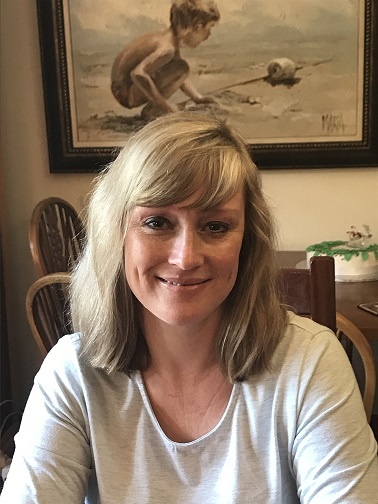
Robbie Cheadle is a very creative mother, author and fondant artist, who thinks outside the box to find inventive solutions for life’s difficulties. I first met Robbie through Sonoran Dawn’s Dead Man’s Party Halloween book event, where I did a reading of her short horror story, The Willow Tree, via audio recording for the event. During her takeover, Robbie posted images of her delectable creations to promote her Sir Chocolate book series for children, which she wrote with her son, Michael. She uses these image of her baked creations as cover art and to illustrate the book series. I thought this was incredibly innovative, and I immediately wanted to know more about this woman, and it didn’t take long to decide that I wanted to add her to the WtbR team.
Robbie is my Christmas gift this year, as I’ve been searching for a children’s author to join the Writing to be Read team. So, starting in January, Robbie will be popping in the second Wednesday of each month with her new blog series on writing for children, Growing Bookworms. I can’t wait to see what she has to share with us, so let’s learn more about her.
Kaye: Your Sir Chocolate covers are photos of your own delectable desert creations, which is very creative. Which came first – the baking or the writing?
Robbie: I started with baking and fondant art quite a long time before we wrote the books, but pairing the two was an idea that only came later. I used to write poetry and descriptive passages as a tween and teenager. Emily of New Moon by LM Montgomery was my favourite book when I was a tween. Emily is a poetess in the book and her father is a writer. The book inspired me to write down my thoughts and feelings.
Kaye: Would you share the story of your own publishing journey? How did the published works of Robbie Cheadle come to be?
Robbie: I never planned to become a published author when I first started writing the Sir Chocolate stories. My son, Michael, aged 6 years old at the time was having difficulties with learning to read and write. He was diagnosed with an auditory processing problem which made these activities difficult for him. He had the loveliest story ideas about a little man made of chocolate who lived in a land where you could eat anything, even the sand, trees and houses. In order to encourage him to write, I made up rhyming verse stories using his ideas. Together we wrote them down in handmade books.
I have always enjoyed fondant art and sometimes Michael would come and sit with me and make his own version of what I was making. We started making illustrations for the books by taking photographs of our creations. My nieces and nephews enjoyed the Sir Chocolate stories, so I tried them out with my Sunday school class of children. One of my friends at the Church suggested I send the stories and pictures to a friend of hers who is a publisher in the UK. Anne liked the stories and gave us a contract for the Sir Chocolate series of books.
Kaye: You talk about fondant art. I, for one had never heard of this. Could you explain briefly what fondant art is?
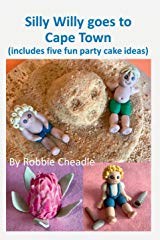
Robbie: Fondant is also called sugar dough and is an elastic type of icing, almost like modelling clay. This is the substance that cake bakers use to make figurines, flowers and other edible artworks for cakes. The items in the picture I emailed you are all made of fondant.
Kaye: You’re the co-author, along with your son Michael of the Sir Chocolate book series for young readers. How did that partnership come about?
Robbie: Between the ages of 6 and about 9 years old, Michael and I continued to make up Sir Chocolate rhyming verse stories from time to time. We would be doing something like visiting an ice cream shop and an idea would come to us. We would then chat about the idea and develop it into a story. Michael has delightful ideas like the chocolate snow and the ice-cream rainbow fairies who feature in Sir Chocolate and the Ice-cream Rainbow Fairies’ story and cookbook which will come out in 2020.
Kaye: What’s the one thing you hope your son takes away from this venture?
Robbie: I always hoped that Michael would become a proficient reader and learn to enjoy books and reading. It is not easy for a child who struggles to learn to read to develop a love of reading. I am very happy to say that this has happened. Michael now reads on his own for about 30 minutes a day. We often read together with me reading my book of the day and him reading his current story. Lately, these are all Rick Riordan books.
Kaye: What ages are the Sir Chocolate series aimed at?
Robbie: The Sir Chocolate books are aimed at young children, aged 3 to 9 years old. They are lovely for beginner readers as they are comprised of rhyming verse.
Kaye: Each book in the Sir Chocolate series features a story and a cookbook. That’s an interesting combination. Would you like to tell us a little more about why you chose to pair the two?
Robbie: Sir Chocolate is a little man made of sweets and sugar. All the characters in the books are made of edible products as well as all the houses, trees, flowers and even the rivers and the rocks. As all the illustrations are made of cake, biscuits and sweets, it seemed natural to provide the recipes to make some of the goodies in the book and make the books into a series of first cookbooks as well as a story.
Kaye: You also write supernatural and horror for adult audiences, and you had two stories published in the recently released horror anthology, Dark Visions. (See my review of Dark Visions here.) Another interesting combination: horror and children’s stories. Is there a story behind how you ended up writing in those two genres?
 Robbie: I entered a short story for children in one of Dan Alatorre’s writing competitions and it won an Honourable Mention. I really liked the critique on my story that I received from Dan so when another competition cropped up a few months later I decided to enter. The topic for that one was horror so I thought I would give it a go. That was when I wrote The Willow Tree. Dan again provided an excellent critique in respect of the story. I entered The Haunting of William into his most recent horror competition in June 2018. That was how I came to write darker stories. I discovered that I enjoyed writing this genre and now I am writing a supernatural/horror YA book. I have just exceeded 50,000 words.
Kaye: I can think of many differences in writing horror and in writing for children, but are there also ways in which they are alike?
Robbie: The Sir Chocolate stories all have a villain ranging from the trolls in Book 1 to the candy stripped Roc in book 5. All stories generally have a heroic character and a bad character so there is a common thread between the two genres. The difference is that in the Sir Chocolate books the “baddie” is generally redeemed and becomes a contributing member of Chocolate Land. In my current book, the evil characters are not redeemed.
Kaye: What is the strangest inspiration for a horror story you’ve ever had?
Robbie: I have just written a horror story about cockroaches which infest a working microwave oven and gain unnatural powers as a result of the microwaves they are subjected to. I think that is about the most unusual story I have written to date but I have only been writing for just over two years and I only started writing horror this year.
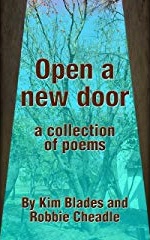 Kaye: In addition to writing children’s stories and cookbooks, and adult horror, you write poetry. And you have a poetry collection out with Kim Blades, Open a New Door. What type of poetry can we expect to find in this collection? How did that collaboration come about?
Robbie: Kim Blades and I are both South African poets. Our collection is about life in South Africa and is divided into four sections entitled God bless Africa, God bless my family and friends, God bless me and God bless corporates and work. Each section is divided into poems about the good, the bad and the ugly of our experiences in each of these areas of our lives.
Kaye: What is the most important quality in a poem for you?
Robbie: I like poems that are simply written and have a strong message. I try to write my poems along those lines. I don’t believe a lot of “highbrow” language is necessary in a poem for it to be an emotional and evocative piece of writing.
 Kaye: You have another collaboration with Elsie Haney Eaton, While the Bombs Fell. It’s about life during World War II, which is quite different from the Sir Chocolate stories. What age audience is this book aimed at? Would you like to talk a little about it?
Robbie: Elsie Hancy Eaton is my mother and While the Bombs Fell is a fictionalized account of her early years growing up during WWII in a rural town in England. It features the deprivation caused by bombing and rationing and the other hardships experienced, but it also provides a lot of insight into the small pleasures people enjoyed during the war in the way of a Christmas pudding, the ingredients for which were literally saved up for most of the year, swimming in favourite spots along the river Waverney and learning to knit. The reason this account is fictionalized and not an autobiography is my mother was aged 4 to 7 years during the war and so she can’t remember all the fine details. I supplemented her memories with a lot of my own research.
Kaye: What is the biggest challenge of writing for children?
Robbie: Marketing the books. Indie authors and writers with small publishers find it more difficult to get their books into stores and in front of the eyes of children. Children generally don’t use social Medias and, therefore, we are marketing to the parents and not to the actual child. Impulse buys are fewer as a result. I try to visit schools and Sunday Schools, but my time for these events are limited due to my work requirements.
Kaye: What other activities do you find time for when you’re not baking or writing?
Robbie: I am a qualified chartered accountant with a full time job and two sons. Any recreational time I have that isn’t spent with my family is used for writing, baking and blogging. I have two blogs, one for my children’s books, light poetry, baking and fondant art called robbiespiration.wordpress.com and one for my adult writing and darker poems called robertawrites235681907.wordpress.com.
Thank you so much Robbie for chatting with me here today. It’s been a pleasure, and I’m thrilled to have you on board. I look forward to your Growing Bookworms blog series. I have no doubt that you have some interesting things to share with us.
Welcoming Robbie to the Writing to be Read team is my Christmas present this year, and adding her blog series will be a great way to start out the New Year, too. You can learn more about Robbie and her writing and art one her blogs or click on the links below:
Sir Chocolate book series: https://www.facebook.com/SirChocolateBooks/
Amazon Author page: https://www.amazon.com/Robbie-Cheadle/e/B01N9J62GQ/ref=sr_ntt_srch_lnk_1?qid=1542170868&sr=1-1
Bake & Write: https://bakeandwrite.co.za/author/robbie-cheadle/
Or look her up on social media:
Twitter: @bakeandwrite
Facebook: https://www.facebook.com/robbie.cheadle.7
Instagram: https://www.instagram.com/cheadlerobbie/
I hope all my readers will help me welcome this creative children’s author to the Writing to be Read team and be sure to catch the first segment of her Growing Bookworms series on January 9th.
Want to be sure you don’t miss any of Robbie’s Growing Bookworms segments? Subscribe to Writing to be Read for e-mail notifications whenever new content is posted or follow WtbR on WordPress.
Share this:

The Poetry Of Youth
Posted: November 28, 2018 Filed under: Poetry, Uncategorized | Tags: Charles Bukowski, eecummings, highschool, Poetry, youth 3 Comments
I wrote in an earlier piece that my first motivation for writing poetry was to please a girlfriend. What is more apt, more romantically human, than writing and reciting poetry?
I was fifteen and completely smitten. My amour and I belonged to a group of friends who fancied ourselves as Beatniks, avant garde, fringe elements. Oh, how daring, these suburban kids flirting with dangerous radicals and writers! We weren’t political. We were curious and flying as close to the flame of modern art as we dared.
Our god was e.e. cummings. A close second was Charles Bukowski. Cummings was the defiant rebel and iconoclast. Bukowski was just plain foul, profane and we loved his flouting of middle class lifestyles. The two poets could not be more different. In the classroom we studied T.S.Eliot. We studied Robert Frost. Whee!
Then cummings came along and we were swept up in his lyricism and humor.
since feeling is first
who pays any attention
to the syntax of things
will never wholly kiss you;
wholly to be a fool
while Spring is in the world
my blood approves
and kisses are a better fate
than wisdom
lady i swear by all flowers. Don’t cry
—the best gesture of my brain is less than
your eyelids’ flutter which says
we are for each other: then
laugh, leaning back in my arms
for life’s not a paragraph
and death i think is no parenthesis
e.e. cummings
This is one of his classics, one of his best known poems. In it he exhorts us to pure experience, to FEEL life, not to think about it. That appeals and will always appeal to the young. Bukowski is a different matter.
the flesh covers the bone
and they put a mind
in there and
sometimes a soul,
and the women break
vases against the walls
and the men drink too
much
and nobody finds the
one
but keep
looking
crawling in and out
of beds.
flesh covers
the bone and the
flesh searches
for more than
flesh.
there’s no chance
at all:
we are all trapped
by a singular
fate.
nobody ever finds
the one.
the city dumps fill
the junkyards fill
the madhouses fill
the hospitals fill
the graveyards fill
nothing else
fills.
Charles Bukowski
Bukowski was more the nihilist, far more transgressive of social norms. He didn’t give a shit! By the way, if you haven’t seen the movie “Barfly”, do so. It is based on the life of Bukowski. It’s a hoot.
I don’t know many high school kids these days, so I have no insight towards their poetic tastes. They have hip-hop. They have the internet. I have no doubt that kids today are as adventurous, rebellious and weird as they have always been. It would be a good research project.
As always with these essays I close with a poem of my own. I’ll keep it brief. It has nothing to do with the subject.
Magical Dancers
Between my pillow and the back of my head
Magical Dancers
in the space where the stubble of my balding scalp
meets the soft fabric of my cotton dream ship
Magical Dancers.
Shall I wake and know this to be a dream?
Dancers dressed in furs and leather
wearing antlers and tusks
tracing circles and hopping
from one leg to the other
drums and rattles, sticks with bells shaking
Magical Dancers in a dream
but my eyes are open, my mind lucid.
This is no longer a dream.. Are these dancers merely
the fleas left behind by the cat as he warmed my pillow?
Surely not! Surely not! But if they are, then I salute you,
fleas, for taking on strange identities
in a world where nothing is quite real
where fleas are shamans, ancient survivors
magicians of blood and skin.
If I turn on my side, what will I see? Fleas vanishing into the cat’s fur
or shamans celebrating the oncoming wave of another dream?
Arthur Rosch
A Midwesterner by birth, Arthur Rosch migrated to the West Coast just in time to be a hippie but discovered that he was more connected to the Beatnik generation. He harkened back to an Old School world of jazz, poetry, painting and photography. In the Eighties he received Playboy Magazine’s Best Short Story Award for a comic view of a planet where there are six genders. The timing was not good. His life was falling apart as he struggled with addiction and depression. He experienced the reality of the streets for more than a decade. Putting himself back together was the defining experience of his life. It wasn’t easy. It did, however, nurture his literary soul. He has a passion for astronomy, photography, history, psychology and the weird puzzle of human experience. He is currently a certified Seniors Peer Counselor in Sonoma County, California. Come visit his blogs and photo sites. Photos in these columns are by Arthur Rosch.
Want to be sure not to miss any of Art’s The Many Faces of Poetry segments? Subscribe to Writing to be Read for e-mail notifications whenever new content is posted or follow WtbR on WordPress.
Share this:

Rumi, Spirituality And Poetry
Posted: October 31, 2018 Filed under: Inspirational, Poetry | Tags: ancient texts, Art Rosch, language, Poetry, Rumi, spirituality, The Many Faces of Poetry 6 Comments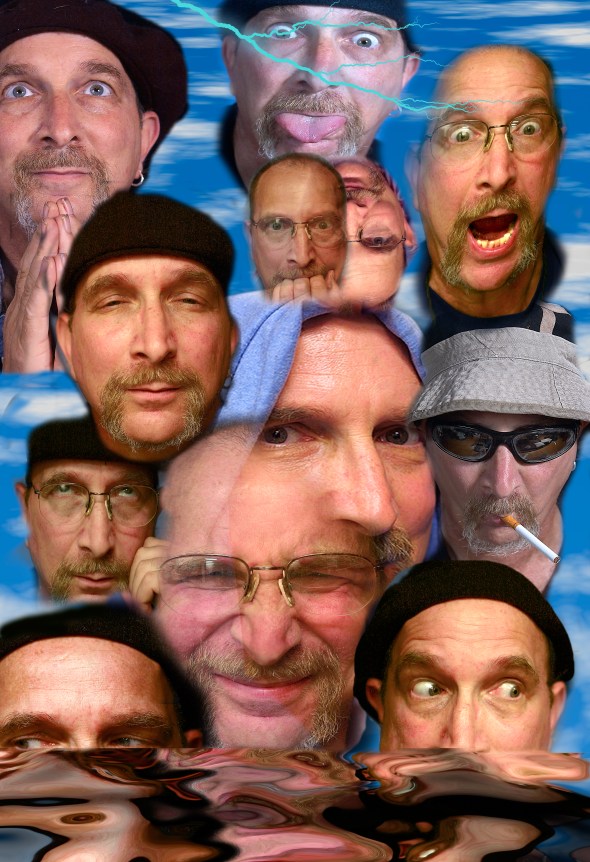
The oldest poetry of all is in the Holy Books. The Rig Veda, The Maharashtra, the Buddhist Sutras, The Old and New Testament. Then there are the extended legend/poems that have become embedded as virtual racial memories of mankind. The story of Beowulf, the Icelandic Eddas, The Iliad and The Odyssey. It seems as if poetry came first, was the primal form of literature, handed down from The Gods to human beings.
More familiar to us today is the work of the Sufi mystics like Rumi. I know that Rumi’s poetry has become a consumer commodity. His work is immune to vulgarization, however, so I’m not worried about Rumi. He is said to be the most widely read poet in the world. His work has survived eight hundred years. He nearly vanished to the western world until Sufi scholar Coleman Barks translated Rumi into English and it took off…again!
Rumi addresses himself to God, to Allah, as if to an intimate lover. He gives all of himself to the Highest because he is in love with the Highest. Rumi is also very human, rooted and ordinary. He offers us practical insights on daily survival. He writes, “Don’t worry about what doesn’t come. By not coming it may prevent disaster.” He may as well have been speaking directly to me. I’ve waited for a lot of things that haven’t come.
Poetry and prayer are inseparable. Isn’t every poem really an address to the Divine? Isn’t it laden with hope, desire, confusion, supplication and maybe even surrender? Rumi’s poetry attracts modern readers because it retains its purity, it can’t be trivialized by the consumer paradigm that dominates our world. It doesn’t matter that Donna Karan uses Rumi to sell fashion. Or that rock star Chris Martin uses this poem on an album by Coldplay.
This being human is a guest house.
Every morning a new arrival.
A joy, a depression, a meanness,
some momentary awareness comes
as an unexpected visitor.
Welcome and entertain them all!
Even if they’re a crowd of sorrows,
who violently sweep your house
empty of its furniture,
still treat each guest honorably.
He may be clearing you out
for some new delight.
The dark thought, the shame, the malice,
meet them at the door laughing,
and invite them in.
Be grateful for whoever comes,
because each has been sent
as a guide from beyond.
I can’t think of any more appropriate response to the maladies that afflict us in these times.
This, then, is my poem, a poem very much influenced by Jalalladin Rumi of The Mevlevi School of Sufism.
A Worthy Destination
I haven’t found peace.
I don’t own peace,
rent peace,
buy or sell peace,
though I do encounter peace
from time to time.
Peace is like a friend
who comes for a surprise visit.
As my life takes on a shape
in which peace feels comfortable
I see peace more often.
Peace is not easily found in this world.
Peace comes like an accident,
a good mishap.
Peace lands in my heart like
a bird that’s raised its young
and is looking for a new place to nest.
I thought I would know peace by now,
but it’s taking longer than I expected.
The biggest problem is my mind.
It’s like a bag turned inside out, its contents
are the world, spilled and crazy.
Peace is not comfortable
in the world. When I’m with peace, I feel as though I’ve brought a guest
to the kind of party
that’s broken up by the cops after midnight.
I need to make peace more welcome here.
I should send peace an invitation, find a good solid tree
where peace can perch and sing
before taking flight
to a more worthy destination.
To see more of my writing, photography and music I highly recommend that you take an excursion to
email writernuts@gmail.com

A Midwesterner by birth, Arthur Rosch migrated to the West Coast just in time to be a hippie but discovered that he was more connected to the Beatnik generation. He harkened back to an Old School world of jazz, poetry, painting and photography. In the Eighties he received Playboy Magazine’s Best Short Story Award for a comic view of a planet where there are six genders. The timing was not good. His life was falling apart as he struggled with addiction and depression. He experienced the reality of the streets for more than a decade. Putting himself back together was the defining experience of his life. It wasn’t easy. It did, however, nurture his literary soul. He has a passion for astronomy, photography, history, psychology and the weird puzzle of human experience. He is currently a certified Seniors Peer Counselor in Sonoma County, California. Visit his blogs and photo sites. www.artrosch.com and http://bit.ly/2uyxZbv.