Interview with children’s author & illustrator Judy Mastrangelo

Judy Masrangelo Framed

My guest today is an author and talented illustrator of children’s fantasy books. She seems a bit shy, but I was able to coax a few answers out of her, regarding writing for children and creating beautiful illustrations. Because, after all, at least half of writing for children is creating visual images, so an author who can do their own illustrations comes into the game a step ahead. Please help me welcome author and illustrator Judy Mastrangelo.

Kaye: When did you know you wanted to be an author?

Judy: I’ve always enjoyed writing, ever since I was very young.

Kaye: Would you share the story of your own publishing journey?

Judy: As a child I would write little stories from my imagination, or about my everyday experiences.

Coming from a fine art background, I’ve always loved the wonderful artists of the “Golden Age of Illustration”, who illustrated books from about 1850 to 1925.  I like to think that I continue along this line in my own small way.  I enjoy writing stories that I illustrate, and also love illustrating classical stories in the public domain.

Many of my paintings have been licensed for various markets, such as art prints, wall murals, greeting cards, jigsaw puzzles, oracle cards etc.  I have written and illustrated several published books.  And I have both illustrated and written the text to a new inspirational Oracle Card Deck which will be on the market next year, published by “RED FEATHER MIND BODY SPIRIT”, a division of Schiffer Publishing.

You can see and hear podcasts about my artwork on Youtube.

These include some radio interviews, plus several teaching podcasts about the steps I take in the creation of my Art.  To learn more about my Art and products, you can visit: www.judymastrangelo.com

Kaye: What’s something most readers would never guess about you?

Judy: I am a “movie buff” and enjoy many genres of film.

Kaye: What is the biggest challenge of writing for children?

Judy: I try not to “talk down to children”.  Just having fun at writing is what I enjoy doing, and making my stories come from my heart, expressing how I feel. My books are really intended to be appreciated by all ages ~ the young and the young at heart.  I attempt to appeal to the “Child in all of us”, and to rekindle the wonderful feelings we have all experienced in our youth, of the awe and beauty of the world around us.  As we grow older, life seems to become more mundane, with all the everyday things we have to do in order to survive.  The realm of art certainly plays an extremely important part in everyone’s lives, so that we may feel uplifted and inspired to higher worlds.

Kaye: What is the one thing you hope to teach children?

Judy: I like to impart the wonder and beauty of the world around us; sensitivity to nature and to all living beings, including animals, plants, and trees, as well as humankind are excellent lessons to understand.  I feel that developing creativity as an art form, and one’s imagination, are very important aspects of life. Many people seem to place imaginative painting and literature more in a children’s category, although I’m sure you’ll agree that the genre of fantasy art is appreciated by all ages.

CINDERELLAMany adults also enjoy themes, such as fairy tales, and other types of fantasy. I’m sure no one will dispute the fact that great authors such as William Shakespeare, Hans Christian Andersen, Robert Louis Stevenson, James Barry, etc. wrote memorable outstanding fantasy stories. And that’s why I feel that my writing and paintings can also appeal to any age person.

One just has to “let go” of their preconceived notions that fantasy, fairies, fairy tales, etc. are just for the young. It will keep us all “Young at Heart” if we believe in the magical power of art to unleash our imaginations.

Kaye: Your books are illustrated in bright, vibrant colors. What medium do you work with?

Judy: Acrylic paint on canvas is my medium of choice.


Kaye: What is the most challenging thing about illustrating your own books?

Judy: The art of illustration is very dear to my heart, something I have been developing my entire life. It is a labor of love for me, and I paint because I enjoy doing it so much. I usually paint slowly, because I am somewhat of a perfectionist, and as a result my paintings aren’t created very quickly. This can sometimes present a problem. But I do enjoy illustrating my own books that I also design. Many of my books I have written myself, and others have stories or poems that are in the public domain which I illustrate. It’s all great fun to illustrate, and I relish every moment I spend doing my paintings!

Kaye: What is the most important quality in a children’s story for you?

Judy: Delight, imagination, and fun.

Kaye: What’s the best piece of advice you were ever given?

Judy: Be true to my heart, be myself, and enjoy the process of creating.

Kaye: Flower Fairies is focused on the characters. What comes first in your mind, the character, or the story?

Judy: I’m a very visual person, and often I first get images in my mind of a painting that I would like to create. Often this “germ” of an idea or image leads to a story, or a series of paintings. So I would say that the story as a whole comes first.

Kaye: As a children’s writer, what kind of research do you find yourself doing for your stories?

Judy: I often research period costumes for my characters to wear, and I also consider other art forms which portray the ideas I wish to develop in my stories. I love all forms of great art, and often music, drama, dance and other literature is a great inspiration to me, as well as great painting of course. So I immerse myself in art that I love, as part of my research for a specific project. It brings me great joy to do this.

Kaye: Tell me a little about your Portal to the Land of Fae series?

Judy: The world of nature spirits has always been fascinating to me. I love the realm of fantasy. And the tiny folk, such as fairies and elves are of particular interest. For many years I’ve done paintings of these lovable spirits, and have enjoyed writing about each painting I create.  I love writing poems to go with my artwork, and have enjoyed describing my feelings about the fairy world. The idea of making a series of books incorporating these works was an intriguing one for me, and four categories developed from them:

Flower FairiesFLOWER FAIRIES: This book tells about the precious Elves and Fairies who live amongst the Flowers, such as: the graceful ROSE FAIRY, and the comical little SWEET PEA ELVES.  I often depict Flower Fairies to appear as graceful ballet dancers. In this genre of art, I have been inspired by the Flower Fairy paintings of British artists Cicely Mary Barker and Margaret Tarrant.


SECRETS OF THE FAIRIES COVERIn my SECRETS OF THE FAIRIES, I portray the secret life of elves and fairies that I imagine to exist in amazing places.  There are many delightful things that i depict these creatures doing.  They often enjoy frolicking and playing in a garden.  These secrets tell of the hidden world of elves and fairies, little known to mortals. I’ve also written and illustrated depictions of the four seasons with the fairies, and their beautiful romantic lives.


FAIRY TALE FAIRIES, various forms of fantasy have always been the closest to my heart.  They include fairy tales and myths.

The world of fairies has often inspired the arts of other great literature.  Some excerpts from classical literature for this FAIRY TALE FAIRIES book are included in this volume. You will see some of my illustrations from Hans Christian Anderson’s Thumbelina, Cinderella by Charles Perrault, Peter Pan by James Barrie, and many others. Sometimes authors and painters depict elves and fairies in a darker way, but I prefer to focus on depicting the lighter, more cheerful and spiritual side of the fairy realm.

MYSTICAL FAIRIES COVERMYSTICAL FAIRIES:  In this volume, I want to share my feelings of Spirituality and Goodness, Love for Life and Nature, and the Healing power of Art. I feel that Elves and Fairies, are beautiful, Magical, and Spiritual Beings which can inspire and uplift one to higher realms.  I often depict them as radiant beings, which glow with an inner light, with radiating and sparkling auras, glow like spiritual Angels.


Kaye: Your Come Play with Me series includes bonus features. Would you like to tell us about the series and bonus features?

Judy: My Come Play With Me book series is designed to give readers high quality illustrated storybooks in full color.  They also include some delightful interactive bonus pages.  These books include fun filled things, such as How to Draw pages, coloring pages and recipes, etc.

THE STAR COVERMy first book in this series, THE STAR, illustrates the entire famous TWINKLE TWINKLE LITTLE STAR poem, written by Jane Taylor.  I’ve interpreted this beloved poem, as a fanciful, Dream-like adventure.   I’ve included a delicious bedtime snack recipe, some “how to draw” pages, a creative writing section, coloring pages, and some decorative gifts to cut out, etc.  An Audiobook of my book THE STAR is also available, where people can listen to this song being beautifully sung.  If the kindle ebook, or paperback versions of my book THE STAR are purchased also, along with the audio book, people can sing along with the audiobook as they read it interactively.

Two other books in this series have a Bunny theme: The first one, entitled WHAT DO BUNNIES DO ALL DAY? is my original story of a little Bunny’s first adventure.  Some interactive pages include Mama Bunny’s recipe, coloring pages, creative writing and drama ideas, and decorations to cut out from the book.  An audiobook of this story will be available soon, to be listened to interactively along with reading this book in kindle or paperback.


The second Bunny book in this series, LEARN TO DRAW BUNNY AND HIS FRIENDS, is a companion book to my book WHAT DO BUNNIES DO ALL DAY?  In it I show easy to do, attractive, and fun ways to learn to draw little Bunny’s animal and flower friends that he meets in the book about his first adventure.


Some of the animals I show how to draw are rabbits, frogs, butterflies and turtles. Then daffodils, daisies, and buttercups are several of the flowers I describe drawing, all in three easy steps.  It’s a delightful interactive book, which also includes special pages for people to draw their own pictures, with small border decorations for inspiration.

Kaye: Which character is your favorite? Why?

Judy: One of my favorite characters is Little Bunny in my book WHAT DO BUNNIES DO ALL DAY? He is a sweet innocent little rabbit who is delighted and excited at the opportunity of investigating the big world all by himself for the first time.  I’ve modeled this little animal on our own dear little Netherlands Dwarf pet rabbit, who is very loved by my husband and me.  He gives us both a lot of Love in return.  Knowing this adorable Little Bunny intimately was a great inspiration to writing and illustrating my story.

Kaye: Where does your inspiration come from?

Judy: My inspiration comes from many things: my love for nature, for instance.  When I am in a flower garden, I imagine delightful Flower Elves and Fairies living there.  I visualize them wearing costumes made of leaves and flowers, acorn caps, etc.  I collect things such as leaves, pine cones, berries, ribbons, and scarves, to give me ideas for their fanciful clothing.

I take photos of beautiful places that I visit, to give me ideas of backgrounds for my paintings. Great art of the past and present is always an inspiration to me, such as: wonderful films, great literature, beautiful music, ballet dancing, and beautiful paintings. They always kindle my enthusiasm.

Kaye: Is there anything unique or unusual about your creative process?

Judy: I have developed a method I call “Mind Painting”.  This is my own personal way of capturing ideas and images for my paintings and writing, which develop in my mind.  This is a procedure used by many creative authors, composers, painters, poets, choreographers, etc. throughout the ages. I just close my eyes and “visions” appear in my head.  I do this during the day, or at night before going to sleep. These images often develop into stories which evolve into my books. It’s a delightful process.

Kaye: What is your greatest achievement to date in the literary world?

Judy: Reading and hearing the wonderful and appreciative compliments from people who have read my books, and who have seen my illustrative paintings, has always been very encouraging to me.  I receive these compliments from all kinds of people, worldwide, and of all ages.  I feel that these wonderful responses have been the greatest achievements in my literary and artistic world.

I want to thank Judy Mastrangelo for sharing with us here today, both her wisdom and her fabulous illustrations and book covers. You can learn more about Judy and her children’s books on her website or on her Goodreads Author or Amazon Author pages.


Like this post? Let me know in the comments. You can be sure not to miss any of Writing to be Read’s great content by subscribe to e-mail or following on WordPress. If you found it helpful, please share.

Chatting with the Pros: Interview with Y.A. author Carol Riggs

chatting with the pros

My “Chatting with the Pros” author guest today writes young adult fiction in the fantasy and science fiction genres. Her debut science fiction novel, The Body Institute, is currently being developed into a television series by NBC, which I think, is pretty cool. I met her when I reviewed Bottled three years ago. Since then, I’ve reviewed her science fiction novel, The Lying Planet, and she was a member of the author panel for the first round of the “Ask the Author” blog series in 2018, right here on Writing to be Read. Let’s find out what she has to share. Please help me welcome author Carol Riggs.

Carol Riggs author_smaller

Kaye: Please begin by telling us briefly about your author’s journey?

Carol: I began writing in the 1990s, took a 10-year break, and started up again in 2009. I met my agent at an SCBWI retreat and signed with her in 2011 for my 2015 debut, THE BODY INSTITUTE. Since then, I’ve published 7 more books.

Kaye: Why do you choose to write for young adults? Why science fiction and fantasy?

Carol: I enjoy writing about teens as they experience the road to individual growth and becoming an adult—navigating independence, romance, tests of courage, etc.  Sci-fi and fantasy appeal to me because I love making things up. Speculative genres give me the most room to be creative and use my imagination.

Kaye: What is your biggest challenge in writing for a young audience?

Carol: Keeping in touch with how a young person thinks and talks, sounding like a teen. My editor at Entangled Teen nails me on that, and makes me rewrite things that don’t sound authentic.

Kaye: Is there anything unique or unusual about your writing process?

Carol: Nothing too unusual. I don’t listen to music or other distractions. I draft novels moderately quickly (3-5 months), and I write 1 or 2 books a year. I also keep my novels “clean,” with no profanity, gory violence, or sexual scenes. I prefer to make up my own slang and swear words, which don’t become outdated like modern teen lingo/slang/cussin’.

The Body InstituteKaye: NBC is developing your science fiction novel, The Body Institute, into a television series. That must be exciting. Tell us a little about the story.

Carol: THE BODY INSTITUTE is a dystopian sci-fi novel where the main character gets a job losing weight for other people—by having her mind downloaded into their bodies. It’s set in the near future where society is ultra health conscious. The TV series is using the book as a jump-off point rather than being a direct replica of the novel, which is okay with me. It’ll be fun to see where their creative minds take it.

Kaye: How much say do you have in the development process of the television series? Are you involved at all?

Carol: I don’t have any say at all, but that honestly doesn’t bother me. I’d rather spend my time developing new novels! Readers have the book if they want to explore what I’ve developed; the TV show will be a different experience entirely.

Kaye: Do you have a date yet for the series premier for The Body Institute to air?

Carol: As of yet, I don’t; the filming of the pilot show hasn’t begun yet. I’ll announce on my newsletter, Facebook, and Twitter (@CRiggsAuthor) as soon as I find out any developing news.

Junction 2020

Kaye: Most of the books in your Junction 2020 series have scary sounding titles: The PortalNightmare RealizationVanishing FearsSilent Scream, and Future Terrors. Is this fantasy series scary?

Carol: Some people consider these books “horror,” but it sort of depends on your tolerances. If you can’t stand spiders, for instance, don’t read THE PORTAL. Nothing is hyper-bloody in the series, though…no slasher-type nightmares or anything overly gory. I chose each characters’ fears to manifest in a way that would lead them to personal growth, a challenge to overcome rather than sheer horrible nightmares.

Kaye: How do you approach scary subject matter when writing for young adults?

Carol: I try to keep it emotional but real to each character, and I don’t make things gory. Depending on the teen, that could be totally un-scary, or it could be very unsettling. I try to hit somewhere in the middle, for the average reader.

Kaye: Are there certain subject matters that you wouldn’t tackle for a young adult audience? Why?

Carol: I don’t write sex scenes, gory violence, or profanity. I think there’s plenty of that going around nowadays in society (books, movies, etc.), and not having those things in my novels jives with my personal morals and my feelings about what I would want to (or not) read in a novel. I wouldn’t write about demons or the occult, either—too creepy and real.

BottledKaye: My favorite book of yours is Bottled, which I reviewed a few years ago. It is a fun and entertaining fantasy story. What was your inspiration?

Carol: Long ago, I used to watch “I Dream of Jeannie.” While BOTTLED isn’t that similar in plot to the show, I was inspired by the fun, magical atmosphere of the TV series. It’s my tribute to the show.


The Lying PlanetKaye: I also reviewed The Lying Planet. Tell us a little about this science fiction story.

Carol: I was lying in bed one night years ago, and heard a noise in the living room (it was probably the refrigerator). That became the germ seed for TLP, a teen boy on the planet Liberty who one night hears a noise in the living room and gets up to investigate…and then wishes he hadn’t. He uncovers an evil that rocks his world in the worst way possible. I’ve found that teen guys really seem to like this novel. It has lots of danger, adventure, and a degree of creepiness.

Kaye: The other thing I loved about Bottled was the fantastic cover. And the vibrant colors used for Lying Planet cover and those used in the covers your Junction 2020 series are eye catching, as well. The colors are wonderful and the designs fit what the stories are about. Do you design your own cover art or hire it out?

Carol: I’ve been incredibly lucky to get awesome covers for my traditionally published books. The JUNCTION 2020 series covers I developed myself in Photoshop, with the tips and suggestions of a writer friend who is also a graphic artist. I have a BA in Studio Arts, so I think that helps me have a bit of an eye for what looks good.

Kaye: What do you enjoy doing when not writing?

Carol: Walking, reading, working jigsaw puzzles, watching sci-fi and fantasy movies, going to the beach, and listening to all kinds of music.

Kaye: Writing organizations can be of great value to writers of all genres. You’ve been a member of Society of Children’s Book Writers and Illustrators for many years. Would you talk a little about the organization and how you have benefited through membership?

Carol: Back in the 1990s when I first joined the Society of Children’s Book Writers and Illustrators (SCBWI), it was super helpful. Submissions were sent to editors at publishing houses by postal mail rather than email (talk about slow!). There wasn’t the wealth of information on the internet that there is now, so the SCBWI was invaluable for honing one’s work to make it ready for editor eyeballs. I learned a lot.

When I returned to writing in 2009, an agent was almost mandatory to submit your work, and the SCBWI retreat I went to offered manuscript critiques for a fee. I actually met my agent-to-be during one of those brief, one-on-one meetings. SCBWI conferences are also great places to network with other writers, learn about the craft of writing, meet industry professionals, and talk about books all day. Some regions offer scholarships to attend if finances are tight.

Kaye: What is your best piece of advice for aspiring authors of young adult fiction?

Carol: If you love it, never give up. THE BODY INSTITUTE was the 13th book I wrote, after 350+ rejections and 11 years of writing and trying to become published. Surround yourselves with supportive writer friends to share the ups and downs. Keep learning your craft, persevere, and enjoy the journey!

Kaye: What can your readers look forward to in the future? What’s next for Carol Riggs?

Carol: A deal has just been signed for THE BODY INSTITUTE for an audiobook version, which is cool. I’m also working on a sequel to the novel, called SPARES. Ideas are springing into my head for a fresh YA novel, and I’m excited to begin imagining a whole new world for readers to explore.

I want to thank Carol for sharing here and answering all of my many questions. And thanks to all of you readers for joining us. You can find out more about Carol Riggs and her young adult science fiction and fantasy books on her website, her Amazon Author page, or her Goodreads Author page.

Next month, there will not be a “Chatting with the Pros” segment. In December we’re wrapping up 2019 and giving you a rundown of what’s in store for 2020. I plan to run this blog series again next year, so check back after the New Year for the first 2020 segment in January. I hope to see you all then.


You can catch the monthly segment “Chatting with the Pros” on the third Monday of every month in 2020, or you can be sure not to any of the great content on Writing to be Read by signing up by email or following on WordPress. Please share content you find interesting or useful.


A Farewell Tribute to Tom Johnson

Tom's Back Cover Picture

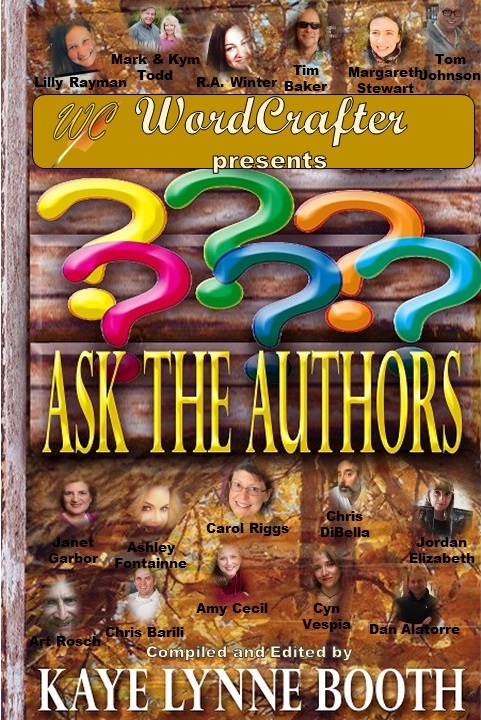
Last week, we lost a dear friend of mine and a member of the Writing to be Read author family, Tom Johnson. Tom was a multi-genre writer for most of his life, mostly pulp fiction in the traditions of the classics, but in recent years, he dedicated himself to children’s fiction, with the intentions of creating stories for today’s children which reflect old fashioned values and morals in the traditions of the stories his mother read to him as a child. Tom took part in Round 2 of my “Ask the Authors” blog series, (which will become a published book by WordCrafter Press soon), and I interviewed Tom about his children’s stories back in 2018. He had some great things to say about writing for children that may be relevant here, since the Writing to be Read theme for November is young adult and children’s fiction. With that in mind, I’m reprinting that interview in part here, (you can read the full interview here), as we remember our friend and fellow author. Tom may be gone, but his wisdom lives on. This is what writing for children meant to him.


Kaye: Although in the past, you’ve written and published many different genres, you are currently writing only children’s stories. So, let’s talk about that. Tell me a little about your stories.

Tom: My children stories are about 1k and meant as bedtime tales, and to be read in classroom or library settings. They are short stories with little morals to teach children something about life.

Kaye: Are they a series or stand alone?

Tom: They are a series, and published in anthologies about once a year. There have been four anthologies so far. I was invited to participate beginning in volume #3. The anthology is called Wire Dog Storybook. Here is the background. True story. A young girl, Ellen Walters, asked her father, David Walters, if she could have a dog, and he said, “No.” So she found an old wire hanger and shaped it to resemble a dog, and called it wire dog. David Walters was fascinated by her ingenuity and created the Wire Dog storybooks. So the stories usually feature Ellen and Wire Dog, but always Wire Dog. Five of my stories have been published so far, and I’ve written three more for the 2018 yearbook when it comes out at the end of the year.

Kaye: What age group are they aimed at?

Tom: I feel that we should begin reading to our children by age one. With that in mind, my stories are aimed at the age group of 1 to 5. However, older children will enjoy the stories, as do adults.

Kaye: What differences do you see between writing for children and writing adult fiction?

Tom: Adult fiction usually means, “no holds barred”, while writing children stories you want to stay away from violence, horror, and adult themes. Keep in mind, young children absorb what they hear quickly, and some themes could have an adverse effect on young minds. When writing for children we must keep this in mind.

Kaye: What appeals to you about writing for children?

Tom: Do you remember the old radio show for kids, Let’s Pretend ? It produced shows for children that acted out fairy tales and light adventures – nothing as harsh as today’s cartoons that are aimed at our youth. Well, I have the chance to import my love for adventure in tales easily understood by young people; children who some day may also experience that same love to pass on to their children. Stories that give our children a moral to live by, not “It’s clobbering time!” Or Pow! Bang! Boom! It’s something my mother did for me when I was little, and now I have the same opportunity, and I’m not going to pass it up.

Kaye: You have wanted to write for children since you were little and your mother used to read to you.

Tom: Oh, yes. I hope that mothers are still reading to their children. They learn at such a young age, and we’re missing an opportunity if we fail them when they’re young. They will never forget what they learn as children, it’s when their minds are growing and grasping at everything. I think one of the first words they learn is, “Why?”

Kaye: What were your favorite children’s stories?

Tom: Really, I would have to look them up in the book of fairy tales on my shelf. There were so many she read to me. Knights saving young damsels come to mind. I remember one particular fairy tale where the princess was on a glass mountain, and the young knight had to save her. She watched each day as a knight riding brown horse attempts to scale the glass mountain, then a knight on a white horse, and so on, until the final day when a knight riding a great steed scales the mountain, and we find out that he was the knight on the brown horse, the white horse, etc. It wasn’t the color of the horse, but the persistence of the knight that finally achieved the goal.

Kaye: In what ways do the stories you write emulate those favorites from your childhood?

Tom: Like the fairy tale I mentioned above, my stories will also have a similar moral – it’s not the color of the horse, or the knight’s armor, but his persistence that wins the hand of the princess. Do the right thing, for the right reason. Persevere. If you don’t succeed today, try and try again.


The stories that we hear and read in childhood often stick with us into our later years. Even though Tom wrote other fiction through the years, as he grew older, it was the stories that his mother read to him as a child that inspired him. That’s what writing children’s fiction is all about.

Tom Johnson Books

Tom’s other works included pulp, crime and science fiction stories right up there with the best, and many may be familiar with his promotions for them on Facebook. His covers seem to reach out and grab your attention.  He published over eighty books during the span of his career. In that previous interview, Tom claimed that Alien Skies was born from his most unusual inspiration and the Guns of the Black Ghost was written as a homage to Walter Gibson’s The Shadow radio drama. You can read my review of Pangaea: Eden’s Planet here.

Tom Johnson and wife Ginger

Writing was a big part of Tom’s life. It was important to him. But, Tom was more than just a talented and dedicated writer. He was also a loved life partner to his lovely wife Ginger. She was supportive of his writing, and I believe she edited some, or perhaps all of his work. With Ginger at his side, Tom lived a life doing what he loved – bringing his characters to life.

Tom, farewell. You will live on through the plethora of books and stories you’ve left us with, but you will still be greatly missed.


Are you a Tom Johnson fan? If so, feel free to leave a few words in the comments telling us what Tom meant to you, or share a memory, or just tell me which of his books is your favorite.  Thank you all for joining me in saying good-bye.


“Tabitha’s Death”: a Y.A. novel that dares to journey into taboo realms

Tabitha's Death

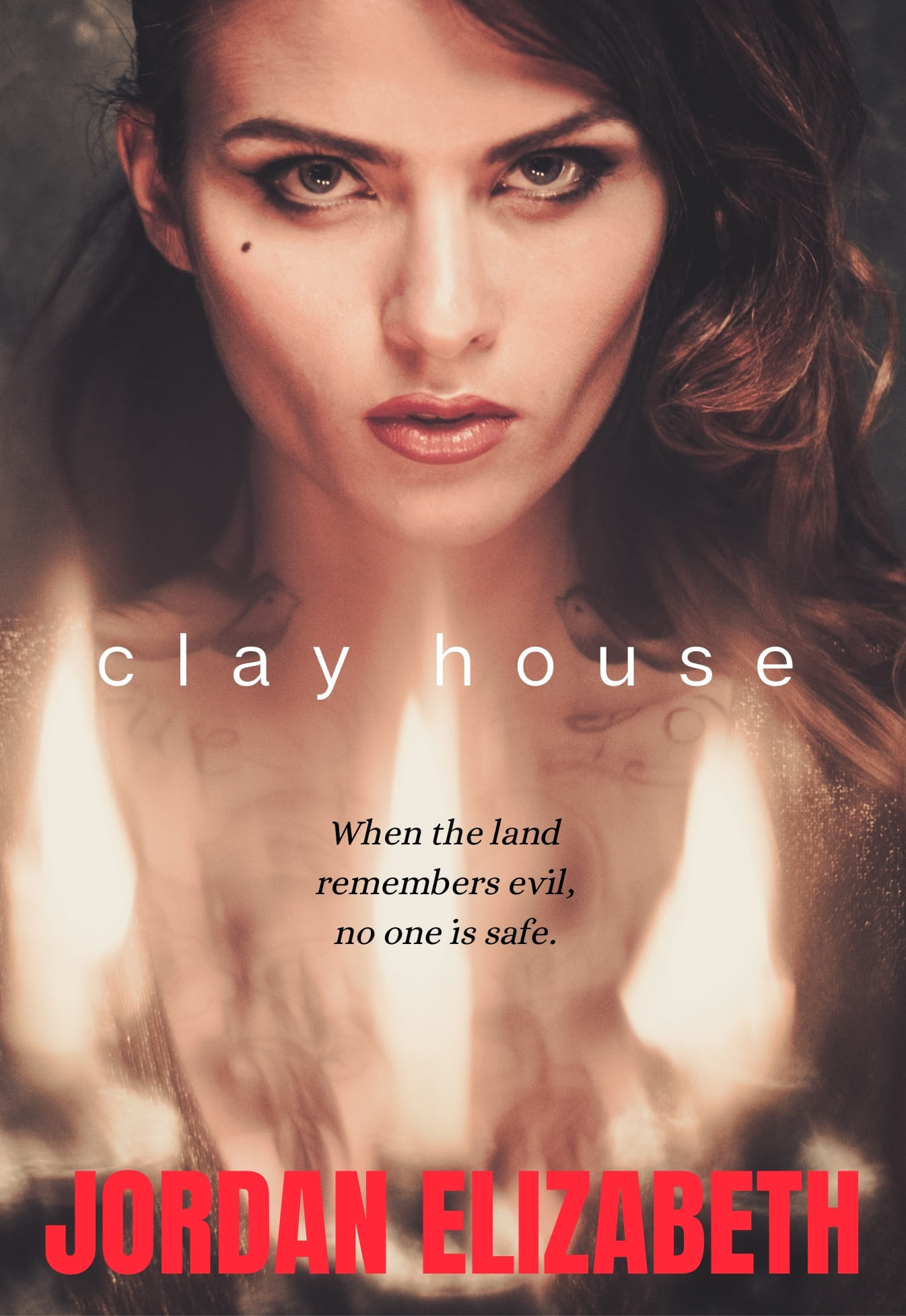
Tabitha’s Death, by Jordan Elizabeth is a dark fantasy journey into death and beyond. This book is masterfully crafted to present the often taboo subjects of depression, cutting and teen suicide. Speaking as someone who has lost a son to teen suicide, I thought the subject matter was handled with sensitivity and tact. Even as a work of fiction, Tabitha’s Death carries messages many teens may need to hear.

Tabitha thinks she wants to die and tries to take her own life, but she finds it’s not that easy.  The Grey Man snatches her away from death and won’t let her die until she completes certain tasks for him. As she journey’s through the strange realms beyond death, she learns that there’s more going on beyond death’s doors than she’d realized and her life maybe wasn’t so bad.

A truly inspirational approach to Y.A. fiction, resulting in an entertaining, yet thought provoking story. I give Tabitha’s Death five quills.

five-quills3

Kaye Lynne Booth does honest book reviews on Writing to be Read in exchange for ARCs. Have a book you’d like reviewed? Contact Kaye at kayebooth(at)yahoo(dot)com.


“Flower Fairies: Portal to the Land of Fae”: A delightful introduction for young and old

74156978_532028357344307_2810390581459550208_n

Flower Fairies, by Judy Mastrangelo, is book 1 in her Portal to the Land of Fae series and a delightful introduction into their world, no matter what your age. Each page is filled with colorful images which highlight the natural world and enmesh it with the world of fantasy. Laugh with fairies and elves as they dance and play among the plants and flowers. Manstrangelo’s bright illustrations bring her well crafted descriptions to life and immerse you within the imaginary world of fea. There is no age restriction on the hearts these tiny fairy children will capture.

I’m looking forward to my next adventure into this magical land when I read the rest of the books in this series. I give Flower Fairies five quills.

five-quills3

Kaye Lynne Booth does honest book reviews on Writing to be Read in exchange for ARCs. Have a book you’d like reviewed? Contact Kaye at kayebooth(at)yahoo(dot)com.


“Not My Father’s House”:A work of historical fiction true to western genre

Not My Father's House

Historical fiction has almost as many flavors as there are time periods to write about. Not My Father’s House, by Loretta Miles Tollefson is an historical novel with a western flavor that leaves the reader smacking their lips for more. A true frontier wilderness tale, Tollefson takes true events and places from the annals of the wild backwoods of old New Mexico territory and crafts a tale of the struggles and hardships of frontier life in the untamed mountain wilderness.

Suzanna is a young bride of mixed blood, soon to be a mother when she moves from her father’s home in the village of Don Fernando de Taos, venturing into the backwoods of New Mexico territory to make a home of her own and raise her family with her husband Gerald and their friend Ramon. She knew she’d have to battle the elements and critters in the untamed mountain valley, but she never expected to have to battle with herself when cabin fever sets in each winter. Nor did she ever imagine that her biggest threat in the wilds would come from a predator that stalks her on two legs instead of four.

A story of female strength and courage in a time when the lands were still wild. Not My Father’s House is a finely crafted story in the western tradition. I give it five quills.

five-quills3

Kaye Lynne Booth does honest book reviews on Writing to be Read in exchange for ARCs. Have a book you’d like reviewed? Contact Kaye at kayebooth(at)yahoo(dot)com.


Stalking horror and dark fiction in October

Horror & Dark Fiction Theme Post

In screenwriting, horror is very formulaic. The setting isolates the characters in a situation where their lives and/or souls are in jeopardy and the characters always make poor choices which throw them directly into the path of the psycho serial killer/monster, i.e. the villain. This horror movie commercial for Geiko sums up horror movies nicely: https://www.youtube.com/watch?v=NYae3ZAAbLc. I get a kick out of it every time I watch it. But that isn’t to say that there are no good movies. When done right, horror movies can keep you awake at night because they play on our deepest fears. And fear is a powerful emotion.

In October Writing to be Read has been stalking horror and dark fiction. In fiction, horror stories don’t have to be as formulaic as horror films, (although they can be), but they have many of the same components. There is usually a battle of good vs. evil, as horror and dark fiction stories seem a natural fit for this theme. Dark fiction stories mesh well with fantasy, thrillers, science fiction and western genres, among others. They just seem to work well together. Whatever flavor of dark fiction you choose to examine, horror is, and always has been, in high demand.

You can’t have a conversation about horror and dark fiction without hearing mention of the masters such as Edgar Allen Poe, Ray Bradbury, Stephen King, Clive Barker, Peter Straub, Dean Koontz, and Anne Rice. These dark minds have created some of the most memorable horror stories, ones which stick in readers’ minds because they are so twisted, and dark, and horrific, playing on the fears we harbor within ourselves. Stephen King and Anne Rice are the masters of horror for me. Who is your favorite horror author? Let me know in the comments below.

This month we looked at two award winning and best selling authors of dark fiction on not one, but two segments of “Chatting with the Pros”, who may be right up there with the best of them: Paul Kane and Jeffrey J. Mariotte, and a double review featuring Kane’s Arcana and Mariotte’s Cold Black Hearts. In addition, I interviewed author Roberta Eaton Cheadle about her first dark fiction novel and the transition from writing children’s stories into writing horror, and I reviewed that novel, Through the Nethergate. And “Growing Bookworms” Robbie Cheadle discussed the pros and cons of allowing children to read stories with scary or sad content.


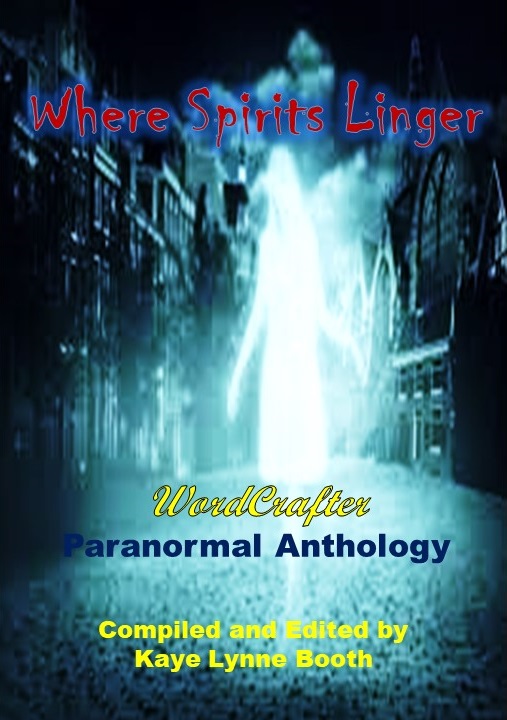
In addition, this month myself and three of the Writing to be Read team members: Art Rosch, Robbie Cheadle and Jeff Bowles, have stories in the WordCrafter paranormal anthology, Whispers of the Past, and Robbie and I both have stories appearing in Dan Alatorre’s horror anthology, Nightmareland.

67090000_2172593376197227_7659815061333999616_n

It’s been a great month for horror,and to top it all off, WordCrafter is co-hosting a Halloween book event on Facebook with Sonoran Dawn Studios, the All Hallow’s Eve: Little Shop of Horrors Party. With games and giveaways with cool prizes, music and scary audio stories, it should be a lot of fun. I hope you’ll click on the link and drop in and spend some or all of your Halloween with us: https://www.facebook.com/events/2389123051407696/ 


Like this post? Let me know in the comments. You can be sure not to miss any of Writing to be Read’s great content by subscribe to e-mail or following on WordPress. If you found it helpful, please share.


Spend Your Halloween at the “All Hallows Eve: Little Shop of Horrors Party” Book Event

Book Event Promotion

It’s almost Halloween! Don’t sit home and be bored. WordCrafter is partying with Sonoran Dawn Studios with the All Hallow’s Eve: Little Shop of Horrors Party on Facebook.

  • Free promotion for authors
  • Music
  • Audio stories
  • Games and giveaways with great prizes

The author voted best scary audio story will receive a $25 Amazon gift card, so come party with us and let your vote be counted. Join in the fun and support your favorite authors on Thursday, October 31st. Just click on the link below and then click ‘Going’.

Author takeover slots are still available, but time is short, so contact Sonoran Dawn Studios from the event page to reserve your time slot now. Bring all of your ghosts, goblins and ghouls and let’s party! See you there!

All Hallow’s Eve: Little Shop of Horrors Party

67090000_2172593376197227_7659815061333999616_n


“Chatting with the Pros”: Interview with bestselling horror author Jeffrey J. Mariotte

Chatting with the Pros

My author guest today on “Chatting with the Pros” may just have books in his blood. Before he was an author he managed a bookstore.  He’s gone on to work in both marketing and publishing, and become a bestselling, multiple award-winning author with leanings toward dark fiction. He’s got great insight into writing on the dark side which he’s willing to share with us today, so let’s welcome Jeffrey J. Mariotte now.


JJM Headshot

Kaye: When did you know you wanted to be an author?

Jeff: I started writing stories when I was very young, probably 7 or 8. They were terrible, of course, and utterly derivative, mostly of the Hardy Boys novels that were my primary reading material at the time. I kept at it all through school, and by the time I got to college I knew I wanted to make my money writing something–I just didn’t know precisely what. I went in as an advertising major and did some copywriting, but graduated with a degree in Radio/TV/Film, a minor in English, a literary award, and a published article. Three years later, I got a job at a bookstore, and eventually became a manager (and later, opened a store of my own). It was while managing a store that I met a lot of authors and publishing professionals and found out the realities of publishing, and sold my first short story. So I guess the short answer to the question is: always, and the long answer is: I always wanted to write, but I didn’t know I could do it professionally until much, much later.
Kaye: What draws you to dark fiction? Why not romance, or mystery, or western?

Jeff: The truth is, I have written in two of those genres, and others besides. I’ve written both mysteries and westerns (along with science fiction, fantasy, straight fiction, and more), and intend to continue. In fact, the next couple of books I’m planning are both westerns. But yes, I am drawn to the dark side, and often when I work in those other genres I bring in elements of horror or dark suspense. I’ve never really analyzed it, but I suppose it’s a combination of a longstanding interest in horror and the supernatural, and an awareness of the darker, more unpleasant aspects of human nature.

cold_black_hearts_smerKaye: Cold Black Hearts is one of several recent releases through Wordfire Press. With more than 70 novels under your belt, what lead you to join the Wordfire family?

Jeff: I’ve known Kevin J. Anderson and Rebecca Moesta for what seems like forever–this goes back to meeting authors through my bookstore work. They’re two of the greatest people on the planet. They’re supremely talented, super nice, and scrupulously honest. When I saw the books they were putting out, I knew I wanted to be part of their line, and to work with friends rather than strangers.

Kaye: My review of Cold Black Hearts posted this month, but for those who didn’t catch it, would you like to tell me a little about it?

Jeff: It’s a supernatural thriller about a police detective who loses her hearing in an explosion, but gains something else in its place–a heightened sense of empathy. That quickly becomes a burden in a crowded metropolitan area, where people’s emotions press in on her from every side. When she’s offered a job in a remote part of New Mexico, working to free an accused killer from prison, she takes it. But it turns out that she’s just stepped from the frying pan into the fire, because there are strange, spooky things going on.

Kaye: You don’t advertise your books as horror, but as dark thrillers. In your mind, what is the distinction?

Empty RoomsJeff: Actually, that’s WordFire‘s tag, not mine. I think of Cold Black Hearts and some of my other books as supernatural thrillers, because they combine traditional thriller elements–law enforcement, espionage, etc.–with supernatural elements. The first book of mine they published, Empty Rooms, was a straight, non-supernatural mystery/thriller, and it was very dark indeed, so I guess the phrase came from that.


Kaye: You also write comic books and graphic novels, short fiction and nonfiction. Which is your favorite type of writing? Why?

Jeff: The novel is my favorite, because it gives me more room to tell a complete story–to really dig into the characters’ psyches and explore their worlds. I love it all; I’ve even recently done some very short, 3-page comics for HyperEpics.com, which is a blast. But if I had to only pick one, it’d be novels.

Kaye: Which author, dead or alive, would you love to have lunch with? Why?

Jeff: As a bookseller for decades, and someone who’s worked in publishing–in addition to 20 years as a professional novelist–I’ve been lucky enough to meet and spend time with most of my favorite authors. I’ve visited with Ray Bradbury, Harlan Ellison, David Morrell, Clive Barker, Don Winslow, and James Lee Burke (among others) at their homes, hung out with Wallace Stegner, Stephen King, Sue Grafton, Joe R. Lansdale, and Neil Gaiman, had meals with Robert B. Parker, James Ellroy, Jonathan Maberry, and Joan D. Vinge… Plus, every day I get to have a meal with my favorite author, Marsheila Rockwell (who is, coincidentally, also my wife and frequent writing partner, and a magnificent fiction writer and poet on her own). My point is, while it’s cool to have lunch with an author, it’s not exactly something I haven’t had a chance to do.

That said, I’d love to have a meal with the recently departed William Goldman, who’s a longtime favorite for his novels and his screenplays, and who’s the author I’ve most wanted to meet, but never had a chance to. He’s done it all, and exceedingly well, and I wish I could have benefited from his insights in person.

Kaye: What’s the most fun part of writing a novel? What’s the least fun part?

Jeff: The most fun part is finishing it, and seeing it become a real-live book. The rest of it is hard work. The research, the working out of the plot, the discovery of who the characters are, the actual chore of sitting down and turning out page after page after page… it’s a grind. Not to say that it’s not fun, but it’s work, too. The least fun part is probably when, in the editing/revising process, I realize that I have to cut lines or scenes that I really loved writing.

Kaye: What is the one thing in your writing career that is the most unusual or unique thing you’ve done so far?

Jeff: There’ve been several, but if I have to pick one, I guess it’d be that time I went to the set of CSI: Miami to hand-deliver copies of the first-ever CSI: Miami graphic novel (which I wrote) to cast members, all while being filmed for Access Hollywood. Which promptly cut me out of all the footage–but they showed the book, and that’s what counts!

Kaye: Which of your books would you most like to see turned into a film? Who would you like to play the lead?

Jeff: There are several I think would be great for film or TV, but for the purposes of this interview, let’s say Cold Black Hearts, with Jessica Chastain.

Kaye: Imagine a future where you no longer write. What would you do?

Jeff: Catch up on reading and TV shows, I guess. Bake more. But also, since 1980, every dollar I’ve made has come from the business of writing/editing/publishing/ book selling/ etc. — from the written word, and the process of getting it out of the brain and into a reader’s hands. So if I wasn’t writing, I’m sure I’d still be doing something in that realm.

JJM Books

Kaye: What’s in the future for Jeffrey J. Mariotte? What should readers look forward to?

There’ve been 6 books published so far this year: The SlabMissing White GirlRiver Runs RedSeason of the Wolf, and Cold Black Hearts from WordFire, and YA-horror Year of the Wicked from Simon Pulse. So readers can do some catching up while they’re waiting for the next thing.
JJM Books2Jeff:The newest release is to be a weird western short story in an anthology called Straight Outta Deadwood, published on October 1. The book is edited by David Boop and has stories by a bunch of pals, including Charlaine Harris, Steve Rasnic Tem, Shane Lacy Hensley, and the wonderful Marsheila Rockwell, so everyone who likes westerns with a side of spooky should check it out. After that, there are some comics projects in the works. Novel-wise, I have a thriller on submission, and I’m working on a new book (or will be back to it, as soon as I get this sent off)! So stay tuned.
I want to thank Jeffrey J. Mariotte for taking the time to chat and share with us. You can learn more about Jeff and his books on his website, or check out his author pages on Amazon and Wordfire Press. And be sure to check out my double review from October 4, featuring Jeff’s Cold Black Hearts.
In addition, I was fortunate for the opportunity to bring you a bonus “Chatting with the Pros” this month with award-winning horror author Paul Kane. If you write dark fiction and horror, or just enjoy reading it, you won’t want to miss that interview, too.

Like this post? Let me know in the comments. You can be sure not to miss any of Writing to be Read’s great content by subscribe to e-mail or following on WordPress.


Interview with horror author Roberta Eaton Cheadle

IMG_9902

Today my guest is an author who I’ve gotten to know well, because she is a member of the Writing to be Read team, where she writes a monthly blog segment on children’s literature that’s proven to be very popular, “Growing Bookworms”. By day she walks in the world of fondant and children’s fiction, but when darkness falls she transforms into an emerging horror author. But this author doesn’t just emerge, she explodes onto the scene with  this month’s release of her first novel length horror tale, Through the Nethergate.  In addition, this month she also has a short story appearing  in  Dan Alatorre’s Nightmarland anthology, and another coming out in the WordCrafter paranormal anthology, Whispers of the Past. I’m really excited to be able to interview her about her experiences with horror, so please help me welcome author Roberta Eaton Cheadle.

Kaye: You started out writing children’s stories with your son, but you’ve recently leaped into the horror realm, which is kind of at the opposite extreme of the spectrum. Was that a hard transition for you?

Roberta: It wasn’t a hard transition for me at all. I have always loved supernatural, horror and dark psychological thrillers so I think this genre comes naturally to me. More recently I have been reading and re-reading a lot of dystopian fiction such as Fahrenheit 451 by Ray Bradbury and The Long Walk by Richard Bachman (aka Stephen King).

I can remember reading my Mom’s copy of Stephen King’s The Shining behind the couch in the lounge when I was ten years old. After that book, I worked my way through the rest of her Stephen King collection and several other adult horror books too.

Kaye: Can you name one thing you have to think about when writing horror that you might not ever think about when writing for children, (or any other genre, maybe)?

Roberta: When writing from the point of view of the victim, I need to imagine their fear and describe this in a way that brings out the same emotion in the reader. When writing from the point of view of the party who sees a ghost or discovers a body, I need to imagine their shock and horror at what they are seeing. To describe the tumultuous feelings that would bubble up inside them at seeing something truly frightening or gruesome.

I would never attempt to scare children or invoke feelings of fear and anxiety in them. My Sir Chocolate books series is my attempt to draw children into a happy and safe world of complete fantasy where good always wins and any less likable characters are drawn into the circle of friendship and become part of the team.

Kaye: When making the move into adult fiction, why did you choose to write horror? What draws you to the genre?

Roberta: As mentioned above, I have always liked supernatural horror. I was drawn to it from a young age even though it scared me half to death when I read both The Shining and Salem’s Lot by Stephen King.

I have also always gravitated towards psychologically disturbing books that make me think such as Roald Dahl’s short stories for adults. I have never forgotten Lamb to the Slaughter about a pregnant woman who kills her husband after discovering he is having an affair. She saved her own skin, and that of her unborn baby, by making the murder weapon disappear in the most innovative way imaginable.

The idea of writing about ghosts came to me while I was writing While the Bombs Fell, a fictional biography about my mom’s life, growing up in the small English town of Bungay, Suffok, during WWII. My extensive research while writing this book led me to discover the history of one of the oldest inns in the town which is purported to be haunted by over twenty ghosts. The little bit of information that is available about each of these ghosts intrigued me, and I decided to write a selection of short stories, each featuring the circumstances leading up to, and the death of, a specific ghost.

As I went along with Through the Nethergate, Margaret injected herself into this story and it took on a whole new direction with her having the power to reincarnate the ghosts.

Kaye: What is the biggest challenge for you in writing horror?

Roberta: I think like many other new writers, my biggest developmental area has been learning to show instead of tell in my stories. I believe I have improved a huge amount in this area. As I came from a non-fiction writing background, I have also had to learn to write more descriptively and really reach into myself and find the whirlpool of emotion my characters are feeling in any given circumstance. These emotions must be shown and not told which takes me back to my first point.

Kaye: Your latest release is a work of horror, Through the Nethergate. Where did your inspiration for this story come from?

NETHERGATERoberta: As mentioned above, my original idea was to write a selection of short stories, each featuring the death of one ghost.

As I went along the idea for Margaret with her power to reincarnate ghosts and experience their deaths and pain came along. Margaret has recently lost her parents which gives her heightened sensitivity to the world around her.

At the same time, the idea of having one ghostly master to rule over the others popped into my head and this evolved into the ghostly black dog, or Black Shuck, which is an ancient myth in Suffolk and its surrounds. Legend in Bungay has it that Hugh Bigod, a most evil descendant of the original Normandy invaders and the man who erected Bungay Castle during the 12th century, still haunts the castle in the form of the black dog. The inn around which Through the Nethergate is centred, shares a wall in its cellar with Bungay Castle.

There are four other descendants of the Bigod family who are also alleged to haunt the town in their ghostly carriage drawn by fire breathing horses.

Initially, the reader will believe that Hugh Bigod is the villain of the book, but this is not the case. There is a far greater evil force at work who covets Margaret’s power and who makes Hugh Bigod look quite pathetic and ridiculous in his small attempts at evil.

Kaye: Can you tell me a little about Through the Nethergate?

Roberta: Through the Nethergate is intended to demonstrate to the reader how evil has always existed in our world and how evil forces manipulate human inventions and greed for power and wealth to their own ends. Evil has always existed, and it always will, but there is the counterbalancing force of goodness and the kindness and empathy that exists in an equal number of people. This is a book about faith and my belief that goodness and faith always prevail.

Kaye: If Through the Nethergate were made into a film, who do you see playing the lead as Margaret? Who do you see playing your villain, Hugh Bigod?

This is a tough question for me as I don’t watch movies or television. I will have to base it on my previous experience of movies.

I would choose Drew Barrymore to play Margaret in a similar manner to her portrayal of Charlie (Charlene) in the movie version of Firestarter by Stephen King. She would need to be a few years older, however, as Margaret is sixteen in my book. The mixture of innocence, toughness and a strong will to survive are the qualities in Charlie’s character portrayal that underpin my selection.

For Hugh Bigod I would choose Richard Chamberlain in a mixture of his portrayals of Father Ralph de Bricassart in The Thorn Birds and Captain John Blackthorne in Shogun. In both series he portrays someone who is able to separate himself from the anguish of the people around him and ruthlessly pursue his own ends and survival.

Kaye: The setting for Through the Nethergate is an ancient inn with quite the history. How much historical research went into it?

Roberta: I do a massive amount of research for my books with partial or total historical settings.

Each ghostly character in Through the Nethergate came from a different historical era and I had to do meticulous research into what people wore, drank and ate during those particular time periods, as well as how they traveled and the political agendas and attitudes towards servants, masters, females and religious figures that prevailed at the time of their stories and deaths.

For example, Katharine is a reluctant Benedictine nun who comes from a wealthy background and is forced into Bungay Priory during the 14th century. She is in love with William and conspires to escape her dreary life by running away with him. James Wilson was a Benedictine monk who was the cellarer at Glastonbury Abbey during the 15th century when Richard Whiting, the last Abbot of Glastonbury Abbey, presided. James originates from Bungay where his father was the local blacksmith. Peggy and her husband and child are survivors of the great fire that destroyed much of Bungay in the 17th century. The book also includes other historical figures such as John Collins, the famous Chartist from Birmingham, Countess Elizabeth Báthory de Ecsed, a Hungarian Countess and one of Europe’s most prolific serial killers, as well as Tom Hardy, a highwayman who rode with the infamous Dick Turpin and Amelia Dyer, Britain’s most famous female serial killer.

When featuring real people, I must research their stories in as much detail as possible to ensure I get the facts correct. I usually check between five and ten sources, depending on the amount of information available.

Kaye: You also do a lot of short dark fiction, and have stories included in several dark anthologies. In fact, you have two stories “Last of the Lavendar” and “Missed Signs” coming out this month in the WordCrafter paranormal anthology, Whispers of the Past, and “The Siren Witch”, “A Death Without Honour” and “The Path to Atonement” are featured in Dan Alatorre’s Nightmareland horror anthology, also released this month. Do you prefer writing short dark fiction or novel length horror? Why?


Roberta: I like writing both kinds of story.

Short stories are fun to write, but they are restrictive because of their length of 1 500 to 3 000 words. It can be tough to get all the necessary background and detail into a short story in a clear and concise way. I had to cut quite a lot out of “A Death Without Honour” to get the length and sharpness right. Dan Alatorre was great at helping me with that. Sometimes I struggle to get the ending wound up in a concise and exciting way with short stories, as I did with “Last of the Lavendar”, the ending of which you helped me improve greatly. I like writing for anthologies because I learn so much. I also get a lot of guidance from the experienced editors and also from reading the stories included in the anthologies by other authors. They really are a wonderful learning and growing experience for me.

I have written two novellas now, While the Bombs Fell, and my recently completed A Ghost and his Gold which is about the Second Anglo Boer War fought between the “Boers” [farmers] and the British Empire in the early 19th century. I love the length of novellas because it allows for more detail and depth than a short story, but is still fairly short and concise. I think that modern readers prefer shorter stories due to their busy lifestyles.

Through the Nethergate is my first full length novel and I enjoyed writing it and “seeing” how my imagination could take off and extend to a much longer story.

I am currently 40 000 words into a dystopian novel which will be part of a trilogy about a future world dealing with drastic climate change and the fourth industrial revolution. Trilogies are popular and this idea came along so I thought I would jump right in. I love to experiment and learn about new things.

Kaye: What is your biggest fear? What scares you?

Roberta: Real life scares me. The prospect of climate change wreaking devastation on our planet, overpopulation, poverty and criminality which are changing the way society operates as well as the Fourth Industrial Revolution which will forever change the nature of the working world, these things scare me far more than “monsters under my bed.”

Dystopian novels like 1984 by George Orwell and The Long Walk by Richard Bachman (aka Stephen King) really disturb me, but I can’t help reading them. It is better to be informed than not. Even H.G. Wells gives great insights into the nature of society and how it could evolve in his books The Time Machine and War of the Worlds, which are really frightening.

Kaye: What is the scariest story that you’ve ever read and why do you think it is the scariest?

Roberta: I think 1894 by George Orwell is the scariest dystopian novel I have read. Living in the world he describes is so awful I think people would be better off dead.

The Shining is the scariest supernatural horror book I have ever read. The ghosts in the Overlook Hotel that become visible and can harm Danny and his family are most frightening. The invasion of his father’s mind in order to bend him to the will of the evil in the hotel was terrifying. Stephen King has a way of describing things in such a visual way, you feel as if you are living them with the character in the book.

Kaye: What is the scariest story that you’ve ever written?

Roberta: My short story about Amelia Dyer called “Justice is Served” in the murder mystery anthology, Death Among Us, is quite scary as it is based on a real serial killer who murdered babies.

From a purely fiction point of view, I think “The Path to Atonement” in the forthcoming Nightmareland anthology is quite eerie and chilling. “Missed Signs” from the forthcoming Whispers of the Past is frightening because it is within the realms of probability.

Kaye: What methods do you use to create suspense and make a story scary?

Roberta: I use a slow build up to the deaths as a tool to create suspense as well as a lot of visual descriptions and emotional language. Dialogue and onomatopoeia are good ways of conveying literary “sound effects” and tension in a story.

Kaye: Who is your favorite villain or monster from a horror story or film? Why?

Roberta: My favourite villain is Dracula. I loved his sly intelligence and sneaky ways of manipulating his victims and also the heroes of the book.

Kaye: Is there more dark fiction in store for the future readers of Roberta Eaton Cheadle? What are you working on now?

Roberta: I have recently finished the first draft of A Ghost and his Gold and sent that off to my developmental editor. I am hoping to have it available on Amazon in March/April 2020.

I am also working on book 1 of my dystopian trilogy about a world where drastic measures are required to address climate change and the unemployment caused by the Fourth Industrial Revolution. The first book is called Russian Roulette Anyone? And will probably be available in October 2020. I also hope to participate in more anthologies next year as I really enjoy those.

I want to thank Roberta for sharing with us today. I too have been a fan of dark fiction since a young age, and at one time delved into all works Stephen King. I read The Shining while babysitting one night when I was 15. I was totally immersed in the story and couldn’t put the book down, but I had to call and wake up my mother to talk to me about three a.m. because the story scared me silly. I finished the book before the sun came up though. Although I grew up reading the masters like Stephen King, Dean Koontz, Anne Rice, John Saul, and Peter Straub, doing so set a high bar for the writing of horror.

Roberta gets cudos though for having the nerve to do what I’ve not found the courage to do, the nerve to immerse herself in a world of fear and terror in order to write a novel of dark fiction. You can learn more about Roberta and her books by visiting her on her Amazon Author page or on her Facebook page. You can also learn about her children’s books and her creativity with fondant at Robbie’s Inspirations. And don’t forget to catch her “Growing Bookworms” blog segment on the second Wednesday of every month right here on Writing to be Read.


Kaye Lynne Booth does honest book reviews on Writing to be Read in exchange for ARCs. Have a book you’d like reviewed? Contact Kaye at kayebooth(at)yahoo(dot)com.