Starting Off the New Year with YA Author Jordan Hallak
Posted: January 1, 2018 Filed under: Books, Fiction, Gothic, Interview, marketing, Speculative Fiction, Steampunk, Stories, Writing, Young Adult | Tags: Author Interview, Gothic, Jordan Elizabeth, Jordan Hallak, Steampunk, Young Adult Fiction Leave a comment
I’m pleased to be able to start the New Year off with a YA author who I have interviewed for both my Book Marketing -What Works? series this past year, and my 2015 Pros and Cons of Traditional vs. Independent vs. Self-Publishing series. I’ve reviewed many of her novels, (Escape From Witchwood Hollow, Cogling, Treasure Darkly, Victorian, The Goat Children, Runners and Riders, The Path to Old Talbot, Wicked Treasure, Kistishi Island)as well as collections featuring her short stories, such as Darkscapes, Cast No Shadows, Under a Brass Moon, Chronology.
If you’re feeling a little confused right now, that’s okay, because all of the interviews and reviews were done for an author named Jordan Elizabeth, and in the very early reviews she was booked as Jordan Elizabeth Mierek. However, she’s starting off 2018 as Jordan Hallak, and we’ll hear an explanation for the different name soon. In addition to being the author of at least ten young adult novels and countless short stories, Jordan is a wife and mother, as well as often having a day job on the side. She runs a tight juggling act to keep it all balanced and still manages to craft some quality stories which are all quite entertaining. Join me in giving a warm welcome to Jordan Hallak today, on Writing to be Read.
Kaye: You’ve had a change to your last name. It threw me off and might throw of readers who know your work under the name Jordan Elizabeth. Were you recently married?
Jordan: I got married over a year ago, but I didn’t change my name right away. I still write as “Jordan Elizabeth,” but little by little I’ve been altering Mierek to Hallak. The most recent thing I changed was my name for my gmail account. Even though I signed things as “Jordan Hallak,” people were getting confused who Jordan Mierek was. I was getting documents for work to the wrong name!
Kaye: What are your secrets for juggling writing with family?
Jordan: Haha, I haven’t mastered it yet! Most nights now I’m too tired to do more than scroll through facebook. When I push myself, though, I have my husband watch the baby for an hour and I do all my writing. Once the baby goes to bed, then I do my marketing because it isn’t as emotionally draining. Writing leaves me breathless.
Kaye: Other than the last name, what do you think will be different for you in 2018, and why?
Jordan: My marketing budget is a lot different for this year. I’m only going to be using what I make off royalties. This might ruin my marketing plan, but we’ll see. 2018 is the first year where I won’t have a full time job starting out.
Kaye: What’s in store from Jordan Hallak in 2018?
Jordan: Other than my goal of landing a full time job, I want to write more novels and work on my marketing techniques. I usually fly by my seat for the year, but this time I want to concentrate on planning out all my marketing events. I’ve heard that’s better, so we’ll see.
Kaye: Is there anything unique or unusual about your writing process?
Jordan: I can’t plan. I start writing with a general sense of where the story will lead. If I try to plot, the book becomes a chore. It never follows the written storyline anyway.
Kaye: What is the working title of your latest book?
Jordan: My newest book will be Secrets of Bennett Hall. It is going to be a steampunk Gothic. I’ve always been entranced by Gothic novels, and I love the steampunk genre, so I decided to blend the two and see how it came out.
Kaye: How do you decide the titles for your books? Where does the title come in the process for you?
Jordan: The titles always come at the end. I usually call the book by the main character’s name as I’m writing, and then I see how it feels when I’m all done. Secrets of Bennett Hall started off as Adelaide. Adelaide is the main character who moves to Bennett Hall to work as a governess. Secrets from the past – both her past and the estate’s past – return to haunt her. Secrets of Bennett Hall had more of a Gothic ring to it.
Kaye: In my review of Runners and Riders, I identified the book as a part of your Treasure Chronicles Apparently, this isn’t the case, as it is the first book in a series of its own. Would you like to share how that came about?
Jordan: Runners and Riders features the same world as in the Treasure Chronicles. I called it a “companion” novel because of that, but it was mislabeled as a novella in many places. It is a full-length novel, and it was getting a lot of heat for being “misleading.” People who hadn’t read the Treasure Chronicles weren’t willing to give it a chance. It will now be book one in Return to Amston, with Secrets of Bennett Hall being book two. Secrets will be in the same world again, but with a new cast of characters.
Kaye: So, tell us a little about this second book in the Runners and Riders.
Jordan: Joseph from Treasure Darkly will make an appearance. Remember him as Amethyst’s spurned lover? I always felt bad about how things went down with the two of them and I wanted to give him his own story. As I started writing about Adelaide, he just fell into place as her love interest, and they are perfect for each other. He deserves a sweet, but strong, girl like Adelaide. In the novel, Adelaide loses her teaching job in Hedlund and finds a new position as a governess. Once she arrives at Bennett Hall, she meets its handsome occupant – Joseph – as well as some shady figures. People in the village warn her about the darkness on the estate, but it isn’t until she sees the Villain lurking in the forbidden wing that she begins to believe the rumors.
Kaye: A lot of your books are of the steampunk genre. What is it that appeals to you about steampunk?
Jordan: I love the nifty inventions paired with corsets and long skirts. I am obsessed with corsets and long skirts. You should see my closet!
Kaye: Most of your work has been published through Curiosity Quills Press, but it sounded like you might be striking out independently. Will this second book in the Runners and Riders series be independently published?
Jordan: Secrets of Bennett Hall will be published by Curiosity Quills Press. I haven’t decided to go the self-publishing route yet, but I might someday. I know people who have left their publishers to try self-publishing with great results. For now, I like having a publishing house behind me. The support I get has been awesome. I’m currently published by Curiosity Quills, CHBB, and Clean Reads.
Kaye: When will Secrets of Bennett Hall be available?
Jordan: Secrets releases January 30.
Kaye: What is the biggest challenge of being a writer?
Jordan: It is so hard to get your book out there. I know people are sick of me always talking about my books, but that’s the only way to spread the word.
Kaye: What’s the most fun part of writing a novel or short story? What’s the least fun part?
Jordan: The best part is actually writing it. I become lost in the setting and the characters become my best friends. I have an awesome time visiting this new world. The least fun part would have to be the marketing that comes after. When you have to push people to review and when you have to pay for ads, you start to doubt if your writing is worth it. Then you write a new story and remember how much it is worth it.
Kaye: If writing suddenly made you rich and famous, what would you do?
Jordan: I wouldn’t worry about money anymore! I would be happy being a stay-at-home mom and full-time writer. There would be a lot of traveling. I need fresh fodder for my stories.
I want to thank you, Jordan, for joining us on Writing to be Read to start the New Year off right. I wish you the best of luck in 2018, and I know Secrets of Bennett Hall will be a huge success.
Until next time, I want to wish you all a Happy New Year!

Like this post? Subscribe to Writing to be Read for e-mail notifications whenever new content is posted or follow WtbR on WordPress.
Share this:

Looking Back on 2017
Posted: December 29, 2017 Filed under: Books, Cover Art, Fiction, marketing, Promotion, Publishing, Science Fiction, Self-Publishing, Writing, Writing Tips | Tags: Books, Delilah, Happy New Year, marketing, Relationship Add Vice, Stories, The Collapsar Directive, Writing, Writing to be Read Leave a comment
Every year at this time I look back and so a review of what was published on Writing to be Read and my writing life. 2017 has been pretty eventful for both me and Writing to be Read, so this year I’m particularly excited about this look back. But, I’m also excited to get out my crystal ball and warm up my psychic abilities as we take a look forward that comes as we start the new year, because I think there may be some exciting things in store.
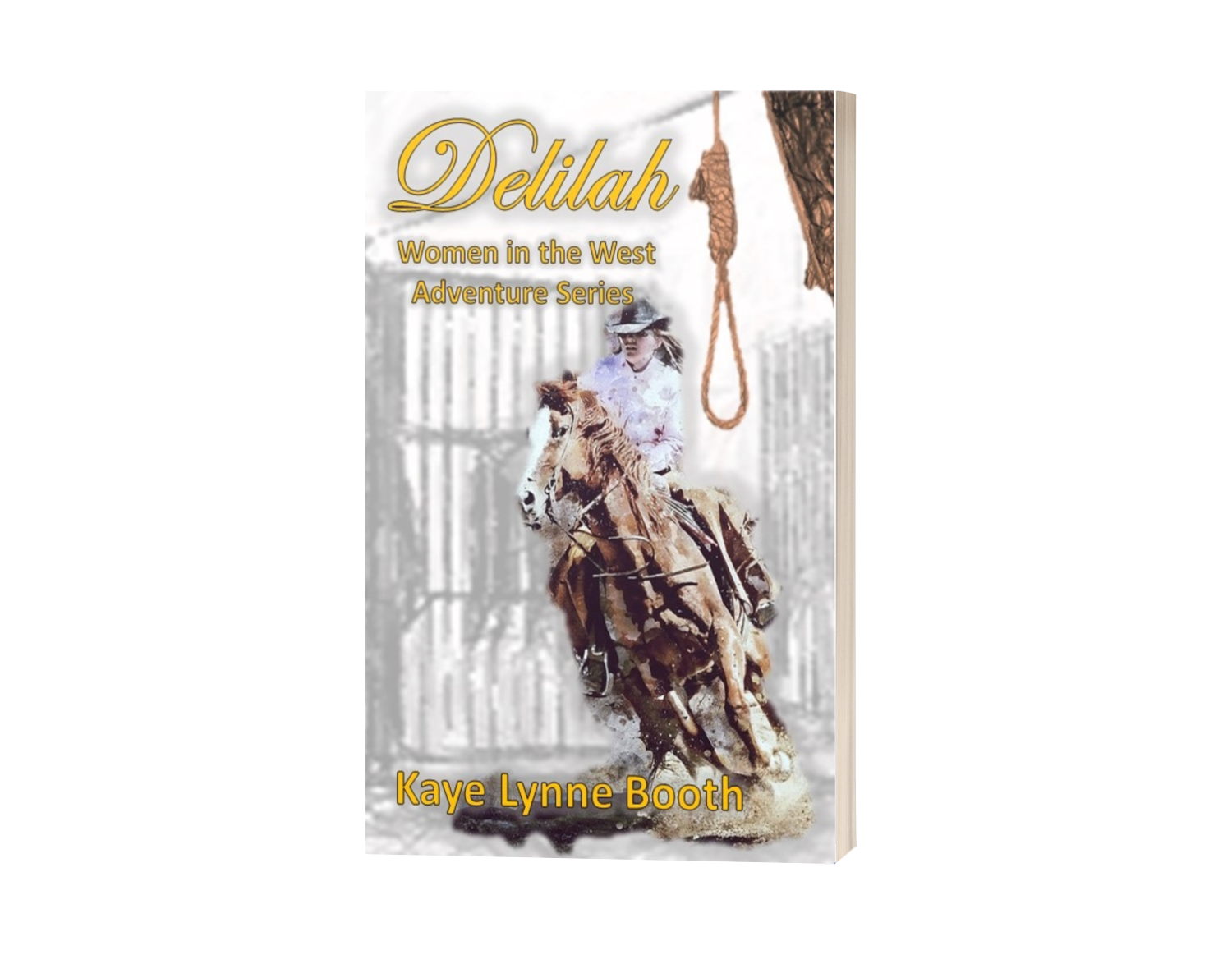
There were so many things that happened for me in 2017. In April, my western novel, Delilah was published by Dusty Saddle Publishing, which of course, is exciting. Delilah hasn’t done too bad on sales, but it didn’t make the best seller list. It has received some really excellent reviews, and is rated with four stars on Amazon. Although it may not be a huge success, for me it was a hard earned accomplishment, but the reward came the day I received my first royalty check. Yep, I’ve got royalties. Isn’t that the final proof that I’m a writer, at last?

I do have folks inquiring about a second novel, and for those who are wondering, Book 2 is in the working. My crystal ball tells me that it will be published sometime in the coming year, only this book, I may publish myself and skip the publisher as middle man. I’m having a time getting the sales data, and what I do have makes it appears as if what sales I do have, have been the results of my own marketing efforts, so I’m not seeing the benefit of sharing my royalties with a publisher, when I can do about everything they have done for me. In addition, mid-year the rather generic cover the publisher provided for the book was replaced by a cover that fits the story better, done for me by Sonoran Dawn Studios, which I am much happier with.
 In addition I had two short stories published in 2017 by Zombie Pirates Publishing. The first, “If You’re Happy and You Know It” came out on August 1, in their science fiction anthology The Collapsar Directive. The story is a futuristic dystopian tale with just a touch of humor, in a world where productivity is high, but you’re only allowed to be happy on the weekend.
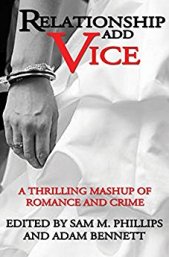
The second story, “The Devil Made Her Do It”, just came out the 15th of this month in their Crime Romance anthology, Relationship Add Vice. It’s a tale about the crazy things we do for love and a girl, Betty Lou Dutton, who leaves hereself open to be taken advantage of and ends up taking the rap. My fortune telling abilities see Zombie Pirates in my future for the coming year, as well. I submitted a little flash fiction story for consideration in their Full Metal Horror anthology. Wish me luck.
The really big thing that happened for me in 2017, or at least I think it’s big, is a landed an adjunct position teaching ENG102:Academic Writing at Western State Colorado University, my Alma Mater. Let me tell you, it has been a crazy ride. I got the position due to a last minute opening, when a scheduled lecturer was unable to teach for health reasons, which was unfortunate for the scheduled lecturer, but very fortunate for me. We got it all figured out and I was hired five days before classes started, so that’s how long I had to restructure both classes to be hybrid classes and figure out how to teach a method of writing I knew nothing about. It was a rocky start, and to be honest, I think I confused many of my students at first, because I was unsure myself, but as the semester moved forward, I gained more solid footing in the classroom, and the students began to figure it out, too. I have now successfully made it through a whole semester, teaching two hybrid courses and it feels great. I know I can do it and I have some experience teaching in a University setting, so I know there will be more teaching jobs in the coming year. My crystal ball is a little blurry in this area, but I know last minute stuff happens all the time, so who knows? Maybe I’ll end up back at Western.

As for Writing to be Read, I’ve had an exciting year there, too. At the beginning of the year, I my friend Robin Conley helped me do a total overhaul of the site, and in August my friend DL Mullan of Sonoran Dawn Studios helped to redesign it. The results are what you see here now, but they were a long time in coming. I’ve added my website right here on the blog and you can reach the different sections by clicking on the tabs across the top to learn about my published poetry and fiction, my westerns, my Playground for the Gods series, or Write it Right Editing. Writing to be Read also gained some great talent in 2017, Robin Conley with her Weekly and Monthly Writing Memos, and Jeff Bowles with his Pep Talks and his God Complex posts, and I am thankful for benefit of their content for the short time they were with me. Unfortunately, life carries folks in different directions and both of these fine writers are no longer able to share their expertise and wisdom with us and I don’t foresee them rejoining us in 2017.

What my crystal ball does show me, is that Writing to be Read has grown in readership over the past year, and I feel it is due to the great and consistant content posted not only by myself, but by Robin and Jeff, as well. Most recently, the content has been almost non-existant, because I’ve had to focus on the classroom and I’ve discovered grading essays takes a lot of time. I don’t think the drop in content from losing my team members or from my not having the time to devote that I should have hurt my numbers yet, but I do foresee such a possibility if the lack of content continues.
In this realm, my crystal ball shows me something very interesting. I see new members of the Writing to be Read team and really great content in the coming year. In fact, a call for action is going out with this post, right now. If you are a writer who feels you might have something to contribute and you’d like to be on the Writing to be Read team, I want to hear from you. Shoot me an email at kayebooth(at)yahoo(dot)com telling me what type of contribution you would like to make and how often you’d like to make it. I’m pretty flexible, so let’s talk.
In years past, I have given a rundown of all the posts throughout the year and which were viewed the most or which got the highest numbers of comments or likes, however that makes for a very lengthy, boring post, so this year I’m only giving you the most interesting facts. For instance, over the past year Writing to be Read has had viewers from the across the globe. The highest number of views coming from U.S., the United Kingdom, Canada, Australia, Ireland, India and Mexico. It’s top referrer is Facebook, which doesn’t really make me happy, since I’m kind of peeved at Facebook at the moment, but I’ll take my viewers wherever I can get them.
The month to receive the most views was July, with my interview with writer, poet and cover designer Dawn Leslie Mullan being the hightest viewed post. Next up was a “Pep Talk” from Jeff Bowles, “I Think We Need a Break”, and third highest was my post, “An Adventure in Social Media Marketing“. The post that received the most viewed over the whole year was my post titled, “How Do You Measure Success?” which I wrote after signing the contract for Delilah. The second highest views overall were received by “Ah! Sweet Rejection“, which I wrote, oddly enough, after recieving a rejection for Delilah. The third highest was Robin Conley’s “Weekly Writing Memo: Word Choice is Everything“.
Looking ahead to 2018, my crystal ball says it’s going to be a good year. I hope it’s right. I guess only time will tell. So until then…
Like this post? Subscribe to Writing to be Read for e-mail notifications whenever new content is posted or follow WtbR on WordPress.
Share this:

‘Twas The Night Before Christmas
Posted: December 25, 2017 Filed under: Poetry, Uncategorized | Tags: 'Twas the Night Before Christmas, Christmas Leave a comment
‘Twas the night before Christmas and all through the garage
Not a creature was stirring, not even the Dodge.
The spark plugs were nestled all snug in their beds
While visions of sparks danced through their heads.
The inner tubes were hung by the chimney with care
In hopes that Saint Nicholas would fill them with air.
Mama in her kerchief and I, in my cap
Had just settled down for a long winter’s nap.
When out on the lawn there arose such a clatter
I sprang from my bunk and missed the ladder.
Ran to the window, threw open the sash,
Leaned out too far and fell in the trash.
I stood and brushed off all the new fallen snow
And greeted St. Nick with a hearty “Ho! Ho!”
He was dressed all in fur, for it was a cold night
It must have been freezing on the sliegh while in flight.
A bundle of goodies flung over his back
He looked like a peddler as he opened the sack.
His eyes twinkled through goggles, his dimples so merry.
Then, he took off his cap, but my, he was hairy.
His hair flowed over his shoulders, so white
He reached into his sack and pulled out a flash light.
Then to my surprise, what he pulled out of his bag
Was a 345 Hemi, ready to drag.
Then he pulled out some headers that looked really sweet
And to top it all off, a set of big meats.
He pulled out a tire iron, a hammer and wrench
Before I could grasp it, he pulled out a tool bench.
When all the tools were layed out in a nice, neat row,
He turned with a wave and said, “Ho! Ho! Ho!”
He sprang to his sleigh, to his team gave a whistle,
And away they all flew like the down of a thistle.
But I heard him exclaim as he drove out of sight,
Merry Christmas to all, may you win tonight!
By Greg and Kaye Booth

Share this:

“24 Minutes” may seem like forever
Posted: December 15, 2017 Filed under: Book Review, Books, Fiction | Tags: 24 Minutes, Book Review, Fiction, Tim Baker, Workplace Violence 2 Comments
All too often these days we turn on the news to hear there’s been another incidence of gun violence with massive death tolls. Employers are now providing training for what to do in the event they are faced with an act of work place violence as standard procedure, using scenarios that would never have occurred to us in times past, and the media is filled with experts offering possible explanations for such tragedy while the rest of us scratch our heads trying to figure it all out.
Now, author Tim Baker takes us there, offering a glimpse of what it might be like to be faced with an act of violence when a gunman lays siege on a corporate office, in his latest novel, 24 Minutes, to be released in January. As the reader is introduced and follows Tim’s characters as they battle their own fear and are faced with life or death decisions, it is impossible not to wonder how you would react, if faced with a similar situation. The whole scenario unravels quickly, lasting a mere 24 minutes, but for the characters of this tale, it may be their last. Going through the event with them, 24 Minutes may seem like forever, and you won’t want to wait to see what happens next and learn who the real heroes are.
Tim Baker addresses social issues which are prominant in our society today, offering an inside view illustrating the many sides of human nature which reveal themselves under pressure. A fast paced slowed to a readable tempo for maximum enjoyment. I give 24 Minutes four quills.

Kaye Lynne Booth does honest book reviews on Writing to be Read in exchange for ARCs at no charge. Have a book you’d like reviewed? Contact Kaye at kayebooth(at)yahoo(dot)com.
Share this:

‘Tis the Season to be Thankful
Posted: November 20, 2017 Filed under: Books, Fiction, Science Fiction, Speculative Fiction, Stories, Western, Writing | Tags: Collapsar Directive, Delilah, Relationship Add Vice, Thankful, Thanks, Thanksgiving, Writing to be Read, Zombie Pirate Publishing Leave a comment
Thanksgiving is upon us, and I always try to take the time this time of year to reflect on events over the past year and discover all I have to be thankful for. Although my life has been crazy busy in the most recent past, I want to share here all that I am thankful for, because you shoud never take your blessings for granted. So, the first thing I am thankful for is my Writing to be Read platform, because it allows me to share what’s on my mind.
You may have noticed that the posts on Writing to be Read have tapered off of late, and of course, you would be correct in saying so. The fact is, Writing to be Read, has gone through many changes over the past year or so, and it looks like there may be more in store in the near future. Both Robin Conley and Jeff Bowles have had to step away due to life issues. Life happens to the best of us, so we can’t fault either of them, only hope that their life issues turn out to be the good kind, the kind that takes them both onward and upward to bigger and better life experiences, so we can be thankful for them. And I’m thankful for the time we were blessed with their talent and their content.

I’ve had my own life issues, of the good kind. At least, they’ve been good for me and I am thankful for them in this season which is for the giving of thanks. When I went back to school for my Master’s degree, I never would have guessed that my next career move would bring me back to Western State Colorado University on the teaching end of the system. By a stroke of luck, that’s just what happened, and things have been moving pretty fast for me. I didn’t realize how much time I’d need to grade papers, but it’s a lot. As a result, my posts here, on Writing to be Read has suffered. I haven’t had the time I need to write, let alone read books for review from an already backlogged que. It was fortunate that I had sent out the interviews for the Book Marketing series before I morphed into Professor Booth. I already had a lot of that series in place, so you maybe didn’t notice my absence quite so much while it ran, even as my regular book reviews began to taper.
Over the past few weeks since the series ended, I’m sure you’ve noticed a lack of content, (one week there wasn’t even one post), which is unusual, since over the past couple of years my content has run fairly steady. And now you know why it hasn’t been lately. But I’m thankful for the wonderful opportunity which has taken my time away from Writing to be Read, even if I’m not so thankful for the lack of content and the drops in the number of visitors to the blog.
And, I am thankful that even as I dig myself out from beneath a mountain of essays, life on the writing front continues, almost without me, but not every endeavor can be a success. The Halloween release of my short “A Turn of the Tables” in the HallowErotica anthology was a bust. The publisher of the anthology got cold feet and backed out at the last minute. I didn’t mind that things didn’t work out, so much as I minded the fact that all the contributors had already been pounding on the promotion pretty hard. As short on time as I’ve been, I ran the Excerpt, and did social media promotion for the blog and the release event on Facebook, and I really felt like it had all been time wasted. But, you know what they say, “S**t happens”. I’d already had a few doubts about the quality of the publication, so it’s probably all for the best. I am thankful for the learning experience it provided, and it’s prompted me to consider more seriously doing a short story collection of my own. I think I’m going to go for it. At least that way, I will have control of the publication and promotion details.
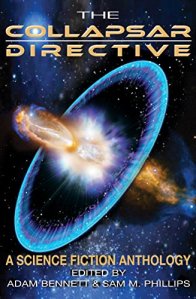
I’m also thankful that the above mentioned experience is so unlike my foray with Zombie Pirates Publishing, which I can only say has been a pleasure all the way. You may remember that my short science fiction story, “If You’re Happy and You Know It”’ appeared in their Collapsar Directive anthology last August? No? Well, it did and they did a bang up job on the publication and promotion of the anthology. It was a class A piece of work, featuring stories by some very talented authors.
But now, I have another story, “The Devil Made Her Do It”, coming out in December in their next anthology, Relationship Add Vice, now available for preorder, and I’m really excited about it. The story is about a straight laced home town girl who finds herself unexplainably drawn to a strangely magnetizing man. I just finished with my part of the edits, because all contributors take part in the editing and promotion processes with ZPP, and once again, there are some really excellent stories in this collection. It makes me proud to know my work will be featured in a quality anthology. ***Warning: Shameless plug ahead*** The release date is in December, right before Christmas, and they’d make great Christmas gifts for all your literary friends.
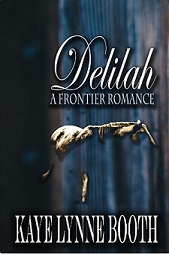
In the more distant past, I am thankful for finding a publisher for Delilah. It’s been an interesting experience and I learned a lot from it. The book is now available in both ebook and paperback. I’m also thankful for the wonderful reviews the book has received. In September, I got a royalty check. It wasn’t a lot, but it made me smile. People are reading my book. That’s so cool. I am definitely thankful for that.
I started to get the sequel to Delilah down on the page, getting only a short way into the second chapter before professordom took its toll. I’ve been working on it, writing a sentence at a time if it’s all the time I can find to write. I am always thankful for every spare minute I can find to write. Although I haven’t had a lot of time to actually work on it, the plot line has been simmering in my head, and is close to being ready to emerge, so stay tuned for updates. I do have the first three chapters. And as always, I’m thankful that I’m able to put words to page in a meaningful and entertaining way.
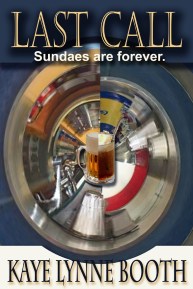
And of course, I’m thankful for my readers. That’s why I’m offering a free promotion of my short story, Last Call to coincide with the Cyber-Monday 2017 promotional event on November 27, which Sonoran Dawn Studios is hosting on Facebook. One more thing I am thankful for is my friend, D.L. Mullen, who runs Sonora Dawn Studios and acts as my P.A. and cover designer, helping me with a lot of my marketing needs. Her help has proved invaluable. I don’t know how I would do it wothout her.
Of course, this was only a reprieve to jot this blog post down. There’s always more grading to do, and I need to get to it, so I need to get this posted. Academic writing is historically a pretty stiff and rigid class, nothing a student would label as fun. I have tried to incorporate interesting material into my course with the help of Dr. Mark Todd, English professor, author, and paranormal investigator, and from the looks of my students’ most recent drafts, I think I may have captured the attention of many. Although the course is pretty structured, I’m finding that academic writing has more in common with writing fiction than I had previously believed. No matter the inkwell your writing springs from, the rules of good writing always apply. Maybe I’ll talk about that in my next blog post. I hope you’ll join me.
Until then, Happy Thanksgiving! What are you thankful for?
Like this post? Subscribe to Writing to be Read for e-mail notifications whenever new content is posted or follow WtbR on WordPress.
Share this:

“Monsterland”: Vampires and Werewolves and Zombies, Oh My!
Posted: November 10, 2017 Filed under: Book Review, Books, Dark Fantasy, Fiction, Middle Grade, Young Adult | Tags: Book Review, Michael Okon, middlegrade, Monsterland, Young Adult, Young Adult Fiction Leave a comment
I recently had the privilage of reading Monsterland, the new release by Michael Okon. It”s an entertaining little tale about a new kind of theme park, filled with zombies, vampires and werewolves of the very real kind. There are Monsterland theme parks opening all over the world and Monsterland’s creator, Dr. Vincent Konrad intends to give new meaning to the idea of family entertainment, handing out free tickets to Wyatt and his friends. Wyatt and his friends are stoked about the grand opening of the newest innovation in theme parks, featuring real live vampires, werewolves and zombies. Finally, they’ll be able to settle their age old debate over which is the ultimate monster. Monsterland holds all the answers.
Dr. Konrad is looked upon as a savior because everyone knows the monsters are only unfortunate victims of the infections that created them, and he is offering them a haven after years of living on the edges of civilization, shunned and feared. But Carter, Wyatt’s step-dad, doesn’t see it that way. He senses that Konrad isn’t telling the whole story and he has his doubts about the intelligence of bringing the public into the midst of such dangerous creatures.
As the teens move through the Monsterland tour, things begin to go awry, and Wyatt starts to suspect that Carter is right. It seems Dr. Konrad isn’t saving the monsters, he’s exploiting them and instead of being scared, Wyatt feels kind of sad. When the werewolves plan a revolt to regain their freedom, the frights aren’t for fun anymore, and Wyatt and his friends and family will be lucky to get out alive.
The idea of Monsterland is a good one, with a few different subplots branching off the main plot line to keep things moving forward. Younger readers may enjoy the comic book-like characters Okon creates by humanizing the monsters, he made them seem more pathetic than scary, but I had trouble buying in. I give it three quills.

Share this:

Book Marketing – What Works?: Conclusions
Posted: October 23, 2017 Filed under: Book Review, Books, Branding, Commentary, Cover Art, Full Moon Bites, Interview, marketing, Promotion, Writing | Tags: Advertising, Book Blog Tours, book marketing, Books, Branding, PAs, promotion, Social Media Promotion, Street teams Leave a comment
Whether an independent author or traditionally published, it seems most of the marketing and promotion falls to the author in today’s literary arena. Even if we love marketing and don’t find it to be an absolutely harrowing task, we are writers, and time spent marketing is time not doing what we love: writing. We don’t want to waste our time and money on ineffective marketing methods. We want to make our marketing techniques pay off big in as little time and expense as possible, so we can spend more time putting words to page.
In this series, we’ve talked to seven authors to learn what methods of book promotion works for them. In Part 1, I talked with Cynthia Vespia, who chose to go independent after having minimal results with small publishers. She does her own cover art and all of her own marketing. She prefers face-to-face marketing events to social media marketing. While she does do social media release parties and book events, she finds them most effective to increase fanbase, rather than book sales. She says it is more difficult to gauge the effectiveness of social media marketing than it is to see the imediate results of conventions and book signings.
Something which I’ve tried which has been somewhat effective, at least in building my platform, if not in actual sales, are the book releases and book events on Facebook. Even though obtaining a spot in one of these events is free, they do require a lot of preparation for a short little spurt (1/2 hour to 1 hour) for your spot. And I think you’ll get better results if you hang out for at least a while, commenting and playing the games to support your fellow authors and creating visibility. If you’d like to check one out, I’m participating in a special Cyber-Monday event, hosted by Sonora Dawn Studios and DL Mullen, and they are still looking for author particiapnts.
In Part 2, Mark Todd and Kym O’Connell Todd , who are small press and independent authors. Kym does their covers and Mark copyedits their books, and they do all of their own marketing. They promote through blogging and have a YouTube channel, where visitors could watch recordings of their research and ghost investigations. They also have a website and author pages on Amazon and Goodreads. They have found blogging, and social media promotion effective ways to get the word out about their books, but they found in person book readings to be less effective and unpredictable. They advocate free promotions and KDP Select.
On the issue of KDP select, I have my doubts, and author Chris Barili is in agreement with me in Part 6. It doesn’t make sense to limit the venues on which you can sell your book. With KDP select, you must sell only on Amazon, exclusively, which excludes many other venues, such as Smashwords, Lulu, Book Baby, etc… And while I say it makes no sense, both of my books are with KDP select right now. I’ve left Last Call there for now, because I have an idea to do something else with that story, and it doesn’t make sense to pull it off KDP select until then. And with Delilah, it’s really up to my publisher, so for now, I don’t have a choice.
Part 3 featured an interview with Jordan Elizabeth, a small press author. Her publisher handles editing and book covers, but she handles the major portion of her marketing. She’s an advocate of social media promotion. She reports good results advertising with BookBub and Fussy Librarian, and also says book signings are effective.
In 2016, author Nicholas C. Rossis in his post, Call to Arms: Year-long survey reveals which book advertiser offers best value for money, says that at the end of 2016, the best buy for your buck as far as advertising discounted books goes, was Amazon Marketing Services, Book Barbarian, and ENT. But he also notes that these trends fluctuate and advertisers that were rated higher in 2015, may have rated lower or not made his list in 2016. And he notes that Amazon Marketing Service rising from the ranks with unfortold speed.
According to Writer’s News’ list of useful book promotion websites , Write Globe, which claims to be the perfect platform for creative individuals, ranked number one. Also mentioned are Writers.Support, BooksOnline.Best, Noble Authors, 79ads.in, Creative Designers and Writers, ShareNews.live, Earn.Promo, in that order. The last one on their list stuck out for me, because it’s free. As a starving writer, free always has a certain appeal. Another site for free advertising that I found was Authors Talk About It. They run your ad for your book in their newsletter for free and also free book cover contests, and featured author interviews. They ran my interview and made me sound good.
Independent author Tim Baker joined us in Part 4. He started out with small press publishers, but switched over to independent, creating his own brand. He does free promotions and giveaways and finds them to be effective in creating buzz, resulting in future sales. He contracts out editing, formating and cover art, but handles all his own marketing, believing there is no magic formula for selling books but hard work and persistance.
If you are fortunate enough to be able to hire out your non-writing tasks, so you can spend your time tending to the business of writing, there are plenty of sites out there where you can find free-lance service providers. My editing services are offered through The Author Market, and they also offer cover design and book trailers, proofreading, ghostwriting and PA services.
In Part 5, independent author Amy Cecil shared her thoughts on marketing and social media promotion. She hires out her marketing tasks so she has more time to spend on the business of writing. She hires for editing and cover design, has a marketing firm and two PAs. She’s a new found believer in book blog tours, has done a book signing at B&N, and has a street team for creating social media buzz aboout her books. She’s not in favor of free promotions, but loves the exposure that social media has given her.
While Jordan didn’t find review tours to be worth the money it costs of the promotional agencies as her results were minimal. I know a little about them, and I know authors who swear by them, like Amy Cecil. Many of my author interviews are part of the Full Moon Bites Promotions book blog tours. And I know there are plenty of other promotional services which set up book blog tours out there, but it appears the verdict is still up in the air on this book marketing method.
Part 6 features author Chris Barili, who has published both traditionally and independently. While his traditionally published book requires only minimal marketing from him, the independently published books require him to do it all. He has found social media marketing, free promotions and KDP select to be ineffective. What works for him is hard work and persistance.
In Part 7, I interviewed DeAnna Knippling, an independent author who has also developed her own brand and publishing label. She uses an Advance Reader Copy list and newsletters, free promotions, and tries to attract super-readers on Goodreads, testifying to the power of reviews. (Of free promos Knippling says that if it doesn’t generate new sales, it at least generates new readers and that’s worth the cost.)
There is no doubt that in today’s book market, in the world of digital marketing, book reviews are where it’s at. But, honest reviews aren’t always easy to come by. YA author Jordan Elizabeth used her street team for the task of finding reviewers, with mixed results, and DeAnna Knippling has done free promotions on sites like Instafreebie. Free ARCs don’t always garauntee the review. That’s one of the reasons I do honest book reviews here on Writing to be Read, to help promote other authors and their work.
Everybody talks about branding and how you have to have a brand, but it looks to me like branding is something that just sort of happens in many cases, such as my red quill and ink, which began as a social media avatar and has become my logo. In others cases, like DeAnna Knippling and Tim Baker, it’s a purposeful, but still comes almost naturally.
Overall, it seems that different methods are effective for different authors, and in different ways. While social media and free promotions may or may not produce new book sales, it does create buzz, which results in future sales, at least in theory. Although Mark and Kym don’t place a lot of value on social media promotion, Cynthia Vespia, Jordan Elizabeth, Amy Cecil and DeAnna Knippling find it an effective way to build a fan base and get reviews. It seems like face-to-face promotional encounters such as book signings and conferences are a pretty effective way to get your book out there, and free promos pay off if you look at other measures of effectiveness besides book sales. Tim Baker and Chris Barili both put their faith in hard work and persistance, regardless of the marketing methods you chose.
Like this blog post series? Subscribe to Writing to be Read for e-mail notifications whenever new content is posted or follow WtbR on WordPress.
Share this:

Book Marketing – What Works? (Part 7): Interview with author DeAnna Knippling
Posted: October 16, 2017 Filed under: Books, Branding, Interview, marketing, Promotion, Writing | Tags: Author Interview, book marketing, DeAnna Knippling, promotion Leave a comment
Welcome to the final interview in my Book Marketing – What Works? series, here on Writing to be Read. So far, we’ve heard from independent authors Cynthia Vespia on face-to-face marketing vs. digital marketing, Tim Baker on branding, Amy Cecil on street teams and social media marketing, and traditionally published YA author Jordan Elizabeth with an altogether different approach to street teams. We’ve also heard from authors who have published both independently and traditionally, Mark Todd and Kym O’Connell Todd on blogging as a marketing strategy, and Chris Barili weighed in on social media marketing and Amazon KDP. It seems no matter which way an author goes in today’s publishing arena, they are going to be responsible for the majority of marketing and promotion for their book.
In my final interview today, I’ll be talking with independent author, DeAnna Knippling, who has created her own brand and press to publish her books under. DeAnna is a talented lady and multigenre author, who not only publishes her own books, but freelances as a ghostwriter, as well. I’ve had the pleasure of reviewing three of her wonderful books, How Smoke Got Out of the Chimneys, Clockwork Alice, and Something Borrowed, Something Blue. DeAnna also shared with my readers in an earlier interview how she came about creating her own press to publish her books under. Today she shares with us a little about her book marketing experiences and talks about free promotions.
Kaye: How do you measure which marketing strategies are effective?
DeAnna: The ultimate proof is whether sales go up and stay better than they were before for a while. I tried a bunch of things that did well for a brief burst but left me no better off than I was before; I’m starting to be choosier about what strategies I stick with because of it.
Kaye: These days, reviews are a valuable marketing tool. What is the most effective way you’ve found to bring in reviews for your books? How much effect have reviews had for you?
DeAnna: Right now, I have an Advanced Readers’ Copy list that works better than other things that I’ve tried. That is, if you’re willing to be a guinea pig, I’m willing to send you free books.
I started looking at who was reviewing my books on Goodreads earlier in the year and went, “Holy crap, I have readers who read 50+ different books a week and review all of them.” I’m not joking. I call them super-readers…I started thinking about what I could do to attract more of those super-readers, and this is one of the techniques that I’m trying. We’ll see if the others work; most of my ideas have to happen down the road a bit.
As far as the effect reviews have had for me, I had the good luck a while back to be riding near the top of a couple of the Amazon lists I was in while reviews were actually coming in (and while I was obsessively hitting the refresh button on Kindle Direct Publishing and the Amazon sales page). Overall rankings went up by like 50 points an hour after the first review went live, even though only like one or two additional sales rolled in. Reviews don’t always have such a measurable effect, but it was a blast to see at the time. Also, when someone emails you off an ARC and tells you that you’re becoming one of their favorite writers ever and their review is up now, it really encourages you to keep going.
Kaye: You have used Instafreebie to promote your work. How does that work? How effective is it?
DeAnna: I think there are other resources about how to use Instafreebie that would work better than me trying to explain the basics in any kind of useful depth. For the sake of the rest of the answer, though, I’ll sum up: Instafreebie is a site where, for $20 a month, they host your ebooks and collect potential readers’ emails (for which the readers receive a free copy of the ebook). You can boost the number of eyes on your book by joining group emails/group promotions, separate from Instafreebie.
It worked well for me, but I got in at exactly the right moment: enough writers were participating in group promotions that the book giveaways hit a lot of new readers, and readers weren’t burned out with ereaders full of free books yet. I added more emails than I knew what to do with and ended up costing myself a lot of money on MailChimp. I actually had to cut some emails off the list–people who weren’t opening my newsletters. (I even got some responses back from MailChimp saying I had been reported as spam a couple of times and that the person hadn’t signed up for the list–not true; they had just signed up for so many lists that they had no memory of mine whatsoever).
Instafreebie allowed me to build up enough readers that I was able to put together an ARC list and to connect with some amazing readers that I wouldn’t have otherwise reached. However, I’m not paying for Instafreebie any longer. I don’t know how it’s going now; I just know that the flood of new newsletter readers who may or may not ever read my book was more than I could deal with. Maybe when I get a better sense of how to market via my newsletter, I’ll try it again.
Sometimes you pounce on marketing opportunities. The cost/benefit analysis on marketing shifts constantly. “What works today won’t work six months from now” is kind of an ebook marketing truism.
That being said, no quick-response marketing strategy will work if you don’t have the basics covered, like having an updated website and a newsletter and a way for your readers to find your books and to contact you or connect with you. There’s a lot of passive marketing stuff that supports the big, quick-turnaround experiments like Instafreebie. Otherwise the readers fall through the cracks and disappear after they get their free ebook or whatever.
Kaye: A lot of authors today offer their work for free, or do limited free promotions. I’ve never really understood this. How does giving away your work pay off?
DeAnna: I think it depends on how you see readers, which is not to say that one way is better than another. I mean, I know people who swear that giving away books for free will be the death of a career. But I just can’t see giving away free ebooks as dooming me to failure per se, any more than you can see it the other way.
I see obtaining a loyal reader as an investment. I want them to read my work and love it so much that they pass it on to someone else. I’m willing to invest a free ebook or ten to see whether I can flip them to loyal readers. If yes, YAY. If not, it’s a sign that I need to work harder and keep learning. I don’t write irresistibly good fiction yet. I’m working on it. Oftentimes, the people who are buying my books are people who are on my ARC list, who already have the free ebook in hand, and want to help support me. I know, because they care enough to email me about it. I tear up every time.
Maybe when I write fiction that I know people can’t resist, I’ll restrict my opportunities for free stuff. I have already done that a bit. For example, I no longer give away books for free per se. I want an opportunity to keep reminding the reader I exist via newsletters or whatever–I want the opportunity to try to win them over.
Kaye: What other marketing strategies have you employed? Which ones worked for you?
DeAnna: I’ve tried a lot of things, and most of them are irrelevant at this point–we’re past the six-month mark. What it comes back to: your readers are your boss. Write a lot. Write better every time. Stay in contact. Don’t work for the jerky boss, work for the one who appreciates your work. Keep your information updated. Be a person, not a marketing machine. Say please and thank you. When you reach out to new readers, treat it like a job interview. Keep your eye open for ways to go a little bit above and beyond. Keep your eye open for ways to team up with bloggers, reviewers, other writers, and readers. When you’re selling a book, sell the book–describe your book in a way that makes somebody drool, instead of saying things like, “I have a new release, check it out LOL.” Investigate why people like what you write, how you make them feel when you’re at the top of your game, and sell that. Be ready to pounce on opportunities, and learn from train wrecks so you can pounce on fewer train wrecks.
Marketing is hard. It takes time and respect.
Kaye: What works best to sell books for you, as far as marketing goes?
DeAnna: Staying honest with myself and writing the books that are in me, and not the books I think should be in me. I had to look at myself and go, “I write hipster pulp. I write trope-filled popular fiction stories with quality ingredients, decent technique, a few original weird touches here and there (the equivalent of sriracha mayo on a juicy burger, I guess), and with a bit of ironic perspective and humor.” Suddenly, voila, I had more sales.
More seriously, though, knowing yourself and your work on this level is sometimes known as “branding.” The description is a bit facetious, but…well, it’s not exactly wrong, either.
I know what writers are looking for is a magic button to make their books take off in the market, but there isn’t one. What you want to be able to do is repeat success and learn from failure. Don’t be the person who writes one book (or one trilogy) that takes off and who then cannot repeat that success or in fact finish another book at all, ever. Don’t be the person who burns out on writing because of all the marketing you have to do. Do what it takes to stay in love with writing first and foremost, experiment with different techniques, and be prepared to fail on a regular basis. Try to fail in a different way each time.
Also, if you can write porn, do that. It sells really well.
Kaye: What’s your favorite social media site for promotion? Why?
DeAnna: Purely for promotion, as opposed to staying in contact with people? Probably Goodreads. Highest proportion of dedicated readers and super-readers. Lots of great data, too, if you poke around a bit and make a few inferences.
Kaye: What advice do you have for authors who are trying to get their work out there?
DeAnna: Don’t blame the readers. If your ads don’t work, if nobody shares your posts, if nobody wants to review your book, if nobody gushes over your cover, etc., etc. Don’t blame the readers.
I want to thank DeAnna for taking the time to answer all my questions. It’s evident by her answers that she’s put in the time, both in writing and marketing, and it’s wonderful that she is willing to share with us here on Writing to be Read. You can learn more about DeAnna’s books at Wonderland Press.
This is the last of my interviews for this series, but be sure to drop by next week to take a look at my conclusions in the last post for Book Marketing – What Works?.
Like this post? Subscribe to Writing to be Read for e-mail notifications whenever new content is posted or follow WtbR on WordPress.
Share this:

“Bait”: A YA Supernatural Romance Even Death Can’t Kill
Posted: October 13, 2017 Filed under: Book Review, Books, Dark Fantasy, Fiction, Paranormal, romance, Speculative Fiction, Young Adult | Tags: Bait, Book Review, Ghosts, Kasi Blake, Paranormal Romance, Vampire Hnters, vampires, werewolves, Young Adult Leave a comment
Fans of werewolves, vampires, ghosts and ghouls alike will enjoy this tale of vampire and monster hunters. Bait is the first novel in author Kasi Blake’s Order of the Spirit Realm series, which promises to be full of surprises. Certainly, this first book was filled with them.
Nothing is as it seems, including Bay Lee’s life, which is all one big lie. No one can know that she is a Van Helsing. Or is she? And she has a strange, unexplainable aversion to rock star Tyler Beck, even when he appears in her bedroom after his death. The rock star she thought she hated turns out to be the hunter that she loves. Whether he is Tyler Beck, or Nick Gallo, Bay Lee’s love for him overrides all, including her quest to become the best hunter ever to attend the Van Helsing school and avenge her parents’ deaths, and the prophecy that says that together they will cause the end of the world. Will Bay Lee be able to handle the truth when she learns she isn’t who she always thought she was?
This is an entertaining story that leaves room for to be carried on with the series. The only criticism I have is that there is a lot of head hopping, and abrupt scene changes, leaving the reader trying to figure out what’s happened. This is one of my pet peeves, so it really bothered me, especially when it occured in spots where I was really getting into the flow of story. For me, it was a real problem that detracted from my enjoyment of the tale.
The story itself is great, highly entertaining, but the unsuspected switches are distracting, pulling the reader out of the story each time. Overall, I can only give Bait three quills.

Kaye Lynne Booth does honest book reviews on Writing to be Read in exchange for ARCs at no charge. Have a book you’d like reviewed? Contact Kaye at kayebooth(at)yahoo(dot)com.










Christmas Isn’t What it Used to Be
Posted: December 22, 2017 | Author: kayelynnebooth | Filed under: Commentary, Opinion | Tags: Christmas, Christmas Spirit, Merry Christmas | 2 CommentsI can remember as I little girl going to the mall with my mother and my grandmother to do our Christmas shopping and sit on Santa’s lap. All the stores played Christmas music, the buildings were all lit up with beautifully colored Christmas lights and there were Salvation Army Santas on every other corner shaking their bells. It was a happy time, but not any more.
These days it seems like everybody is in a hurry, and Christmas spirit is often hard to find. People in the stores will run you over, or snatch an item right out of your hand. A minor bump in the aisle is likely to result in violence. Christmas shopping is no longer a pleasant experience, if you’re not too timid to venture out at all. Christmas is supposed to be a time of peace on Earth and good will toward men, but folks won’t hesitate to deck the aisles with anyone who gets in their way.
The other day I was in the store, and I saw an older man bending down to get a case of soda from the bottom shelf. A kid came barreling around the corner with a shopping cart and plowed right into the man, knocking him to his knees, pops splaying out of the case and scattering across the aisle. The man reacted, turning to say, “Hey, watch it!” Then, the boys mother came around the corner and told the man he was rude. Store employees appeared, offering to help the man up and cleaning up the mess in the aisle, and the lady and her son disappeared into the crowd.
The boy’s actions were disrespectful, not even offering an apology, but the mother’s response, to my view is incomprehensable. If I had done something like that as a child, or for that matter, if my children had done something like that, there would have been apologies, not only from the parent, but the parent would have made sure the child apologized as well and there would have been a couple of reddened butt cheeks when we got home. The woman didn’t see anything wrong with what her son had done, she felt no regret or guilt seeing the man on his knees in the aisle. She didn’t even take the time to see if he was alright. That’s not Christmas spirit. I’m not sure that’s even human.
Later, same store, same shopping trip. I watched a disabled woman with a pronounced limp move down the aisle leaning heavily on her basket. As she passed behind another lady, who was standing in the aisle examining the products on the shelf in front of her, the disabled woman jerked, causing her to bump the other woman lightly. She passed on by, apparently not realizing she had bumped the other woman, but the other woman jumped at the contact and glared after her. But it didn’t stop there. The woman turned and headed toward the disabled woman, coming up behind her. I don’t know what she planned to do, but it appeared that she might even mean the disabled woman harm. The disabled woman had no idea the irate woman was behind her or how close she had come to finding out the hard way. Fortunately, she looked up and saw me watching, and turned, heading back down the aisle the other way. Yep, Christmas spirit just oozing there.
These days everyone is angry and distrustful. We don’t trust our fellow man. How can we when road rage is common place, as are mass shootings and bombings of public events? You have to take care when opening emails or answering robocalls, because scammers are everywhere, trying to get your personal information to take your money or steal your identity. And mothers are afraid to let their kids sit on Santa’s lap for fear there might be a child molester hiding under that beard. This is the social climate that we live in today and it’s very different from the simple world that I grew up in. And it just doesn’t feel like Christmas anymore.
Through all the changes, it seems that many of us have lost sight of what the true message of Christmas is. Christmas is about giving; not about getting the best deal, or buying the most popular toy. Jesus was God’s gift to mankind because he loves us. That’s why the first word in Christmas is Christ. It’s sad to think the term isn’t deemed politically correct these days, because that term is meant to remind us of why we celebrate Christmas and what it’s all about. It’s about Love, plain and simple.
I have to smile when I see stories on the news of Secret Santa, the man who goes around giving money to complete strangers each year, or the man who drives around with a trunk full of basketballs, which he gives to needy kids, not just at Christmas time, but year round. Not all of us have forgotten what Christmas is about. There are those out there who still know about the spirit of giving and love for your fellow man. I think those folks were more abundant when I was growing up, but they can still be found if you look.
So this holiday season, I challenge all of you to renew your Christmas spirit: go out and do one nice thing for someone you don’t know, say ‘thank you’ when someone shows you a courtesy, or just give a smile to someone who looks like they’ve had a hard day. Call up a friend or releative you haven’t seen or heard from in a while and wish them a Merry Christmas. It doesn’t have to be much. Just enough to make you aware that you’re still a part of the human race and let you feel the love.
Share this: