Book Marketing – What Works? (Part 6): Interview with author Chris Barili
Posted: October 9, 2017 Filed under: Books, Cover Art, Dark Fantasy, Fiction, Interview, marketing, Paranormal, Promotion, Publishing, romance, Self-Publishing, Speculative Fiction, Western, Writing | Tags: B.T. Clearwater, book marketing, Books, Chris Barili, Guilty, Hell's Butcher, Interview, Smothered 1 Comment
In Part 1, of Book Marketing – What Works?, dark fantasy author, Cynthia Vespia, shared her insights in social media vs. face-to-face marketing, and we heard from co-authors Mark Todd and Kym O’Connell Todd in Part 2. We’ve also about how they launched a digital media marketing strategy which they’ve found to be effective. YA author Jordan Elizabeth talked about her street team and social media marketing experiences in Part 3, and in Part 4, author Tim Baker talked about branding.
Today, I have the privilege of talking with my friend and cohort, author Chris Barili. I have reviewed all of his books here, on Writing to be Read: The Hell’s Butcher series and it’s prequel, Guilty, and his paranormal romance, Smothered. As a hybrid author, Chris walks both sides of the publishing line with works published independently, as well as a work published with a traditional publisher. Like many of today’s authors, Chris may be the picture of the prototype for the author of the future. Many authors who have been traditionally published successfully are now looking at the independent publishing route, because authors still left with bearing the bulk of the marketing and promotional burden.
Unlike the enthusiasm of last week’s guest, contemporary and historical romance author Amy Cecil for social media marketing strategies in Part 5, Chris doesn’t find it very productive, but I’ll let him tell you about that.
Kaye: Would you share the story of your own publishing journey?
Chris: I am a hybrid author, so I have two stories. The first is my traditional publishing journey with Smothered as B.T. Clearwater. That book was my MFA thesis, and when I finished it, I didn’t know what to do with it. Got no replies from a couple of major romance publishers, so when Winlock/Permuted press held a contest for their new supernatural romance line, I entered and I won! About four months later, the e-book hit the virtual world, and this past July, Simon and Shuster did a limited print run of 450 copies.
The second story is my self-publishing journey with the Hell’s Butcher series of novellas. I wrote Guilty, the pre-quel, as an assignment for my MFA, and submitted it to a themed anthology. While the editor praised the story, it didn’t quite fit their antho’s theme, so it was rejected. And rejected. And so on, until I finally got the idea to write a novella series based on Frank becoming Hell’s Marshal. Knowing there wasn’t much of market for novellas, and that weird westerns a smaller market anyway, I decided to self-publish. That meant hiring a professional editor, a cover artist, and a formatter, but I did it! There are three books in the series and more to come!
Kaye: What’s something most readers would never guess about you?
Chris: Readers of Smothered might not guess that I’m a guy? LOL. I think most wouldn’t guess that I have Parkinson’s Disease, as I try hard not to mention it in my writing. I do slip in the occasional hand tremor or other symptom, but I don’t mention the disease itself.
Kaye: You recently ran a free promotion, where you offered Guilty for free for a limited time. I’ve often wondered about the logic behind that type of thing. How does offering your book for free help increase book sales? Or does it?
Chris: I offered Guilty for free in hopes of pulling readers into the series, so they’d buy books one and two. Did it work? I don’t think so. I gave away something like 55 or 56 free copies of the book, and sold 13 paid copies. And while sales have been steady since then, I don’t think the free giveaway had anything to do with that.
Kaye: You’ve participated in book release events on Facebook. How did that work for you?
Chris: Not a fan. I have yet to see significant sales tied to online functions like that for any of my books. However, I know authors who swear by Facebook promos like blog takeovers, release parties, and so on. Maybe I’m just doing it wrong, but they never work for me.
Kaye: What works best to sell books for you, as far as marketing goes?
Chris: Hard f**king work. My highest paid sales month was October of 2016, when my good friend Amity Green and I decided to have a contest and see who could sell more books by Halloween. We used Amazon marketing campaigns, Facebook boosted posts, and our own social medial blitzes. We were pimping and fluffing and promoting our books like crazy. She ended up beating me by six copies, but that remains the most lucrative sales month for me, and I believe it is for her, as well. Problem is, you can’t maintain that pace of advertising for long, if you have a job/life.
Kaye: You have a traditional publisher for Smothered. How much non-writing work, (marketing & promotion, illustrations & book covers, etc…), do you do yourself for your book in comparison with what you do for your Hell’s Butcher series, which you self-published?
Chris: A little marketing. Winlock/Permuted had me do a blog, which I need to resume, and they tasked me with finding podcasts and reviewers. I’m still working on both of those items. For Hell’s Butcher books, I do it all. I pay for the cover, the editing, the formatting. All of it.
Kaye: Do you participate in KDP Select on Amazon? One of the requirements for the KDP Select platform is that you must agree not to use any other platforms, giving Amazon the exclusive. Do you feel this program is conducive to selling books?
Chris: I do for now, but I am dropping it as soon as Guilty is through it at the end of October. I don’t see a benefit. I’m getting it out there on Barnes and Noble, Kobo, and so on.
Kaye: What do you do for cover art on our self-published books? DIY, or hired out, or cookie cutter prefab?
Chris: I contract Michelle Johnson of Blue Sky Design. Look her up on Facebook. She offers a deal where she does the e-book cover, paperback wrap for Createspace, Facebook cover and profile, and Twitter cover and profile at a reasonable price.
Kaye: What do you see as the pros and cons of independent vs. traditional publishing?
Chris: Independent gives you more control, but requires a lot more work and usually won’t sell as well. Traditional is less work, but you also have less control and make much lower royalties.
Kaye: What’s the best piece of advice you were ever given?
Chris: Self-publish and go tradition. Hybrid is the future of authorship.
Kaye: Besides writing, what are your favorite things to do?
Chris: I am an avid mountain biker, and I do martial arts, both of which are fun and help me fight my disease. I also like to read, of course.
I want to thank Chris for being here with us on Writing to be Read and sharing his thoughts on marketing from both sides, independent and traditionally published. If you’d like to know more about Chris Barili, B.T.Clearwater or his books, visit his Amazon Author Page.
Be sure and catch Book Marketing – What Works? next week, when independent author DeAnna Knippling will share which marketing strategies have worked for her.
Like this post? Subscribe to Writing to be Read for e-mail notifications whenever new content is posted or follow WtbR on WordPress.
Share this:

Book Marketing – What Works? (Part 5): Interview with Romance Author Amy Cecil
Posted: October 2, 2017 Filed under: Author Profile, Books, Contemporary Romance, Fiction, Historical Romance, Interview, marketing, Promotion, romance, Writing | Tags: Amy Cecil, book marketing, Interview, promotion 1 Comment
So far in this Book Marketing – What Works? series we’ve heard about: social media marketing vs. face-to-face marketing methods form dark fantasy author, Cynthia Vespia in Part 1; digital marketing strategies from co-authors Mark Todd and Kym O’Connell Todd in Part 2; social media marketing and street teams for reviews from YA author Jordan Elizabeth in Part 3; and branding and free promotions from author Tim Baker in Part 4.
Today, I’m pleased to bring you a chat with contemporary and historical romance author Amy Cecil, who is a self-published author, who uses book blog tours and street teams to promote her work. I met Amy when I interviewed her for her book blog tour through Full Moon Bites Promotions for the release of the second book in her Knights of Silence MC series, Ice on Fire. So, without further ado, please welcome Amy Cecil.
Kaye: In addition to your Knights of Silence MC contemporary romance series, you write historical romance. Would you like to talk about those books a little?
Amy: Of course I would! I have two historical romance novels published that are variations of Jane Austen’s Pride & Prejudice. You know, the kind of stories that you always wonder, “what if?” Well I did and I decided to create my own “what if” story in Jane Austen’s world. I am currently working on a third historical romance, also a Jane Austen variation, titled On Stranger Prides.
Kaye: What made you decide self-publish?
Amy: At first, I really didn’t have a choice. The publishing companies that I originally contacted were not interested or were not taking new authors at that time. I didn’t know that self-publishing was an option until I did some research. Self-publishing was the only chance I had to get my stories out there. I have no complaints with the self-publishing world, but I do believe it requires a lot more work on the part of the author.
Kaye: How much non-writing work, (marketing & promotion, illustrations & book covers, etc…), do you do yourself for your books?
Amy: Originally, I did everything myself. But as I got savvier, I have since hired a professional editor and cover designer both with Creative Digital Studios. And marketing, well, I never did anything in the early days. I never realized how important it was until I decided to hire a PA.
Kaye: How much work do you contract out? Book Covers? Editing? Marketing? Etc…?
Amy: Creative Digital Studios does all my promotional materials, however I may do a teaser or two myself. My two PA’s Alicia Freeman and Monica Diane do all my marketing and promoting. I do a little myself when I am not trying to meet writing deadlines.
Kaye: How do you feel about the marketing tasks you have to do? Do you embrace them or loath them? Why?
Amy: That’s a trick question. LOL… I’m just kidding. Sometimes I am all excited about doing some marketing of my books, other times not so much. It really all depends on my mood and what else I have to do.
Kaye: You and I met through Full Moon Bites Promotions, when they hosted your book blog tour for Ice on Fire. For that tour I did a review of your book and we did an author interview. Is that the first book blog tour you’ve done? What kind of results did you see from it? Was there a rise in sales? Do you feel it was a successful marketing venture?
Amy: It was the first blog tour I have ever done – and I assure you, I will not release another book again without one. I really can’t say that I saw a rise in sales, but what I did see was my new release ALL OVER SOCIAL MEDIA! And if I saw it, then I am sure millions of others saw it. So, yes, I feel it was completely successful.
Kaye: You recently did your first book signing at Barnes & Noble. How did that go? How successful do you feel that was, as a marketing strategy?
Amy: That was freaking awesome! For an indie author like myself to actually get into a major bookstore is huge! I met a lot of great people that day, including the B&N staff. On the marketing end, I believe it was very successful. It’s definitely opened up a lot of doors for me.
Kaye: You have a street team who help you promote your work, Amy’s Amazing Street Girls. Can you talk a little about what your street team does and how you build a street team?
Amy: I can definitely talk about my street team, but a little – not so much! My street team is amazing!! I didn’t realize when we named it Amy’s Amazing Street Girls, that I would continually use the word “amazing” to describe them.
This team is my safe zone. I go to my team when I need someone to bounce ideas off or to get me through a rough writing patch. When I need something shared or a contest voted on I can always count on my team. I host several giveaways in my team and we even have a weekly SWAG giveaway that we do. They help me promote my books everyday.
In return, we (my PA’s and I) entertain them. There is activity in this group every single day. Some days are themed others are not, but we have a lot of fun with whatever we happen to be doing on that particular day. We currently have over 470 members and we add new members every day. Just to show how much I love my street team, my latest release, Ice on Fire is dedicated to them.
Kaye: You have a P.A. who helps promote your work, too. How much of a help in your marketing is this?
Amy: No, I don’t have a PA – I have two, Alicia Freeman and Monica Diane. These ladies are my biggest support in all aspects of writing. They promote my stuff, they run my street team, they do Author Takeover Events – they do everything. I would be lost with them and still don’t know how I survived as an author before them.
Kaye: Do you pay your P.A.s or your street team?
Amy: I do pay my pa’s, but not members of the street team.
Kaye: So what is involved in building a street team?
Amy: I believe that you need to constantly be recruiting new members – keep them engaged daily and offer lots of perks for them to be a member of the team. My PA’s have worked really hard in building the team and I am just along for the ride. LOL.
Kaye: You promote a lot on social media, including book release parties and the like. How effective do you find social media marketing to be? Do you feel they increase your sales or are the biggest benefits in gaining new followers?
Amy: I’m not really sure if social media has increased my sales, as I believe people are buying books like they used to. Indie authors have got them self in rut by giving away free books that I believe a lot of people on social media are looking for the freebie. But on the flip side of that, social media has definitely given me exposure. To me, the exposure outweighs the sales because I am a firm believer that eventually that exposure will lead to more sales.
Kaye: What other marketing strategies have you used?
Amy: I have done Facebook, Goodreads and Amazon ads and giveaways. I have also done advertising in Inks and Scratches magazine and have attended several signing events.
Kaye: What would you say works best to sell books, as far as marketing goes?
Amy: Me. I know that sounds odd, but I find that I sell more books if I am physically in front of the person telling them about my book. I have done a lot of signings this year and that face-to-face contact between me and the reader makes a huge difference.
Kaye: What advice would you give to new authors trying to get their work out there?
Amy: Don’t be afraid to spend some money. First and foremost hire a good cover designer and editor. It is so worth it in the end. And definitely hire a PA! Their rates are reasonable and their value is priceless!
Thank you so much Kaye Lynne!
No thank you Amy, for joining us on Writing to be Read, not once, but twice. And thanks for sharing some of your marketing experiences with us. If you’d like to learn more about Amy or her books, visit her Amazon Author Page, her Goodreads Author Page, or her website.
Don’t miss next week, when my guest will be hybrid author, Chris Barili in Part 6 of the Book Marketing – What Works? series. If you don’t know what a hybrid author is, you’ll have to check back in to find out.
Like this post? Subscribe to Writing to be Read for e-mail notifications whenever new content is posted or follow WtbR on WordPress.
Share this:

Book Marketing – What Works? (Part 4): Interview with author Tim Baker
Posted: September 25, 2017 Filed under: Books, Branding, Fiction, Interview, marketing, Promotion, Self-Publishing, Writing | Tags: Author Interview, Blind Dog Books, blindoggbooks, book marketing, Branding, marketing, promotion, Tim Baker 4 Comments
So far, in this Book Marketing – What Works? series, we’ve heard from speculative fiction author Cynthia Vespia in Part 1, who does all of her own marketing; taken a look at Mark Todd and Kym O’Connell Todd’s online marketing strategies in Part 2; and glimpsed the value of paid advertising with YA author Jordan Elizabeth in Part 3, whose street team was pivotal in getting reviews for her books. This week, we’ll take a look at branding with an author who has developed a brand of his own for his books, Tim Baker.
Tim and I have been acquainted for several years now. He’s a talented writer, whose books are fun and entertaining. I’ve reviewed most of his books at one time or another: Water Hazard, No Good Deed, Backseat to Justice, Full Circle, Pump It Up, Living the Dream, Eyewitness Blues, and Unfinished Business. Tim also weighed in on my Pros and Cons of Traditional vs. Independent vs. Self-Publishing series, where he heralded the advantages of self-publishing. Today he’ll talk a little about branding and about the effectiveness of free promotions.
Kaye: How long have you been writing and publishing your own books?
Tim: My first seven books were published by small press publishers. I decided to publish under my own brand (Blindogg Books) with the release of Full Circle in 2015. Since then I have released one other novel (Blood in the Water) and a collection of short stories (Path of a Bullet).
Kaye: You talk about creating your own brand. Of course, I knew about BlindoggBooks, but we hear about brands all the time. Can you elaborate and explain what it takes to create a brand, and what the advantages are with having your own brand?
Tim: I doubt that the way I created my brand is textbook, but here it is…
At some point between my first and second novel I thought it would be a good idea to have a website. My first attempt was rudimentary at best, but it served the purpose.
While creating it I decided I didn’t want to use my name as the headline. Several years earlier I had doodled an image of a dog wearing dark glasses (a blind dog – more on that story can be found here – https://blindoggbooks.wordpress.com/2012/08/14/is-your-dog-really-blind/ ). So from that point forward Blindogg Books became my brand name…the next step was getting it out there.
I put the doodle on everything…my website, my facebook page all of my social media accounts, book marks, and all sorts of paraphernalia which I would give away at signings and anywhere else I could.
Before long my blind dog was very popular and people recognized it – which I think is the desired result – right?!
As far as advantages, I guess I subconsciously followed the lead of many big name companies who have a recognizable logo. People may not always remember my name, but they always remember the blind dog!
As I’ve said before, my marketing tactics are strictly “learn as I go” – and so far it’s working for me, so I’ll just keep plugging along. I tweek things here and there, but I don’t see myself getting rid of my brand name.
Kaye: What made you decide to go with self-publishing?
Tim: There were two main reasons: Cost and Control.
Using a small press publisher is not free…and it’s usually not cheap. The cost of buying a batch of ISBNs and paying somebody to format the book for kindle and paperback saves me hundreds of dollars with each release.
Self publishing (I actually prefer the term independent publishing) also allows me to have much more control over when my book is released, etc.
Kaye: How many books have you published to date?
Tim: Nobody told me there would be math in this interview!!
So far I have published nine novels, one collection of short stories and two novellas. My tenth novel (24 Minutes) is scheduled to be released in the fall of 2017.
Kaye: What is the biggest challenge of being a writer today?
Tim: This is a tricky question, because it will vary from writer to writer…JK Rowlings’ biggest challenge is probably how to spend her money, while mine is trying to find enough time to write, publish and market my books while working a full time job and trying to have a social life.
Kaye: You’ve come up with some great titles. How do you decide the titles for your books? Where does the title come in the process for you?
Tim: I try to pick a title that does a few things at once…I want it to intrigue the potential reader (very important), I want it to fit the story without giving too much away, and I want it to be catchy. It isn’t always easy, and I usually go through more than one idea. The final title will usually come to me when I’m nearly done with the first draft – although there have been a couple of books where I had the title before I started writing (Full Circle and Backseat to Justice).
Kaye: Do you do any kind of free promotions, where you offer your books for free? If so, how does that work for you?
Tim: Yes. I often offer titles for free download (usually around the release of a new title in order to stimulate a little buzz for the new one) and they always work extremely well. I do giveaways on Goodreads, which also helps to get my name out there. I also give away paperbacks quite frequently. For the amount of money a paperback costs me (usually around $4) I find it’s highly effective to give one to a new reader…it almost always leads them to purchase other titles. We all know the value of word-of-mouth advertising, and giving somebody a free book (which, hopefully, they will enjoy) is a great way to get some. Of course it is much easier for me to give books away now that I have 13 titles under my belt. Back in the day, when I only had two or three, I didn’t feel as though it was as beneficial since I had to give away one book in order to get people to (possibly) buy the other two.
Kaye: Do you participate in KDP Select on Amazon? Do you feel this program is conducive to selling books?
Tim: Yes, I do. As to whether it is conducive to selling books, I really don’t know. KDP allows you to do giveaways, so in that respect the answer would be yes. However, once you sign on to KDP you agree not to sell your books on any other venues (other than live book signings and such) which is somewhat counterproductive as far as selling a larger quantity of books. In all honesty, even though I’ve been selling books for nearly ten years, I still don’t know what works best. If I did I’d have a yacht by now!
Kaye: What works best to sell books for you, as far as marketing goes?
Tim: I don’t think there is one method or specific act that works best…I believe the best marketing tactic is to be consistent, relentless and tenacious. Marketing (to me) isn’t a part time job – it’s a non-stop effort. I often tell people that for every hour I spend writing, I usually put in three or four marketing. This could involve anything from social media posts to handing out bookmarks. I’ve tried a thousand different things and it isn’t one or two of them that made a difference, it was the continual act of doing it.
Kaye: How much work do you contract out? Book Covers? Editing? Marketing? Etc…?
Tim: I contract editing, formatting and cover art. Marketing I do myself, because I have yet to find a so-called marketing expert who will either charge me based on the level of success of their campaign (e.g. work on commission) or give me some sort of a guarantee before I pay them. If you send me an email stating you are the latest and greatest book marketer – I think you ought to back it up, rather than back-pedal with inane statements like “Well, there are no guarantees in marketing.”
Kaye: What do you do for cover art? DIY, or hired out, or cookie cutter prefab?
Tim: I always contract it out, and for the most part I use one particular artist (I call her my cover girl!) I will gladly give her contact info to anybody interested.
Kaye: If writing suddenly made you rich and famous, what would you do?
Tim: I would;
- Quit my day job
- Buy a yacht
- Write more books
- Donate large sums of money to organizations that support human rights and animal rights
- Hire the surviving members of Led Zeppelin to play at my next birthday party.
(in that order!)
Kaye: What is the one thing in your writing career that is the most unusual or unique thing you’ve done so far?
Tim: Interesting question…After careful consideration I’d have to say that the most unusual thing I’ve done as a writer happened when I was writing my sixth novel, Unfinished Business. Research is part of an author’s life, to varying degrees, and my research for Unfinished Business was a bit unusual. The book is about a woman named Meg, a mortician who somehow inherits the task of carrying out the last thoughts of the bodies she embalms. In order to make the book as true to life as possible I interviewed a mortician friend of mine (whose name also happens to be Meg – coincidence? You decide!). So for over three hours I asked questions and learned more than I ever thought I would want to know about the preparation of corpses for funerals, and the life of a mortician.
I’d call that unusual and unique!
I want to thank Tim for joining us today to share his experiences and marketing advice. If you’d like to know more about Tim Baker or his books, check out his blindoggbooks blog, or visit his website, or his Goodreads author page. You can also find him on his Facebook Fan Page or Twitter: @blindoggbooks. Watch for my review of Tim’s latest book, 24 Minutes, which will be out the end of October or early November.
I hope you’ll join us next week, when we talk with romance author Amy Cecil, who launches her marketing strategies on social media and uses a P.A. and a street team in Part 5 of Book Marketing – What Works?.
Like this post? Subscribe to Writing to be Read for e-mail notifications whenever new content is posted or follow WtbR on WordPress.
Share this:

An Excerpt from “Eternally Yours: Bloodlines” by Scerina Elizabeth
Posted: September 20, 2017 Filed under: Books, Dark Fantasy, Erotica, Excerpt, Fiction, Full Moon Bites, romance, Speculative Fiction, Uncategorized | Tags: Bloodlines, Dark romance, Erotica, Eternally Yours, Excerpt, Scerina Elizabeth, Speculative Fiction, vampires Leave a comment
This is not the first time this author has appeared on Writing to be Read as a part of a book tour. At the end of July I had the pleasure of interviewing Scerina Elizabeth as a part of her tour for Nocturnia and Spellbound. Today’s post is a part of the Full Moon Bites book blog tour for her most recent releases, Eternally Yours and Fangalicious Divas, with an excerpt from Ms. Elizabeth’s erotica vampire romance novel, Eternally Yours: Bloodlines. The content may be adult in nature, so this post is for those eighteen and over only.
Unlike my book reviews, where I tell you what I think and rate the work for you, an excerpt speaks for itself and lets the readers decide. So, without further ado…
We all looked at each other, waiting for either Chloe or William to explain it all. It was Chloe who started.
“We had been working for your grandmother for over ten years. I was her housekeeper while William was the groundskeeper. We were the ones who managed the estate when your grandmother fell ill and was unable to handle things on her own. She was a beautiful woman who was the sweetest thing and very generous. She allowed us to live on the estate just above the horse stables. When she was in the last stages of her illness, she told us all about you and your whereabouts. She also told us about your dark family secret which she instructed us to tell you about once you arrived.”
She continued, “Your dark family secret is something you would not believe so for you to truly believe and understand, we must show you.” As she said that, she got up and waited for us by the door that led down to the cellar.
We all followed her down to the cellar where she stood in front of a steel sliding door that was padlocked and chained where she asked me for the keys. Expertly she rifled through the keys to the right one, unlocked the padlock and pulled the chain from the doors. She tossed the chains to the side and stuck the padlock in her pocket. Both she and William pulled the heavy sliding door open. There in front of us was another set of stairs made of stone that looked much older than the house itself. She lit a torch on the wall. Once there was light and we could see better into the stairwell, it looked like something that you would find back in medieval times, like an old dungeon or something. The smell was stale and musty. You could tell no one had been down here in years. She led us down to the lower level of the cellar where at the bottom of the stairs was another heavy, steel, sliding door – chained and padlocked like the one upstairs. She opened the door as she had done before, she knew exactly what she was doing which washed away any doubt I may have had of her. She seemed to know her way around this house and knew much about my family.
The inner room lit up as soon as the doors opened. It looked like a mausoleum, very sterile and white with hints of gold and silver here and there. In the heart of the room, were three white marble slabs and on top of each slab was a coffin.
The one in the middle was an enormous gold coffin with a massive silver crucifix was inlaid with rubies and diamonds in the center of it. Along the sides were more precious gems and it had detailed artwork covering it. It was gorgeous.
The two smaller coffins were bronze with smaller gold crucifixes covered in emeralds and diamonds on them. Just like the center coffin, the two smaller ones had gorgeous detailed artwork.
At the very front of the room in the center, were two silver columns that looked like a doorway. I figured it was mere decorations since two silver columns were not only covered in detailed artwork but more precious gems and diamonds. Not paying much attention and figuring it was just a decoration, I continued to take in the room. It was a family mausoleum clearly and I could understand in a sense why the dark family secret would be kept down here but what I still didn’t understand was – what was it? I was just about to find out because William began to speak.
“What lies in these coffins is your family’s dark secret. From generation to generation your family has watched over and protected the contents of these three coffins. In the center lies your great-great-grandfather Jacob LaBau and in the two smaller coffins lies your great-grandaunts Latrelle & Charlamaine LaBau.
Now what am about to tell you, you will have trouble believing and you might want to have a seat for this next part.” He gestured towards a marble bench on the side of the room and we did as he said.

Share this:

Book Marketing – What Works? (Part 3): Interview with YA author Jordan Elizabeth
Posted: September 18, 2017 Filed under: Author Profile, Book Review, Books, Fiction, Interview, marketing, Promotion, Writing, Young Adult | Tags: Author Interview, book marketing, Jordan Elizabeth, promotion 1 Comment
In Part 1 of Book Marketing – What Works? we heard from self-published author, Cynthia Vespia, and in Part 2, we met traditionally published co-authors Mark Todd and Kym O’Connell Todd, to get a glimpse into their marketing strategies. While Vespia preferred face-to-face marketing strategies such as conferences and book signings, the Todds use Internet marketing such as websites, blogging and social media. Today, we’ll talk with an author who utilizes paid advertising via the Internet.
Small presses may take some of the publishing duties away from the author, such as cover art, and of course, the actual publication of your book, but even then, a lot of the marketing and promotion may fall upon the author. Therefore, traditionally published authors are faced with the same challenges of getting their books out there where readers can find them as independently published authors are.
I’m pleased to welcome Jordan Elizabeth to Writing to be Read today. Jordan is a talented young adult author, who is published with a smaller independent press. I have reviewed many of her books and anthologies where her short fiction has appeared, and she’s weighed on publishing, with an interview in my ten part series, Pros and Cons of Traditional vs. Independent vs. Self-Publishing. Although she may not have as much control over the publishing details, she maintains the brunt of the responsibility for the marketing of her books.
Kaye: Would you share the story of your own publishing journey?
Jordan: I always knew I wanted to write. I had written a ton of stories by high school (none of which will ever see the light of day). I finally wrote my first “real” manuscript sometimes around 12th grade and started sending it to publishers. They rejected me right away. After some research, I understood you need an agent to get your foot in the door. I queried over 4,000 agents before I landed mine with COGLING.
Kaye: What is the strangest inspiration for a story you’ve ever had?
Jordan: I get most of my ideas from dreams, but I would say the strangest inspiration was for VICTORIAN. I volunteered at Fort Stanwix and worked for the Victorian Leisure Fair, both in Rome, NY. The positions involved dressing in costumes and explaining history to visitors, while having fun. I had the best adventures in Rome!
Kaye: Have you ever had places that you travel to end up in your books?
Jordan: Yes! I love to travel, and we used to do 3-4 vacations a year before I had my baby. The places I go to especially come out in my fantasy novels. The homes in COGLING were based on a lot of historic sites and tour houses, such as President Buchannan’s house in Pennsylvania.
Kaye: Do you participate in KDP Select on Amazon? Do you feel this program is conducive to selling books?
Jordan: All of my published novels except for one are on Kindle Unlimited. It depends on the publisher’s rules, so I don’t have a say if they are or aren’t. I do find it conducive, as someone who might not want to buy my ebook has the freedom to borrow it for “free.” I’ve heard from quite a few people that they used Kindle Unlimited to read something I wrote.
Kaye: Do you use social media to promote your books? Which social media is your favorite for promotion and why?
Jordan: I use Facebook and Twitter. In the past, I’ve found Facebook to be the best, but the world seems to be moving away from that. I’ve had bad luck with my past few Facebook ads. I’m going to try to utilize Twitter more and see how that goes.
Kaye: What type of marketing strategies have you tried with your books? What worked and what didn’t?
Jordan: I post on Facebook and Twitter, aim for one book signing a month, and take out ads. The ad in BookBub was amazing. I’ve also had good luck taking an ad out in Fussy Librarian. The more reviews you have, the more people are excited to read your book, so I am always open to giving a blogger a book in exchange for an honest review. That hasn’t always worked out in the past, as some bloggers will take a book and never read it. Book review tours have never worked for me. I’ve paid for multiple companies to send out my books to x-amount of reviewers. Each time, I’ve only gotten a handful of reviews. It hasn’t been worth the price.
Kaye: You have publishers for your books. How much non-writing work, (marketing & promotion, illustrations & book covers, etc…), do you do yourself?
Jordan: The publishers all take care of editing and book covers. I do about 85% of my own marketing. It takes a lot of time and effort, but I enjoy it. It gets my face out there and helps me connect with my readers.
Kaye: You and I made a connection through a member of your street team, when I reviewed Escape From Witchwood Hollow, and I’ve been reviewing your books ever since. Could you explain what your street team does for you? How do you go about building a street team?
Jordan: My street team has actually disbanded, but I did have a street team for many years. It started when a few girls told me they loved my books and asked me about the process. When I told them how I’d gotten published and all the time spent on marketing, they asked if they could help out. Of course! They contacted reviewers for me to see if anyone would like to read one of my books in exchange for an honest review. I had an awesome group of supporters and we had fun brainstorming new marketing ideas.
One girl dropped out of the street team to concentrate on going back to college and the other two started getting hate mail from reviewers because they felt that I should be the one contacting, not them. I personally don’t see anything wrong with having someone else contact a blogger on your behalf, but I also see where it can become tricky. You don’t always know if the personal contacting you is legitimate.
Kaye: What works best to sell books for you, as far as marketing goes?
Jordan: Taking out ads and book signings. In those cases, I know how many I sell. I don’t know why people who buy my books on a day-to-day basis bought them. Did someone tell them about the book? Did they see it on Facebook? At least when I see a jump in sales on the day an ad runs, I know it is because of the ad.
Kaye: How much work do you contract out? Book Covers? Editing? Marketing? Etc…?
Jordan: I don’t contract anything out. Ah, if only I had that luxury!
Kaye: What kind of Chinese food do you order all the time?
Jordan: Peanut noodles are my favorite. Oh, and Chinese donuts. I eat the entire container in one sitting unless my husband grabs on first.
Kaye: What advice do you have for aspiring authors?
Jordan: Don’t give up, because you need to write for yourself. Even if publishers aren’t biting, write because you love it. Also, make sure to understand marketing is going to fall on you. I was surprised and a little taken aback at first. Authors need to realize that publishers have 100s of books out there. They can’t donate 100% of their time on marketing your book. You need to do your share of the legwork too.
I want to thank Jordan for joining us today and sharing her marketing experience with us. You can check out my reviews of Jordan’s books and anthologies in which her work appears by following the links below.
Reviews of Jordan Elizabeth Books:
Reviews of Short Story Collections from Curiosity Quills Press Featuring Jordan Elizabeth’s Short Fiction:
Be sure to check back next week for Part 4 of Book Marketing – What Works?, where I’ll interview a veteran author that has traveled both the traditional and self-publishing routes and will share what his learned about marketing after writing books for ten years, author Tim Baker. Don’t miss it!
Like this post? Subscribe to Writing to be Read for e-mail notifications whenever new content is posted or follow WtbR on WordPress.
Share this:

Book Marketing – What Works? (Part 2): Interview with Co-Authors Kym O’Connell Todd and Mark Todd
Posted: September 11, 2017 Filed under: Books, Cover Art, Fiction, marketing, Promotion, Writing | Tags: Author Interview, book marketing, Book Promotion, Kym O'Connell Todd, Mark Todd 1 Comment
Last week we talked with self-published author, Cynthia Vespia, who shared her thoughts on social media marketing vs. face-to-face marketing opportunities. This week, we’ll take a look at other marketing strategies available to authors today and their effectiveness, when co-authors Mark Todd and Kym O’Connell Todd join us on Writing to be Read.
Mark and Kym are not only co-authors, but husband and wife, who are peculiarly in sync with one another. As the Southern Colorado Literature Examiner, I had the pleasure of reviewing their Silverville Saga books, which are filled with quirky characters who inhabit a small fictional mountain town where crazy antics are in abundance. They even wrote themselves into the first story, Little Greed Men, and as you will learn, they really are as eccentric as their own characters. They also dabble in ghost hunting and bring their experiences to us in their book Wild West Ghosts and on their blog site, Write in the Thick of Things. (They have a website by the same name, but there you’ll find their books, not ghosts.)
Kaye: Would you share the story of your own publishing journey?
Mark-&-Kym: We got the idea for the first book in the Silverville Saga after a trip to the 49th anniversary “pilot” event for the Roswell UFO crash. The town was testing the idea of an annual celebration. It was crazy – researcher seminars, abductee interviews, parade, and alien costume contest. On the way home afterwards, we decided there was a book in the fanfare. We wrote half of the first book for fun and sat on it for ten years. An author friend one day put us in touch with his publisher, who loved the premise and said he was interested if we finished the book. We scrambled, completed the project, and he did publish it. Since then, we made a deal with another press, and all three books in the series now live at Raspberry Creek Books. The same press recently published our nonfiction book Wild West Ghosts, which is about haunted hotels.
Kaye: Your Silverville Saga books are about the people who live in a small mountain community in Colorado. Their titles are Little Greed Men, All Plucked Up and The Magicke Outhouse. How do you decide the titles for your books? Where does the title come in the process for you?
Mark-&-Kym: For us, finding the right title is tough. Our publisher titled the first one! When we had a chance to republish it with Raspberry, we’d come up with what we thought was a very clever title, Little Greed Men. After that, the titles had a strategy: be clever or punny.
Kaye: Why do you think some authors sell well and others don’t?
Mark-&-Kym: So far as we can tell, it’s a mystery. Marketing is key, of course. And much of it falls to authors these days, regardless of whether you use a large or small press. It’s time-consuming and can take more time than it takes to write the book. There are so many additional factors that lead to success or failure, such as cover design, distribution, quality and voice of writing, distribution opportunities. The list goes on and on. The biggest factor of all might be luck.
Kaye: Is there anything unique or unusual about your writing process?
Mark-&-Kym: Yep. We’re doing it as we answer these questions. We write every sentence together. We’re so in sync that this isn’t difficult for us. One of us starts a sentence and the other finishes it. We massage the words and by the time we’re done, we have no idea who wrote what.
Kaye: For Wild West Ghosts you videotaped your research and then published the videos on your website/blog. Do you think that helped sales, or helped to grow your fan base?
Mark-&-Kym: As far as book sales, maybe or maybe not. It definitely increased the fan base. Over the six months before publication and the year following, we garnered over three-quarters of a million social media impressions for the book, and we have fans on six continents. We’ve even had invitations from ghost investigators to visit the Great Britain, Wales, Scotland, Germany, and France. We generated tens of thousands of followers through Google Plus and YouTube, but these fans were more interested in our ghost investigations than in buying books. Nowadays, we try to spend our marketing time on venues that cater to readers who buy books. Live and learn.
Kaye: You mention YouTube. Are you using YouTube as a marketing tool then?
Mark-&-Kym: Yes, YouTube is one part of our marketing campaign for Wild West Ghosts, right alongside the blog, FB, Twitter, and GoodReads platforms. And I think it does help grow our fan base — but primarily because of the nature of this particular book. Each blog relating to the book ends with a pitch to buy, and we have close to a hundred blogs relating to the ghost adventures, and each blog embeds the YouTube clips as part of the blog article package.
I haven’t figured out an effective analytics to measure YouTube alone so far as it relates to book sales, since the video clips point people to our blog, where we point people to our books. And we’re simultaneously using all the platforms in an integrated way to reach audience.
Kaye: What type of marketing strategies have you tried with your books? What worked and what didn’t?
Mark-&-Kym: We have a Website, Write in the Thick of Things and author pages on Amazon. We use blogging and blog hops, tweets, Facebook pages, Goodreads and, as mentioned, Google Plus communities to spread the word.
We’ve found book readings to be less productive. We’ve had anywhere from a smattering to three-hundred attendees. But that doesn’t mean we sold three-hundred books. And at one event, no one came. A lot depends on the publicity that your host provides. After spending the gas and taking the time to go, it’s often a wash in terms of generated revenue.
Kaye: Which social media is your favorite for promotion and why?
Mark-&-Kym: Mark likes blogging the best. The 400- to 600-word length is about right for explaining a targeted subject. And we’ve created RSS feeds to share those blogs on our Amazon author page as well as on Goodreads. We also have our Facebook author pages linked to Twitter, so we make sure the first 160 characters make sense.
Kaye: Have you tried any free promotions with your books? Did it help to boost your sales?
Mark-&-Kym: After Mark’s SF book Strange Attractors was left at the altar when a small press folded just two months short of street release and then orphaned (twice) at a large press, he decided to Indy-publish the novel using CreateSpace. The free promotions with KPD Select helped create buzz and boosted sales. We also use the Goodreads Giveaway program every time we publish a new book, and that’s also worked for us.
Kaye: You talk about free promotions. How does giving away your work help sales? Or does it?
Mark-&-Kym: The “free” promotion doesn’t count toward sales numbers but does generate interest in a featured book and often additional Amazon reviews, which is always a good thing. It costs us nothing as an ebook download, and KDP Select handles all that. For whatever reason, the new buzz tends to raise awareness about the featured title, so word-of-mouth usually generates legit spin-off sales. So it’s “free” marketing. 🙂
Kaye: How much work do you contract out? Book Covers? Editing? Marketing? Etc…?
Mark-&-Kym: None. We have an advantage: Kym designs book covers commercially, and Mark copyedits as part of his job as a college writing teacher. So those are already are a part of our professional skill sets. We do have trusted, honest beta readers and a good editor in our publisher. But don’t misunderstand the importance of having competent and professional book designers and copyeditors. If you want to be taken seriously as an author, you have to treat writing as a business and hire out what you don’t know or can’t do professionally. As for marketing, we’re about to try out BookBarbarians, which we’ve heard produces promising results. Stay tuned on that one.
Kaye: What is the single “What do you do” for cover art?
Mark-&-Kym: DIY usually looks like DIY. When Kym designs a cover for either a publishing house or an individual author, she first reads a good portion of the book to get a feel for the content and mood. She asks if there are specific elements the writer wants on the cover, and then she creates several mock-ups to show the client. People do judge a book by its cover. If that cover doesn’t look interesting, readers will pass it by.
Kaye: What advice do you have for aspiring authors?
Mark-&-Kym: Don’t be disappointed if your first book doesn’t turn out to be the Great American Novel. The market is incredibly competitive, and just because you write it doesn’t mean it will sell. But if writing is your passion, then that should be your goal. That’s why we do it.
I’d like to thank Mark and Kym for sharing a glimpse into their writing and marketing processes. Click on any of the links above to learn more about Mark and Kym and their work. Be sure to drop by next week for Part 3 of Book Marketing – What Works?, with YA author Jordan Elizabeth, who will talk about street teams, and social media marketing.
Like this post? Subscribe to Writing to be Read for e-mail notifications whenever new content is posted or follow WtbR on WordPress.
Share this:

“Leave a Mark” leaves an impression
Posted: September 8, 2017 Filed under: Book Review, Books, Fiction, romance | Tags: Book Review, Contemporary Romance, Leave a Mark, romance, Stephanie Fournet, Tatoos Leave a comment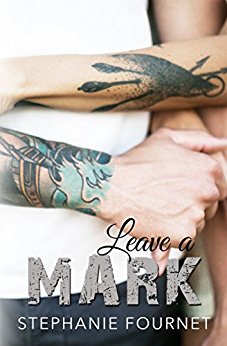
I’m not a huge romance fan, although I do read them, and I write romantic elements into most of my fiction. But, every once in a while, I happen onto a really good romance, which grasps me in it’s plot line and doesn’t let go. You know what I’m talking about – the kind of well-crafted story that is so enthralling you seriously don’t want to put it down until you’ve turned the very last page, that you stay up reading even though you have to be at work early in the morning. “Leave a Mark”, by Stephanie Fournet is just that kind of story – a contemporary romance with compelling characters and all the great troupes that mark the genre, with a few sex scenes which are tastefully done.
Wren is a twenty-something tattoo artist, who carries around some inner demons, resulting from her being molested at an early age and growing up with an addict for a mother. Lee is a gynecologist who doesn’t want to let go of his inner child, and has never stood up to his father. Not exactly two people you’d expect to find together, but once they find each other, their love is powerful. How can two broken people such as these, overcome all the obstacles and make their relationship work? The answers may surprise you or not, but you’ll have fun along the journey.
Leave a Mark is a really enjoyable contemporary romance that will grab your heart. I give it five quills.

Kaye Lynne Booth does honest book reviews on Writing to be Read in exchange for ARCs at no charge. Have a book you’d like reviewed? Contact Kaye at kayebooth(at)yahoo(dot)com.
Share this:

Book Marketing – What Works? (Part 1): Interview with fantasy author Cynthia Vespia
Posted: September 4, 2017 Filed under: Books, Cover Art, Dark Fantasy, Fantasy, Interview, marketing, Promotion, Speculative Fiction, Super Hero | Tags: book marketing, Cover Art, Cover Design, Cynthia Vespia, marketing, promotion, Social Media Marketing 4 Comments
Frequently I rant about the time I have to spend marketing and promoting my writing instead of actually writing. It’s no secret that marketing is not my favorite author hat to wear, and I know a lot of other authors who feel exactly the same way. But the fact is, in today’s writing industry, the author must carry most, if not all, of the load when it comes to promoting their work and marketing their masterpieces.
Now, I’m a struggling author, just as many of you are, so I don’t have a big marketing budget and I can’t afford to hire someone to do my marketing for me. My promotions are limited mainly to social media marketing, usually the kind that’s free. Even when I have a little money to put into marketing, I don’t really know what avenues would be effective enough to be worth it.
A lot of the information about book marketing that is out there on the Internet today is geared toward marketing your non-fiction book, whether it be self-help, or how-to, or even a cookbook. These articles tell you how to show potential readers why they need your book, how your book can help them, which is great, except most of their strategies do not apply to marketing fiction.
As a result of this discovery, I’ve been doing some research of my own into the matter, but I’ve found that the effectiveness of any marketing strategy depends on many factors, and results vary from author to author. In this eight part series, we’ll take a look at my findings and interview seven different authors to learn what they’ve found to be effective in marketing their own work. All work and no play makes us all very dull writers, so we’ll get to know a little about each one of them and their books just for fun.
It’s my pleasure today to interview speculative fiction author, Cynthia Vespia. I have review several of her books, including her Demon Hunter saga: The Chosen One & Seek and Destroy and Hero’s Call, Lucky Sevens, and Life, Death and Back. In addition to her great storytelling, Cynthia is also a talented cover artist, designing most of her own covers, as well as working freelance.
Kaye: Would you share the story of your own publishing journey?
Cynthia: Once upon a time I was a young mind hungry for books. I’d read Piers Anthony; C.S. Lewis; and comic books (my favorite being The Punisher). Then one day I stumbled upon a book by Dean Koontz called Intensity. To make a long story short it got me hooked and I knew then I wanted to write. My first novel, The Crescent, was written after seeing a documentary about female gladiators narrated by Lucy Lawless. I self-published it back when self-publishing wasn’t cool. It was fun to see my book in print. Flash forward to today and that same story is in pre-production as a feature film.
Along the road I’ve written several more books and short stories, each of which I’m very proud of. I received a Best Series nomination in 2009 for Demon Hunter.
Kaye: What made you decide to go with self-publishing?
Cynthia: I was published by small publishing houses but I never really saw any benefit when I could do the same things they were doing and they weren’t even really promoting me much. So much like a lot of other authors I’ve gone the indie route.
Kaye: As a fantasy writer, what kind of research do you find yourself doing for your stories?
Cynthia: Honestly, the majority of my work is completely created in my head. Recently the type of research I’ve been doing is for superpowers, modeling, and locations for the Silke Butters Superhero Series. And for my upcoming apocalypse trilogy there was a lot of research regarding weapons and safe-houses.
Kaye: What’s the most fun part of writing a novel or short story/screenplay? What’s the least fun part?
Cynthia: The most fun part of writing for me is in the initial creation of the characters and their backstory. It’s like a sculptor molding clay. You breathe life into your subjects.
The least fun part is in the aftermath which is marketing and promotion. It’s so difficult to posture yourself out in front of a very large crowd of other writers all clamoring for attention.
Kaye: What is the strangest inspiration for a story you’ve ever had?
Cynthia: Probably Sins and Virtues. I was at Alcatraz in SF and I went inside one of the prison cells for a photo. Afterwards, I felt a heavy cloak of energy from what I could only feel was a former prisoner’s spirit.
While writing Sins and Virtues I started to see visions of prison escapes that I had no business knowing about. If you read the first chapter you’ll get a taste of what I mean. That feeling stayed with me throughout the entire novel. It only left when I was done writing.
Kaye: What’s the best piece of advice you were ever given?
Cynthia: I’ve heard quite a bit of good advice over the years. I seek it out, and write it down in my journal. Lately, I’ve been falling back on one from Arnold Schwarzenegger where he said “earn it so nobody can say they gave you shit.”
Kaye: What do you see as the pros and cons of independent/traditional publishing?
Cynthia: Sadly, the pros and cons are one in the same in that everyone can publish a book. There’s a lot of good work being published that would probably never see the light of day due to the politics of traditional publishing, but at the same time I’ve seen a lot of awful books out there too.
The other things I’ve been noticing is that it’s no longer about the writing. It’s become a numbers game. How many FB followers or Twitter followers do you have? How many likes did you get? How many reviews did the novel receive? How large is your fan base?
I struggle with that because I don’t have the time to spend all day on social media when I have other things that take up my time like earning a living. There’s people now who are even cheating the system with paid “likes” etc. to bump themselves up into the top spot. To me, that’s not what writing should be about. It’s about the story, not how much attention you can get for yourself. Sorry if I’m coming off very negative but I’ve been doing this for a very long time and the business model has changed so much now that I hardly recognize why I started writing in the first place.
Kaye: What do you do for cover art? DIY, or hired out, or cookie cutter prefab?
Cynthia: I always do my own cover art. That is one of the beauties of going indie, you can have complete control over your cover. Although, I do have to point out that the comic book look of the Karma character in my Silke Butters series was done by an artist named Ka Rolding, whom you can find on Deviantart.
I also create covers for other authors too, so if you’re in need of a custom cover please look me up at http://www.cyncreativeservices.com/authorstudio
Kaye: What’s your favorite social media site for promotion? Why?
Cynthia: None…lol. I’d rather do a face-to-face event than spend time on social media promoting. But if I have to choose I like Twitter because it makes you think and be clever with your 140 characters. BTW, you’re all using hashtags wrong!
Kaye: How much non-writing work, (marketing & promotion, illustrations & book covers, etc…), do you do yourself for your books?
Cynthia: All of it! I’m a one woman show. It’s honestly extremely exhausting. Like I said, I just don’t have the time needed to put in to make a dent. I even bit the bullet and hired a couple people this year and it still didn’t make a difference. But I’m trying every day. That’s all you can do is try, right?
Kaye: You participate in book events on social media often. How effective do you see Facebook release parties and cover reveals, etc… being?
Cynthia: It depends on the crowd and your time slot. I’ve had some that were very active (including my launch party for Karma) and then others where nobody interacted at all, or not until later on. I find them effective for exposure. I’ve actually gained quite a few new FB friends from events so I’ll continue to do them. But I will suggest going in with a game plan and do some interactive posts, don’t just ramble on about how your book is for sale.
Kaye: What works best to sell books for you, as far as marketing goes?
Cynthia: For me, I like face-to-face conventions. Because of the genre I write in I can easily blend into comic cons. I liken it to an actor doing a stage play over doing a movie. In that regard, they get immediate audience reaction when they are doing a play, rather than waiting for box office receipts from a movie. The same can be said about conventions. I get an immediate reaction from readers (some have even come back the next day to compliment my work) where as stuff online I don’t really see what is working and what isn’t. Also, during conventions I keep a tally on how many books are selling and my 2009 Best Series nominee Demon Hunter is still the biggest seller.
Kaye: Why do you think some authors sell well and others don’t?
Cynthia: Again, it’s all who you know. And a lot of that comes from great networking. There’s something to be said for word-of-mouth. I also believe some genres sell better than others, that’s just the way it goes.
Kaye: Which author, dead or alive, would you love to have lunch with?
Cynthia: J.K. Rowling or George RR Martin. I’m fascinated by the amount of detail they’ve both put into their respective worlds of Harry Potter and Game of Thrones.
Kaye: What kind of Chinese food do you order all the time?
Cynthia: I don’t always eat Chinese food but when I do I prefer orange chicken and lo mein.
I want to thank Cynthia Vespia for joining us and for sharing her marketing strategies with us. If you’d like to learn more about Cynthia, check out her author profile, here on Writing to be Read, or check out her website.
Be sure to catch Writing to be Read next Monday, for Part 2 of Book Marketing – What Works?, where I will interview the co-authors of the Silverville Saga books and Wild West Ghosts, Mark Todd and Kym O’Connell Todd, who will share their experiences in marketing and clue us in to which ones have been most effective.
Like this post? Subscribe to Writing to be Read for e-mail notifications whenever new content is posted or follow WtbR on WordPress.
Share this:

Interview with romance author Molly V. Lovell
Posted: September 1, 2017 Filed under: Author Profile, Books, Fiction, Full Moon Bites, Interview, romance | Tags: A Sibling's Dilemma, Author Interview, Molly V. Lovell, Romanace 2 Comments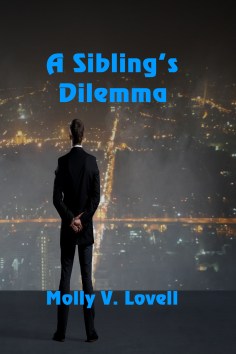
Molly: In my opinion (and it may just be me), having lots of interesting and unique characters makes a story read better. A genre convention for romance novels is that there needs to be a happy ending. No happy ending=no romance novel. This is good, in a way, because people look to romance novels for a fun, happy, read—it’s the hallmark of the genre. But, the downside to that is that you know how the book ends before you pick it up. When you have multiple couples, it adds a little mystery to it. Who’s going to end up with who? Are both couples going to be together at the end? There’s going to be a happy ending somehow, but you don’t know what that happy ending is.
Kaye: You are a law student by day and novelist by night. What’s the trick to juggling two careers at the same time?
Molly: Honestly? As long as I budget my time, it’s okay. I spend about 40-50 hours a week doing legal work and about 40 hours a week writing and promoting my books. An 80/90-hour work week is very manageable, especially when you’re doing something that you love. I’m fortunate enough to have two jobs that I’m very passionate about. In a way, having two very separate and distinct careers is easier than having just one—I never get bored. When I tire of legal stuff, I write. When I get writers block, I hit the books again. My husband and I don’t have any children, which makes things easier too. I’ve had the pleasure of meeting other romance novelists who work, write, and have kids. I don’t know how they do it because that’s like having three jobs. I just have two.
Kaye: What’s something most readers would never guess about you?
Molly: I’m actually an only child. You’d think that someone who wrote a book called A Sibling’s Dilemma would be tripping over siblings, but it’s just me. I’m fortunate enough to have three life-long friends that I would call my sisters though. (They’re nothing like Cassie and Ellie, for the record.)
Kaye: What time of day do you prefer to do your writing? Why?
Molly: I like to write whenever I can. Usually “whenever I can” turns into the evening because of law school. I also do this really weird thing where I like to write with the TV on in the background. (I measure my stories through how many series I blow through on Netflix. If you’re curious, this book took me the entirety of X-Files, most of Pretty Little Liars, and a boat load of one-season Netflix original series to write.) It’s nice because I can write while I’m hanging out with my husband; I’ll take breaks every so often and we’ll chit-chat and stuff. Writing’s always a fun time for me. Whenever I’m not out with friends or doing law school stuff, I write (and watch TV.)
Kaye: Which author, dead or alive, would you love to have lunch with?
Molly: Okay, I’m going to have to say Ernest Hemingway for this one. I’m not a huge fan of Hemingway’s books. I mean, they’re great and all, but there are other authors that I like more. Hemingway’s an interesting guy though. You can only talk about books with someone for so long—that would get old after about fifteen minutes. Hemingway’s done all sorts of interesting stuff. He was an ambulance driver during WWI, lead a group of French Militia against the Nazis, stole a urinal from his favorite bar, survived a ton of weird illnesses, lived through two plane crashes, and was kind of a spy at one point for the KGB. (Well, the KGB part is kind of sketchy, but it was the 1940’s…) Hemingway even has his own hamburger recipe. Who else does that? No one. We could go to bars and eat hamburgers. It would be great.
Kaye: What is the biggest challenge of being a writer for you?
Molly: The biggest challenge is that, with being a writer, you need to wear many hats: it’s sort of like being a small business owner. Writing itself isn’t too hard though. My other career, law, can be a bit more challenging at times. I spent a great deal of time clerking at prosecution offices and that’s way more taxing—especially because I did a lot of stuff with sex offense and domestic violence. It can get emotionally hard at times, but also rewarding. I’ve done jobs that are physically demanding too; I worked night shift McDonalds during college. That was hard. Really hard. I guess, in comparison, writing’s not that challenging—even with all the ‘hat wearing’ involved. I don’t have to stay up until five A.M. dealing with angry customers looking for their cheeseburgers.
Kaye: If writing suddenly made you rich and famous, what would you do?
Molly: I wouldn’t change my day-to-day life, actually. I would still finish my JD and I would still go into criminal law because I believe in what I do. We need good prosecutors and good public defenders. Even if I were a multi-millionaire, my day-to-day life would be the same. I would, however, do something really nice for my parents. Buy them a fancy mansion or something like that. I would definitely go on an awesome vacation with them too. (They just took me to Bermuda, so it’s fresh on my mind.) They’ve done so much for me and I wouldn’t be where I am today without them. Being an only child, I feel like I’m closer to my parents than most people. They’re my best friends too. I would do something nice for them. In addition, none of the people I care about would want for anything. I guess that’s what everyone dreams of if they become rich—doing nice things for the people they love. I’d probably give most of the money away. I have simple tastes. I mean, my favorite food is McNuggets. You don’t need to be rich and famous to eat McNuggets, hang out with friends, and write on your couch. My husband has simple tastes too.
Kaye: When did you know you wanted to be an author?
Molly: I used to love to write as a kid. My best friend and I were big nerds and we would write all the time. We made up really elaborate fantasy stories. Mine was called Unakarie’s Tail (because I didn’t know the difference between “tale” and “tail” as a kid) and hers was called Magic Factor. We would obsess over our books and stay up late drawing our characters and writing cross over stories. I wrote like, a hundred pages. For a ten-year-old, that was like writing War and Peace. Then, being a nerd and all, I transitioned to fanfiction. I stopped writing for a bit when I went to college, but then about a year ago I realized how much I loved to write and picked it up again. I started writing my own story with my own characters and it’s so much fun. This time I managed to not have any typos in my title, so that’s progress.
Kaye: How would you describe yourself in three words?
Molly: Friendly, off-beat, tenacious.
Kaye: What’s the best piece of advice you were ever given?
Molly: My mother, the wisest woman that I know, told me not to care about what other people think. If you live your life beholden to the opinions of others, you can never be the best version of yourself.
Kaye: Is there anything unique or unusual about your writing process?
Molly: I don’t really think that there’s anything unique to my writing process, other than I write my drafts while I watch television.
Kaye: Is there another book in store from Molly V. Lovell in the future?
Molly: Actually, yes, there will be. For the last several months, I’ve been working on a trilogy of books. I want to finish all three books before I submit them for publication. So far, I wrote 150,000 words and I’m almost done with the series. Then, I need to polish it up; that’s going to take a while. But, by this time next year, I’m hoping to have those three books out. The characters have pretty different personalities than the ones in A Sibling’s Dilemma and it’s written in first-person instead of third-person. The stories chronicle a hot-headed attorney and her rambunctious teenage intern, who happens to be the boss’s daughter. Together, through a very strange series of events, they take on the mob, a stalker, and a bunch of other things.
I want to thank Molly for joining us today on Writing to be Read and sharing a little about herself and her book. A Sibling’s Dilemma is available in ebook format or paperback on Amazon, so be sure to get your copy today.
Like this post? Subscribe to Writing to be Read for e-mail notifications whenever new content is posted or follow WtbR on WordPress.
Share this:

“Short Stories Not Forgotten” may be too short
Posted: August 25, 2017 Filed under: Book Review, Books, Fiction, Stories | Tags: Book Review, Calvin Bender, Short Fiction, Short Stories, Short Stories not Forgotten Leave a comment
Short Stories Not Forgotten by Calvin Bender is a small collection of short fiction. As I’ve mentioned many times, a big problem with a lot of short fiction is that authors fail to get in a full story arc. With this collection four, that is a problem with every piece. In fact, these seem more like brief ideas, each being a good start for something, but none following through to make a complete story. Every one ended abruptly, with none feeling quite finished. If the author just would have given us more. In all honesty, I can’t give it more than two quills.

Kaye Lynne Booth does honest book reviews on Writing to be Read in exchange for ARCs at no charge. Have a book you’d like reviewed? Contact Kaye at kayebooth(at)yahoo(dot)com.