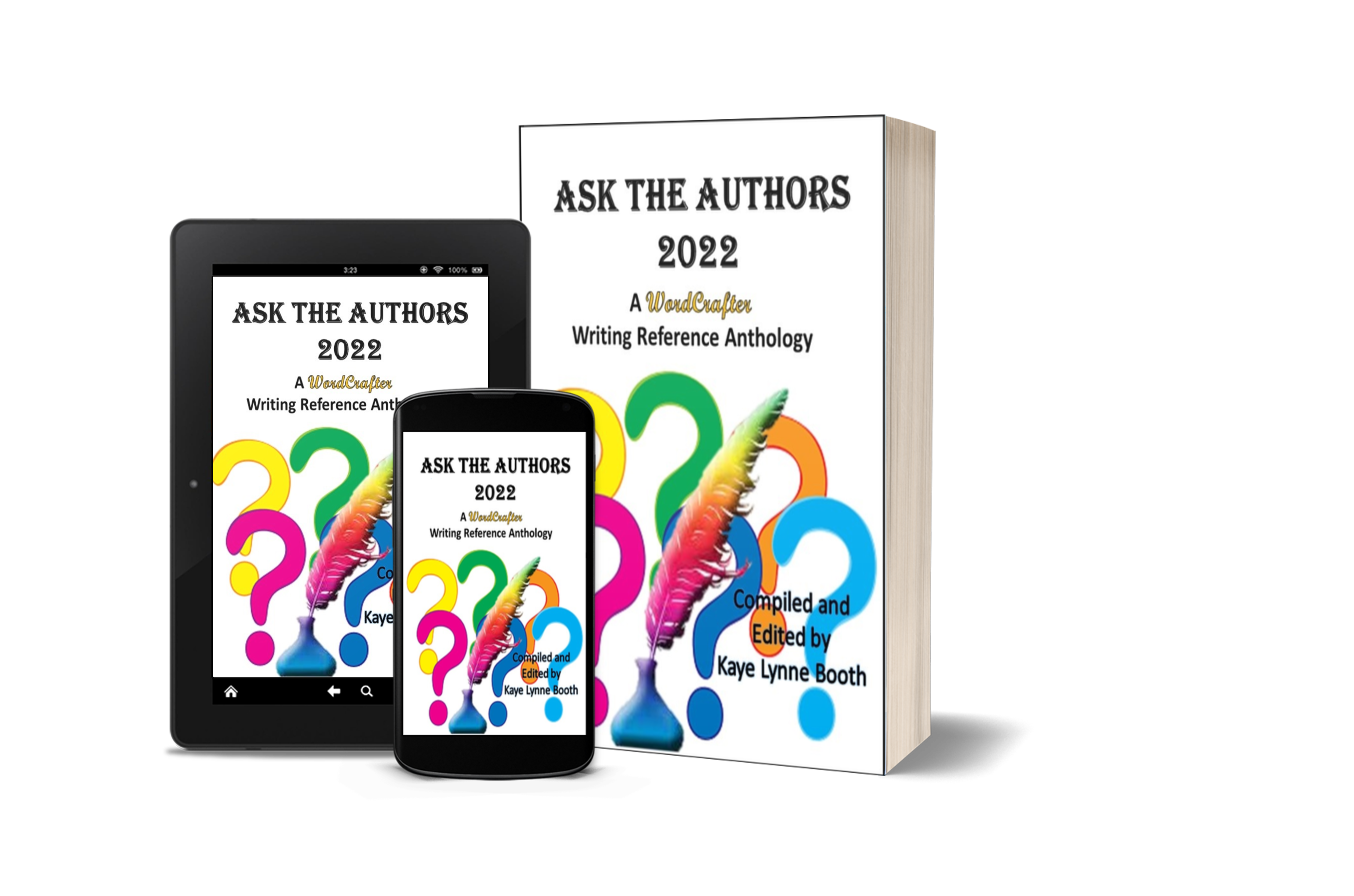
Leaving Eva/Losing Eva: A story of loss and seperation
Posted: February 16, 2018 Filed under: Book Review, Books, Fiction, romance | Tags: Book Review, Drama, Fiction, Jenifer Sivec, Leaving Eva, Losing Eva Leave a comment
Leaving Eva and its sequel Losing Eva, by Jennifer Sivec, are a sad and tragic tale that evokes strong emotional response in the telling. This touching story may be true to life, covering the lives of not one, but several dysfunctional generations of women and the men in their lives, over the course of time. It is a tale where one tragic action by one self-centered girl dominoes into many heart-wrenching losses in a saga where nobody wins. While each book easily stands alone, together they tell a story of loss and tragedy that will bring all but those with hearts of stone to their knees. There is so much heartbreak within these two stories that they left me longing for a sequel, one titled Loving Eva, where at least one woman of the Harper family might finally find happiness.
One spoiled rich girl, Ellie, and a series of poor choices, leads to a life of abuse and neglect for her daughter, Eva, whom she abandons at a very young age. Losing Eva is the story of that young girl’s life, spent searching for love that seems to be just beyond her grasp. Losing Eva is the story of how once found, she constantly struggles to keep that love, and how it always seems to slip through her fingers. In addition, these books tell the story of all the others who are effected, both directly and indirectly, by Ellie’s initial decisions and the lessons, both learned and missed, from them.
This is a story you won’t want to put down. Sivec’s characters are well developed and she makes you care about them. You will hope for positive life experiences for them and root for them when they succeed, especially for the main character, Brynn. The plot is full of surprises and rivets you to your seat to find out what will happen next.
My only problem is the head hopping. In places it gets to be so bad that I had to stop and go back to figure out who’s POV I was in. At times the viewpoint changed mid-paragraph, which really made me have to stop and reread. Regardless of the recurring confusions that this caused, and the fact that it is one of my biggest pet peeves, this story was so powerfully told that it brought me to tears on more than one occasion. The Harper generational saga is woven like an intricate narative tapestry through the lifetime of one hauntingly tragic Harper woman.
Grab a box of tissue when you settle in to read Leaving Eva and Losing Eva. I give this story set four quills.

Kaye Lynne Booth does honest book reviews on Writing to be Read in exchange for ARCs at no charge. Have a book you’d like reviewed? Contact Kaye at kayebooth(at)yahoo(dot)com.
Share this:

“Pangaea: Eden’s Planet”- A Science Fiction Odyssey
Posted: February 9, 2018 Filed under: Book Review, Books, Fiction, Science Fiction | Tags: Book Review, Books, Pangaea: Eden's Planet, Science Fiction, Tom Johnson Leave a comment
Pangaea: Eden’s Planet, by Tom Johnson is a science fiction story that engaged me through to the last page, offering me food for thought in some of my own writings. It is well crafted with an entertaining plot and characters that I grew to like in the brief time it took me to read it.
On a routine mission to ready Mars for colonization, a space anomoly sends their spaceship back to prehistoric Earth instead. Stuck in a hostile land before the existence of man or dinosaurs, the crew does their best to make the best of things. But faced with poisonous plants and animals, along with huge and vicious carnivores, the crew is dwindling. How can they survive?
The third person omnicient P.O.V. is always a little off-putting for me, but Tom Johnson crafts the story well and really does a nice job of pulling this viewpoint off. While there were a few logic problems, they weren’t so severe that I couldn’t buy in to this excellent plot and story line. The only thing I couldn’t overlook was the use of varied dialog tags, some which were distracting, actually pulling me out of the story.
Pangaea: Eden’s Planet is an engaging tale crafted with thought and skill. I give it four quills.

Share this:

Join Me In My Protest Against Facebook
Posted: February 5, 2018 Filed under: Books, marketing, Promotion | Tags: Book Promotion, Facebook, Protest, Social Media Marketing, Social Media Promotion 7 Comments
There are changes for Facebook on the horizon, and they aren’t beneficial to struggling authors or small business owners. Many are already going into effect. I’ve already seen an impact on my Facebook activities and I’m not liking it at all.
Some of the expected changes are explained in the K-lytics article, How the New Facebook Algorithms Affect Authors, by Alex Newton,
“In other words, if you write a post promoting your most recent book, only a fraction of your page fans or friends will see it. If your fans do not follow your page, your post is going to end up in the alternative news feed, not the main feed, if it shows up at all….”
Social Media Examiner founder Michael Stelzner claims these changes are already occuring, including video getting less watch time and links to external pages getting less visibility, and he claims these changes will impact all people and pages. And I think he’s right. Just because someone follows you, doesn’t mean that they are seeing your posts in their news feed.
In the K-lytics article, Alex Newton claims Facebook is really after your money, trying to push you to pay for your promotions because starving artists and start-up businesses are taking advantage of their free promotion features and they aren’t making any money off of you,
“Remember, organic reach is the total number of unique people who were shown your post through unpaid distribution. If you had 3,000 fans on your page and you reached 300 (10%) with a post, you could consider yourself lucky. And these days, the percentage is so much lower.
The fact is, Facebook wants you to pay for your reach. Facebook wants you to run ads and “boost” your posts.”
This algorithm and Facebook’s effort to bully people into paying for what we used to get on their site for free has already had an impact. I have made a practice of being a member of many writing, author, and book groups, where I post each time I publish a new blog post and promote my books, short stories and poetry. I try to keep track of which groups allow promotional posts and the ones that allow them only on certain days, and I try to follow all of the rules. But because I share my posts in so many different groups, the Facebook algorithm has been known to tag my posts as spam, especially if I’m short on time and rushing through my promotional tasks. Facebook has cut me off for going too fast or for making too many shares. It’s not people reporting me, it’s their algorithms deciding that I’ve been a bad girl.
Most recently, Facebook has banned me for twenty-four hours and then as soon as I did three shares the next day, all to the “Writing Contacts” group that I started, they banned me again. And they don’t just ban me from sharing posts, they ban me from all group activities. I couldn’t even comment on someone else’s posts or contribute to the group in any way, so it looks like all I do there is promote. I try to be a contributing member to most of the groups I belong to and not just promote my work, but my time is often limited and I have to combine the two activities in order to get them both done. I have been doing things this way for at least eight years, but now they are slapping my hands for it.
Michael Stelzner suggests measures to increase the chances of getting your posts seen, such as posting less often, create content that promotes people to talk to each other instead of just you, increase your live video use, avoid posts that encourage people to comment (engagement bait), and pay for your ads and use Messenger chatbots. (If you are interested in learning more about this, you won’t want to miss the Social Media Marketing 2018 Conference).
To my thinking, if I play Facebook’s game and change my marketing strategy on their site, or pay for their advertising to make sure my posts are seen, especially when the majority of my posts are for Writing to be Read which I’m not making any money off of, then they win. Why should Facebook decide who gets to see my posts. If I’ve followed someone, I want to see their posts. That’s why I followed them in the first place. Those who have followed me should by rights, be able to see my posts. That’s the way it’s supposed to work, but that’s not the way it does work with these new algorithms.
So, I have a different solution. I created a “Westerns” page here on the Writing to be Read site, to replace my Delilah Facebook page and I hope to drive traffic to it, instead of promoting the Facebook page. I plan to do the same with my Playground for the Gods page. I have a cool idea for marketing of the second book, but you’ll have to check in to my Westerns page to learn what it is. If I’m ever fluid enough to pay for Facebook ads, I’ll use them to drive to my website pages, here, rather than their Facebook counterparts.
So, I am asking for your help. You, dear reader, can help support my Facebook protest by liking my “Westerns” page, subscribing to email, (up below the Red Quill logo and the search box in the top right side of the page), or follow Writing to be Read on WordPress. Remember, authors count on you, not just to buy their books, but to like their posts and write reviews. These days, these are things that matter in the rankings. Also, watch for a new way to sign up for my email list to recieve news and updates on my work, and when you see it, please sign up. I need your support. And if you are an author, I call upon you to move your pages to a different platform and stand in unification against the big conglomerates who believe they have us by the short hairs.

Like this post? Subscribe to Writing to be Read for e-mail notifications whenever new content is posted or follow WtbR on WordPress.
Share this:

“Undercurrents”: More Than Just a Collection of Tales From the Deep
Posted: February 2, 2018 Filed under: Book Review, Books, Horror, Stories | Tags: Book Review, Monsters, Sea Monsters, Short Fiction, Short Stories, The Deep, Undercurrents Leave a comment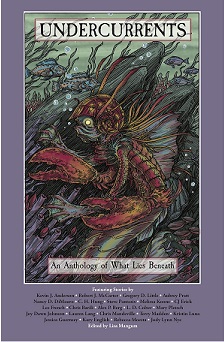
The twenty-three stories in Undercurrents are all about the mysteries of the deep, but beyond that they are as varied as it gets. Master story telling weves tales about monsters who dwell in the ocean depths and send chills down your spine. The monsters featured range from those of legendary status to those of the fantasy realm: krackens; sea dragons in Guardian of the Sea, by Kristin Luna; sirens in The Old Man and the Sea Siren, by Steve Pantazis; fairy horses in In the Water, by Jessica Guernsey; mermonsters in All Yours, by Melissa Koons; and the underwater cat in Underwater Cats, by Mary Pletsch – to those that are unidentified, as in Cold, Silent, and Dark, by Kary English; or spring from the recesses of the human mind, to inanimate objects as innocent as a pair of bookends in Bookend, by Chris Mandeville.
The points of view presented are varied, as well. As a reader, I was allowed to glimpse through the eyes of both hunted and hunter, getting the unusual P.O.V.s of things like a kracken in The Kraken’s Story, by Robert J. McCarter, a siren in The Siren’s Song, by Aubrey Pratt, a dragon in The Sea Dragon’s Tale, by Nancy D. DiMauro and a puffer fish in Mandala, by Jody Lynn Nye.
The stories in this collection explore more than just the waters of the deep. Sea Wind, by Kevin J. Anderson explores the idea of losing a brother to the sea. Four Billion Years of Solitude, by Alex P. Berg explores the oceans of distant planets. Eat Me, by Lauren Lang explores a revelutionary weight loss system involving antipods harvested from the sea. Songs to Sing and Stories to Tell, by L.D. Colter explores saying good-bye, and Lure, by Joy Dawn Johnson explores the connection between twins, and Sea Dreams, by Rebecca Moesta and Kevin J. Anderson explores the ties between friends. To Become, by C.J. Erick explores facing the unknown, while In the Garden of the Coral King, by C.H. Hung explores facing one’s own fears, and A Marsh Called Solitude, by Gregory D. Little explores self-sacrifice and altruism.
My personal favorites include Teens Teach Tech, by Terry Madden, where a teen tries to help an old woman face her fears of the past; Heroes of the Russian Federation, by Chris Barili, where an experimental bio-weapon escapes and goes out of control; and High Seas Burning, by Lee French, where the real monsters are of the human variety.
Best of all, all proceeds from this anthology go to the Don Hodge Memorial Scholarship to help students without the financial means to attend the Superstar Writing Seminar, a seminaar that addresses the business end of writing. The Superstars have been putting together anthologies, along with seminar attendees since 2015. Undercurrents is the fourth anthology to result from the Superstar Writing Seminar. In more ways than one, the Superstar Writing Seminar is quite special and the recipient of a scholarship is fortunate indeed.
News of this seminar was exciting to me because so many writing courses or workshops focus on the craft of writing and ignore the fact that there are some business skills required in order to be a successful writer. I’ve heard many authors gripe about not realizing they had to have marketing skills as well as writing skills, or complaining about the time they must put into marketing that could be used to write instead. The line-up of Superstars who offer their expertise include Kevin J. Anderson, David Farland, Eric Flint, Rebecca Moesta, James A. Owen and Brandon Sanderson. Each year they have additional guest instructors, chosen from the creme de la creme of the publishing industry. They all share their knowledge and expertise during the annual seminar, which is held in Colorado Springs, Colorado.
Well-crafted stories fill this anthology exploring the ocean depths and the depths of the human mind in Undercurrents, an anthology created by master story tellers. I give it four quills.

Kaye Lynne Booth does honest book reviews on Writing to be Read in exchange for ARCs at no charge. Have a book you’d like reviewed? Contact Kaye at kayebooth(at)yahoo(dot)com.
Share this:

Interview with author Margareth Stewart
Posted: January 29, 2018 Filed under: Author Profile, Books, Fiction, Inspirational, Interview, Literary, Writing | Tags: Book Review, Literary, Margareth Stewart, Open/Pierre's journey after the war Leave a comment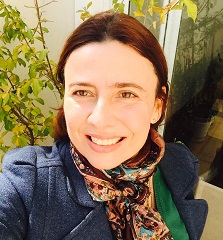
Today I have the good fortune to interview the debute author of a new release, Open/Pierre´s journey after war, which is now available at web-e-books.com. Margareth Stewart joins us today on Writing to be Read to share a little about herself and her book. This interview is my introduction to Margareth, as well, so I’m excited to get to know her, too.
Kaye: Welcome Margareth. We’d love it if you’d introduce yourself to my readers. Tell us a little about yourself.
Margareth: My real name is Mônica Mastrantonio and Margareth Stewart is my pen name, but I like it so much that you can call me Margareth.
I´m a PhD professor in Social Psychology, and had been following an academic career if I had not fell totally in love with the writing life.
Kaye: Why did you choose to use a pen name and how did you chose yours?
Margareth: I have a life of academicals papers, thesis and articles under my real name Monica Mastrantonio, so I thought the same name would just confuse the audience. I had no other choice, but to pick up an English pen name for my fiction work which is all in English. I brainstormed quite a few, used app devices to find a suitable one, but only got more confused (lol). The name Margareth came to me as it also starts with the letter M – and the surname seems to match it. That’s how Margareth Stewart was born.
Kaye: To craft your works, do you have to travel? Before or during the process?
Margareth: Yes, for sure. I´m a divorced mom of three kids, so my writing depends on having a break, getting to Writers Residencies somewhere far and isolated. I´ve written Open at Maelor Studio in Corris – Wales; Mademoiselle-sur-Seine at Camac – France and now comes the time to go to Greywood Arts in Cork, Ireland – so glad about it.
Kaye: What are your secrets for juggling writing with family?
Margareth: Hard. I have three kids. The oldest one is Valentina, she is 16, then comes Chloe who is 10, and Vittorio who is 7. So, I never ever rest – that never happens. I’m also divorced, so it’s – “paying the bills, cleaning the house, getting piles of work done, teaching and tutoring my students from university, working for a social project book donation, and so on” – every single day. I think the secret is living, not only being alive: working hard and having fun – both are essential.
Kaye: What is the one thing you hope to teach your children?
Margareth: To follow their dreams and be passionate about whatever they choose to do. I know this may sound a bit too romantic in a very competitive world, but that seems to be the only solution for so many problems we face nowadays. On top of that, I always say that being a happy Mom is the best legacy I can ever leave them. At least, I feel like half of the work has already been done if we are happy people.
Kaye: What’s one thing most readers would never guess about you?
Margareth: Oh, basically two, where I come from and my age. I was born in Brazil, in a Southern city called Londrina – that stands for Little London – colonized by the British in the 20’s. But I also have Italian citizenship because my grandparents immigrated from Italy, so I say I’m like pizza: half Brazilian-half Italian. Now I live in Sao Paolo, few months in Miami and at writer´s residencies, too.
Second, my age. I’m 49, and as I dress casual and informal, people tend to think I’m younger.
Kaye: When and why did you begin writing?
Margareth: I´ve always written, as Academics – mostly scientific papers and articles, though lately felt an urge to start writing fiction. It´s not something I´ve planned, much to the opposite, I even tried avoiding it.
Kaye: When did you first consider yourself to be a writer?
Margareth: When I published my first novel Open/Pierre´s journey after war – at the end of 2017, so I´ve just began (lol). I had also compiled, edited and published anthologies, short stories, articles before, but I did not regard myself so. Then, when Open was accepted and published by web-e-books.com, it felt like the real thing was coming to life.
Kaye: What time of day do you prefer to do your writing? Why?
Margareth: Midnight is the perfect hour for me, that’s when all the lights go down, kids are in bed, and silence reigns. My neighbors may think I’m very weird, staying up for long hours at night, but those are my precious working hours, when words flow – I won’t be giving up on them.
Kaye: What inspired you to write your first book?
Margareth: Can you believe it was a Facebook group? Awesome, I know. It was November – Nano writing month and this group ran a contest for the person who would reach 100.000 word count first. Obviously, I´ve missed both the month and the word count. But it somehow gave me courage to book a writer´s residency in January in Wales and accomplish my target there. That was how my novel came to life. Then, it took me two years to have it published. So, my advice is never ever give it up. Champagne takes two full years to have the bubbles in it, so good things do take time. 
Kaye: How did you come up with the title – Open/Pierre´s journey after war?
Margareth: The title is a reference to a scene from the book, the only romantic scene in it – when the main character falls in love. They were in a village stepping on the grapes to make wine, the weather changes and rain is about to fall heavily, the owner of the land was holding a bottle ready to be opened in his hand as a tradition to the new harvest, everyone surrounding him started shouting “Open open, open”. It was the first time Pierre held Claire’s hand.
Kaye: Is there anything about your style or genre that you find particularly challenging?
Margareth: Because of my background in Social Psychology, I mainly focus in the human beings, their relationships and their inner selves more than anything else.
Kaye: Open/Pierre´s journey after war is the story of one man’s reaction after losing his family to the atrocities of war. How much of the story is realistic and are experiences based on someone you know, or events in your own life?
Margareth: It’s a mix of everything. There is no such a thing as a blank page, everything we ever lived influences us, what we read, hear, see, the people we´ve met, etc. Writing is putting all that in order.
Kaye: Who designed your cover?
Margareth: The Publisher, but I did some changes and suggested the main colour which is orange.
Kaye: Is there a message in your novel that you want readers to grasp?
Margareth: Yes, indeed. A message about last wishes. Pierre the main character lives for his last wish which is revenge. People do not pay attention to things they need to accomplish in life, so when old age comes, they become very bitter and frustrated.
Kaye: Are there any new authors that have grasped your interest? Who is your favourite writer, and what is it about their work that really strikes you?
Margareth: Oh, so many influencers. I´m an avid reader since a small kid. I read everything I can ever get my eyes upon, and I love libraries and Book Shops – to a point that I could spend days inside one. So from Tchekov, to Dante, Gabriel Garcia Marquez, Sidney Sheldon, Yeats, Kafka, Steinbeck, Wilde to Agatha Christie, Cervantes and Mills and Boon to name a few. I´ve learned so much from them all.
Kaye: Outside of family members, name one entity that supported your commitment to become a published author.
Margareth: Facebook groups can play a great motivational role to new writers, feed-back from beta-readers, and artist residencies.
 Kaye: Do you see writing as a career?
Margareth: Yes, it’s a career like any other. I wake up, get some tea, sit down and type until bleeding – as Nietzsche would say.
Kaye: If you had to do it all over again, would you change anything in your book?
Margareth: No, nothing, really, I´m very happy with the book, its edition, and so thankful to everyone that helped me along this way.
Kaye: Did you learn anything during the writing of Open/Pierre´s journey after war?
Margareth: Yes, so much with Pierre, and also about the way I can produce more and write better for next time.
Kaye: If your book was made into a film, who would you like to play the lead?
Margareth: Oh, love this question, wish they read this interview, buy the book and decide to film it: Clint Eastwood or Jeremy Irons.
Kaye: What advice do you have for aspiring authors?
Margareth: Keep writing – keep walking, and “Cheering” accordingly.
Kaye: What book are you reading now?
Margareth: Cyrano de Bergerac – I want to learn more about dialogues, spoken language, you know.
Kaye: Do you remember the first book you ever read?
Margareth: A series of adventure books for a contest at school, I just remembered I won, and read loads for weeks.
Kaye: What makes you laugh or cry?
Margareth: Good talk & nice people, I get emotional when I meet people who are passionate about what they do.
Kaye: Which author, dead or alive, would you love to have lunch with?
Margareth: Professor, Historian and Writer from Oxford University: Sir Theodore Zeldin. He has an extraordinary capacity to link major historical events to people’s daily lives – to understand people from a larger point of view. A truly Historical Social Psychologist. I would love to spend some weeks as apprentice in his Department, who knows?
Kaye: What do you like to do when you’re not writing?
Margareth: Jogging, cooking, dancing, and reading (lol).
Kaye: What TV shows or films do you enjoy watching?
Margareth: Can you believe I watch no TV? Zero. That´s me, I´m keen on films, but “zero” TV, not missing much is the feed-back I have from people watching it.
Kaye: What are your favourite foods, colours, music?
Margareth: Homemade Pasta made by me (my Italian side) and all sorts of music from Jazz, to folk, rock, samba, bossa, and classical.
Kaye: How would you describe yourself in three words?
Margareth: Passionate. Determined. Brave.
Kaye: Imagine a future where you no longer write. What would you do?
Margareth: I can´t imagine it any longer…there are some paths that there is no turning around – writing is one of them.
Kaye: What is the one thing in your writing career that is the most unusual or unique thing you’ve done so far?
Margareth: Doing some of the things my characters do. For instance, Pierre the main character of Open, he drinks hot burning coffee and I tried that once, just got my lips and tongue all burnt for a week. Another unusual thing is taking notes all the time. I carry a small notebook with me – there are times that I have to pull the car off the road not to miss an idea.
Kaye: Is there anything specific you’d like to tell your readers?
Margareth: Just read it.
Kaye: Do you have a blog or website readers can visit for updates, events and special offers?
Margareth: Yes, please follow my Facebook Page where I post offers and new book releases. For 2018, we have Mademoiselle-sur-Seine (erotica) much hotter than 50 Shades of Grey.

Kaye: Thank you Margareth, for joining us today. It’s been great to get to know a little about you and to learn a little about Open/Pierre´s journey after war.
Margareth: Thank you so much for putting these together for all of us; it´s an immense pleasure being here, and looking forward to next book interview.
Like this post? Subscribe to Writing to be Read for e-mail notifications whenever new content is posted or follow WtbR on WordPress.
Share this:

“Doctrine of Indecency”: A Good Variety of Stories
Posted: January 26, 2018 Filed under: Book Review, Books, Dark Fantasy, Erotica, Fiction, Paranormal, romance, Science Fiction, Speculative Fiction, Stories | Tags: Anthology, Book Review, Doctrine of Indecency, Erotica, Short Stories Leave a comment
The trick to writing erotica is being able to write a fully developed story line and add just the right amount of erotic imagry to create a story which both entertains and arouses readers at same time. There is an almost poetic art to it, a delicate balance. A balance few of the stories found in Doctrine of Indecency: 18 Coveted Tales of Lust, edited by Virginia Lee Johnson and Kat Mizera, manage to achieve. Most of the stories, while not of the exceptional variety, were not bad stories and some were quite entertaining.
I must give kudos for the variety of the stories contained within this erotic anthology. There seems to be something for everyone. Some stories stretch genre boundaries, including tales of erotic horror, such as A Cabin… Somewhere, by Kyle Perkins; the paranormal erotica of Wings of Change, by Cee Cee Houston; the anti-hero erotica of Revenge, by Virginia Lee Johnson; the speculative erotica of The Succubus’s Sin, by Taylor Rose; and the science-fiction erotica of Suicide Mission, by Lila Vale; or Lunar Gets Some Loving: A Purian Empire Short, by Crystal Dawn. There are also those that are geared more toward the traditional erotic story lines which explore various sexual preferences such as the three-way fun of Apple Bite, by A.R. Von; or Welcome to the Dark Side, by Erin Trejo; the military erotica of Deployment – Dalliance, by E.J. Christopher; the grocery store erotica of Fruit, Veg. & Starfish, by T.L. Wainwright; the swingers erotica of 3, by Eden Rose; the S & M erotica of House of the Rising Sun, by L.J. SeXton; the stranger erotica Delayed Ecstacy, by Tiffani Lynn; and there’s even a tale of social media erotica in Yearning for Desire, by Amanda O’lone.
My three favorites: Pleasure Bite, by Brianna West is well written vampire erotica and Dangerous Desire, by Samantha Harrington is hot and steamy, yet has a decent plot. I’ve been doing a lot of playing with POV, so I was especially drawn to the stories which used mutliple character POVs. While Inferno, by Kat Mizera uses multiple POVs with some skill, Pepper’s Play Pen, by Mia Sparks uses multiple POVs and is crafted with expertise.
The variety of stories included is commendable, but since none are exceptional, nor are any terrible, but of more average quality, I give Doctrine of Indecency three quills.

Kaye Lynne Booth does honest book reviews on Writing to be Read in exchange for ARCs at no charge. Have a book you’d like reviewed? Contact Kaye at kayebooth(at)yahoo(dot)com.
Share this:

Exposition: Telling vs. Showing
Posted: January 22, 2018 Filed under: Books, Dialogue, Exposition, Fantasy, Fiction, Science Fiction, Writing | Tags: Exposition, Fiction, Show vs. Tell, Writing, Writing to be Read Leave a comment
A writer should show the reader, rather than tell the reader. Help them form a mental picture in their minds. Put them into the story. How many times have we all been told this? Finding a balance between showing and telling is a hard thing to do, but to be a good writer we must strive to achieve that balance.
I’m a person who likes to think big, and in my writing it’s no different. As many of you know, in graduate school, my genre fiction thesis project was the first book in my Playground for the Gods science fantasy series, In the Beginning. But, what you may not know is that my original thesis proposal was for what turned out to be the third book, only in my mind it was the only book and it spans back beyond prehistoric time. While preparing my thesis proposal the feedback that I recieved from instructors and cohorts time and again, was that my proposal would require too much exposition unless I created an epic tomb of unfathomable porportions, way beyond the scope of my thesis requirements, and impossible to complete in the time allowed.
The main problem was that there was a lot of background that I felt the reader needed to understand where the character was coming from in the now of the story. Most of that information was being communicated to my readers through exposition. The story wasn’t taking them back to relive the scene, it was simply filling them in on what they needed to know, because the story I wanted to tell spanned over billions of years. That’s a lot of backstory. That’s exposition.
Robin Conley saw a similar problem in her review of the movie Batman vs. Superman: Dawn of Justice, “Almost all of these really big elements deserved a proper set up because they are major story parts that will potentially carry over… The long exposition and set up in the film makes the story drag and hard to stay involved, no matter how many interesting elements there are.”  Robin explains what exposition does and why we don’t want too much of it. Too much exposition is like coming in in the middle of a film you’ve already seen, and filling in other viewers on what is happening, instead of letting them watch the film and figure it out for themselves.
That was the problem with my PfG story – way too much exposition. It happens all the time. And it’s easy to overlook it when you’re the author. Which is exactly what I had done with my thesis. I had that story outlined and plotted, but I kept having to stop and fill in the background details with exposition. And exposition tells your readers something, but it doesn’t provide a mental image for them. It doesn’t pulace them in the scene. Action and dialog accomplish those tasks quite well. And my cohorts and instructors were right, although at the time, I didn’t want to believe them.
My solution was to turn my story into a four part series. Hence the Playground for the Gods series was born. All that backstory, which had come out mostly in exposition, became a story of its own, one that I could show my readers, rather than telling them about it. My original story idea will eventually be book three, and although I did have to write the whole first book instead of the story I set out to tell for my thesis, that story outline is still waiting for me to put it in story form.
Of course, that isn’t the only way to solve problems of exposition, but this can be applied without creating entire novels. You simply expand on some scenes to eliminate exposition and create a longer story, chosing those scenes that are most vital to the story. You can also chose to leave certain information out, thus eliminating exposition without lengthening, and perhaps even shortening your story. It is a delicate balance, but as the writer, you must do what the story needs to achieve it. What works for one story may not necessarily be the answer for another.
So, how much exposition is too much? That’s a very subjective question, but generally speaking, if you’re telling your reader what happened, with a few lines of glib dialog thrown in here or there, then you have too much exposition. Your reader wants to get lost in the book, and for that, they need a story that is told in such a way that they feel like they are there.
We’ve all read stories like that. For me, it’s Anne Rice. I may have never been to New Orleans, but after reading some of her books, I feel like the Garden District and the French Quarter are old frieinds. I can smell the magnolia blossoms, and see the old plantation houses as if I’d been there. That’s the kind of story we, as authors, strive to write, regardless of the genre we write in. It’s the kind of story that has the perfect balance, using exposition only when absolutely necessary to fill in details, providing plenty of action and dialog to fill in the rest. It’s a delicate balance, but one we must all strive for.
Until next time, Happy Writing!
Like this post? Subscribe to Writing to be Read for e-mail notifications whenever new content is posted or follow WtbR on WordPress.
Share this:

“Holy Denver”: A True Literary Treat
Posted: January 19, 2018 Filed under: Book Review, Books, Fiction, Literary | Tags: Book Review, Florence Wetzel, Literary Leave a comment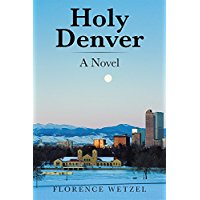
I’ll tell you a secret. For me, the problem with most literary works is that they move so slow it seems like nothing ever happens and eventually, I am so bored that I don’t care enough about the characters to finish the story. I guess that’s why I read mostly genre fiction. It’s more fast paced and has real conflict to keep the story moving and the reader interested. Not so, with Holy Denver, by Florence Wetzel.
While Holy Denver does have true literary qualities such as moving at a lacksidaisical pace, the characters are colorful enough to keep me coming back for more. Wetzel makes her settings come alive, allowing the unique atmosphere of Boulder and the old town ambience of down town Denver to become characters in their own right, carrying the story from place to place with graceful, relaxed transitions.
Holy Denver is a tale of self-discovery and yet is the tale of the fall of the publishing industry and some of its more recent rises. I was fortunate to acquire a print copy for review, so for me it was a feel good read, allowing me to slip quietly into a world I’m only too familiar with, having grown up in Golden, right between Denver and Boulder, and forget about the reality of the here and now for a while. (I can remember when what is now the 16th Street Mall that Wentzell writes about was a paved street where all the kids went to cruz their daddies’ cars on Friday and Saturday nights, and I attended the later part of my ninth grade year at school located in the Capital Hill area.) I think I smiled almost the whole way through it. It is introspective and entertaining, and I give Holy Denver four quills.

Kaye Lynne Booth does honest book reviews on Writing to be Read in exchange for ARCs at no charge. Have a book you’d like reviewed? Contact Kaye at kayebooth(at)yahoo(dot)com.
Share this:

“Blood Dawn”: A Mystery Unraveled
Posted: January 12, 2018 Filed under: Action/Adventure, Book Review, Books, Fiction | Tags: Action/Adeventure, Blood Dawn, Book Review, Chris Dibella Leave a comment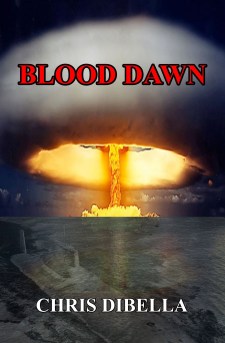
Blood Dawn by Chris Dibella has a clever storyline. A mystery leftover from the cold war lands in the laps of NESA agents, Sean Mercer and Pat Vigil. The investigation leads to Flaggler Beach, Florida, where they team up with author Tim Baker’s loveable protagonist, Ike to solve the mystery, but they recover way more than they bargained for, and they must race against the clock to reveal a threat to head off a diabolical plot against the U.S. and thwart an unsuspected nuclear attack.
An underground tunnel system beneath Rocky Flats nuclear facility holds the remains of Russian soldiers, long dead presents a mystery from the past, and Sean and Pat are determined to solve it. The trail they pick up leads to Flaggler Beach, Florida, where Ike joins the party, and together they uncover a plot that could take the U.S. by surprise if they don’t do something to stop them.
Although the characters could have more depth, they are likeable and engaging. While the story does more telling than showing, the plot is fun and entertaining. I give Blood Dawn three quills.

Kaye Lynne Booth does honest book reviews on Writing to be Read in exchange for ARCs at no charge. Have a book you’d like reviewed? Contact Kaye at kayebooth(at)yahoo(dot)com.
Share this:

“Fantastic Beasts and Where to Find Them”: A Different Sort of Movie
Posted: January 5, 2018 Filed under: Dark Fantasy, Movies | Tags: Dark Fantasy, Fantastic Beasts, Movie Review Leave a comment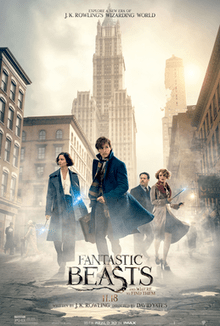
Although the Harry Potter movies were geared toward a young audience, adults enjoyed them as well. But as Harry Potter grew older throughout the series, so did the main viewers. The 2016 Fantastic Beasts and Where to Find Them expands J.K. Rowling’s Wizarding World for an older audience, leaving Harry and his friends waiting in the England of the future. Even if you haven’t seen any of the Harry Potter movies, you can easily follow the events of this movie, as it easily stands on its own merit.
The creatures in this movie are fantastic example of creativity, and the imaging is awesome. The story is crafted in a way that draws you into the story subtly. You’re so involved with the fish out of water story of Newt Scamander and his suitcase full of marvelous creatures in 1926 New York, that the A story line almost escapes notice in the background until Newt solves the mystery of what kind of beast is terrorizing the city.
I found Fantasic Beasts and Where to Find Them to be thoroughly entertaining; a fresh take on a fascinating and beloved world. I give it four quills.