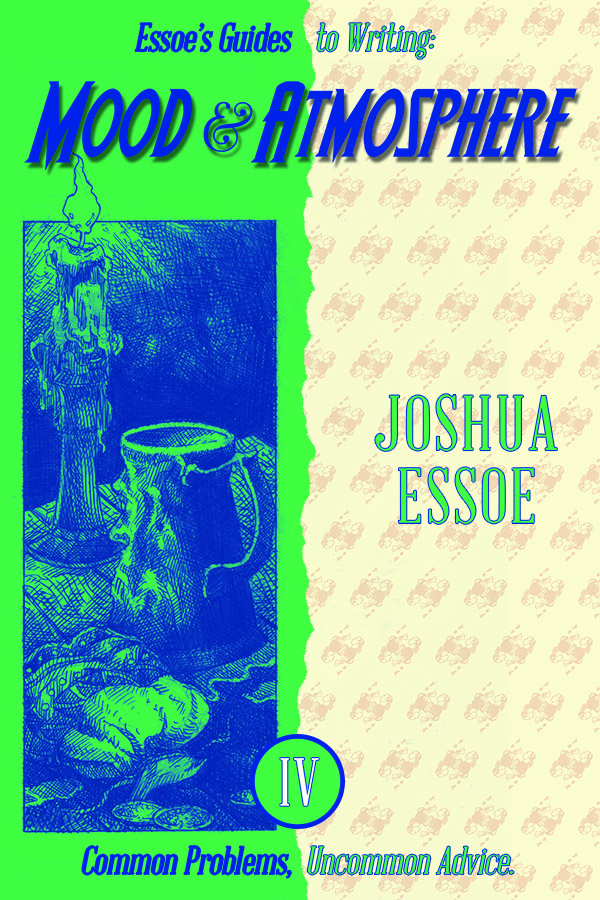
Review in Practice: “Essoe’s Guides to Writing: Mood & Atmosphere”
Posted: March 24, 2025 Filed under: Book Review, Books, Nonfiction, Review in Practice, Writing, Writing Resource | Tags: Essoe's Writing Guides: Mood & Atmosphere, Joshua Essoe, Kaye Lynne Booth, Review in Practice, Writing Reference, Writing to be Read 3 CommentsI was received a digital copy of this writing reference as a part of the 2024 Novel Writing Story Bundle currated by Kevin J. Anderson, which also featured my writing reference, The D.I.Y. Author.
I recently started writing one of three stories that have been bouncing around in my head for the Curses themed anthology, which WordCrafter Press will put out in September of 2025, and I feel mood and atmosphere will be extremely important in telling the stories for this collection that I want to tell. The one I just started has a working title of “The Curse of the Death Clock” begins in France during the reign of Napoleon Bonaparte and the right atmosphere for the setting is going to be a challenge.
I read Essoe’s Guides to Writing: Mood & Atmosphere with the writing of the Curses stories in mind and I’ll be keeping them in the forefront of my mind as I write this first story. To try and set the right mood and atmosphere for these Curses stories, I’ve implemented the exercise in Chapter 3 and started a word list which aligns with the mood I’m going for, which is slight unease and a feeling of doom. As with all the tools in my writing tool box, I’ll keep all my new tools on hand as I write the other two stories.
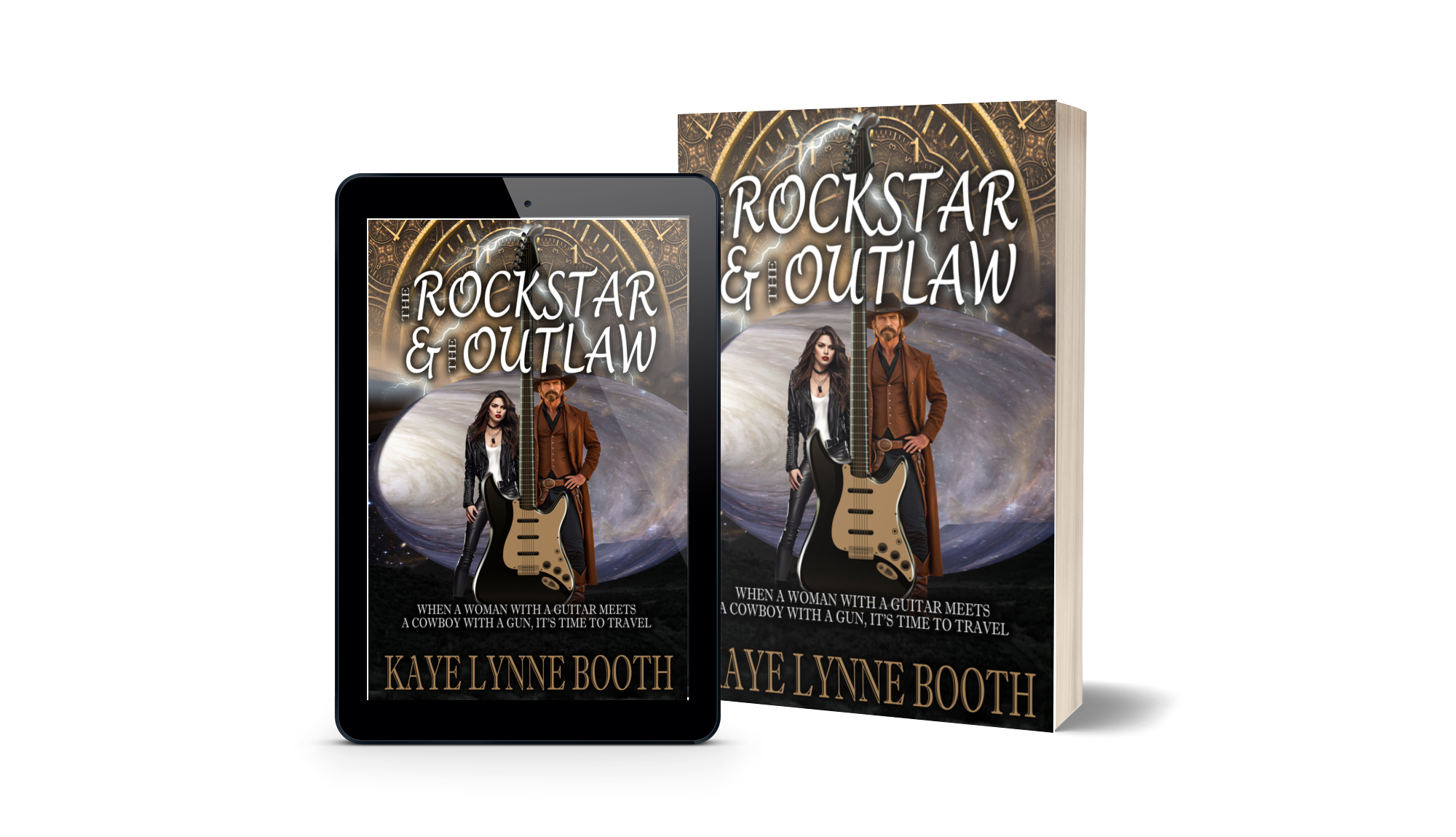
However, as I read, I found suggestions that can be use to improve mood and atmosphere in by taking another look at my sentence structure and word choices, as well as my pacing, in my latest WIP, The Rock Star & The Outlaw 2: Seeing Doubles, which I just got back from my beta reader and I’m preparing to do a final edit. I’m using another exercise from Chapter 3 to help nail the pacing for this story, which is very fast, with lots of action, making a list of keywords from a story which evoked a strong emotional reaction, which I’m aiming for in my own tale. The book I’ve chosen is Velocity, by Dean Koontz. The man is a master of suspense and knows how to keep the pages turning. I’ll also be taking another look at the conflicts in this story for parallels and counterpoints to the main conflict. Essoe includes many useful writing exercises to illustrate his points and can be used with WIPs, to improve on current projects.
I found useful exercises in chapter four on setting and atmosphere which I plan to utilize with yet another story, an out and out horror for Midnight Oil. Robbie is helping me with the research on this one, since it involves zombie elephants. Because of the subject area, the setting will be one that I am unable to visit and experience for myself. Robbie’s expertise will be a great help in this area, but I’m going to have to work to achieve the right atmosphere, and “The Shorthand” exercise will be useful. I’ll be taking note of possible points of interest and the emotional impact it has on my characters when describing the South African savannah setting. Most of my characters move my stories forward through action and dialog, but I think in this story, their internal reactions will be particularly important.
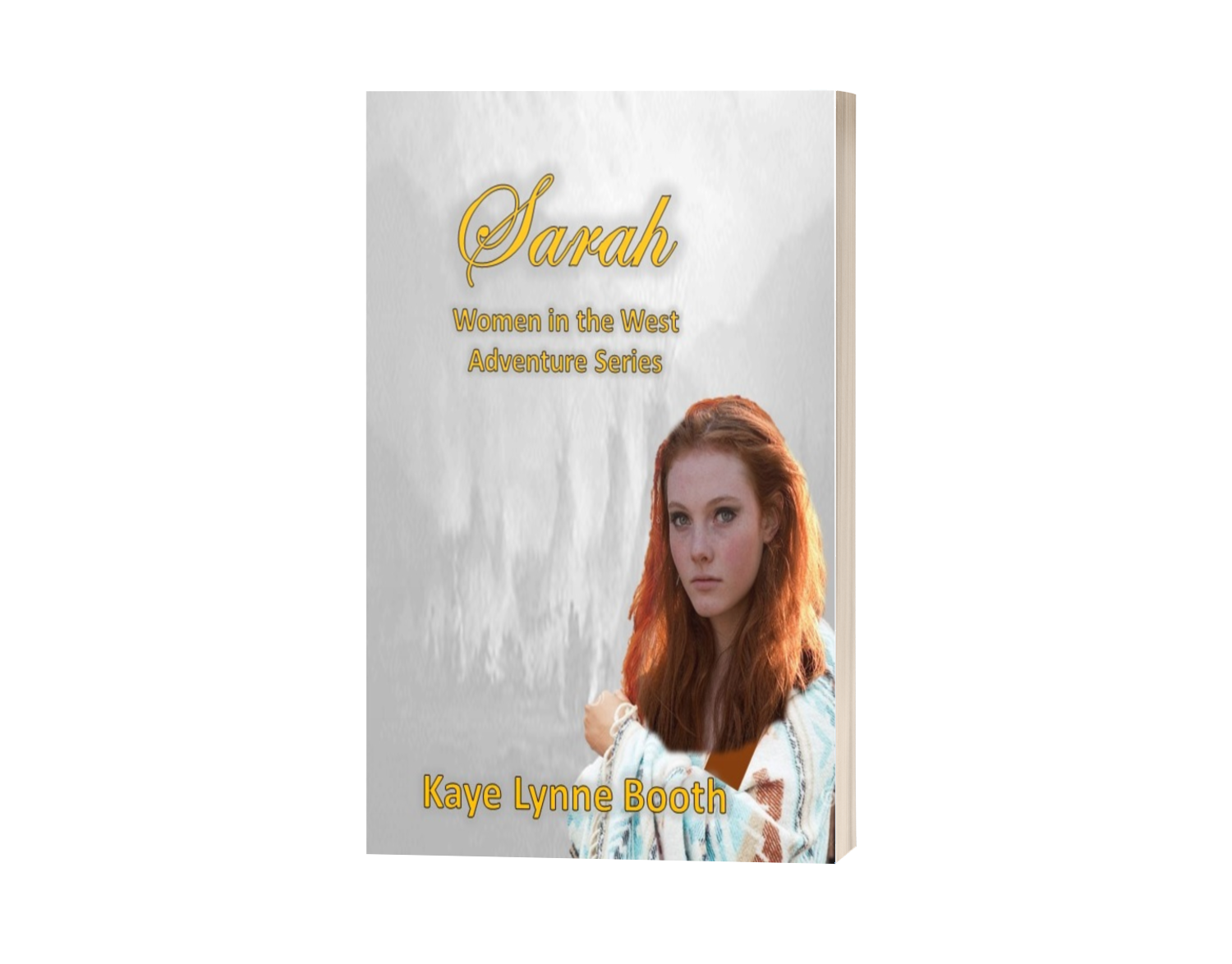
I’m picking and choosing the pieces that I feel I need to work on in the stories I’m working on for 2025, but Essoe gives us a list of eight tools which make up mood and atmosphere, and suggests that we should use at least five of them in every story we write to develop a strong, purposeful mood. In The Rock Star & The Outlaw 2: Seeing Doubles, I think I have a few already in place, so I’ll be working on those I may be missing. With the Curses and Midnight Oil stories, I’ll be implementing these tools from the start. The other story I have planned for 2025 is the third book in my Women in the West adventure series, Marta, and while I’ve begun an outline for that novel, it requires such a completely different mood that I think I’ll hone my skills with the other stories first, but I know I’ll be referring back to Essoe’s Writing Guides: Mood & Atmosphere when the time comes to get that one on the page.
About Essoe’s Guides to Writing: Mood & Atmosphere
Mood and Atmosphere defines and delves into the 8 primary tools used to create the emotional framework of your story–its emotionality–by breaking them down into easy-access chapters on:
- Plot and structure blueprinting your intended emotionality
- Pacing that steers your story line-by-line and chapter-by-chapter
- Language and word choice guiding your story in the most direct relationship with readers
- Setting developing an atmosphere that will make readers experience your world
- Character expression creating powerful moods that will make readers feel their traumas and triumphs
- Conflict controlling the ebb and flow of your emotionality throughout your story
- Theme acting as the conductor, setting your emotionality to a purpose
- Reader expectation and what promises you must keep or can use to throw in twists
Purchase Link: https://www.joshuaessoe.com/product-page/mood-and-atmosphere-e-book-1
About Kaye Lynne Booth

For Kaye Lynne Booth, writing is a passion. Kaye Lynne is an author with published short fiction and poetry, both online and in print, including her short story collection, Last Call and Other Short Fiction; and her paranormal mystery novella, Hidden Secrets; Books 1 & 2 of her Women in the West adventure series, Delilah and Sarah, and her Time-Travel Adventure novel, The Rock Star & The Outlaw, her the first three books in her kid’s book series, My Backyard Friends, her poetry collection, Small Wonders, and her writer’s resource, The D.I.Y. Author. Kaye holds a dual M.F.A. degree in Creative Writing with emphasis in genre fiction and screenwriting, and an M.A. in publishing. Kaye Lynne is the founder of WordCrafter Quality Writing & Author Services and WordCrafter Press. She also maintains an authors’ blog and website, Writing to be Read, where she publishes content of interest in the literary world.
____________________________________
Did you know you can sponsor your favorite blog series or even a single post with an advertisement for your book? Stop by the WtbR Sponsor Page and let me advertise your book, or you can make a donation to Writing to be Read for as little as a cup of coffee, If you’d like to show your support for this author and WordCrafter Press.
____________________________________
This segment of “Review in Practice” is sponsored by the Women in the West Adventure Series and WordCrafter Press.

Historical Women’s Fiction
Get Your Copy Today!
Delilah: https://books2read.com/DelilahWiW1
Sarah: https://books2read.com/Sarah-Women-in-the-West
Marta: Coming in 2025
Share this:

Welcome to the D.I.Y. Author Release Party!
Posted: June 4, 2024 Filed under: Book Covers, Book Event, book marketing, Book Promotion, Book Release, Book Sales, Books, Indie Publishing, Nonfiction, Publishing, Self-Publishing, WordCrafter Press, Writing, writing advice, Writing Business, Writing Resource, Writing Tips, Writing to be Read | Tags: Author Business, book marketing, independent publishing, Kaye Lynne Booth, Publishing, Release Party, The D.I.Y. Author, WordCrafter Press, Writing Reference, Writing to be Read 12 Comments
About the Book
Being an author today is more than just writing the book. Authors in this digital age have more opportunities than ever before. Whether you pursue independent or traditional publishing models, or a combination of the two but being an author involves not only writing, but often, the publishing and marketing of the book.
In this writer’s reference guide, multi-genre author and independent publisher, Kaye Lynne Booth shares her knowledge and experiences and the tools, books, references and sites to help you learn the business of being an author.
Topics Include:
- Becoming Prolific
- Writing Tools
- Outlining
- Making Quality a Priority
- Publishing Models & Trends
- Marketing Your Book
- Book Covers & Blurbs
- Book Events—In Person & Virtual
- And more…
Meet the Author

Greetings! Thank you so much for dropping by to help us celebrate the release of The D.I.Y. Author. You all know me as author Kaye Lynne Booth, but with the release of this book, I hope to be known as the D.I.Y. author. This is the book that only I could write, where I share knowledge and experience as I build my author business. This is not a book on craft, but a reference for authors and aspiring authors who wish to expand and grow their author business on a limited budget. Learn the tips and tricks, sites and tools, which took me over a decade, and three masters degrees to amass.
I’ve always been a do it yourself kind of gal. I’ve built my author business up around this blog, finding ways around obstacles which stood in my way, learning new skill sets because outsourcing was more than I could afford. My first novel was published by a small independent publisher. But as the five-year contract ran out, I felt I could do better through my own small independent publishing house, WordCrafter Press, so I re-published it as the first book in my Women in the West adventure series last year, and I sold more copies than that other publisher had over a five year stretch. I just released the second book in the series this month. When Covid struck, I organized and hosted two virtual writing conferences, because writers are tribal bunch, and we need contact with like minded people. Networking is a huge part of building an author business. I use that networking to build not only my author business, but my own author tribe. I’ve published my own books, and collaborative anthologies, as well as publishing books for others. And I’ve built a winning blog team here on Writing to be Read with Robbie Cheadle, Jeff Bowles, Arthur Rorsch, and DL Mullan.
No one else has shared in these exact same experiences that I have, and that’s why only I could write The D.I.Y. Author, and why I can hold that title. But enough about me. The D.I.Y. Author is a great reference packed full of links to sites and tools and tips for increasing productivity, publishing choices, and marketing your books.
We have a great release party ahead to send this book off right. We’ve got exclusive offers running this week only. After Saturday, the whole D.I.Y. store will disappear, so take advantage of them now. By buying direct, you are supporting this author and her works more than when you purchase from retailers.
My D.I.Y. Video
On with the party!
Thanks for dropping by for The D.I.Y. Author virtual release party. We’ve got some great things planned, including a giveaway for all attendees, so be sure to leave a comment, so I’ll know you were here. I’ll be monitoring the comments throughout the day and will answer any questions you might want to post there. While you’re here you can peruse the D.I. Y. store below, for exclusive and discounted offers that you won’t find anywhere else. The store will come down at the end of the week. After that you’ll have to pay full price through retailers, and signed copies will no longer be available.
And if you are already a bestselling author and you don’t need this book or the WordCrafter services offered here, you can still offer your support for the author and this project by using the ‘buy me a soda’ button below.

Buy me a soda
Show your support for author Kaye Lynne Booth and her many endeavors through WordCrafter Press & Writing to be Read.
$1.00
You can get a sample of the topics in the book in my post,”Writer’s Corner: What it means to be an Indie Author”


Thanks for joining me today for The D.I.Y. Author Release Party. I hope you found a few useful tidbits here. For more tips and advice, you’ve got to buy the book. If you miss the window for the D.I.Y. Store, you can still purchase this useful writer’s reference here: https://books2read.com/The-DIY-Author
Share this:

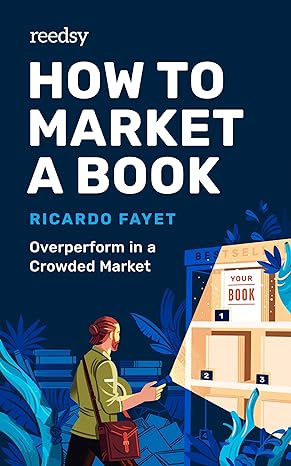
Review in Practice: How to Market a Book
Posted: May 20, 2024 Filed under: book marketing, Book Promotion, Books, Nonfiction, Review, Review in Practice, Writing Resource | Tags: How to Market a Book, Nonfiction, Review in Practice, Ricardo Fayette, Writing Reference, Writing to be Read 6 CommentsAbout the Book
Writing a book is hard. Marketing it can be even harder.
Marketing a book in 2023 can seem like a full-time job, what with the crazy number of things authors seem to be expected to do: social media, blog tours, advertising, price promotions, mailing lists, giveaways, you name it.
But here’s a little secret: you don’t need to do all those things to successfully set your book on the path to success. What you need is a solid plan to find the one or two tactics that will work, and start to drive sales… in a minimum amount of time. And that’s exactly what you’ll find in this book.
Instead of drowning you in information or inundating you with hundreds of different tactics and strategies that eventually prove fruitless, this book will guide you through a step-by-step framework to find the ones that actually work for you and your book, so that you can start marketing more efficiently.
In particular, you’ll learn:
✔️ How to change your mindset and sell more books with less effort.;
✔️ How to write books that guarantee a lasting, profitable career;
✔️ How to get Amazon’s Kindle Store to market your book for you;
✔️ How to get thousands of readers into your mailing list before you even release the book;
✔️ How to propel your book to the top of the charts at launch; and
✔️ How to automate your marketing so that you can spend less time marketing and more time writing,
After helping over 150,000 authors crack the marketing code through a popular weekly newsletter, Reedsy’s Co-founder Ricardo Fayet is sharing everything he’s learned over the past few years in this beginner-friendly, jargon-free guide to book marketing.
Purchase Link: https://www.amazon.com/How-Market-Book-Overperform-Marketing-ebook/dp/B08TZJQ1FB
___________________________________________
Today’s author needs to be able to do all stages of the publishing process in order to run their author business, but one person cannot do it all. It can be overwhelming, even for the D.I.Y. author. (That’s me. 😉 ). I share my experience and knowledge about doing my marketing and promotions myself in my book, The D.I.Y. Author, which will be released on June 4th, 2024. But learning to run an author business doesn’t end when you publish a book, and although I just wrote a book about building and growing your author business, I still have much to learn on this never ending road to success. That’s why I took advantage of the free ebook by Reedsy‘s Ricardo Fayette, How to Market Your Book: Overperform in a Crowded Market. Fayette knows a lot more than I do on the subject of book marketing, so I refer my readers to his book in my book.
I don’t do paid advertising, and that is what a good portion of this book is about.
“But couldn’t I reach a larger audience with paid advertising?” Absolutely.
Someday, I hope to be able to expand into the paid advertising arena, so I read through those sections, and I must say, Ricardo Fayette explains things in such a way that even someone like me, who gets headaches when thinking analytics, can understand, and he is very thorough. He lays out the differences between Amazon Ads, Facebook Ads, and BookBub Ads, weighing the pros and cons of each. And man, did I learn a lot, particularly about BookBub Ads. He really gave me a lot to think about. Hopefully, I will be able to include what I’ve learned about paid advertising from this book in the revised edition of The D.I.Y. Author by putting it into practice at a future date.
Fayette also talks about the importance of a mailing list and how to set up a newsletter with a reader magnet, reminding me of another area where my efforts have been lacking. He compares several email servers and offers the basics of a good newsletter. I set out two years ago to find a new email server because I wasn’t happy with MailChimp. But things got busy and life happened, and my quest for an email server got laid to the side. I opted to stick with what I knew, not wanting to take the time to learn a new server system, let alone the time it takes to research them first. This book offers a list with some I wasn’t familiar with which are geared more toward authors. This peaked my curiosity, as it sounded like it might be just what I’m looking for. I haven’t sent out a newsletter in over six months, and my readers have probably forgotten me. This might be the motivation that I need to get a newsletter up and running, and keep it running.
He shares tips for working the Amazon system, as well as some of the other retailers, for those who publish wide. He even talks about selling direct from your website, and how to make each of these methods work for you. He covers keywords, backcover copy and book covers.
On the subject of book covers, I have to disagree with him as he insists you must outsource your book cover with an expensive professional cover designer. I do outsource many of my book covers because I’d rather put my time into my writing, but although I am a writer and not a book designer, I posess the design knowledge and most of the skills to create a good book cover. I designed the covers for my Women in the West Adventure Series and I’m quite happy with them. I wasn’t happy with the cover I did for The Rock Star & The Outlaw, so I outsourced it to someone who had more skill than I did, and changed the cover three months after publication. So, while I’m not saying you shouldn’t outsource your book covers, I don’t think that it is an absolute necessity. While Fayette is adament on this point, reminding us of it repeatedly throughout the book, I guess we’ll just have to agree to disagree on this one.
This is one of the most comprehensive books on book marketing that I’ve come across, and one I will be referring back to many times in the future as I grow and expand my author business. A great value from a free book.
_________________________________________________
About Author Kaye Lynne Booth
For Kaye Lynne Booth, writing is a passion. Kaye Lynne is an author with published short fiction and poetry, both online and in print, including her short story collection, Last Call and Other Short Fiction; and her paranormal mystery novella, Hidden Secrets; Books 1 & 2 of her Women in the West adventure series, Delilah and Sarah, and her Time-Travel Adventure novel, The Rock Star & The Outlaw. Kaye holds a dual M.F.A. degree in Creative Writing with emphasis in genre fiction and screenwriting, and an M.A. in publishing. Kaye Lynne is the founder of WordCrafter Quality Writing & Author Services and WordCrafter Press. She also maintains an authors’ blog and website, Writing to be Read, where she publishes content of interest in the literary world.

_______________________________________________
Want exclusive content? Join Kaye Lynne Booth & WordCrafter Press Readers’ Group for WordCrafter Press book & event news, including the awesome releases of author Kaye Lynne Booth. She won’t flood your inbox, she NEVER sells her list, and you might get a freebie occasionally. Get a free digital copy of her short story collection, Last Call and Other Short Fiction, just for joining.
Share this:

WordCrafter News: Kickstarter Update & My Next Project
Posted: January 29, 2024 Filed under: book marketing, Book Promotion, Books, Fiction, Historical Fiction, Kickstarter, Nonfiction, Publishing, Western, Women in History, Women's Fiction, WordCrafter, WordCrafter Press, Writing | Tags: Kaye Lynne Booth, Sarah, Special Illustrated Editions, The D.I. Y. Author, Women in the West, WordCrafter Press, Writing Reference 5 Comments
Update on Kickstarter Campaign
The Kickstarter campaign for Sarah is in full swing, but we haven’t fully funded yet. I set a $500 goal and we’re only 25% funded. The thing about Kickstarters is that they are an all or nothing deal. The campaign ends on February 12, and if it hasn’t fully funded by then, the backers pay nothing, and the author gets nothing, and all that is lost is the time and hard work put into the campaign. So, when you make a pledge, its just that and you don’t have to pay anything until the campaign ends on February 12, if it funds, and if it doesn’t, you pay nothing, and must wait until March 19th to get a copy of Sarah through distributors.
The good thing is, once funded, the author receives anything over and above the funding goal to help support the project even further. I’ve been discussing doing the series in audiobook with a talented narrator, and if this campaign funds enough above the funding goal, you will see that happen in the future.
That’s why I really want this campaign to be successful. And there’s no reason that it can’t be. We’ve got some exclusive rewards which can’t be found anywhere else: early digital copies of Sarah, signed print copies of Sarah, and Special Illustrated Editions of both Delilah & Sarah. (Special Edition covers and illustrations by DL Mullan of Sonoran Dawn Studios.) Plus both digital and signed print copies of Delilah are available as add ons.
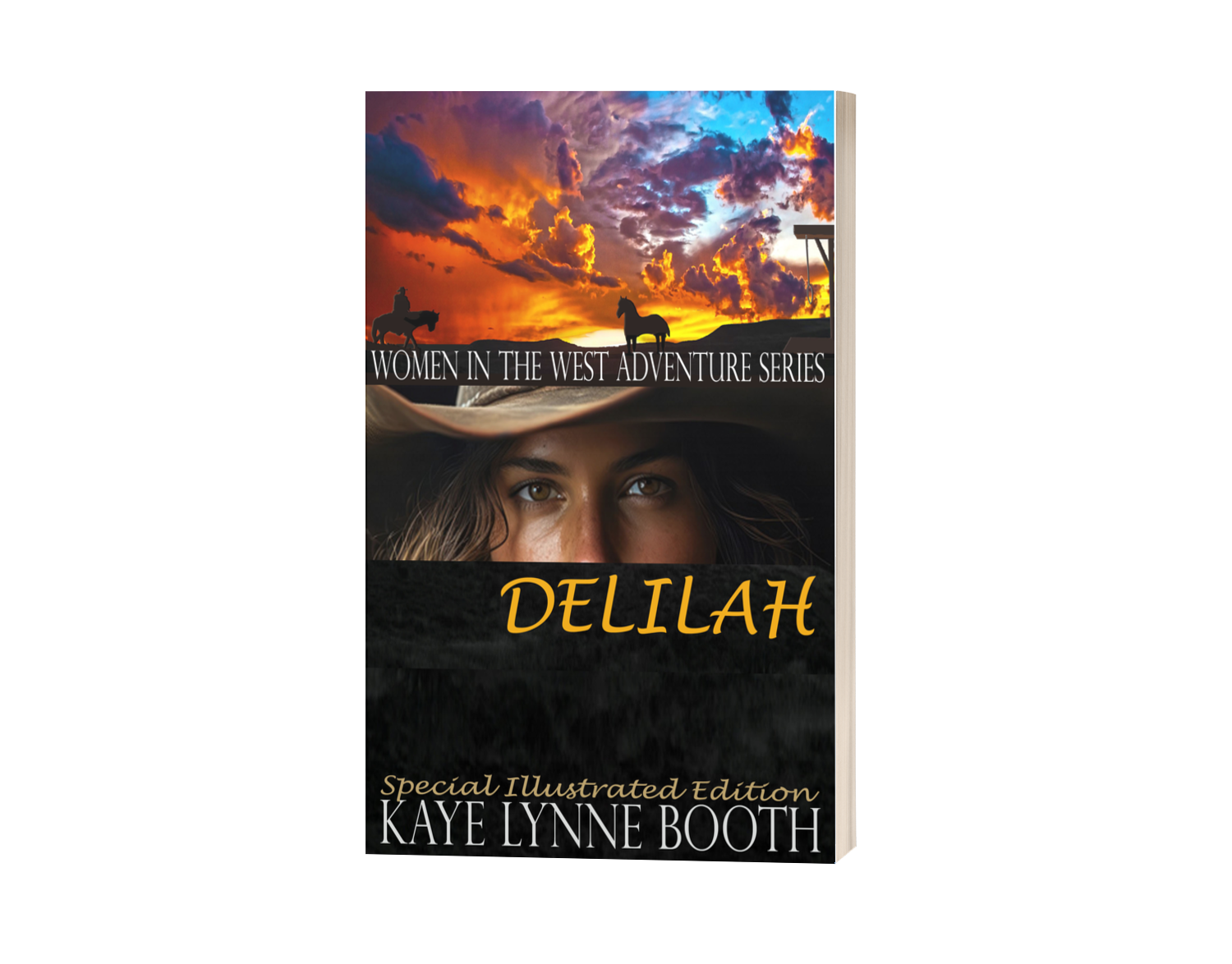

The best piece of advice I was given when learning about Kickstarters was only do campaigns for projects that you are going to do anyway. So, if it doesn’t fund, it won’t mean the end of the project, but it will be disappointing.
You can help, and get some of those great rewards, by backing the campaign before February 12. Your support of the project could help to reach the funding goal and more. Won’t you consider supporting this project?
You can check out the Kickstarter campaign and back this project here: https://www.kickstarter.com/projects/kayelynnebooth-wcp/sarah-3/
About the Books & the Series

Sarah is Book 2 of the Women in the West Adventure Series. The series is western historical women’s fiction with strong female protagonists and historical figures from the true life turned fictional in each book.
Sarah
Sarah is a young girl trying to make a place for herself in the world.
Sarah is not the young girl who was stolen away from Delilah anymore. Now she is Hair of Fire, mate of Three Hawks, even as she blossoms into a young woman and tries to make a place for herself among the Ute tribe.
When she is stolen away from the life she’s made with the Utes, she struggles to survive in the heart of the Rocky Mountains. A streak of stubbornness and determination take this tough, feisty heroine up against wild beasts of the forest and the rugged mountain landscape to Glenwood Springs, Colorado, where she receives a less than welcoming reception by some.
Will this young woman find her way back to the Ute tribe which she’s come to think of as family, or will she discover a place among the colorful inhabitants of the Colorado hot springs and mining town?
Follow along on her journey to learn who she truly is and where she belongs in this rough, and often hostile frontier.If you like strong and capable female protagonists, you’ll love Sarah.

About Delilah

Delilah is a woman haunted by her past.
Her homecoming from prison quickly turns into a quest for vengeance when she is brutally raped and left for dead, and her fourteen-year-old ward is abducted. Sheer will and determination take this tough and gritty heroine up against wild beasts of the forest, Indians and outlaws to Leadville.
Can the colorful inhabitants of the Colorado mining town work their way into Delilah’s heart, offering a chance for a future she thought she’d lost along with her innocence?
If you like strong and capable female protagonists, you’ll love Delilah.
A New W.I.P.: The D.I.Y. Author
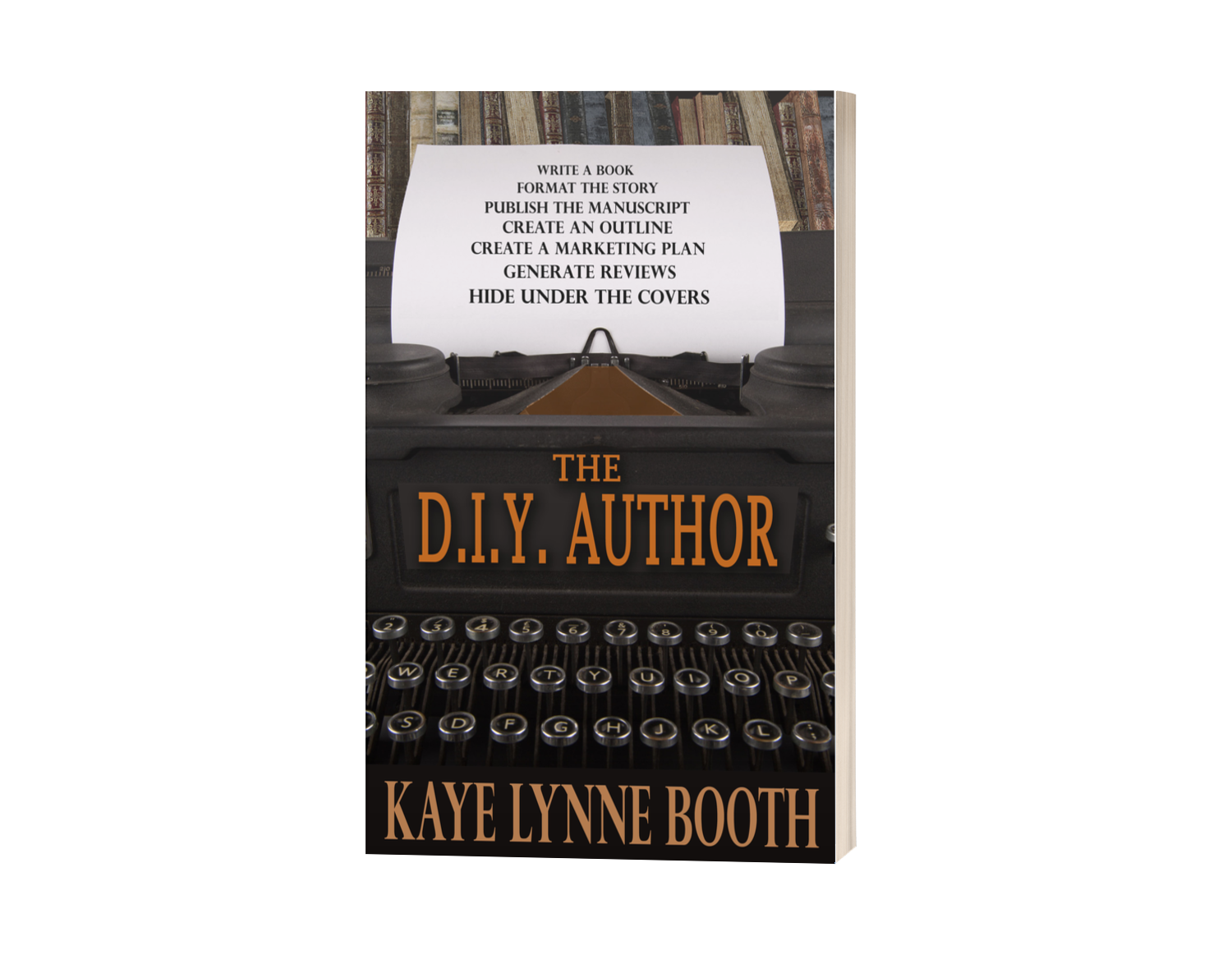
In February, I’ll begin the actual writing of The D.I.Y. Author, my first writing reference book, and I’m excited to tell you about it.
I’ve put together writing reference anthologies in the past, drawing on the expertise of many authors, but The D.I.Y. Author will be the first writing reference book I’ve ever created solo, so I’m very excited, (and a bit nervous), about it. The biggest problem with putting out a reference book such as this one, is imposter syndrome. I mean, reference books are written by experts, aren’t they? So to create a book like this, you must consider yourself to be an expert and be able to convince others that you are so they will read it. I’ve never considered myself to be an expert, in fact I spend a good amount of time learning whatever I can from others whom I consider to be experts. So, looking at myself as the expert is a different point of view for me, a different mindset, but I’m learning. And that is how this book came about.
This book is about a subject that I am an expert about: doing it all yourself on a very limited budget. That’s me. It’s what I do. And in The D.I. Y. Author, I’ll be sharing all the tips and tricks that I’ve picked up along the way. I’ll share with you how I do it, from planning the book, to writing the book, to publishing and marketing the book. And it’s all stuff that you can do, too!
__________________________________________
Want exclusive content? Join Kaye Lynne Booth & WordCrafter Press Readers’ Group for WordCrafter Press book & event news, including the awesome releases of author Kaye Lynne Booth. She won’t flood your inbox, she NEVER sells her list, and you might get a freebie occasionally. Get a free digital copy of her short story collection, Last Call and Other Short Fiction, just for joining.
Share this:

WordCrafter News: Special Christmas Edition – Looking Forward to 2024 & Early Call For Submissions
Posted: December 25, 2023 Filed under: Anthology, Books, Call for submissions, Children's Books, Dark Fantasy, Dark fiction, Dark Humor, Fiction, Historical Fiction, Holidays, Horror, Kickstarter, Paranormal, Science Fiction, Short Fiction, Speculative Fiction, Stories, Uncategorized, Western, Women's Fiction, WordCrafter, WordCrafter News, WordCrafter Press, Writing, Writing to be Read | Tags: 2024, Anthology, Call for submissions, Charlie Chickadee Finds a NEw Home, D.I.Y. Author, Dark fiction, Heather Hummingbird Makes a NEw Friend, My Backyard Friends series, Poetry Treassures 4: Natural World, Sarah, Tales from the Hanging Tree, Timothy Turtle Discovers JEllybeans, Women in the West adventure series, WordCrafter Press, WordCrafter Quality Writing & Author Services, Write it Right Quality Editing Services, Writing Reference, Writing to be Read 16 CommentsLooking Forward to 2024

WordCrafter Press
2024 promises to be exciting at WordCrafter Press and I am thrilled to tell you about it.
In January, book 2 of the Women in the West series, Sarah launches on Kickstarter and its going to be a good one. Rewards will include not only early digital and signed print copies of Sarah, but Special Edition Illustrated copies of both Sarah and Delilah, never before offered.
In March, Sarah will be released through distributors, and will be available at your favorite online retailers. I’ll be launching with a book blog tour and giveaway, so be sure and watch for that.
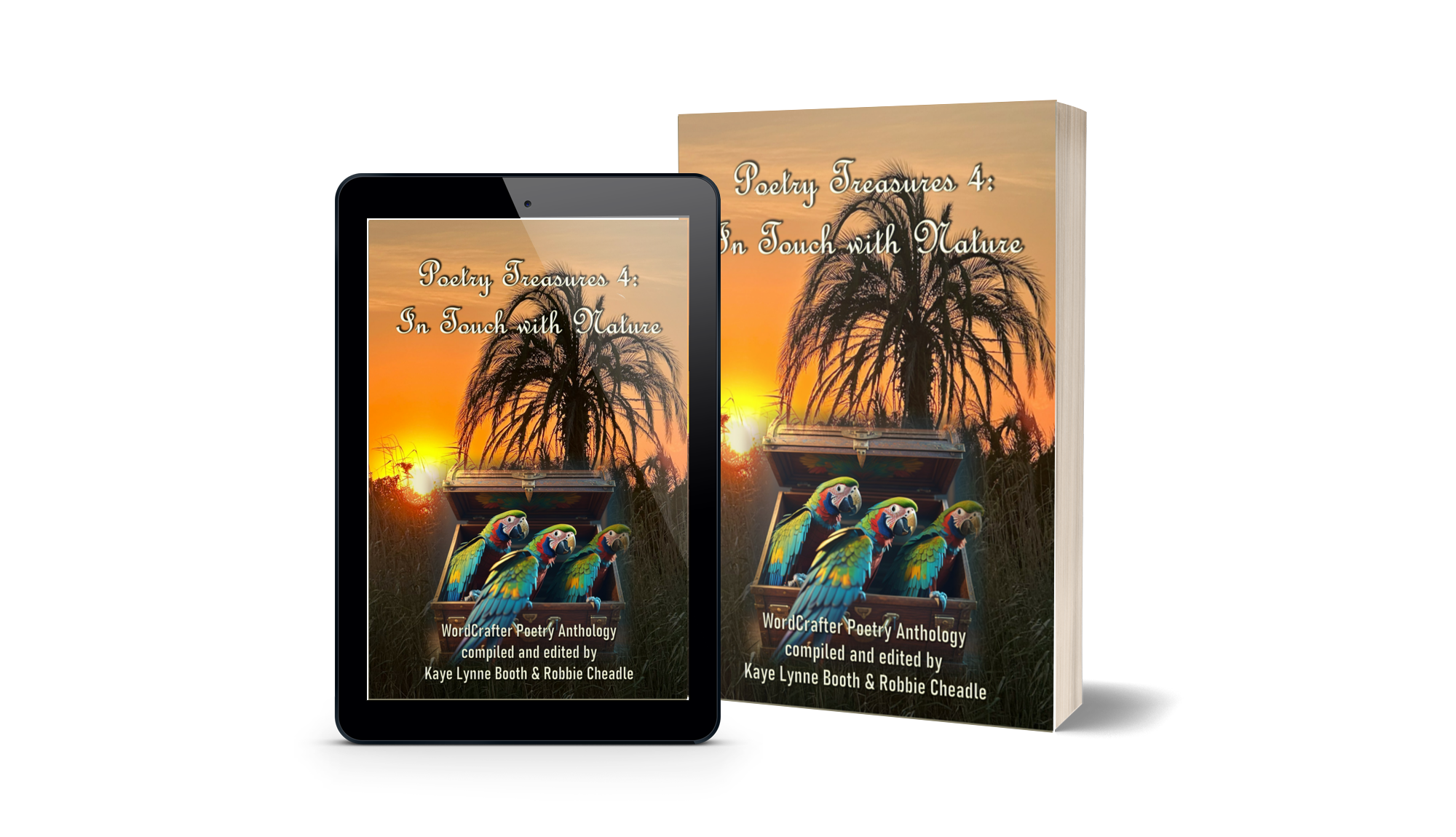
In April, Poetry Treasures 4: Natural World will be released through distributors. (The cover pictured above is just a fill in.) Featuring poetry written by guests of the 2023 “Treasuring Poetry” blog series with Robbie Cheadle. There will be a book blog tour for this book, with audio/video readings by the poets.
In May, my nonfiction writing reference book, D.I.Y. Author will be released through distributors, and will be available at your favorite online retailers. If you’re an author on a shoestring budget determined to find ways to write and sell books, this book is for you. Naturally, a book blog tour and giveaway will accompany this release.
In July, we have a Kickstarter campaign planned for my children’s book series. I’ll be releasing the first three books in the My Backyard Friends series, Heather Hummingbird Makes a New Friend, Timothy Turtle Discovers Jellybeans, and Charlie Chickadee Finds a New Home. After a first illustrator experience which turned sour, these books have been awaiting an illustrator for eight years. But I finally found one, whose illustrations I am proud to have featured in my books, Robbie Cheadle. If you know her, you might be familiar with the wonderful illustrations she’s begun to do recently, and you’ll understand why I am so thrilled to have her as an illustrator. These stories feature animal and bird characters in tales that each teach a social lesson. With Robbie’s beautiful illustrations, they are not to be missed.
In August, the first three books in the My Backyard Friends series will be released through distributors, and will be available at all your favorite distributors. I’ll be launching with a book blog tour and giveaway.
In September, a by invitation only themed anthology, Tales From The Hanging Tree, will be released through distributors and launched with a book blog tour and giveaway, with audio/video readings by the authors.
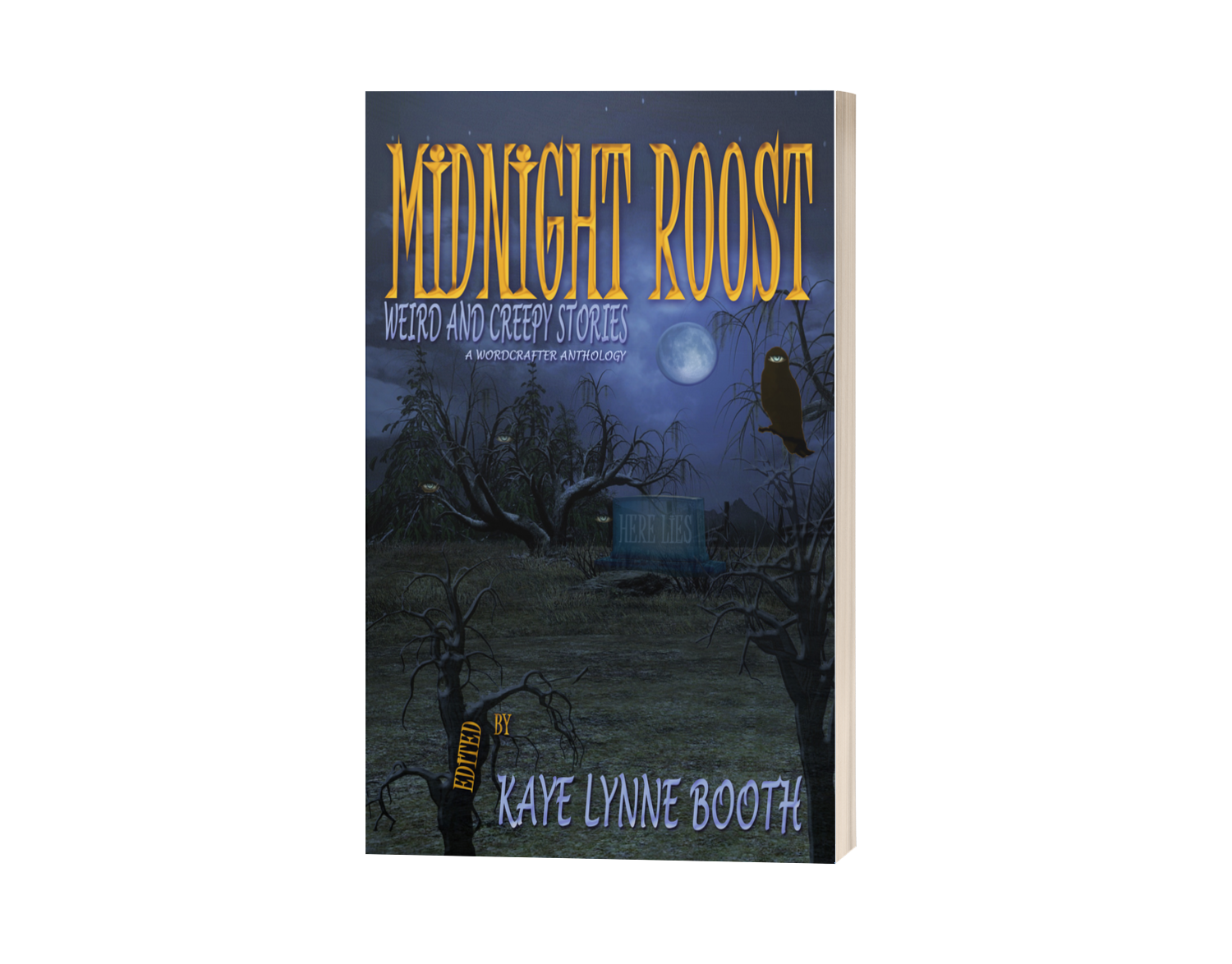
In October, the 2024 WordCrafter anthology will be released. Each year I release the annual anthology in October, which is just a scary month. Halloween is my favorite holiday, and I love scary stories, and other scary stuff, so releasing in October is condusive to dark fiction. In 2023, we had a great line-up of dark and scary stories in Midnight Roost, so we’re going with a dark fiction theme again this year. It will include both by invitation submissions and contest submissions that are worthy, and feature the winning story from the contest. (See Call for Submissions below.)
WordCrafter Quality Writing & Author Services
I’m happy to announce that in 2024, WordCrafter will be adding Book Trailers to our list of quality author services. We will have three different trailer designers available to choose from: myself, Robbie Cheadle and DL Mullan, and they will be offered at affordable prices.
Other services offered include editing and publishing services and WordCrafter Book Blog Tours. I still have time slots available for editing services into 2024. Learn more at Write it Right Quality Editing Services.
Writing to be Read

On Writing to be Read, 2024 promises more of the new monthly blog series, “POP with Jeff Bowles”, which has been well recepted. A blog series about all things POP, the first Wednesday of every month.

We also have a new addition to the WtbR team. Starting in January, DL Mullan will be bringing us another new blog series the first Friday of each month, “Undawntech: Technology and the Creative Arts”. Be sure to check it out and give Dawn a big welcome.
Call for Submissions – 2024 WordCrafter Anthology
It’s time for the Call for Submissions for the 2024 WordCrafter Anthology, which we’re calling “Dark Fiction” for now. Dark fiction is the theme: horror, paranormal, dark fantasy, science fiction, speculative fiction. Any genre as long as it is dark or scary will do. I’m leaving it wide in the hopes of bringing in a diverse selection of stories that will keep readers awake at night.
Submission Guidelines
Genres: Paranormal, Dark Fantasy, Horror, Science Fiction, Dark Humor, Speculative Fiction any combination there of.
Length: up to 5000 words
Submission Deadline: April 30, 2023
Submissions open January 1 and close on April 30. Watch for the January 1 post for full submission guidelines and contest entry.
Merry Christmas and Happy Holidays to All!

____________________________________________________
Join Kaye Lynne Booth & WordCrafter Press Readers’ Group for WordCrafter Press book & event news, including the awesome releases of author Kaye Lynne Booth. Get a free digital copy of her short story collection, Last Call and Other Short Fiction, as a sampling of her works just for joining
Share this:

WordCrafter Press’ Spring Writer’s Sale
Posted: May 3, 2023 Filed under: Ask the Authors, Book Covers, book marketing, Book Promotion, Book Sales, Books, Cover Art, essays, Indie Publishing, Interview, Nonfiction, Promotion, Publishing, Self-Publishing, Writing, Writing Life, Writing Process, Writing Reference, Writing Tips | Tags: Anthology, Ask the Authors 2022, Bobby Nash, Chris Barili, Jeff Bowles, Kaye Lynne Booth, Kevin Killiany, L. Jaagi Lamplighter, Mario Acevedo, Mark Leslie Lebefvre, Nancy Oswald, Paul Kane, Roberta Eaton Cheadle, Spring Writer's Sale, WordCrafter Press, Writing Reference 2 Comments
Purchase Link: https://books2read.com/u/3LnK8e
Eleven authors share writing tips and advice on writing, publishing and marketing.
Visit the Ask the Authors 2022 page here to learn more about this ultimate writing reference anthology.
Share this:

WordCrafter News
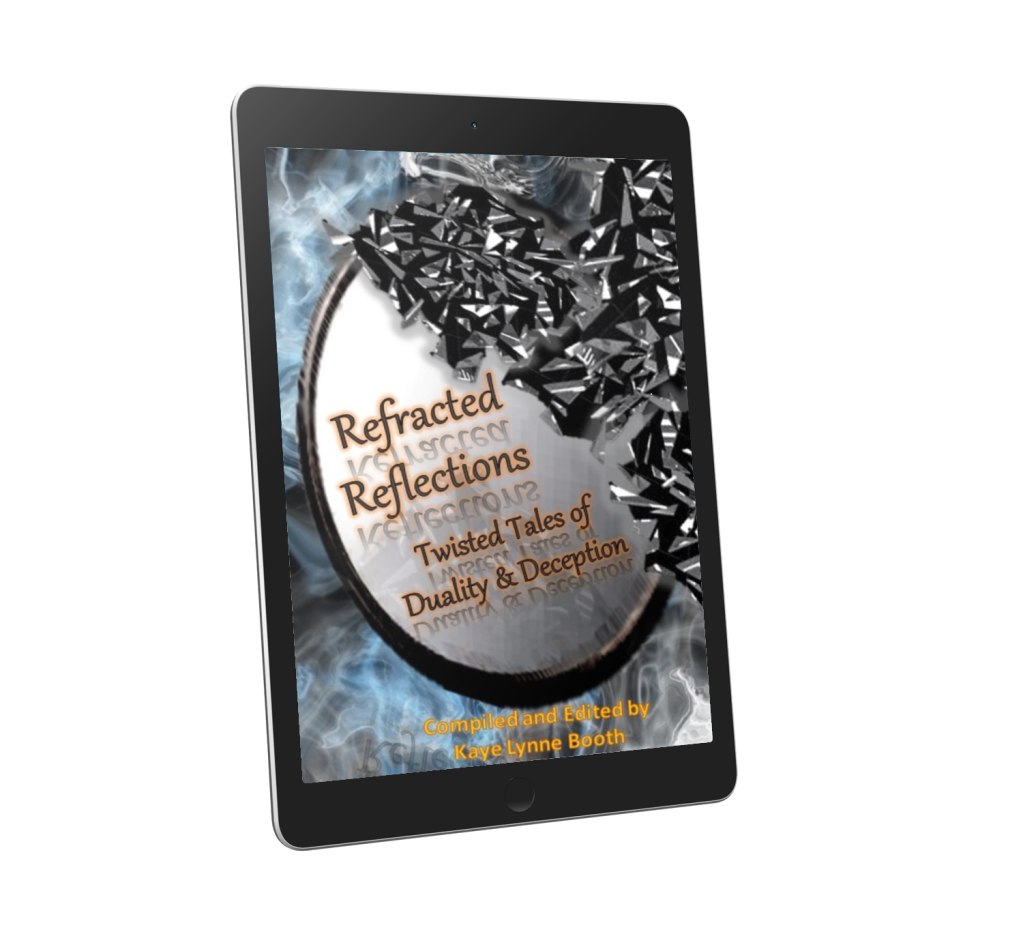
Posted: August 29, 2022 Filed under: Advertising, Anthology, Ask the Authors, Book Promotion, Book Release, Book Review, Books, essays, Fairy Tales, Fantasy, Fiction, Giveaways, Mythology and Legend, Nonfiction, Science Fiction, Short Fiction, Stories, WordCrafter Book Blog Tours, WordCrafter News, WordCrafter Press, Write it Right Editing, Writing, Writing Reference | Tags: Anthologies, Ask the Authors 2022, Book Promotion, Editing, Giveaway, Once Upon an Ever After, Refracted Reflections, WordCrafter Press, Write it Right Quality Editing Services, Writing Reference 7 Comments
And the Winners Are….

I have an announcement to make.
We finished up the WordCrafter Once Upon an Ever After Book Blog Tour on Saturday, and I do hope you all joined in. It was a great tour and we held a giveaway for three digital copies of Once upon an Ever After, and every comment earned an entry.
Now, I am pleased to announce that the three winners of the anthology giveaway are Liz Gauffreau, Annette Rochel Aben, and Sara W. McBride!
(I need to make contact with each of you to find out which digital format you prefer. If you don’t hear from me, please contact me at Kayebooth@yahoo.com.)
You can get your copy of this wonderful anthology from your favorite book distributor here.
___________________________________________________________________________________________________________
Nice Reviews
Ask the Authors 2022 has received a lovely review from Alex Norton on the Likely Story blog.
” I found it to be both interesting and useful, answering questions I didn’t even know I had and giving me different perspectives to ponder as I move forward on my own writing journey.”
You can find Alex’s full review here. I hope you will check it out.

Get your copy of this unique writing reference anthology from your favorite book distributor here.
___________________________________________________________________________________________

.The first review is out on Goodreads, from Madelon’s Reviews. Madelon does a nice job of making a brief statement about each story, as well as a review of the overall anthology, which states in part:
“Overall, REFRACTED REFLECTIONS provides a glimpse into the writing styles of authors you may want to read again.”
Refracted Reflections: Twisted Tales of Duality & Deceptions
Refractions and Reflections…
A reflection can be revealing or deceptive. What stares back at you when you glance into the mirror?
A prison, designed to trap you and take away all that is dear to you?
A portal to another dimension? Another time?
An evil twin, luring you to the other side?
Your loved ones with a fond farewell?
A distorted version of yourself? A person you no longer even recognize?
A protective savior?
Do you dare to gaze into the looking glass?
Will what you see save you…, or haunt you forever?
If you liked Gilded Glass and Once Upon an Ever After, you’ll like Refracted Reflections: Tales of Duality & Deception.
Scheduled for release September 20, 2022. Now available for pre-order from your favorite book distributor here.
Don’t miss the WordCrafter Refracted Reflections Book Blog Tour September 19 – 23 for a deeper look into this unique anthology.
_____________________________________________________________________________________
Write it Right Quality Editing Services is currently open to new clients

See Write it Right‘s affordable rates and get a quote for your editing needs here.
Share this:

Ask the Authors 2022 Book & Blog Series: Book Marketing
Posted: July 9, 2022 Filed under: Advertising, Anthology, Ask the Authors, book marketing, Book Promotion, Book Release, Books, Branding, Fiction, Interview, marketing, WordCrafter Press, Writing, Writing Reference, Writing Tips | Tags: Ask the Authors 2022, Bobby Nash, Chris Barili, Jeff Bowles, Kaye Lynne Booth, Kevin Killiany, L. Jagi LAmplighter, Mario Acevedo, Mark Leslie Lefebrve, Nancy Oswald, Paul Kane, Roberta Eaton Cheadle, WordCrafter Press, writing advice, Writing Reference, Writing Tips, Writing to be Read 4 Comments
Welcome to the final segment of the “Ask the Authors 2022” blog series. This week, a final introduction for Middle Grade & Y.A. author, L. Jagi Lamplighter, whose essay contribution is titled “The Trouble with Troupes” and a Q & A session on book marketing will be finishing off this wonderful series.
I want to thank all the readers who chose to spend their Saturdays hanging out with us for the past ten weeks, as we give this unique writing reference a send off, and let all the authors out there see why they need the plethora of writing wisdom contained between the covers of Ask the Authors 2022 writing reference anthology. And now it’s time to get started with this final segment.
Meet L. Jagi Lamplighter

L. Jagi Lamplighter is the author of the YA fantasy series: The Books of Unexpected Enlightenment, the third book of which was nominated for the YA Dragon Award in 2017 and the fourth book of which won the first YA Ribbit Award. She is also the author of the Prospero’s Children series: Prospero Lost, Prospero In Hell, and Prospero Regained.
She has published numerous articles and short stories. She also has an anthology of her own works: In the Lamplight. She also edits for Superversive Press and teaches “The Art and Craft of Writing”. She was also a presenter and panel member for both the 2020 Stay in Place Virtual Writing Conference and the 2021 New Beginnings Virtual Writing Conference.
Website: Welcome to Arhyalon: http://www.ljagilamplighter.com/
And now for the Q & A.
Book Marketing
Mario Acevedo: Here are my thoughts on Book Marketing.
I never thought much about branding myself and wrote what I wanted. Fortunately, everything tended to be in related genres. As for book marketing, if I knew what the magic lever was that you could pull and hit the jackpot, I would keep it to myself. I’ve tried all kinds of methods and gimmicks, some which worked okay, others which never moved the needle. What works for someone else, might not work for you. What works now may not work tomorrow. Remember, those masters in branding and marketing, Disney and Coca-Cola, have their share of million-dollar flops. What I recommend is to keep your name out there in a variety of streams: social media, newsletters, conventions, interviews, podcasts.
Good book covers are essential. Whatever you do, don’t have one that looks Photoshopped by someone who didn’t know what they were doing.
Websites are necessary though really fancy ones (read expensive) are not worth the money unless you have a lot of traffic and sales. You want something catchy and one that you update regularly.
Everyone loves great reviews and people who leave one-star reviews tend to be acting out an agenda not related to your work. Don’t hate them for it, instead pray that they either find Jesus or a competent therapist.
Once upon a time, book trailers were the cat’s pajamas. And about as effective. Two of my book trailers got tens of thousands of views, which is extraordinary for book trailers, but I can’t say how significant they were to sales. Book trailers work best when you play them at a signing booth as when people ask, “What’s your book about?”
Keep in mind that the world doesn’t revolve around you so don’t be a dick to others. Don’t be a doormat either; and in all cases, keep yourself a class act.
How do you brand yourself and your works?
Paul Kane: I think that changes depending on what book it is. So the Paul Kane ‘brand’ – whatever that is – would be more tied into horror, post-apocalyptic fiction or whatever, so I might get invited to a horror convention to talk about that material. While the PL Kane ‘band’ is pure crime fiction, and you’re more likely to see me talking about that at a crime fiction event. But it’s all still just me, when all’s said and done. I try not to cross the streams if I can help it, and I haven’t really ‘branded’ myself as much as the publishers who’ve put my stuff out there have done it for me.
Bobby Nash: Bobby Nash is my brand. I am usually the first point of contact with readers, so I want to make sure meeting me makes you want to read one of my books. I also brand the books. My BEN Books crime thrillers share a universe, so they have similar branding. It helps. I also use branding on title and cover design in series. You know that the Snow books are part of a series, for example.
Robbie Cheadle: My children’s books are primarily a series about a little man called Sir Chocolate who lives in a world where you can eat everything. Each book contains a rhyming verse story for small children and 5 recipes for children to make under adult supervision. It is in essence a first baking book series and I market it that way.
My adult books are all historical and paranormal in nature and I am at this market. I use hashtags for my books on Instagram, Twitter, and Facebook. I write under my own name, using different variations to clearly separate my children’s and my adults’ books.
Nancy Oswald: I haven’t paid much attention to branding, but I think a brand is evolving based solely on my writing interests. With that said, the next book I want to write doesn’t fit the historical category, but I don’t want “branding” to stop me from doing it. I guess I’d prefer to write what my interests are than to worry about a brand.
What’s the most effective method of finding followers?
Paul Kane: I have no idea! I just keep doing the writing, promoting it on my social media accounts and seeing what happens. I think using humour on those is a good way to spread the word about yourself, and posting about other people’s work or what you might be reading, watching and so on, breaks up the sameness of just talking about yourself and what you’ve got out or coming out. I think genuineness comes across massively to people and maybe that gets you followers? I’ve only ever been myself online or at events, and I think people can see that. They can spot it a mile away if you’re fake.
Bobby Nash: Beats me. It seems to change from week to week. I try as many methods as possible to attract new readers.
Robbie Cheadle: A lot of my readers have come through my blog. I have two blogs: Robbie’s Inspiration which is for my baking, art work, and poetry, and Roberta Writes which is for my reviews of classic, horror, drama, science fiction, and other adult books. I also do a weekly prompt called Thursday Doors when I share pictures of my travels around South African and other places. I am an active blogger and have a lot of blogging friends who I have discussions with. Many of them have become friends who I email and correspond with.
Other social media I use are Facebook which is great for reading and writing groups, Twitter, and Instagram. I have a YouTube channel which I post to from time to time. I think being an active part of the writing and reading community is the best way of getting followers. Writers are also often reviewers while other readers usually don’t think to write reviews.
I understand that newsletters are a good way of staying in contact with your readership outside of social media. I have not as yet had the time to pursue developing a newsletter following or committing to a monthly or bi-monthly newsletter.
Have giveaways or social media book events been effective in bringing in followers?
Paul Kane: Publishers tend to handle all that side of things for me, so I can’t really say. You do see a spike in numbers when you do a giveaway I guess, or do a blog tour, so I guess they work. But if people don’t like your stuff, they won’t keep coming back no matter what you do. Keeping readers or followers is just as important as attracting them in the first place.
Bobby Nash: Short term, yes. Long term, not really. Some sign up for the giveaway then leave when it’s over. I do have a small fanbase and I try to grow it.
Robbie Cheadle: I do giveaways when I do book tours for the launch of new books. Living in South Africa, which is not a country of big readers due to the excellent weather, I market mainly to Australia, the UK, and the US and rely on social media to get the word out.
Giveaways certainly help bring in some reviews although not every free book has the desired outcome, enough winners do read and review the book to make giveaways a useful undertaking.
Social media events are generally not that well attended, in my limited experience, so I don’t think I pick up many followers that way. I am an opportunist though and will usually grab an opportunity for promotion even if a return is not guaranteed. I enjoy sharing about my books and the anthologies I’ve participated in.
Can you share your logo and the story of why you chose this to represent your brand?
Paul Kane: I don’t really have a logo as such. My main site is called Shadow Writer, after a story I wrote back in the late 1990s, and I chose that because it fits the kind of dark fiction I do as Paul Kane.
Bobby Nash: BEN Books is the name of my indie press. The name is simple. BEN is my initials. Bobby Edward Nash. I designed a simple design with a book and scratched metal half-moon coming out behind it to signify book pages flipping. I liked it. Years later, my friend, Jeffrey Hayes redesigned it for me and made the BEN Books logo look much more professional. I also use branding by putting genre under the logo. A BEN Books Thriller. BEN Books Pulp. That sort of thing. Now that crime thrillers is BEN Books’ main focus, I added a criminal’s mask to the logo. I like it.


Do you have a blog or website where you drive traffic? How effective do you feel it is?
Paul Kane: My SW site’s been going years and we’ve built up a good following on there. We get many unique visitors a month. One thing I did to help with that was to have a ‘Guest Writer’ slot; it was something I ‘borrowed’ from Simon Clark’s site. As with the social media posts, this stops things being just about me all the time, helps promote other people’s work that I like and also crosses over our readerships. People who are fans of their work might have a look around my site, while people who are fans of mine are reading whichever Guest Writer’s work is on there this month. It usually takes the form of a short story or extract from a novel. We’ve had some huge writers on there over the last couple of decades, including Stephen King, Charlaine Harris, Lee Child and Martina Cole.
Bobby Nash: I have a website for all things Bobby. It’s www.bobbynash.com and it has all of my books, art, acting, news, blogs, etc. It’s the hub for all things me.
www.ben-books.com is the home of BEN Books.
Abraham Snow has his own site. www.abrahamsnow.com has everything you need to know about the Snow series.
Lance Star: Sky Ranger also has a dedicated site. http://lancestar.blogspot.com
I like having dedicated websites. Websites are an easy to find way to keep up with things. Posts can easily get lost in the sea that is social media.
Do you have a blog or website where you drive traffic? How effective do you feel it is?
Robbie Cheadle: My blogs are my most effective marking tools, and my blogging friends often promote my work and posts by sharing them on other social media platforms and even on their own blogs. I also write posts for other bloggers sites, including 3 monthly columns for Writing to be Read. I always take opportunities to guest post and try to write engaging posts. I have enlarged by readership of both my books and my blog this way.
Can readers buy directly from you on your website, or must they go through third party venders such as Amazon, B&N, etc…?
Paul Kane: Through a third party. I don’t sell books through my site; as I say I’m not really a bookseller myself. The only thing I do sell on there is remarques, which are unique drawings I do inside the books sometimes for readers. I did a lot of those when Servants of Hell came out, drawing black & white pics inside the books of Sherlock Holmes and my Cenobite creations.
Bobby Nash: In addition to Amazon, Barnes & Noble, etc., I have an on-line store where readers can buy autographed books, art commissions, book box sets, etc. It’s located at https://bobbynash.square.site. Please check it out.
Robbie Cheadle: Readers can buy the majority of my books from TSL Publications in the UK. Anne sends my books to readers in Australia, Europe, and the USA. My books are also available as ebooks from Lulu.com and as print books from Amazon and Lulu.com. Only select books of mine are available as ebooks from Amazon. My poetry books are available from Amazon and other outlets as well as the ten anthologies I have participated in.
Nancy Oswald: Website, Amazon
How do you get reviews for your books?
Paul Kane: Usually the book is sent out via the publisher, or it appears on NetGalley, although I have been known to contact bloggers directly if it’s to set up a blog tour. Most people are quite friendly and open to being approached, though you do get the odd one or two who don’t care for it.
Bobby Nash: Not easily. I sometimes beg on social media, but that rarely works. Most of the time, you just hope for the best.
Robbie Cheadle: I have been fortunate and some of the purchasers of my books have written and posted reviews to Goodreads and Amazon. Some readers can’t post to Amazon because of their reviewing policies, but I am happy to receive reviews on Goodreads and also on TSL Publications’ website.
What are your thoughts on paid reviews? Have you ever used them?
Paul Kane: No, never. And never will. I think if you’re paying to have your book reviewed it kind of defeats the object of it being an objective review of your work. You’re paying for a service, rather than offering the book to reviewers for their honest opinion – good or bad – of it.
Bobby Nash: I do not like paid reviews. I do not use them. How can I trust them?
Robbie Cheadle: I have never paid anyone to review one of my books. I do include a paragraph at the end of my books asking readers to leave a review and share their opinion. I have had readers approach me on Twitter and Goodreads offering to review my books for a fee, but I haven’t accepted any such proposals as it is disingenuous.
Nancy Oswald: Yes, a couple of times. I don’t think they drive more sales, but there are times when a good quote or two is needed for publicity materials and they come in handy.
Different book formats appeal to different audiences. How do you market differently for the different formats your books are available in?
Paul Kane: I’m not quite sure what you mean here, do you mean do I market audios differently to print or whatever? I suppose you have to look at what prices are being charged for the product and that affects how your promote it, for example ebooks are quite cheap so you’re reaching a different kind of reader to the ones who buy a limited hardback because they want something special as a keepsake or to increase in value. Again, that’s more in the realms of bookselling than what I do.
Bobby Nash: When looking for places to market, I research. As a small press publisher, I try to make my BEN Books titles as easy to find in as many different formats as possible so readers can get the books in the way that works best for them.
Do you prefer online advertising or face-to-face events for marketing your books? Why?
Paul Kane: I think there’s a place for both, and if the pandemic has shown us anything it’s that we can also do events via Zoom and reach audiences that way. So sometimes it’s the only way you can reach people, because face-to-face is out. For me, personally, though I prefer getting out there and meeting readers who’ve enjoyed your fiction and signing copies of books for them. There’s no feeling like that in the world.
Bobby Nash: Both work, but I have found that I have better success with face-to-face events in terms of introducing my work to new readers.
Robbie Cheadle: I enjoy face-to-face events, but I haven’t found them to be particularly useful for books sales locally in South Africa. South Africans are not big readers as they prefer sports and outdoors activities, and our weather is good all year round which facilitates an outdoors lifestyle. In addition, there are 11 official languages in South Africa and the English-speaking community is a minority.
As a result, I mainly market my books through on-line advertising and marketing events and initiatives. I believe the face-to-face marketing is better if the environment is conducive to readers and I would do more in that line if I lived in the UK or USA.
Nancy Oswald: Face to face by far. It’s where I seem to sell more books, but it might be because I haven’t taken advantage of online marketing opportunists. I’m trying a few, now, but the jury’s out.
Do you use paid advertising or stick to the free channels? How effective have they been?
Paul Kane: I always stick to free. If it’s a paid advert, then it’s been paid for by my publishers – for instance I know there was a fair amount of promotion online on Facebook or Instagram for the PL Kane books, but that was down to HQ/Harper rather than myself.
Bobby Nash: I have a low budget, so I used paid advertising sporadically, but targeted. I try to take advantage of free promotion channels as often as possible.
Robbie Cheadle: I have run paid advertisements on Facebook, but I’ve not had a lot of success with them. I haven’t tried any other paid avenues for book sales.
Which book advertising platforms have you used: Bookbub, Fussy Librarian, Booktopia, Facebook, Amazon, etc…? Which have you found to be most effective?
Paul Kane: I’m on Bookbub, mainly because one of my publishers told me I needed to be on it to promote a specific book. And I’m on Facebook, Twitter, Instagram and so on. I think they all have their place and if I push a book through one, I tend to do it via all of them, so there’s no real way for me to see which one is working for the best. I just promote through them all.
Bobby Nash: I’ve used Facebook, Amazon, BookBub, and a couple of others. Effectiveness varies.
Do you have a newsletter? How effective do you feel it is?
Paul Kane: I do have a PL Kane newsletter, which has helped me reach more readers. It’s a place where I can share more of my news on a personal level, plus offer recommendations for things I’ve enjoyed reading or watching. To entice people in, I also write new fiction that’s exclusive to the newsletter so I feel like it works both ways. Readers are getting something out of it as well as me.
Bobby Nash: I do have a monthly newsletter. You can subscribe to Nash News at http://www.subscribepage.com/NashNews. I have about 230 subscribers. I don’t get a lot of feedback so I can’t say for certain how effective it is or how many sales result from the newsletter.
Do you use book trailers to market your books? How effective have they been for you?
Paul Kane: I haven’t personally used them, but some of my publishers have and obviously I’ve shared the trailers as and when. There was a great one for The Rainbow Man, which was my first YA novel, and I got a friend of mine Brad Watson to come up with one for Arrowhead when that came out. But generally speaking, I have no idea how much of an impact they have on sales or anything.
Robbie Cheadle: I have tried book trailers to market my books, but I don’t believe they have been at all effective. I don’t think many people bother to watch the video, even if it is short. I can tell from the average viewing time of the video that few people have watched until the end.
Have you ever tried using press releases for your books? How effective has that been for you?
Bobby Nash: I write press releases for all of my books, even if I am not the publisher. I want to get the information about the book out to the word, as well as how to contact me in case of interviews, quotes, etc.
Nancy Oswald: I typically get a press release out to all the local papers. Hard to relate to sales, but they’re free and add to reader recognition.
Do you have a street team or reader group that you use to get reviews? How well does that work?
Bobby Nash: I don’t have an official street team. I have some fans and friends that share my news and I appreciate each and every repost, retweet, and shout out.
Robbie Cheadle: I have a few blogging friends who always offer to read and review my books and they always post reviews. It is kind of them, and I am grateful for the support. I never ask people to read and review my books as it goes against my upbringing to ask people to things like that for me. I had a very strict and conservative upbringing, and some things are very difficult for me as a result. I read and review over 100 books a year and I beta read books for certain individuals too. I always try to help other writers when I can.
Nancy Oswald: For many of my books, I’ve asked other authors with a track record to read and write cover blurb material. I’ve also swapped Amazon reviews with other authors.
How do you handle marketing for multiple genres, since each one appeals to different audiences? Can a single brand encompass multiple genres or should they be marketed separately, with a different brand or pen name for each one?
Bobby Nash: I tailor my marketing based on the book’s genre. I don’t promote my crime thriller at the same sites where I promote my sci-fi epic. As an author, I only have the one brand. I don’t use pen names.
Robbie Cheadle: As mentioned previously, I market my children’s books and poetry separately from my horror, paranormal and historical adult fiction. I have two blogs, two Twitter accounts, to Facebook pages and I try to keep them as separate as possible. I have different followers on the two profiles and only a few follow me on both. That is what I was aiming for when I created the second profile. I wanted people who were interested in my children’s writing, art, and poetry to enjoy that aspect of my creativity without having to filter out my adult orientated interests and vice versa. I do believe it has worked quite well.
Do you use a pen name? Why or why not?
Paul Kane: I have a few, as you can probably guess from some of the other answers. I think it helps to differentiate between the kinds of fiction I write. So if you pick up a Paul Kane you’re likely to get horror, dark fantasy or the like, while PL Kane books are straight crime. Detectives or domestic noir. There can be some scope for crossover here, because I have fans of all my different kinds of books, and sometimes there are elements from my other work that slip over – The Family Lie is a crime book, but also deals with cults and has elements of folk horror too – but for the most part I try to keep things separate. It just makes it clearer for myself and my readership.
Robbie Cheadle: I do not use a pen name. I was going to because of my professional life, but my husband didn’t like the idea of my not using my married name. I publish my children’s books and poetry under Robbie Cheadle and my adult books under Roberta Eaton Cheadle. The names are linked, but sufficiently different for people to be able to differentiate between them and the different genres of my books.
Nancy Oswald: I used a pen name for my very first published book, but when people started asking me how they would remember and find my book under a different name I gave it up. This book went into a reprint, so I switched mid-stream. It was published by Scholastic Canada, so in this case it made very little difference in sales.
Are your books available in brick-and-mortar stores and libraries? What are the challenges with having your books in these outlets?
Paul Kane: Yes, certainly. At the moment, the challenges seem to be down to distribution, all the knock-on effects of Brexit and such, but I’m hoping that calms down in the future. I know some stores and libraries have had shortages lately because of all this. Luckily, I think most of my publishers are doing okay on that score. There always seem to be plenty of copies available to ship out to stores at any rate, which I’m very grateful for.
Bobby Nash: My books are available to them, though they are rarely shelved there due to the print on demand nature of my small press. You can order them in any brick-and-mortar store, but it’s doubtful they will be on the store shelves. Some libraries have stocked my books though.
Nancy Oswald: Libraries, I usually donate copies. Brick and mortar is a lot of leg work and there’s a difference in percentages and how you get paid—a lot of record keeping. But I do get sales through these outlets, so it’s worth it, and they collect tax which saves another headache or two. I like craft fairs for face-to-face sales, but I’m choosy about where I go.
Covers are important. They can be one of your best marketing tools. How do you come by your covers: DIY, hire professional cover designer, buy pre-fab covers?
Paul Kane: That’s all handled in-house by the publisher. An indie might ask me if I have a preferred artist, or I might say to them I like a particular image that fits the contents of the book – like Les Edwards’ painting for my Body Horror collection Traumas from Black Shuck Books – but more often than not I might not get a vote at all, especially if it’s a bigger publisher. I have to say I’ve been very lucky with them, though. There’s never been one I’ve absolutely hated in my entire career, and I hope there never will be. There have been some that have grown on me over time, but all in all I’ve been very happy.
Bobby Nash: I prefer to work with professionals because they know what they are doing and do it far better than I can. I do some design work, but not all covers are created equal. Evil Ways, Suicide Bomb, and the upcoming Evil Intent had a simple, design element. I handled those myself. Deadly Games! has a photo cover. I took the photo and designed the cover. The Snow and Sheriff Myers series have covers by Jeffrey Hayes and Dennis Calero. I’ve not used any pre-fab covers. I prefer to have the cover designed to fit the story.
Robbie Cheadle: I design the covers for my children’s books myself because I use my own fondant and cake artwork. I tried using a professional photographer, but that didn’t work that well for me, so I invested in a better camera and I take my own pictures.
I use a professional designer for my adult books. Tim Barber of Dissect Designs designed the covers of While the Bombs Fell, Through the Nethergate and A Ghost and His Gold. Teagan Riordain Geneviene has designed some of my newer covers. I worked well with both designers and am always very happy with my covers.
Nancy Oswald: I’ve been spoiled by my publisher who used an artist for most of my books. I hired the same artist for my latest book that I self-published to stay consistent with the covers in the rest of the series. I know it cost me more money to do this, but felt it was worth it.
Which marketing strategies do you use: rapid release, perma-free, reader magnets,.99 cent promos, etc…? Which have you found to be most effective?
Bobby Nash: Yes. I try everything. Some things work. Some don’t. I don’t know until I try. Plus, I’ve discovered that an effective method for one book might not prove effective for another. It’s an on-going, evolving experiment.
Nancy Oswald: I used to do postcards, but they were expensive, and to mail them was expensive. A few years ago, I switched to bookmarks only—two sided with general info about me on one side (contact info, bio, etch) and images of all my books on the back side. My newest bookmark only has the Ruby and Maude Adventure images with a list of my other books. (Space consideration.)
___________________
That was a great final Q & A session, with so much information. Of course, book marketing is a topic that could fill an entire book and then some. But that wraps up this week’s segment – and it wraps up this Saturday series.
Thanks to all of the contributing authors for their willingness to share their writing wisdom with us in both blog and book. They are who made this wonderful reference possible. I couldn’t have done it without them.
Thanks to all our readers for joining us. I do hope you readers gleaned some useful advice in this series, and if you missed any of the segments, you can find them all here:
Segment 1: Introductions for Kaye Lynne Booth & Kevin Killiany/Writing Life Q & A session.
Segment 2: Introduction for Bobby Nash/Pre-writing Rituals Q & A session.
Segment 3: Introduction for Roberta Eaton Cheadle/Plot & Storyline Q & A session.
Segment 4: Introduction for Paul Kane/Character Development Q & A session.
Segment 5: Introduction for Mario Acevedo/Action, Pacing and Dialog Q & A session.
Segment 6: Introduction for Nancy Oswald/Tone: Voice, Person, Tense & POV Q & A session.
Segment 7: Introduction for Chris Barili/ Setting & World Building Q & A session.
Segment 8: Introduction for Jeff Bowles/Editing & Revision Q & A session.
Segment 9: Introduction for Mark Leslie Lefebvre/Publishing Q & A session.
Segment 10: Oh, wait… This is Segment 10.
Well then, I guess that’s about it for this segment… And for the series. Again I thank you for sticking with us through all ten weeks.
_________________________________________________
Where can you find publishing industry experts willing to share their secrets?
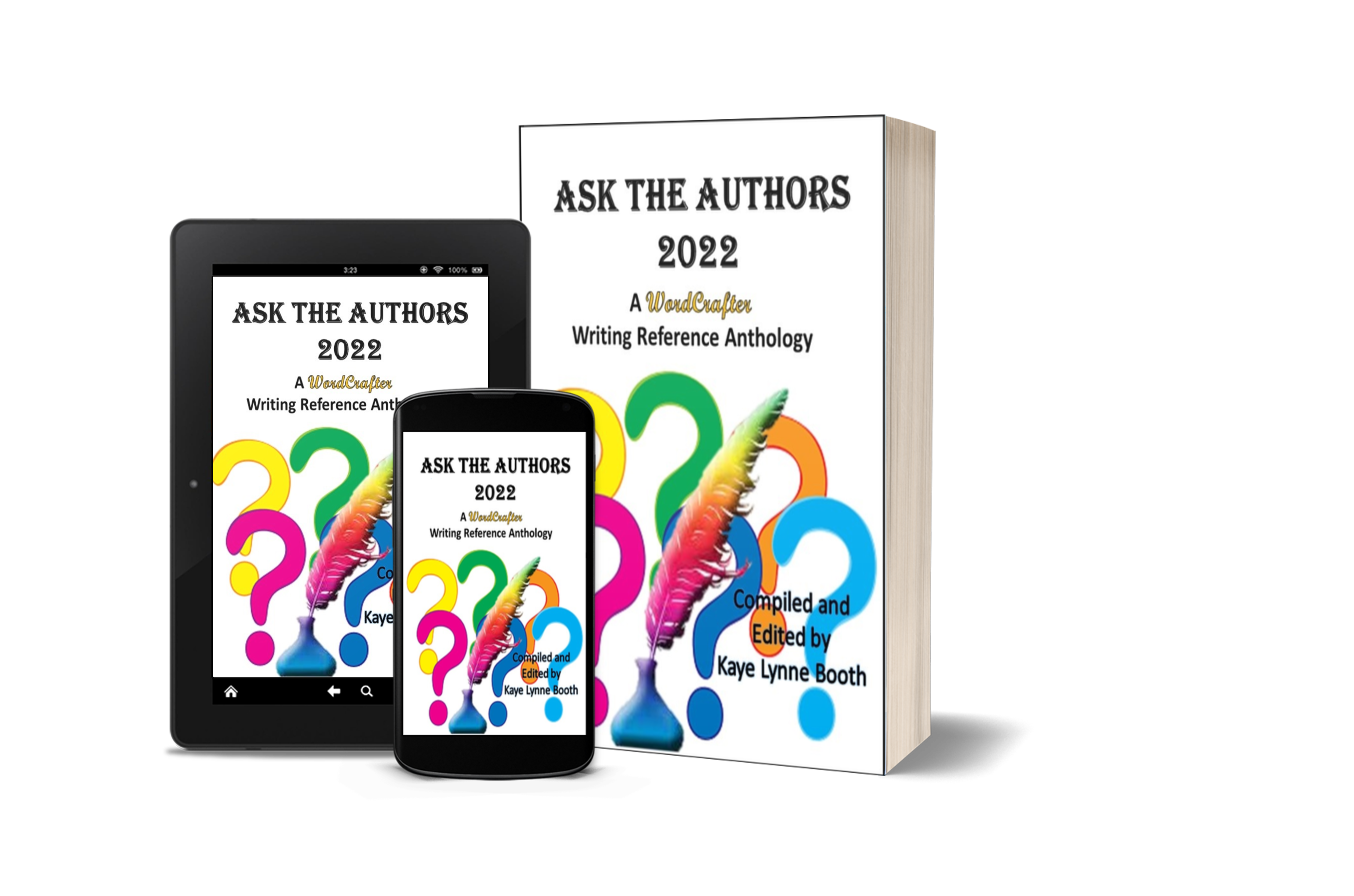
Ask the Authors 2022 is the ultimate writer’s reference, with tips and advice on craft, publishing and book marketing. Eleven experienced and successful authors share what works for them and offer their keys to success in traditional publishing, hybrid, and indie. You’ll learn industry wisdom from Mark Leslie Lefebvre, Kevin Killiany, L. Jagi Lamplighter, Bobby Nash, Paul Kane, Nancy Oswald, Chris Barili, Jeff Bowles, Roberta Eaton Cheadle, Mario Acevedo and Kaye Lynne Booth.
This book offers tried-and-true ways to improve your craft and explores the many options in the current publishing and book marketing worlds. Take a peek inside and find out what works for you.

“Ask the Authors is an up-to-date and broad-based compendium of advice from today’s working writers, to help you with understanding your own writing career. Great information!”
—Kevin J. Anderson, New York Times bestselling author of Spine of the Dragon
The special promotional price of 3.99 is good through today, since this is the last blog segment in the series. Tomorrow, it goes back up to the regular price of 4.99. If you’ve been following, you may have already gotten a copy of Ask the Authors 2022. If not, be sure and grab your copy today.
Available from your favorite book distributor through the Books2Read UBL: https://books2read.com/u/3LnK8e
_______________________
Join Kaye Lynne Booth & WordCrafter Press Readers’ Group for WordCrafter Press book & event news, including the awesome releases of author Kaye Lynne Booth. Get a free digital copy of her short story collection, Last Call and Other Short Fiction, as a sampling of her works just for joining.
Share this:

Ask the Authors 2022 Book & Blog Series: Publishing
Posted: July 2, 2022 Filed under: Anthology, Ask the Authors, Book Promotion, Book Release, Books, Fiction, Indie Publishing, Publishing, Self-Publishing, WordCrafter Press, Writing, Writing Reference, Writing Tips | Tags: Anthology, Ask the Authors 2022, Author Interview, Bobby Nash, Chris Barili, Jeff Bowles, Kaye Lynne Booth, Kevin Killiany, L. Jagi LAmplighter, Mario Acevedo, Mark Leslie Lefebrve, Nancy Oswald, Paul Kane, Roberta Eaton Cheadle, WordCrafter Press, Writing, writing advice, Writing Reference, Writing Tips 3 CommentsWelcome back once again to the “Ask the Authors 2022” blog series, where we’re offering glimpses into the content of Ask the Authors 2022 writing reference anthology; a unique reference packed full with the writing tips and advice from ten different authors and myself. The Q & A sessions can run a bit long, with all of the contributors weighing in, but they are only a small taste of the wisdom contained in this book. I want to thank all of you who have joined us for each session and keep coming back for more. If you haven’t purchased a copy of your own yet, there’s a link for the UBL at the end of this post, where you can grab one from your favorite book distributor at the special send-off price of 3.99 for the duration of this blog series.
If you missed any of the previous segments, you can find them here:
Segment 1: Introductions for Kaye Lynne Booth & Kevin Killiany/Writing Life Q & A session
Segment 2: Introduction for Bobby Nash/Pre-writing Rituals Q & A session
Segment 3: Introduction for Roberta Eaton Cheadle/Plot & Storyline Q & A session
Segment 4: Introduction for Paul Kane/Character Development Q & A session
Segment 5: Introduction for Mario Acevedo/Action, Pacing & Dialog Q & A session
Segment 6: Introduction for Nancy Oswald/Tone: Voice, Person, Tense & POV Q & A session
Segment 7: Introduction for Chris Barili/Setting & World Building Q & A session.
Segment 8: Introduction for Jeff Bowles/Editing & Revision Q & A session
Today’s segment brings you an introduction to award winning author and publishing industry expert Mark Leslie Lefebvre, whose contribution to the anthology is “Publishing Trends to Watch” and a Q & A session on Publishing. So let’s get started.
Meet Mark Leslie Lefebvre

A self-confessed book nerd, Mark Leslie Lefebvre, who is a former President of the Canadian Booksellers Association and the former Director of Self-Publishing and Author Relations for Rakuten Kobo (and founder of Kobo Writing Life), thrives on innovation and excellence within all aspects of the publishing and bookselling industry.
With more than a quarter century of experience, Mark has been involved in bookselling as it evolved from strictly bricks and mortar operations and into online and digital venues, and has continually been at the forefront of applying digital solutions to publishing and book selling.
An author who has embraced both traditional and self-publishing opportunities for himself as well as the thousands of authors he has coached, advised and consulted with over the past two decades, Mark not only believes that each author’s journey is individualized and personal, but that each specific project a writer embarks upon can have its own unique goals, elements and desired outcomes.
He can be found online at www.markleslie.ca
And now on to the Q & A.
Publishing
Are you independently published, traditionally published, or a combination of both?
Mario Acevedo: I’m traditionally published by a large and regional/small presses.
Paul Kane: Combination of both. I started out in the small, indie presses, before working with some of the bigger places, so I like to go back there and write fiction for them when I can. Plus, it gives me a bit more freedom to experiment or write something that might not be that commercial; because the indies don’t have the same kind of print runs as bigger publishers there’s a bit less pressure to appeal to huge audiences. The flip side of that is you get read by a lot more people when you’ve done something for a bigger publisher, simply because they have the money to put behind advertising, production, distribution and marketing. Having said that, I still try to do as much of that as I can myself – I never assume it’s all being done for me. I’ve been known to set up blog tours myself, even when working with bigger publishers because sometimes the personal touch is what bloggers and book reviewers respond to.
Bobby Nash: Both. I’m what they call a hybrid author. I work for traditional publishers of all sizes. I also have my own indie small press, BEN Books.
Robbie Cheadle: Most of my books are published by TSL Publishers in the United Kingdom. I love working with Anne Samson and find her fair and helpful. I self-published Open a new door, a collection of poems which I co-wrote with another South African poet, Kim Blades. I did not enjoy the self-publishing experience and prefer to work through a publisher.
I have short stories and poems published in a number of anthologies which have been published by the editor and compiler through their own publishing enterprises.
Nancy Oswald: A combination.
Mark Leslie Lefebvre: I am a combination of both traditionally published books, independently published books, as well as a hybrid mix of selling work to or collaborating with indie publishers in a slightly traditional way.
What factors influenced you to take your chosen publishing route?
Paul Kane: Things just seemed to slot into place for me, rather than choosing a particular route. I went to art college thinking I’d go into some kind of career in the arts, but it turned out I was better at theory than the practical stuff, so I went to university initially to study History of Art, Design and Film. While I was there, I chose an optional module called ‘Professional Writing’ and loved it, which led me into the journalism – and I figured I could at least make a living writing non-fiction that way, with articles and reviews.
Because I was writing for the day job, I thought I’d do some stories for pleasure – and they ended up being published too, in small press magazines. Then the fiction started to overtake the non-fiction, and the rest is history.
I don’t think I consciously chose any of that, it just sort of happened. I definitely didn’t think to myself when I was younger ‘I’m going to be a writer when I grow up.’ That, honestly, never even crossed my mind because I came from a very working class background where you did manual jobs like being a builder or joiner or whatever. My dad was a miner, so his was a hard job – especially compared to mine – but at the same time he never discouraged me going down the creative route. He did, however, instill in me a solid work ethic which I still have today.
Bobby Nash: When I started, doing it yourself was not as accepted as it is today. Working for a publisher was the only way to get a book published at the time. Fast forward and there are more options. This allows me to do some projects the way I want through my own press and still do work for other publishers as well. For me, it truly is the best of both worlds.
Robbie Cheadle: Initially, I submitted my Sir Chocolate story ideas to four or five small publishing houses and TSL Publications responded to say they were interested in publishing them for me. I was fortunate as I didn’t experience a lot of rejection and I benefited from the experience and expertise of a publisher right from the beginning of my journey.
Nancy Oswald: For me it’s been like water finding its way through a channel. My course had often determined by which barriers are encountered, force and velocity, and other influencing factors like an unexpected change in the weather, excessive rain, drought, and human factors.
Please briefly share the story of your own publishing journey.
Paul Kane: A lot of that’s covered in the above, but if I’ll take you through from when I started to get stories accepted in the small presses to today… When I got back into writing fiction again in the ’90s, which had been something I enjoyed tinkering with back in my teens, I wrote a lot of short stories. Some of them worked, some didn’t, but it was all practice. I’d been doing a correspondence course to help with my non-fiction and my fiction, and I sent the tutor a story I’d written that had come to me, fully formed, in a dream: ‘The Cave of Lost Souls.’ She loved it and told me I had to send it off somewhere. I’d been toying with the idea of entering it into a writing competition, but then I saw an advert in a trade magazine for a publication called Terror Tales. I sent the story off to the editor, John B. Ford, and he wanted to use it in an upcoming issue. He also lived locally, so invited me to a gathering of writers. I sat around listening to all these stories about what they were doing and thought to myself, ‘wow!’ But also, if they’ve done it, maybe there’s a chance for me too. They gave me pointers as to which publications to try my work with, where I could find listings and so on. That led to more acceptances, attending more events and eventually getting a couple of collections out. I also found out about something called The British Fantasy Society who were looking for volunteers for positions, one of which was for Special Publications Editor. That enabled me to work with such names as Ramsey Campbell, Neil Gaiman, Muriel Gray and Clive Barker. I was helping out running their convention FantasyCon as well, and indeed years later ended up co-chairing a few. In the meantime, someone I’d met at an event – Jonathan Oliver – was looking for ideas for post-apocalyptic novels set in a universe called ‘The Afterblight Chronicles’, mass market books brought out by the publisher he worked for, Abaddon/Rebellion. I pitched a few and Jon loved the Robin Hood idea. I worked up a chapter breakdown, which got me the first book – there ended up being a trilogy of novels a couple of shorts and novelettes and one novella – and suddenly my longer fiction was getting some attention. I’d also gone into editing professionally, putting books together with Marie for places like Simon & Schuster, PS Publishing and Constable & Robinson. Anthologies like Hellbound Hearts, A Carnivale of Horror and The Mammoth Book of Body Horror… All of this enabled me to try my hand at things like film and TV scripting, comics, audio and theatre scripting, which broadened the scope of what I was doing. And it led me into writing crime thrillers for HQ/HarperCollins, which I’m doing today as PL Kane. In a nutshell, that’s my journey.
Bobby Nash: I started writing comic books. I then wrote a novel, then a second, which was published, Evil Ways. Then, I did a mix of comics, novels, and shorter stories for several years. These days, I’ve added screenplays and audio scripts to the mix. I like to try new things.
Nancy Oswald: Published, two large publishers, one it Canada and one in New York, published small Colorado owned publisher, self-published twice, each time for a different reason.
Mark Leslie Lefebvre: I started off in the mid 1980s when there really was no other choice but to submit short stories to magazines in order to slowly build yourself a name within writing and publishing and hopefully attract the attention of an agent or editor who might take your book proposal seriously because of your proven track record.
After years of rejection my first short story was published in 1992. I earned $5 USD and a contributor’s copy of the digest-sized quarterly magazine with a circulation of perhaps 500 people. And as time went on, I started selling to bigger markets with larger distribution and higher pay. (At the time 5 cents a word was considered a “professional rate” for a short fiction sale).
Over the years I sold dozens of stories to various small press magazines and anthologies, but my work never remained in print for more than maybe six months maximum. So, in 2004, I collected a number of my previously published short stories along with a couple of ones that hadn’t appeared anywhere, and I self-published them in print (using Ingram Lightning Source for making a Print on Demand (POD) book entitled One Hand Screaming.
Back then self-publishing was a dirty word, and most self-respecting authors serious about a writing career would ever consider that path. All of my friends who had publishing deals with big publishers told me that self-publishing was the best way to kill my writing career.
But I did it anyway.
I did so because after all those years of writing, I still didn’t have a book out. In addition, the majority of the stories had not only already graduated from the slush piles of the various magazines they’d first appeared in (thus having an editorial “seal of approval” but they had also been edited.
I secured an ISBN, established a publishing company (Stark Publishing – which I use to this day), had a logo for the company created, and had a book cover designed. (The cost for the logo and book cover was about $24, the price of a case of beer paid to my best friend who was a graphic designer.
In 2009, I used the Stark Publishing imprint to publish an anthology called Campus Chills. I solicited sponsorship for this anthology from three university bookstores (University of Waterloo, University of Alberta, and McMaster University Bookstore) so I could pay contributors pro rates for their original stories. The book was a historic publishing first. It was the first professional anthology to be produced exclusively for the Espresso Book Machines that the three bookstores owned.
My first full length book traditional deal was Haunted Hamilton, which was published in 2012 by Dundurn, Canada’s largest independent publishing house.
Since then, I have continued to work with traditional publishers and also use my Stark Publishing imprint to publish my own books as well as a few selected titles from author friends.
What do you see as the pros and cons of traditional/independent publishing?
Paul Kane: The pros of traditional publishing are, as mentioned, more money behind things like advertising and marketing, distribution and so on. You’ll also likely get paid more as an author. The cons are the restrictions of the marketplace, in that you’ll have to deliver something that’s more of a crowd-pleaser than you would if it was only intended to be a limited book of say 500 copies. That’s where the indies shine, because they’re more likely to take a chance on something experimental. But don’t look for fortunes that way, if that’s your goal. I straddle both traditional and indie and adore both. I’m lucky enough to enjoy writing mass market thrillers, and at the same time put out horror books with huge monsters in. The best of both worlds, frankly. If, by indie, you mean self-published, I’ve never done that, but I know a lot of people who do – some make a very good living at it – so there’s nothing wrong with that either. Do whatever makes you happy as a writer, I say, because that will come across in your writing.
Bobby Nash: Traditional publishing handles the production work, which is nice. They handle the cover, printing, and distribution. If the publisher has good distribution, that’s a big plus. The more places your book is shelved, the better your odds in terms of sales.
Indie publishing offers more freedom to do what you want with a shorter lead time. You handle production, cover, and there’s usually only Amazon and a few on-line retailers carrying your book.
No matter which you choose, you, the writer, are expected to handle almost all of the marketing and promotion.
Robbie Cheadle: Working with a publisher taught me a lot about the publishing process and spared me having to do all the research and experimentation myself. I find it beneficial to have a second set of experienced eyes read and edit my books. My publisher gives me advice about formatting my books and also deals with Lulu.com and Amazon on my behalf. This lifts a lot of the administration from my shoulders. As a full-time working person with a demanding corporate job, I don’t think I would manage the proofing, type-setting, and other administration on my own as well as have time to write and market my books. My publisher also does some marketing of my books which is helpful.
Nancy Oswald: It depends on personal goals, opportunities, and life’s circumstances. Money and control and time are issues that have played into my decision. Marketing is not. You still have to get out and promote yourself.
Mark Leslie Lefebvre: First of all, I embrace both, and I recognize that there are unique pros and cons for each of them. I’ll try to boil them down to a few things.
With self-publishing (or indie publishing), you’re in full control. You are the publisher, which means you control everything. Whether or not it’s published, when it is published, how it’s edited, the cover design, the price, what markets it is released to. That is both a blessing and a curse because there are a lot of moving parts; and many authors don’t like the idea of having to do all that work – or, more specifically, having to hire out the right people for those tasks and project manage the process.
On the plus side, because you’re in control, you don’t need to wait for a gatekeeper to anoint your book from out of a slush pile of millions of manuscripts. If you want to change something you don’t need anyone else’s permission, you can do it.
And, of course, you can earn much higher royalties (up to 70% in many cases) and get paid monthly rather than perhaps once a year or maybe twice a year.
The biggest downside to self-publishing is that while you have easy access to digital sales (eBooks, Audiobooks, and POD print book online sales), you have extremely limited access to “in store” and “on shelf” placement in bookstores. That’s one area where traditional publishing outshines self-publishing significantly.
Traditional Publishers are part of an “old boys” network of a complex and often confusing supply chain requiring warehousing and returns (a business practice instituted during the Great Depression and which remains to this day). But they are the best way to get your books into bookstores.
Dundurn, the largest traditional publisher I work with, not only gets my books onto the shelves of chain and indie bookstores, but has also gotten my books onto the shelves at Costco and Walmart. That’s something I’d never be able to afford to do as an indie author publisher. But with this type of distribution comes setbacks, that I’ll get to shortly.
Another great benefit of working with a traditional publisher is they take care of the majority of the business aspects. They have in house or hire out all of the professionals needed to bring a book to market. From developmental, copy, and line editors to proofreaders, to professional book formatters and cover designers, to in house marketing and sales (to pitch your book to bookstore buyers), they not only project manage all of that, but, more importantly, they pay for all of those services.
The advance an author receives from a traditional publisher is, typically, significantly smaller than it used to be. There was a time when a midlist author could make a full-time living off of their book advances alone. That has not been the case for many years.
Authors also have no idea how their book is selling. They may receive an annual, or perhaps twice-annual statement of their book sales, and are perhaps paid once or twice a year for the previous year’s sales. There is also a 30% withholding on those payments against the aforementioned returns. This means, for every $100 owned to you in royalties, they hold back $30 as protection against the cost of returns.
If I can use two examples of my own books, here’s a bit of a breakdown on earnings.
For one of my traditionally published books that sells for $24.99 in print, I earn 8% on each sale, which is about $2.00. I get paid for that once a year with 30% withheld for a full year. I’m not even going to talk about the eBook sales as that’s a joke and barely adds up to enough sales to even talk about (because most traditional publishers don’t sell a lot of eBooks because they price they high enough to drive people to buy the print version, which is often cheaper, or just a dollar or two more than the eBook price).
For one of my self-published books, which sells for $14.99 in print, I earn $3.20 per sale. But I don’t sell a lot of print on my self-published books. The majority of my sales come from eBook sales. When I sell an eBook for $4.99, I earn $3.49. And I get paid on those sales every month, as opposed to once per year.
One thing most authors misunderstand is that they think working with a traditional publisher means you won’t have to do marketing. That couldn’t be further from the truth.
Authors have to do their own marketing regardless of how a book is published.
One last thing I always consider when thinking about the pros and cons of traditional publishing versus self-publishing: If it’s important for me to earn money and sell a lot of units in a digital manner where I’m in control, then I self-publish. If it’s important for the book to be in print and on bookstore shelves, then I look at traditional publishing. Because each book I write, or plan on writing has its own unique path often depending on my goals and how they relate to those factors.
Which formats are your books available in: ebook? Print? Audio? Hardback? Large print? NFTs?
Mario Acevedo: My books are available in print, ebook, and audio. My few hardbacks are out of print.
Paul Kane: All kinds, it just depends which book it is. Most are ebook and print. Some have had audios made of them, like The Rot from Horrific Tales. Encyclopocalypse have turned a lot of my back catalogue into audios, but also published a recent collection called The Naked Eye as an ebook and print, paperback and hardback. So it really does depend on what book it is and who brought it out. Doing searches for Paul Kane, PB Kane – my YA pseudonym – and PL Kane will come up with a bunch of stuff from me.
Bobby Nash: I have books available in hardcover, paperback, ebook, and audio. For BEN Books, I make an effort to get the books in as many formats as I can so readers can find it. On projects I do for other publishers, I don’t always have a say in format.
Robbie Cheadle: My YA and adult books are available as ebooks from Amazon and Lulu.com and as paperbacks from TSL Publications in the UK, Lulu.com, and Amazon. My children’s books are available as ebooks from Lulu.com and as paperbacks from TSL Publications in the UK, Lulu.com, and Amazon. My two poetry books are available from Amazon as paperbacks and ebooks and Behind Closed Doors is available through a variety of other distributors too.
Nancy Oswald: Ebook, print, both hard back and soft cover. It has varied from book to book. I’d love to have audio versions of my books, but I don’t think there would be a market for the ages I write for.
Mark Leslie Lefebvre: My books are available in eBook, Print (trade paperback, hardcover, large print) and Audiobooks. Not all titles are available in all formats. And, ironically, my self-published titles are available in more formats than my traditionally published books.
I also have a small selection of self-published titles available in an NFT-type model and will likely expand that over time.
If your books are available in audio format, which distribution platforms do you use? Can you tell us about your audio book experiences?
Paul Kane: Usually Audible, though a few have come out as CDs as well. Her Last Secret was a CD release, as well as a download. I tend to just let the publishers get on with that, as they know more about it all than me. Sometimes I get sent audition clips from people who want to do the narration, and indeed I was put in touch with the guy who did the narration for Arcana from Wordfire Press, Robert Power, because he wanted to ask some questions and I spent a very pleasant evening on the phone chatting to him. But generally, I don’t really have anything to do with it, other than I might listen to some actors reading bits of the book and say which one I prefer or who I think suits the story best.
Bobby Nash: Audible is the biggie. We have also experimented with other audio publishers. I love audio books and have been blessed to work with some fantastic narrators. I love audio and will keep putting them out in that format as long as I can.
Mark Leslie Lefebvre: I primarily use Findaway Voices for audiobook distribution to more than 40 retail and library markets.
When it comes to audiobooks, the expense to produce them is quite high and I’m currently in a position where I’m thousands of dollars in the hole on earning that money back. But for me it’s a long-term thing, that I know will earn out over time. For me, it’s a long-term investment.
Are your books available wide or exclusive to Amazon? Or a combination of both? Why?
Paul Kane: Most, if not all, of my books are on Amazon, but also available from the publishers themselves too – as well as from all good bookstores. Again, I don’t really have much to do with all that as bookselling isn’t my field. I leave it to people much more qualified than me to sell my wares, I just write them in the first place!
Bobby Nash: A little of both. For BEN Books titles, the ebooks are exclusive to KDP so they can be enrolled in Kindle Unlimited. This is a way for me to promote the books to those who subscribe to KU to try my books for free and still make a few pennies. Paperbacks are at Amazon, B&N, Books-A-Million, etc. I also have an on-line store where you can buy autographed books from me directly.
Nancy Oswald: Back to marketing—Amazon on all of them, but I have them in as many local venues as possible; Book stores, gift shops, local stores.
Mark Leslie Lefebvre: I am wide beyond the limited perspective of “wide or exclusive to Amazon.” I could go on for hours, days, and weeks explaining it. You’re better off reading my budgie-basher of a book released in 2021 called Wide for the Win: Strategies to Sell Globally via Multiple Platforms and Forge Your Own Path to Success.
What factors help to determining the pricing of your book?
Paul Kane: I have absolutely no idea honestly. My second thriller, Her Husband’s Grave, has been available for about a year now at just £2 in paperback – and I have no idea why. I’m just delighted it is, because it’s been my biggest seller to date. It’s something to do with price matching, but I have no idea how it all works.
Bobby Nash: The base cost is your starting point. From there, you see the cost the bookstore or Amazon will take. Then, I round up a bit. I make about $1.50 profit per book. That’s why sales quantity is important.
Robbie Cheadle: My publisher prices my books and I am not able to run promotions for free or discounted downloads of my ebooks.
Nancy Oswald: I look at similar books and make my best guess about the market. On my two most recent books, I considered inflation.
Mark Leslie Lefebvre: When it’s a self-published title (ie, when I get to determine the price), it’s a combination of understanding the markets (the global markets, and not just the US markets) and the genres. So country, genre, size and format of the book all play a factor in determining the right price.
One thing I like to remind authors is that they should think of price as a verb rather than a noun. It’s fluid, and can and should change over time to match market conditions and other factors.
Which self- publishing platforms have you used? Please tell us about your experiences with them?
Bobby Nash: I mostly use Amazon/KDP. I have used Smashwords for ebooks in the past and Lulu for hardcovers. The experiences are generally good.
Robbie Cheadle: I have only self-published through Amazon, but I had assistance with the typesetting, cover, and administration.
Nancy Oswald: Only KDP (Create Space first, then KDP) Great experience both times. Books look good, hold up, and I like the POD aspect of ordering.
Mark Leslie Lefebvre: Again, for a blow-by-blow of the majority of them, read Wide for the Win. It’ll take dozens of pages to try to go through them in detail.
But in a nutshell, by default, here’s how I self-publish.
- I publish direct to Amazon via KDP (Kindle Direct Publishing) for eBook and Print
- I publish direct to Kobo via KWL (Kobo Writing Life) for eBook (and for selected audio titles)
- I publish direct to Google Play for eBook (and for selected audio titles)
- I use Draft2Digital for distributing to numerous other eBook retail platforms (Apple Books, B&N Nook, a handful of others), and most of the major library platforms (OverDrive, Baker & Taylor, hoopla, Bibliotheca, BorrowBox, etc) as well as for print via D2D Print (which is partnered with Ingram Lighting Source)
- I also do print distribution via a combination of Ingram Spark and Ingram Lighting Source direct. (This is a side effect of being doing it for so long that I have different titles in different systems based on what was and wasn’t available at the time)
When seeking out a traditional publisher, what should an author look for? What should they beware of?
Paul Kane: I think you need to look at the publishers who are releasing books like the one you want to write and sell. You probably wouldn’t approach a religious publisher with a book about demons or zombies, say, but one that’s had some success in this area would definitely be more open to it. As for things to be aware of, run a mile if any agent or publisher asks you for money to look at or publish your book. They should be paying you, not the other way around.
Bobby Nash: What does the traditional publisher offer? If you like what they can do for your book, then go for it. Do they help with promotion? Do they offer an advance? What is their distribution platform like? Where are their books sold? Ask questions and research before signing. Reach out to other authors they publish and ask questions. Never pay to be published though. That’s not traditional publishing.
Robbie Cheadle: I am very careful of the publishing contract. I do not want my characters and ideas becoming the property of the publishing house and my stories continuing to be written by another writer if I die. I retain the rights to my characters in my publishing contracts.
Nancy Oswald: For me, I was lucky to find a small publisher who liked what I wrote. So, I’d say look for a good match. Do your homework in terms of other books the publisher puts out. When I started out, I targeted only big companies with a name, but have since learned that there are lots of small and mid-press companies that can be rewarding to publish with. With that said, trust is a huge issue. I entered into one joint publishing enterprise with my small press publisher, but that is only because we had similar goals and years of trust built up before we agreed to do this. There’s never a crystal ball, and I was lucky. Besides researching the publishers and their lists, you might consider locating and reaching out to some of the authors a certain publisher has worked with and ask them about the publishing experience they’ve had with company X. I have a friend who publishes with X Libris which some experts say you should NEVER do. But she has had a great experience, now has 6-8 books out and is completely happy. Find the publishing match that fits your goals and project.
Mark Leslie Lefebvre: First and foremost, if it’s a proper traditional publisher, the money should always flow TO the author from the publisher, and NEVER, EVER, from the author to the publisher. No exceptions. If there’s any money paid to a publisher, they’re not a real publisher, no matter how much they protest or wave their arms around and explain some asinine and convoluted reasons for it. End of story.
Anyone can hang up a shingle and call themselves a publisher, but if they do not have “old school” traditional publishing supply chain distribution through bookstores where there’s a very likely chance and easy availability for the book to be stocked in a bookstore, they’re typically not offering you any better chance of having a book in stock in a bookstore than you can do on your own. (Yes, they might pay for editing, design, etc, but the “in store” distribution is a MAJOR hurdle).
Also be aware of signing over the rights to formats that the publisher is not actually using. IE, if they want audio rights but don’t publish audiobooks, don’t sign away your audio rights. You can earn more selling them to someone who does.
Any publishing advice for new authors?
Paul Kane: Just to hang in there, and never give up. It can be a hard business with ups and downs, so you need a thick skin and you need staying power. It’ll happen for you eventually if you’re good enough and just keep going. Also, don’t take rejections personally; it’s all subjective and what one editor hates another might love. Just look at some of the big releases that have been rejected so many times before being given a chance.
Bobby Nash: Have fun and enjoy the experience. Yes, writing is my job and there are days it’s a tough job, but t’s still a job I love. That’s what keeps me going.
Nancy Oswald: Just start, and don’t be afraid to make mistakes along the way. Do your homework if traditional publishing is what you want to do. Go to conferences and take advantage of one-on-one interviews with publishers and agents. When a book is returned, even if it’s a form letter without comments, sit down and re-write your book all the way through. You’ll be surprised at how those re-writes will improve your writing.
Mark Leslie Lefebvre: Patience, Practice, and Persistence are three of the main traits needed for a long-term publishing career. Also, you’ll never stop learning and there is no magic bullet for any of the hard work that is required to be successful. So, stop wasting your time looking for one.
Publishing, regardless of whether or not you choose traditional publishing or self-publishing/indie publishing (or, ideally, some combination of both), takes a lot of work, a lot of constant learning and re-learning, and dedication to continuing to work at it even when nothing seems to be working or all the cards are stacked against you.
To get through those times, which will happen to every single writer as the markets continue to shift and change and bend and flow, you need to believe in yourself and never give up on the dream and desire. And, ideally, if you get intrinsic pleasure in the act of actual writing itself, that could be enough to sustain you through the process during those “dry” periods.
What are the advantages of creating your own publishing imprint? Do you recommend it? Why or why not?
Bobby Nash: I started BEN Books to get some of my older, out of print works back into print. Eventually, I realized that I could launch projects there that I might not be able to pitch to a traditional publisher. When I started writing crime novels, I was known for doing comics, sci-fi, horror. It was a hard sell to convince publishers I could write a crime thriller. BEN Books became a way to get those stories told. Now, I’m more known for the crime thrillers. Go figure.
Nancy Oswald: The jury’s out for me on this. I just recently created an imprint and registered it with the state of Colorado. I have no idea what I’m doing, and it’s weird for me to associate with and imprint and not myself as an author which I’ve done most of my years publishing with a small press.
Do you use crowd sourcing or subscription services to fund your publishing endeavors?
Paul Kane: A couple of things I wrote have had Kickstarters, but they’ve been a short film and a comic and the people behind bringing them to life have handled the campaigns. All seemed to go well, though, so I can’t complain.
Bobby Nash: I haven’t crowdsourced any novels yet, but I’m considering it for a box set next year. I’m still working out the logistics. I do have a Patreon page ( www.patreon.com/bobbynash ) that works like a subscription service.
___________________
That’s all for this week’s “Ask the Authors” blog segment. Thank you all for hanging with us. Next Saturday we’ll be wrapping up this Saturday series with an introduction to YA and middle grade author, L. Jagi Lamplighter, whose anthology contribution discusses “The Trouble with Troupes”, and a Q & A session on the most formidable of subjects, book marketing.
This must have writing reference is available through Barnes & Nobel, Rahkatan Kobo, the Apple Store, Amazon, Scribd and many more. As the “Ask the Authors 2022” blog series is drawing to a close, be sure to get your copy of Ask the Authors 2022 at the special send-off price of $3.99 for the digital edition, from your favorite book distributor through the Books2Read UBL: https://books2read.com/u/3LnK8e
____________________
Join Kaye Lynne Booth & WordCrafter Press Readers’ Group for WordCrafter Press book & event news, including the awesome releases of author Kaye Lynne Booth. Get a free digital copy of her short story collection, Last Call and Other Short Fiction, as a sampling of her works just for joining.
Share this:

Ask the Authors 2022 Book & Blog Series: Editing & Revision
Posted: June 25, 2022 Filed under: Anthology, Ask the Authors, Book Promotion, Book Release, Books, Editing, Fiction, Interview, WordCrafter Press, Writing, Writing Reference, Writing Tips | Tags: Ask the Authors 2022, Bobby Nash, Chris Barili, Interview, Jeff Bowles, Kaye Lynne Booth, Kevin Killiany, L. Jagi LAmplighter, Mario Acevedo, Mark Leslie Lefebrve, Nancy Oswald, Paul Kane, Roberta Eaton Cheadle, WordCrafter Press, Writing, writing advice, Writing Reference, Writing Tips 7 CommentsHello and welcome back to Segment 8 of the “Ask the Authors 2022” blog series. This week brings an introduction to speculative fiction and horror author, Jeff Bowles, who shares a his thoughts on editing in the anthology, “Contrary to Popular Editing Beliefs”, & a Q & A session on editing and revision.
If you missed any of the previous segments, you can find them here:
Segment 1: Introductions to Kaye Lynne Booth & Kevin Killiany/Writing Life Q & A session.
Segment 2: Introduction to Bobby Nash/Pre-Writing Rituals Q & A session.
Segment 3: Introduction for Roberta Eaton Cheadle/Plot & Storyline Q & A session.
Segment 4: Introduction for Paul Kane/Character Development Q & A.
Segment 5: Introduction for Mario Acevedo/Action, Pacing and Dialog Q & A.
Segment 6: Introduction to Nancy Oswald/Tone: Voice, Person, Tense and POV Q & A.
Segment 7: Introduction for Chris Barili/Setting & World Building Q & A.
And now let’s move right into this week’s segment.
Meet Jeff Bowles

Jeff Bowles is a science fiction and horror writer from the mountains of Colorado. The best of his outrageous and imaginative short stories are collected in Godling and Other Paint Stories, Fear and Loathing in Las Cruces, and Brave New Multiverse. He has published work in magazines and anthologies like PodCastle, Tales from the Canyons of the Damned, the Threepenny Review, Dark Moon Digest, Whispers of the Past, and Spirits of the West. His story, “A Peaceful Life I’ve Never Known” was the winning story in the 2019 WordCrafter Short Fiction Contest.
Jeff earned his Master of Fine Arts degree in creative writing at Western State Colorado University. He currently lives in the high-altitude Pikes Peak region, where he dreams strange dreams and spends far too much time under the stars. Jeff also has two novels published, God’s Body: Book One – The Fall, and Love/Madness/Demon.
On to the Q & A.
Editing and Revision
How do you feel about the editing process? Love it or loathe it?
Mario Acevedo: The editing process is what turns the rough clay into art. The second draft is when your story begins to shine.
Paul Kane: I really enjoy the editing process. I don’t find it half as much work as getting the words down in the first place. I know for a lot of people it’s the other way around, but I like having written, when I’ve got the chunk of words down and I’m going through, refining it, making it better with each edit or pass. It’s like a sculptor with a lump of stone, each time you chisel some of that away the sculpture starts to take shape. The more you work on it, the better the shape becomes. I like having that lump of stone to work with, I’m just not that mad on getting the stone and carrying it to the studio or workshop in the first place, if you see what I mean.
Bobby Nash: Editing is part of the job. A novel gets multiple edit passes. I do a self-edit while writing it, usually going over yesterday’s work before starting on today’s writing. Then, I give it another edit after I’m finished. Once I’m satisfied, it goes to the editor then back to me for adjustments, changes, discussions. There may be two edit passes here. Finally, there’s the galley edit, which is my chance to look the story over in the form it will be printed to make sure it looks good.
Robbie Cheadle: I enjoy editing and I find it easier than the initial writing process. Re-writing and amending to create a better story is rewarding and satisfying for me. I edit as I go along and at the end of each chapter. If something changes in the story that effects what I have already written, I go back and update it. I cannot leave a change undone and just move on like some writers do. It bothers me too much.
Nancy Oswald: I look at it as an opportunity to make your book better, but there are times I’ve loved it and other times, not so much.
What roles do alpha and beta readers, critique partners, proofreaders and professional editors play in your editing and revision process?
Mario Acevedo: All are necessary and have helped improve my stories. My critique partners are my beta readers.
Paul Kane: I don’t really use alpha or beta readers. It works for some people, but not for me. I find if I get too much feedback, especially if it’s conflicting, it just confuses me more than it helps. I prefer to trust my own judgment initially, or – if she has time – my wife Marie has a read before it goes off somewhere. The editor you’re working with, especially if it’s a bigger publisher, will have things they want you to change or cut or whatever, which is absolutely fine. That’s the process for me, and part of the job. I just prefer to not let anyone see it before then. I think maybe it’s bad luck or something, as I am quite superstitious.
Bobby Nash: I have used beta readers, but not often. I do have a small group of patrons that get stories early. Some offer feedback. I work with editors, proofreaders, and others to get the books as close to perfect as I can make them.
Robbie Cheadle: I am part of an on-line writing group which meets for 2 hours every second week. We all read excerpts from our stories and give each other advice and feedback. One of the members of this group, beta reads each chapter of my novels as I go along and gives me constructive criticism and feedback.
Once the book is complete and I’ve edited it to my satisfaction, I send it to my developmental editor who provides feedback on structure, plot holes, loose threads, unnatural dialogue, and other important elements of my writing and story.
Once I’ve updated the novel for her comments, I send it back to her for a final read and make any last changes.
I then send it to a proofreader who helps pick up spelling and punctuation errors which I correct before sending the book to my publisher who does a final read and edit.
How do you handle your editing: hire professional editors? Trade-off with other authors? Critique partners? Beta-readers? Self-edit? Have a publisher that handles those things?
Paul Kane: I self-edit until it’s time to send it off to my actual editor at whatever publisher I might be working with at the time. If she has time, Marie has a look through and does a pass, but more often than not it’s me who goes through and does the drafts. Then it might go through several more once the editor has come back to me with notes, then finally the proofing and final editing stages.
Bobby Nash: I have editors I work with on my creator-owned projects. For books I do for other publishers, they provide the editor I will work with on the book. Before it gets to them though, I have done a self-edit pass or two.
Nancy Oswald: All of the above at different times, but bottom line, I like to be involved in all phases.
What do you look for in an editor?
Paul Kane: As I say, I don’t send it to an editor I pay or anything. It goes to the editor at the publishers, and you don’t get a choice in that, seeing as their company is paying you for the story or book. Having said that, I’m very lucky to have worked with some of the best editors in the business and there’s been nothing that’s really had me tearing my hair out. So, I guess what I’m looking for with an editor is someone who’s easy to work with, and we can go back and forth on changes or edits that will hopefully make the whole thing better in the long run.
Bobby Nash: Editing is more than catching typos and grammar errors. A good editor asks questions about story, points out inconsistencies, and offers advice and solutions. It’s a partnership. The writer and editor have the same goal. We both want to put out the best book we can.
Robbie Cheadle: In a developmental editor, I looked for someone who could help me resolve issues with my story without changing my voice and writing style. I found a ‘good fit’ editor a few years ago when I was writing Through the Nethergate and used the same lady to assist me with A Ghost and His Gold. While the Bombs Fell was developmentally edited by a different person. I was very happy with her feedback, but she was not available to help me with my most recent two books.
Nancy Oswald: Editors need to “get” the book. They need to be attentive to details, but not insert themselves into the MS to the extent of it sounding different.
Have you ever received an edit where it was obvious the editor didn’t get what you were trying to do? How did you handle that?
Paul Kane: I’ve had edits where I’ve felt the need to explain certain things, or argue my case about a specific point, but that’s only really been a small part of the overall edit. I’ve never had an editor do a complete hatchet job on one of my books, and for that I’m truly grateful.
Bobby Nash: It happens. Did I not explain it well? If so, then a rewrite needs to happen. The writer and editor talk. You discuss and work it out. As I mentioned above, the editor and writer are partners. The editor is not my enemy. We both want the book to be the best it can be.
Robbie Cheadle: This has not happened to me. Both developmental editors I have worked with have helped me tremendously and so does my beta reader. I am very open to suggestions and comments to help me improve my writing and stories.
_________________________
That wraps up this week’s “Ask the Authors 2022” blog series. Be sure and drop by next Saturday, when we introduce author and industry expert Mark Leslie Lefebvre and share a Q & A session on Publishing. You won’t want to miss all the useful information in that one. See you there.
But first, just take a minute to grab your copy of this writing reference anthology which no author should be without from your favorite book distributor at the special send-off price of $3.99, using the Books2Read UBL: https://books2read.com/u/3LnK8e
_______________________
Join Kaye Lynne Booth & WordCrafter Press Readers’ Group for WordCrafter Press book & event news, including the awesome releases of author Kaye Lynne Booth. Get a free digital copy of her short story collection, Last Call and Other Short Fiction, as a sampling of her works just for joining.