Book Review: “Hummingbird Moonrise”
Posted: January 23, 2026 Filed under: Book Review, Books, Fiction, Mystery, Paranormal, Review | Tags: Book Review, Book Reviews, Books, Fiction, Hummingbird Moonlight, Magic, mystery, Sheri L. Dodd, Writing to be Read Leave a comment
About Hummingbird Moonrise
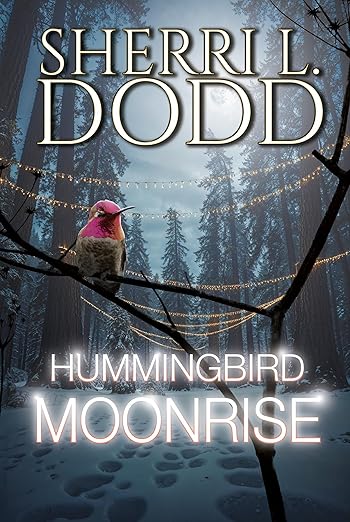
The past two years have taken their toll on Arista Kelly. Once an eternal optimist, now she has faced the darkness and must recalibrate what true happiness means for her. Meanwhile, Shane, her ex-boyfriend, is pulling all the right moves to help keep her sane from her heightening paranoia. But it doesn’t help that Iris, her Great Aunt Bethie’s friend, has disappeared.
Still, one additional trial remains. While searching for Iris, Bethie and Arista stumble upon a grand revelation in the eccentric woman’s home. With the discovery, they realize their run of chaos and loss of kin may have roots in a curse that dates back to the 1940s—the time when their family patriarch first built Arista’s cottage in the redwoods and crafted his insightful Ouija table.
This pursuit will not follow their accustomed recipe of adrenalized action, but the high stakes remain. Will the mysterious slow burn of unfolding events finally level Arista’s entire world or be fully extinguished, once and for all?
Purchase Link: https://www.amazon.com/Hummingbird-Moonrise-Paranormal-Mystery-Crystals-ebook/dp/B0FB5QV948
My Review of Hummingbird Moonrise
I received a free digital copy of Hummingbird Moonlight, by Sherri L. Dodd from the review program of Sandra’s Book Club in exchange for an honest review. All opinions stated here are my own.
I chose this book because of the title. It’s common knowledge that I love hummingbirds, and I couldn’t resist a story with hummingbirds in the title.
I had trouble keeping the characters straight due to so many of the character names beginning with the same letter or being very similar. We’ve got a Matty, a Manny, a Maddie, a Mike and a Mateo. Also, an Arista, an Auntie, and an Alicia. To make matters worse, Auntie is also the character of Bethie, but I was almost halfway through the book before I figured that out.
This is book 3 in the series, so that may well have had something to do with my confusion. The author does not re-introduce characters in this book for those who haven’t read the first two books. Nor are referrals to events that happened in the first to books recapped so that readers coming in late in the series have no reference. I was way past the middle of the book before I knew why I was seeing the actions of Mike and his sister, Katie and the strange little girl, while I’m sure someone who had read previous books would have understood and been able to easily follow. There are referrals to earlier events, but they are not explained well.
If you don’t mind just going along for the ride and feeling a little clueless, this is a fine story of magic and mayhem. An ancient family curse and a reversal curse have led to doom for two families. Our characters are the last souls surviving in their family lines and their survival lies in the outcome. Arista and Aunt Bethie are the last of the Kelly clan, and Iris may be the last survivor of the clan casting the original curse on their brood. However, Iris may have risen from the dead and also, she may be possessed by Fergus, whom she killed and fed to the pigs. (I guess I’m still a bit confused.)
Curses, spells, potions, gwishins, and spirit possessions. This story has all the elements of a magical mystery adventure, if you can keep everybody straight, but I do not recommend it as a standalone. I give Hummingbird Moonrise three quills.

About Kaye Lynne Booth

For Kaye Lynne Booth, writing is a passion. Kaye Lynne is an author with published short fiction and poetry, both online and in print, including her short story collection, Last Call and Other Short Fiction; and her paranormal mystery novella, Hidden Secrets; Books 1 & 2 of her Women in the West adventure series, Delilah and Sarah, and book 1 in her Time-Travel Adventure series, The Rock Star & The Outlaw, as well as her poetry collection, Small Wonders and The D.I.Y. Author writing resource.
Kaye holds a dual M.F.A. degree in Creative Writing with emphasis in genre fiction and screenwriting, and an M.A. in publishing. Kaye Lynne is the founder of WordCrafter Quality Writing & Author Services and WordCrafter Press, where she edits and publishes two short fiction anthologies and one poetry anthology every year amidst her many writing projects. She also maintains an authors’ blog and website, Writing to be Read, where she publishes content of interest in the literary world.
_______________________________________
Kaye Lynne Booth does honest book reviews on Writing to be Read in exchange for ARC digital copies, (she also accepts print copies). Have a book you’d like reviewed? You can request a review on the Book Review tab above.
Share this:

Book Review: “Shadows & Dreams” & “Watch Me”
Posted: November 21, 2025 Filed under: Book Review, Books, Fiction, Mystery, Review, romance | Tags: Andrea Smith, Book Review, Book Reviews, Books, Fiction, mystery, romance, Shadows & Dreams, Suspense, Writing to be Read 2 CommentsAbout Shadows & Dreams
“That was definitely hot,” I said, propping myself up on an elbow to look at him, “going all ‘Christian Grey’ on me like that.” “Who?” he asked, totally clueless…

I wasn’t prepared for what was in store for me when I took a summer position at Sinclair Stables before my junior year of college. After all, it could only help with my chosen field of equine studies, right? My first encounter with Trey Sinclair wasn’t a pleasant one to say the least. I didn’t realize he was taking time away from his law firm in Atlanta to oversee his family’s business in Bristol Virginia over the summer.
He was definitely an alpha who liked exerting his power . . . and his prowess. And then there was all this weirdness going on there. Like something from a Hitchcock movie. I was there with baggage I didn’t realize I had. Trey Sinclair turned out to be my protector . . . and so much more!
Adult Content. 18+
Purchase Link: https://www.amazon.com/Shadows-Dreams-Protective-Romantic-Suspense-ebook/dp/B00EMKJIA2
My Review of Shadows & Dreams
I purchased a digital copy of Shadows & Dreams, by Andrea Smith through a KindofBook Deal. All opinions stated here are my own.
From the cover and title, I didn’t know what to expect, but I certainly didn’t expect a romance. But that is exactly what Shadows & Dreams, by Andrea Smith is as Book 1 in her Dream Series. It turned out to be a romance with an underlying mystery which carries into the rest of the series and keeps you reading.
I don’t read a lot of romances because I find them very formulaic and predictable. They are filled with characters whose actions don’t make any sense, because they fail to communicate clearly to one another. It has to be that way because misunderstandings serve as the obstacles to be overcome in the relationship. Shadows & Dreams met my expectations in this respect, with our heroine and P.O.V. character, Tyler Preston is young and impetuous, and she makes very poor choices, especially whenever alcohol and/or sex are involved.
Tyler Preston lands a job at Sinclair Stables for the summer, and Trey Sinclair is the owner’s son and her boss for the summer. When she discovers she has a stalker, Trey’s concern for her safety goes beyond that of a boss for an employee. As he takes control by moving her into the main house of the estate, Tyler sees the potential for disaster around every corner, but he’s a take charge kind of guy, used to getting his own way. Their set up for a roller coaster of a ride as their on again off again relationship unfolds.
A set of pearls, a torn pair of pajamas, and threatening notes, and photographs – who could the stalker be? The answers to who the stalker is and what’s really going on lie in Tyler’s past, and she must struggle to face the memories from her childhood which she’s kept buried deep inside to find them.
I quite enjoyed this romance mystery, which follows all the tropes and still keeps you guessing. I give Shadows & Dreams five quills.

__________________________________
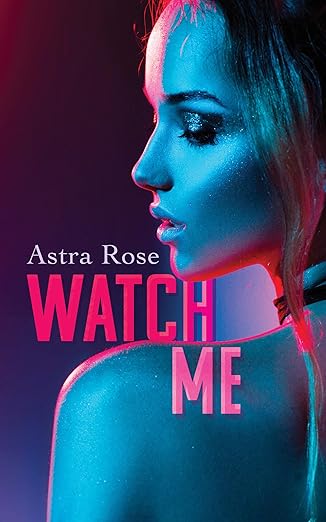
About Watch Me
Zoë thinks she has her life figured out. Ballet by day, stripping by night, and a great boyfriend… Well, a good boyfriend, other than two small problems: he’d rather look at his computer than at her, and he hates her job.
But nothing can make exhibitionist Zoë quit stripping. The rush of performing and the thrill of being seen almost make up for the lack of passion in her relationship.
When passion sparks at work, though—with a sexy older man—Zoë is forced to confront the reality of her life. Especially when she discovers the shocking truth…
That sexy older man is her boyfriend’s father.
Nick has one goal: to mend things with his son. He moved home and bought a house big enough for both of them, hoping it would bring them closer. But Tate moving his girlfriend in without asking? That’s just crossing the line.
Or at least, that’s what Nick thinks until he meets his son’s mysterious girlfriend, and discovers that the person who crossed the line… is him.
Thrown together, Nick and Zoë must navigate the thin line between temptation and betrayal, until they discover that fate has a way of making their forbidden connection impossible to ignore.
Watch Me is a story of forbidden love, scorching lust, and second chances that is strictly suitable for audiences 18+.
Purchase Link: https://www.amazon.com/Watch-Me-Astra-Rose-ebook/dp/B0D8L4J39X/
My Review of Watch Me
I purchased Watch Me, by Astra Rose through a KindofBook deal. All opinions stated here are my own. Although there is a warning of adult content in the book description, I would venture to say that possible trigger warnings might be in order, since kink can contain many triggers and this story has a lot of kink. This story features content which would have been considered x-rated in my younger days.
I was drawn to this book by the beautiful cover, plain and simple. I don’t do a lot of romance, but it is not unfamiliar to me, and if I’m going to read romance, I prefer it to be on the steamy side. This story met all of those expectations beyond a doubt. Zoe is caught up in trying to live out her mother’s dream of dancing with a ballet company. But, ballet classes are expensive and so is living, so to get by until her big audition with the ballet company, so her job as a stripper seems the perfect solution.
It’s a job her current boyfriend, Tate, doesn’t approve of, so when she starts doing lap dances, because that’s where the money is at, she has a hard time finding the right time to tell him about it. He’s always so distant. The more time that goes by, the more difficult it gets, and before she finds the right time, she finds that she has crossed a line with a sexy older man who comes into the club she works at, who she feels an irresistible connection with.
Although she knows she’ll never see him again, she can’t stop thinking about him. She becomes obsessed with him. As Nick does with her, hiding in the shadows to watch her at the club without her knowledge. It all seems harmless until he discovers that his son’s live-in girlfriend, who has been living in his basement, is the same girl he’s been obsessing over, and she recognizes him, as well.
As always, there are no spoilers here. If my summary has enticed you, you will have to read the book to find out how the whole situation is resolved to create the HEA (Happy Ever After), or HFN (Happy For Now), which is a requirement in every romance.
For adult readers of steamy romances who don’t shy away from sexual kink, this book is the ticket. Watch Me has an intriguing story line which leads to some unexpected outcomes. I give it five quills.
______________________________
About Kaye Lynne Booth
For Kaye Lynne Booth, writing is a passion. Kaye Lynne is an author with published short fiction and poetry, both online and in print, including her short story collection, Last Call and Other Short Fiction; and her paranormal mystery novella, Hidden Secrets; Books 1 & 2 of her Women in the West adventure series, Delilah and Sarah, and book 1 in her Time-Travel Adventure series, The Rock Star & The Outlaw, as well as her poetry collection, Small Wonders and The D.I.Y. Author writing resource.
Kaye holds a dual M.F.A. degree in Creative Writing with emphasis in genre fiction and screenwriting, and an M.A. in publishing. Kaye Lynne is the founder of WordCrafter Quality Writing & Author Services and WordCrafter Press, where she edits and publishes two short fiction anthologies and one poetry anthology every year amidst her many writing projects. She also maintains an authors’ blog and website, Writing to be Read, where she publishes content of interest in the literary world.
__________________________________
Kaye Lynne Booth does honest book reviews on Writing to be Read in exchange for ARCs. Have a book you’d like reviewed? You can request a review on the Book Review tab above.
Share this:

Halloween Hauntings Sale at WordCrafter Press
Posted: September 28, 2025 Filed under: Anthology, Book Promotion, Book Sales, Books, Dark fiction, Short Fiction, Stories | Tags: Anthologies, Books, Curses, Curses: Chronicles of Darkness, Dark fiction, Entertainment, Halloween Hauntings Sale, horror, Lingering Spirit Whispers, Midnight Anthology Series, Midnight Garden, Midnight Oil, Midnight Roost, Narrating the Paranormal Series, Once Upon an Ever After, Refracted Reflections, Spirits of the West, Tales from the Hanging Tree, Where Spirits Linger, Whispers of the Past, WordCrafter Press 8 Comments
I Love Halloween!
I may have mentioned that a few times before, but I really do love this time of year. October is such a fun month with scarecrows and jack-o-lanterns, creepy/crawlies, witches and warlocks, ghosts and demons, and all things of the scary variety. When my son, Michael, was little, maybe four or five, and approaching his first Halloween trick-or-treating with his older brothers and sisters, we talked through what he could expect. Our mantra became, “It will be scary, but it will be fun.” And it was. And for the rest of his short life, Halloween was always his favorite holiday, because he could dress up and pretend to be anyone or anything he wanted, at least for a short time.
2025 Dark Fiction Anthologies
So, when this time of year comes around, I always try to do special things to honor his memory. But, I’m a little old to dress in costume, so nowadays most of the fun stuff I do are things like putting out dark fiction anthologies, as I’ve done this year with Curses and Midnight Oil. But those are just two, the most recent in a whole slew of deliciously dark anthologies which have been published by WordCrafter Press. This year’s anthologies both turned out wonderfully. Curses: Chronicles of Darkness will be released Tuesday, September 29, and we’ll be running the WordCrafter Curses Book Blog Tour all this week, starting here, tomorrow, through October 3. Midnight Oil will be released October 28, just in time for Halloween, with a tour running all that week. I hope you’ll come celebrate both of these original anthologies with us this year
Other Halloween Hauntings from WordCrafter Press
During the month of October, all Halloween Hauntings (or dark fiction anthologies from WordCrafter Press), are on sale for our Halloween Hauntings Sale, October 1 – 31, 2025.

Midnight Dark Fiction Anthology Series
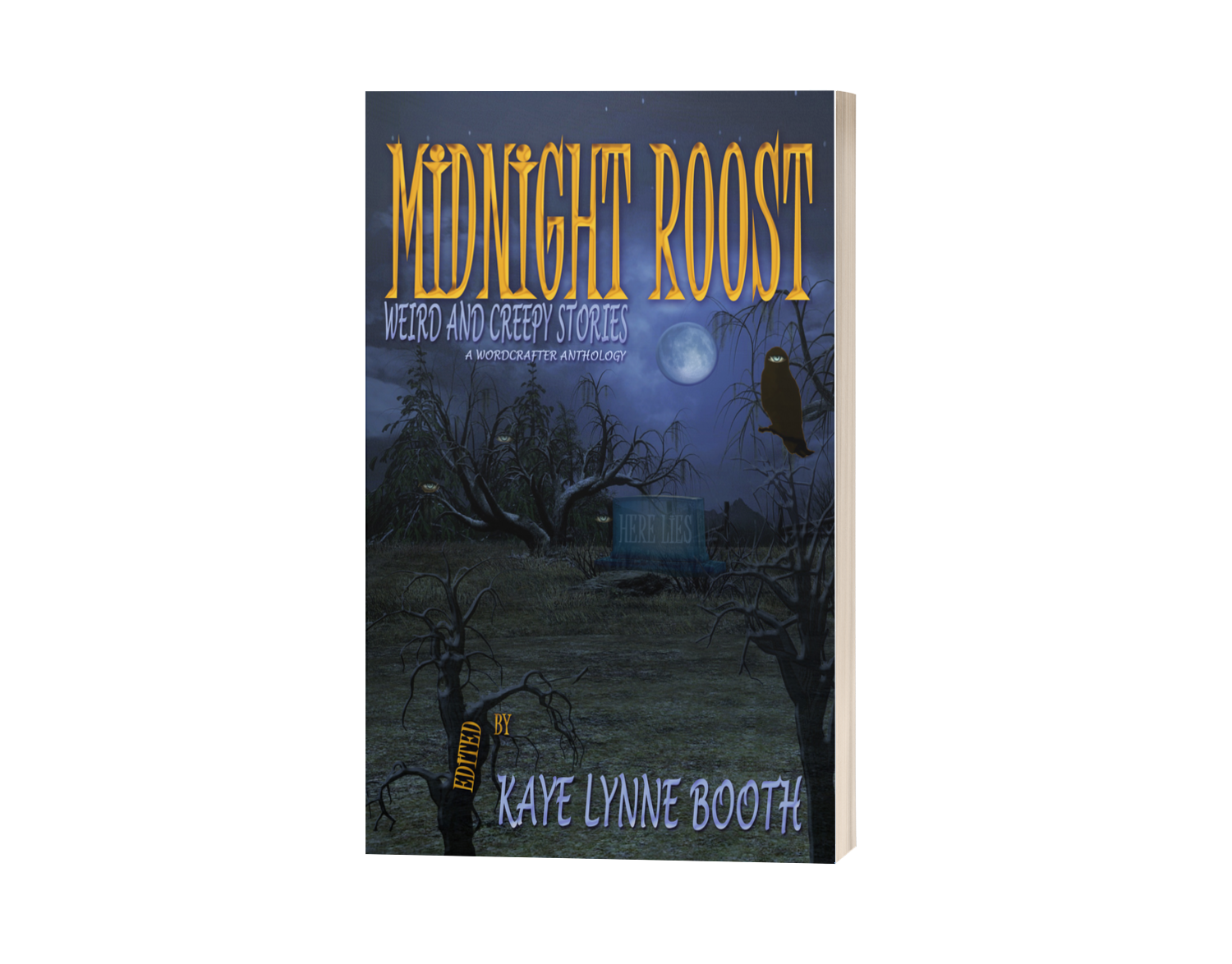
Midnight Roost and Midnight Garden, volumes 1 & 2 in the Midnight Dark Fiction Anthology series are both half price at $3.50 each through the links below.
Midnight Roost: Weird and Creepy Stories: https://books2read.com/MidnightRoost
Midnight Garden: Where Dark Tales Grow: https://books2read.com/MidnightGardenAnthology

Narrating The Paranormal Series
All three volumes in the Narrating the Paranormal Series are only .99 cents each through the links below.
Whispers of the Past: https://books2read.com/WhispersPast
Spirits of the West: https://books2read.com/SpiritsoftheWest
Where Spirits Linger: https://books2read.com/WhereSpiritsLinger1

Or you can get all three books in our trilogy volume, Lingering Spirit Whispers for only $2.99.
Lingering Spirit Whispers: https://books2read.com/LingeringSpiritWhispers
Themed Anthologies

You can get Tales From the Hanging Tree for only $2.99 through the link below.
Tales From the Hanging Tree: Imprint of Tragedy: https://books2read.com/Hanging-Tree

Once Upon an Ever After is only $2.99 through the link below.
Once Upon an Ever After: Modern Fairy Tales & Folklore: https://books2read.com/OnceUponanEverAfter

You can get Refracted Reflections for only $2.99.
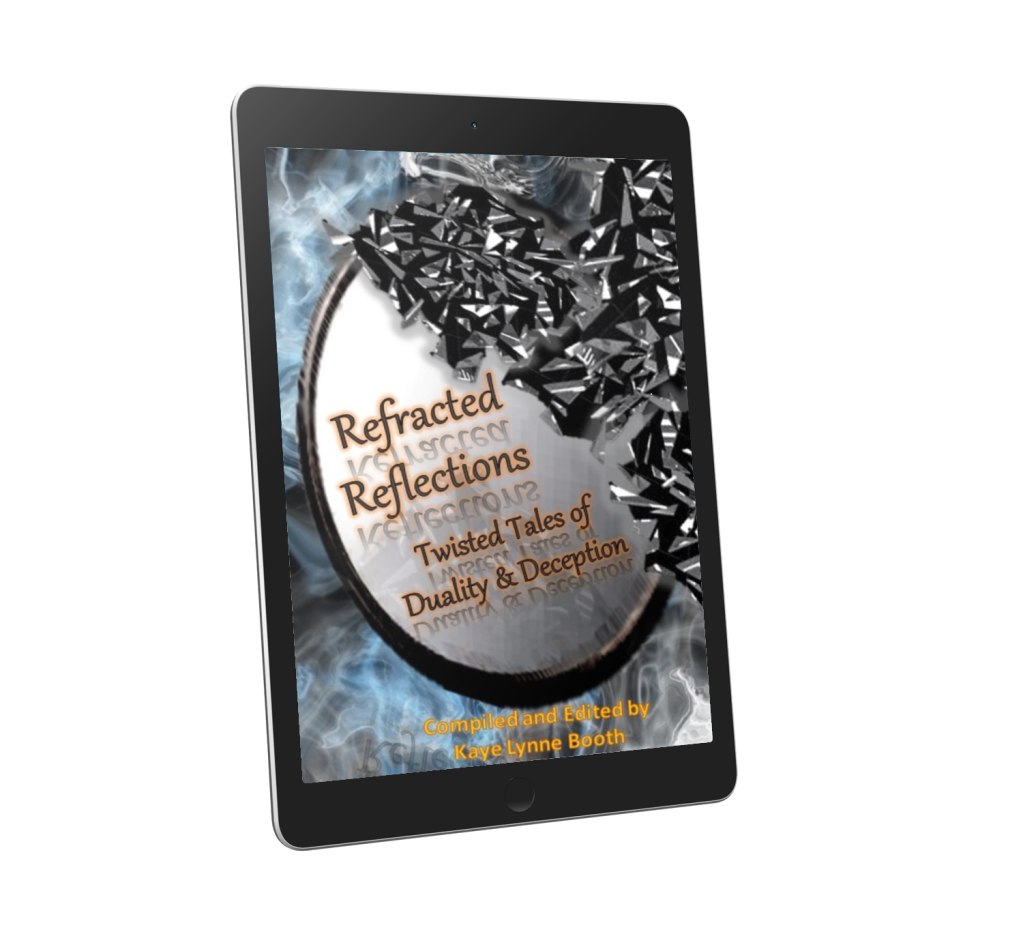
Refracted Reflections: Twisted Tales of Duality & Deception: https://books2read.com/RefractedReflections
Share this:

LINDSEY’S WRITING PRACTICE: WACKY WAYS TO WARM UP
Posted: September 3, 2025 Filed under: Fiction, Lindsey's Writing Practice, Writing, Writing Inspiration | Tags: Books, Creative Writing, Lindsey Martin-Bowen, Lindsey's Writing Practice, Poetry, Reading, Writing, writing exercise, Writing to be Read Leave a comment
Many writers I’ve known either suffer from writer’s block—or, like Ernest Hemingway—have discovered techniques to lift their minds above that block and leap over it into productive writing.. So if you suffer from writer’s block, even for a day, why try some of these
WACKY WAYS TO WARM-UP
OPEN a book—any book. Often, dictionaries work best. Close your eyes, then point to a page. Open your eyes. Start writing by using whatever word you pointed to. (No cheating here—force yourself to use that particular word.
If your finger rested on an article, such as “an,” “the,” or “a,” start with the word following it. I suggest using this focused free-writing just after you awake in the morning—or even after a nap later. It worked wonders for Ernest Hemingway.
SIT AT A COMPUTER or TYPEWRITER or next to YOUR JOURNAL with pen-in-hand. WRITE a poem. IMMEDIATELY. This need not be a prizewinner. You might begin by describing sunlight filtering through Venetian blinds or ominous clouds churning above your concrete patio. Play with the poem’s language for about fifteen minutes, then embark on your writing project.
FLIP through a MAGAZINE until you find a provocative photograph. Imagine you’re one of the persons in the photo. What are you saying? Thinking? Feeling? Why? Who are you talking with? As you were the character in the photo, write about what’s on your mind for fifteen to twenty minutes. Then start on your project.
JAUNT (or drive, if you must) to an enclosed shopping center (or perhaps an outdoor mall, if weather permits). Find an “outdoor” cafe that serves whatever beverage you prefer. Open your journal and describe your environs. Then watch the people around you. Describe their physiques, clothing, and movements. Capture their voices and words (or dialogue). Then begin your own project. I used this method to write a few chapters of my novella during graduate school. The indoor mall near my home contained a Winstead’s, which inspired me.
AND, of course, DREAM. Jot down your dreams in your journal (which I suggest keeping on a table adjacent to your bed). Respond to those dreams when you first awake. Then begin your project. I’ve also found this technique invaluable when words come to me, too. Many times I lose particular phrases if I don’t jot them down immediately—then worry about revising them later.
GOOD LUCK. If any of these techniques inspire you to plunge into your writing, please let me know. And I’d love to learn the details about which ones helped and what your writing project was.
About Lindsey Martin-Bowen
On Halloween 2023, redbat books released Lindsey Martin-Bowen’s 7th poetry collection, CASHING CHECKS with Jim Morrison. Her 4 th collection, Where Water Meets the Rock, was nominated for a Pulitzer; her 3rd, CROSSING KANSAS with Jim Morrison was a finalist in the QuillsEdge Press 2015-2016 Contest. In 2017, it won the Kansas Writers Assn award, “Looks Like a Million.” Writer’s Digest gave her “Vegetable Linguistics” an Honorable Mention in its 85th Annual (2017) Contest. Her Inside Virgil’s Garage (Chatter House Press 2013) was a runner-up in the 2015 Nelson Poetry Book Award. McClatchy Newspapers named her Standing on the Edge of the World (Woodley Press/Washburn University) was one of the Ten Top Poetry Books of 2008. It was nominated for a Pen Award.

_____________________________________
Did you know you can sponsor your favorite blog series or even a single post with an advertisement for your book? Stop by the WtbR Sponsor Page and let me advertise your book, or you can make a donation to Writing to be Read for as little as a cup of coffee, If you’d like to show your support for this author and WordCrafter Press.
________________________________
This post sponsored by WordCrafter Quality Writing & Author Services.

Whether it’s editing, publishing, or promotion that you need, WordCrafter Quality Writing & Author Services can help at a price you can afford.
Stop by and see what we have to offer today: https://writingtoberead.com/readings-for-writers/wordcrafter-quality-writing-author-services/
Share this:

Writer’s Corner: Independent Author (Key Word – Independent)
Posted: August 4, 2025 Filed under: Book Covers, Indie Publishing, Publishing, Self-Publishing, Writer's Corner, Writing | Tags: Author, Books, independent publishing, Publishing, Self-Publishing, Writer's Corner, Writing, Writing to be Read 6 Comments
Author’s Note: This was mistakenly published last Monday, along with the “WordCrafter News” post, so you may have already seen it. I’m re-publishing it on its scheduled day for those who may not have caught it on the earlier date. I’m not sure what happened, but please forgive the misposting.
I studied the craft of writing in the master’s program at Western State Colorado University from 2012-2016. At that time, the term ‘independent author’ left a bad taste in most author’s mouth. Times were rapidly changing in the publishing industry as independent publishing grew in popularity among authors who were tired of waiting to be discovered, which often took many years, and sometimes, not at all. But at that time, the term was associated with poorly written and cheaply manufactured books which were flooding the market by authors who not only wanted to bypass the gatekeepers of traditional publishing but also wanted to use independent publishing as a short cut, skipping over editing, as well, which in most cases, was badly needed.
As I said, things were rapidly changing in the publishing industry, and today, we’ve seen the ‘Big Five’ traditional publishers, dwindle down to the ‘Big Three’, as they struggle to try and keep up with those changes as independent authors take advantage of new technology which make it possible to publish themselves both cheaper and easier. With digital eBooks and aggregates like Draft2Digital, which use P.O.D. (Publish On Demand) for print books, there are no up-front costs to publish your work, and once everything is ready to publish, the whole process can be done in just a few hours. The rise of independent authors has forced traditional publishers to change and adapt, or become extinct.
The key word in ‘Independent Author’ is Independent. Independent authors don’t need to wait for someone to take interest in their work, but we must remember that this also makes us a business and we’re the boss, and we are solely responsible for the quality of the product we put out. Independent publishing should not be used as a short cut to avoid having your book edited, because in most cases, it’s pretty obvious.
That being said, many authors today chose independent publishing because of the control it gives them. Like I said, we are our own bosses. That means we can control the quality of our work, and everything else: title, cover, price, production, and promotion. Certainly, this was one of the main reasons that I chose to become an independent author after gaining a five-year contract for my first novel and finding that having a publisher wasn’t giving me any advantage in selling Delilah. The cover they had given me was not representative of the character or the story, and as far as I could tell, they provided little or no promotion. I began WordCrafter Press and started publishing collaborative projects long before that contract ran out, and when it did, I revised Delilah to be the first in my Women in the West series. I had to learn new skills to provide my own covers, and find people willing to edit my work in an exchange of services due to my limited budget, but when the book was re-released, I sold more copies a month than my publisher had in five years.
With my recent computer issues, I was glad that I had control of my work and the decision-making process. Because I had limited computer time and was writing in longhand and doing most of my publishing and promotional tasks on my phone, I wasn’t able to keep up with my promotion schedule and had to push back the publishing dates on my own work in order to keep my collaborative projects on schedule and as the boss and decision maker, I was able to do that. It was a tough decision. I have the second book in my Time Travel series near ready to publish, and although I’ve outlined the third book in the Women in the West Adventure series, I’ve not yet begun to write it. Both of these books may need to be pushed back so far as to be added to next year’s production schedule, but I’m thankful for the freedom to do so. Had I been working with traditional publishers, my deadlines would have been set in stone, and I would not have been able to make them.
Just as the child who can’t wait to grow up soon learns that growing up means taking responsibility for one’s self, so the independent author is also responsible for creating and presenting their own work to the world. Hopefully, we all want that to be the best work that it can possibly be, and we will take the proper steps to ensure that it is, making the best decisions possible for our work. With freedom, comes responsibility, so use both wisely in your author journey.
Until next month,
Happy Writing!
About Kaye Lynne Booth
For Kaye Lynne Booth, writing is a passion. Kaye Lynne is an author with published short fiction and poetry, both online and in print, including her short story collection, Last Call and Other Short Fiction; and her paranormal mystery novella, Hidden Secrets; Books 1 & 2 of her Women in the West adventure series, Delilah and Sarah, and her Time-Travel Adventure novel, The Rock Star & The Outlaw,as well as her poetry collection, Small Wonders and The D.I.Y. Author writing resource.
Kaye holds a dual M.F.A. degree in Creative Writing with emphasis in genre fiction and screenwriting, and an M.A. in publishing. Kaye Lynne is the founder of WordCrafter Quality Writing & Author Services and WordCrafter Press. She also maintains an authors’ blog and website, Writing to be Read, where she publishes content of interest in the literary world.
_______________________________________
Did you know you can sponsor your favorite blog series or even a single post with an advertisement for your book? Stop by the WtbR Sponsor Page and let me advertise your book, or you can make a donation to Writing to be Read for as little as a cup of coffee, If you’d like to show your support for this author and WordCrafter Press.
_____________________________________
This segment of “Writer’s Corner” is sponsored by the Robbie’s Inspiration blog site, where you can find ideas on writing and baking with hostess, Robbie Cheadle.
Share this:

Welcome to the WordCrafter “Shadow Blade” Book Blog Tour
Posted: July 21, 2025 Filed under: Blog Tour, Book Promotion, Books, Fantasy, romance, WordCrafter Book Blog Tours, WordCrafter Press | Tags: Blog Tour, Book trailer, Books, Chris Barili, Denari Lai Series, Fantasy, Fantasy Romance Adventure, Fiction, Shadow Blade, WordCrafter Book Blog Tours, WordCrafter Press 1 Comment
Welcome to Writing to be Read and the WordCrafter Shadow Blade Book Blog Tour, where we’re launching the release of the second edition of Shadow Blade, the fantasy adventure/romance by author Chris Barili. Shadow Blade is now Book 2 in the Denari Lai series by Chris Barili. WordCrafter Press is also releasing Book 1 of the series for the very first time, but the cool thing is, if you purchase the WordCrafter Press edition of Shadow Blade, you can also get the first book absolutely free.
Give Away
If you follow the tour and leave a comment at each stop to let us know you were there or share your thoughts about the book, you can win a free copy of Shadow Blade. We’re giving away three digital copies of the book, and one lucky winner will receive a print copy of the book signed by author Chris Barili. Each stop you comment on earns you an entry into a random drawing, and the winners will be announced on Writing to be Read in the “WordCrafter News” post on July 27.
Tour Schedule
July 20-25, 2025
Monday, July 21: Writing to be Read- Book Trailer
Tuesday, July 22: Robbie’s Inspiration – Guest post
Wednesday July 23: Undawnted – Interview with Chris Barili (Leave comments on Writing to be Read)
Thursday, July 24: Roberta Writes – Reading Excerpt from Baiting the Hook, narrated by Jeff Bowles
Friday, July 25: Writing to be Read – Live appearance by Chris Barili
And now that I’ve told you a little about the tour, let me tell you about this dangerous and exciting adventure into the Denari Lai universe.
About Shadow Blade
Ashai Larish is an assassin from the brutal Denari Lai order. Religious zealots, Denari Lai are kept loyal through an addiction to the same magic that makes them unstoppable. They have become the primary weapon for the nation of Nishi’iti, and in a hundred years, they have never failed.
Until now. Ashai must kill Pushtani King Abadas Damar and his daughter/heir, Makari. He infiltrates the king’s inner circle, putting him in the perfect place to strike, with only Captain Bauti of the Royal Guard at all suspicious of Ashai’s intent.
Except Ashai has fallen for Makari and cannot complete the hit. When a second Denari Lai kills the King, Ashai finds himself fighting for Makari’s life instead of taking it. To make matters worse, the order cuts him off from his magic, leaving him weakened and in withdrawal.

Meanwhile, far north in the Pushtani mines that border Nishi’iti, a slave named Pachat learns that his love, a hand slave to Makari, died at the hands of a Denari Lai assassin. His grief ignites a slave rebellion, and Pachat becomes the unwilling leader of the revolt. Urged on by Nishi’iti guerrillas, the rebellion sweeps across the borderlands, threatening to erupt into all-out war. Yet all Pachat wants is to avenge his beloved’s death by killing the assassin, so he walks away from the rebellion to seek when it needs him most.
As Pachat makes off for the capital of Dar Tallus, Ashai is forced to rely on that city’s organized crime gang to hide from the second assassin, and from Bauti’s guards. Despite his best efforts to hide it, Makari discovers Ashai’s true identity, and suddenly, he finds himself without her love, without his faith, and without the Denari Lai. At rock bottom, he doubts he can do anything but cause more damage.
Can Ashai kill the second assassin and win back Makari’s love? Will Pachat gain the revenge he so lustily seeks?
Purchase Link: https://books2read.com/ShadowBladeDenariLai
Book Trailer
About Author Chris Barili
Currently oppressed by his day job, Chris has set sights on retiring after 42 years in the Intelligence Community and writing full-time. Chris Barili writes all kinds of stories, and has published fantasy, science fiction, horror, western, paranormal romance, and most recently crime, with a noir story in the inaugural print edition of Toe Six Magazine. He is author of the self-published, weird western Hell’s Butcher series, and also writes under the pen names B.T. Clearwater (Supernatural romance) and T.C. Barlow (western). Chris is a retired intelligence officer, having served over 45 years between active duty, contractor, and government employee roles. He lives in Colorado with his wife.

That wraps up today’s stop on the WordCrafter Shadow Blade Book Blog Tour. To learn more about the book, the Denari Lai series, or about author Chris Barili, just follow the tour via the links in the Tour Schedule above. Just keep in mind that each link will not be active until the attached stop goes live, so you can’t get sneak previews of upcoming stops. I do hope you’ll join us. We’ve got an interview with the author and a live event where you can chat with the author,, excerpt readings, and the inspiration for this tale coming up later in the week. And don’t forget, the author is giving away three digital copies and one signed print copy of Shadow Blade, and all you need to do is comment to enter. The more stops you visit, the more entries you can get.
Join us tomorrow on Robbie’s Inspiration. We’ll have a guest post where author Chris Barili shares his thoughts on the inspiration for the story and the series.
________________
Book your WordCrafter Book Blog Tour today!
Share this:

Chatting with the Pros: Todd Fahnestock
Posted: January 11, 2025 Filed under: Book Review, Chatting with the Pros, Fantasy, Fiction, Interview, Review | Tags: Book Review, Book Reviews, Books, Chatting with the Pros, Fantasy, Interview, Todd Fahnestock, Tower of the Four: The Rise of Magic, Writing, Writing to be Read 1 Comment
My guest this month on “Chatting with the Pros” is Todd Fahnestock, a talented epic fantasy author for both adults and teens. I met Todd, kind of, when we both participated in the 2024 Novel Writing Story Bundle. In fact, his nonfiction writer’s resource, Falling to Fly, is the subject of this month’s “Review in Practice”, and you can catch that post this coming Monday.
He is the author of many epic fantasy series and that fascinates me because epic fantasy spans long periods of time, with multiple characters and multiple storylines to follow. As an author, I’ve been playing around with writing in multiples, (see this month’s “Chatting with the Pros” segment), I find it fascinating to learn how other authors handle this aspect of writing. So, let’s get right to the interview.
About Todd Fahnestock
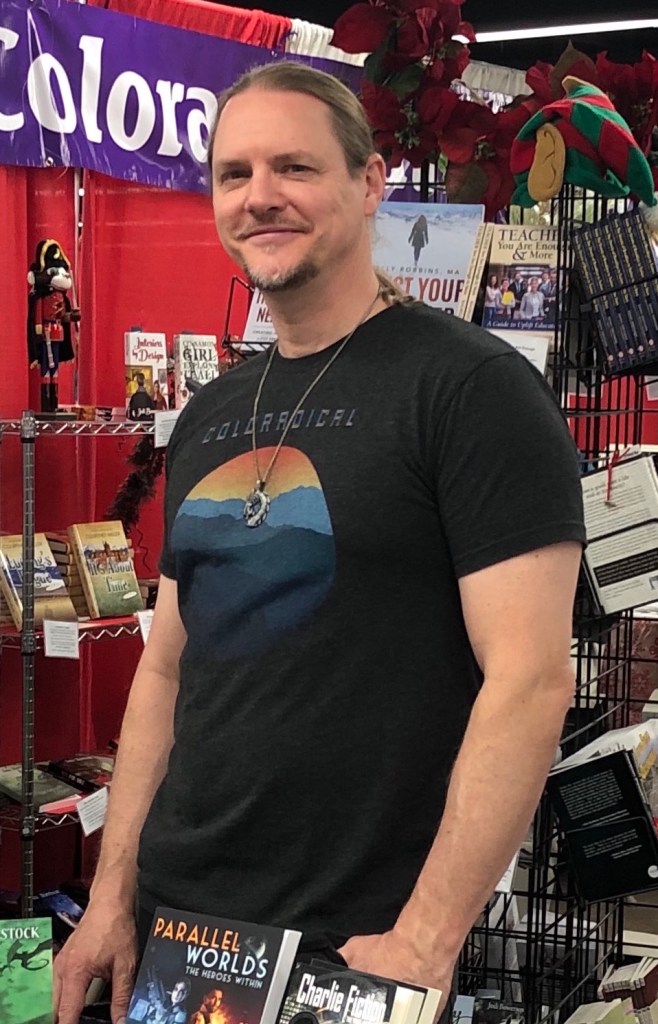
Todd Fahnestock is an award-winning, #1 bestselling author of fantasy for all ages and winner of the New York Public Library’s Books for the Teen Age Award. Threadweavers and The Whisper Prince Trilogy are two of his bestselling epic fantasy series. He is a founder of Eldros Legacy—a multi-author, shared-world mega-epic fantasy series—three-time winner of the Colorado Authors League Award for Writing Excellence, and two-time finalist for the Colorado Book Award for Tower of the Four: The Champions Academy (2021) and Khyven the Unkillable (2022).
His passions are great stories and his quirky, fun-loving family. When he’s not writing, he travels the country meeting fans, fabricates philosophy with his son, plays board games with his wife, dissects movies with his daughter, and plays to the point of bruises with Galahad the Weimaraner.
Visit Todd at toddfahnestock.com.
Interview with Todd Fahnestock
Kaye: Tell us a little about your background or your author’s journey.
Todd: Ha ha! Well, if you want the entire story, I highly recommend reading Falling to Fly, which is a memoir I wrote about this very question. It goes into detail for about 50K words about my writer’s journey, starting with the little beginnings of discovering epic fantasy novels when I was fourteen to speaking in front of a packed-house at Planet Comicon in Kansas City.
I’ll try to do a shorter version here.
So when I was in 8th grade, I was waiting for my brother to pick me up from school, and I wandered over to the public library which was, conveniently, just across the street from Smiley Junior High. After thumbing through the Sports Illustrated Swimsuit editions in the magazine section, I started wandering through the stacks looking for something a bit more mentally stimulating. I stumbled across Lloyd Alexander’s The Book of Three. The cover just captured me; it transported me away to a place that felt foreign and familiar at the same time, so I opened the book and…
Wow. I hadn’t even known what I was looking for, but The Book of Three had a huge, helping of it. I got lost in the epic fantasy trope.
The story is about a young man my age who has no idea about the magical, dangerous world outside his little farm. The highest honor he can imagine is being promoted to assistant pig keeper within the farm, but he gets swept into an epic journey where he will fight alongside kings, battle legendary monsters, and foil supernatural villains.
I was hooked.
In fact, in a very real way, fantasy books saved my life. My parents were going through a divorce at the time, and in my real life I felt clipped free on a tumultuous ocean, drifting in a boat with no rudder. Fantasy books became a safe port for me. Inside a fantasy story, I could feel powerful. I could feel heroic. I could be unafraid. I clung to those stories like a lifeline.
I went on to read Weis & Hickman’s Dragonlance series, Brooks’ Shannara chronicles, and Piers Anthony’s Xanth series. I devoured every fantasy book I could find.
When I got a little older—eighteen years old to be exact—the most amazing thing I could think to do with my life was to write stories like the ones that had captivated me in my junior high days. So I did. I started writing my first novel in an Independent Study class during my senior year.
It was a magical story about a nigh-invincible, acrobatic swordsman named Koric… with absolutely NO possibility of being published. But I thought it was amazing, so I wrote a second, and a third, and… well, here I am now.
Kaye: Why do you write fantasy as opposed to other genres you might write?
Todd: I’ve actually written in a few other genres: memoir, middle grade, time travel. I even have a 1980s road trip, coming-of-age story with a twist of magic (not sure exactly what genre that is), but I always come back to high fantasy.
I think it’s for two reasons. First, fantasy is completely open-ended. I can get as imaginative as I want while doing little to no research. Anything about the world I don’t know, I can simply invent, and that’s my strong suit.
Second, high fantasy is optimistic. It’s hopeful. High fantasy is the very essence of triumph. I drag my characters through hell, but it is with the hope that they will find their way through the dark, that they will prevail in the end. I love that trope. I simply can’t get enough of it.
So that unique combination simply draws me back again and again. If I’m feeling silly, I can create some snark to serve my mood, a crusty little gromnambulan who rides on the character’s shoulder and has a penchant for eating poker chips or something. If I’m feeling angry and vicious, I can pour all of that negative energy into the most vile villain I can create. I can make that pessimism useful to convey the overall optimism I hold by coming up with a way for my heroes to defeat him. And, of course, I love creating heroes most of all, unlikely misfits who find a way to prevail or—I also love this one—destined characters with unbelievable abilities who are going to be put to the utmost test of their strength/brilliance/competency.
Kaye: You write epic fantasy. Is it more difficult to keep the stories going in epic proportions?
Todd: Ha ha! I don’t know that I’d say it’s more difficult. More difficult than what? Than doing research on how strains of a biological weapon breed and multiply so that I can accurately depict a world-threatening event in a thriller? I don’t know. I’ve never written a thriller.
I know I hate doing research and I love imagining things, looking for my own internal logic rather than sticking to the hard facts of the real world. So maybe in my case, it’s easier to keep stories going in epic proportions than doing that. Epic fantasy is what I’ve known for decades. It seems natural to me.
But it’s not easy.
I do struggle often with trying to fit something together over a larger arc, but I’m getting better at it every time I finish a longer series.
I think holding the threads of an epic story takes up a lot of RAM in my head. In the real world, I’ll forget names. I’ll forget dates. My wife often gets frustrated with me because I can’t remember to bring something up from downstairs that she asked me to get literally two minutes ago, but I think a lot of this is because most of my brainpower is subconsciously sorting plot threads so that when I get to the keyboard, things seem to ‘magically’ sort themselves out.
That’s just a theory, but it seems applicable.
Kaye: You are an author of fantasy for all ages. Can you talk about the main differences in writing teen and young adult fantasy, and adult fantasy?
Todd: Sex.
Ha ha! No, not entirely. But that’s a big one. When people come up to my booth and ask me what age range a book is, that’s what they’re mostly asking about. I’ve interacted with many readers at many cons—and I’m mostly talking about parents who are looking for something for their teenage or tween-age readers—and they don’t care that much if Khyven the Unkillable is hacking a sword through a mythical cat beast. They wanna know if there’s any graphic snogging in the book.
I’ll even often have some pretty creepy or frightening descriptions of monsters—bordering on horror—but it doesn’t seem to bother parents or young audiences. I think young readers can handle more than we give them credit for. And a lot of them are hungry for that kind of thing.
Other factors, especially with readers younger than eleven or so, is the vocabulary. Too many big words and you’re gonna lose them. But there are a LOT of precocious eleven- and twelve-year-old readers out there, and the more epic—and complicated—the story, the more they love it. It’s interesting.
For the last three or four years, I’ve been hanging in the PG-13 range (Eldros Legacy). There are a few romantic relationships in that 5-book story, but it’s just a bit of kissing and if it’s something more, it’s only implied. We close the door, put a sock on the handle.
Adults often WANT the spicier side of things. They want a little more description of the snogging, a bit of a heavier emphasis on the snogging. So when I’m writing an adult story, I try to up the sexy quotient. I don’t think I ever get “erotica” graphic, but I dance right up to the edge of it.
Kaye: Which do you enjoy writing most, heroes or villains? Why?
Todd: Heroes. I never get tired of exploring how and why someone becomes a hero, whether it’s to themselves or to the world, whether it’s a badass warrior who’s selfish and needs to learn to put others above himself or a geeky high school kid who needs to find his confidence.
I think we’re all trying to find our inner hero, whatever that hero looks like. Joseph Campbell stipulates in his book The Hero with a Thousand Faces that we have a regular cycle we go through as humans.
- Step 1: We start in our comfort zone (status quo)
- Step 2: We are pushed into the Special World (something NOT the status quo)
- Step 3: We go through trials
- Step 4: We reach a crisis point
- Step 5: We find the wisdom/strength/magic sword to overcome the crisis
- Step 6: We defeat our internal or external demons
- Step 7: We return to the status quo
There are other details he illuminates, but those are the basics. This is the format of the Hero’s Journey, and it is used in hundreds of stories you’ve read or movies you’ve seen. The original Star Wars is a classic example, but you can find it everywhere. This format is used over and over and over again, and the reason is because it resonates so powerfully, so intimately, with us. And the reason it does is because we LIVE this journey almost every day.
- Step 1: We head out to work (status quo)
- Step 2: We come across a frustration (car won’t start).
- Step 3: We go through trials (inspecting the car/Googling the problem/finding the part/installing it ourselves or taking it to a mechanic).
- Step 4: We reach a crisis point (yelling and throwing the wrench/kicking the fender).
- Step 5: We find the “magic sword” (money, time, effort).
- Step 6: We fix the problem.
- Step 7: We get back on the road…
There are a million ways to solve these problems, and there are a million different kinds of heroes to solve these problems. I haven’t yet tired of exploring all the different facets.
As an aside, I do enjoy writing villains, too. I love it. It allows me to dance in my dark side, to imagine the very worst of the worst. It’s… cathartic. And frightening. Thinking of the things that lurk in my dark side sometimes makes me shiver. But bringing those thoughts into the light…
…and then having the heroes bring the smackdown is very satisfying.
There’s a scene in the fifth Eldros Legacy book where one of the characters has been abused and twisted and tormented by one of the villains. She finally gets the chance to bring justice to him in a very personal (and bloody) way. I stand up and cheer when I get to that scene.
Kaye: Would you tell us about your podcast, Fantasy in the Margins?
Todd: Absolutely. This is a new thing I started in November of 2024. Essentially, I release a three-chapter chunk of the audio book Khyven the Unkillable (the first book in the Eldros Legacy: Legacy of Shadows series) each week, and then I do an author’s commentary on the chapters. Sometimes I’ll talk about what I liked the most—or hated the most—about its creation.
Oftentimes I’ll break it down as though I’m teaching a writing class on how to put together a story. I talk a lot about Save the Cat (a writer’s how-to book). It’s a lot of fun.
It’s also a great way to get the audiobook for free.
Kaye: You sell direct on your site. In addition to books, you also sell merchandise related to your books. I took a peek, and there’s some pretty cool stuff there. Does selling direct from your site offer you an advantage as an author?
Todd: It has huge advantages as an author.
My policy is to use all the platforms I can. I’m on Amazon. I’m in bookstores. If someone wants to find me or has a preferred platform they like to buy from, I make it as easy as possible.
But I spend a lot of time meeting readers face to face. I make and build relationships with them, and they buy directly from me at those events and online. Often, they would like to continue buying directly from me, and I want to let them. Thus, the website.
An added benefit is that if I sell directly, I make more money per book.
The merchandise is fun, too. That was started by my assistant, and it’s awesome to think people have Wishing World blankets or Eldros mugs in their houses.
I think it also helps in building my brand. The more stuff with my name and/or my characters on it that is out in the world, the more recognizable my brand becomes.
Kaye: Your work has won or been considered for many awards over the years. Which of these would you say you are the most proud of, and why?
Todd: Oh… That’s a tough one. It was such an honor to have one of my short stories (written with my friend Giles Carwyn) be selected by the New York Public Library’s Books for the Teenage. It was completely unexpected, and we were actually living in New York at the time, so we got to go to the reception.
Getting nominated twice for the Colorado Book Award (for Tower of the Four: The Champions Academy and Khyven the Unkillable) was quite an honor.
But I think my favorite are my wins from the Colorado Authors League. I have three of those now for Tower of the Four: The Champions Academy, Khyven the Unkillable and Ordinary Magic, a memoir about me and my 14-year-old son hiking The Colorado Trail, a 486-mile trek from Denver to Durango.
Kaye: What is the best writing advice you’ve ever received?
Todd: Oh jeesh. You’re going to make me pick ONE?
Sorry. Can’t do it. Gonna give you three.
Margaret Weis, author of the Dragonlance novels, once said to me when I was a wide-eyed fledgling novelist:
“You can’t listen to the bad reviews… but you can’t listen to the good reviews either.”
It was like a Zen Buddhist koan. I totally understood the first part. Don’t let the haters get you down, right? Got that. Old wisdom.
But the second part? I puzzled over that for years. Why NOT listen to the good reviews? Isn’t that the whole point? People who love what you do telling you so?
Yeah, I didn’t get it until I started having success… and then it hit like a hammer.
When Tower of the Four won awards and Khyven the Unkillable was creating a buzz behind-the-scenes in the publishing industry, I was on top of the world. I felt like I was finally hitting my artistic stride. I could do no wrong.
Then I went to work on my next book. The demons in my mind swarmed me: “What if this book isn’t an award winner? What if you’ve lost your mojo?”
I completely locked up. I struggled to get to the midpoint and then gave up with a gasp, thunderstruck and full of fear that I’d lost my ability to write.
I had to set aside that work-in-progress and intentionally write a “crappy novel.” That is to say, write without fear of disappointing anyone, especially myself. To just let myself create whatever came out. That broke the log-jam. I found my stride again, but I will remember that lesson forever.
Another great bit of advice was delivered by Jim Butcher, author of the Harry Dresden Urban Fantasy phenomenon. He said:
“Don’t worry about getting ridiculous in your writing. You are in far greater danger of losing a reader to boredom than from a reader saying, ‘This is too silly. I can’t possibly read more of this because it’s so ridiculous.’”
I carry that with me everywhere. To me it means: be brave when you write. Write the things that scare you, things you’re afraid people will judge. That’s the good stuff. That’s the stuff people identify with. I assure you, you’re not alone in feeling like others might judge you. And the readers that feel those same things will develop a kinship with you, the author who understands them. That’s what makes fans.
Lastly, Dean Wesley Smith once said during his Writing into the Dark class:
“Stay in your creative mind when you write.”
He clarified by saying writers have a “creative mind” and a “critical mind.” My impression was that Dean didn’t have much use for the “critical mind.” Even when editing. He said that the creative mind, when it comes across something that doesn’t work in your writing, will say something like, “Oooo! This gives me the opportunity to create this.” Or “Oh wow. I see what I was trying to do here. I wanna rewrite this so that I can get closer to my vision.”
The critical mind, on the other hand, says things like, “This chapter sucks! What were you thinking?”
In short, the creative mind is excited.4 The creative mind wants to build.
The critical mind wants to criticize. It is not a builder.
As a writer, stay in the creative mind.
Kaye: Thank you for being my guest today, Todd. It’s been a pleasure chatting with you. Before we go, tell us where readers can go to find out more about you and your books.
Todd: Thank you for having me! This has been a treat.
As to finding my books, you can get them from my website: toddfahnestock.com
For ebooks, it’s cheaper for you (and more money for me). And if you’re a hardback or paperback reader, you can get signed copies!
You can also get unsigned books on Amazon or order them from your local bookstore, too. They’re all there.
Thanks again, Kaye. Have a fantastic weekend!
About Tower of the Four: The Rise of Magic

In a world where magic binds fate, trust is the most dangerous spell of all.
Ovalia was once a powerful mage, bound by loyalty to her closest companions. But when betrayal strikes, her friends—four trusted allies—cast her into The Dreaming, a nightmarish dimension where time and reality twist and tear apart. There, a dragon of unimaginable power incinerates her in a burst of fiery wrath.
But death is not the end.
Resurrected by an ancient magic, Ovalia emerges from The Dreaming stronger, fiercer, and driven by a singular purpose: vengeance. With her power growing in ways she cannot yet control, she will stop at nothing to make her former friends pay for their treachery. Yet the deeper she plunges into a world of revenge, the more she discovers the dark secrets of those she once trusted—and the devastating price of her resurrection.
Now, as shadows close in and alliances shift, Ovalia must decide whether she will remain a weapon of destruction… or become something far more dangerous.
My Review of Tower of the Four: The Rise of Magic
I received a digital copy of Tower of the Four: The Rise of Magic, by Todd Fahnesstock, in exchange for an honest review. All opinions stated here are my own.
Tower of Four: Rise of Magic, comprises episodes 7-9 in Todd Fahnestock’s Tower of the Four fantasy series. Even though I have not read episodes 1-6, I found the rules of the world clearly outlined where needed and had no problem following the later episodes in this volume.
The world building is top notch, as Fahnestock does a great job of introducing us to a world of magic, where seemingly nothing is impossible. Or is it? Fahnestock takes us on an adventure, as magic is conception on this world, through several turns of the tables over the centuries, cluing readers in to the rules of magic, and showing us just what it can do.
The characters are well-developed, but unpredictable, which in epic fantasy, can be a good thing. You never know who will be tempted or tricked into switching sides, and of course all good villians have an unsuspected trick up their sleeve. In this epic tale, the villians have more than a few. But, as is often in life, the character’s true inner selves, may be their downfall.The possession of magical powers changes people in unsuspected ways, and those who are at first percieved as heroes, may later be seen as villians in this tale of betrayal and revenge.
A magical adventure that is truly entertaining. I give Tower of the Four: The Rise of Magic five quills.
____________________________________
Did you know you can sponsor your favorite blog series or even a single post with an advertisement for your book? Stop by the WtbR Sponsor Page and let me advertise your book, or you can make a donation to Writing to be Read for as little as a cup of coffee, If you’d like to show your support for this author and WordCrafter Press.
_____________________________________
This segment of “Chatting with the Pros” is sponsored by The Rock Star & The Outlaw and WordCrafter Press.

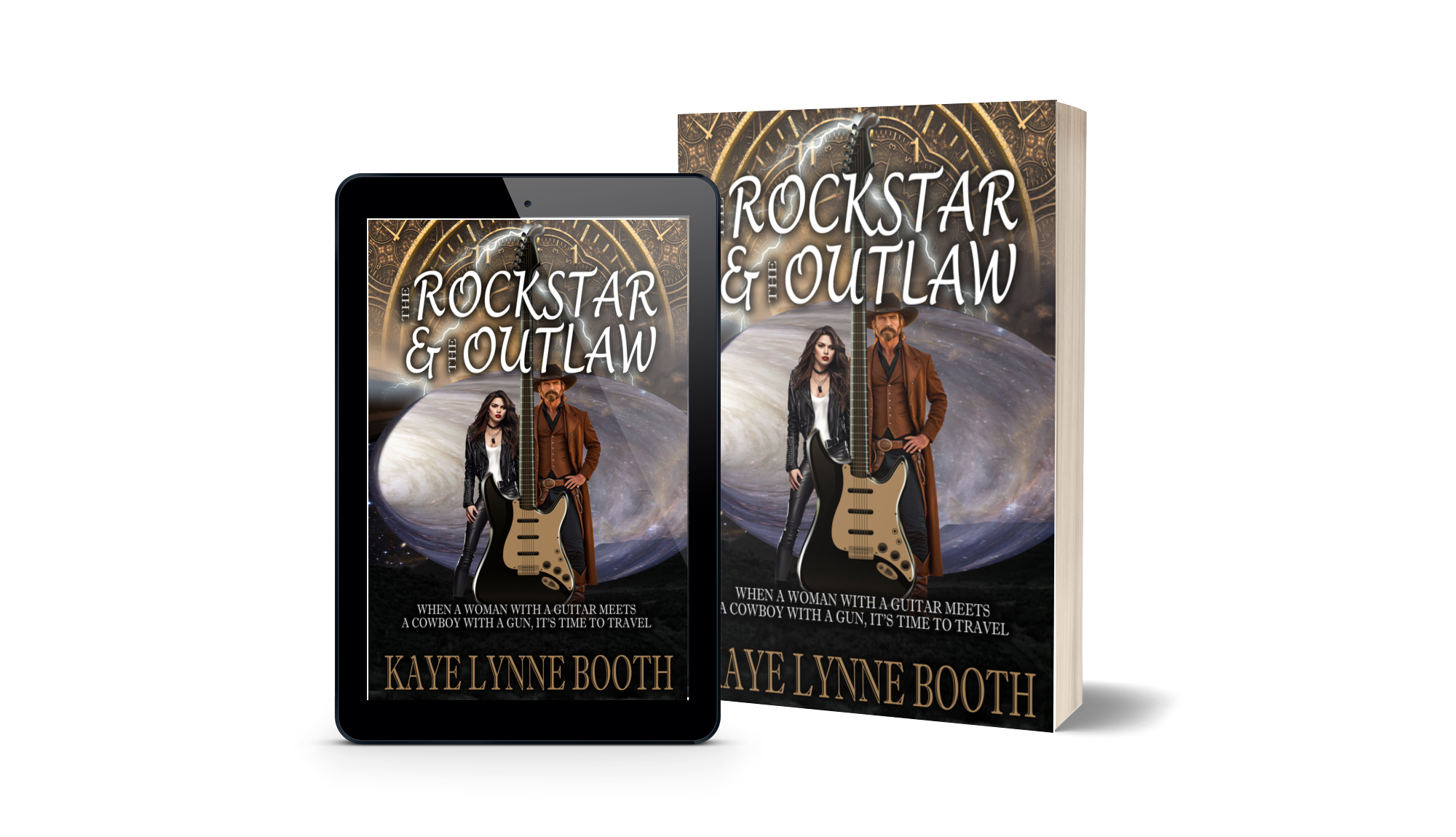
A time-traveler oversteps his boundaries in 1887. Things get out of hand quickly, and he is hanged, setting in motion a series of events from which there’s no turning back.
In 1887, LeRoy McAllister is a reluctant outlaw running from a posse with nowhere to go except to the future.
In 2025, Amaryllis Sanchez is a thrill-seeking rock star on the fast track, who killed her dealing boyfriend to save herself. Now, she’s running from the law and his drug stealing flunkies, and nowhere is safe.
LeRoy falls hard for the rock star, thinking he can save her by taking her back with him. But when they arrive in 1887, things turn crazy fast, and soon they’re running from both the outlaws and the posse, in peril once more.
They can’t go back to the future, so it looks like they’re stuck in the past. But either when, they must face forces that would either lock them up or see them dead.
Purchase Link: https://books2read.com/RockStarOutlaw
Share this:

Undawntech: Balancing Technological Freedom and Oppression in 2025
Posted: January 3, 2025 Filed under: AI Technology, Undawntech | Tags: ai, AI Technology, artificial-intelligence, Books, DL Mullan, Fiction, Undawntech, Writing, Writing to be Read Leave a comment
Greetings, Undawntechs!
A new year is upon us. Have you made your New Year’s Resolutions yet?
Do you want to publish a book: write, edit, and research? Are you fascinated
by technology in the arts?
Welcome to 2025, the year technology becomes important as a means
of creation, experience of freedom and oppression, simultaneously. Fret not,
Undawntech will help creators navigate this exciting and frightening journey.
Did you know that Artificial Intelligence (AI) will affect you in each
step of creation? Many writers research the content of their plot lines
before embarking on the writing process. AI can help writers with
their source material like many people already use ChatGPT, GROK, and
others. These programs also fact-check. As editing software, writers
can clean up their writing and create better, more understandable
products with the use of AI. AI is like having a beta reader at your
disposal. As stories are written, writers can employ AI to give them
word and phrase prompts, as well as maintain verb tenses and
continuity within a work. More writers are opting for the independent
publishing route these days. Formatting and distributing a manuscript
with AI assistance, indie creators are able to bypass stuffy publishing houses
for a direct line to their audience.
However, creators of all types, including writers, need to weigh the
advantages with the disadvantages of using AI. Yes, Artificial
Intelligence helps writers in many awesome ways: creating content,
editing for clarity, and designing book covers. What AI does not give
writers are original plots and characters, authentic voices, real
information over “fact-checking” mis-/dis- information, and other
errors. Some creators have already stepped into the public arena by
rejecting AI meddling in their content while others embrace it.
As an artist, editor, musician, producer/publisher, filmmaker, and
writer, Artificial Intelligence has opened up the expanse of
creativity and imagination for me. I design book cover art with and
without the use of AI (Undawnted/Author Central). I use spell check
and grammatical software to correct errors in my typing/writings. With
my musical background in orchestra, band, chorus/singing, lyrics,
poetry, and arrangement, this new technology has given me the ability
to write my own songs (Quantum Time), as soundtrack singles and albums
for my written work (Undawnted/Yuletide Celebration). AI allows me to
publish my content as an Indie writer and publisher. Shorts, poetry
slams, and music videos are assisted by the use of AI, including
uploading to video sites (Undawnted on YouTube). Writing, no matter
the author, can be uplifted by the use of technology.
Conversely, if you do not know who you are, what your
authoritative/authentic voice is, or what you believe in, then the use
of technology will put your deficits on display, instead of hiding
them. Terrible writers will use AI to become mediocre writers. Just as
vivid and imaginative visions can become cookie-cutter dribble with
the use of AI. The problem with making writing easier with technology
is that writers become complacent, allowing AI to do their thinking
and creating for them. To combat the challenges of technology,
creators must be a seasoned expert in their craft. The better creators
know themselves; the better creators can use technology to improve
their art, music, filmmaking, and writing.
Just like tech companies, multinational corporations and governments will
promote Term of Service vigilante justice, or lawfare, over protecting basic
human rights of freedom of speech and expression. In this brave new world,
humanity must stay vigilant and refuse to succumb to the radical agenda of
the Dark Enlightenment. It is a new philosophy by tech oligarchs and their
puppet politicians to usurp our nations’ Constitutions and insert corporate
autocracy in the wake of power vacuums left by weak leadership.
2025 is the start of a new era in technology and the human race. If
you are a creator of any type, technology will test you in ways you
haven’t quite imagined yet. If it is maintaining your voice/integrity,
rejecting corporate vigilantism (using AI Terms of Service enforcement
through censorship (e.g., lawfare) governance, etc. on social media), or competing
with artistry sanitized of voice and wisdom, the best and worst of
Artificial Intelligence is yet to come.
Are you ready to take a joyride with me?
–~o0o~—

DL Mullan holds a Master of Arts in Teaching and Learning with Technology. Her lecture, Spacescapes: Where Photography Ends; Imagination Begins, debuted at the Phoenix Astronomy Society, which then led to her Sally Ride Festival lecture invitations. Her presentation, Bridging the Gap between Technology and Women, won her accolades at a community college’s Student Success Conference. As Editor-in-Chief of her local newspaper for a decade, the Villa de Paz Gazette, Ms. Mullan earned accolades for her investigative journalism, in depth research, dot-connecting articles, and fact-based op-eds, which effected national politics, saved industries, and thus lives. She has been a panelist at speculative fiction, science fiction, and other regional conventions. Her digital exhibition pieces have won awards at convention art shows, as well as garnered her Second Premium at the Arizona State Fair. Currently, Ms. Mullan’s artistic renditions are seen on book covers, blog sites, video presentations, and various merchandise. As an independent publisher, she uses her technical background to innovate the creative arts.
As a writer, DL Mullan loves to stretch her imagination and the elasticity of genres. She writes complex multi-genre stories in digestible and entertaining forms, be it poetry, short fiction, or novels. Her science, history, mythology, and paranormal research backgrounds are woven into her writings, especially in Undawnted’s Legacy Universe. Ms. Mullan’s creative endeavors are available in digital and print collections, from academia to commercial anthologies. She is also an award-winning poet and is now using her lyrical talents creating music.
Be sure to subscribe to her newsletters and follow her on social media. For further information, visit her at www.undawnted.com.
________________________________
Did you know you can sponsor your favorite blog series or even a single post with an advertisement for your book? Stop by the WtbR Sponsor Page and let me advertise your book, or you can make a donation to Writing to be Read for as little as a cup of coffee, If you’d like to show your support for this author and WordCrafter Press.
__________________________________
This segment of “Writer’s Corner” is sponsored by The Rock Star & The Outlaw and WordCrafter Press.
A time-traveler oversteps his boundaries in 1887. Things get out of hand quickly, and he is hanged, setting in motion a series of events from which there’s no turning back.
In 1887, LeRoy McAllister is a reluctant outlaw running from a posse with nowhere to go except to the future.
In 2025, Amaryllis Sanchez is a thrill-seeking rock star on the fast track, who killed her dealing boyfriend to save herself. Now, she’s running from the law and his drug stealing flunkies, and nowhere is safe.
LeRoy falls hard for the rock star, thinking he can save her by taking her back with him. But when they arrive in 1887, things turn crazy fast, and soon they’re running from both the outlaws and the posse, in peril once more.
They can’t go back to the future, so it looks like they’re stuck in the past. But either when, they must face forces that would either lock them up or see them dead.
Purchase Link: https://books2read.com/RockStarOutlaw
Share this:

Book Review: “Unbowed”
Posted: December 13, 2024 Filed under: Book Review, Books, Fiction, Mystery, Review | Tags: Book Review, Book Reviews, Books, Fiction, M.G. da Mota, mystery, Unbowed, Writing to be Read 2 CommentsAbout Unbowed
Only six months. But six tumultuous months.
Months that would have a profound and lasting effect on Alexia Jewel.
A multi-talented musical prodigy, Alexia’s scholarship to London’s prestigious Royal College of Music at the age of 15 came with controversy and difficulty. Girls at that time weren’t welcome in the professional ranks of classical music, let alone one with her sights set on becoming a conductor. But as she approaches her 50th birthday all that has changed. She has overcome all obstacles to become one of the world’s foremost classical music conductors, celebrated for her artistry and talent. Lured back to London from her life in Munich where she is chief conductor of the Bavarian Radio Symphony Orchestra and music director of the Munich Opera House, Alexia is preparing to conduct a series of concerts with the London Symphony Orchestra to mark her birthday. While in London she begins to put her late parents’ estate into order and discovers an antique diamond ring that she learns had belonged to her great-grandmother. Agreeing to appear on the BBC’s Who do you think you are programme Alexia gives them the double mystery of her barely-known great-grandmother and the ring to investigate.

Four men, all who desire her, enter her life in these six months. As does a stalker, who threatens her safety, serenity and life.
My Review of Unbowed
I received a digital copy of Unbowed, by M.G. da Mota to review through Sandra’s Book Club. All opinions stated here are my own.
This book had a slow start, with a lot of backstory and character introductions, and no real action until well into the book. A single figure in the shadows is intended to hold reader interest for too long before the mystery finally begins to unravel. While this story has the potential to be a good mystery, the author takes so long getting into it, that I almost put the book down.
A mystery unfolds as the facts are uncovered about Alexia’s diamond and her great-grandmother’s life, all while a stalker lurks in the shadows. Four different men proclaim their love and need for her, and any one could be the dark man who is terrorizing her. But the mystery of the diamond takes precedence, the only obstacles in the way are the tracks that have been covered by time. But the evidence is all there, conveniently left for those who take time and effort to investigate, while the stalker makes random appearances and doesn’t feel as threatening as it should.
While all the pieces are there, the ones that should count don’t seem to have enough weight to carry the story. I give Unbowed three quills.
____________________________________________
Kaye Lynne Booth does honest book reviews on Writing to be Read in exchange for ARCs. Have a book you’d like reviewed? You can request a review on the Book Review tab above.
_____________________________
This post is sponsored by WordCrafter Press with a reminder that all WordCrafter Press books are currently 50% off in the SmashWords End of Year Ebook Sale, only in the SmashWords store: https://www.smashwords.com/shelves/promos/

Share this:

WordCrafter Press Books in the Smashwords End of Year Sale!
Posted: December 4, 2024 Filed under: Book Sales, Smashwords, WordCrafter Press | Tags: 50% Off, Anthology, Books, horror, Poetry, Short Stories, Smashwords 2024 End of Year Book Sale, WordCrafter Press 3 Comments
Hello, Readers!
I’m excited to announce that all WordCrafter Press books, will be available as part of a promotion on Smashwords, starting December 12 through January 1 as part of their 2024 End of Year Sale! This is a chance to get WordCrafter Press books at half off, along with books from many other great authors at a discount, so you can get right to reading.
You will find the promo here starting on December 12, so save the link:
https://www.smashwords.com/shelves/promos/
Please share this promo with friends and family. You can even forward this email to the avid readers in your life!
Thank you for your help and support!
Happy reading!
Books You Can Get at 50% Off With This Sale
The Rock Star & The Outlaw, by Kaye Lynne Booth
A time-traveler oversteps his boundaries in 1887. Things get out of hand quickly, and he is hanged, setting in motion a series of events from which there’s no turning back.
In 1887, LeRoy McAllister is a reluctant outlaw running from a posse with nowhere to go except to the future.
In 2025, Amaryllis Sanchez is a thrill-seeking rock star on the fast track, who killed her dealing boyfriend to save herself. Now, she’s running from the law and his drug stealing flunkies, and nowhere is safe.
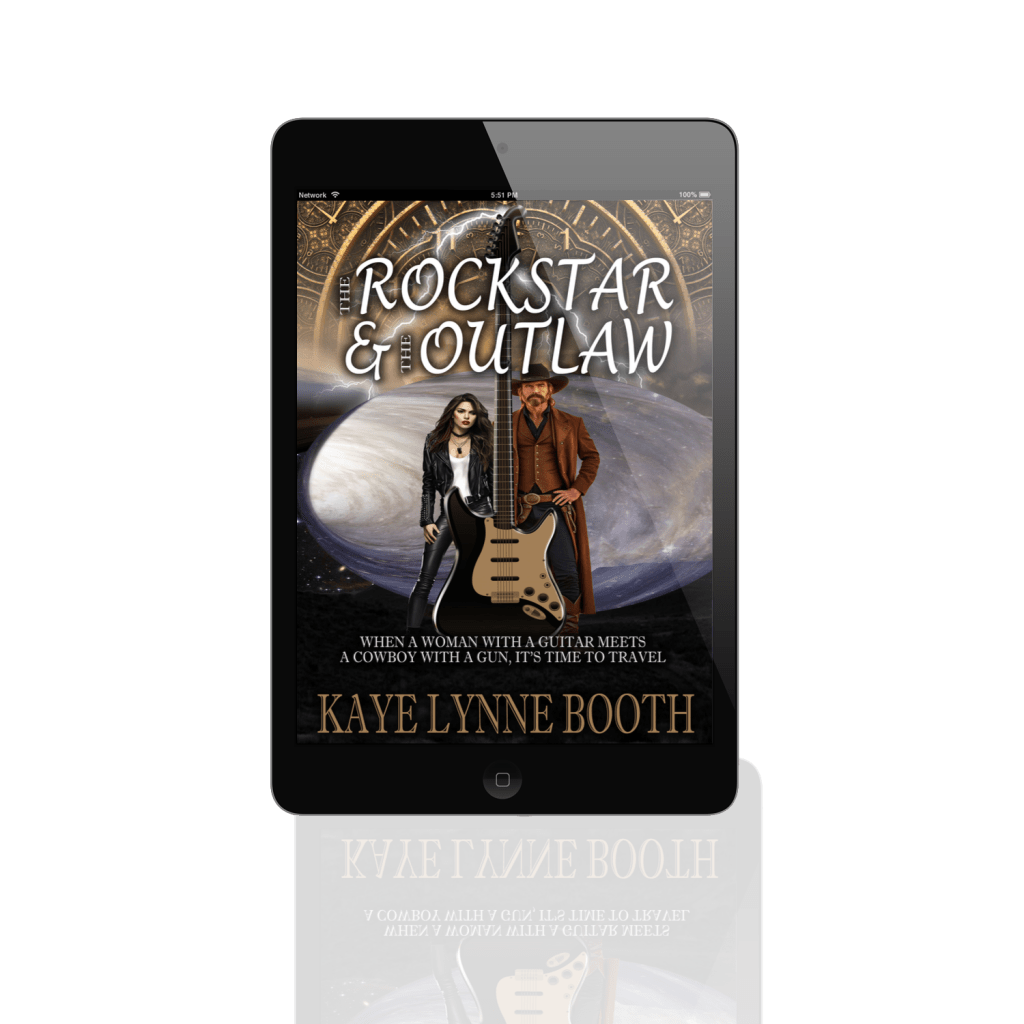
LeRoy falls hard for the rock star, thinking he can save her by taking her back with him. But when they arrive in 1887, things turn crazy fast, and soon they’re running from both the outlaws and the posse, in peril once more.
They can’t go back to the future, so it looks like they’re stuck in the past. But either when, they must face forces that would either lock them up or see them dead.
The Women in the West Adventure Series, by Kaye Lynne Booth

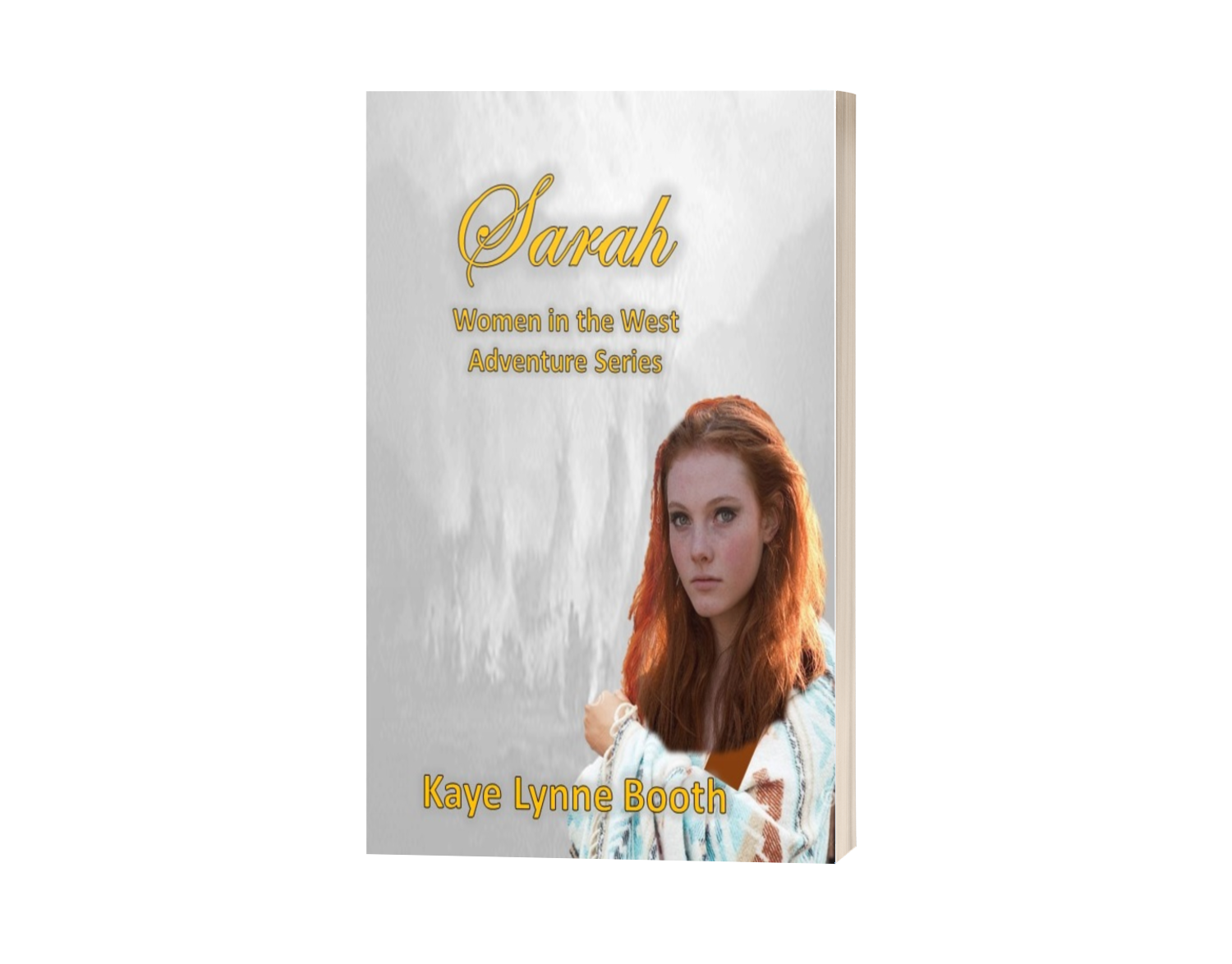
Delilah & Sarah – (Marta coming in 2025)

Delilah is a woman haunted by her past.
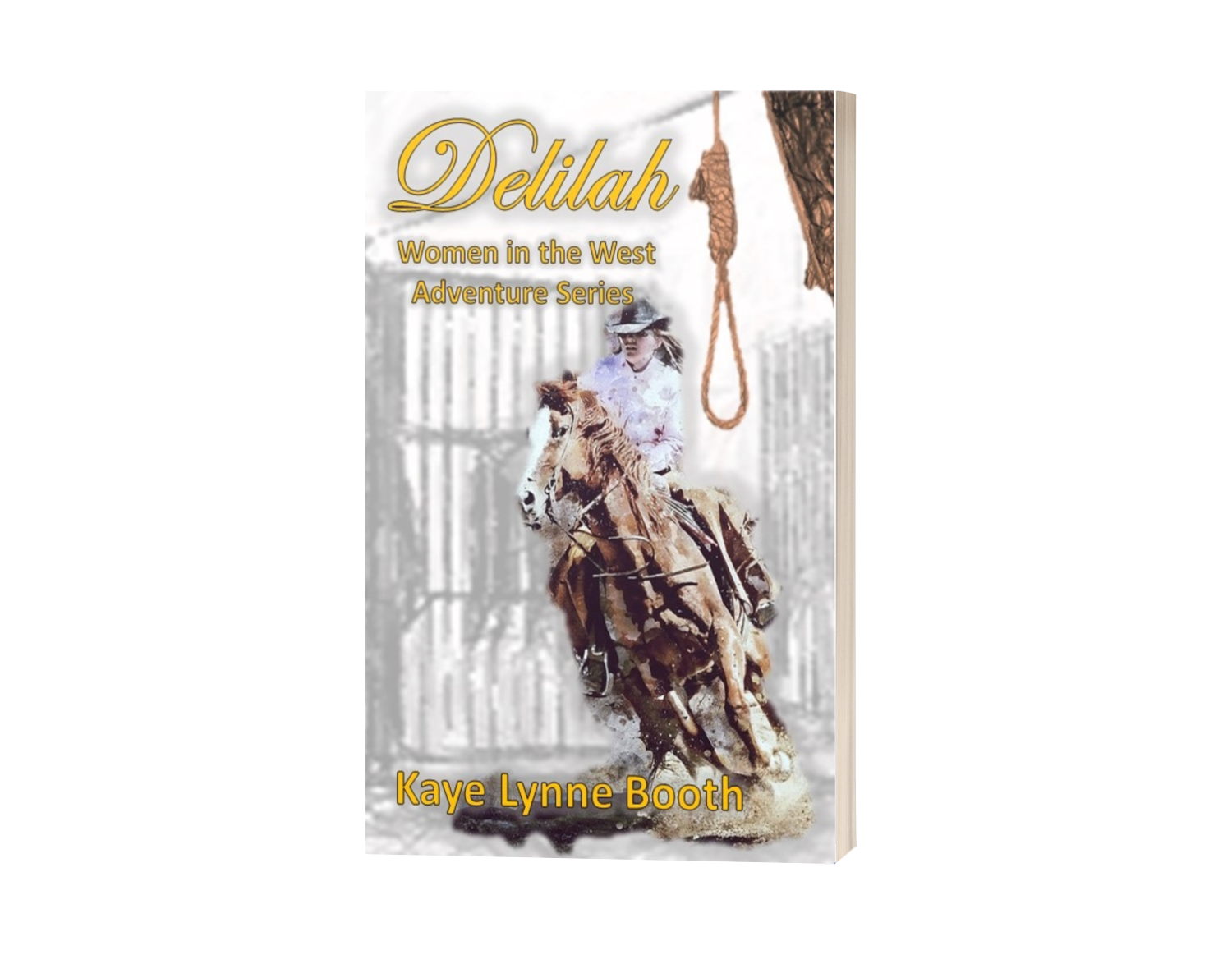
Her homecoming from prison quickly turns into a quest for vengeance when she is brutally raped and left for dead, and her fourteen-year-old ward is abducted. Sheer will and determination take this tough and gritty heroine up against wild beasts of the forest, Indians and outlaws to Leadville.
Can the colorful inhabitants of the Colorado mining town work their way into Delilah’s heart, offering a chance for a future she thought she’d lost along with her innocence?
If you like strong and capable female protagonists, you’ll love Delilah.
Sarah is a young girl trying to make a place for herself in the world.
Sarah is not the young girl stolen away from Delilah anymore. Now she is Hair of Fire, mate of Three Hawks, even as she blossoms into a young woman and tries to make a place for herself among the Ute tribe.
When she is stolen away from the life she’s made, she struggles to survive in the heart of the Rocky Mountains. A streak of stubbornness and determination take this tough, feisty heroine up against wild beasts of the forest and the rugged mountain landscape to Glenwood Springs, Colorado, where she receives a less than welcoming reception by some.
Will this young woman find her way back to the Ute tribe, which she’s come to think of as family, or will she discover a place among the colorful inhabitants of the Colorado hot springs and mining town?
Follow along on her journey to learn who she truly is and where she belongs in this rough, and often hostile frontier.
If you like strong and capable female protagonists, you’ll love Sarah.

The D.I.Y. Author, by Kaye Lynne Booth
Being an author today is more than just writing the book. Authors in this digital age have more opportunities than ever before. Whether you pursue independent or traditional publishing models, or a combination of the two but being an author involves not only writing, but often, the publishing and marketing of the book.
In this writer’s reference guide, multi-genre author and independent publisher, Kaye Lynne Booth shares her knowledge and experiences and the tools, books, references and sites to help you learn the business of being an author.
Topics Include:
Becoming Prolific
Writing Tools
Outlining
Making Quality a Priority
Publishing Models & Trends
Marketing Your Book
Book Covers & Blurbs
Book Events—In Person & Virtual
And more…

Other Books by Kaye Lynne Booth
- Hidden Secrets paranormal mystery novella
- Last Call & Other Short Fiction
- Small Wonders poetry collection
WordCrafter Press Anthologies
The Midnight Anthology Series

Midnight Roost: Weird & Creepy Stories & Midnight Garden: Where Dark Tales Grow

20 authors bring your nightmares to life in 23 stories of ghosts, paranormal phenomenon and the horror from the dark crevasses of their minds. Stories of stalkers, both human and supernatural, possession and occult rituals, alien visitations of the strange kind, and ghostly tales that will give you goosebumps. These are the tales that will make you fear the dark. Read them at the Midnight Roost… if you dare.
17 authors bring you 21 magnificent dark tales. Stories of magic, monsters and mayhem. Tales of murder and madness which will make your skin crawl. These are the tales that explore your darkest fears. Read them in the Midnight Garden… if you dare.
Contributing authors include Paul Kane, Ell Rodman, DL Mullan, Joseph Carrabis, Roberta Eaton Cheadle, Denise Aparo, Jon Shannon, Zack Ellafy, Danaeka Scrimshaw, Robb T. White, Abe Margel, Julie Jones, Molly Ertel, Peter McKay, Kaye Lynne Booth, Paul Martz, and M.J. Mallon.

Tales From the Hanging Tree
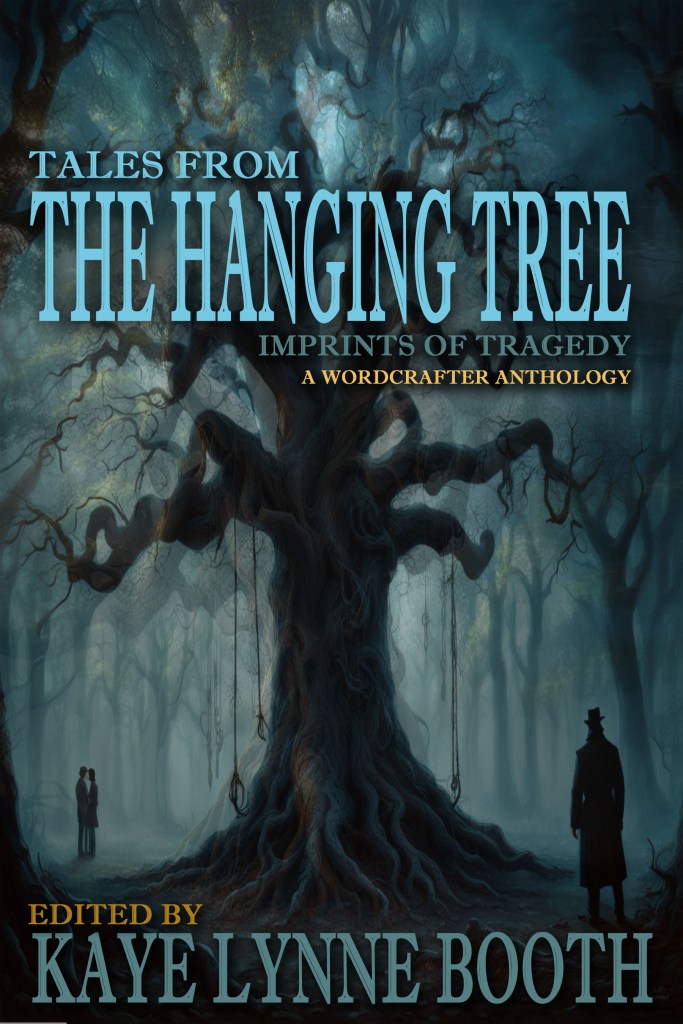
There exists a tree that is timeless, spanning across all dimensions, which absorbs every life as those who are hanged as they die… and it remembers every one. The stories within are a select few of the Tales From the Hanging Tree.
Stories by Kaye Lynne Booth, Paul Kane, DL Mullan, C.R. Johannson, Joseph Carrabis, Sylva Fae, and Matt Usher.
Other WordCrafter Press Anthology Available at 50% Off
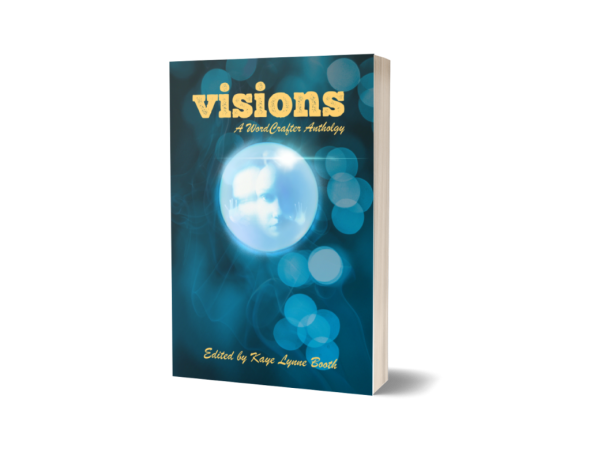
- Visions
- Refracted Reflections: Twisted Tales of Duality & Deception
- Once Upon an Ever After: Modern Fairy Tales & Folklore
- Whispers of the Past: Narrating the Paranormal series book 1
- Spirits of the West: Narrating the Paranormal series book 2
- Where Spirits Linger: Narrating the Paranormal series book 3
- Lingering Spirit Whispers: Narrating the Paranormal books 1,2,& 3
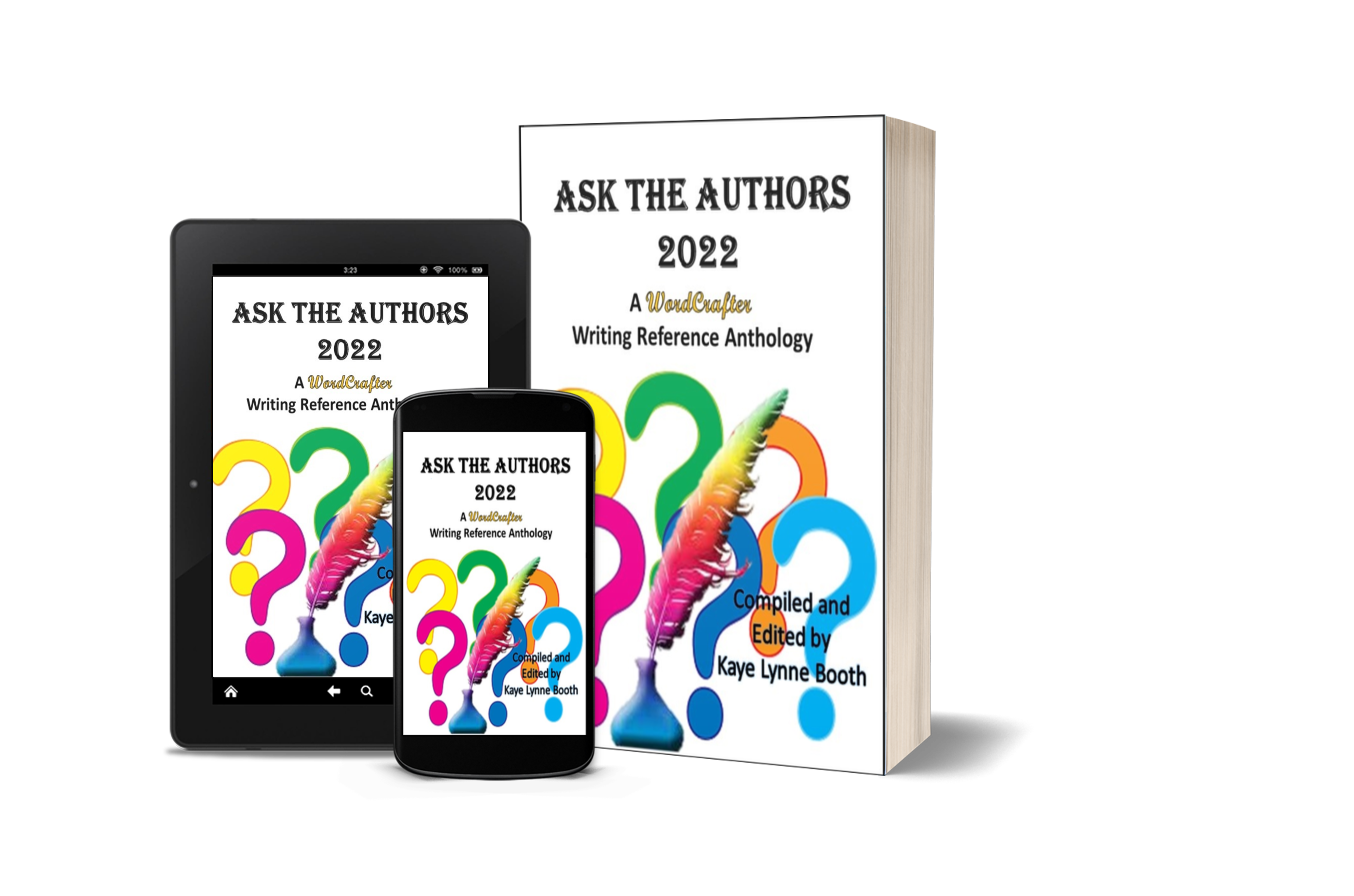
- Ask the Authors: Writing Reference Anthology
- Ask the Authors 2022: Writing Reference Anthology
WordCrafter Press Poetry Books
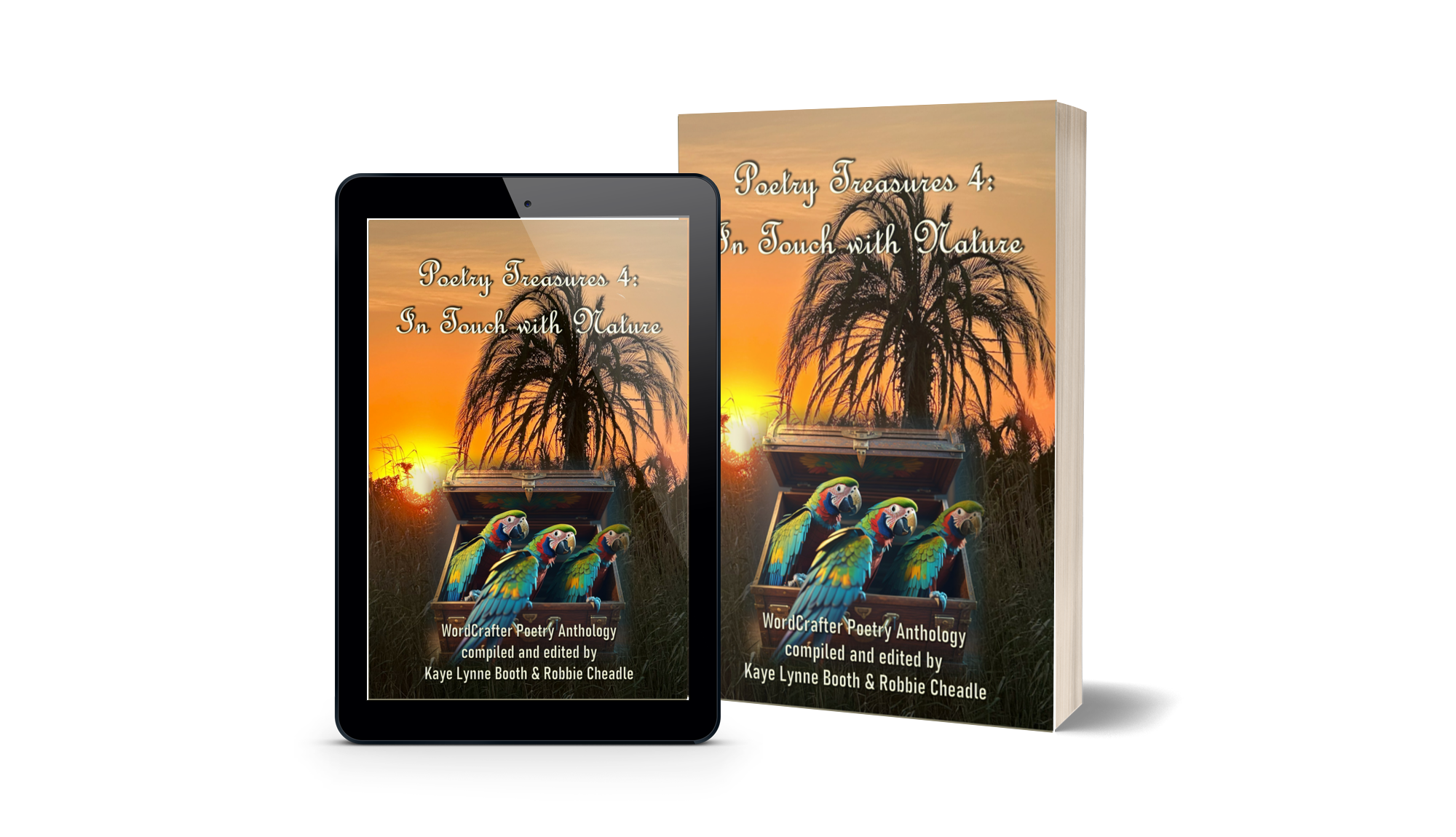
- Poetry Treasures anthology
- Poetry Treasures 2: Relationships anthology
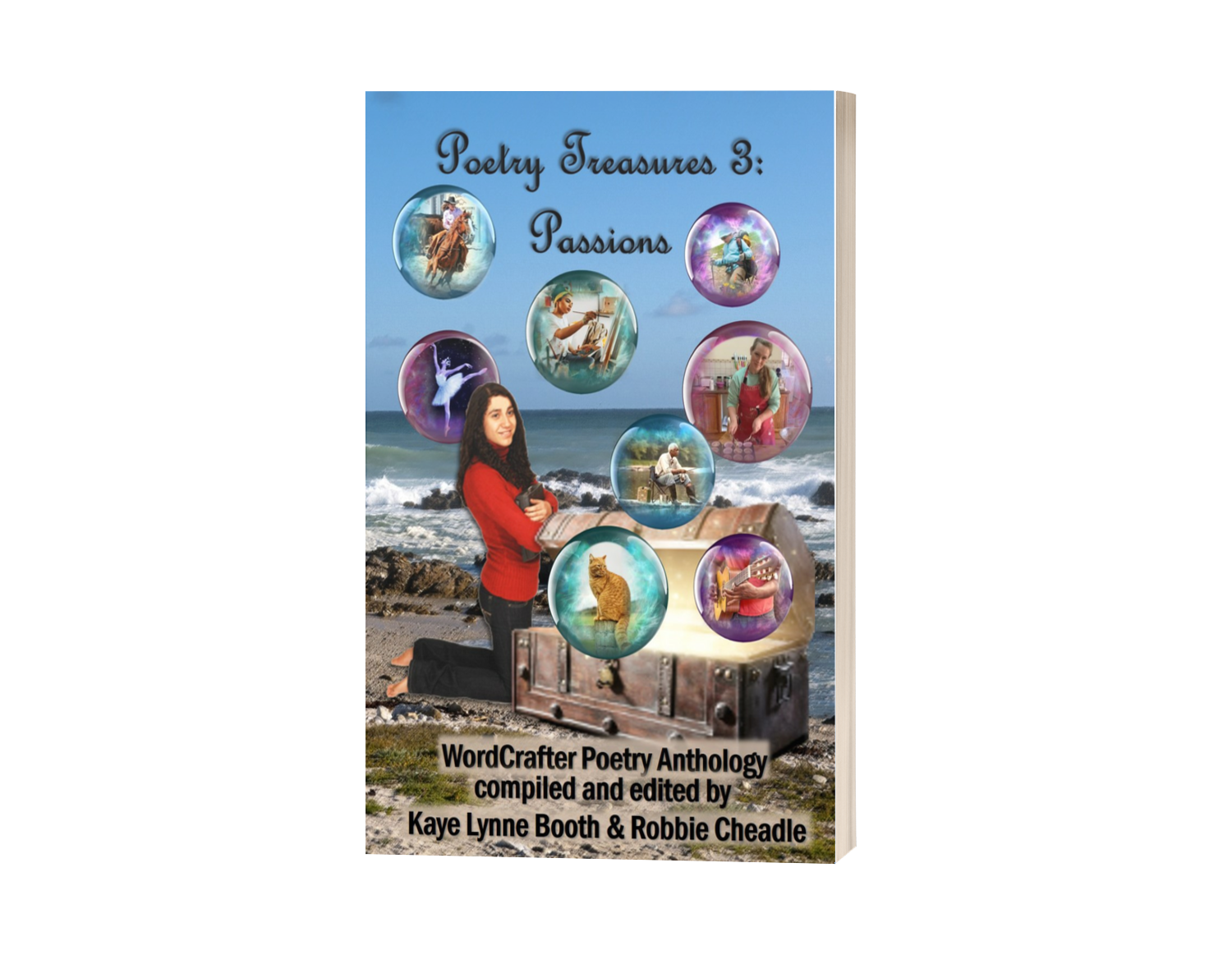
- Poetry Treasures 3: Passions anthology
- Poetry 4: In Touch with Nature anthology
- Behind Closed Doors, by Robbie Cheadle
- Feral Tenderness, by Arthur Rosch