LINDSEY’S WRITING PRACTICE: Interview with Author & Poet Robbie Cheadle & A Review
Posted: June 3, 2026 Filed under: Books, Collection, Interview, Lindsey's Writing Practice, Poetry, Review | Tags: Book Reveiw, Interview, Lindsey Martin-Bowen, Lindsey's Writing Practice, Lion Scream, Nature, Poetrty Collection, Robbie Cheadle, South Africa, Wildlife, Writing to be Read 50 Comments
How do I define Robbie (a/k/a Roberta) Cheadle?
In essence: Amazing. This multi-talented, empathetic, creative woman displays talents in many areas.
Further, she pens words that she hopes will move others to help protect our world.
Along with writing poetry books, novels, short stories, and children’s literature, Robbie Cheadle not only decorates some of her pages with exquisite, professional photos that she shot—and even more amazing, she fashions cakes with sculptures of lions and other African wildlife, and flowers that accompany her writings.
Here’s a chance to peer into the mind of this remarkable woman. Enjoy!
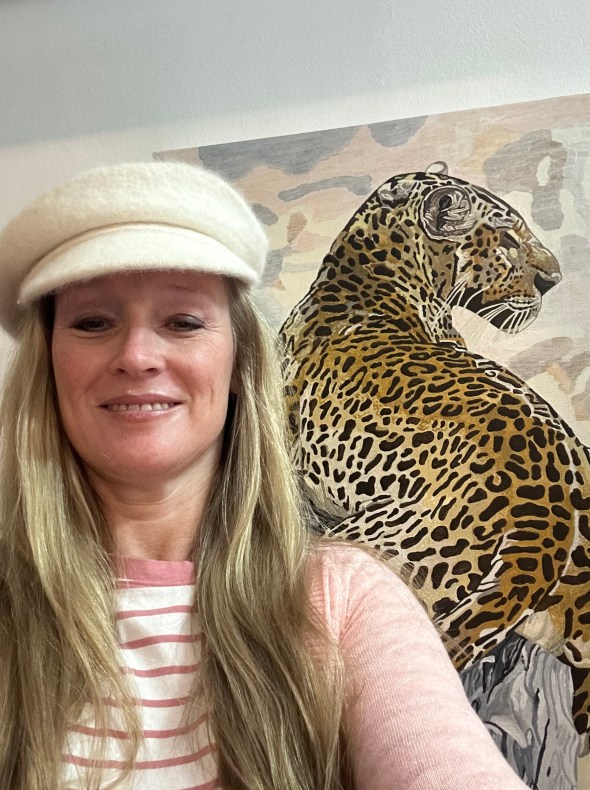
About Roberta Eaton (Robbie) Cheadle
Roberta Eaton Cheadle, is a South African writer and poet specialising in historical, paranormal, and horror novels and short stories. She is an avid reader in these genres and her writing has been influenced by famous authors including Bram Stoker, Edgar Allan Poe, Amor Towles, Stephen Crane, Enrich Maria Remarque, George Orwell, Stephen King, and Colleen McCullough.
Roberta has two published novels and a collection of short stories and has horror, paranormal, and fantasy short stories included in several anthologies. She is also a contributor to the Ask the Authors 2022 (WordCrafter Writing Reference series).
Roberta is also the author and illustrator of seventeen children’s books, illustrator to a further three children’s books, and the author and illustrator of four poetry books published under the name of Robbie Cheadle, and has poems and short stories featured in several anthologies under this name.
Roberta’s blog features discussions about classic books, book reviews, poetry, and photography. https://roberta-writes.com/.
My Interview with Robbie Cheadle
How did you come to write poetry?
From a young age (4 years old), I read a great deal. Television was very limited in South Africa when I was a child and my first sister was only born when I was 4 years old. Catherine was born prematurely and my parents moved to a cottage on a farm in the country to try to protect her from germs. I didn’t attend school during this time, and I had to entertain myself. I did that by reading. I grew to love the L.M. Montgomery books, especially her lesser-known series, Emily of New Moon. In the books, Emily’s late father was a poet and writer. Emily tries her hand at poetry as a way of keeping his memory alive. I was inspired by Emily to
write short poems and descriptive pieces and did this throughout my senior primary school and high school years. English and History were my favourite subjects at school, and I excelled at both of them. I have been writing poetry ever since. It has evolved into a diary of my life.
What is your favourite poem by another poet?
When I was in primary school, about ten years old, we had to learn several poems by heart. Ever since then I have loved The Listeners by Walter de la Mare. The poem is full of mystery and delight.
The Listeners
By Walter de La Mare
‘Is there anybody there?’ said the Traveller,
Knocking on the moonlit door;
And his horse in the silence champed the grasses
Of the forest’s ferny floor:
And a bird flew up out of the turret,
Above the Traveller’s head:
And he smote upon the door again a second time;
‘Is there anybody there?’ he said.
But no one descended to the Traveller;
No head from the leaf-fringed sill
Leaned over and looked into his grey eyes,
Where he stood perplexed and still.
But only a host of phantom listeners
That dwelt in the lone house then
Stood listening in the quiet of the moonlight
To that voice from the world of men:
Stood thronging the faint moonbeams on the dark stair,
That goes down to the empty hall,
Hearkening in an air stirred and shaken
By the lonely Traveller’s call.
And he felt in his heart their strangeness,
Their stillness answering his cry,
While his horse moved, cropping the dark turf,
’Neath the starred and leafy sky;
For he suddenly smote on the door, even
Louder, and lifted his head:—
‘Tell them I came, and no one answered,
That I kept my word,’ he said.
Never the least stir made the listeners,
Though every word he spake
Fell echoing through the shadowiness of the still house
From the one man left awake:
Ay, they heard his foot upon the stirrup,
And the sound of iron on stone,
And how the silence surged softly backward,
When the plunging hoofs were gone.
I like this poem so much I did a recording of it for my YouTube channel: https://youtu.be/gy_7mM2RcuI?si=Gmf2kfXkwrCoBnjp
What is your favourite of your own poems?
Currently, this is my favourite of my own poems:
Life on the Water (Tanka story)
medley of cool shades
cerulean and turquoise
lightened or darkened
depending on water’s mood
and artist’s vision
***
painstaking brush strokes
capturing shadows and light
frothy, foaming crests
enhanced with metallic white
dancing across blue
***
water shifts and sighs
subtle movements captured in
careful ripple lines
swiftly flowing currents caught
in muted aquamarine
***
sand laden wavelets
curl sluggishly around rocks
smothered by sweet caress
of ocean’s heaving bosom
with its rhythmic rise and fall
***
houseboat moves onwards
temple to unconstrained thoughts
colours meld as one
in swirls, rises, and deep troughs
impermanent no longer
***
dreams, soft and wispy
condensation trails through sky
subtle as sunlight
transferred to stark, white canvas
soft splashes ricocheting
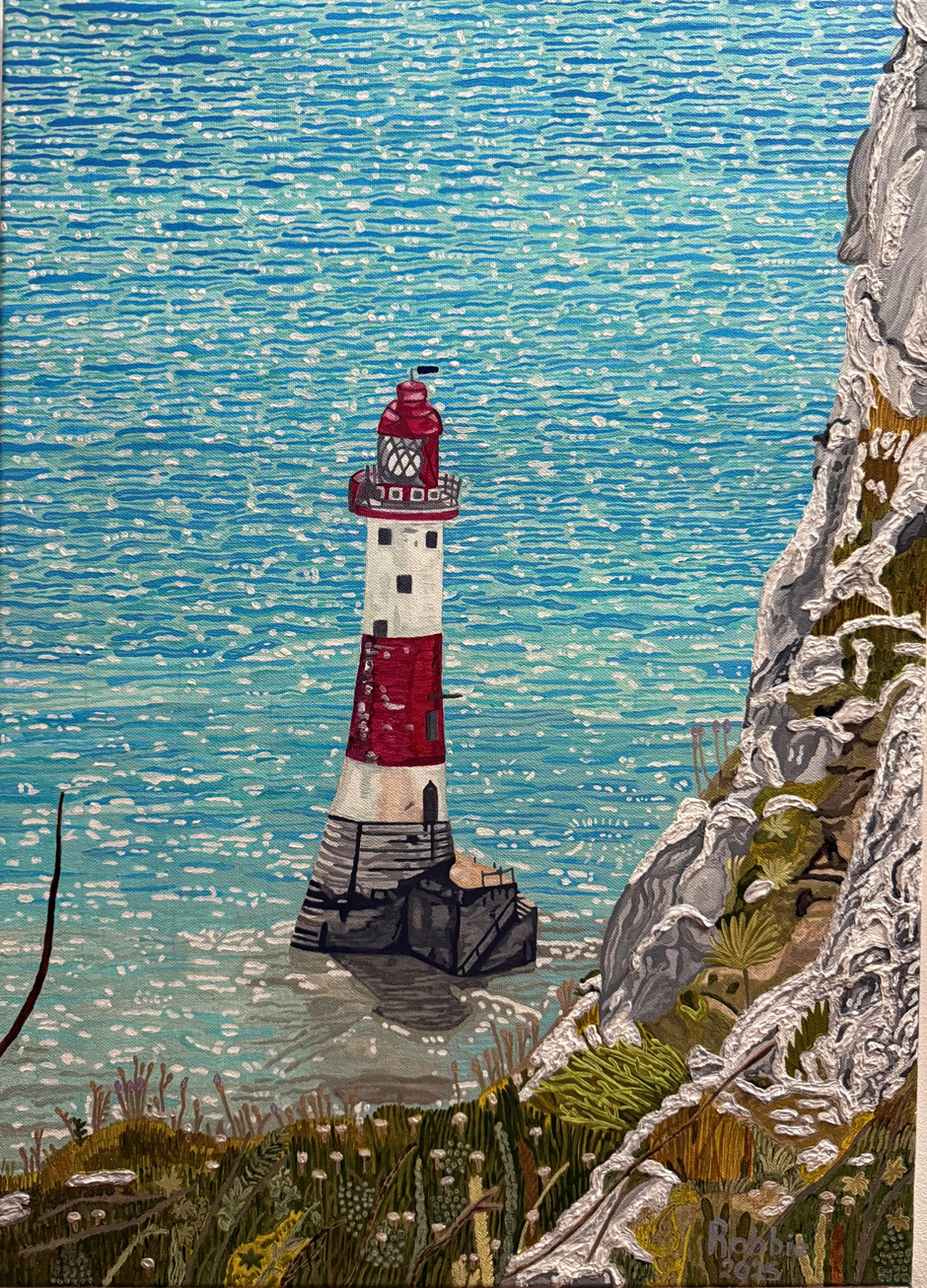
Picture caption: My acrylic painting called Fyrtorr which means beacon in Old English.
Tell us a bit about the inspiration for Lion Scream
Here’s an extract from Lion Scream:
The initial idea for a book of poetry that taught people about the numerous amazing creatures of southern Africa and highlighted their plight in the face of the Sixth Mass Extinction, came to me during a visit to Ukutula Lodge & Game Reserve (“Ukutula”).
Ukutula is also a conservation facility specializing in genetic mammal research and predator conservation.
On my return home, my brother-in-law gifted me a print of Edvard Munch’s famous painting, The Scream.
According to a diary entry by Munch, the inspiration for this painting was as follows:
“One evening I was walking along a path, the city was on one side and the fjord below. I felt
tired and ill. I stopped and looked out over the fjord – the sun was setting, and the clouds
turning blood red. I sensed a scream passing through nature; it seemed to me that I heard
the scream. I painted this picture, painted the clouds as actual blood. The color shrieked.
This became The Scream.”
Based on The Scream, I created a cake I titled Lion Scream – Nature’s Response to the Sixth Mass Extinction and Global Warming, which depicted a lion, made from fondant, clasping its face and screaming, while standing on a bridge above a river of blood. Behind the lion, is an erupting volcano.
This cake was intended to be an artistic depiction of the natural world’s reaction to
continuous land development by humans, resulting in the loss of habitat for the creatures
which share this earth with us, and the increasing impact of global warming on humanity
and the greater planet.
Lion Scream: Nature’s Response to the Sixth Mass
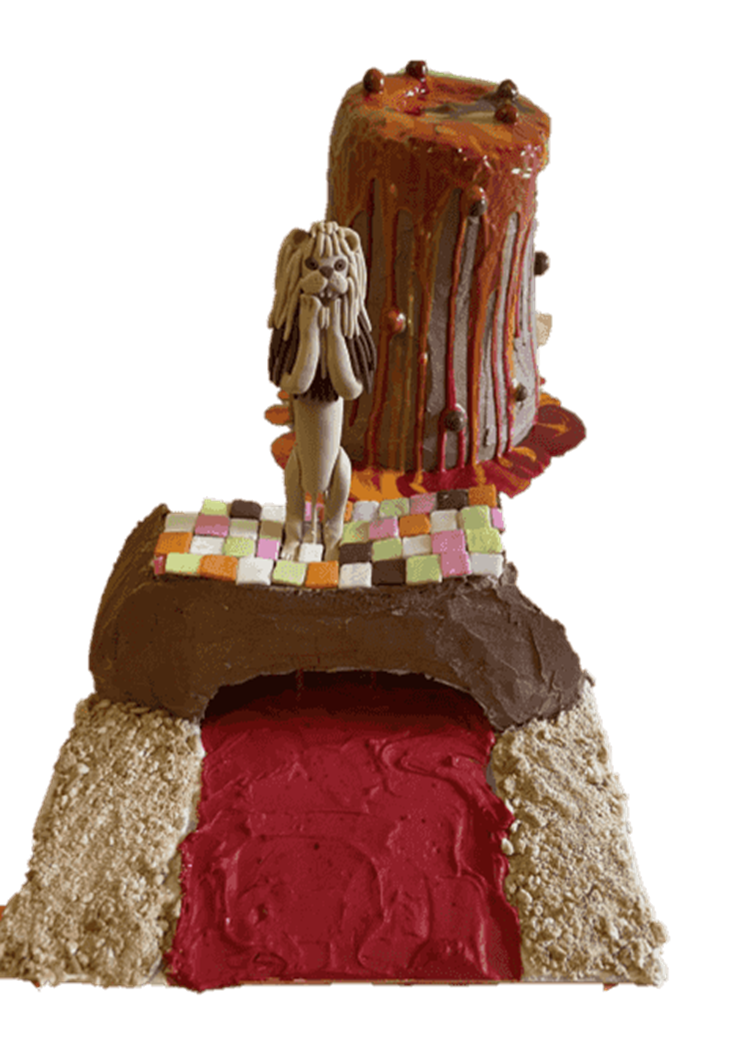
Picture Caption: Extinction and Global Warming Cake Art by Robbie Cheadle
Have you witnessed the killing of an African animal which acted as a trigger for your interest in animal conservation?
When I was 21, I met a man who hunted animals for sport. Prior to this, I had never had much interaction with wild animals other than in zoos. My mother grew up on a cattle farm and had little interest in engaging with animals in the wild. Interestingly, I’ve noticed she shares this disinterest with other people I know who also grew up on farms. Anyhow, this man invited me to go to Kimberley with him and his friends. They were going hunting, but they were also going to visit the ‘big hole’ in Kimberley which is an interesting feature of South African history. I agreed to go because I wanted to see Kimberley. The hunting trip was a complete horror show for me. I hadn’t really thought about what a hunting trip meant, and the men attempted to kill an antelope. It was a common antelope, what I call “lion snacks” as they keep the stock of impalas high in game reserves because they are food for the
big cats. The shooter’s shot went wide, and he ended up wounding a baby impala. Aside from any other aspect, it was not the right season for hunting as the mother antelopes had small calves. The baby ran making the most terrible high-pitched sound, and the men had to go after the poor little thing. Eventually, they did put it out of its misery. I was completely horrified. After this trip, I ended the relationship and became involved in wildlife conservation. This has developed into my poetry books and paintings featuring southern African wildlife.
What’s next?
Currently, I am busy with the final edits to a collection so South African inspired short stories and poems. The book is called The Last Man, South African History, Legends, & Poetry. This book will be published through TSL Publication in the United Kingdom. I am also working on several new poetry collections and the second book in the Something Fancy book collection. This second book, Chocolate & Treats, should be ready for publication in early November this year. I always have a lot of projects on the go. I am also painting. My latest painting is of a Vervet Monkey and is part of my Into the Light series of painting. I am planning to paint an African Painted Dog next. It will be a much bigger project. I do a small one in between the larger ones so that I can practice drawing more often. The big paintings take me three to four months to complete.
Thank you for this lovely interview opportunity, Lindsey. I appreciate your interest in my work.
Lindsey’s Review of LION SCREAM Syllabic Poetry about Southern African Wildlife
by Robbie Cheadle
Not only is Robbie Cheadle (a/k/a Roberta Cheadle) an excellent, engaging poet and fiction writer, she’s a woman with a mission—a crucial mission for not only the future of our planet and the wildlife on it, but for humanity itself. Plus, in this 163-page collection, her method of persuasion includes not only facts and figures about the demise of many of our planet’s creatures in Africa, it delights the reader with superb—and righteous, at times biting, poetry and fiction.
Most delightful is Cheadle’s use of the constraints of syllabic structure in unrhymed forms that recreate the tension between wild beasts and the fragment of society pushing them off their native environments. For example, the book’s opening poem, “Lion Scream” is a perfectly structured tanka (one of my favorite forms). I perceive the tanka as a haiku with more depth. As opposed to the 17-line poem, tankas are structured in five lines with the syllabic form: five, seven, five, seven, seven, which Cheadle does in “Lion Scream”:
There is no jungle
Only acres of smooth stumps
There is no jungle
No habitat, no food source
Hopeless lion screams tonight
(Cheadle credits “The Lion Sleeps Tonight” in Disney’s The Lion King with inspiring this
tanka.)
Although the collection contains other tankas, most of the poems are set in the Double Enneal format, far more complex. A Double Ennead comprises three stanzas of five lines each. Thus, the syllabic count for each stanza is 6/5/11/6/5, (33 syllables per stanza) i.e., each stanza is set as:
six syllables
five syllables
eleven syllables
six syllable
five syllables
Again, each of those syllabic counts are repeated in the second and third stanzas, totaling ninety-nine syllables for each poem.
In the collection’s introduction, Cheadle explains why she uses this format most frequently throughout the book:
“I selected this form of syllabic poem for LION SCREAM for two reasons . . . because I love syllabic poetry and the short dramatic statements it enables me to make through a few carefully chosen words.”
Her second reason concerns her mission: “. . . due to the importance of nature conservation to me, and my desire to share insights about the impact of habitat loss, hunting, and poaching on the wild animals of southern Africa, I decided that 99 syllables gave me more, a little more scope to make my specific points.”
Further, Cheadle photographed all but three of the photos in the book. After perusing the collection she shot —on par with those in National Geographic, depicting several species of wildlife, I felt as if I’d viewed a video of Africa, particularly in those sections about lions, elephants, and zebra, creatures especially close to my heart.
I admit my first encounter with elephants and camels was in the Kansas City Zoo, where we children rode those captive creatures. This book brought back those memories from an era wherein most persons believed such wildlife would continue to stroll the earth indefinitely.But Cheadle reveals that is no longer a future many experts anticipate.
Along with her own photos, the collection offers links to many of Africa’s animals. For instance, in the section, “My Experiences with Rhinos,” she includes four links to videos she took of rhinos, after noting, “My most recent sightings have largely been of dehorned animals, which I always find jarring. It is strange to see a rhino without its famous horn.”
Having grown up in South Africa, she first saw horned rhinos, and she questions, “I wonder if my grandchildren will know rhinos have horns. If the fight against poaching is unsuccessful, my grandchildren will only experience rhinos through pictures in history books.”
From the number of Double Enneads she included for elephants and lions, it appears they may be her favorite beasts. Along with those long poems and marvelous photographs, she includes sections, “About African Elephants, “My Experiences with Elephants,” “My Experiences with Lions,” and “More Experiences with Lions.”
Then, she wraps up the poetry section with photos of the African landscapes. A Double Ennead, “The Romance of the Sunflowers” and an explanation about how sunflowers feed the environment in “Sunflowers and the Environment” precede photos of African landscapes of mountains, plains, and striking sunsets, interlaced, of course, with more poetry.
Cheadle wraps up this collection with a short story, “The Nutcracker,” which deals primarily with how the changing environment causing the loss of wildlife can impact the human species, too. She follows that piece with her inspiration and explanation of the story. I rate this collection with FIVE STARS. Thank you, Robbie, for sharing it.
—Lindsey Martin-Bowen
About Lion Scream
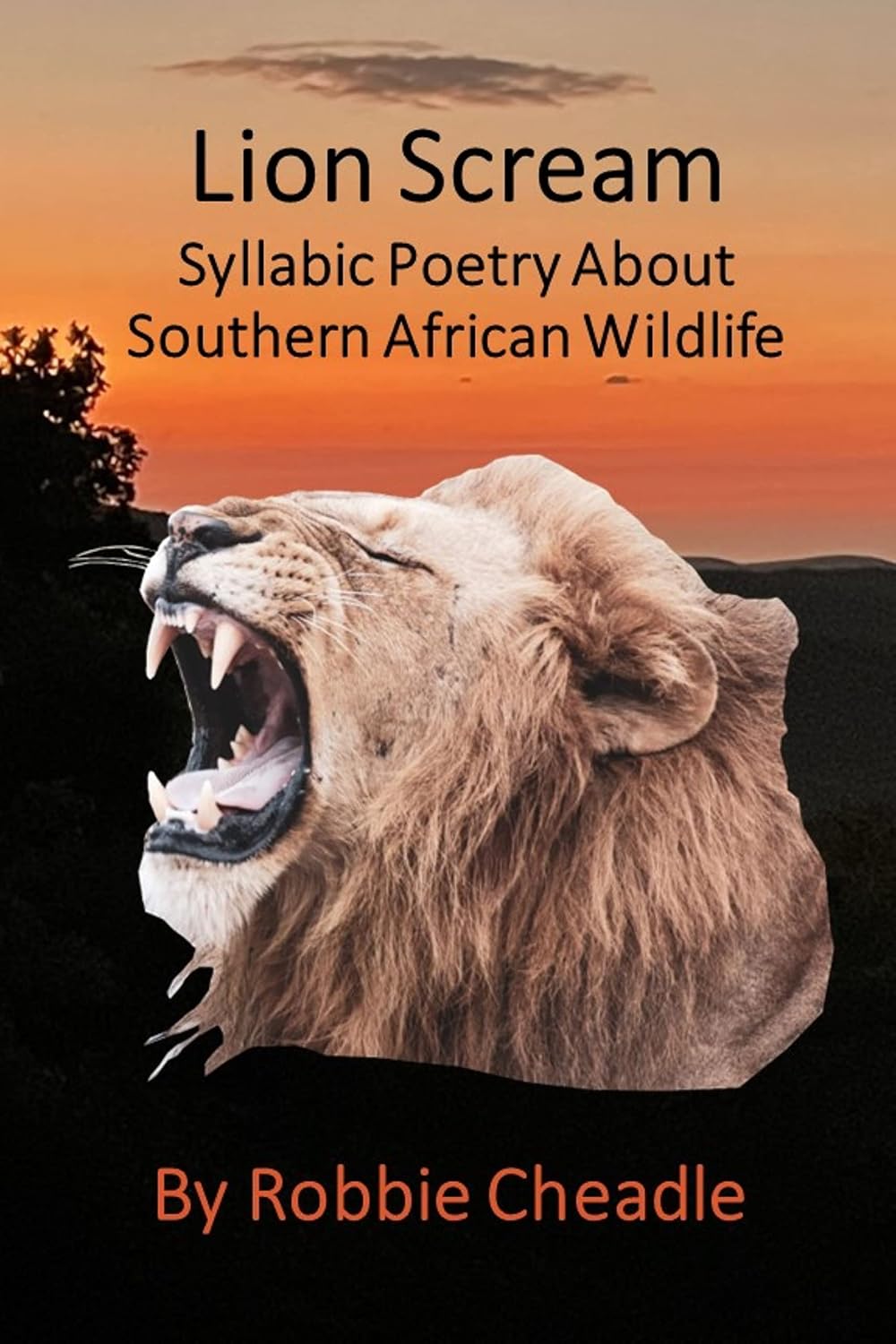
Do you rely on Earth for your survival?
Lion Scream is a graphic collection of poetry and prose. The book portrays the author’s experiences with South African wildlife and the growing impact of the Sixth Mass Extinction and Climate Change on the natural environment.
Lion Scream
There is no jungle
Only acres of smooth stumps
There is no jungle
No habitat, no food source
Hopeless lion screams tonight
Purchase Link: https://www.amazon.com/Lion-Scream-Syllabic-Southern-Wildlife-ebook/dp/B0BXP5N766
About Lindsey Martin-Bowen
On Halloween 2023, redbat books released Lindsey Martin-Bowen’s 7th poetry collection, CASHING CHECKS with Jim Morrison. Her 4th collection, Where Water Meets the Rock, was nominated for a Pulitzer; her 3rd, CROSSING KANSAS with Jim Morrison was a finalist in the QuillsEdge Press 2015-2016 Contest. In 2017, it won the Kansas Writers Assn award, “Looks Like a Million.” Writer’s Digest gave her “Vegetable Linguistics” an Honorable Mention in its 85th Annual (2017) Contest. Her Inside Virgil’s Garage (Chatter House Press 2013) was a runner-up in the 2015 Nelson Poetry Book Award. McClatchy Newspapers named her Standing on the Edge of the World (Woodley Press/Washburn University) was one of the Ten Top Poetry Books of 2008. It was nominated for a Pen Award.

_______________________________________________
Did you know you can sponsor your favorite blog series or even a single post with an advertisement for your book? Stop by the WtbR Sponsor Page and let me advertise your book, or you can make a donation to Writing to be Read for as little as a cup of coffee, If you’d like to show your support for this author and WordCrafter Press.
________________________________________________
This Segment of “Lindsey’s Writing Practice” is sponsored by WordCrafter Press and The Dark Horse Waits in Boulder, by Lindsey Martin-Bowen.
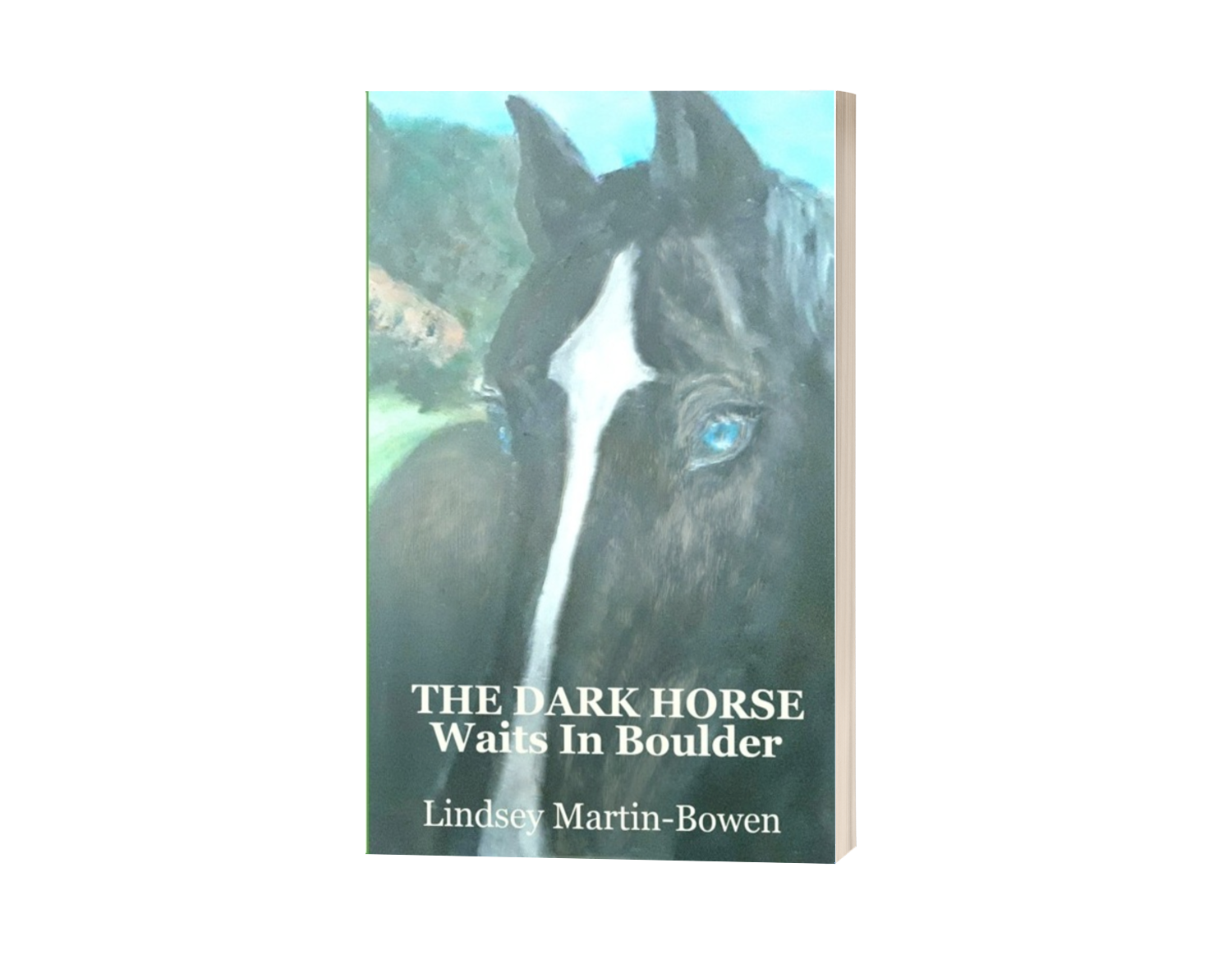
Recently divorced Charli Erickson arrives in Boulder, Colorado during the 1970s—a wild time for that city—where she hopes to develop her “rock poet” talent and find the perfect mate. Instead, she links up with the imperfect Ched Lyons, a Boulder native who leads her in a multitude of adventures, including scaling a mountain and a 1,200-mile motorcycle ride to southeastern Utah. While she intermittently envisions a black stallion with blue eyes, who puzzles and enchants her, she also strives to make sense of its appearance.
Through Charli’s snarky humor recounting her tales, readers will enjoy this Rom-Com doubling as a woman’s adventure story and may relate to scenes from the wild, zany era that followed the serious, revolutionary 1960s.
Get your copy today: https://books2read.com/The-Dark-Horse-Waits-in-Boulder
Share this:

Announcing the Winners of the WordCrafter The Dark Horse Waits in Boulder Book Blog Tour Giveaway
Posted: May 16, 2026 Filed under: Blog Tour, Giveaways, Romantic Comedy, WordCrafter Book Blog Tours, WordCrafter Press | Tags: Giveaway Winners, Lindsey Martin-Bowen, The Dark Horse Waits in Boulder, WordCrafter Book Blog Tours 5 Comments
We had a great blog tour and I want to thank you all for joining us to support the release of The Dark Horse Waits in Boulder, by Lindsey Martin-Bowen. Now that it’s over, I’ve counted up comments and got out my hat, and now I’m ready to share the names which I pulled out. Here are the names of the three lucky winners:
And the winners are…
(Drumroll please)
- Resa
- Liz Gaufreau
- Teagan Riordan Genevienne
All three of our winners came from the Day 2 stop over at Roberta Writes with host, Robbie Cheadle. Congratulations to all of you. You all should have already heard from me, but if not, please contact me at KLBWordCrafter@gmail.com.
Share this:

Wrapping Up the WordCrafter “The Dark Horse Waits in Boulder” Book Blog Tour
Posted: May 15, 2026 Filed under: Blog Tour, Book Release, Books, Fiction, Guest Post, Romantic Comedy, WordCrafter Book Blog Tours, WordCrafter Press | Tags: Lindsey Martin-Bowen, Romantic Comedy, The Dark Horse Waits in Boulder, WordCrafter Book Blog Tours, WordCrafter Press 3 CommentsThank you all for joining us for the final stop on the WordCrafter The Dark Horse Waits in Boulder Book Blog Tour, where we’re celebrating the release of this zany rom-com, by Lindsey Martin-Bowen. Today, the author shares a post about “The Dark Horse”, the blue-eyed black stallion which makes multiple appearances in the adventures of divorcee, Charli Erickson.
Tour Schedule
Mon. 5/11 – “Inspirational backgrounds for The Dark Horse Waits in Boulder”
Post –Poetry by Mich, Hotel by Masticadores, Masticadores Phillipines
Tues. 5/12 – “Phase Two – Sunny-Side Up” Reading –Roberta Writes
Wed. 5/13 – “Charli’s Character” Post – Carla Loves to Read
Thurs. 5/14 – “Phase Fourteen – Let Me Know the Way” Reading – Patty’s Worlds
Fri. 5/15 – “About the Dark Horse (the black stallion with blue eyes)” Post – Writing to be Read
The Giveaway
We’re giving away three digital copies of
The Dark Horse Waits in Boulder
In a random giveaway.
Leave a comment to enter.
Opportunity for an entry at every stop.
Short Book Trailer
Check out the short trailer for the book and don’t forget to Like, Share, or Subcribe.
About The Dark Horse Waits in Boulder
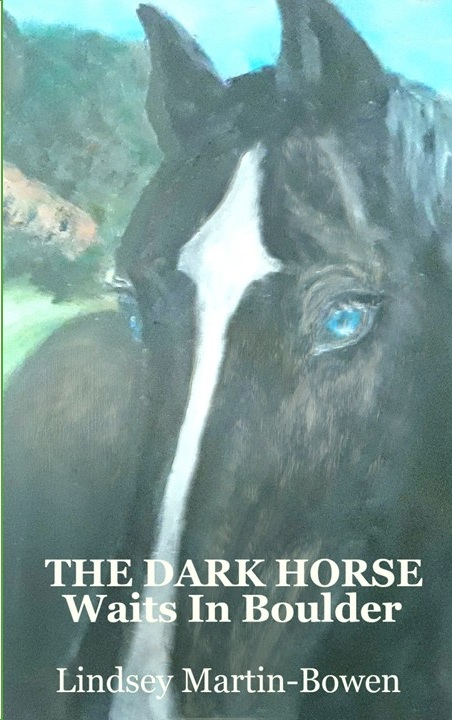
Recently divorced Charli Erickson arrives in Boulder, Colorado during the 1970s—a wild time for that city—where she hopes to develop her “rock poet” talent and find the perfect mate. Instead, she links up with the imperfect Ched Lyons, a Boulder native who leads her in a multitude of adventures, including scaling a mountain and a 1,200-mile motorcycle ride to southeastern Utah. While she intermittently envisions a black stallion with blue eyes, who puzzles and enchants her, she also strives to make sense of its appearance.
Through Charli’s snarky humor recounting her tales, readers will enjoy this Rom-Com doubling as a woman’s adventure story and may relate to scenes from the wild, zany era that followed the serious, revolutionary 1960s.
Purchase Link: https://books2read.com/The-Dark-Horse-Waits-in-Boulder
About the Dark Horse (the black stallion with blue eyes)
I didn’t create the elusive—perhaps imaginary Black Stallion until this year. After reading and reviewing numerous “other worldly” short-story collections, I considered interweaving an image within this tale that would serve as one more metaphor. Initially, the title included “Dark Horse” as an allusion to the stereotypical racehorse who appears to be a loser—but then takes first place at the end of the run.

Thus, might the Dark Horse be an image of the Boulder environment in the late 1970s? At that time, the city had grown from the college town hosting many 1960s demonstrations, some violent, wherein radicals damaged stores on The Hill. Yet a decade later, this once “dark” town had grown and progressed into a winning environment. (It continues to do so. Last year (2025), it was voted by a majority as the most desirable location to live in the U.S.)

Further, the novel’s characters gather regularly at The Horse, a bar that’s more a three-story entertainment center than the standard western bar. The Horse is especially Ched’s hangout. Because Charli leaves the small city before Ched does, he could be the Dark Horse waiting in Boulder.

Then, the fantasy (or is it?) of the Black, blue-eyed Stallion adds another level of meaning—Charli’s vision of a world beyond our material reality. It’s significant, too, that Ched, like many persons, doesn’t believe blue-eyed stallions exit. O but they do—albeit rarely. And considering that Charli sees herself as a loser of a wife at the novel's onset—then later in her relationship with Ched, might she be the Dark Horse who wins in the end?
About Author Lindsey Martin-Bowen
On Halloween 2023, redbat books released Lindsey Martin-Bowen’s 7th poetry collection, CASHING CHECKS with Jim Morrison. Her 4 th collection, Where Water Meets the Rock, was nominated for a Pulitzer; her 3rd, CROSSING KANSAS with Jim Morrison was a finalist in the QuillsEdge Press 2015-2016 Contest. In 2017, it won the Kansas Writers Assn award, “Looks Like a Million.” Writer’s Digest gave her “Vegetable Linguistics” an Honorable Mention in its 85th Annual (2017) Contest. Her Inside Virgil’s Garage (Chatter House Press 2013) was a runner-up in the 2015 Nelson Poetry Book Award. McClatchy Newspapers named her Standing on the Edge of the World (Woodley Press/Washburn University) was one of the Ten Top Poetry Books of 2008. It was nominated for a Pen Award.
That wraps up today’s stop and the WordCrafter The Dark Horse Waits in Boulder Book Blog Tour. You can follow the tour schedule above and leave comments at each stop for additional chances to win in the giveaway. The winners will be posted in a separate post on Sunday, so watch for it to see if you are one of three lucky winners of a digital copy of this wild women’s adventure.
___________________________________
Book your WordCrafter Book Blog Tour today!
Share this:

Day 4 of the WordCrafter “The Dark Horse Waits in Boulder” Book Blog Tour
Posted: May 14, 2026 Filed under: Adventure, Audio Excerpt, Book Promotion, Book Release, Books, Fiction, Giveaways, Romantic Comedy, Women's Fiction, WordCrafter Book Blog Tours, WordCrafter Press | Tags: Adventure, Blog Tour, Book Tour, Excerpt Reading, Giveaway, Lindsey Martin-Bowen, Romantic Comedy, RomCom, The Dark Horse Waits in Boulder, WordCrafter Book Blog Tours, WordCrafter Press 3 CommentsIt’s Day 4 of the WordCrafter “The Dark Horse Waits in Boulder” Book Blog Tour, and we’re over at Patty’s Worlds, where author Lindsey Martin-Bowen shares an excerpt reading from the book. Join us in sending off this fantastic new RomCom Adventure and get in on the giveaway for a free digital copy.
Day 4 – The Dark Horse Waits in Boulder #BookBlogTour, #BookRelease – Patty’s Worlds
Share this:

Day 3 of the WordCrafter “The Dark Horse Waits in Boulder” Book Blog Tour
Posted: May 13, 2026 Filed under: Adventure, Book Promotion, Book Release, Book Review, Books, Fiction, Giveaways, Guest Post, Romantic Comedy, WordCrafter Book Blog Tours, WordCrafter Press | Tags: BookReview, Giveaway, Lindsey Martin-Bowen, Rom-Com, Romantic Comedy, The Dark Horse Waits in Boulder, WordCrafter Book Blog Tours, WordCrafter Press 1 CommentIt’s Day 3 of the WordCrafter The Dark Horse Waits in Boulder Book Blog Tour. Today, we’re over at Carla Loves to Read, where author, Lindsey Martin-Bowen shares a guest post about the main character, Charlie Erickson, and Carla shares a lovely review of the book. Join us in sending this new rom-com women’s adventure off and get in on the giveaway, for one of three free digital copies of the book.
Share this:

Day 2 of WordCrafter “The Dark Horse Waits in Boulder” Book Blog Tour
Posted: May 12, 2026 Filed under: Audio Excerpt, Blog Tour, Book Promotion, Book Release, Books, Fiction, Giveaways, Romantic Comedy, WordCrafter Book Blog Tours, WordCrafter Press | Tags: Excerpt Reading, Giveaway, Lindsey Martin-Bowen, The Dark Horse Waits in Boulder, WordCrafter Book Blog Tours, WordCrafter Press 2 CommentsJoin us over at Roberta Writes for Day 2 of The WordCrafter The Dark Horse Waits in Boulder Book Blog Tour, where we have a reading by author Lindsey Martin-Bowen. It’s release day! Help us celebrate and send this zany new rom-com women’s adventure off right.
Share this:

WordCrafter News: Winners of the “Poetry Treasures 6: Seasons” Tour Giveaway, May Release – “The Dark Horse Waits in Boulder”, Spring Book Sale & Approaching Submission Deadline
Posted: April 27, 2026 Filed under: Book Sales, Books, Children's Books, Fiction, Giveaways, Relationships, Romantic Comedy, WordCrafter Book Blog Tours, WordCrafter News, WordCrafter Press | Tags: A Dark Horse Waits in Boulder, Book Release, Giveaway Winners, Lindsey Martin-Bowen, My Backyard Friends series, Poetry Treasures 6: Seasons, Spring Book Sale, WordCrafter News, WordCrafter Press 2 Comments
Winners of the WordCrafter “Poetry Treasures 6: Seasons” Book Blog Tour Giveaway
We had a great tour last week to celebrate the release of Poetry Treasures 6: Seasons. guest posts and poetry readings from the contributors, as well as learning fun facts about them and catching reviews of their latest releases. We had All those who followed the tour, or just dropped in a left a comment were entered in a random drawing to win one of five digital copies of the poetry anthology. (I think I originally said three, but we had so many wonderful commenters on this tour, I felt the need to give away five.) Now it’s time to reveal and congratulate the winners of the Giveaway, and here they are:
And the winners are:
(Drumroll please)
- Beth
- Teagan Genevienne
- T.W. Dittmer
- Beetlypete
- Lauren Scott Author
If your name is on the above list and you have not heard from me, please contact me at KLBWordCrafter@gmail to get your volume of Poetry Treasures 6: Seasons.
May Release: The Dark Horse Waits in Boulder, by Lindsey Martin-Bowen
WordCrafter Press is pleased to announce the upcoming release of award winning author Lindsey Martin-Bowen’s romantic comedy novel, The Dark Horse Waits in Boulder. Scheduled for release on May 12, 2026, you won’t want to miss this zany rom-com and the quirky Charli Erickson, who is full of surprises that will keep you chuckling through to the last page.
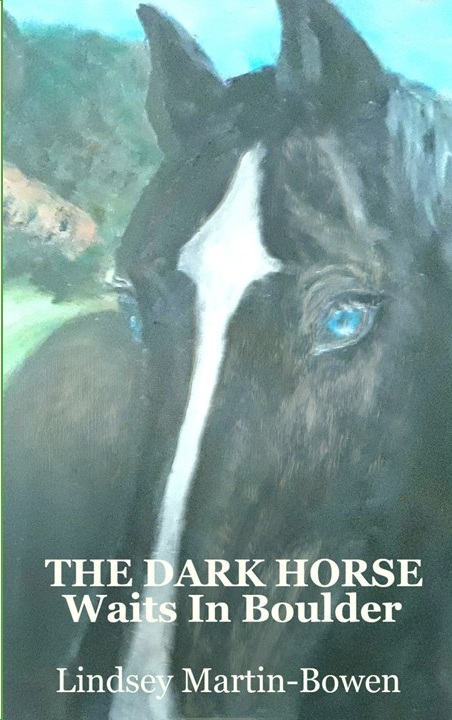
Recently divorced Charli Erickson arrives in Boulder, Colorado during the 1970s—a wild time for that city—where she hopes to develop her “rock poet” talent and find the perfect mate. Instead, she links up with the imperfect Ched Lyons, a Boulder native who leads her in a multitude of adventures, including scaling a mountain and a 1,200-mile motorcycle ride to southeastern Utah. While she intermittently envisions a black stallion with blue eyes, who puzzles and enchants her, she also strives to make sense of its appearance.
Through Charli’s snarky humor recounting her tales, readers will enjoy this Rom-Com doubling as a woman’s adventure story and may relate to scenes from the wild, zany era that followed the serious, revolutionary 1960s.
WordCrafter Spring Book Sale
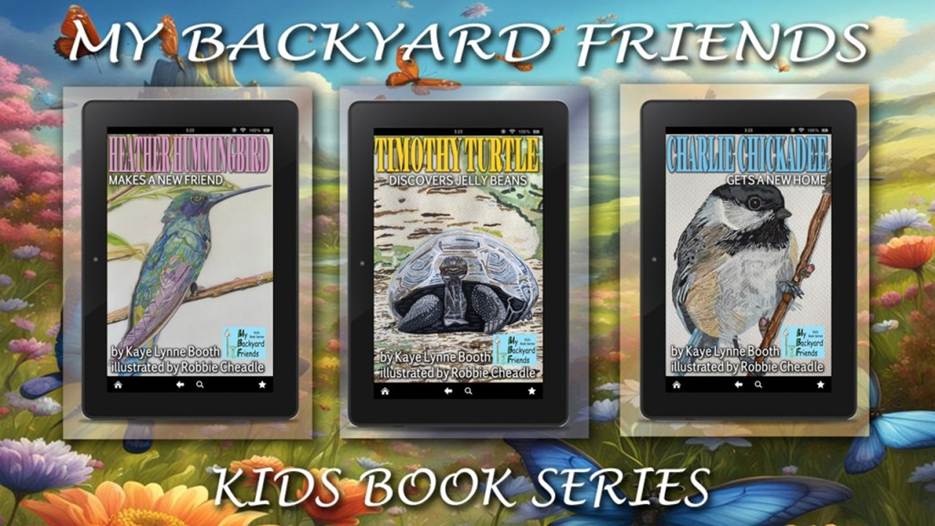
April showers bring May flowers, and great prices on the My Backyard Friends Kid’s Book Series.
During the month of May, (May 1-31), all volumes of the My Backyard Friends will be priced at $2.50 each at the links below:
Heather Hummingbird Makes a New Friend
Timothy Turtle Discovers Jelly Beans
Charlie Chickadee Gets a New Home
But that’s not all! You can get an even better deal by purchasing here on site. You can get all 3 for $6.
Available only on the My Backyard Friends Kid’s Book Series page, right here on the WordCrafter Press site.
Approaching Deadline for 2026 WordCrafter Dark Fiction Contest/Midnight Madness Anthology
Reminder: Only three days left until the deadline for submissions, (April 30), for the 2026 WordCrafter Dark Fiction Contest, and a chance to have your story included in the Midnight Madness anthology from WordCrafter Press. You can find submission guidelines, submission portal and instructions here.
Time is growing short. So, get those stories in before the deadline comes round.
About Kaye Lynne Booth
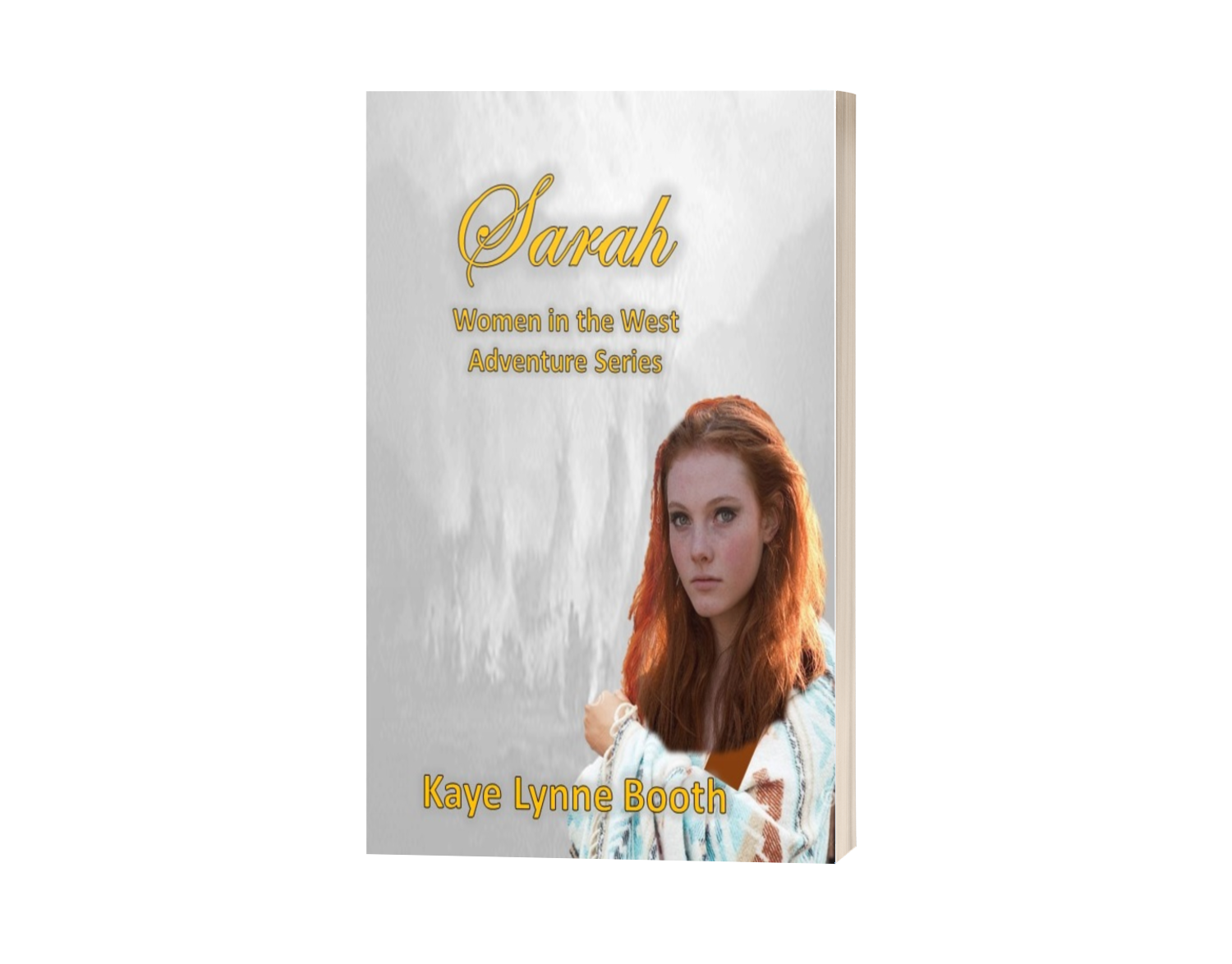
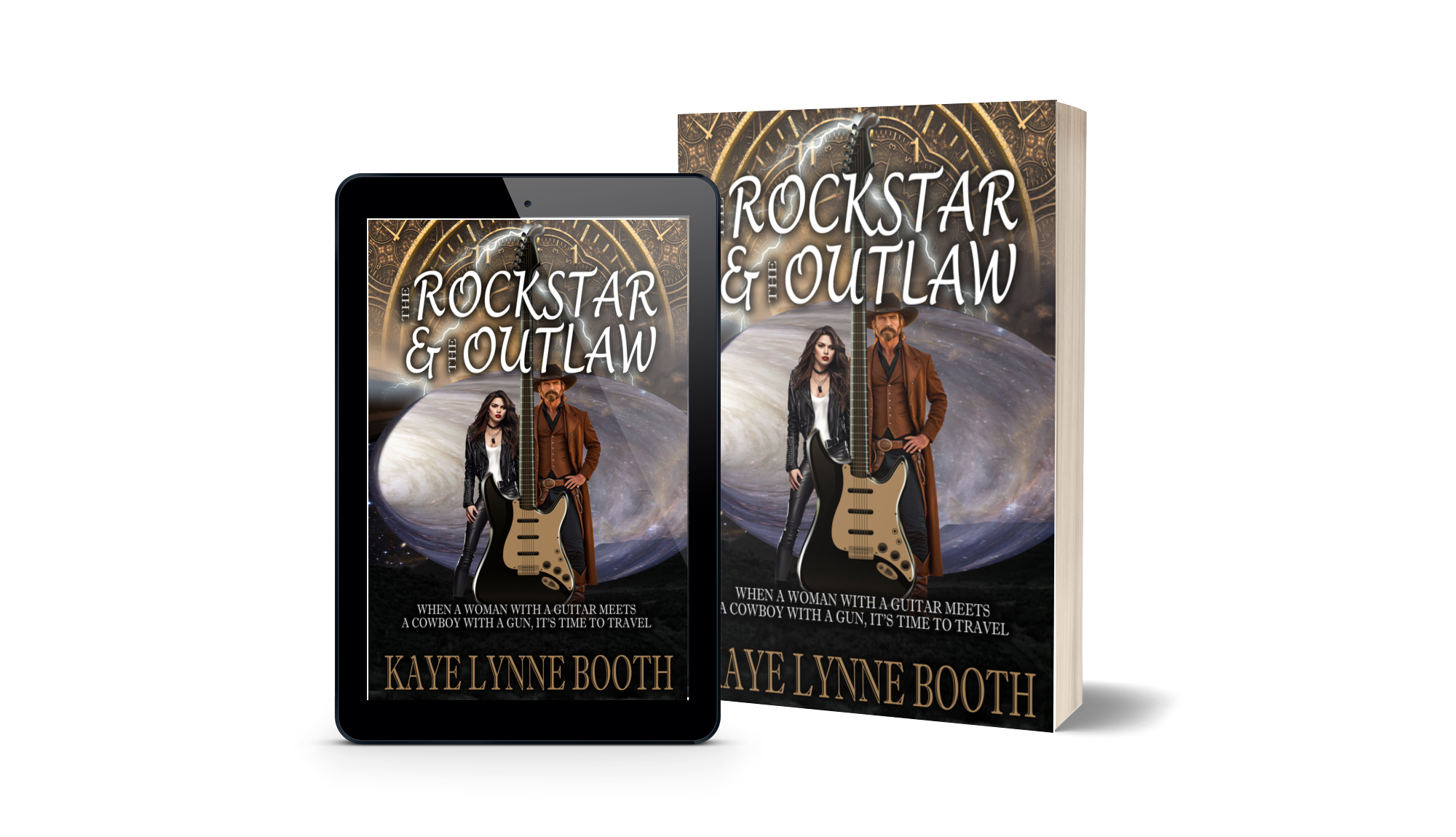
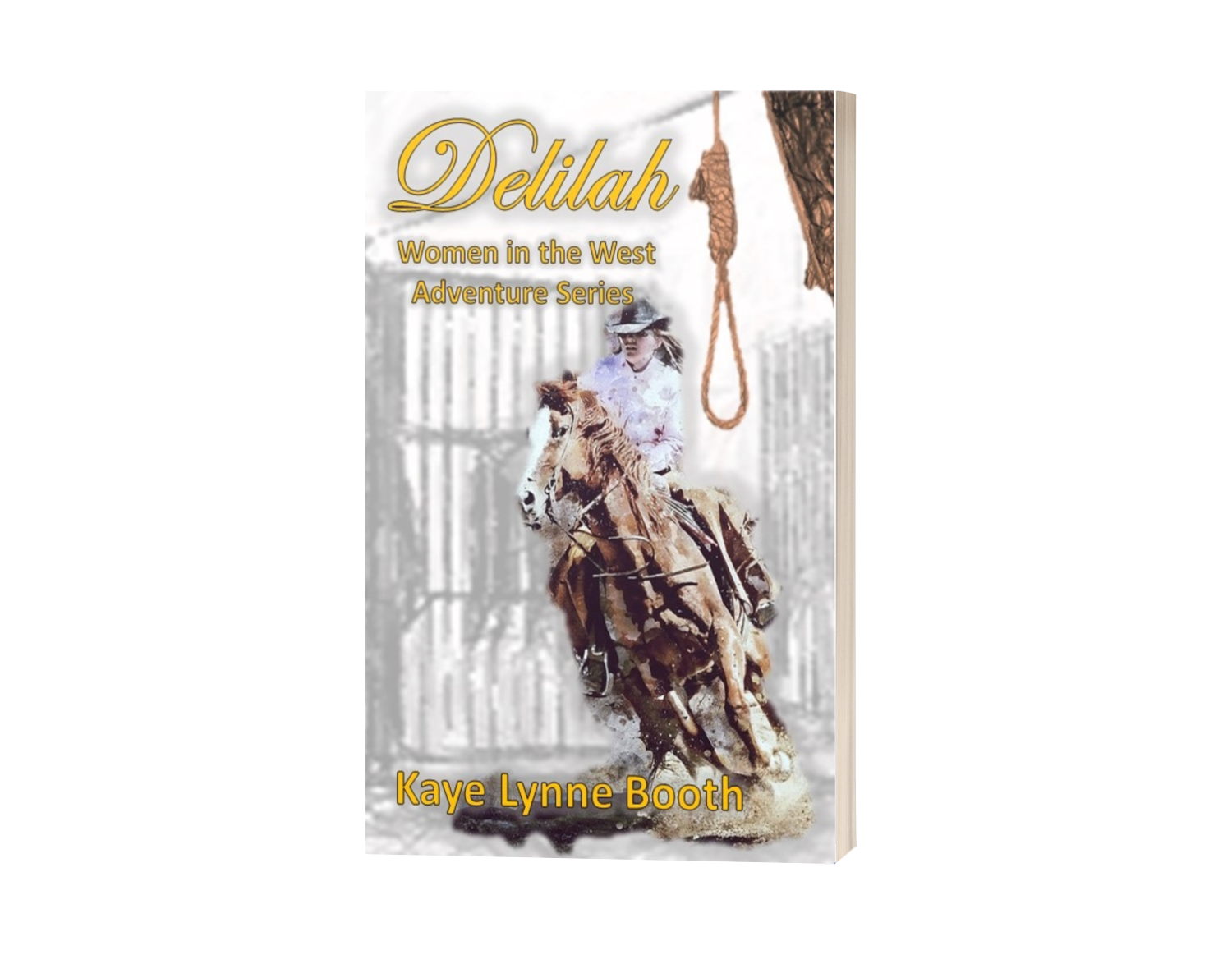
For Kaye Lynne Booth, writing is a passion. Kaye Lynne is an author with published short fiction and poetry, both online and in print, including her short story collection, Last Call and Other Short Fiction; and her paranormal mystery novella, Hidden Secrets; Books 1 & 2 of her Women in the West adventure series, Delilah and Sarah, and Book 1 in her Time-Travel Adventure series, The Rock Star & The Outlaw, as well as her poetry collection, Small Wonders.
Kaye holds a dual M.F.A. degree in Creative Writing with emphasis in genre fiction and screenwriting, and an M.A. in publishing. Kaye Lynne is the founder of WordCrafter Quality Writing & Author Services and WordCrafter Press, where she edits and publishes two short fiction anthologies and one poetry anthology every year amidst her many writing projects. She also maintains an authors’ blog and website, Writing to be Read, where she publishes content of interest in the literary world.
______________________________________________
Did you know you can sponsor your favorite blog series or even a single post with an advertisement for your book? Stop by the WtbR Sponsor Page and let me advertise your book, or you can make a donation to Writing to be Read for as little as a cup of coffee, If you’d like to show your support for this author and WordCrafter Press.
______________________________________________
This post is sponsored by Small Wonders: Reflective Poems, by Kaye Lynne Booth and WordCrafter Press.

The world is filled with amazing things, if we will just stop a moment and take notice. In this vast universe, we are but tiny individuals, filled with awe and amazement. From reflections on first love, to reflections on growing old. The poems within these pages express a lifetime of unique reflections in Small Wonders.
Get Your Copy Now: https://books2read.com/SmallWonders
Share this:

LINDSEY’S WRITING PRACTICE
Posted: April 1, 2026 Filed under: Book Review, Books, Dark fiction, Fiction, Lindsey's Writing Practice, Review | Tags: Book Review, Dark fiction, Lindsey Martin-Bowen, Lindsey's Writing Practice, Midnight Oil, WordCrafer Press, Writing to be Read 3 CommentsReview of Midnight Oil, ed., Kaye Lynne Booth (Wordcrafter Press 2025)
Although Wordcrafter’s three Midnight collections are well-written, engaging, and have been far more entertaining than I’d anticipated, I admit the third one, Midnight Oil, is my favorite.

Why?
Even if these creative stories often deal with humanity’s “dark side,”and contain some frightening scenes, most of them contain enigmatic characters who reveal the authors’ (and their main characters’) compassion for both humans and sometimes animals who too often suffer due to humankind’s lack of awareness, selfishness, or just plain disregard for life: Note Christa Planko’s “Such a Time as This,” Chris Barili’s “The Snow Globe,” Roberta Eaton Cheadle’s “Just Deserts,” Kaye Lynne Booth’s “Sangoma, Zombie Elephants, and Tokoloshe,” Joseph Carrabis’s “Them Doore Girls” and his metaphoric, “Jeremiah,” which also contains symbolic Biblical themes, as indicated in its title. Further, Carrabis integrates ideas from quantum mechanics. And Carrabis’s “Jeremiah” (although it doesn’t directly reference quantum physics), aligns with scripture being compatible with findings that matter is formed from invisible forces (Hebrews 11:3),and God observes sustaining creation, and that the earth is interconnected, mirroring concepts like quantum entanglement.
Also integrating scientific possibilities, the award-winning, “The Vanishing,” a psychological tale by Denise Aparo, explores what can happen to a psyche that’s haunted in a most unusual manner.
Moreover, in lieu of presenting children as being possessed (as many frightening surreal tales have done), Christa Planko’s “Such a Time as This,” Joseph Carrabis’s “Them Doore Girls.” and Kaye Lynne Booth’s “Sangoma, Zombie Elephants, and Tokoloshe” especially appealed to me because in lieu of portraying psychopathic youths, these stories exhibit the innocence and kindness of children who put others’ welfare before their needs—and thus, contribute to building a kinder, more just world.
In a similar vein, although the collection opens with the first line in the book’s goriest tale: Mario Acevedo’s “Villa’s Gold,” a vampire story that’s a far cry from Interview with a Vampire (no Brad Pitt-type character here), even if the tale’s set in a cave: “The Mayan bat-god Camazotz snacked on the dismembered remains of his human prey. Grasping a femur between the claws at the front of his enormous wings, he gnawed bloody flesh off the bone,” it also contains a sense of justice in a revenge most readers would likely consider the pernicious character “deserved.”
Further, the collection’s other stories about revenge, including Robert White’s “Cattails” and Cheadle’s “Just Deserts,” don’t merely focus upon ghouls or demons, but rather, the tales unfold rightful revenge upon characters who “earned” it. Similarly, Jon Shannon’s narrator in “The Stairs” reveals that he understands his poor choices and greed for money led to his frightening situation, and Rebecca M. Senese’s character Tanya in “The Price of Beauty” later realizes her lust for perfection came at a greater—and more surreal—payment than she’d anticipated.
Two tales in this collection each incorporate a haunted house—both of which are haunted in unusual manners. Playing upon the adage, “if these walls could talk,” in Roberta Cheadle’s “Just Deserts,” the walls are the narrators who reveal the story, resulting not only in a tale showing justice was served—but one that intertwines the humor of gossiping walls. In a similar vein, Paul Kane’s “The Whistling” unfolds the story of a haunted house that indeed comes alive with the DNA of a dead man who frightens any residents or visitors entering its threshold long after his demise. And dear readers, you must read this tale to discover how that possibly could happen. (Plus, Kane integrates bits of science to help the story make sense. ) Enjoy!
About Lindsey Martin-Bowen
On Halloween 2023, redbat books released Lindsey Martin-Bowen’s 7th poetry collection, CASHING CHECKS with Jim Morrison. Her 4 th collection, Where Water Meets the Rock, was nominated for a Pulitzer; her 3rd, CROSSING KANSAS with Jim Morrison was a finalist in the QuillsEdge Press 2015-2016 Contest. In 2017, it won the Kansas Writers Assn award, “Looks Like a Million.” Writer’s Digest gave her “Vegetable Linguistics” an Honorable Mention in its 85th Annual (2017) Contest. Her Inside Virgil’s Garage (Chatter House Press 2013) was a runner-up in the 2015 Nelson Poetry Book Award. McClatchy Newspapers named her Standing on the Edge of the World (Woodley Press/Washburn University) was one of the Ten Top Poetry Books of 2008. It was nominated for a Pen Award.
____________________________________
Did you know you can sponsor your favorite blog series or even a single post with an advertisement for your book? Stop by the WtbR Sponsor Page and let me advertise your book, or you can make a donation to Writing to be Read for as little as a cup of coffee, If you’d like to show your support for this author and WordCrafter Press.
________________________________________
This segment of “Lindsey’s Writing Practice” is sponsored by the Midnight Anthology Series and WordCrafter Press.
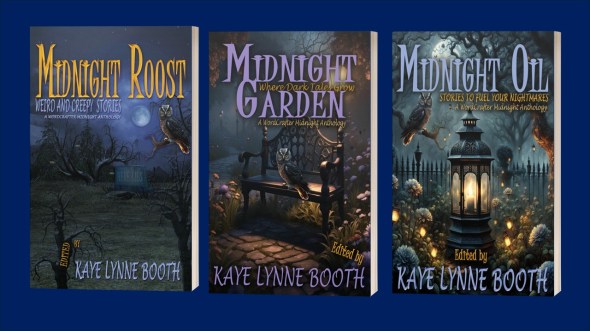
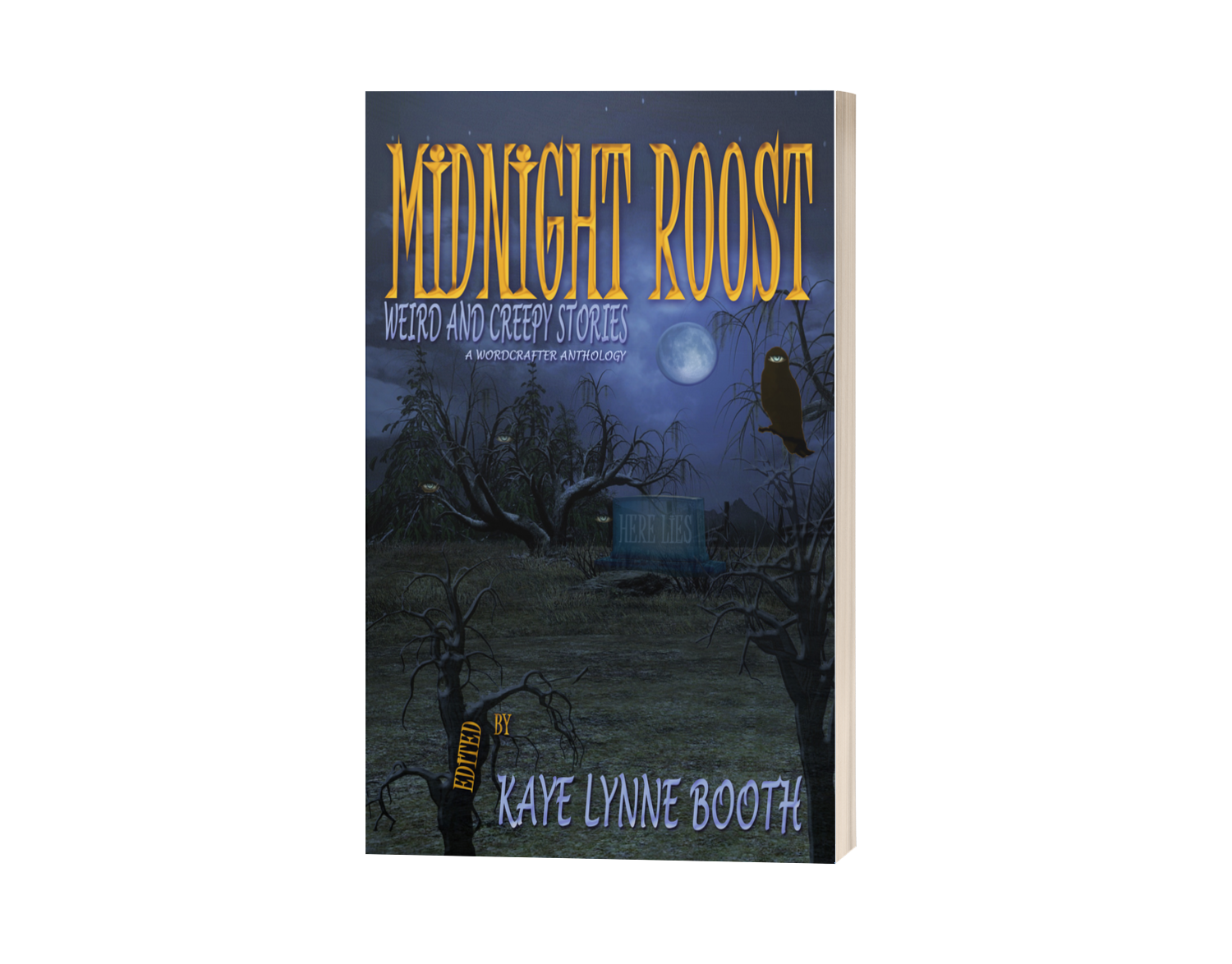
Midnight Roost: Weird and Creepy Stories: 20 authors bring your nightmares to life in 23 stories of ghosts, paranormal phenomenon and the horror from the dark crevasses of their minds. Stories of stalkers, both human and supernatural, possession and occult rituals, alien visitations of the strange kind, and ghostly tales that will give you goosebumps. These are the tales that will make you fear the dark. Read them at the Midnight Roost… if you dare. https://www.amazon.com/Midnight-Roost-Kaye-Lynne-Booth-ebook/dp/B0CL6FPLVJ
Midnight Garden: Where Dark Tales Grow: 17 authors bring you 21 magnificent dark tales. Stories of magic, monsters and mayhem. Tales of murder and madness which will make your skin crawl. These are the tales that explore your darkest fears. Read them in the Midnight Garden… if you dare. https://www.amazon.com/Midnight-Garden-Where-Tales-Anthology-ebook/dp/B0DJNDQJD3
Midnight Oil: Stories to Fuel Your Nightmares: 14 authors bring you 16 dark tales that explore your deepest fears. These are the stories which nightmares are made of. Tales of monsters, mayhem, and madness which will make you shiver in the dark. Read them while you burn the Midnight Oil… if you dare. https://books2read.com/Midnight-Oil
Share this:

Treasuring Poetry – An introduction to the poetry of Lindsey Martin-Bowen and a review
Posted: March 18, 2026 Filed under: Book Review, Collection, Interview, Poetry, Review, Treasuring Poetry | Tags: #poetry, #RobbieCheadle, #TreasuringPoetry, Book Review, Interview, Lindsey Martin-Bowen, Treasuring Poetry, Where Water Meets the Rock, Writing to be Read 25 Comments
Today, I am delighted to host talented poet Lindsey Martin-Bowen as my March Treasuring Poetry guest. Lindsey is a fellow contributor to Writing to be Read and you can read her latest post here: https://writingtoberead.com/2026/03/04/lindseys-writing-practice-out-of-this-world-writing-exercise/
Interview with Lindsey Martin-Bowen
My poetry journey: How I became a poet
I must admit as a child, I wrote more stories than poetry. And the poems I wrote then were sentimental and trite. (During grade school (from third or fourth through sixth grade), I compiled annual Christmas books containing “Christmas” stories I wrote—but each year, the manuscript also included a Christmas poem (or one about winter) and a Christmas tale from Readers Digest (which influenced me to compose Christmas books). I also illustrated the books with colored pencils the first year and I gradually moved to water color illustrations (which I sometimes marked with felt-tip pens). My sixth-grade teacher (Mrs. Ferguson) introduced us to Robert Frost and Carl Sandburg, whom I liked, but I liked Emily Dickson the best when I attended elementary school—and I still consider her one of my favorites today. (Unfortunately, at the time, I was too naive to pickup on her style (and skills).
Being the nerd I was in high school, I opted to take a journalism classl. There, for the Christmas issue (of our high-school newspaper), I wrote a humorous Christmas poem from the staff, which I illustrated with an ink sketch of Santa , his gift-filled sleigh (which included B/W head-shot photos of each new-staff member )
and eight reindeer flying through skies above my sketches of Victorian two-stories. (Even then, I preferred old homes to the contemporary ranch styles where most my classmates and I lived.)
Also in high school, I continued writing in my diary, which I used to create short stories (from events in that diary). And I submitted those stories in English classes when a teacher requested them. But my poems were overly sentimental and personal. And basically about teen angst. (For example, one was entitled “Alone.”)
In fact, during my senior year in high school, my English composition teacher enjoyed my short stories and offered encouraging comments. I wouldn’t have shared my poetry, but she’d asked to see it. So I submitted the dreary poems I’d written (mainly centering on unrequited love). She read them and returned them without comment. I mean—absolutely NO comments. No encouragement. So I figured I was no better poet than I’d been a violinist. Sigh.
Thus, my true poetry journey did not take flight until my sophomore year at the University of Missouri-Kansas City, when fellow student Robert (“Bob”) Haynes and I became close friends. Even then, he was an excellent poet—and he boosted me along the journey to poet-hood. He shared not only his poems, but pointed out many contemporary experts who’d been gaining attention in the early 1970s, , such as W.S. Merwin, Galway Kinnell (both born the same year as my father: 1927), Lawrence Ferlinghetti, and Alan Ginsburg, popular in the late 1960s.-and who gave a reading at UMKC. Bob also introduced me to surrealists Kenneth Patchen and Kenneth Koch, who inspired my frenzies, (which I didn’t write until fifty years later.) I discovered James Tate, who I’d include as a “surrealist,”too. Shortly thereafter I enrolled in the university’s poetry writing classes taught by professors Dan Jaffe and David Ray, who introduced me to an array of well-known contemporary poets, including Diane Wakoski (whom Dan Jaffe brought to UMKC to give a reading), James Dickey, Etheridge Knight, Denise Levertov, John Berryman, David Ignatow, Randall Jarrell, William Stafford, Robert Lowell, Thomas Merton, Later, I also started reading Adrienne Rich, Denise Low, and Mary Oliver.
And, I did improve—enough that my senior year, Dan Jaffe asked me to read a few of my poems at a poetry reading on the UMKC campus for the public. He also published two of my poems in an anthology he compiled, one that included many professional poets.
Favorite poem by another poet
O my goodness—I’ve read so many poets and poems, this one is a tough question. Along with the previous set of poets I mentioned, I’ve always admired Emily Dickinson’s style and work, along with William Butler Yeats (especially his “The Second Coming.” And T.S. Eliot: His “Wasteland” is remarkable, but far too long to include here. And the sounds in that poem make it come alive so much that it’s best to listen to a recording of it. Even his “The Love Song of J. Alfred Prufrock” is a bit long to include. Thus, I’ll share Yeates’s “The Second Coming,” which not only inspired one of my poems that I’ll share later, but also remains relevant to our current world situation (a century later).
The Second Coming
Turning and turning in the widening gyre
The falcon cannot hear the falconer;
Things fall apart; the center cannot hold;
Mere anarchy is loosed upon the world,
The blood-dimmed tide is loosed, and everywhere
The ceremony of innocence is drowned;
The best lack all conviction, while the worst
Are full of passionate intensity.
Surely some revelation is at hand;
Surely the Second Coming is at hand.
The second Coming! Hardly are those words out
When a vast image out of Spiritus Mundi*
Troubles my sight: somewhere in sands of the desert
A shape with lion body and the head of a man,
A gaze blank and pitiless as the sun,
Is moving its slow thighs, while all about it
Reel shadows of the indignant desert birds.
The darkness drops again; but now I know
That twenty centuries of stony sleep
Were vexed to nightmare by a rocking cradle,
And what rough beast , its hour come round at last,
Slouches toward Bethlehem to be born?
1920-1921
Favorite style of poetry and why
Although I love my surreal frenzies, I also like other forms of poetry, including sonnets, when they come “naturally.” (The two times I’d written sonnets but didn’t realize it until I re-examined them, tweaked them here and there, and voila! I’d written two sonnets without trying—the best for me). Those two appeared n my second published poetry book (the first full collection) Standing on the Edge of the World (Washburn University/Woodley Press 2008).
I’ve also fallen in love with the Japanese tanka form. (Haiku doesn’t allow enough syllables for my poems. 😉 ) Thus, I created a section of tankas in my last collection, CASHING CHECKS with Jim Morrison (redbat books 2023). More about that later.
Moreover, I generally write in “free verse” with sounds and rhythms and internal rhymes (not at the end of a line), that flow so smoothly, the rhyme doesn’t “hiccup” or stop the reader. Why is this usually my favorite form? As I’ve mentioned in a number of my bios, “poetry is my way of singing.” Thus, in most poems I write, I strive to use sound so they have somewhat the same effect that a song does.
Favourite poem of my own
O so many poems—so little time. I cannot name one favorite poem. But three of them come to mind. First, here’s my response to “The Second Coming,” which I wrote in response to the violence occuring in Ferguson, Missouri:
Re-reading “The Second Coming’ by W.B.Yeats
after Ferguson, Missouri\
No one listens anymore. No one works
in tandem. No horses pull this cart.
Now trembling, it falls apart.
The center hub’s blown, exploded.
Rioting in city squares—rioting along beaches.
Is this anarchy—or something more?
The blood of victims rushes onto shores.
Innocents no more, their lungs fill
till they can’t speak—can’t breathe.
Their passions now sneseles, uneasy—
bringing the strange revelation:
the Second coming lies on the horizon.
It’s the day, it’s the day—
O yes, it’s the holy day—
it’s the Day of the Dead.
A wide-winged beast rises above—
eyes black and gleaming, onyx
glistening through bone.
O Momma, Momma,
come back, come back
again. The world’s too cold.
No lion-bodied beast alouches
toward Bethlehem. It’s a creature
with a jackal’s head, a jackal’s soul.
Where Water Meets the Rock, p. 30 (39 WEST PRESS 2017)
Two other poems I must also count as favorites, because they seemed to write themselves.
The words came to me without me planning them. It was if they suddenly appeared in my brain, and I had to scramble to pen them onto paper before they evaporated.
The first, I wrote during the months that revealed my father was not to stay much longer on this earth. (This was when the frenzies started coming to me. Many of the frenzies are absurd—but comical. This one’s more serious. (And I’ve included it in three of my books: It must be a favorite.)
It’s Never Like the Movies—
for my father
this dying, no background chords
rising to a crescendo,
no adagio of strings.
You watch these ants instead,
trickle across peonies
They disappear. And you
can’t keep your grip
on that granite wall of reason
but slip downstream
into some wild current
till you run aground .
There, you search
for the deserted place, a Holy Land,
where Ekijah met God.
Even if you’re hiking
the Appalachian Trail, up
Standing Indian Mountain,
you watch vultures circle
in and out of clouds festering
into some murky, yellow soup.
And when lightning hits,
Father Davis says Hail Marys—
and there, on the horizon,
you see wovoka whirl
in his dance of ghosts.
Standing on the Edge of the World, p. 85 (Washburn U/Woodley Press, 2008)
Inside Virgil’s Garage, p.52 (Chatterhouse Press, 2013)
The Book of Frenzies, p. 76 (Pierian Springs Press, 2022)
And “From the Emerald City to the Mountain of Quaff” is special to me because it came to me in pieces—often as I was awaking from sleep. At the time, it seemed to be one of the most imaginative poems I’ve written. Perhaps that’s why one of my former poetry professors, David Ray selected it to run in an anthology he assembled (Whirleybird Anthology of Kansas
City Poets, 2012).
From the Emerald City
to the Mountain of Quaff
(or This Must Be Kansas)
Go out and get that long face lost, you say,
Bury me in Jerusalem, I reply.
I want to be one of the first to rise,
like yeast on a rock in the desert,
among iron stones, hills filled with brass,
in a land of olive oil and honey—
wrapped in silver and gold,
where water eats fire
and fire drowns water, and the angel
of the presence outlasts them both.
Or, if poetry must be delirious and weird,
or even a prophetic frenzy,
then bury me in absurdia,
where the lemons bloom.
Inside Virgil’s Garage, p. 7 (Chatter House Press 2008)
Kansas City Voices (October 2007)
Whirlybird Anthology of Kansas City Poets, Whirlybird Press (2012).
The BOOK of FRENZIES, p. 66 (Pierian Springs Press 2022)
About CASHING CHECKS with JIM MORRISON
This book has a strange history. Although it resulted in being a sequel to CROSSING KANSAS with JIM MORRISON (Paladin Contemporaries 2016), it wasn’t exactly planned. I wrote the first collection in about six months. It was odd, too, because it took two years for me to write and revise the book’s initial poem entitled “Crossing Kansas with Jim Morrison, which, of course, became the book title. Yet—once that poem came together, I wrote the rest of the book within six months and entered it into the 2015-2016 QuillsEdge Chapbook Contest, Although it didn’t win, it was a finalist. Concurrently, Thorny Locust literary magazine ran three poems from the collection, and Amethyst Arsenic, another lit mag, took one more.
And the Jim Morrison poems kept coming to me. So I added them and others that fit into the collection, to make a complete book, which Paladin Contemporaries published that summer. On Amazon, the book made it to number 23 or so on the top 100 Poetry Books by Women list—and stayed there most of the following year. (Inside Virgil’s Garage was on that same list concurrently, but it didn’t rise as high Crossing Kansas w/JM did.
About two years later after Where Water Meets the Rock was published, I put together CASHING CHECKS, designed around the themesof actual money becoming obsolete. (Checks, along with credit cards, debit cards, and other contemporary methods of payment don’t include actual money, correct? It money going the way of the manual—or even electric typewriter?) That collection, of course, included other sectons centering around the tanka form and the frenzies. (At present three of my collectons include a section of “frenzies,” and of course, The BOOK of FRENZIES contains solely frenzies, some less zany than others).
In short, after accruing more Jim Morrison poems—I mean, Jim just wouldn’t hush, but kept popping words into my brain—I considered merging the new Jim Morrison poems with the CASHING CHECKS book.
When I submitted both versions to redbat books, both the publisher and her editor preferred the collection containing Jim Morrison. So that’s where we went with it.
What’s next?
What’s next? I’m now working on a manuscript, named for a 10-stanza poem (which can be set in five pages or in in ten, whichever works best) that’s appeared in three publications. I’ve been adding to it and hope to complete a full collection within a few months. The DARK HORSE WAITS in BOULDER, my fourth novel (third on Amazon) is scheduled to be released this spring—so that will precede the poetry book release. At present, I have one more poetry collection I’ve started but don’t see it going anywhere for a year or more. That one may be my last poetry collection, too. (Three more novels and one short story collections are ahead of that poetry collection.) And then, what may be my last novel—now in a VERY ROUGH state-of-being—just may allow the likely last poetry collection to supercede it .But who knows? Rock star archetype Jim Morrison may hop into one or the other manuscript and upset the entire scene.
My review of Where Water Meets the Rock
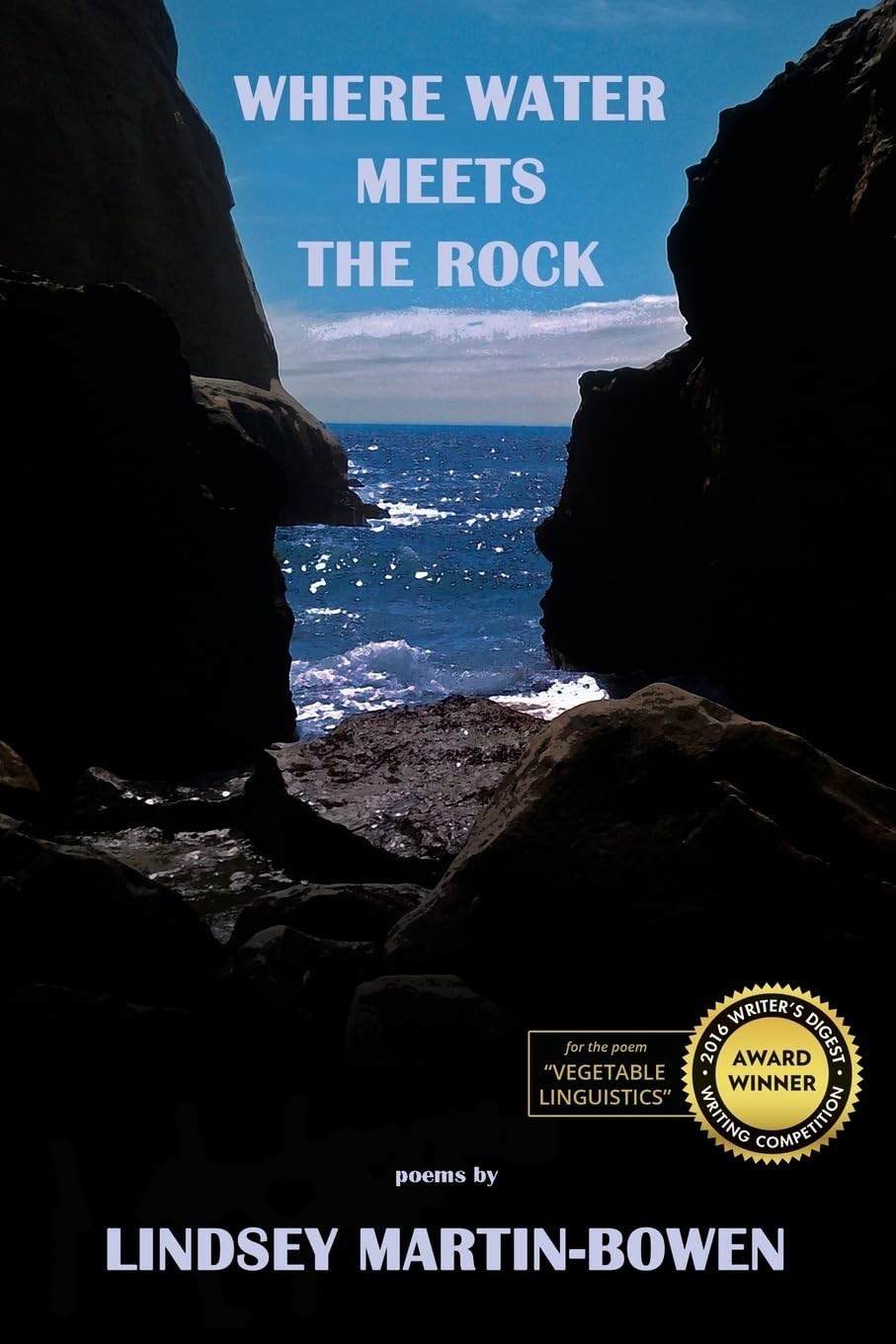
I enjoy reading poetry collections that include a common thread that links all the poems together. The common thread for this collection is loss and recuperation. This theme is relatable to everyone as we all suffer loss in various forms throughout our lives and we are forced to recuperate whether we want to or not.
The collection is divided into three sections: Erosion which explores the slow build up to loss; Frenzies which seeks to unravel the immediate chaos and emotion that follows loss; and On the Shore which delves into the slow path to acceptance and continuation.
The poems are unique and make use of various techniques to either exaggerate or bring out the humorous side of deep emotion and complex thought patterns relating to loss.
A poem that resonated strongly with me in Erosion is titled Psyche in the Suburbs. For me, this poem exposed the conflicting emotions of love, resentment, and self sacrifice that arise when caregiving for aging relatives.
This is the final stanza in this poem:
“Now, lavender scents fill the air,
sending me to the Aegean Sea.
When I step onto the asphalt,
I remember the bottled water.
I must go back. Without it,
the world will know her face
grows old. And she’ll blame me.”
Another poem in this section I especially related to is entitled My Bones are Glass. I have often thought this same thing when dealing with the elderly and aging. The poet includes an apology to Mark Strand, one of my favourite poets, so the style also worked very well for me.
Section 2: Frenzies, includes a lot of humour relating to people’s eccentricities and wants in their final moments. The poems also touch on the need for the observers to fulfil every desire and make the passing easier – perhaps to alleviate the guilt of survival. I enjoyed the poems although humour in poetry is not my personal favourite style. This section lifts the tension in death and loss and will appeal to most readers.
Section 3: On the Shore was very compelling for me. It explored inevitable change and endings coupled with new beginnings of a different sort. I reminded me that we move from one phase to another in our lives without even realising it until we look back and the end and beginning stand out in stark reality. The poem I enjoyed the most in this section was Two Mothers with Kids in Winchell’s. Perhaps because my children are now adults and have both finished school so I can understand and appreciate this poem through the lens of a soon to be empty nester.
This is one stanza in the poem that I strongly related to:
“The Winchell’s mothers nod, talk in buzzing hums,
eye their toddlers, who hop, slide on linoleum.
The kids scratch glass, balance on window ledges.
The pregnant one smooths seersucker. “Guys,” she says,
“They don’t like that here. Come, be quiet, Sit down.”
Like seatbelts, her words rein them in. I frown,
wonder how she renders her voice firm but not loud.”
As a mother who always worked, this stanza fills me with thoughts about what might have been had my own path taken me along a different path. What kind of mother would I have been had I not always been struggling to balance work and home demands. A writer who can introduce such reflections has to be great.
I highly recommend this compelling collection.
Where Water Meets the Rock is available from Amazon US here: https://www.amazon.com/Where-Water-Meets-Lindsey-Martin-Bowen/dp/1946358053
Lindsey Martin-Bowens Amazon Author page is here: https://www.amazon.com/stores/Lindsey-Martin-Bowen/author/B00JA31KW0
About Lindsey Martin-Bowen

Lindsey Martin-Bowen’s CASHING CHECKS with Jim Morrison has just been released this fall (2023) by redbat books (a La Grande, Oregon publisher) as part of its Pacific Northwest Writers series. She serves as a Literary Consultant for Pierian Springs Press, which published The BOOK of FRENZIES in April 2022 (hardback copy in December 2022–BEFORE she became its Literary Consultant). She has taught Criminal Law and Procedure (online) at Blue Mountain Community College, Pendleton, Oregon since January 2019. Until August 2018, she taught writing, literature, and Criminal Law at MCC-Longview and taught literature and writing at the University of Missouri-Kansas City 18 years.
A Pulitzer-Prize nominee, her fourth full-length poetry collection, WHERE WATER MEETS THE ROCK (39 West Press 2017) contains “Vegetable Linguistics,” which received an Honorable Mention in the Non-rhyming Poetry category of Writers Digest’s 85th Annual Writing Competition (2016). Her third collection, CROSSING KANSAS with Jim Morrison, won the “It Looks Like a Million” Award for the 2017 Kansas Authors Club competition. The book is an expansion of her chapbook named a finalist in the 2015-2016 QuillsEdge Press Chapbook Contest. “Bonsai Tree Gone Awry” from INSIDE VIRGIL’S GARAGE (Chatter House Press 2013) was nominated for a Pushcart Prize. This collection was also runner-up in the 2015 Kansas Authors Club Nelson Poetry Book Award. Woodley Press (Washburn University) published her first full-length collection, STANDING ON THE EDGE OF THE WORLD, which McClatchy newspapers named one of the Ten Top Poetry Books of 2008. Paladin Contemporaries released her novels RAPTURE REDUX (2014), HAMBURGER HAVEN (2009) and CICADA GROVE (1992). Her work has appeared in NEW LETTERS, I-70 REVIEW, THORNY LOCUST, FLINT HILLS REVIEW, PORTER GULCH REVIEW, SILVER BIRCH PRESS, COAL CITY REVIEW, PHANTOM DRIFT, TITTYNOPE ZINE, BARE ROOT REVIEW, , AMETHYST ARSENIC, THE SAME, THE ENIGMATIST, ROCKHURST REVIEW, BLACK BEAR REVIEW, LITTLE BALKINS REVIEW, KANSAS CITY VOICES, LIP SERVICE, 21 anthologies, and others.
With Dennis Etzel, Jr., she edited GIMME YOUR LUNCH MONEY: Heartland Poets Speak out against Bullies (Paladin Contemporaries 2016). She holds an MA in English (creative writing emphasis) and a Juris Doctor degree.
Before focusing upon teaching and writing poetry and fiction, she served as a full-time journalist and magazine editor for THE LOUISVILLE TIMES, the Johnson County SUN, MODERN JEWELER Magazine, and THE NATIONAL PARALEGAL REPORTER. She also worked as a legal editor for the Office of Hearings and Appeals (USDI) in Washington, DC.
She has two brilliant children and contends with super Chihuahuas Chia Maria La Rue and Chico the Man, her canine companions. And often, she spars verbally with poet Carl Rhoden.
About Robbie Cheadle

South African author and illustrator, Robbie Cheadle, has written and illustrated sixteen children’s books, illustrated a further three children’s books, and written and illustrated three poetry books. Her work has also appeared in poetry and short story anthologies.
Robbie also has two novels and a collection of short stories published under the name of Roberta Eaton Cheadle and has horror, paranormal, and fantasy short stories featured in several anthologies under this name.
You can find Robbie Cheadle’s artwork, fondant and cake artwork, and all her books on her website here: https://www.robbiecheadle.co.za/
________________________
Did you know you can sponsor your favorite blog series or even a single post with an advertisement for your book? Stop by the WtbR Sponsor Page and let me advertise your book, or you can make a donation to Writing to be Read for as little as a cup of coffee, If you’d like to show your support for this author and WordCrafter Press.
__________________________
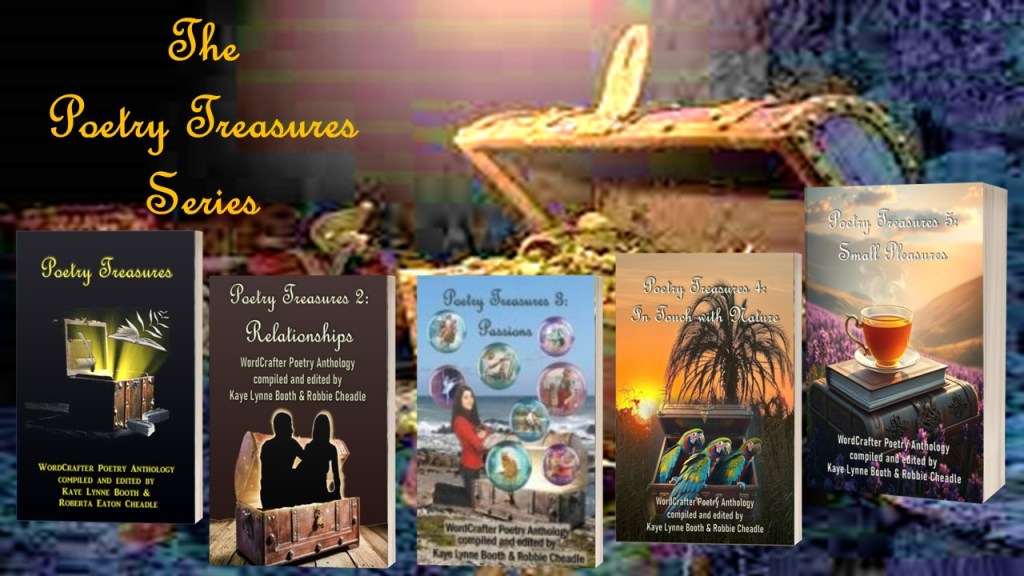
This segment of “Treasuring Poetry” is sponsored by WordCrafter Press and the Poetry Treasures series.
Get Your Copy Today!
Poetry Treasures: https://books2read.com/PoetryTreasures
Poetry Treasures 2: Relationships: https://books2read.com/PT2-Relationships
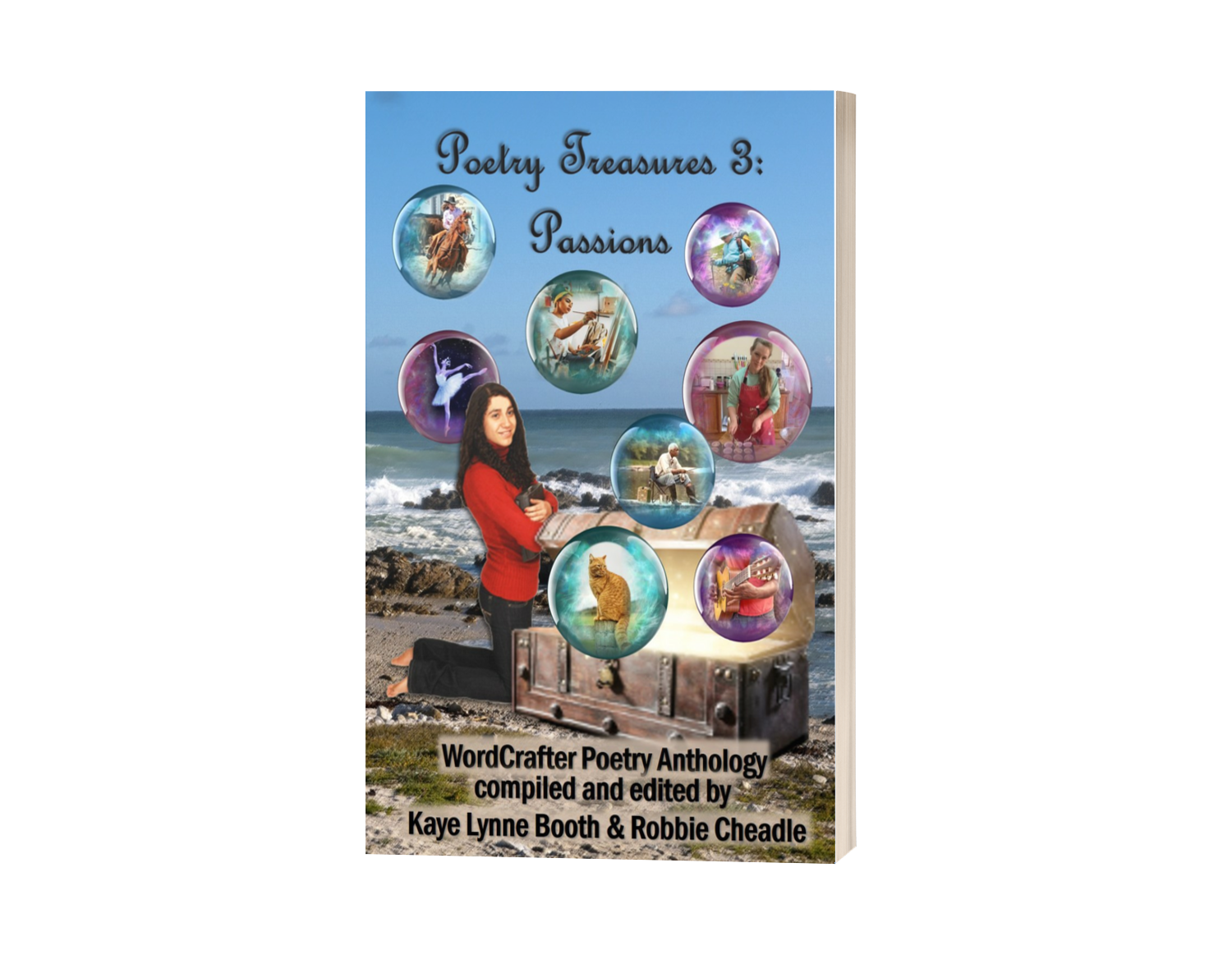
Poetry Treasures 3: Passions: https://books2read.com/u/b5qnBR
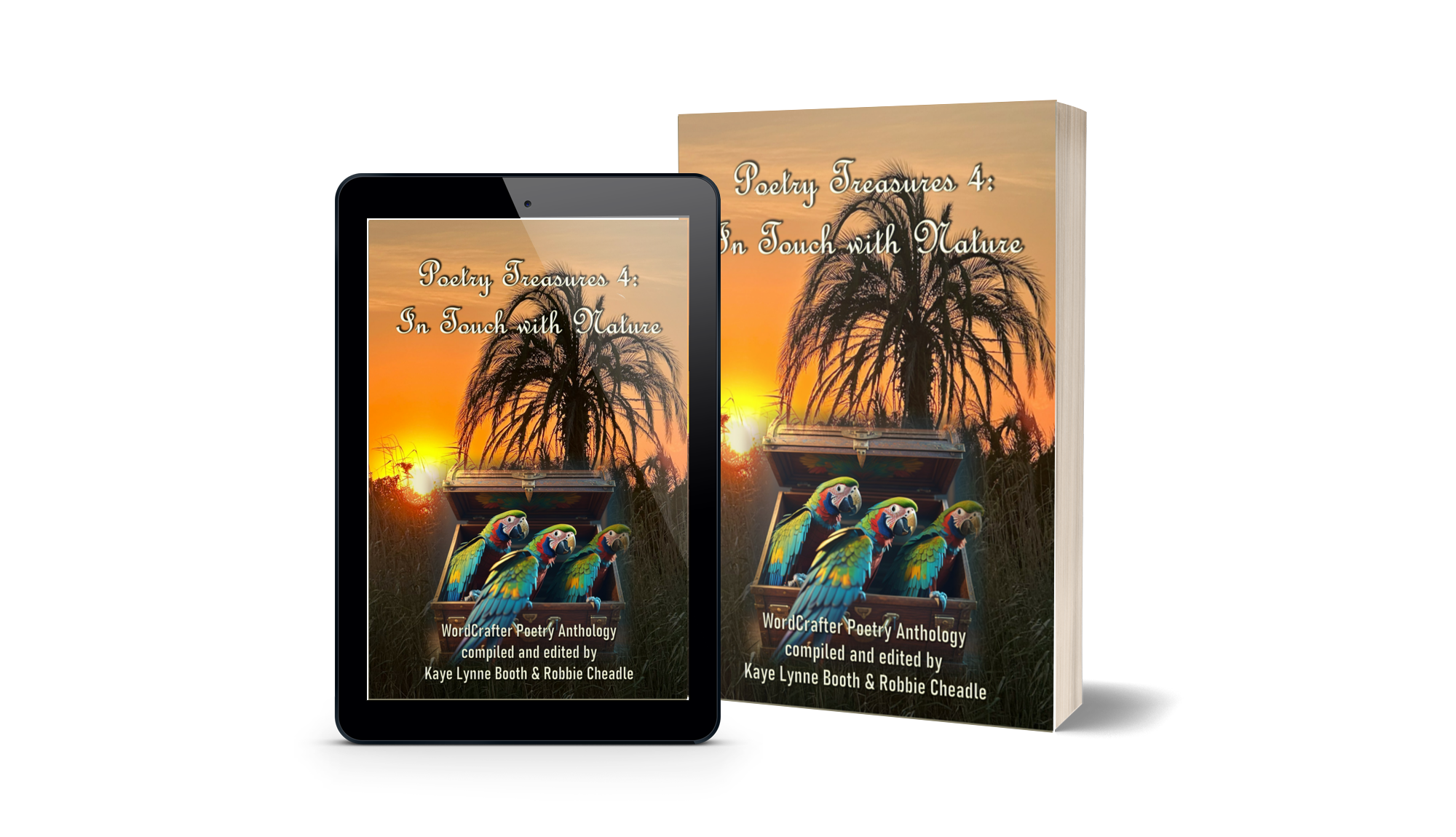
Poetry Treasures 4:In Touch With Nature: https://books2read.com/PT4-Nature
Poetry Treasures 5: Small Pleasures: https://books2read.com/PT5-SmallPleasures
Share this:

LINDSEY’S WRITING PRACTICE: Book Review
Posted: February 4, 2026 Filed under: Anthology, Book Review, Books, Dark fiction, Fiction, Lindsey's Writing Practice, Review, Short Fiction, Stories | Tags: Book Reveiw, Lindsey Martin-Bowen, Lindsey's Writing Practice, Midnight Garden, Writing to be Read 3 CommentsAnthology Review: MIDNIGHT GARDEN: Where Dark Tales Grow

Purchase Link: https://books2read.com/MidnightGardenAnthology
Readers who relish dark tales will love this collection of numerous stories that often blend humorous word play to add levity to some very dark situations. For example, this second anthology in the Midnight Anthology Series, MIDNIGHT GARDEN, opens with award-winning author Paul Kane’s “Drip Feed.” The story incorporates light-hearted word-play into a grim setting–the polar opposite of the romantic backdrop in Kane’s “The White Lady,” from the 2023 MIDNIGHT ROOST collection.
In fact, this dark tale unsettled my psyche so much, I almost refused to comment upon it until after I read it a second time. Then, I focused upon its metaphoric interpretation,which is quite valid, especially considering our current world situation. And like many stories in this group, this one reveals some strong feminist themes. Thus, I now urge readers to “hang in there” while they peruse this midnight story.
Likewise, Ell Rodman’s “The Drummer,” set four hundred years ago in “Cull County.”
(yes—look up the noun definition for “cull” to glean this story’s underlying interpretation), projects both in-depth—but frightening images. (Note it ends in a fiery place where the Drummer ”wore fitted black robes, bearing a massive wooden hammer and a dark shield.”) Along with incorporating history into this piece, Rodman’s detailed descriptions of the environment keep readers traveling a mysterious path to the tale’s conclusion.
Also suspenseful but not as grim,, DL Mullan’s “Kurst,” is one of my favorites in this collection. Set in Salt Pines, a village in Arizona, “between dreamy pine peaks and unfathomable horrors,” the story opens when Karen Kurst leaves her editing job to checkout the “Kurst inheritance” on the Toronto National Forest’s eastern edge. After she encounters Sheriff “Bear” Barrett, who offers her background about her inheritance and eading materials, this story takes readers on a wild—frightening—but fulfilling “ride.”
Another favorite, Roberta Eaton Cheadle’s “Amahle’s Demon” reveals how little we often understand about our fellow creatures, which can result in heartbreaking ends. One of six elephants comprising a “sanctuary herd” recently moved to “another kraal near the visitors’ centre, ready for the afternoon tour.” Unfortunately, a much smaller creature—and a human’s ignorance led to an ending that evoked my tears.
Denise Aparo’s “Jack Moon and the Vanishing Book” (also a favorite tale) takes readers on a magical adventure of the mind—or perhaps into a different dimension via a “much sought-after Vanishing Book that steals souls.” While enjoying this other worldly piece, readers may decide whether it’s an earthly adventure or a magical one while enjoying the ride.
.
As I mentioned in my review of Midnight Roost, I’m mostly a rom-com fan, and Jon Shannon’s “Stitch” could fall into that category. But with a warning: Yes, it’s a romantic story about the characters Andy, a taxidermist and his wife, Julie, a superb seamstress, and the unusual creations they build together, which many of their colleagues consider bizarre. This tale comes with a warning, too: Its ironic humor is quite dark—and leads to a surprise “tongue-in-cheek” ending.
Julie Jones’s “Black Moon” serves as an allegory much like stories from ancient Greece. In fact, it brings to mind C.S. Lewis’s novel, Till We Have Faces, based upon Greek mythological characters.
In contrast, “Antepenultimate,” Molly Ertel ‘s first person narrative, initially evokes chuckles at the narrator’s obsession with the ticking of an antique “KIT-Cat Klock” that began “talking” to her until the narrator became obsessed with an internal urge that leads her down a terrible—and terrifying path.
Similarly, Kaye Lynne Booth’s first -person narrator in “The Puppet Men,” another of my favorites, awakens in a pitch-black room, where she encounters “A thin sliver of light coming in under the door” that clued [her] “memory” to recount she was sleeping in a dark room in her grandmothers house. There, she also hears “high-pitched , twittering, kind of chirpy” voices coming from her grandmother’s felt puppet collection. As an adult, she remains obsessed with those voices she found so threatening that she puts off back surgery to avoid the anesthetic, which she fears will bring the “evil puppets” back into her life.
In a similar vein, Alex Constance’s “The Peddler,” another “dark” tale, serves as an allegory about the downfalls of greed. And Constance’s description of the peddler, “Ichabod” reminded me of Disney’s Ichabod Crane in Washington Irving’s “The Legend of Sleepy Hollow,” especially in Disney’s cartoon version of that tale.
Although Danacka Scrimshaw’s “The Fae Game” at first appears to be a much “lighter: tale than most of those in this collection, the “flip” at its conclusion inspires in the reader feelings that are quite eerie.,
Prolific author Joseph Carrabis penned five stories in this collection, each with merit:
—“Striders,” with a “just desserts” ending, this sci-fi piece gives another nod to feminism
—“Grande Ture,” a short, intense tale that creates a strong statement about AI.
—“The Last Drop,” which illustrates ignorance and bigotry often leads to the opposite of bliss.
—And what I consider Carrabis’s literary masterpiece in this collection,“The Tomb,” a deep tale centering around a blind man who undergoes an operation to retain his sight. Although its plot varies significantly from the Val Kilmer 1999 film, At First Sight. (based upon a true case study by Dr. Oliver Sacks), it shares one of the movie’s sequence of events that creates the stories’ themes about the protagonist: being blind, undergoing an operation that gives him sight, then becoming disoriented when adapting to a visual world—and realizing he had more “sight” in his physical blindness. (Carrabis’s tale contains more “dark” physical drama in its conclusion.)
Aptly scribed with engaging (albeit sometimes weird) characters, all stories in this collection entice readers via their talented, skilled authors. And even if a story is terribly dark, most readers would likely concur it ends with characters reaping well-deserved fates—or “poetic justice,” such as those in Robbie White’s“Fire Sale at the Burdock Family Business” and Zack Ellafy’s “Self-Mutiny,”with its “poetic justice” ending. Indeed, even a narrator reaps his “just dessert in Paul Martz’s “The Blackest Ink.”
And for this well-written collection’s finale, the 2024 Wordcrafter Dark Fiction Contest winner, an engaging but eerie saga,‘The Seagull Man,” by M.J. Mallon unfolds with a detailed description of that bird-like man, who wears grey and white clothes and strolls regularly to the shore with a flock of seagulls circling him along the way. In contrast, “[t]he inhabitants of Cave Birdie knew of the Seagull Man’s reputation, his legend, and avoided contact with him.”
As the tale progresses, the reader learns why his neighbors avoid him—and most likely shares their reaction until the story unfolds in an unanticipated manner—a story that might be defined as a fantastical, especially for this reviewer who’s partial to Rom-Coms, including the eerie ones.
About Lindsey Martin-Bowen
On Halloween 2023, redbat books released Lindsey Martin-Bowen’s 7th poetry collection, CASHING CHECKS with Jim Morrison. Her 4 th collection, Where Water Meets the Rock, was nominated for a Pulitzer; her 3rd, CROSSING KANSAS with Jim Morrison was a finalist in the QuillsEdge Press 2015-2016 Contest. In 2017, it won the Kansas Writers Assn award, “Looks Like a Million.” Writer’s Digest gave her “Vegetable Linguistics” an Honorable Mention in its 85th Annual (2017) Contest. Her Inside Virgil’s Garage (Chatter House Press 2013) was a runner-up in the 2015 Nelson Poetry Book Award. McClatchy Newspapers named her Standing on the Edge of the World (Woodley Press/Washburn University) was one of the Ten Top Poetry Books of 2008. It was nominated for a Pen Award.

_________________________________________________
Did you know you can sponsor your favorite blog series or even a single post with an advertisement for your book? Stop by the WtbR Sponsor Page and let me advertise your book, or you can make a donation to Writing to be Read for as little as a cup of coffee, If you’d like to show your support for this author and WordCrafter Press.
__________________________________________________
This segment of “Lindsey’s Writing Practice” is sponsored by the Midnight Anthology Series and WordCrafter Press.
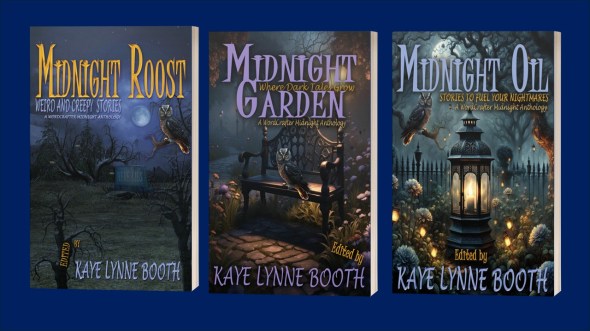
Midnight Roost: Weird and Creepy Stories: 20 authors bring your nightmares to life in 23 stories of ghosts, paranormal phenomenon and the horror from the dark crevasses of their minds. Stories of stalkers, both human and supernatural, possession and occult rituals, alien visitations of the strange kind, and ghostly tales that will give you goosebumps. These are the tales that will make you fear the dark. Read them at the Midnight Roost… if you dare. https://www.amazon.com/Midnight-Roost-Kaye-Lynne-Booth-ebook/dp/B0CL6FPLVJ
Midnight Garden: Where Dark Tales Grow: 17 authors bring you 21 magnificent dark tales. Stories of magic, monsters and mayhem. Tales of murder and madness which will make your skin crawl. These are the tales that explore your darkest fears. Read them in the Midnight Garden… if you dare. https://www.amazon.com/Midnight-Garden-Where-Tales-Anthology-ebook/dp/B0DJNDQJD3
Midnight Oil: Stories to Fuel Your Nightmares: 14 authors bring you 16 dark tales that explore your deepest fears. These are the stories which nightmares are made of. Tales of monsters, mayhem, and madness which will make you shiver in the dark. Read them while you burn the Midnight Oil… if you dare. https://books2read.com/Midnight-Oil