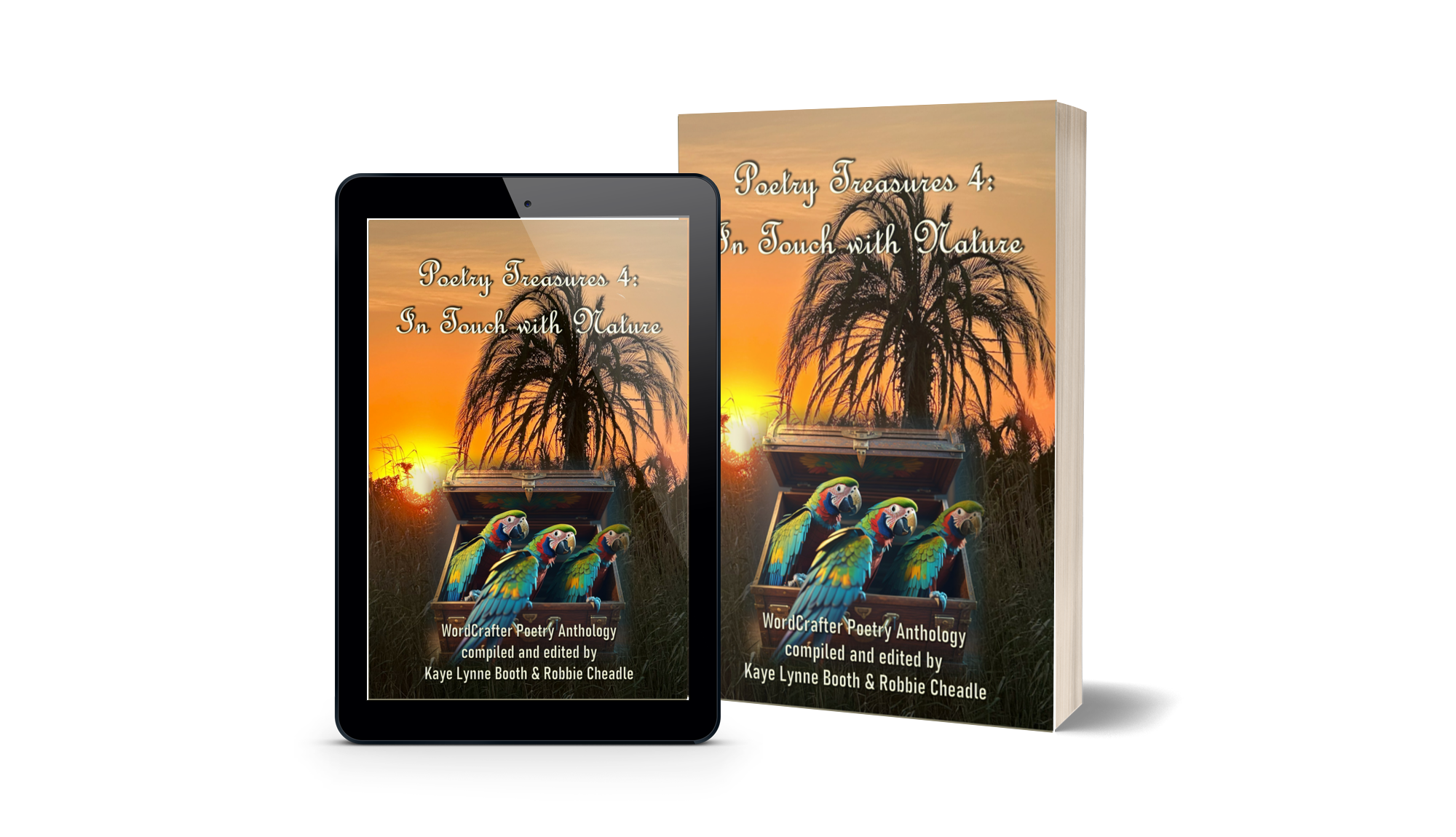
LINDSEY’S WRITING PRACTICE: A Review
Posted: September 2, 2026 Filed under: Book Review, Books, Collection, Lindsey's Writing Practice, Poetry, Review | Tags: Backstories, Book Reveiw, Lindsey Martin-Bowen, Lindsey's Writing Practice, Maryfrances Wagner, Poetry, Writing be Read 1 Comment
Backstories Poems by Maryfrances Wagner A REVIEW by Lindsey Martin-Bowen
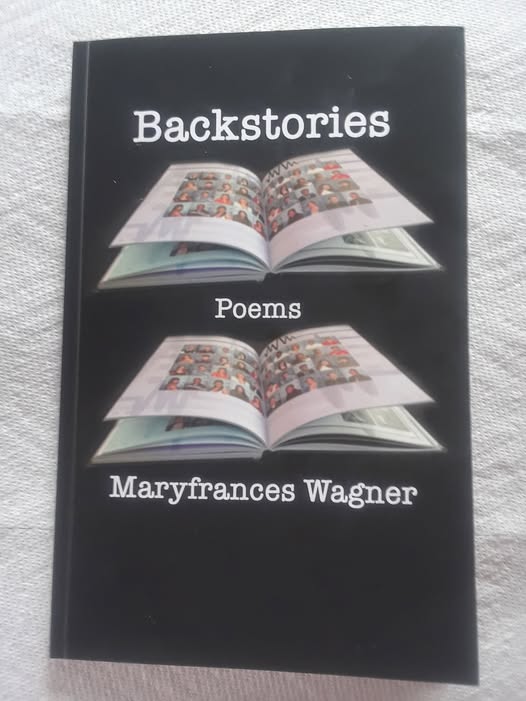
No doubt, this collection by established teacher and poet Maryfrances Wagner reveals
stories may rightfully appear in the form of poetry, too. Certainly, these 52 poems evoke laughter, tears, and definite insights to the chaotic world of high school students from the late 1960s though the 2000s.
For Wagner, teaching was a lifelong quest. “In third grade, I told my family I wanted to be a teacher,” she recalls. Thus, Wagner requested a desk for Christmas, and received a fine roll-top. The next year, she requested a chalk board and received one.
Then, she asked for books, “so I could start creating lessons.”
By sixth grade, she employed these tools to teach neighborhood children a week of “Bible school.”
“The passion never ebbed, I walked into my first year of high school juniors as
though I’d been teaching for years,” she recalled. “After all, I had, but what I didn’t know was how much I would learn about my students, myself, human nature, and inequality during the years I taught.”
The section of poems about—and sometimes written by—her students, opens with “Chuck,” a student in one of her high school classes, who
“. . .takes a seat so close he taps my desk.
Every day a Polo, dress pants, buttery loafers . . .
He’s 18, I’m 21. He doesn’t treat me as his teacher
ready to discuss Lord of the Flies. Behind his silky
voice and Gucci shoes, I see his mean. He instigates
fights and whacks small boys, particularly Juan—”
The poem entails what happens when the bully Chuck attacked the scholarly Juan (somewhat equivalent to “Piggy” in Lord of the Flies) in the restroom, resulting in an ambulance arriving at the high school. Wagner’s poem notes that when “the gurney arrived, Juan
was unconscious. Chuck earned his last credits
on Homebound. Juan’s parents moved to Texas.
A door had opened into a new darkness. . .”
Yet, such a traumatic experience didn’t stop Wagner from pursuing her dream. In her journals, she never quit, but documented these and other events, which she later transformed into poems.
Obviously, most of the poems don’t contain such violence, and the collection includes humorous events, sorrowful, and ironic passages in four sections, interlaced with collages Wagner created, among them, “Future?” “That Fault in Ourselves” (which includes a photo of Julius Caesar’s bust”), “Up a Tree,” containing a photo of the cover for A Separate Peace, “Hope,” including Dickinson’s line ‘hope is the thing with feathers,” “Homework,” which centers around a profile of a youth with the word “Promise” across its forehead.
Indeed, the humorous and thoughtful poems especially caught my attention, such as in, “My Sophomores View the Eclipse,” wherein the class “set aside Brutus’s soliloquy” (from Julius Caesar) “to poke pinholes into paper, tear a second sheet for viewing. . .” and “Worthy of her role as Casca, Emily stabs her paper five times.”
Plus, Wagner includes a found poem that evokes chuckles, “The Sophomores Study Grammar: A Found Poem,” containing such delightful lines as
“Why do we have to study grammar? We already
know how to speak and understand each other.
“You expect us to learn all this in one unit?
I’ve never heard of a verbal in all my life, only gerbils.”
One of the most fascinating sections of this collection includes “The Detention Suite,” comprising poems written solely by students during detention. Here, Wagner reveals she was a teacher “ahead of her time.” How so? Rather than using the school’s standard detention room, she designed her own detention, wherein, in lieu of punishment, student were encouraged to explore why they “acted out.”
I endorse such wisdom: Perhaps by learning how to understand and better meet their emotional needs, “problem” students may more easily grow into adults in lieu of into narcissists, who must—and often cruelly—demand center stage. And not only that, reading these poems by students evoked many chuckles. These are the openings of
some of my favorites:
“Brandon Langford Talks Through Detention”
“. . . I don’t even understand why I have detention.
You tell us to say what we think. I spoke
my thoughts, and that’s my right. My dad
does it all the time, freedom of speech,
and we cheer. Well, we did. He’s a combat vet,
but now he’s in prison for child porn
and hitting my mom. She’s glad he’s gone. . . ”
“Danielle Dances in a Mosh Pit”
“What did you do
last weekend?
You probably
sharpened pencils
or bought
new red pens.
I’m only
kidding.
Me and Carly went
to a headbanger
and danced
in a mosh pit.
We were the only
girls in there. . .”
“Niki Comes in Complaining”
“I still don’t why I’m here. I’m one of your best
students, I turn in my work, and I read the dreadful
literature you assign us like it means something
to me. I probably should zip my mouth before I say
what I think, but how can I relate to Hester Pryne? . . .”
“Scott Whittington II Stoops to Detention”
“I should not have to be here.
Do you know who my father is?
He has a street named after him.
He could get you into so much trouble.
At the least, you can expect a call. . .”
“Holly Keeps on Talking through Detention”
“Well, here I am, nd I’m gonna try not to talk
nonstop since that’s the reason I’m here, but
you know me. Mostly, I can’t help myself like
when Jeff Bell was nominated for homecoming
queen. That was big news. . .”
“Libby Steps in for Her Brother Connor”
“Hey, I know I’m not the one who’s
supposed to serve detention, but I’m
Connor’s proxy today. He has to work
a baseball game. He’s one of the lucky
ones who got a job with the Royals.
He’s been busy looking up sources
for hemp for his research paper. Your
class is one of the few he attends. He wants
that college credit even though he’s late.
After all, it’s first hour. He has a to
of excuses for missing other classes. . .”
“Brian Baker Dishes Out”
“Do you wonder at all why I hide in the hall
or want passes to the bathroom? I hate
working in groups. They hand me questions
and say, You’re the one, man, like that’s going
to make me wanna help them. Anything I say
hangs in the air like a comic bubble. I’m
in the wrong place. I like to read Aristotle,
and everyone looks at me like I’m trying
to suck up. Who would I be sucking up to?
You never assigned Aristotle. I read
Homer and Shakespeare, too, and I don’t
need your help. You should leave me alone
and be happy that I am busy learning. . .”
“Carlos Martinez Has His Say in Detention”
“Some teachers overlook little things,
like talking or not having homework. I laugh
in the face of homework, and I’m not giving
back this pencil I borrowed because you gave me
detention, It’s mine now. You expect too much,
and those emails you send my mom do no good.
She shows them to me, and we laugh. . .”
Finally, as another teacher (albeit, never for high school), I can especially
relate to one of the poems Maryfrances Wagner wrote in the final section of Backstories, entitled, “Grading,” from which I included most lines—not all—to avoid violating copyright laws:
“We’ve watched
the moon sag
into tomorrow,
ready to set down
our pens. . .
They argued
their case,
we ours—
more detail,
another example,
better verbs. . .
Ink glides its
well-oiled
ball bearings,
eager to praise
a phrase,
to find
a moment
of thought.
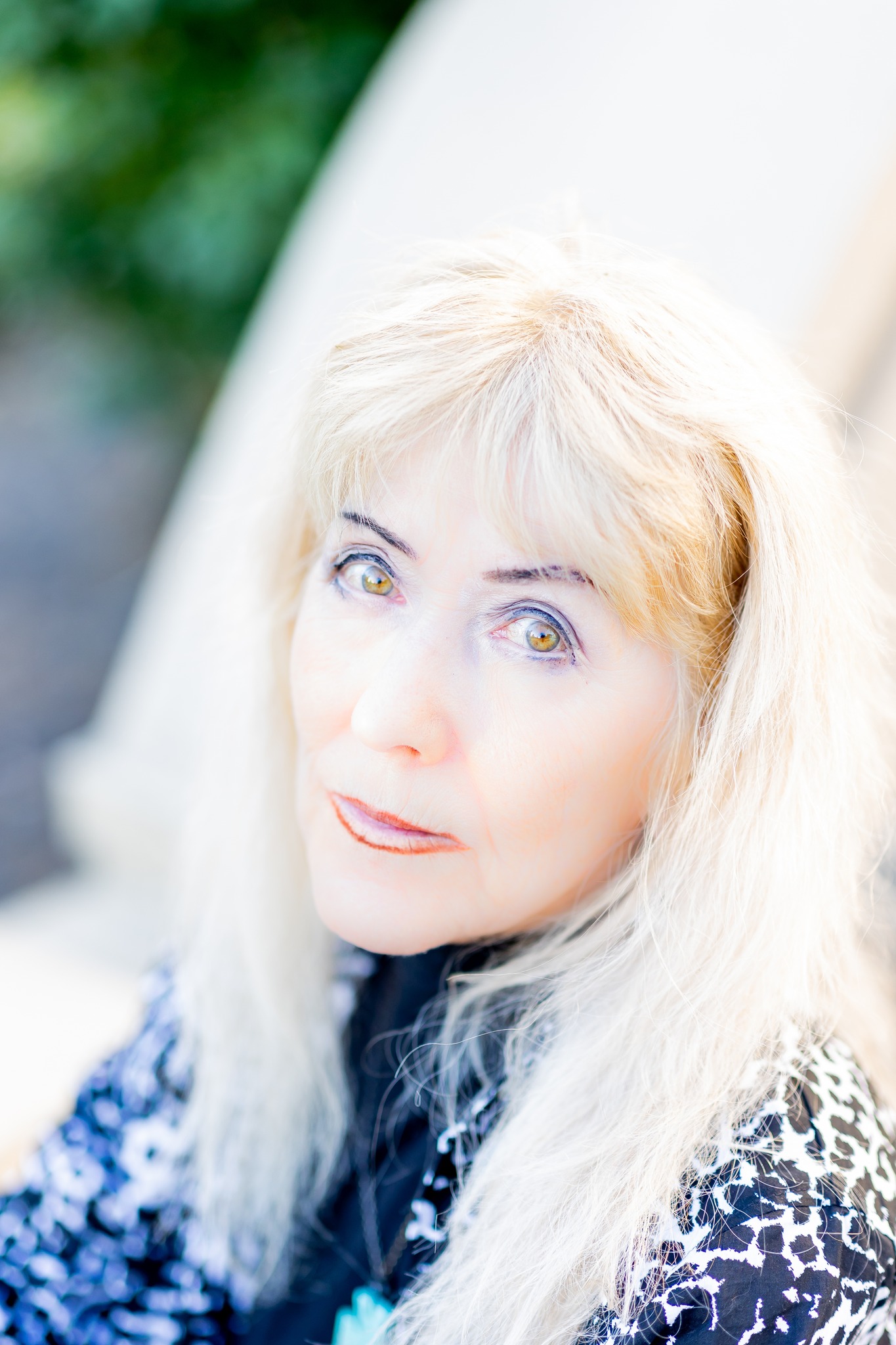
Along with serving as Missouri’s Sixth Poet Laureate from 2021-2023, Maryfrances Wagner was the 2020 Missouri Individual Artist of the Year. She serves as a co-editor of I-70 Review and as president of The Writers Place board and programming chair. He poetry collection Red Silk, recently re-issued by BookMark Press. Won the Thorpe Menn book award and was first runner up in the Eric Hoffer Legacy Award 2024 and short-listed for the Grand Prize Poetry. Her poems have appeared in many notable poetry journals nationwide, including New Letters, Midwest Quarterly, Laurel Review, Main Street Rag, Rattle, Voices in Italian Americana, and Unsettling America: An Anthology of Contemporary Multicultural Poetry (Penguin). More than nineof her poetry collections have been released by various publishers.
Thank you, Maryfrances Wagner, for penning such an engaging collection.
—Lindsey Martin-Bowen
About Lindsey Martin-Bowen
On Halloween 2023, redbat books released Lindsey Martin-Bowen’s 7th poetry collection, CASHING CHECKS with Jim Morrison. Her 4th collection, Where Water Meets the Rock, was nominated for a Pulitzer; her 3rd, CROSSING KANSAS with Jim Morrison was a finalist in the QuillsEdge Press 2015-2016 Contest. In 2017, it won the Kansas Writers Assn award, “Looks Like a Million.” Writer’s Digest gave her “Vegetable Linguistics” an Honorable Mention in its 85th Annual (2017) Contest. Her Inside Virgil’s Garage (Chatter House Press 2013) was a runner-up in the 2015 Nelson Poetry Book Award. McClatchy Newspapers named her Standing on the Edge of the World (Woodley Press/Washburn University) was one of the Ten Top Poetry Books of 2008. It was nominated for a Pen Award.
___________________________________________
Did you know you can sponsor your favorite blog series or even a single post with an advertisement for your book? Stop by the WtbR Sponsor Page and let me advertise your book, or you can make a donation to Writing to be Read for as little as a cup of coffee, If you’d like to show your support for this author and WordCrafter Press.
____________________________________________
This segment of “Lindsey’s Writing Practice” is sponsored by Undawnted.

Step Into the Undawnted Universe
Some authors write in one lane. DL Mullan builds worlds — and then dares you to walk into every single one of them.
Welcome to Undawnted, where imagination is fearless. Whether you’re craving a slow-burn paranormal romance, a bone-chilling horror story, a mind-bending sci-fi thriller, or songs/lyrical poetry that lingers long after the last line- there’s a feeling here waiting to pull you in.
Fall for the forbidden. In Nocturnal Redemption trilogy, mythology professor Ryan Blackburn has spent her life studying the legend of humanity’s protectors — never expecting to meet a pack of werewolves and a vampire on his nightly rounds. Her family’s myths weren’t myths at all. As she’s drawn into the vampire’s hidden world, one thing becomes clear: no one is as they appear.
Fear what’s waiting in the woods. Kurst asks a simple, terrifying question: what could go wrong when you inherit a cabin in the woods? The answer involves a sasquatch, skinwalker, and medicine man — and readers have called it a masterclass in horror with “a good dark secret” at its heart. It’s part of the acclaimed Midnight Garden anthology, a dark fiction collection praised for delivering “the printed version of jump scares.”
Chase the multigenerational curse. Fans of atmospheric enigmas will want to dive into the Salt Pines Mystery series, where a family curse spans generations and secrets refuse to stay buried.
Go beyond the ordinary. In the sci-fi novelette The Reality Hackers, reality itself isn’t as constant as you think. And for readers who want an ongoing saga, DL Mullan’s multi-book Legacy Universe — a supernatural superhero series — is currently in the works, promising an expanding mythology for readers who like to get lost in a world for the long haul.
Need something lighter? The Town Santa Forgot brings warmth and holiday charm for readers who want romance with a side of magic, while DL Mullan’s poetry collections — including The Descent, Impetus, Effloresce, and Phantastic — offer a darker, Poe-and-Dickinson-inspired verse for poetry lovers who like their beauty a little haunted.
Why readers keep coming back: DL Mullan isn’t just a writer — she’s a classically trained musician, award-winning digital artist, and lifelong storyteller who designs her own book covers and builds entire creative universes around each release. That range shows: every story carries the fingerprints of someone who thinks in full sensory perception, not just plots.
Your next favorite book is waiting. Whether you want to be swept into romance, spooked by horror, hooked by mystery, or moved by poetry, Undawnted has a story with your name on it. New releases, exclusive updates, and giveaways are just a subscription away.
Visit www.undawnted.comto explore the growing library, read excerpts, listen to soundtracks, and find your next obsession.
SIgn up for the Undawntable Newsletter.
Like/Comment/Subscribe to Undawnted’s YouTube channel.
Undawnted: Read. Feel. Discover.
Share this:

LINDSEY’S WRITING PRACTICE
Posted: August 5, 2026 Filed under: Lindsey's Writing Practice, Writing, writing exercise | Tags: Lindsay Martin-Bowen, Lindsey's Writing Practice, writing exercise, Writing to be Read 4 CommentsBorrow a Character Exercise
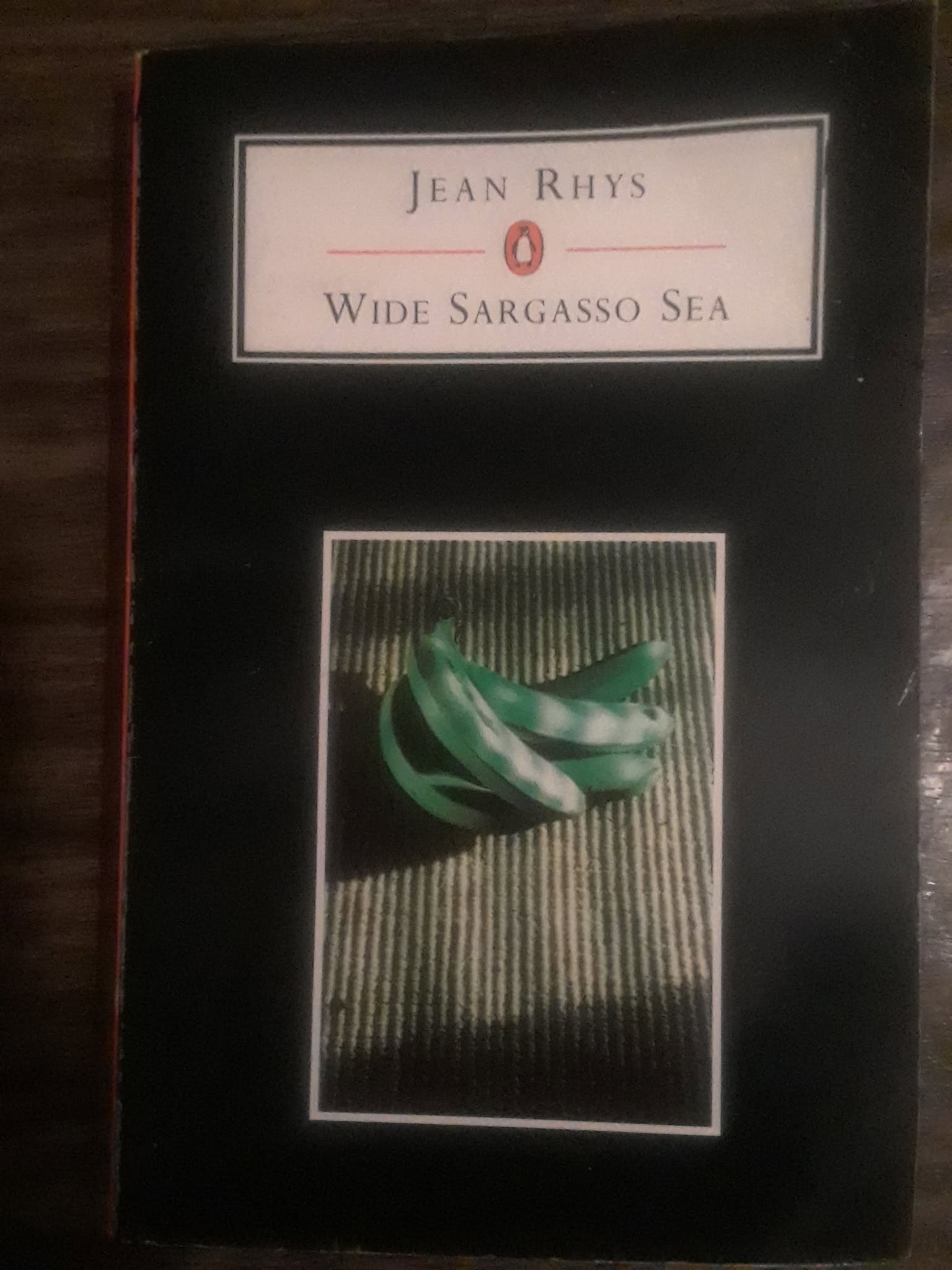
For years, authors have borrowed characters from other authors’ works. For example, Jean Rhys’s novel, Wide Sargasso Sea, details the early life of Mrs. Rochester, wife to Mr. Rochester in Charlotte Bronte’s Jane Eyre. Likewise, George MacDonald Fraser uses Tom Brown and Flashman from Thomas Hughes’s novel, Tom Brown’s School Days, John Gardner wrote the novel, Grendel, about the beast in Beowulf, and Joseph Heller brought the biblical King David to life in God Knows. Now, it’s your turn.
The Exercise
Select an antagonist or a minor character from a story or novel by someone else—select a character who especially intrigues you. Then, make that character the protagonistin a scene or story you write.
For instance, what would Allie Fox’s wife say if she were to tell her version of Mosquito Coast, or if she were to write about a courtship between her and Allie?
What might Rabbit’s illegitimate daughter (from John Updike’s Rabbit novels) say if she told her story?
The Objective:
To enter into the imaginative world of another writer, to understand that particular world and to build from it. And don’t forget to have fun with this exercise. It can yield wild results.
About Lindsey Martin-Bowen
On Halloween 2023, redbat books released Lindsey Martin-Bowen’s 7th poetry collection, CASHING CHECKS with Jim Morrison. Her 4th collection, Where Water Meets the Rock, was nominated for a Pulitzer; her 3rd, CROSSING KANSAS with Jim Morrison was a finalist in the QuillsEdge Press 2015-2016 Contest. In 2017, it won the Kansas Writers Assn award, “Looks Like a Million.” Writer’s Digest gave her “Vegetable Linguistics” an Honorable Mention in its 85th Annual (2017) Contest. Her Inside Virgil’s Garage (Chatter House Press 2013) was a runner-up in the 2015 Nelson Poetry Book Award. McClatchy Newspapers named her Standing on the Edge of the World (Woodley Press/Washburn University) was one of the Ten Top Poetry Books of 2008. It was nominated for a Pen Award.
_________________________________________
Did you know you can sponsor your favorite blog series or even a single post with an advertisement for your book? Stop by the WtbR Sponsor Page and let me advertise your book, or you can make a donation to Writing to be Read for as little as a cup of coffee, If you’d like to show your support for this author and WordCrafter Press.
__________________________________________
This segment of “Lindsey’s Writing Practice” is sponsored by Undawnted.
Step Into the Undawnted Universe
Some authors write in one lane. DL Mullan builds worlds — and then dares you to walk into every single one of them.
Welcome to Undawnted, where imagination is fearless. Whether you’re craving a slow-burn paranormal romance, a bone-chilling horror story, a mind-bending sci-fi thriller, or songs/lyrical poetry that lingers long after the last line- there’s a feeling here waiting to pull you in.
Fall for the forbidden. In Nocturnal Redemption trilogy, mythology professor Ryan Blackburn has spent her life studying the legend of humanity’s protectors — never expecting to meet a pack of werewolves and a vampire on his nightly rounds. Her family’s myths weren’t myths at all. As she’s drawn into the vampire’s hidden world, one thing becomes clear: no one is as they appear.
Fear what’s waiting in the woods. Kurst asks a simple, terrifying question: what could go wrong when you inherit a cabin in the woods? The answer involves a sasquatch, skinwalker, and medicine man — and readers have called it a masterclass in horror with “a good dark secret” at its heart. It’s part of the acclaimed Midnight Garden anthology, a dark fiction collection praised for delivering “the printed version of jump scares.”
Chase the multigenerational curse. Fans of atmospheric enigmas will want to dive into the Salt Pines Mystery series, where a family curse spans generations and secrets refuse to stay buried.
Go beyond the ordinary. In the sci-fi novelette The Reality Hackers, reality itself isn’t as constant as you think. And for readers who want an ongoing saga, DL Mullan’s multi-book Legacy Universe — a supernatural superhero series — is currently in the works, promising an expanding mythology for readers who like to get lost in a world for the long haul.
Need something lighter? The Town Santa Forgot brings warmth and holiday charm for readers who want romance with a side of magic, while DL Mullan’s poetry collections — including The Descent, Impetus, Effloresce, and Phantastic — offer a darker, Poe-and-Dickinson-inspired verse for poetry lovers who like their beauty a little haunted.
Why readers keep coming back: DL Mullan isn’t just a writer — she’s a classically trained musician, award-winning digital artist, and lifelong storyteller who designs her own book covers and builds entire creative universes around each release. That range shows: every story carries the fingerprints of someone who thinks in full sensory perception, not just plots.
Your next favorite book is waiting. Whether you want to be swept into romance, spooked by horror, hooked by mystery, or moved by poetry, Undawnted has a story with your name on it. New releases, exclusive updates, and giveaways are just a subscription away.
Visit www.undawnted.comto explore the growing library, read excerpts, listen to soundtracks, and find your next obsession.
SIgn up for the Undawntable Newsletter.
Like/Comment/Subscribe to Undawnted’s YouTube channel.
Undawnted: Read. Feel. Discover.
Share this:

LINDSEY’S WRITING PRACTICE REVIEW: The Rock Star & The Outlaw 2
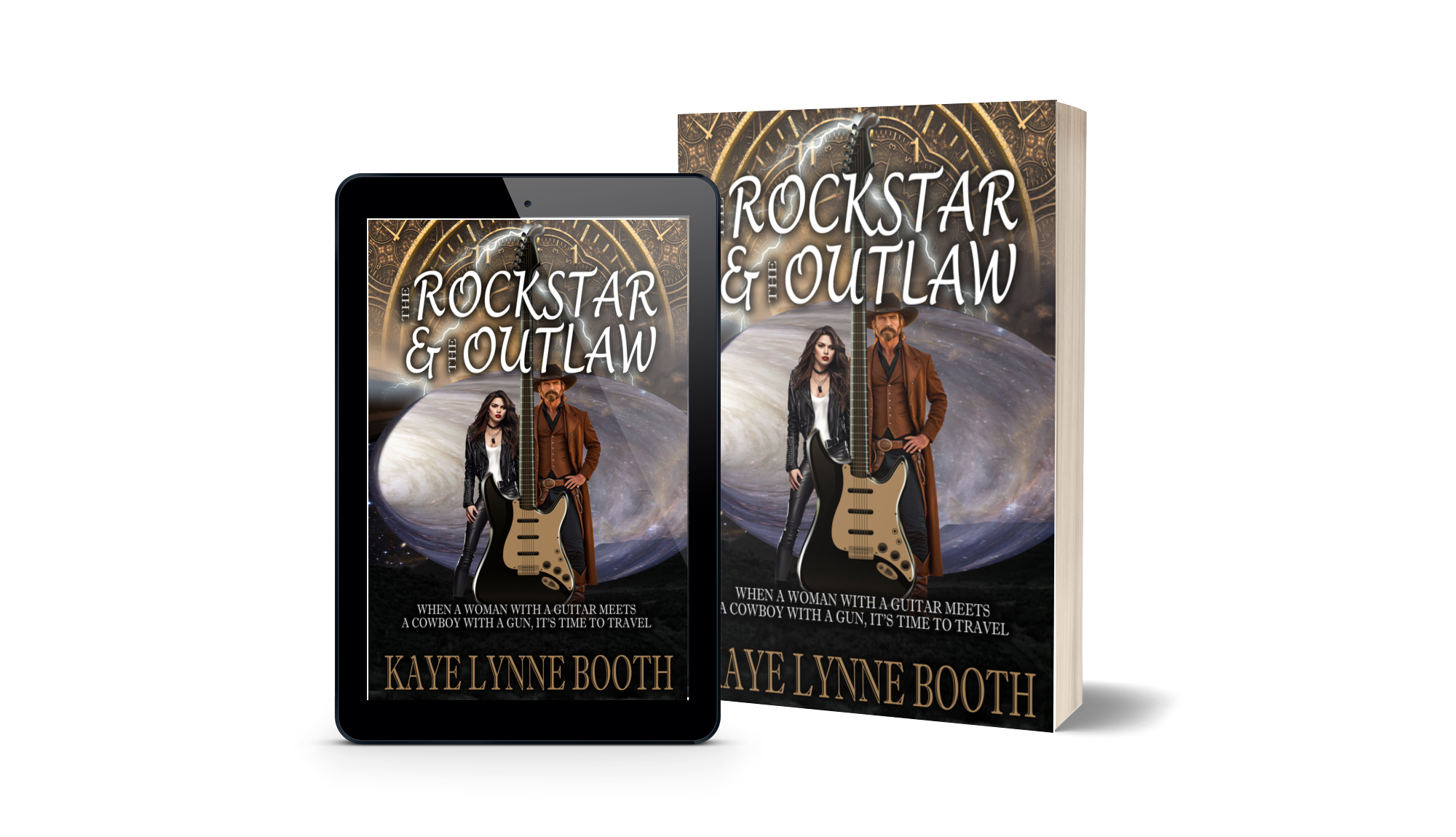
Posted: July 1, 2026 Filed under: Book Review, Books, Fiction, Lindsey's Writing Practice, Review, Science Fiction, Time travel | Tags: Book Review, Kaye Lynne Booth, Lindsay Martin-Bowen, Lindsey's Writing Practice, The Rock Star & The Outlaw 2 Double Visions, WordCrafer Press, Writing to be Read 4 CommentsReview: The Rock Star & The Outlaw 2: Double Visions by Kaye Lynne Booth
Learning that Kaye Lynne Booth wrote a sequel to The Rock Star and The Outlaw delighted me, not only because the first novel left the romantic couple separated in two different time zones, but also because both novels symbolize how our minds travel through time—how certain images, songs, even smells, send us back into the past to relive an event—sometimes a joyful one, other times a fearful or sad one—and then our minds return to our spaces in the present. (Of course, we humans also dream about future events, too.)
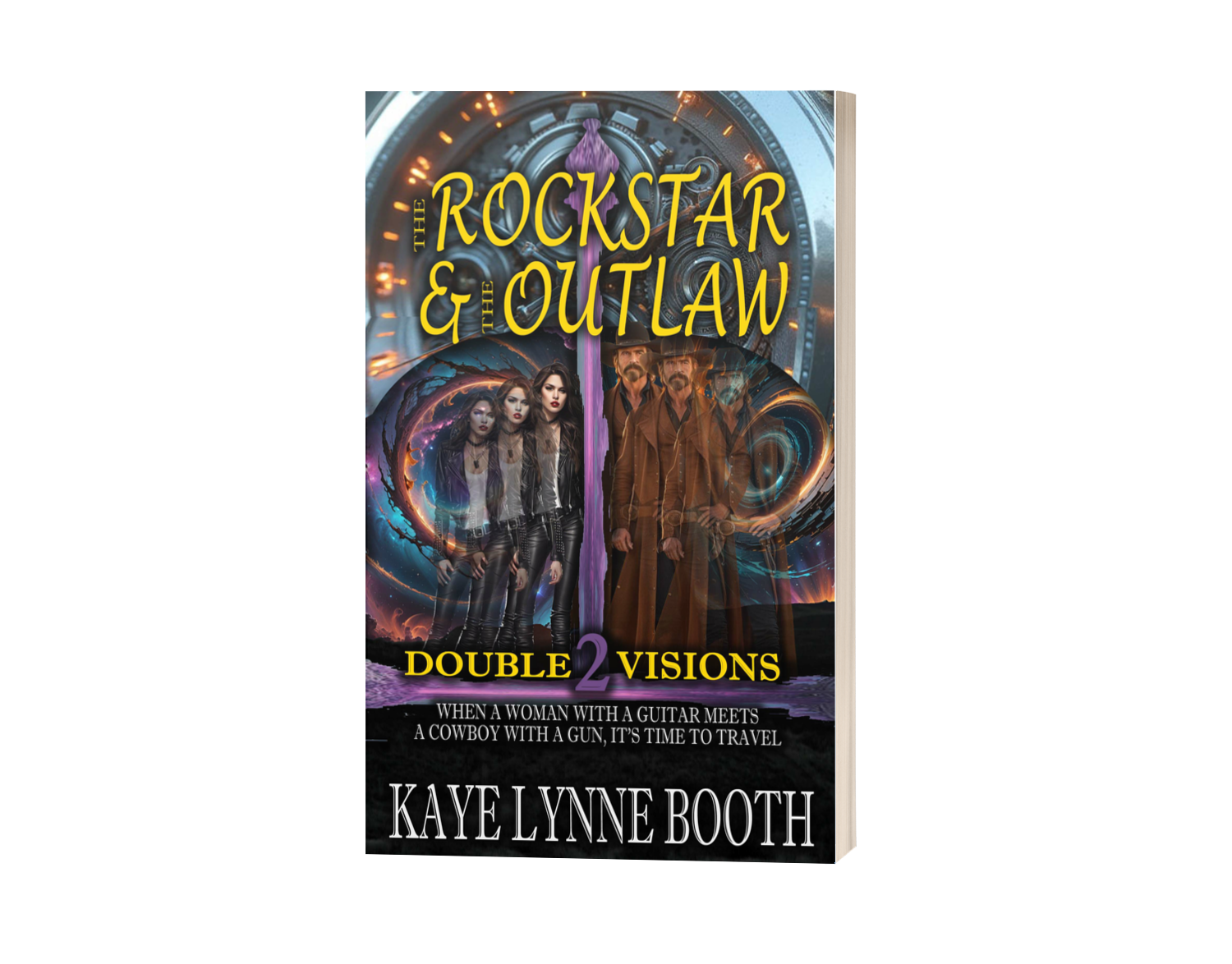
Thus, in lieu of being solely a space-age adventure piece, this work may also be interpreted as a psychological novel, exploring realities that are more than fantasies. Yes, time travel is a reality in the world of the mind—not only in fiction, but in the world most humans view as “reality.” Likewise, in fiction, some characters have the opportunity to change past events to create variant outcomes. Indeed, these two time-travelers attempt to change outcomes, and the outcomes remain sometimes successful, sometimes not.
Wisely, Booth uses separate names for the younger Rock Star and the current one. In this time-travel tale, the older (or more current) Rock Star, Amaryllis Maria Sanchez, uses her given name, whereas Booth refers to the heroine of the first novel as “Rock Star,” which helps the reader follow the story-lines more easily. Likewise, in this sequel, LeRoy is Amaryllis’ mate—and “Cowboy” refers to the version of him in the past.
In a similar vein, Amaryllis’s colleague and confidant in the first novel, Monique appears as merely a version of the “Shaman Woman” from volume one. Yet, throughout most of this novel, Monique holds no memory of her past Shaman Woman persona. And through this supporting character, Booth illustrates psychiatric theories of “finding the self,” which adds one more dimension to this story than many time-travel episodes lack.
Further, such time gaps create new problems that Amaryllis and LeRoy must resolve. For example, when Amaryllis leaps into the future (2030) to escape an impending disaster in 1888 she learns that she has no future identity because she was “never born.” Thus, along with returning to the Old West to save LeRoy from prison—or a hanging, she must locate her grandmother and resolve the situation causing that grandparent to die before she married—and thus, unable to give birth to Amaryllis’s mother, who must exist to birth Amaryllis.
This sequel also displays the character growth from Rock Star to Amaryllis. In the first series, Rock Star performs gigs nightly, and like a multitude of rock musicians, fortifies herself with alcohol and drugs. She lives in what has become for many talented musicians, the dark side of their profession: live fast and die young. In fact, that nearly happened to tough chick Rock Star in the first novel.
Yet in this serial,Rock Star has indeed matured into Amaryllis, who exhibits more “depth” and empathy for others. In fact, one of the main reasons she sets her time machine (more akin to a watch or cell phone than to a Doctor Who British phone booth) is to rescue LeRoy from being hanged.
Similarly, although neither the characters nor the author overtly discus the subject, this story serves somewhat as a model for genetic (DNA) codes with its illustrations of characters viewing themselves as their grandparents or grandchildren—as many of us do in the “real” world.
Along with the zany , complex plots in this time-travel novel, Booth reveals one of her most delightful talents, which not only mesmerizes the reader, but helps tie together the past landscapes to the future: her vivid and rhythmic descriptions of western landscapes.
For example, halfway through the novel, after Amaryllis has landed back in 1888 and mounted the horse, Demon, Booth lures the reader into that world with descriptive words resounding with fine poetry:
“She brought Demon to a halt at the top of the ridge leading up to the rocks above the hideout. It had been slow going over the rugged rocks which created the canyon walls. The afternoon sun cast a golden flow over the sprawling Nevada desert, illuminating the rugged terrain of the box canyon below. Steep, rocky walls rose high above the camp, nestled within this natural amphitheater at the boxed end, making it seem almost like a hidden gem, cradled in the arid embrace of the earth.” (151).
Likewise, when Rock Star and Cowboy are about to head out onto a trail, Booth describes the night with these beautiful lines:
“The moon had just come over the horizon, illuminating the arid desert landscape in its ethereal glow. The silvery light cast long shadows across the undulating dunes, accentuating their curves and ridges. Grains of sand shimmered like tiny diamonds, reflecting the moon’s brilliance, mirroring the twinkle of the stars above. In the quiet solitude, the desert felt alive with the presence of nocturnal creatures barely perceptible in the stillness.” (163).
Moreover, I urge readers to finish reading the first volume of this time-traveling, romantic western (The Rock Star and The Outlaw, released two years ago). Not only will it help make reading the latter novel more lucid, it will add dimensions to the characters and illustrate their inner growth from how they acted and viewed the world in the initial novel.
—Lindsey Martin-Bowen
CASHING CHECKS with Jim Morrison
The DARK HORSE WAITS in BOULDER
About Lindsey Martin-Bowen
On Halloween 2023, redbat books released Lindsey Martin-Bowen’s 7th poetry collection, CASHING CHECKS with Jim Morrison. Her 4th collection, Where Water Meets the Rock, was nominated for a Pulitzer; her 3rd, CROSSING KANSAS with Jim Morrison was a finalist in the QuillsEdge Press 2015-2016 Contest. In 2017, it won the Kansas Writers Assn award, “Looks Like a Million.” Writer’s Digest gave her “Vegetable Linguistics” an Honorable Mention in its 85th Annual (2017) Contest. Her Inside Virgil’s Garage (Chatter House Press 2013) was a runner-up in the 2015 Nelson Poetry Book Award. McClatchy Newspapers named her Standing on the Edge of the World (Woodley Press/Washburn University) was one of the Ten Top Poetry Books of 2008. It was nominated for a Pen Award.
__________________________
Did you know you can sponsor your favorite blog series or even a single post with an advertisement for your book? Stop by the WtbR Sponsor Page and let me advertise your book, or you can make a donation to Writing to be Read for as little as a cup of coffee, If you’d like to show your support for this author and WordCrafter Press.
___________________________
This segment of Lindsey’s Writing Practice is sponsored by Un dawn ted.
Un dawn ted lets imagination become unpredictable, insatiable, and undeniably… unleashed.
Share this:

LINDSEY’S WRITING PRACTICE: Interview with Author & Poet Robbie Cheadle & A Review
Posted: June 3, 2026 Filed under: Books, Collection, Interview, Lindsey's Writing Practice, Poetry, Review | Tags: Book Reveiw, Interview, Lindsey Martin-Bowen, Lindsey's Writing Practice, Lion Scream, Nature, Poetrty Collection, Robbie Cheadle, South Africa, Wildlife, Writing to be Read 50 CommentsHow do I define Robbie (a/k/a Roberta) Cheadle?
In essence: Amazing. This multi-talented, empathetic, creative woman displays talents in many areas.
Further, she pens words that she hopes will move others to help protect our world.
Along with writing poetry books, novels, short stories, and children’s literature, Robbie Cheadle not only decorates some of her pages with exquisite, professional photos that she shot—and even more amazing, she fashions cakes with sculptures of lions and other African wildlife, and flowers that accompany her writings.
Here’s a chance to peer into the mind of this remarkable woman. Enjoy!
About Roberta Eaton (Robbie) Cheadle
Roberta Eaton Cheadle, is a South African writer and poet specialising in historical, paranormal, and horror novels and short stories. She is an avid reader in these genres and her writing has been influenced by famous authors including Bram Stoker, Edgar Allan Poe, Amor Towles, Stephen Crane, Enrich Maria Remarque, George Orwell, Stephen King, and Colleen McCullough.
Roberta has two published novels and a collection of short stories and has horror, paranormal, and fantasy short stories included in several anthologies. She is also a contributor to the Ask the Authors 2022 (WordCrafter Writing Reference series).
Roberta is also the author and illustrator of seventeen children’s books, illustrator to a further three children’s books, and the author and illustrator of four poetry books published under the name of Robbie Cheadle, and has poems and short stories featured in several anthologies under this name.
Roberta’s blog features discussions about classic books, book reviews, poetry, and photography. https://roberta-writes.com/.
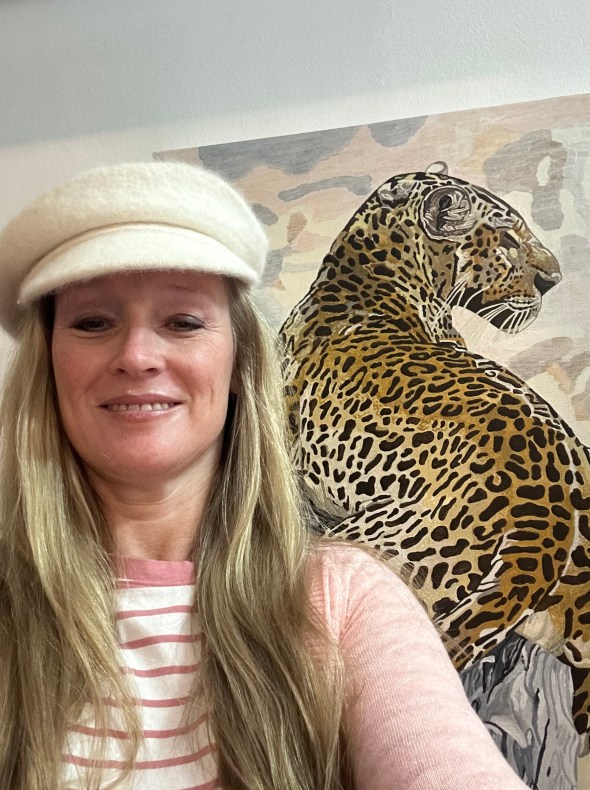
My Interview with Robbie Cheadle
How did you come to write poetry?
From a young age (4 years old), I read a great deal. Television was very limited in South Africa when I was a child and my first sister was only born when I was 4 years old. Catherine was born prematurely and my parents moved to a cottage on a farm in the country to try to protect her from germs. I didn’t attend school during this time, and I had to entertain myself. I did that by reading. I grew to love the L.M. Montgomery books, especially her lesser-known series, Emily of New Moon. In the books, Emily’s late father was a poet and writer. Emily tries her hand at poetry as a way of keeping his memory alive. I was inspired by Emily to
write short poems and descriptive pieces and did this throughout my senior primary school and high school years. English and History were my favourite subjects at school, and I excelled at both of them. I have been writing poetry ever since. It has evolved into a diary of my life.
What is your favourite poem by another poet?
When I was in primary school, about ten years old, we had to learn several poems by heart. Ever since then I have loved The Listeners by Walter de la Mare. The poem is full of mystery and delight.
The Listeners
By Walter de La Mare
‘Is there anybody there?’ said the Traveller,
Knocking on the moonlit door;
And his horse in the silence champed the grasses
Of the forest’s ferny floor:
And a bird flew up out of the turret,
Above the Traveller’s head:
And he smote upon the door again a second time;
‘Is there anybody there?’ he said.
But no one descended to the Traveller;
No head from the leaf-fringed sill
Leaned over and looked into his grey eyes,
Where he stood perplexed and still.
But only a host of phantom listeners
That dwelt in the lone house then
Stood listening in the quiet of the moonlight
To that voice from the world of men:
Stood thronging the faint moonbeams on the dark stair,
That goes down to the empty hall,
Hearkening in an air stirred and shaken
By the lonely Traveller’s call.
And he felt in his heart their strangeness,
Their stillness answering his cry,
While his horse moved, cropping the dark turf,
’Neath the starred and leafy sky;
For he suddenly smote on the door, even
Louder, and lifted his head:—
‘Tell them I came, and no one answered,
That I kept my word,’ he said.
Never the least stir made the listeners,
Though every word he spake
Fell echoing through the shadowiness of the still house
From the one man left awake:
Ay, they heard his foot upon the stirrup,
And the sound of iron on stone,
And how the silence surged softly backward,
When the plunging hoofs were gone.
I like this poem so much I did a recording of it for my YouTube channel: https://youtu.be/gy_7mM2RcuI?si=Gmf2kfXkwrCoBnjp
What is your favourite of your own poems?
Currently, this is my favourite of my own poems:
Life on the Water (Tanka story)
medley of cool shades
cerulean and turquoise
lightened or darkened
depending on water’s mood
and artist’s vision
***
painstaking brush strokes
capturing shadows and light
frothy, foaming crests
enhanced with metallic white
dancing across blue
***
water shifts and sighs
subtle movements captured in
careful ripple lines
swiftly flowing currents caught
in muted aquamarine
***
sand laden wavelets
curl sluggishly around rocks
smothered by sweet caress
of ocean’s heaving bosom
with its rhythmic rise and fall
***
houseboat moves onwards
temple to unconstrained thoughts
colours meld as one
in swirls, rises, and deep troughs
impermanent no longer
***
dreams, soft and wispy
condensation trails through sky
subtle as sunlight
transferred to stark, white canvas
soft splashes ricocheting
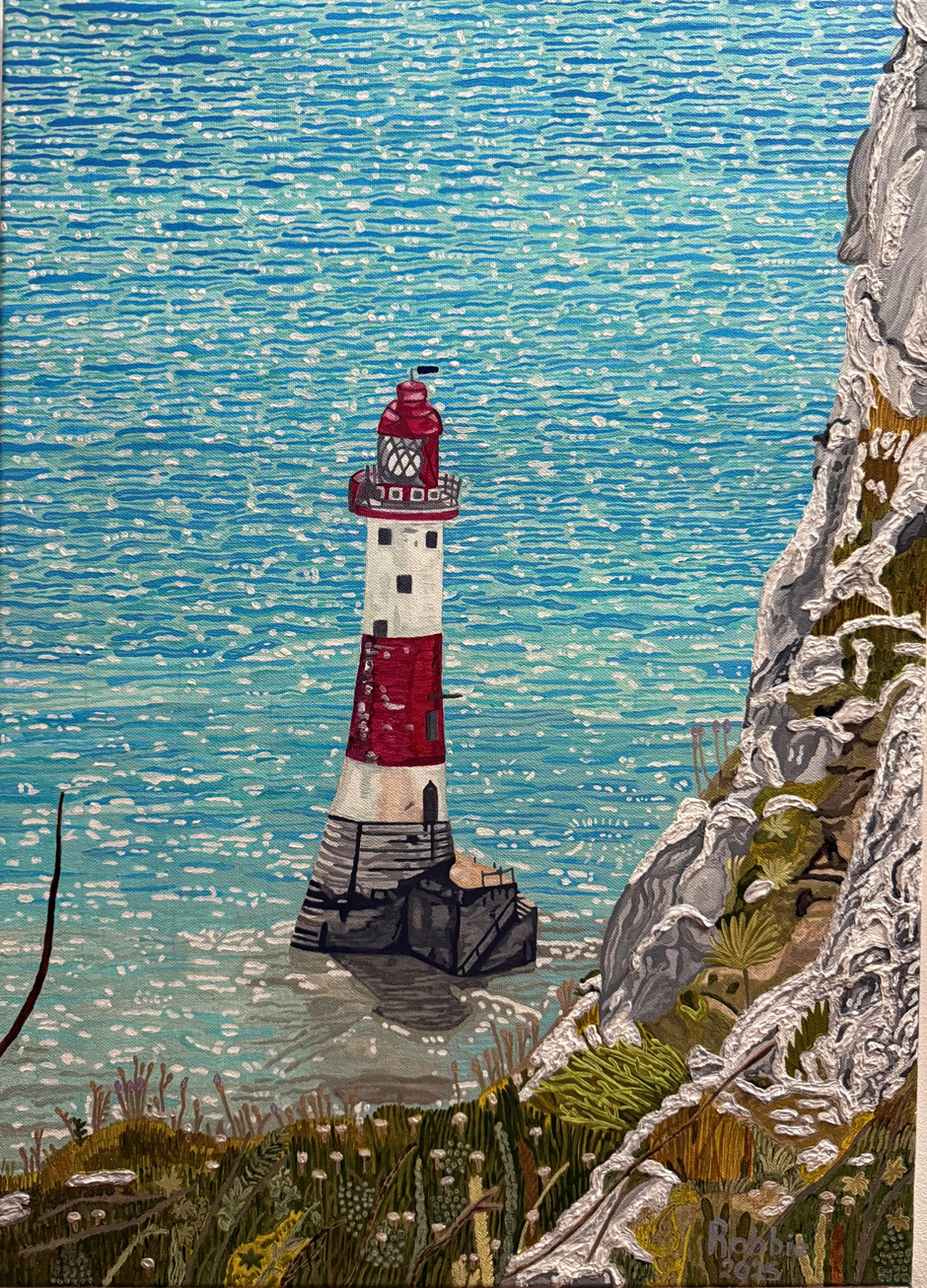
Picture caption: My acrylic painting called Fyrtorr which means beacon in Old English.
Tell us a bit about the inspiration for Lion Scream
Here’s an extract from Lion Scream:
The initial idea for a book of poetry that taught people about the numerous amazing creatures of southern Africa and highlighted their plight in the face of the Sixth Mass Extinction, came to me during a visit to Ukutula Lodge & Game Reserve (“Ukutula”).
Ukutula is also a conservation facility specializing in genetic mammal research and predator conservation.
On my return home, my brother-in-law gifted me a print of Edvard Munch’s famous painting, The Scream.
According to a diary entry by Munch, the inspiration for this painting was as follows:
“One evening I was walking along a path, the city was on one side and the fjord below. I felt
tired and ill. I stopped and looked out over the fjord – the sun was setting, and the clouds
turning blood red. I sensed a scream passing through nature; it seemed to me that I heard
the scream. I painted this picture, painted the clouds as actual blood. The color shrieked.
This became The Scream.”
Based on The Scream, I created a cake I titled Lion Scream – Nature’s Response to the Sixth Mass Extinction and Global Warming, which depicted a lion, made from fondant, clasping its face and screaming, while standing on a bridge above a river of blood. Behind the lion, is an erupting volcano.
This cake was intended to be an artistic depiction of the natural world’s reaction to
continuous land development by humans, resulting in the loss of habitat for the creatures
which share this earth with us, and the increasing impact of global warming on humanity
and the greater planet.
Lion Scream: Nature’s Response to the Sixth Mass
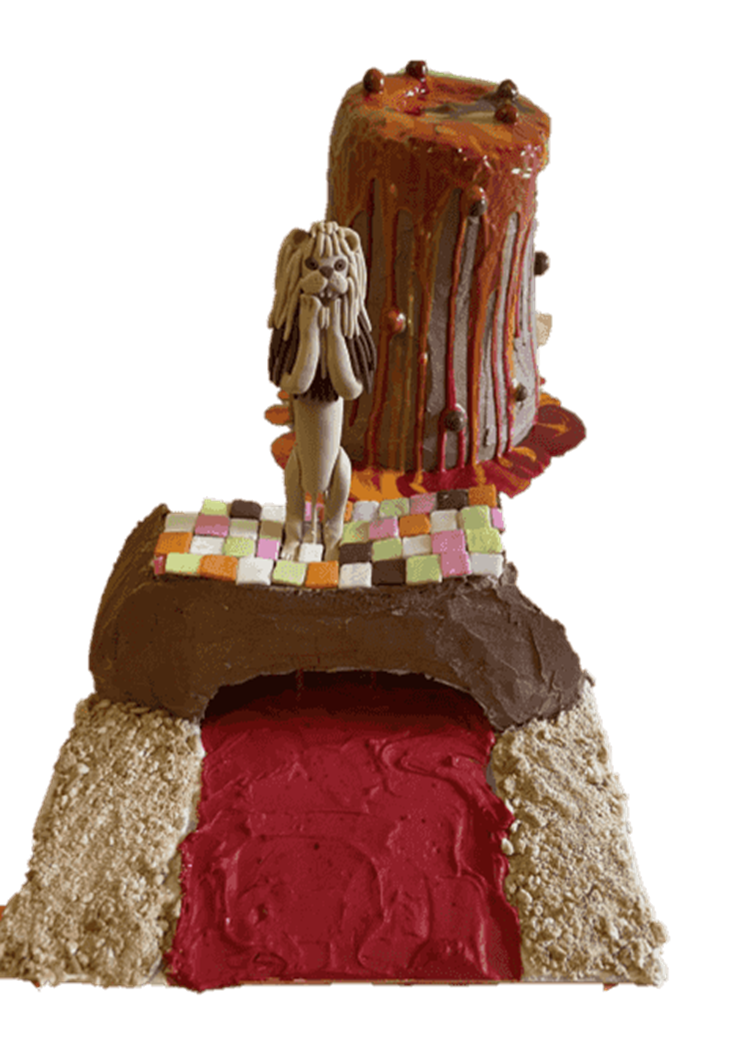
Picture Caption: Extinction and Global Warming Cake Art by Robbie Cheadle
Have you witnessed the killing of an African animal which acted as a trigger for your interest in animal conservation?
When I was 21, I met a man who hunted animals for sport. Prior to this, I had never had much interaction with wild animals other than in zoos. My mother grew up on a cattle farm and had little interest in engaging with animals in the wild. Interestingly, I’ve noticed she shares this disinterest with other people I know who also grew up on farms. Anyhow, this man invited me to go to Kimberley with him and his friends. They were going hunting, but they were also going to visit the ‘big hole’ in Kimberley which is an interesting feature of South African history. I agreed to go because I wanted to see Kimberley. The hunting trip was a complete horror show for me. I hadn’t really thought about what a hunting trip meant, and the men attempted to kill an antelope. It was a common antelope, what I call “lion snacks” as they keep the stock of impalas high in game reserves because they are food for the
big cats. The shooter’s shot went wide, and he ended up wounding a baby impala. Aside from any other aspect, it was not the right season for hunting as the mother antelopes had small calves. The baby ran making the most terrible high-pitched sound, and the men had to go after the poor little thing. Eventually, they did put it out of its misery. I was completely horrified. After this trip, I ended the relationship and became involved in wildlife conservation. This has developed into my poetry books and paintings featuring southern African wildlife.
What’s next?
Currently, I am busy with the final edits to a collection so South African inspired short stories and poems. The book is called The Last Man, South African History, Legends, & Poetry. This book will be published through TSL Publication in the United Kingdom. I am also working on several new poetry collections and the second book in the Something Fancy book collection. This second book, Chocolate & Treats, should be ready for publication in early November this year. I always have a lot of projects on the go. I am also painting. My latest painting is of a Vervet Monkey and is part of my Into the Light series of painting. I am planning to paint an African Painted Dog next. It will be a much bigger project. I do a small one in between the larger ones so that I can practice drawing more often. The big paintings take me three to four months to complete.
Thank you for this lovely interview opportunity, Lindsey. I appreciate your interest in my work.
Lindsey’s Review of LION SCREAM Syllabic Poetry about Southern African Wildlife
by Robbie Cheadle
Not only is Robbie Cheadle (a/k/a Roberta Cheadle) an excellent, engaging poet and fiction writer, she’s a woman with a mission—a crucial mission for not only the future of our planet and the wildlife on it, but for humanity itself. Plus, in this 163-page collection, her method of persuasion includes not only facts and figures about the demise of many of our planet’s creatures in Africa, it delights the reader with superb—and righteous, at times biting, poetry and fiction.
Most delightful is Cheadle’s use of the constraints of syllabic structure in unrhymed forms that recreate the tension between wild beasts and the fragment of society pushing them off their native environments. For example, the book’s opening poem, “Lion Scream” is a perfectly structured tanka (one of my favorite forms). I perceive the tanka as a haiku with more depth. As opposed to the 17-line poem, tankas are structured in five lines with the syllabic form: five, seven, five, seven, seven, which Cheadle does in “Lion Scream”:
There is no jungle
Only acres of smooth stumps
There is no jungle
No habitat, no food source
Hopeless lion screams tonight
(Cheadle credits “The Lion Sleeps Tonight” in Disney’s The Lion King with inspiring this
tanka.)
Although the collection contains other tankas, most of the poems are set in the Double Enneal format, far more complex. A Double Ennead comprises three stanzas of five lines each. Thus, the syllabic count for each stanza is 6/5/11/6/5, (33 syllables per stanza) i.e., each stanza is set as:
six syllables
five syllables
eleven syllables
six syllable
five syllables
Again, each of those syllabic counts are repeated in the second and third stanzas, totaling ninety-nine syllables for each poem.
In the collection’s introduction, Cheadle explains why she uses this format most frequently throughout the book:
“I selected this form of syllabic poem for LION SCREAM for two reasons . . . because I love syllabic poetry and the short dramatic statements it enables me to make through a few carefully chosen words.”
Her second reason concerns her mission: “. . . due to the importance of nature conservation to me, and my desire to share insights about the impact of habitat loss, hunting, and poaching on the wild animals of southern Africa, I decided that 99 syllables gave me more, a little more scope to make my specific points.”
Further, Cheadle photographed all but three of the photos in the book. After perusing the collection she shot —on par with those in National Geographic, depicting several species of wildlife, I felt as if I’d viewed a video of Africa, particularly in those sections about lions, elephants, and zebra, creatures especially close to my heart.
I admit my first encounter with elephants and camels was in the Kansas City Zoo, where we children rode those captive creatures. This book brought back those memories from an era wherein most persons believed such wildlife would continue to stroll the earth indefinitely.But Cheadle reveals that is no longer a future many experts anticipate.
Along with her own photos, the collection offers links to many of Africa’s animals. For instance, in the section, “My Experiences with Rhinos,” she includes four links to videos she took of rhinos, after noting, “My most recent sightings have largely been of dehorned animals, which I always find jarring. It is strange to see a rhino without its famous horn.”
Having grown up in South Africa, she first saw horned rhinos, and she questions, “I wonder if my grandchildren will know rhinos have horns. If the fight against poaching is unsuccessful, my grandchildren will only experience rhinos through pictures in history books.”
From the number of Double Enneads she included for elephants and lions, it appears they may be her favorite beasts. Along with those long poems and marvelous photographs, she includes sections, “About African Elephants, “My Experiences with Elephants,” “My Experiences with Lions,” and “More Experiences with Lions.”
Then, she wraps up the poetry section with photos of the African landscapes. A Double Ennead, “The Romance of the Sunflowers” and an explanation about how sunflowers feed the environment in “Sunflowers and the Environment” precede photos of African landscapes of mountains, plains, and striking sunsets, interlaced, of course, with more poetry.
Cheadle wraps up this collection with a short story, “The Nutcracker,” which deals primarily with how the changing environment causing the loss of wildlife can impact the human species, too. She follows that piece with her inspiration and explanation of the story. I rate this collection with FIVE STARS. Thank you, Robbie, for sharing it.
—Lindsey Martin-Bowen
About Lion Scream
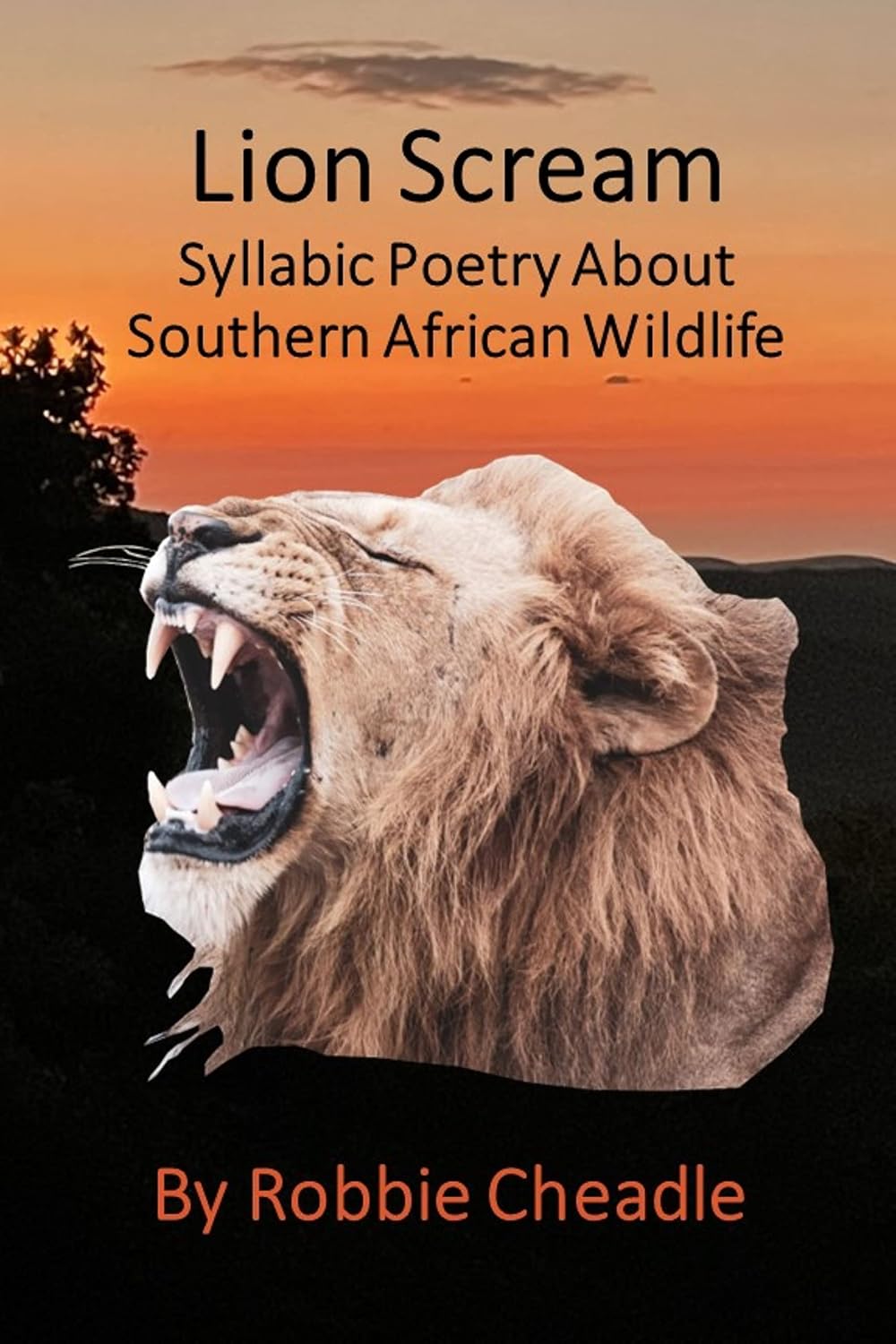
Do you rely on Earth for your survival?
Lion Scream is a graphic collection of poetry and prose. The book portrays the author’s experiences with South African wildlife and the growing impact of the Sixth Mass Extinction and Climate Change on the natural environment.
Lion Scream
There is no jungle
Only acres of smooth stumps
There is no jungle
No habitat, no food source
Hopeless lion screams tonight
Purchase Link: https://www.amazon.com/Lion-Scream-Syllabic-Southern-Wildlife-ebook/dp/B0BXP5N766
About Lindsey Martin-Bowen
On Halloween 2023, redbat books released Lindsey Martin-Bowen’s 7th poetry collection, CASHING CHECKS with Jim Morrison. Her 4th collection, Where Water Meets the Rock, was nominated for a Pulitzer; her 3rd, CROSSING KANSAS with Jim Morrison was a finalist in the QuillsEdge Press 2015-2016 Contest. In 2017, it won the Kansas Writers Assn award, “Looks Like a Million.” Writer’s Digest gave her “Vegetable Linguistics” an Honorable Mention in its 85th Annual (2017) Contest. Her Inside Virgil’s Garage (Chatter House Press 2013) was a runner-up in the 2015 Nelson Poetry Book Award. McClatchy Newspapers named her Standing on the Edge of the World (Woodley Press/Washburn University) was one of the Ten Top Poetry Books of 2008. It was nominated for a Pen Award.
_______________________________________________
Did you know you can sponsor your favorite blog series or even a single post with an advertisement for your book? Stop by the WtbR Sponsor Page and let me advertise your book, or you can make a donation to Writing to be Read for as little as a cup of coffee, If you’d like to show your support for this author and WordCrafter Press.
________________________________________________
This Segment of “Lindsey’s Writing Practice” is sponsored by WordCrafter Press and The Dark Horse Waits in Boulder, by Lindsey Martin-Bowen.
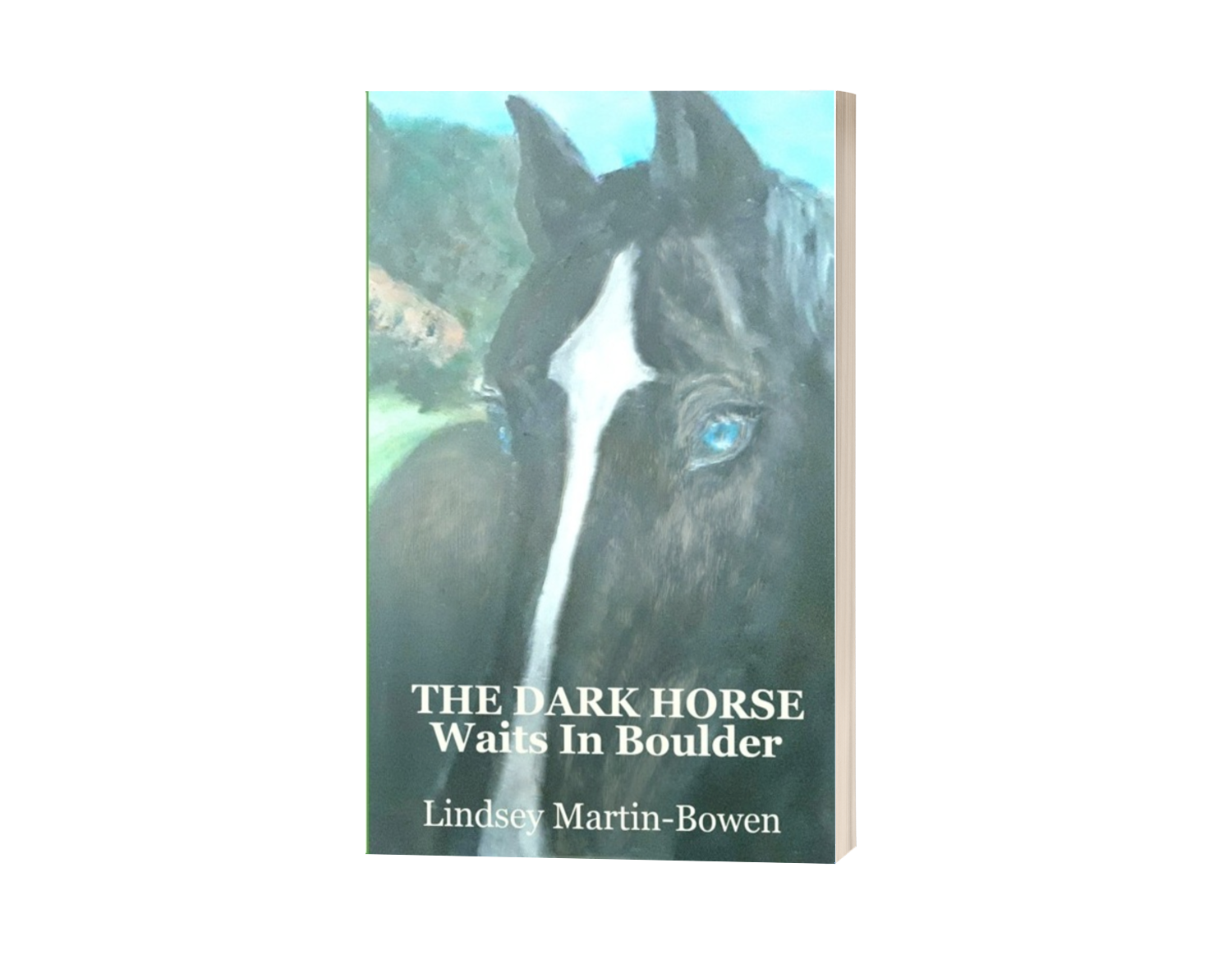
Recently divorced Charli Erickson arrives in Boulder, Colorado during the 1970s—a wild time for that city—where she hopes to develop her “rock poet” talent and find the perfect mate. Instead, she links up with the imperfect Ched Lyons, a Boulder native who leads her in a multitude of adventures, including scaling a mountain and a 1,200-mile motorcycle ride to southeastern Utah. While she intermittently envisions a black stallion with blue eyes, who puzzles and enchants her, she also strives to make sense of its appearance.
Through Charli’s snarky humor recounting her tales, readers will enjoy this Rom-Com doubling as a woman’s adventure story and may relate to scenes from the wild, zany era that followed the serious, revolutionary 1960s.
Get your copy today: https://books2read.com/The-Dark-Horse-Waits-in-Boulder
Share this:

LINDSEY’S WRITING PRACTICE
Posted: May 6, 2026 Filed under: Lindsey's Writing Practice, Writing, writing exercise 5 CommentsTHE BASKET EXERCISE
For poets, fiction writers, and writing students
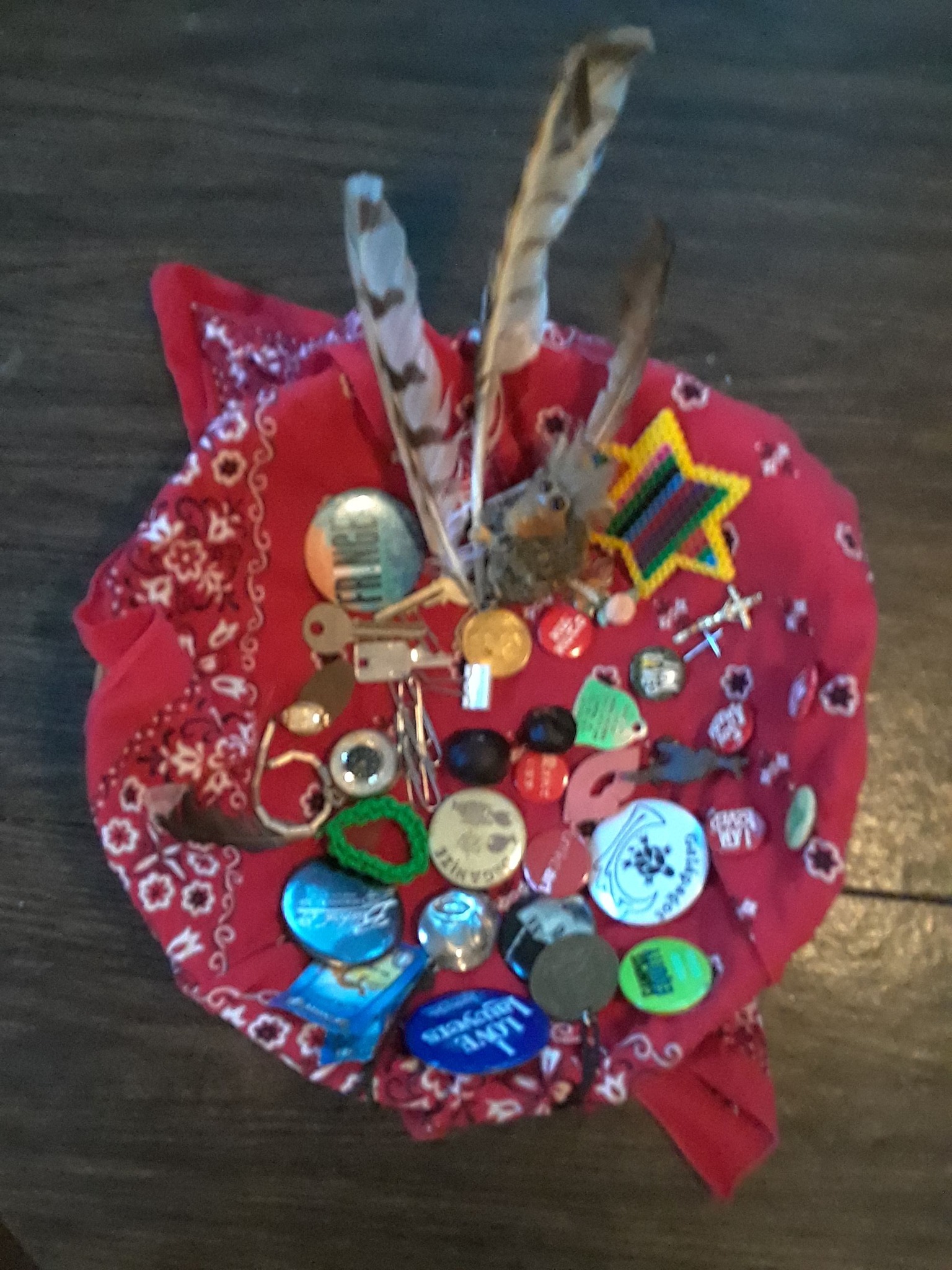
Early in the semester, I present The Basket Exercise below to all-levels of writing students. Please try it and see what happens.
First, select an object from the basket on my desk*–or FROM THE PHOTO ABOVE. Choose something that “calls” to you. Then, describe the object by addressing all five senses: sight, hearing, touch, smell, taste. Please do NOT place the object into your mouth to decipher its taste. Just imagine how it would taste. (Your sense of smell might help you do so.)
Next, write about the object metaphorically. Avoid using “like” or “ as.” For example, “He or she (or an object) is the sun” (metaphor). Inserting “is like” changes the image into a simile.
Finally, write about a memory the object evokes. Be sure to include sensory descriptions and dialogue when you write about the memory. Enjoy!
*When a student has an excused absent the day I distribute this exercise, I allow the student to perform the exercise with an object he or she selects at home and writes about in his or her journal. Online students (and interested writers) may do the same. Thus, if none of the items interest you or if they’re difficult to decipher, please enjoy performing this with your “sacred” (or special) object at home.
Enjoy! And happy Spring. It’s finally arrived.
How to perform the Basket Exercise for those who are visually impaired:
As students who are absent from the class when I bring in a basket filled with many buttons, including campaign buttons, feathers, clothes buttons, jewelry, tiny statues, a rosery, Christian cross (both with or without Jesus), and other objects, you need not view these objects to perform the exercise. Instead, select an item you have at home and write about using your other five senses: hearing (you might drop it on your desk to create a sound), smell, taste (if it’s your personal object, feel free to slip it onto your tongue, and touch.
Thus, please feel free to participate in this exercise, too. The main idea is to have fun while you write detailed sensual descriptions. Enjoy!
About Lindsey Martin-Bowen
On Halloween 2023, redbat books released Lindsey Martin-Bowen’s 7th poetry collection, CASHING CHECKS with Jim Morrison. Her 4 th collection, Where Water Meets the Rock, was nominated for a Pulitzer; her 3rd, CROSSING KANSAS with Jim Morrison was a finalist in the QuillsEdge Press 2015-2016 Contest. In 2017, it won the Kansas Writers Assn award, “Looks Like a Million.” Writer’s Digest gave her “Vegetable Linguistics” an Honorable Mention in its 85th Annual (2017) Contest. Her Inside Virgil’s Garage (Chatter House Press 2013) was a runner-up in the 2015 Nelson Poetry Book Award. McClatchy Newspapers named her Standing on the Edge of the World (Woodley Press/Washburn University) was one of the Ten Top Poetry Books of 2008. It was nominated for a Pen Award.
______________________________________
Did you know you can sponsor your favorite blog series or even a single post with an advertisement for your book? Stop by the WtbR Sponsor Page and let me advertise your book, or you can make a donation to Writing to be Read for as little as a cup of coffee, If you’d like to show your support for this author and WordCrafter Press.
_____________________________________
This segment of “Lindsey’s Writing Practice” is sponsored by WordCrafter Press and The Dark Horse Waits in Boulder, by Lindsey Martin-Bowen – To be Released May 12, 2026.
Recently divorced Charli Erickson arrives in Boulder, Colorado during the 1970s—a wild time for that city—where she hopes to develop her “rock poet” talent and find the perfect mate. Instead, she links up with the imperfect Ched Lyons, a Boulder native who leads her in a multitude of adventures, including scaling a mountain and a 1,200-mile motorcycle ride to southeastern Utah. While she intermittently envisions a black stallion with blue eyes, who puzzles and enchants her, she also strives to make sense of its appearance.
Through Charli’s snarky humor recounting her tales, readers will enjoy this Rom-Com doubling as a woman’s adventure story and may relate to scenes from the wild, zany era that followed the serious, revolutionary 1960s.
Available for pre-order now: https://books2read.com/The-Dark-Horse-Waits-in-Boulder
Share this:

LINDSEY’S WRITING PRACTICE
Posted: April 1, 2026 Filed under: Book Review, Books, Dark fiction, Fiction, Lindsey's Writing Practice, Review | Tags: Book Review, Dark fiction, Lindsey Martin-Bowen, Lindsey's Writing Practice, Midnight Oil, WordCrafer Press, Writing to be Read 3 CommentsReview of Midnight Oil, ed., Kaye Lynne Booth (Wordcrafter Press 2025)
Although Wordcrafter’s three Midnight collections are well-written, engaging, and have been far more entertaining than I’d anticipated, I admit the third one, Midnight Oil, is my favorite.

Why?
Even if these creative stories often deal with humanity’s “dark side,”and contain some frightening scenes, most of them contain enigmatic characters who reveal the authors’ (and their main characters’) compassion for both humans and sometimes animals who too often suffer due to humankind’s lack of awareness, selfishness, or just plain disregard for life: Note Christa Planko’s “Such a Time as This,” Chris Barili’s “The Snow Globe,” Roberta Eaton Cheadle’s “Just Deserts,” Kaye Lynne Booth’s “Sangoma, Zombie Elephants, and Tokoloshe,” Joseph Carrabis’s “Them Doore Girls” and his metaphoric, “Jeremiah,” which also contains symbolic Biblical themes, as indicated in its title. Further, Carrabis integrates ideas from quantum mechanics. And Carrabis’s “Jeremiah” (although it doesn’t directly reference quantum physics), aligns with scripture being compatible with findings that matter is formed from invisible forces (Hebrews 11:3),and God observes sustaining creation, and that the earth is interconnected, mirroring concepts like quantum entanglement.
Also integrating scientific possibilities, the award-winning, “The Vanishing,” a psychological tale by Denise Aparo, explores what can happen to a psyche that’s haunted in a most unusual manner.
Moreover, in lieu of presenting children as being possessed (as many frightening surreal tales have done), Christa Planko’s “Such a Time as This,” Joseph Carrabis’s “Them Doore Girls.” and Kaye Lynne Booth’s “Sangoma, Zombie Elephants, and Tokoloshe” especially appealed to me because in lieu of portraying psychopathic youths, these stories exhibit the innocence and kindness of children who put others’ welfare before their needs—and thus, contribute to building a kinder, more just world.
In a similar vein, although the collection opens with the first line in the book’s goriest tale: Mario Acevedo’s “Villa’s Gold,” a vampire story that’s a far cry from Interview with a Vampire (no Brad Pitt-type character here), even if the tale’s set in a cave: “The Mayan bat-god Camazotz snacked on the dismembered remains of his human prey. Grasping a femur between the claws at the front of his enormous wings, he gnawed bloody flesh off the bone,” it also contains a sense of justice in a revenge most readers would likely consider the pernicious character “deserved.”
Further, the collection’s other stories about revenge, including Robert White’s “Cattails” and Cheadle’s “Just Deserts,” don’t merely focus upon ghouls or demons, but rather, the tales unfold rightful revenge upon characters who “earned” it. Similarly, Jon Shannon’s narrator in “The Stairs” reveals that he understands his poor choices and greed for money led to his frightening situation, and Rebecca M. Senese’s character Tanya in “The Price of Beauty” later realizes her lust for perfection came at a greater—and more surreal—payment than she’d anticipated.
Two tales in this collection each incorporate a haunted house—both of which are haunted in unusual manners. Playing upon the adage, “if these walls could talk,” in Roberta Cheadle’s “Just Deserts,” the walls are the narrators who reveal the story, resulting not only in a tale showing justice was served—but one that intertwines the humor of gossiping walls. In a similar vein, Paul Kane’s “The Whistling” unfolds the story of a haunted house that indeed comes alive with the DNA of a dead man who frightens any residents or visitors entering its threshold long after his demise. And dear readers, you must read this tale to discover how that possibly could happen. (Plus, Kane integrates bits of science to help the story make sense. ) Enjoy!
About Lindsey Martin-Bowen
On Halloween 2023, redbat books released Lindsey Martin-Bowen’s 7th poetry collection, CASHING CHECKS with Jim Morrison. Her 4 th collection, Where Water Meets the Rock, was nominated for a Pulitzer; her 3rd, CROSSING KANSAS with Jim Morrison was a finalist in the QuillsEdge Press 2015-2016 Contest. In 2017, it won the Kansas Writers Assn award, “Looks Like a Million.” Writer’s Digest gave her “Vegetable Linguistics” an Honorable Mention in its 85th Annual (2017) Contest. Her Inside Virgil’s Garage (Chatter House Press 2013) was a runner-up in the 2015 Nelson Poetry Book Award. McClatchy Newspapers named her Standing on the Edge of the World (Woodley Press/Washburn University) was one of the Ten Top Poetry Books of 2008. It was nominated for a Pen Award.
____________________________________
Did you know you can sponsor your favorite blog series or even a single post with an advertisement for your book? Stop by the WtbR Sponsor Page and let me advertise your book, or you can make a donation to Writing to be Read for as little as a cup of coffee, If you’d like to show your support for this author and WordCrafter Press.
________________________________________
This segment of “Lindsey’s Writing Practice” is sponsored by the Midnight Anthology Series and WordCrafter Press.
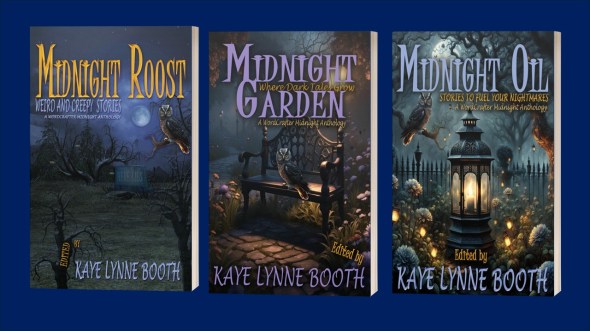
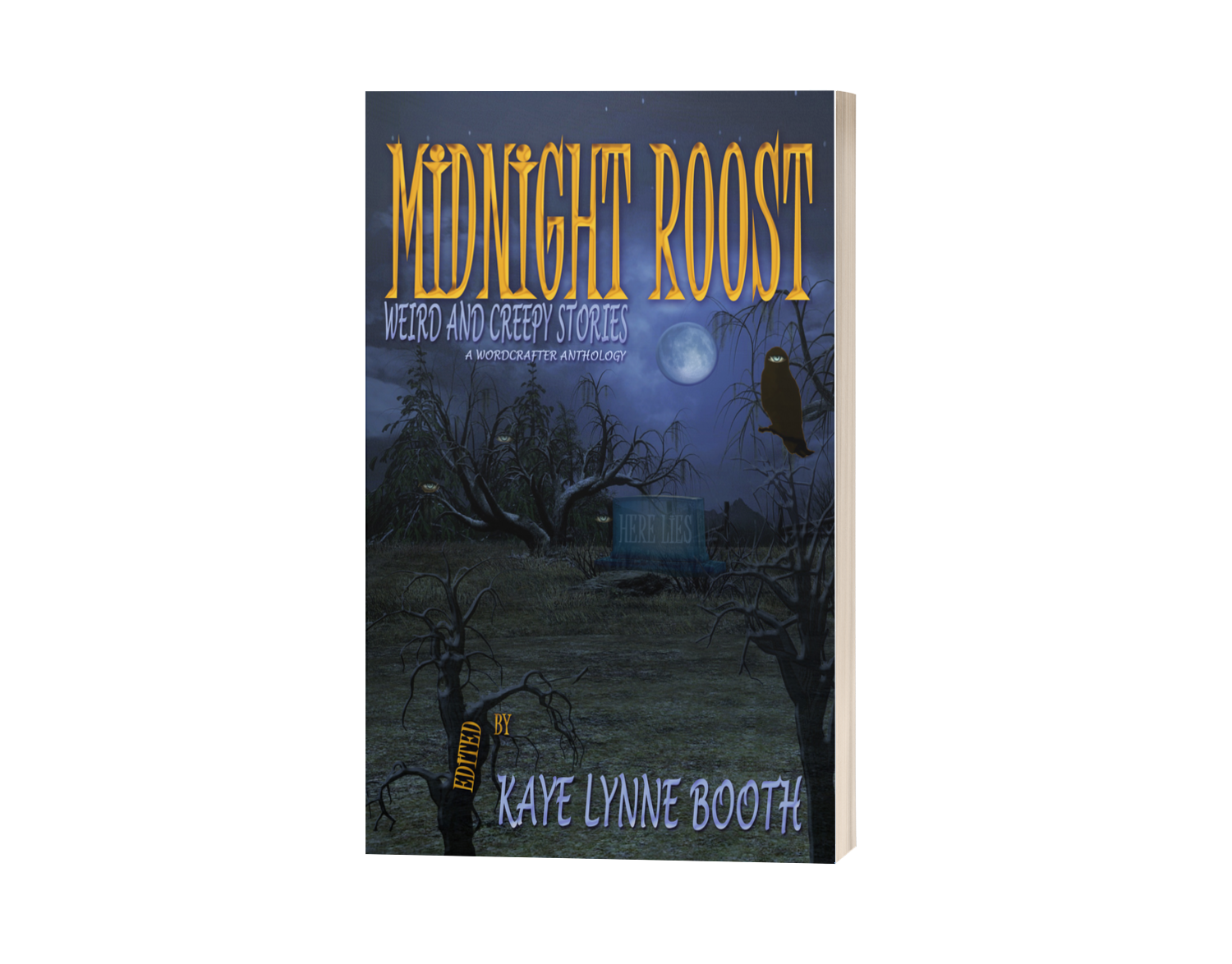
Midnight Roost: Weird and Creepy Stories: 20 authors bring your nightmares to life in 23 stories of ghosts, paranormal phenomenon and the horror from the dark crevasses of their minds. Stories of stalkers, both human and supernatural, possession and occult rituals, alien visitations of the strange kind, and ghostly tales that will give you goosebumps. These are the tales that will make you fear the dark. Read them at the Midnight Roost… if you dare. https://www.amazon.com/Midnight-Roost-Kaye-Lynne-Booth-ebook/dp/B0CL6FPLVJ
Midnight Garden: Where Dark Tales Grow: 17 authors bring you 21 magnificent dark tales. Stories of magic, monsters and mayhem. Tales of murder and madness which will make your skin crawl. These are the tales that explore your darkest fears. Read them in the Midnight Garden… if you dare. https://www.amazon.com/Midnight-Garden-Where-Tales-Anthology-ebook/dp/B0DJNDQJD3
Midnight Oil: Stories to Fuel Your Nightmares: 14 authors bring you 16 dark tales that explore your deepest fears. These are the stories which nightmares are made of. Tales of monsters, mayhem, and madness which will make you shiver in the dark. Read them while you burn the Midnight Oil… if you dare. https://books2read.com/Midnight-Oil
Share this:

Lindsey’s Writing Practice: Out-of-this-world Writing Exercise
Posted: March 4, 2026 Filed under: Fiction, Lindsey's Writing Practice, Writing | Tags: Lindsay Martin-Bowen, Lindsey's Writing Practice, writing exercise, Writing to be Read 14 Comments
COFFEE, TEA, or TAKE ME TO YOUR LEADER
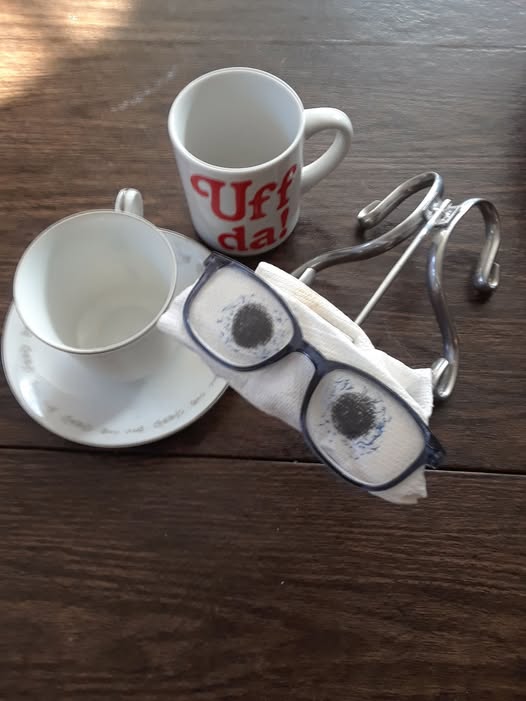
About a month ago, an interesting piece landed in my online mailbox.
A writer named Alle posted “tips for writing emotionally heavy scenes.” It went like this:
Alle sez:
1. Make a cup of tea while you don’t think about the work. Let images, phrases, feelings
float under you and through you.
2. Take a heartening sniff of the freshly brewed tea. Sip and savor. This moment is for you.
3. To your writing space.
4. Sit comfortably. Feet flat on the ground.
5. Write relentlessly. Write-write-write and don’t stop.
6. Check your feet. Still flat?
7. Write som’ more.
When you feel you have a first draft, lean back to enjoy many more sips.
Although I’m sure Alle’s suggestions will help many writers—and dear readers, please use them if you believe they’ll kick-start your work. (And please share with me if those hints do.)
Nevertheless, every writer is different. This technique would not work for me—not for an “emotionally heavy scene.” That tea would likely send me back to bed. (Perhaps I might dream about an emotionally heavy scene, but when I awoke, I’d likely forget it.)
So what are my suggestions for penning a heavy emotional scene?
Drink coffee. Lots of it. At least, as much as you’ll require to get your pulse flowing with the heat of that “emotionally heavy scene.” I am serious here. I admit, my coffee leans more toward cafe au lait (half-coffee, half-milk). Plus, I add a bit of hot water, just so I don’t become too jittery. But I need a drink that helps me soar with those emotions I attempt to capture on the page. Especially when they contain dialogue—or spats between lovers or siblings. Or between enemies. I mean, c’on: tea for emotion? (Perhaps that works if one is wearing a kimono and performing The Mikado. But I’ll never sing opera—no matter how hard I try.) In short, I must get down and dirty with only coffee.
And then, here’s an exercise that might work well for we coffee-drinkers. Not only would it be emotional, but it might also keep us from floating too far from the earth:
First, select one of your favorite songs—with or without lyrics—and play it on whatever device works for you. Savor it while you sip that coffee, then
—Imagine you meet an alien whose world is identical to yours—EXCEPT it consists of NO MUSIC. While you sip away and savor the music, write what you would tell the alien about music. (And note—trying to describe this to a being from a planet where music does not exist will likely become a highly emotional scene, correct?) How will that alien respond?
—So, explore your thoughts and feelings about music.
—Consider what OTHERS might feel and think.
—What do you know about music anyway? How would you explain it?
—What do you observe about yourself when you listen to it?
—Do you experience an overwhelming feeling that the music creates?
—Are you able to connect what you already know and feel to something you are experiencing and observing while you listen to the music?
—Are you able to predict how the alien will respond, how he or she would feel?
REMEMBER: Writing is discovering.
Finally, after undergoing this writing exercise, consider what new observations, discoveries, relations to what you knew about music before this exercise. Have you experienced any new connections to understanding your relationship with music and expressing it to some being who had never experienced it?
And please remember to have fun with this. I did.
About Lindsey Martin-Bowen
On Halloween 2023, redbat books released Lindsey Martin-Bowen’s 7th poetry collection, CASHING CHECKS with Jim Morrison. Her 4th collection, Where Water Meets the Rock, was nominated for a Pulitzer; her 3rd, CROSSING KANSAS with Jim Morrison was a finalist in the QuillsEdge Press 2015-2016 Contest. In 2017, it won the Kansas Writers Assn award, “Looks Like a Million.” Writer’s Digest gave her “Vegetable Linguistics” an Honorable Mention in its 85th Annual (2017) Contest. Her Inside Virgil’s Garage (Chatter House Press 2013) was a runner-up in the 2015 Nelson Poetry Book Award. McClatchy Newspapers named her Standing on the Edge of the World (Woodley Press/Washburn University) was one of the Ten Top Poetry Books of 2008. It was nominated for a Pen Award.

___________________________________
Did you know you can sponsor your favorite blog series or even a single post with an advertisement for your book? Stop by the WtbR Sponsor Page and let me advertise your book, or you can make a donation to Writing to be Read for as little as a cup of coffee, If you’d like to show your support for this author and WordCrafter Press.
_____________________________________
This post sponsored by WordCrafter Quality Writing & Author Services.

Whether it’s editing, publishing, or promotion that you need,WordCrafter Quality Writing & Author Services can help at a price you can afford.
Stop by and see what we have to offer today: https://writingtoberead.com/readings-for-writers/wordcrafter-quality-writing-author-services/
Share this:

LINDSEY’S WRITING PRACTICE: Book Review
Posted: February 4, 2026 Filed under: Anthology, Book Review, Books, Dark fiction, Fiction, Lindsey's Writing Practice, Review, Short Fiction, Stories | Tags: Book Reveiw, Lindsey Martin-Bowen, Lindsey's Writing Practice, Midnight Garden, Writing to be Read 3 CommentsAnthology Review: MIDNIGHT GARDEN: Where Dark Tales Grow

Purchase Link: https://books2read.com/MidnightGardenAnthology
Readers who relish dark tales will love this collection of numerous stories that often blend humorous word play to add levity to some very dark situations. For example, this second anthology in the Midnight Anthology Series, MIDNIGHT GARDEN, opens with award-winning author Paul Kane’s “Drip Feed.” The story incorporates light-hearted word-play into a grim setting–the polar opposite of the romantic backdrop in Kane’s “The White Lady,” from the 2023 MIDNIGHT ROOST collection.
In fact, this dark tale unsettled my psyche so much, I almost refused to comment upon it until after I read it a second time. Then, I focused upon its metaphoric interpretation,which is quite valid, especially considering our current world situation. And like many stories in this group, this one reveals some strong feminist themes. Thus, I now urge readers to “hang in there” while they peruse this midnight story.
Likewise, Ell Rodman’s “The Drummer,” set four hundred years ago in “Cull County.”
(yes—look up the noun definition for “cull” to glean this story’s underlying interpretation), projects both in-depth—but frightening images. (Note it ends in a fiery place where the Drummer ”wore fitted black robes, bearing a massive wooden hammer and a dark shield.”) Along with incorporating history into this piece, Rodman’s detailed descriptions of the environment keep readers traveling a mysterious path to the tale’s conclusion.
Also suspenseful but not as grim,, DL Mullan’s “Kurst,” is one of my favorites in this collection. Set in Salt Pines, a village in Arizona, “between dreamy pine peaks and unfathomable horrors,” the story opens when Karen Kurst leaves her editing job to checkout the “Kurst inheritance” on the Toronto National Forest’s eastern edge. After she encounters Sheriff “Bear” Barrett, who offers her background about her inheritance and eading materials, this story takes readers on a wild—frightening—but fulfilling “ride.”
Another favorite, Roberta Eaton Cheadle’s “Amahle’s Demon” reveals how little we often understand about our fellow creatures, which can result in heartbreaking ends. One of six elephants comprising a “sanctuary herd” recently moved to “another kraal near the visitors’ centre, ready for the afternoon tour.” Unfortunately, a much smaller creature—and a human’s ignorance led to an ending that evoked my tears.
Denise Aparo’s “Jack Moon and the Vanishing Book” (also a favorite tale) takes readers on a magical adventure of the mind—or perhaps into a different dimension via a “much sought-after Vanishing Book that steals souls.” While enjoying this other worldly piece, readers may decide whether it’s an earthly adventure or a magical one while enjoying the ride.
.
As I mentioned in my review of Midnight Roost, I’m mostly a rom-com fan, and Jon Shannon’s “Stitch” could fall into that category. But with a warning: Yes, it’s a romantic story about the characters Andy, a taxidermist and his wife, Julie, a superb seamstress, and the unusual creations they build together, which many of their colleagues consider bizarre. This tale comes with a warning, too: Its ironic humor is quite dark—and leads to a surprise “tongue-in-cheek” ending.
Julie Jones’s “Black Moon” serves as an allegory much like stories from ancient Greece. In fact, it brings to mind C.S. Lewis’s novel, Till We Have Faces, based upon Greek mythological characters.
In contrast, “Antepenultimate,” Molly Ertel ‘s first person narrative, initially evokes chuckles at the narrator’s obsession with the ticking of an antique “KIT-Cat Klock” that began “talking” to her until the narrator became obsessed with an internal urge that leads her down a terrible—and terrifying path.
Similarly, Kaye Lynne Booth’s first -person narrator in “The Puppet Men,” another of my favorites, awakens in a pitch-black room, where she encounters “A thin sliver of light coming in under the door” that clued [her] “memory” to recount she was sleeping in a dark room in her grandmothers house. There, she also hears “high-pitched , twittering, kind of chirpy” voices coming from her grandmother’s felt puppet collection. As an adult, she remains obsessed with those voices she found so threatening that she puts off back surgery to avoid the anesthetic, which she fears will bring the “evil puppets” back into her life.
In a similar vein, Alex Constance’s “The Peddler,” another “dark” tale, serves as an allegory about the downfalls of greed. And Constance’s description of the peddler, “Ichabod” reminded me of Disney’s Ichabod Crane in Washington Irving’s “The Legend of Sleepy Hollow,” especially in Disney’s cartoon version of that tale.
Although Danacka Scrimshaw’s “The Fae Game” at first appears to be a much “lighter: tale than most of those in this collection, the “flip” at its conclusion inspires in the reader feelings that are quite eerie.,
Prolific author Joseph Carrabis penned five stories in this collection, each with merit:
—“Striders,” with a “just desserts” ending, this sci-fi piece gives another nod to feminism
—“Grande Ture,” a short, intense tale that creates a strong statement about AI.
—“The Last Drop,” which illustrates ignorance and bigotry often leads to the opposite of bliss.
—And what I consider Carrabis’s literary masterpiece in this collection,“The Tomb,” a deep tale centering around a blind man who undergoes an operation to retain his sight. Although its plot varies significantly from the Val Kilmer 1999 film, At First Sight. (based upon a true case study by Dr. Oliver Sacks), it shares one of the movie’s sequence of events that creates the stories’ themes about the protagonist: being blind, undergoing an operation that gives him sight, then becoming disoriented when adapting to a visual world—and realizing he had more “sight” in his physical blindness. (Carrabis’s tale contains more “dark” physical drama in its conclusion.)
Aptly scribed with engaging (albeit sometimes weird) characters, all stories in this collection entice readers via their talented, skilled authors. And even if a story is terribly dark, most readers would likely concur it ends with characters reaping well-deserved fates—or “poetic justice,” such as those in Robbie White’s“Fire Sale at the Burdock Family Business” and Zack Ellafy’s “Self-Mutiny,”with its “poetic justice” ending. Indeed, even a narrator reaps his “just dessert in Paul Martz’s “The Blackest Ink.”
And for this well-written collection’s finale, the 2024 Wordcrafter Dark Fiction Contest winner, an engaging but eerie saga,‘The Seagull Man,” by M.J. Mallon unfolds with a detailed description of that bird-like man, who wears grey and white clothes and strolls regularly to the shore with a flock of seagulls circling him along the way. In contrast, “[t]he inhabitants of Cave Birdie knew of the Seagull Man’s reputation, his legend, and avoided contact with him.”
As the tale progresses, the reader learns why his neighbors avoid him—and most likely shares their reaction until the story unfolds in an unanticipated manner—a story that might be defined as a fantastical, especially for this reviewer who’s partial to Rom-Coms, including the eerie ones.
About Lindsey Martin-Bowen
On Halloween 2023, redbat books released Lindsey Martin-Bowen’s 7th poetry collection, CASHING CHECKS with Jim Morrison. Her 4 th collection, Where Water Meets the Rock, was nominated for a Pulitzer; her 3rd, CROSSING KANSAS with Jim Morrison was a finalist in the QuillsEdge Press 2015-2016 Contest. In 2017, it won the Kansas Writers Assn award, “Looks Like a Million.” Writer’s Digest gave her “Vegetable Linguistics” an Honorable Mention in its 85th Annual (2017) Contest. Her Inside Virgil’s Garage (Chatter House Press 2013) was a runner-up in the 2015 Nelson Poetry Book Award. McClatchy Newspapers named her Standing on the Edge of the World (Woodley Press/Washburn University) was one of the Ten Top Poetry Books of 2008. It was nominated for a Pen Award.
_________________________________________________
Did you know you can sponsor your favorite blog series or even a single post with an advertisement for your book? Stop by the WtbR Sponsor Page and let me advertise your book, or you can make a donation to Writing to be Read for as little as a cup of coffee, If you’d like to show your support for this author and WordCrafter Press.
__________________________________________________
This segment of “Lindsey’s Writing Practice” is sponsored by the Midnight Anthology Series and WordCrafter Press.
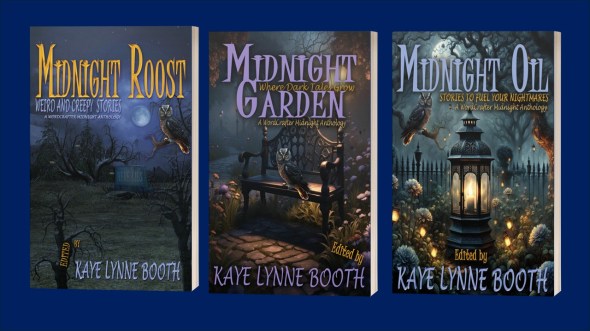
Midnight Roost: Weird and Creepy Stories: 20 authors bring your nightmares to life in 23 stories of ghosts, paranormal phenomenon and the horror from the dark crevasses of their minds. Stories of stalkers, both human and supernatural, possession and occult rituals, alien visitations of the strange kind, and ghostly tales that will give you goosebumps. These are the tales that will make you fear the dark. Read them at the Midnight Roost… if you dare. https://www.amazon.com/Midnight-Roost-Kaye-Lynne-Booth-ebook/dp/B0CL6FPLVJ
Midnight Garden: Where Dark Tales Grow: 17 authors bring you 21 magnificent dark tales. Stories of magic, monsters and mayhem. Tales of murder and madness which will make your skin crawl. These are the tales that explore your darkest fears. Read them in the Midnight Garden… if you dare. https://www.amazon.com/Midnight-Garden-Where-Tales-Anthology-ebook/dp/B0DJNDQJD3
Midnight Oil: Stories to Fuel Your Nightmares: 14 authors bring you 16 dark tales that explore your deepest fears. These are the stories which nightmares are made of. Tales of monsters, mayhem, and madness which will make you shiver in the dark. Read them while you burn the Midnight Oil… if you dare. https://books2read.com/Midnight-Oil
Share this:

LINDSEY’S WRITING PRACTICE
Posted: January 7, 2026 Filed under: Lindsey's Writing Practice, Poetry, Writing, writing exercise | Tags: Imagist Poem, Lindsey Martin-Bowen, Lindsey's Writing Practice, Poetry, Writing to be Read 24 CommentsImagery: Here’s one method to capture a reader’s attention—and evoke feelings. In fact an entire poetry movement was formed around this element: The Imagist Movement.
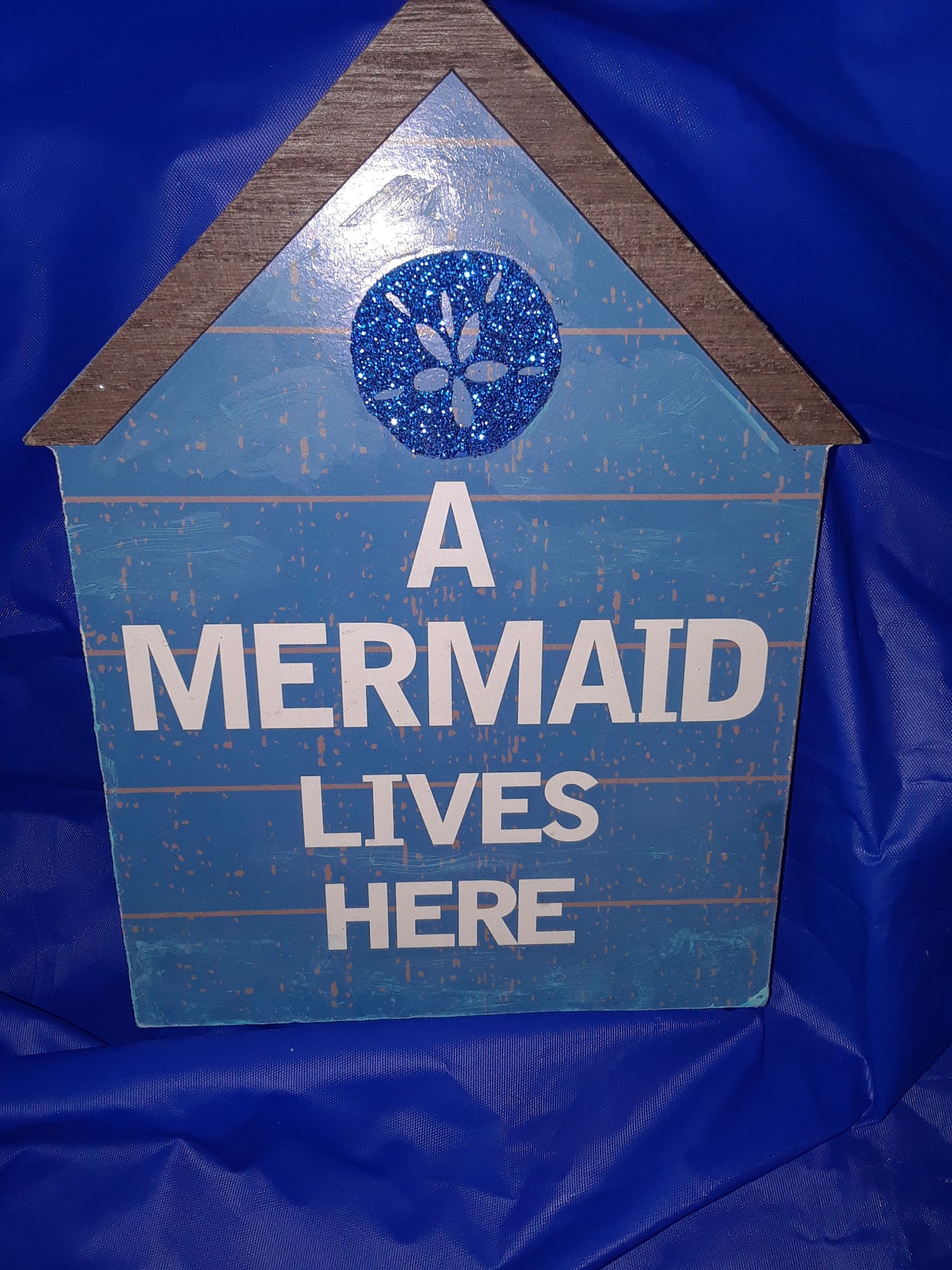
A MERMAID LIVES HERE
She flicks her tail
mornings,
sprays me with
sea foam
when I
so want to sleep one
more hour
before arising
Again flicking
her tail, she leaps in
the bathtub
so smoothly
—Lindsey Martin-Bowen
Penned by William Carlos Williams, the following poem is an example of the Imagist Movement, wherein the poem was “the thing.” In other words, Imagist poets ignored symbolism, rhyme, rhythm, and other poetic elements and focused upon creating an image.
Consider this your opportunity to attempt writing an Imagist poem. Using your own words, copy merely the style—and perhaps the “beat”—of the WCW poem (on the left) to create yours. And remember to enjoy writing this.
THIS IS JUST TO SAY
I have eaten
the plums
that were in
the icebox
and which
you were probably
saving
for breakfast
Forgive me
they were delicious
and so sweet
and so cold
—William Carlos Williams*
*WCW also wrote numerous short stories that included other essential elements in writing, such as dialogue, action, symbolism and so forth. He was also a physician, who wrote between appointments with patients, some of whom he used as sources for characters in his fiction.
One of my college students (a sophomore) wrote the poem (below). I submitted it to the campus literary magazine, Shorelines, which published it:
I have ruined
your lipstick
that was hidden
in your purse
the coral
shade you wore
only
to special events
I’m sorry it
was just so rich
and soft
and so bright
—Melissa Brower
Please feel free to submit your imagist poem to me. Happy New Year, too. May 2026 bring you joy, prosperity, and other blessings.
If you would like to try your hand at this, please submit your efforts in the comments below, or post it on your own blog and link back to this post, then submit the link to the post in the comments below. We’d love to see what you come up with.
About Lindsey Martin-Bowen
On Halloween 2023, redbat books released Lindsey Martin-Bowen’s 7th poetry collection, CASHING CHECKS with Jim Morrison. Her 4 th collection, Where Water Meets the Rock, was nominated for a Pulitzer; her 3rd, CROSSING KANSAS with Jim Morrison was a finalist in the QuillsEdge Press 2015-2016 Contest. In 2017, it won the Kansas Writers Assn award, “Looks Like a Million.” Writer’s Digest gave her “Vegetable Linguistics” an Honorable Mention in its 85th Annual (2017) Contest. Her Inside Virgil’s Garage (Chatter House Press 2013) was a runner-up in the 2015 Nelson Poetry Book Award. McClatchy Newspapers named her Standing on the Edge of the World (Woodley Press/Washburn University) was one of the Ten Top Poetry Books of 2008. It was nominated for a Pen Award.
___________________________________
Did you know you can sponsor your favorite blog series or even a single post with an advertisement for your book? Stop by the WtbR Sponsor Page and let me advertise your book, or you can make a donation to Writing to be Read for as little as a cup of coffee, If you’d like to show your support for this author and WordCrafter Press.
_________________________________
This segment of “Lindsey’s Writing Practice” is sponsored by the Midnight Anthology Series and WordCrafter Press.
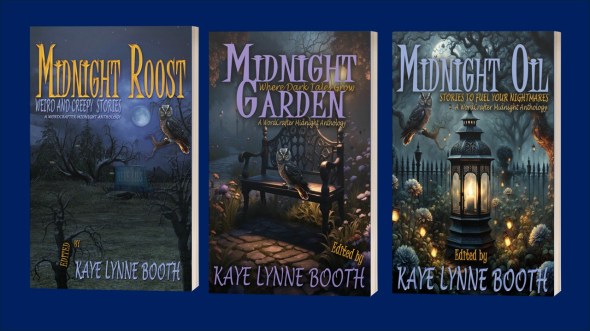
Midnight Roost: Weird and Creepy Stories: 20 authors bring your nightmares to life in 23 stories of ghosts, paranormal phenomenon and the horror from the dark crevasses of their minds. Stories of stalkers, both human and supernatural, possession and occult rituals, alien visitations of the strange kind, and ghostly tales that will give you goosebumps. These are the tales that will make you fear the dark. Read them at the Midnight Roost… if you dare. https://www.amazon.com/Midnight-Roost-Kaye-Lynne-Booth-ebook/dp/B0CL6FPLVJ
Midnight Garden: Where Dark Tales Grow: 17 authors bring you 21 magnificent dark tales. Stories of magic, monsters and mayhem. Tales of murder and madness which will make your skin crawl. These are the tales that explore your darkest fears. Read them in the Midnight Garden… if you dare. https://www.amazon.com/Midnight-Garden-Where-Tales-Anthology-ebook/dp/B0DJNDQJD3
Midnight Oil: Stories to Fuel Your Nightmares: 14 authors bring you 16 dark tales that explore your deepest fears. These are the stories which nightmares are made of. Tales of monsters, mayhem, and madness which will make you shiver in the dark. Read them while you burn the Midnight Oil… if you dare. https://books2read.com/Midnight-Oil
Share this:

LINDSEY’S WRITING PRACTICE: Book Review – “Midnight Roost: Weird & Creepy Stories”
Posted: December 3, 2025 Filed under: Anthology, Book Review, Books, Dark fiction, Lindsey's Writing Practice, Paranormal, Review | Tags: Book Review, Linda Griffin, Lindsey Martin-Bowen, Lindsey's Writing Practice, Midnight Roost: Weird & Creepy Stories, Writing to be Read 1 CommentWarning: These Stories May Disturb Your Sleep
Review: Midnight Roost (Volume 1 of the Midnight Anthology series)
By Lindsey Martin-Bowen
I confess it: My preferred reading choices have leaned toward the “rom-coms,” both traditional literary and contemporary, i.e., Jane Austen’s Pride and Prejudice, Emma, Sense and Sensibility, and so forth: Emily Brontë’s Wuthering Heights and Charlotte Brontë’s Jane Eyre, James Joyce’s “Ulysses,” and his short stories, especially “Araby.” Likewise, early 20th century novelist Daphne Du Maurier thrilled me by combining romance and suspense in Rebecca and Fisherman’s Cove. Plus, a more recent plethora of novels, (especially The Accidental Tourist and Pultizer-prize winning Breathing Lessons) by Anne Tyler, and Toni Morrison’s Beloved have enticed me to donate my hours (and cash) many times, as did Joan Didion’s Play It as It Lays.
Further, even if Edgar Allen Poe’s “The Tell-Tale Heart,” Oscar Wilde’s “The Picture of Dorian Gray,” and Franz Kafka’s “Metamorphosis” intrigued me, they didn’t match my love for the romances.
Yet after reading Midnight Roost, comprising 23 not only chilling, but well-wrought tales, I declare Move over, Poe, Wilde, Kafka, Steven King—here’s a fiction collection that matches your scary stories. And as alluring as the Twilight Zone stories may be, they’ve “got nuthin” over the mastery of the fictional elements (detailed sensual descriptions, rhythmic,flowing sentences, and strong tension buildup—interlaced wth imaginative, sometimes bizzare settings and outcomes) than these 23 tales reveal. In short, this masterfully-written collection mesmerized me. And here’s why:
The first two tension-filled stories play with the “haunted house” archetype, even though the reader can’t be sure it’s the house that’s haunted, especially in Zack Ellafy’s “House on the Plains” which opens with a sad story— after her marriage ended, Madison attempts to set up a new household—yes, on the Plains. Not only does her initial move into the house create tension, when her husband follows her to her new home, he adds to the stress by threatning her life.
The setting plays a huge role in the themes and outcome in the second tale, too. Chris Barili opens “Shaken” with a baby crying. Neither of the parents, Misty and George can make their son stop, and when nothing will stop his tears, the couple slowly realizes their child isn’t crying because of colic. And the world beyond the earth may well have caused the babe’s screams.
In contrast to the two opening stories, Joseph Carrabis’s “The Beach” occurs outdoors (on a real beach), which the protagonist “hadn’t seen in forty years,” when “[m]oss and ivy grew over the gate’ s red brick pillars, once clearly visible.” Throughout most of this tale, Carrabis’s detailed imagery engaged me up to the tense ending.
This collection includes two more Carrabis pieces combining strong imagery and symbolism, “Blood Magic,” uses the Genesis “apple” imagery intertwined with witches whose arms are tree limbs and who present humans with apples to resolve their problems. Again, his detailed imagery captures the reader. Set in a “copse of ancient, dark boled trees,” this story builds even more tension than “The Beach” and “Binky.” And Carrabis indeed knows how to twist a tale, enhance its drama by turning it upside-down, especially toward the ending, where it zaps the reader.
Then toward the end of the anthology, Carrabis’s futuristic “Binky” explores genetic markers and abortion advocates with with this frightning tale that entices readers to question today’s sociological values.
D.L. Mullan set “Mangled” in an opposite setting from the previous landscapes. In fact, it opens within what appears to be a hospital inside a space ship. Told in the first person point-of-view by a wounded female soldier, now a patient sharing visions now appearing in her heads “images splashed in my mind’s eye. My twentieth birthday party. Then a picture of my graduation from boot camp. The darkness of a moonless night, where millions of stars shone in their galaxies above filled me with apprehension . . . ” Despite all the trauma, the narrator takes the reader into an unexpected dimension hinting at hope. Insightful multi-levels of meaning exist here.
“The Easterville Glass Ghost” by Christa Planko is indeed a ghost story, and the main character Taryn studies a history of the town’s glassworks, which includes an “other-worldly” event with a likely “friendly spirit” that “she believed wanted to look out for her well-being. A foreman, maybe. Taryn could feel the spirit smile when that thought entered her mind.” Clever writing here made reading this story a delight.
Award-winning and best-selling author of more than 100 books and master at character development, Paul Kane penned a contemporary piece about an old legend, “The White Lady,” set in a blizzard that changes life dramatically for Harry Sharpe, publicist for Binge TV Productions, a man who “always believed you made your own luck.” After Sharpe gave up driving his car, he trudged through snow till he found his way to a nearby inn, entitled The White Lady. There, he encountered hints of his fate from the barman, an expert on “The White Lady” legends worldwide, who explained,
“Like so many variations going back centuries, she is said to have no
visible face.” He shrugged. “I did a bit of research when I knew it was
going to be important. You do, don’t you?”
Harry shrugged himself now; he couldn’t give a flying shit. Ex-
except he found himself saying, “And your version?”
The man smiled. “The original spirit of vengeance, ours is.”
Harry couldn’t help grinning too. “I’ve seen that one as well, only
it was Nicolas Cage riding a motorcycle.”
“Vengeance for the wronged, vengeance against—”
Harry flapped his hand, cutting the man off in mid-flow. “Urban
legends. I don’t blame you for pushing the marketing side of things,
I t’s what I’d do. Play to the tourists, the audience, right? But you can
save the spiel as far as I’m concerned.”
That conversation hooked me—and I quickly read the 23-page story. It’s now one of my favorite “thriller” stories ever.
A new addition to WordCrafter Press authors, Colorado’s Sonia Pipkin displays Disney-like appeal in “Once Upon a Time.” Not only does her tale with that phrase, but it draws readers into “a magical forest, [where] woodland creatures lived in peaceful co-existence, and not one human was the wiser.” Layering this opening with crisp descriptions of a sky “the perfect shade of aazure blue, trees with full leafy crowns,” she enforced the peaceful setting by adding, “not one drop of blood had ever been spolt on the soil in the enchanted land until that day.”
After building tension among the creatures with their response to events that transpire that day,, she recounts the “Goldilocks” tale—but with a twist—from the bears’ point-of-view.
And trust me, this story’s depth and word choices allow readers to see this is no mere “fairy tale” today. Just ask any deer who may roam in your neighborhood, as they do in mine.
Another tale, C.R. Johansson’s “She Shed Galleria,” reveals the author’s talent for developing intriguing, even odd-ball characters that can snare a reader’s heart, even if those characters are quite ornery. Such is Uluna, a portrait artist who owns the She She Galleria, dresses in mink, and likes to paint men performing work that excites them. Auto mechanic Bob describe her when she waltzed into a bar where he nursed a beer:
Having grown up surrounded by hunters, he recognized the expensive mink fur that lined the collar of the woman’s long, thick coat which swallowed her body like a giant bear. Even without the coat, he knew she was rich by the way she shook her head in contempt while she surveyed the room, as if the bar and the people were vermin.
After Bob became one of her subjects, this story twists into one that could easily find a home in The Twilight Zone among such tales with a comparable “oddball” sense of humor. I loved it. (But note, this is one for the “over-21” crowd.)
Another of my favorites, South African author Roberta Eaton Cheadle’s “The Behemoth’s Rage” exhibits flowing, descriptive language emulating sounds of the sea, which it personifies with detailed imagery. For example, the saga opens with,
The sun breached the horizon, spilling brilliant light across both sky and ocean. The water, an expanse of silver satin encrusted with clusters of glittering diamonds, paid homage, gracefully rising and dropping into curtseys.”
The light unveiled the dark grey behemoth, seated on the shore. It illuminated her edges, turning them into a froth of lighter grey lace. Shards of brilliance splashed across her sombre mourning dress. The aging face of the immobile matriarch disappeared into thick, golden edged clouds, leaving a headless hulk.
Especially significant in this tale is the word, “Behemoth,” (also known as Leviathan) alluding to the huge creature in Job 40:15-24, wherein God humbles Job by presenting the behemoth to him. With a parallel theme, Cheadle’s piece retells an old sea legend, but describes the creature as a female and adds a twist at the end—one that isn’t in Job 40.
Patty L. Fletcher’s “Casualties of War” opens with the lines,
DERRICK SAT AMONG the drunken Clear Bloods, allowing
their teasing to wash over him. He hated this role, but what choice
did he have? If he didn’t learn what plans were being set against
the Blended Lives Federation, all which he’d fought for would be
for nothing.
Ah ha! From this intro, I interpreted this story about “war casualties” was set in the Old West during the struggles between the settlers and Native American tribes. I wondered if it would entail time-travel or if it would reflect actual historical events in our nation’s early decades, which it would symbolically connect to the our nation’s contemporary situation.
Then,after a few pages, I realized my misinterpretation: Yes, the story contains aspects that apply to our nation—but dear readers, it was a tale quite opposite from what I anticipated. I won’t spoil the ending—or any possible interpretations: Both are surprises you won’t forget.
In contrast, Keith J. Hoskins’s tale, “Teddy,” centering around Quarterback Brad Jarrett, “is based on a true story,” according to its narrator. And it opens with Jarrett throwing a pigskin to the runner who scored the winning touchdown. When his team members hosted him to their shoulders, Jarrett “relished the splendor of the moment and bathed in the praise,” thinking “Could life get any better.”
Surely Hoskins expanded that story into a different dimension by making Jarrett’s stuffed Teddy bear come alive—but only to the quarterback. The ensuing battle between the two makes this surreal story a delight.
Another story that would serve well as a Twilight Zone episode, Denise Aparro’s “The Pines” leaves the reader in a strange space with female protagonist Orna Douglas, who happens to be both a nurse and a mystery writer. Opening with “The ping of brass.” auditory and visual descriptions, and quick dialogue, this story captures a reader and moves quickly. Bravo!
Likewise, Julie Jones’s “Night of Terror” opens opens with a description and rapid movement that also makes it another excellent Twilight Zone candidate:
THE FIRST SPACESHIP showed up around two o’clock in the afternoon. Doug and
Billy ran in from the sandbox to tell use about it, too worked up to notice Miss Clara
hollering about tracking up the clean floors. Their alarm cinvinced us something was ]
going on, though a UFO seemed far-fetched. We went outside to look at the sky—to
appease the upset boys, if nothing else—and there it was, just like they said.
Dear readers, his story hooked me immediately—and engaged me till its ending.
Another quick-moving tale with lush imagery and humor, Isabel Grey’s “Rabbits Cannot See Pink Fireworks,” written from a rabbit’s point-of-view, hooked me into reading it through the wee hours. The ninth-year rabbit storyteller not only provides a unique perspective, but adds nuances of social comment on a still controversial subject in our current society.
One more possible Twilight-Zone nomination, Robera M. Senese’s“Take Two” focuses upon a daughter-mother relationship. It opens showing the daughter, Sondra, revealing her perfectionism
in her profession:
“SONDRA STOOPED TO PEER through the camera focus. The camera rested
on a tripod set up in front of her usual recording location in the corner of her bedroon.
Yes, perfect. The lighting on the stool in front was just right, making the red leather
look lush. Beside her was her makeup table, styish and shining with black lacquer.
Once, she had noted in oneofher videos that the table was a little too shiny. A lovely
charcoal grey table runner took care of that problem and also stopped the various
makeup bottlesand boxes from sliding on the smooth surface.
After Sondra decides to help her aging mother, Florence “freshen” her looks, the tale
becomes more intriguing with what may be a surprise ending. Likely, many readers may
find that ending justified, too.
“Immediate Intervention” by Mario Acevedo takes on a more somber tome in this futuristic piece that may become closer to reality within a few years. Along with bringing in AI and algorithms, the story creates a frightening reality wherein The System rules human outcomes.
In contrast, Kaye Lynne Booth’s “Melina” leads the reader into the magical world of a mermaid (Melina) and her encounter with humans. Thestory opens with a delightful scene of Melina flipping her tail “playfully at her little siser, Elsbeth, who gives a mental titter and swims off . . .” Being a mermaid, Melina is able to sit with her sister by sending thought waves to her.
This allows Elsbeth (who swam too far away) to contact her sister when she becomes caught in
a fisherman’s net. In her attempt to help thr young mermaid, Melina becomes captured by humans
and begins to morph legs. Great tension here—but no spoilers. Part of this tale’s charm is its intensity.
Michacele Jordan’s “Afterwards” is a psycho-drama about Brad, riddled with nightmares after he’d suffered a car crash, an accident that killed a young woman, who re-appeared in his subsequent constant nightmares. This sent Brad to a psychiatrist, Dr. Rosenberg, whose “traffic light green” eyes haunted him while she attempts o help him regain his mental health. Albeit grounded in “reality,” this
one’s another suspenseful tale.
And speaking of suspense, Robert Kostanczuk’s “A Visitant Comes to the Window” evokes shades of imagery from Franz Kafka’s “The Metamorphosis” wherein the main character, Gregor transforms “into a gigantic insect.” This tale just may be more frightening.
Indeed, the last two stories in this collection definitely raised the hairs on the back of my neck. M.J. Mallon’s “The Cull” reflects some ideas similar to those in Oscar Wilde’s “The Painting of Dorian Gray,” but this tale is far more gastly—and heartbreaking.
And finally, Isabel Grey’s award-winning (WordCrafter’s Short Fiction Award 2023) “Red Door House” sent the proverbial chills down my spine (all the way to my toes). At first, the story brought to mind Toni Morrison’s Pulitzer Prize-winning novel, Beloved, wherein House 124 is haunted by the ghost of the character Sethe’s murdered daughter..
Yet that haunting is mild compared to the Red Door House—a house that narrates this wild tale.
Indeed, those who love thrillers will likely enjoy this one. Yes, the story is indeed well-written, especially the way it builds suspense. But the ending overwhelmed me, perhaps because my 1906 historic house may be haunted, I don’t know. Nevertheless, it was a tad too thrilling for my sensitivities—and kept me up till 4 AM., shivering. Sigh.
About Lindsey Martin-Bowen
On Halloween 2023, redbat books released Lindsey Martin-Bowen’s 7th poetry collection, CASHING CHECKS with Jim Morrison. Her 4 th collection, Where Water Meets the Rock, was nominated for a Pulitzer; her 3rd, CROSSING KANSAS with Jim Morrison was a finalist in the QuillsEdge Press 2015-2016 Contest. In 2017, it won the Kansas Writers Assn award, “Looks Like a Million.” Writer’s Digest gave her “Vegetable Linguistics” an Honorable Mention in its 85th Annual (2017) Contest. Her Inside Virgil’s Garage (Chatter House Press 2013) was a runner-up in the 2015 Nelson Poetry Book Award. McClatchy Newspapers named her Standing on the Edge of the World (Woodley Press/Washburn University) was one of the Ten Top Poetry Books of 2008. It was nominated for a Pen Award.
__________________________________
Did you know you can sponsor your favorite blog series or even a single post with an advertisement for your book? Stop by the WtbR Sponsor Page and let me advertise your book, or you can make a donation to Writing to be Read for as little as a cup of coffee, If you’d like to show your support for this author and WordCrafter Press.
__________________________________
This segment of “Lindsey’s Writing Practice” is sponsored by the Midnight Anthology Series & WordCrafter Press.

Midnight Roost: Weird and Creepy Stories: 20 authors bring your nightmares to life in 23 stories of ghosts, paranormal phenomenon and the horror from the dark crevasses of their minds. Stories of stalkers, both human and supernatural, possession and occult rituals, alien visitations of the strange kind, and ghostly tales that will give you goosebumps. These are the tales that will make you fear the dark. Read them at the Midnight Roost… if you dare. https://www.amazon.com/Midnight-Roost-Kaye-Lynne-Booth-ebook/dp/B0CL6FPLVJ
Midnight Garden: Where Dark Tales Grow: 17 authors bring you 21 magnificent dark tales. Stories of magic, monsters and mayhem. Tales of murder and madness which will make your skin crawl. These are the tales that explore your darkest fears. Read them in the Midnight Garden… if you dare. https://www.amazon.com/Midnight-Garden-Where-Tales-Anthology-ebook/dp/B0DJNDQJD3
Midnight Oil: Stories to Fuel Your Nightmares: 14 authors bring you 16 dark tales that explore your deepest fears. These are the stories which nightmares are made of. Tales of monsters, mayhem, and madness which will make you shiver in the dark. Read them while you burn the Midnight Oil… if you dare. https://books2read.com/Midnight-Oil