Book Marketing – What Works? (Part 1): Interview with fantasy author Cynthia Vespia
Posted: September 4, 2017 Filed under: Books, Cover Art, Dark Fantasy, Fantasy, Interview, marketing, Promotion, Speculative Fiction, Super Hero | Tags: book marketing, Cover Art, Cover Design, Cynthia Vespia, marketing, promotion, Social Media Marketing 4 Comments
Frequently I rant about the time I have to spend marketing and promoting my writing instead of actually writing. It’s no secret that marketing is not my favorite author hat to wear, and I know a lot of other authors who feel exactly the same way. But the fact is, in today’s writing industry, the author must carry most, if not all, of the load when it comes to promoting their work and marketing their masterpieces.
Now, I’m a struggling author, just as many of you are, so I don’t have a big marketing budget and I can’t afford to hire someone to do my marketing for me. My promotions are limited mainly to social media marketing, usually the kind that’s free. Even when I have a little money to put into marketing, I don’t really know what avenues would be effective enough to be worth it.
A lot of the information about book marketing that is out there on the Internet today is geared toward marketing your non-fiction book, whether it be self-help, or how-to, or even a cookbook. These articles tell you how to show potential readers why they need your book, how your book can help them, which is great, except most of their strategies do not apply to marketing fiction.
As a result of this discovery, I’ve been doing some research of my own into the matter, but I’ve found that the effectiveness of any marketing strategy depends on many factors, and results vary from author to author. In this eight part series, we’ll take a look at my findings and interview seven different authors to learn what they’ve found to be effective in marketing their own work. All work and no play makes us all very dull writers, so we’ll get to know a little about each one of them and their books just for fun.
It’s my pleasure today to interview speculative fiction author, Cynthia Vespia. I have review several of her books, including her Demon Hunter saga: The Chosen One & Seek and Destroy and Hero’s Call, Lucky Sevens, and Life, Death and Back. In addition to her great storytelling, Cynthia is also a talented cover artist, designing most of her own covers, as well as working freelance.
Kaye: Would you share the story of your own publishing journey?
Cynthia: Once upon a time I was a young mind hungry for books. I’d read Piers Anthony; C.S. Lewis; and comic books (my favorite being The Punisher). Then one day I stumbled upon a book by Dean Koontz called Intensity. To make a long story short it got me hooked and I knew then I wanted to write. My first novel, The Crescent, was written after seeing a documentary about female gladiators narrated by Lucy Lawless. I self-published it back when self-publishing wasn’t cool. It was fun to see my book in print. Flash forward to today and that same story is in pre-production as a feature film.
Along the road I’ve written several more books and short stories, each of which I’m very proud of. I received a Best Series nomination in 2009 for Demon Hunter.
Kaye: What made you decide to go with self-publishing?
Cynthia: I was published by small publishing houses but I never really saw any benefit when I could do the same things they were doing and they weren’t even really promoting me much. So much like a lot of other authors I’ve gone the indie route.
Kaye: As a fantasy writer, what kind of research do you find yourself doing for your stories?
Cynthia: Honestly, the majority of my work is completely created in my head. Recently the type of research I’ve been doing is for superpowers, modeling, and locations for the Silke Butters Superhero Series. And for my upcoming apocalypse trilogy there was a lot of research regarding weapons and safe-houses.
Kaye: What’s the most fun part of writing a novel or short story/screenplay? What’s the least fun part?
Cynthia: The most fun part of writing for me is in the initial creation of the characters and their backstory. It’s like a sculptor molding clay. You breathe life into your subjects.
The least fun part is in the aftermath which is marketing and promotion. It’s so difficult to posture yourself out in front of a very large crowd of other writers all clamoring for attention.
Kaye: What is the strangest inspiration for a story you’ve ever had?
Cynthia: Probably Sins and Virtues. I was at Alcatraz in SF and I went inside one of the prison cells for a photo. Afterwards, I felt a heavy cloak of energy from what I could only feel was a former prisoner’s spirit.
While writing Sins and Virtues I started to see visions of prison escapes that I had no business knowing about. If you read the first chapter you’ll get a taste of what I mean. That feeling stayed with me throughout the entire novel. It only left when I was done writing.
Kaye: What’s the best piece of advice you were ever given?
Cynthia: I’ve heard quite a bit of good advice over the years. I seek it out, and write it down in my journal. Lately, I’ve been falling back on one from Arnold Schwarzenegger where he said “earn it so nobody can say they gave you shit.”
Kaye: What do you see as the pros and cons of independent/traditional publishing?
Cynthia: Sadly, the pros and cons are one in the same in that everyone can publish a book. There’s a lot of good work being published that would probably never see the light of day due to the politics of traditional publishing, but at the same time I’ve seen a lot of awful books out there too.
The other things I’ve been noticing is that it’s no longer about the writing. It’s become a numbers game. How many FB followers or Twitter followers do you have? How many likes did you get? How many reviews did the novel receive? How large is your fan base?
I struggle with that because I don’t have the time to spend all day on social media when I have other things that take up my time like earning a living. There’s people now who are even cheating the system with paid “likes” etc. to bump themselves up into the top spot. To me, that’s not what writing should be about. It’s about the story, not how much attention you can get for yourself. Sorry if I’m coming off very negative but I’ve been doing this for a very long time and the business model has changed so much now that I hardly recognize why I started writing in the first place.
Kaye: What do you do for cover art? DIY, or hired out, or cookie cutter prefab?
Cynthia: I always do my own cover art. That is one of the beauties of going indie, you can have complete control over your cover. Although, I do have to point out that the comic book look of the Karma character in my Silke Butters series was done by an artist named Ka Rolding, whom you can find on Deviantart.
I also create covers for other authors too, so if you’re in need of a custom cover please look me up at http://www.cyncreativeservices.com/authorstudio
Kaye: What’s your favorite social media site for promotion? Why?
Cynthia: None…lol. I’d rather do a face-to-face event than spend time on social media promoting. But if I have to choose I like Twitter because it makes you think and be clever with your 140 characters. BTW, you’re all using hashtags wrong!
Kaye: How much non-writing work, (marketing & promotion, illustrations & book covers, etc…), do you do yourself for your books?
Cynthia: All of it! I’m a one woman show. It’s honestly extremely exhausting. Like I said, I just don’t have the time needed to put in to make a dent. I even bit the bullet and hired a couple people this year and it still didn’t make a difference. But I’m trying every day. That’s all you can do is try, right?
Kaye: You participate in book events on social media often. How effective do you see Facebook release parties and cover reveals, etc… being?
Cynthia: It depends on the crowd and your time slot. I’ve had some that were very active (including my launch party for Karma) and then others where nobody interacted at all, or not until later on. I find them effective for exposure. I’ve actually gained quite a few new FB friends from events so I’ll continue to do them. But I will suggest going in with a game plan and do some interactive posts, don’t just ramble on about how your book is for sale.
Kaye: What works best to sell books for you, as far as marketing goes?
Cynthia: For me, I like face-to-face conventions. Because of the genre I write in I can easily blend into comic cons. I liken it to an actor doing a stage play over doing a movie. In that regard, they get immediate audience reaction when they are doing a play, rather than waiting for box office receipts from a movie. The same can be said about conventions. I get an immediate reaction from readers (some have even come back the next day to compliment my work) where as stuff online I don’t really see what is working and what isn’t. Also, during conventions I keep a tally on how many books are selling and my 2009 Best Series nominee Demon Hunter is still the biggest seller.
Kaye: Why do you think some authors sell well and others don’t?
Cynthia: Again, it’s all who you know. And a lot of that comes from great networking. There’s something to be said for word-of-mouth. I also believe some genres sell better than others, that’s just the way it goes.
Kaye: Which author, dead or alive, would you love to have lunch with?
Cynthia: J.K. Rowling or George RR Martin. I’m fascinated by the amount of detail they’ve both put into their respective worlds of Harry Potter and Game of Thrones.
Kaye: What kind of Chinese food do you order all the time?
Cynthia: I don’t always eat Chinese food but when I do I prefer orange chicken and lo mein.
I want to thank Cynthia Vespia for joining us and for sharing her marketing strategies with us. If you’d like to learn more about Cynthia, check out her author profile, here on Writing to be Read, or check out her website.
Be sure to catch Writing to be Read next Monday, for Part 2 of Book Marketing – What Works?, where I will interview the co-authors of the Silverville Saga books and Wild West Ghosts, Mark Todd and Kym O’Connell Todd, who will share their experiences in marketing and clue us in to which ones have been most effective.
Like this post? Subscribe to Writing to be Read for e-mail notifications whenever new content is posted or follow WtbR on WordPress.
Share this:

Interview with romance author Molly V. Lovell
Posted: September 1, 2017 Filed under: Author Profile, Books, Fiction, Full Moon Bites, Interview, romance | Tags: A Sibling's Dilemma, Author Interview, Molly V. Lovell, Romanace 2 Comments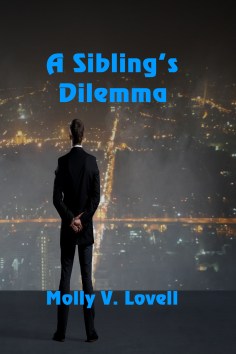
Molly: In my opinion (and it may just be me), having lots of interesting and unique characters makes a story read better. A genre convention for romance novels is that there needs to be a happy ending. No happy ending=no romance novel. This is good, in a way, because people look to romance novels for a fun, happy, read—it’s the hallmark of the genre. But, the downside to that is that you know how the book ends before you pick it up. When you have multiple couples, it adds a little mystery to it. Who’s going to end up with who? Are both couples going to be together at the end? There’s going to be a happy ending somehow, but you don’t know what that happy ending is.
Kaye: You are a law student by day and novelist by night. What’s the trick to juggling two careers at the same time?
Molly: Honestly? As long as I budget my time, it’s okay. I spend about 40-50 hours a week doing legal work and about 40 hours a week writing and promoting my books. An 80/90-hour work week is very manageable, especially when you’re doing something that you love. I’m fortunate enough to have two jobs that I’m very passionate about. In a way, having two very separate and distinct careers is easier than having just one—I never get bored. When I tire of legal stuff, I write. When I get writers block, I hit the books again. My husband and I don’t have any children, which makes things easier too. I’ve had the pleasure of meeting other romance novelists who work, write, and have kids. I don’t know how they do it because that’s like having three jobs. I just have two.
Kaye: What’s something most readers would never guess about you?
Molly: I’m actually an only child. You’d think that someone who wrote a book called A Sibling’s Dilemma would be tripping over siblings, but it’s just me. I’m fortunate enough to have three life-long friends that I would call my sisters though. (They’re nothing like Cassie and Ellie, for the record.)
Kaye: What time of day do you prefer to do your writing? Why?
Molly: I like to write whenever I can. Usually “whenever I can” turns into the evening because of law school. I also do this really weird thing where I like to write with the TV on in the background. (I measure my stories through how many series I blow through on Netflix. If you’re curious, this book took me the entirety of X-Files, most of Pretty Little Liars, and a boat load of one-season Netflix original series to write.) It’s nice because I can write while I’m hanging out with my husband; I’ll take breaks every so often and we’ll chit-chat and stuff. Writing’s always a fun time for me. Whenever I’m not out with friends or doing law school stuff, I write (and watch TV.)
Kaye: Which author, dead or alive, would you love to have lunch with?
Molly: Okay, I’m going to have to say Ernest Hemingway for this one. I’m not a huge fan of Hemingway’s books. I mean, they’re great and all, but there are other authors that I like more. Hemingway’s an interesting guy though. You can only talk about books with someone for so long—that would get old after about fifteen minutes. Hemingway’s done all sorts of interesting stuff. He was an ambulance driver during WWI, lead a group of French Militia against the Nazis, stole a urinal from his favorite bar, survived a ton of weird illnesses, lived through two plane crashes, and was kind of a spy at one point for the KGB. (Well, the KGB part is kind of sketchy, but it was the 1940’s…) Hemingway even has his own hamburger recipe. Who else does that? No one. We could go to bars and eat hamburgers. It would be great.
Kaye: What is the biggest challenge of being a writer for you?
Molly: The biggest challenge is that, with being a writer, you need to wear many hats: it’s sort of like being a small business owner. Writing itself isn’t too hard though. My other career, law, can be a bit more challenging at times. I spent a great deal of time clerking at prosecution offices and that’s way more taxing—especially because I did a lot of stuff with sex offense and domestic violence. It can get emotionally hard at times, but also rewarding. I’ve done jobs that are physically demanding too; I worked night shift McDonalds during college. That was hard. Really hard. I guess, in comparison, writing’s not that challenging—even with all the ‘hat wearing’ involved. I don’t have to stay up until five A.M. dealing with angry customers looking for their cheeseburgers.
Kaye: If writing suddenly made you rich and famous, what would you do?
Molly: I wouldn’t change my day-to-day life, actually. I would still finish my JD and I would still go into criminal law because I believe in what I do. We need good prosecutors and good public defenders. Even if I were a multi-millionaire, my day-to-day life would be the same. I would, however, do something really nice for my parents. Buy them a fancy mansion or something like that. I would definitely go on an awesome vacation with them too. (They just took me to Bermuda, so it’s fresh on my mind.) They’ve done so much for me and I wouldn’t be where I am today without them. Being an only child, I feel like I’m closer to my parents than most people. They’re my best friends too. I would do something nice for them. In addition, none of the people I care about would want for anything. I guess that’s what everyone dreams of if they become rich—doing nice things for the people they love. I’d probably give most of the money away. I have simple tastes. I mean, my favorite food is McNuggets. You don’t need to be rich and famous to eat McNuggets, hang out with friends, and write on your couch. My husband has simple tastes too.
Kaye: When did you know you wanted to be an author?
Molly: I used to love to write as a kid. My best friend and I were big nerds and we would write all the time. We made up really elaborate fantasy stories. Mine was called Unakarie’s Tail (because I didn’t know the difference between “tale” and “tail” as a kid) and hers was called Magic Factor. We would obsess over our books and stay up late drawing our characters and writing cross over stories. I wrote like, a hundred pages. For a ten-year-old, that was like writing War and Peace. Then, being a nerd and all, I transitioned to fanfiction. I stopped writing for a bit when I went to college, but then about a year ago I realized how much I loved to write and picked it up again. I started writing my own story with my own characters and it’s so much fun. This time I managed to not have any typos in my title, so that’s progress.
Kaye: How would you describe yourself in three words?
Molly: Friendly, off-beat, tenacious.
Kaye: What’s the best piece of advice you were ever given?
Molly: My mother, the wisest woman that I know, told me not to care about what other people think. If you live your life beholden to the opinions of others, you can never be the best version of yourself.
Kaye: Is there anything unique or unusual about your writing process?
Molly: I don’t really think that there’s anything unique to my writing process, other than I write my drafts while I watch television.
Kaye: Is there another book in store from Molly V. Lovell in the future?
Molly: Actually, yes, there will be. For the last several months, I’ve been working on a trilogy of books. I want to finish all three books before I submit them for publication. So far, I wrote 150,000 words and I’m almost done with the series. Then, I need to polish it up; that’s going to take a while. But, by this time next year, I’m hoping to have those three books out. The characters have pretty different personalities than the ones in A Sibling’s Dilemma and it’s written in first-person instead of third-person. The stories chronicle a hot-headed attorney and her rambunctious teenage intern, who happens to be the boss’s daughter. Together, through a very strange series of events, they take on the mob, a stalker, and a bunch of other things.
I want to thank Molly for joining us today on Writing to be Read and sharing a little about herself and her book. A Sibling’s Dilemma is available in ebook format or paperback on Amazon, so be sure to get your copy today.
Like this post? Subscribe to Writing to be Read for e-mail notifications whenever new content is posted or follow WtbR on WordPress.
Share this:

“Short Stories Not Forgotten” may be too short
Posted: August 25, 2017 Filed under: Book Review, Books, Fiction, Stories | Tags: Book Review, Calvin Bender, Short Fiction, Short Stories, Short Stories not Forgotten Leave a comment
Short Stories Not Forgotten by Calvin Bender is a small collection of short fiction. As I’ve mentioned many times, a big problem with a lot of short fiction is that authors fail to get in a full story arc. With this collection four, that is a problem with every piece. In fact, these seem more like brief ideas, each being a good start for something, but none following through to make a complete story. Every one ended abruptly, with none feeling quite finished. If the author just would have given us more. In all honesty, I can’t give it more than two quills.

Kaye Lynne Booth does honest book reviews on Writing to be Read in exchange for ARCs at no charge. Have a book you’d like reviewed? Contact Kaye at kayebooth(at)yahoo(dot)com.
Share this:

Interview with Author Kasi Blake
Posted: August 21, 2017 Filed under: Author Profile, Books, Dark Fantasy, Fiction, Interview, Speculative Fiction, Writing | Tags: Author Interview, Dark Fantasy, Kasi Blake, shape shifters, Speculative Fiction, vampires, werewolves, witches Leave a comment
I’m pleased to welcome speculative fiction author Kasi Blake to Writing to be Read today. Kasi likes to write about vampires and werewolves and witches, oh my! I invited Kasi to join us today because she’s doing something different with her 4-Ever Hunted series, which encourages reader participation. I thought was kind of clever, and I asked her to share her creative marketing idea with us. But first, lets learn a little about Kasi and her books.
Kaye: When did you know you wanted to be an author?
Kasi: When I was 12. I read The Outsiders in class and then started a short story. It slowly progressed from there.
Kaye: You have three series out. Would you like to tell us a little about each one?
Kasi: The Rule series is basically a YA Urban Fantasy series about a vampire boy who goes legit. Meaning, he turns mortal through a freak event and loses the fangs. This is great for Jack, because he hated being a vampire. He just wants to be normal, but then he falls for a werewolf hunter and discovers his true destiny.

The Witch-Game books are about teen girls with powers. They use them to play games at school beginning with one called Crushed. They enchant boys and compel them to do their bidding. Witch Hunt is more like hide-n-seek for witches. They both have romance and a bit of mystery.

Bait starts off the Order of the Spirit Realm series. The titles are a little strange here: Bait, Hunter, Warrior, Legend. These are the ranks the students at Van Helsing’s school receive as they work their way up the hunting ladder. Bay-Lee is his daughter, but she doesn’t get special treatment. In fact, the gorgeous hunter assigned to be her mentor hates her on sight. This series is set in New Zealand and has all the action, sweet romance, and monsters you could possibly hope for.

Kaye: In 4-Ever Hunted, you’re offering your readers a say in how the series turns out. This is a cool and unique thing to do in your writing. Would you like to tell us how that works?
Kasi: After you read 4-Ever Hunted, there is a link at the end explaining that you can choose Dani or Scarlet as his love interest. Read the book and at the end, there is a link to click on, which takes you to my 4-Ever Hunted Facebook page, where you can vote for the girl you’d like to see him end up with at the end of the series. This book is free with Kindle Unlimited, so no purchase is necessary to vote, but you do need to read the story.
Also, feel free to post and try to sway people to your side in the comments. You can change your vote until voting closes after I begin to write book three. Majority rules. I like both girls, so I know how to make either relationship work, depending on who is picked. Trick will wind up falling in love with and sharing a romance (not to mention action-packed adventure) in book three and four. Think of it as team Edward or team Jacob, with the readers in control. It’s all up to you, the readers.
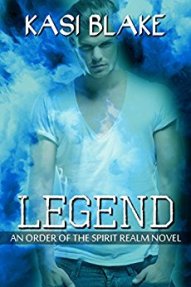 Kaye: Legend is your most recent release. Would you like to tell us a little about that?
Kasi: Legend is the final book in the Order of the Spirit Realm series and wraps up life at Van Helsing’s school for Bay-Lee, Nick, Mike, and the rest of the young hunters. Monsters from the other realm have found a way to blow the doorway between them wide open. It’s all-out war. Who will win? Who will survive?
Kaye: What are you working on now? What can we expect in the future from Kasi Blake?
Kasi: I am currently writing 4-Ever Cursed, book two in the 4-Ever Hunted series. I plan to do all four books in a row, if possible. Then, I have an exciting fairy tale series like none other coming your way. Cursed by a Grimm is a dark fairy tale about a fading faerie realm, the wicked Ivory Queen who will do anything to stay in power, and a strange creature hiding in the shadows. The Grimm will either help Shayne save the realm and find true love. Or he will lead her down the wrong path and destroy everything.
Kaye: How do you decide the titles for your books? Where does the title come in the process for you?
Kasi: The titles come from the books themselves. I usually don’t name them until the book is either done or the entire outline is at least finished. Vampires Rule is something Cowboy says to Jack all the time. He loves being a vampire; Jack loathes it. Then it goes from there. Werewolves Rule and so on. Crushed and Witch Hunt are named after the games the witches play. Bait, as I already said, was named after the ranks the hunters get.
4-Ever Hunted is unusual because it comes from the fact that Cowboy and Summer want a fourth for their group. Cowboy is obsessed with having four members. They make the mistake of setting their sights on a hunter though. The question is, will Trick become the thing he hates most in order to save his own life?
Kaye: Are you a plotter or a pantser? Why?
Kasi: Plotter. I feel like I need a map so I know where I’ll end up. I don’t understand pantsers. I would get lost without my map. Although, the outline does change several times during the process as I write. I leave room for character growth. Sometimes they do things that surprise me and turn my outline upside-down.
Kaye: You write about vampires and werewolves and shape shifters. What kind of research do you find yourself doing for your stories?
Kasi: I only research creatures that are new to me. Most of the mythology I make up so that it will be new and fresh like how vampires and werewolves were created by a faerie.
Kaye: What do you do for cover art? DIY, or hired out, or cookie cutter prefab?
Kasi: I started off doing them on my own, and they were not that great. Crushed and Witch Hunt were published by Clean Teen Publishing, so the covers were created by the awesome Marya Heidel. The Bait series and the vampire series were done by a woman just starting out in the business. I don’t even think she does it anymore. The awesome 4-Ever Hunted books are all by a great artist I found on Fiverr. Off the top of my head, I don’t remember her name, but she is listed at the front of the book as the designer.
Kaye: You have a blog, Supernatural Slant. How did that start?
Kasi: They say all authors need a blog, so this started off as a blog about writing, but I am obsessed with the show Supernatural. So, it went off more in that direction. I still blog about my books, sometimes books I like, but the blog is about Supernatural, the show, and shows like it now more than anything else.
Kaye: What time of day do you prefer to do your writing?
Kasi: I like to write late at night and early in the morning because there are no distractions then. I’m not getting phone calls, and people aren’t asking me to do favors for them or help them out or just wanting to talk. Plus, it is so peaceful when others are asleep.
Kaye: Besides writing, what are your favorite things to do?
Kasi: Reading, shopping, hanging with friends, and I love all my animals. I live on a farm, so taking care of them and watching them do silly things is always entertaining.
Kaye: Which author, dead or alive, would you love to have lunch with?
Kasi: I guess I would have to say JK Rowling, because I really want to know what it feels like to have your world made not only in movies but also in a theme park. I’d never want to go home.
 Kaye: My final question is one you may get asked a lot because of your Rule series, but you had to know it was coming. Who does actually rule, vampires or werewolves?
Kasi: I go back and forth on this. Sometimes I like vampires better, and sometimes I prefer werewolves. It depends on which character I’m writing at the time.
I want to thank Kasi Blake for joining us today, sharing about her books and letting us get to know her. If you want to know more about Kasi or her books, you can check out her website, or her author page on either Amazon or Goodreads.
Next week there won’t be a Monday post because I’m being interviewed on Authors Talk About It and I’ll be promoting that. Then, on Monday, September 4th, we’ll be treated to an excerpt form author Scerina Elizabeth, before delving into my seven part series Book Marketing – What Works? on Monday September 11th. So don’t miss it, on Writing to be Read.
Never miss a post on Writing to be Read again. Sign up for email to have notification of new content delivered right to your inbox, or Follow WtbR on WordPress.
Share this:

“Kistishi Island”: An Unbelievable YA Journey
Posted: August 18, 2017 Filed under: Book Review, Books, Fantasy, Fiction, Young Adult | Tags: Book Review, Fantasy, Fiction, Jordan Elizabeth, Kistishi Island, Young Adult 3 Comments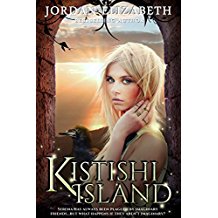
I recently had the pleasure of reading Kistishi Island, by Jordan Elizabeth. This YA novel was a well-written story, with a plot that comes full circle. Although the names are a bit difficult to pronounce, the characters are interesting and likable, especially Corvo (goddess of crows, and Krieg, goddess of war). The main character, Serena, is portrayed to be a teenager with depth, but still a teen, and you won’t be able to help but like her.
When Serena talks to her imaginary friends, they just don’t feel imaginary. The kids at school taunt her and she winds up in trouble all the time. Her aunt thinks she’s crazy and wants to send her to an asylum, her mom is off on archaeological digs all the time and is never around, and her imaginary friends are the only friends she has.
What will happen if she learns her imaginary friends are really goddesses watching over her? We’re about to find out, when she runs away to the Island of Kistishi to find her mom, where the walls of the ruins suck you into underground dwellings and other people see her friends, too. Besides learning that her friends aren’t imaginary, Serena also learns that she is capable of depending on herself, and that she’s capable of having real friends.
This story is well-crafted and perfect for YA readers, (or older readers who secretly love YA stories but don’t want to admit it). It is a fun and exciting read. I give Kistishi Island four quills.

Share this:

Let’s Talk About Short Fiction
Posted: August 14, 2017 Filed under: Fiction, Science Fiction, Stories, Writing | Tags: If You're Happy and You Know It, Kaye Lynne Booth, Short Fiction, Short Stories, Short Story Collection, The Collapsar Directive, Writing, Zombie Pirate Publishing 2 Comments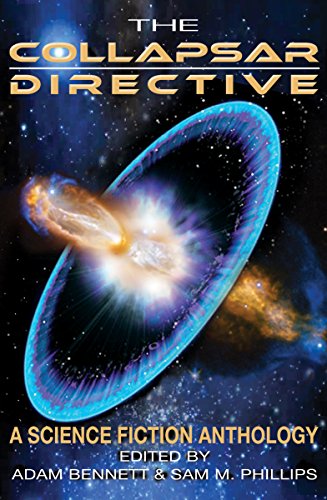
I have a story appearing in the newly released science fiction anthology from Zombie Pirate Publishing, The Collapsar Directive. It’s a dystopian tale titled, If You’re Happy and You Know It, set in a world where you’re only allowed to be happy on the weekends. I must give kudos to the editors, Sam Phillips and Adam Bennett for their selections for this anthology. The other stories featured in this anthology are all top rate, and my fellow authors are a talented bunch. I feel proud to be counted among them.
Zombie Pirate Publishing is pretty smart really, because they get their authors involved in the process – not really the actual publishing process, but with the final editing and, certainly in the marketing process. And having been involved in the process with this great group of writers, reading the stories of the others, which are all well written pieces, got me to thinking about what elements make up a high quality short story.
When I review a short story, I look for the same things I’d look for in a novel length work, with a few exceptions. I’d down my rating for the same type of things though: if it doesn’t read smoothly, if there are logic problems (which occur less in short fiction, but they do occur), excessive use of adjectives and unnecessary words, or if there are a lot of typos or spelling errors which bring my editors mind right out of the story.
Just as in a longer story, I want to see a well-written story, with a beginning, a middle and an end. But, this is where short stories often fall short. In a novel, it may take the author several chapters to wrap up all the loose ends and tie their story neatly into a bow. Short stories don’t have that luxury. Although, there is no set length as to how long a short story should be, other than word count limits set by those you are submitting to, it is even more important with short fiction to eliminate any unnecessary words and get to the point of the story. If you don’t, your story may end up becoming a novel. So, in short fiction, I look for stories that tell the tale without drawing it out unduly.
However, it can be difficult to get in a full story arc, without drawing out the tale, so I’ve come to expect this to be the case with short fiction. That way, instead of being sadly disappointed when a short story falls short (pun intended), I am pleasantly surprised when I come across short fiction which feels complete at the end of the story. It is even harder with flash fiction. The shorter the story, the less space you have to accomplish the task. I recently reviewed an anthology in which almost every story had a full arc, leaving me with a very satisfied feeling. (Catch my review of Darkscapes.)
All of the stories in The Collapsar Directive accomplish this feat, as well. All the stories featured seem to arc nicely, the beginning, middle and end are usually easy to identify in each one, and they all hold my attention to the end. That, of course, is the most important element in any story, long or short. It has to pull you in and hold you there from the first page to the last, regardless of the length of the story.
Like this post? Subscribe to Writing to be Read for e-mail notifications whenever new content is posted or follow WtbR on WordPress.
Share this:

“Darkscapes”: Stories That Will Keep You Reading
Posted: August 11, 2017 Filed under: Book Review, Books, Fiction, Science Fiction, Speculative Fiction, Stories | Tags: Anthology, Book Review, Curiosity Quills Press, Darkscapes, Fiction, Science Fiction, Short Storie, Speculative Fiction 1 Comment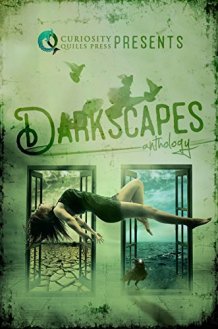
Darkscapes is a top quality anthology of short stories put out by Curiosity Quills Press. I must say, this anthology delivers on the promise of the premise. The title says that the stories within may be on the darker side of things, where danger lays hidden beneath the layers of the mind’s eye. The cover image tells me I’m in for some rather unusual stories, ones that go to places which may defy logic. And, having read many books produced by Curiosity Quills Press, the fact that they published this book says it’s a collection of good quality, well-written stories. And that my friends, is exactly what I got – all of the above.
There are twenty-one stories contained in this collection, too many to be able to discuss all of them here. So, I will give you a brief overview of the six, yes six, stories which I deemed to deserve a five quill rating, meaning the authors of these stories have done an exemplary job of storytelling. Keep in mind that these stories are the best of the best in this collection, but all of them are good reading.
The first story in the anthology, Exley Avenue, is an extremely well-written ghost story of sorts, with a surprise ending. Going between the 1920’s and the twenty-first century, storytellers Jordan Elizabeth and W.K. Pomeroy unravel the unsavory history of the stone castle on Exley Avenue, when several bodies are uncovered on the premises.
Further into the collection is a cute noirish story, with an unlikely P.I. for a protagonist, which is sure to keep you chuckling until the end is Skeleton Jim, by J.R. Rain. Noir with humor is the only way to describe this bizarre tale. But, rest assured, Skeleton Jim always gets his man, (and the girl, for some reason). Things are no different when the client, Lucy Newman, hires him to find out if she killed her abusive husband, and who is blackmailing her, Jim may have his work cut out for him. No bones about it. (Skeleton humor. Har, har, har.)
Then, there is The Giovanni Effect, by Robert J. Defendi, an extremely well-crafted story with excellent world building. Readers will live this one. On a desert outpost planet where sand and wind are constants, Allred and his wife and child are the planets only occupants. They’ve always known others might come, but when a ship lands on the planet Allred is forced to put their emergency plans to the test. The planet’s harsh atmosphere may be the death of him, or it might just be his savior.
The forth story, Landing a Job in the Private Sector, by Rena Rocford, kept the pages turning with the best of them. Furies are conditioned assassins, but when Boxy, an enslaved fury acquires an organic ship that is loyal to her, and becomes a rogue mercenary, she learns that everything is negotiable, even under pressure.
The fifth five quill story is Out of Sight, by Mathew S. Cox. Sima is a street kid, who wakes up to find she’s been relocated to another planet and her pod crashed. She all alone, with no supplies, no clothes and no idea where she is. But then she discovers three other children who were sent here, as well, and she has more to worry about than just her own survival.
The One You Feed, by Katie Young was the last story in this collection to fall into my best of the best list. This was a well-written werewolf story, which left me wanting more. Dupree is haunted by more than just werewolves. As he spins his tale for the cowboy he just hired on with at the last rodeo, we learn more about the ghosts who haunt his past, and the curse that controls his future.
The above mentioned stories are, in my opinion, the best stories in this collection. However, they are all entertaining tales. I wouldn’t rate any of the stories in this collection with less than three quills. They really are that good. The smashing cast of talented authors whose work appears in this anthology also includes: Richard Roberts, Ann M. Noser, Randy Attwood, Nathan Croft, Tegan Wren, James Wymore, J.P. Sloan, Andrew Buckley, Darin Kennedy, J.E. Anckorn, Piers Anthony, B.C. Johnson, S.E. Bennett, Mark W. Woodring, and Benjamin Sperduto.

Overall, I give Darkscapes four quills.
Kaye Lynne Booth does honest book reviews on Writing to be Read in exchange for ARCs at no charge. Have a book you’d like reviewed? Contact Kaye at kayebooth(at)yahoo(dot)com.
Share this:

Jeff’s God Complex
Posted: August 9, 2017 Filed under: Articles, God Complex, Opinion 2 Comments
Video Games and the Lost Art of Storytelling
by Jeff Bowles
I’m an avid gamer. I’ve played everything from Pac-Man and Halo to Zelda and God of War. As a child, I spent countless hours on the first home console my family ever bought, the original Nintendo Entertainment System, and I’ve owned just about every major gaming platform released since.
I’m also a storyteller, which means I take keen interest in certain gaming industry trends. I’ve heard it suggested video games represent a great opportunity for writers today. Even in an industry dominated by online arena action shooters that feature little plot and the use of impersonal avatars instead of fully developed characters, writers are said to be very much in demand.
Independent job and project posting sites such as Upwork feature by-contract work for games from time to time, and small indy video game developers, which have flourished in recent years, are often much more receptive to unknown or burgeoning writers. If you’ve been stuck hawking short stories and one failed novel after another, it can be a great place to ply your talents.
Landing that kind of gig may be harder than it seems, however. The big developers like Bethesda Softworks, EA, Ubisoft, Sony, Microsoft, and Nintendo tend to retain and reuse writers, so unless you’re a well-established author looking to diversify, you may be out of luck. It’s kind of a niche profession anyway, writing for video games, especially since more and more developers have eschewed classic storytelling techniques in favor of more style, more flash, and way more explosions.
Should this surprise us? Like Hollywood, the gaming industry seems to have recognized the public’s slackening attention span. Many of the most popular games released in 2016 featured incredibly robust multiplayer and not much else.
Call of Duty: Infinite Warfare and Battlefield 1, the top sellers of the year, both have single player campaigns that are more or less afterthoughts. Another top seller, Blizzard Entertainment’s highly popular Overwatch, exists entirely online, so if you’ve got a poor internet connection or you just don’t want to play against other people, the message seems to be man up or look elsewhere. Overwatch, by the way, is a hell of a lot of fun. Too bad I didn’t care about any of its characters or situations.
Not so long ago, all of this would have been unthinkable. Before high speed internet made online gaming feasible for the broader market, game developers rarely ever shipped titles designed just for multiplayer. Home consoles had at most four controller ports back then, which meant you either played a deep, engrossing single-player campaign or you challenged a few of your friends to combat right there on the couch. Gaming was a much more personal, sociable experience then. Lord, how I pine for the good old days of just ten years ago!
As the gaming industry advanced into the current generation of home consoles (the Xbox One, PS4, and Nintendo Switch, respectively), an undercurrent of dissatisfaction among consumers became evident. Players were demanding new experiences, expanded horizons, creative and interesting mechanics they’d never seen before. The result, I take it, is that the major developers decided en masse the premium they’d placed on storytelling would no longer serve them going forward.
I found some of the biggest games of the last five years nearly unplayable, simply because competition, blood and guts, and fierce rivalries tend to turn me off. Let’s be honest, in the new millennium fewer and fewer people appreciate good stories. The point for most gamers is not the dialogue or plot so much as the bullets and blood.
I think that’s unfortunate. Good developers recognize their medium is unique. The games that work best allow players to inhabit strange worlds and the skins of other people. Long-standing series such as the Deus Ex franchise, for instance, let players explore innumerable options and solutions to any given scenario or character interaction, thereby assuring a unique experience for everyone. As a point of reference, the latest Deus Ex game was a commercial failure, as were other similar titles. A lot of players feel they don’t have time to invest in long, drawn-out narratives anymore. They just want to drop in, shoot their friends a few times, and drop out.
Classic American gaming, by the way, has not gotten any less violent or offensive in light of this new direction. In fact, divorced from good storytelling, many modern games feel like slaughterhouses, inducing the kind of fight-or-flight panic usually reserved for life and death emergencies. Recently, after playing a frenzied bout of For Honor, a game that simulates medieval sword-based combat in full gory detail, I told my wife I didn’t know if I could take it anymore. A round of that game is like squeezing your heart through a meat grinder fifteen minutes at a time. The experience is intense, but is it particularly fun?
Congress of course has railed against the gaming industry for decades. Too violent, too distracting, and far too addictive. I admit it, I’m hooked. I’m a grown man who hasn’t gone a week without video games since I was five years old, and for the amount of money I’ve spent on all those discs, cartridges, and controllers, you’d think they’d chip in for a limited-edition headset for me or something. When it comes to it, I suppose good storytelling never did anything to offset the more depraved aspects of the medium. They did, however, induce in us the feeling we were part of something exciting and creative.
Now every time I pop a new game into my PlayStation, I have to consider the odds of actually enjoying it. Will I spend the whole time hunting other human beings? Will it contain anything resembling a story? Perhaps the indy movement has opened new doors for the creative potential of the industry—doors which may have otherwise remained closed, especially to writers—but the dominant trends today have adhered very closely to a pretty simple principle.
Like all forms of entertainment intended for mass consumption, the real test of a game is in how it makes us feel. A well-told story feels like nothing else on earth. Unfortunately, so does an hour of mayhem, death, and bare-knuckled survival. Hey gaming industry, bring back the good old days! I guess I don’t mind killing my friends needlessly, but do I have to kill my sense of story, too?
Interested in my writing? Check out my latest short story collection, Fear and Loathing in Las Cruces — https://www.amazon.com/Fear-Loathing-Las-Cruces-Stories-ebook/dp/B06XH2774F
Facebook: http://www.facebook.com/jeffryanbowles
Amazon Author Page: https://www.amazon.com/Jeff-Bowles/e/B01L7GXCU0/ref=sr_ntt_srch_lnk_1?qid=14794534940
Share this:

Interview with James Price, Founder of The Author Market
Posted: August 7, 2017 Filed under: Books, Cover Art, Editing, Interview, marketing, Promotion, Publishing, Self-Publishing, Writing | Tags: Author Helps, Cover Art, Editing, Personal Assistants, Proofreading, The Author Market Leave a comment
This won’t be the first time I’ve expounded on the many hats an author must wear. With traditional publishing, an author received an advance for turning in a manuscript. Then, the publisher took over, providing editing and cover art to create a finished product. Then, they developed promotional advertising and marketed your book, and with luck and some talent, the author could sit back, write another book, and collect royalty checks down the road. Okay, let’s be honest, the author might have been required to participate in the marketing through tours featuring readings and signings, but it was all set up by the publishers.
Not so today. With the rise of digital publishing, it’s easier than ever to publish your own book, changing the look of the publishing industry. Even traditionally published authors may be responsible for more and more of the promotion and marketing for their books, while advances may be less and less. This only serves to make self-publishing look like a more appealing alternative. Think about it. Why go through the whole submission process time and time again, suffering countless rejections, if your going to have to do all the work of promotion yourself anyway?
Self-publishing is on the rise, and anyone who wants to has the ability to publish a book. As I’ve pointed out before, this leads to a lot of want to be writers, who just throw stuff out there, without the gate keepers of traditional publishing to ensure a quality finished product.
As I’ve also pointed out, this often makes it difficult for authors to get good honest reviews when a book is riddled with typos and grammatical errors, which it goes to follow, also effects sales. That’s why I’ve teamed up to offer my editing services on The Author Market, where authors can go to ensure a quality product, and find assistance with all of those non-writing chores an author has to do these days. The Author Market teams up with service providers to offer authors editing, proofreading, and cover design, or they can publish the book for you, as well. It’s even possible to get assistance with marketing and promotion, through the personal assistants available on the site.
As a freelance editor and proofreader, I offer my services through The Author Market, as well as here on this site. You’ll also find services available from our Monthly Memo writer, Robin Conley and an author I interviewed recently, DeAnna Knippling , who are both talented authors and skilled editors. The Author Market has a cool referral program, too, which we’ll hear more about in just a bit.
Here today to tell us a little bit more about how The Author Market works is the owner and founder, James Price. Please join me in welcoming him to Writing to be Read.
Kaye: Tell me about James Price. What writing and publishing experience do you have under your belt?
James: Well I am a father of 6 with one on the way, yes I do know where they come from ha-ha.
I am an author, however I don’t tell anyone my pen name. I currently work 3 jobs, during the day I work as an aircraft mechanic, and at night I promote author service providers, and I am also a service provider. I have been working in publishing and author services for around three years, I own The Author Market, Aep Book Covers, as well as Nazzaro and Price Publishing. I personally have published and helped publish around 300 different titles, and have made an ungodly amount of covers over the past three years.
Initially it wasn’t me who got me into author services or even writing. It was my wife. She has been my inspiration for everything, and honestly I would have never even tried if it wasn’t for her. We got into this business, mainly because we couldn’t afford author services, mainly cover artist. Since my wife is a technical editor she pretty much handled everything herself, except for art. One day she looked at me designing a program in visual basic, and told me to get Photoshop and try making covers myself for her. Of course past experience of Photoshop made me angry so I fought her on the subject until I got tired of paying for artist. It wasn’t until then that I found what I truly enjoy that was work related.
Kaye: What inspired you to create The Author Market?
James: I created The Author Market because of the hardships that come with being an author, and even more so as an author service provider. It is frowned upon for service providers to post in author groups, or even to try to sell their services anywhere. We are usually ignored, and it is extremely hard for up and coming service providers to get a start. We constantly fight to get in the spotlight, and most of the time we end up giving up long before we are discovered. Personally it took me what felt like a lifetime of trying to get where I personally am, and if my wife didn’t constantly write, or my customers didn’t come back I would have quit a long time ago. So, I created The Author Market. A place where anyone can sell their wares/services, and a place that makes it far to easy to comment go to The Author Market! I wanted a place where an author can find any service they can to be successful! I’ve also created a refer and earn program for anyone to be apart of. That way if a cover artist who isn’t making any sales sees a FB post looking for editors, they can make income off of saying go to The Author Market. I figured why not. We all have our favorites, get them signed up and then every time you refer them (which you’re going to anyways) you make money!
Kaye: What services does The Author Market offer?
James: Personally, I sell my own services there, and I am a cover artist, formatter, web designer and gosh so many other things. The Author Market, however sells anyone’s services, we have Editors, Proofreaders, Trailer Designers, Cover Artist, Personal Assistants, and we are always looking for more new and exciting services to offer.
Kaye: Say an author chooses to have The Author Market publish their book. What platforms do you publish on? What is your accountability to the author?
James: If an author publishes with The Author Market, we will publish on Kobo, Barnes and Nobles, Create space, Amazon, Smash words, IBook’s, and any that the author wants us to.
Our accountability to the author, is as such.: By the tenth of each month we will send out royalties from previous months (whichever comes in for that author) and sales reports from the previous month. We WILL NOT gouge our clients, LIE to our clients, or STEAL from our clients. I wanted a one stop publishing platform for authors, that they can trust. Today there are a lot of publishing companies that force authors into ungodly contracts, with extremely high rates, and with no way out. I wanted a place that an author can go to that will make them happy, without taking advantage of their creativity.
Authors are being taken advantage of by these fly by night companies, and I wanted a place that was different. To publish with us all you do is get it ready for eBook and print. That includes, cover art, formatting, editing if you choose to do so. Send it to us and we will publish it. If you are not satisfied it cost $20.00 and we will remove your books from the platforms. Our price for publishing with us is 10% of royalties on print and eBook. We also will offer the author their book in print at cost plus $1.00 per book plus shipping and handling. We are not like the other companies who sell the author their own book for list price. That is just crazy!
Kaye: Would you like to talk about the Refer and Earn program offered by The Author Market?
James: Well our refer and earn program is simple. We sell other service providers services, at the point of a sale, we retain 15% of that sale. We then take that 15% and determine who it goes to. If someone refers a service provider to The Author Market, they will receive 25% (of The Author Market‘s Commission) of everything that provider sells through us. If they refer a customer to The Author Market they will receive 50% of (of The Author Market’s Commission). If you refer a customer to a service provider that you got to sign up at The Author Market then you will receive 75% (of The Author Market‘s Commission) of that sale. That way you have a reason to continue to promote your service providers, and get them meaningful work!
Kaye: The Author Market also has a cover art contest to show appreciation for your great cover artists. Would like to talk about that a little?
James: Our Cover Artist appreciation month is in September. We are giving away two prizes. One prize goes to the artist of the winning cover, and one to the author of that cover. This time we are giving away $150.00 to the winning artist, and $50.00 to the author of that cover. We want to give back to those who work hard in the background, but still want to give the author incentive to want to get them in the contest. Our service providers need appreciation and The Author Market will continue to do prizes, for all of our service providers! We love them all and want them to continue even when times are tough!
I want to thank James for joining us today. The Author Market makes it easy and convenient for authors to be sure they’re producing the best possible book they can through editing, proofreading and cover design. Their personal assistants offer help in getting the word out, and they will partner in publishing your book, if you like. And for freelance service providers, it offers a place to hang your shingle. They have a great referral program, so after reading this, if you decide to sign up as an author or a service provider, be sure to mention this post on Writing to be Read. Happy writing!
Like this post? Subscribe to Writing to be Read for e-mail notifications whenever new content is posted or follow WtbR on WordPress.
Share this:

“Gnarled Bones”: A Collection of Five Brief Tales
Posted: August 4, 2017 Filed under: Book Review, Books, Fiction, Literary, Stories | Tags: Book Review, Empowerment, Gnarled Bones, Literary, Short Fiction, Short Story Collection, Tam May Leave a comment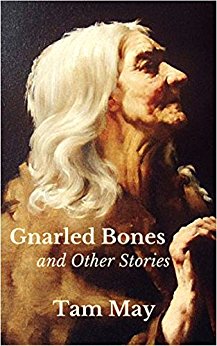
Short stories carry the burden of telling the tale in few words, so they often sacrifice many of the qualities one finds in a novel length work, including details that fill in our mental picture for us, making readers work harder to gain a clear vision for the story. Another common complaint that I often voice is the fact that they are a brief glimpse into the character’s lives and don’t always have a complete story arc, making them feel incomplete, like there should be more. Such is the nature of the beast we call the short story. I have had to learn to expect these things when I’m reviewing short fiction, and not mark against the story for these faults alone. So, while I may comment on some of these qualities when reviewing anthologies or short story collections, they will not be the basis for lower ratings. Those will be based on the quality of the writing and how well the stories are crafted, just as they are with a longer work.
That being said, I found Gnarled Bones and Other Stories by Tam May to be a collection of highly crafted stories, with brief descriptions that skillfully put readers in the scene and allow them a clear vision of each story being told. Each story in this collection has heavy literary qualities and each carries the theme of empowerment, or the lack of it, in some way. Although most of them felt unfinished to me, they were none-the-less captivating, capturing my full attention during the brief snapshots I was allowed.
Along with Gnarled Bones, the story which sticks out most in my mind is The First Saturday Outing, which I enjoyed at first, but was later disappointed in, when the woman’s inability to empower herself and embrace her freedom became apparent, making the character, whom I’d been routing for, appear weak and inept.
Also to be found in this collection is Mother of Mischief, where Marie is driven by her need to look after and care for someone, drawn to mischievous men who need to be kept in line. Bracelets, where Isabelle, a circus acrobat is drawn to her circus family through the tragedy of a lion attack on a child. And, Broken Bows where, for Anne, a train ride becomes an act of defiance and two very different souls find one another briefly.
Along with theme, the stories in Gnarled Bones and Other Stories have other things in common, as well. Each has a female protagonist, each has literary qualities and feel, and each is well crafted to tell the story with skill and ability. I give it four quills.

Kaye Lynne Booth does honest book reviews on Writing to be Read in exchange for ARCs at no charge. Have a book you’d like reviewed? Contact Kaye at kayebooth(at)yahoo(dot)com.




















