My experience of obtaining a balance with parental approval
Posted: March 11, 2020 Filed under: Children's Books, Growing Bookworms, Parenting, Reading | Tags: Growing Bookworms, Parenting, Reading, Robbie Cheadle, Writing to be Read 60 Comments
Growing Bookworms
I have two sons, both of which are quite different in their abilities and attitudes to life in general.
My oldest, Gregory, is a scholar. At the age of five he could read music and played the piano with some aptitude. At six, I taught him to read as he was frustrated by this inability and the schools in South Africa only teach reading during the year children turn seven. By the end of his second year of schooling, Greg had read all the series of books for young children I could think of, including Horrid Henry, Astrosaurs, the Little Men and Little Miss books, Secret Seven and many more.
I moved him on to other books, the Classic Starts series for children and during his third year of school, he started delving into some of the original classics. He also read all of the Shakespeare Junior Classics. The school enrolled him in a mathematics extension programme and he finished the entire additional workbook in two afternoons.
From a learning perspective, my oldest son is a dream. He works hard, perseveres and is determined to succeed. He is a lot like me. He shares my failings too. He only applies himself to things he enjoys, gets bored quickly and needs to be continuously challenged and stimulated. These character traits do not always provide for a peaceful co-existence with peers and colleagues, many of whom do not share our obsessive approach to work and areas of interest. My colleagues often ask me how I know so much about a certain topic and I will say: “It’s an interest of mine.” Greg and I are peas in a pod, we have many interests which we are very passionate about. Greg is not interested particularly in sport or socializing and does these things only when it is necessary.
My younger son, Michael, is different. Michael also likes to achieve, but his aims are tempered by a general enjoyment of life and friends and he likes to relax. He also likes to socialize and spend time with friends. School assignments are not a cause for concern until the day before they are due and, even then, they are approached in a slow and steady manner and not with panic. Michael doesn’t aim for distinctions and is very happy to achieve Bs and Cs on his progress report.
Michael is not particularly sporty, but he loves to join in with the whole “rah rah – all mates together” theme of an all-boys school and loves the war cries. He will break into a vibrant rendition of a war cry at the drop of a hat and I will be in stitches of laughter as he belts out the phrases at the top of his loud and currently breaking voice.
In summary, I am trying to bring up a complete overachiever and a happy go lucky Joe and get both through school, college and relationships.
The interesting thing for me is that both my boys have the same number of achievement certificates from their schools. Granted, Michael was at a remedial school until this year, and they do give awards for a greater variety of achievements, but Michael’s were generally in academic categories such as mathematics and Afrikaans.
With two boys as different as mine, it is not always easy to find the correct balance for encouraging and rewarding them, especially verbally. This past week, Gregory came home with 98% for his English examination and 93% for his mathematics examination. Michael came home with 60% for his Afrikaans examination and 75% for his English examination. I gave them both equal congratulations and made an equal fuss of their achievements. Other members of my social circle and family don’t always understand this approach. For me, I judge my boys’ achievements on their individual histories, attitudes and effort.
Gregory works very hard all the time. He has the intellectual ability to achieve very high marks and this, coupled with his work ethic, enable him in achieving excellent academic success. My worry for my older son is that he spends to much time working, gets to obsessed with achievement of his goals and struggles to balance other aspects of his life with work. In that way he is just like me.
Michael has a learning barrier and struggled to learn to read competently. He qualifies for a time concession for examinations and time will tell whether he need this or not. A child that struggles to read and write in his mother tongue, finds a second language extremely difficult. A remedial school focuses on the core subject of English and mathematics and the second language isn’t as much of a focal point. When we knew in 2018 that Michael would mainstream for high school, I got an Afrikaans tutor for him as I knew his abilities in that language were lacking. He has worked hard to get on top of his deficiencies.
When he started high school this year, Michael was one of the only boys, out of 150, that didn’t know anyone. He was the only boy who transitioned to his high school from his primary school. The first week was hard and he felt very tired. One the second day of school, the boys wrote an Afrikaans test to see what their level of proficiency in the language was and Michael failed. As a result, he is now attending extra lessons in this language at the school as well as at home. When he came home with a 60% result, I was ecstatic. This mark is an indication of his perseverance and resilience, and I will be delighted if he can maintain this mark for the next five years.
Obtaining his Afrikaans result on the same day as Gregory’s mathematics result made me reflect on the differences in my two sons and how I perceive their achievements. I my eyes, their achievements are equal as the input was equal.
This reflection on how we need to consider out children separately and not measure them against their siblings and peers inspired this post. Each of our children is special in their own way and each deserves to be measured against his own input and ability levels and not those of others.
About Robbie Cheadle

Hello, my name is Robbie, short for Roberta. I am an author with six published children’s picture books in the Sir Chocolate books series for children aged 2 to 9 years old (co-authored with my son, Michael Cheadle), one published middle grade book in the Silly Willy series and one published preteen/young adult fictionalised biography about my mother’s life as a young girl growing up in an English town in Suffolk during World War II called While the Bombs Fell (co-authored with my mother, Elsie Hancy Eaton). All of my children’s book are written under Robbie Cheadle and are published by TSL Publications.
I have recently branched into adult and young adult horror and supernatural writing and, in order to clearly differential my children’s books from my adult writing, I plan to publish these books under Roberta Eaton Cheadle. My first supernatural book published in that name, Through the Nethergate, is now available.
I have participated in a number of anthologies:
- Two short stories in #1 Amazon bestselling anthology, Dark Visions, a collection of horror stories edited by Dan Alatorre;
- Three short stories in Death Among Us, an anthology of murder mystery stories, edited by Stephen Bentley;
- Three short stories in #1 Amazon bestselling anthology, Nightmareland, a collection of horror stories edited by Dan Alatorre; and
- Two short stories in Whispers of the Past, an anthology of paranormal stories, edited by Kaye Lynne Booth.
I also have a book of poetry called Open a new door, with fellow South African poet, Kim Blades.
Find Robbie Cheadle
Blog: https://www.robbiecheadle.co.za/
Blog: robbiesinspiration.wordpress.com
Goodreads: Robbie Cheadle – Goodreads
Twitter: BakeandWrite
Instagram: Robbie Cheadle – Instagram
Facebook: Sir Chocolate Books
Want to be sure not to miss any of Robbie’s “Growing Bookworms” segments? Subscribe to Writing to be Read for e-mail notifications whenever new content is posted or follow WtbR on WordPress. If you found it interesting or entertaining, please share.
Share this:

Are You Up To The WordCrafter Challenge?
Posted: March 9, 2020 Filed under: Fiction, Paranormal, Speculative Fiction, Stories, weird western, Western, WordCrafter, Writing, Writing Contest | Tags: Paranormal western, Short Fiction, Short Fiction Contest, Short Stories, weird western, Western Paranormal, WordCrafter, WordCrafter Paranormal Western, Writing Contest, Writing to be Read 6 Comments
I wanted the 2020 WordCrafter Short Fiction Contest to be a challenge, to motivate authors and writers to reach outside their comfort zones and write a short story in a genre they maybe hadn’t tried yet. But, from the low number of entries received thus far, I’m wondering if I didn’t scare a lot of writers off when I named the genre as paranormal western.
It’s one of those combination genres that have risen up in recent times, also called weird westerns, that has both elements of western and elements of paranormal. I presented it as western ghost stories, because the old west has plenty of potential for ghosts. (Mark and Kym Todd’s Wild West Ghosts is filled with the stories of many real life characters whose ghosts are said to haunt the west today, if you’re looking for inspiration.) However, I fear our friends abroad may be shying away because they just don’t know a whole lot about the American western frontiers.
While westerns usually take place in the American west, they don’t have to. The movie Quiggly Down Under, with Tom Sellak comes to mind, taking place in the Australian Outback, but with plenty of western elements. Every country has its own frontier history that helped to shape it, some may be still developing their frontiers. So, let me re-itterate, a western does not need to be set on the American frontier, but it does need to have some of the elements of the western genre. Man (or woman) against the elements, man (or woman) fighting for justice in an untamed landscape where the only law may be what he (or she) can manage to dole out. Western characters lead nomadic lifestyles, carry guns, ride horses, drink whiskey and face their own mortality, sometimes on a daily basis.
Weird westerns tend to use these elements, but they add elements of the paranormal or speculative fiction. I’ve reviewed a few and found their authors to be quite creative in combining the two genres. Chris Barili’s Hell’s Butcher series features a gun toting Marshall who is tasked with keeping all the outlaws in hell and tracking down any who happen to escape into the realm of the living. In DeAnna Knippling’s Chance Damnation is a paranormal western fantasy, where hell breaks through and wreaks havoc on the western frontier. And a book that I’m reviewing this month is Death Wind, by Travis Heerman and Jim Pinto, tells a tale of ancient Indian legends come to life. (You can catch my review of this book on Friday, March 20th).
So, with this in mind, I’m asking each of you to re-consider entering your own paranormal western short in the 2020 WordCrafter Short Fiction Contest. It’s only $5 to enter, and the winner will be featured in the resulting anthology and receive a $25 Amazon gift card. Other entries may also be included in the anthology by invitation, so get those entries in to me by April 30. There’s still time, and you can find the complete submission guidelines here: https://wp.me/pVw40-49e
Like this post? Let me know in the comments. You can be sure not to miss any of Writing to be Read’s great content by subscribe to e-mail or following on WordPress. If you know other writers that might be interested, please share.
Share this:

“Old One Eye Pete”: A western short fiction collection
Posted: March 6, 2020 Filed under: Book Review, Books, Fiction, Historical Fiction, Western | Tags: Book Review, Loretta Miles Tollefson, Old One Eye Pete, Western, Writing to be Read 3 Comments
Old One Eye Pete, by Loretta Miles Tollefson is a western short story collection, with individual stories that fit together loosely to form a part of a bigger story that takes place within the Old New Mexico territory. As always, Tollefson’s tales are based on historical events, people and places and are historically accurate, featuring interesting and memorable characters.
Most of these stories feature Old One Eye Pete, an old trapper who wanders the New Mexico mountains with his horse and pack mule, and knows more about the people, the area and the goings on there than near anyone in the territory. These stories are brief, and great reads when you just have a short wait or a few minutes to kill.
A light, easy read that made me chuckle from time to time. True western short fiction. I give Old One Eye Pete four quills.

Amazon Buy Link: https://www.amazon.com/Old-One-Eye-Pete-Stories-ebook/dp/B07H1R1L5B/ref=sr_1_1?keywords=Old+one+eye+Pete&qid=1583605164&s=books&sr=1-1
Kaye Lynne Booth does honest book reviews on Writing to be Read in exchange for ARCs. Have a book you’d like reviewed? Contact Kaye at kayebooth(at)yahoo(dot)com.
Share this:

Riding the Landscape of Westerns in March
Posted: March 2, 2020 Filed under: Books, Fiction, Historical Fiction, weird western, Western, western romance, Writing to be Read | Tags: classic western, weird western, Western, western romance, Writing to be Read Leave a comment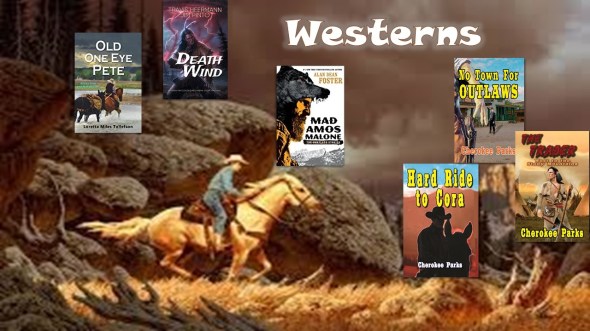
The western genre has always been about man against the elements, man against man, and man against nature. Western heroes are tough and rugged, and ready to face outlaws, Indians, wild animals, and any inclement of bad weather to uphold right and see justice done. In the western genre that I grew up with the good guys wore white hats and the bad guys wore black, and there was no question as to who was who. Cowboys were rough and rowdy, but they were gentleman when a lady was present, tipping their hats and addressing her as Ma’am. There was a clear sense of right and wrong in westerns written by Louis L’Amore and Zane Grey, and right always won out in the end.
Today’s westerns are different. Although you can still find the classic western with authors such as my “Chatting with the Pros” author guest, Cherokee Parks, or the guest for my supporting interview, Alan Dean Foster. But, the western of today isn’t as clear cut. Today’s westerns look past lawmen and outlaws to the less known factions of western society, with protagonists such as soiled doves, Indians, Negroes, and immigrants from many different countries, who may be looked down upon by some as less desirable, so they must work harder to convince the reader that they are the good guy. They portray segments of the western populations which have been previously overlooked or devalued. Although members of near invisible populations, they were a part of the western culture and western fiction is now giving them voice. The tales may be fiction, but the portrayal of life in the western landscape is not romanticized as much as it once may have been. It may be more stark and brutal in many ways, but they are true to the places and times of their settings.
In the western genre market, there are more female authors than ever before, and that means more female protagonists. A woman as main character can’t be a delicate flower who cowers behind her man as in westerns of old. The women of the west were tough, because they had to be. It was often a matter of survival. Even in western romance, the women are strong willed and determined, and they play many different roles on the western frontier. We all know that many women made a living in the parlor houses, bordellos, and saloons, but women played many other roles on the western frontier, and today’s western authors are capitalizing on that.
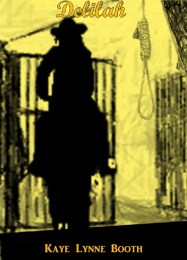 My own western, Delilah, features a tough and gritty female protagonist who, at the age of nineteen, is already hardened against life’s trials. Although not actually a romance, it does have that romance element, but she must learn to love again before that story line can come to completion. Delilah is being re-released this month with a great new cover, (designed by WordCrafter), and new front materials, including forewords by western authors Robert Hanlon and C. Emerson Law. I’m looking for feedback, so please let me know what you think of the new cover in the comments.
The historical westerns of Loretta Miles Tollefson, such as her short fiction collection, Old One Eye Pete, which I’ll be reviewing, are embedded in New Mexico territory in the 1800s. Many of Tollefson’s books feature tough female protagonists who do what they must to survive the harsh landscape and harsher men of the times, who rise above the traditional female role through strength and courage. I think an author must work harder to sell to women characters in non-traditional roles to the reader, but if written well, they make interesting and, often colorful characters that enhance their stories. readers don’t want to put down. Western romance is in abundance. At the end of March, Writing to be Read will feature a special post about my experience as a judge of the western romance category, including reviews of some of my favorite entries.
But in contemporary times, space westerns venture into the science fiction genre, and there are even western fantasy stories, such as the steampunk western romance series of Jordan Elizabeth. Westerns have branched out to combine with the paranormal, creating the weird western sub-genre, such as Death Wind, by Travis Heerman and Jim Pinto, which I will be reviewing this month. This sub-genre is growing in popularity as authors realize the potential for supernatural tales from the old west. The western frontier leaves behind many ghosts and contemporary authors are realizing their story potential.
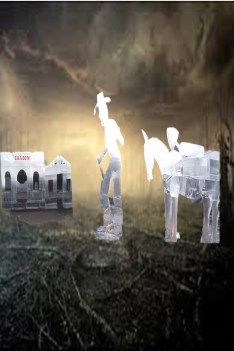 Paranormal western is the genre for the 2020 WordCrafter Short Fiction Contest, but there have only been a few entries. I think maybe authors shy away from the western genre, especially those outside the U.S. that are not so familiar with the history of the American frontier. But the American frontier is not the only possible setting for a western story. Think Quiggly Down Under, for a western story set in the Australian Outback. Every country has western style stories in their history. As long as there is a western element and a paranormal element of some type in your story, it qualifies as an entry. It can be about zombies rambling over the western prairie, on vampires nesting in the Rockies. It can be a haunted hotel or saloon in a frontier town, or a restless spirit that refuses to pass on until the hombre that pulled the trigger on them pays for what he done. If you are a creative writer, then step up and take the challenge to write a paranormal western and send it to me. The deadline is April 30th, so there’s still plenty of time. Don’t forget, the author of the winning story will receive a $25 Amazon gift card. You can find the complete submission guidelines here.
Join us on Writing to be Read as we ride the landscape of the western genre and explore the possibilities. The western genre is alive and well today, although it may look different than expected. I love to hear from readers, so be sure to leave a comment to let me know you’ve visited. Also feel free to like and share.
Reviews of westerns by Loretta Miles Tollefson:
Reviews of steampunk western romances by Jordan Elizabeth:
Reviews of weird westerns:
Hell’s Butcher series, by Chris Barili
Chance Damnation, by DeAnna Knippling
2019 interviews with western authors:
Scott Harris – classic western
Juliette Douglas – western romance
Patricia PacJac Carroll – Christian western romance
Loretta Miles Tollefson – historical western
Like this post? Let me know in the comments. You can be sure not to miss any of Writing to be Read’s great content by subscribe to e-mail or following on WordPress. If you found this content helpful or entertaining, please share.
Share this:

Homeland: An Over(re)view
Posted: February 28, 2020 Filed under: Art's Visual Media Reviews, Commentary, Television review, Thriller | Tags: Art's Visual Media Reviews, CIA, Claire Danes, Damian Lewis, Homeland, National Security, Showtime, spy thrillers, Television review, TV reviews, Writing to be Read Leave a comment
Homeland: An over-review
Showtime’s National-Security thriller, “Homeland”, is a Monster. It’s intense, cerebral, nerve-wracking, absorbing and addictive. It’s just the kind of stuff we like. Claire Danes is either a genius or the world’s most egregious over-actor since Adolph Hitler. Her eyes bug out of her head. She gives Bipolar Disorder a new public face. Her gaze darts everywhere in fits of paranoia. Claire is sensing the facts as they are: everyone is out to get her. Playing CIA analyst Carrie Mathison, she’s in disgrace. The agency to which she is devoted, the CIA, is also in disgrace, thanks to flubs, fumbles, the 9/11 disaster and political turf wars. Carrie’s the scapegoat. Everyone in the Intelligence community knows she’s a nut case. The thing is, she’s a nut case who is RIGHT. It takes a crazy person to identify the deeper reality. It takes a slobbering paranoid to fit all the pieces of the puzzle together in ways that no sane person would dare. This is a new era, a new paradigm. The Cold War is over. Hawkish right-wingers have spent the last decade enhancing the power of the Presidency, ditching congressional oversight and accountability. There is political and moral turmoil. A real President is never mentioned; there is just “The President” and he is kept out of the picture. How do we handle such issues as torture, assassination, domestic surveillance and murder-by-drone? The gloves are off. We do the expedient thing. If we have to kill people to save an intelligence operation, we do the killing. The operation is all-important.
There isn’t much ideology in “Homeland”. The characters are mostly driven by ambition, greed and ego. Carrie has given up trusting anyone. She’s fallen in love with Nick Brody (played by Damian Lewis). She doesn’t trust Brody, she’s “playing” him, but still she loves him. She suspects that he’s an agent of Iranian Intelligence, and she’s right. Nick Brody has endured eight years of torture by the Taliban. Now he’s a secret Jihadist. He’s been “turned” by his captors. He prays to Allah in his garage, out of sight of his family. He’s the Trojan Horse who’s going to wear a suicide vest. He’s going to blow up the political leaders of the U.S.A. in a single fiendish blast. He’s been elected as a Congressman on the basis of his heroic persona and is now being touted as the Vice Presidential nominee for the next general election.
“Allahu Akbar” he mutters reverently, bowing into his garage-floor prayer rug. His sixteen year old daughter, Dana, catches him in the act.
Oops.
She doesn’t say or do anything. She’s confused. She’s scared. She wants to love her father, the father who’s been gone since she was eight, who was declared dead before his dramatic recovery from the Taliban.
|
||
. |

Shouldn’t everyone be suspicious of Nick Brody? But..but…he was a Marine, he survived eight years of captivity and didn’t break! He looks damn good in that uniform! Why shouldn’t he run for Congress? CIA sub-chief Saul Berenson is plenty suspicious. He’s played by a wooly faced Mandy Patinkin. He looks like the rabbi who presided over my Bar Mitzvah. I want him to embrace me in a bear hug, I want him to smell like cigars as his beard scratches my boyhood cheeks. He seems to be the only CIA officer who believes in Carrie’s crazed perceptions. He’s her mentor and protector. We, the audience, want to believe in his integrity. When he (apparently) succumbs to external pressure and betrays Carrie, it looks like he’s been lost as the story’s only honest character. Well, Carrie’s honest to a fault but she’s loop-dee-loo manic when she’s off her medications, which is most of the time. She’s a dedicated operative, her life and her family are the CIA. She’s on/again off/again with the CIA because she kept her Bipolar Disease a secret. Yet she’s so valuable, her results so palpable that she’s allowed to remain a kind of house pet with access to most of the deep secrets. In time she herself becomes one of the CIA’s secrets. She doesn’t know that she’s a secret, maybe the most important secret of them all. Well, I told you, she’s crazy!
Damian Lewis looks like Steve McQueen. His pursy little mouth is so McQueen. I know, it’s irrelevant, but it drives me crazy. I don’t know if he’s that good an actor. I just don’t know. The important thing is that he’s good enough. If he’s confused as Nick Brody, he damn well ought to be confused. He went to war as a gung-ho Marine and was taken prisoner and thrown into a hole. He spent five years in the hole and then was let out to be manipulated by arch-terrorist Abu Nazir. It was Stockholm Syndrome with full maple syrup. Devil-faced Abu Nazir played Good Cop on Nicholas Brody and converted him to Islam.
How confusing would it be if you came home to a wife, two kids and a nice suburban house, masquerading as a war hero while plotting to become a Martyr to the cause of global Jihad? Pretty damned confusing. Damian Lewis plays confused to the point of impenetrability. We don’t know who he is. His aberrations are written off to PTSD. As Congressman Brody he has access to all kinds of people and places. How lovely for terror chief Abu Nazir, who employs a full-time suicide vest maker: the little tailor who runs a small shop in Gettysburg with a sideline in explosives.
|
||

“Homeland” is scary because we live in a scary world. An all-pervasive war is being fought everywhere, invisibly. It’s a war of computer hackers, Special Ops raids, spies, spooks, moles, rats, safe houses, cover identities, drone strikes, satellite imagery, surveillance at every traffic light and Seven Eleven. Nothing is too far fetched in today’s world. By creating a lead character who suffers from Bipolar Disorder, Showtime has pulled the band-aid off the wound. Ow! That hurts! It’s disturbing to contemplate Carrie Mathison running around, defying orders, blowing covers, making extremely risky decisions while her “handlers” in the communications van chew the ends of their fingers with anger and frustration. “Carrie, stop! Get back under cover!” Carrie doesn’t stop. She’s off her meds. Her judgment is impaired. This is the kind of spook in whom our trust resides, the spook who holds the safety of our nation in her agile but deeply warped mind.
I don’t recommend watching “Homeland” before bed time. We do it anyway. We dream freaky dreams.
Share this:

Mindfields: TV Addicts Anonymous
Posted: February 26, 2020 Filed under: Art's Visual Media Reviews, Commentary, Opinion, Television review, Writing | Tags: "You", Art Rosch, Arthur Rosch, Comedy, Fleabag, marketing, Mind Fields, Phoebe Waller-Bridge, remote control, TV, TV drama, Writing to be Read 3 Comments There was a time when watching television would make people feel guilty…as if they had nothing better to do. I have something better to do. I can watch better quality TV instead of the ubiquitous TV crapola. These days we have choices in TV-Land. Sometimes my wife and I watch TV all day and all night. I admit to some exaggeration here. I don’t watch TV all day; not any more. There was a time when I was pretty unmotivated and I watched TV around the clock…and I felt guilty about it. Fortunately that time is passed. I watch TV judiciously, choosing carefully what I expose myself to. There are as many TV universes as there are significant demographics. There are ravening people who feast on Jerry Springer and gentle wine-drinking people who watch PBS-only docs and dramas. I fall somewhere towards the latter. My spouse is more broadminded; she helps me expand my range of experiences. She’s addicted to The Home Shopping Network. We are both addicted to shows about animals and veterinarians.
I’m a keen observer of TV-as-cultural phenomenon. It’s the most powerful thing in the world outside of the Hydrogen Bomb. Television has dominated our experiential landscape since the early fifties and never more so than today. We have emerged into a golden age for television. There’s immense variety, convenience, amazing quality and the television sets have become so smart that they require control like a rowdy drunk at a party. It took me days to figure out how our new device functions. I still haven’t conquered the remote control. I can talk to it and it often responds. I’d be screwed if I couldn’t talk to that thing. It wouldn’t surprise me, if, some day soon, the remote responds with something like “Hey, I’m busy, asshole. Try again later.” I would expect rudeness from a television device. After all, this is the thing that brought us “Here Comes Honey Boo Boo.” Sometimes I hear my wife talking in the bedroom. Is she on the phone? No. She’s talking to the remote. Begging, pleading, bargaining with the remote.
We love to binge. That sets the tone of our lives. What will we binge tonight? It’s not easy to find binge-worthy stuff. Thank god for National Geographic, Netflix and Amazon Prime. Between Mrs. Maisel, Dr.Pol and Fleabag we have a good time. Fleabag is the work of actress/director/writer Phoebe Waller-Bridge. When we saw the last episode of Fleabag I shouted “Magnificent!” I don’t always offer such spontaneous accolades. Phoebe plays the character known only as Fleabag. She’s a fairly gorgeous creature in her gawky comical way. She’s maybe too tall, her nose is a little skewed, but these aspects are essential to her character. She would be boring if she had all the beauty conventions. The stories revolve around the Search For Love. Who isn’t searching? This quest is especially powerful in the young. It surges in women who are reaching a certain age, an age when their mothers are asking “When are you going to get married?” Fleabag is precisely that age and her obsessions are pulling her puppet strings. If she weren’t wryly self-aware she’d be suicidal. She is recovering from an awful trauma. Her best friend committed suicide over a breakup. She walked out into traffic and gave up her life. This grief haunts Fleabag and steels her determination to continue living. She too has ended a long relationship. Now she’s thrust into the world of men, those strange groping creatures who don’t understand women. Sound familiar? That’s US! The thing is, Phoebe/Fleabag is funny! Her wit is corrosive yet compassionate. When the two seasons were over we were gasping for more. Alas, Phoebe is moving into new productions. Watch her!
We binged on the two seasons of “You”. It’s gripping, but it’s also repugnant. In the beginning of the series the protagonist, Joe Goldberg, seems to be a likeable fellow. He develops into a monster as the tale unfolds. I’m holding back the spoilers here. The story hangs on Joe’s transformation into something sinister. His obsession is, again, Love. Or, more specifically, Women. The show gives us Joe’s thought processes. The narration is Joe’s self-talk and he has a one track mind.
I must remind my readers that I have a “writer’s rule” that I scrupulously observe. “Is this story worth telling?” I have three criteria that stories should encompass. They should be entertaining, insightful, and, if possible, inspiring. If they can’t reach the level of inspiration they should at least not leave us depressed. We get enough of that shit all around us. After watching every episode of “You” and being entertained, I still have mixed feelings as to whether or not we should have gone through the experience. There are plenty of shows about dark characters. Darkness is important to drama. It’s like death itself. Without death there would be no passion in life. All of life’s tensions and excitement are generated by the clash between light and dark. Is this oversimplified? Perhaps. I’m left with a slightly sour feeling about “You”. If I had eaten Joe Goldberg for dinner, I would have gas and diarrhea in the morning. Watch the series, by all means. It’s very good, well acted, well written…but I’ve warned you. Take some Pepto Bismol to bed, put it on your night table.
A Midwesterner by birth, Arthur Rosch migrated to the West Coast just in time to be a hippie but discovered that he was more connected to the Beatnik generation. He harkened back to an Old School world of jazz, poetry, painting and photography. In the Eighties he received Playboy Magazine’s Best Short Story Award for a comic view of a planet where there are six genders. The timing was not good. His life was falling apart as he struggled with addiction and depression. He experienced the reality of the streets for more than a decade. Putting himself back together was the defining experience of his life. It wasn’t easy. It did, however, nurture his literary soul. He has a passion for astronomy, photography, history, psychology and the weird puzzle of human experience. He is currently a certified Seniors Peer Counselor in Sonoma County, California. Come visit his blogs and photo sites. www.artrosch.com and http://bit.ly/2uyxZbv.
Want to be sure not to miss any of Art’s “Mind Fields” segments? Subscribe to Writing to be Read for e-mail notifications whenever new content is posted or follow WtbR on WordPress. If you find it interesting or just entertaining, please share.
Share this:

Interview with erotic romance author Jade C. Jamison
Posted: February 24, 2020 Filed under: Adult, Author Profile, Books, Erotic Romance, Erotica, Fiction, Interview, romance, Writing, Writing Tips | Tags: Author Interview, Bullet, Erotic Romance, Erotica, Heat, Jade C. Jamison, Tangled Web, Writing to be Read 4 Comments
My author guest today makes her living writing erotic romance under a pen name, and prefers to display the cover of her bestselling novel, Bullet, the first book in her Rock Star Romance series, (see my review of Bullet), rather than an author photo in order to conceal her real identity. (When you like at it that way, authors can be kind of like superheroes, taking assumed identities. You’ve gotta admit that’s pretty cool.) We may not know who she is behind the book cover, but we do know that she’s written over fifty books to date, and when perusing them, one is sure to find one that’s just the preferred temperature, because she writes in them all, from sweet romance to sizzling hot erotica. Please welcome erotic romance author Jade C. Jamison.
Kaye: Why do you write erotic contemporary romance? Would you ever consider writing any other genre? If so, which one?
Jade: It took me forever to puzzle out exactly what genre I wrote.Back in 2013, the term “erotic romance” seemed to most capture what I wrote, but the “E” word is now becoming taboo.(I’m smiling as I write this.)Nowadays, the genre is being called “steamy contemporary romance,” although that may change yet again. But, anyway, I digress. Not only would I consider writing in other genres, I have. Within romance, I’ve written everything from romantic comedy to romantic suspense. Outside romance, I’ve written horror and nonfiction, but under another name, I’ve penned mystery, news writing, instructional pieces, academic literature, and even poetry.
Kaye: Does erotic romance come naturally to you? Why does it appeal to you to write in this genre?
Jade: I don’t know that writing romance comes naturally to me. Ten-plus years ago, I found that, no matter what I wrote, some aspect of romance became part of the story. So even though I have a tale to tell and even though the relationship is the key element in the story, making sure I have all the facets that make a romance satisfying to avid readers of the genre is not always easy, and it’s definitely not organic.
Why it appeals to me? I haven’t a clue. I’m sure a psychologist would have a heyday with me.
Kaye: What is the most difficult part of writing erotic romance for you? What part is the most fun?
Jade: Sex scenes are, by far, the hardest. They easily become the most tedious part as a reader as well. From some of my conversations with other authors, I don’t believe I’m alone. You want to keep things fresh, so to speak, and non-repetitive while at the same time you want to keep readers emotionally engaged. It’s easy to mess that up in those sorts of scenes—so I put a lot of pressure on myself to write scenes that are emotional and engaging.
The most fun part is when a character surprises me. I think I know where the story is going and then BAM! She does something completely unexpected, but I know it’s working and there’s no way I’ll change it.
Kaye: Which of your stories is your favorite? Why?
Jade: Sorry if you’ve heard this from me before, but asking me to choose a favorite story is like asking me to choose a favorite child.That said, I do have some stories that I don’t like as well as others, but my lips are sealed. Some of the stories I like the least are reader favorites.
Kaye: Your sex scenes range in temperature from steamy, to sizzling, to blazing hot. What determines how hot the scenes get in each story?


Jade: Part of it depends on the story itself. In my bestselling book Bullet the sex scenes got hotter as the story moved on. That was one of the ways I let the reader know the main character was maturing. It mostly depends on what I think readers will expect. Am I billing the book as super steamy (like Finger Bang), or am I emphasizing the story itself (like Savage)? But, honestly, I always thought they were all pretty close in steaminess. I guess I’m too close to the forest!
Kaye: Do you prefer to write during the day, or are your stories so hot they can only be written at night?
Jade: I actually do almost all of my writing in the early morning, from about 5:30-6:30 am. It’s the only quiet time I have and I find I’m far more creative when my brain is fresh.
Kaye: You’ve written over fifty books. What is the writing achievement are you most proud of?
Jade: I don’t know that I’ve “achieved” anything as an author, other than sharing my stories with the world.I guess, though, that I’m currently proud of my growth as an author. I’ve really taken a step back in an effort to realize that being prolific isn’t nearly as important as transporting a reader to a different world—so I’m proud of not letting my pride stop me from learning!
Kaye: What is one thing your readers would never guess about you?
Jade: I enjoy playing Pokemon Go.I used to play Pokemon games with my kids when they were little, and now they have me playing this silly game on my phone!!!
Kaye: In 2019, you released books 3 and 4 from your Matchmaker collection. They are described as Reverse Harem Romances on their covers. I can see lots of potential for steamy action there. Would you like to talk a little about this story collection?

Jade: I’d taken a couple of marketing courses the year before, compelling me to “write to market”. So, I looked through Amazon’s top 100 contemporary romance books and found that Reverse Harem Romances were dominating at the time. At first, I thought that meant a literal harem, but with a woman surrounded by men. I discovered through my research that that’s not quite what Reverse Harem is all about. I like a challenge, so I decided to go for it. One of the courses I took is by one of the bestselling indie romance authors in the history of Amazon, and she advised writing a series with cliffhanger endings at the end of each book. That was another challenge. So, that’s the nuts and bolts of the series.
The story itself is about Claire, an actress struggling to make it in Hollywood. She tries out for a reality TV show called Matchmaker, hoping that if the right people see her, they might give her a chance as an actress. If nothing else, she’s bound to meet the love of her life. Her suitors are five gorgeous men who’ve been “guaranteed” to be a perfect match, but the audience gets to determine who stays and who goes. And, yes, there’s quite a bit of steam between the covers.
Kaye: I reviewed Heat: Book 1, which was really a short prelude to a larger story that will change the way you think about getting a message forever. But there is more to the story. Would you talk about Heat: The Complete Series?

Jade: Heat was another challenge I couldn’t say no to. Several years ago, I was approached by a publishing company in Australia about republishing one of my older series, and I did that with them. While it never neared the level of success they’d promised, a year later they approached me about something new they were doing, inspired by stories James Patterson had been writing. The basic premise for the romance stories was that you write a short but intense “intro,” followed by three more books, all following a particular formula—but very hot with cliffhangers at the end of each short book. I really liked the idea, so I pitched what became Heat. Unfortunately, it didn’t perform as well as I had hoped, so I took back my rights to it after a year and republished it.
So what you read in the free first part, Heat: Book One, is the beginnings of a steamy romance between Sergio and Rachel. Rachel is actually a character from Finger Bang, and I’d been inspired to write a story about her for a long time. When I was approached by this publishing company, I thought her story might be perfect for the format they’d talked about. Because it’s shorter and steamier, there’s not as much depth to the characters, but that wasn’t the idea behind the series. It’s meant to be intense, somewhat shocking, and super steamy. Fun. No ugly crying, no heart-wrenching moments. Just pure, unadulterated fun. What you read in Heat: Book One is a prelude to the rest of the story. If you enjoyed the first part, you’ll love the complete story.
Kaye: What is next for Jade C. Jamison? What can your readers look forward to?
Jade: The biggest problem for me is I have so many things I want and need to write, and so little time. I literally have over fifty book ideas outlined, but I’m currently working on a project. It’s a series called Small Town Secrets. I’ve taken about thirteen of my books off the shelves, and I’m re-purposing them. In an effort to be an even better writer, I’m rewriting eight of those books, but they are now all interconnected in this series. My review team has read the first one (Love and Lies) and loved it. I’m hoping to release six of those books in 2020.
I also have one book left in the Nicki Sosebee series. Book 12, Wake Up, ended on a cliffhanger, and so I can’t keep my readers waiting for too long. That book is fully plotted and I promise it will be satisfying! I just need to write it. But, I also have several other series I need to finish (Feverish, Codie Snow, Tangled Web), so we’ll see what I can tackle. I would love to write a lot more this year (like I said, fifty ideas and counting!) but I have a lot on my personal plate, so it all depends on how much I can get done in the time I have. I’d cross my fingers, but I can’t type while I do that!
Kaye: (See my review of Tangled Web)
I want to thank Jade for joining me here and sharing today. It has been a real pleasure. I learned a few things about writing erotic romance and hopefully my readers did, too. This interview is the perfect way to finish up February’s erotic romance. And thank all of my readers for reading and commenting on Writing to be Read. I hope you will all saddle up and join me again next month, when we plan to wrangle up the western genre. See you here.
Like this post? Let me know in the comments. You can be sure not to miss any of Writing to be Read’s great content by subscribe to e-mail or following on WordPress. If you found this content helpful or entertaining, please share.
Share this:

Meet poet and writer Colleen Chesebro
Posted: February 22, 2020 Filed under: Interview, Poetry, Treasuring Poetry | Tags: Beat Poets, Colleen Chesebro, Poet Interview, Robbie Cheadle, Treasuring Poetry, Writing to be Read 45 Comments
Treasuring Poetry
Today, I am delighted to welcome poet, author and blogger Colleen Chesebro to the “Treasuring Poetry” series. The aim of this series is to introduce poets and poetry lovers to each other and to share reviews for some of the lovely poetry books available.
Welcome Colleen!
What is your favorite poem? Include it with your answer
This is a difficult question because I enjoy many kinds of poetry. However, I love the Beat Poets the most. Jack Kerouac and Allan Ginsberg always come to mind, both with their excellent Haiku. However, my favorite poem from Allan Ginsberg is called, “Sunflower Sutra.”
I walked on the banks of the tincan banana dock and sat down under the huge shade of a Southern Pacific locomotive to look at the sunset over the box house hills and cry.
Jack Kerouac sat beside me on a busted rusty iron pole, companion, we thought the same thoughts of the soul, bleak and blue and sad-eyed, surrounded by the gnarled steel roots of trees of machinery.
The oily water on the river mirrored the red sky, sun sank on top of final Frisco peaks, no fish in that stream, no hermit in those mounts, just ourselves rheumy-eyed and hung-over like old bums on the riverbank, tired and wily.
Look at the Sunflower, he said, there was a dead gray shadow against the sky, big as a man, sitting dry on top of a pile of ancient sawdust—
—I rushed up enchanted—it was my first sunflower, memories of Blake—my visions—Harlem
and Hells of the Eastern rivers, bridges clanking Joes Greasy Sandwiches, dead baby carriages, black treadless tires forgotten and unretreaded, the poem of the riverbank, condoms & pots, steel knives, nothing stainless, only the dank muck and the razor-sharp artifacts passing into the past—
and the gray Sunflower poised against the sunset, crackly bleak and dusty with the smut and smog and smoke of olden locomotives in its eye—
corolla of bleary spikes pushed down and broken like a battered crown, seeds fallen out of its face, soon-to-be-toothless mouth of sunny air, sunrays obliterated on its hairy head like a dried wire spiderweb,
leaves stuck out like arms out of the stem, gestures from the sawdust root, broke pieces of plaster fallen out of the black twigs, a dead fly in its ear,
Unholy battered old thing you were, my sunflower O my soul, I loved you then!
The grime was no man’s grime but death and human locomotives,
all that dress of dust, that veil of darkened railroad skin, that smog of cheek, that eyelid of black mis’ry, that sooty hand or phallus or protuberance of artificial worse-than-dirt—industrial—modern—all that civilization spotting your crazy golden crown—
and those blear thoughts of death and dusty loveless eyes and ends and withered roots below, in the home-pile of sand and sawdust, rubber dollar bills, skin of machinery, the guts and innards of the weeping coughing car, the empty lonely tincans with their rusty tongues alack, what more could I name, the smoked ashes of some cock cigar, the cunts of wheelbarrows and the milky breasts of cars, wornout asses out of chairs & sphincters of dynamos—all these
entangled in your mummied roots—and you there standing before me in the sunset, all your glory in your form!
A perfect beauty of a sunflower! a perfect excellent lovely sunflower existence! a sweet natural eye to the new hip moon, woke up alive and excited grasping in the sunset shadow sunrise golden monthly breeze!
How many flies buzzed round you innocent of your grime, while you cursed the heavens of the railroad and your flower soul?
Poor dead flower? when did you forget you were a flower? when did you look at your skin and decide you were an impotent dirty old locomotive? the ghost of a locomotive? the specter and shade of a once powerful mad American locomotive?
You were never no locomotive, Sunflower, you were a sunflower!
And you Locomotive, you are a locomotive, forget me not!
So I grabbed up the skeleton thick sunflower and stuck it at my side like a scepter,
and deliver my sermon to my soul, and Jack’s soul too, and anyone who’ll listen,
—We’re not our skin of grime, we’re not dread bleak dusty imageless locomotives, we’re golden sunflowers inside, blessed by our own seed & hairy naked accomplishment-bodies growing into mad black formal sunflowers in the sunset, spied on by our own eyes under the shadow of the mad locomotive riverbank sunset Frisco hilly tincan evening sitdown vision.
Berkeley, 1955
Thank you, Colleen, for this introduction to Allan Ginsberg’s poetry, which I have not read before. This is an amazing and meaningful poem.
What is your interpretation of this poem?
This poem was written before I was born, but it is an example of Ginsberg’s view of a desolate America destroyed by the wiles of modern society. Who knew this prophetic poem would mean so much more to me in the twenty-first century?
Ginsberg’s poetry often railed against societal norms. As a Jew, and a gay man, he experienced a different world than most of us in America. What made this poem different from some of his other work, was at the end, he offered a glimmer of hope.
I also love that he titled the poem a Sutra, which is a Buddhist literature form that uses a string of aphorisms (tersely phrased statements of a truth or opinion; an adage). miriamwebster.com
The imagery of the sunflower suggests that America has been battered out of recognition but has the ability to become beautiful again. Ginsberg gives a political commentary on America’s core values: the freedom of expression, and the ability of the people to share in forward thinking political and social thought. I can’t help but wonder what he would say about today’s political climate?
In this poem, Ginsberg refers to “…memories of Blake.” Here he is talking about William Blake, one the leading poets from the Romantic era. Ginsberg rejected the ugliness of the modern world in all of its industrial glory. This is his way of wishing we were back in the Romantic era before industry destroyed the natural beauty of our land. The last part of the poem is where he compares Americans to “golden sunflowers,” encouraging us all to find and embrace our own beauty in this world.
The poem doesn’t contain beats or syllables. Instead, it moves with the rhythm of our breath. Ginsberg loved spoken poetry. The short stanzas, like a Haiku, share a moment of enlightenment or truth making this poem a classic Sutra.
This interpretation of the poem is fascinating, Colleen.
What emotions does this poem invoke in you?
This poem inspires me to take poetic action to help spread the word of hope through my own poetry. Like the “crackly bleak and dusty with the smut and smog and smoke of olden locomotives in its eye sunflower,”(Ginsberg’s Sunflower Sutra) we have to look beneath the ugliness to find the beauty in the world. Once we find that beauty, we should share it through poetic expression.
Sharing beauty through poetry is a wonderful goal, Colleen.
If you could choose to write like any well-known poet, who would it be?
Ginsberg wrote some pretty raw stuff, (Howl, is long and contains profanity) but I can’t dispute the genius of his word combinations, imagery, or unconventional writing styles.
Raw and unconventional writing styles make a big impression on the reader.
What is special to you about this poet’s writing style?
I wrote a term paper about Ginsberg in college because he also liked writing Haiku and Senryu, although his poems are found by searching for Haiku. In fact, he was one of the first to write Haiku in a single line and not in the 5/7/5 format of the traditional Haiku in English that was popular at the time. He argued that with the differences between Japanese and English that particular form wasn’t important for English Haiku. I’m sure this was another reason why academic poets use the 3/5/3 or 2/3/2 format for Haiku in English.
Most of all, his words always speak to me. Listen to the specific patterns of speech he uses in his poetry. He bares it all and says it all, in a style that shouts freedom of expression. He defied traditional academic disciplines and wrote the way he wanted to. That’s pure creativity!
I agree, Colleen, and I take my hat off to his innovation and imagination.
Find Colleen Chesebro
Speculative Fiction Novelist, Prose Metrist, Word Witch
Amazon US Author Page Amazon UK Author Page Twitter MeWe
Fairies, Myths, & Magic: A Summer Celebration
What Amazon says
Step into a world where fairies, dragons, and other magical beings converge in a collection of poetry and short stories inspired by the celebration of Litha, the Summer Solstice.
Meet Drac, a dragon cursed by his own poisonous deeds, and two pixies who help an old man remember a lost love. You’ll meet a pair of fairies with a sense of humor, and a young girl who fulfills her destiny after being struck by lightning. Learn what happens when a modern witch’s spell goes terribly wrong. Meet the Sisters of the Fey, a group of Slavic Witches who sign a pact with the Rusalki Fey to preserve their magic for the good of all.
Atmospheric and haunting, the prose and poetry, will rewrite the mythologies of the past bringing them into the future.
My review
This book includes a delightful array of short stories and poems with fairies, myths and magic as the central themes that link them all. The author provides an interesting introduction to fairies and shares her own personal thoughts and ideas about this subject. There is also an intriguing overview of myths and how they originated.
The poetry takes numerous shapes and forms and there are tankas, haibuns, double tankas, cinquains and freestyle poems all of which contribute into making this book an interesting reading adventure.
My favourite story was The Leaving – A Story of Supernatural Magic which features the elderly Miss Pensie Taylor as the main character. Miss Pensie has lived in her house in the same town all her life and is a well know character to the older residents. Her house overlooks a swamp and a graveyard and she has an intimate knowledge of the inmates of the graveyard as her father was the caretaker when she was a child. Miss Pensie is a brave soul with a gift that enables her to see the spirits of those long dead.
One evening, during a heavy thunderstorm, Miss Pensie notices something unusual about the graveyard and goes out to investigate after the rain has abated. She has an interesting experience alone in the darkness.
My favourite poem in this collection is titled The magical Tree and my favourite stanza is the following:
“In Autumn –
the Lady shows us her splendor
whose bright orange leaves herald
the darkness of another winter slumber.”
If you enjoy poetry and have an interest in myths, magic and fairies, you will love this beautiful collection.
Purchase Fairies, Myths, & Magic: A Summer Celebration
About Robbie Cheadle
Hello, my name is Robbie, short for Roberta. I am an author with six published children’s picture books in the Sir Chocolate books series for children aged 2 to 9 years old (co-authored with my son, Michael Cheadle), one published middle grade book in the Silly Willy series and one published preteen/young adult fictionalised biography about my mother’s life as a young girl growing up in an English town in Suffolk during World War II called While the Bombs Fell (co-authored with my mother, Elsie Hancy Eaton). All of my children’s book are written under Robbie Cheadle and are published by TSL Publications.
I have recently branched into adult and young adult horror and supernatural writing and, in order to clearly differential my children’s books from my adult writing, I plan to publish these books under Roberta Eaton Cheadle. My first supernatural book published in that name, Through the Nethergate, is now available.
I have participated in a number of anthologies:
- Two short stories in #1 Amazon bestselling anthology, Dark Visions, a collection of horror stories edited by Dan Alatorre;
- Three short stories in Death Among Us, an anthology of murder mystery stories, edited by Stephen Bentley;
- Three short stories in #1 Amazon bestselling anthology, Nightmareland, a collection of horror stories edited by Dan Alatorre; and
- Two short stories in Whispers of the Past, an anthology of paranormal stories, edited by Kaye Lynne Booth.
I also have a book of poetry called Open a new door, with fellow South African poet, Kim Blades.
Find Robbie Cheadle
Blog: https://www.robbiecheadle.co.za/
Blog: robbiesinspiration.wordpress.com
Goodreads: Robbie Cheadle – Goodreads
Twitter: BakeandWrite
Instagram: Robbie Cheadle – Instagram
Facebook: Sir Chocolate Books
Want to be sure not to miss any of Robbie’s “Treasuring Poetry” segments? Subscribe to Writing to be Read for e-mail notifications whenever new content is posted or follow WtbR on WordPress. If you found it interesting or entertaining, please share.
Share this:

“Heat: book one”: You’ll never think of message the same way again
Posted: February 21, 2020 Filed under: Adult, Book Review, Books, Erotic Romance, Erotica, Fiction, romance | Tags: Book Review, Erotic Romance, Erotica, Heat: book one, Jade C. Jamison, romance, Writing to be Read Leave a comment
Heat: book one, by Jade C. Jamison is a prequel to her Heat: The Complete Series, which can be read in a single sitting. Jamison has a talent for drawing readers in and immersing them in the character, making them almost active participants in the story, and Heat is no exception. This brief tale is an introduction, featuring one of the most sensual messages ever imagined for the reader to relax and enjoy.
In Heat, we meet Rachel Donahue, a busy investment broker who needs to unwind at least once a week. And we meet Spike, a sexy and talented male masseuse who really knows how to make a girl feel really, really good. Maybe too good. What happens when Rachel meets her new client and realizes that Sergio and Spike are one and the same, and she is going t be working very closely with him, leaves the reader wanting more. You won’t be able to resist buying Heat: The Complete Series to find out the rest of the story.
Sizzling hot erotic romance that leaves readers longing for more, I give Heat: book one five quills.

Amazon Buy Link: https://www.amazon.com/Heat-Book-Jade-C-Jamison-ebook/dp/B07JRC8TP6/ref=sr_1_1?keywords=Heat+Jamison&qid=1583605811&s=books&sr=1-1
Kaye Lynne Booth does honest book reviews on Writing to be Read in exchange for ARCs. Have a book you’d like reviewed? Contact Kaye at kayebooth(at)yahoo(dot)com.




















Words to Live By – Sex, Love, Warfare, and Death
Posted: March 4, 2020 | Author: Jeff Bowles | Filed under: Commentary, Editorial, Fiction, News Media, Nonfiction, Opinion, Words to Live By, Writing | Tags: News Media, Story telling, Words to Live By, Writing, Writing to be Read | 1 CommentThe first Wednesday of every month, writer Jeff Bowles muses on life, creativity, and our collective destinies as makers of cool stuff. You’re a writer, but have you ever thought about how or why? Here are some words to live by.
Sex, Love, Warfare, and Death
People will fool you if you let them. Consumers especially. Consider the old marketing adage coined by Steve Jobs, “A lot of the time, people don’t know what they want until you show it to them.” Every single morning, especially with the elections coming up, I turn on the news to get a glimpse of my world. The media skews reality so badly it sometimes seems pathological, but hey, let’s face it, if I really wanted raw unbiased information, I wouldn’t get it from CNN, Fox News, or MSNBC.
Coronavirus is about to go pandemic. That’s scary, which means the news will deliver it to me at accelerated intervals. Donald Trump tweeted something nasty again—big surprise there—and I’ll hear about it at the top of the hour, every hour. A new celebrity sex scandal? I eat those up, because, well, I’m a human being and gossip about sex somehow makes me feel like an active participant. It really isn’t the media’s fault, of course. They only sell what I’m willing to buy. Whatever else it may have become in the modern era, the news business has always understood our psychology far better than we do.
No matter how old we get, how wizened, educated, experienced, or jaded, there are but a few key elements we demand like clockwork from our stories: sex, love, warfare, and death. The news is a storytelling racket, after all, no different from books, movies, or anything else worth binging till our eyes bleed. Broadcasting the truth (or something designed to look like a reasonable facsimile thereof) is supposed to carry with it an added degree of responsibility, but if you find yourself screaming at the anchorman for his disastrous manipulation of the facts, don’t blame his boss or parent company. We are who we are. Humans possess a higher mind, higher aspirations and beliefs, altruism, compassion, faith, family unity, a virtuous sense of community. But we have a lower mind, too, a famously inconvenient and uncompromising wilderness of dim subconscious junk, and any storyteller worth her salt knows to engage us there first and foremost.
Think about your favorite stories. Every single one of them, I’ll bet, contains some degree of sex, love, warfare, or death. Now, your all-time top ten may not include all four at once, and maybe one or two of those elements, more or less to the point, is dressed up to resemble something else entirely. But they are there. 50 Shades of Grey wasn’t a pop culture phenomenon because it was a good book, and War and Peace would’ve sold far fewer copies historically if Tolstoy had simply called it Peace. I know what you’re thinking. This is all pretty cynical, Jeff. Surely people aren’t so basic as that. Why yes we are, and don’t call me Shirley. Anyway, it’s not cynicism. It just might be helpful to know what you’re up against before you decide to tell your next story.
Here’s what you’re up against. You are a human being attempting to entertain, enlighten, provoke, or otherwise affect on an emotional level other human beings, a species of meat-bodied, highly intelligent yet conflicted primates with a long, glorious history of blood for blood, sex for pleasure, and a penchant for looking for love in all the wrong places. Just so you know I’m not biased, I also believe each of us has a soul and a sovereign and divine spiritual destiny. To my mind, we’re a perfectly perfected, haphazard merger of things both high and low. It’s just that sometimes higher things can seem lowly and lower things can get us really, really, really, awesomely freaking high. There’s no shame in it, at least there shouldn’t be. You’re a warm body and an isolate personality. You get lonely sometimes, have to eat, sleep, and contend with day-to-day living. I also happen to believe in God and the unified consciousness of all things. Good thing, too. It helps to remember my mantras while I’m stuck in traffic, barely suppressing the urge to hop out and punch the guy sexting his girlfriend in the Hyundai next to me.
Have you ever read a really boring novel and thought, there needs to be more conflict, more romance, just a touch more daring and danger? I have, I do, all the time, especially when I’m reading something written by a beginner. Novice writers often confuse circumstance for story. These things aren’t mathematical, you aren’t working an equation, and outlining your latest plot to within an inch of its life will only render the storytelling equivalent of procedural asphyxiation. If artificial intelligence ever takes over the world, it won’t be writing stories. Not good ones, anyway.
Because we’re not synthetic lifeforms, you may every so often encounter people with beating hearts, barely controlled primal urges, a whole host of neuroses (both subtle and extravagant), and oh yeah, a crippling sense of self-doubt and self-limitation, stemming from one very basic fact: we’re all going to die, and there’s not a single thing any of us can do about it.
We care about sex because the survival of our species depends on it. We care about love and tragedy because they tend to define our most guarded, significant moments. And when it comes to warfare, we’ve all gotten a taste. What’s the difference between arguing with your neighbor for playing his music too loud and desiring to invade a foreign country because you don’t like the way they’ve been eying your stuff? A matter of degree is no matter at all, as it turns out. The trouble with reality as we know it is that we as individuals are just so damn, well, individualized. Relating to others in empathetic and wholly loving terms sometimes requires feats of superhuman strength, especially because I’m so terribly separate from you, and you’re so terribly separate from me, and I have my own needs, desires, limitations, and personal wounds to contend with.
But that doesn’t mean we’re alone. We aren’t, not one of us. It also doesn’t mean the stories we tell, the stories we love, have to be manufactured to meet primal criteria and primal criteria alone. The warmth and splendor of our experience is only equal to the depths of despair and loneliness we may encounter. That’s just the way it is. Life is a roller-coaster ride, and truth be told, we wouldn’t have it any other way. As The Beatles put it, in the end, the love you take is equal to the love you make. How much love have you made recently? Was it worth writing about? If so, why the hell are you reading some stupid blog post? Jot it down. Hurry! Hurry! Before it disowns you and moves to upstate Antarctica!
Sometimes fiction writers neglect their own experience in favor of concocting synthetic lives, synthetic characters, synthetic prose. I imagine to some the old chestnut, write what you know, seems like a bad idea. It isn’t. You’ll have to trust me on this. Your experience is equally significant as mine, as hers, as his, which is to say, both significant and insignificant as dirt. But that’s okay. In fact, it’s the way things are supposed to be. In the course of any given lifetime, fortunes will change hands, lovers will dispose us or face our disposal, babies will cry, enemies and friends will be made, laughs will be had, tragedies endured, and at the end of it all, we’ll have to give the whole shebang back and pretend it was some kind of season finale to a sleeper hit show the network neglected to renew. It seems unfair, but immortality is reserved for vampires, Highlanders, homogenous national virtues, and other mythical beasts. It is precisely our temporal nature that enables the existence of storytelling in the first place. The people who remind us of our limits, who console us, make us feel understood, the ones who tempt us or frighten us or leave us hanging, we call them storytellers, and we honor their place in our lives.
Every single day is story unfolding, and every individual you encounter is a supreme co-author of yours. It is entirely possible to acknowledge these things about ourselves, these dark and dirty, foible-filled things, and to still enjoy the hell out of each waking moment. More than possible. Perhaps mandatory, because hating your life is just a way of saying you love it with all your heart. The real miracle, the fact that any of us are here at all, necessitates our uncompromising need to build the biggest, most luxurious sandcastles, and then to watch helplessly as the tide swallows them whole. This is the essence of storytelling. It’s the essence of life. All things must pass. All things must pass away. Just remember that the next time you sit down to write. You’d better entertain me, wow me, seduce me, or otherwise completely jack up my mood, because if you don’t, I’m putting your book down and turning on the news.
Oh look, Trump just tweeted about Coronavirus, Joe Biden, the Chinese economy, Russian election meddling, Nancy Pelosi, Roger Stone, his persecution at the hands of our political system, and he managed to use the term fake news a total of seven times. That’s got to be some kind of record. What a storyteller! Guess I’m watching CNN all morning again.
It’s in the bloodstream, you see, always was and always will be. And thank goodness for that. No need to make America great again, Mr. President. Or the rest of the human race, for that matter. We’re all pretty great already. I mean, we invented War and Peace and 50 Shades of Grey, and we haven’t even learned to conquer death yet. Bet there’s a good story in there somewhere. You should totally write it, dude, before someone else beats you to it.
Talk at you next month, everybody! Have a good one. 🙂
Jeff Bowles is a science fiction and horror writer from the mountains of Colorado. The best of his outrageous and imaginative short stories are collected in Godling and Other Paint Stories, Fear and Loathing in Las Cruces, and Brave New Multiverse. He has published work in magazines and anthologies like PodCastle, Tales from the Canyons of the Damned, the Threepenny Review, Nashville Review, and Dark Moon Digest. Jeff earned his Master of Fine Arts degree in creative writing at Western State Colorado University. He currently lives in the high-altitude Pikes Peak region, where he dreams strange dreams and spends far too much time under the stars. Jeff’s new novel, God’s Body: Book One – The Fall, is available on Amazon now!
Check out Jeff Bowles Central on YouTube – Movies – Video Games – Music – So Much More!
Want to be sure not to miss any of Jeff’s “Words to Live By” segments? Subscribe to Writing to be Read for e-mail notifications whenever new content is posted or follow WtbR on WordPress. If you found this useful or just entertaining, please share.
Share this: