Welcome to Day 5 of the “WHISPERS OF THE PAST” Blog Tour! @RobertaEaton17 @ @4WillsPub
Posted: March 27, 2020 Filed under: Uncategorized 1 CommentDrop by “The Showers of Blessings” blog for Day 4 of the “Whispers of the Past” book blog tour, with a post from Jeff Bowles about the inspiration for his winning story, “A Peaceful Life I’ve Never Known”.
Share this:

Welcome to Day 3 of the “WHISPERS OF THE PAST” Blog Tour! @RobertaEaton17 @4WillsPub #RRBC
Posted: March 25, 2020 Filed under: Uncategorized 2 Commentsvia Welcome to Day 3 of the “WHISPERS OF THE PAST” Blog Tour! @RobertaEaton17 @4WillsPub #RRBC
Share this:

Welcome to Day 2 of the "WHISPERS OF THE PAST" Blog Tour! @RobertaEaton17 @StevieTurner6 @4WillsPub
Posted: March 24, 2020 Filed under: Uncategorized 2 CommentsJoin us for Day Two of the “Whispers of the Past” book blog tour. Learn about the inspiration behind each story and meet the authors.

Today, it is my pleasure to welcome a group of talented authors who have collaborated in the publication of an anthology of short stories about the paranormal. I’m still learning about this genre, so I’m looking forward to today’s post by my friend, Stevie Turner, who is one of the collaborating authors. Take it away, Stevie!
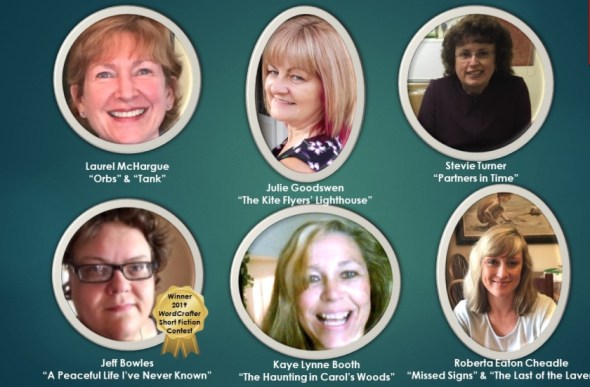
About Partners in Time, a short story by Stevie Turner
I am pleased to be part of the Whispers of the Past blog tour, which runs for 10 days from 23rd March. Whispers of the Past is an anthology of paranormal stories from several authors compiled by Kaye Lynne Booth, which also includes Jeff Bowles’ winning entry in the 2019 WordCrafter Paranormal Short Fiction Contest, A Peaceful Life I’ve Never Known.
My story Partners in Time is included in the anthology. I had already written and published the full novel but had…
View original post 523 more words
Share this:

Welcome to Day 1 of the “Whispers Of The Past” Blog Tour! @GodsAngel1 @RobertaEaton17 @4WillsPub
Posted: March 23, 2020 Filed under: Uncategorized Leave a commentDay one of the “Whispers of the Past” book blog tour. Join in the fun and explore the realms of the paranormal.

{NOTE: This is not an RRBC member-tour}
GIVEAWAYS: (5) e-book copies of WHISPERS OF THE PAST. For a chance to win, simply leave a comment on the authors’ tour page as well as any other stop along the tour.
I’m pleased to serve as the opening host to this 10-Day multi-author blog tour and the anthology sounds like an intriguing read! Please help me welcome Kaye Lynne Booth to Watch Nonnie Write! and be sure to snag your copy of WHISPERS OF THE PASTbefore leaving today!
Kaye, the floor is all yours!
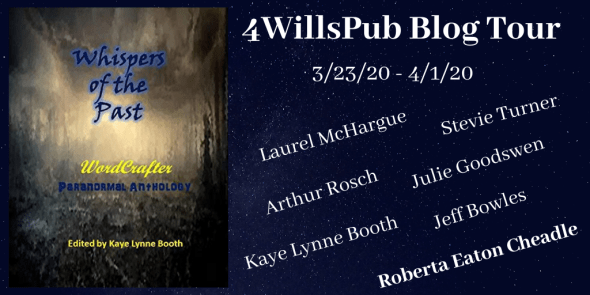
BOOK BLURB:
A paranormal anthology with nine stories from six authors, including the winning story in the 2019 WordCrafter Paranormal Short Fiction Contest, A Peaceful Life I’ve Never Known, by Jeff Bowles.
***
The Paranormal by Kaye Lynne Booth
The paranormal. It is fascinating to us. Most of us can relate at least one experience…
View original post 546 more words
Share this:

Interview with author Alan Dean Foster
Posted: March 23, 2020 Filed under: Author Profile, Books, Fiction, Interview, Paranormal, Science Fiction, weird western, Western, Writing | Tags: Alan Dean Foster, Author Interview, Mad Amos Malone, weird western, Western, Writing to be Read 6 Comments
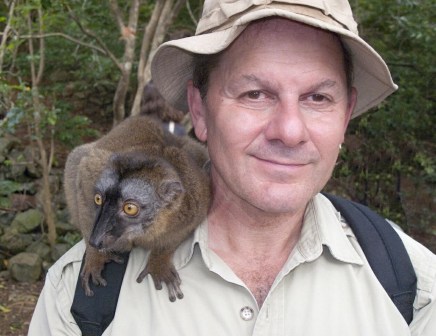
Alan Dean Foster with Mayotte brown lemur. M’bouzi island, French Comoros. Photo credit to Michael Medford.
Today my author guest is a multi-genre author who dips into the western and weird western genres on occasion. He’s published over 100 books, including novelizations of several well-known science fiction films, such as Star Wars, Alien, and The Chronicles of Riddick. He’s also credited with the first ever book adaption of an original video game in his novel, Shadowkeep. He’s a New York Times bestselling author and he’s joining me here to share a few tidbits about the weird western genre, writing a novelization of a movie, and his latest book, Mad Amos Malone and other weird western works. Please welcome author Alan Dean Foster to Writing to be Read.
Kaye: The majority of what you write is science fiction or fantasy, so obviously these are your preferred genres, but you have western tales thrown into the mix here and there. What is it that draws you to the western genre?
Alan: For one thing, I have lived the past 40 years in a famous western town: Prescott, Arizona. Virgil Earp was the marshal here. Doc Holiday’s mistress, Big Nose Kate, is buried in one of the local cemeteries. The Palace Saloon, the oldest operating saloon in Arizona (since 1877) is here. And much more. You cannot live in such a place without soaking up some of the historic atmosphere. Also, like most kids of my generation, I grew up watching TV westerns in the ‘50’s. Hop-along Cassiday, The Lone Ranger, and more. My favorites were the Cisco Kid (“Hey Pancho!…Hey Ceesco!) and Disney’s Zorro.
 Kaye: You have a collection of short western stories out that have a strange twist. What is so different about Mad Amos Malone?
Alan: Folks are fascinated by the mountain men who explored the American west. I thought it would be interesting to develop one who acts and lives like your typical mountain man, but who is considerably More Than He Seems. When you like a character but are never sure how he will react in a given situation it adds tension to a story. Think the character of Mike in “Breaking Bad”. Not quite what he seems. Also, in the end, thoroughly bad ass.
Kaye: In 1985 you wrote a novelization of the movie Pale Rider, with Clint Eastwood. How did that come about? Did you get to meet any actors from the movie? Did you consult with the screenwriters during the writing? What was the most difficult thing about doing a novelization?
 Alan: Authors of film adaptations rarely get anywhere near a movie set (though I have, on occasion). Certainly I never met or consulted with anyone attached to the movie.
For me, the most difficult thing in doing a novelization is to expand on the characters without contradicting the characterizations in the film itself. That, and remaining true to the spirit and style of the filmmakers while simultaneously injecting a little bit of myself here and there. You always have to be aware.
 Kaye: You have a story in Straight Outta Tombstone. The anthology is listed as fantasy, but its stories have kind of a western twist. Would you talk a little about that book?
Alan: The stories are fantasy with, generally, settings in what is called the American West. I think it would be more accurate to called them westerns with a fantasy twist. Fantasy or science-fictional takes on actual history are a lot of fun to do, and can often be thought-provoking. Call it the “What if the South had won the Civil War”? trope, only often with more recognizable fantasy elements.
Kaye: What’s the most fun part of writing a western novel or short story? What’s the least fun part?
Alan: Working with actual western history. Many of the Mad Amos stories take place in actual western settings and involve real folks from history. Just with the occasional witch, dragon, Chinese demon, visiting gnomes, etc.
Kaye: What time of day do you prefer to do your writing? Why?
Alan: Mornings, because I’m fresh, and also because I prefer to go to gym in the afternoon. But I will work late if and when necessary. And if an idea hits me, I’ll head for the study no matter what time it is.
Kaye: What is the biggest challenge of being a writer?
Alan: Not getting bored with your own work. And persisting even when you are.
Kaye: What is the one thing in your writing career that is the most unusual or unique thing you’ve done so far?
Alan: I think my historical novel MAORI, which takes place in 19th-century New Zealand. That’s a long way from writing science-fiction or fantasy. Very hard to research such a subject from Prescott in pre-internet days. Might also consider SHADOWKEEP, which was the very first novelization of an original computer game.
Kaye: What do you think is the single most important element in a story?
Alan: Character. If your characters aren’t interesting, then you’ve lost the reader no matter what kind of language, special effects, settings, or action you employ. True of any kind of writing, be it theater, film, prose, even commercials.
Kaye: When did you know you wanted to be an author?
Alan: When I made my first two short story sales, to August Derleth and John W. Campbell. I figured if two giants in the field thought my words worth buying, I might have a shot at doing it full-time.
Kaye: What’s the best piece of advice you were ever given?
Alan: Don’t make your heroes too powerful (Campbell). You can be interested in Superman, but it’s hard to empathize with him. Hence the need to invent kryptonite.
Kaye: Which is your favorite type of writing? Short fiction or novels?
Alan: I enjoy them both, but if pressed I’d have to say short stories. Get the idea down and out fast and dirty. I also very much enjoy writing non-fiction. Essays, movie reviews, history, etc.
Kaye: What is next for Alan Dean Foster? What are you working on now? Any more weird westerns in the future?
Alan: No weird westerns at the moment. Putting together The Complete Mad Amos Malone was a bit of a project in itself.
Forthcoming: April – The Unsettling Stars – original Star Trek novel set in the Kelvin universe. Later this year: Madrenga – original fantasy novel from Wordfire Press. The Director Should’ve Shot You – non-fiction; a history of my involvement with film novelizations from Centipede Press.
Hopefully next year: Mid-Death and other tales of the Commonwealth – a collection of all the short stories set in the Commonwealth, featuring the never before reprinted Midworld novella “Mid-Death”, from Haffner Press. Short story “The Treasure of the Lugar Morto” – Analog; no date yet.
Forthcoming at a future date: the completed Commonwealth novel Secretions and the stand-alone SF novel Prodigals.
I want to thank Alan Dean Foster for sharing with us here as we delve into the weird western. It looks like his work is cut out for him for the next couple of years. Obviously, many writing tips and tricks are not restricted to a single genre, but can be applied across them all. You can learn more about Alan and his books on his website or his Amazon Author page.
Like this post? Let me know in the comments. You can be sure not to miss any of Writing to be Read’s great content by subscribe to e-mail or following on WordPress. If you found this content helpful or entertaining, please share.
Share this:

Whispers of the Past Blog Tour
Posted: March 23, 2020 Filed under: Uncategorized 2 Commentsvia Whispers of the Past Blog Tour
Share this:

“Death Wind”: The ghosts of the West do not rest easy
Posted: March 20, 2020 Filed under: Book Review, Books, Fiction, Paranormal, weird western, Western | Tags: Book Review, Death Wind, Inspiration, Jim Pinto, Paranormal western, Travis Heerman, weird western, Western, Writing to be Read 2 Comments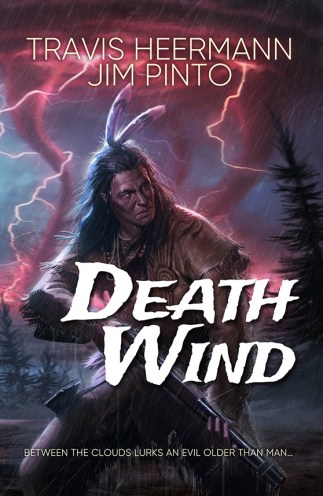
Death Wind, by Travis Heerman and Jim Pinto is a paranormal western, also known as weird western, that makes the reader believe in legends, if only for a short time. In a time of war between the white man and the Indians, there comes a foe of unspeakable power and cruelty only known through the stories of the native American people.
There is a great evil on the horizon, bearing down upon White Pine and the Lakota Souix reservation following the Wounded Knee Creek Massacre in 1891. The evil is hungry and it feasts on anyone in its path, threatening to consume them all, no matter the color of their skin. The only hope of survival lies in the ancient legends of the native peoples of the land and will unite white and Indian in a common goal.
Carefully crafted to produce graphic imagery and a captivating story line, Death Wind kept me reading until the last page. I give it five quills.

Amazon Buy Link: https://www.amazon.com/Death-Wind-Travis-Heermann-ebook/dp/B01L2EYKK8/ref=sr_1_1?keywords=Death+Wind+Pinto&qid=1583962493&s=books&sr=1-1
Kaye Lynne Booth does honest book reviews on Writing to be Read in exchange for ARCs. Have a book you’d like reviewed? Contact Kaye at kayebooth(at)yahoo(dot)com.
Share this:

Chatting with the Pros: Interview with western author Cherokee Parks
Posted: March 16, 2020 Filed under: Author Profile, Chatting with the Pros, Fiction, Interview, Western, Writing | Tags: Author Interview, Chatting with the Pros, Cherokee Parks, Western, Writing to be Read 1 Comment
My author guest today on “Chatting with the Pros” is a seasoned western author who has written many, many western novels and been quite successful. He lives and write by the western creed that he grew up with. He’s a cheerful guy with a good sense of humor. Please welcome Cherokee Parks.

Kaye: You believe in and stand behind some good old fashioned values and live by the code of the west. How do these things come through in your writing?
Cherokee: In every story, the main character does the right thing in every single circumstance. Even when characters like Colton Raines (the Colt’s Justice series) or any of the Creed family (the Creed Novels) are forced to kill large numbers of opponents, it’s done to save others, or to protect they and their family or possessions. They respect women, the law, the nation and all it represents – even in spite of possibly having been on opposite sides during the Civil War. They expect the same from everyone else, and accept no compromise. They always speak the truth, and if they can’t, they keep their mouths shut. They are never afraid to speak their mind, short of intentionally hurting a friend, unless that friend needs a wake-up call. They give both compliments and criticism sparingly, and only when necessary. They never give their word if they can’t keep it. They know that they can’t get along with everyone, so they don’t even try. And they all know how to laugh, mostly at themselves.
Kaye: You have co-authored several books along with other western authors, such as Scott Harris, whom I interviewed last year. What is the most difficult thing about co-authoring a story?
Cherokee: Actually, there have not been any truly co-authored books, only those where credits are given for inserting a foreword. Only once have I ever attempted to co-write a book, but things just didn’t work out. We envisioned completely different events and character development, and never got past the first chapter together. I have, however, had the distinct pleasure of co-writing a good number of songs, and found it very gratifying being able to feed off another person’s input. So would I work with another author to create a book? Honestly, probably not, as I already have a basket full of story ideas, as well as several books already in the works. I don’t know how I’d squeeze in the time to work with another author, although I think the creative juices might get a real boost, depending on how I got along with the co-writer from the beginning.
Kaye: What draws you to the western genre?
Cherokee: Growing up cowboy and around the western lifestyle, it was a natural changeover for me, and what I had always wanted to write. Unfortunately, I was very good at writing mysteries and suspense, and got pigeonholed by my publishers at the time – both saying “Westerns don’t sell.” Well, Westerns DO sell, and I’m enjoying a very happy resurgence of my writing career. It’s easier and far more enjoyable to write about things one knows and loves than to create things someone else wants an author to fantasize about on paper.
Kaye: What time of day do you prefer to do your writing? Why?
Cherokee: Mid-morning until mid-afternoon, while the two grandchildren we’re raising are in school, but I can write just about anytime, anywhere, when the inspiration strikes.
Kaye: Which author, dead or alive, would you love to have lunch with?
Cherokee: I’d love to once again have lunch with Louis L’Amour, as I learned more about my craft from him in a day than I did squirming in a seat during all those college class hours. Although I did study under James A. Michener, and enjoyed his classes, what I learned from him was about styles and research, but little about actually being creative. Michener taught strict adherence to storylines, only diverting if research showed it was necessary, while L’Amour had no idea where a story would go until after it was written, like myself.
Kaye: What’s the most fun part of writing a western novel? What’s the least fun part?
Cherokee: Wow! There are just so many fun parts to creating a western. Finding out where the story goes, and how it ends is a blast, as I never really know when I start out. Imagining how different characters react to situations is also a lot of fun. What’s not fun is having one of your books just sit on the market, not moving, not selling, just sitting there gathering dust. Although really poor reviews are also a knock, often a real punch to the gut… But I’ve learned from those knocks too, as the old commercial told us, “never let ‘em see you sweat…”
Kaye: How do you decide the titles for your books? Where does the title come in the process for you?
Cherokee: That’s difficult to say, really, as sometimes a book is created based on the title, while other titles are taken from a place or event that emerges in the book itself. And there have been times when a title needs to be changed, even after the work is published. Titles are among the hardest parts to creating a story, as a good story can die without a good title to launch and carry it. On the other hand, sometimes a story is soooo good, it doesn’t really matter what it’s called.
Kaye: Would you share the story of your own publishing journey?
Cherokee: How much time do you have? Seriously, I started out my career as an author of mystery and suspense, trying to fit into the most popular publishing mold of the time, mostly as a result of my publishers at the time insisting on my creating such stories. Eventually, I tired of writing what they wanted, and then having stories sell well while the publishers made all the money using “creative bookkeeping” while I received a mere pittance – not even enough to live on.
I stopped having any work published for over fifteen years, giving up completely on the honesty of the publishing business, though I still wrote stories. The difference was, I wrote to please me, not the publisher. One day, while I was writing a particularly interesting story, a friend stopped by, and insisted on reading what I had written up to that point. Now normally, I pretty much discount what family and friends say about something I’ve written, as I believe them to be absolutely biased. But that particular friend was very critical, and if he liked it, well… Not wanting to go the publisher route, I self-published. Epic fail. I’m an author, not a publisher.
So when a small publishing house opened near me, I presented the story to them. They jumped on it, and I became their third signed author. Over the next year, they published four more of my stories, but their management absolutely sucked. Given an opportunity to guide them, I was appointed Executive Director, lasting nearly five years at the job before they were forced to shut down due to IRS problems unrelated to the publishing side of things.
In a way, it was the best thing in the world for me, because I once again had time to write, something I had all but given up on while working with the books of many other authors and wannabes. But now, I had the writing bug again, and needed to find a publisher. After a couple of mistakes, I finally landed with a really good publisher specializing in the western genre (Dusty Saddle Productions), who had a great publicist (Nick Wale at Novel Ideas) under contract. I couldn’t be happier!
Kaye: When did you know you wanted to be an author?
Cherokee: I guess I was about thirteen, when I wrote a short story for an English class assignment. I had a lot of fun writing the story, and when our teacher had me read it to the rest of the class, I was embarrassed, but hooked. That teacher was a friend and understudy to James A. Michener, and gave it to Michener to grade. Michener drew a big star on it, penned a message, “Keep up the good work”, and signed it. Had I not been hooked on writing before that, I was after. I’ve been writing since then, with the two aforementioned lapses, continuing to try to perfect the craft.
Kaye: Do you travel to the places that end up in your books?
 Cherokee: Yes, absolutely. In fact, I took a clue from L’Amour about knowing the geography and climate I include in my books. As a result, I only write about places I have been, doing my best to remain true to the area. But I also use a bit of artistic license in my stories. For example, in Hard Ride to Cora, set in the Green River basin of Wyoming, I slipped in a cave that doesn’t exist. Sometimes one has to enhance the story with little details that may or may not exist, but I do my best to “keep it real,” even though all I write is fiction.
Kaye: What advice do you have for aspiring authors?
Cherokee: Never depend on what family and friends say about what you create, as they are completely biased, and 99% of the time they don’t wish to hurt your feelings, or already believe anything you do is great just because you did it. Get outside opinions as your guide. Study the craft of writing, trying to make yourself the best you can be at it. ALWAYS give your work to an editor, as even the very best English teachers make mistakes when they write. But don’t allow the editor to change your style, only to correct your English (except dialogue), your punctuation, and all too often your sentence structure. Just make sure you improve with every attempt, and learn to accept honest criticism for what it is, not for what you want it to be. But above all, NEVER stop writing!
Kaye: Is there anything unique or unusual about your writing process?
Cherokee: Hmmm… Other than I don’t have a clue where a story will go, or where it will end up when it’s finished? I don’t think so, but then again I suppose we each have our little idiosyncrasies when we write, but we’re far too close to the source to know what is “unique” or “unusual” about our process. That’s my story, and I’m sticking to it!
Kaye: What do you like to do when you’re not writing?
Cherokee: Sleep… eat… Actually, in my younger and healthier years, I enjoyed hunting and fishing, exploring new areas, being around horses and dogs, just generally living the Western lifestyle. But now I’m old and half crippled up, suffering from the ravages of time, so I’ll go with my first two answers. Sleep… eat… But I will add that staying alive is real big on my list of things to do everyday now…
Kaye: As a western writer, what kind of research do you find yourself doing for your stories?
Cherokee: Mostly digging back into my memory banks and photo journals, though I do use a great deal of online research to confirm what I know already or think I know about history, clothing and weapons in use during the era I’m writing in. I have no choice, as my memory isn’t quite what it used to be. Additionally, finding historical documents, maps or writings that detail certain places and events, be they weather events or something of a physical/historical nature, always serve me well, and at times even help with my creativity.
Kaye: If one of your books was made into a film, who would you like to play the lead?
Cherokee: I suppose that would have to depend on which of my books was chosen… I think they’d all make great movies, but that’s the writer in me thinking I’m that good… For example, it would have to be a middle-aged man to play Jake Laughlin, while it would require a man in his twenties to play Mick Swinney from Hard Ride to Cora, and a very tall man to play Thomas “Tree” Bell in The Trader… Now, if I could chose which book was made into a movie, I would say Hard Ride to Cora, as it was my first full-length western, although the Colt’s Justice series ranks right up there, as does the Creed series and the brand new series, The Trader. But to pick an actor to play the lead in any particular book? I don’t think I’m capable. I’d leave that to the casting people, as that’s their job, and I’ve got my hands full just writing.
Kaye: Would you like to talk briefly about your latest books? (Those you sent covers for.)
Cherokee: Hard Ride to Cora was my first published Western, and will likely always be my favorite as a result. Besides, it’s a really good story involving a host of characters from many different backgrounds, and if I ever get time I’ll be able to write at least another half dozen stories based on those characters.
 No Town for Outlaws actually prompted a prequel (Silver, Gold and Blood in Arizona), and both books have sold consistently – and well – featuring a family of fast guns, including the women, bent on making certain the law is upheld, and good people are given a chance to live free.
 My biggest Western hit so far is really a mountain man tale, The Trader, with the second book in the series due out early in March. The Trader sat in the #1 spot on Kindle in the Old West History of the U.S. category for over three weeks, and as of this writing is still at #3.
Kaye: How did you chose your pen name, Cherokee Parks?
Cherokee: I guess the easy answer would be—sentimentality. When I was a young teen, my father and I used to deer hunt in an area of Northern Colorado called Cherokee Park. They were some of the best times I had as a young man, and some of the best times spent with my father before he lost his health. So when it came time to create a new pseudonym for my western stories, Cherokee Parks was one of five I started out with. I kept narrowing the list down until only Cherokee Parks remained, mostly to honor the wonderful memories I shared with my father, and of him.
Kaye: Why did you choose to take a pen name?
Cherokee: It was a simple thing. In order to keep the genres separate, as well as multiple publishers back in the day, I used pseudonyms. I decided to continue using pseudonyms when I started writing again for some very personal reasons, primarily using Cherokee Parks to honor my father’s memory.
Kaye: Do you think it helps you sell books?
Cherokee: Yes, frankly, I think a good author’s name can help, depending on whether or not it fits the genre.
Kaye: What are you working on next?
Cherokee: Currently, I’m working on a sequel to No Town for Outlaws, called Death at Devils River, featuring the Creed brothers on a mission to help out an old friend facing disaster from a gang of Mexican banditos. I’m really enjoying it, and hope my readers will as well. Death at Devils River should be out by the end of March or early April.
Kaye: What do your readers have to look forward to in the near future?
Cherokee: Within the next ten days, I should have the second book in The Trader series back from the editor, meaning it will be released within a week of that. The first book in the series is subtitled West to the Stony Mountains, the second book subtitled Of New Life, War and Peace, and a third book already in the planning stages (as much as I ever plan a story!). I stay busy, and have at least a dozen story concepts floating around in my mind at any given time, as well as having anywhere from two to half a dozen at various stages of development or publication.
I have to say, Kaye, this was one of the more fun interviews I’ve had, and I appreciate not being buttonholed with my answers by your providing open-ended questions. Honesty is always the best policy, though not every writer has had the pleasure of enjoying life as much as I have. I’ve lived a hard life at times, but always a good life, even though there were times when I had no idea where my next meal would come from, or where I might be sleeping that night. But by the grace of God and the aid of friends, I made it through the hardest of times, making my current success all the sweeter. Thank you!
I want to thank Cherokee Parks for sharing here on “Chatting with the Pros”. He really came up with some great answers which are somewhat enlightening. It has been wonderful chatting with a seasoned western author, and it instills confidence to know that we share the same publisher. Nick Wale and Dusty Saddle have been great to work with. You can learn more about Cherokee and his books on his Amazon Author page or his Goodreads Author page. Join me next month on “Chatting with the Pros”, when the theme will be fantasy, and my author guest will be L. Deni Colter.
You can catch the monthly segment “Chatting with the Pros” on the third Monday of every month in 2019, or you can be sure not to any of the great content on Writing to be Read by signing up by email or following on WordPress. Please share content you find interesting or useful.
Share this:

Jeff’s Movie Reviews – The Invisible Man (2020)
Posted: March 13, 2020 Filed under: Dark Fantasy, Jeff's Movie Reviews, Movie Review, Movies, Opinion | Tags: horror, Jeff Bowles, Jeff's Movie Reviews, Movies, The Invisible Man, Writing to be Read 1 Comment
The Monster You Know
by Jeff Bowles
It goes without saying that the new Universal Studios reboot of the horror classic, The Invisible Man, offers a uniquely compelling movie experience for our hyper-political, hyper-aware post-#metoo era. The year 2020 is a very different time from 1933, the year Universal released its classic Claude Rains iteration. We understand the world in a startlingly different fashion, and complex psychology, trauma, abusive romantic relationships, and violence against women are all very much at play in the stories our culture has begun to tell.
Rest assured, though, The Invisible Man is not an overtly political movie. More like a chilling and subtly “woke” product of its times. Gone are all the old monster movie affectations—silly white mummy bandages covering a mysterious face, wired monocles and burning cigarettes floating in mid-air—replaced by psychological horror, emotional and physical torment, circa 2020 big-budget computer generated special effects, and a pretty nifty concept for a military-grade invisibility suit. Not to spoil too much, which really is a challenge with this movie, but the monster in this Universal monster picture is still very much a science fictional prospect. He’s also slightly reminiscent of a bad guy you might find in any average modern video game, which is how you know you’re in for one hell of a boss fight.
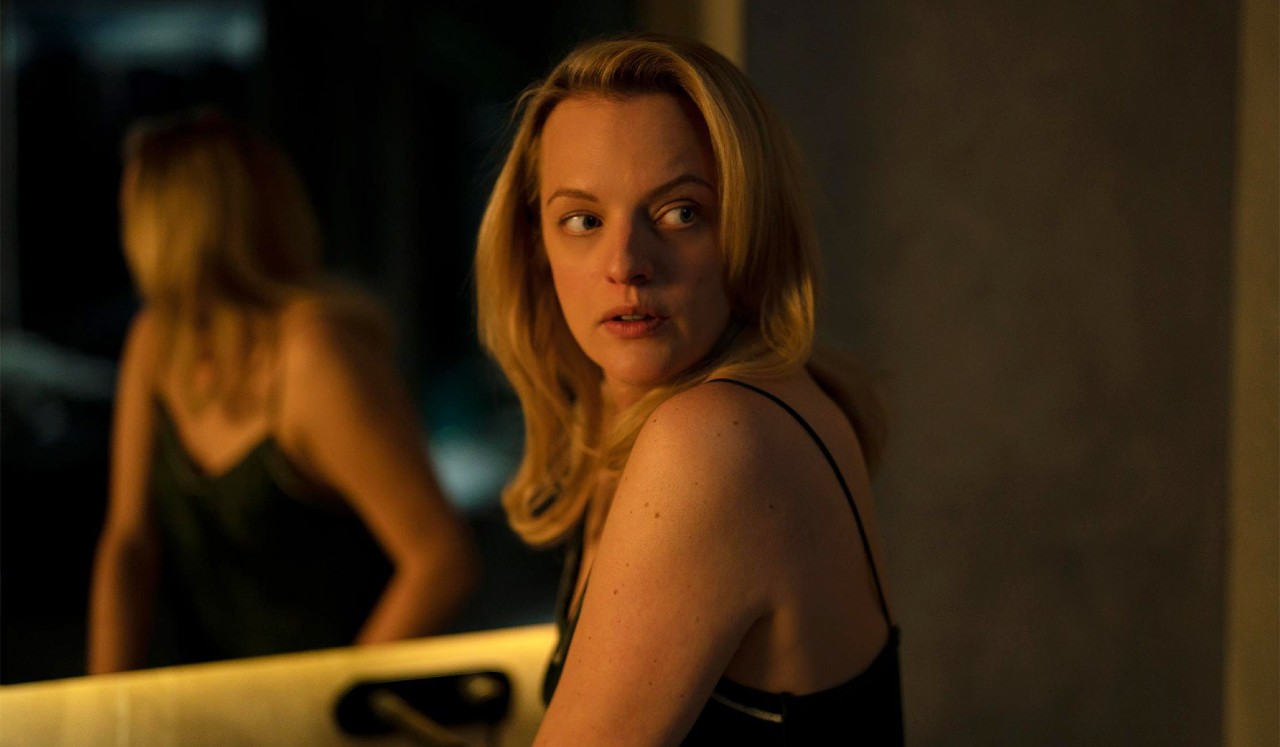
Elisabeth Moss, who is just as excellent here as she is on Hulu’s The Handmaid’s Tale, plays Cecelia Kass, the traumatized victim of a seemingly abusive relationship who is desperate to escape her wealthy tech developer husband. Cecelia gets free of his post-modern rich dude Dracula castle in the opening sequence of the film, only to learn a couple scenes later he’s ended his own life and left her his fortune. Which, you know, is really just a springboard for some invisible-man-ish fun and mayhem.
What kind of tech does her husband, Adrian, develop? Optics, of course, the kind that can turn someone… well, you know. I say Cecelia is the victim of a seemingly abusive relationship because while its clear Adrian (Oliver Jackson-Cohen) has done some truly terrible things to her, we’re never really sure what they were. It’s sort of a narrative issue, a lack of basic context, because as the action and suspense ratchet up, certain story beats become less formidable. Again, spoilers are easy to drop, but how did this guy get this way? He’s not just a monster. His exists solely to watch you realize your most intimate fears. The film insists on hints and allegations, relies too heavily on stereotypes, but only as it applies to Adrian and his brother, Tom (Michael Dorman), who may or may not suffer from some intense form of younger sibling Stockholm Syndrome.
Realistically, if this movie were called The Wolf Man or Frankenstein, I doubt I’d question how insidious the villain is, but we’re dealing with issues of domination, psycho-sexual violence, and truly, more emotional clarity is called for. Not to put too fine a point on it, but simply tossing around terms like narcissism and sociopathy doesn’t really help fill in a backstory. Lot’s of people are sociopathic and narcissistic, and not too many invent invisibility suits and murder-stalk their exes.
The good news for audiences, however, is that none of the above matters much, because The Invisible Man is a focused and frightfully suspenseful film, full of unexpected twists and a finale that is less cliché good guy, bad guy showdown than morally ambiguous coup d’état. At times, the movie is downright ingenious in its concoction of more and more elaborate and devilish scenarios. The supporting cast is excellent, and thankfully, exist as more than simple horror movie cannon fodder. The real unease and dread of The Invisible Man comes down to a basic relatable fear: if I tell them what’s really happening to me, they’ll call me crazy and put me away.

Which isn’t to say the movie readily offers up easy explanations for all it entails. As the credits roll, it becomes clear writer/director Leigh Whannell wants us thinking hard about what we’ve just seen. Sharp-eyed viewers will spot the answer to the penultimate question posed by the film within its first few tense opening moments, but some audiences may leave dissatisfied by the ambiguity of it all.
Ultimately, The Invisible Man is about desperation and bare-knuckled survival in the face of victim-hood and victimization, an unavoidable totem of an age in which the sins of very powerful, very sleezy men have been outed in spectacular public fashion. Truly, the film is an intimate and personal take on the classic Universal Pictures series of old. It both loves and understands the need to update its source material, and though the final product is uniquely contemporary, its essential nature remains the same. Imagine an enemy you can’t see, who’s watching you in all your most intimate and private moments, who’s obsessively calculating new ways to make your life a living hell. It’s still a great concept for a horror story, which H.G. Wells must’ve recognized when he published the original novel in 1897.
The most frightening monster is the one who knows you best. Abuse at the hands of a loved one is a horror unlike any other, and in real life, more and more, the world is waking up to the fact that this phantom, this particular invisible man, has plagued us since the very beginning. Ultimately, the conscious approach filmmaker Leigh Whannell and his excellent cast take toward the subject is timely and clear-eyed. This invisible man is a beast of a human being. He’s been in your home, your bed, and he will do whatever it takes to possess, consume, and destroy you. Now that’s scary. And not a single floating cigarette or mummy bandage in sight.
Jeff’s Movie Reviews gives The Invisible Man an 8 out of 10.

Check out Jeff Bowles Central on YouTube – Movies – Video Games – Music – So Much More!
You can keep up on what Jeff’s been watching and catch all of his great movie reviews the third Friday of each month on Writing to be Read. Subscribe to email or follow on WordPress today.











Nightmare With Tracfone
Posted: March 27, 2020 | Author: artrosch | Filed under: Commentary, Humor, Opinion | Tags: Art Rosch, Art's Visual Media Reviews, cell phones, Commentary, confrontation, customer service, daily life, frustration, Humor, Opinion, social observation, Writing to be Read | 7 CommentsI am preparing a review of “Better Call Saul” but I’m not finished. Instead I will relate an experience that I had with a cell phone provider, I.E. Tracfone. Consider it a public service:
Nightmare With Tracfone
“God damn it!” I shouted into the cell phone. “I’m done with you, asshole, done done done! Go Fuck yourself, you motherfucker!” My wife stared at me in total shock. I hadn’t blown up like that in decades. If ever: in fact, I don’t remember the last time I lost my temper. Well, yes I do but that was fifty years ago and I was enraged with a particular girl. That’s a long time to go without blowing my cool. I did not, however, keep my head this week. Not after dealing with my cell phone carrier, i.e: Tracfone.. It may be that their service people are coached to present a hostile front to customers asking for refunds. After three days of agony dealing with Tracfone employees I ended the encounter screaming into my phone,
I can’t remember being as angry as I was now with this asshole fuck-turd Tracfone employee who was probably twenty six, living in a shitty condo somewhere in Reseda or Toluca Park. I don’t really assign blame to this hapless cubicle worker. I have compassion. I know I’m living a better life than he is. This essay is my revenge on Tracfone and a cautionary tale to anyone who has a mishap with a cell phone carrier.
I’ve used Tracfone for years without problems and the advantage of Tracfone is that they’re cheap. Like 90- days- with -unlimited -calls – for thirty – bucks cheap. I could keep going for months at ten bucks a month, and so I did, for seven years. Then I lost my phone. It was gone. No searching could retrieve it. The finder-app said it was on Third Street in Santa Rosa. I did a couple of drive-by searches. Alas, the phone was gone. I needed a new one. Everyone needs a cell phone. What if there’s an emergency in your 1998 Jeep Cherokee with the rattling fan belt? What if you can’t text your lover, your spouse, your kids, your granma? Phones possess dramatic intensity. This is the twenty first century! Phones are highly charged emotional extensions. They carry family, friendship, love, sex, money….all kinds of drama.
And I had lost mine. I needed a new one, quickly. I got on the Tracfone website and ordered a modest but decently cool phone costing $131.09. Then I waited. I expected delivery in no more than two days. Everything comes immediately these days. Drones drop your shit on your porch five minutes after you order. UPS robots open your back door and leave it on the couch by five o’clock. Things really move! But the phone didn’t arrive. And I waited yet another two days, still there was no phone. I needed a phone. Doesn’t everyone? Does life proceed without cell phones? Clearly it doesn’t. So, I tried again with Tracfone. I needed a phone, asap. I ordered a hundred dollar phone and asked Tracfone to expedite the shipping. I tried to order the drone service but Tracfone isn’t up to speed in that way. I did the next best thing: overnight shipping. I received that phone the next day. Where was the first phone? The one that costs $131.09. No one knew. I had never received a confirmation e-mail, a fact that should have raised a red flag. Of course, in this world we walk through a forest of red flags daily, so it meant nothing. Three weeks later there was a knock on the door, and a Fedex driver handed me a box. I accepted the box. I shouldn’t have. But I did, and therein lies this whole agonizing tale. It was, of course, the missing phone. I didn’t need a phone anymore. I took it down to the post office, paid fifteen bucks to ship it back to Tracfone. It was received by Tracfone in two days and I asked for a refund of $131.09. According to the phone agent, I should receive my refund within three to five work days.
I used the new phone for a while. Let’s give it a name. Call it Stylo 4. Then one morning I awoke to a seemingly normal day. It turned abnormal as soon as I tried to make a call with Stylo 4. I dialed a number and a neutral female voice said “Your device has been de-activated. If you wish to speak to Tracfone, please stay on the line.” So I held, and shortly had the Tracfone robot and went through three sets of identifications and options until I finally said that word, “Other”, which means that non of my problems were addressed by the previous robot. So I got another, more senior, robot. Again, after enduring the list of options, I uttered that loaded word, “Other”. I waited another ten minutes, then, finally, I got an agent.
Why has my phone been de-activated? The agent asked for the ID number or the EIMI identification code for the phone. I read it off the little red booklet, then I double checked the phone itself. The numbers matched.The Tracfone employee stated, quite simply, “That’s the phone that you returned to us.”
Huh? I’m holding this phone in my hand, I explained. I’m reading the EIMI number from this phone.
“We’re sorry, sir, but that’s the phone you returned to us.”
“No,” I said calmly, “it’s clearly not the phone I sent to you. I never opened the box on the other phone, the one you sent to me, the one that took three weeks to arrive, the one that cost $131.09 and is slated for refund directly into my bank account. I already had another phone, that I bought from you, Tracfone, for about a hundred bucks.”
“Would you please read the number again, sir.” I did so.
“Sir, that is the phone that you returned to us, according to the EIMI number.”
“There’s some mistake here. Can I speak to your supervisor?” Then I made a random hand movement, accidentally touched a number on the dial pad, and was disconnected. I had to start over again. I began with the first robot, then the senior robot, punching number after number. I asked for an agent, then a supervisor, and I arrived at the same deadlock at which I had arrived before. Tracfone is telling me that I returned the very phone upon which I was presently speaking.
“Does it occur to you that this is flagrantly impossible and that perhaps there’s been a mistake at your end?”
“Sir, your refund will be deposited in your account within thirty days.”
“Thirty days? I thought it was three to five days.”
“Your account has been marked and referred to our dispute department. Are you trying to obtain a free phone?”
I was shocked. “Of course not. Forget the refund for now, OK?. Please, just re-activate my phone number because I’m an elderly man suffering from Recalcitrant Plebny, Mono-Amine Insufficiency and a serious case of Portofino.”
Must I continue? I don’t want to. I spent nearly three days on the phone with Tracfone (the only number with which I could connect) and got nothing, no re-activation, a delayed refund and a black mark against my name. I think the black mark happened because after so many hours of going around and around I lost my temper and shouted “I’m sick of you assholes, I’m done I’m done, so Fuck You!”
Then I went to Walmart and purchased a Samsung A10e, a nice little phone. I’m signed up with Sprint and I’m paying $45 a month for the privilege of no longer dealing with the morons at Tracfone. I call them morons but I think that they’re just following company policy, to whit: Obfuscate, delay, confuse, deny, denigrate, de-activate.
That’s my cautionary Tracfone tale. Does any of this sound familiar? Is the world crazy? Of course it is.
For a further take on the basic humor and craziness of cell phones, go to my essay, “Total Cell Phone Ban” Click here: Complete Cell Phone Ban Coming Soon
A Midwesterner by birth, Arthur Rosch migrated to the West Coast just in time to be a hippie but discovered that he was more connected to the Beatnik generation. He hearkened back to an Old School world of jazz, poetry, painting and photography. In the Eighties he received Playboy Magazine’s Best Short Story Award for a comic view of a planet where there are six genders. The timing was not good. His life was falling apart as he struggled with addiction and depression. He experienced the reality of the streets for more than a decade. Putting himself back together was the defining experience of his life. It wasn’t easy. It did, however, nurture his literary soul. He has a passion for astronomy, photography, history, psychology and the weird puzzle of human experience. He is currently a certified Seniors Peer Counselor in Sonoma County, California. Come visit his blogs and photo sites. www.artrosch.com and http://bit.ly/2uyxZbv.
Want to be sure not to miss any of “Art’s Visual Media Reviews” segments? Subscribe to Writing to be Read for e-mail notifications whenever new content is posted or follow WtbR on WordPress. If you find it interesting or just entertaining, please share.
Share this: