Dark Origins – African myths and legends: The San (previously Bushmen) Part 1
Posted: January 26, 2022 Filed under: Uncategorized 44 Comments
Introduction
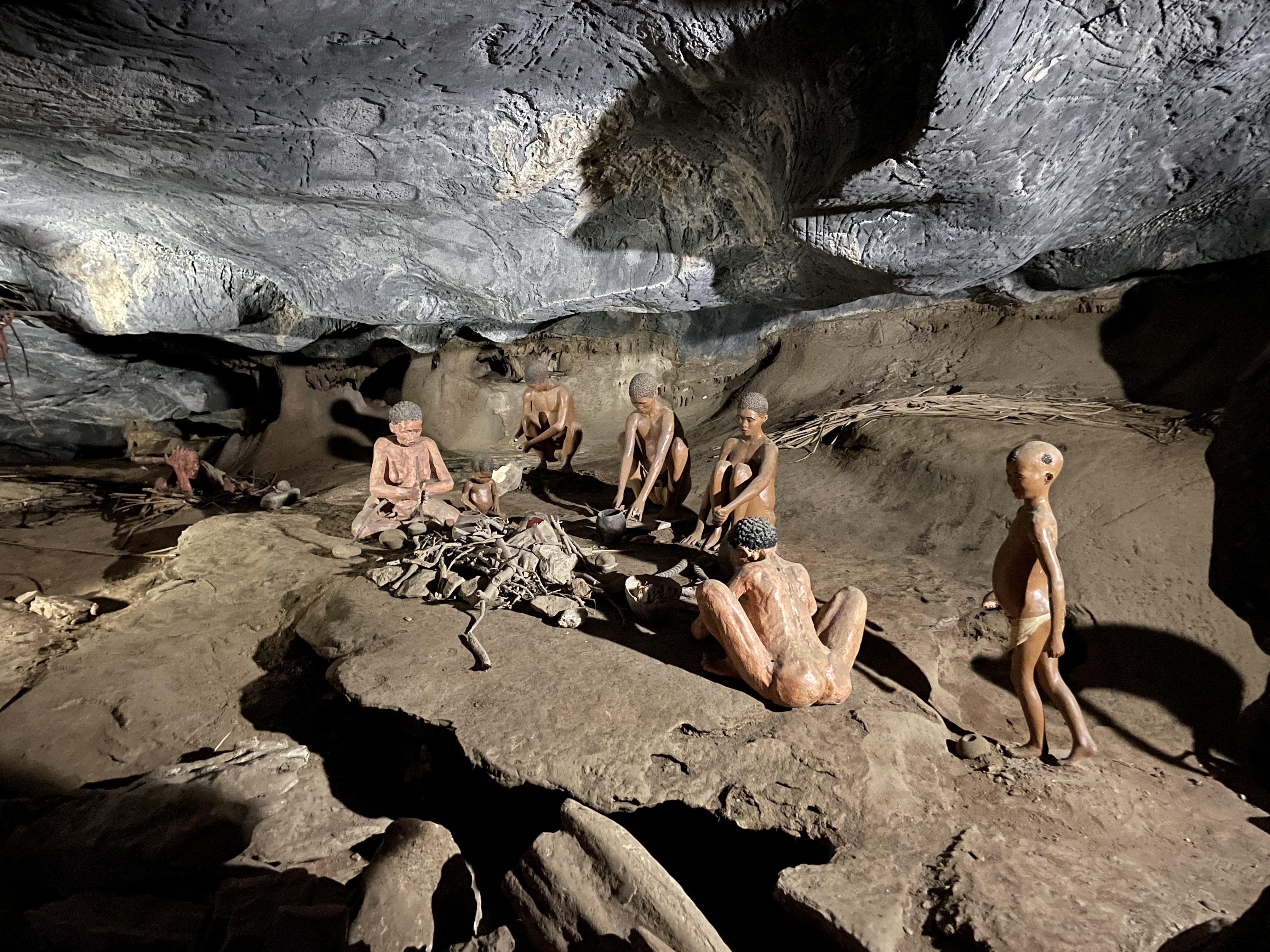
The San peoples, previously know as Bushmen, are members of the various Khoe, Tuu, or Kx’a-speaking indigenous hunter-gather cultures which are also the first cultures of southern Africa. The territories of the San peoples include Botswana, Namibia, Angola, Zambia, Zimbabwe, Lesotho, and South Africa.
The hunter-gatherer San peoples are one of the oldest cultures on Earth and are believed to be descended from the first inhabitants of what is now Botswana and South Africa. The San were traditionally semi-nomadic as they moved seasonally within certain defined areas based on the availability of water, game, and edible plants. The areas occupied by the San were semi-desert or desert areas, including the Kalahari Desert.
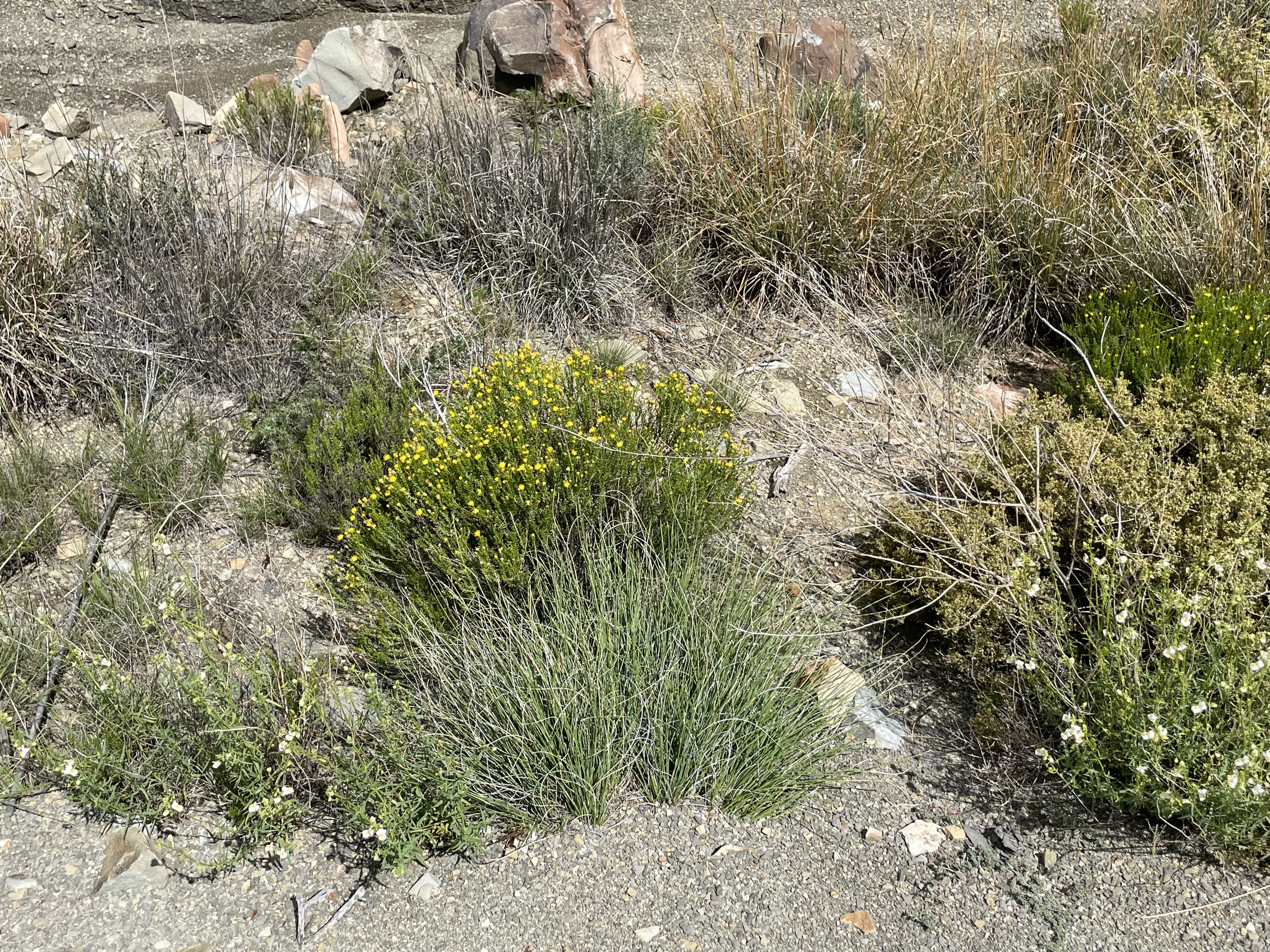
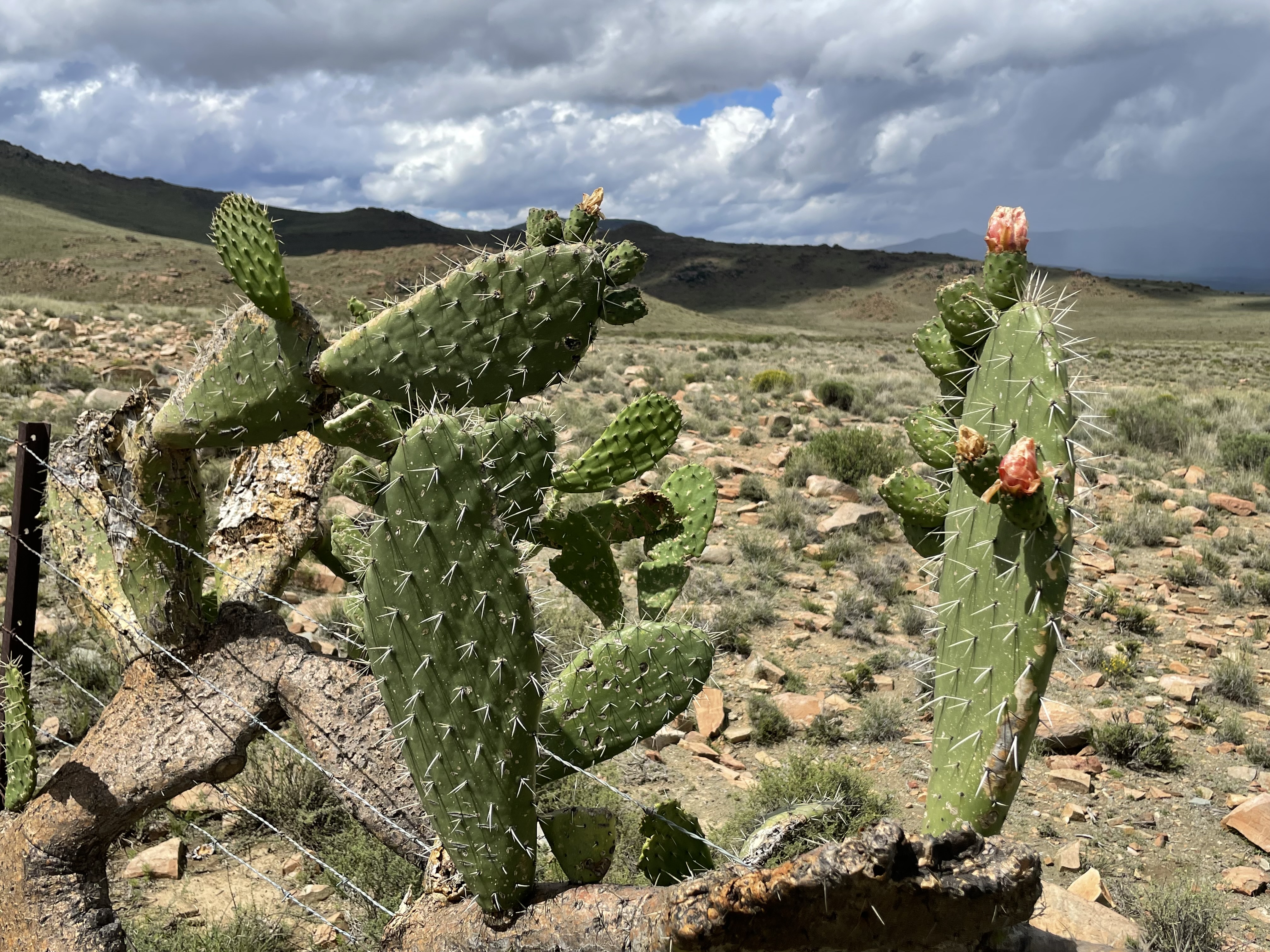
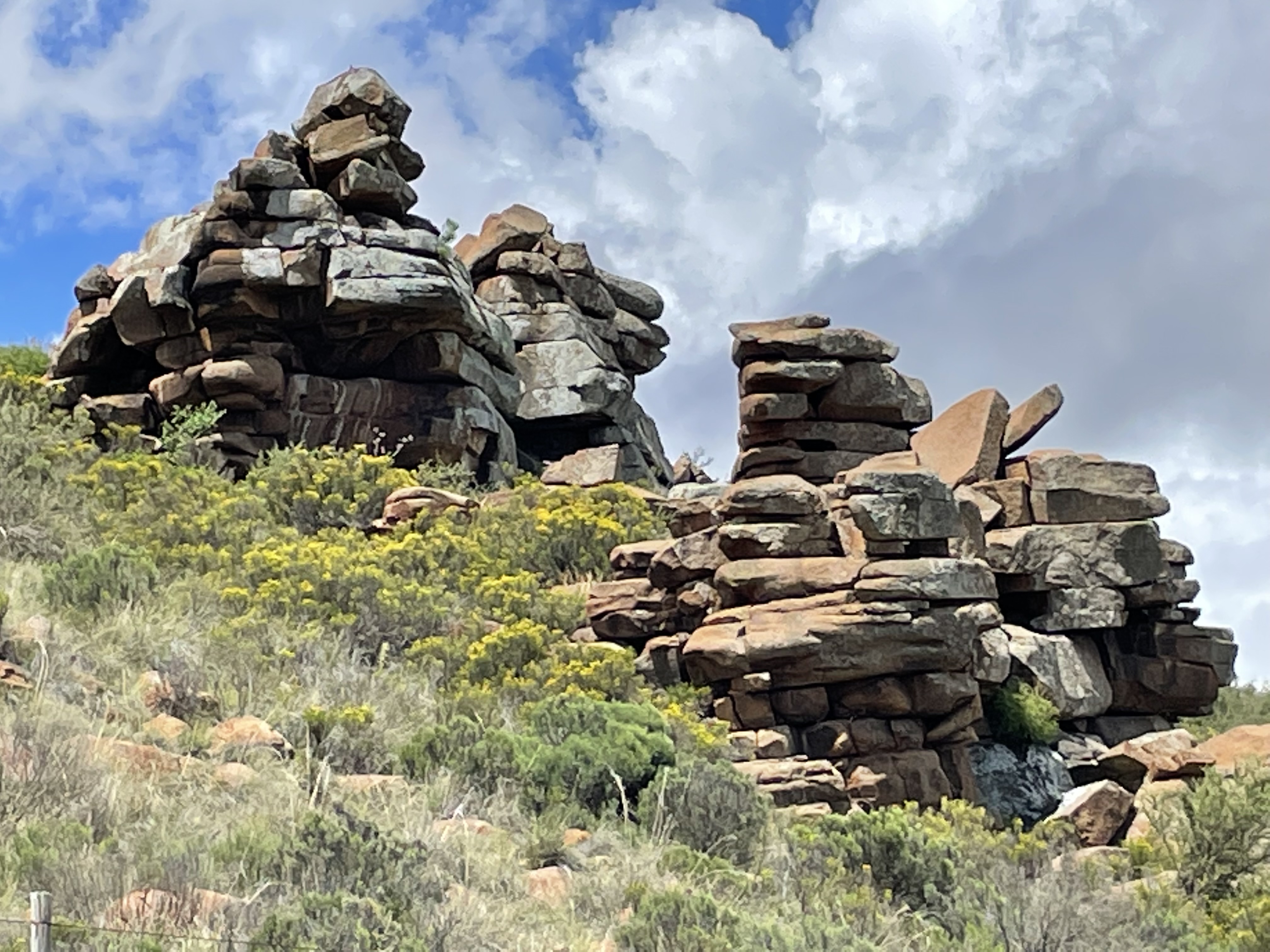
During the colonial period, much of the land occupied by the San peoples was conquered. The pattern of lost land and reduced access by the San to natural resources has continued and is a primary contributor to the current displaced position of the San and the destruction of their ancient traditional lifestyles.
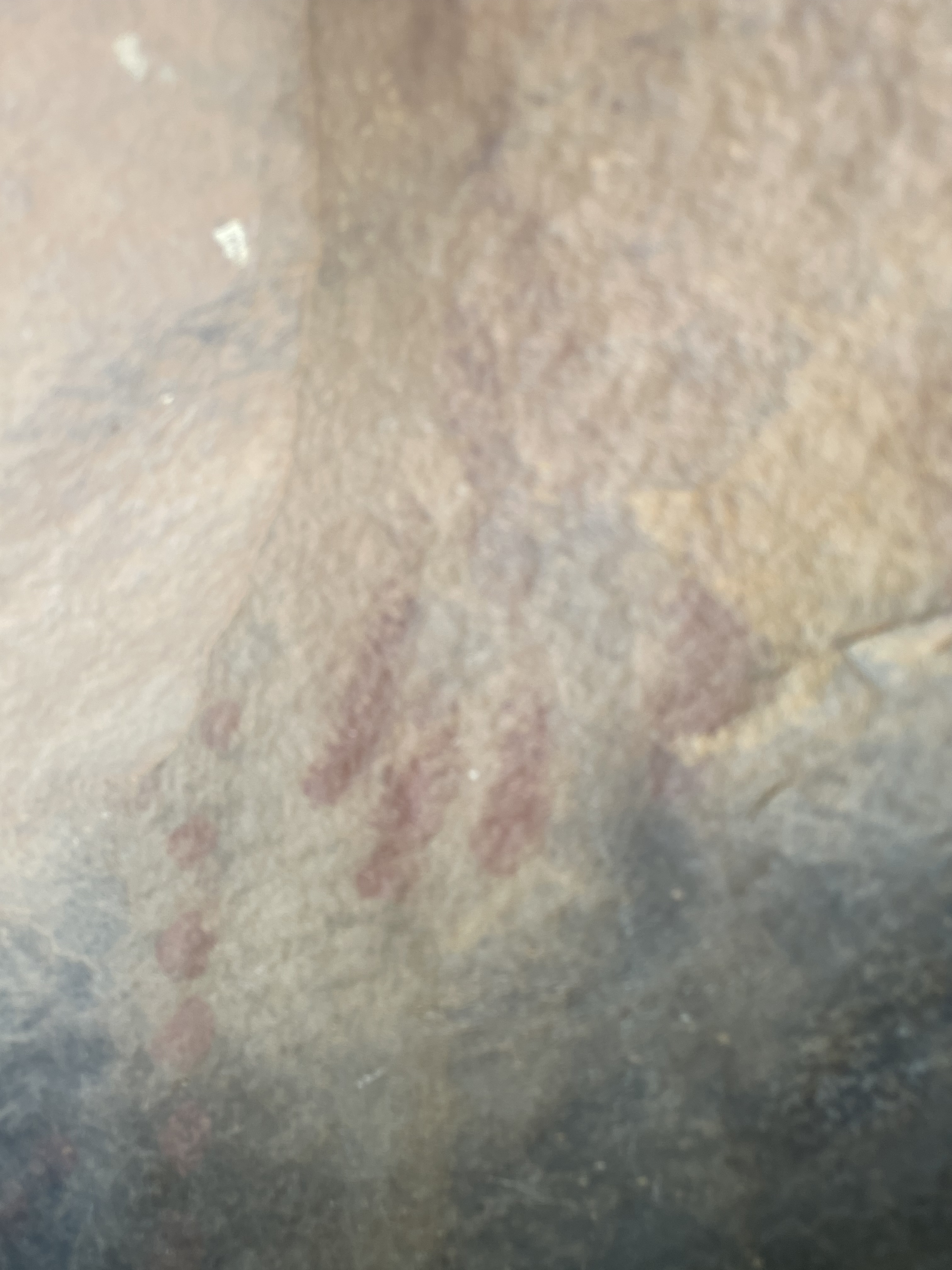
Rock art – human hand
The San are well known for their rock art which is found in caves and rocky overhangs where the San lived. These rock paintings comprise mainly of animals and human figures. On a recent trip to Nieu Bethesda in the Eastern Cape of South Africa, I saw a reddish handprint of a San Shaman. It is believed that the San didn’t view rock as a solid surface and these handprints indicate so-called energy points, where the San believed a person could travel through a cave wall’s illusory solidity.
IXam mythology
IXam, formerly spoken by the IXam-ka peoples of South Africa, is considered an extinct language. Fortunately, some of the IXam stories were recorded by linguists Wilhelm Bleek and Lucy Lloyd in Cape Town in the 19th Century.
This is the IXam story of the sun’s origins:
“The sun was an old man of the Early Race who lived in a hut on earth. The light of the sun shone out of his armpit and only lit up the space around his house. The earth was dark and cold and the mothers couldn’t dry the ant or termite larvae that they collected to eat. Everybody was hungry and cold because there was no warmth from the sun who refused to share his light.
The mothers gathered the children together and told them to pick up the old man and throw him into the sky. They did this and now he sheds light over all the earth.”
I hope you enjoyed this introduction to the San peoples and IXam story. Next month, I’ll be sharing more about the culture and traditions of the San and another traditional story.
About Roberta Eaton Cheadle

Roberta Eaton Cheadle is a South African writer and poet specialising in historical, paranormal, and horror novels and short stories. She is an avid reader in these genres and her writing has been influenced by famous authors including Bram Stoker, Edgar Allan Poe, Amor Towles, Stephen Crane, Enrich Maria Remarque, George Orwell, Stephen King, and Colleen McCullough.
Roberta has short stories and poems in several anthologies and has 2 published novels, Through the Nethergate, a historical supernatural fantasy, and A Ghost and His Gold, a historical paranormal novel set in South Africa.
Roberta has 9 children’s books published under the name Robbie Cheadle.
Roberta was educated at the University of South Africa where she achieved a Bachelor of Accounting Science in 1996 and a Honours Bachelor of Accounting Science in 1997. She was admitted as a member of The South African Institute of Chartered Accountants in 2000.
Roberta has worked in corporate finance from 2001 until the present date and has written 7 publications relating to investing in Africa. She has won several awards over her 20-year career in the category of Transactional Support Services.
Find Roberta Eaton Cheadle
Blog: https://wordpress.com/view/robertawrites235681907.wordpress.com
Twitter: https://twitter.com/RobertaEaton17
Facebook: https://www.facebook.com/robertawrites
Amazon: https://www.amazon.com/Roberta-Eaton-Cheadle/e/B08RSNJQZ5
_____________________________________________________________________________________________
Want to be sure not to miss any of Robbie’s “Dark Origins” segments? Subscribe to Writing to be Read for e-mail notifications whenever new content is posted or follow WtbR on WordPress. If you found it interesting or entertaining, please share.
Share this:

Fun Poetry Challenge: Mothers Are Special People
Posted: January 24, 2022 Filed under: Poetry, Writing Challenge | Tags: Moms, Mother's Day, Mothers, Poetry, Poetry Challenge, Writing to be Read 7 Comments
This is a poem I wrote about my mom back in 2010:
Mom
I miss how your smile lights up your face and makes you shine.
I miss having someone there who trusts and believes in me.
I miss your kindness, and your generosity, your willingness to share.
I miss how you always see the glass as half- full.
I miss your energy and enthusiasm.
Most of all, I miss the way your arms envelope me in a hug.
I miss you, Mom.
Do you have a mom who is, or was, pretty special? Of course you do. We all feel our moms were, or are the best mom on the planet, right? I know my mom was. She was my best friend. She was special to me.
Moms are pretty special people. They put in countless hours to care for and comfort us. They love us unconditionally, no matter how bad we mess up. And they don’t stop caring and being our moms just because we grow up and move away. Our Moms are always there for us. Yep. Moms are pretty special.
So for this poetry challenge, I want you to write a poem, in your choice of form, telling me what makes your mom so special. You can send them to me at kayebooth@yahoo.com by March 15, to be shared in a special post in honor of Mother’s Day on May 9th, 2022.
Share this:

Treasuring Poetry 2022 – Robbie Cheadle discusses the War Poets
Posted: January 19, 2022 Filed under: Historical Fiction, Historical Inspiration, Poetry, Treasuring Poetry, Writing | Tags: Poetry, Robbie Cheadle, Siegfried Sassoon, Treasuring Poetry, Vera Brittain, Walt Page, Writing to be Read 50 Comments
The poet I was hoping to feature today, Walt Page, has been unwell and was unable to participate. I decided that I would share a beautiful poem of Walt’s today called Sometimes When it Rains. Walt told me I was the inspiration for this poem and I love it.

Sometimes when it rains
Sometimes when it rains
she loves to go walking
snuggled inside
her warm rain jacket
Walking in the rain
is a sanctuary for her
a time when she can
create her poetry
it is her time alone
to be inspired
she loves being with her family
and she loves creating her poetry
those of us who follow her poetry
are blessed with her friendship
we know she is probably out walking
and we look forward to her new poems
~The Tennessee Poet~
©Walt Page 2020 All Rights Reserved
Walt is currently on a sabbatical from writing poetry, but he has years of wonderful poetry available to readers of his blog here: https://waltswritingsonlife.wordpress.com/
For the past 14 months, I have been deeply down a WW1 hole, reading book after book about this devastating and world-changing war.
My interest in books about WW1 is due partly to my general fascination with war and partly as research for my work in progress, The Soldier and the Radium Girl, a novel set in the USA and France from 1917 to October 1939.
My interest in war poetry was sparked by Sally Cronin from Smorgasbord Blog Magazine who shares poems by the war poets during the week leading up to Remembrance Day.
This year, Sally shared poems by two specific war poets which interested me so much, I read up about them and subsequently read one of each of their works.
Siegfried Sassoon

This is what Wikipedia says about Siegfried Sassoon:
“Siegfried Loraine Sassoon CBE MC (8 September 1886 – 1 September 1967) was an English war poet, writer, and soldier. Decorated for bravery on the Western Front, he became one of the leading poets of the First World War. His poetry both described the horrors of the trenches and satirised the patriotic pretensions of those who, in Sassoon’s view, were responsible for a jingoism-fuelled war. Sassoon became a focal point for dissent within the armed forces when he made a lone protest against the continuation of the war in his “Soldier’s Declaration” of 1917, culminating in his admission to a military psychiatric hospital; this resulted in his forming a friendship with Wilfred Owen, who was greatly influenced by him. Sassoon later won acclaim for his prose work, notably his three-volume fictionalised autobiography, collectively known as the “Sherston trilogy”.”
Siegfried Sassoon features as a main character in Regeneration by Pat Barkers. I had just finished this book when I read Sally’s post about him: https://smorgasbordinvitation.wordpress.com/2021/11/11/smorgasbord-blog-magazine-poetry-rewind-in-remembrance-the-war-poets-siegfried-loraine-sassoon-cbe-mc-by-sally-cronin/
You can read my review of Regeneration here: https://www.goodreads.com/review/show/4354087186
I elected to read The War Poems by Siegfried Sassoon available from Amazon here: https://www.amazon.com/gp/product/0571202659/

Over the past few years, I have read the odd poem by Siegfried Sassoon and found them to be very moving. These poetic encounters were usually on Poppy Day when the world commemorates both WW1 and WW2. Although I had a high level appreciation of this war and knew about trenches and a little of the horror, I had never studied WW1 or read much about it outside of these Poppy Day poems.
Over the course of the last 14 months, I have been extensively researching WW1 and have read a number of books detailing life for both the soldiers in France and for the civilian populations at home. My research has covered the British, French, South African, and American perspectives of WW1. These books, which included All Quiet on the Western Front by Erich Maria Remarque, Farewell to Arms by Ernest Hemmingway, Testament of Youth by Vera Brittain, and Regeneration by Pat Barker, really opened my eyes about the dreadful conditions in the trenches, the filth, the rats, the dead bodies, and the fear, as well as the heartbreak of losing a generation of young men. As a result of all this reading and my immersement in life during this time of worldwide conflict, my appreciation and understanding of Sassoon’s war poetry grow and I decided to read it all.
Reading this book was an excellent investment of my time and energy. Siegried Sassoon’s words are powerful and hard-hitting, striking right to the core of the war time experiences of these young men – their hopes and dreams dying around them along with their friends and leaders. This is a book that all youngers should read, after being given some context to WW1, so that this time can be remembered and timeous steps taken to prevent a re-occurrence at any future date. Remembering history and the mistakes of mankind, are best weapons against complacency.
The poem that moved me the most in this collection was The death-bed. You can listen to me reading it here:
Vera Brittain

What Wikipedia says about Vera Brittain:
“Vera Mary Brittain (29 December 1893 – 29 March 1970) was an English Voluntary Aid Detachment (VAD) nurse, writer, feminist, socialist[1] and pacifist. Her best-selling 1933 memoir Testament of Youth recounted her experiences during the First World War and the beginning of her journey towards pacifism.”
You can read more about Vera Brittain here: https://en.wikipedia.org/wiki/Vera_Brittain
I recently read Vera’s memoir Testament of Youth and posted by review to Roberta Writes here: https://robertawrites235681907.wordpress.com/2022/01/19/roberta-writes-book-review-testament-of-youth-by-vera-brittain/
In conclusion
Finally, I am sharing one of my poems about a different kind of silent war. One that can still be contained and prevented from destroying our planet through carbon emissions and overuse of plastic if we reign it in. A compromise can be reached between profits and sustainability.
The Corporate Giant
It rears upwards
into the blue sky,
a monstrosity
of reflective glass, and
shiny stainless steel
towering over
the ant-sized people
who scurry about
in its imposing shadow.
***
An emotionless giant
it is bereft of a soul,
It feeds on small businesses
corner cafes, fruit and nut shops
independent butcheries, bakeries,
confectionaries and cake shops.
Even book sellers and
small stationers
are swallowed whole
disappearing into the gaping maw
of the corporate giant.
***
It shreds and ingests
taking the sustenance it seeks
spitting out the bones
independence and individuality
creativity and the unique
mere entrails, unwanted and discarded.
***
It stamps on difference
in its pursuit of profits
imperfections and blemishes
an unacceptable blight
on a perfect track record.
***
What remains will finally
emerge as a mirror
reflecting the sameness
uniformity and consistency
it holds so dear.
***
Providing its market
with the conformity
and rigidness
that has taken over
and turned the world grey.
About Robbie Cheadle

Robbie Cheadle is a South African children’s author and poet with 9 children’s books and 2 poetry books.
The 7 Sir Chocolate children’s picture books, co-authored by Robbie and Michael Cheadle, are written in sweet, short rhymes which are easy for young children to follow and are illustrated with pictures of delicious cakes and cake decorations. Each book also includes simple recipes or biscuit art directions which children can make under adult supervision.
Robbie has also published 2 books for older children which incorporate recipes that are relevant to the storylines.
Robbie has 2 adult novels in the paranormal historical and supernatural fantasy genres published under the name Roberta Eaton Cheadle. She also has short stories in the horror and paranormal genre and poems included in several anthologies.
Robbie writes a monthly series for https://writingtoberead.com called Growing Bookworms. This series discusses different topics relating to the benefits of reading to children.
Robbie has a blog, https://robbiesinspiration.wordpress.com/ where she shares book reviews, recipes, author interviews, and poetry.
Find Robbie Cheadle
Blog: https://www.robbiecheadle.co.za/
Blog: robbiesinspiration.wordpress.com
Twitter: BakeandWrite
Instagram: Robbie Cheadle – Instagram
Facebook: Sir Chocolate Books
______________________________________________________________________________________________
Want to be sure not to miss any of Robbie’s “Treasuring Poetry” segments? Subscribe to Writing to be Read for e-mail notifications whenever new content is posted or follow WtbR on WordPress. If you found it interesting or entertaining, please share.
Share this:

Writer’s Corner: Why you need to have your book edited
Posted: January 17, 2022 Filed under: Books, Editing, Fiction, Nonfiction, Short Fiction, WordCrafter, Write it Right Editing, Writing | Tags: Editing, Independent authors, independent publishing, WordCrafter Quality Writing & Author Services, Write it Right Quality Editing Services 1 Comment
Even traditionally published authors need to have their work edited. In the past, authors who were traditionally published could count on their publishers for certain benefits, including help with marketing, editing, cover art, etc… But with the rise of independently published authors, those benefits can no longer be taken for granted and today, some publishers don’t provide any more, is editing. In their article “Why your publisher won’t edit your manuscript – and what to do about it”, (https://withoutbullshit.com/blog/why-your-publisher-wont-edit-your-manuscript-and-what-to-do-about-it), Writing Without Bullshit claims that publishers in 2021 are looking for ‘publishable as is’ manuscripts. That means that they are expecting your manuscript to be ready to publish, requiring at the most, minimal copy editing before sending it through the publication process.
If traditionally published authors still need to have their work edited, then it goes to figure that it’s just as vital for an indie author. Independently published authors once carried a bad rep, because of a flux of new authors, or want-to-be authors, who flooded the market with poorly written and badly edited, if edited at all, books with the new lack of gatekeepers which came with the rise of independent publishing. While self-publishing became more affordable and accessible to aspiring authors, there were not the quality buffers of traditional publishing, leaving gaps wide enough to allow a plethora of poor-to-horrible quality books out into the market.
Independently published authors have managed to overcome that initial bad rep for the most part, but only by putting on the work and creating books of excellent quality, which are professionally edited, with covers that are professionally designed, at some expense to the author. But of course, we all want are books to be the best that they can be. Right? Right.
So why are some authors tempted to skip the editing step in the writing process? Maybe they think that as writers they know all the rules so they can edit it themselves just as well. But another set of eyes can pick up things that editing with author’s eyes may not. It’s true. And even if you use a critique group, beta readers, or even relatives or friends to look over your story or book draft, chances are, they will pick up mistakes that you have missed.
No matter the reason, what it all comes down to though, is that editing is expensive, and many aspiring authors, who haven’t hit the bestseller lists yet, can’t afford to pay a professional editor. I know I certainly can’t. I do have my fellow authors, who are kind enough to help me out, (authors really are a great group, aren’t they?), give my manuscripts and stories a going over, but authors are busy people and editing takes time; time that could probably be used better writing, so it is not an ideal arrangement.
That’s why when I founded WordCrafter Quality Writing & Author Services, and added Write it Right Editing Services to those available, my motto was “You should not have to mortgage your house to have your book edited.” So, I tried to make Write it Right Editing‘s rates affordable, especially for those who haven’t risen to the top, or made it into the six figure authors club yet.

If you don’t want to spend a fortune to have your book edited, or you just want a quick proofread to be sure your work is ready for publication, maybe it would be worth your time to drop over to the WordCrafter website and give Write it Right Editing a look. I’ve been editing since 2010 and I am currently part of the Mirror, Mirror editorial team for Kevin J. Anderson and the Western State Colorado University‘s publishing cohort, as well as my editing duties for WordCrafter, so I have plenty of experience editing novels, anthologies, poetry and non-fiction. I’ll be taking on new clients in 2022, as I move my writing business into the full-time realm. If you’d like to learn more about Write it Right Editing Services, visit the WordCrafter website here.
________________________________________________________________________________________________________
Kaye Lynne Booth lives, works, and plays in the mountains of Colorado. With a dual emphasis M.F.A. in Creative Writing, writing is more than a passion. It’s a way of life.

She’s a multi-genre author, who finds inspiration from the nature around her, and her love of the old west, and other odd and quirky things which might surprise you. She has short stories featured in the following anthologies: The Collapsar Directive (“If You’re Happy and You Know It”); Relationship Add Vice (“The Devil Made Her Do It”); Nightmareland (“The Haunting in Carol’s Woods”); Whispers of the Past (“The Woman in the Water”); and Spirits of the West (“Don’t Eat the Pickled Eggs”). Her western, Delilah, her paranormal mystery novella and her short story collection, Last Call, are all available in both digital and print editions.
In her spare time, she keeps up her author’s blog, Writing to be Read, where she posts reflections on her own writing, author interviews and book reviews, along with writing tips and inspirational posts from fellow writers. She’s also the founder of WordCrafter. In addition to creating her own imprint in WordCrafter Press, she offers quality author services, such as editing, social media & book promotion, and online writing courses through WordCrafter Quality Writing & Author Services. When not writing or editing, she is bird watching, or hiking, or just soaking up some of that Colorado sunshine.
___________________________________________________________________________________________________________
Like this post? Let me know in the comments. You can be sure not to miss any of Writing to be Read’s great content by subscribing to e-mail or following on WordPress. If you found this content helpful or entertaining, please share.
Share this:

Growing Bookworms: Books to help children cope with change
Posted: January 12, 2022 Filed under: Books, Children's Books, Growing Bookworms, Reading | Tags: Children's Books, Coping Skills, Growing Bookworms, Reading, Teaching Life Skills, Writing to be Read 69 Comments
Welcome to the first post of 2022 in the Growing Bookworms series.
A lot of people and children face change at the beginning of a new calendar year. In the Southern Hemisphere, children change grades and sometimes schools. Parents often change jobs and this can trigger changes to homes, schools, cities, and even countries.
Adults are better equipped to cope with change because they have more experience of life than children. Adults have already transitioned from junior school to high school and then often on to a tertiary education institution. Most adults have looked for, and gained, employment and have moved from their parents home to their own dwelling. Some adults have moved jobs and homes numerous times. As a result of the many life changes most adults have faced, they have learned strategies to help them cope with the anxieties and concerns that arise from major life changes.
Children often have not faced big changes in their lives before and can be frightened and intimidated by anticipated changes to their routines and friendships. Most children thrive on predictability and repetition.
Reading books to children about child characters who have faced and successfully managed big life changes can be reassuring and give some context to change. Books can also be conversation starters for children and enable them to verbalise their worries and anxieties.
The following three books are popular chapter books for children that centre around successful adaption to change.
The Secret Garden by Francis Hodgson Burnett
![The Secret Garden :illustrated Edition by [Frances Hodgson Burnett]](https://m.media-amazon.com/images/I/51e-cGecPaL.jpg)
What Amazon says
When orphaned Mary Lennox comes to live at her uncle’s great house on the Yorkshire Moors, she finds it full of secrets. The mansion has nearly one hundred rooms, and her uncle keeps himself locked up. And at night, she hears the sound of crying down one of the long corridors.
The gardens surrounding the large property are Mary’s only escape. Then, Mary discovers a secret garden, surrounded by walls and locked with a missing key. With the help of two unexpected companions, Mary discovers a way in—and becomes determined to bring the garden back to life.
Purchase link: https://www.amazon.com/Secret-Garden-Frances-Hodgson-Burnett-ebook/dp/B09Q3QQ4NQ
A short extract relevant to change:
“When she opened her eyes in the morning it was because a young housemaid had come into her room to light the fire and was kneeling on the hearth-rug raking out the cinders noisily. Mary lay and watched her for a few moments and then began to look about the room. She had never seen a room at all like it and thought it curious and gloomy. The walls were covered with tapestry with a forest scene embroidered on it. There were fantastically dressed people under the trees and in the distance there was a glimpse of the turrets of a castle. There were hunters and horses and dogs and ladies. Mary felt as if she were in the forest with them. Out of a deep window she could see a great climbing stretch of land which seemed to have no trees on it, and to look rather like an endless, dull, purplish sea.
“What is that?” she said, pointing out of the window.
Martha, the young housemaid, who had just risen to her feet, looked and pointed also. “That there?” she said.
“Yes.”
“That’s th’ moor,” with a good-natured grin. “Does tha’ like it?”
“No,” answered Mary. “I hate it.”
“That’s because tha’rt not used to it,” Martha said, going back to her hearth. “Tha’ thinks it’s too big an’ bare now. But tha’ will like it.”
“Do you?” inquired Mary.
“Aye, that I do,” answered Martha, cheerfully polishing away at the grate. “I just love it. It’s none bare. It’s covered wi’ growin’ things as smells sweet. It’s fair lovely in spring an’ summer when th’ gorse an’ broom an’ heather’s in flower. It smells o’ honey an’ there’s such a lot o’ fresh air—an’ th’ sky looks so high an’ th’ bees an’ skylarks makes such a nice noise hummin’ an’ singin’. Eh! I wouldn’t live away from th’ moor for anythin’.”
Mary listened to her with a grave, puzzled expression. The native servants she had been used to in India were not in the least like this. They were obsequious and servile and did not presume to talk to their masters as if they were their equals. They made salaams and called them “protector of the poor” and names of that sort. Indian servants were commanded to do things, not asked. It was not the custom to say “please” and “thank you” and Mary had always slapped her Ayah in the face when she was angry. She wondered a little what this girl would do if one slapped her in the face. She was a round, rosy, good-natured-looking creature, but she had a sturdy way which made Mistress Mary wonder if she might not even slap back—if the person who slapped her was only a little girl.”
The Railway Children by E. Nesbit
![The Railway Children Illustrated by [E. Nesbit]](https://m.media-amazon.com/images/I/510qoeODteL.jpg)
What Goodreads says
In this much-loved children’s classic first published in 1906, the comfortable lives of three well-mannered siblings are greatly altered when, one evening, two men arrive at the house and take their father away. With the family’s fortunes considerably reduced in his absence, the children and their mother are forced to live in a simple country cottage near a railway station. There the young trio—Roberta, Peter, and young Phyllis—befriend the porter and station master.
The youngsters’ days are filled with adventure and excitement, including their successful attempt to avert a horrible train disaster; but the mysterious disappearance of their father continues to haunt them.
The solution to that painful puzzle and many other details and events of the children’s lives come to vivid life in this perennial favorite, a story that has captivated generations of readers and, more recently, delighted television and movie audiences. In this inexpensive, unabridged edition, it will charm a whole new audience of young readers with its warmth and appeal.
Amazon Purchase link: https://www.amazon.com/dp/B09Q3GZSRF
A short extract relevant to change:
This is a short reading of a paragraph pertinent to change in this delightful children’s book:
Little House on the Prairie by Laura Ingalls Wilder

What Amazon says
The adventures continue for Laura Ingalls and her family as they leave their little house in the Big Woods of Wisconsin and set out for the big skies of the Kansas Territory. They travel for many days in their covered wagon until they find the best spot to build their house. Soon they are planting and plowing, hunting wild ducks and turkeys, and gathering grass for their cows. Just when they begin to feel settled, they are caught in the middle of a dangerous conflict.
The nine Little House books are inspired by Laura’s own childhood and have been cherished by generations of readers as both a unique glimpse into America’s frontier history and as heartwarming, unforgettable stories.
Purchase link: https://www.amazon.com/Little-House-Prairie-Ingalls-Wilder-ebook/dp/B01C2LYEOC
Reading of Chapter 1 of Little House on the Prairie by Jennie
Jennie has been teaching pre-school for over thirty years. You can find her blog here: https://jenniefitzkee.com/2022/01/08/the-morning-after-the-snow-memories-of-a-classic-childrens-book/
About Robbie Cheadle
Robbie Cheadle is a South African children’s author and poet with 9 children’s books and 2 poetry books.
The 7 Sir Chocolate children’s picture books, co-authored by Robbie and Michael Cheadle, are written in sweet, short rhymes which are easy for young children to follow and are illustrated with pictures of delicious cakes and cake decorations. Each book also includes simple recipes or biscuit art directions which children can make under adult supervision.
Robbie has also published 2 books for older children which incorporate recipes that are relevant to the storylines.
Robbie has 2 adult novels in the paranormal historical and supernatural fantasy genres published under the name Roberta Eaton Cheadle. She also has short stories in the horror and paranormal genre and poems included in several anthologies.
Robbie writes a monthly series for https://writingtoberead.com called Growing Bookworms. This series discusses different topics relating to the benefits of reading to children.
Robbie has a blog, https://robbiesinspiration.wordpress.com/ where she shares book reviews, recipes, author interviews, and poetry.
Find Robbie Cheadle
Blog: https://www.robbiecheadle.co.za/
Blog: robbiesinspiration.wordpress.com
Twitter: BakeandWrite
Instagram: Robbie Cheadle – Instagram
Facebook: Sir Chocolate Books
______________________________________________________________________________________________
Want to be sure not to miss any of Robbie’s “Growing Bookworms” segments? Subscribe to Writing to be Read for e-mail notifications whenever new content is posted or follow WtbR on WordPress. If you found it interesting or entertaining, please share.
Share this:

Ahead in 2022 on Writing to be Read, WordCrafter and author Kaye Lynne Booth
Posted: January 10, 2022 Filed under: Anthology, Books, Dark Fantasy, Editing, Fairy Tales, Fantasy, Fiction, Nonfiction, Short Fiction, Stories, Treasuring Poetry, Western, WordCrafter, WordCrafter Press, Writing Contest, Writing Reference, Writing to be Read | Tags: 2022 Ask the Authors, 2022 Poetry Treasures, 2022 WordCrafter Short Fiction Contest, Books, Delilah, Fiction, Kaye Lynne Booth, Once Upon an Ever After, Playground for the Gods, Poetry, Slivered Reflections, Visions, WordCrafter Press, Writing to be Read 8 CommentsWell, we’ve all made it through another year and now have a whole new year ahead of us. I’m not into making resolutions that will just be broken, probably before the month of January has come to a close, but it seems like this time of year always brings about changes, so I thought I might share with you the changes planned for 2022, some of which are already in process.

Writing to be Read
On Writing to be Read, we have a few changes to the line-up. Jeff Bowles will only be doing one blog series, “Words to Live By”, on the first Wednesday of every month. Art Rosch will be doing “Mind Fields” and “The Many Faces of Poetry” bi-monthly, alternating every other Friday. Robbie Cheadle will still be offering all three of her monthly blog series. While “Growing Bookworms” and “Dark Origins” will keep their spots on the second and fourth Wednesday of each month, but “Treasuring Poetry” will be moving from it’s Saturday spot to the third Wednesday of each month.
My new series, “Writer’s Corner” will appear once a month on Mondays, as will my reviews, including any “Review in Practice” posts. I was considering making my monthly “Chatting with the Pros” series into a podcast, but I think that will have to wait, since I have so much on my plate already for 2022. So, what I’m wondering now, is does anyone miss this series and would like to see me bring it back on the blog? If you do, or you would, I’d love to hear about it in the comments. It will help me to decide whether or not this series is worth reviving.
Author Kaye Lynne Booth
Back in May, for the 2021 WordCrafter New Beginnings Virtual Writing Conference, Anthony Dobranski, author of Business Class Tarot, did a workshop on the use of the cards he created. We didn’t have a great turn-out in 2021 and there were numerous set-backs, including my loss of internet causing me to miss out on a full day of the conference I was hosting, so when no one showed up for this wonderful workshop, Anthony was kind enough to do a reading for me. It was a lot of fun and I was surprised at how accurate to my own life his reading was. One of the things that was revealed was that I was trying to do too much and I needed to enlist others to take a part of the load on me, because I have always tried to be a one woman show and do all the various tasks involved in being an independent author and publisher. (You can see the video of the full reading here.)
Acting on the revelations from that reading, as I ramp up to transition into a full time writing career, with several releases planned for 2022, I realized I needed beta-readers and reviewers, and others to just help spread the word on social media, and so the Kaye Lynne Booth & WordCrafter Press Street Team group was born. It’s a great group with members who support my writing endeavors and want to be a part of the process. Members have exclusive access to behind the scenes information, opportunities to weigh in on scene and cover creation, and early access to new releases and book events, in exchange for their support as beta-readers and reviewers, or their help in spreading the word through their social media channels.
I’m also reviving my newsletter after letting it fall by the wayside for over a year. Newsletter recipients will receive early notice of new releases and book events, and sometime news of works by other authors bi-monthly. You can sign up for my newsletter here.
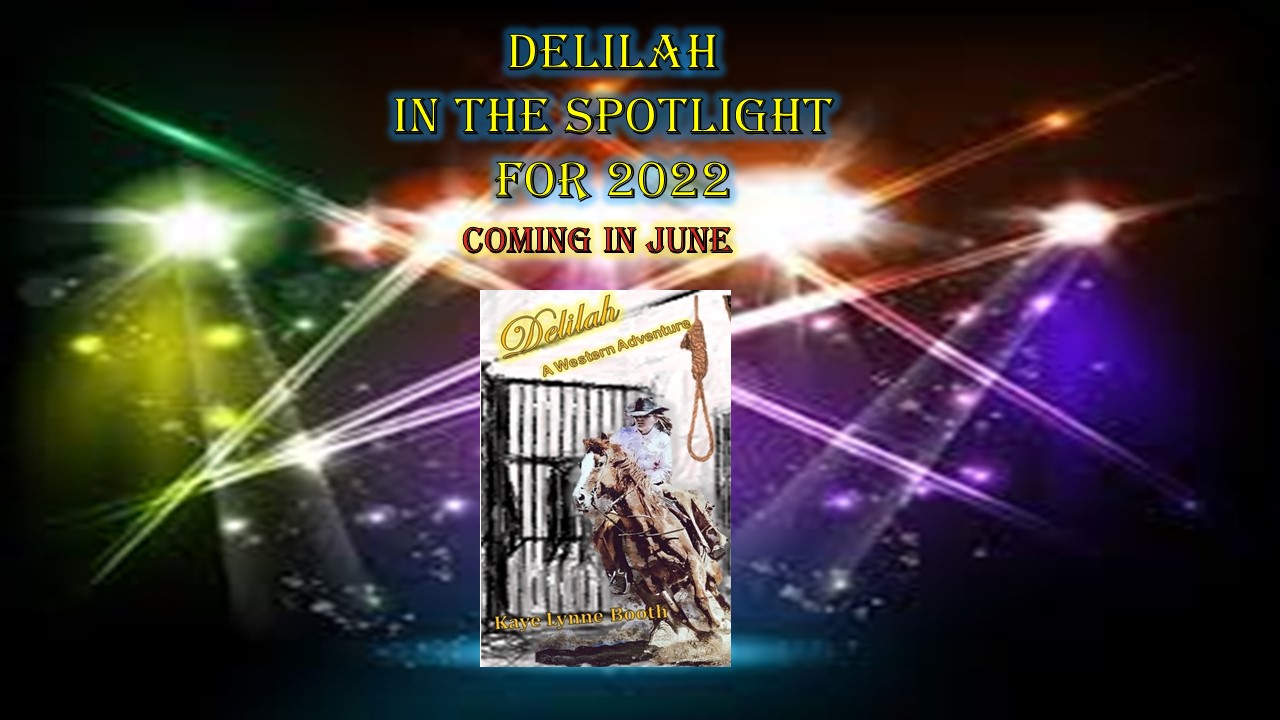
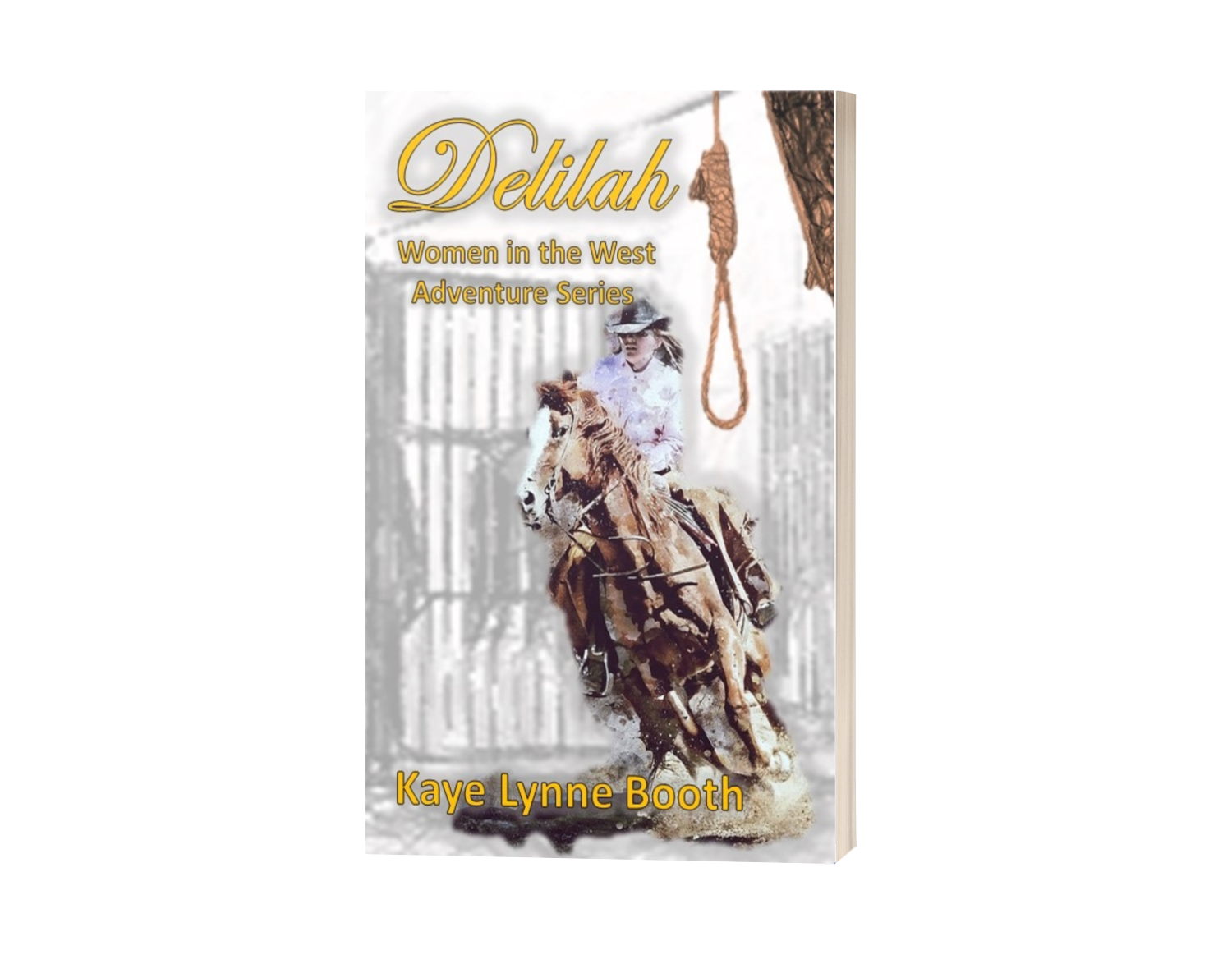
My first release for 2022 is scheduled for June, with the re-release of Delilah, in an edition that is the story I originally intended to tell. (You can find out more about the decision for this change here.) The current edition of Delilah will come down from the Amazon shelves sometime in April, and the new edition will be released wide, so it will be found not only on Amazon, but on Kobo, Barnes & Noble, Apple, Baker & Taylor, Bibliotheca, Borrow Box, Overdrive, Scribd, and other selected digital book outlets because WordCrafter Press publishes through D2D. (I’m a member of their affiliate program. Sign up for your own D2D account here.)
In the past, I told you about my science fantasy series, Playground for the Gods. The first book in that series was my thesis project when I was earning my M.F.A. at Western State Colorado University, back in 2016, so the it has been finished since then, yet you’ve never seen the implied promise of publication come to fruition. In 2022, I plan to release not just Book 1: The Great Primordial Battle, but also Book 2: In the Beginning, and Book 3: Inanna’s Song sometime toward the end of the year, but release dates for these haven’t been set yet.
WordCrafter Press & Author Services
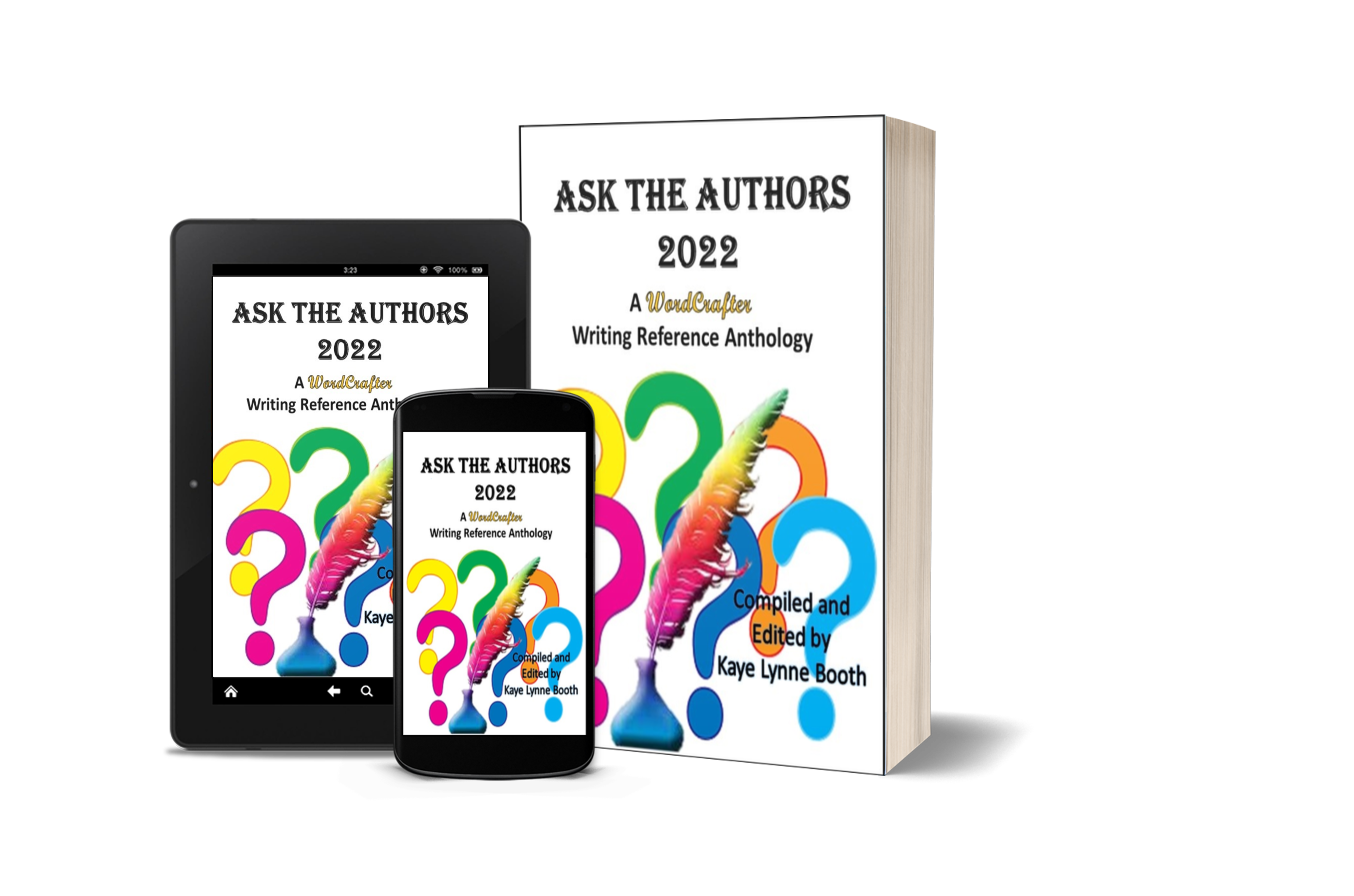
WordCrafter Press has some great releases coming in 2022 as well. An updated version of the writing reference, 2022 Ask the Authors, is scheduled to be released in March. The original Ask the Authors, was taken from a Q&A blog series I ran in 2018. While the much of the advice offered from the 17 different authors who participated in that project is still valid today, this edition will address the changes in the publishing industry since the original edition was published and will feature an anthology of essays on craft and publishing in addition to the Q&A advice. This edition will feature advice from 13 authors, including Bobby Nash, Mark Leslie Lefebvre, Roberta Eaton Cheadle, Nancy Oswald, Christopher Barili, Mario Acevedo, L. Jagi Lamplighter Wright, Kevin Killany, Paul Kane, Jeff Bowles, Enid Holden, Christa Planko, and myself, Kaye Lynne Booth.

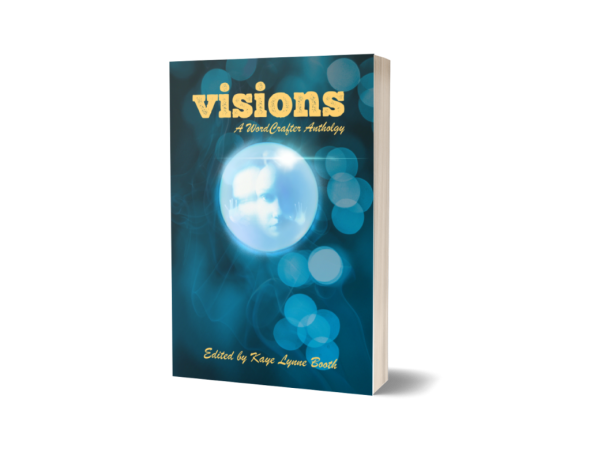
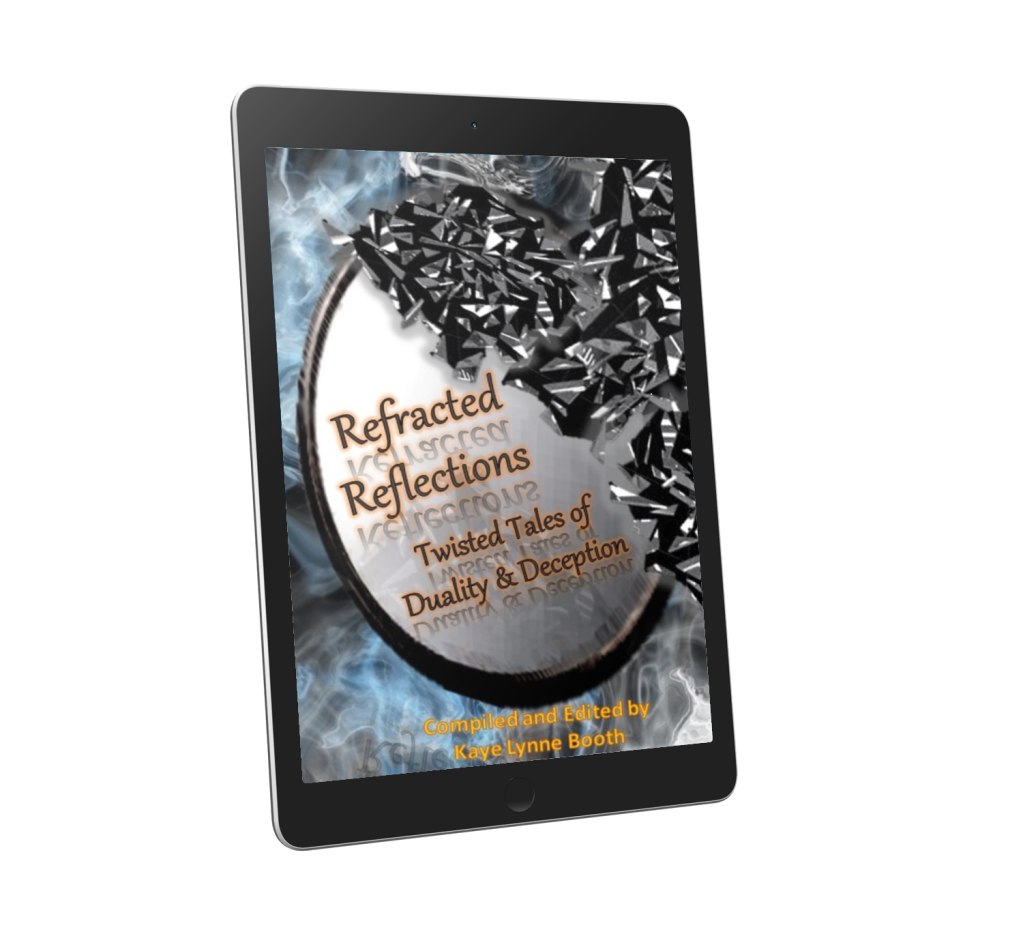
The call for submissions for the 2022 WordCrafter Short Fiction Contest posted on January 3rd. However, in 2022, WordCrafter Press will be putting out not just this one anthology, but a total of three short fiction anthologies. In addition to the Visions anthology, which contest submissions may be included in, that will be released in August, there will be two by invitation only anthologies: Slivered Reflections, which will be released in September, and Once Upon an Ever After, which will be released in November.
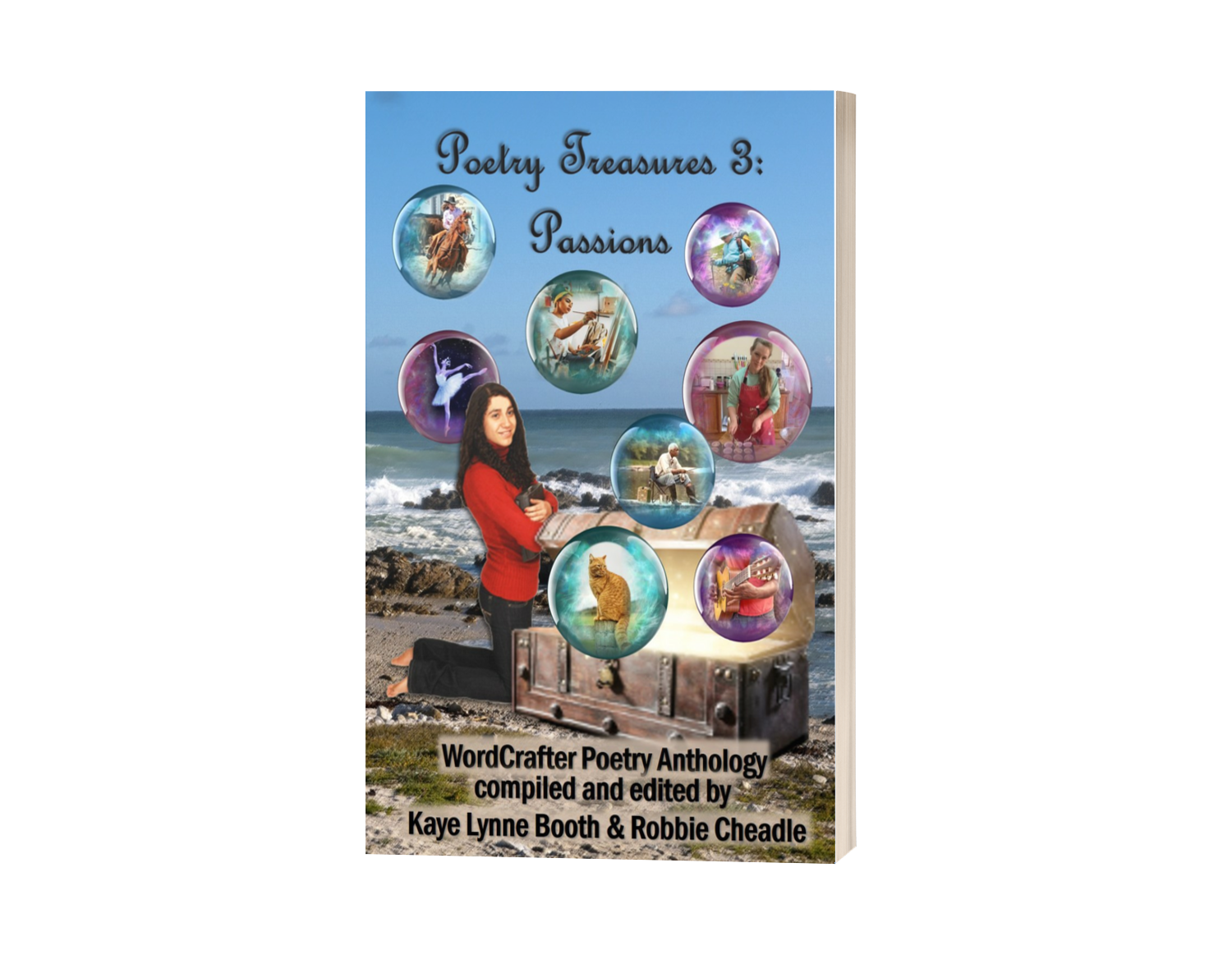
In 2021, we released the first edition of Poetry Treasures poetry anthology, featuring the works of Robbie Cheadle’s 2020 “Treasuring Poetry” poet guests on Writing to be Read, and we’ve decided to do it again. 2022 Poetry Treasures will feature the works of the 2021 “Treasuring Poetry” guests for a spectacularly unique poetry anthology, and will be released April to celebrate National Poetry Month.

Last, but not least, Write It Right Quality Editing Services is open to new editing clients in 2022. If you’re looking for affordable quality editing, Write It Right could be the editing service you’ve been looking for. A part of WordCrafter Quality Writing & Author Services.
I’m looking forward to 2022. I hope you’ll all join me in the coming year, as it promises to be a good one.
____________________________________________
Like this post? Let me know in the comments. You can be sure not to miss any of Writing to be Read’s great content by subscribing to e-mail or following on WordPress. If you found this content helpful or entertaining, please share.
Share this:

Words to Live By – Inspiration, Legacy, and Beatles Music
Posted: January 5, 2022 Filed under: Commentary, Creativity, Opinion, Words to Live By, Writing | Tags: Inspiration, Jeff Bowles, music, The Beatles, Words to Live By, Writing to be Read 3 Comments
The first Wednesday of the month, writer Jeff Bowles muses on life, creativity, and our collective destinies as makers of cool stuff. You’re a writer, but have you ever thought about how or why? Here are some words to live by.
Paperback Writer
Over the holidays, I watched the new Beatles documentary released on Disney+, The Beatles: Get Back. I’m a huge fan of the group and always have been. I realize there are non-Beatles fans out there, but I have to admit, I’ve always been mystified by their lack of enthusiasm. To me and millions of other Beatlemanics, the band is a historical landmark, having written and recorded music that changed pop culture for generations to come.
This blog entry is about inspiration and legacy. I liked to write stories as a kid, but really, I wanted to be a rock star. This would’ve been in the mid-90s. At the time, many potential role models existed for me and every other outcast kid who picked up a guitar. I wasn’t into Nirvana or Linkin Park at that age, didn’t appreciate Red Hot Chili Peppers or Green Day. I loved The Beatles, plus lots of other groups from the 60s and 70s. Never mind that my older brother and mom began spoon-feeding me this stuff at a very early age, or the fact that I looked up to my brother and enjoyed liking the things he thought were cool. The Beatles were special, supernatural even. I believed that then and I believe it now.
But the truth is, I haven’t been feeling particularly inspired lately. Not even Christmas cheered me up. In fact, it only made me feel worse. This Get Back documentary, it’s exhaustive (and a little exhausting). Only a mega Beatles nerd could’ve pieced it together. Peter Jackson (director and co-writer of The Lord of the Rings trilogy) happens to have been that nerd. The film is almost eight hours in length, split over three episodes, focusing on just one month or so in the lives of the famous foursome.
The great thing about it is that we really get to see The Beatles’ creative process up close. Lots of labor and missteps, mistakes and dead ends. Critics have said this proves they weren’t as legendary as fans have always claimed. To me, it makes them more human, which is a comfort, because it proves anyone anywhere can muster enough talent and drive to produce work of honest significance.
Inspiration is great, but it’s not nearly as effective as perspiration. When I was learning to play and sing and write songs, John Lennon was my idol. I wanted to be him, and man did all the other kids in school think I was strange. I remember looking up at the stars one night when I was ten years old and whispering to the heavens,
“I want to be the greatest rock star ever.”
Or something to that effect. As it turned out, I lived a small (very small) portion of that dream. Played music with people all the way through my teens and early twenties. Lots of tiny coffee house gigs, open mic nights, bars, private celebrations. When I was twenty-one, I met the woman I would one day marry, and eventually I found I wanted different things out of life. Writing short stories and novels, the pursuit of some kind of career in this field, it replaced my desire to make music almost entirely. I grew dedicated to the craft and learned a hell of a lot. For the most part, writing has made me happy. I’m glad I took the years necessary to get good at it.
But I wouldn’t have found that dedication, that fire in my heart, if I weren’t already intimately familiar with it. There is an electric feeling that occurs inside the body and mind of a musician caught in the flow of her or his own creativity. The Beatles clearly knew that feeling well. It’s potent and wonderful, thrilling and powerful.
I came to learn that writing is a slower burn. Tons of work up front, and then maybe (maybe) a bit of adulation months or years later. But it still holds moments of intense creative gratification. No matter who you are, how popular or famous or legendary, this process, this mental birthing experience, it can be difficult and frustrating. John Lennon, Paul McCartney, George Harrison, and Ringo Starr were all wonderful musicians. They had nothing to prove to anyone, yet they still worked themselves to the bone to make stuff that simply had no equal.
So here’s my question for all of you: how dedicated are you to what you love? What thrills you and gets you excited for writing or anything else in life? Maybe it’s a bit unfashionable to admit that music recorded some sixty years ago makes me feel ready to take on the world, but it does. Especially when I get to see it up close, visceral, all the creative battles, coming to the logical and favorable conclusion of work that stands the test of time.
Next time you’re feeling down in the dumps and not at all creative, head back to the source—your personal wellspring of inspiration—and see if it won’t refill your cup a little. Pick up a guitar, or a pencil or paintbrush or a media powerhouse of a computer, or maybe just watch a good film about one of your favorite things on earth. All hail the makers of cool stuff. Be they Beatles or bestsellers or nobodies in particular.
Peace and love to you this new year. May it bring you everything you need, and maybe a few of the things you want, too. Until next time.
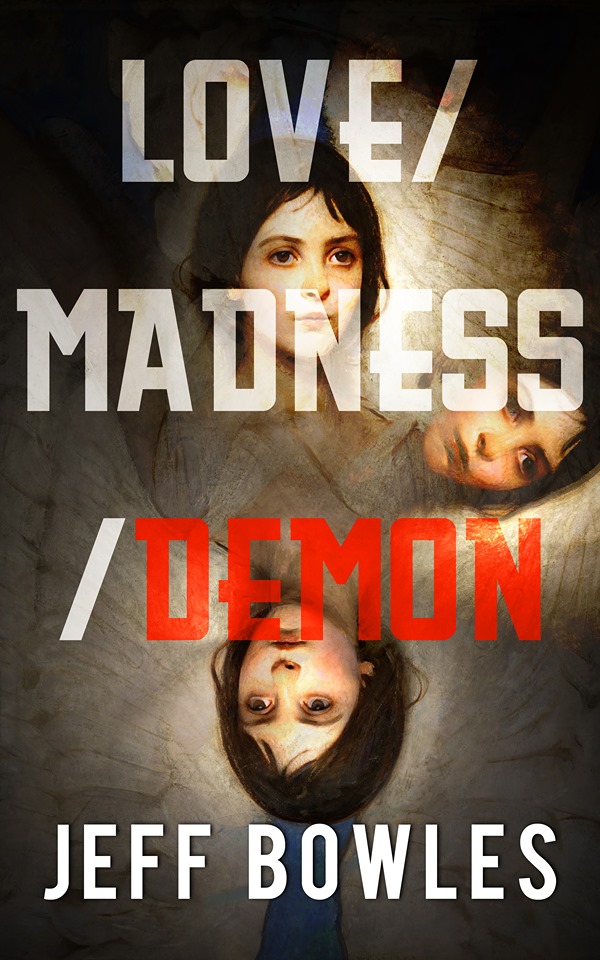
Jeff Bowles is a science fiction and horror writer from the mountains of Colorado. The best of his outrageous and imaginative work can be found in God’s Body: Book One – The Fall, Godling and Other Paint Stories, Fear and Loathing in Las Cruces, and Brave New Multiverse. He has published work in magazines and anthologies like PodCastle, Tales from the Canyons of the Damned, the Threepenny Review, and Dark Moon Digest. Jeff earned his Master of Fine Arts degree in creative writing at Western State Colorado University. He currently lives in the high-altitude Pikes Peak region, where he dreams strange dreams and spends far too much time under the stars. Jeff’s new novel, Love/Madness/Demon, is available on Amazon now!
Check out Jeff Bowles Central on YouTube – Movies – Video Games – Music – So Much More!
Want to be sure not to miss any of “Words To Live By” segments? Subscribe to Writing to be Read for e-mail notifications whenever new content is posted or follow WtbR on WordPress. If you found it useful or entertaining, please share.
Share this:

2022 WordCrafter Short Fiction Contest: Call for Submissions
Posted: January 3, 2022 Filed under: Anthology, Fantasy, Fiction, Ghost Stories, Horror, Science Fiction, Stories, WordCrafter, WordCrafter Press, Writing Contest | Tags: 2022 WordCrafter Short Fiction Contest, Call for submissions, Submission Guidelines, Visions, WordCrafter Press, Writing to be Read 2 Comments
The 2022 WordCrafter Short Fiction Contest is now open for submissions. The submission deadline of May 31, 2022. The winner will receive a $25.00 Amazon gift card and their story will be guaranteed to be featured in Visions. All finalists will also receive an invitation to be included in the anthology, which offers a small royalty share for your story contribution. Submission guidelines are pretty simple, but as they are different from last year, I suggest you read and follow them carefully.
Submit your story with a cover letter to KLBWordCrafter@gmail.com with “Submission: [Your Title]” in the subject line and pay the $5 entry fee below.
Contest Entry
Enter the 2022 WordCrafter Short Fiction Contest for a chance at an invitation to the Visions anthology and a grand prize $25 gift card.
$5.00
WordCrafter Press wants your visions.
For 2022, WordCrafter Press is looking for original short stories in the fantasy, science fiction, horror or paranormal genres. Past contests and anthologies have been limited to paranormal, and for Visions, your story can still have a ghost if you like, but it is not required. What I’ll be looking for for the 2022 WordCrafter anthology are your very best thought provoking stories, the kind of stories that will stay with readers long after they close the book.
WordCrafter Press is looking for original short stories to include a mix of fantasy, science fiction, horror, magical, and paranormal elements. Previously unpublished stories only.
Genres: Paranormal, Science Fiction, Fantasy, Horror or any combination there of.
Length: up to 5000 words
Submission Deadline: May 31, 2022
Pay: Royalty share
Rights: First Anthology Rights and audio rights as part of the anthology; rights revert to author one month after publication; publisher retains non-exclusive right to include in the anthology as a whole.
Open to submissions from January 1 through April 30, 2022.
Submit: A Microsoft Word or RTF file in standard manuscript format to KLBWordCrafter@gmail.com
If you don’t know what standard manuscript format is, review, for example, https://www.shunn.net/format/classic/
Multiple and simultaneous submissions accepted.
Find some helpful tips for submitting short fiction here, but mainly just follow the guidelines.
Share this:

Review in Practice – Word Craft: Prose & Poetry
Posted: December 31, 2021 Filed under: Book Review, Books, Poetry, Review in Practice, Teaching Writing | Tags: Book Review, Poetry, Review in Practice, Sally Cronin, Syllabic Poetry, Word Craft: Prose & Poetry, Writing to be Read 5 Comments
Word Craft: Prose & Poetry, by Colleen Chesebro is an insightful and helpful instructional book for those who wish to learn more about writing syllabic poetry and prose. The first section covers Japenese syllabic poetry forms and American syllabic poetry forms are covered in section two. The author outlines the rules and inspirations for each form, and provides plenty of examples to help you get the idea.
Hiaku has been one of my favorite forms of poetry to read since it was introduced to me in the fourth grade. However, my fourth grade teacher didn’t really explain this poetry form in a way that my fourth grade mind could really grasp, so I’ve never felt very accomplished in writing Haiku. In Word Craft, Colleen Chesebro was able to explain the art of this form of poetry in a manner which my aged mind was able to grasp, giving me a much better handle on what I’m trying to do with this form of poetry. Haiku is much more than just putting the right number of syllables in each line. Haiku is written to evoke images and emotion in a succinct way. I was surprised to learn that the syllabic rules for Haiku are not set in stone, and can be varied. Below is a Haiku which I wrote after reading the chapters on this poetry form.
Spring skies let rain pour
Wings stretch, ruffling wet feathers
small Hummingbird preens
While I know poets who write Tanka poetry, which combines poetry and prose,I’ve never understood what they were doing with these poems. Although I can’t say that I’ve mastered the Tanka, I think I do understand it better, but I will need a lot of practice before I write something in Tanka or Tanka prose poem that I feel worthy of sharing.
I also had some experience in writing Hiabun, which is a combination of poetry and prose similar to Tanka Prose Poetry, but I never really understood the purpose of this form of poetry. You would think this would be the easiest form of poetry in this book for me to write, as the inspiration can come from anything and it can be in any point-of-view and any tense that you wish to write in, but I still have a hard time grasping the how of this poetry form. Fortunately, Colleen Chesebro includes many examples of each poetry style and I have no doubt that, with patience and practice I will eventually get a handle on the Haibun.
Forms of Japanese poetry that I wasn’t familiar with in this book include Senryu, which is similar in form to a Hiaku but differs in subject matter; Haiga, which uses either Haiku or Senryu and combines three art forms, imagry, poetry and calligraphy; and Gogyohka, which is based on the Tanka, but you do not count syllables, with one phrase to a line and a line-break after each breath. I found the Renga, which is design to be written by two poets, interactively, , kind of like a poetic conversation, to be in intriguing poetry form.
This is my first attempt at a Senryu poem.
Hot tea steams
on chill summer morn
wake up call
For me, the forms of American syllabic poetry were more difficult, perhaps because they tend to be longer. In the second portion of the book, Sally Cronin includes explanation and instruction and examples for Cinquains of all types, Etherees, Nonets, and Shadormas. I made several unsuccessful attempts at the basic types of each of these poetry forms, but they are much harder than they look. My hat is off to Cronin and anyone else that can meld their syllables with seeming ease.
I took a challenge on Teagan Riordain Genevieve’s blog and for that I wrote a Shadorma poem, which I published here, on Writing to be Read. You can see my example of a Shadorma here, but I don’t know if it is any good. It really was harder than I thought it would be.
If you like syllabic poetry, either Japanese or American, and would like to try your hand at it, I highly recommend the instruction of Word Craft: Prose & Poetry, by Sally Cronin. This book introduced me to new forms, as well as delving deeper into forms I was familiar with. I give it five quills.

________________________________________________________________________________________________________
Like this post? Let me know in the comments. You can be sure not to miss any of Writing to be Read’s great content by subscribing to e-mail or following on WordPress. If you found this content helpful or entertaining, please share.










Mind Fields – People Are Crazy
Posted: January 7, 2022 | Author: artrosch | Filed under: Commentary, Mind Fields, Opinion | Tags: Arthur Rosch, Mind Fields, Social Commentary, Writing to be Read | 3 CommentsPeople are crazy. Many people who are crazy don’t know they’re crazy. They think that they are right, and that their form of crazy should be everyone’s crazy.
That’s crazy. Right? NO! We’re all wrong, most of the time! It would be nice if people could admit this fact. If we examine the history of human beings it looks like a traffic jam of midget cars where everyone jumps from the cars as if they got caught stealing them. They shout “That’s not my car! I’ve never seen that car before.”
This is not my planet! I’ve never seen this planet before! The very nature of life on this world is that humans get the wrong ideas about things that should be easy to understand. Those who don’t recognize their instability are dangerous. People who don’t recognize their craziness have few brakes. At some time or place such people can do terrible harm. They harm people who are crazy in a different way. We can inquire about Germany in the 30s and 40s. In today’s world Germany is known as a refuge for the dispossessed, a humanitarian engine of liberal democracy. Eighty years ago Germany was in the throes of a mass psychosis that turned the state into a killing machine.
This form of psychosis is always available to cultures. It’s there, waiting for the right conditions. It will burst forth and flourish for a while as it does its murderous business. Then it vanishes, only to revive in another time and place. Cultural psychosis is part of the human condition; it’s an undercurrent that feeds on poverty and distress. It thrives on income inequality, builds on the resentment of disenfranchised classes.
We’re ripe for another one. God forbid, as my grandma used to say. God forbid we should replay genocidal brutality like Nazi Germany, or Cambodia, Rwanda, Armenia, Bosnia. The United States with its native Americans, The Turks against the Greeks. God forbid. I pray that I’m wrong but I feel that looming presence, that evil spirit that is like a parasite fattening on its millions of aggrieved Americans who have not a single clue that they are insane. They have nothing to complain about. They are housed and fed, they have health plans, the very poorest of them are better off than anyone was a hundred years ago. You can’t convince them that they’ve got a good deal going. They’re certain that they’re being screwed. We sit atop a festering insanity that has been in America since before its founding, when vast crimes by white Europeans were enacted on the whole population of the western hemisphere.
God forbid. It’s a comfort to think that things have changed, that maybe a threshold has been crossed by human nature itself, that we’ve learned from our past sins, that we have EVOLVED. Isn’t that possible?
I don’t know. I won’t pronounce this salvation as a done deal. Something IS different. Our children are different; they do things that were impossible. They move their bodies in new ways, they think in new ways. I don’t regard myself as a cynic but I am jaded. I’ve seen too much horror.
It isn’t one thing or another. We’re neither saved nor doomed. We are continuing the story of life on earth. The planet keeps turning and it will turn for another several billion years. The drama of human life unfolds in its many chapters. Yes, we are crazy. History is a book of insanity, a review of the irrational.
Good judgment and reason break out in little pockets. They seldom last long.
The United States Of America is ripe for deep horrible craziness. I tremble for my children.
__________________________________________________________________
Arthur Rosch is a novelist, musician, photographer and poet. His works are funny, memorable and often compelling. One reviewer said “He’s wicked and feisty, but when he gets you by the guts, he never lets go.” Listeners to his music have compared him to Frank Zappa, Tom Waits, Randy Newman or Mose Allison. These comparisons are flattering but deceptive. Rosch is a stylist, a complete original. His material ranges from sly wit to gripping political commentary.
Arthur was born in the heart of Illinois and grew up in the western suburbs of St. Louis. In his teens he discovered his creative potential while hoping to please a girl. Though she left the scene, Arthur’s creativity stayed behind. In his early twenties he moved to San Francisco and took part in the thriving arts scene. His first literary sale was to Playboy Magazine. The piece went on to receive Playboy’s “Best Story of the Year” award. Arthur also has writing credits in Exquisite Corpse, Shutterbug, eDigital, and Cat Fancy Magazine. He has written five novels, a memoir and a large collection of poetry. His autobiographical novel, Confessions Of An Honest Man won the Honorable Mention award from Writer’s Digest in 2016.
More of his work can be found at www.artrosch.com
Photos at https://500px.com/p/artsdigiphoto?view=photos
_____________________________________________
Want to be sure not to miss any of Arthur’s “Mind Fields” segments? Subscribe to Writing to be Read for e-mail notifications whenever new content is posted or follow WtbR on WordPress. If you find it interesting or just entertaining, please share.
Share this: